Blueprint-themed escape room activity serving as the final assessment. Students solve puzzles involving point dilation, missing side lengths in similar triangles, and area scaling.

An instructional slide deck that introduces students to the statistical concepts used in the film Gridiron Gang. Includes definitions of variables, sample data analysis tables, and instructions for the worksheet activity.
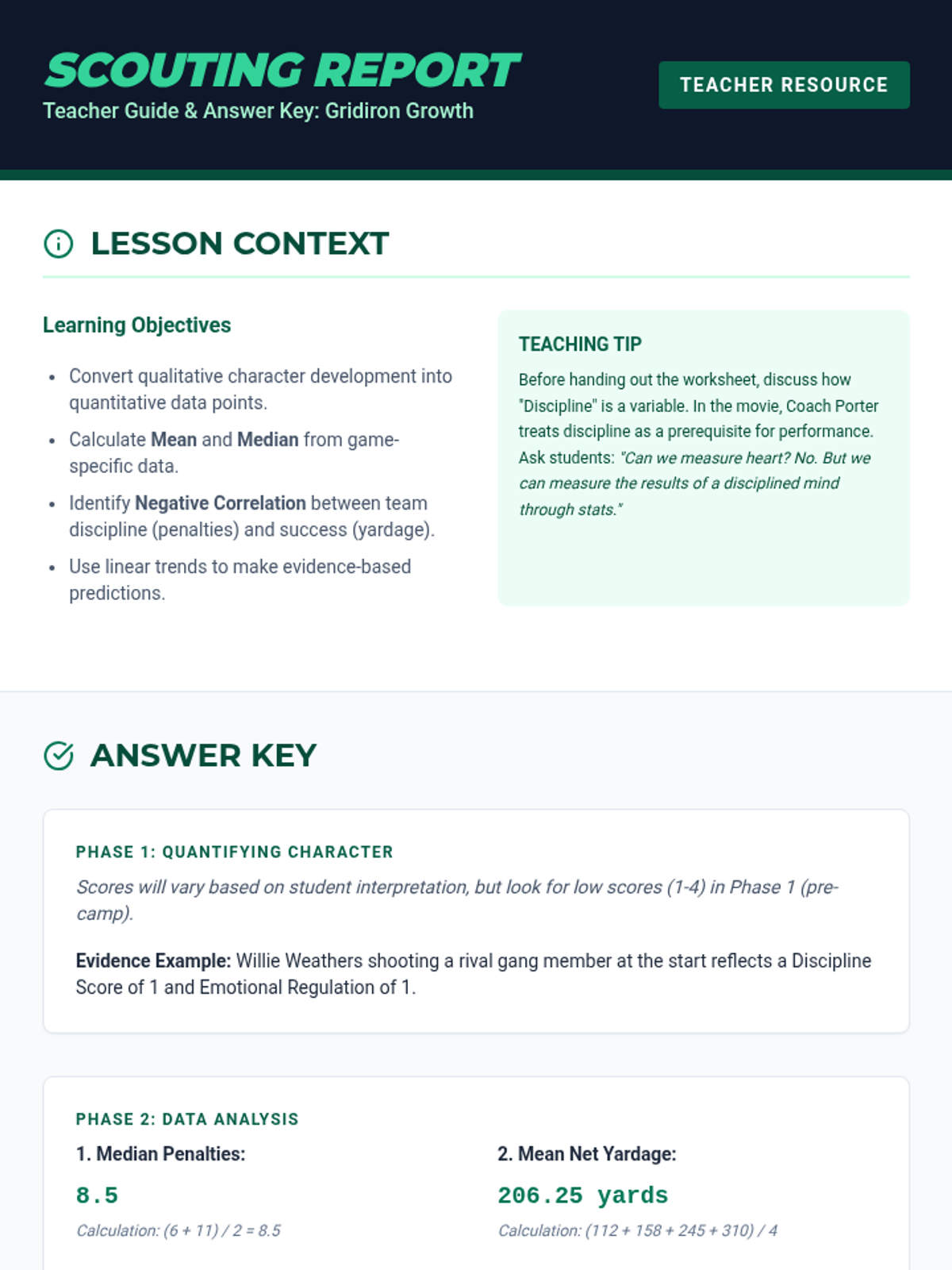
A teacher-facing answer key and instructional guide for the Gridiron Growth worksheet. Includes statistical calculations, sample character analysis, and high-level discussion prompts for the film.
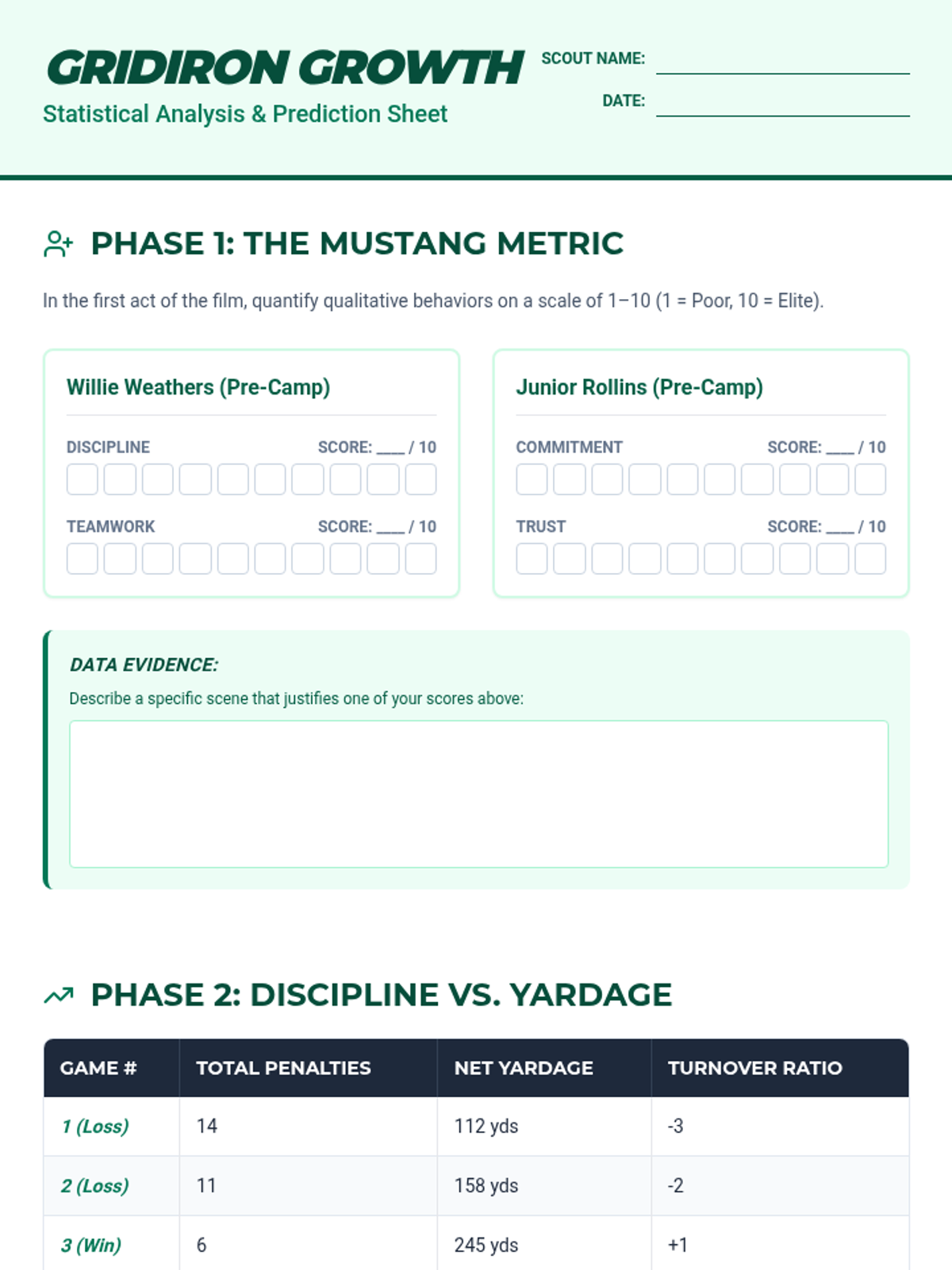
A character growth and statistical analysis worksheet based on the film Gridiron Gang. Students quantify character traits, analyze game data trends, and use statistical reasoning to predict the team's championship outcome.
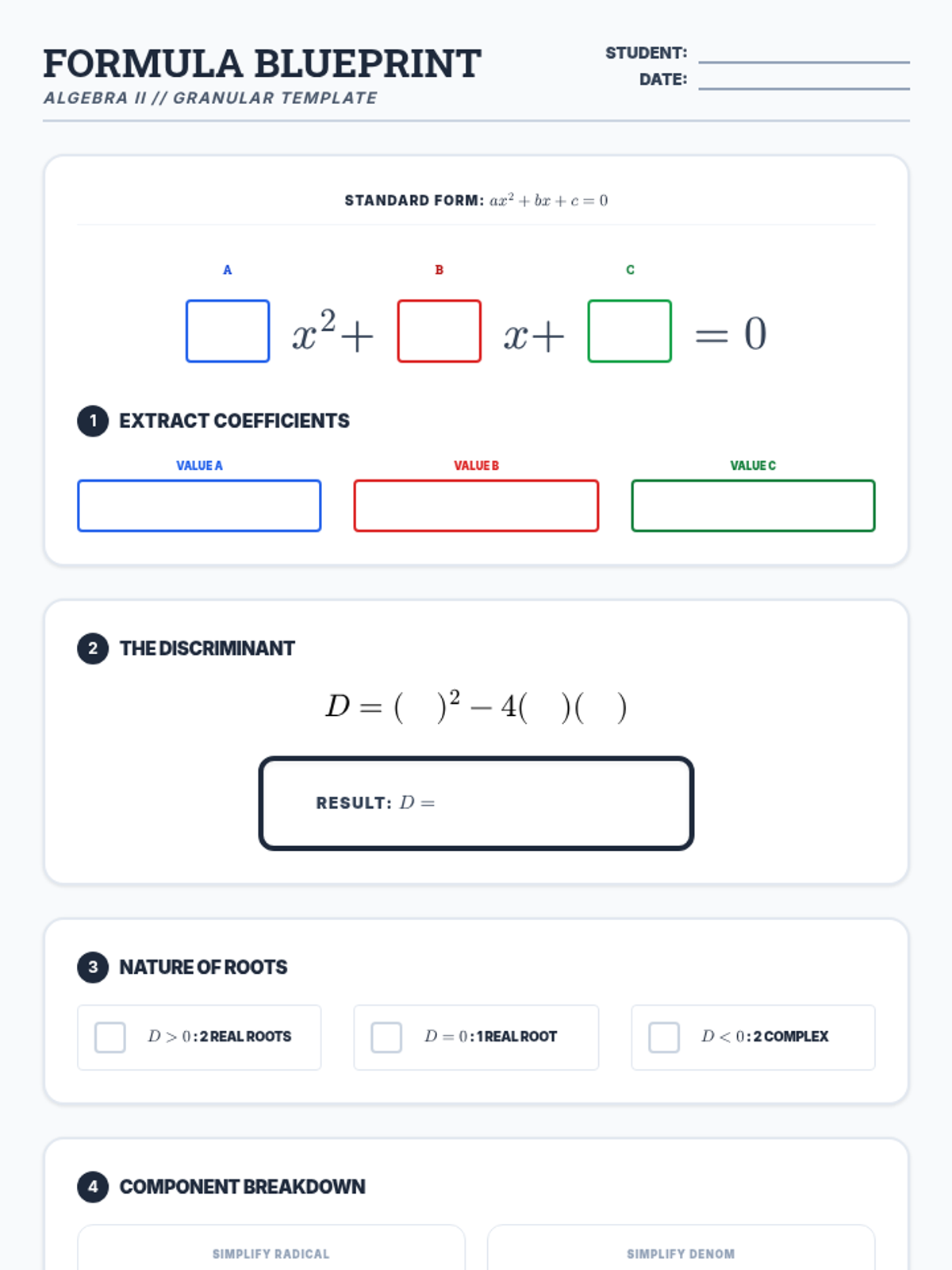
A comprehensive, 3-page granular template for the quadratic formula. This version features an expanded "Radical Processing" section (Step 4A) that breaks down complex checks, factoring for perfect squares, and root extraction. It remains color-coded and structured for Algebra 2 students.
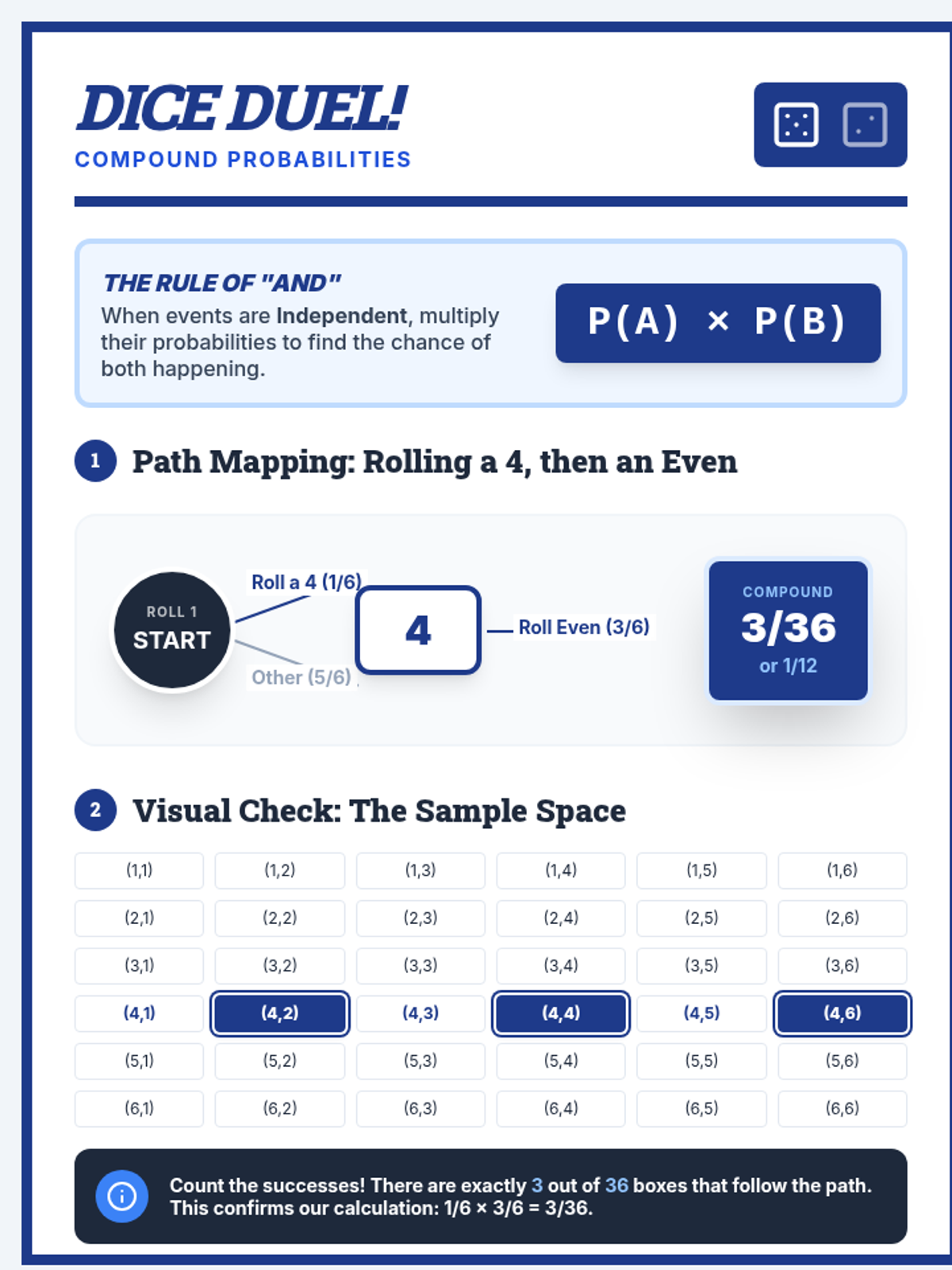
An anchor chart designed for classroom display that explains compound probability using two dice. It features a specific example with a tree diagram, a 6x6 sample space grid, and the clear mathematical formula for independent events.
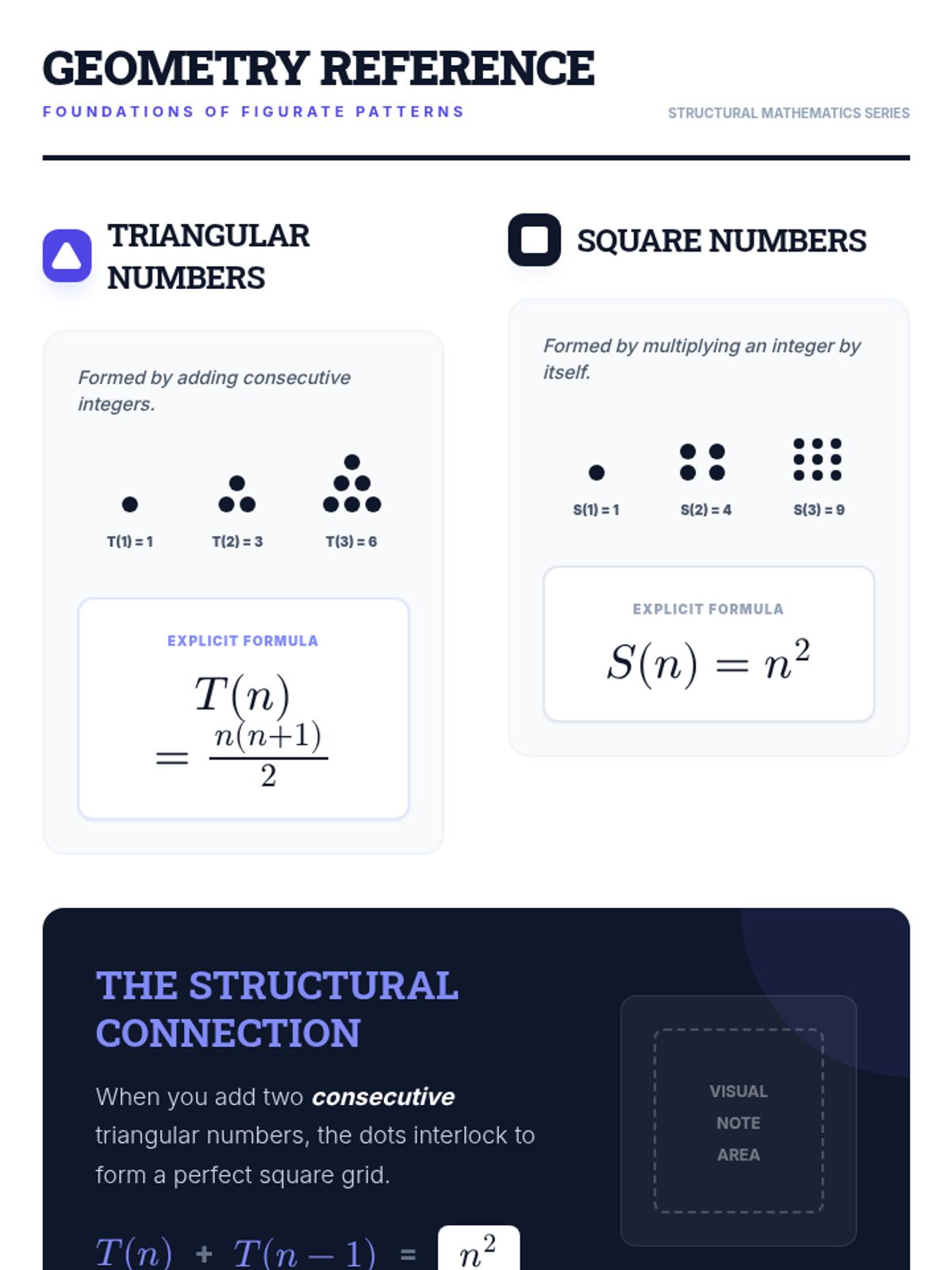
A clean and structured reference sheet for students that summarizes the formulas, visual models, and mathematical connections between triangular and square numbers.
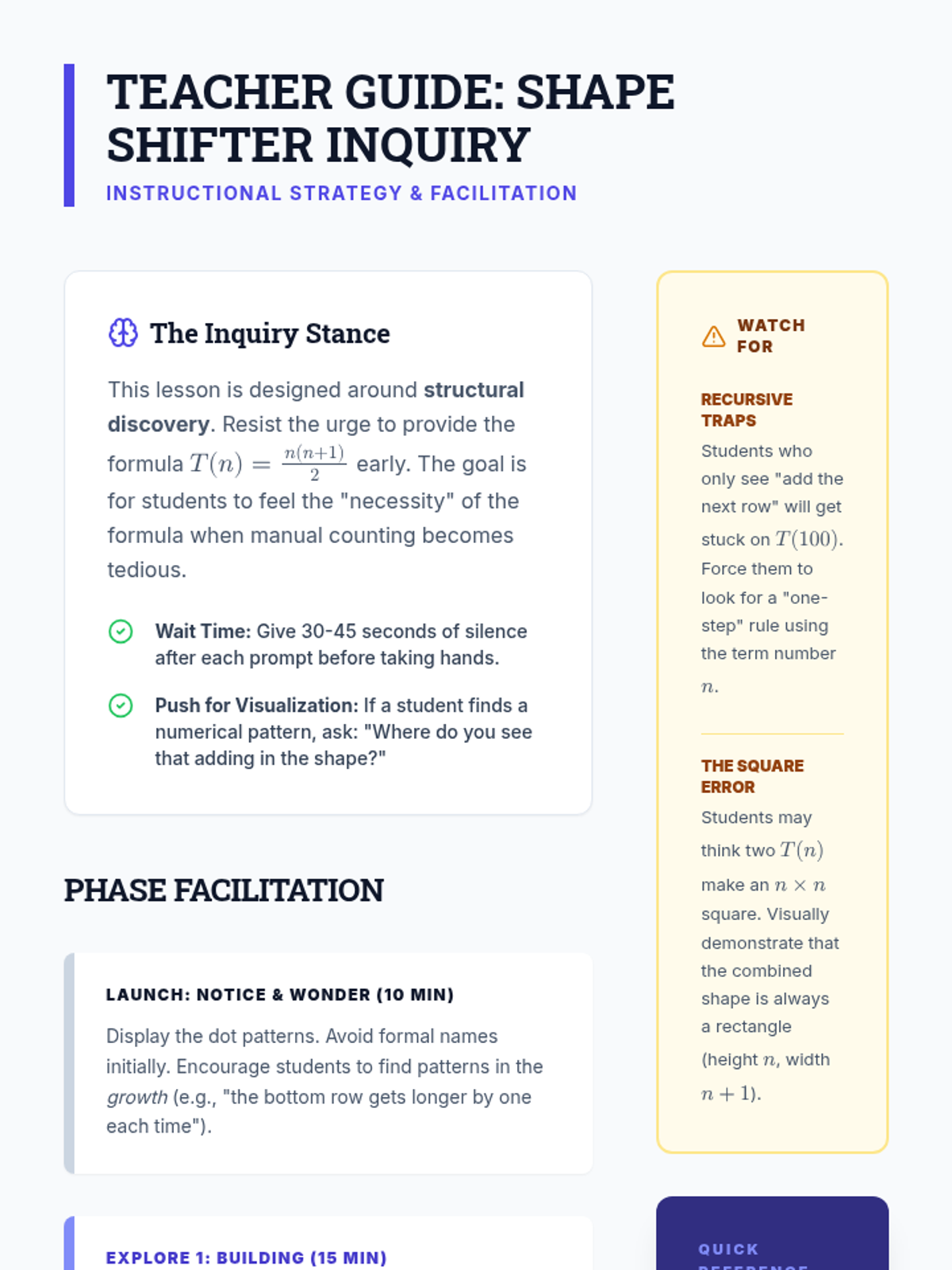
A comprehensive facilitation guide for teachers leading the Shape Shifter inquiry. Includes pacing, key questioning strategies, common misconception alerts, and a quick-reference answer key for triangular and square number patterns.
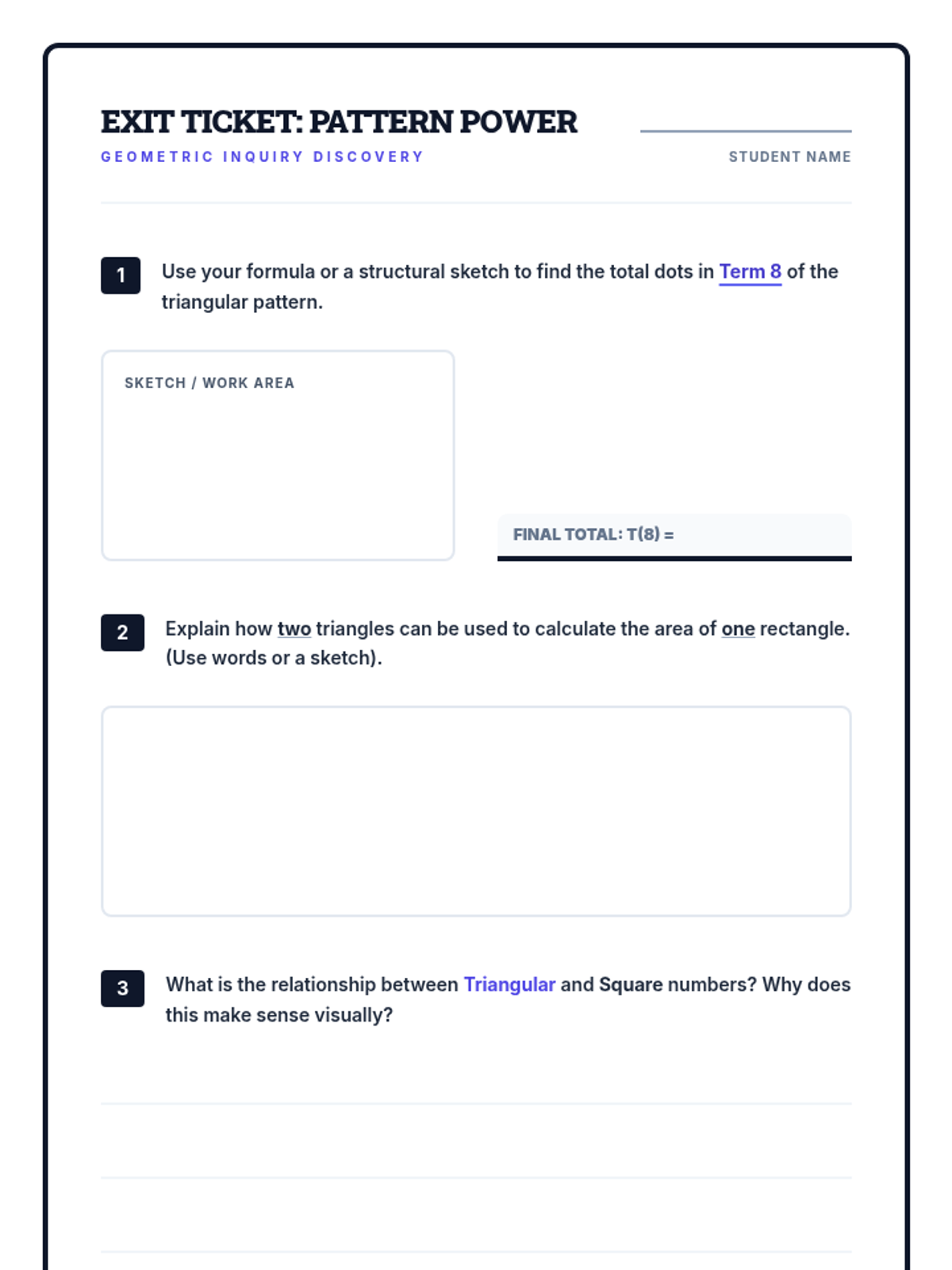
A compact exit ticket for assessing student understanding of triangular numbers, their geometric formulas, and their structural relationship to square numbers.
An instructional slide deck for the Shape Shifter inquiry lesson. It features minimalist visual proofs for triangular and square numbers, emphasizing student notice-and-wonder and the geometric derivation of algebraic formulas.
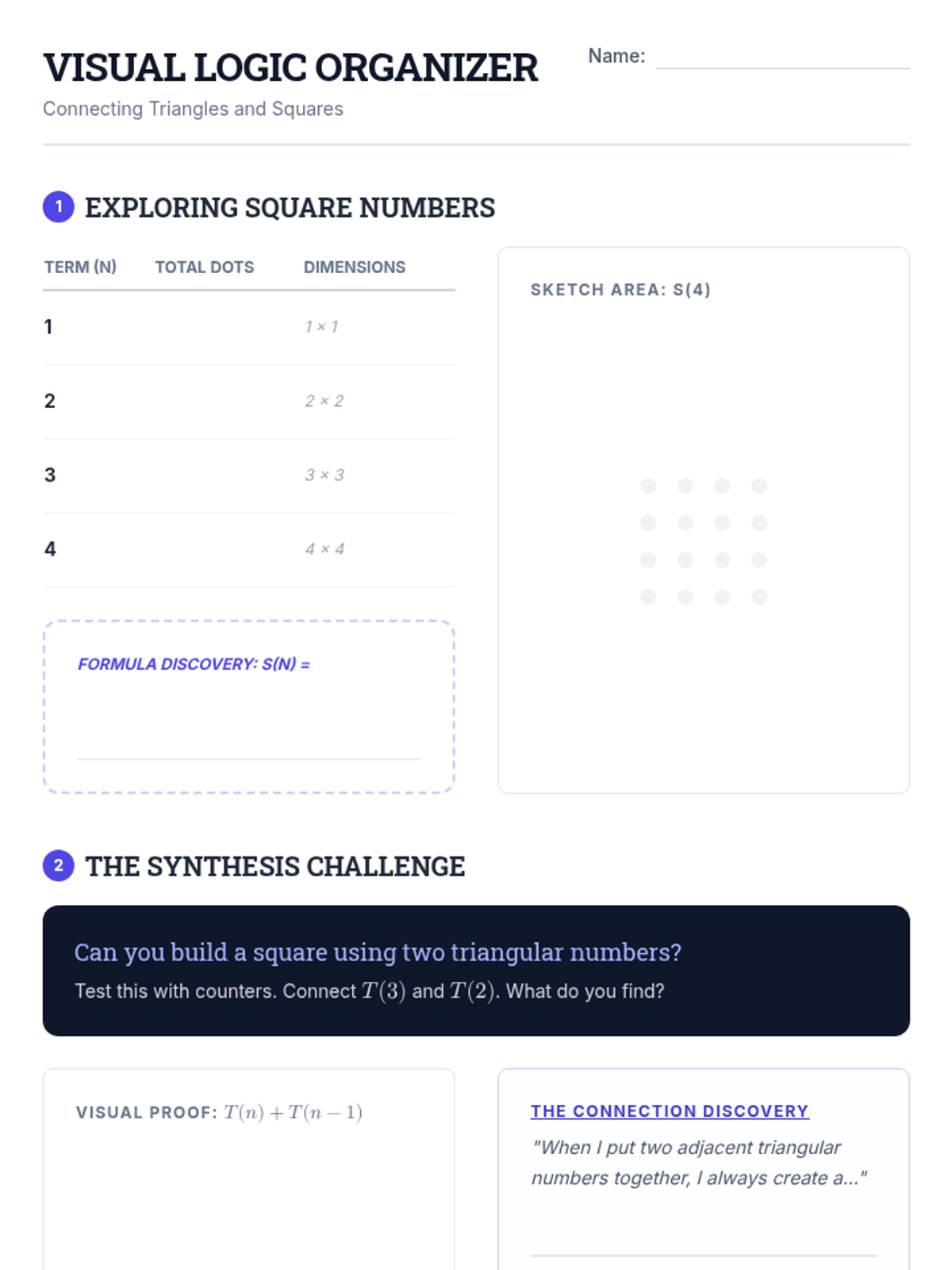
A visual logic organizer that guides students through the discovery of square numbers and their relationship to triangular numbers. It features sections for sketching visual proofs and formalizing mathematical connections.
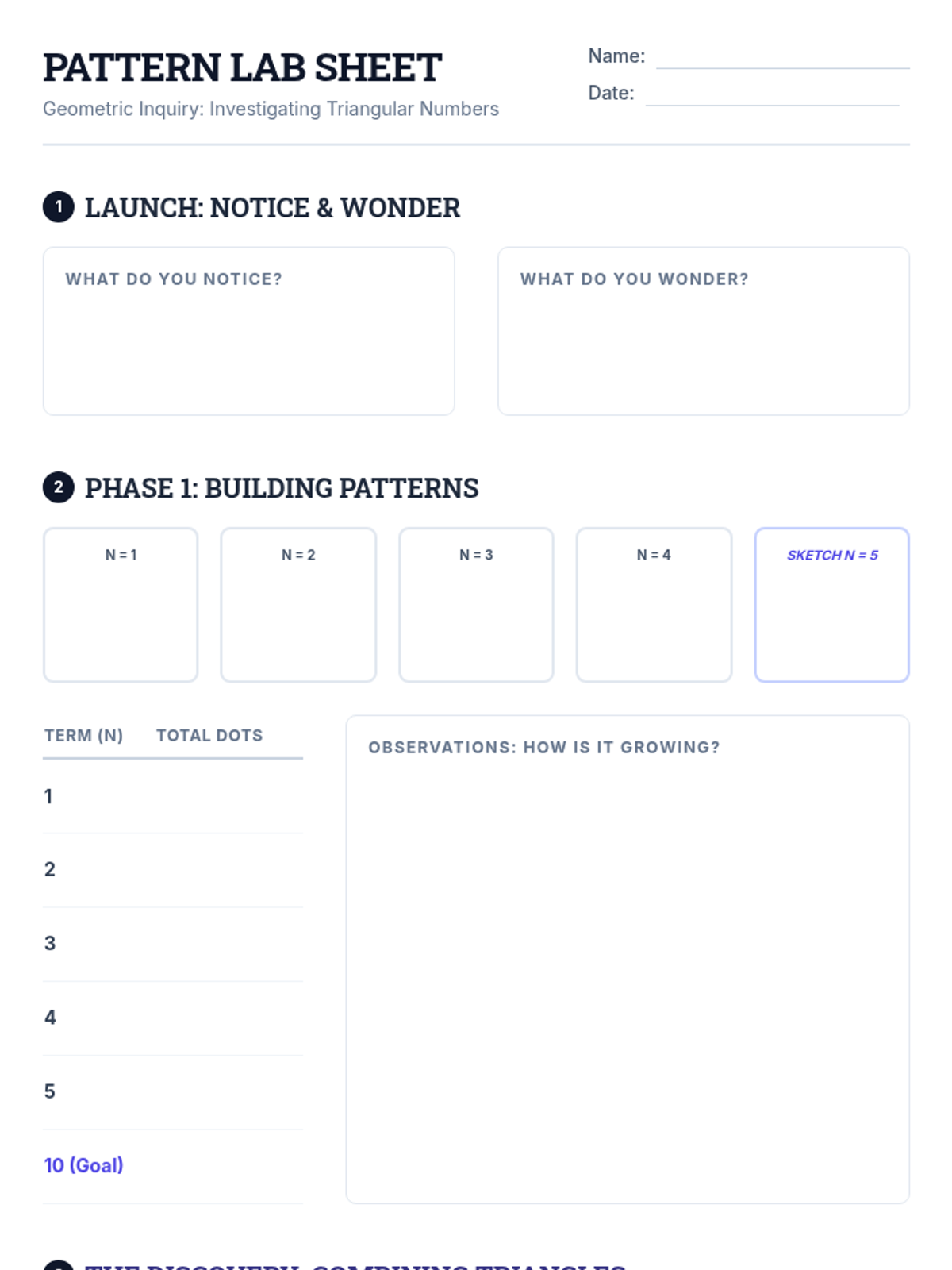
A minimalist pattern lab sheet designed for student inquiry into triangular numbers. It features open sketch areas for visual proofs, a data table for tracking patterns, and dedicated sections for identifying structural growth.
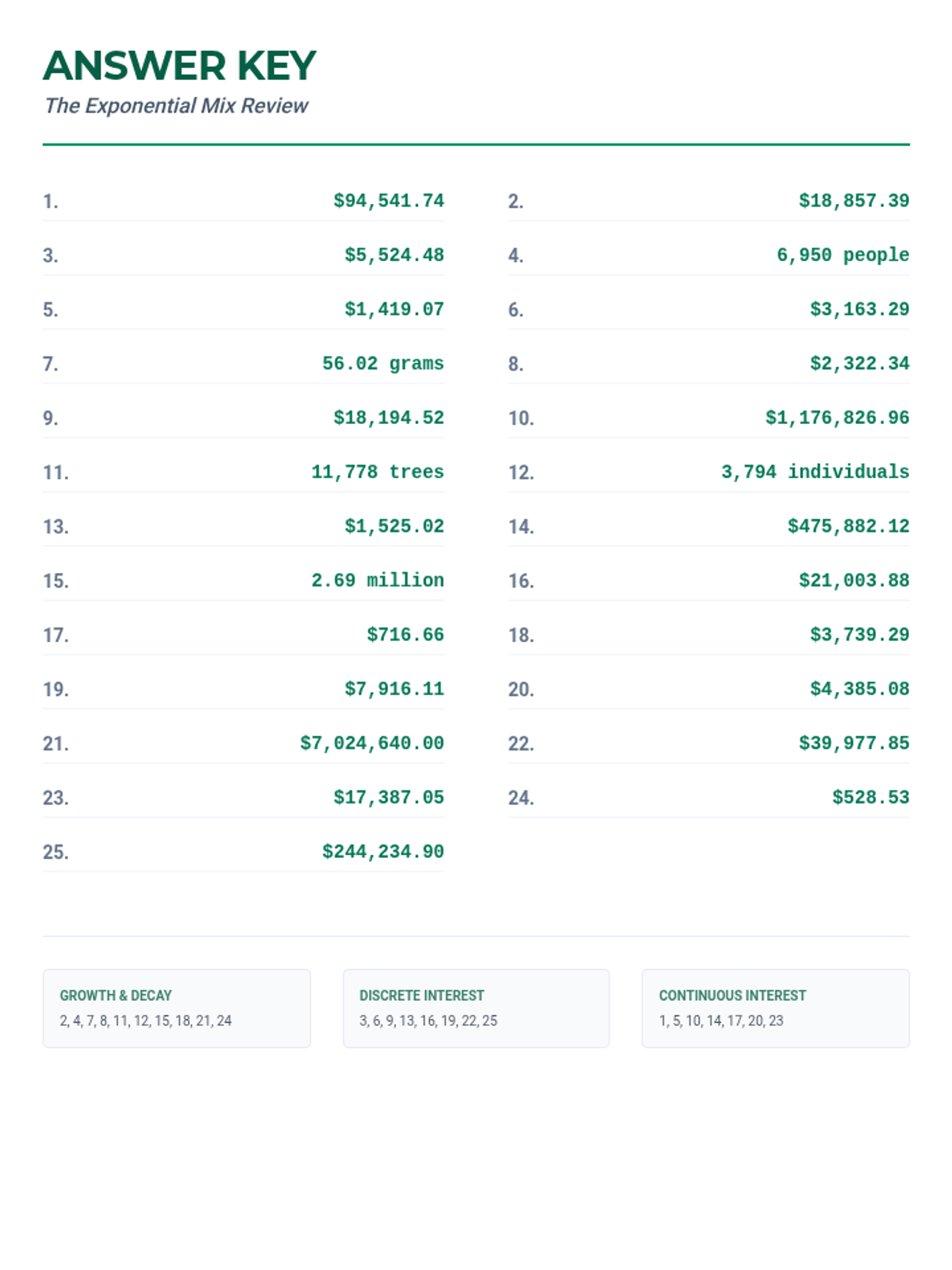
The shuffled answer key for the revised exponential assignment, providing final values for all 25 mixed problems including growth, decay, and interest models.
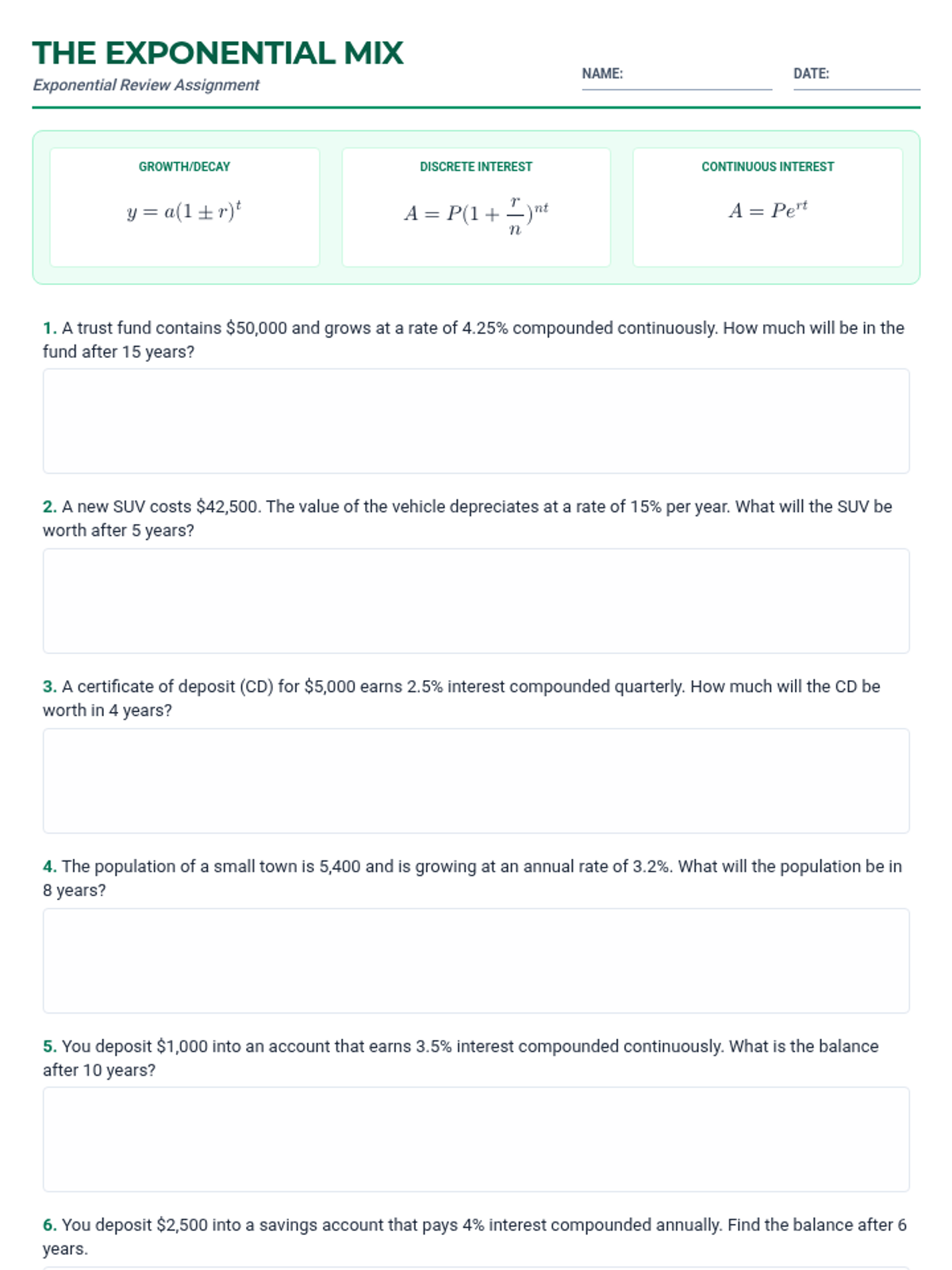
A shuffled 25-question practice worksheet featuring mixed exponential growth, decay, and interest problems, all set in annual timeframes. Formatted over 4 spacious pages with ample student work areas.
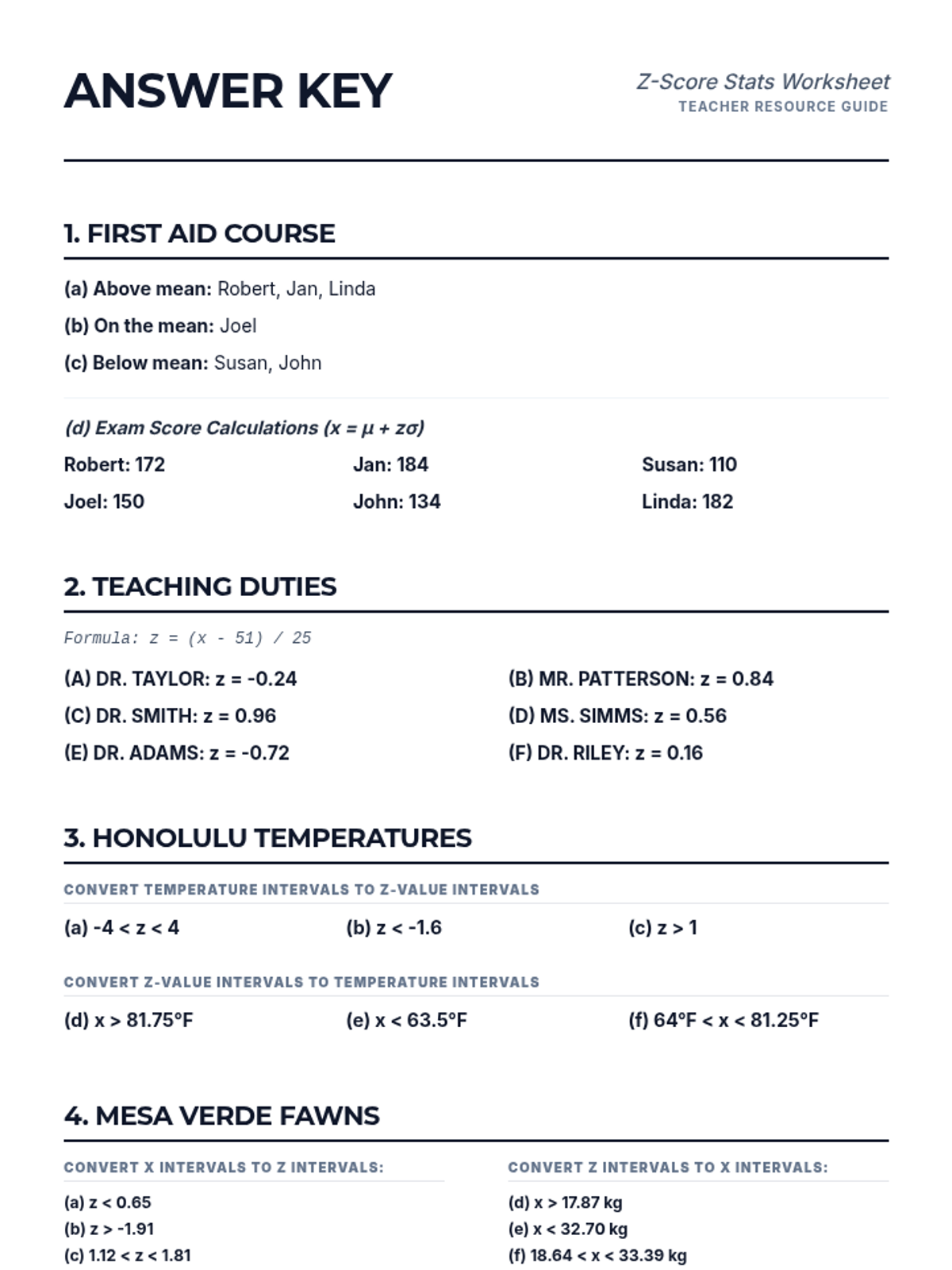
Teacher answer key for the Z-Score Mastery Worksheet, providing solutions and brief explanations for all calculation and conceptual problems.
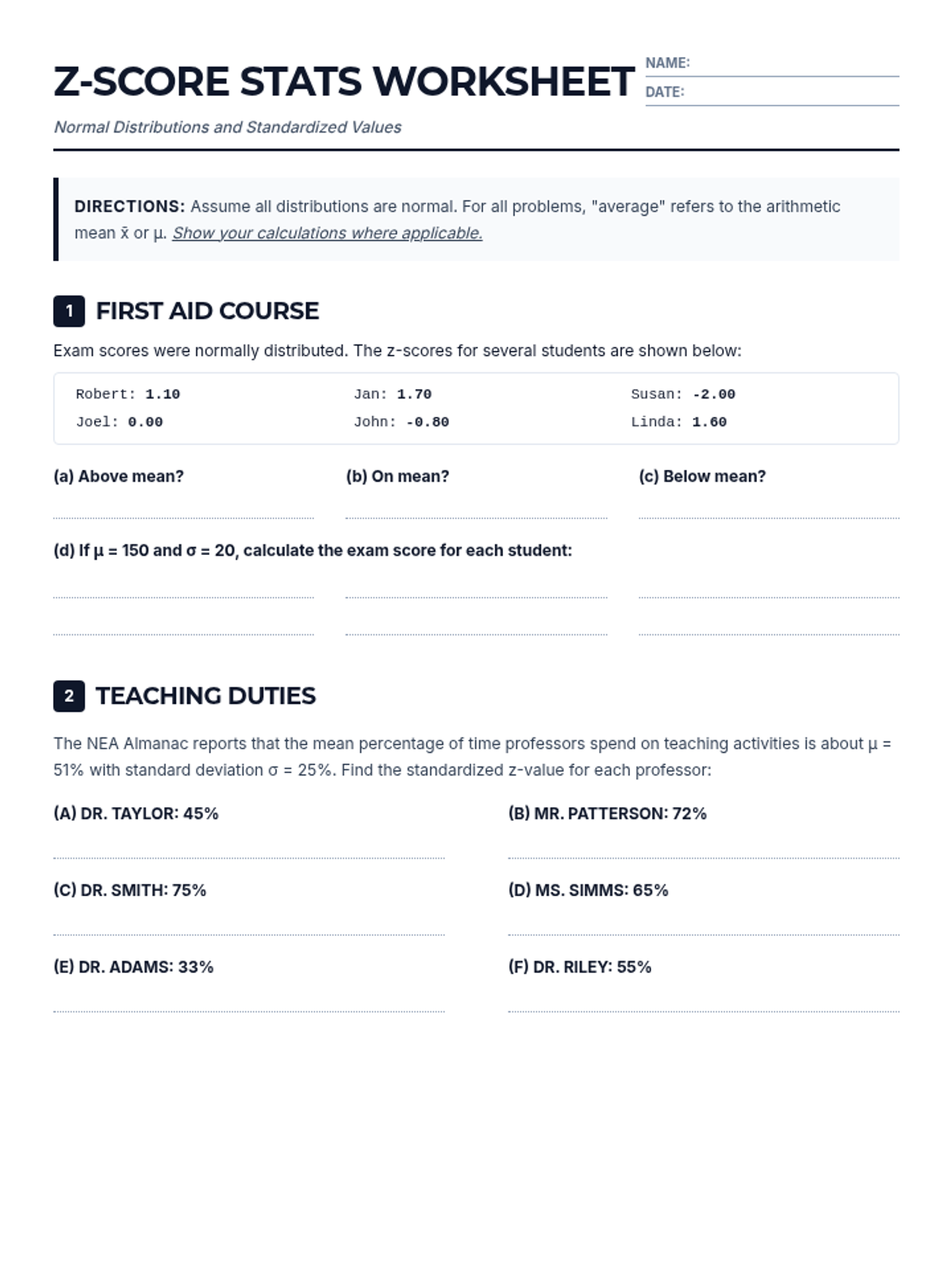
A precise 2-page Z-score worksheet that mirrors the original source material's questions exactly, featuring real-world problems on exam scores, teaching duties, temperatures, and wildlife populations.
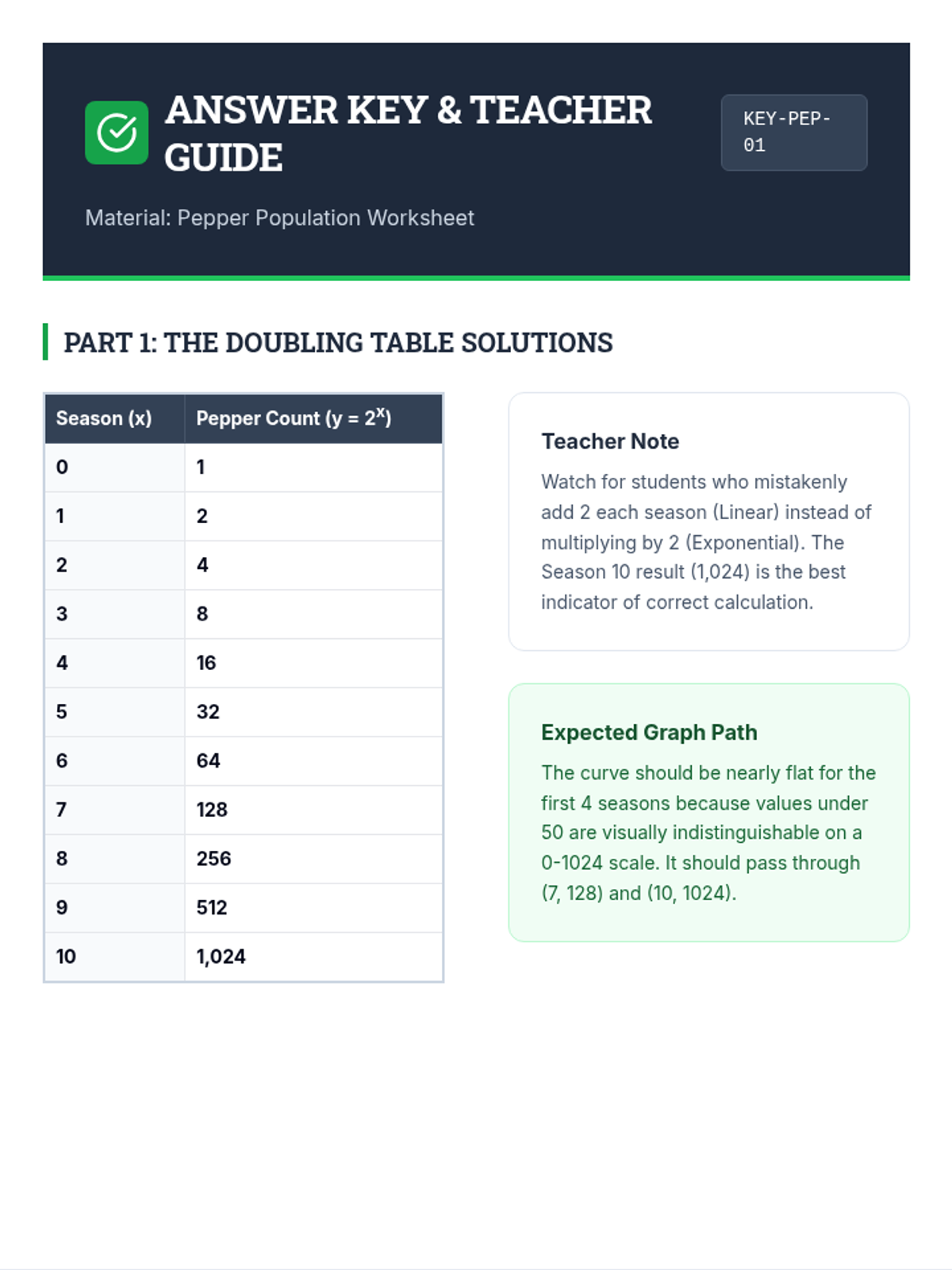
Teacher answer key and instructional guide for the Pepper Population Worksheet, including full data table solutions and analysis commentary.
A visually engaging slide deck explaining exponential growth using green peppers as a model, featuring clear diagrams of doubling and the resulting growth curve.
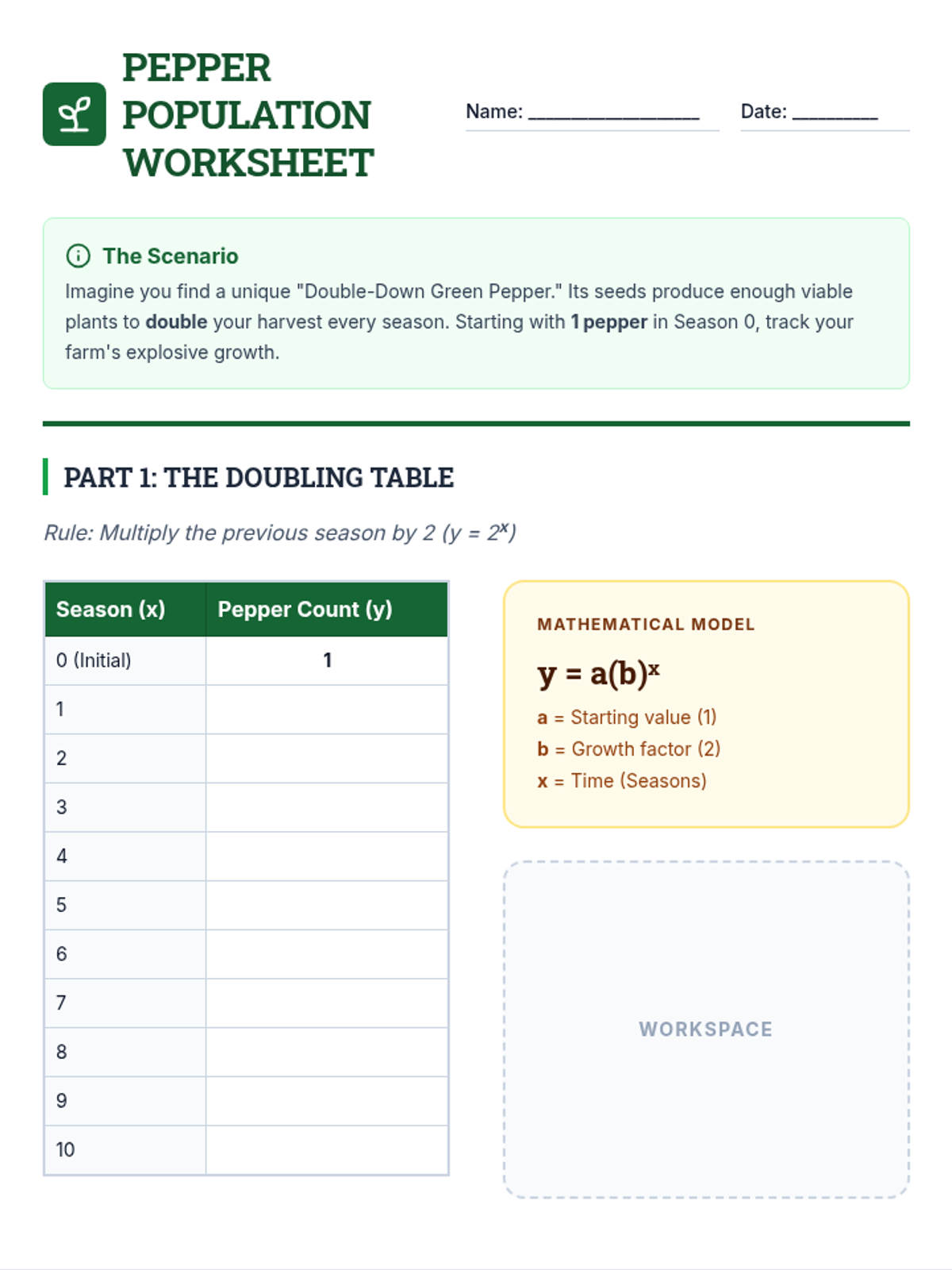
A comprehensive worksheet for students to calculate, graph, and analyze the exponential growth of a pepper population starting from a single fruit and doubling each season.
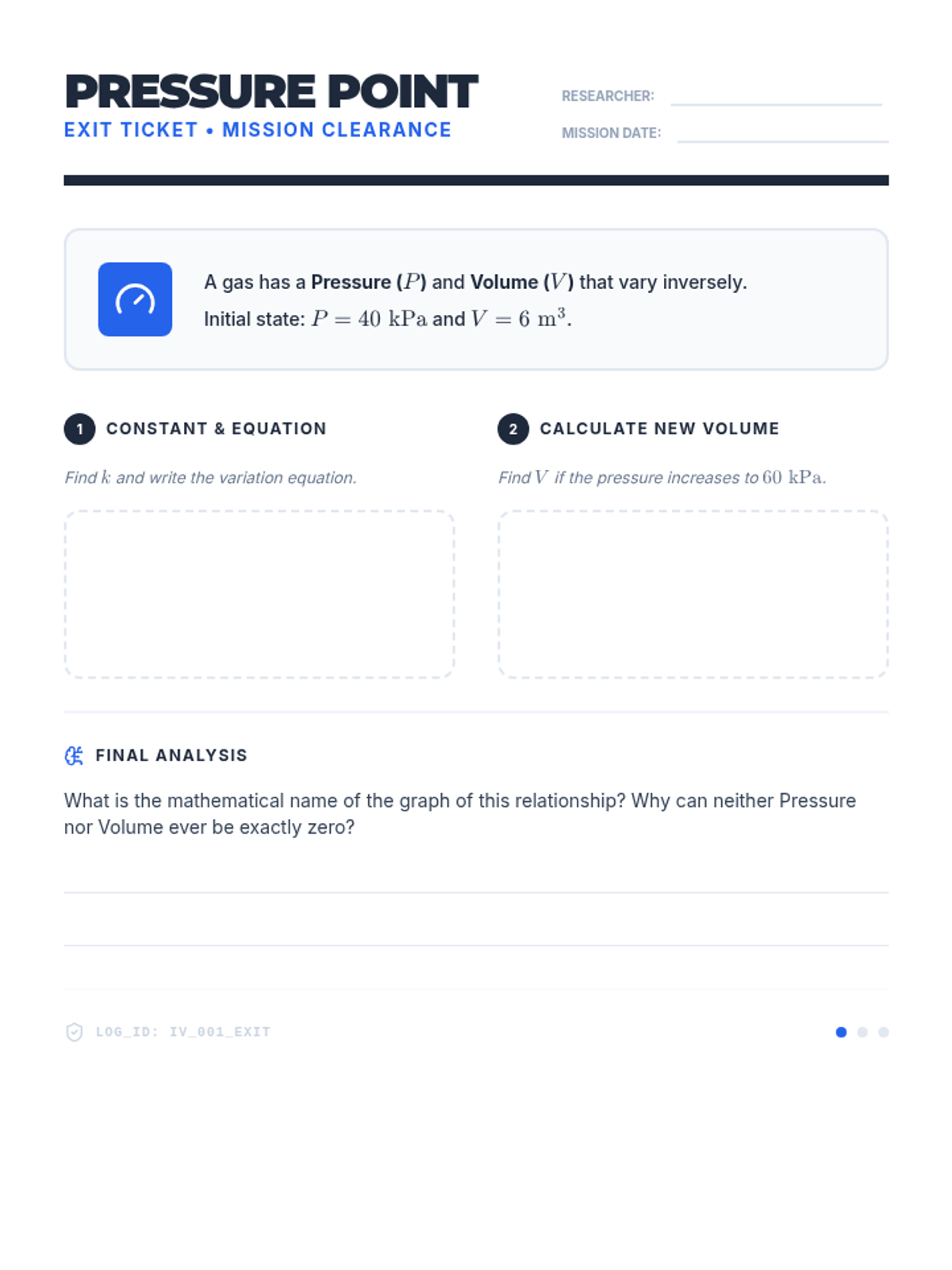
A formal exit ticket for inverse variation. Revised for single-page layout, better math rendering, and balanced work areas.
A sleek, high-contrast slide deck for inverse variation. Revised to fix math rendering, adjust viewport overflow, and correct the hyperbola graphic.
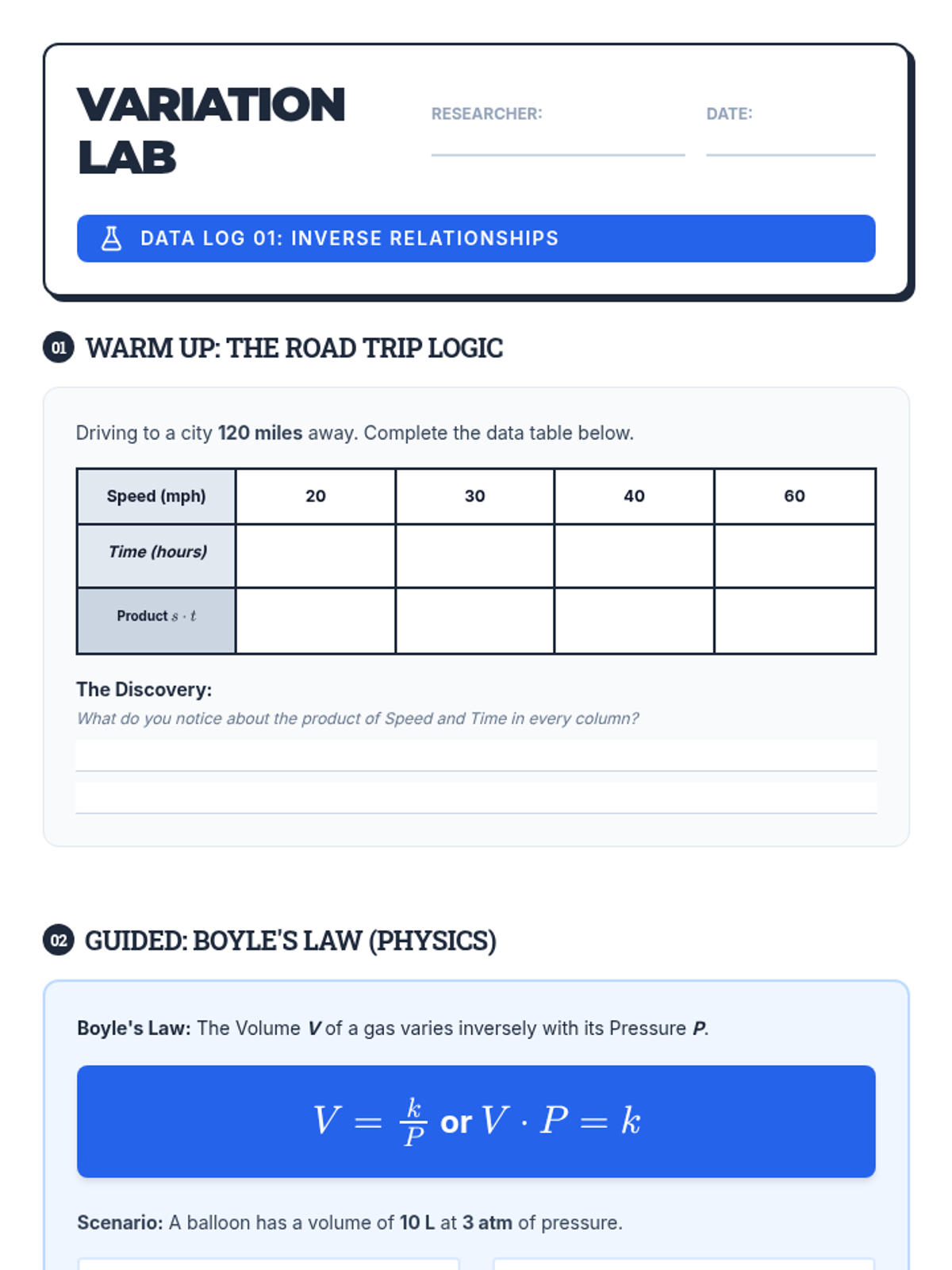
A student-facing handout containing the Warm Up, Guided Instruction, and Independent Practice for inverse variation. Revised for better page breaks, increased contrast, and added pedagogical scaffolding. Fixed math rendering and work areas.
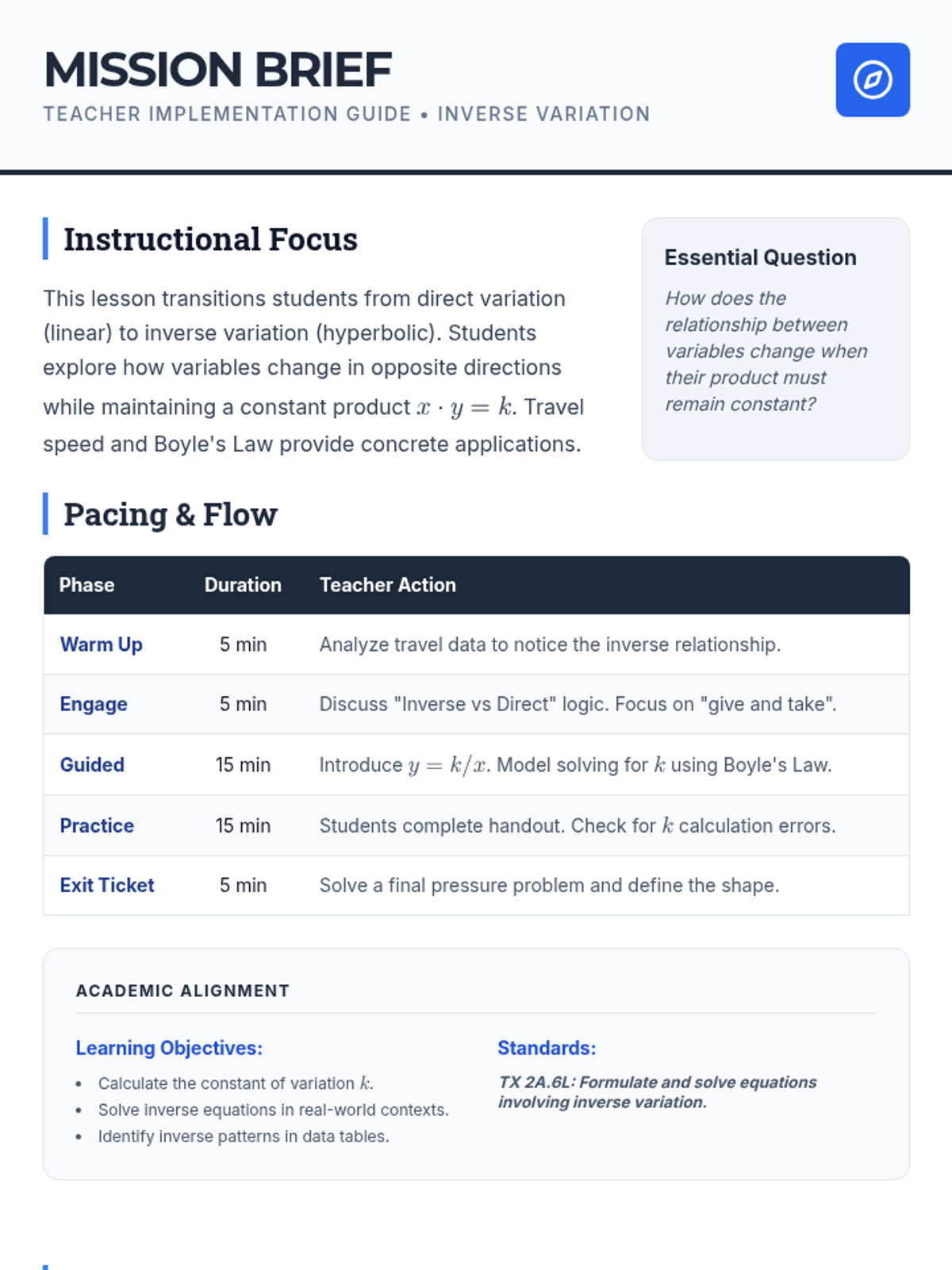
A comprehensive teacher implementation guide for the Inverse Investigators lesson, including pacing, standards alignment, answer keys, and pedagogical tips. Revised for better page breaks and math rendering.
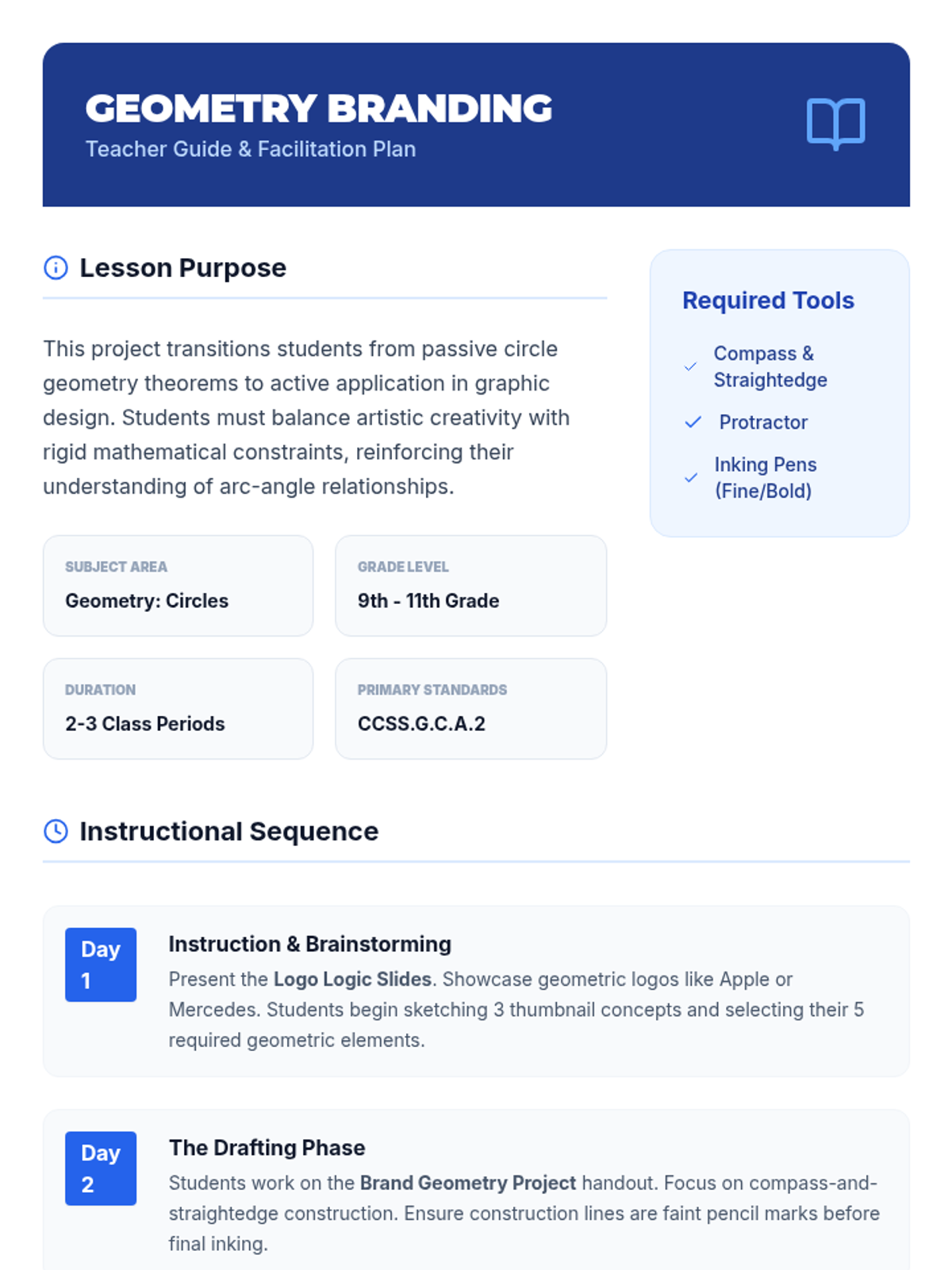
A comprehensive teacher guide for facilitating the Logo Logic project. Includes lesson pacing, a list of required materials, common student misconceptions to watch for, and strategies for differentiation.
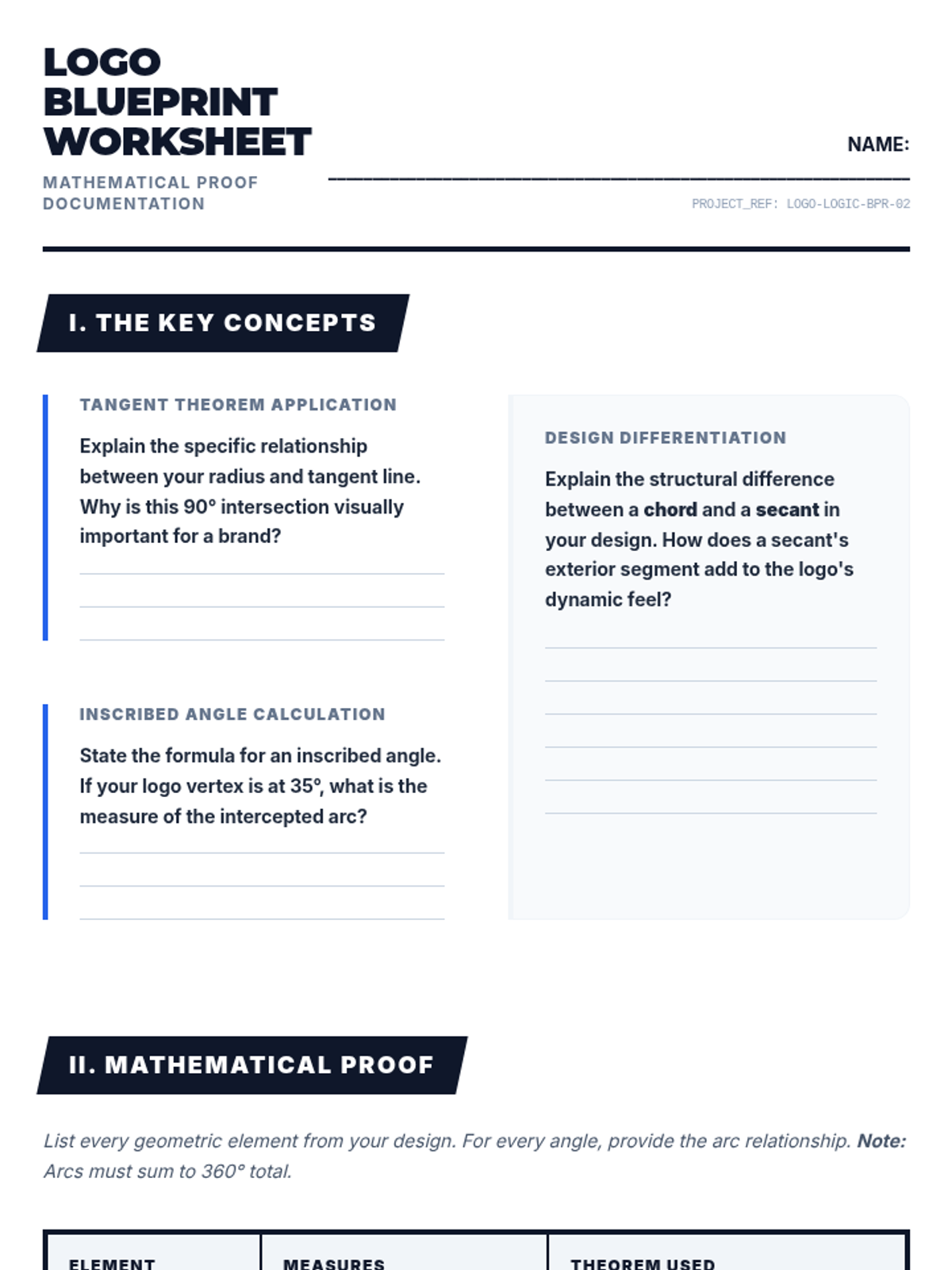
A structured worksheet for students to document the geometric proofs behind their logo design. It includes a table for recording measures of tangents, secants, and angles, plus reflection questions on the design process.
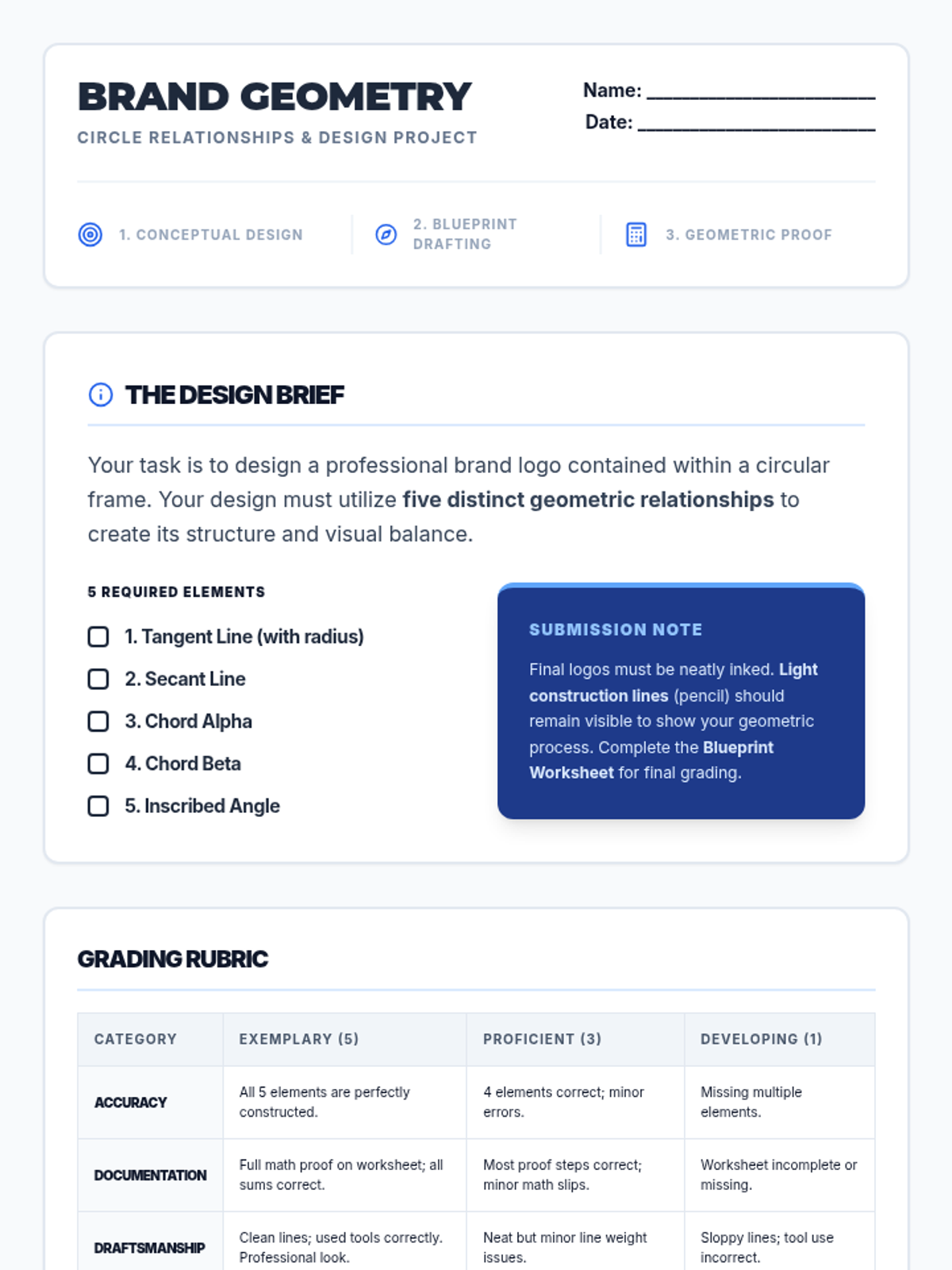
A comprehensive student project handout for the Brand Geometry project. Includes design constraints, a workspace for drafting, and a detailed grading rubric based on geometric accuracy and creative execution.
A visual presentation introducing circle geometry concepts (tangents, secants, chords, inscribed angles) through the lens of professional logo design. Includes architectural diagrams and project requirements.
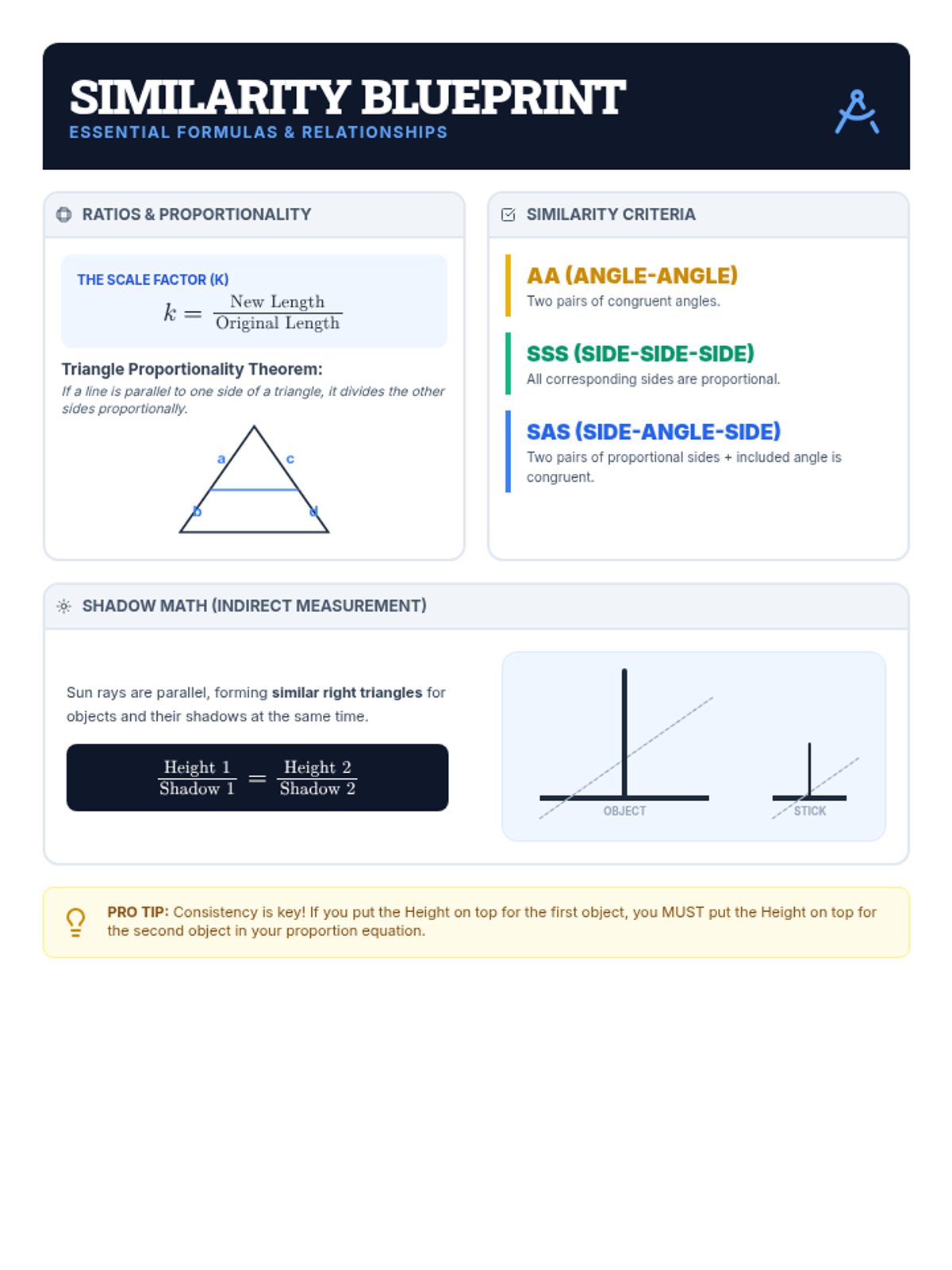
A student-friendly reference sheet for similarity concepts. Includes formulas for scale factor, similarity criteria (AAA, SSS, SAS), and a visual guide for shadow trigonometry.