A 2-page worksheet for Primary 3 students to identify technology through a sorting task and illustrate how various technologies assist in daily tasks. Revised to fix page breaks, layout spacing, and drawing area sizing.
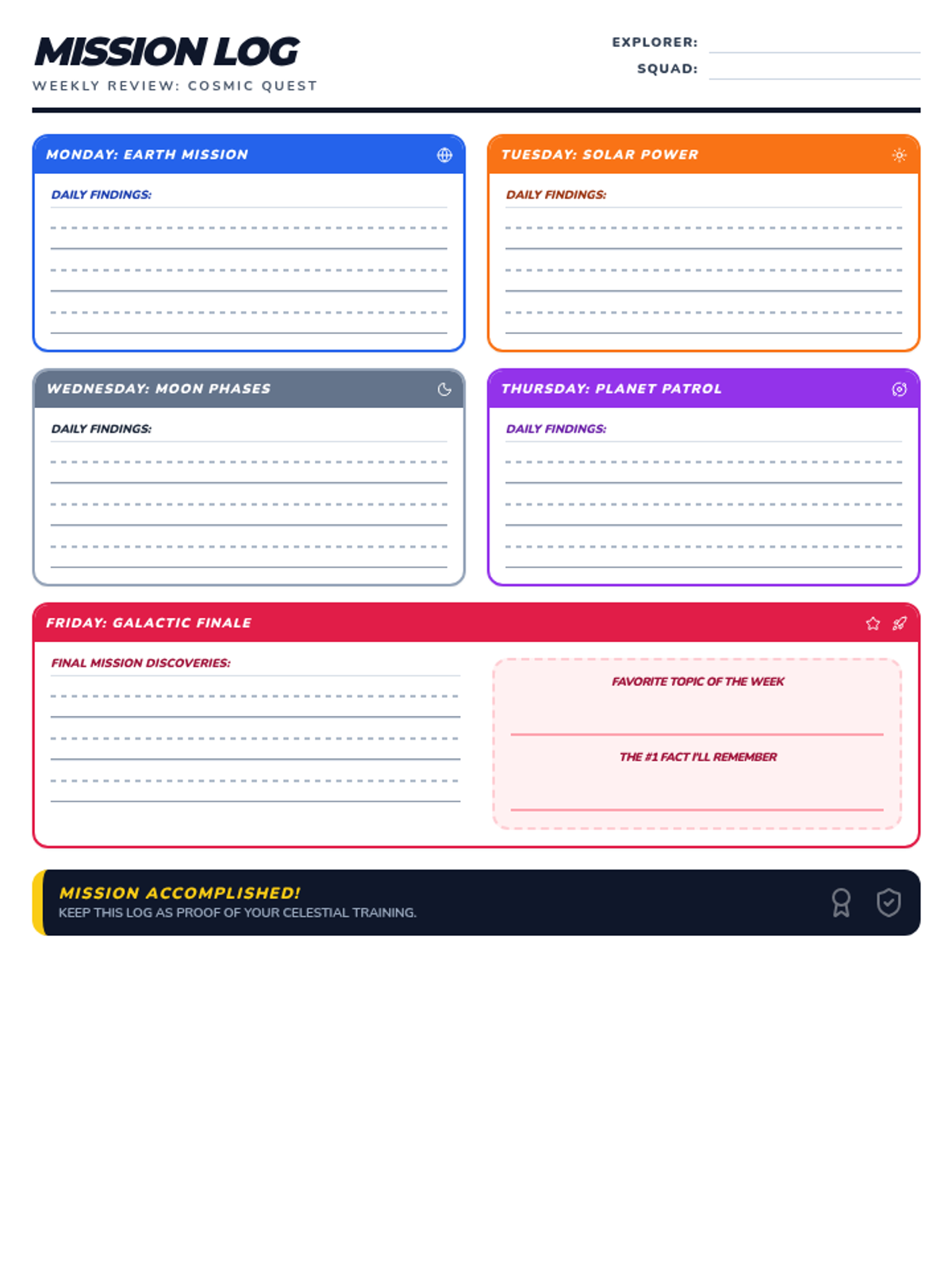
A weekly summary recording sheet for students to collect 2-3 facts each day about the topics covered in the Cosmic Quest Review Week. Features primary handwriting lines and thematic design for each day. Updated order: Monday (Sun), Tuesday (Moon), Wednesday (Earth).
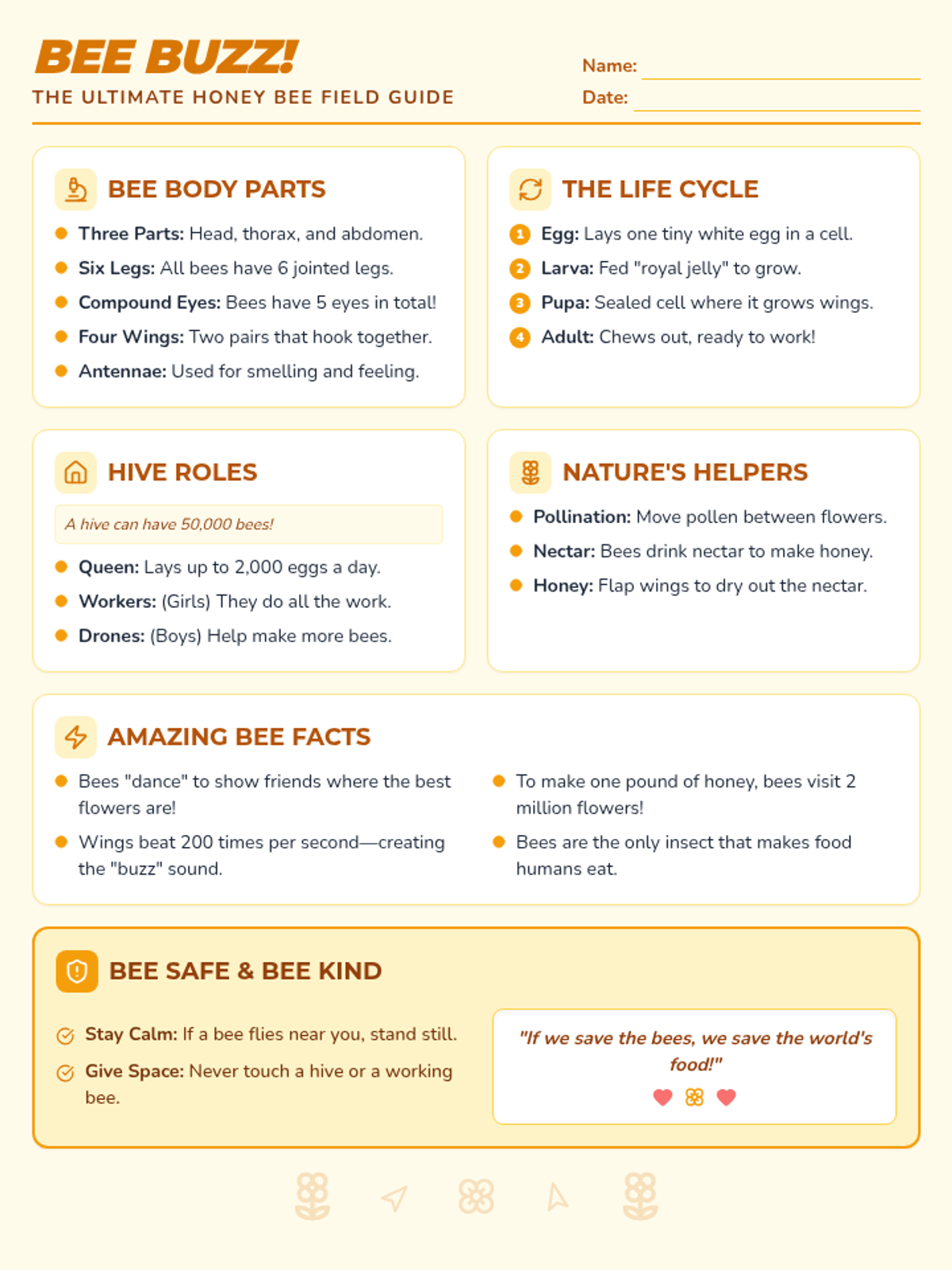
An improved honey bee fact sheet for third graders with fixed page breaks and consistent bullet point styling. Features clear sections on anatomy, life cycle, roles, pollination, fun facts, and safety in a warm field-guide aesthetic.
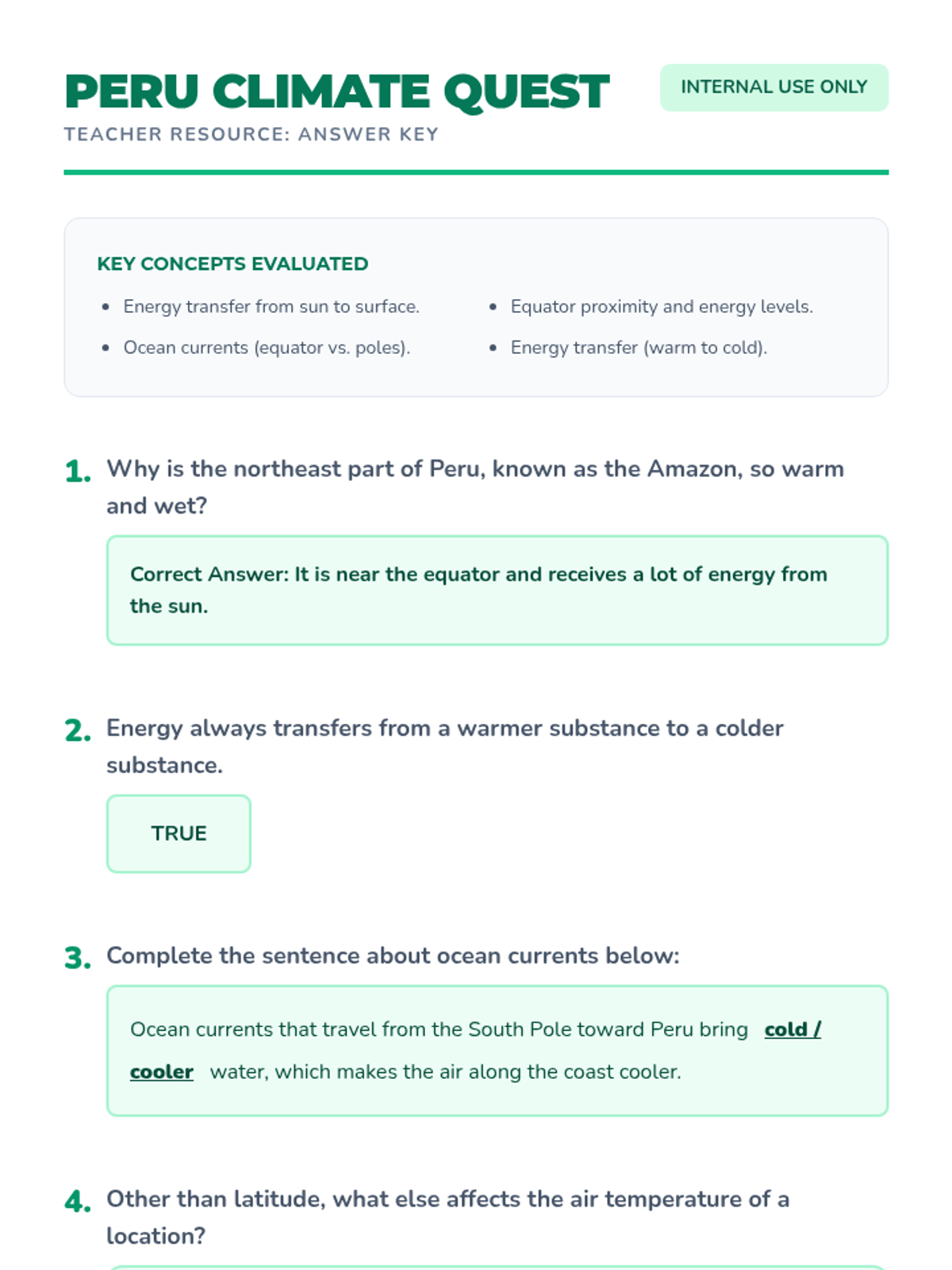
A teacher's answer key for the Peru Climate Quest homework assignment, including exemplar responses and grading tips.
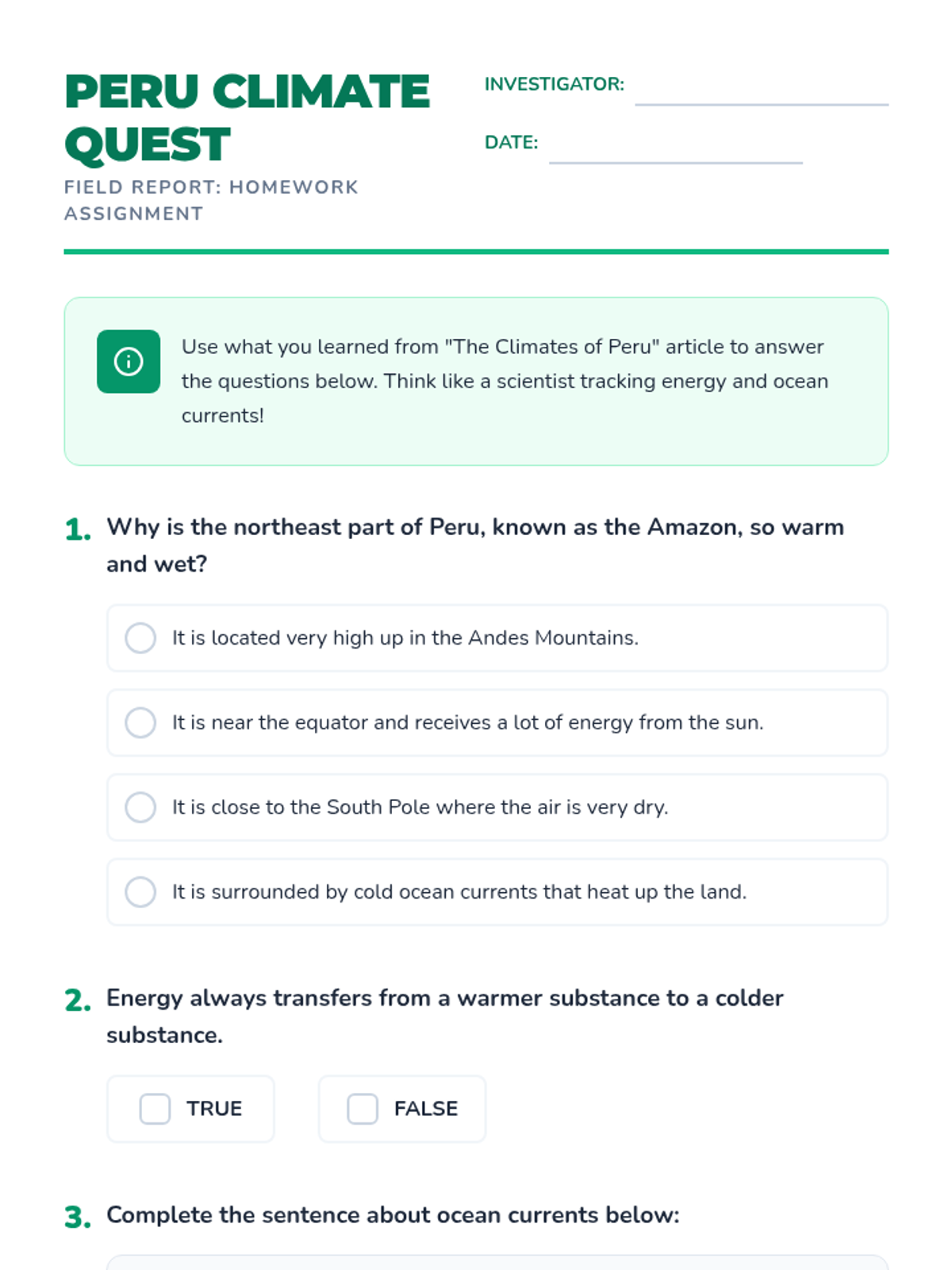
A 3rd-grade level homework assignment about Peru's climates, featuring multiple choice, true/false, fill-in-the-blank, and short answer questions.
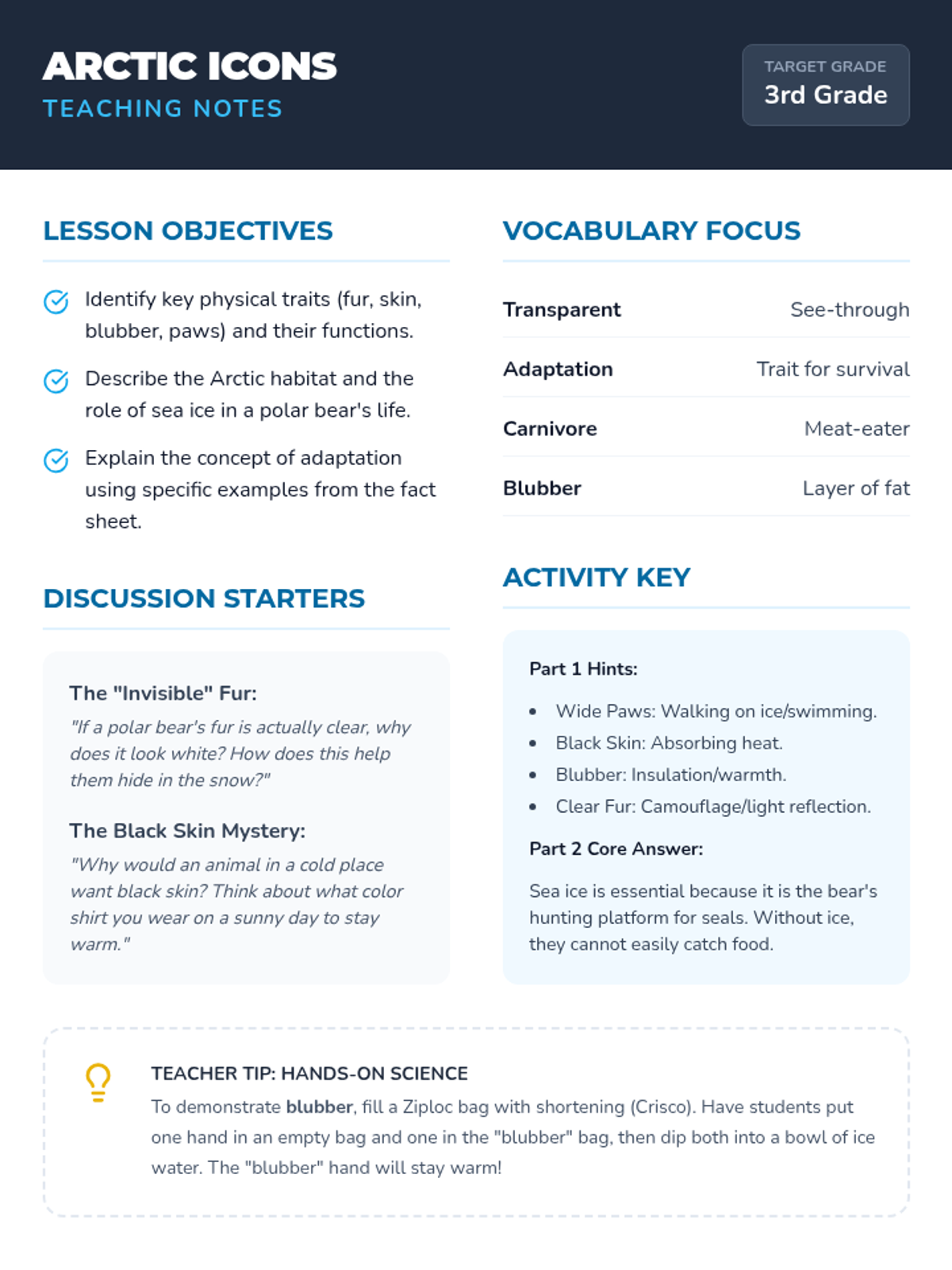
Instructional guidance for teachers. Revised to fix vocabulary formatting and improve text contrast.
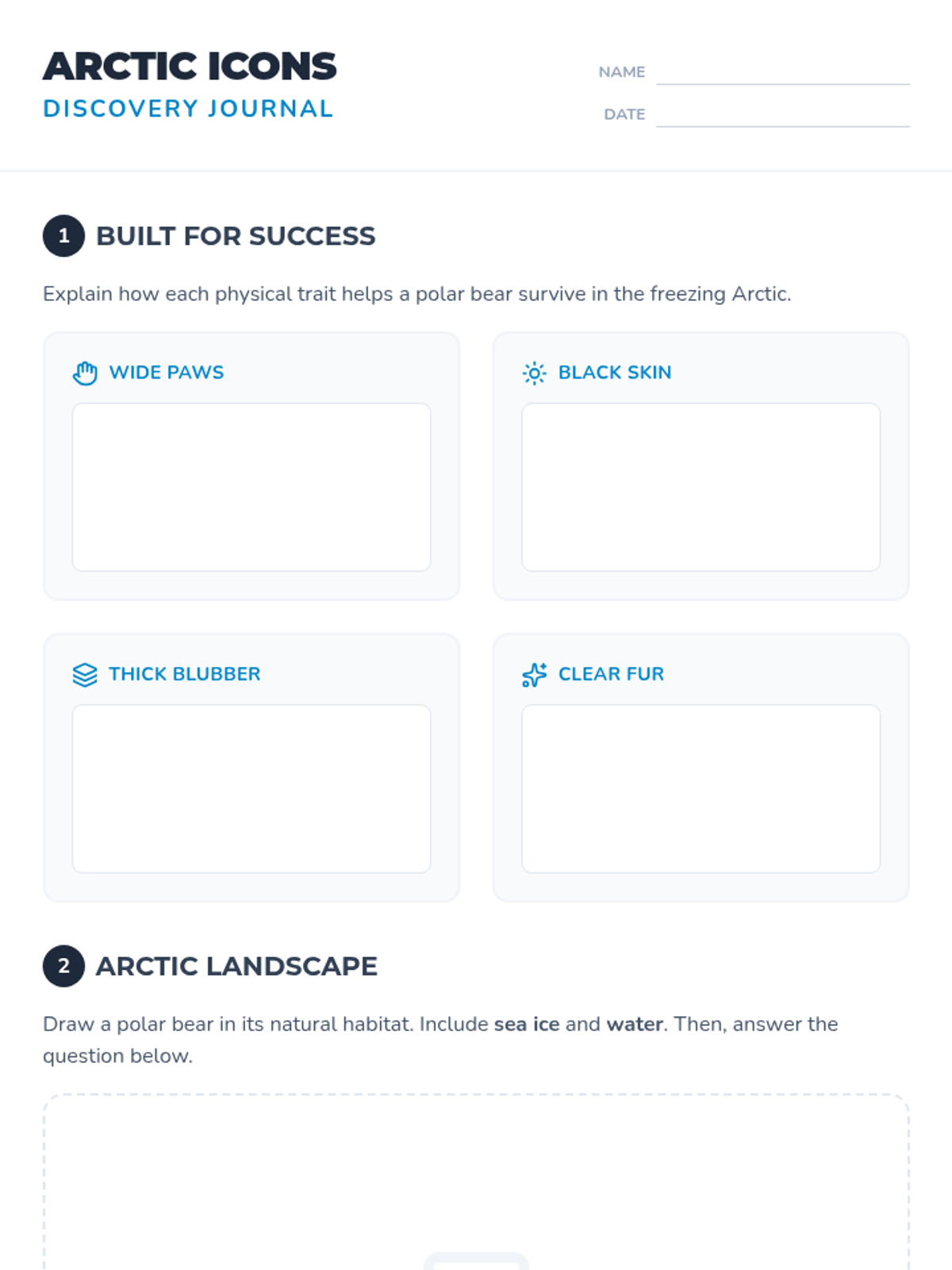
A student activity sheet featuring anatomy analysis, habitat drawing, and a critical thinking question. Revised with larger work areas, better page breaks, and dotted handwriting lines.
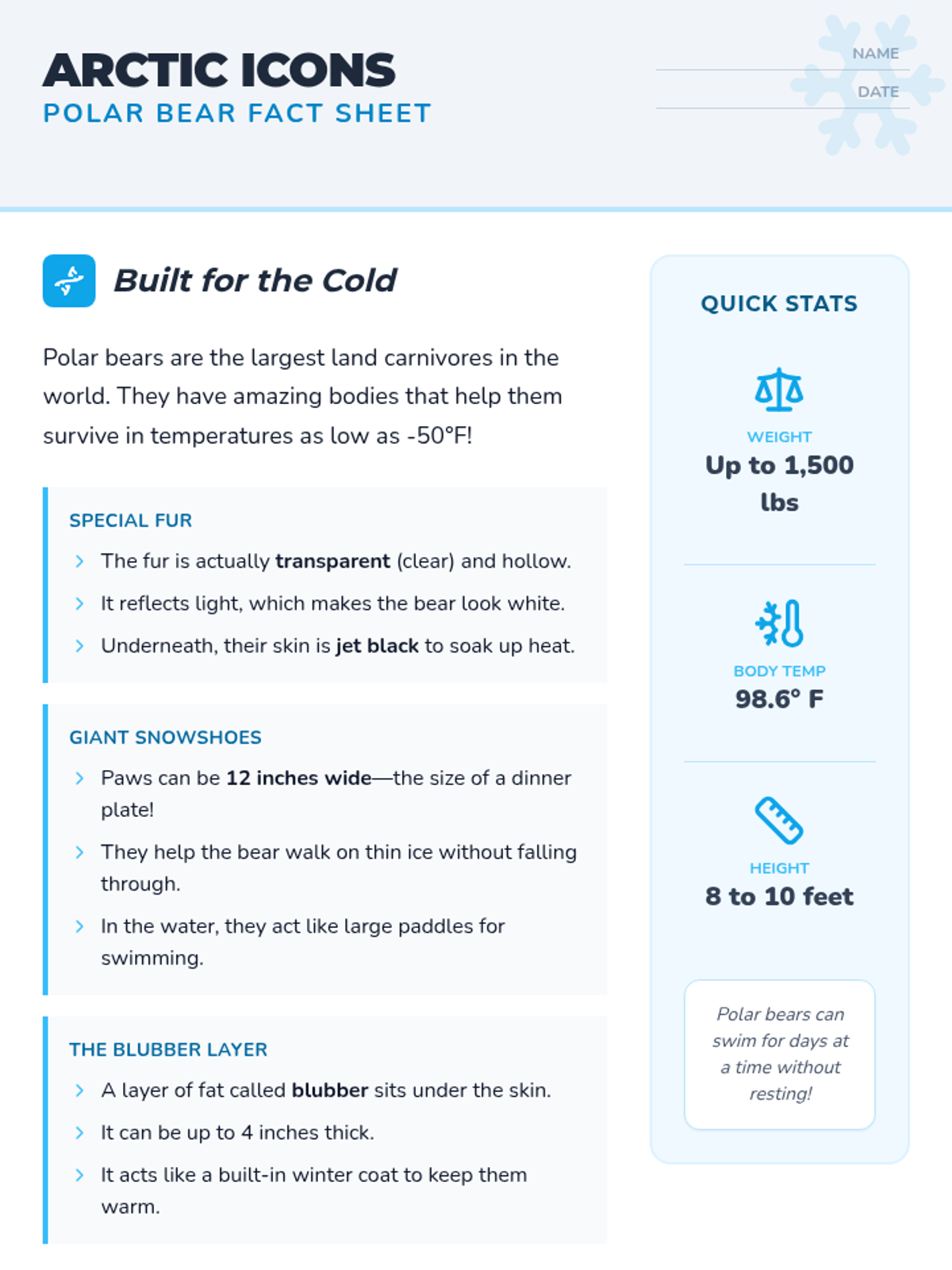
A visually engaging fact sheet for third graders covering polar bear physical traits and habitat. Revised to use bullet points for improved readability.
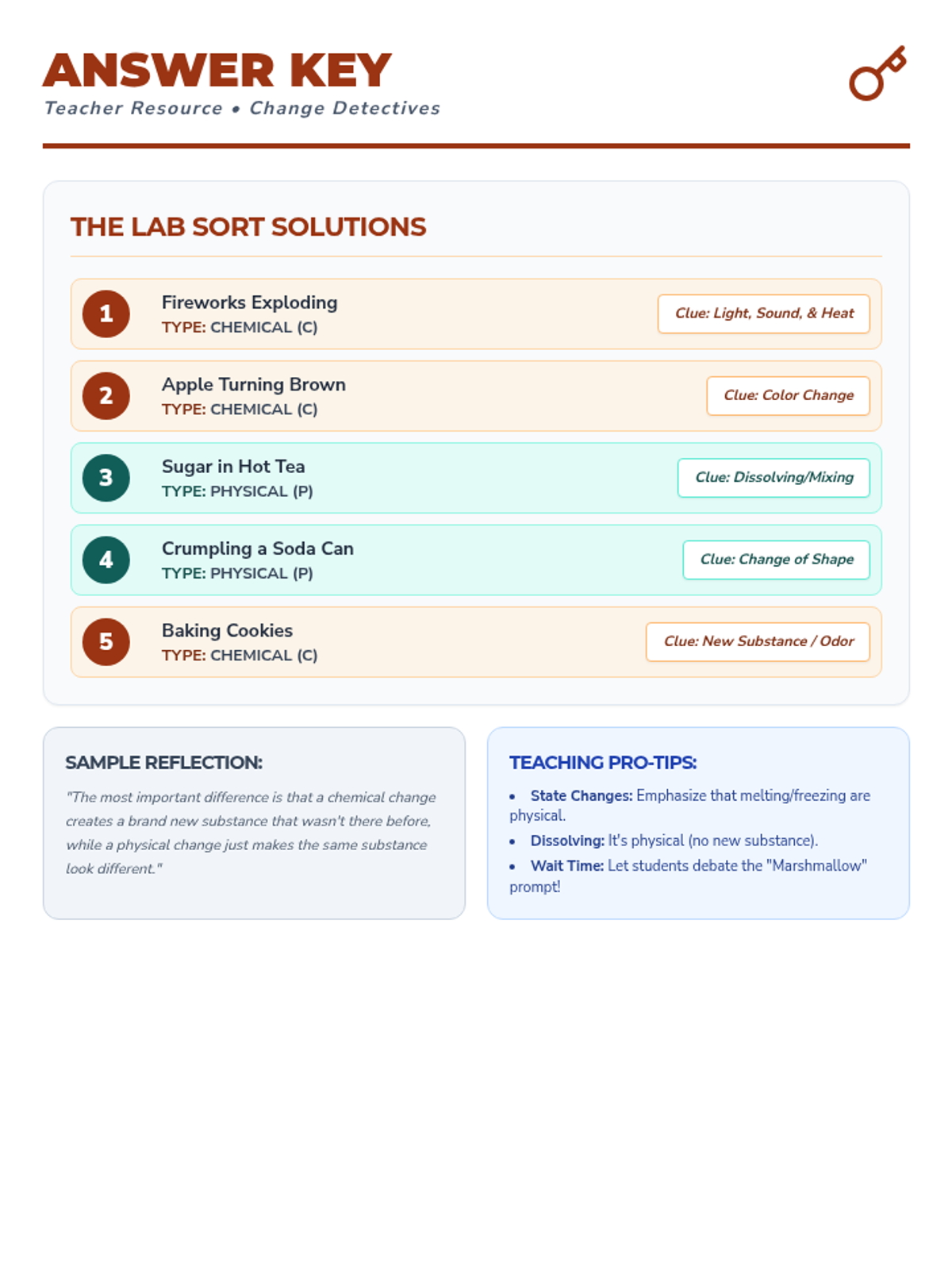
A comprehensive answer key and teacher resource for the Matter Makeovers lesson, updated with the new scenario solutions.
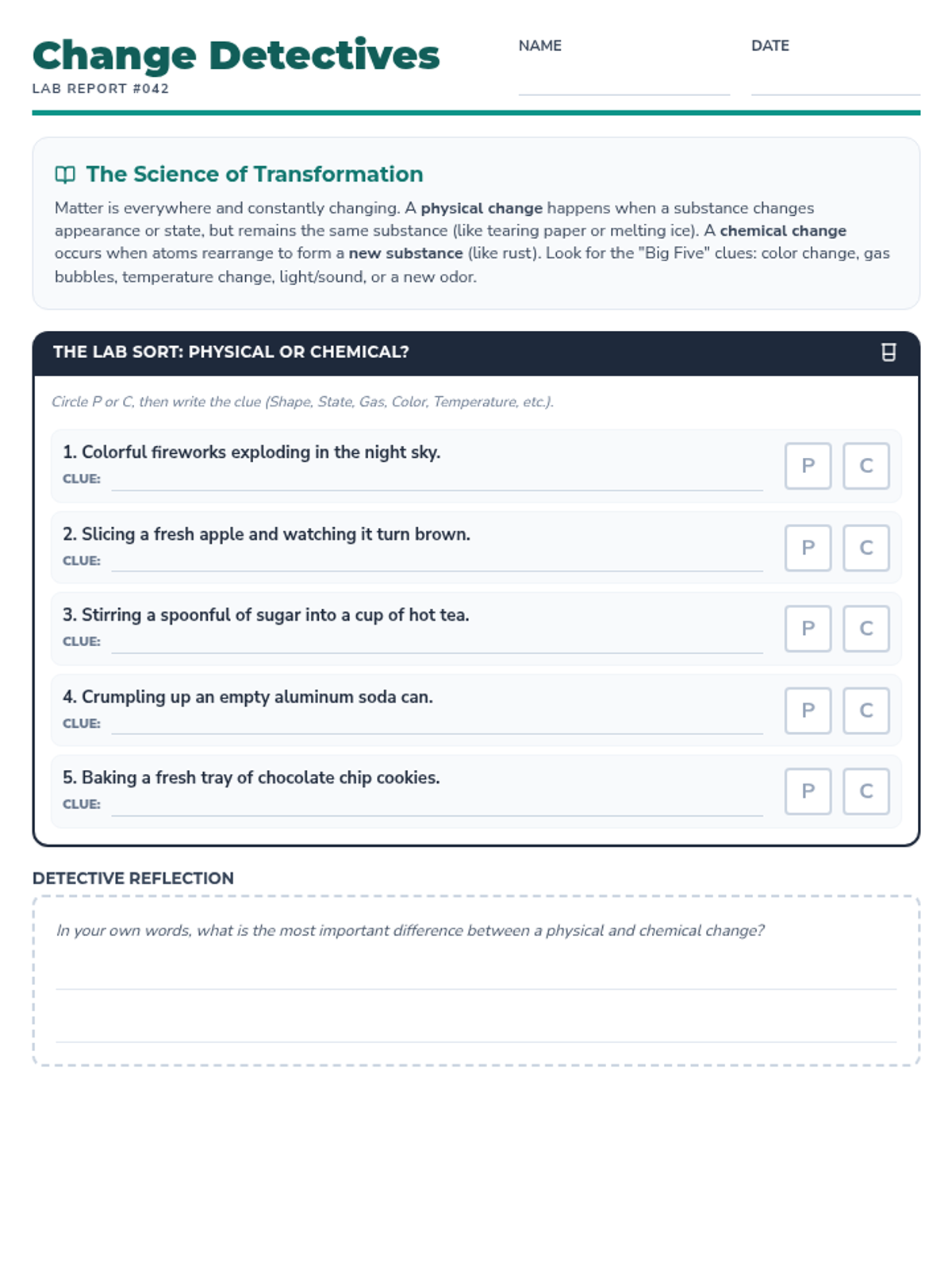
A student worksheet featuring a reading passage on matter transformation and a categorizing activity for physical vs. chemical changes with updated scenarios.
An engaging slide deck explaining physical and chemical changes with visual examples and the '5 Clues' for detection.
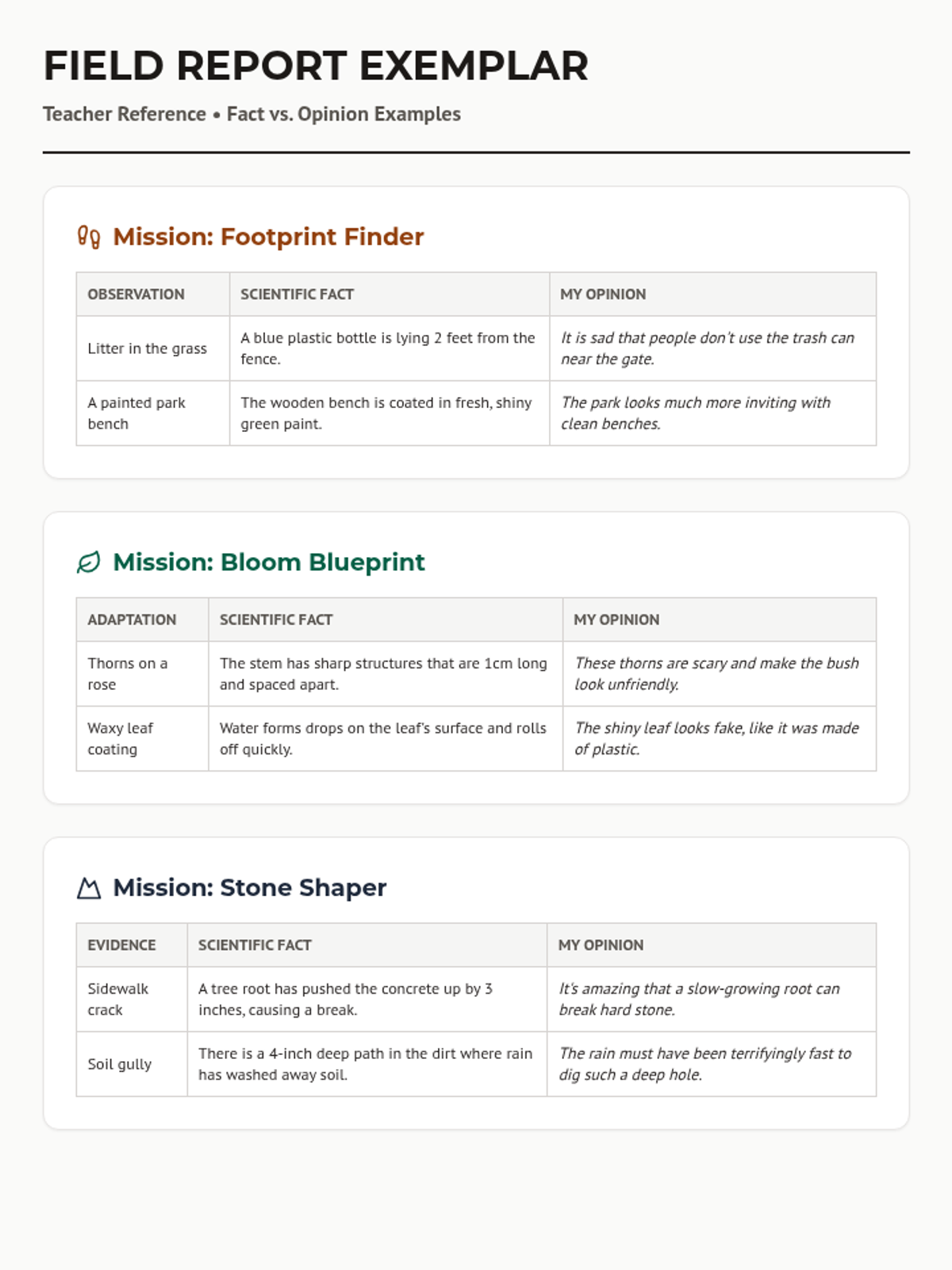
An answer key and exemplar resource for teachers, providing concrete examples of how students should record facts and opinions across the three science topics.
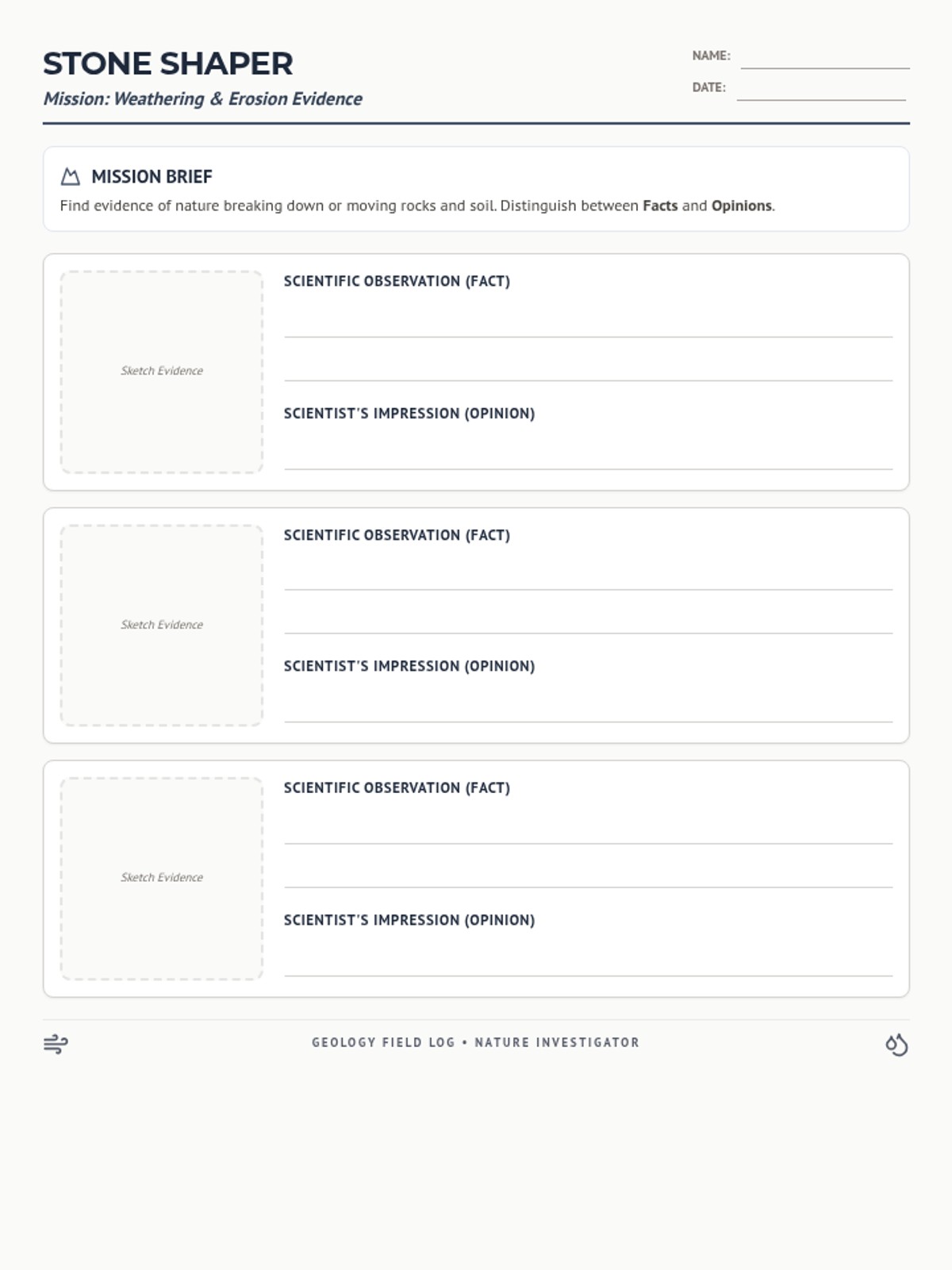
A nature-based graphic organizer for recording evidence of weathering and erosion. Encourages students to separate objective observations from subjective feelings through sketching and writing.
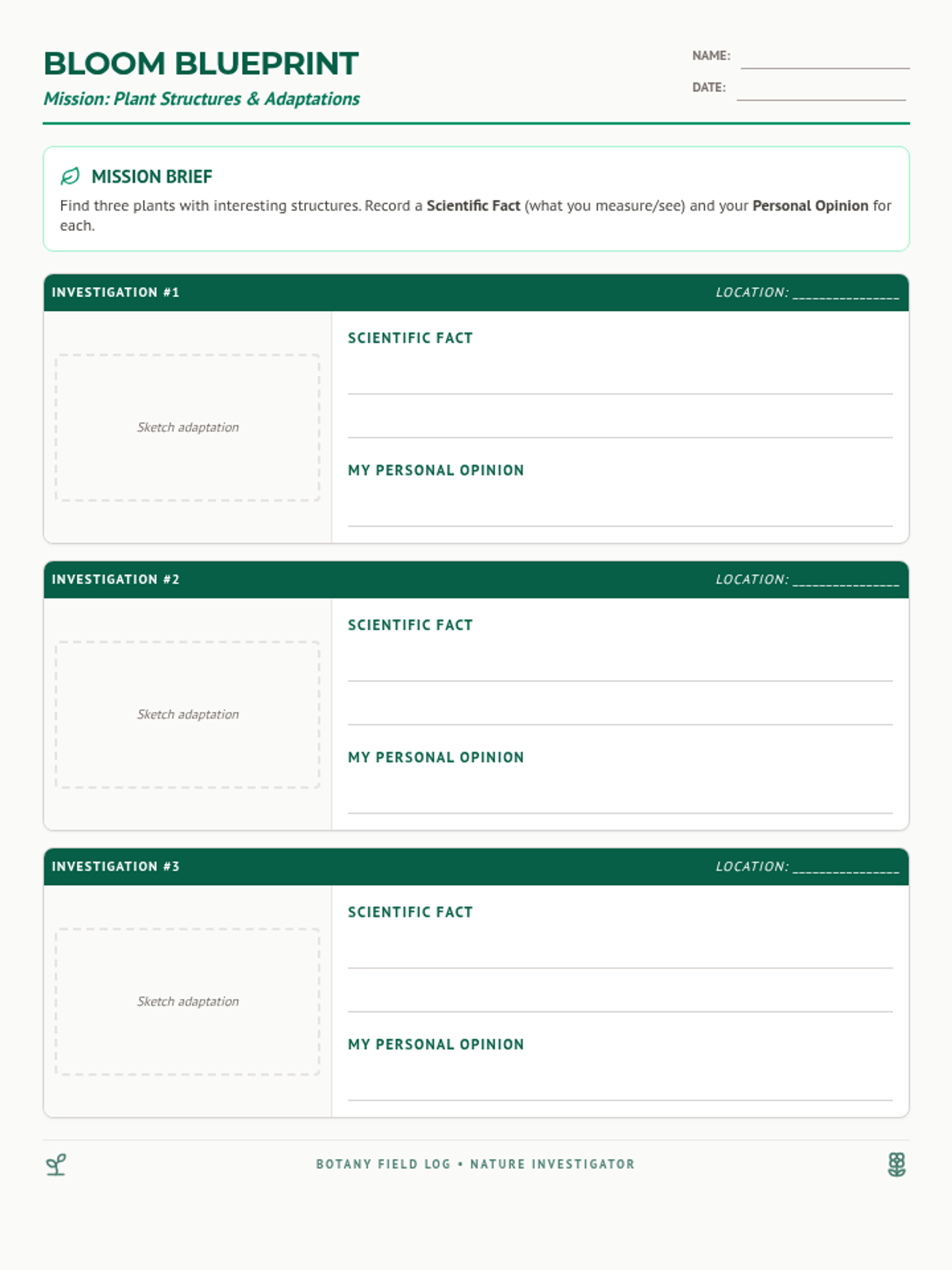
A graphic organizer focused on plant structures and adaptations. Students sketch plant parts and distinguish between verifiable scientific facts and subjective opinions.
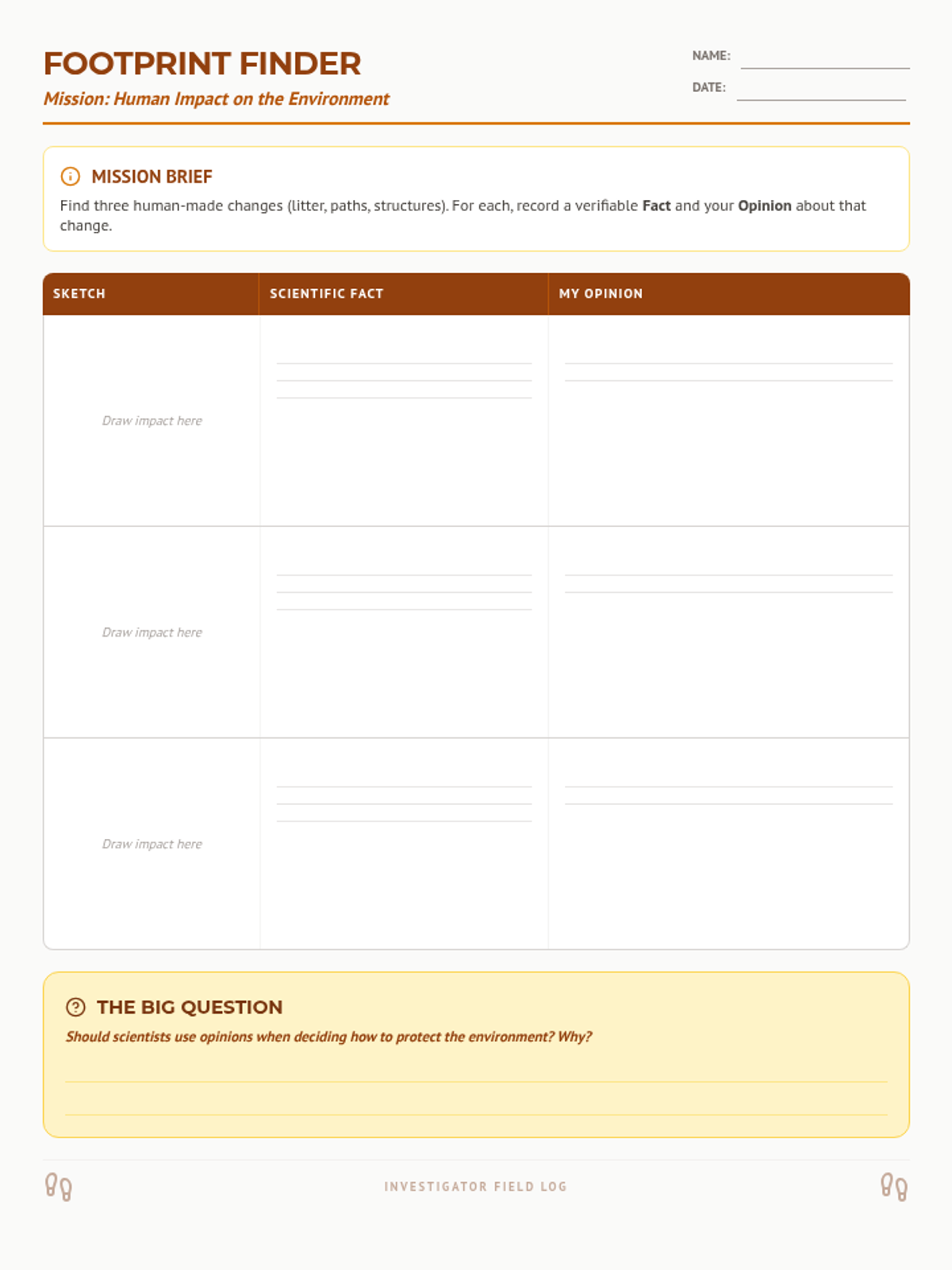
An outdoor graphic organizer for students to record human impact on the environment. Features a table for sketching observations and writing corresponding facts and opinions.
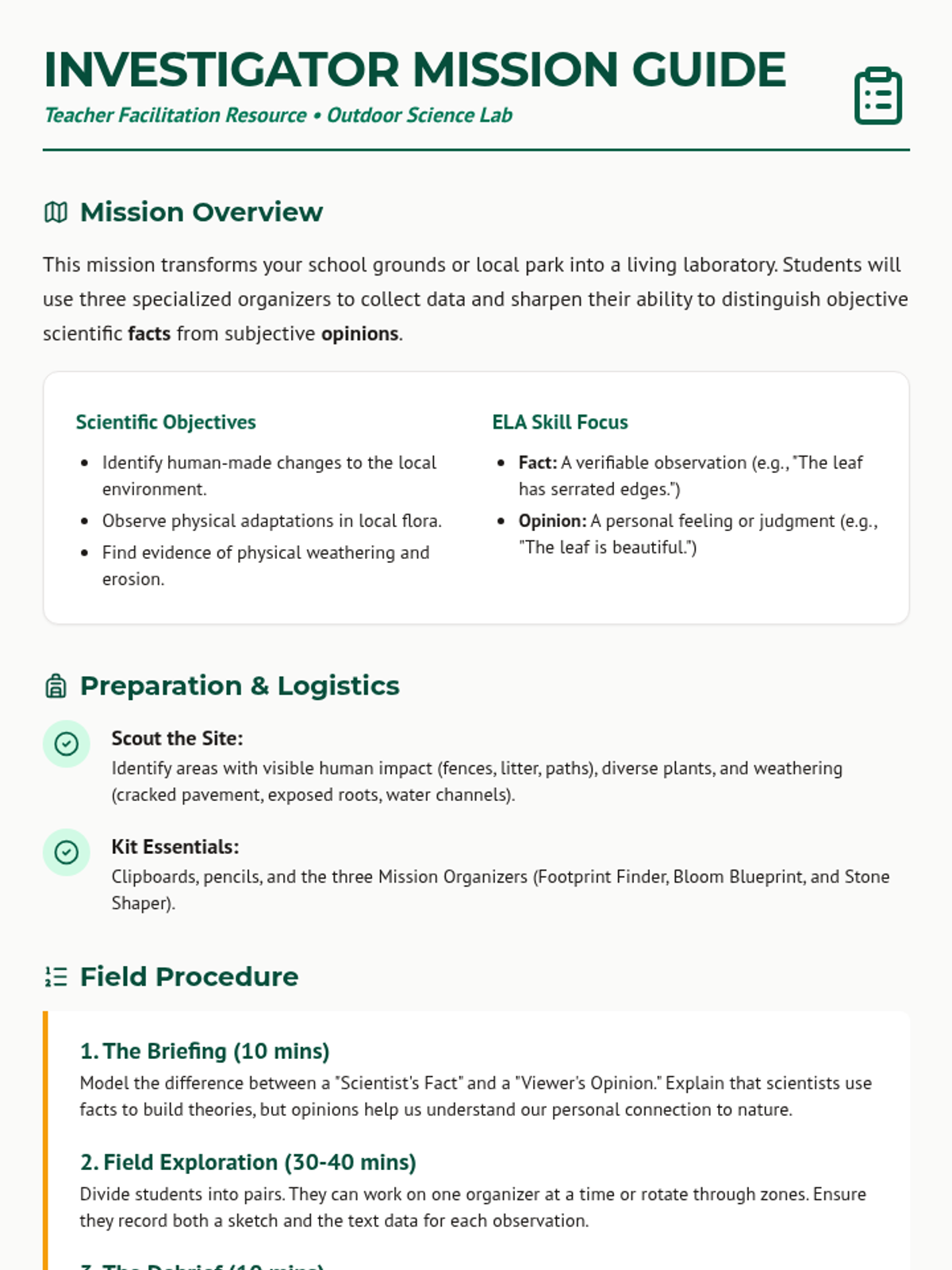
A comprehensive teacher's guide for conducting outdoor science observations. Includes setup instructions, ELA integration tips for fact vs. opinion, and differentiation strategies.
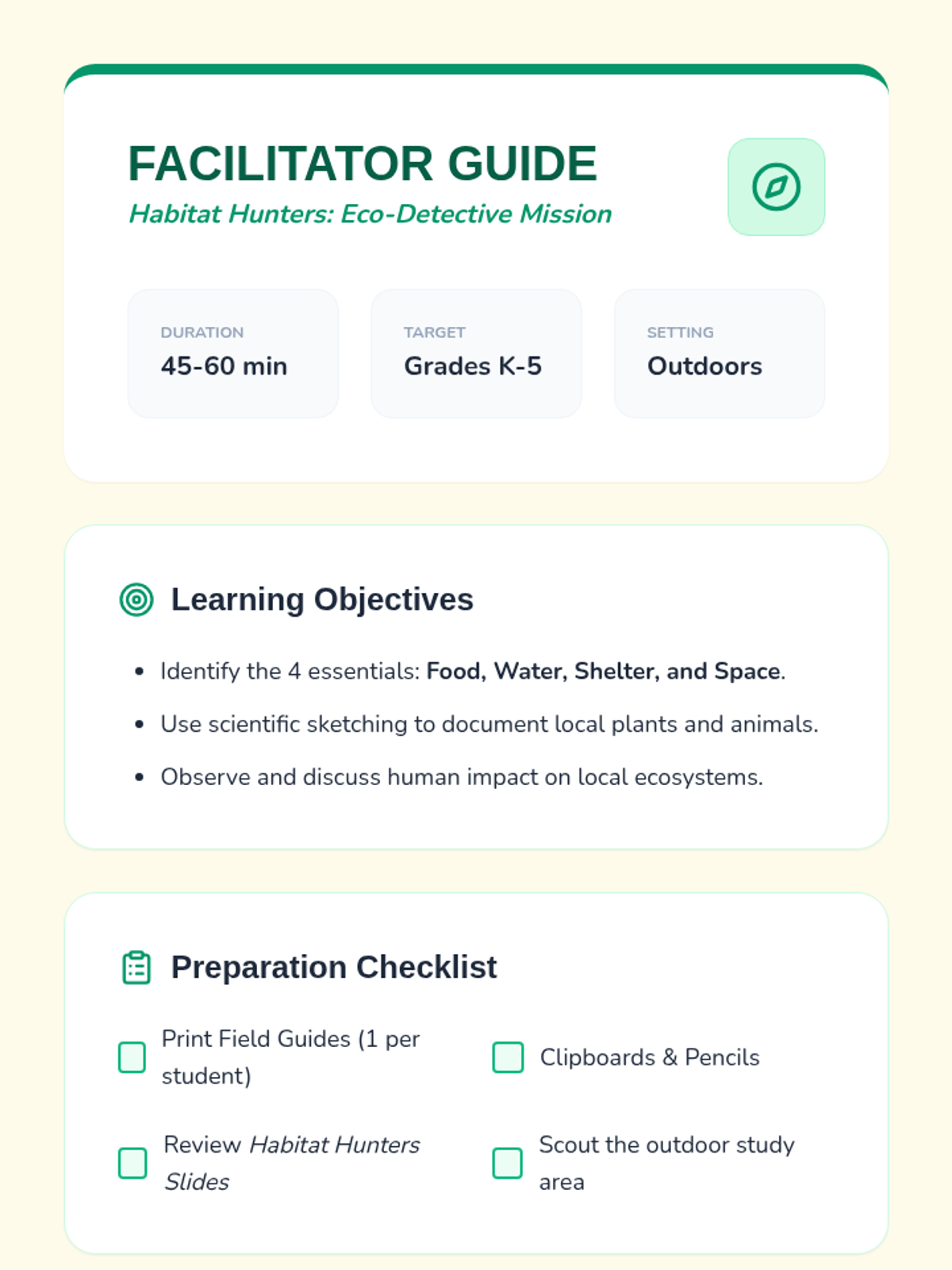
A teacher-facing instructional guide for facilitating the Habitat Hunters outdoor lesson, revised to improve page flow, remove blank pages, and clarify slide references.
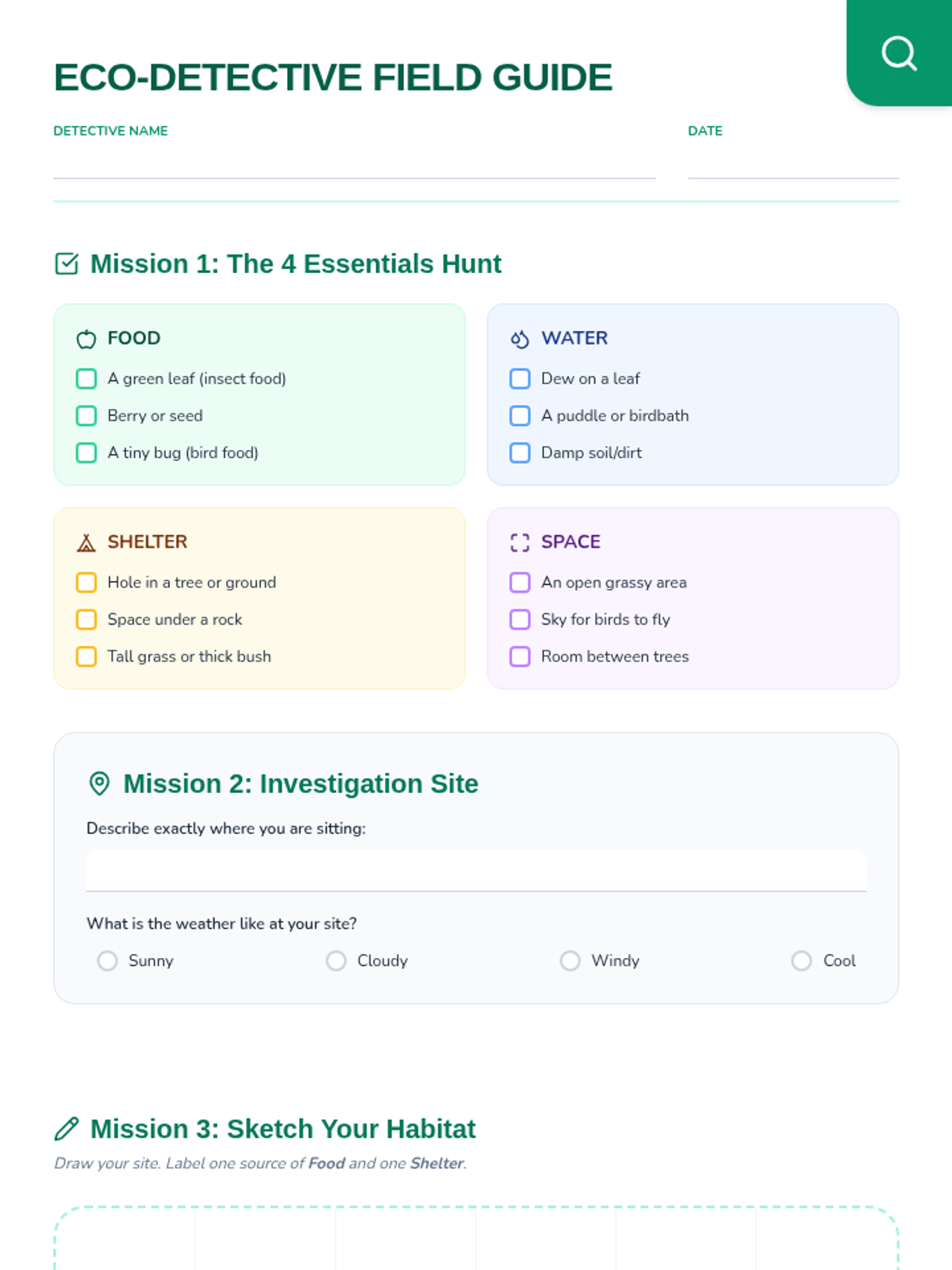
A comprehensive student field guide for outdoor habitat exploration, including a scavenger hunt checklist, a site sketch area, observation notes, and reflective journaling prompts. Revised for better page breaks and layout consistency.
An introductory presentation for a habitat-themed outdoor lesson, covering the four basic needs of living things and safety rules for outdoor exploration.
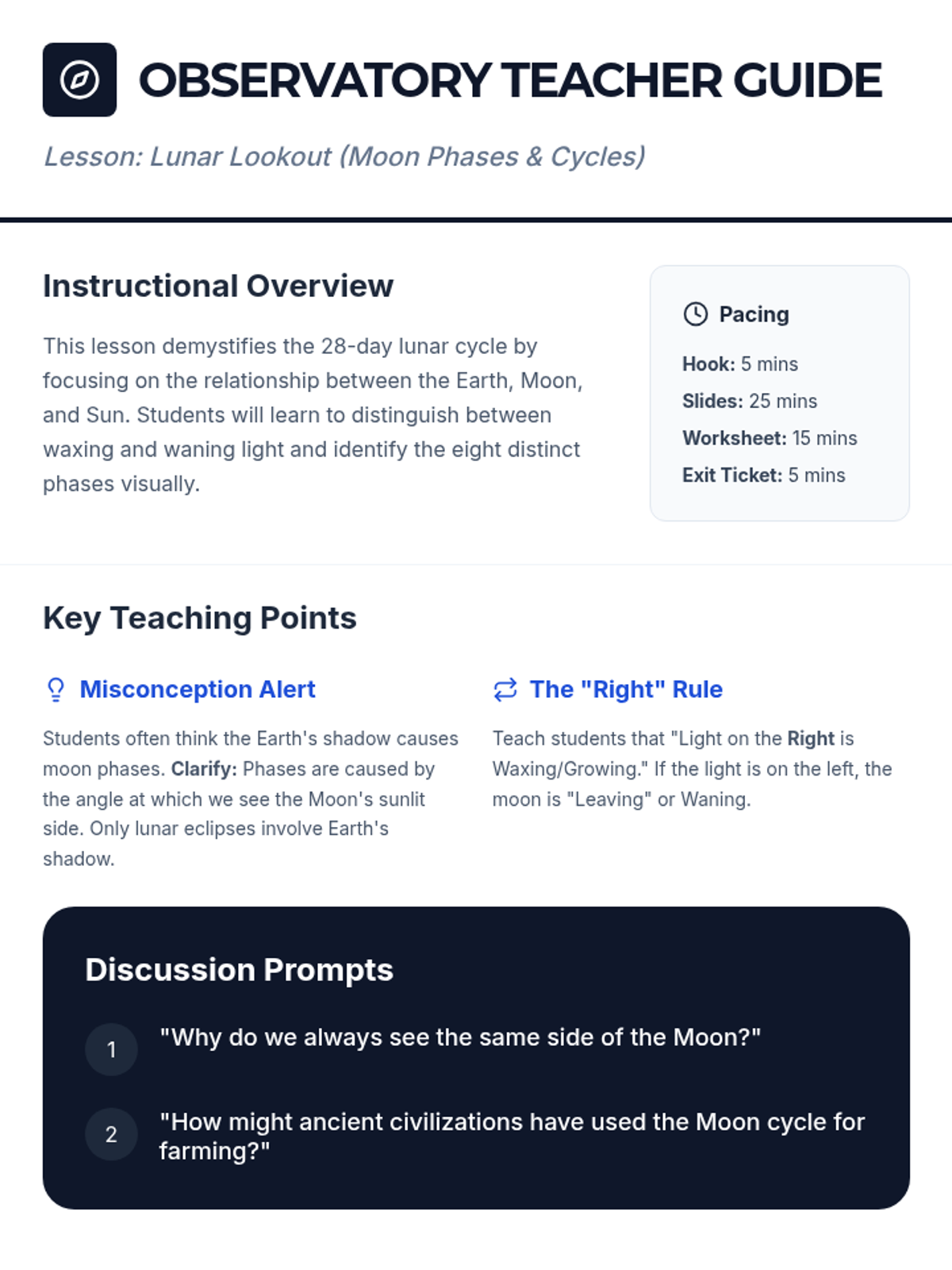
A comprehensive teaching guide for the Moon Phases lesson, including pacing, common misconceptions, discussion prompts, extensions, and a complete worksheet answer key.
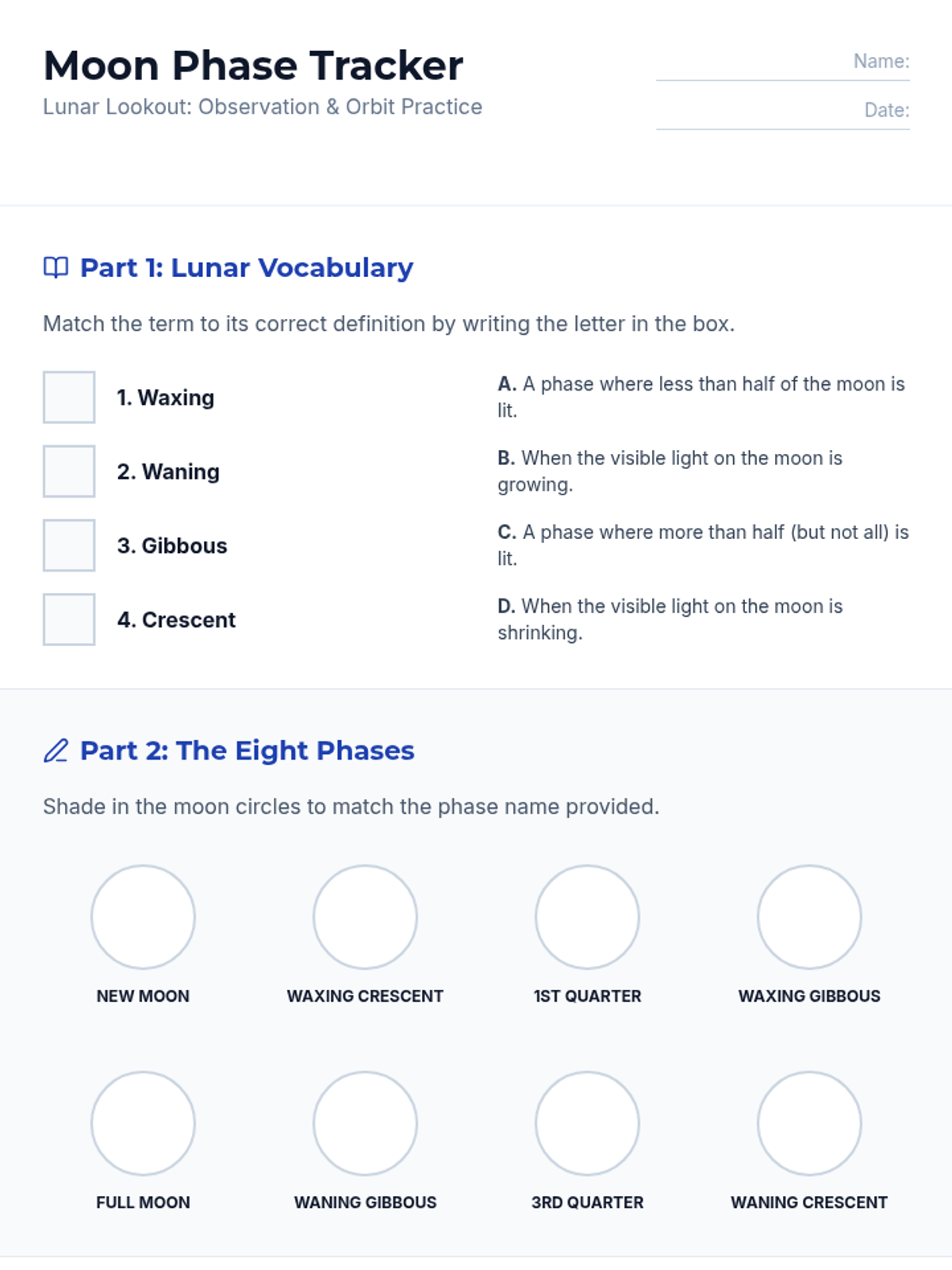
A student worksheet featuring vocabulary matching, diagram shading for the eight lunar phases, and critical thinking questions about the lunar cycle.
A comprehensive 15-slide presentation covering the 28-day lunar cycle, waxing and waning terminology, and detailed visual breakdowns of all eight moon phases using precise SVG diagrams.
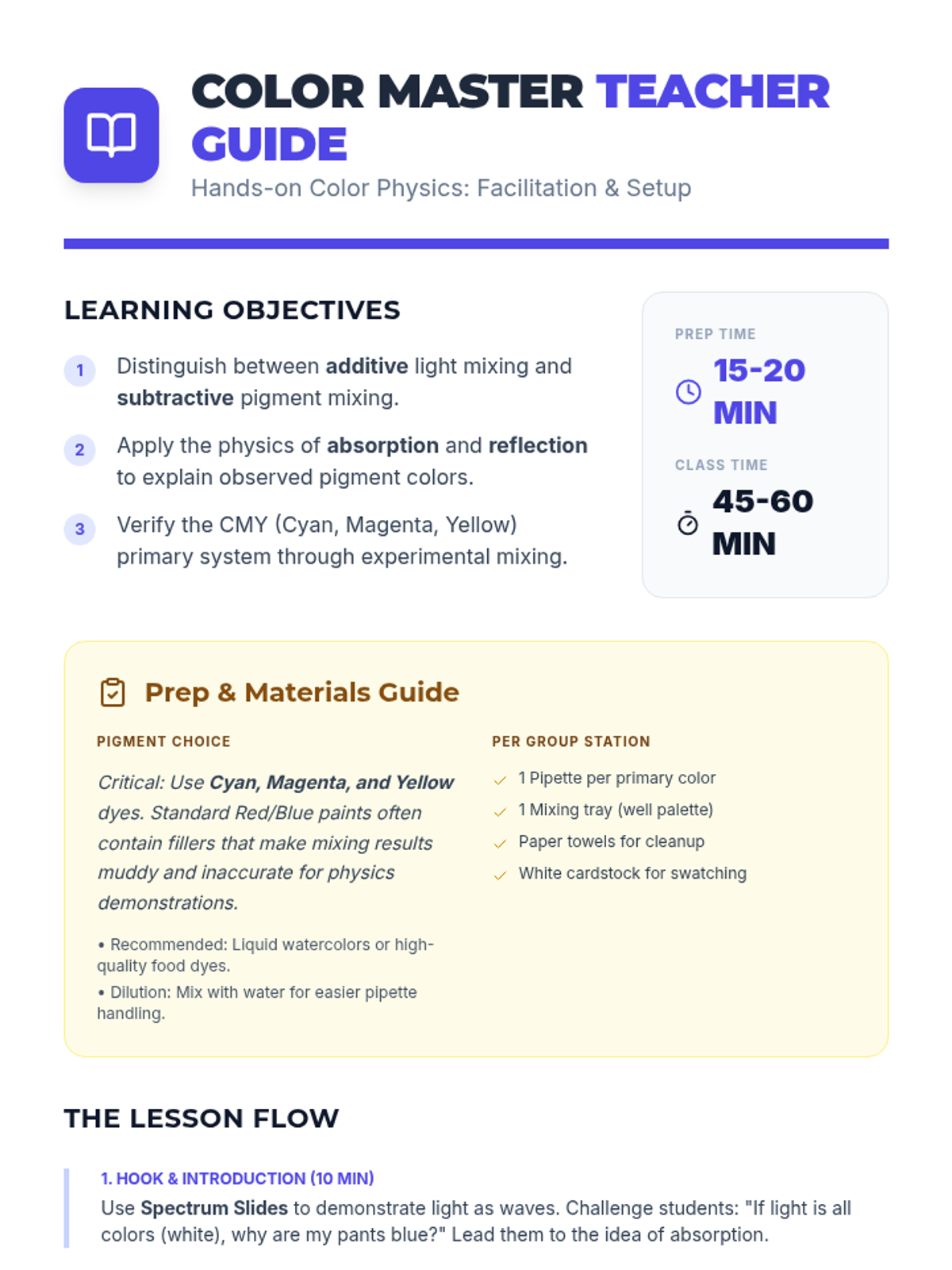
A comprehensive teacher guide for the Color Lab, including learning objectives, material lists, setup tips, and a facilitation script with fixed page-break handling.
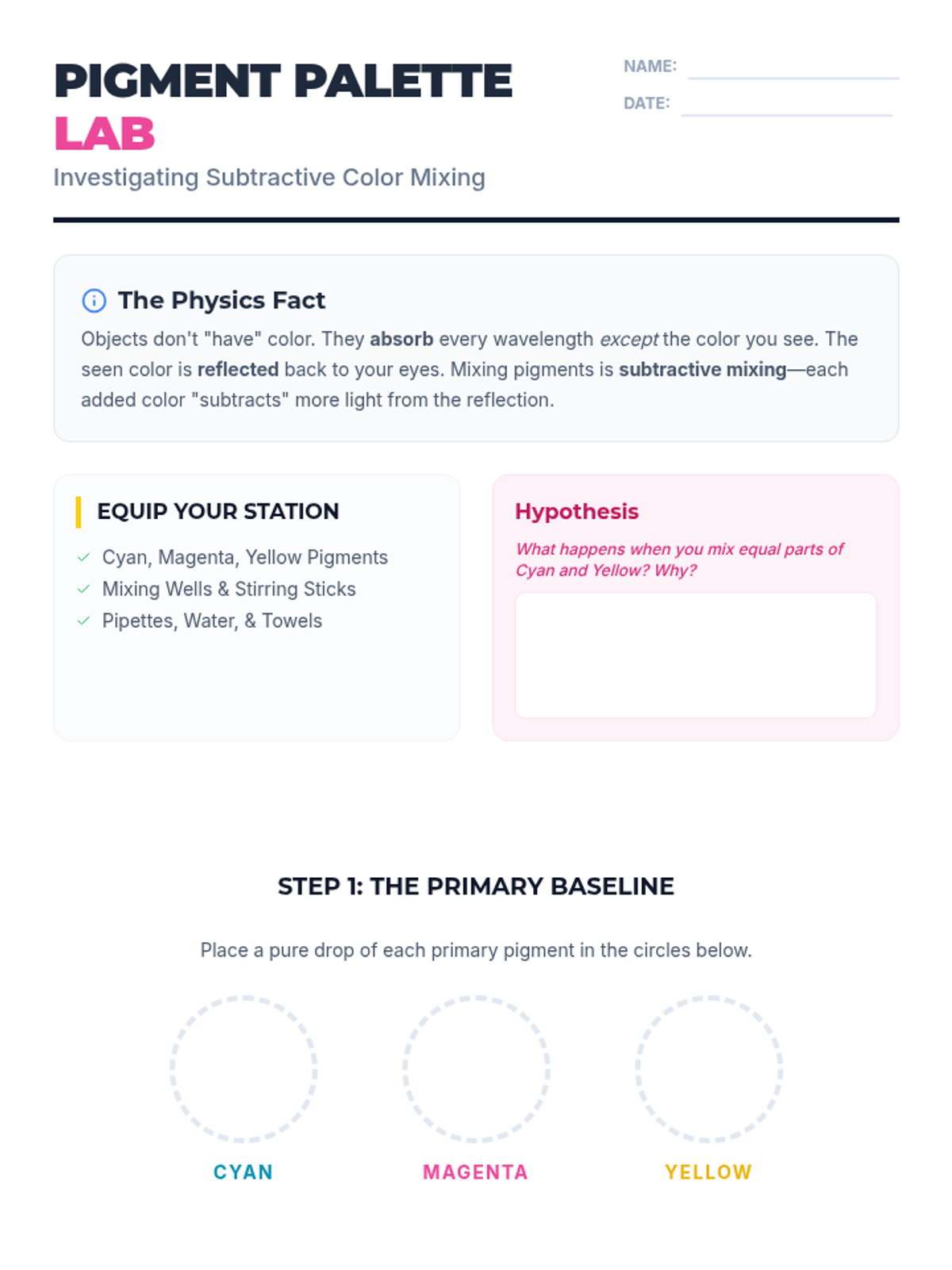
A two-page student lab worksheet for investigating subtractive color mixing using primary pigments. Includes primary swatches, mixing challenges, and reflection questions with optimized student work areas.
An introductory slide deck explaining the physics of visible light, additive color mixing (light), and subtractive color mixing (pigments) with accurate blending diagrams and high-contrast labels.
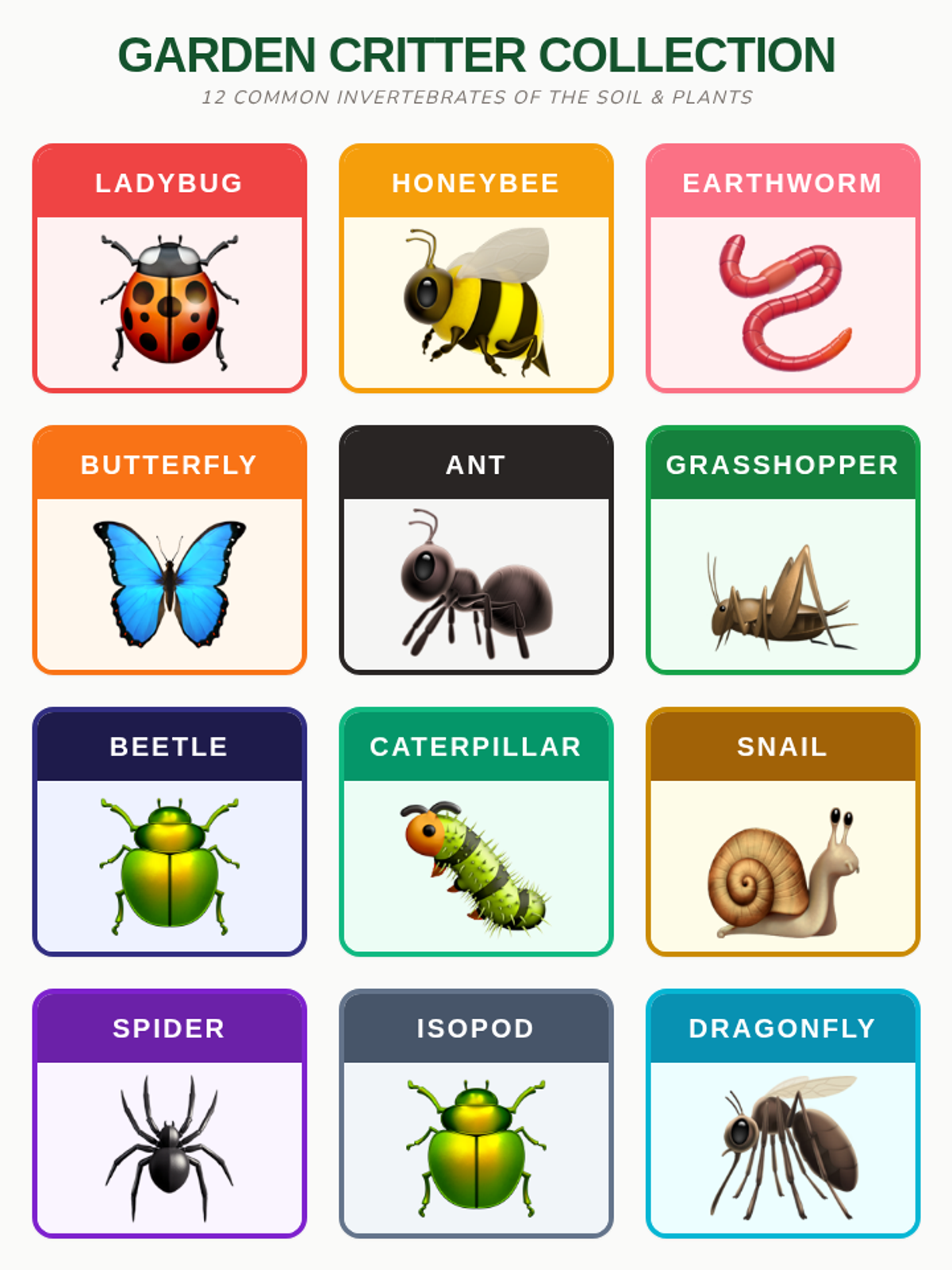
A compact 12-card set of common garden and dirt insects on a single page, perfect for bulletin boards or flashcards. Each card features a vibrant header with the name and a large visual emoji for easy identification. Fly and Mosquito have been replaced with Isopod and Dragonfly.
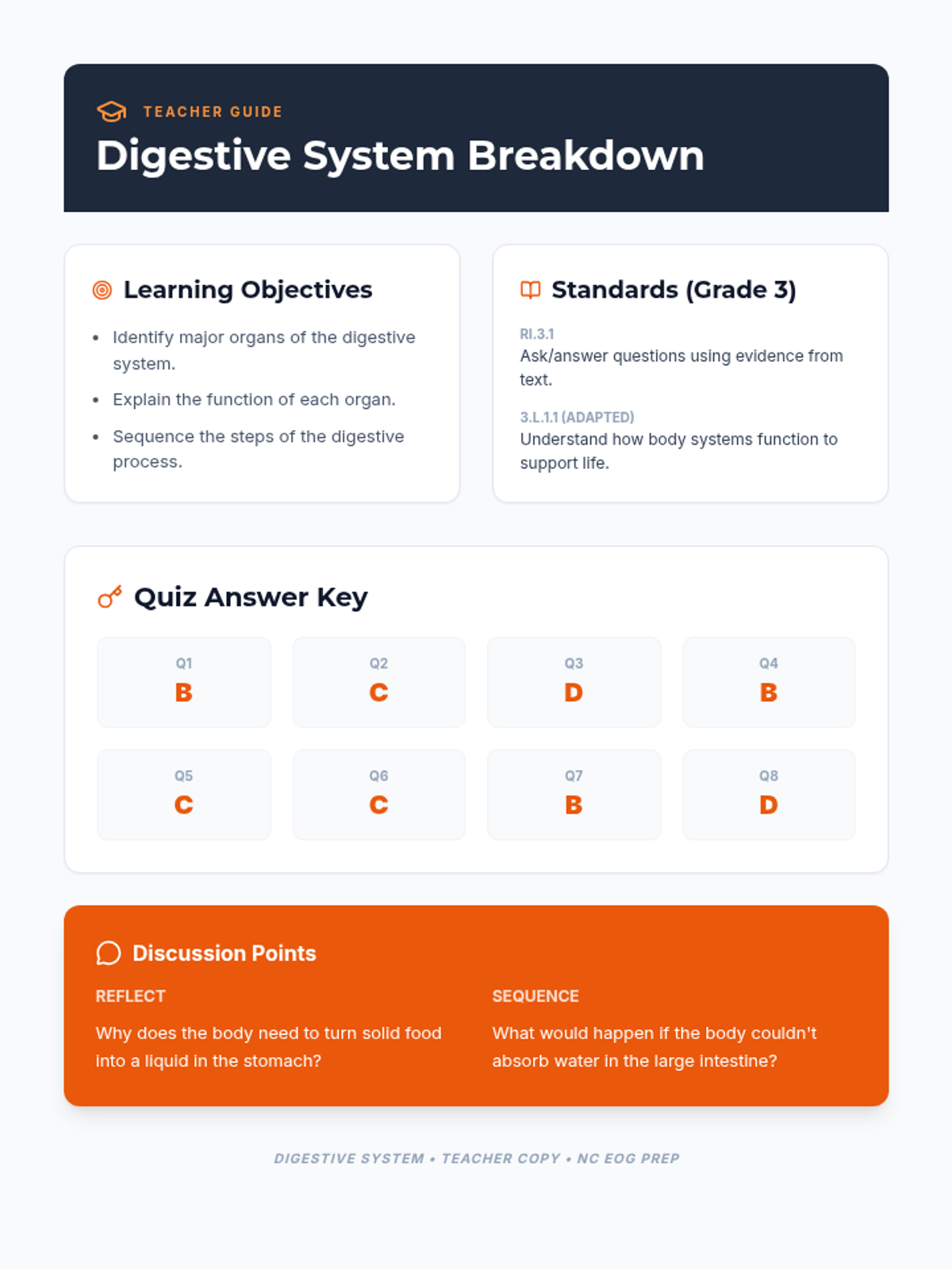
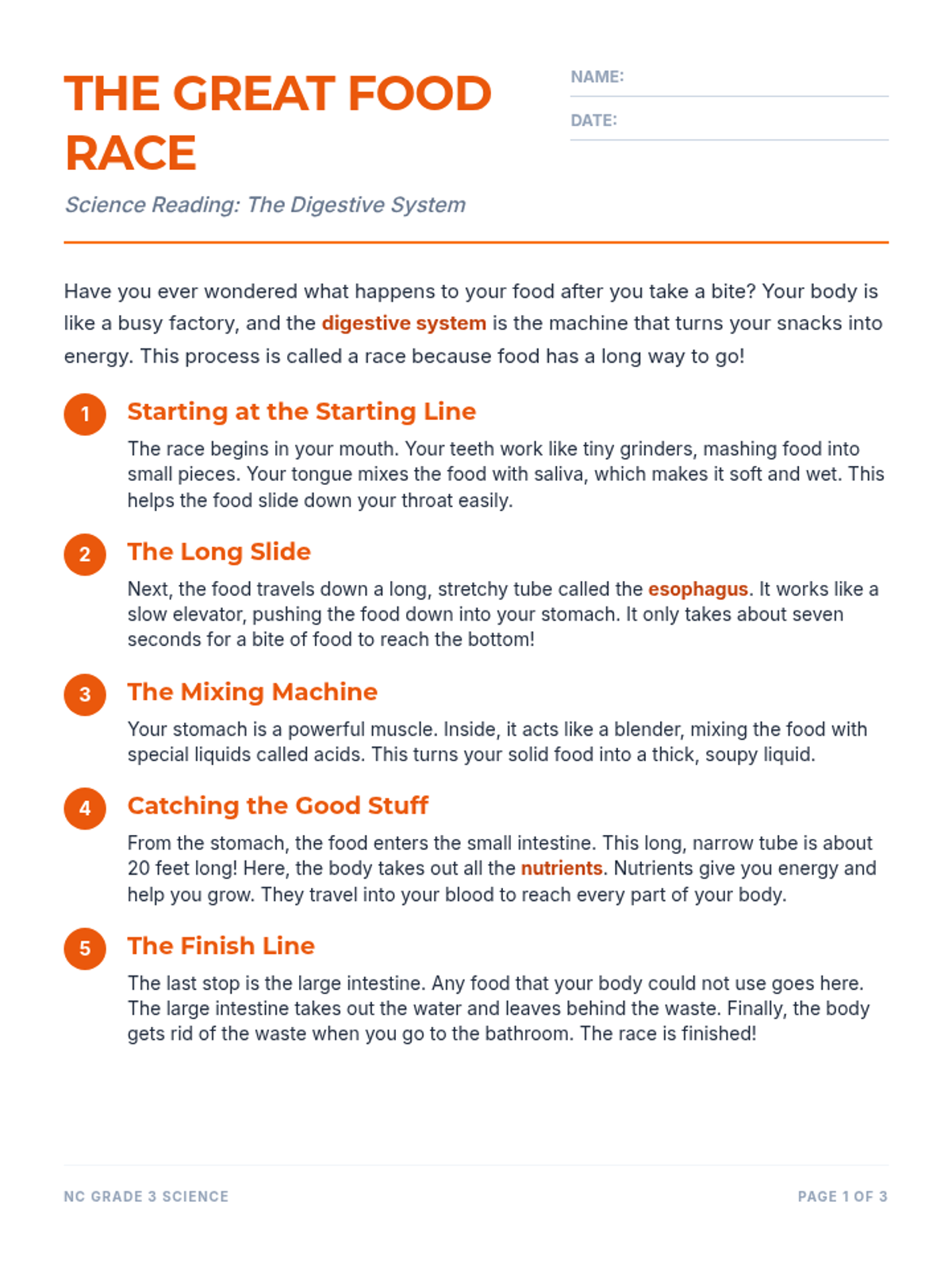
A single-page teacher's guide and answer key for the digestive system lesson, including learning objectives, grade 3 standards, and a quick-reference answer key.
A combined student resource containing the 'Great Food Race' reading passage and 8 EOG-style multiple-choice questions about the digestive system. Designed for a 3-page printout.
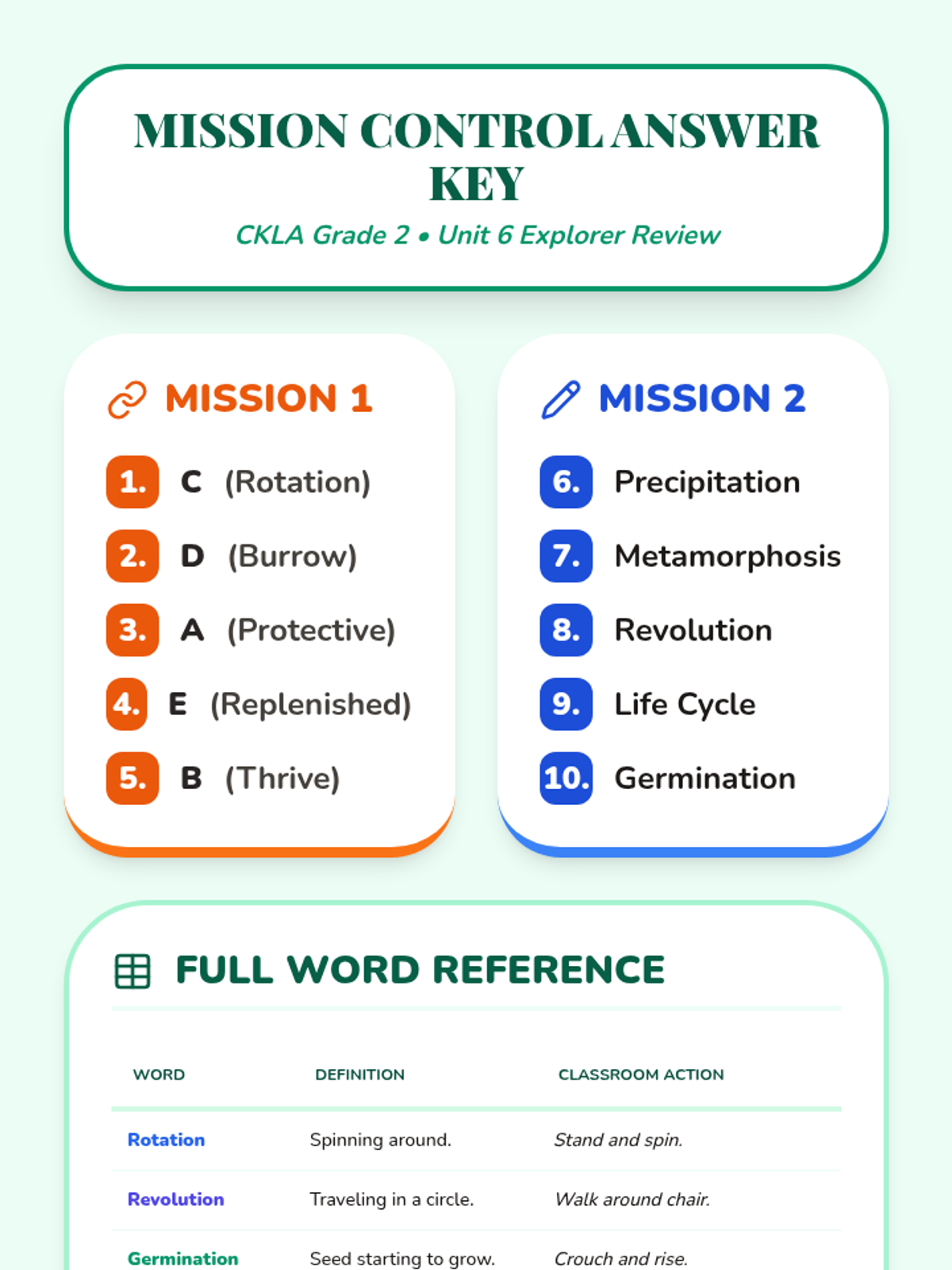
Explorer-themed teacher answer key and pacing guide for the revised Unit 6 vocabulary list, featuring a simplified reference table and quick-check keys. Optimized layout for 2 pages.
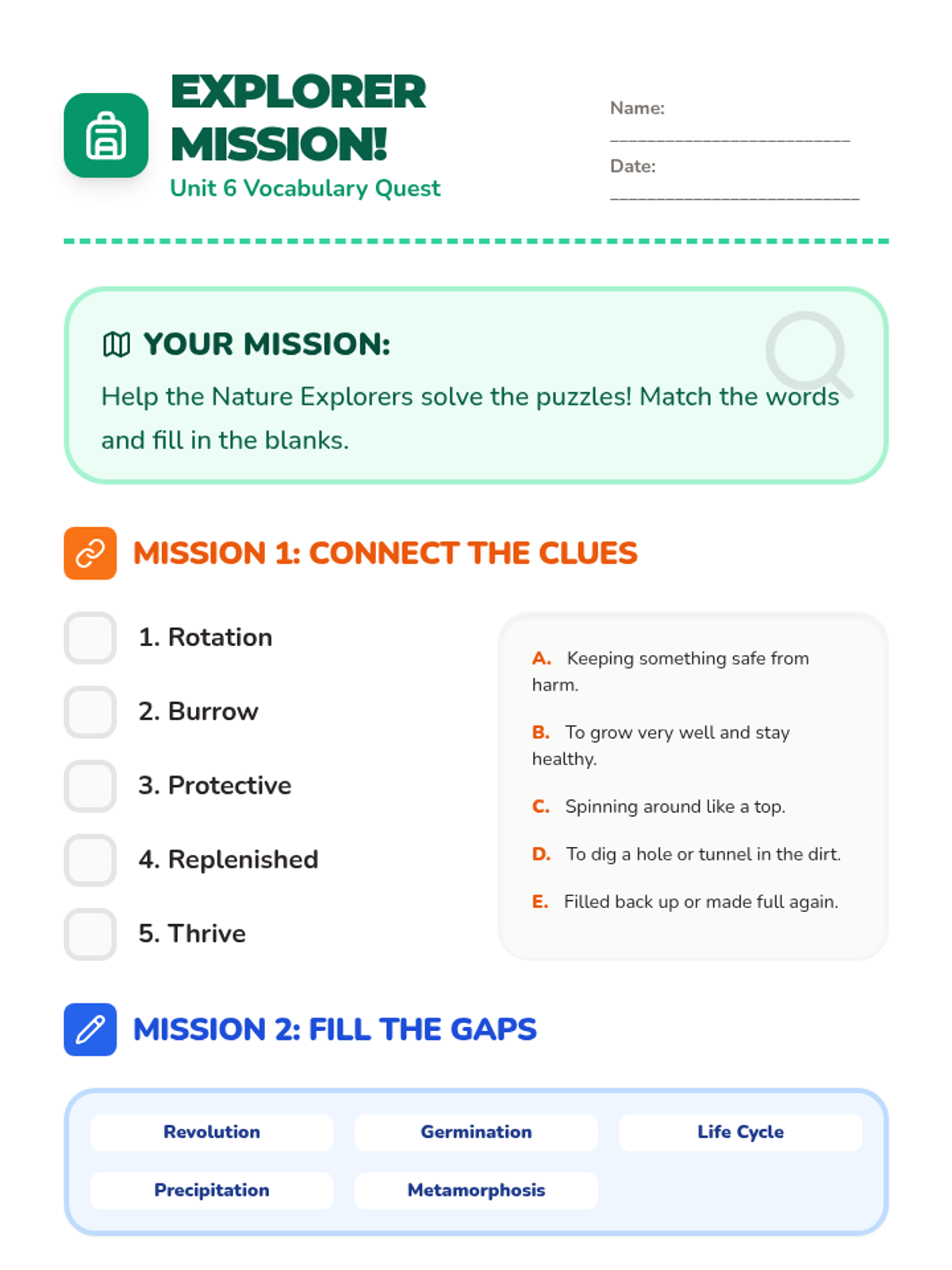
A fun, explorer-themed vocabulary worksheet for 2nd grade covering 10 specific CKLA Unit 6 words with matching and fill-in-the-blank "missions". Revised to keep the drawing area together.
A highly engaging and interactive 10-slide vocabulary presentation for 2nd graders, featuring "Action Breaks" for each word like rotation, metamorphosis, and burrow. Revised for better slide transitions and icons.
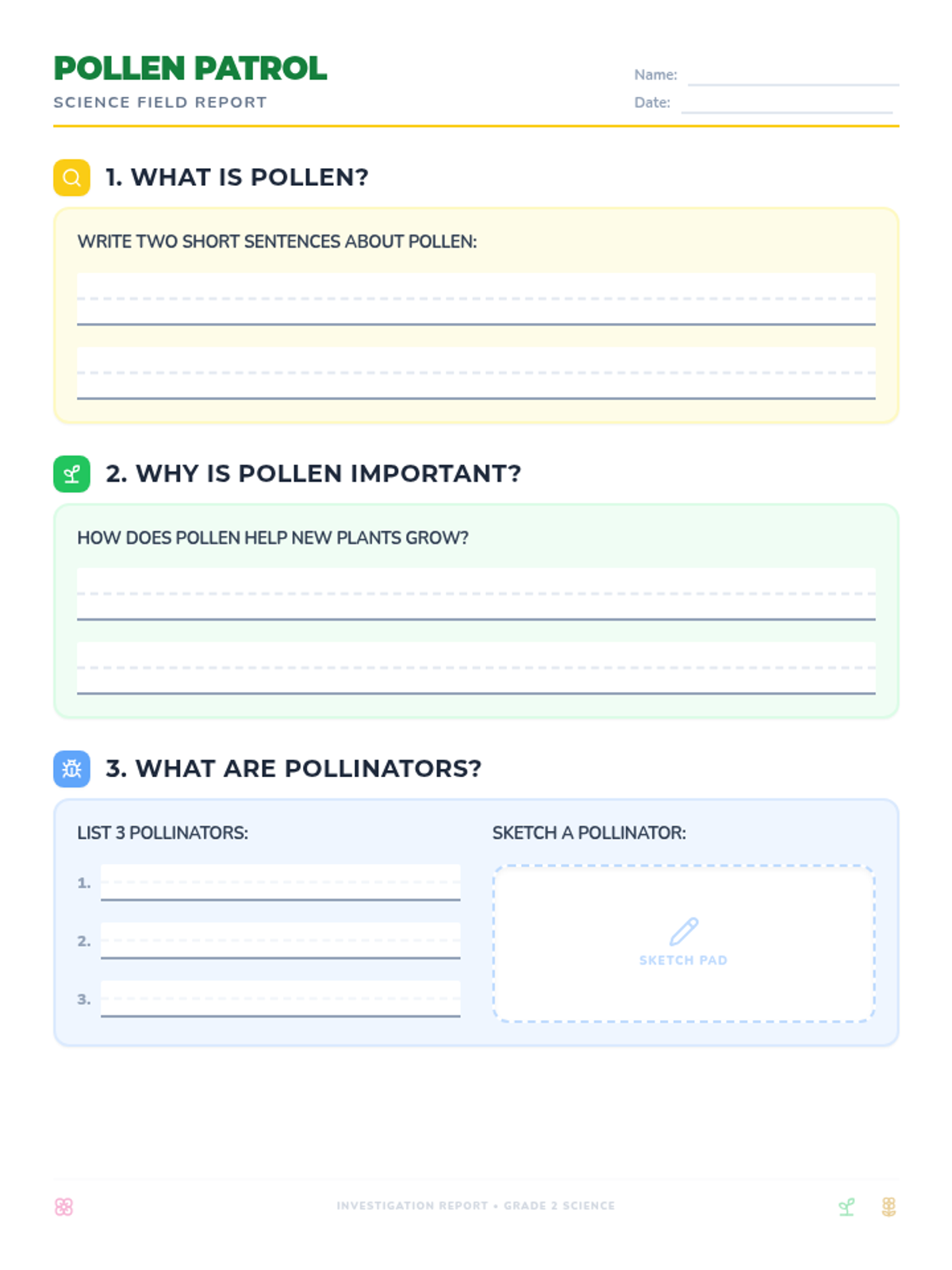
A 1-page science worksheet for 2nd graders covering the definition of pollen, its importance, and identification of pollinators with writing and sketching sections.
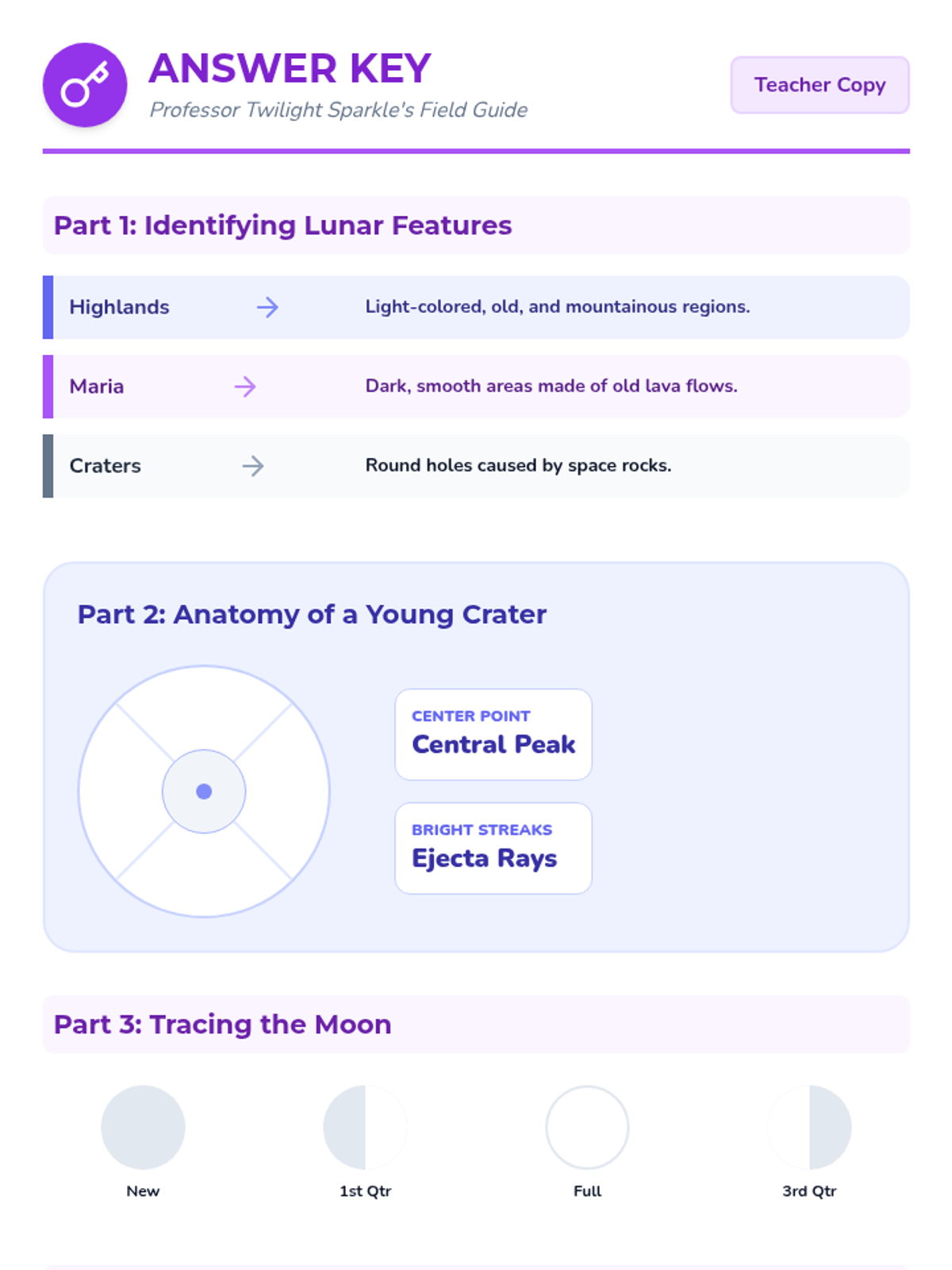
Answer key for the Lunar Sparkle Worksheet, providing correct matches, quiz answers, and chronological ordering of lunar features. Updated to include crater anatomy and relative dating of rayed craters. Visuals added for quick reference. Better page balancing.
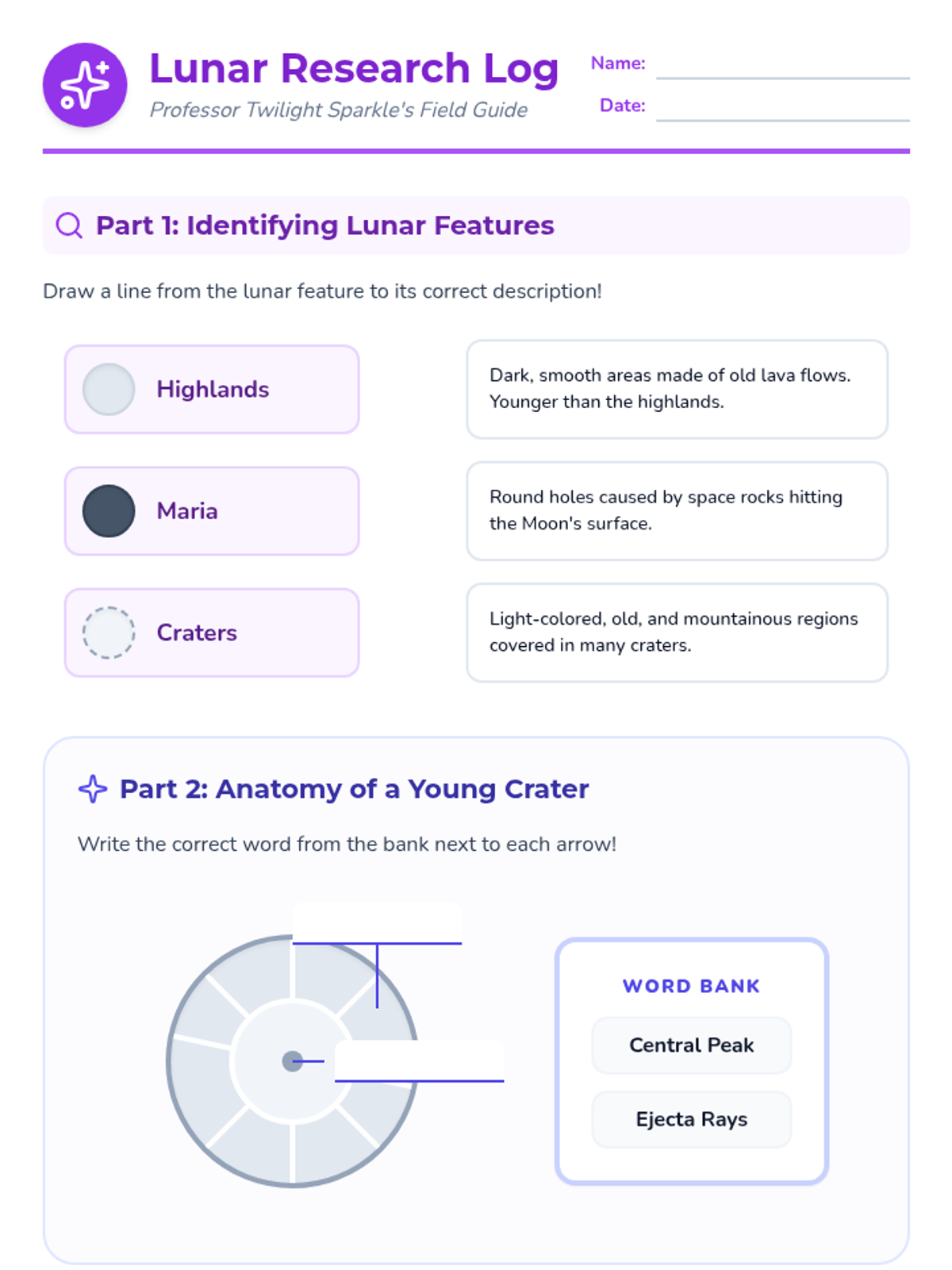
A Princess Twilight Sparkle themed worksheet for practicing relative lunar dating, identifying features (Highlands, Maria, Craters), tracing phases, and Apollo landing sites. Updated with crater ray identification and relative dating of rayed craters. Fixed page breaks and diagram labeling.
A visually engaging slide deck themed after Princess Twilight Sparkle, introducing lunar features, relative dating principles, Apollo landing sites, and moon phases with interactive knowledge checks. Updated with detailed information on crater features like rays and central peaks. Corrected scientific orientation for moon phases. Fixed map pin locations and labels.
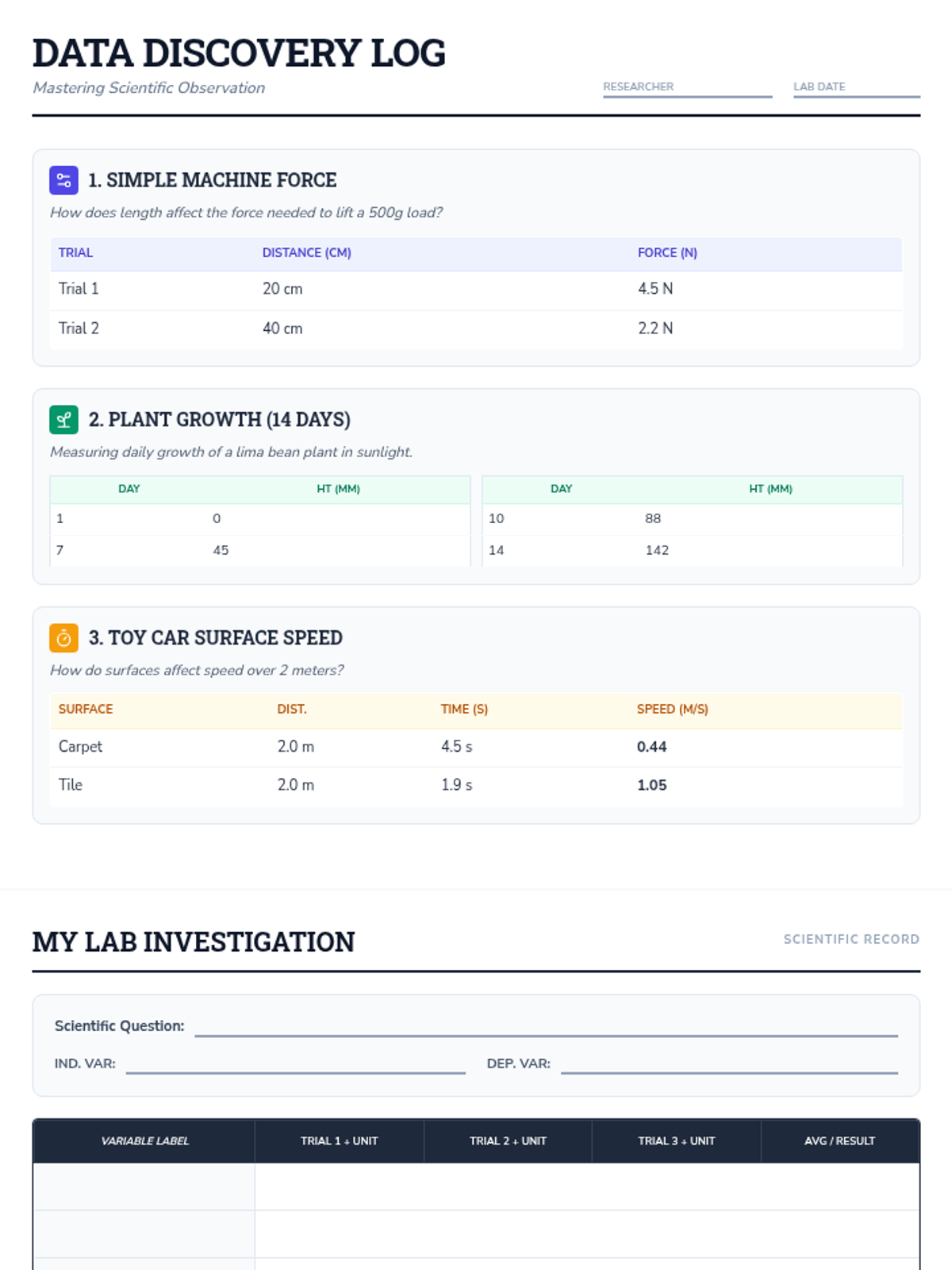
A compact two-page guide featuring three scientific data examples and a blank template. Includes sections for simple machines, plant growth, and car speed with a professional laboratory aesthetic for upper elementary or middle school students.
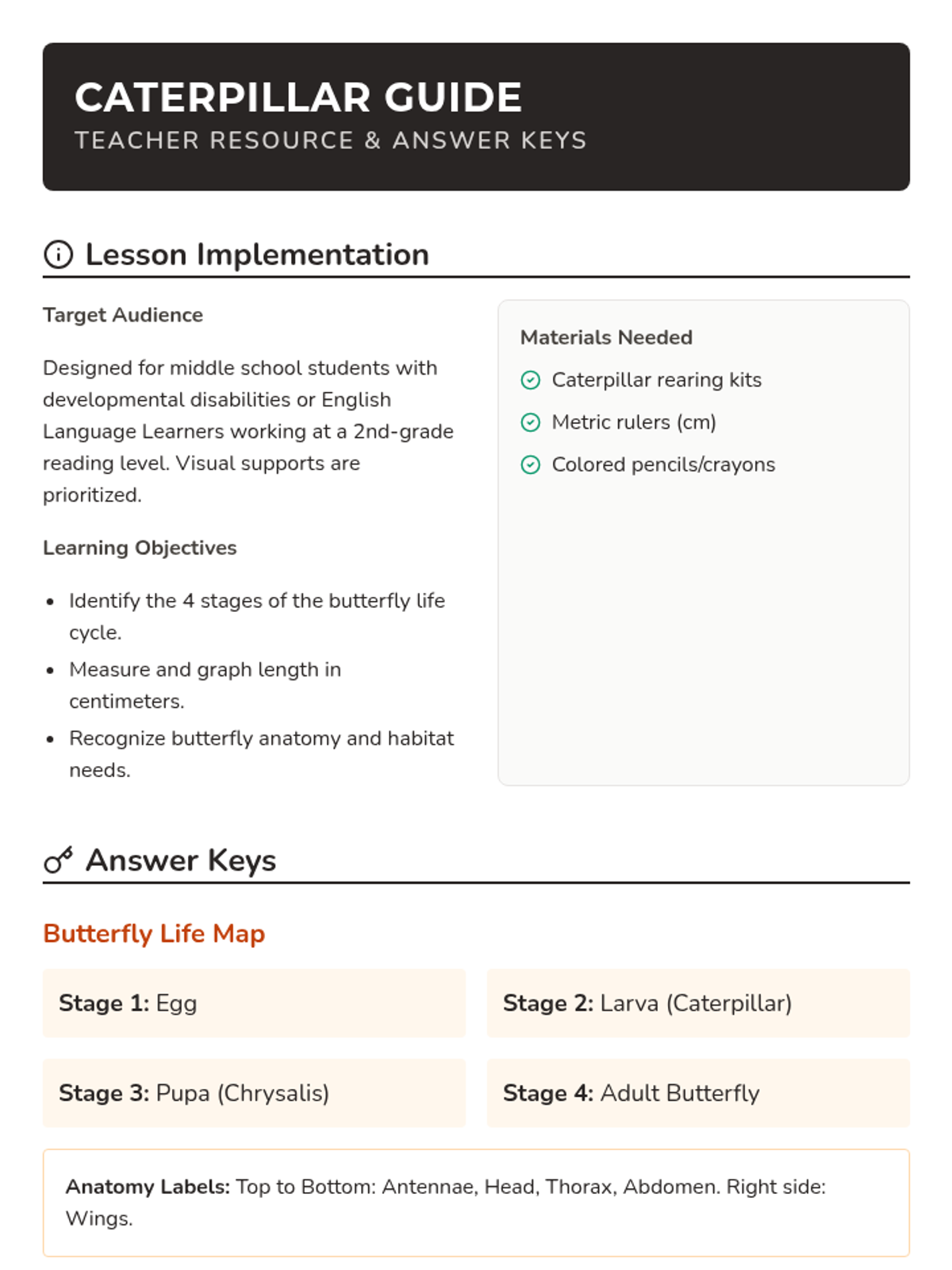
A teacher's guide providing instructional support, answer keys, and teaching tips for the Caterpillar Chronicles lesson materials.
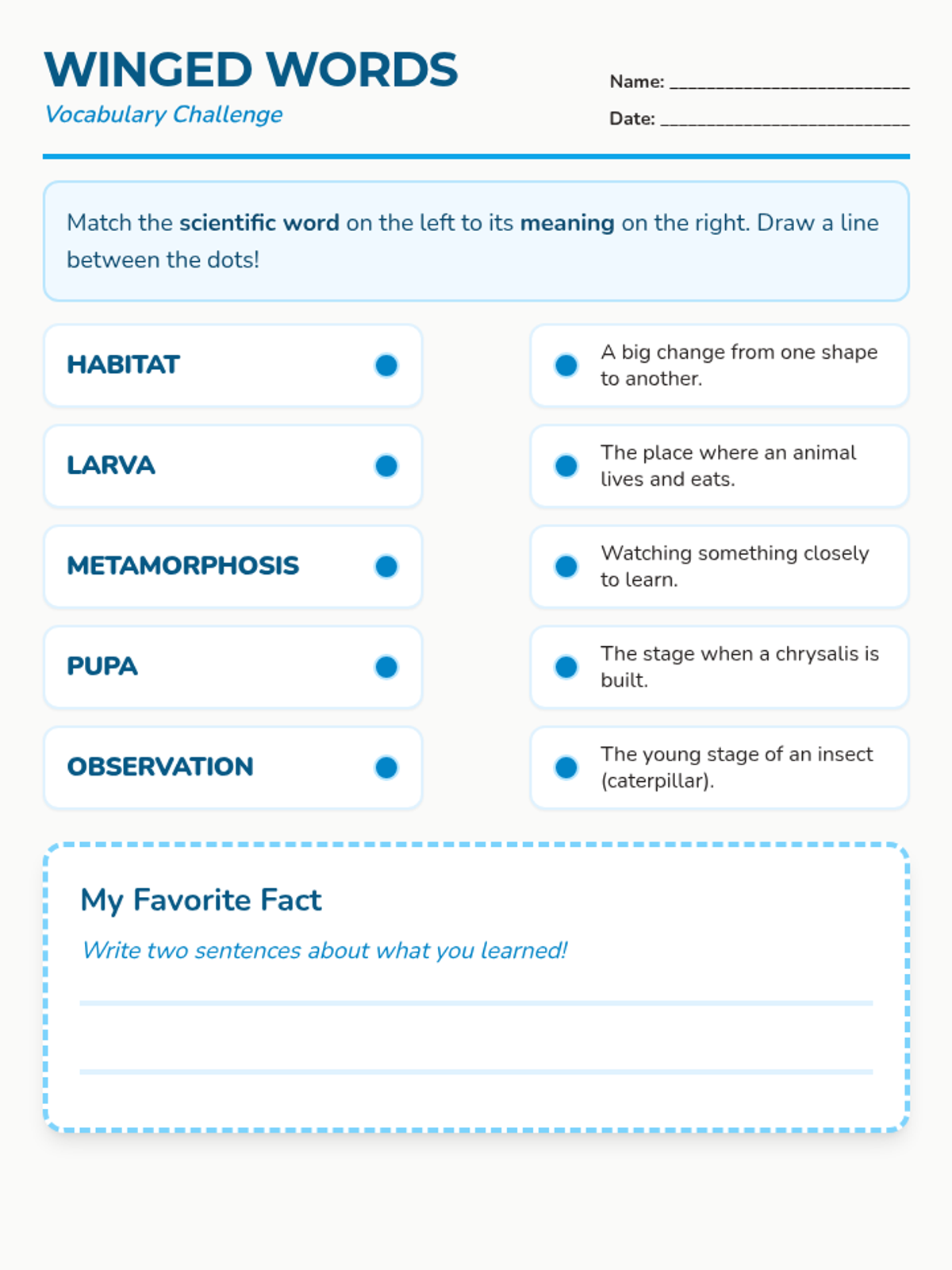
A matching activity focusing on key scientific vocabulary related to caterpillar growth and butterfly metamorphosis, designed for accessible reading levels.
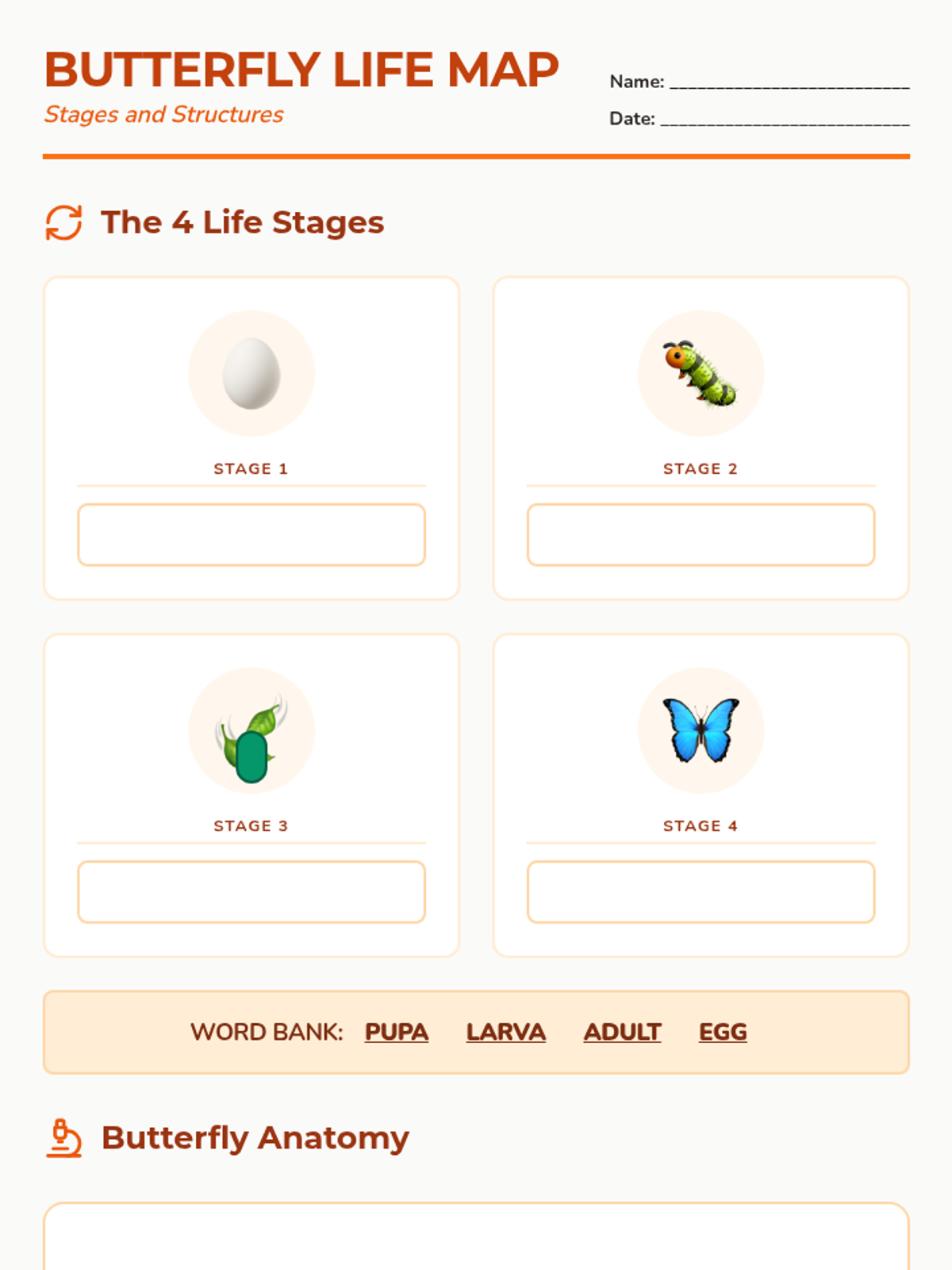
A diagram-based worksheet for students to identify the four stages of the butterfly life cycle and label the basic anatomy of an adult butterfly.
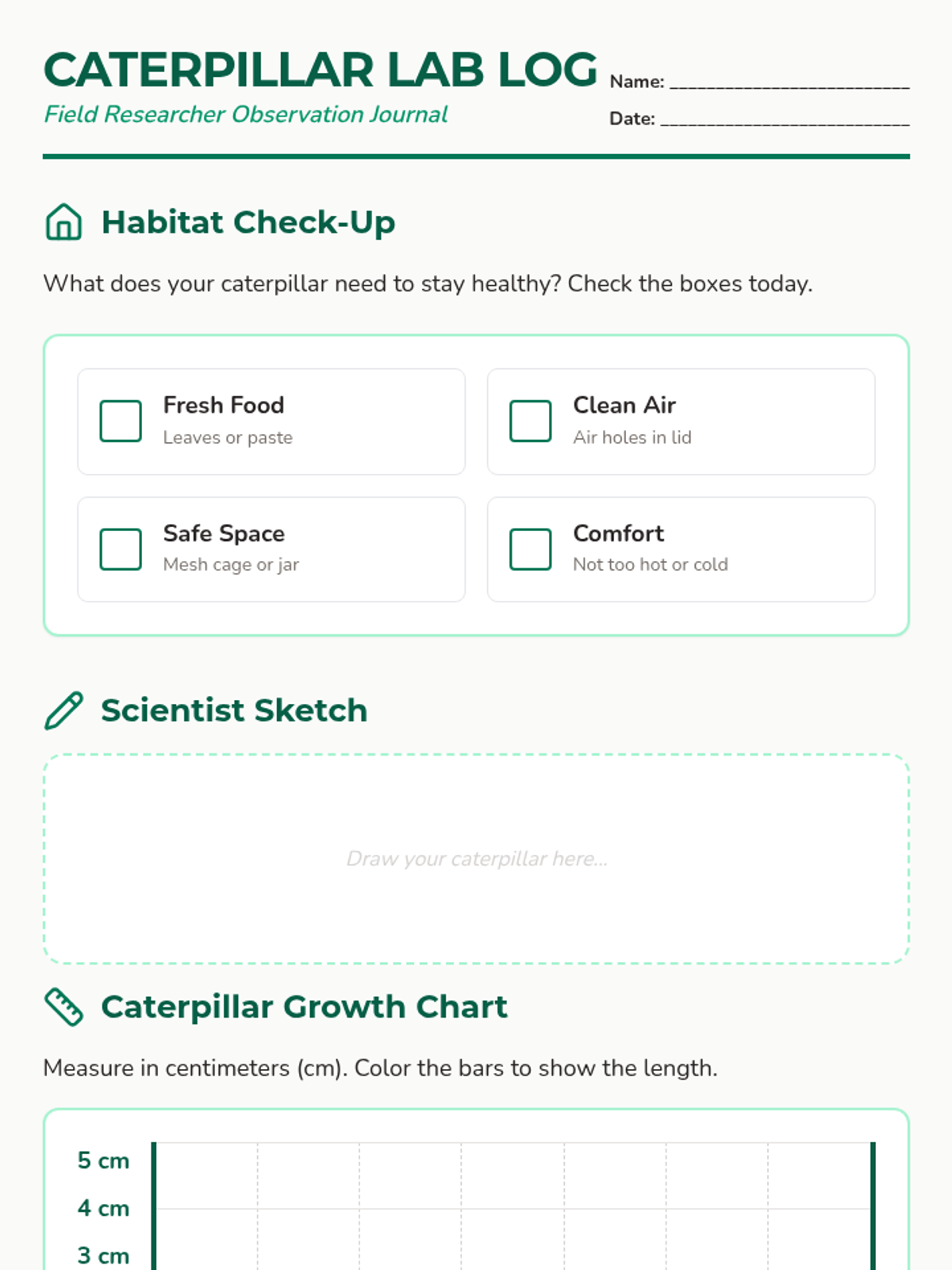
A tracking worksheet for students to record caterpillar habitat needs and graph their growth over time using a bar chart.
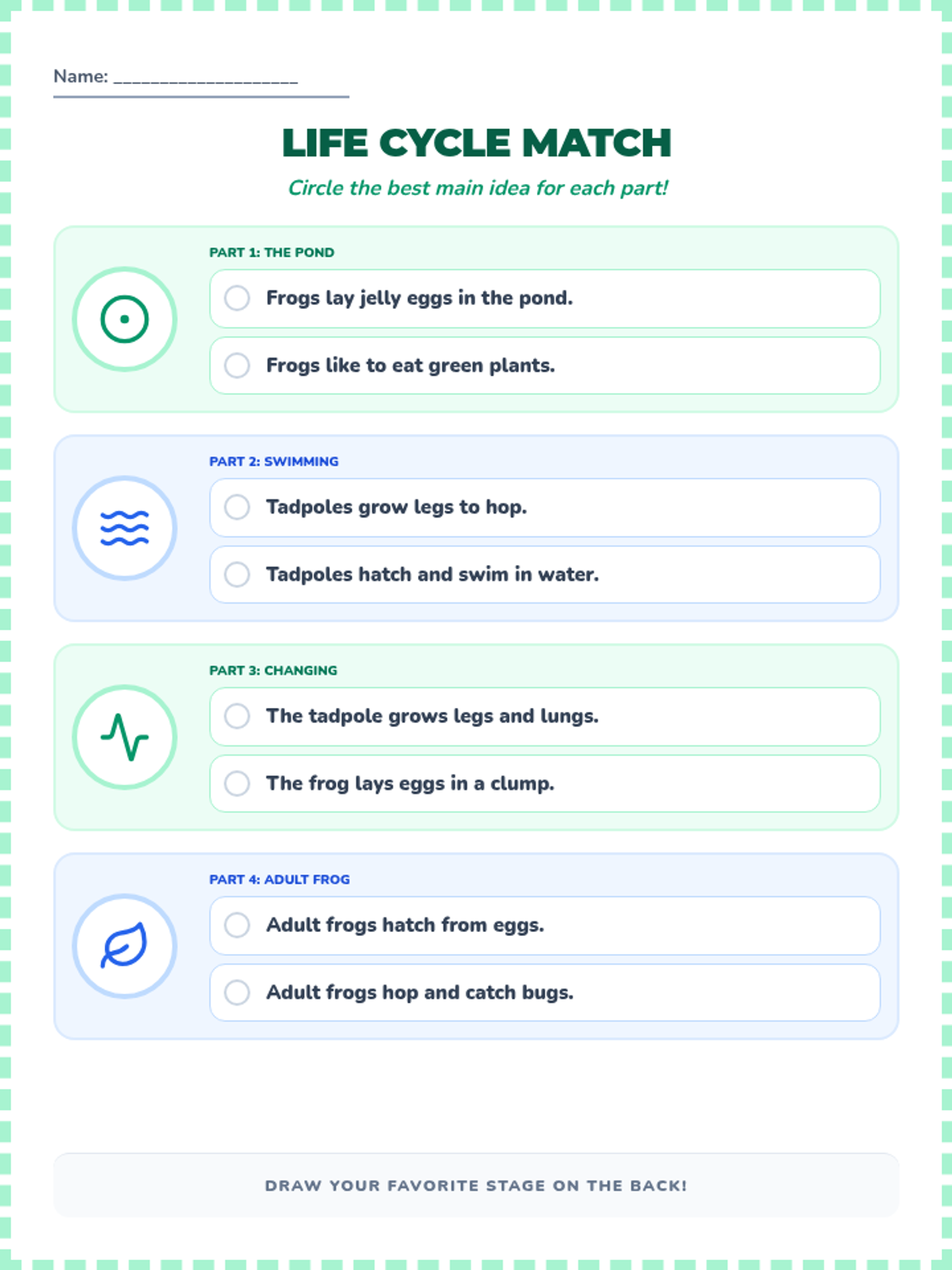
A Tier 3 support worksheet for identifying main ideas through a visual matching/selection activity, designed for students requiring intensive literacy support. Consolidated to one page.
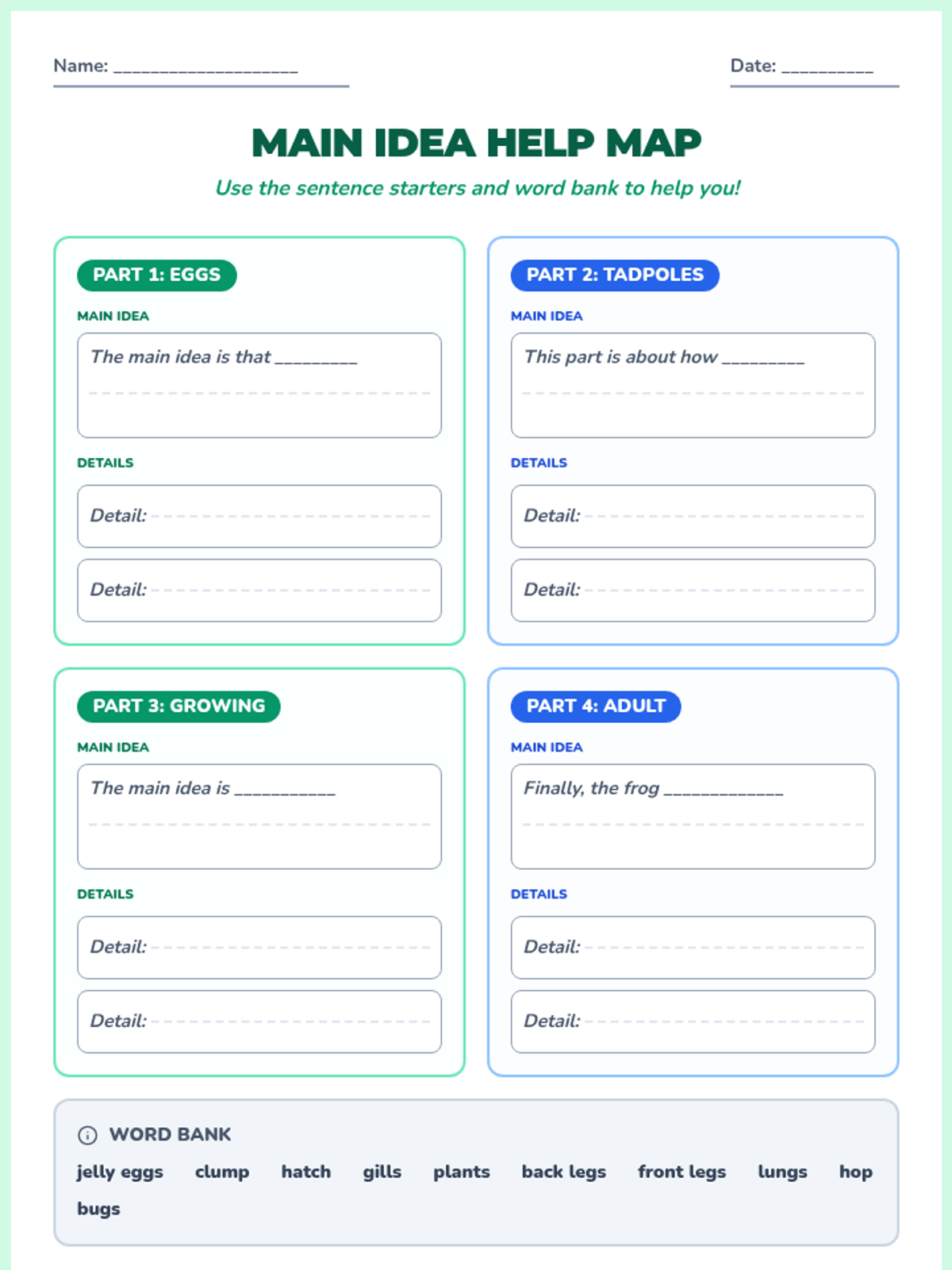
A Tier 2 support worksheet for identifying main ideas and details, featuring sentence starters and a word bank to scaffold the writing process for students needing moderate support. Writing areas and contrast improved for 2nd grade.
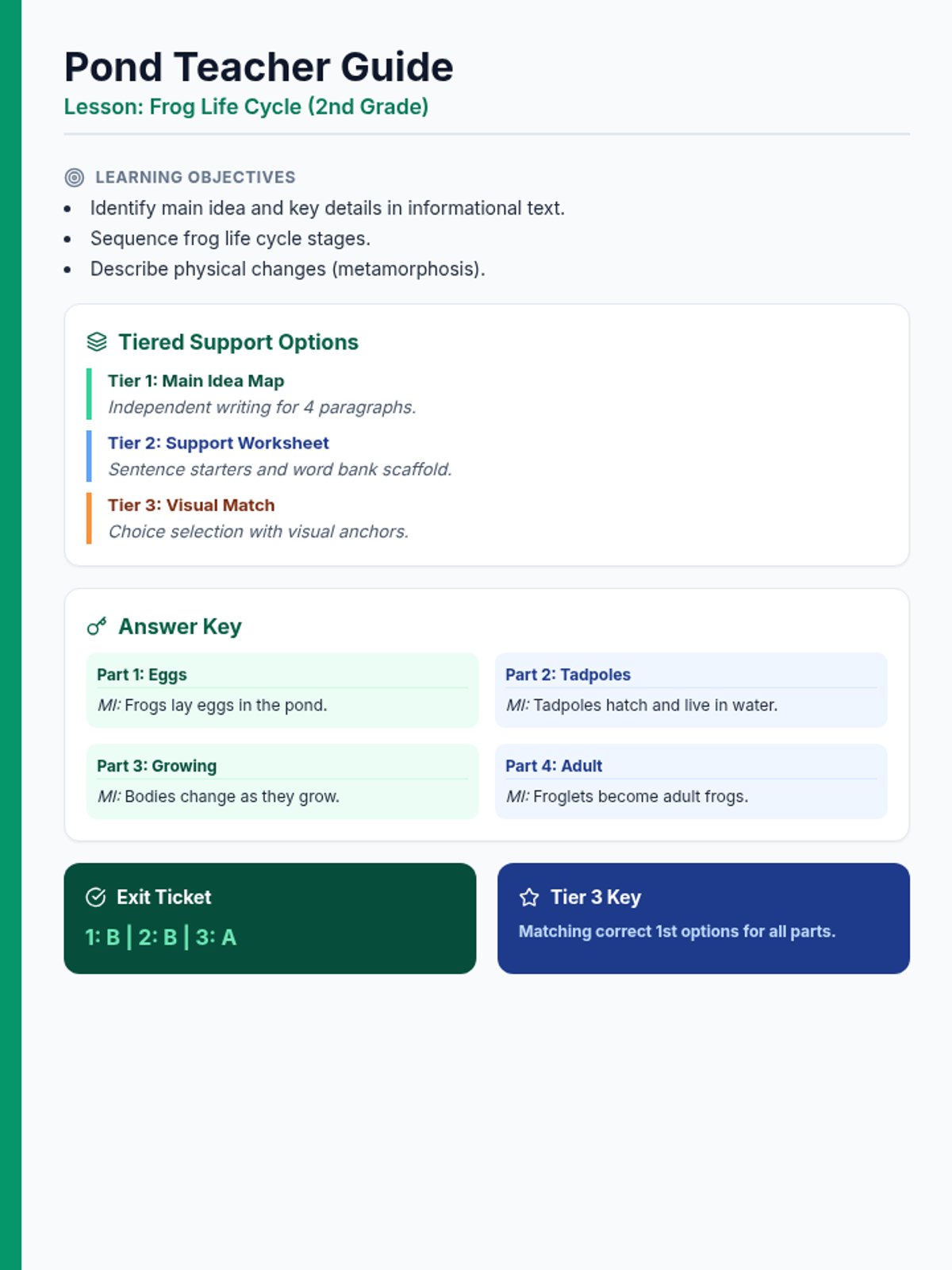
A teacher facilitation guide consolidated to one page. Includes learning objectives, tiered support breakdowns (Tier 1-3), comprehensive answer keys, and pedagogical tips. Layout optimized for single-page printing.
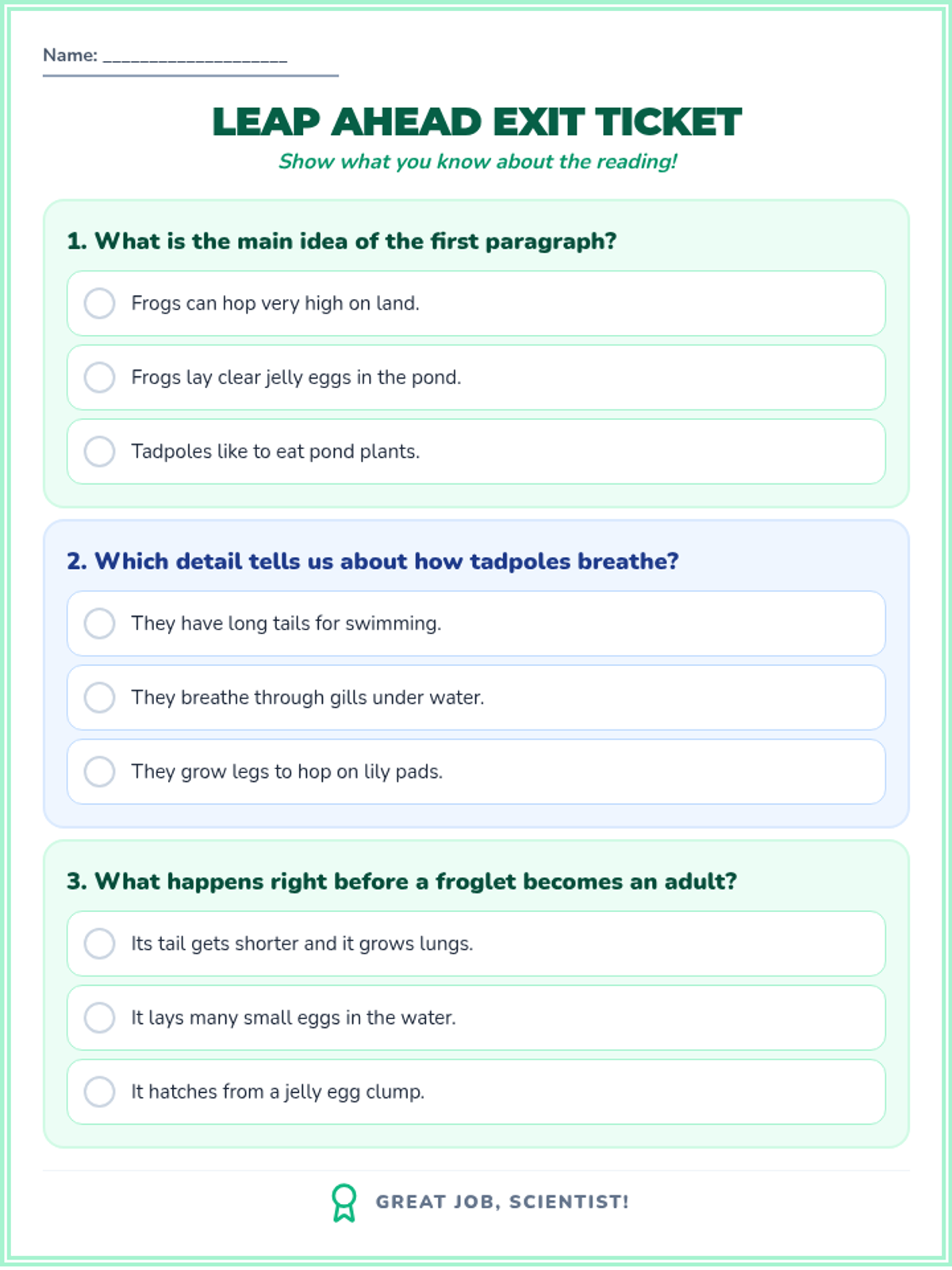
A multiple-choice exit ticket assessing student comprehension. Questions are styled for 2nd grade readability and all choices share uniform styling. Layout optimized to fit one page.
Interactive slides for teaching the frog life cycle, including definition of a life cycle, detailed stages, and discussion prompts. Visuals updated for better contrast and clarity.
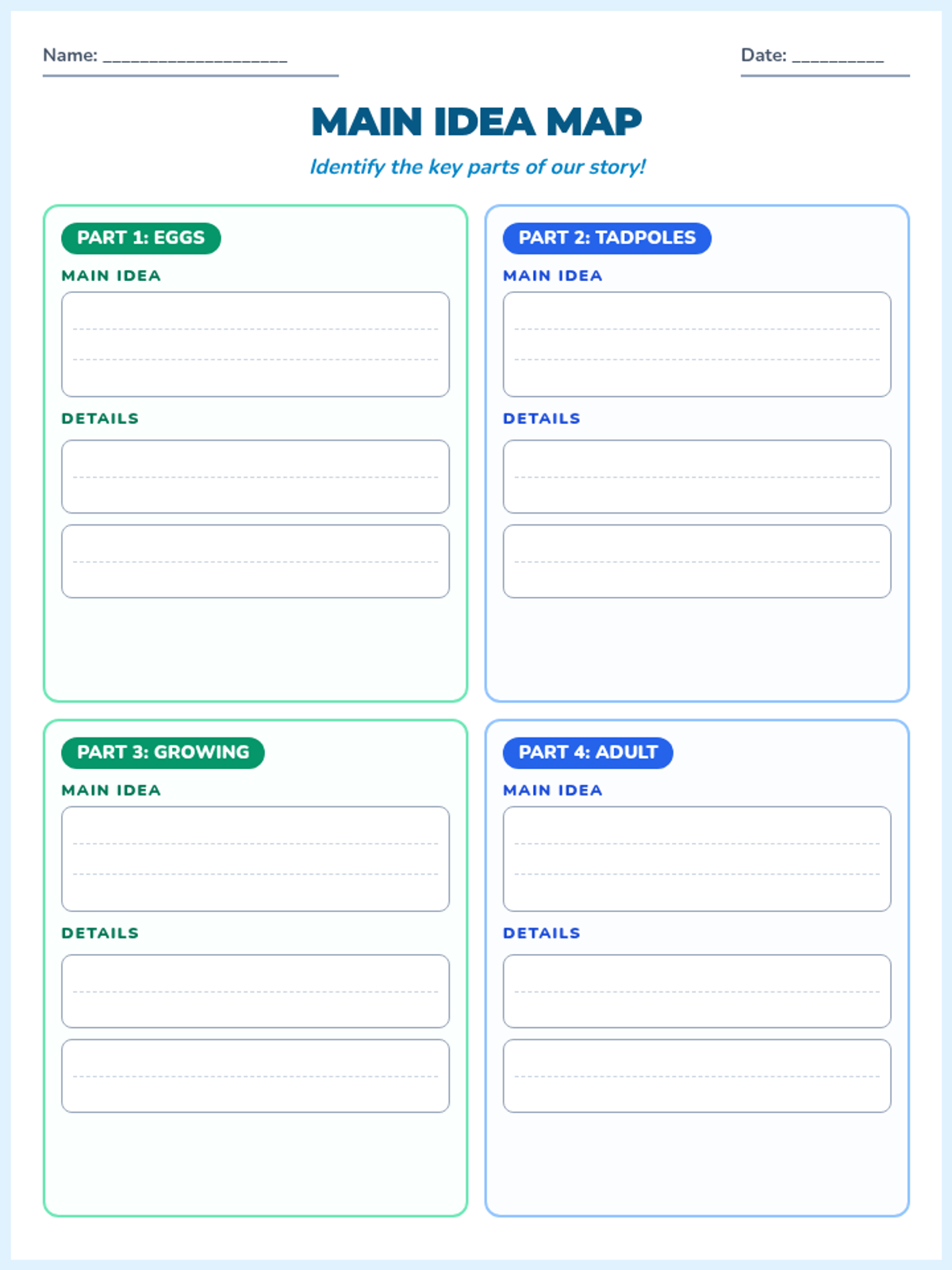
A graphic organizer for students to record the main idea and two supporting details for each of the four paragraphs in the frog life cycle passage. Provides ample space and guided lines for 2nd grade handwriting.
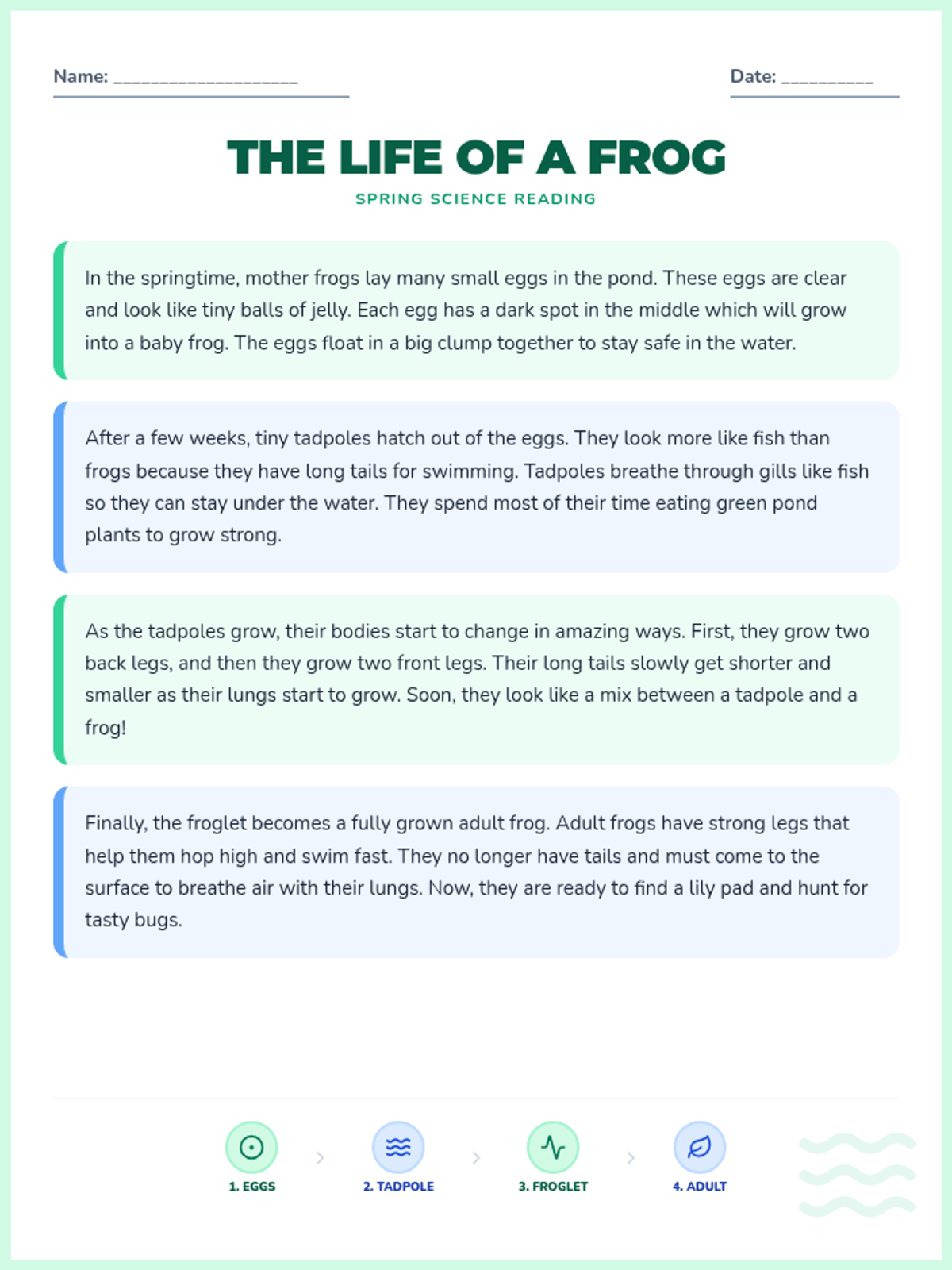
A 2nd-grade level reading passage about the frog life cycle, featuring four paragraphs covering eggs, tadpoles, growing legs, and adult frogs. Layout adjusted for better header spacing and icon rendering.
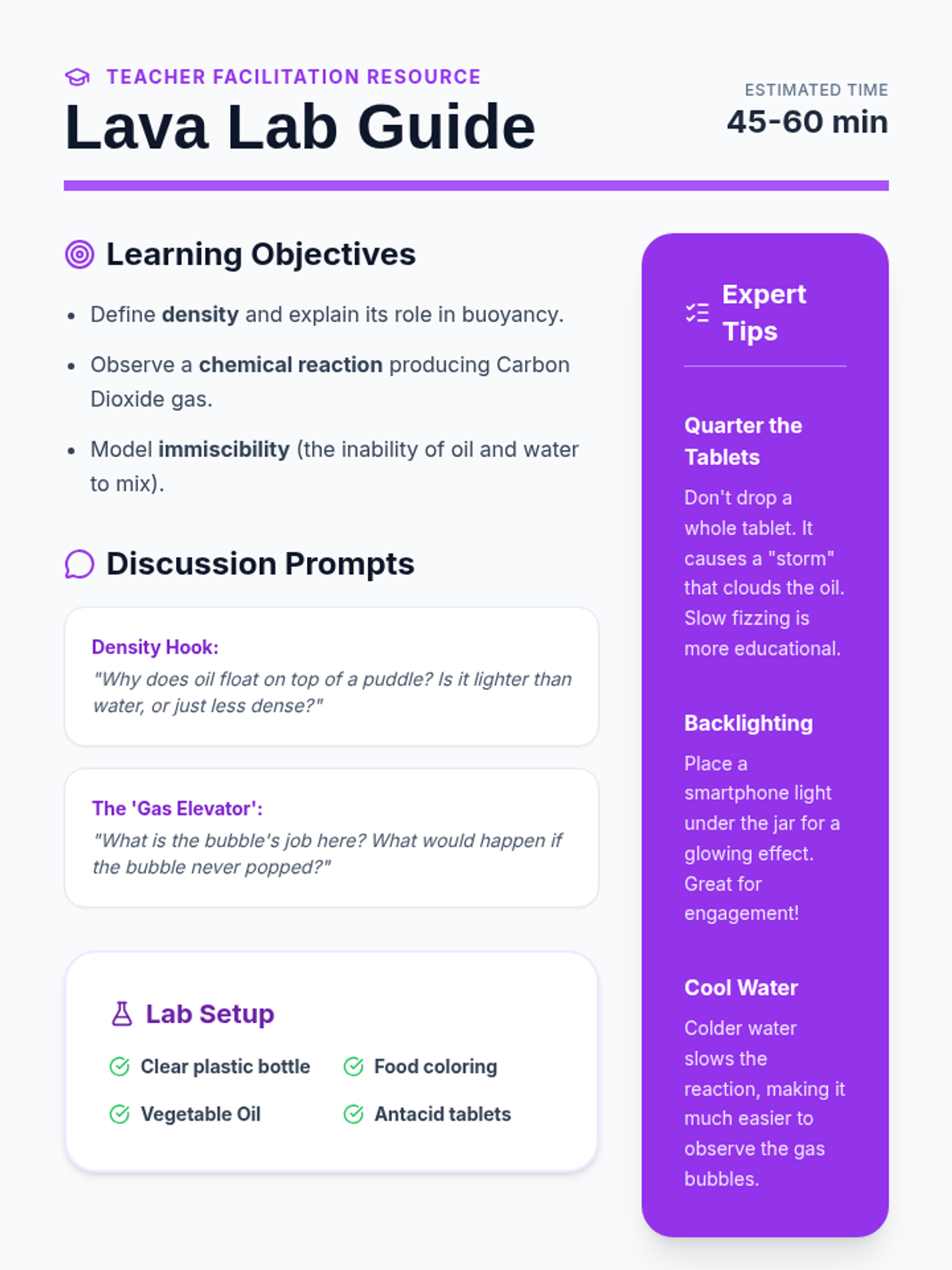
A comprehensive guide for teachers including learning objectives, discussion prompts, science troubleshooting tips, and pro-tips for facilitating the DIY lava lamp experiment.
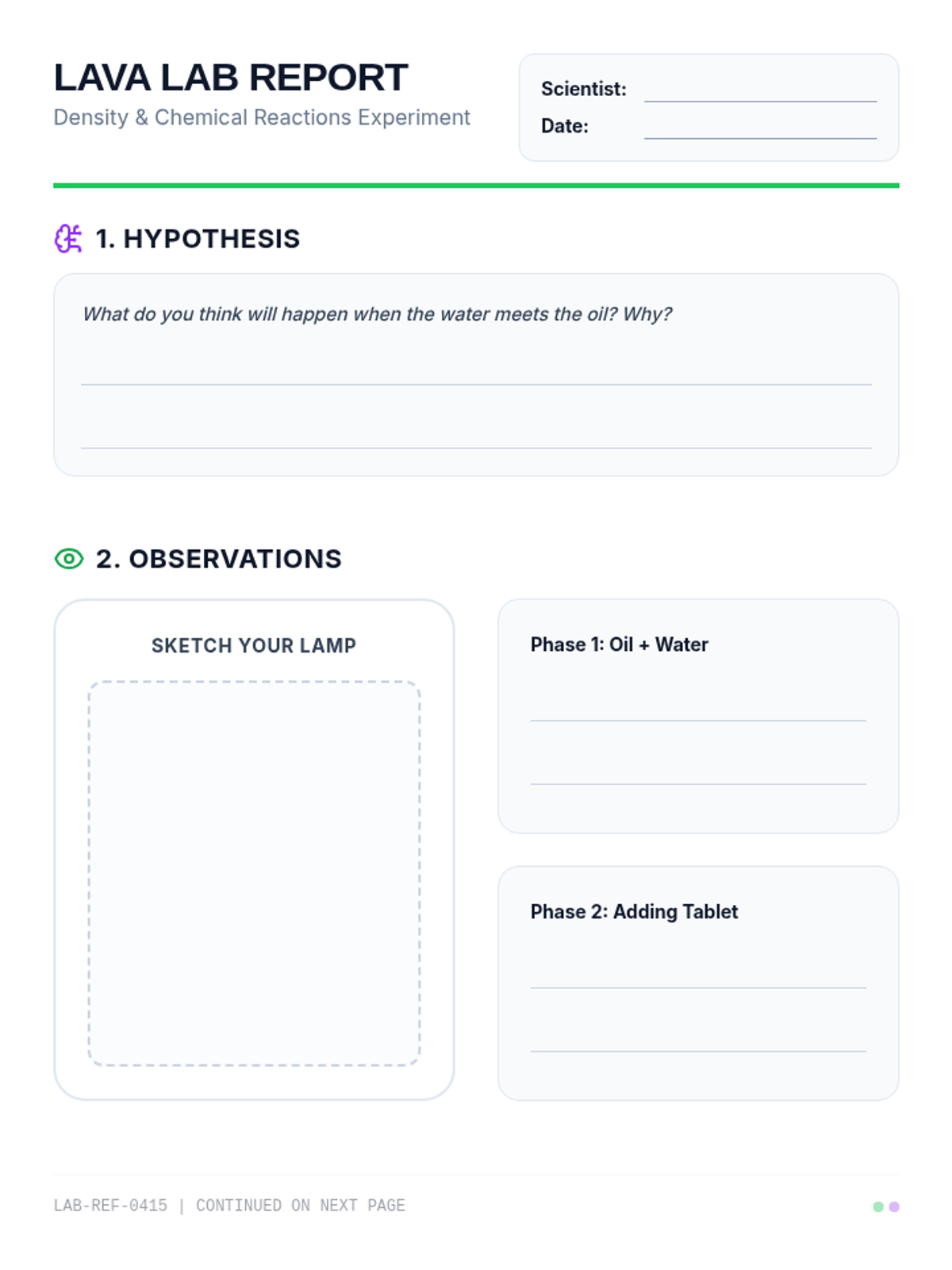
A structured lab report for students to record their hypothesis, observations with a sketch area, and analysis questions about density and the chemical reaction observed.
A visually engaging slide deck covering the concepts of density, intermolecular polarity (briefly), and step-by-step instructions for creating a DIY lava lamp experiment.
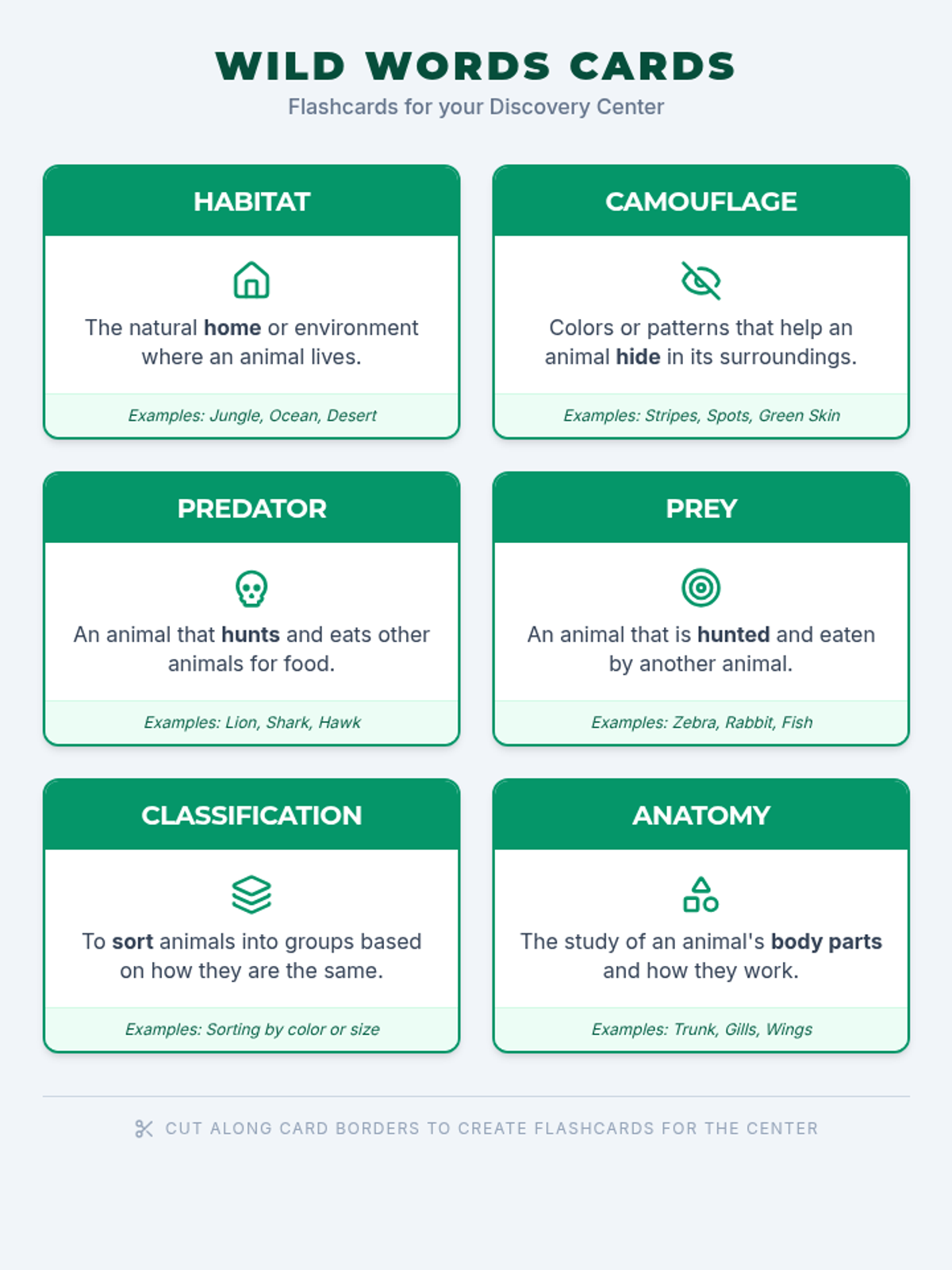
Visual vocabulary cards for the sensory center, providing simple definitions and examples for key science terms like habitat, camouflage, and classification.