An introductory slide deck explaining the physics of visible light, additive color mixing (light), and subtractive color mixing (pigments) with accurate blending diagrams and high-contrast labels.
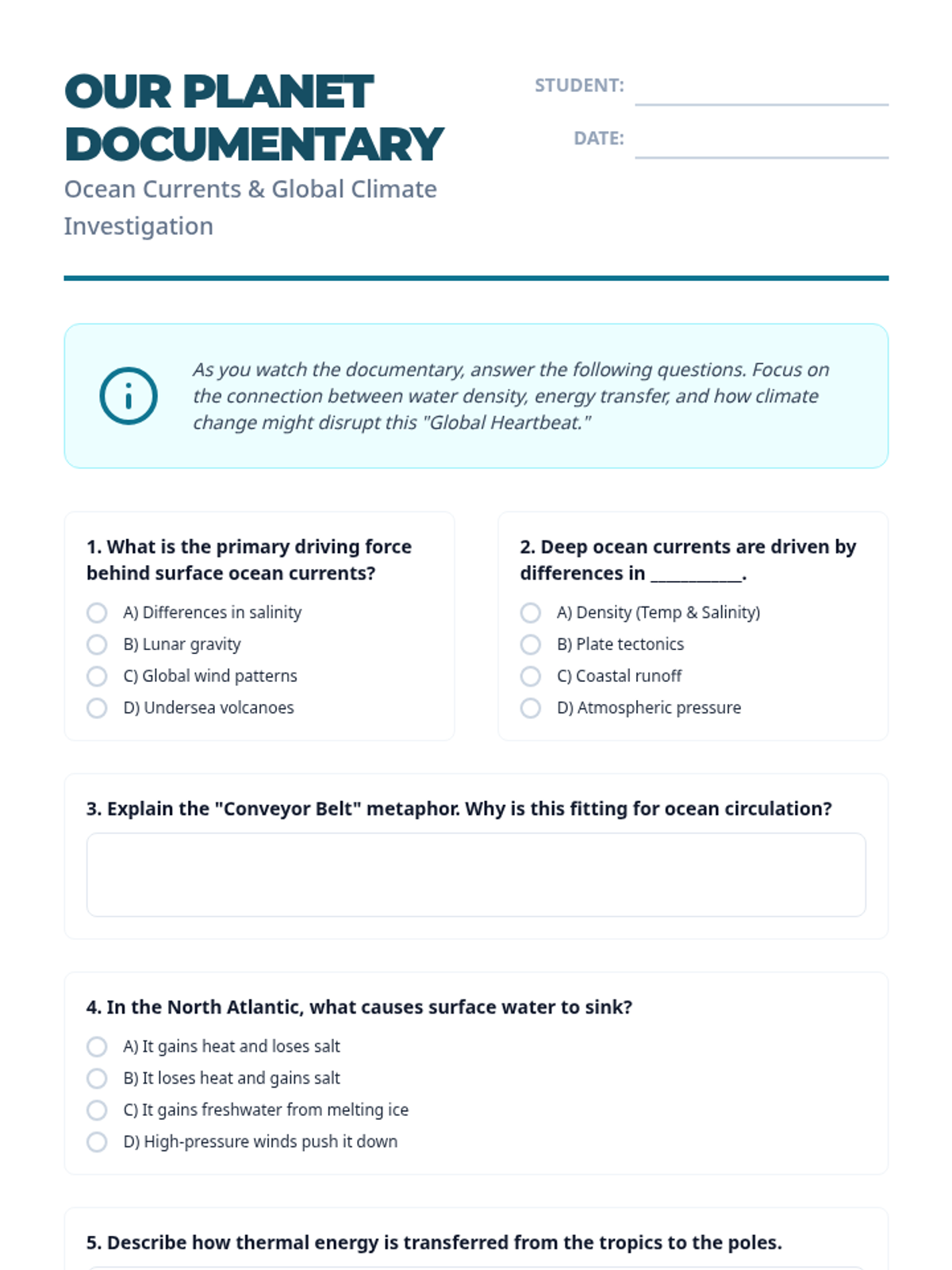
Final worksheet titled "Our Planet Documentary Worksheet" with refined layout, white student work areas, and consistent branding.
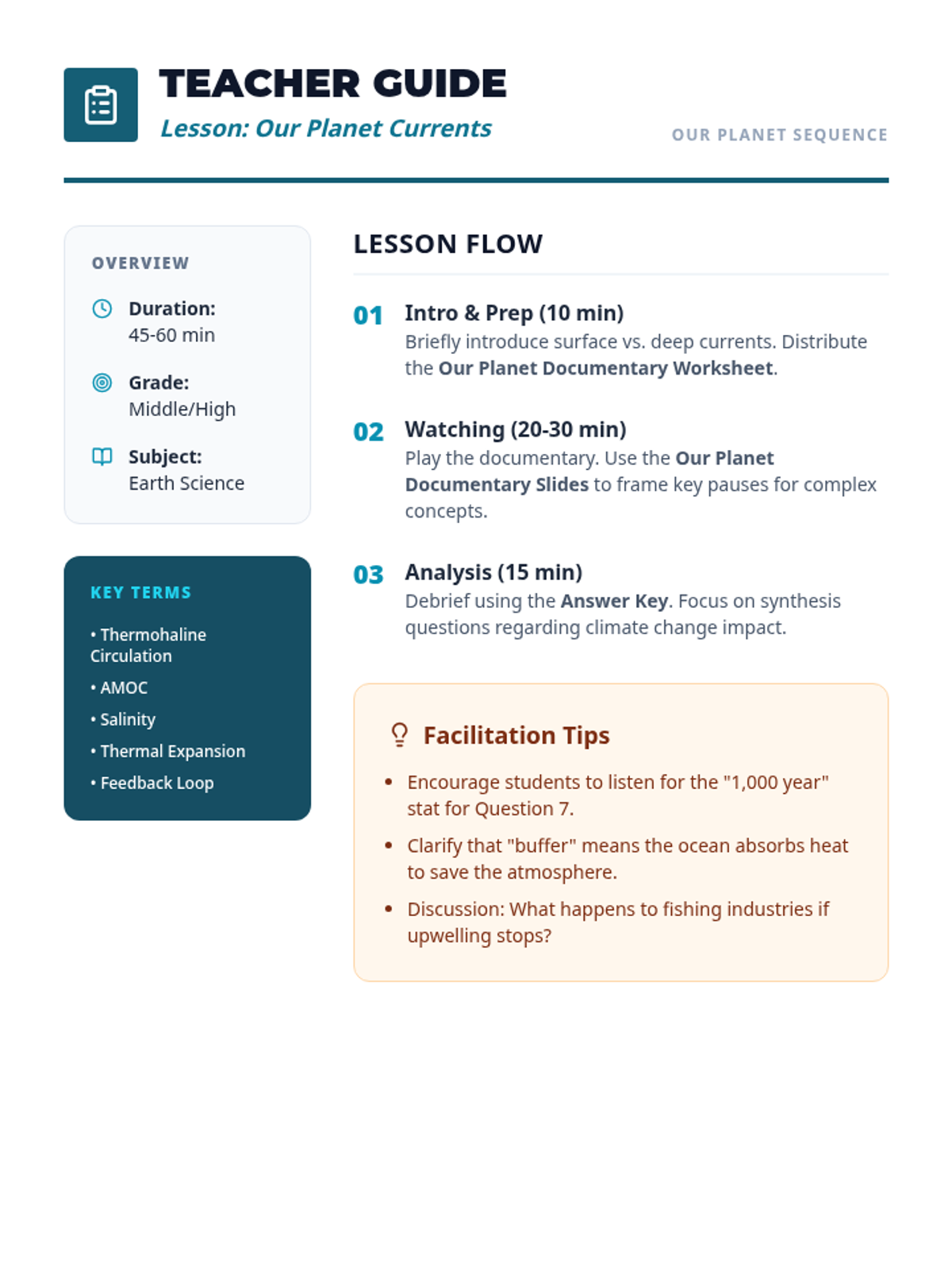
Updated teacher guide with the new "Our Planet" title and refined instructional flow.
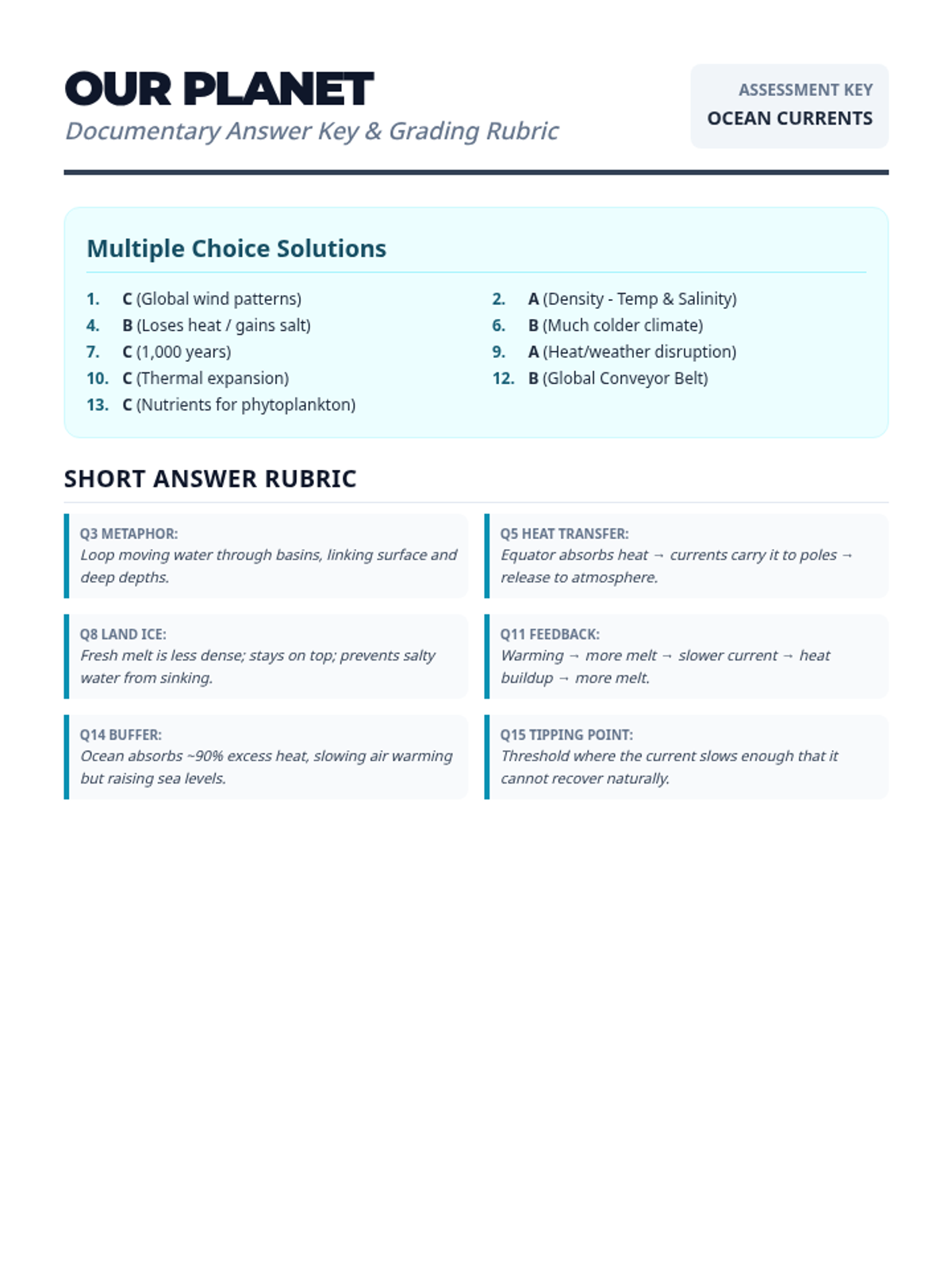
Consolidated answer key for "Our Planet" documentary, now fitting on a single page with improved layout and balanced solution columns.
Updated instructional slides titled "Our Planet Documentary Slides" with refined content and consistent naming.
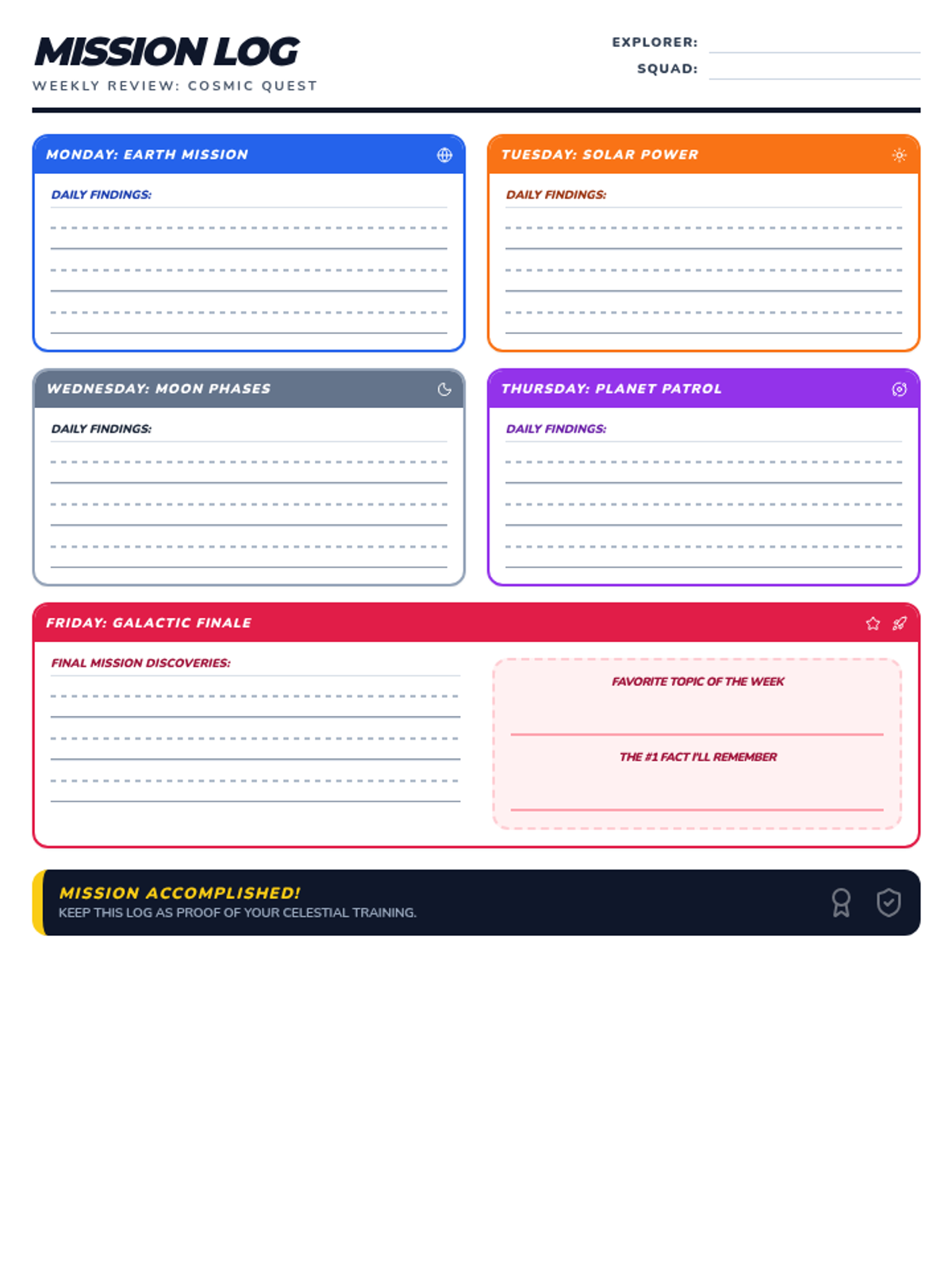
A weekly summary recording sheet for students to collect 2-3 facts each day about the topics covered in the Cosmic Quest Review Week. Features primary handwriting lines and thematic design for each day. Updated order: Monday (Sun), Tuesday (Moon), Wednesday (Earth).
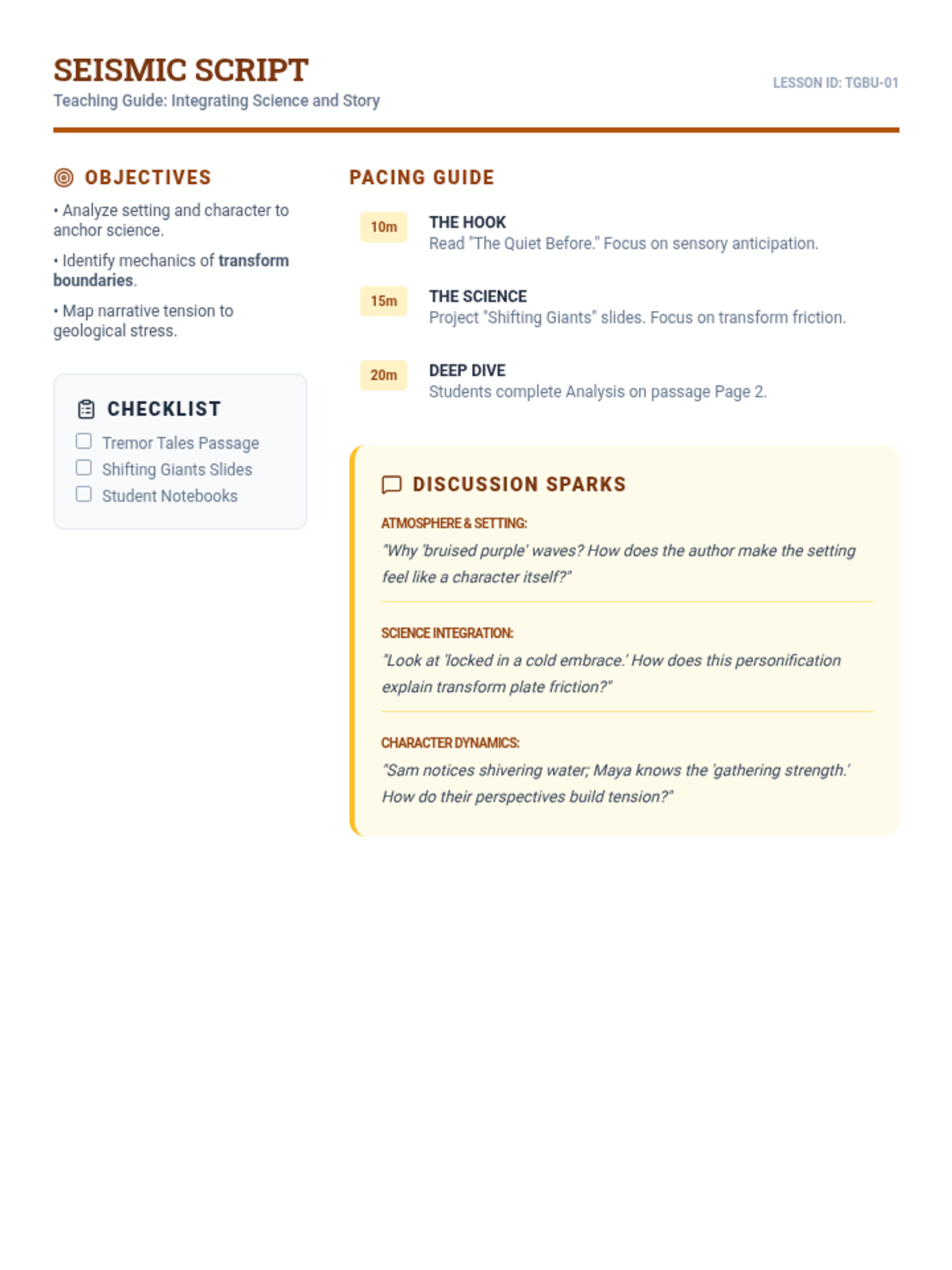
A teacher facilitation guide providing instructional scripts, pacing, and discussion prompts for the 'Shifting Earth' lesson.
A visual presentation explaining the mechanics of tectonic plates, different types of boundaries, and how earthquakes are triggered by energy release.
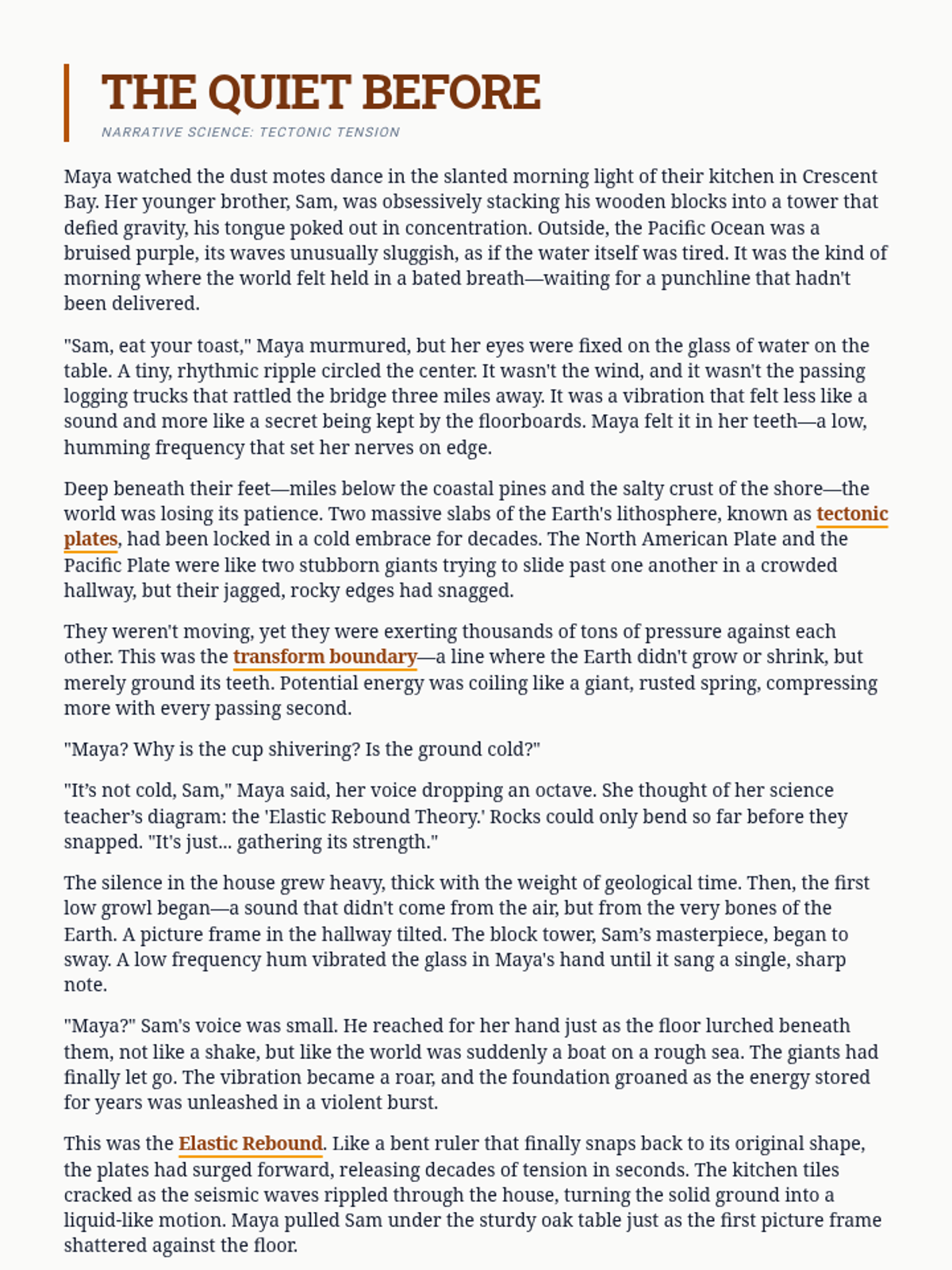
A narrative-driven reading passage that introduces characters and setting while weaving in the scientific concepts of tectonic plates and transform boundaries.
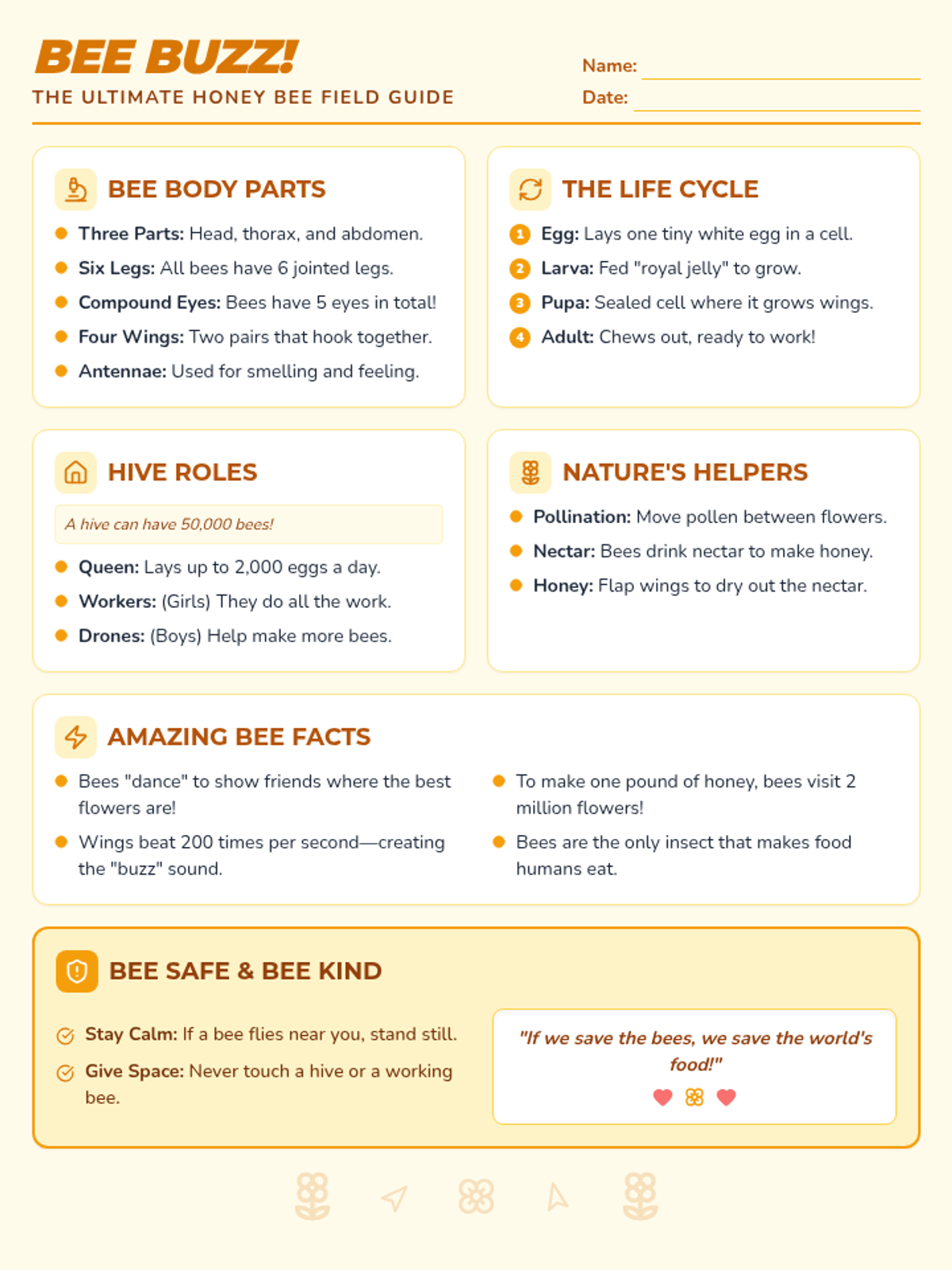
An improved honey bee fact sheet for third graders with fixed page breaks and consistent bullet point styling. Features clear sections on anatomy, life cycle, roles, pollination, fun facts, and safety in a warm field-guide aesthetic.
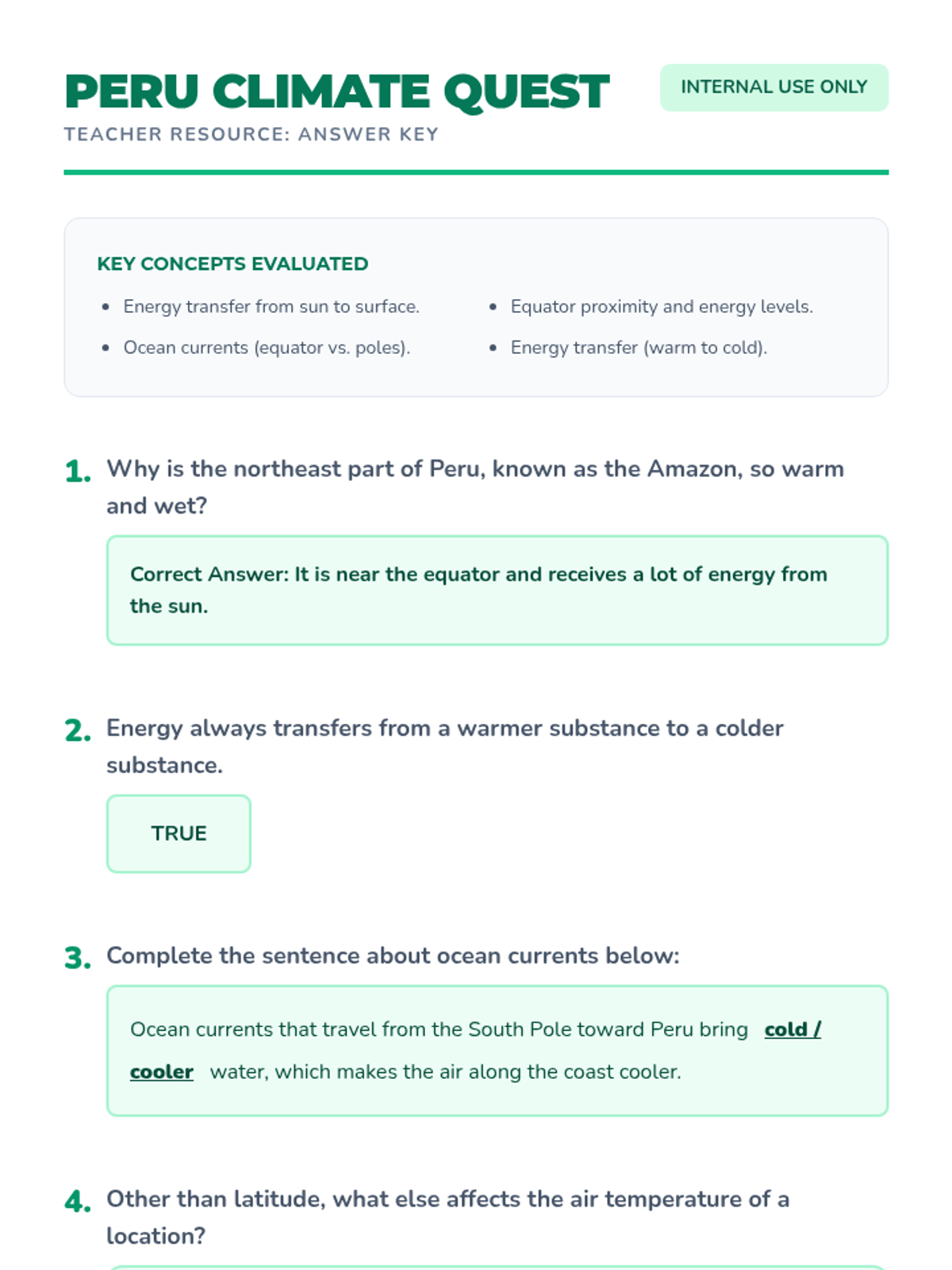
A teacher's answer key for the Peru Climate Quest homework assignment, including exemplar responses and grading tips.
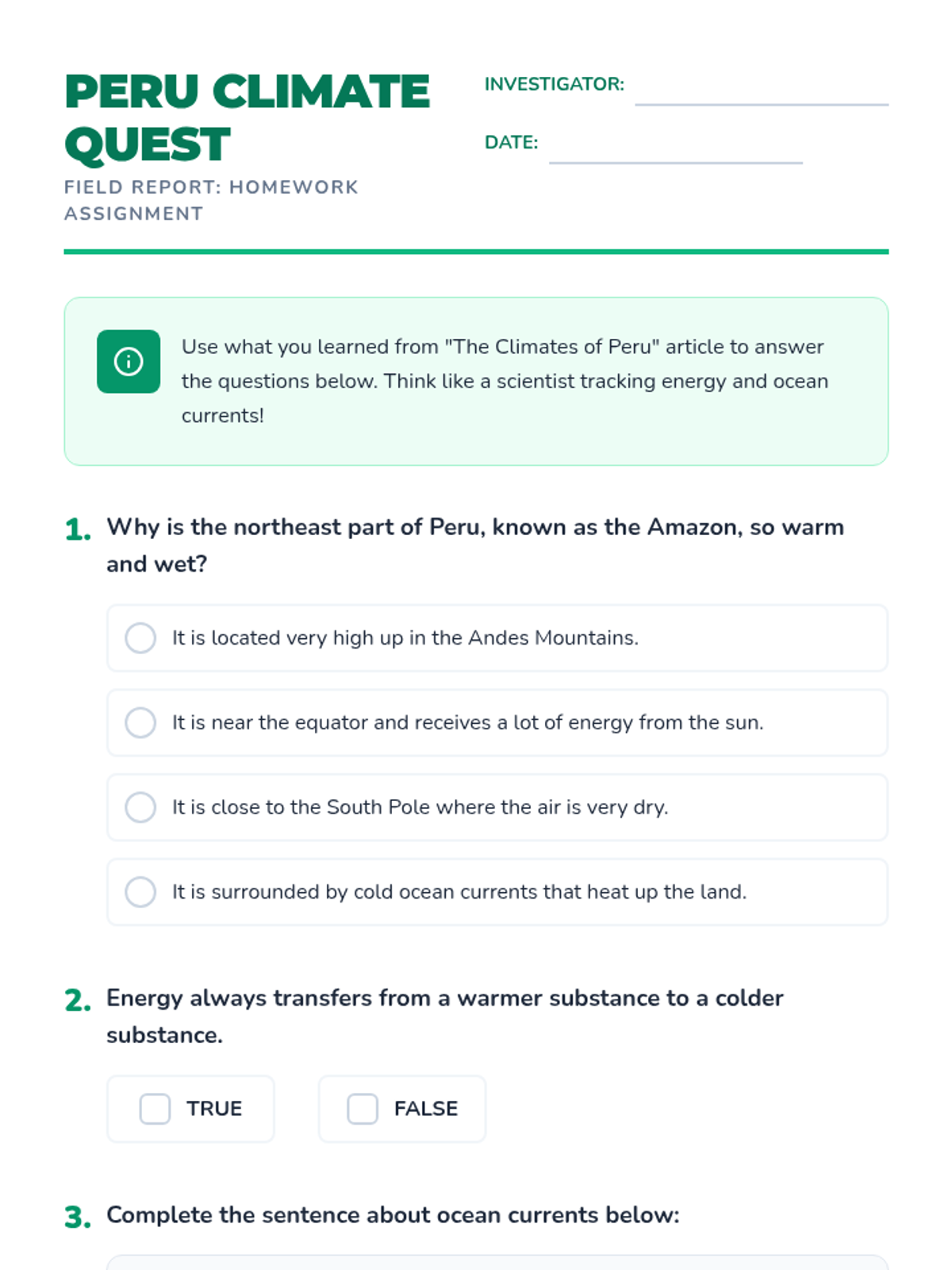
A 3rd-grade level homework assignment about Peru's climates, featuring multiple choice, true/false, fill-in-the-blank, and short answer questions.
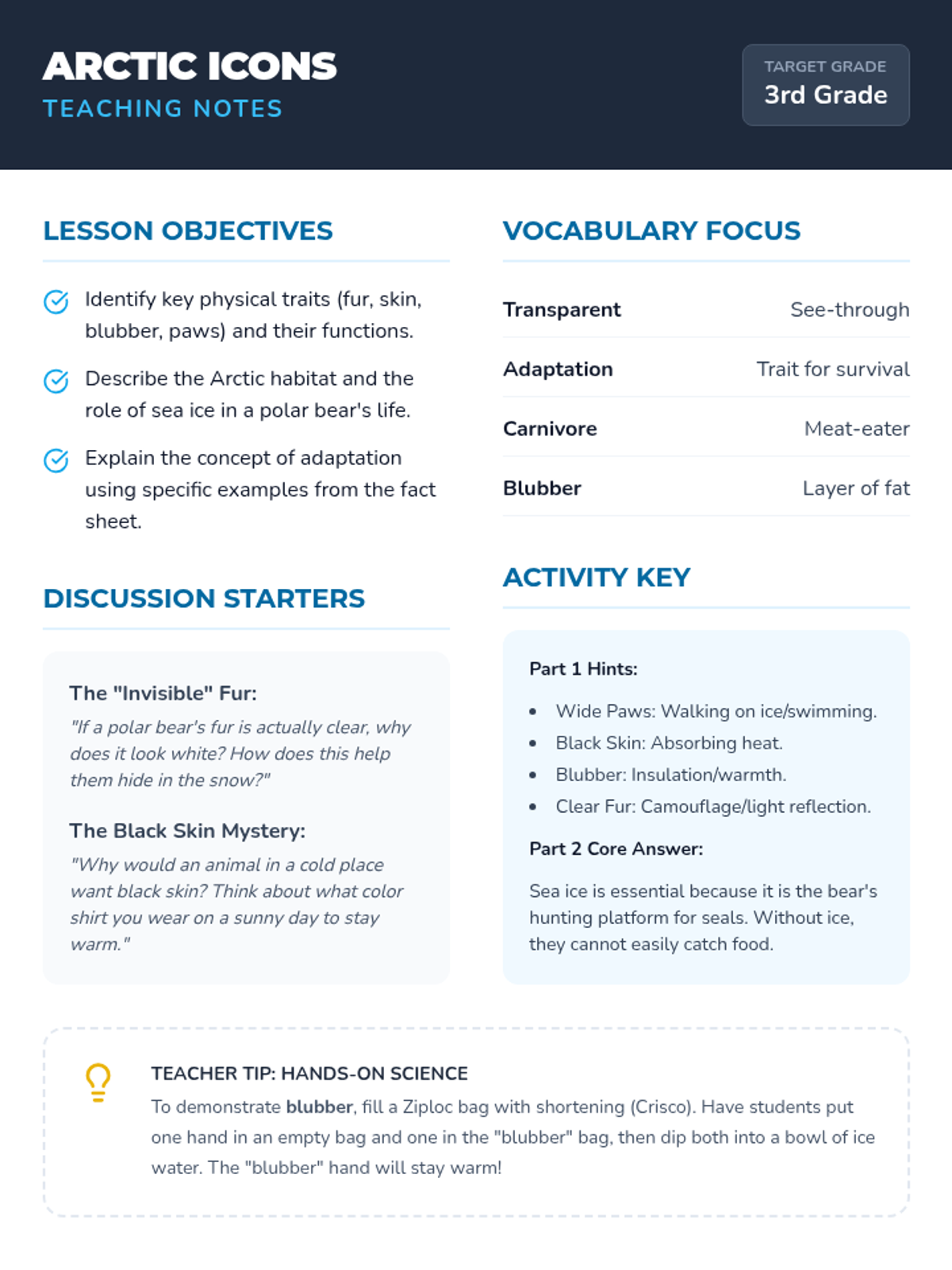
Instructional guidance for teachers. Revised to fix vocabulary formatting and improve text contrast.
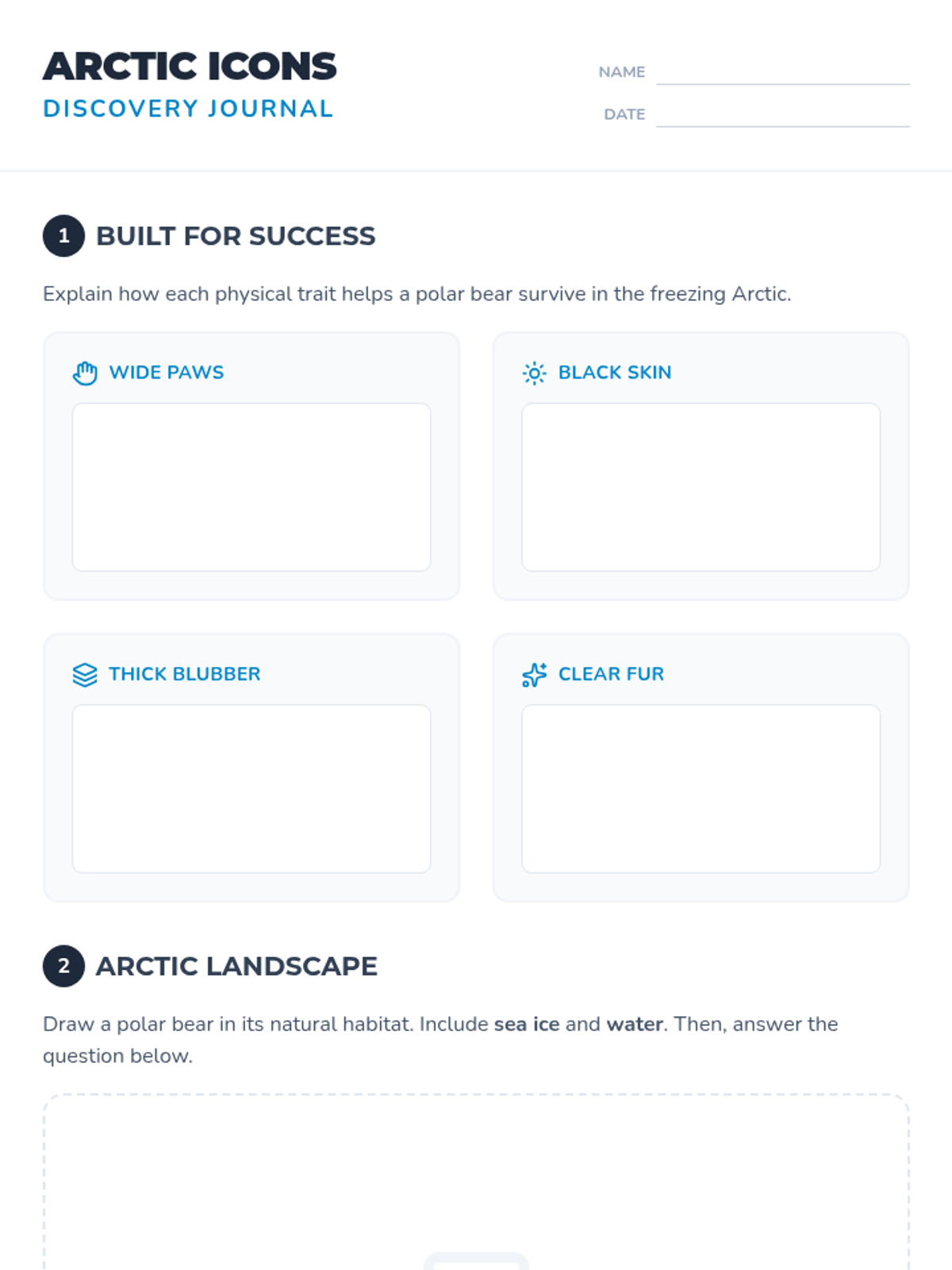
A student activity sheet featuring anatomy analysis, habitat drawing, and a critical thinking question. Revised with larger work areas, better page breaks, and dotted handwriting lines.
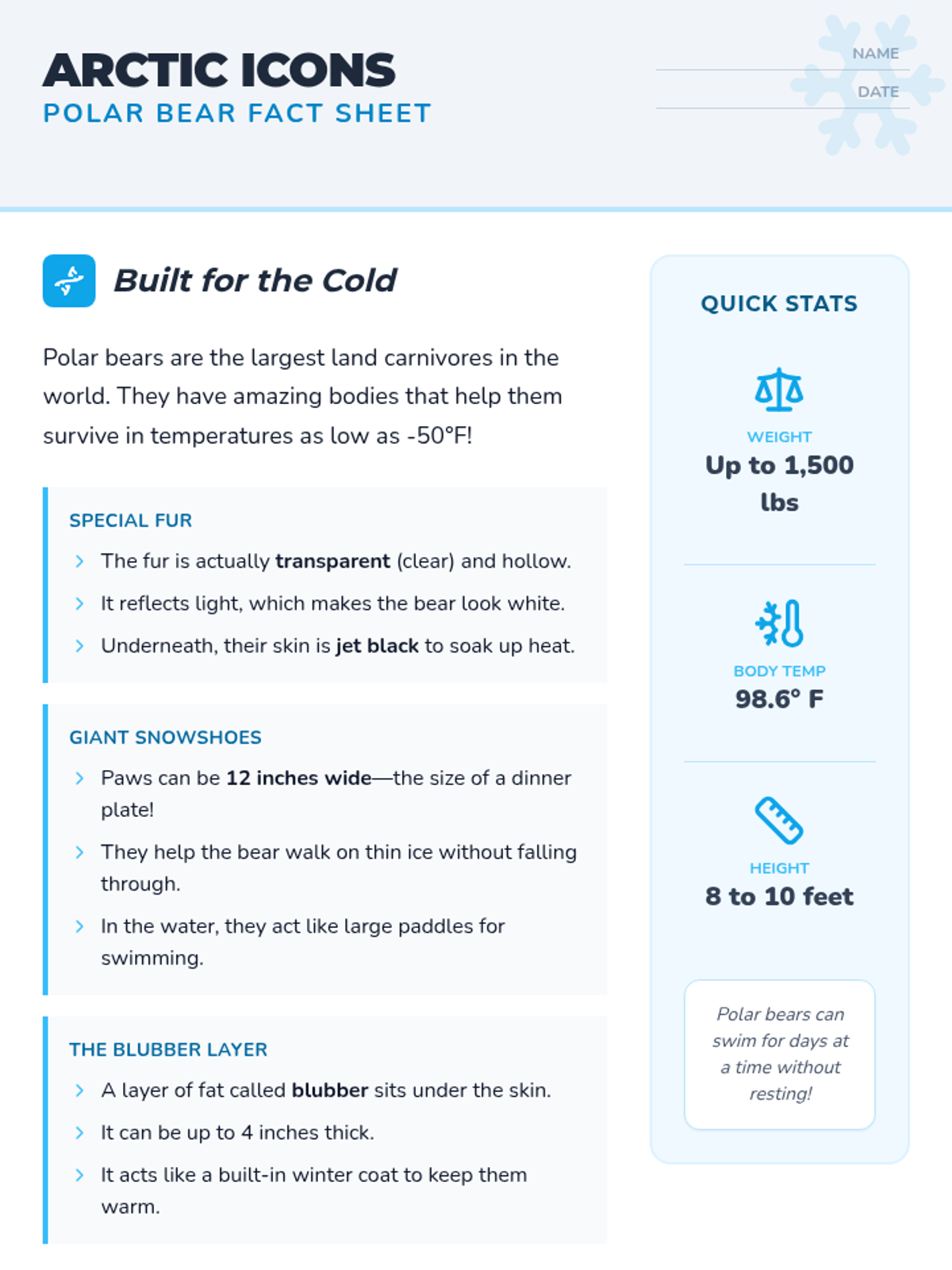
A visually engaging fact sheet for third graders covering polar bear physical traits and habitat. Revised to use bullet points for improved readability.
A presentation for teaching RL circuits, covering differential equations, charging/discharging phases, and time constants with high-impact visuals and consistent 5τ markers. Presentation optimized with clear axis labels and consistent table styling.
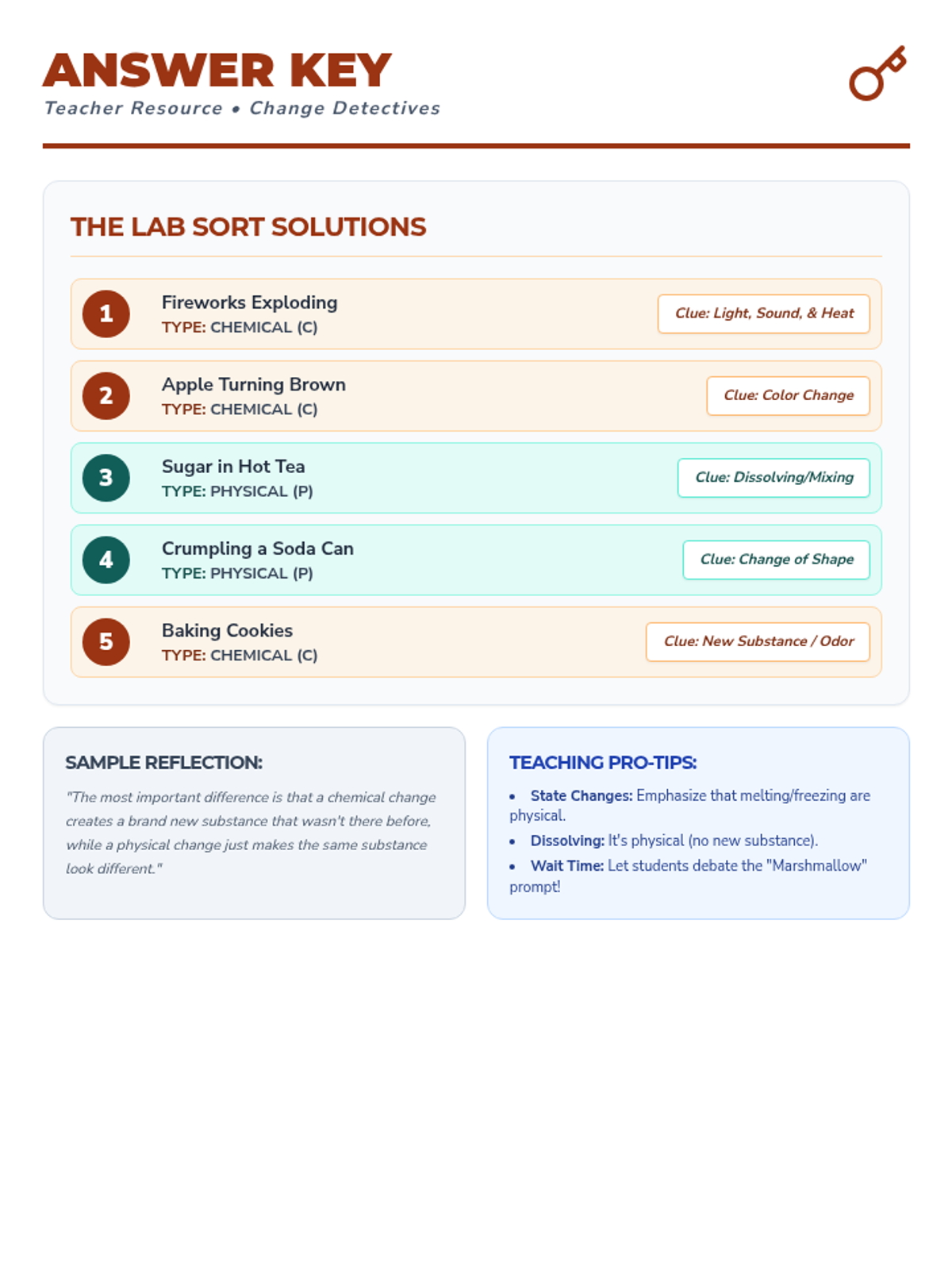
A comprehensive answer key and teacher resource for the Matter Makeovers lesson, updated with the new scenario solutions.
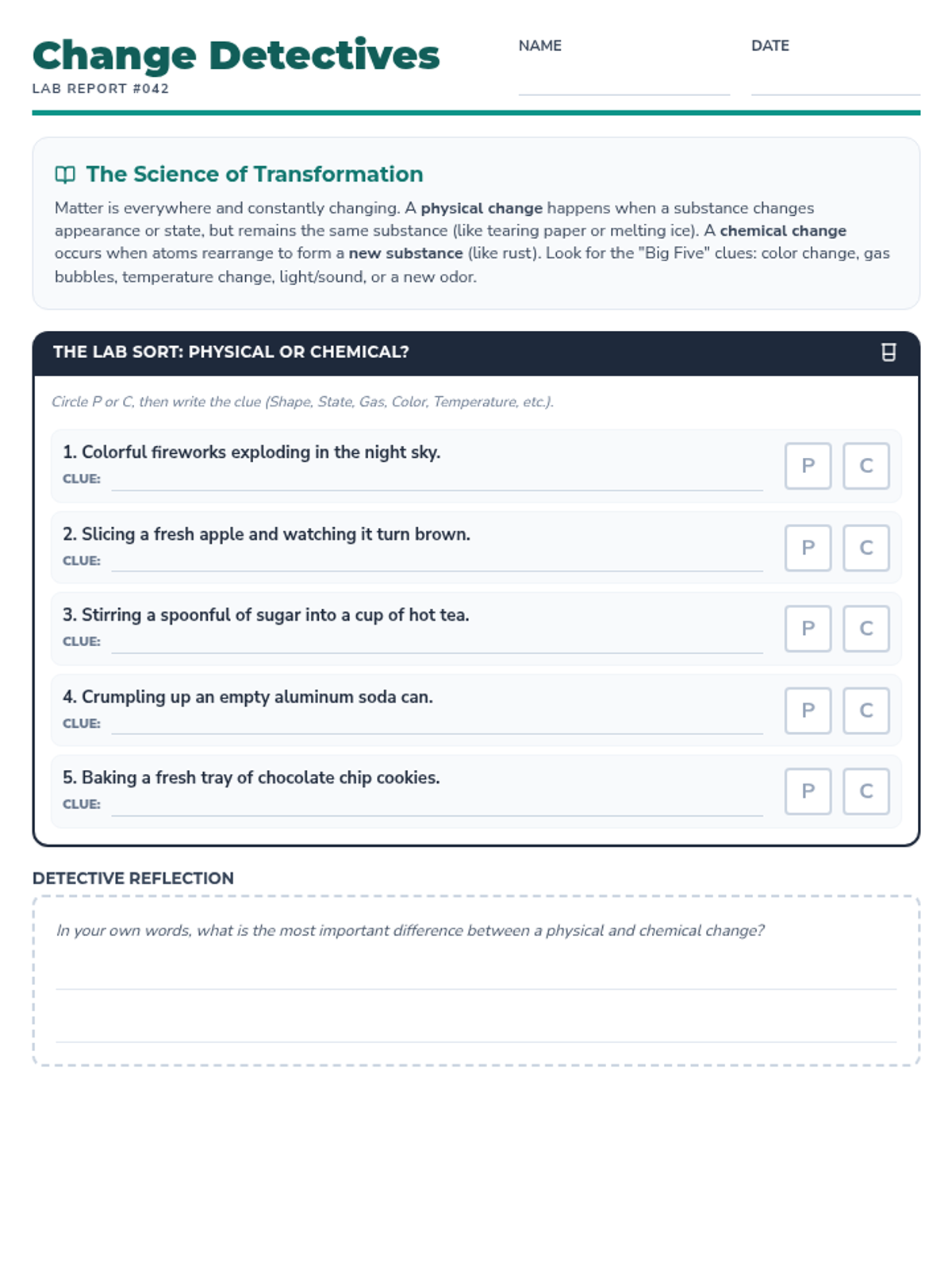
A student worksheet featuring a reading passage on matter transformation and a categorizing activity for physical vs. chemical changes with updated scenarios.
An engaging slide deck explaining physical and chemical changes with visual examples and the '5 Clues' for detection.
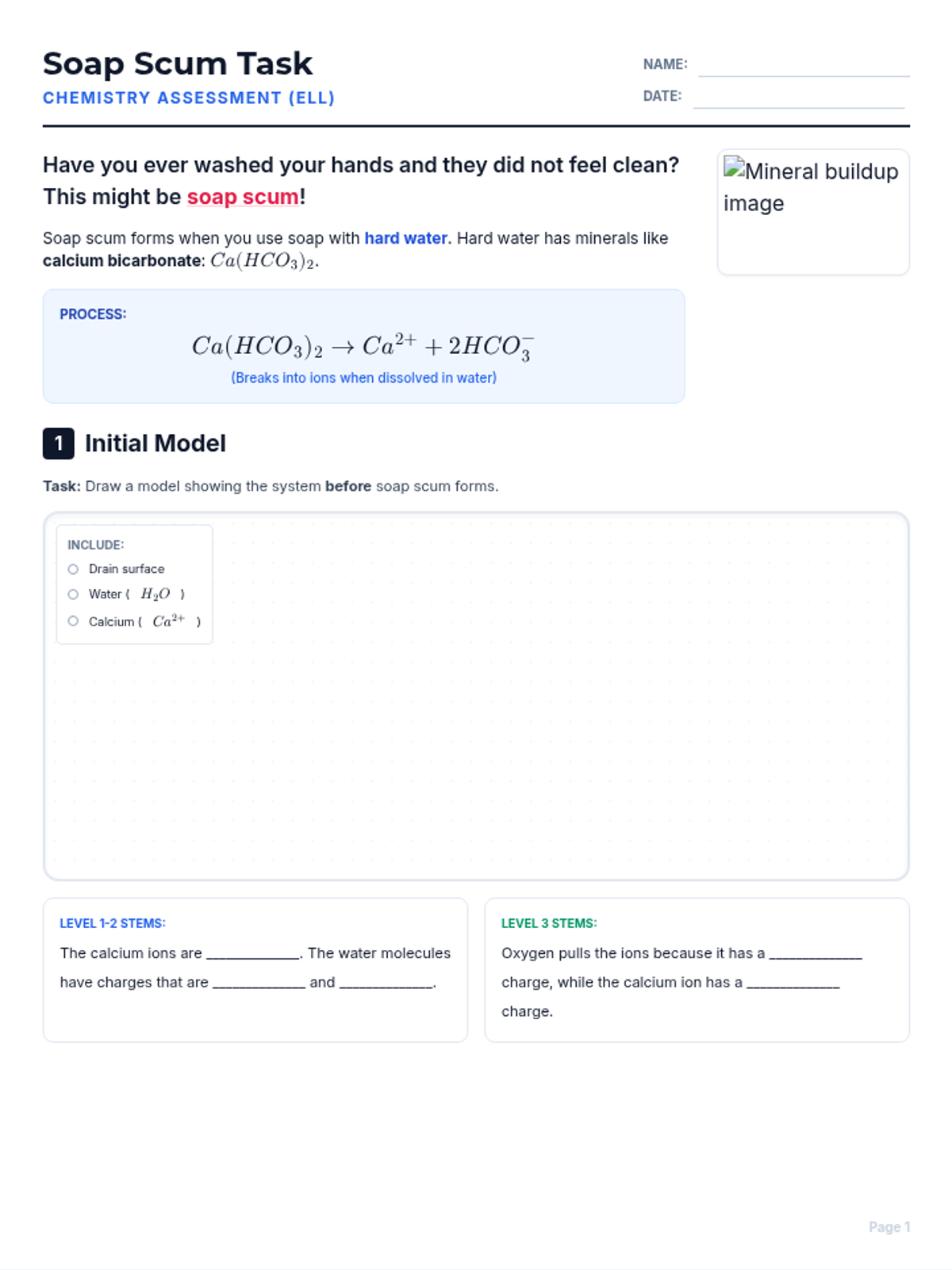
A 6-page scaffolded chemistry assessment designed for 10-11th grade English Language Learners (Entering, Emerging, Developing). It features simplified language, visual aids, and differentiated sentence stems for modeling, chemical balancing, and reasoning tasks.
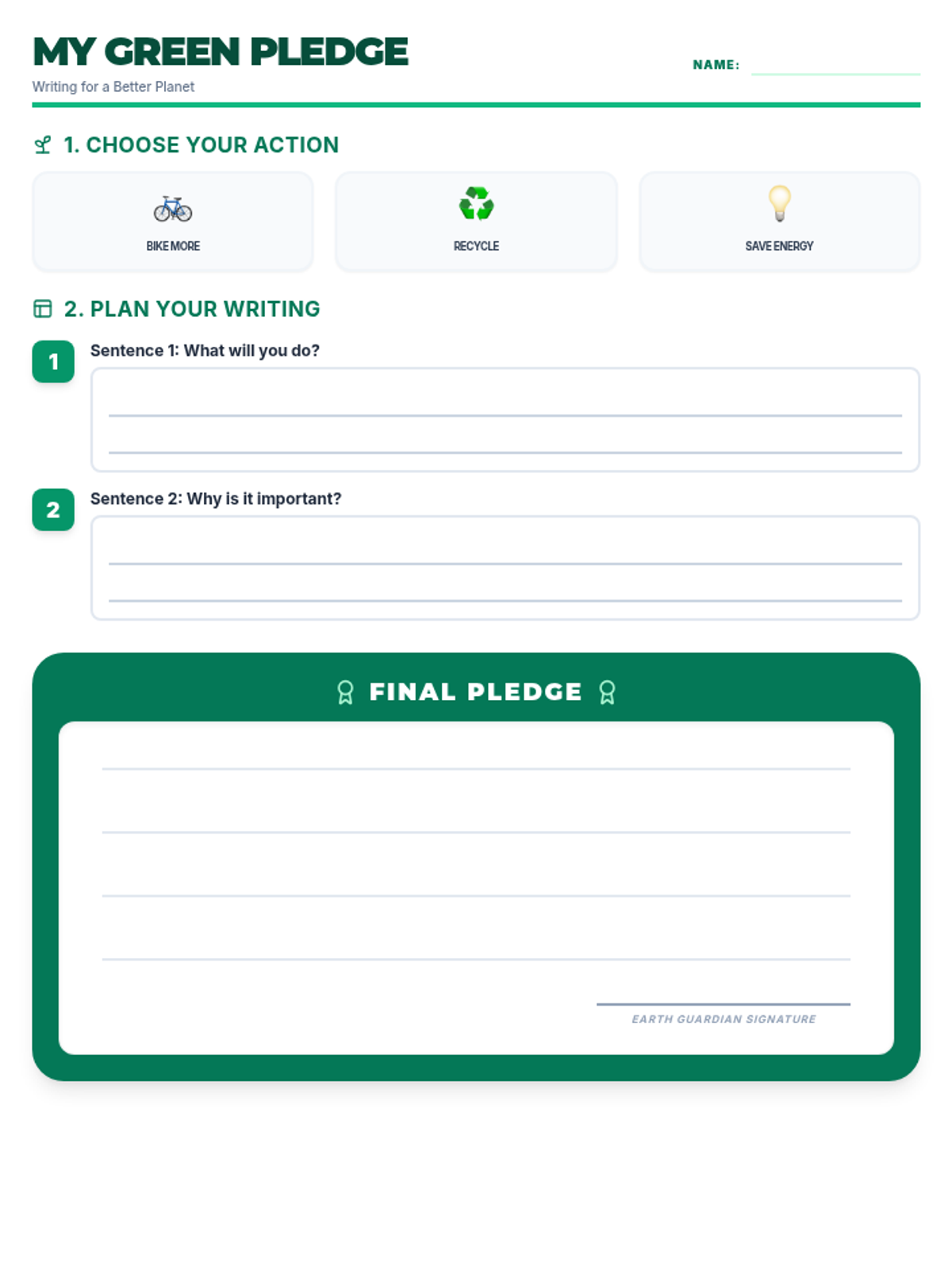
A writing graphic organizer and final draft template for students to write a "Green Pledge," featuring scaffolds for topic sentences, reasons, and a closing.
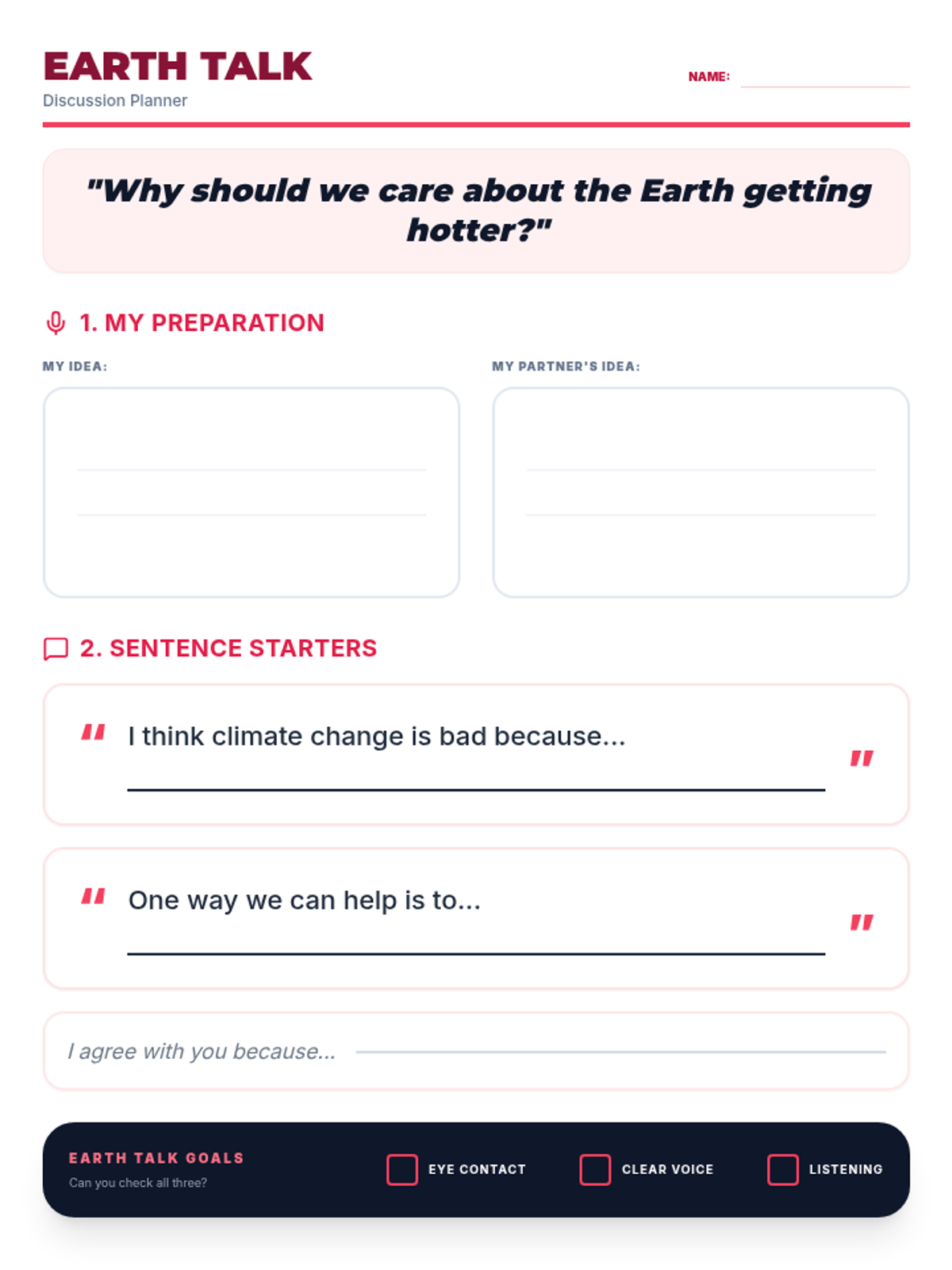
A speaking workshop graphic organizer that provides sentence starters and preparation space for a class discussion on climate change, tailored for students with foundational communication skills.
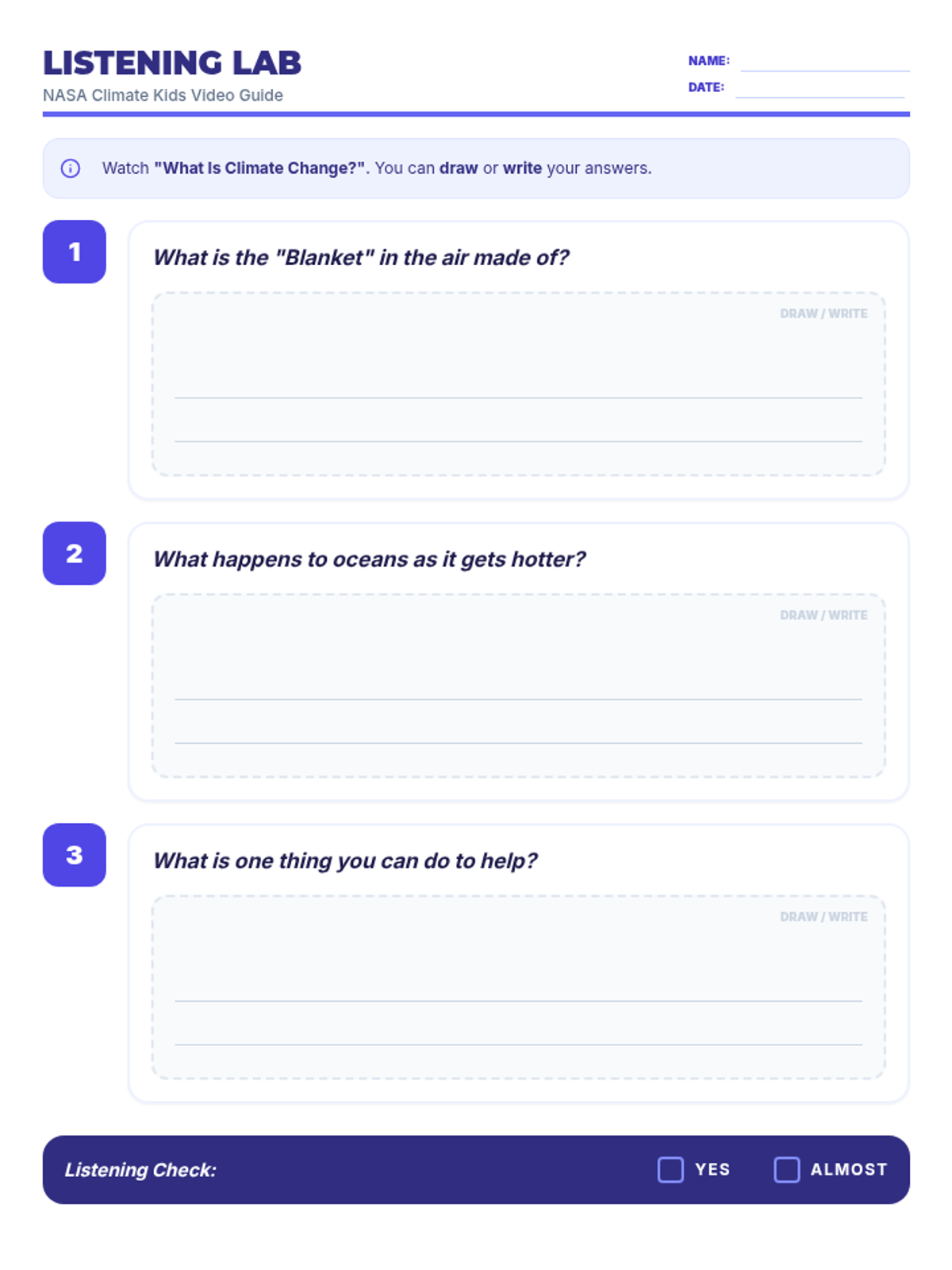
A listening graphic organizer designed for use with the NASA Climate Change video, providing structured spaces for students to capture key information through drawing or writing.
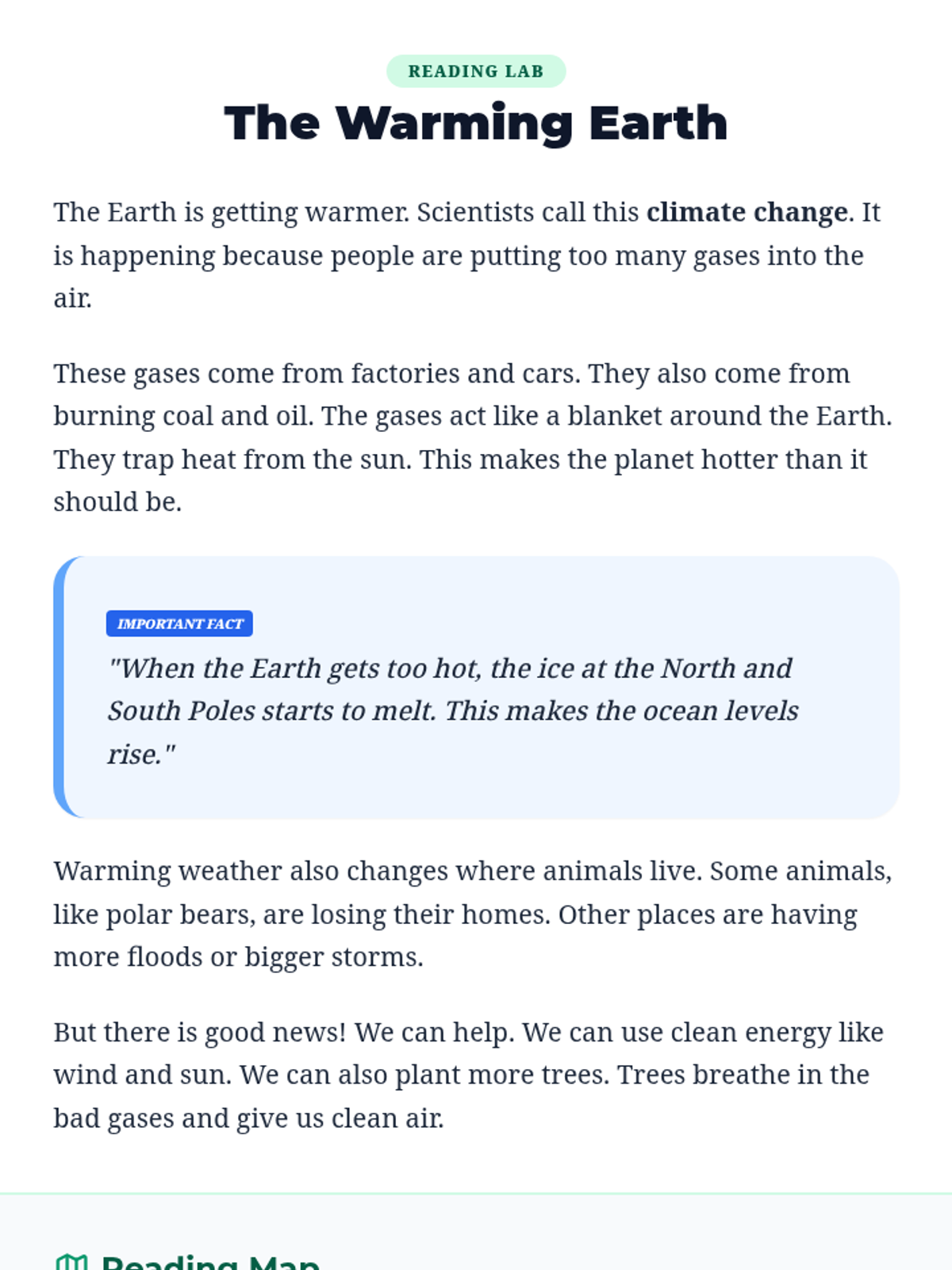
A simplified reading passage about climate change paired with a Main Idea and Details graphic organizer, specifically scaffolded for 3rd-4th grade reading levels.
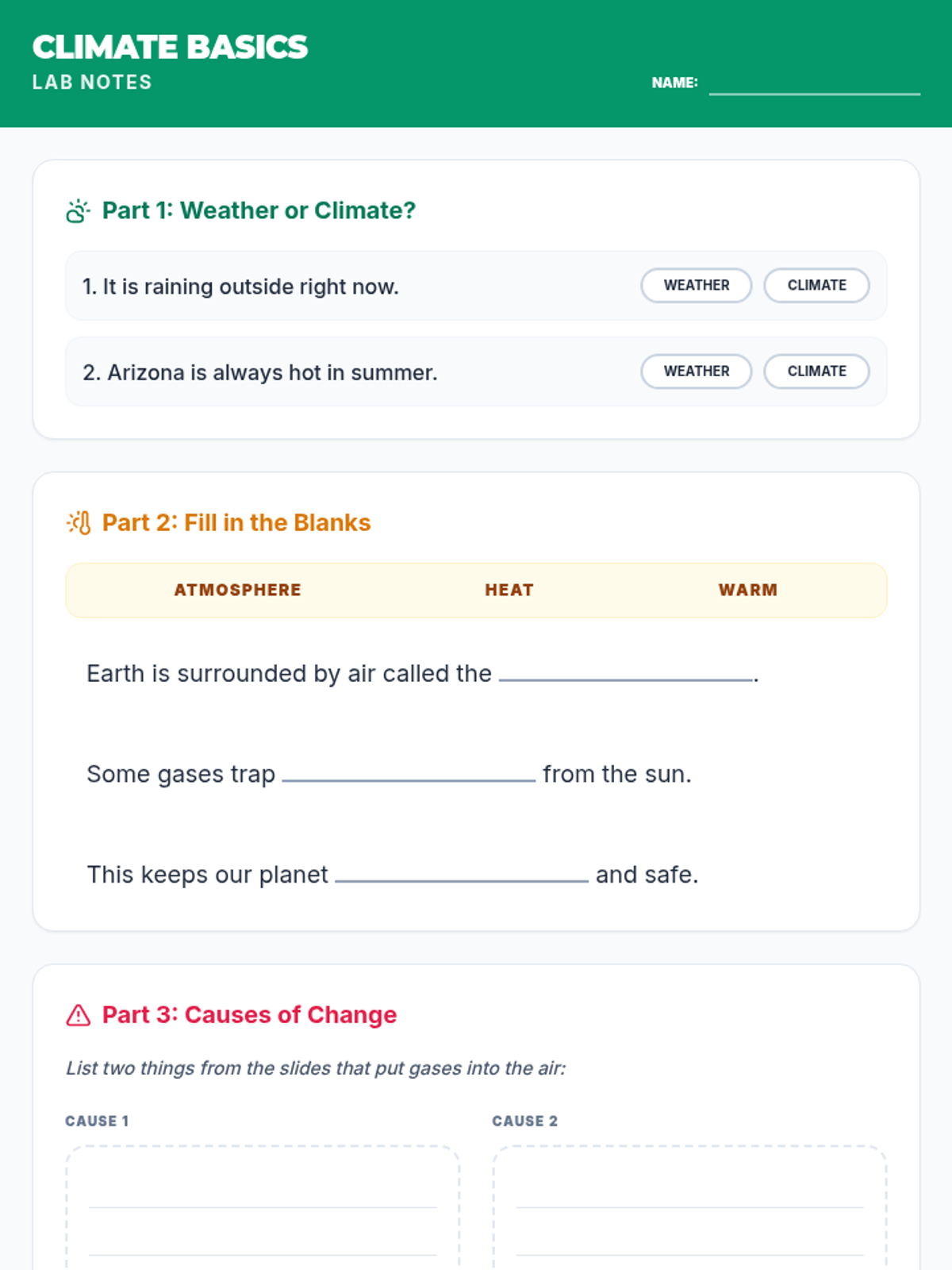
A guided notes worksheet designed to accompany the Climate Basics Slides, featuring simplified fill-in-the-blanks, matching, and personal reflection for students with foundational literacy.
An engaging slide presentation introducing climate change basics, the greenhouse effect, and personal impact with simplified text and bold visuals for foundational learners.
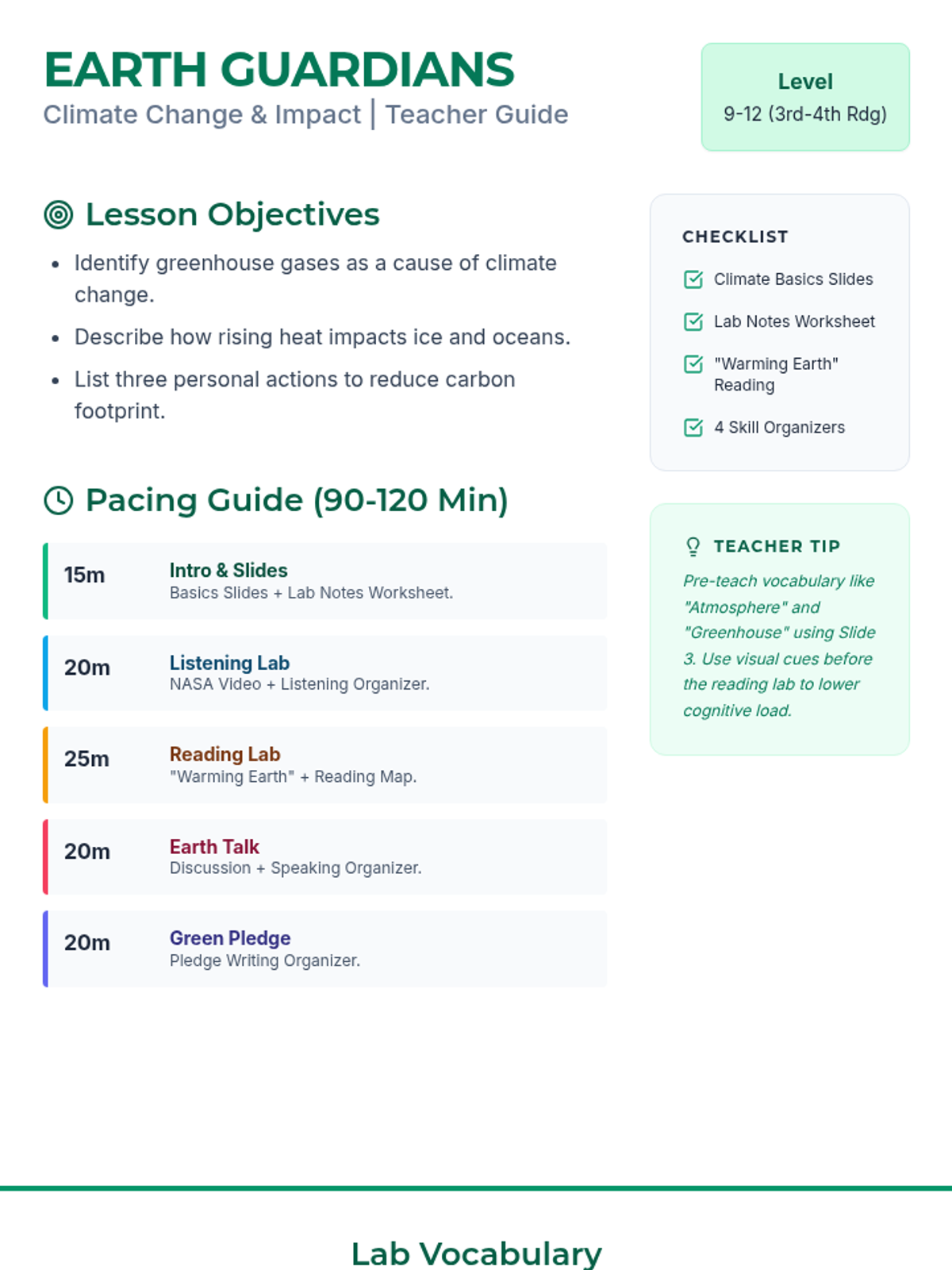
A comprehensive teacher lesson plan for the Earth Guardians lesson, featuring pacing guides, differentiation strategies, and an integrated skills overview for teaching climate change to high schoolers with foundational literacy needs.
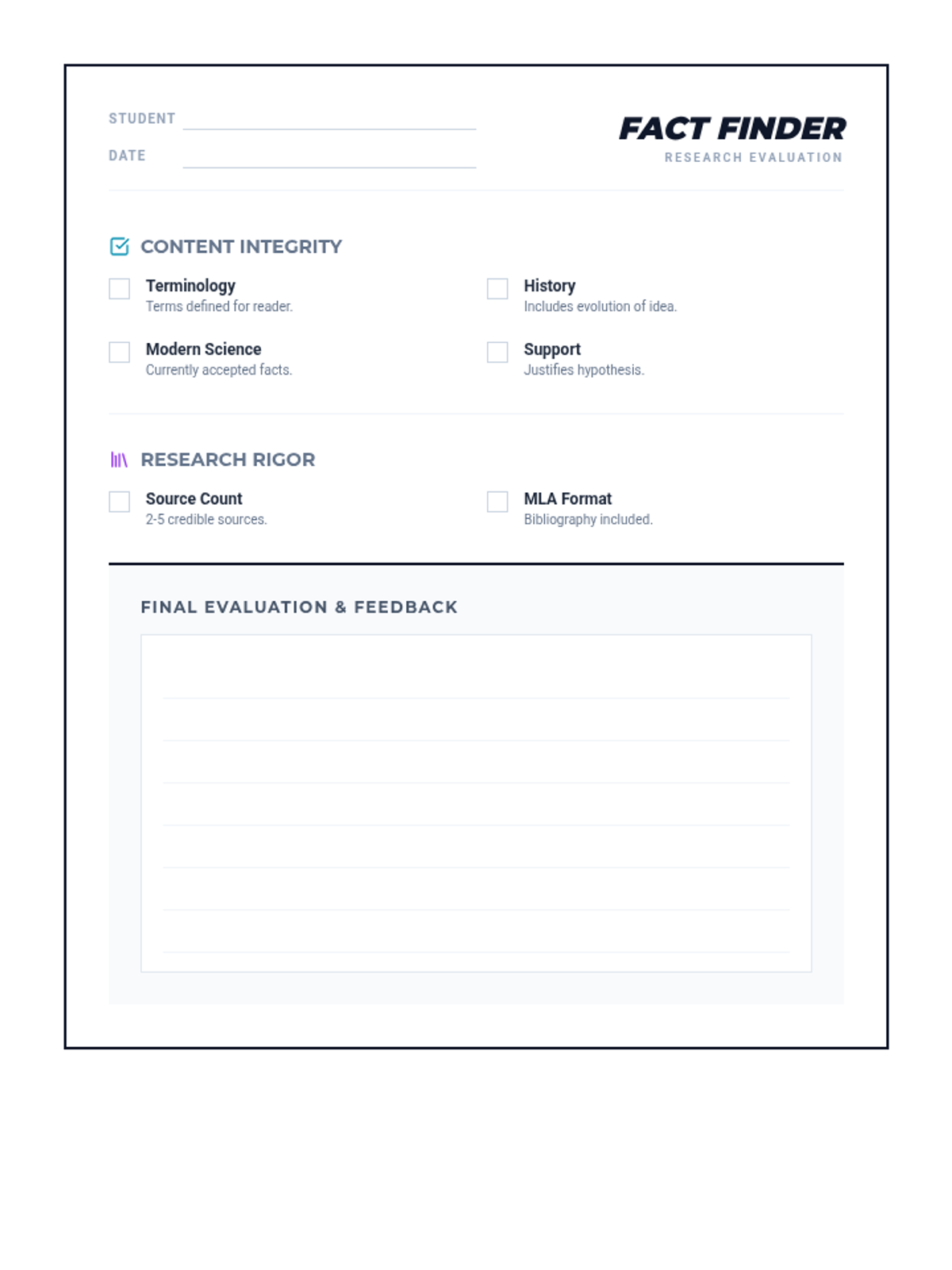
A checklist for both teachers and students to ensure all project requirements—terminology, history, modern science, and MLA citations—are met.
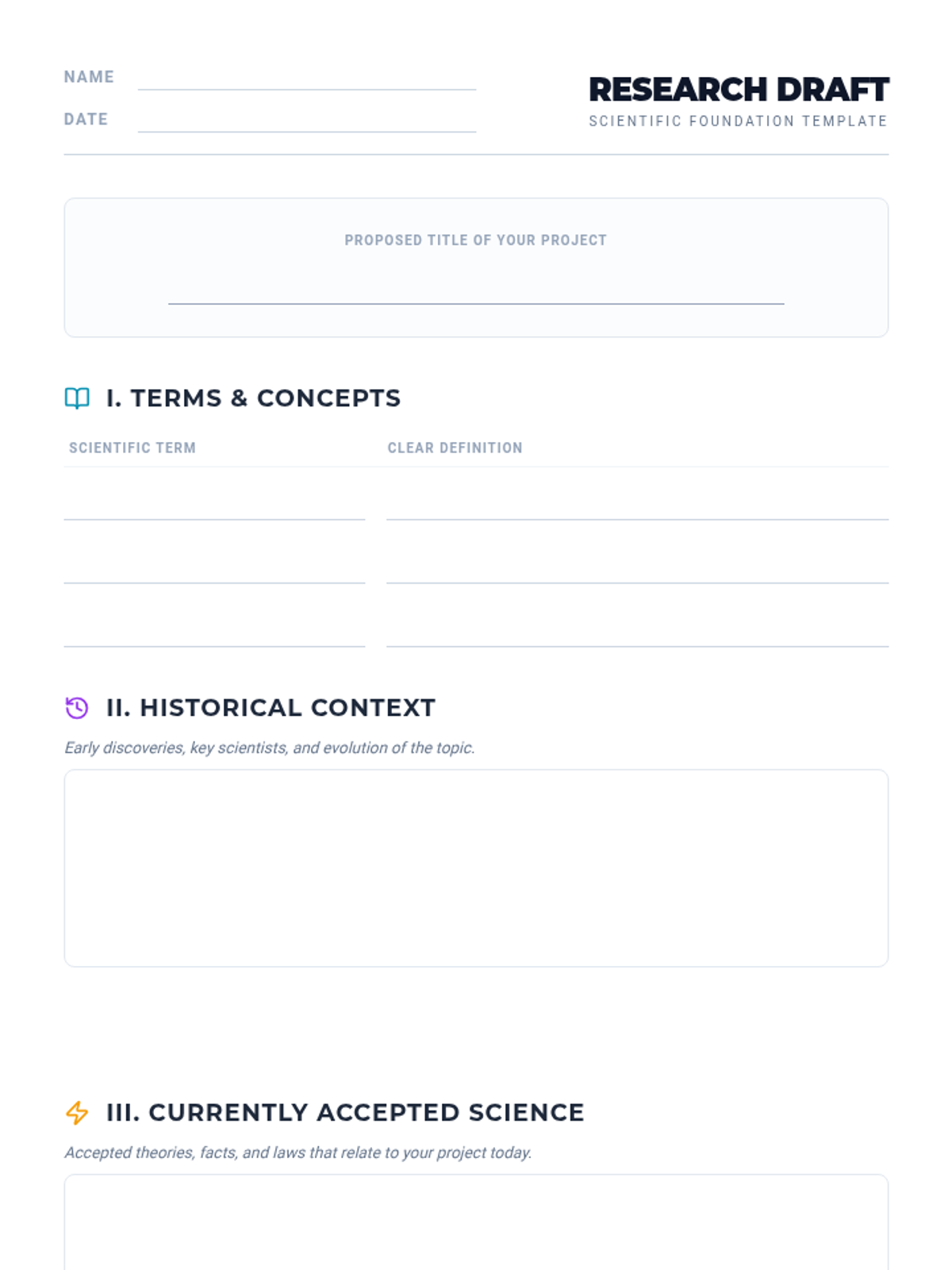
A multi-page research paper template with structured sections for terminology, history, current theories, hypothesis support, and MLA citations.
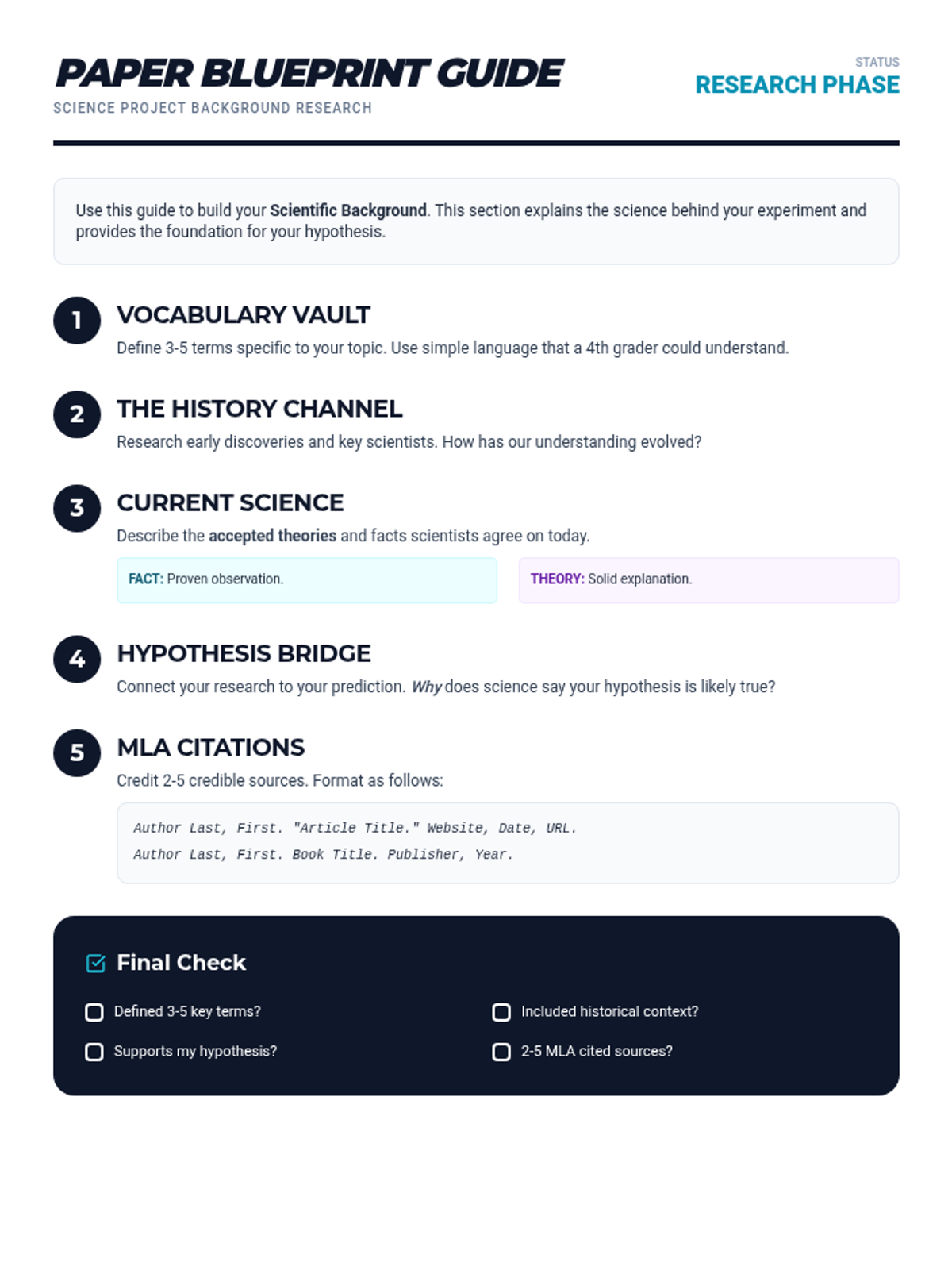
A step-by-step guide for students to navigate the research and writing process, broken down into five clear stages with an included final checklist.
A visual presentation introducing the components of a science research paper, emphasizing source credibility and MLA formatting.
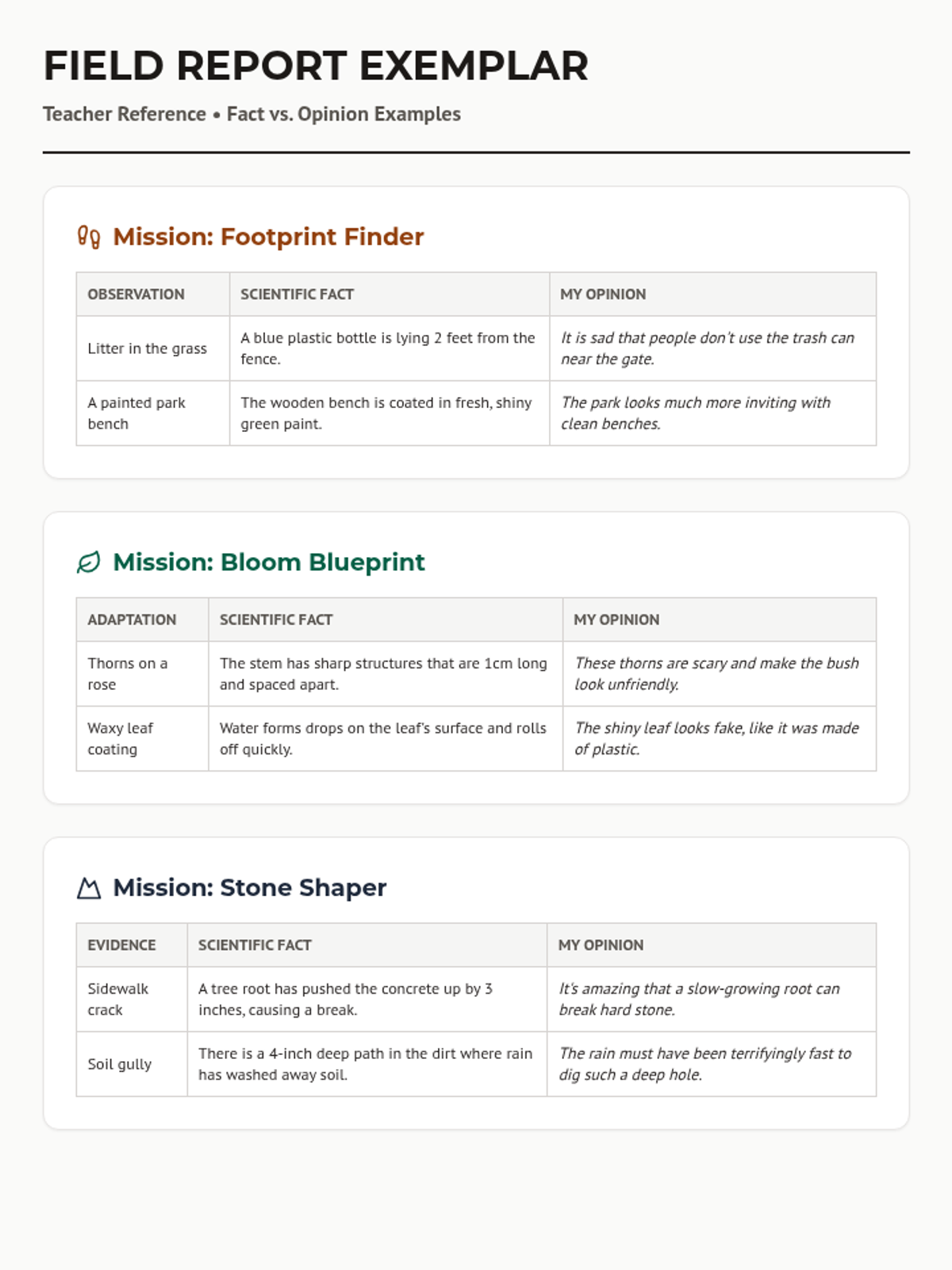
An answer key and exemplar resource for teachers, providing concrete examples of how students should record facts and opinions across the three science topics.
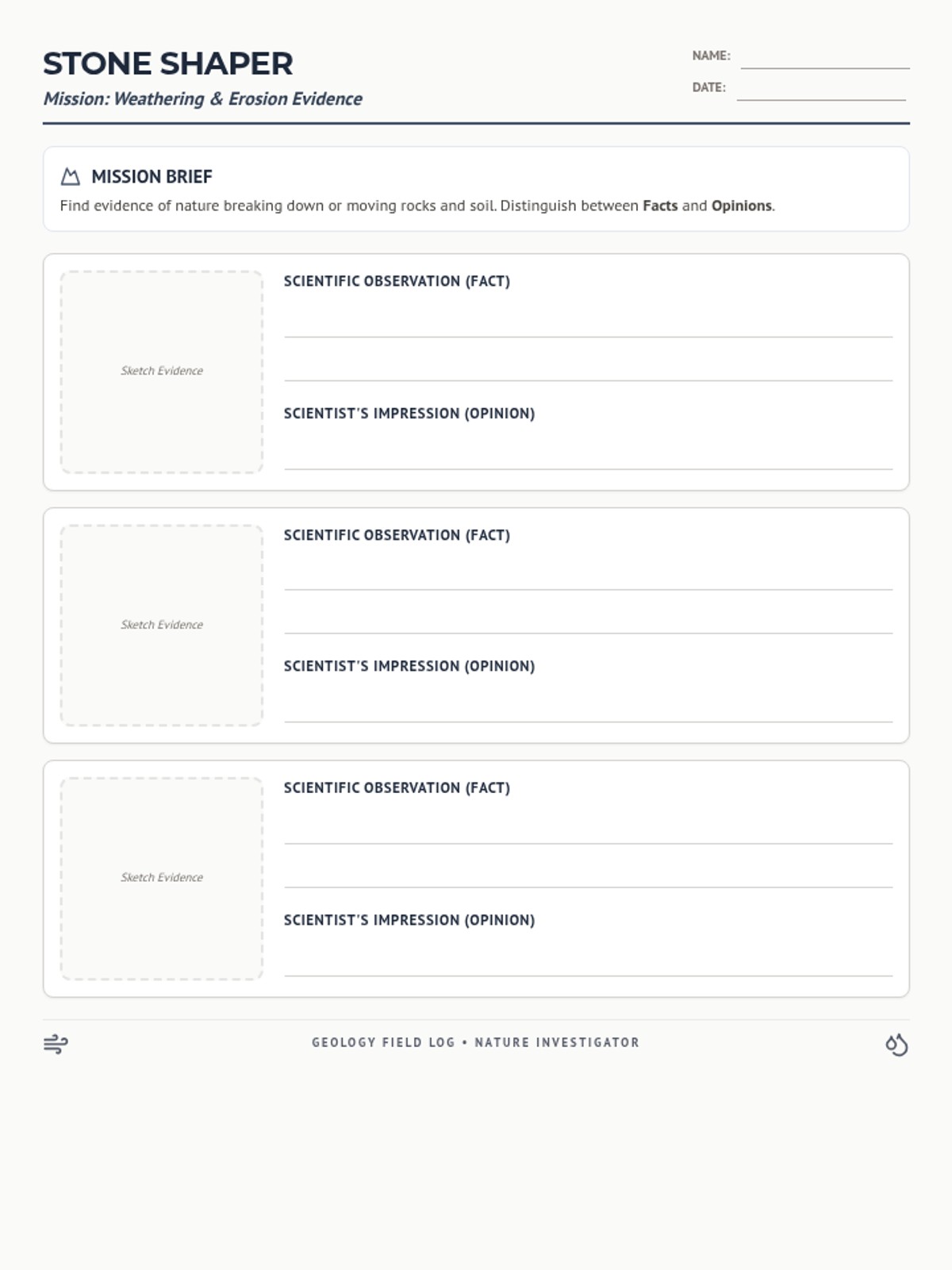
A nature-based graphic organizer for recording evidence of weathering and erosion. Encourages students to separate objective observations from subjective feelings through sketching and writing.
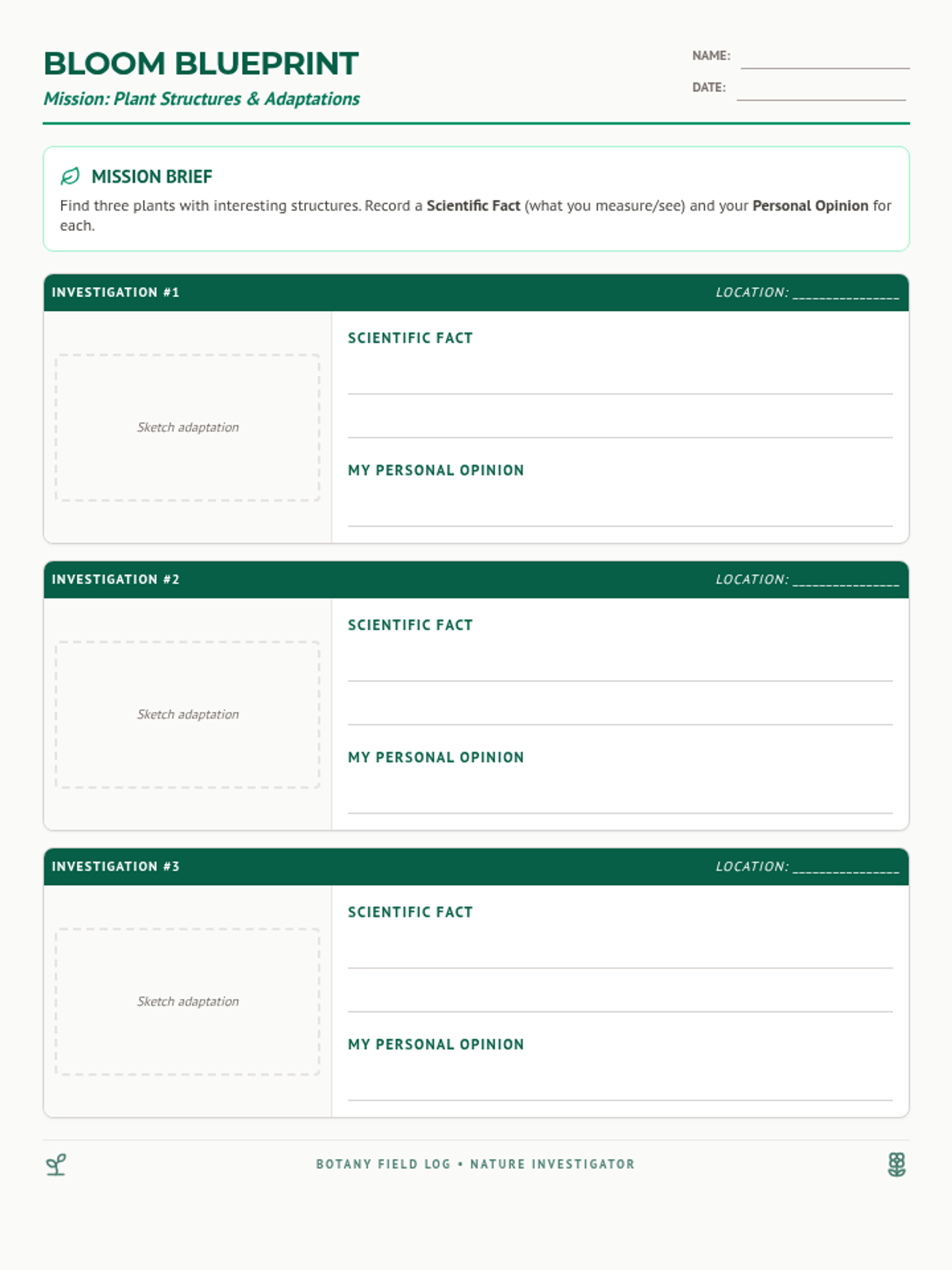
A graphic organizer focused on plant structures and adaptations. Students sketch plant parts and distinguish between verifiable scientific facts and subjective opinions.
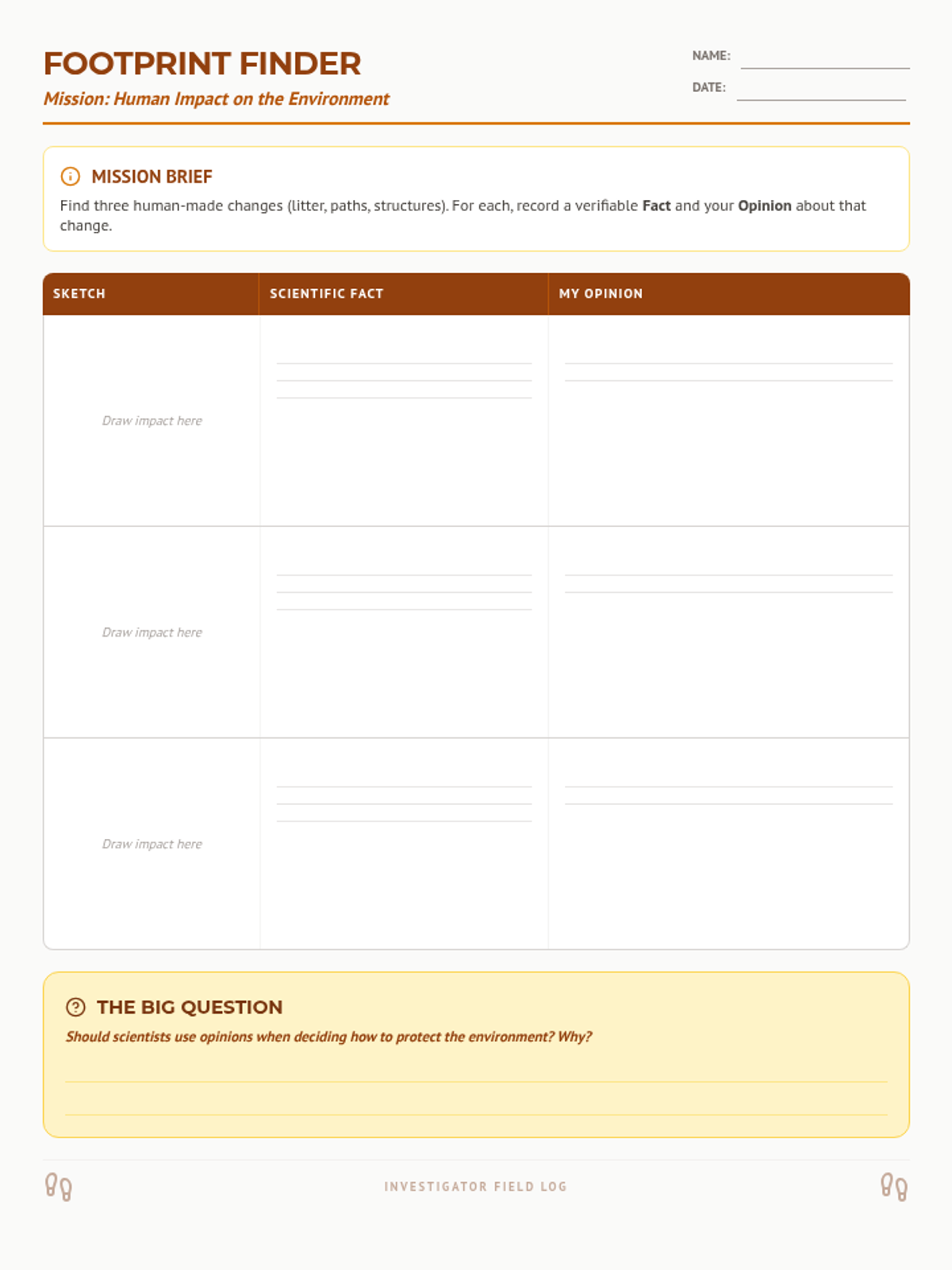
An outdoor graphic organizer for students to record human impact on the environment. Features a table for sketching observations and writing corresponding facts and opinions.
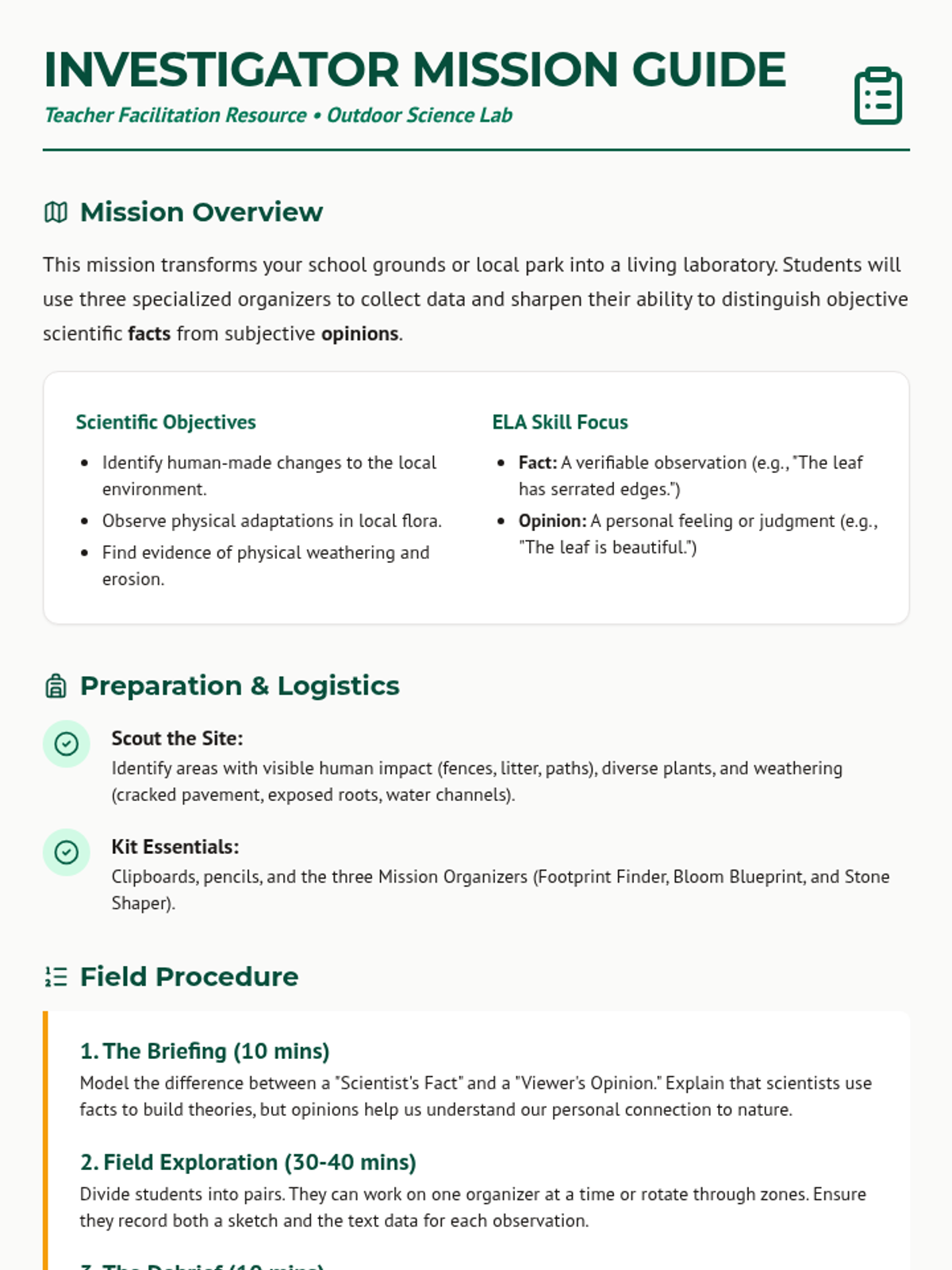
A comprehensive teacher's guide for conducting outdoor science observations. Includes setup instructions, ELA integration tips for fact vs. opinion, and differentiation strategies.