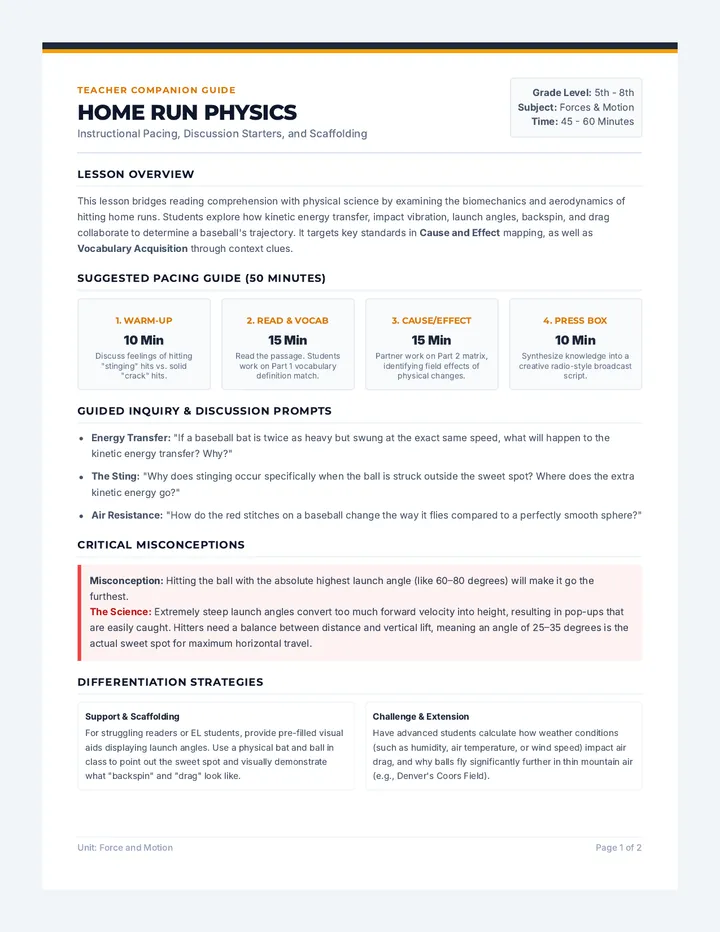
A teacher facilitation guide consolidated to one page. Includes learning objectives, tiered support breakdowns (Tier 1-3), comprehensive answer keys, and pedagogical tips. Layout optimized for single-page printing.
A Tier 3 support worksheet for identifying main ideas through a visual matching/selection activity, designed for students requiring intensive literacy support. Consolidated to one page.
A Tier 2 support worksheet for identifying main ideas and details, featuring sentence starters and a word bank to scaffold the writing process for students needing moderate support. Writing areas and contrast improved for 2nd grade.
A multiple-choice exit ticket assessing student comprehension. Questions are styled for 2nd grade readability and all choices share uniform styling. Layout optimized to fit one page.
Interactive slides for teaching the frog life cycle, including definition of a life cycle, detailed stages, and discussion prompts. Visuals updated for better contrast and clarity.
A graphic organizer for students to record the main idea and two supporting details for each of the four paragraphs in the frog life cycle passage. Provides ample space and guided lines for 2nd grade handwriting.
A 2nd-grade level reading passage about the frog life cycle, featuring four paragraphs covering eggs, tadpoles, growing legs, and adult frogs. Layout adjusted for better header spacing and icon rendering.
A comprehensive guide for teachers including learning objectives, discussion prompts, science troubleshooting tips, and pro-tips for facilitating the DIY lava lamp experiment.
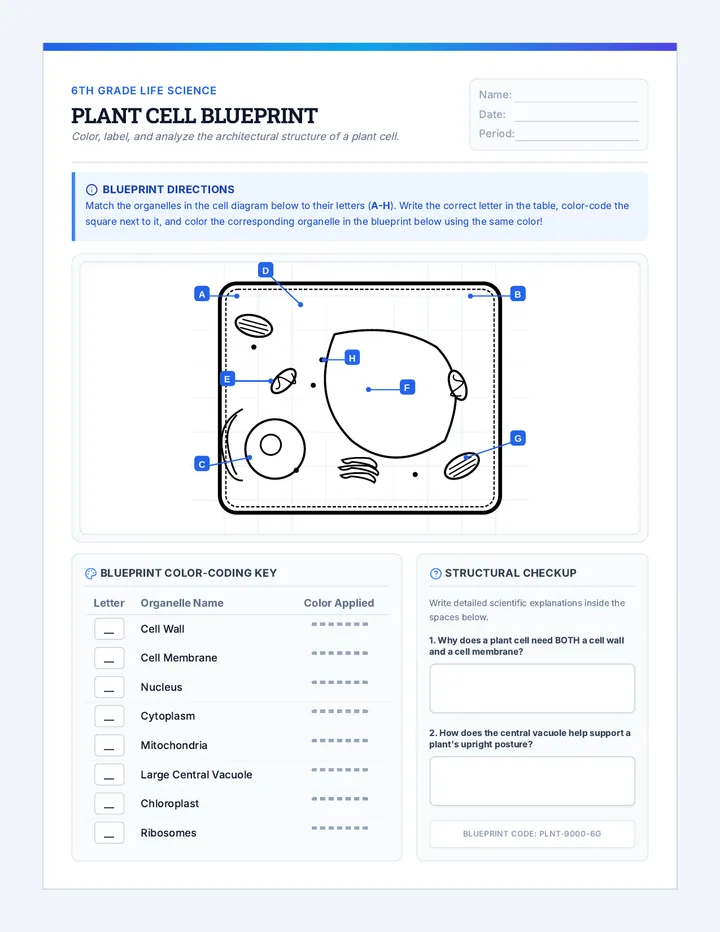
A structured lab report for students to record their hypothesis, observations with a sketch area, and analysis questions about density and the chemical reaction observed.
A visually engaging slide deck covering the concepts of density, intermolecular polarity (briefly), and step-by-step instructions for creating a DIY lava lamp experiment.
Visual vocabulary cards for the sensory center, providing simple definitions and examples for key science terms like habitat, camouflage, and classification.