A student recording sheet for the Structure Squad task cards, providing organized spaces for students to write their answers to each mission. Optimized to fit on a single page.
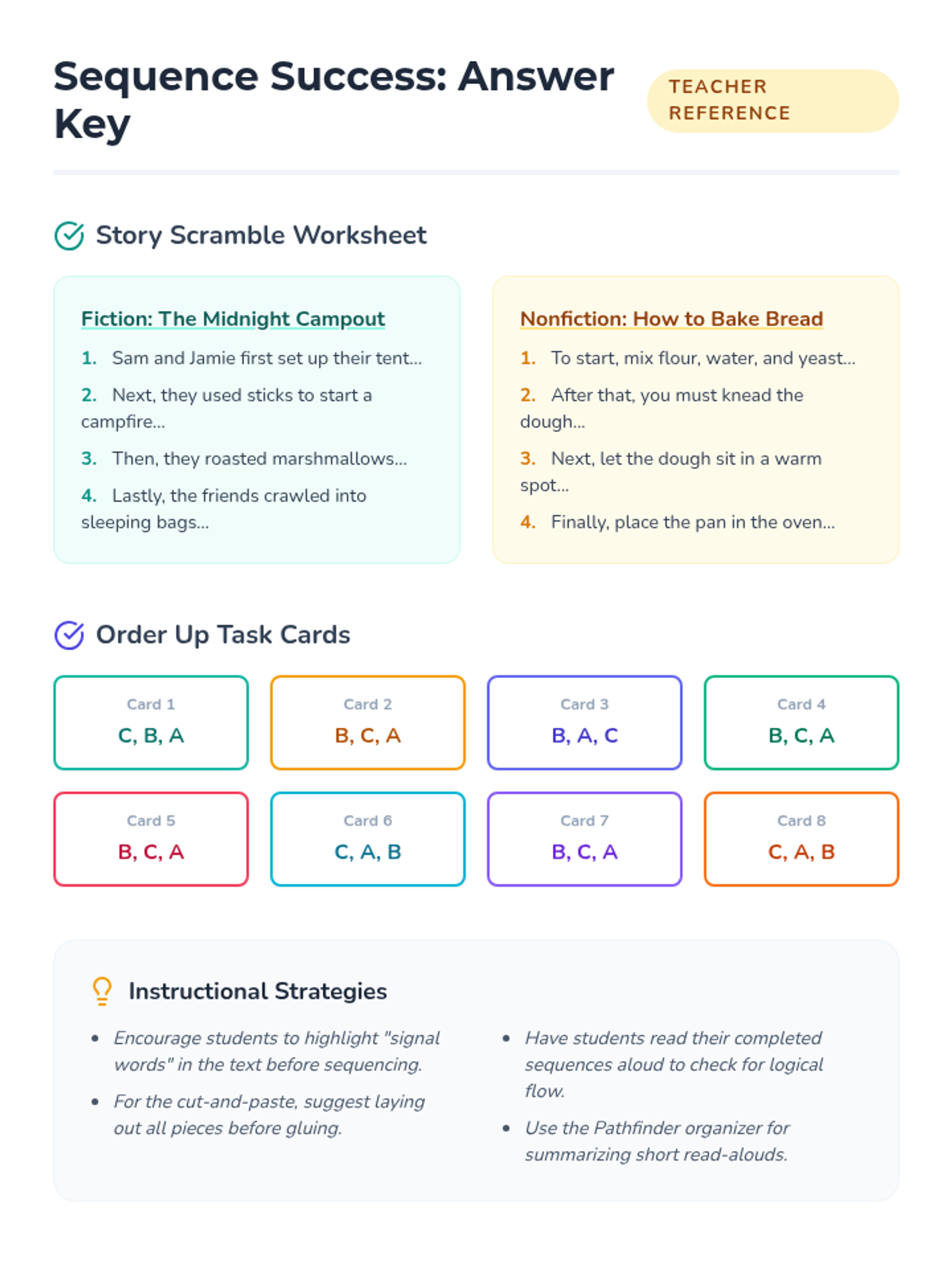
Teacher answer key for the 'Timeline Travelers' lesson. Revised with a print-friendly light theme and accurate task card answers.
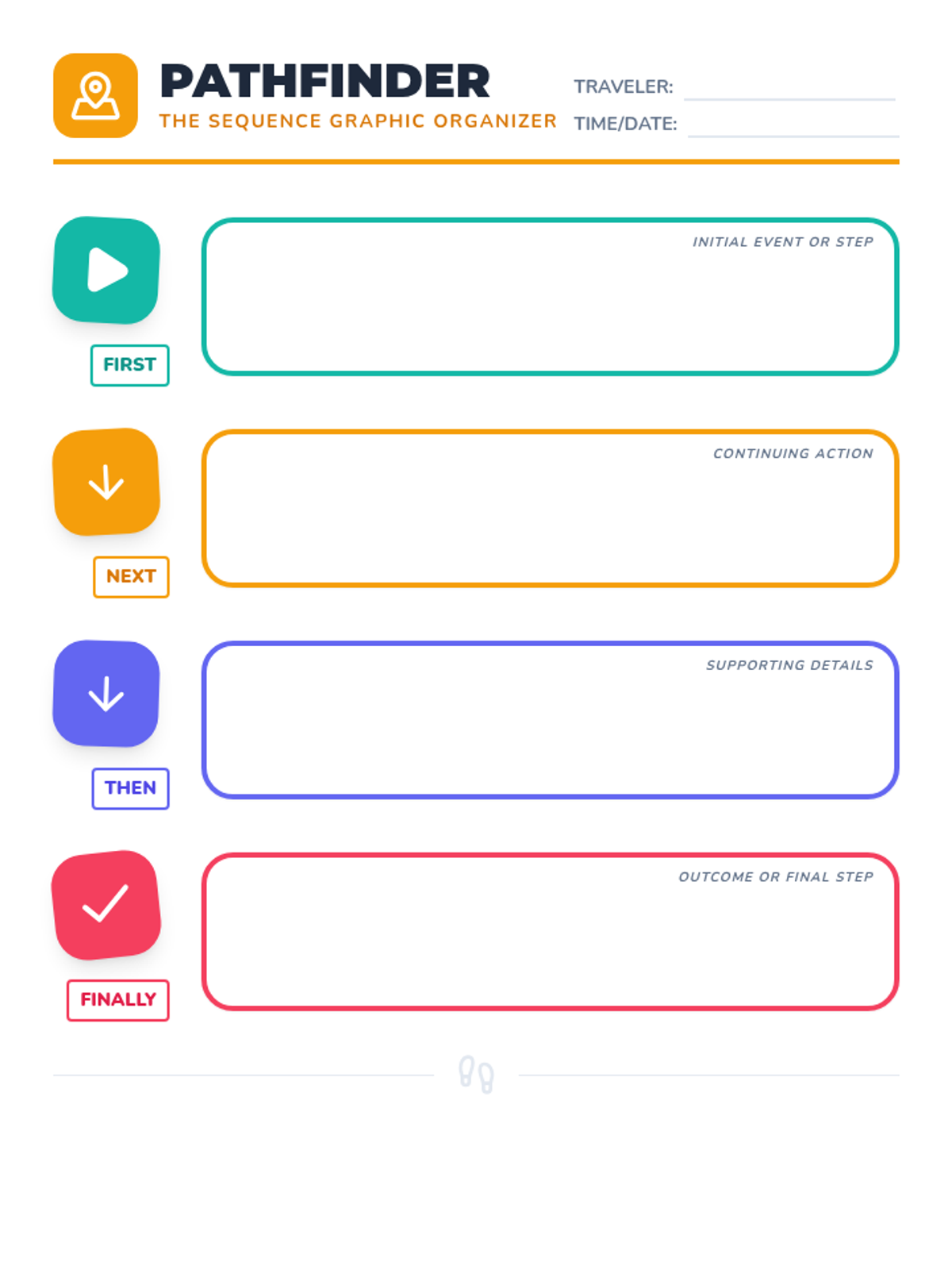
A stylish sequencing graphic organizer. Revised to fix text overlap, increase contrast, and ensure it fits on a single page.
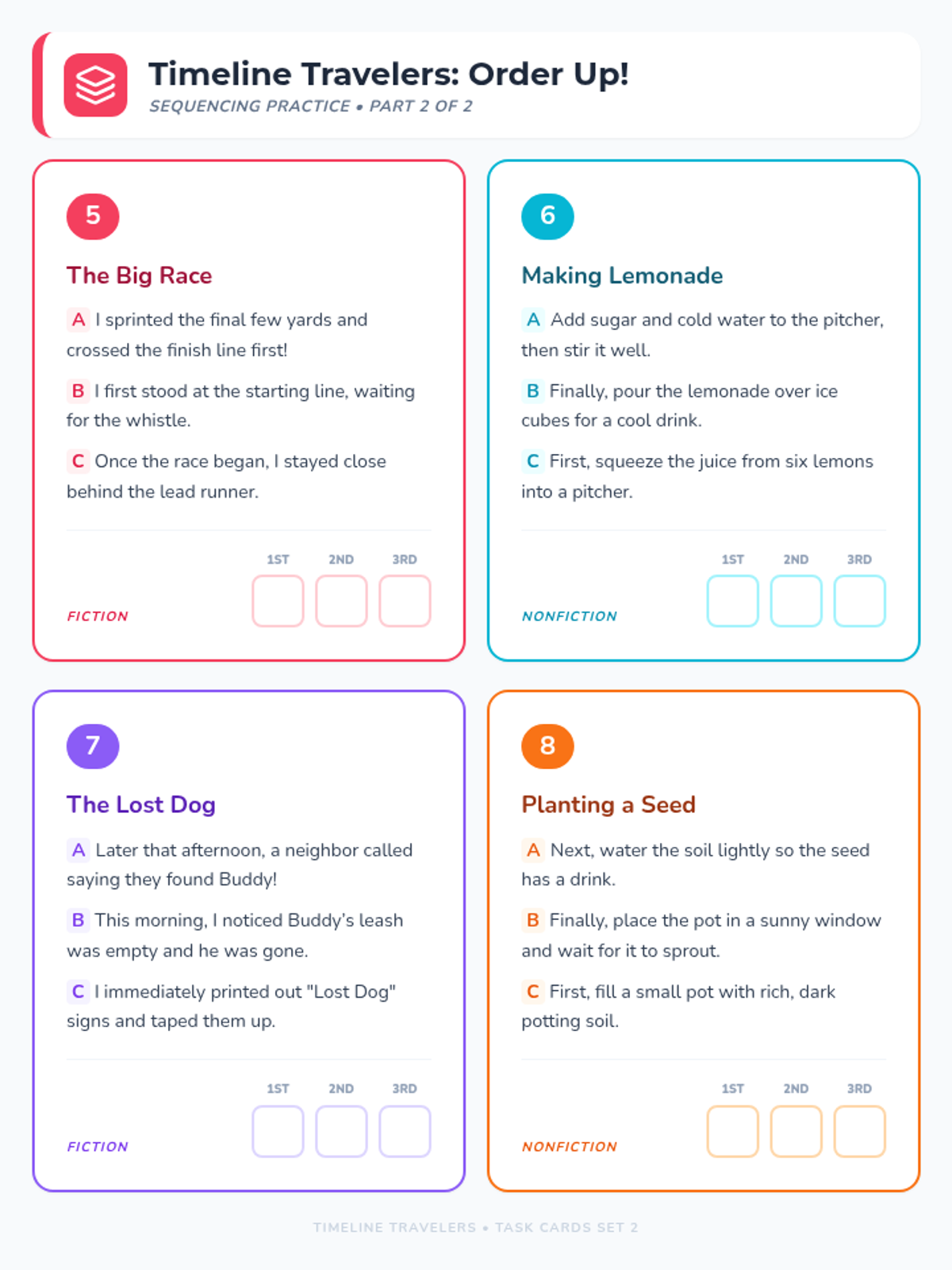
The second set of 4 task cards. Revised with letter markers, larger answer boxes, and consistent orange coloring for Card 8.
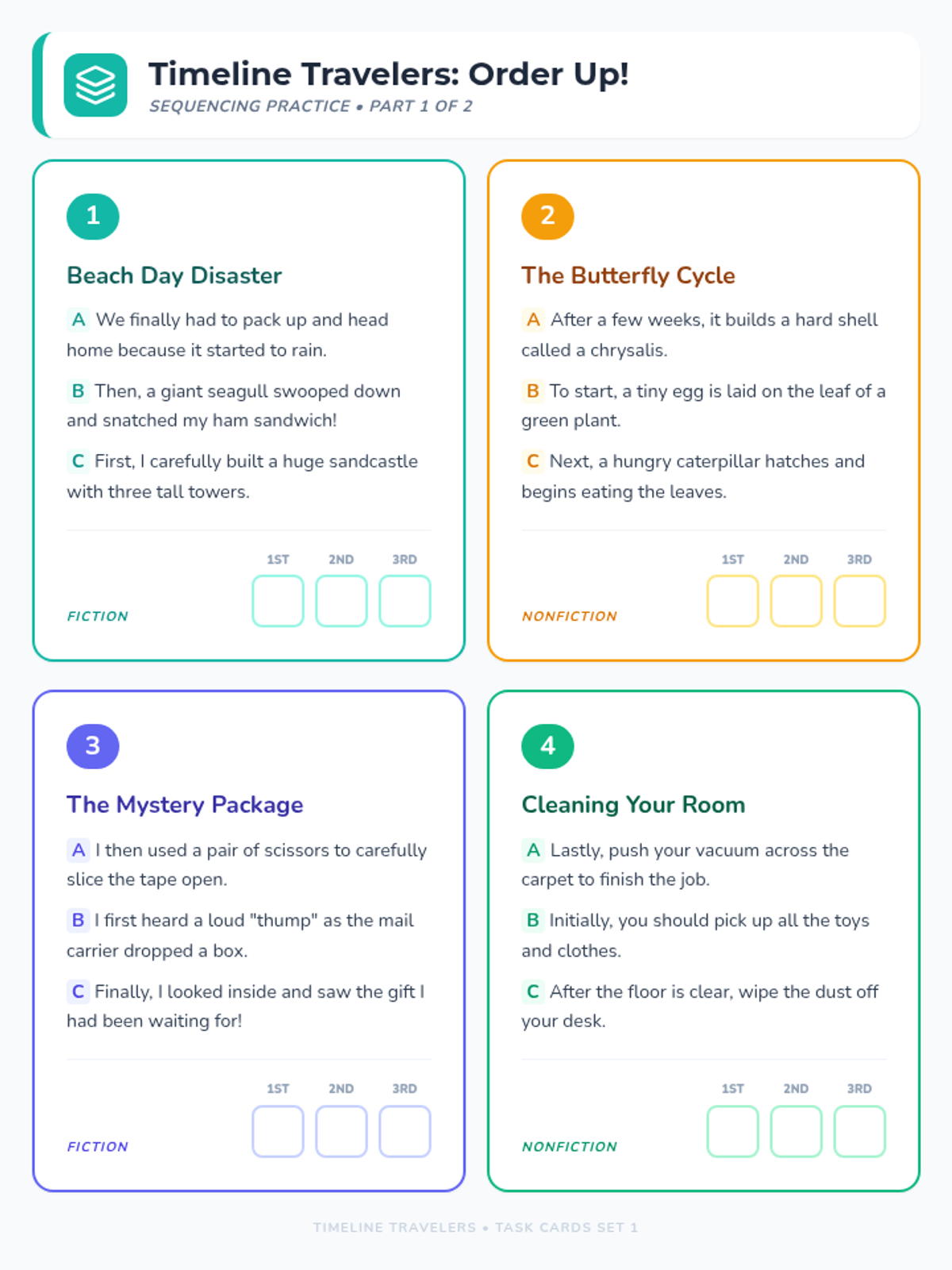
A set of 4 task cards (first page of 8) featuring short, scrambled fiction and nonfiction scenarios. Revised with letter markers and larger student answer boxes.
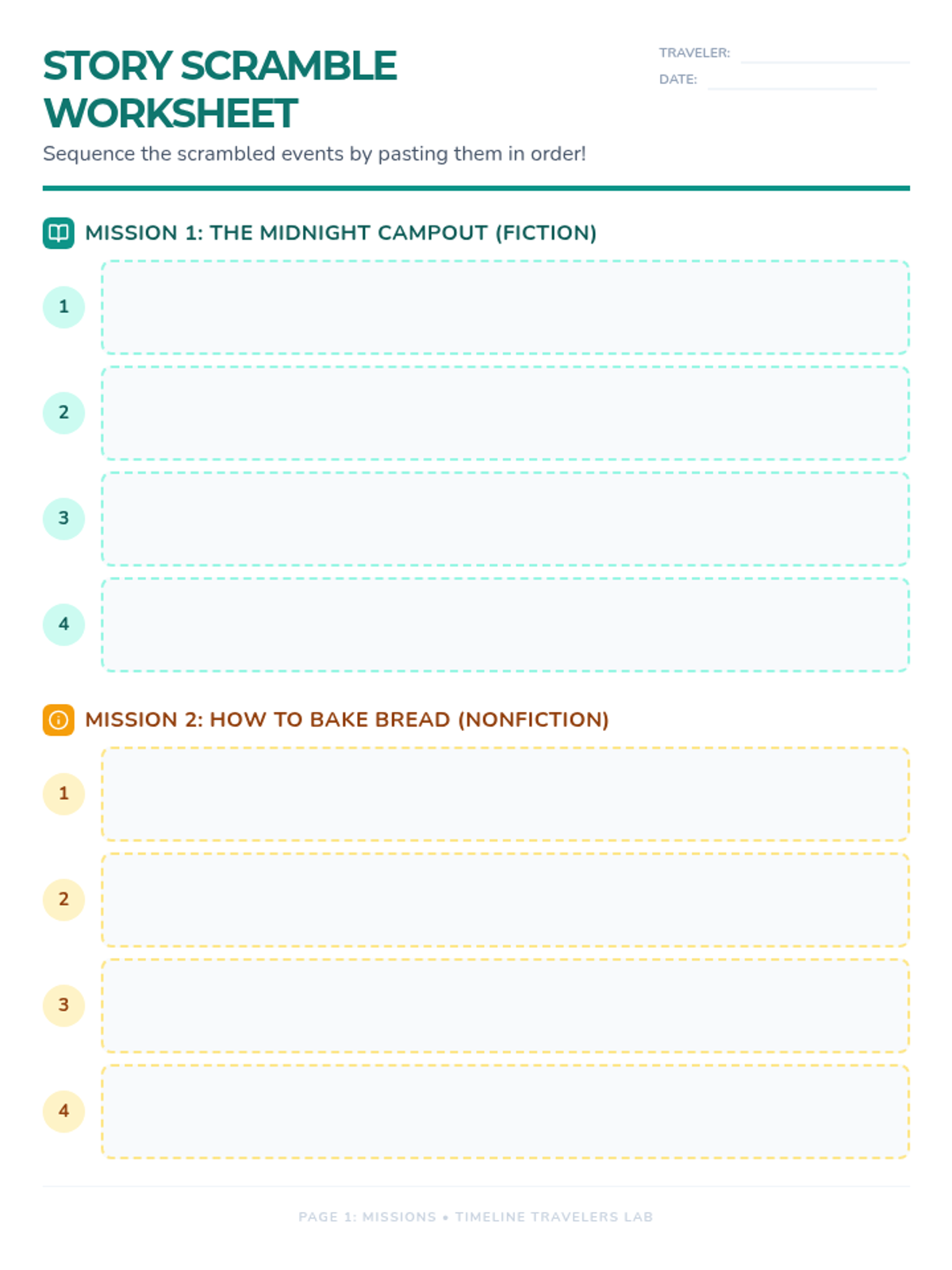
A hands-on cut-and-paste worksheet featuring two scrambled stories (one fiction, one nonfiction) for students to sequence correctly using numbered drop zones. Now revised with better spacing and a dedicated cutout page.
A vibrant and engaging 6-slide presentation that introduces the concept of sequence text structure, provides signal words, and shows examples from both fiction and nonfiction.
Final polished student worksheet with optimized handwriting space, clean 2-page layout, and thematic icons. Finalized with a clear page break and consistent grid styling.
Final polished student worksheet with optimized handwriting space, clean 2-page layout, and thematic icons.
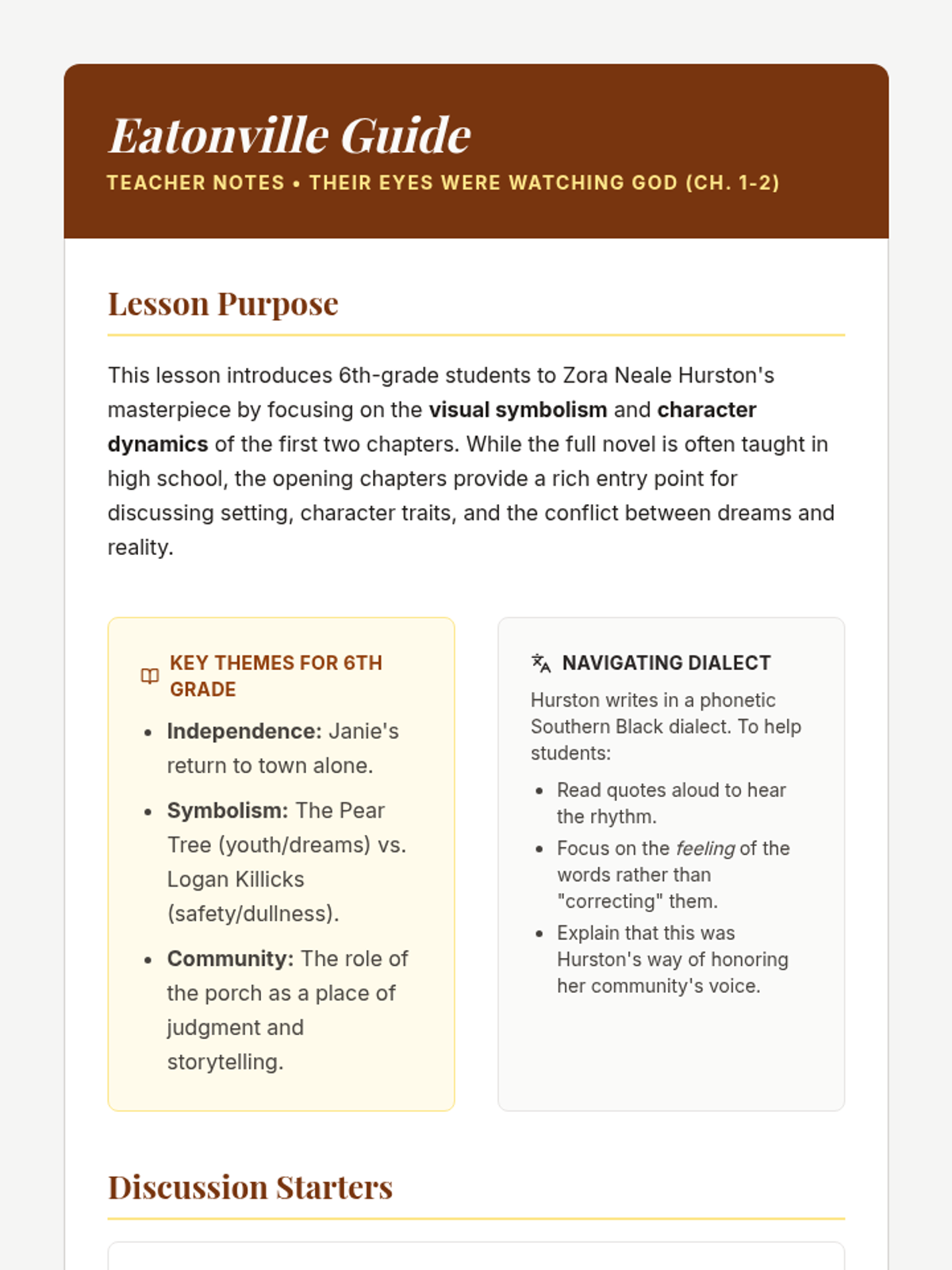
A teacher guide providing context on Zora Neale Hurston, tips for navigating the dialect with 6th graders, and discussion prompts for Chapters 1 and 2.
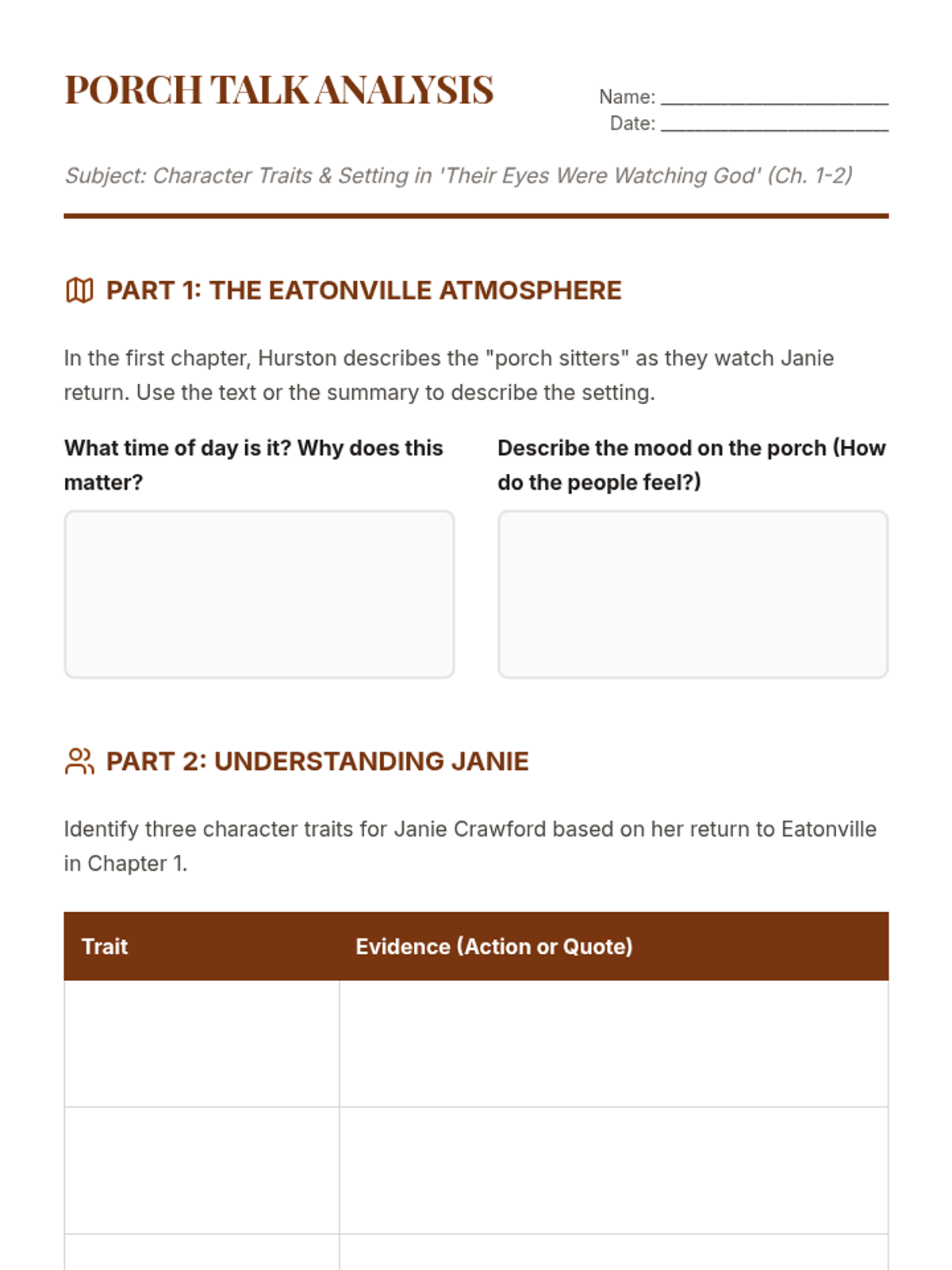
A student worksheet for analyzing character traits and setting in 'Their Eyes Were Watching God'. Includes a trait/evidence table and reflection questions on the pear tree symbolism.
Final student worksheet with optimized handwriting space, clean page breaks, and thematic icons.
A visual introduction to the world of Eatonville, Janie Crawford's character, and the central symbol of the pear tree. Includes discussion prompts and key thematic contrasts between Janie and her grandmother.
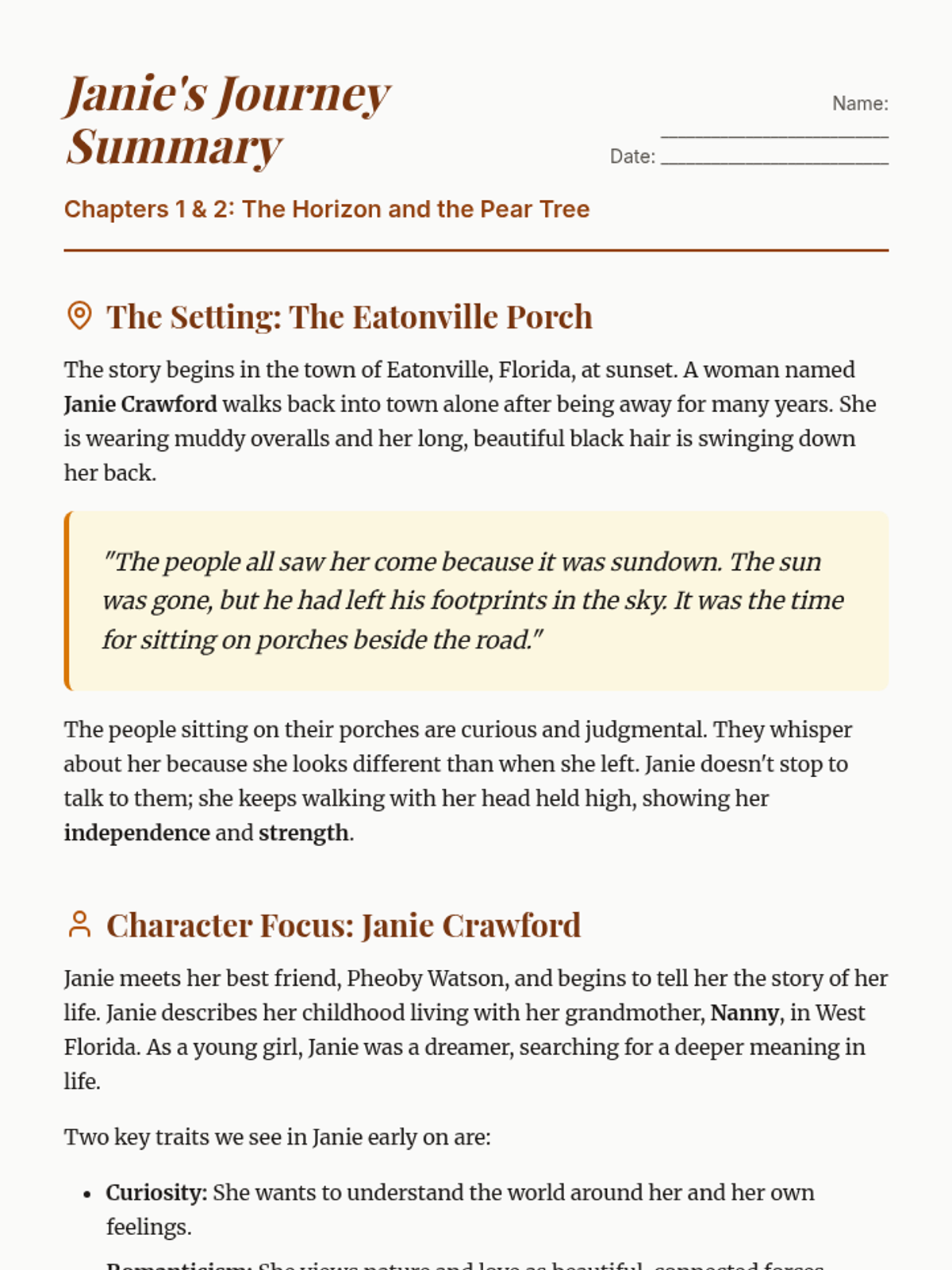
A narrative summary of Chapters 1 and 2 of 'Their Eyes Were Watching God', written for a 6th-grade audience. It highlights the setting of Eatonville, Janie's character traits, and the symbolism of the pear tree, featuring key quotes from the text.
Final answer key for teacher reference, featuring full-sentence answers and clear formatting for grading.
Polished student worksheet with optimized icons and stable page layouts for clear handwriting space.
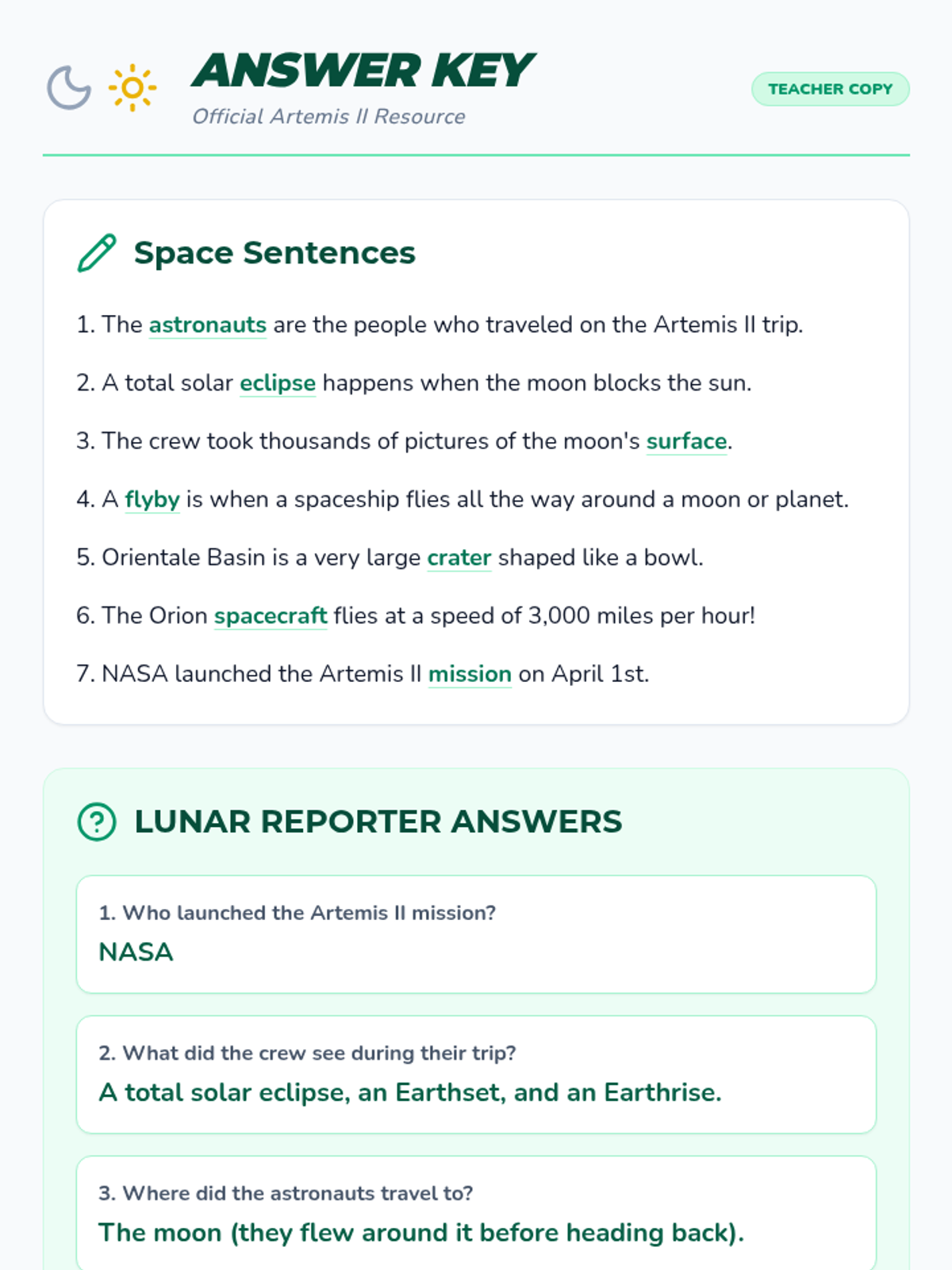
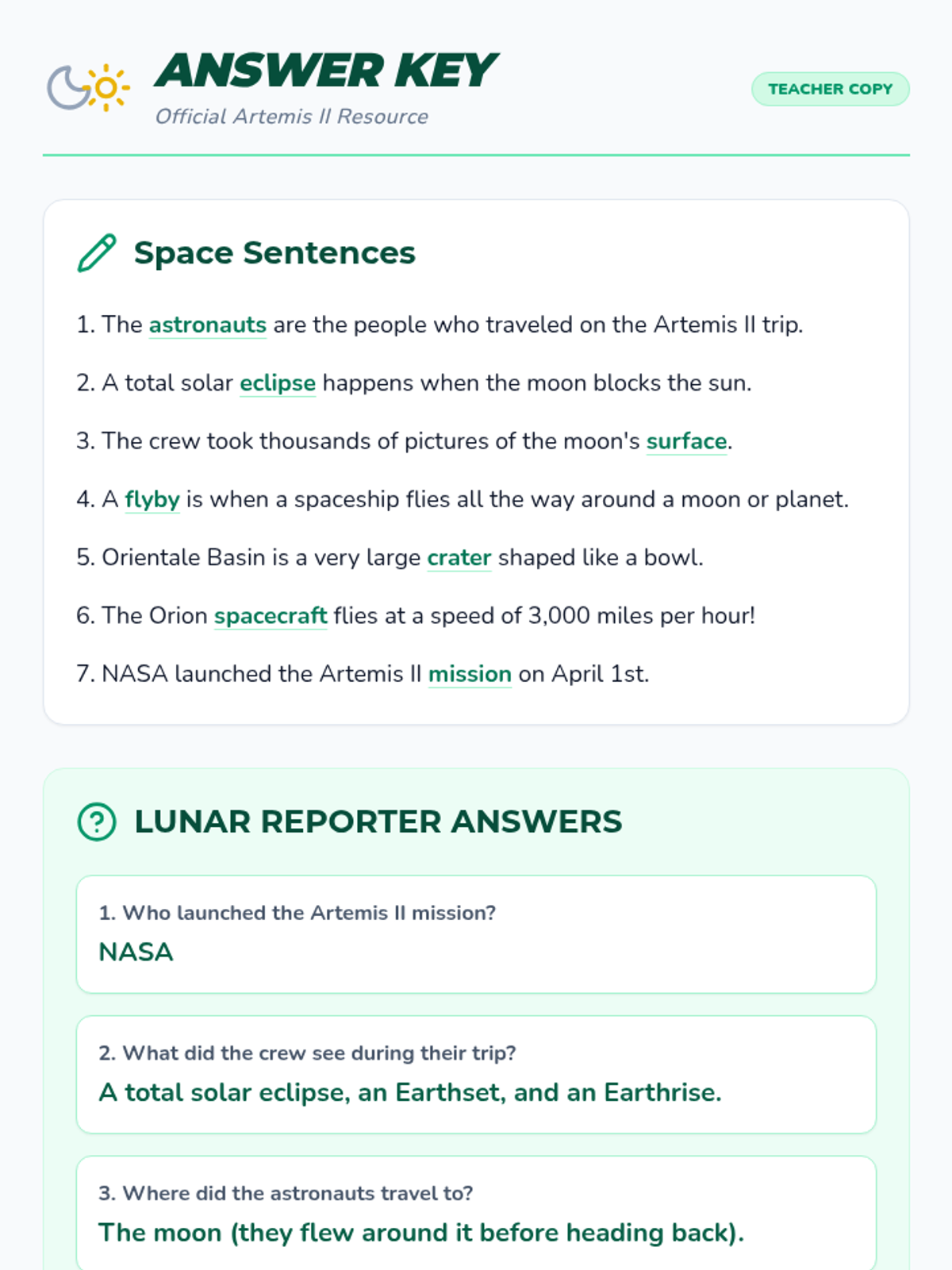
Revised answer key with full sentences, bolded answers, and requested moon/sun icons. Optimized for clear teacher reference.
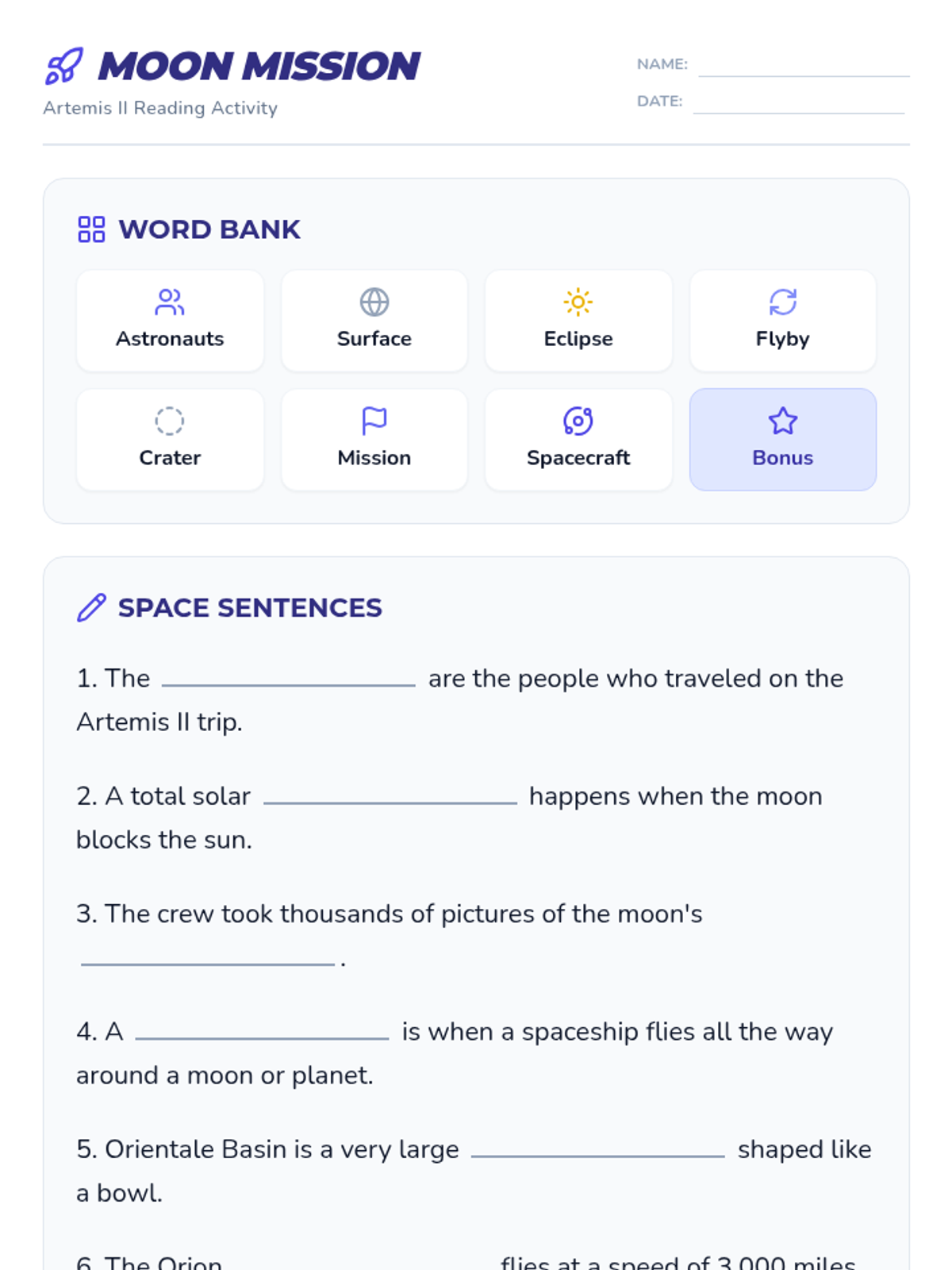
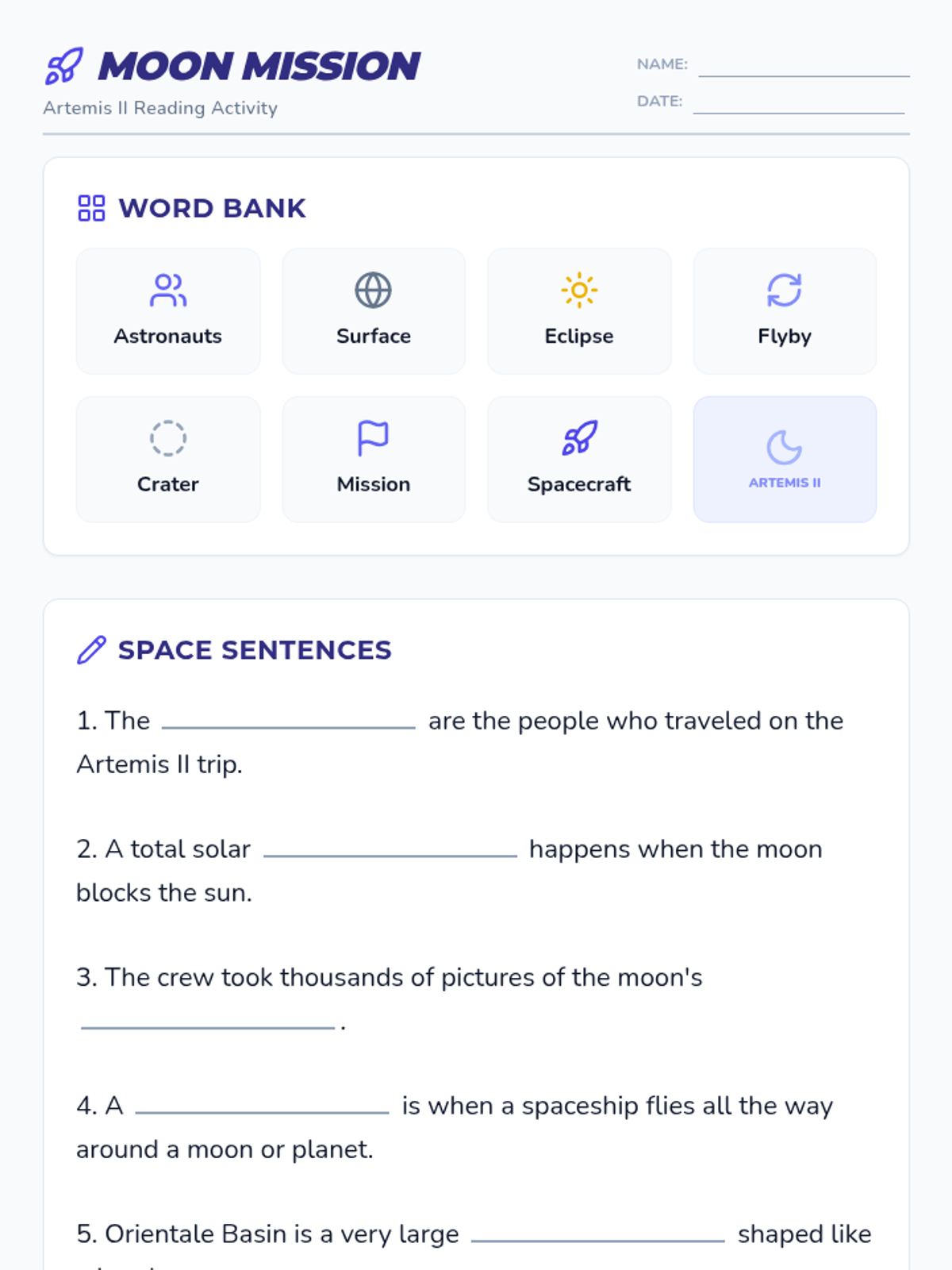
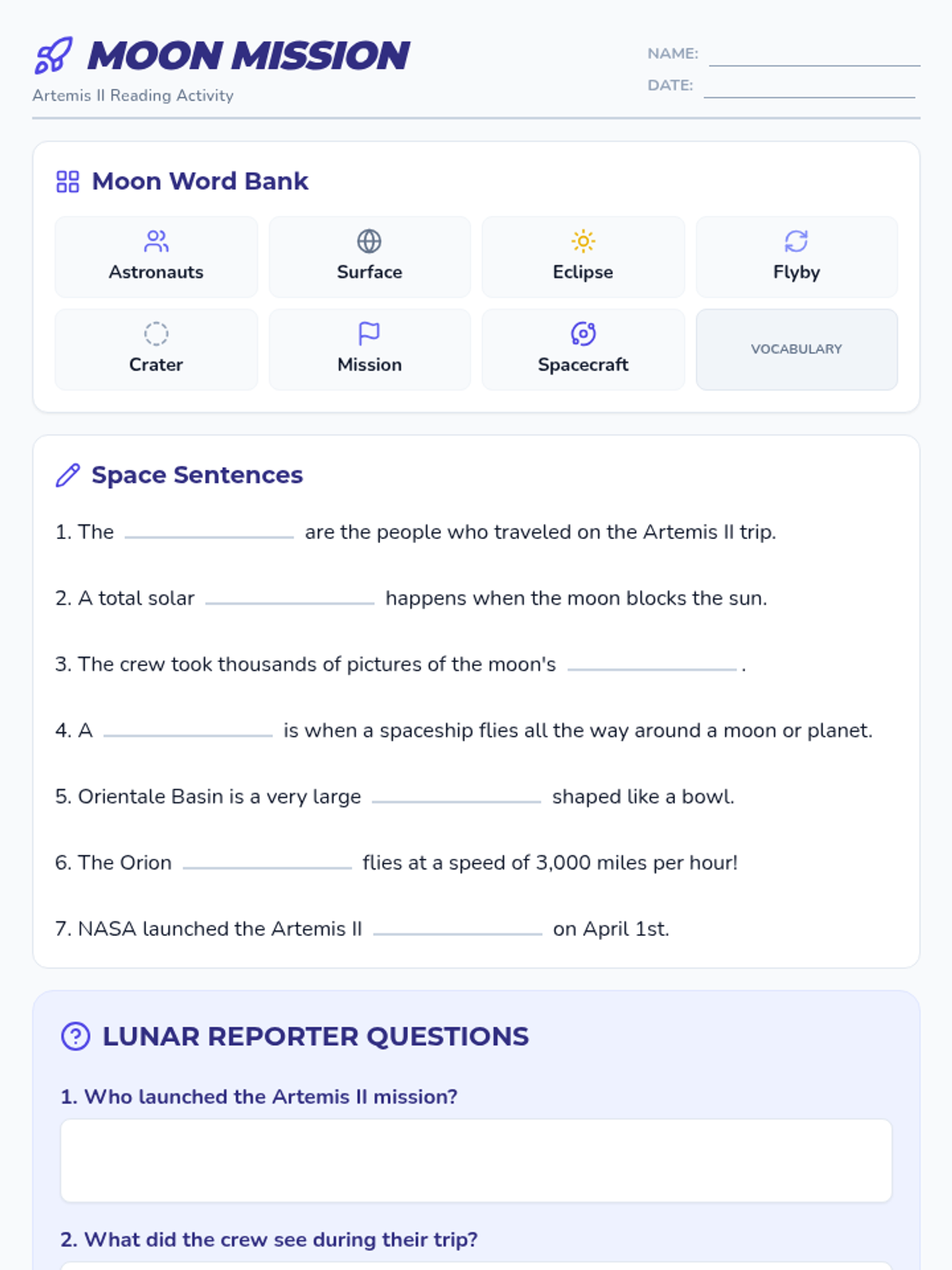
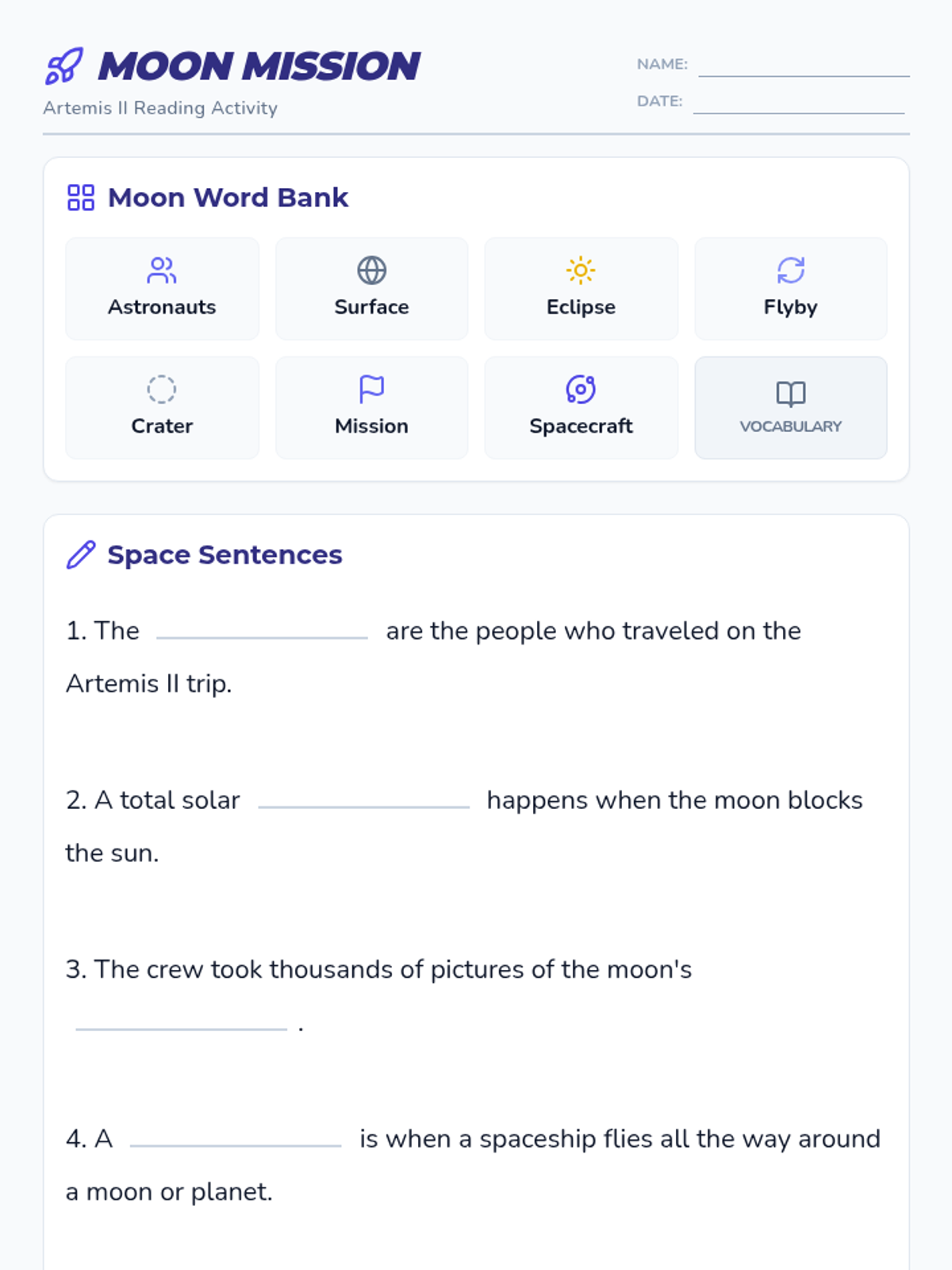
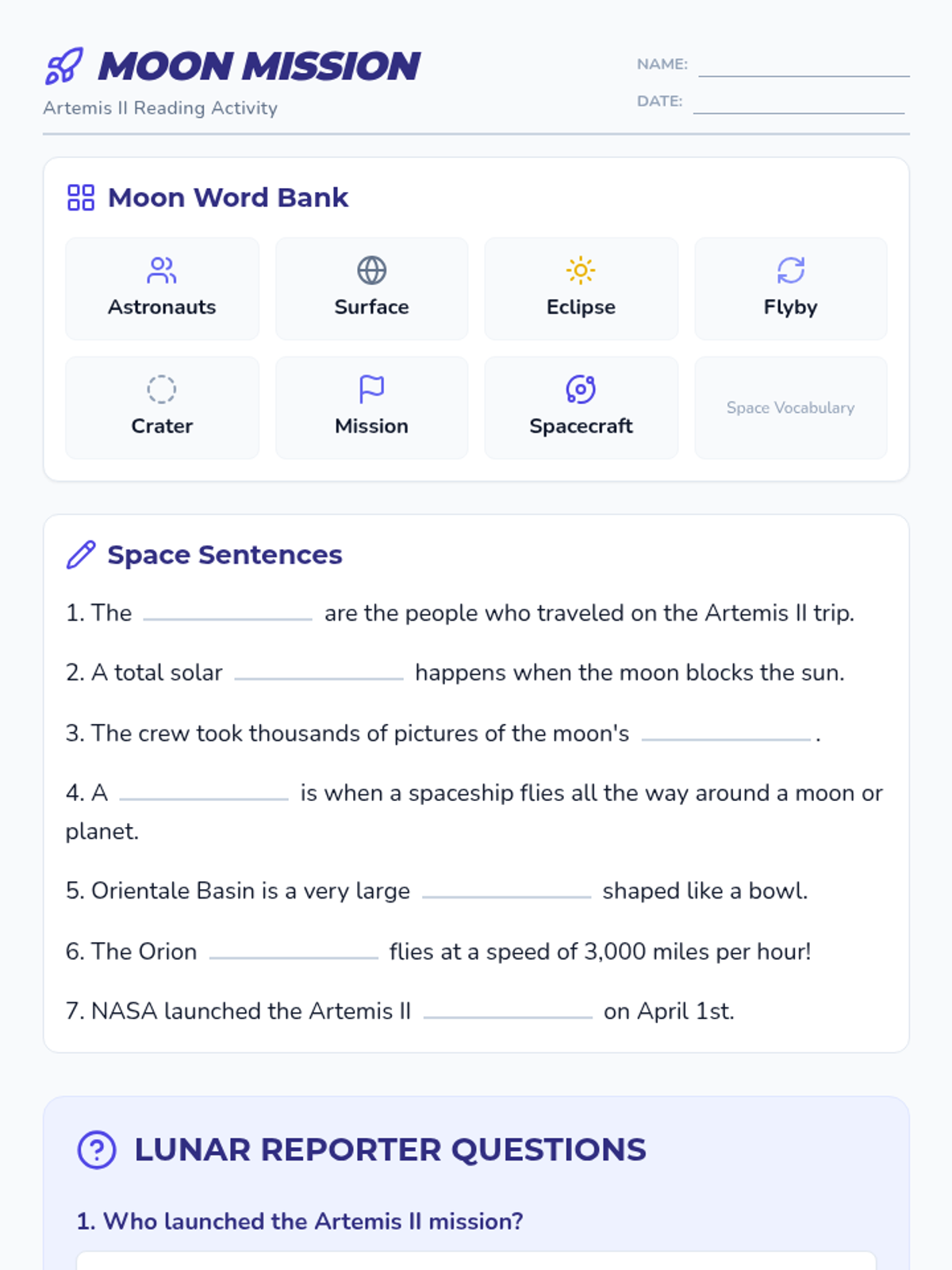
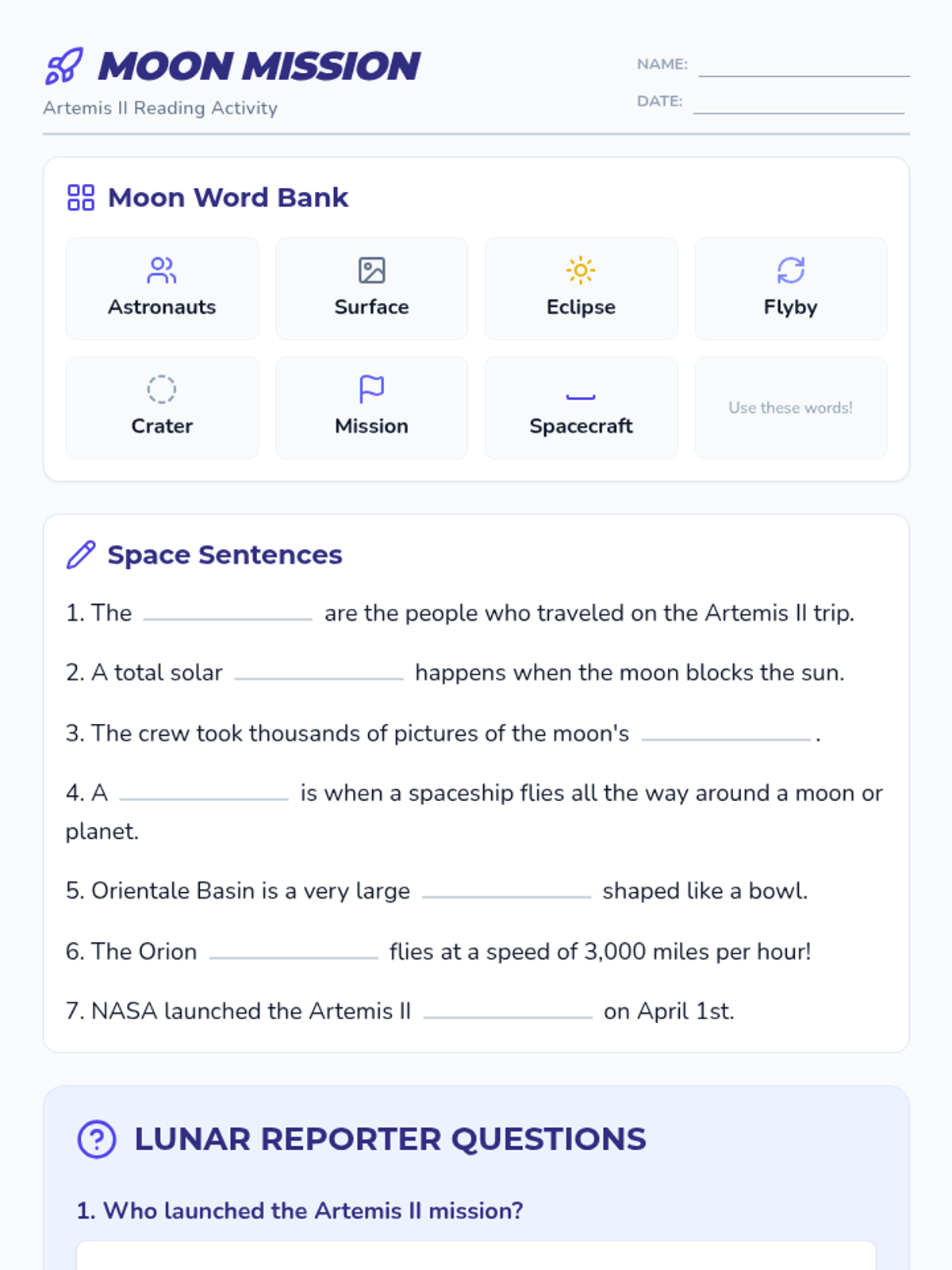
Revised student worksheet with improved sentence flow, larger answer areas, and optimized page layout across two pages.
Final draft paper for the survival narrative. Revised with optimized writing space, clear headers, and a dedicated illustration page with improved legibility.
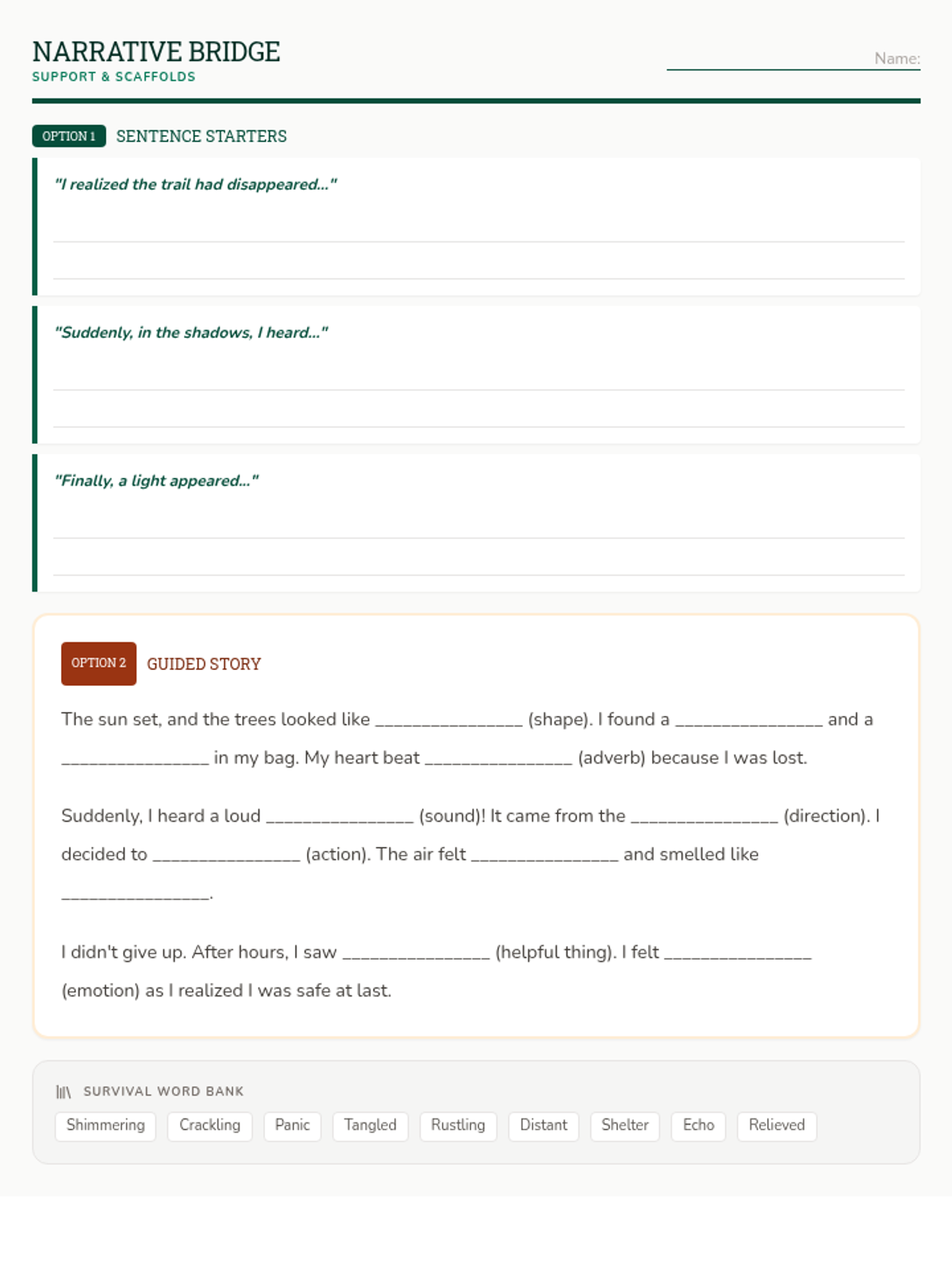
Differentiated writing scaffold featuring sentence starters with writing lines and a guided fill-in-the-blank narrative. Revised to fit onto a single cohesive sheet.
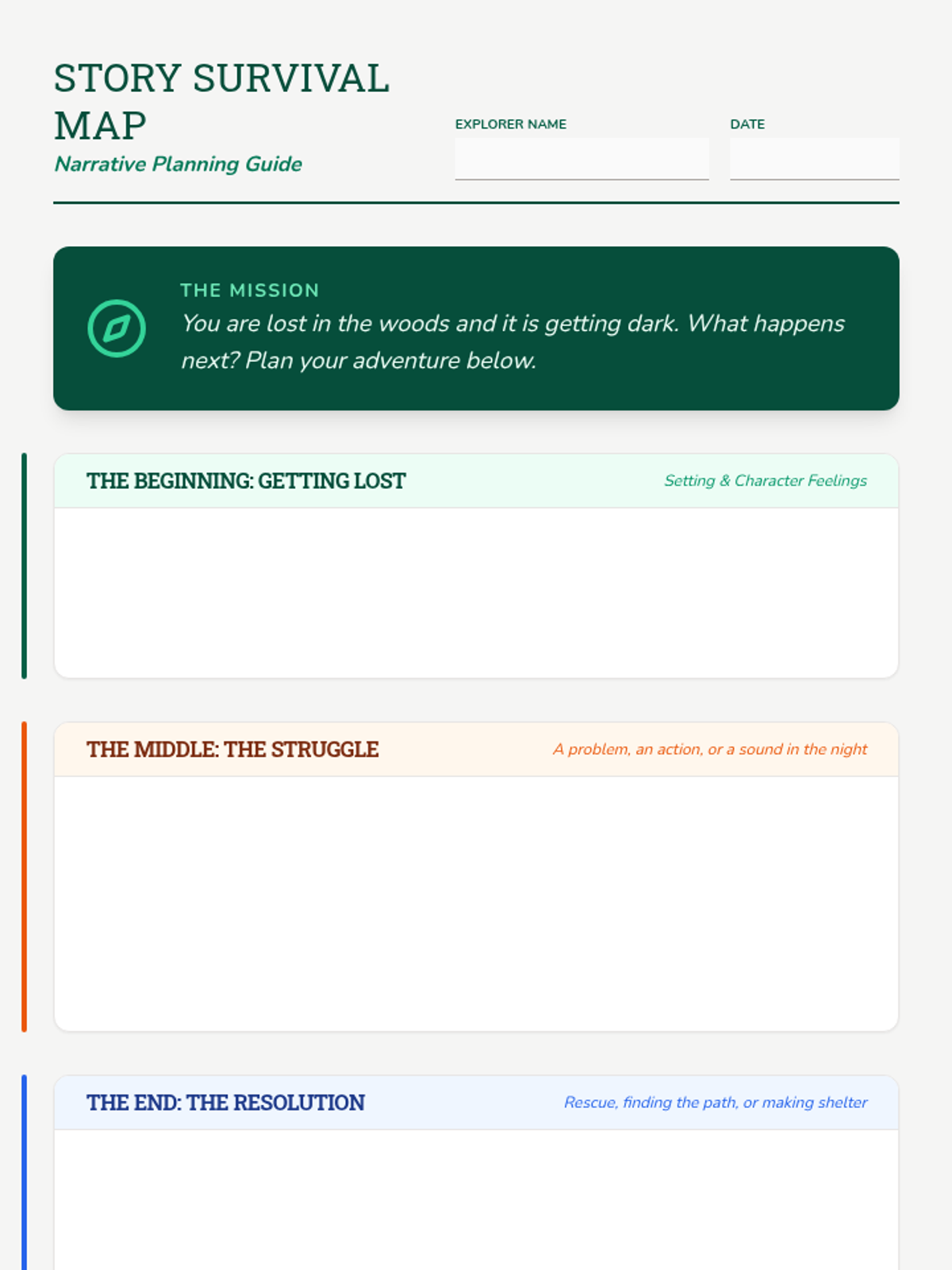
A graphic organizer worksheet for students to map out the Beginning, Middle, and End of their survival narrative. Revised for improved page layout and larger writing space.
Instructional slide deck for setting the mood, introducing narrative structure (Beginning, Middle, End), and providing 'Show, Don't Tell' examples for the wilderness writing prompt.
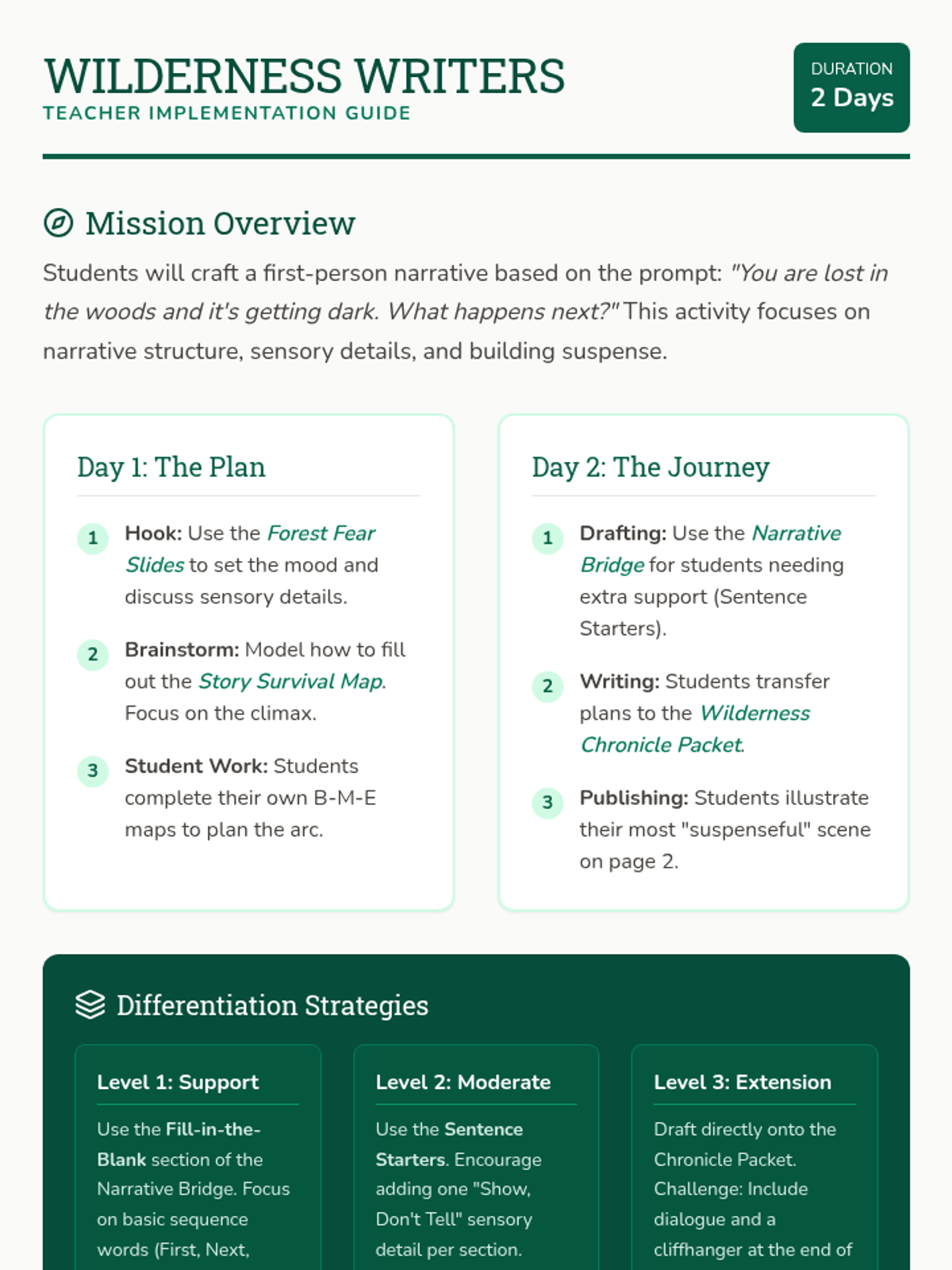
Comprehensive teacher guide for the 2-day wilderness writing activity, including pacing, discussion prompts, and differentiation strategies. Revised for improved page break handling.
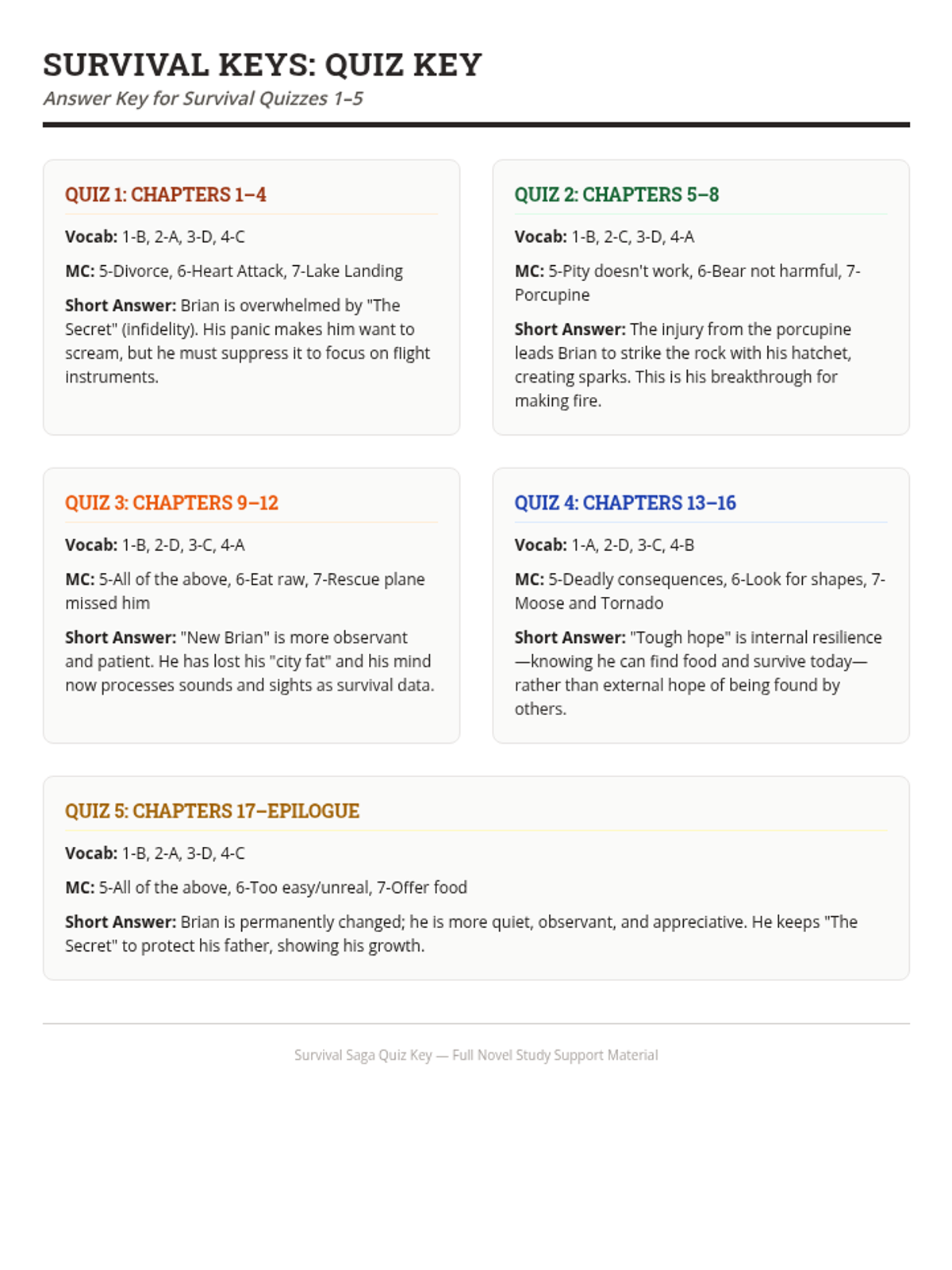
A comprehensive teacher guide and answer key for the Hatchet survival quizzes. Includes vocabulary matching keys, multiple choice answers, and short answer discussion points, condensed for efficient use.
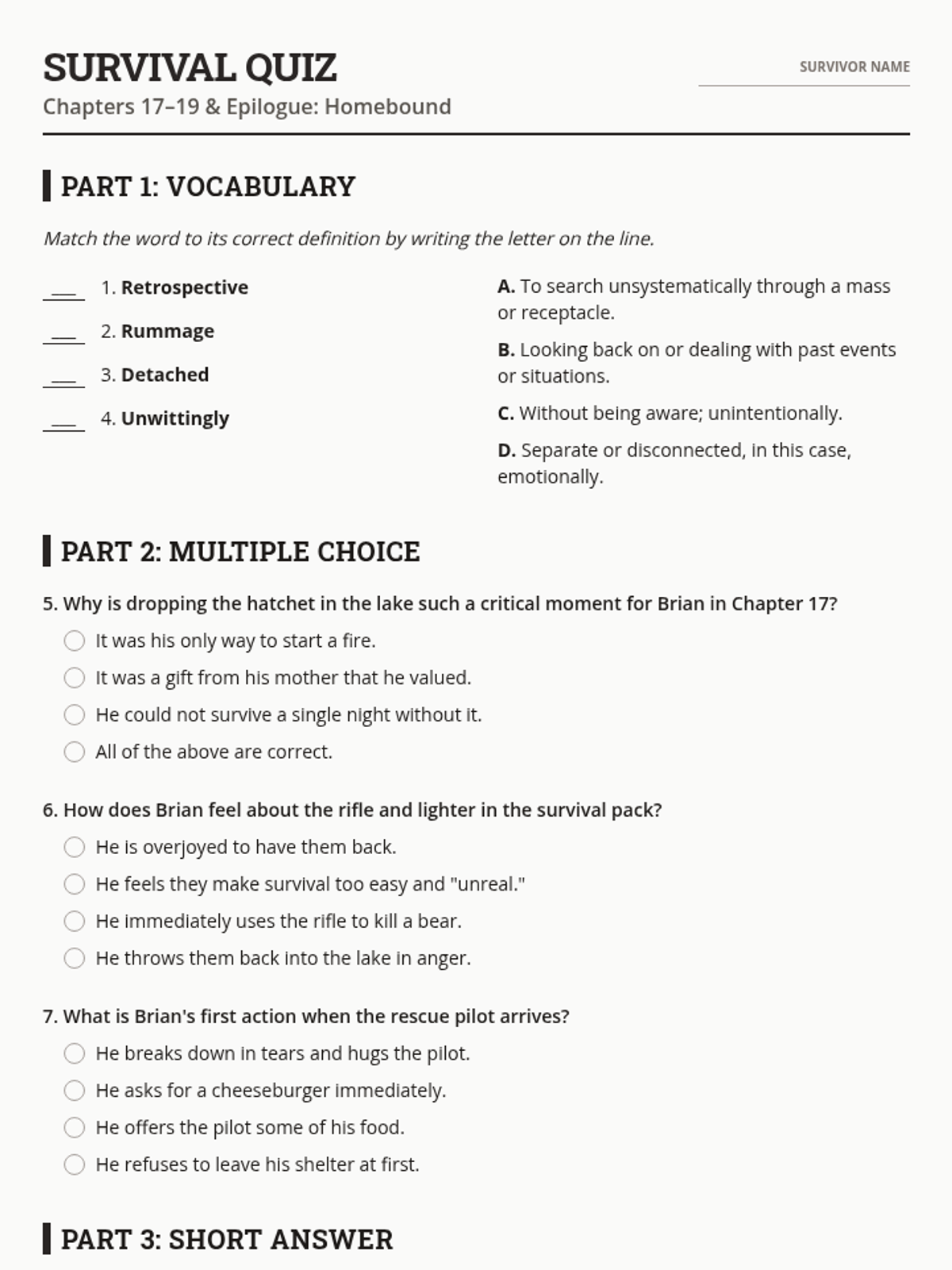
A final assessment for the end of Hatchet featuring vocabulary matching, multiple choice comprehension questions, and a short answer analysis prompt.
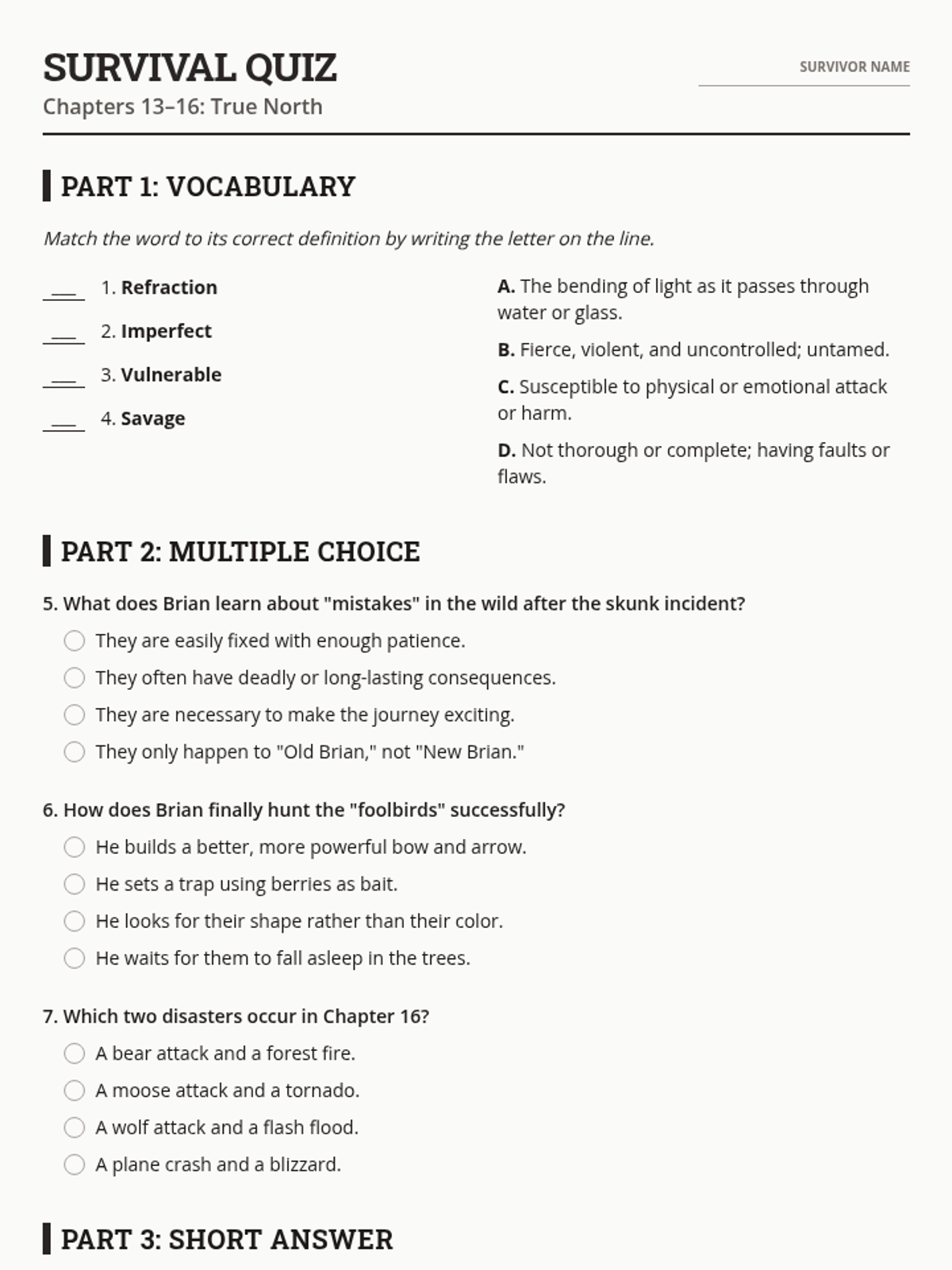
A quick assessment for chapters 13-16 of Hatchet featuring vocabulary matching, multiple choice comprehension questions, and a short answer analysis prompt.
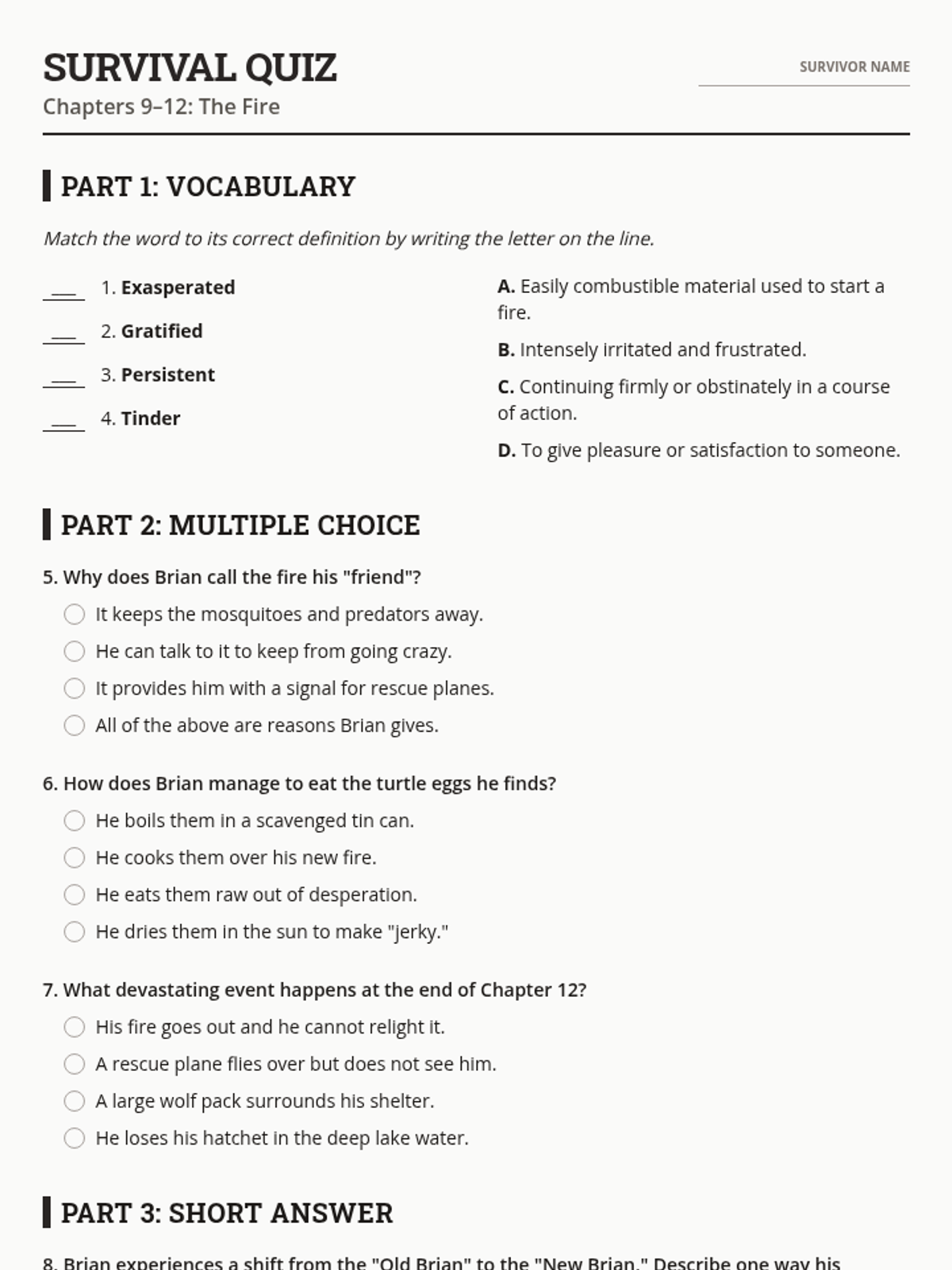
A quick assessment for chapters 9-12 of Hatchet featuring vocabulary matching, multiple choice comprehension questions, and a short answer analysis prompt.
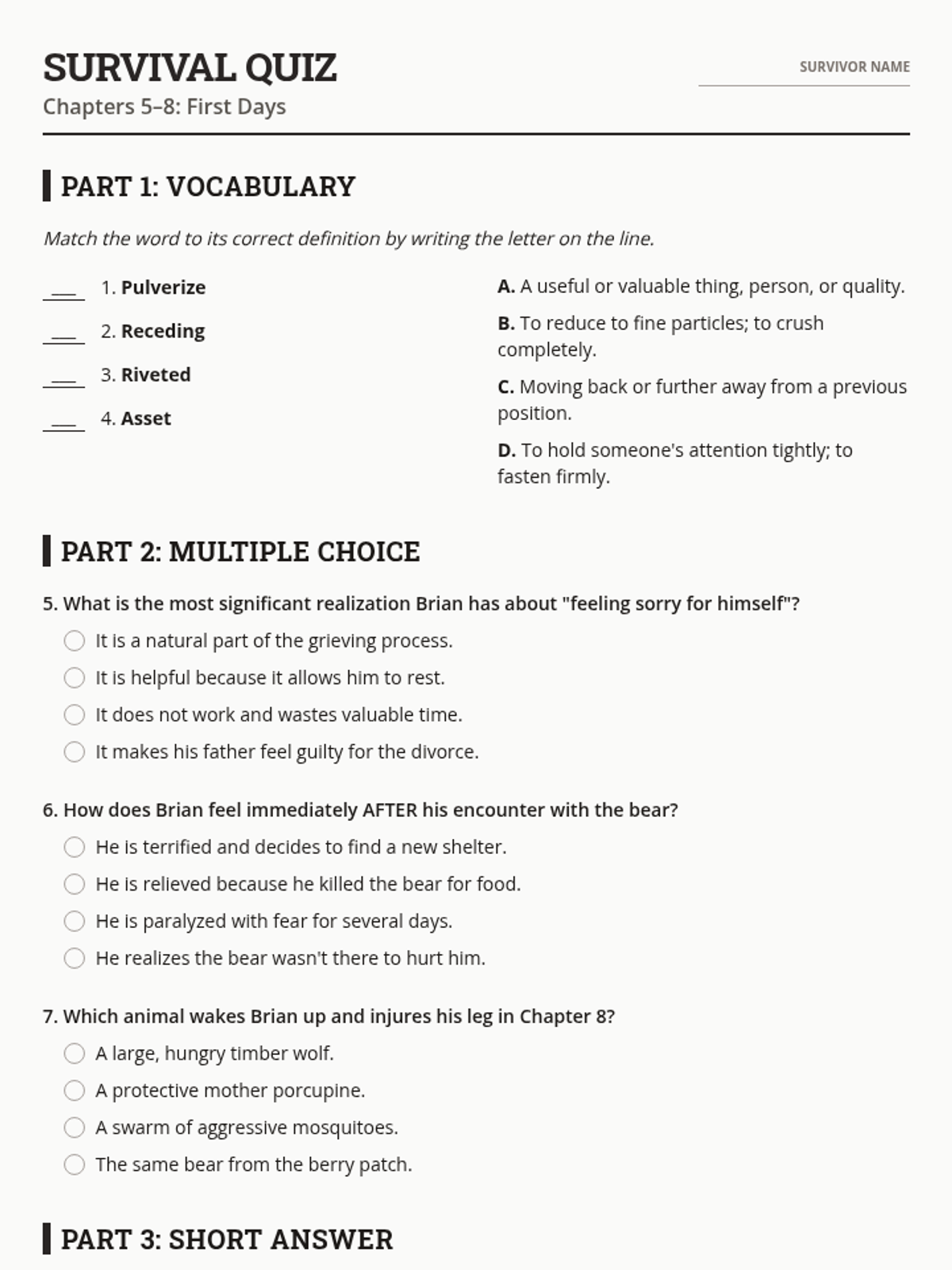
A quick assessment for chapters 5-8 of Hatchet featuring vocabulary matching, multiple choice comprehension questions, and a short answer analysis prompt.
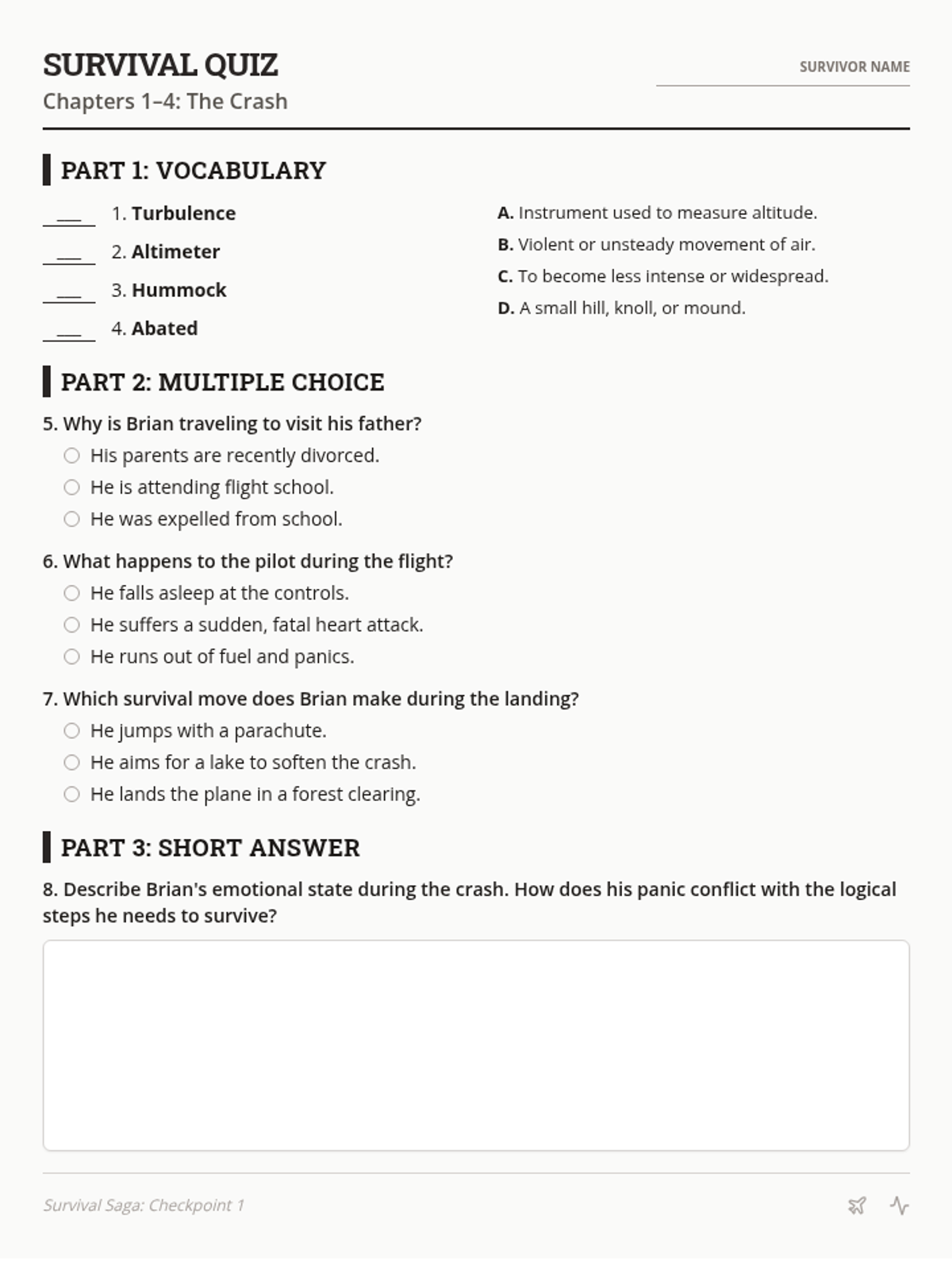
A quick assessment for chapters 1-4 of Hatchet featuring vocabulary matching, multiple choice comprehension questions, and a short answer analysis prompt. This version is condensed to fit on a single page.
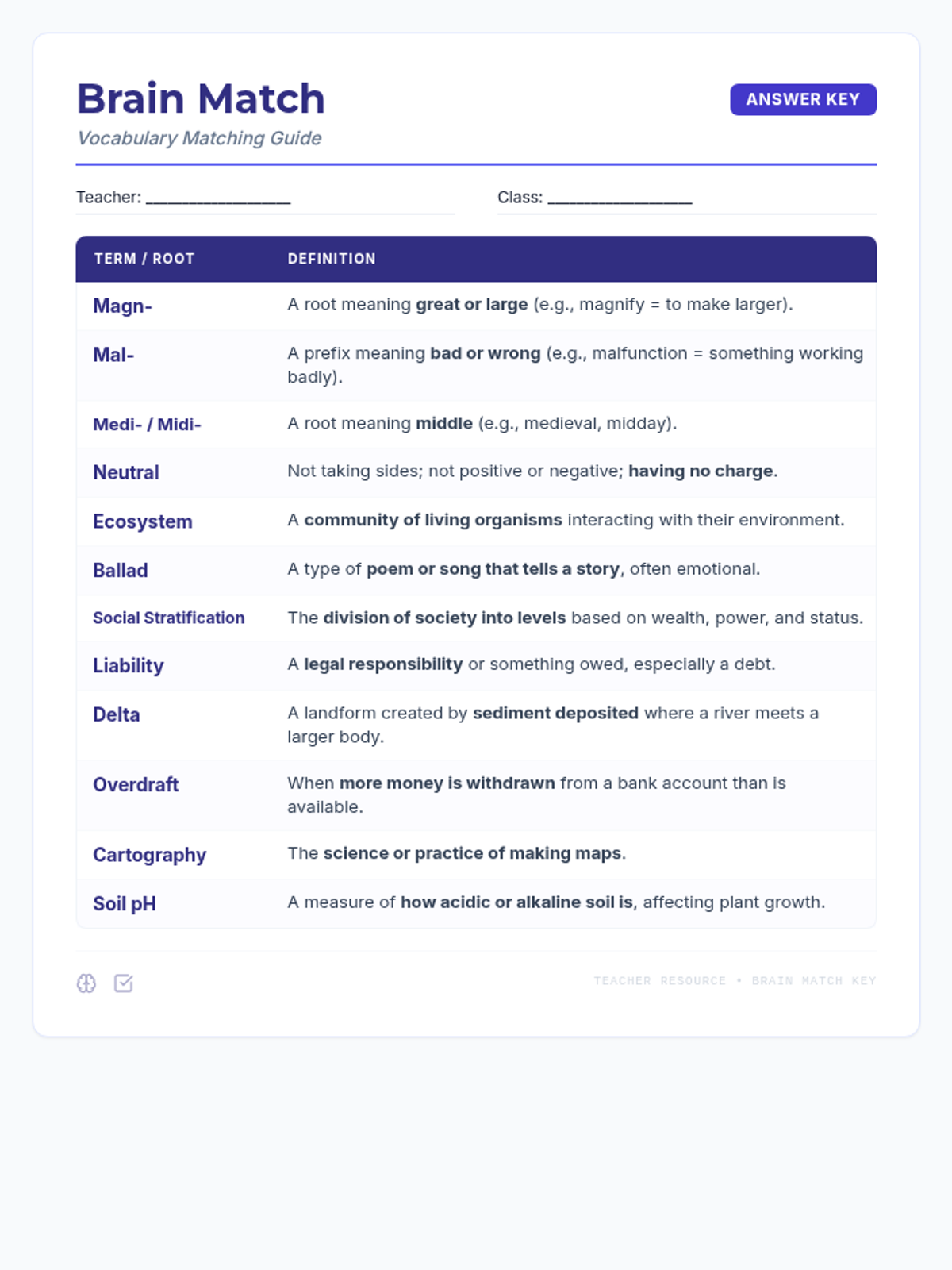
A compact, one-page teacher's answer key for the Brain Match vocabulary cards. Features a clean, high-contrast table of all 12 terms and definitions for quick and easy reference.
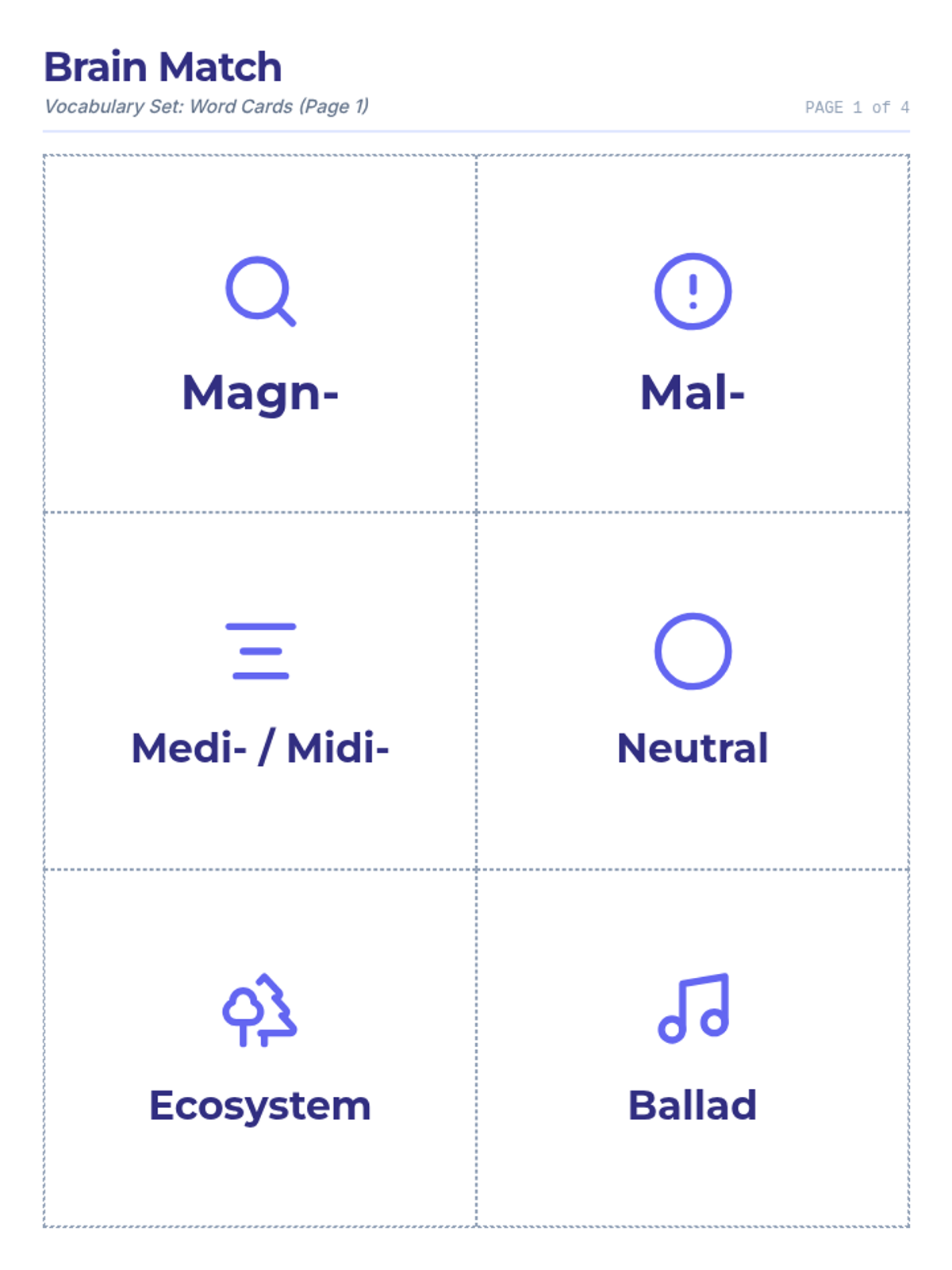
A final set of large-format vocabulary matching cards spanning 4 pages (6 cards per page). Features a unified Indigo theme, dashed cutting guides, and matching iconography. To prevent "cheating" by matching icons, definition cards use subtle grayscale versions of the icons. Card sizing is strictly controlled to ensure no page overflow.
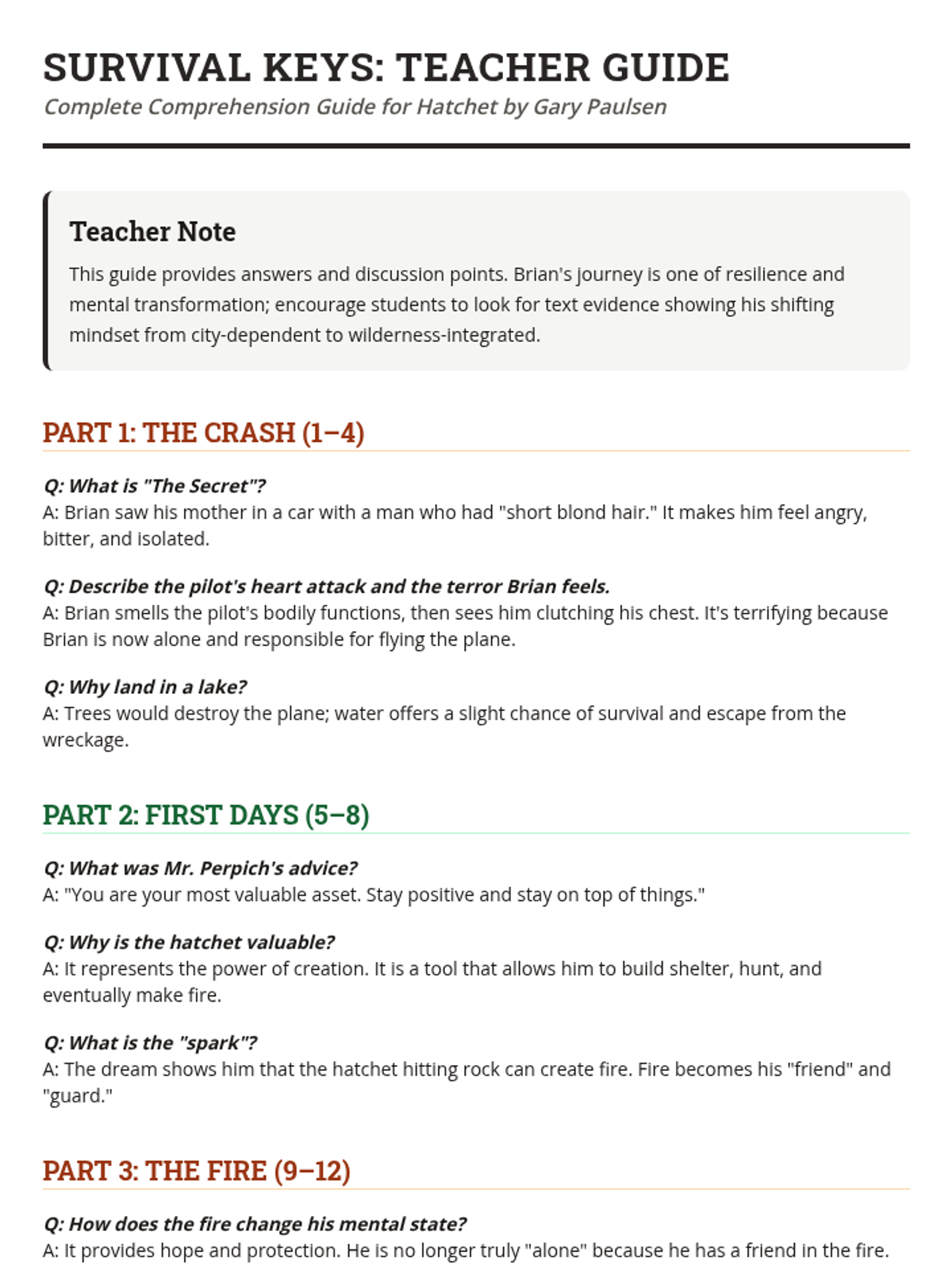
A comprehensive teacher guide and answer key for the Hatchet comprehension worksheets. Includes detailed sample answers and key discussion points for all chapters.
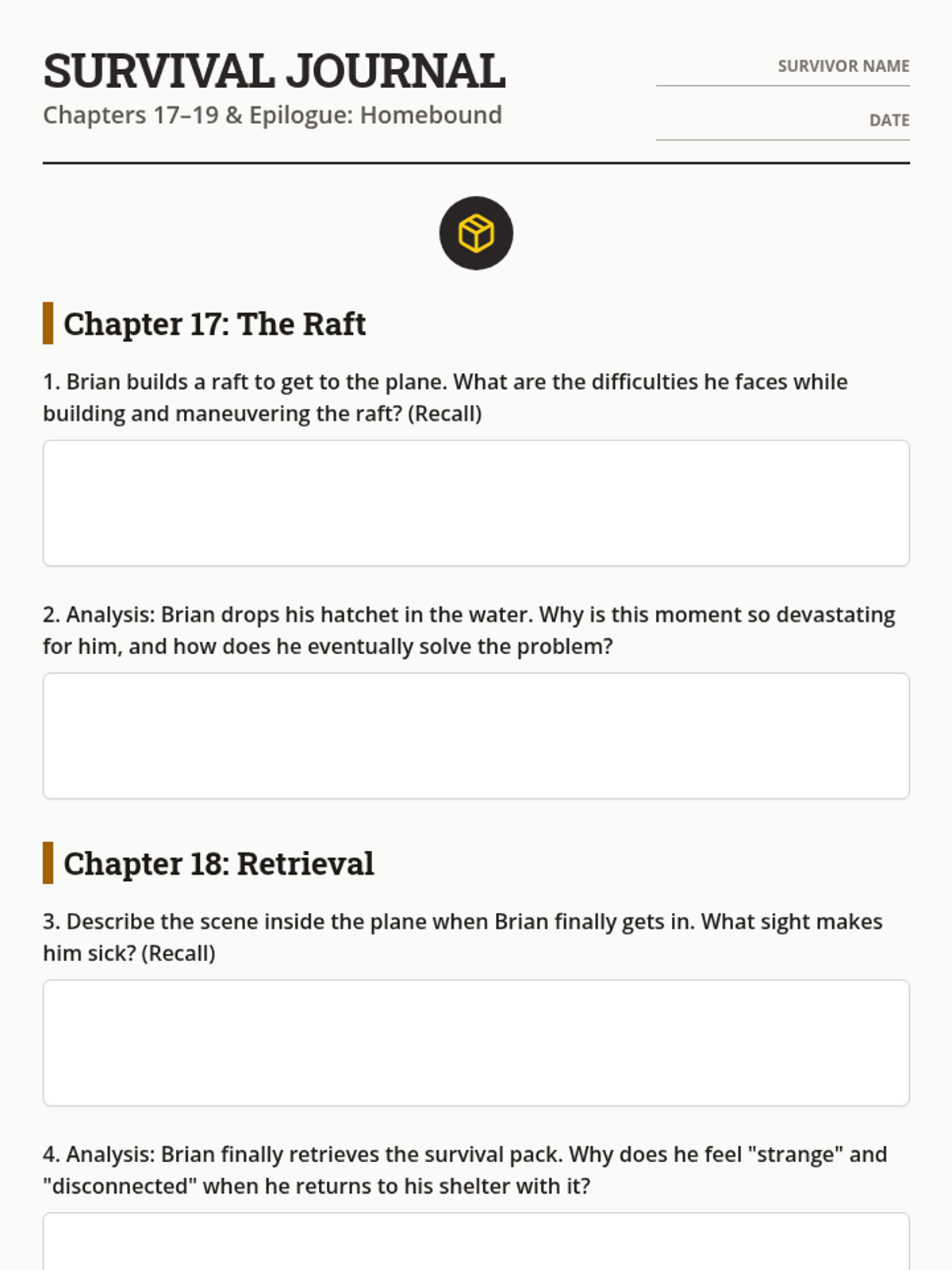
The final worksheet for Hatchet (Chapters 17-19 & Epilogue). It covers the retrieval of the survival pack, the accidental rescue, and the long-term changes Brian undergoes.
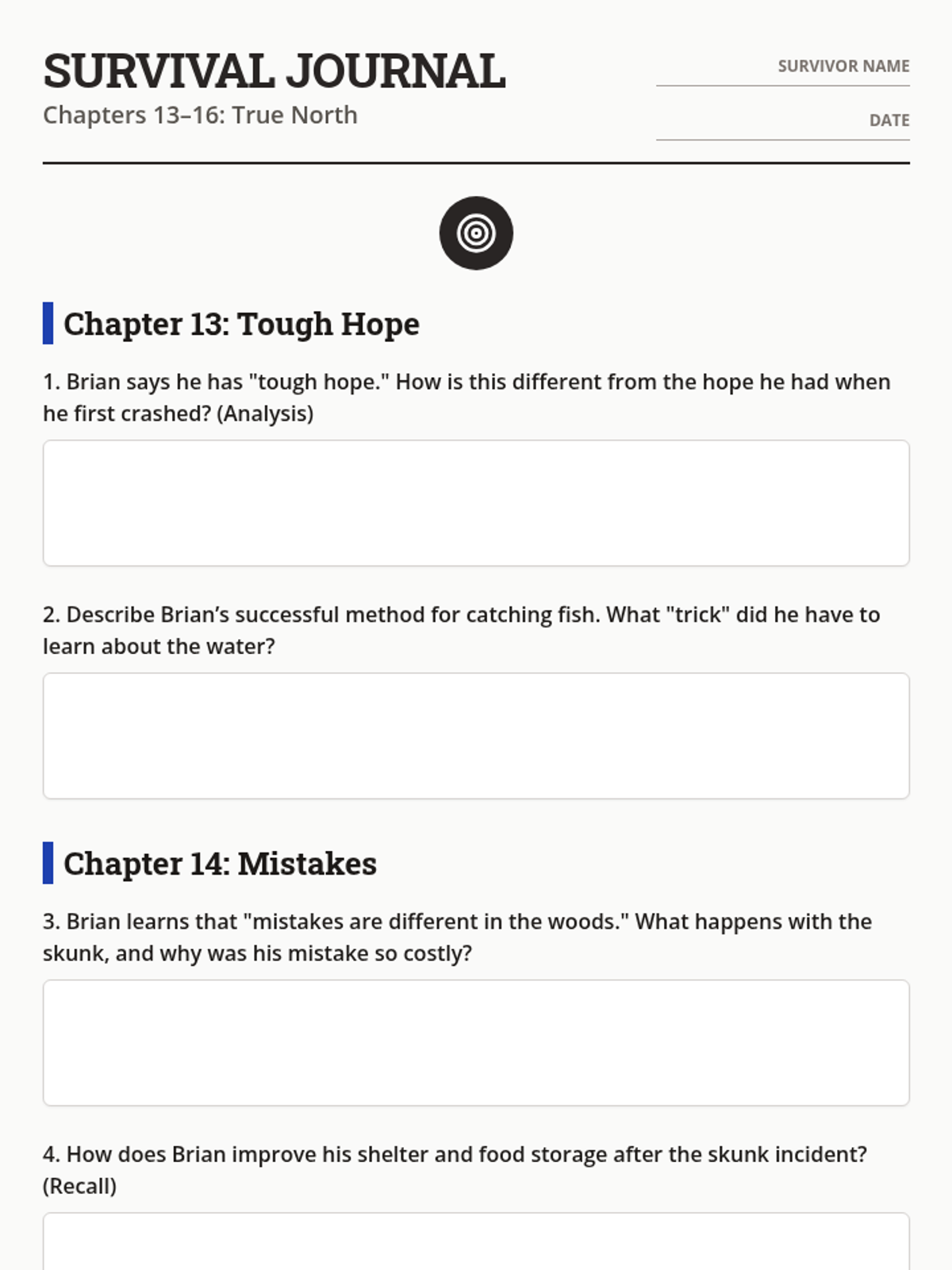
Comprehension questions for Hatchet chapters 13-16. Explores the concepts of 'tough hope', the foolbirds, the moose attack, and the tornado that changes everything.
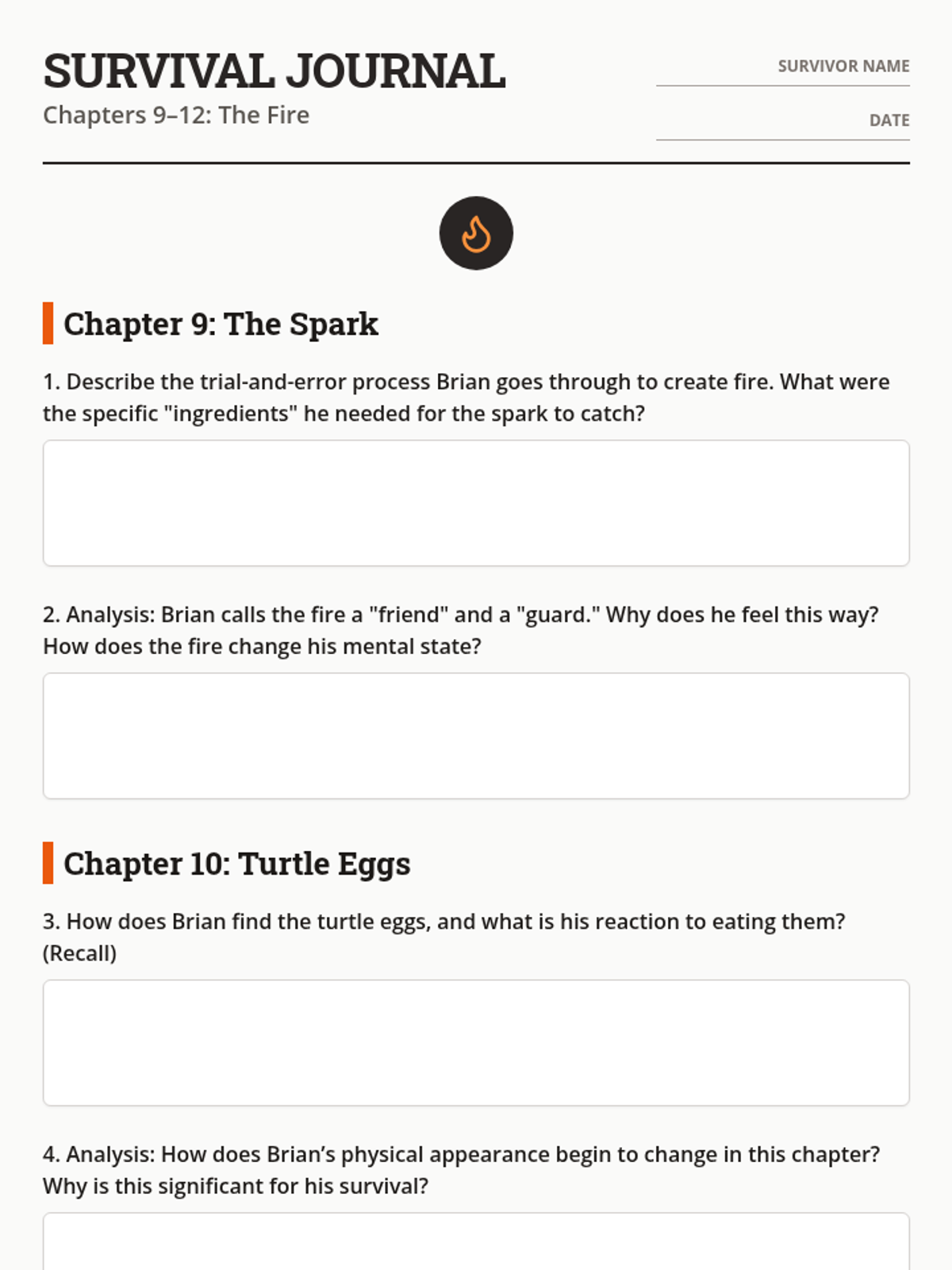
A comprehension worksheet for chapters 9-12 of Hatchet. Covers the discovery of fire, the turtle eggs, and the devastating moment the rescue plane misses Brian.
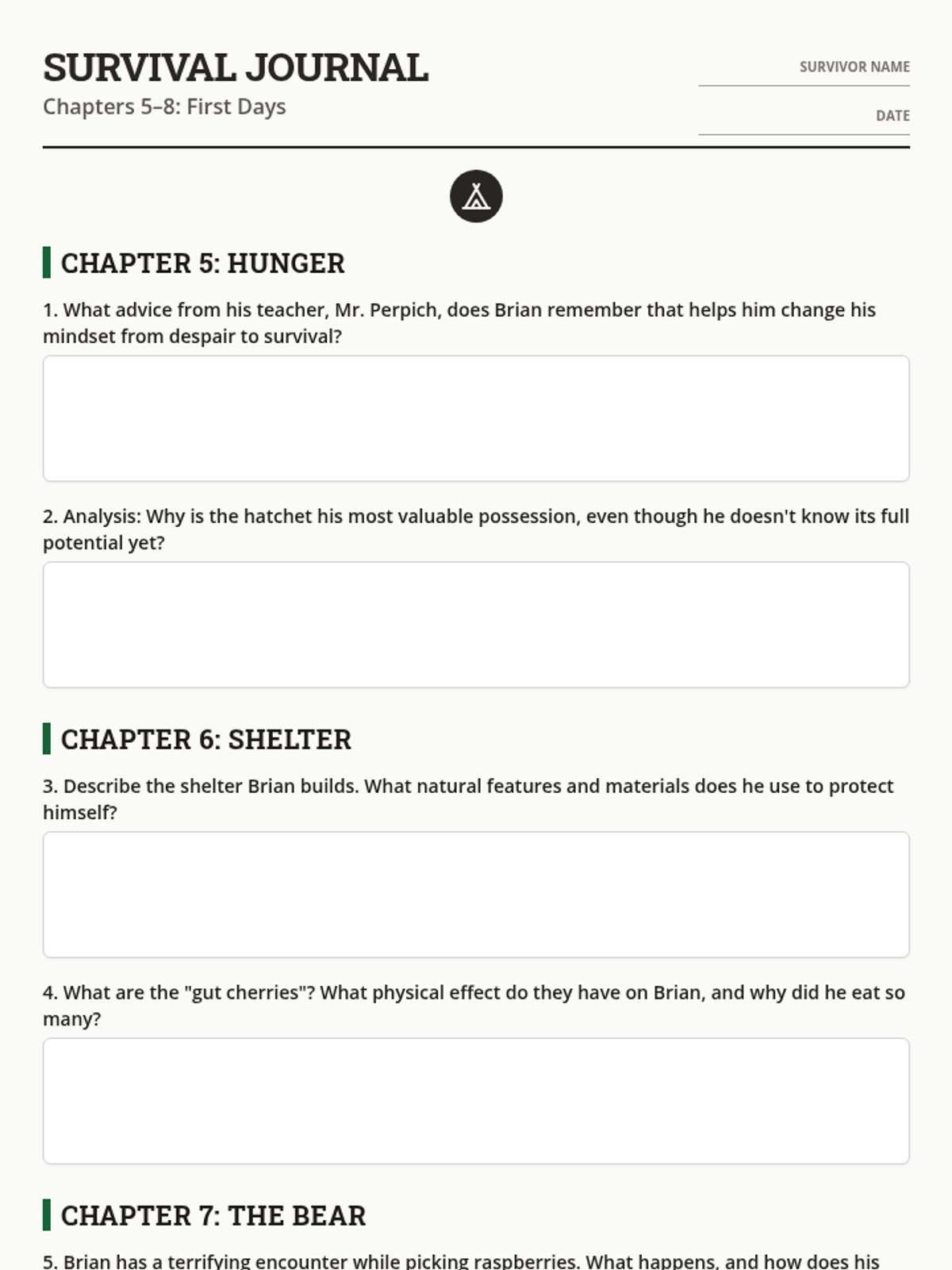
A student worksheet for Hatchet chapters 5-8, focusing on Brian's first challenges with hunger, shelter, and wild animals. Includes analysis of his mental shift and the porcupine incident.
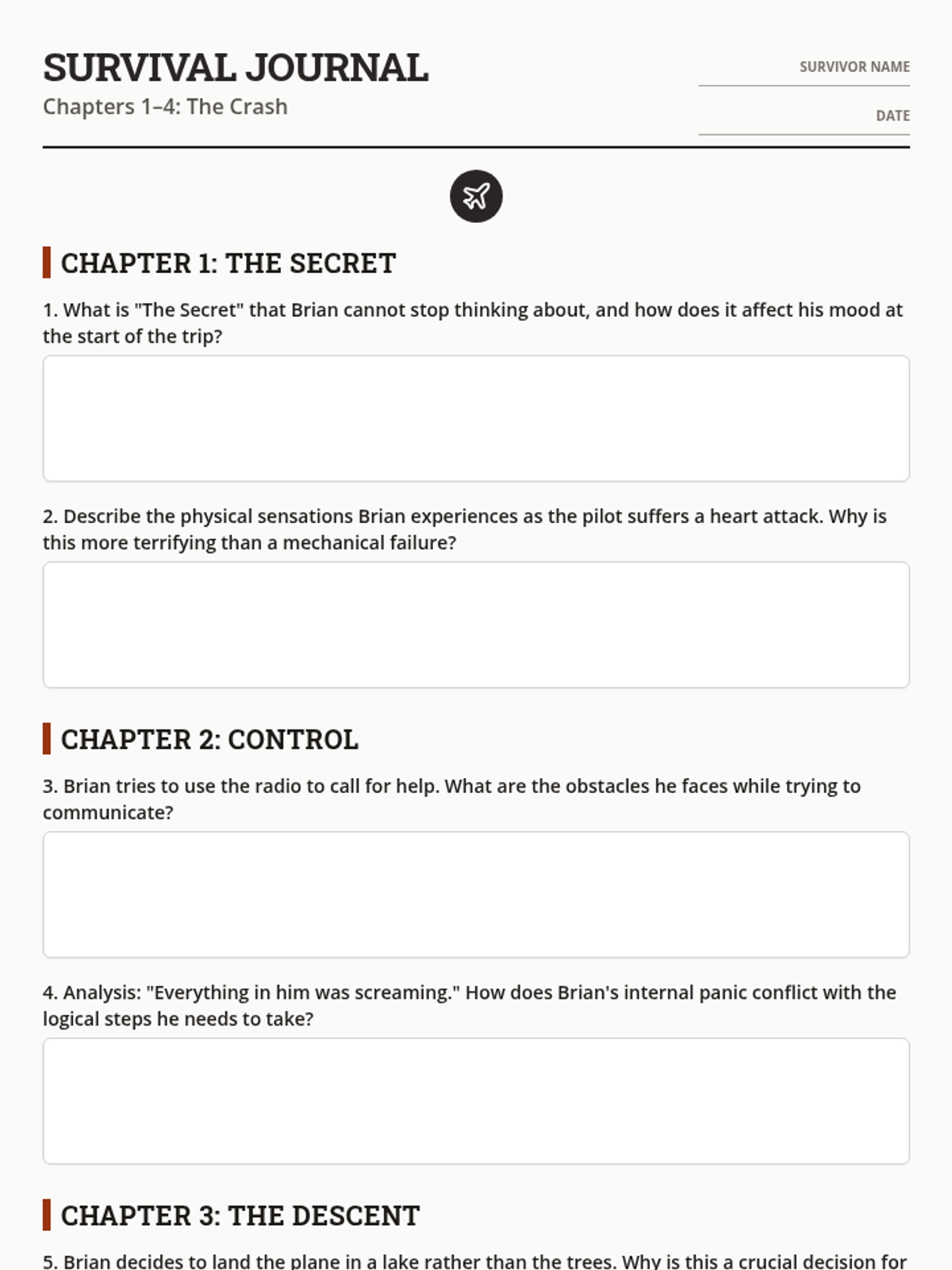
A worksheet for students covering chapters 1-4 of Hatchet. It features recall and analysis questions about the plane crash and 'The Secret', designed with a rugged survival journal aesthetic.
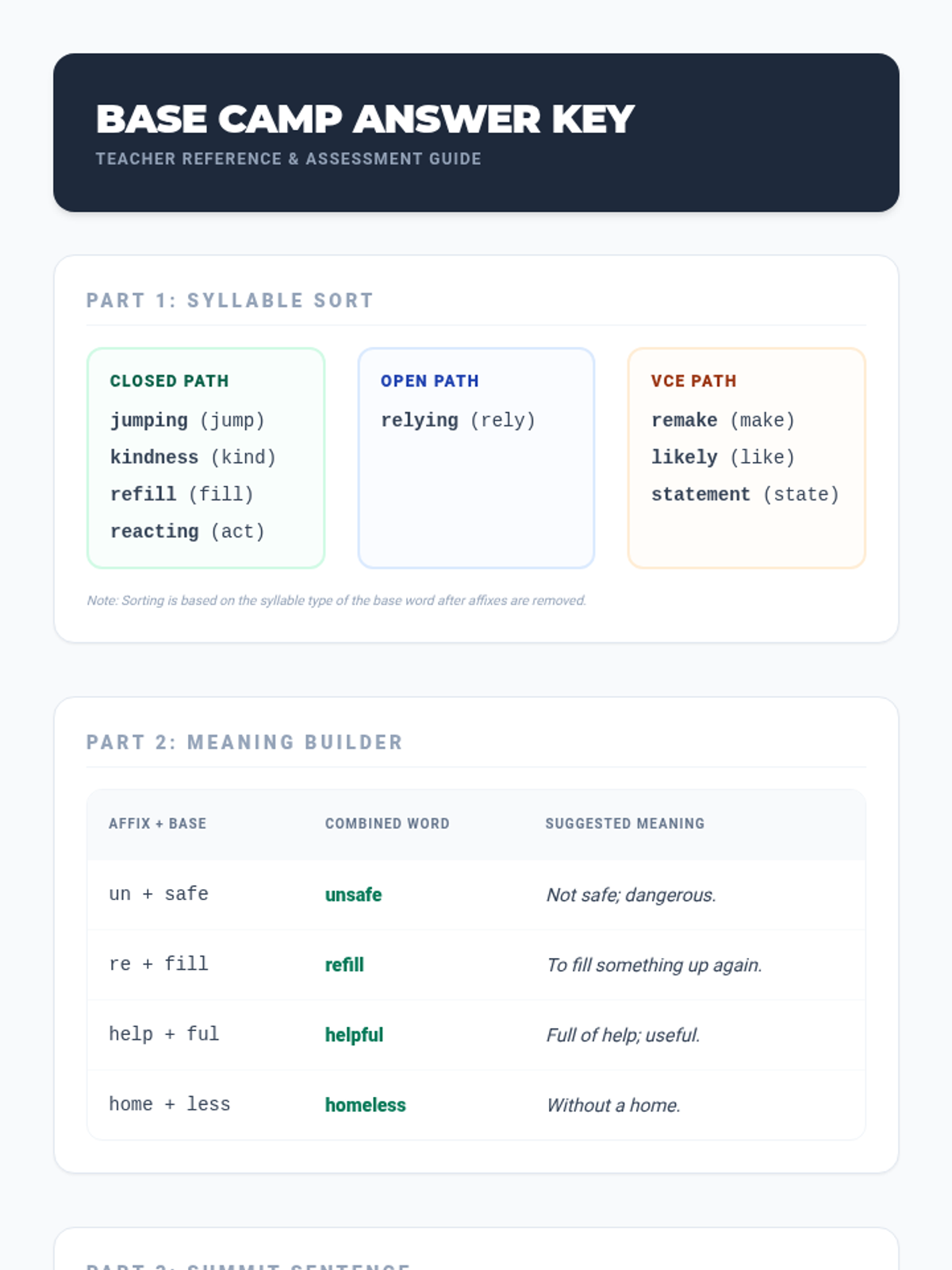
An answer key for the Base Camp worksheet, providing correct syllable classifications and word definitions.
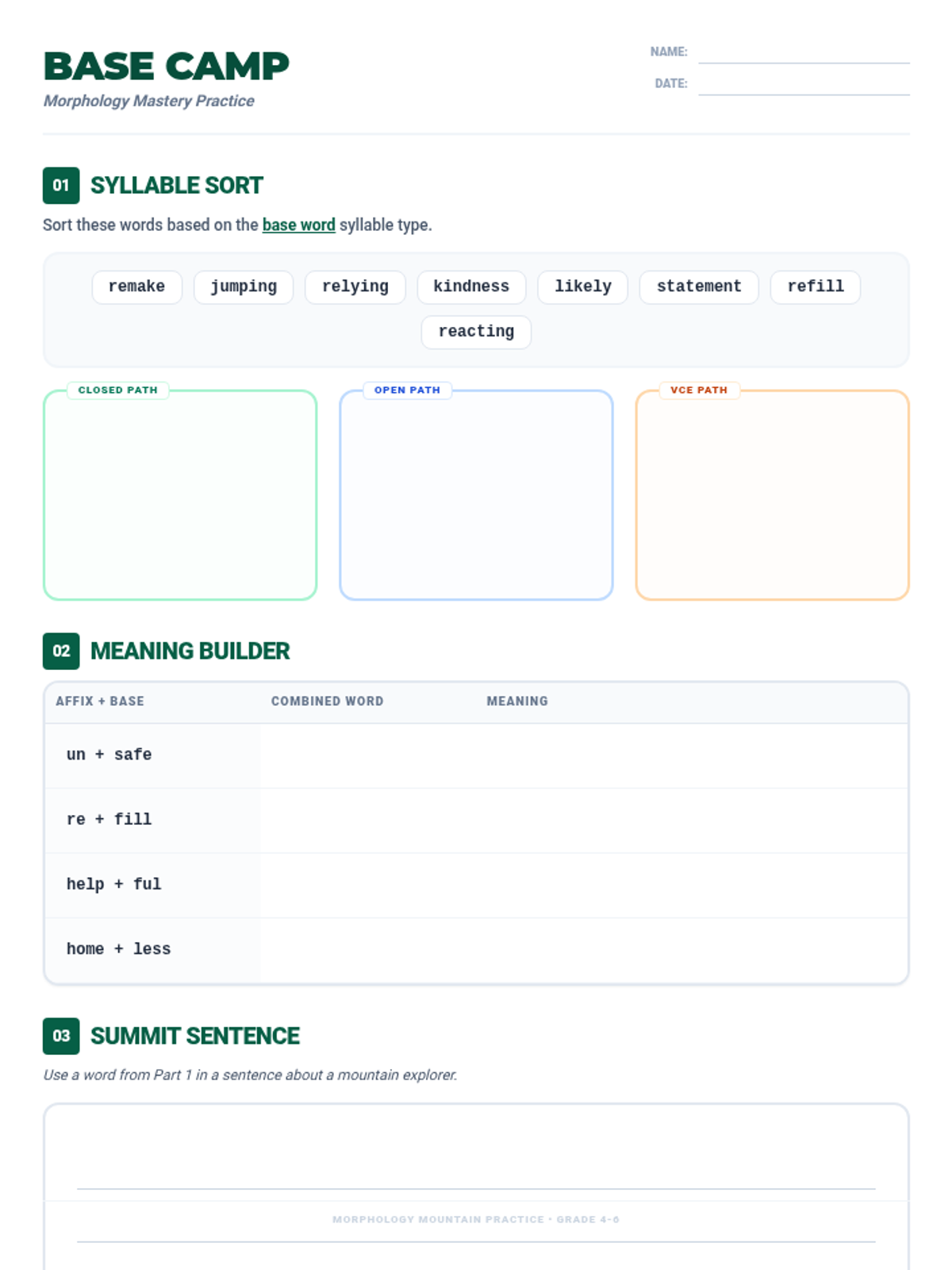
A reinforcement worksheet for identifying syllable types and defining words with affixes. Features a syllable sort and a word-building table.
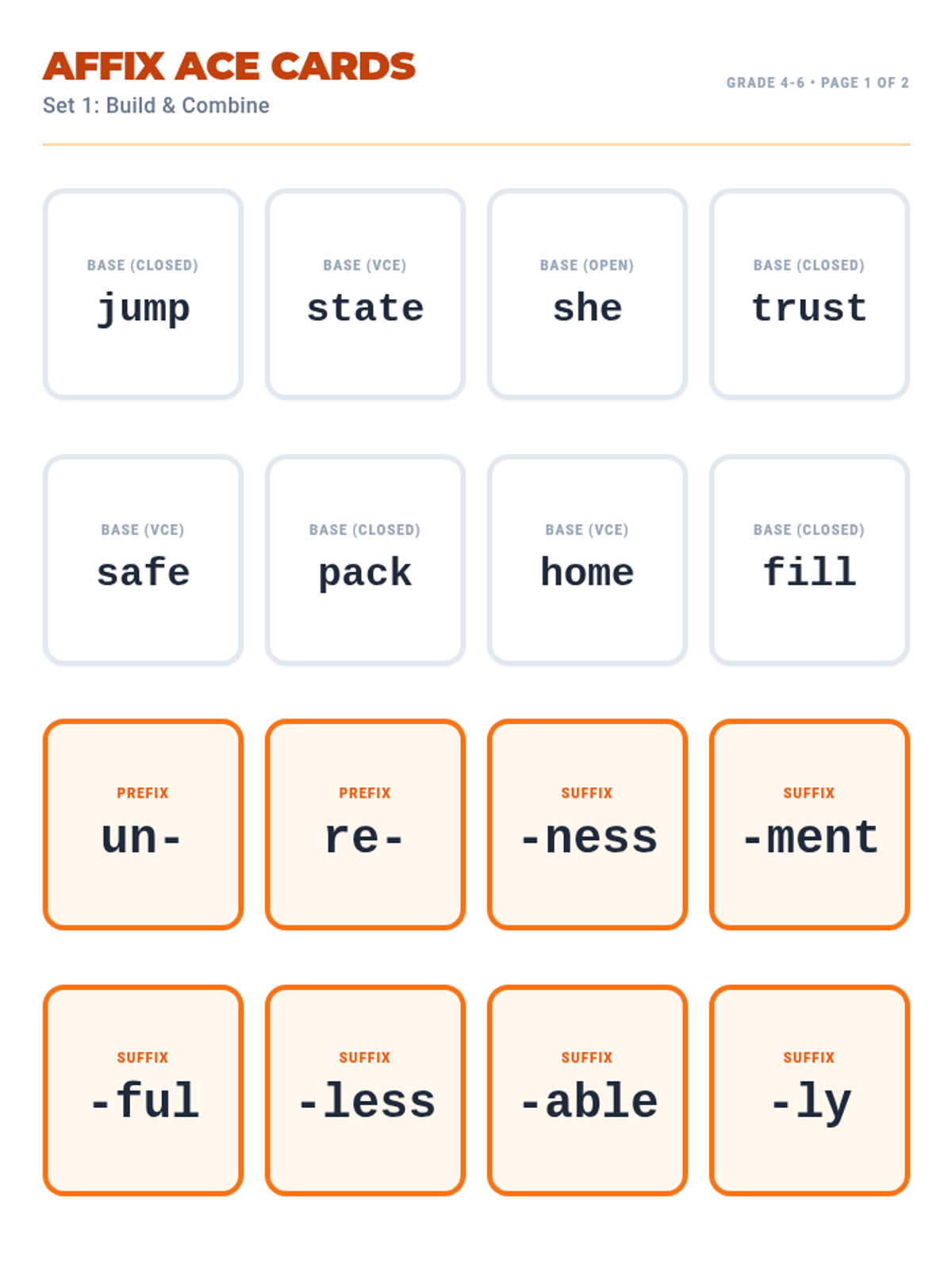
A set of base word and affix cards for matching games. Features color-coded prefixes, suffixes, and base words (Closed, Open, VCE).
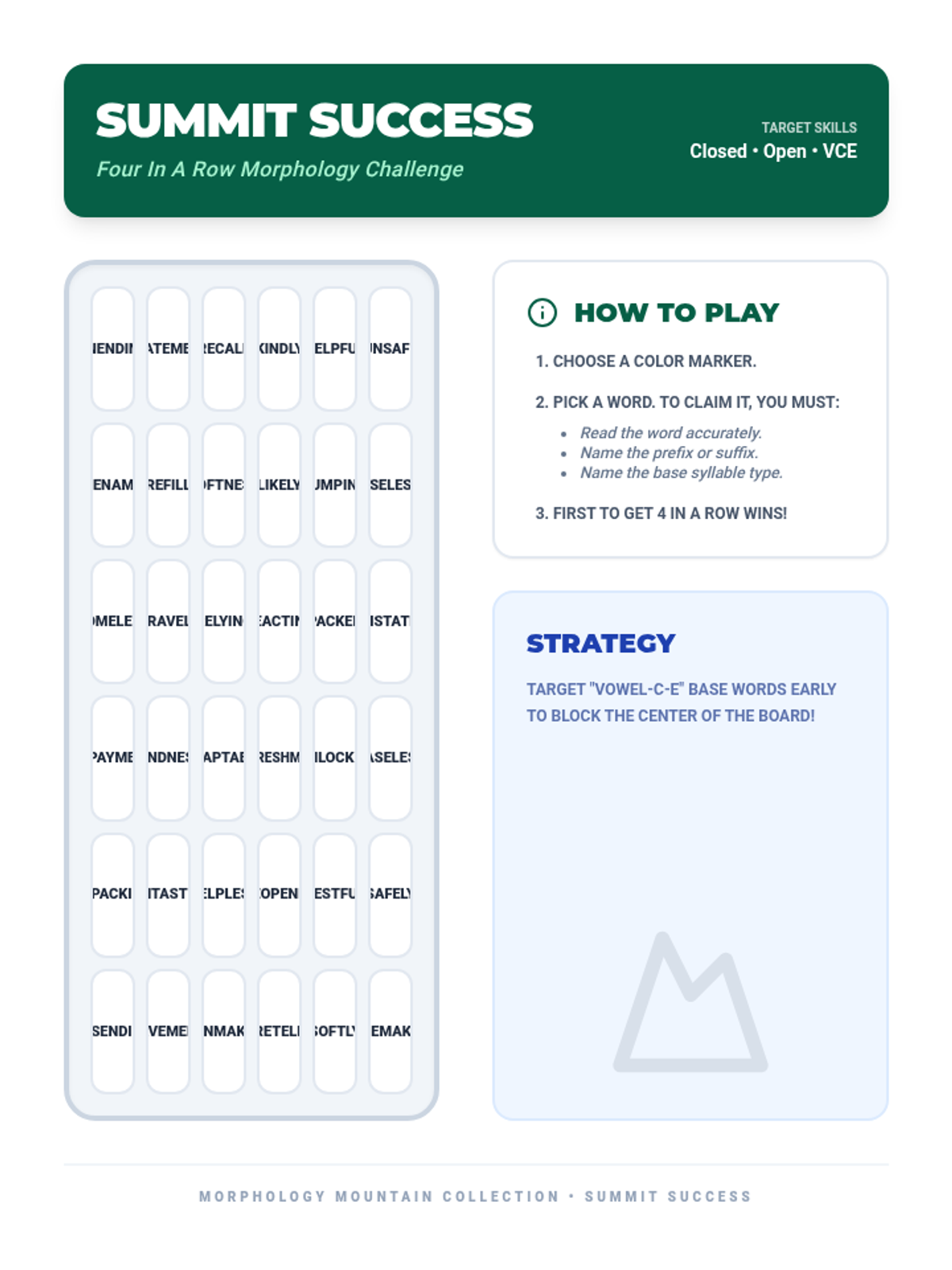
A classic Four In A Row game featuring words with targeted syllables and affixes. Students must analyze the words to claim spaces on the board.
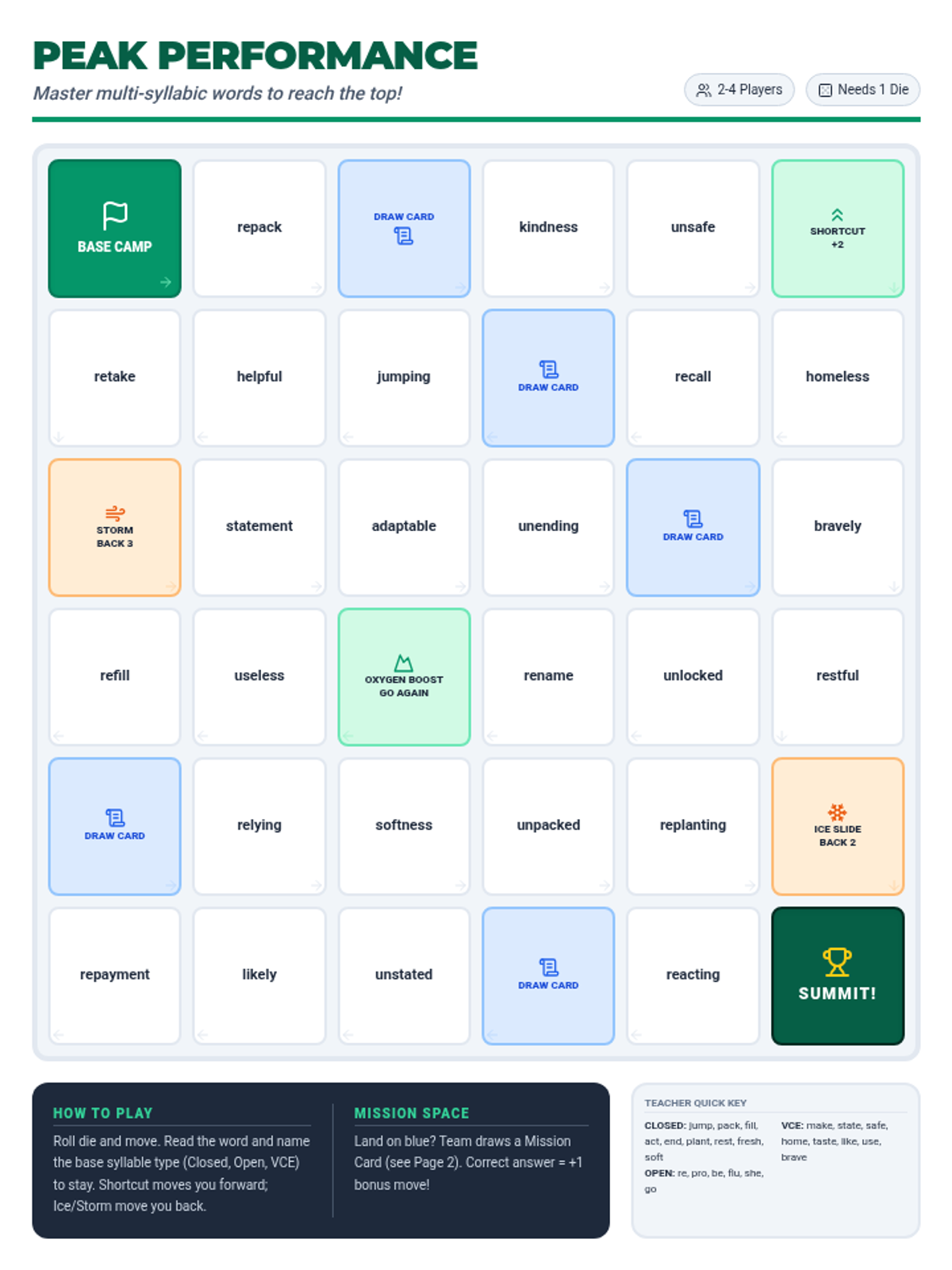
A printable board game where students move through a path of multi-syllabic words with specific affixes. Includes special spaces and reading challenges.
An introductory slide deck for Morphology Mountain, teaching open, closed, and VCE syllable patterns alongside specific prefixes (un-, re-) and suffixes (-ing, -ed, -able, -ness, -ly, -y, -ment, -ful, -less) that attach to unchanging base words.
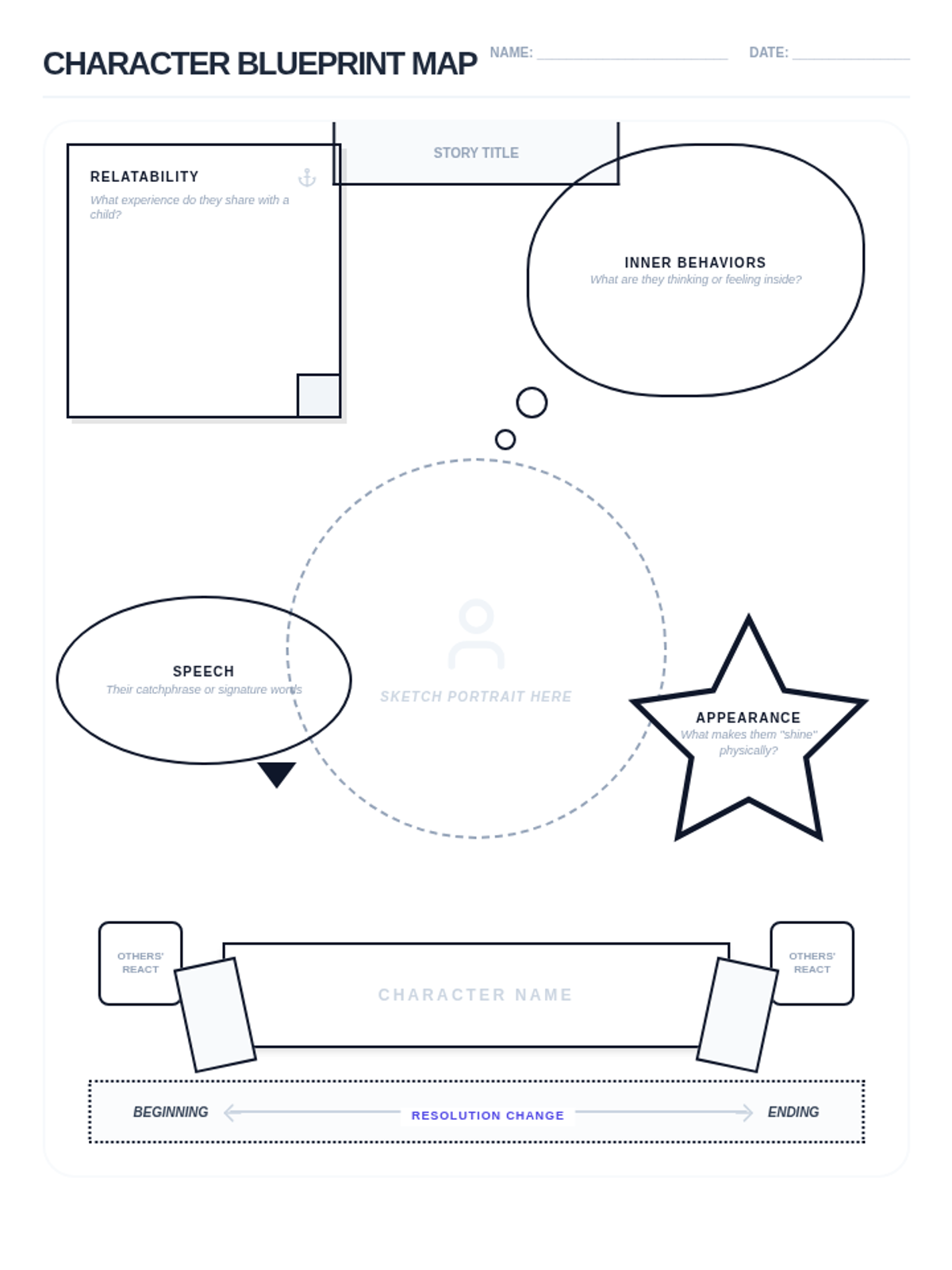
A student-facing character map worksheet that replicates the teacher's visual layout with clear labels and instructions based on the four pillars of characterization.
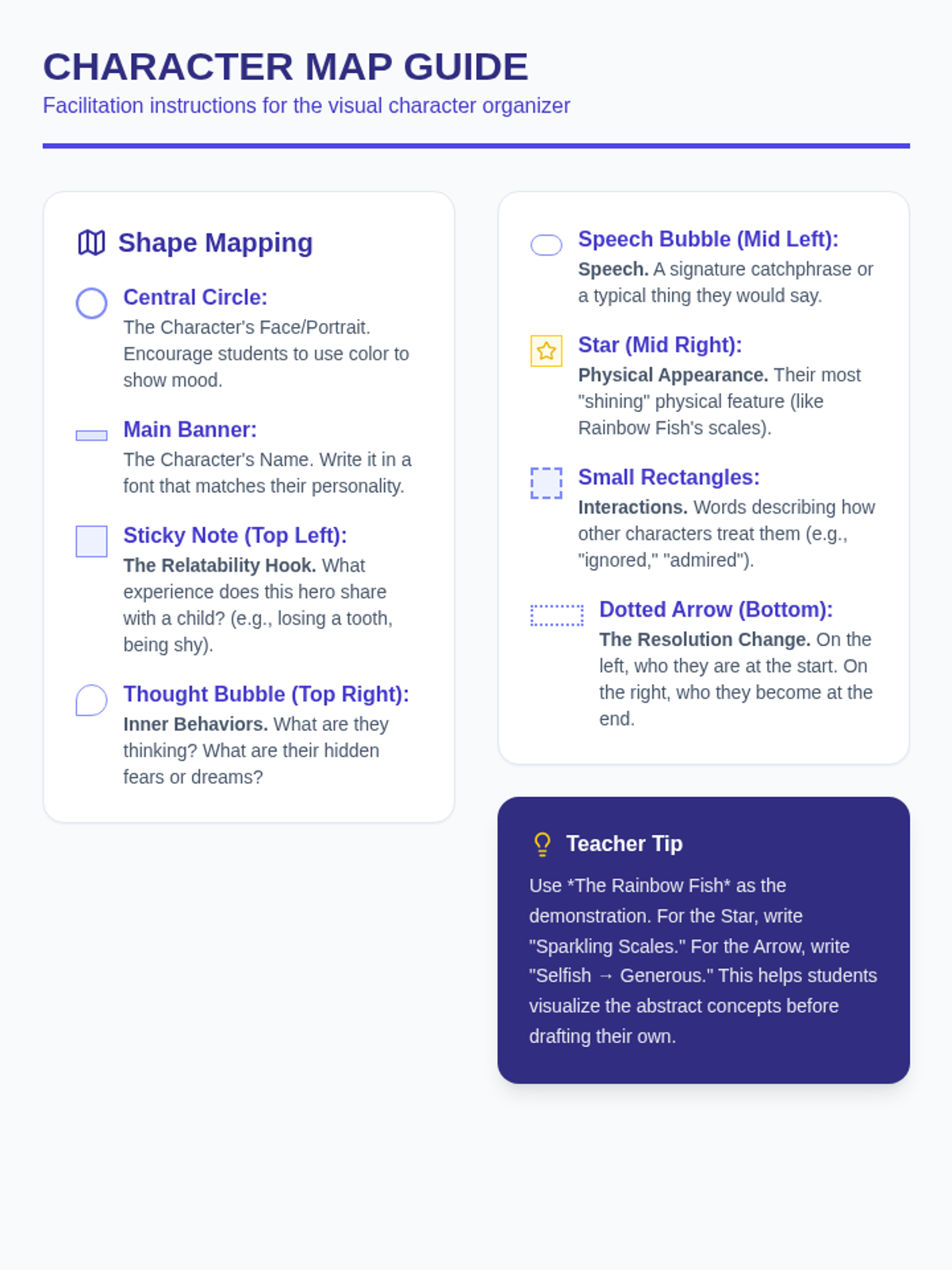
A teacher's guide for facilitating the character map activity, mapping the four pillars of characterization to the specific visual shapes provided by the teacher.
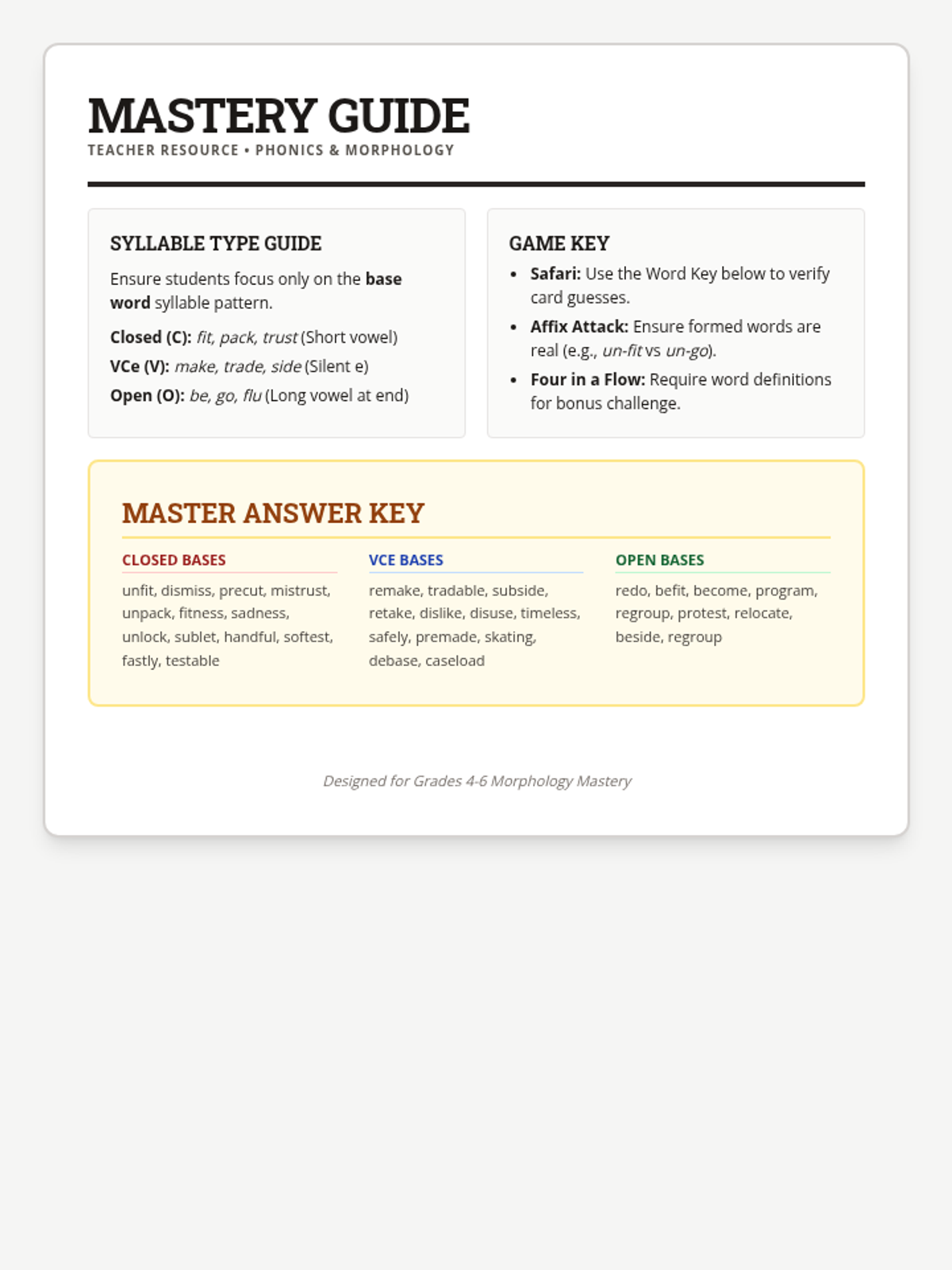
A teacher's guide for the Morphome Masters games, including instructional goals, syllable pattern definitions, and differentiation strategies.
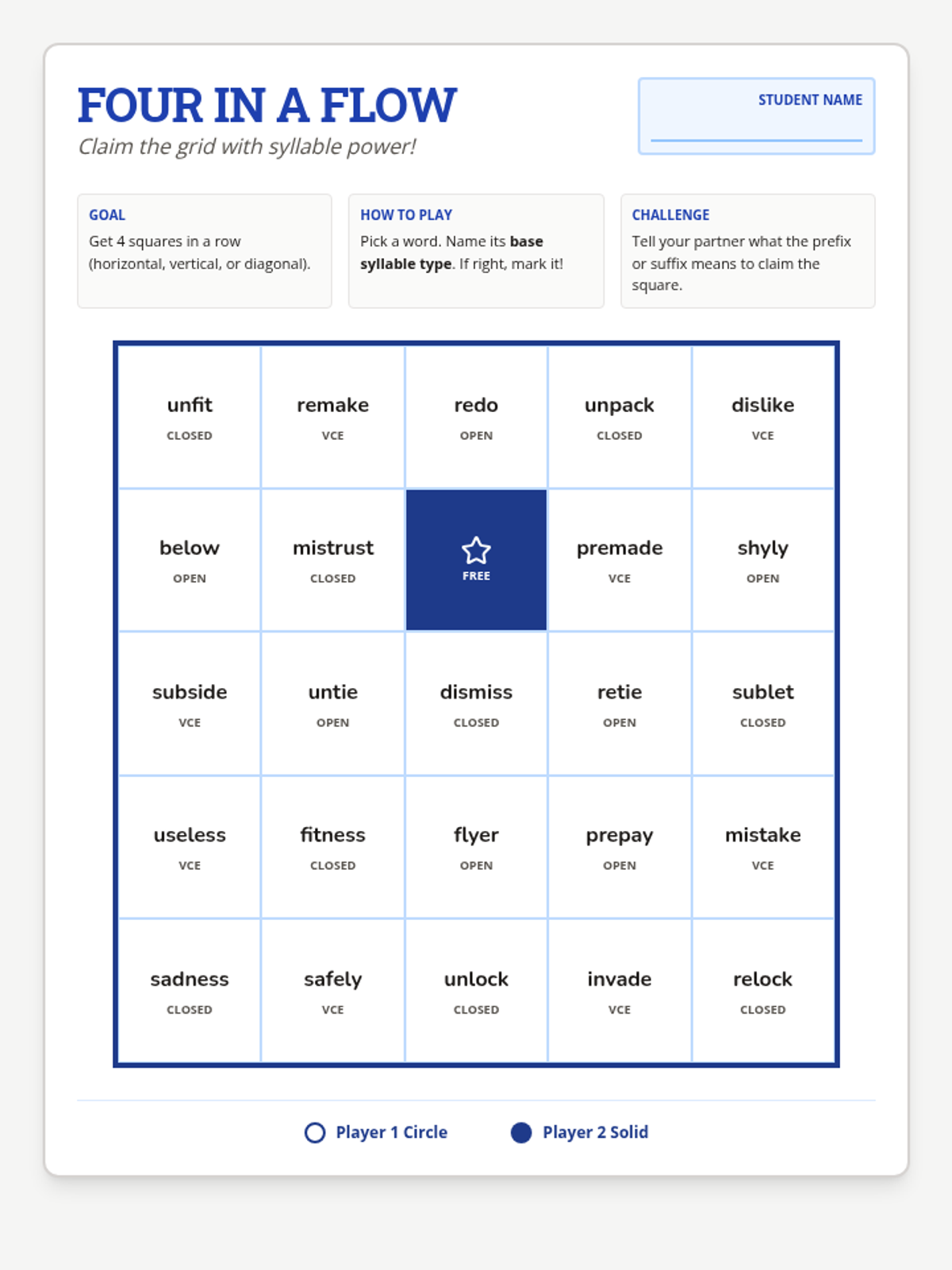
An 'in-a-row' style game board called 'Four in a Flow' where students mark words with specific syllable patterns to be the first to get four in a row.
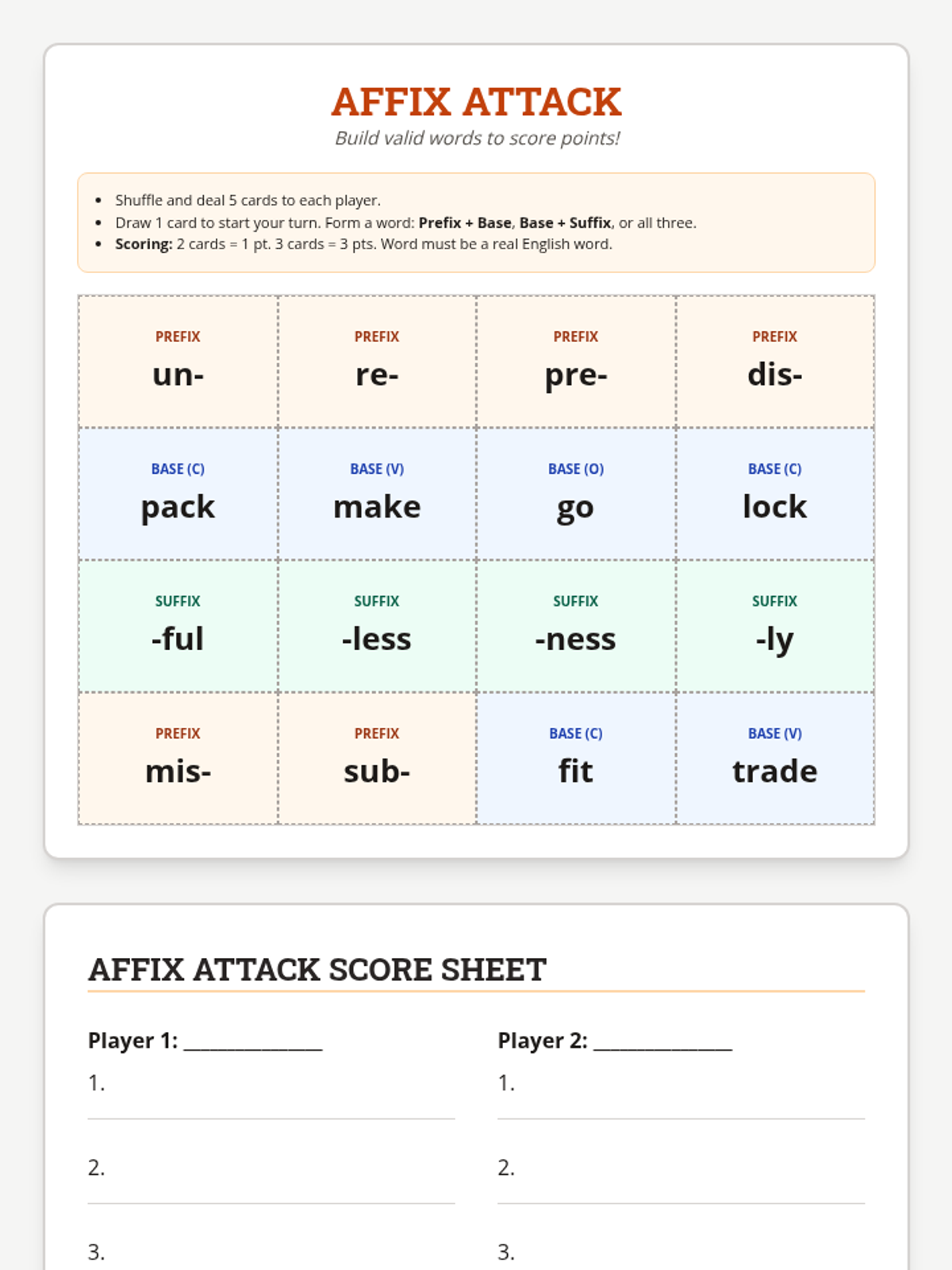
A card game called 'Affix Attack' that challenges students to build words using prefixes, suffixes, and unchanging basewords with specific syllable patterns.
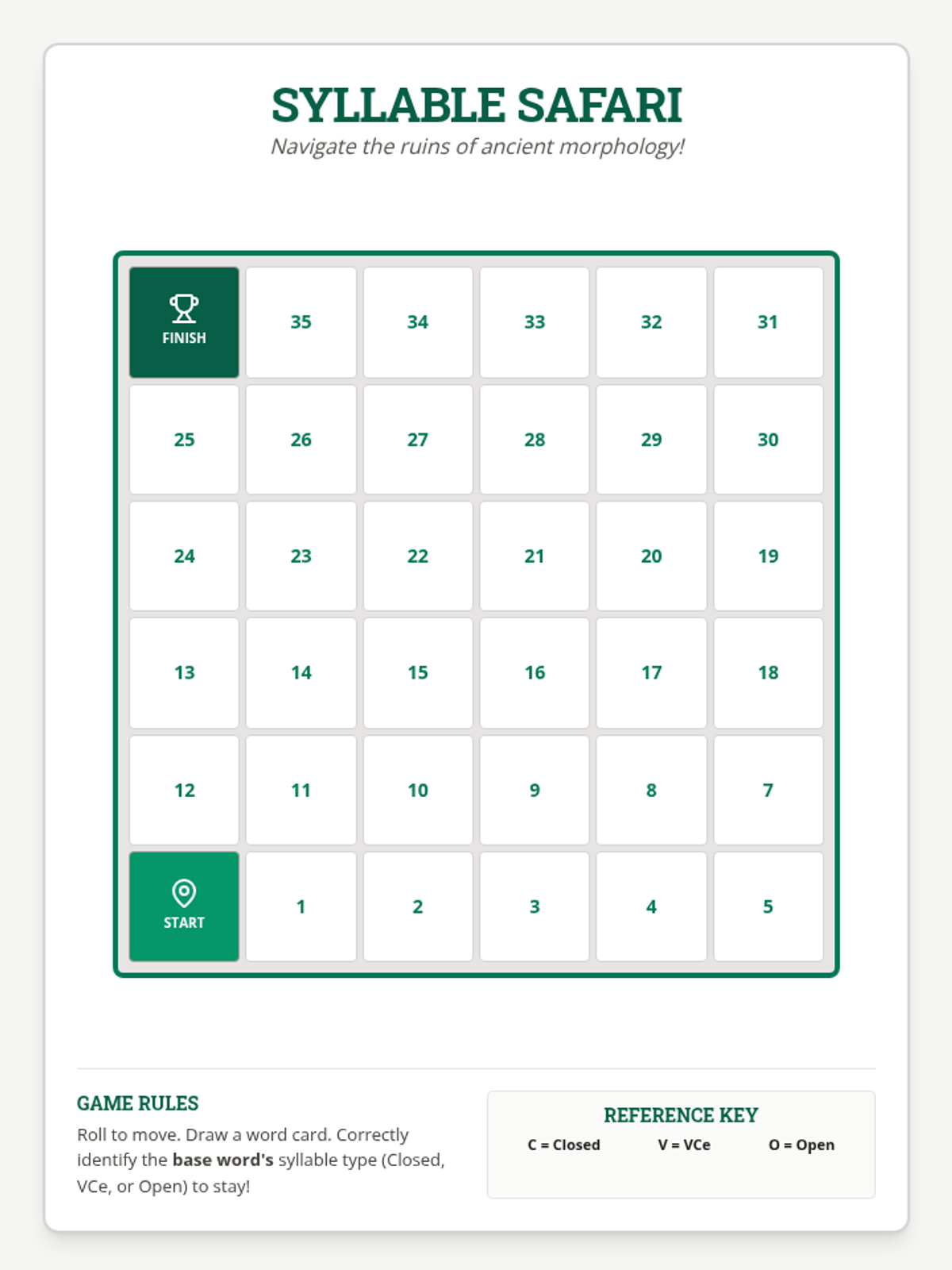
A jungle-themed board game called 'Syllable Safari' including a colorful game board and word cards focusing on closed, VCe, and open syllables with prefixes and suffixes.
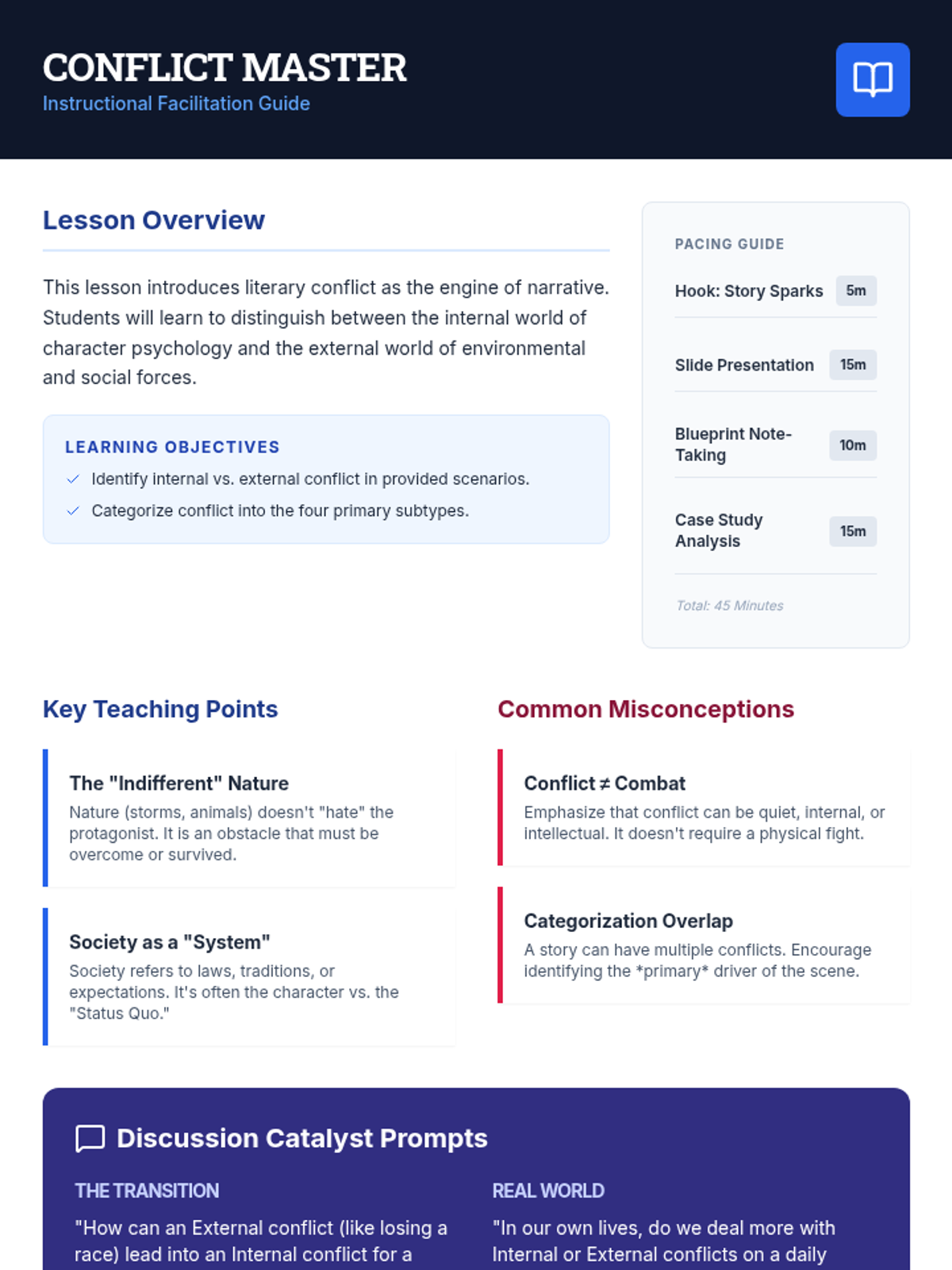
A teacher-facing facilitator guide for the Conflict Crossroads lesson. It includes learning objectives, pacing suggestions, common misconceptions to address, and discussion prompts to deepen student engagement. Includes spacing refinements for pacing guide.