Introductory slide deck for 3rd graders explaining what telescopes are, how refractors and reflectors differ, and key historical figures like Galileo and Newton. Revised with improved diagrams and contrast.
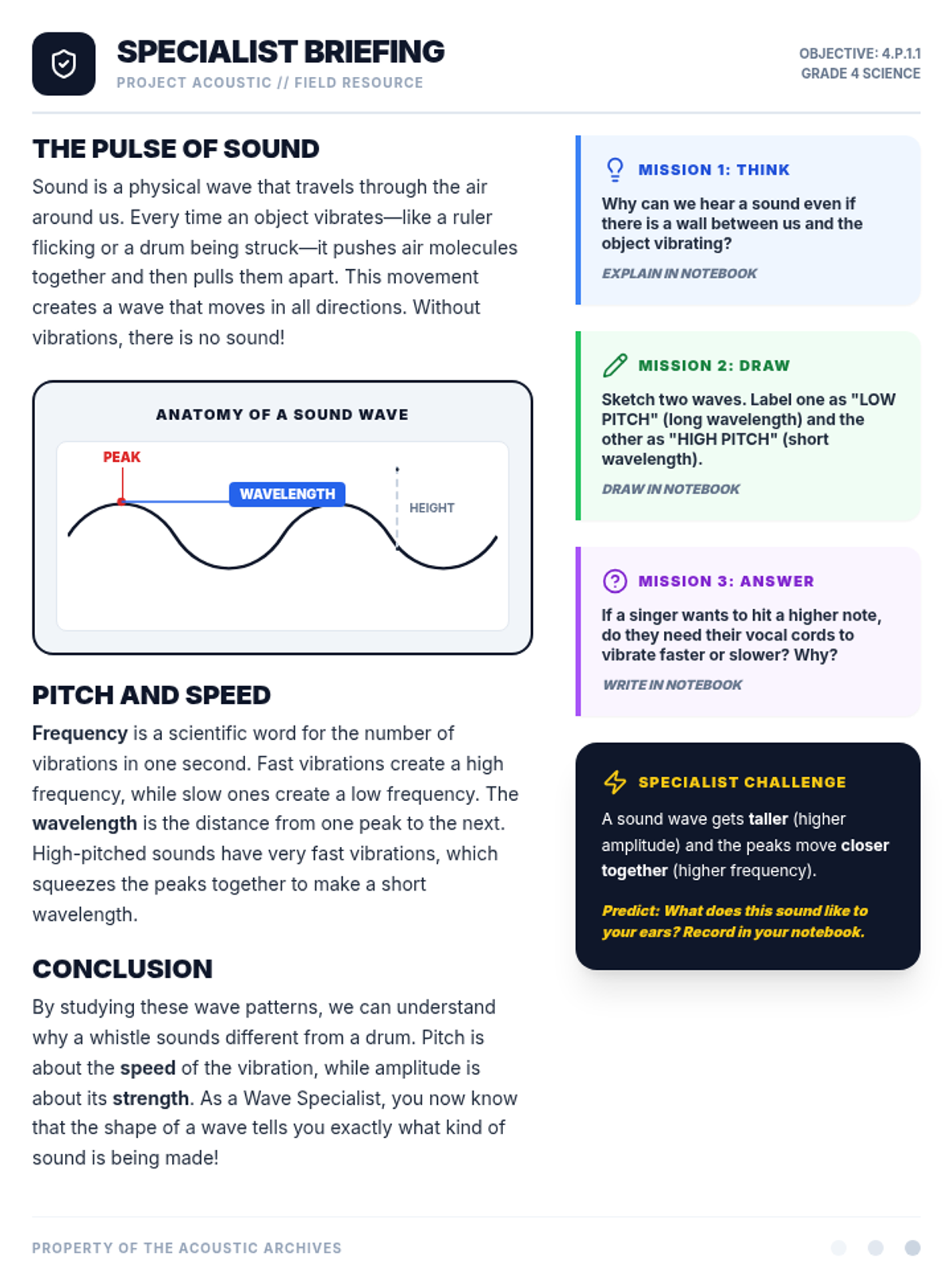
A student-friendly instructional article about pitch, wavelength, and frequency. Features "Notebook Missions" interspersed throughout the text, prompting students to think, draw, and answer questions directly in their science notebooks. Includes a clear, improved wave anatomy diagram.
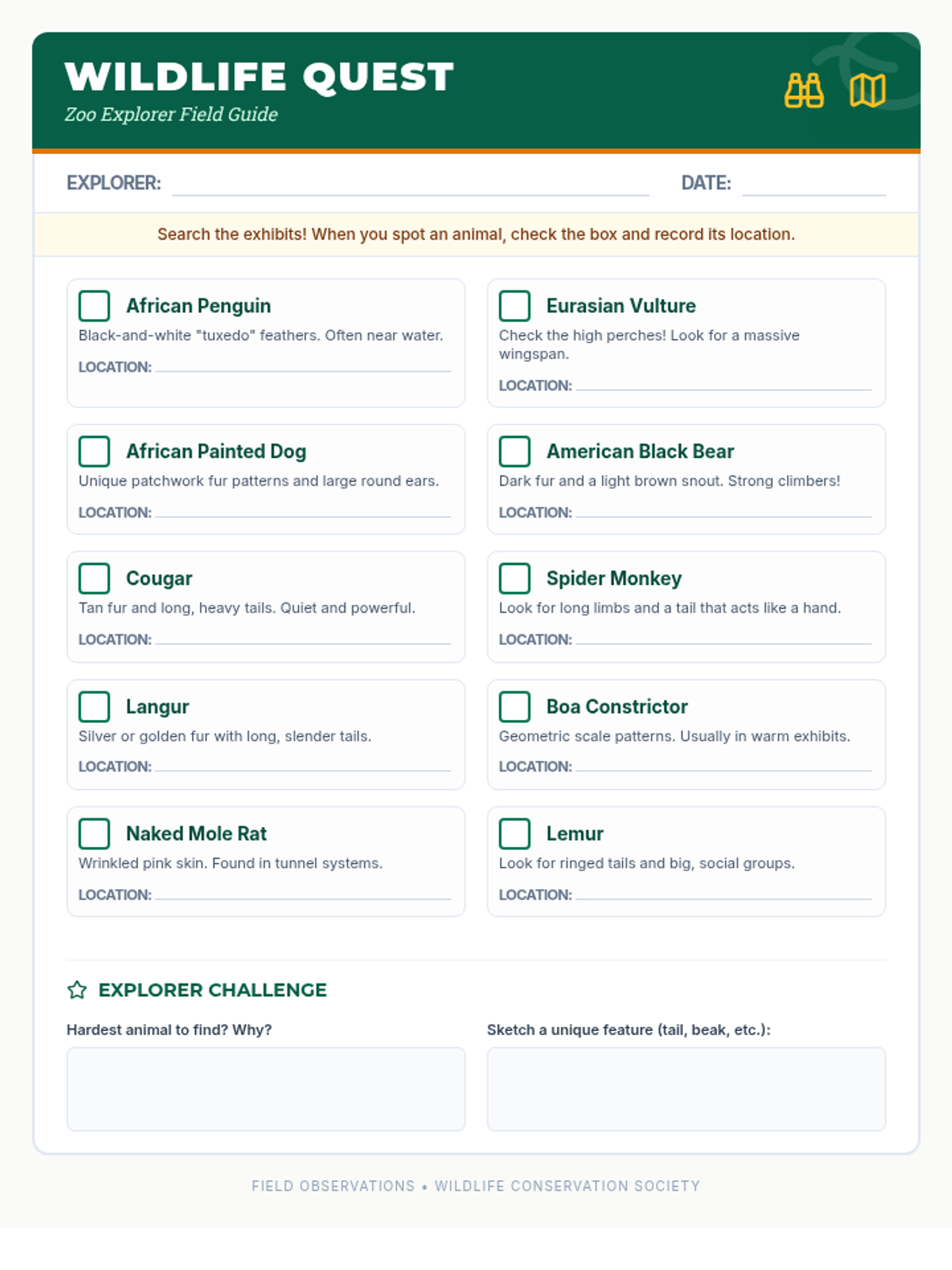
A compact, single-page wildlife scavenger hunt checklist featuring 10 specific animals. Each entry includes a checkbox, a short identification clue, and a dedicated location line. The bottom includes an 'Explorer Challenge' for reflection and sketching.
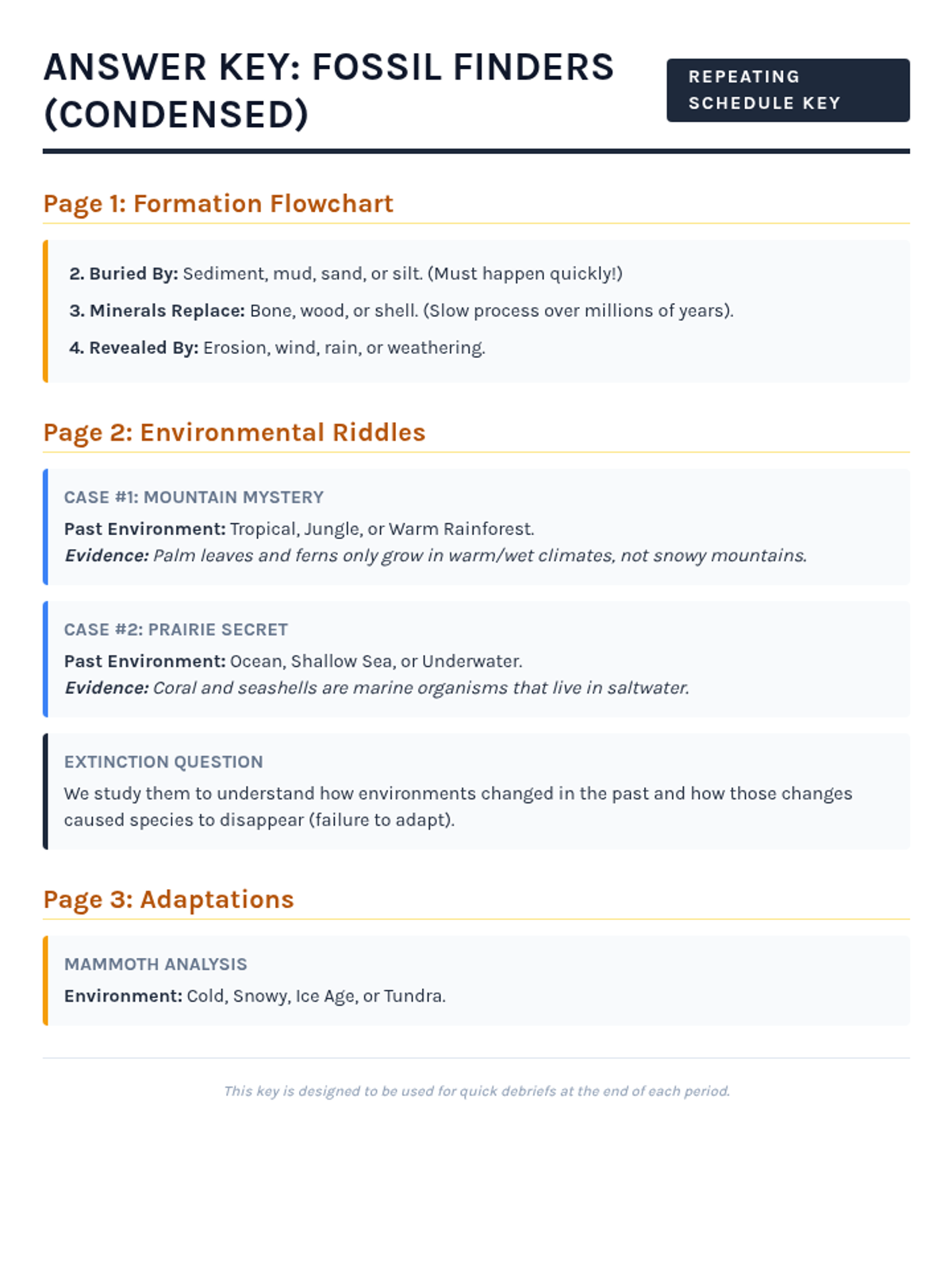
A concise 1-page answer key for the condensed Fossil Finder Student Packet, designed for quick teacher reference across multiple class periods. Ensured to fit on a single page.
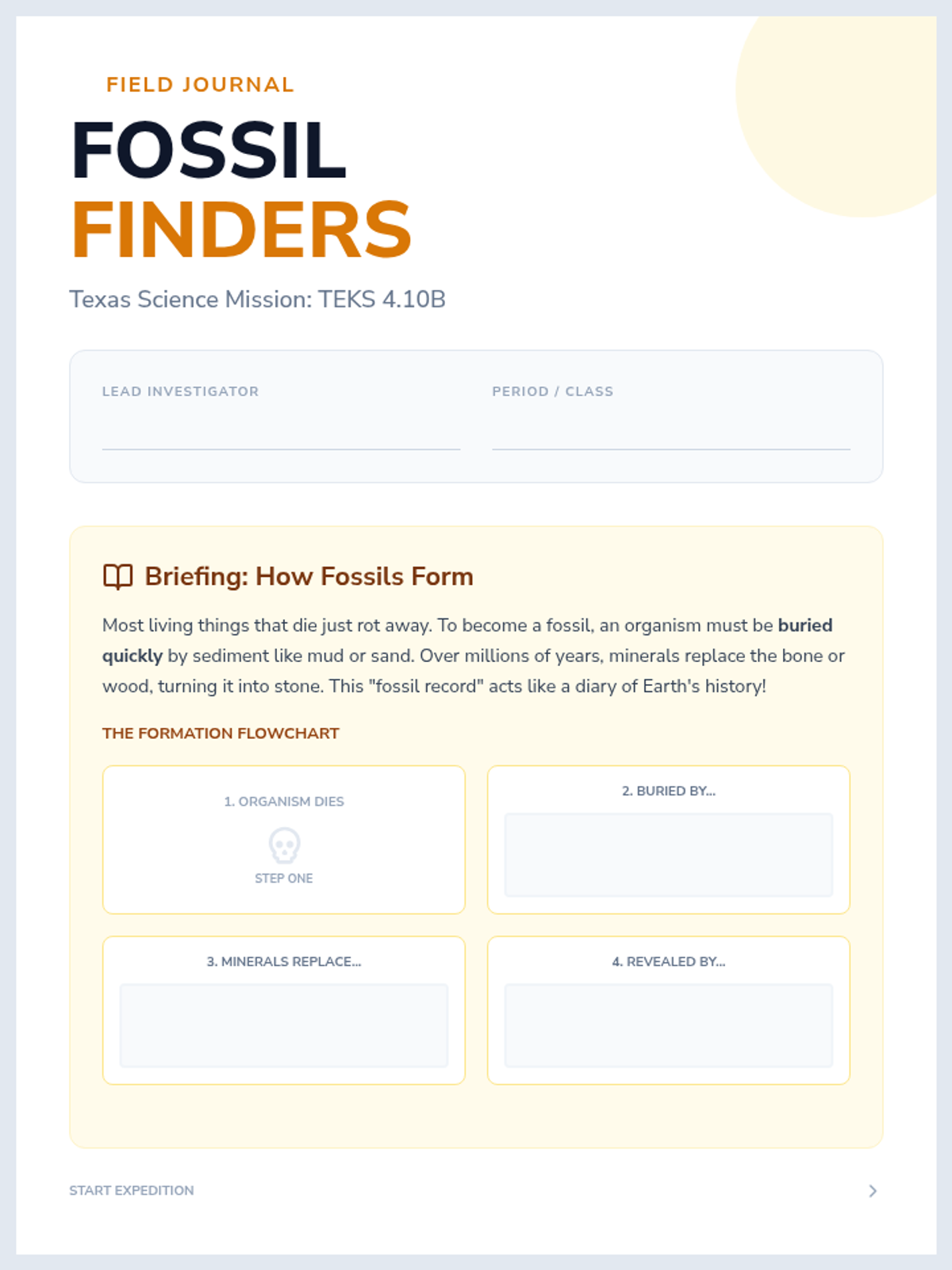
A condensed 3-page student field journal for 4th-grade science, focusing on fossil formation, environmental evidence, and extinct species (TEKS 4.10B). Designed to be completed in one 60-minute period. Features enlarged student work areas and lightened backgrounds for maximum handwriting legibility.
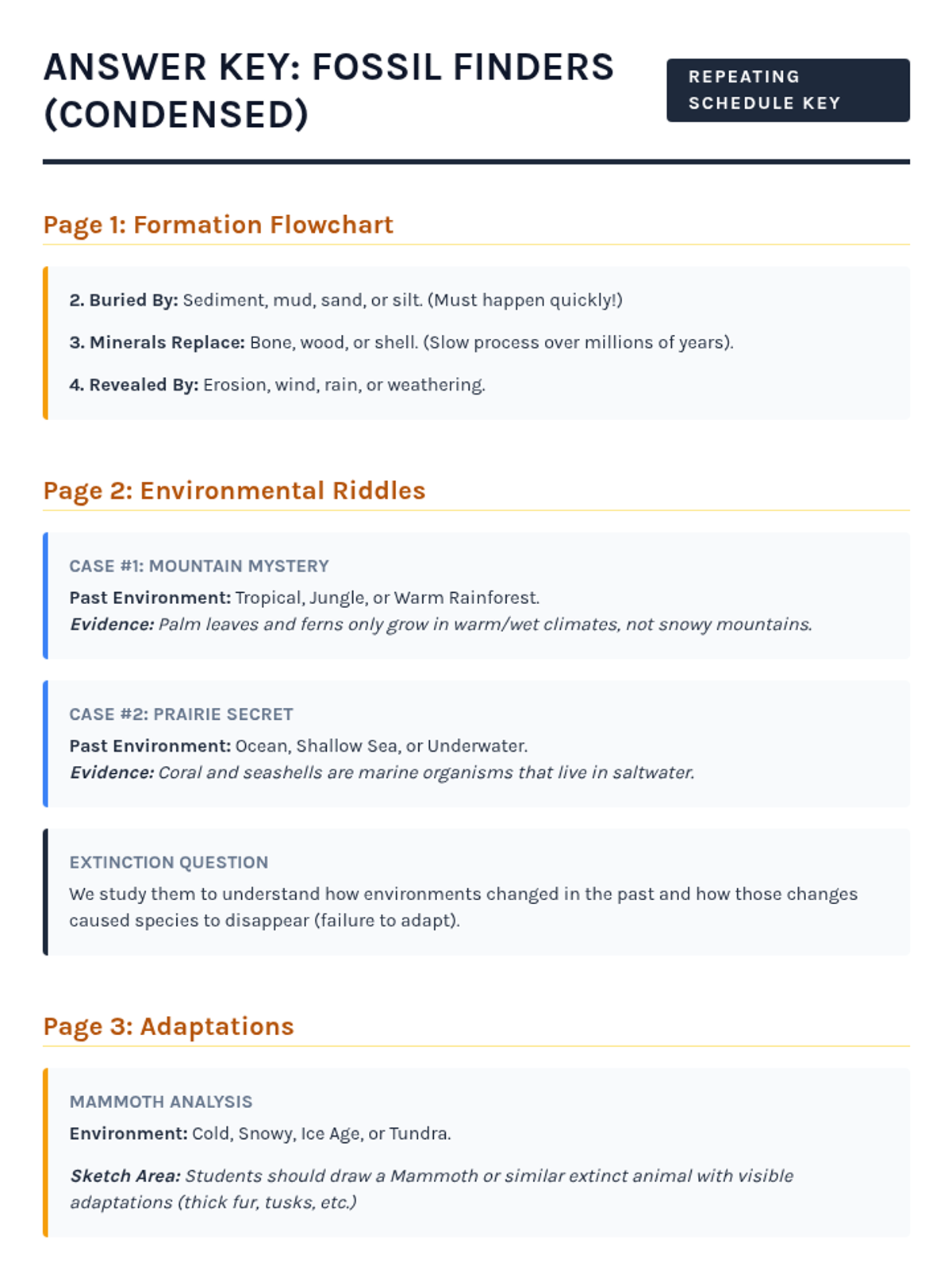
A revised answer key for the condensed 1-hour Fossil Finder Student Packet, supporting a repeating 4-period daily schedule.
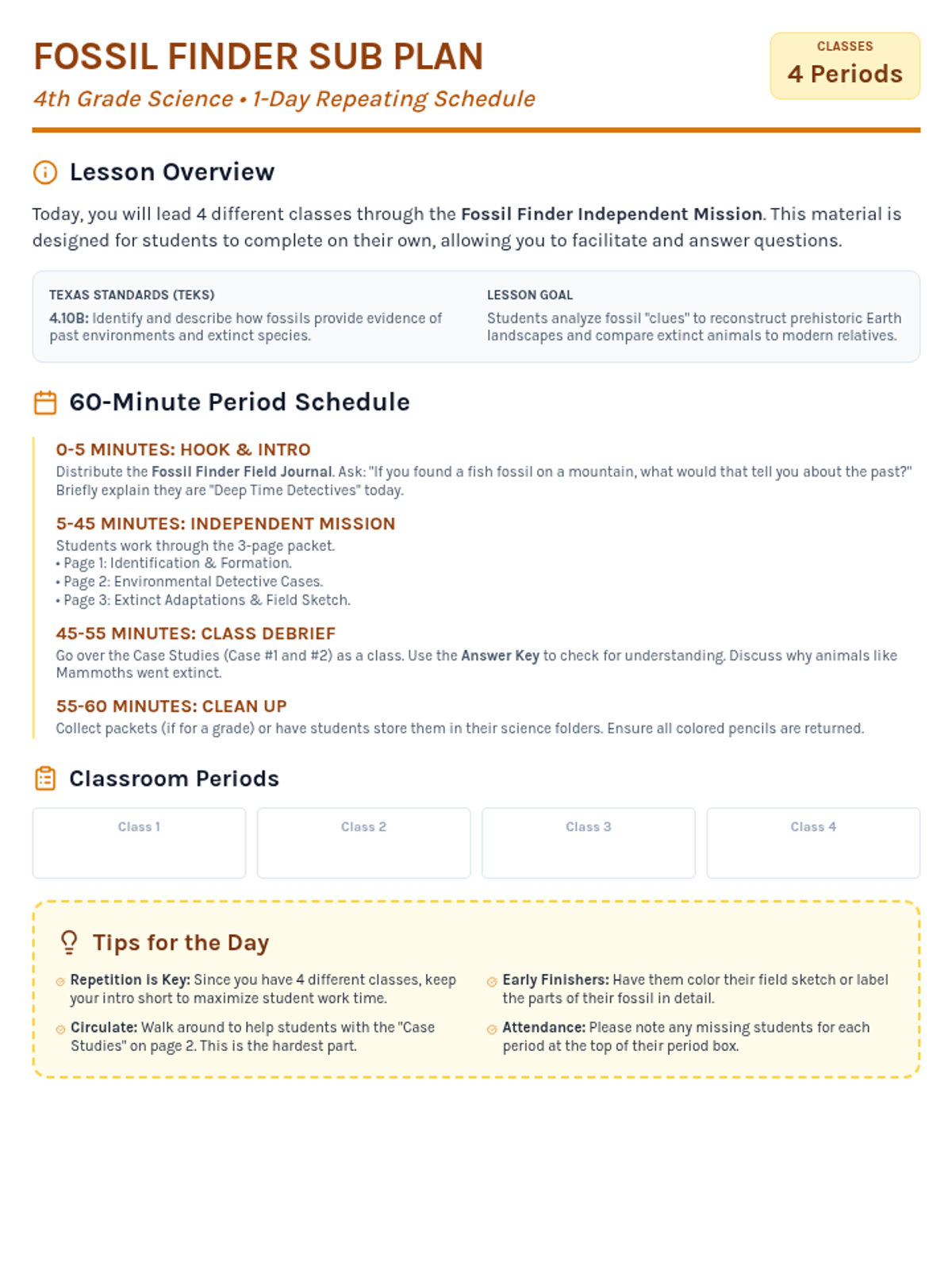
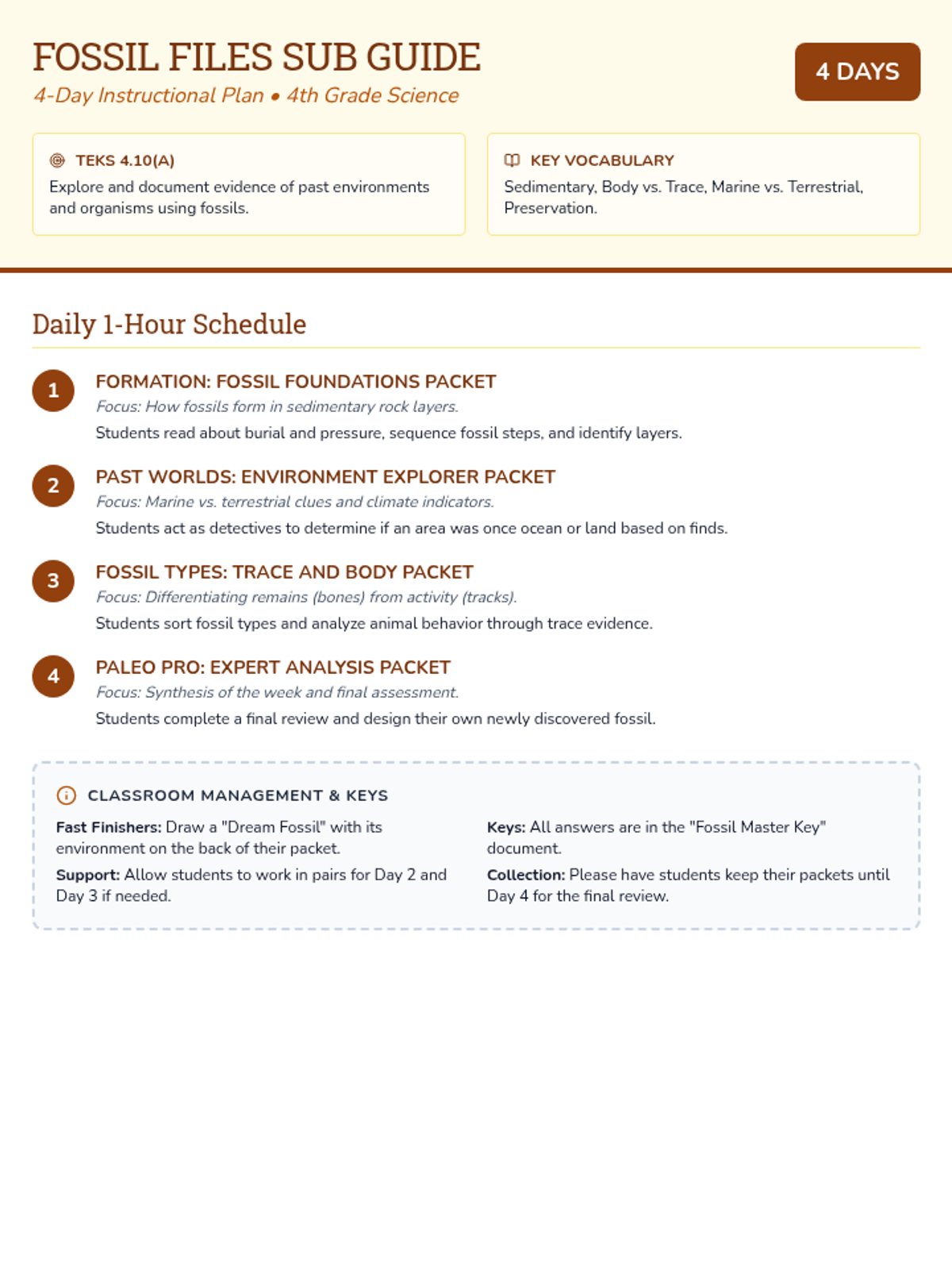
A comprehensive 1-page instructional guide for a substitute teacher, outlining a repeating 1-hour schedule for 4 different 4th-grade science classes in Texas.
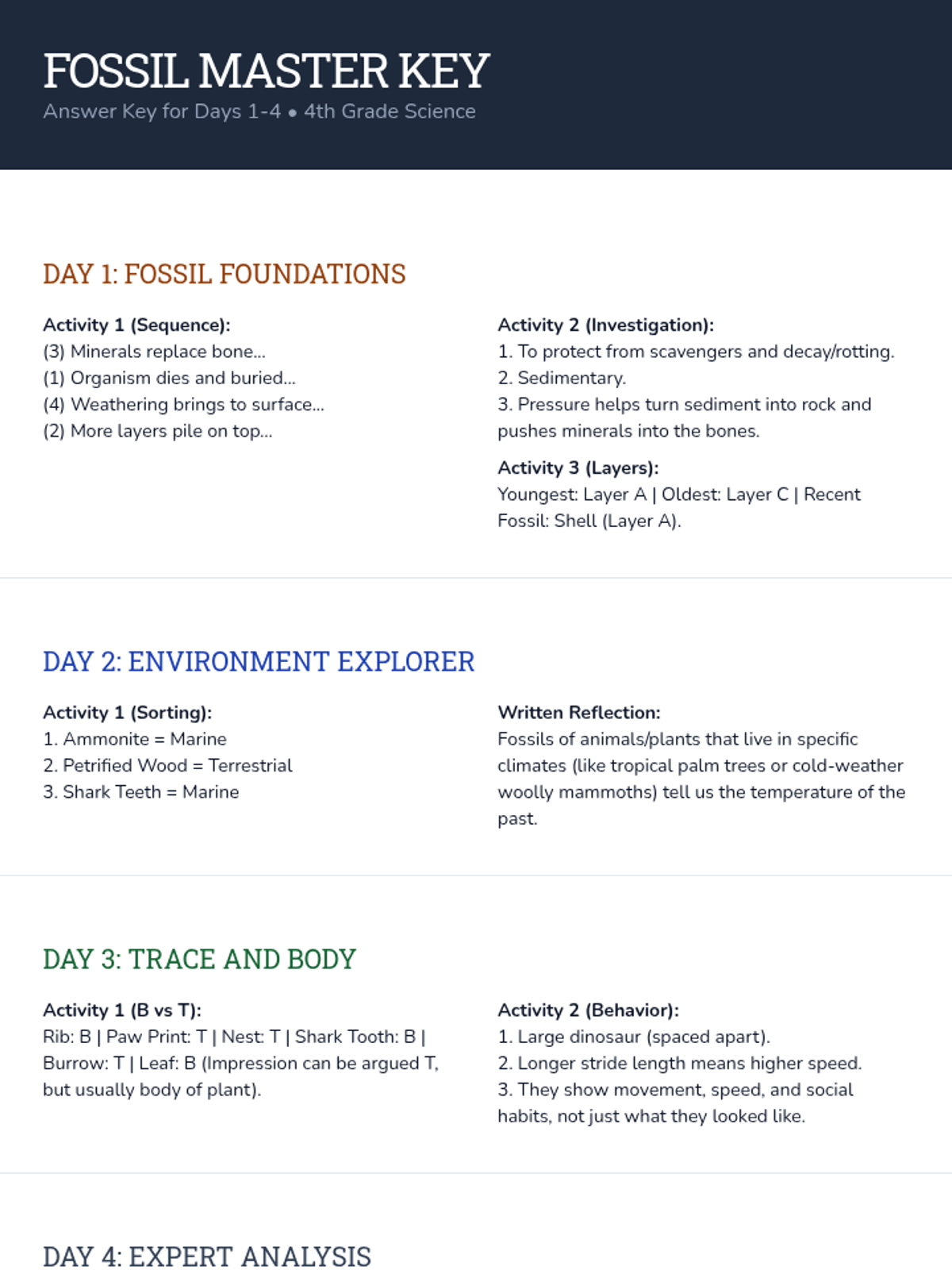
Complete answer key for all four days of the fossils and past environments unit, covering formation, environmental indicators, fossil types, and final analysis.
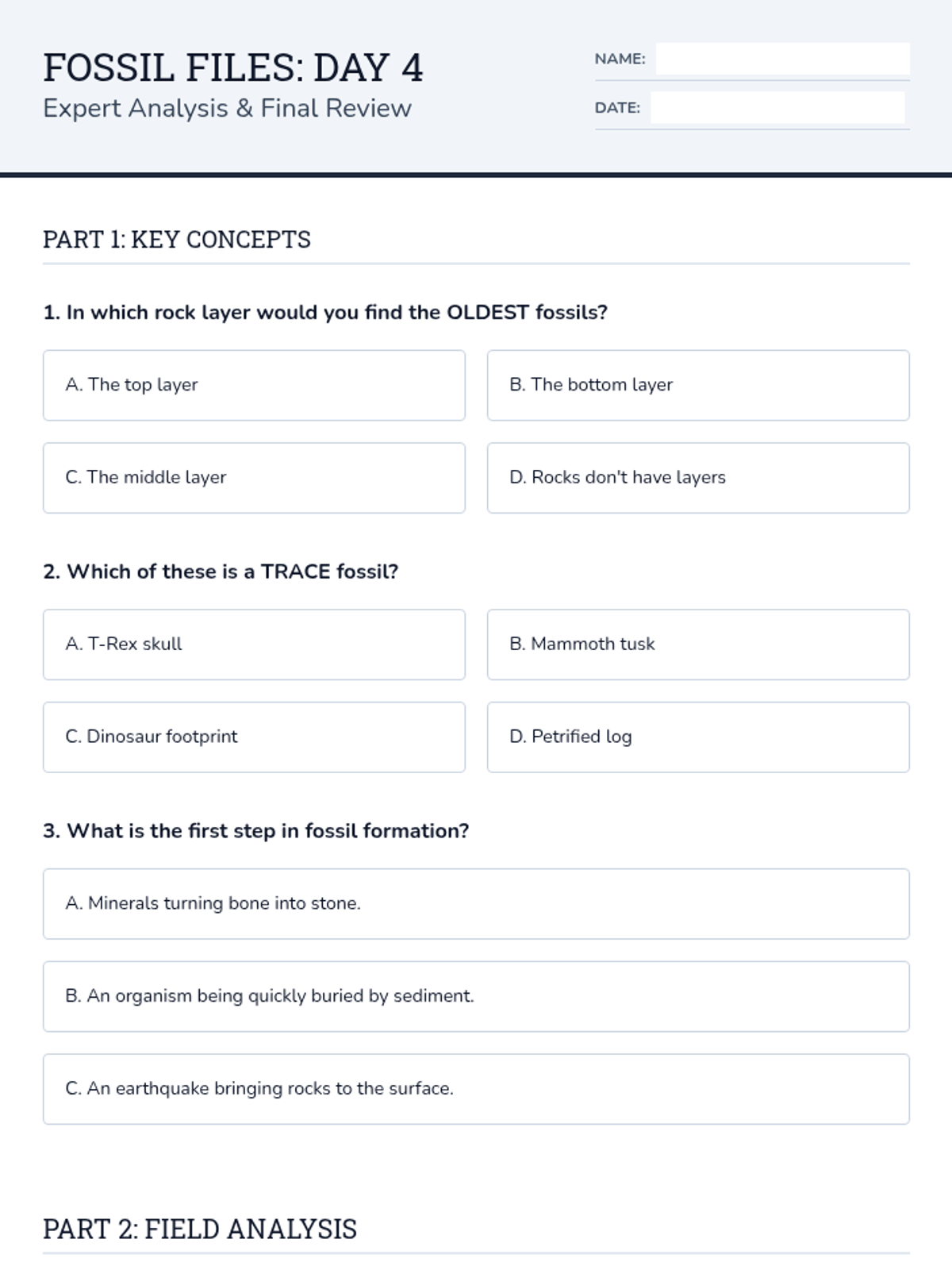
Day 4 final assessment packet for the fossils unit. Includes multiple-choice questions, evidence-based environmental analysis, and a creative "new fossil" synthesis activity.
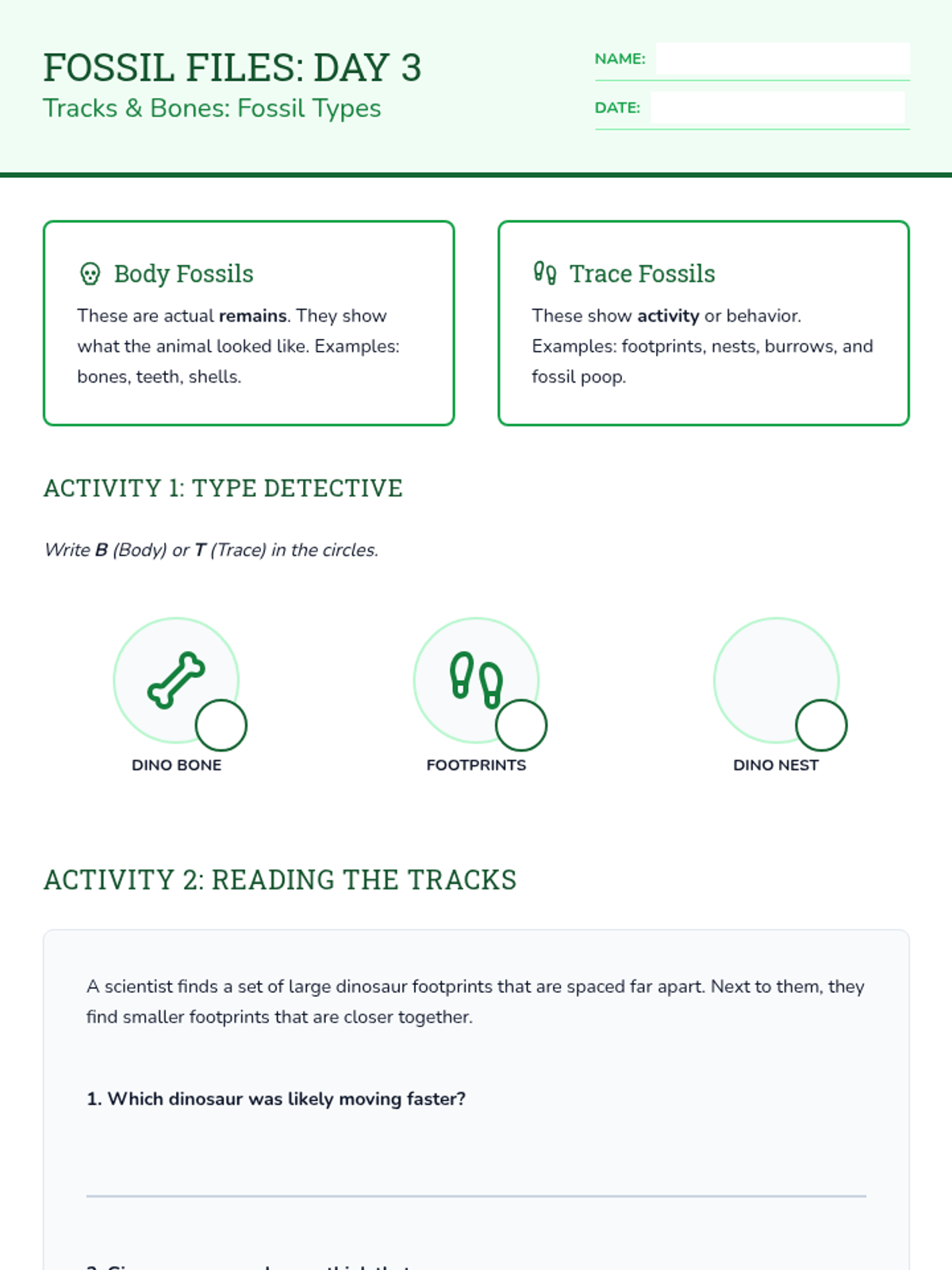
Day 3 independent student packet focusing on the distinction between body fossils and trace fossils. Includes a classification activity and behavior analysis scenarios.
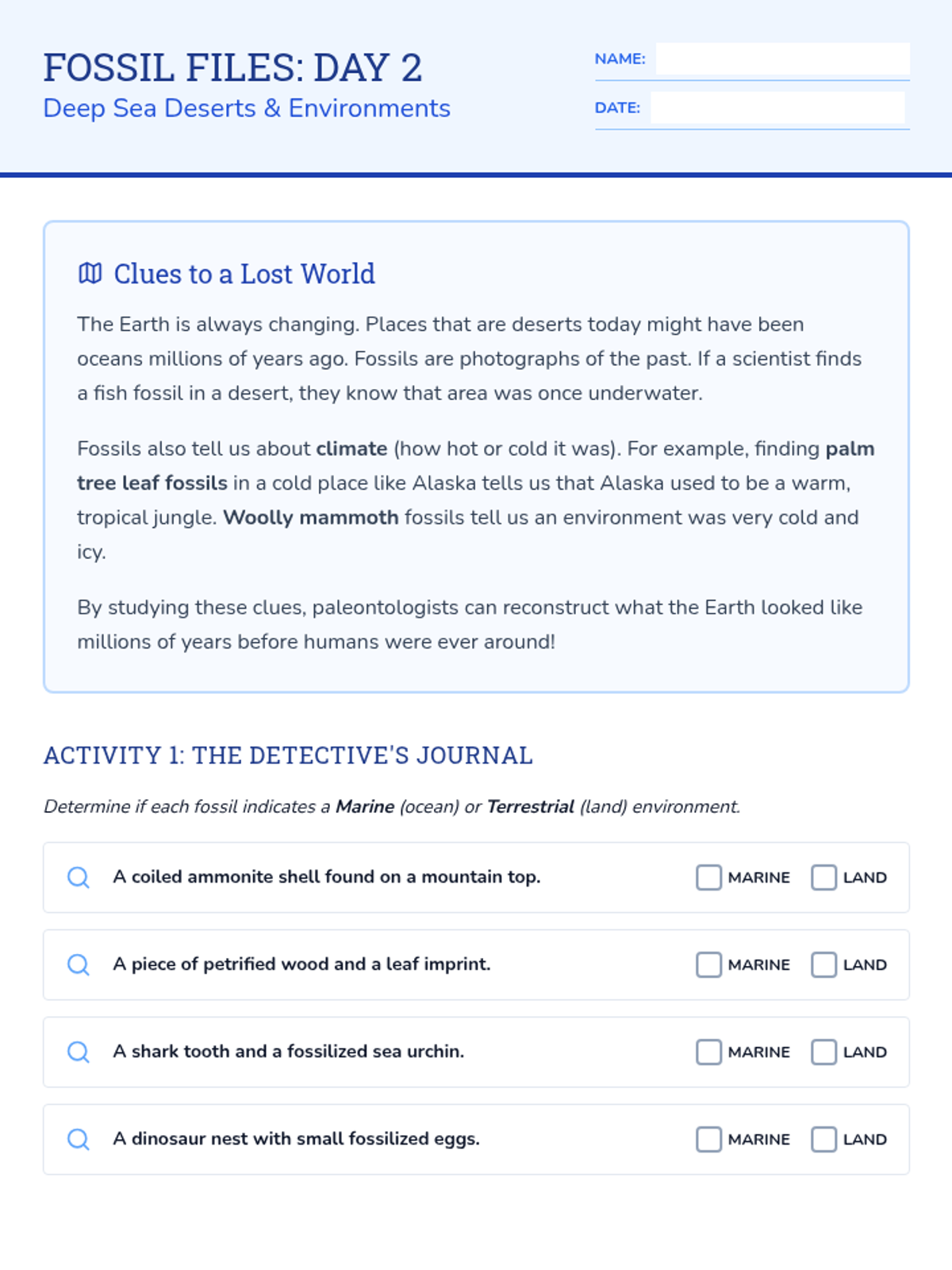
Day 2 independent student packet focusing on using fossils as evidence of past environments (marine vs. terrestrial). Includes deductive reasoning tasks and a visual reconstruction activity.
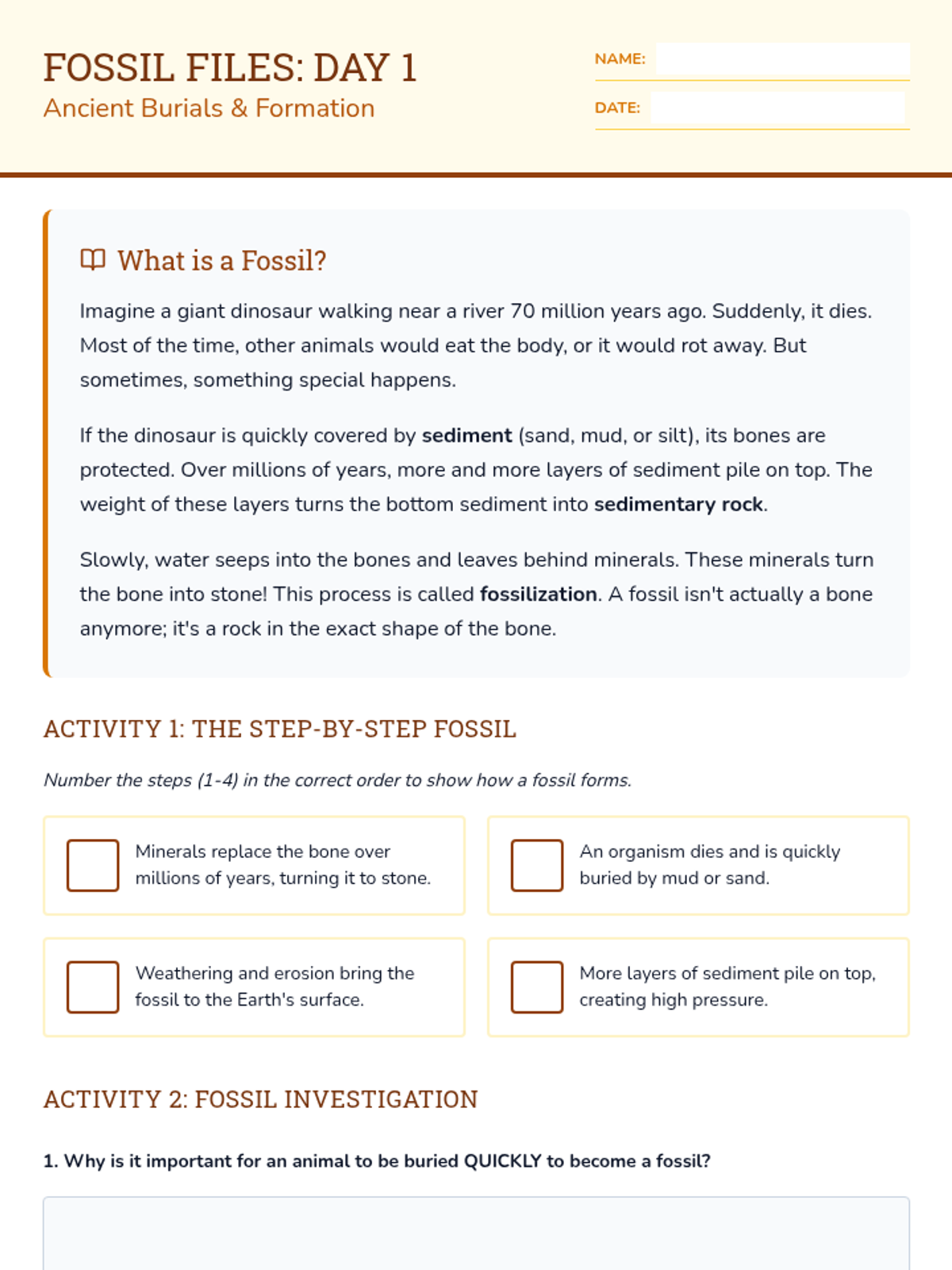
Day 1 independent student packet focusing on fossil formation processes and the Law of Superposition. Includes reading, sequencing, and diagram labeling activities.
A comprehensive teacher/substitute guide detailing a 4-day instructional plan for fossils and past environments, including daily objectives, schedules, and tips.
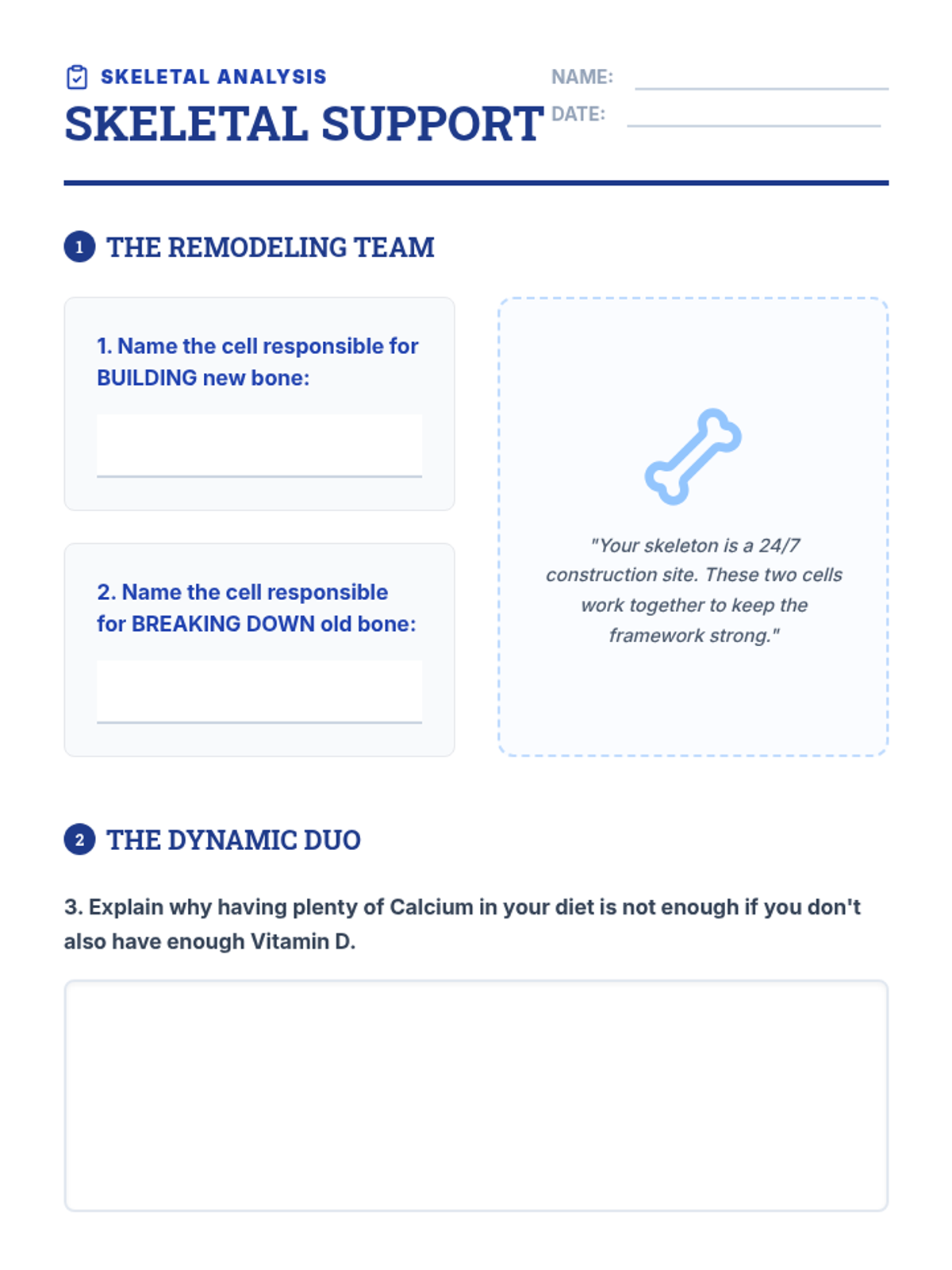
A assessment worksheet for students to demonstrate their understanding of bone remodeling cells, the importance of minerals, and the benefits of weight-bearing exercise.
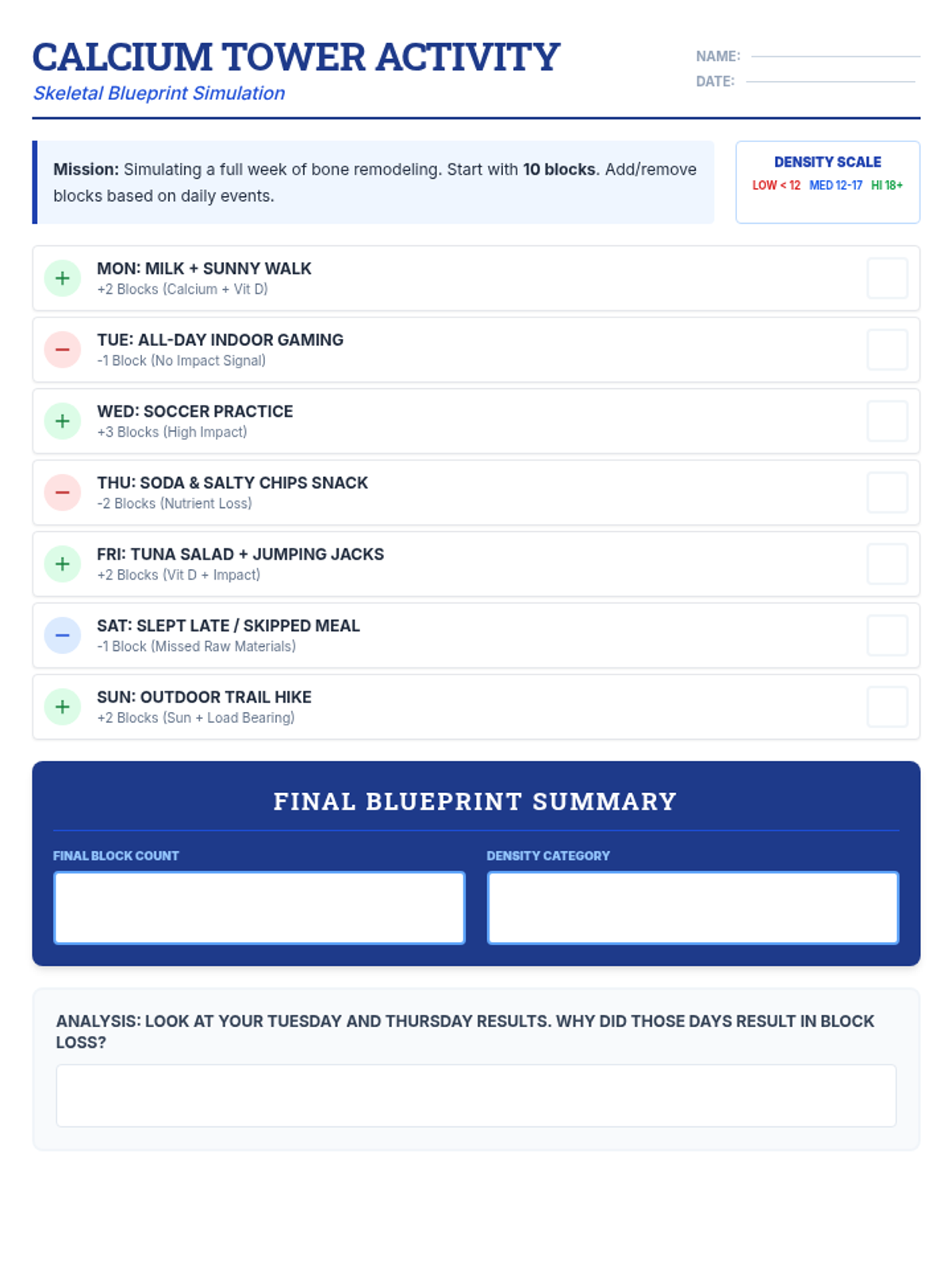
A hands-on activity where students use blocks to model bone growth and mineral loss based on lifestyle choices, simulating the building of peak bone mass.
Visual presentation for the Bone Base Blueprint lesson, covering the biological construction crew (osteoblasts and osteoclasts), the role of minerals, and the concept of peak bone mass.
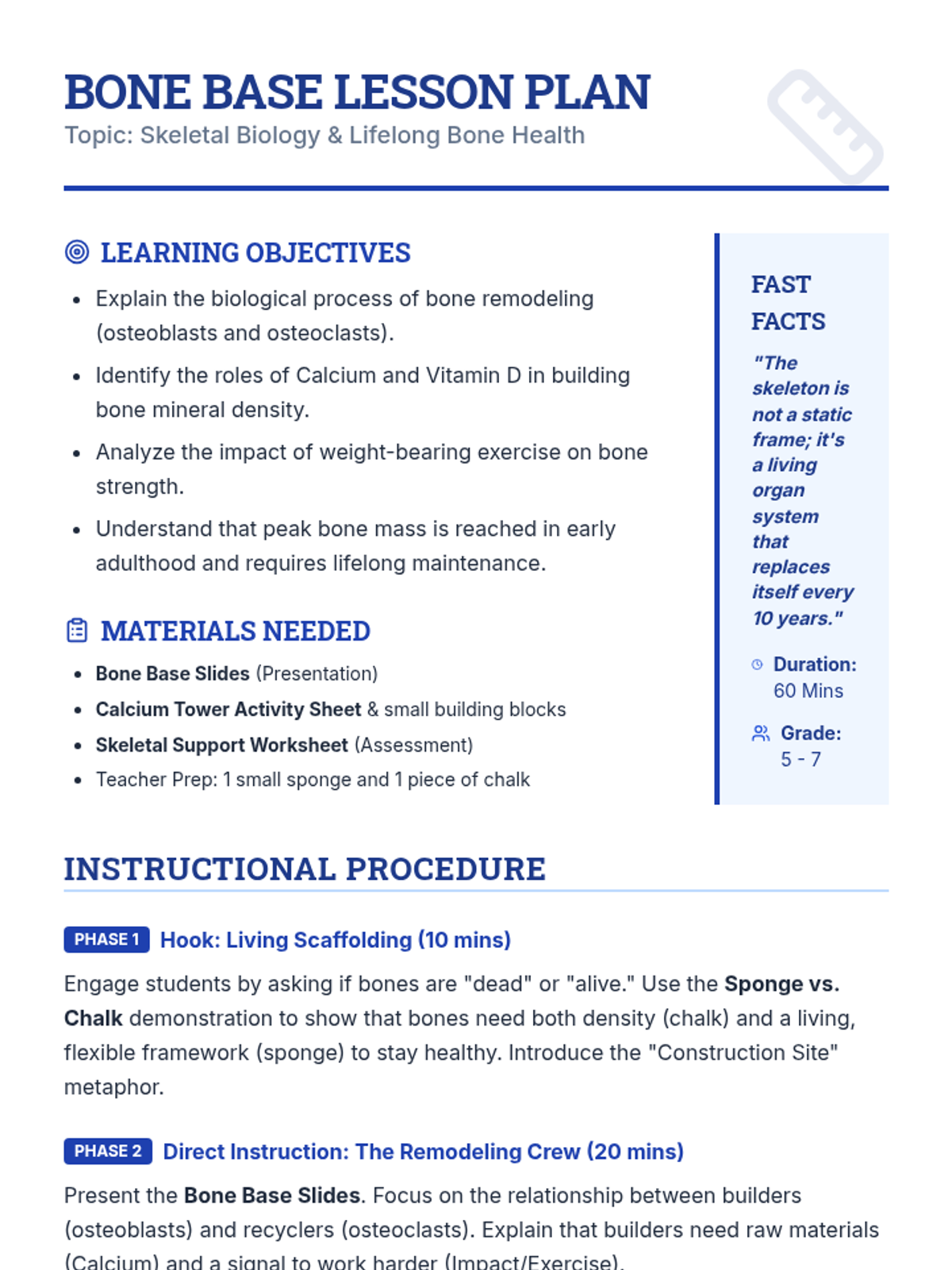
A comprehensive teacher's guide for the Bone Base Blueprint lesson, including learning objectives, a step-by-step instructional sequence, and differentiation strategies.
A 5-slide visual presentation introducing energy categories and the science behind solar and wind power, featuring a summary slide and improved contrast.
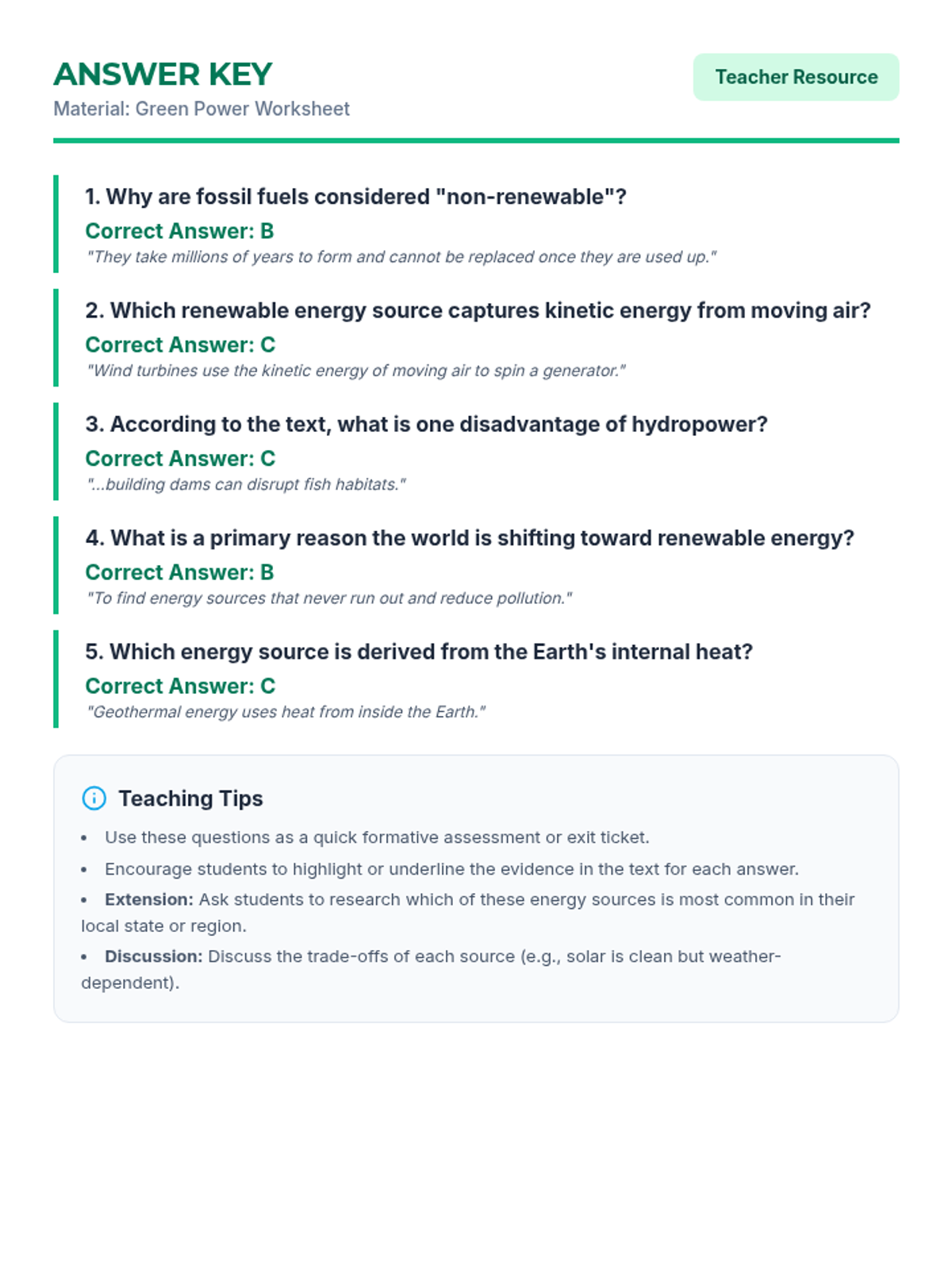
Teacher answer key for the Green Power Worksheet, updated to include letter choices and improved layout consistency.
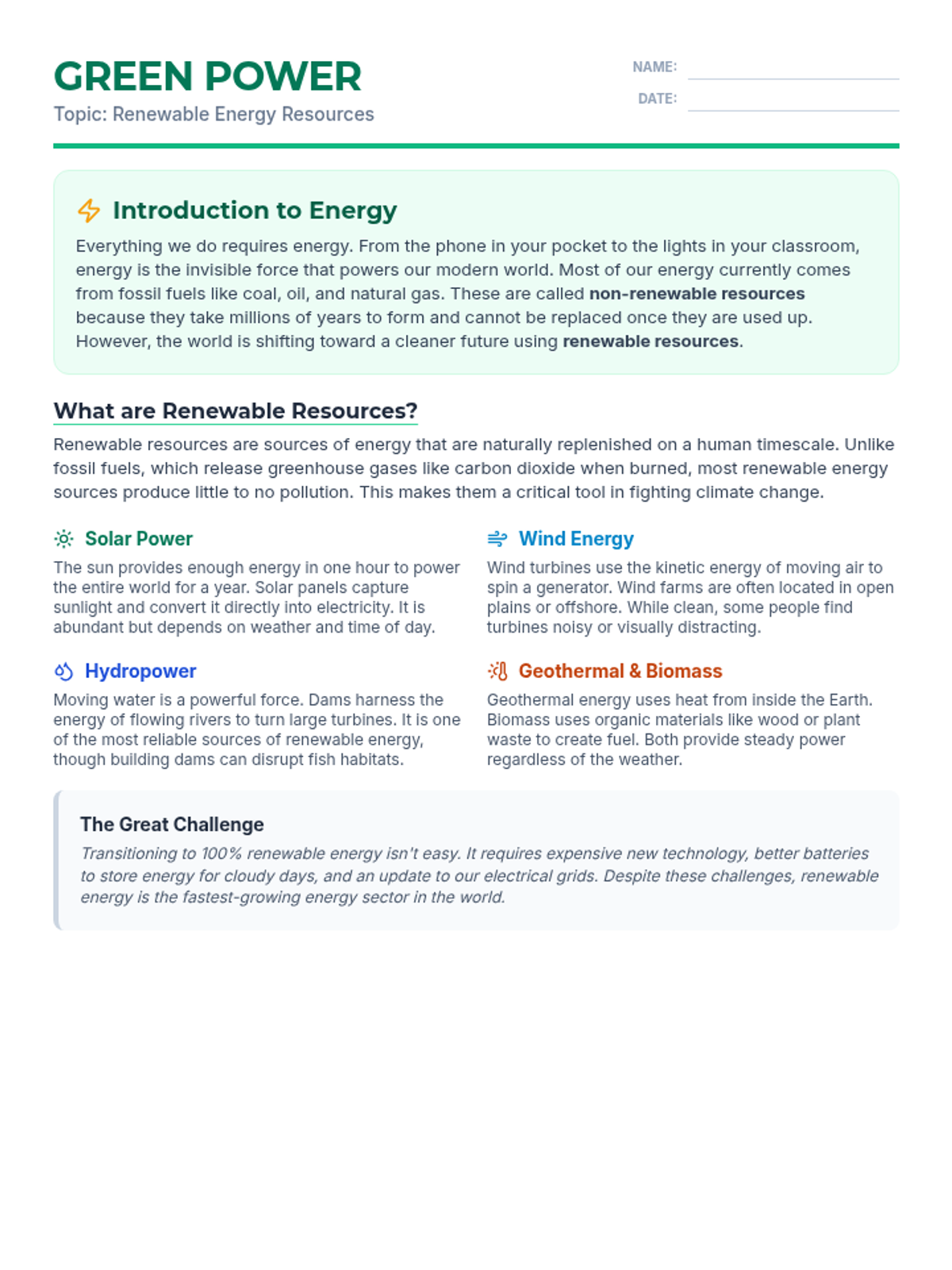
A two-page reading comprehension worksheet for 7th-grade students introducing renewable and non-renewable energy sources with multiple-choice assessment. Tightened layout to prevent orphaned text.
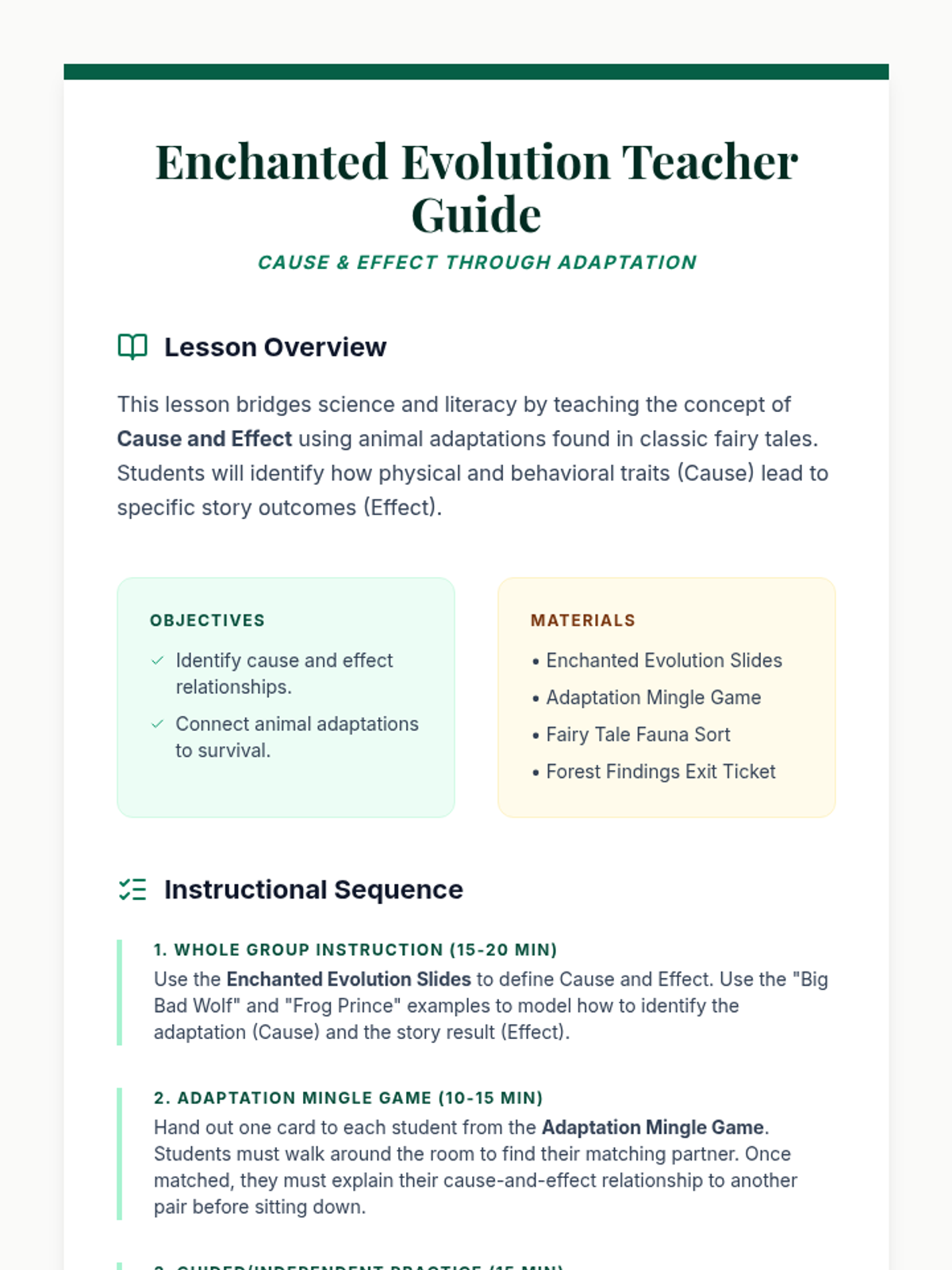
A facilitation guide for teachers including lesson objectives, instructional sequence, and answer keys for all materials in the Enchanted Evolution lesson.
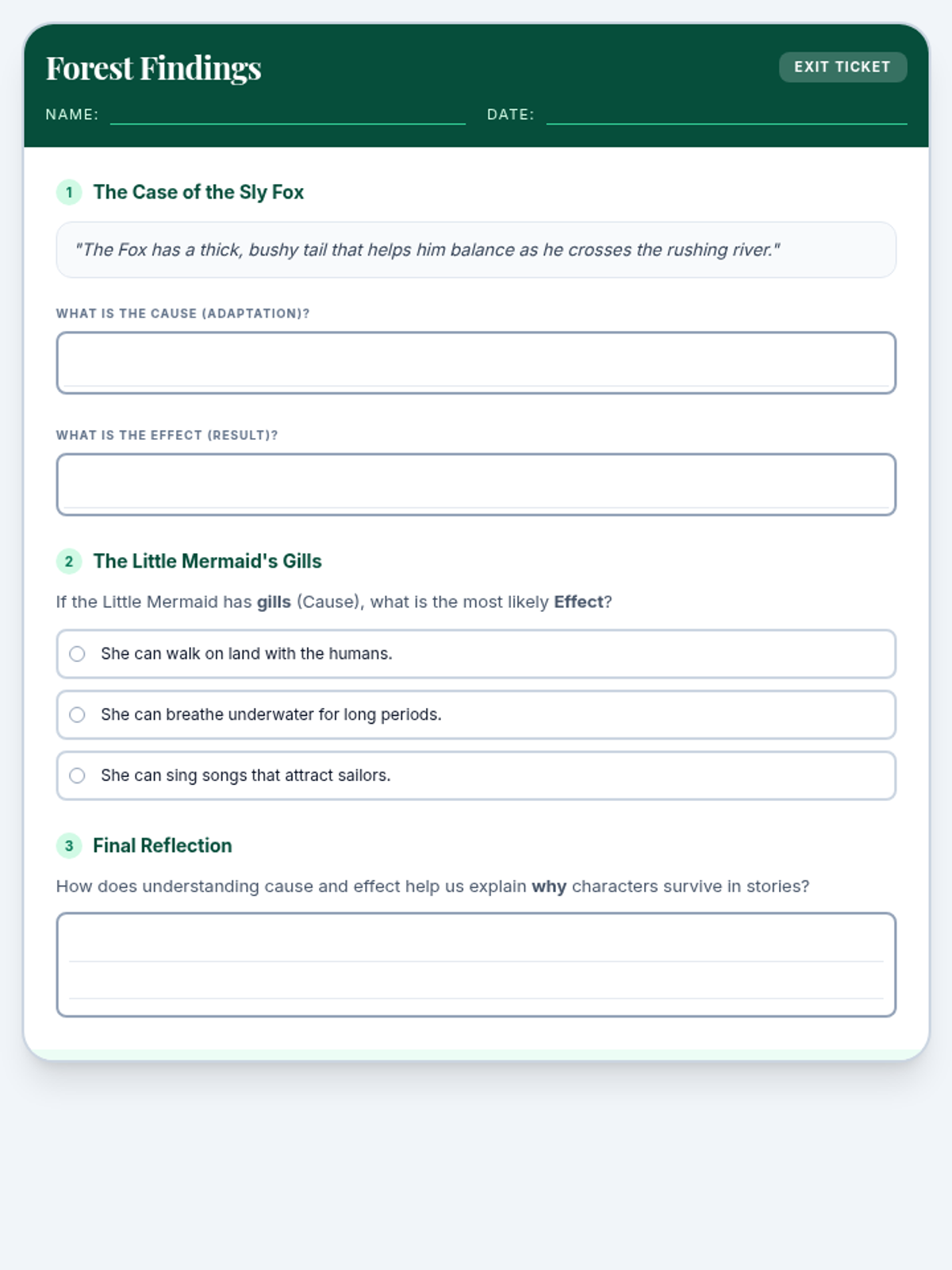
An assessment sheet to evaluate student understanding of cause and effect by analyzing scenarios involving the Gingerbread Man and the Little Mermaid.
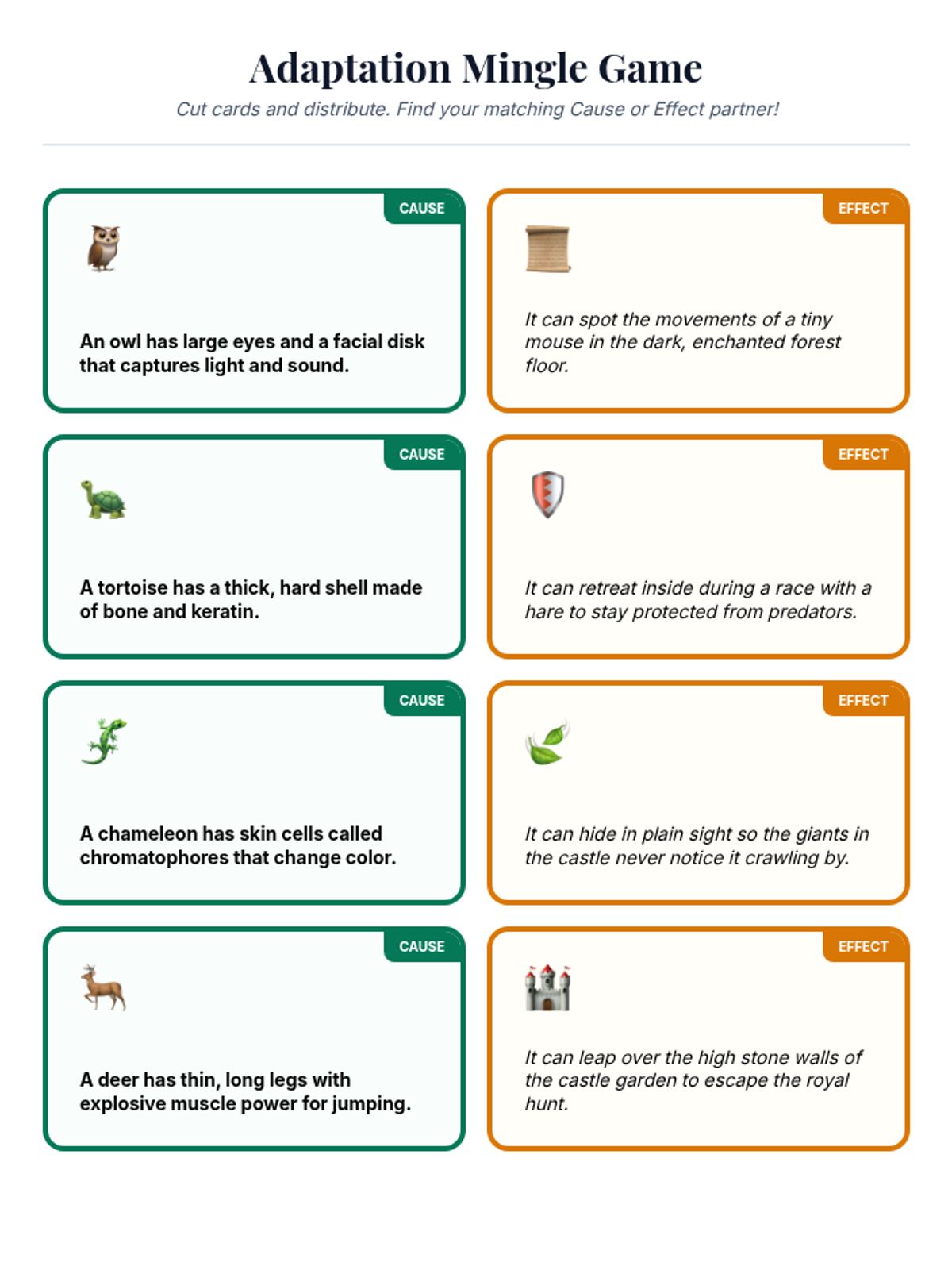
A set of matching cards for a 'Mingle' game where students find their cause (adaptation) or effect (story outcome) partner.
A hands-on cut-and-paste activity where students match animal adaptations (cause) to their specific survival benefits in fairy tale scenarios (effect).
A comprehensive slide deck teaching cause and effect through animal adaptations in fairy tales, featuring interactive case studies of the Three Little Pigs, the Frog Prince, and Little Red Riding Hood.
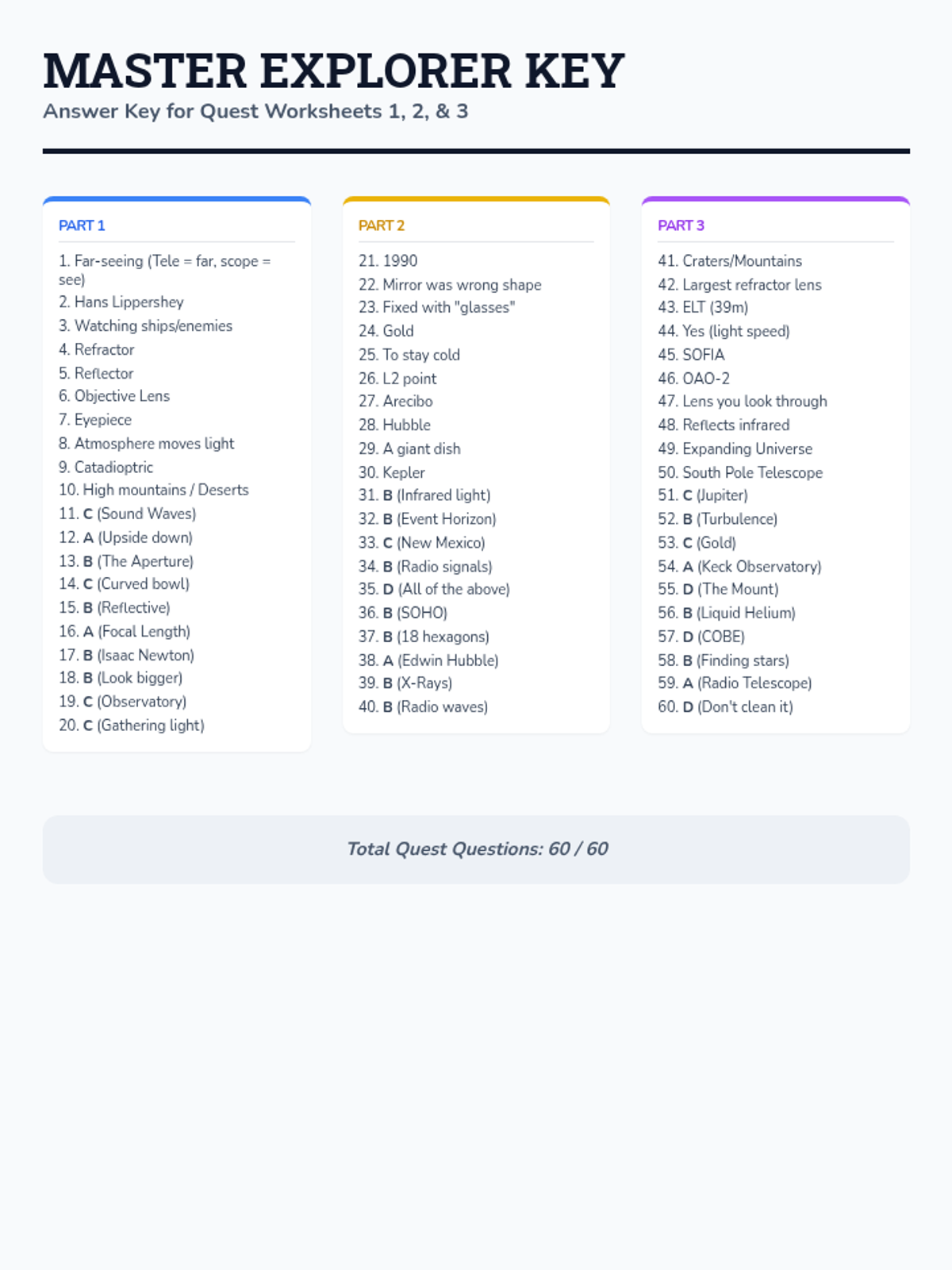
Full answer key for all 60 quest questions across all three worksheets. Revised to fit onto a single page and improve layout for better organization.