A 4-panel comic strip template for students to illustrate energy transformation, featuring dedicated space for drawings, captions, and required scientific labeling.
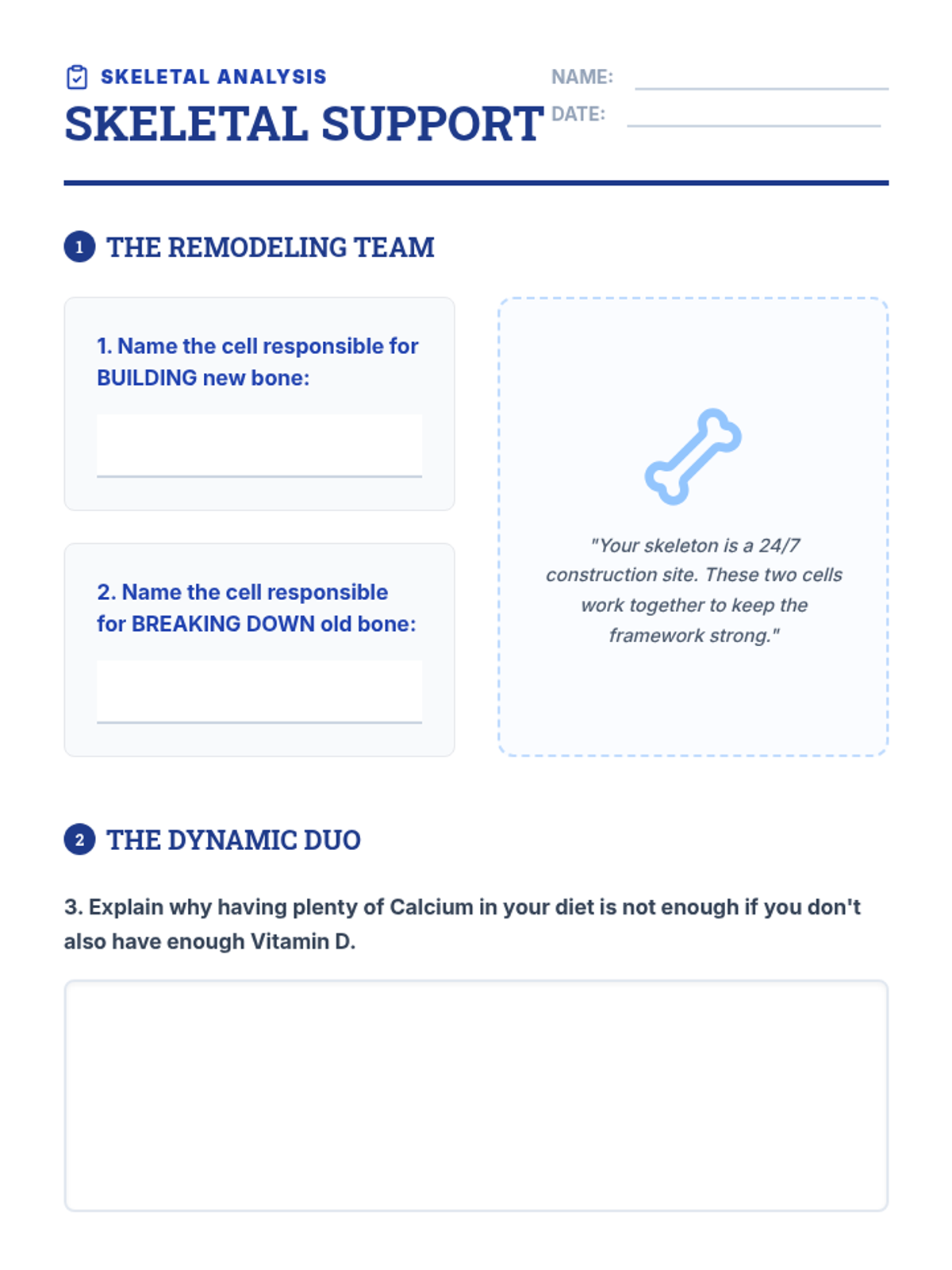
A assessment worksheet for students to demonstrate their understanding of bone remodeling cells, the importance of minerals, and the benefits of weight-bearing exercise.
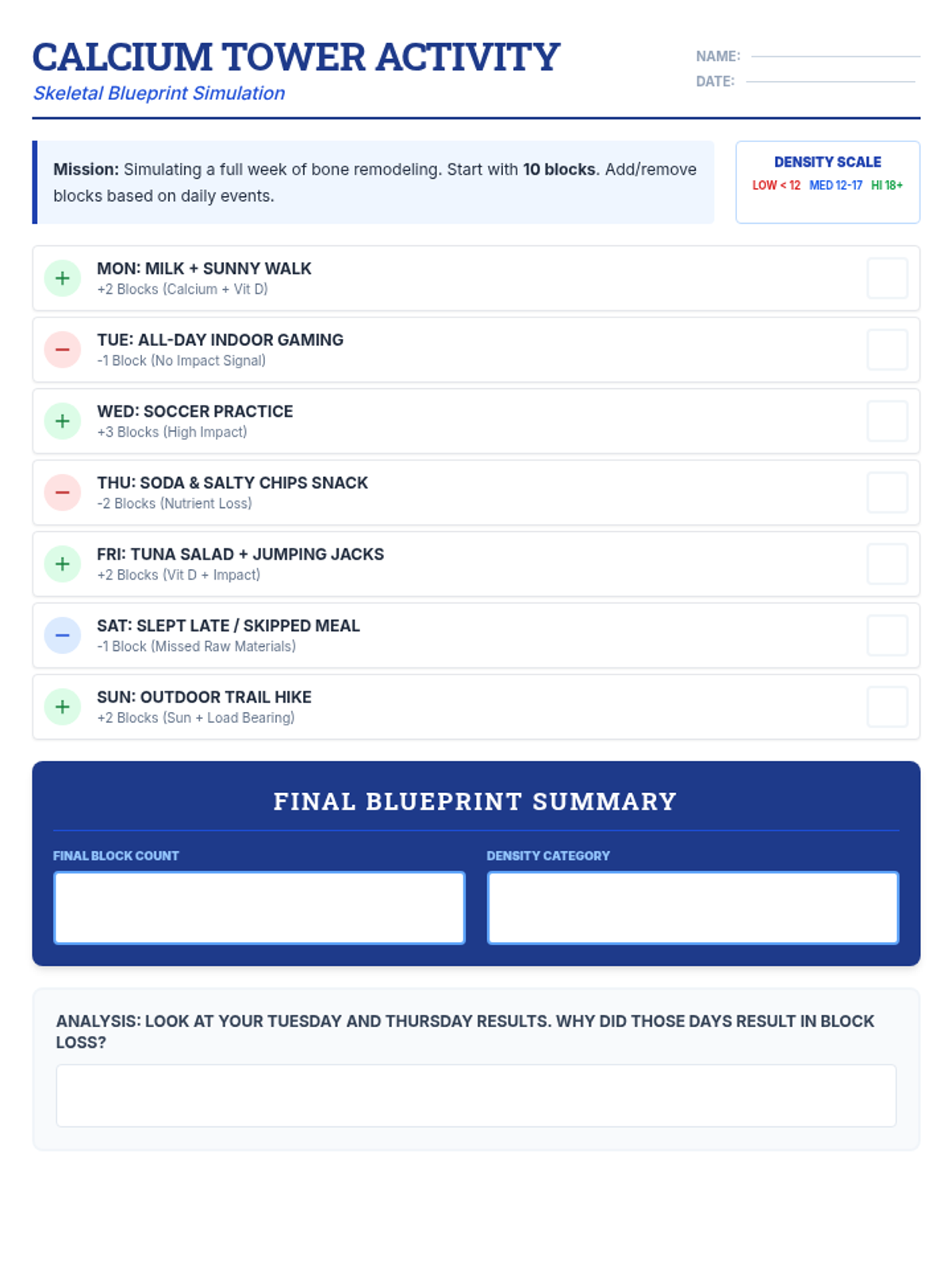
A hands-on activity where students use blocks to model bone growth and mineral loss based on lifestyle choices, simulating the building of peak bone mass.
Visual presentation for the Bone Base Blueprint lesson, covering the biological construction crew (osteoblasts and osteoclasts), the role of minerals, and the concept of peak bone mass.
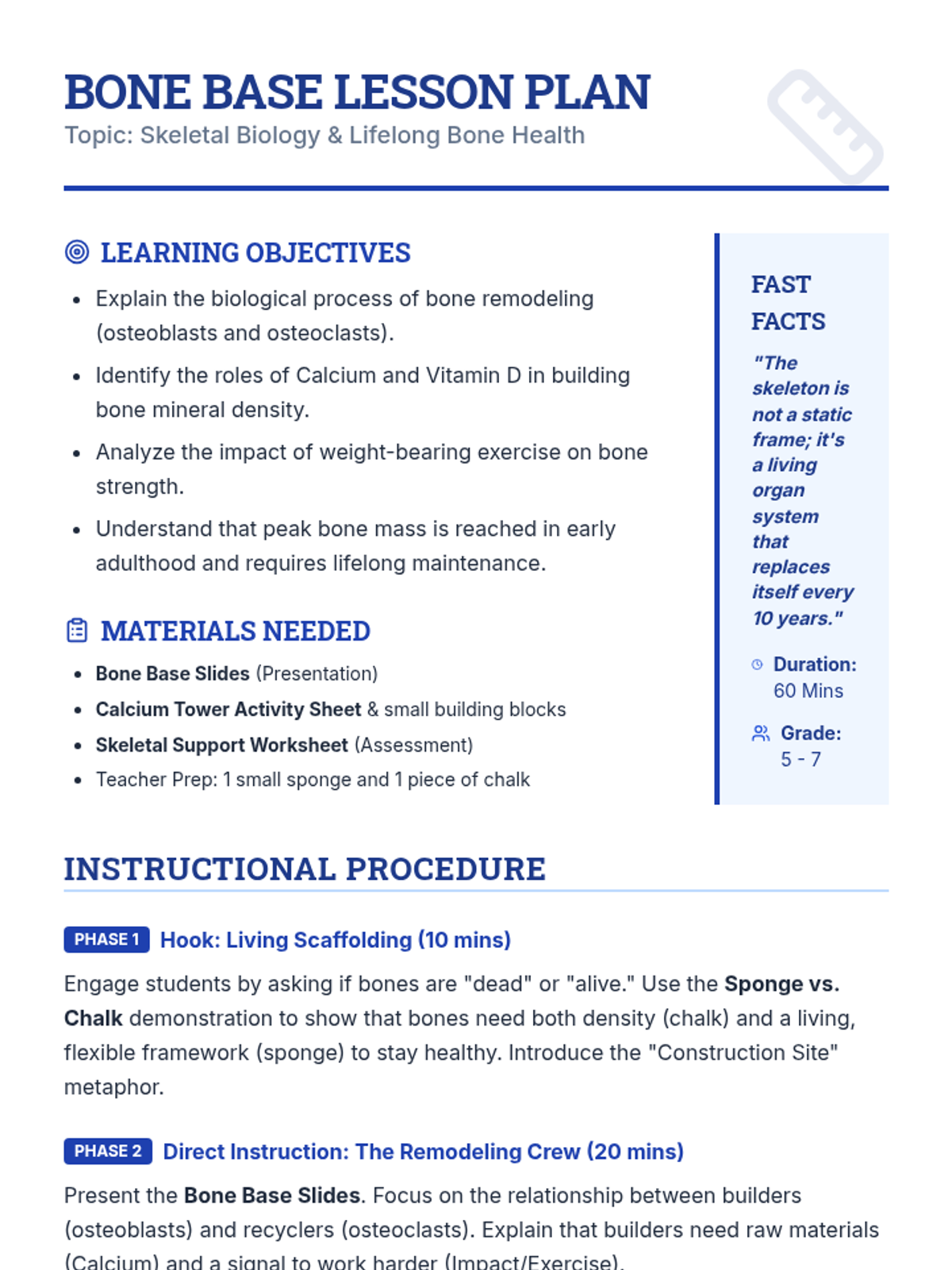
A comprehensive teacher's guide for the Bone Base Blueprint lesson, including learning objectives, a step-by-step instructional sequence, and differentiation strategies.
A 5-slide visual presentation introducing energy categories and the science behind solar and wind power, featuring a summary slide and improved contrast.
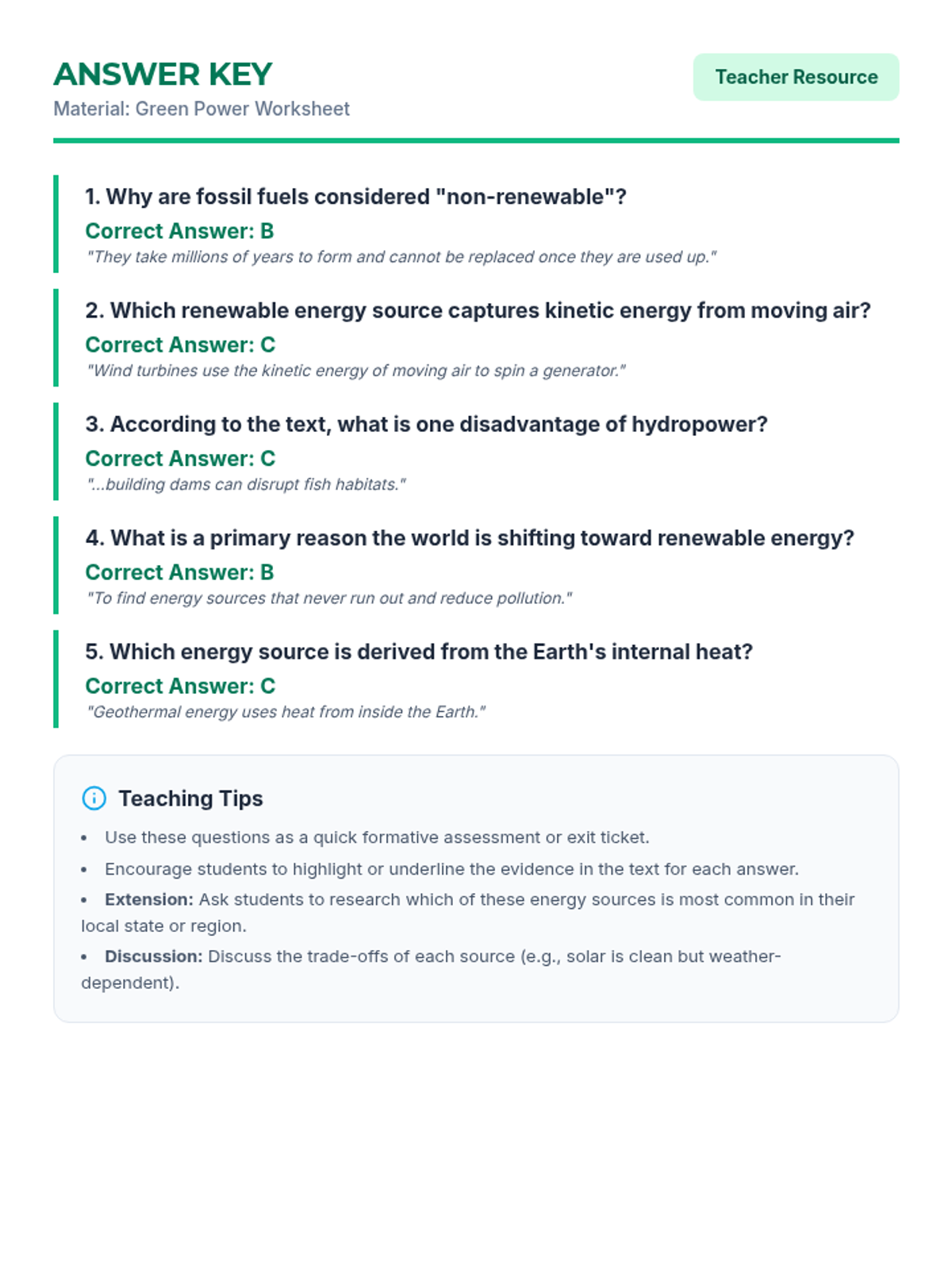
Teacher answer key for the Green Power Worksheet, updated to include letter choices and improved layout consistency.
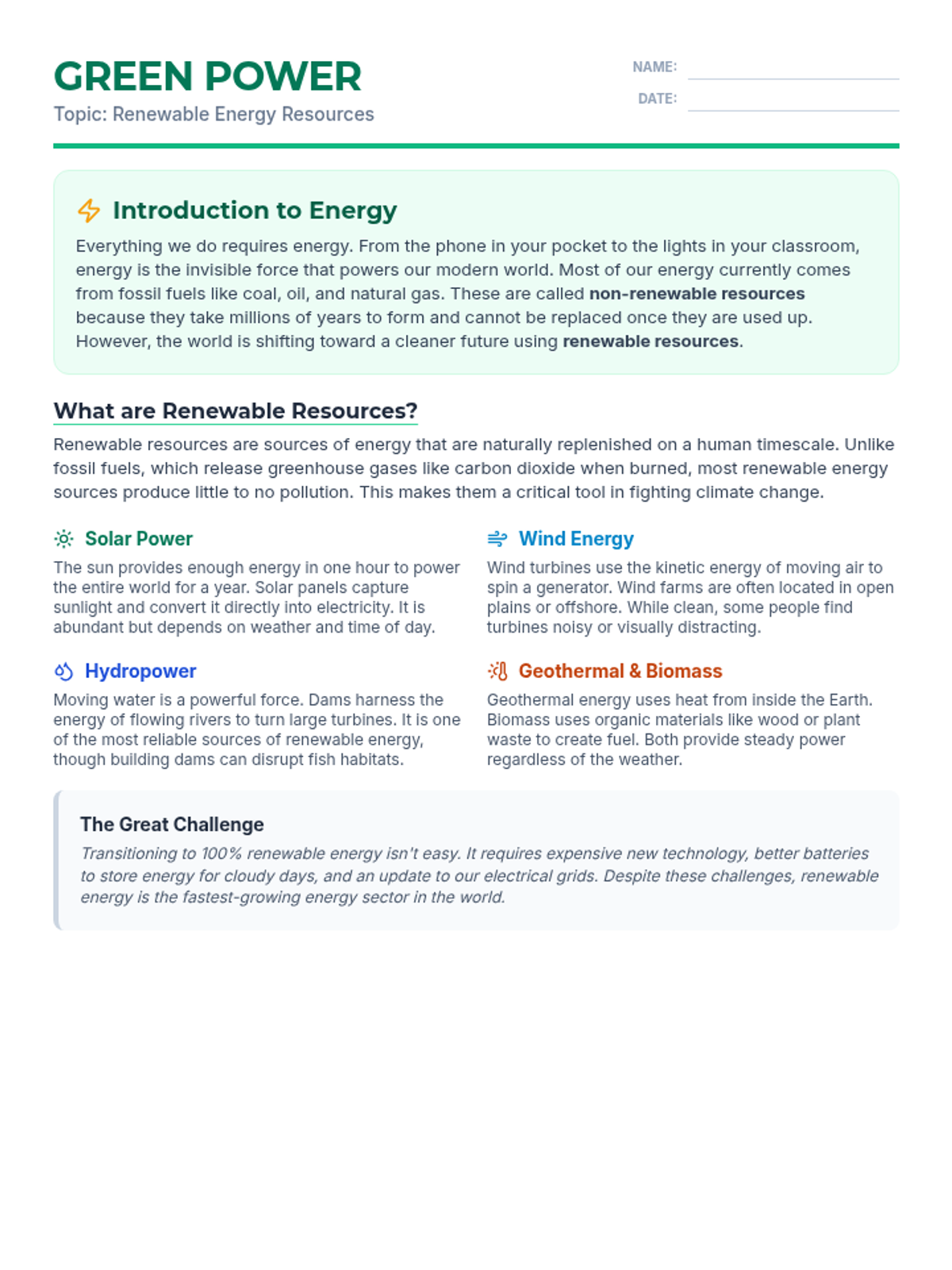
A two-page reading comprehension worksheet for 7th-grade students introducing renewable and non-renewable energy sources with multiple-choice assessment. Tightened layout to prevent orphaned text.
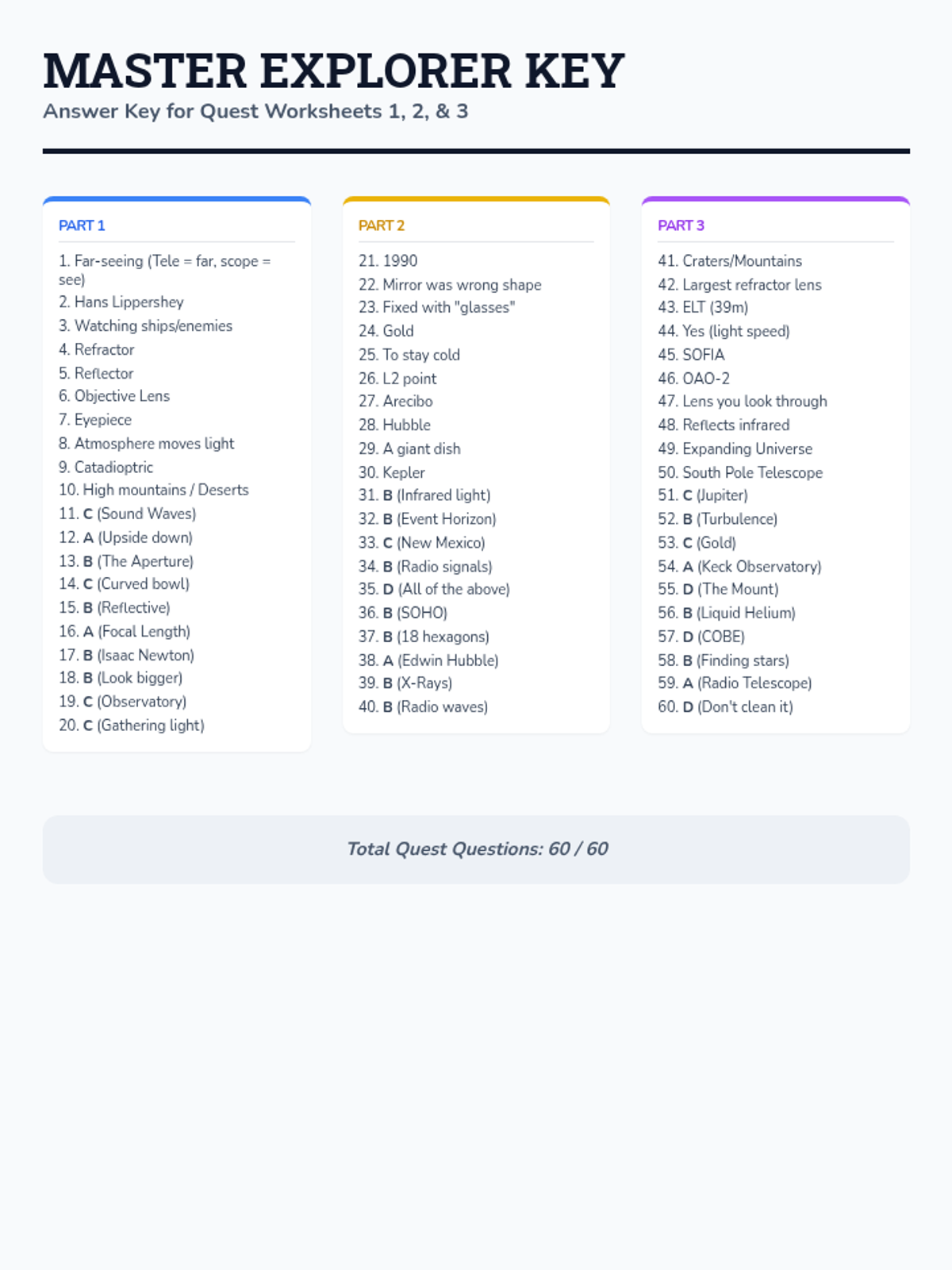
Full answer key for all 60 quest questions across all three worksheets. Revised to fit onto a single page and improve layout for better organization.
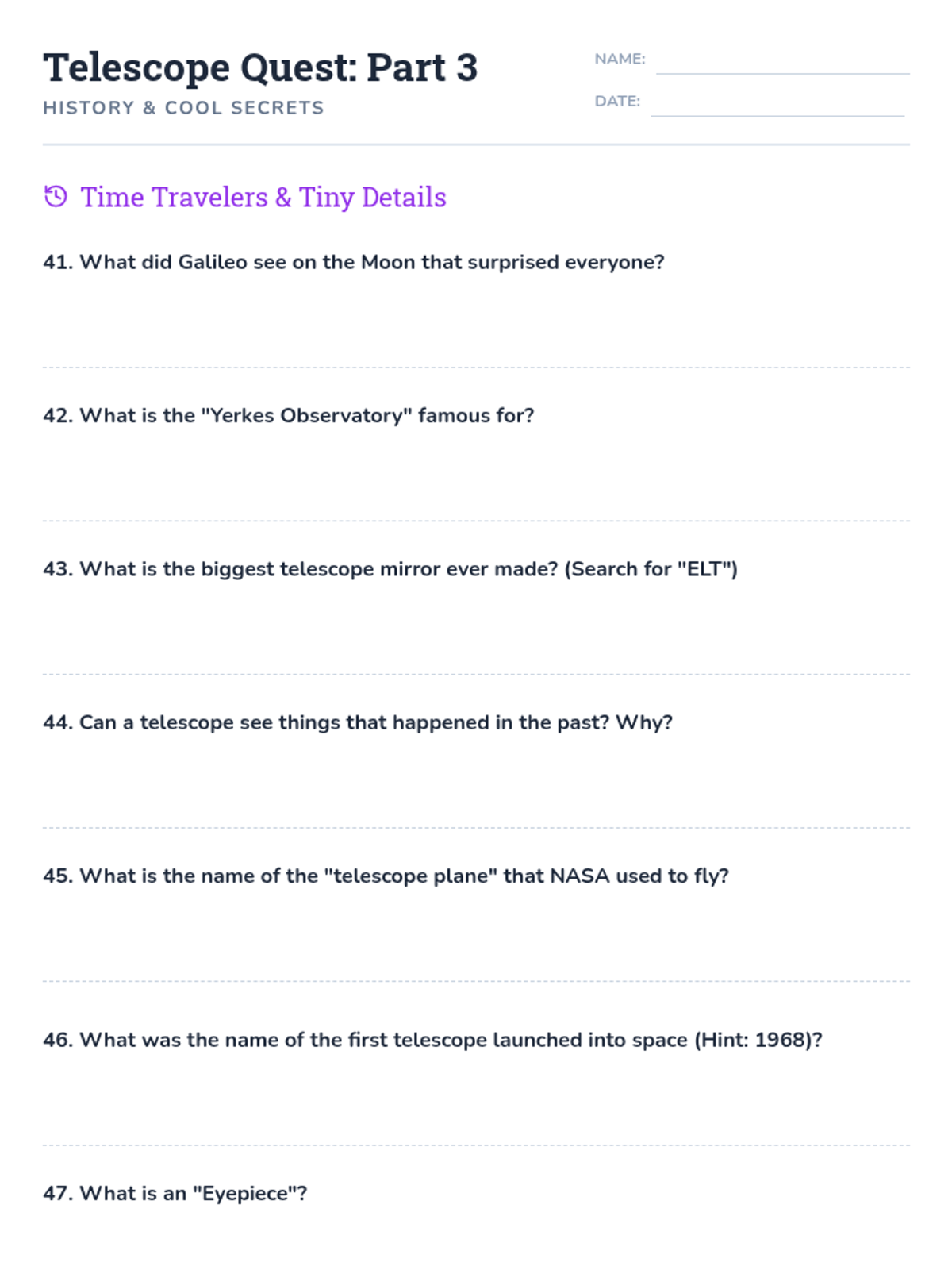
The final part of the telescope quest. Revised with expanded writing areas and fixed page breaks to ensure student questions are not split.
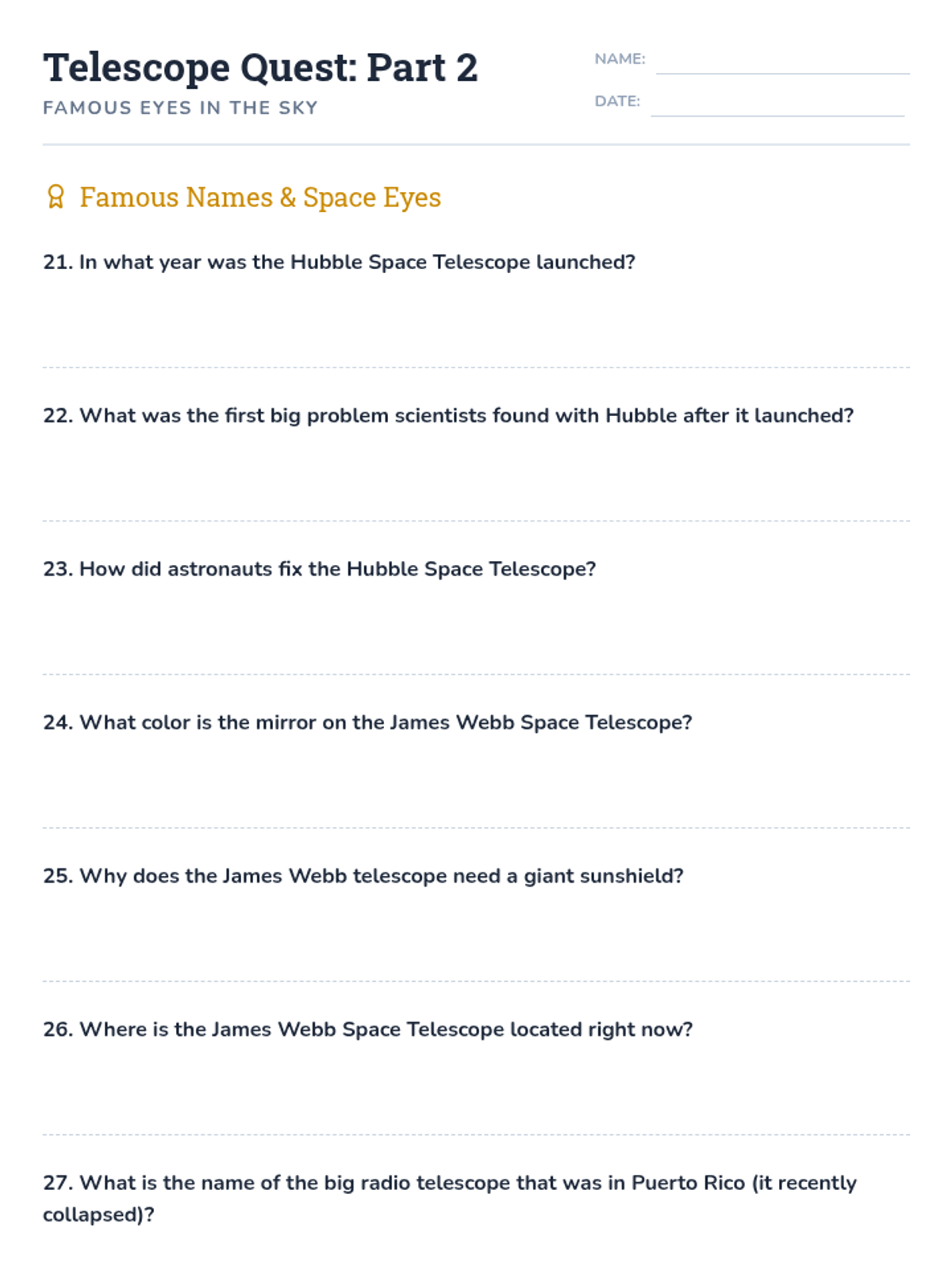
Second part of the telescope quest. Revised to fix spacing, re-balance the layout, and ensure the writing line for Q27 is properly placed.
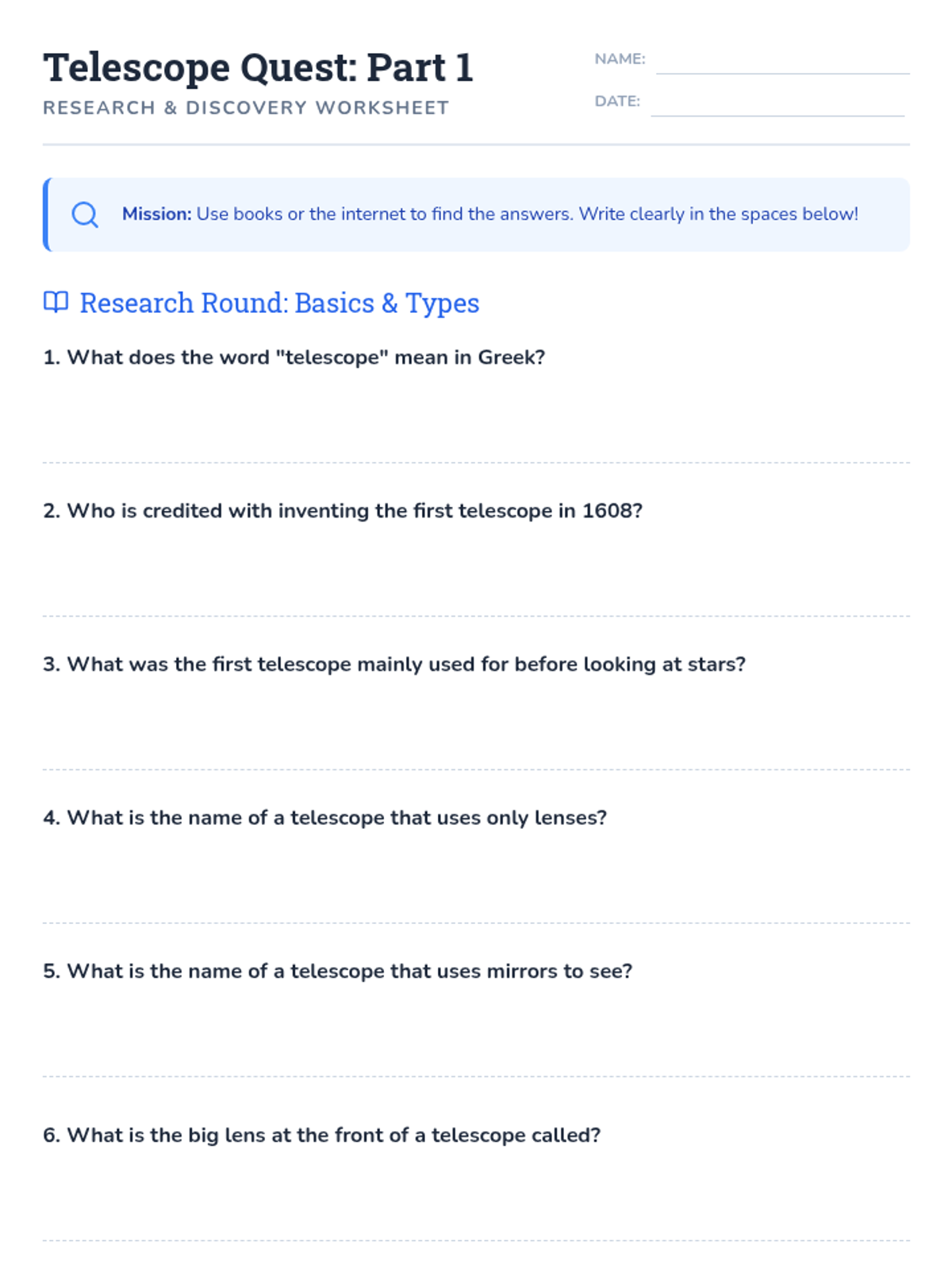
First part of the telescope quest covering basics, types, and terminology. Revised to remove placeholder text and ensure consistent blank writing areas.
Introductory slide deck for 3rd graders explaining what telescopes are, how refractors and reflectors differ, and key historical figures like Galileo and Newton. Revised with improved diagrams and contrast.
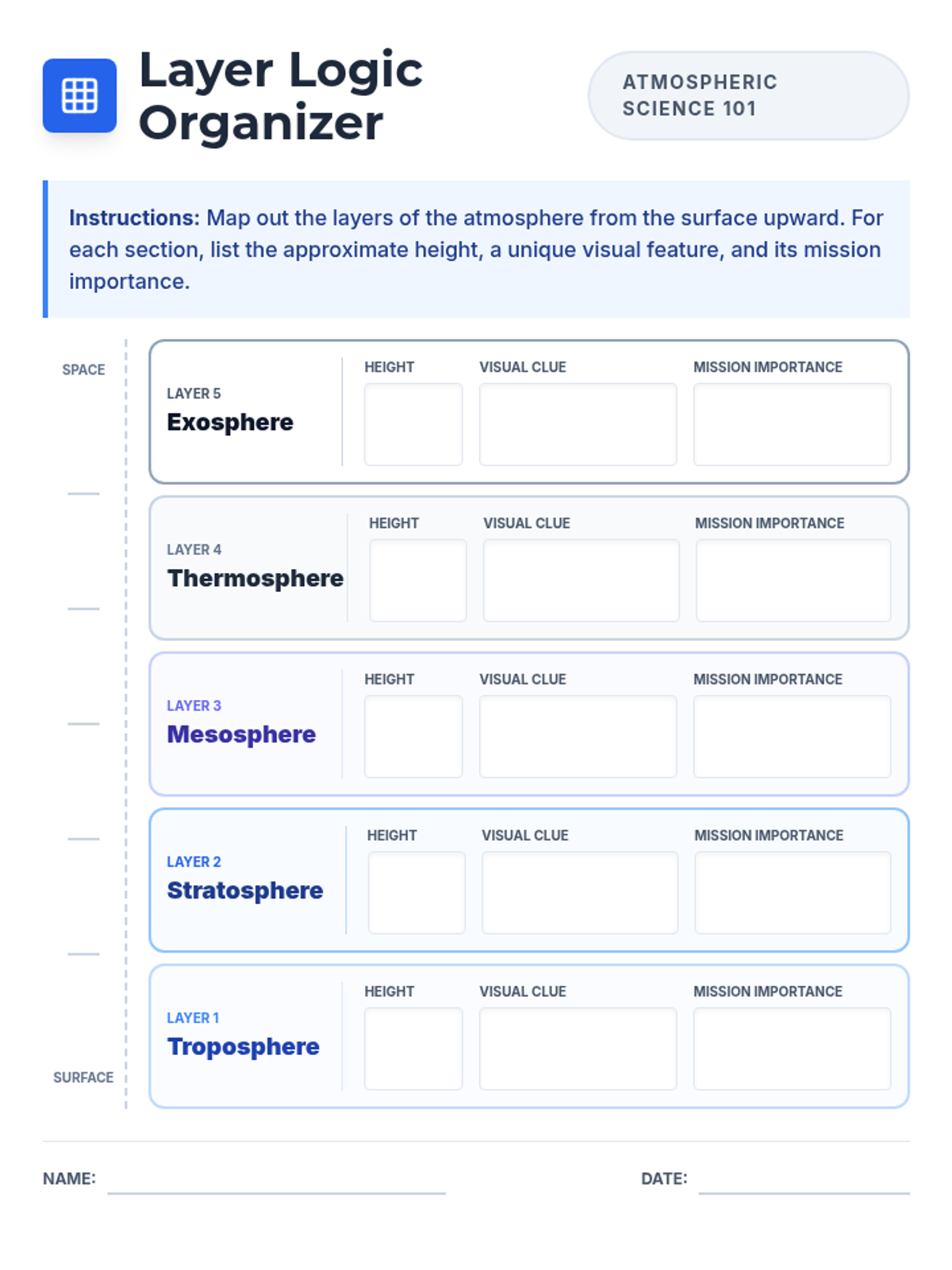
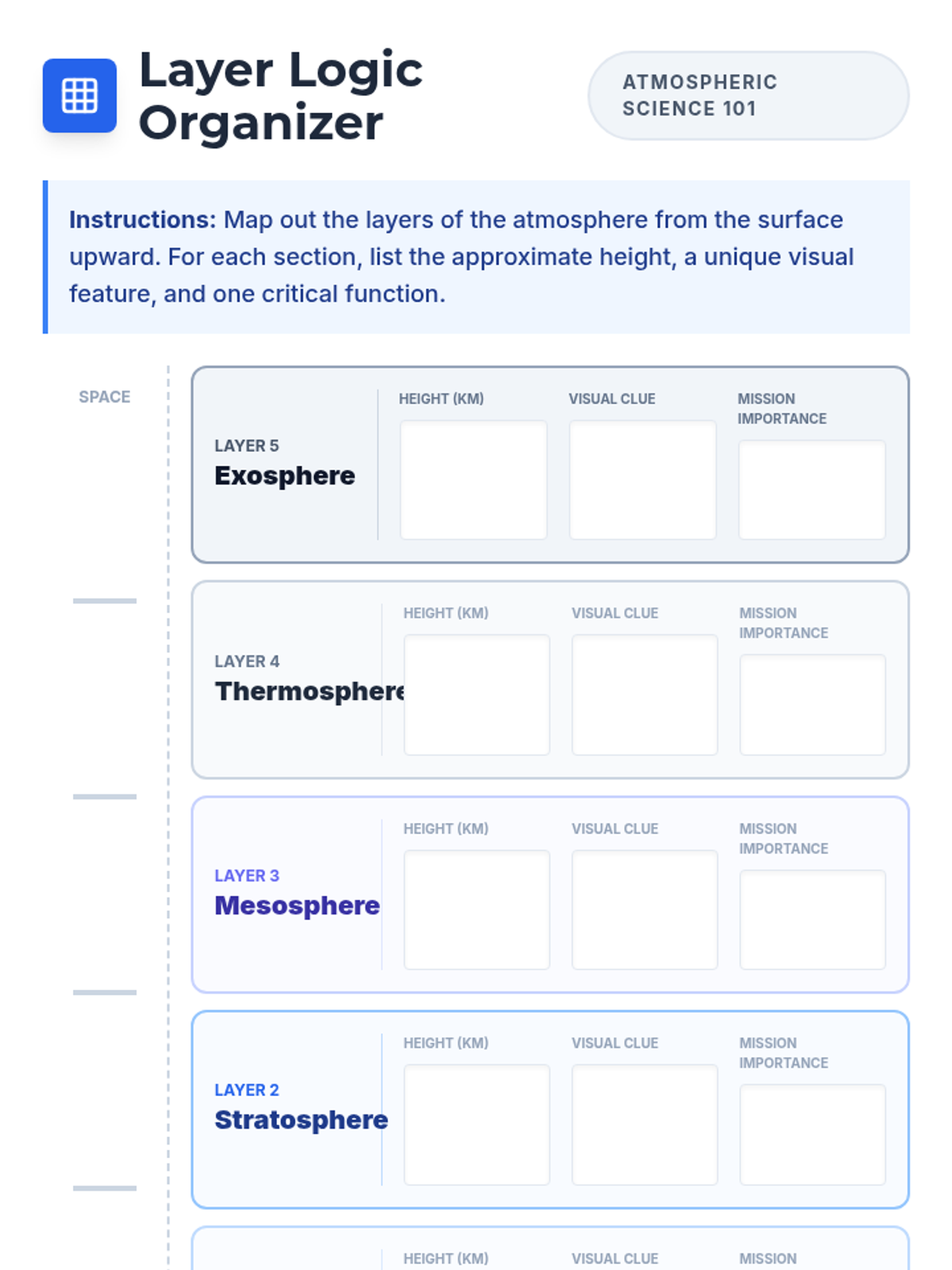
Revised graphic organizer with corrected container heights and enhanced text contrast for labels. Features a vertical layout of atmospheric layers with designated spaces for height, visual clues, and mission importance.
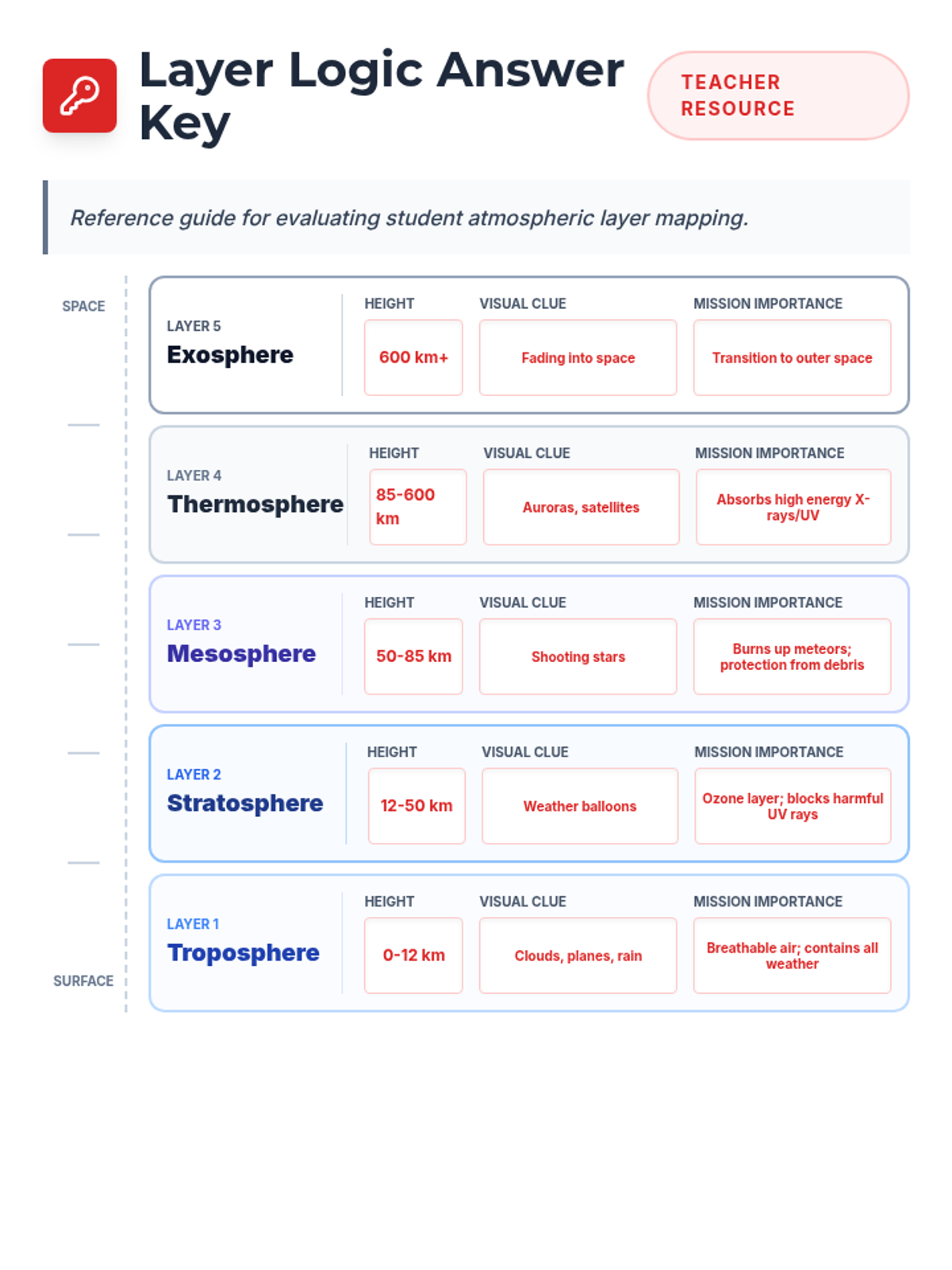
Revised answer key for the Layer Logic Organizer with corrected container heights and enhanced text contrast for labels. Provides heights, visual clues, and mission importance for all five layers.
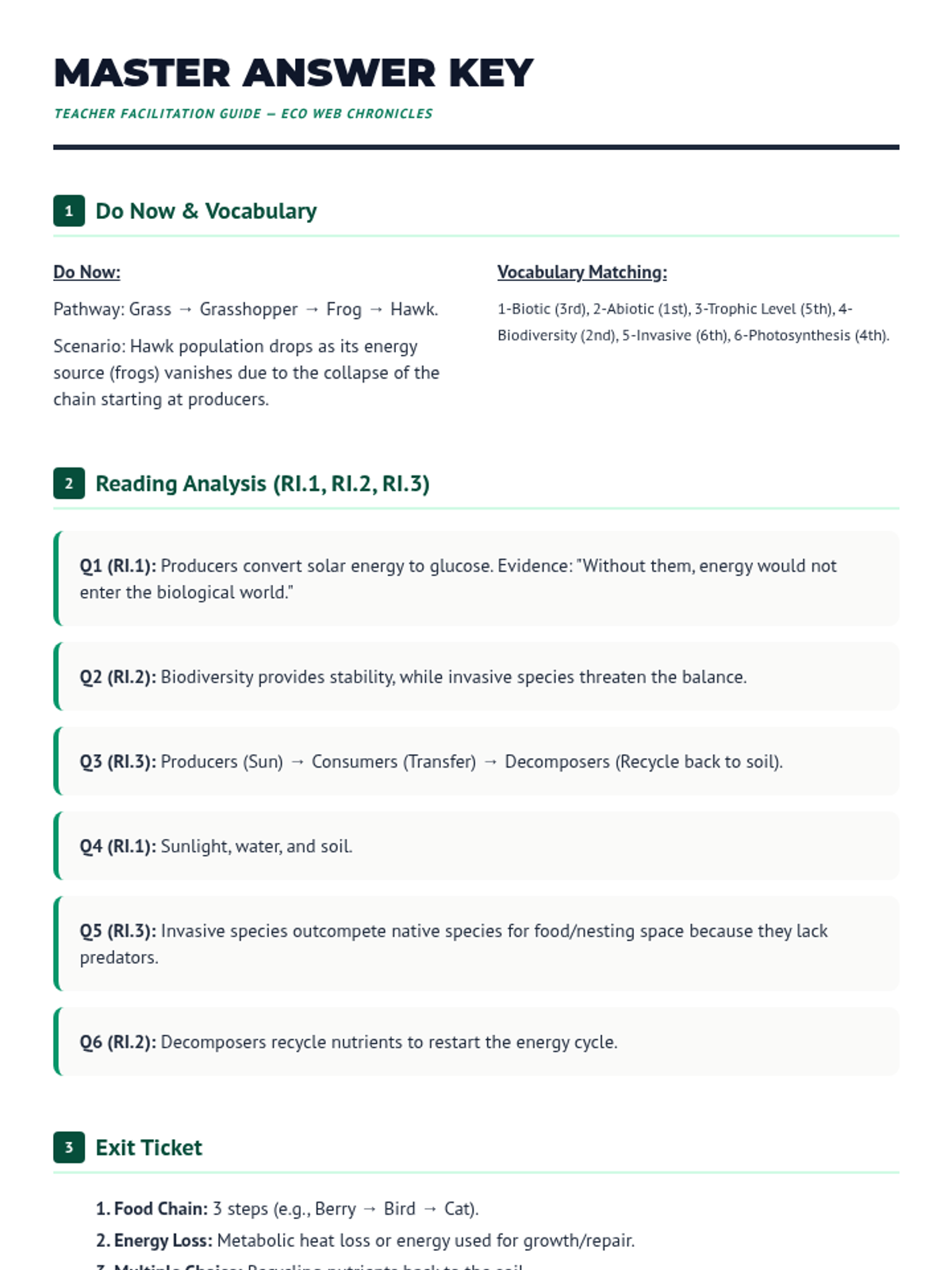
The final polished answer key for the Eco Web Chronicles lesson, featuring a corrected vocabulary matching guide and answers for the expanded analysis questions. Balanced layout for printing.

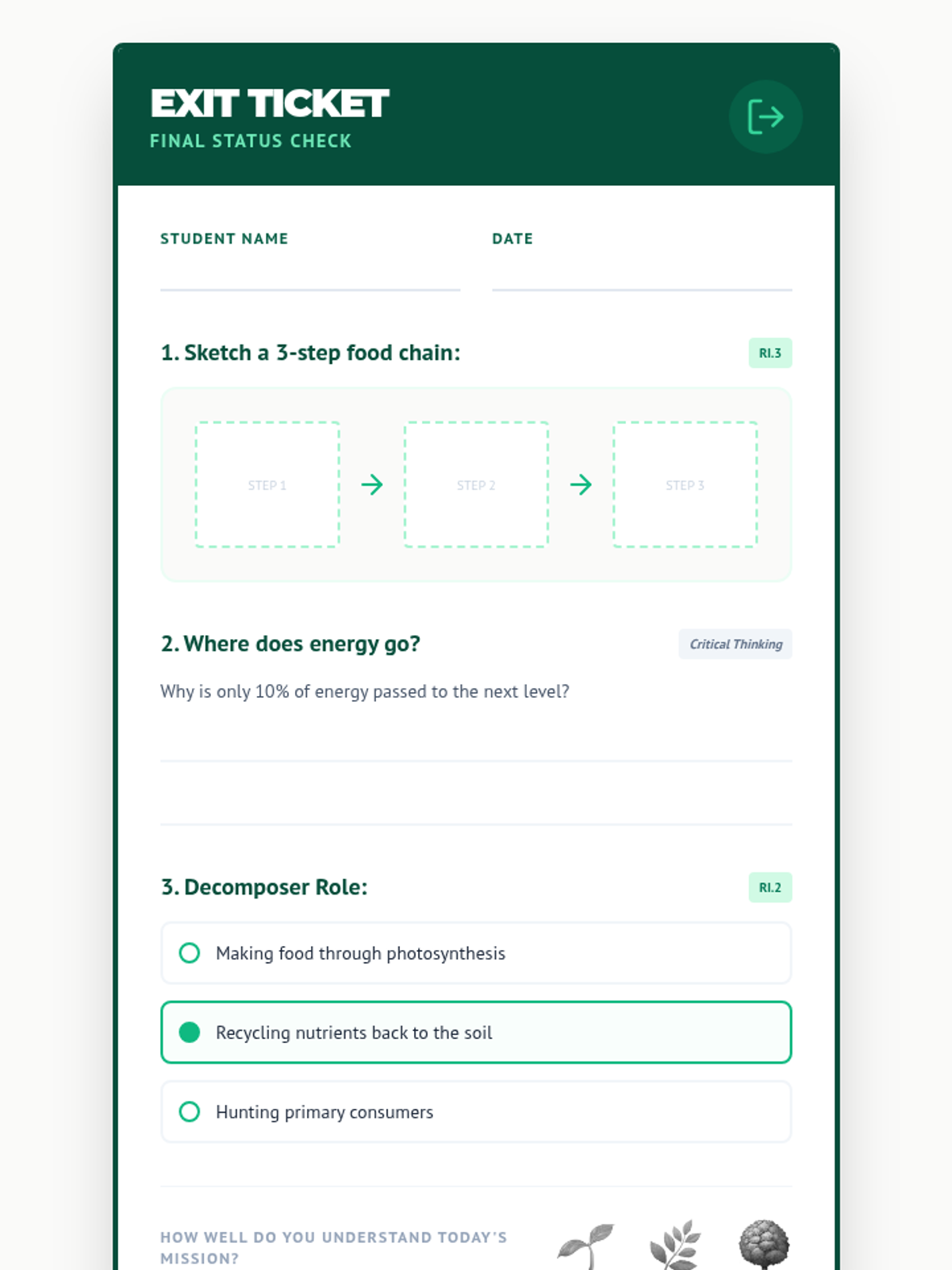
A quick formative assessment exit ticket for the ecosystems lesson. Updated with larger drawing areas and polished visuals.
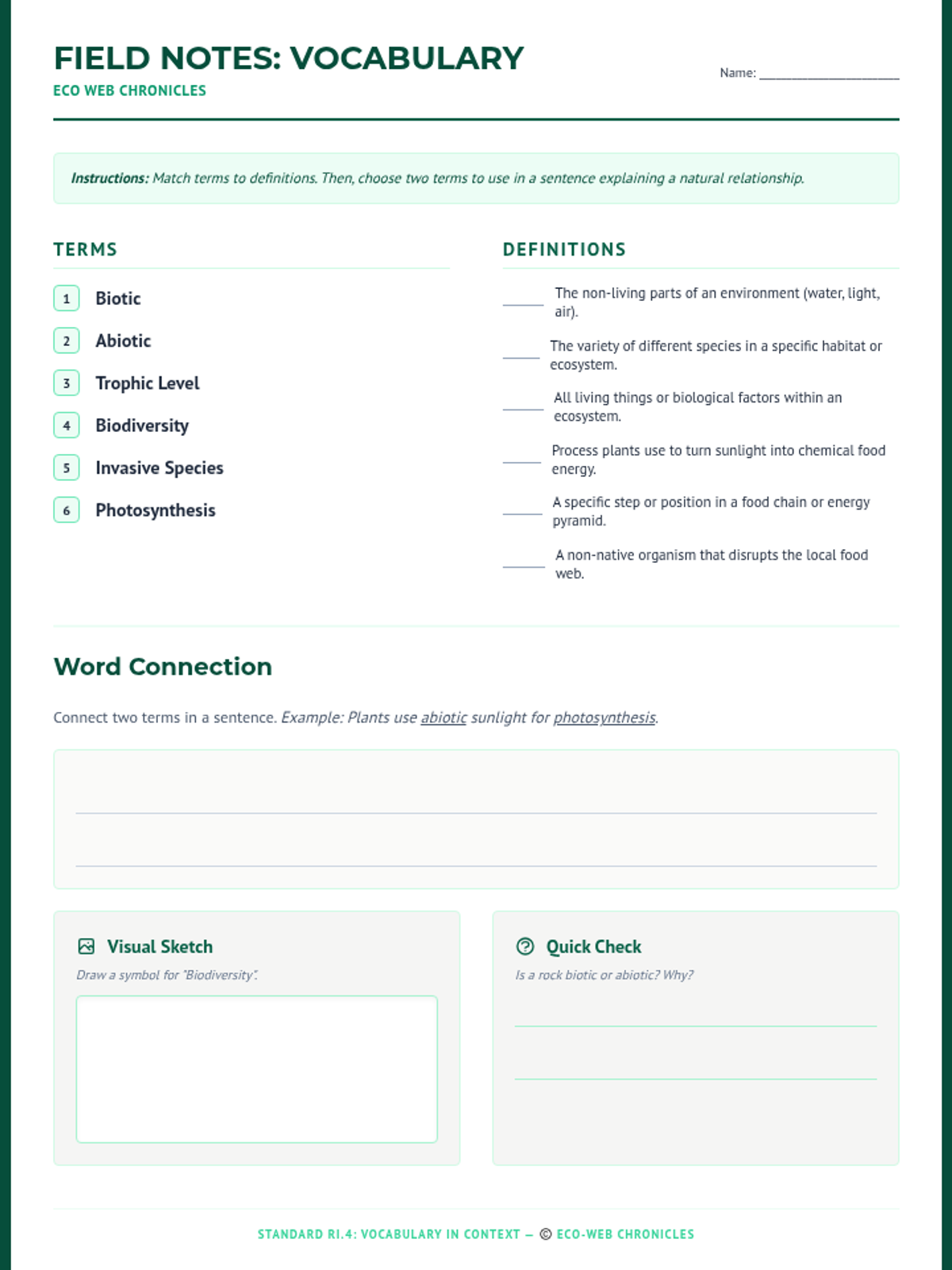
A vocabulary worksheet featuring matching and application exercises for key terms related to ecosystems and energy flow. Updated to fit on one page.
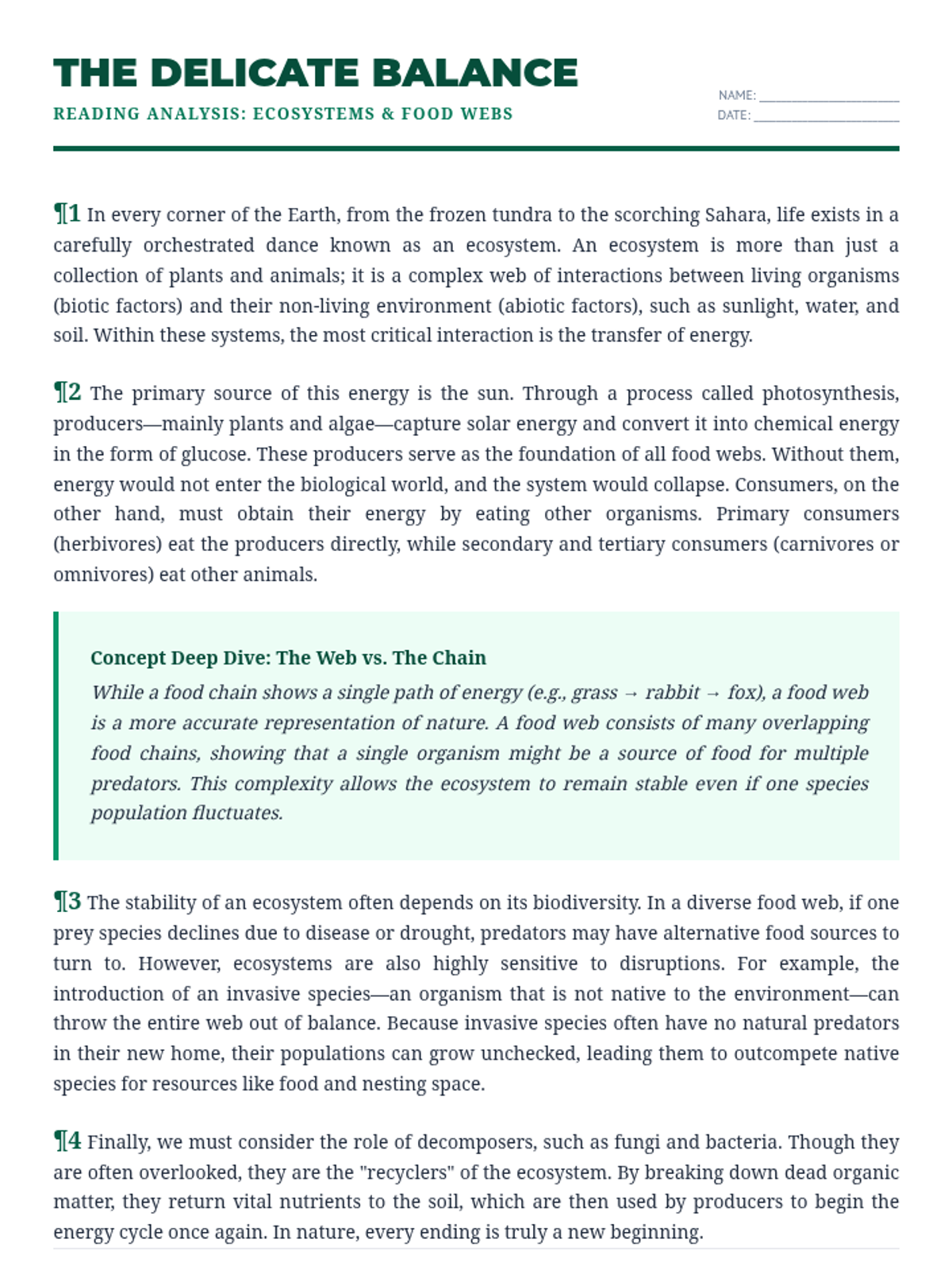
A two-page reading comprehension material on ecosystems. Includes a detailed passage and six analysis questions aligned to RI.1, RI.2, and RI.3. Updated with consistent writing lines and improved layout.
A 13-slide presentation covering the basics of ecosystems, energy flow, food chains vs. webs, and the energy pyramid. Updated with SVG pyramid and visual food web connectors.
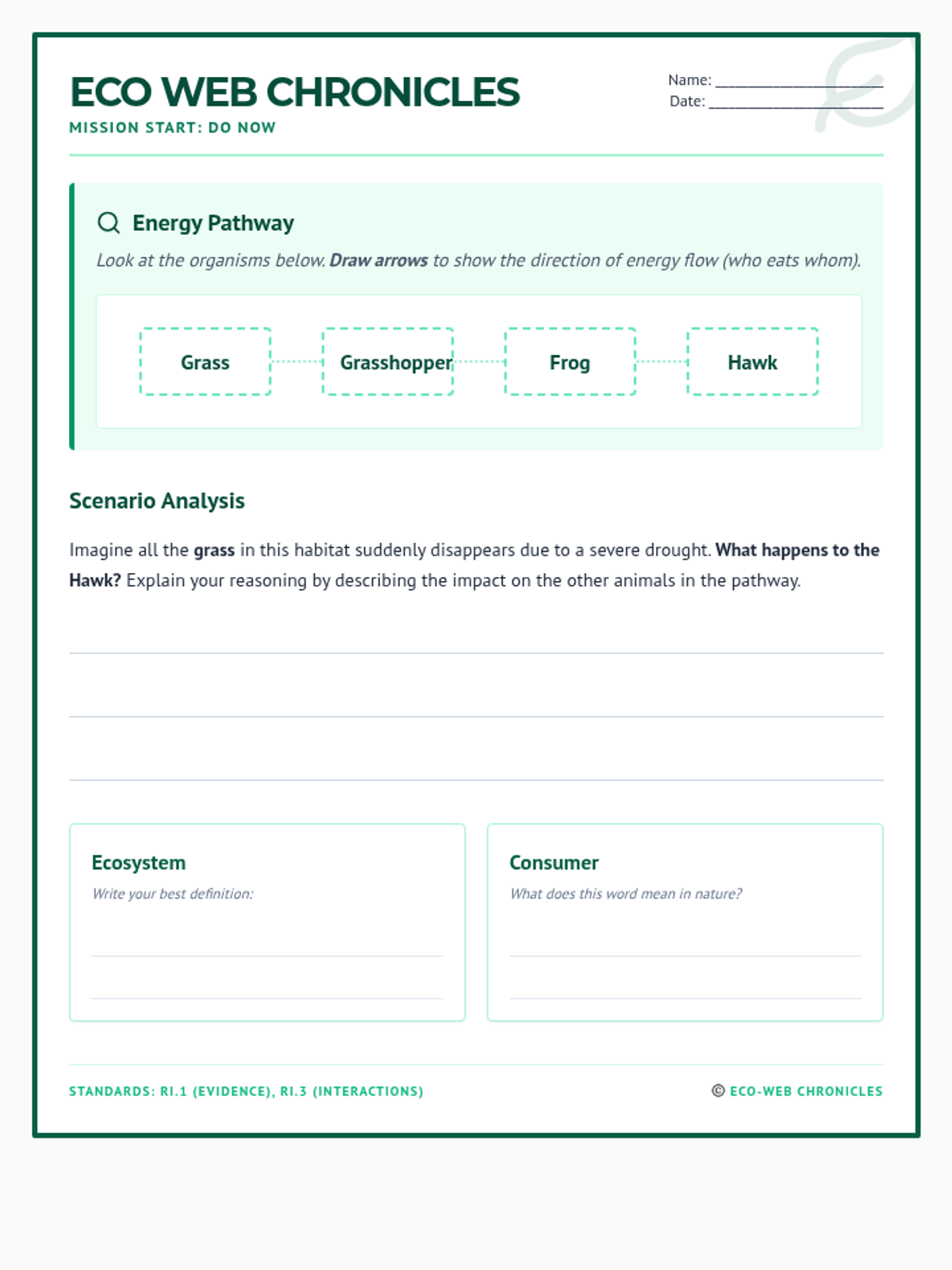
A do-now activity for the ecosystems lesson, focusing on initial observations of energy flow and critical thinking about habitat changes.
Educational slide deck for the Surface Tension Showdown experiment, introducing the concepts of cohesion, surface tension, and surfactants with engaging visuals.
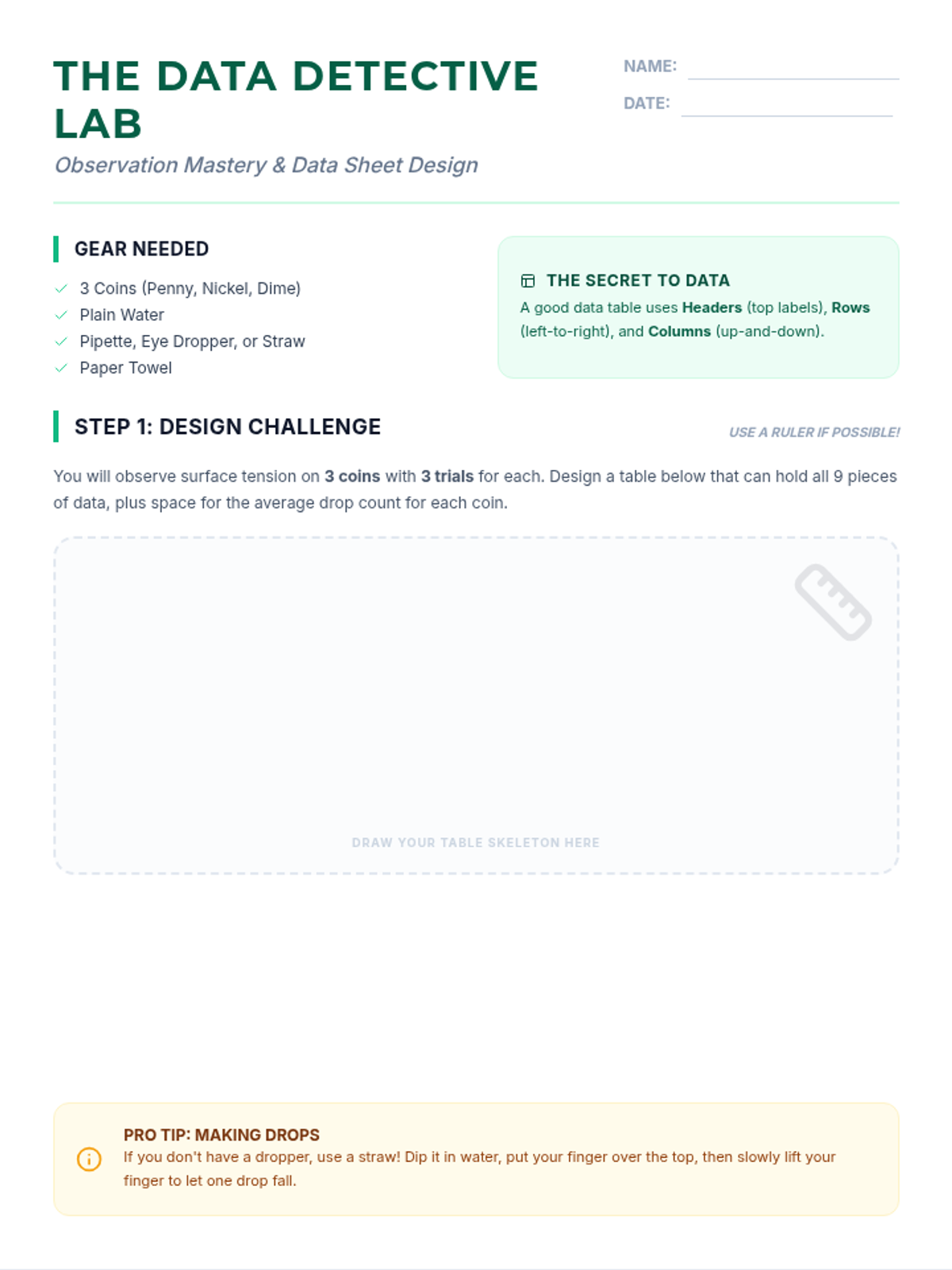
A 2-page student lab report for the Surface Tension Showdown experiment, including space for materials, procedure, data collection, and scientific analysis.
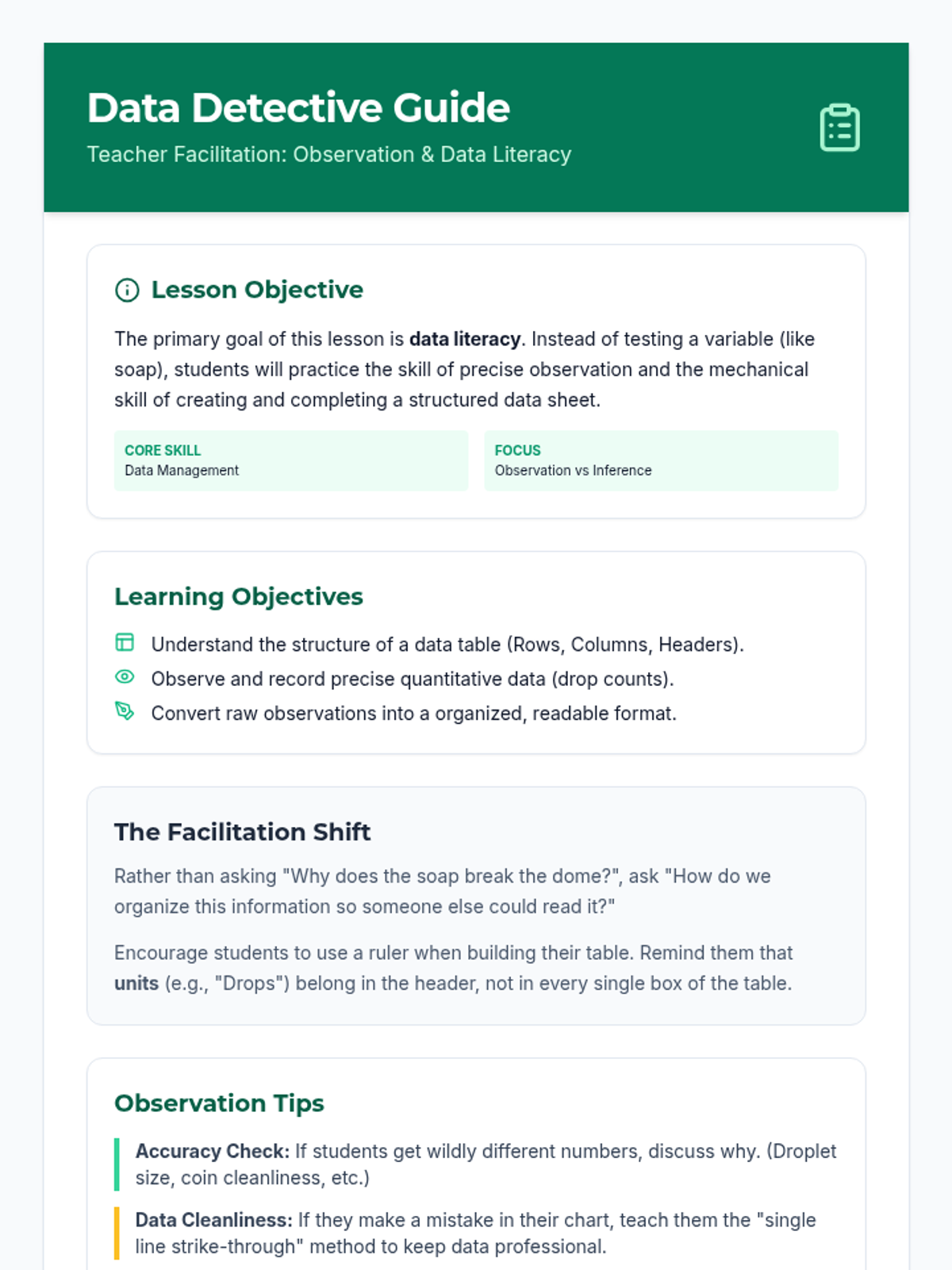
A teacher facilitation guide for the Surface Tension Showdown experiment, explaining the science of cohesion and providing tips for student success at home.
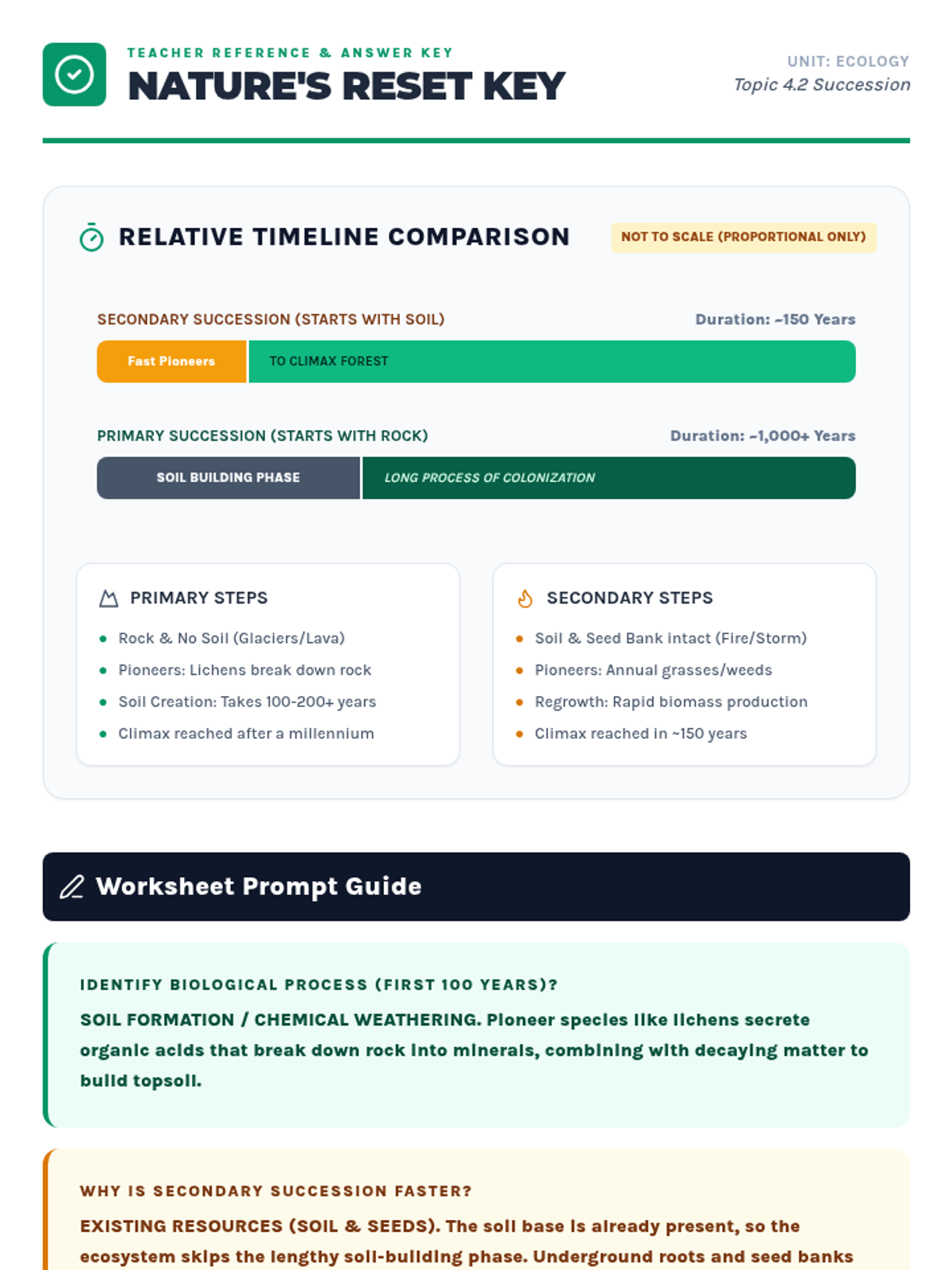
A teacher's answer key for the succession timelines lesson. It includes a visual comparison graphic with scale notes, detailed answer guides for worksheet prompts, and specific grading criteria for the Alaska glacier analysis question.
A presentation slide deck visualizing the timelines of primary and secondary succession. It breaks down the stages from bare rock to climax community, emphasizing the role of soil in determining the speed of recovery.
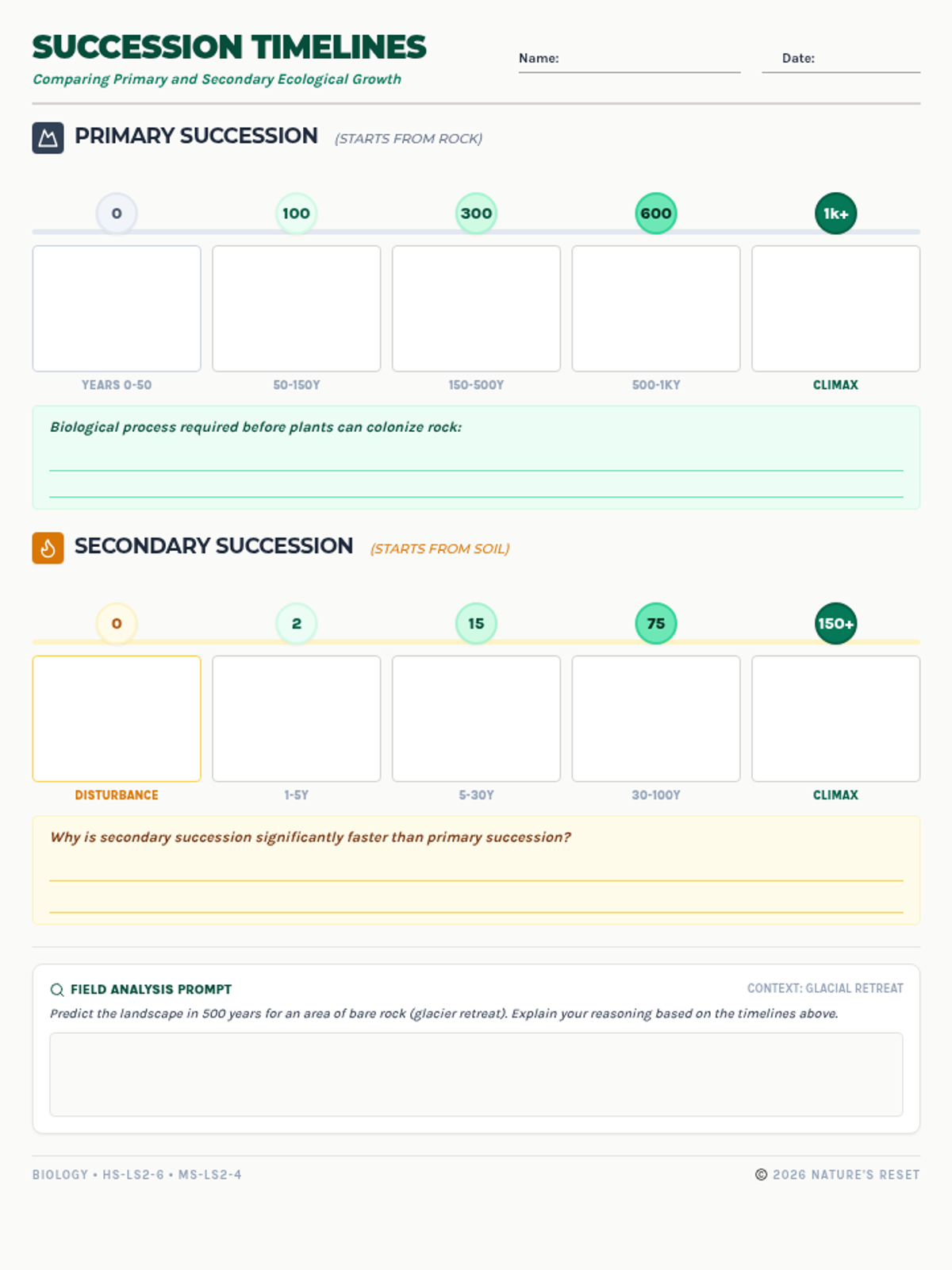
A condensed single-page visual timeline worksheet comparing primary and secondary succession. It features clear diagram areas, comparative data tables, and an analysis prompt regarding primary succession rates, all optimized for paper-saving single-page printing.
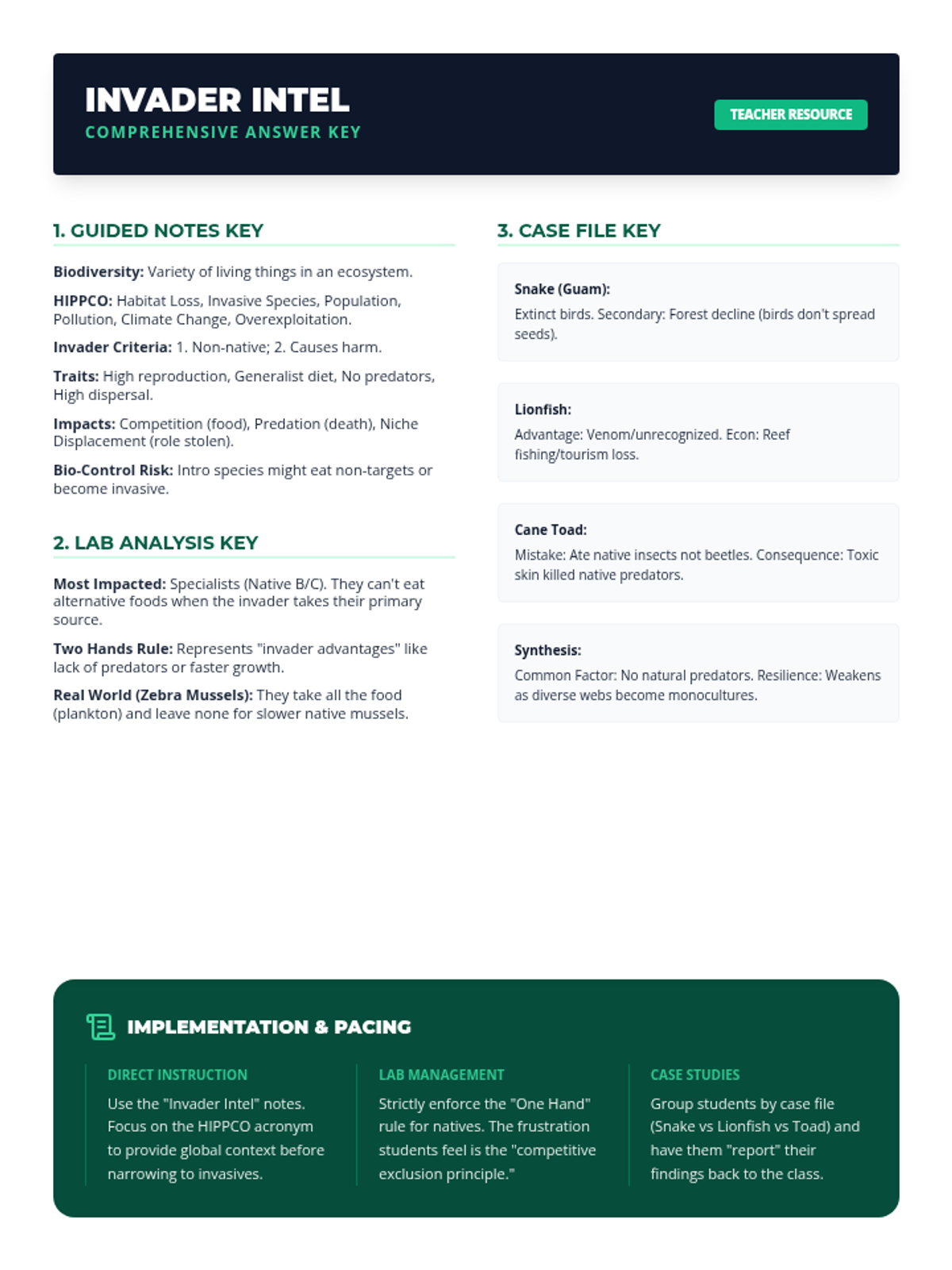
Teacher answer key and implementation guide for the Nature's Invaders lesson materials, including notes, lab, and worksheet answers.
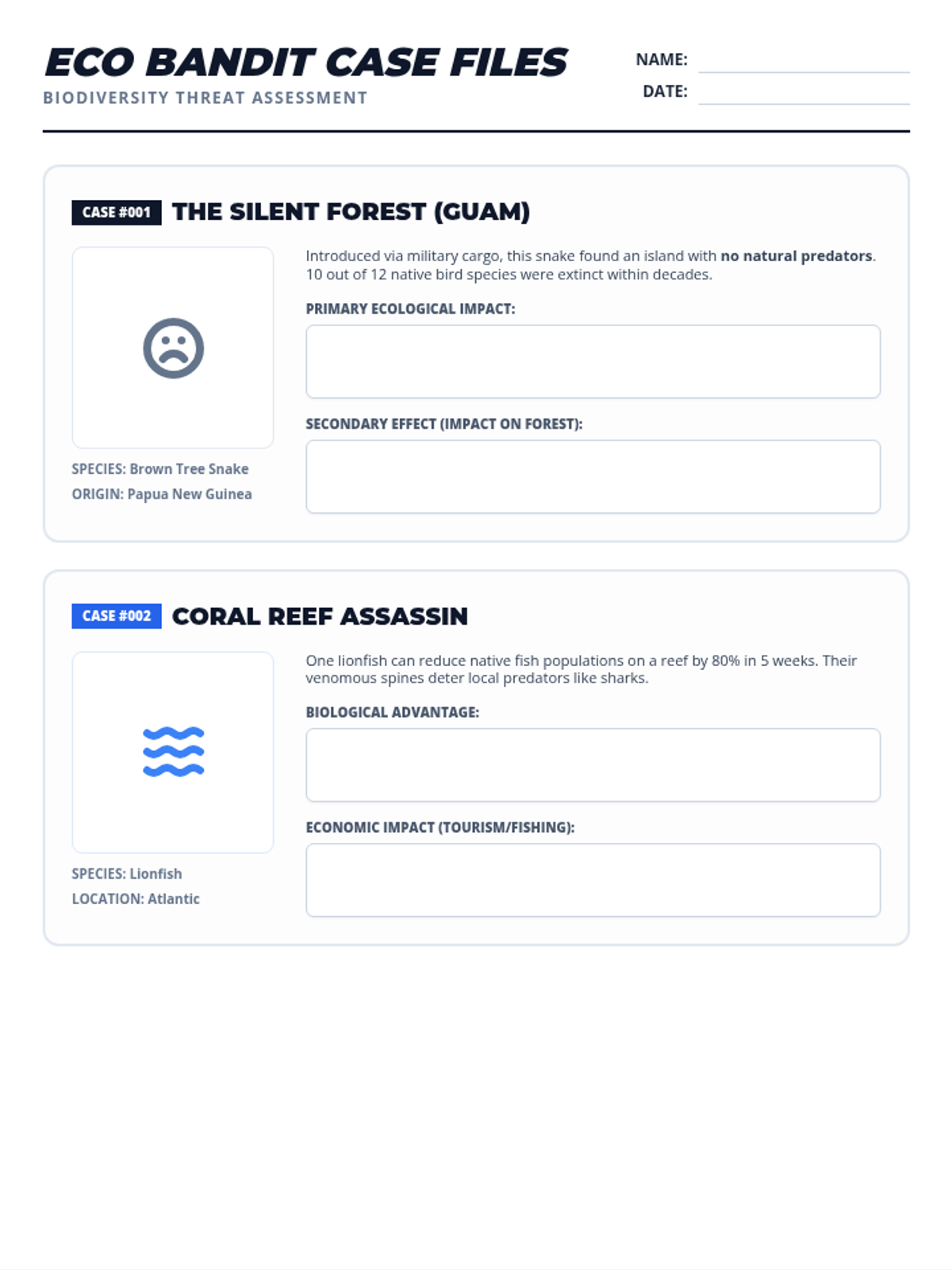
A worksheet featuring three detailed case studies of invasive species (Brown Tree Snake, Lionfish, and Cane Toad) with analysis questions focused on ecological and economic impacts.
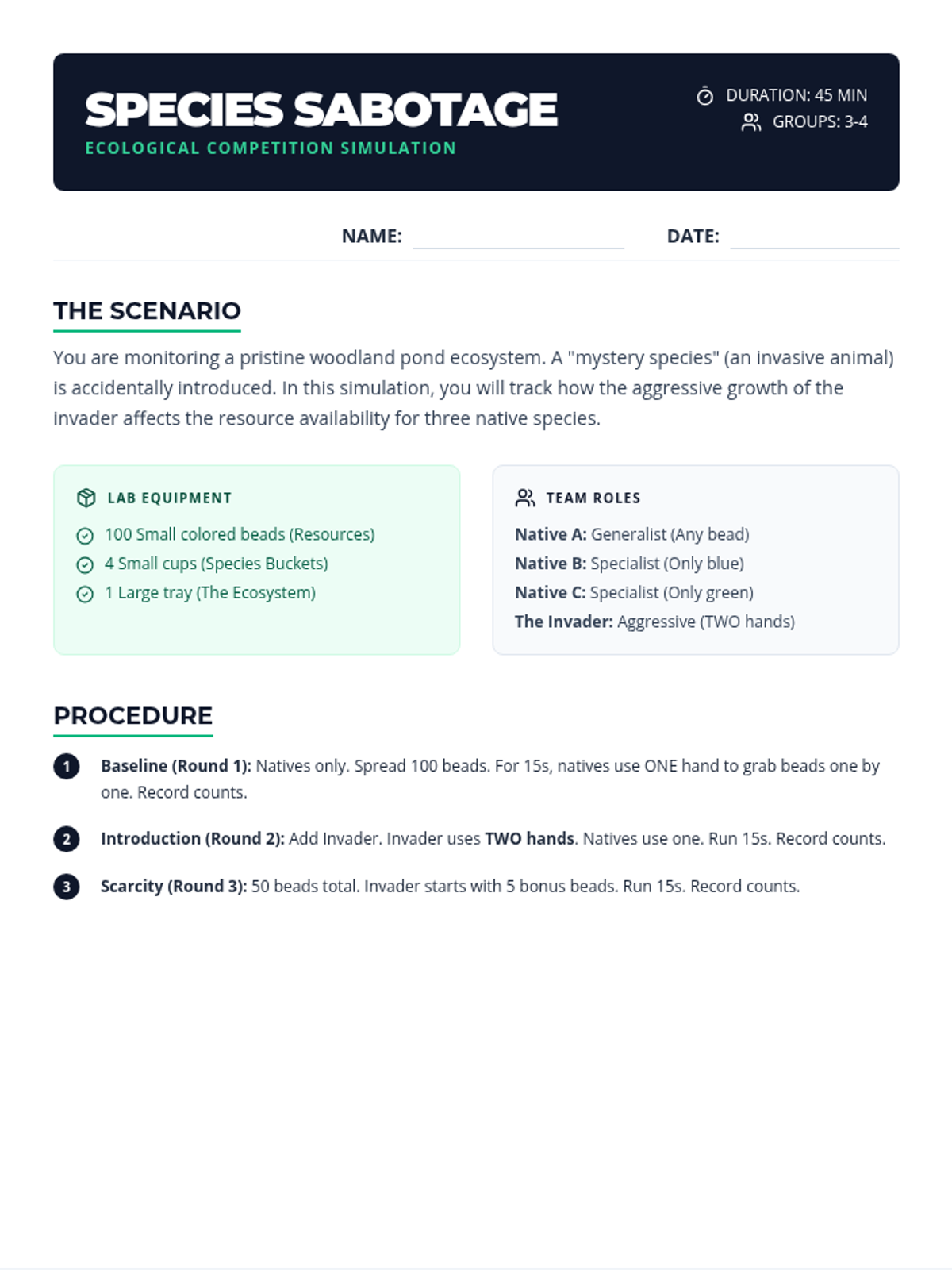
A hands-on lab activity simulating competition between native and invasive species for resources, including data collection and analysis questions.
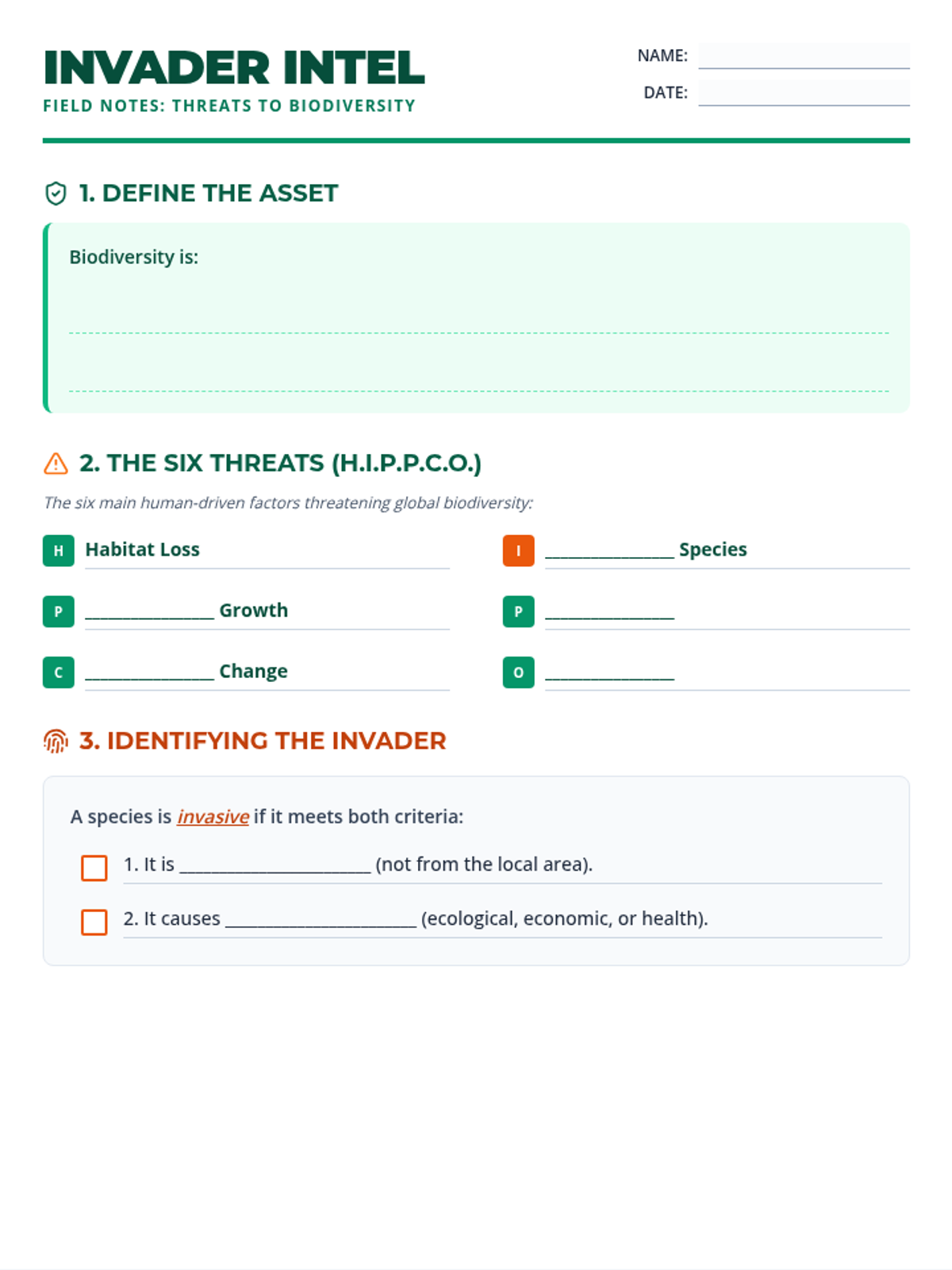
Guided notes for students to use during instruction on biodiversity threats, with a heavy focus on defining and identifying invasive species traits and impacts.
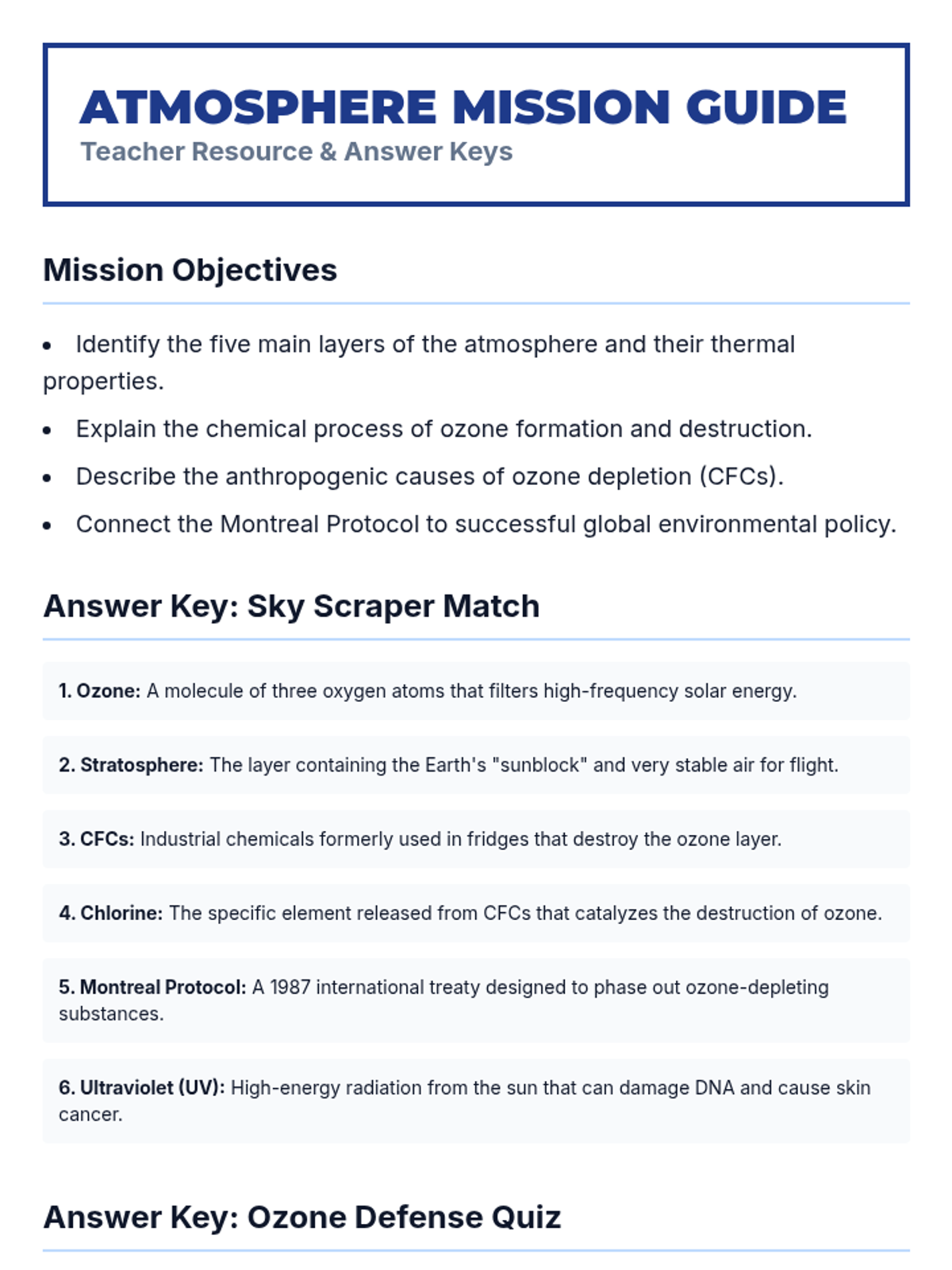
Completed teacher guide with full text in the answer keys, corrected styling for the mnemonic, and improved layout to prevent awkward page breaks between questions.
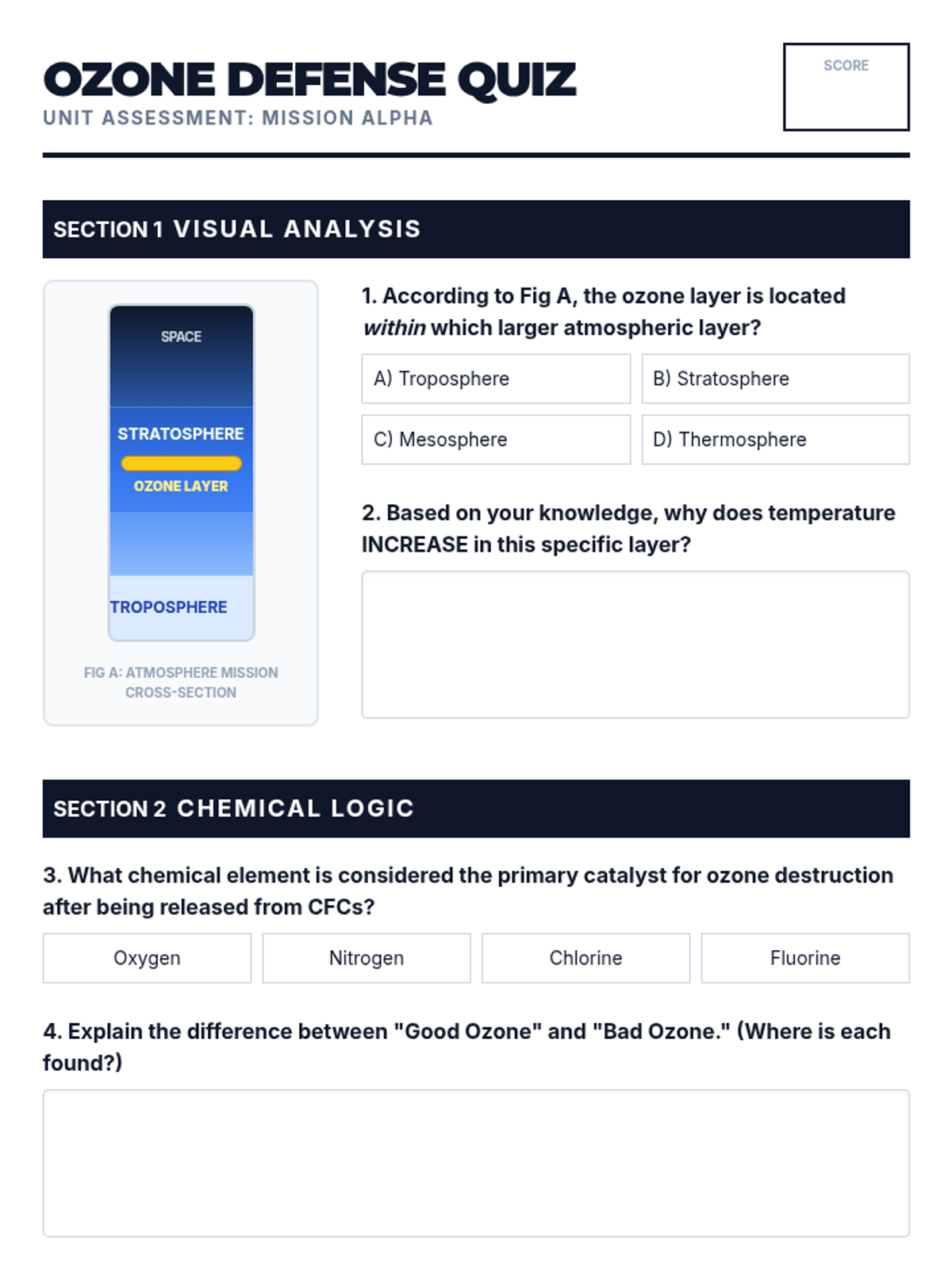
Revised practice quiz with a scientifically accurate atmosphere diagram, parallel tense in answer choices, corrected page breaks to keep questions with their options, and larger work areas for student responses.
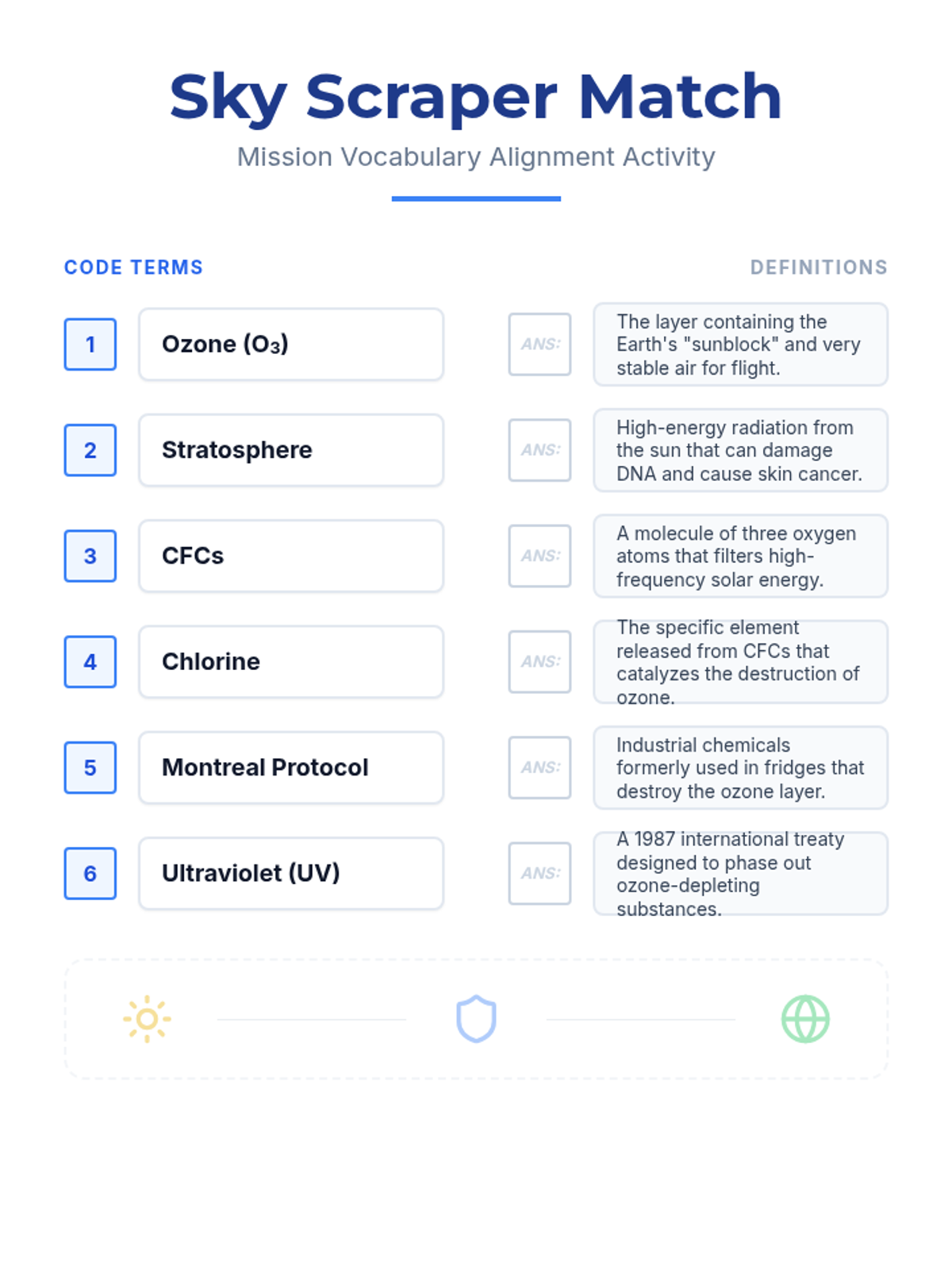
Corrected matching worksheet with fixed ozone subscripts, proper grammar (catalyzes), and a layout that avoids splitting terms across pages.
Revised graphic organizer with improved page break prevention, a lightened background for the Exosphere box to ensure handwriting legibility, and larger response areas for mission importance.
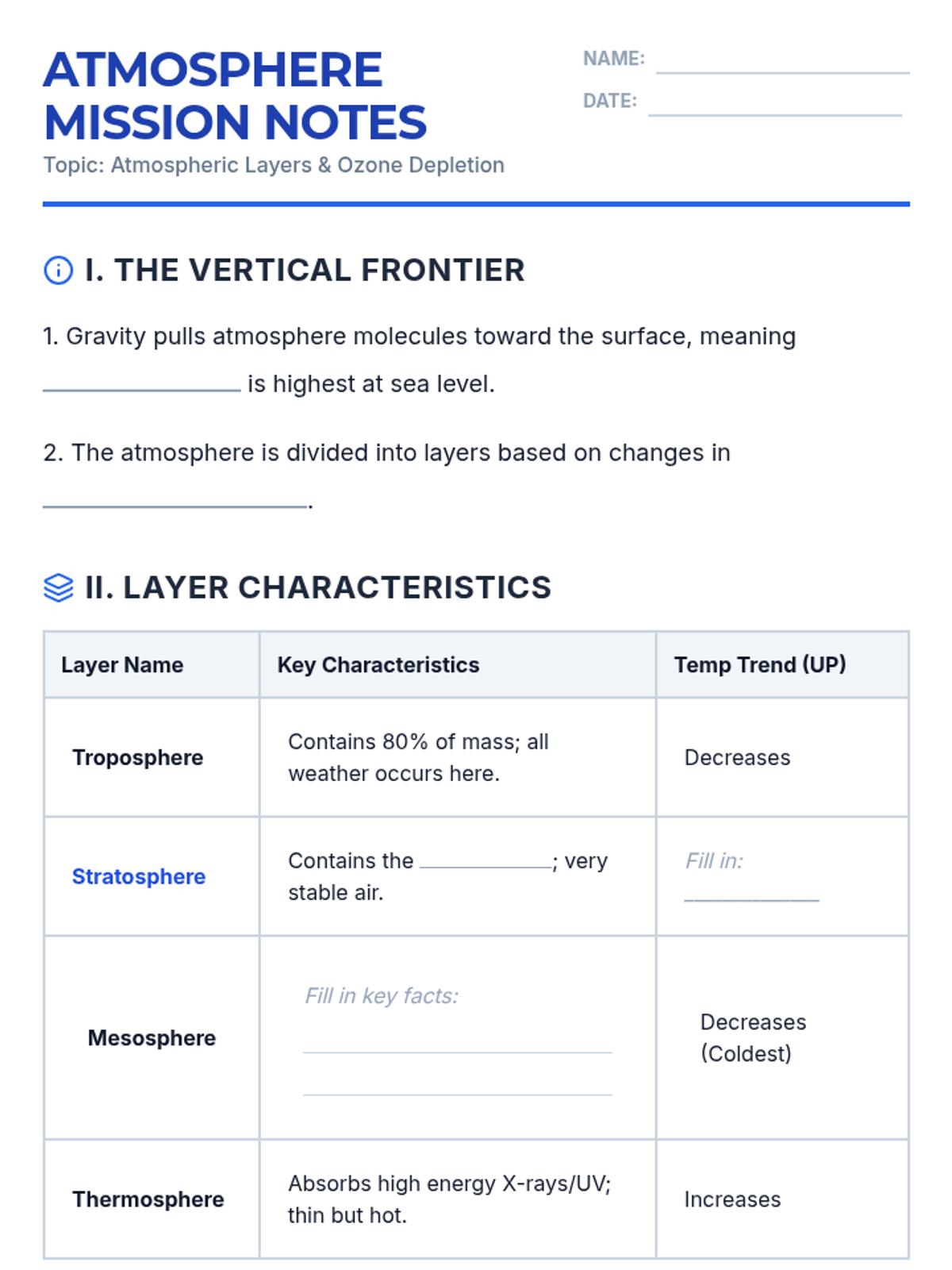
Updated guided notes with improved spacing for student work areas, corrected chemical subscripts (sub tags), and enhanced alignment in the sequence of destruction section.
A revised visual slide deck with corrected chemical notation (subscripts), improved font styling, and enhanced contrast for atmospheric layer labels.