A set of 8 multistep word problems for 4th graders, focusing on decimals and division with remainders in the context of saline slime and food coloring supplies. Improved footer visibility.
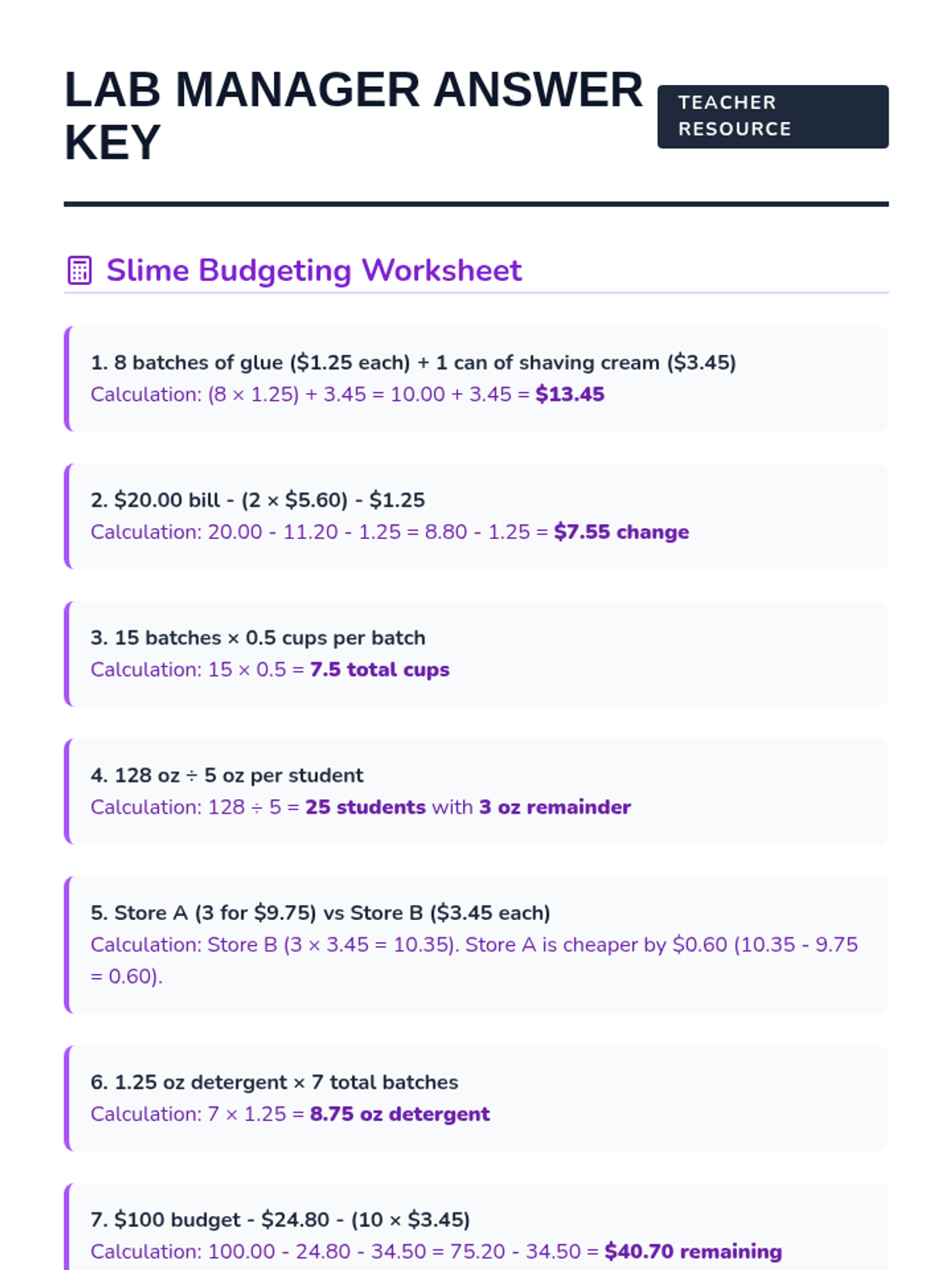
Detailed answer key for the Slime Budgeting Worksheet (Food Color edition) and Slime Scientist Journal. Fixed layout for printing.
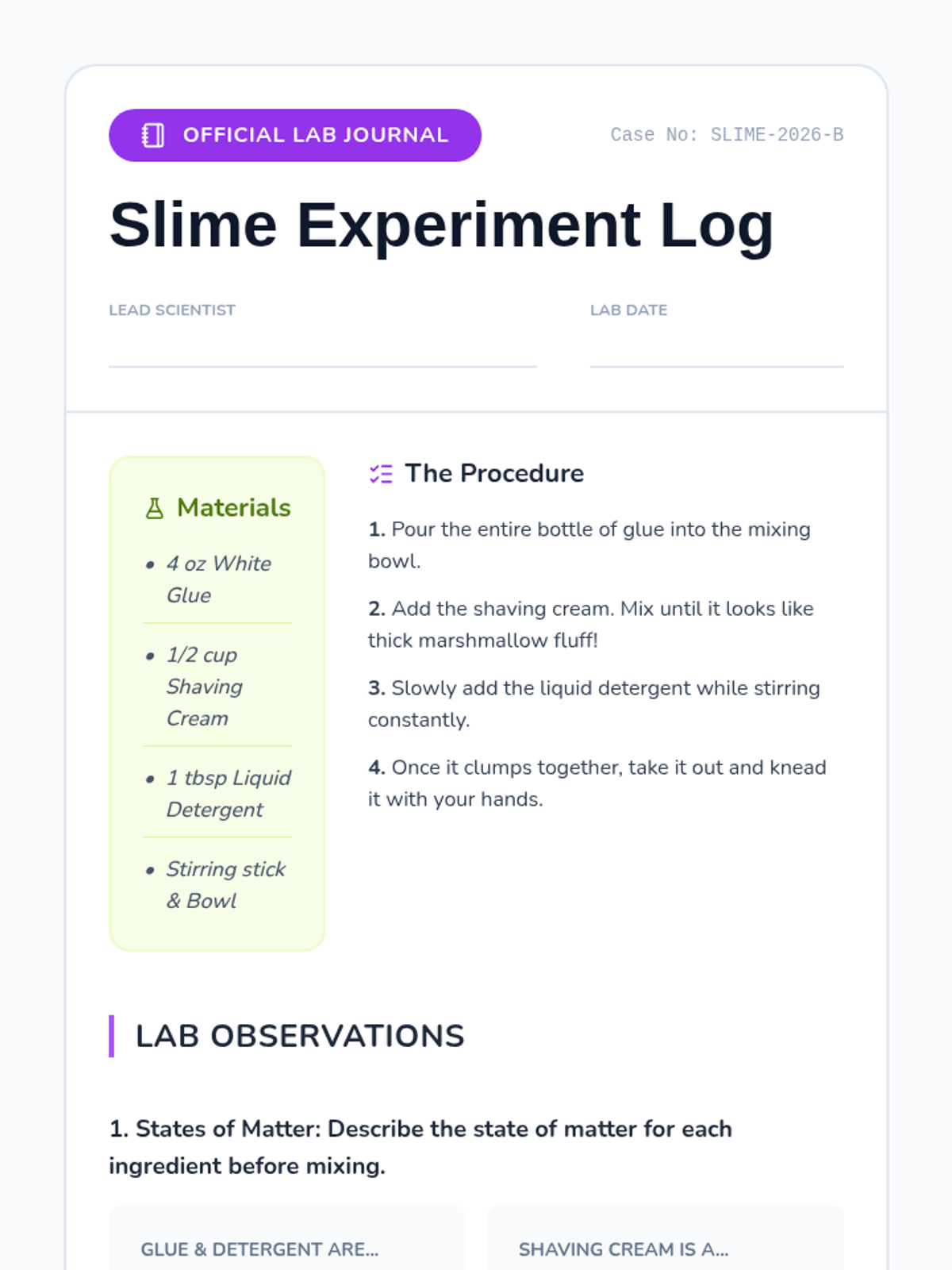
A lab notebook-style journal for 4th graders to record their slime-making procedure with a saline-based recipe, observations on states of matter, and analysis of chemical changes. Optimized for 2 pages.
Engaging visual slides for a 4th grade slime lesson, covering the saline recipe, states of matter, and chemical vs physical changes. Includes math discussion prompts and science investigation stems.
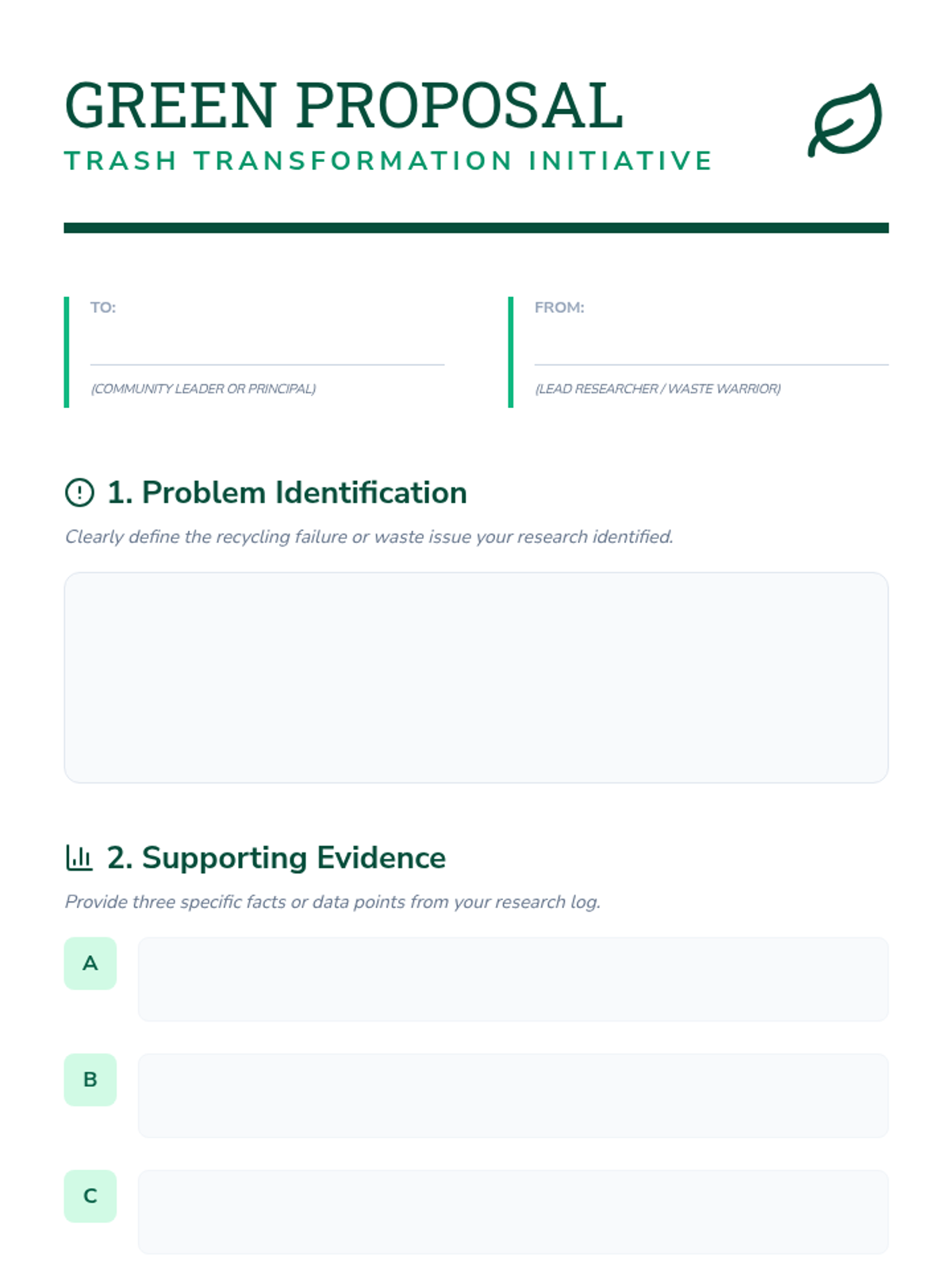
A formal proposal template for students to synthesize their research into a persuasive document. Includes sections for problem identification, evidence, a proposed solution, and a call to action.
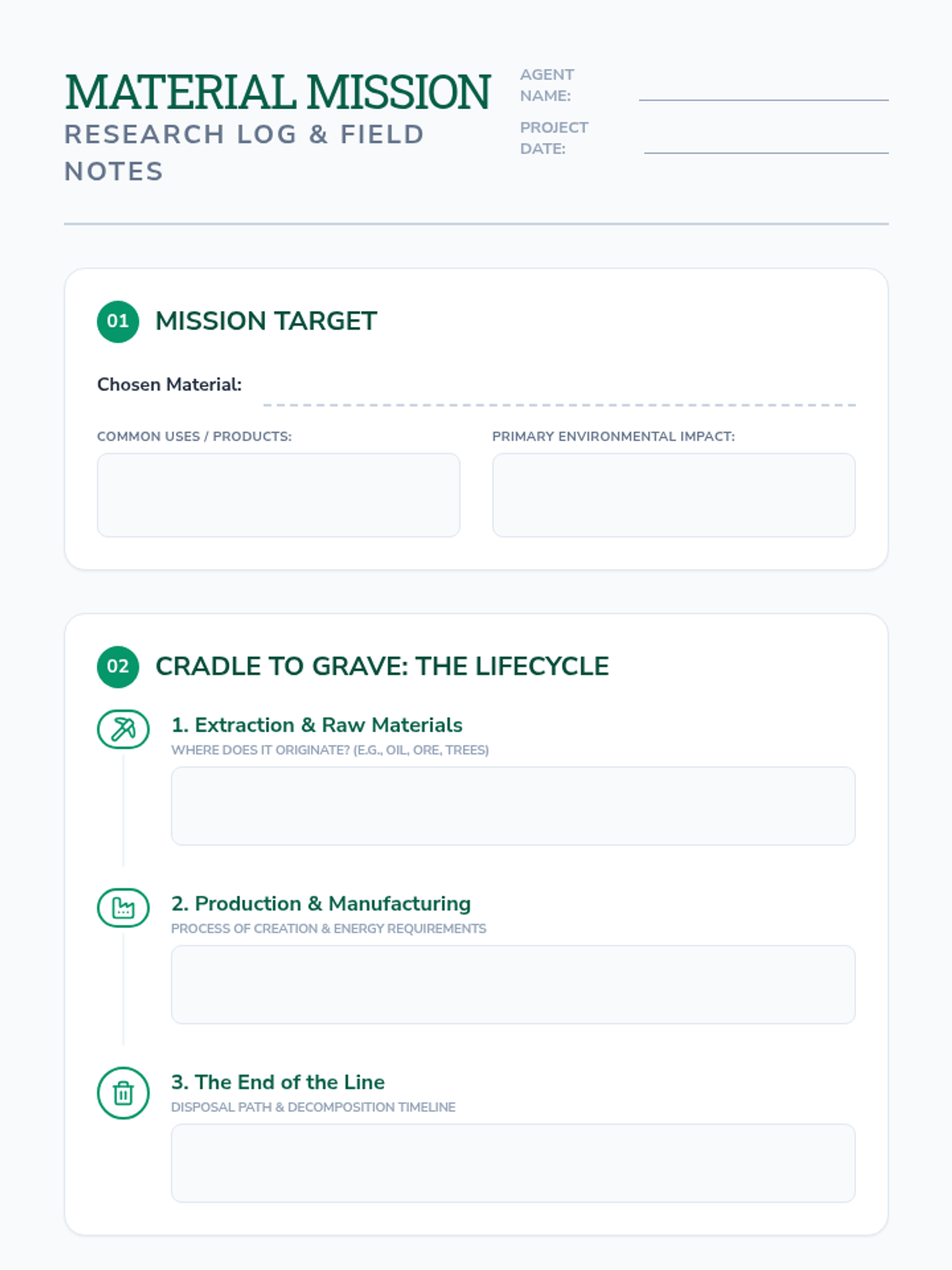
A scaffolded research organizer for students to track the lifecycle of a chosen material, collect local recycling data, and log their sources. Features a field-journal aesthetic to encourage active investigation.
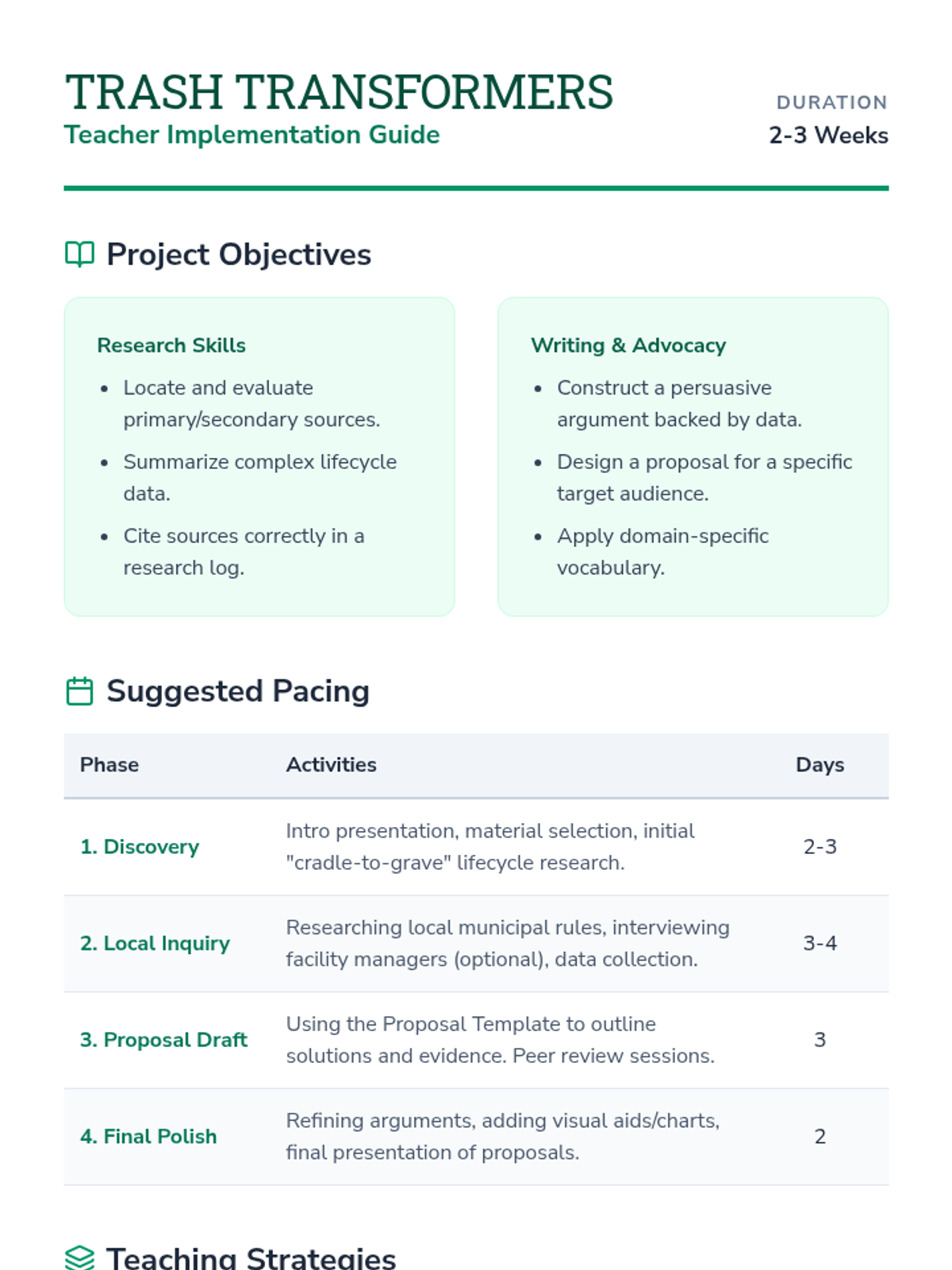
A comprehensive teacher's guide for the Trash Transformers project, including project objectives, a multi-week pacing calendar, differentiation strategies, and an assessment rubric.
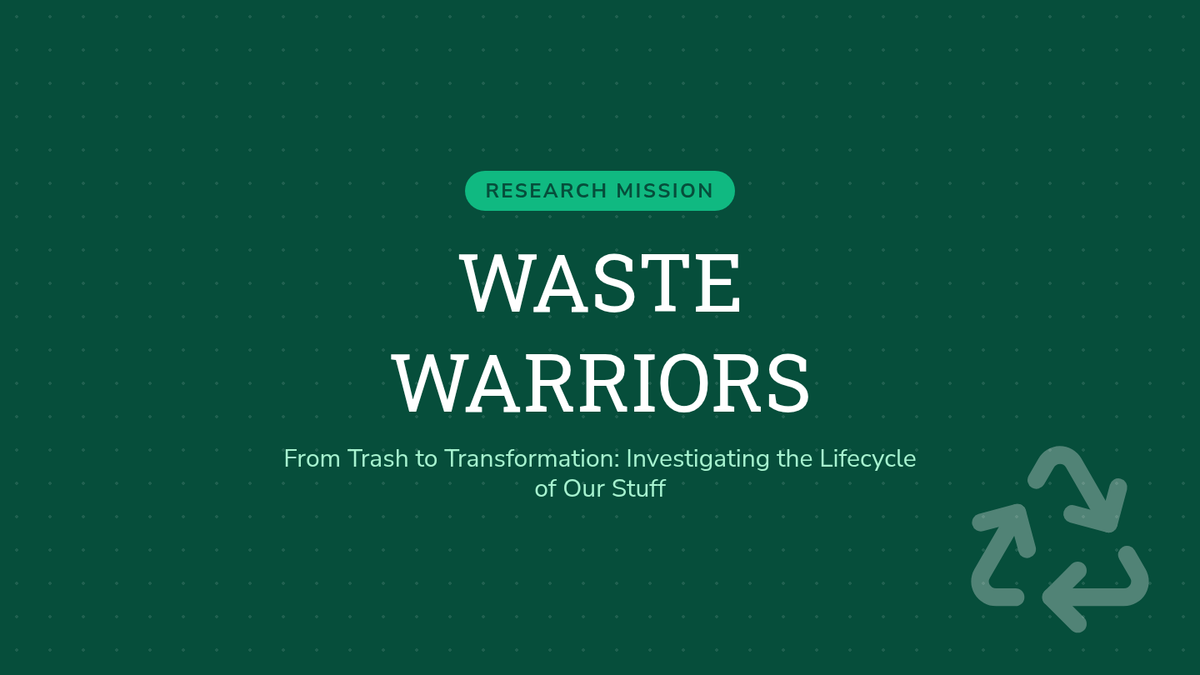
An introductory slide deck for the Trash Transformers project, outlining the recycling crisis, the research mission, and the project's phases. Designed to spark student interest and provide high-level context.
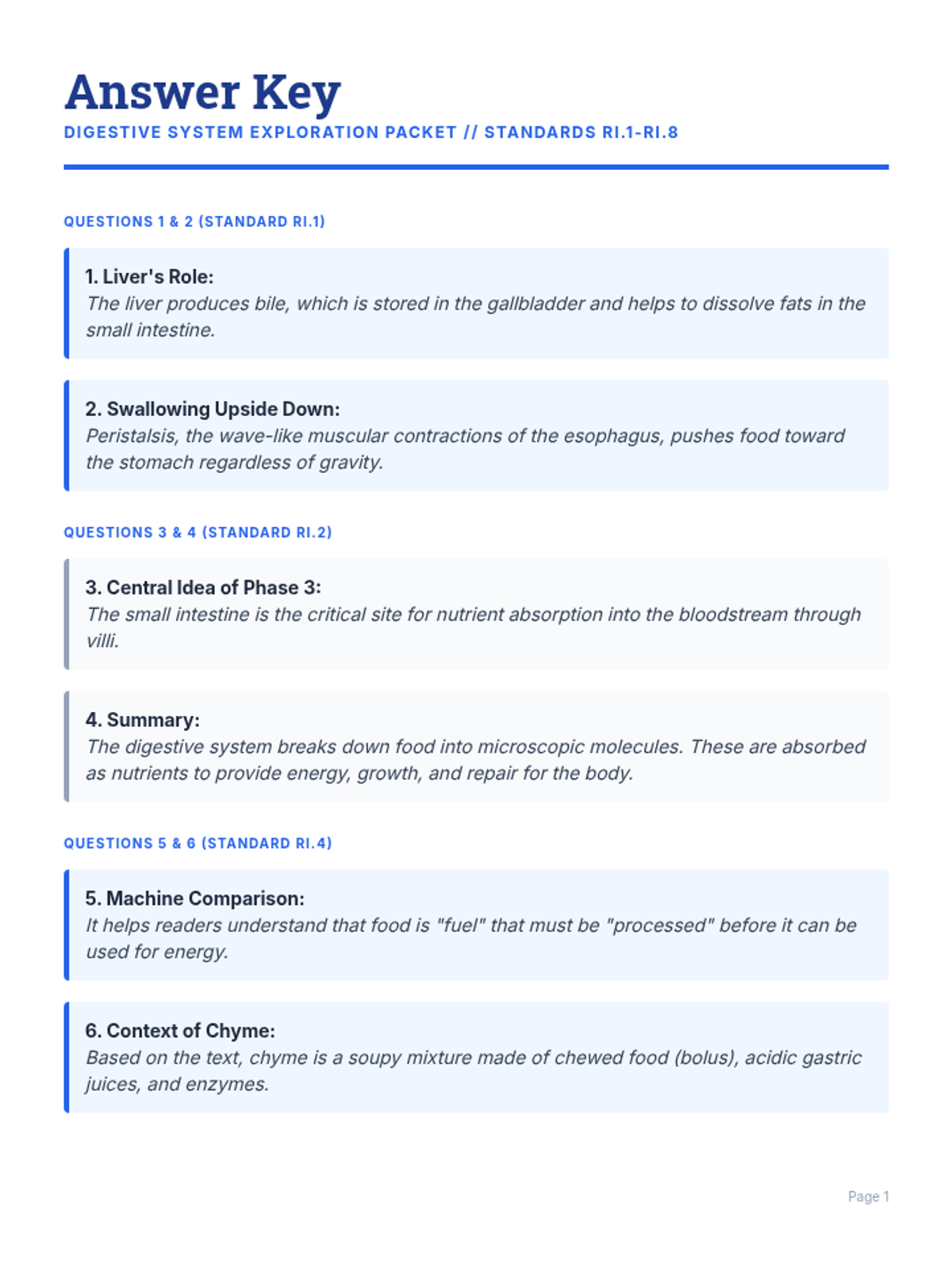
A comprehensive teacher answer key for the Digestive System Exploration Packet, covering all 20 questions with mappings to RI.1, RI.2, RI.3, RI.4, and RI.8.
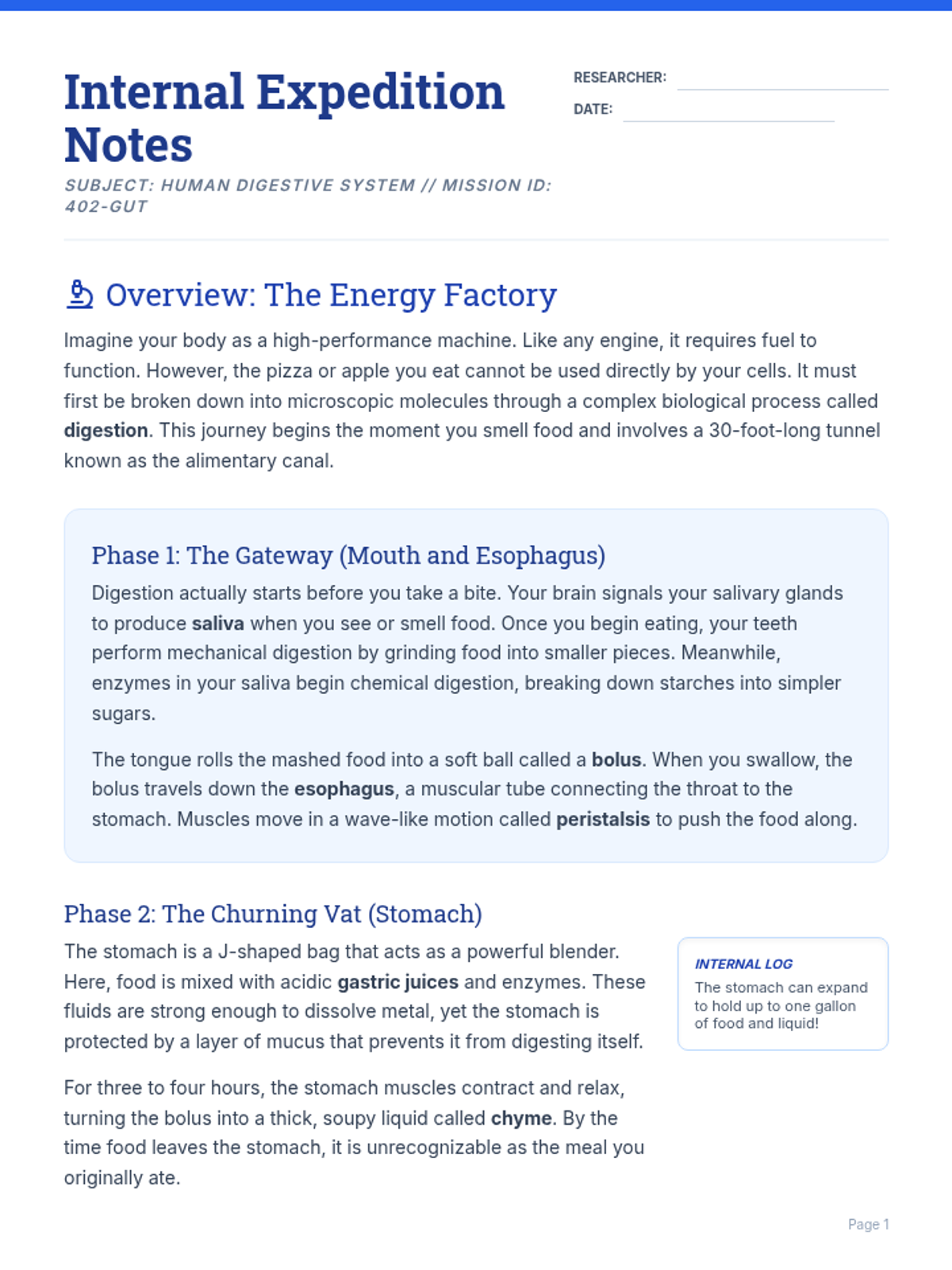
A comprehensive 7-page reading packet on the digestive system, including a 2-page detailed passage, vocabulary definitions, and 20 standard-aligned comprehension questions (4 each for RI.1, RI.2, RI.3, RI.4, RI.8).
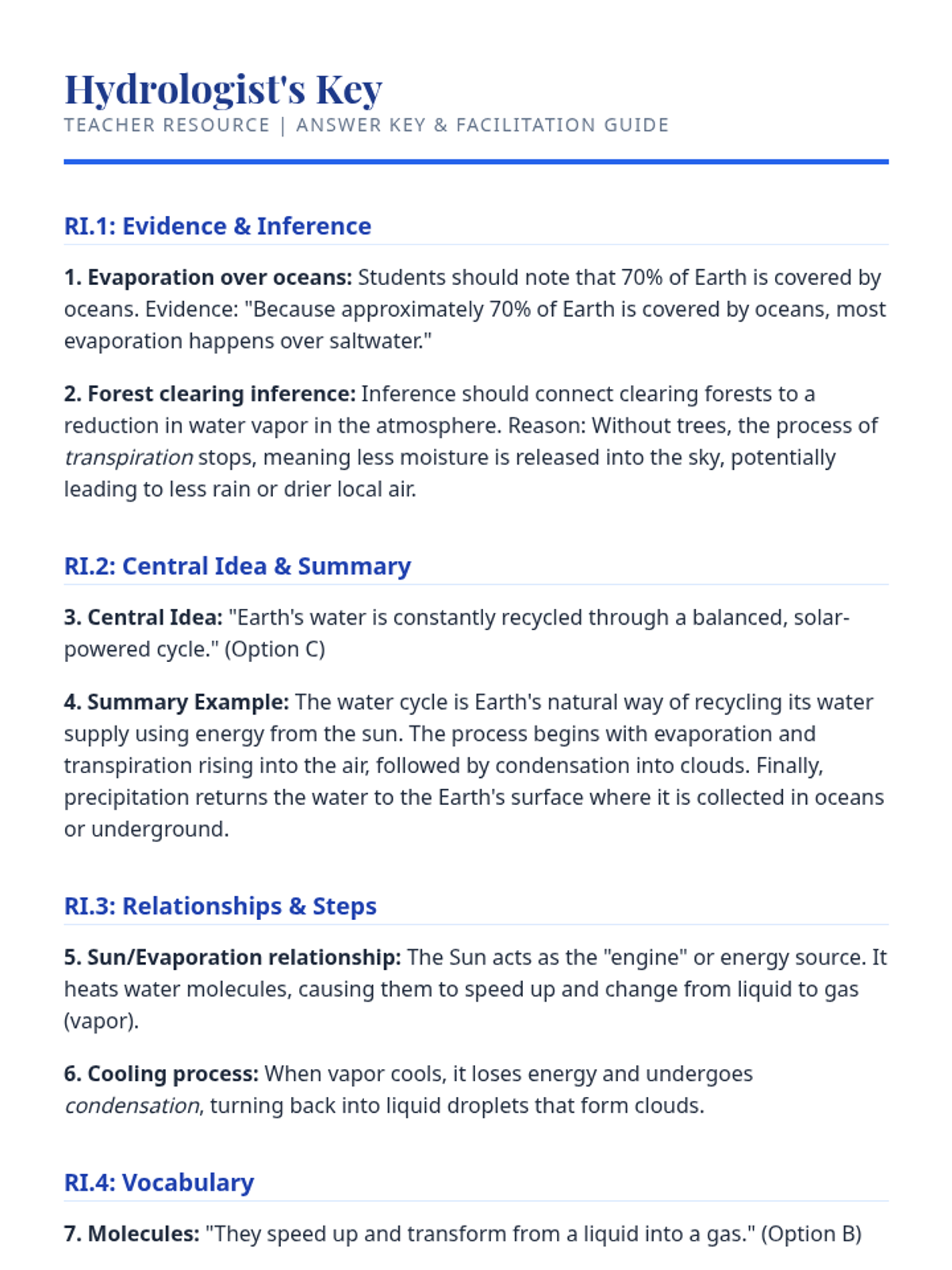
A teacher answer key and facilitation guide for the Water Cycle Odyssey lesson, providing sample responses for all standards-aligned questions.
A 10-slide instructional presentation on the water cycle, featuring high-contrast visuals, key concepts like evaporation and transpiration, and vocabulary reviews.
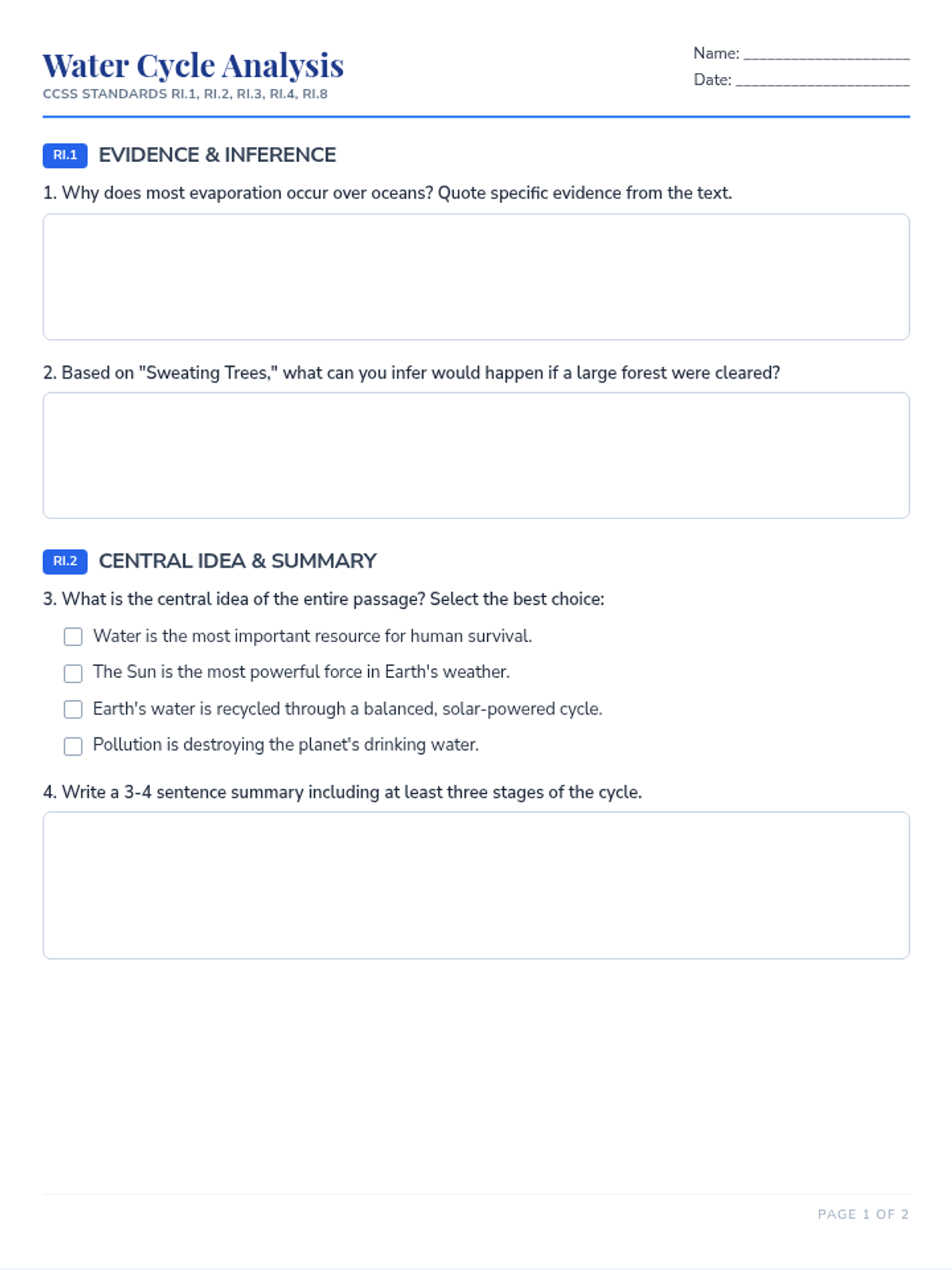
A standards-aligned comprehension worksheet for 'The Recycled Rain' passage, featuring questions for RI.1, RI.2, RI.3, RI.4, and RI.8 with dedicated student work areas.
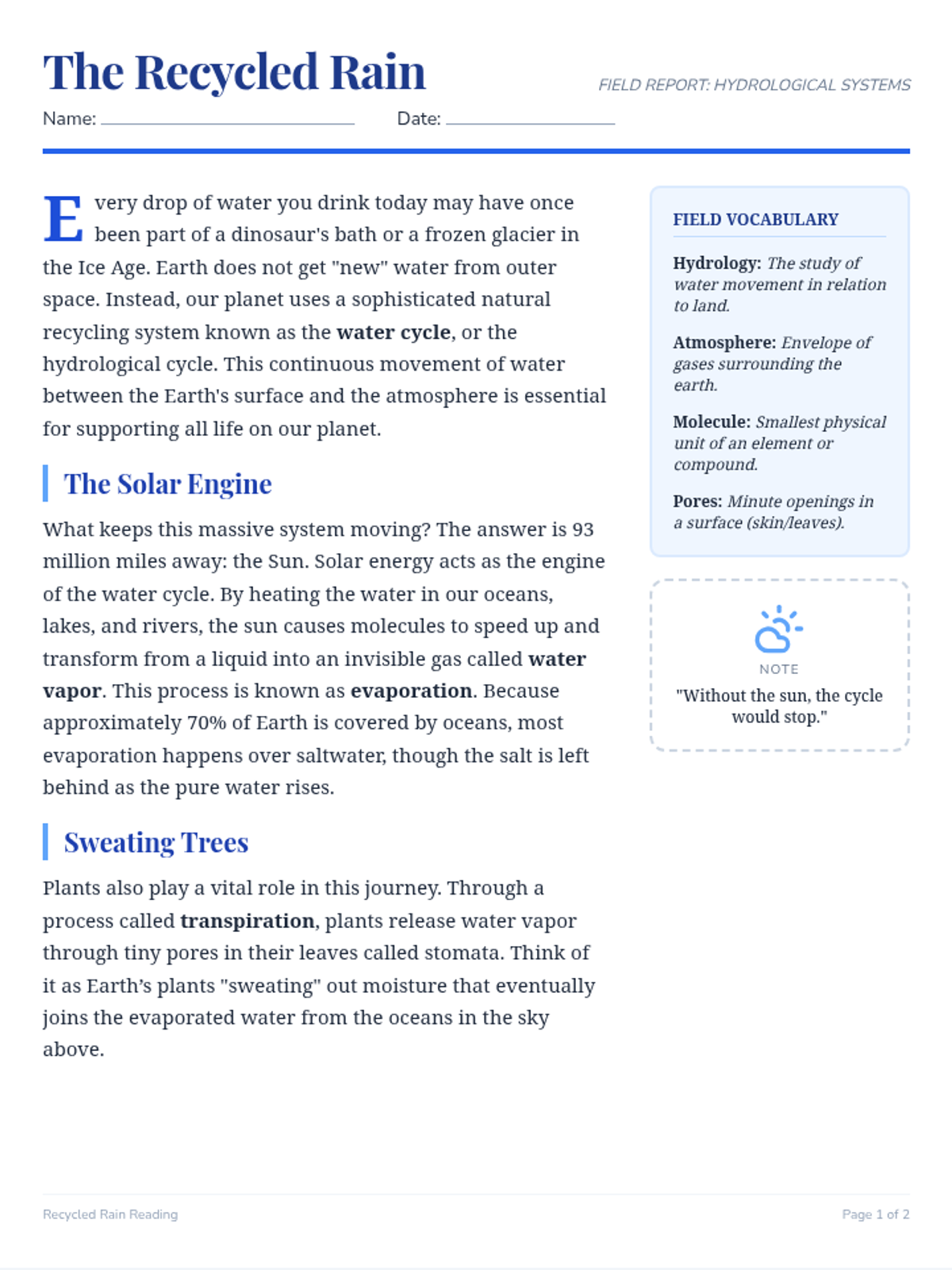
A two-page illustrated reading passage about the water cycle, featuring key vocabulary, scientific concepts like transpiration and infiltration, and a field-journal aesthetic.
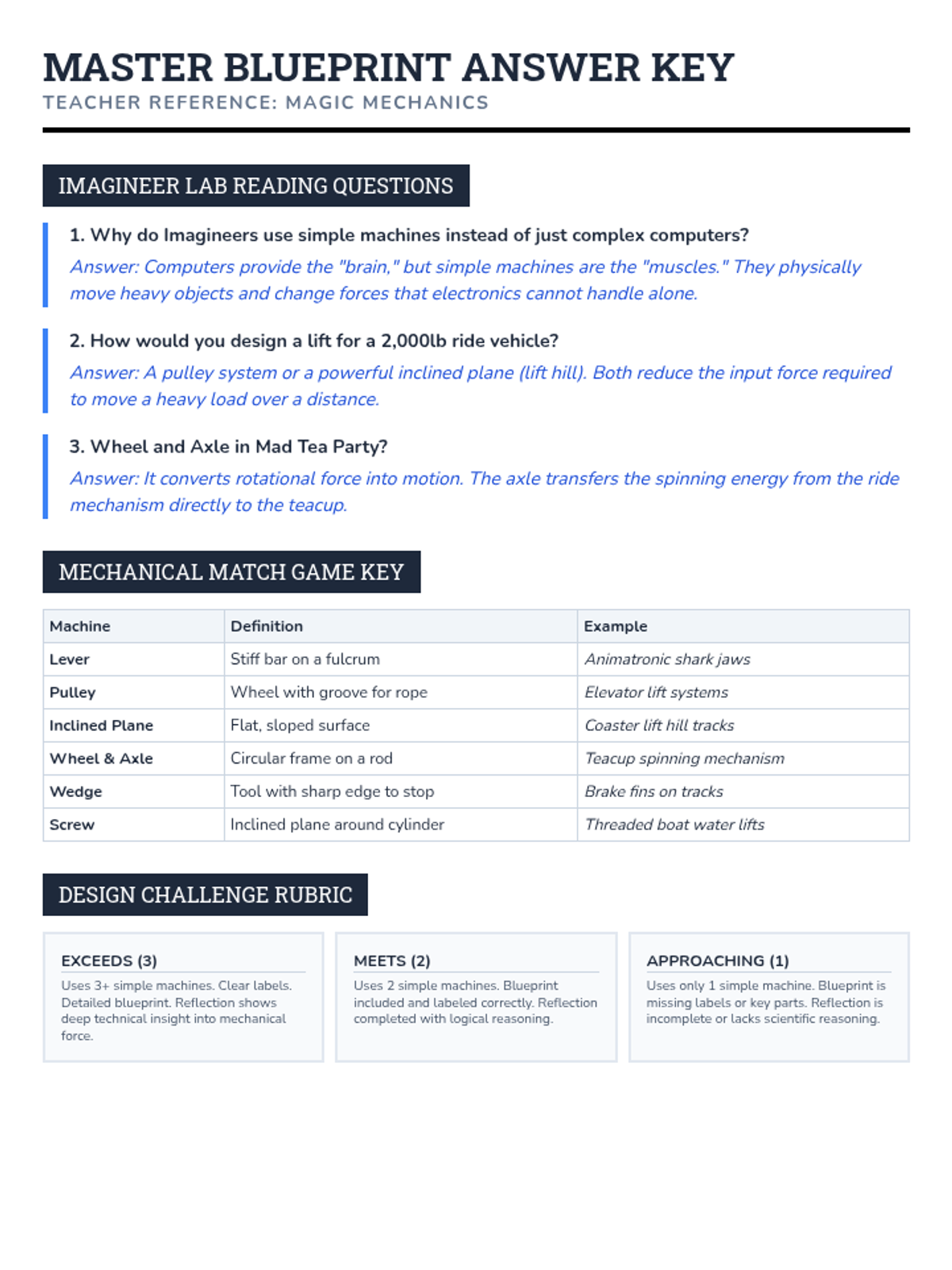
A teacher resource containing answer keys for the Imagineer Lab reading questions, the correct pairings for the Mechanical Match Cards, and a simplified grading rubric for the ride design challenge. Revised for a compact 1-page layout.
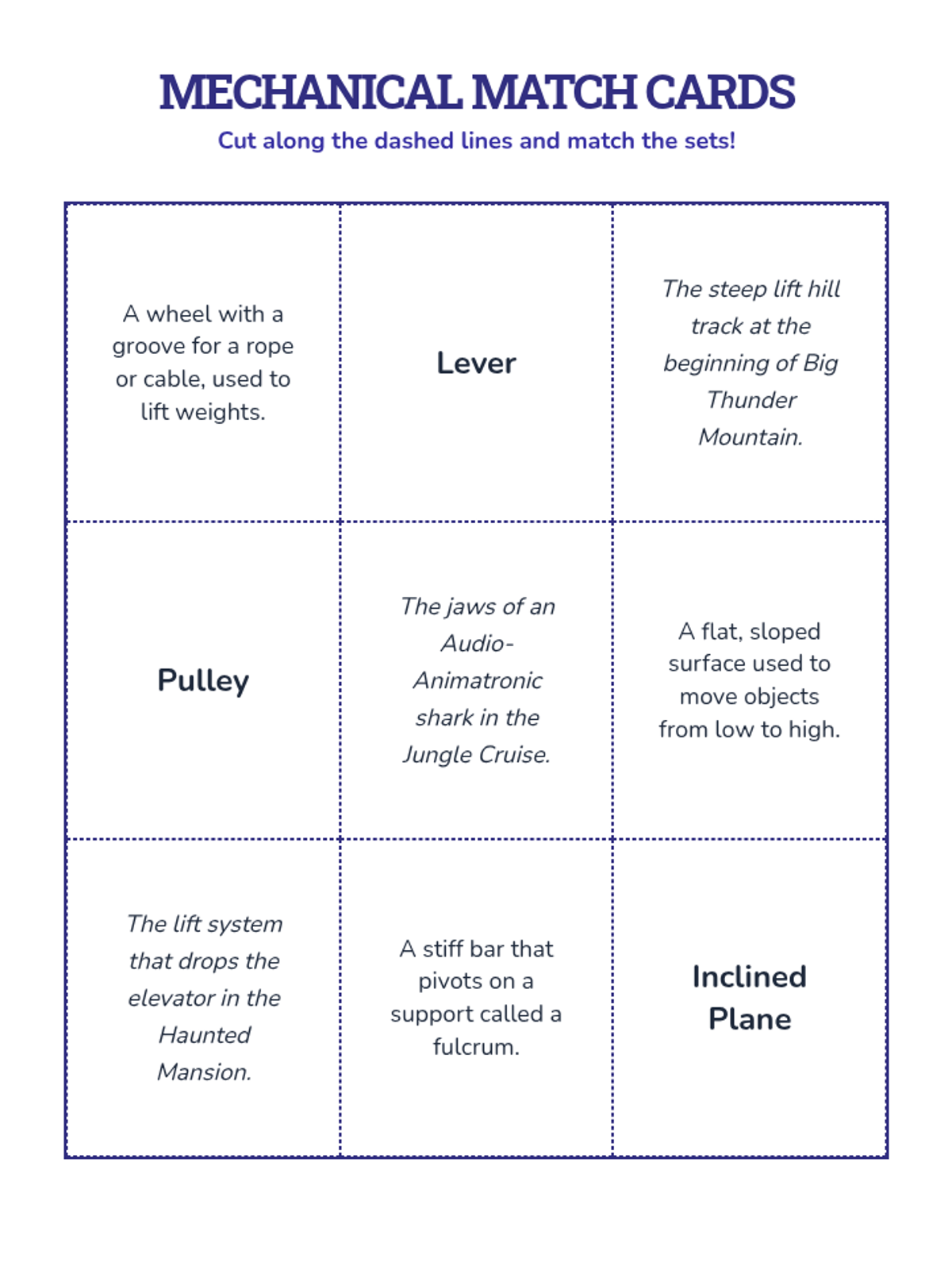
A vocabulary matching game featuring the six simple machines. Includes three sets of cards for students to match: the machine name, its scientific definition, and a specific real-world example from a theme park attraction. All cards have identical styling with small corner labels identifying them as Machine, Definition, or Example. Darkened labels for better print contrast.
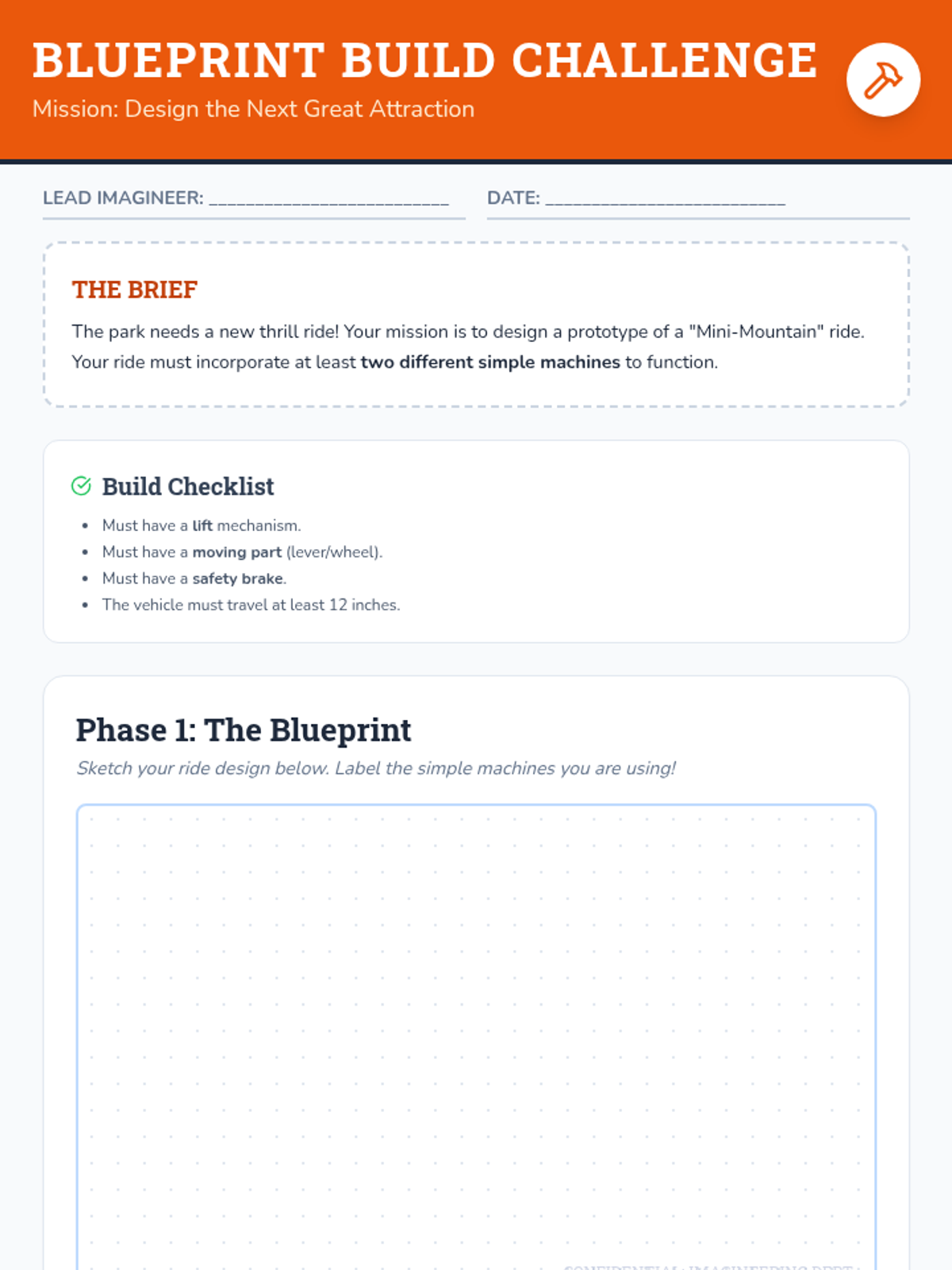
A simplified "Rapid Prototyping" engineering challenge where students build and test a single mechanical feature (lift, spinner, or launcher) using common classroom supplies. Includes a blueprint drawing area and reflection questions.
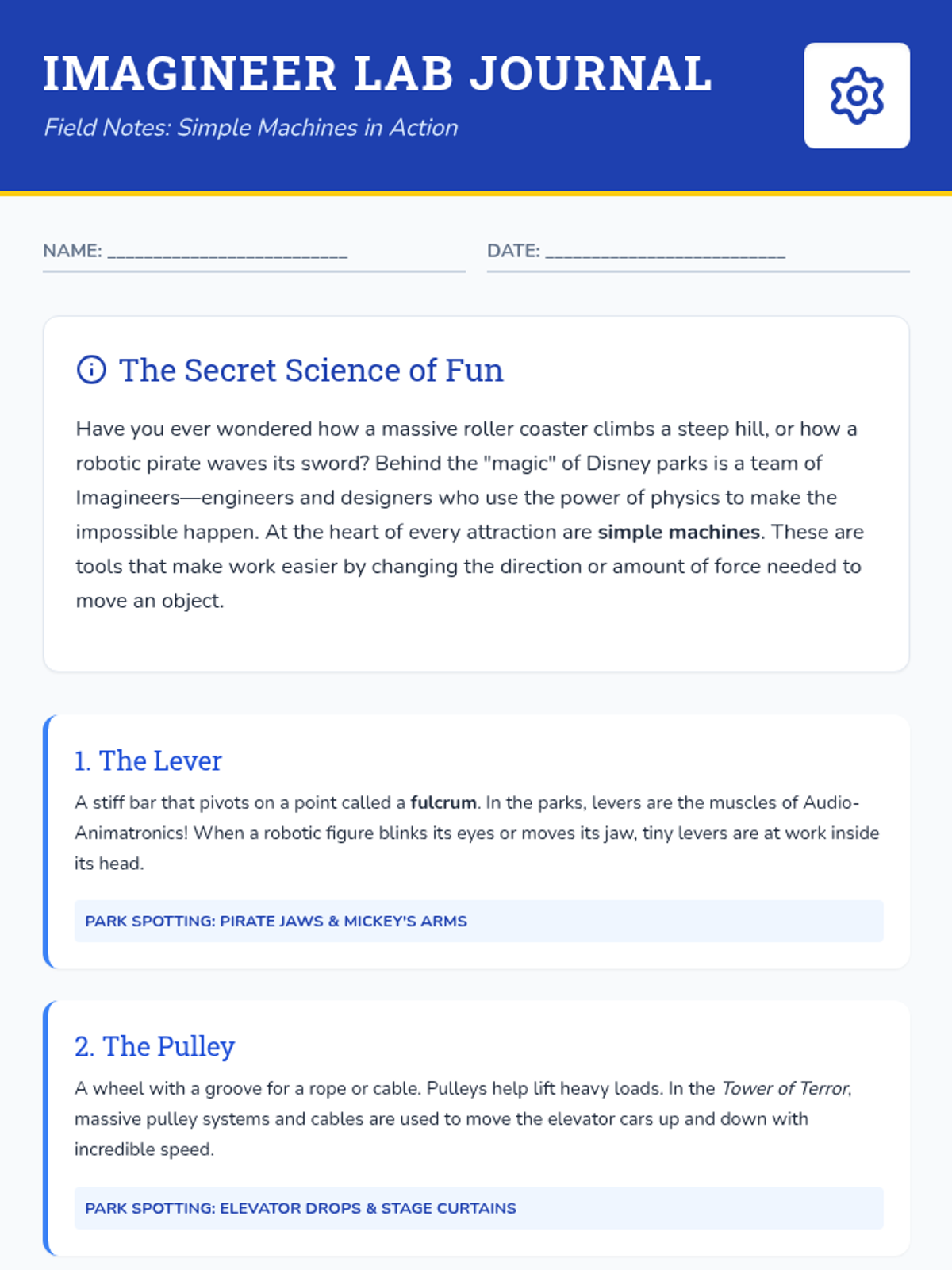
An informational text reading activity that explains the six types of simple machines through examples found in famous Disney theme park attractions, including comprehension questions and a sketching area. Revised to move the Lab Analysis to its own page (Page 3) and balance the machines across Pages 1 and 2.
Polished introductory slides for the Science On Air podcast project. Features high-contrast visuals, clear project steps, and an overview of digital tools.
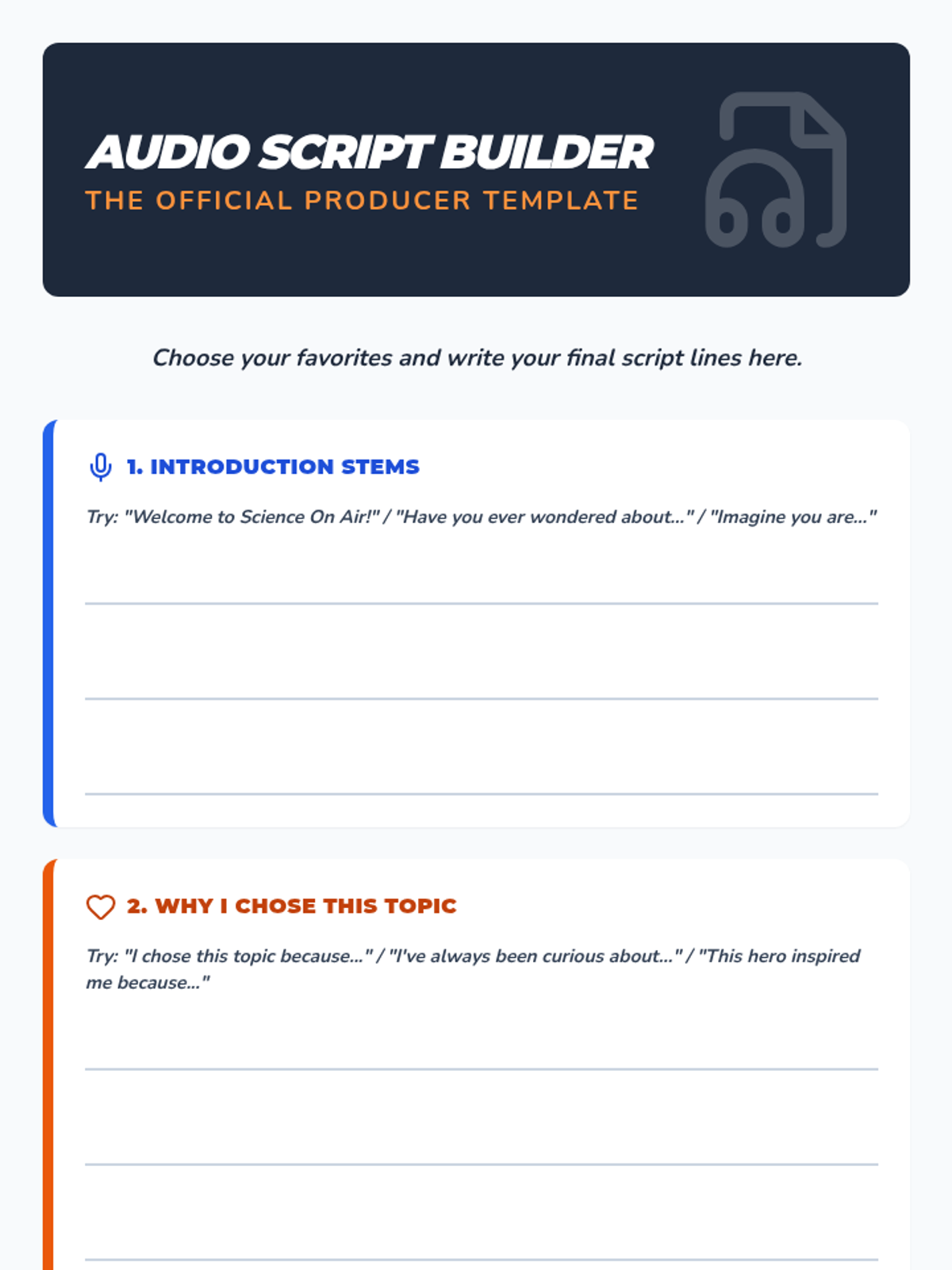
A script-building resource featuring 15 sentence stems across five categories to help students write a structured and professional podcast script. Features improved writing lines and high-contrast text.
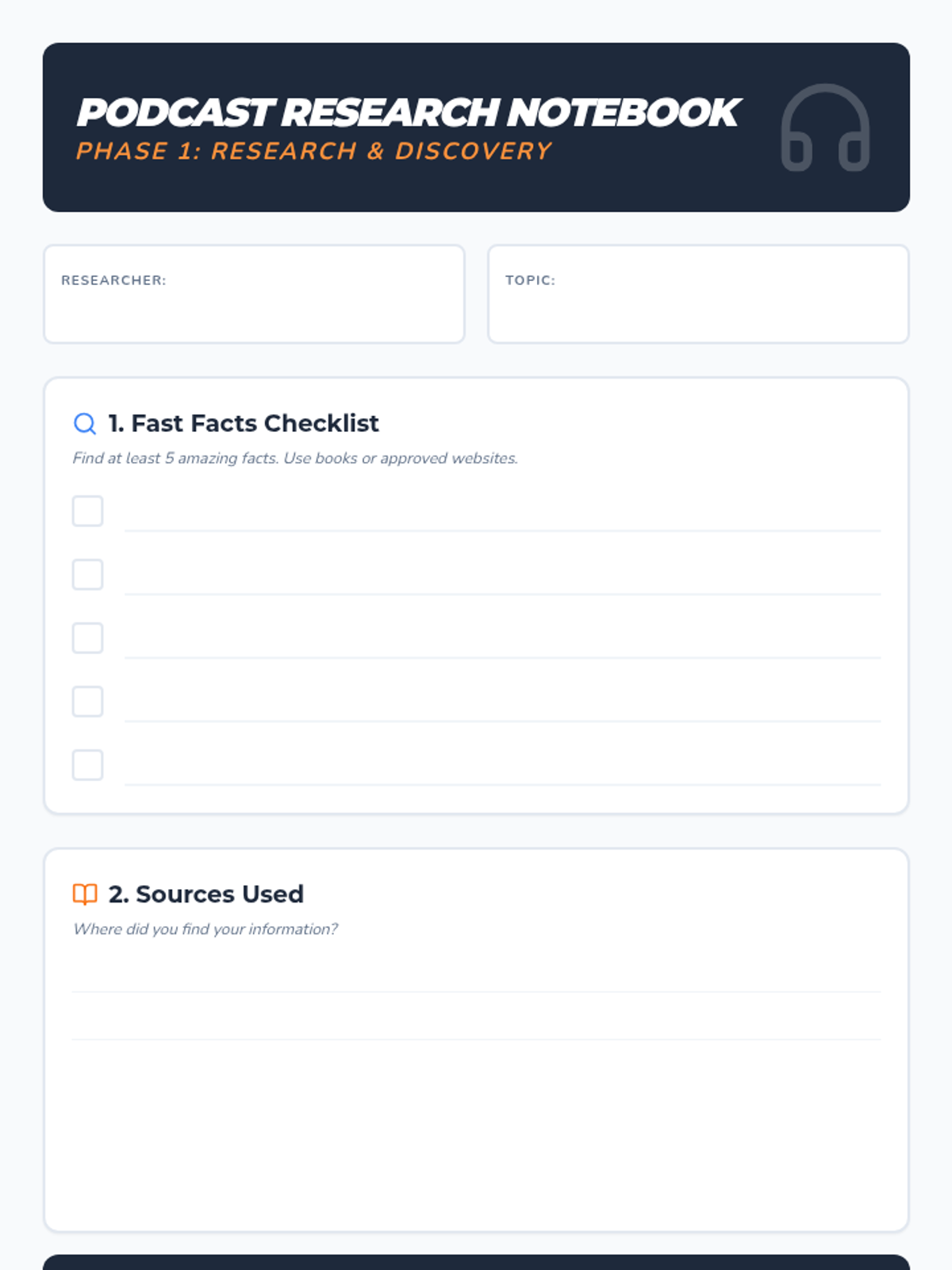
A comprehensive note-taking packet for students. Includes fact-gathering areas, scripting prompts with sentence stems, and a sound design planner. Optimized for handwriting with white work areas.
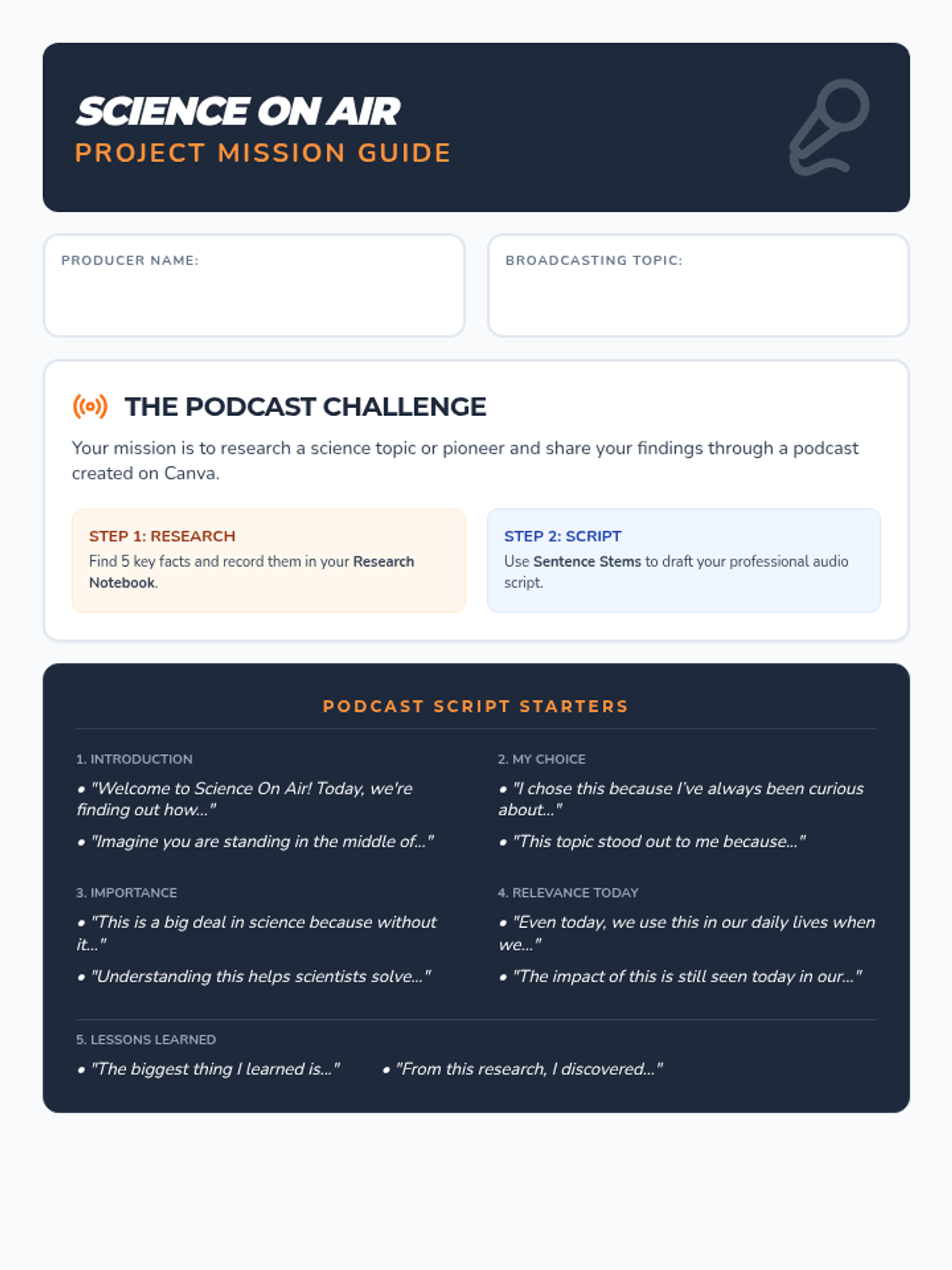
A one-page project outline for the Science On Air podcast project. It defines the mission, phases of production, and success criteria for 4th-grade students. Now includes a condensed script-starter section.