Final reflection exit ticket for Lesson 5 where students articulate their findings and acknowledge study limitations.
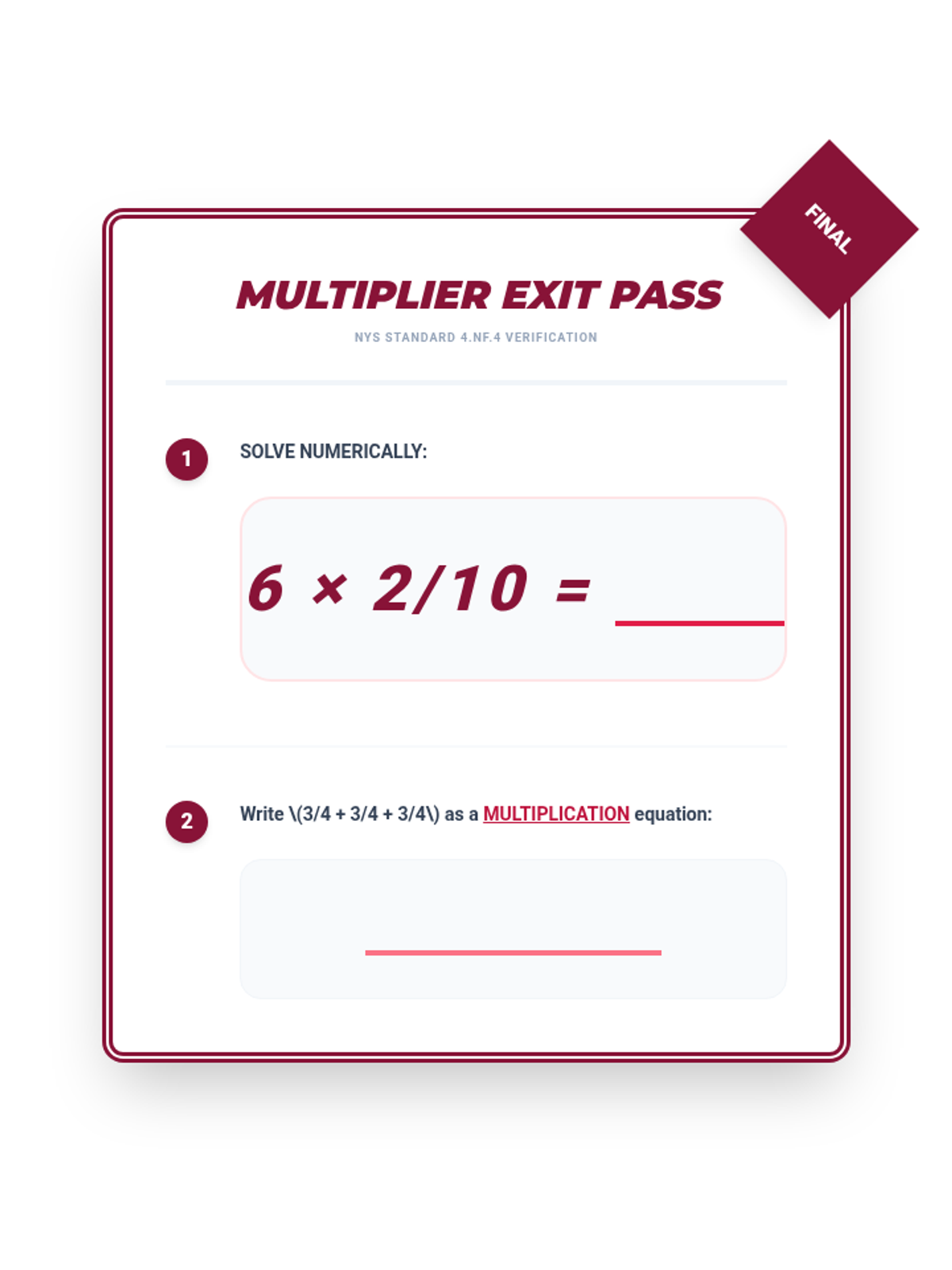
Quick assessment for 4.NF.4, requiring students to solve a numerical fraction multiplication problem and convert repeated addition into a multiplication equation.
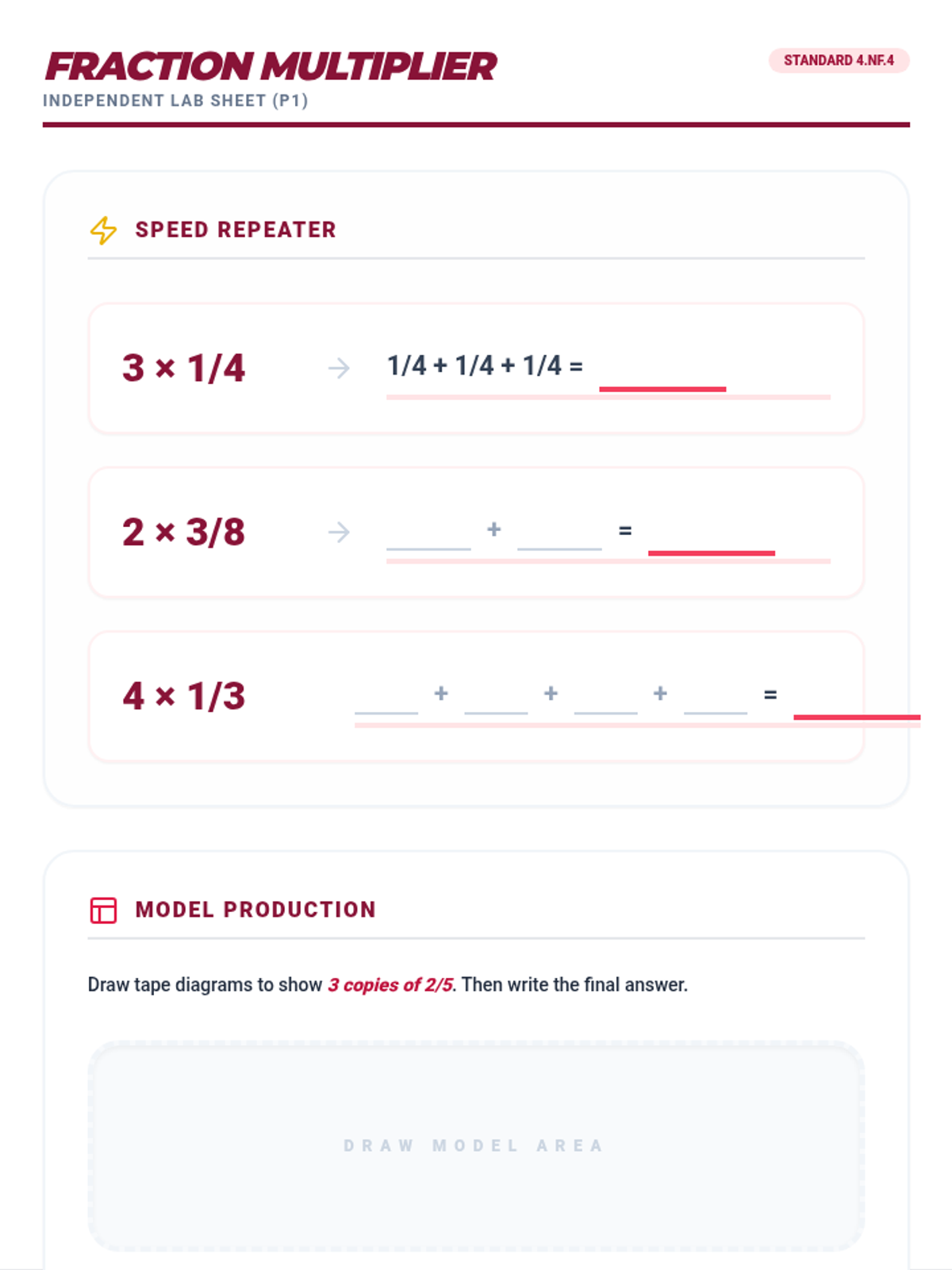
Independent practice for 4.NF.4, covering repeated addition strategies, visual tape diagrams for fraction multiplication, and real-world distance word problems. Improved work area contrast, layout alignment, and units.
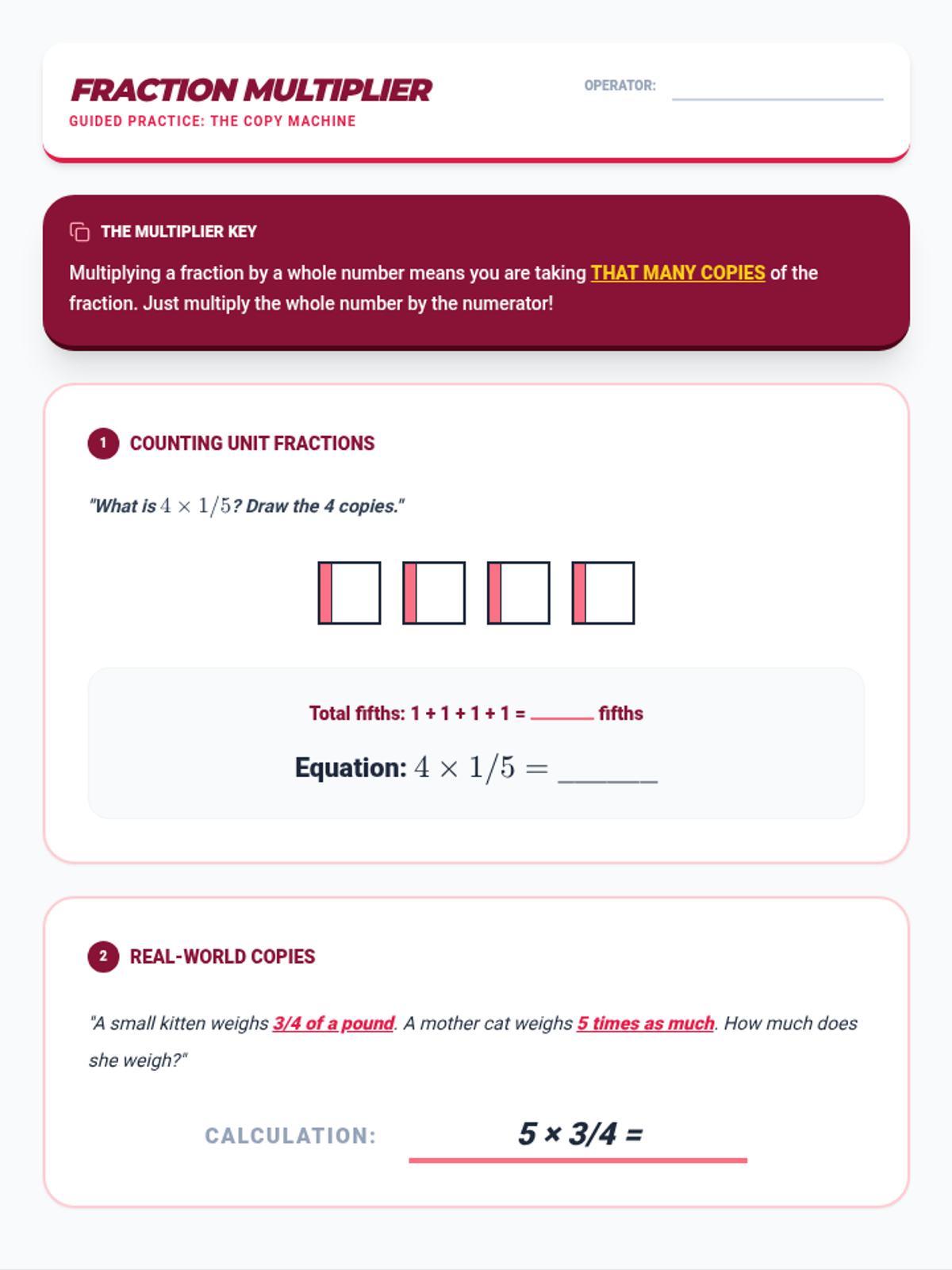
Guided practice for 4.NF.4, demonstrating fraction multiplication as counting multiple copies of a fraction unit, with both unit and non-unit fractions.
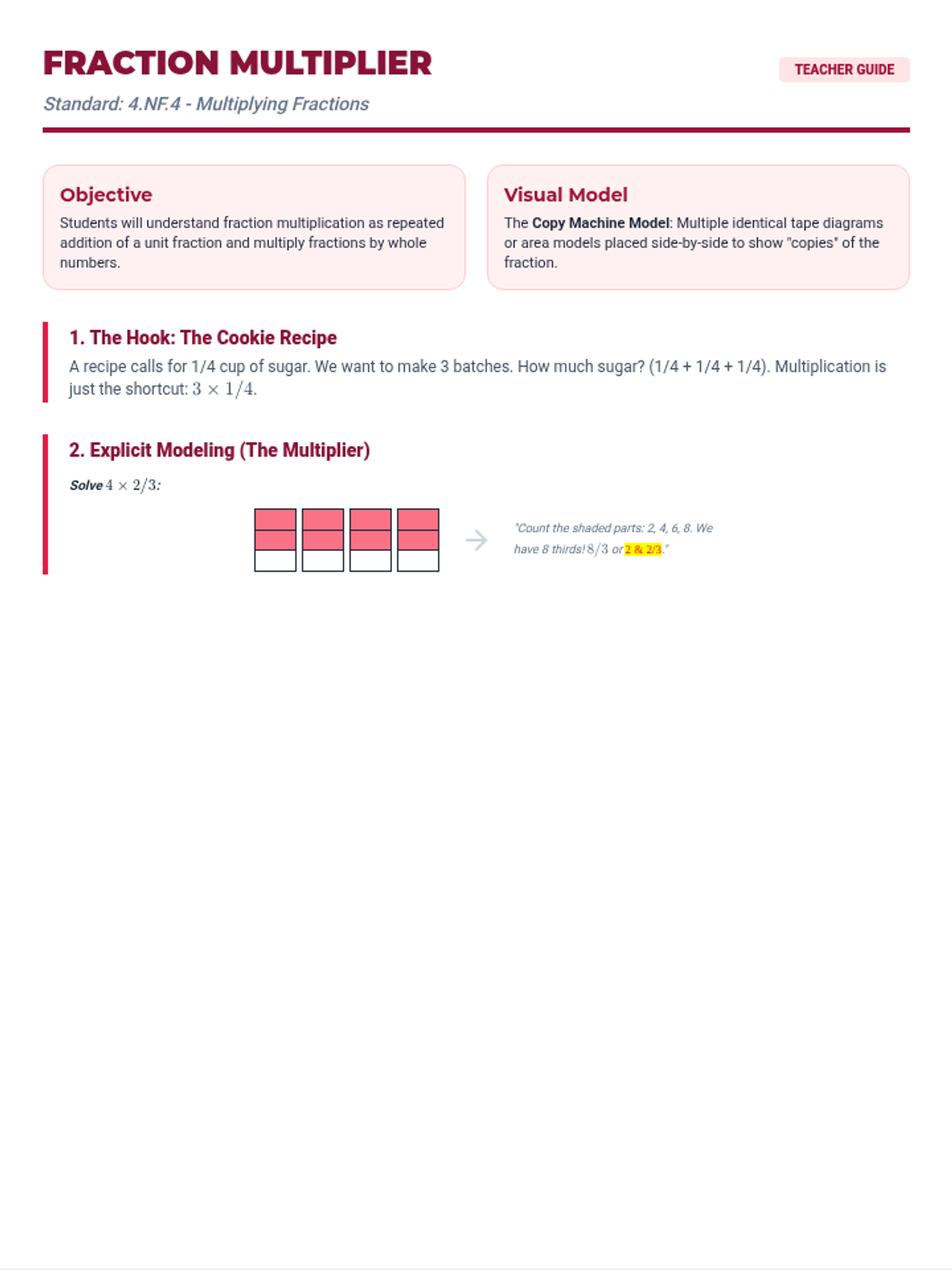
Teacher guide for 4.NF.4, explaining fraction multiplication as repeated addition of a unit fraction using "copy machine" models.
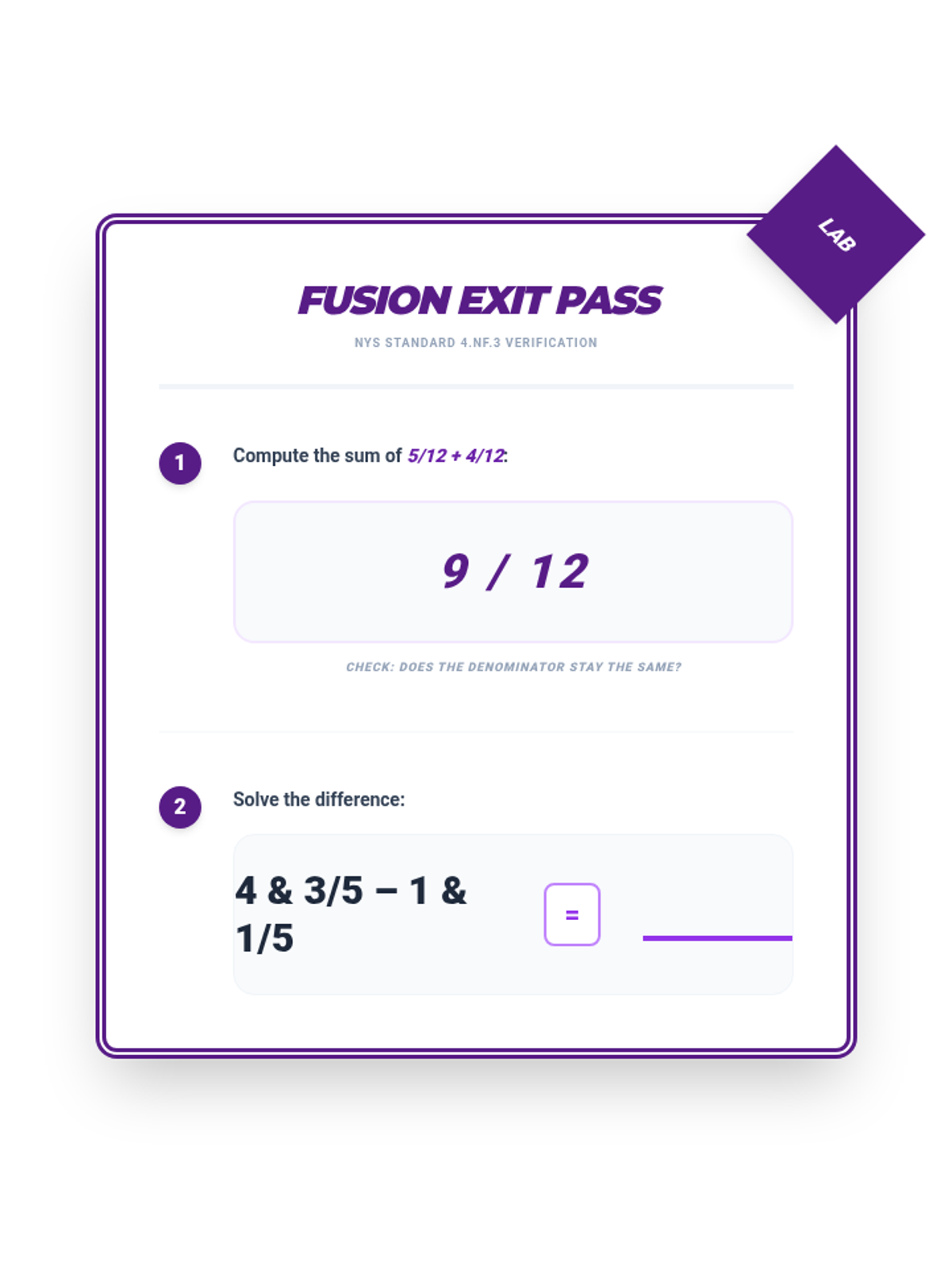
Quick assessment for 4.NF.3, testing fraction addition with like denominators and mixed number subtraction.
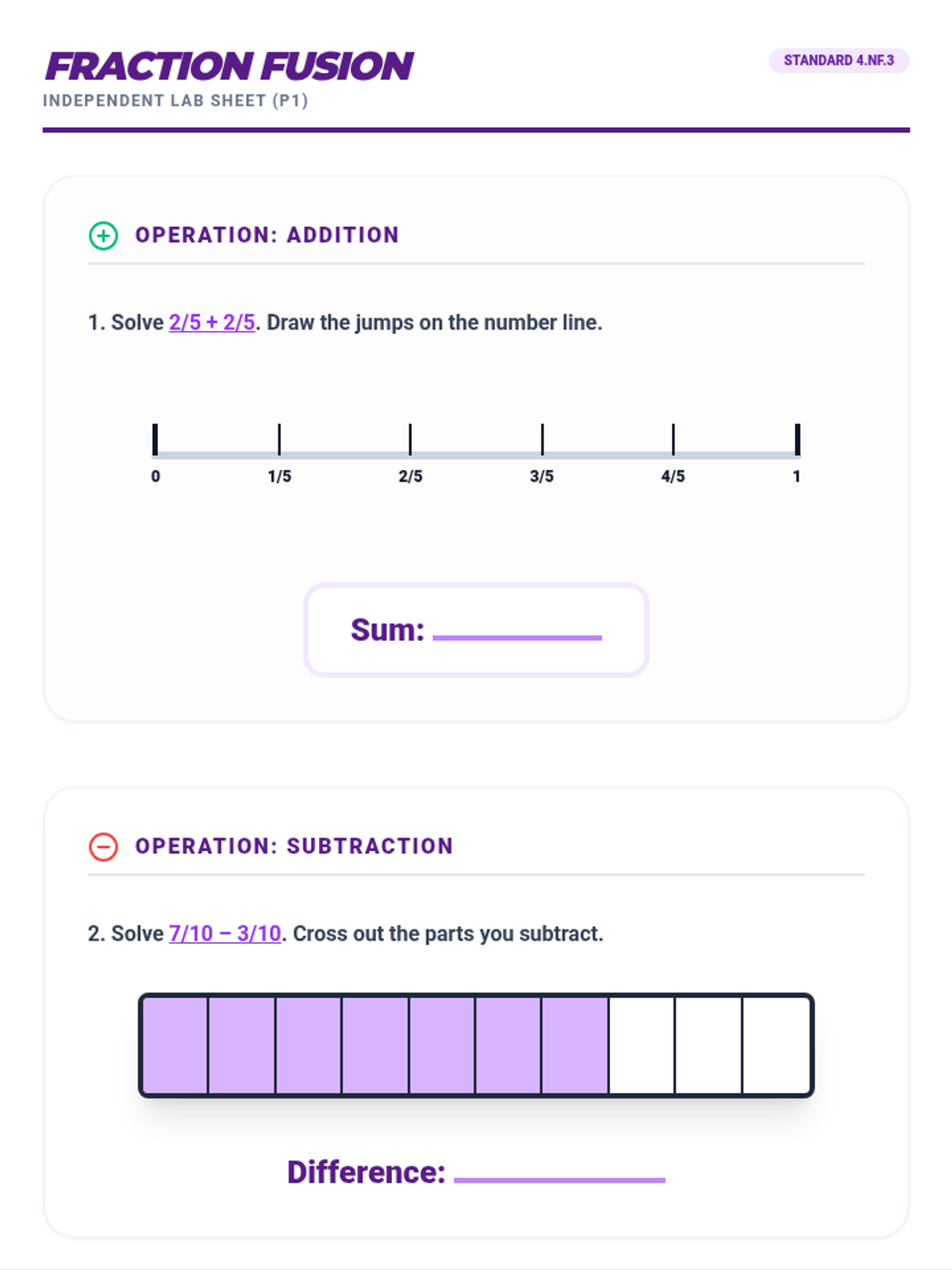
Independent practice for 4.NF.3, featuring fraction addition on number lines, subtraction using area models, fraction decomposition, and a mixed number word problem. Improved math rendering, contrast, and page layout.
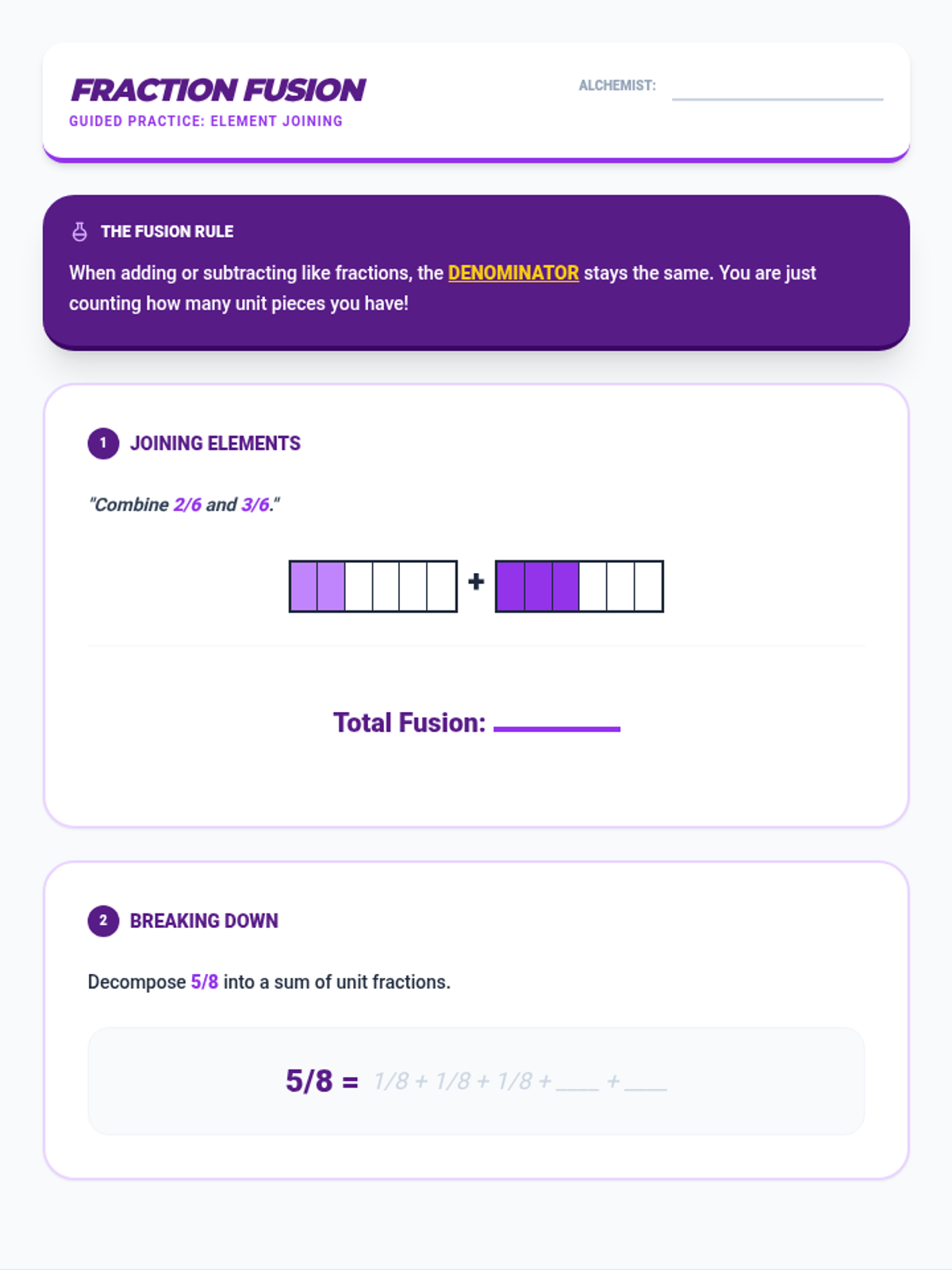
Guided practice for 4.NF.3, using visual area models to join fractions and demonstrating the decomposition of fractions into unit fraction sums.
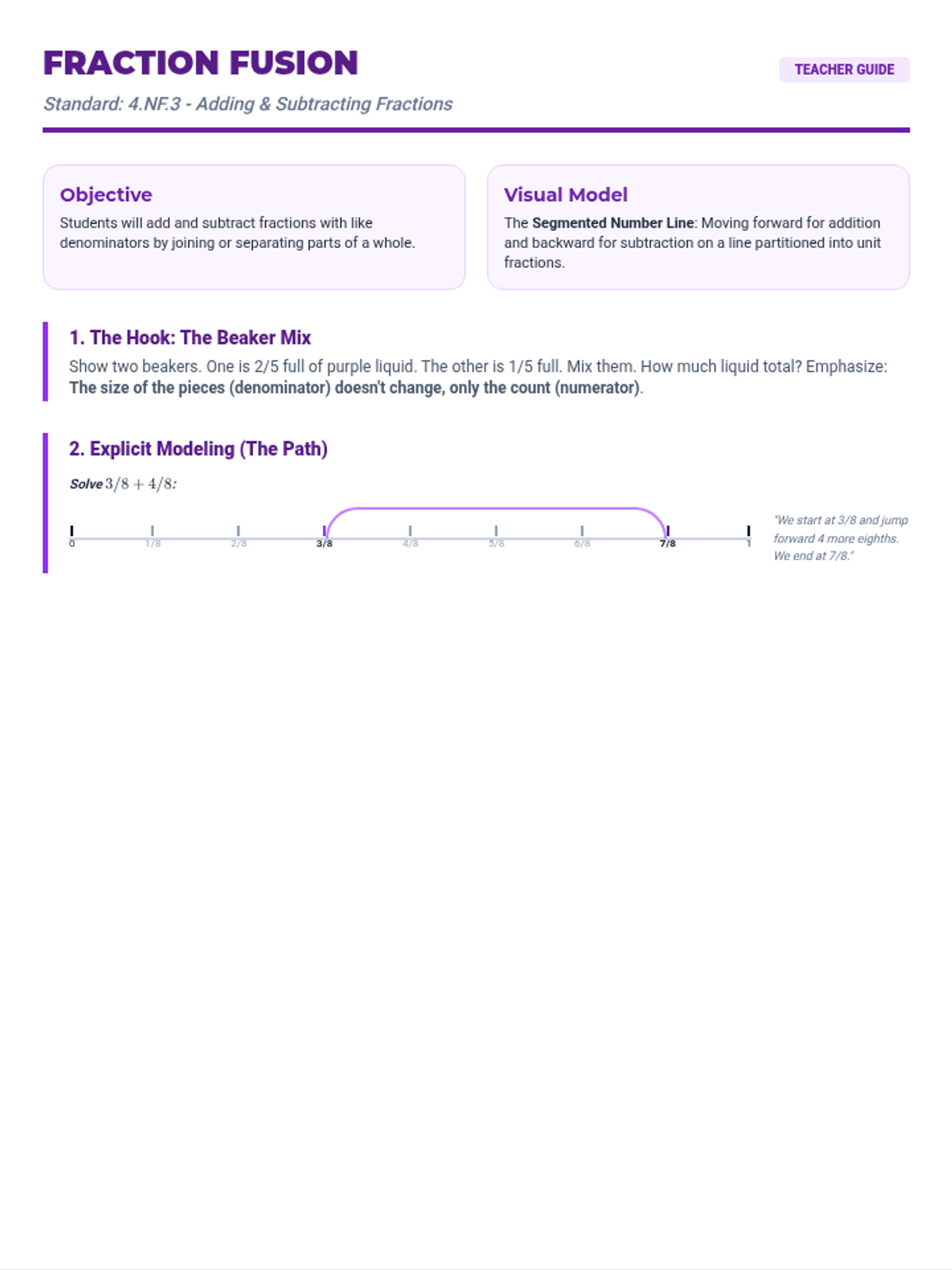
Teacher guide for 4.NF.3, focusing on addition and subtraction of fractions with like denominators using beaker mixing and number line models.
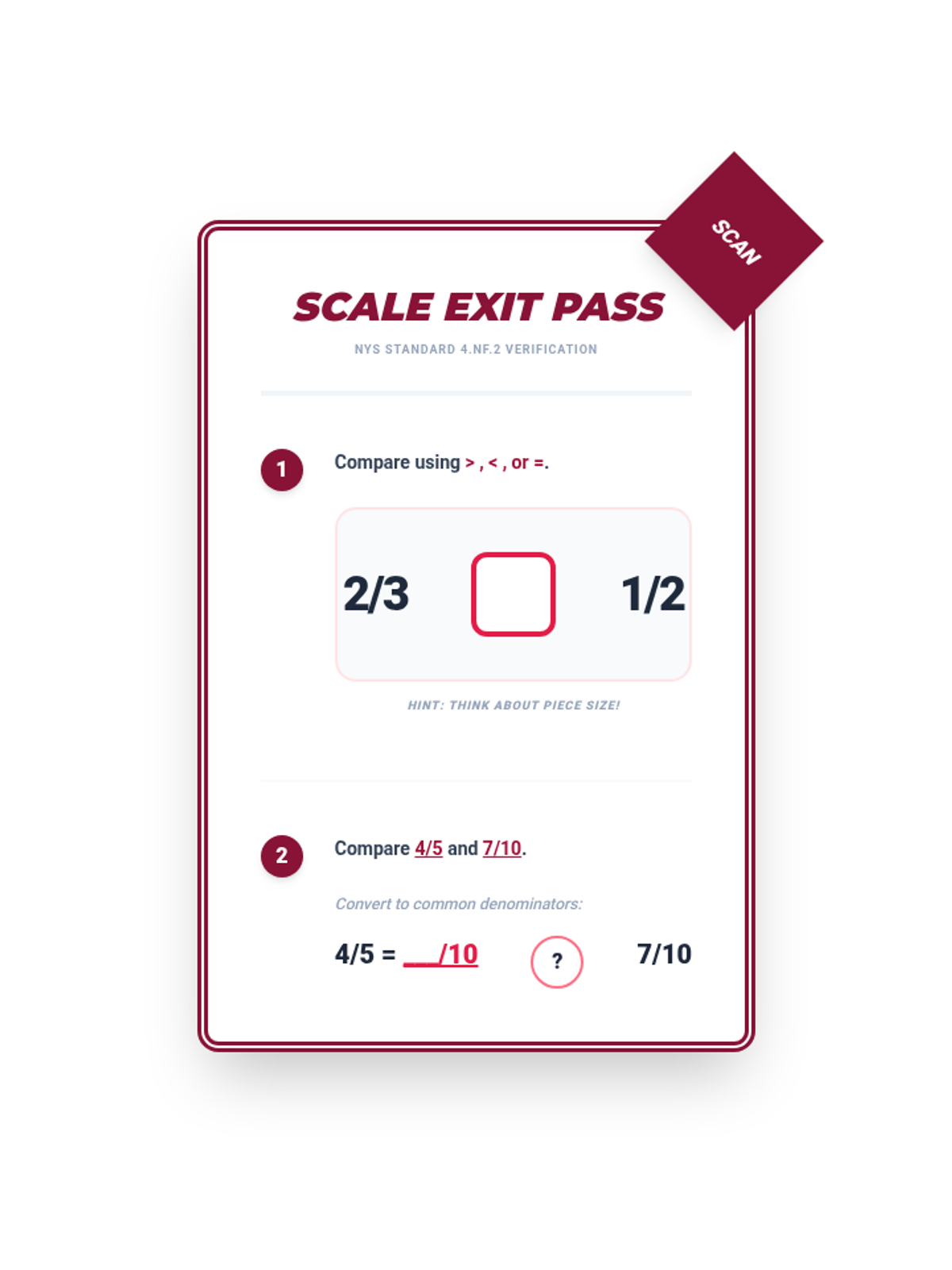
Quick assessment for 4.NF.2, testing student understanding of benchmark fraction comparison (1/2) and conversion to common denominators.
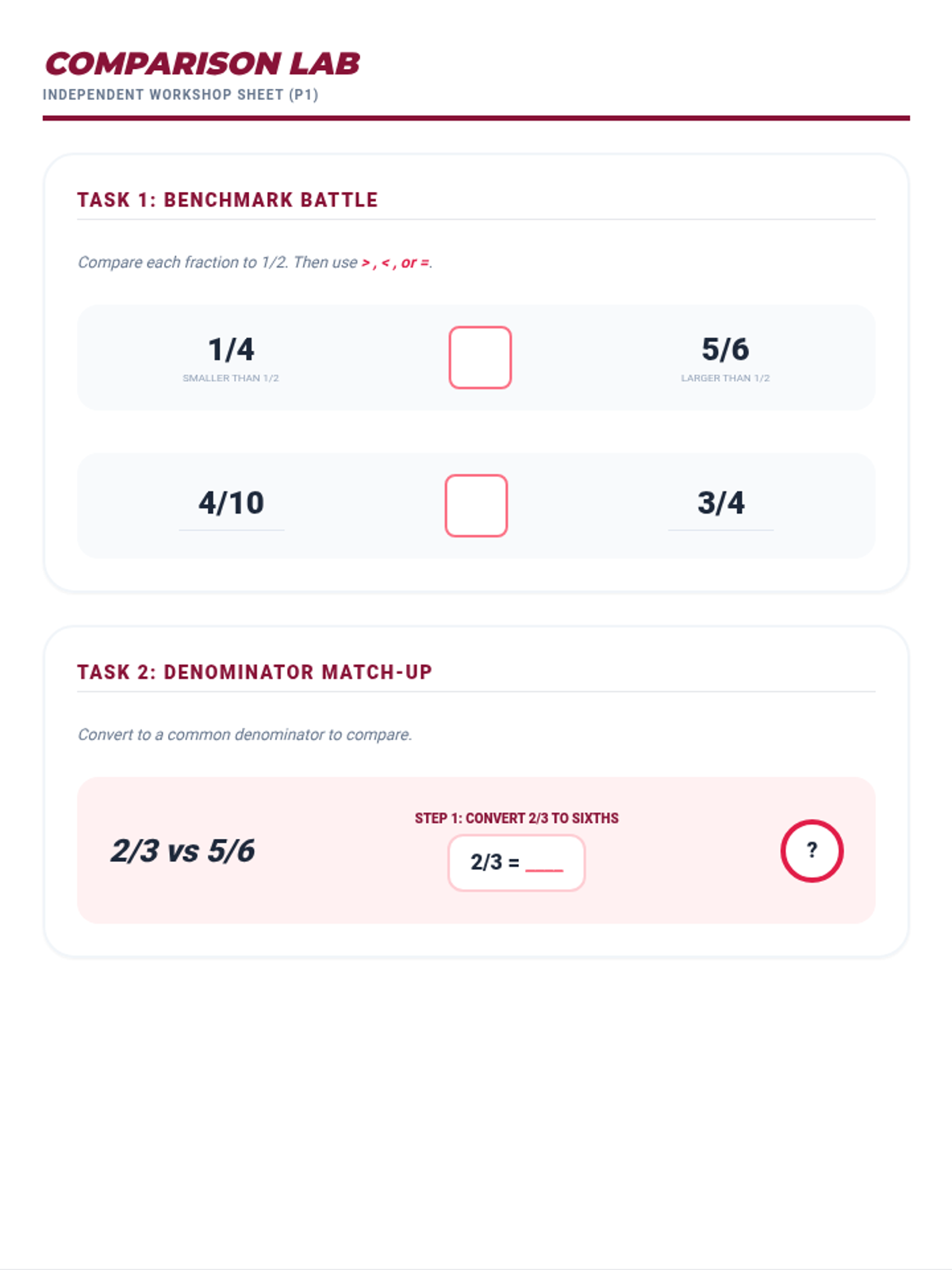
Independent practice for 4.NF.2, including benchmark comparisons, common denominator conversions, and a logical word problem about liquid volume.
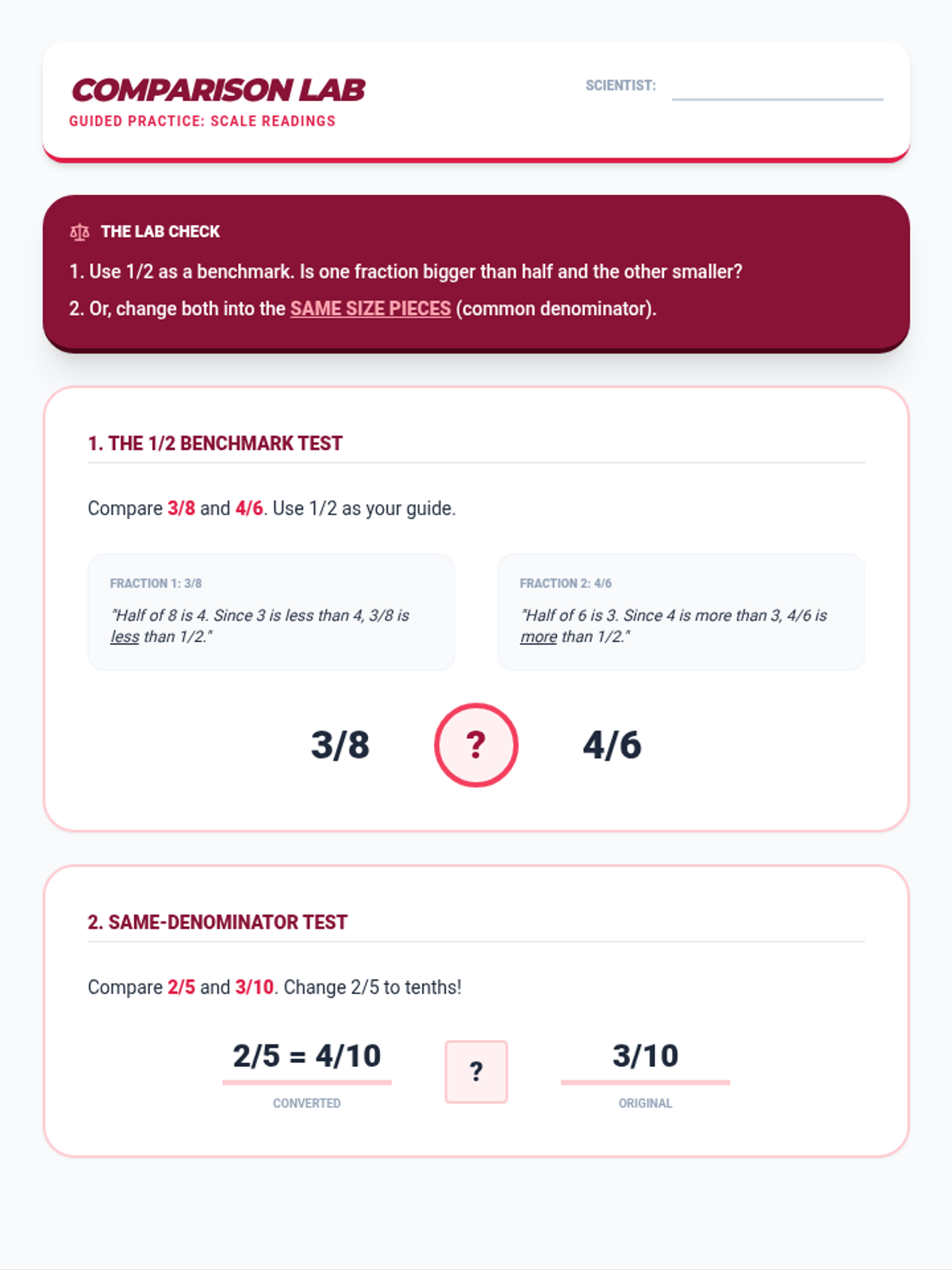
Guided practice for 4.NF.2, walking students through benchmark fraction reasoning (1/2) and common denominator conversion for comparison.
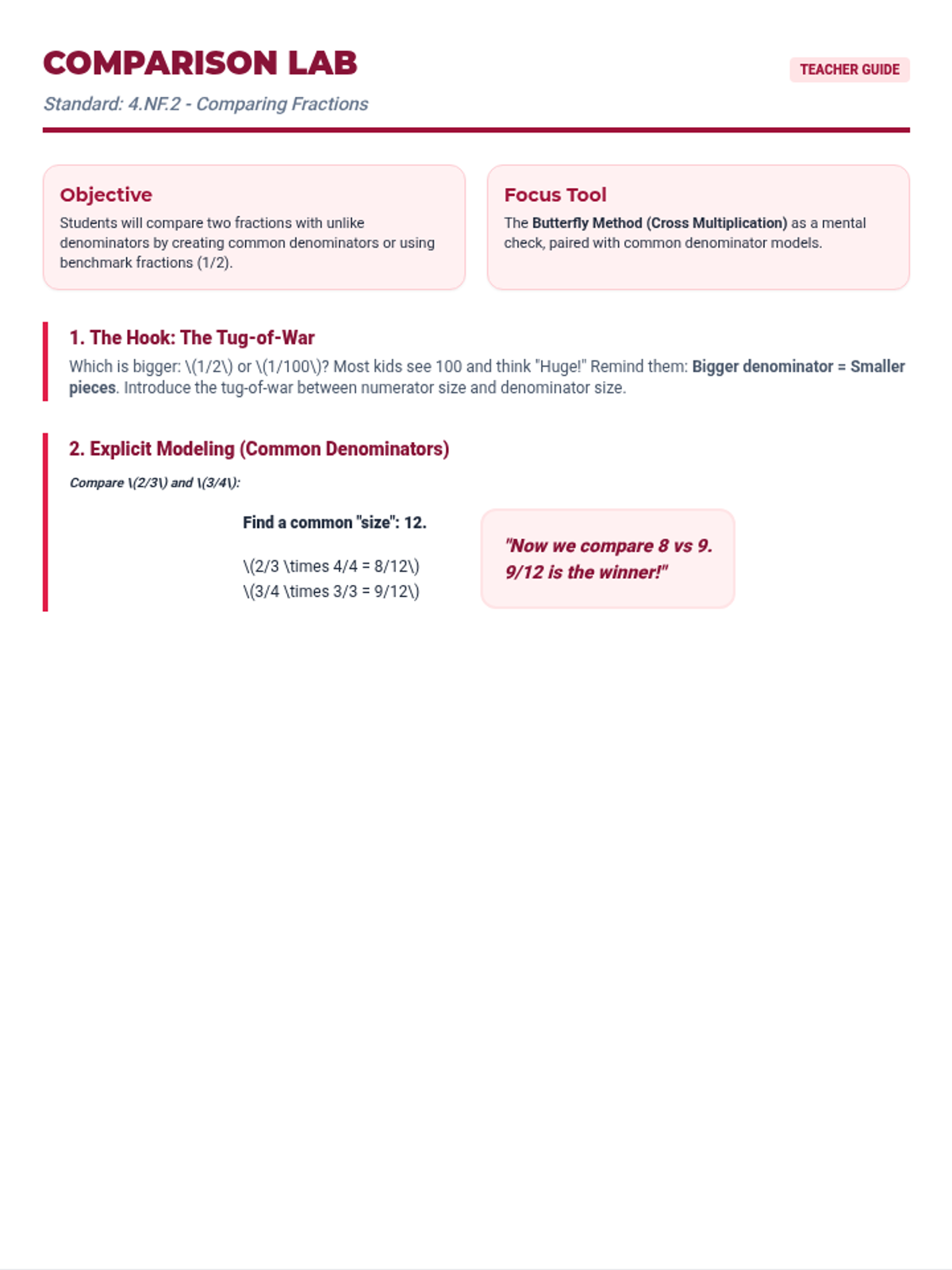
Teacher guide for 4.NF.2, covering strategies for comparing unlike fractions using common denominators and benchmark reasoning.
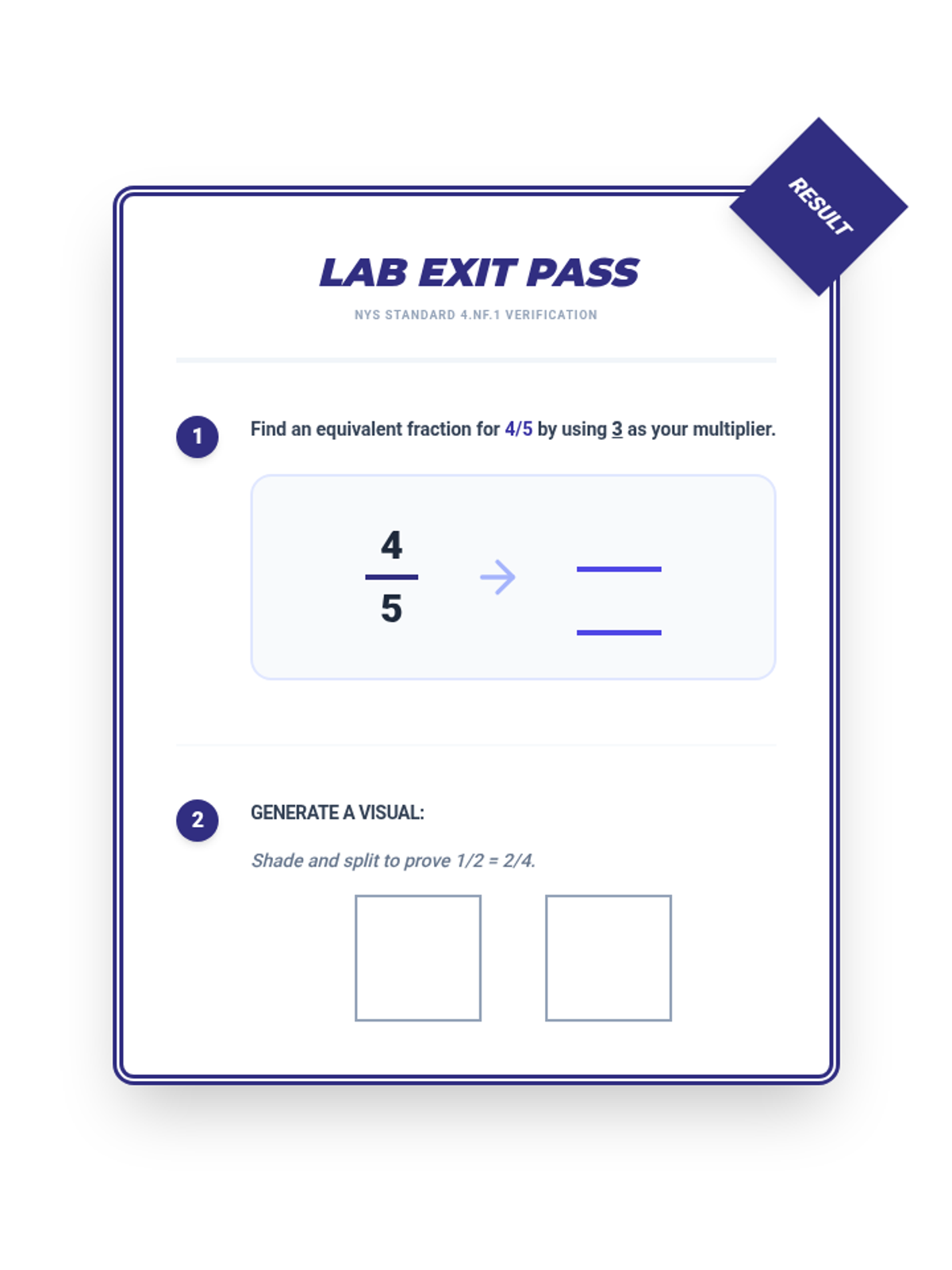
Quick assessment for 4.NF.1, requiring students to generate an equivalent fraction numerically and prove equivalence using a visual area model.
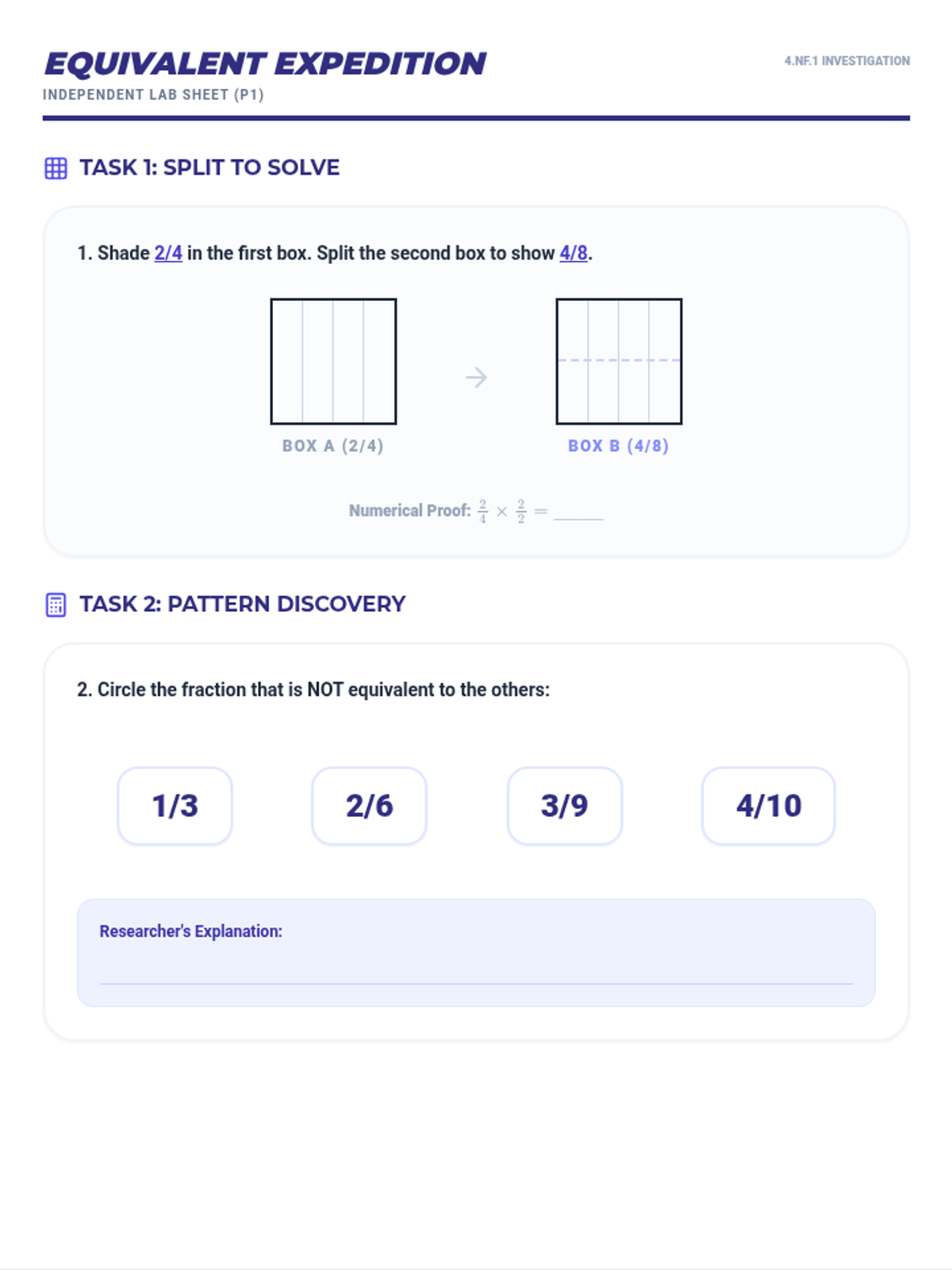
Independent practice for 4.NF.1, featuring area model splitting, identifying non-equivalent fractions, and error analysis of a common multiplication mistake.
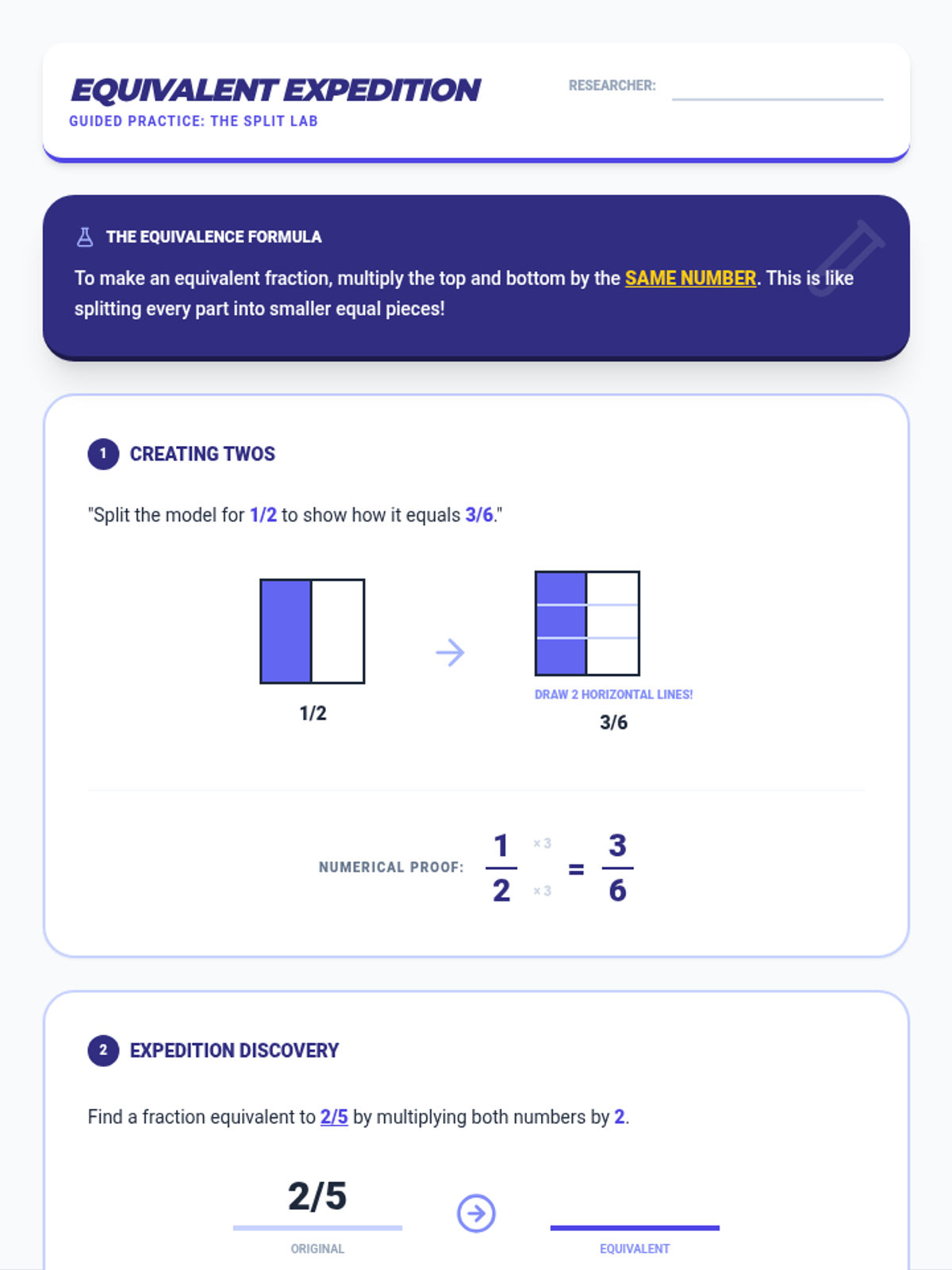
Guided practice for 4.NF.1, using the area model splitting technique to demonstrate fraction equivalence and introducing the numerical multiplication rule.
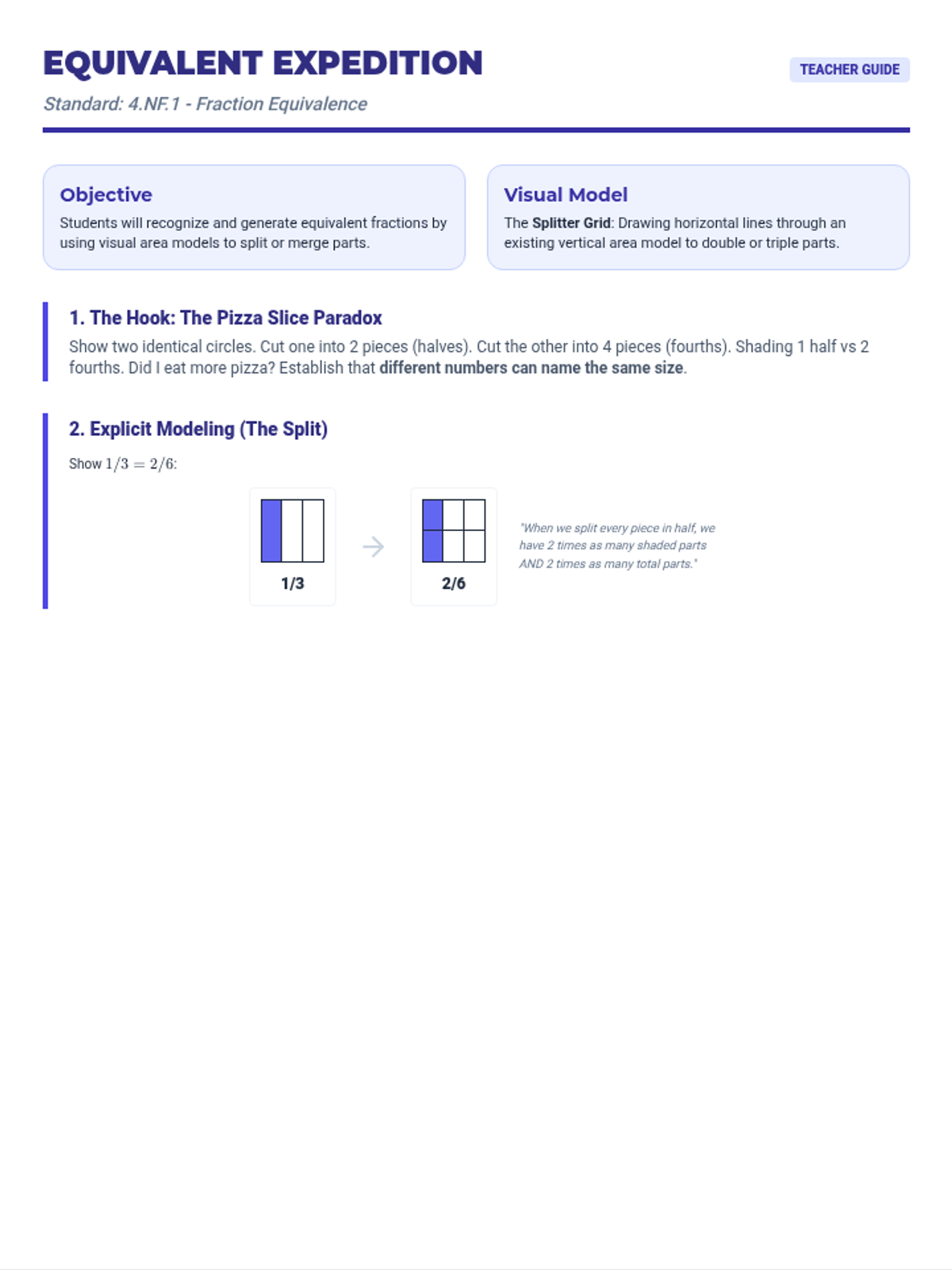
Teacher guide for 4.NF.1, focusing on using area models to visualize fraction equivalence through the "splitting" strategy.
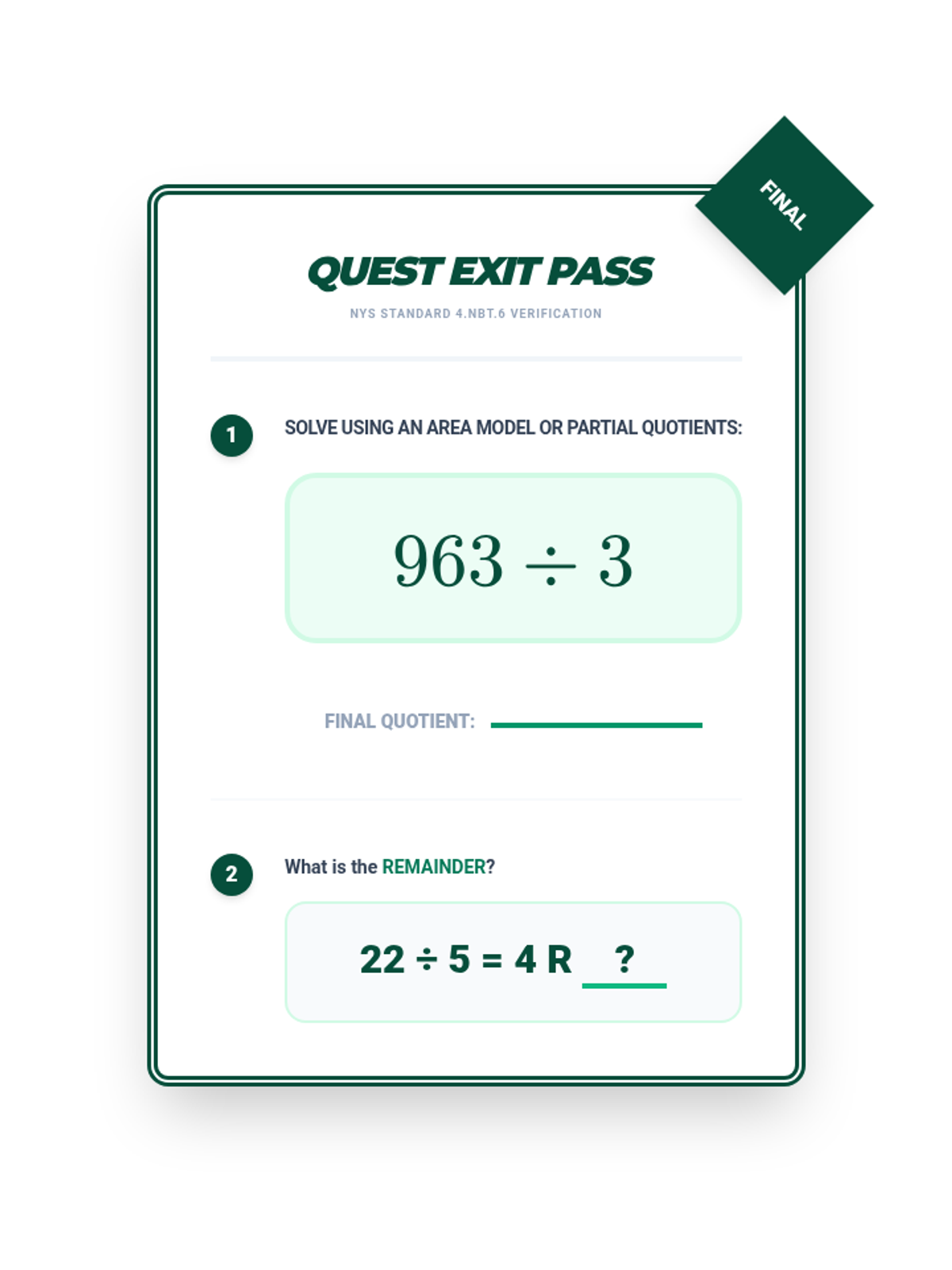
Quick assessment for 4.NBT.6, requiring students to solve a 3-digit division problem and identify a remainder in a provided equation.
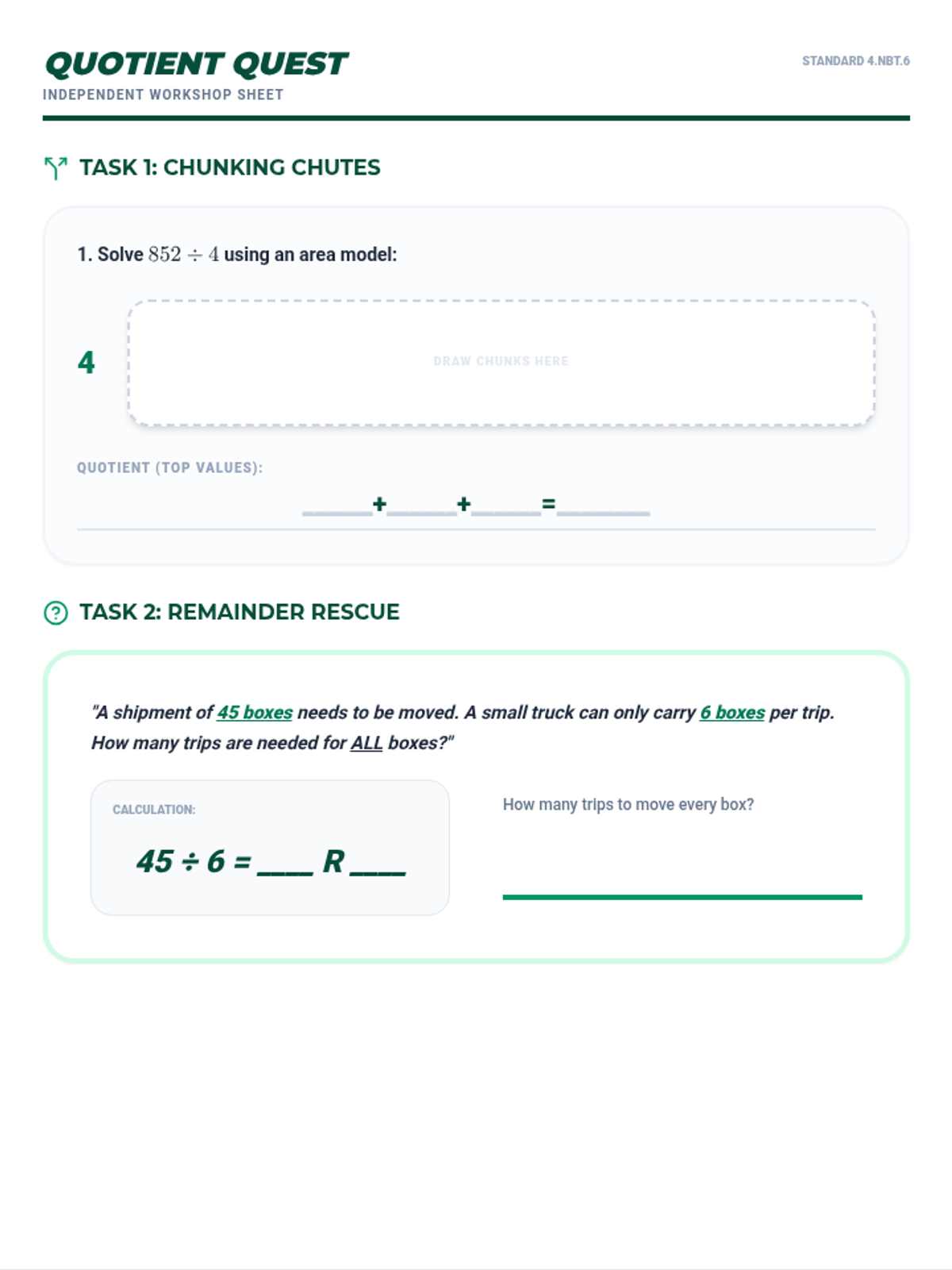
Independent practice for 4.NBT.6, using chunking and area models for division. Includes a multi-step 4-digit division problem and a real-world trip-planning remainder problem.
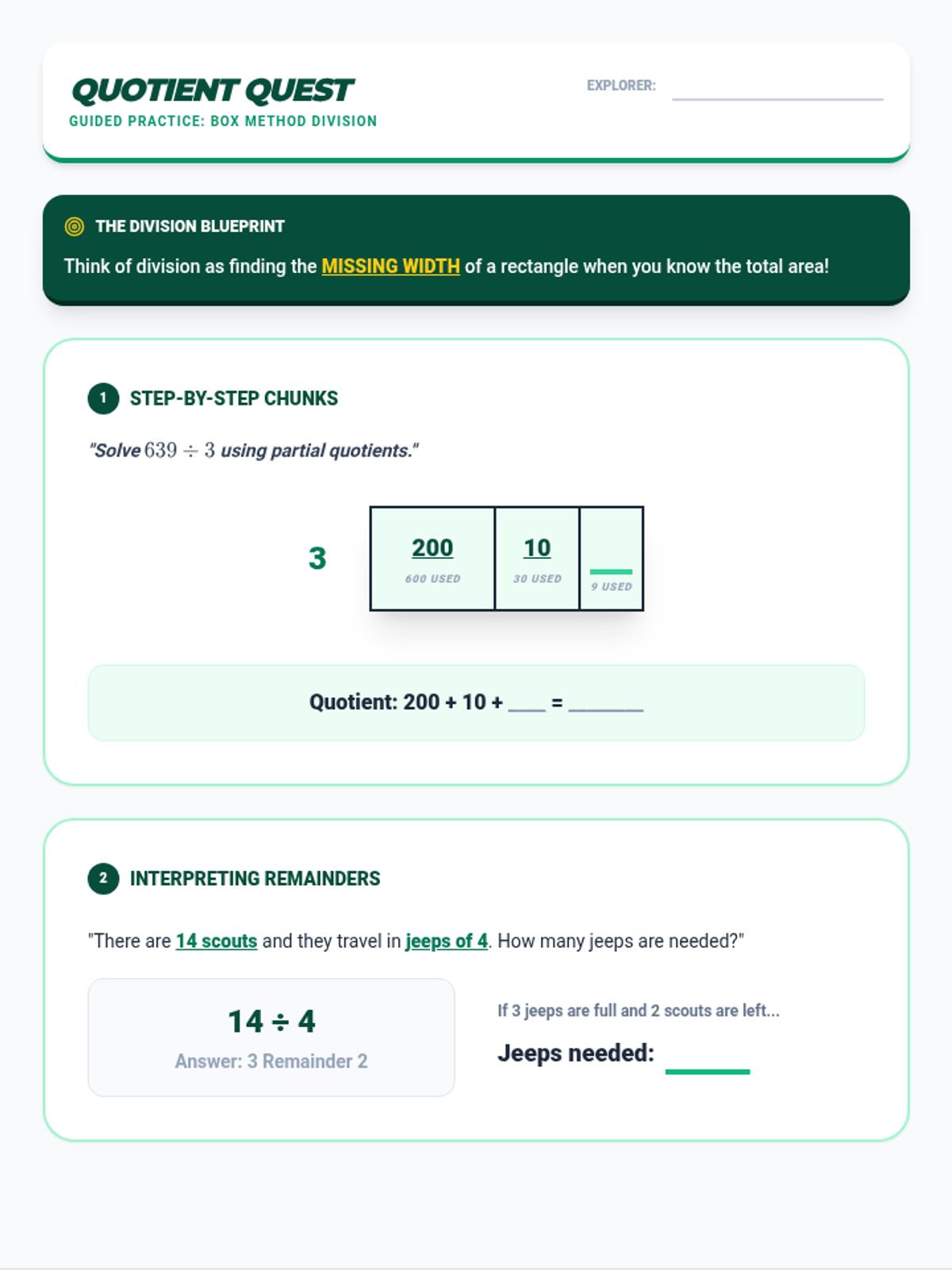
Guided practice for 4.NBT.6, providing visual scaffolding for division using the box method. Includes a remainder interpretation scenario.
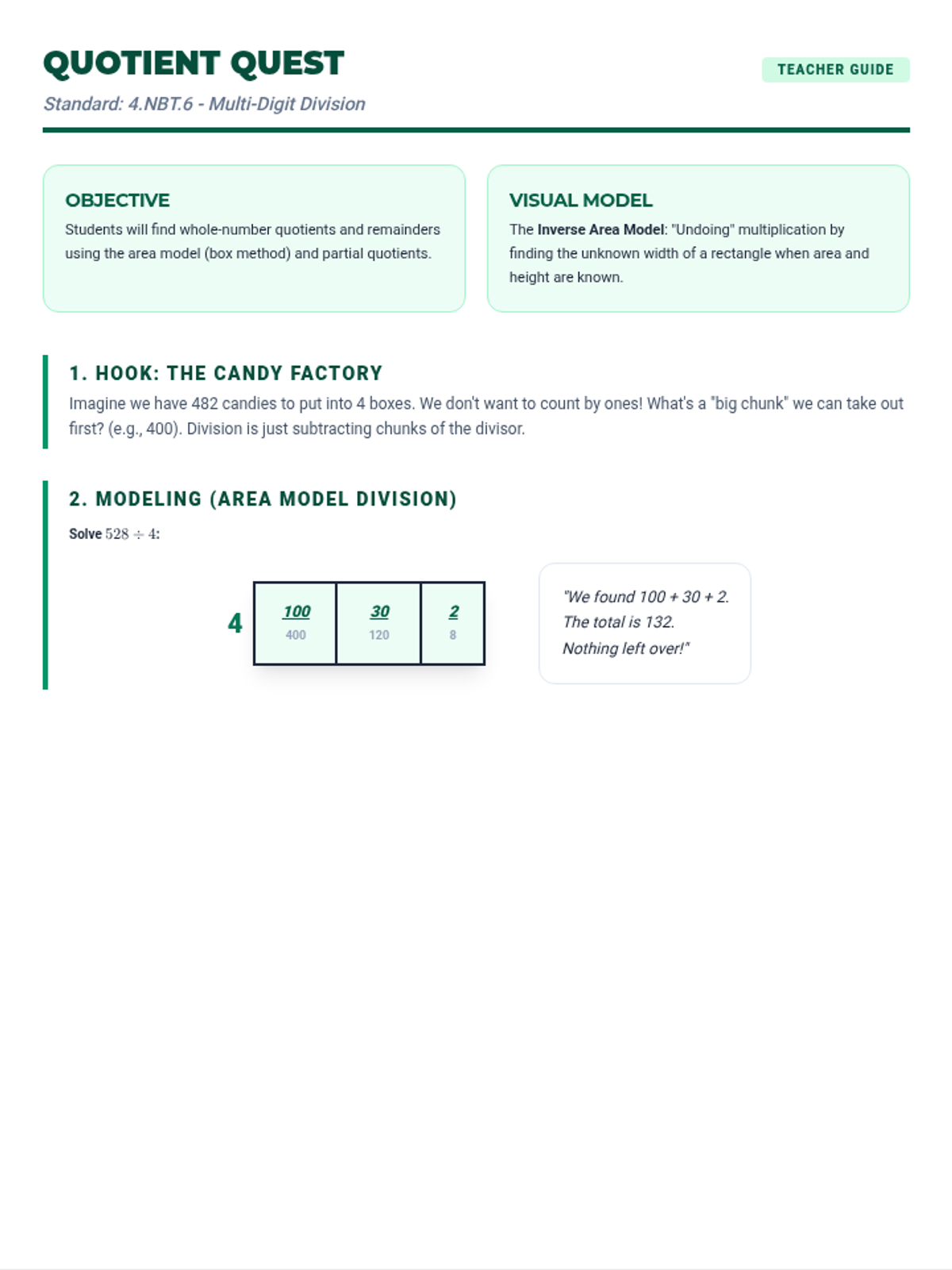
Teacher guide for 4.NBT.6, using the "Inverse Area Model" (box method) for division. Focuses on taking "big chunks" (partial quotients) and handling remainders.
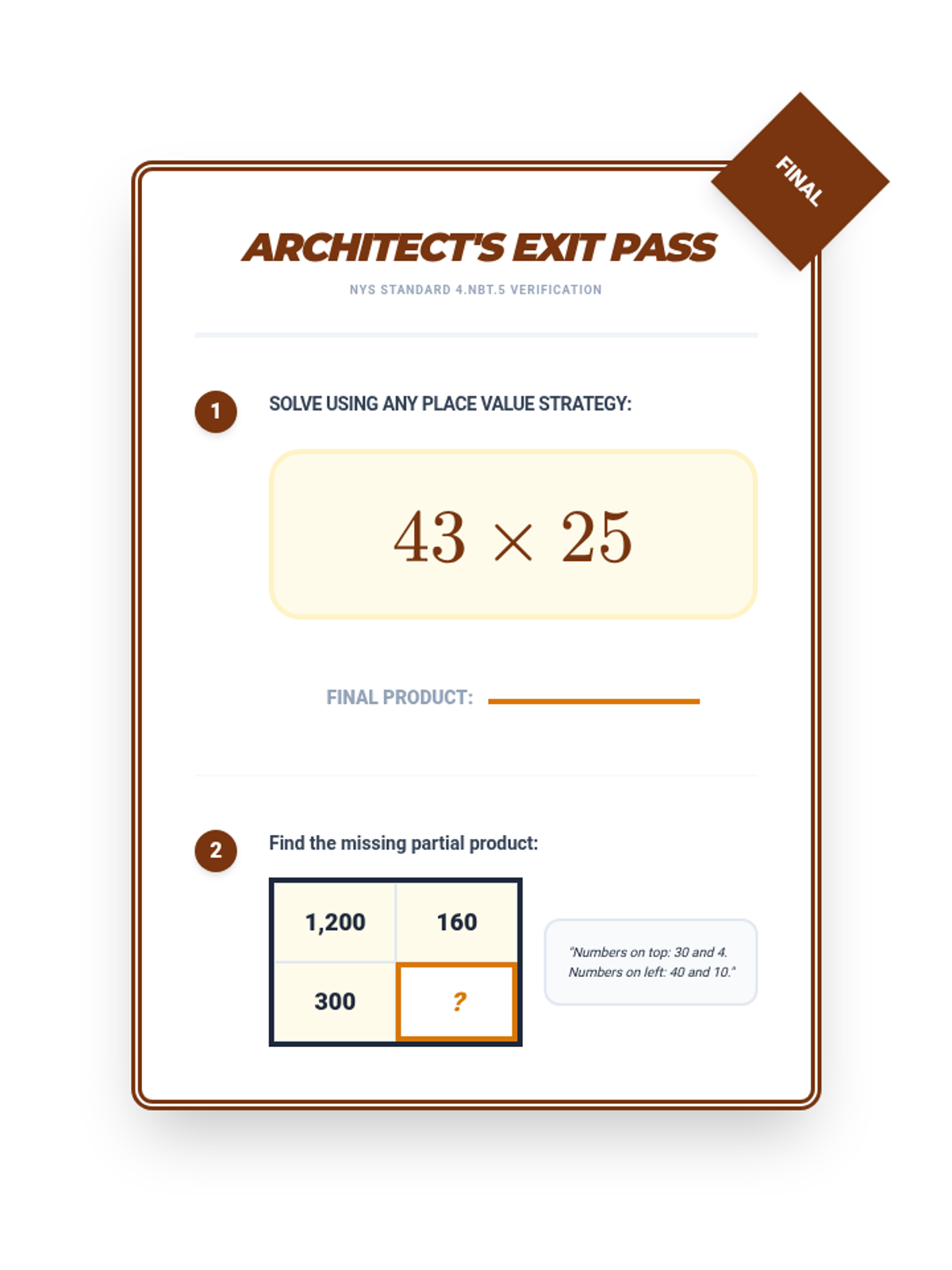
Quick assessment for 4.NBT.5, requiring students to solve a 2x2 multiplication problem and identify a missing partial product in a provided area model.
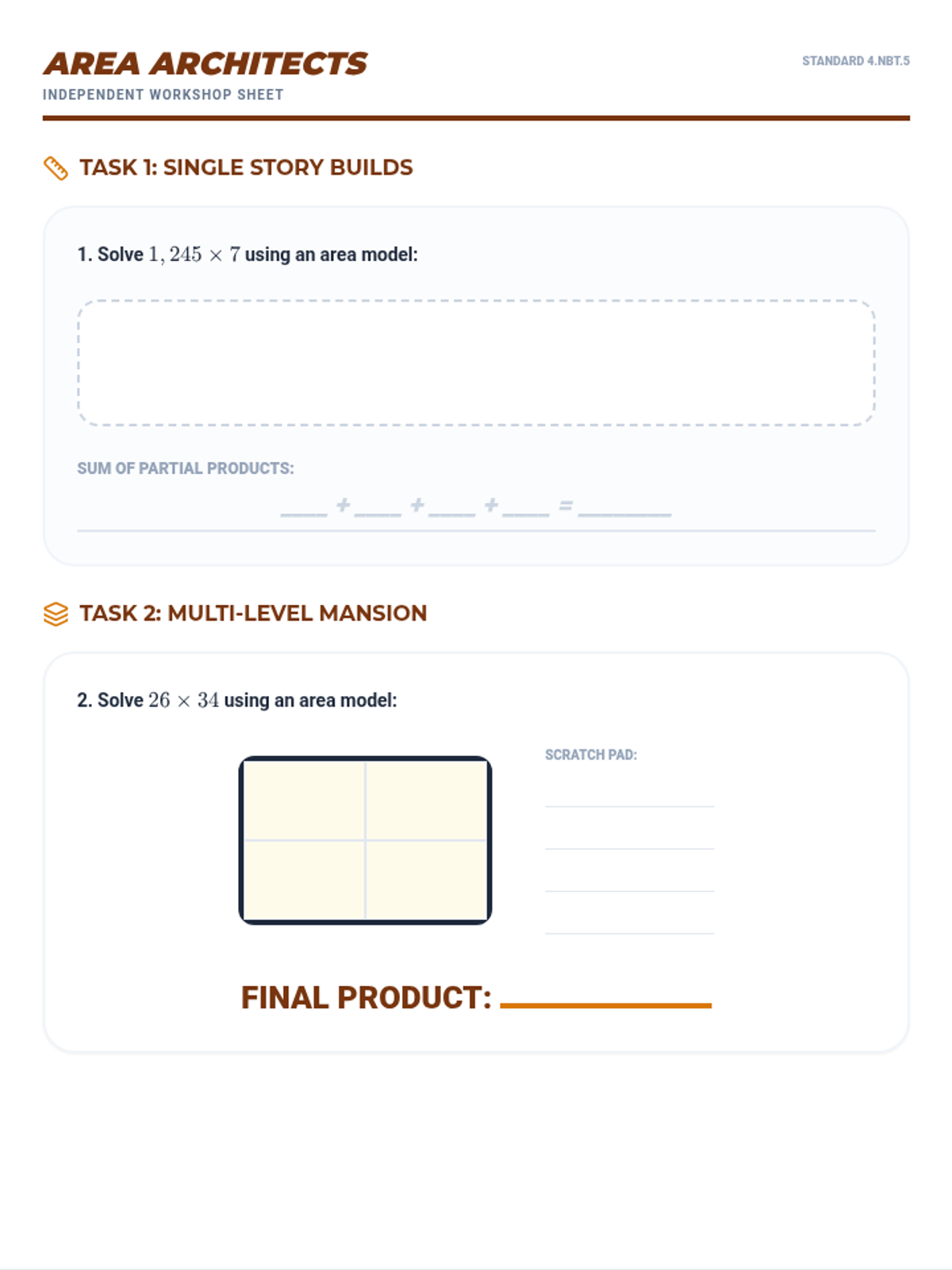
Independent practice for 4.NBT.5, featuring multi-digit multiplication via area models. Includes 4x1 and 2x2 problems, error analysis, and a real-world seating capacity word problem.
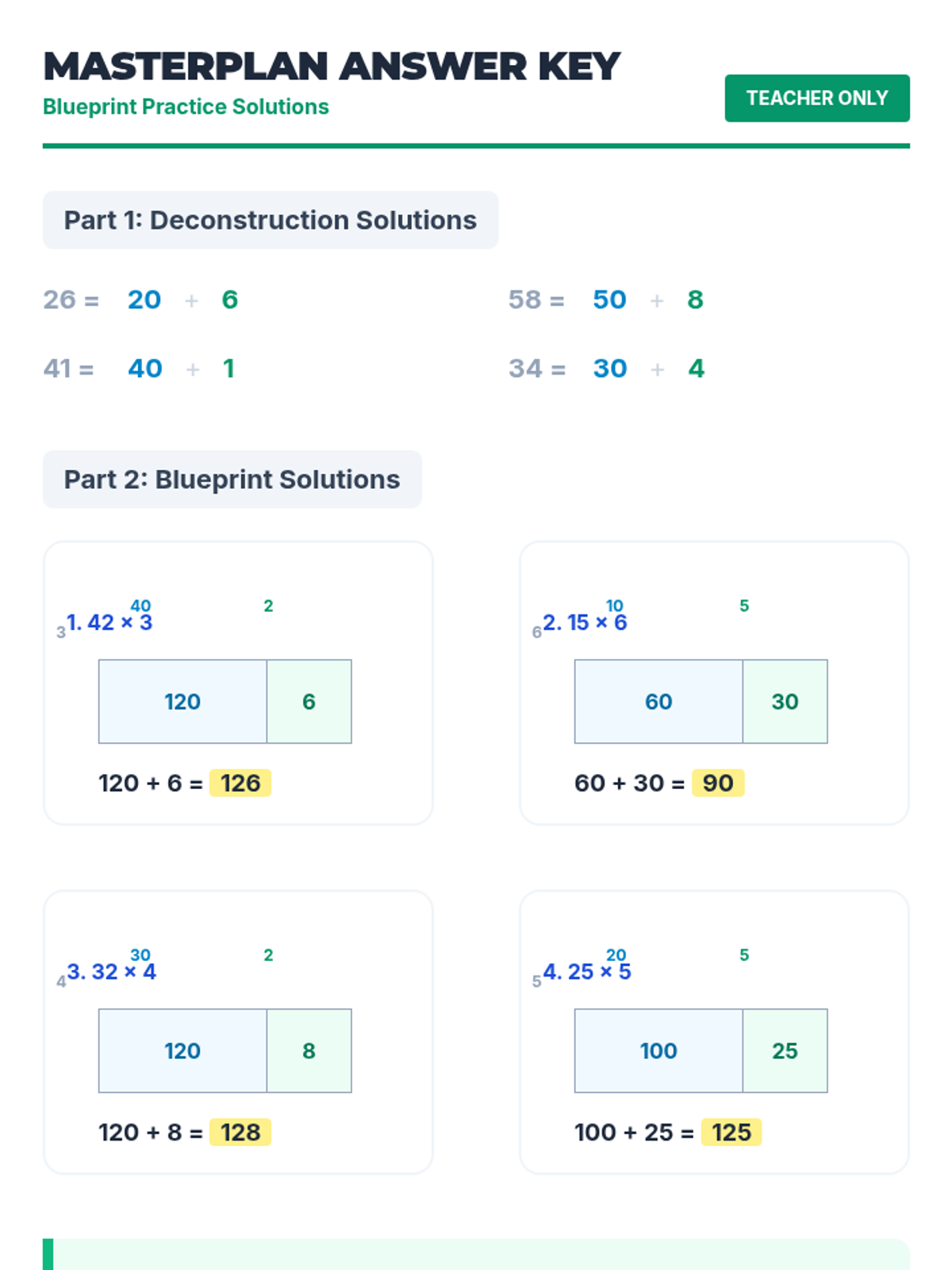
A teacher answer key for the Blueprint Practice Worksheet, featuring completed area models and final product calculations for multi-digit multiplication problems.
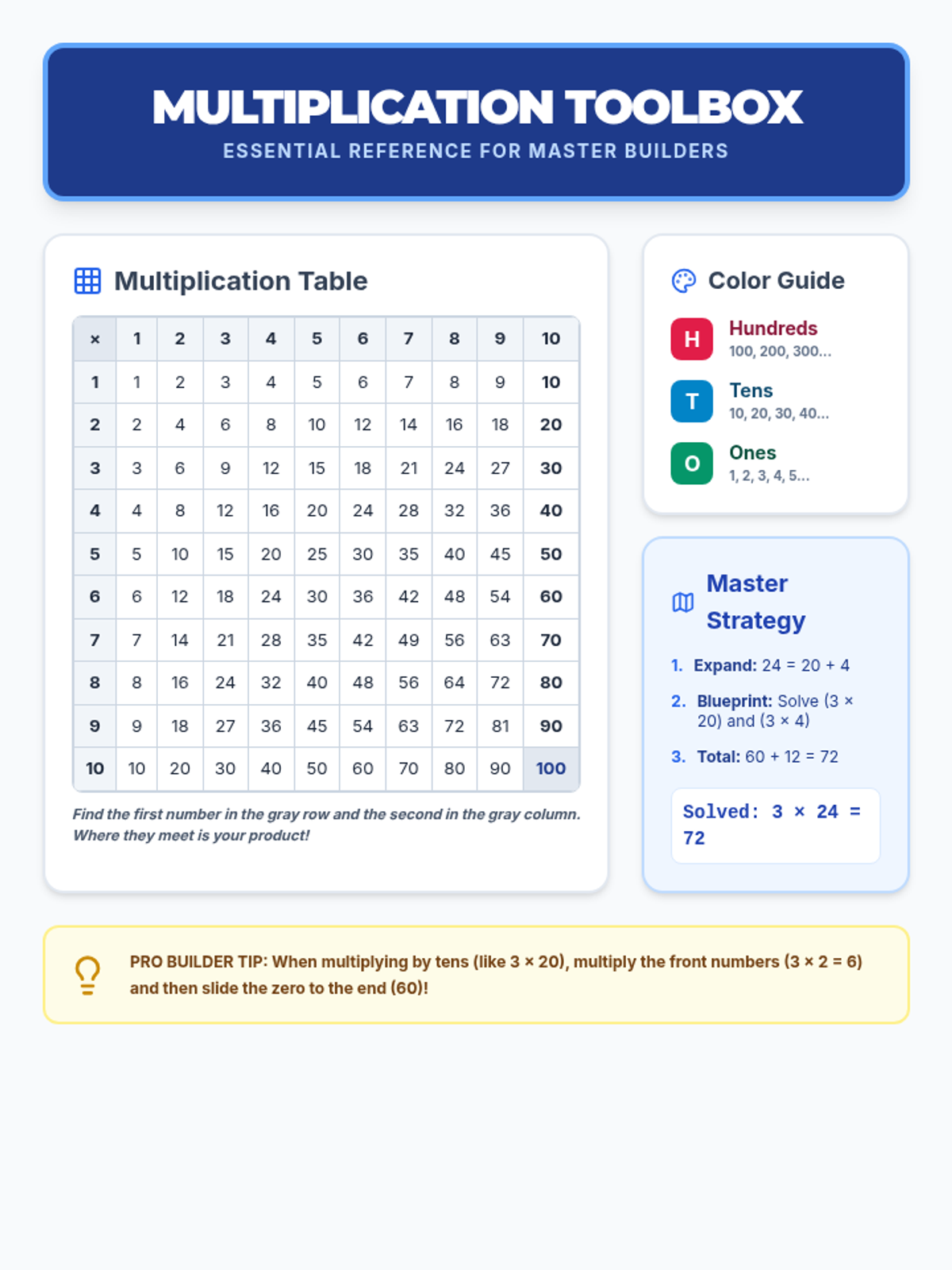
A foundational multiplication reference sheet including a color-coded place value guide, a 10x10 multiplication table, and a step-by-step summary of the area model strategy.
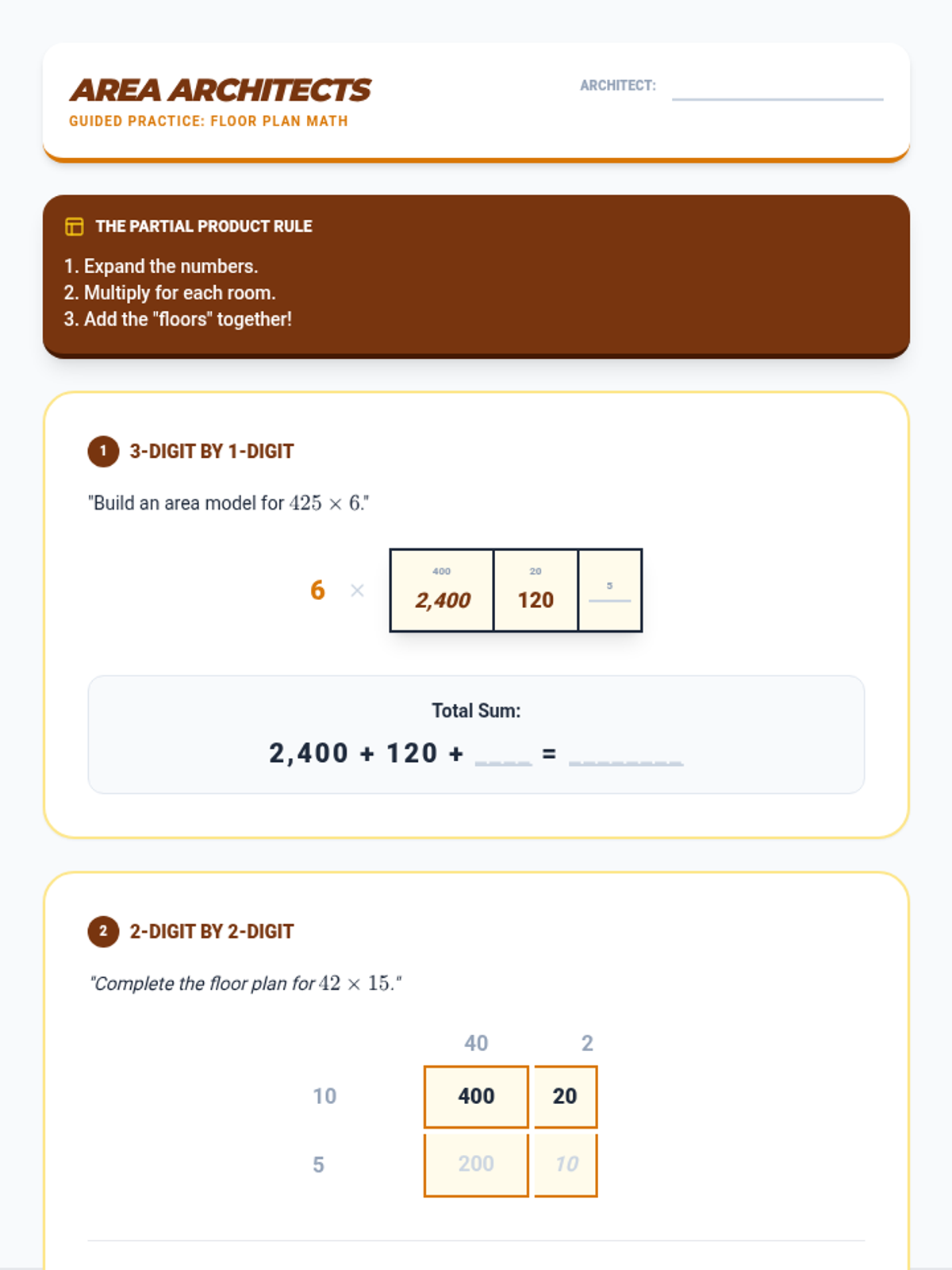
Guided practice for 4.NBT.5, featuring area models for 3x1 and 2x2 multiplication. Visual scaffolds help students calculate and sum partial products.
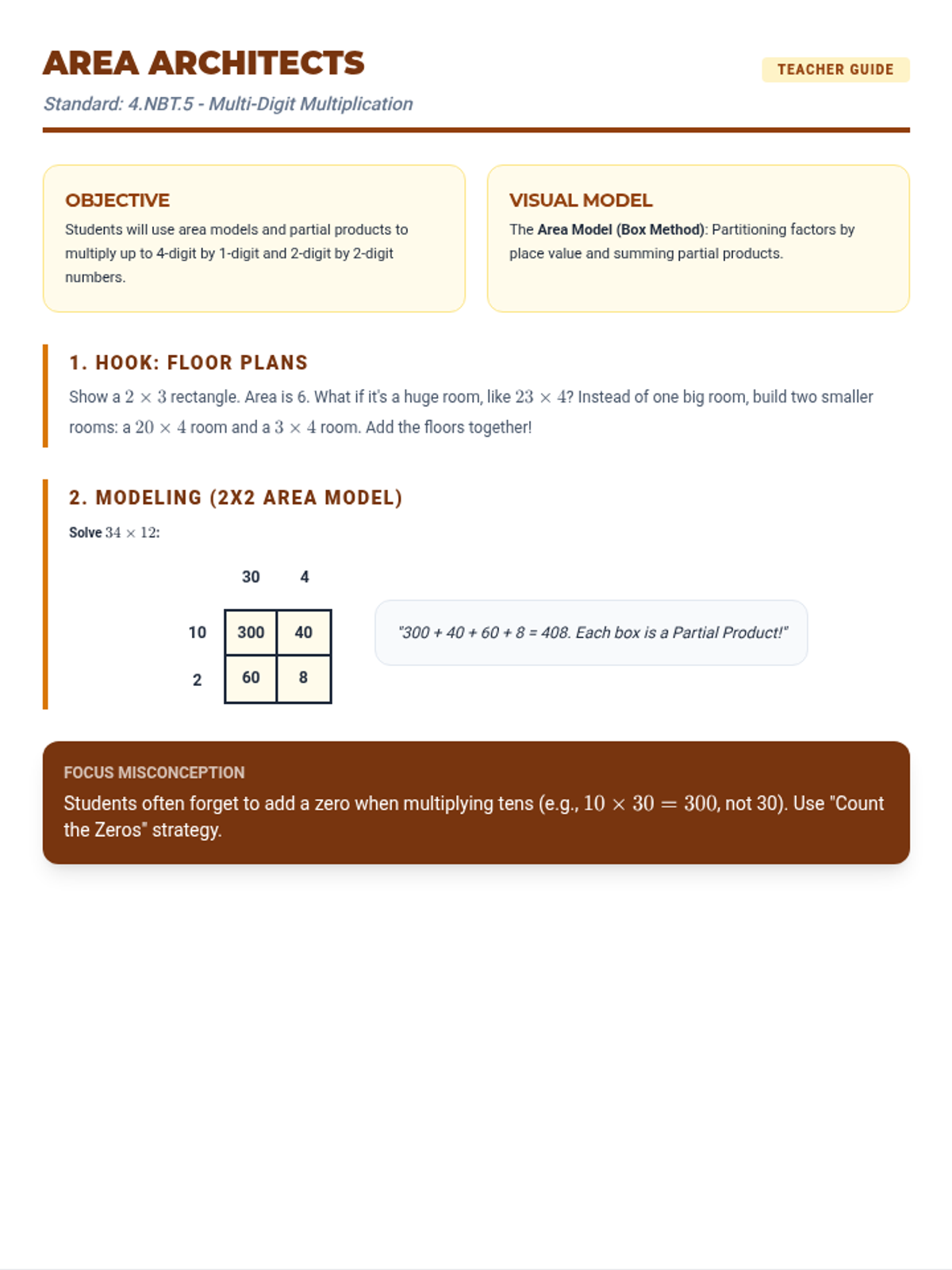
Teacher guide for 4.NBT.5, focusing on multi-digit multiplication using area models and partial products. Includes visual partitioning and misconception alerts.
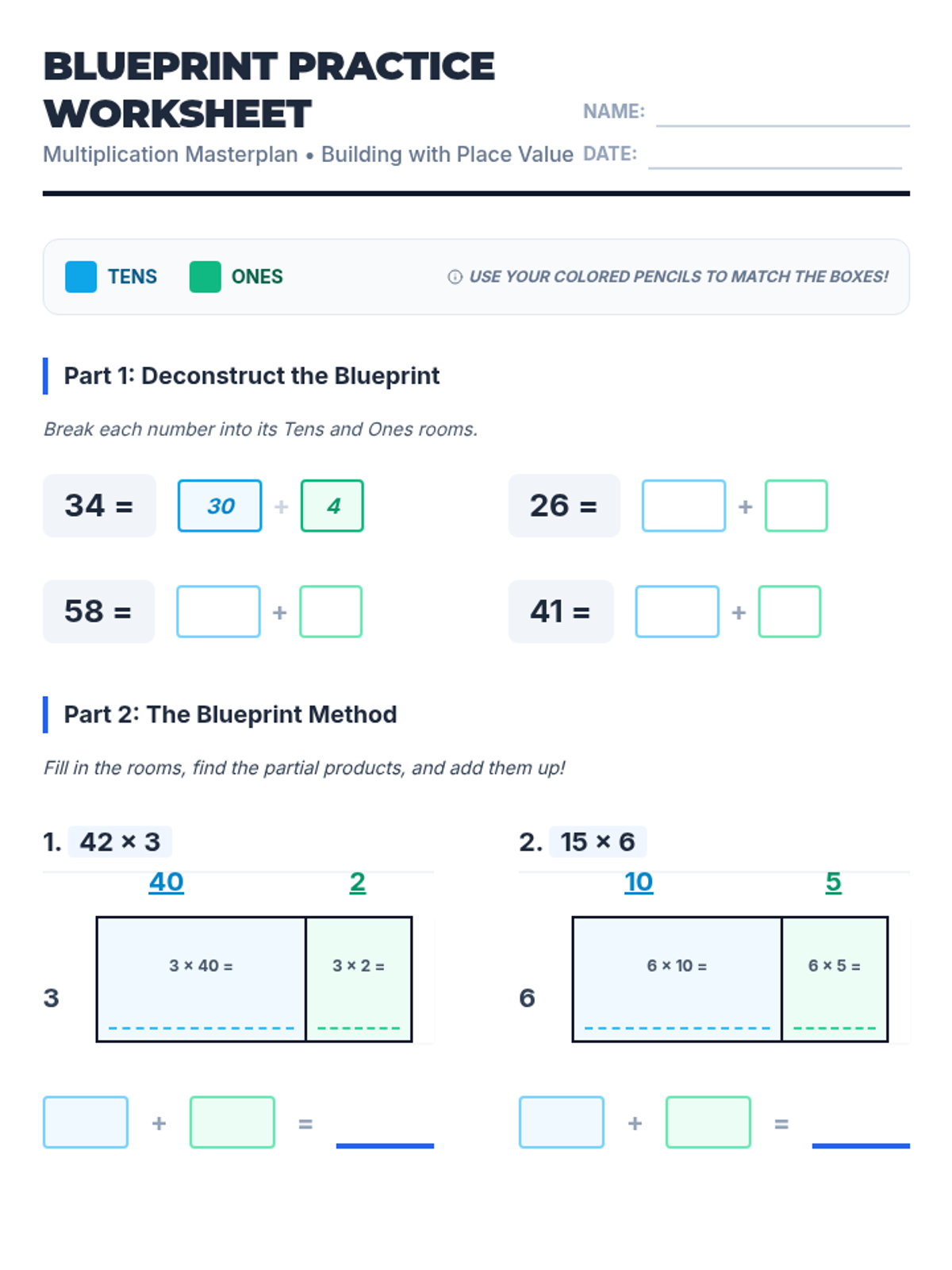
A student practice worksheet for multi-digit multiplication using color-coded area models and expanded form deconstruction, designed to scaffold learning for students behind grade level.
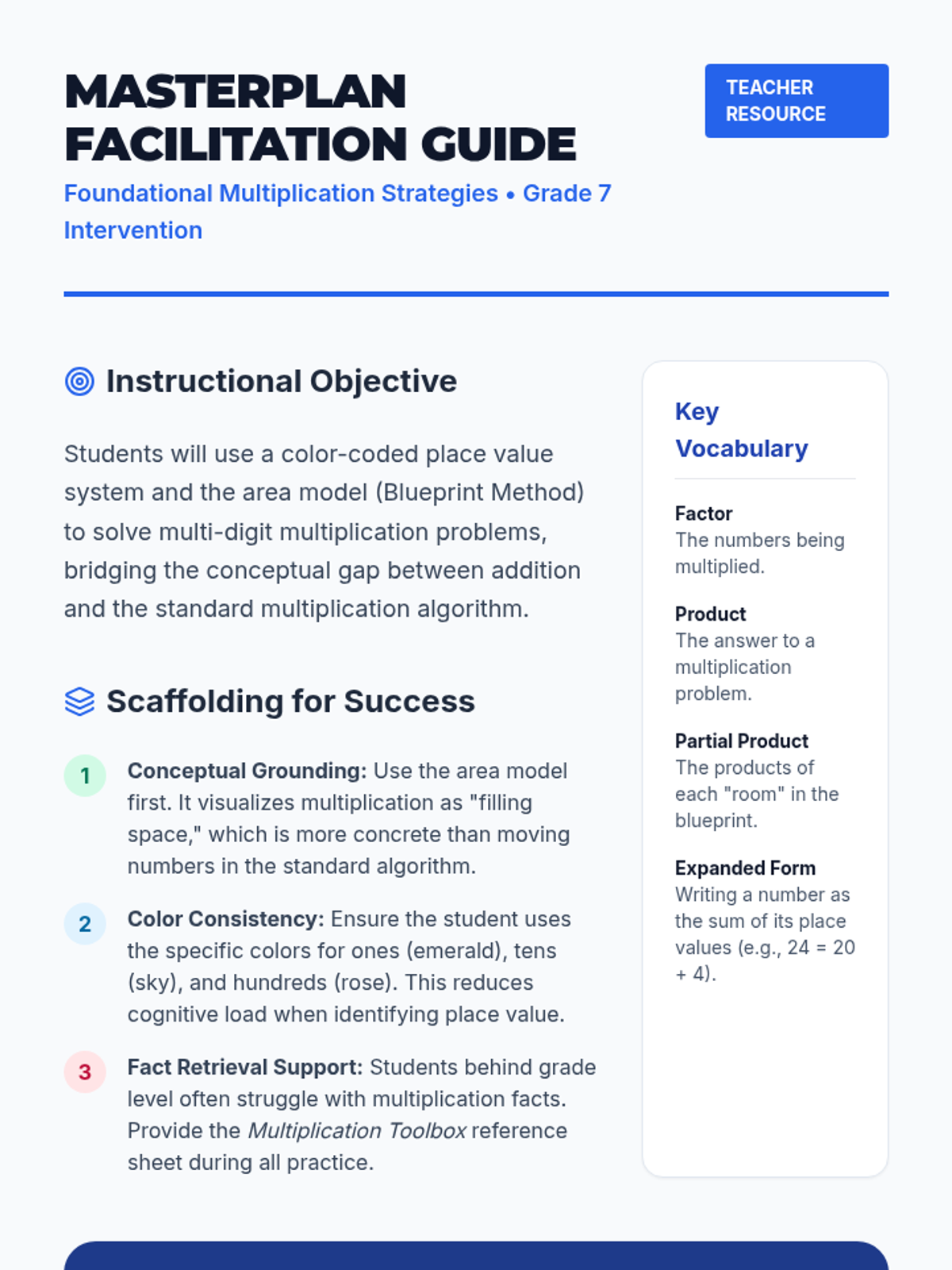
A teacher-facing facilitation guide for the Multiplication Masterplan lesson, providing instructional scripts, scaffolding strategies, and common misconceptions for teaching multi-digit multiplication.
A 5-slide visual presentation introducing multi-digit multiplication using a "Blueprint" theme, featuring color-coded place value associations and the area model method.
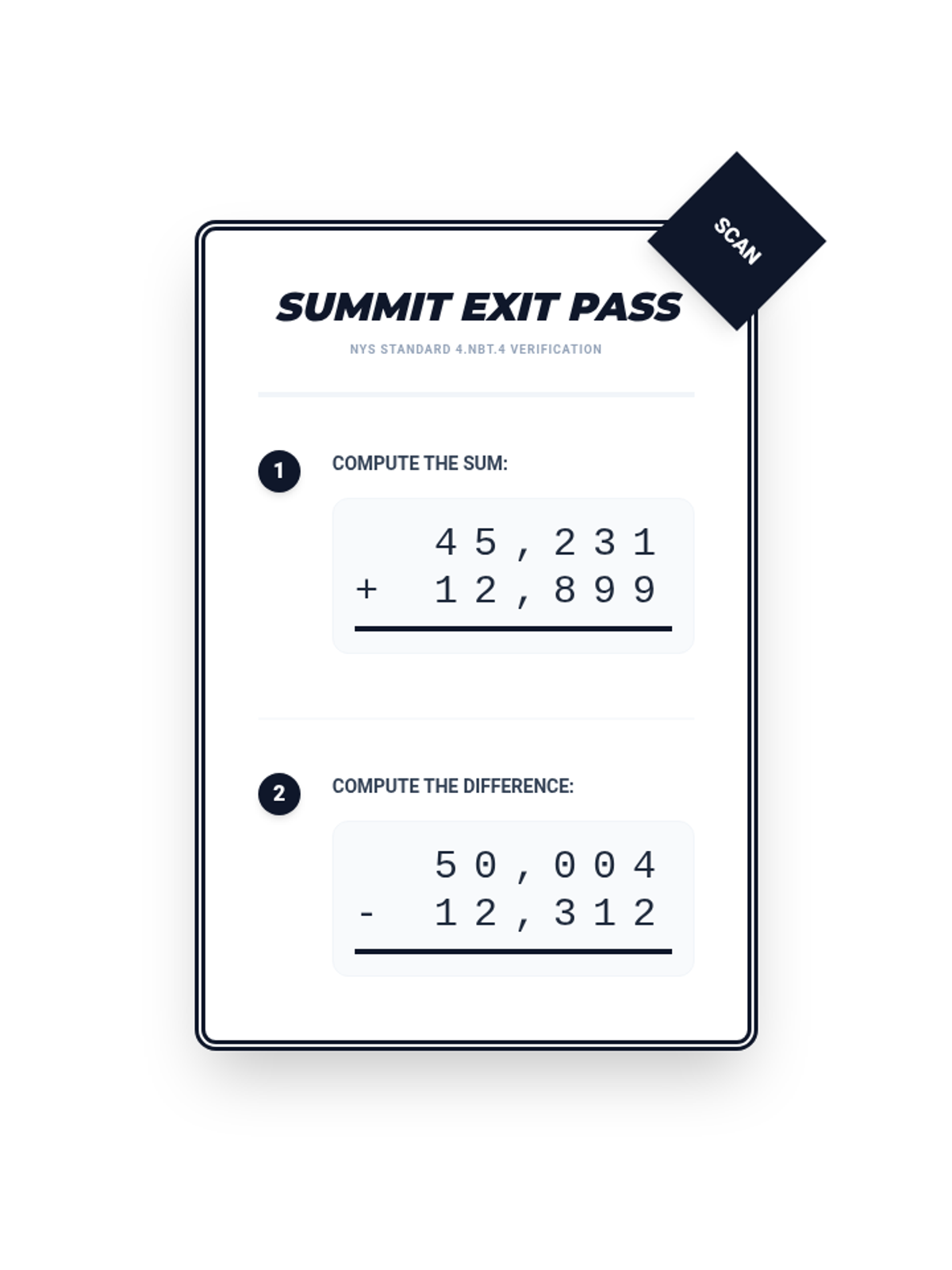
Quick assessment for 4.NBT.4, testing fluency with the standard algorithms for multi-digit addition and subtraction.
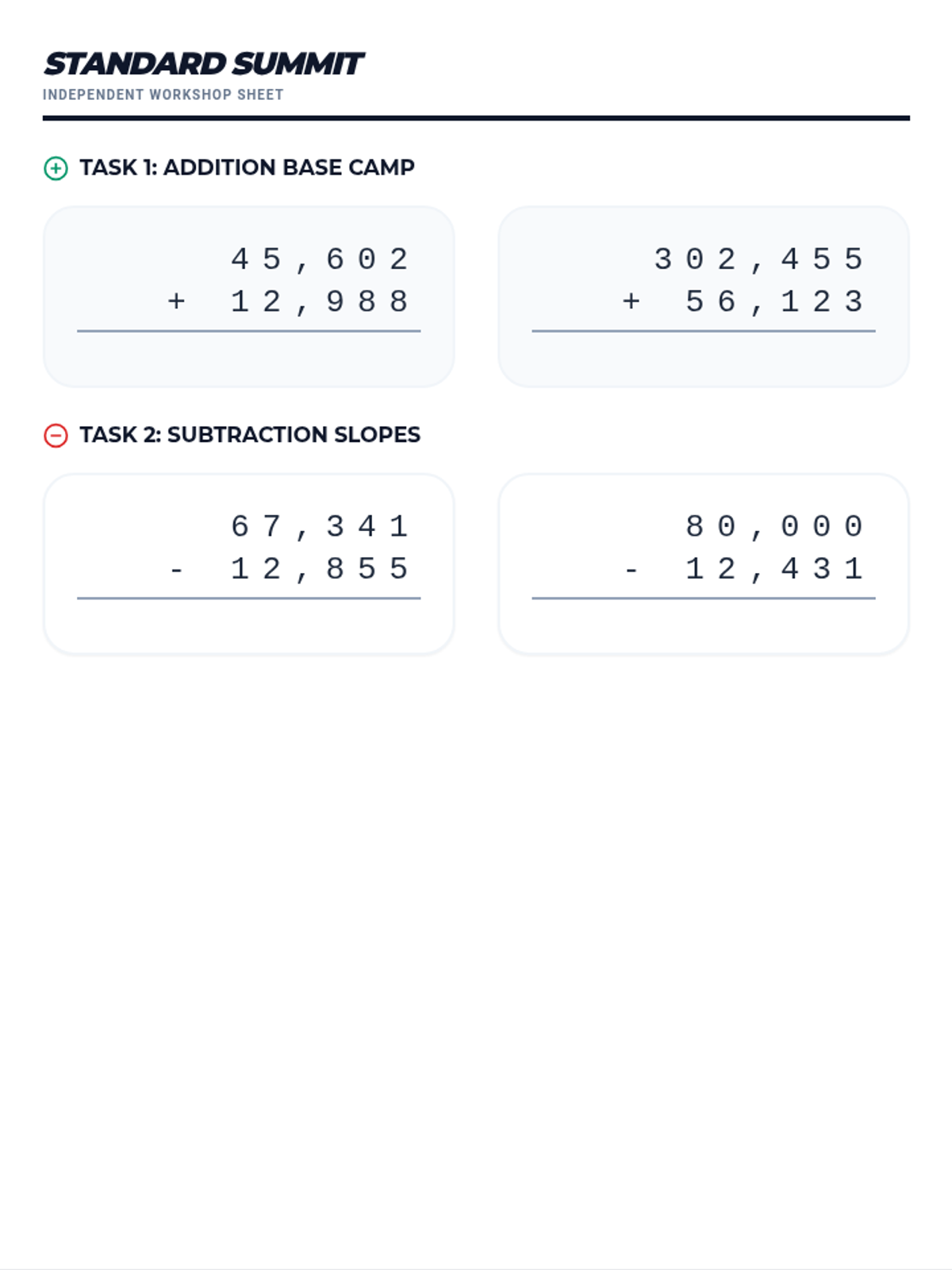
Independent practice for 4.NBT.4, including standard algorithm practice for multi-digit addition and subtraction, and a multi-step word problem.
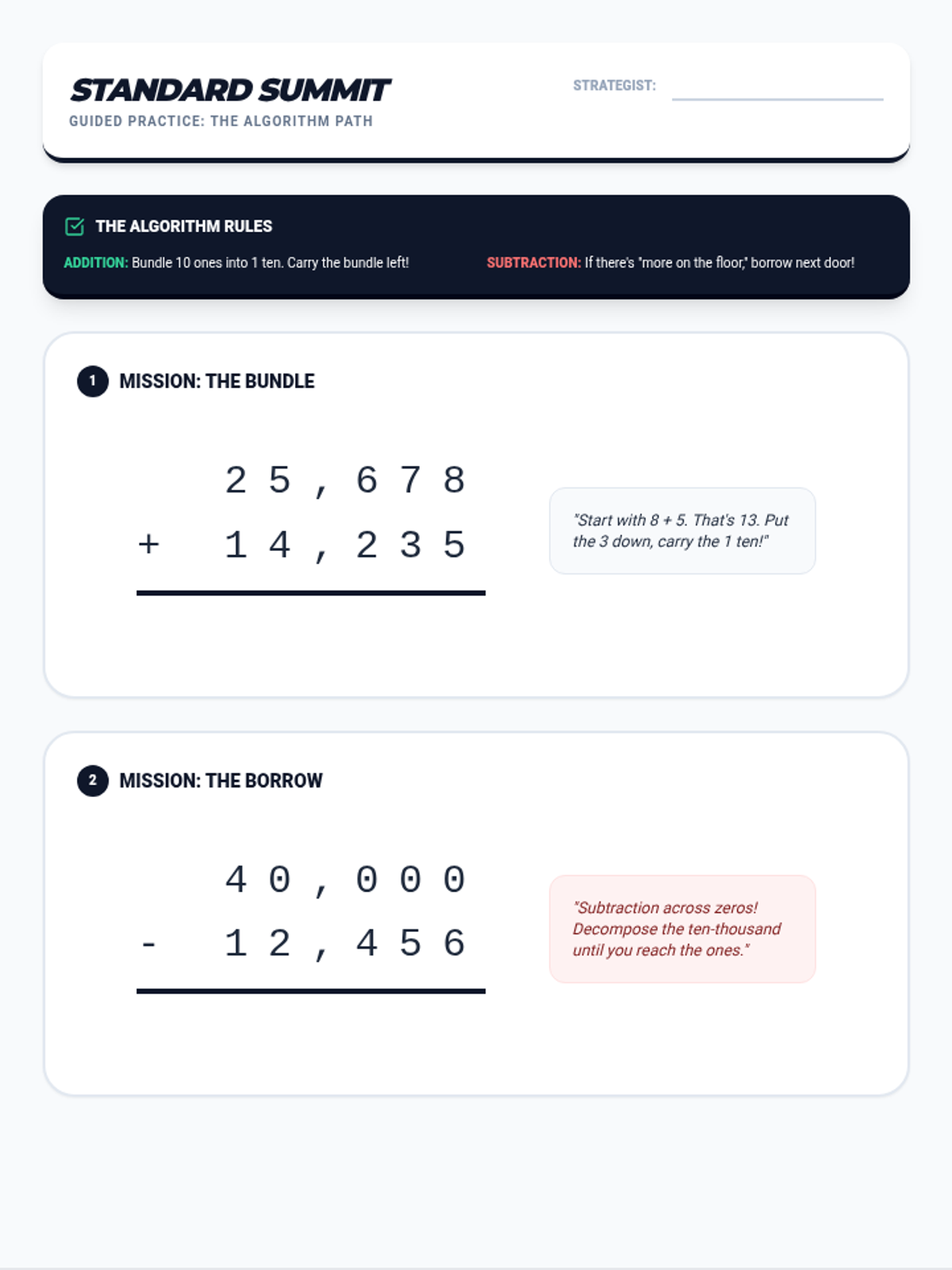
Guided practice for 4.NBT.4, focusing on the standard algorithms for addition and subtraction. Includes specific instruction on regrouping and decomposing across zeros.
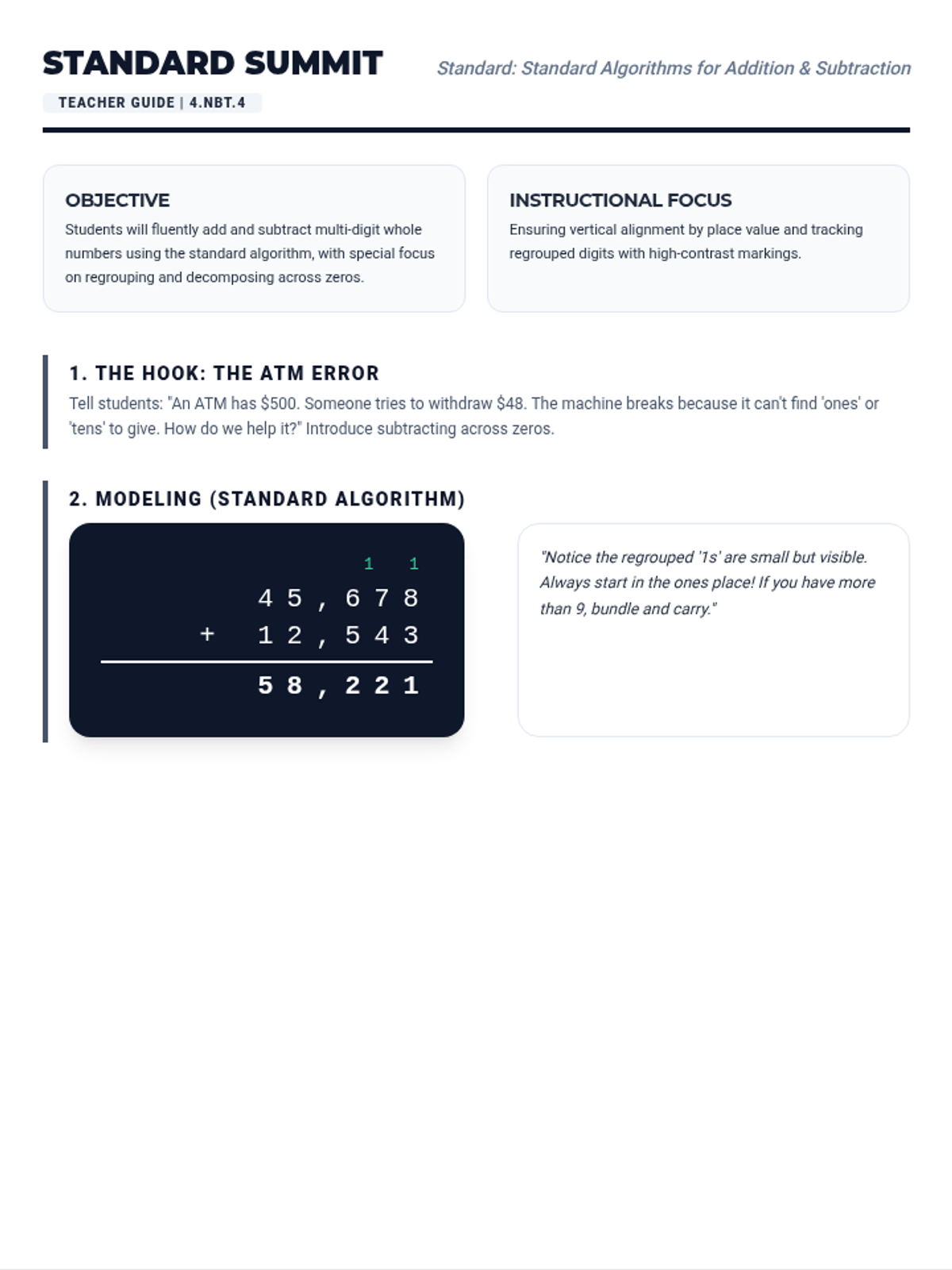
Teacher guide for 4.NBT.4, focusing on addition and subtraction using the standard algorithm. Emphasizes regrouping and subtracting across zeros.
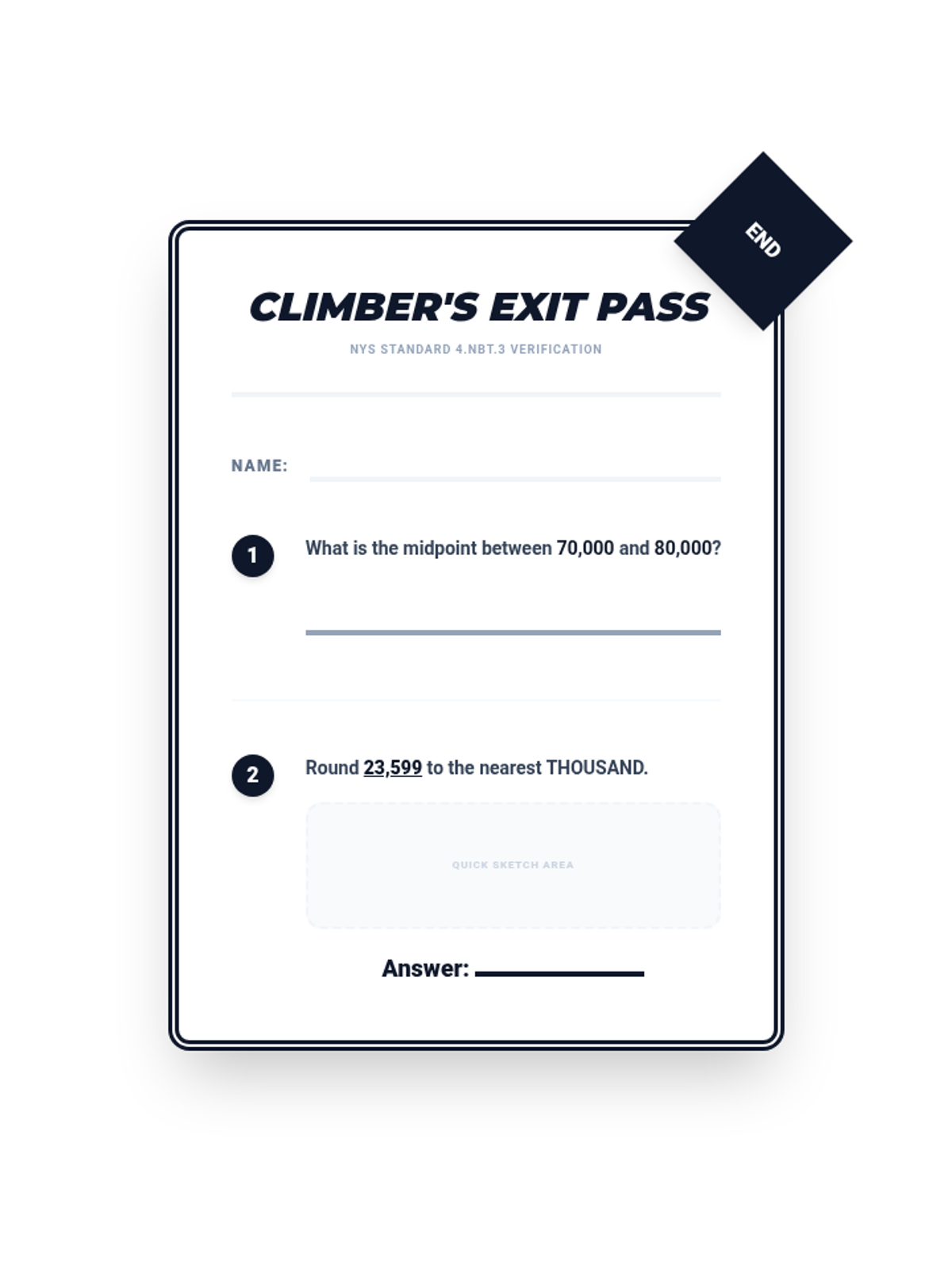
Quick assessment for 4.NBT.3, testing midpoint identification and rounding using place value understanding.
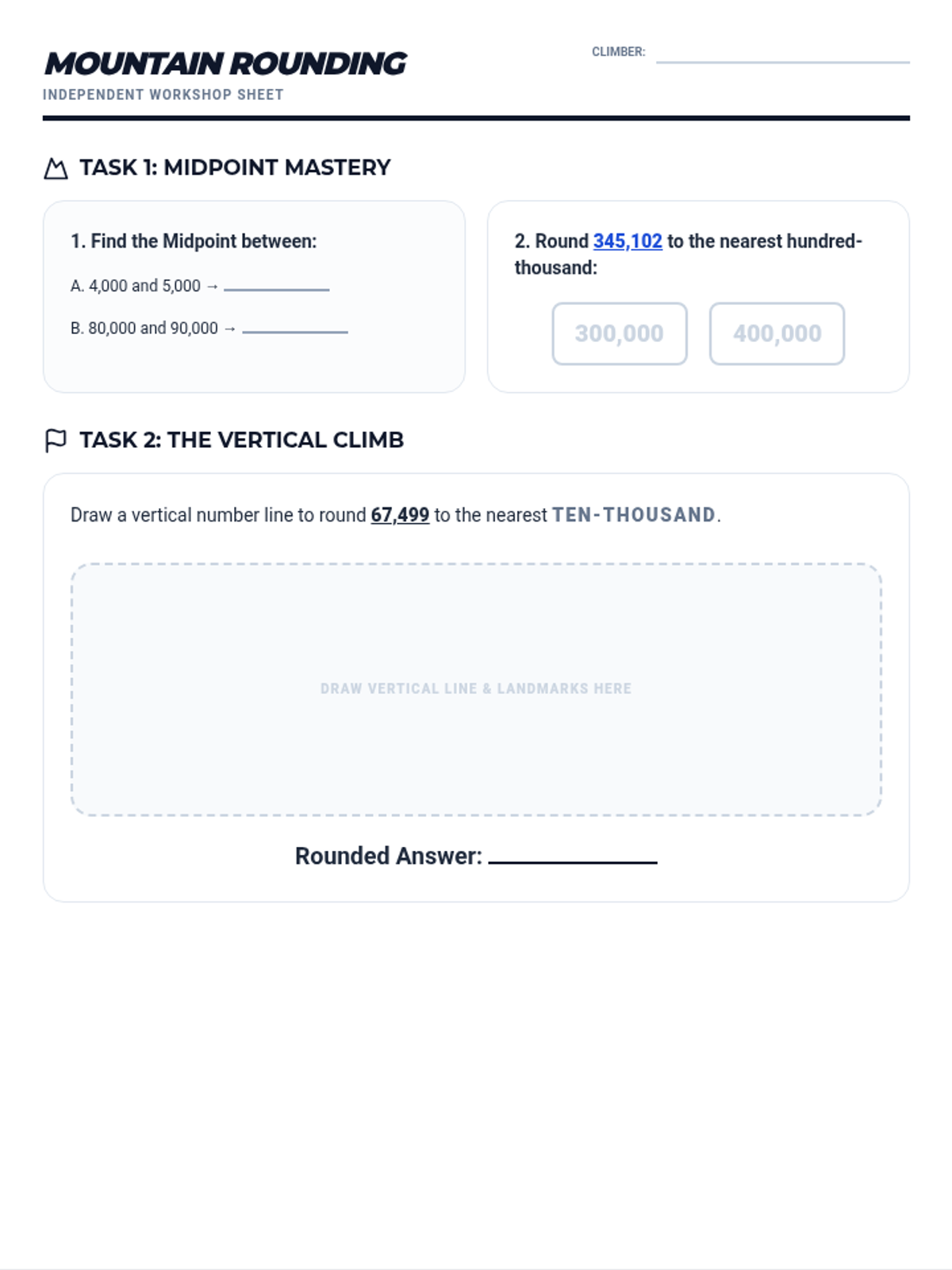
Independent practice for 4.NBT.3, including midpoint identification, vertical number line construction, and multiple-place rounding for a single number.
Guided practice for 4.NBT.3, using a vertical number line model to help students visualize rounding relative to the midpoint.
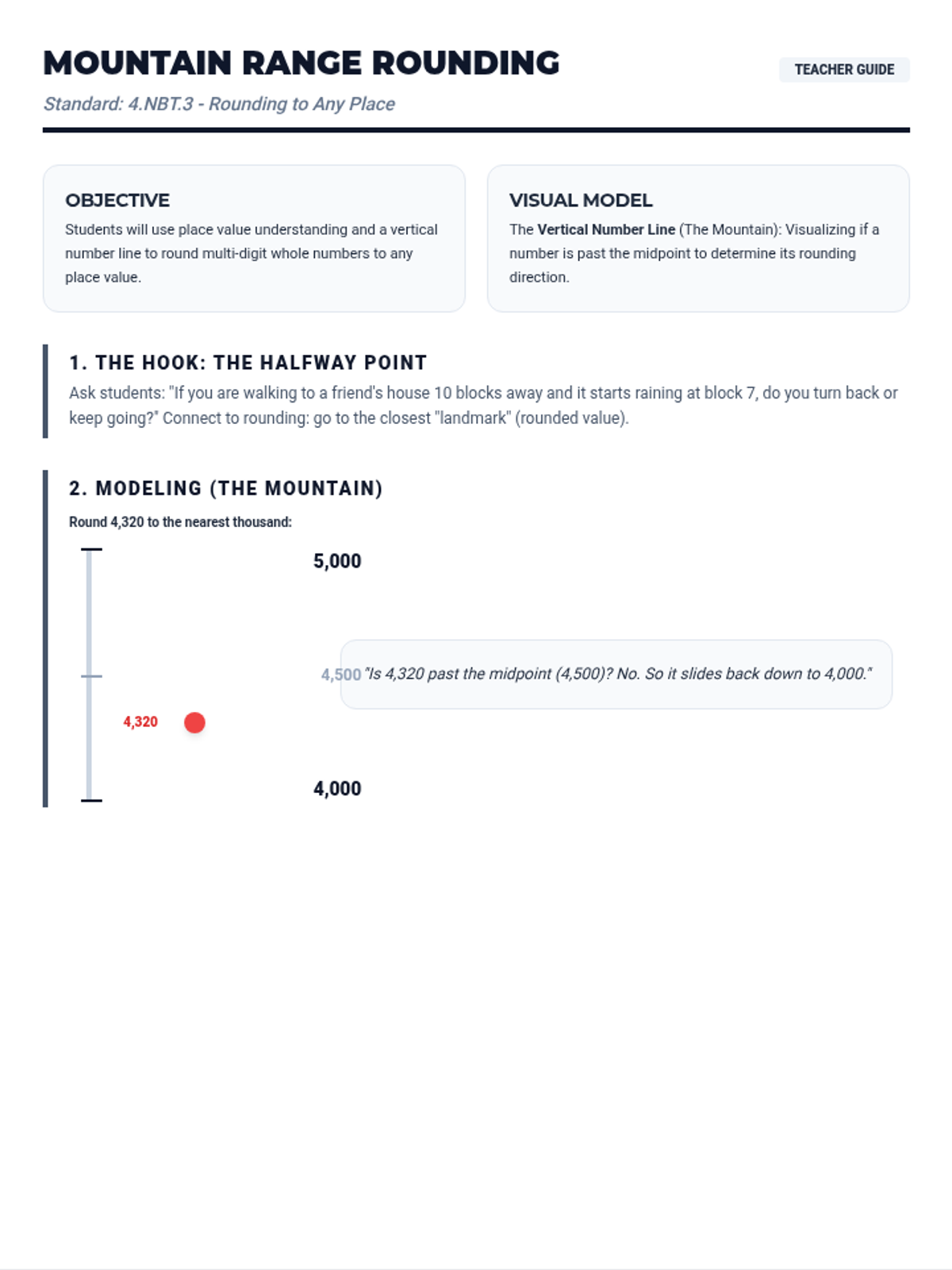
Teacher guide for 4.NBT.3, using a vertical number line (the "Mountain") to visualize rounding. Includes hook, modeling steps, and conceptual check for midpoints.
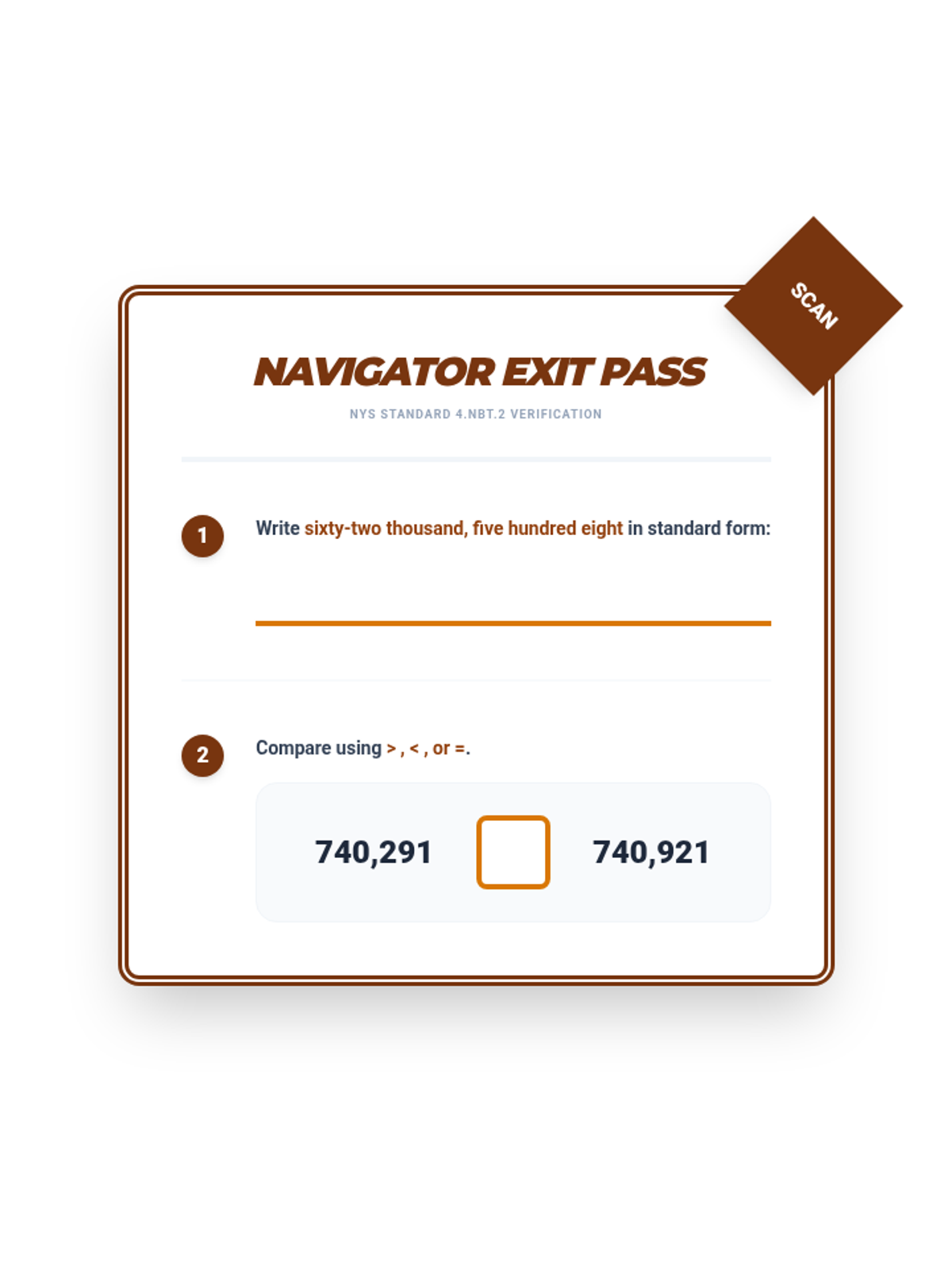
Quick assessment for 4.NBT.2, testing standard form conversion and multi-digit number comparison.
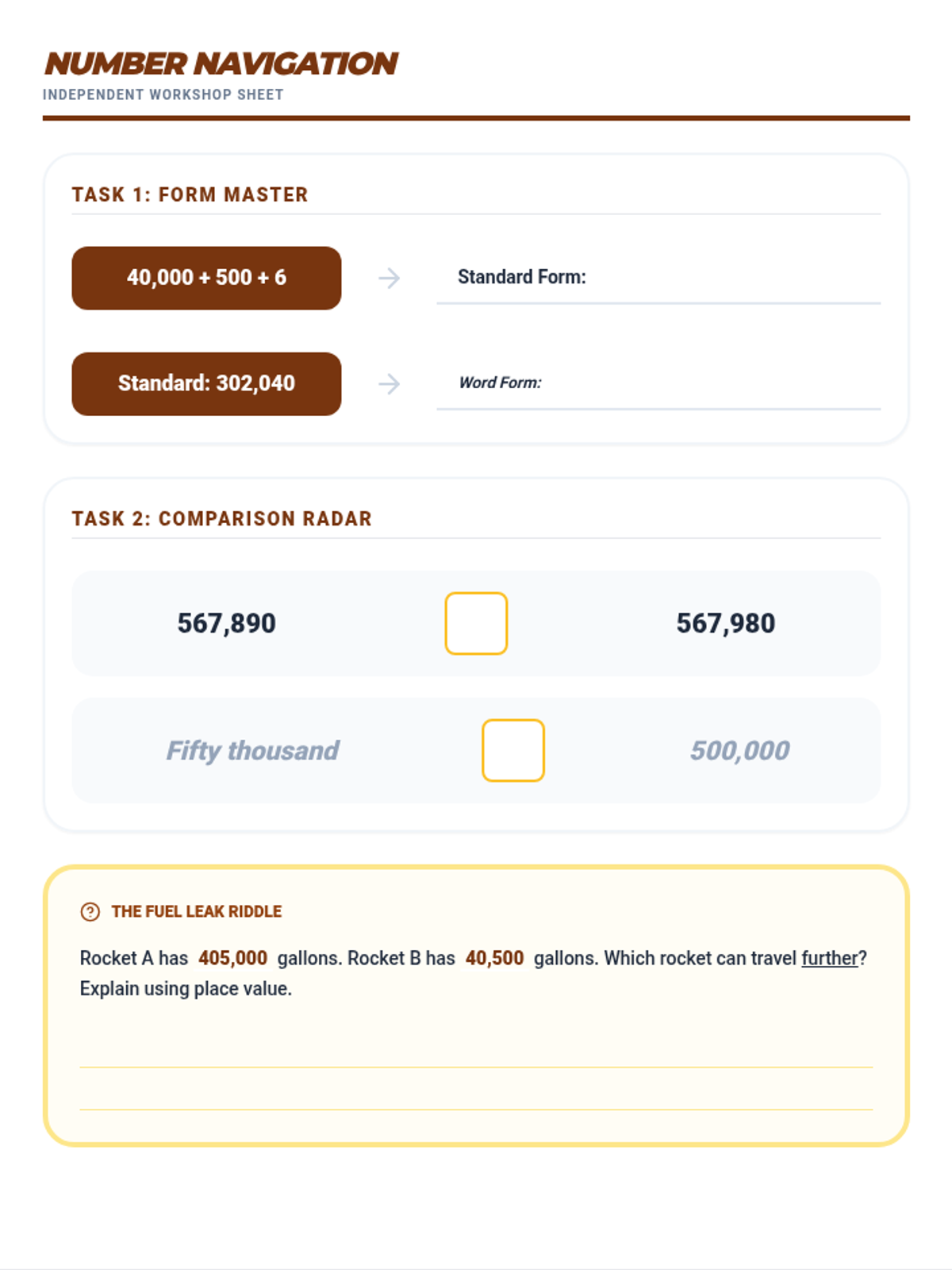
Independent practice for 4.NBT.2, including number form conversions, multi-digit comparisons, and a reasoning word problem.
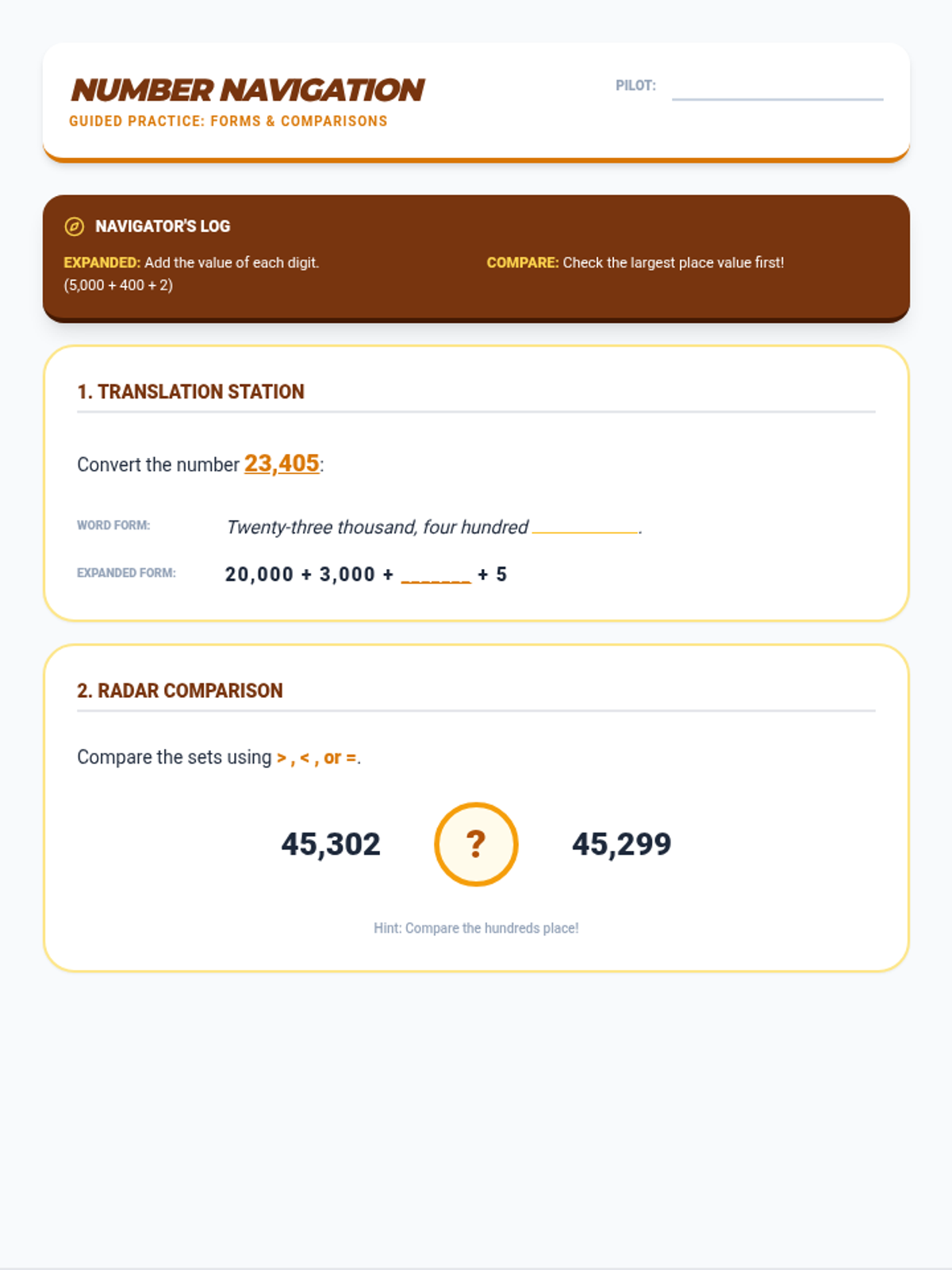
Guided practice for 4.NBT.2, focusing on translating numbers between standard, word, and expanded forms and using place value to compare numbers.
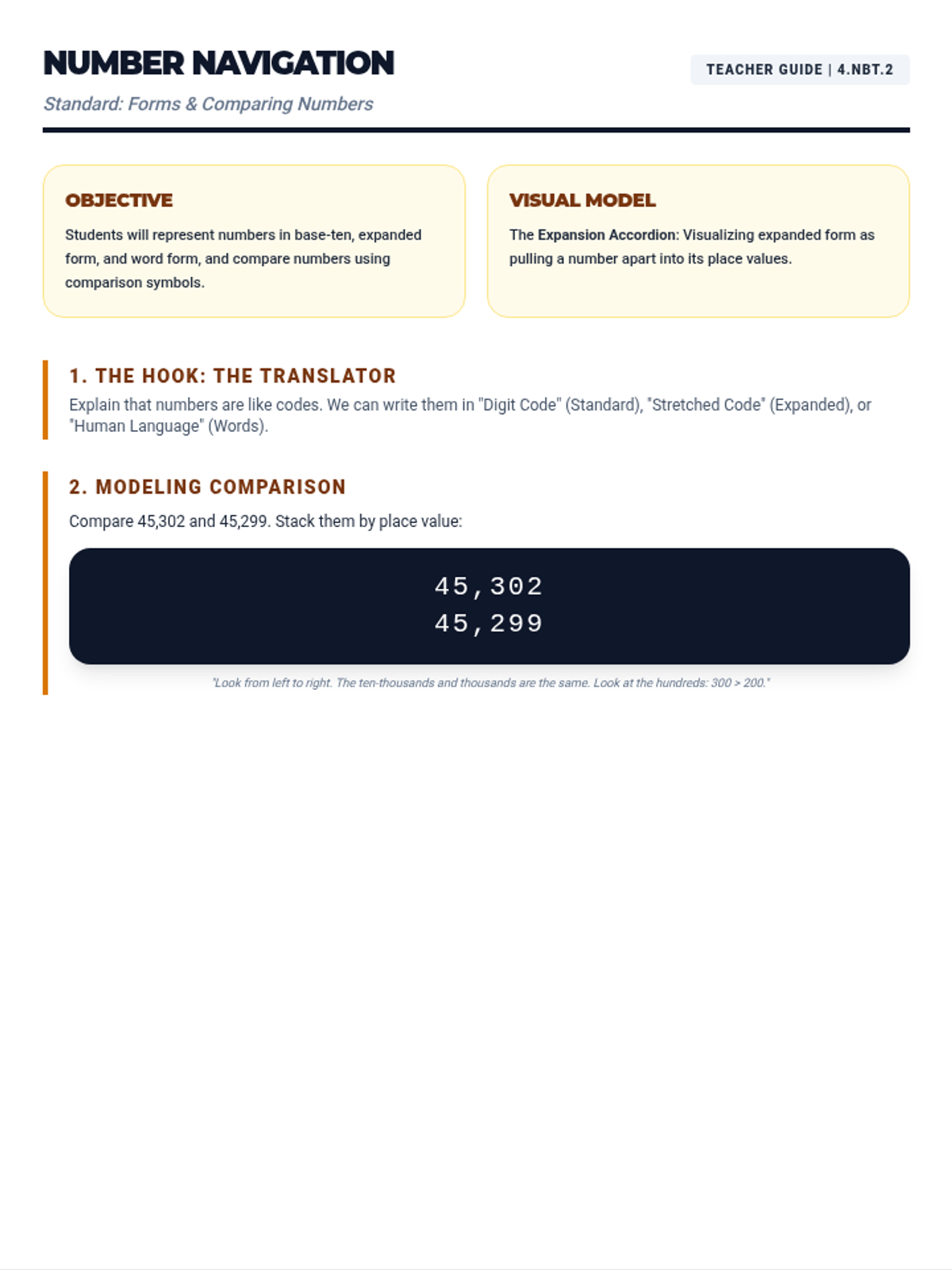
Teacher guide for 4.NBT.2, covering different number forms (standard, expanded, word) and strategies for comparing multi-digit numbers.
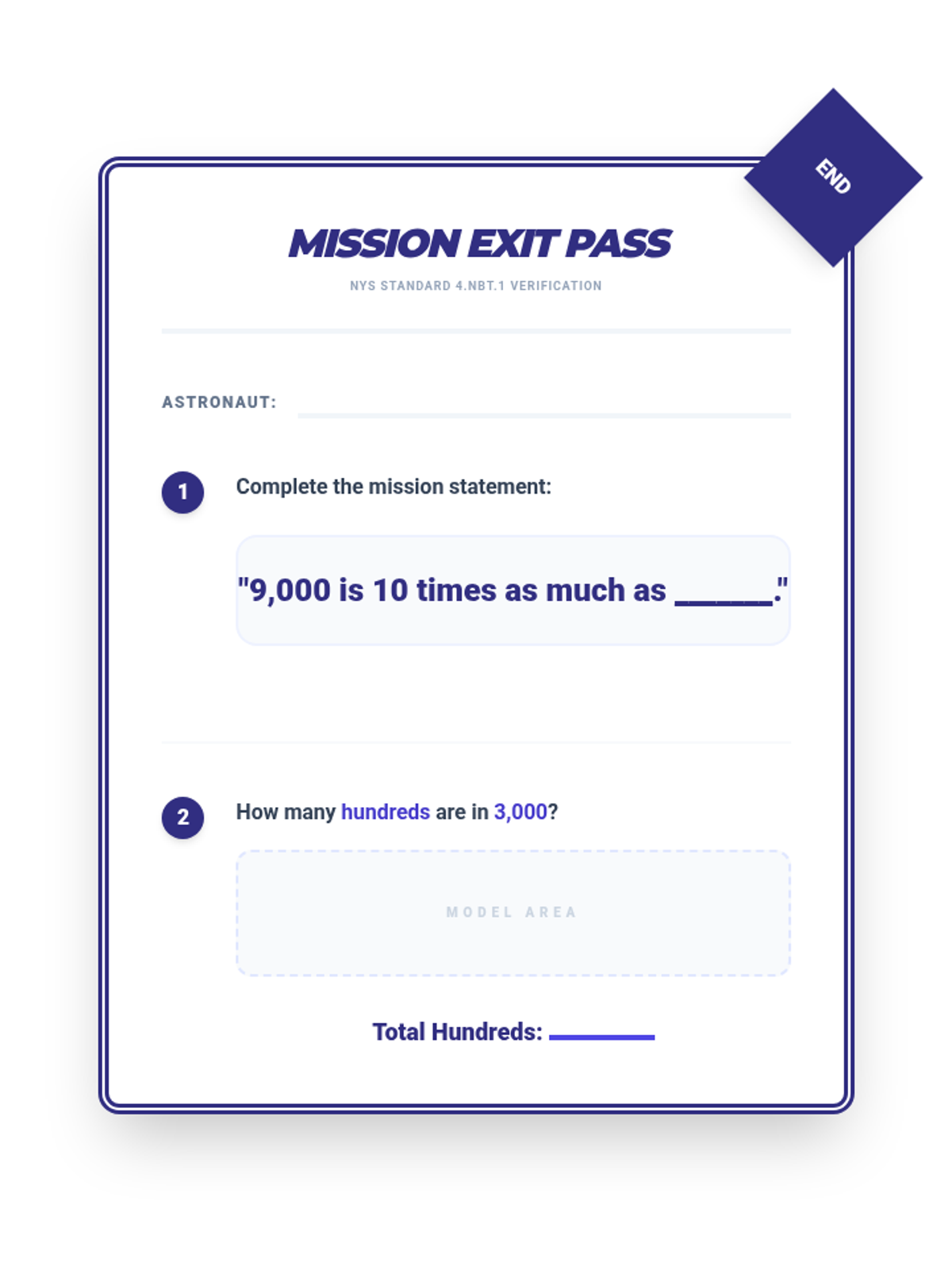
Quick assessment for 4.NBT.1, testing student understanding of the 10x relationship between place values.
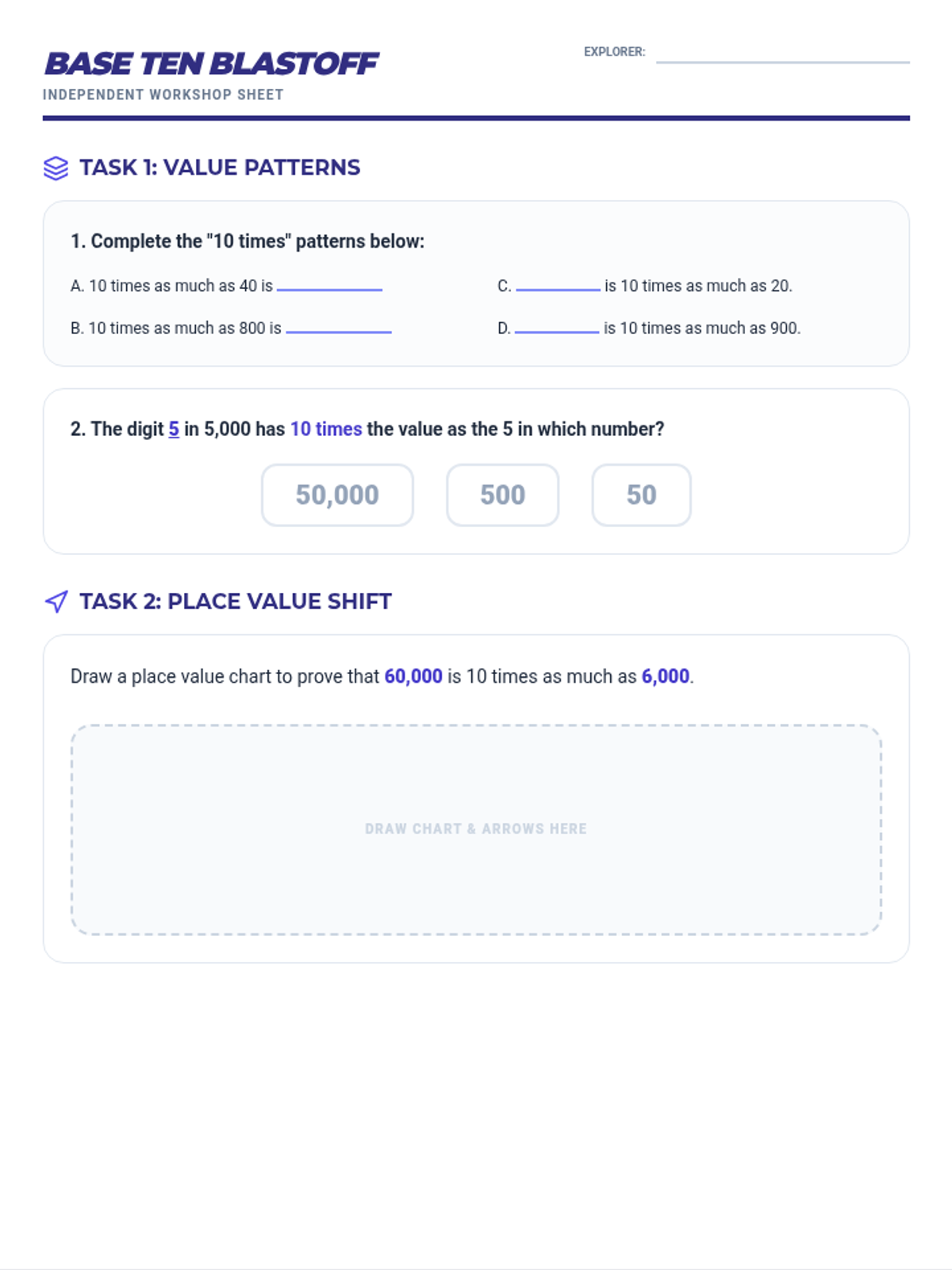
Independent practice for 4.NBT.1, featuring "Base Ten Blastoff" space exploration theme. Includes 10x value patterns, place value charts, and error analysis.
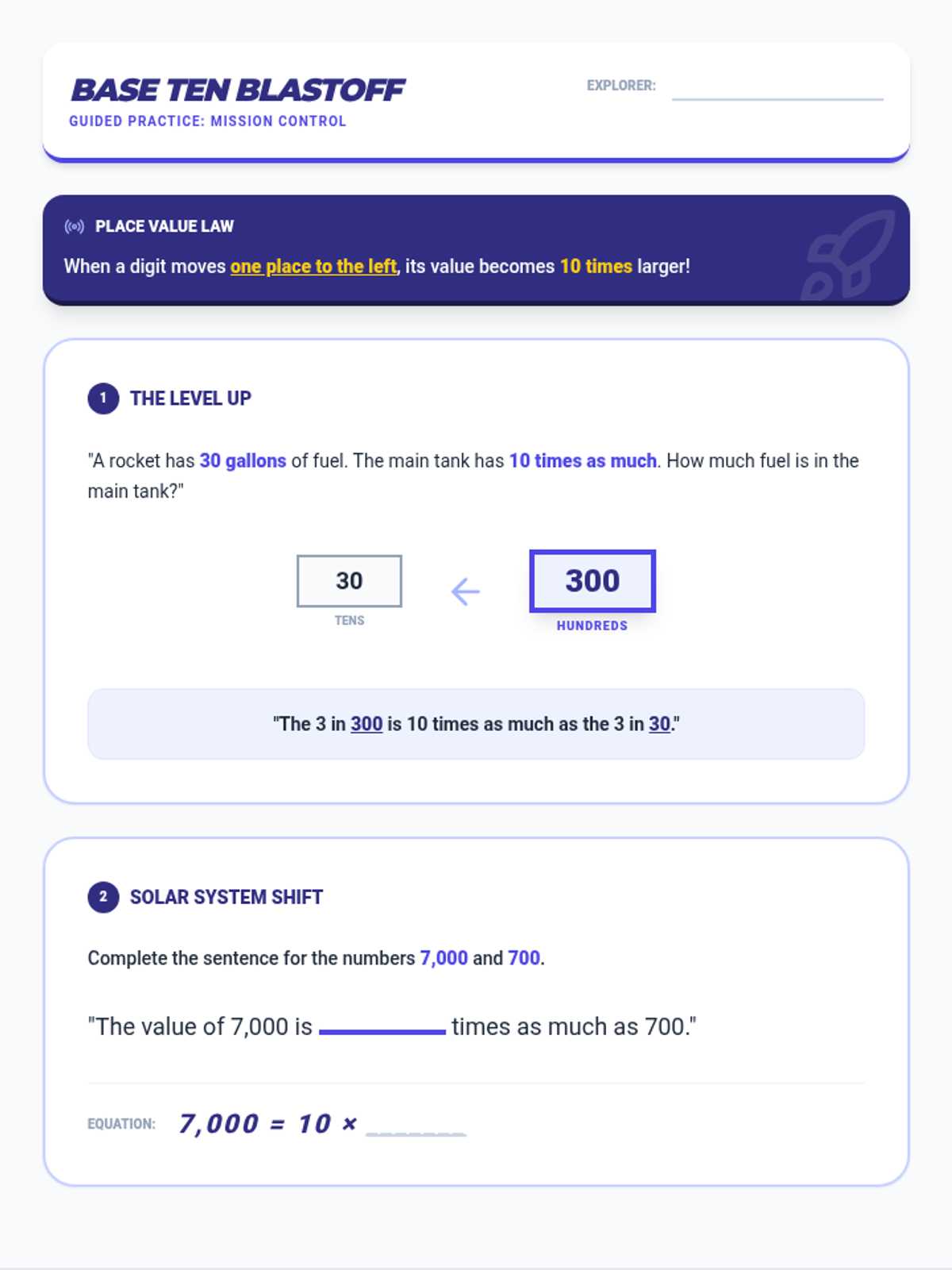
Guided practice for 4.NBT.1, using visual place value shifts to demonstrate that each place is 10 times the value of the place to its right.
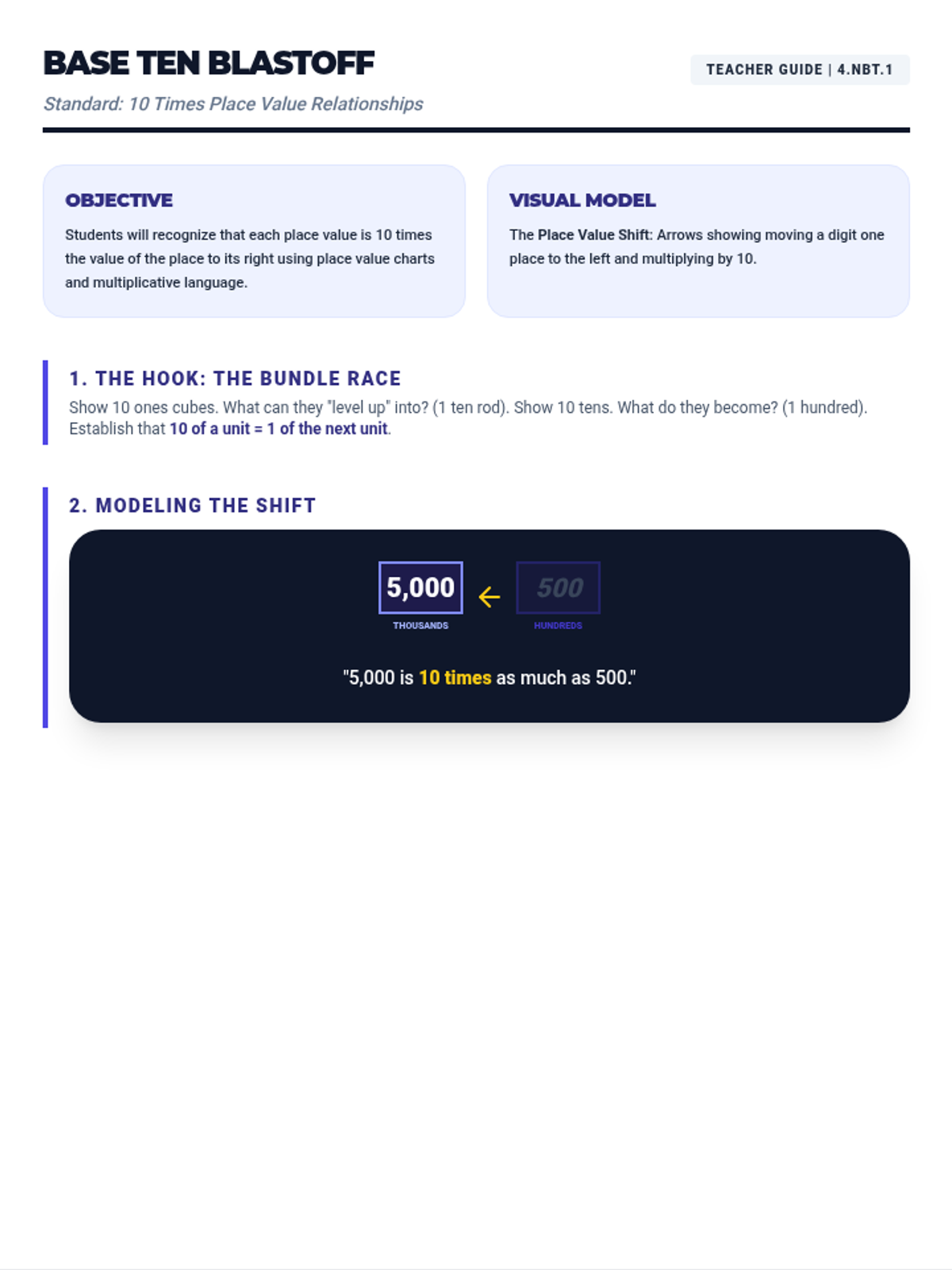
Teacher guide for 4.NBT.1, explaining the base-ten relationship where each place is 10 times the value of the place to its right. Includes visual modeling of place value shifts.
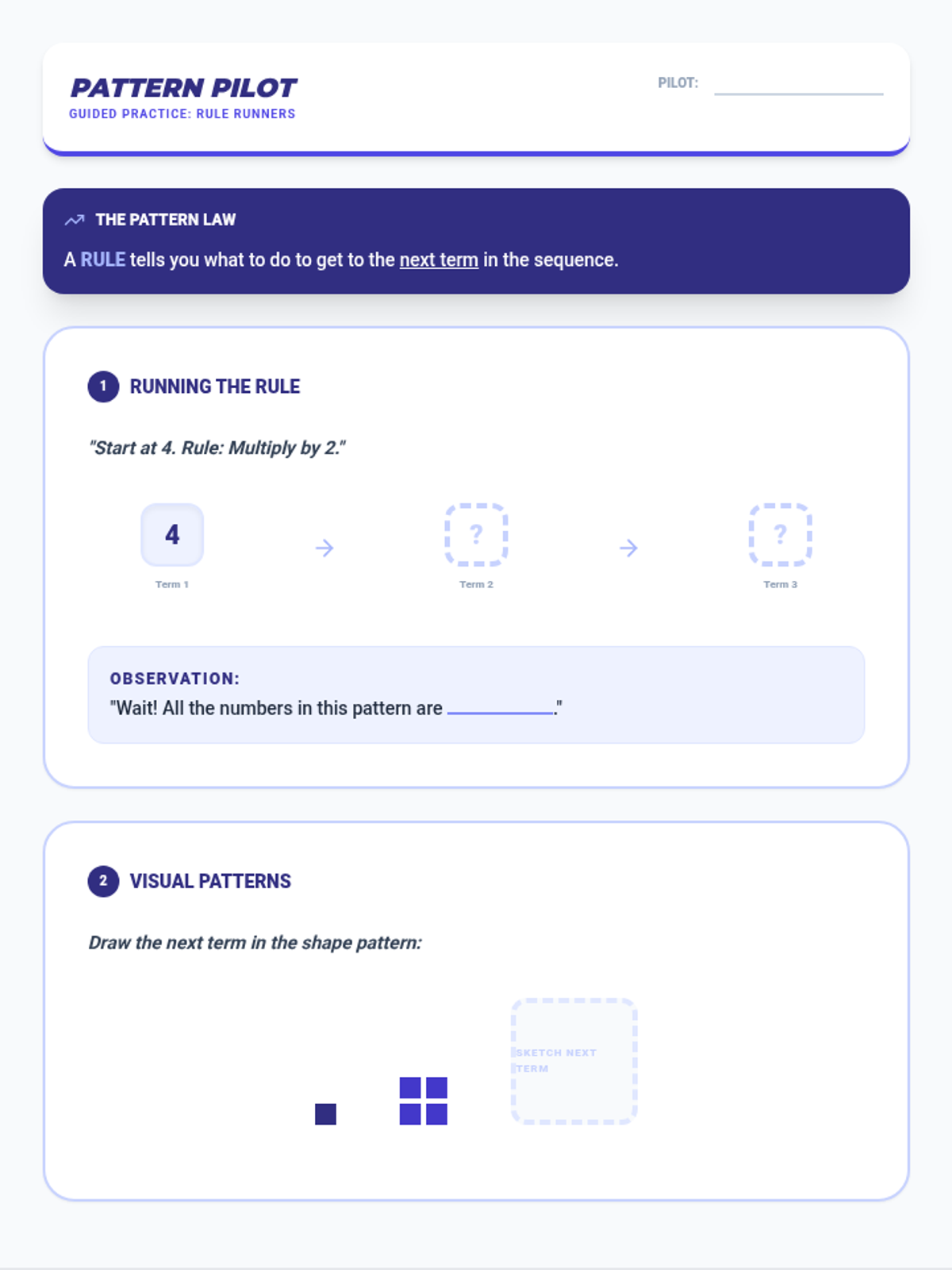
Guided practice for 4.OA.5, helping students generate sequences from rules and discover hidden features (like parity) and visual growth patterns.
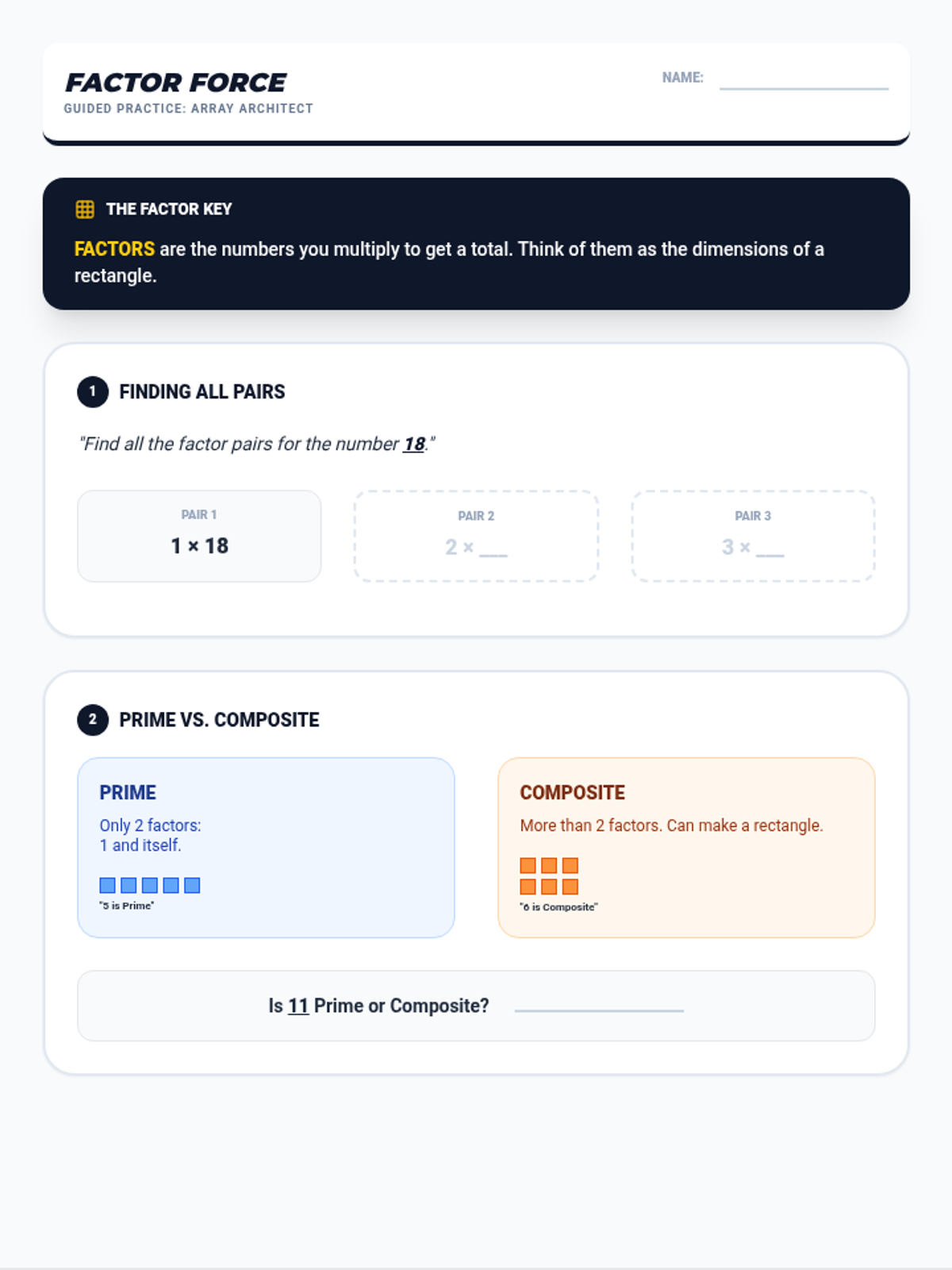
Guided practice for 4.OA.4, using arrays and factor pairs to distinguish between prime and composite numbers. Includes visual aids for "dimension rectangles."
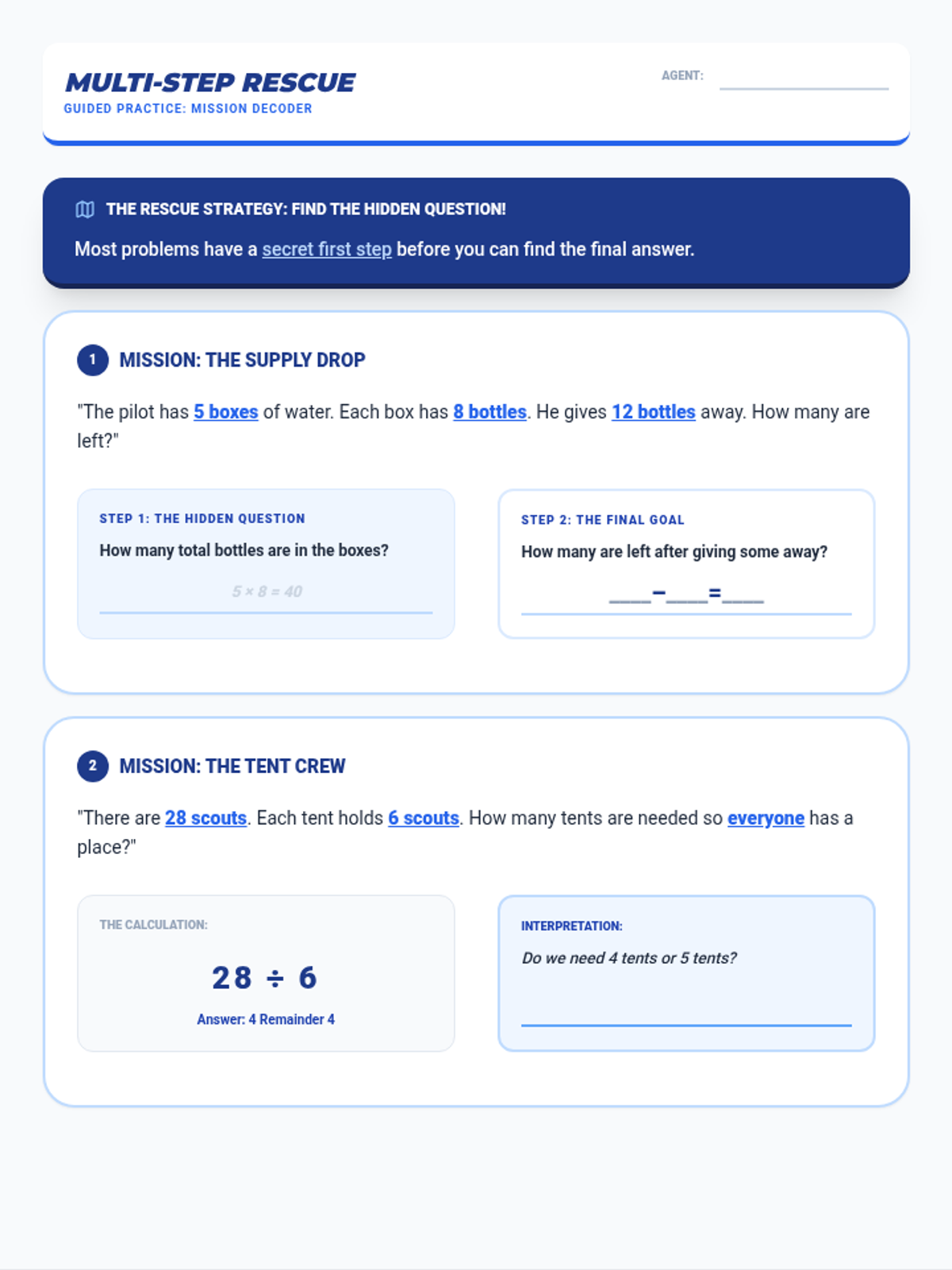
Guided practice for 4.OA.3, walking students through the "hidden question" strategy for multi-step problems and interpreting remainders in real-world contexts.
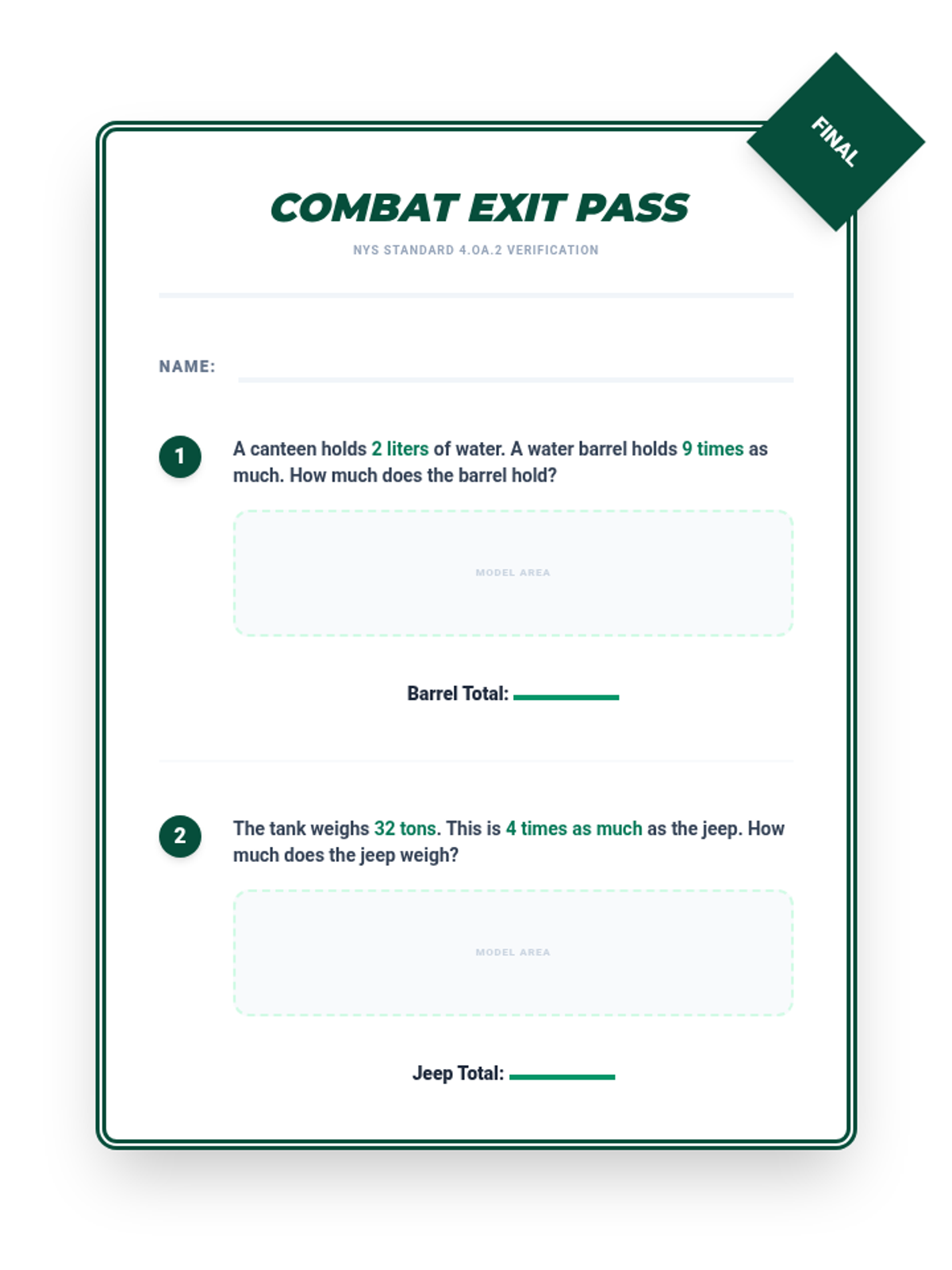
Assessment exit ticket for 4.OA.2, requiring students to solve two multiplicative comparison word problems (one multiplication-based, one division-based) and provide sketches.
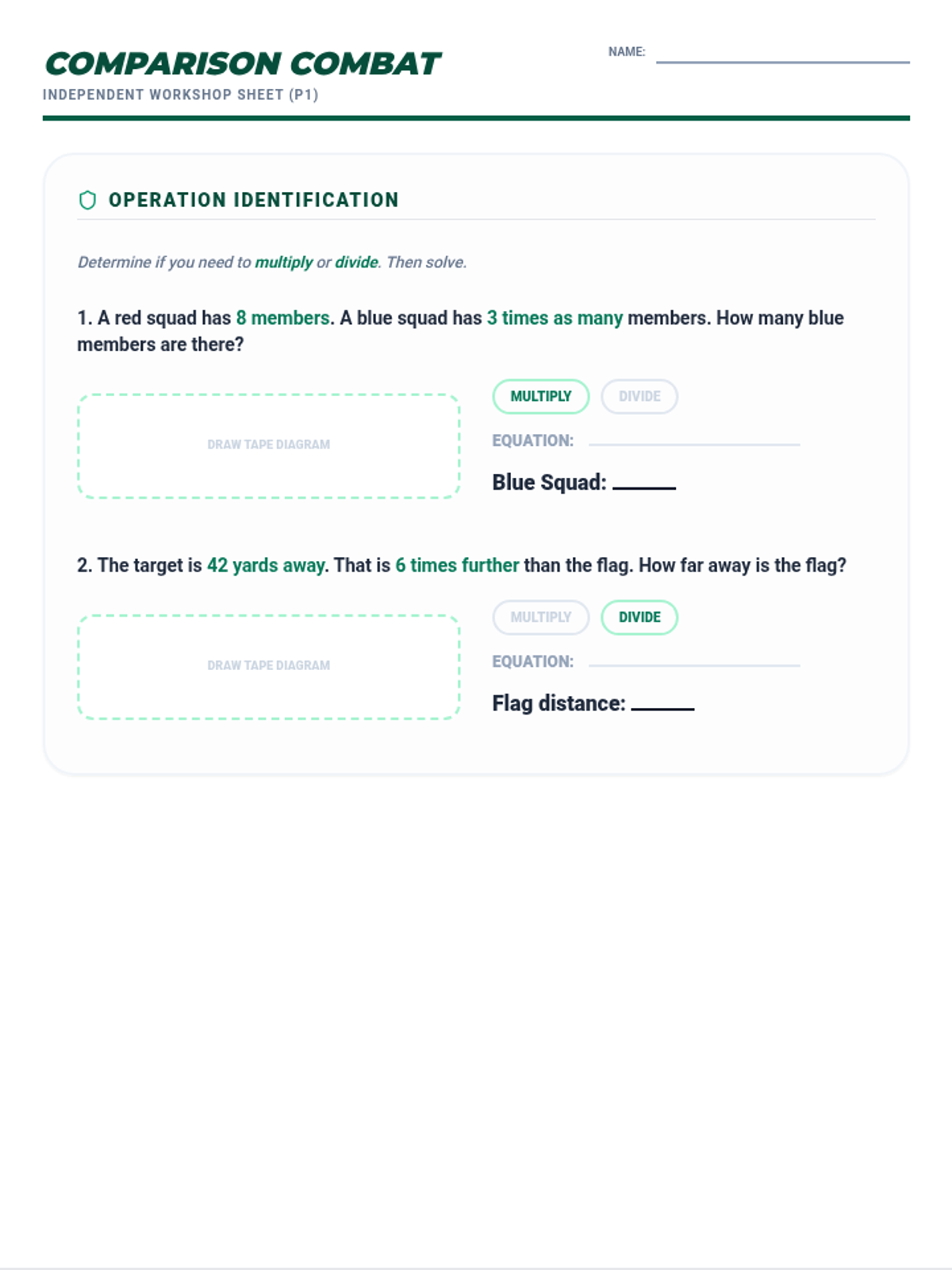
Independent practice for 4.OA.2, featuring a "Comparison Combat" military/scout theme. Problems require students to choose between multiplication and division and provide sketches for models.