The updated teacher's answer key for Shape Masters, containing a complete 6-page printable document mirroring the student worksheet with step-by-step calculations and highlighted final answers for all 20 geometry problems.
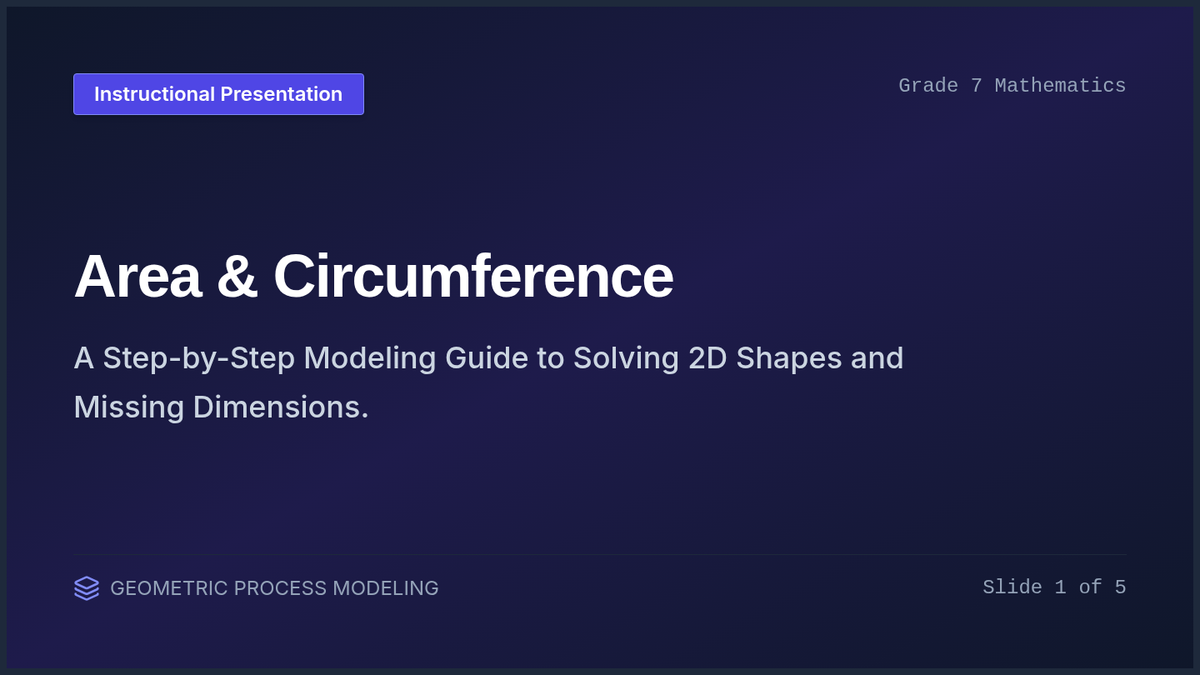
The updated instructional slide deck for Shape Masters, featuring a clean, non-themed modern academic style with text sizes strictly larger than 24px. Includes step-by-step visual guides for finding area, circumference, decoding word problems, and solving for missing dimensions (working backwards).
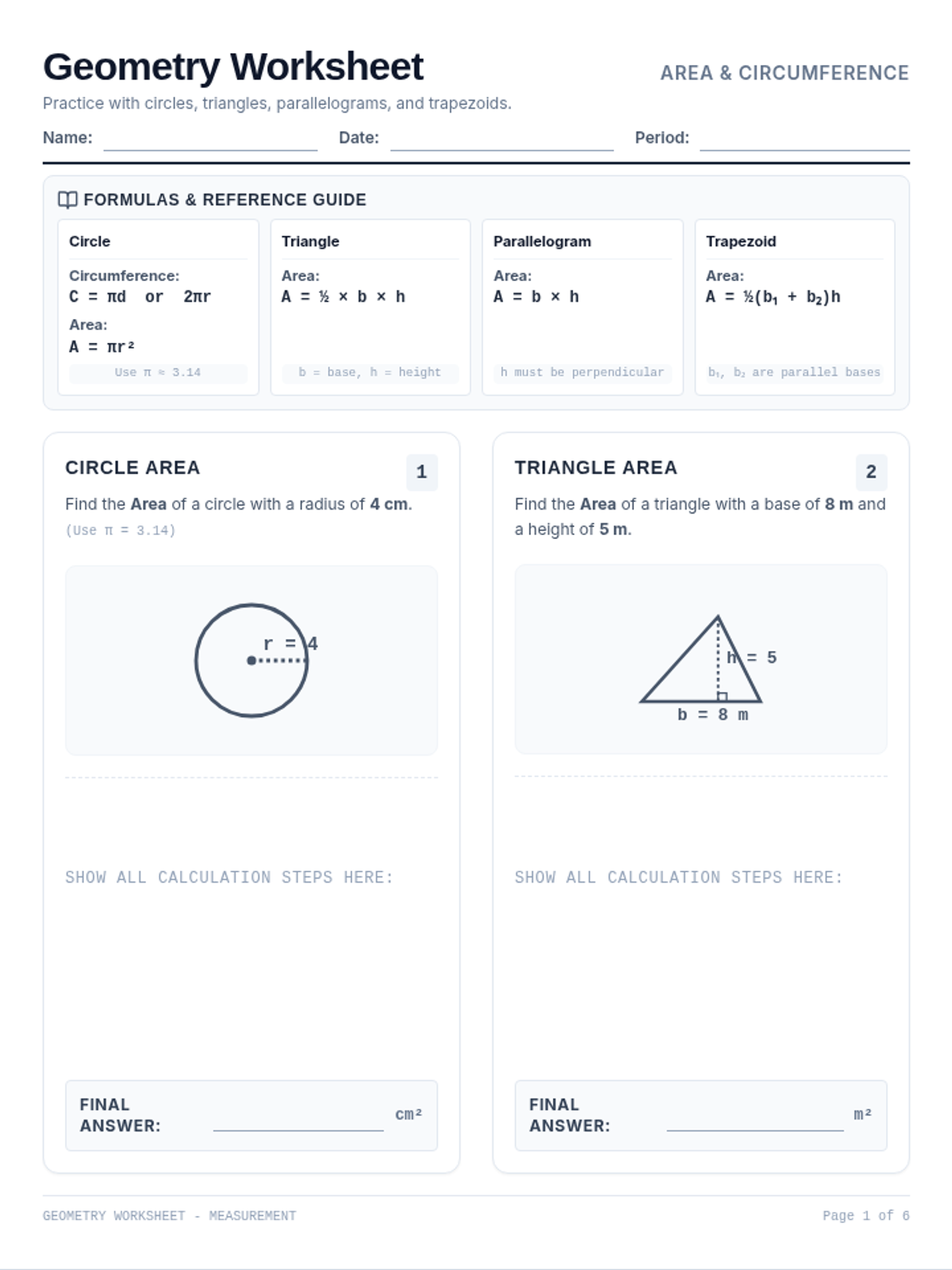
The updated student worksheet for Shape Masters, containing a clean academic layout spanning 6 printable pages. Spreads the 20 problems into a highly spacious format with 2 questions on page 1, 4 questions on pages 2-4, and 3 questions on pages 5-6, leaving massive blank workspaces for student handwriting.
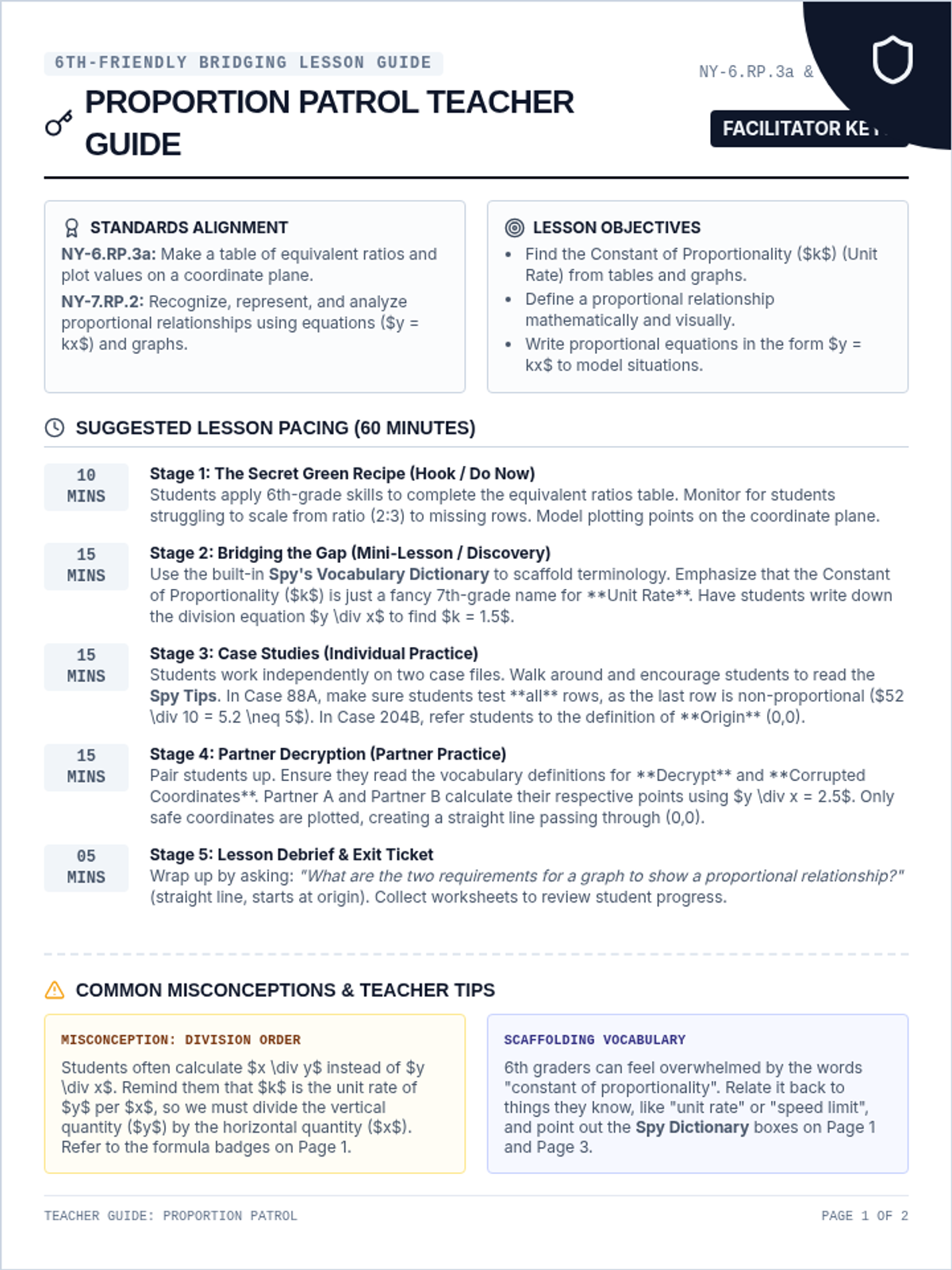
A comprehensive 2-page teacher-facing guide and answer key for the "Proportion Patrol" lesson. Contains standard alignments, step-by-step pacing notes, anticipated misconceptions, and complete answers for the student worksheet.
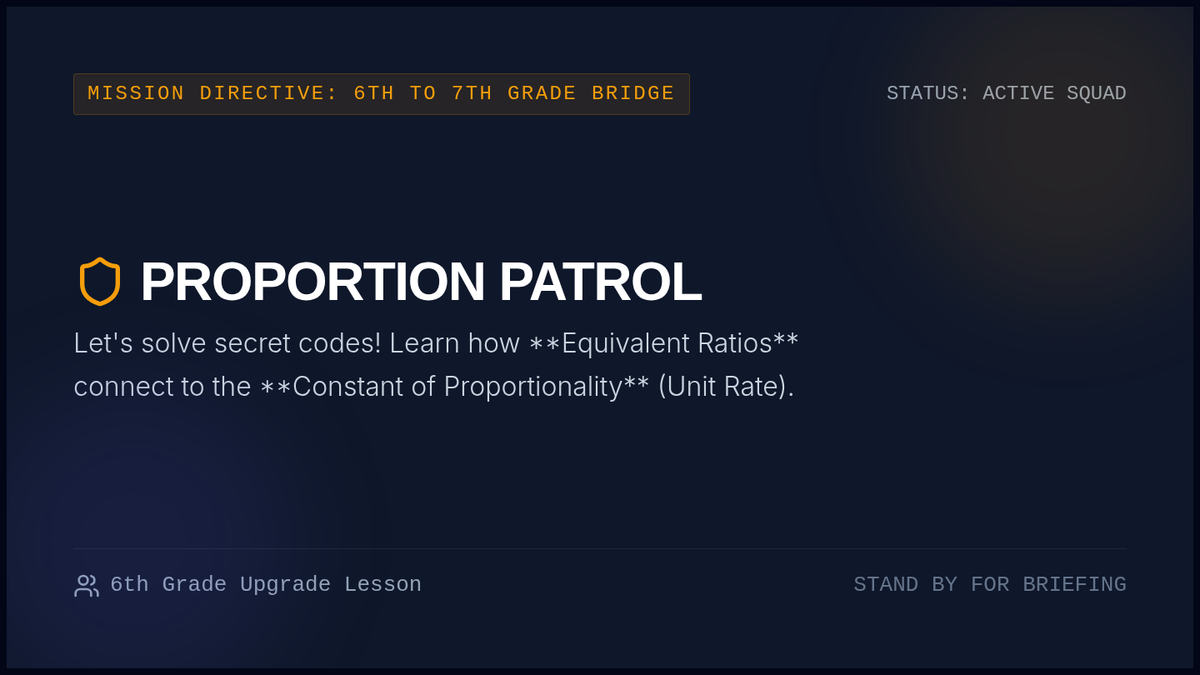
An interactive, visually rich 6-slide presentation to support the "Proportion Patrol" bridge lesson, updated with simplified, 6th-grade friendly terms, clear math definitions matching the worksheet, and supportive visual cues.
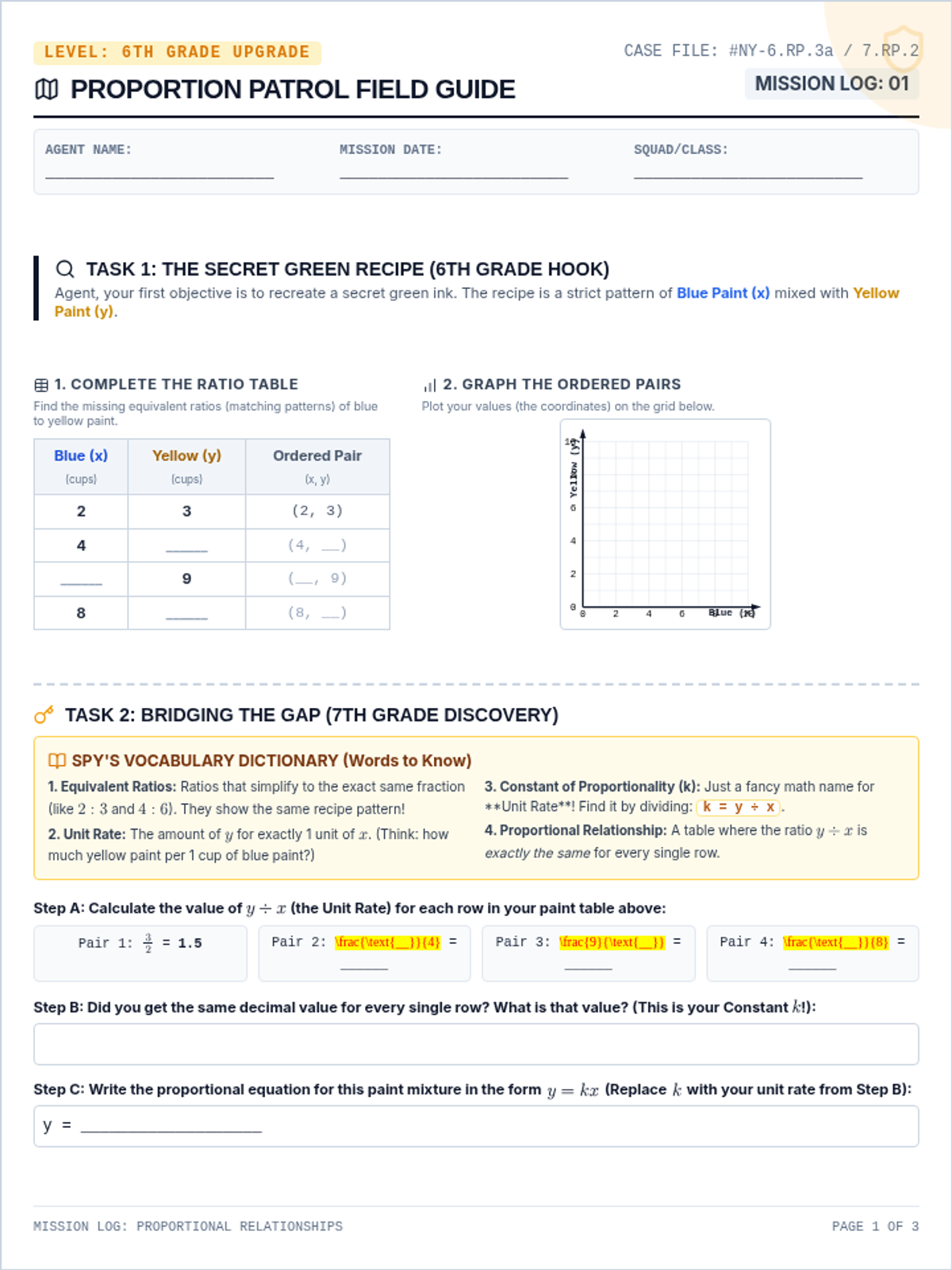
A highly engaging 3-page student-facing worksheet for a 6th-to-7th grade bridging lesson on proportional relationships, now updated with friendly simplified text, a built-in Spy Dictionary defining challenging vocabulary (Constant of Proportionality, Proportional, Origin, Decrypt, Corrupted), and helpful Spy Tips for 6th grade success.
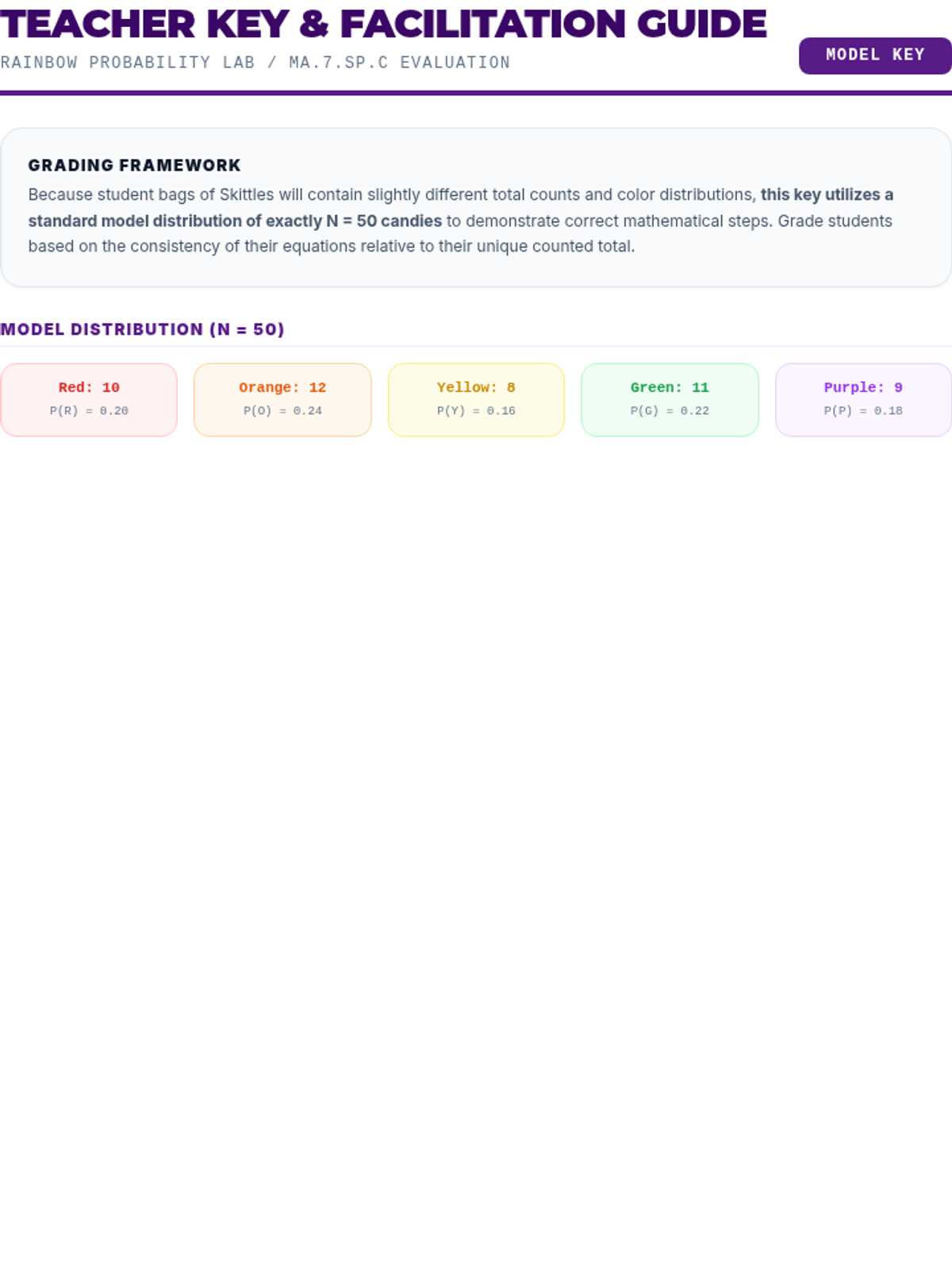
A detailed teacher reference and answer key for the Rainbow Probability Lab. It features sample frequency data (assuming a typical bag count of 50), calculated probability values for single and compound draws, and a pedagogical guide for grading.
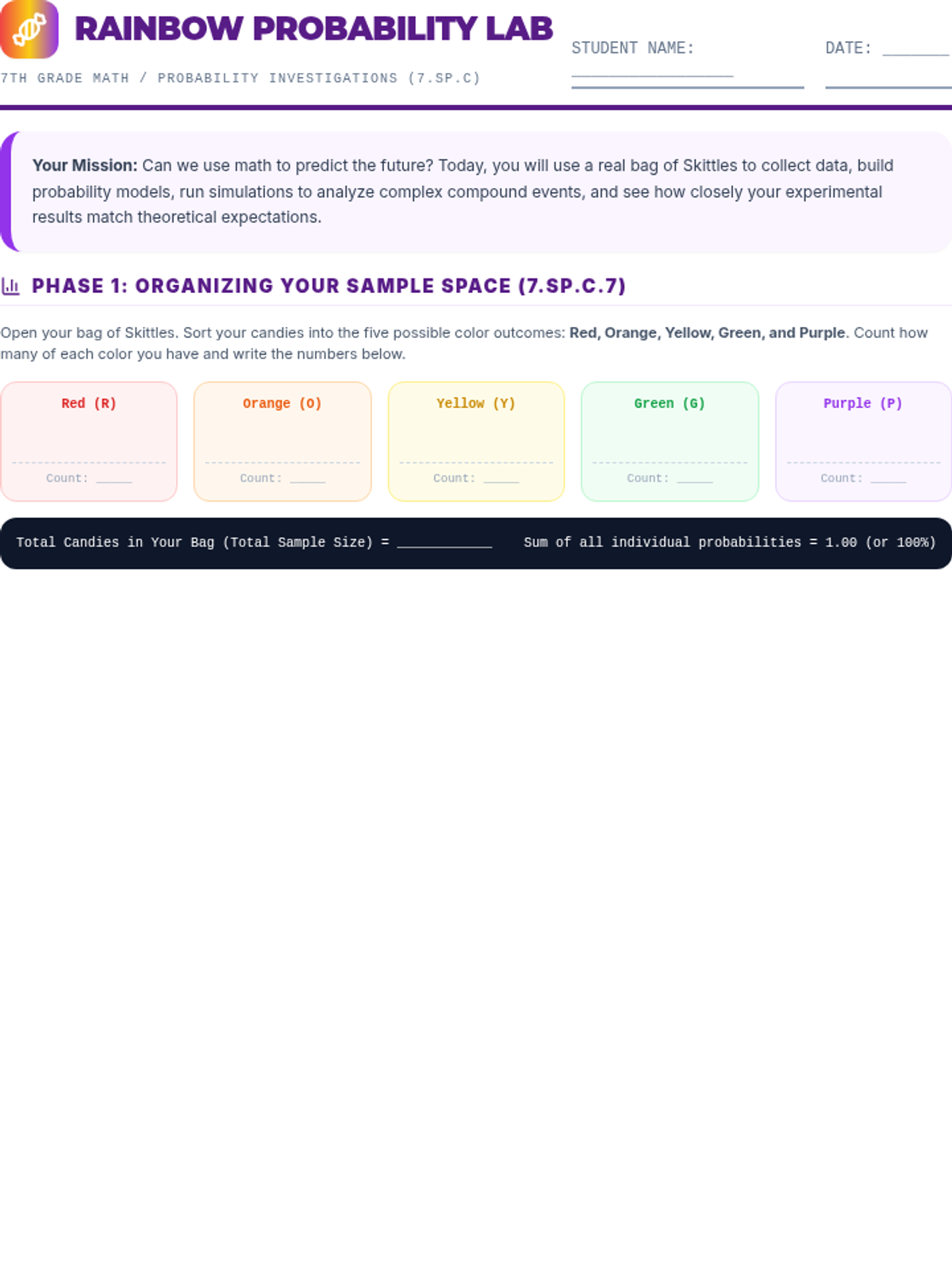
A comprehensive 2-page student lab guide for the Rainbow Probability Lab. Designed specifically for 7th-grade math students, it uses clear, age-appropriate language to count Skittles, build probability models, compare experimental and theoretical rates, and construct tree diagrams to analyze compound events.
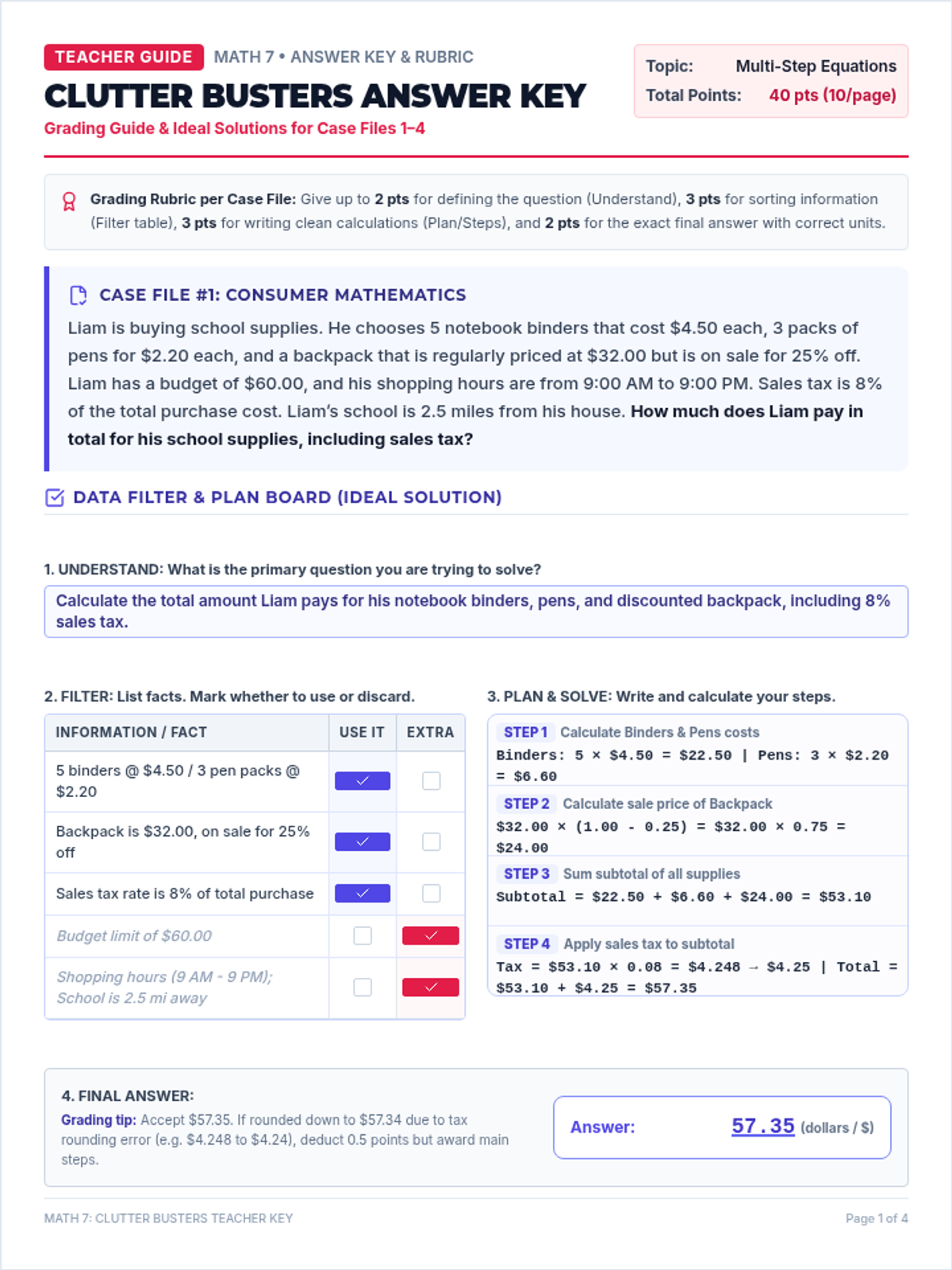
A 4-page printable answer key and grading guide for teachers. It contains completed graphic organizers for all assessment problems, with ideal student answers, classified facts, step-by-step arithmetic formulas, clear annotations for extraneous data, and final answers with correct units.
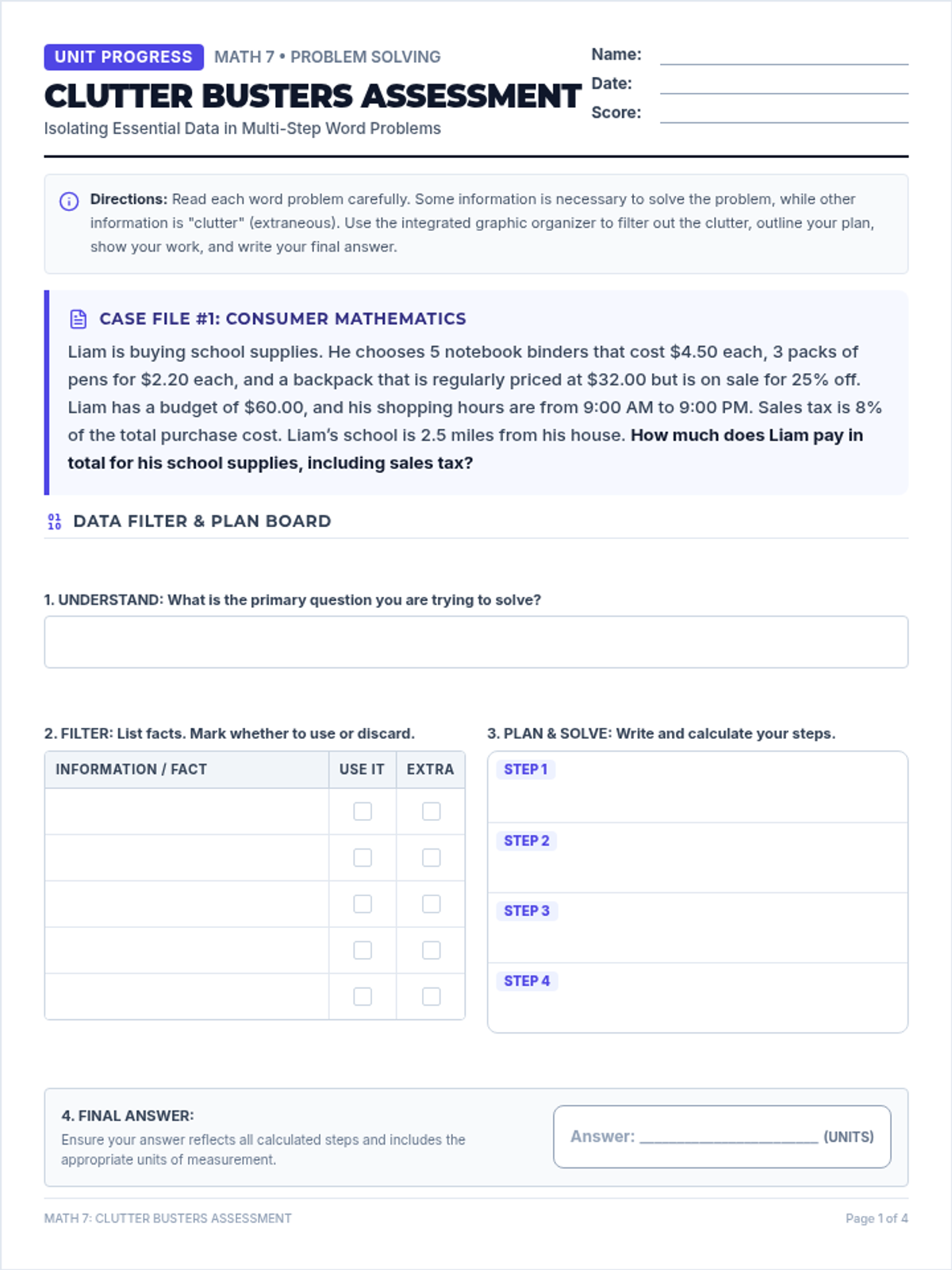
A 4-page printable progress assessment for 7th-grade students. Each page features a realistic multi-step word problem (consumer math, measurement, algebra, and ratios) containing extraneous details, paired with an integrated graphic organizer designed to help students filter information, plan their steps, and calculate the correct solution.
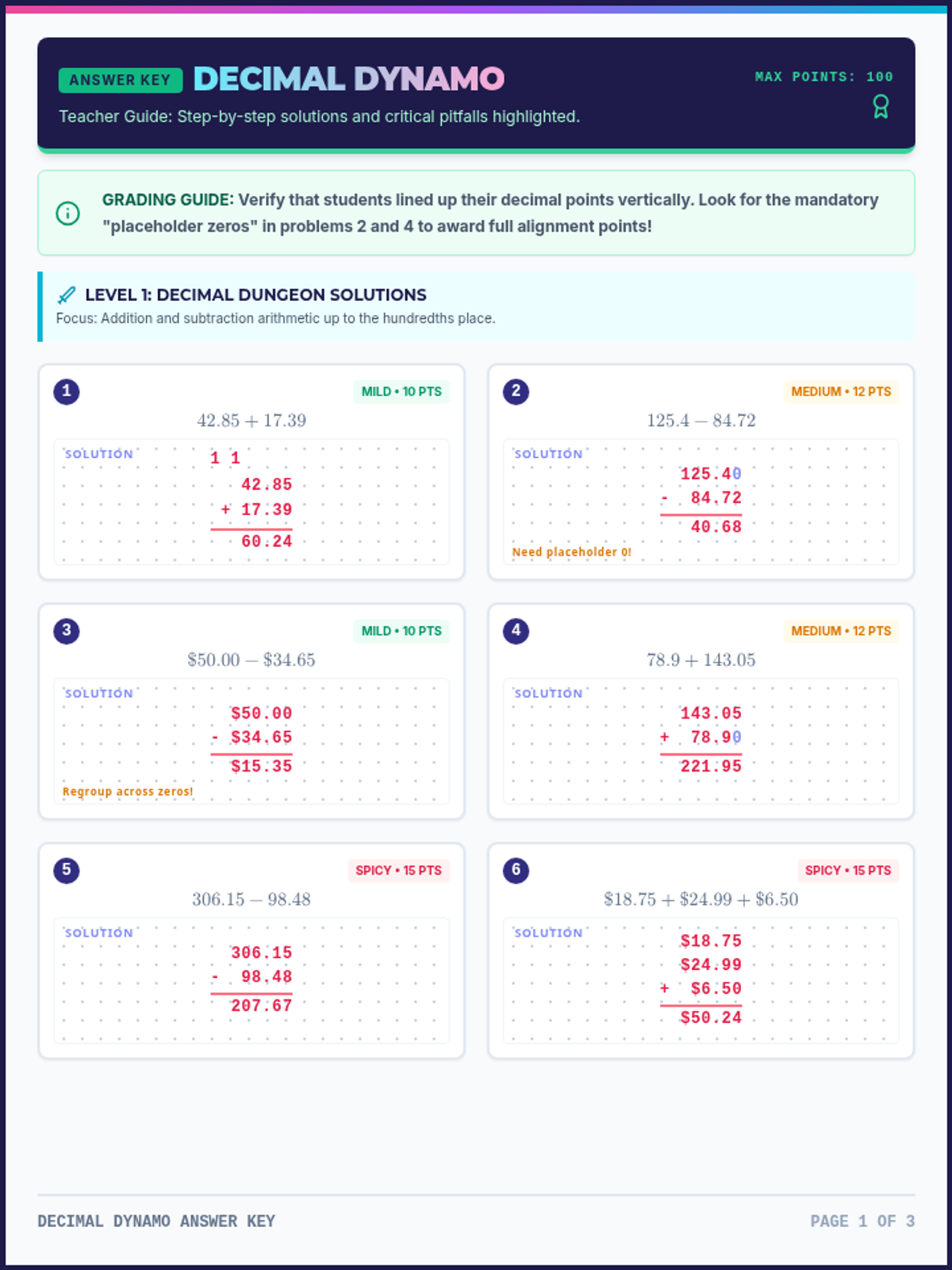
The teacher-facing answer key matching the student worksheet. It replicates the arcade layout exactly but includes fully completed vertical mathematical calculations, correct final answers in high-contrast red font, and pedagogical callouts explaining common student misconceptions.
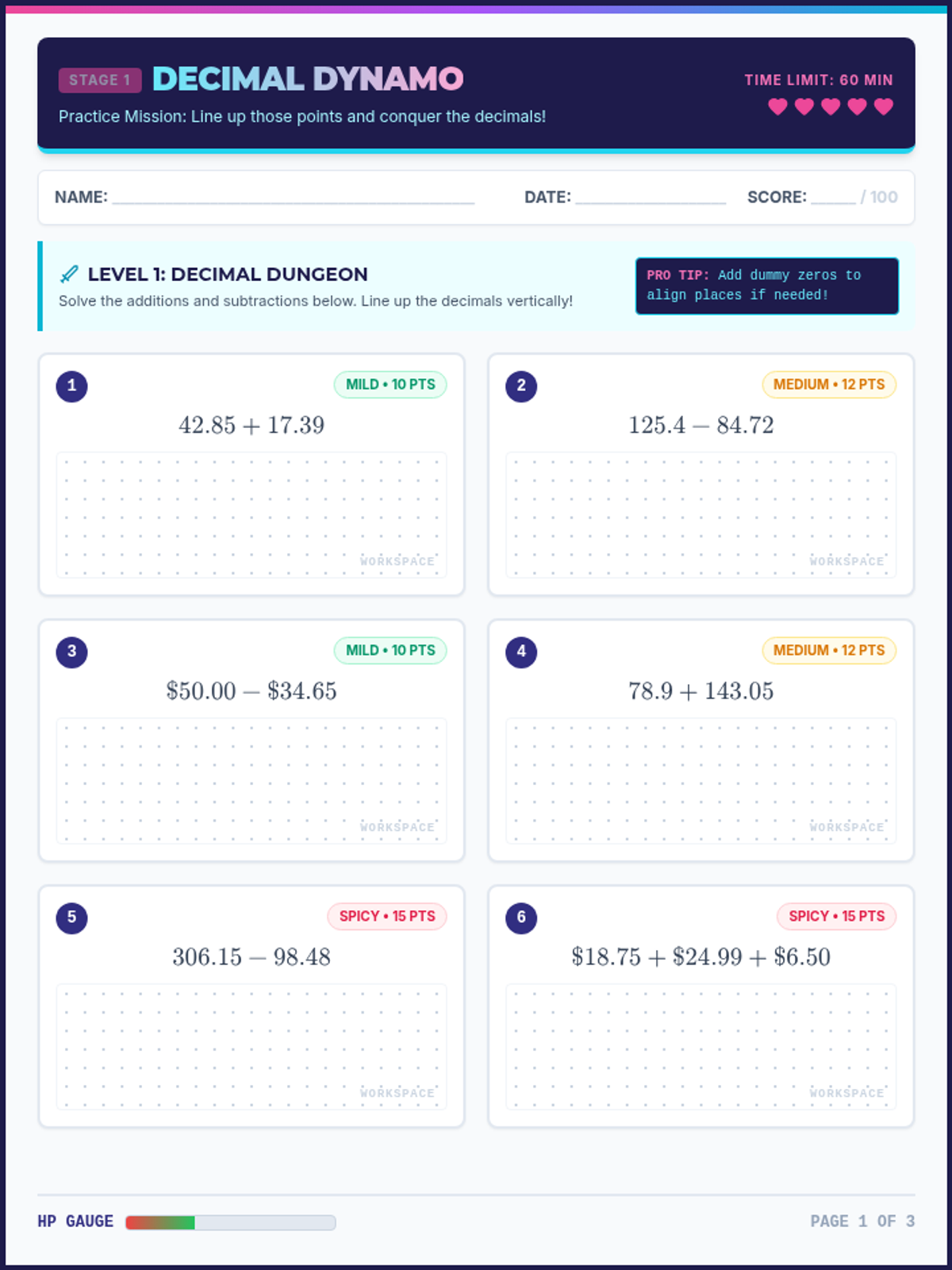
The student-facing portion of the Decimal Dynamo practice lesson. An arcade-themed printable worksheet packet (3 pages) structured as game levels, with grid-backed workspaces for handwriting alignment.
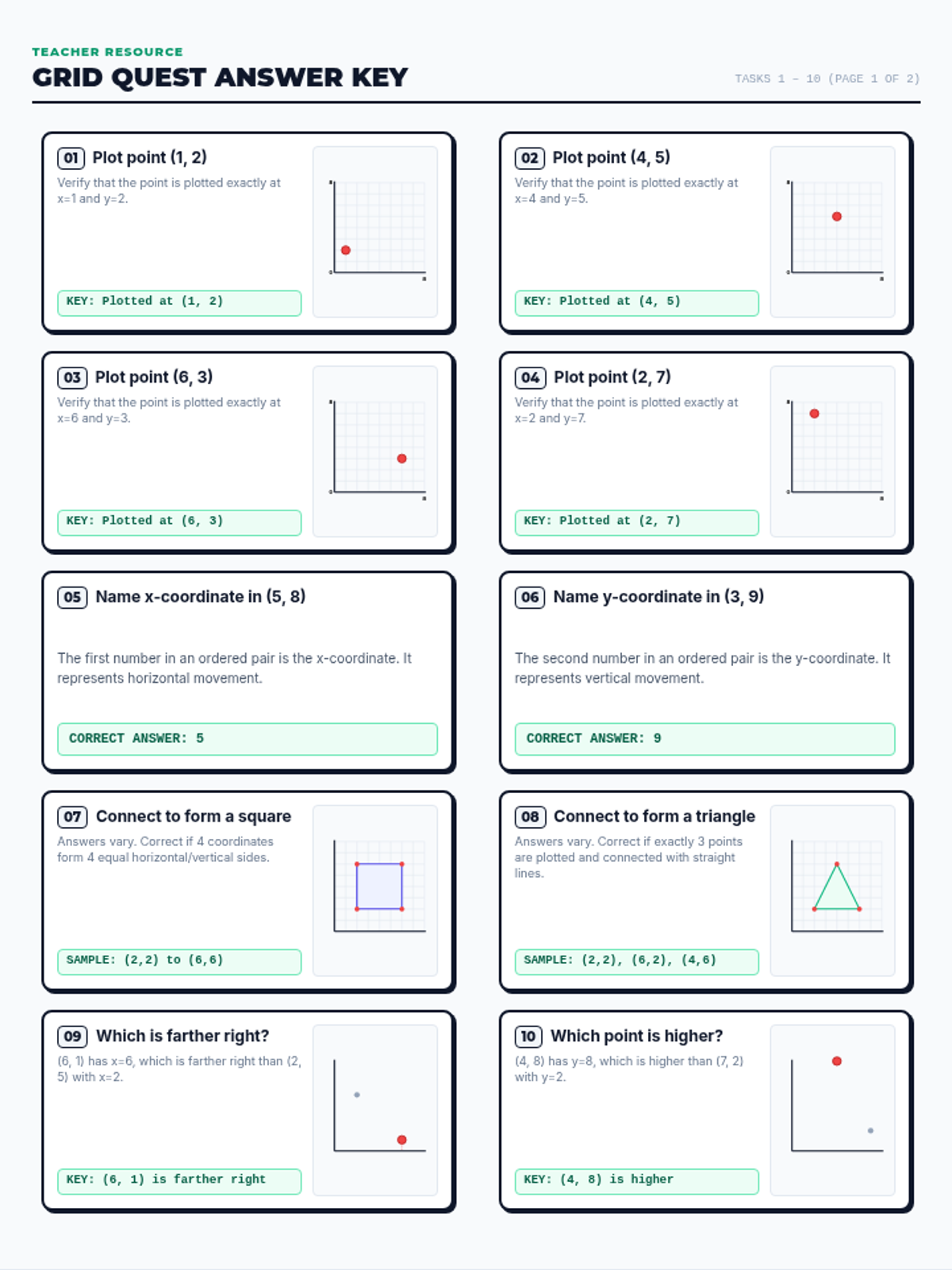
A complete, high-contrast visual answer key for all 20 Grid Quest task cards, displaying correct coordinate plotting on mini grids and full solutions for text-based questions to facilitate rapid grading and teacher reference.
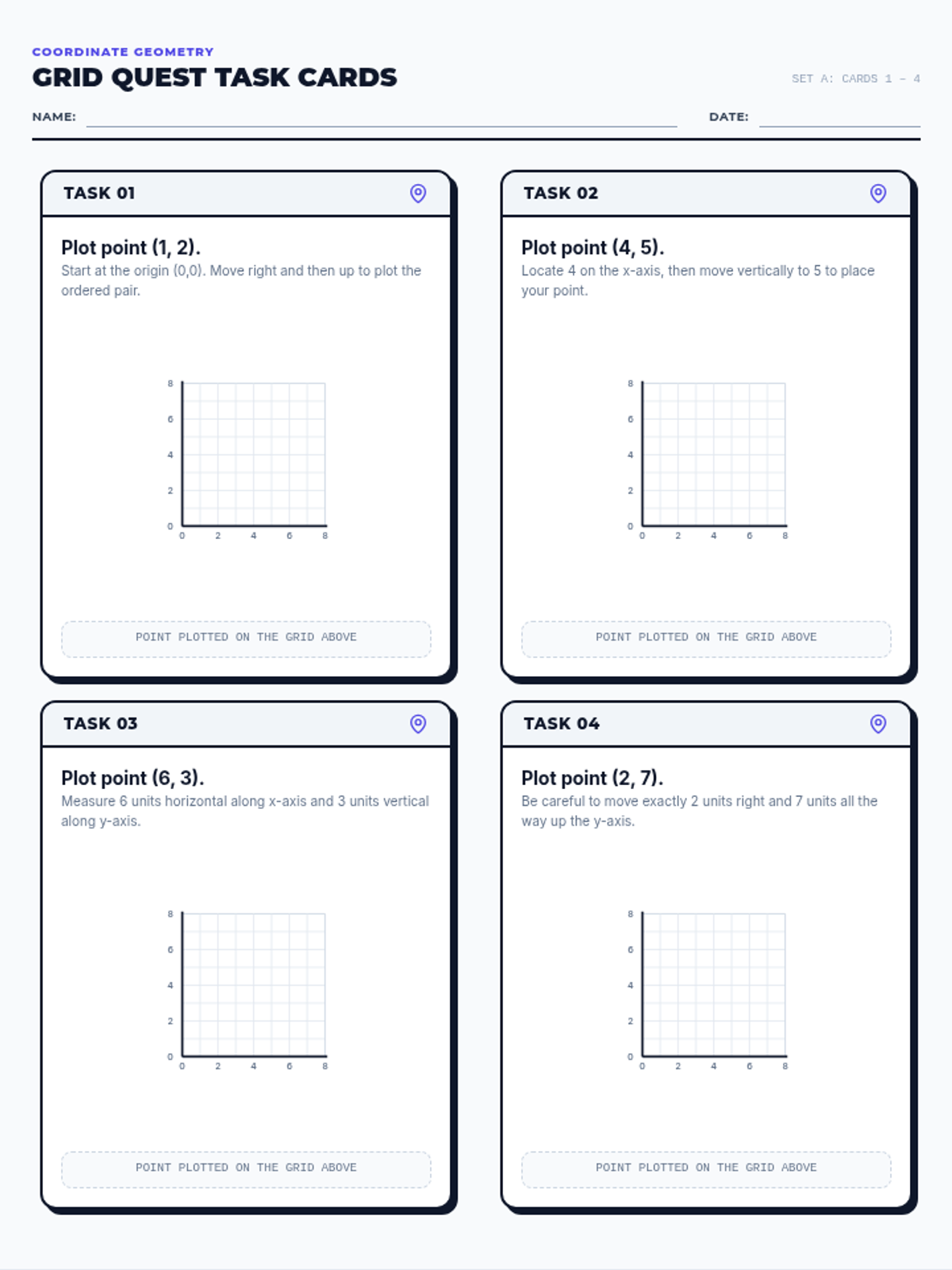
A set of 20 elegant, student-ready printable coordinate geometry task cards in a clean academic minimalist theme, featuring custom 0-8 grids, number lines, and coordinate diagrams for immediate hands-on plotting and analysis.
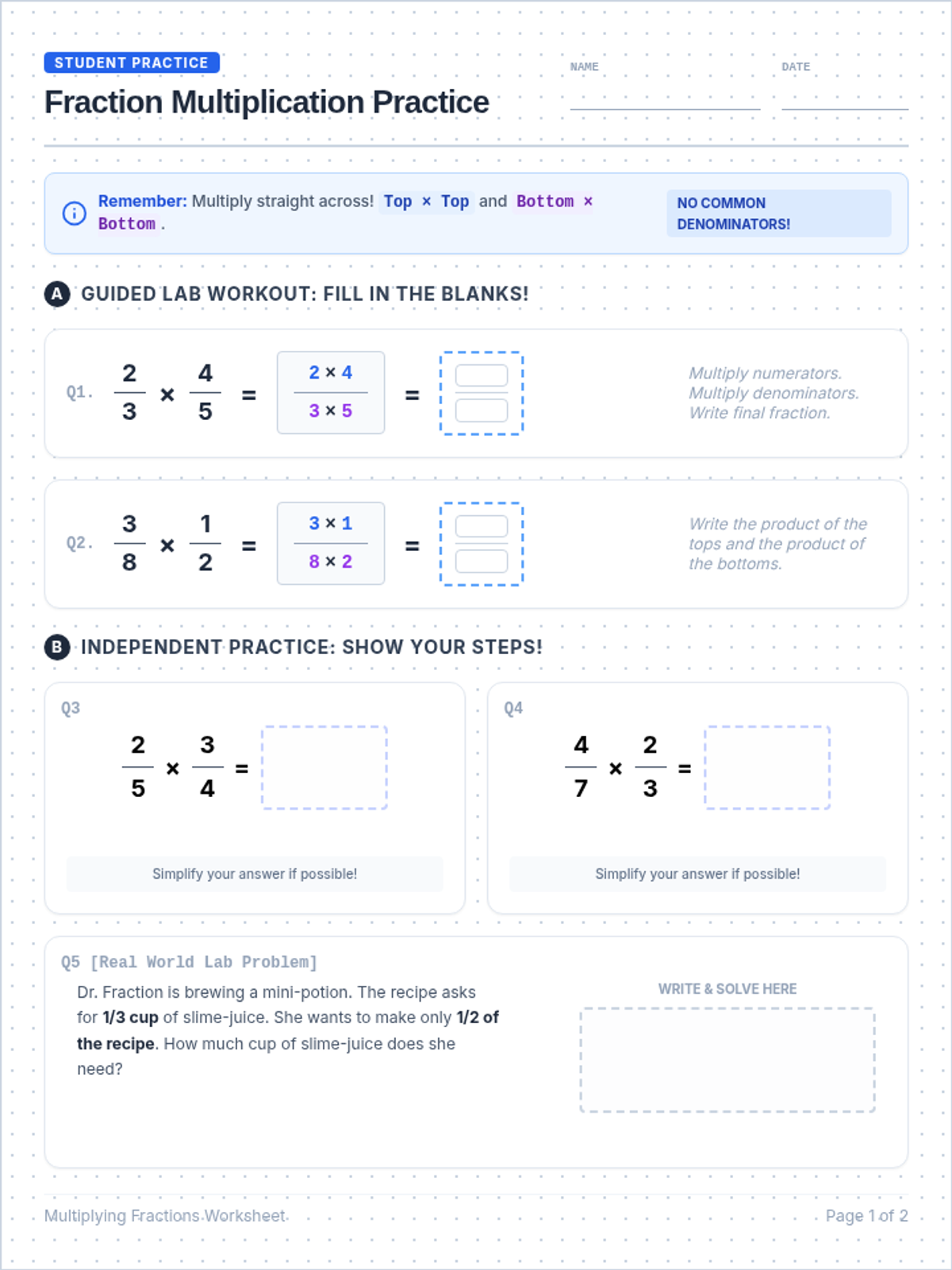
A highly scaffolded student worksheet featuring color-coded templates and dedicated 'Keep-Change-Flip' workout boxes to help students practice multiplying and dividing fractions with high success.
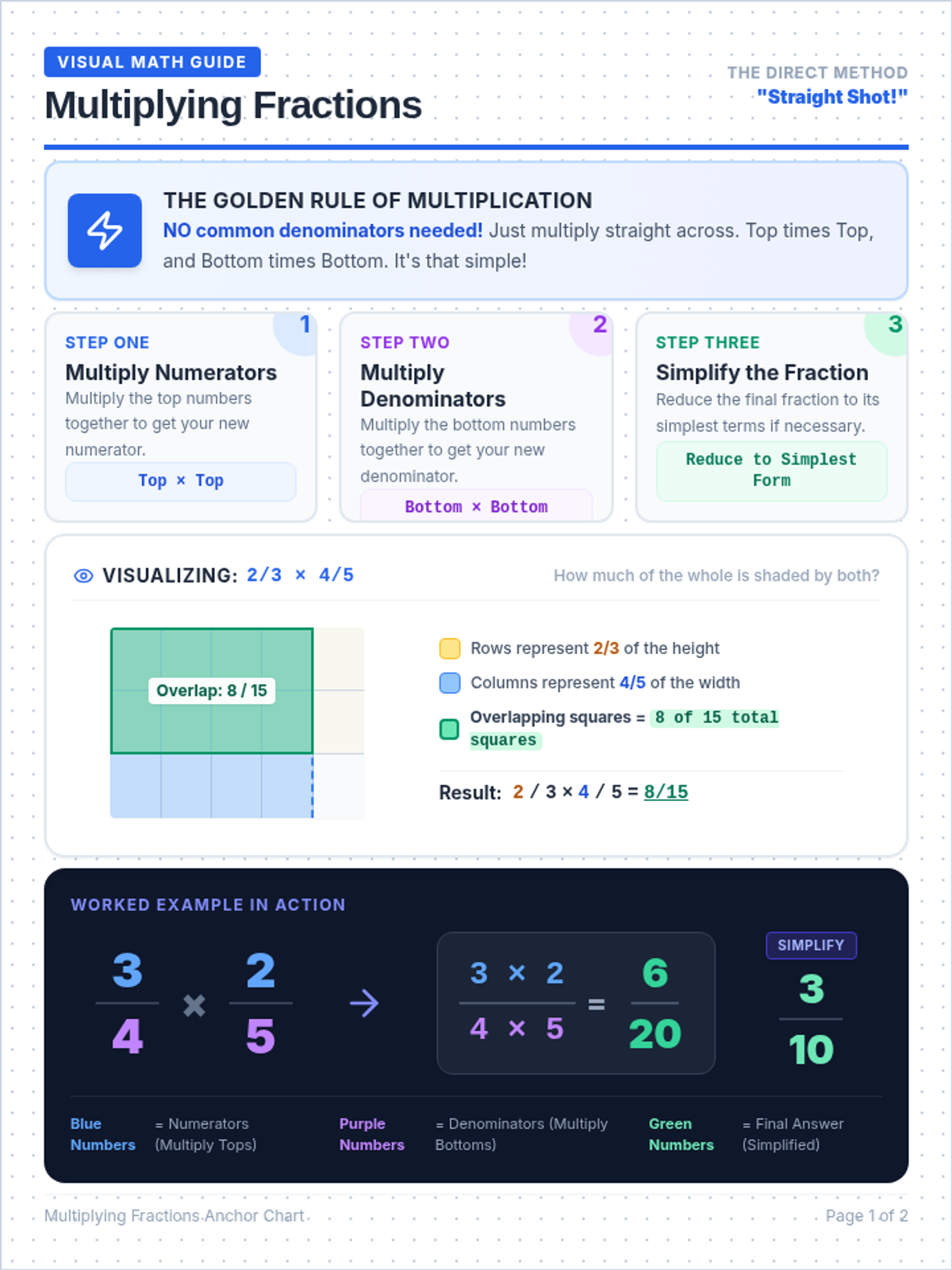
Color-coded visual anchor charts for multiplying and dividing fractions. Page 1 teaches the direct multiplication method with an interactive area model. Page 2 scaffolds division using the Keep-Change-Flip (KCF) mnemonic with step-by-step examples.