An engaging presentation for introducing the science of mixtures, solutions, and matter conservation through an ice cream theme. It features bold visuals, interactive comparison slides, and clear instructions for the student notebook assignment.
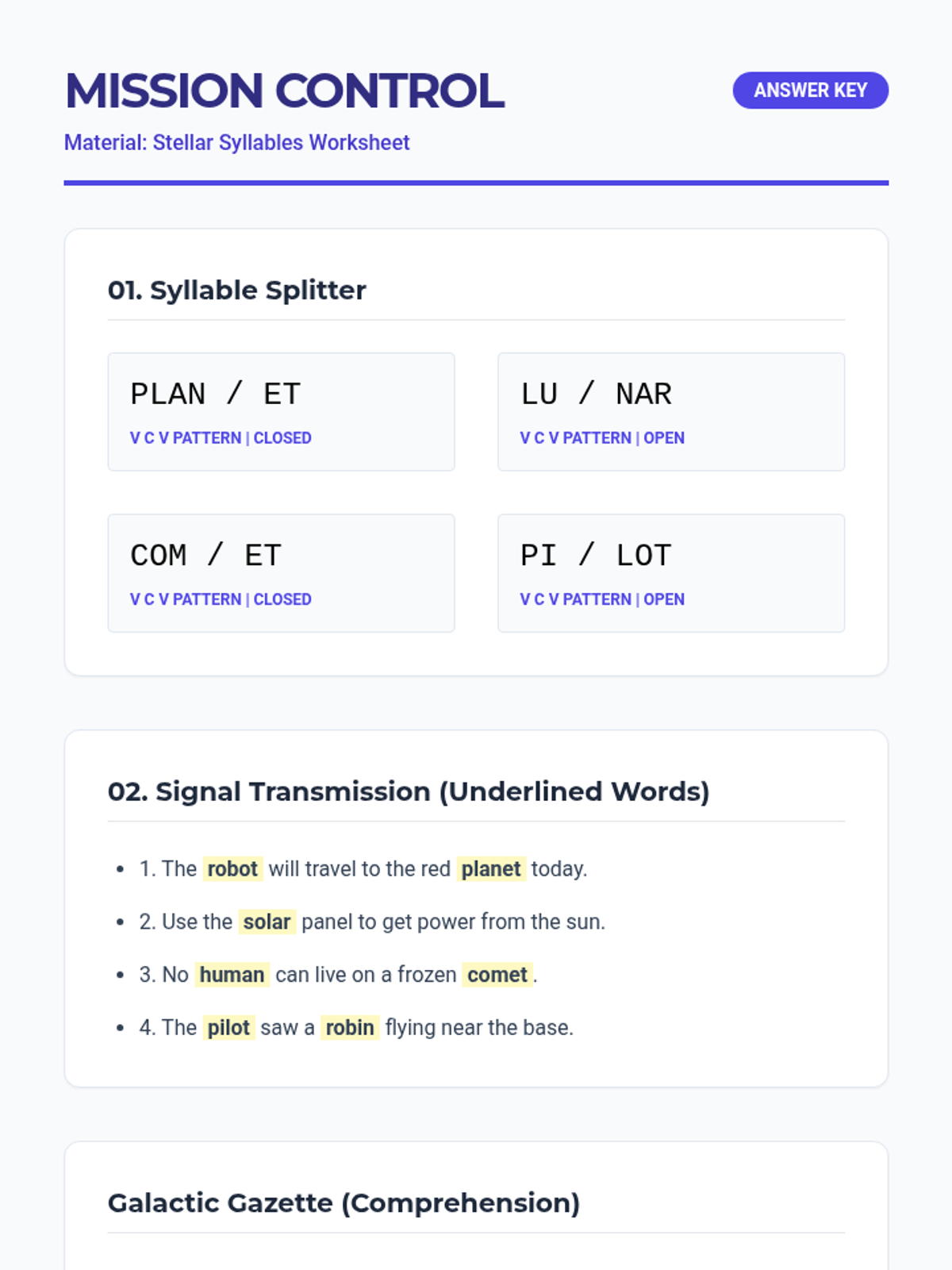
The answer key for the Cosmic Codes student materials, providing correct syllable divisions and comprehension question responses.
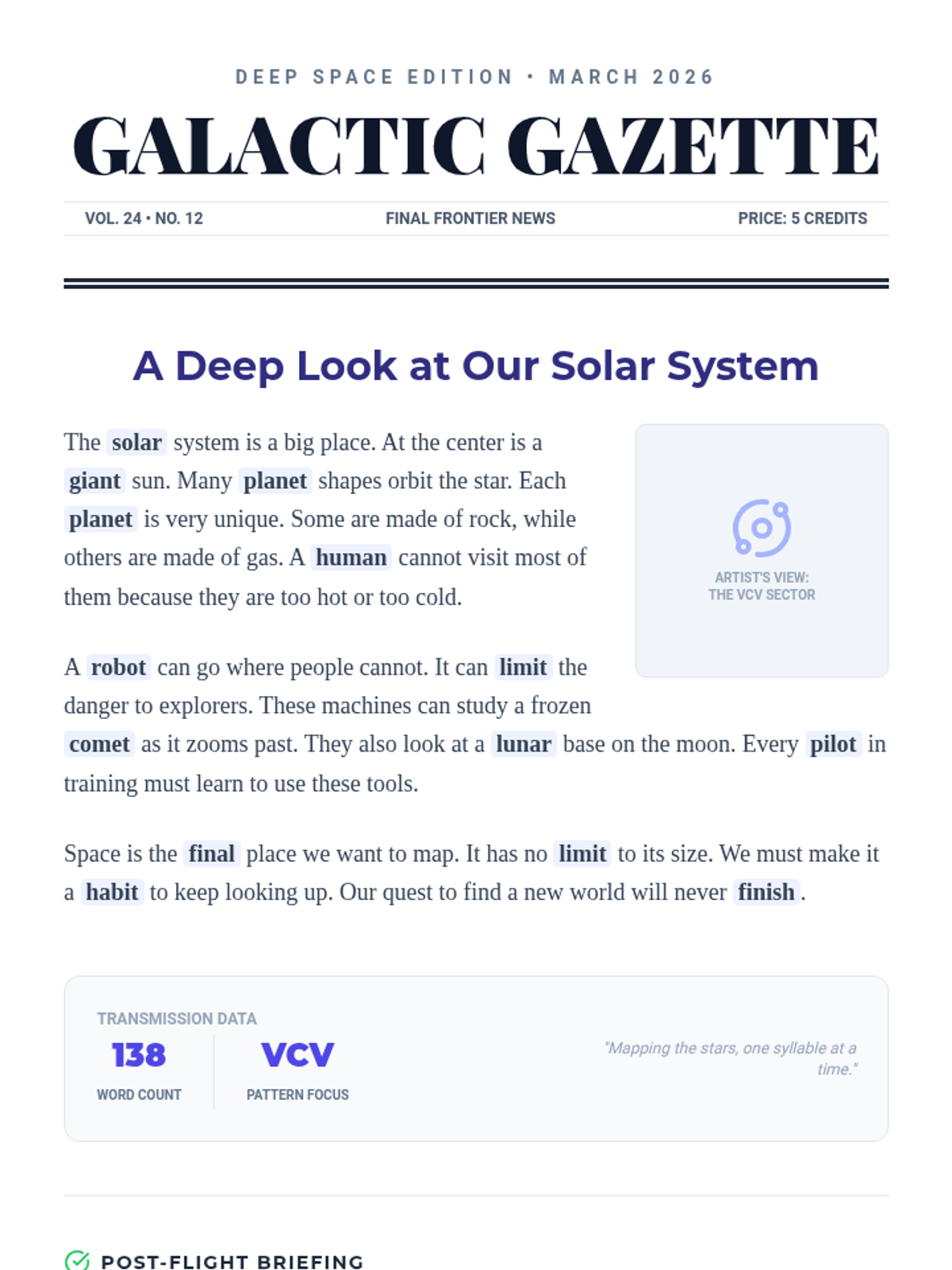
A space-themed newspaper article (approx. 140 words) designed for reading practice, featuring highlighted VCV words and comprehension questions.
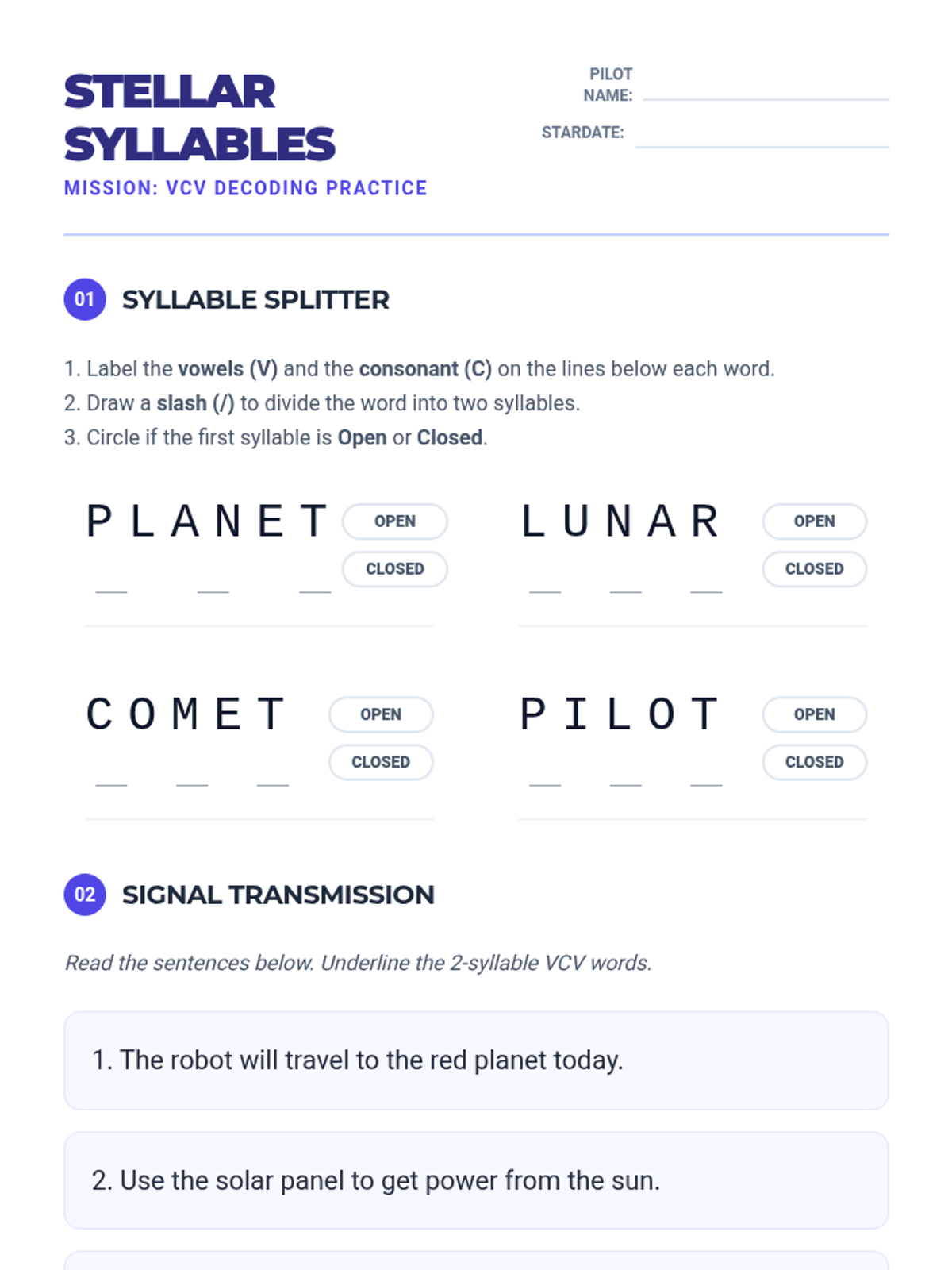
A student worksheet for VCV syllable practice, featuring word division exercises, sentence reading with VCV underlining, and a creative drawing prompt.
Engaging slides for teaching the VCV syllable division patterns, using a space theme to explain open and closed syllable rules with visual examples.
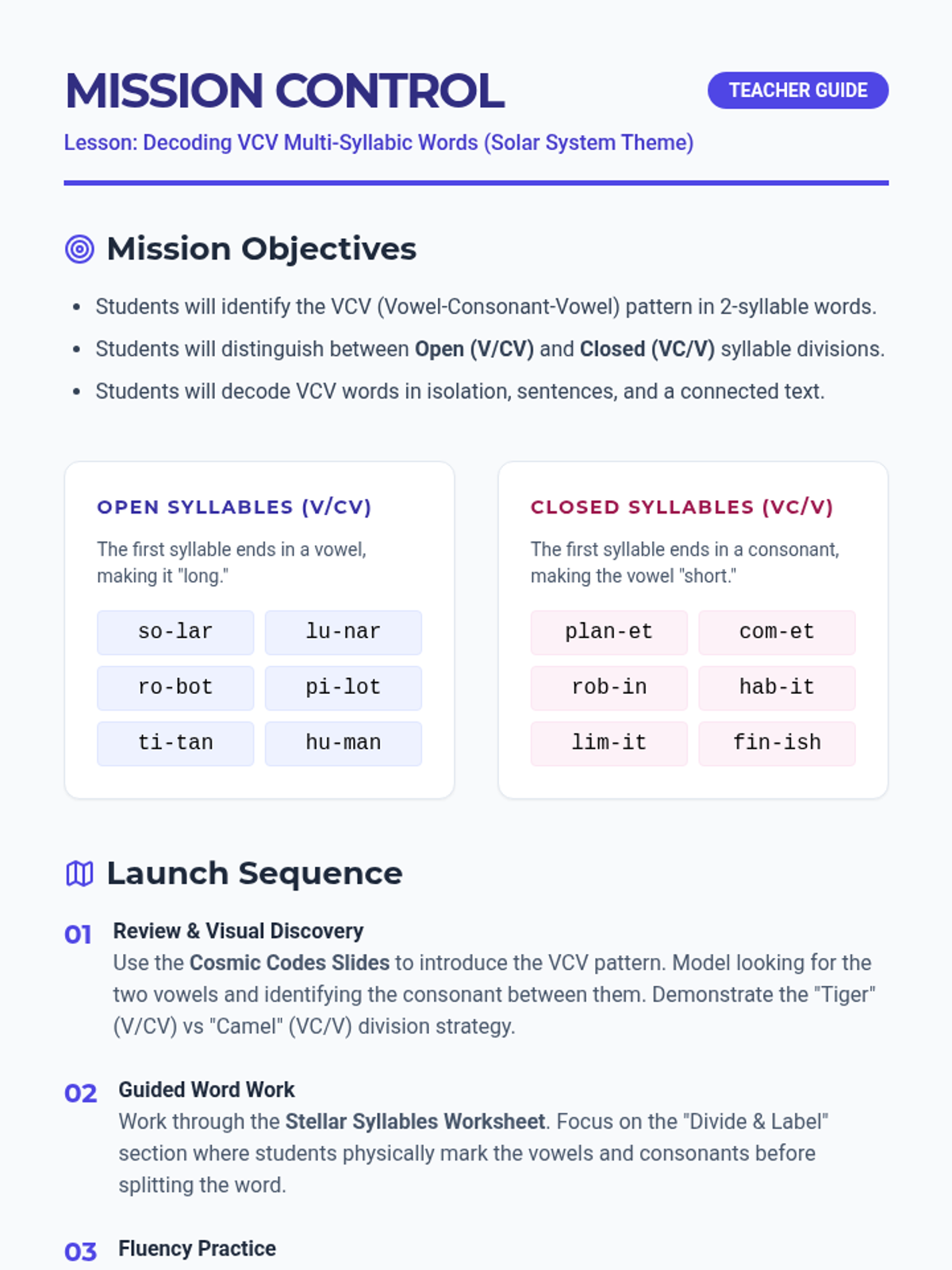
A comprehensive teacher guide for the Cosmic Codes lesson, featuring word lists, instructional strategies, and differentiation tips for VCV syllable patterns.
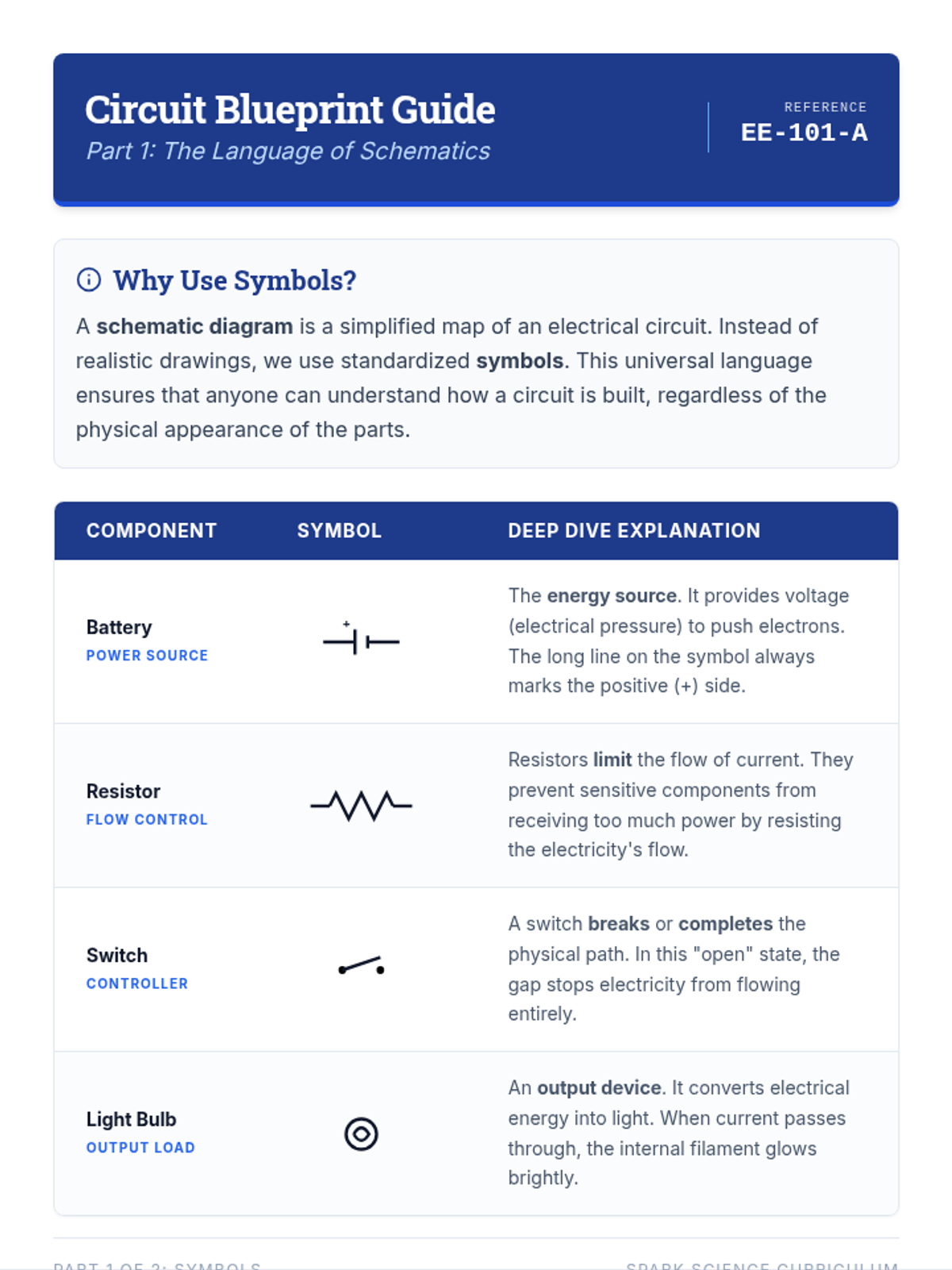
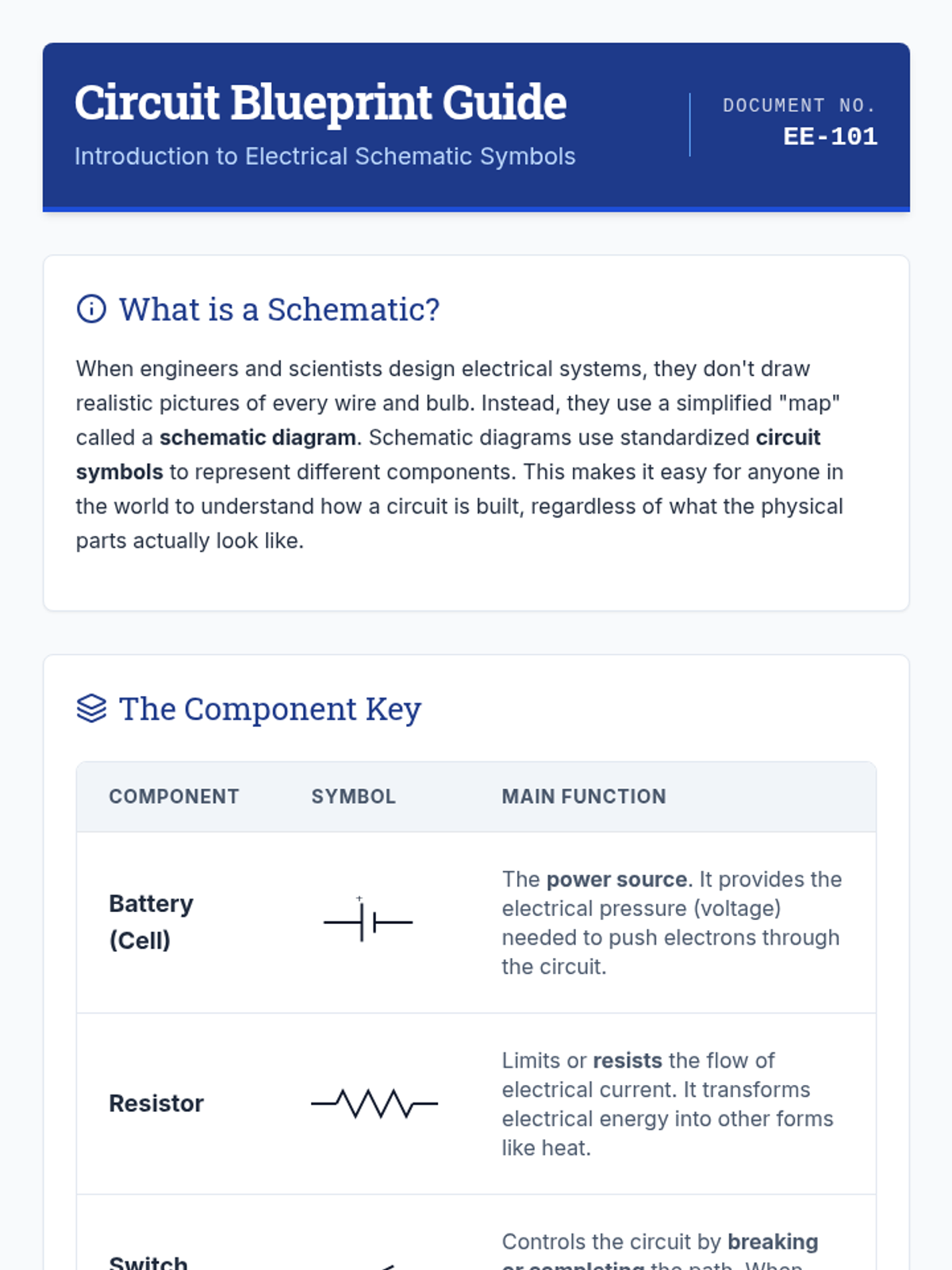
A strictly 2-page reading guide optimized for print. Page 1 contains the detailed symbol key. Page 2 features the integrated circuit with a fixed, closed switch and updated text describing a functional closed circuit.
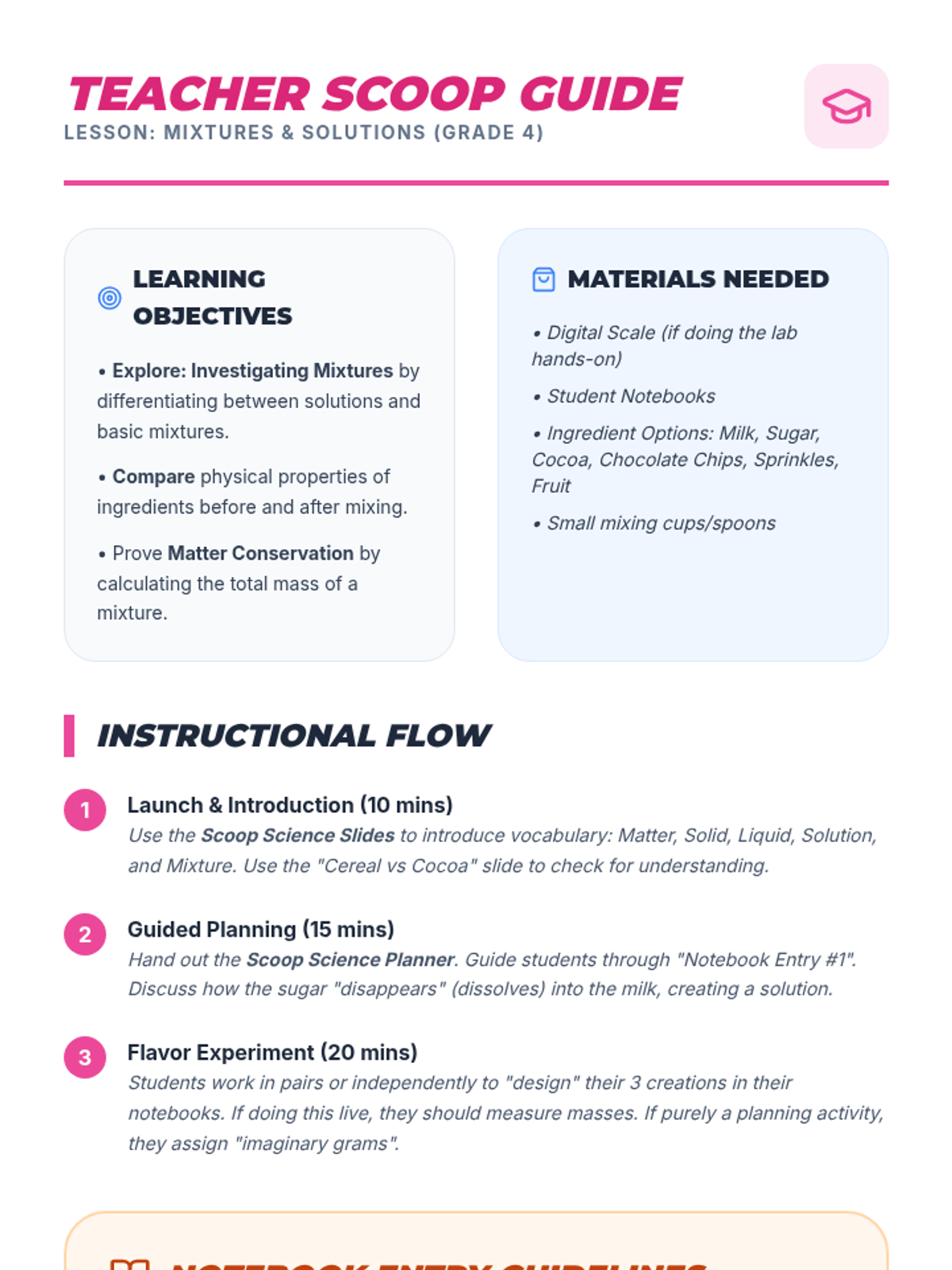
A detailed facilitator guide for teachers, providing instructional steps, notebook entry keys, discussion prompts, and clarification on common student misconceptions regarding mixtures and solutions.
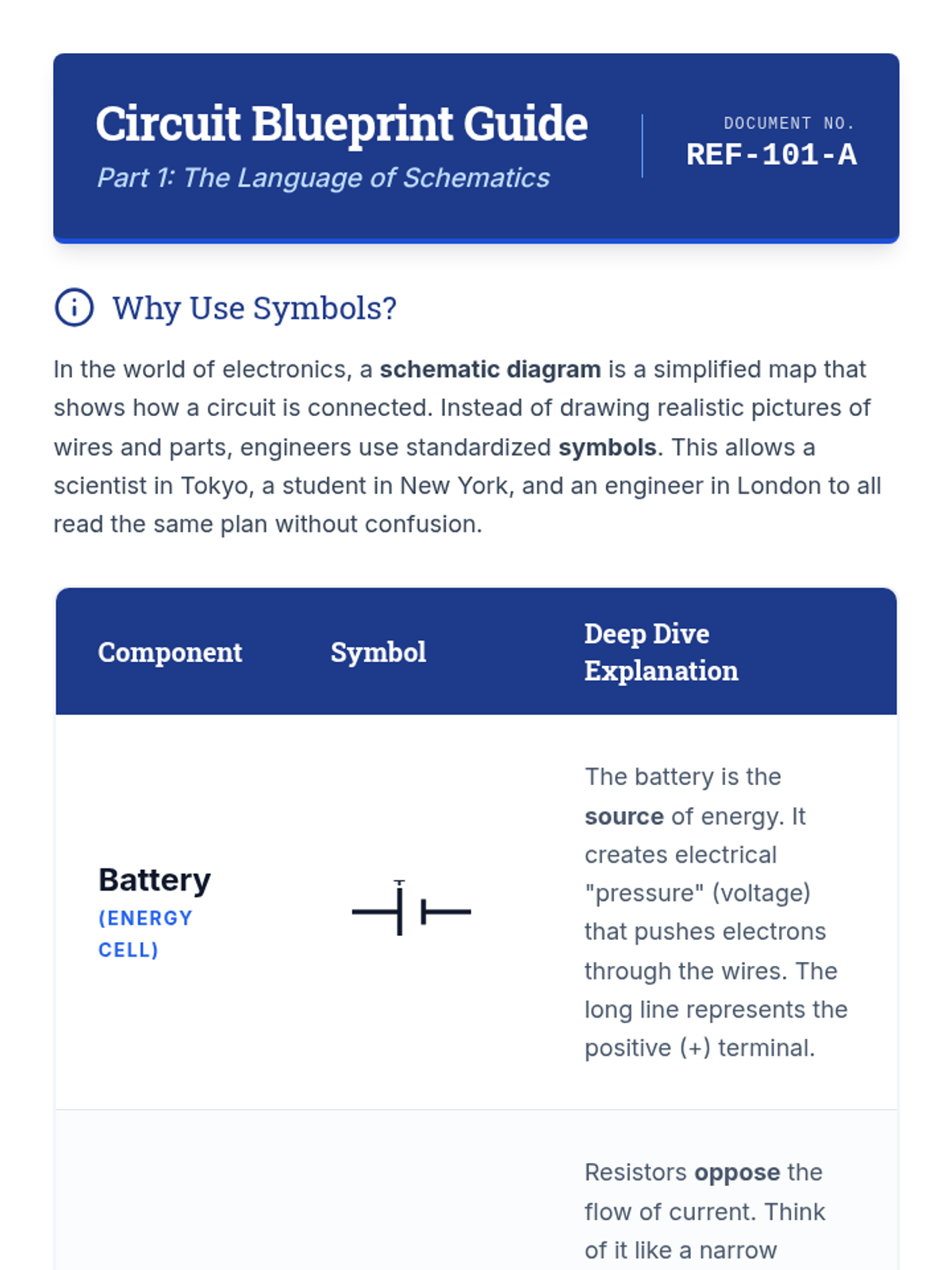
A comprehensive 2-page reading guide. Page 1 features a detailed Master Key with symbols and deep-dive explanations. Page 2 features a large Integrated Circuit schematic with extended reading on current flow and the "Golden Rule" of closed loops.
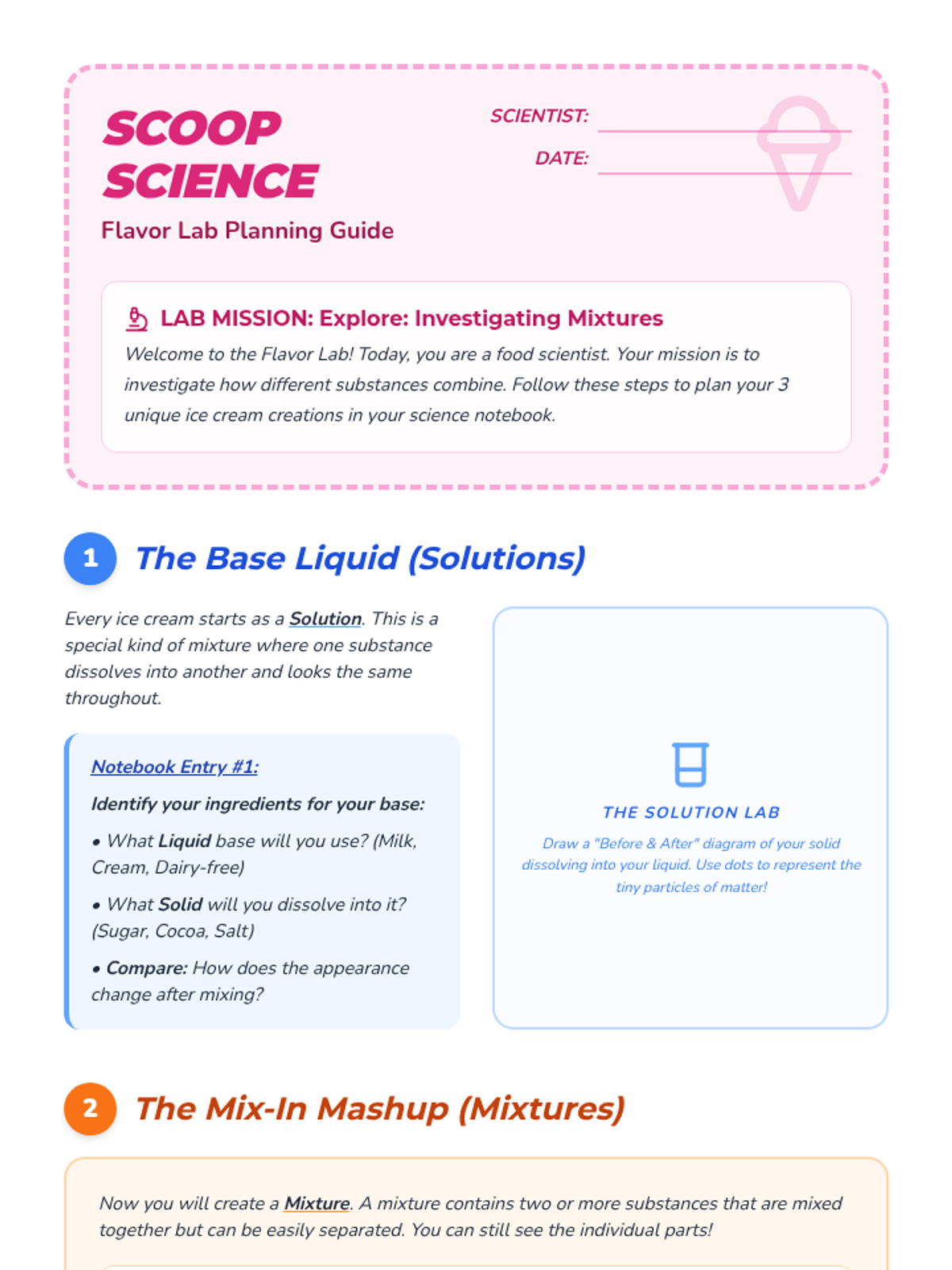
A creative student planning worksheet for a 4th-grade science lesson on mixtures and solutions, themed around designing ice cream. It guides students through identifying states of matter, differentiating between solutions and mixtures, and practicing the conservation of matter in their notebooks.
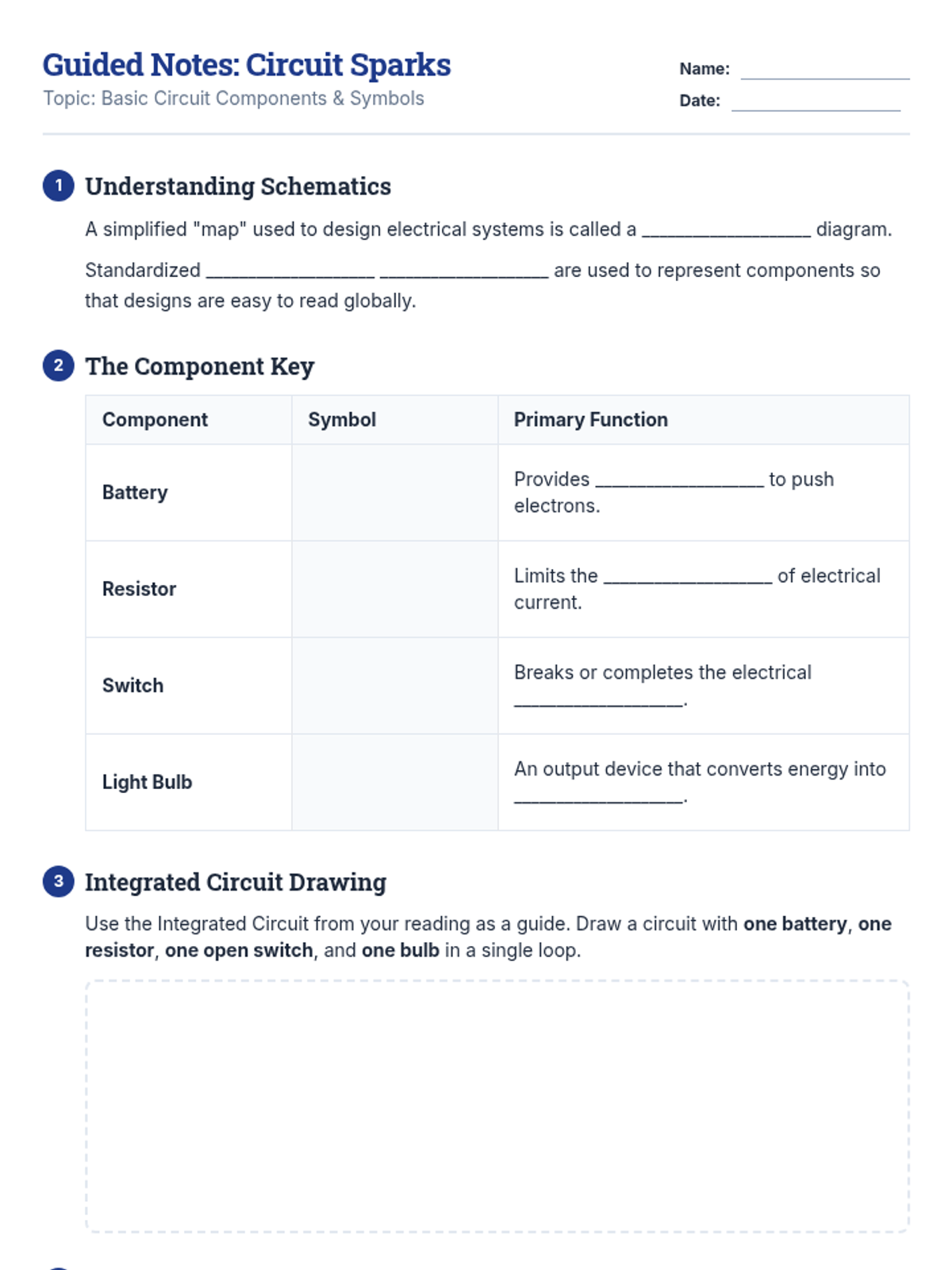
Guided notes for students to complete while reading the Circuit Symbols Guide. Includes fill-in-the-blank definitions, drawing practice for symbols, and an integrated circuit sketching area. Optimized for 1-page fit.
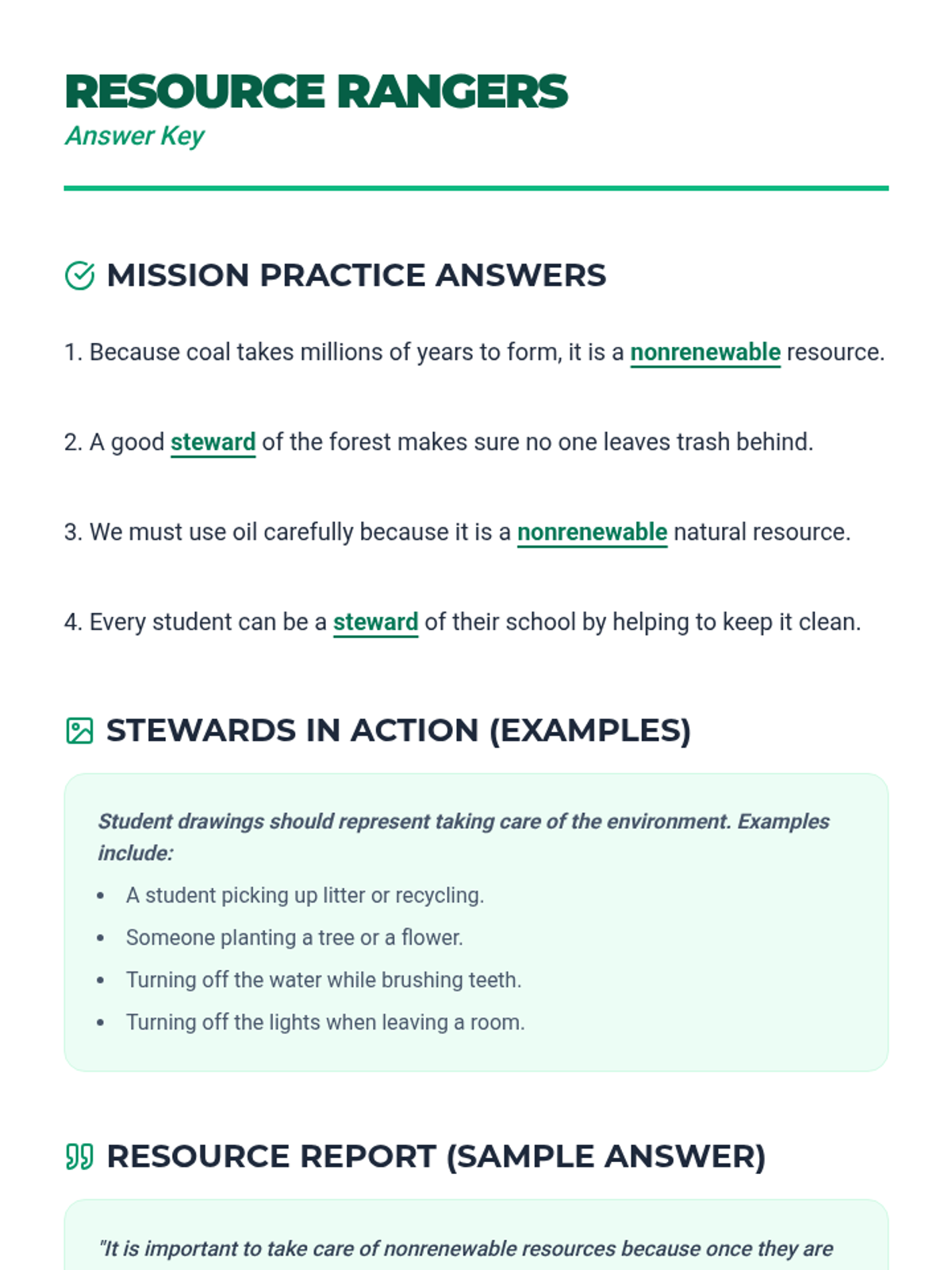
A teacher answer key for the Resource Rangers Worksheet, providing correct answers for the vocabulary fill-in-the-blank and guidance for creative responses.
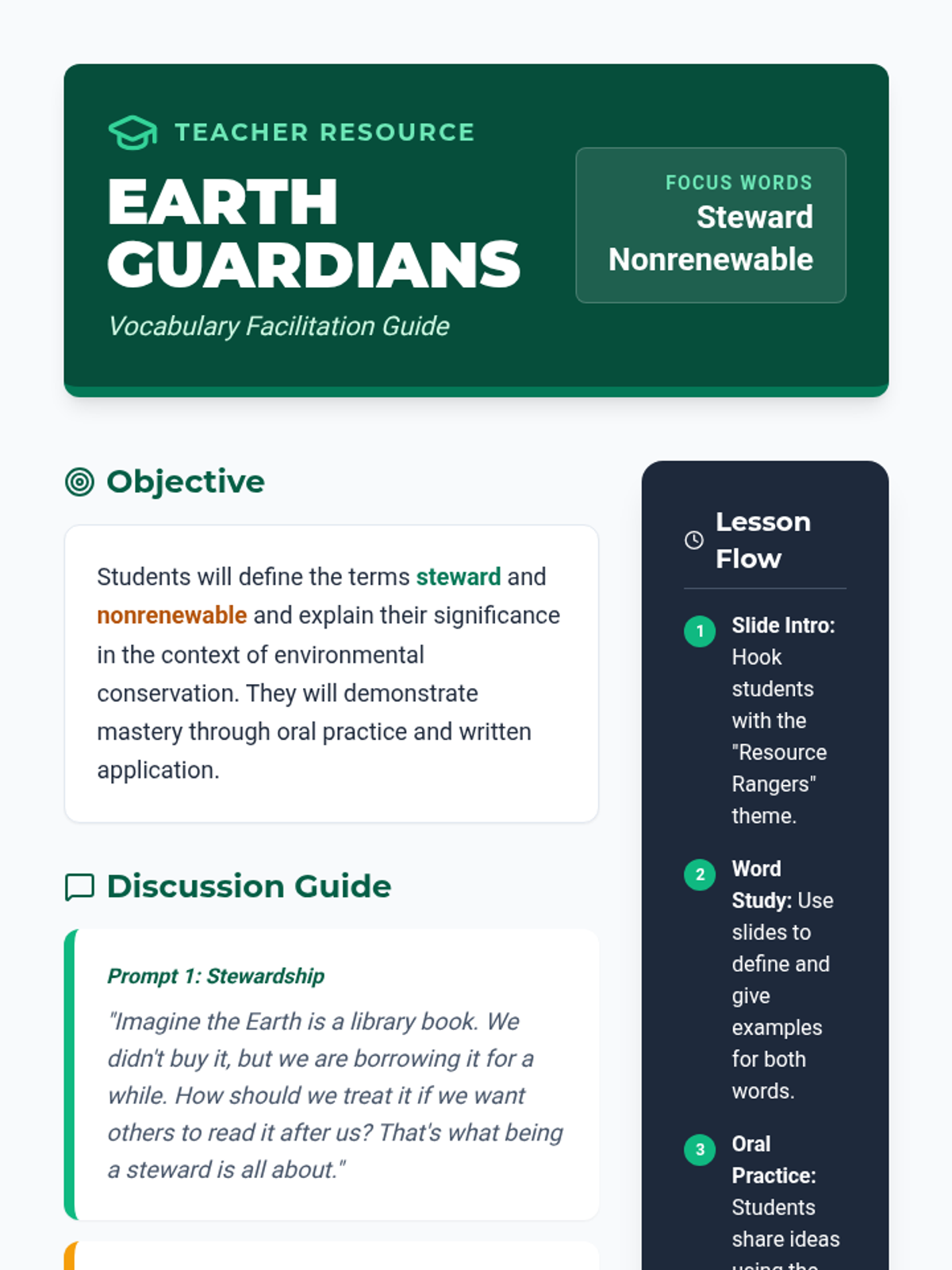
An updated teacher facilitation guide that includes instructions for using the vocabulary sentence frames during oral practice.
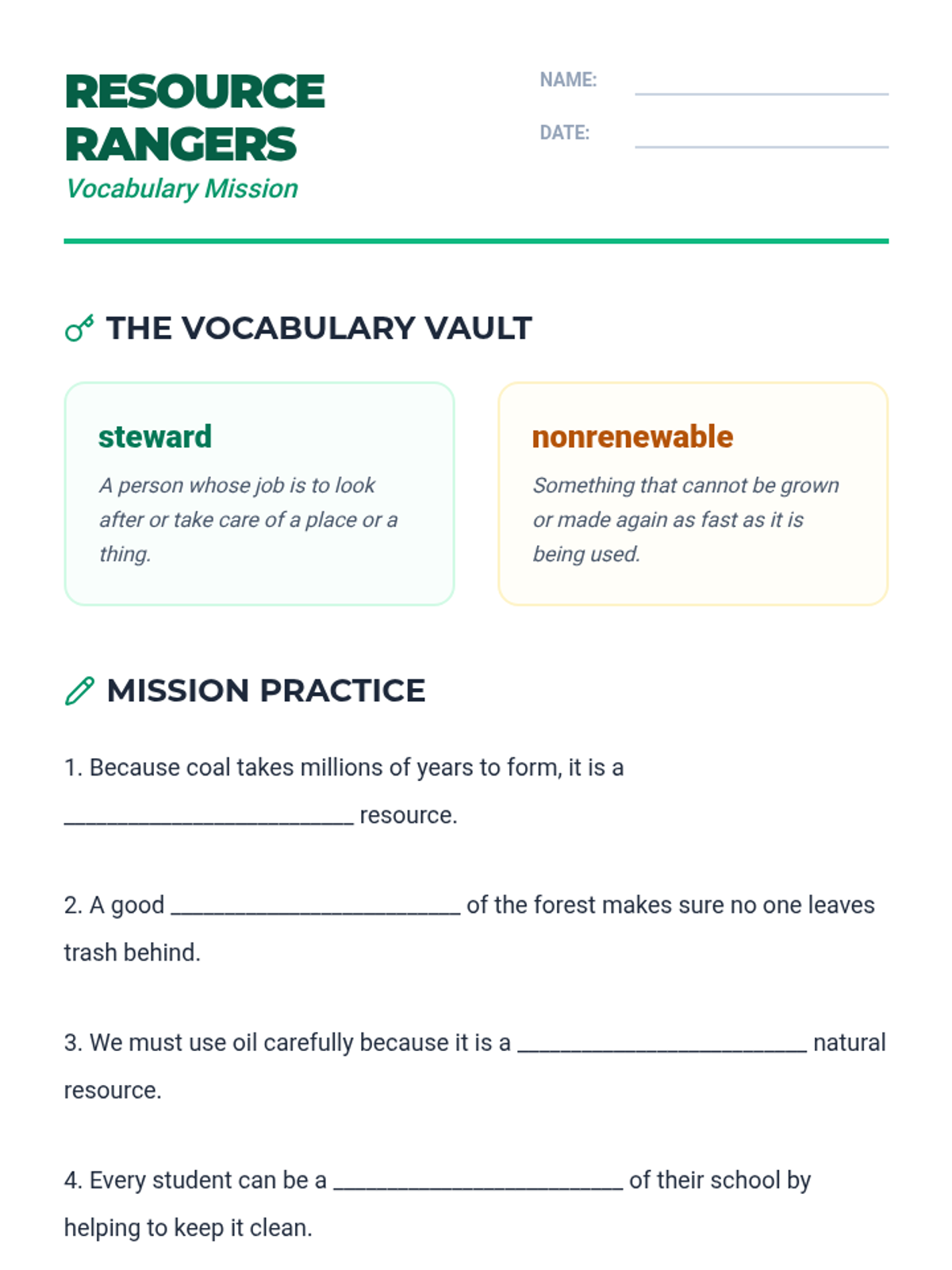
A practice worksheet for students to reinforce their understanding of 'steward' and 'nonrenewable' through fill-in-the-blank sentences and creative application.
A slide presentation focusing on the vocabulary words 'stewards' and 'nonrenewable' with student-friendly definitions, sentence examples, oral practice prompts, and sentence frames.
Optimized 1-page introductory reading guide for students that explains schematic diagrams and provides a visual symbol key plus a large labeled integrated circuit example containing all four components. Designed to fit perfectly on a single page.
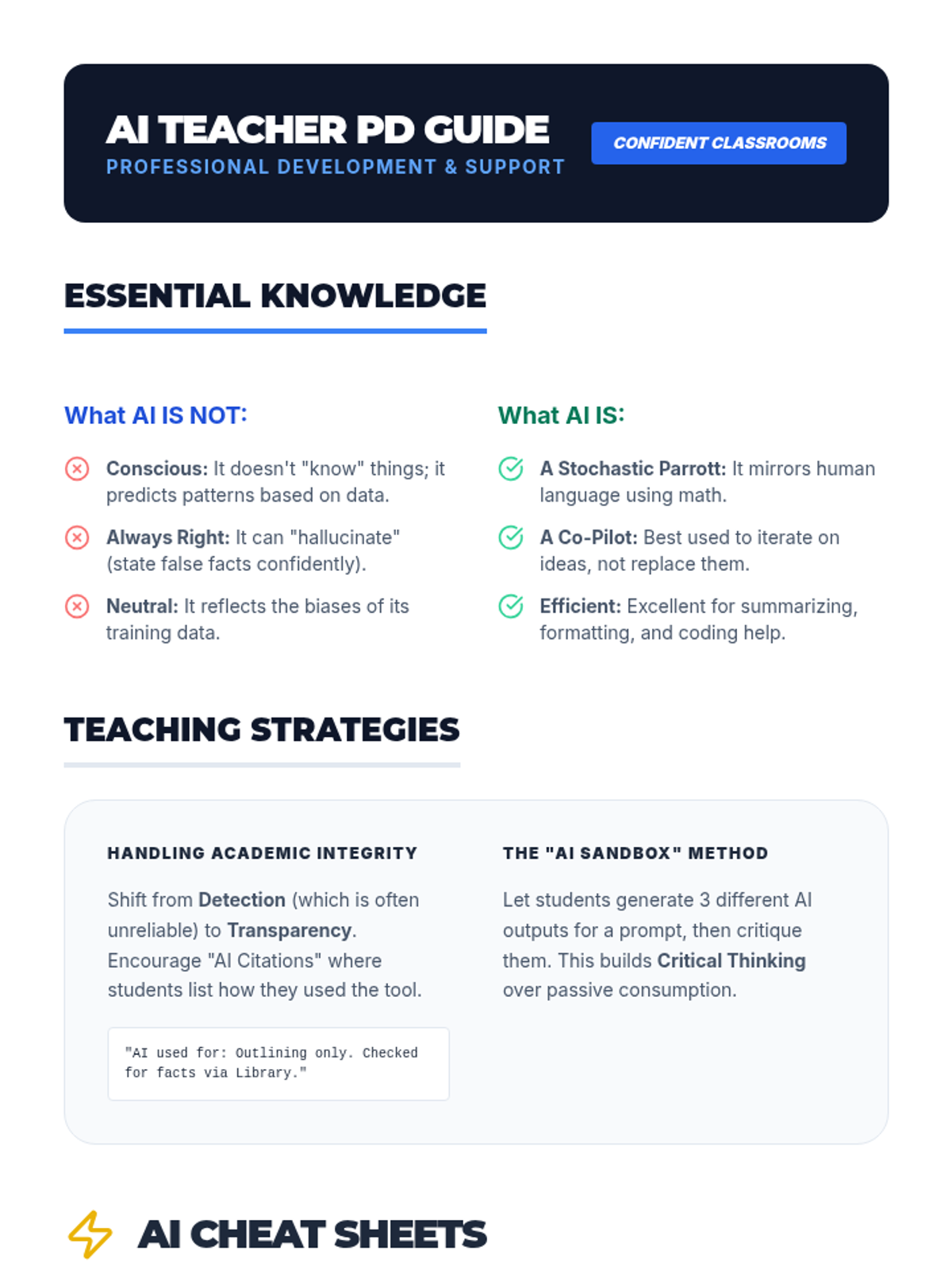
A comprehensive teacher professional development guide including essential AI concepts, facilitation strategies, and quick-reference prompt cheat sheets.
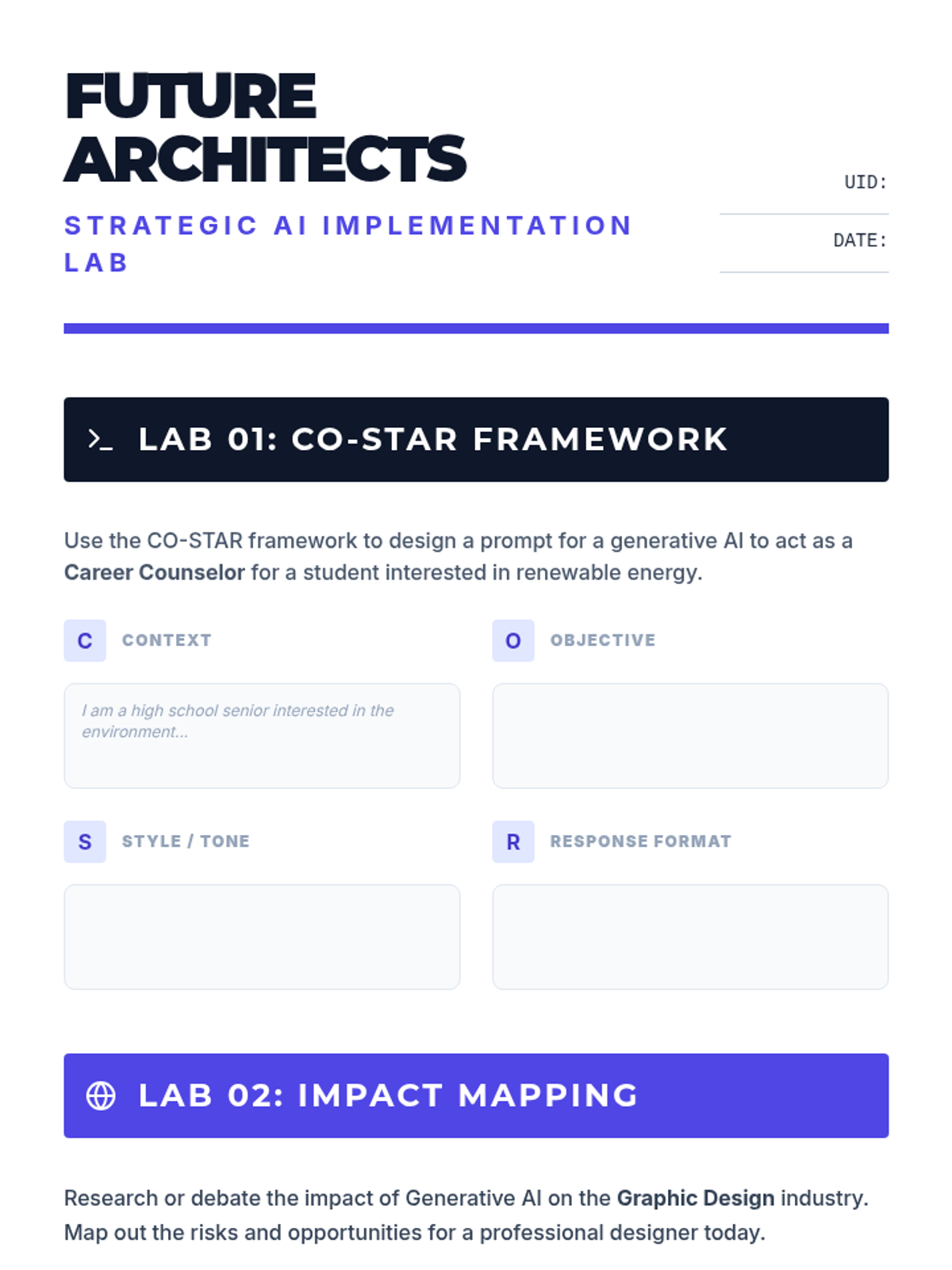
A high school activity sheet requiring students to apply the CO-STAR prompt engineering framework, map industry impacts, and draft ethical AI policies.
Advanced slide deck for high school students exploring generative AI paradigms, professional prompt engineering frameworks (CO-STAR), and the future of work.
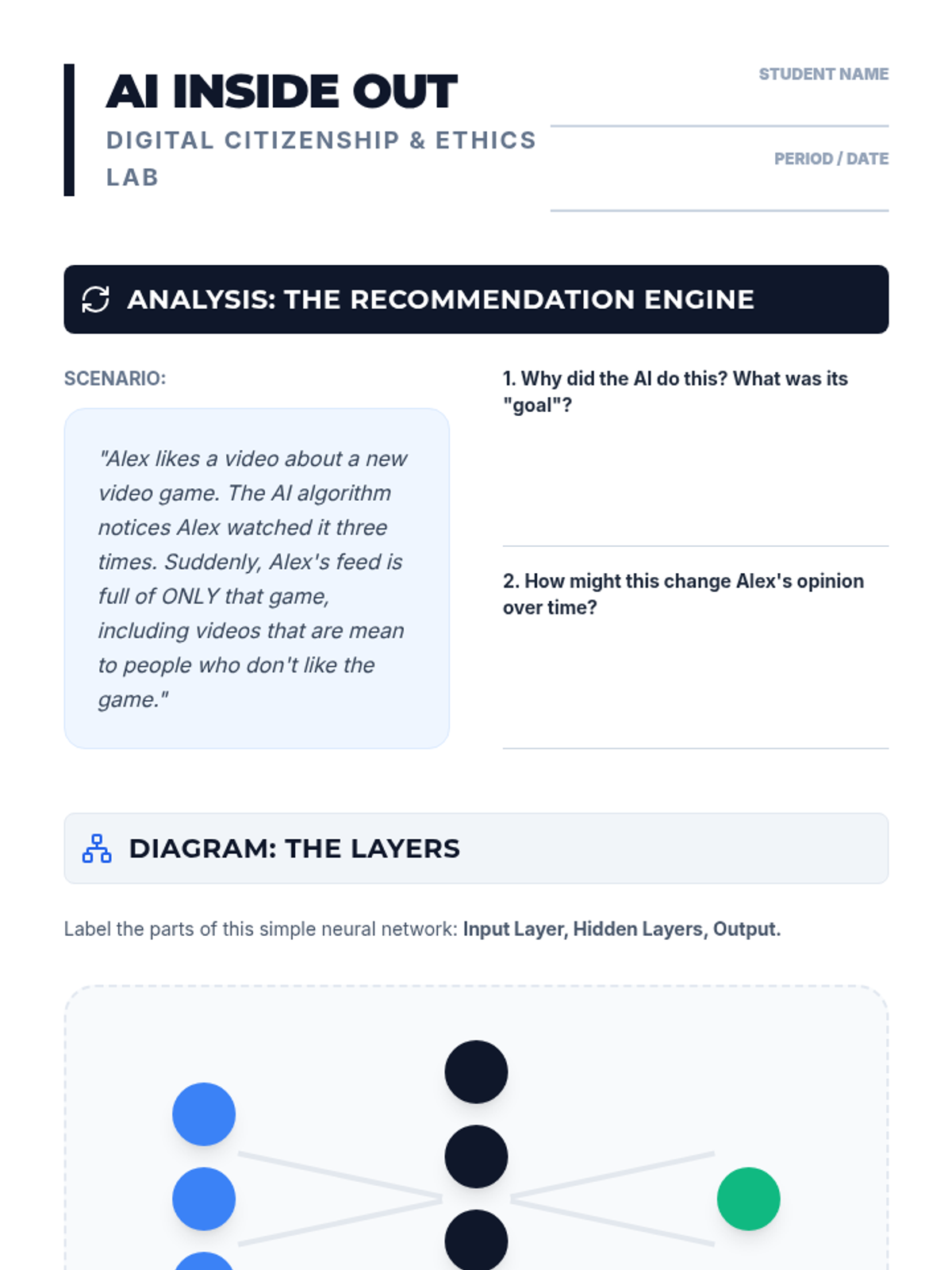
A middle school activity sheet involving ethical analysis of recommendation engines, labeling neural network structures, and debating facial recognition bias.
A middle school slide deck focused on the technical basics of neural networks and the ethical challenges of recommendation engines and deepfakes.
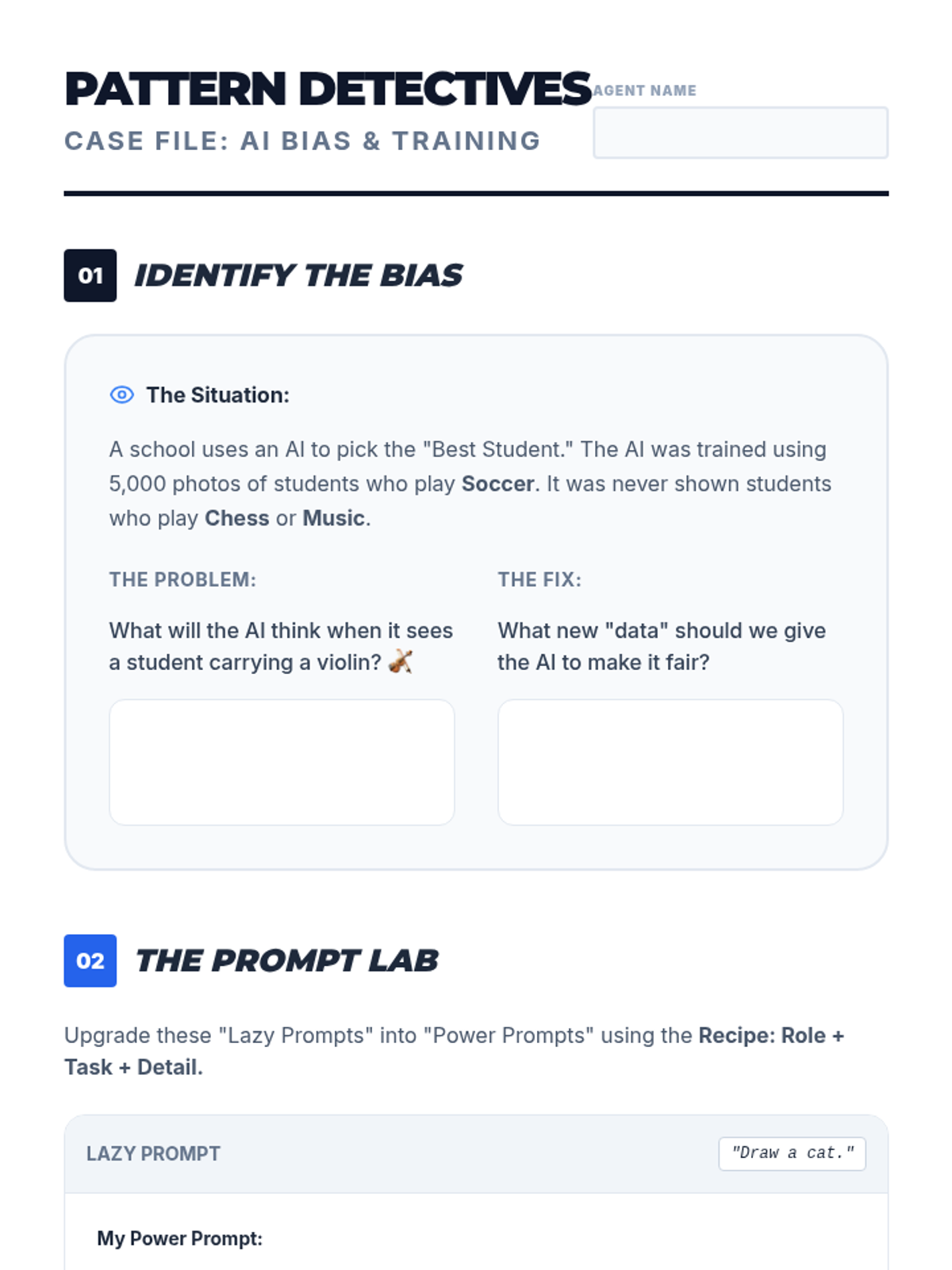
A grade 3-5 worksheet focusing on analyzing AI bias scenarios and practicing prompt engineering using a structured 'Role + Task + Detail' framework.
Instructional slides for grades 3-5, focusing on 'Pattern Detectives' - understanding data, spotting bias, and learning the basics of effective prompting.
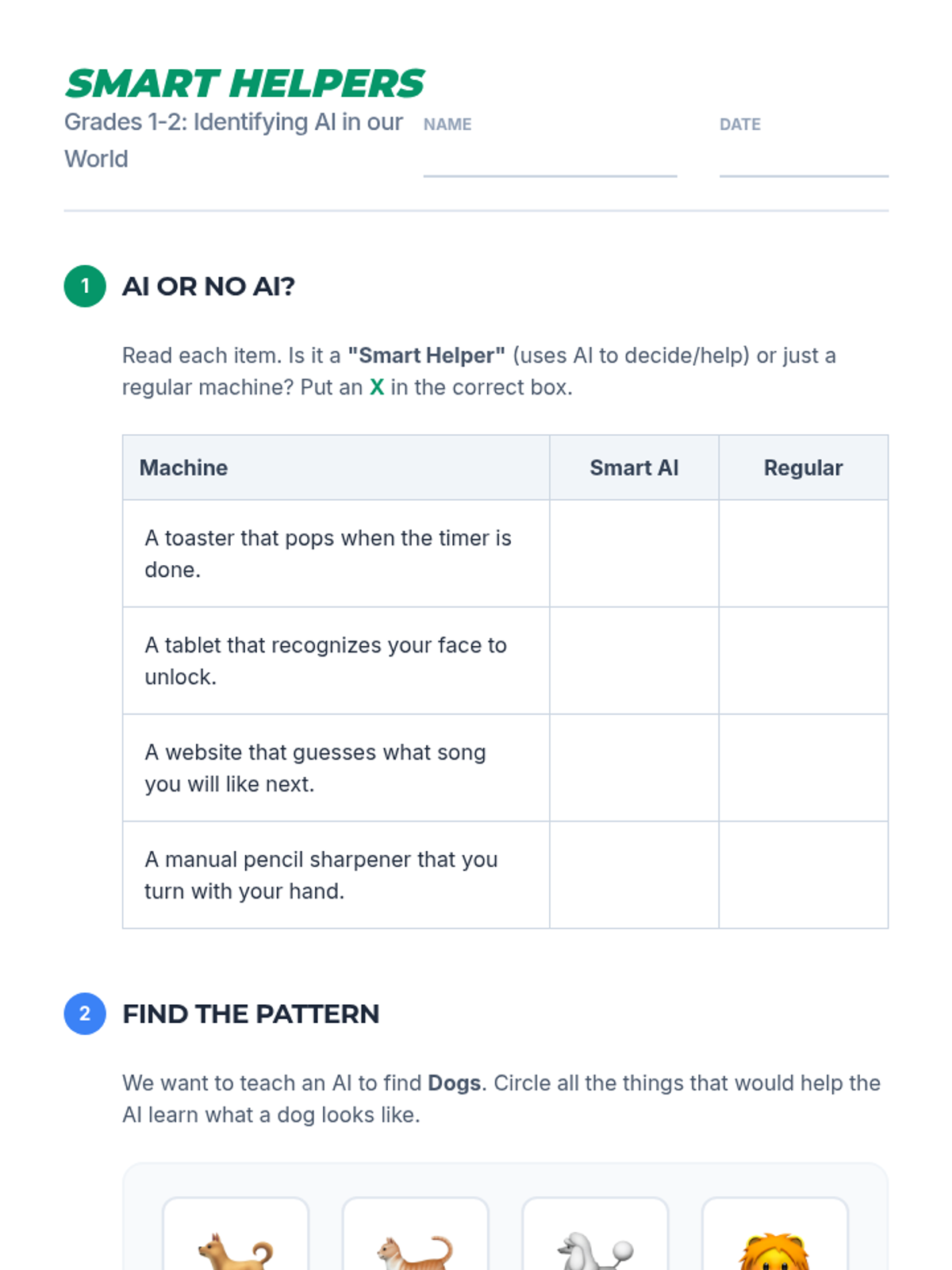
An activity sheet for grades 1-2 focusing on distinguishing between traditional machines and AI, and designing an AI solution for a simple problem.
Instructional slides for grades 1-2 focused on 'Smart Helpers' - identifying AI in the world and understanding simple machine learning patterns.
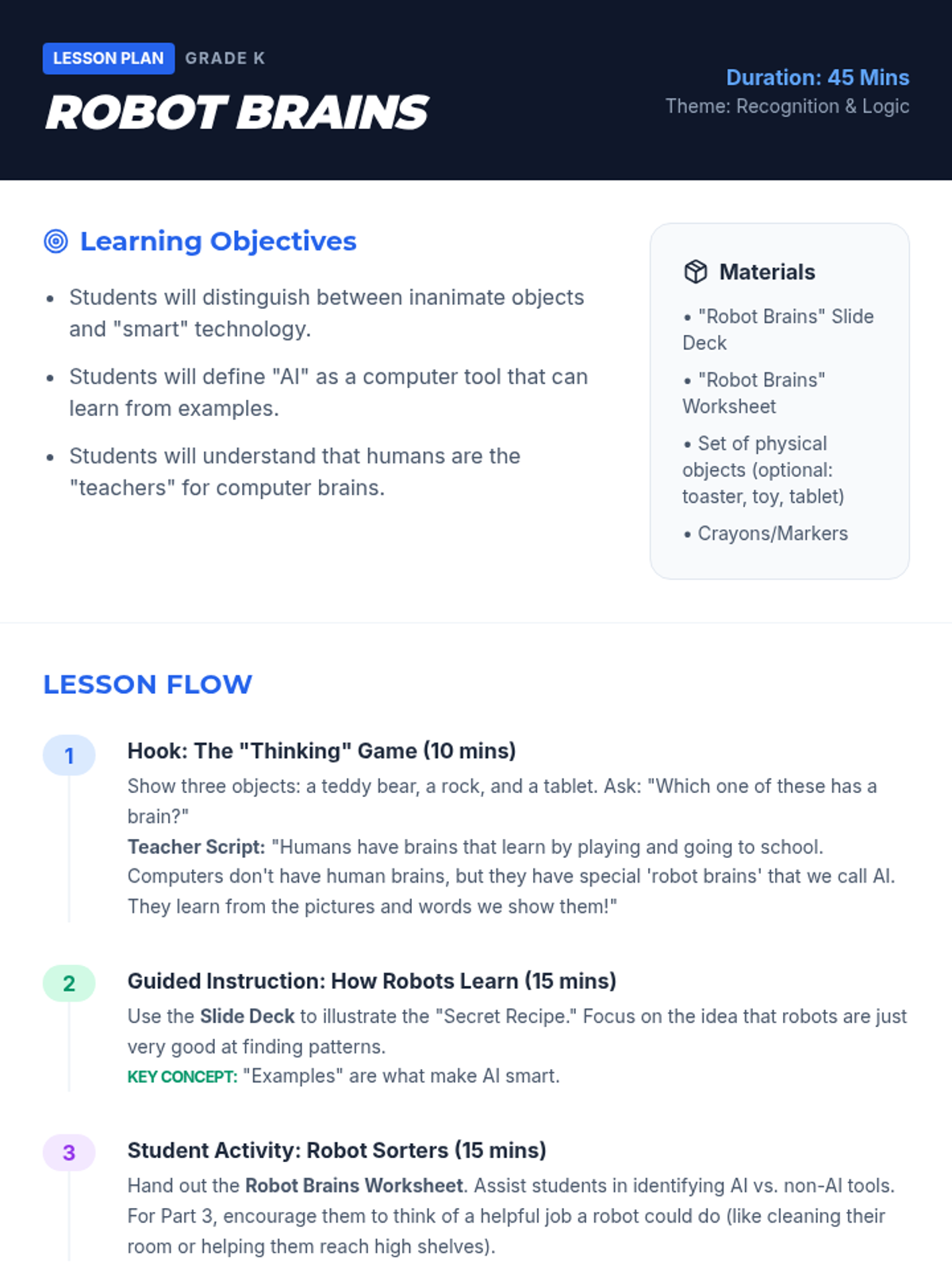
A comprehensive teacher guide for the 'Robot Brains' lesson, including a script, instructional sequence, and differentiation tips for Kindergarten.
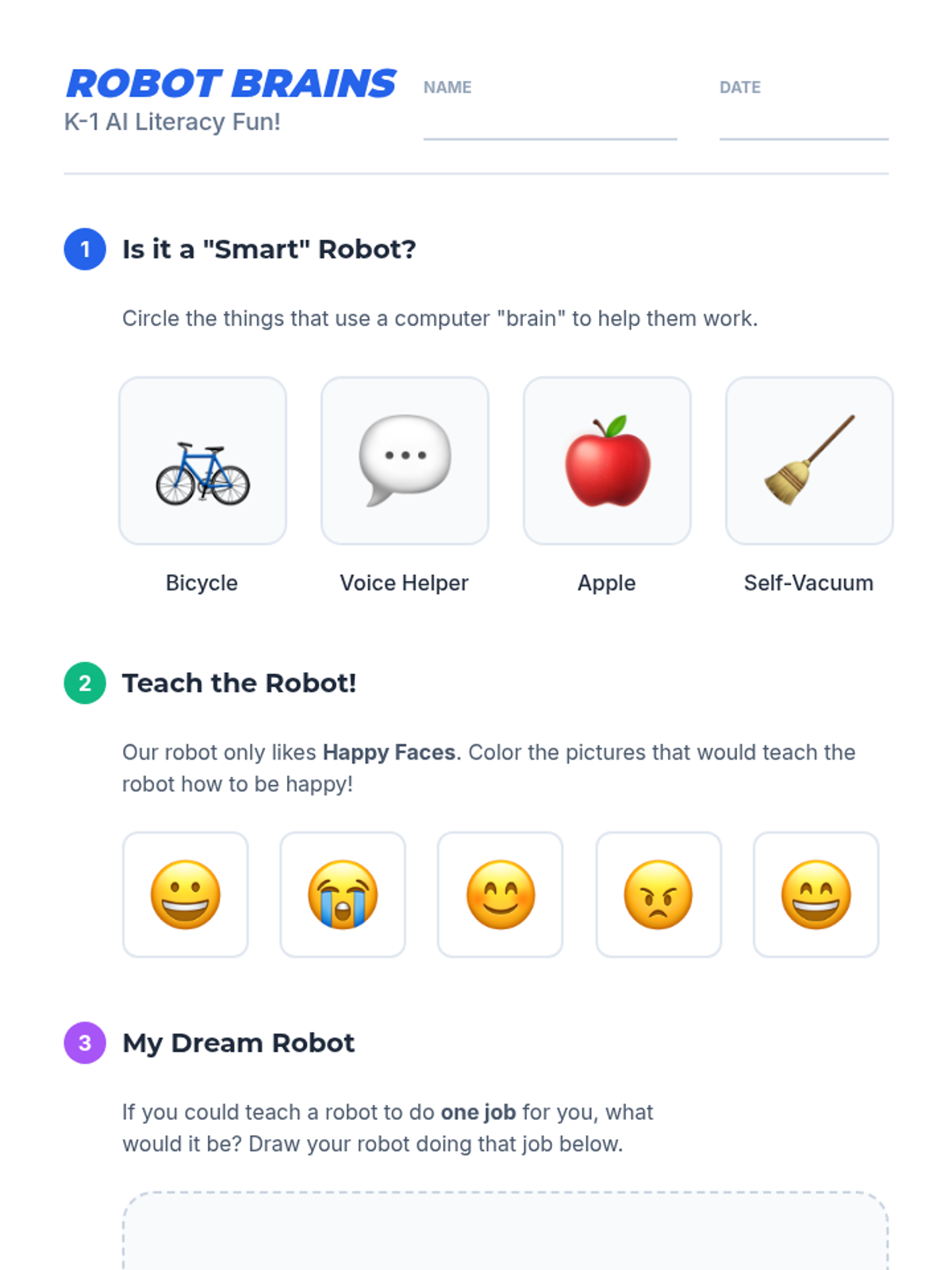
A simple, visual worksheet for Kindergarten students to practice identifying AI and 'training' a robot.
Introductory slide deck for Kindergarten students exploring the difference between human brains and computer 'brains'.
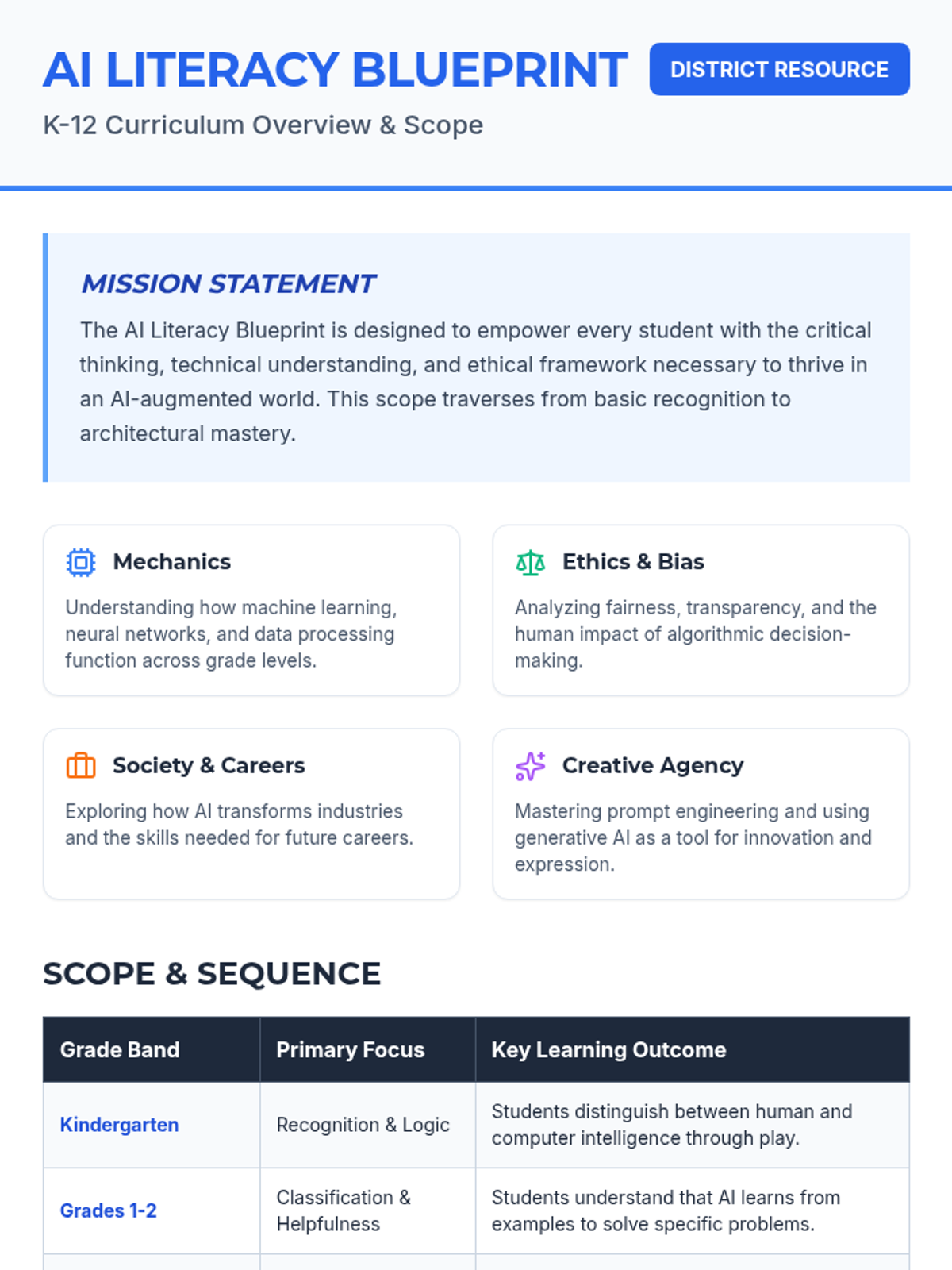
The comprehensive K-12 AI literacy curriculum scope and implementation guidelines for district-wide alignment.
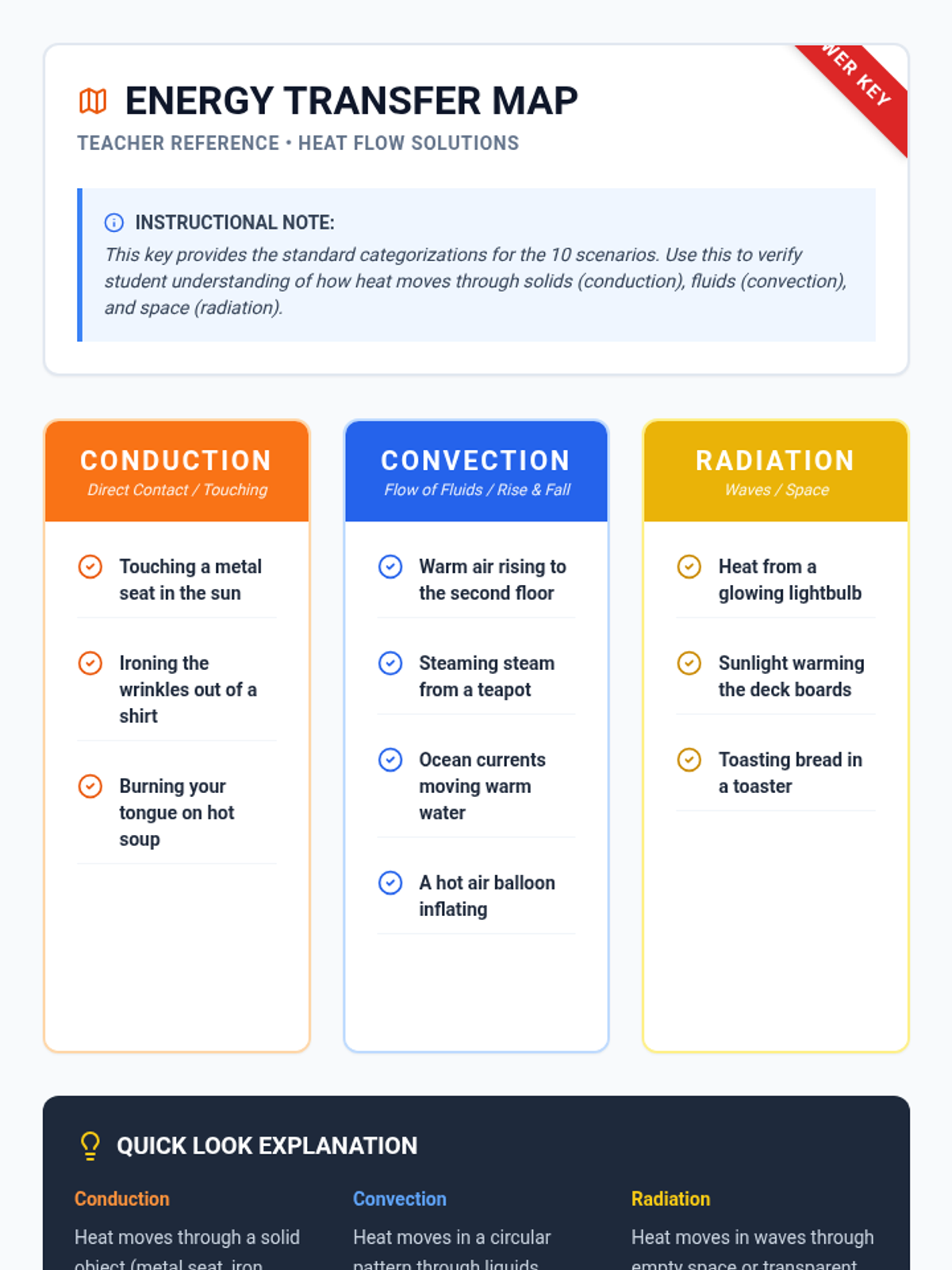
A teacher's answer key for the Energy Transfer Map Graphic Organizer, providing correct categorizations for conduction, convection, and radiation scenarios with brief pedagogical explanations.