A teacher's answer key for the Energy Transfer Map Graphic Organizer, providing correct categorizations for conduction, convection, and radiation scenarios with brief pedagogical explanations.
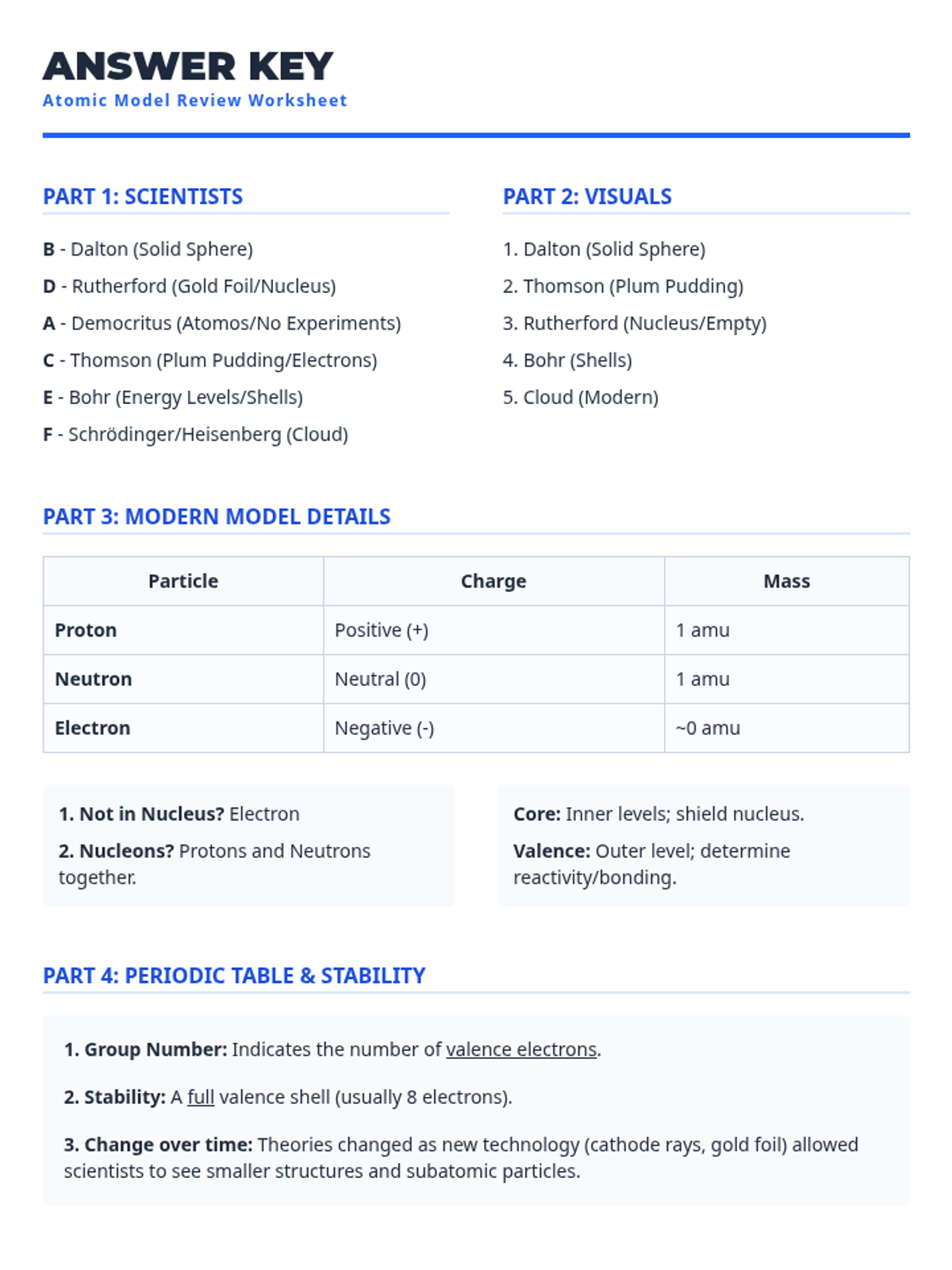
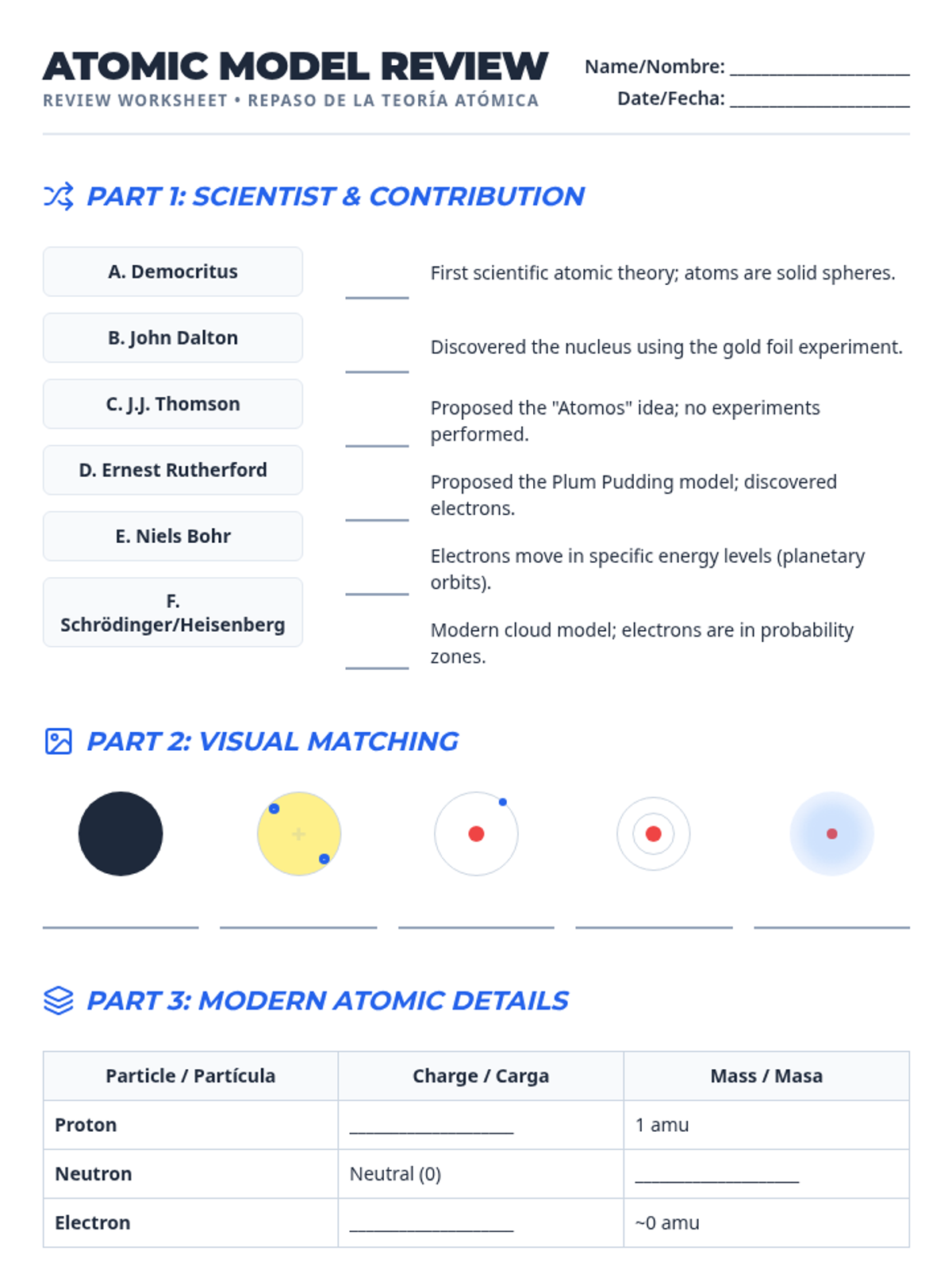
Answer key for the Atomic Model Review Worksheet, including scientist matching, visual identification, and modern model properties.
Comprehensive review worksheet featuring scientist-contribution matching, subatomic particle properties, and details on core vs. valence electrons and periodic table links.
Visual presentation covering the history of atomic models (from Democritus to the Modern Cloud) and detailed modern atomic theory including nucleons, electron shells, and periodic table links.
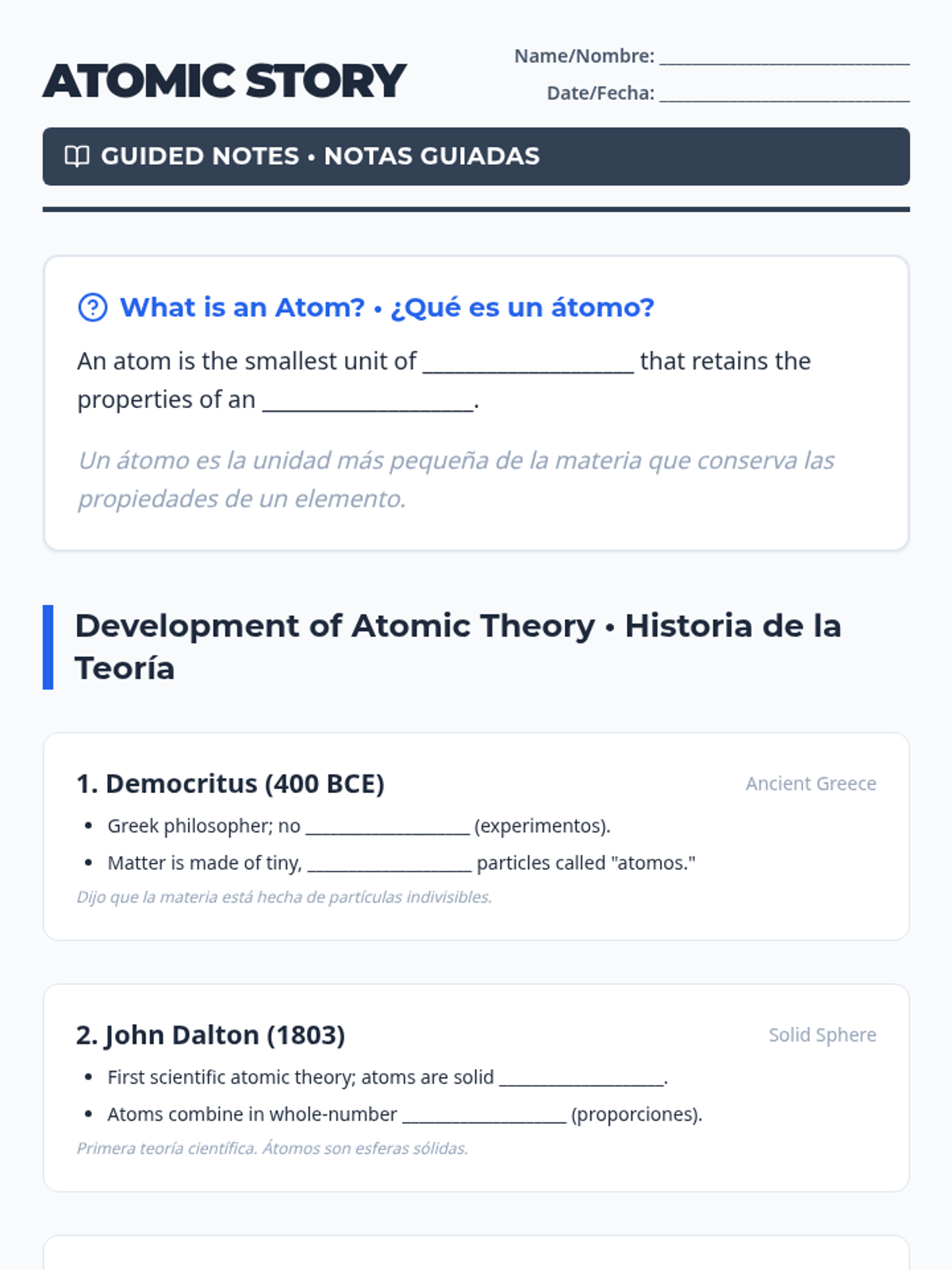
Comprehensive bilingual guided notes combining the historical development of atomic theory with detailed modern atomic model properties, including nucleons and electron shells.
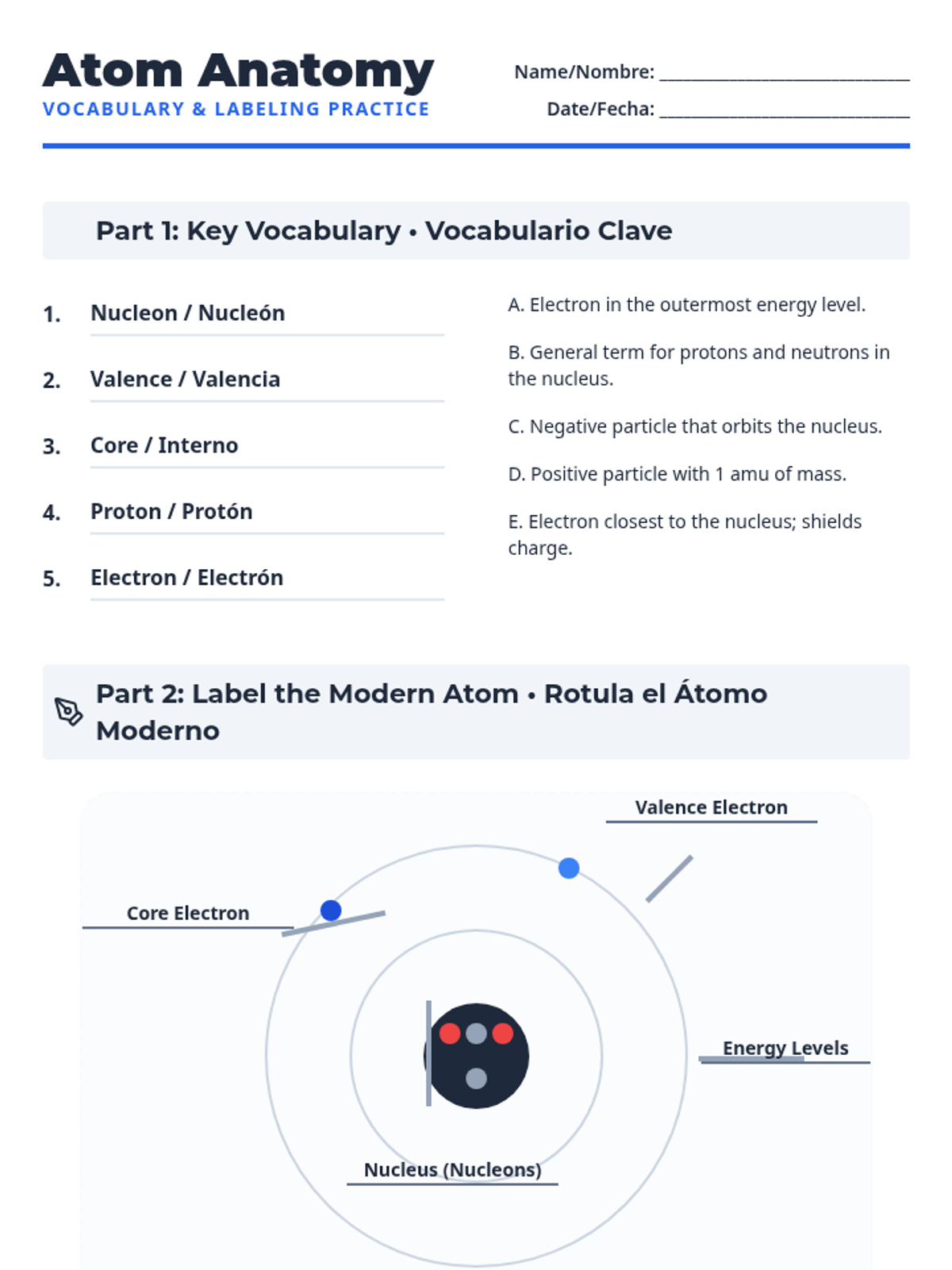
Updated Atom Anatomy worksheet including core and valence electrons, nucleons, and mass comparison between subatomic particles.
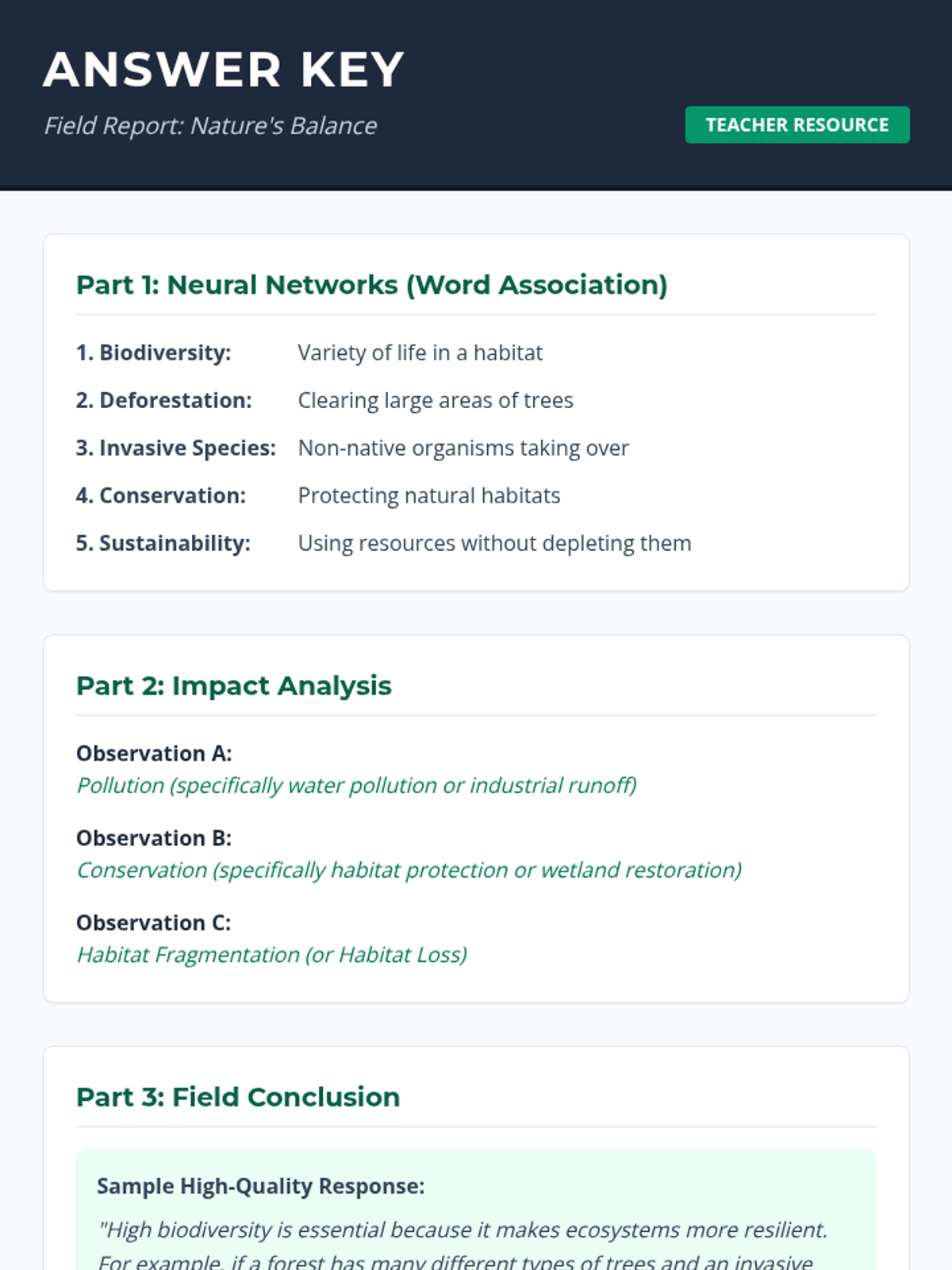
A comprehensive answer key for both the standard and support versions of the ecology worksheet. Includes sample high-quality responses for open-ended questions.
A dynamic presentation covering biodiversity, human impact, and conservation strategies. Includes a 'Chain Reaction' word association activity to reinforce key ecological terms.
A modified version of the ecology worksheet designed for Special Education support. Features a clear word bank, simplified scenarios with multiple-choice options, and guided writing prompts.
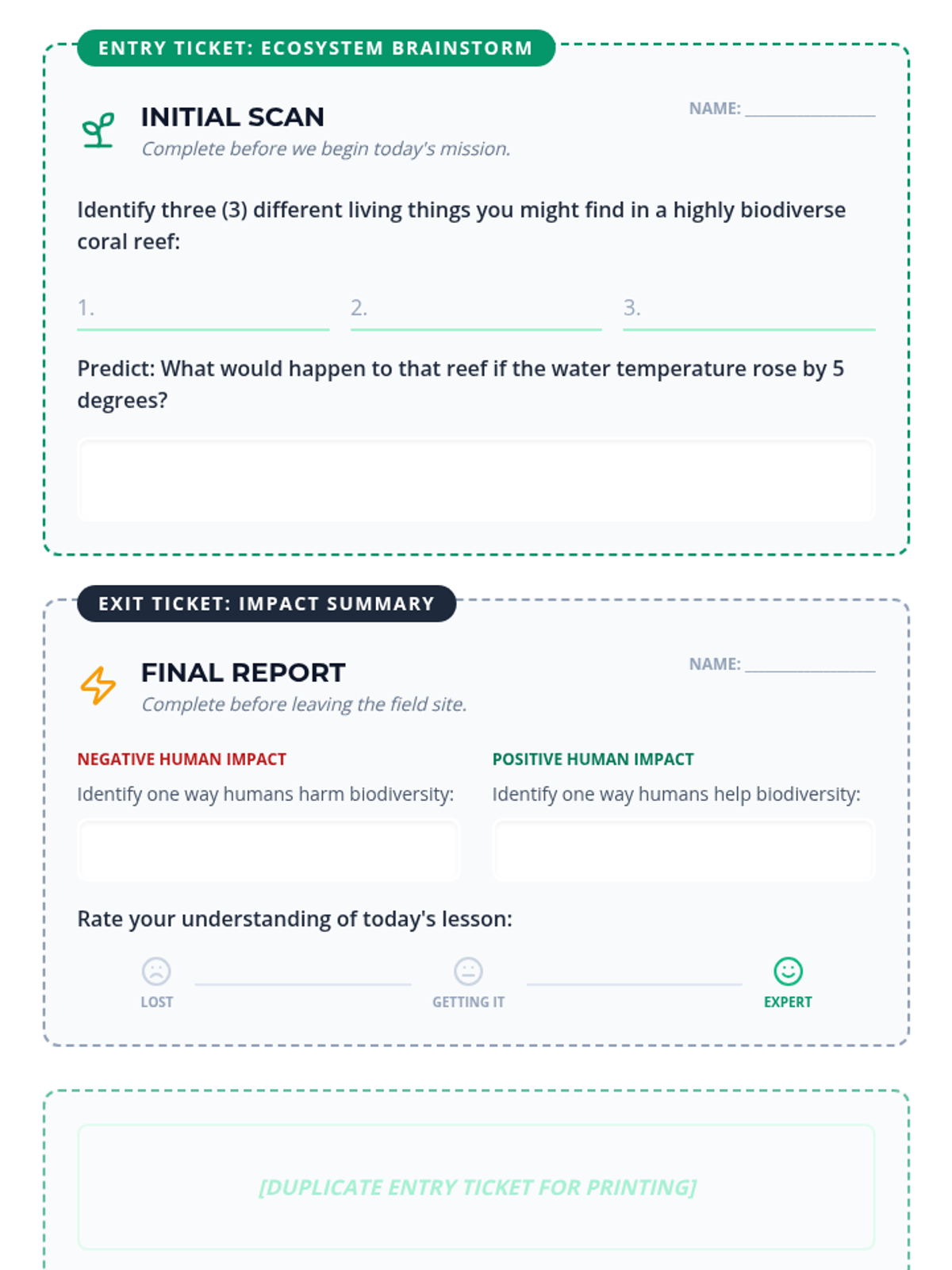
A page of printable entry and exit tickets focused on ecosystem biodiversity and human impact. Features quick brainstorms and self-assessment tools.
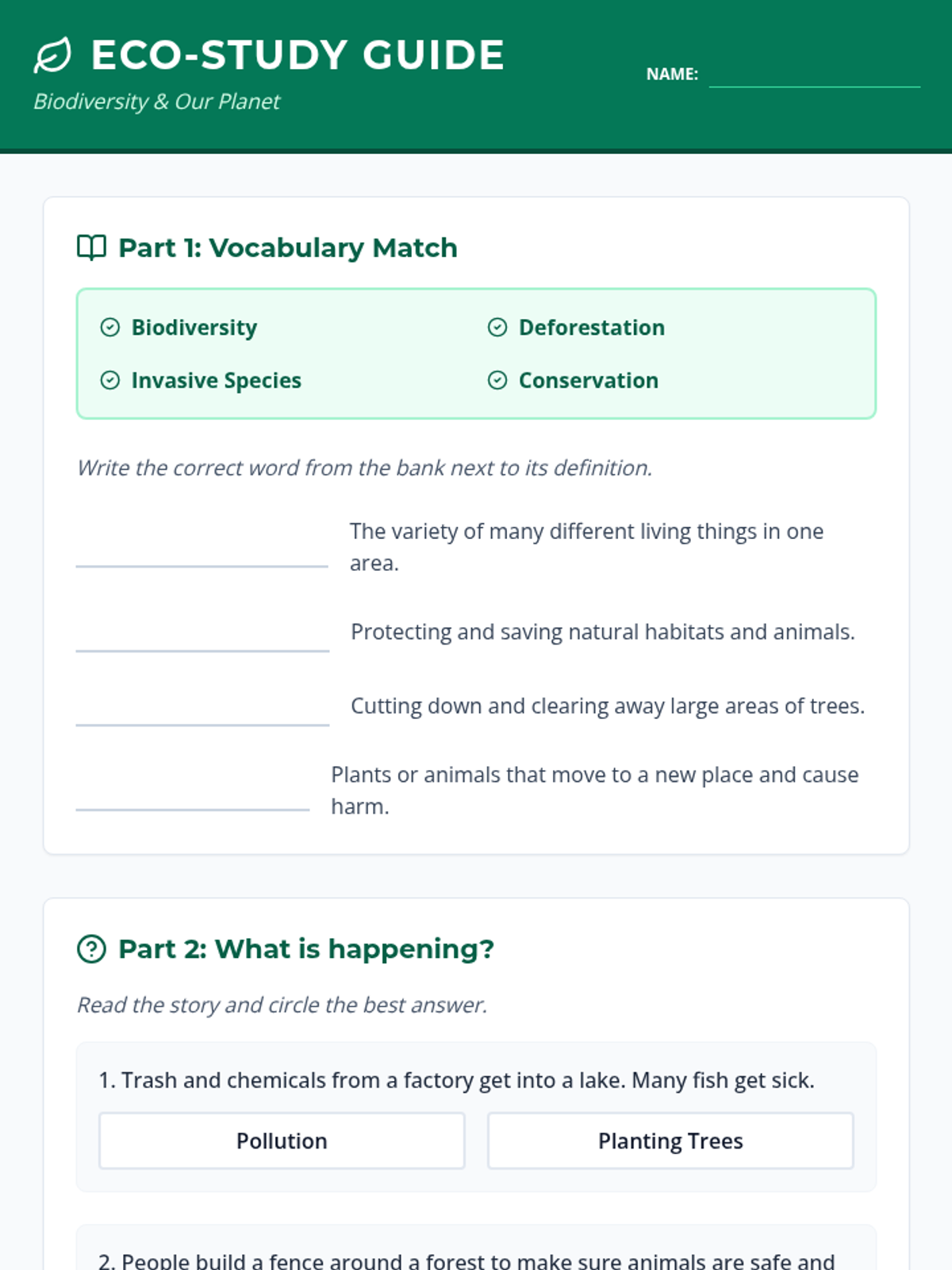
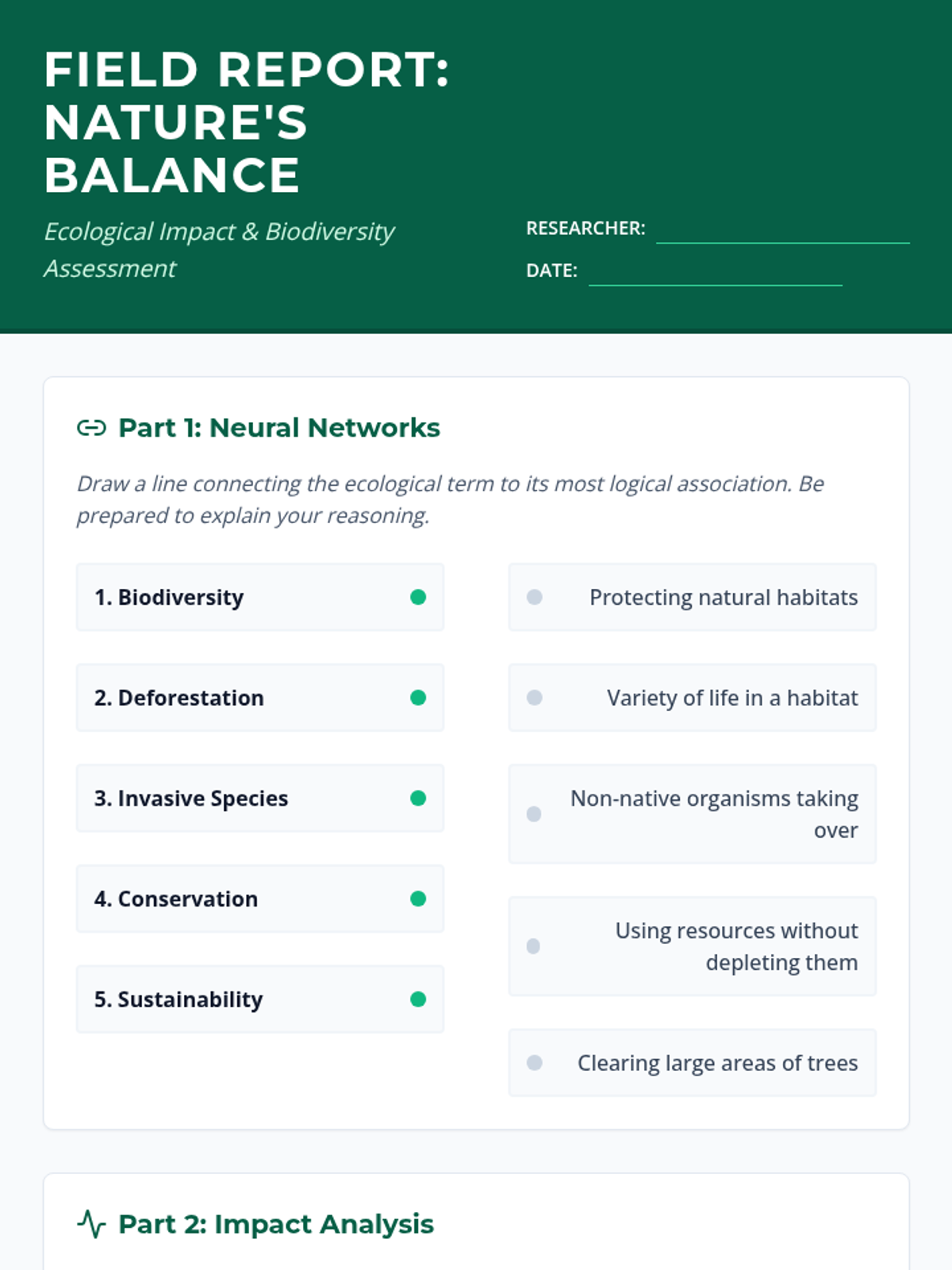
A vocabulary matching and scenario-based worksheet focusing on biodiversity, human impact, and conservation efforts. Includes word association and real-world impact analysis.
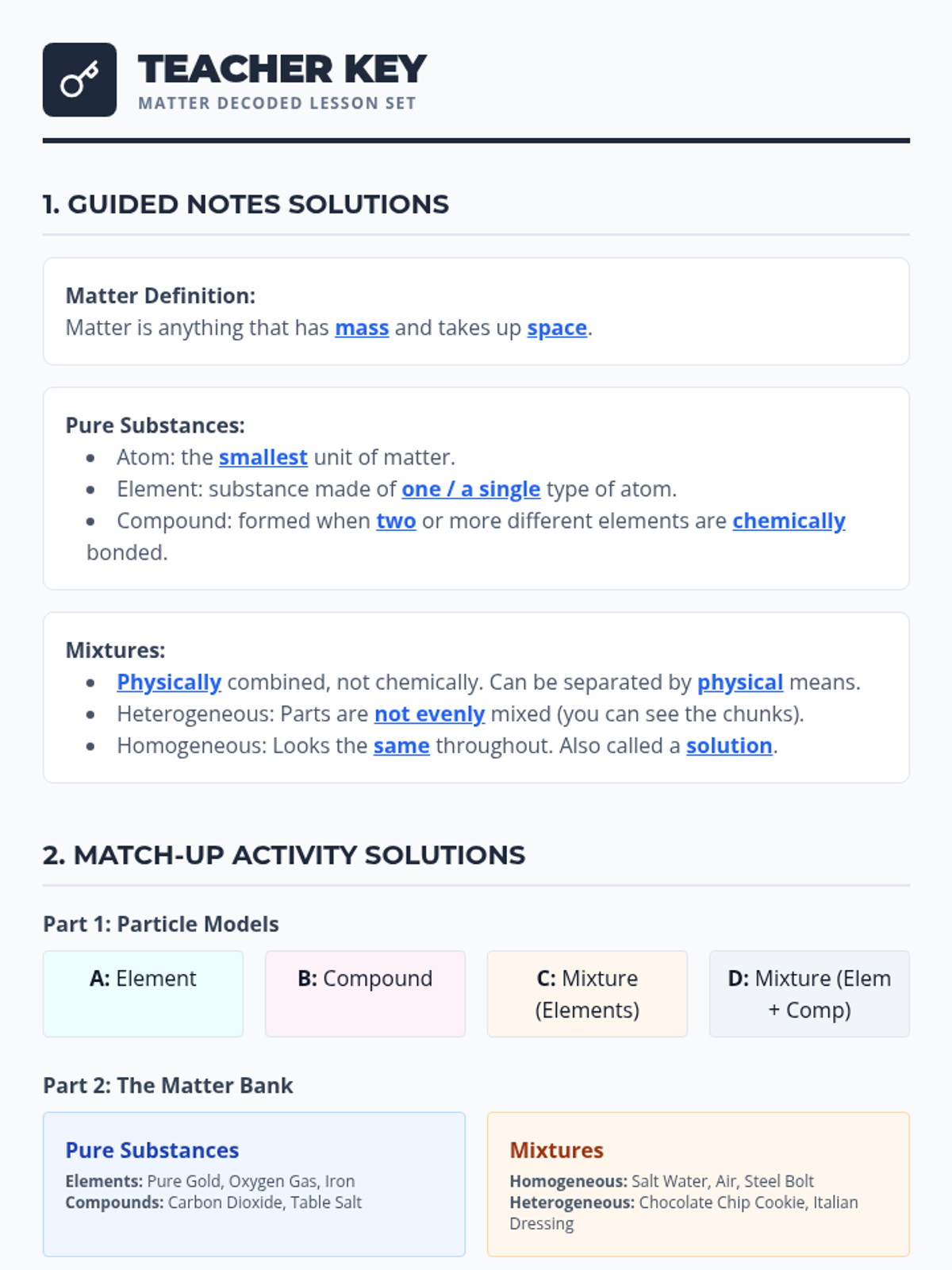
A comprehensive teacher answer key and facilitation guide for the Matter Decoded lesson set. Includes completed guided notes, activity answers, and practical teaching tips for common student misconceptions.
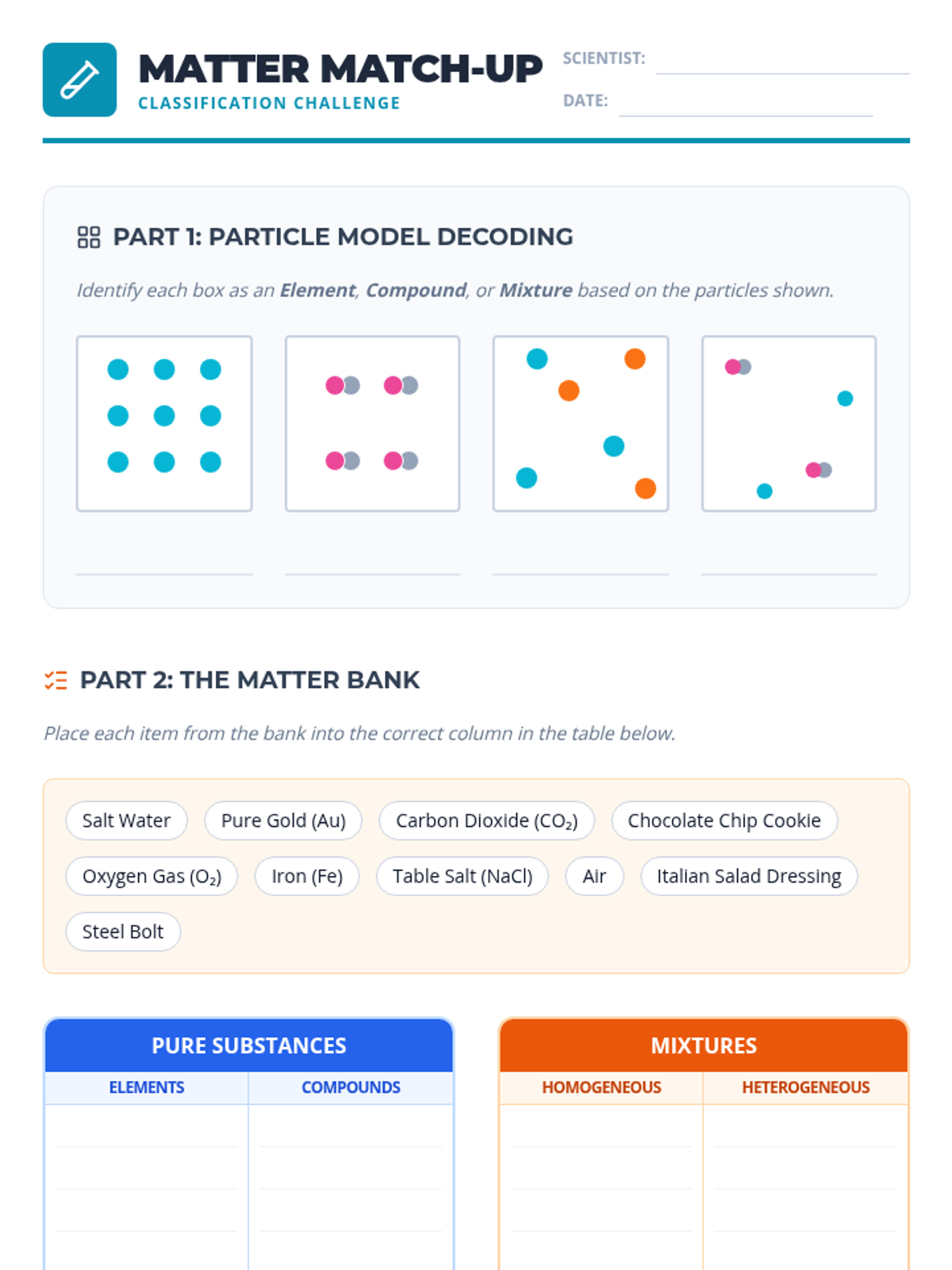
A classification activity where students identify particle models, categorize common substances into a taxonomy table (elements, compounds, mixtures), and solve critical thinking scenarios about matter separation and classification.
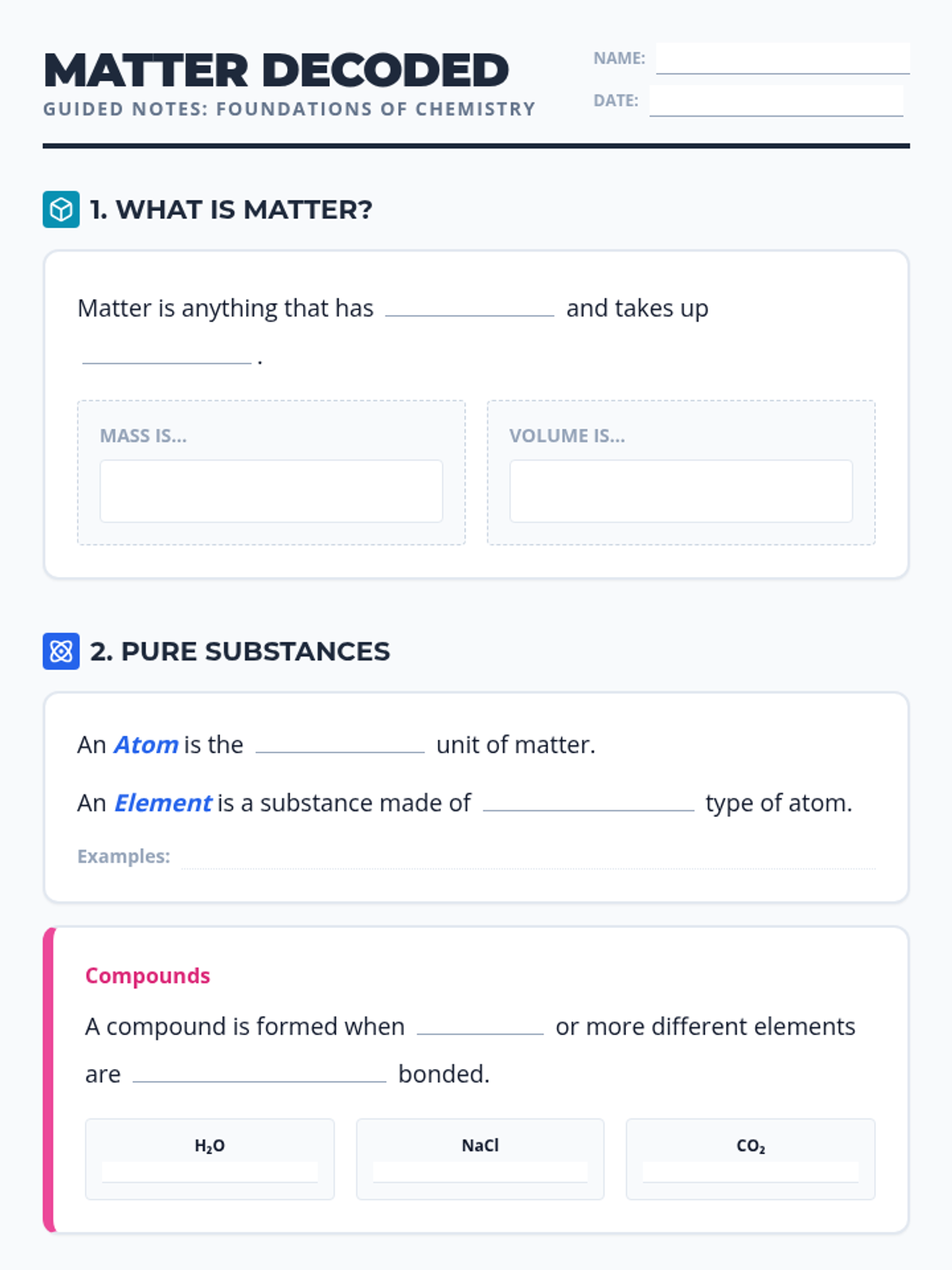
A guided notes worksheet designed to accompany the Matter Decoded presentation. It features fill-in-the-blank definitions, space for student-generated examples, and a quick-check section to reinforce key concepts like pure substances and mixtures.
A visual slide deck introducing the fundamentals of matter, atoms, elements, compounds, and the two types of mixtures. Features clean diagrams, clear definitions, and a classification flowchart for easy understanding.
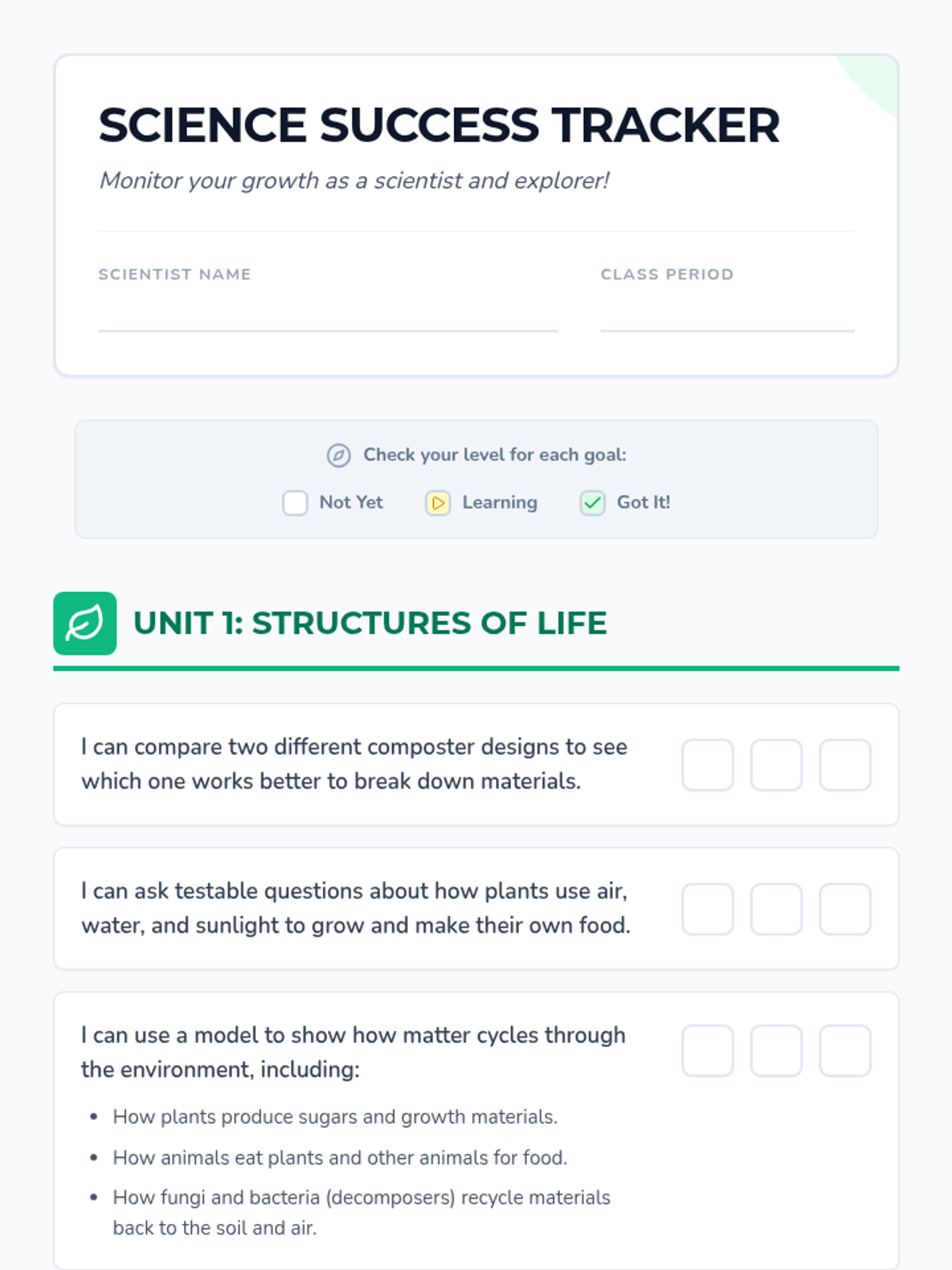
A student-friendly self-assessment checklist for 5th-grade science standards, organized by units: Structures of Life, Mixtures and Solutions, and Earth and Sun. It features clear 'I can' statements and a clean, field-journal aesthetic for tracking progress.
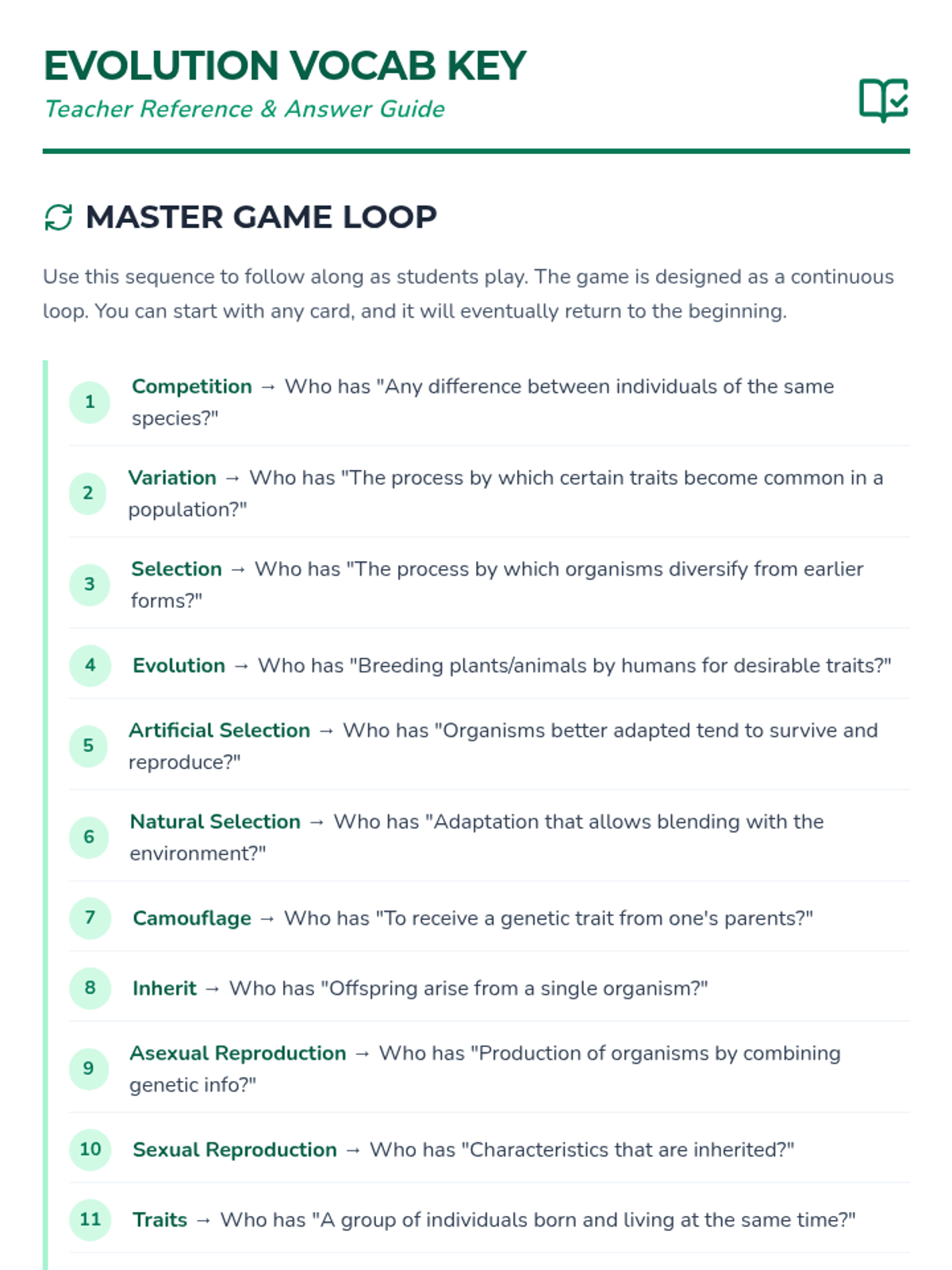
A teacher reference guide for the Evolution Echo Cards game, including the master loop sequence and a vocabulary definition list.
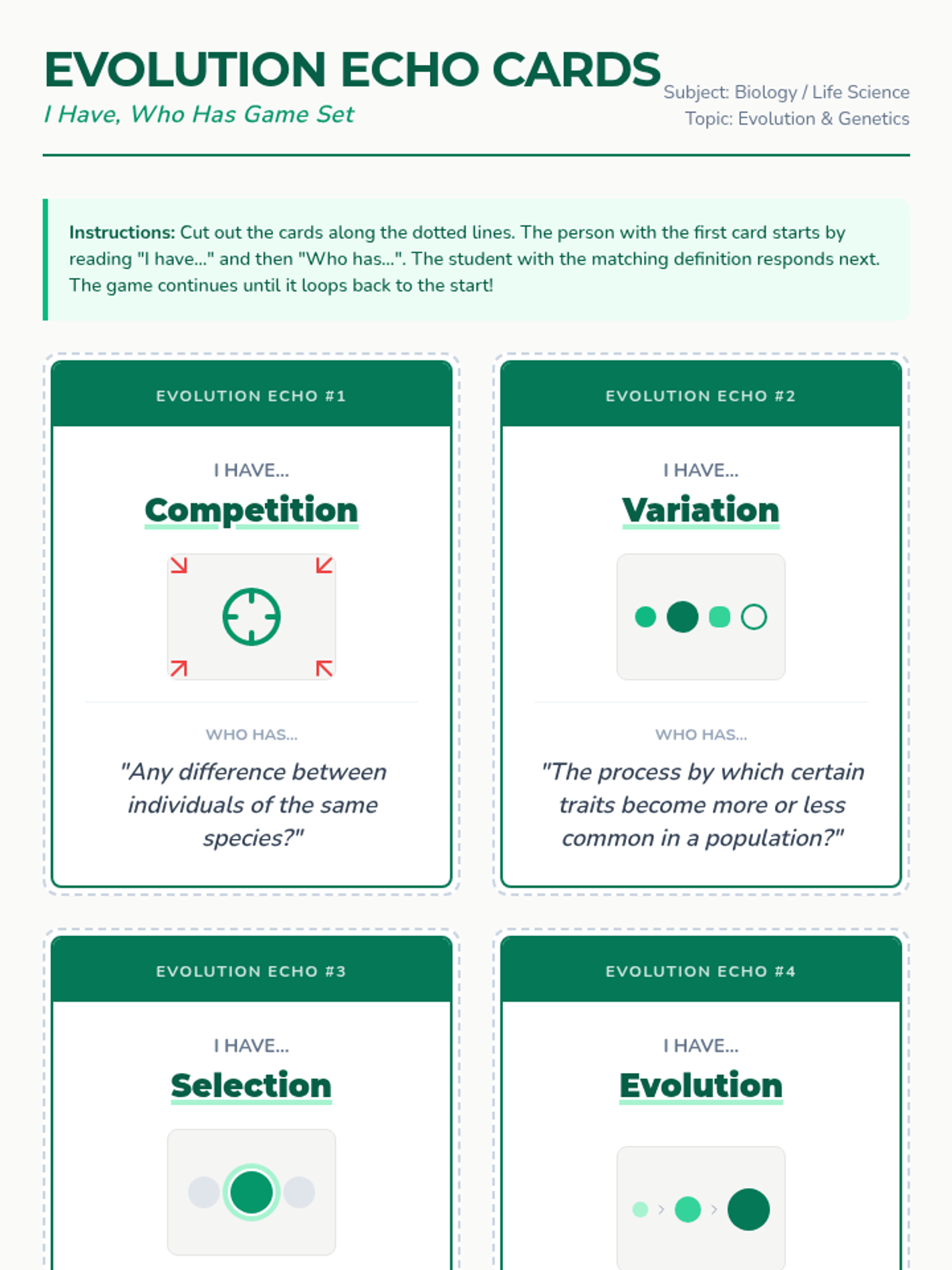
A complete set of 12 'I Have, Who Has' cards for evolution vocabulary, featuring illustrative diagrams and clear definitions to facilitate classroom-wide collaborative learning.
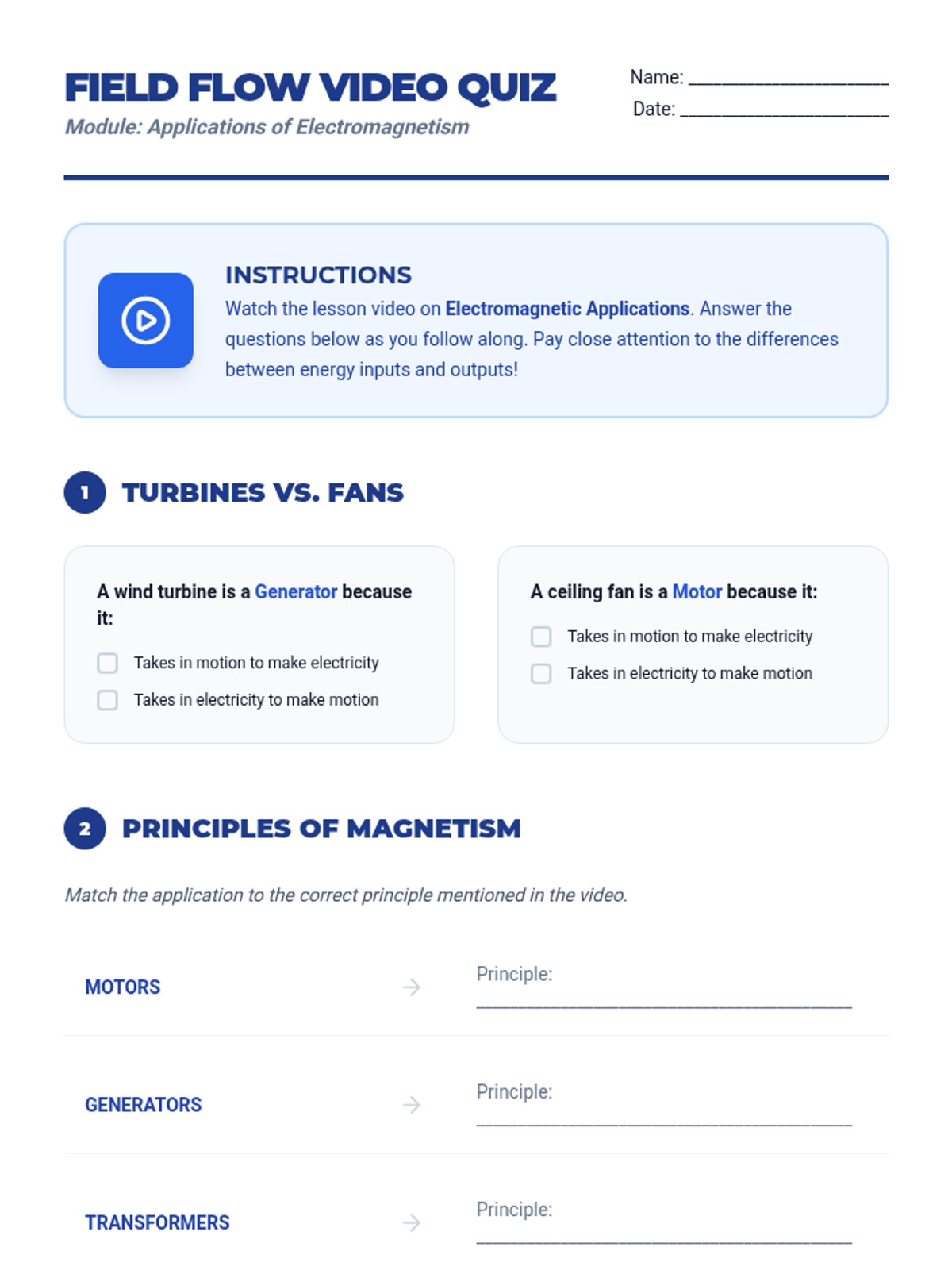
A video quiz accompanying a lesson on electromagnetism, testing student comprehension of motors, generators, power grids, and transformers based on a specific instructional video transcript.
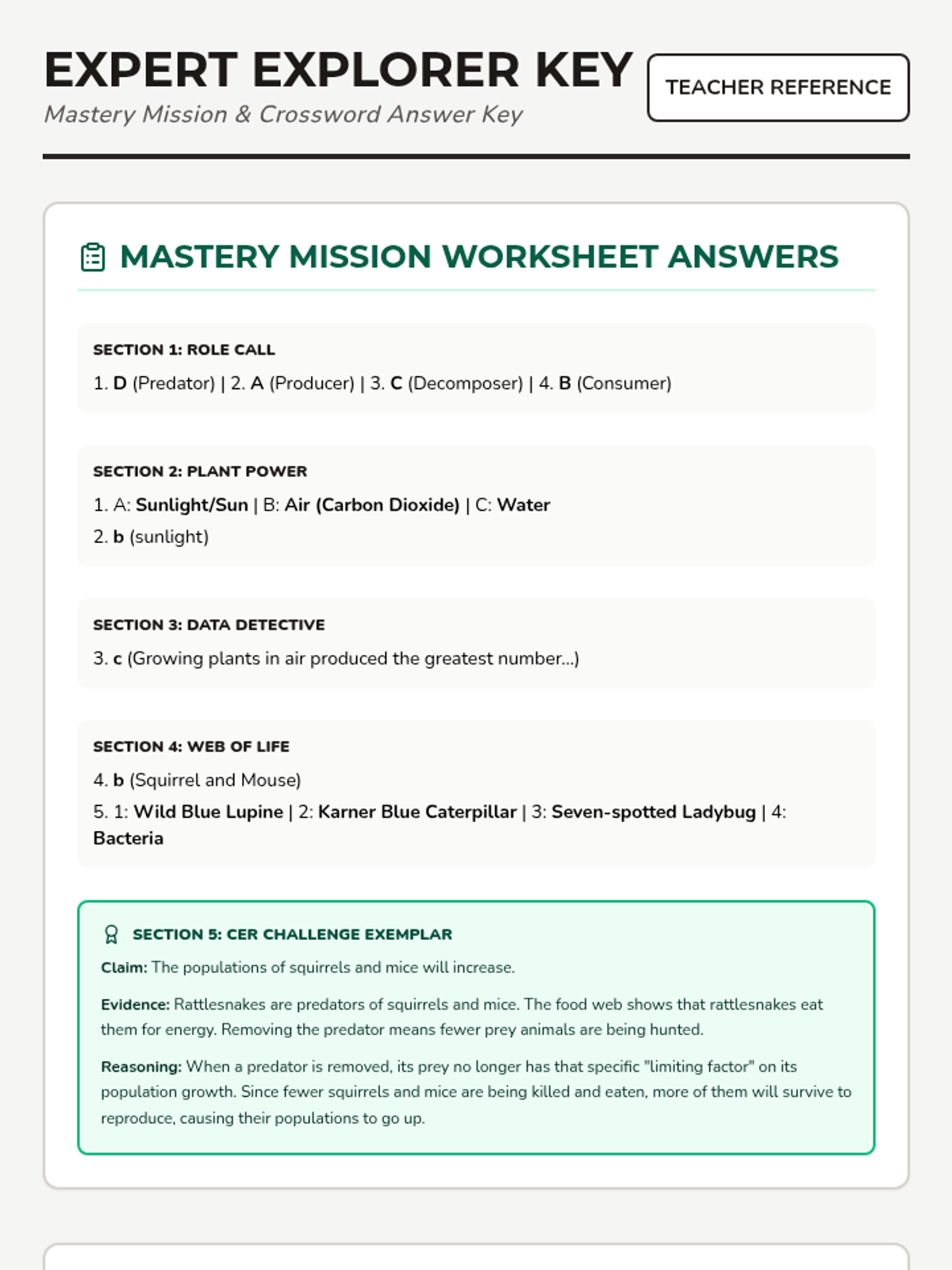
An updated teacher answer key covering the new Mastery Mission Worksheet and the Habitat Hunt Crossword. Includes specific correct responses for multiple choice, diagram labeling, model completion, and a full CER exemplar.
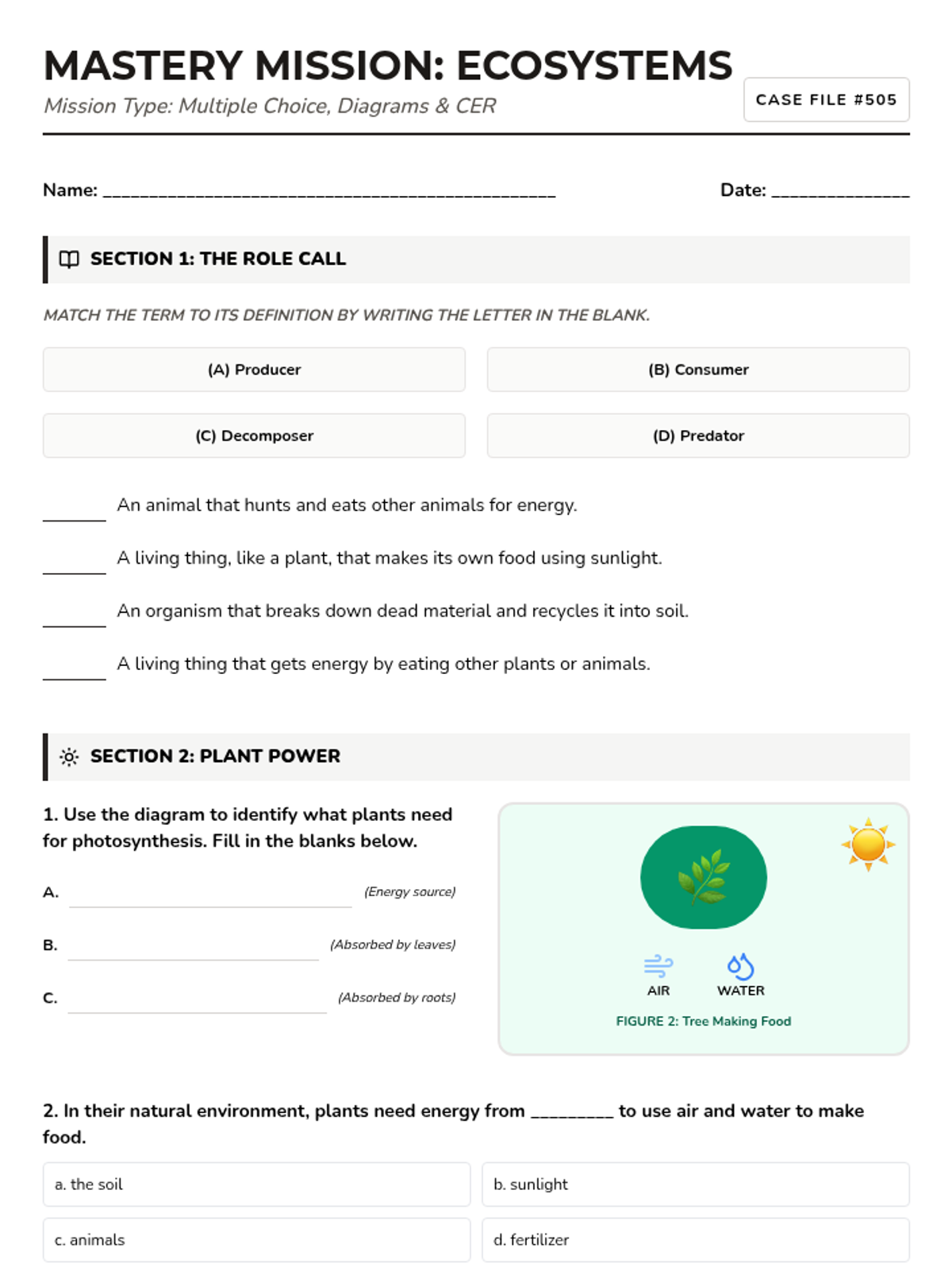
A comprehensive mastery mission worksheet featuring multiple choice questions, diagram labeling, fill-in-the-blank modeling, and a structured CER (Claim-Evidence-Reasoning) challenge. Students analyze plant needs, interpret data tables, and predict ecosystem changes.
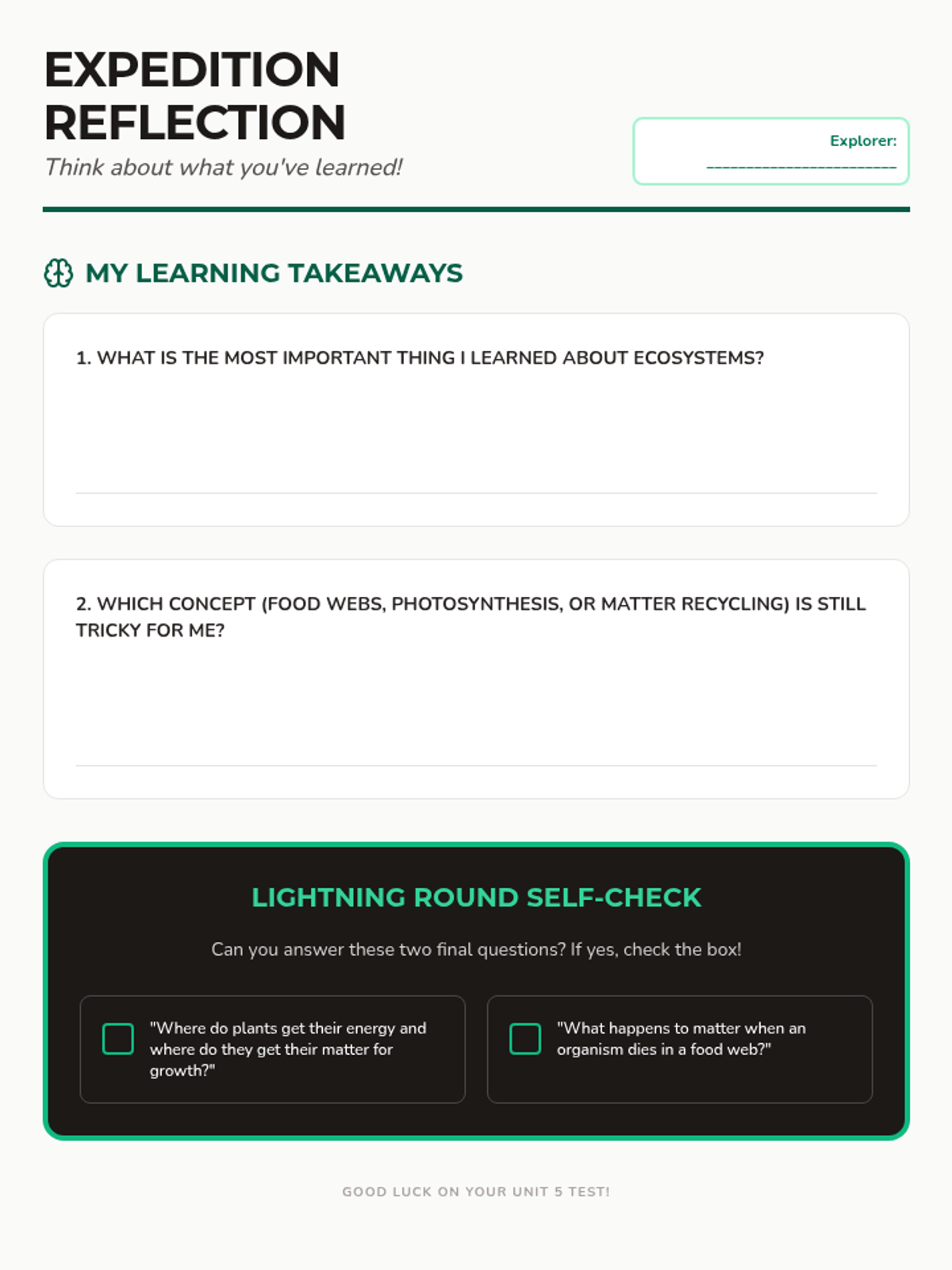
An individual self-reflection and review sheet for the end of the study packet. Students track their learning takeaways and perform a lightning-round self-check to gauge assessment readiness.
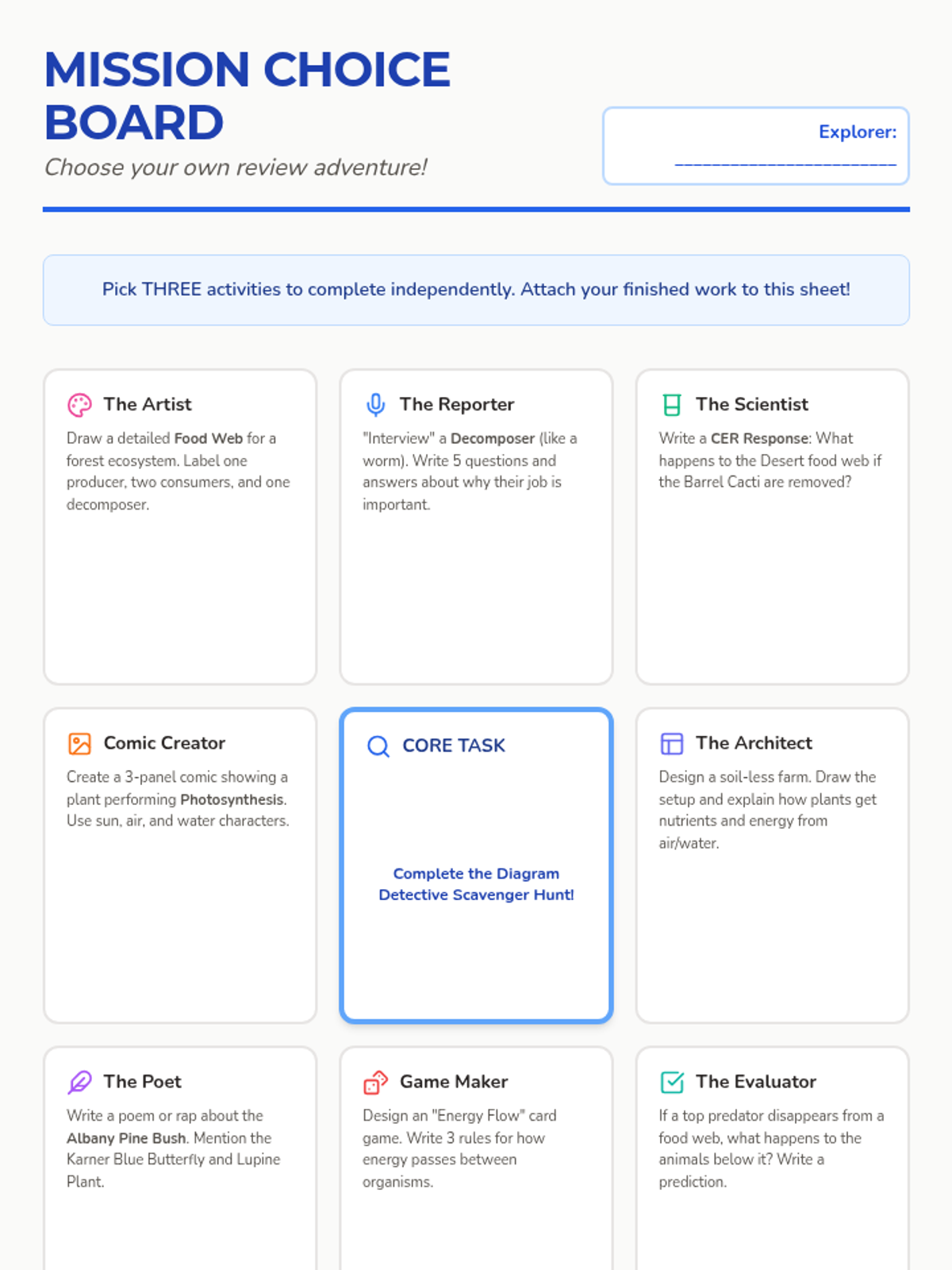
An individual choice board featuring 9 unique review activities. Students choose three tasks to complete independently to demonstrate their understanding of ecosystems.
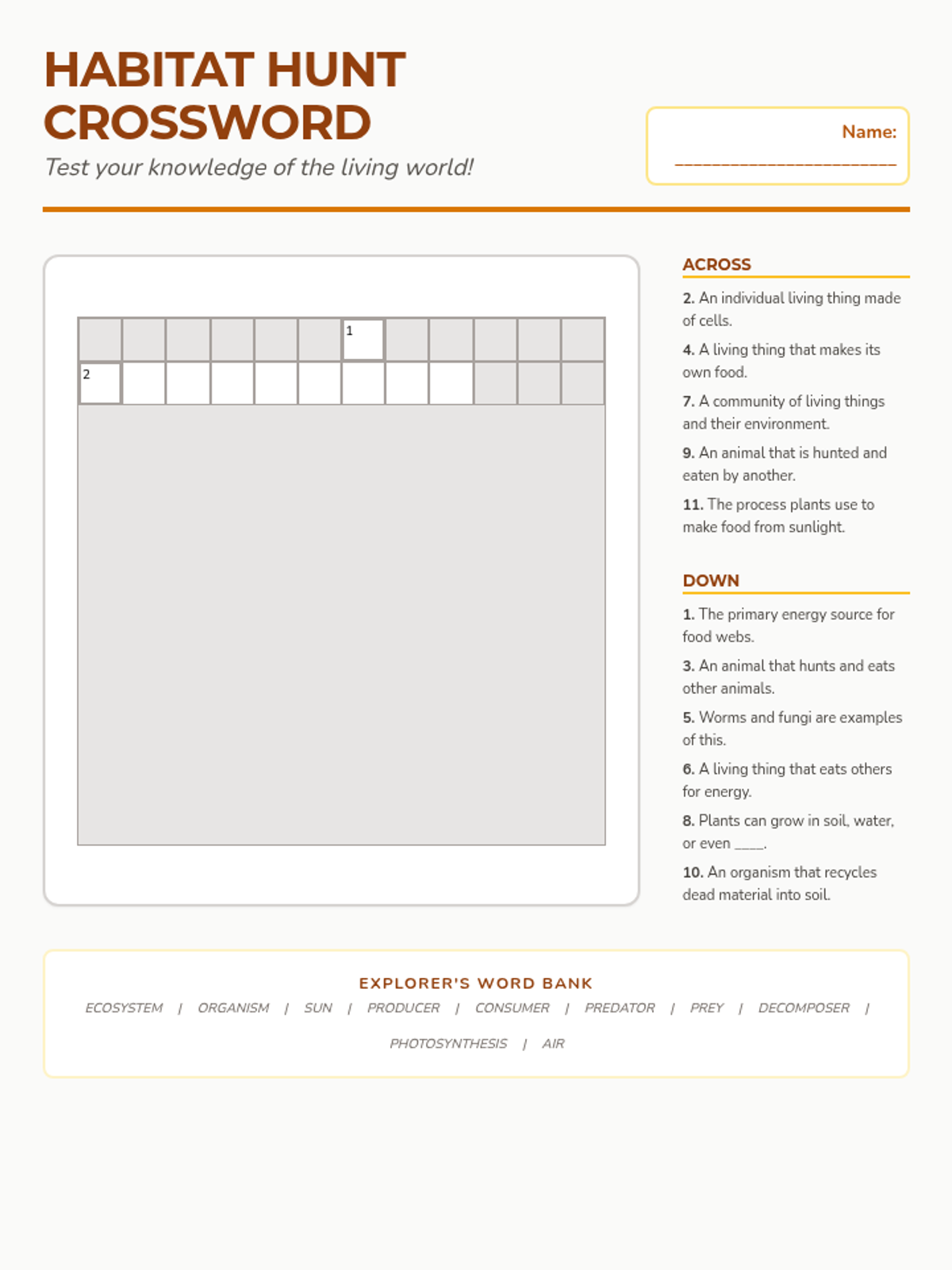
An individual ecosystem-themed crossword puzzle that reinforces vocabulary from the unit. Students use clues about food web roles, energy sources, and plant growth methods to fill in the grid.
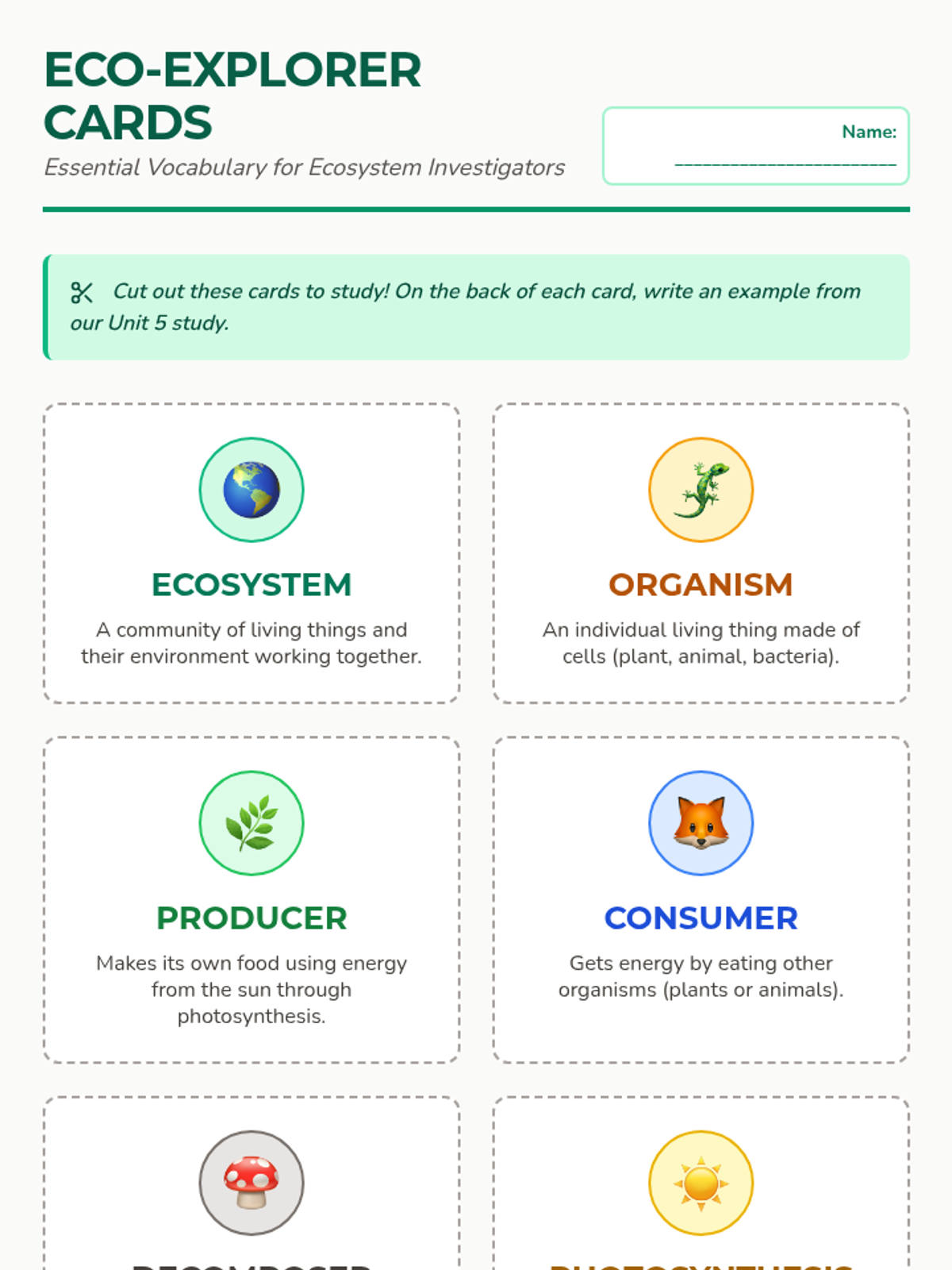
A set of 8 illustrated individual vocabulary cards featuring key ecosystem terms. Designed for independent study, each card includes a child-friendly definition and a thematic icon.
The individual cover page for the Eco-Expedition Review Packet. Includes space for a student's name, a thematic explorer design, and a checklist of the mission components to track individual progress.
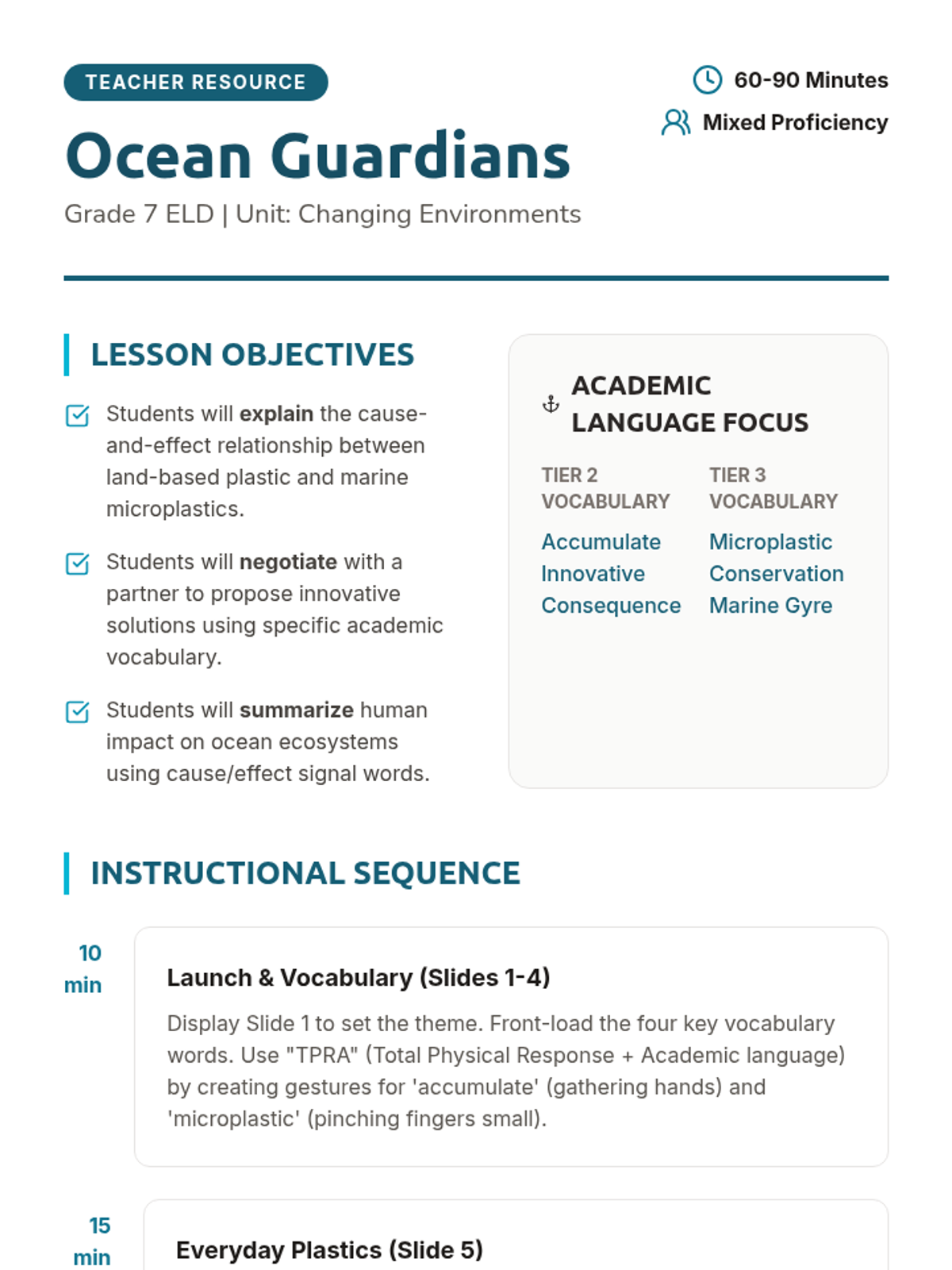
A comprehensive teacher facilitation guide for the Ocean Guardians lesson, including pacing, vocabulary strategies, and tiered support for mixed-proficiency 7th grade ELD students.
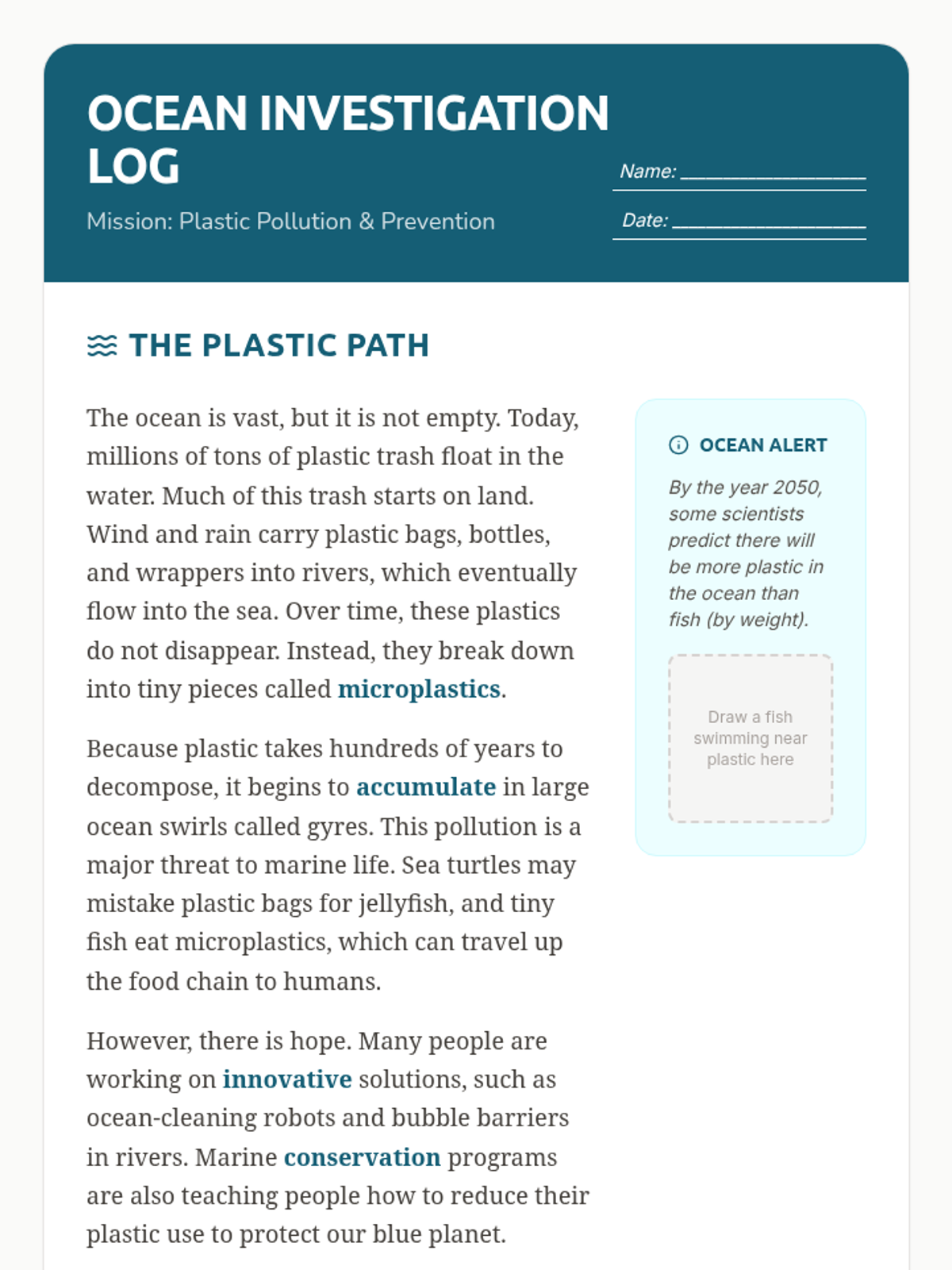
A 3-page student investigation log focused on marine pollution, featuring a reading passage, cause-and-effect graphic organizers, and structured collaborative conversation prompts.
A 7-slide presentation introducing marine pollution concepts, academic vocabulary, and cause-and-effect structures for 7th grade ELD students.
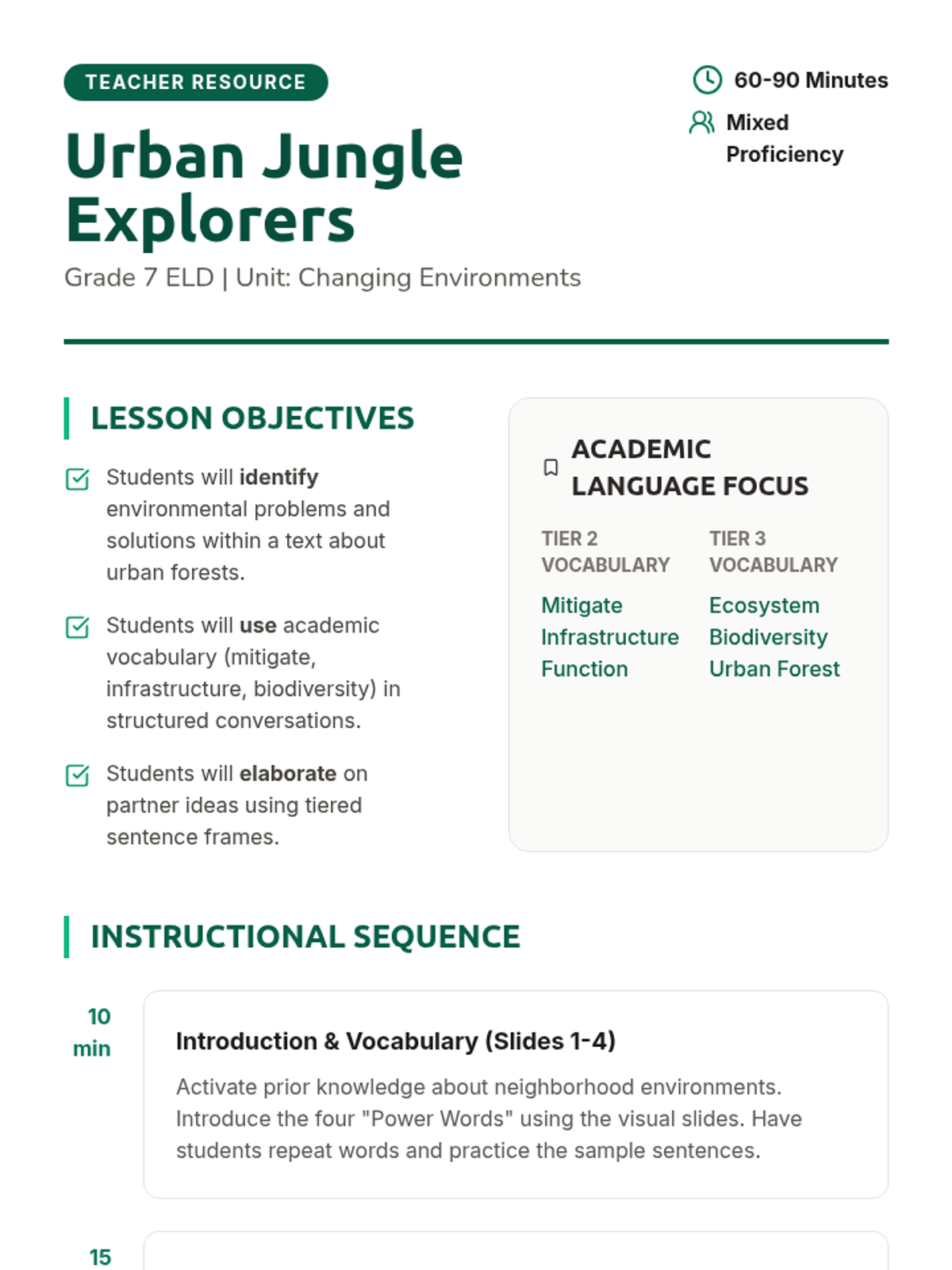
A comprehensive facilitation guide for the Urban Jungle Explorers lesson, featuring instructional pacing, ELD standards alignment, and tiered differentiation strategies for Emerging, Expanding, and Bridging students.
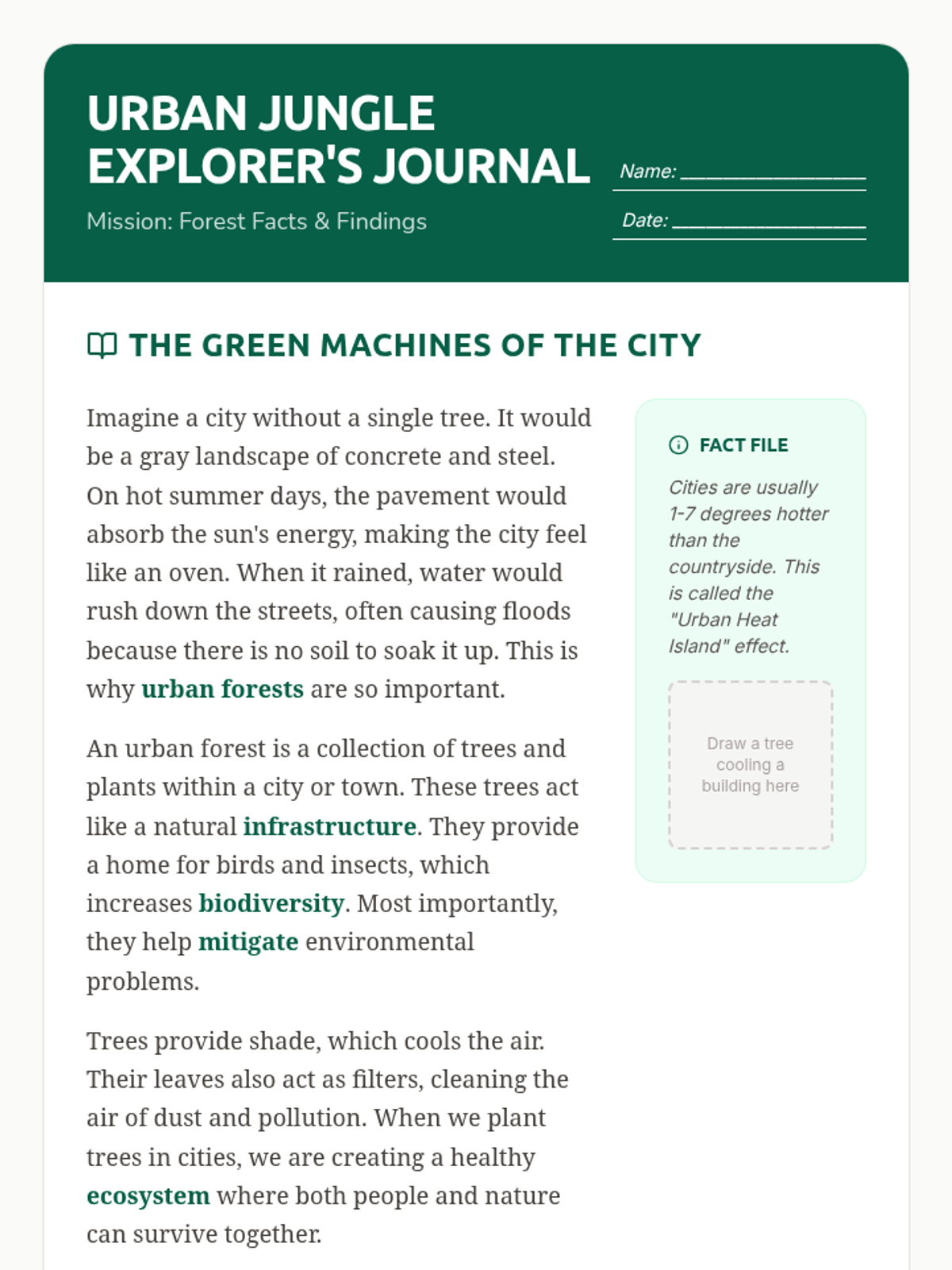
A 3-page student explorer's journal including a reading passage on urban forests, a problem/solution graphic organizer, and a collaborative conversation log with tiered sentence frames.
A vibrant 7-slide presentation introducing urban forest concepts, academic vocabulary, and tiered collaborative conversation prompts for 7th grade ELD students.
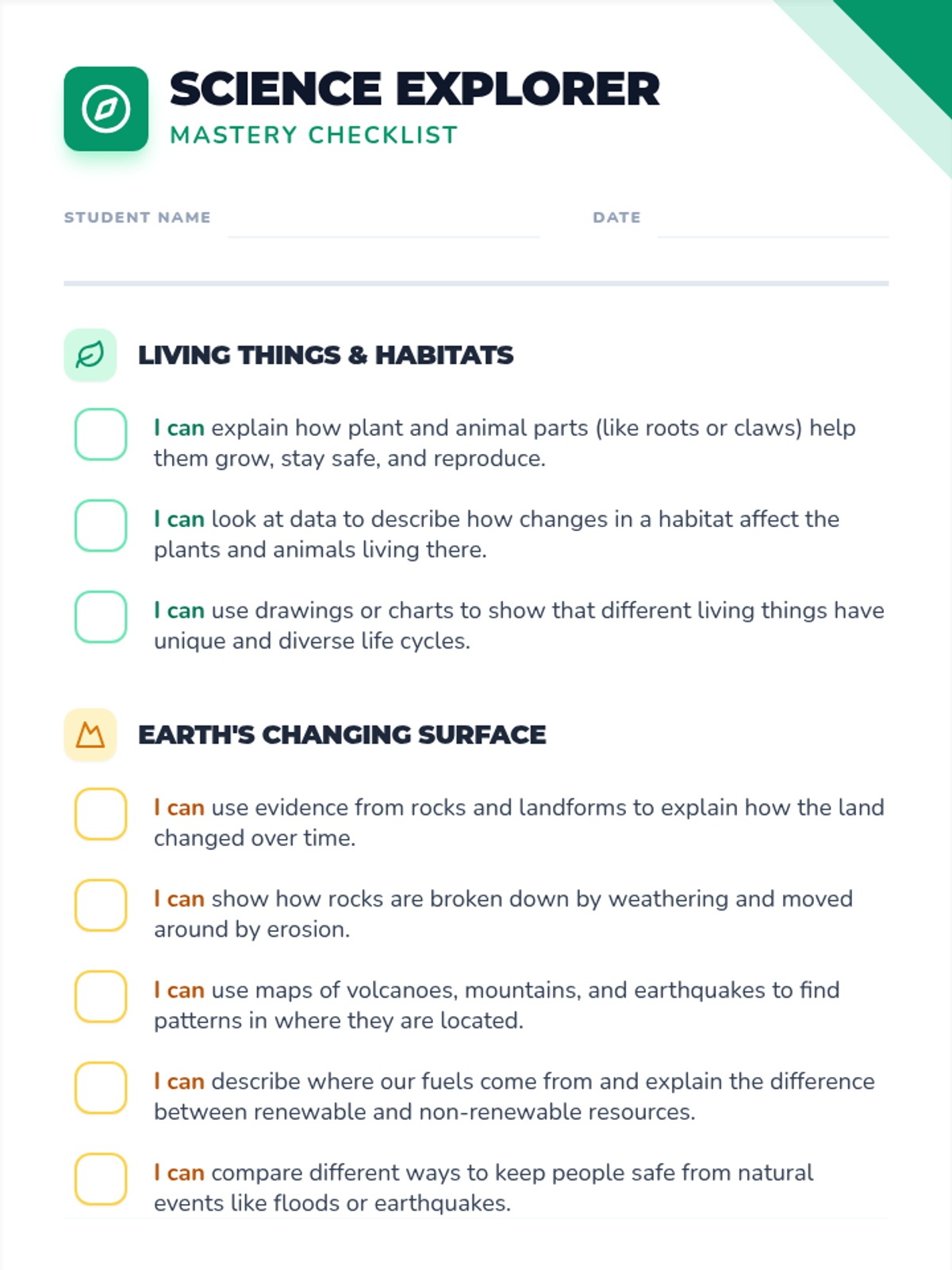
A comprehensive, student-friendly 'I Can' checklist for 4th-grade science standards, organized by topic with large checkboxes and clear language across two themed pages.
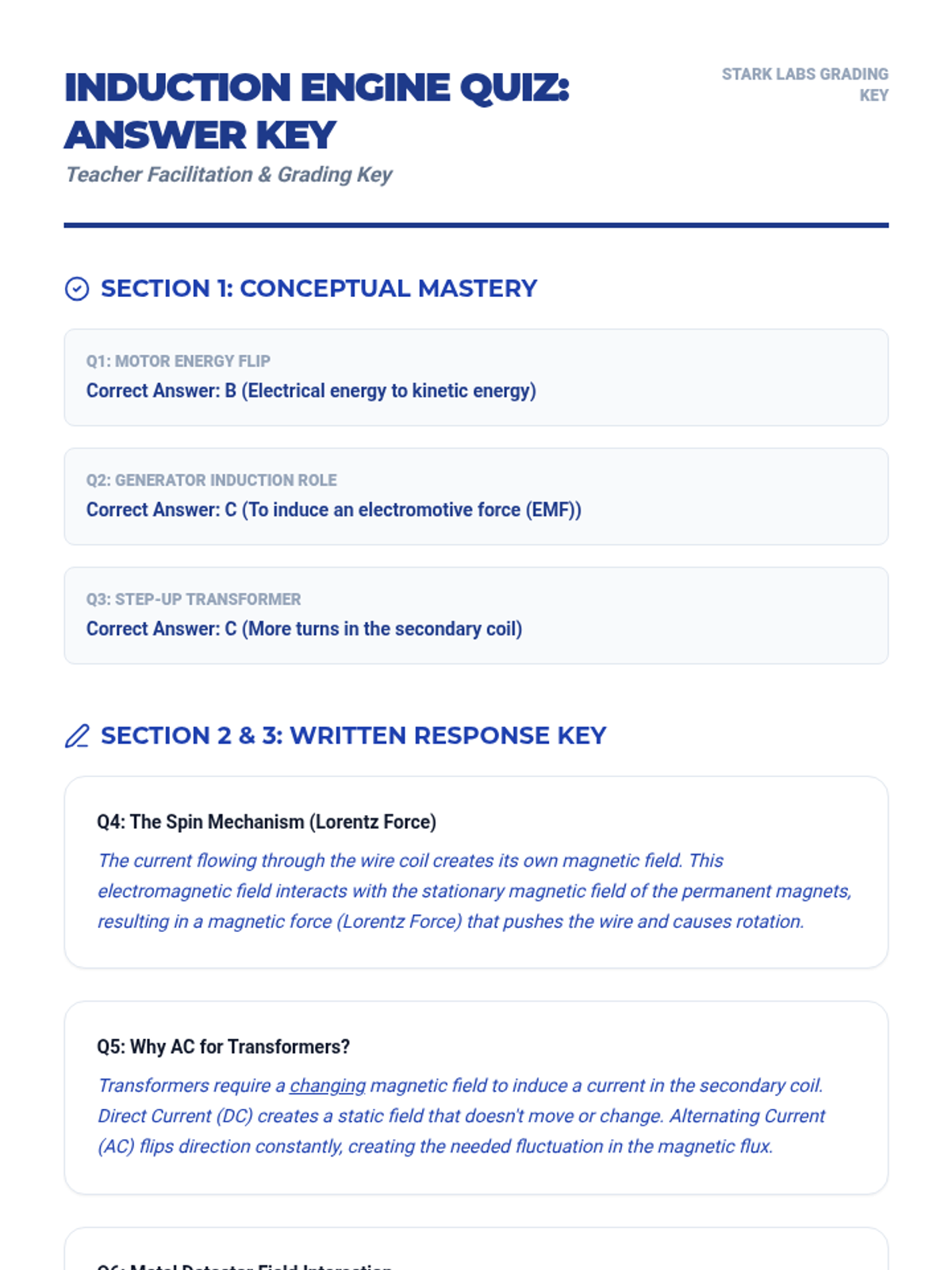
Teacher's answer key and grading guide for the Induction Engine Quiz, including point breakdowns and detailed scientific explanations.
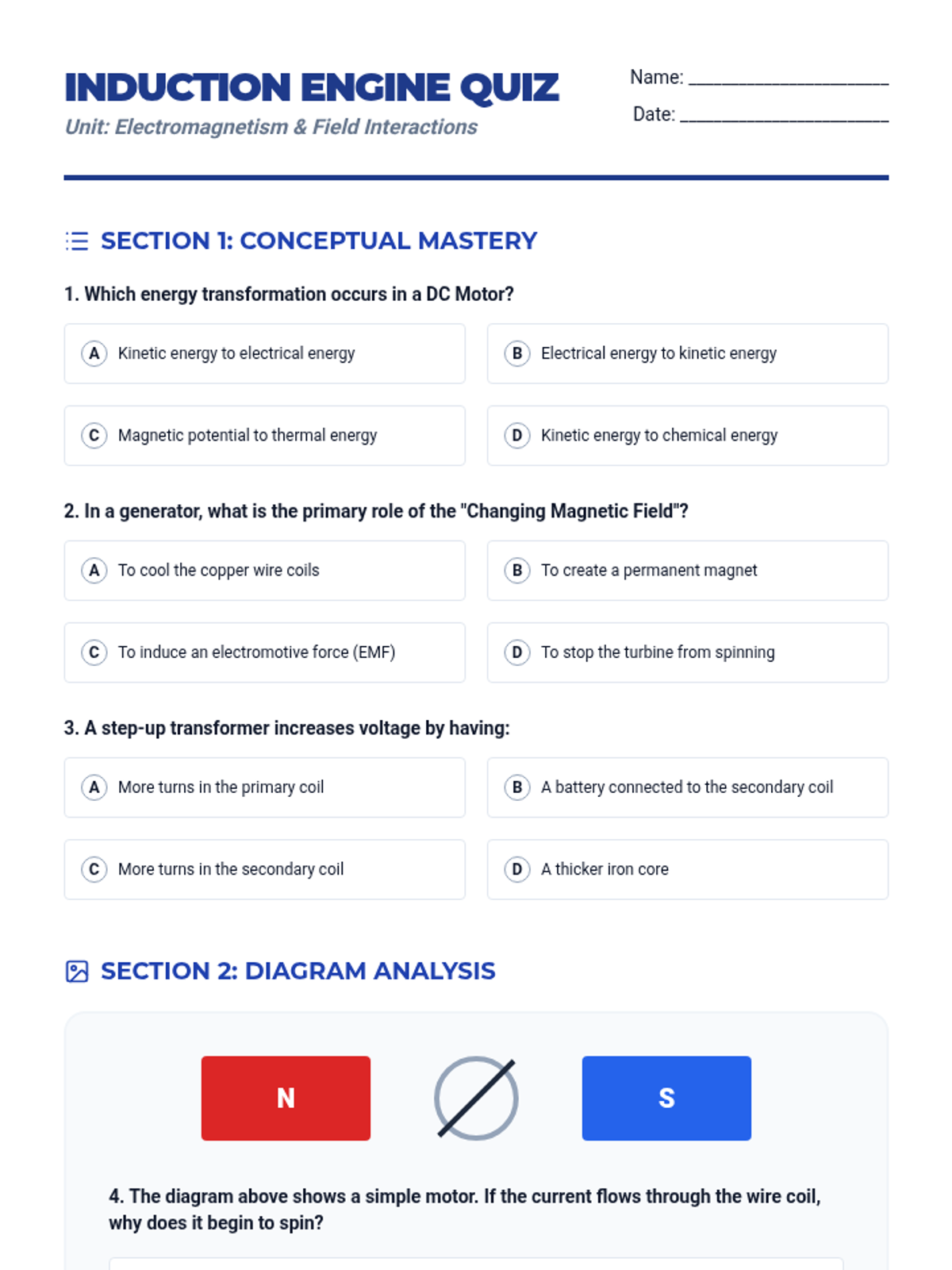
A summative assessment for students to demonstrate mastery of electromagnetic induction, energy transformations in motors/generators, and transformer logic.
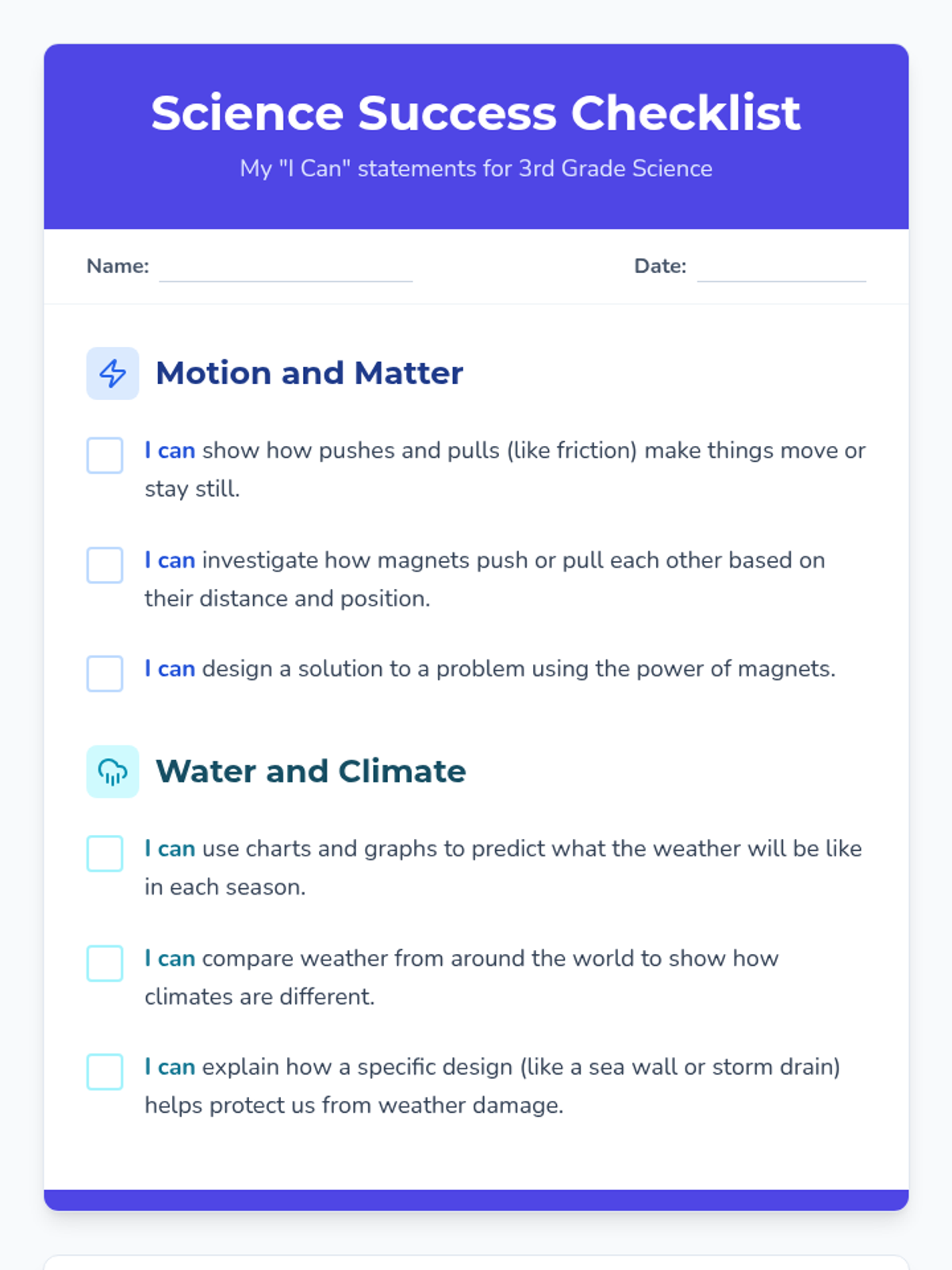
A student-friendly checklist of science standards rewritten as "I Can" statements for 3rd-grade topics including Motion and Matter, Water and Climate, and Life Science.
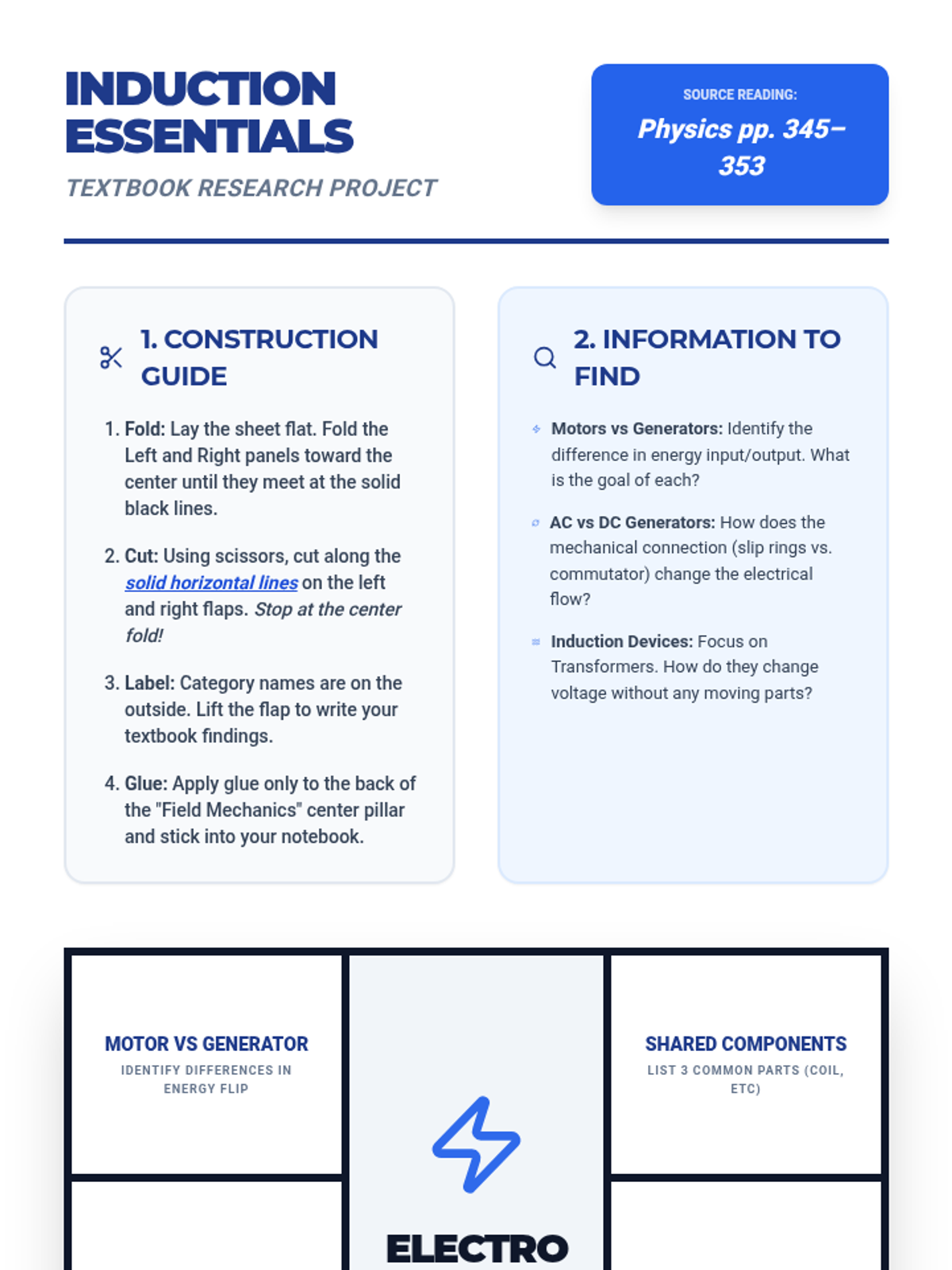
A hands-on foldable activity that scaffolds student research into motors, generators, and transformers using textbook pages 345-353. Includes construction instructions, a blank research template, and a performance rubric.
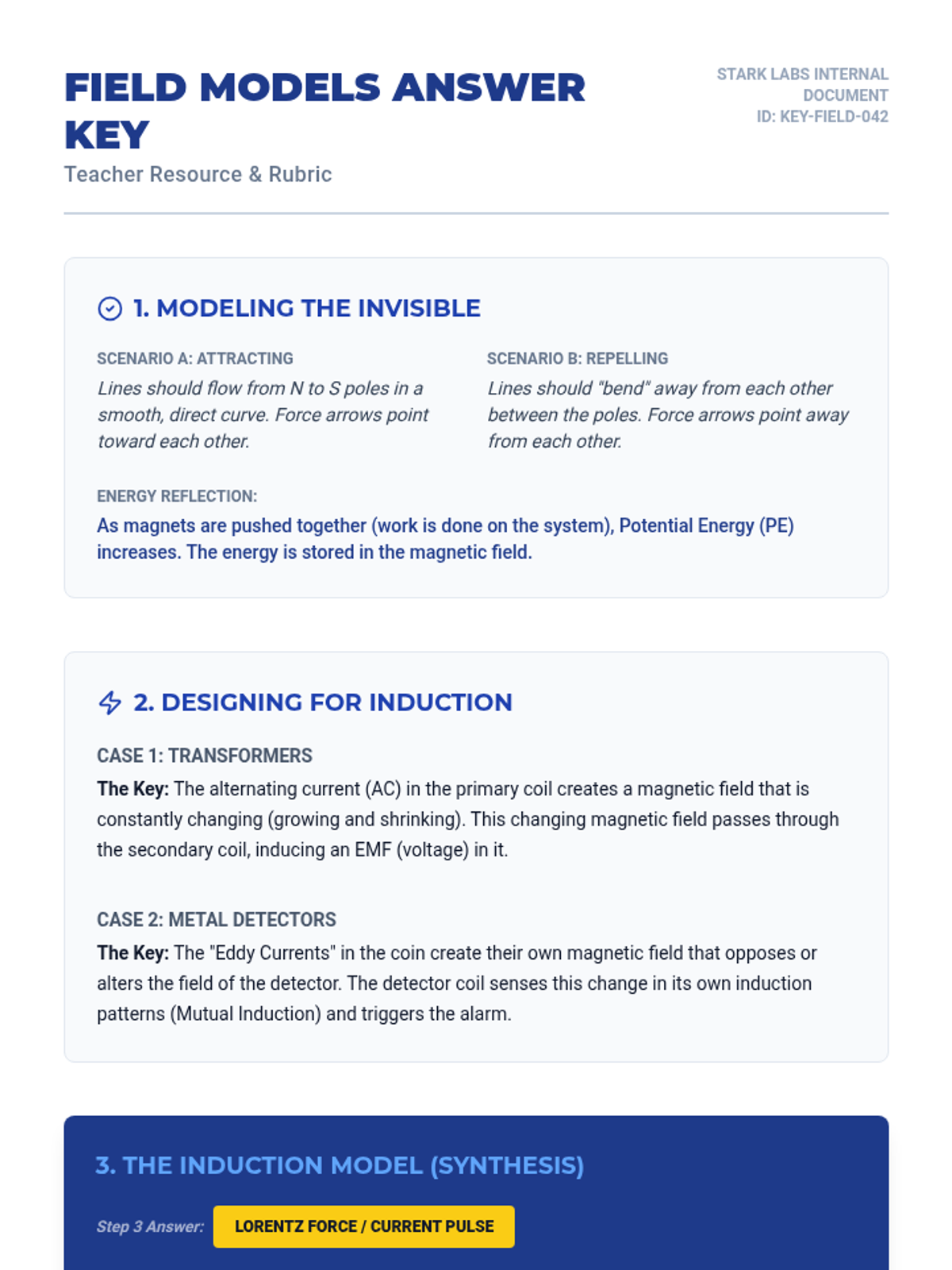
Teacher's answer key and grading rubric for the Field Interaction Models worksheet, including sample student responses and key scientific concepts.