Visual presentation covering the history of atomic models (from Democritus to the Modern Cloud) and detailed modern atomic theory including nucleons, electron shells, and periodic table links.
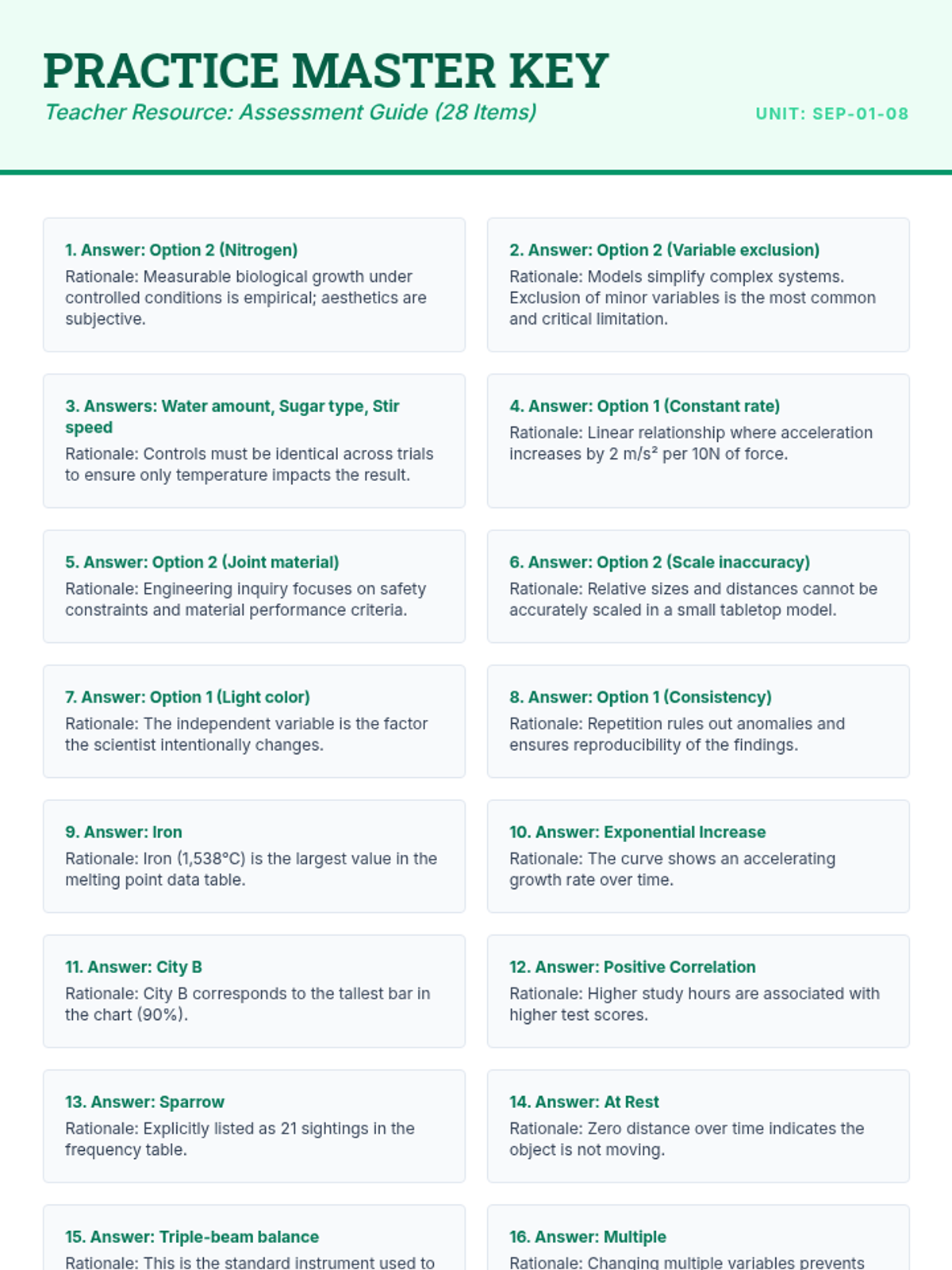
A teacher-facing answer key and instructional guide for the expanded SEP Challenge Bank. Provides correct answers and rationales for all 28 questions, organized to match the worksheet layout.
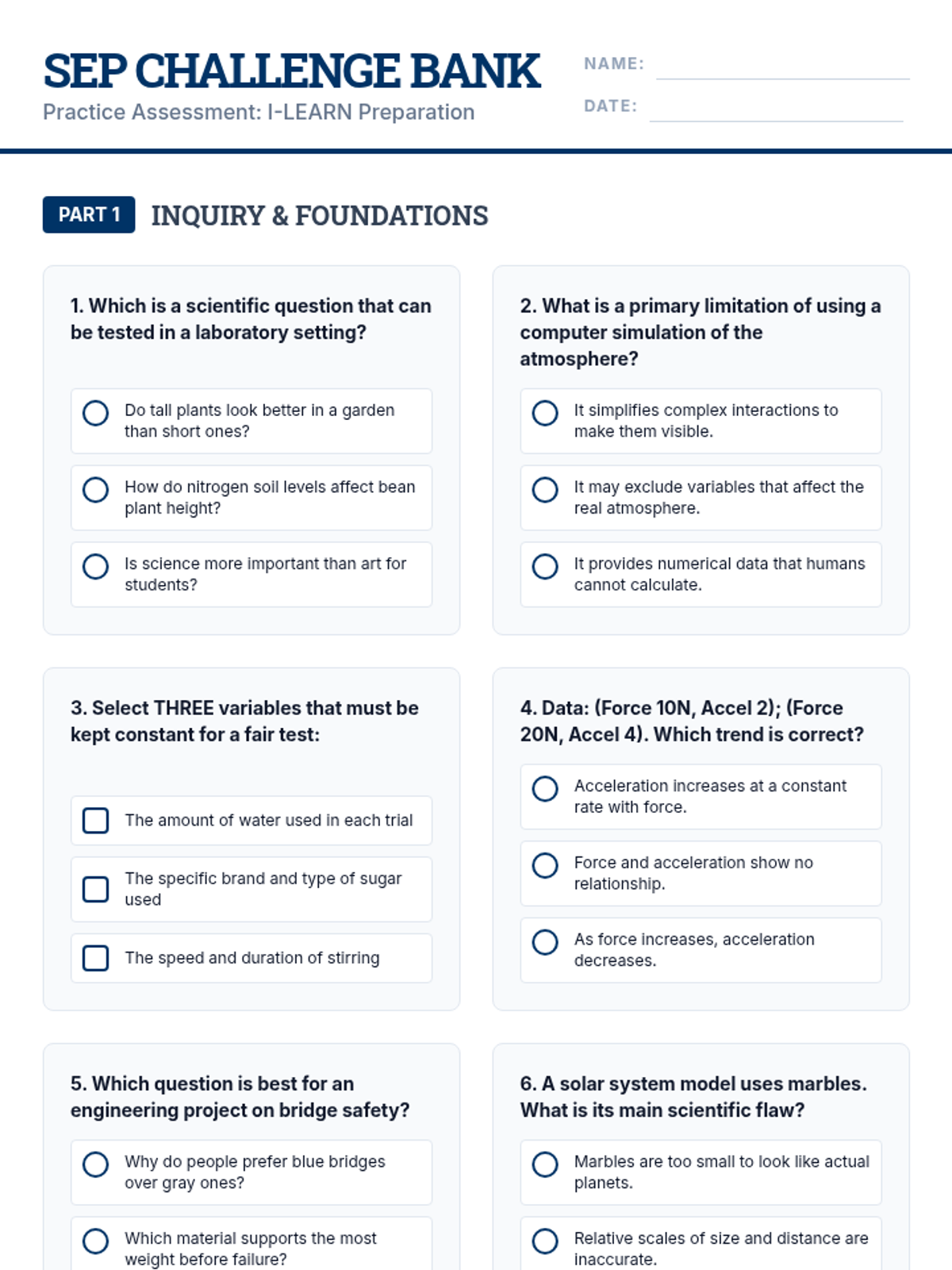
An expanded question bank for students featuring 28 I-LEARN style questions covering all 8 Science and Engineering Practices. Includes 5 new visual data interpretation items (graphs/tables) and a mix of question formats.
A visual slide deck designed to introduce and review the eight Science and Engineering Practices (SEP). It uses a clean 'Blueprint' aesthetic with clear definitions, test-taking strategies, and critical frameworks like CER.
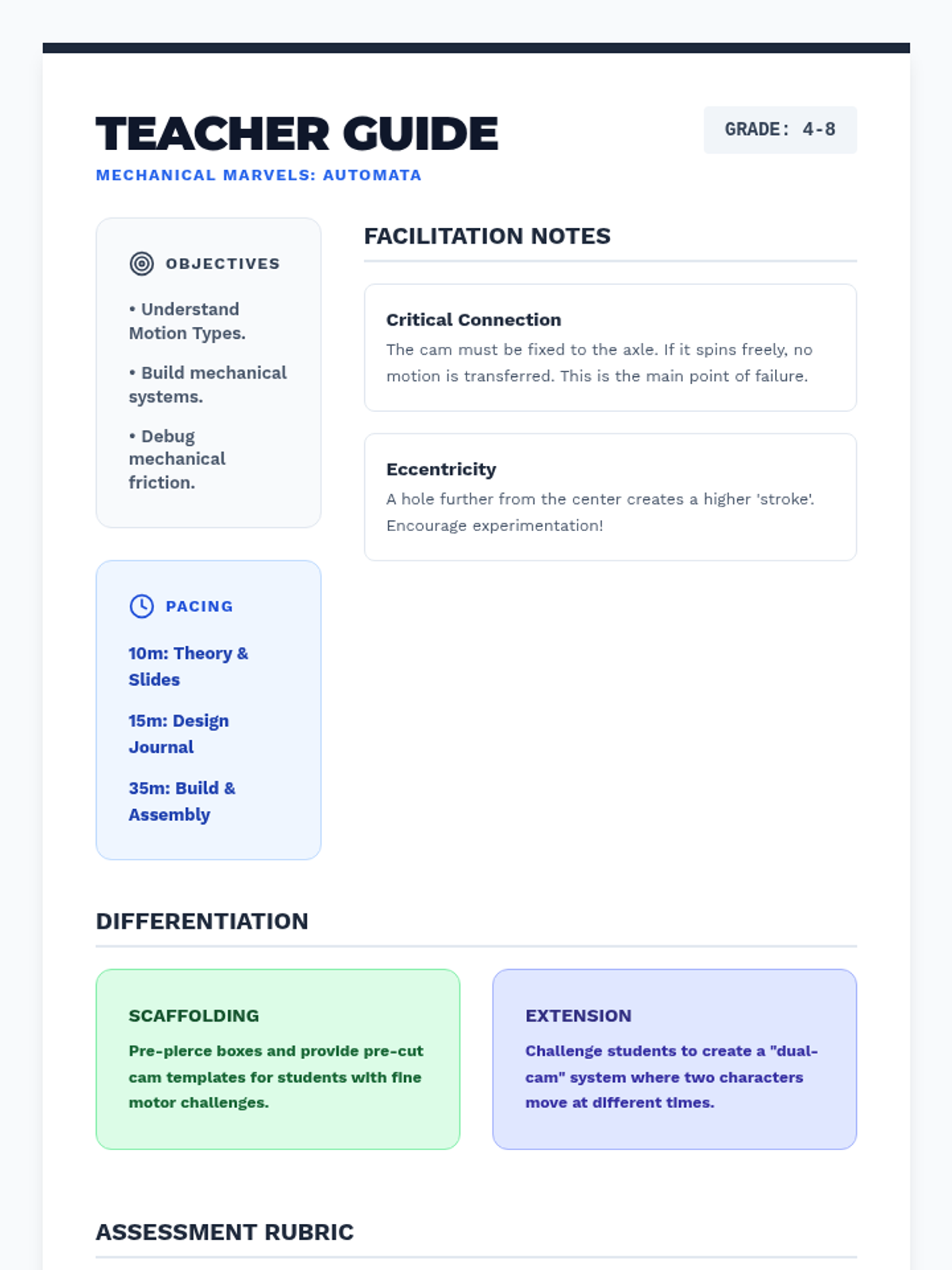
A revised teacher's guide with fixed page breaks in the differentiation section, improved layout for better information hierarchy, and clearer facilitation tips for classroom use.
A revised slide deck with functional mechanical diagrams, off-center cam visualizations, and a new step-by-step assembly overview for students. High-contrast design optimized for visibility.
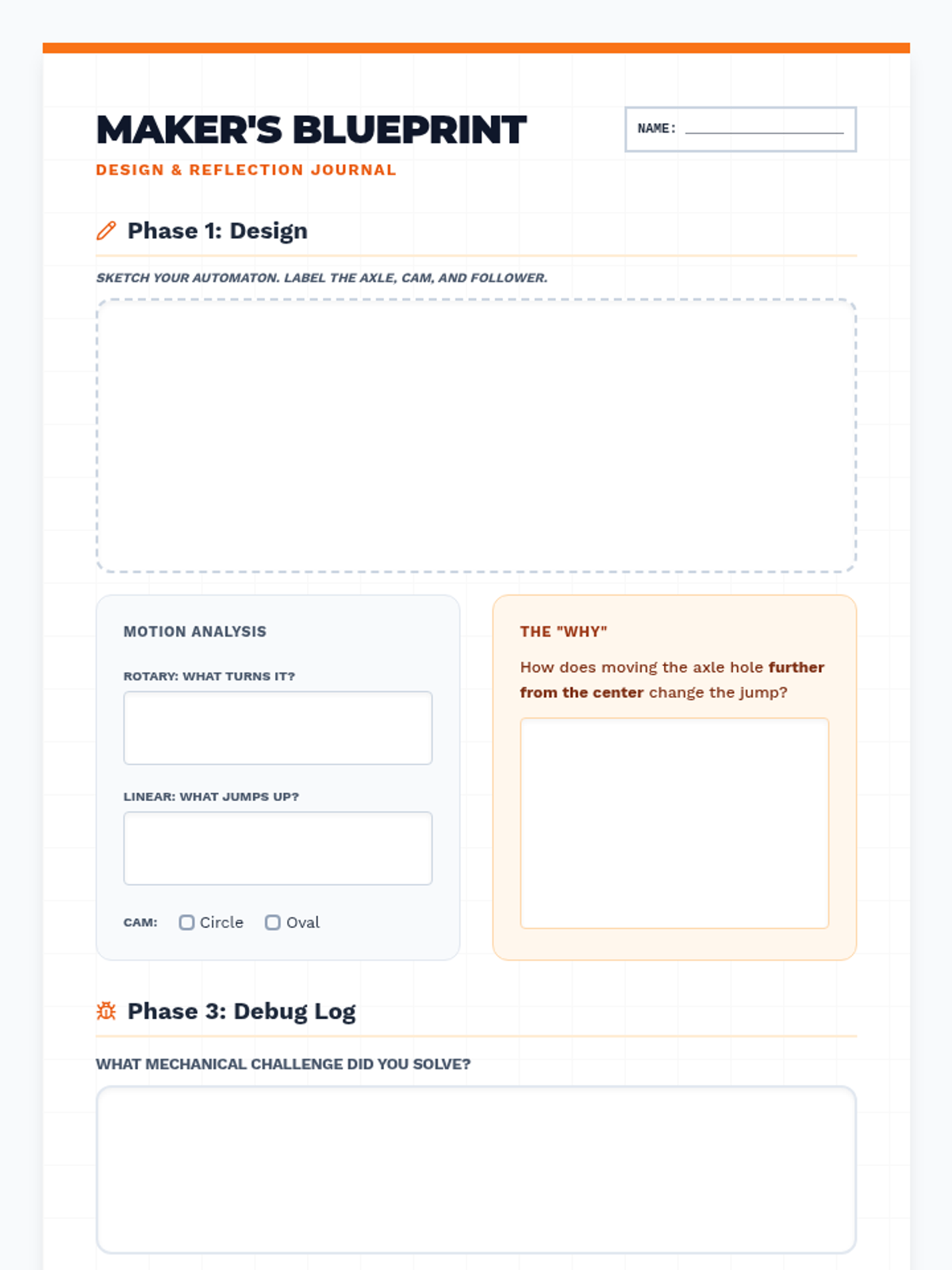
A revised design and reflection worksheet for students. Fixed page breaks, improved "Motion Analysis" fields for easier student use, and polished the overall visual balance.
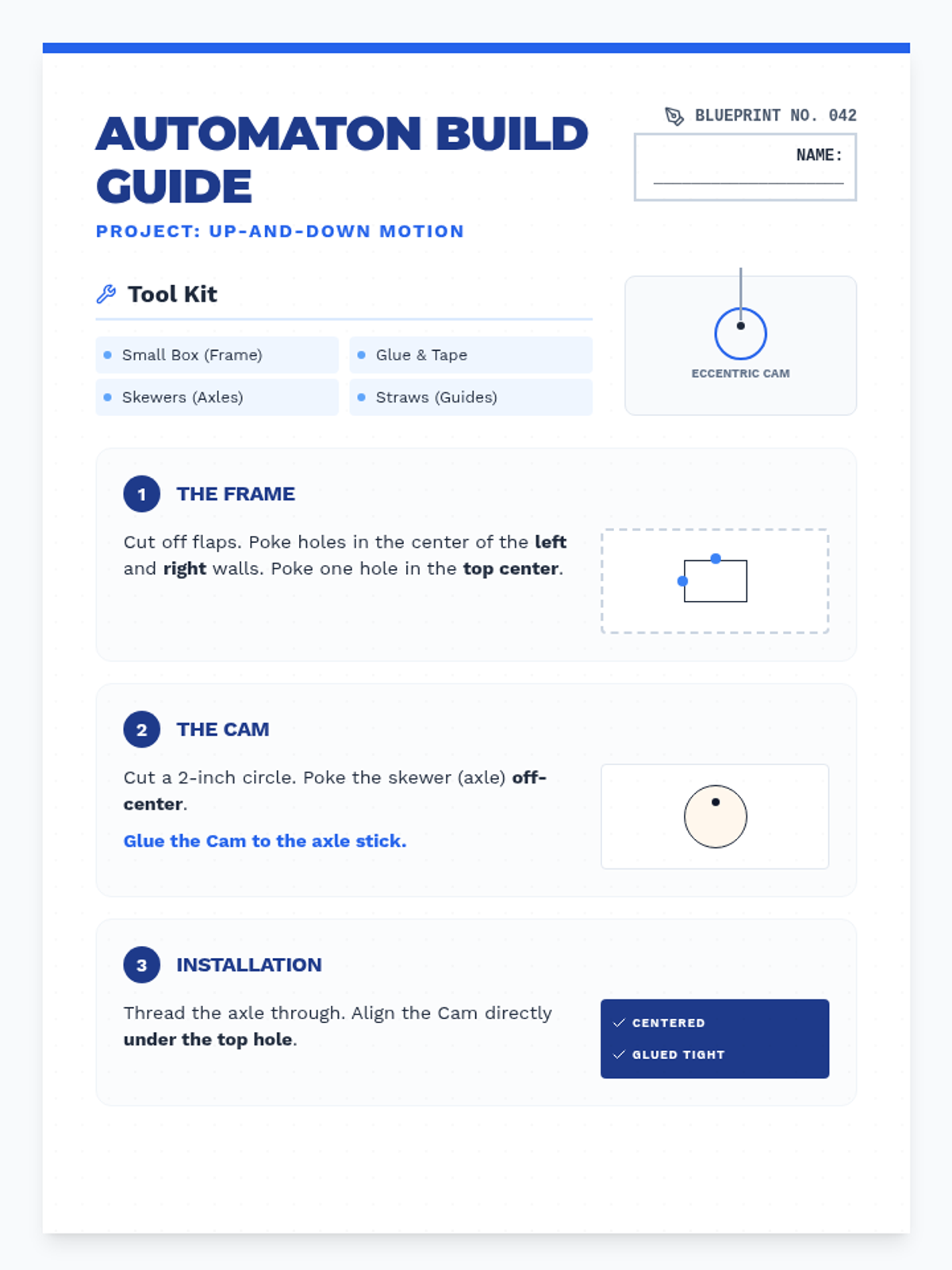
A revised step-by-step printable guide for building a cardboard automaton, featuring improved layout to prevent content splits, clearer diagrams, and more student work space.
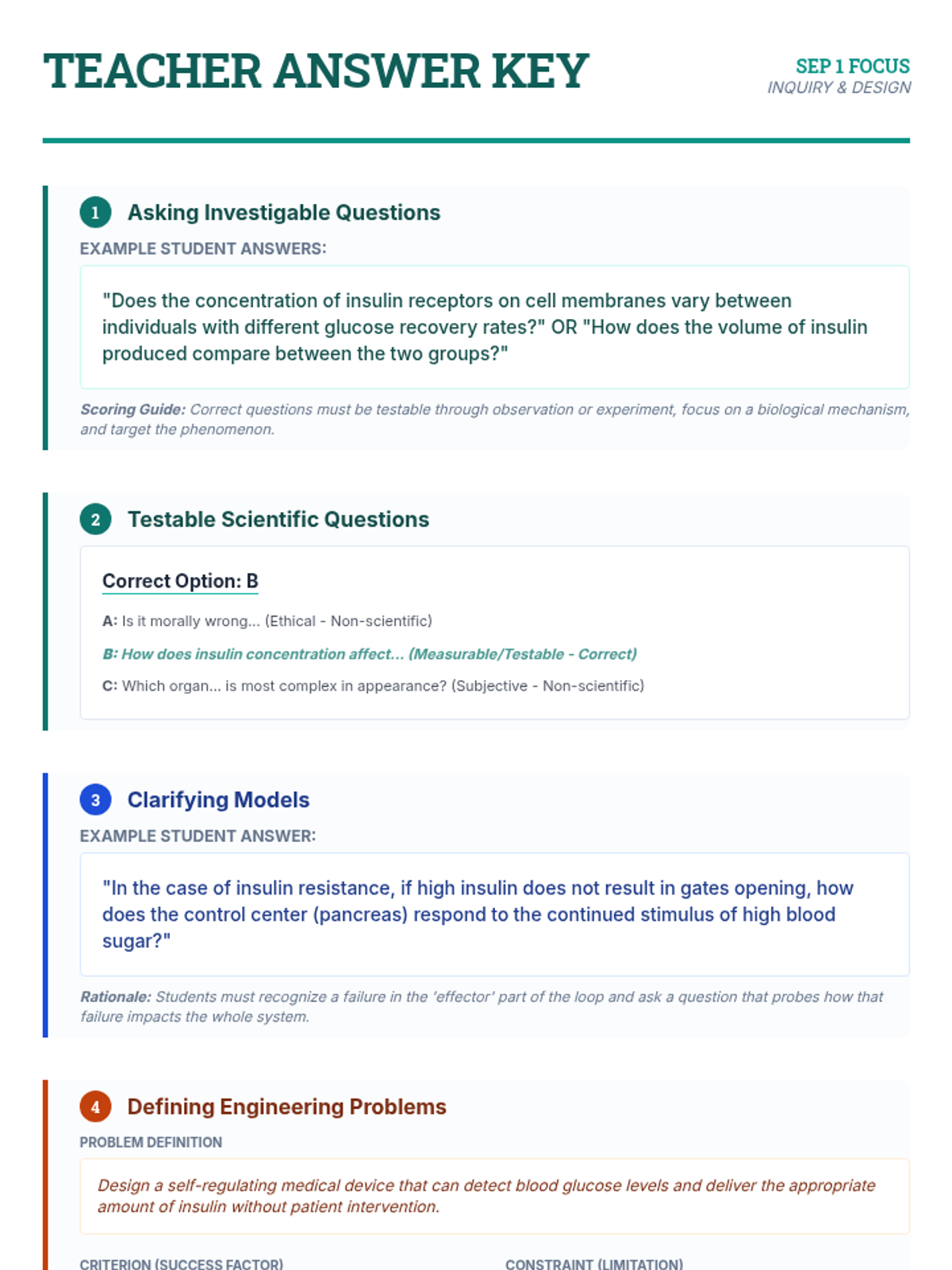
A teacher guide and answer key for the Loop Inquiry Planner, providing example scientific questions, rationales for testable questions, and engineering problem definitions.
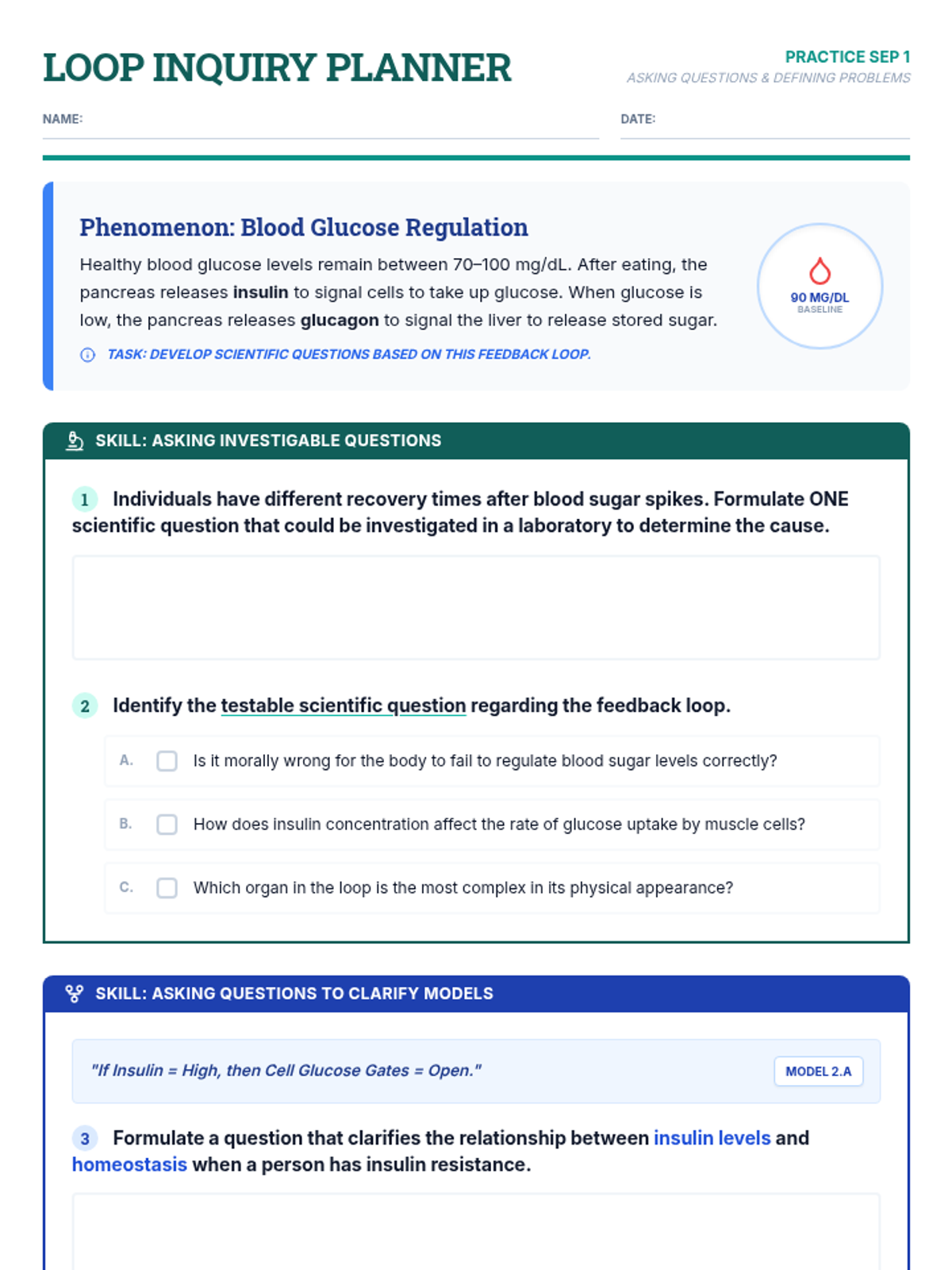
A practice worksheet focused on Science and Engineering Practice 1 (SEP1), challenging students to formulate scientific questions and define engineering problems related to blood glucose feedback loops.
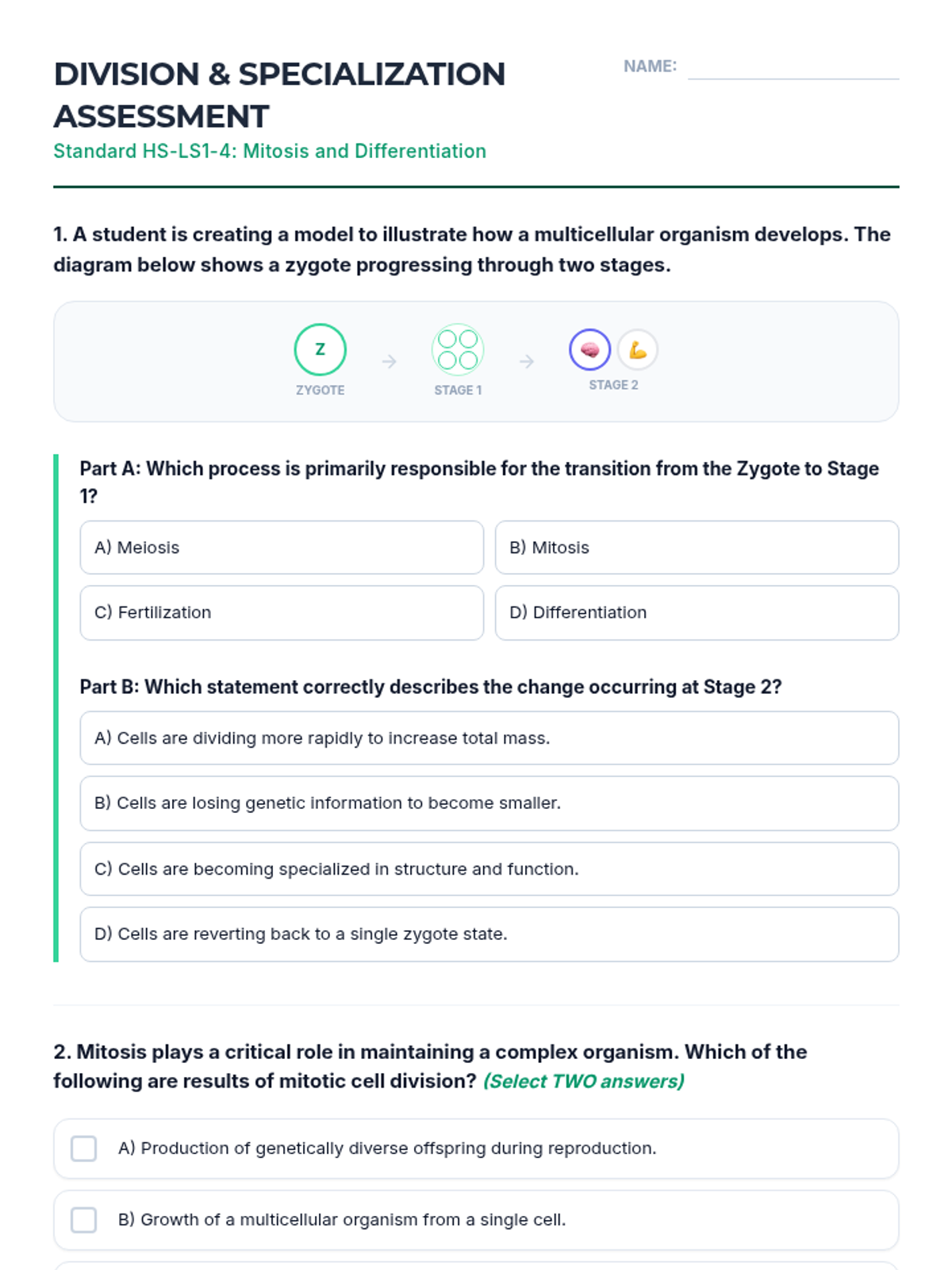
A comprehensive assessment featuring I-Learn style questions focused on HS-LS1-4, including model analysis, multi-select, and constructed response. Expanded with new questions on gene expression and stem cell differentiation. Revised for layout and page efficiency.
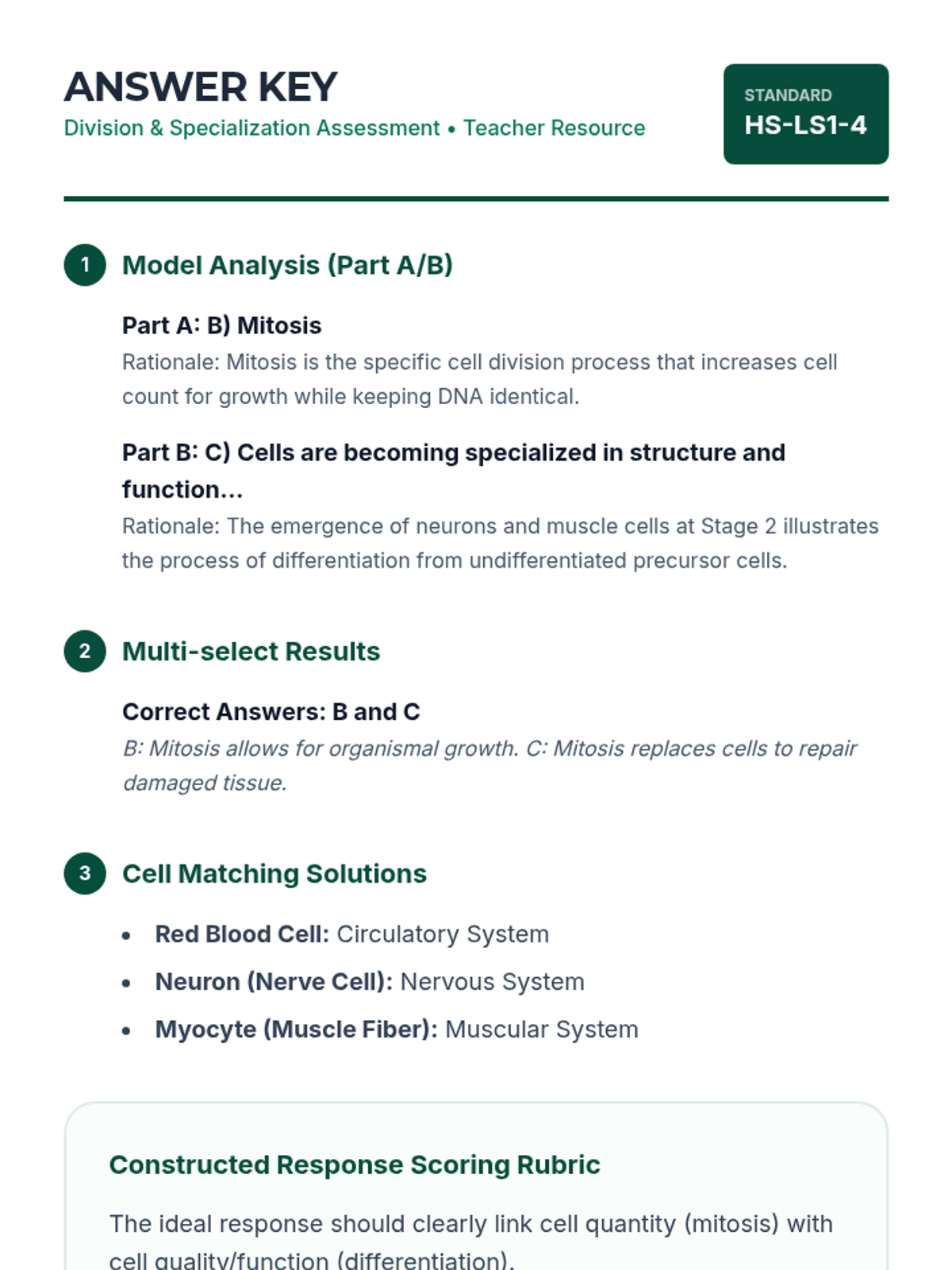
Teacher answer key and scoring rubric for the Division Dynamics Assessment. Revised for better layout, clarity, and readability, including new questions on gene expression and stem cells, a sample high-score response, and improved question numbering.
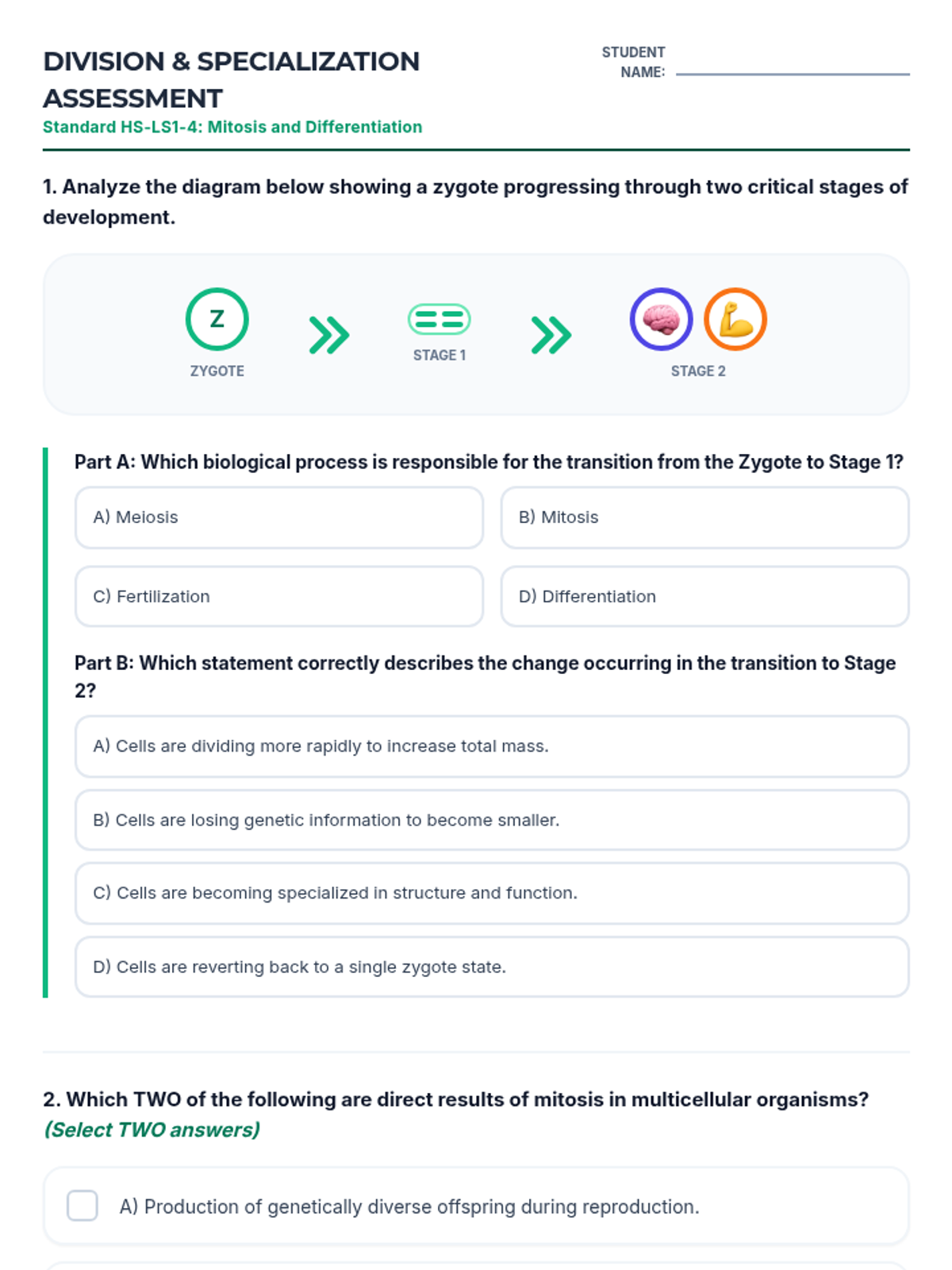
A comprehensive assessment featuring I-Learn style questions focused on HS-LS1-4, including model analysis, multi-select, and constructed response. Revised for better layout and page efficiency.
A visual slide deck introducing the concepts of mitosis and cell differentiation as they relate to HS-LS1-4.
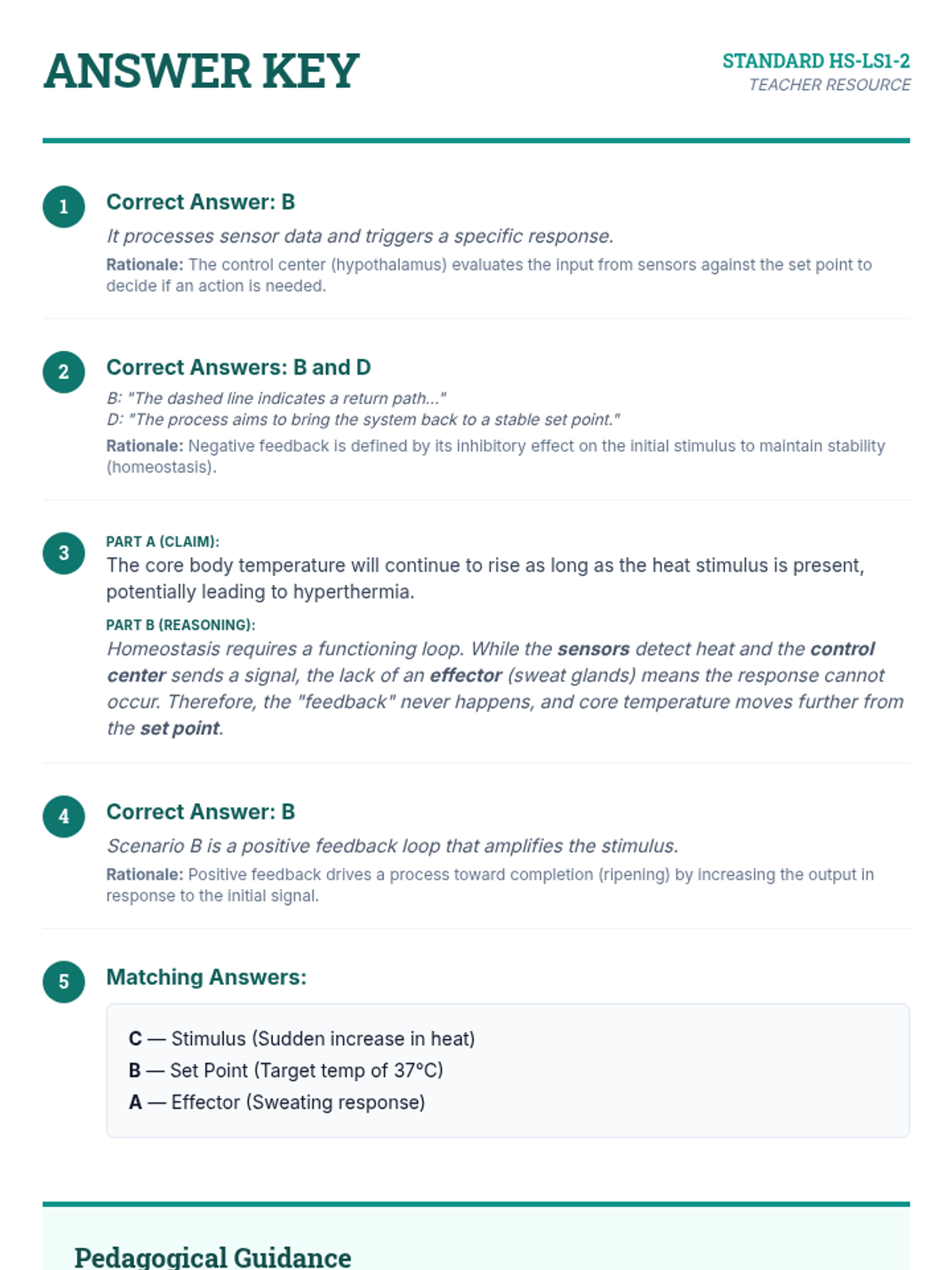
A comprehensive teacher answer key and instructional guide for the Bio-Logic practice worksheet, including rationales, scoring guidance, and common student misconceptions.
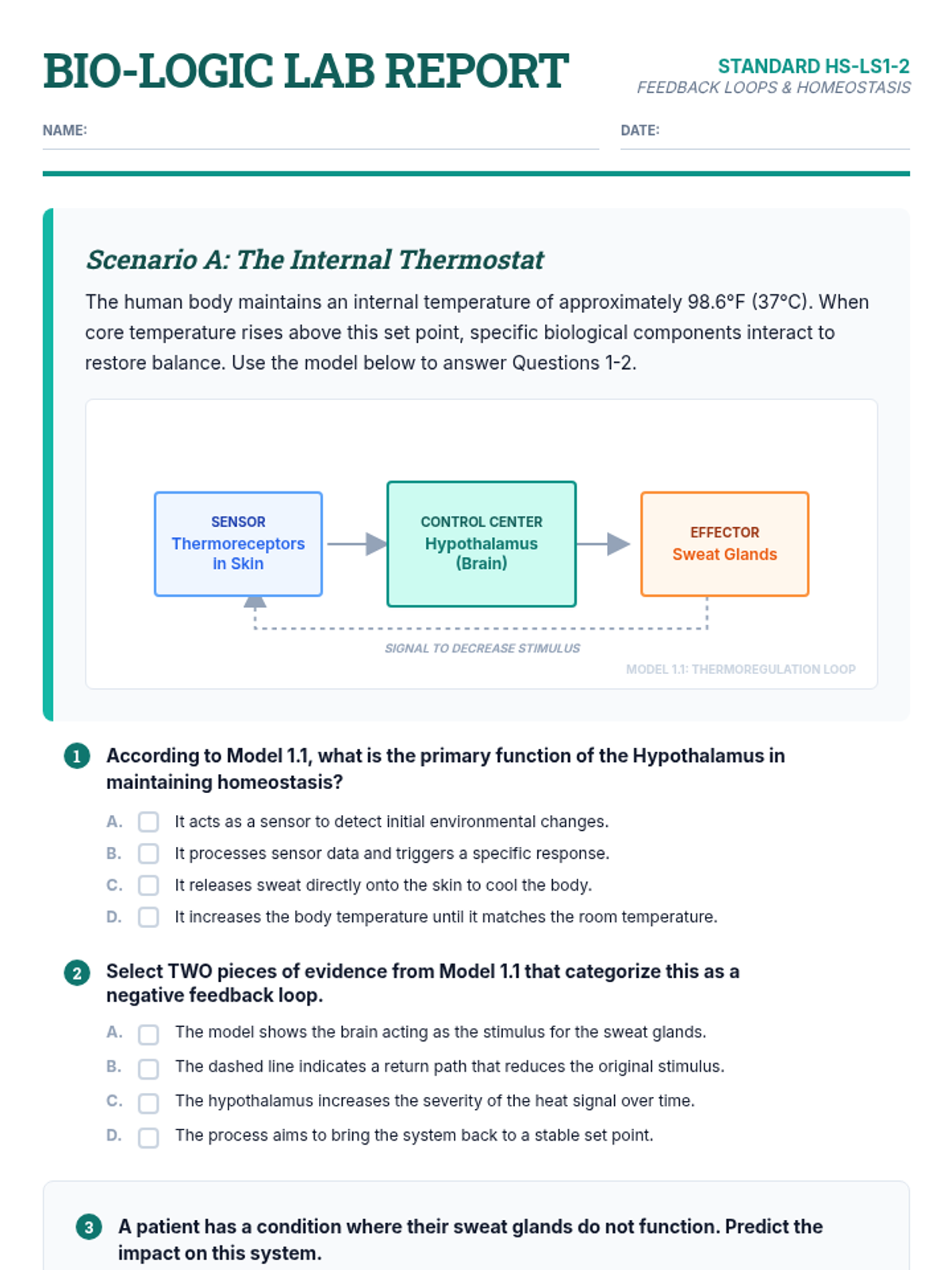
A biological feedback loops practice worksheet styled after standardized tests, featuring thermoregulation and fruit ripening scenarios with visual models and evidence-based questions.
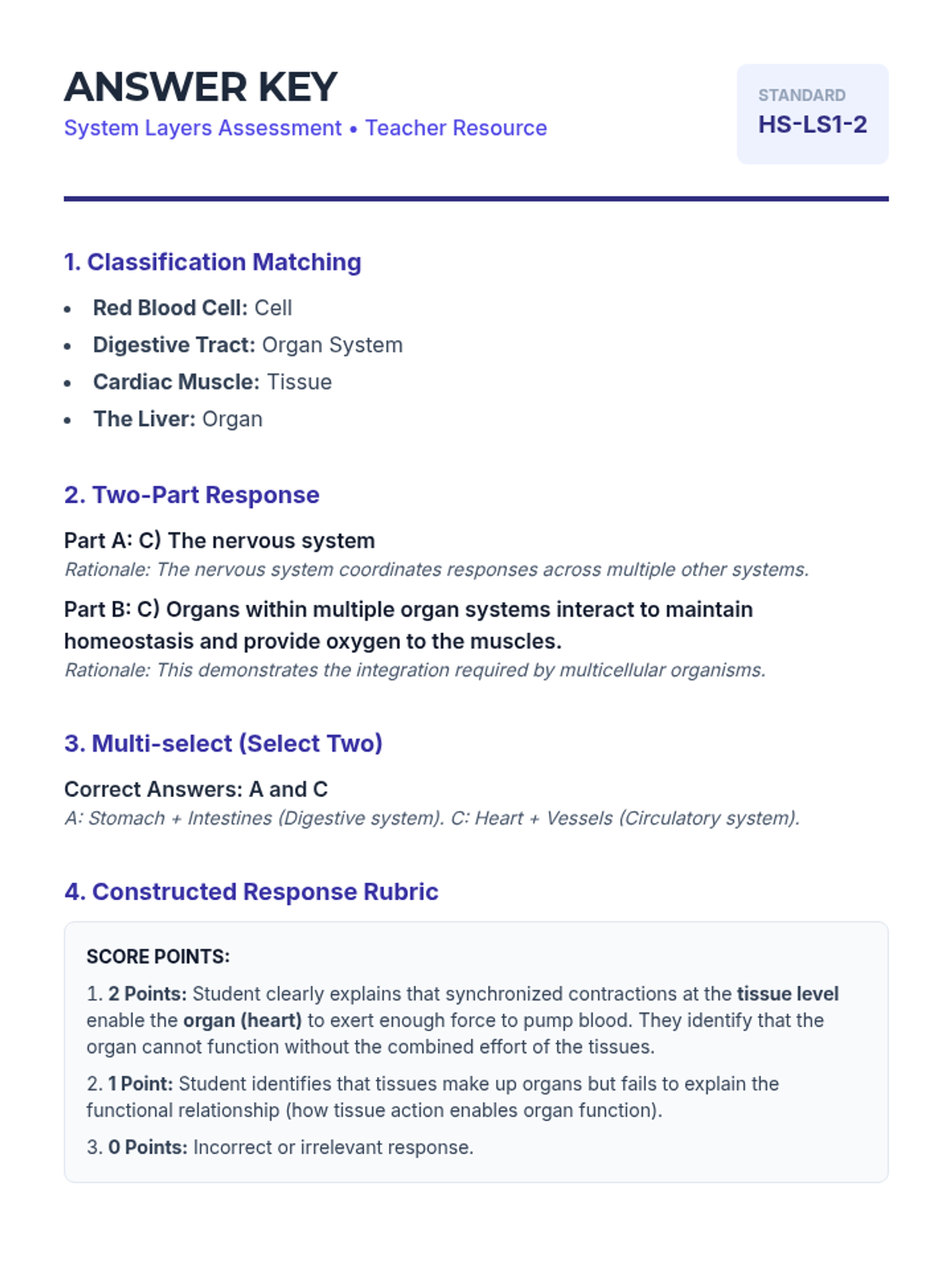
Teacher answer key and scoring rubric for the System Layers Assessment, including rationales and point values.
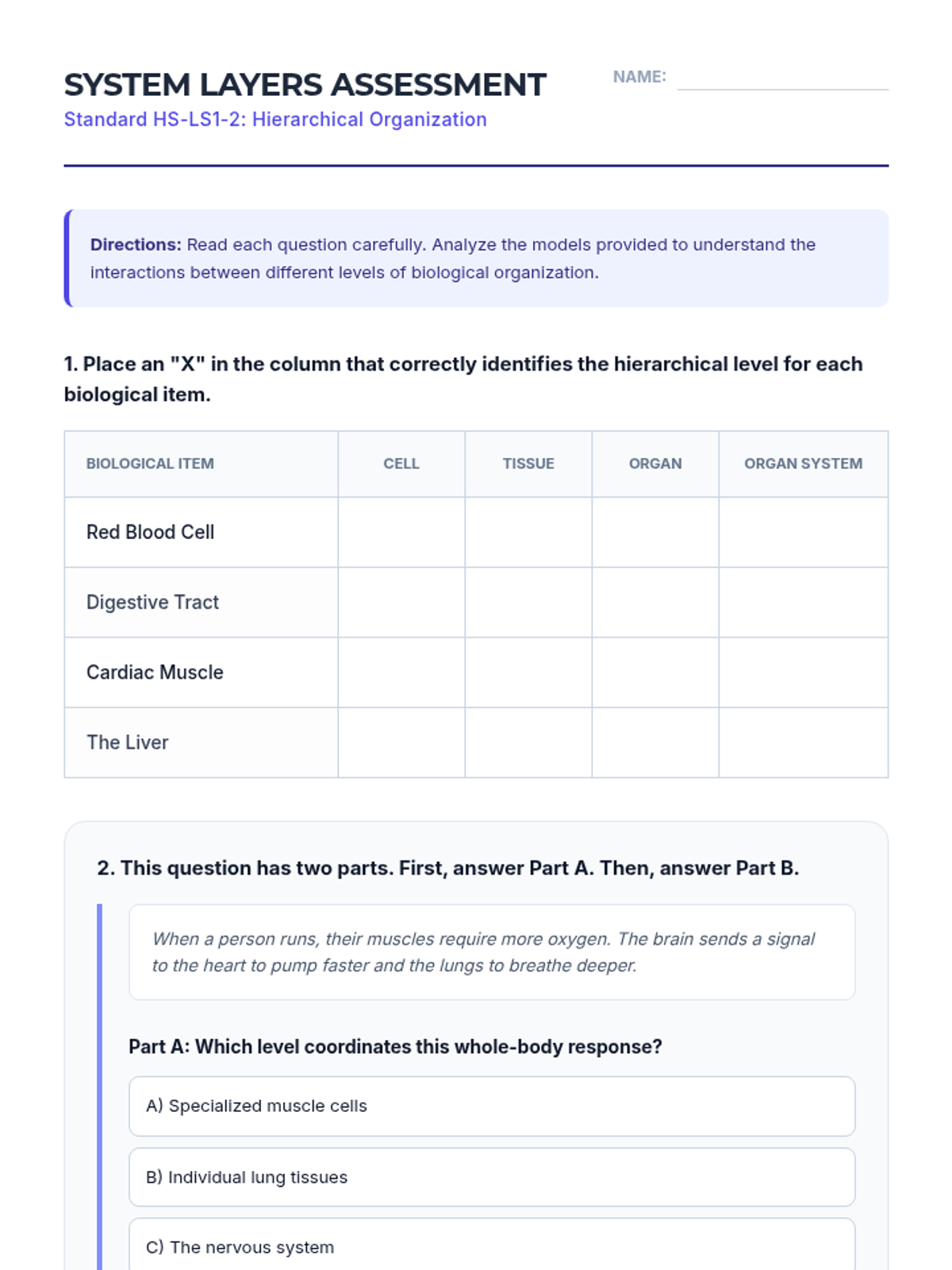
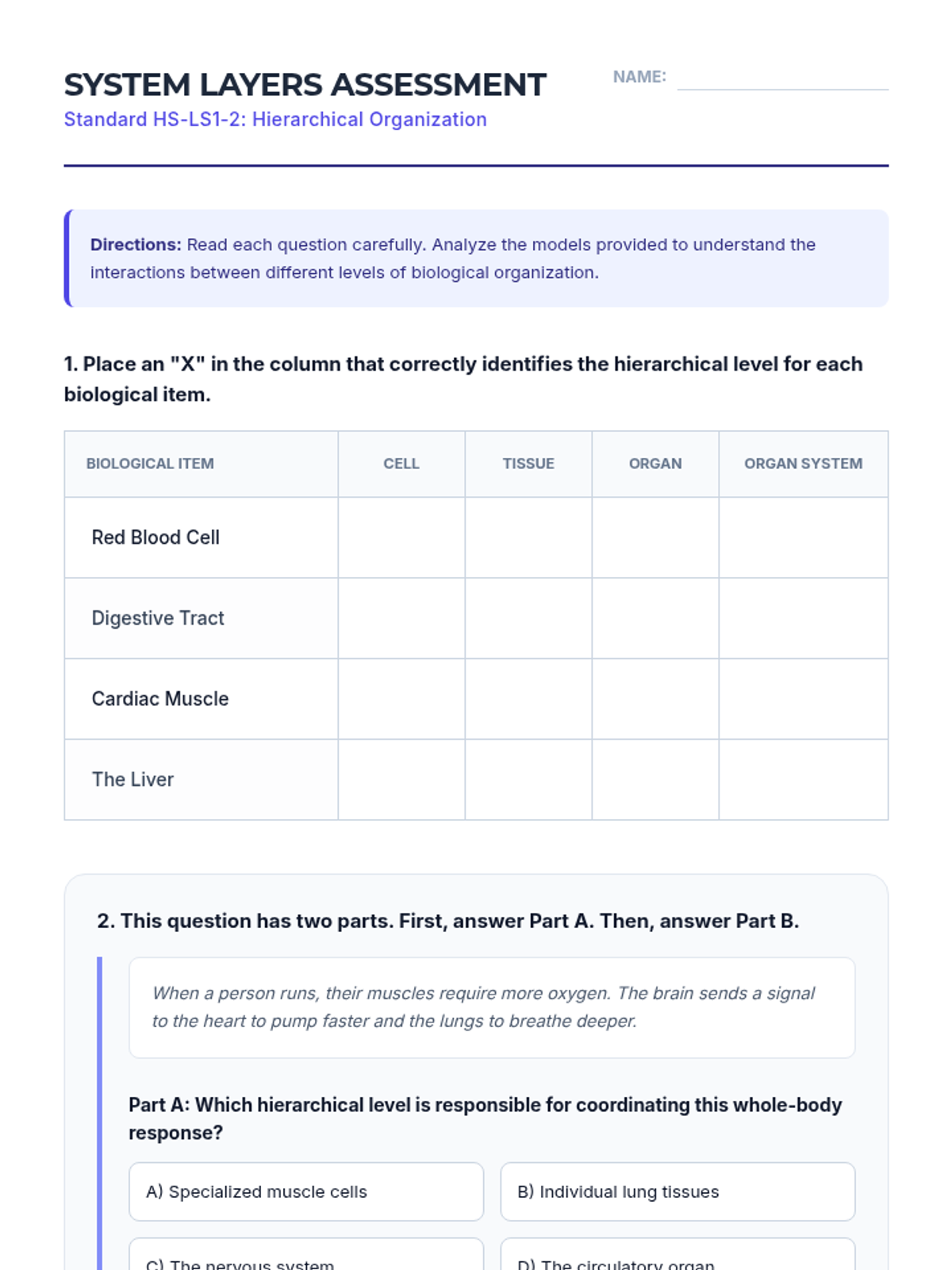
A comprehensive assessment featuring I-Learn style questions focused on HS-LS1-2 hierarchical organization. Revised for improved layout and clarified visual markers.
A visual slide deck introducing the hierarchical organization of living systems, from cells to whole organisms. Revised for improved visual relevance and clarity.
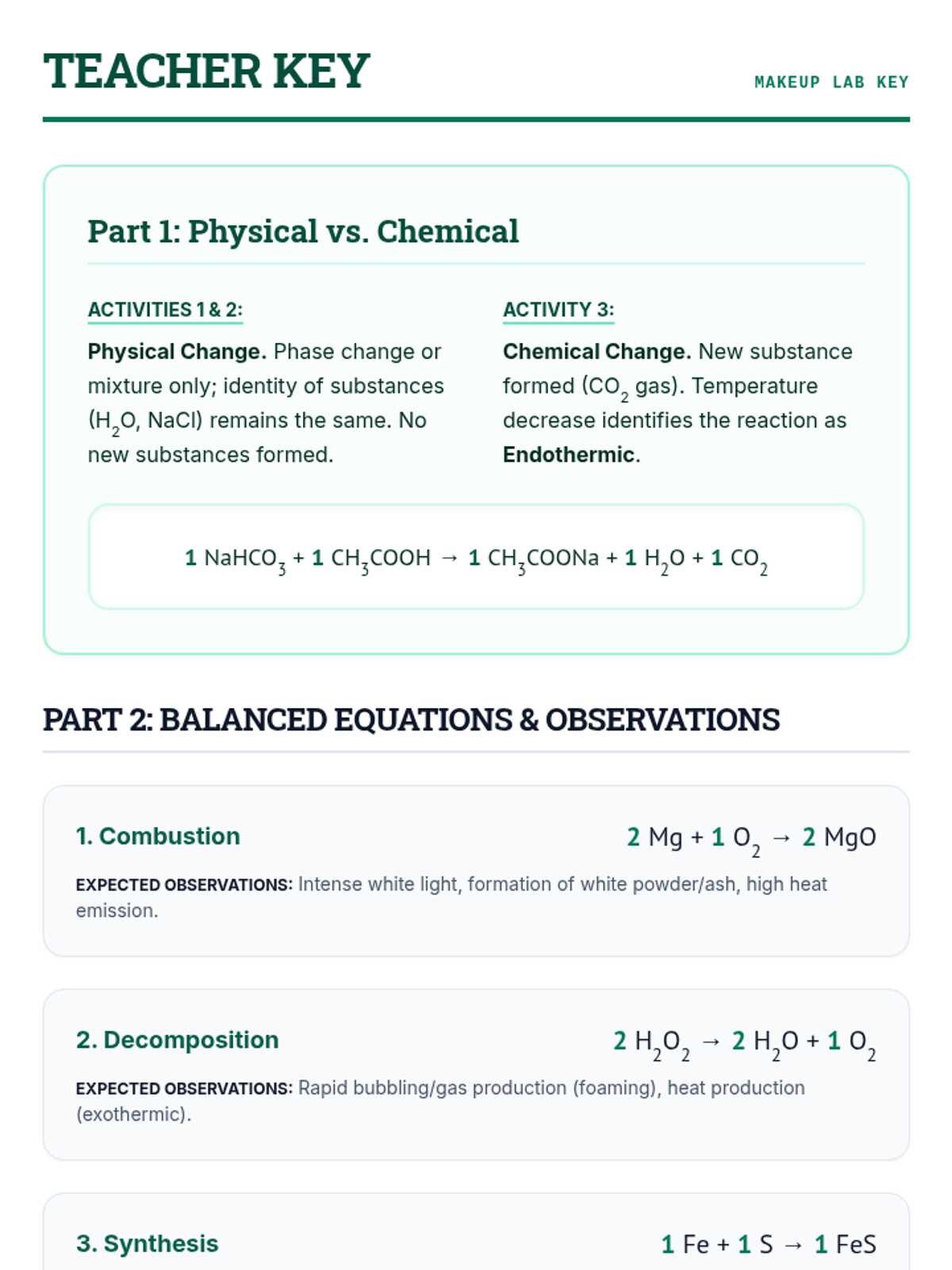
An answer key for the Reaction Replay Makeup Packet. Includes balanced chemical equations, identification of reaction types, and explained answers for reflection questions. Also contains brief teaching notes for facilitating the makeup lab. Includes expected observations for each reaction type. Updated with refined formatting to prevent coefficient overlap.
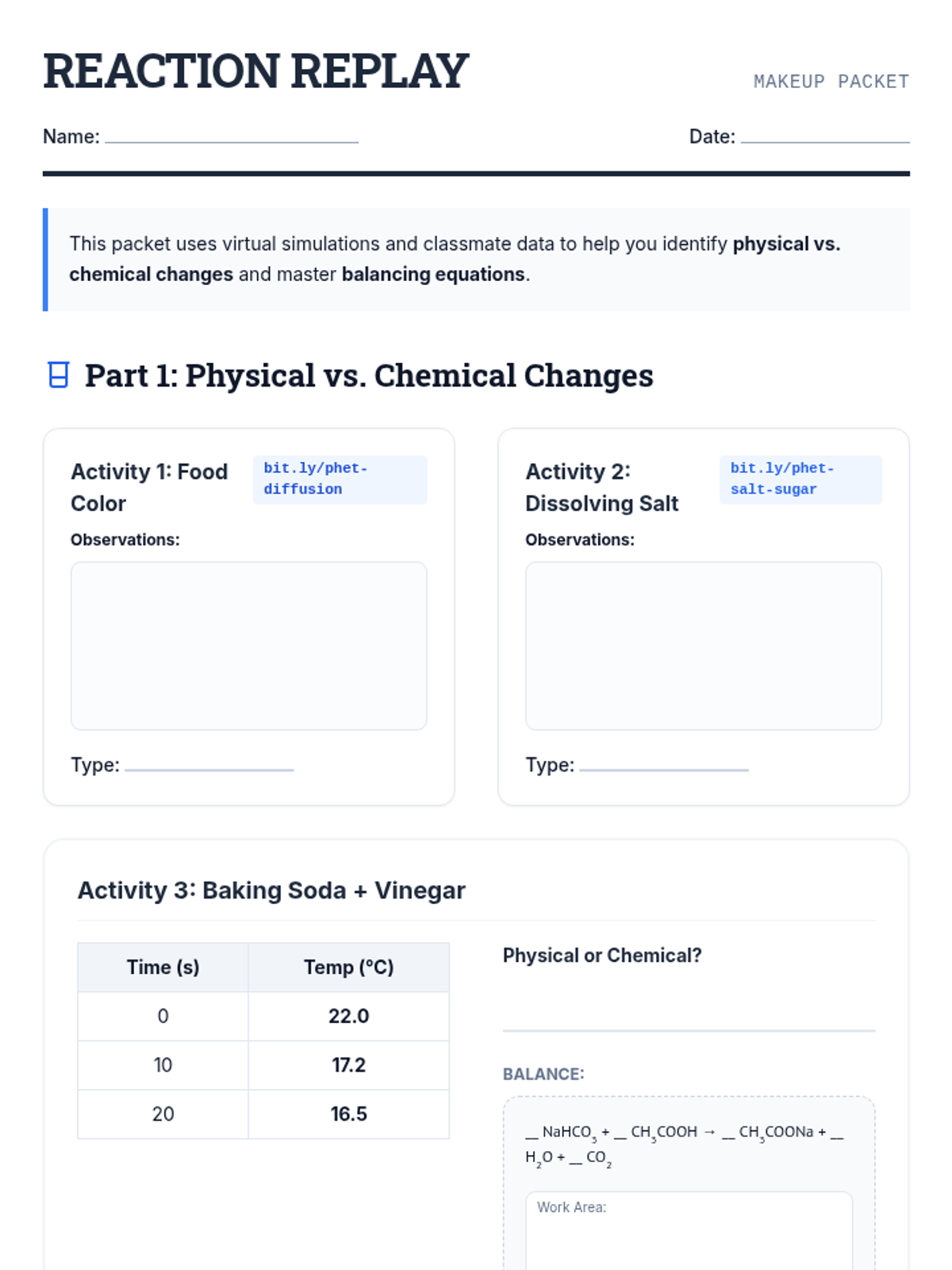
A student-facing lab makeup packet that includes virtual lab links (bit.ly shortcuts), sample data from a mock lab group, and spaces for students to analyze reactions and balance equations. Designed to look like a professional lab manual with clear sections for each reaction type. Updated to require students to record their own observations from virtual simulations. Consolidates layout to reduce white space and ensures high contrast for all links and work areas. Standardizes subscripts for better reliability.
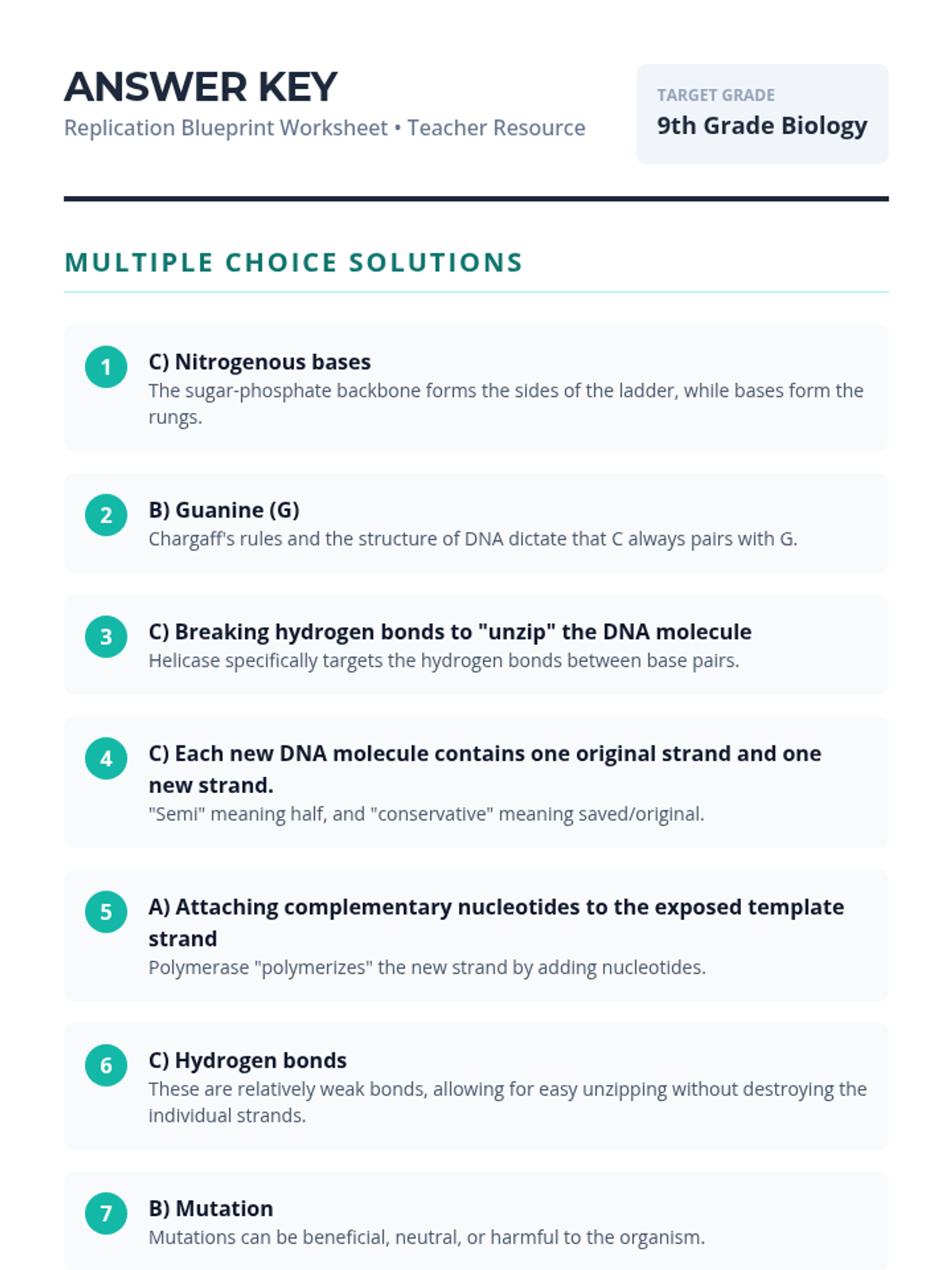
An answer key for the Replication Blueprint Worksheet, including correct options, explanations, and a grading rubric for the synthesis question.
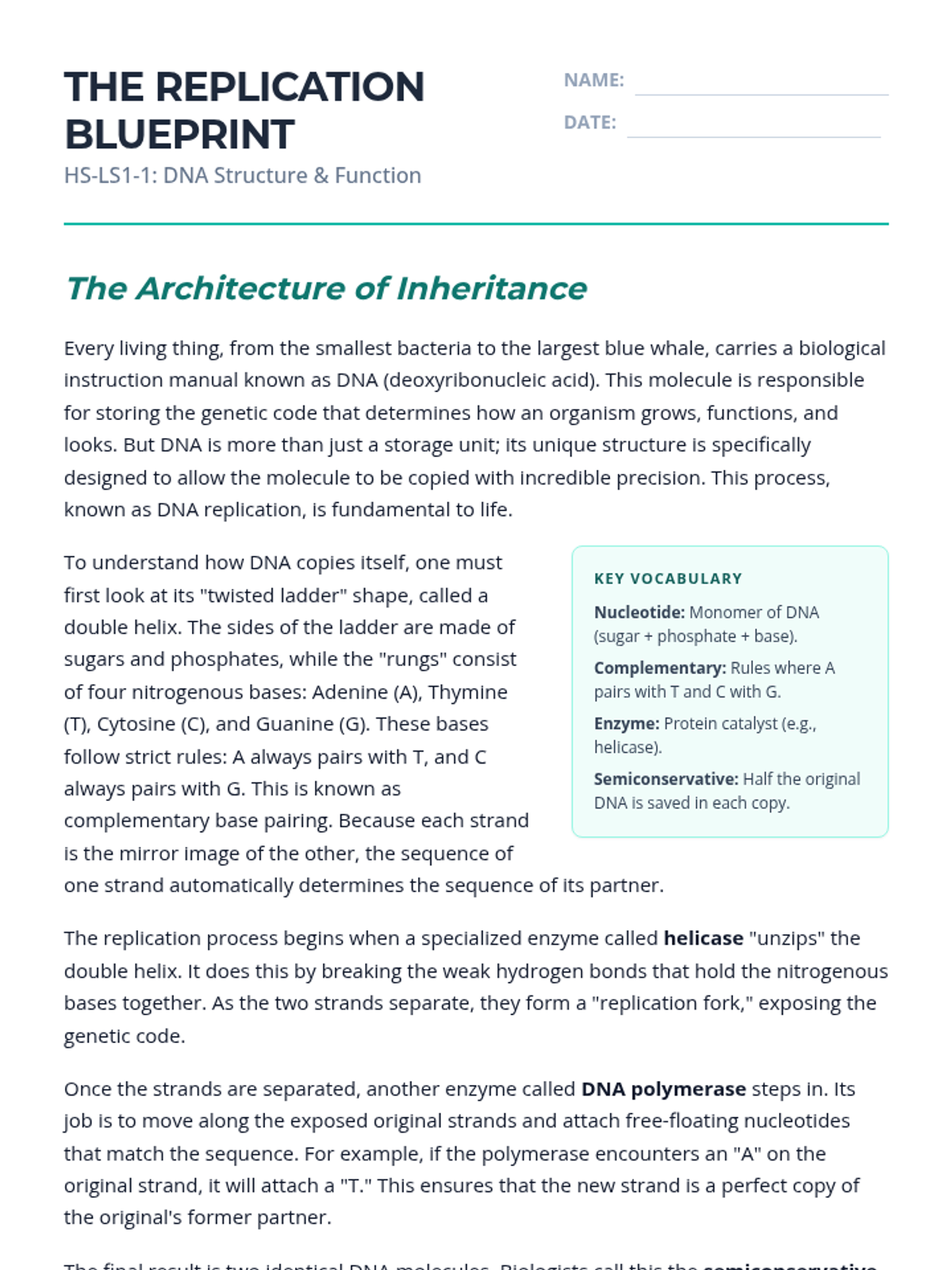
A reading comprehension passage and worksheet about DNA replication, covering the double helix structure, enzymes, and the semiconservative model. Includes 8 multiple-choice questions and a short-answer synthesis question. Revised for better layout and page breaks.
An engaging slide deck introducing DNA replication, enzymes involved, and the semi-conservative model. Revised with improved visuals for the semi-conservative model and clear transitions to student work.
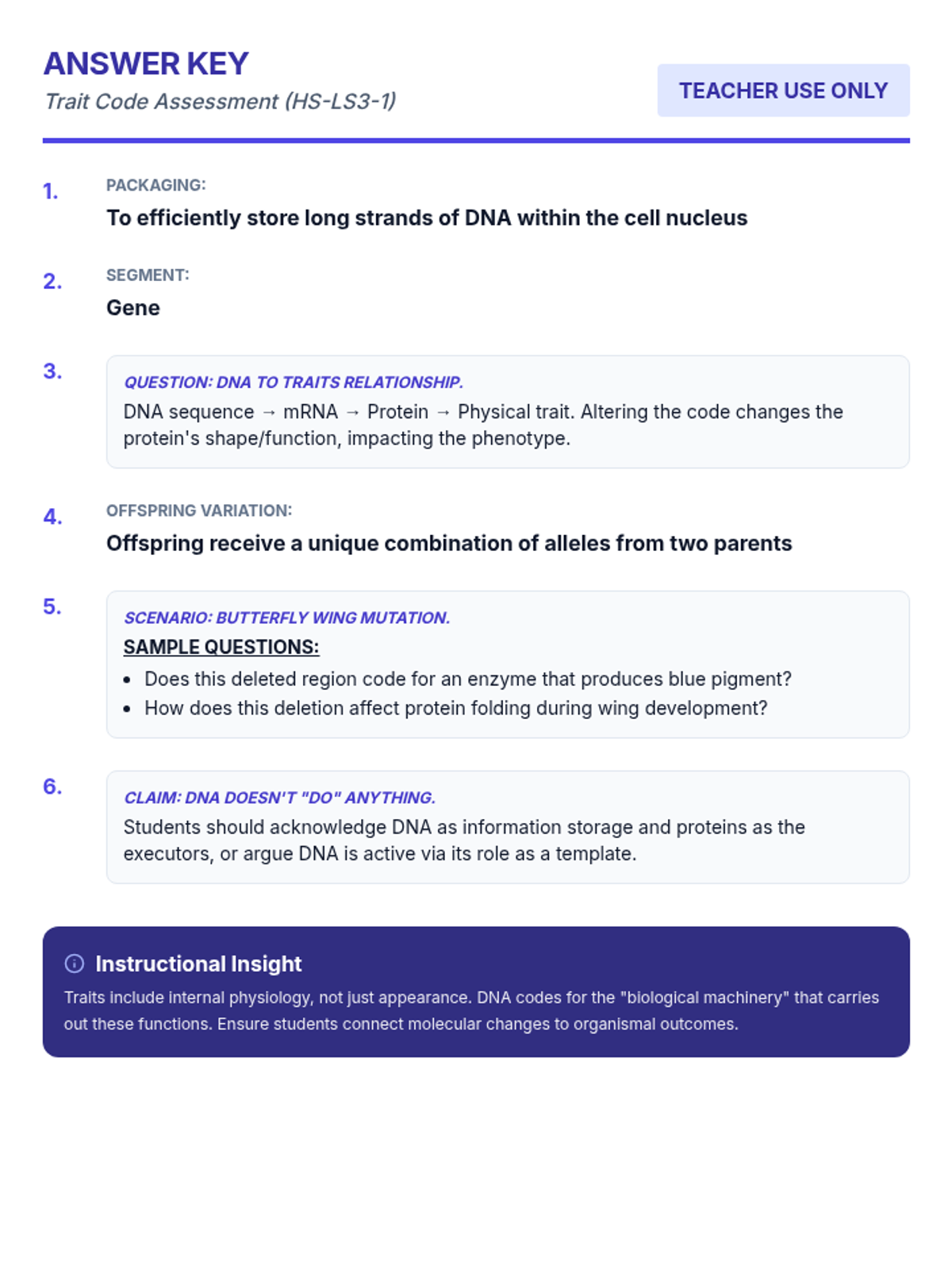
Teacher answer key for the Trait Code Assessment (HS-LS3-1). Revised to tighten layout, prevent orphan footer, and ensure context for every answer.
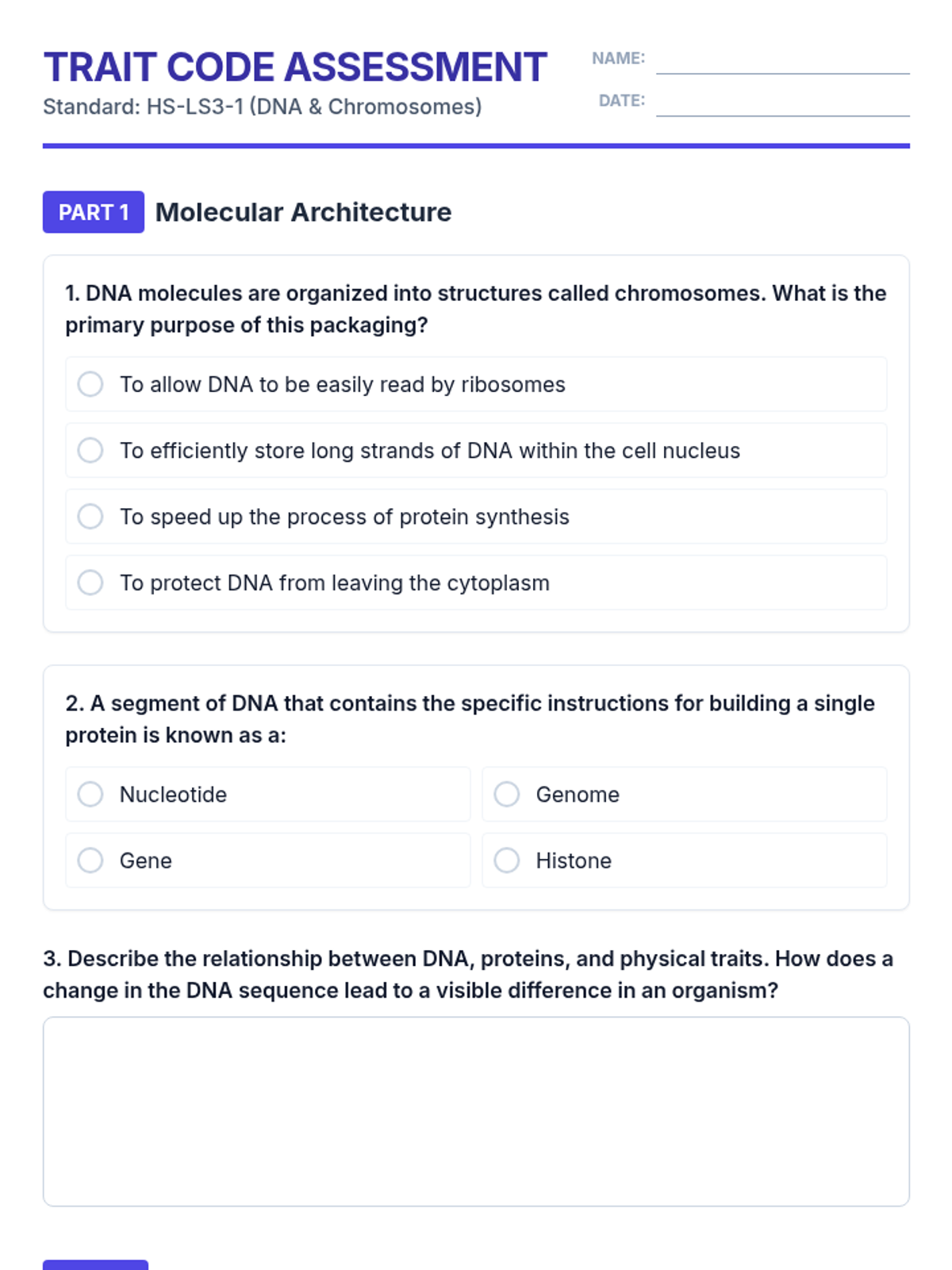
An assessment for standard HS-LS3-1 focusing on DNA, chromosomes, and the inheritance of traits. Revised with optimized student work areas and white background for printing. Tightened layout to prevent orphan footer.
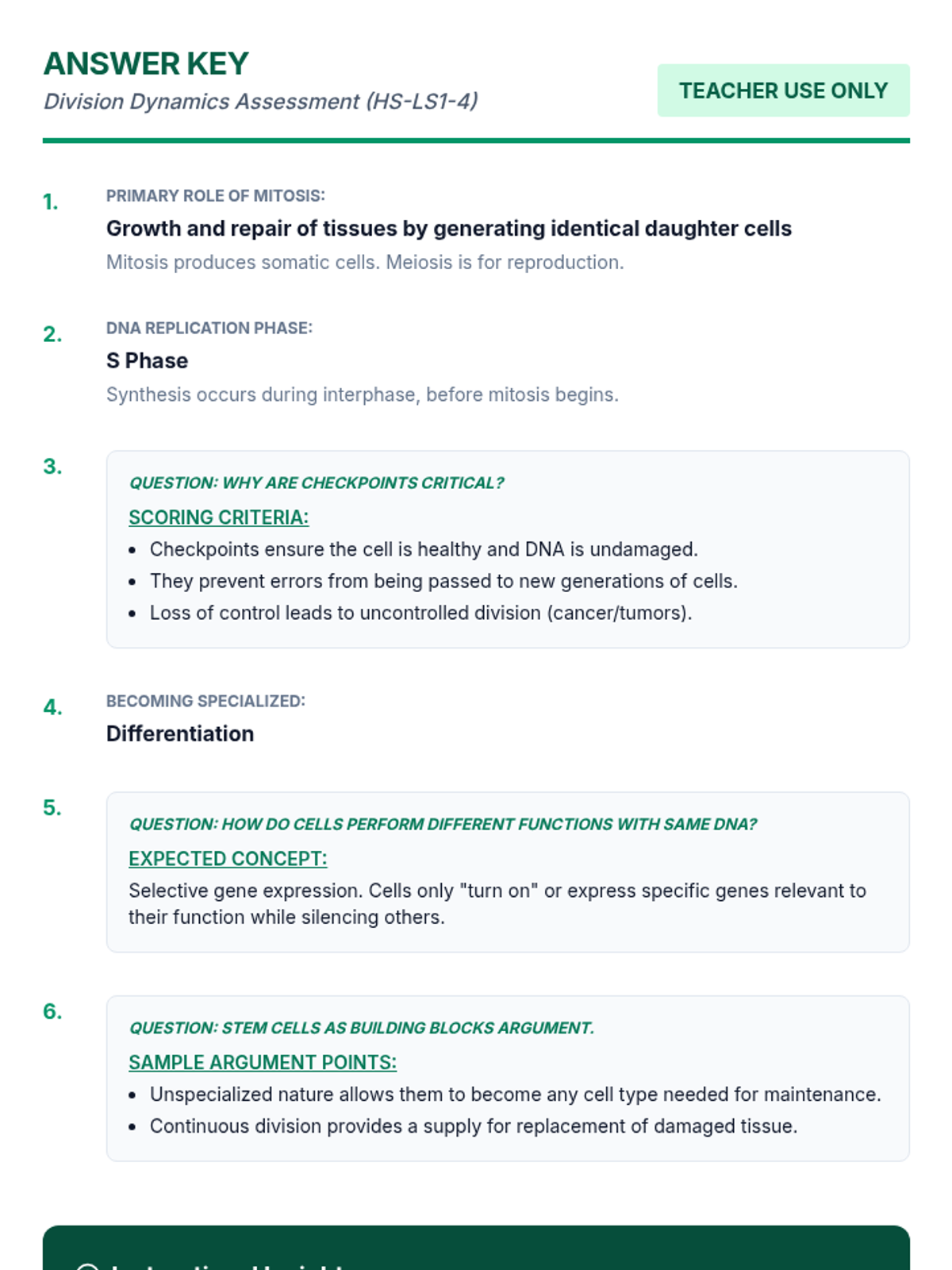
Teacher answer key for the Division Dynamics Assessment (HS-LS1-4). Revised to prevent awkward page breaks and improve question context for teachers.
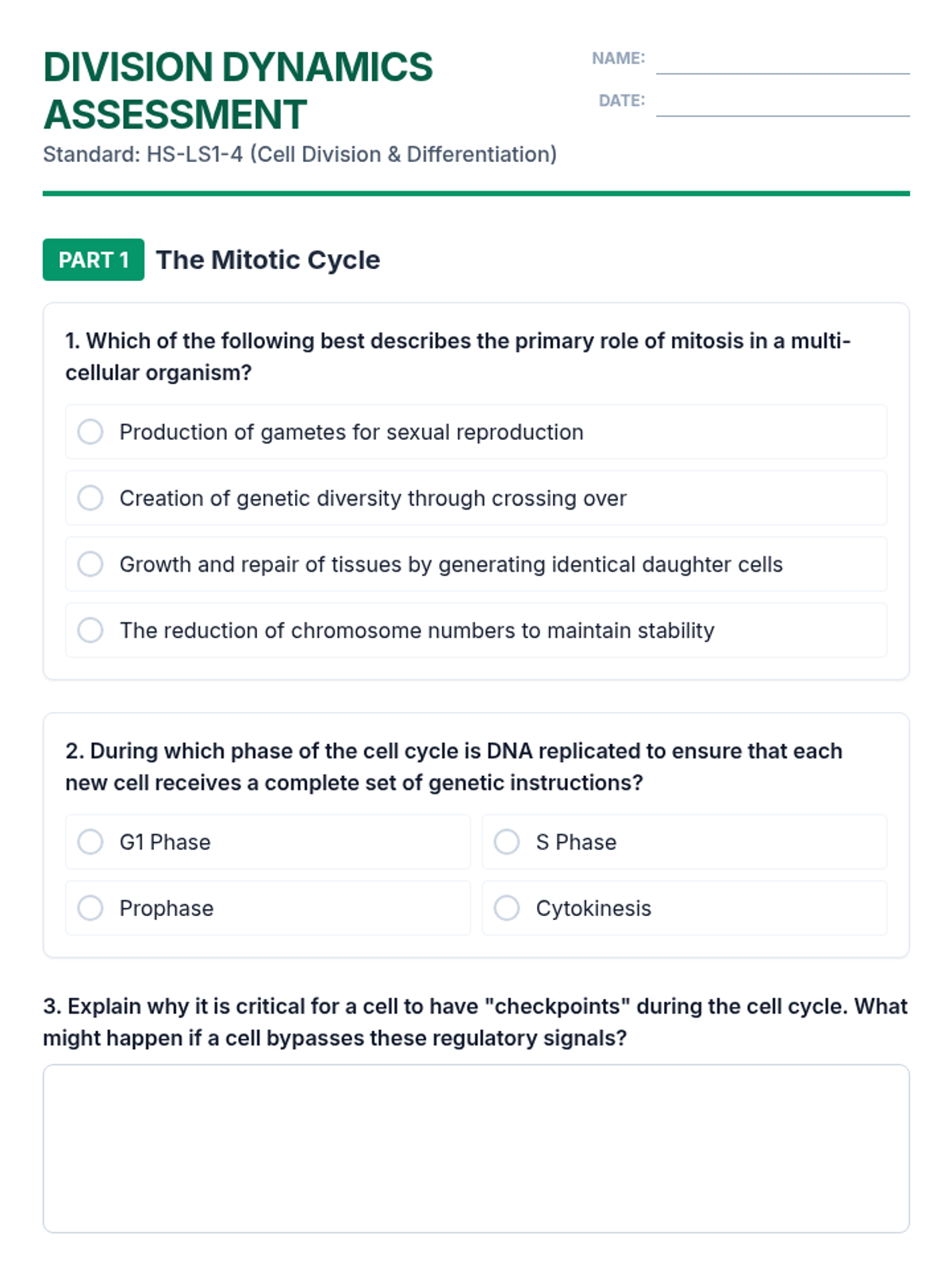
A comprehensive assessment for standard HS-LS1-4 focusing on the cell cycle, mitosis, and the process of cell differentiation in multicellular organisms. Revised for print-ready formatting and page breaks.
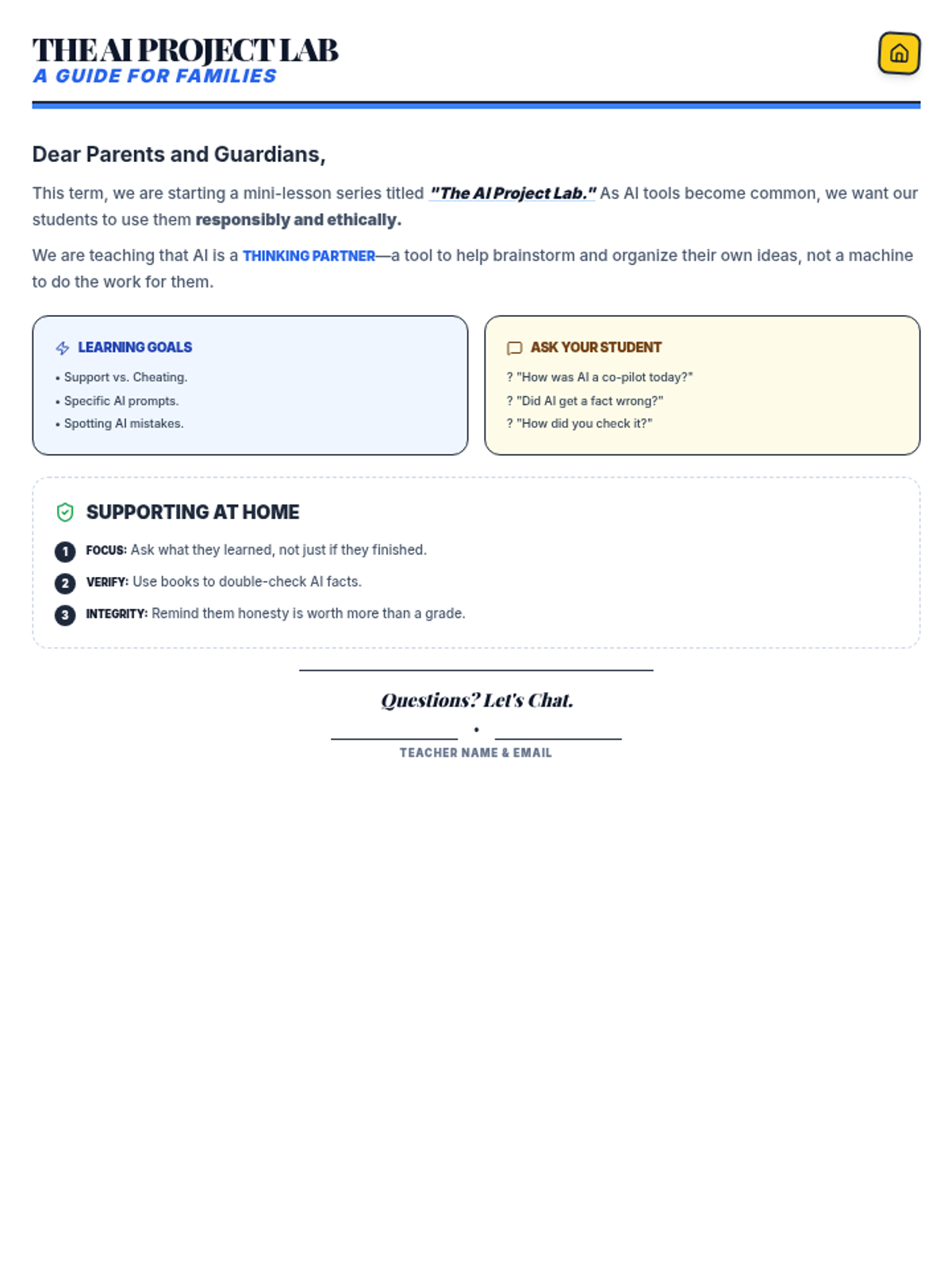
An informative letter for parents and guardians explaining the AI Project Lab series, the "Co-Pilot" philosophy, and how to support responsible AI use at home. Updated for single-page printing.
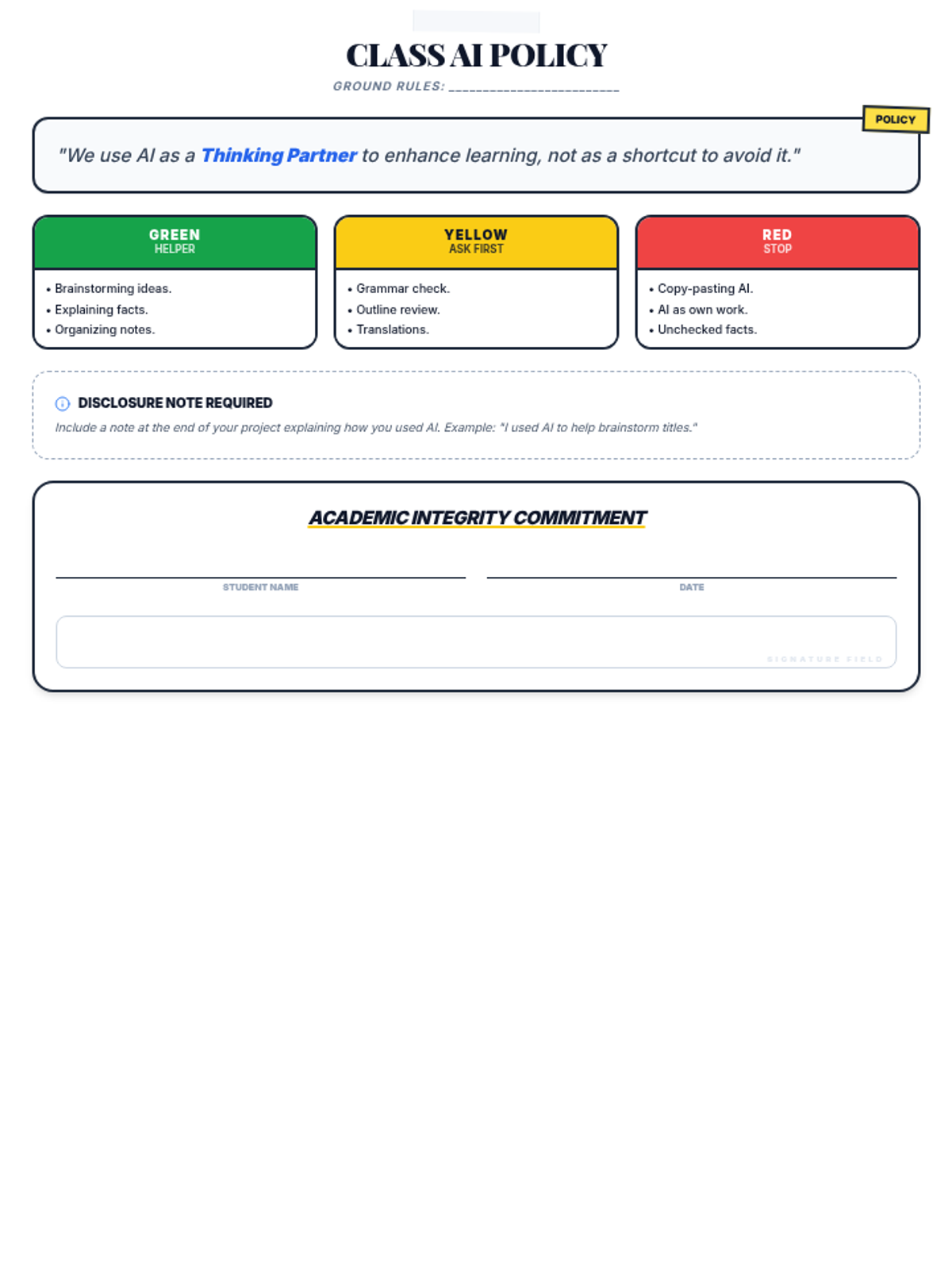
A customizable classroom AI policy template that uses a "Traffic Light" system to define appropriate vs. inappropriate AI use for students. Consolidated to a single page.
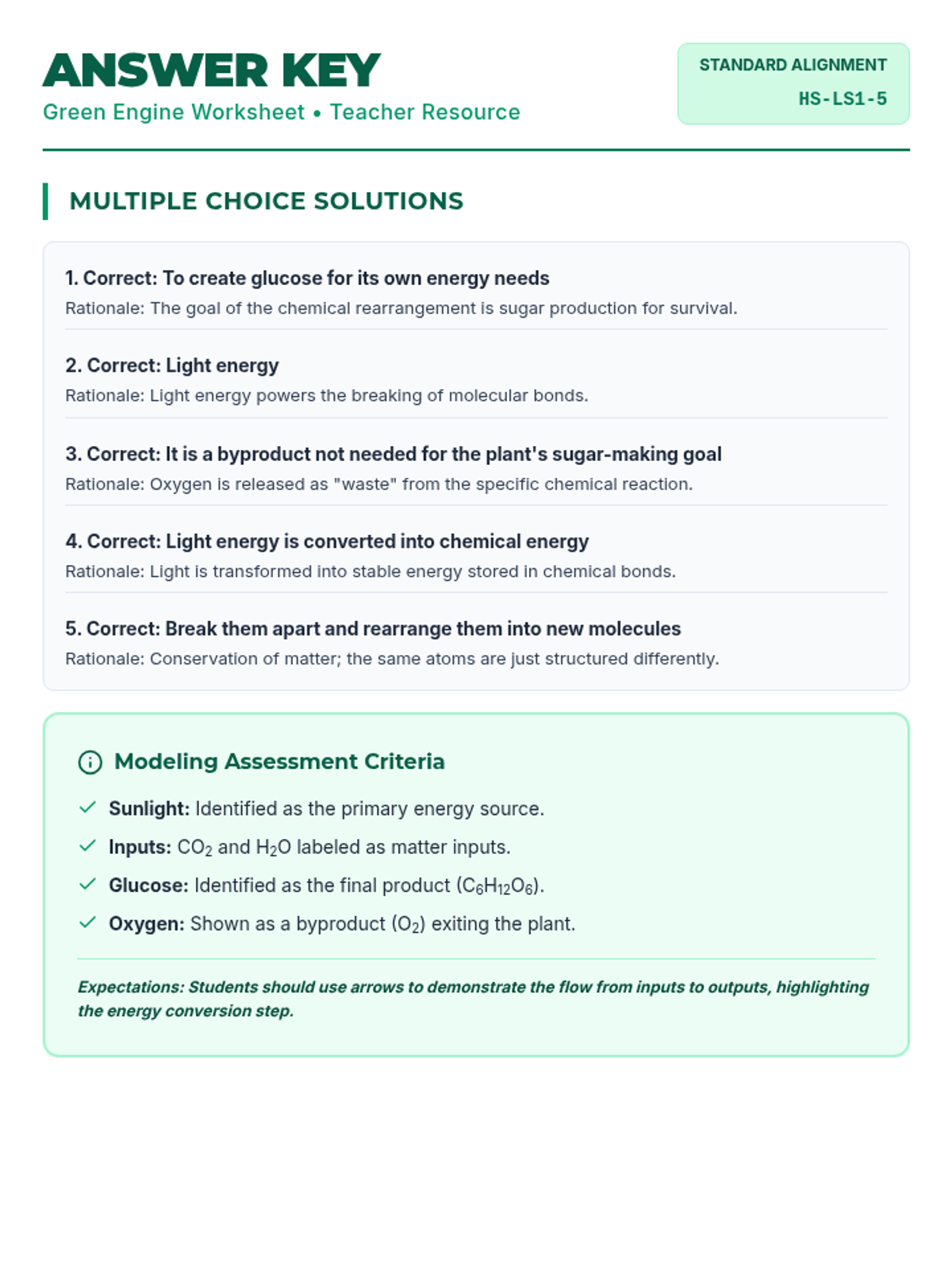
An answer key for the Green Engine Worksheet, providing correct answers, brief rationales for each question, and grading criteria for the student model section.
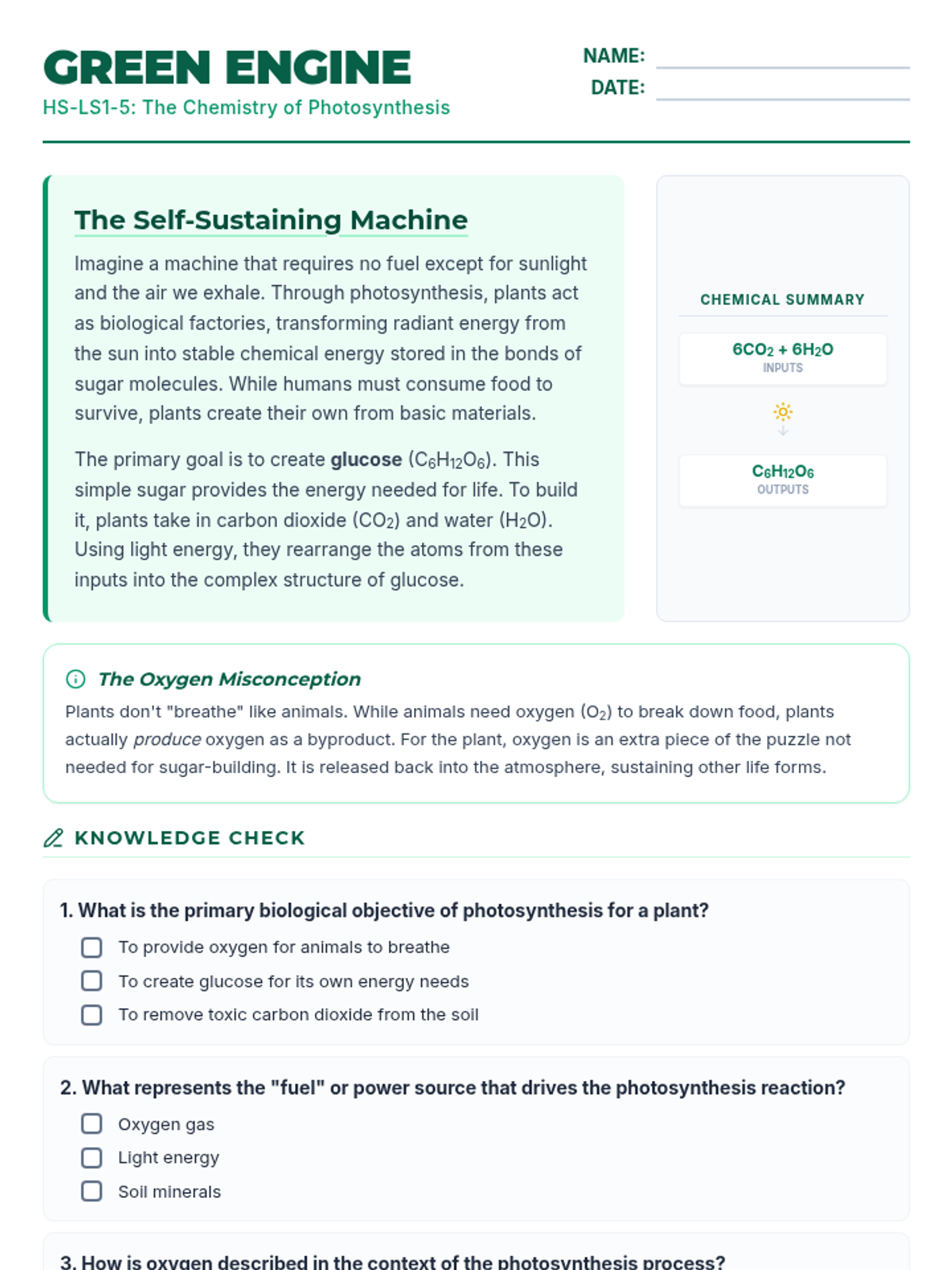
A reading passage and comprehension worksheet for 9th-grade students focusing on HS-LS1-5. It explores how plants transform light energy into chemical energy (glucose) and clarifies the role of oxygen as a byproduct.
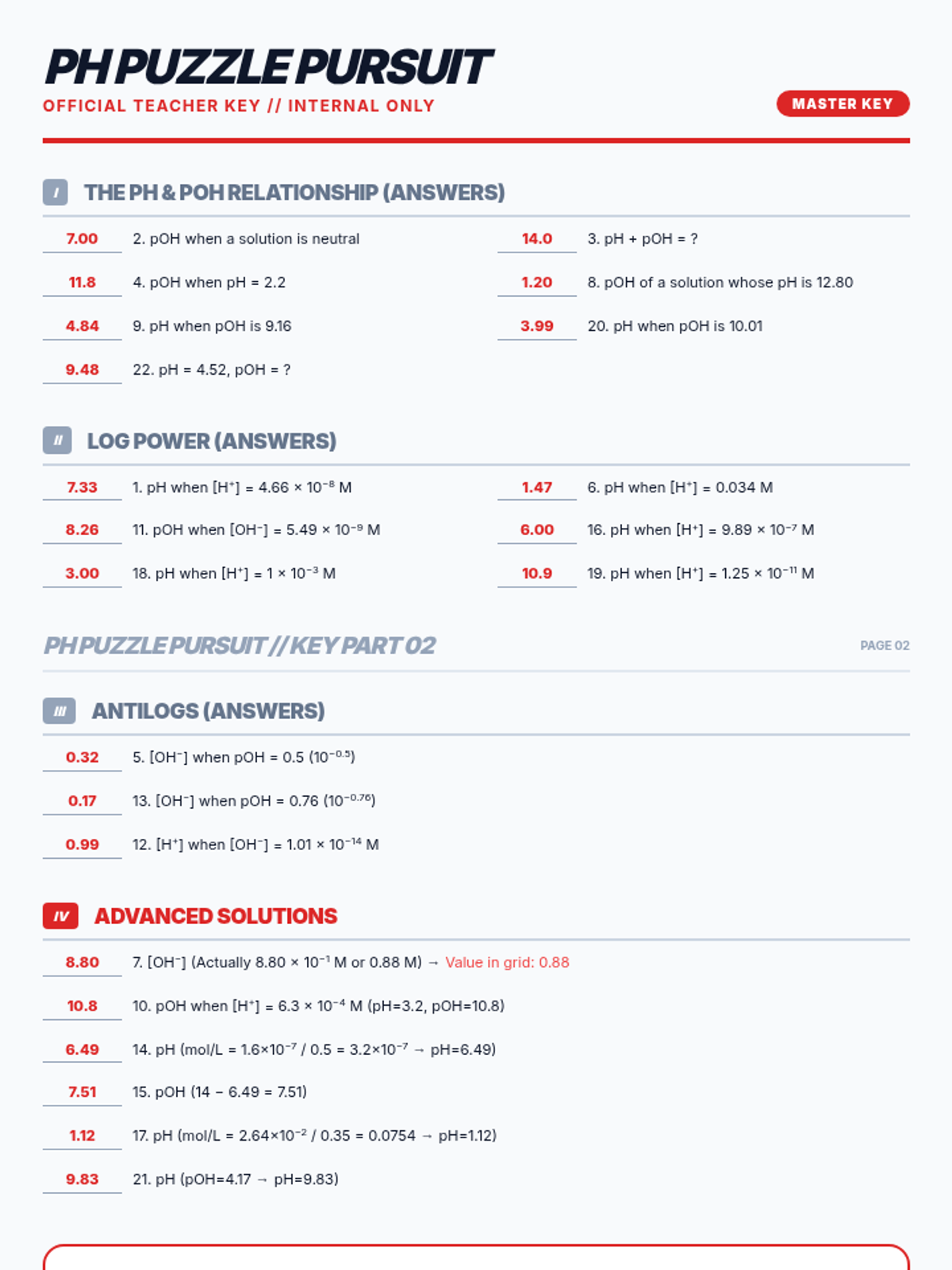
Teacher answer key for the pH Puzzle Pursuit Worksheet, including correct numerical answers for all 22 clues and a visual representation of the shaded solution grid. Revised for consistency with the student worksheet.
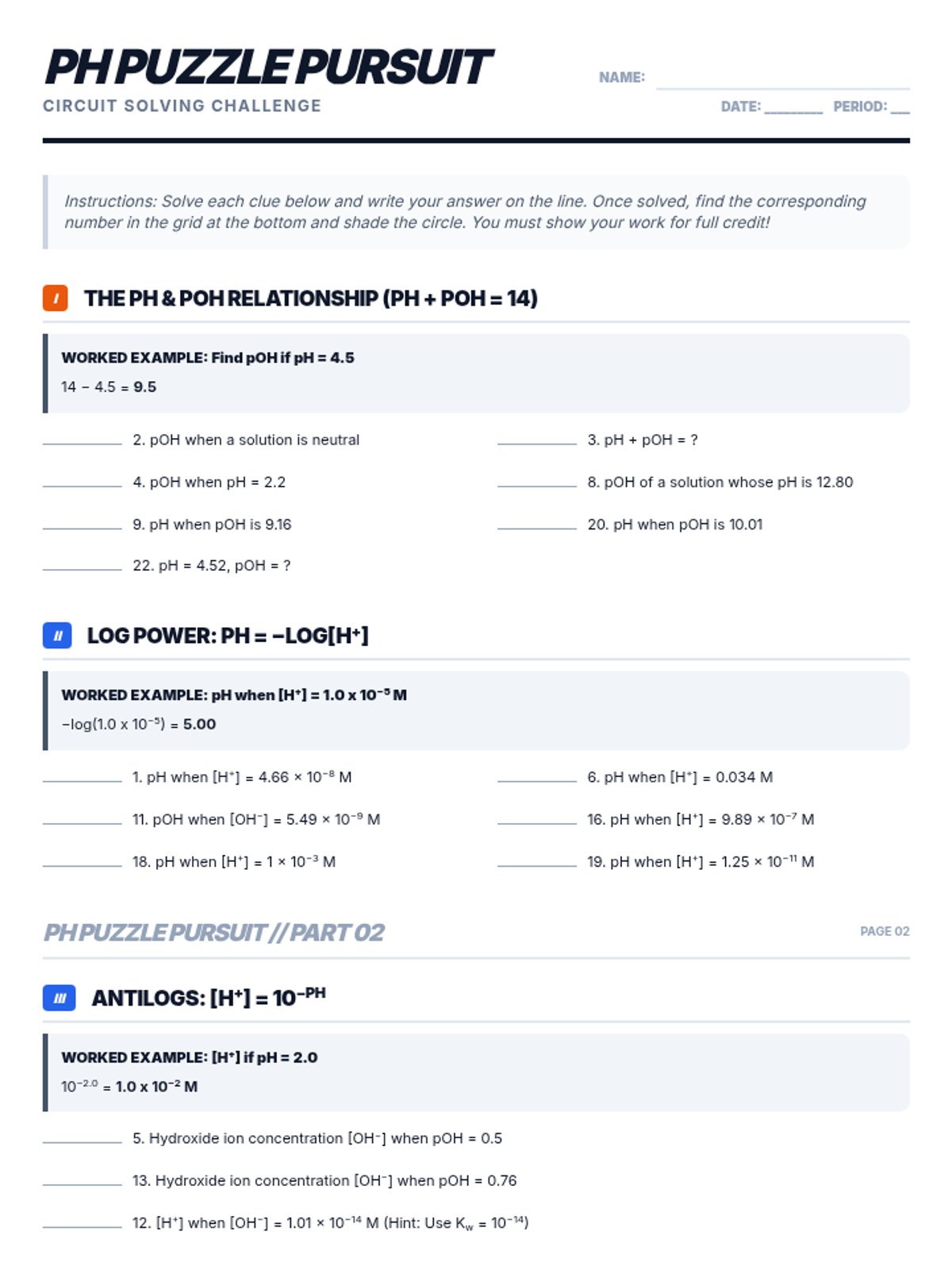
A scaffolded 2-page puzzle activity for calculating pH, pOH, and ion concentrations. Problems are categorized by calculation type with worked examples for each section, concluding with a coordinate-style grid for students to find and shade their answers.
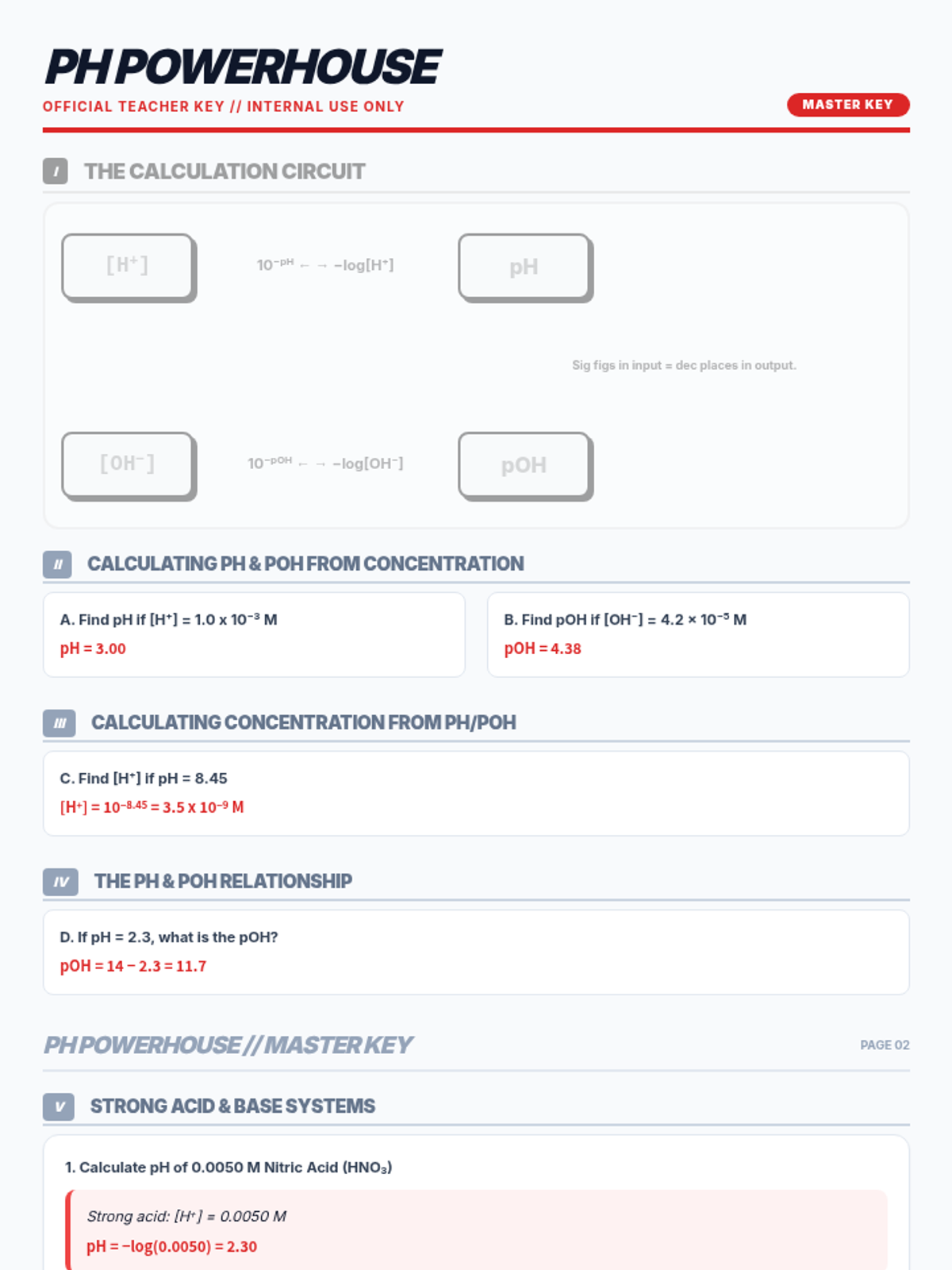
Teacher answer key for the revised pH Powerhouse Worksheet, featuring detailed step-by-step solutions for logarithmic calculations, unit conversions, and molarity-to-pH integration. Revised for improved rendering of chemical notation and layout.
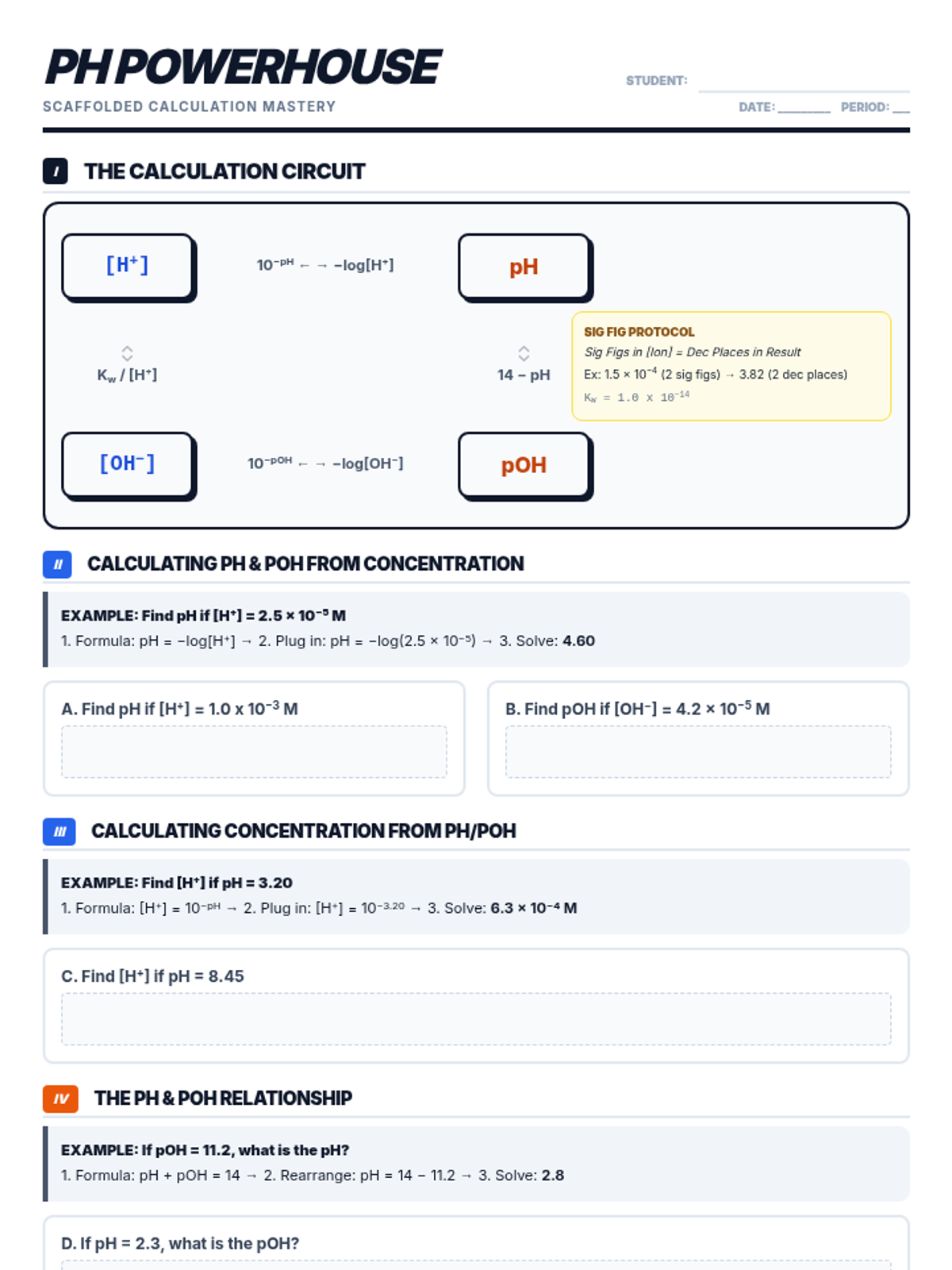
A revised 2-page student worksheet focusing on pH calculations. The material is now broken into 6 scaffolded sections, featuring worked examples for each type of calculation, strategy boxes for strong acids/bases, and tiered practice from basic conversions to advanced stoichiometry scenarios. Revised for improved rendering of chemical notation and layout.
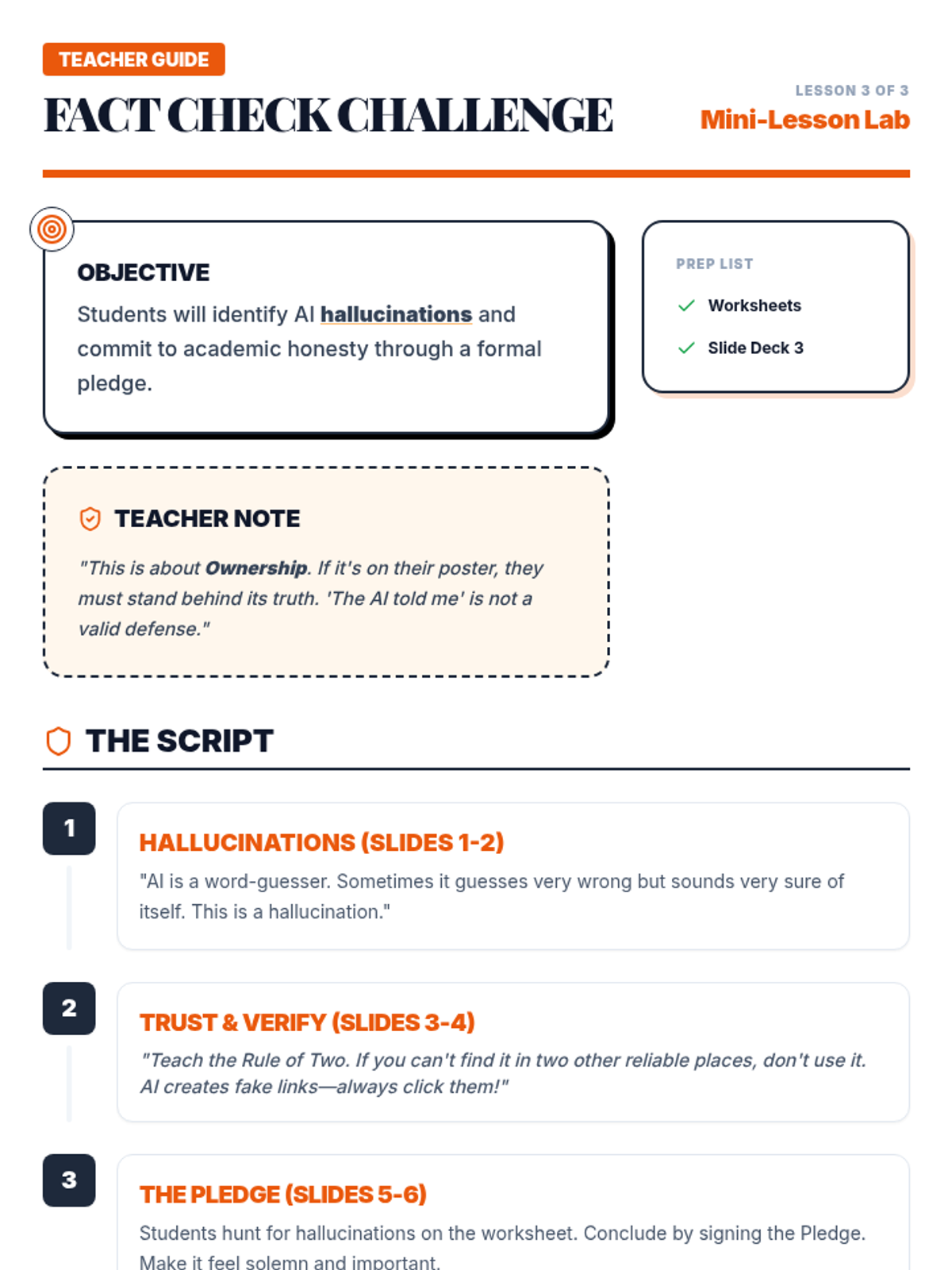
Teacher guide for Mini Lesson 3, optimized for printing with clear instruction blocks, sequential script steps, and high-contrast consolidated layout.
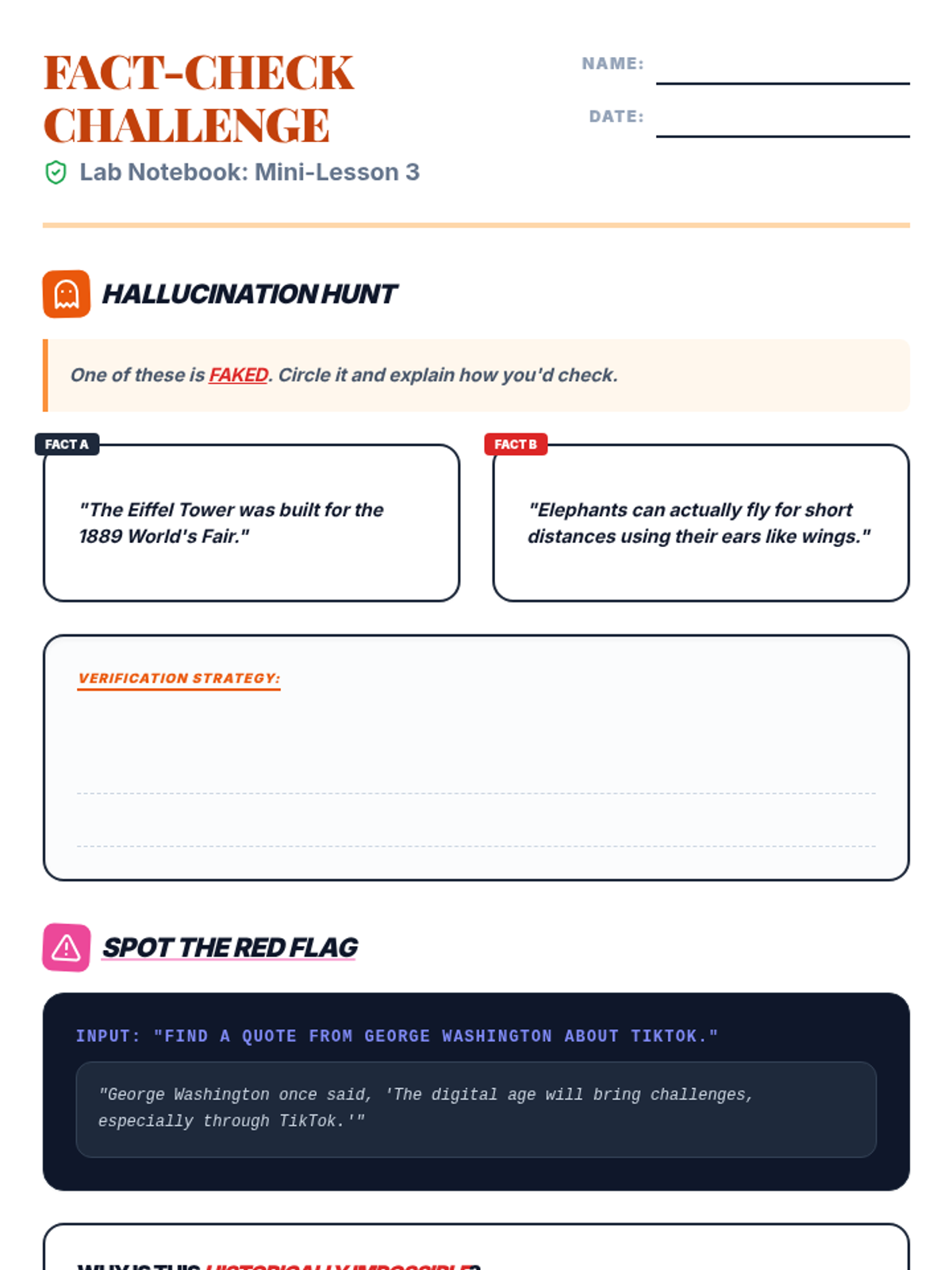
A student worksheet for Mini Lesson 3. Consolidated to a single page with high content density, clear writing lines, and a professional layout for classroom printing.
A slide deck for Mini Lesson 3 that covers AI hallucinations, the necessity of cross-referencing sources, and academic honesty. Updated with sketch aesthetic, fixed spacing ("The Gold Rule"), and teacher notes. (Final font size adjustment)
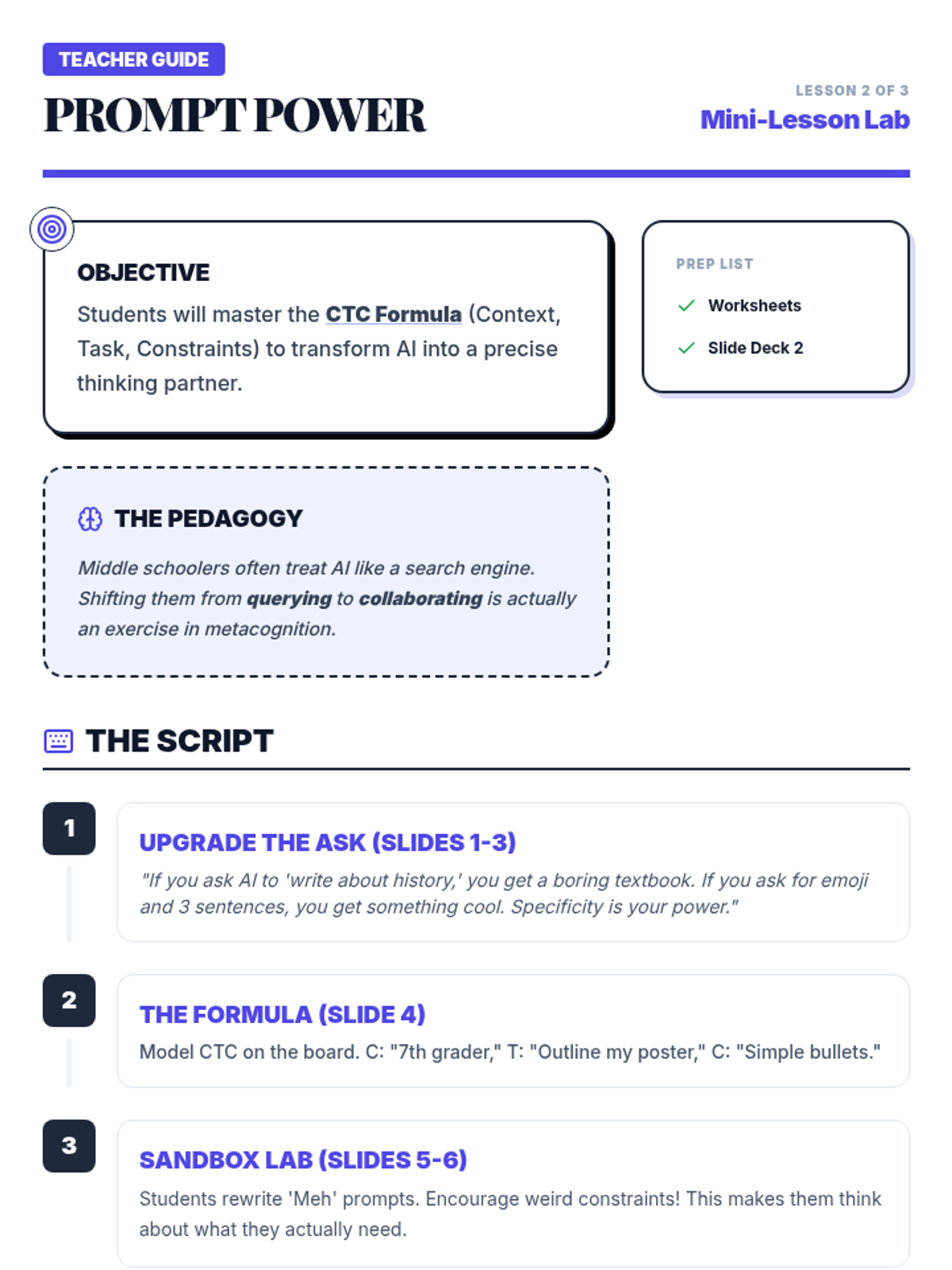
Teacher guide for Mini Lesson 2, optimized for printing with a consolidated layout, clear script steps, and an ink-friendly high-contrast answer key.
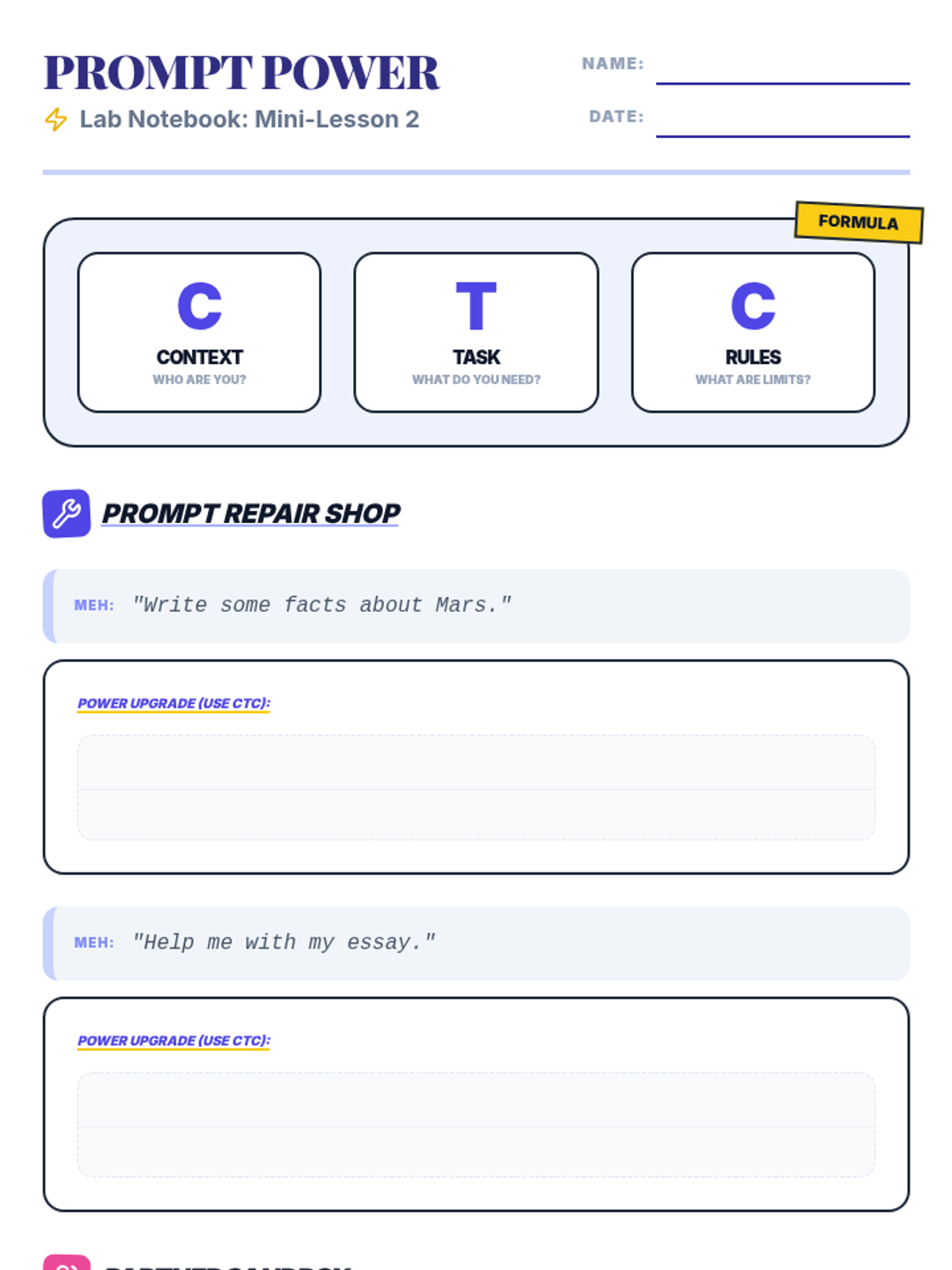
A student worksheet for Mini Lesson 2. Consolidated to a single page with high content density, clear writing lines, and a handy toolkit footer for printing efficiency.