A detailed lesson plan for 'Schools Here & There', outlining the 24-minute instructional sequence, objectives, and preparation steps for comparing Japanese and American school life.
Updated vocabulary pre-assessment for the Harlem Renaissance unit, featuring the exact response wording requested ("I know this!", "I've heard it before...", "I've never heard..."). Designed for middle school students with 2nd-grade reading levels in a self-contained setting.
A teacher reference key for the Harlem Renaissance vocabulary pre-test, providing simplified, 2nd-grade level definitions for all 12 terms to assist with instruction and scoring in a self-contained classroom.
A vocabulary pre-assessment for the Harlem Renaissance unit, designed for middle school students with a 2nd-grade reading level. It features a simple checklist for self-assessment and space for students to write one fact about words they already know.
A Japanese translation of the Venn diagram worksheet, allowing students to compare and contrast school life in the United States and Japan using Japanese language prompts.
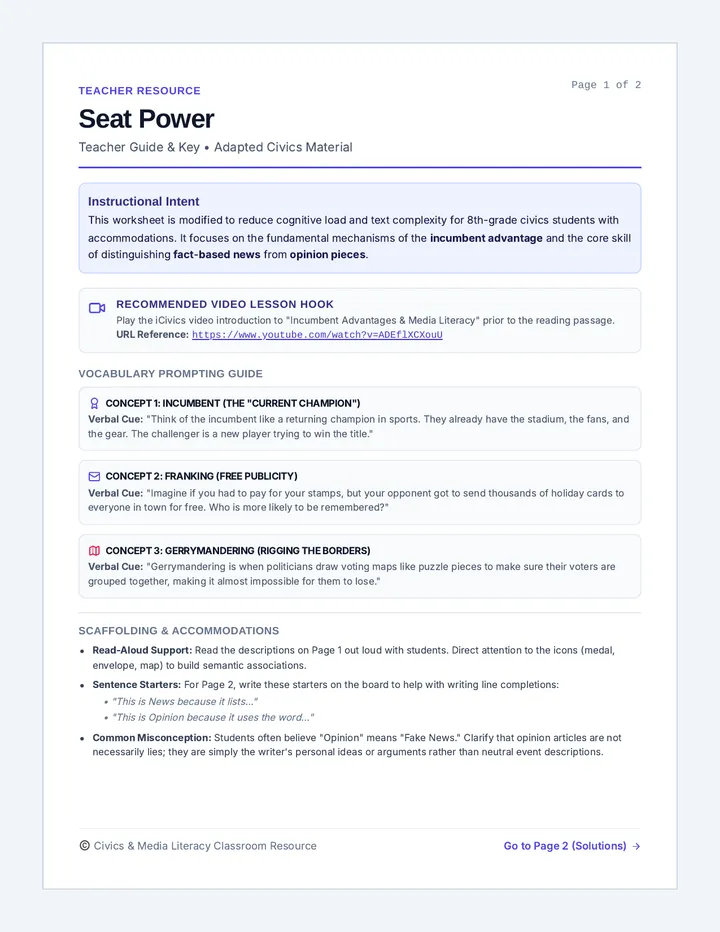
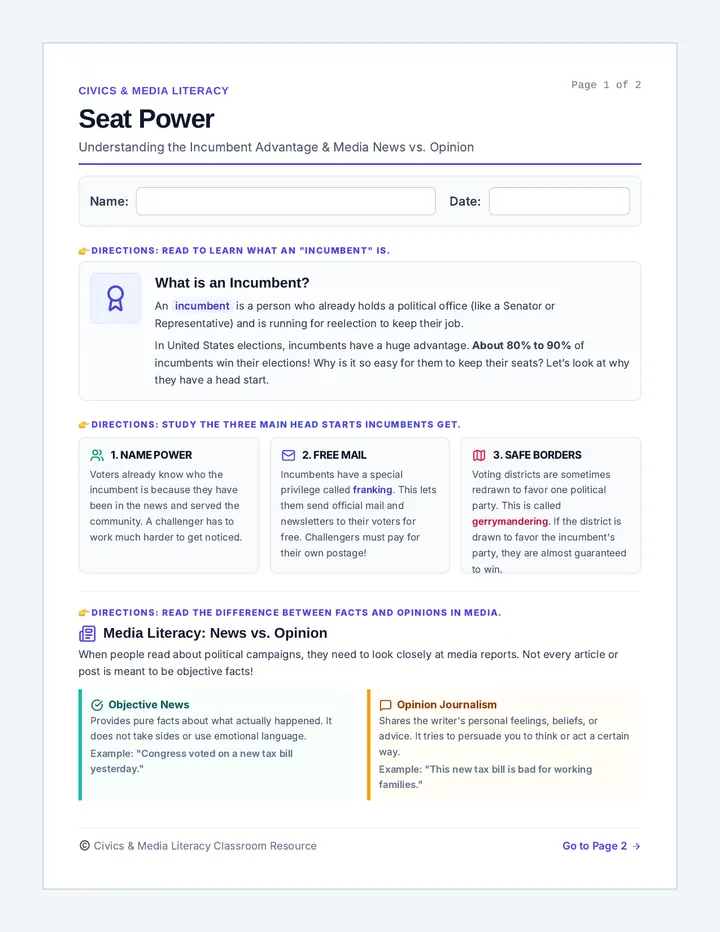
An updated visual presentation deck that emphasizes the Social Contract and Rousseau's concepts of the general will and consent of the governed. Includes font size corrections to meet accessibility standards and updated CER prompts.
An updated teacher's answer key for the Refined Final worksheet, incorporating the expanded evidence for the Social Contract, Rousseau, and the general will, along with a revised grading rubric.
An even more detailed version of the Reason for Revolution worksheet with an expanded reading passage covering Locke's inalienable rights, Montesquieu's three branches, Voltaire's civil liberties, and Rousseau's general will. Includes 29 writing lines and a refined glossary.
An optimized version of the V5 Final worksheet with reduced font sizes and tightened margins to ensure the Reading Passage, Inquiry Question, and Part 1 (Claim) all fit comfortably on the first page. Maintains exactly 30 writing lines across the document.
A formal CER (Claim, Evidence, Reasoning) writing assignment for the Architects of Liberty lesson. It provides a structured framework for students to argue which Enlightenment philosopher had the greatest impact on American government, including a planning graphic organizer and a rubric.
An answer key for the Designing Democracy Worksheet, providing suggested responses and correct matching for the Architects of Liberty lesson.
A student worksheet for the Architects of Liberty lesson. It includes matching, short answer analysis, and scenario-based application of Enlightenment philosophical concepts.
A visual presentation deck for the Architects of Liberty lesson. It breaks down the Enlightenment philosophers' key ideas using a modern blueprint aesthetic and clear, high-contrast layouts for classroom instruction.
An expanded reading passage for the Architects of Liberty lesson, detailing the contributions of Enlightenment philosophers Locke, Montesquieu, Rousseau, Voltaire, Beccaria, and Wollstonecraft. It uses an architectural blueprint theme to frame the intellectual history of democracy.
An introductory slide deck presenting the Winter Olympic Games and profiling the five target nations. Features clear mission objectives and visual overviews of each country's athletic strengths, with all flag visuals removed to maintain a clean, text-focused instructional style.
A structured research worksheet for students to record findings about an Olympic country. This version is strictly optimized to fit on a single page with clear writing lines and sketching space.
Five detailed informational reading passages profiling Norway, the United States, Japan, Italy, and Canada. Each country is presented on its own separate page with significantly reduced margins and tightened spacing to ensure all content fits strictly within a single printable page per nation. body text size is optimized to 13px for density and legibility.