A visual presentation for the Root Laboratory lesson. Introduces tele, photo, graph, and aud with high-impact visuals, icons, and example words for grade 4 ESL instruction.
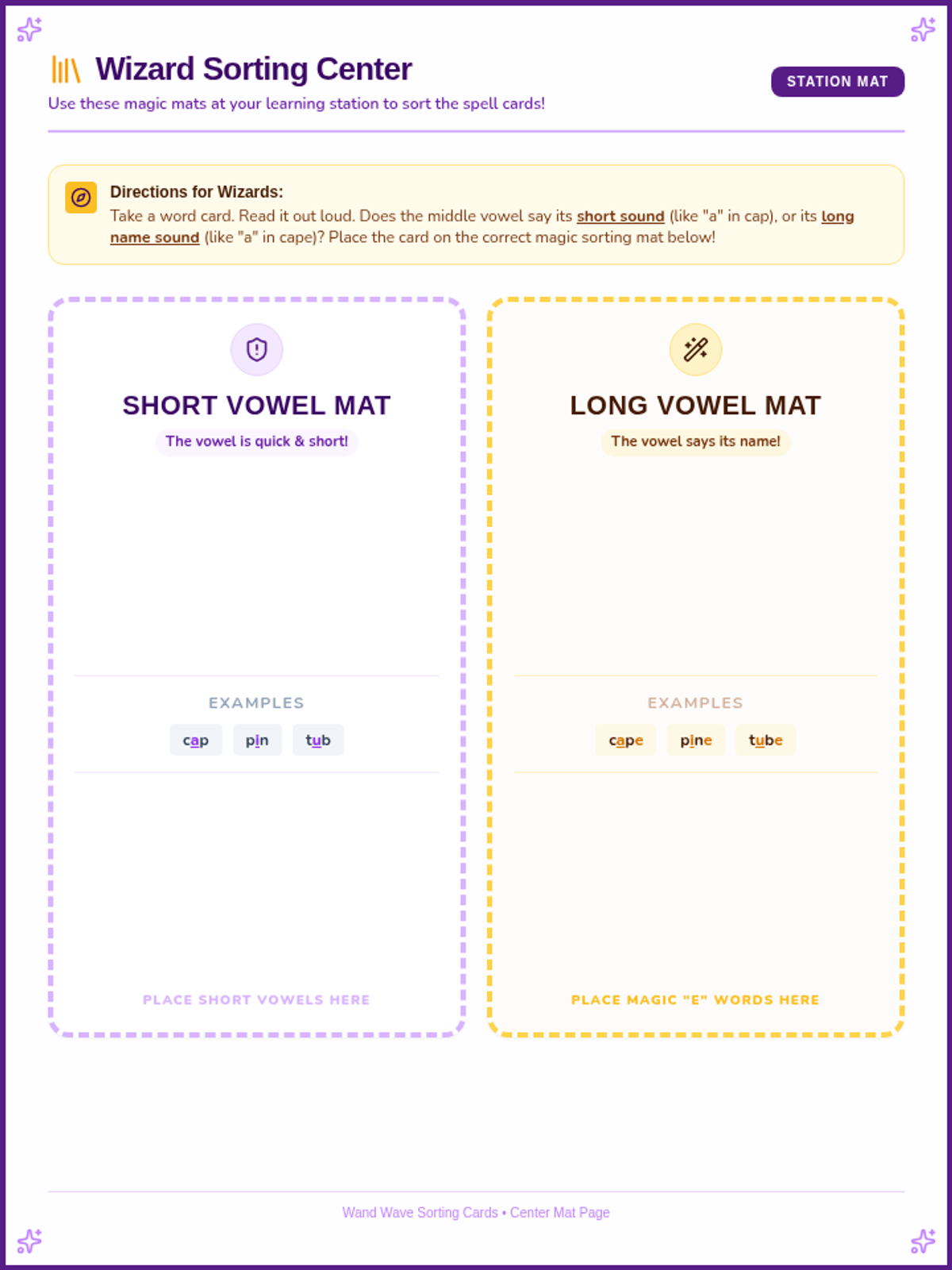
Printable task cards and word sorting materials for a hands-on literacy center focused on CVC and CVCe spelling patterns.
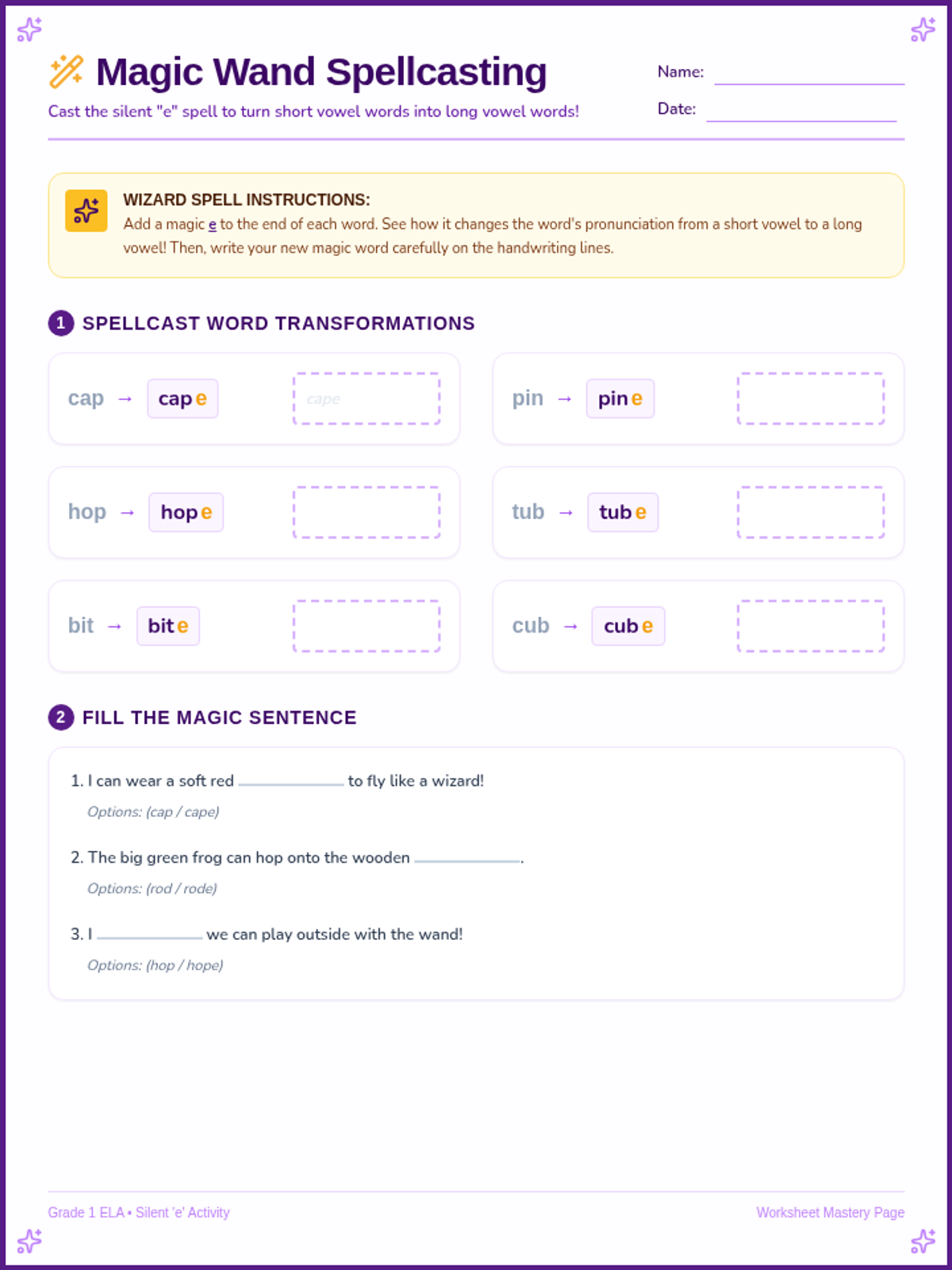
A printable student worksheet with interactive wizard-themed silent e word transformations and handwriting spaces.
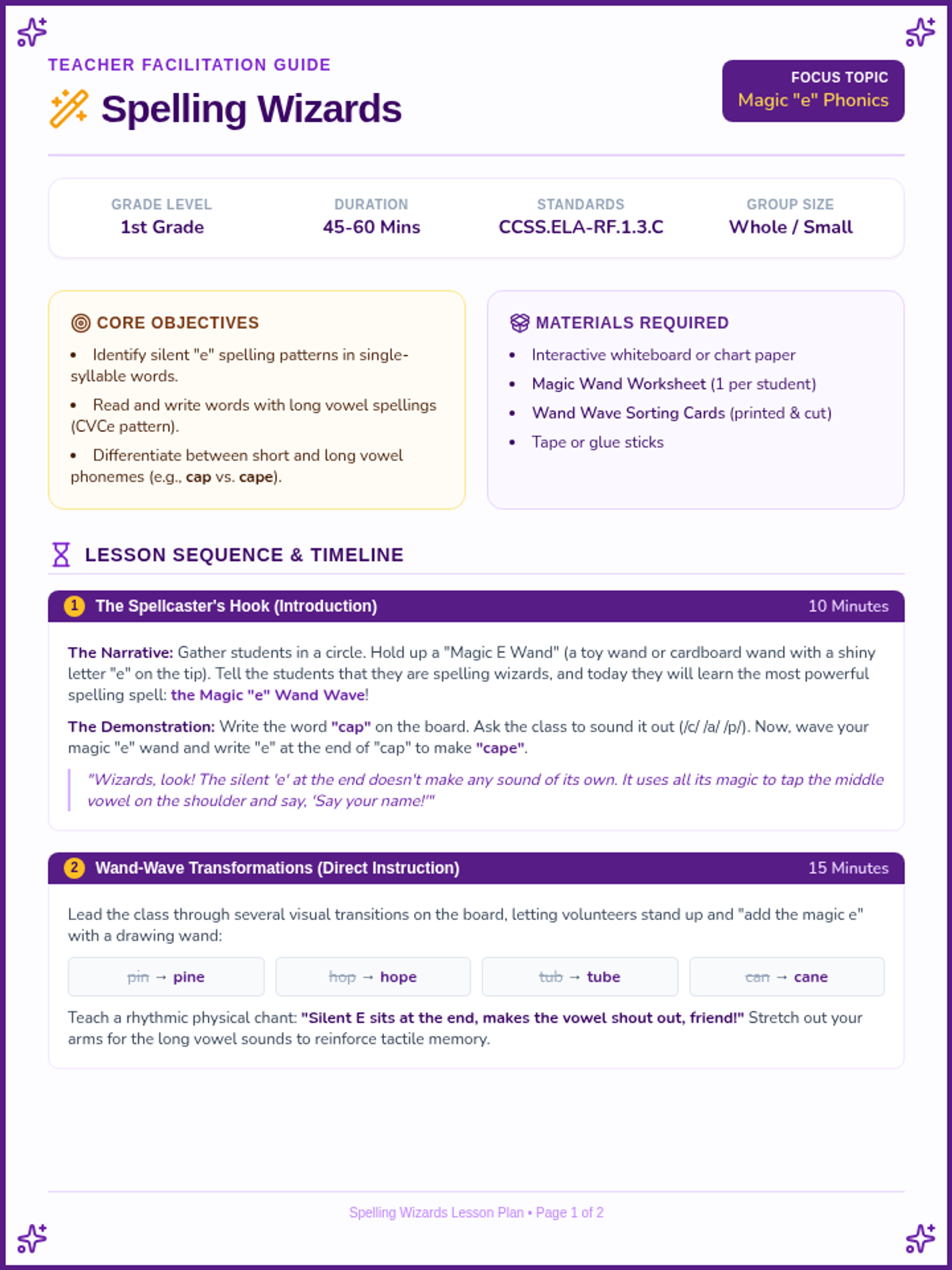
A comprehensive, step-by-step lesson plan and facilitation guide for teachers leading the Spelling Wizards Magic E lesson.
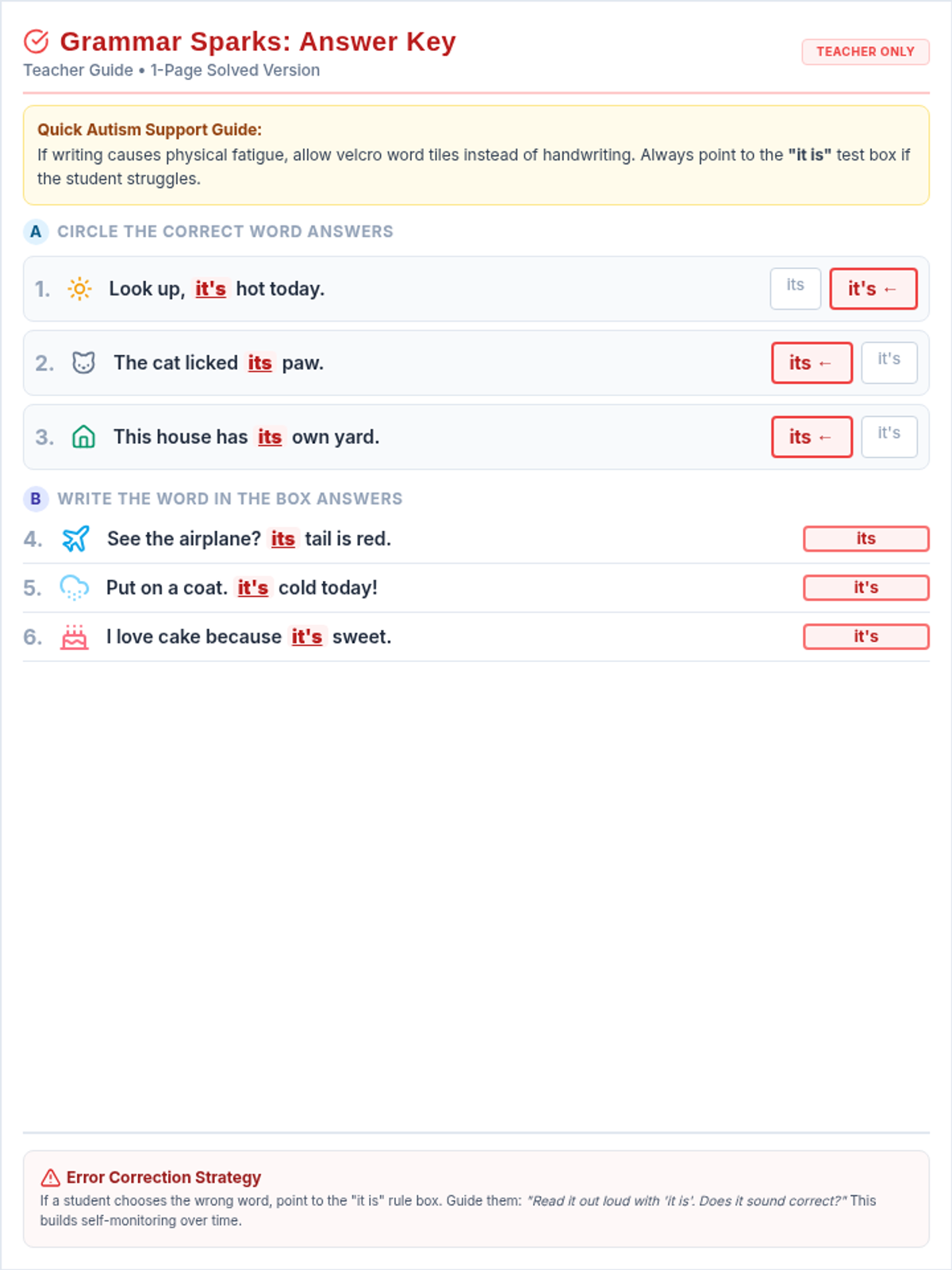
The teacher-facing Answer Key and intervention guide matching the 1-page Grammar Sparks Worksheet. It features the solved answers clearly highlighted, along with specific executive-functioning and error-correction tips for supporting autistic students.
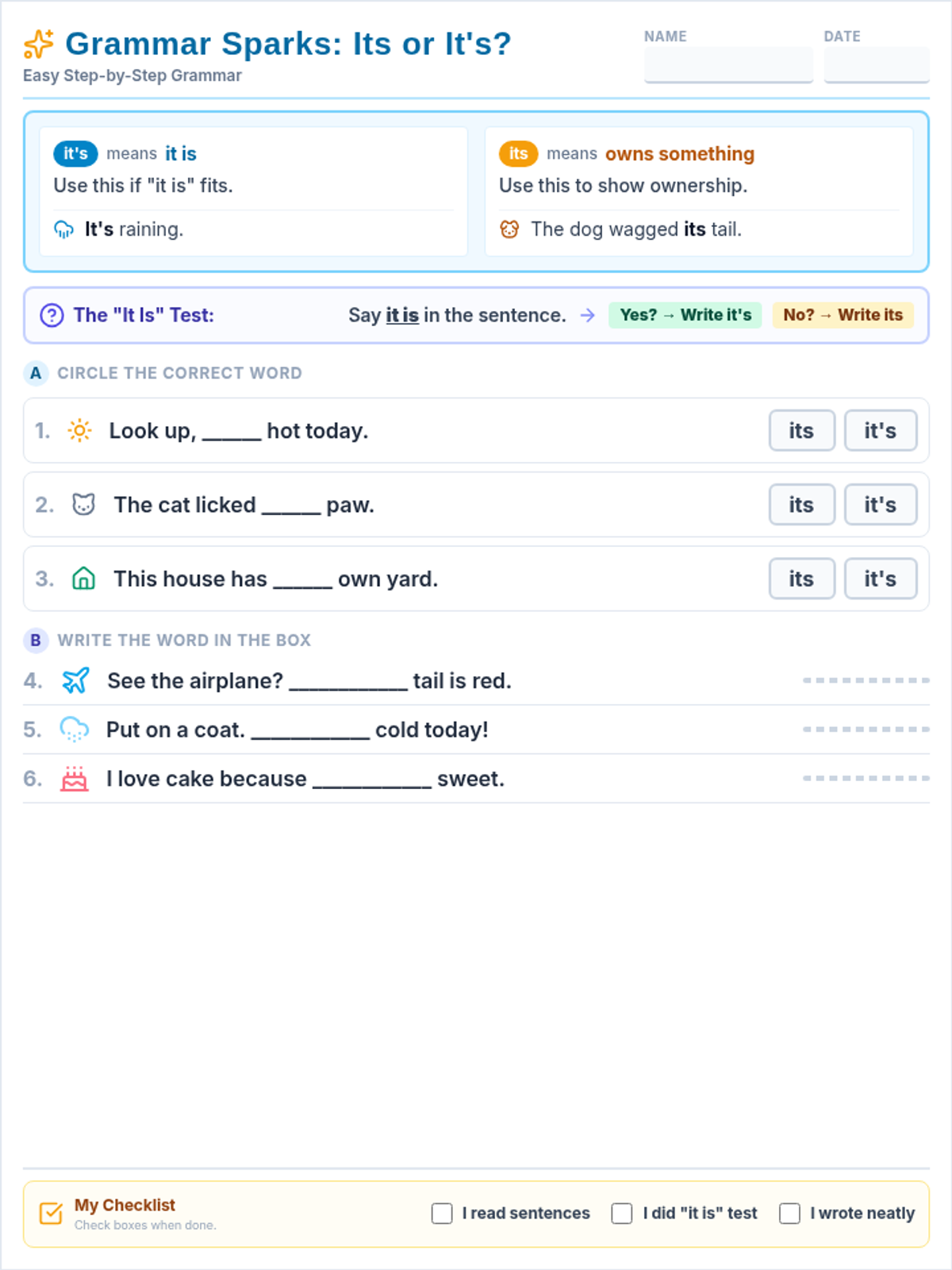
A simplified, highly structured 1-page print-ready student worksheet focusing on 'its' vs 'it's' with enlarged text for improved legibility. It features clear visual boundaries, simplified direct language, Lucide icon supports next to nouns for context, sentence frames, and a simplified self-monitoring checklist.
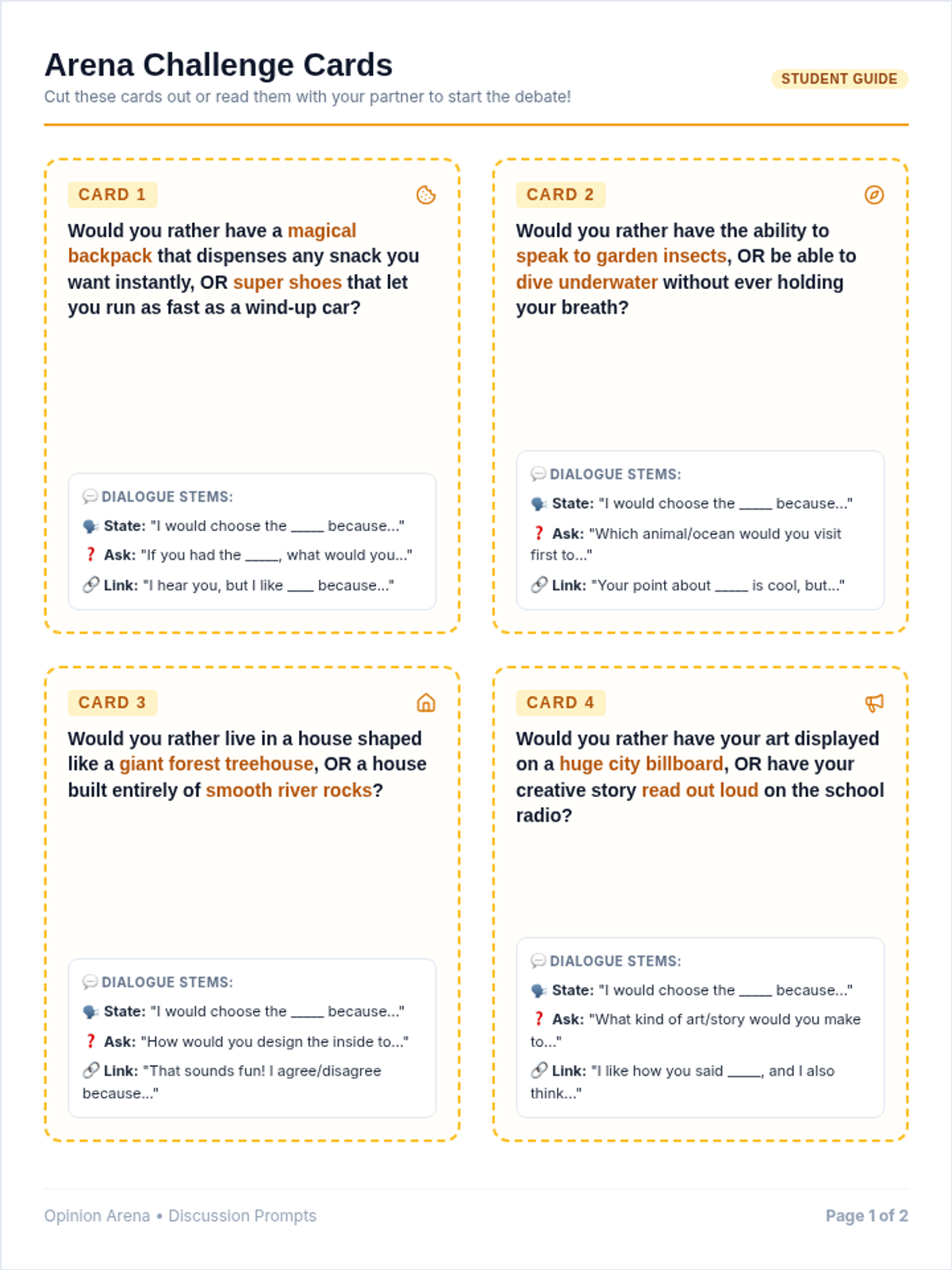
A 2-page student worksheet packet containing 4 creative 'Would You Rather' conversation cards with speech stems on Page 1, and a spacious active-listening peer response log on Page 2.
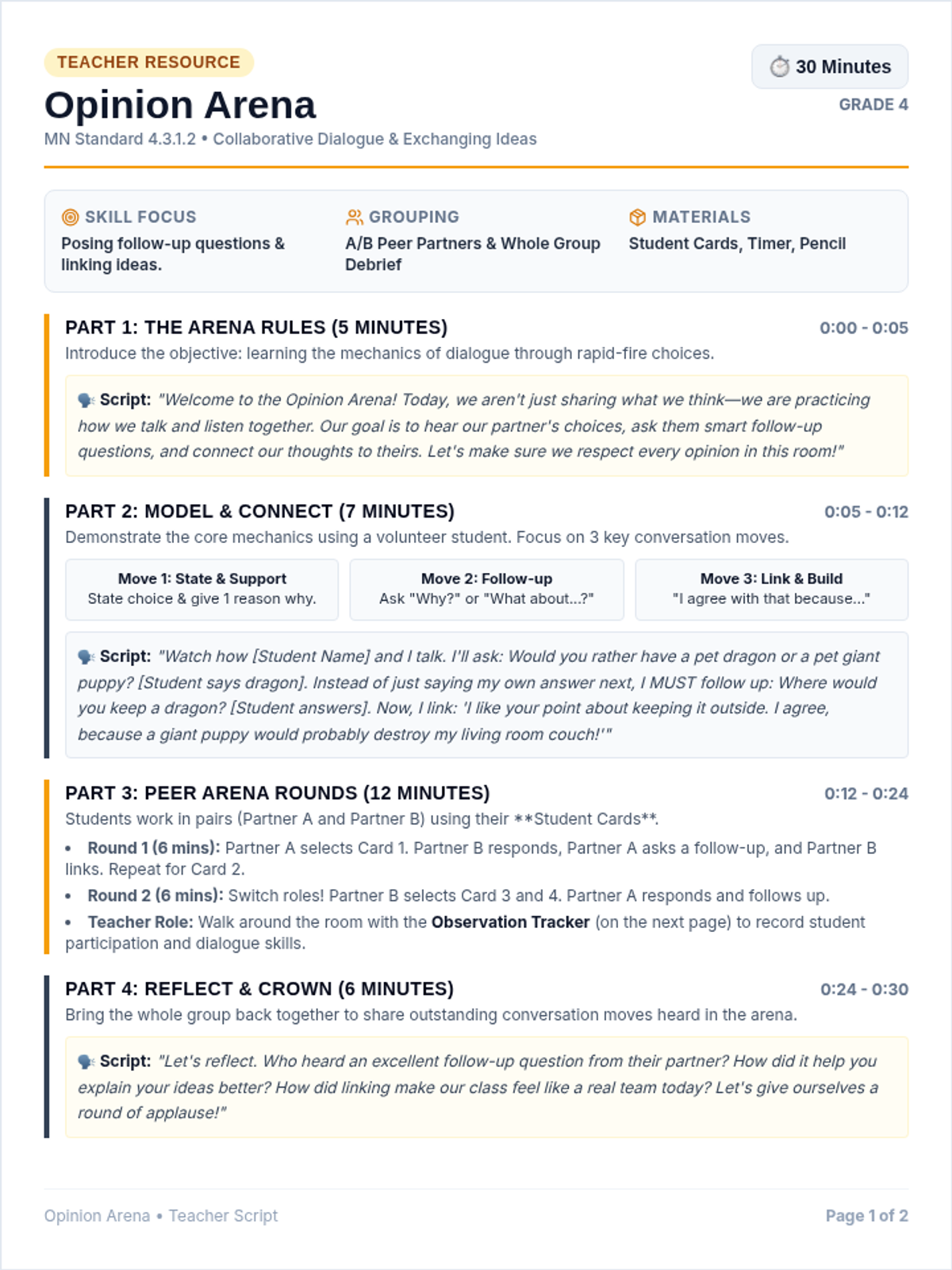
A comprehensive, 2-page teacher facilitation guide and rubric designed for the 30-minute Opinion Arena lesson. It contains step-by-step scripted prompts, timing guides, standard-aligned assessment rubrics, and a classroom observation tracker.
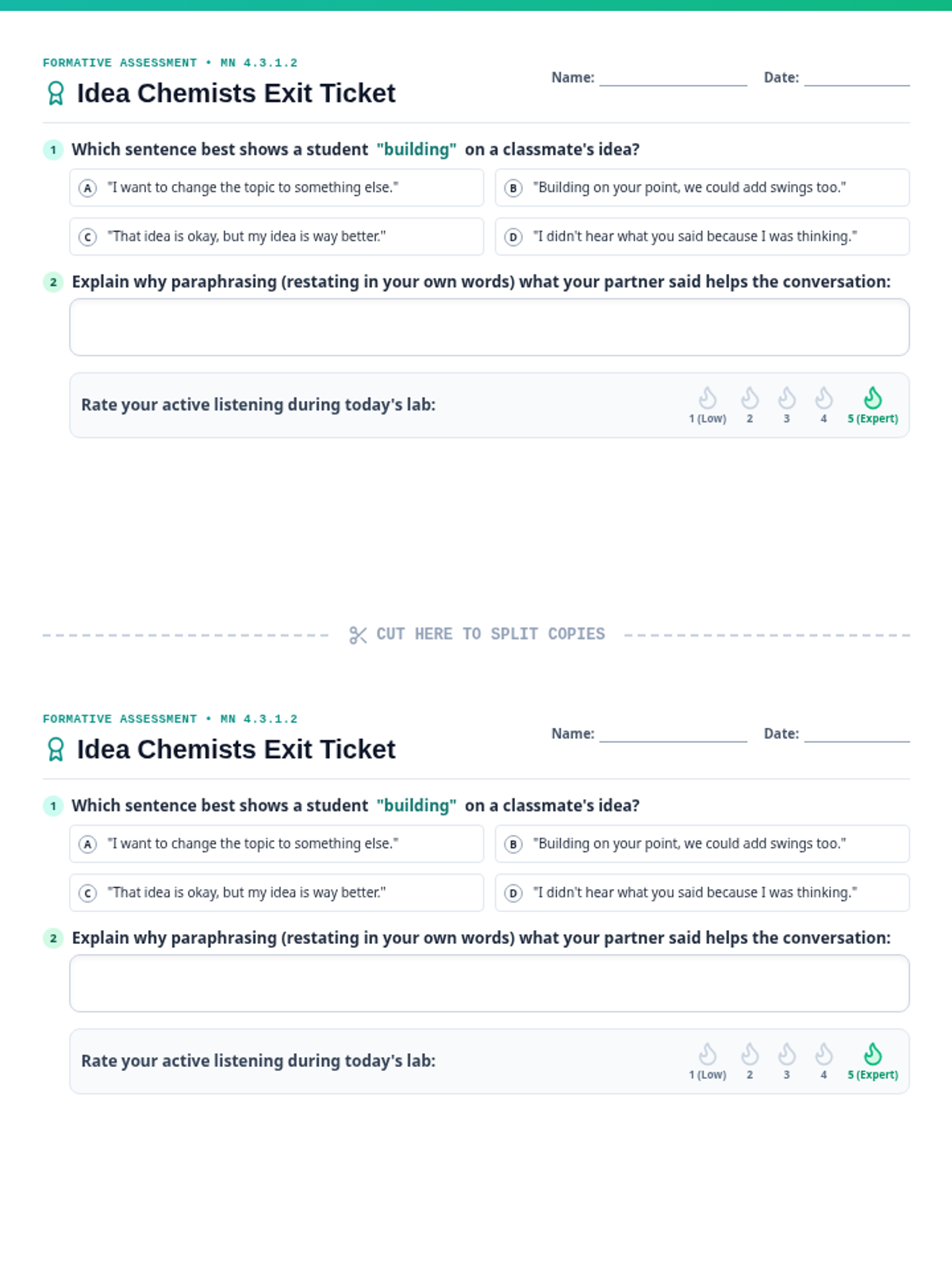
A printable double-sided or 2-up exit ticket to assess student comprehension of discussion techniques, active listening, and the mechanics of building on others' ideas.
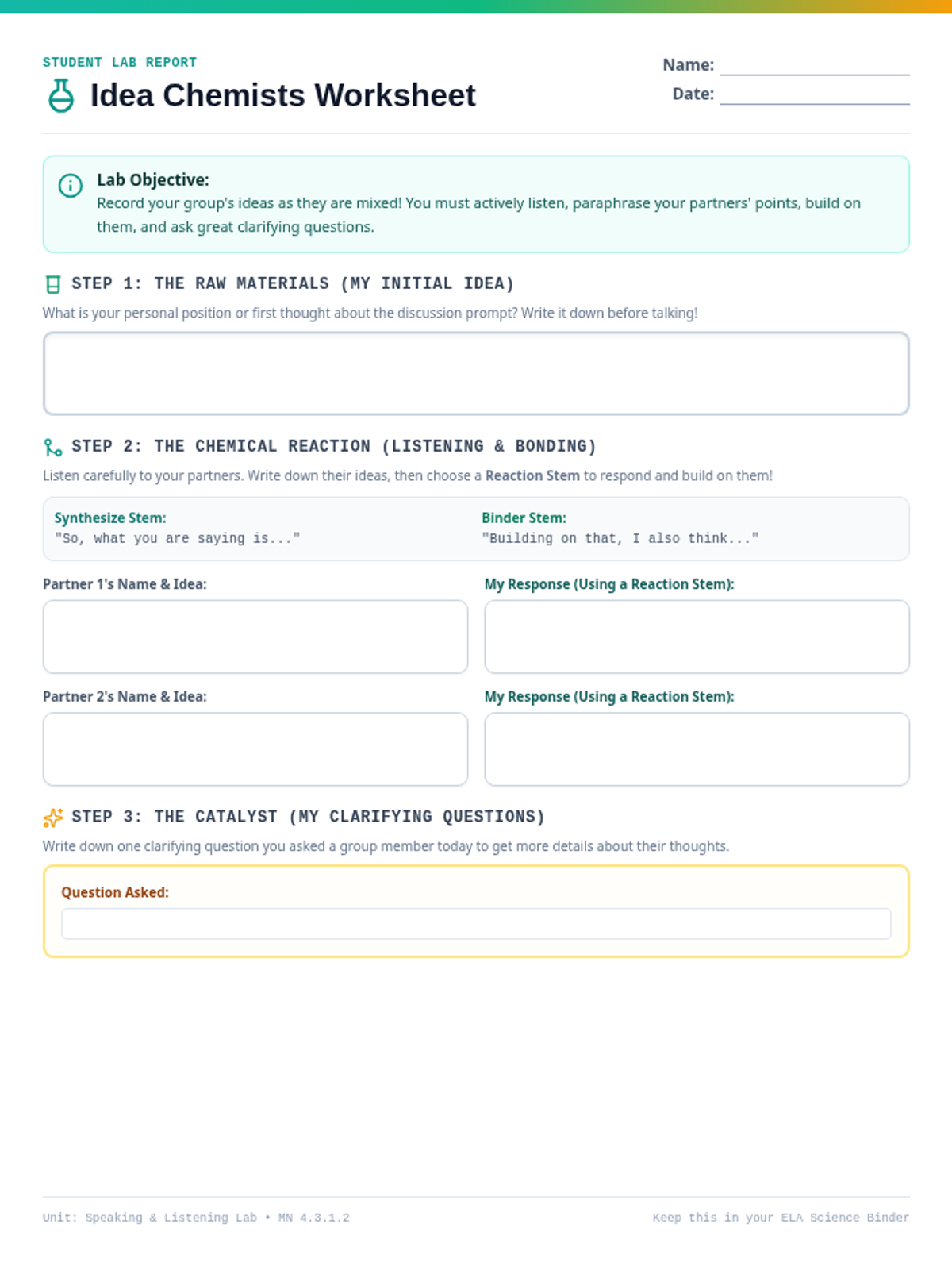
An interactive student lab worksheet designed as a discussion report to log partners' arguments, practice using reaction stems, and reflect on active listening during the collaboration.
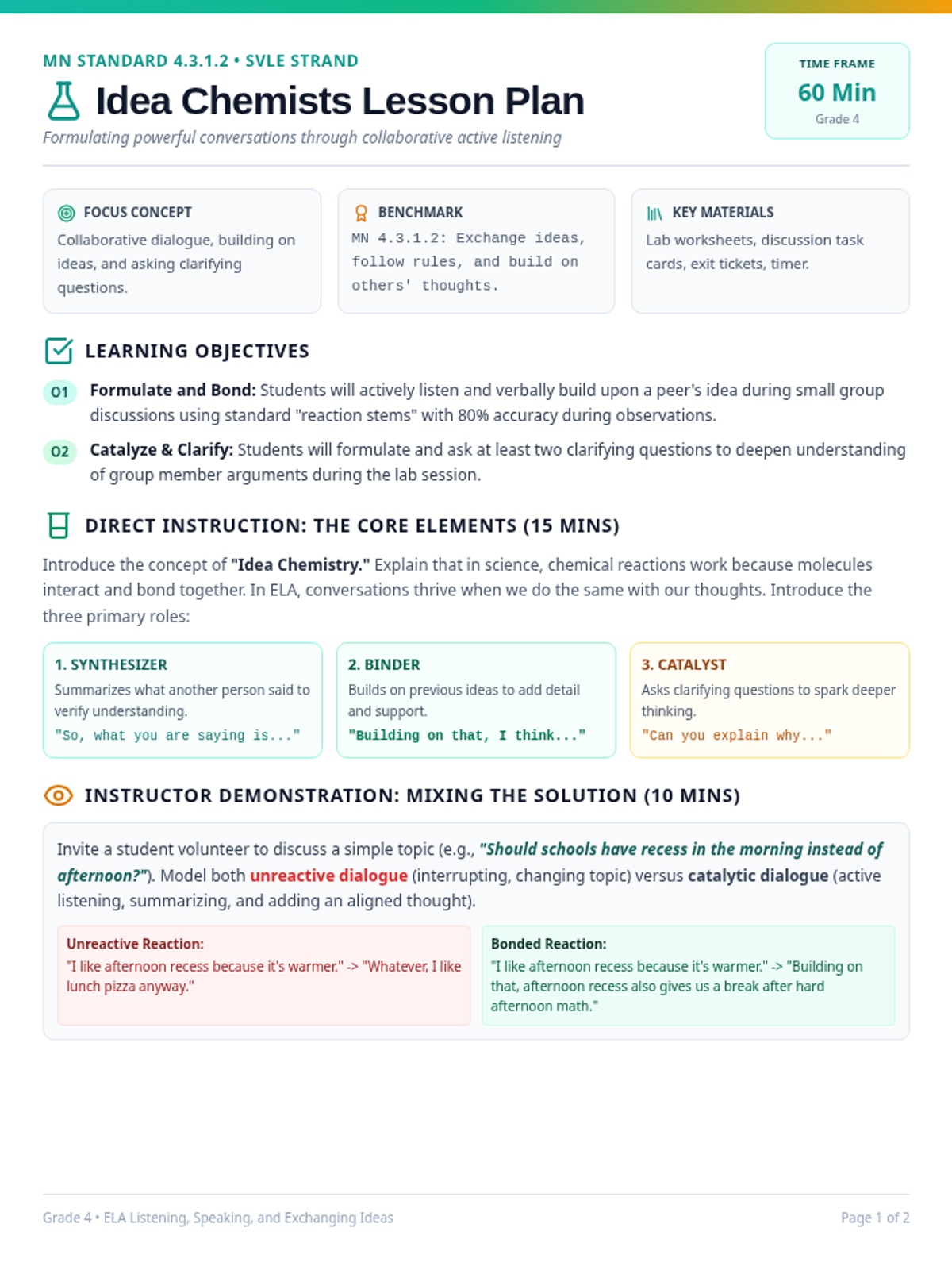
A comprehensive, highly detailed two-page lesson plan for teachers, detailing standard alignment, direct instruction, guided lab-themed discussions, and differentiation strategies.
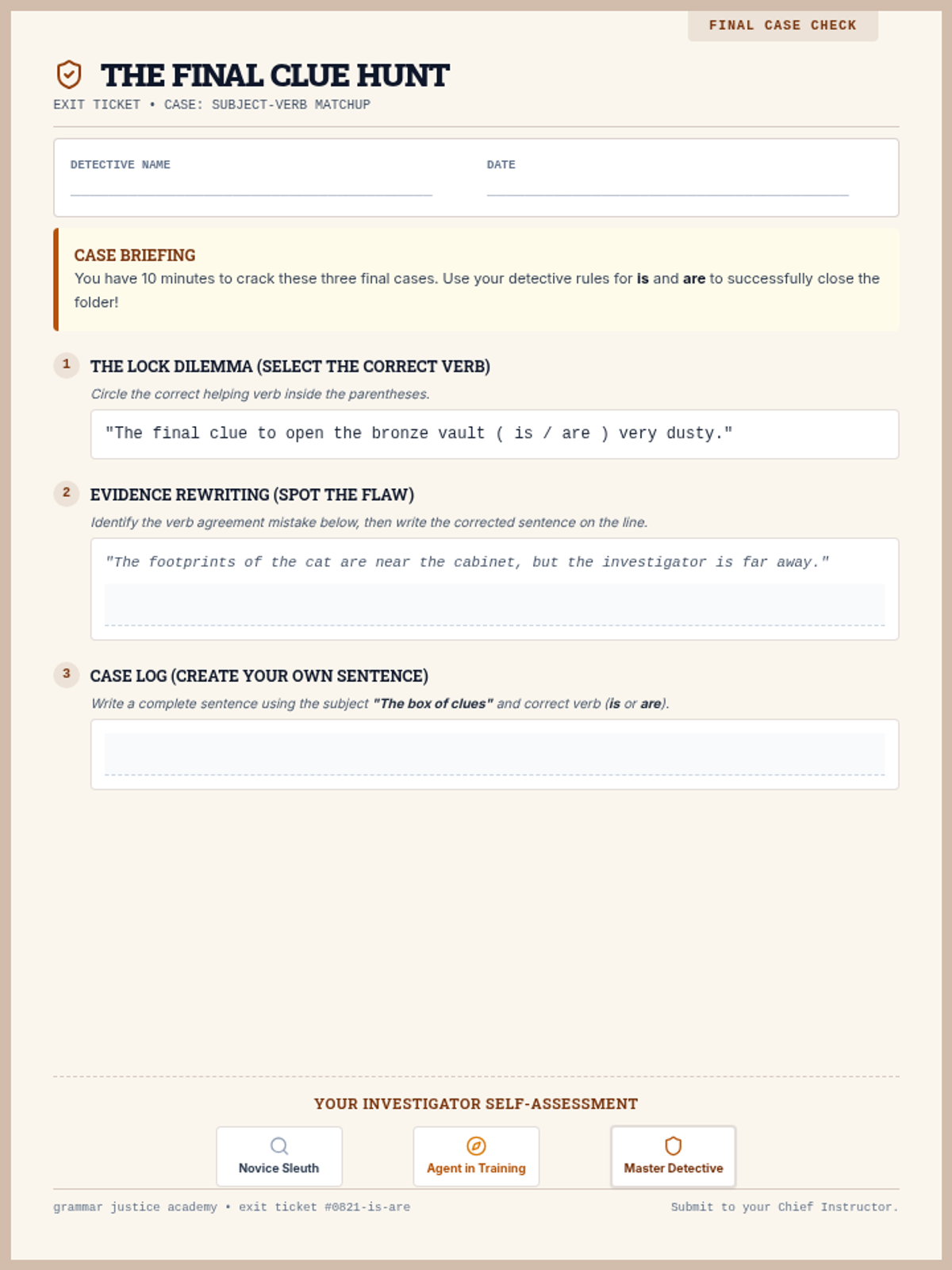
A quick 10-minute detective exit ticket designed to assess student mastery of subject-verb agreement under pressure, complete with a self-assessment 'Sleuth Meter'.
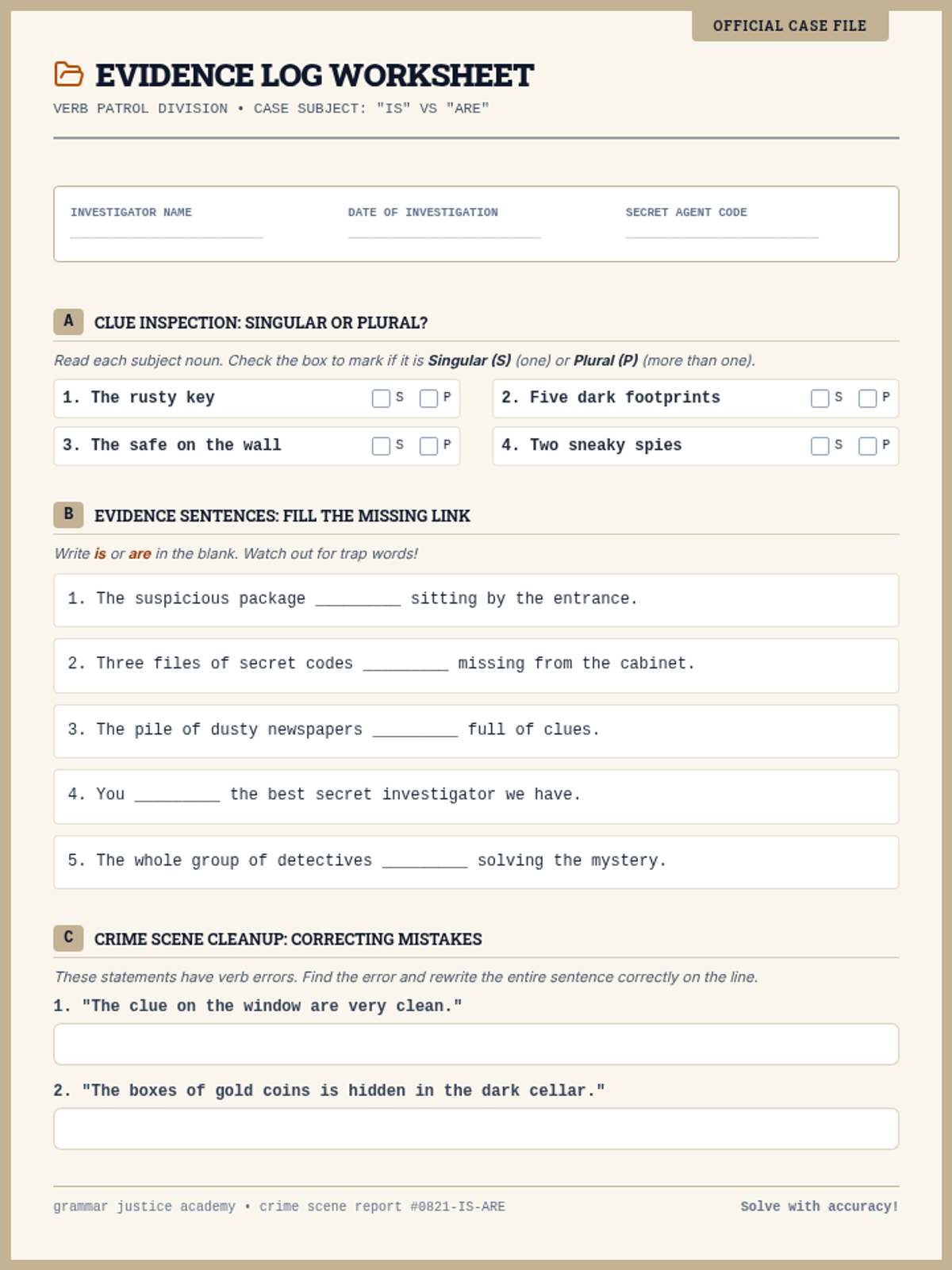
A detective-themed student practice worksheet containing noun sorting, fill-in-the-blank clue sentences, and proofreading corrections. Features a dedicated name/date field and ample handwriting spacing.
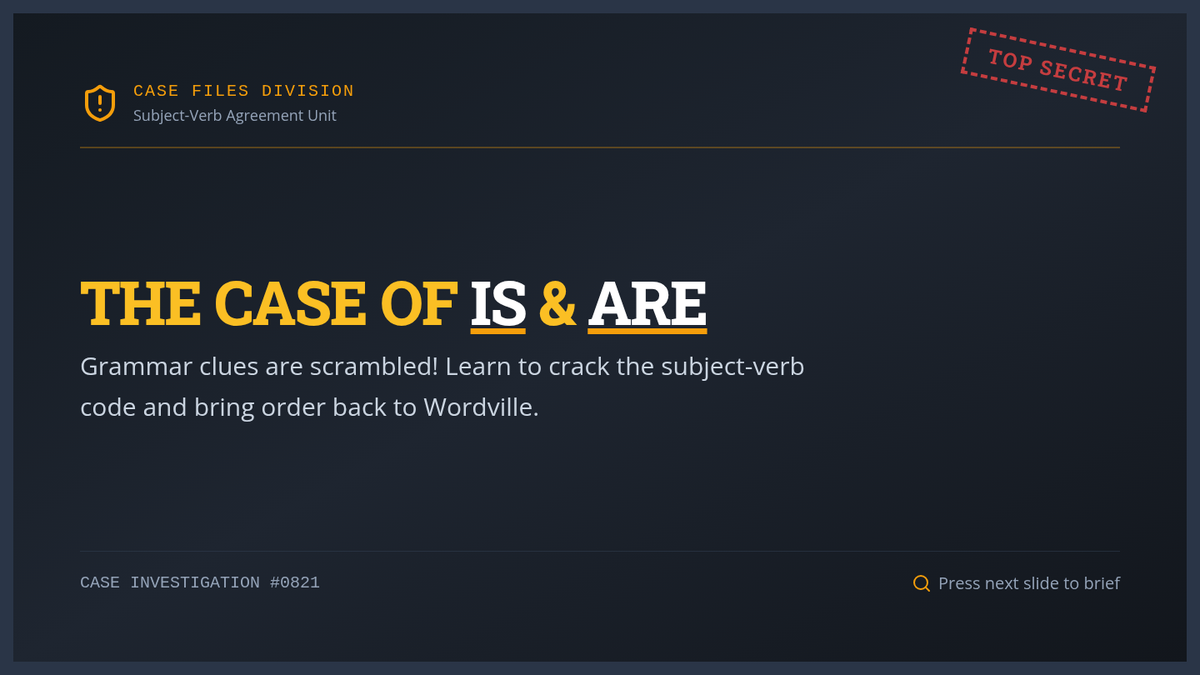
A visually compelling, dark-themed investigation board slide presentation that introduces the rules of 'is' vs 'are' and guides students through matching singular/plural nouns with their verb counterparts.
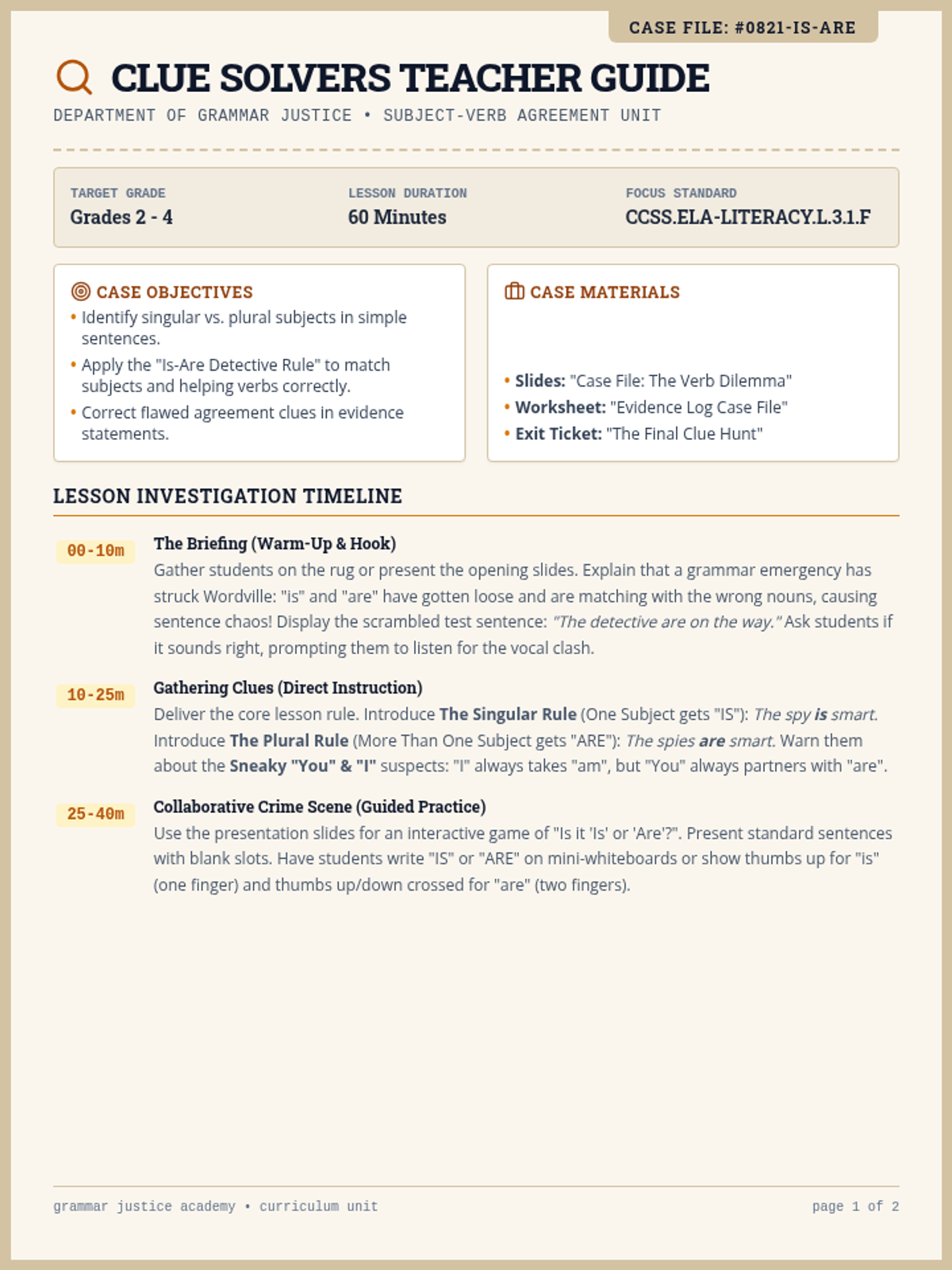
A comprehensive, typewriter-styled teacher guide that structures the 60-minute subject-verb agreement detective lesson, complete with learning objectives, guided prompts, common traps, and differentiation tips.
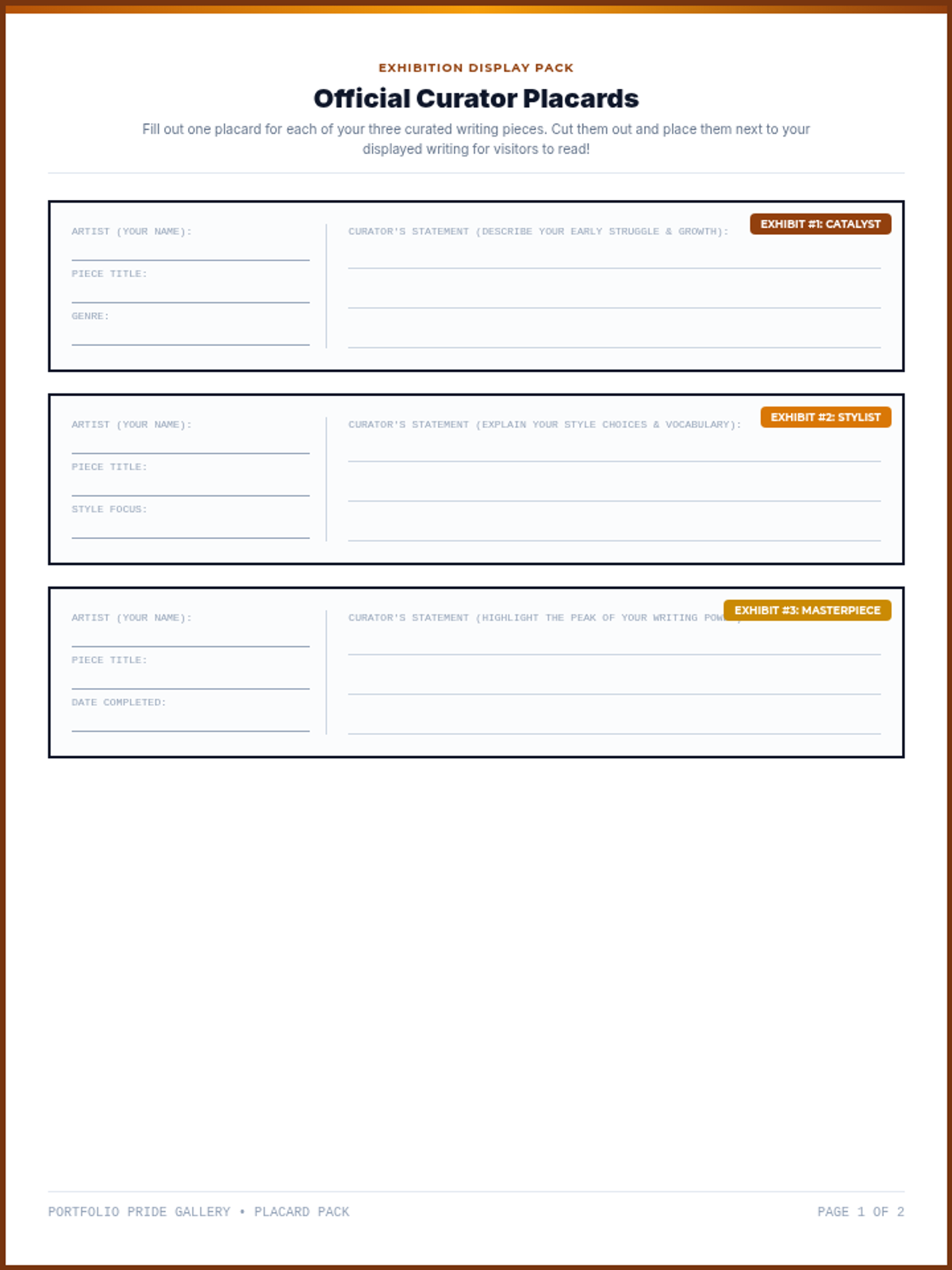
Printable museum placards/exhibit labels for students to write their curator statements, plus a customizable gallery invitation and curator rubric.
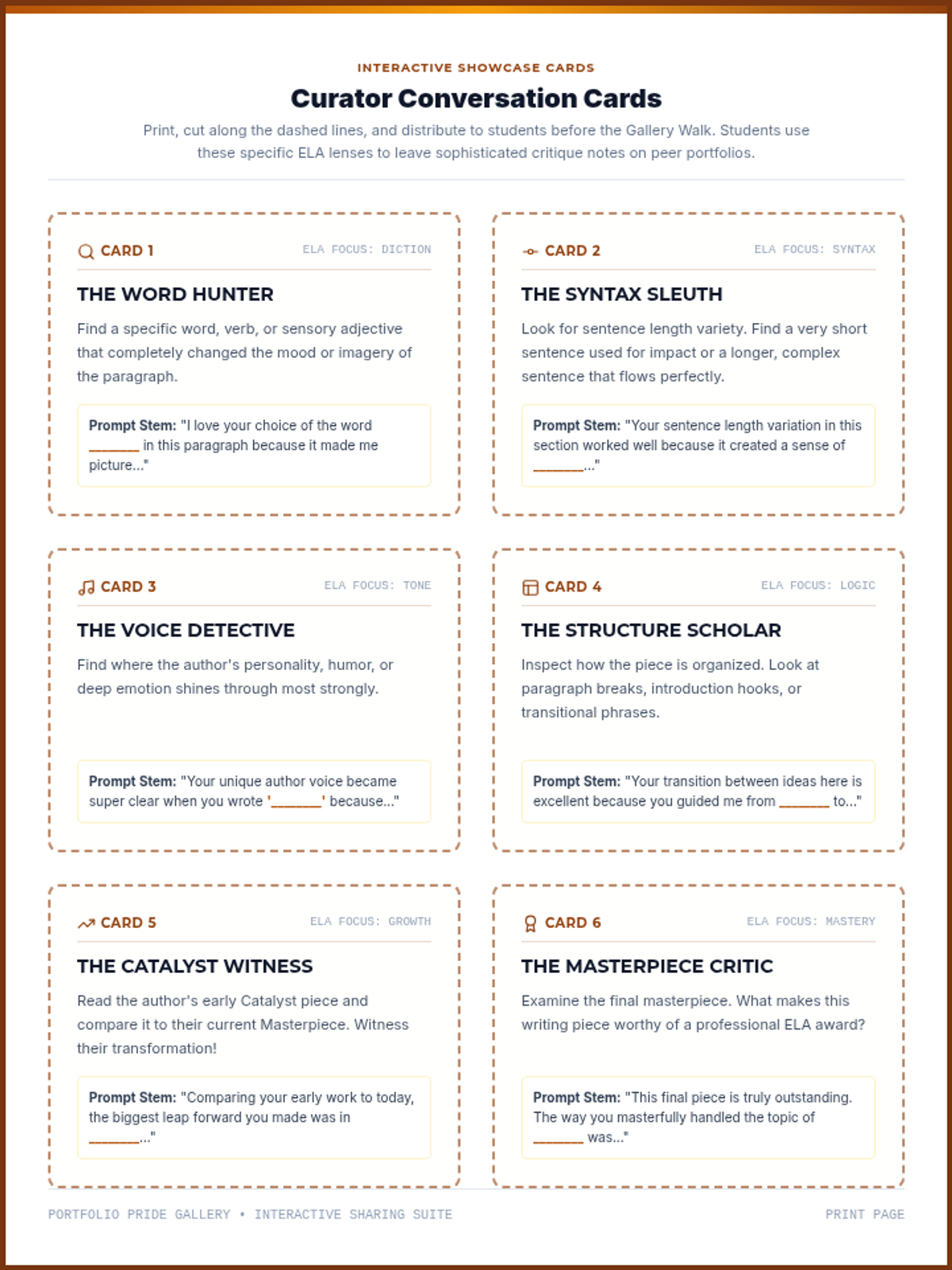
A printable set of discussion prompt cards for peer-to-peer critique and positive feedback during the showcase gallery walk.
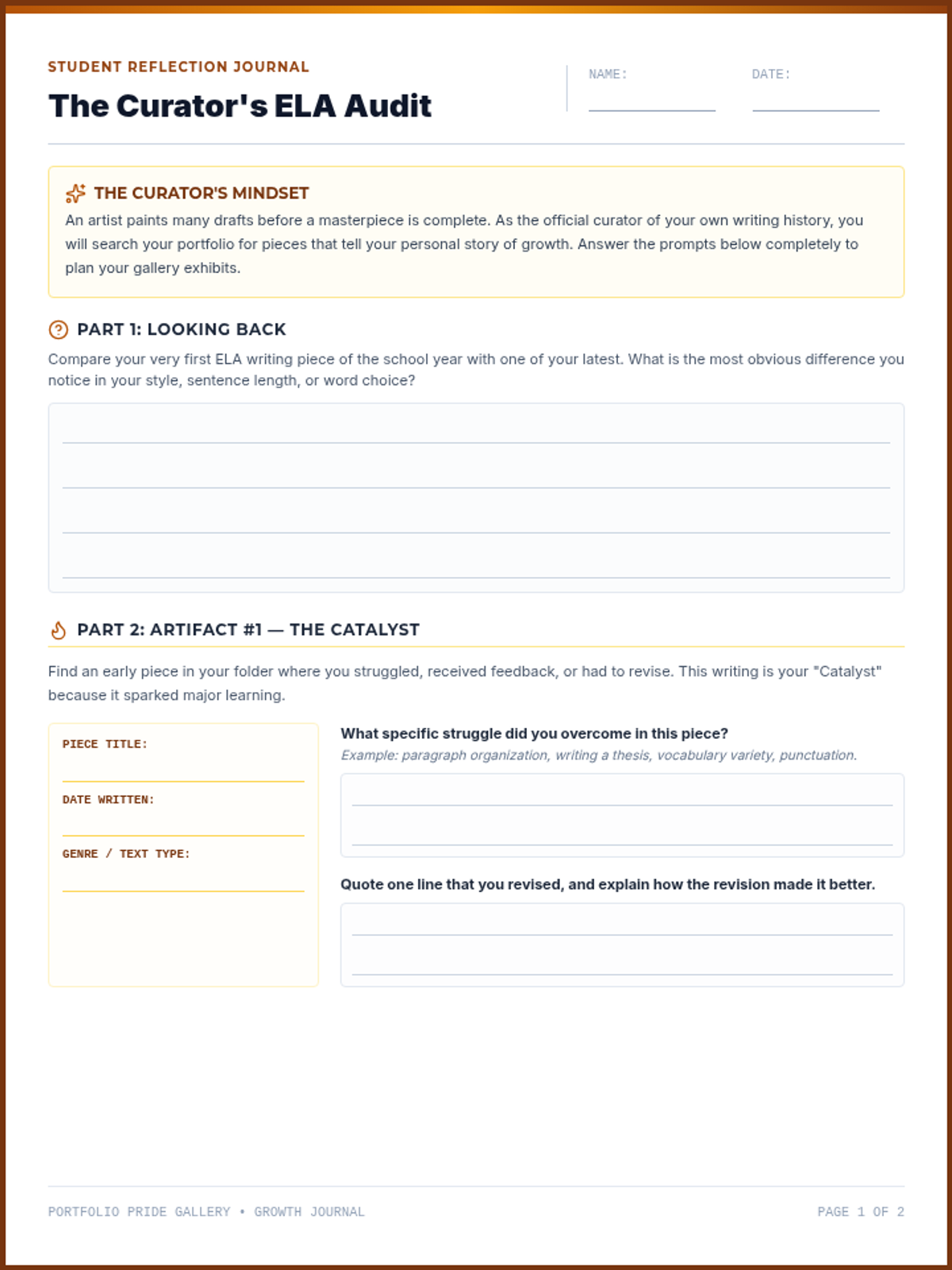
A structured student self-reflection journal with guided prompts to help students audit their ELA writing, identify milestones, and draft curator statements.
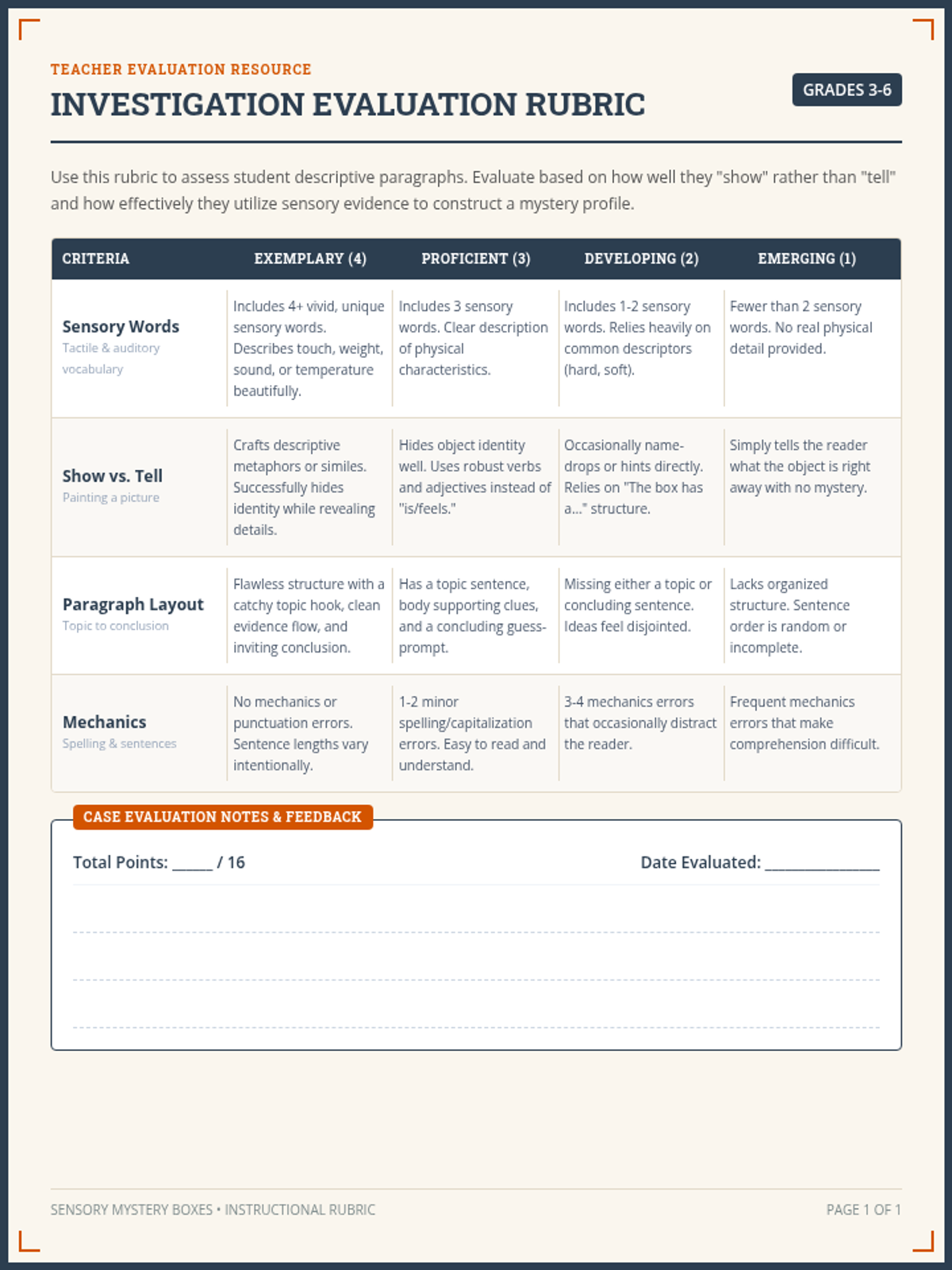
A standardized classroom grading rubric styled as an 'Investigation Evaluation Report', detailing assessment criteria for sensory vocabulary, writing structure, mechanics, and descriptive depth.
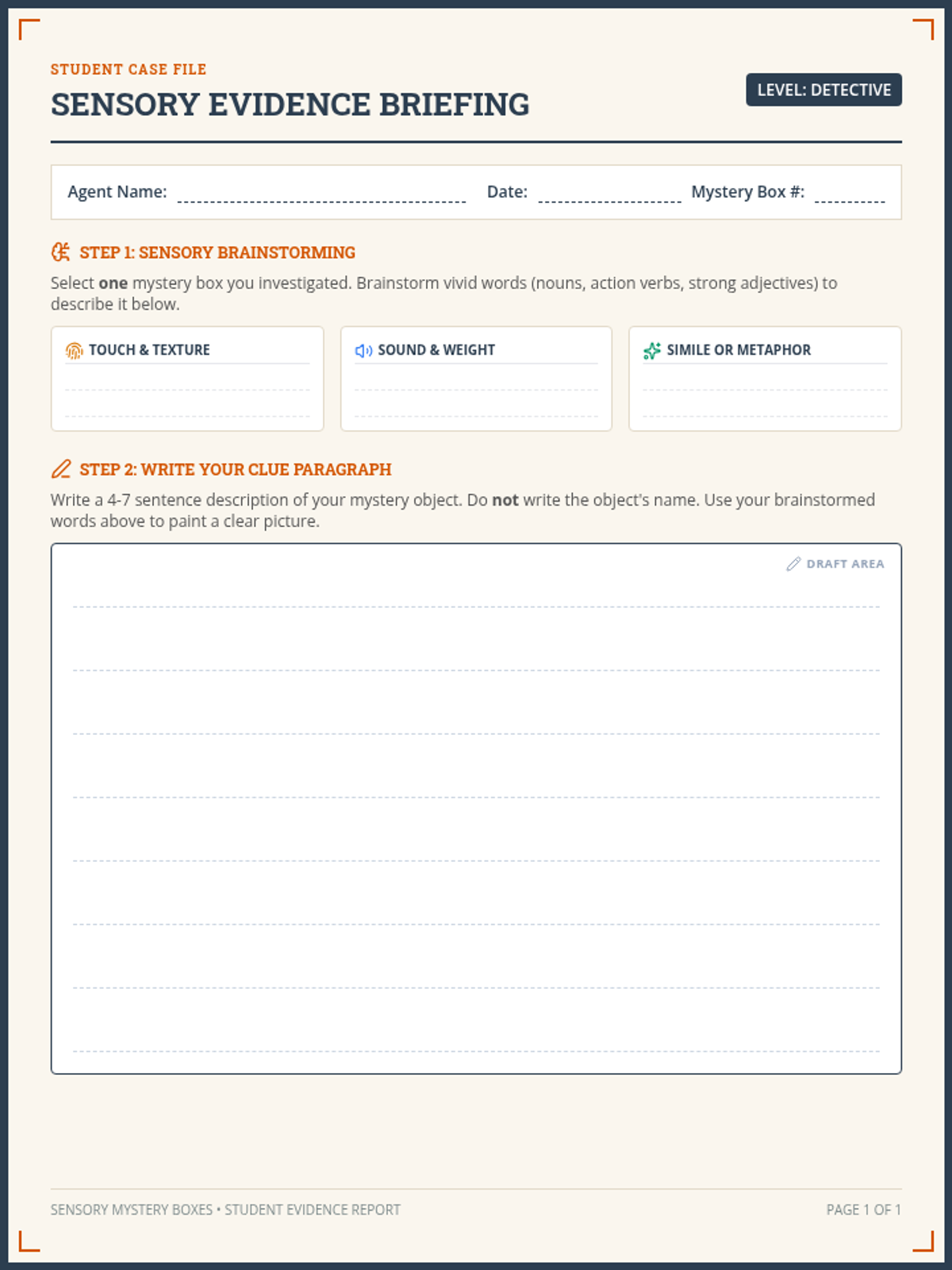
A structured student-facing worksheet for planning and writing their mystery box descriptive paragraph, featuring sensory brainstorming boxes, paragraph layout guidelines, and lined writing space.
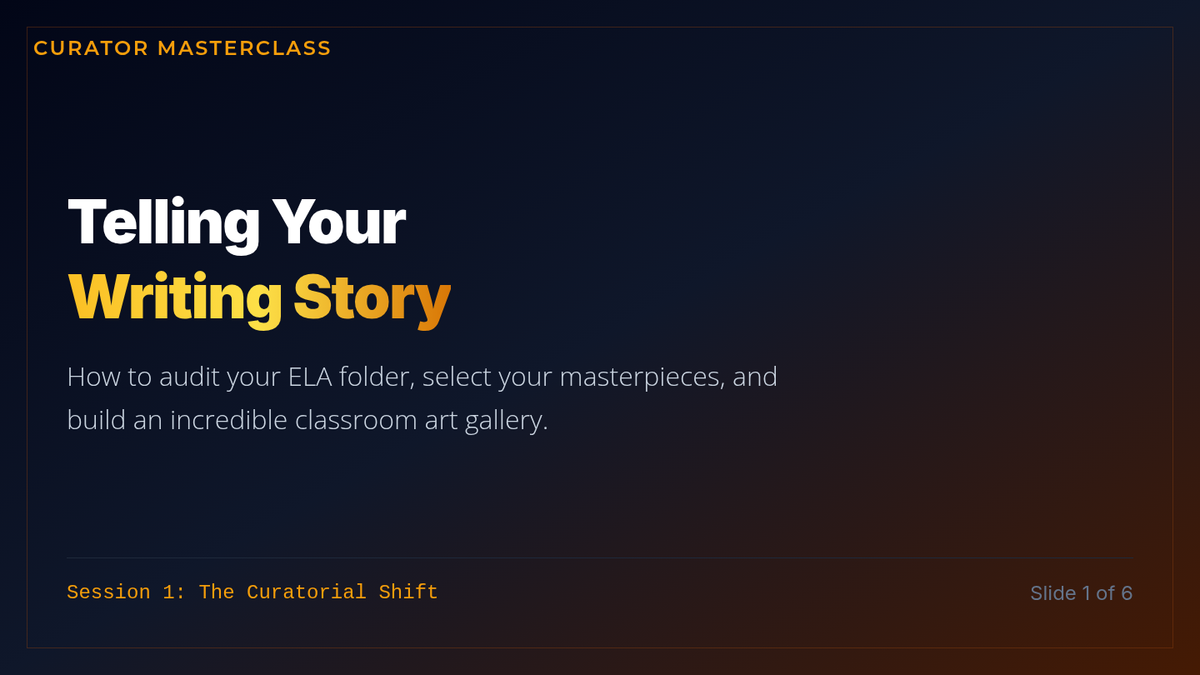
An interactive presentation for guiding students through the mindset of an art curator, modeling portfolio auditing, and setting gallery rules.
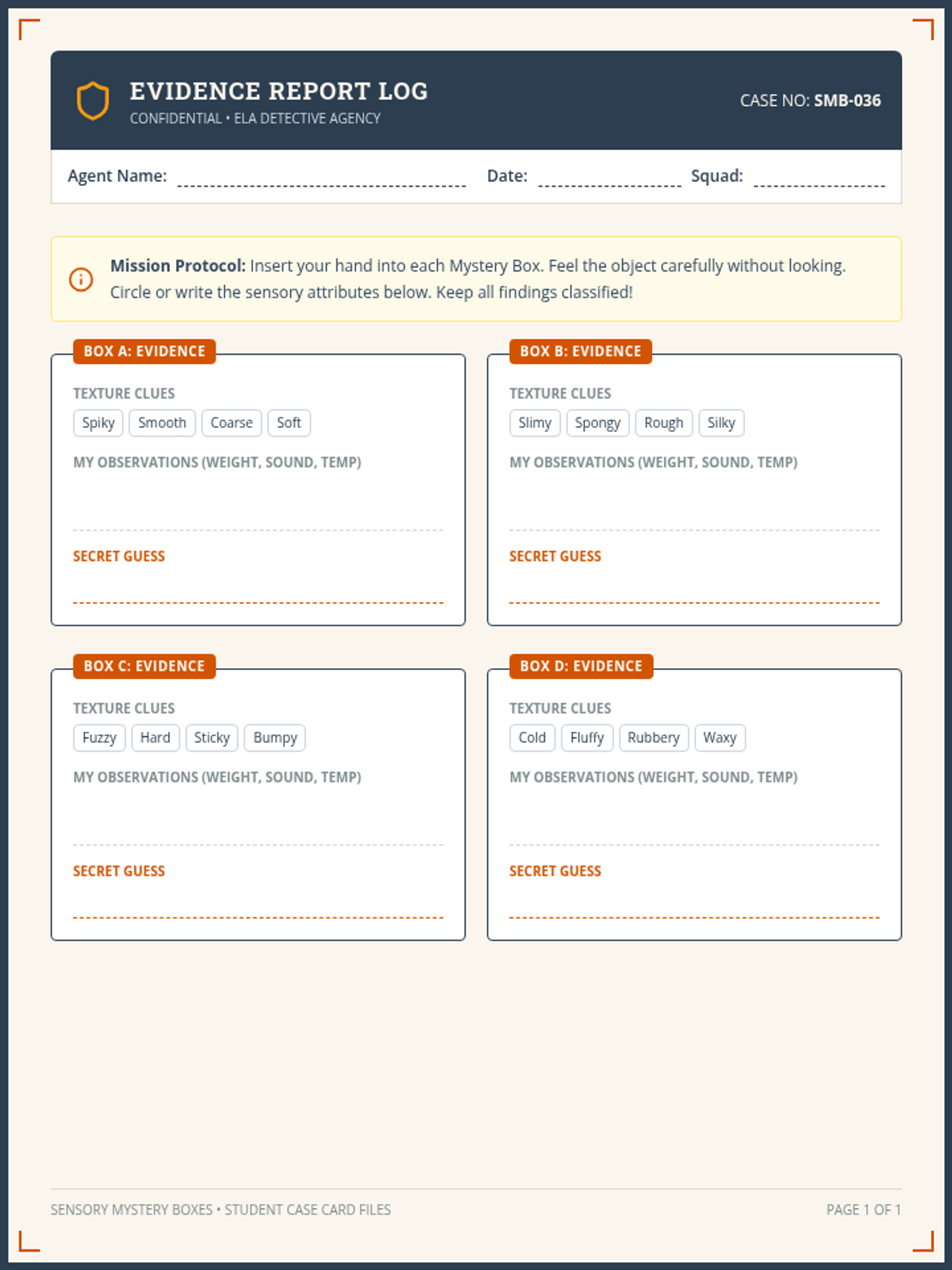
Hands-on evidence recording sheets and station signs designed for the physical mystery box investigation, providing clear spaces to record touch, sound, weight, temperature, and final guesses.
An interactive, visual slide presentation designed for teacher delivery, leading students through the rules of investigation, sensory adjective vocabulary, 'Show, Don't Tell' examples, and descriptive writing instructions.
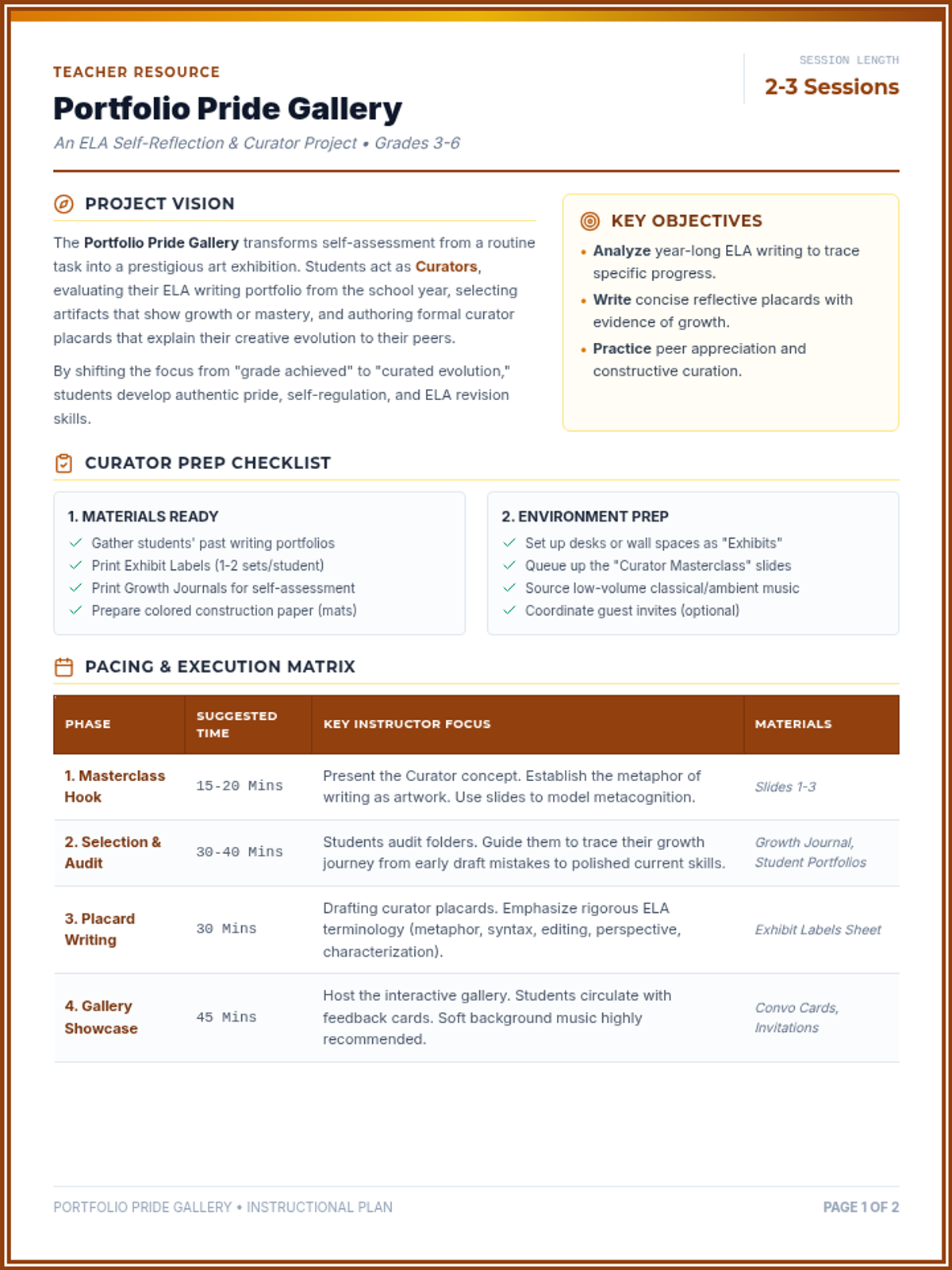
A comprehensive teacher facilitation guide containing detailed session pacing, discussion questions, preparation checklists, and differentiation strategies for the ELA gallery project.
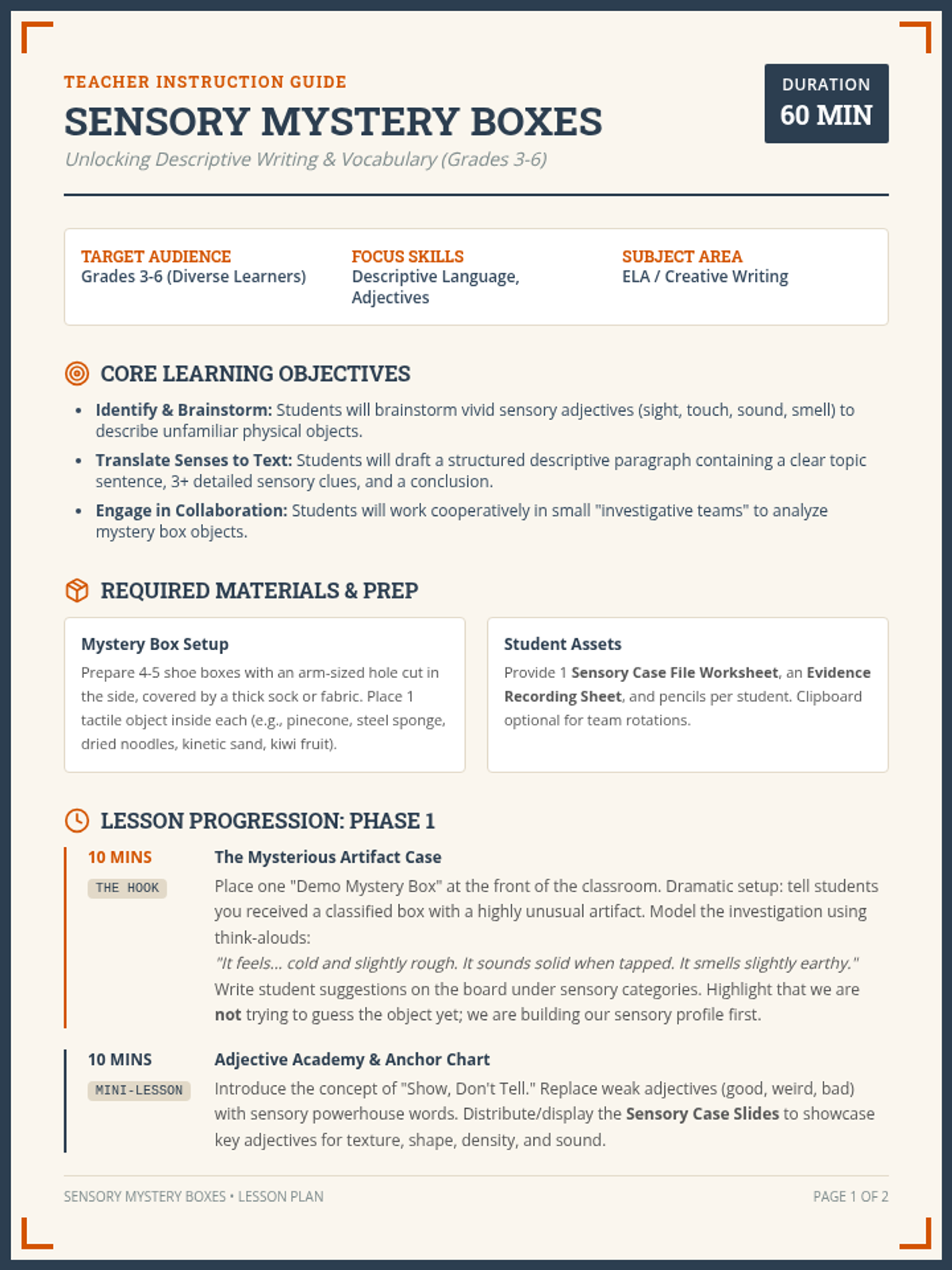
A comprehensive, step-by-step lesson plan styled as an 'Investigation Briefing' for teachers, detailing objectives, materials, setup, pacing, differentiation strategies, and group coordination.
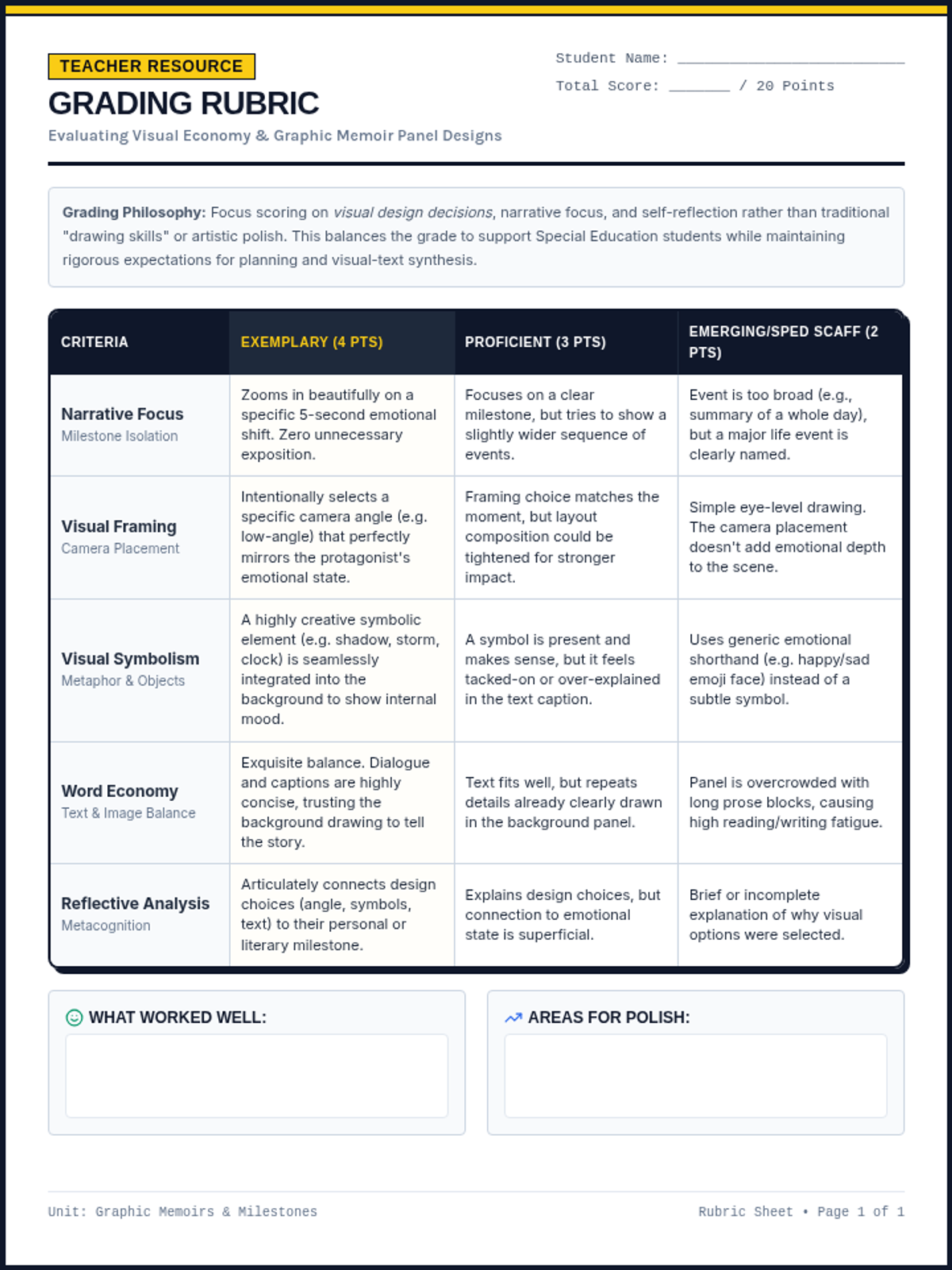
A print-ready, single-page grading rubric for the Panel by Panel graphic memoir. Categorized by narrative focus, visual framing, visual symbolism, word economy, and reflection. Includes clear criteria for both SpEd and advanced levels.
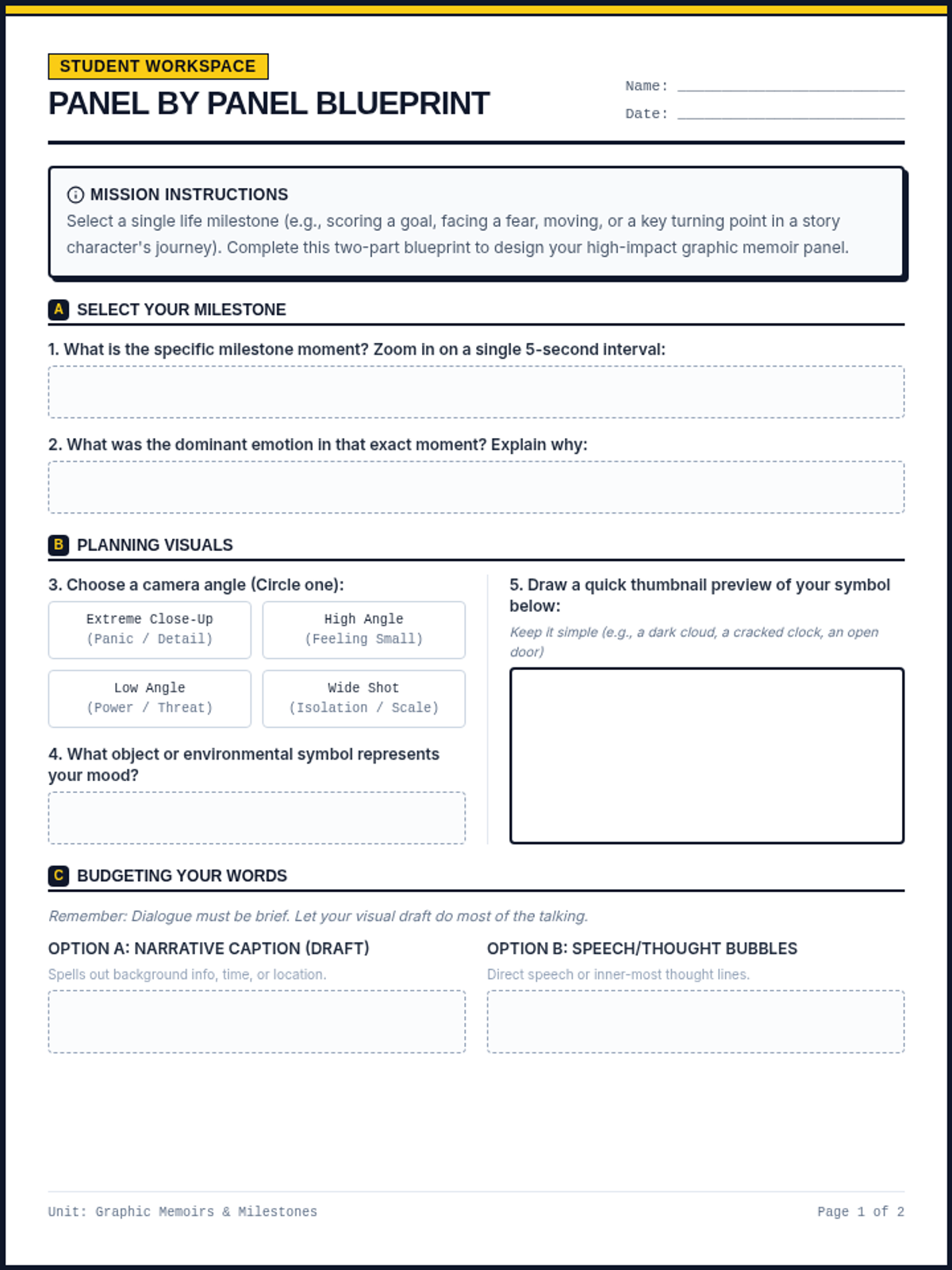
A print-ready, 2-page graphic memoir blueprint worksheet. Page 1 guides students through selecting milestones, planning camera angles, and sketching symbols. Page 2 provides blank, bordered layout grids for drawing the comic panels.
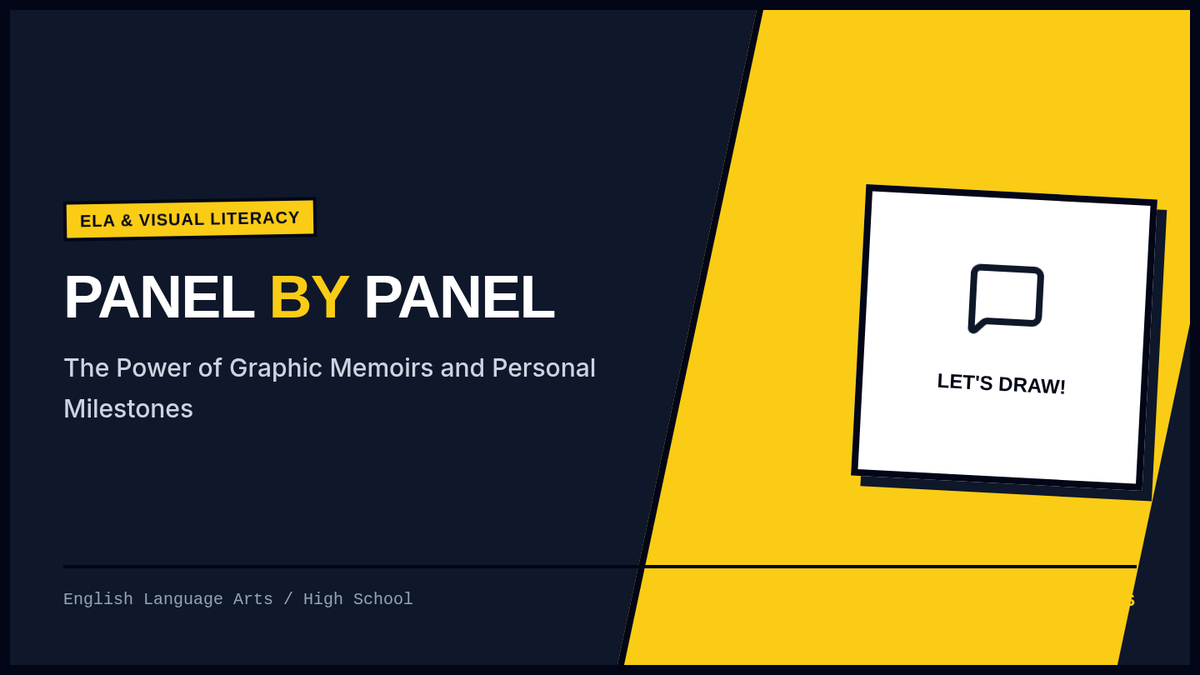
Instructional slides for introducing graphic memoirs, panel elements, visual economy, and prompt instructions. Features large fonts (24px+), stark graphic comic styling, and layout diagrams.
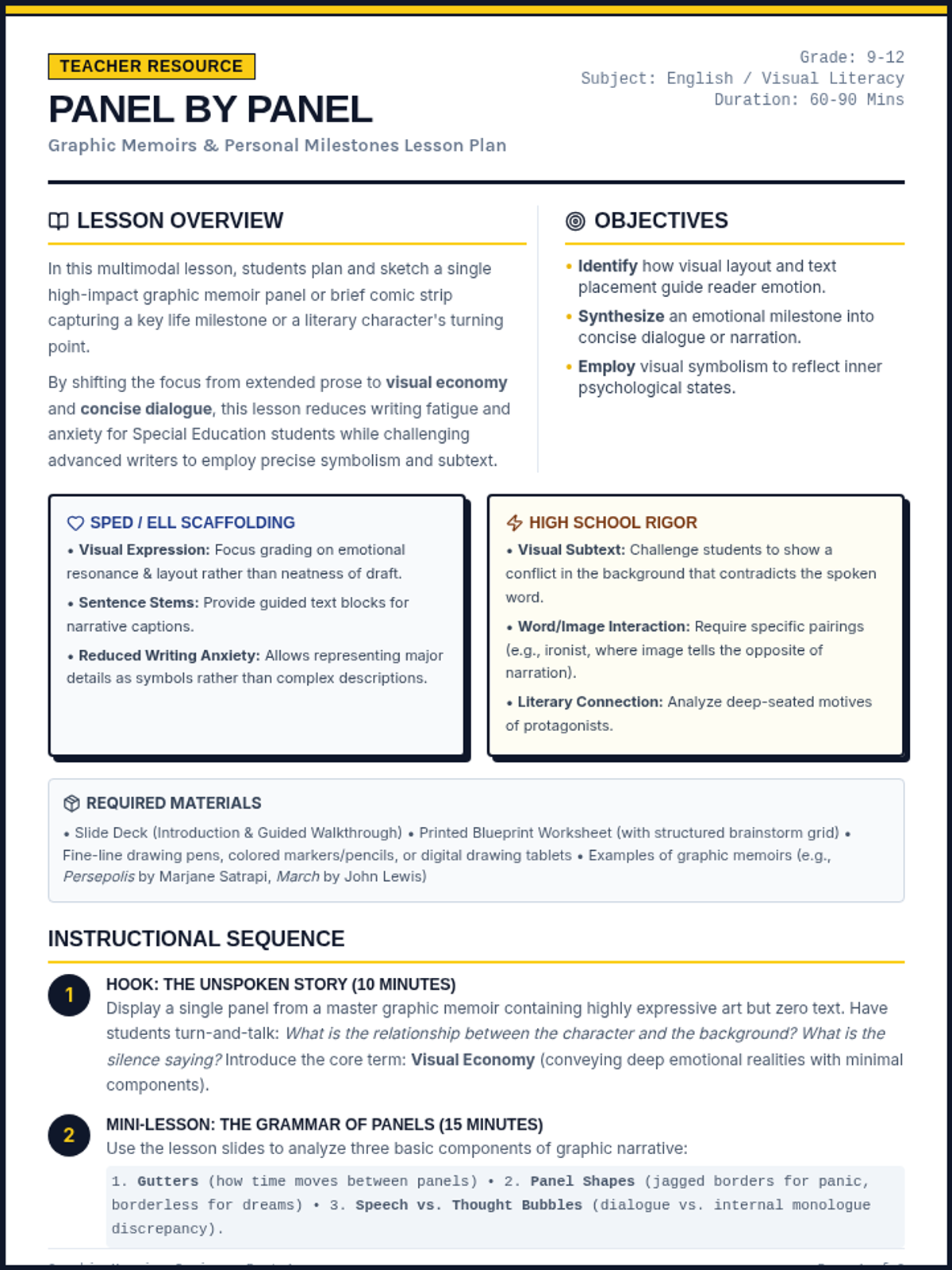
A complete, print-ready, 2-page teacher guide and lesson plan for the Panel by Panel graphic memoir unit. Features scaffolding strategies for Special Education and rigorous writing extension prompts for high schoolers.
A comprehensive 6-slide deck that guides teachers and students through all 5 lessons of the 'River Writers' unit with visual anchors, co-constructed comparison charts, sensing verb symbols, and sentence-combining models.
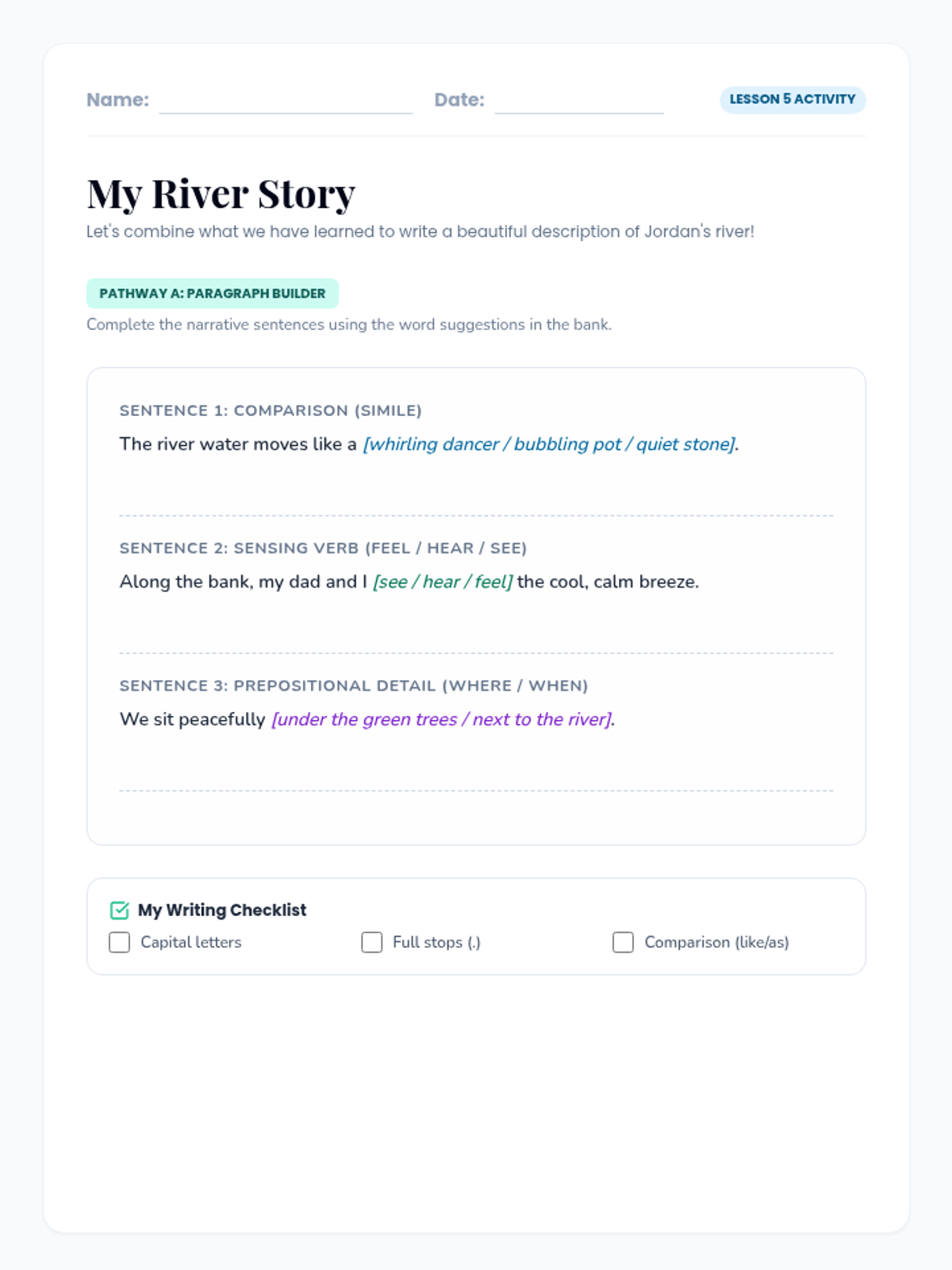
A descriptive paragraph worksheet for Lesson 5. Features Pathway A for standard Year 1 writing using guided sentence structures, word banks, and punctuation checklists, alongside Pathway B with tracing and drawing frames for early years learners.
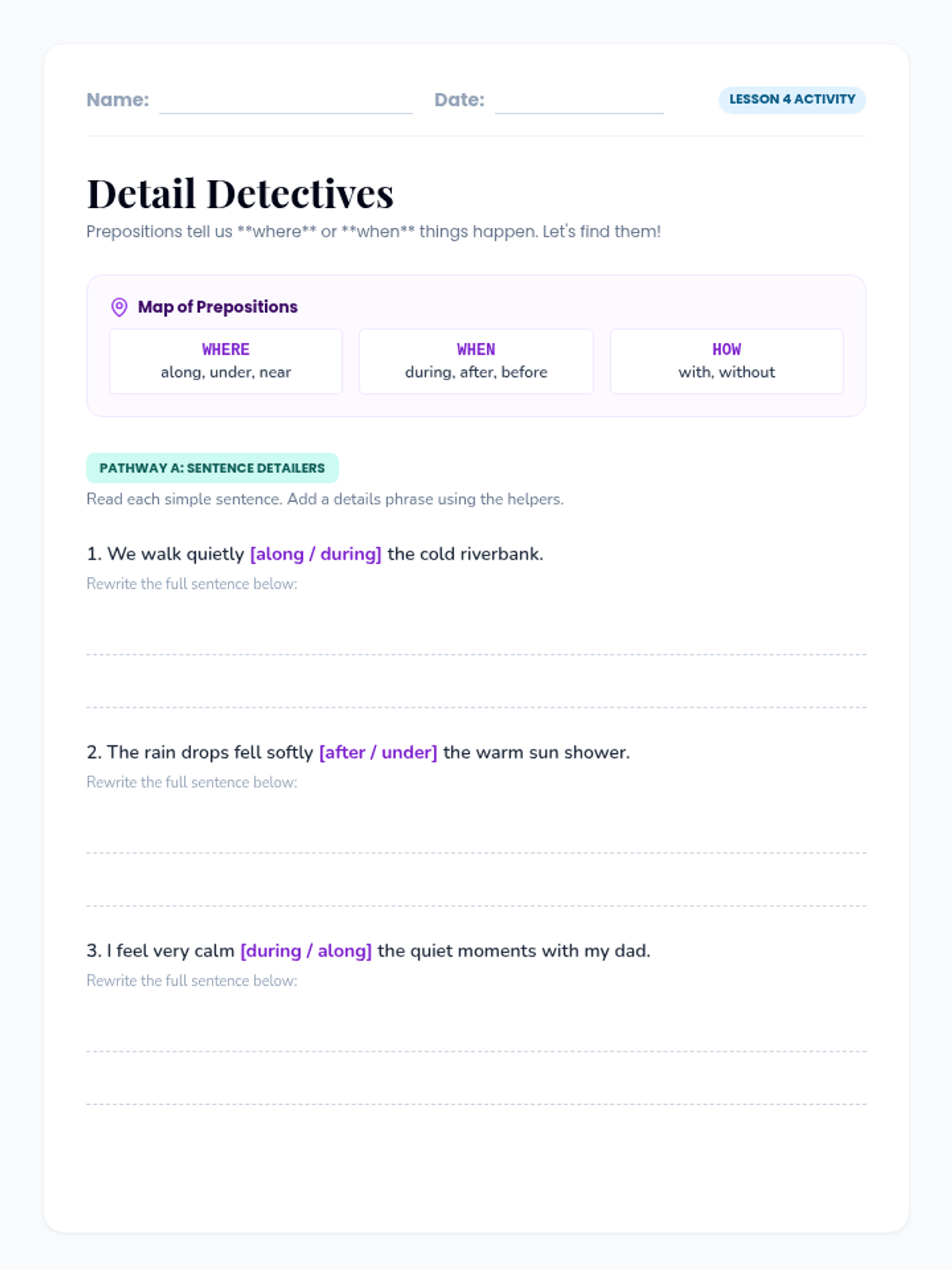
A prepositional phrases worksheet for Lesson 4 featuring a colored grammar reference box. Pathway A uses guided bracket-selection and full-sentence handwriting practice, while Pathway B offers tactile tracing of spatial prepositions and matching drawing prompts.
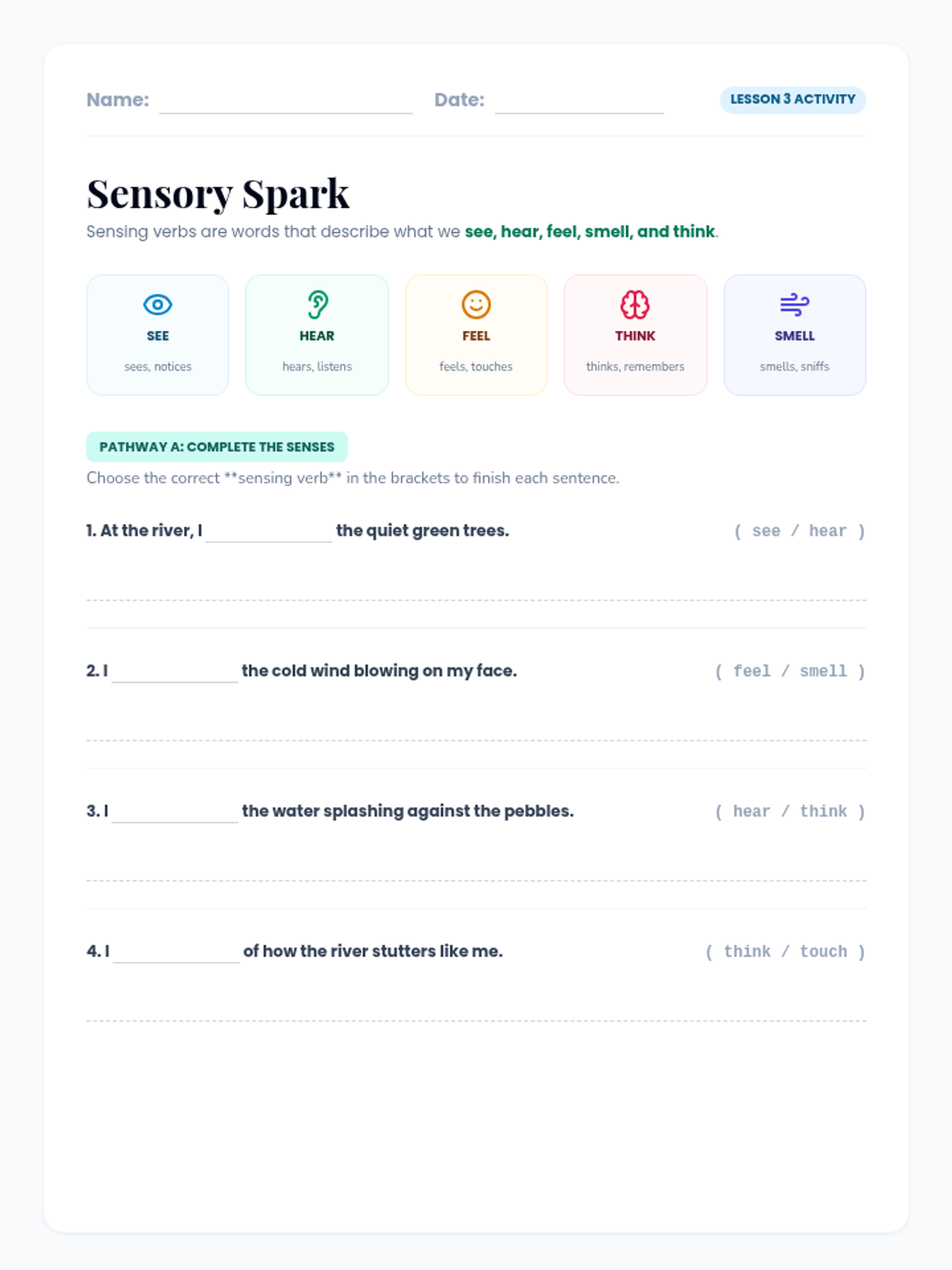
A sensing verbs worksheet for Lesson 3 featuring visual body-part icons corresponding to the 5 senses. Pathway A asks students to complete sentences about a river using standard Year 1 sensory vocabulary, while Pathway B targets Kindergarten learners through hand-eye matching activities and structured drawing frames.
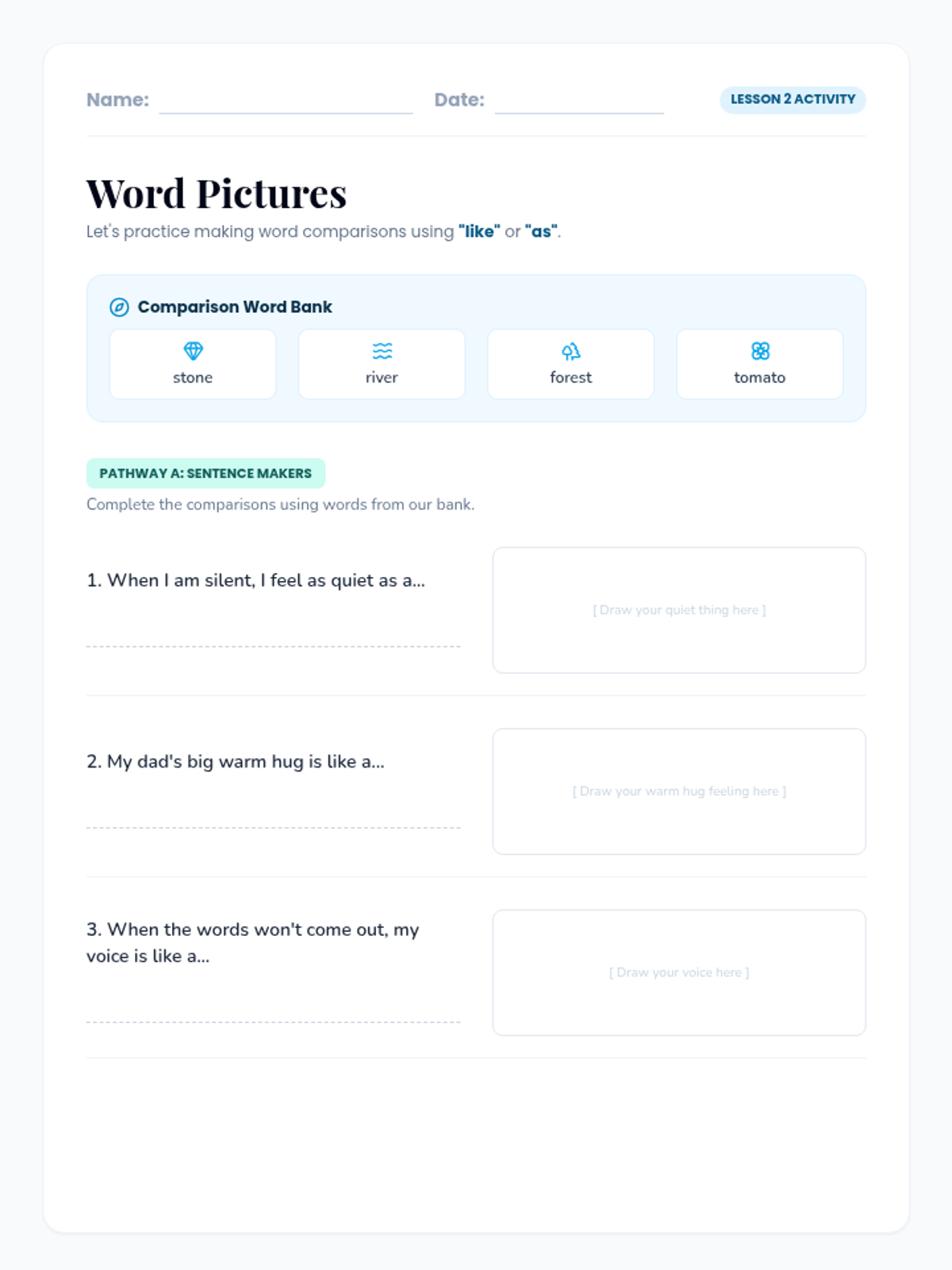
A figurative language worksheet for Lesson 2 featuring a dual-pathway system: Pathway A guides Year 1 level students to build comparisons using an illustrated word bank, while Pathway B offers tactile word-tracing and drawing exercises specifically designed for early years and Kindergarten learners.
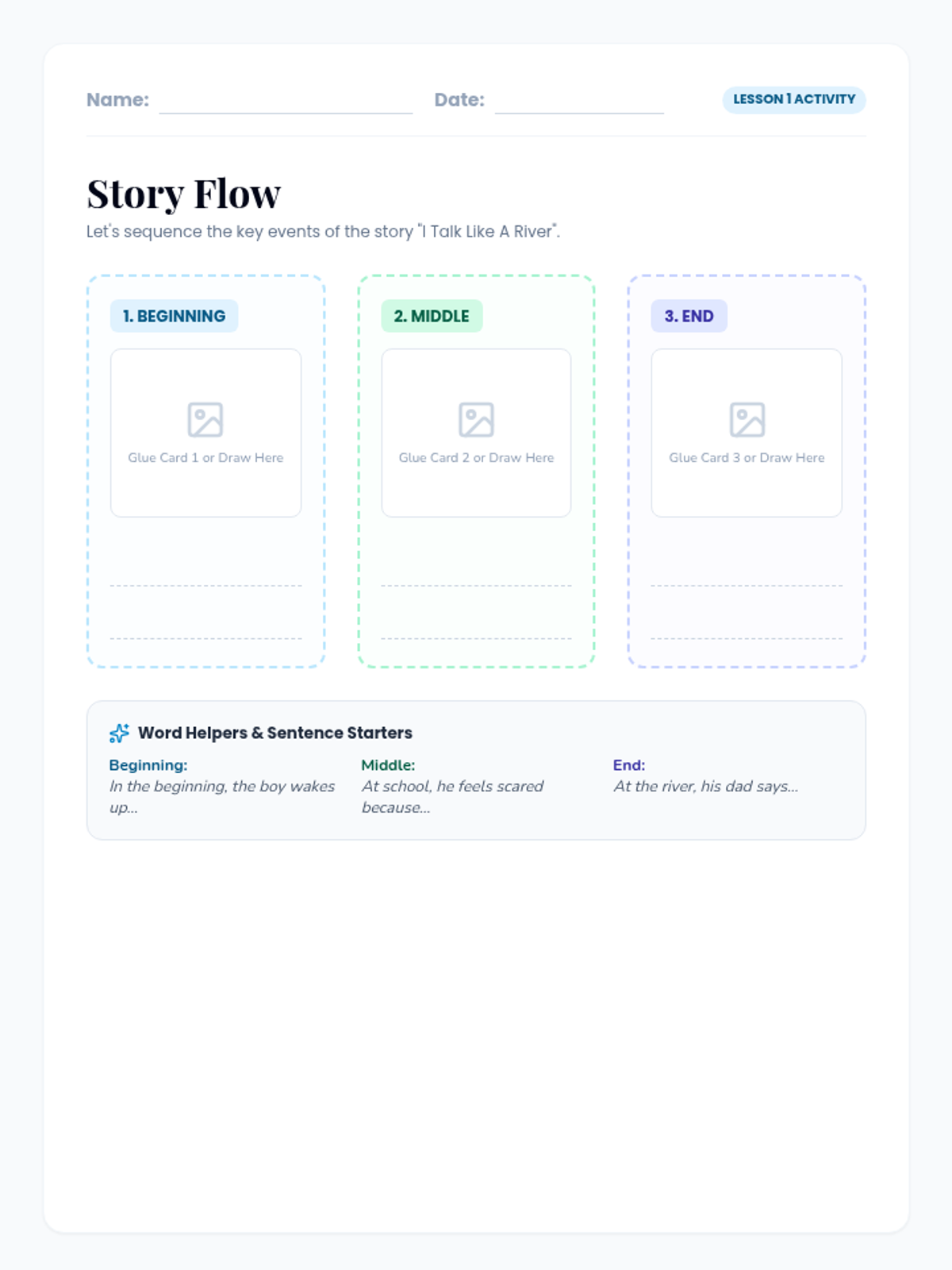
A highly visual narrative sequencing worksheet for Lesson 1, featuring a simplified Beginning-Middle-End flow chart with ruled writing lines. Includes cut-out cards tailored for both standard Year 1 readers and a tracing/drawing pathway for early years and Kindergarten learners.
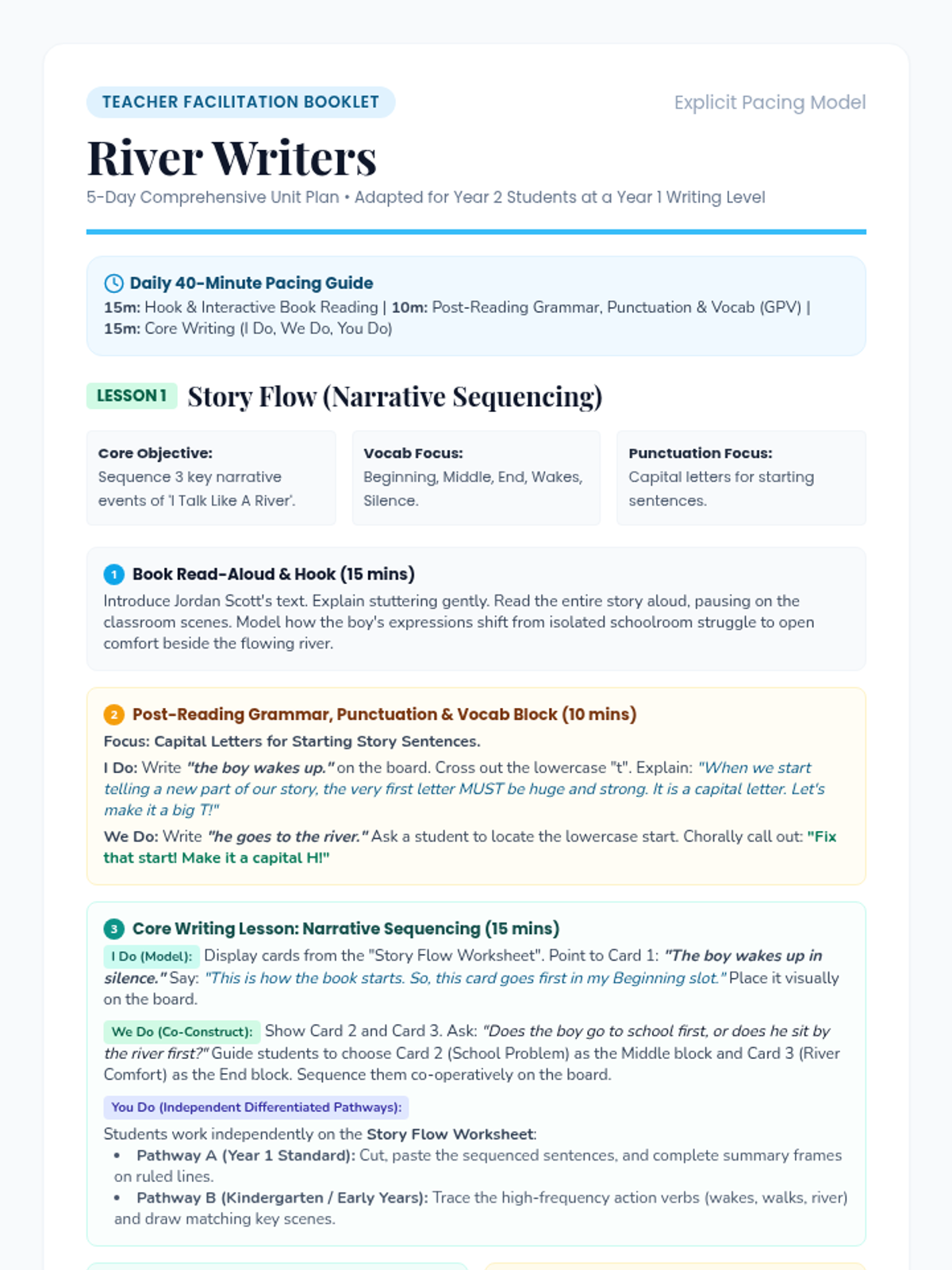
The primary explicit teacher instruction guides following the 'I Do, We Do, You Do' model. Now includes a structured Visible Learning box for each lesson detailing specific Prior Knowledge, Learning Intentions, and Success Criteria (LISC) tailored for early years and EALD learners.
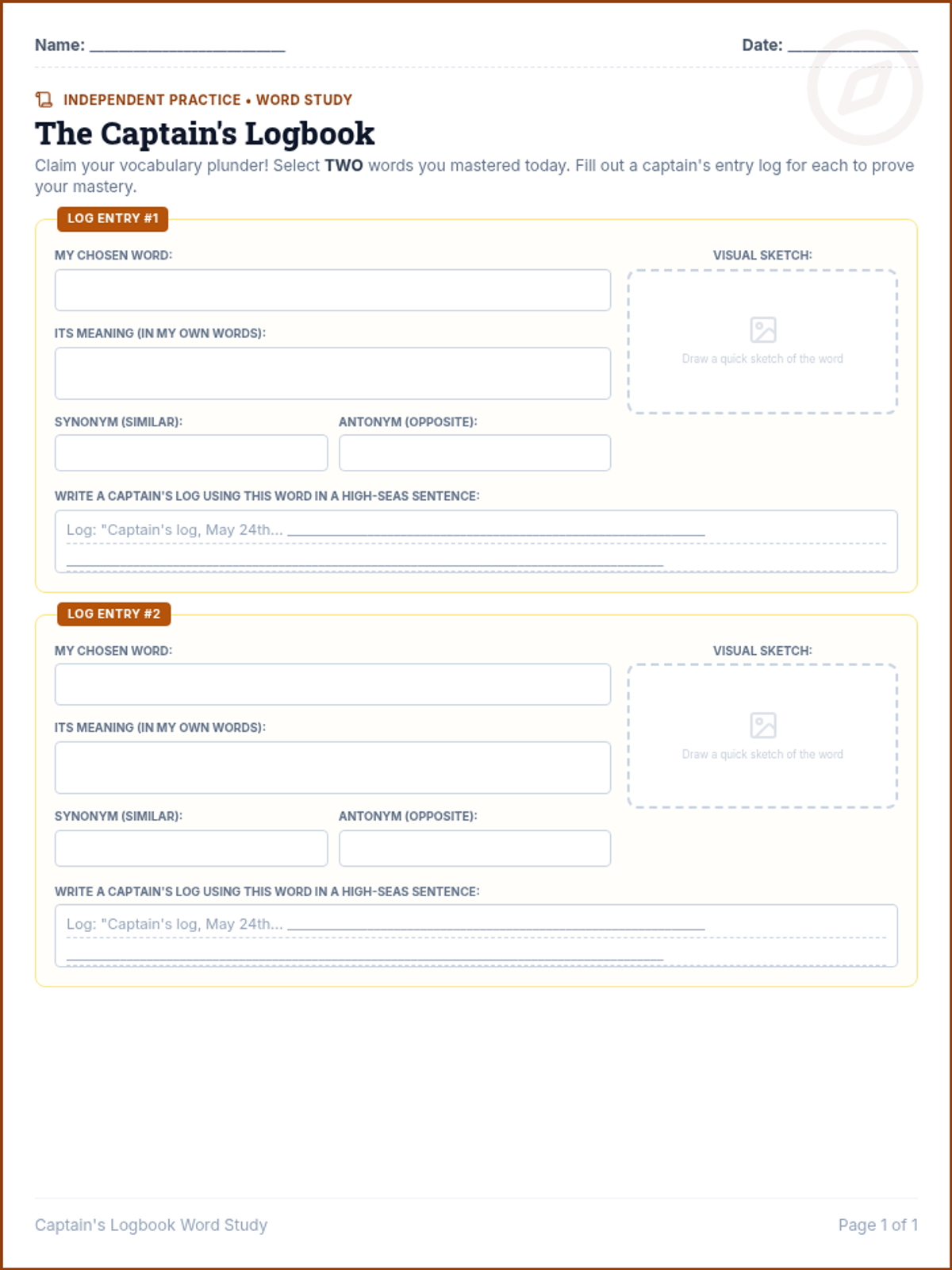
An independent creative 1-page vocabulary extension worksheet designed as a captain's log where students explore two target words through definitions, synonyms, illustrations, and sentence generation.
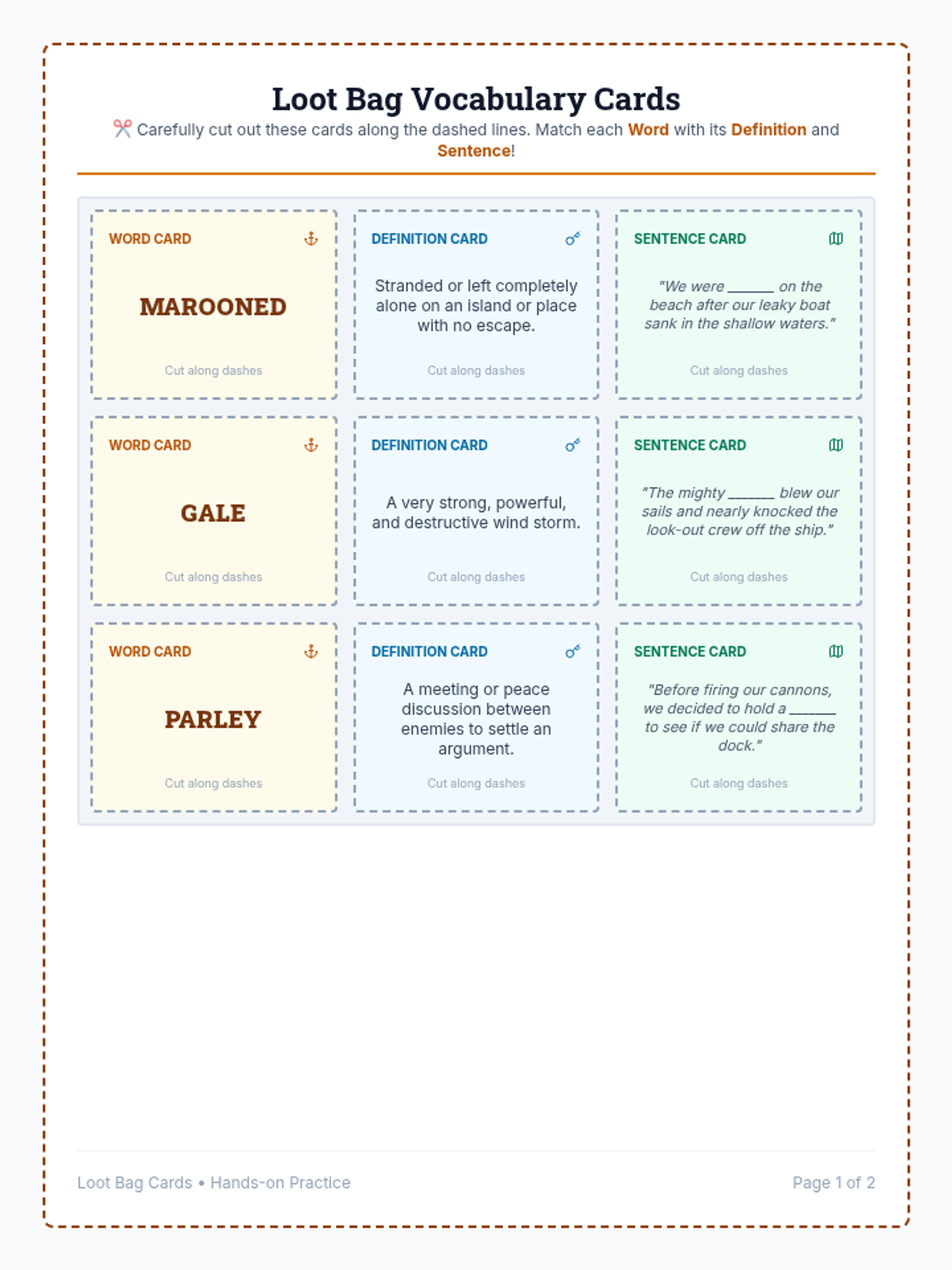
An interactive 2-page vocabulary printable containing 15 cut-out cards (words, definitions, context sentences) plus a collaborative matching recorder 'Loot Log' sheet.