A teacher answer key and facilitation guide for the Retro Recall game show, including point values, correct identifications, and suggested modern evolutions for each of the 15 items.
A comprehensive teacher guide for the 'Planet Under Pressure' lesson. Includes learning objectives, a 90-minute pacing guide, key vocabulary, slide-by-slide facilitation prompts, and detailed answer keys for both student worksheets.
A document-based activity where students audit three common claims regarding natural vs. human drivers of climate change. Includes comparative data charts on solar activity, volcanic emissions, and carbon sink capacity to build evidence-based reasoning.
A highly efficient single-page worksheet on the carbon cycle and global temperature trends. It features optimized font sizes (14-15px) for readability while maintaining a condensed one-page layout with data tables, ice core charts, and inquiry questions.
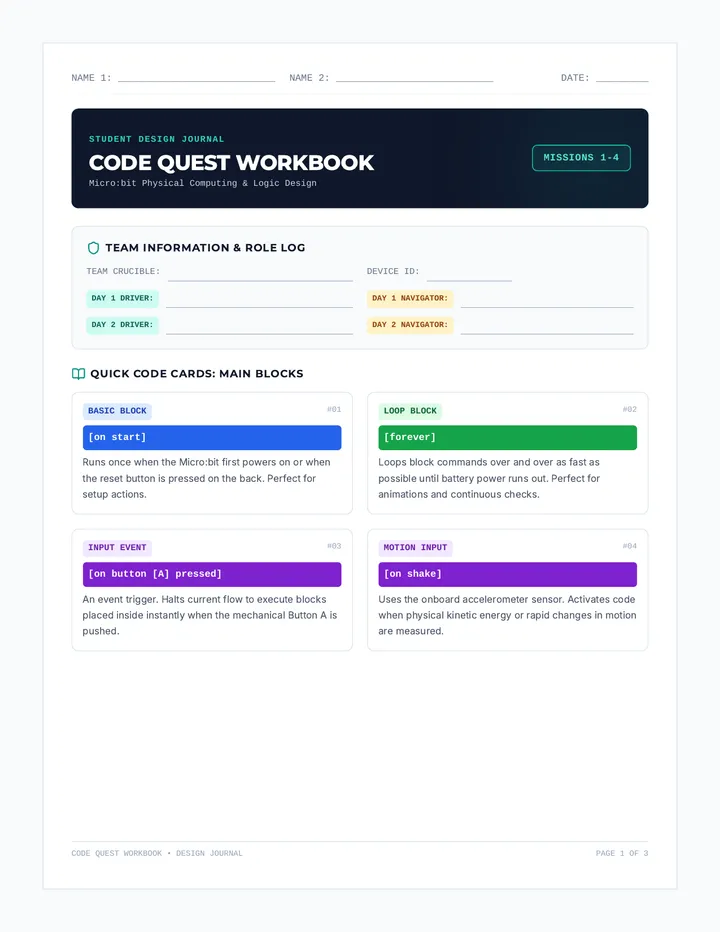
A high-impact 6-slide presentation focusing on the mechanisms of the greenhouse effect, industrial emission data, historical ice core trends, and the 'smoking gun' comparison of natural vs. human climate drivers. Designed with a dark 'scientific dossier' aesthetic.
A comprehensive answer key and teacher guide for the Storm Spotter Worksheet, providing correct data analysis and conceptual explanations for air mass and frontal interactions.
A data interpretation worksheet where students analyze a weather data table to identify frontal boundaries, interpret pressure changes, and predict upcoming weather patterns like thunderstorms and clear skies.
A slide deck for day two focusing on cold and warm fronts. It explains the mechanics of frontal interactions, the specific weather patterns associated with each, and provides a data-driven checklist for students to predict local thunderstorms and clear-sky periods.
An introductory slide deck on air masses and pressure systems. It covers classifications (cP, mT, etc.), the physical principles of air moving from high to low pressure, and the distinct weather characteristics of high and low-pressure systems.
A teacher-facing answer key for both the Solar Spin Guided Notes and the Model Worksheet, providing complete responses for fill-in-the-blanks, tables, and synthesis prompts.
A labeling worksheet where students identify the months and seasons in both hemispheres at four orbital positions. It also includes an analysis section for sunlight intensity and a synthesis writing prompt.
A set of 8 vocabulary flashcards covering essential terms like axial tilt, revolution, solstice, and sunlight intensity. Features a clean, bold design with icons and concise definitions for easy student reference.
A 2-page guided notes worksheet designed to accompany the Solar Spin Slides. Includes fill-in-the-blanks, sketching areas, and comparison tables for students to track key concepts like axial tilt, revolution, and sunlight intensity.
An 11-slide presentation that explains the causes of seasons, featuring axial tilt, revolution, sunlight intensity, and the differences between solstices and equinoxes. Designed with high-contrast visuals and minimum 24px font for classroom display.
Teacher resource containing answer keys for the Brake Check problems and sample responses for the Stopping Distance CER worksheet, including common misconceptions.
A Claim-Evidence-Reasoning worksheet where students analyze experimental data on truck braking to prove how mass and net force influence change in speed.
Guided practice problems for students to apply concepts of net force and mass in vehicle braking scenarios, including calculating net force and predicting speed changes.
This 8-slide presentation introduces Newton's laws through the lens of vehicle braking, exploring how net force and mass influence changes in speed using visual diagrams and data comparison.
A student recording sheet for the Retro Recall game show, allowing students to track their answers and record technological evolutions for each of the 15 items.
An interactive game show presentation with 15 rounds of "ancient" technology identification. Round 1 features a custom CSS-built rotary dial phone to ensure historical accuracy, while other rounds use high-impact emoji reveals.
A visually engaging reference sheet for 5th grade students. Spacing and padding have been significantly reduced to ensure the 'Property Checklist' and other content fit comfortably on a single page without being cut off.
A 4-page teacher's answer key for the Molecular Mashup Booklet, providing correct answers, sample student explanations, and grading guidance. Formatted with explicit page breaks to match the student booklet perfectly.
A 4-page student activity booklet featuring four 'Lab Zones'. Layout adjusted to be more compact on Page 4 to prevent printing cut-offs. Explicit page breaks remain for clean output.
A comprehensive teacher guide for the "Full Steam Ahead" lesson, including learning objectives, a lesson timeline, teaching tips, and answer keys.
A creative "Junior Engineer" notebook page for students to label engine parts, track energy flow, and design their own steam-powered machine.
An informational slide presentation explaining the mechanics, history, and modern uses of steam power, designed for a 3rd-grade classroom setting.
A 3rd-grade reading passage about steam engines, covering their basic mechanics, historical context, and key vocabulary, followed by comprehension questions.
The answer key for the Cosmic Codes student materials, providing correct syllable divisions and comprehension question responses.
A space-themed newspaper article (approx. 140 words) designed for reading practice, featuring highlighted VCV words and comprehension questions.
A student worksheet for VCV syllable practice, featuring word division exercises, sentence reading with VCV underlining, and a creative drawing prompt.
Engaging slides for teaching the VCV syllable division patterns, using a space theme to explain open and closed syllable rules with visual examples.
A comprehensive teacher guide for the Cosmic Codes lesson, featuring word lists, instructional strategies, and differentiation tips for VCV syllable patterns.
A visually engaging slide deck for 6th-8th graders introducing vocabulary like momentum and cushioning, and explaining Newton's First Law and the life of Sir Isaac Newton.
A comprehensive answer key for the Motion Master Quiz, providing correct vocabulary matches and formal scientific explanations for Newton's First Law.
A vocabulary and conceptual quiz for 6th-8th grade students covering key motion terms and Newton's First Law. Features a professional lab-manual style layout.
Teacher answer key for the Rock Density Virtual Lab. Provides the expected mass, volume, and density values for Granite and Basalt, along with model answers for the analysis questions regarding crustal composition.
A modified rock density lab worksheet for absent students. It features virtual measurement stations with visual representations of digital scales, graduated cylinders, and the rock samples themselves (Granite and Basalt) to allow students to gather data without physical materials.
A strictly 2-page reading guide optimized for print. Page 1 contains the detailed symbol key. Page 2 features the integrated circuit with a fixed, closed switch and updated text describing a functional closed circuit.
A detailed facilitator guide for teachers, providing instructional steps, notebook entry keys, discussion prompts, and clarification on common student misconceptions regarding mixtures and solutions.
An engaging presentation for introducing the science of mixtures, solutions, and matter conservation through an ice cream theme. It features bold visuals, interactive comparison slides, and clear instructions for the student notebook assignment.
A comprehensive 2-page reading guide. Page 1 features a detailed Master Key with symbols and deep-dive explanations. Page 2 features a large Integrated Circuit schematic with extended reading on current flow and the "Golden Rule" of closed loops.
A creative student planning worksheet for a 4th-grade science lesson on mixtures and solutions, themed around designing ice cream. It guides students through identifying states of matter, differentiating between solutions and mixtures, and practicing the conservation of matter in their notebooks.
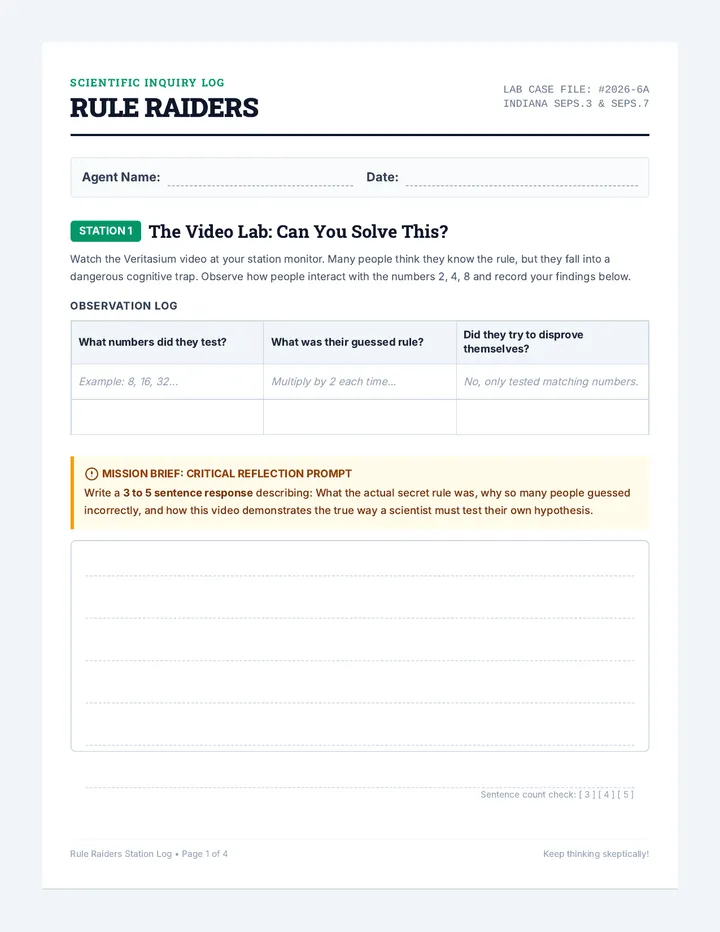
Guided notes for students to complete while reading the Circuit Symbols Guide. Includes fill-in-the-blank definitions, drawing practice for symbols, and an integrated circuit sketching area. Optimized for 1-page fit.
A teacher answer key for the Resource Rangers Worksheet, providing correct answers for the vocabulary fill-in-the-blank and guidance for creative responses.
An updated teacher facilitation guide that includes instructions for using the vocabulary sentence frames during oral practice.
A practice worksheet for students to reinforce their understanding of 'steward' and 'nonrenewable' through fill-in-the-blank sentences and creative application.
A slide presentation focusing on the vocabulary words 'stewards' and 'nonrenewable' with student-friendly definitions, sentence examples, oral practice prompts, and sentence frames.