A guided inquiry lab worksheet where students measure and analyze the effects of wire length and gauge on electrical resistance using nichrome wire and multimeters.
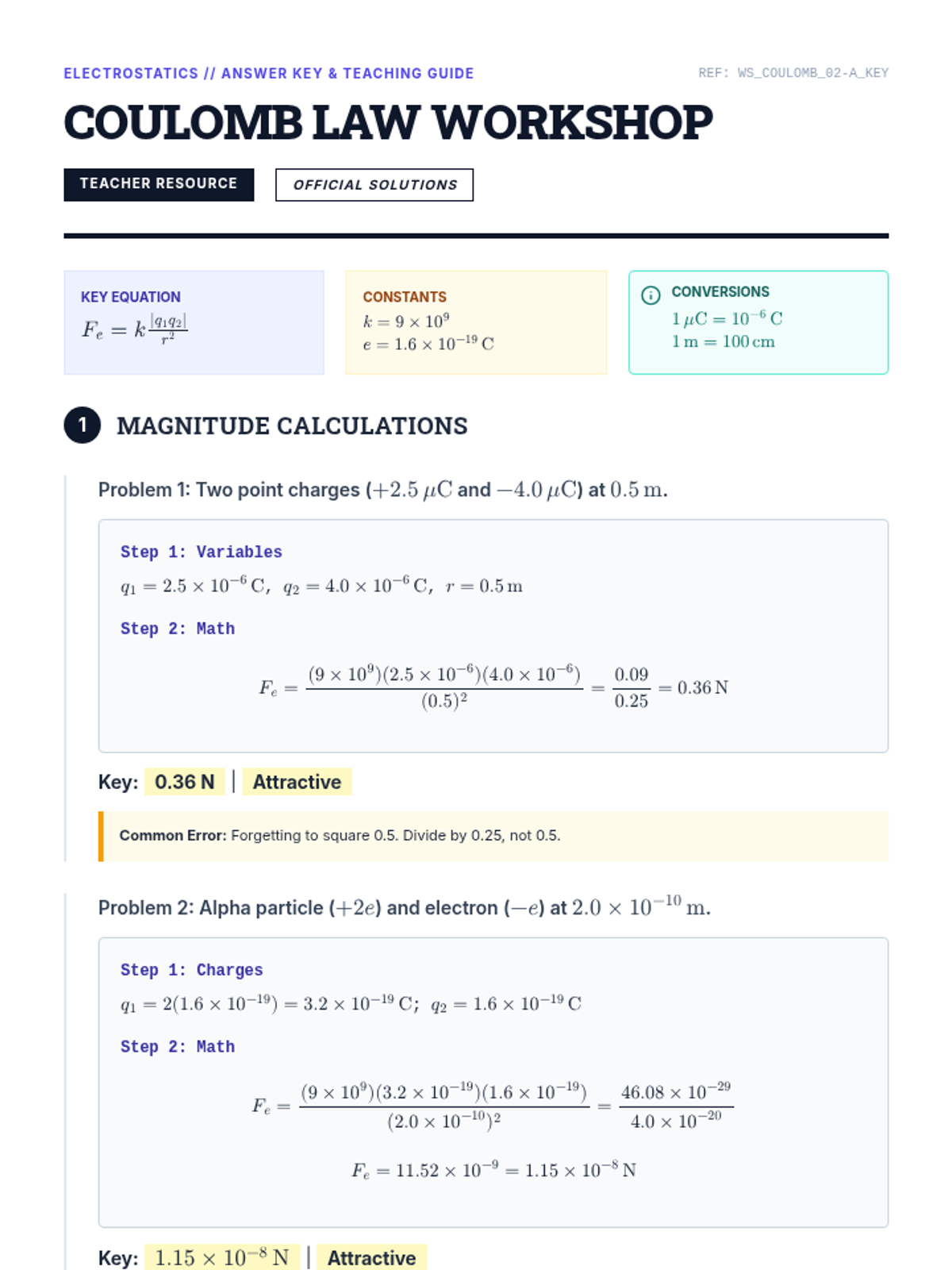
A comprehensive teacher answer key for the Coulomb Law Workshop, featuring step-by-step mathematical derivations, final answers highlighted for quick grading, and detailed sidebars for common student misconceptions and unit conversion reminders.
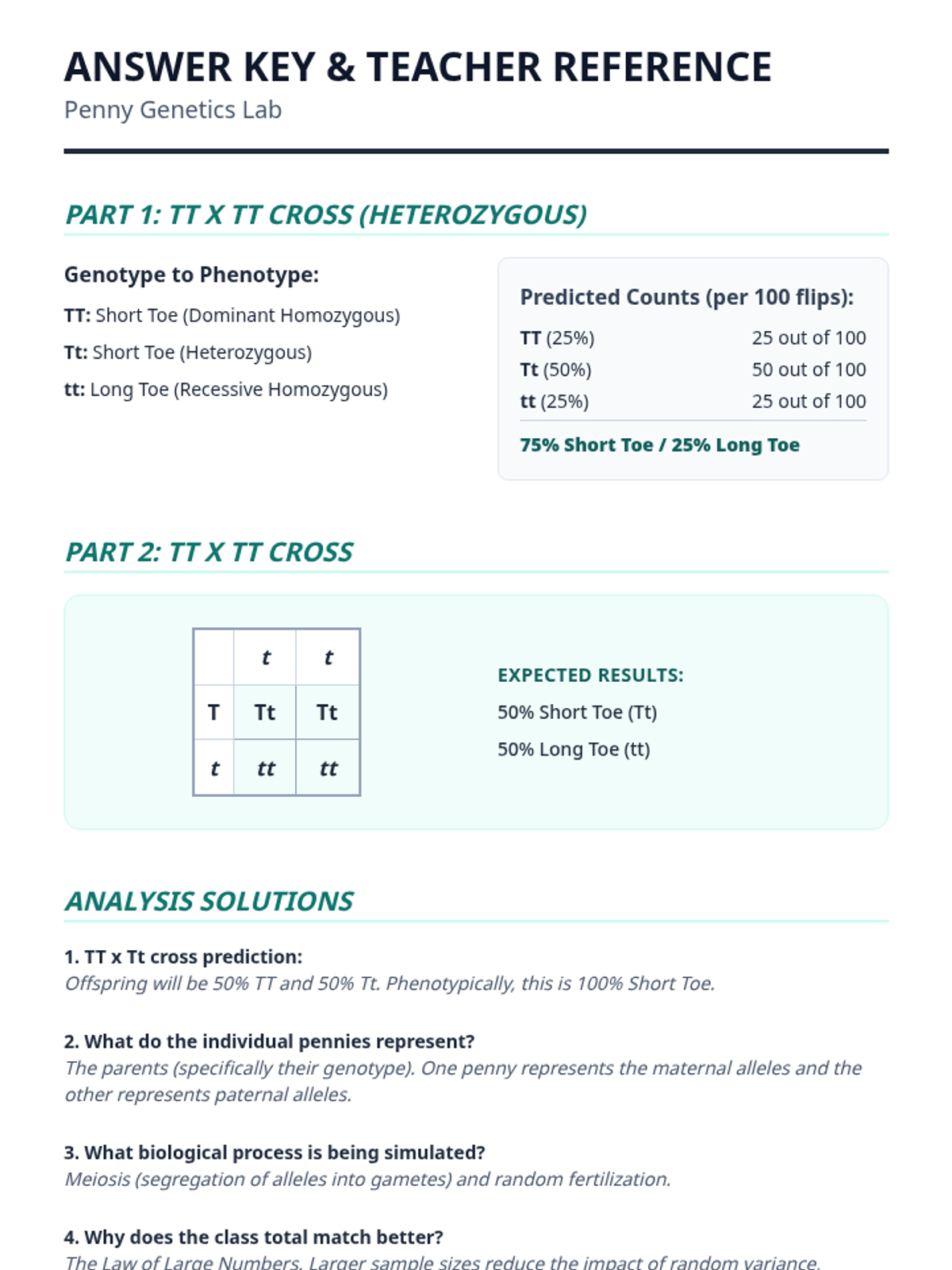
Answer key for the Penny Genetics Lab, providing Punnett square solutions, expected ratios, and sample answers for the analysis questions.
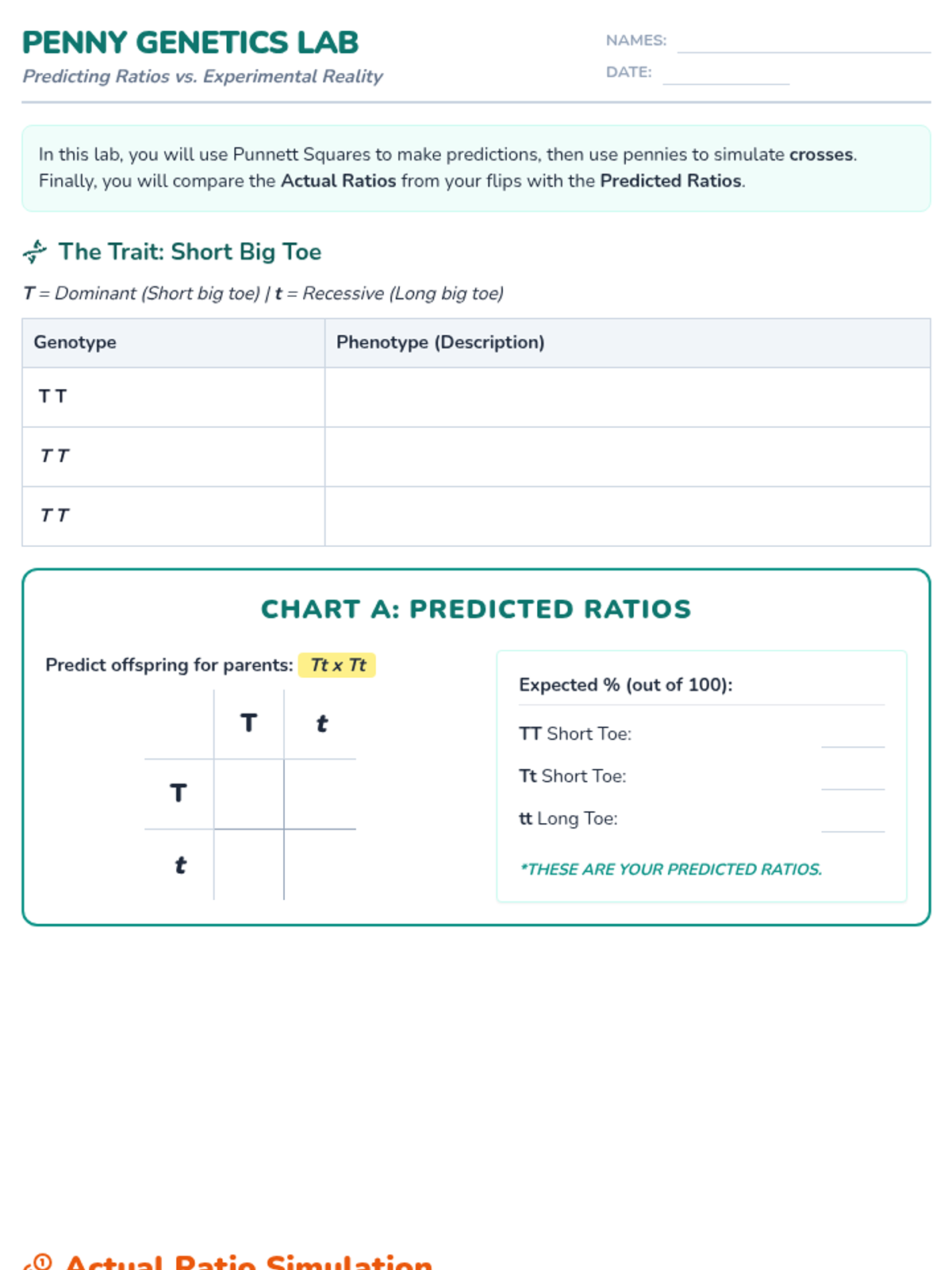
A redesigned 3-page student lab worksheet for the Penny Genetics activity. It includes space for Punnett square predictions, 100 coin-flip tallies, comparison charts, and analysis questions.
Slide deck for the Penny Genetics lesson, covering the science of chance, lab setup instructions, and the importance of sample size.
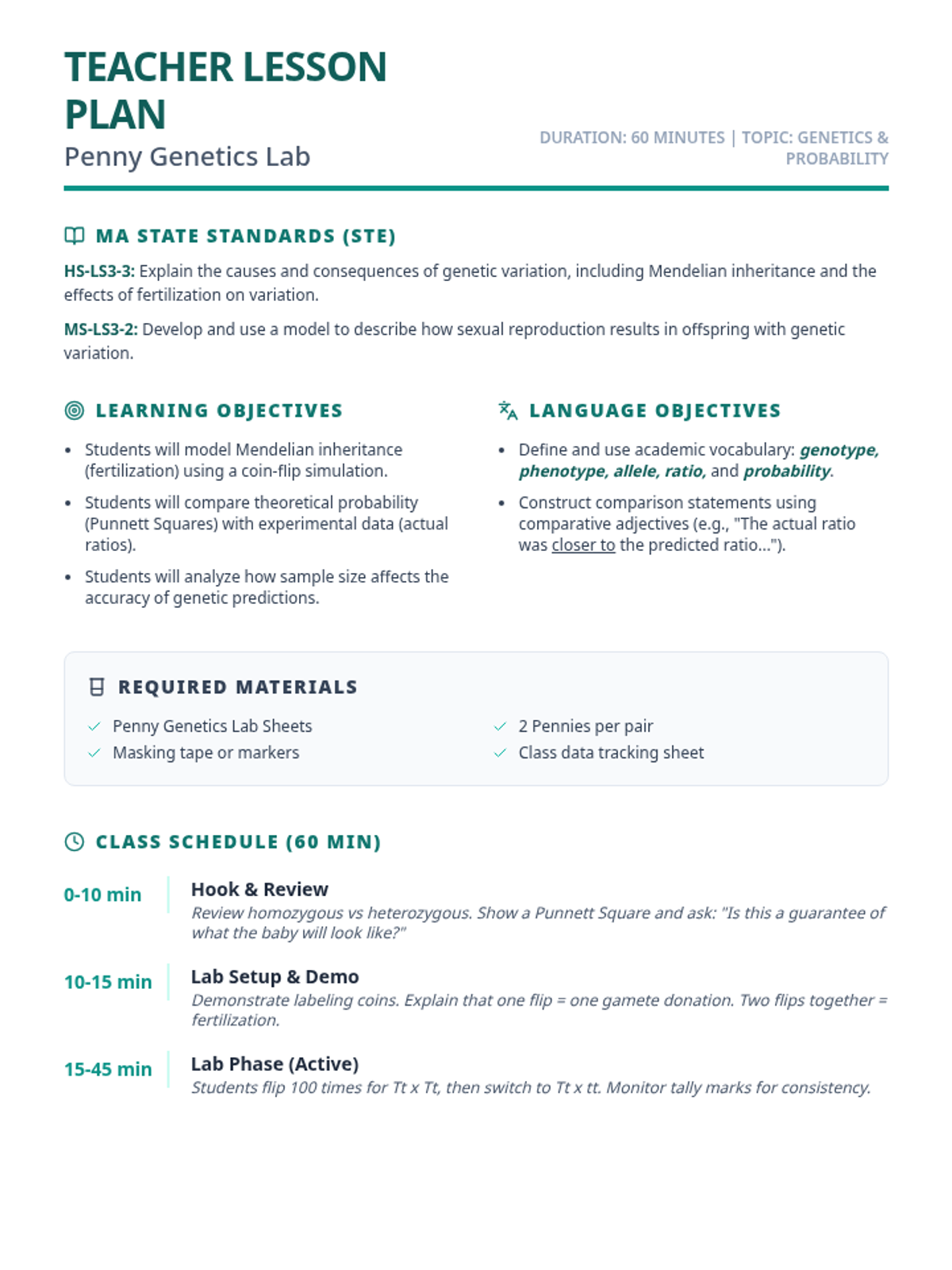
Teacher lesson plan for the Penny Genetics Lab, detailing the 60-minute class structure, required materials, and discussion prompts. Updated with MA State Standards, Learning Objectives, and Language Objectives.
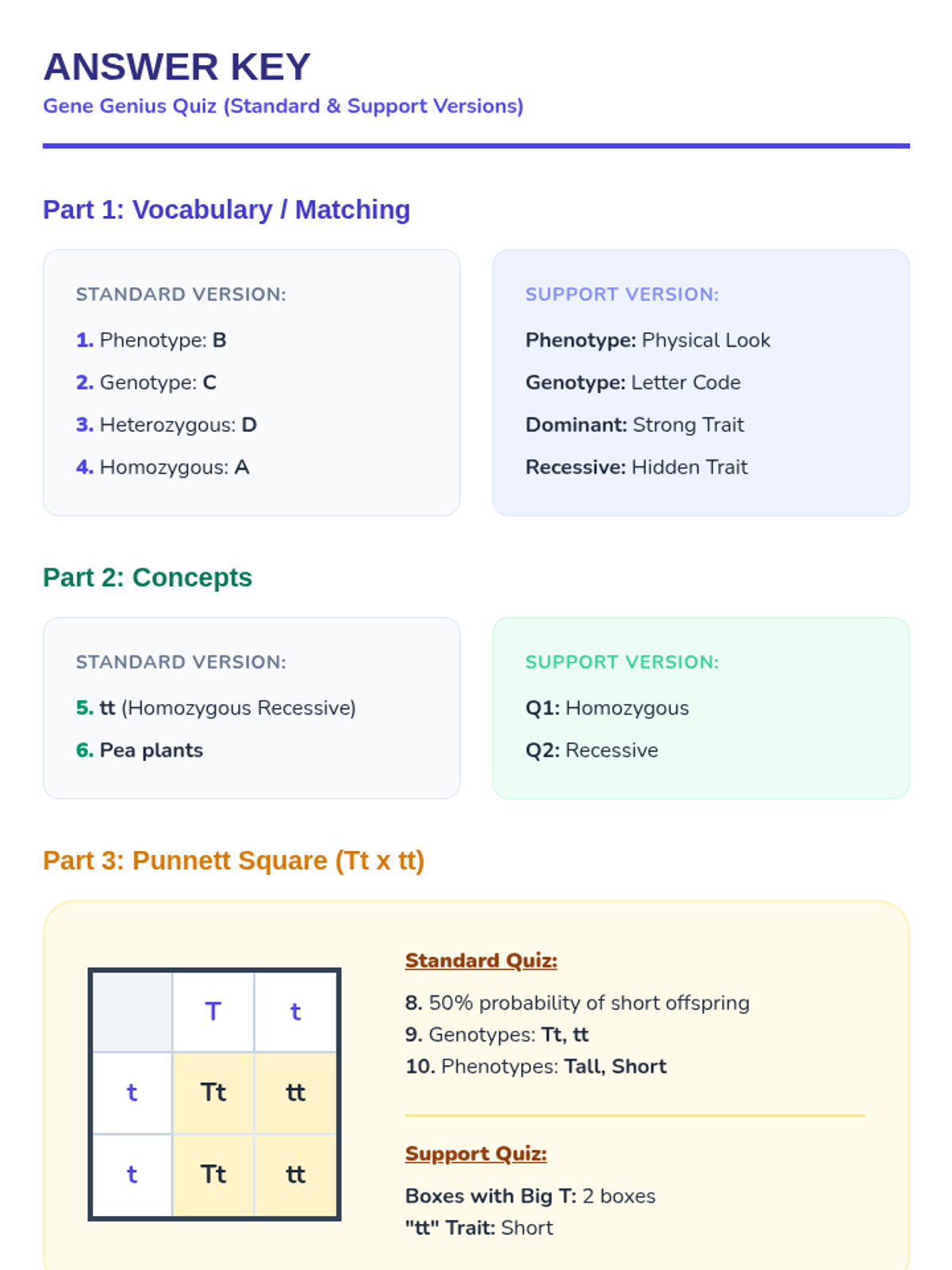
A comprehensive answer key for both the standard and support versions of the genetics quiz, including teacher tips for implementation.
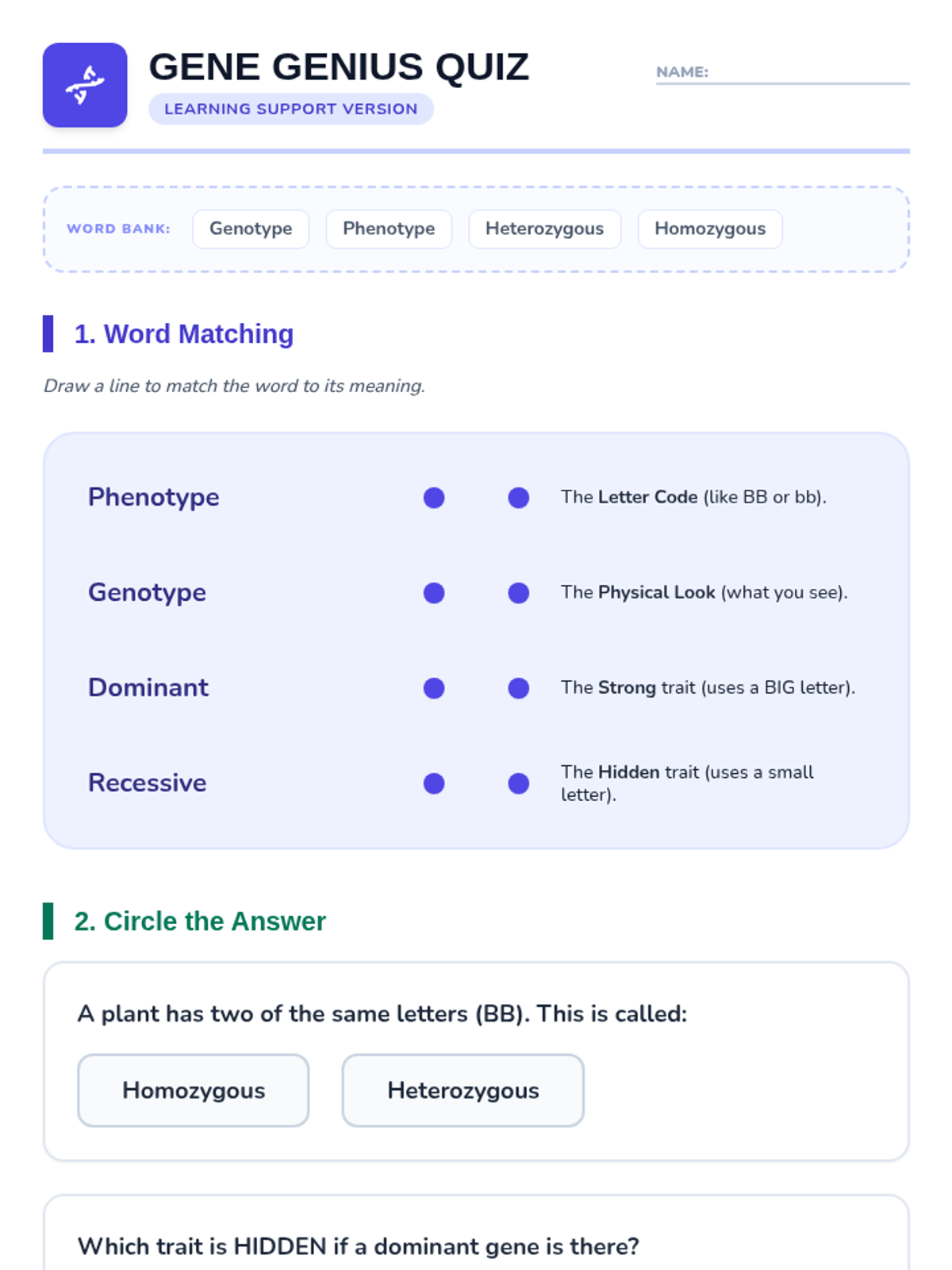
A differentiated genetics quiz featuring simplified language, visual icons, guided Punnett square setup, and a word bank to support diverse learners.
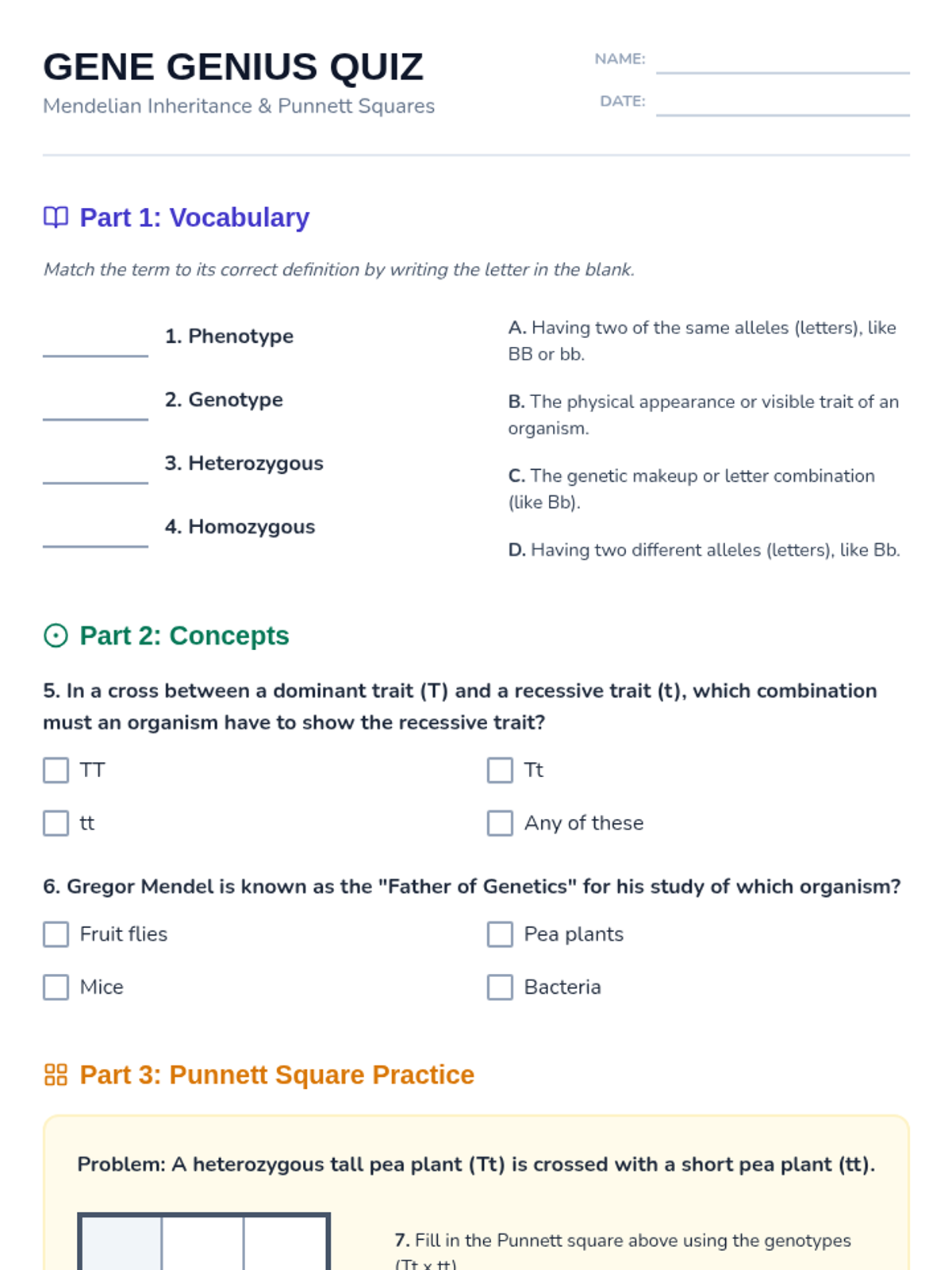
A standard level genetics quiz covering Mendelian vocabulary, basic inheritance concepts, and Punnett square application.
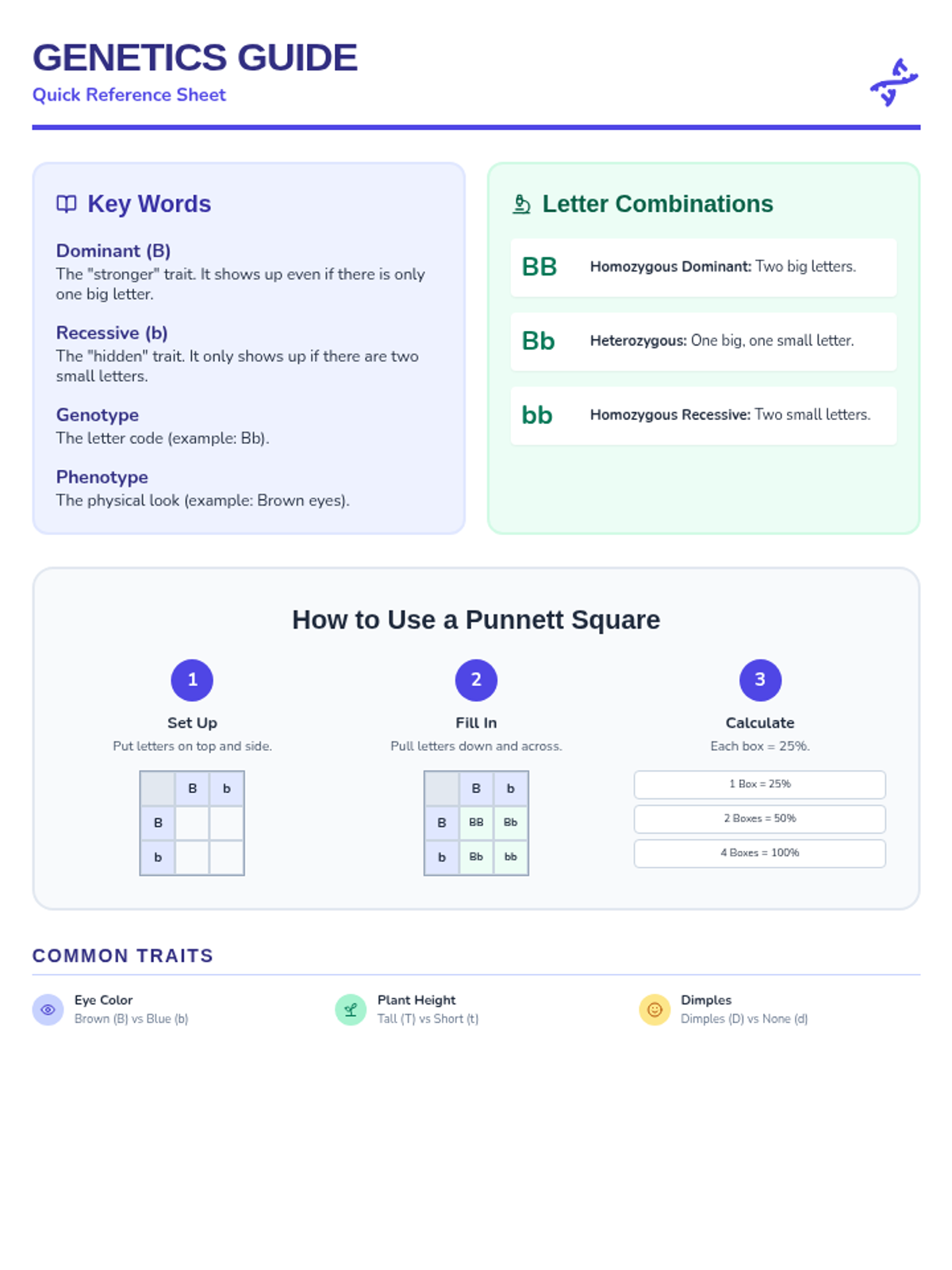
A visual reference sheet for students that defines key genetics vocabulary and provides a step-by-step guide to filling out Punnett squares.
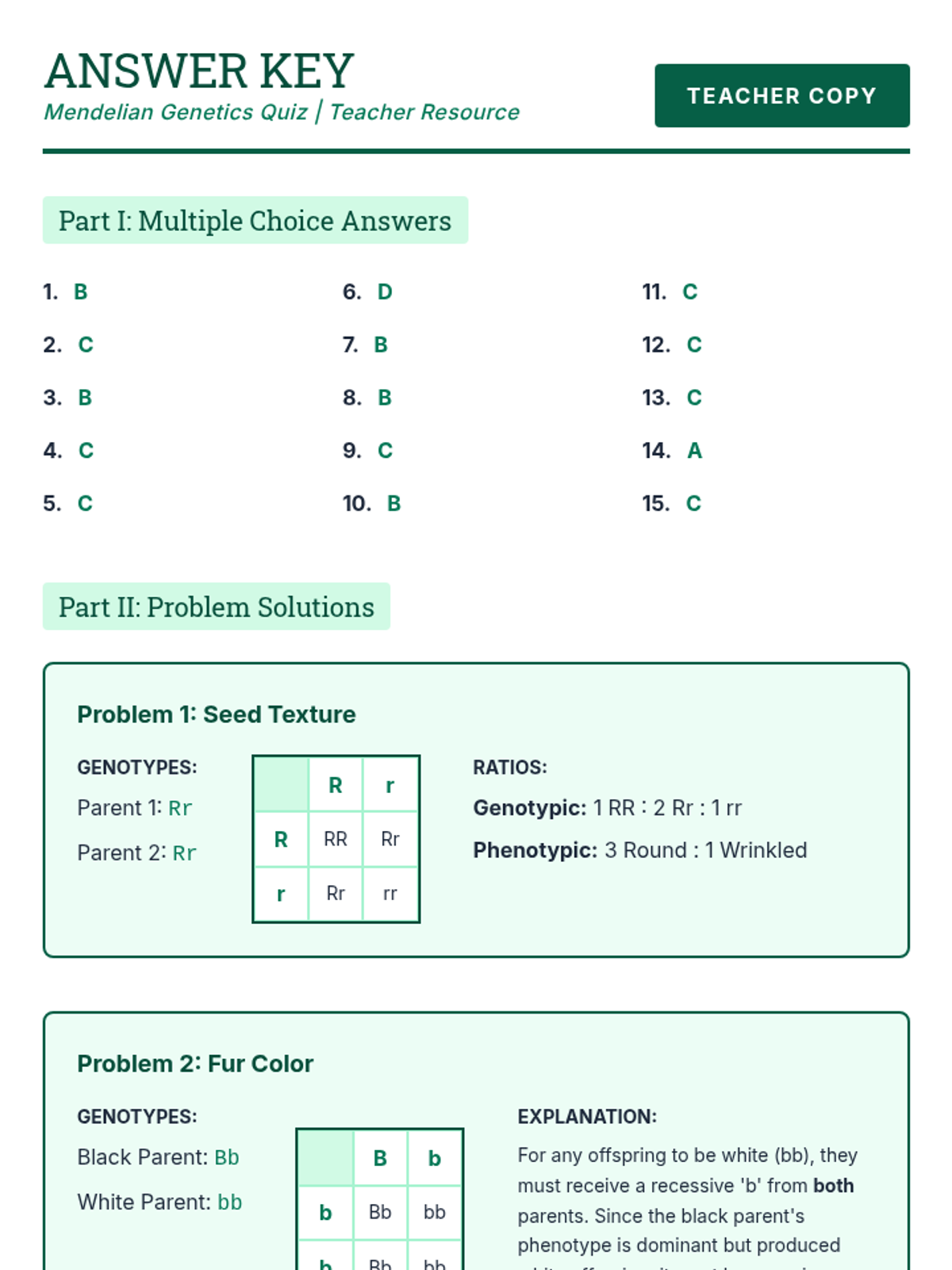
A complete answer key for the Mendelian Genetics Quiz, featuring the multiple-choice solutions and fully detailed Punnett squares for the problem-solving section.
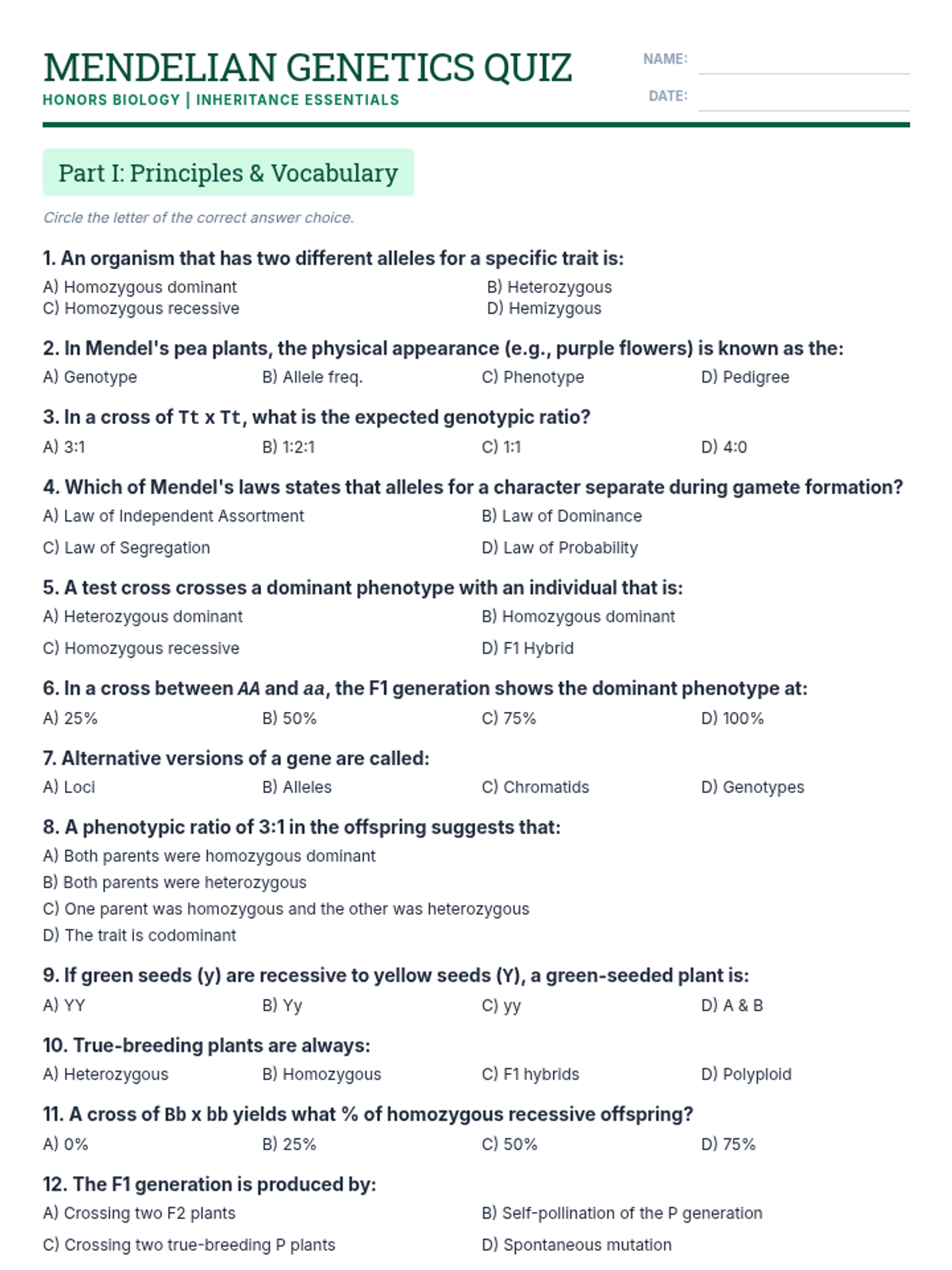
An honors-level Mendelian genetics quiz featuring 15 multiple-choice questions on vocabulary and probability, followed by two Punnett square analysis problems focusing on monohybrid crosses.
A visual review slide deck for teaching carrying capacity, limiting factors, and human environmental impact. Includes high-impact graphics, clear definitions, and a case study prompt. Revised for clarity and corrected typos.
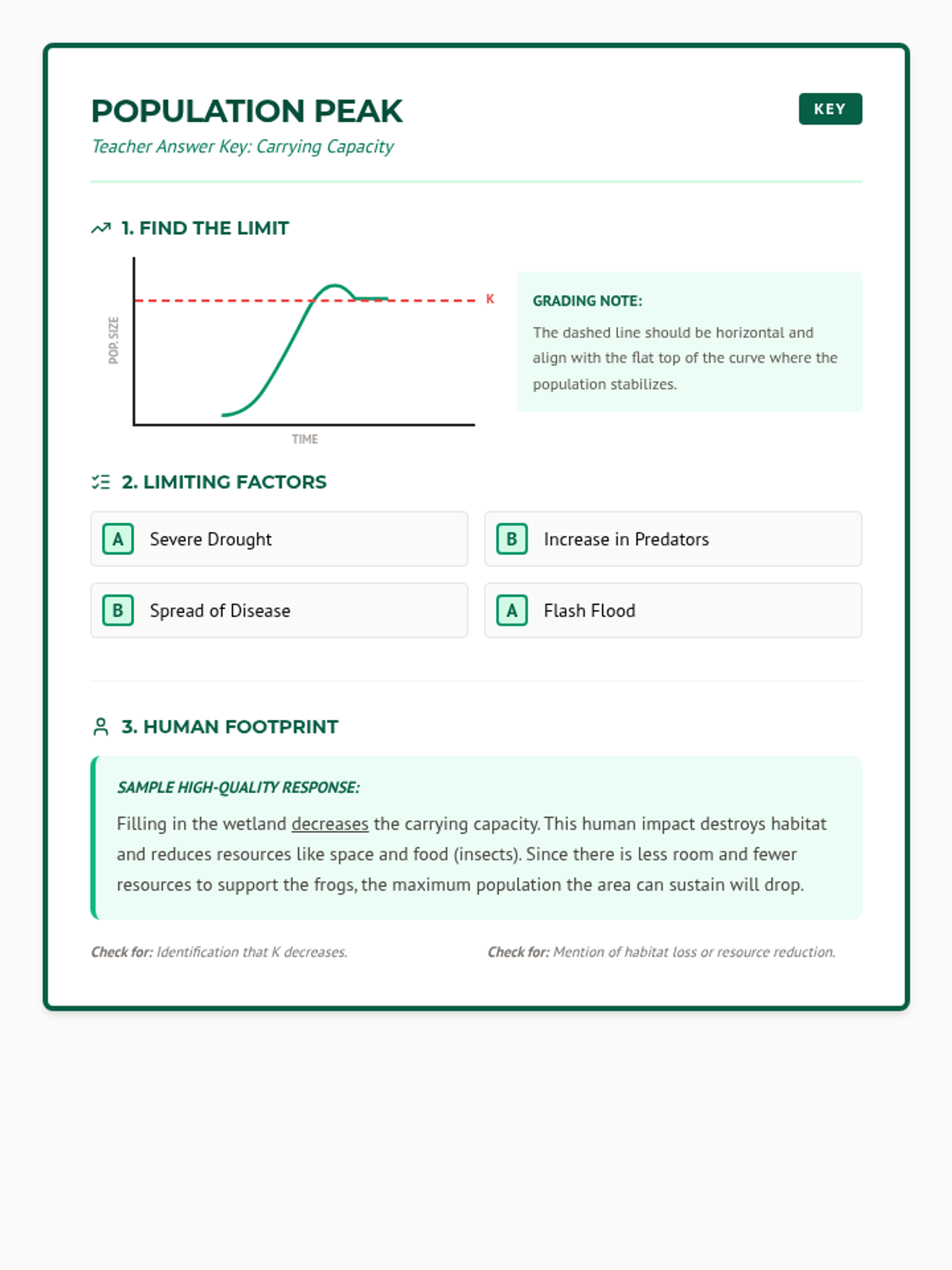
An answer key for the Population Peak exit ticket, providing correct graph placement, limiting factor classifications, and a sample high-quality response for the human impact question.
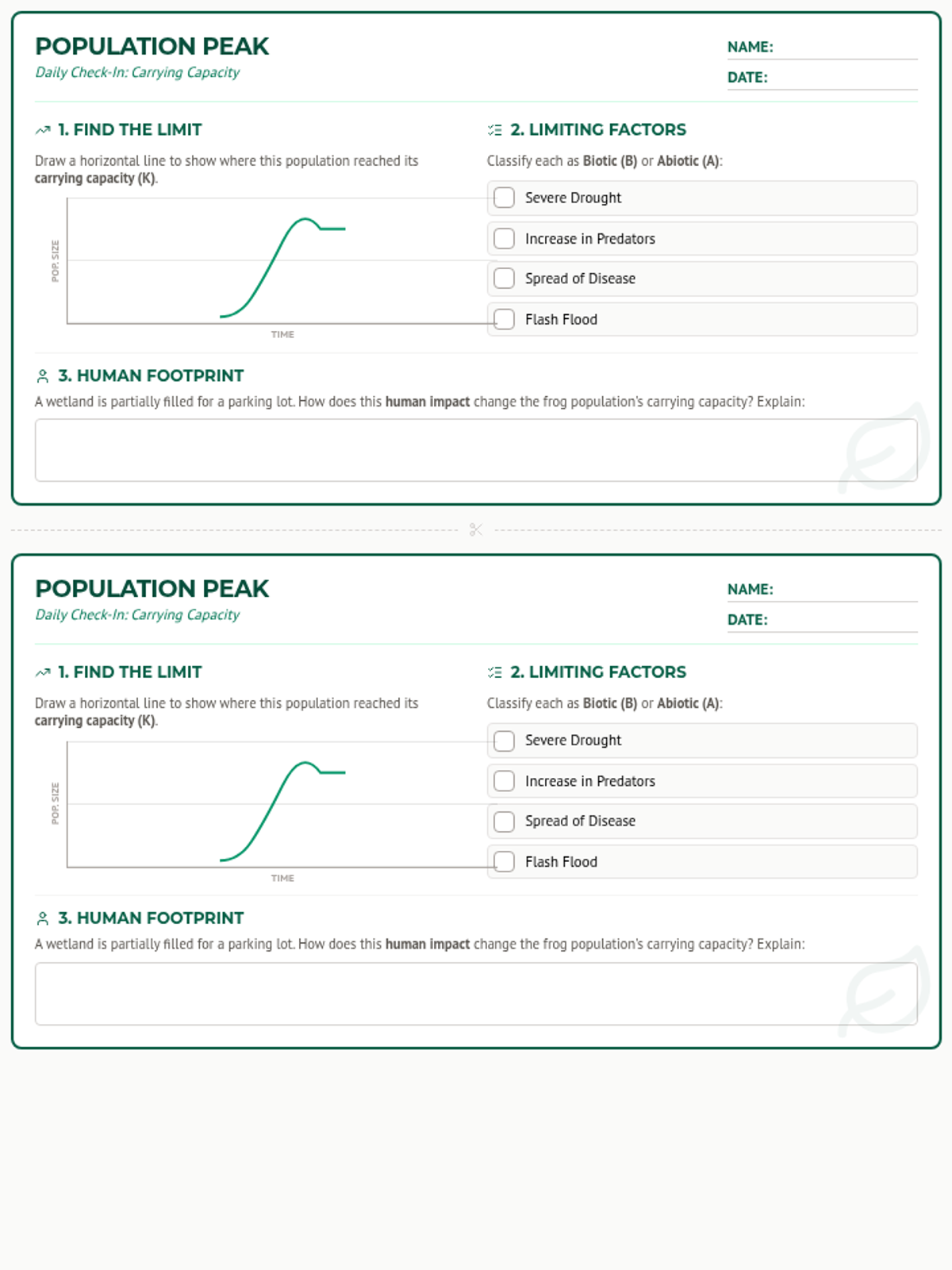
A set of two printable exit tickets on a single page designed to review carrying capacity. It includes a graph interpretation task, a sorting activity for biotic and abiotic limiting factors, and a short response question on human environmental impact. Revised for strict height constraints to ensure both fit on one page.
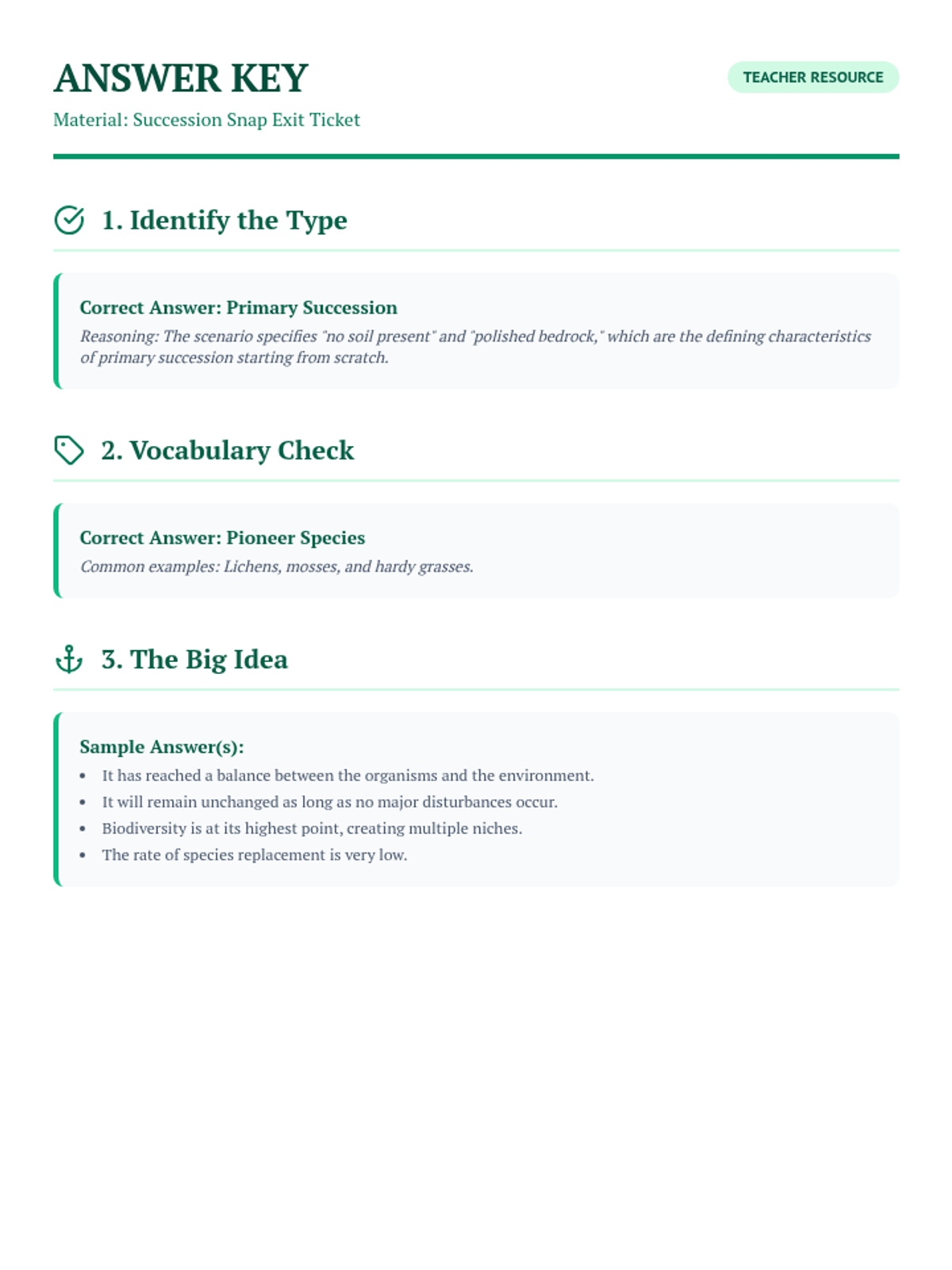
An answer key for the Succession Snap Exit Ticket, providing correct responses and sample explanations.
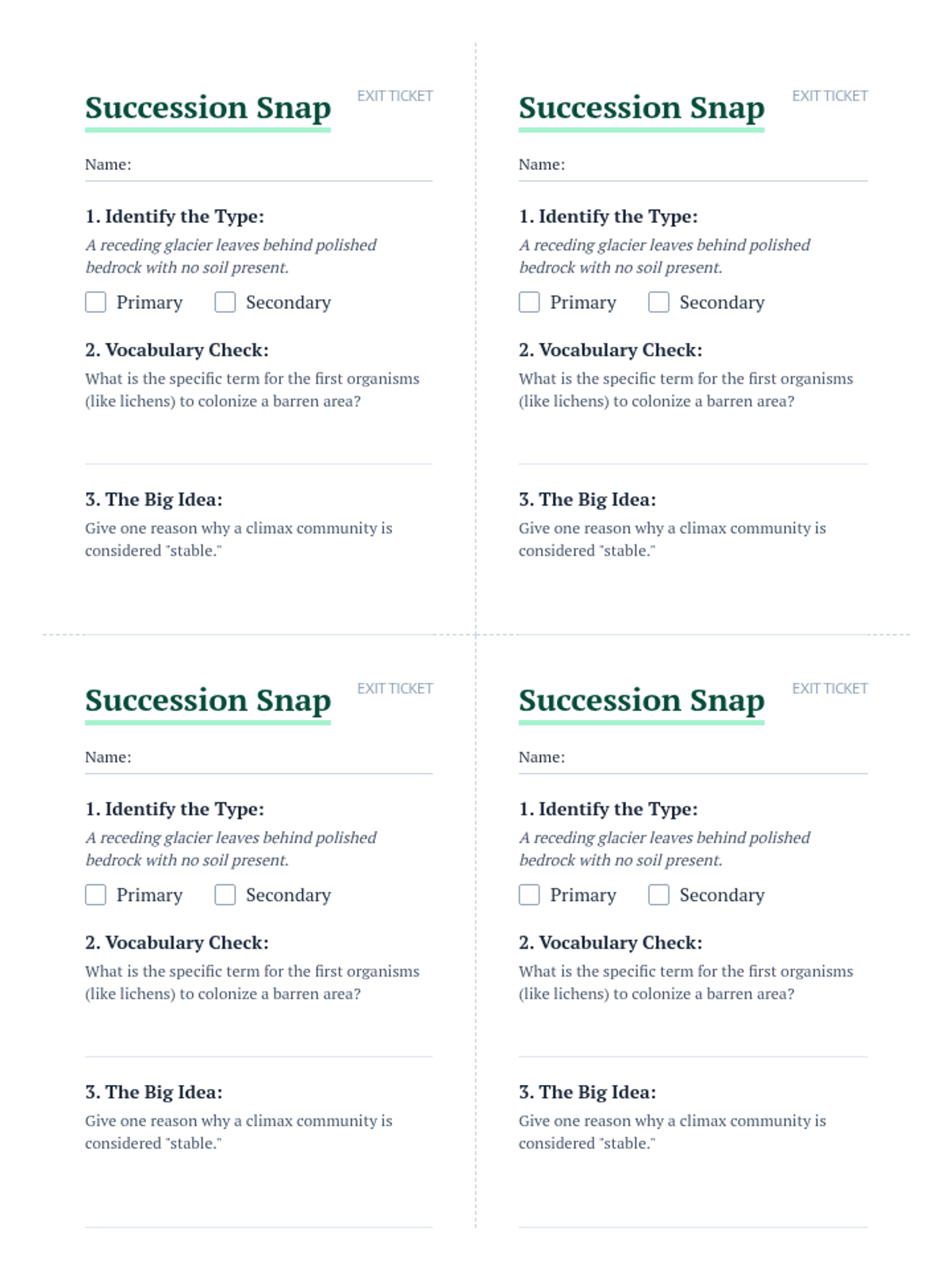
A four-per-page exit ticket for a quick formative assessment on ecological succession types and key vocabulary. Corrected for readability and text size.
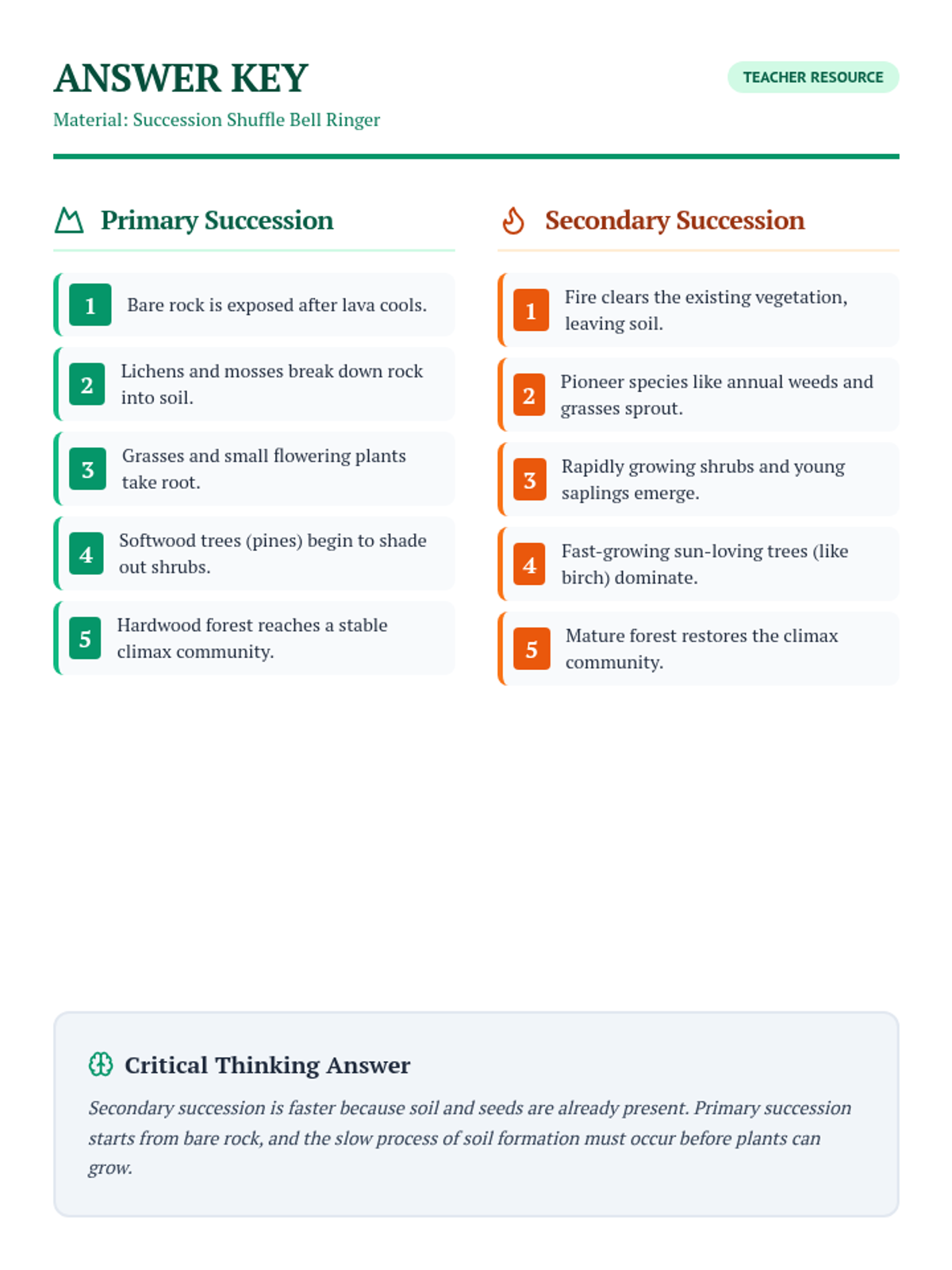
An answer key for the Succession Shuffle Bell Ringer, providing the correct numerical order for primary and secondary succession stages. Optimized for single-page printing.
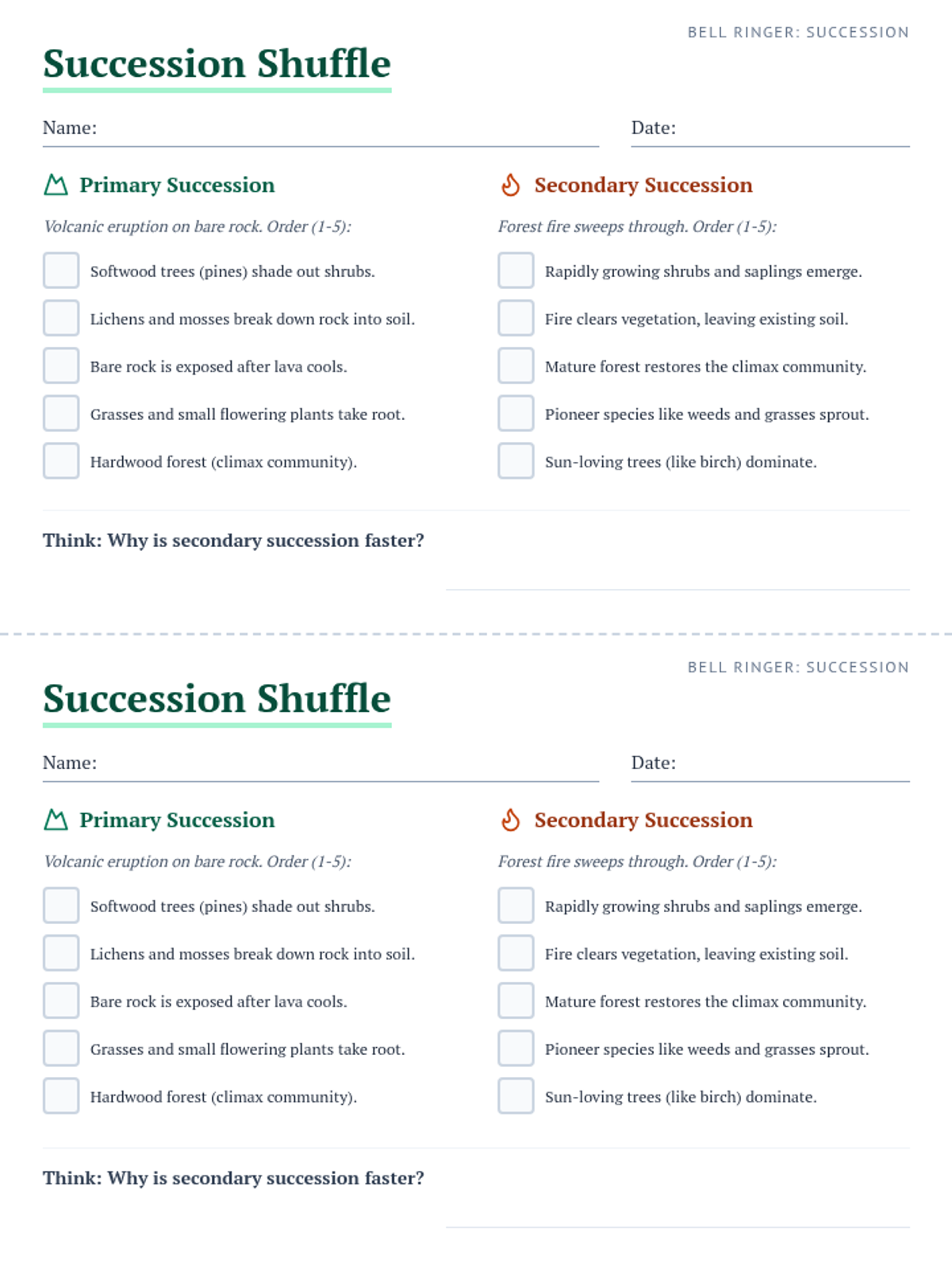
A double-up printable worksheet containing two half-sheet bell ringers. Students order the stages of primary and secondary succession. Corrected layout for single-page printing.
A visual presentation exploring the differences between generalist and specialist species. Includes comparisons for Raccoons vs. Koalas, Coyotes vs. Pandas, and Rats vs. Polar Bears.
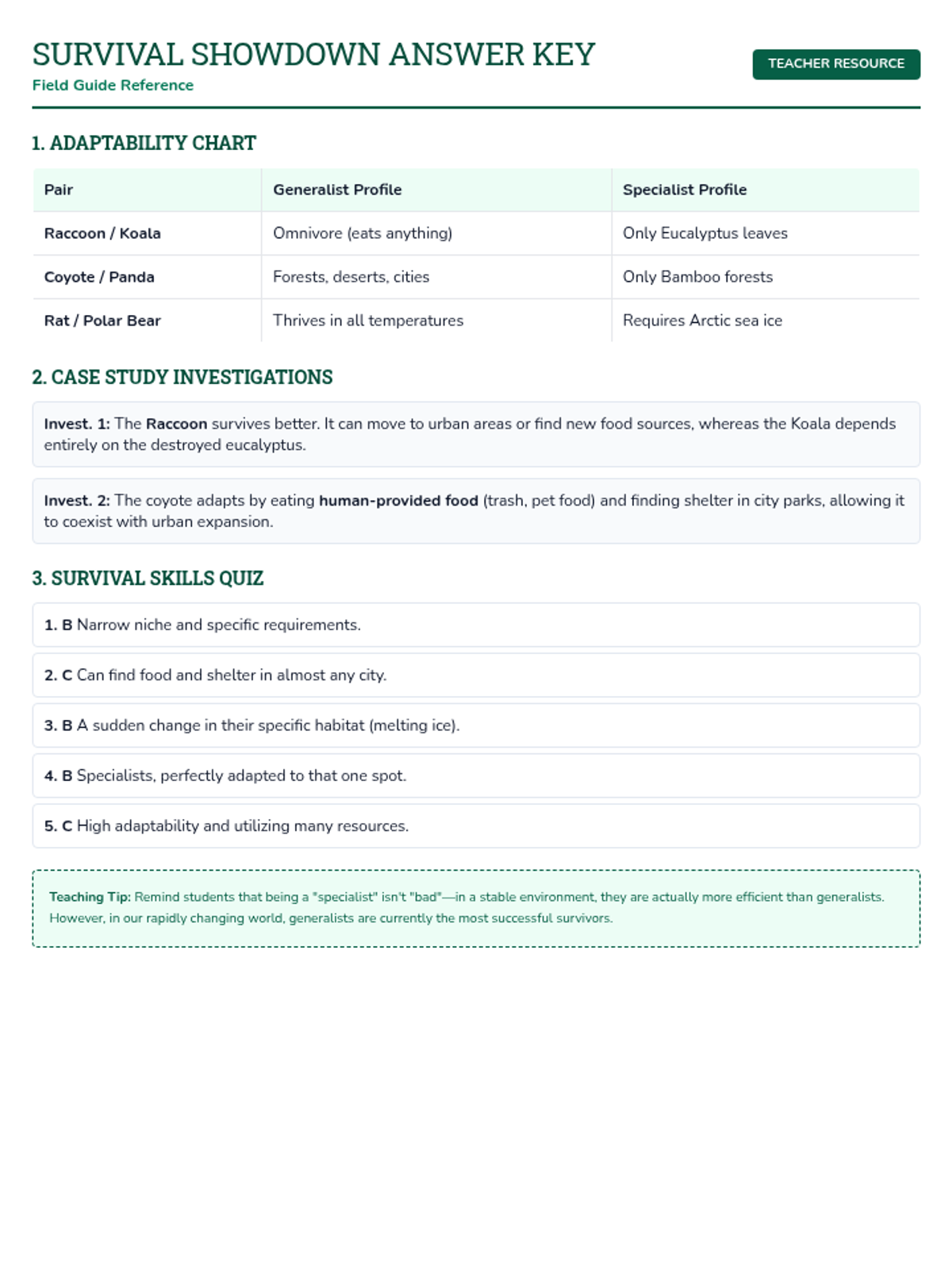
The teacher answer key for the Survival Showdown worksheet, providing sample responses for open-ended questions and correct choices for the multiple-choice quiz. Optimized for one-page reference.
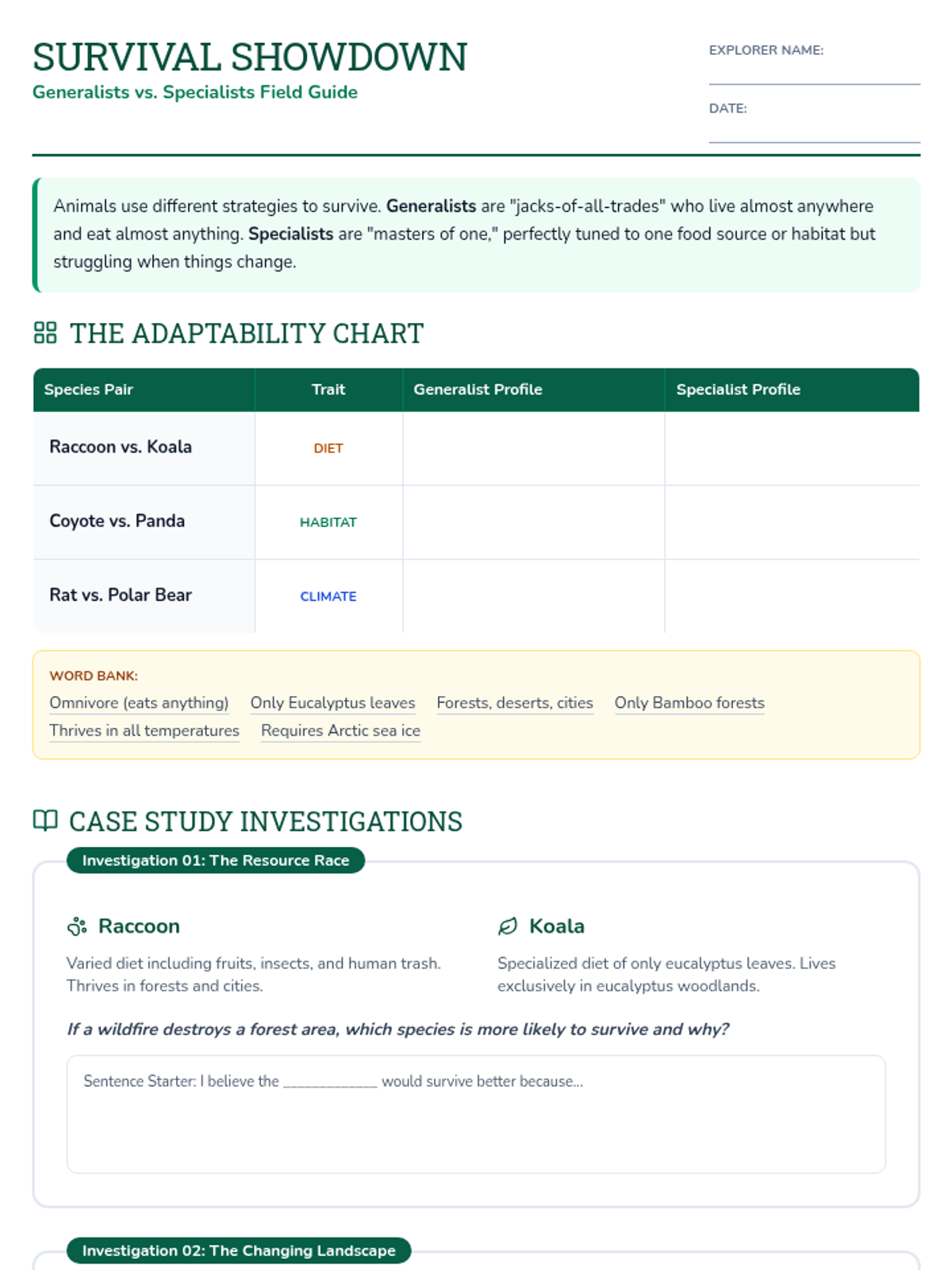
A comprehensive worksheet exploring the survival strategies of generalist and specialist species through three animal pairings. Includes a comparison chart with word bank, detailed case studies with sentence starters, and a multiple-choice assessment. Condensed to fit comfortably within a 3-page printable format.
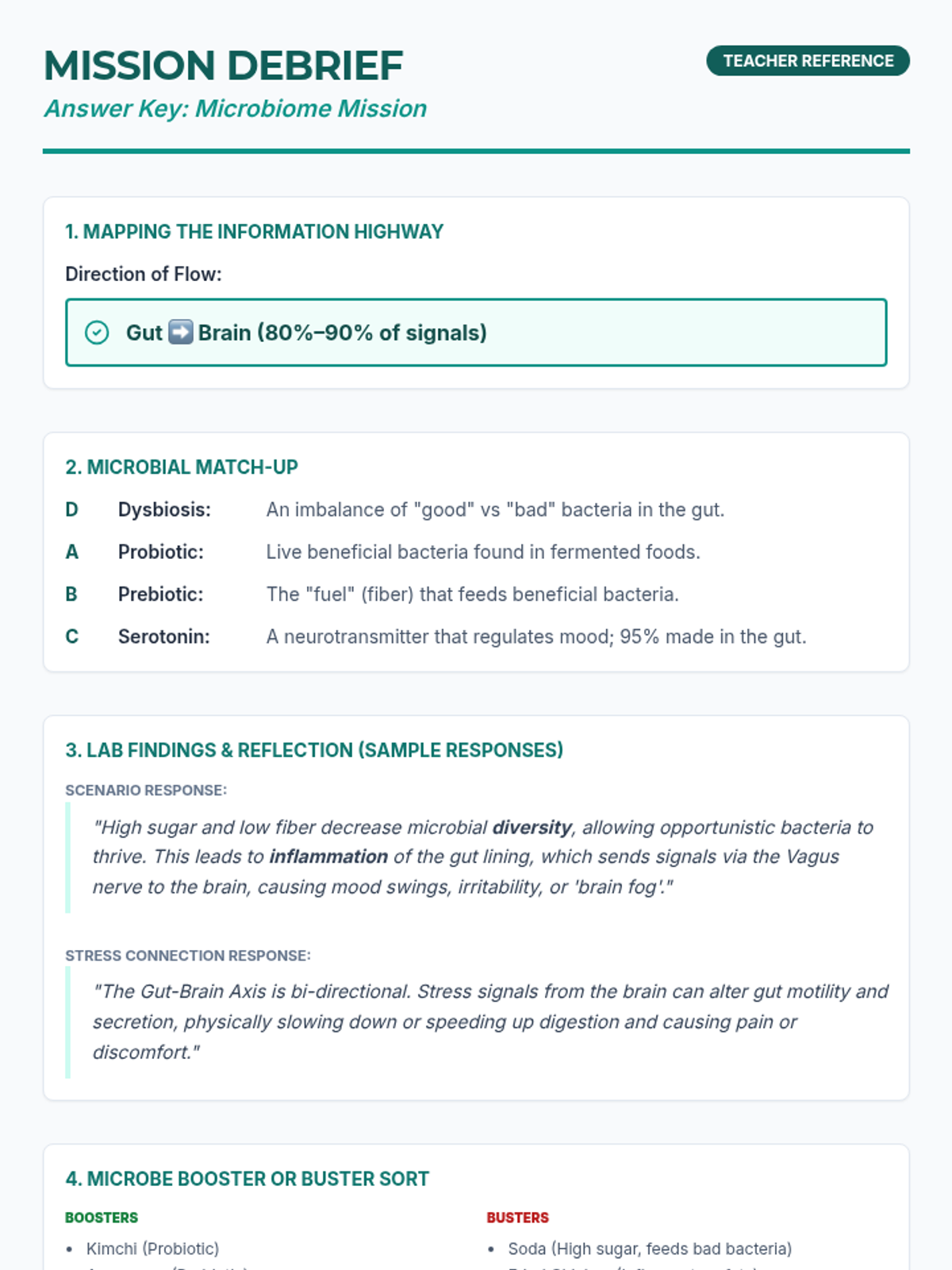
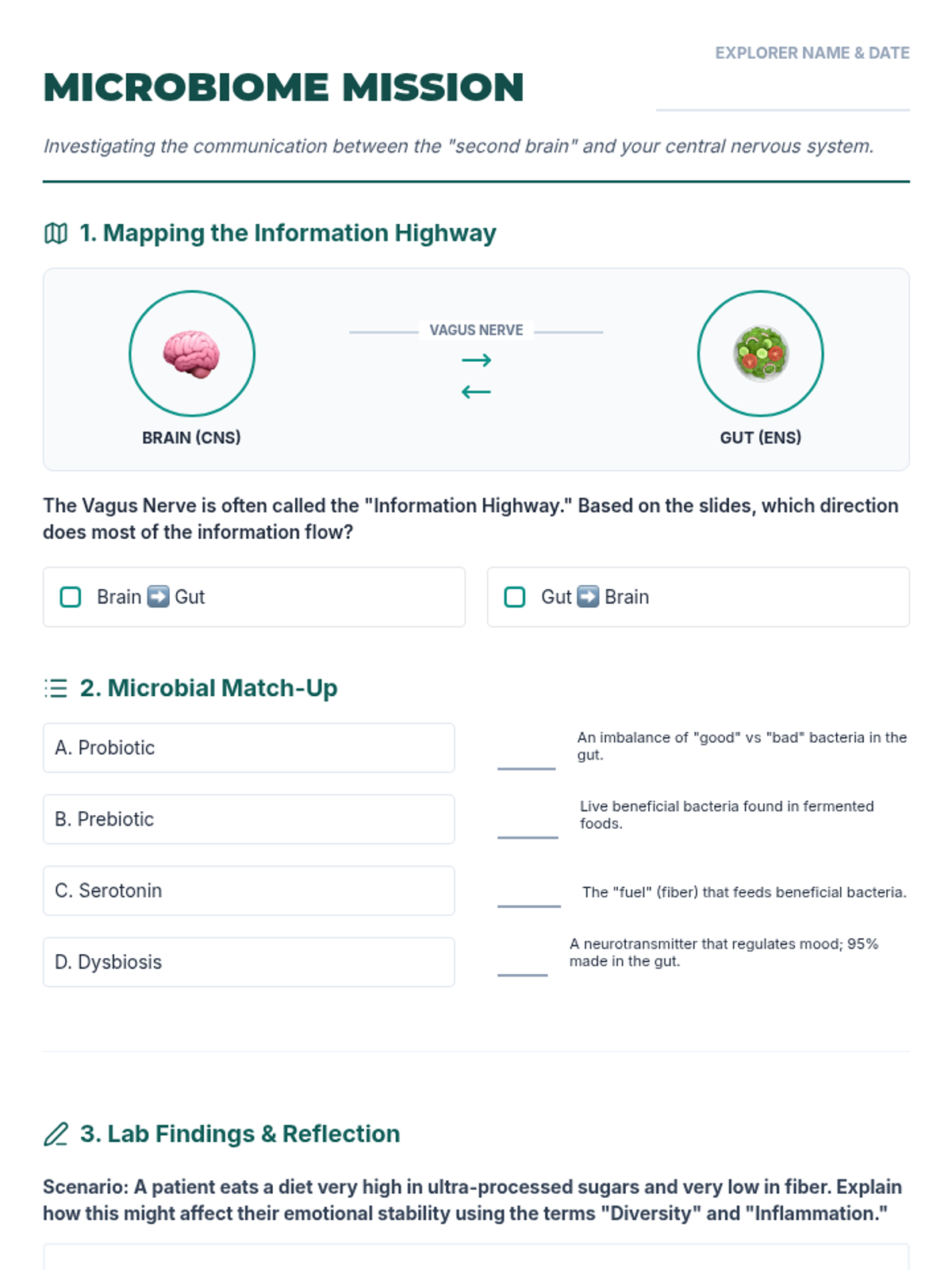
An answer key for the Microbiome Mission worksheet, providing correct answers and sample student responses.
A student worksheet for the Mind Microbe Map lesson, including anatomical labeling, vocabulary matching, critical thinking prompts, and a food sorting activity.
Expanded instructional slide deck for teaching the gut-brain connection, now including stress impacts, SCFAs, and modern microbiome threats.
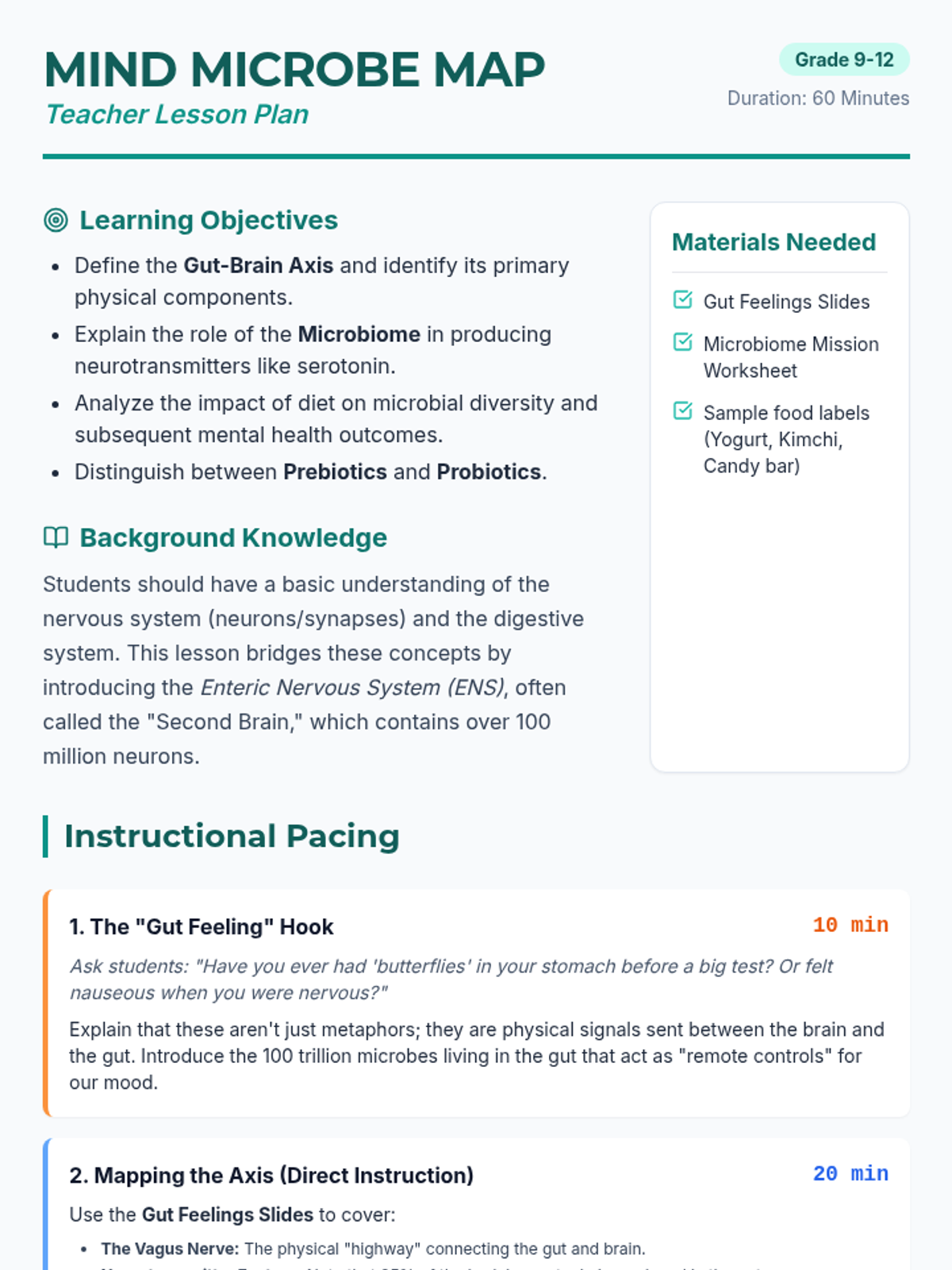
A detailed teacher lesson plan for high school biology or health classes covering the gut-brain axis, neurotransmitters, and the role of the microbiome in mental health.
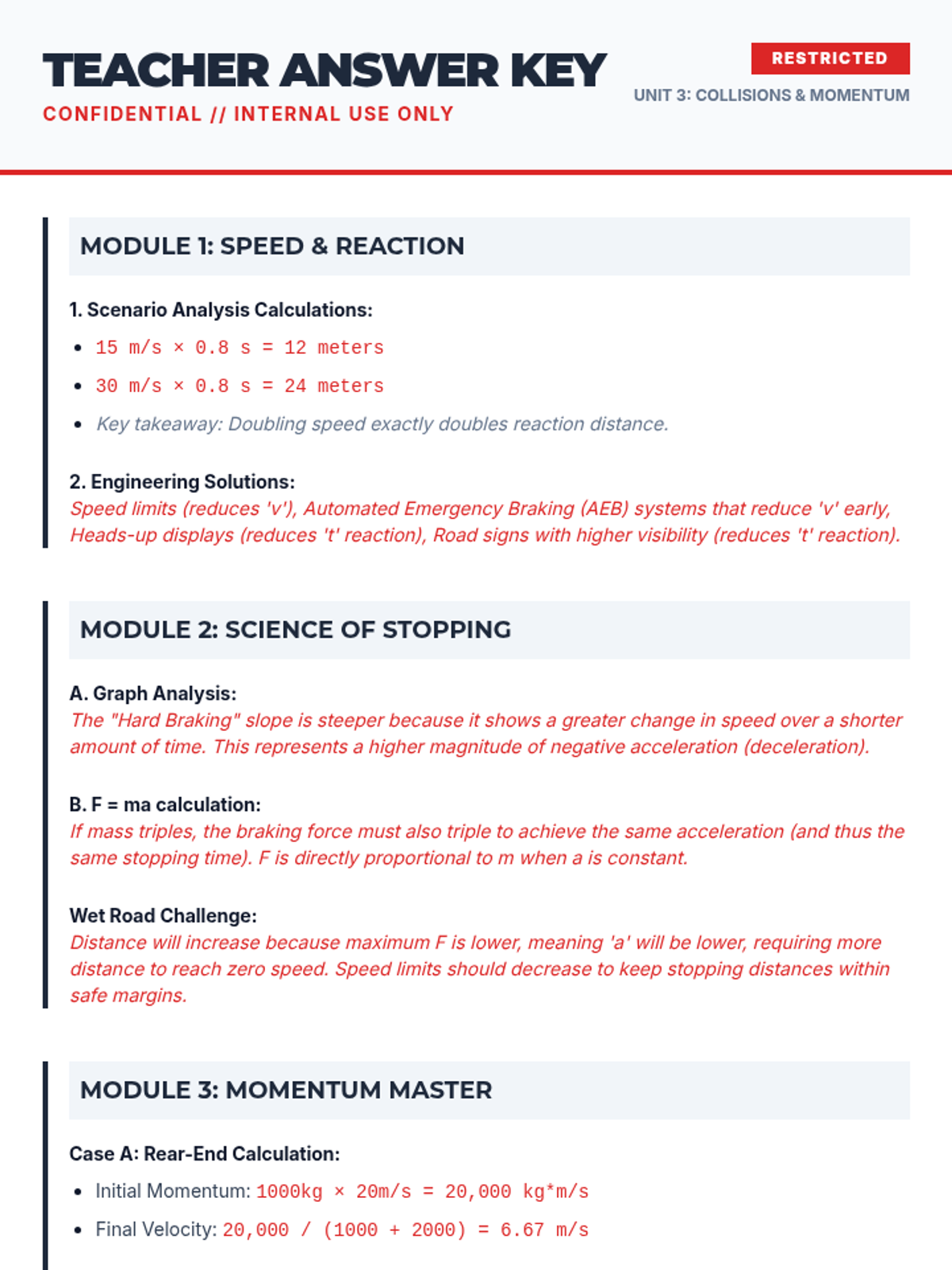
Teacher's answer key for the Crash Forensics Packet, providing mathematical solutions, conceptual explanations, and sample student responses for all four modules.
A comprehensive 4-module independent packet for students to work through mathematical modeling, graph analysis, and momentum conservation in the context of vehicle safety. Uses standard text for formulas to ensure PDF rendering.
A presentation briefing to set the stage for the Impact Investigation Lab, connecting distracted driving to collision physics and lab protocols. Clarifies that sliding distance is the dependent variable.
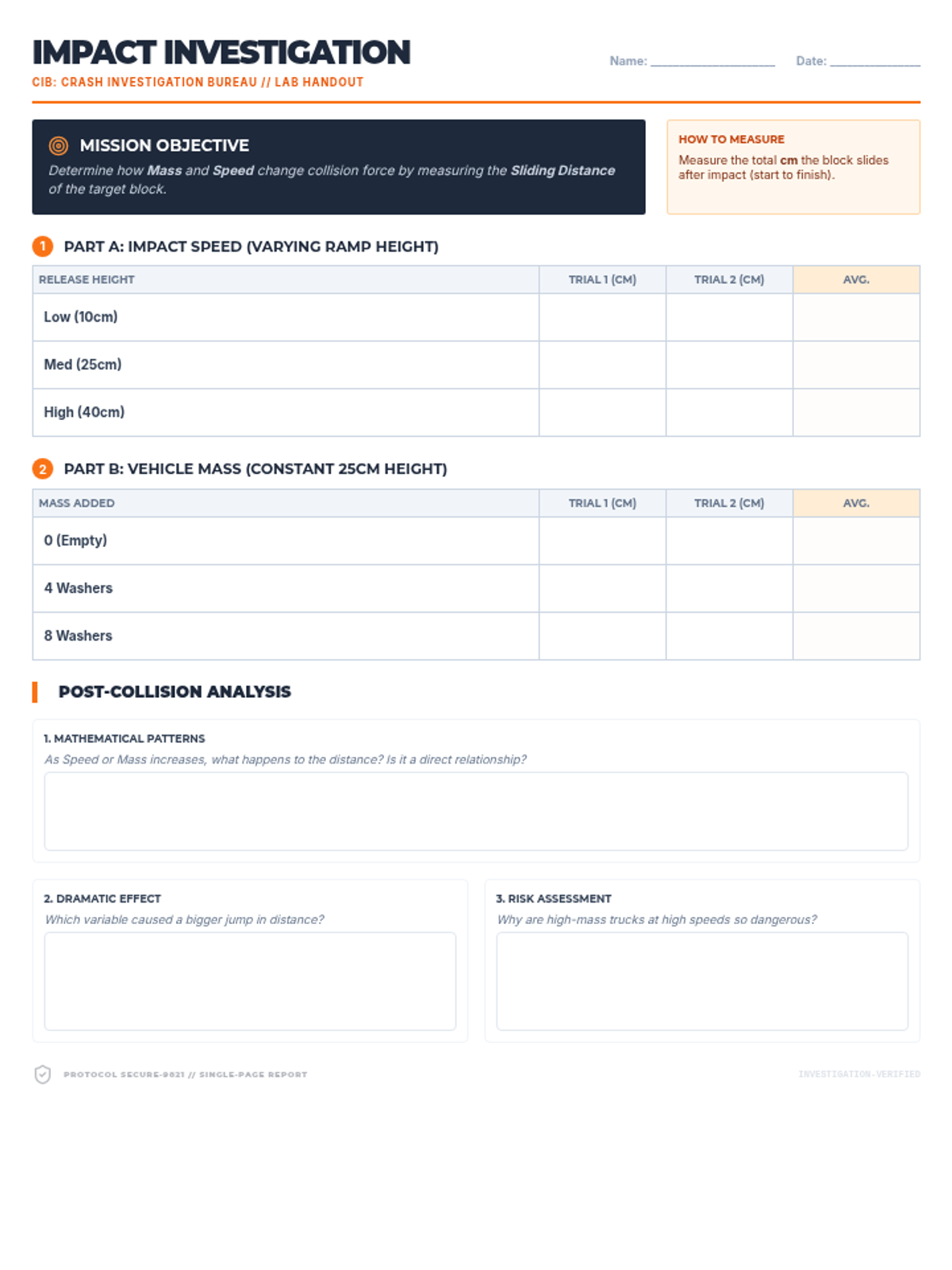
A hands-on lab handout for investigating how mass and speed affect impact force. Students release carts from varying heights onto a sliding target and measure the resulting displacement (sliding distance) as a proxy for impact energy. Includes columns for multiple trials.
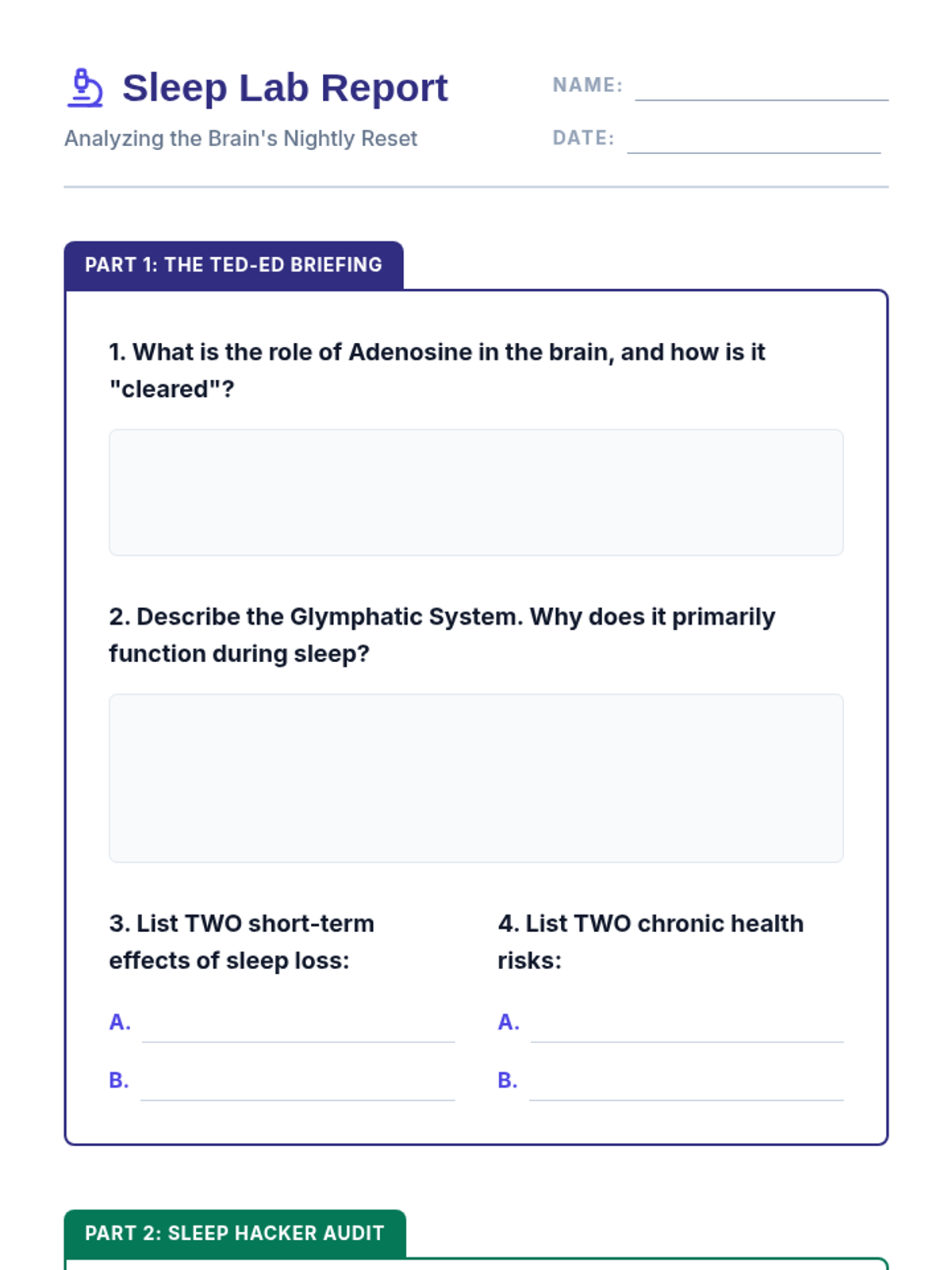
A student worksheet designed for use during and after the slide presentation, featuring video analysis questions and a personal sleep habit audit.
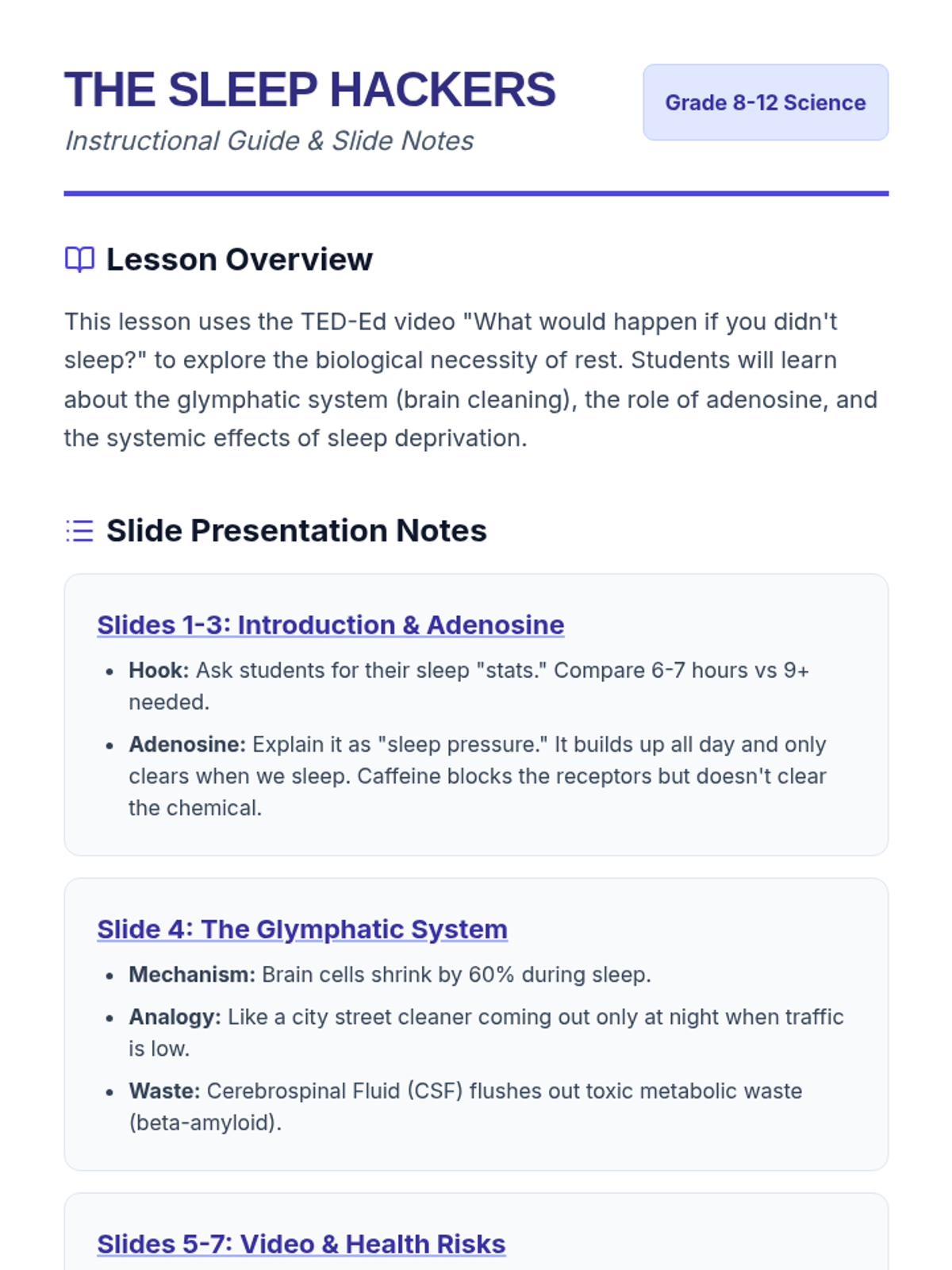
Comprehensive teacher notes and a slide-by-slide facilitation guide for "The Sleep Hackers" lesson, including discussion prompts and scientific background on the glymphatic system.
A high-impact slide deck exploring the biological mechanisms of sleep, including the glymphatic system and the dangers of sleep deprivation, based on the TED-Ed video.
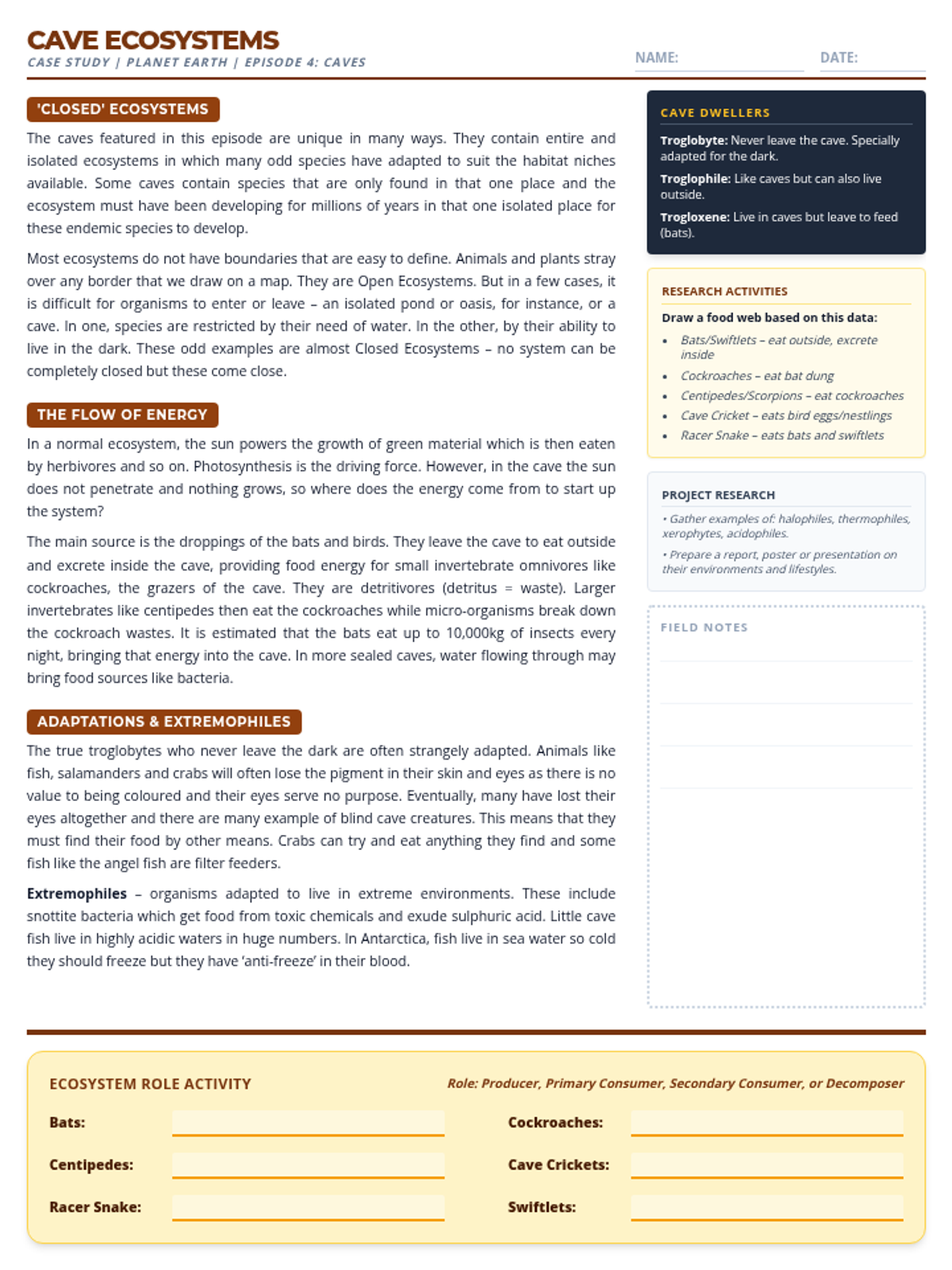
A comprehensive one-page student handout that includes all text from the cave ecosystem case study verbatim. It features the primary article text, the specific Research Activities data for food web construction, and a classification task for ecosystem roles.
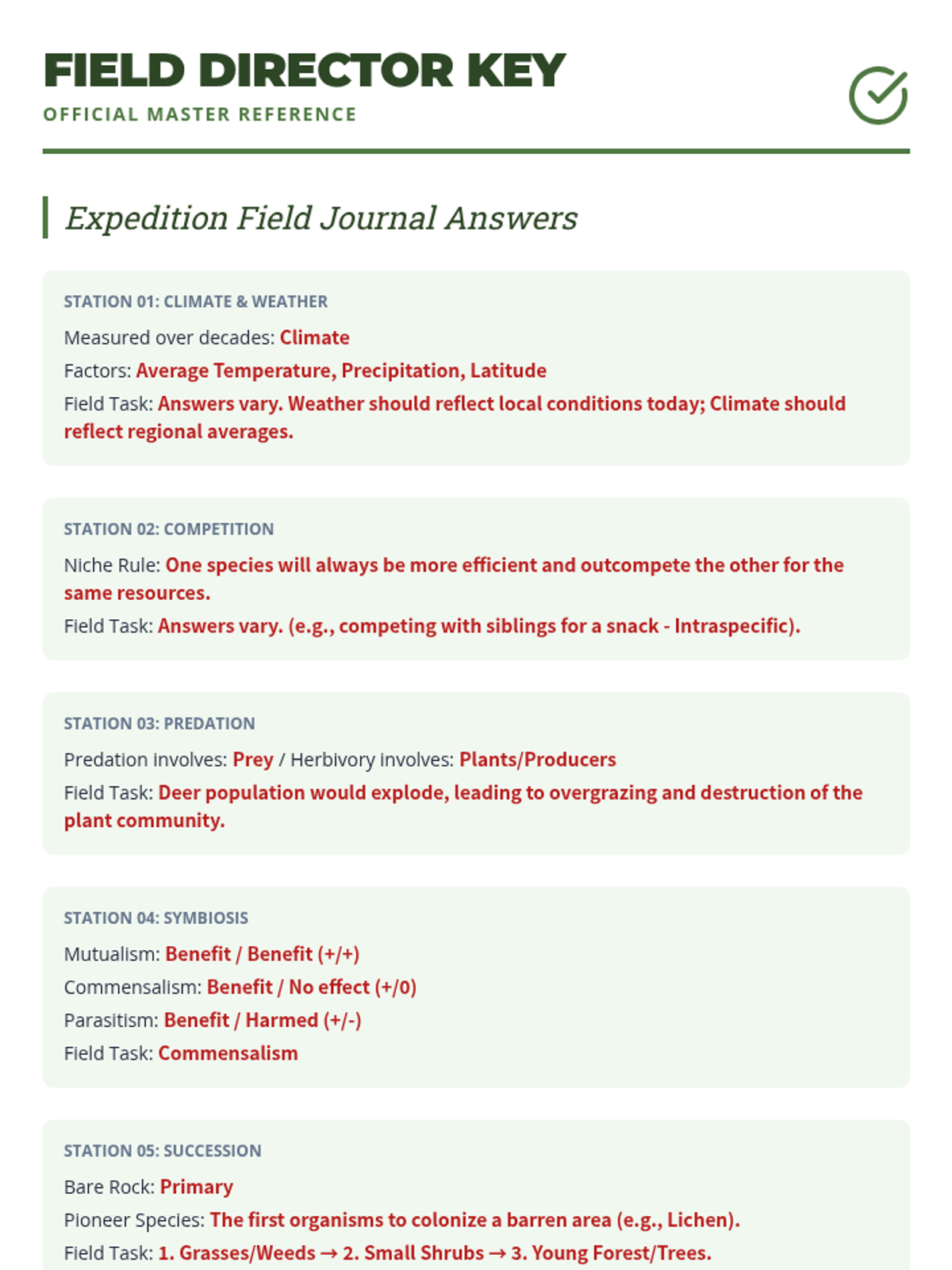
A comprehensive answer key for the 'Expedition Field Journal' and 'Relationship Rumble' activity cards.
A visual presentation for instruction and review, covering key concepts of climate, competition, predation, symbiosis, and succession with large text and clear diagrams.
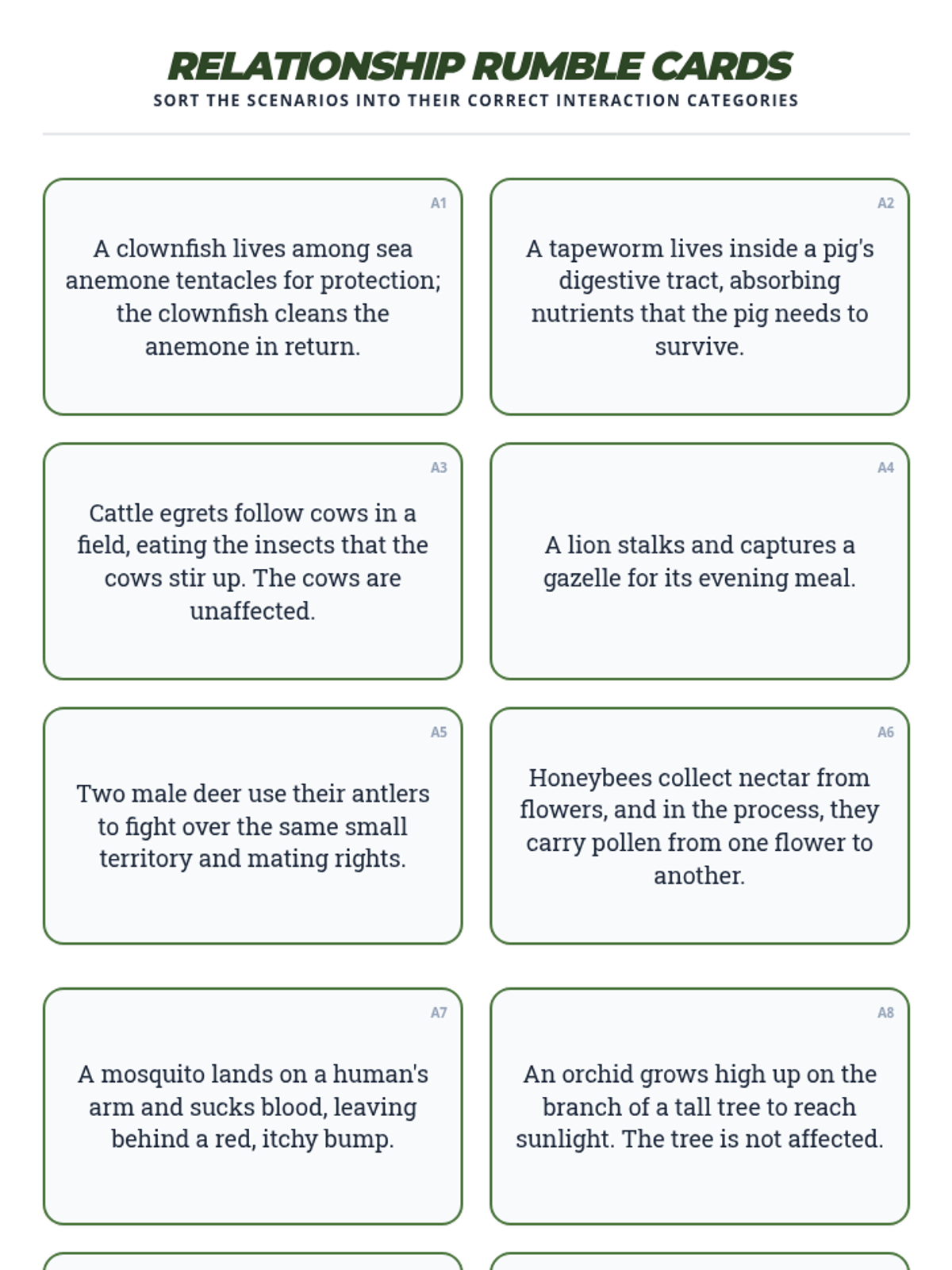
A set of 18 scenario cards for the 'Relationship Rumble' activity, featuring examples of biological interactions and ecological succession.
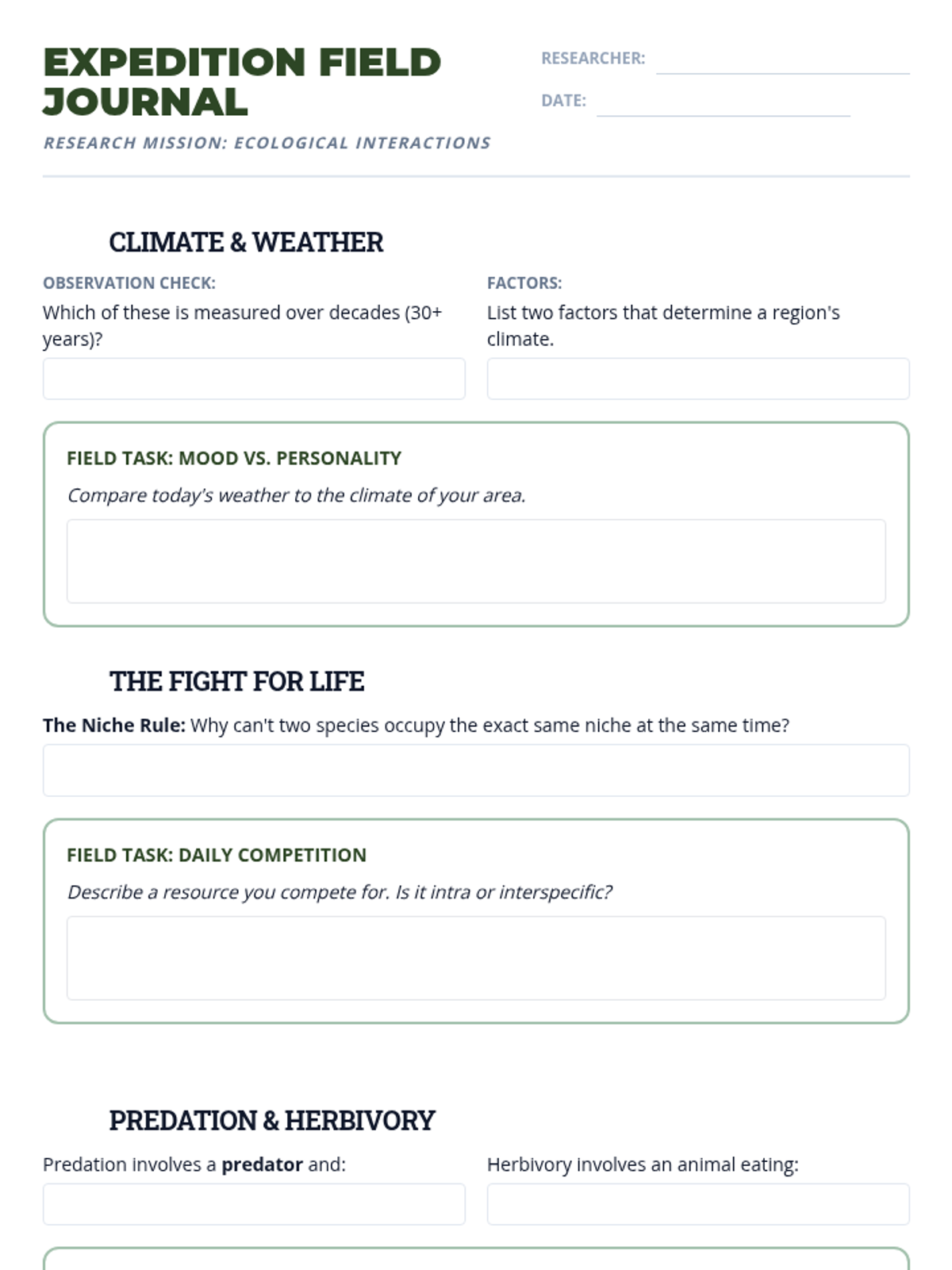
A structured recording sheet for students to use during the 'Ecosystem Expedition' Write the Room activity, with space for observations and field tasks.
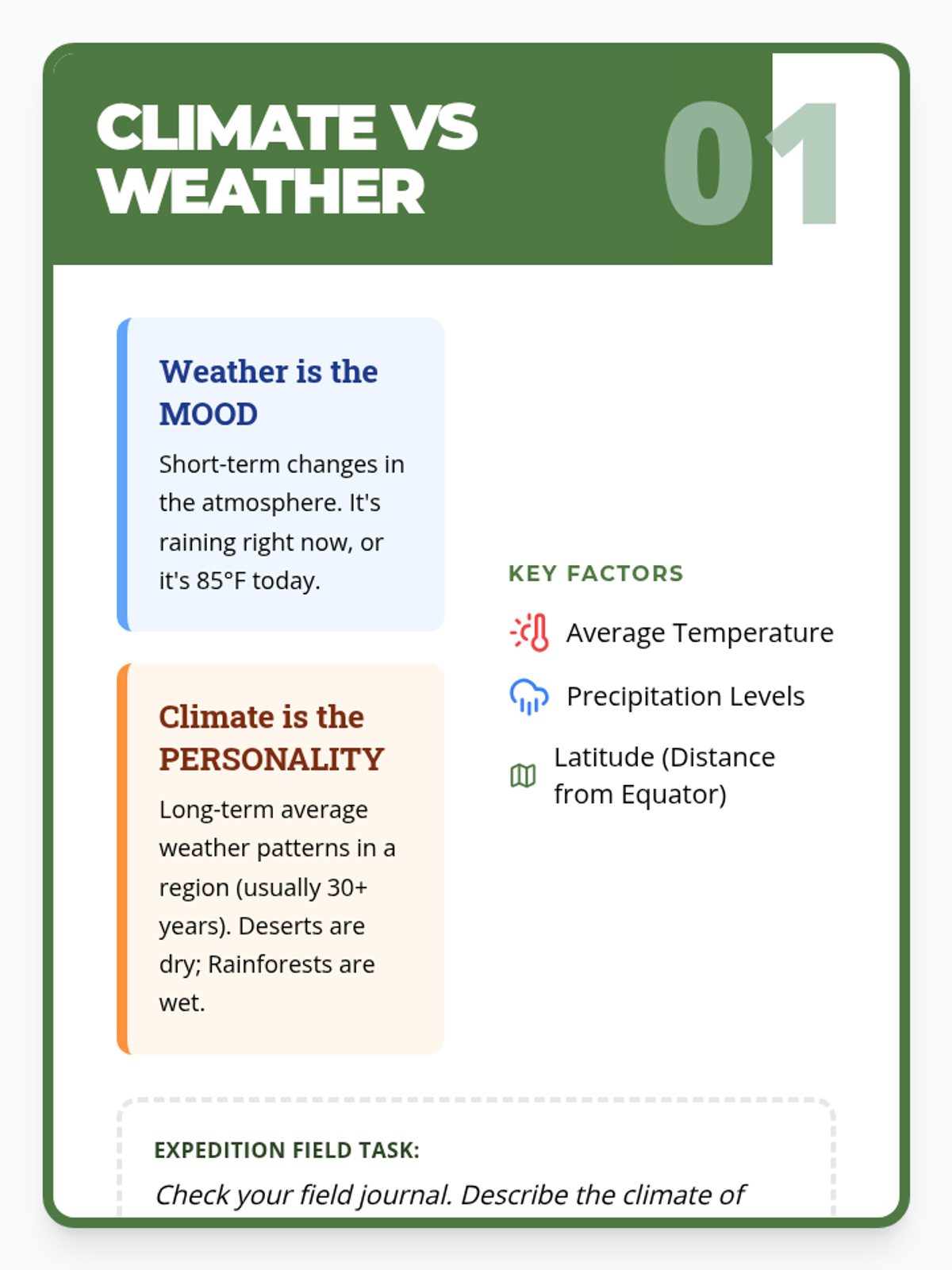
A set of 5 large information posters for a 'Write the Room' activity, covering climate, competition, predation, symbiosis, and succession.
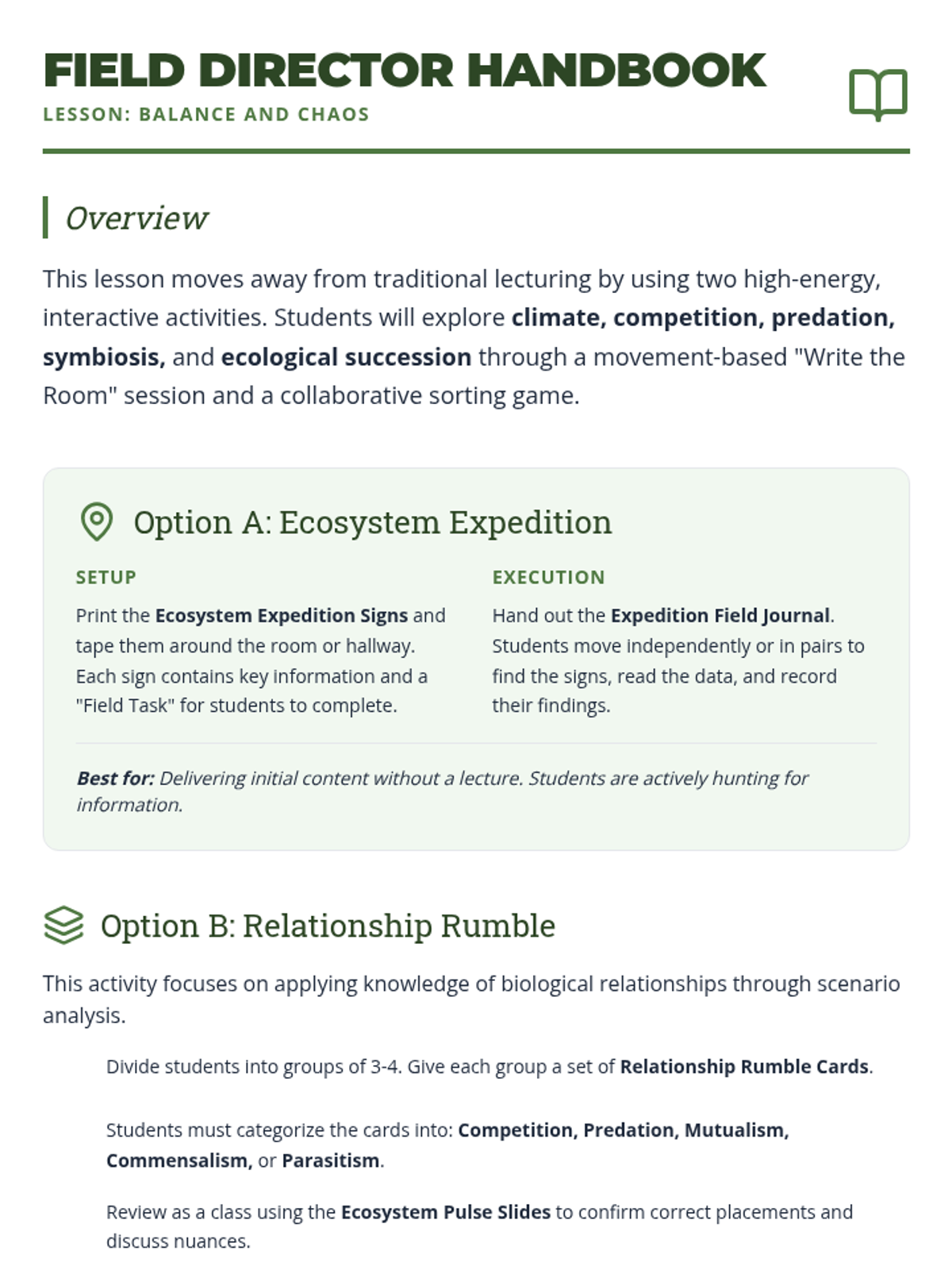
A comprehensive teacher guide for implementing the 'Ecosystem Expedition' (Write the Room) and 'Relationship Rumble' (Card Sort) activities, including setup instructions and discussion prompts.
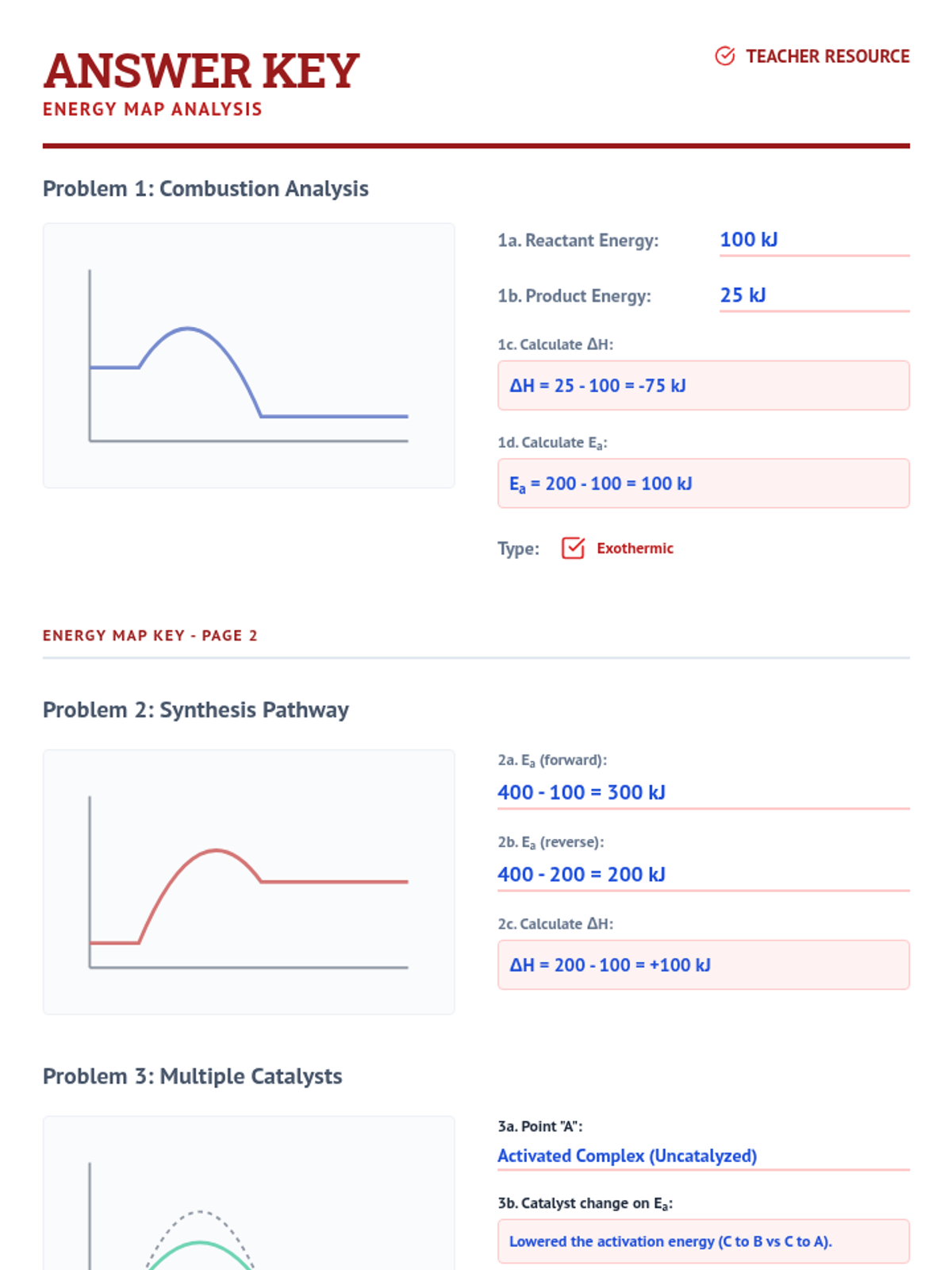
A detailed answer key for the Energy Map Worksheet, featuring solved diagrams and completed summary tables. Revised to match the worksheet layout and fixes.
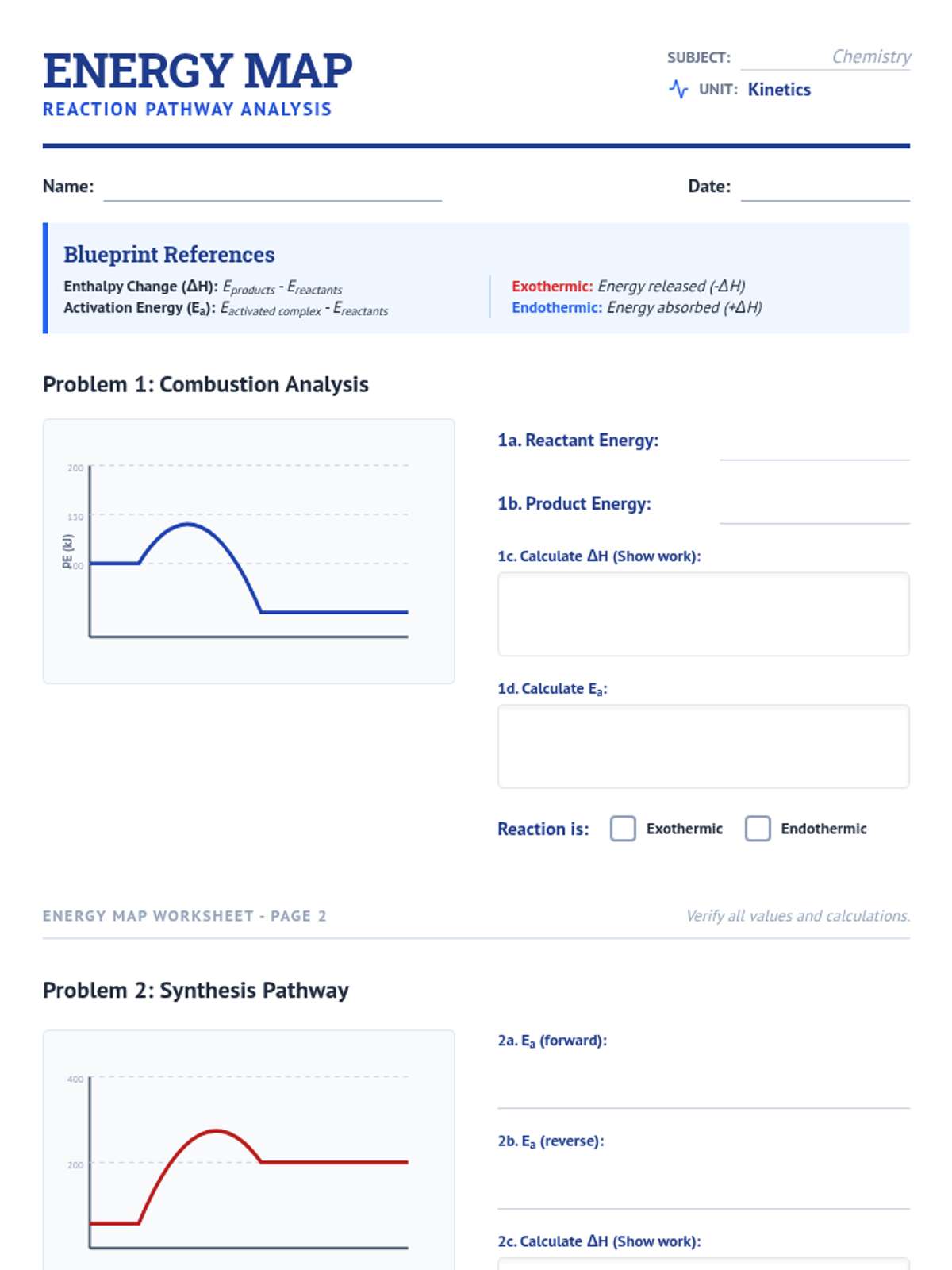
A 2-page worksheet for calculating activation energy and enthalpy from potential energy diagrams. Includes visual problems, catalyst analysis, and conceptual checks. Revised for better page breaks and larger work areas.
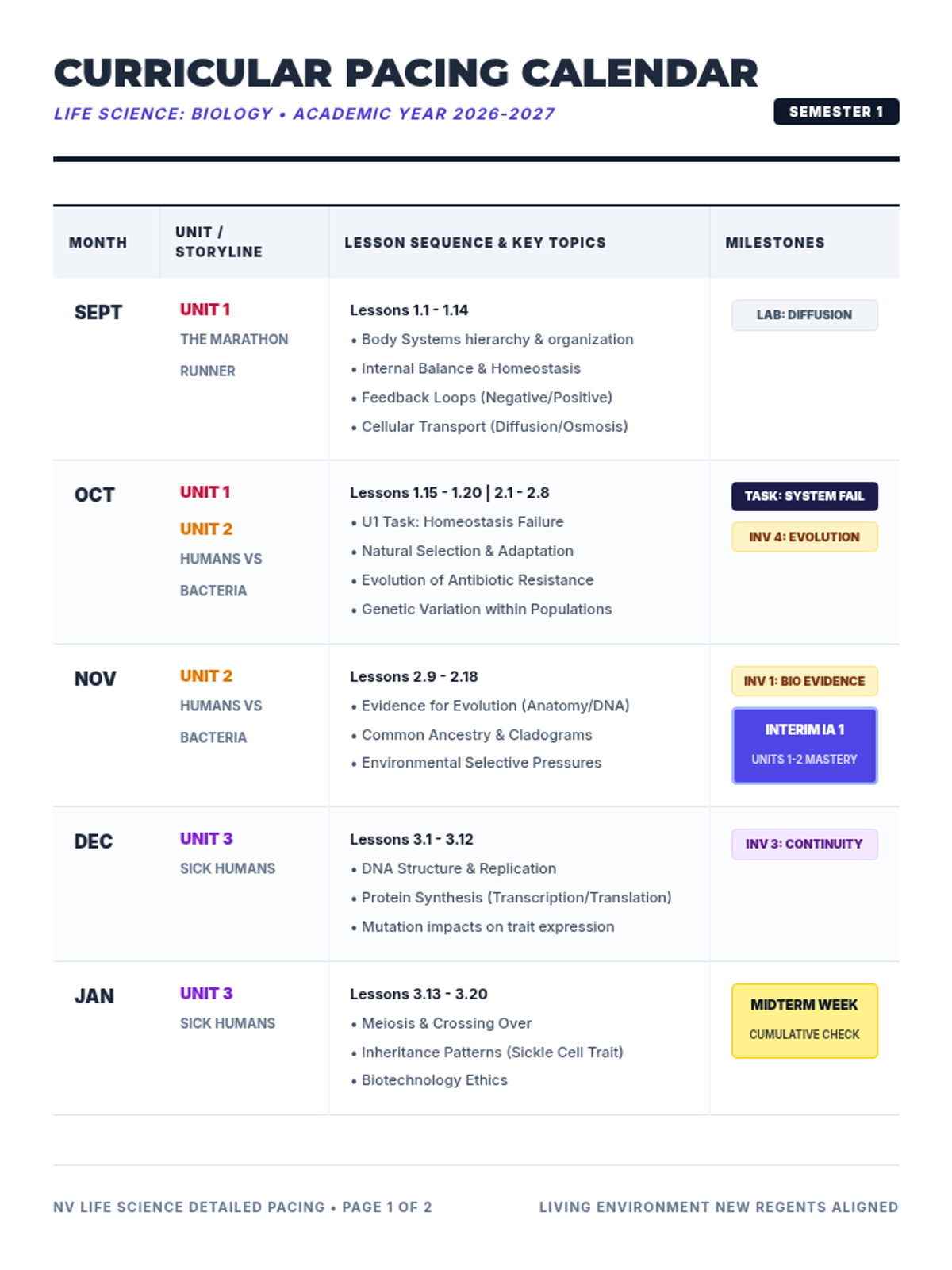
A comprehensive detailed pacing guide for the 26-27 school year, providing a month-by-month breakdown of unit coverage, lesson numbering, and specific milestones including labs, performance tasks, and the three Interim Assessments.
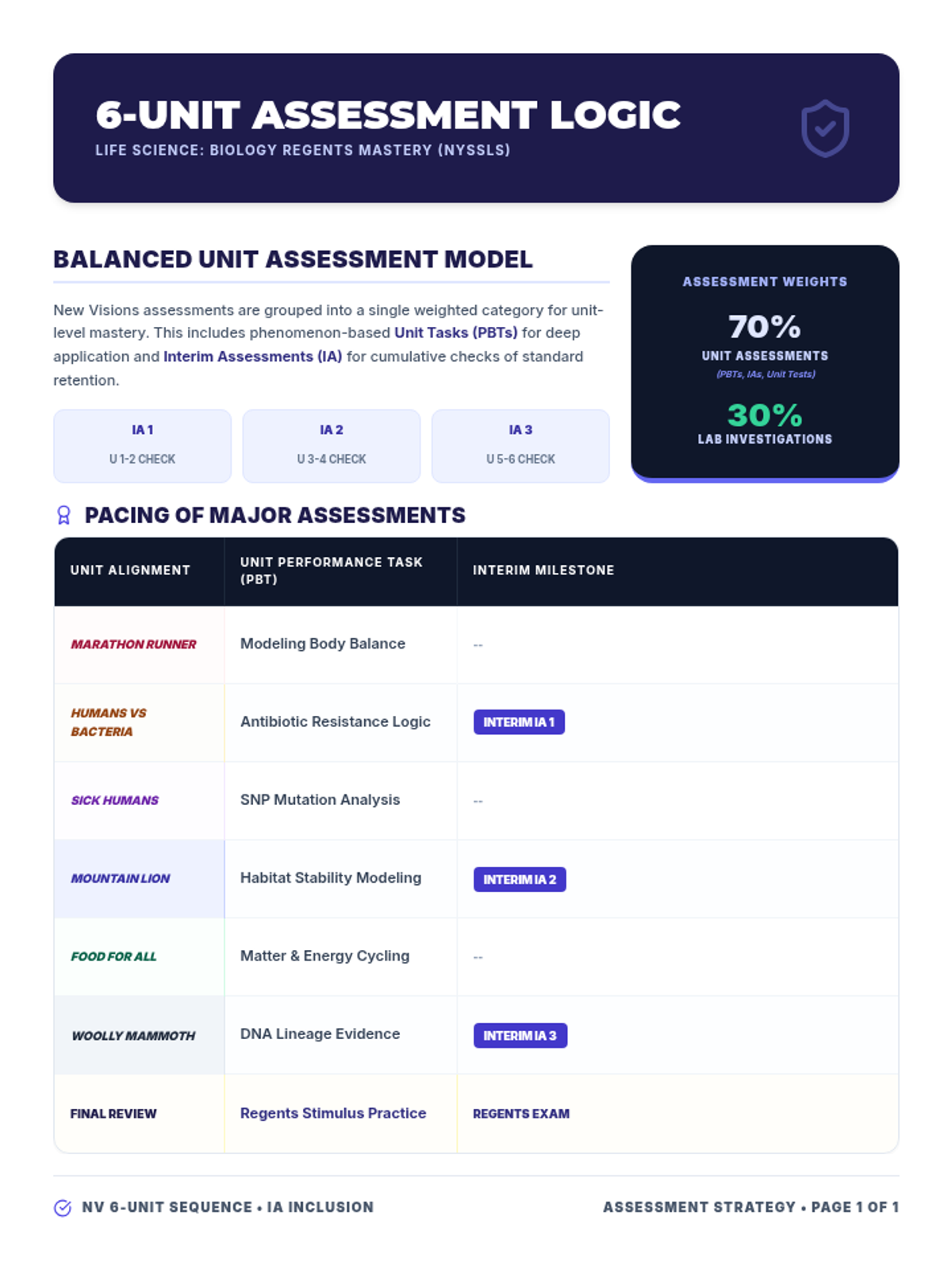
A condensed single-page guide to assessment strategy within the New Visions Life Science: Biology framework. Updated to move Interim Assessments into the general "Unit Assessments" weighting category (70% total with PBTs) and to reflect that IA 3 is a Units 5-6 check.
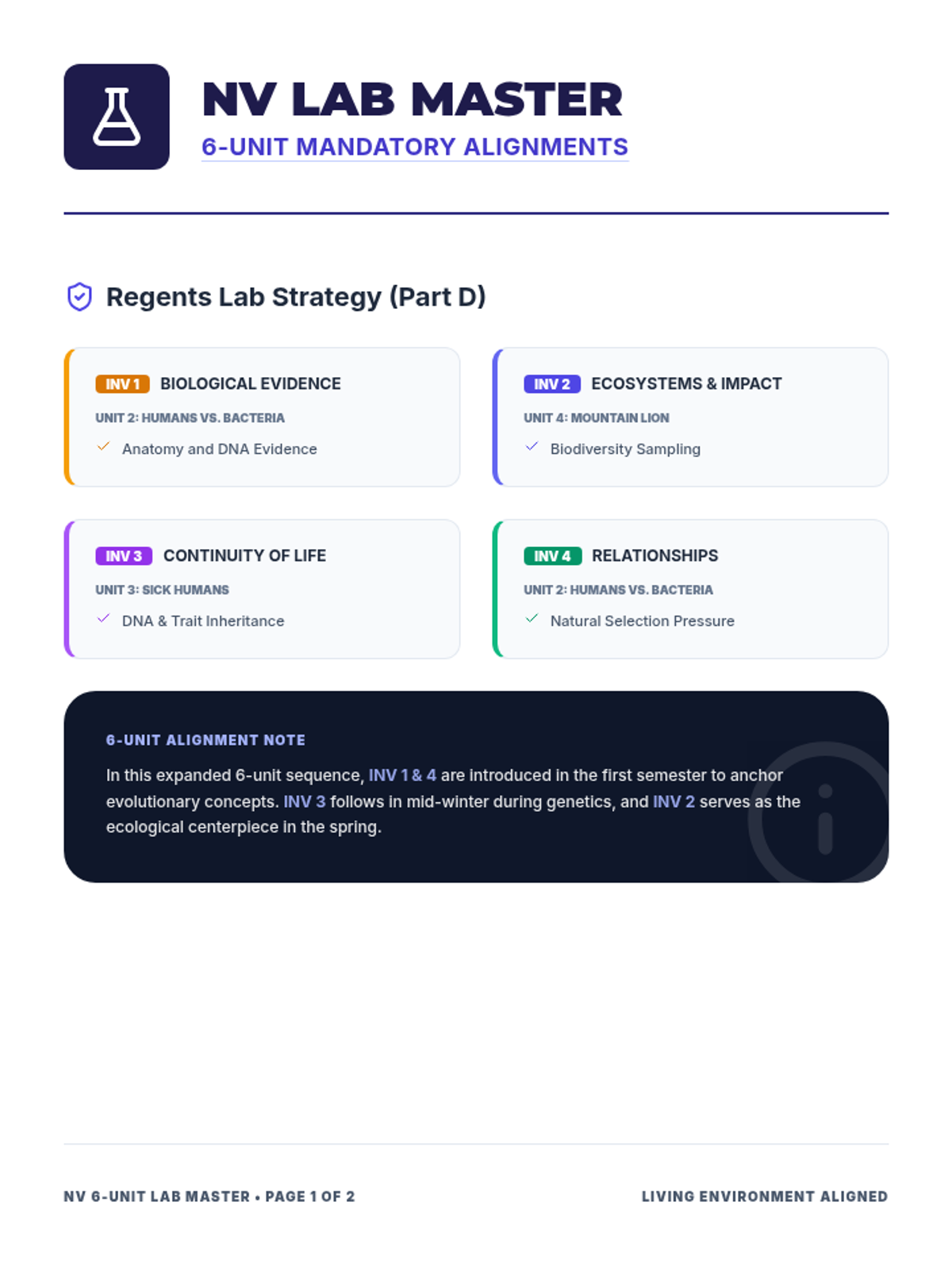
A logistics resource for managing New Visions Life Science: Biology labs. Updated to align the 4 Mandatory Investigations across the 6-unit sequence (Unit 1: Marathon, Unit 2: Bacteria/Inv 1&4, Unit 3: Sick Humans/Inv 3, Unit 4: Mountain Lion/Inv 2, Unit 5: Food for All, Unit 6: Mammoth).