An answer key for the Fit Factor Worksheet, providing the regression equation, calculated predicted values, residuals, and sample responses for the analysis questions.
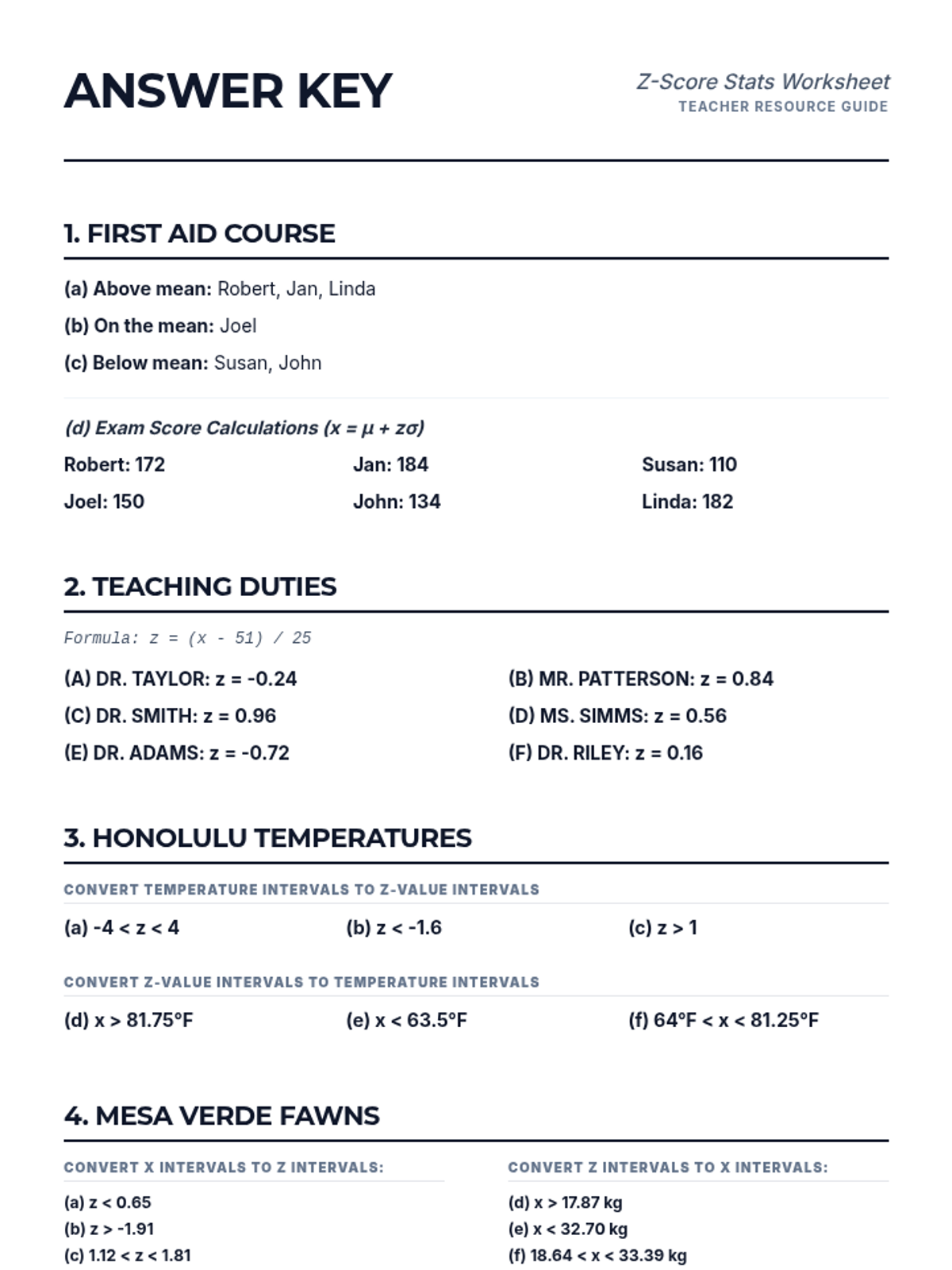
Teacher answer key for the Z-Score Mastery Worksheet, providing solutions and brief explanations for all calculation and conceptual problems.
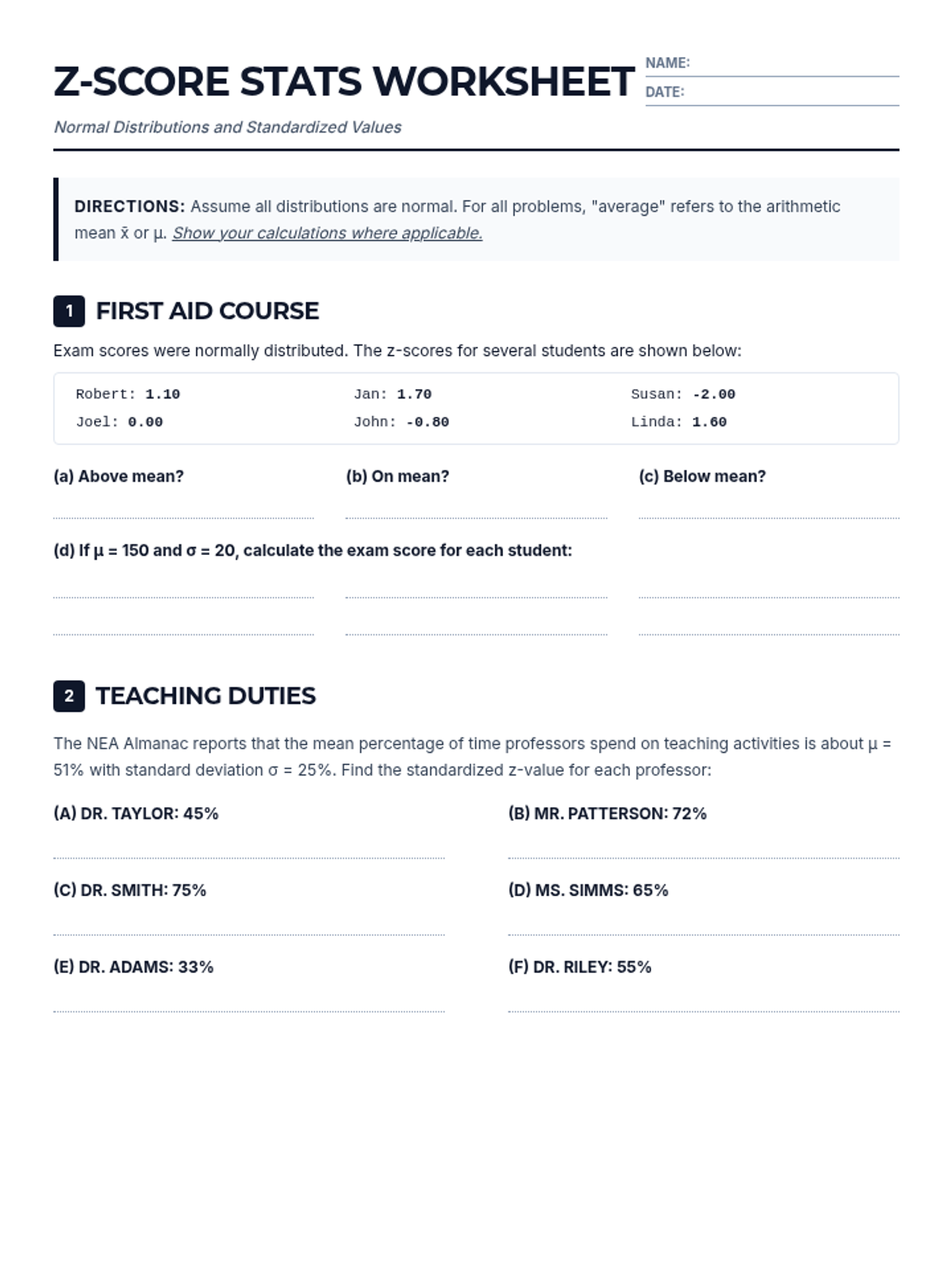
A precise 2-page Z-score worksheet that mirrors the original source material's questions exactly, featuring real-world problems on exam scores, teaching duties, temperatures, and wildlife populations.
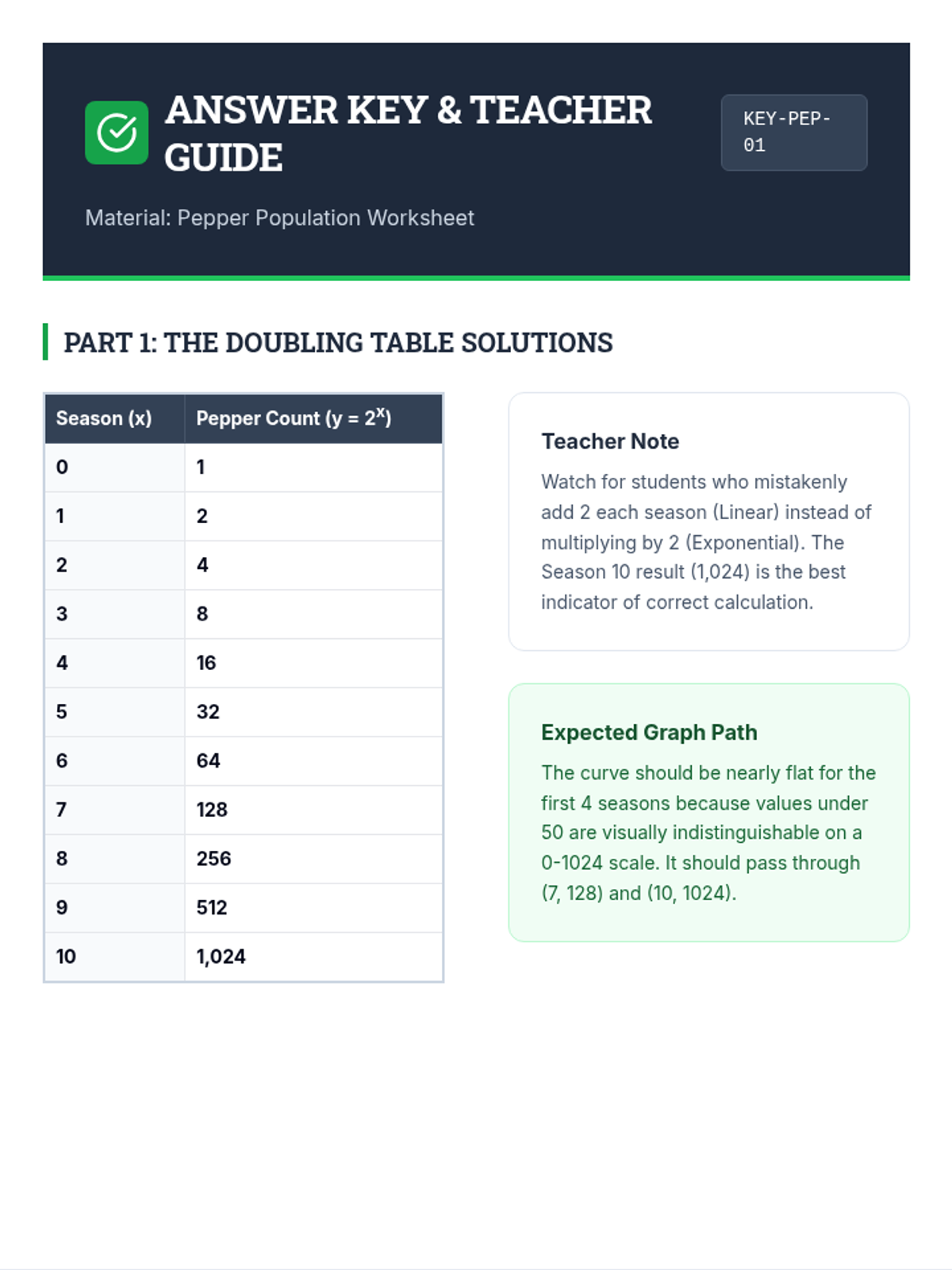
Teacher answer key and instructional guide for the Pepper Population Worksheet, including full data table solutions and analysis commentary.
A visually engaging slide deck explaining exponential growth using green peppers as a model, featuring clear diagrams of doubling and the resulting growth curve.
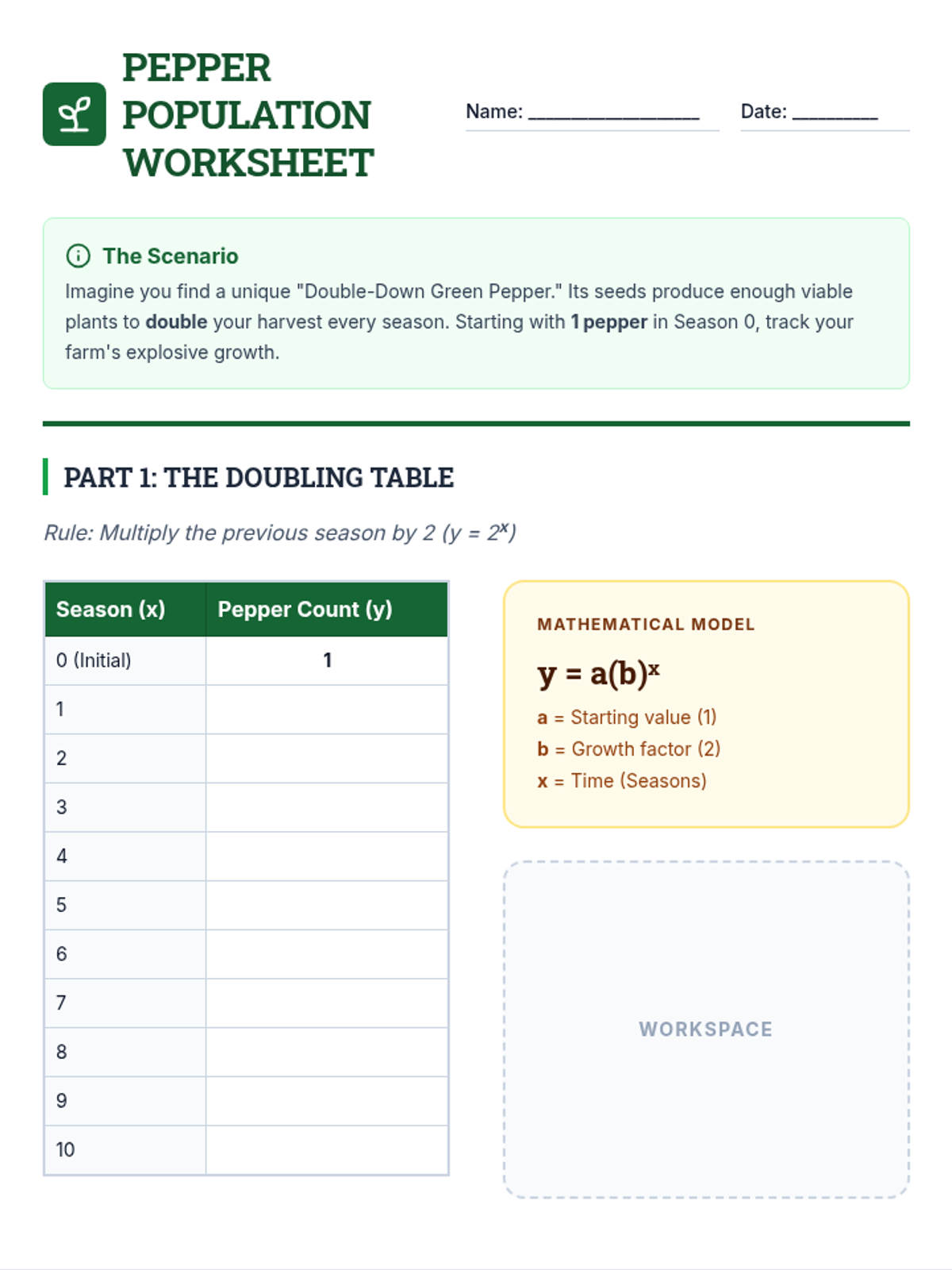
A comprehensive worksheet for students to calculate, graph, and analyze the exponential growth of a pepper population starting from a single fruit and doubling each season.
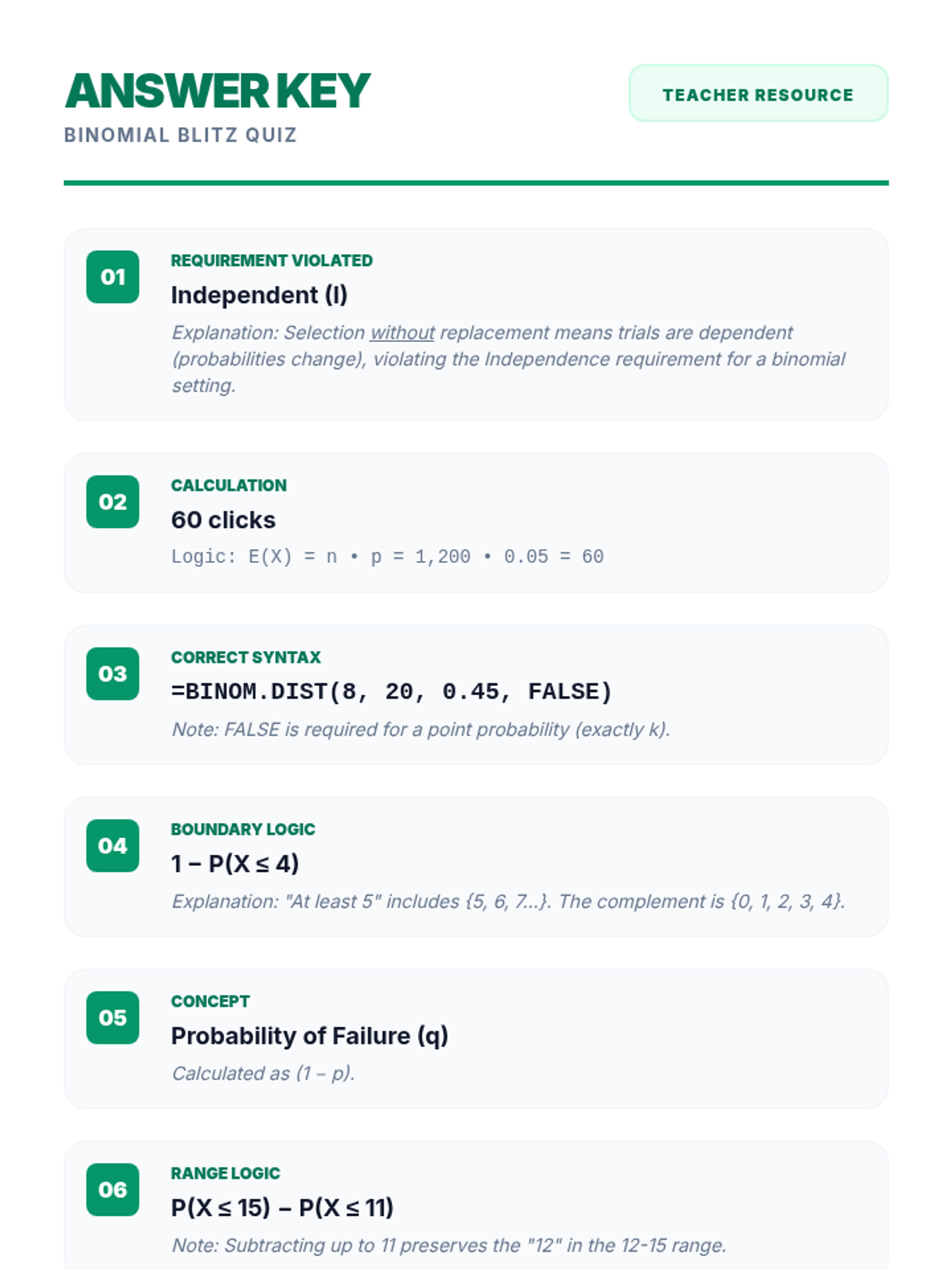
A comprehensive answer key for the Binomial Blitz Quiz, featuring detailed explanations, manual formula rendering, and logic breakthroughs for the assessment questions.
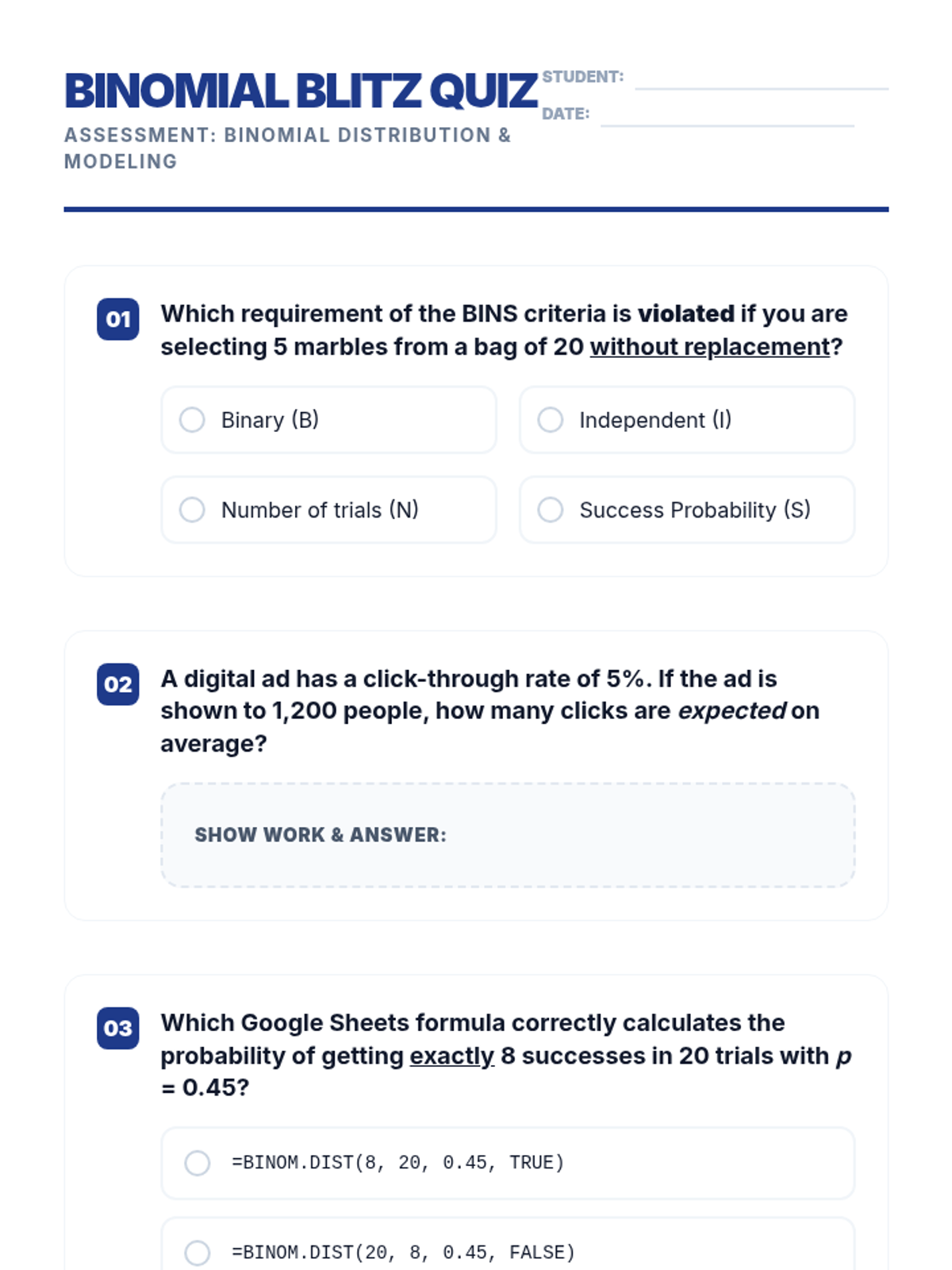
A 10-question assessment covering the BINS criteria, binomial parameters, spreadsheet formula syntax, hand-calculation theory, and expected value. Designed for 12th-grade statistics with high-quality visual formatting and clear student work areas. Updated with fixed math rendering and page break protections.
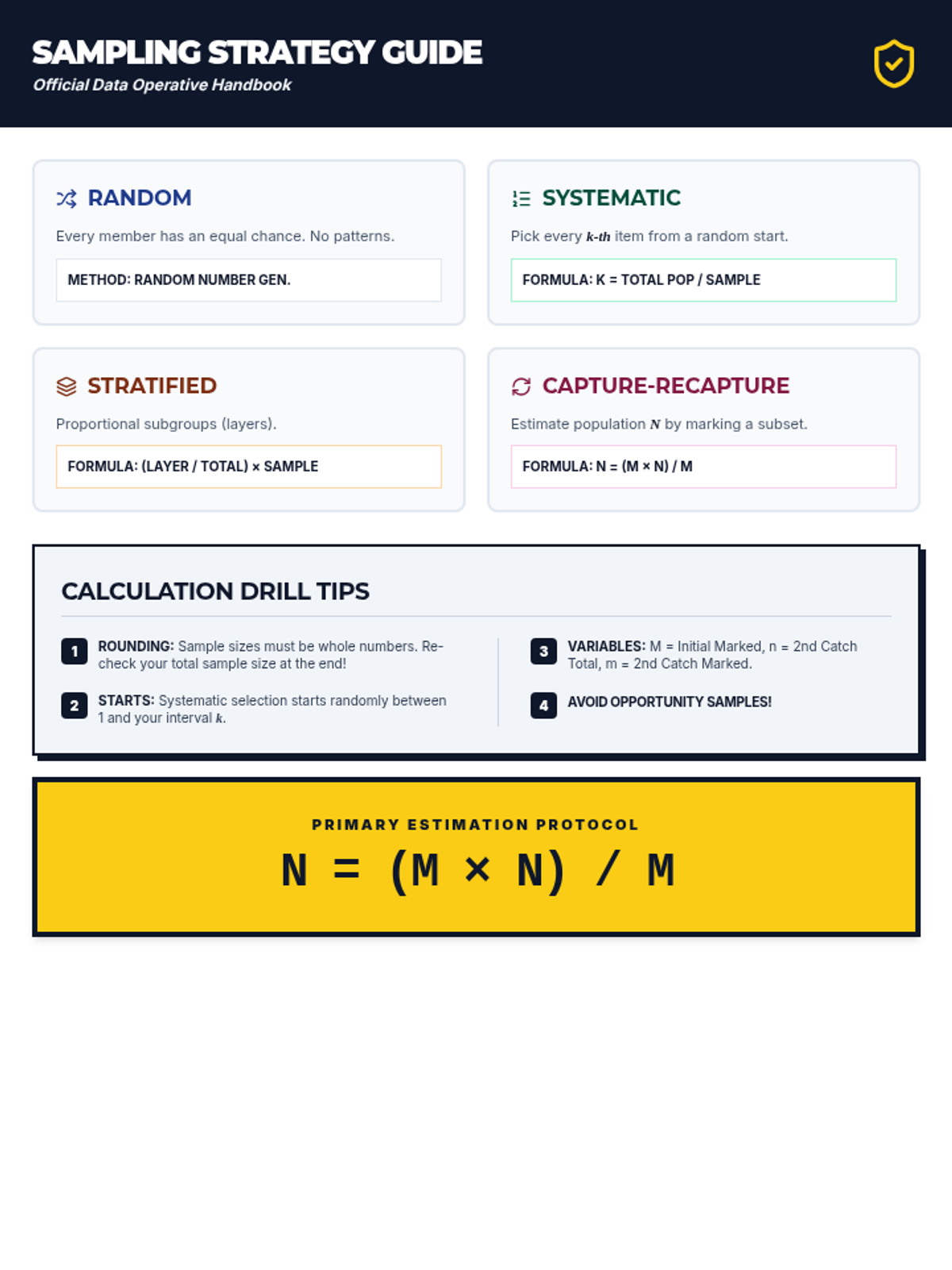
A quick-reference 'cheat sheet' for Year 8 students, summarizing the formulas and methods for random, systematic, stratified, and capture-recapture sampling.
A secret-agent themed slide deck for Year 8 students, explaining the theory and calculation methods for systematic, stratified, and capture-recapture sampling, featuring worked examples.
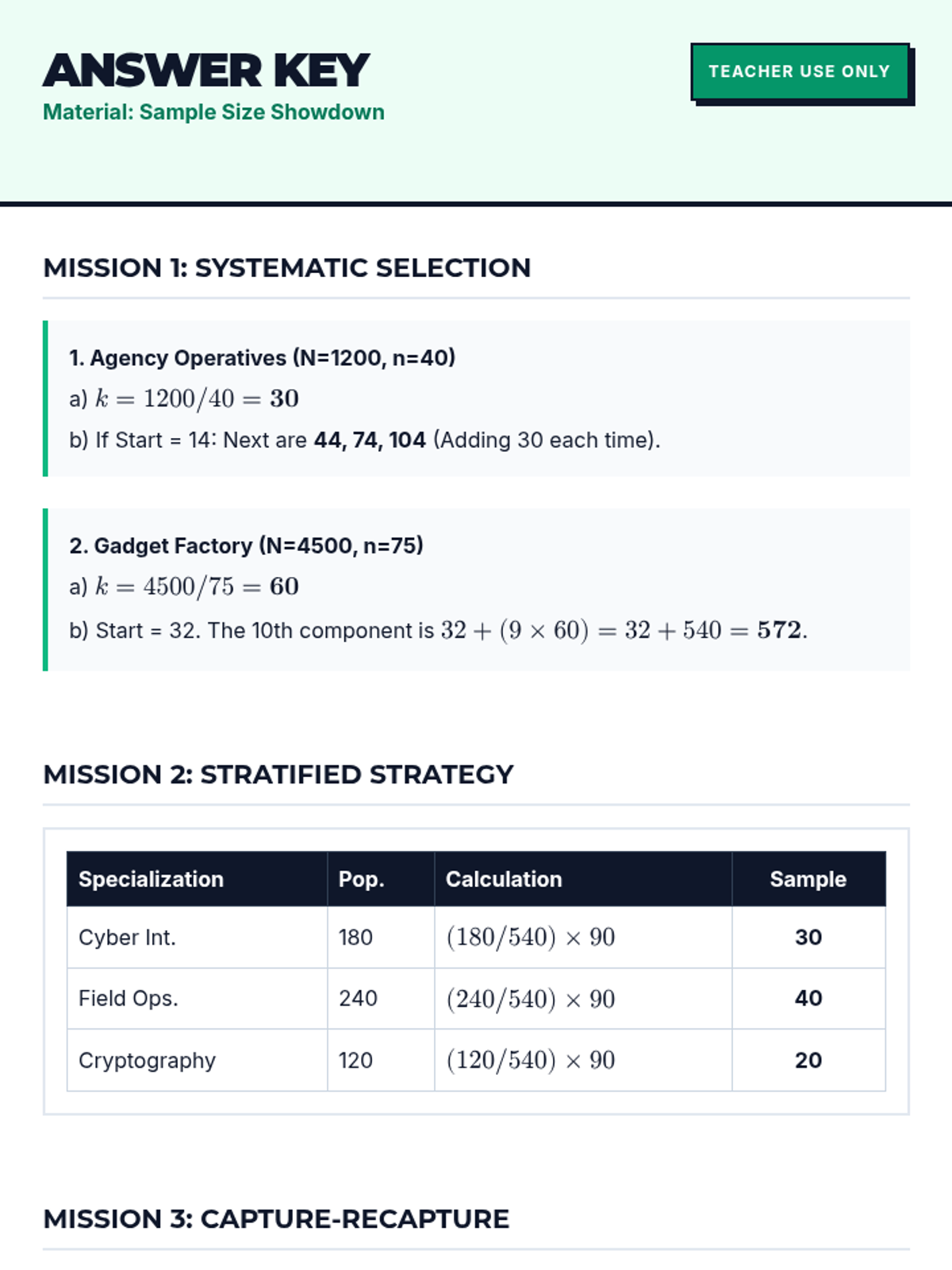
The answer key for the Sample Size Showdown worksheet, providing full solutions and calculations for all sampling problems.
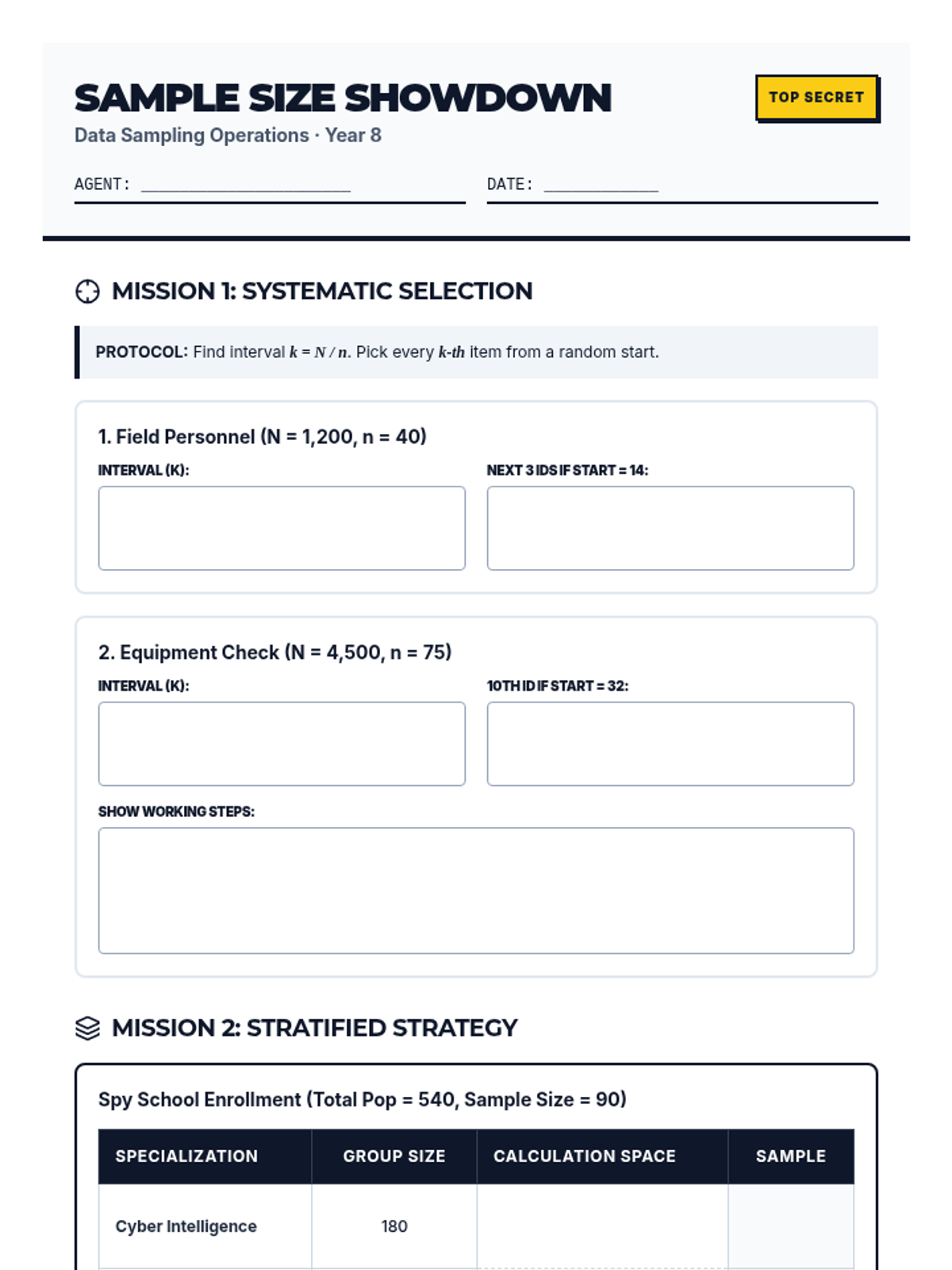
A Year 8 math worksheet titled 'Sample Size Showdown' focused on sampling calculations, including systematic, stratified, and capture-recapture methods, with a secret agent theme.
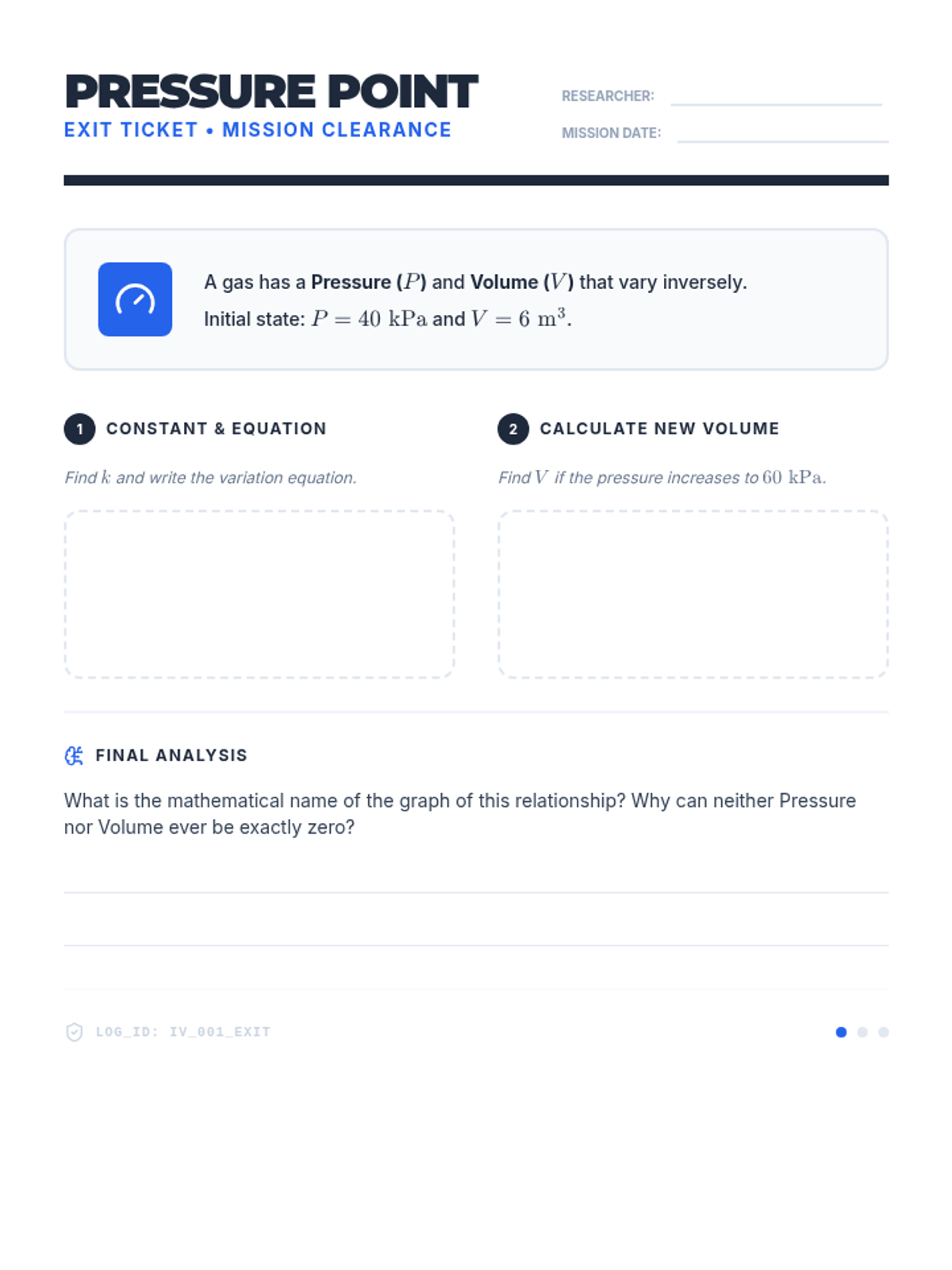
A formal exit ticket for inverse variation. Revised for single-page layout, better math rendering, and balanced work areas.
A sleek, high-contrast slide deck for inverse variation. Revised to fix math rendering, adjust viewport overflow, and correct the hyperbola graphic.
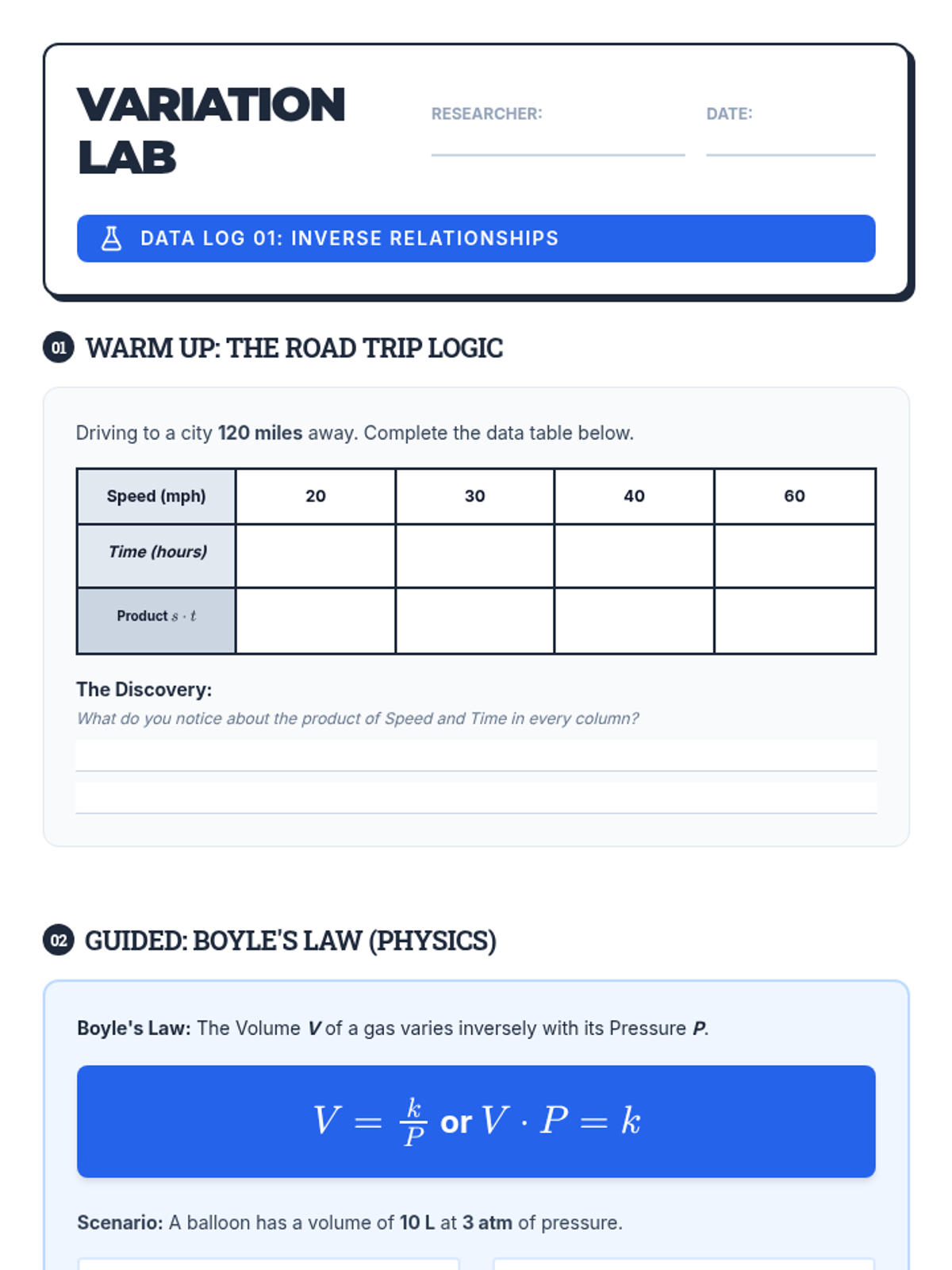
A student-facing handout containing the Warm Up, Guided Instruction, and Independent Practice for inverse variation. Revised for better page breaks, increased contrast, and added pedagogical scaffolding. Fixed math rendering and work areas.
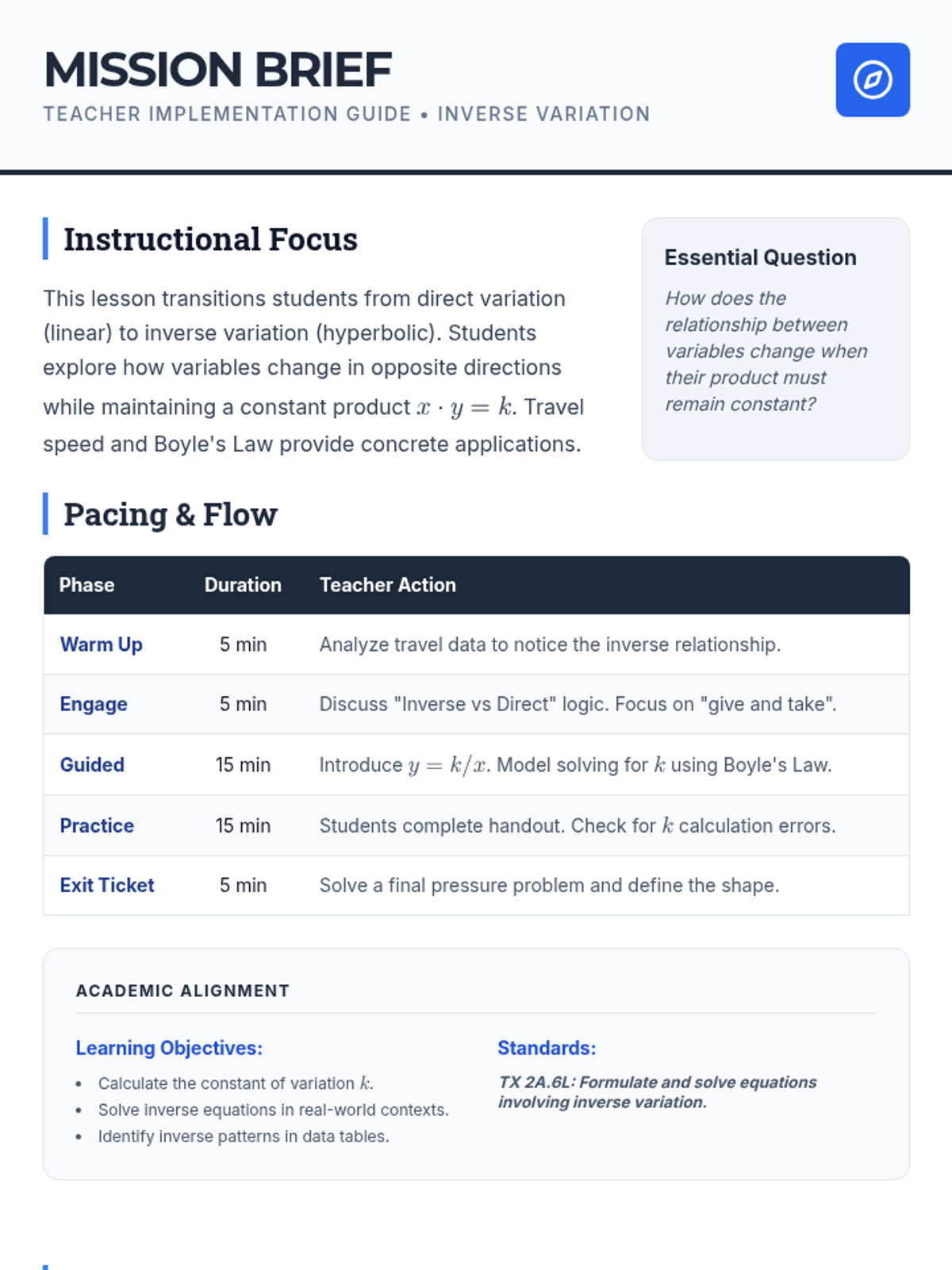
A comprehensive teacher implementation guide for the Inverse Investigators lesson, including pacing, standards alignment, answer keys, and pedagogical tips. Revised for better page breaks and math rendering.
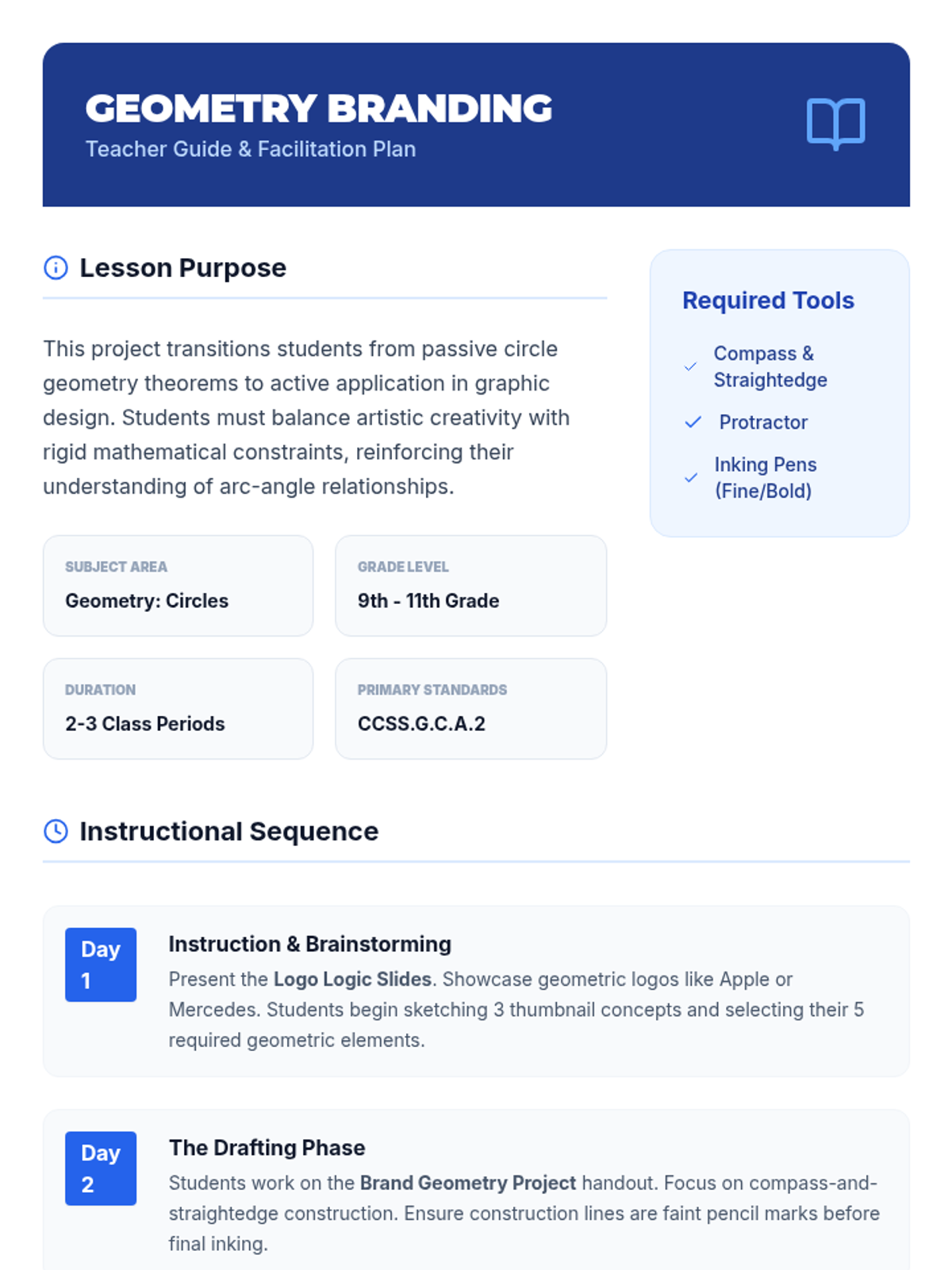
A comprehensive teacher guide for facilitating the Logo Logic project. Includes lesson pacing, a list of required materials, common student misconceptions to watch for, and strategies for differentiation.
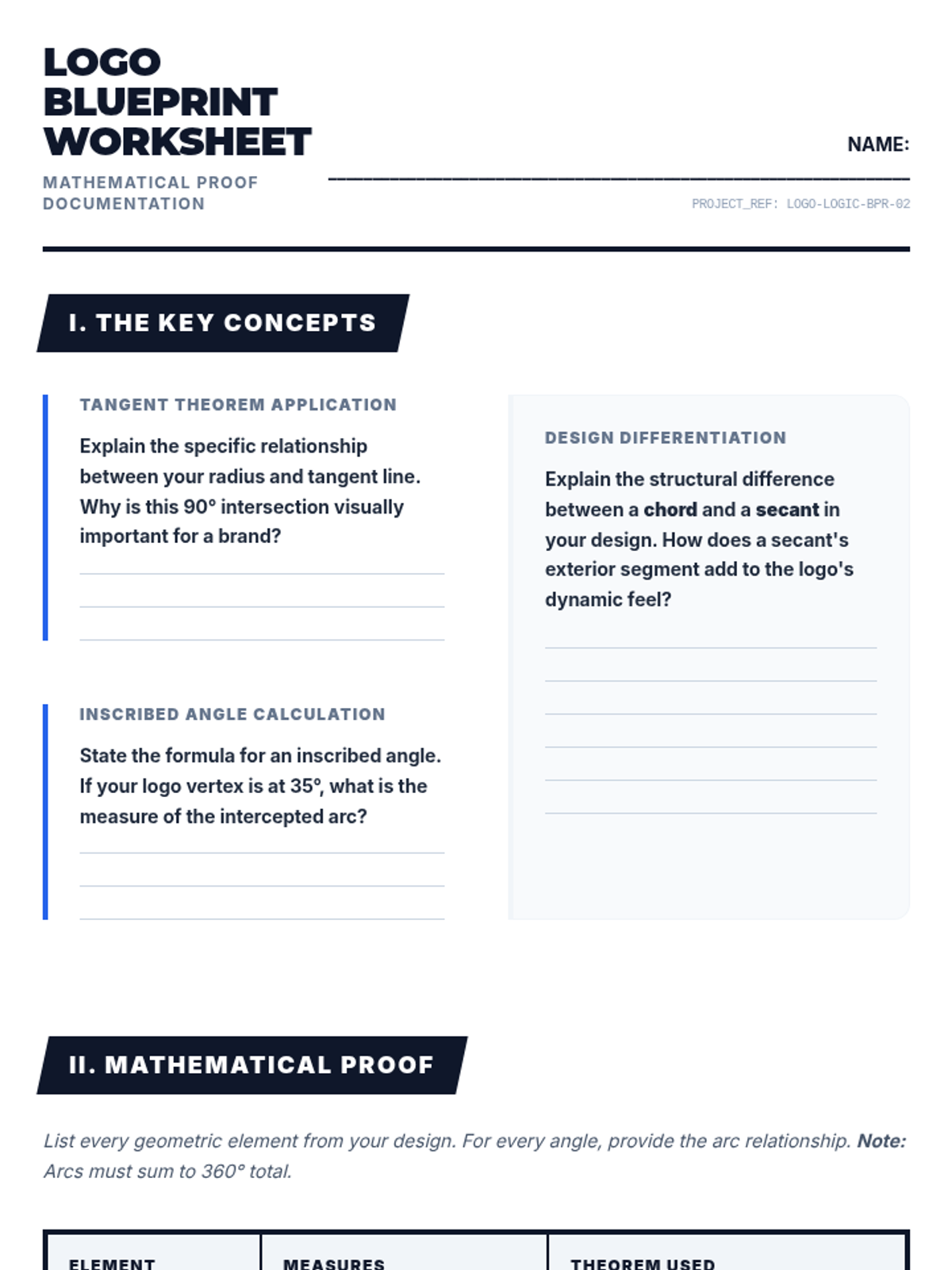
A structured worksheet for students to document the geometric proofs behind their logo design. It includes a table for recording measures of tangents, secants, and angles, plus reflection questions on the design process.
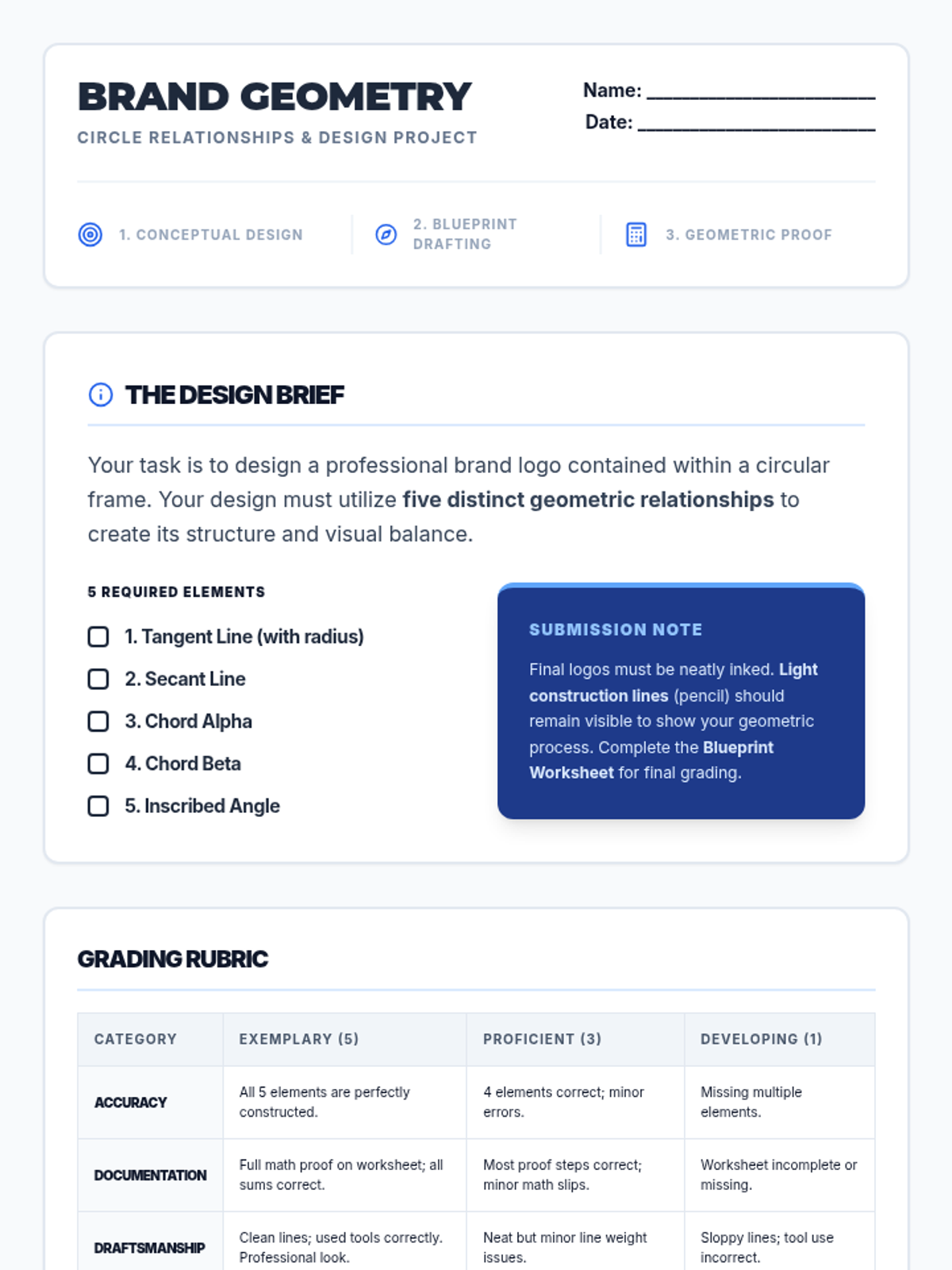
A comprehensive student project handout for the Brand Geometry project. Includes design constraints, a workspace for drafting, and a detailed grading rubric based on geometric accuracy and creative execution.
A visual presentation introducing circle geometry concepts (tangents, secants, chords, inscribed angles) through the lens of professional logo design. Includes architectural diagrams and project requirements.
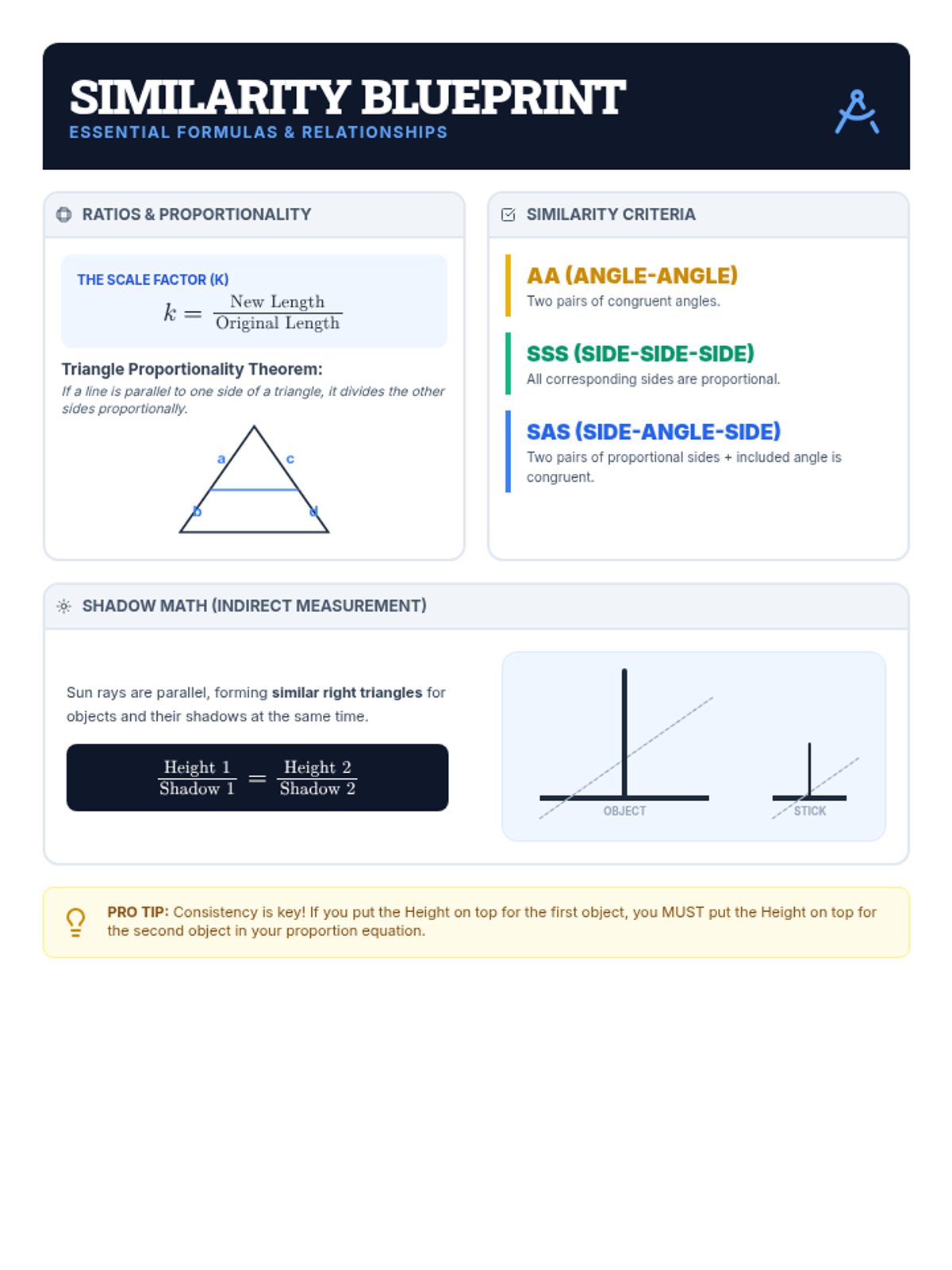
A student-friendly reference sheet for similarity concepts. Includes formulas for scale factor, similarity criteria (AAA, SSS, SAS), and a visual guide for shadow trigonometry.
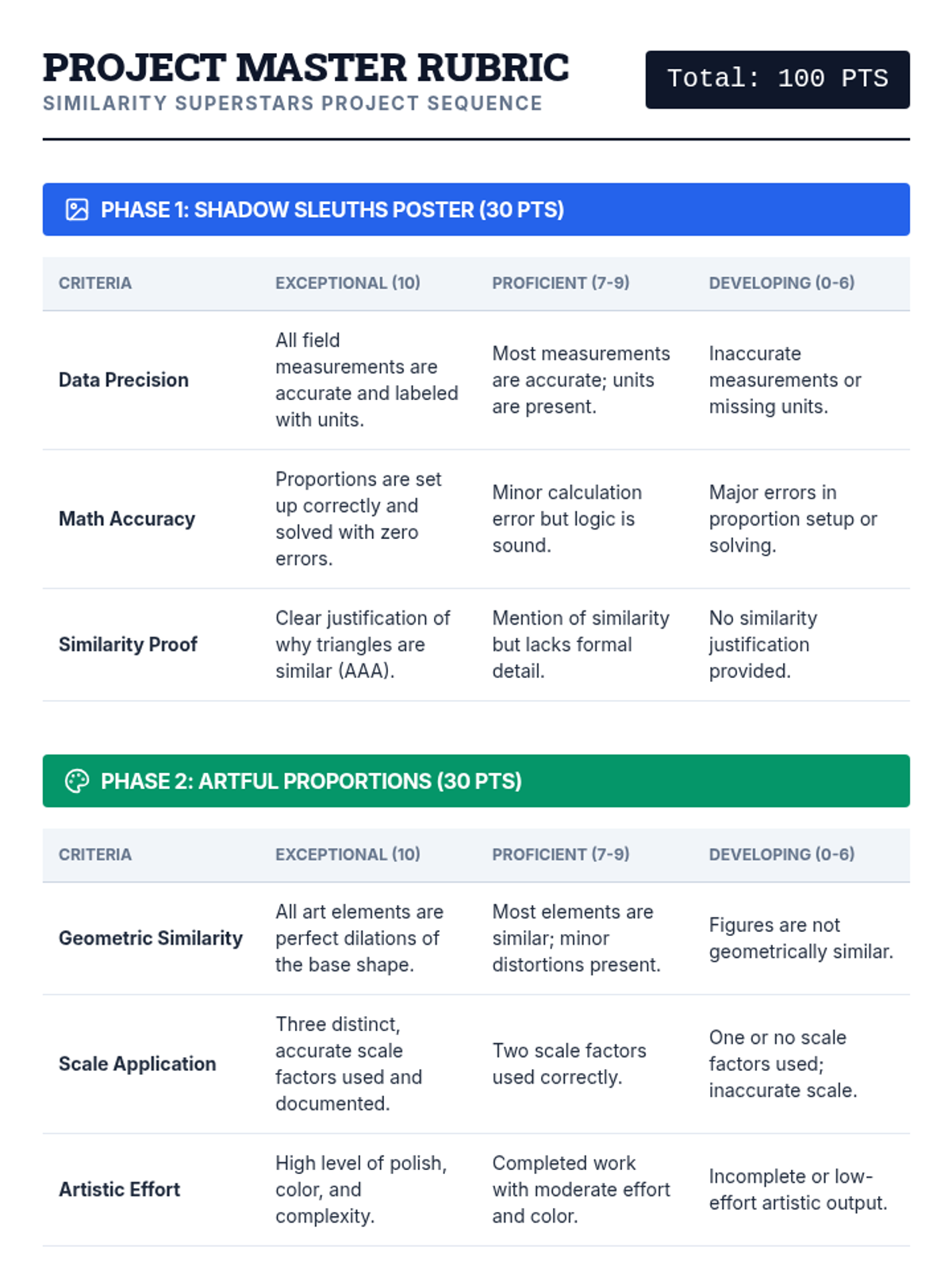
A comprehensive teacher's rubric for the Similarity Superstars project. Covers poster, art, and presentation components with specific grading criteria for data, logic, and polish.
A digital slide presentation template and guide for students. Covers similarity criteria (AAA, SAS, SSS), presentation requirements, and slide layout templates.
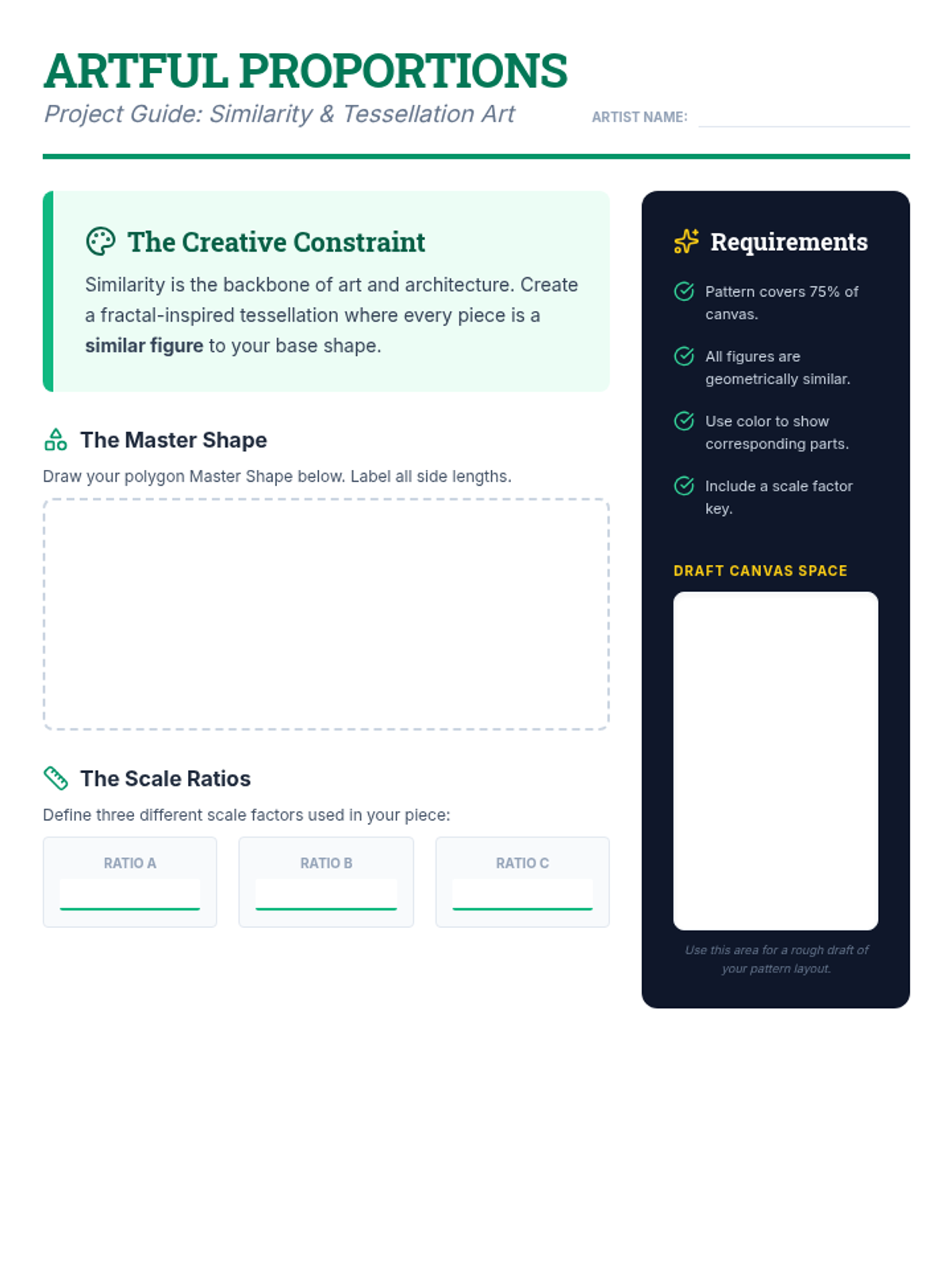
A guide for students to create similarity-based art and tessellations. Includes sections for base shape design, scale factor definitions, and artistic requirements.
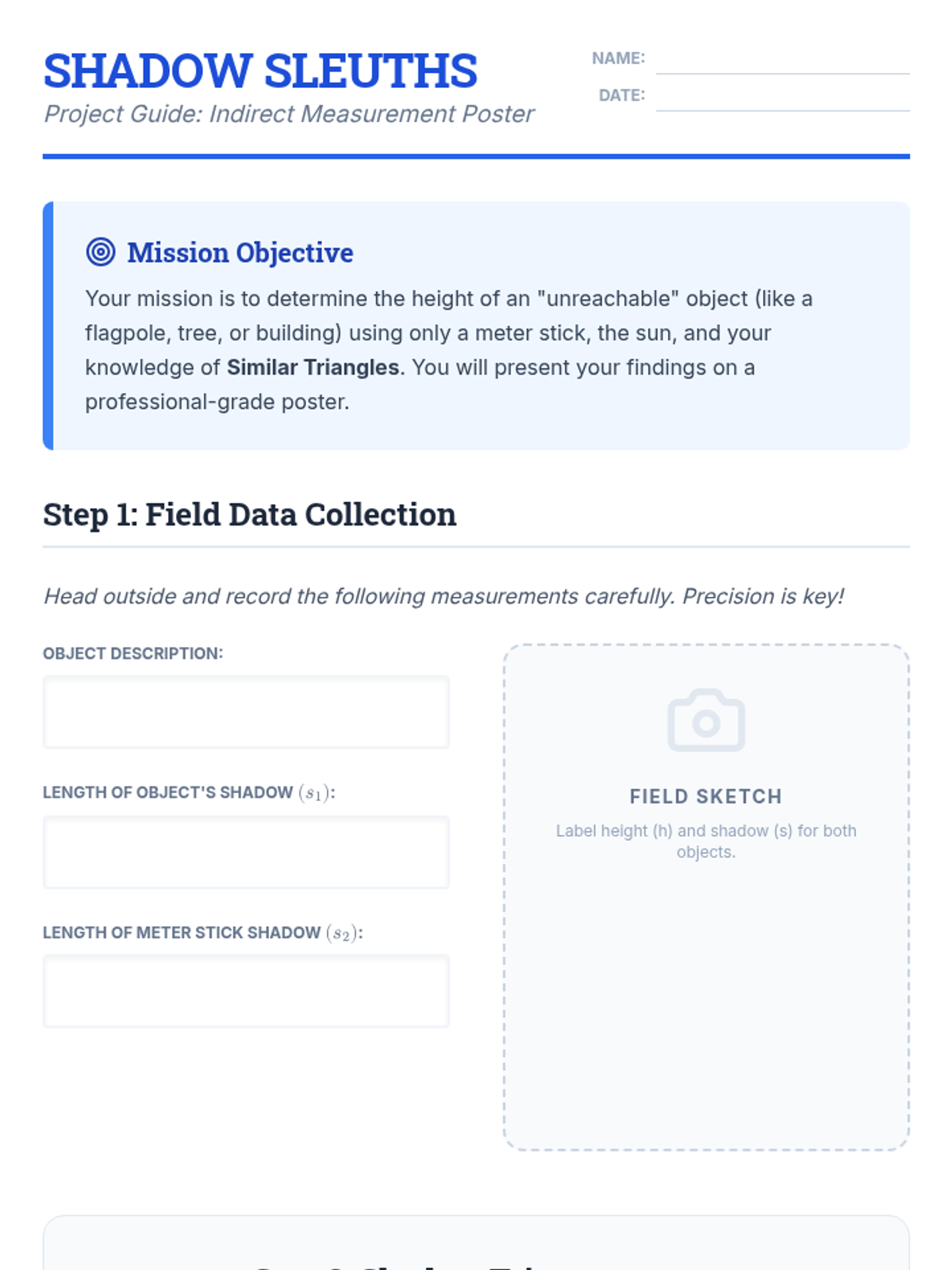
A project guide for students to conduct indirect measurement using shadows. Includes data collection tables, a ratio setup guide, and poster requirements.
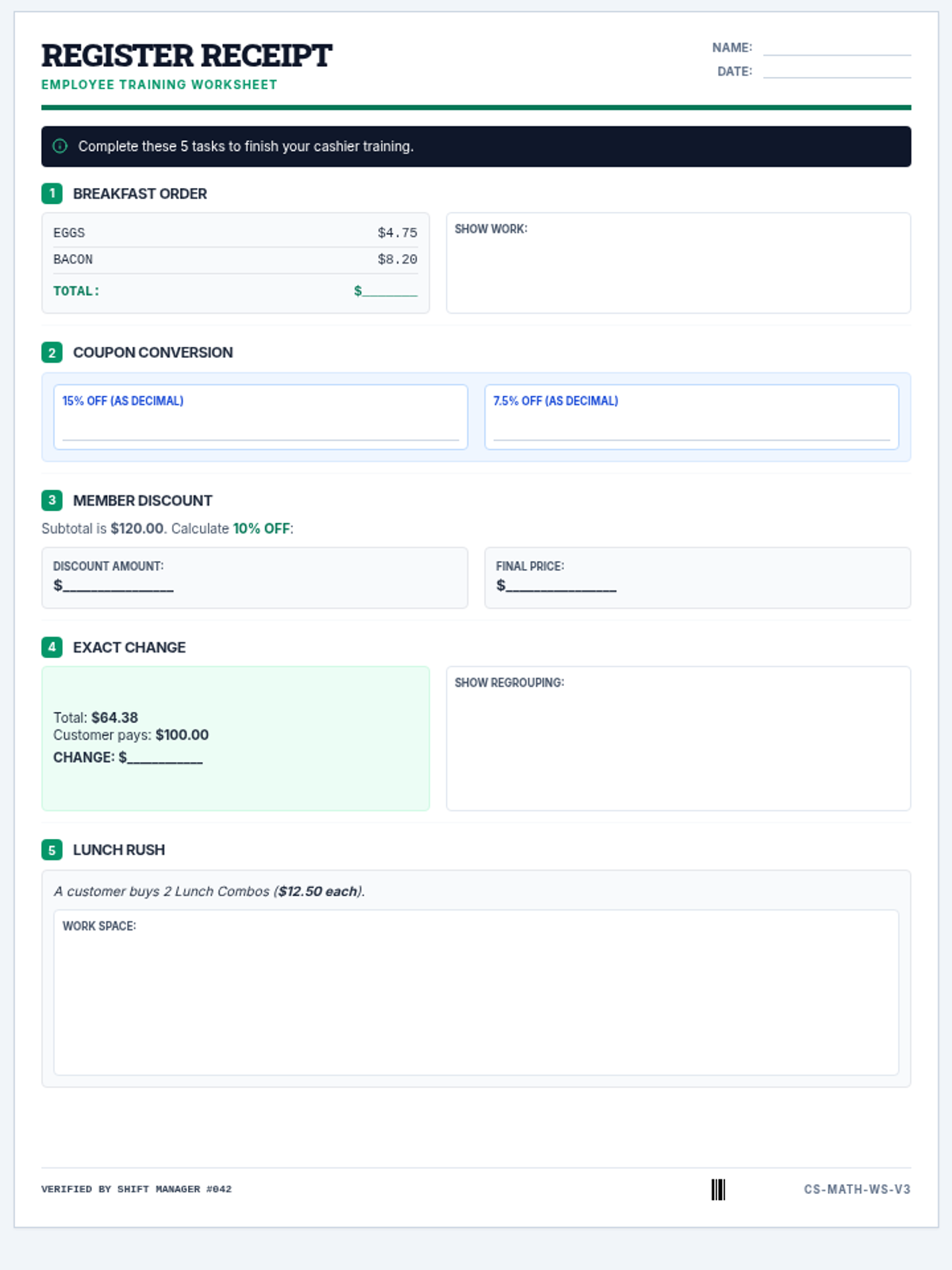
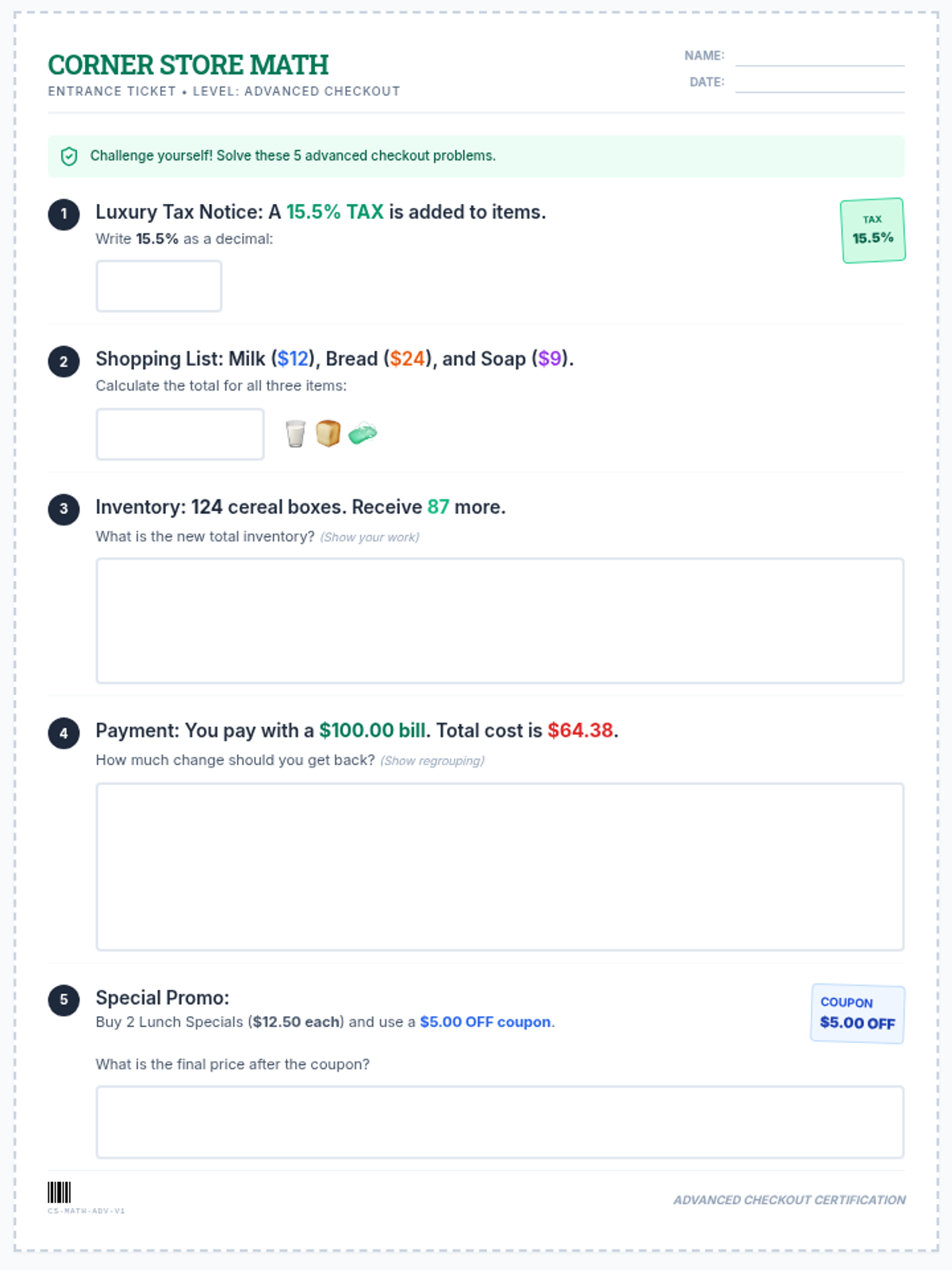
A student-facing worksheet for practicing retail arithmetic, including multi-item totals, percentage discounts, and complex change-making with regrouping. Updated to fit all 5 problems on one page with high-contrast footer.
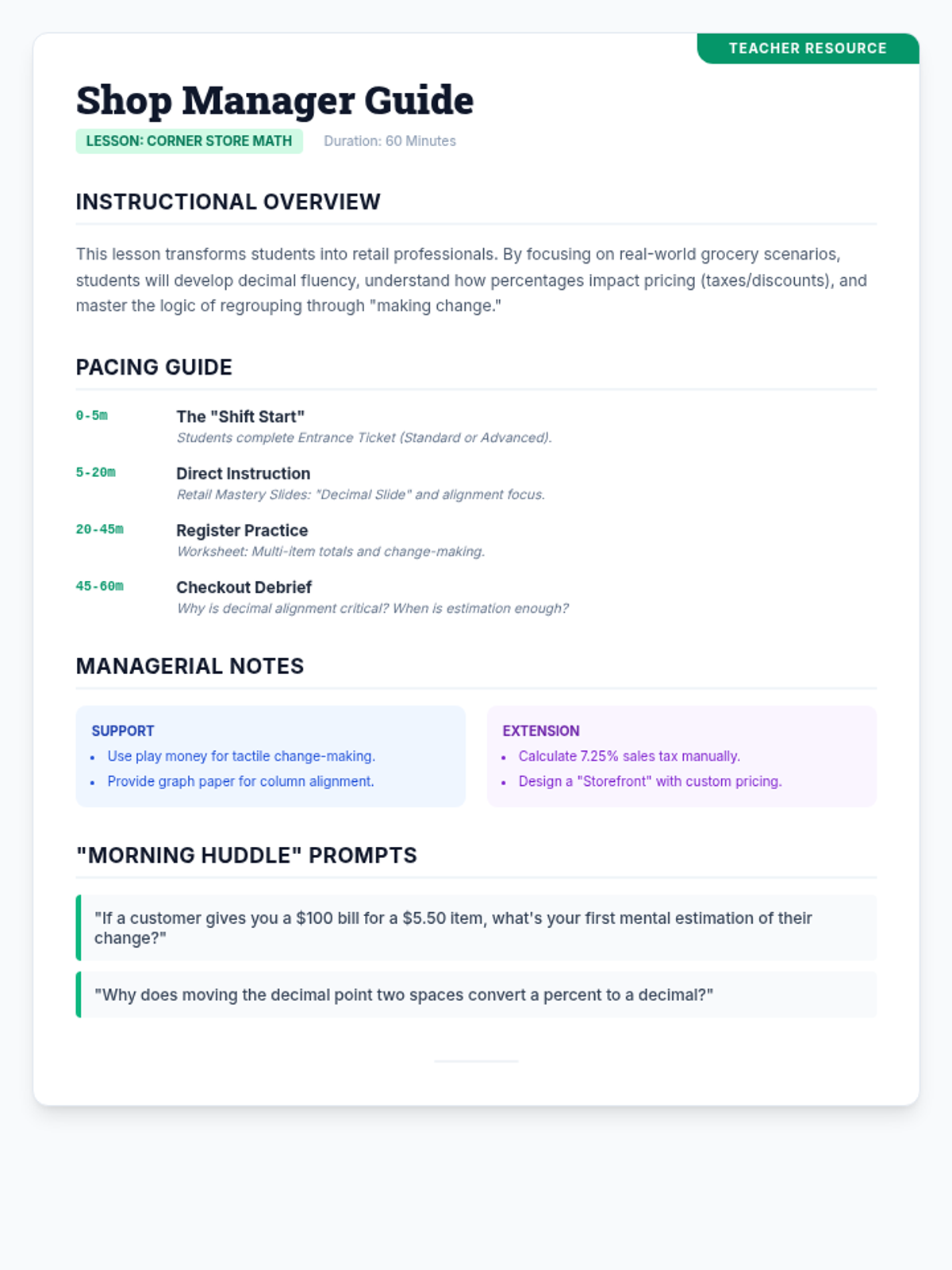
A teacher's facilitation guide for the Corner Store Math lesson, including pacing, differentiation strategies, and discussion prompts. Updated for better page fit.
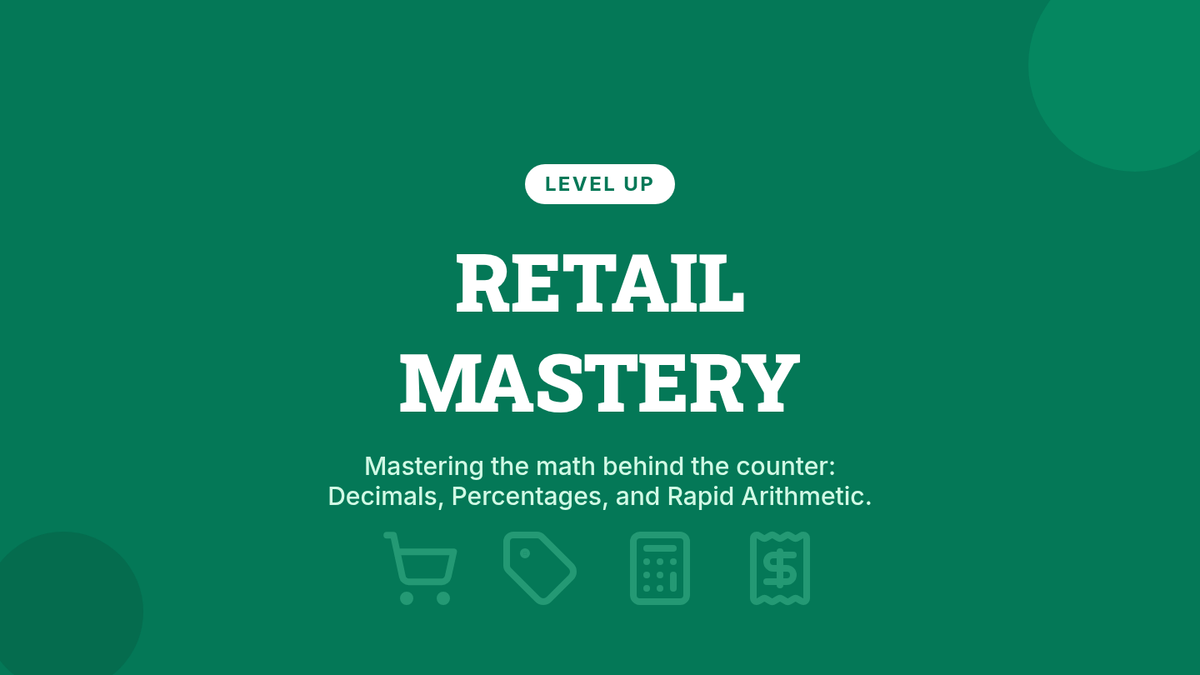
An instructional presentation for teaching retail math, covering decimal alignment, percentage conversions, and mental math strategies for checkout scenarios. Updated with 5 problems.
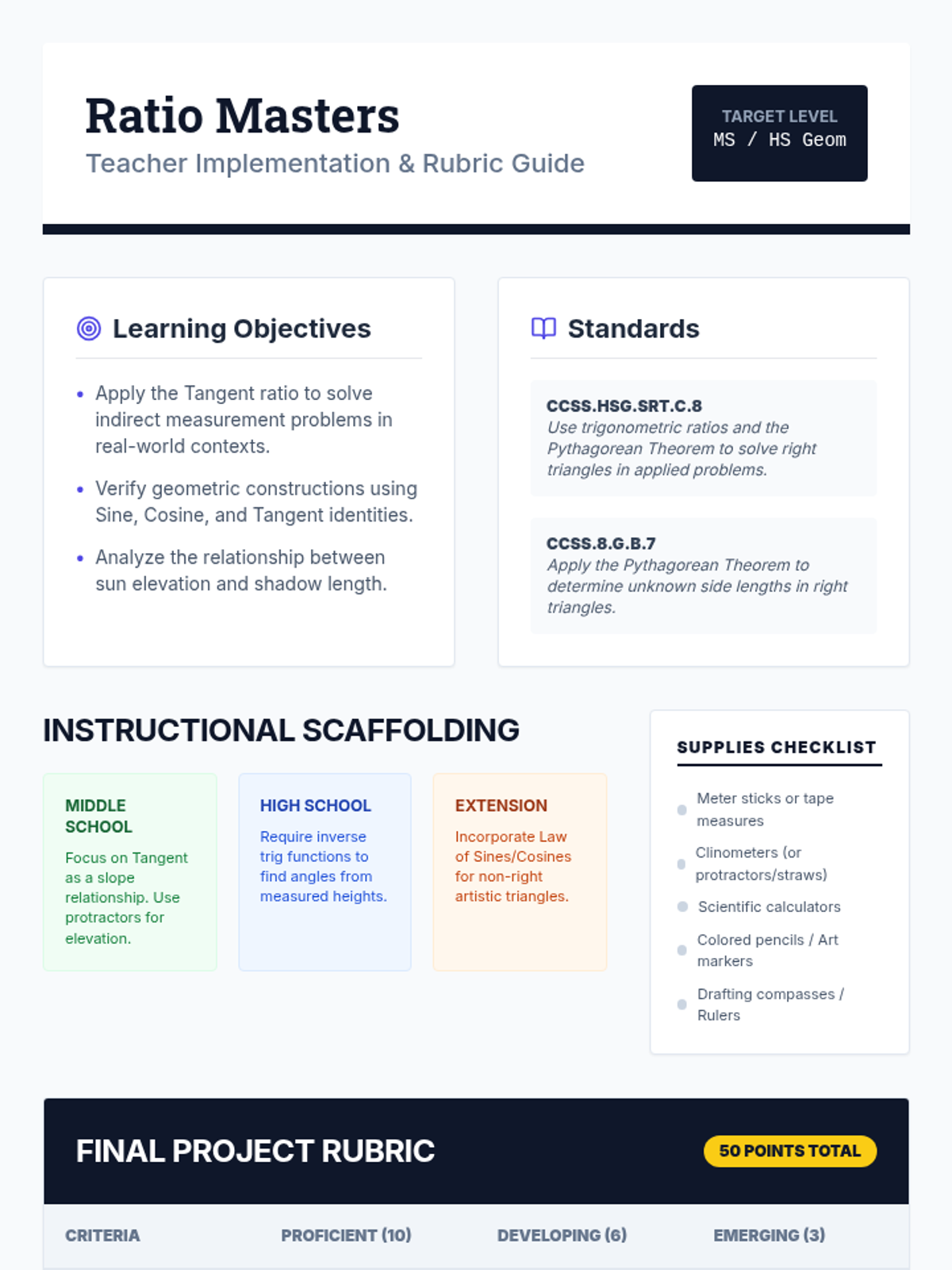
A teacher guide containing learning objectives, standards alignment, differentiation strategies for middle and high school, and a comprehensive grading rubric.
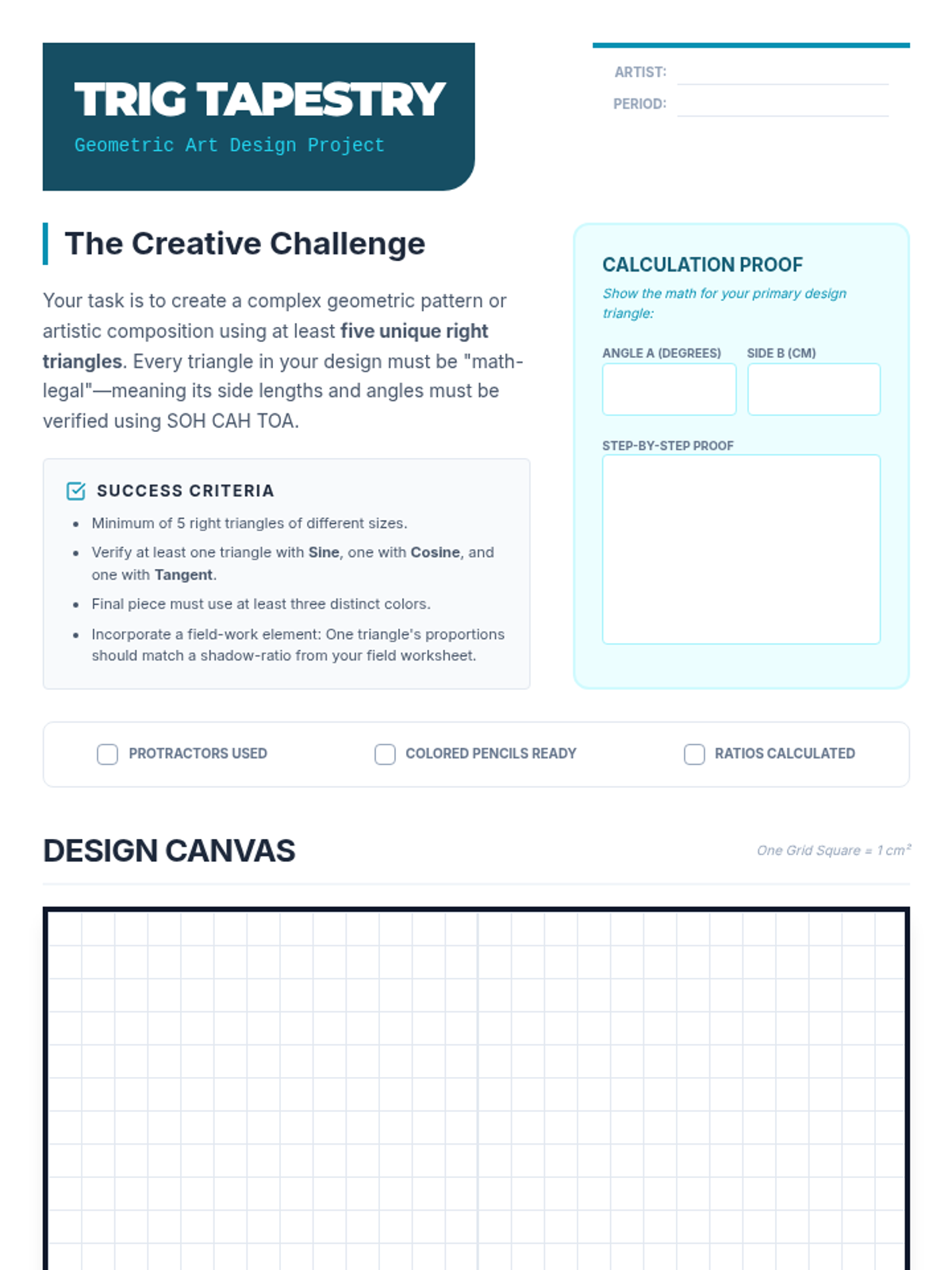
A project guide for the geometric art portion of the lesson. Students design a pattern using right triangles and prove their proportions using trigonometric ratios.
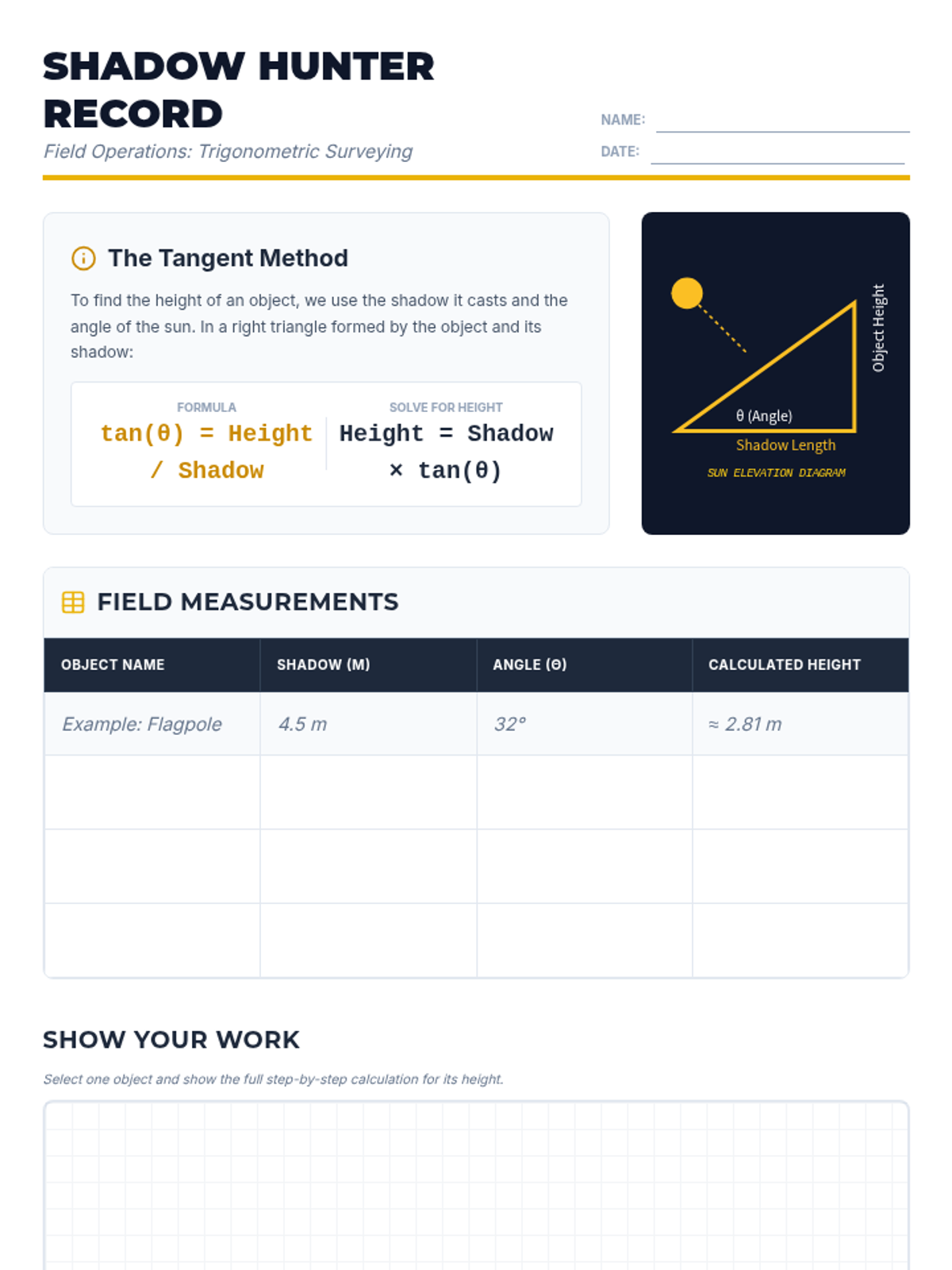
A field data collection sheet for students to record shadow lengths and calculate object heights using the tangent ratio. Includes space for work and reflection questions.
An introductory slide deck for the Shadows and Shapes project, covering trigonometric ratios, the two main project components (Shadow Hunters and Trig Tapestry), and the project timeline.
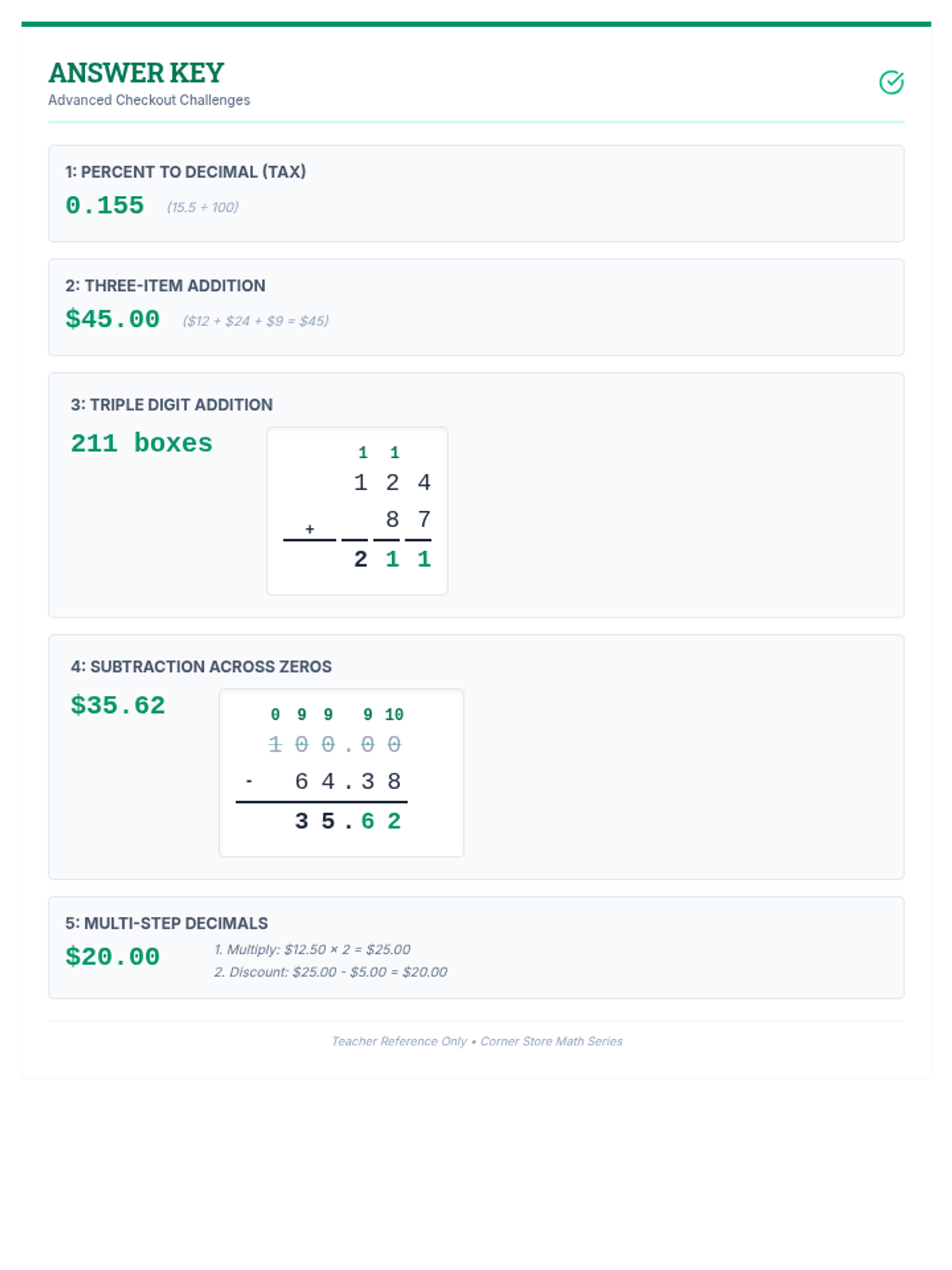
Answer key for the advanced entrance ticket, featuring step-by-step solutions for subtraction across zeros and multi-step decimal problems. Visuals updated for better alignment.
An advanced version of the grocery-themed entrance ticket featuring more complex multi-digit addition, subtraction across zeros, and multi-step decimal problems.
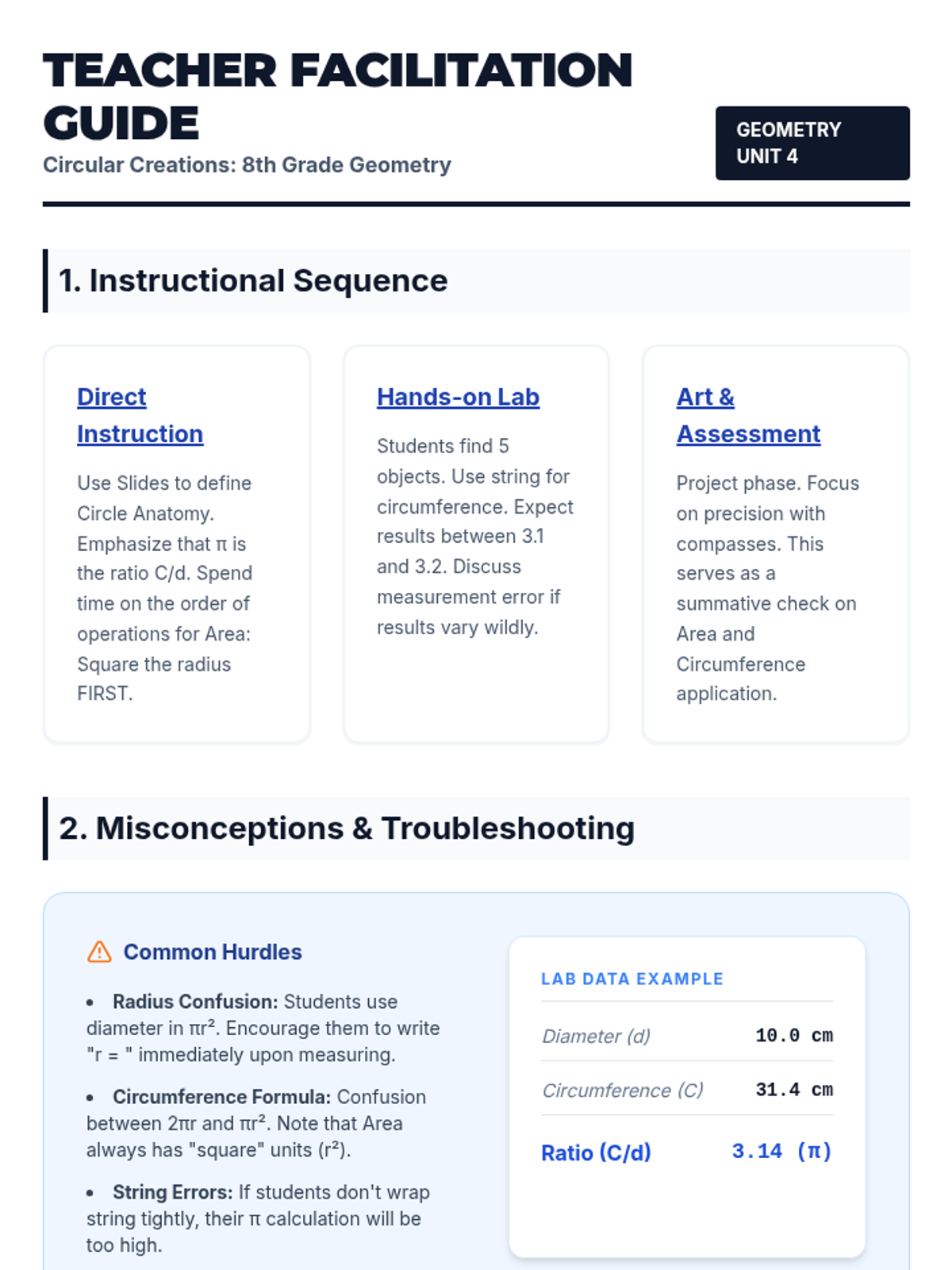
A facilitator guide for teachers including lesson pacing, common student misconceptions regarding circle formulas, a sample lab calculation, and a grading rubric for the art project.
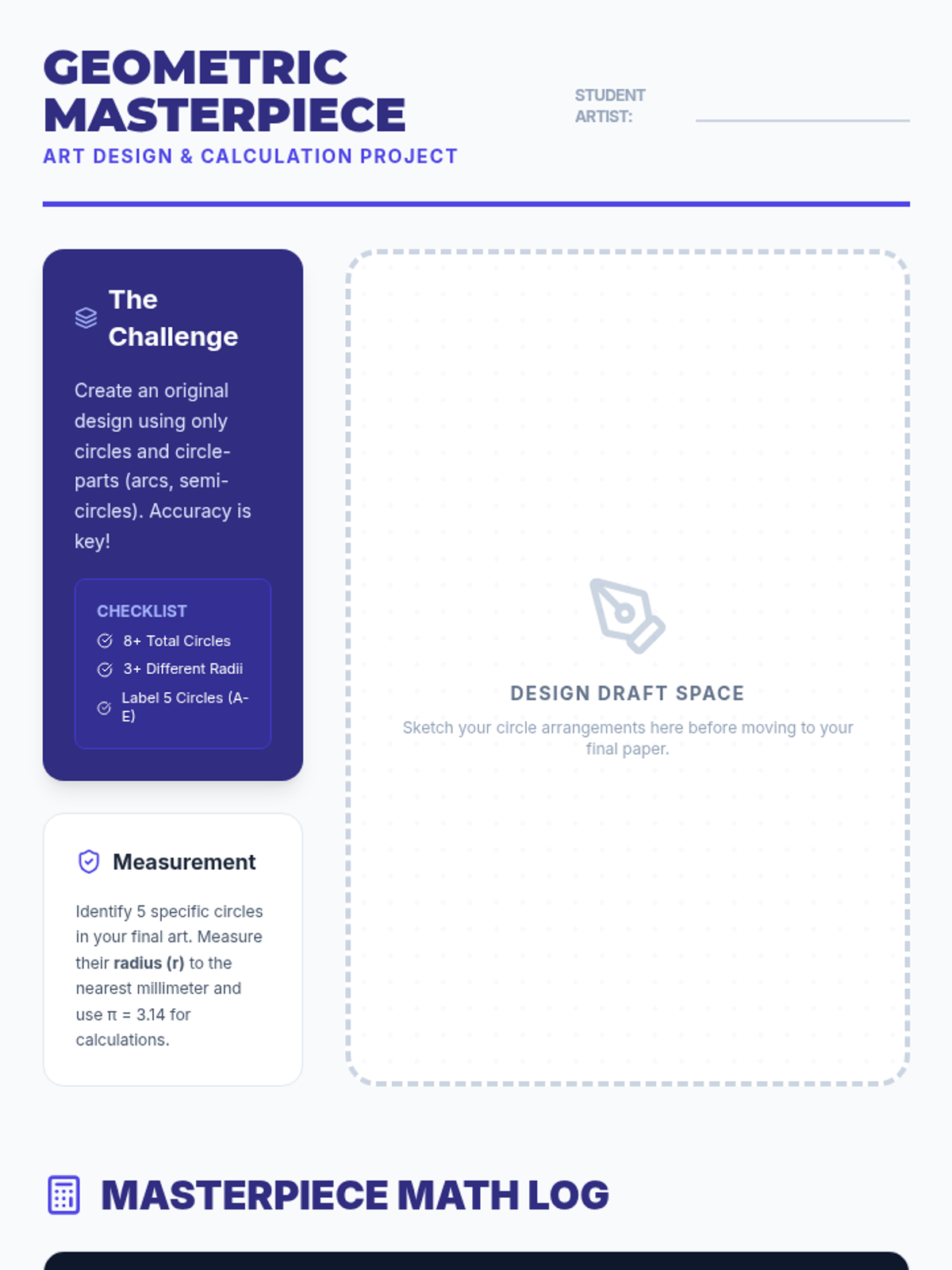
A creative project guide that tasks students with designing geometric art using circles, requiring them to measure radii and calculate circumference/area for various elements of their design.