A set of 6 scenario cards designed for the Register Reboot activity. Each card provides a realistic situation where students must communicate a request or issue to both a friend (informal) and an authority figure (formal).
A student recording sheet and practice blueprint where students can document answers to the 12 task cards. Designed with light, structured writing boxes and architectural grid lines to maintain the blueprint theme.
A set of 12 beautifully designed, blueprint-themed grammar task cards for classroom learning stations, SCOOT games, or cooperative learning. Includes card tasks for identifying relative adverbs, specifying anchoring nouns, and merging clauses.
Interactive teaching slides themed as an architectural blueprint, introducing where, when, and why relative adverbs and how they connect clauses. Features clean, high-contrast layouts, visual diagrams of referring nouns, and check-ins.
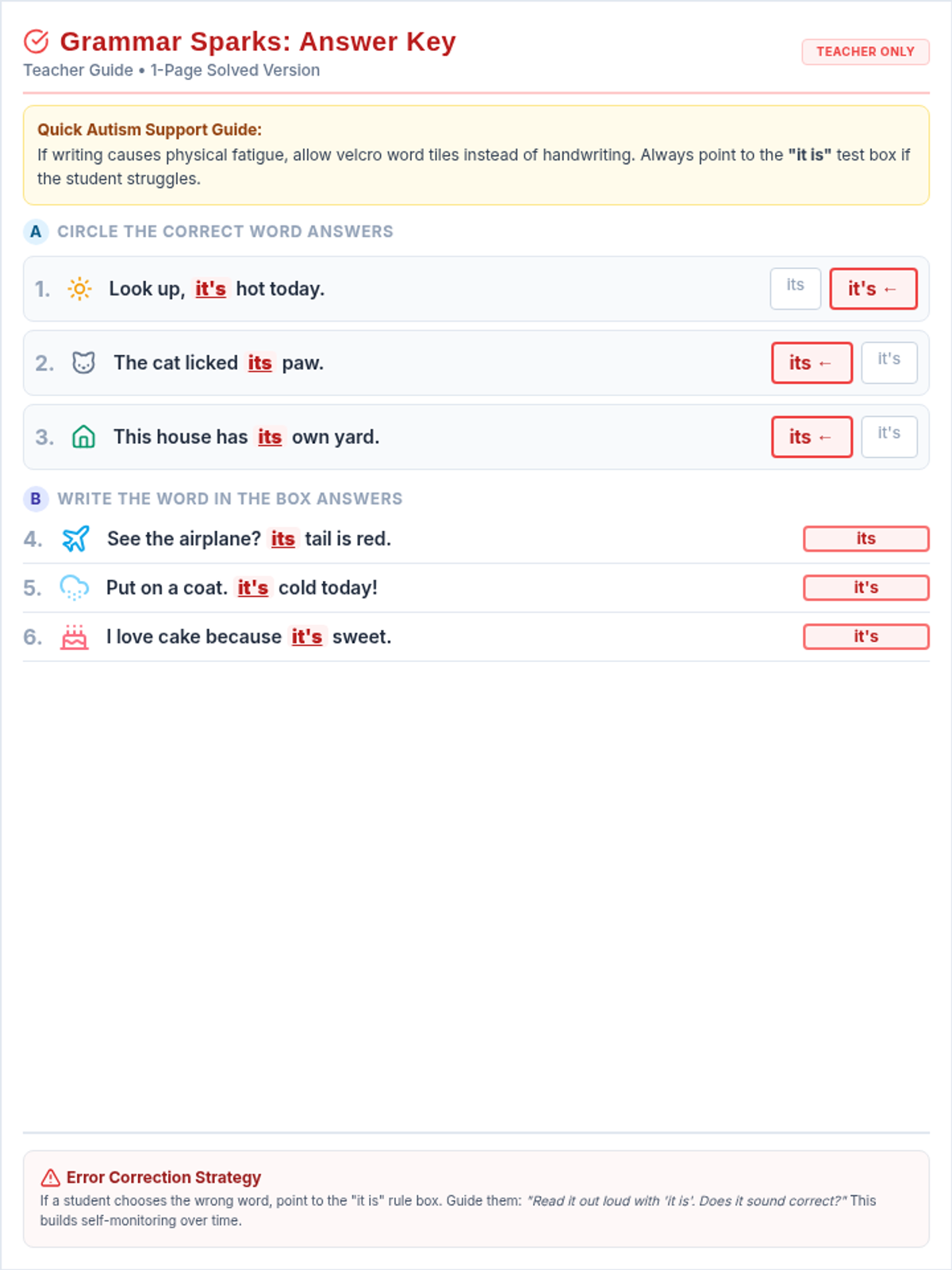
The teacher-facing Answer Key and intervention guide matching the 1-page Grammar Sparks Worksheet. It features the solved answers clearly highlighted, along with specific executive-functioning and error-correction tips for supporting autistic students.
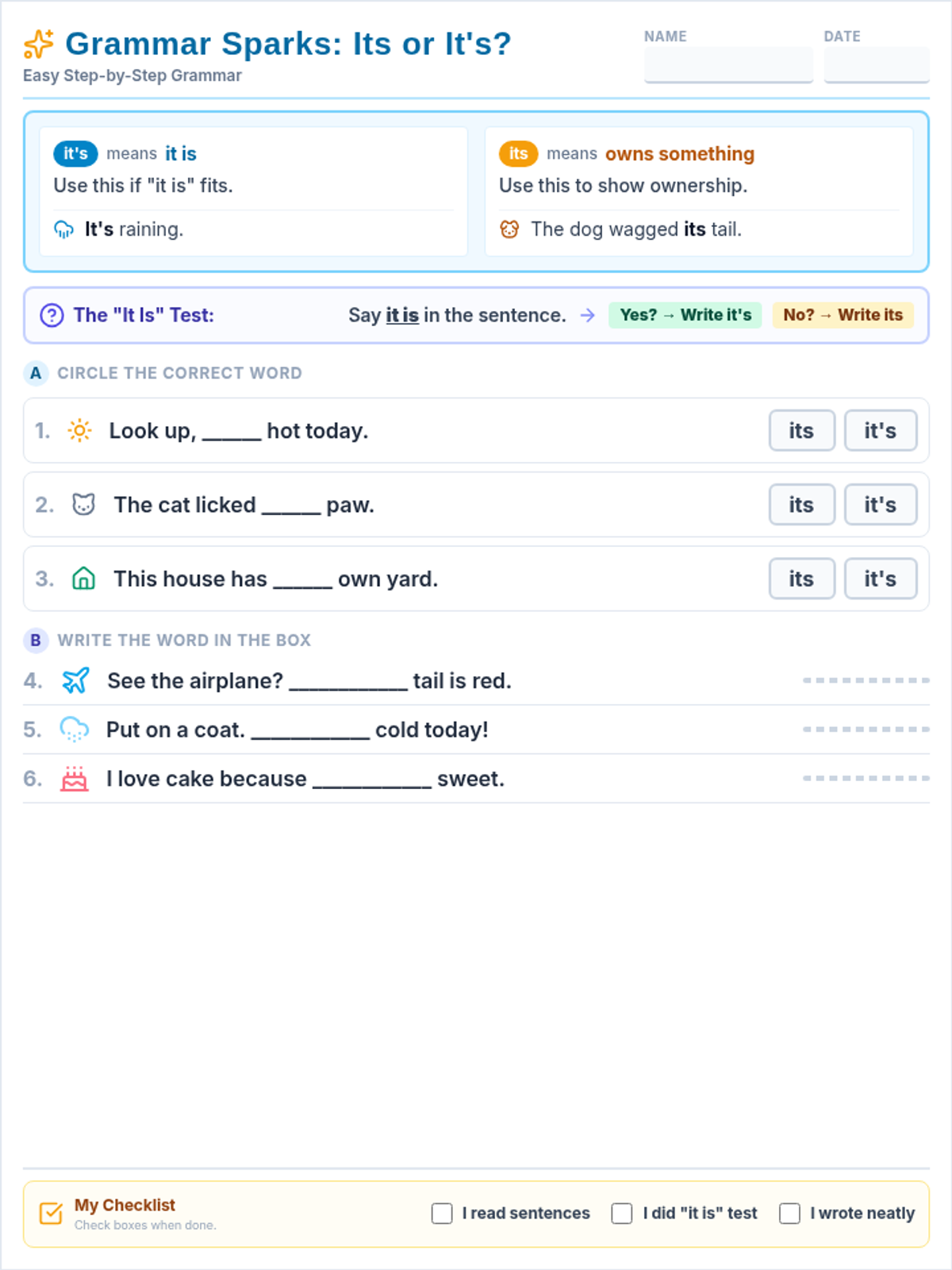
A simplified, highly structured 1-page print-ready student worksheet focusing on 'its' vs 'it's' with enlarged text for improved legibility. It features clear visual boundaries, simplified direct language, Lucide icon supports next to nouns for context, sentence frames, and a simplified self-monitoring checklist.
A differentiated, 2-page transition-drafting worksheet. Page 1 (Foundation Layer) scaffolds the connection between hooks and thesis statements with structured prompts, while Page 2 (Structural Master) challenges advanced writers to use nuanced bridge-building strategies like concession and scale shifts.
A structured, 2-page graphic organizer designed as an architectural blueprint. Helps students systematically draft the setup, link, Restate & Answer (R-A) claim, and cohesive conclusions with high-contrast, clean writing zones.
A 6-slide presentation aligned with the RACE strategy, teaching students how to draft introductions by introducing the question, linking ideas, and compiling their Restate & Answer (R-A) foundation.
A professional, highly legible grading rubric evaluating students across key persuasive elements including Thesis & Claim, Evidence, Counterargument Crusher, and overall Structure & Style.
A structured, 2-page print-ready planning graphic organizer for students to outline and organize their persuasive tech essay. Includes dedicated spaces for a hook, thesis statement, evidence gathering, and counterargument construction.
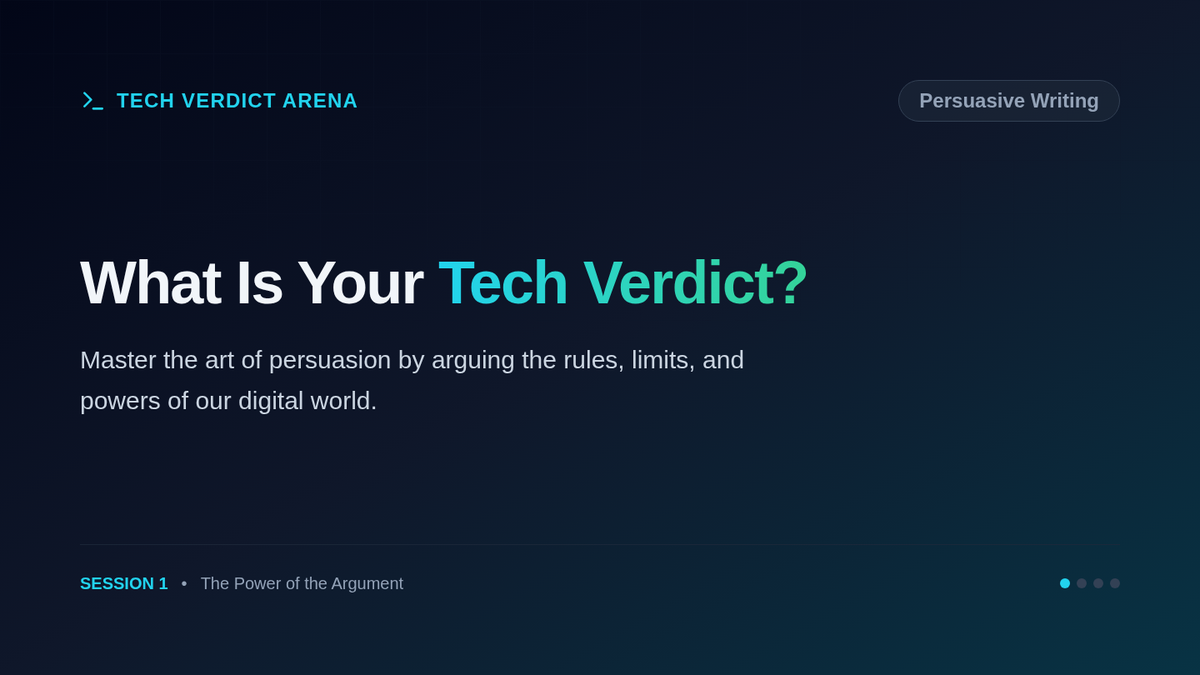
A modern, high-impact presentation slide deck introducing students to persuasive writing structures through real-world technology debates like social media limits and video game cognitive benefits.
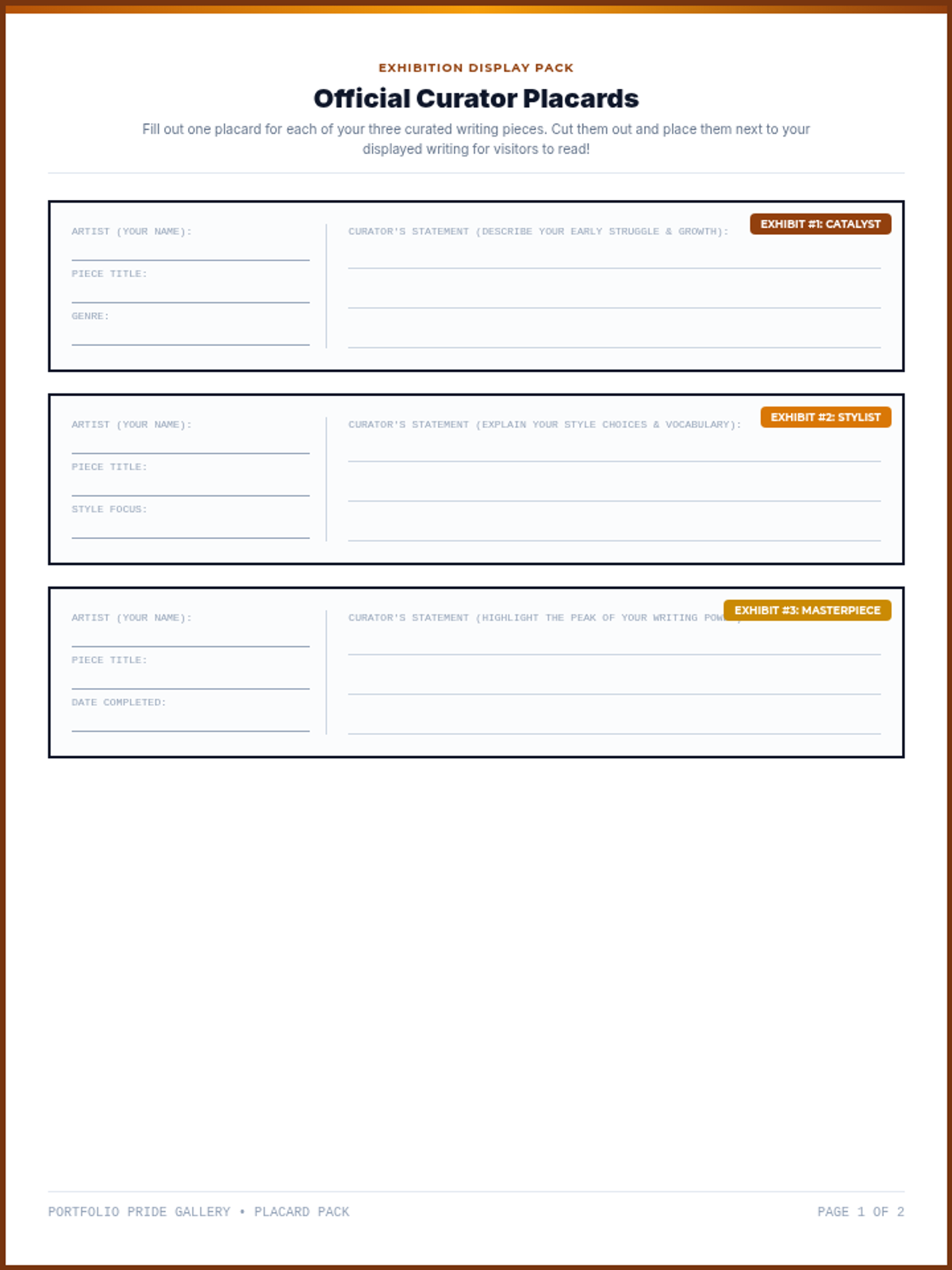
Printable museum placards/exhibit labels for students to write their curator statements, plus a customizable gallery invitation and curator rubric.
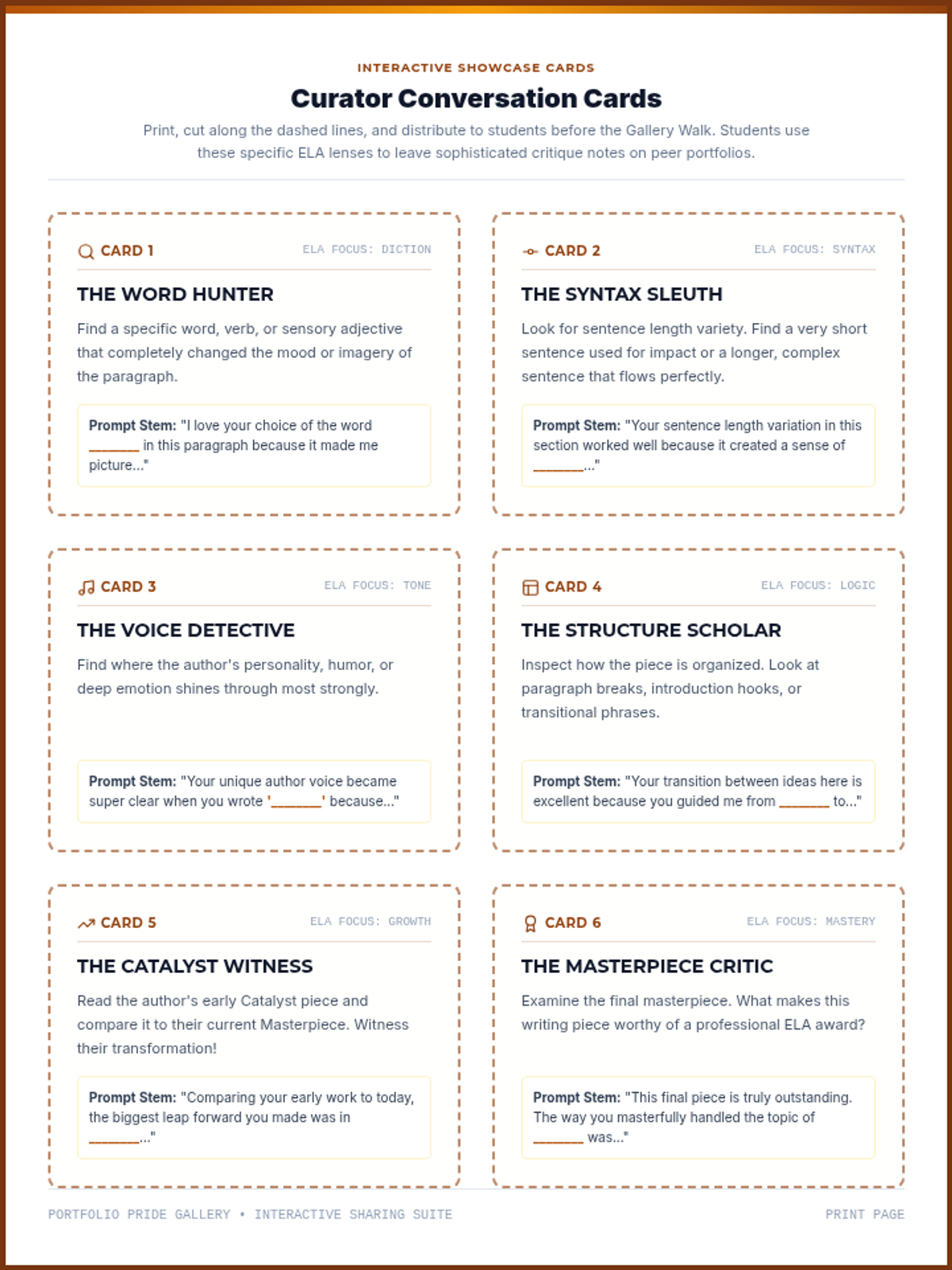
A printable set of discussion prompt cards for peer-to-peer critique and positive feedback during the showcase gallery walk.
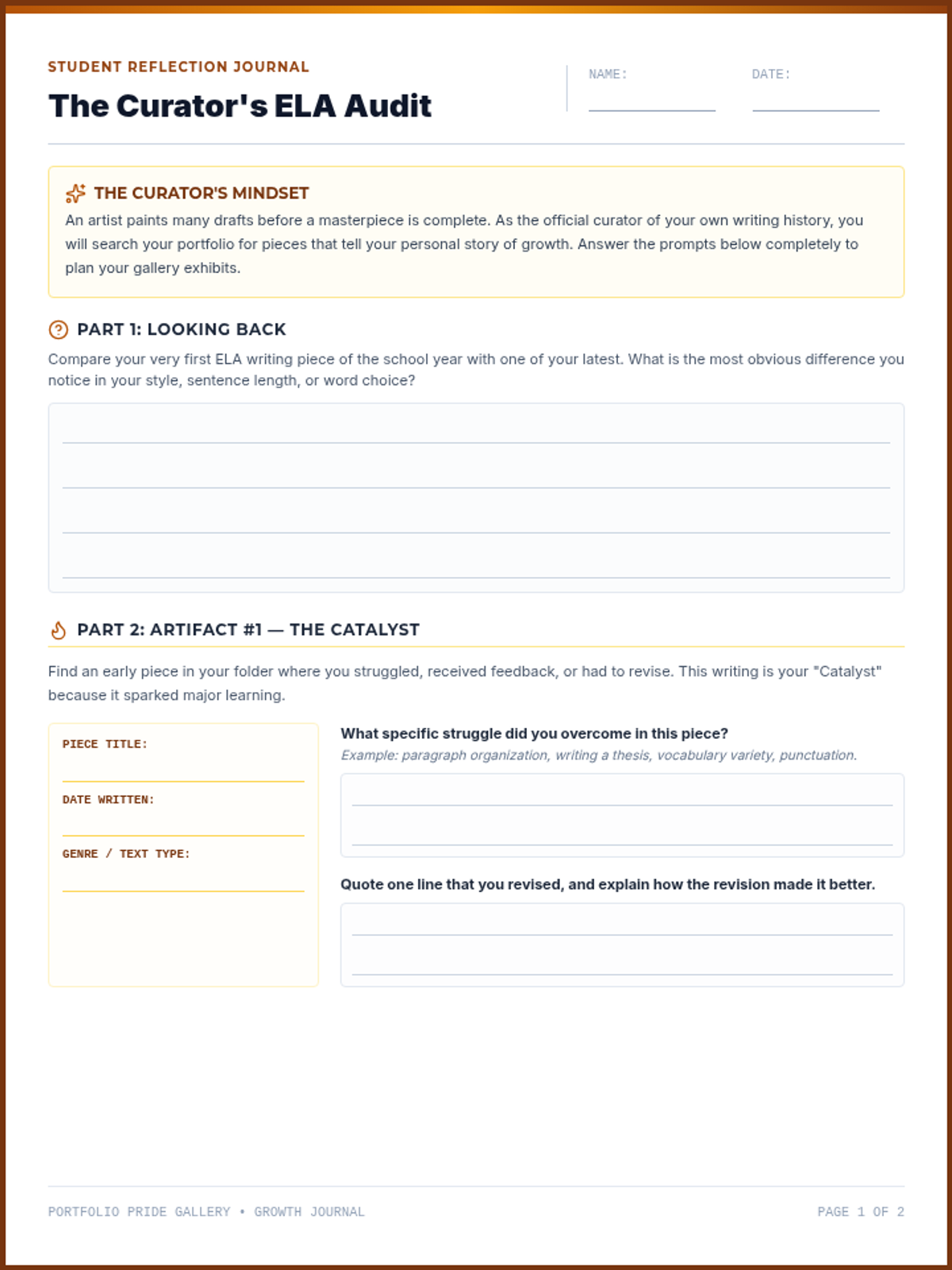
A structured student self-reflection journal with guided prompts to help students audit their ELA writing, identify milestones, and draft curator statements.
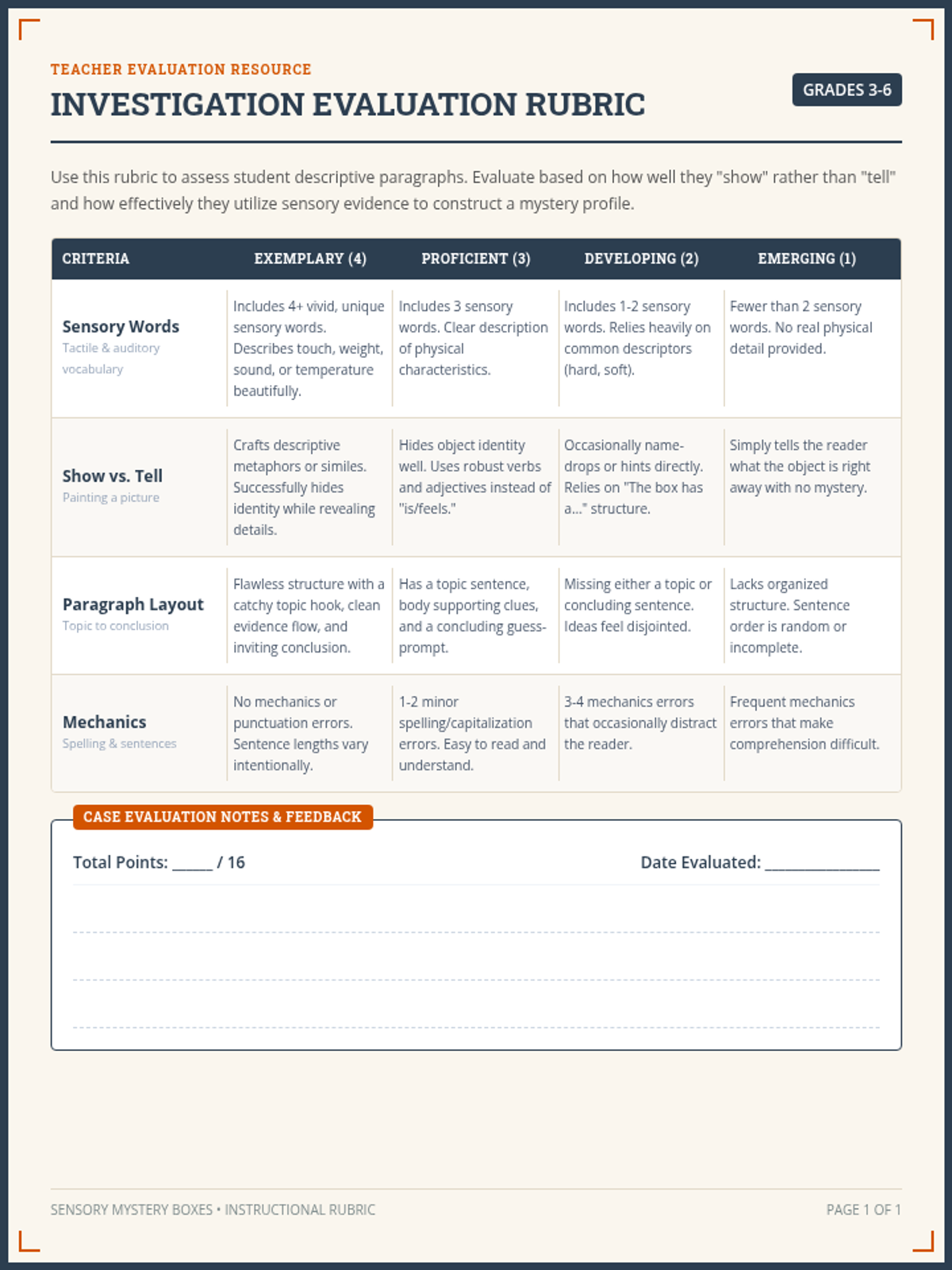
A standardized classroom grading rubric styled as an 'Investigation Evaluation Report', detailing assessment criteria for sensory vocabulary, writing structure, mechanics, and descriptive depth.
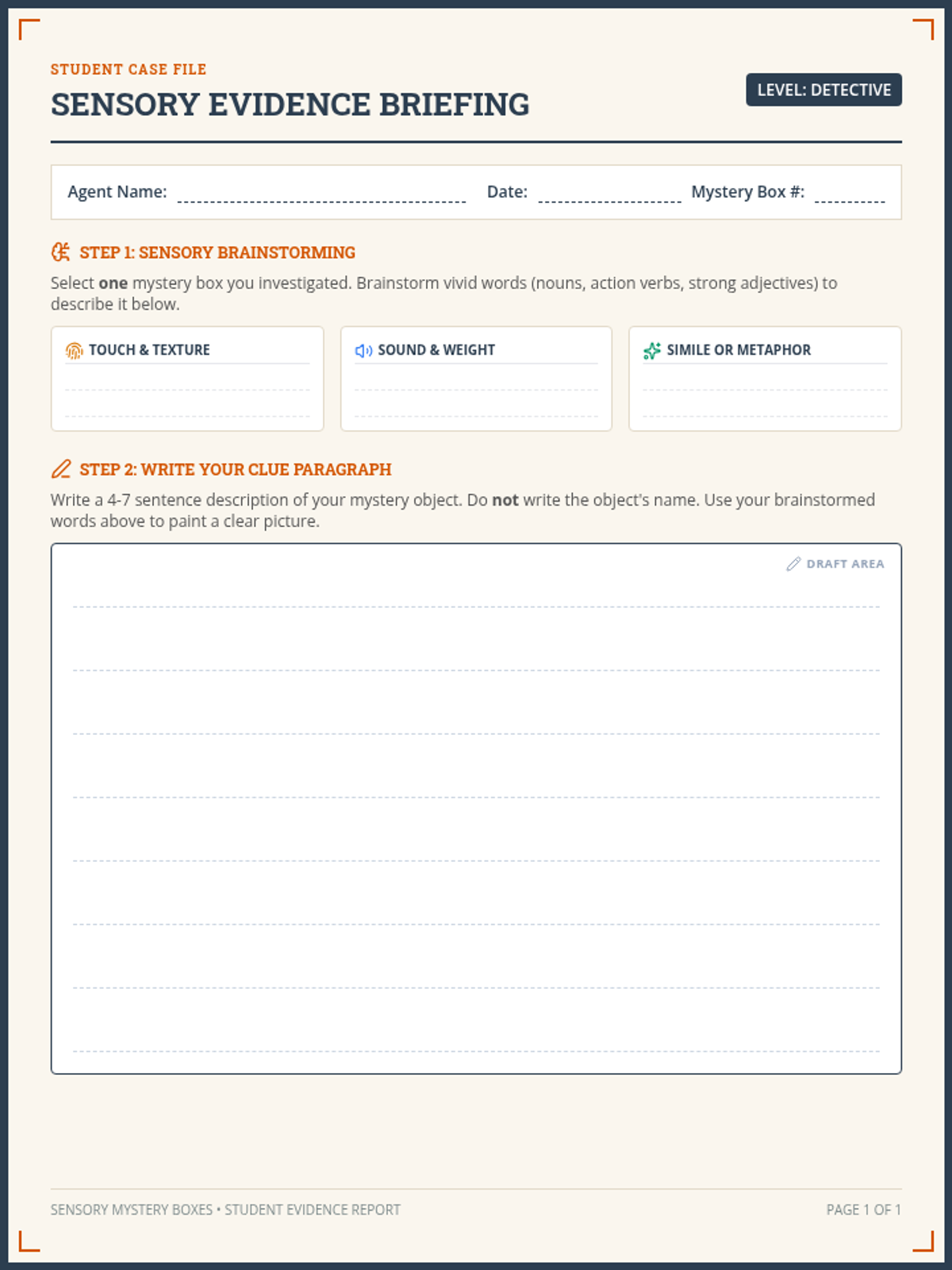
A structured student-facing worksheet for planning and writing their mystery box descriptive paragraph, featuring sensory brainstorming boxes, paragraph layout guidelines, and lined writing space.