A teacher resource for supporting ELL students in the Literary Recon project, providing modified pacing and specific research leads for all 4 books on a single-page layout.
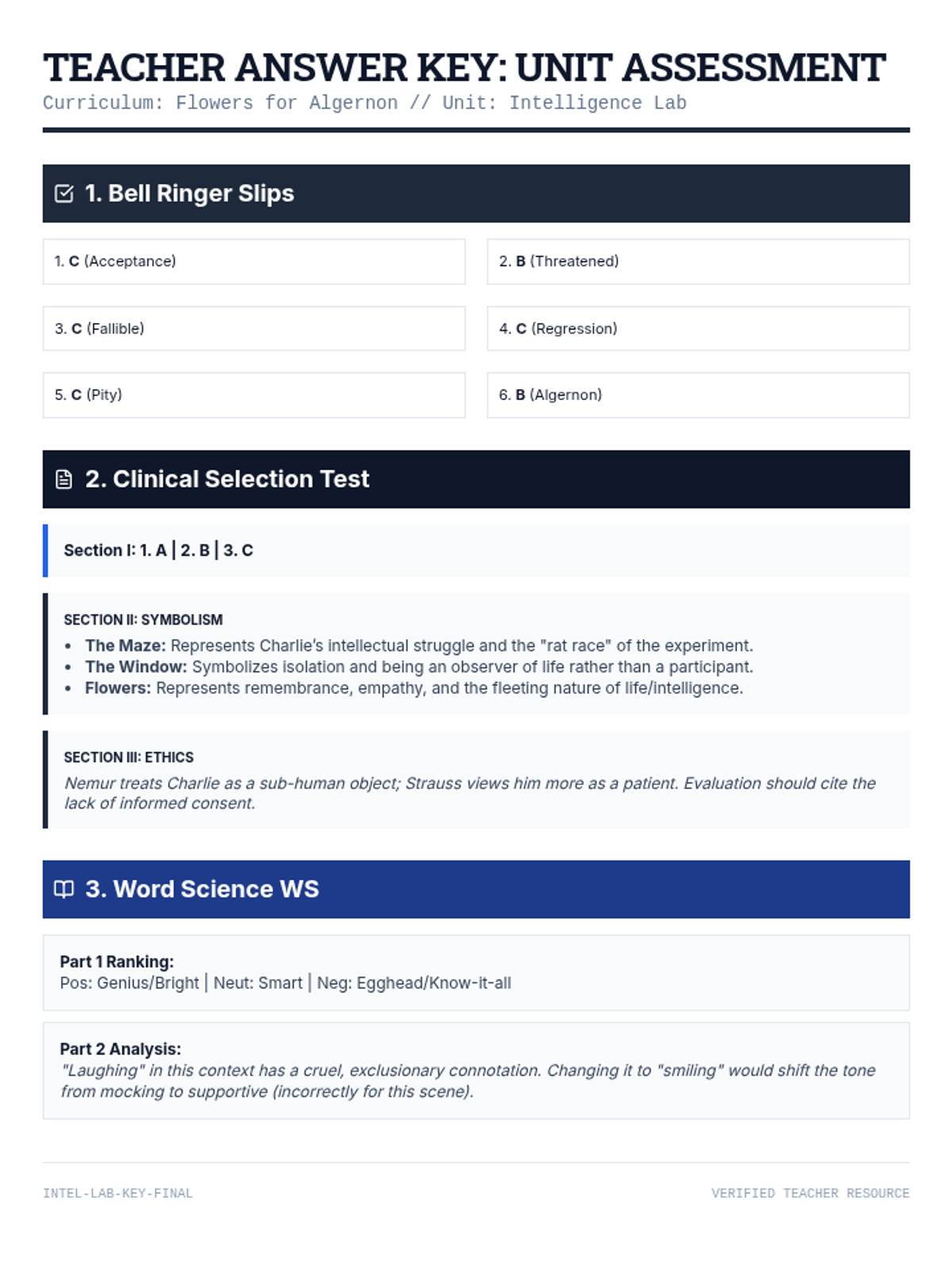
A comprehensive answer key for teachers, covering both the bell ringer worksheet and the splash quiz bee, including rationale for the correct answers.
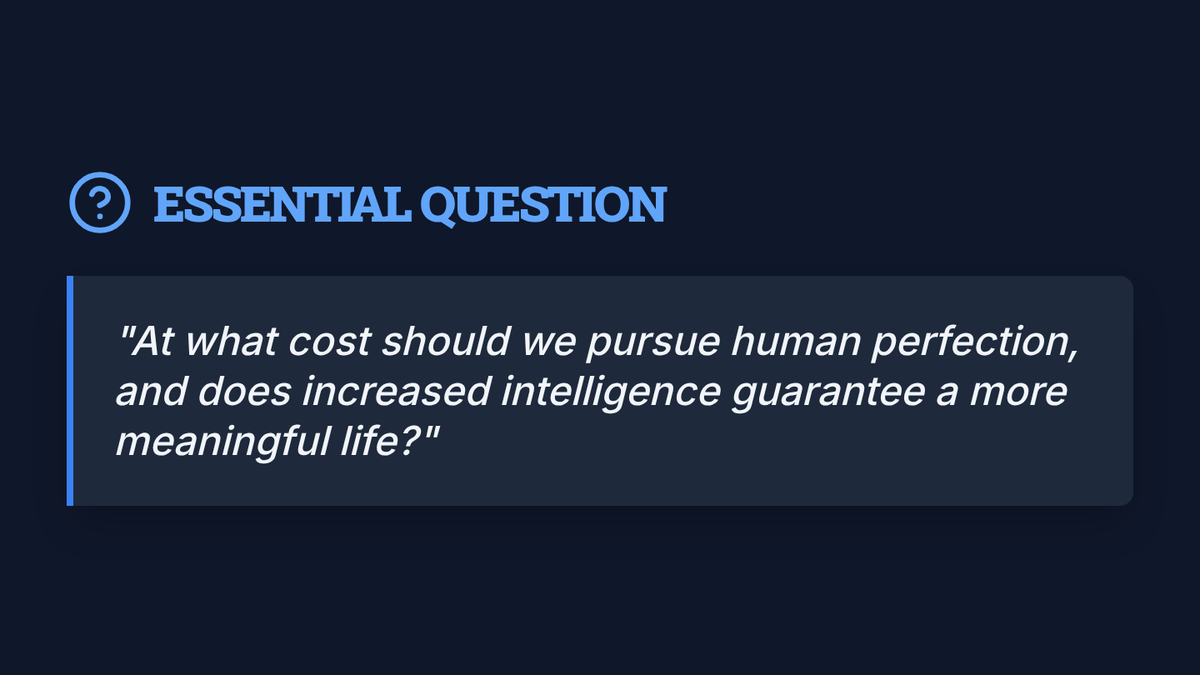
A presentation deck for 'Flowers for Algernon' containing a chronological teacher's summary, a 6-item splash quiz bee with answers, and a Think-Pair-Share discussion prompt.
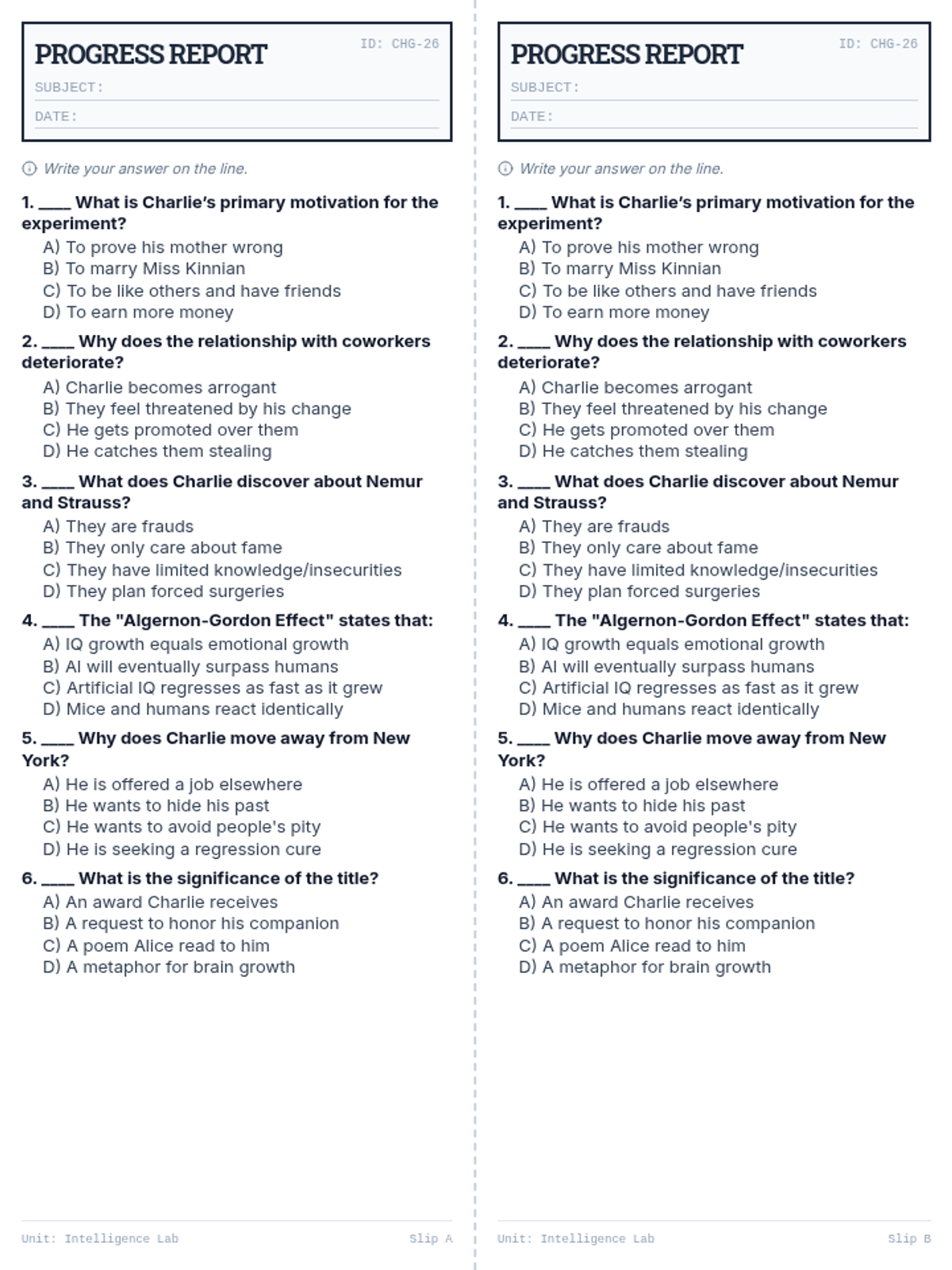
A half-sheet cut-out version of the Algernon Bell Ringer, containing two identical slips per page for easy distribution and printing efficiency.
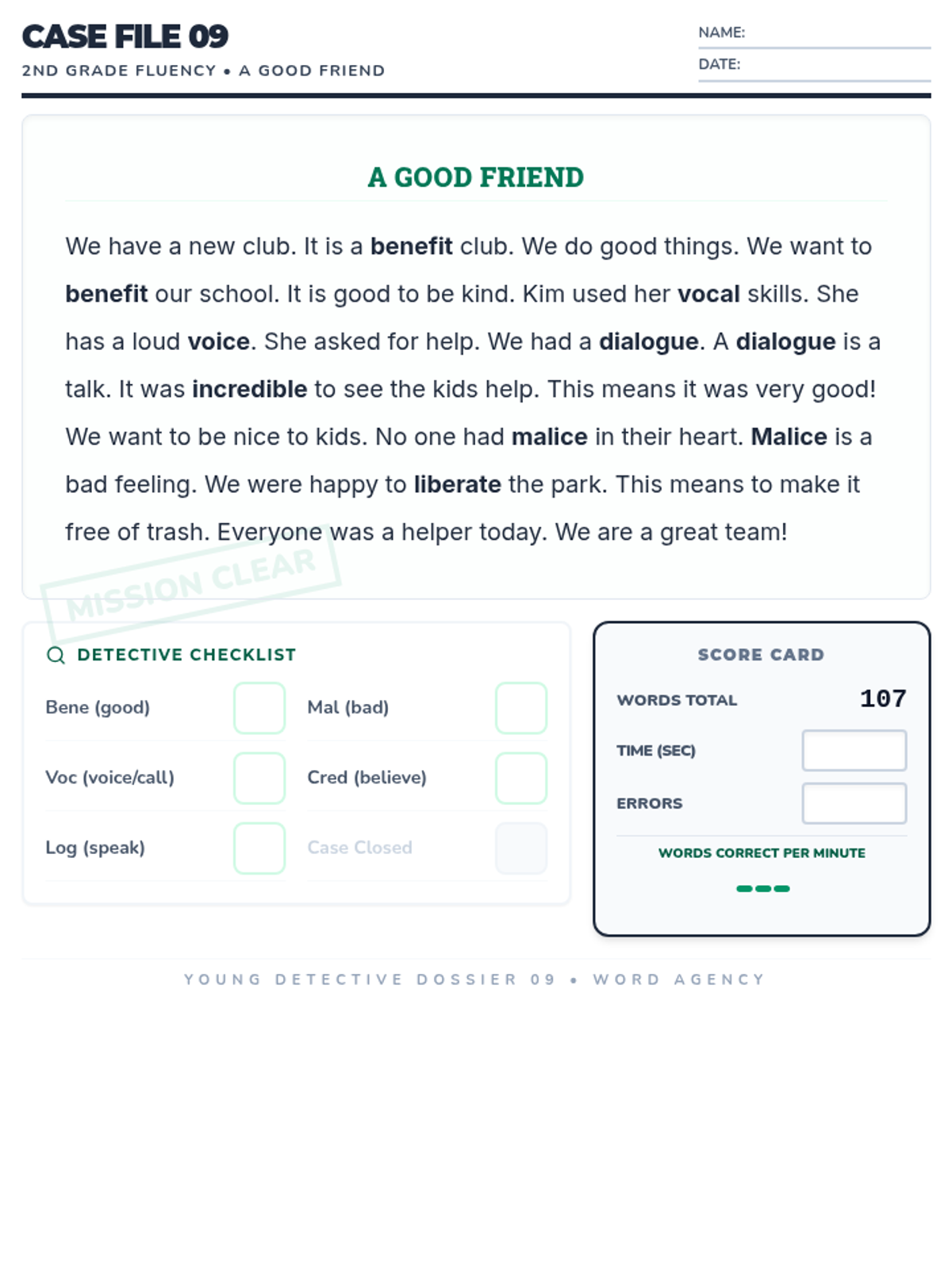
A 2nd-grade level fluency passage titled 'A Good Friend' focused on Latin and Greek roots like bene, mal, voc, and cred. Simplified for primary students.
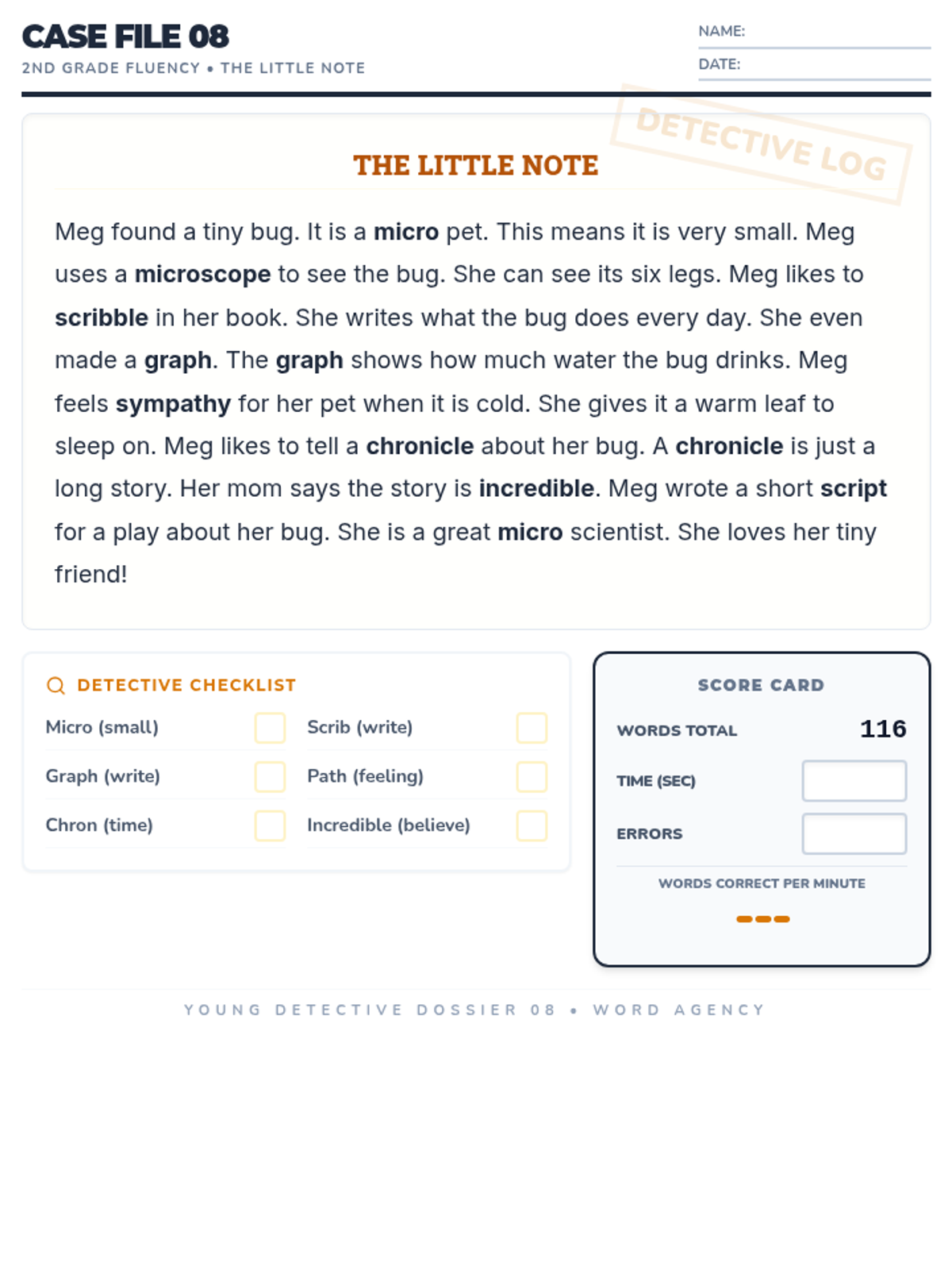
A 2nd-grade level fluency passage titled 'The Little Note' focused on Greek roots like micro, scrib, graph, and path. Designed for younger readers with increased font size.
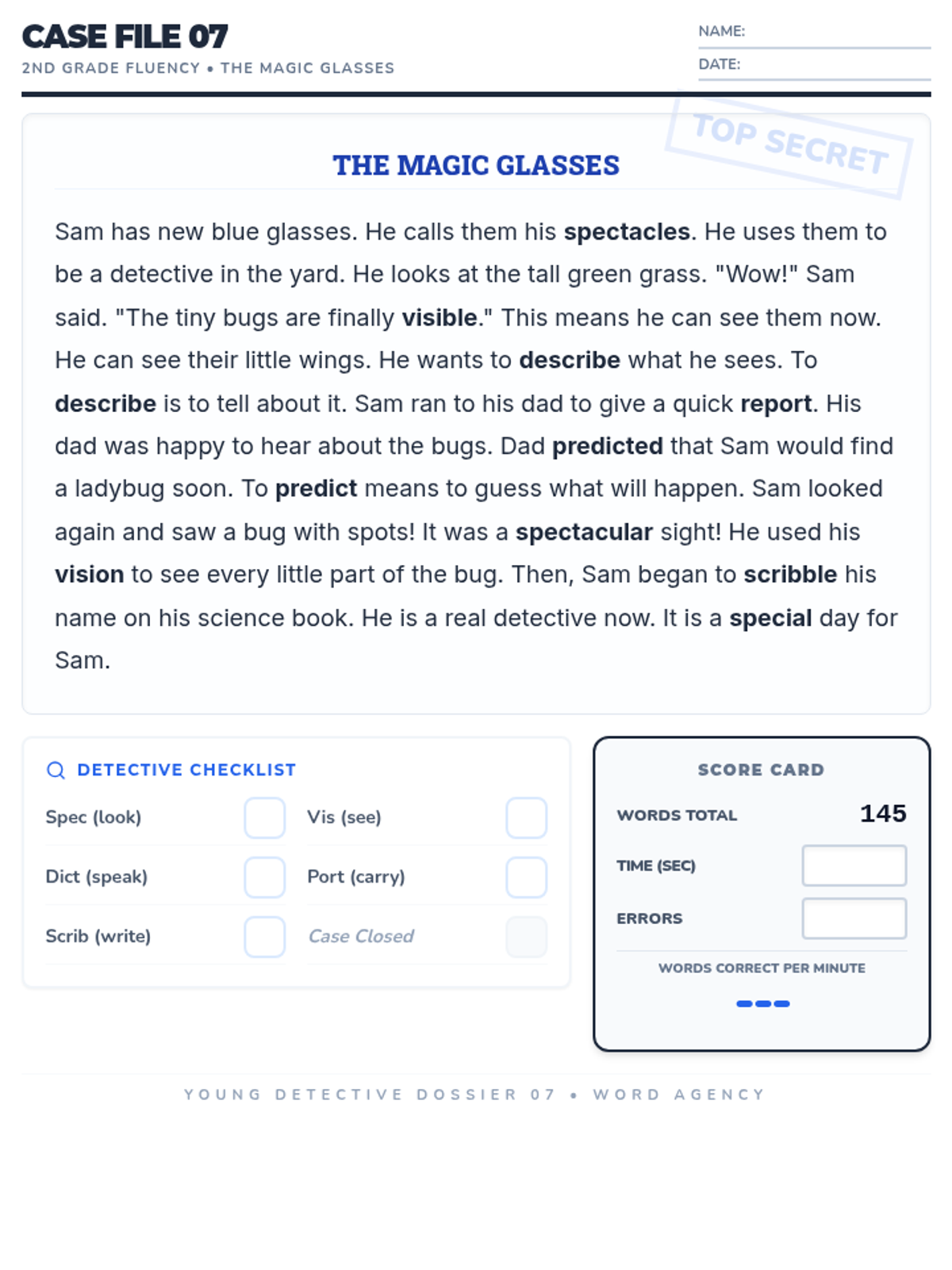
A 2nd-grade level fluency passage titled 'The Magic Glasses' focused on Latin roots like spec, vis, dict, and port. Features larger text and simplified tracking for younger readers.
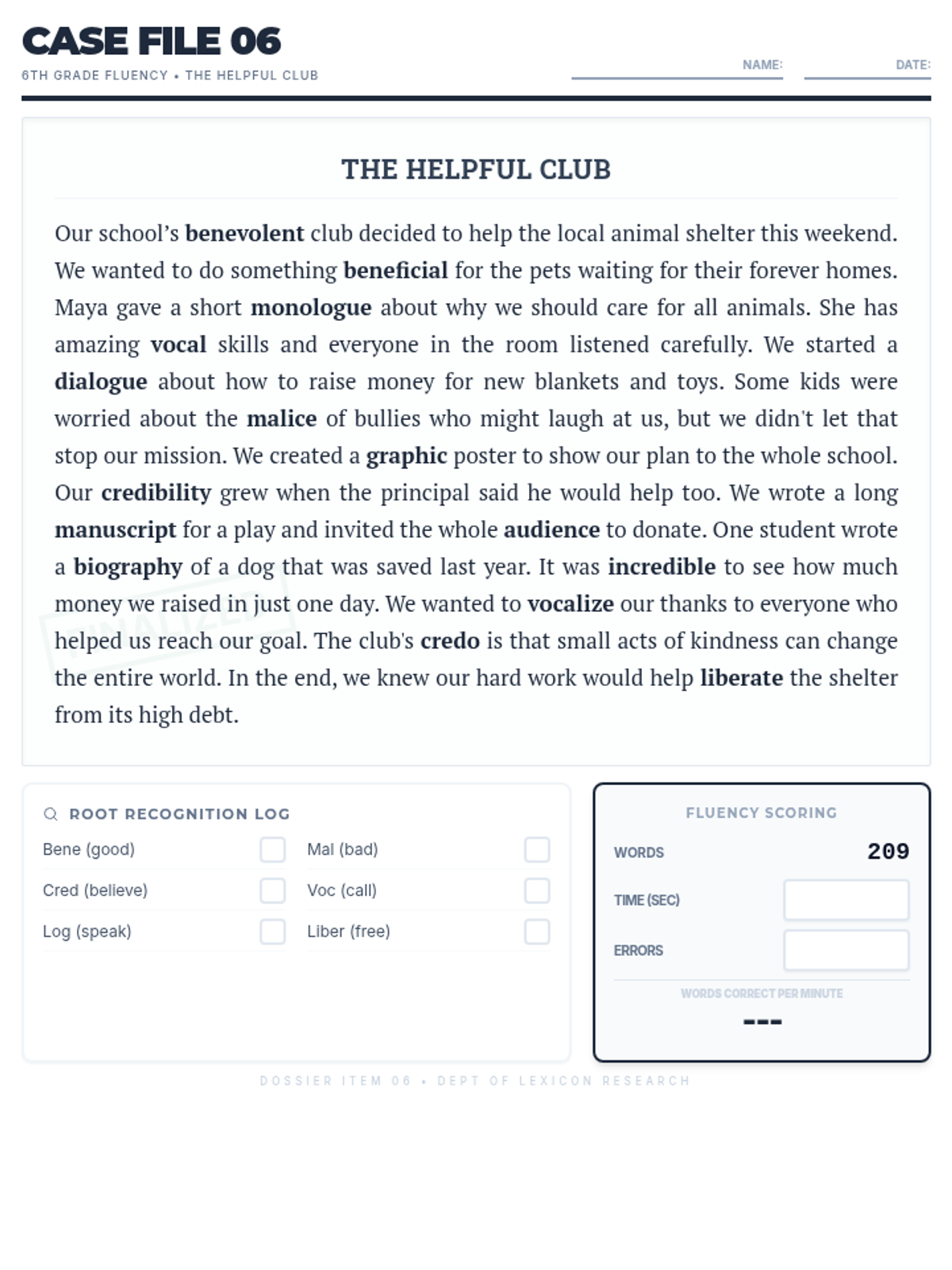
A 6th-grade level fluency passage titled 'The Helpful Club' focused on Latin and Greek roots like bene, mal, cred, and voc. Includes a fluency scoring box and root recognition log.
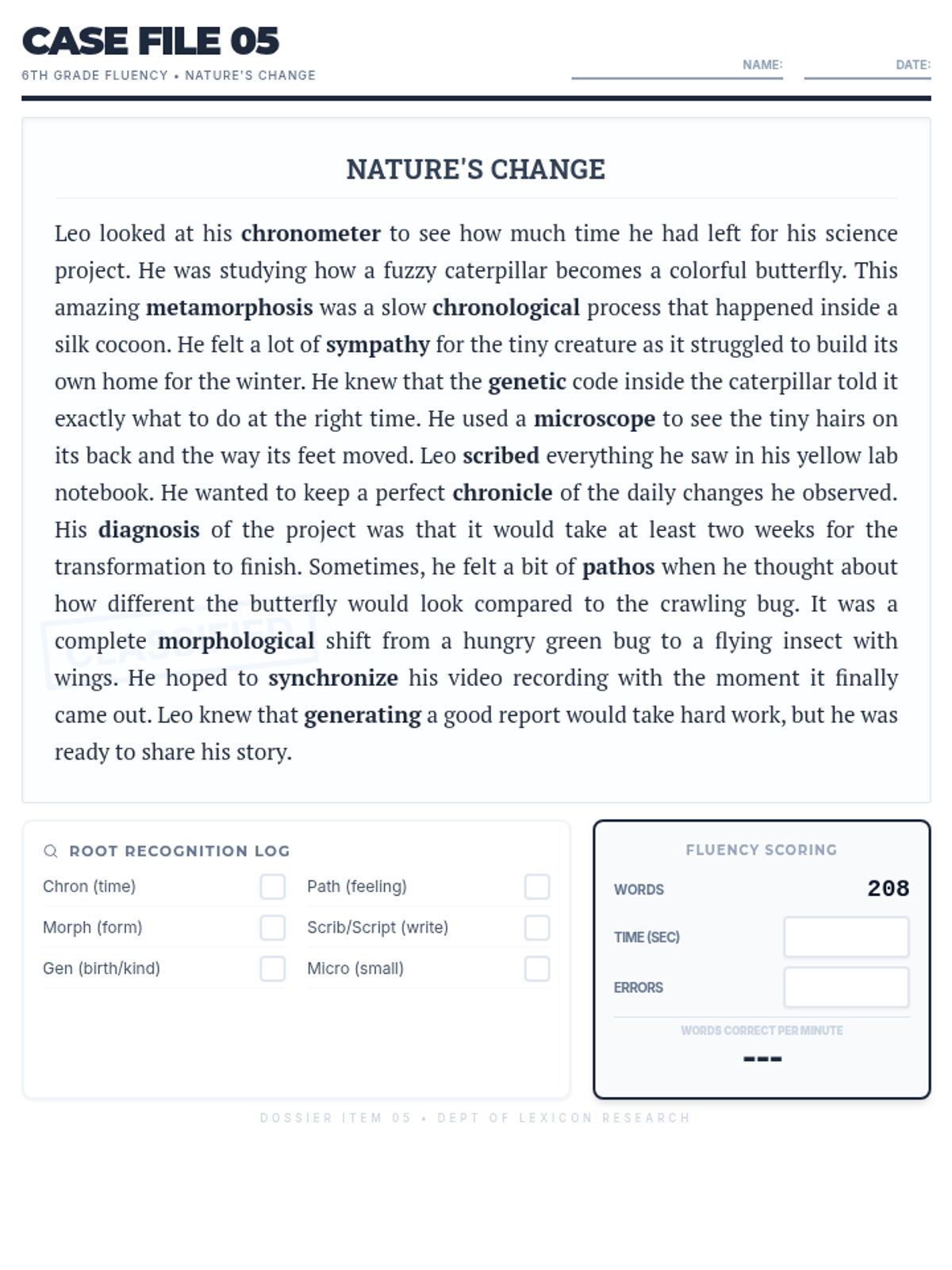
A 6th-grade level fluency passage titled 'Nature's Change' focused on Greek roots like chron, path, morph, and gen. Includes a fluency scoring box and root recognition log.
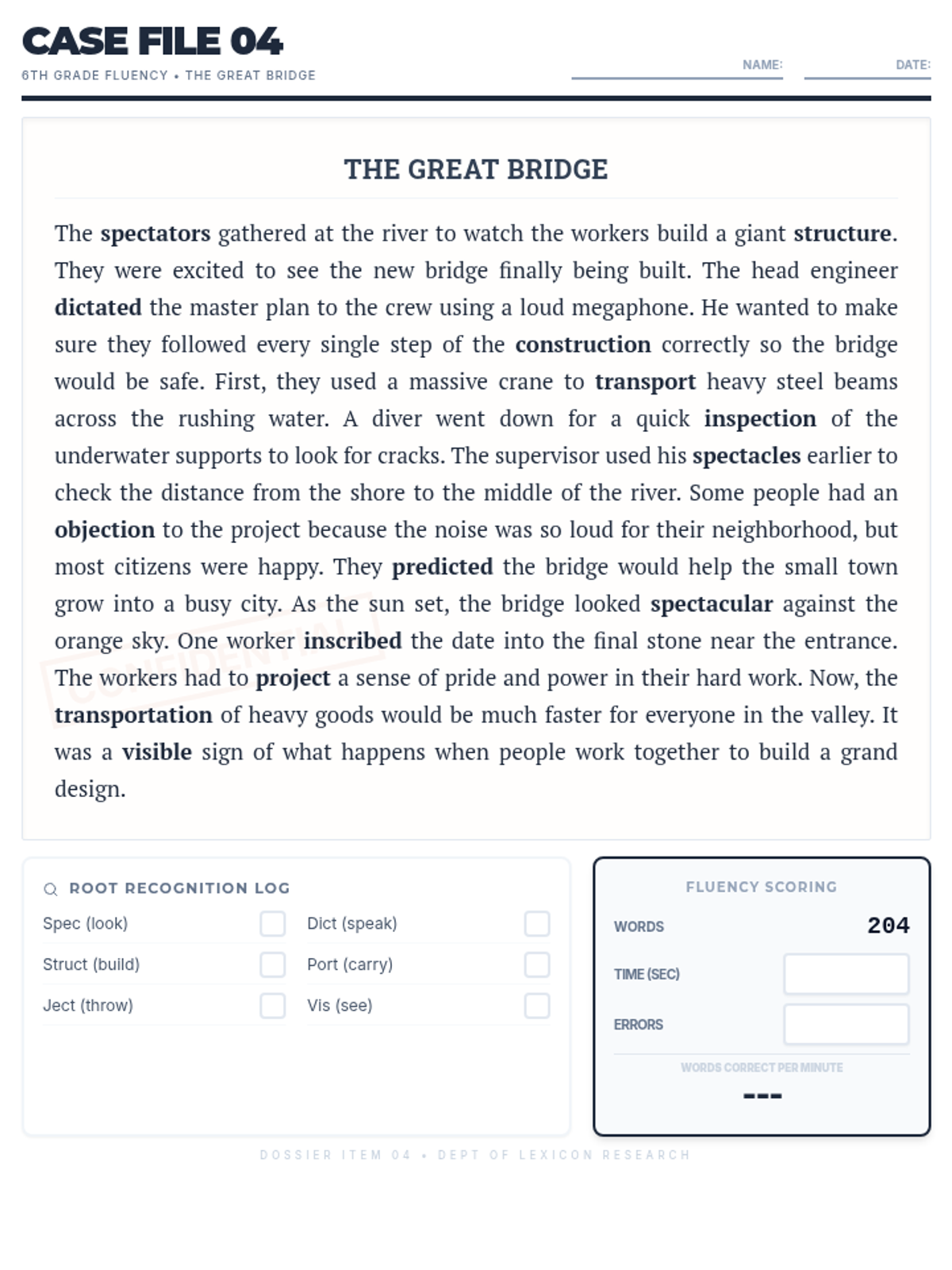
A 6th-grade level fluency passage titled 'The Great Bridge' focused on Latin roots like spec, struct, ject, and port. Includes a fluency scoring box and root recognition log.
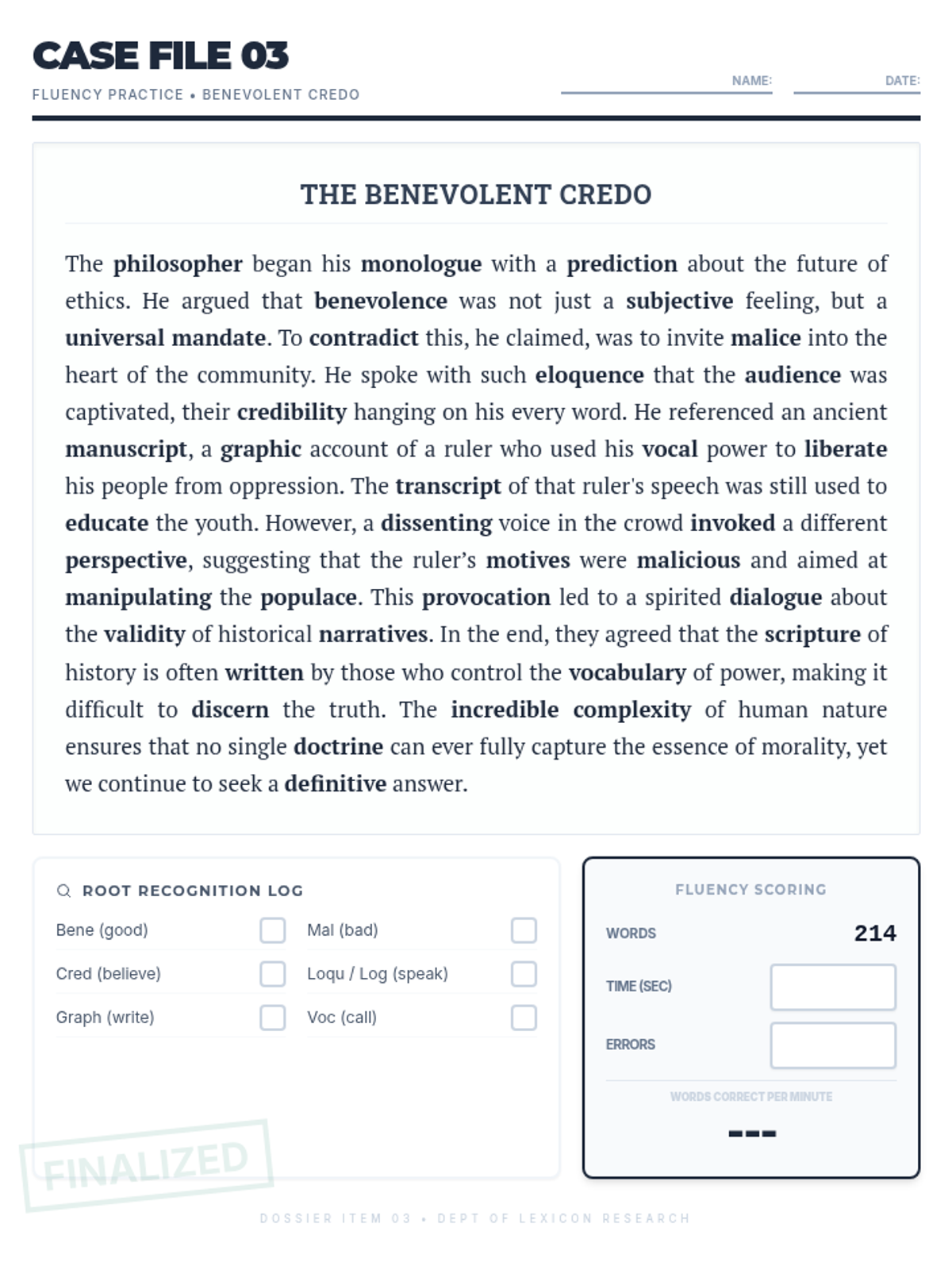
A high school fluency passage titled 'The Benevolent Credo' focused on Latin and Greek roots like bene, mal, cred, and voc. Includes a fluency scoring box and root recognition log.
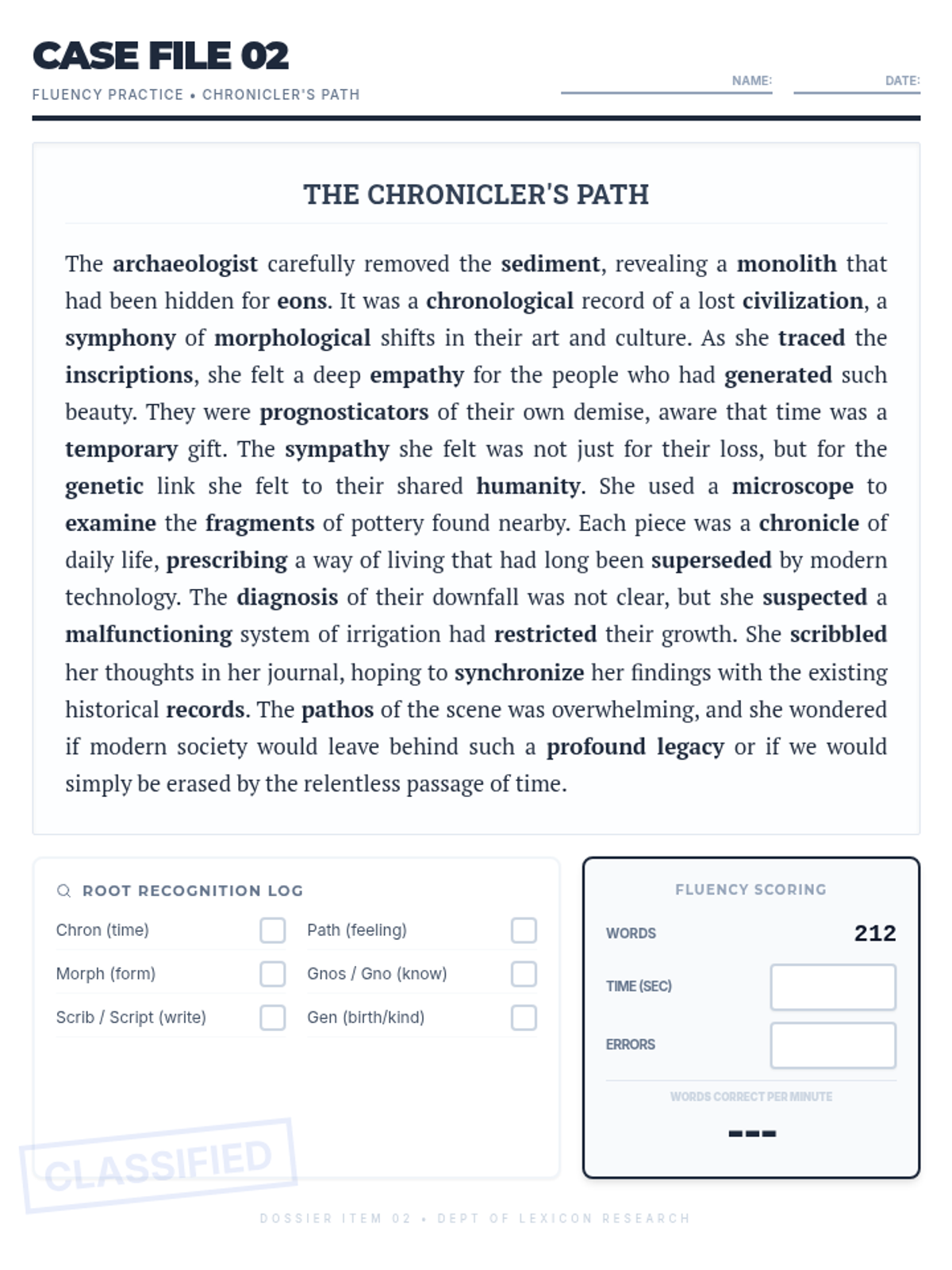
A high school fluency passage titled 'The Chronicler's Path' focused on Greek roots like chron, path, morph, and gen. Includes a fluency scoring box and root recognition log.
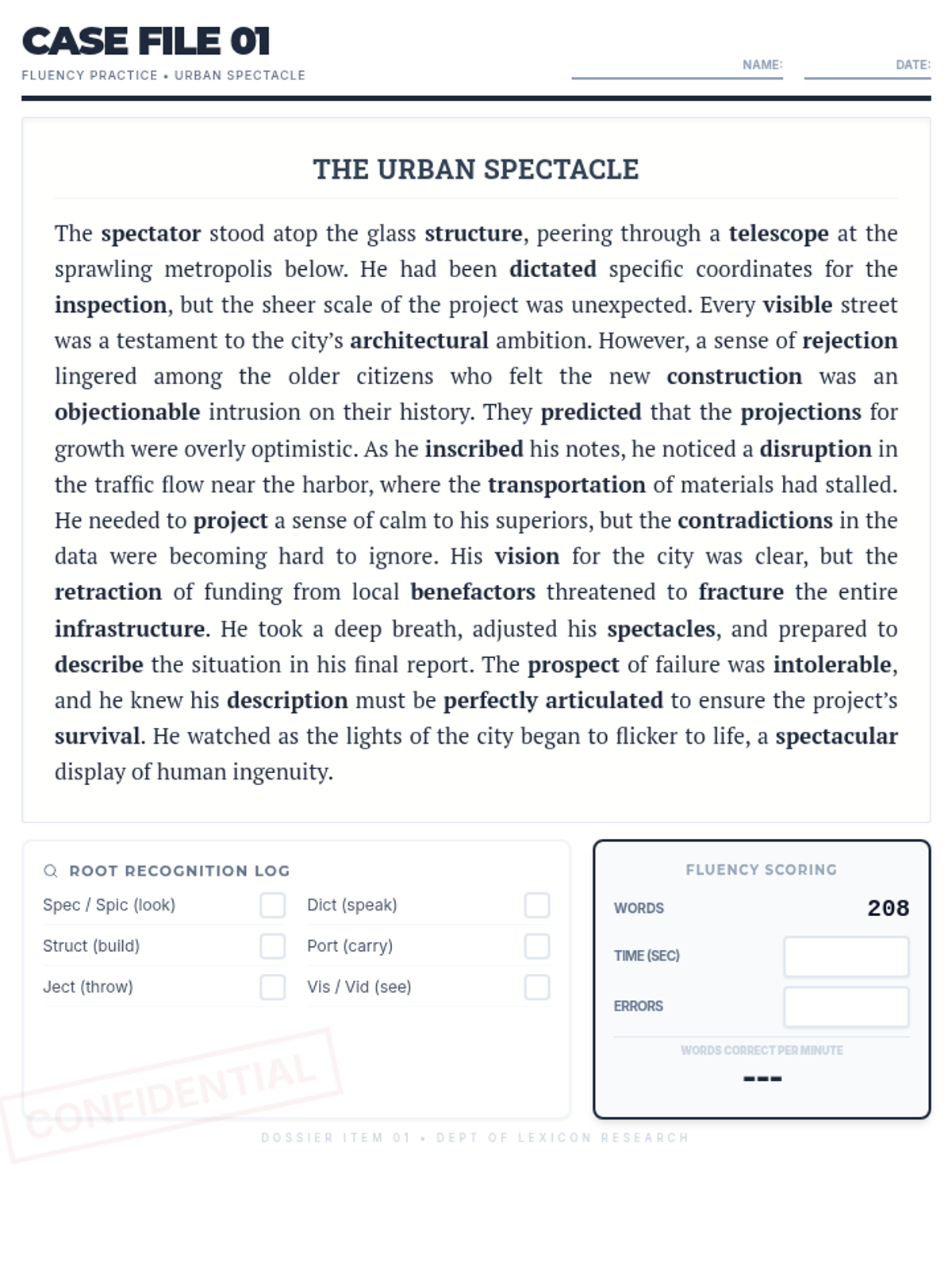
A high school fluency passage titled 'The Urban Spectacle' focused on Latin roots like spec, struct, ject, and port. Includes a fluency scoring box and root recognition log.
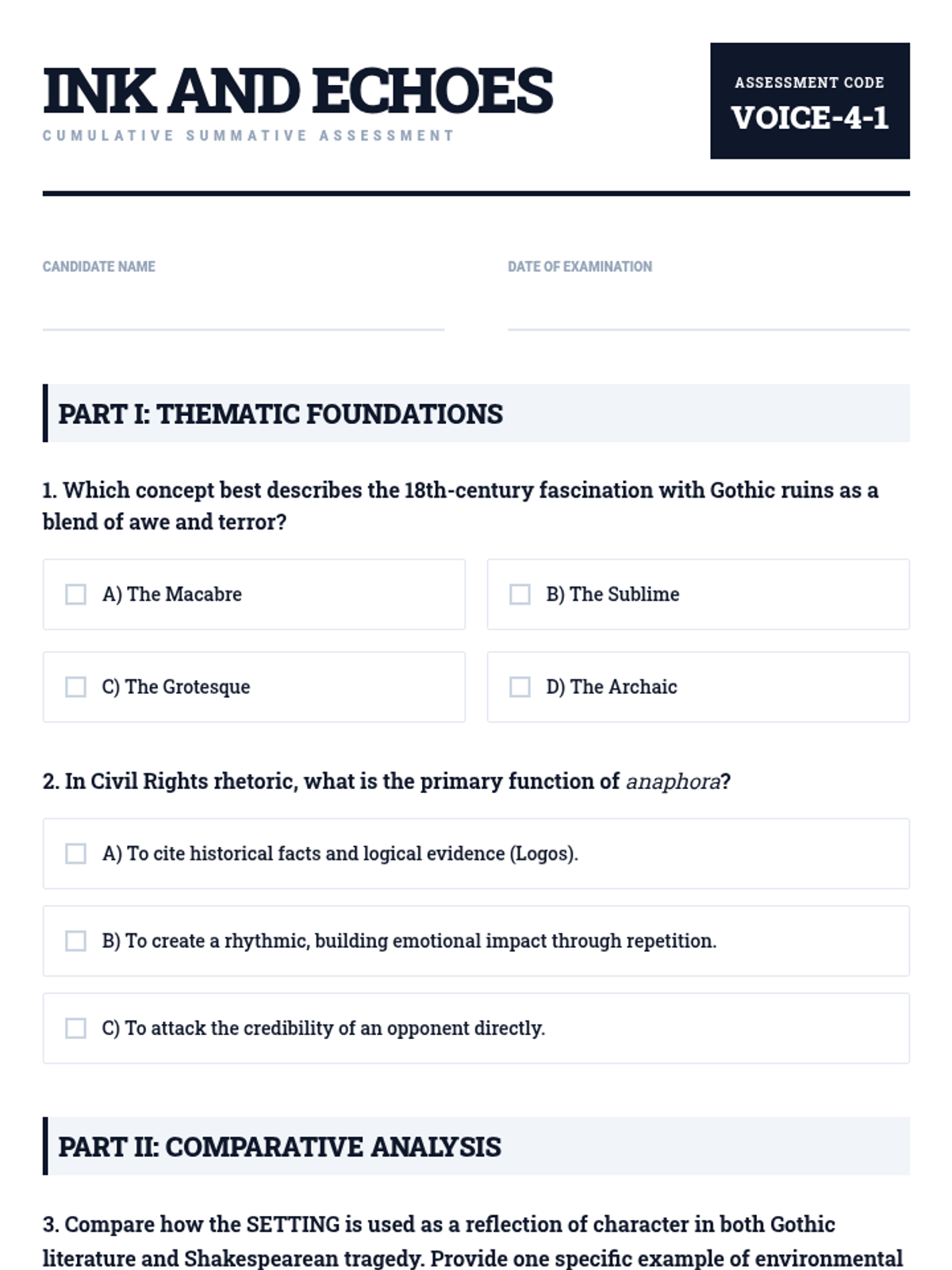
A cumulative summative assessment for the 'Ink and Echoes' unit. It covers Gothic literature, Civil Rights rhetoric, contemporary poetry, and Shakespeare through multiple-choice questions, short-answer comparisons, and a synthesis essay prompt.
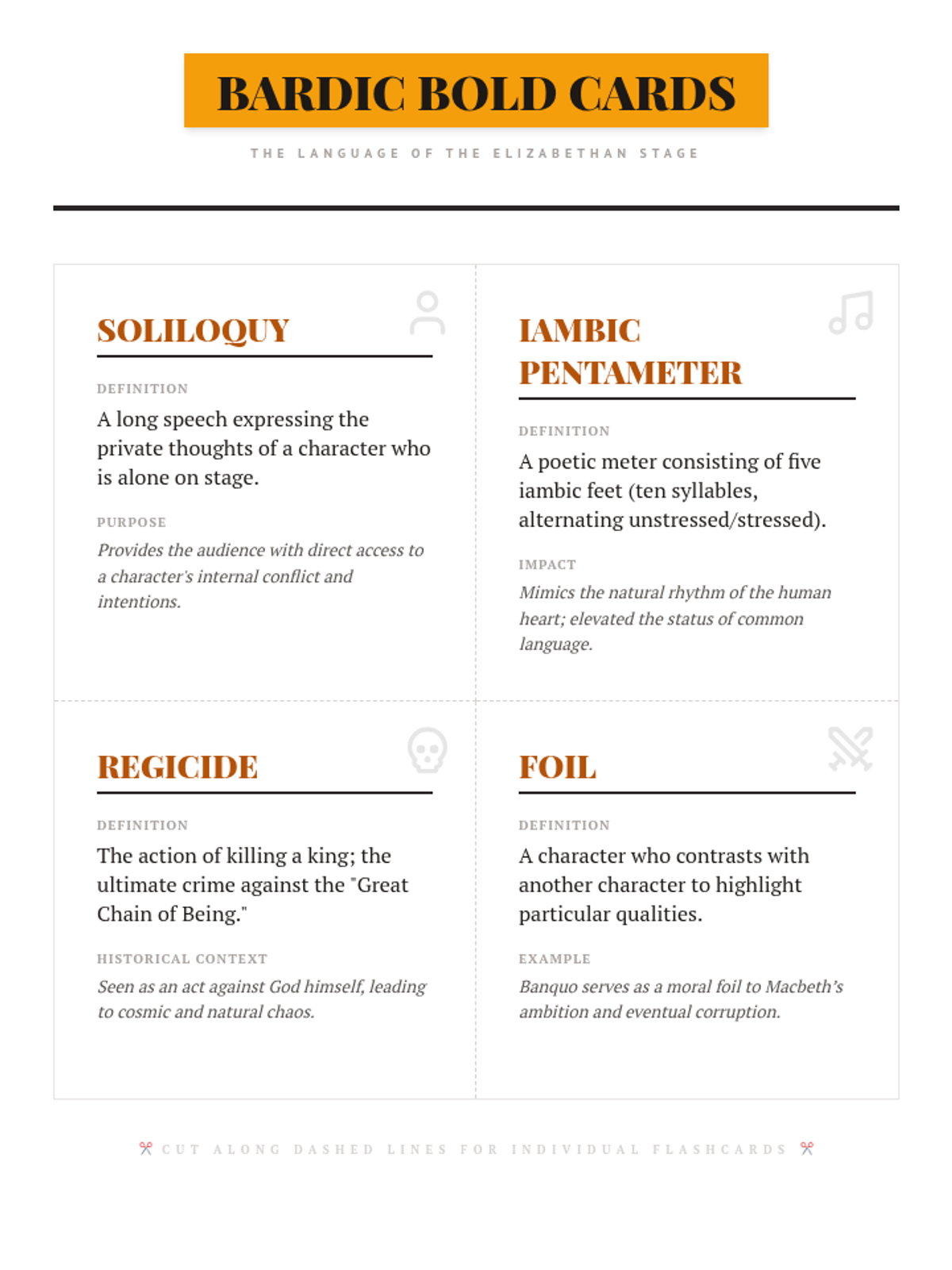
A set of four dark, sophisticated vocabulary cards for Shakespearean drama. Terms include 'Soliloquy', 'Iambic Pentameter', 'Regicide', and 'Foil', featuring definitions, historical context, and atmospheric icons.
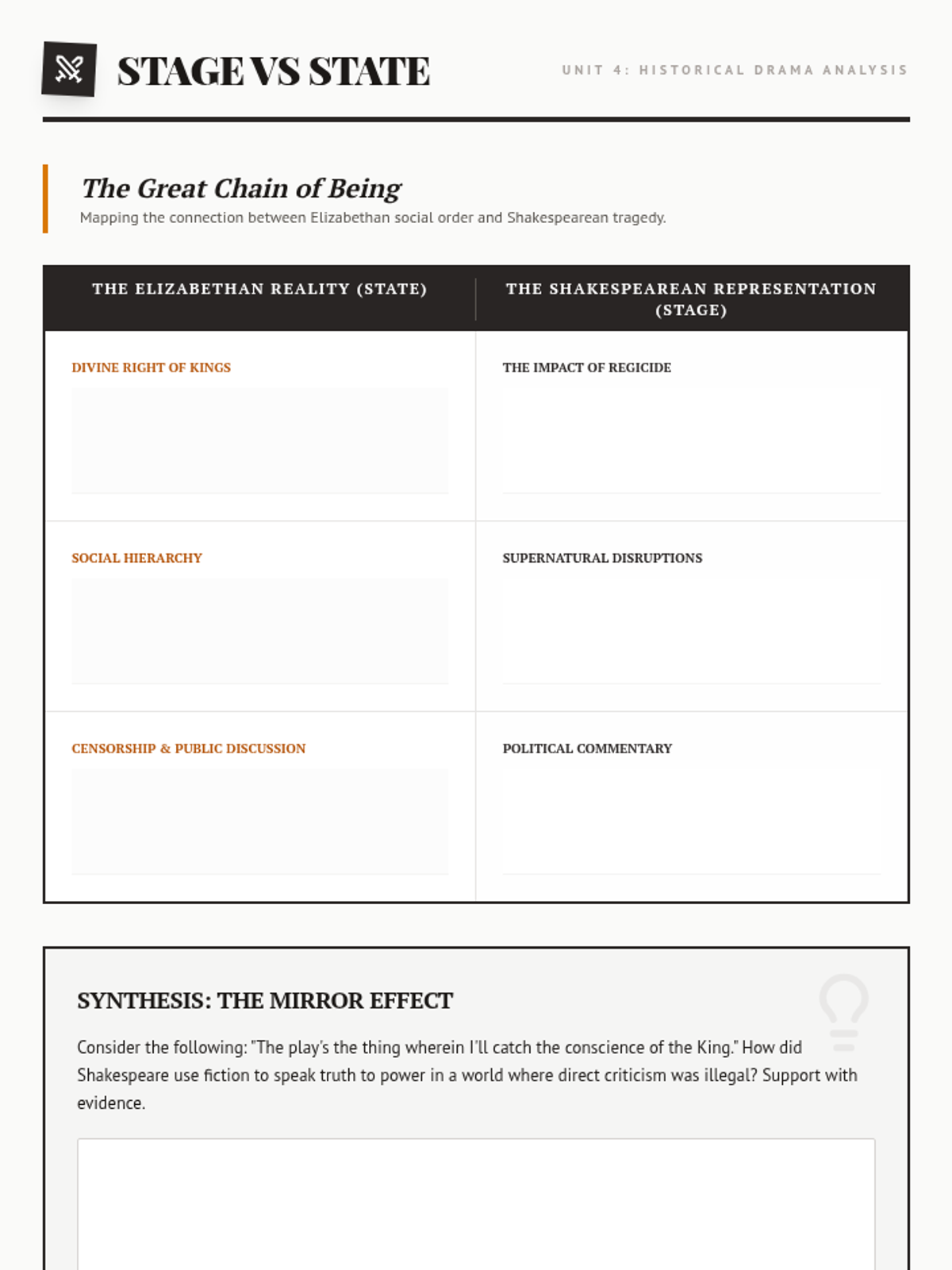
A graphic organizer comparing the political reality of Elizabethan England with its portrayal in Shakespearean drama. It focuses on the 'Great Chain of Being', Divine Right, and the use of the supernatural as a reflection of social order.
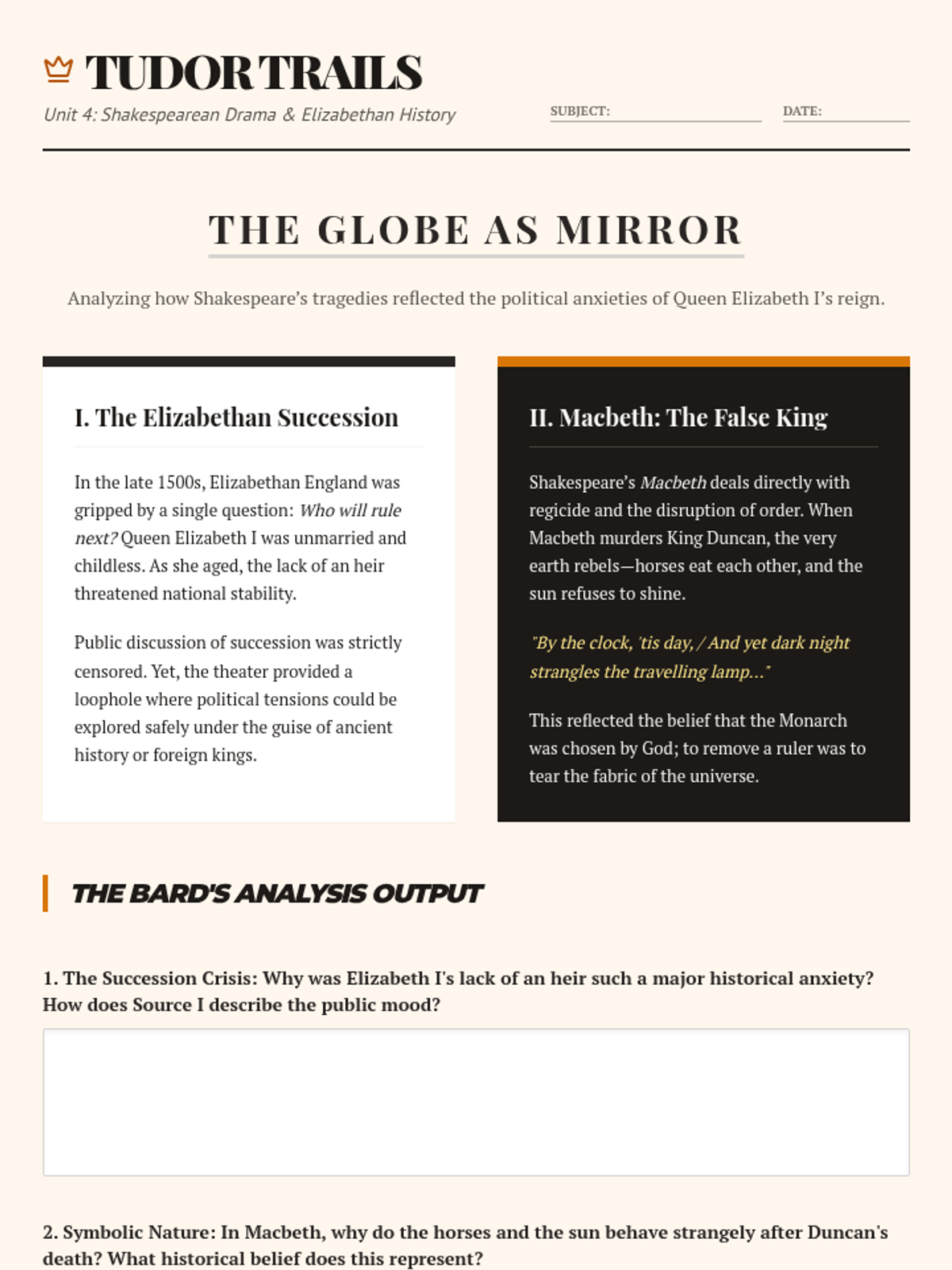
A reading comprehension worksheet linking Shakespeare's 'Macbeth' with the historical context of the Elizabethan succession crisis. Students analyze how dramatic themes of regicide and natural chaos mirrored the real-world political anxieties of 16th-century England.
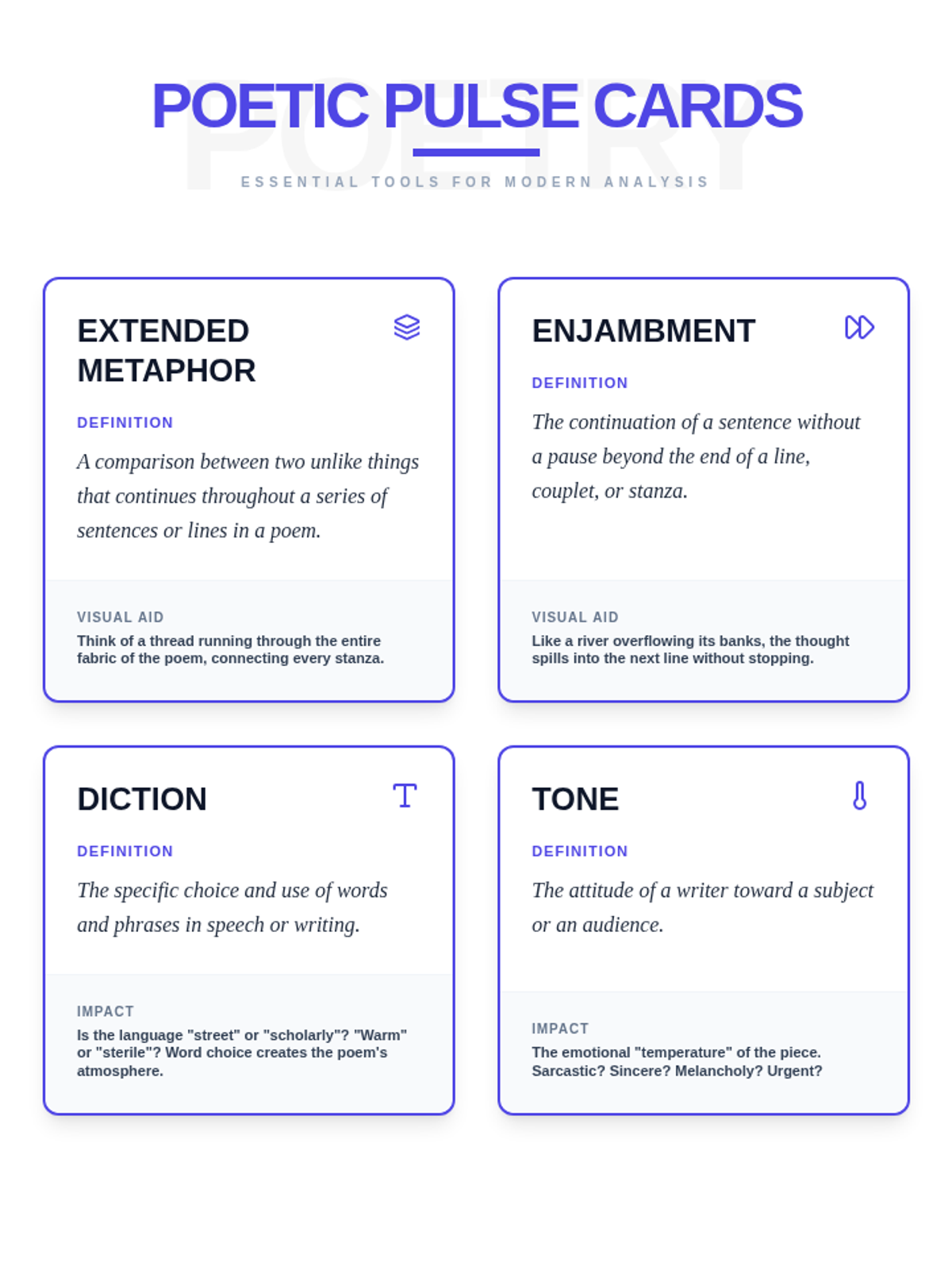
A set of four sleek vocabulary cards for contemporary poetry analysis. Terms like 'Extended Metaphor', 'Enjambment', 'Diction', and 'Tone' are defined and paired with visual analogies to help students grasp abstract literary concepts.
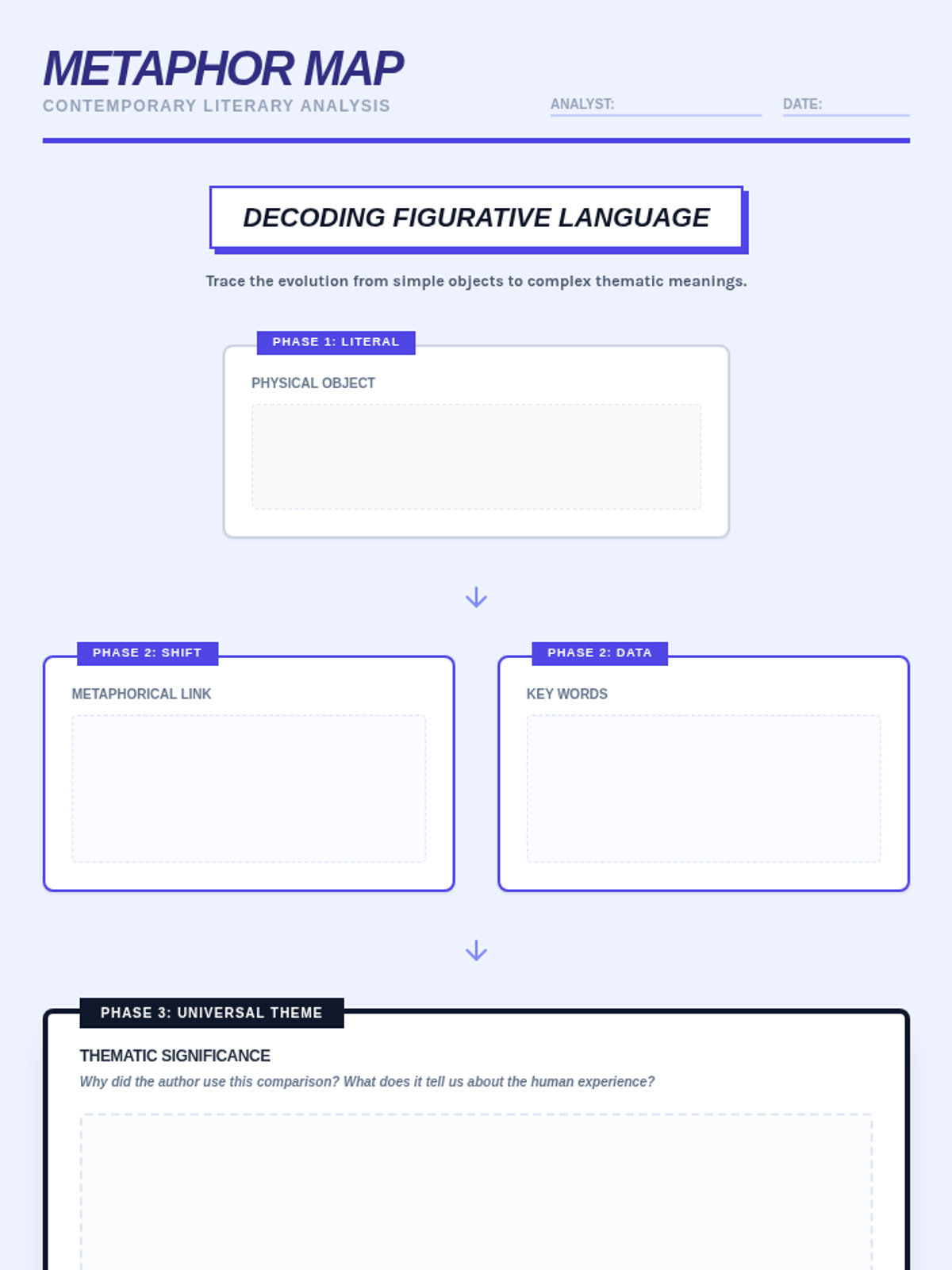
A visual graphic organizer for literary analysis, focusing on how metaphors evolve from literal objects to thematic meanings. It uses a phased 'map' approach to guide students through surface-level observations to deep, universal interpretations.
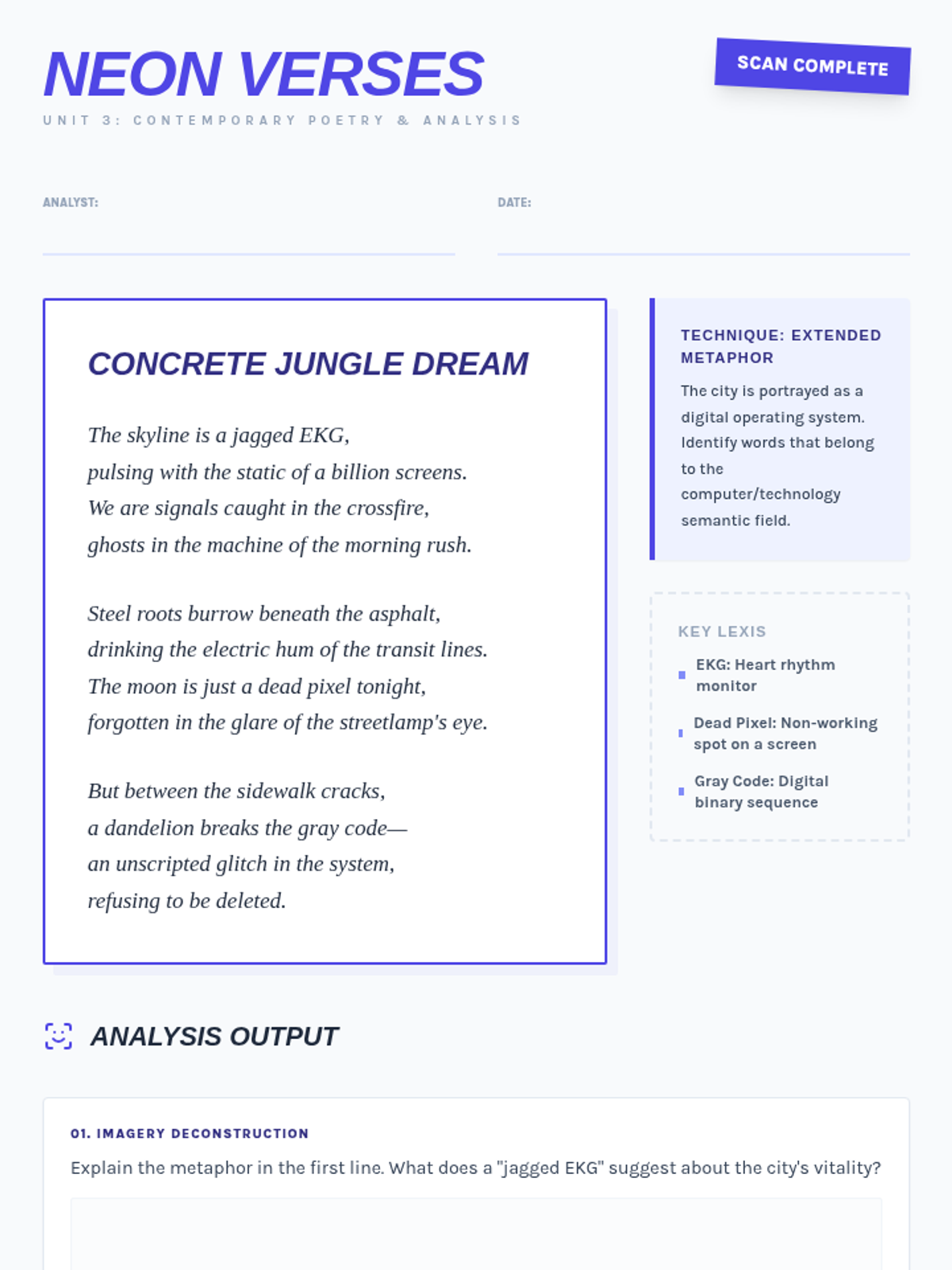
A contemporary poetry analysis worksheet featuring an original poem 'Concrete Jungle Dream'. Students explore extended metaphors, imagery, and thematic shifts between technology and nature through structured comprehension questions.
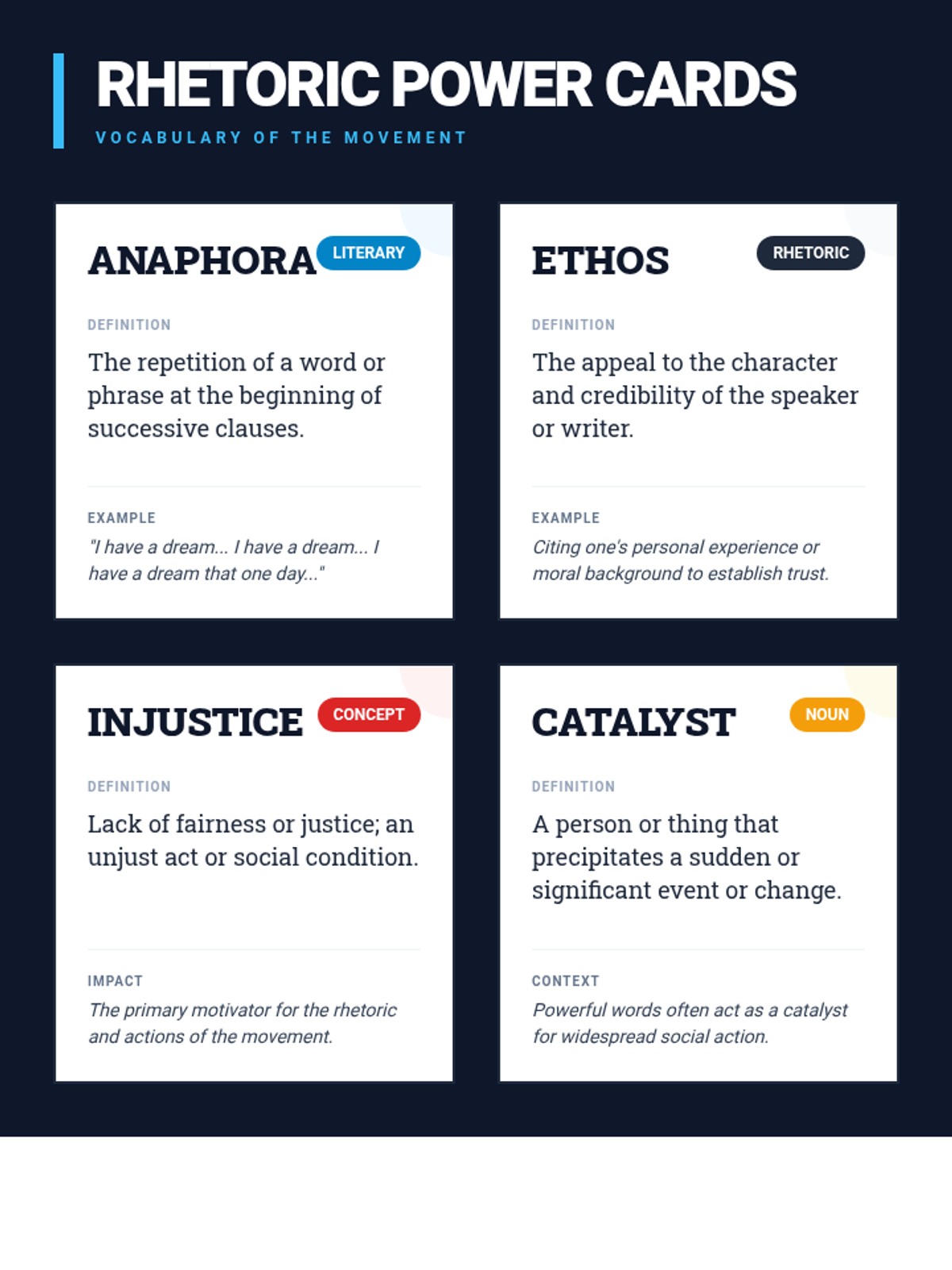
A set of four bold, high-contrast vocabulary cards for the Civil Rights rhetoric unit. Terms include 'Anaphora', 'Ethos', 'Injustice', and 'Catalyst', each with definitions, examples, and styled with clear hierarchy for educational display.
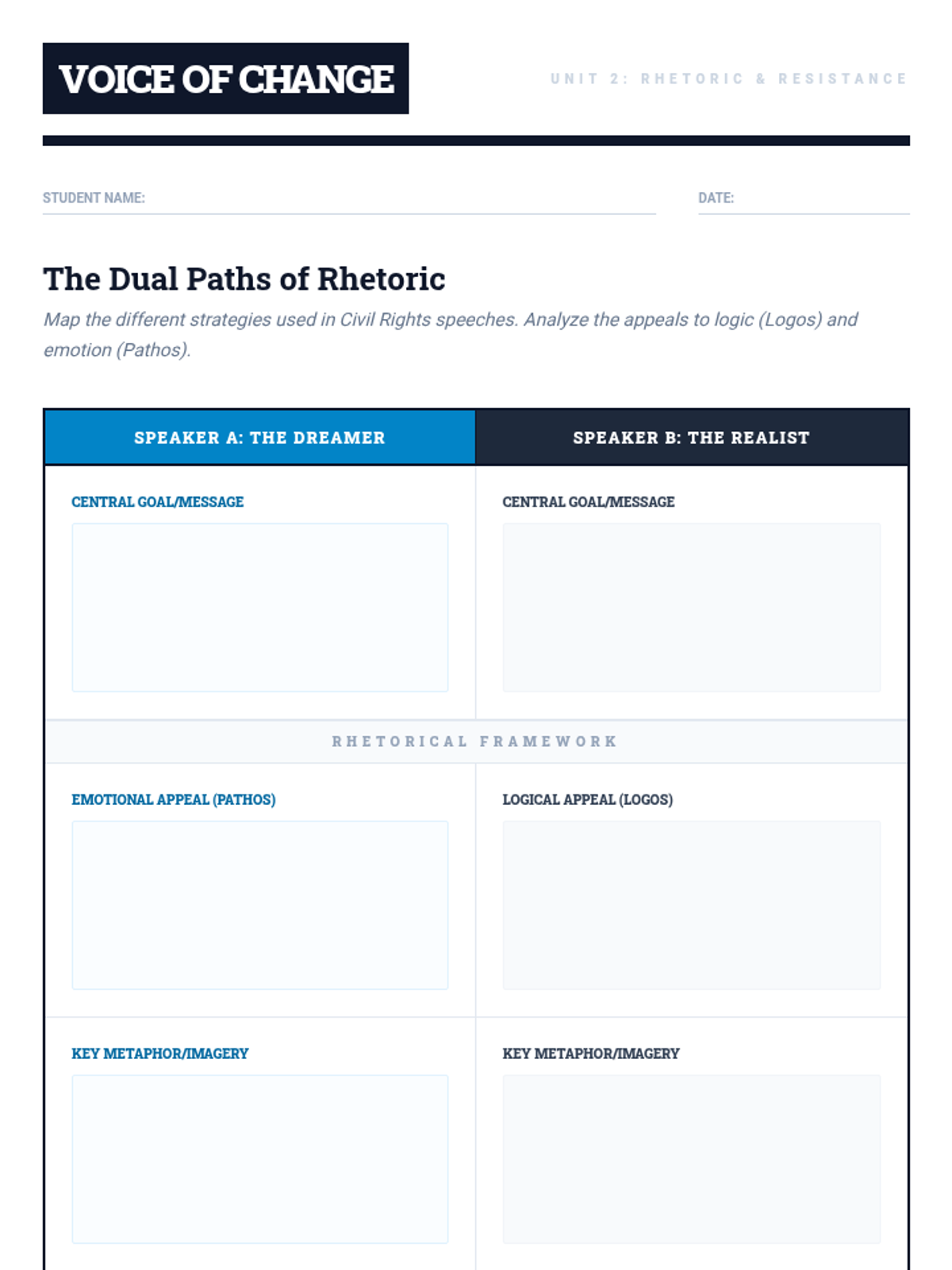
A graphic organizer for analyzing rhetorical strategies in Civil Rights speeches. It allows students to map out Central Goals, Pathos vs. Logos, and Key Metaphors for two different speakers, ending with a synthesis question on shared objectives.
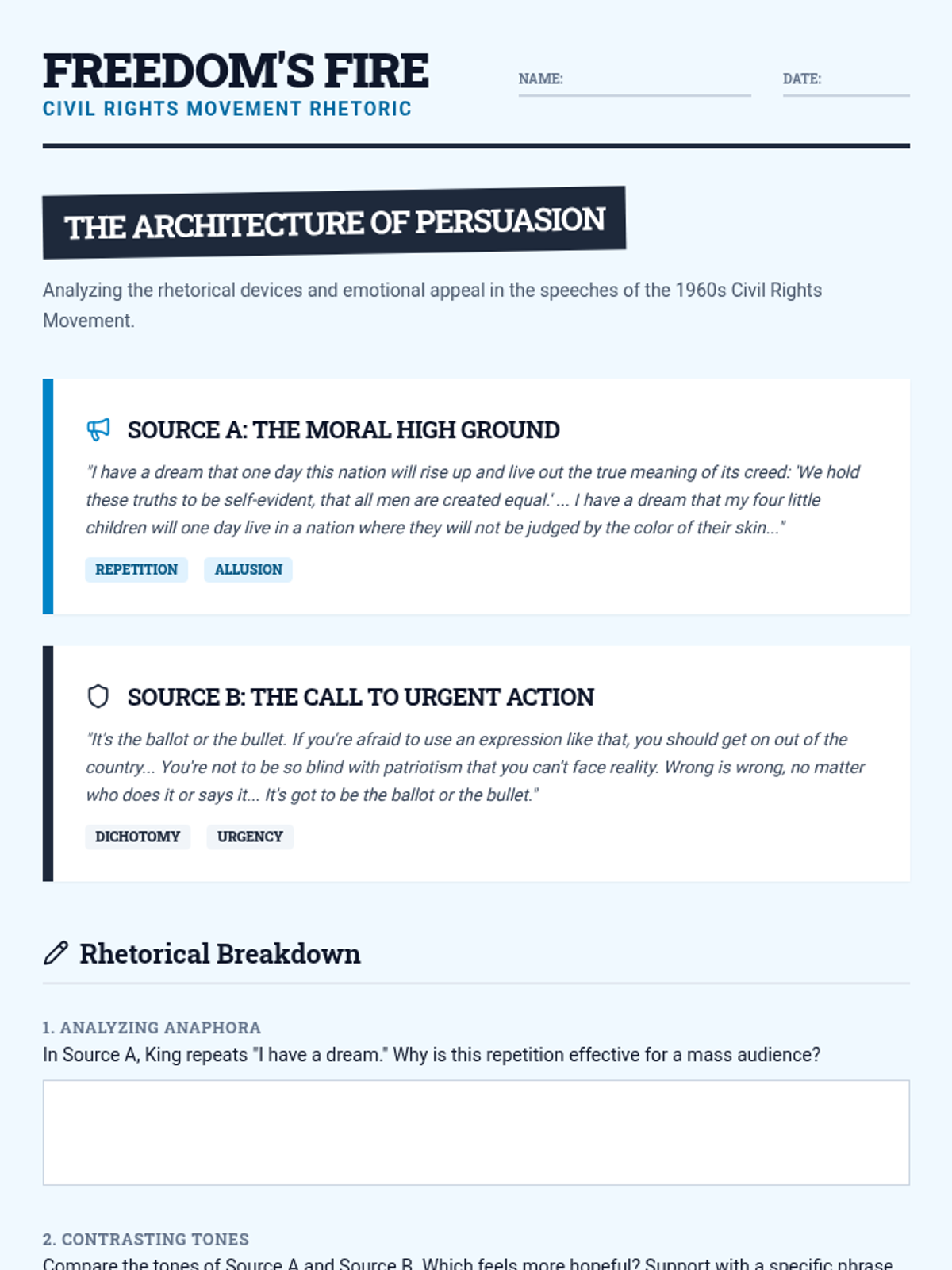
A reading comprehension worksheet focused on the rhetoric of the Civil Rights Movement. It contrasts excerpts from Martin Luther King Jr. and Malcolm X, challenging students to analyze rhetorical devices like anaphora, allusion, and tone.
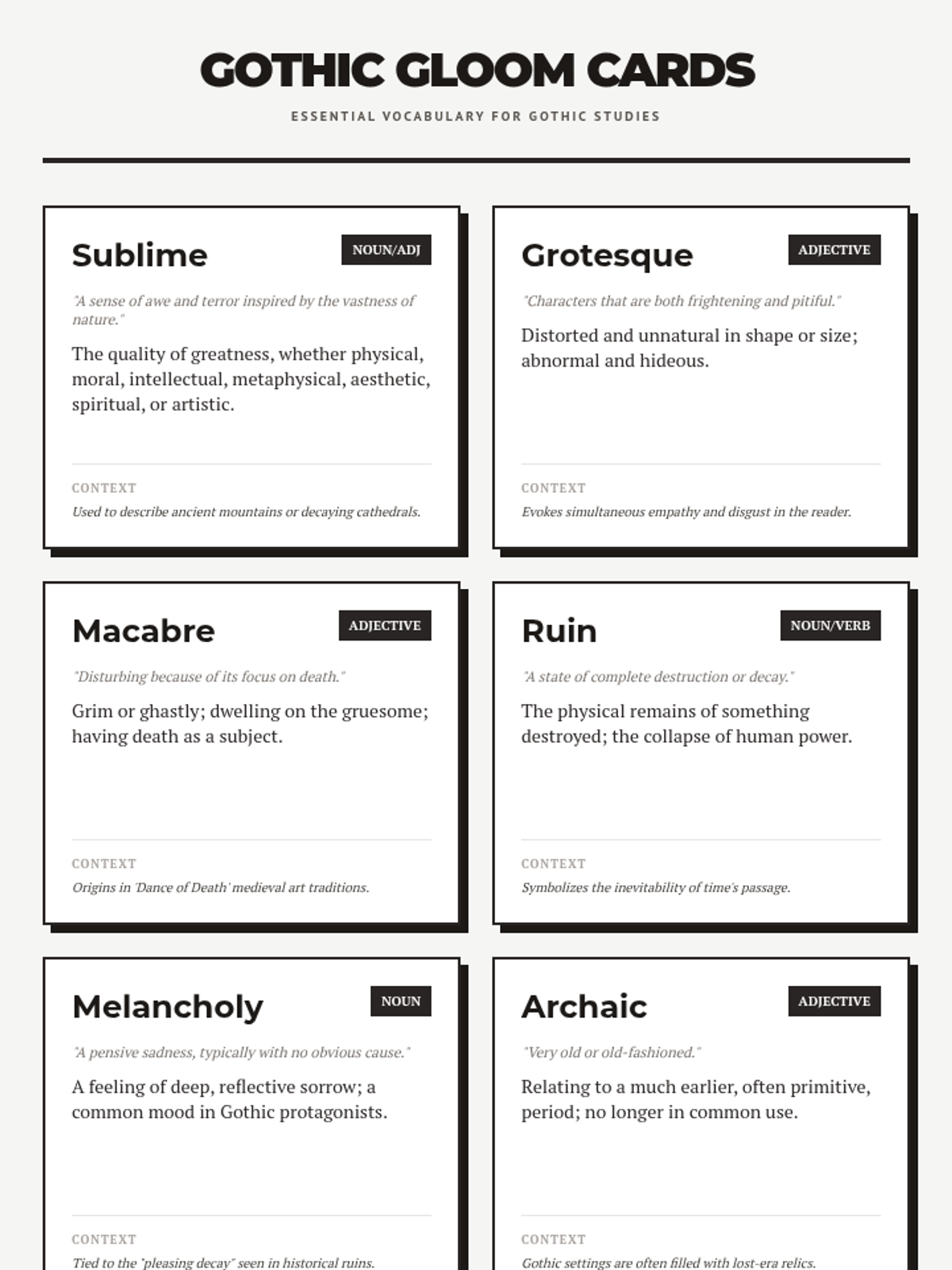
A set of six vocabulary cards for a Gothic literature unit, featuring key terms like 'Sublime', 'Grotesque', and 'Macabre'. Each card includes a definition, context, and part of speech, styled with a high-contrast, bold aesthetic suitable for a word wall.
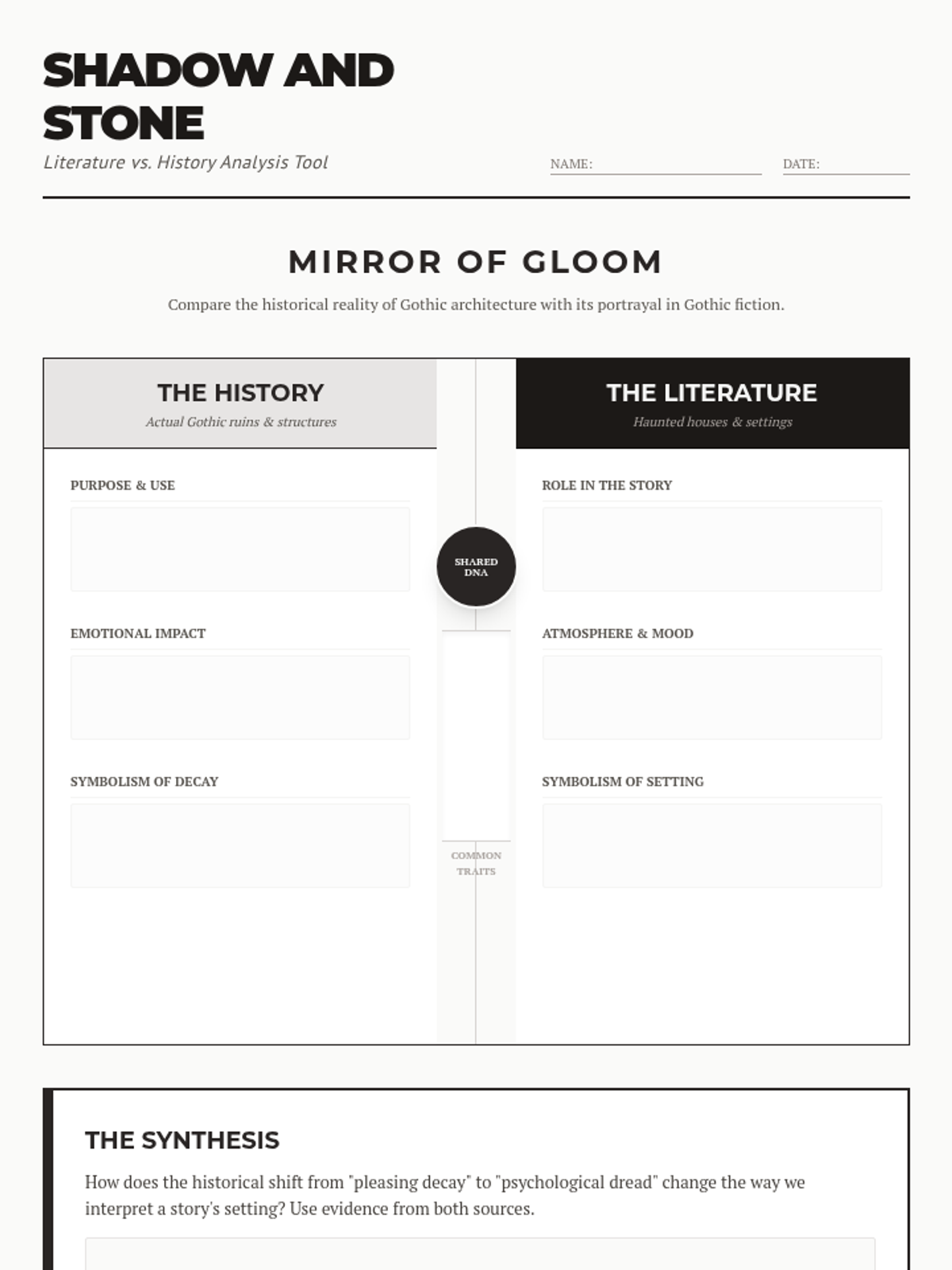
A structured graphic organizer designed for students to compare and contrast the historical reality of Gothic architecture with its representation in Gothic literature. It features parallel analysis columns and a synthesis question to deepen understanding of the relationship between setting and mood.
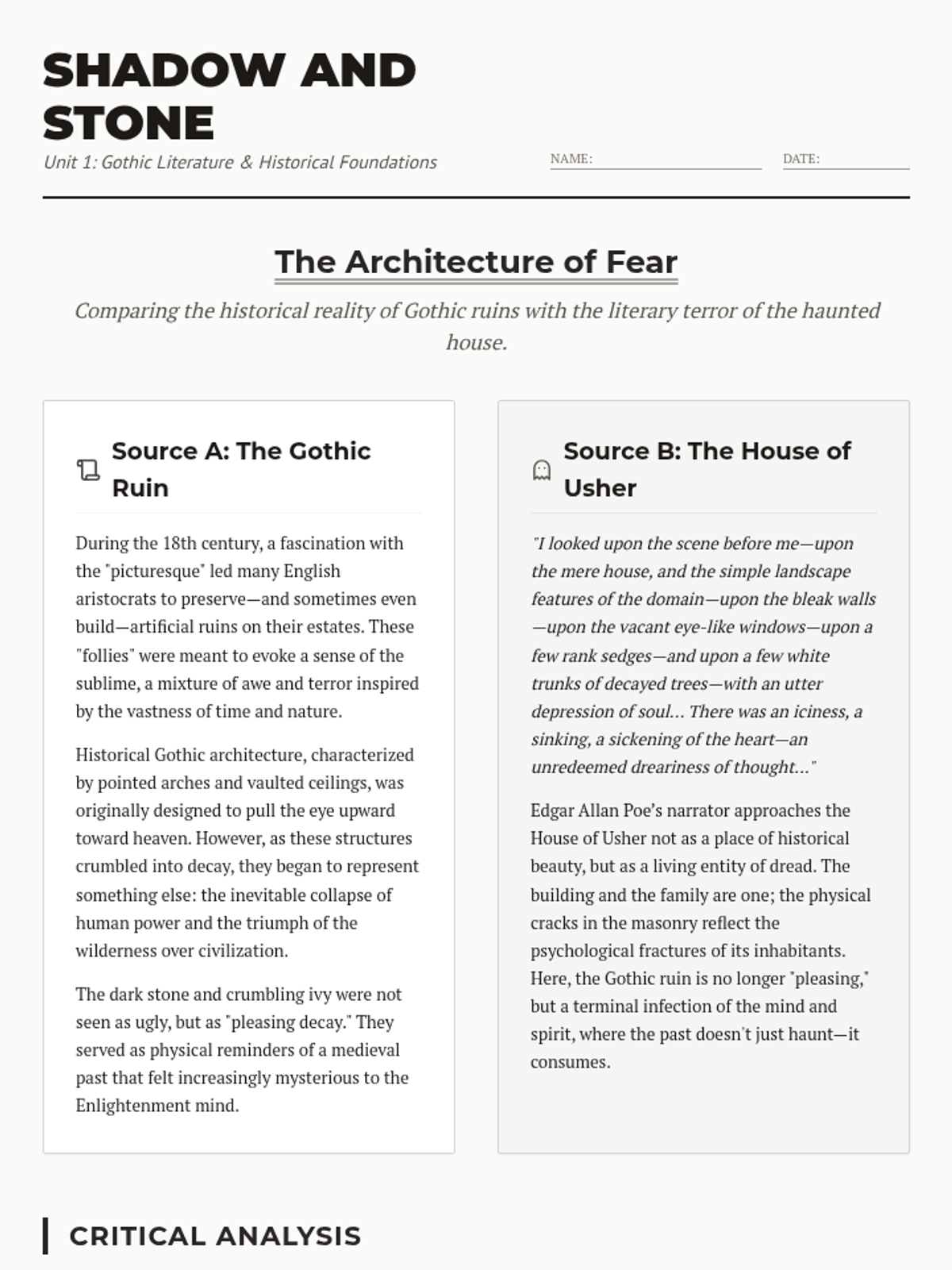
A reading comprehension worksheet comparing an 18th-century historical account of Gothic ruins with an excerpt from Edgar Allan Poe's 'The Fall of the House of Usher'. Includes critical analysis questions focused on mood, architecture, and literary devices.
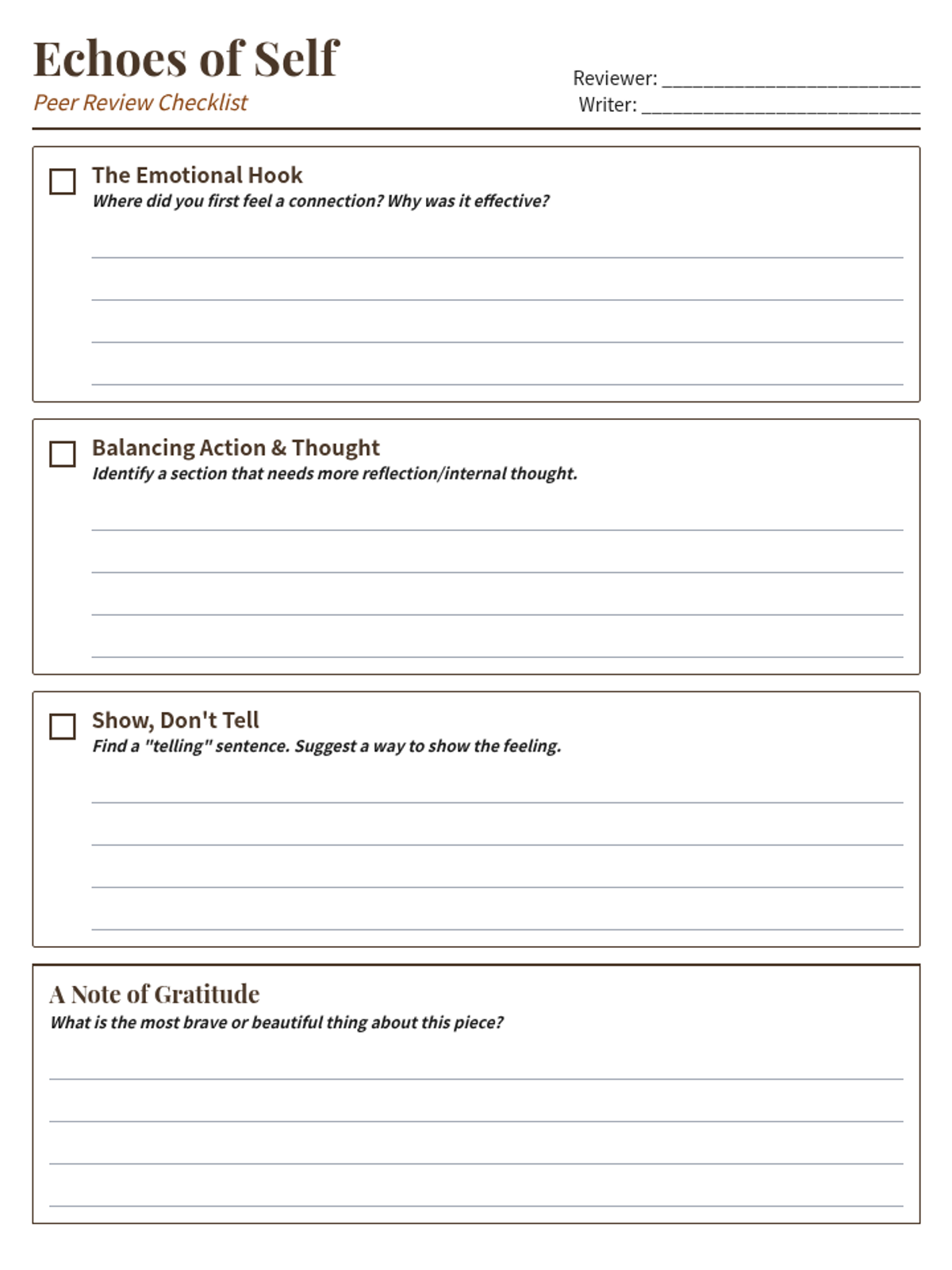
A peer-review checklist for personal narratives, guiding students on emotional connection, reflection, and descriptive detail. Optimized for single-page printing.
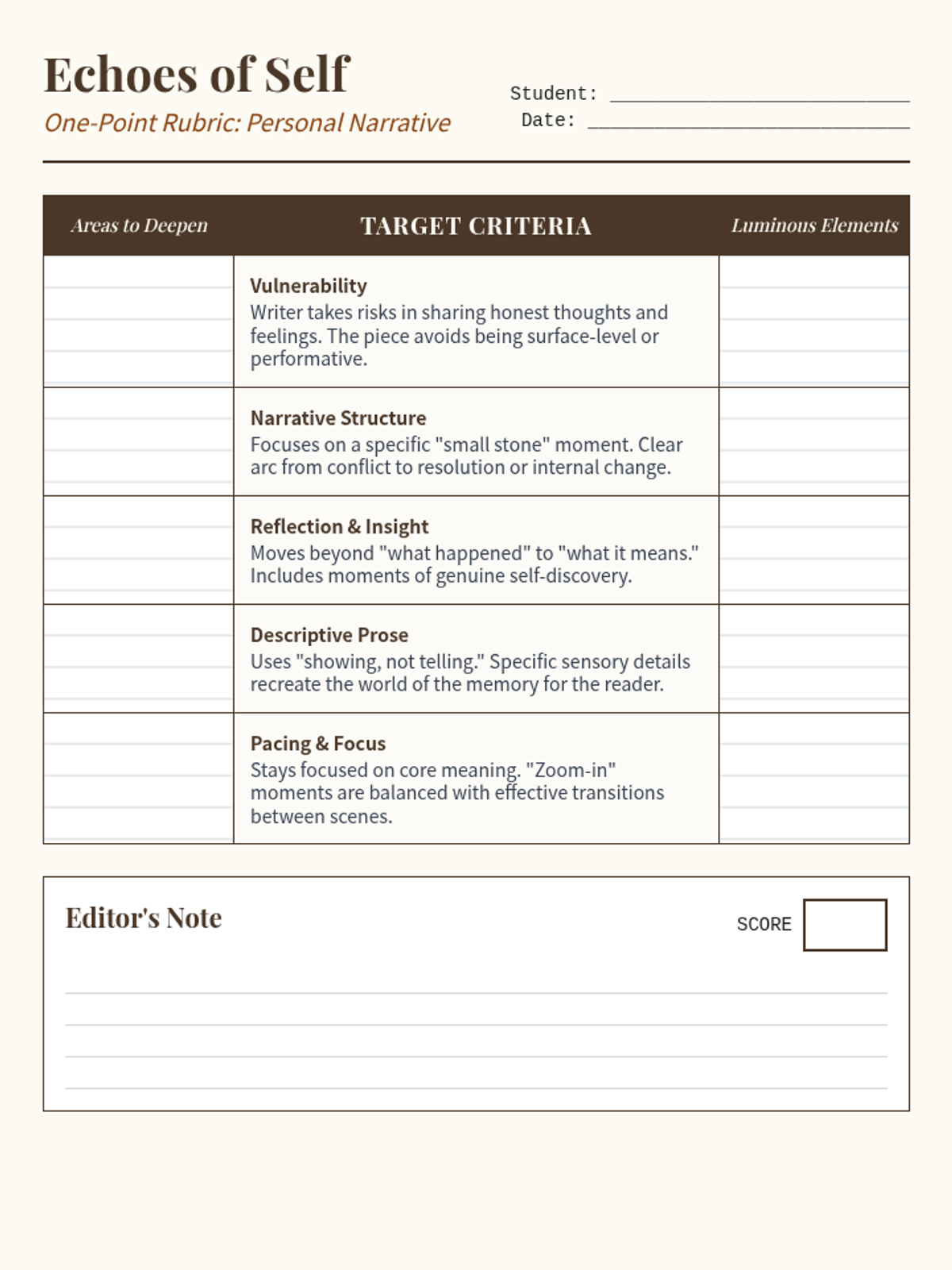
A one-point rubric for personal narratives, assessing vulnerability, reflection, and narrative structure. Corrected for page breaks and contrast.
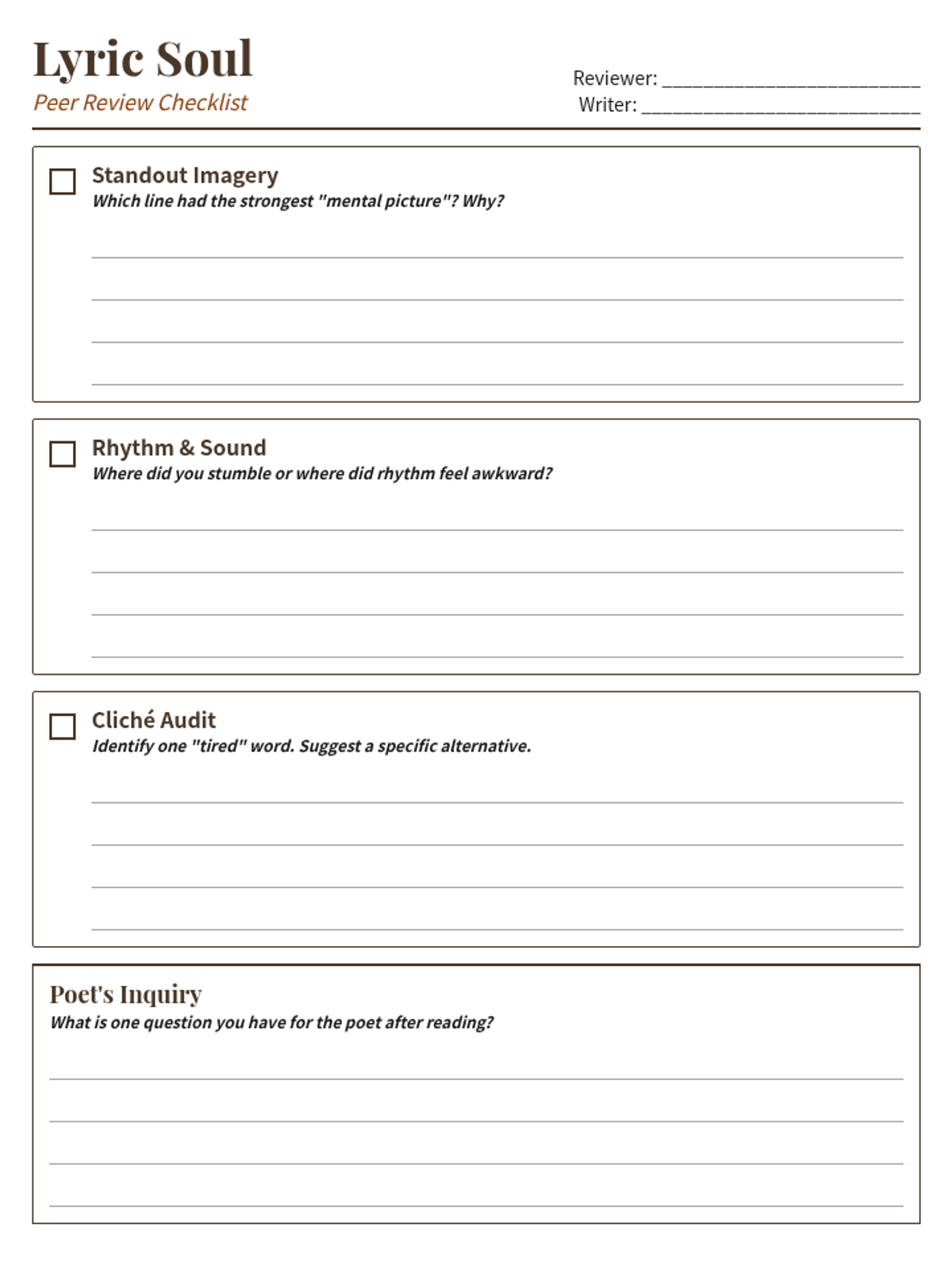
A peer-review checklist for poetry collections, focusing on imagery, rhythm, and thematic connections. Optimized for single-page printing.
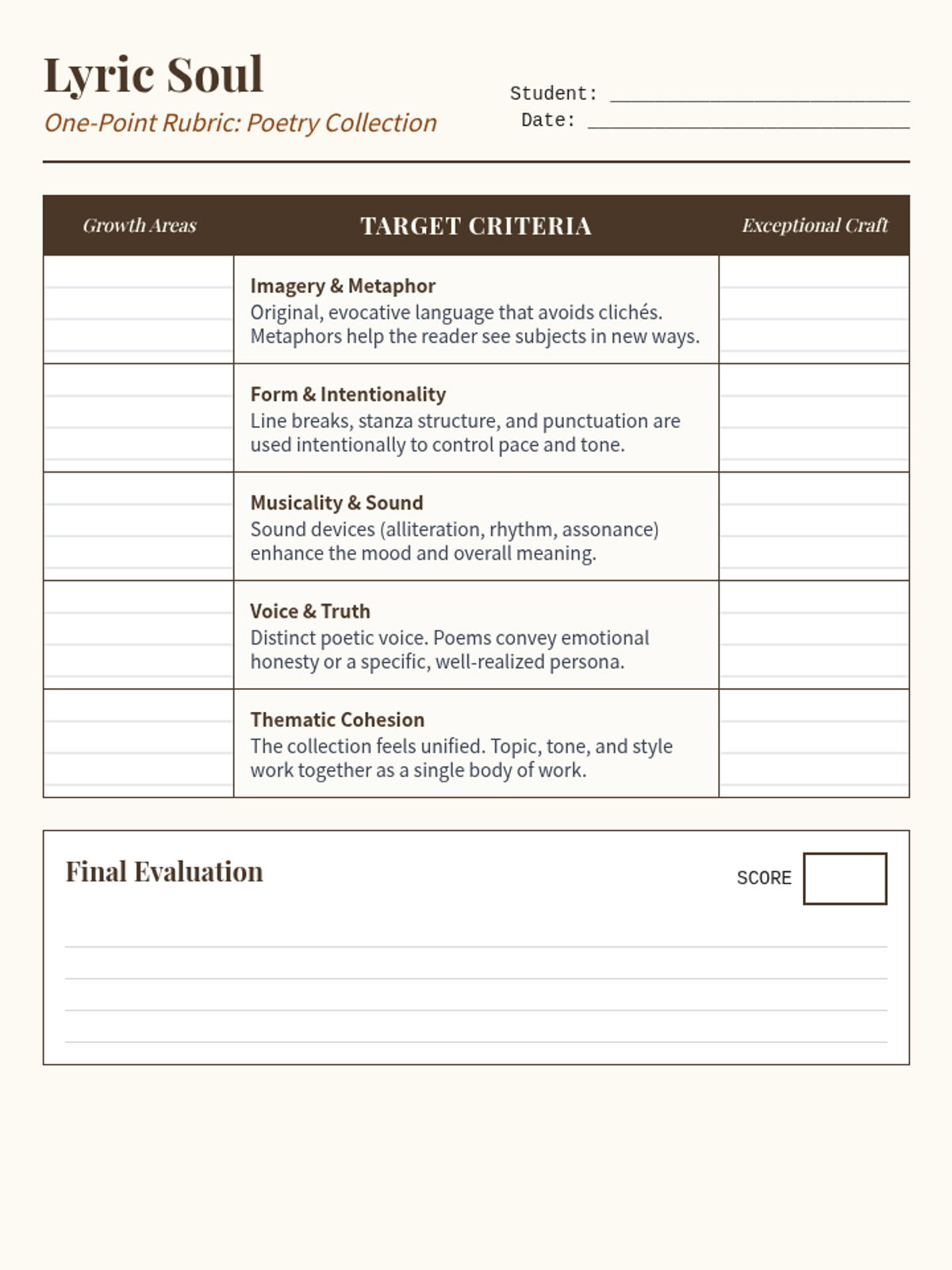
A one-point rubric for poetry collections, evaluating imagery, form, musicality, voice, and thematic cohesion. Corrected for page breaks and spacing.
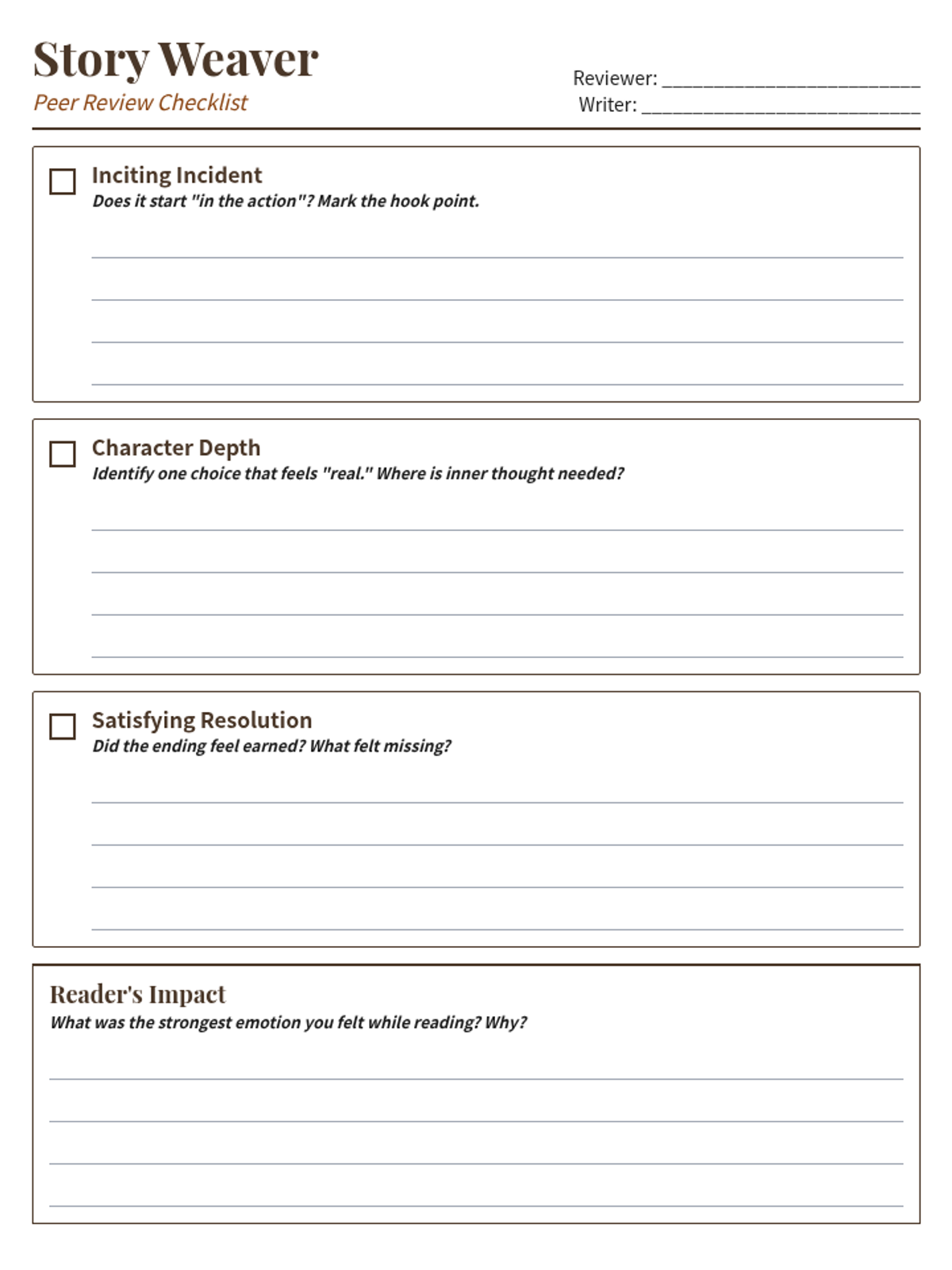
A peer-review checklist for short stories, prompting feedback on inciting incidents, character depth, and emotional impact. Optimized for single-page printing.
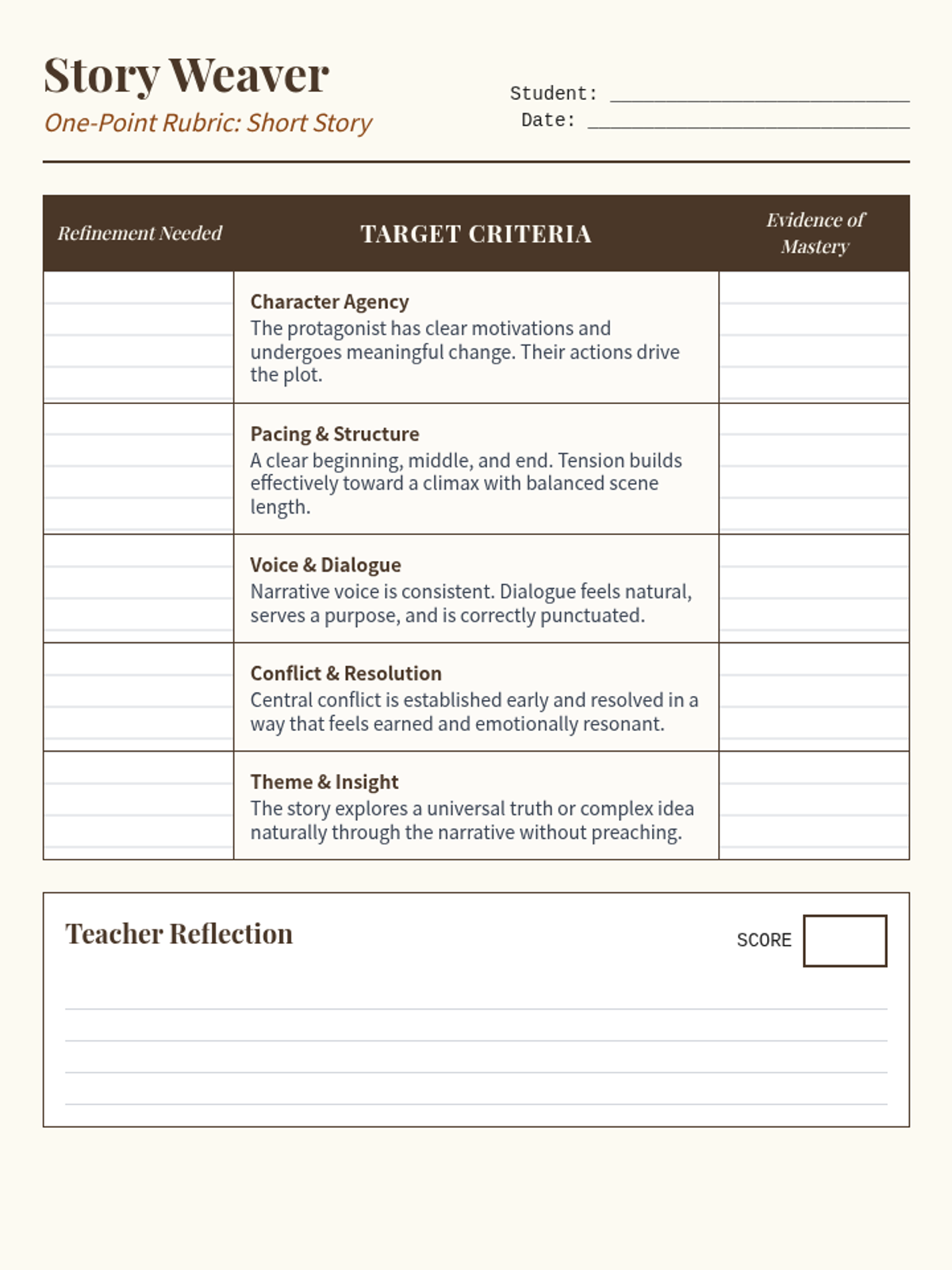
A one-point rubric for evaluating short stories, with focus areas on character development, pacing, voice, conflict, and theme. Corrected for page breaks and spacing.