A teacher-facing facilitation guide for a role-playing simulation where students act as particles to model dynamic equilibrium. Includes clear movement rules, setup instructions, and discussion prompts. Revised for layout and contrast.
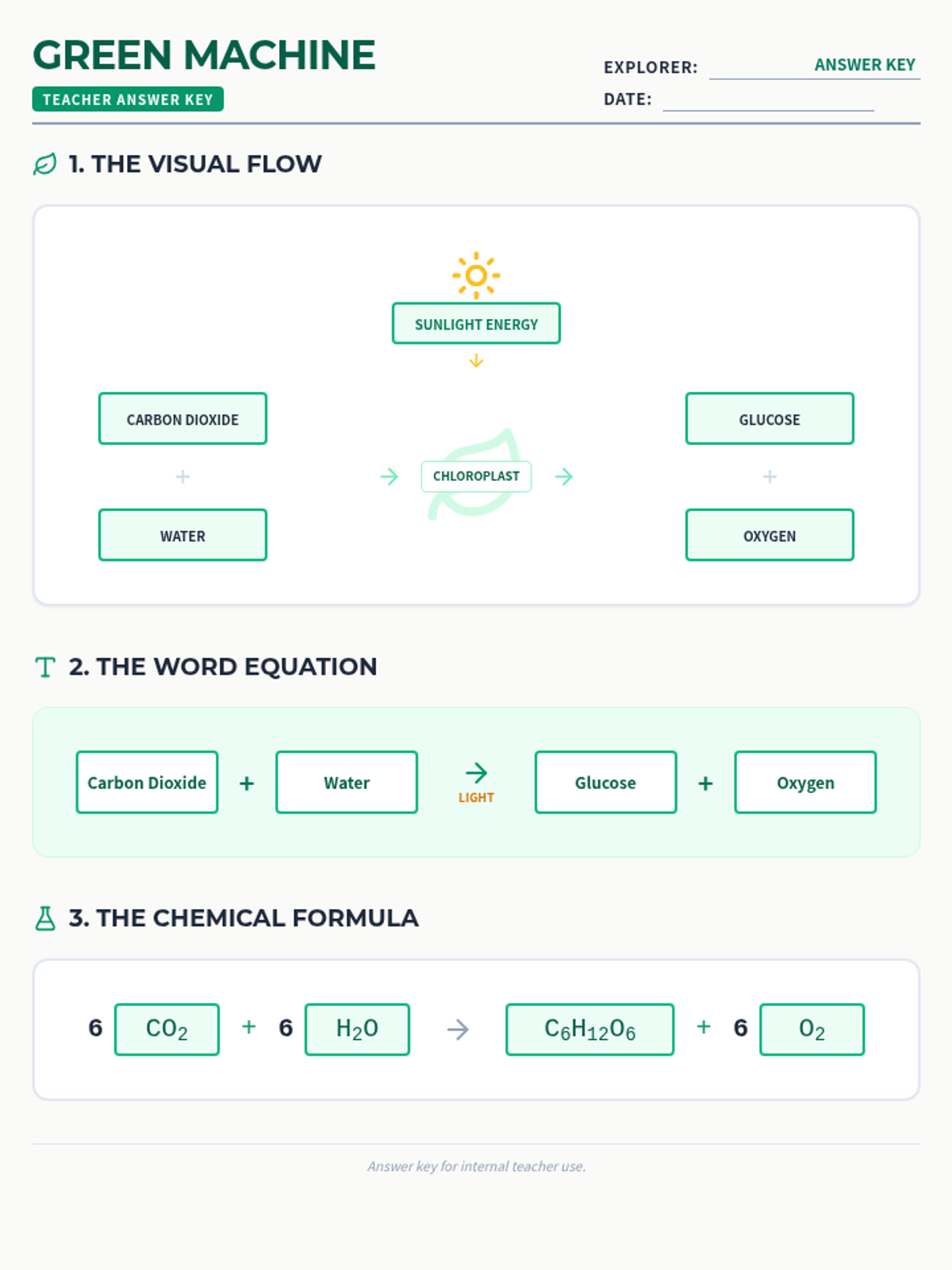
The teacher answer key for the Green Machine worksheet, providing the correct labels for the photosynthesis diagram and equations.
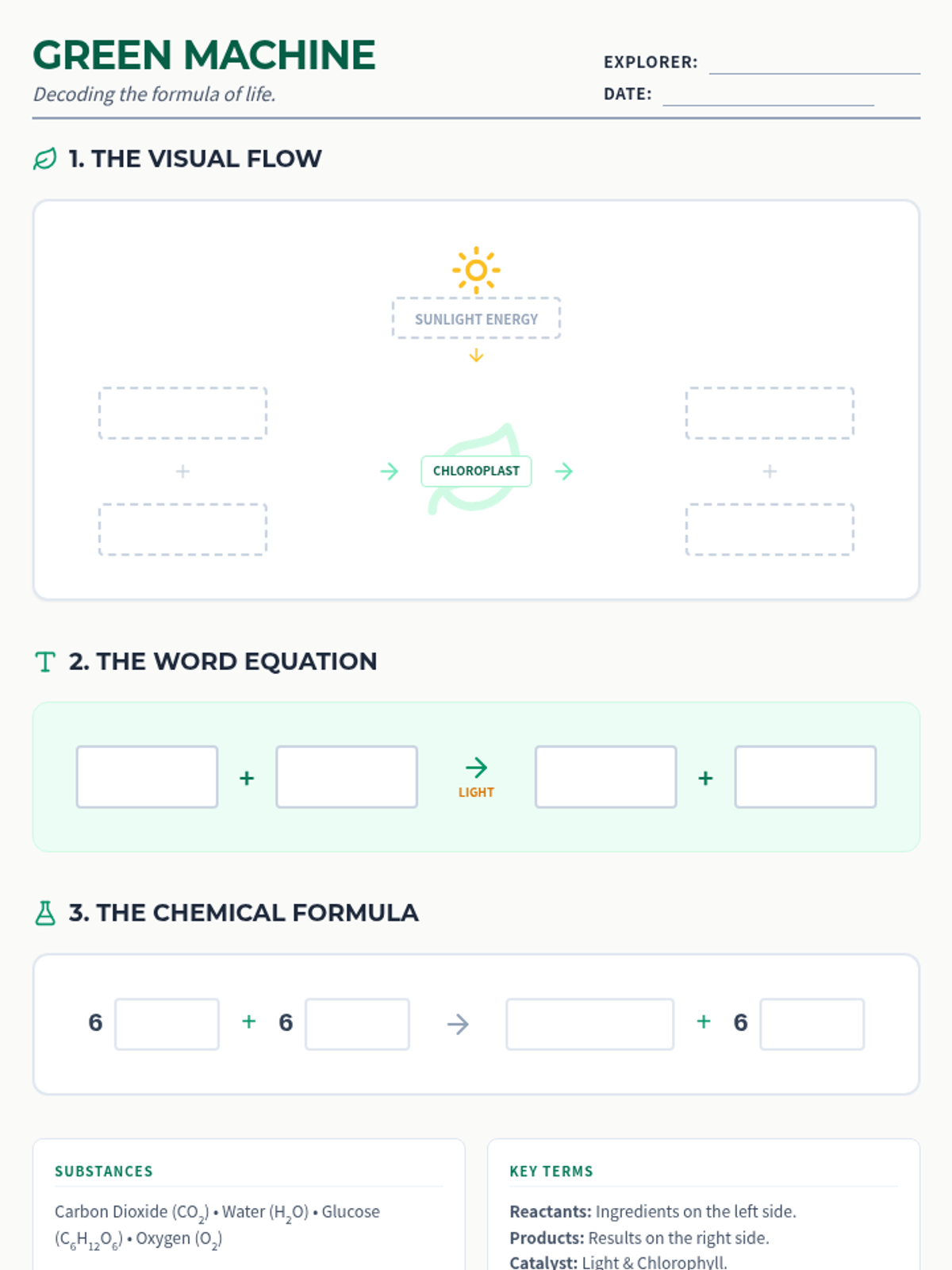
A fill-in-the-blank worksheet for middle school students focusing on the photosynthesis equation through diagrams, word formulas, and chemical notation.
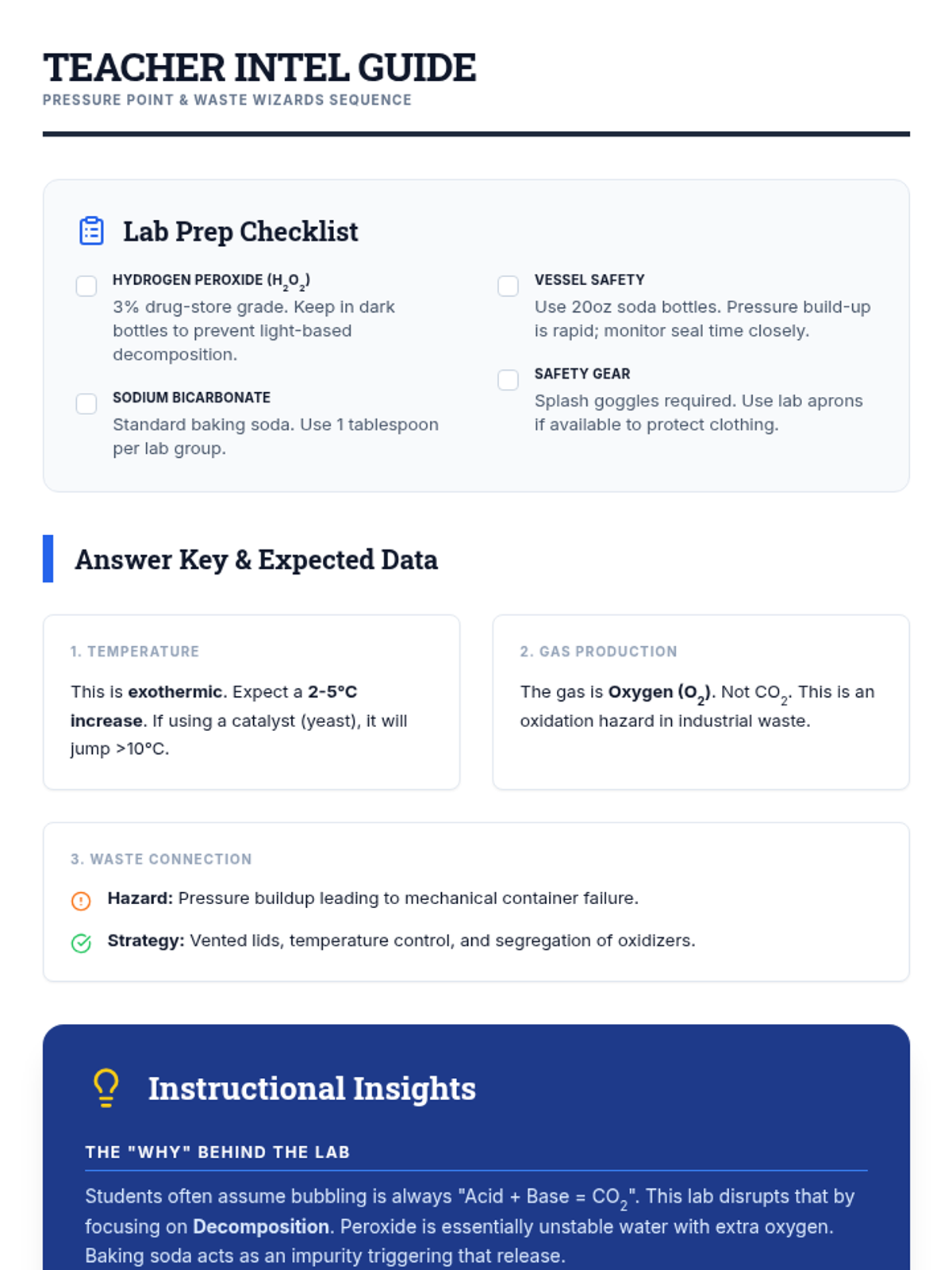
A teacher's guide for the Chemical Safety Squad sequence, including prep checklists, expected lab results, and answer keys for the analysis worksheets.
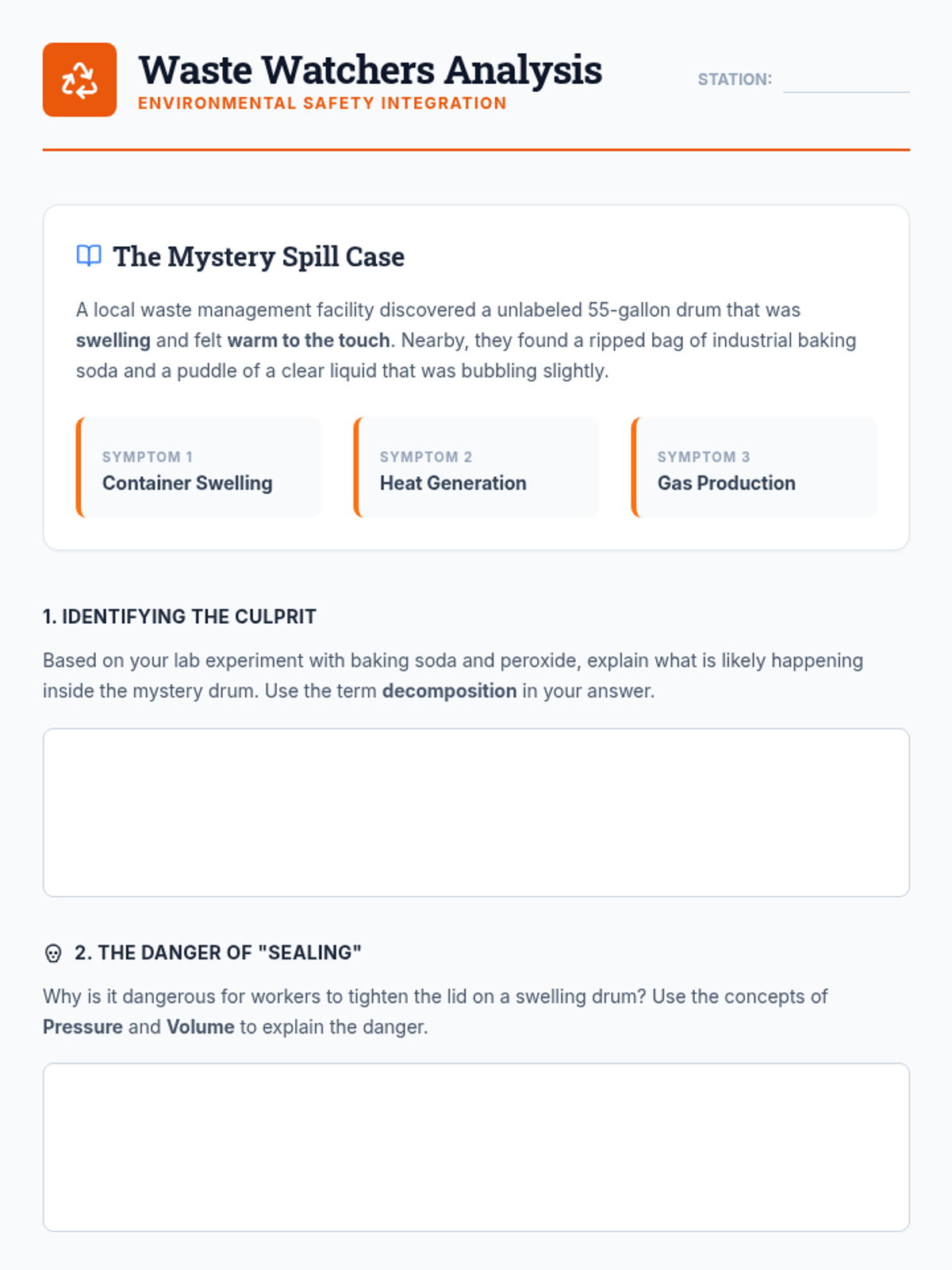
An analysis worksheet connecting the Pressure Point lab to environmental waste management, featuring a case study on mystery spills and questions on vented containment systems.
A light-themed visual presentation deck for the Pressure Problem lesson, featuring clear chemical notation and illustrations of industrial safety protocols.
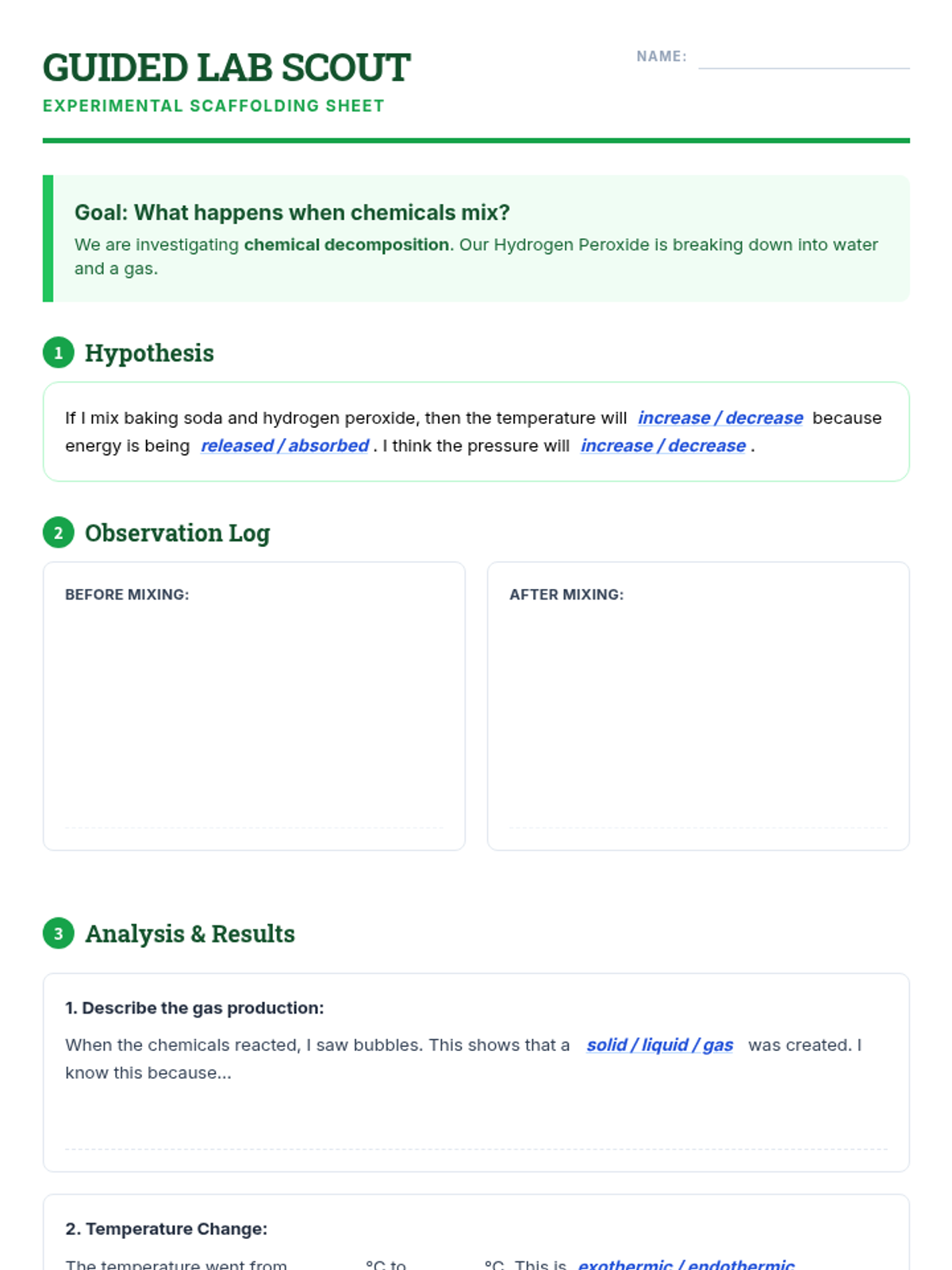
A scaffolded lab report with sentence frames for the Pressure Point experiment, designed to support students who need extra guidance in forming hypotheses and drawing conclusions about chemical decomposition and safety.
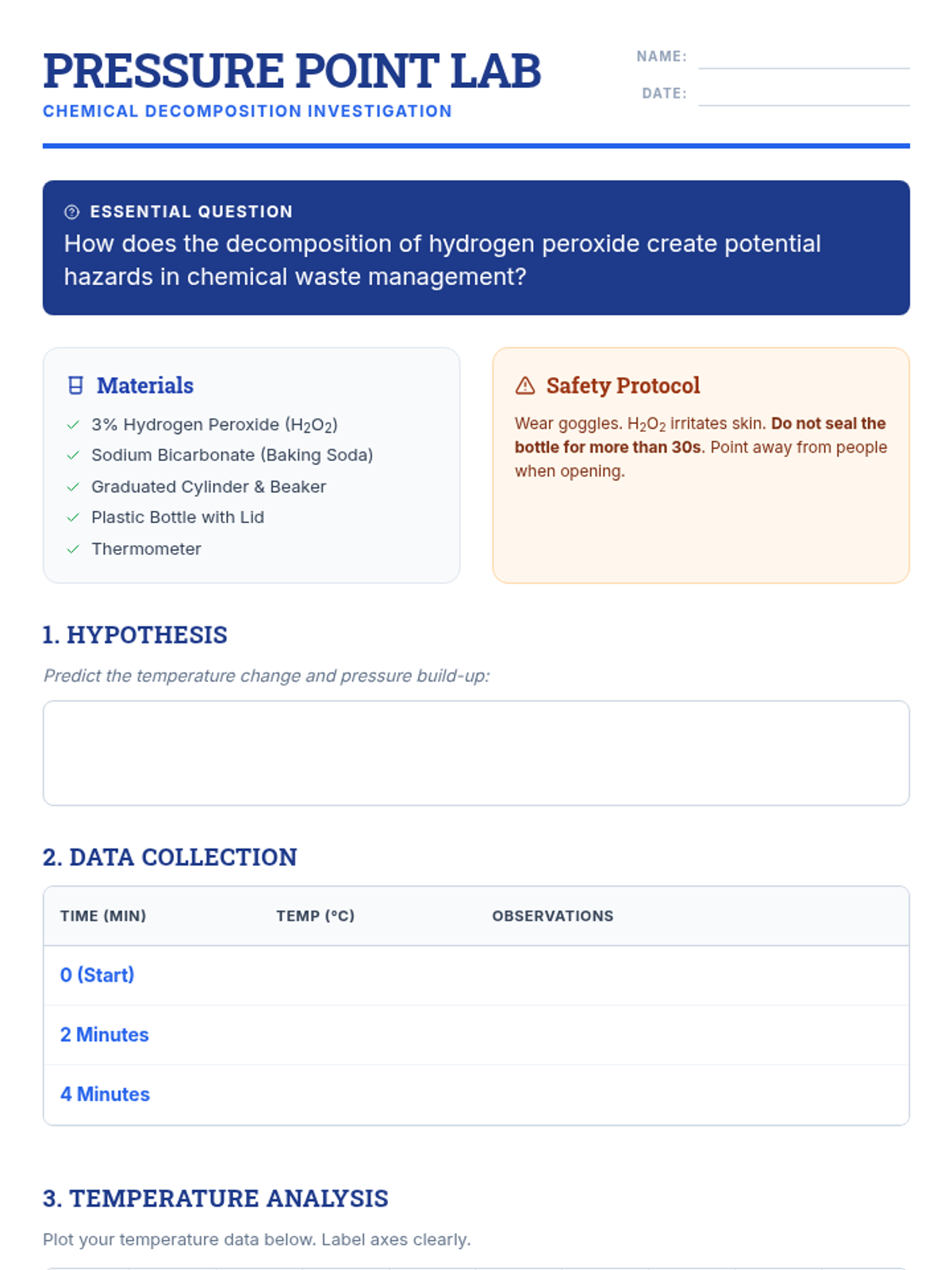
A standard lab report for the Pressure Point experiment, featuring data collection tables, a graphing area, and analysis questions focusing on exothermic reactions and gas pressure hazards.
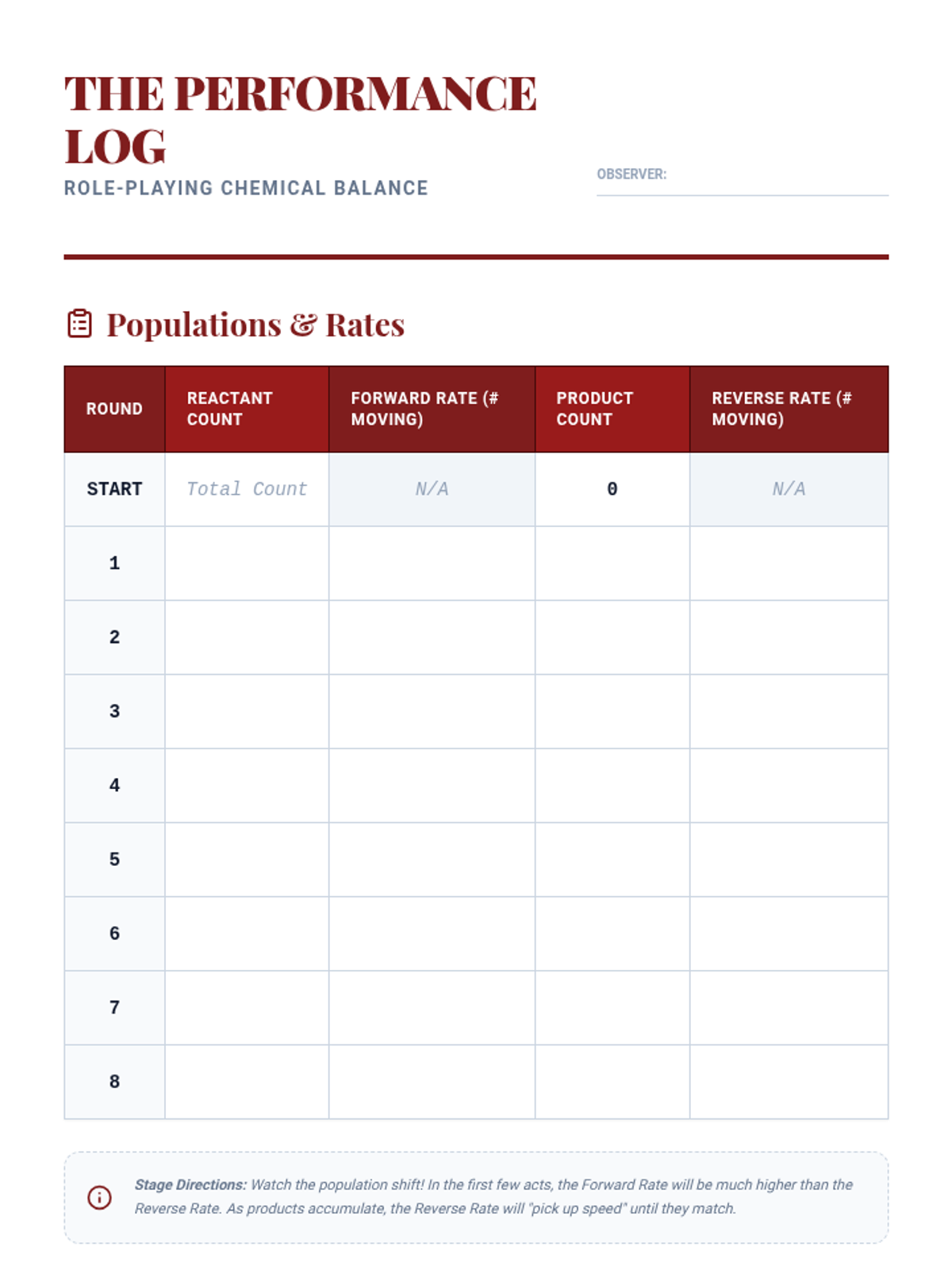
A student recording sheet for the equilibrium role-playing simulation. Students track particle counts and reaction rates over several rounds to identify when and how a system reaches balance. Revised for better header layout and spacing.
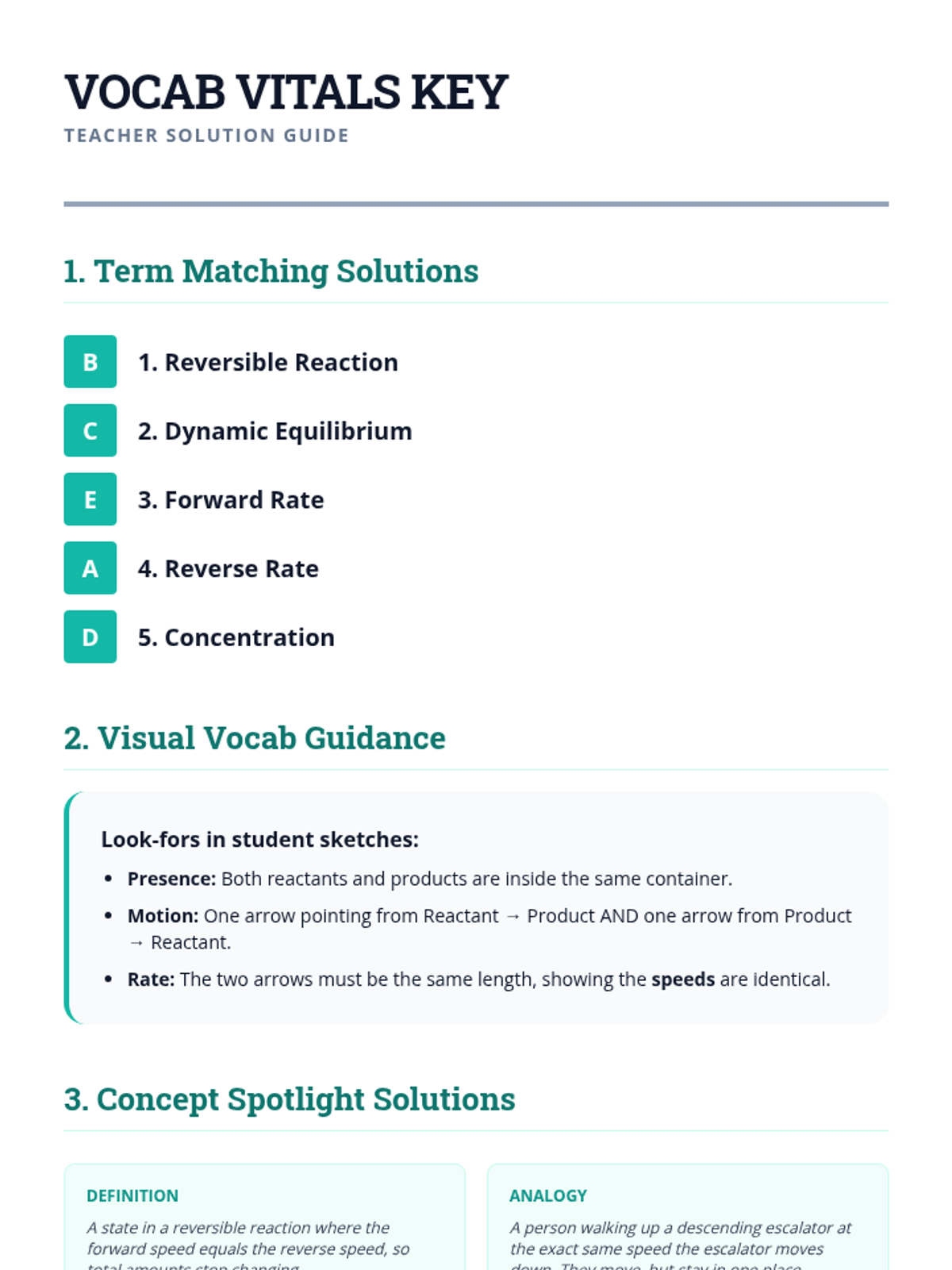
Teacher answer key for the Vocab Vitals activity, providing matching solutions, particle model look-fors, and sample conceptual responses.
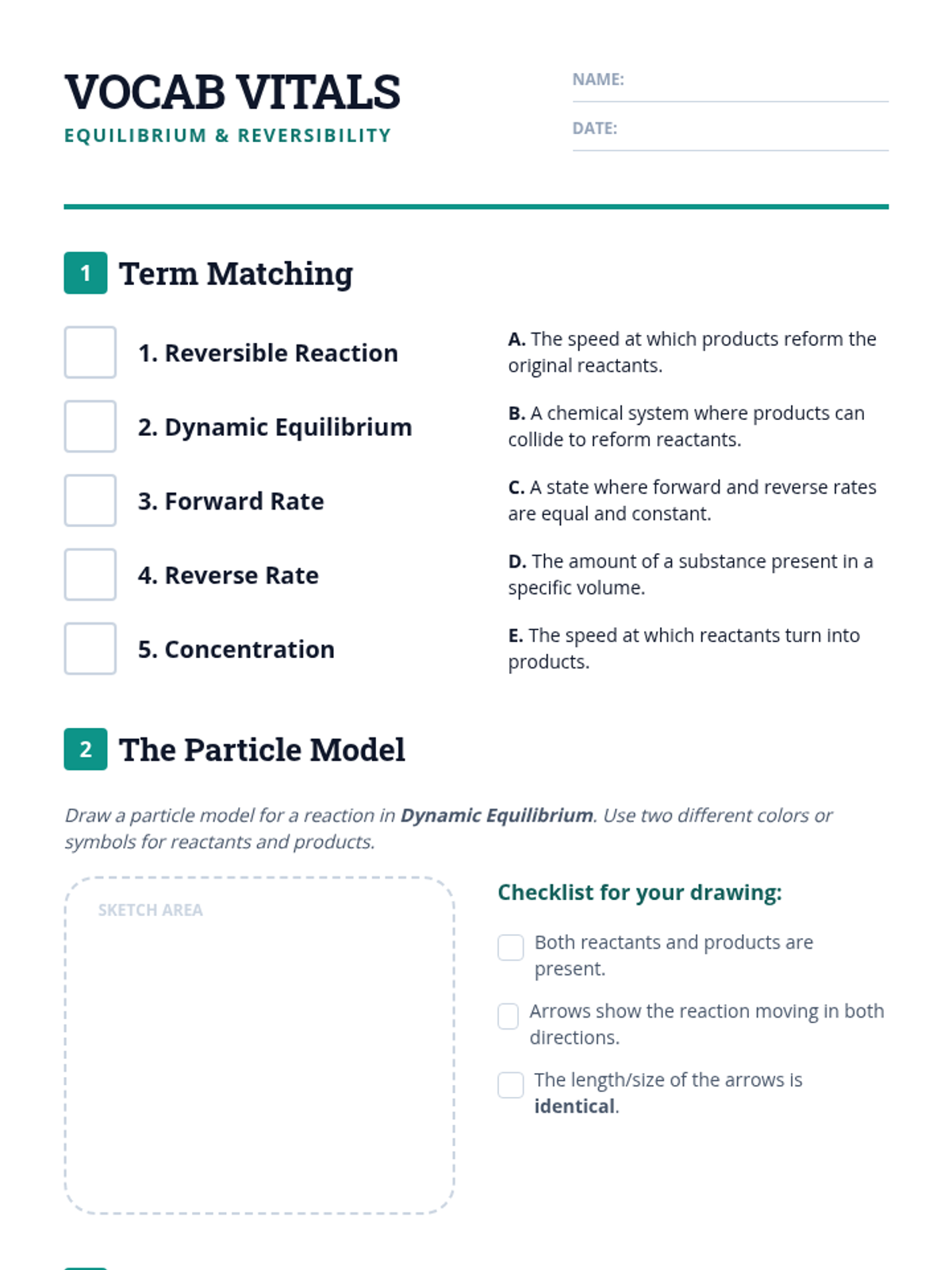
A vocabulary activity focusing on equilibrium terms, featuring matching, particle modeling, and a Frayer-style concept map for dynamic equilibrium.
A detailed teacher answer key for the Color Shift Lab. Includes expected data, sample analysis responses, and instructional tips for success. Revised for better page breaks and math rendering.
A visual presentation covering Le Chatelier's Principle, including concentration and temperature stresses, the collision theory reasoning behind shifts, and a case study using a household black tea equilibrium system. Revised for better label positioning and legibility.
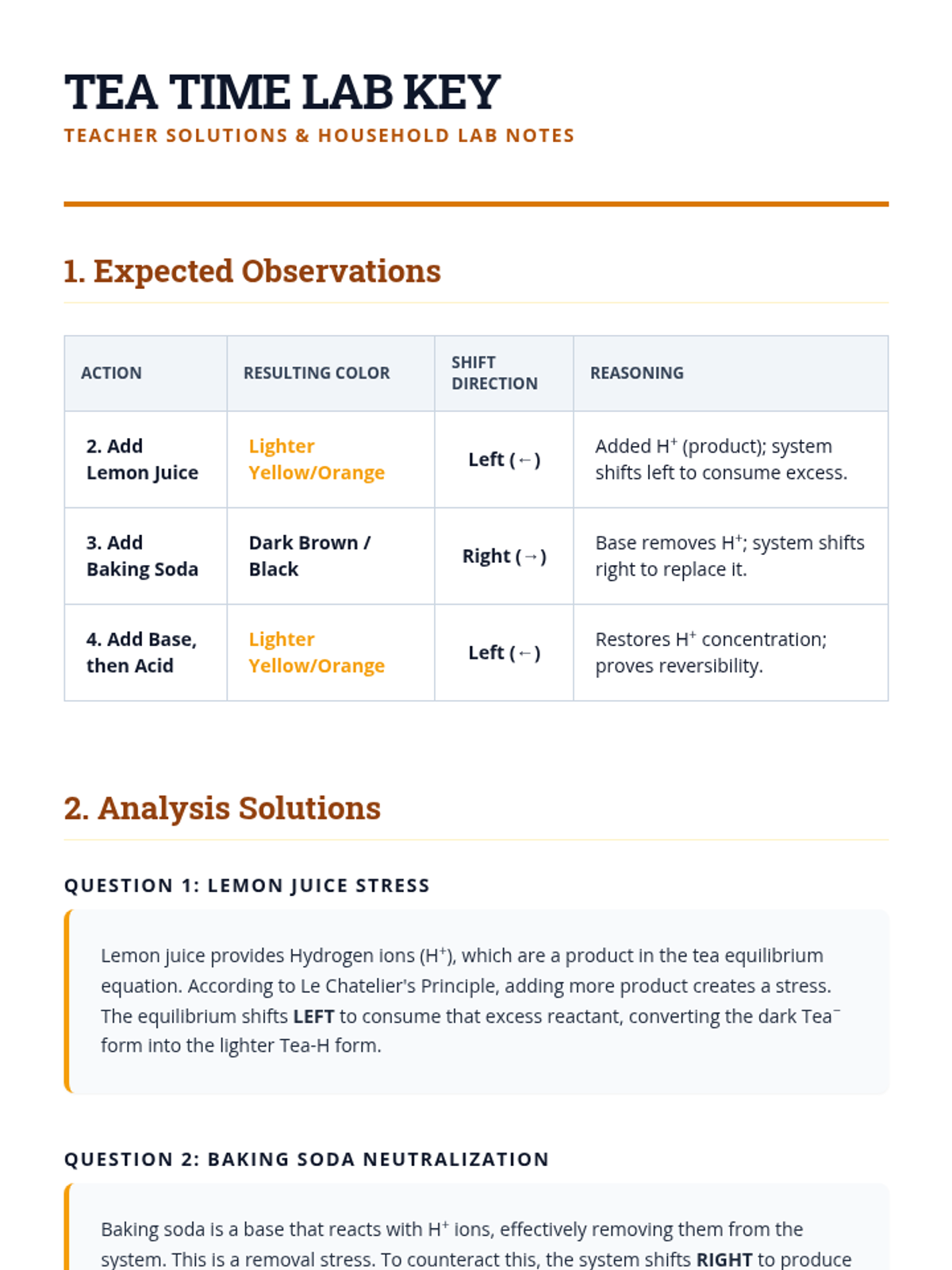
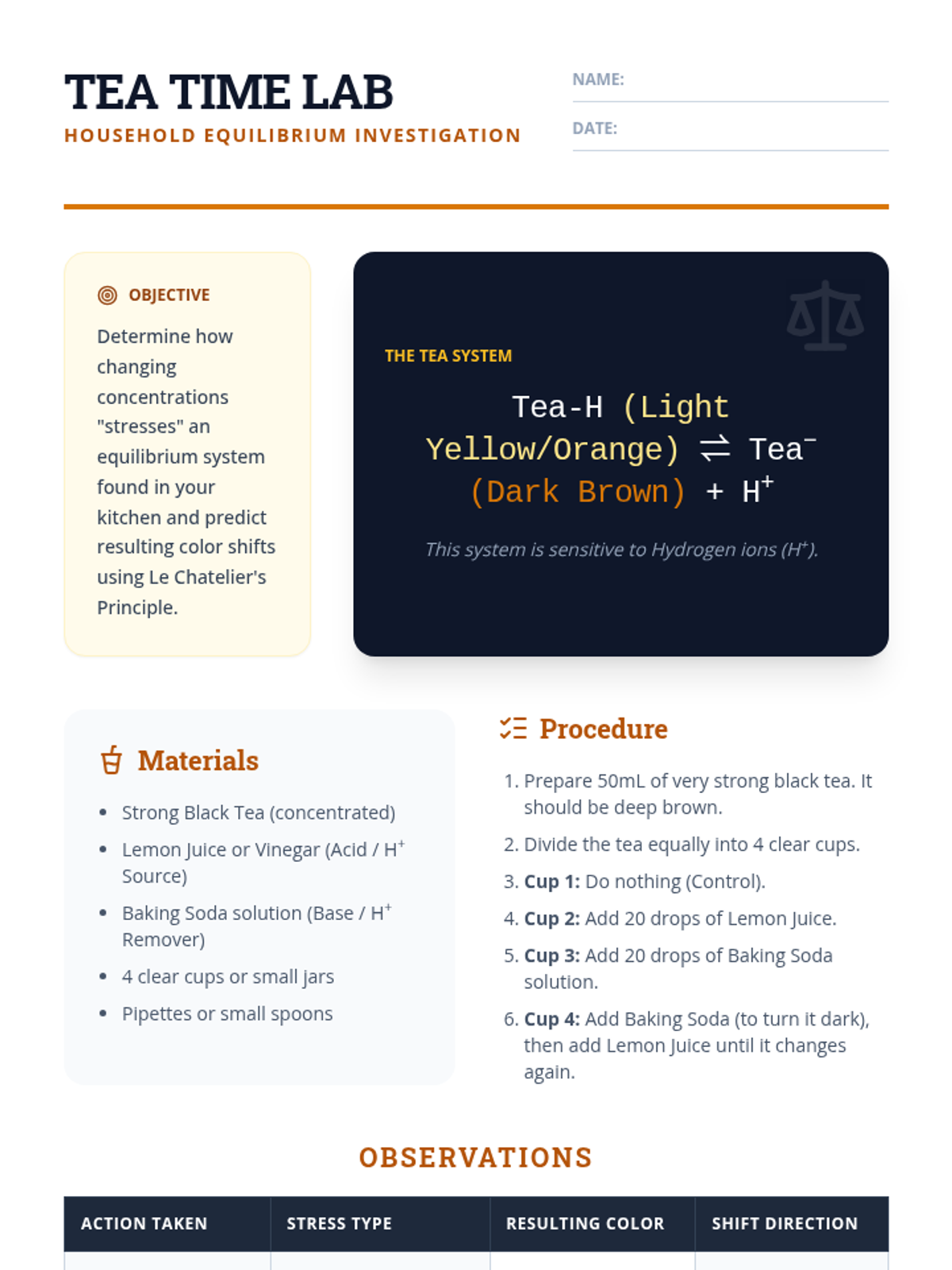
A household-friendly lab guide using black tea, lemon juice, and baking soda to investigate Le Chatelier's Principle. Includes clear procedures for concentration shifts and a formal CER assessment with sentence stems.
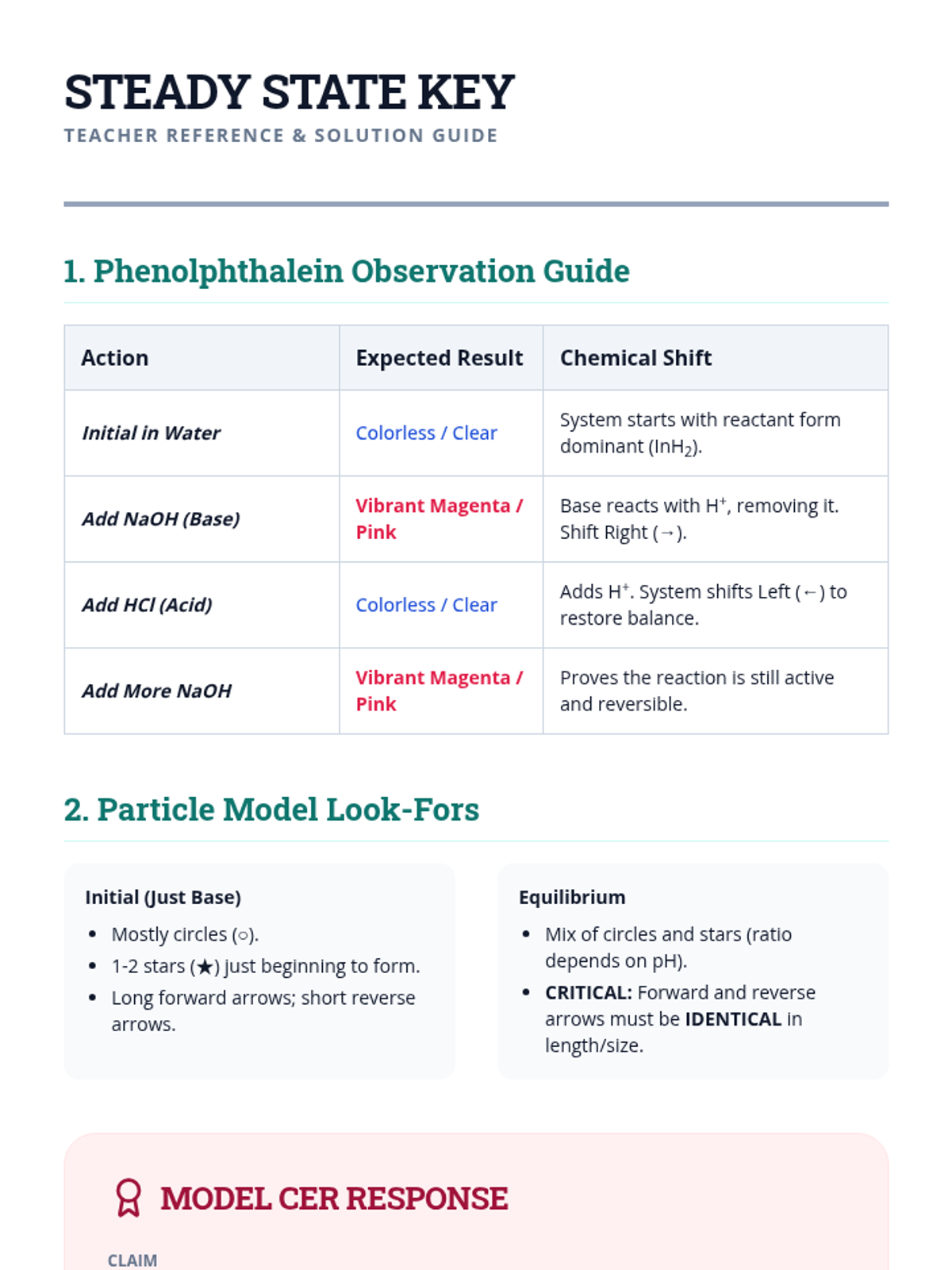
A comprehensive answer key and teacher guide for the Steady State lesson. Includes expected lab results, particle modeling "look-fors", a high-quality sample CER response, and notes on common student misconceptions. Revised for better page breaks and math rendering.