A light-themed visual presentation deck for the Pressure Problem lesson, featuring clear chemical notation and illustrations of industrial safety protocols.

A presentation deck demonstrating the Law of Conservation of Momentum. Now includes a comparison between Elastic (bouncing) and Inelastic (sticking) collisions, showing that total momentum is conserved in both cases. Revised for visual clarity and contrast.
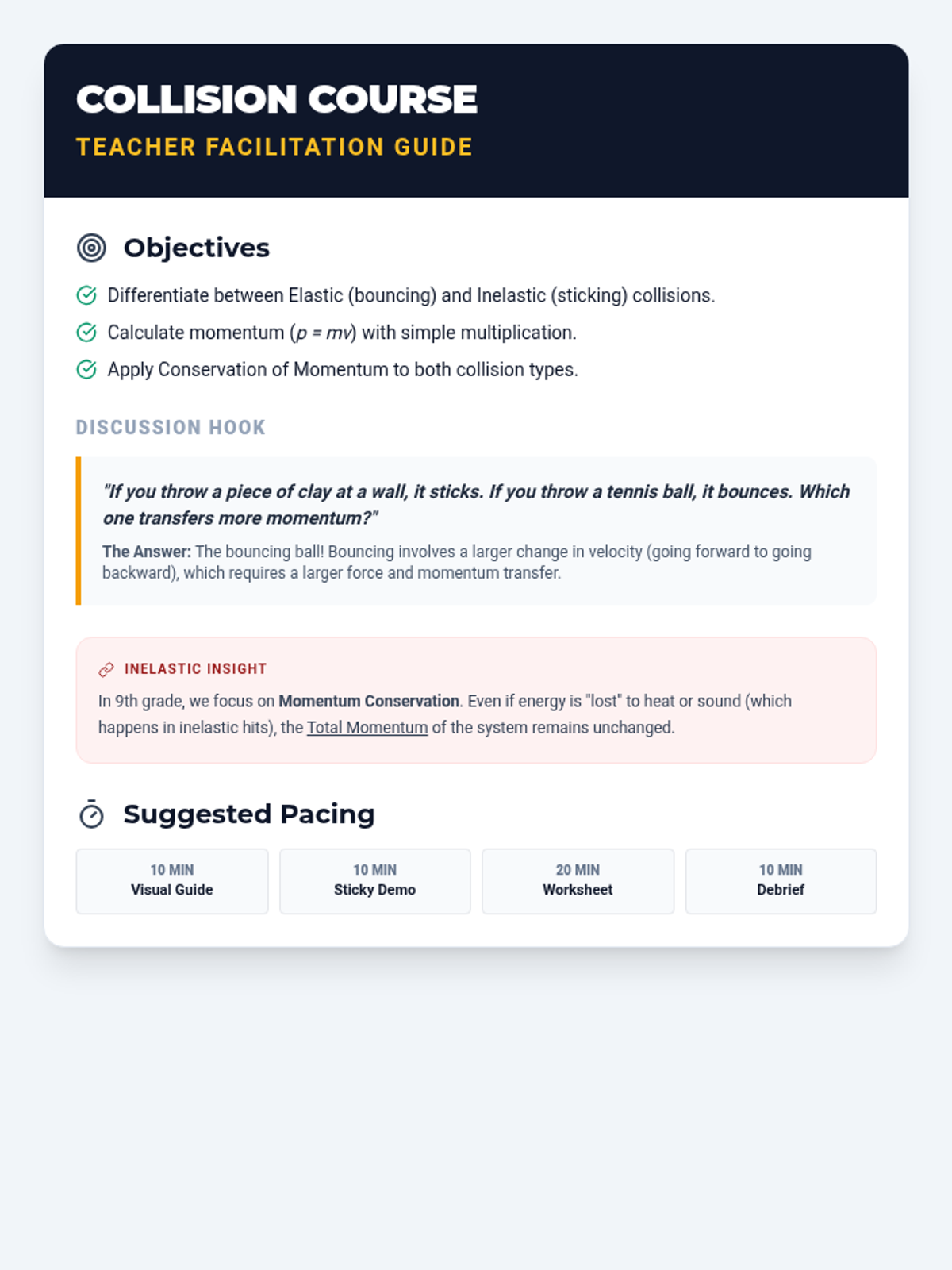
Teacher's facilitation guide for the Collision Course lesson. Updated to include instructional strategies for teaching the difference between elastic and inelastic collisions.
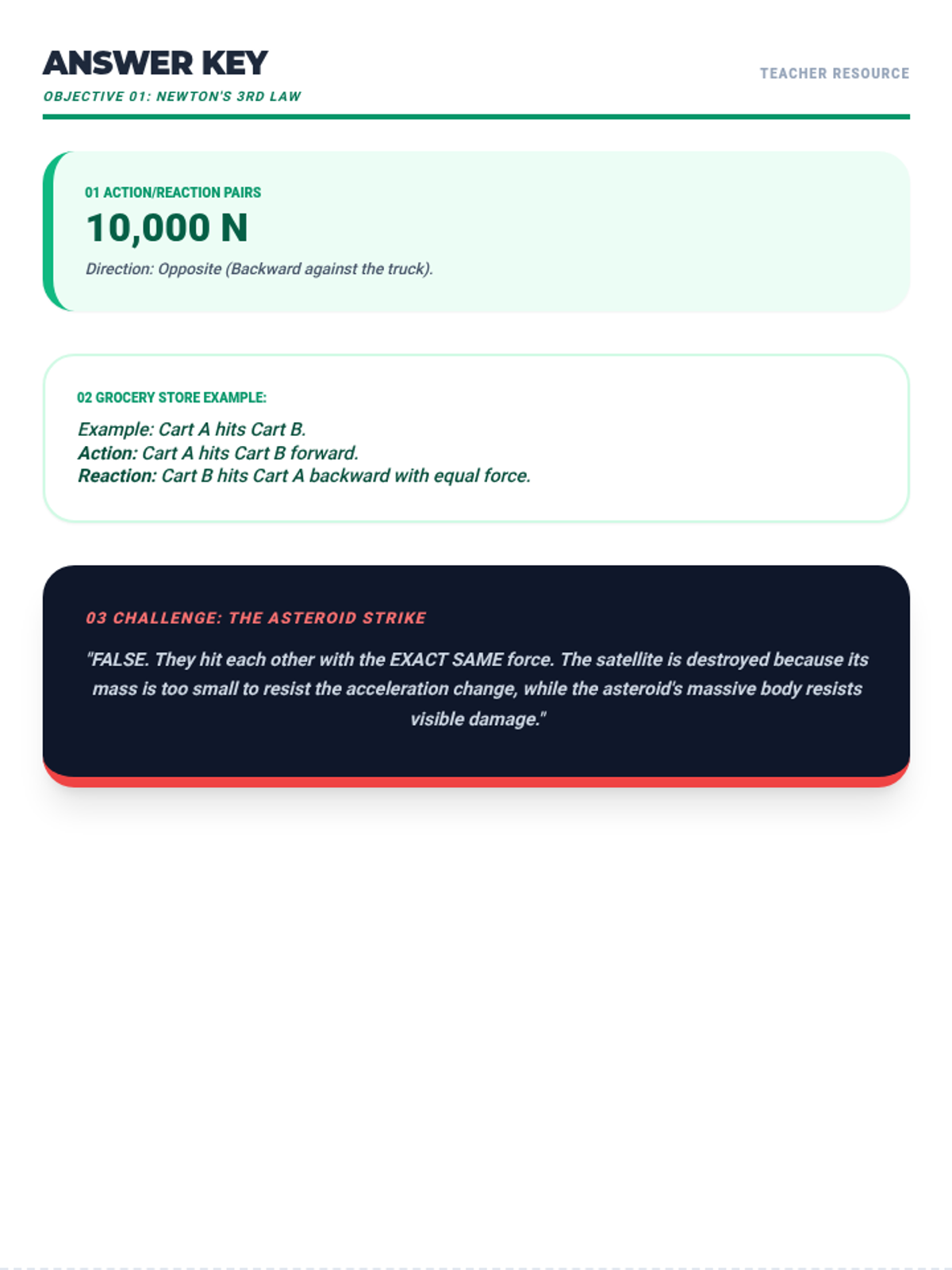
Expanded 4-page answer key for the Crash Lab Worksheet, providing full solutions and conceptual explanations for Newton's 3rd Law, Momentum calculations, Collision Types, and Conservation Laws. Revised for strictly 4-page layout and alignment with user requests.
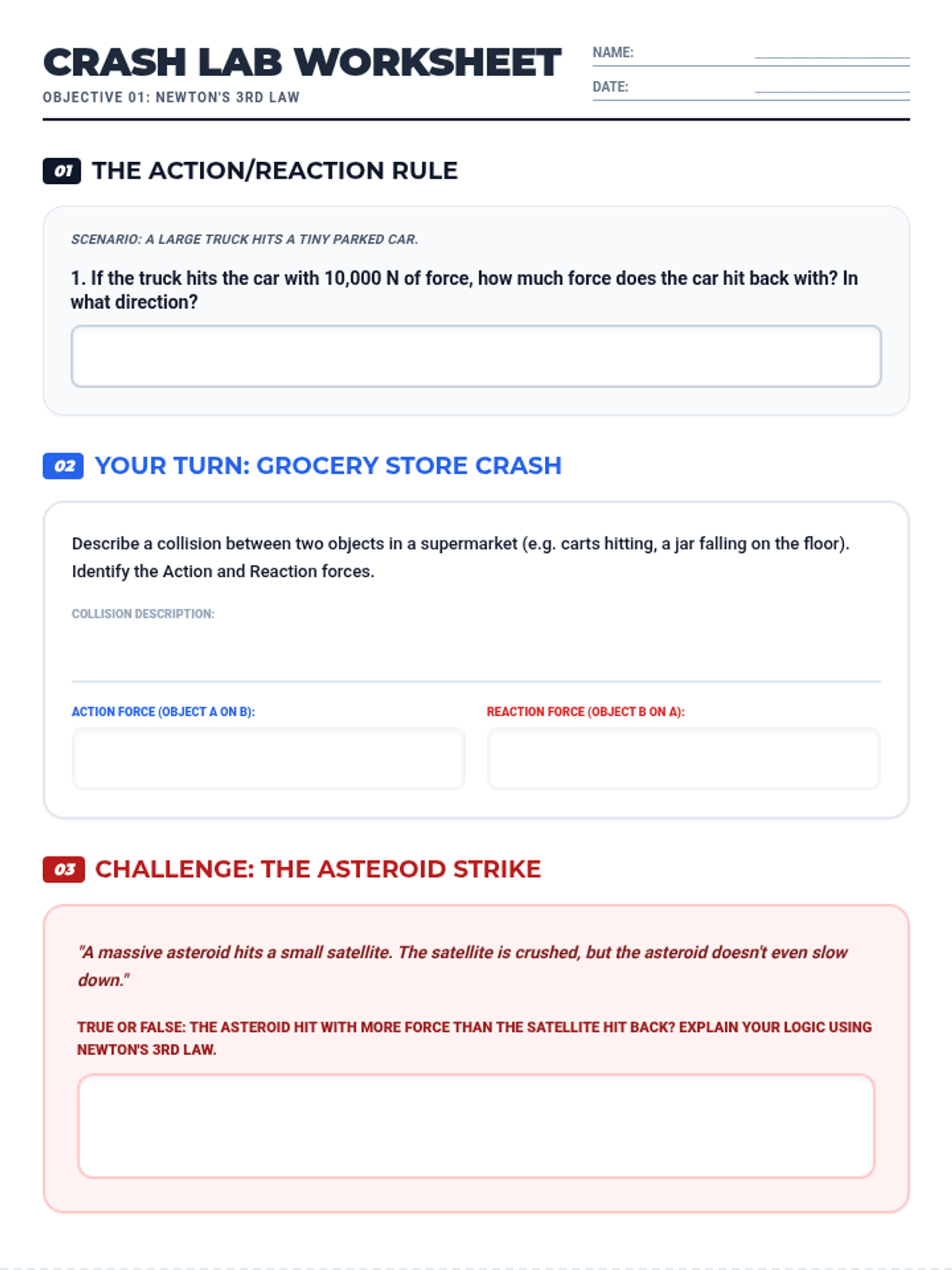
An expanded 4-page student worksheet covering Newton's 3rd Law, Momentum calculations, Collision Types (Elastic vs Inelastic), and the Law of Conservation of Momentum. Revised for page breaks, unit consistency, and legibility.
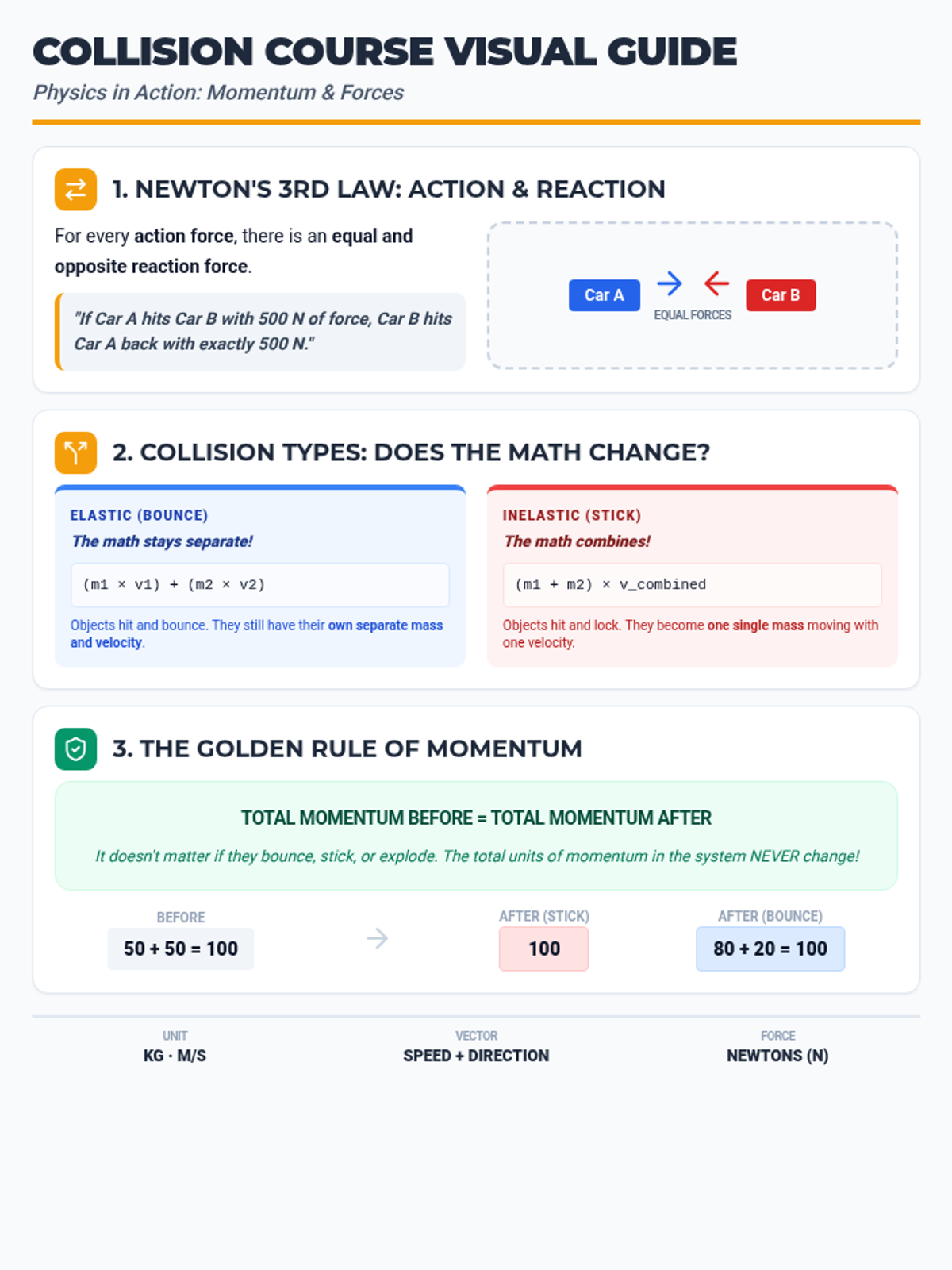
A one-page visual anchor chart for 9th-grade physics. Explains Newton's 3rd Law, momentum (p=mv), and Conservation of Momentum. Now includes a comparison between Elastic and Inelastic collisions.
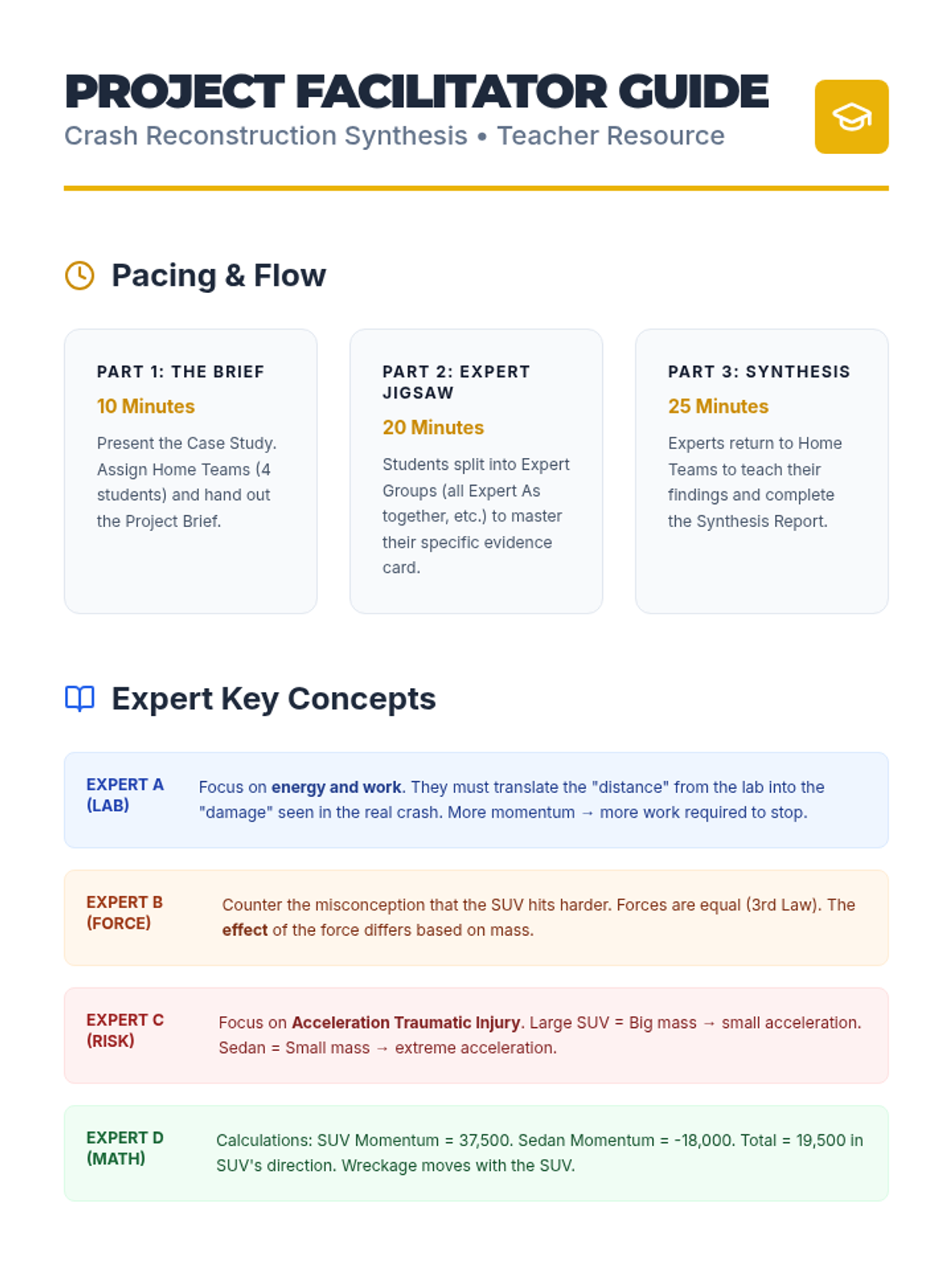
A teacher facilitation guide for the Crash Engineering Project. Includes pacing suggestions, answer keys for the jigsaw expert tasks, a grading rubric, and tips for addressing common physics misconceptions.
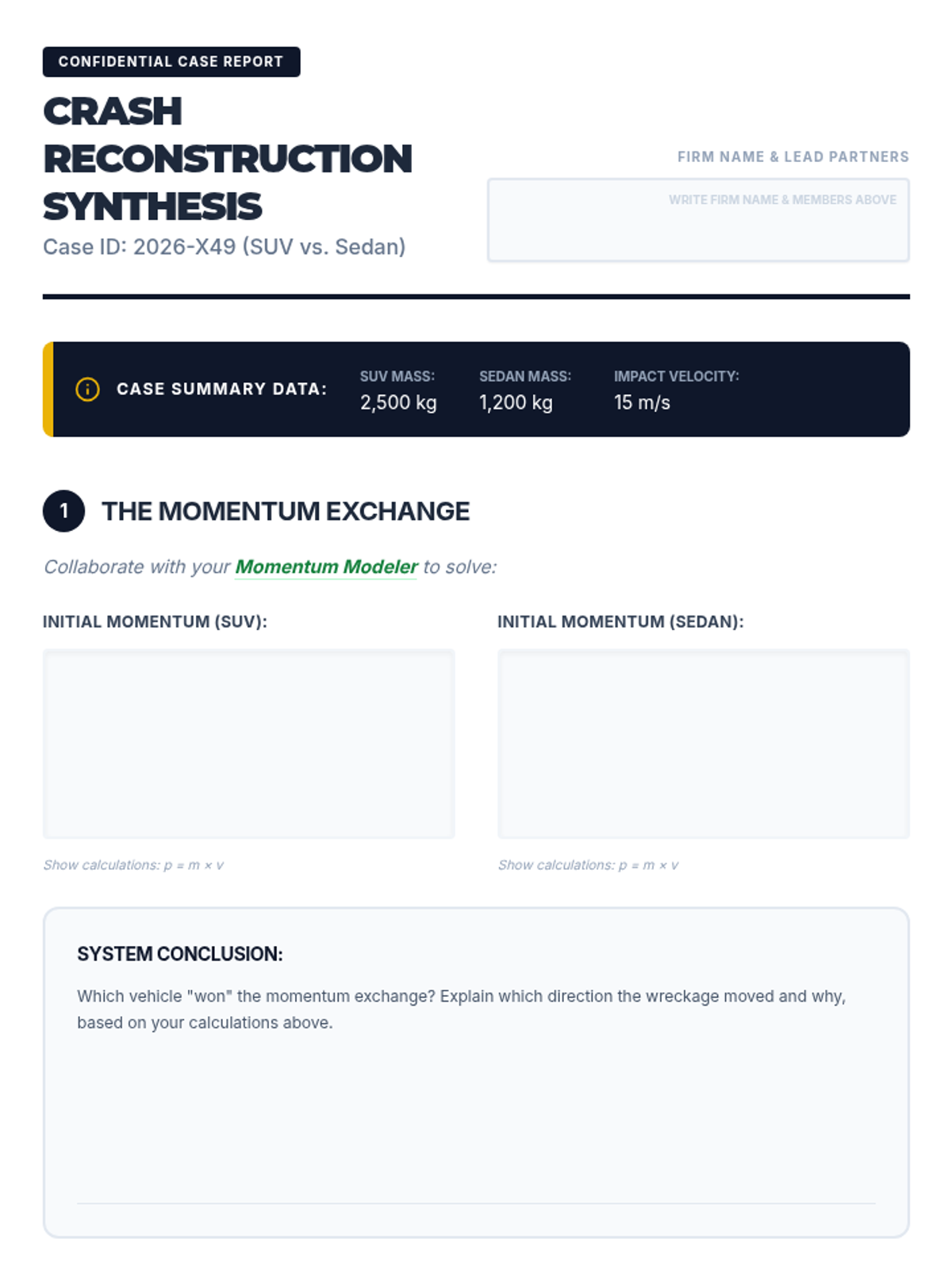
Revised team synthesis report template. Fixed page break issues and expanded student work areas for momentum calculations. Improved visual polish for a professional engineering look. Added a case data summary sidebar for easy reference.
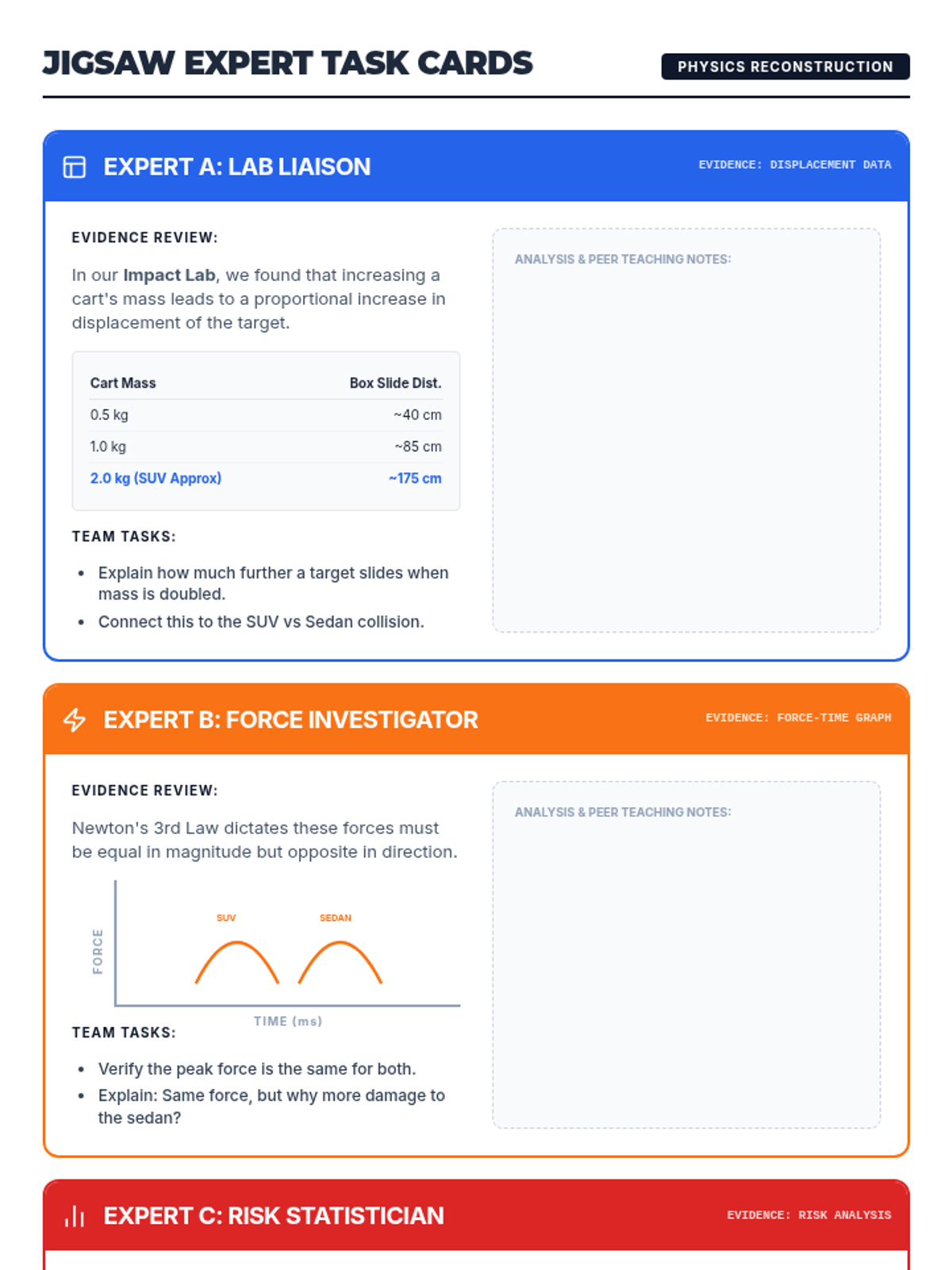
Revised expert cards for the jigsaw activity. Fixed clipping issues and added missing graph labels. Optimized layout to fit two cards per page consistently and expanded student note areas. Fixed subscript rendering issues.
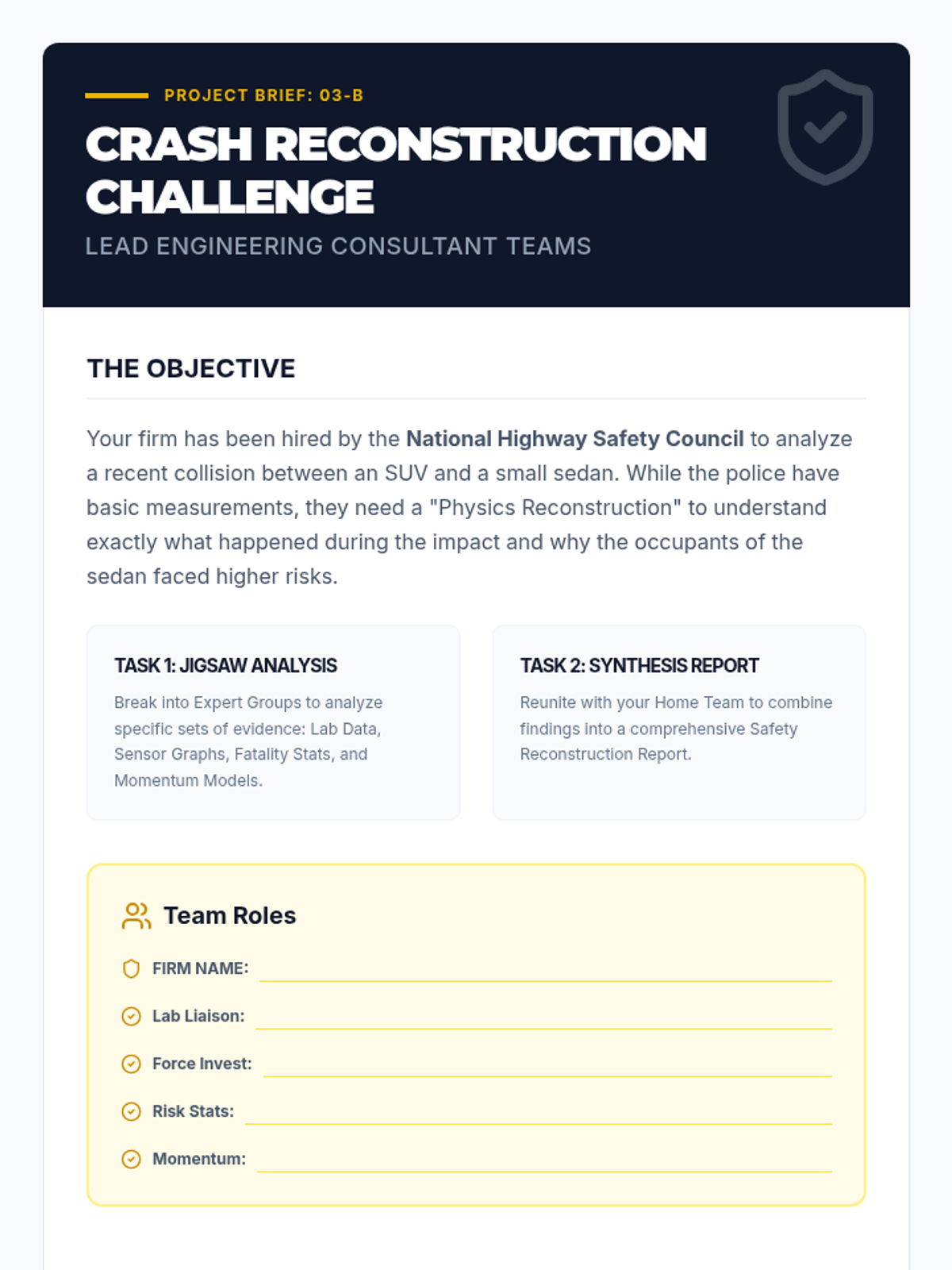
Revised project introduction handout for students. Outlines the team roles and the case study parameters. Fixed page break issues and sidebar layout for better readability.
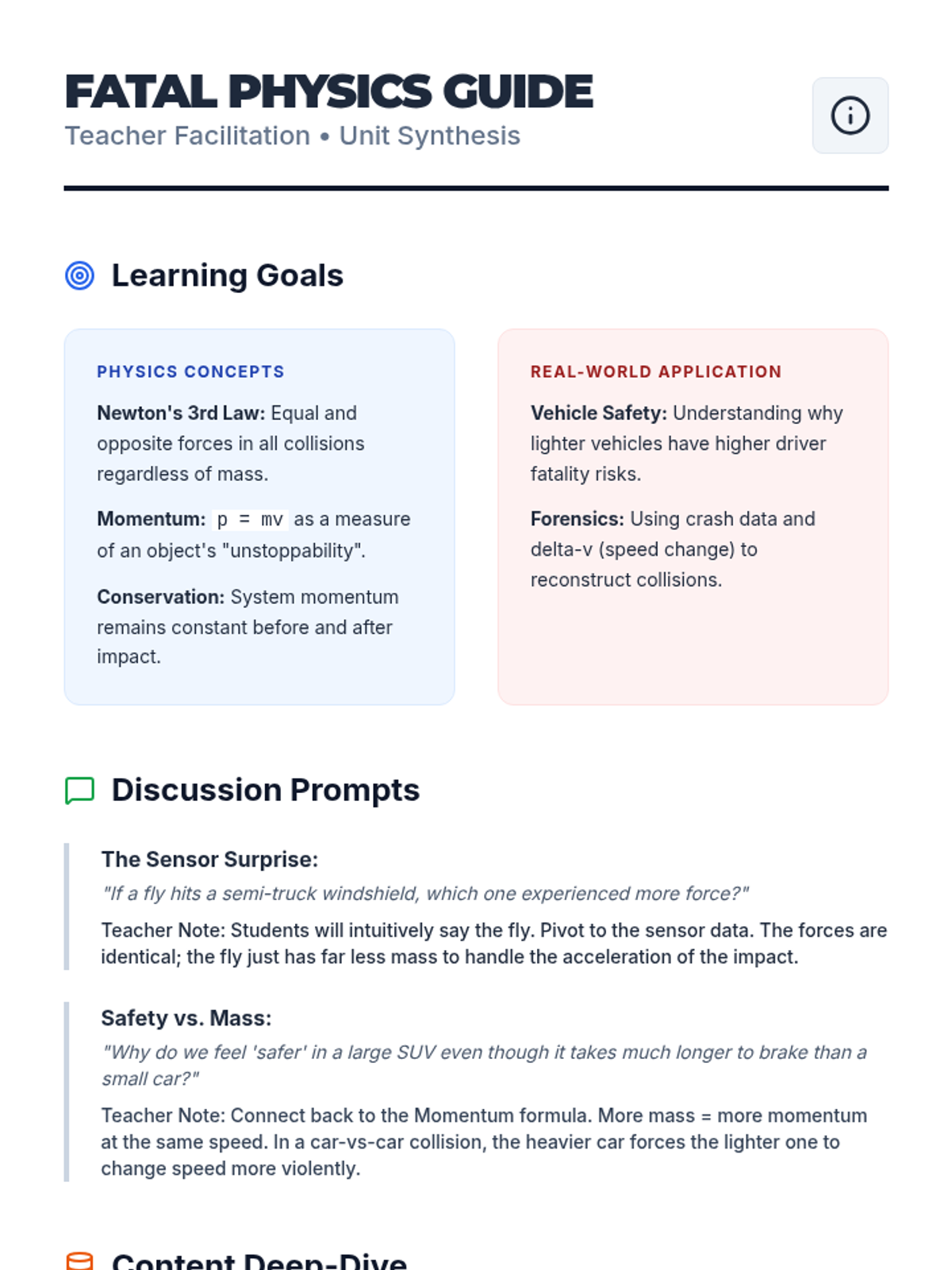
A teacher facilitation guide for the Momentum Mechanics lesson. Revised for better page organization and guaranteed rendering of mathematical concepts.
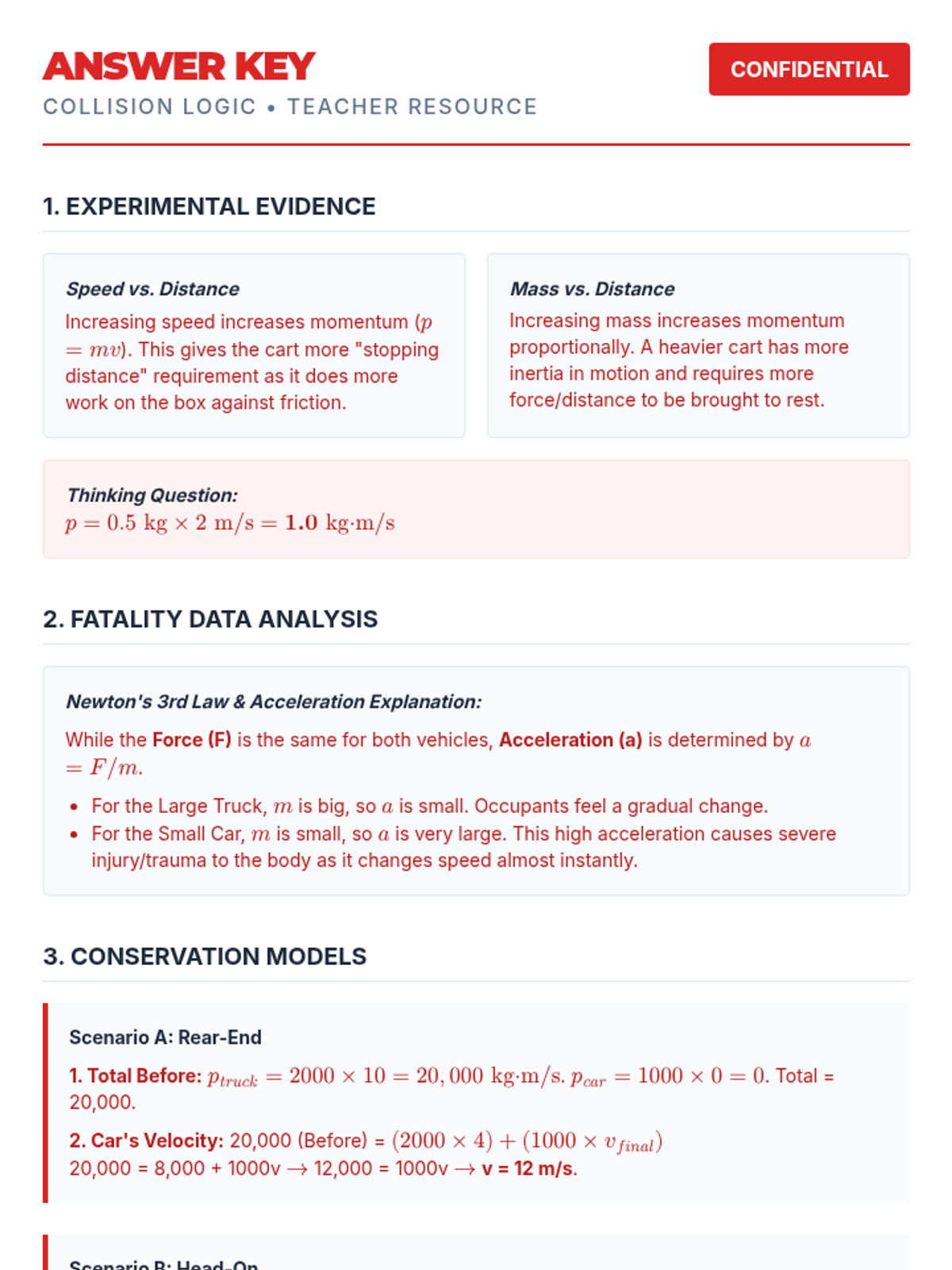
Detailed teacher answer key for the Collision Logic worksheet. Includes step-by-step mathematical derivations for momentum conservation and clear conceptual explanations for Newton's laws.
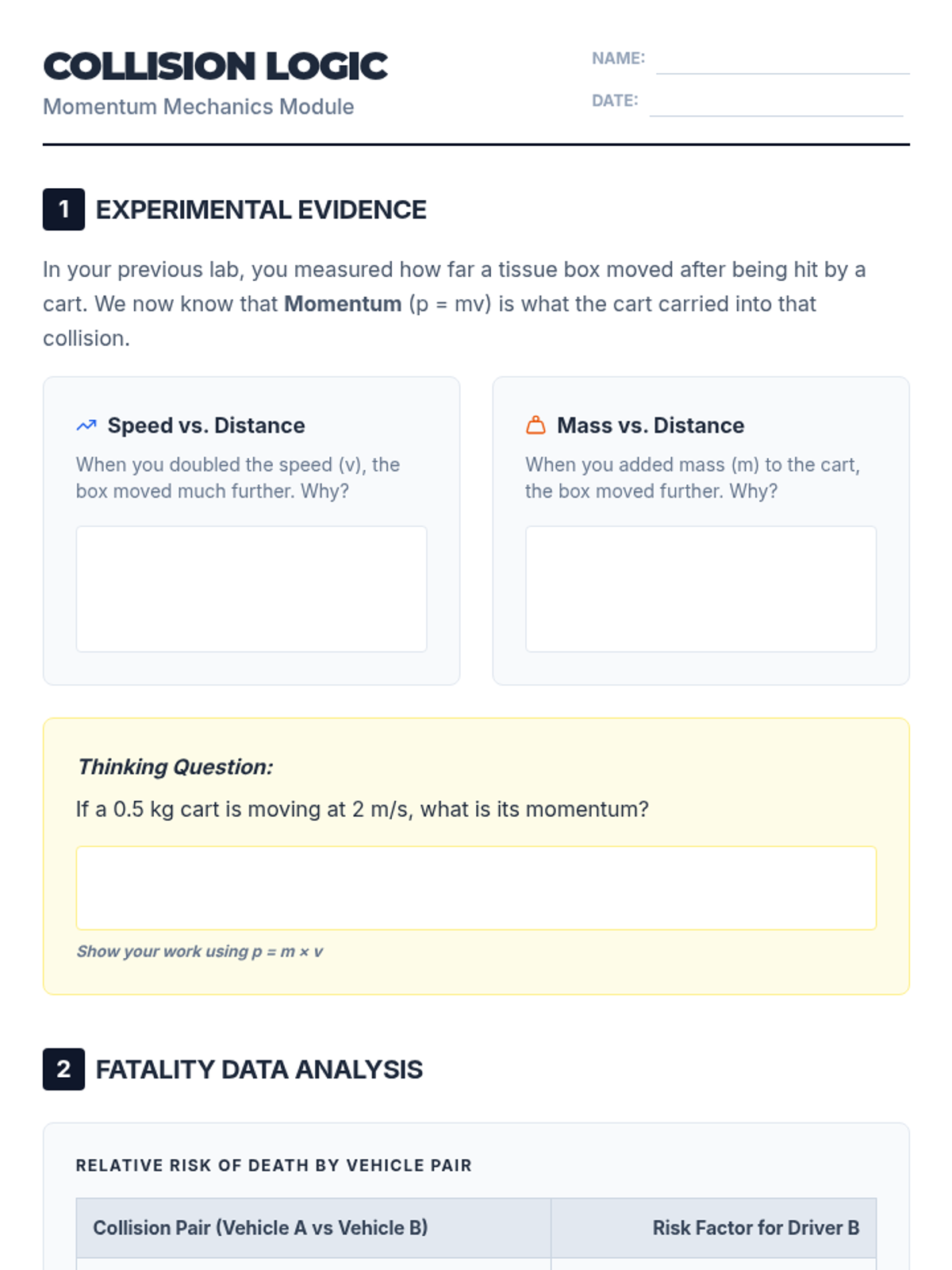
A practice worksheet where students connect their lab observations to the mathematical model of momentum. Revised for better page flow and rendering reliability.
A visual presentation connecting experimental lab results to Newton's Third Law, momentum conservation, and real-world vehicle safety data. Includes diagrams of force-time graphs and fatality risk tables. Revised for improved rendering and accessibility.
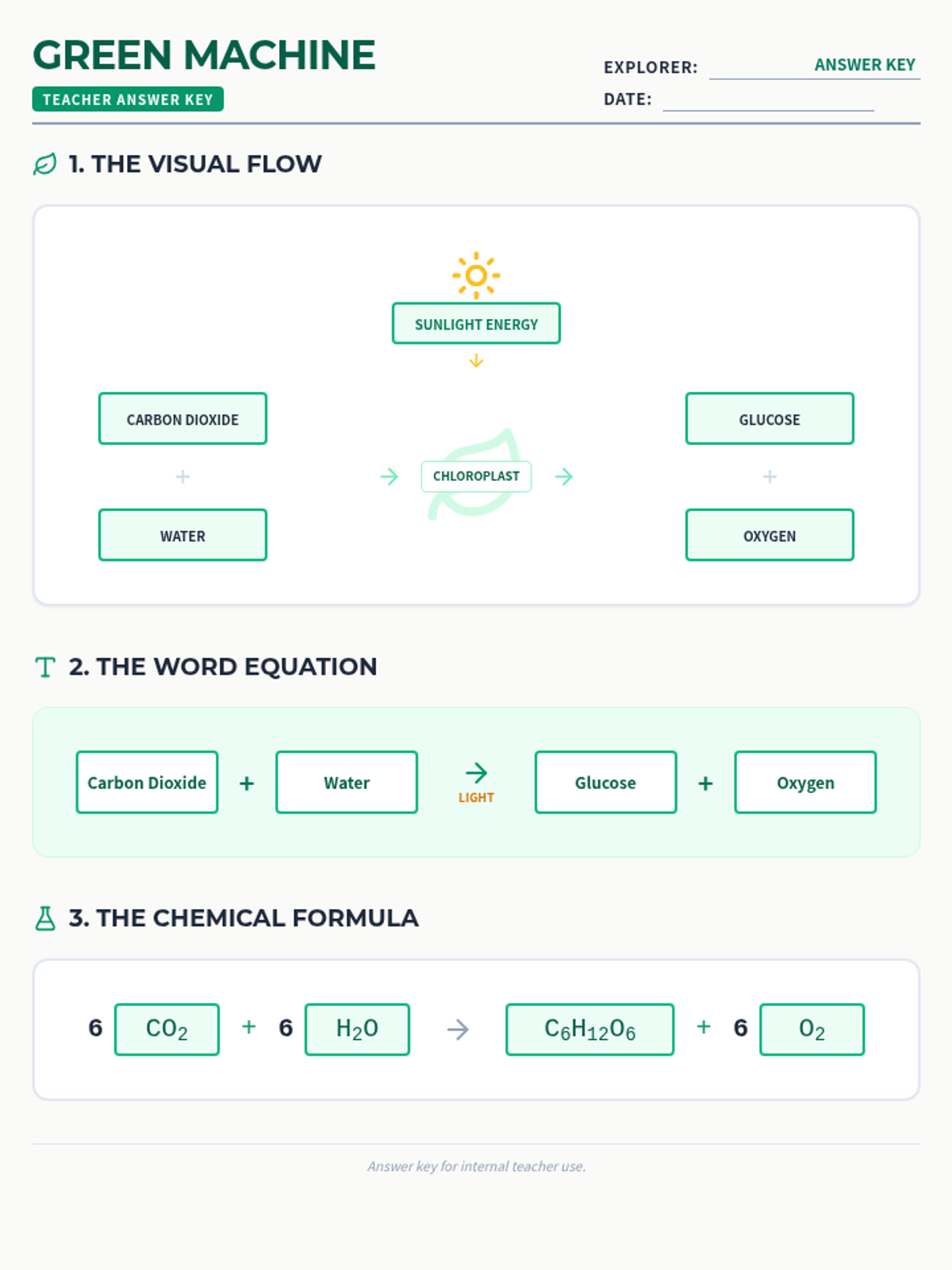
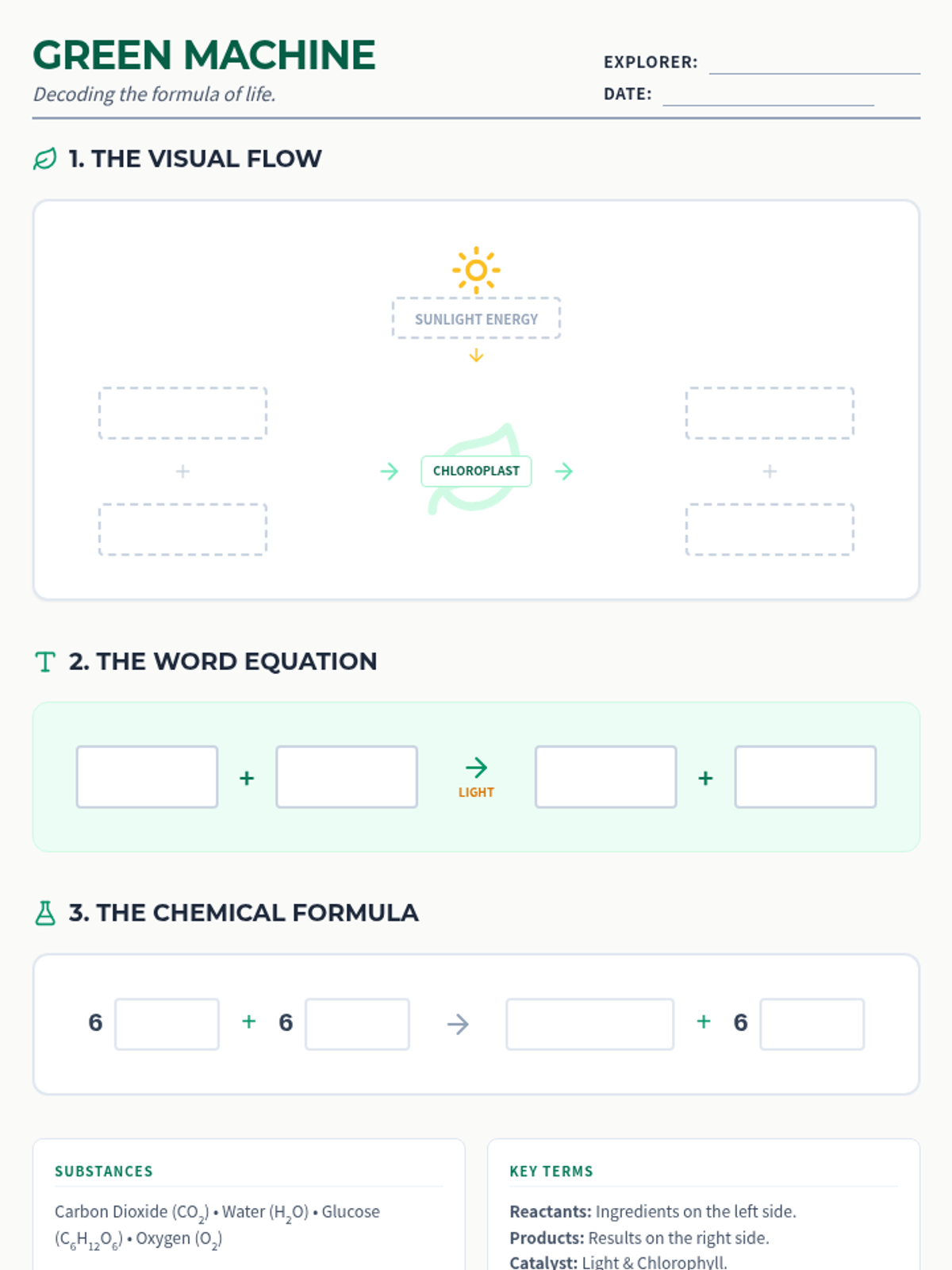
The teacher answer key for the Green Machine worksheet, providing the correct labels for the photosynthesis diagram and equations.
A fill-in-the-blank worksheet for middle school students focusing on the photosynthesis equation through diagrams, word formulas, and chemical notation.
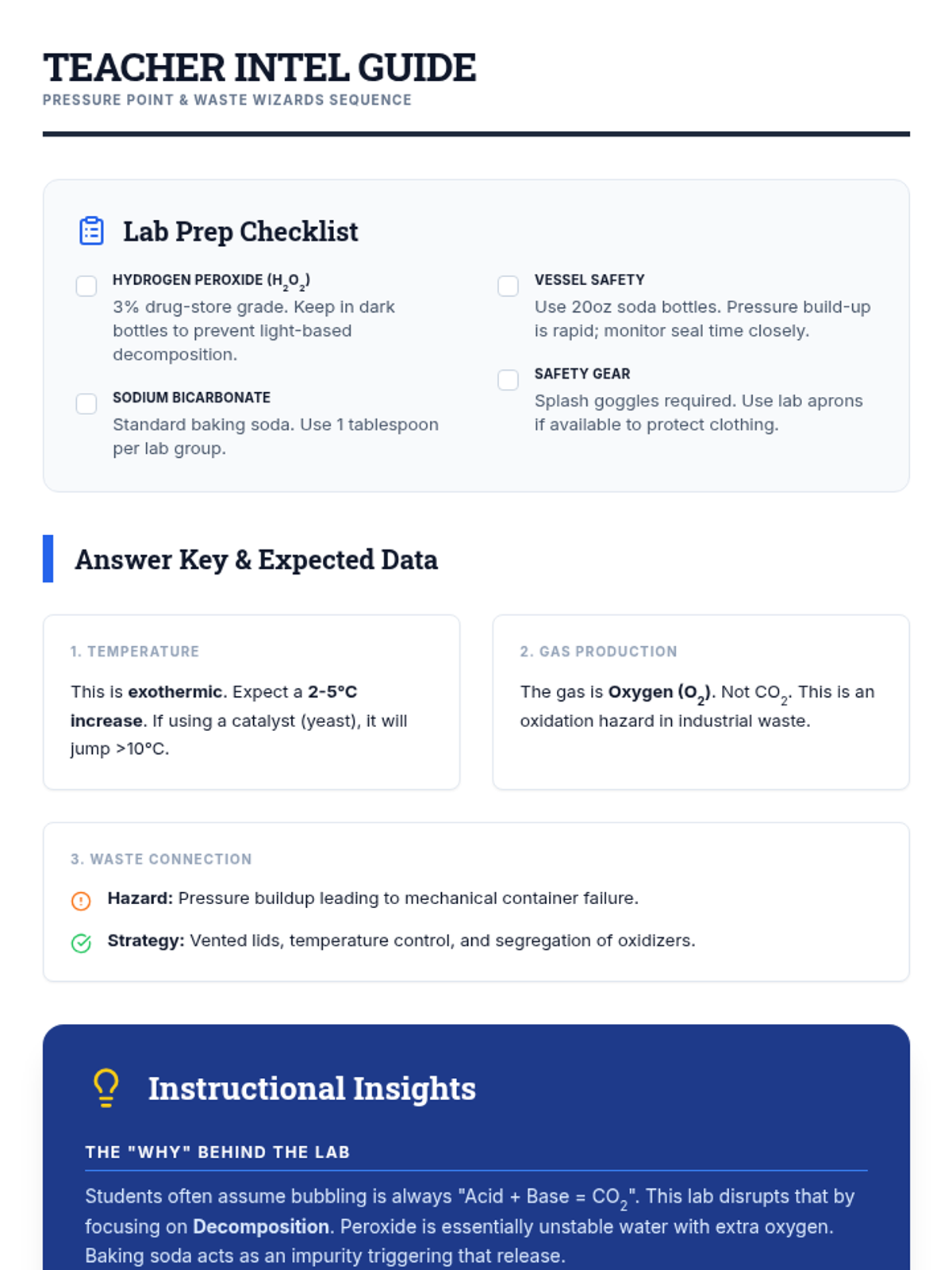
A teacher's guide for the Chemical Safety Squad sequence, including prep checklists, expected lab results, and answer keys for the analysis worksheets.
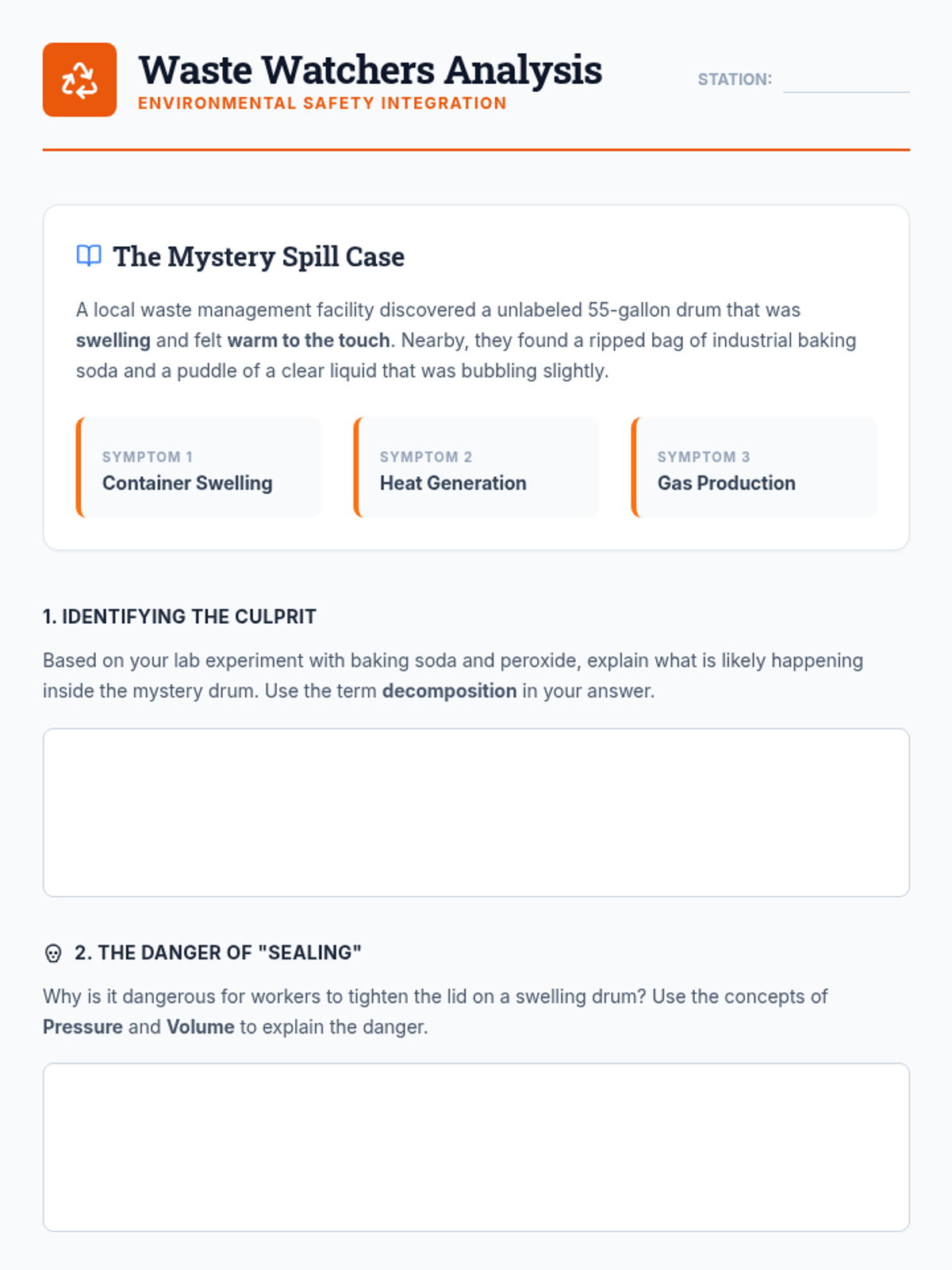
An analysis worksheet connecting the Pressure Point lab to environmental waste management, featuring a case study on mystery spills and questions on vented containment systems.
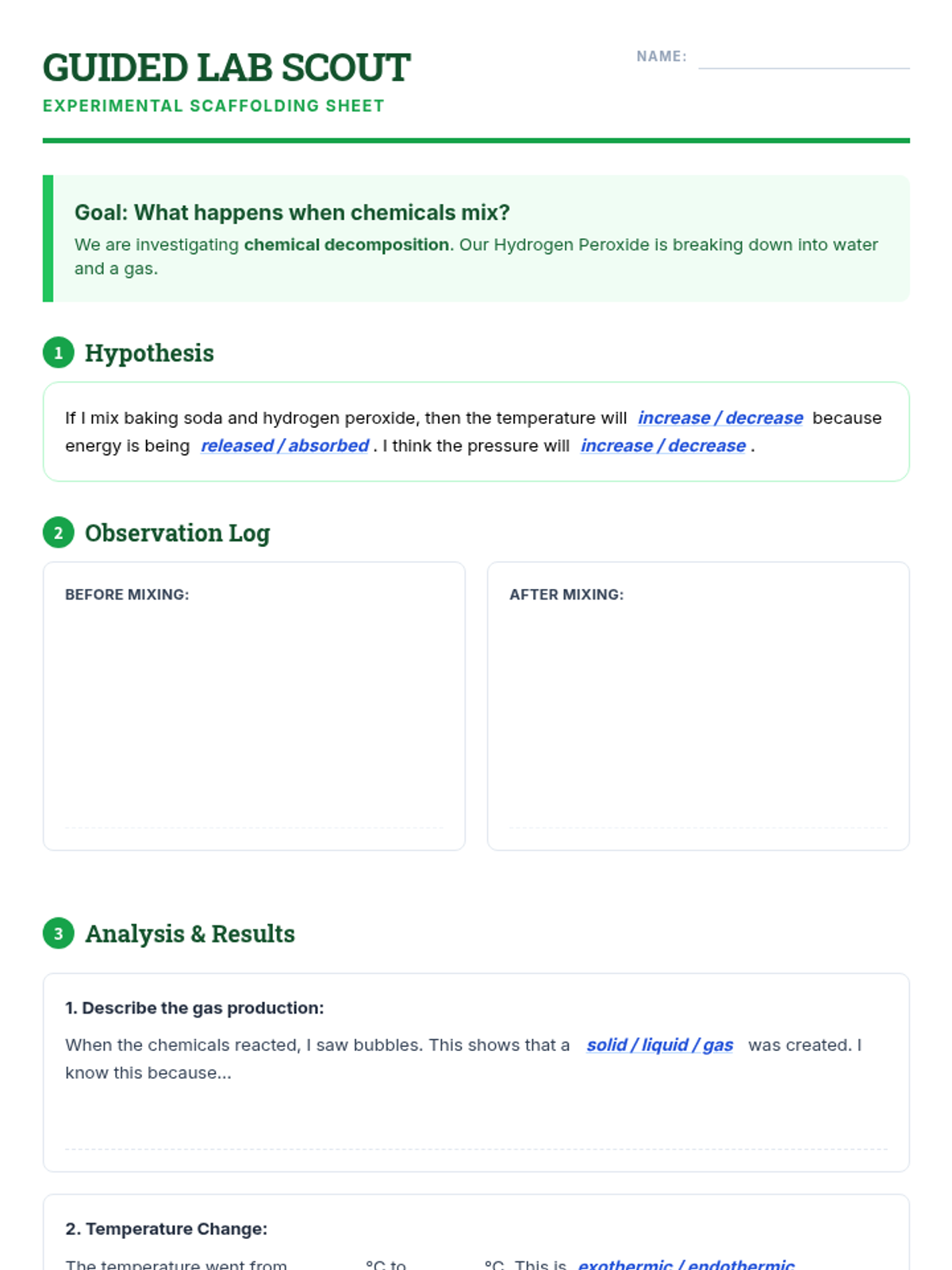
A scaffolded lab report with sentence frames for the Pressure Point experiment, designed to support students who need extra guidance in forming hypotheses and drawing conclusions about chemical decomposition and safety.
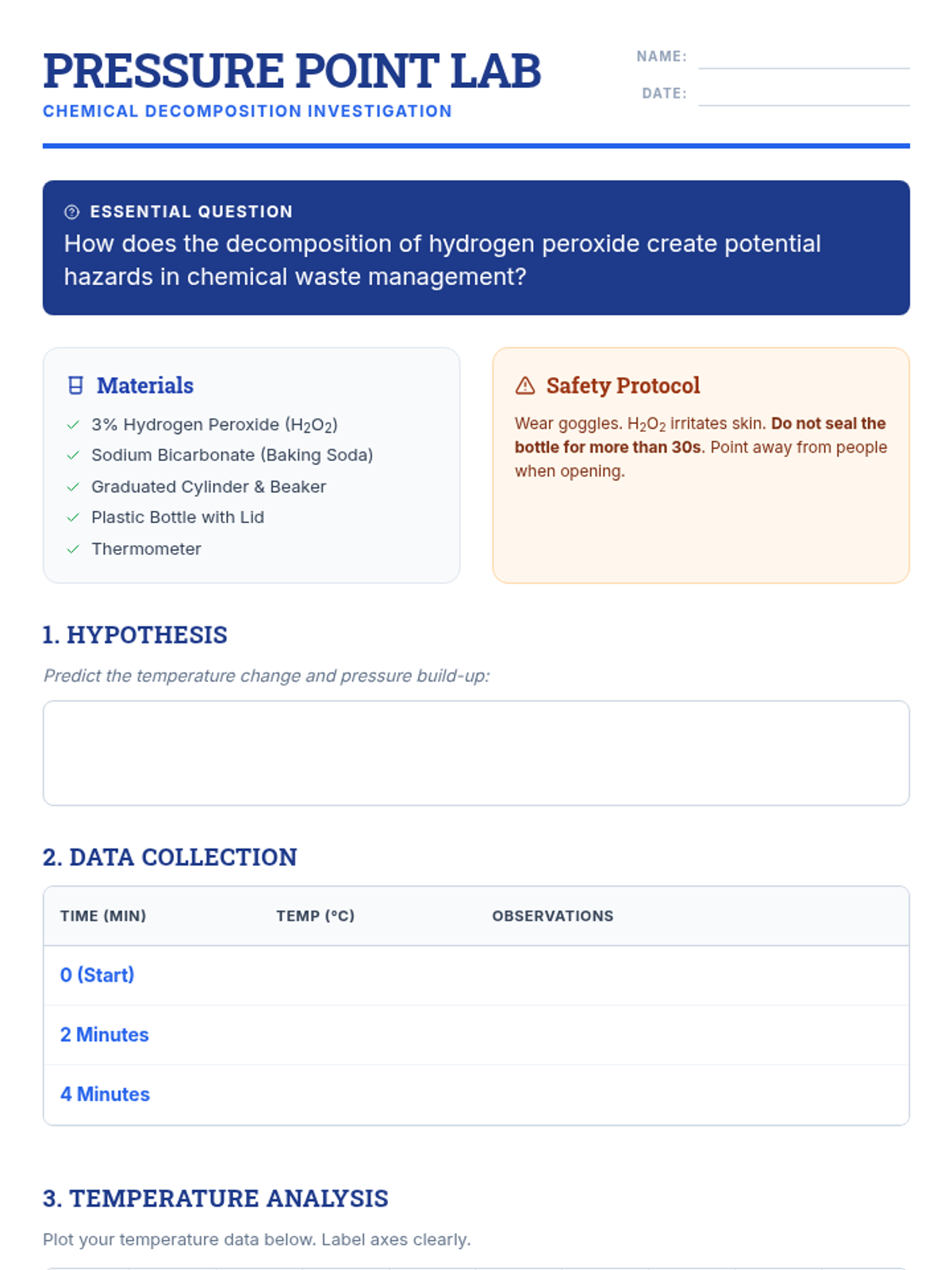
A standard lab report for the Pressure Point experiment, featuring data collection tables, a graphing area, and analysis questions focusing on exothermic reactions and gas pressure hazards.
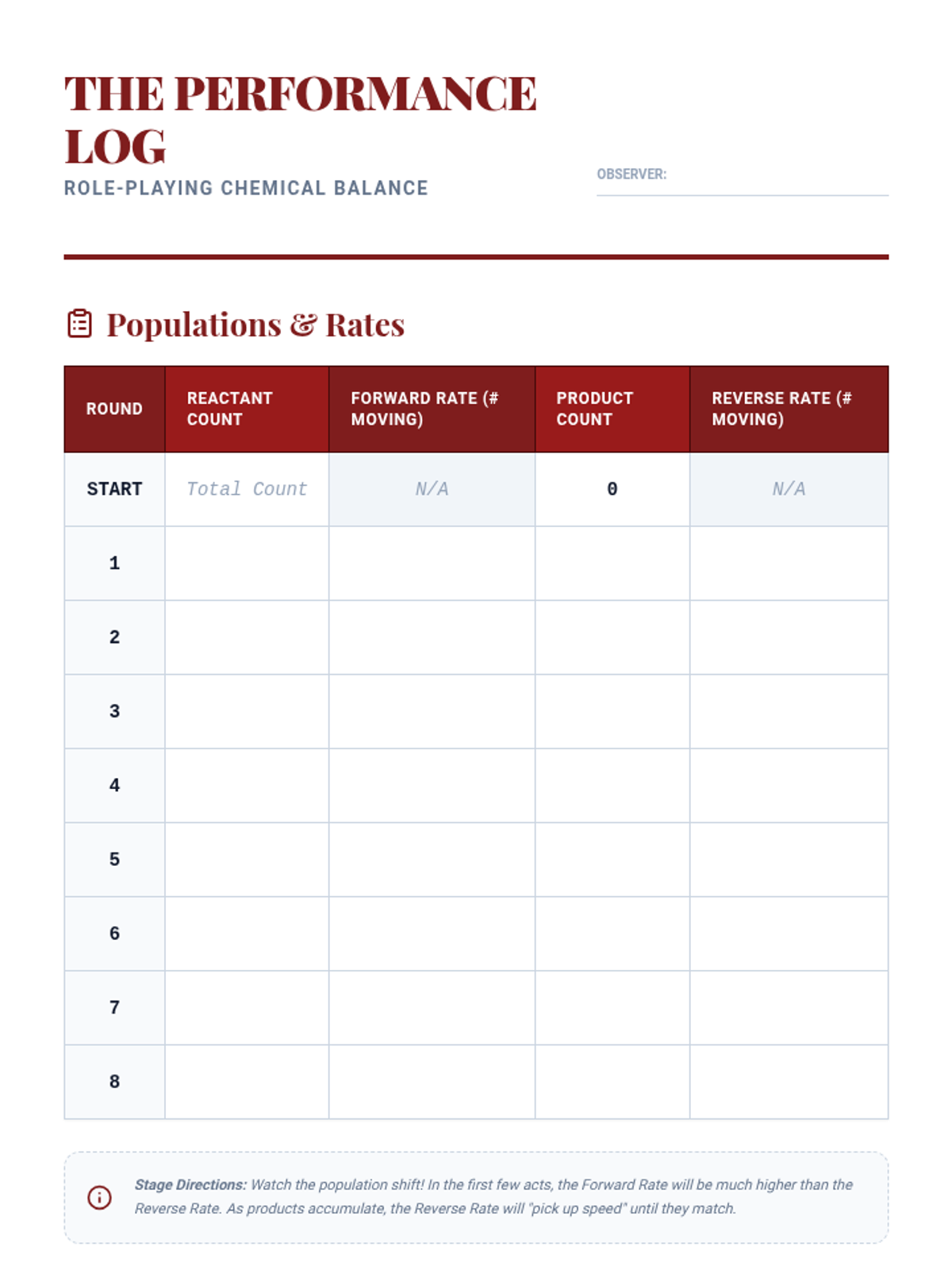
A student recording sheet for the equilibrium role-playing simulation. Students track particle counts and reaction rates over several rounds to identify when and how a system reaches balance. Revised for better header layout and spacing.
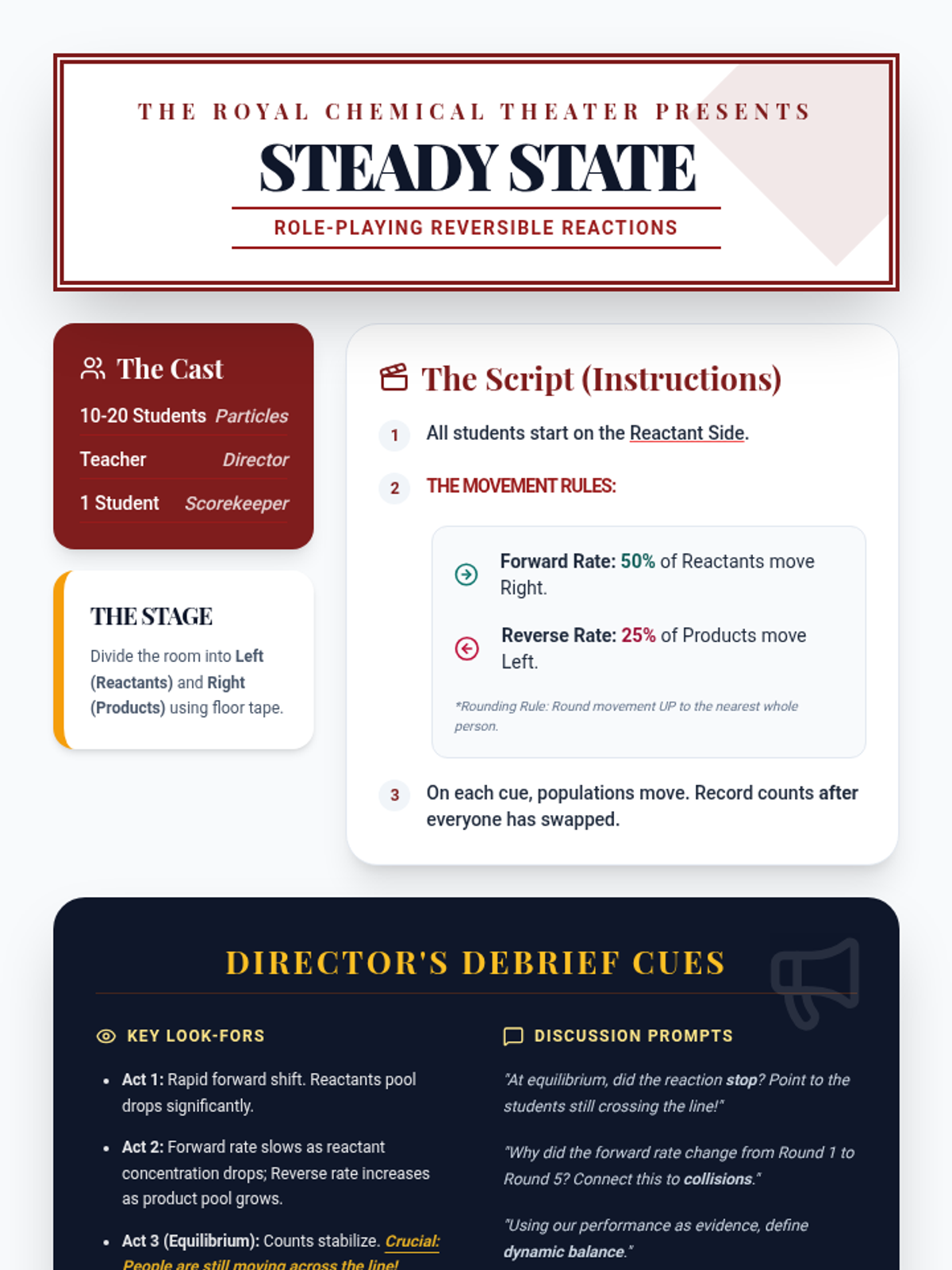
A teacher-facing facilitation guide for a role-playing simulation where students act as particles to model dynamic equilibrium. Includes clear movement rules, setup instructions, and discussion prompts. Revised for layout and contrast.
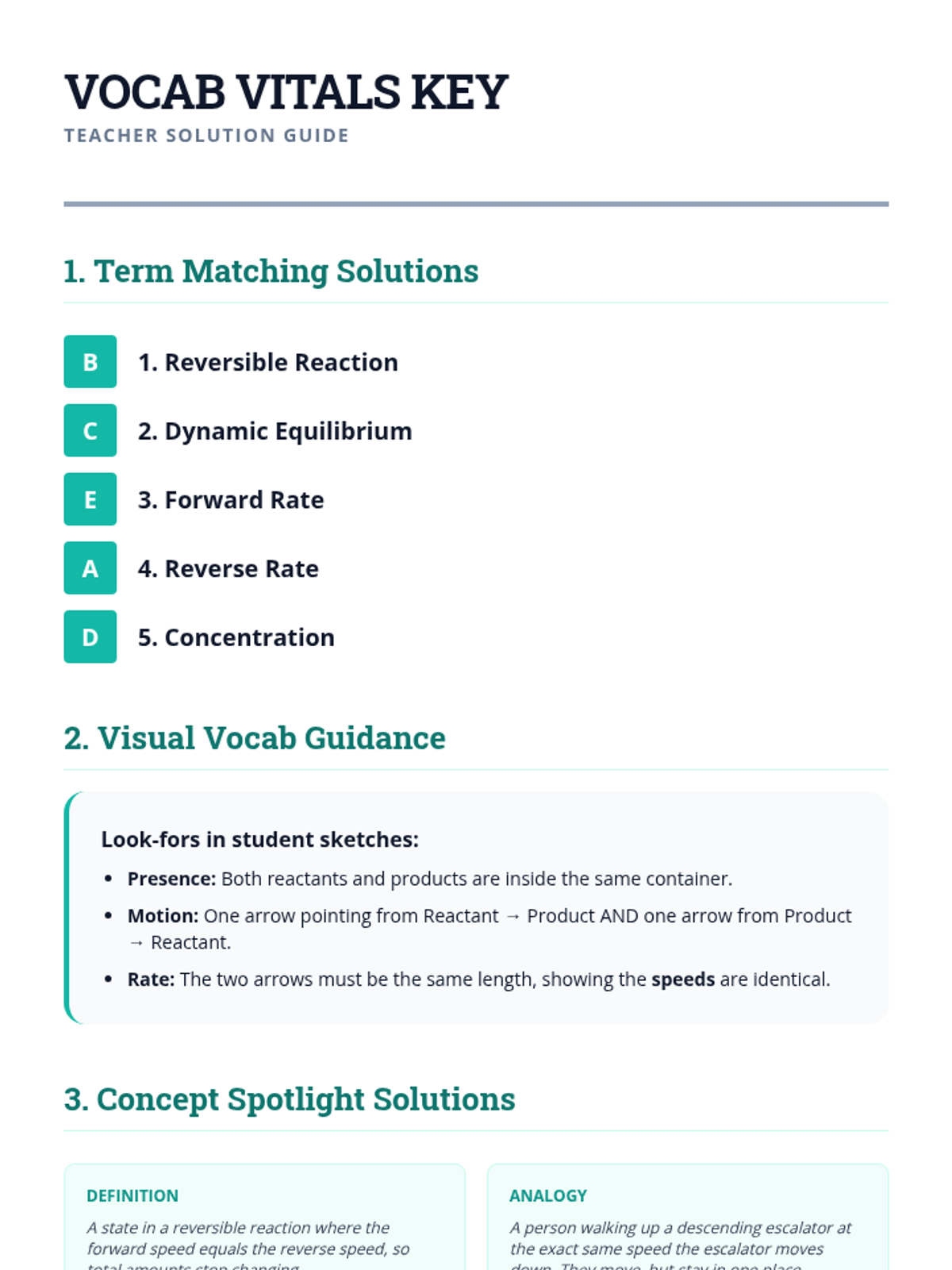
Teacher answer key for the Vocab Vitals activity, providing matching solutions, particle model look-fors, and sample conceptual responses.
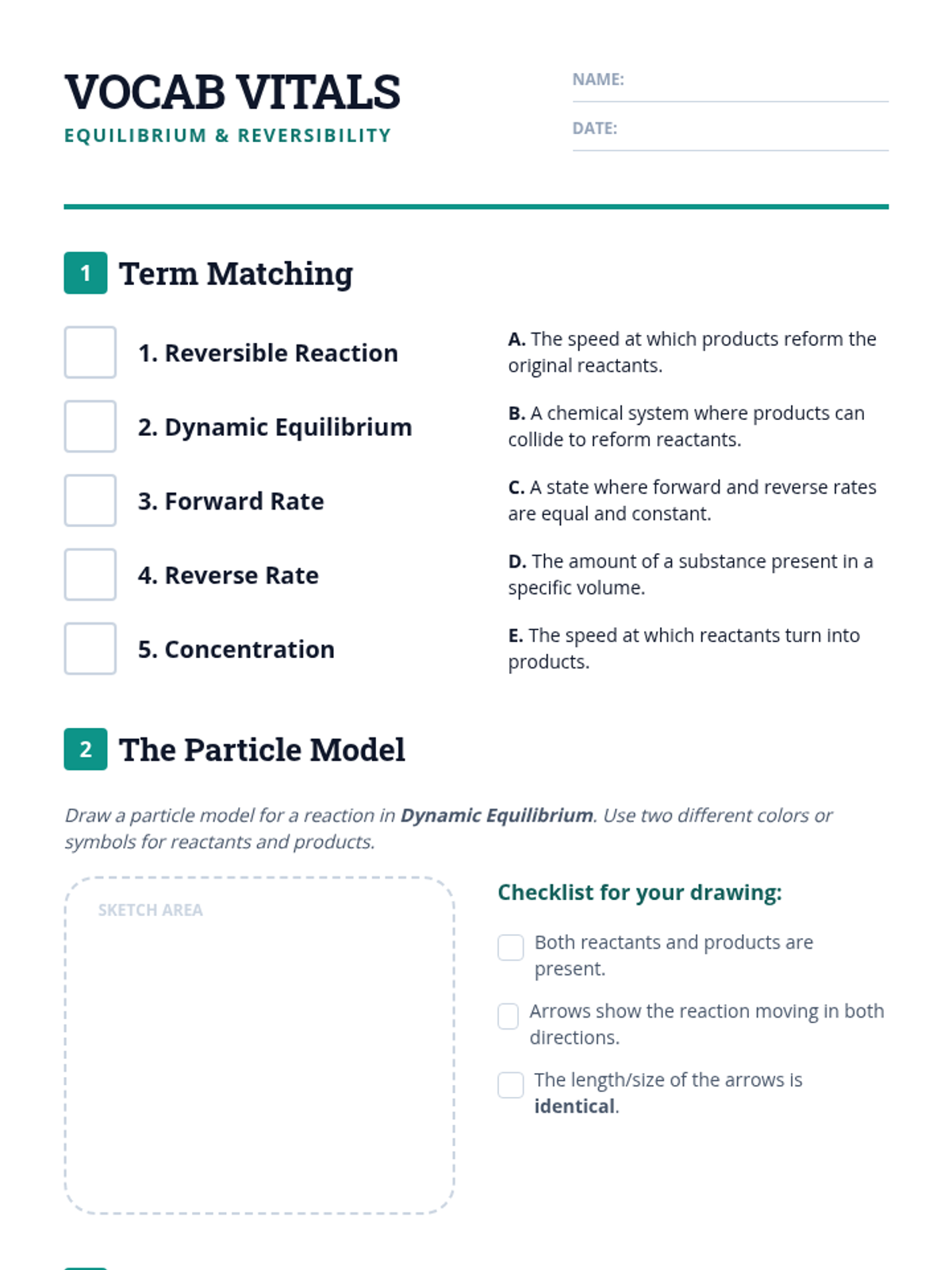
A vocabulary activity focusing on equilibrium terms, featuring matching, particle modeling, and a Frayer-style concept map for dynamic equilibrium.