A teacher answer key for the Reaction Balance Worksheet, providing clear solutions for 10 progressively difficult chemical equations. Updated to match the expanded problem set and improve formatting.
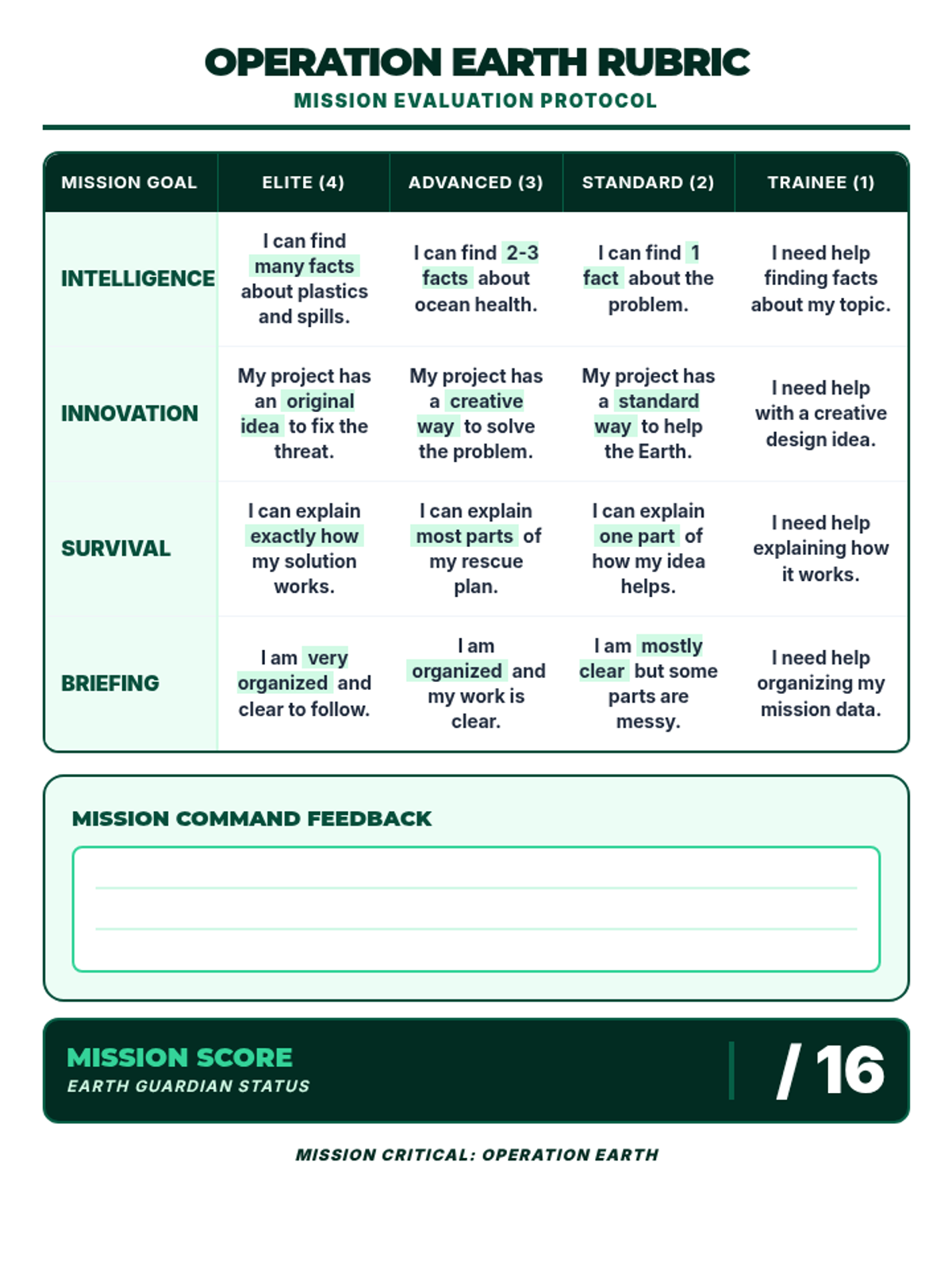
A high-impact mission rubric for Operation Earth. Redesigned to fit on a single page with chunked, ELL-friendly language and mission-themed criteria. Includes larger table headers and darker feedback lines.
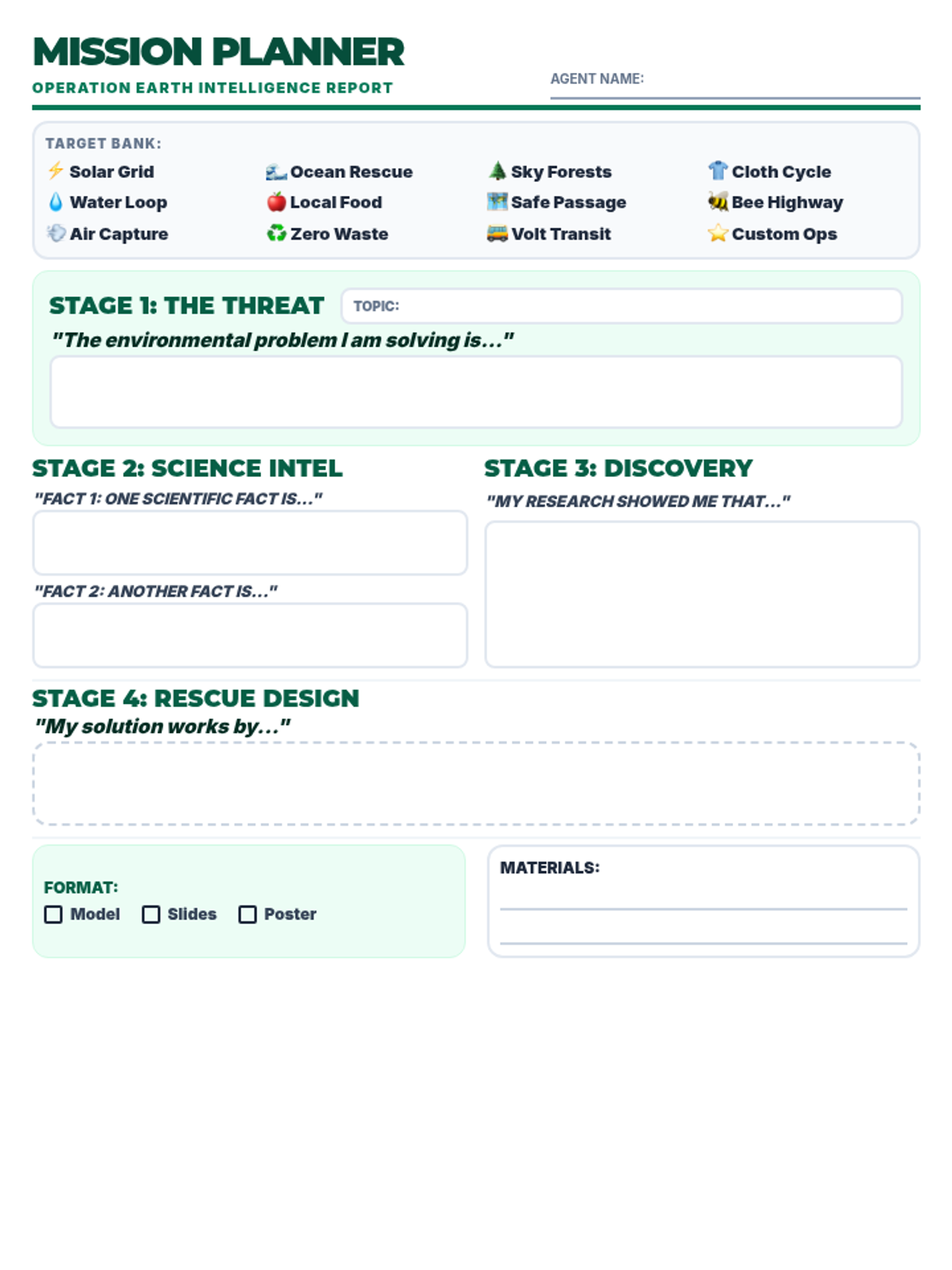
A high-stakes research planner for Operation Earth with sentence stems for ELL support and enlarged text for high-impact mission planning. Optimized for a single-page layout with increased handwriting space.
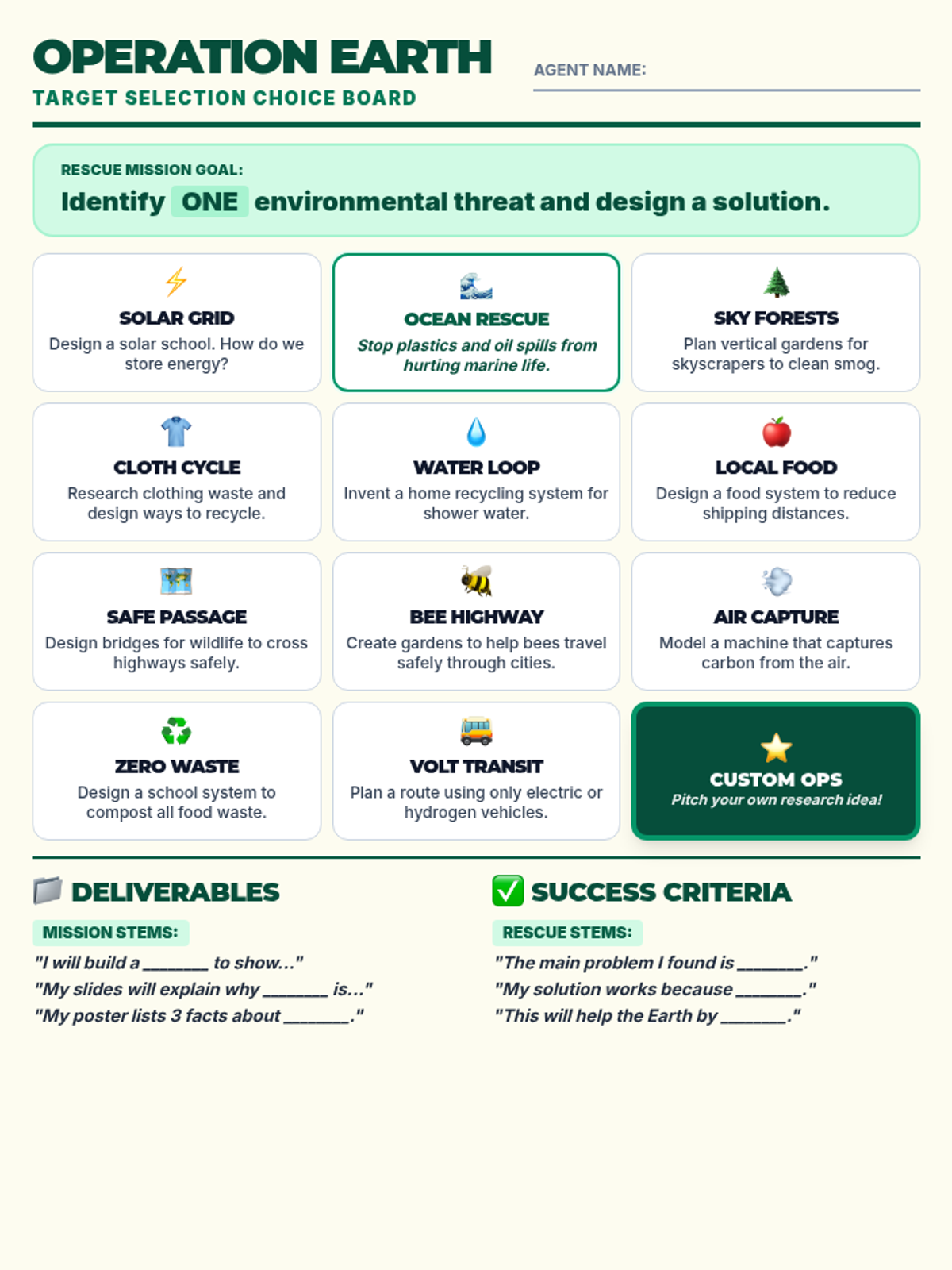
A high-impact choice board for Operation Earth with 12 research missions, enlarged text, and chunked ELL support with explicit sentence stems for deliverables and success criteria. Optimized for a single-page layout.
A vibrant introductory slide deck for the impactful Operation Earth project, featuring a recap of the briefing video and mission protocols.
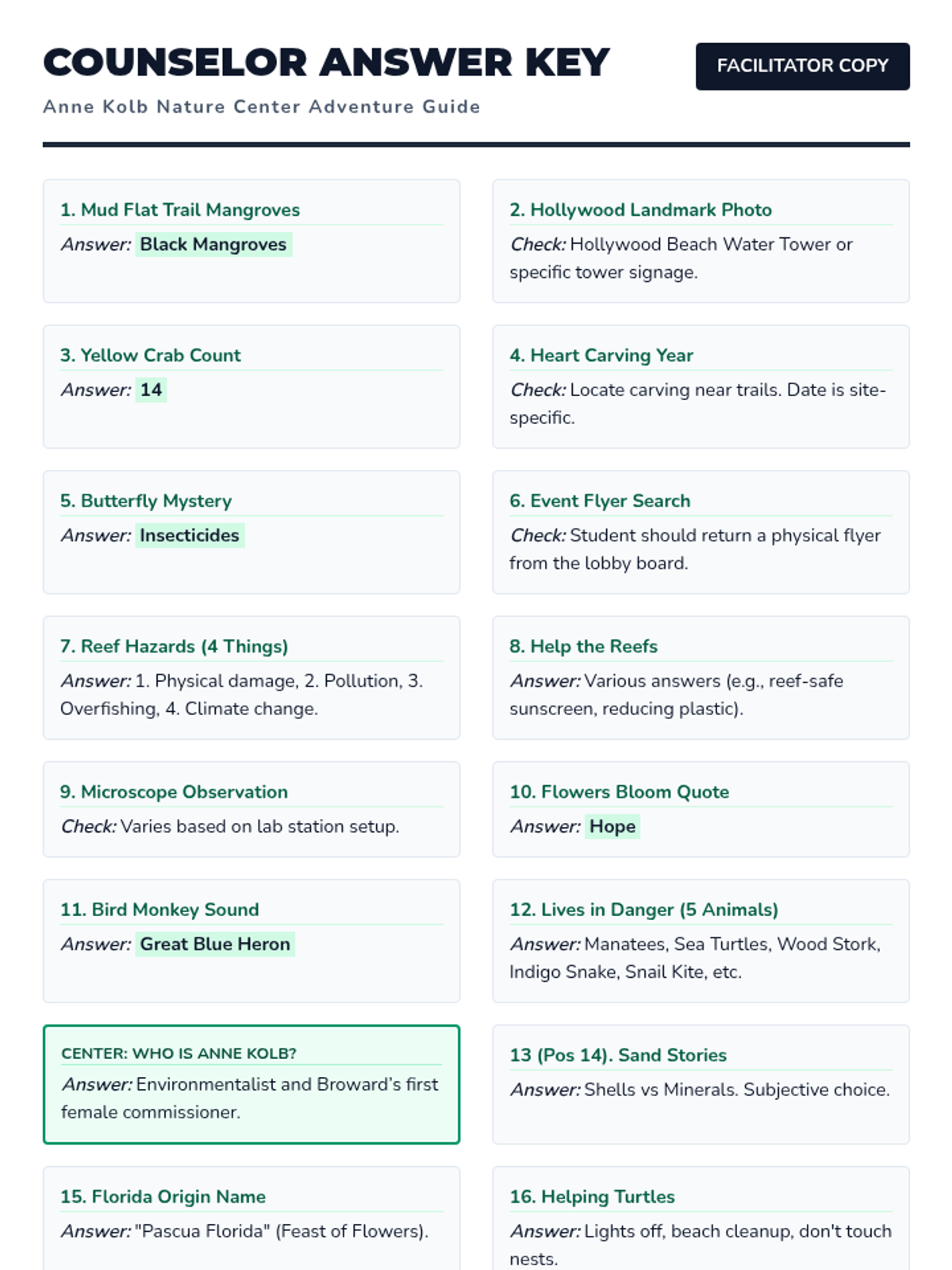
A comprehensive answer key and facilitator guide for the Anne Kolb Nature Center scavenger hunt, updated to match the 25-question BINGO grid order and exact wording.
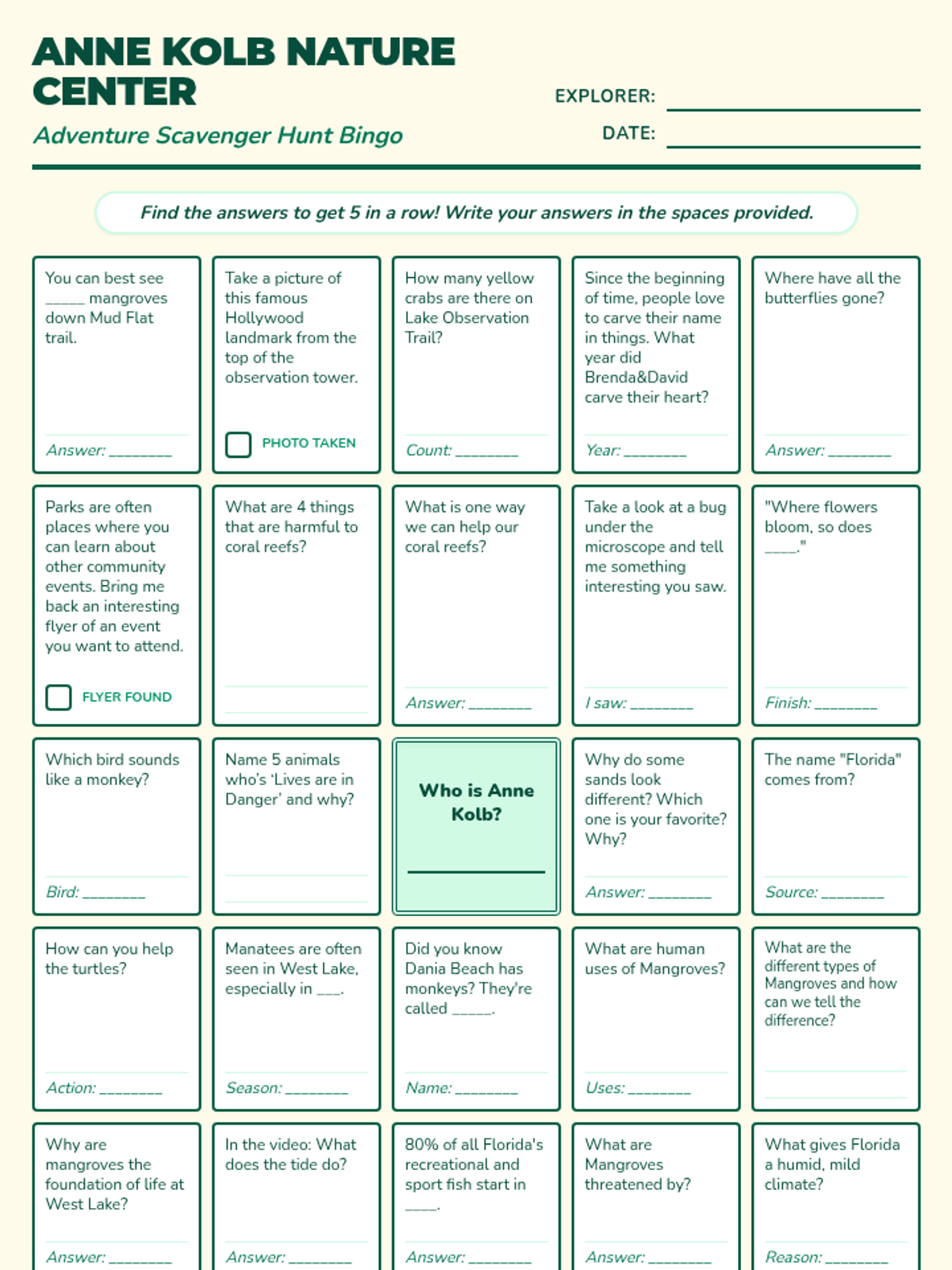
A nature-themed BINGO scavenger hunt for the Anne Kolb Nature Center featuring 25 exploration questions with exact user wording and a two-part reflection section. Question 14 (Anne Kolb) is placed in the center of the 5x5 grid.
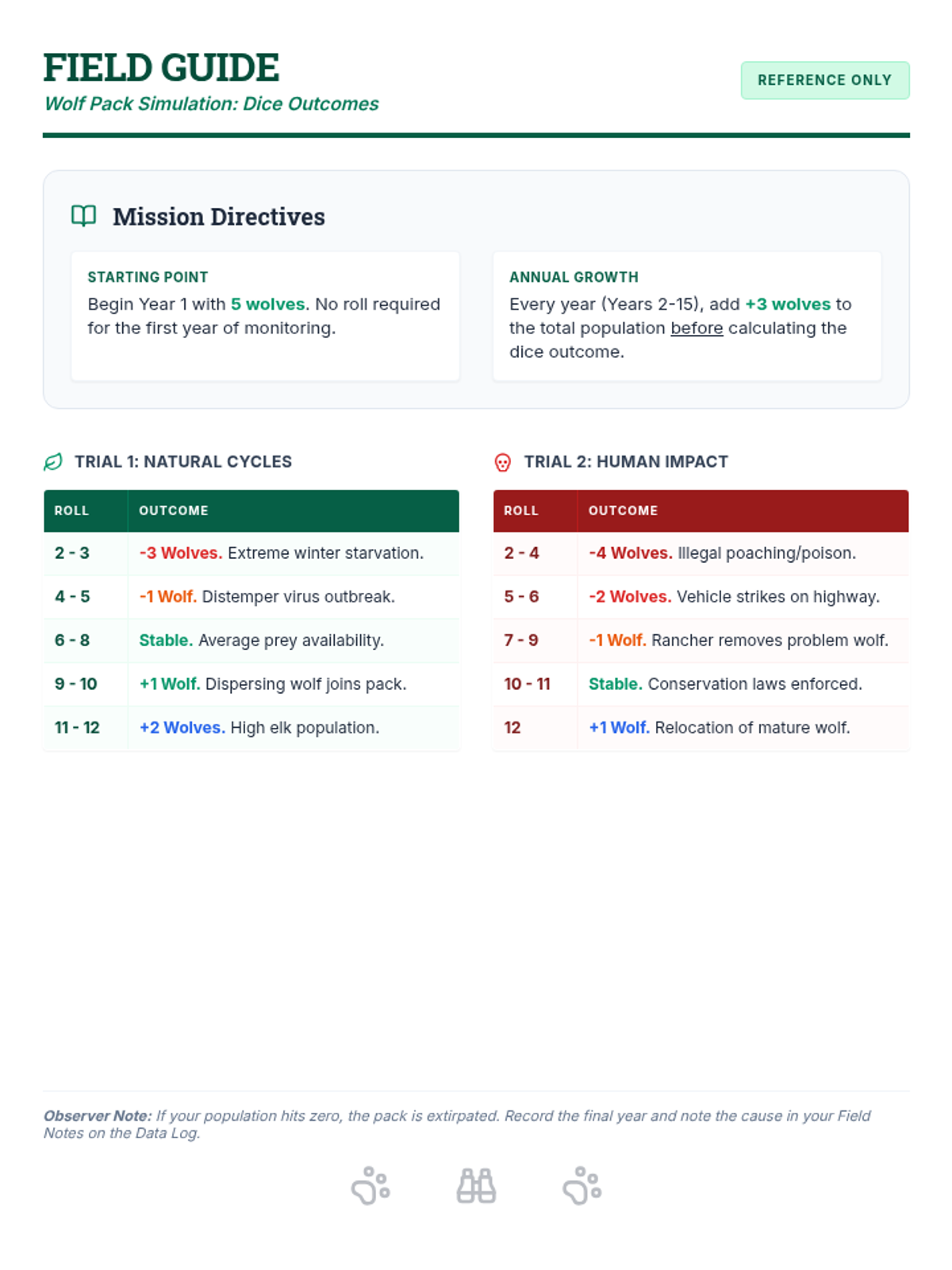
A reference guide for students providing the dice roll outcomes and rules for both natural and human-influenced wolf population simulation trials.
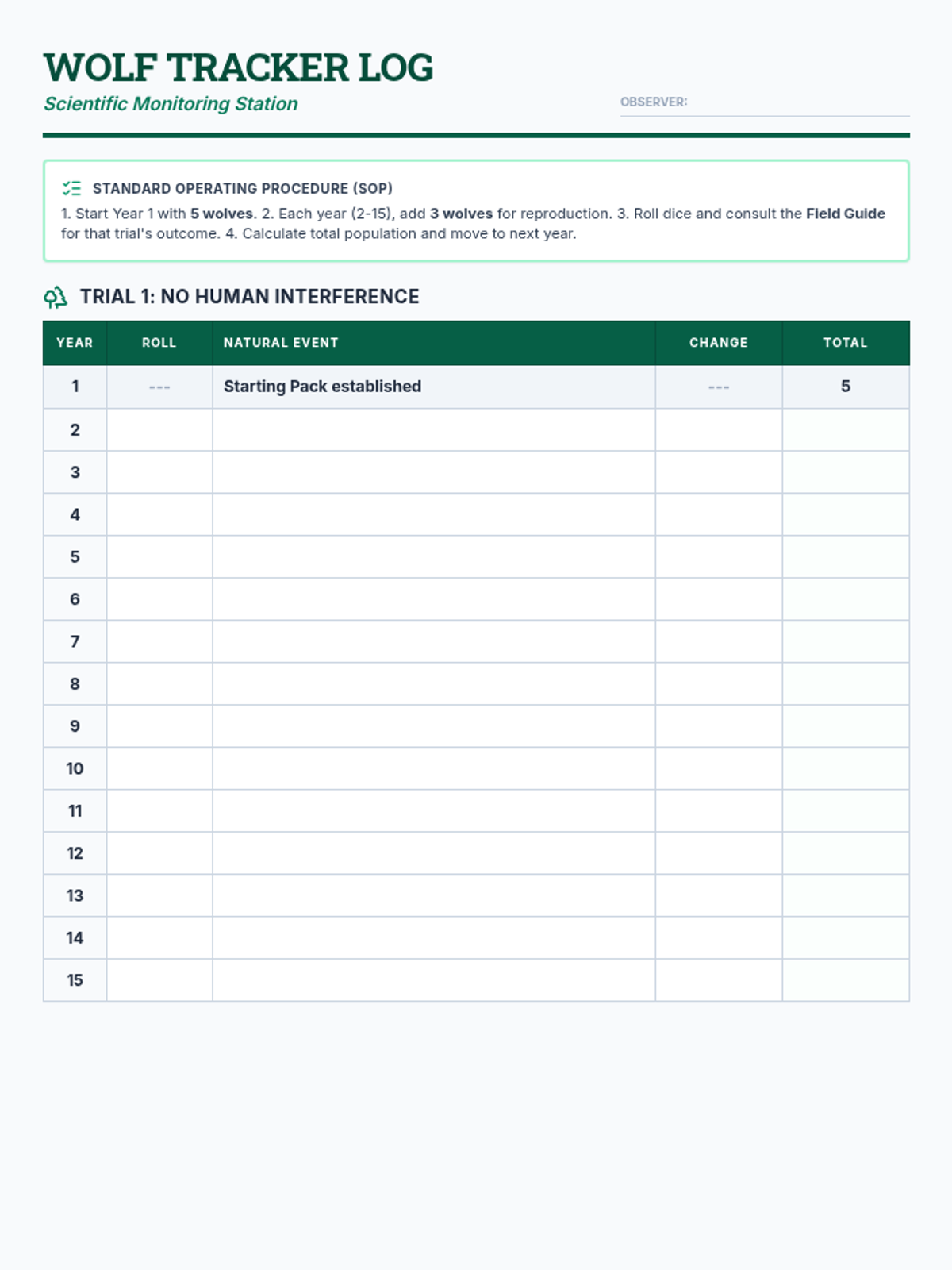
A double-sided student worksheet featuring structured data tables for recording wolf population changes over 15 years in two different simulation scenarios.
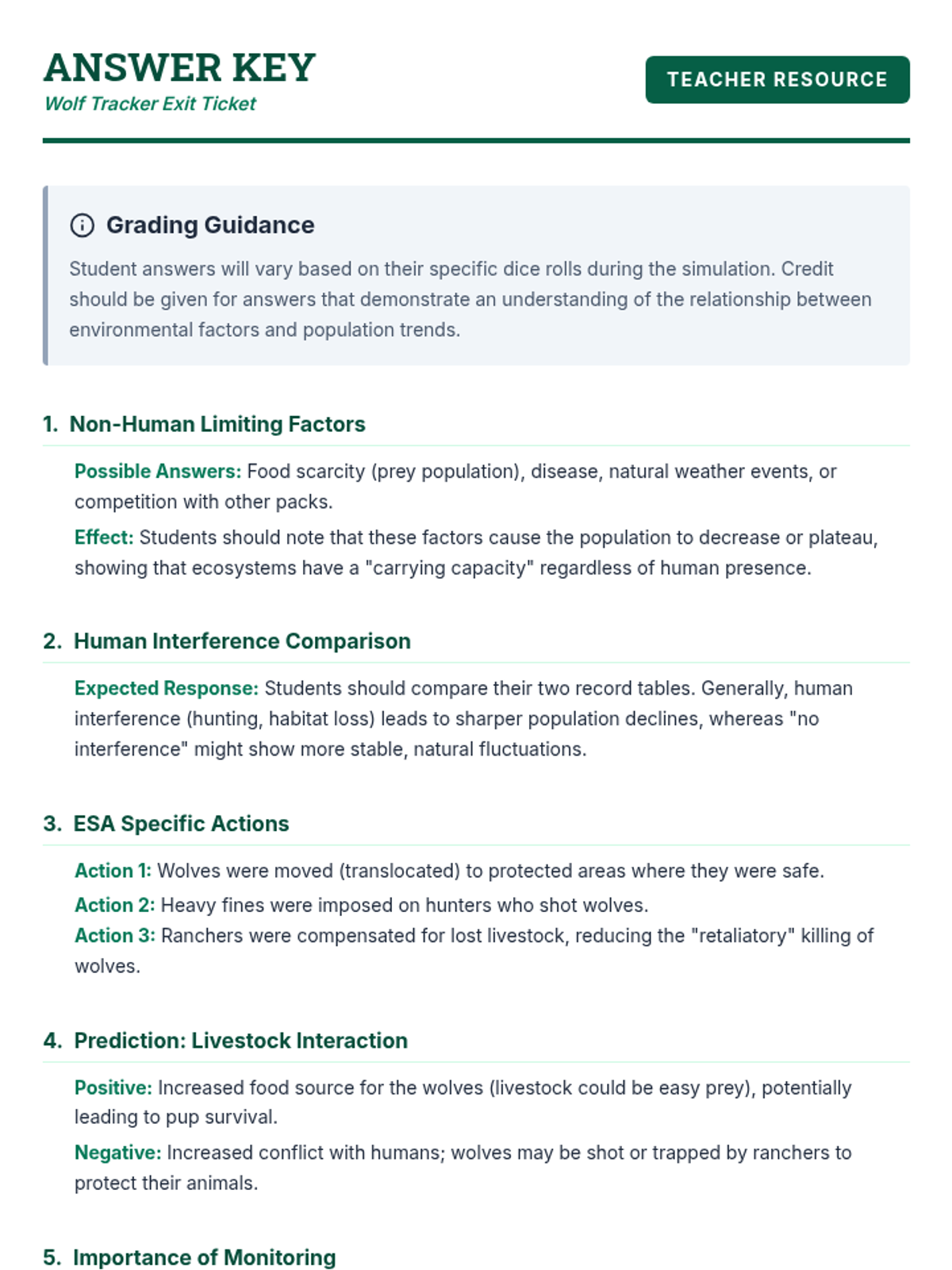
A teacher-facing answer key and grading guide for the Wolf Tracker Exit Ticket.
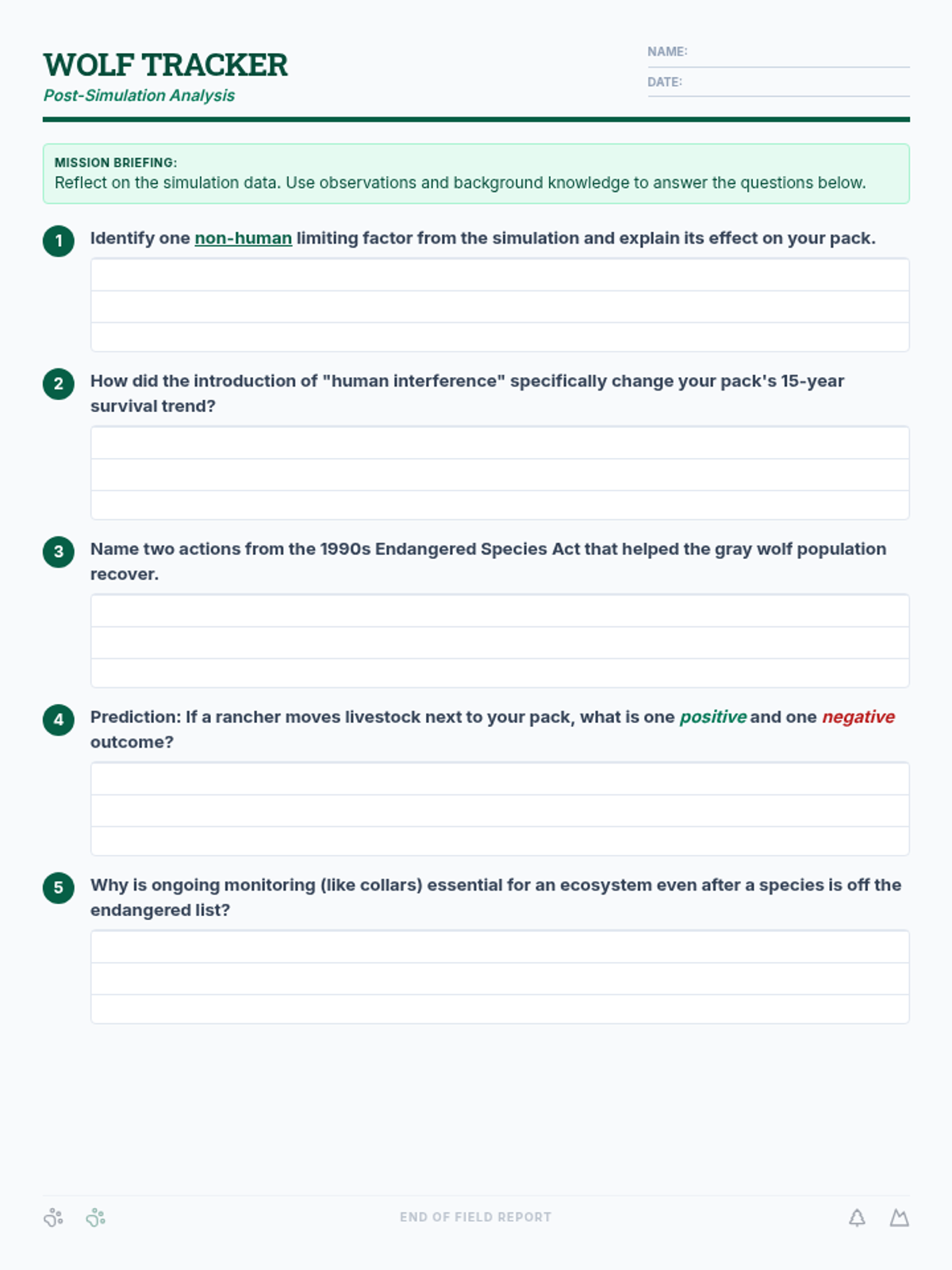
A 5-question exit ticket for students to reflect on the wolf pack simulation, covering limiting factors, human interference, and conservation history.
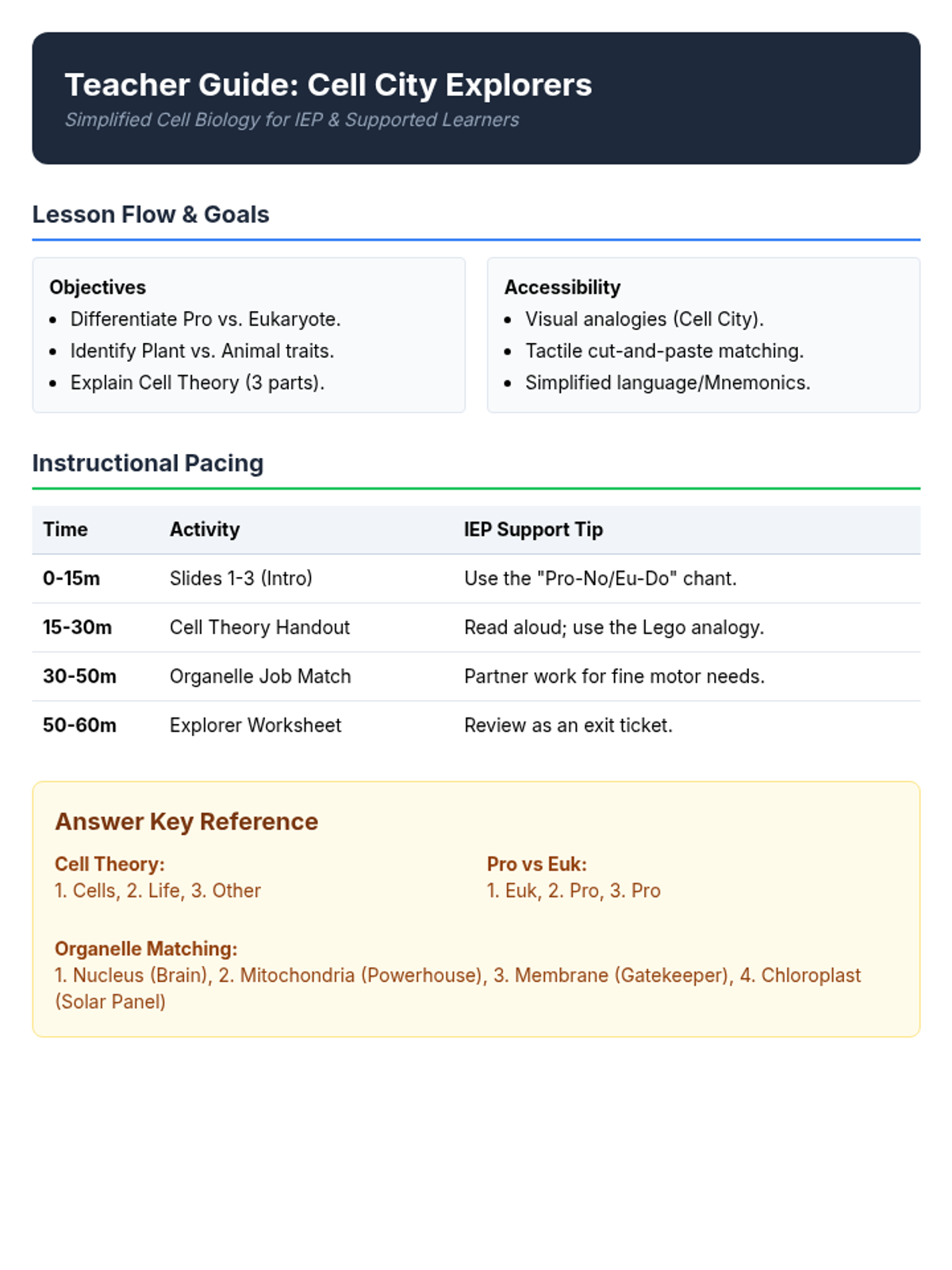
A comprehensive guide for teachers to deliver the Cell City Explorers lesson, including pacing, modification strategies, and answer keys.
Visually engaging slides to introduce cell types, organelle analogies, and the differences between plant and animal cells with large text and high-contrast visuals.
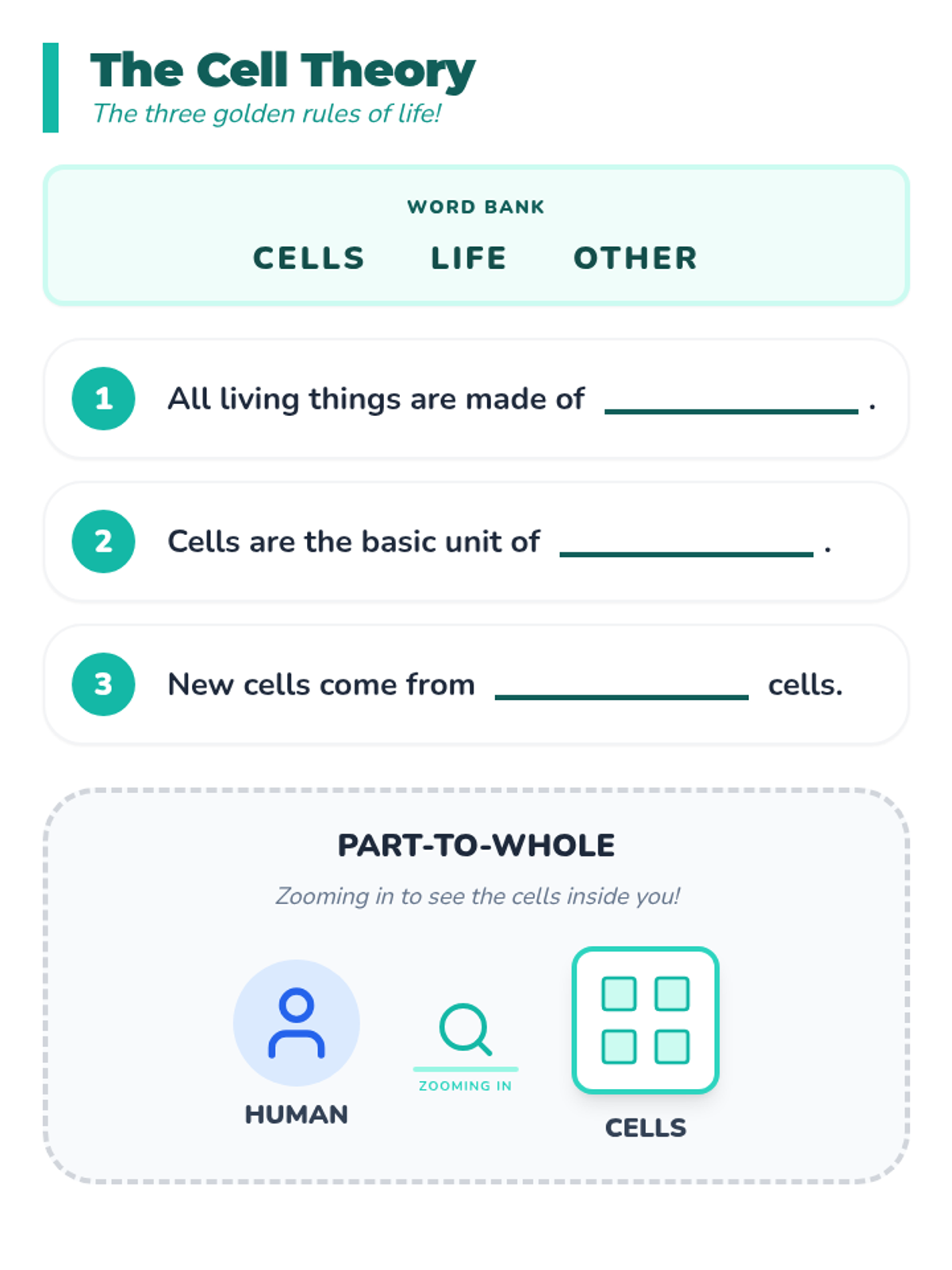
A simplified fill-in-the-blank handout explaining the three parts of the Cell Theory with word banks and visual analogies.
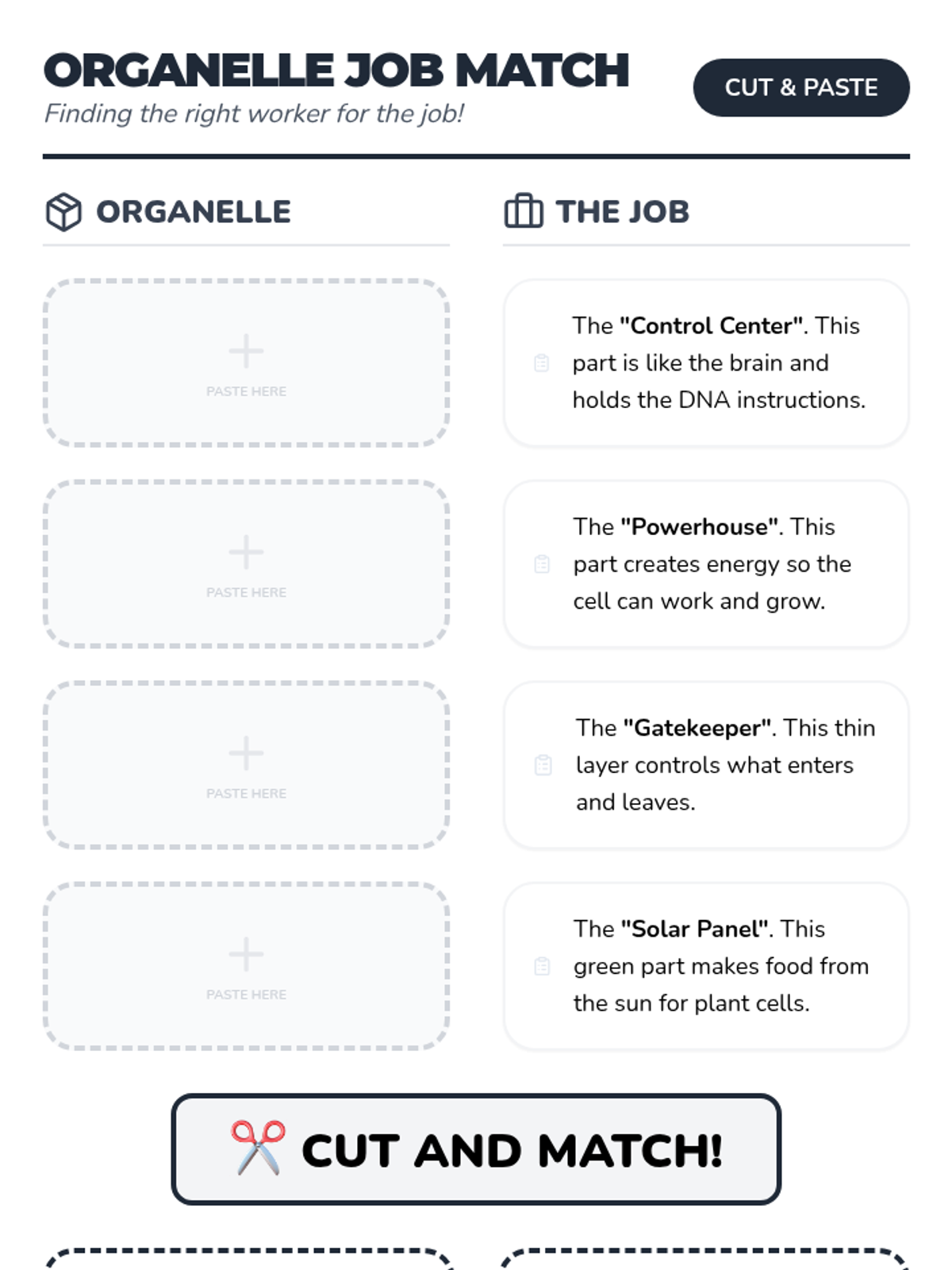
A cut-and-paste matching activity for organelles and their jobs, designed with large icons and simplified text for IEP support.
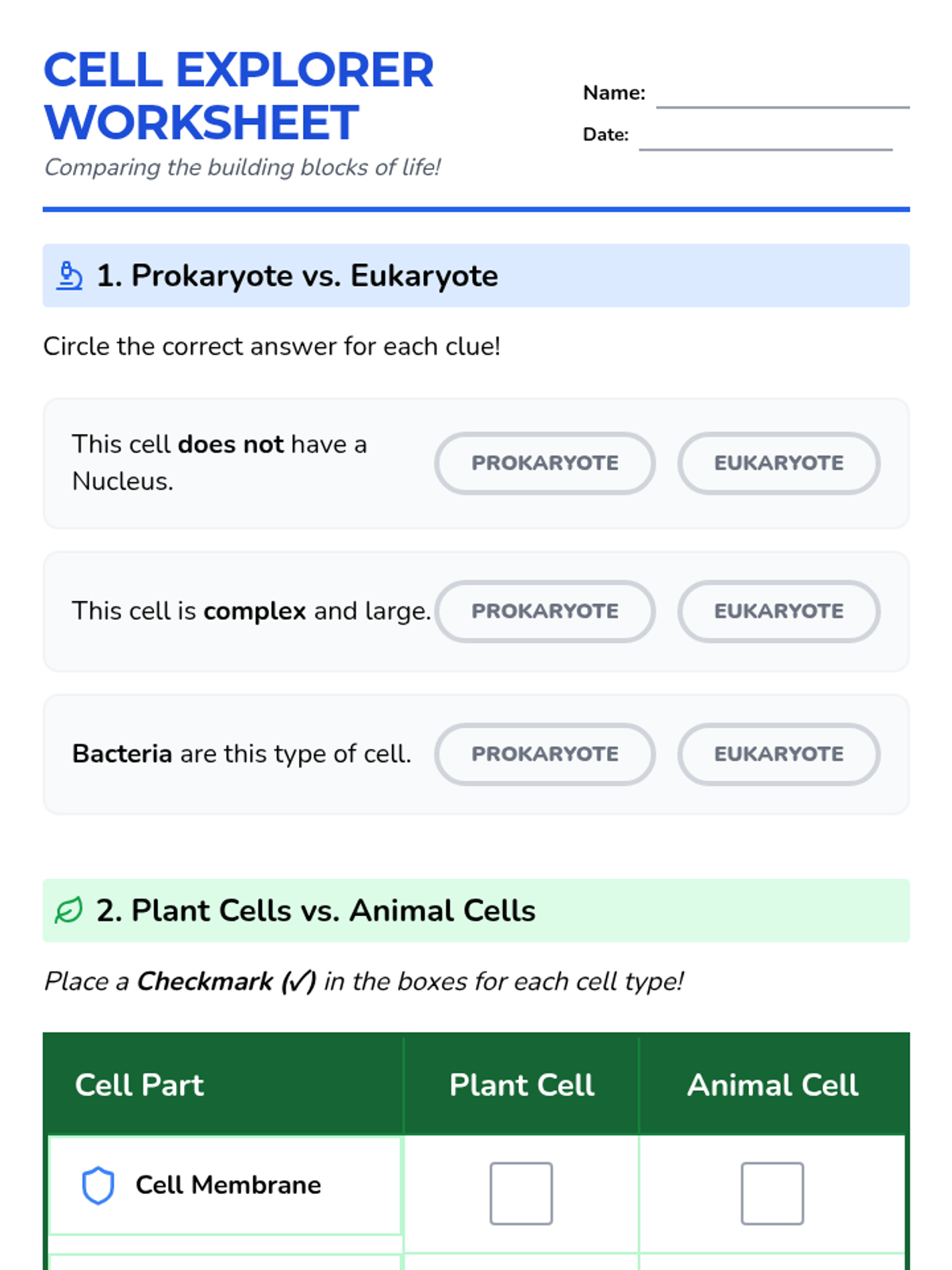
A simplified worksheet comparing Prokaryotic/Eukaryotic and Plant/Animal cells with visual aids and check-lists for IEP support.
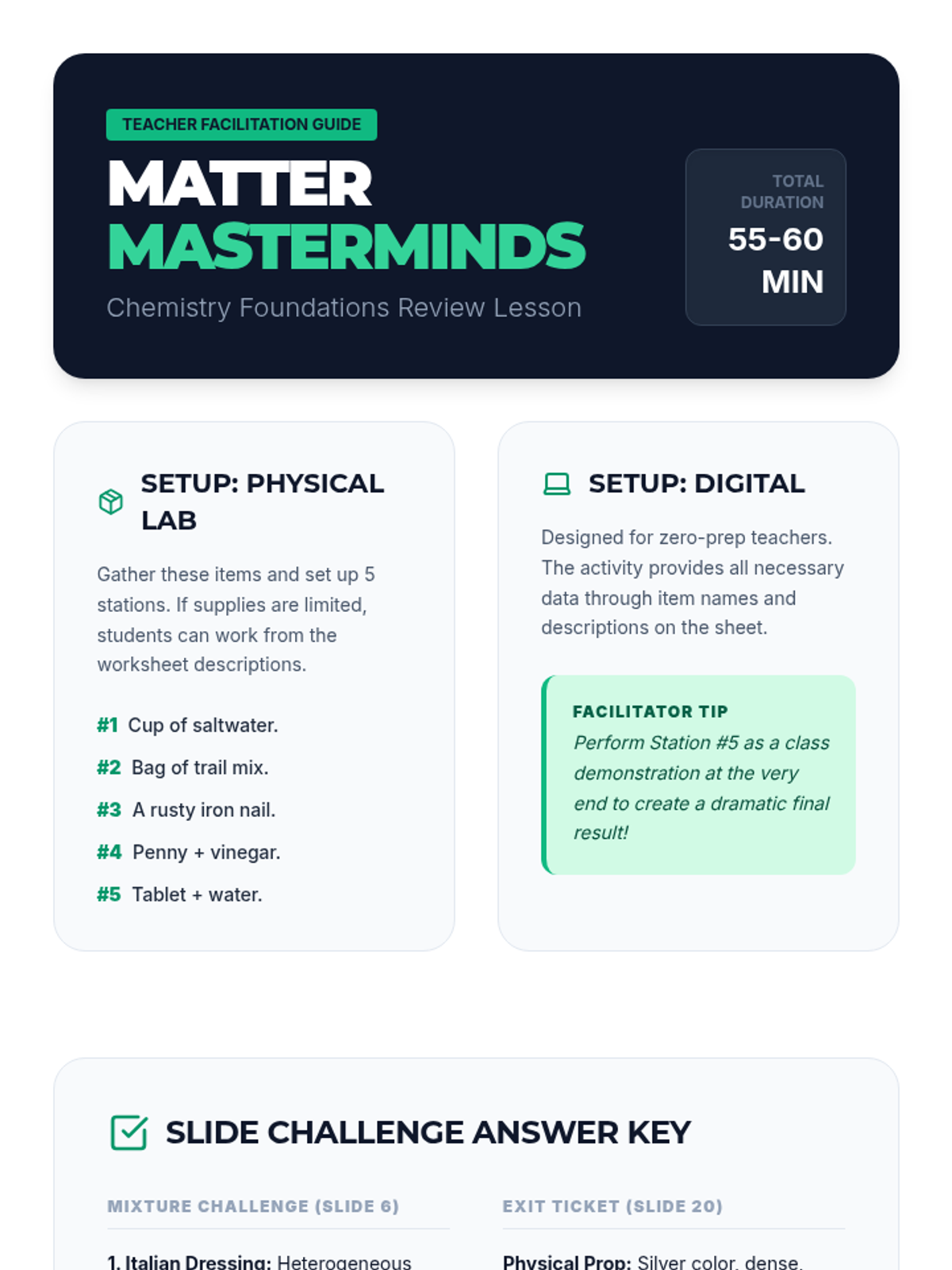
A comprehensive teacher guide for the Chemistry Foundations Review lesson. Corrected layout issues, improved answer key consistency, and fixed pacing guide rendering. Fixed header orphaning at page breaks.
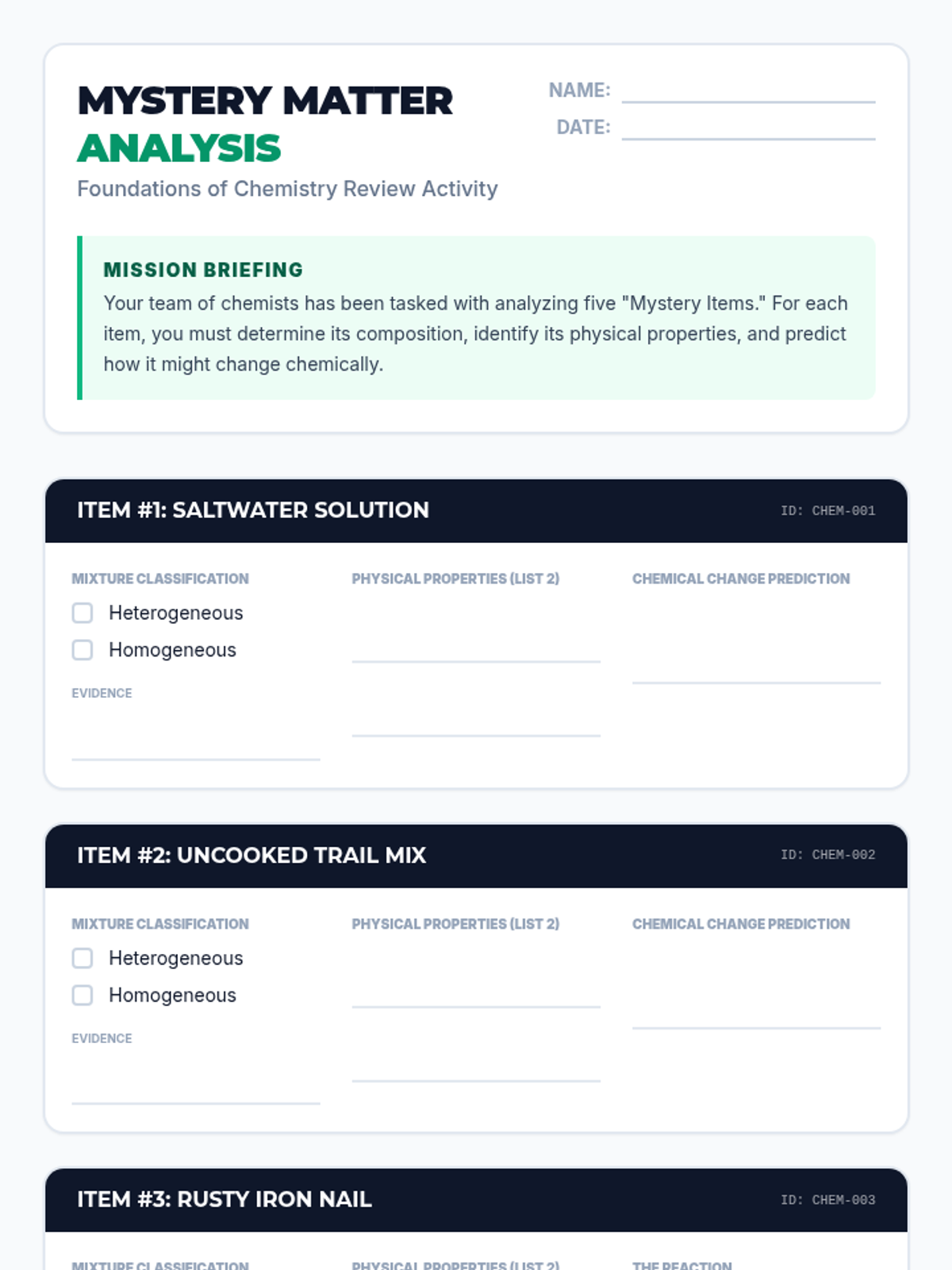
A hands-on group activity worksheet where students analyze five "Mystery Items" and classify them by mixture type, properties, and changes. Improved response area legibility and item hints. Fixed page break issue for Item #5.
A detailed 20-slide presentation reviewing mixtures, properties, and changes in chemistry. Features interactive challenges, clear definitions, and visual examples. Corrected scientific formulas and improved visual balance.
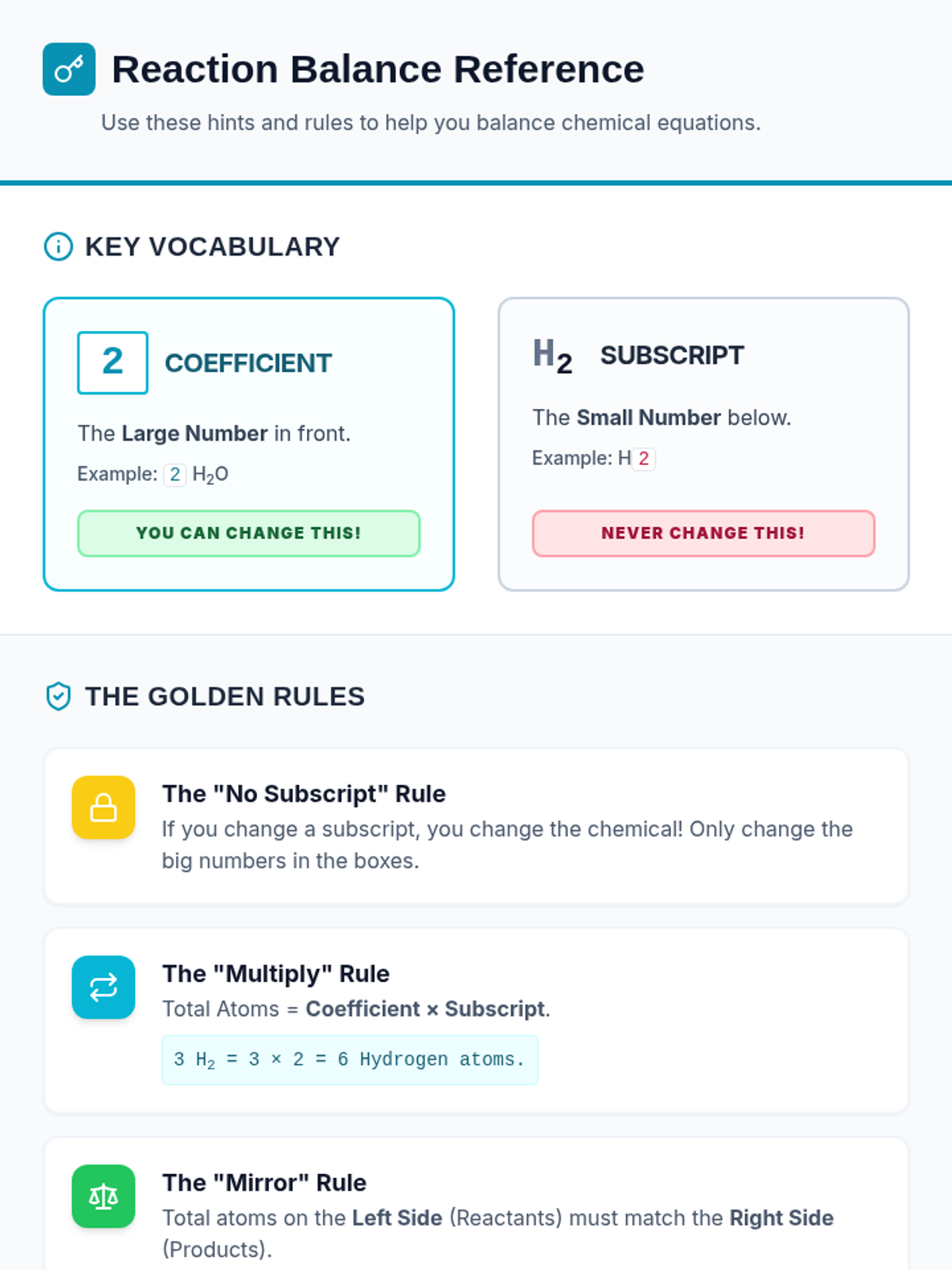
A visual reference sheet for students learning to balance chemical equations. Includes definitions for coefficients and subscripts, step-by-step instructions, and expert troubleshooting tips for ELL students. Revised to improve readability and layout.
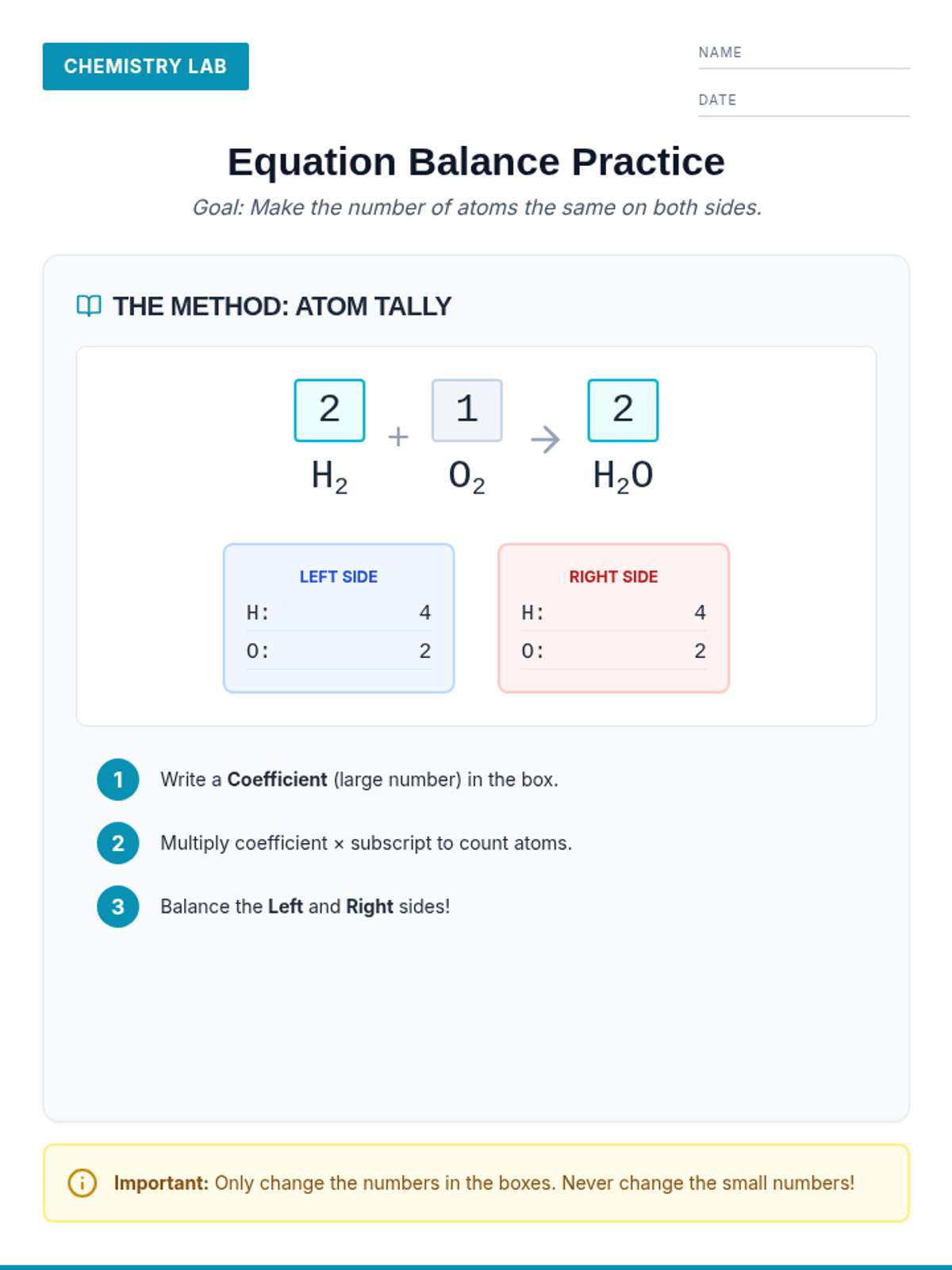
A visually supported chemistry worksheet for balancing equations, specifically designed for ELL students with color-coded models and progressive difficulty levels. Revised to meet the 10-problem count and improve student work areas.
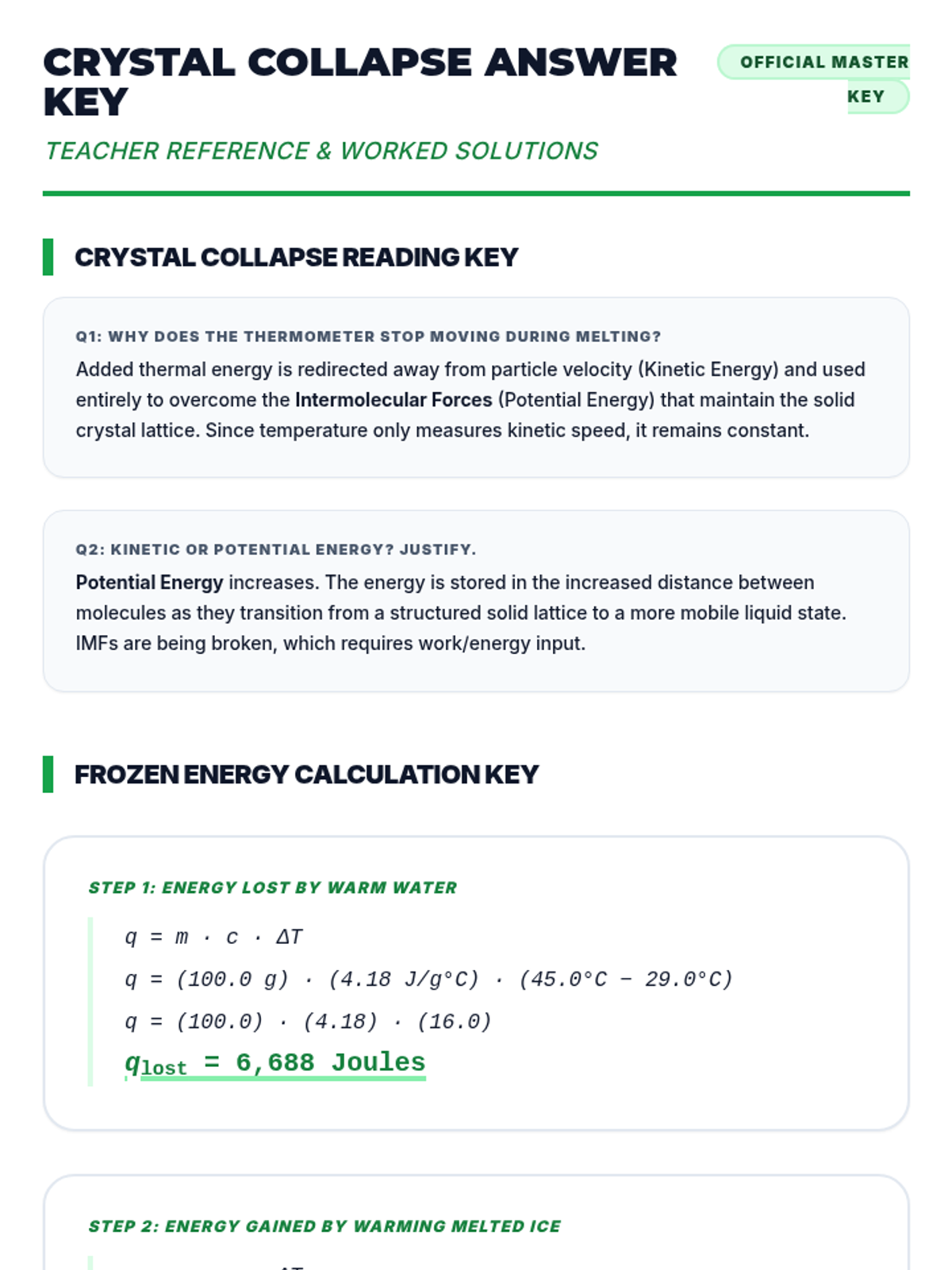
A teacher answer key for the Crystal Collapse lesson. Provides worked solutions for the ice calorimetry problem, including step-by-step energy tallies and a detailed pedagogical explanation for why the calculated enthalpy of fusion might differ from theoretical values. Optimized for layout consistency and contrast. Updated with improved typography and spacing.
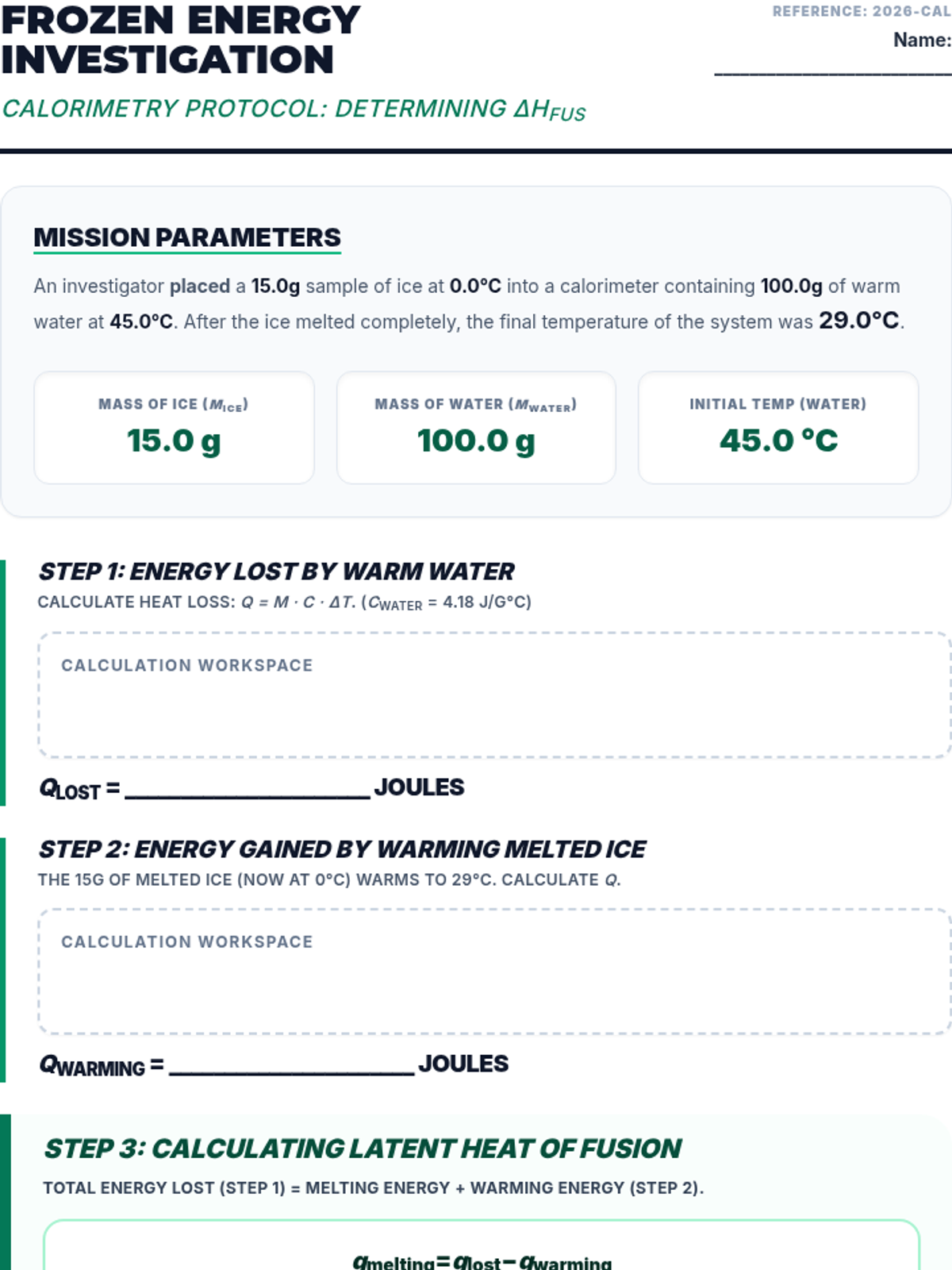
A scaffolded laboratory calculation worksheet for determining the heat of fusion of ice. It guides students through a three-step calorimetry problem—calculating heat loss from water, heat gain by meltwater, and isolating the latent heat—with dedicated workspaces and data analysis prompts. Updated with high-reliability HTML symbols and improved contrast.
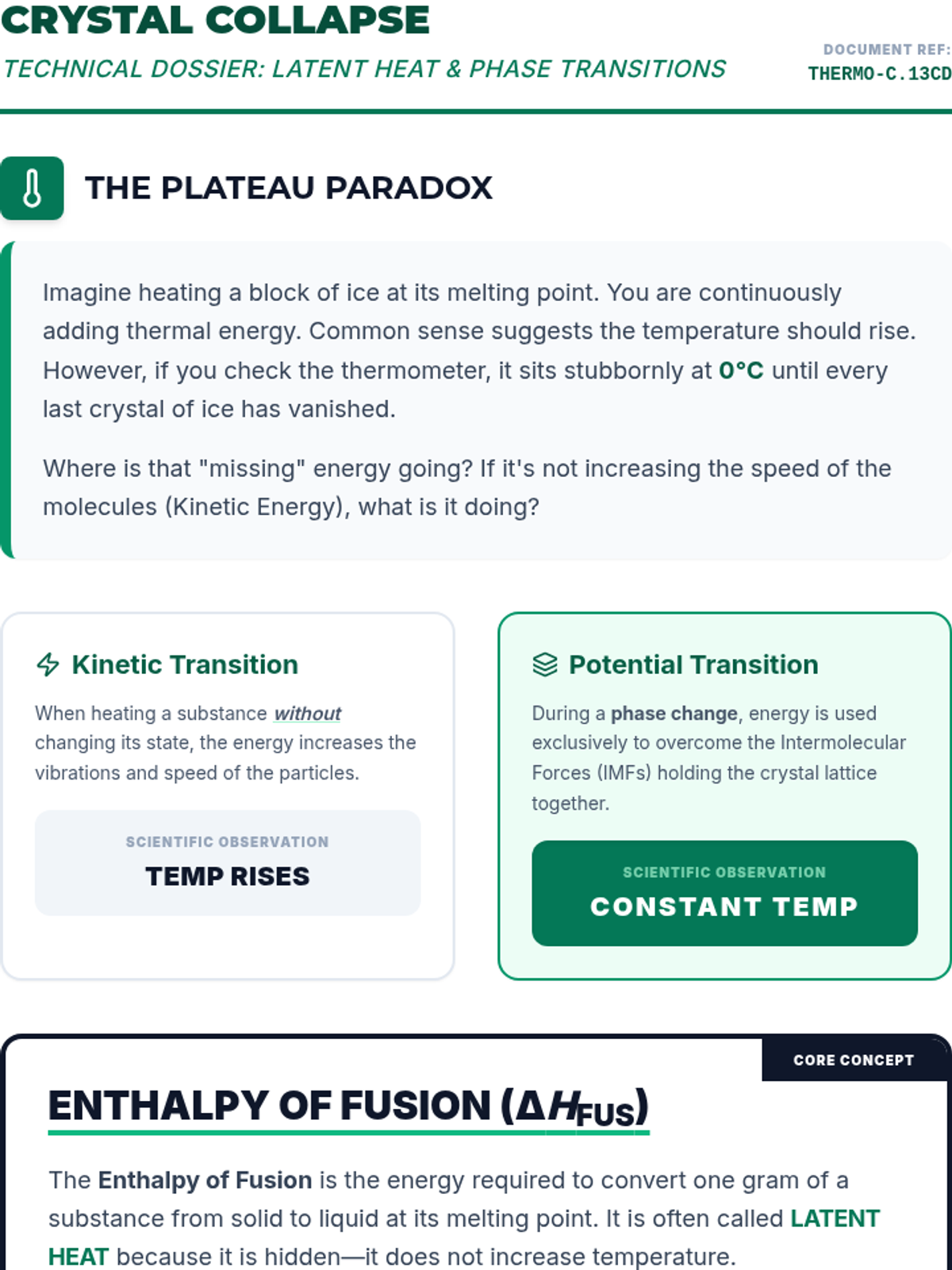
A technical reading passage that explains the concept of latent heat and the enthalpy of fusion. It uses the "Plateau Paradox" to describe why temperature remains constant during phase changes, contrasting kinetic and potential energy transitions with clear visual aids and a guided reflection section. Updated with standard HTML math for reliability and improved handwriting areas.
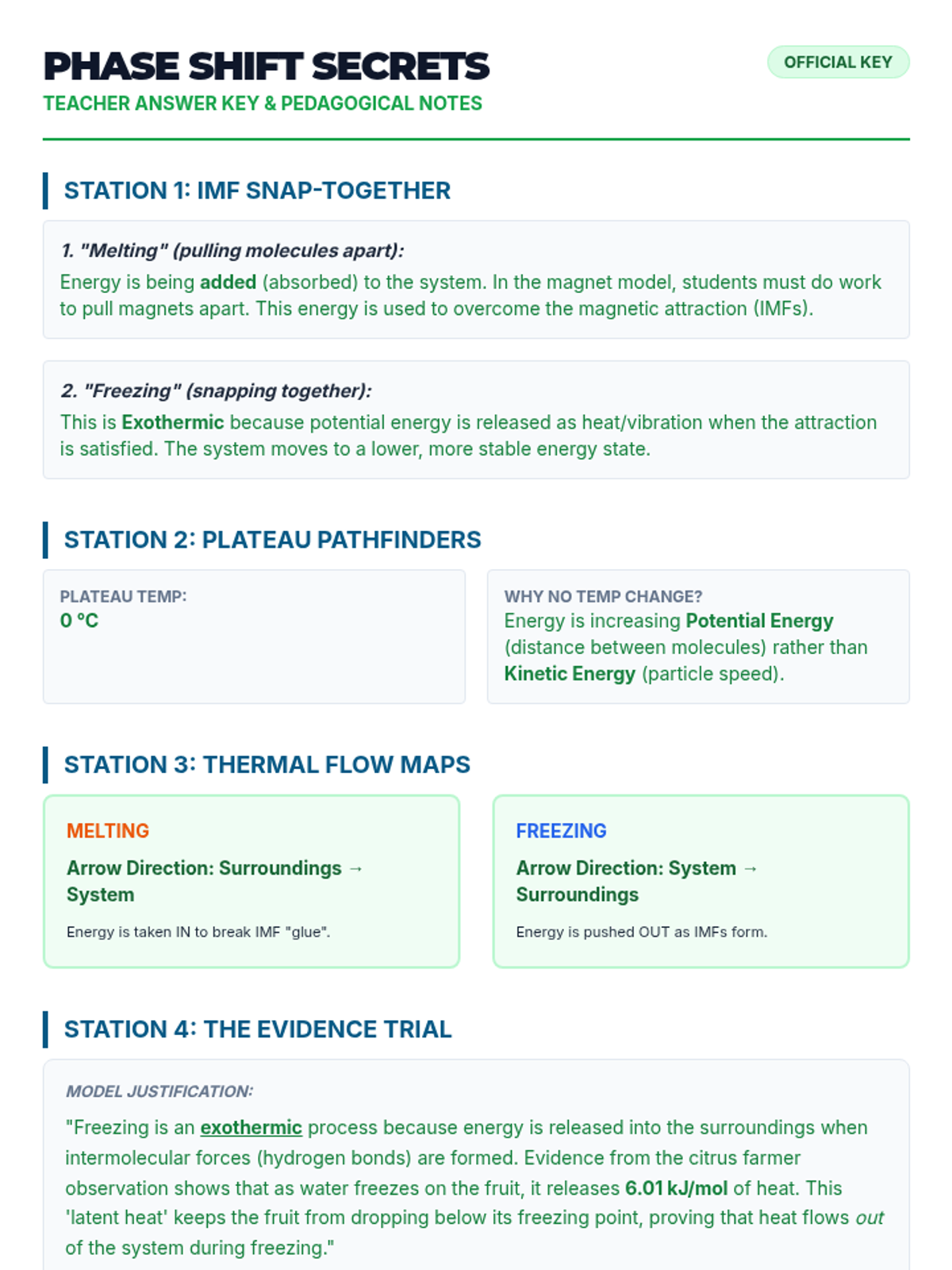
A comprehensive teacher answer key for the Phase Shift Secrets station guide. It provides model student responses for the IMF modeling, heating curve analysis, heat flow sketches, and the final data-driven justification for why freezing is exothermic.
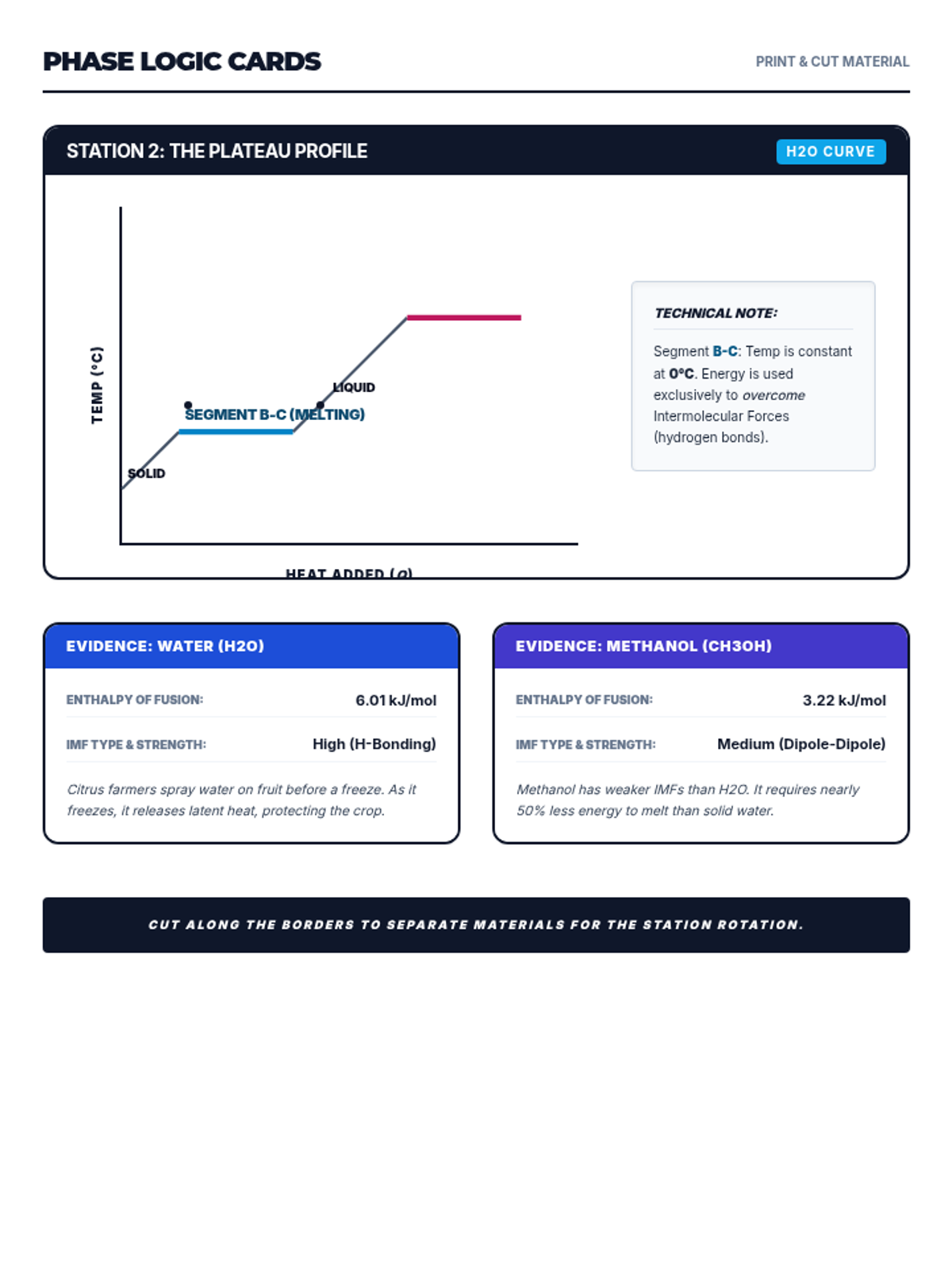
A revised set of visual logic cards. The heating curve graph has been improved with higher contrast text and better label placement to avoid line overlaps, evidence cards have been standardized with consistent data categories for easier student comparison, and all scientific notation (q) has been updated to high-compatibility HTML for clear printing.
A revised slide deck for the Phase Shift Secrets lesson. Scientific notation for heat (q) has been replaced with high-compatibility italicized HTML for consistent rendering, icon names have been corrected for better library compatibility, and the timer font has been updated to avoid rendering artifacts. Contrast has been increased for station numbers and primary text to ensure visibility in classroom settings.