A visual comparison cheat sheet for Python collections (Lists, Tuples, Sets, Dictionaries), with a heavy focus on the syntax and behavioral differences between Tuples and Sets using metaphors like locked safes and unique sorters.
Updated teacher reading script for the Station 4 Listening activity, now including instructions for placing a bridge (straight line) and parks (circles).
Station 4 Listening activity where students draw symbols (triangles, squares, straight lines, circles) on a city map based on a teacher-read story.
A set of 20 game cards featuring environmental vocabulary for the Station 3 "Who Am I?" speaking game.
Station 3 Speaking Guide including game instructions, 20-word reference list for environmental terms, sentence stems for asking questions, and a recording prompt.
Station 2 Writing activity focused on combining sentences using transition and connector words, with a paragraph writing section on Earth Day plans.
Station 1 Reading activity featuring an excerpt from The Lorax, a bilingual glossary, a cause-and-effect table focusing on human impact, and a critical thinking prompt for advanced learners.
A standards alignment document for the Eco Lounge stations, detailing Biology TEKS, ELPS (ESOL) standards, and English Language Arts TEKS covered in the activities.
A comprehensive teacher resource containing a 5-day independent study pacing guide, reading comprehension answer keys, and detailed rubrics for writing and STEM assessments.
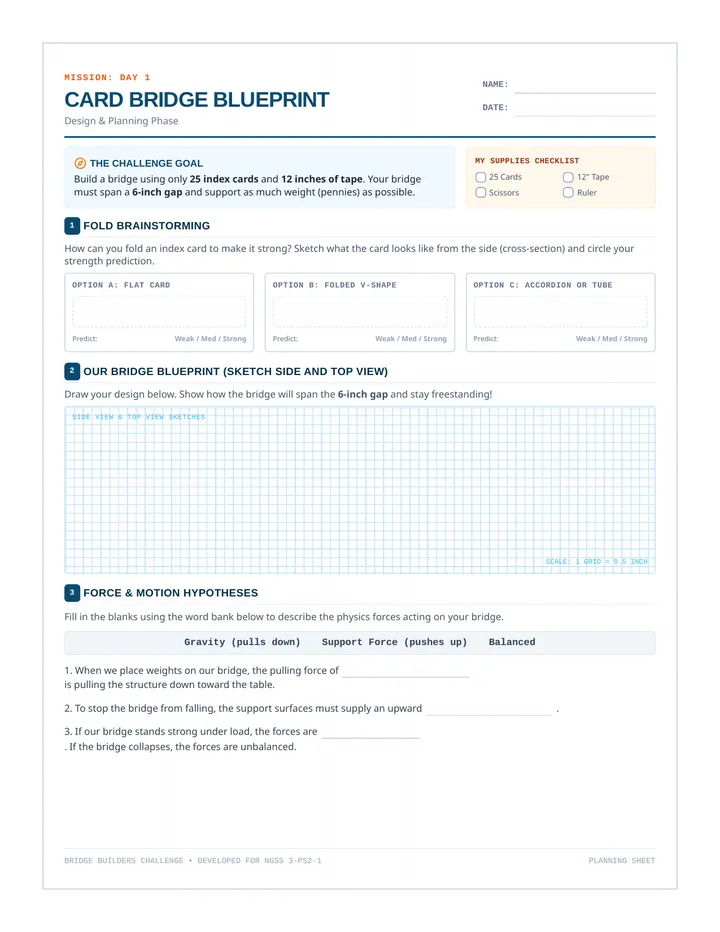
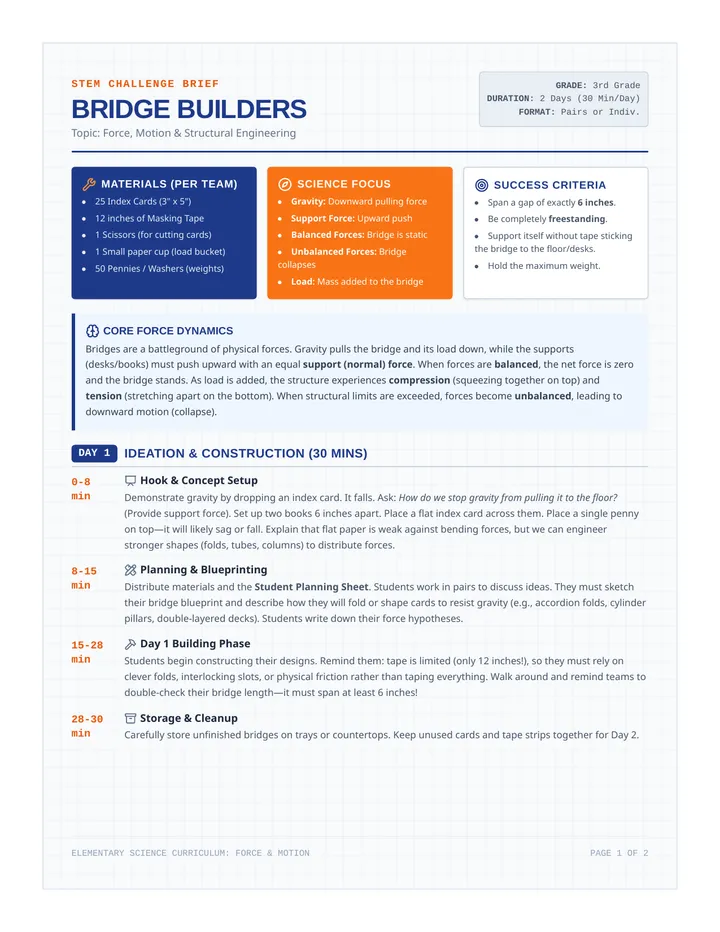
A two-page STEM engineering guide for designing, testing, and iterating wind turbine blades using recycled materials.
A three-page student journal containing reading comprehension questions, a creative writing prompt, and a renewable energy research guide based on 'The Boy Who Harnessed the Wind'.
A student reference sheet showing high-scoring and partial-scoring examples for mutation and evolution SCR questions.
A comprehensive teacher scoring guide for the Mutation Scenarios Worksheet, providing example responses and rationales for 2-point, 1-point, and 0-point scores.
A student worksheet with two Short Constructed Response (SCR) practice scenarios focused on mutation effects and evolutionary mechanisms.
A visual presentation explaining the Short Constructed Response (SCR) scoring system for the Biology STAAR test, with specific examples related to evolution and mutations.
A health-focused lesson plan for educators on the importance of fruits and vegetables, understanding humans as consumers, and planning balanced, nutritious meals.
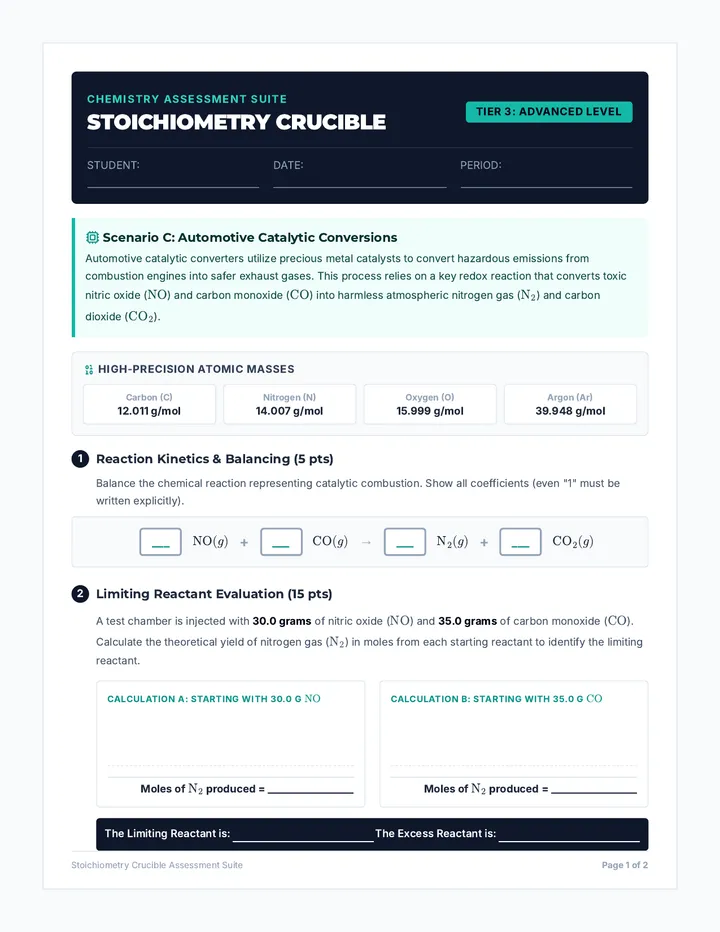
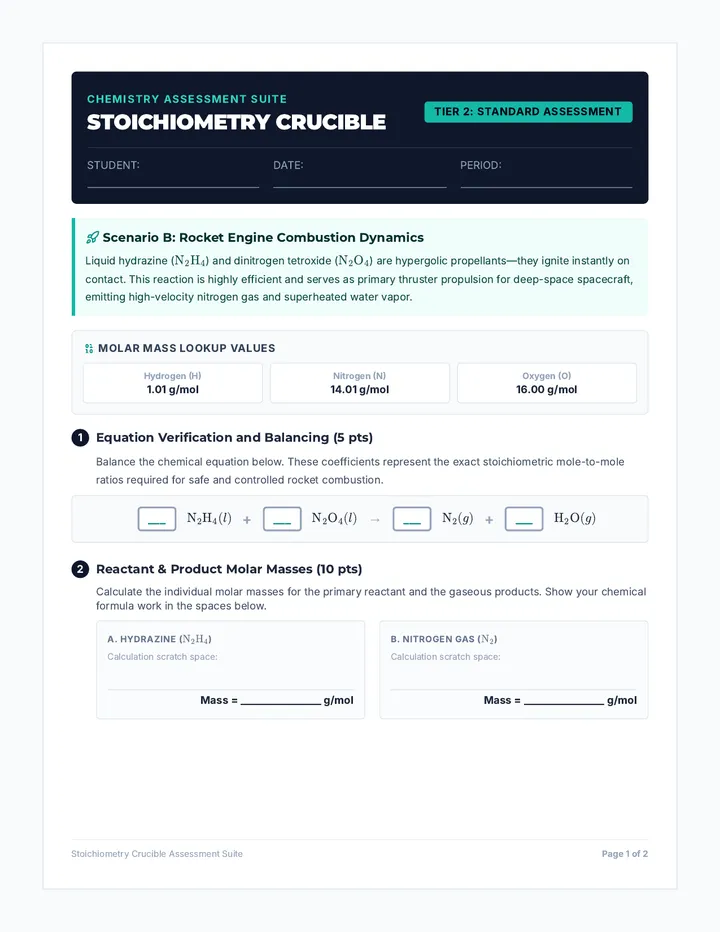
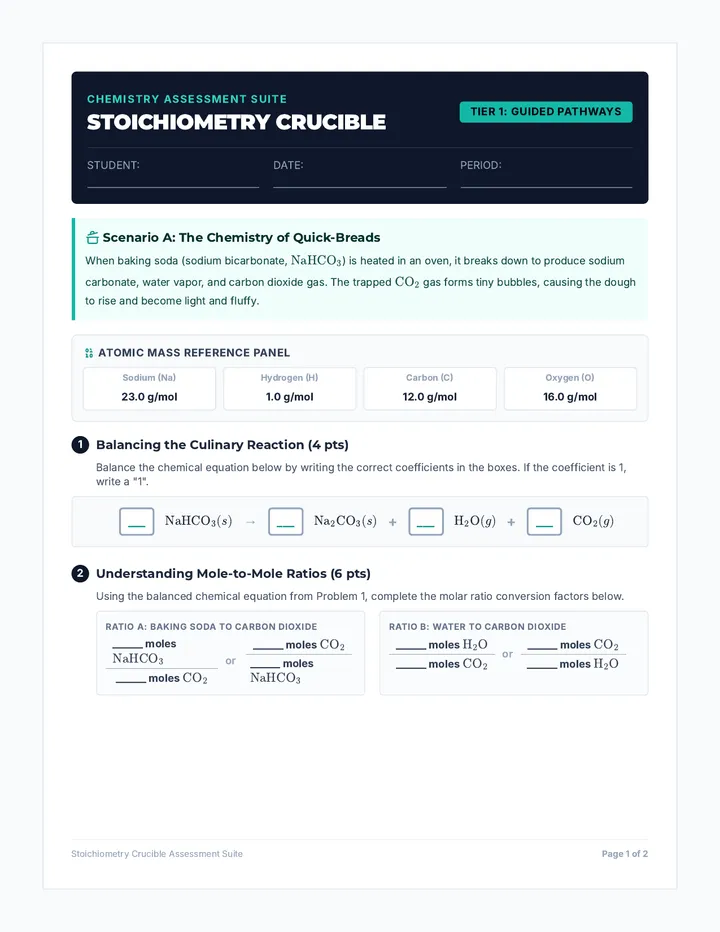
A comprehensive assessment for physical properties of matter, featuring matching, fill-in-the-blank, true/false, and particle drawing activities.
A hands-on worksheet for students to label flowering plant and tree lifecycles, understand the role of producers, and explore the growth of fruits and vegetables.
A visually engaging slide deck exploring plant life cycles, the role of plants as producers, and specific growth patterns for flowers, fruits, and trees.
A comprehensive teacher resource containing lesson objectives, vocabulary, discussion prompts, an activity answer key, and extension ideas for the lion study.
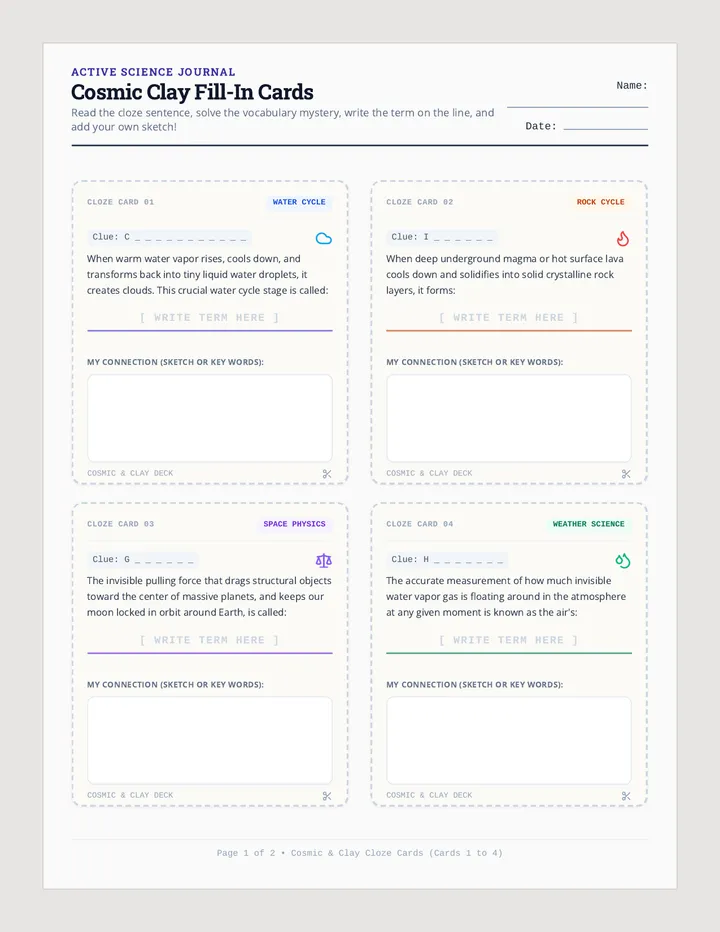
A student-led vocabulary activity where teams design "Word Tiles" for a classroom word wall. Includes a rough draft sketchpad and a large-format final template for displaying terms, particle-level sketches, and KMT connections.
An interactive activity sheet for students to practice labeling lion anatomy, identifying true facts, and drawing a savanna habitat.
A comprehensive information sheet about lions, featuring their habitat, diet, social structure, and movement patterns with a safari field guide aesthetic.
A high-contrast, dark-themed cheat sheet for Python loops, featuring vibrant colors for easy visual processing of 'for' and 'while' loop rules.
A comprehensive master supply list for all three lessons in the Force Field Academy unit, organized by common items and grade-specific needs.
Answer key for the 4th-5th grade Force Lab lesson, providing solutions for the Investigation Journal and the STAAR Review assessment.
A kinesthetic role-playing activity where students act as gas particles to explore Kinetic Molecular Theory postulates. Includes scenarios for pressure changes, volume compression, and temperature effects with structured observation and reflection areas.
Answer key for the 2nd-3rd grade Power of Patterns lesson, providing solutions for the Mission Log and the Assessment.
Answer key for the K-1 Magnet Magic lesson, providing solutions for the Mission Log and the STAAR Prep Assessment.
A 3-question STAAR-aligned assessment for 4th and 5th grade students covering experimental design, data table analysis, variables, and force systems.
A 4-question assessment for 2nd and 3rd grade students focusing on contact vs. distance forces, including multiple choice and short answer formats.
A professional investigation journal for 4th and 5th grade students to record hypotheses, data, and conclusions for friction and rocket labs.