A 1-page individual exit ticket and self-reflection survey for the Proportion Patrol bridge lesson. Includes standards, a clear learning target check, two conceptual math questions, and a feedback survey.
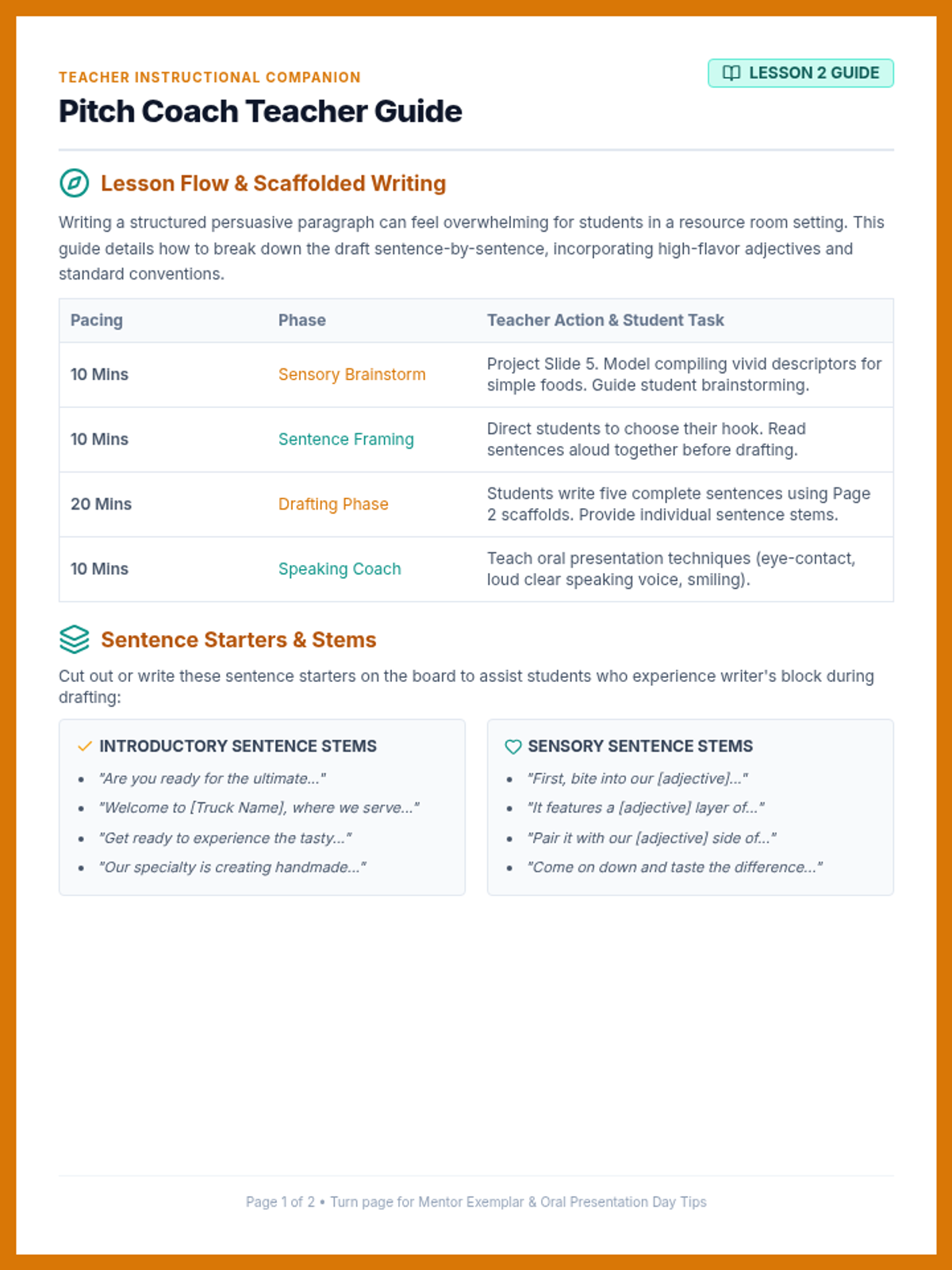
A comprehensive teacher guide for Flavor Pitch, including structured paragraph mentors, sentence frames, sensory word banking, and oral presentation activities.
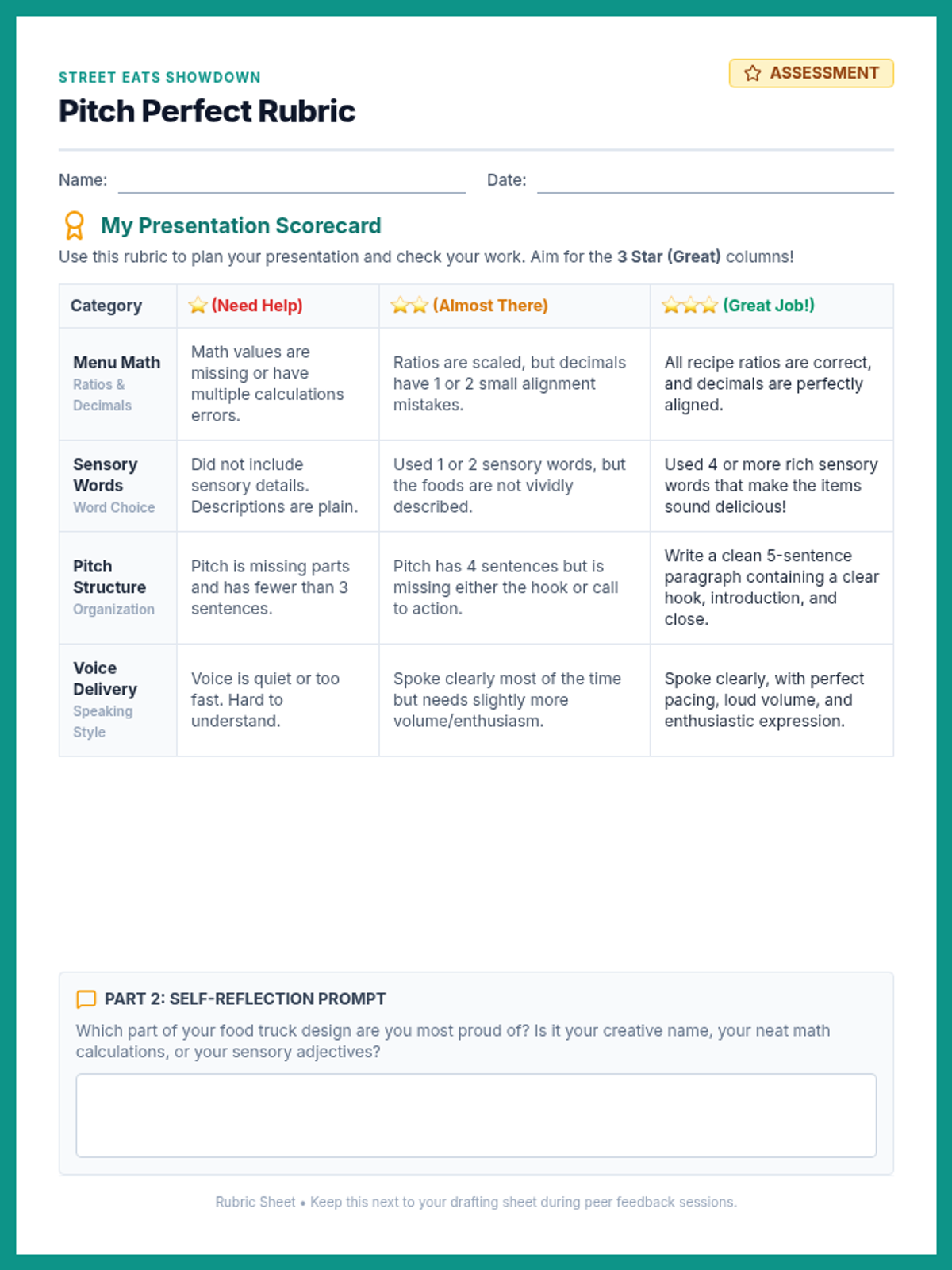
A student-friendly checklist, grading rubric, and self-reflection sheet to guide peer and teacher evaluation of the final food truck pitch.
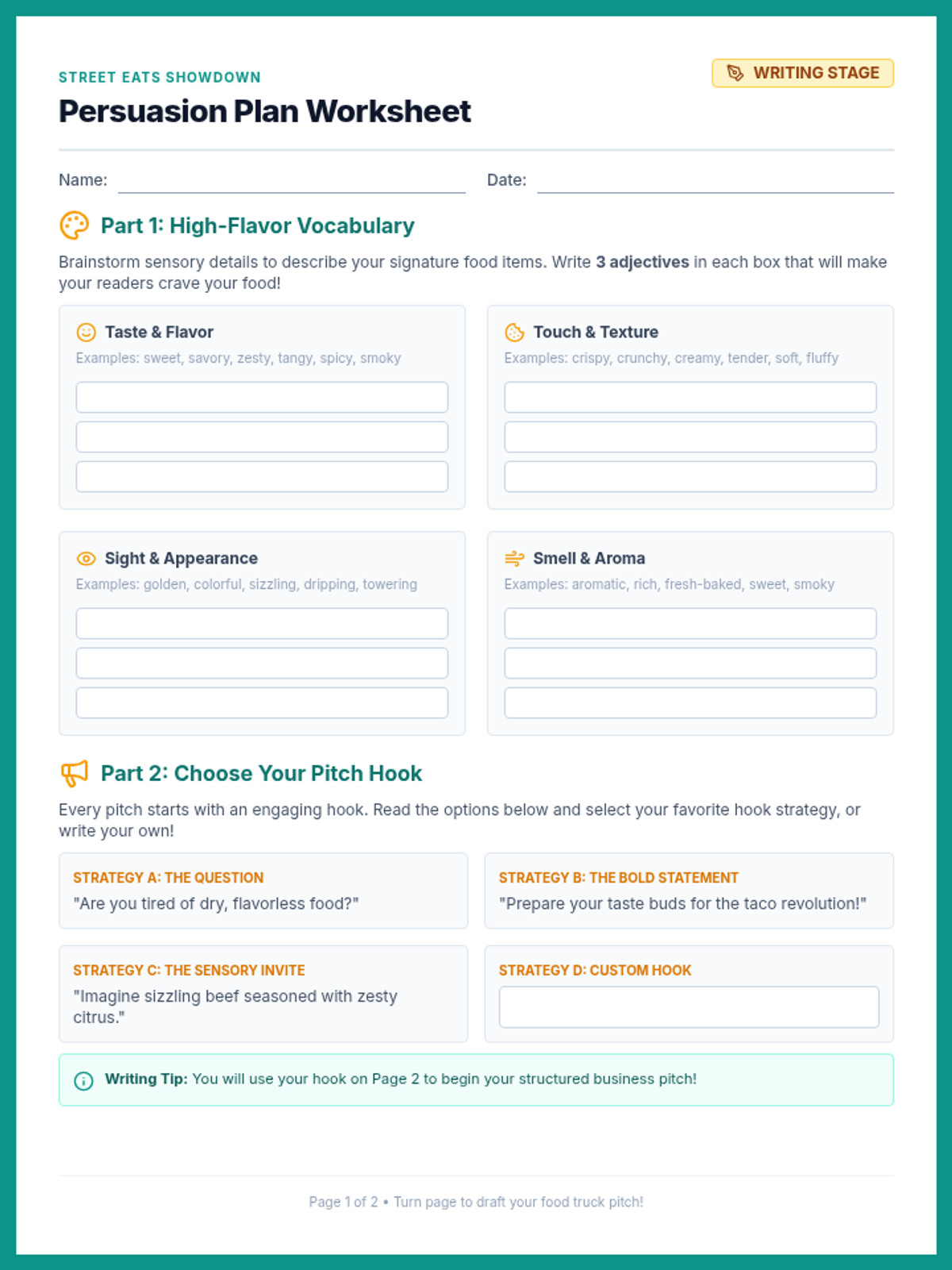
A graphic organizer for sensory word brainstorming, research-based ingredient descriptors, and structured paragraph drafting for the food truck's persuasive pitch.
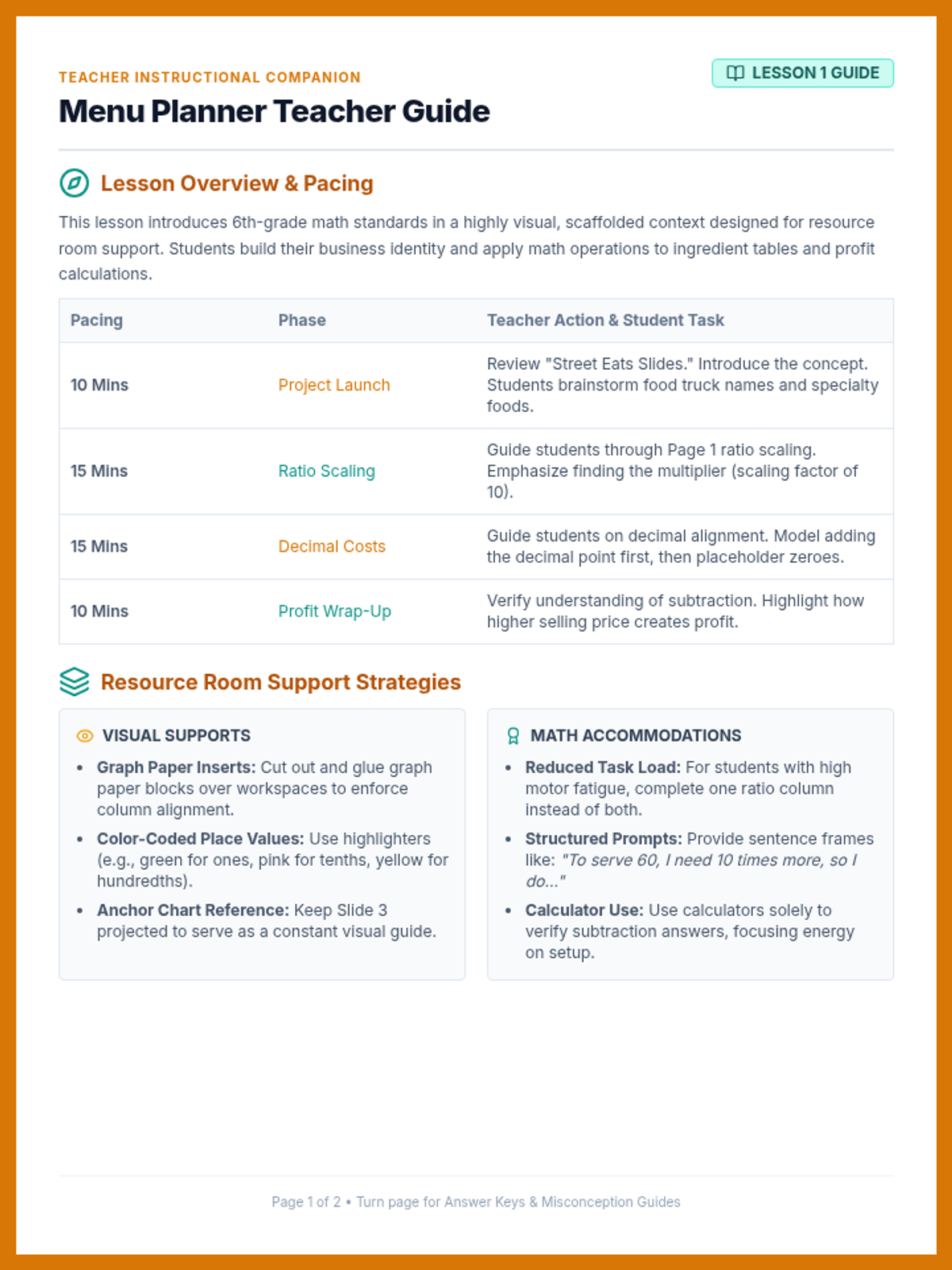
A comprehensive teacher guide for Menu Math with lesson instructions, pacing tips, resource room accommodations, and complete answer keys.
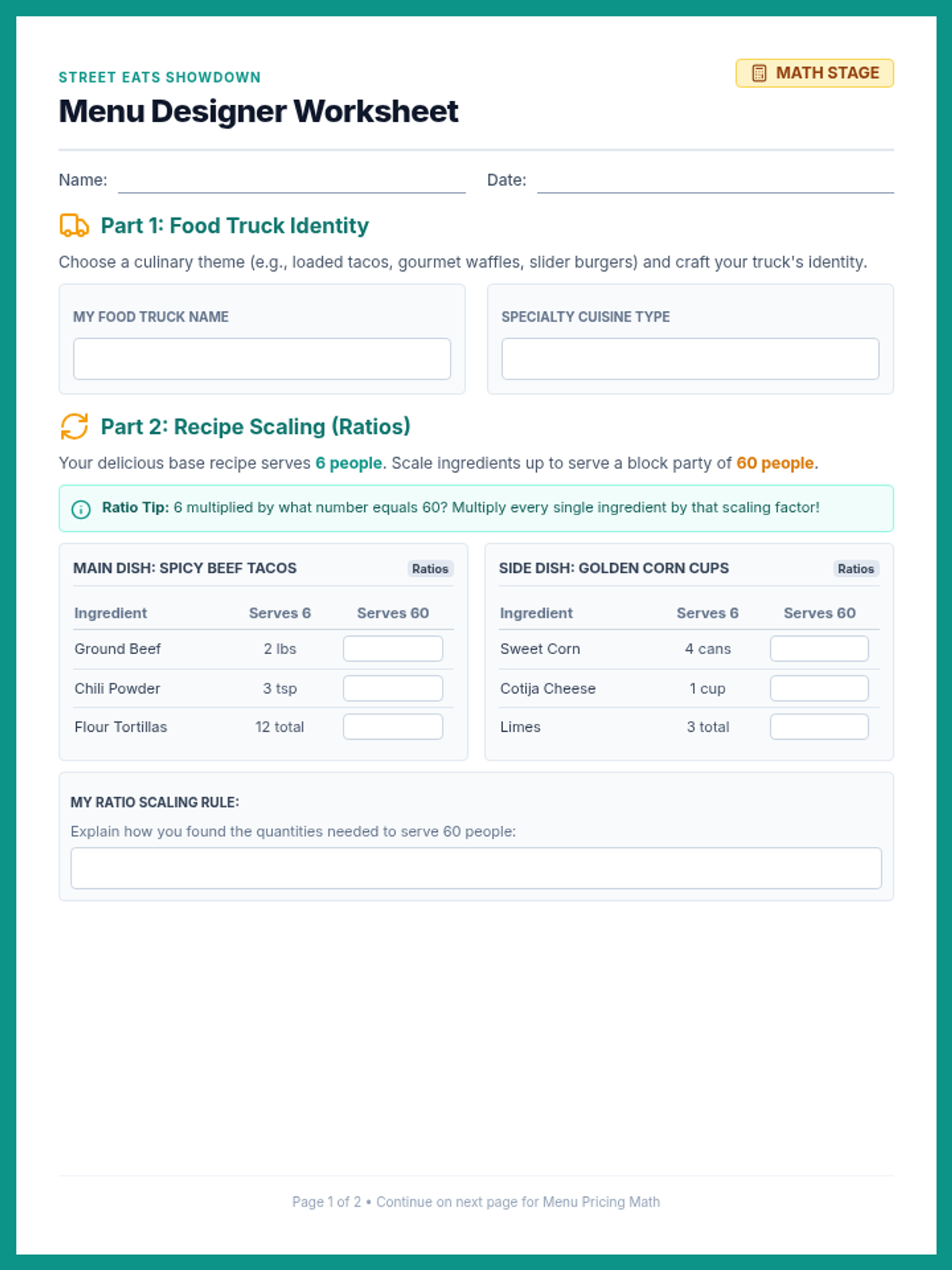
A step-by-step student worksheet where kids name their truck, scale recipe ratios, and calculate item costs and profit margins using decimal addition and subtraction.
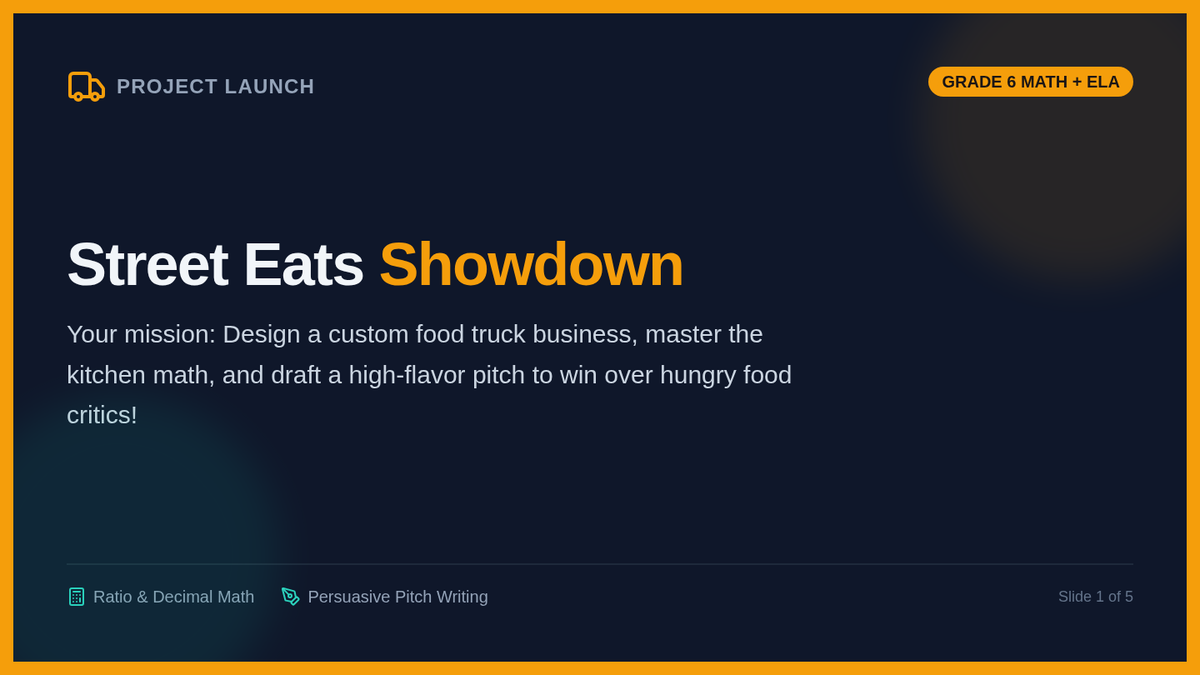
Interactive instructional slides that serve as visual anchor charts, introducing the project concept, ratio scaling, decimal math procedures, and persuasive vocabulary.
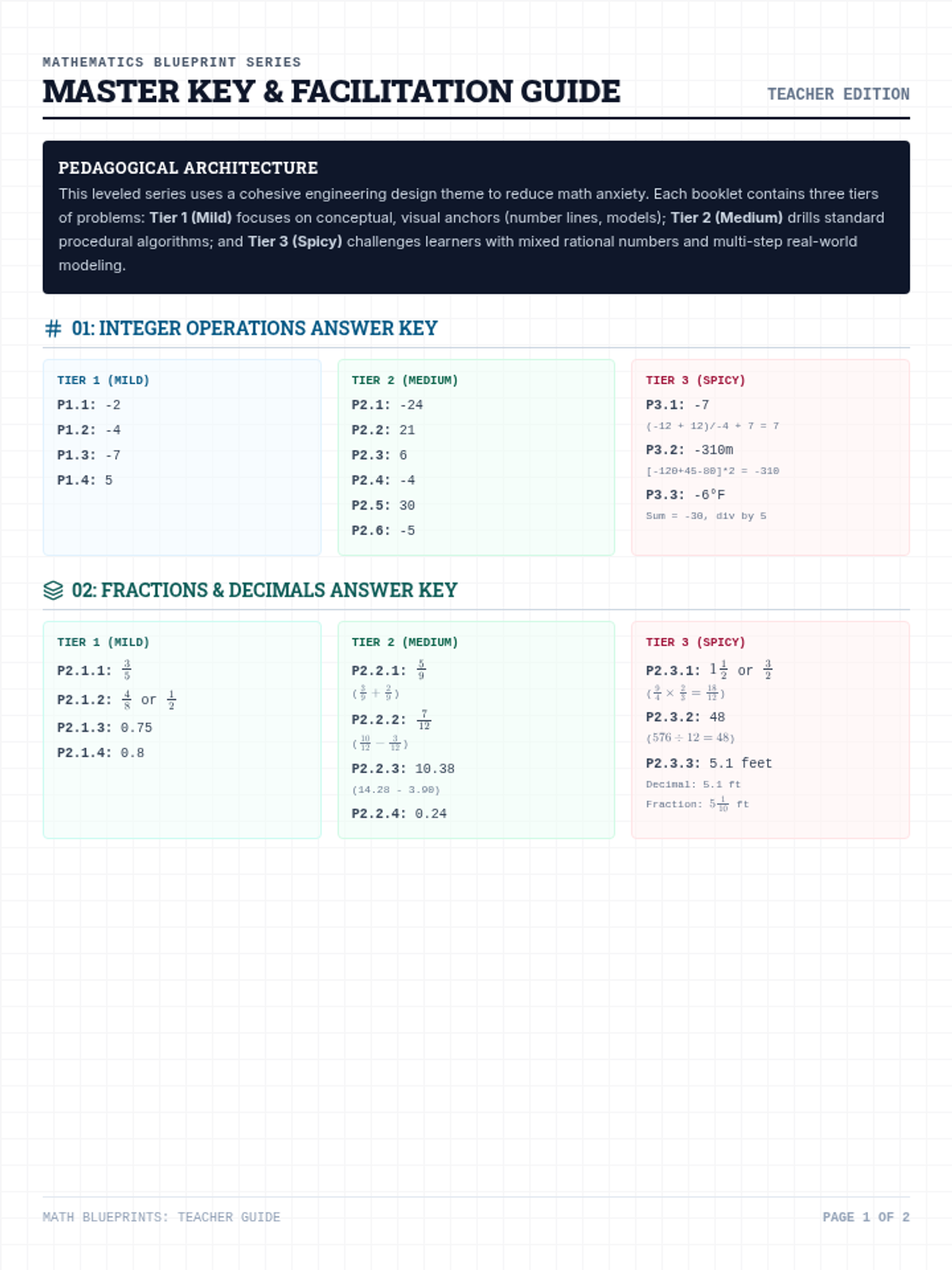
A 2-page master answer key and teacher facilitation guide for the Operation Blueprints series. Provides precise numerical answers for all tiers across all four topic sheets, along with scaffolding tips and misconceptions notes.
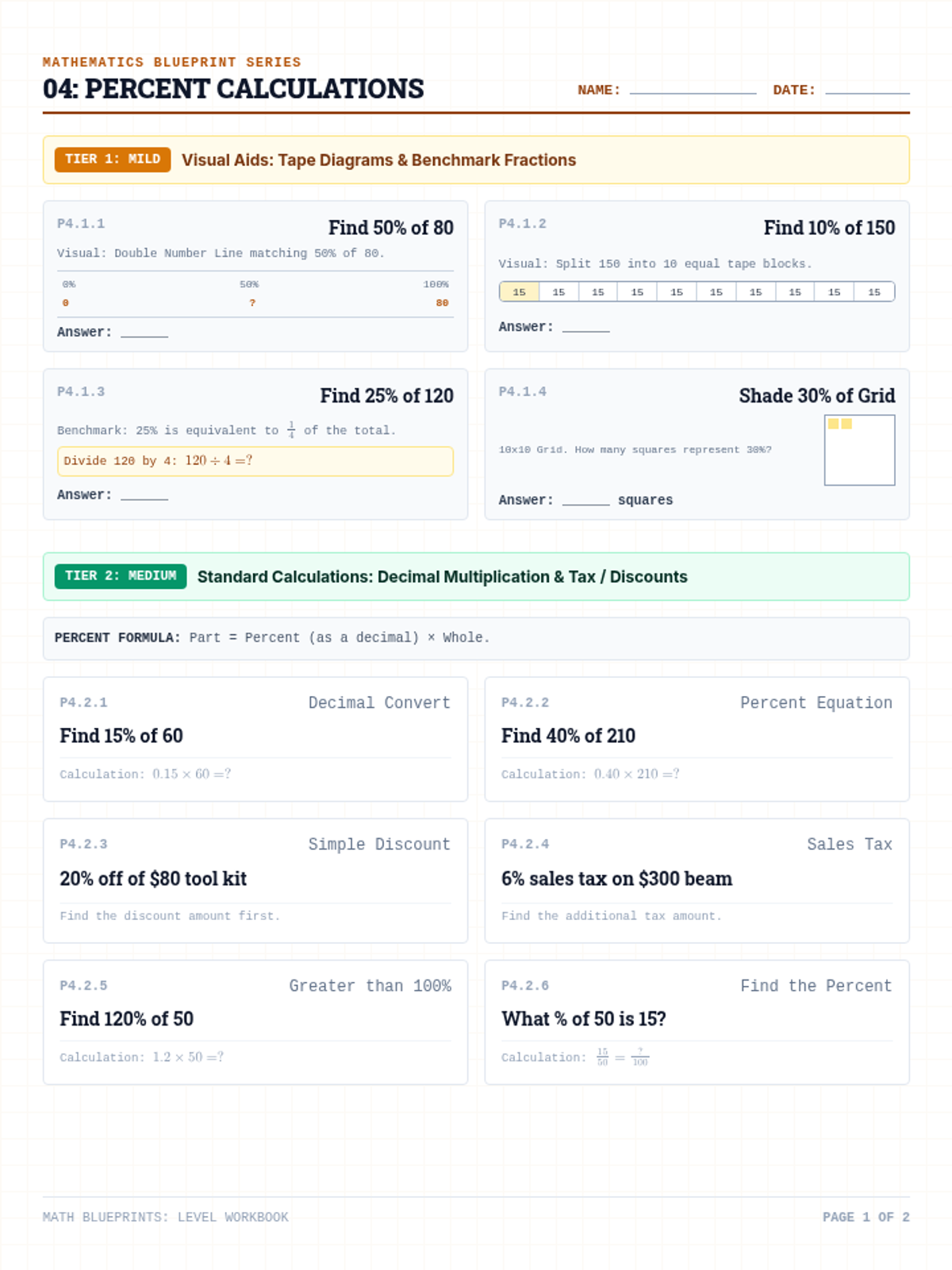
A tiered, blueprint-themed worksheet on calculating percentages of numbers with tape diagrams and double number lines for Mild, percent equations (tax, discounts) for Medium, and percent error and change for Spicy.
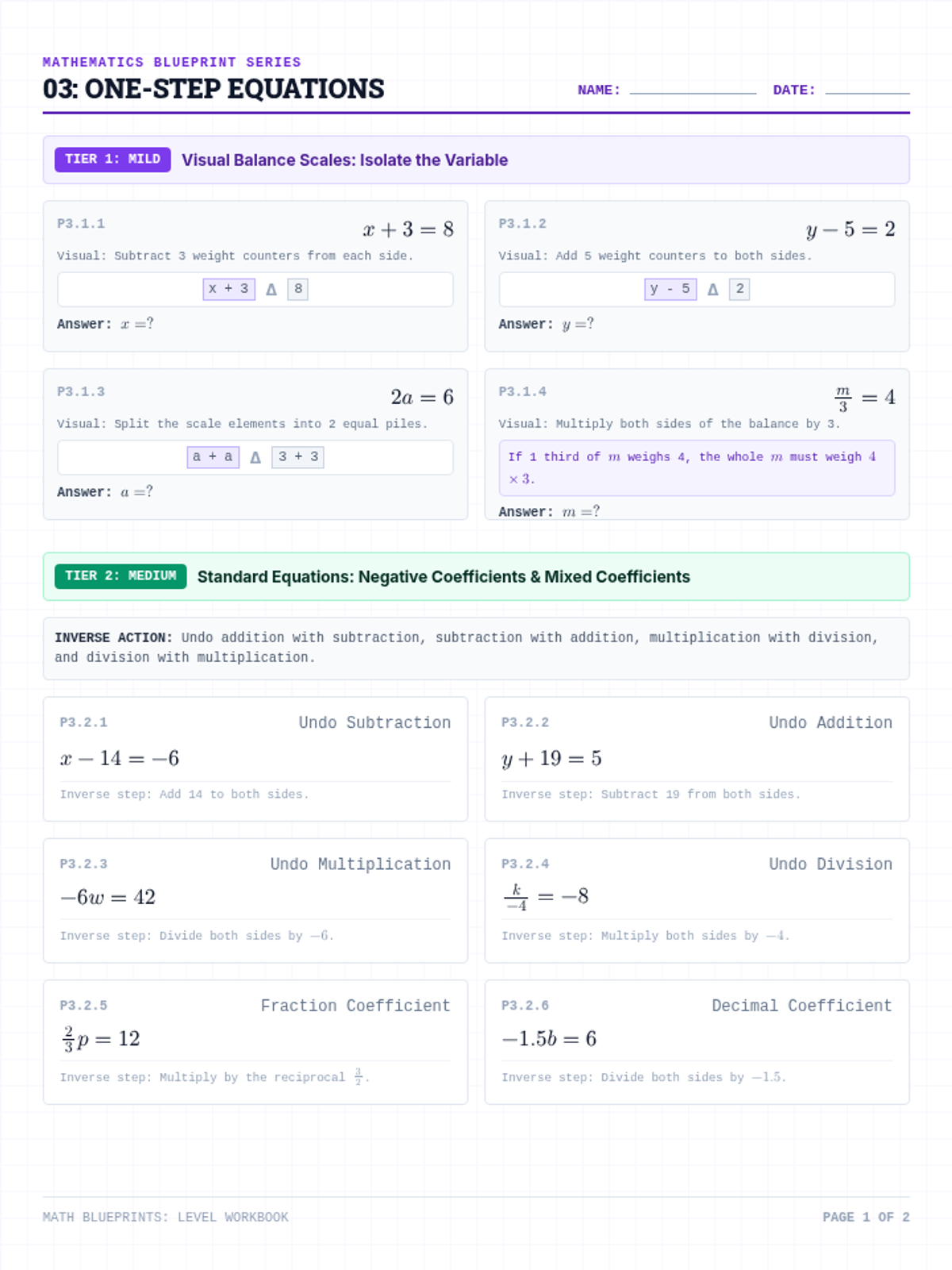
A tiered, blueprint-themed worksheet on solving one-step equations with visual balance models for Mild, standard inverse operations (with negative coefficients and fractions) for Medium, and complex rational number equations and writing-to-solve word problems for Spicy.
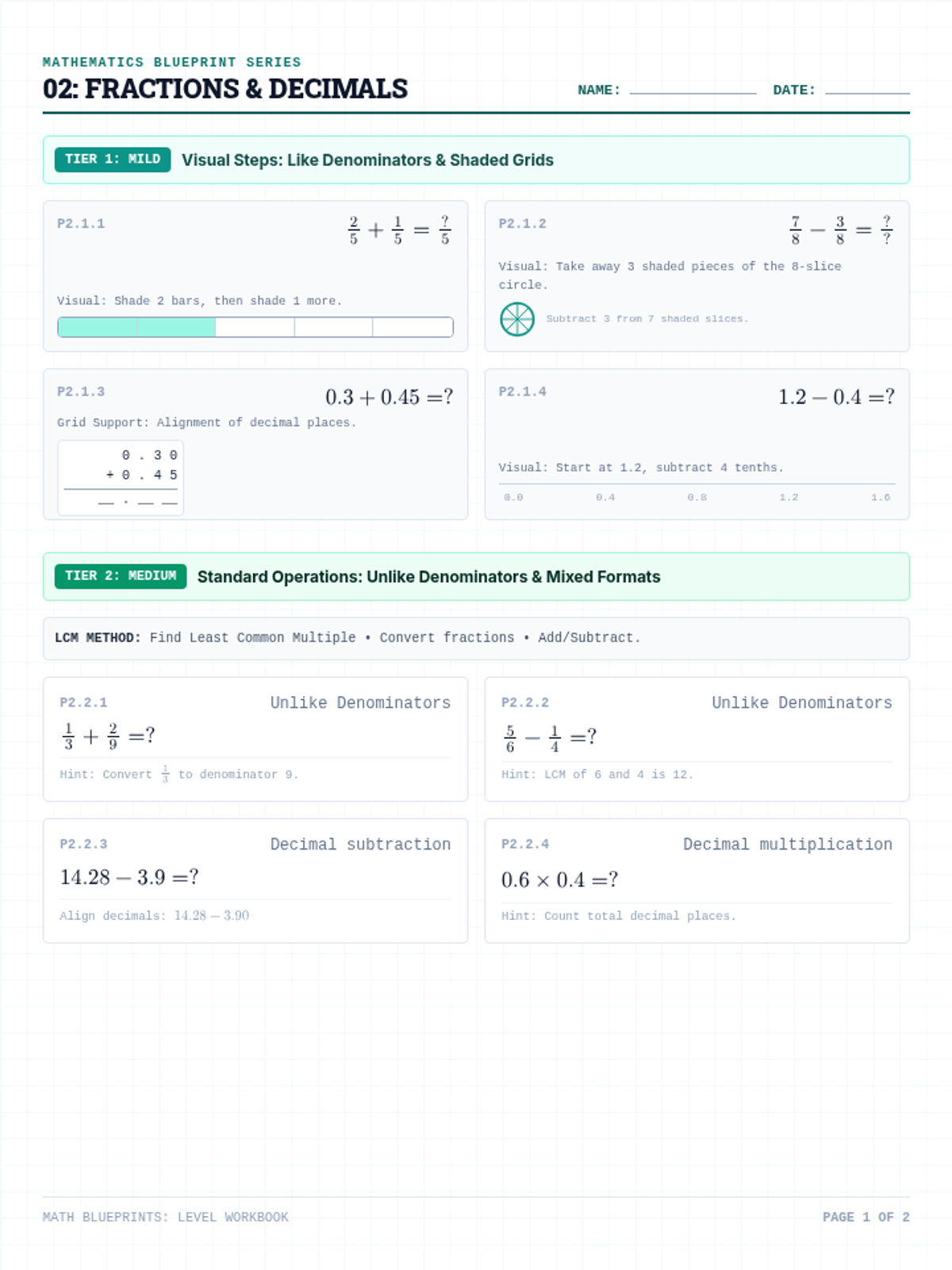
A tiered, blueprint-themed worksheet on fraction and decimal computation with visual fraction circle/area models and place-value guides for Mild, unlike denominators and standard algorithms for Medium, and scaling word problems for Spicy.
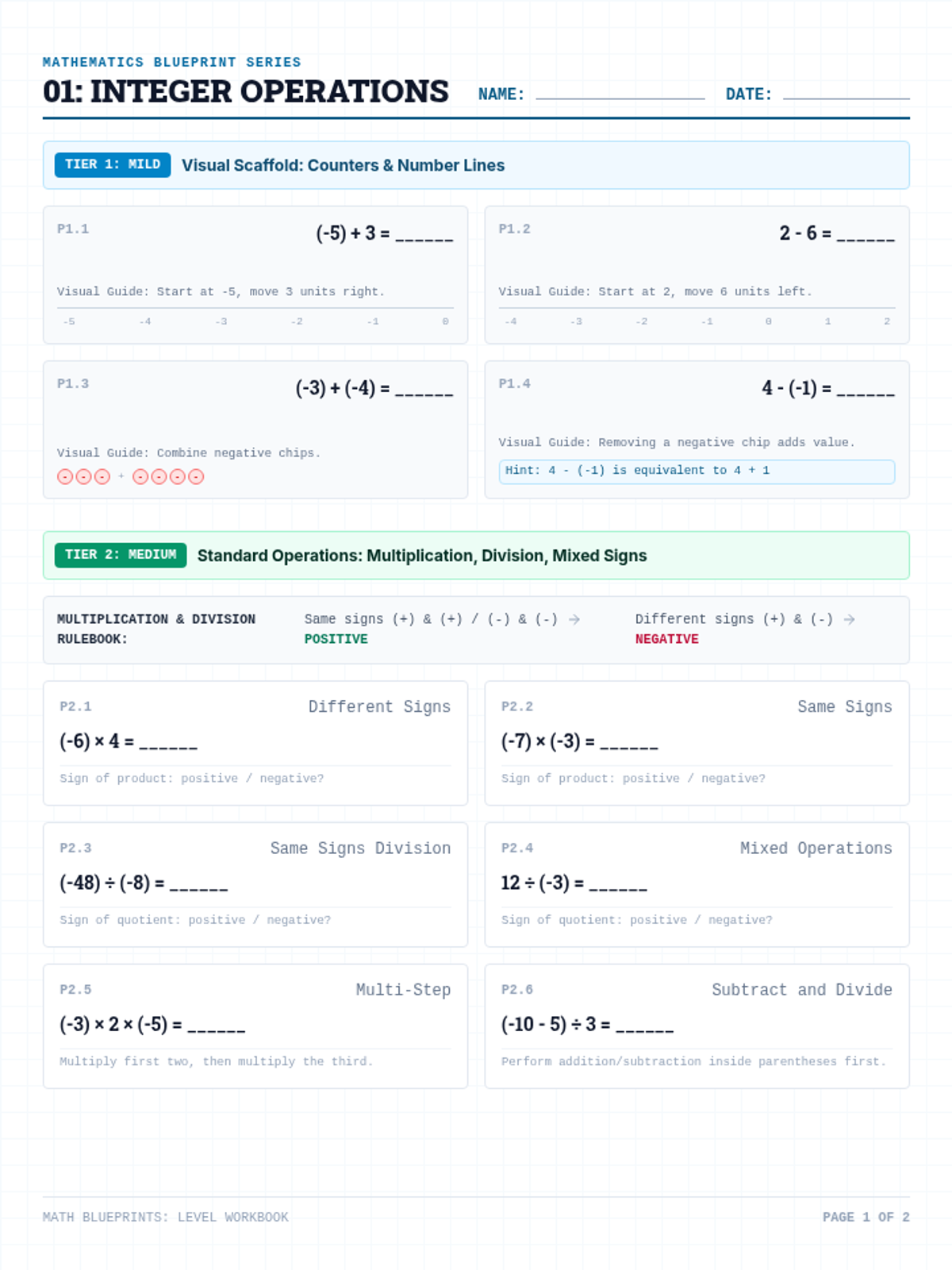
A tiered, blueprint-themed worksheet on integer operations (adding, subtracting, multiplying, dividing) with visual aids for Mild, algorithm support for Medium, and multi-step word problems for Spicy.
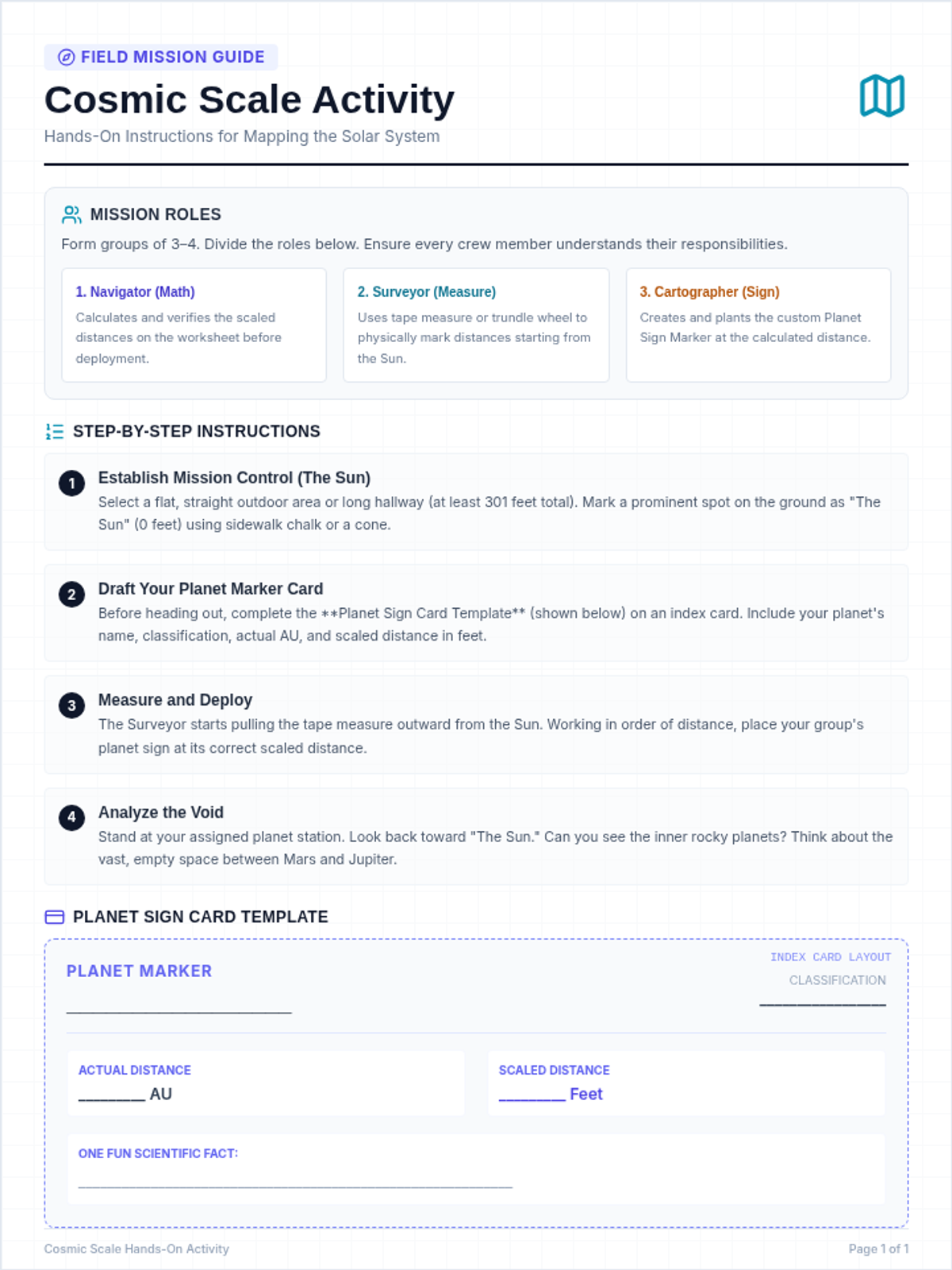
An informative, step-by-step 1-page hands-on outdoor scaling guide that outlines student roles, measurement techniques, and templates for creating physical planet markers.
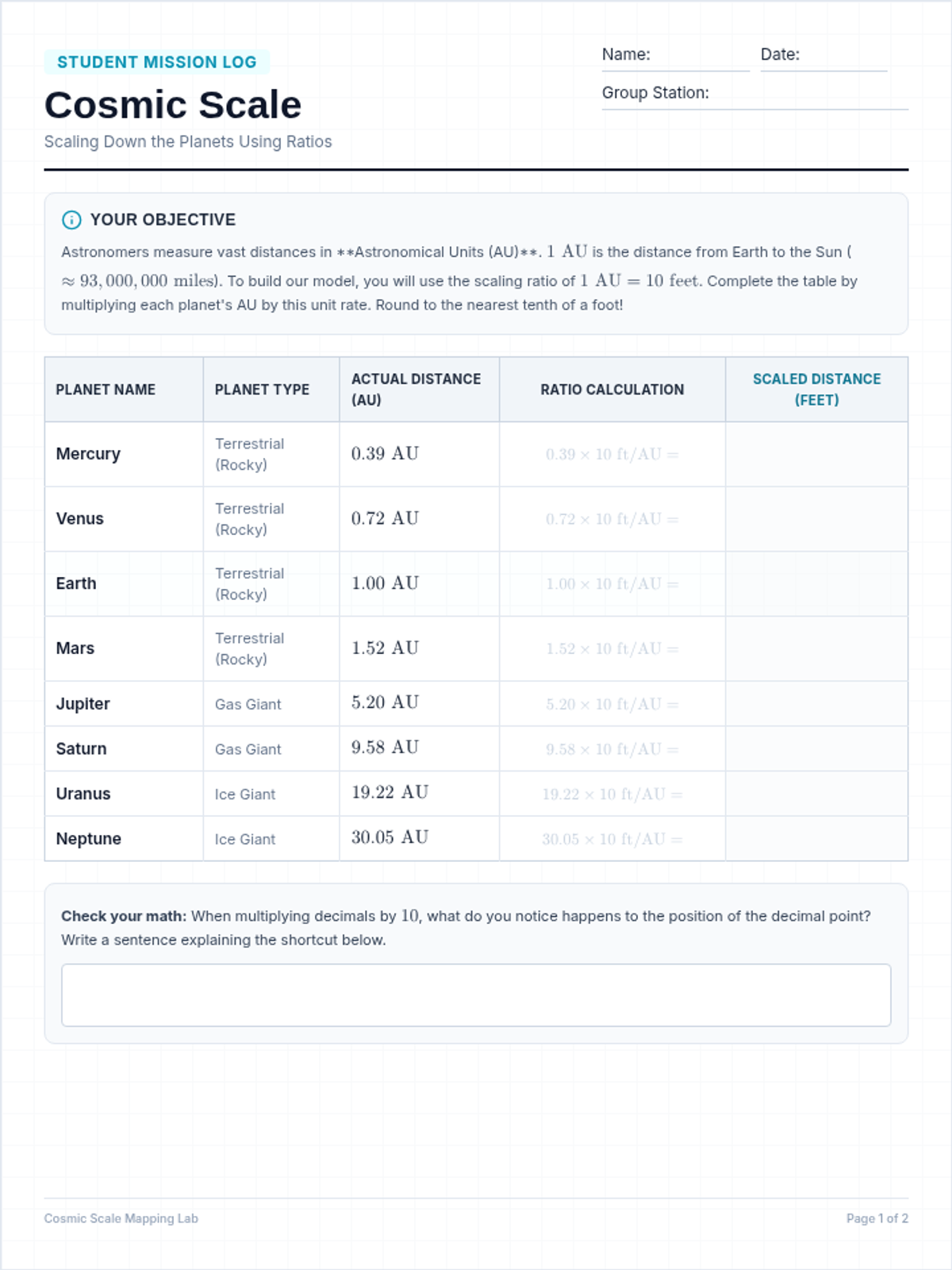
A clean, high-contrast, double-sided student worksheet featuring a comprehensive conversion table for the eight planets and four scaffolded conceptual response boxes for analytical math work.
An engaging, visually striking 5-slide presentation using a high-contrast deep-space theme. It introduces Astronomical Units (AUs), ratio scaling rules, mathematical examples, and outdoor modeling instructions with text optimized for projection (minimum font size 24px).
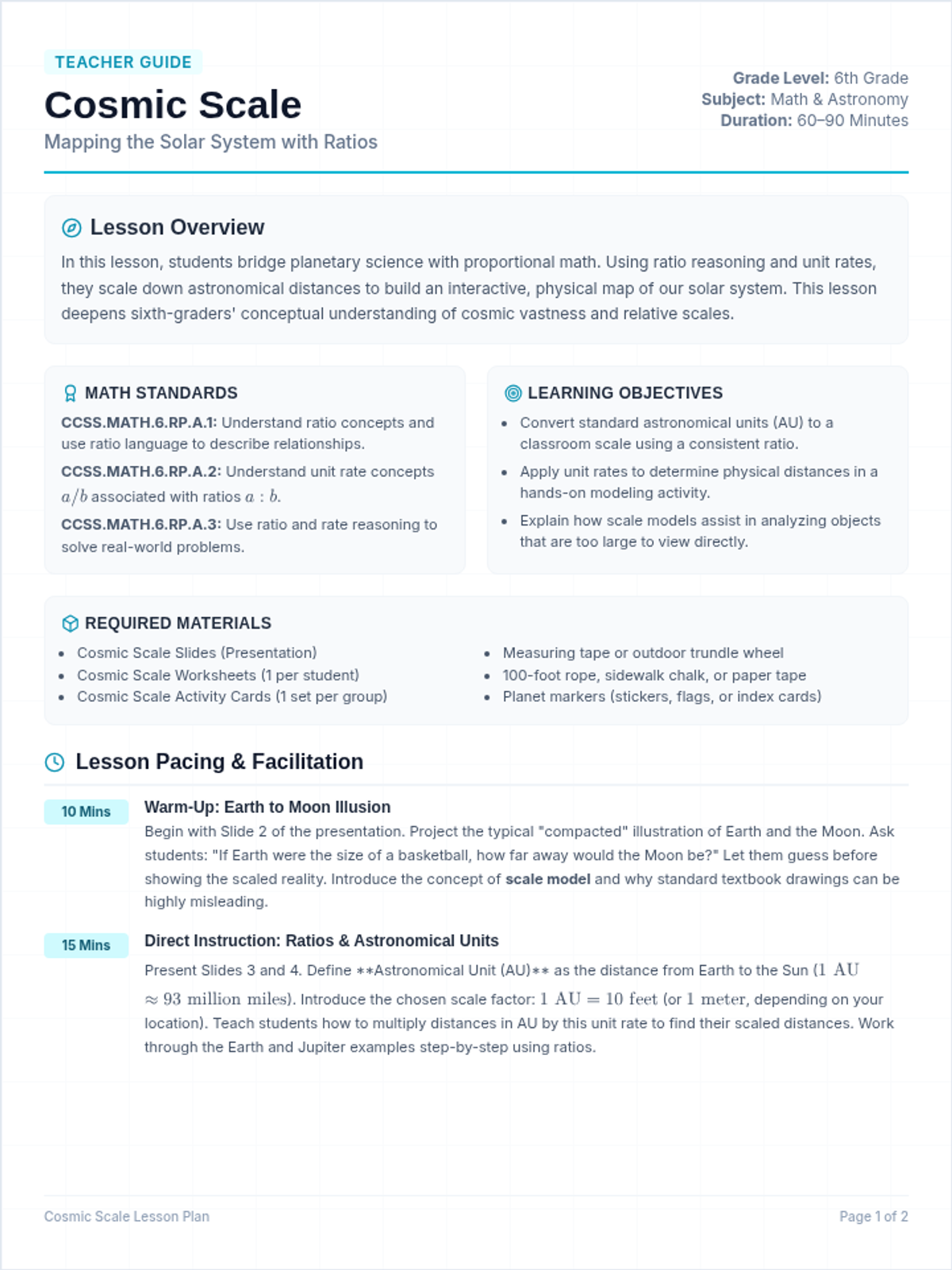
A comprehensive, professional lesson plan for teachers, detailing standards, pacing, instructional strategies, common misconceptions, and differentiation for the Cosmic Scale lesson.
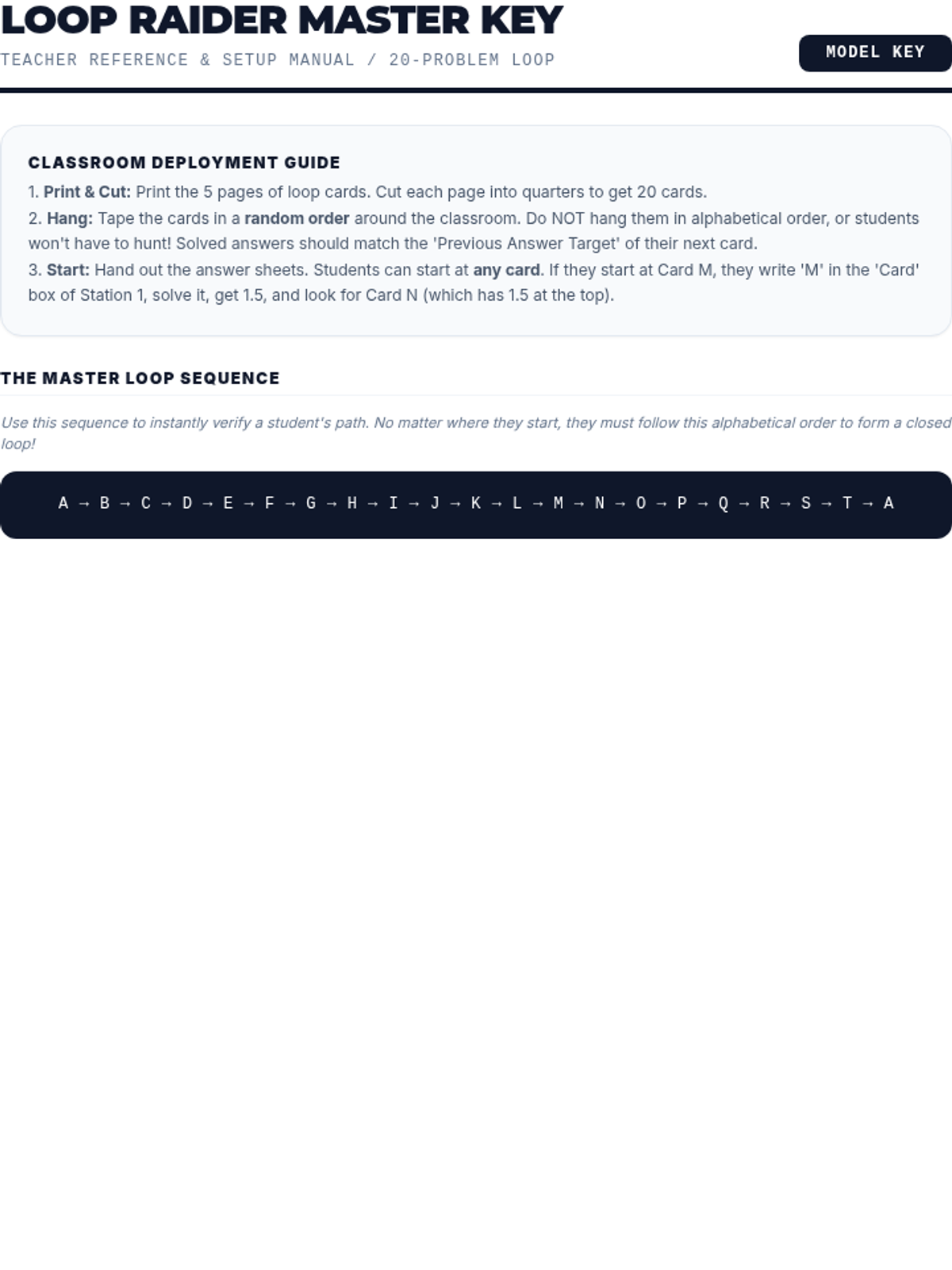
A comprehensive 2-page teacher reference and answer key for the Equation Loop Raider gallery walk. It features the exact self-correcting loop flow sequence (A to T), setup instructions, and step-by-step solutions for all 20 rational-number equations.
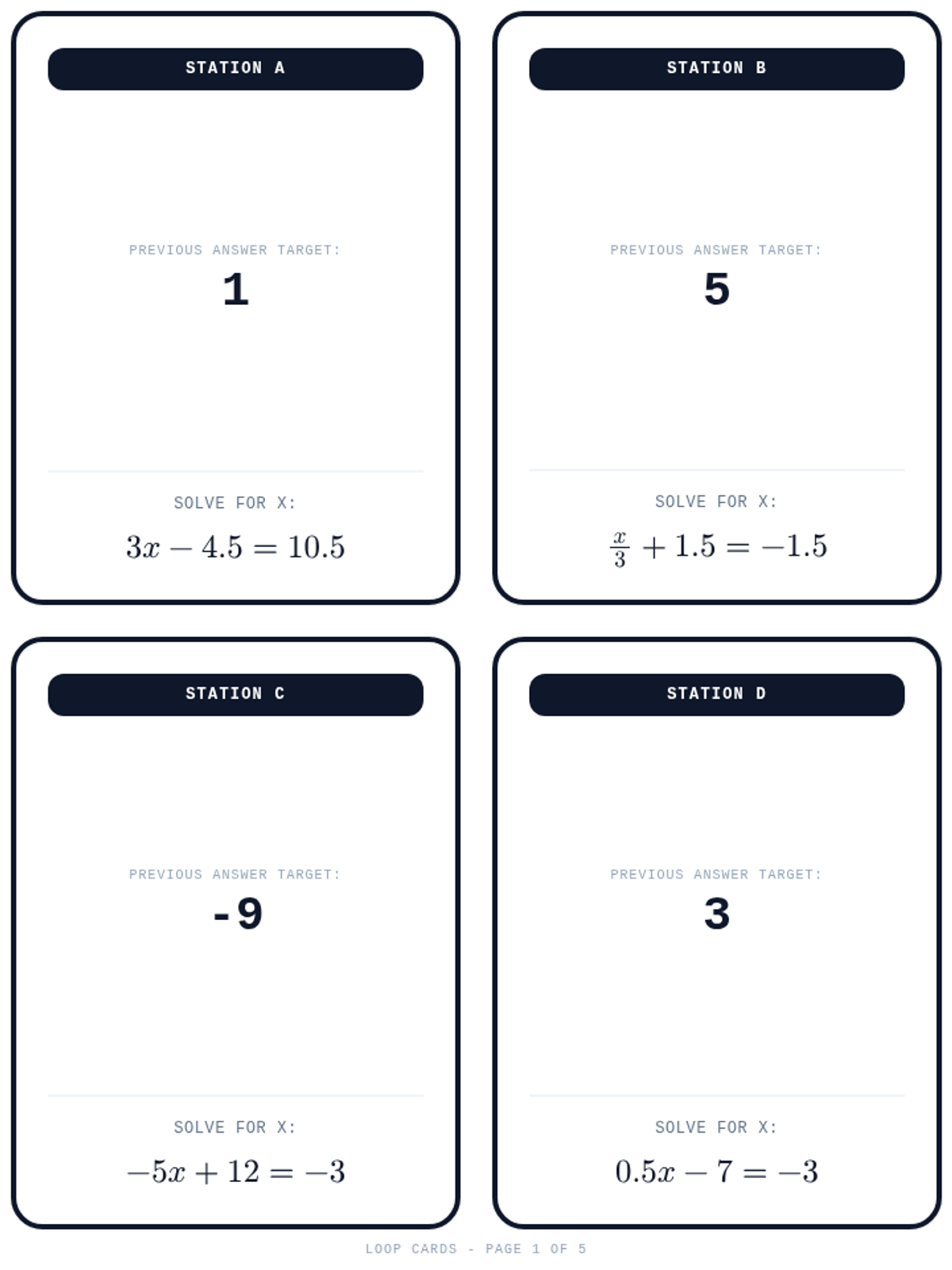
The 20 printable equation cards (Station A to T) for the Equation Loop Raider gallery walk. Each card features a bold 'Previous Answer' header at the top and a high-rigor two-step rational number equation to solve. Designed for teachers to print, cut, and hang around the classroom.
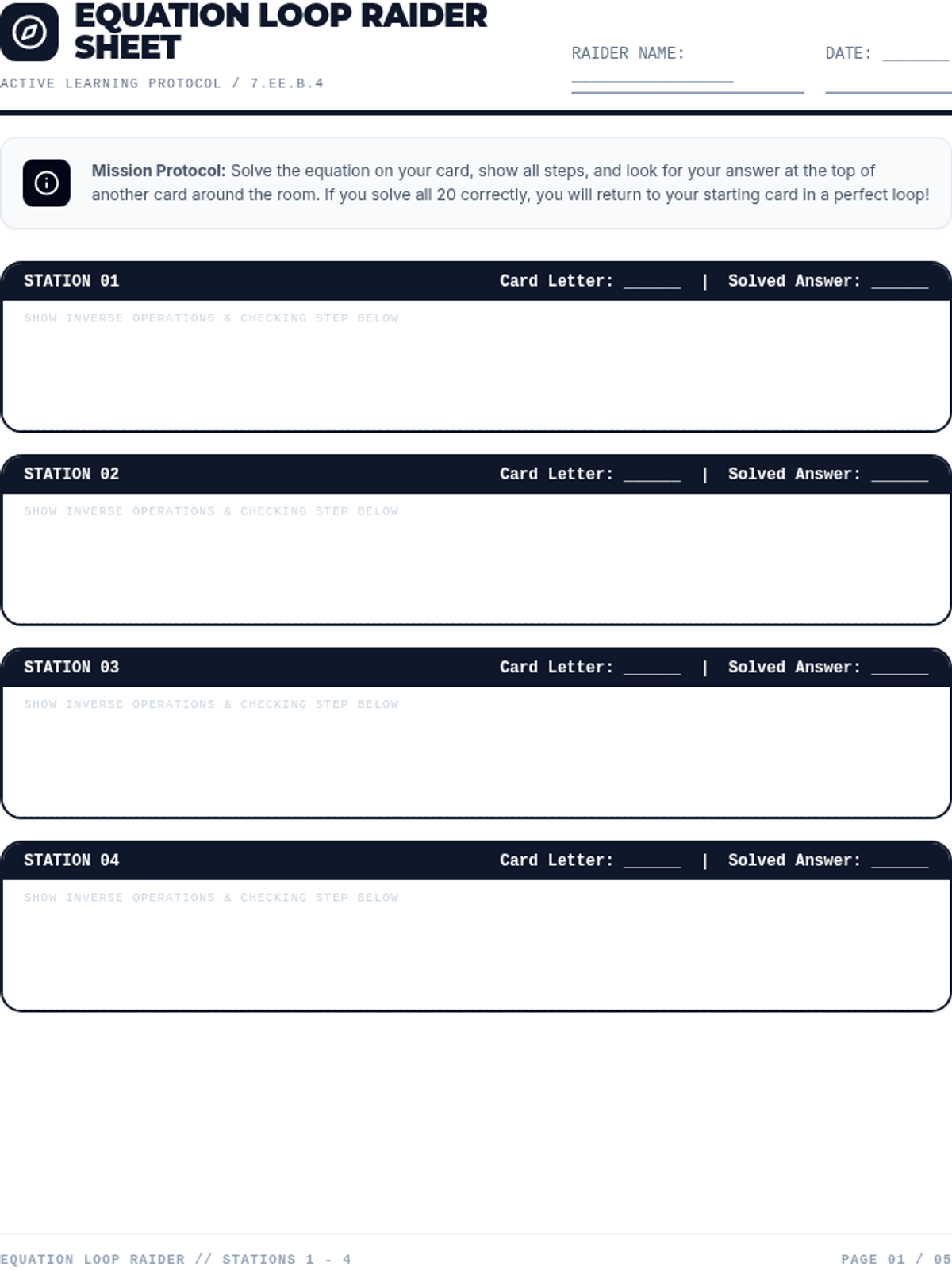
A structured, high-contrast 5-page answer sheet for the Equation Loop Raider gallery walk. It features expanded full-width calculation zones for all 20 stations, giving students three times the writing space for complex step-by-step solving.
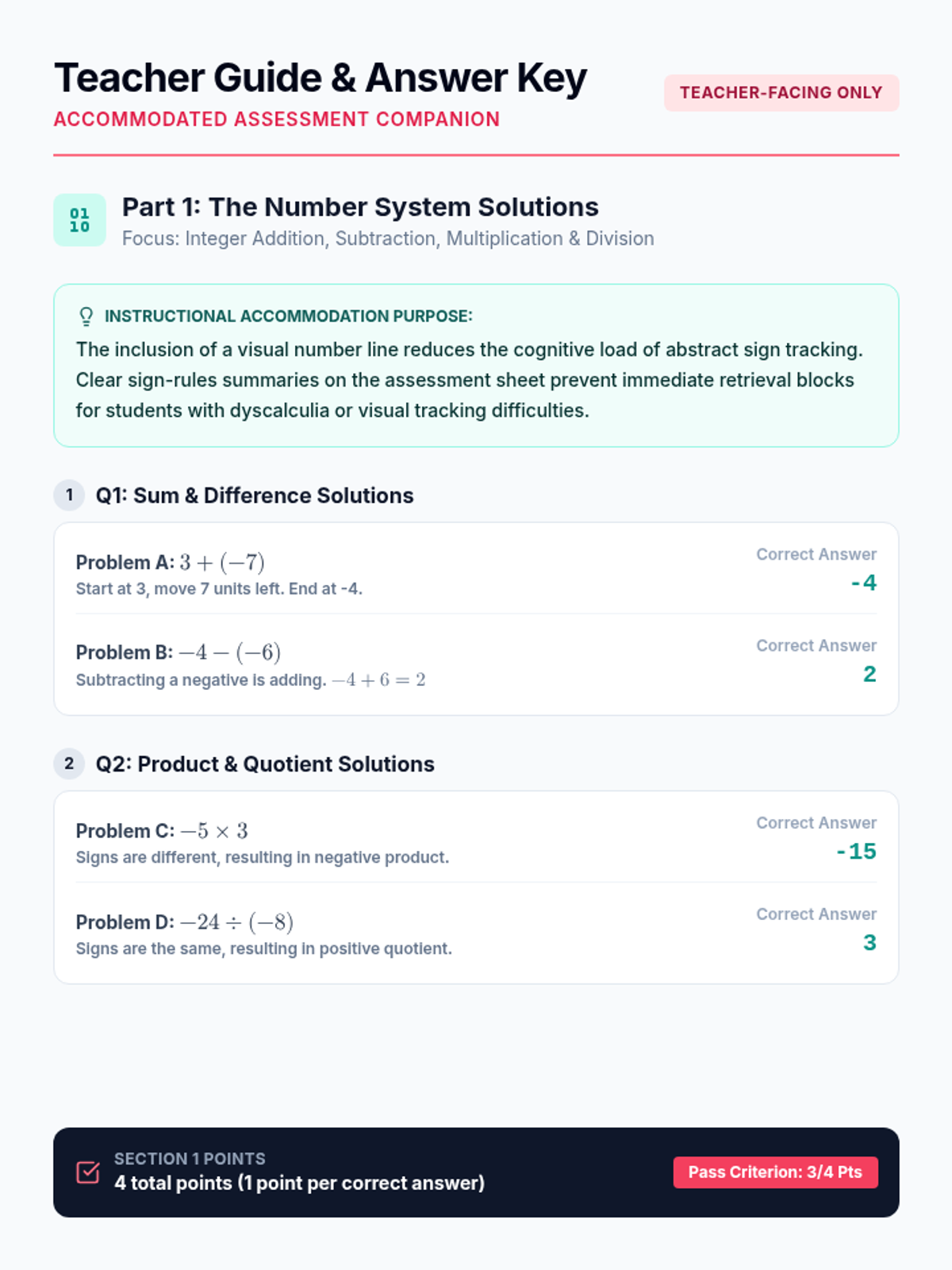
A comprehensive, teacher-facing grading guide and answer key for the Mastery Quest Assessment. Includes detailed pedagogical explanations of the accommodations, step-by-step solved algebraic and geometric expressions, exact solutions, and specific point-allocation rubrics for each part of the assessment.