A high-contrast visual anchor chart for classroom display. It breaks down the three main rules of possessive apostrophes (singular, plural, irregular) and clarifies the 'it's' vs. 'its' trap using bold colors and clear examples.
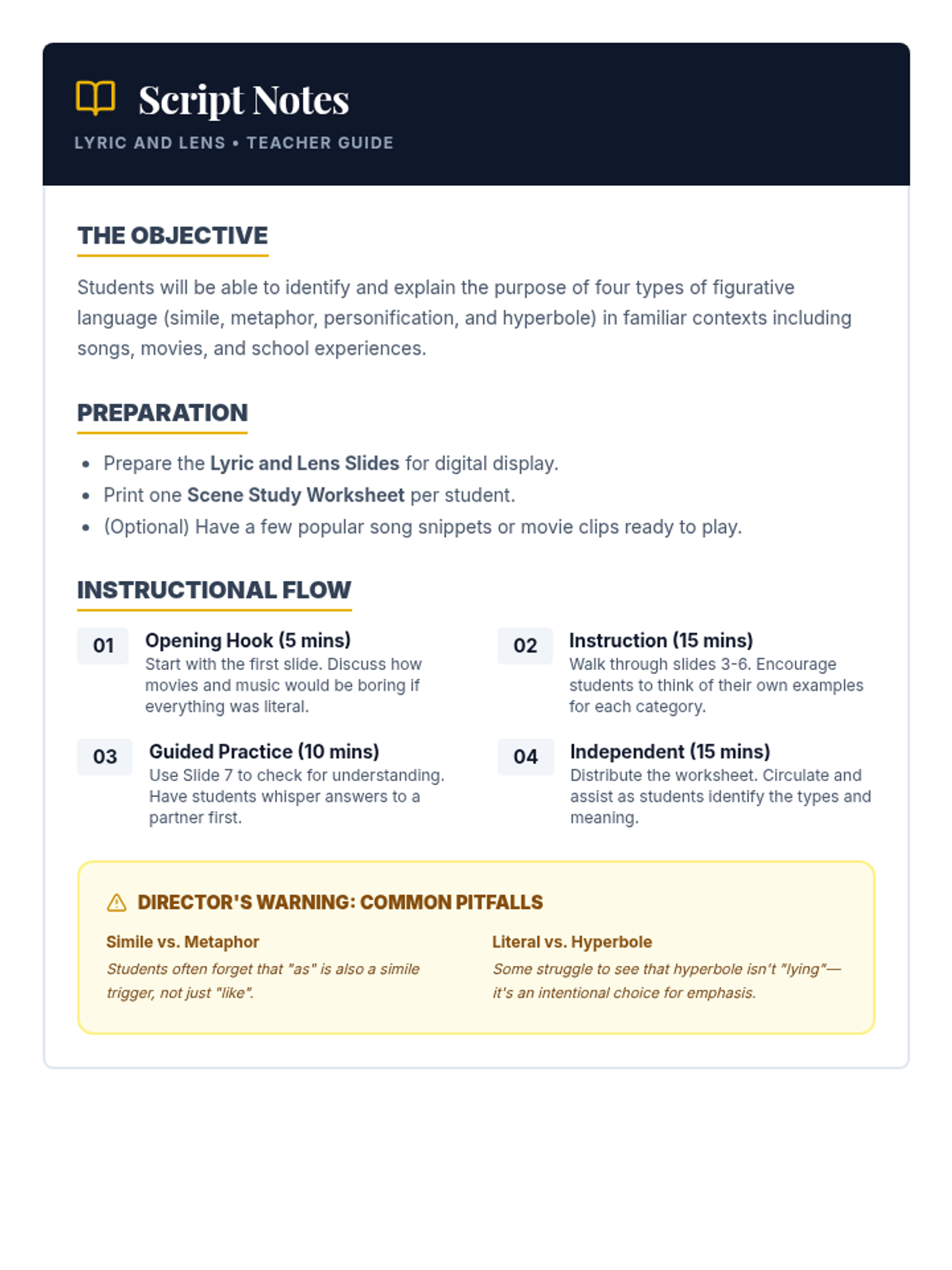
A facilitation guide for teachers, providing a suggested lesson flow, discussion prompts, and strategies for addressing common student misconceptions about figurative language.
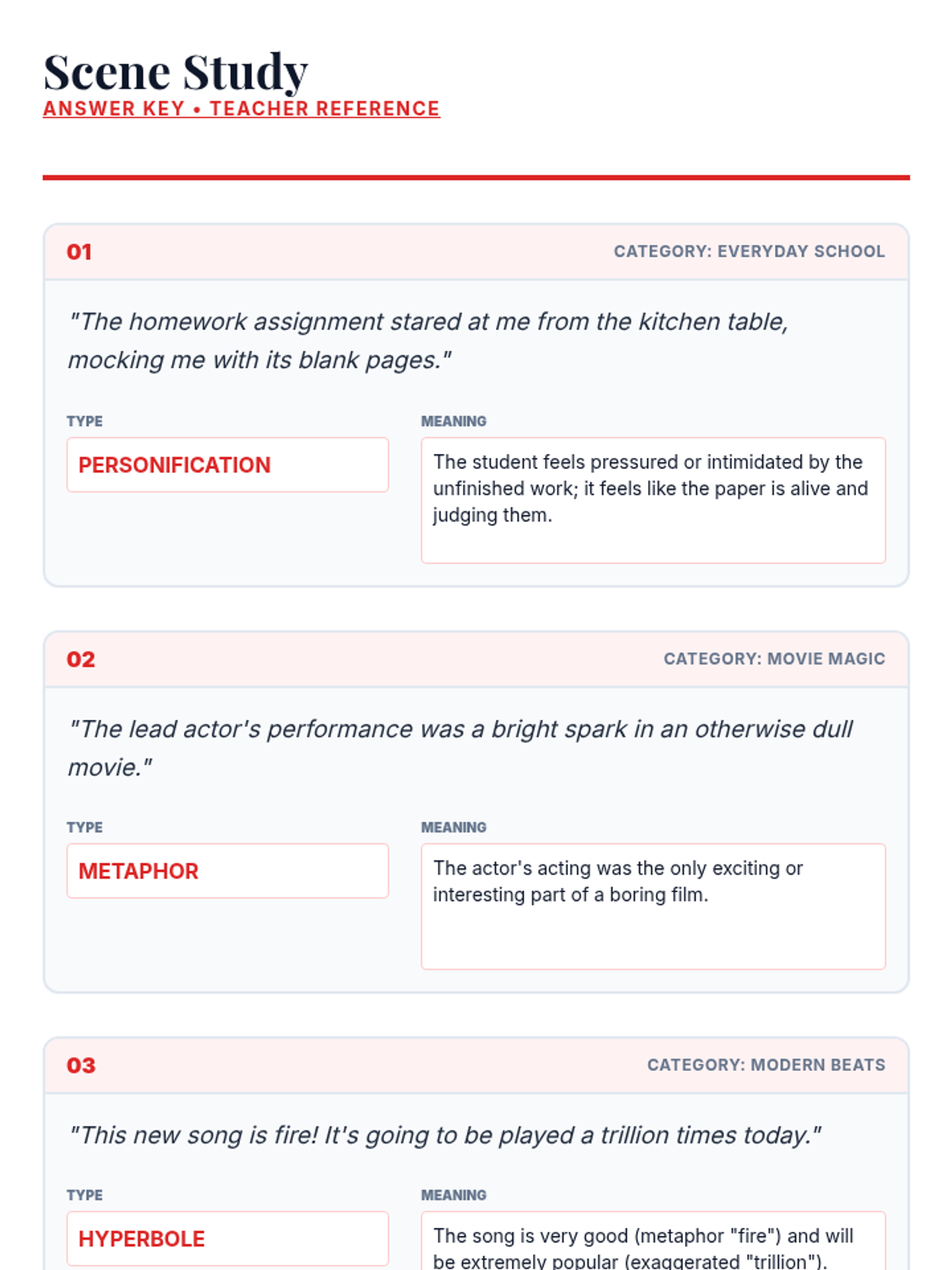
Teacher answer key for the Scene Study Worksheet, providing clear identifications and sample explanations for each figurative language example.
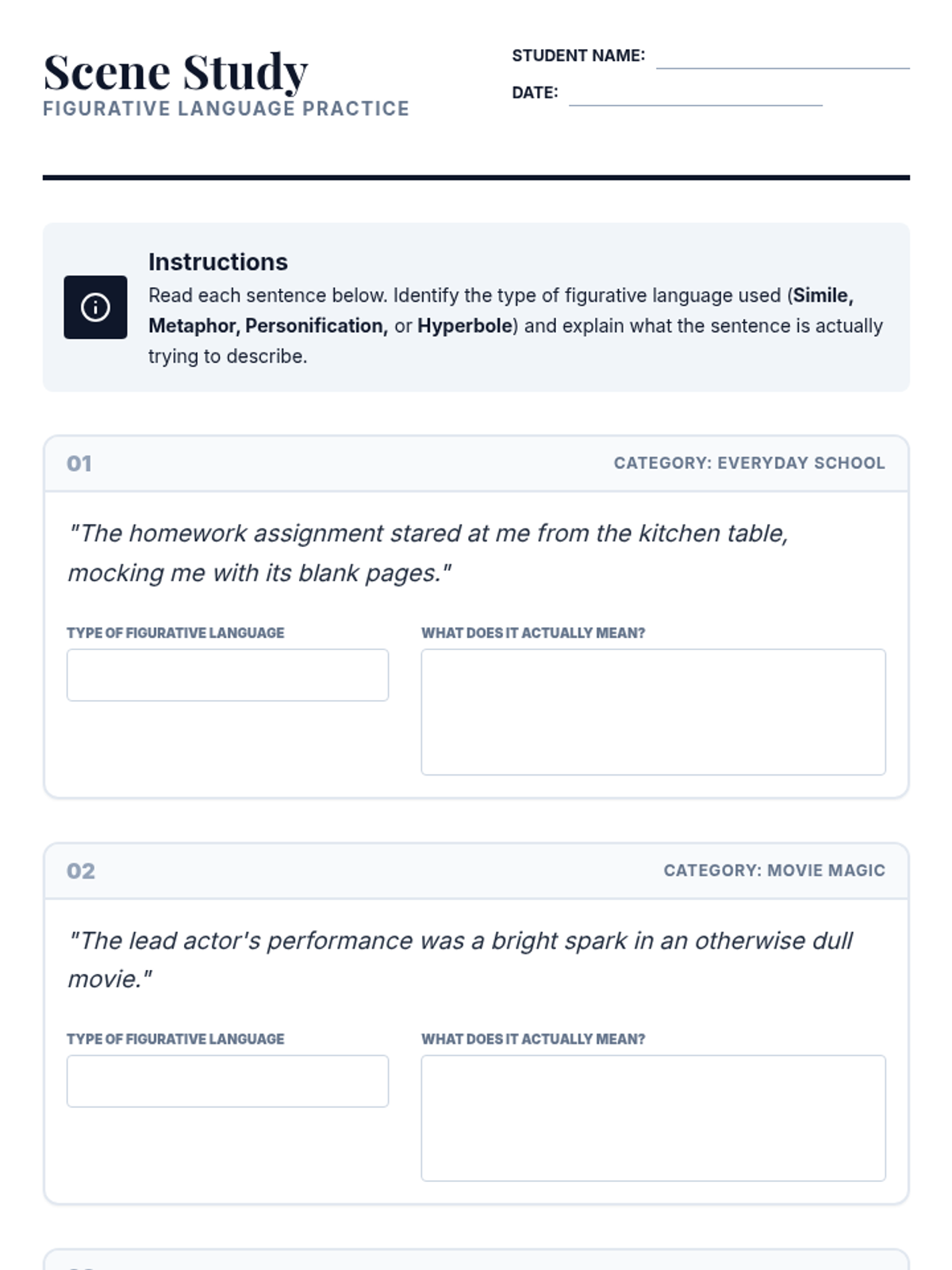
A practice worksheet where students identify simile, metaphor, personification, and hyperbole in sentences inspired by movies, music, and school life. Includes space for explanation of meaning.
An engaging slide deck introducing simile, metaphor, personification, and hyperbole using movie, music, and school-life examples. Features a cinematic theme with "Spot the FigLang" practice slides.
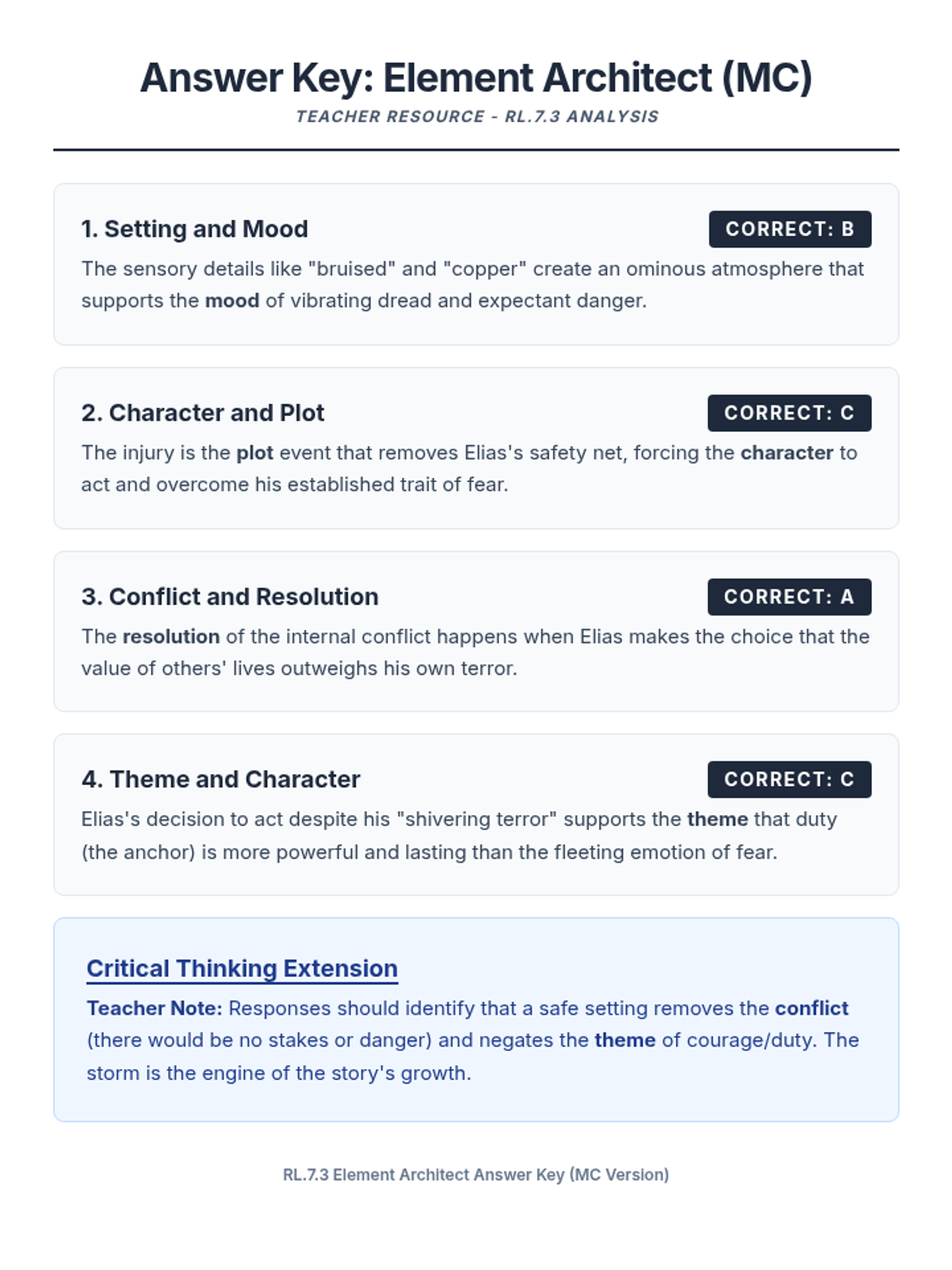
Teacher answer key for the multiple-choice 'Element Interaction' worksheet, providing correct answers and rationales for RL.7.3. Revised to fit on a single page.
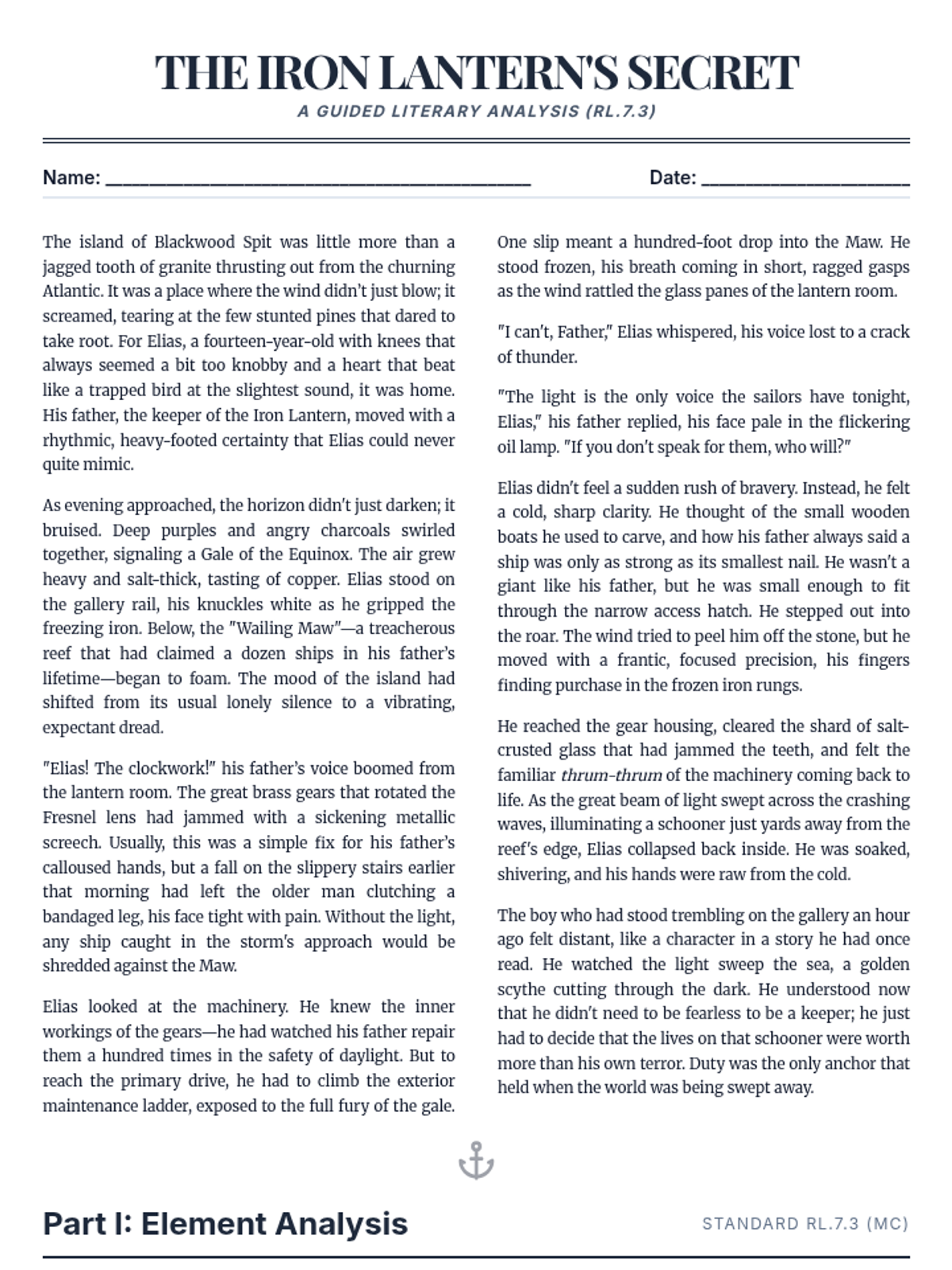
A complete, all-in-one literary analysis packet for 'The Iron Lantern's Secret', featuring the full text on one page, followed by multiple-choice questions focusing on RL.7.3 and a critical thinking extension. Revised for optimal layout and student work area.
A 7-slide data-driven presentation designed for administrative meetings, visualizing Grade 6 reading growth across NC Check-In cycles A, B, and C with specific metrics on vocabulary, informational text mastery, and fluency.
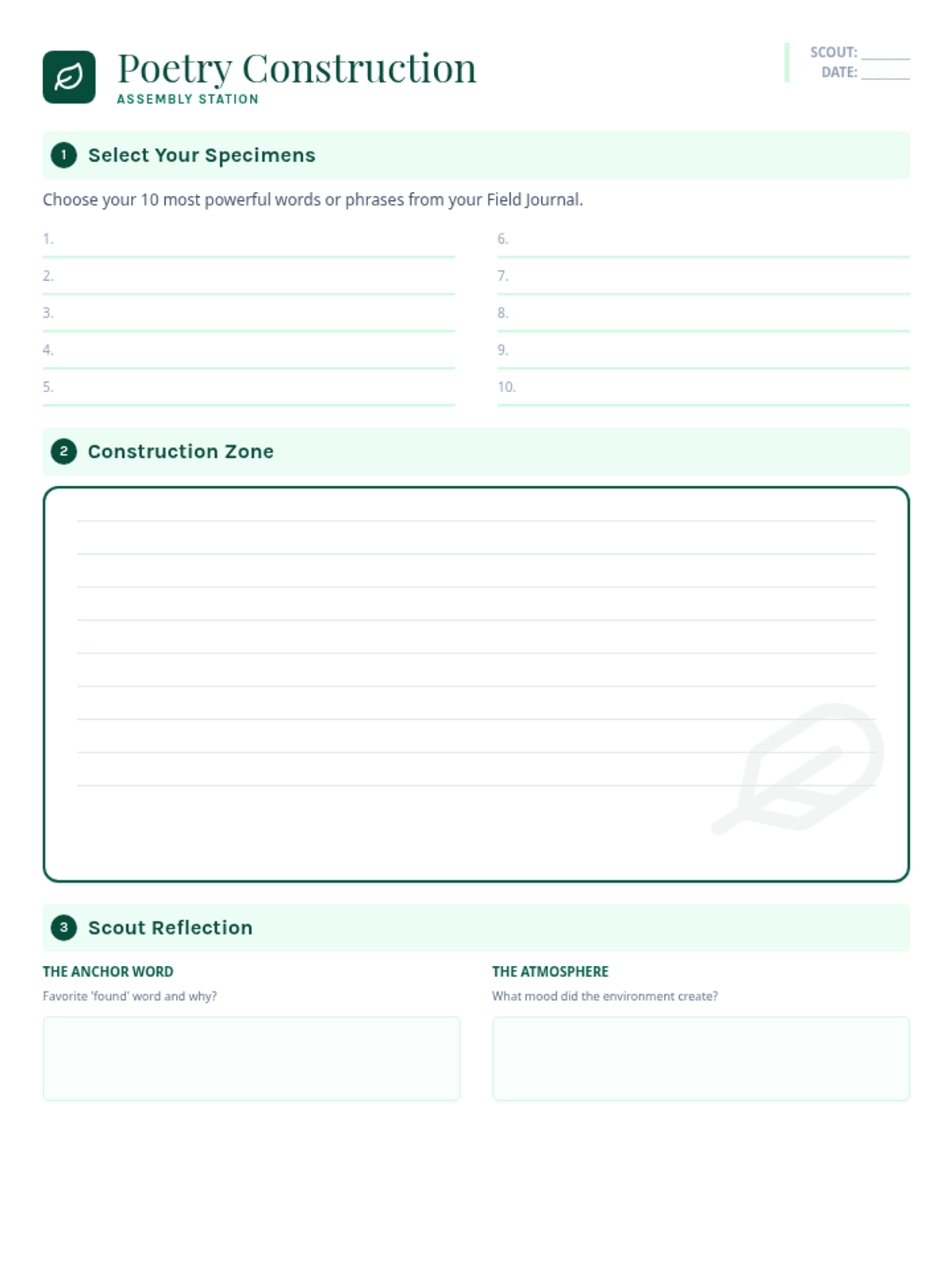
A poem drafting worksheet for students to curate their collected words and assemble their final 'found' poetry stanzas, including a reflection section.
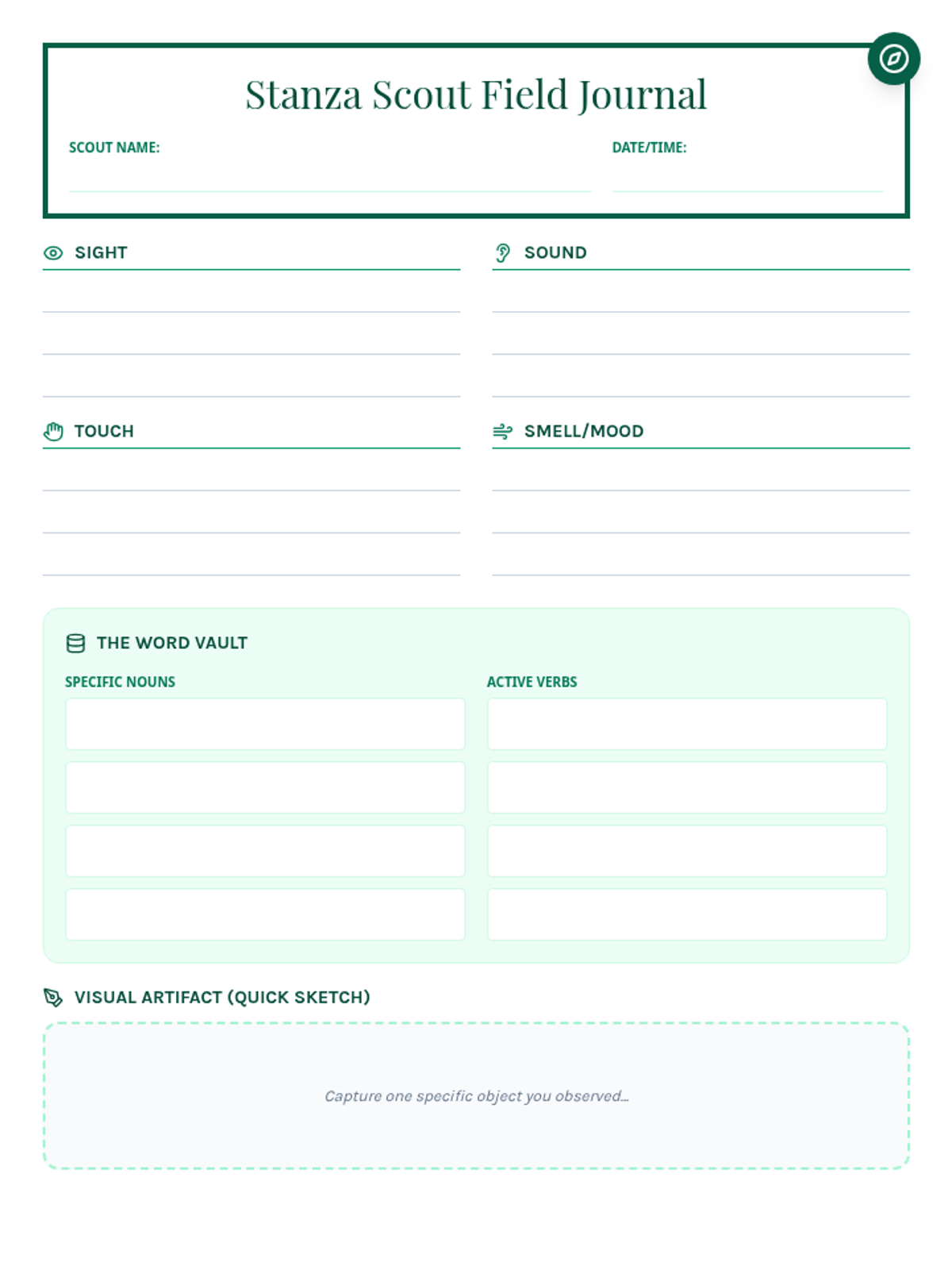
A student field journal for the 'Stanza Scout' nature walk, featuring sections for sensory observations, noun/verb collection, and a visual artifact sketch area.
A visual slide presentation for 'The Stanza Scout' lesson, defining found poetry, outlining sensory scouting techniques, and providing guidelines for the nature walk and poem construction.
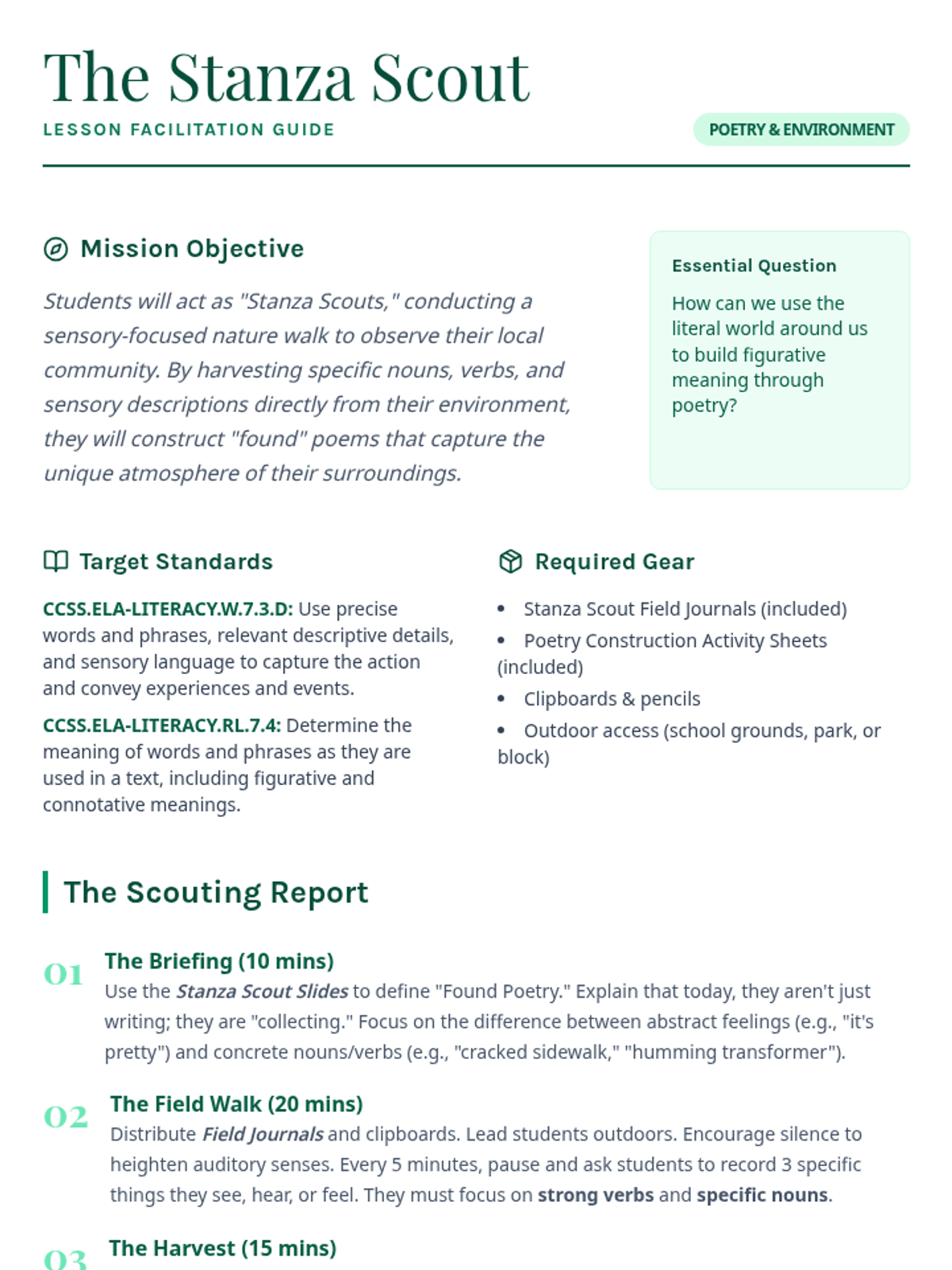
A detailed teacher's lesson plan for 'The Stanza Scout' poetry unit, including objectives, CCSS standards, required materials, and a step-by-step instructional guide.
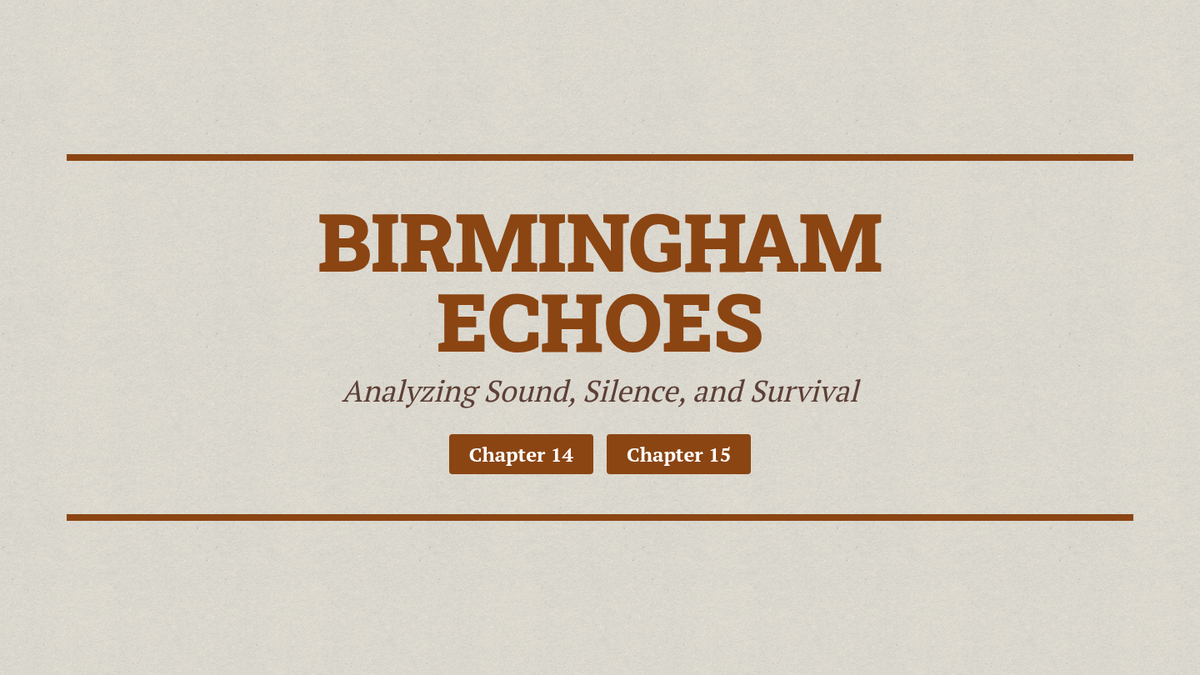
A visual presentation for teaching Chapters 14 and 15 of *The Watsons Go to Birmingham—1963*, focusing on sensory analysis, character motivation, and the R.A.C.E. strategy.
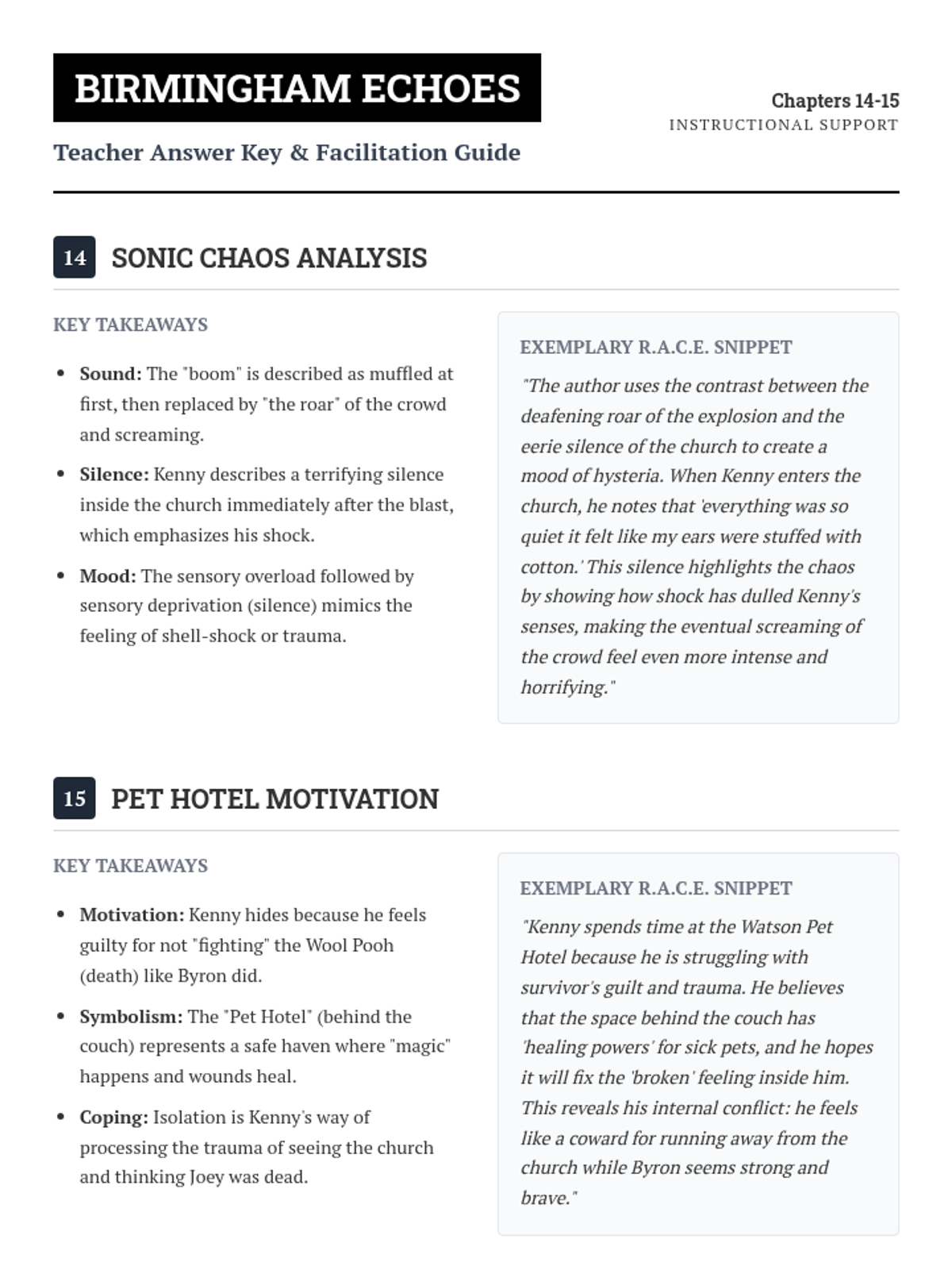
A teacher's answer key and guide for the Chapter 14 and 15 analysis of *The Watsons Go to Birmingham—1963*, featuring exemplary R.A.C.E. responses and discussion prompts.
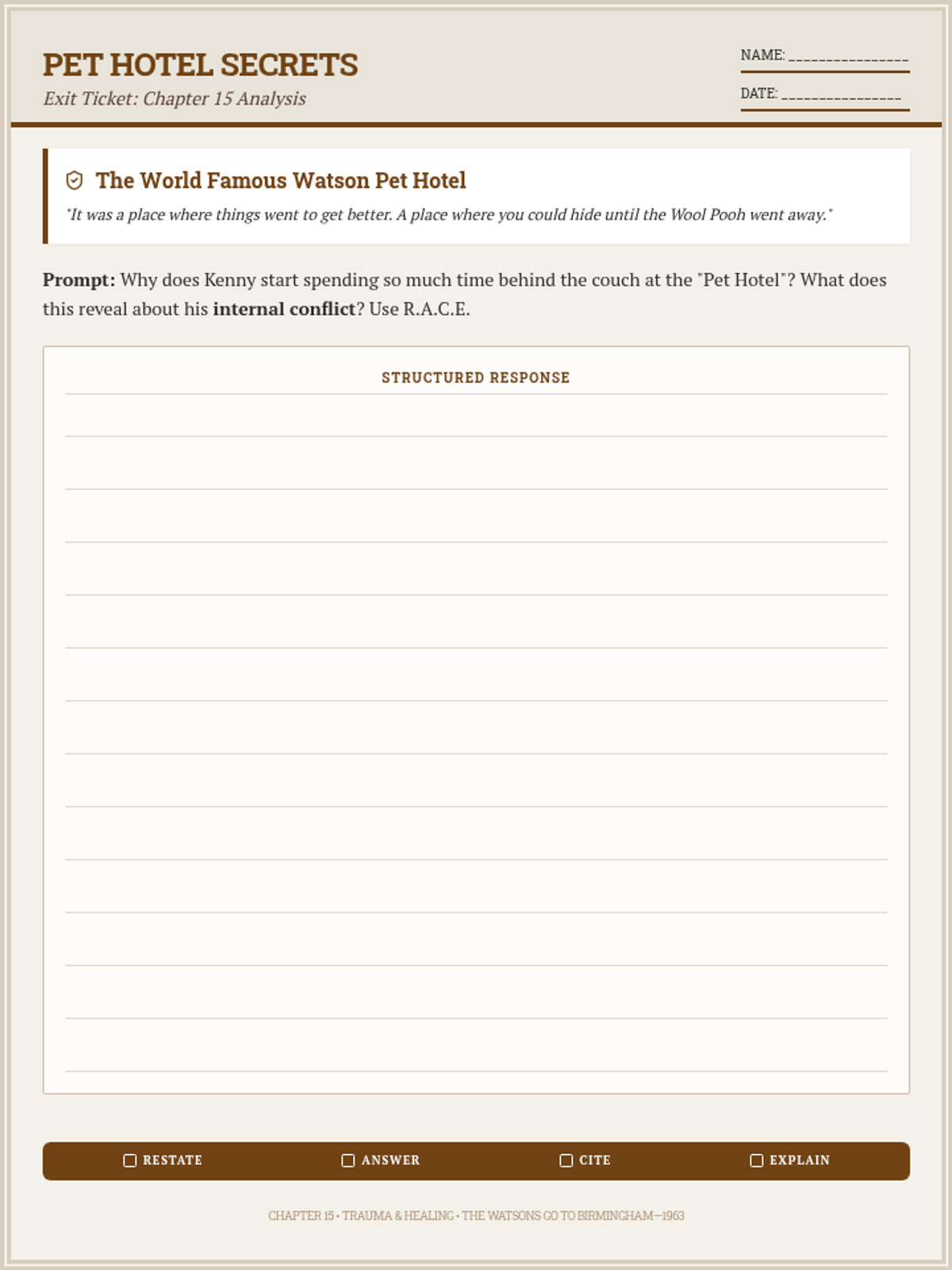
An exit ticket for Chapter 15 of *The Watsons Go to Birmingham—1963*, requiring students to explain Kenny's motivation for hiding in the Pet Hotel using the R.A.C.E. strategy.
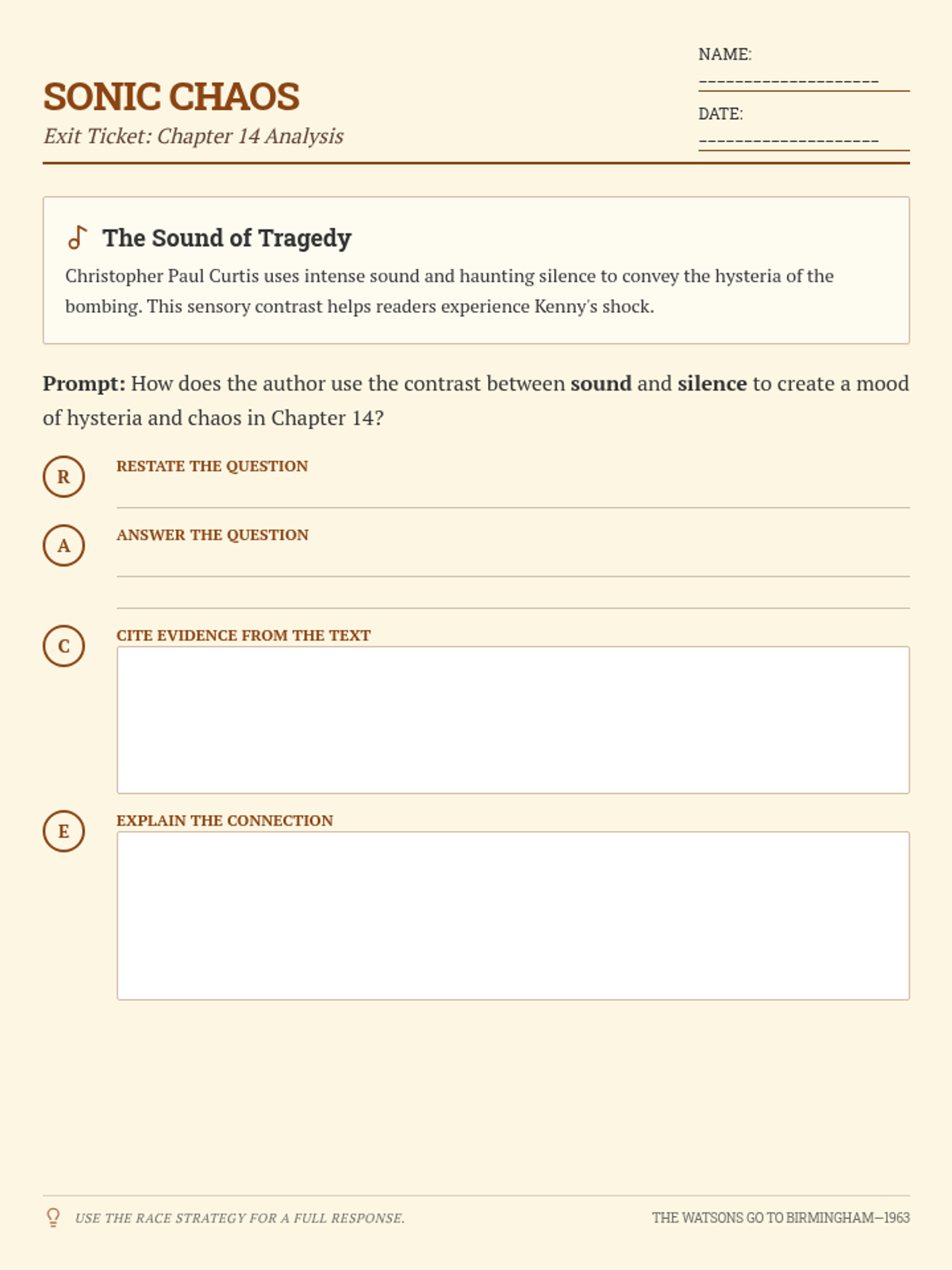
An exit ticket for Chapter 14 of *The Watsons Go to Birmingham—1963*, prompting students to analyze the use of sound and silence to create mood using the R.A.C.E. strategy.
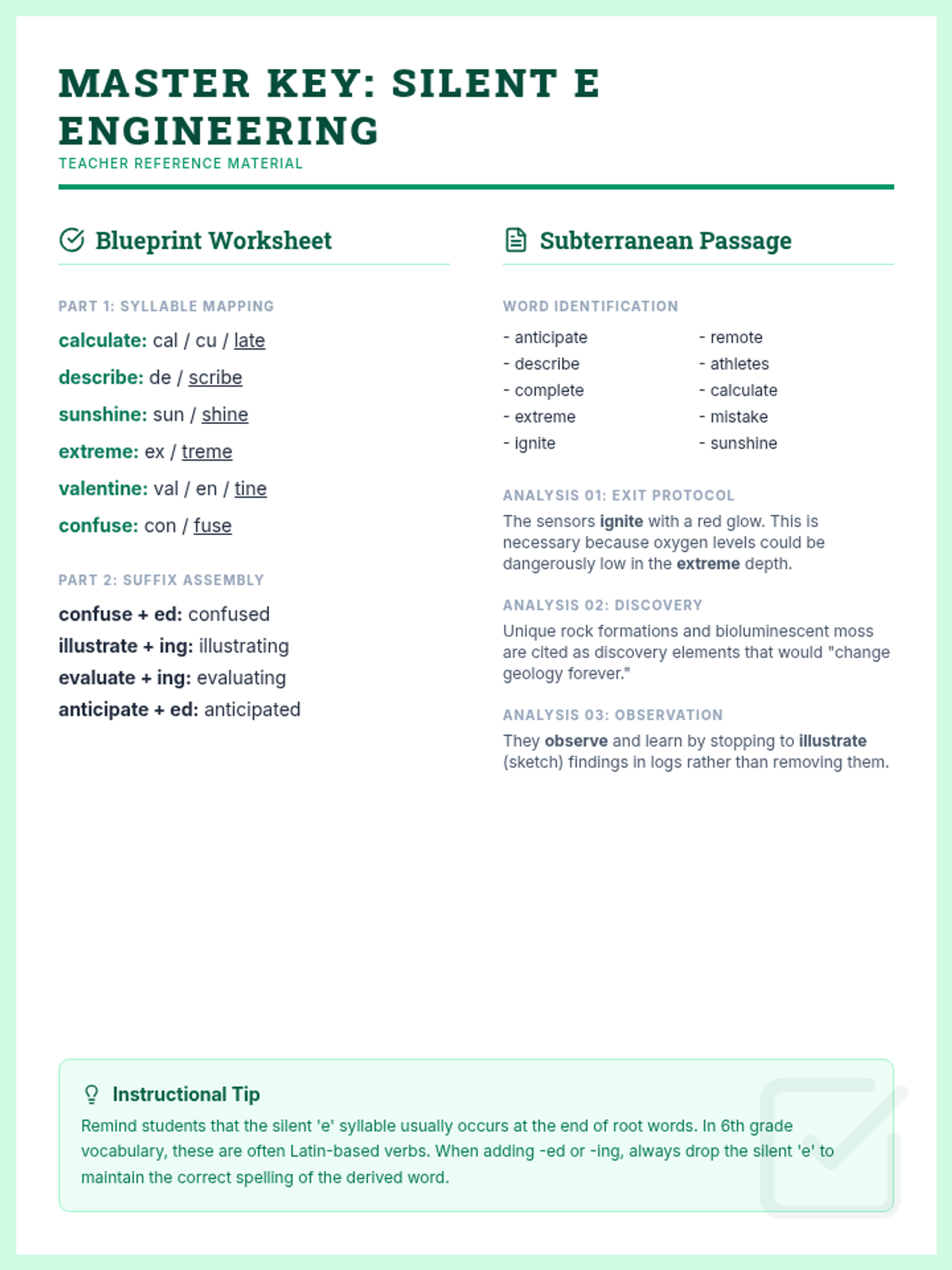
A comprehensive answer key for both the Vowel Power Blueprint Worksheet and the Subterranean Secret Passage, including syllable breakdowns and instructional tips. Optimized for a single-page layout.
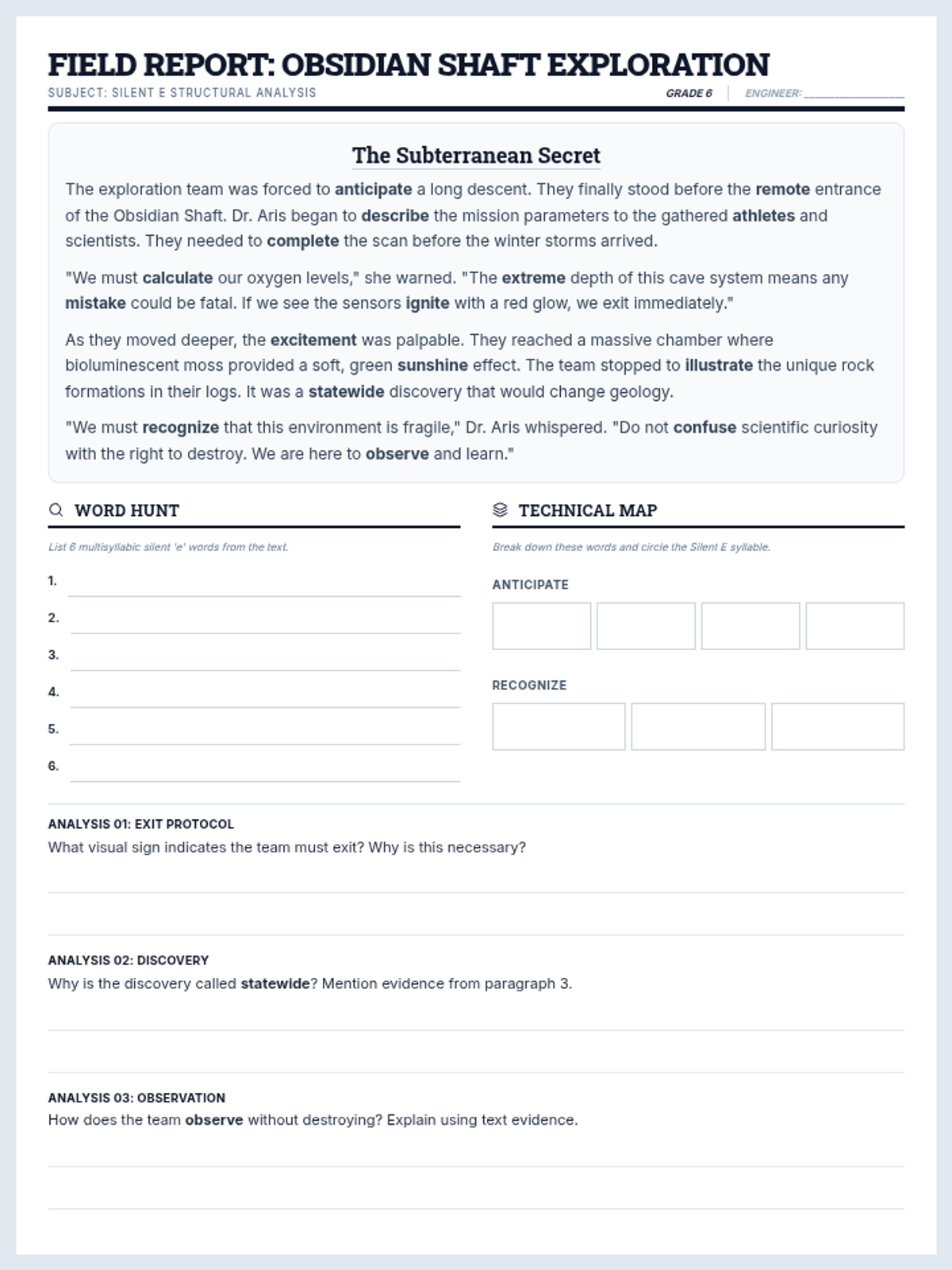
A narrative reading passage set in a mysterious cave system, embedded with high-frequency 6th-grade multisyllabic silent 'e' words. Includes syllable mapping and expanded text-based comprehension questions. Optimized for a single-page layout.
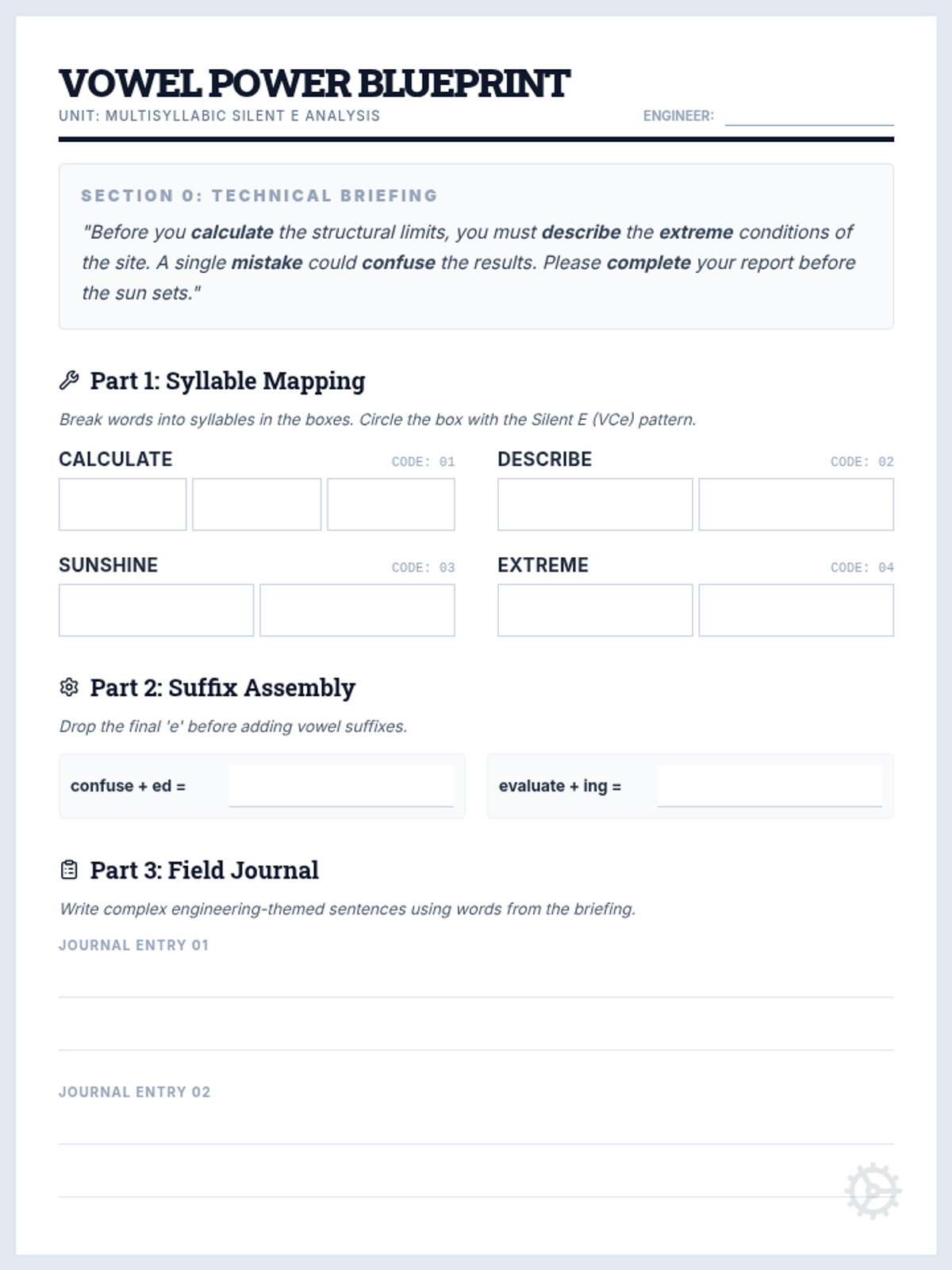
A structural analysis worksheet where students dismantle multisyllabic words into syllables, identifying the silent 'e' pattern and practicing suffix addition rules. Optimized for a single-page layout.
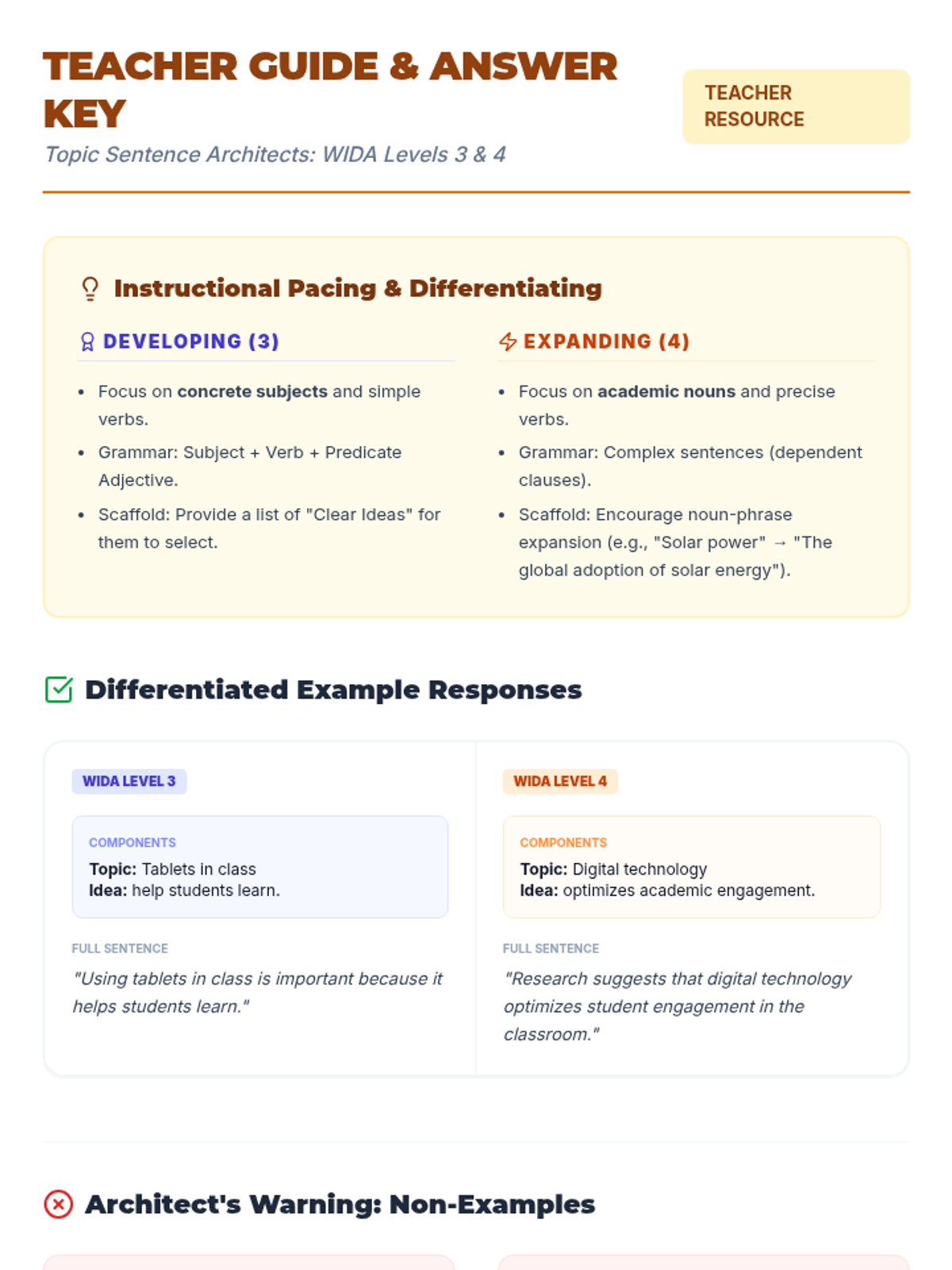
A facilitation guide and answer key for the Topic Sentence Architects lesson. It provides differentiated instructional focuses for WIDA level 3 and 4 students, sophisticated example responses, non-examples for teacher reference, and specific strategies for academic language growth.
A slide deck for introducing the concept of a two-part topic sentence (Topic + Clear Idea). It includes visual analogies, differentiated examples for WIDA levels 3 and 4, and sentence starters for Developing and Expanding learners.
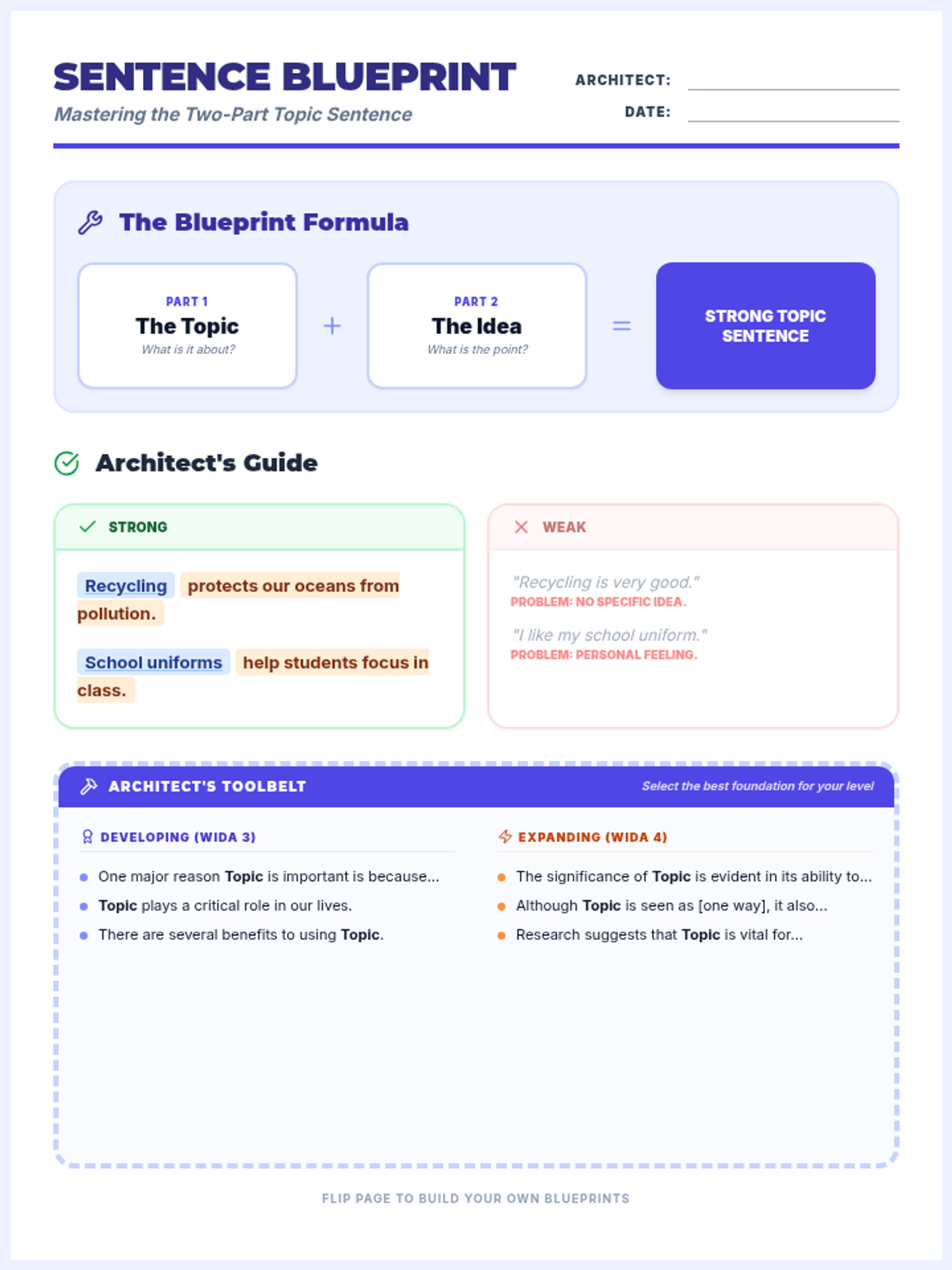
A worksheet for WIDA level 3-4 students to practice writing topic sentences. It includes a visual formula, differentiated sentence starters for Developing and Expanding levels, and a graphic organizer for guided practice.
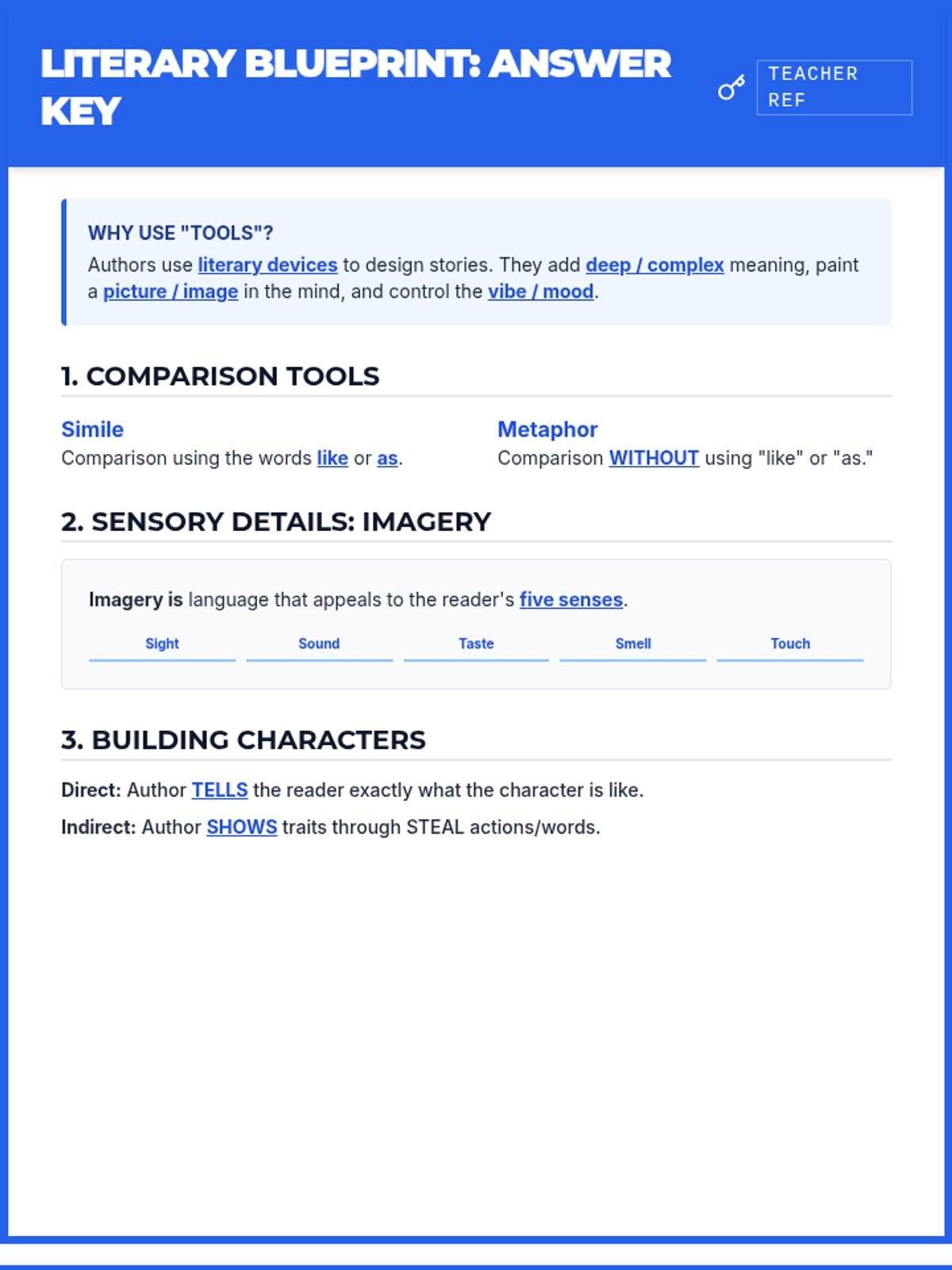
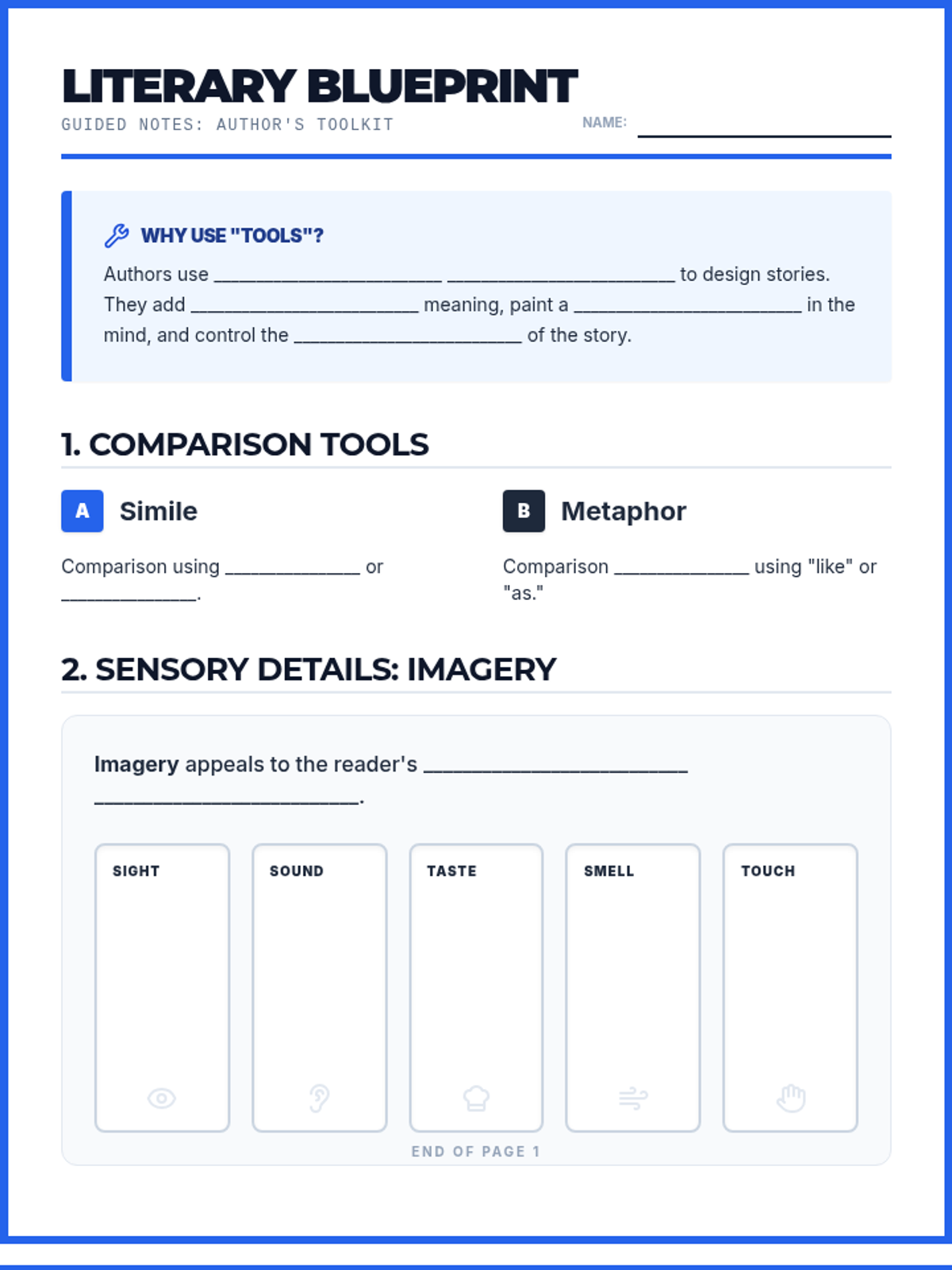
An answer key for the Literary Blueprint Guided Notes, providing the correct fill-in-the-blank responses for the teacher's reference.
A 2-page fill-in-the-blank guided notes document for 7th-grade students, following the "Literary Blueprint" theme. Covers major literary devices with spaces for definitions, examples, and symbols.
A 10-slide presentation introducing 7th-grade literary devices with a "blueprint" theme. Includes visual definitions and examples for simile, metaphor, irony, imagery, characterization, point of view, and conflict.
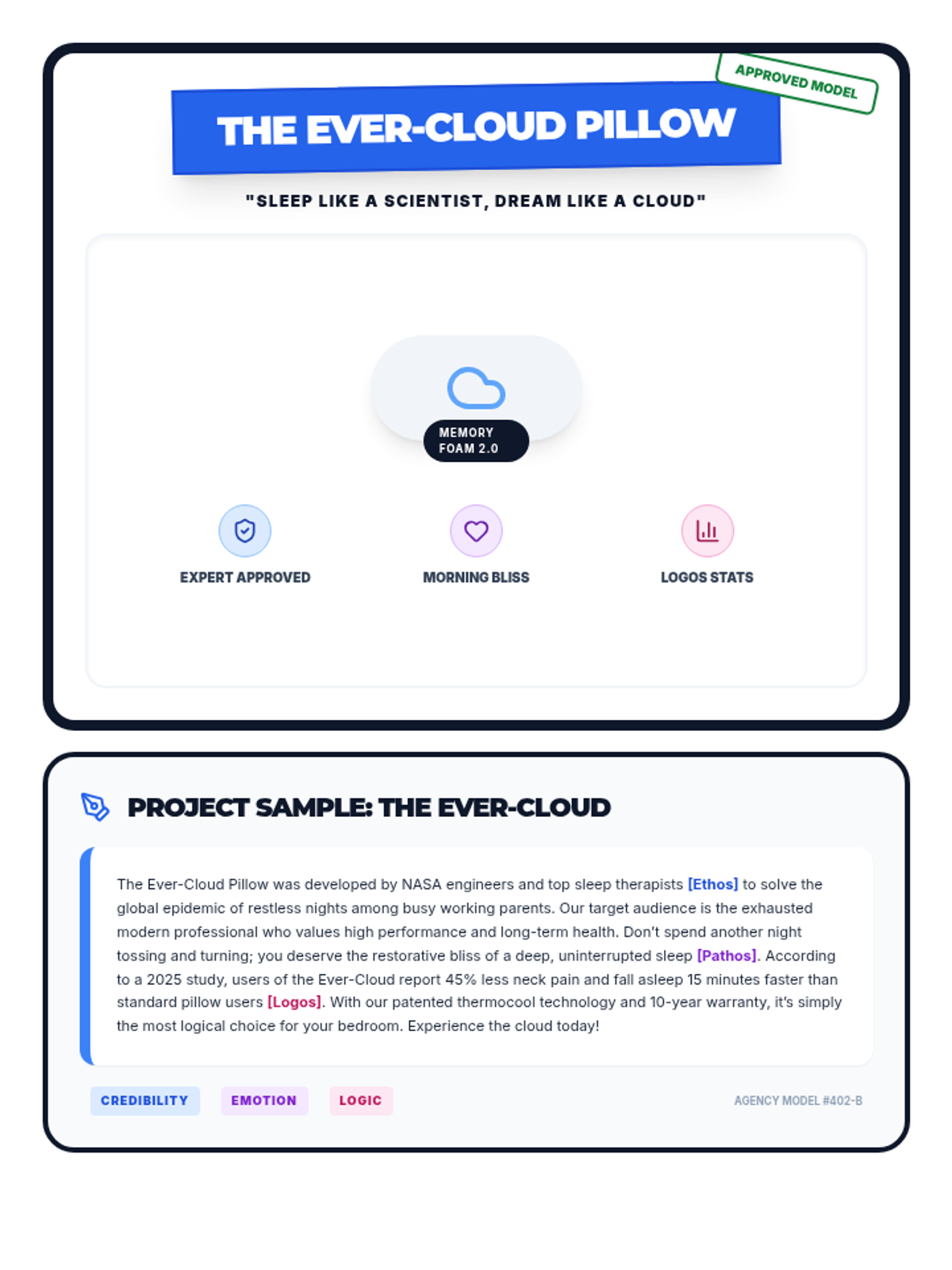
A completed model of the Pitch Perfect project to show students what a successful poster and paragraph look like, using a fictional "Ever-Cloud Pillow" as the example.
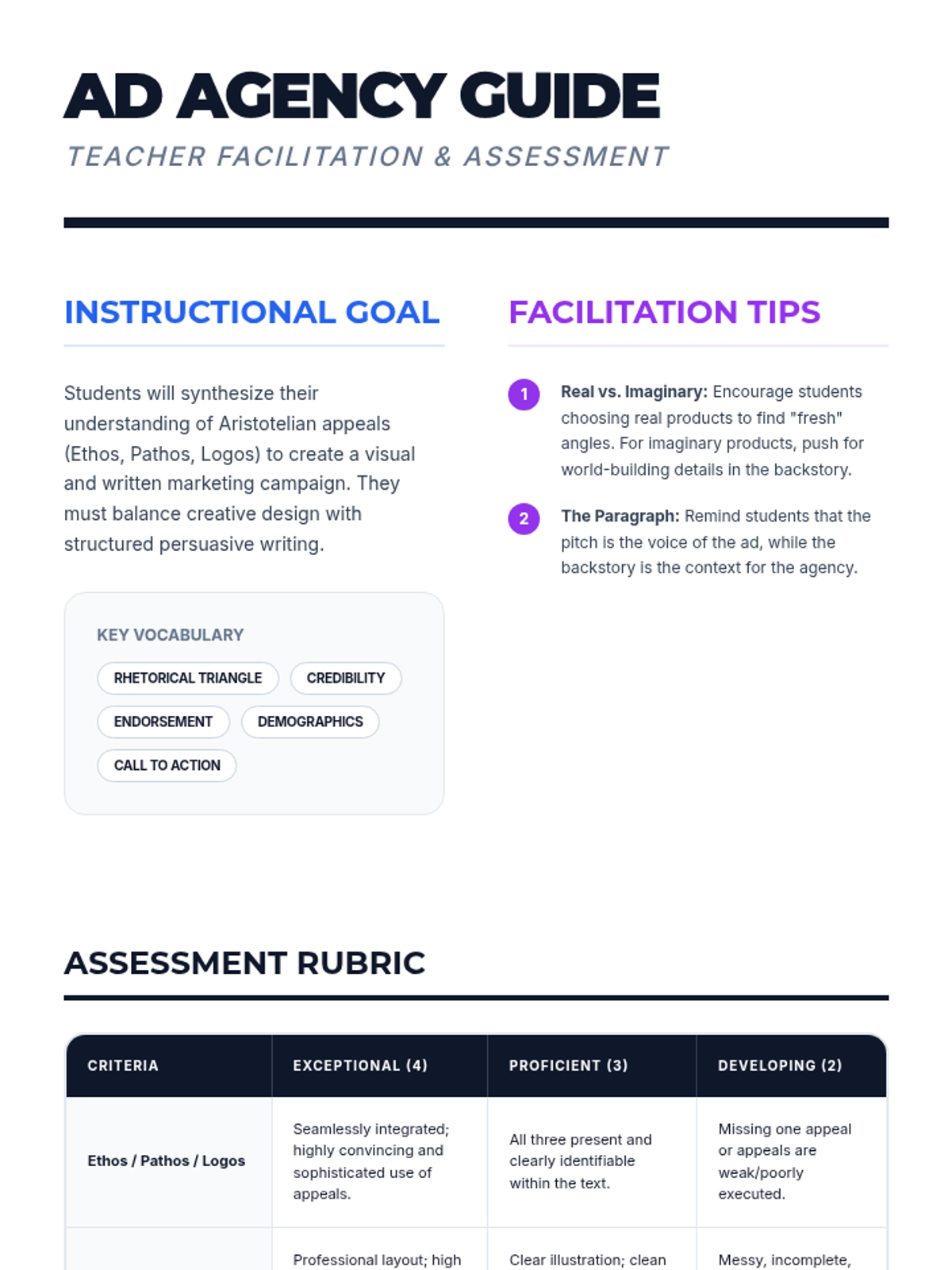
A comprehensive teacher's guide for the Pitch Perfect project, including lesson goals, facilitation tips, a detailed grading rubric, and differentiation strategies.
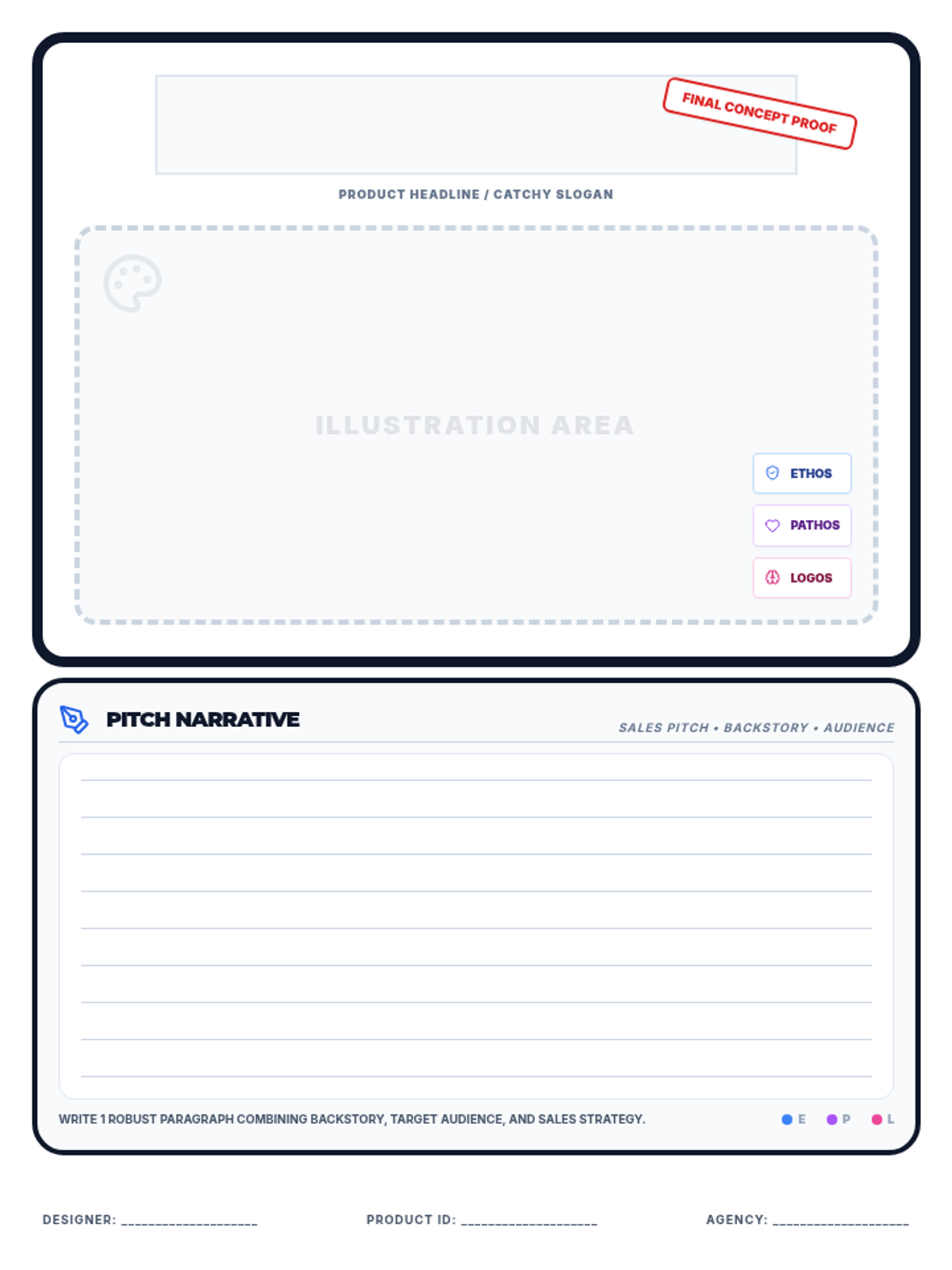
A clean, high-impact poster template designed for students to illustrate their product and write their persuasive pitch. Includes visual markers for rhetorical appeals and a structured layout.
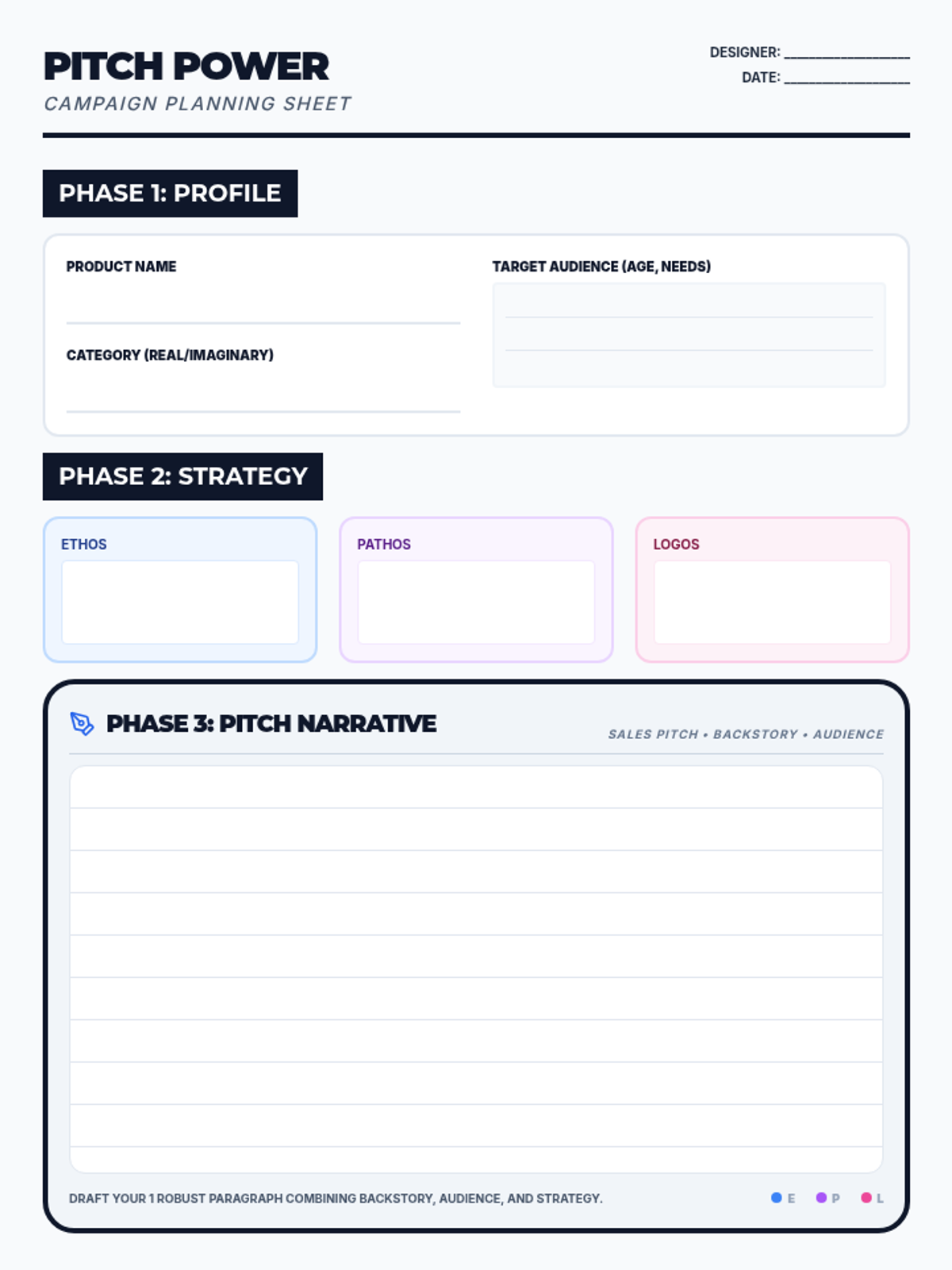
A detailed planning worksheet to help students brainstorm their product, identify their target audience, and map out their rhetorical strategies before creating their final poster. Includes the pitch narrative draft section.
A comprehensive slide deck introducing the rhetorical triangle (ethos, pathos, logos) with modern examples, project requirements, and a model example of the "Ever-Cloud Pillow" project.
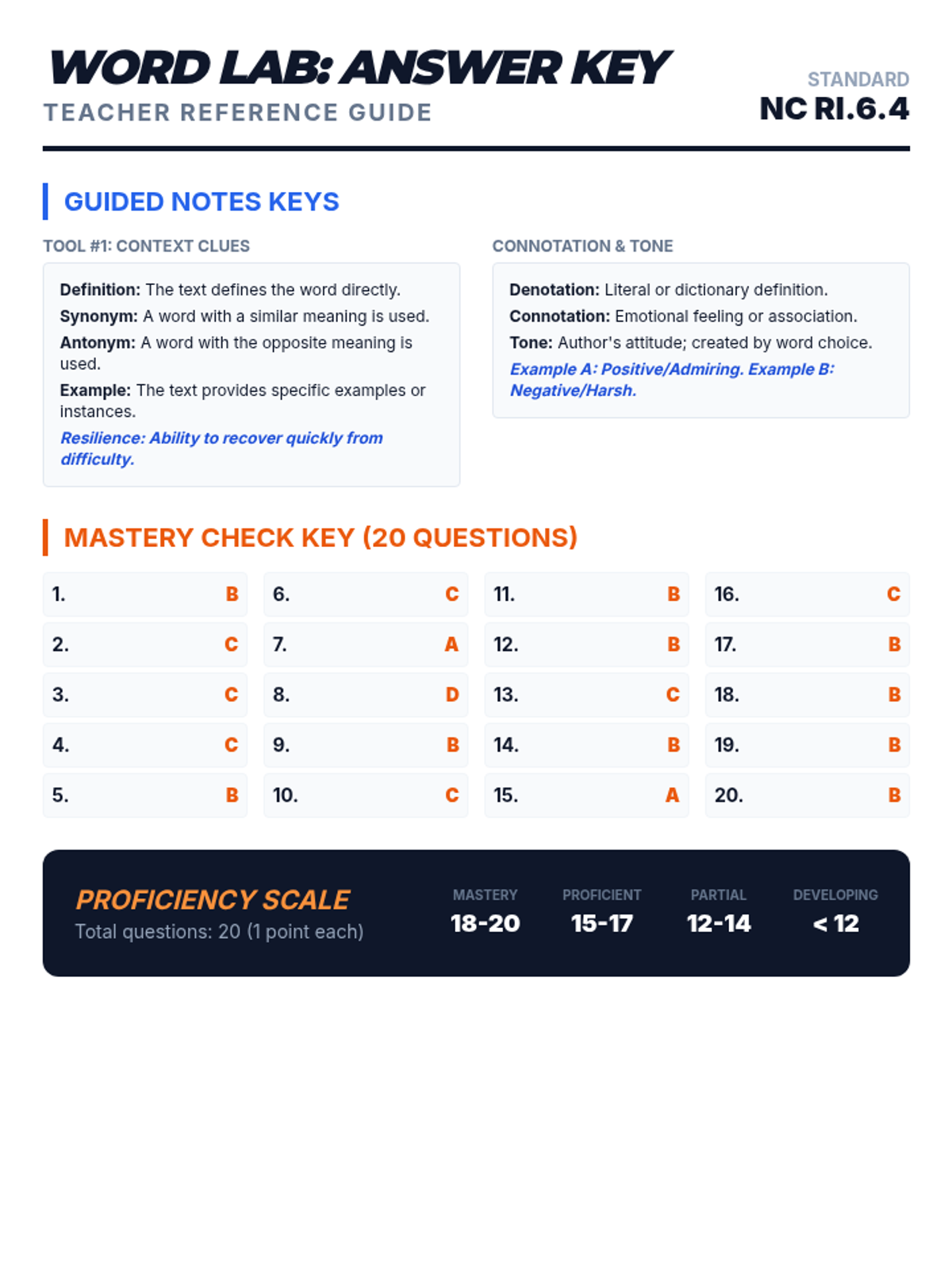
Teacher answer key for the Word Lab Guided Notes and Mastery Check, including proficiency scales and grading guides for Grade 6 NC standard RI 6.4. Revised to fit all content onto a single page for easier reference.
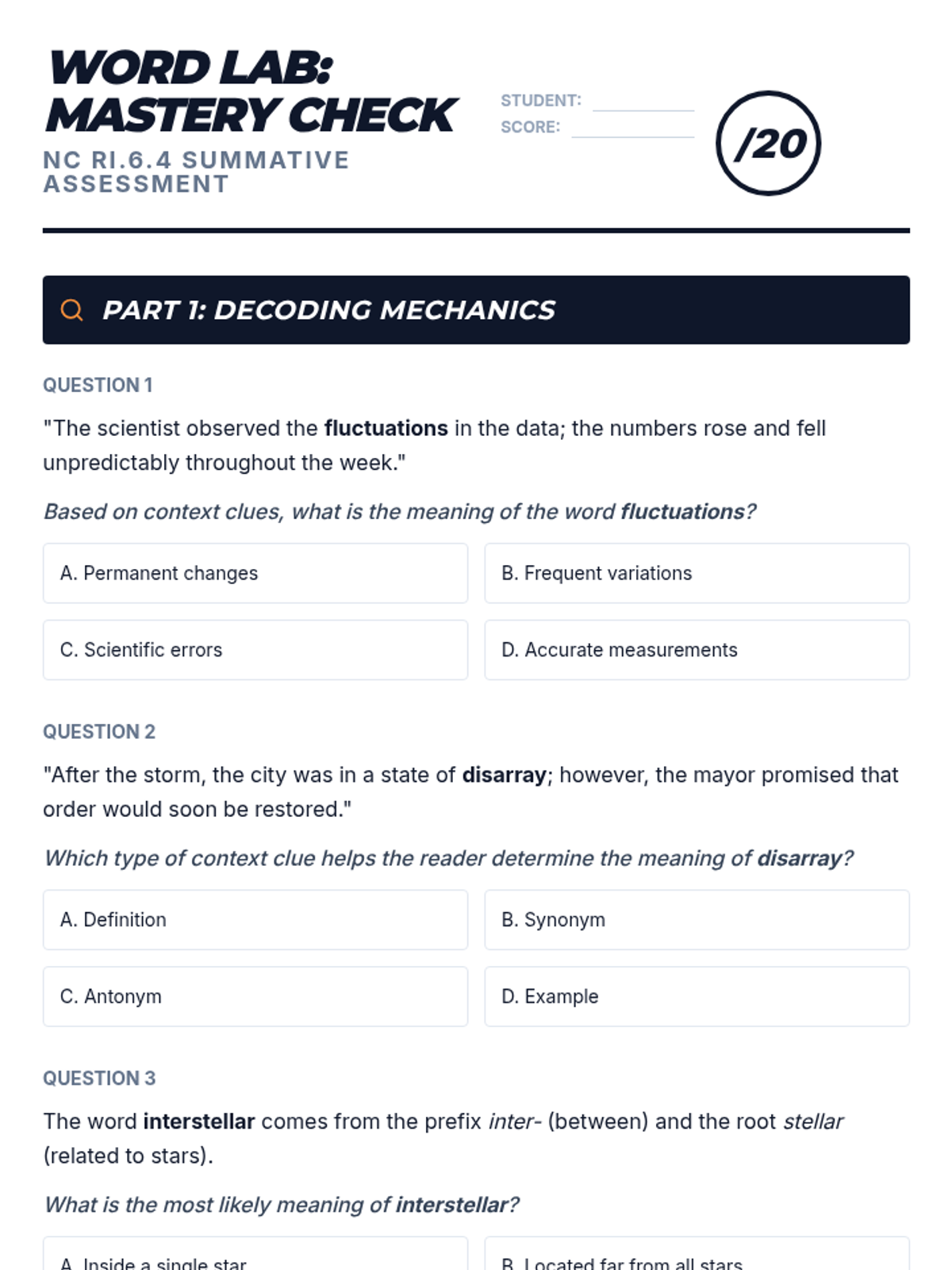
A comprehensive 20-question EOG-style mastery check for Grade 6 NC standard RI 6.4. The assessment covers context clues, word parts, connotation, tone, figurative language, and technical terms using multiple-choice questions and a themed reading selection. Revised to ensure questions stay with their options and sections are properly separated.
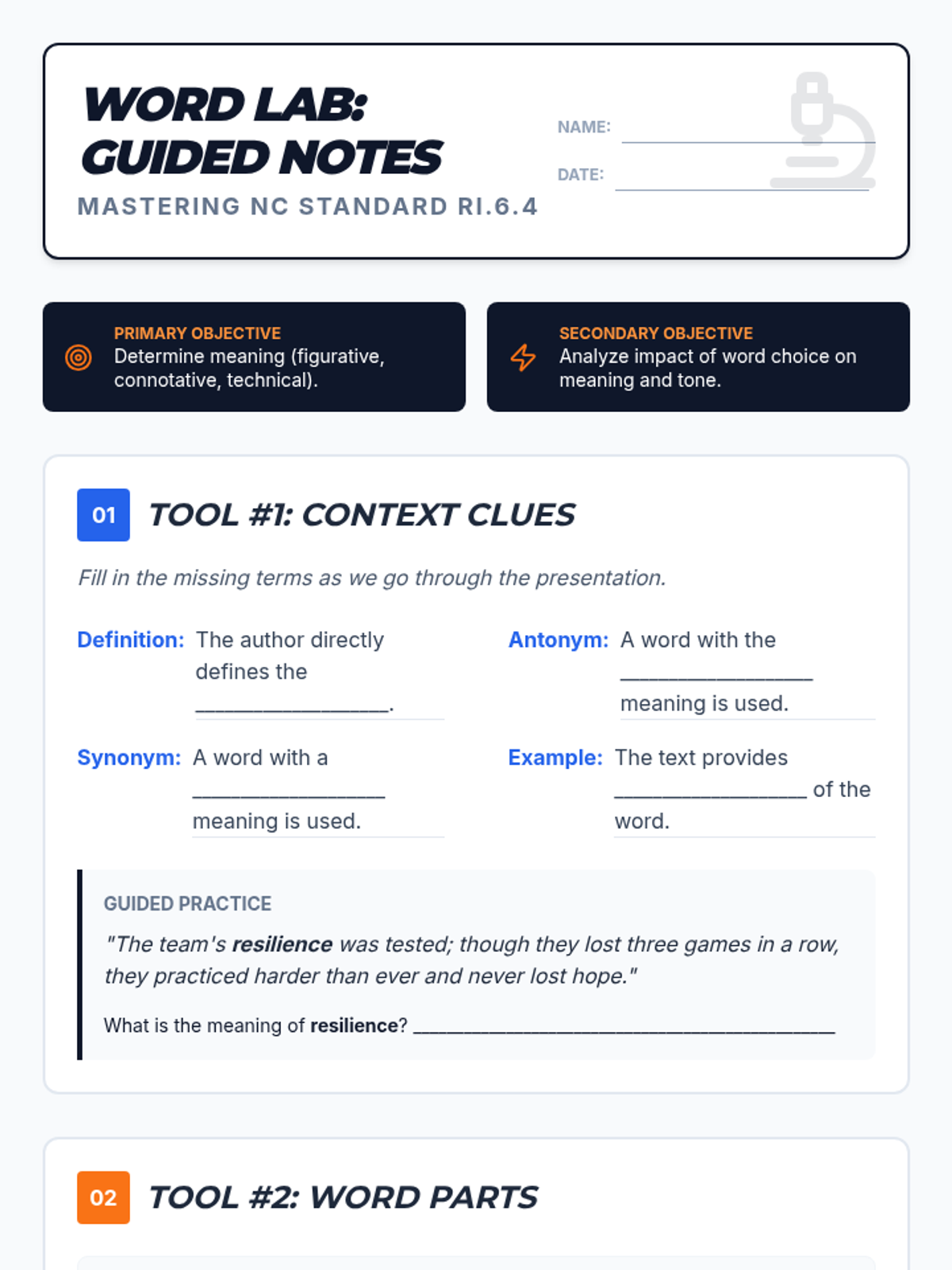
Guided notes for Grade 6 NC standard RI 6.4, designed to accompany the Word Lab Slides. Students complete definitions and practice exercises focused on context clues, word parts, connotation, and tone. Revised for improved layout and page breaks.
A high-impact instructional slide presentation for Grade 6 NC standard RI 6.4, featuring the 'Word Lab' theme. Includes direct instruction on context clues, word parts, connotation, tone, and technical terms, along with EOG-style practice questions.
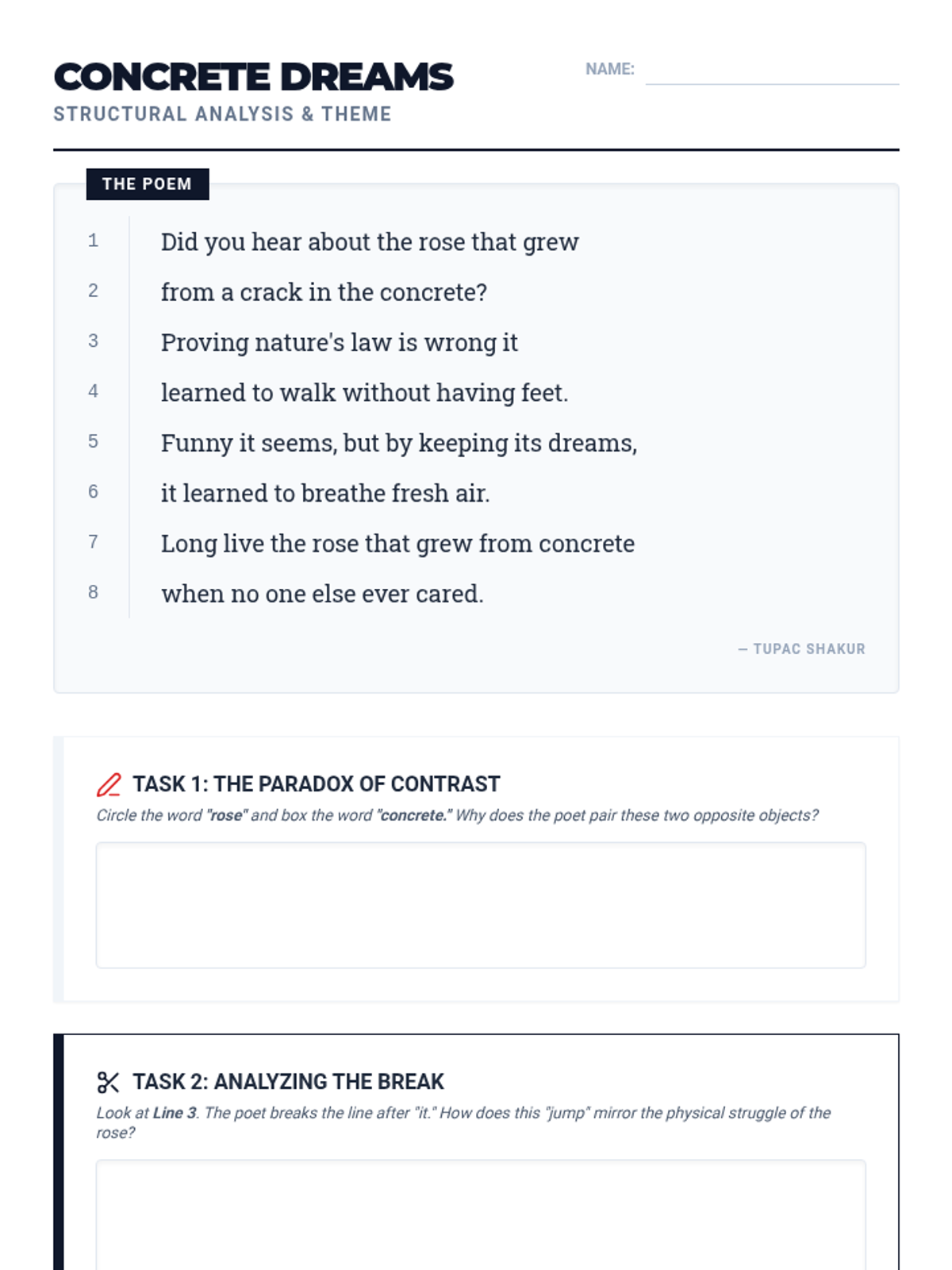
A 2-page student worksheet designed for guided annotation and deep reflection on Tupac Shakur's poem. Includes specific structural analysis tasks and a theme synthesis section.
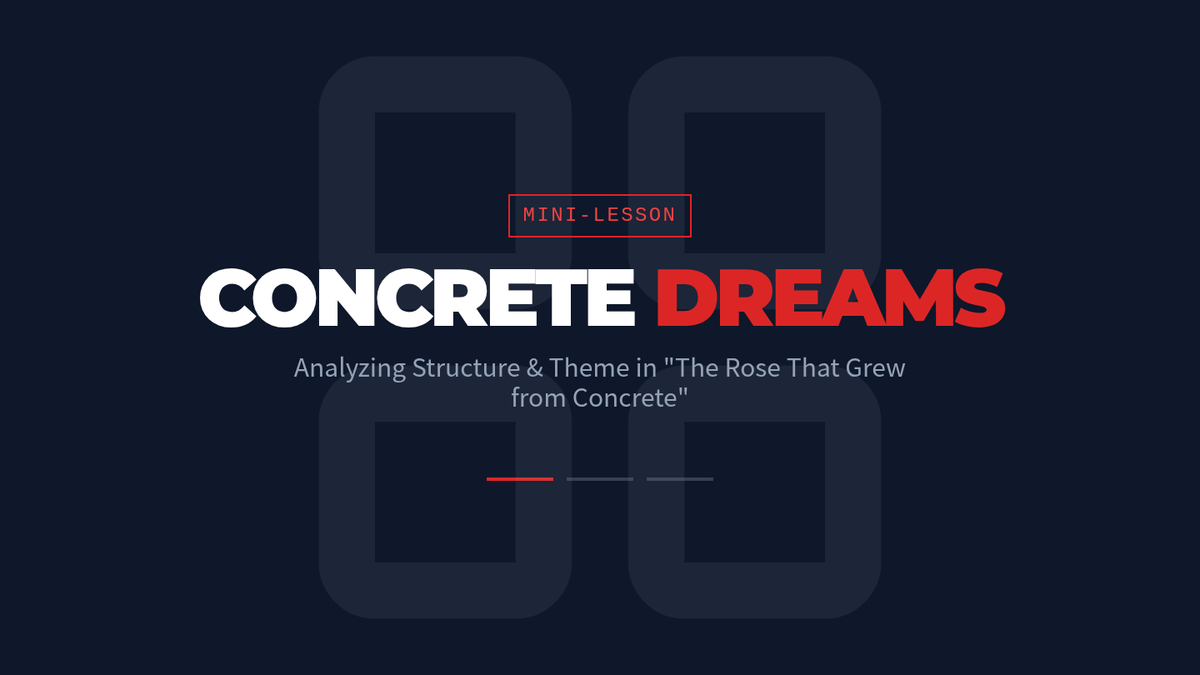
A visually striking slide deck for a 20-minute mini-lesson. It covers the concept of structural paradox, defines key analysis terms, and provides guided focus for the Tupac Shakur poem.
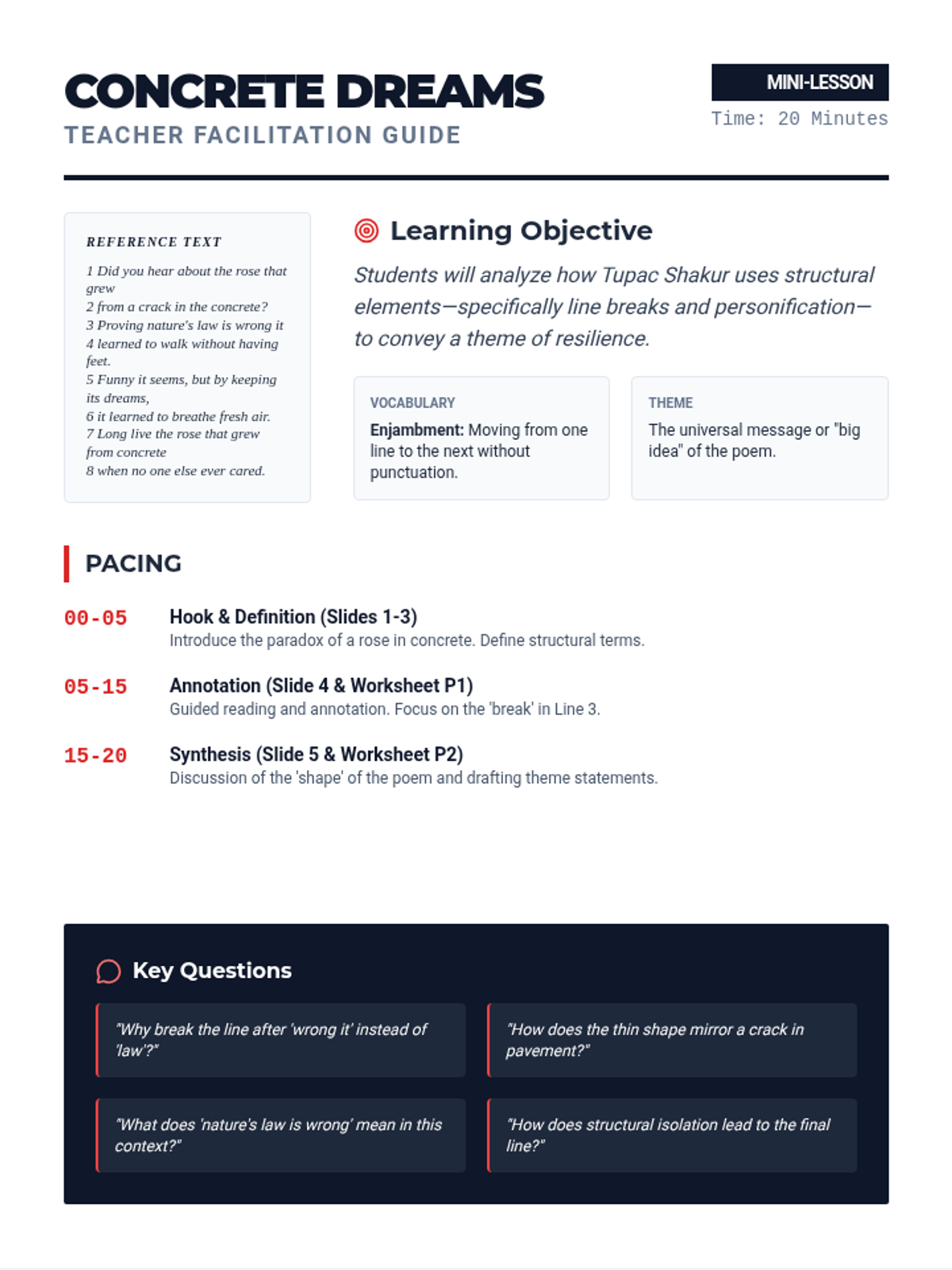
A detailed teacher guide for a 20-minute mini-lesson on Tupac Shakur's poem, including pacing, discussion prompts, and an answer key for the guided annotation.
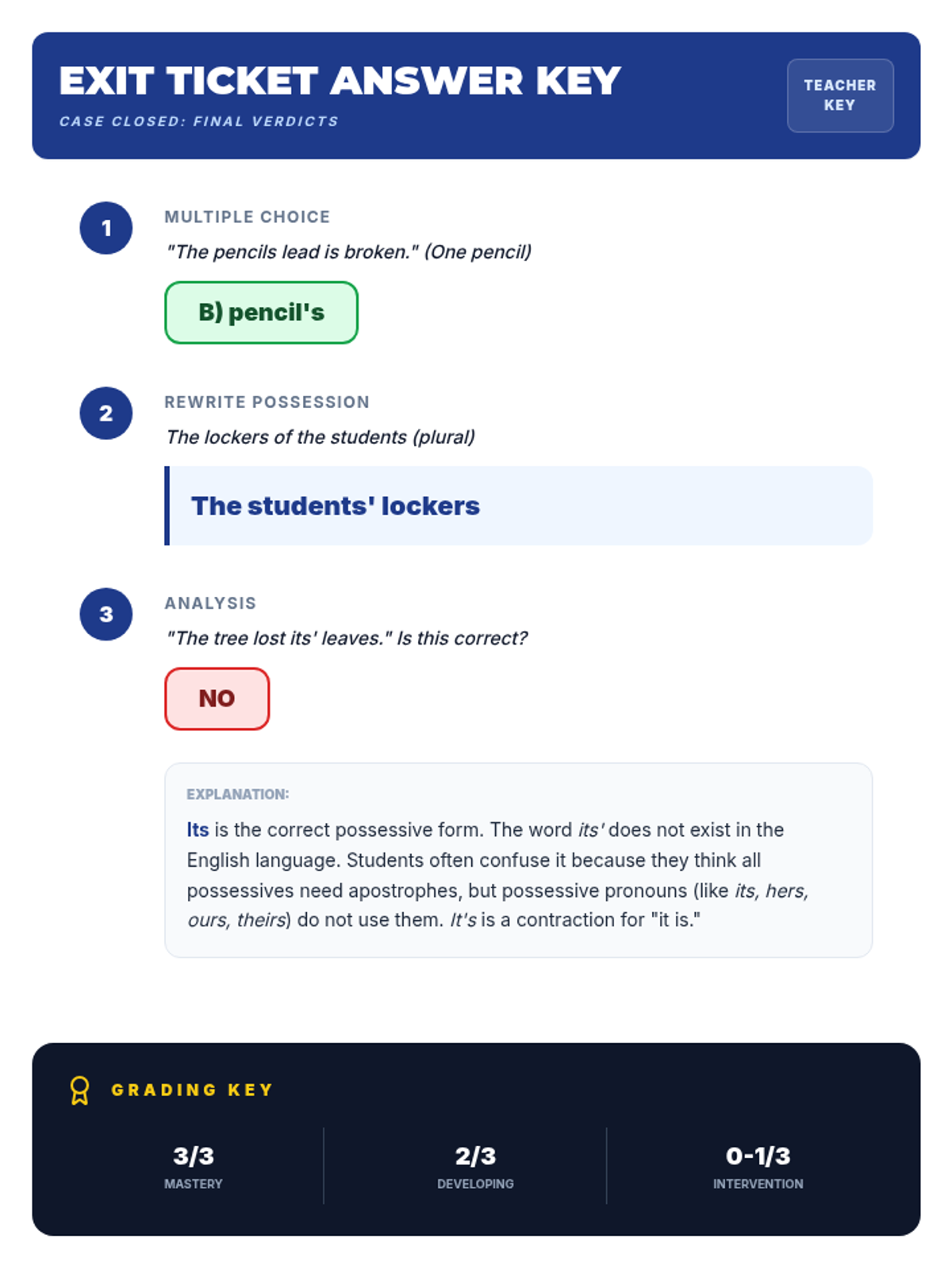
A teacher's answer key for the 'Case Closed' exit ticket. It provides correct answers for multiple-choice and short-answer questions, along with a detailed explanation of the common 'its' vs 'it's' mistake and a suggested grading rubric.
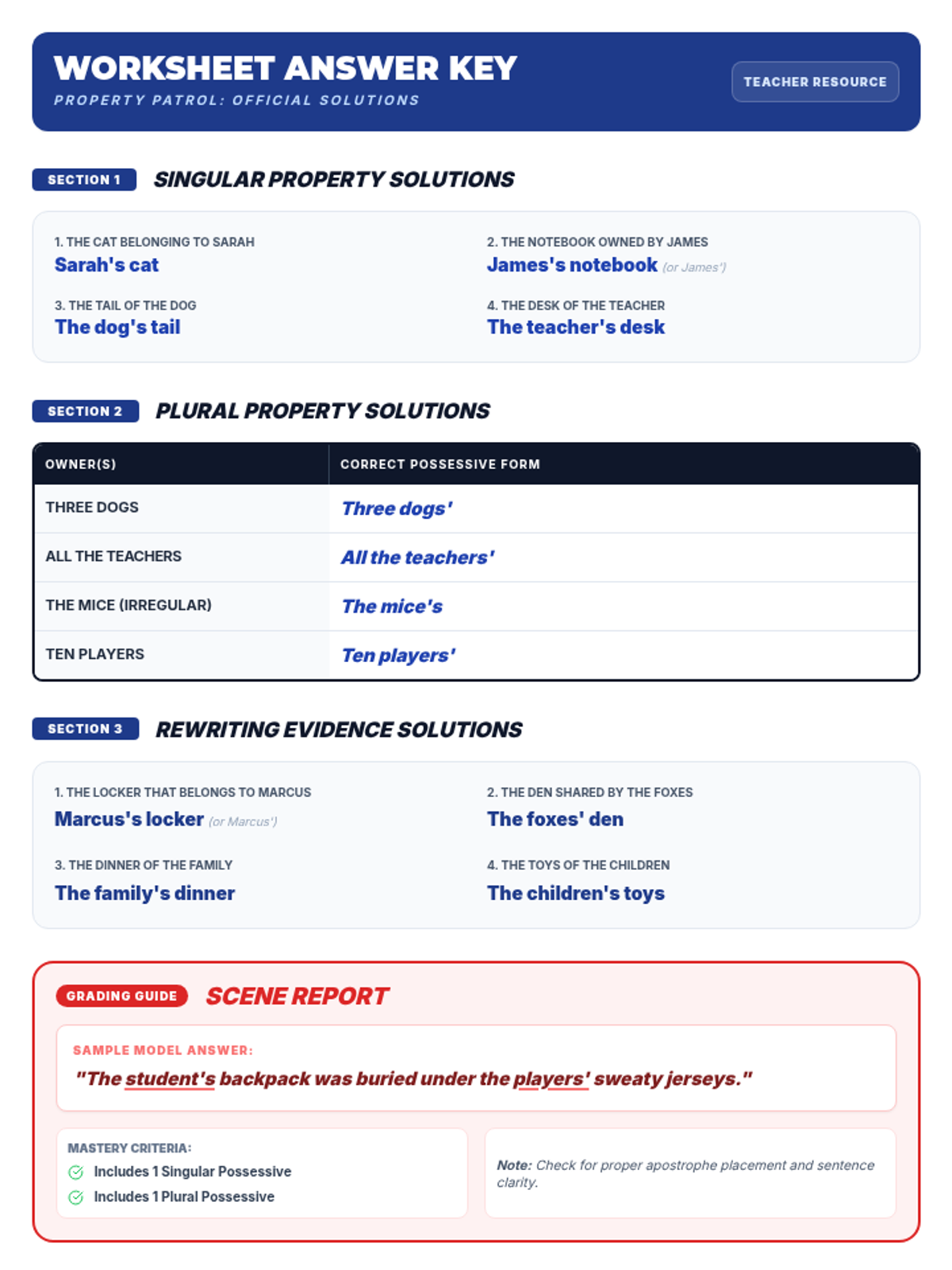
A comprehensive teacher's answer key for the 'Property Patrol' worksheet. It provides clear solutions for singular and plural possessive noun exercises, including irregular forms and sample sentence constructions.