A 5-question triangle congruence quiz focusing on deep-dive formal proofs where students must identify SSS, SAS, ASA, or AAS theorems and complete Statement-Reason tables. Revised for logical consistency and layout efficiency.
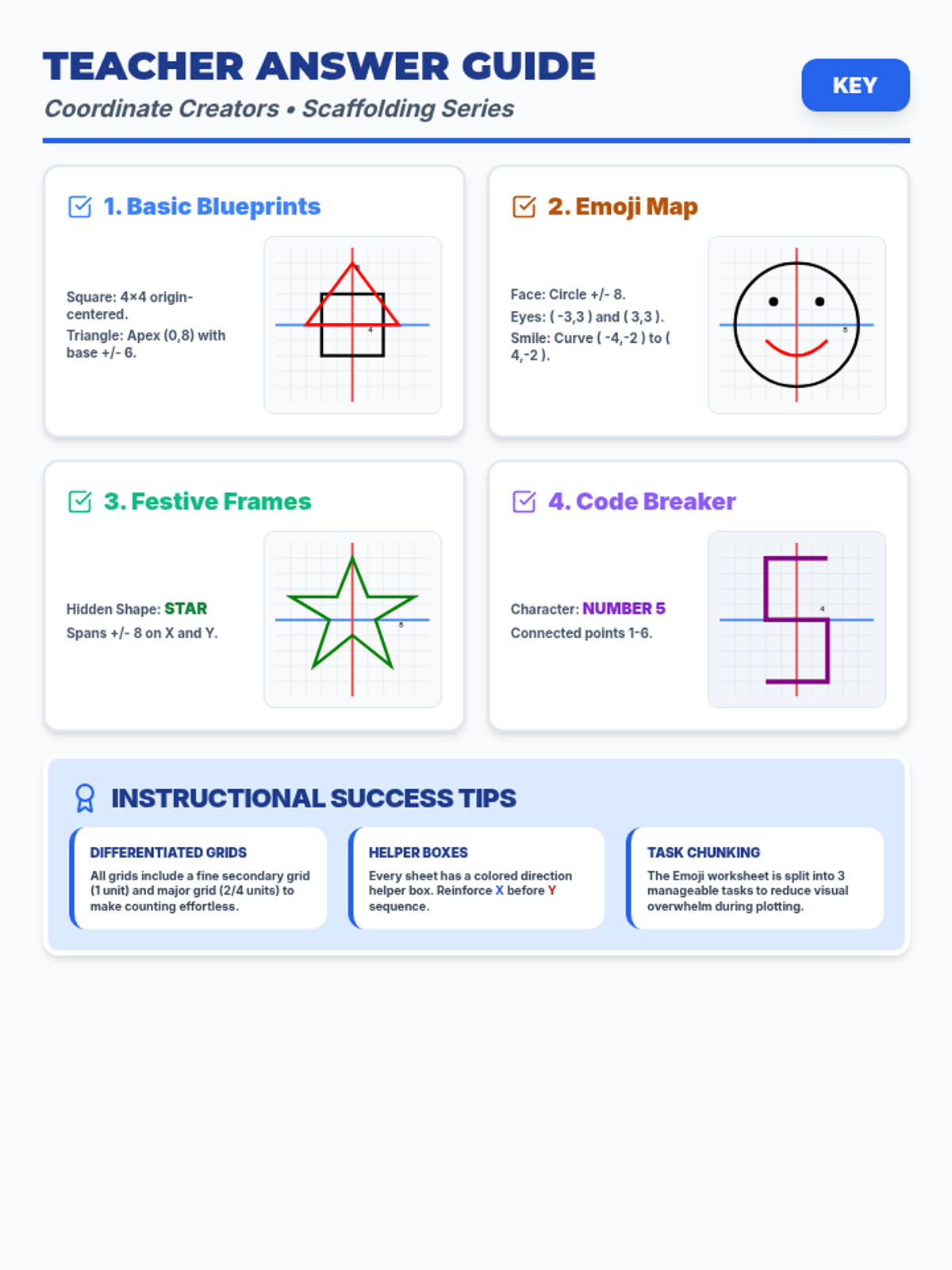
A comprehensive answer key and teacher guide for the 'Coordinate Creators' lesson. Includes visual solutions for all worksheets and specific instructional strategies for supporting IEP students.
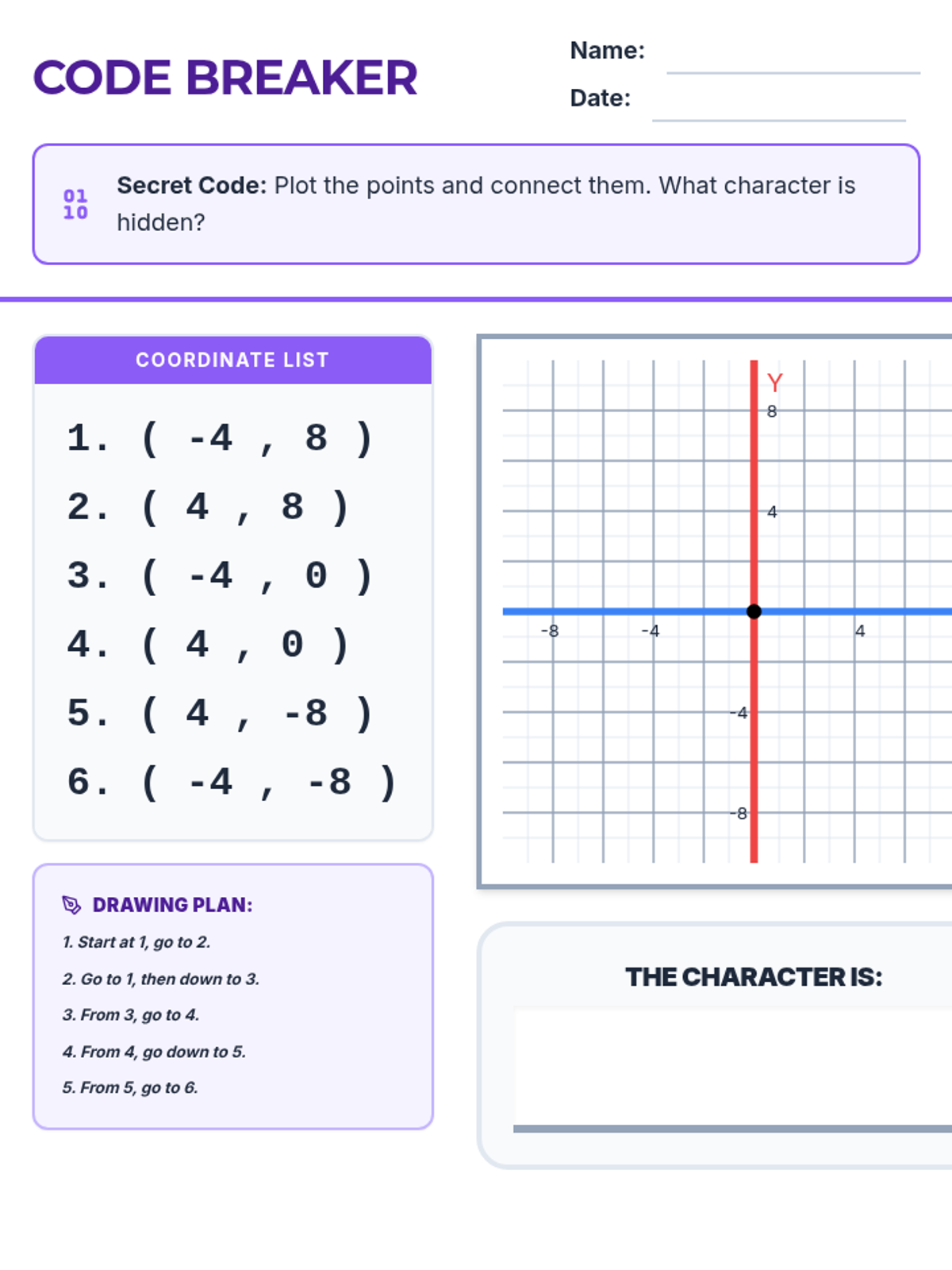
A coordinate plotting worksheet that reveals the number '5' or letter 'S' (depending on interpretation). Includes explicit pencil-lifting instructions to help students navigate complex paths.
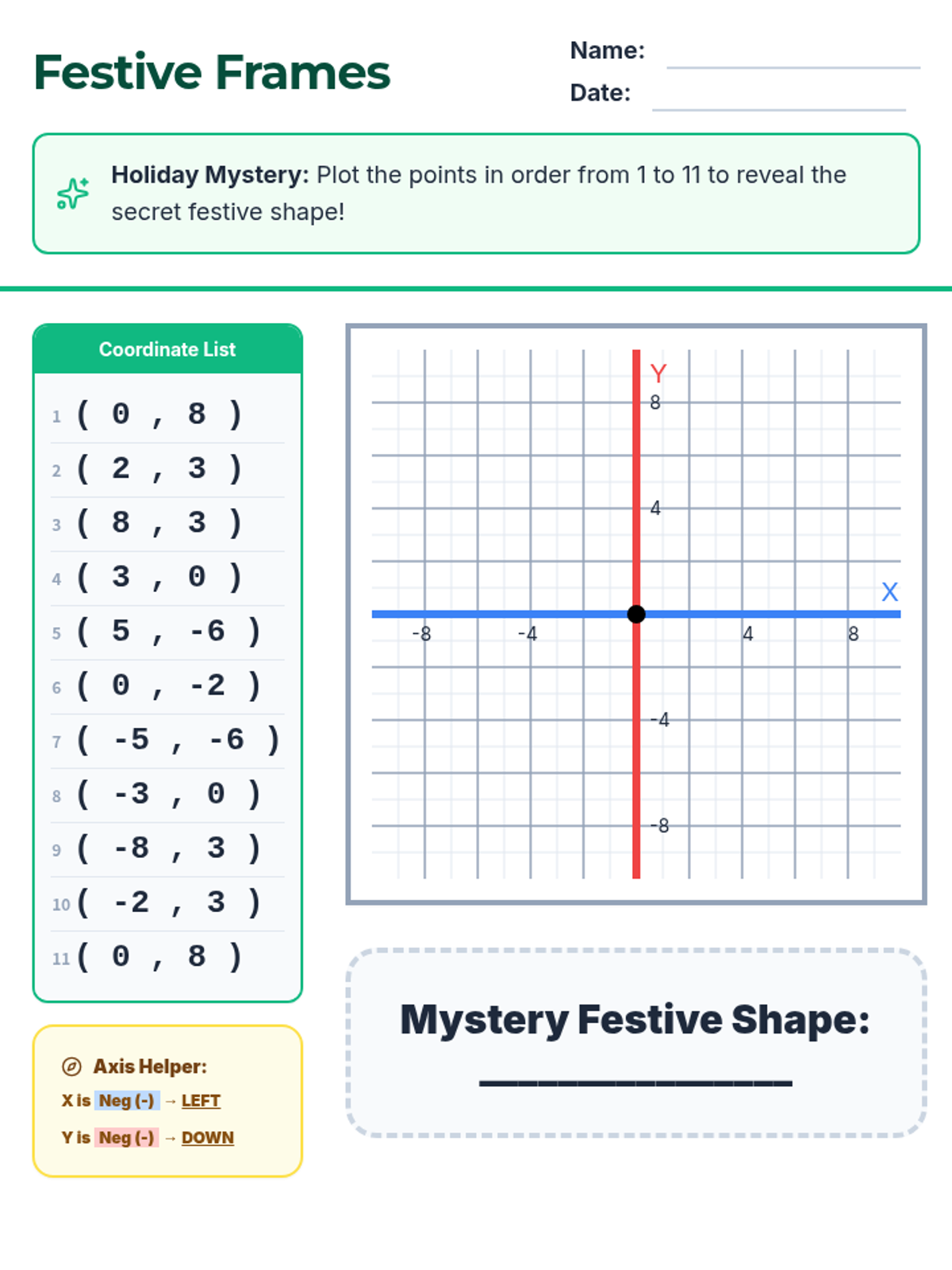
A mystery plotting activity revealing a holiday star. Designed with a clear, numbered list of coordinates and enlarged grid markers to support students with processing or visual-spatial challenges.
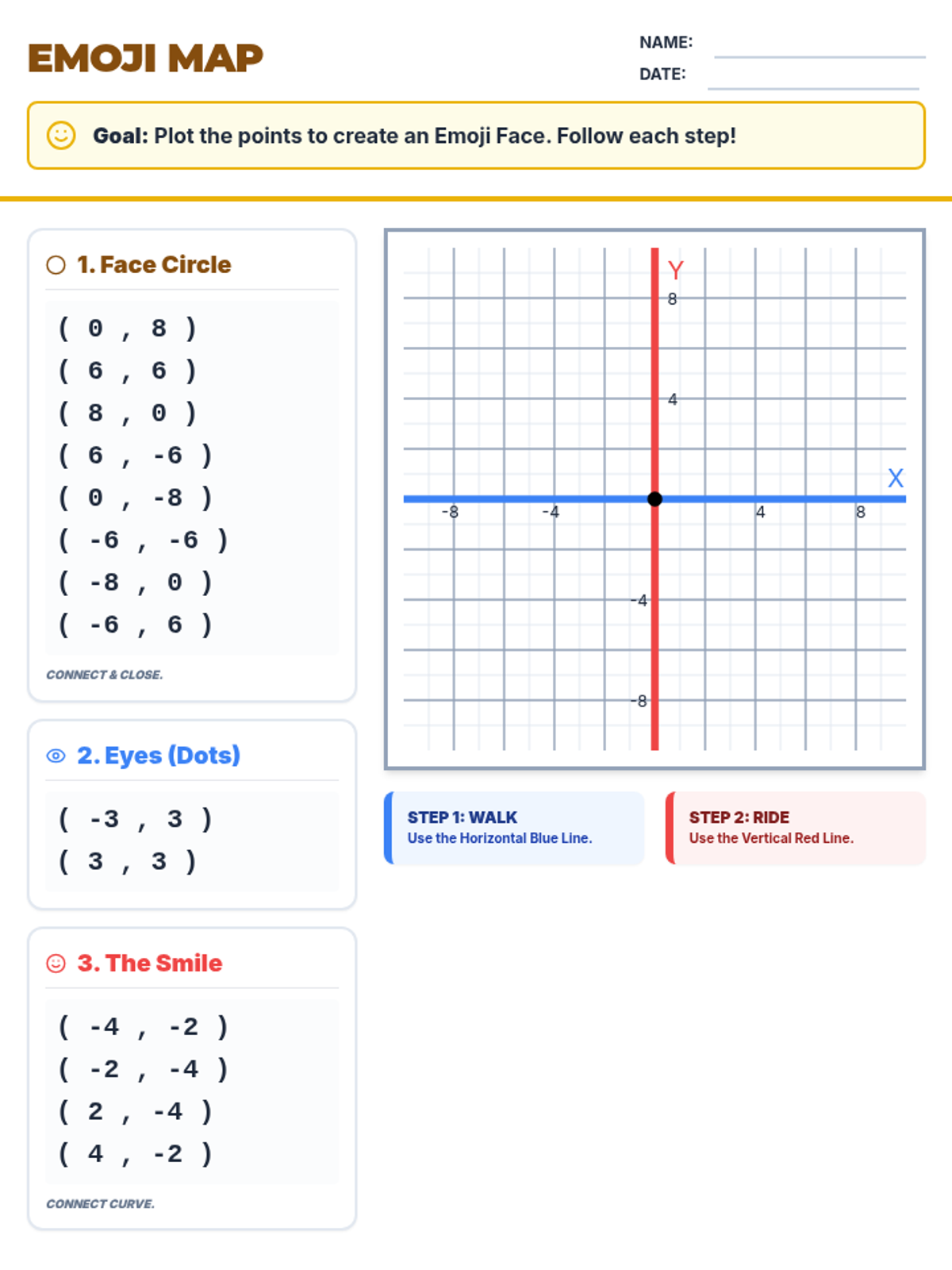
A creative coordinate plotting activity where students draw a happy face emoji. The activity is broken into three distinct parts (outline, eyes, smile) to help IEP students manage the task in smaller steps.
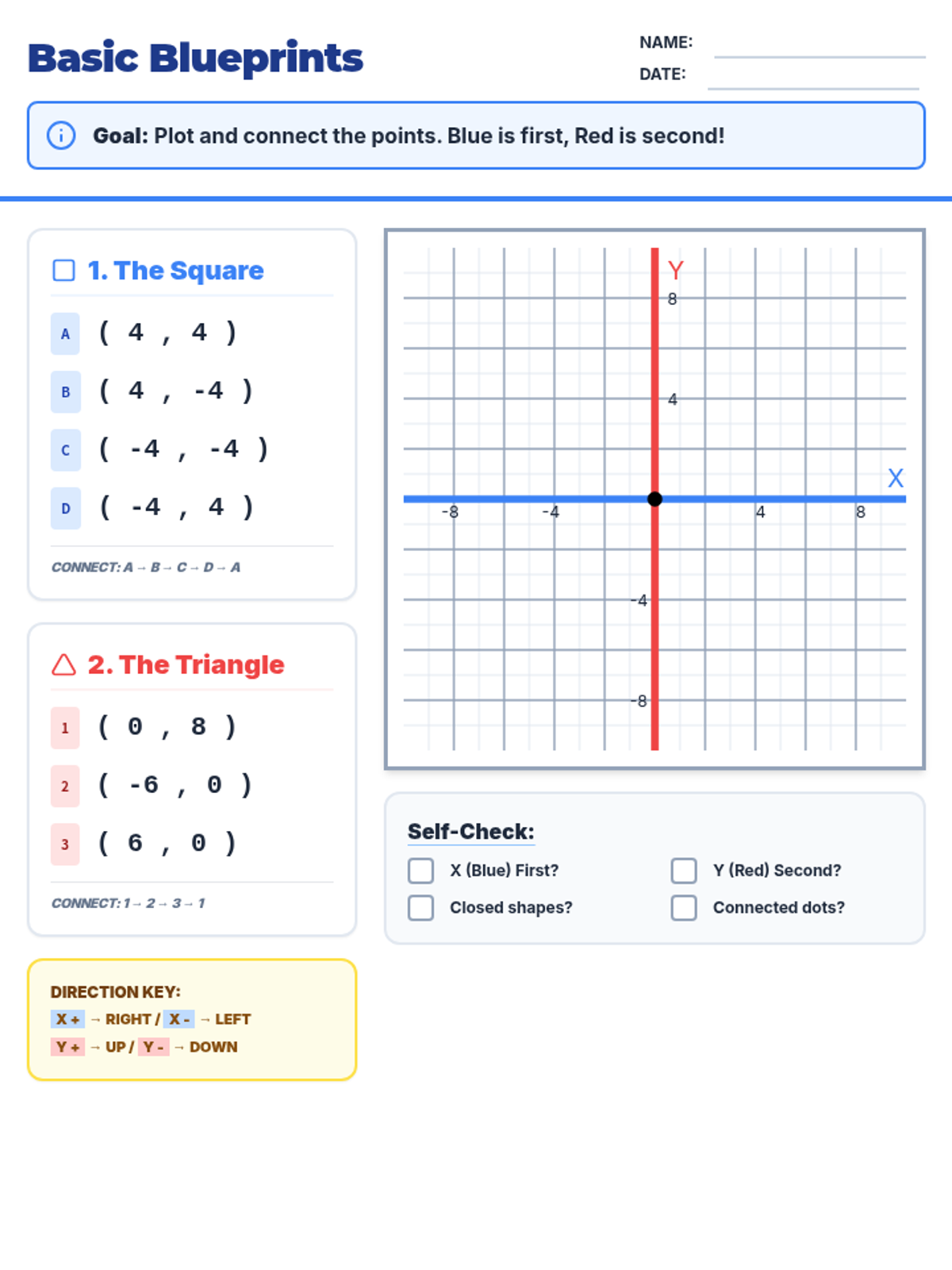
A scaffolded worksheet for plotting a square and a triangle. Features color-coded axes (blue X, red Y) and simplified instructions for IEP support.
Interactive slides introducing the 4-quadrant coordinate plane using the 'Elevator Rule' (x first, then y). Designed for IEP students with clear visual aids, color-coded axes, and large text.
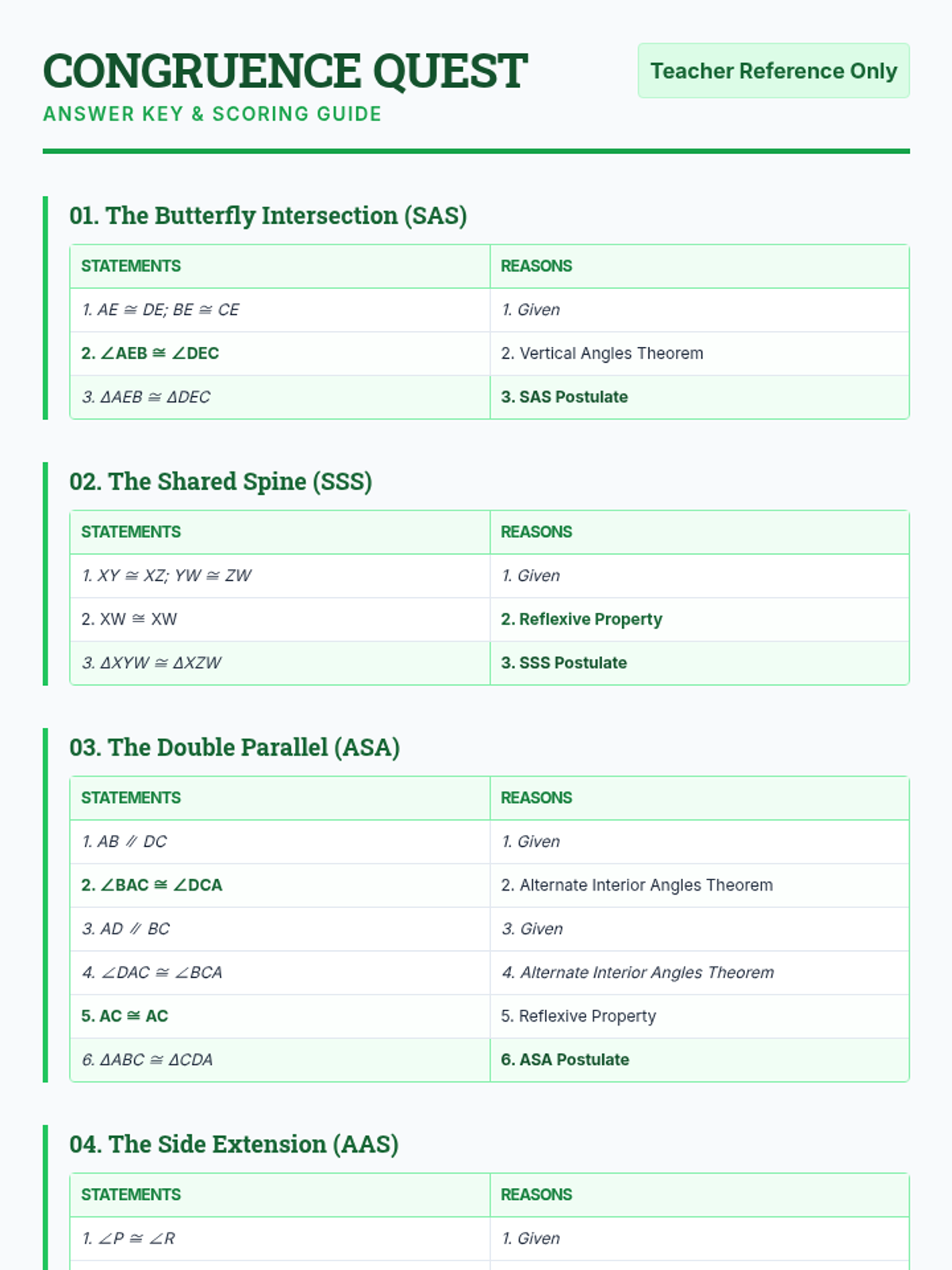
The complete answer key for the Congruence Proofs Quiz, providing all statements, reasons, and final theorems with a detailed point breakdown for teachers.
Introductory slide deck for the distance formula lesson, featuring a "Coordinate Cartography" explorer theme, derivation of the formula, radical simplification guide, and a worked example.
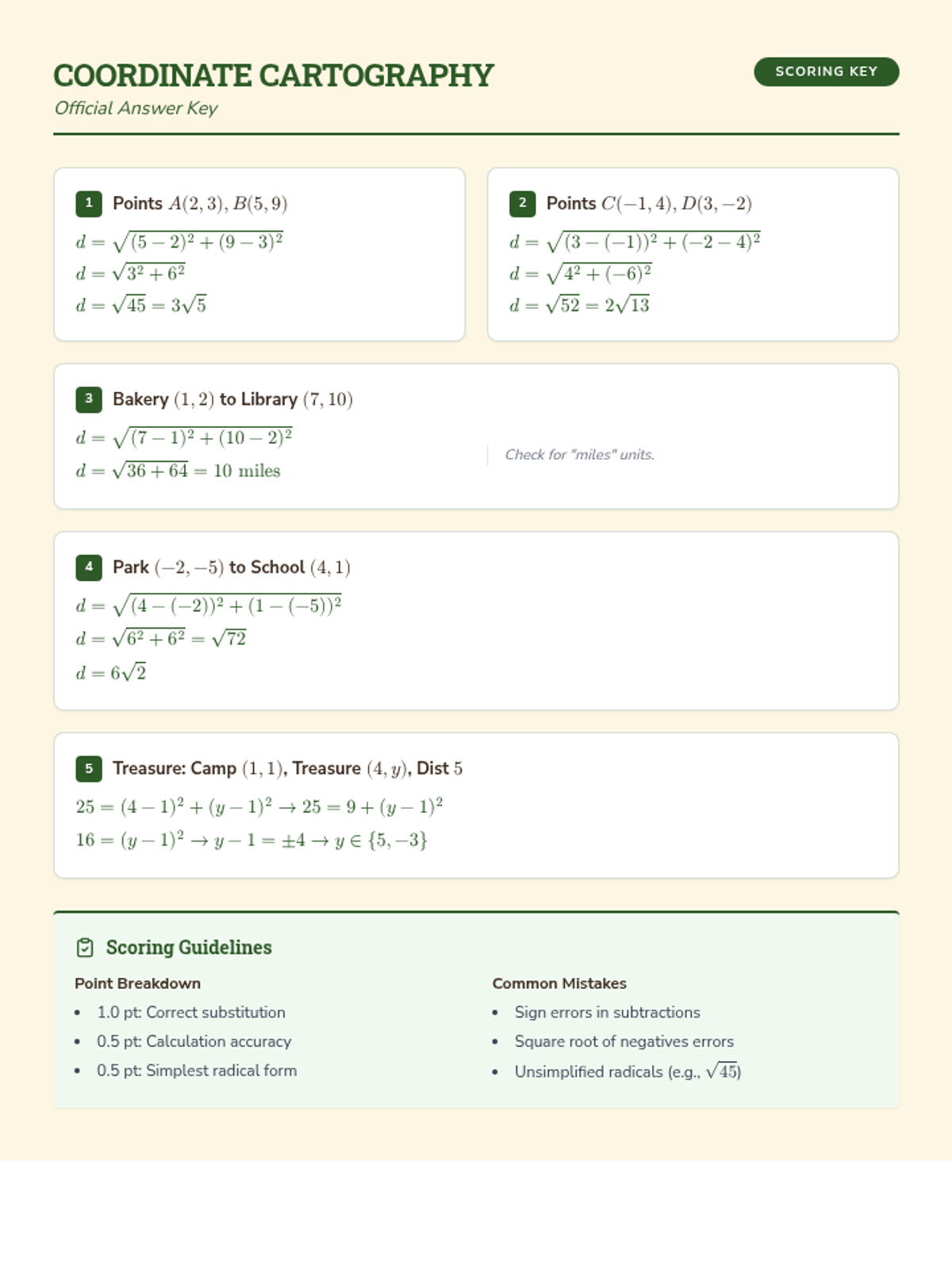
Comprehensive teacher answer key for the Coordinate Cartography quiz, including step-by-step solutions, radical simplification steps, and a grading rubric.
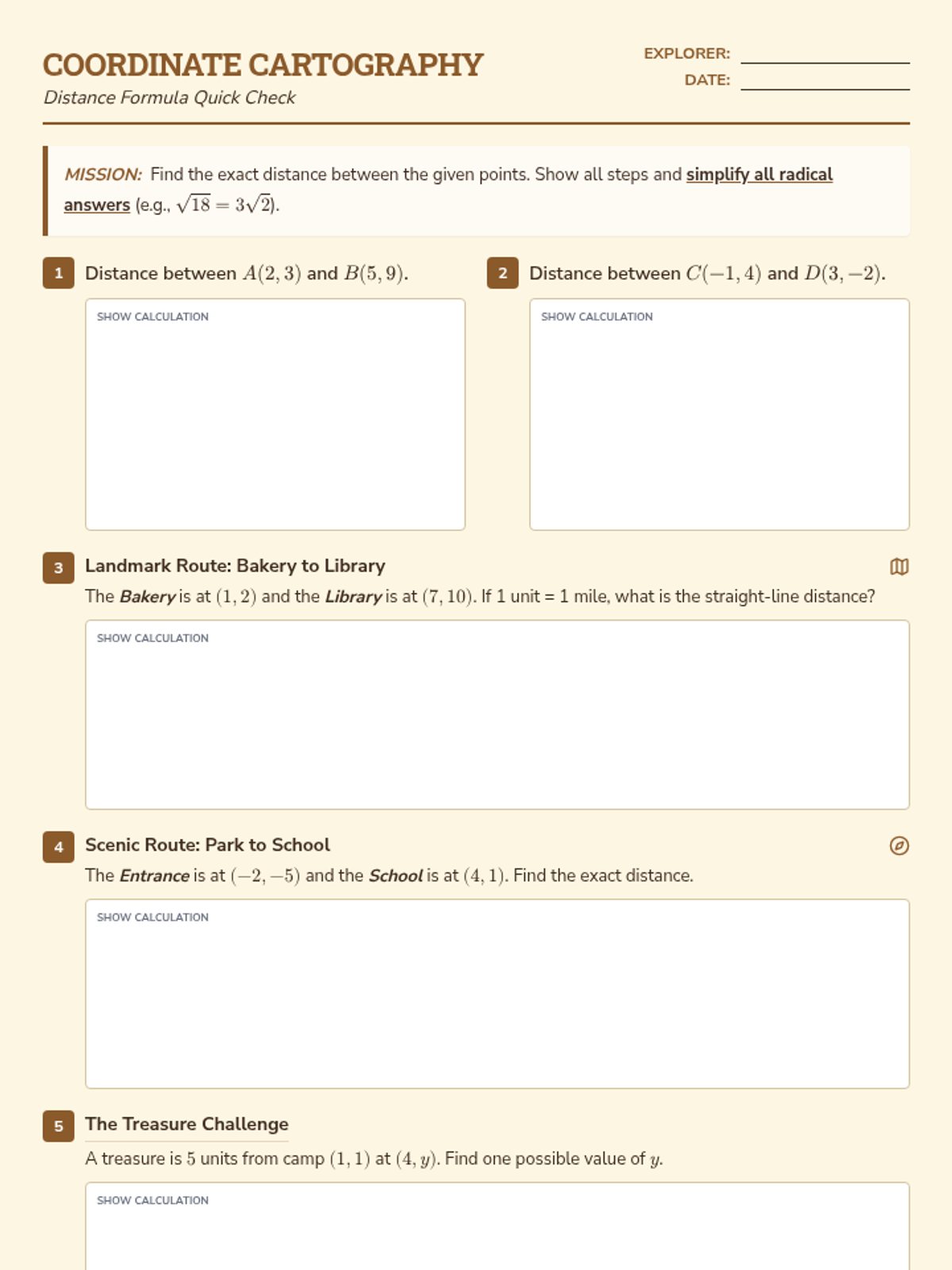
A 5-question quick check quiz on the distance formula, featuring coordinate point calculations, radical simplification, and map-themed word problems.
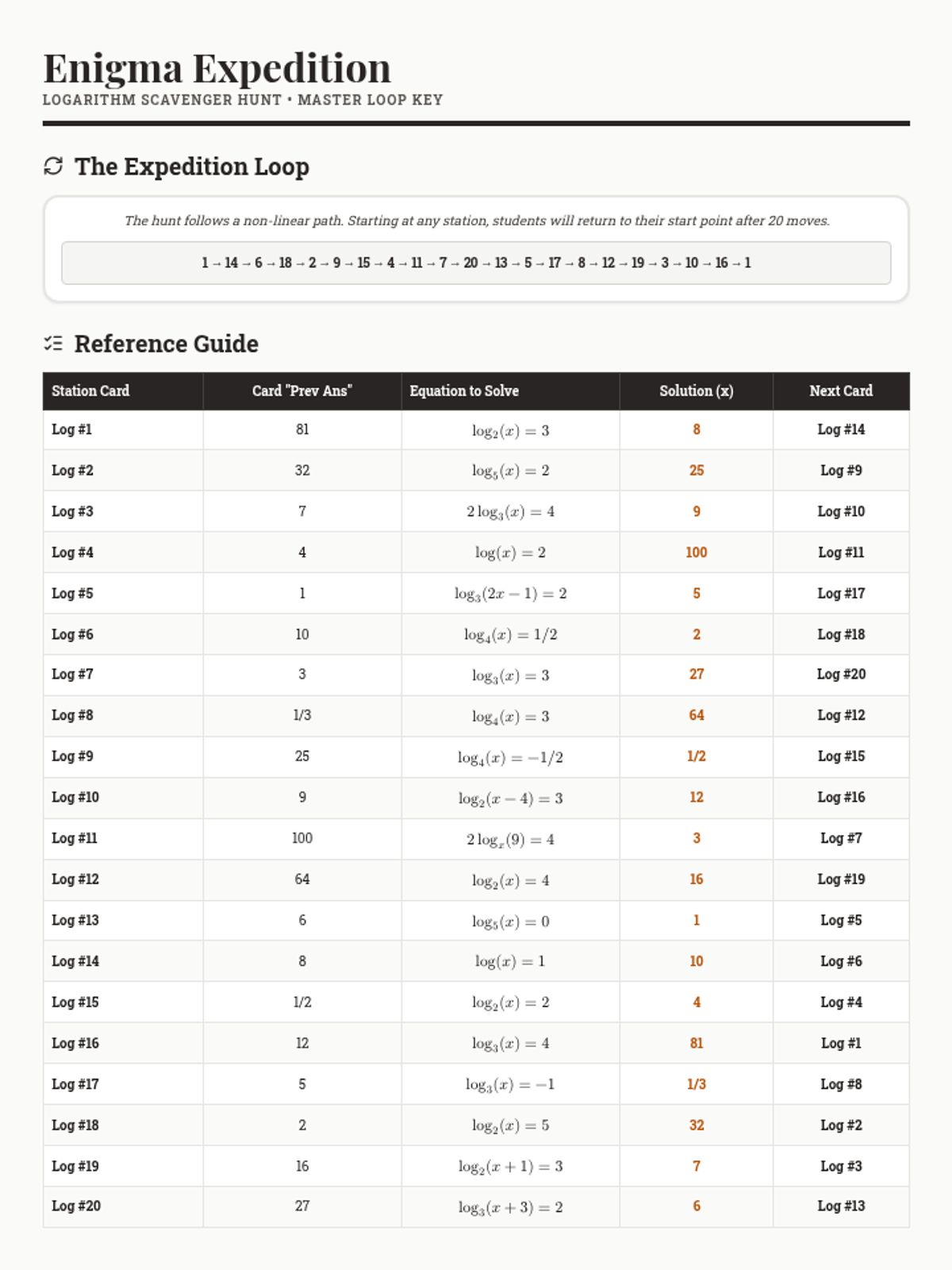
A comprehensive teacher answer key for the Enigma Expedition scavenger hunt. It includes the correct randomized loop sequence and a detailed station-by-station breakdown of previous answers, equations, and solutions.
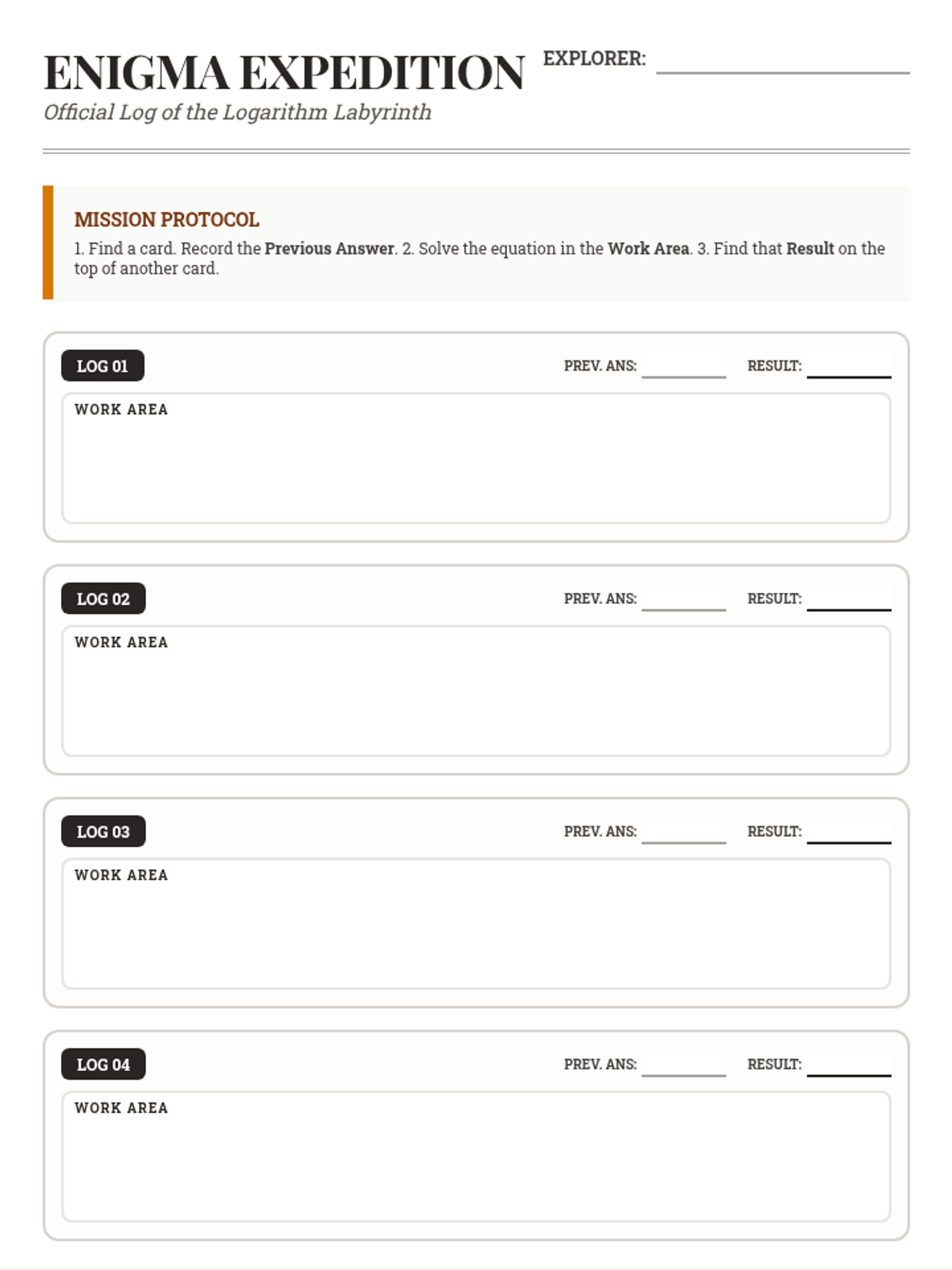
A student recording sheet for the Enigma Expedition scavenger hunt. It includes 20 numbered work boxes for students to track their progress, record station numbers, and show their calculations.
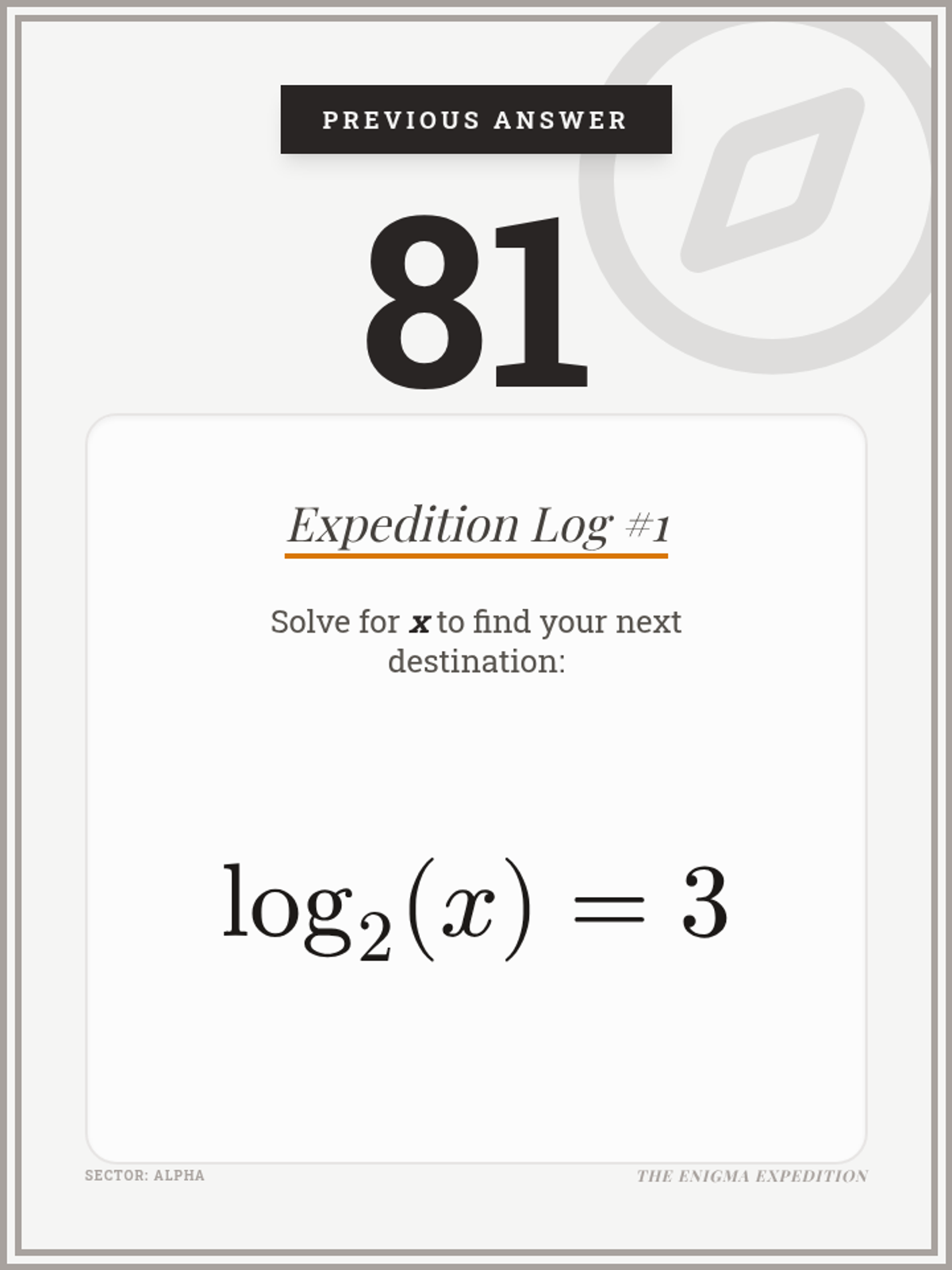
A set of 20 scavenger hunt task cards themed as an 'Enigma Expedition'. The stations have been randomized to create a non-linear loop, featuring a 'Previous Answer' at the top and a logarithmic equation to solve in the center.
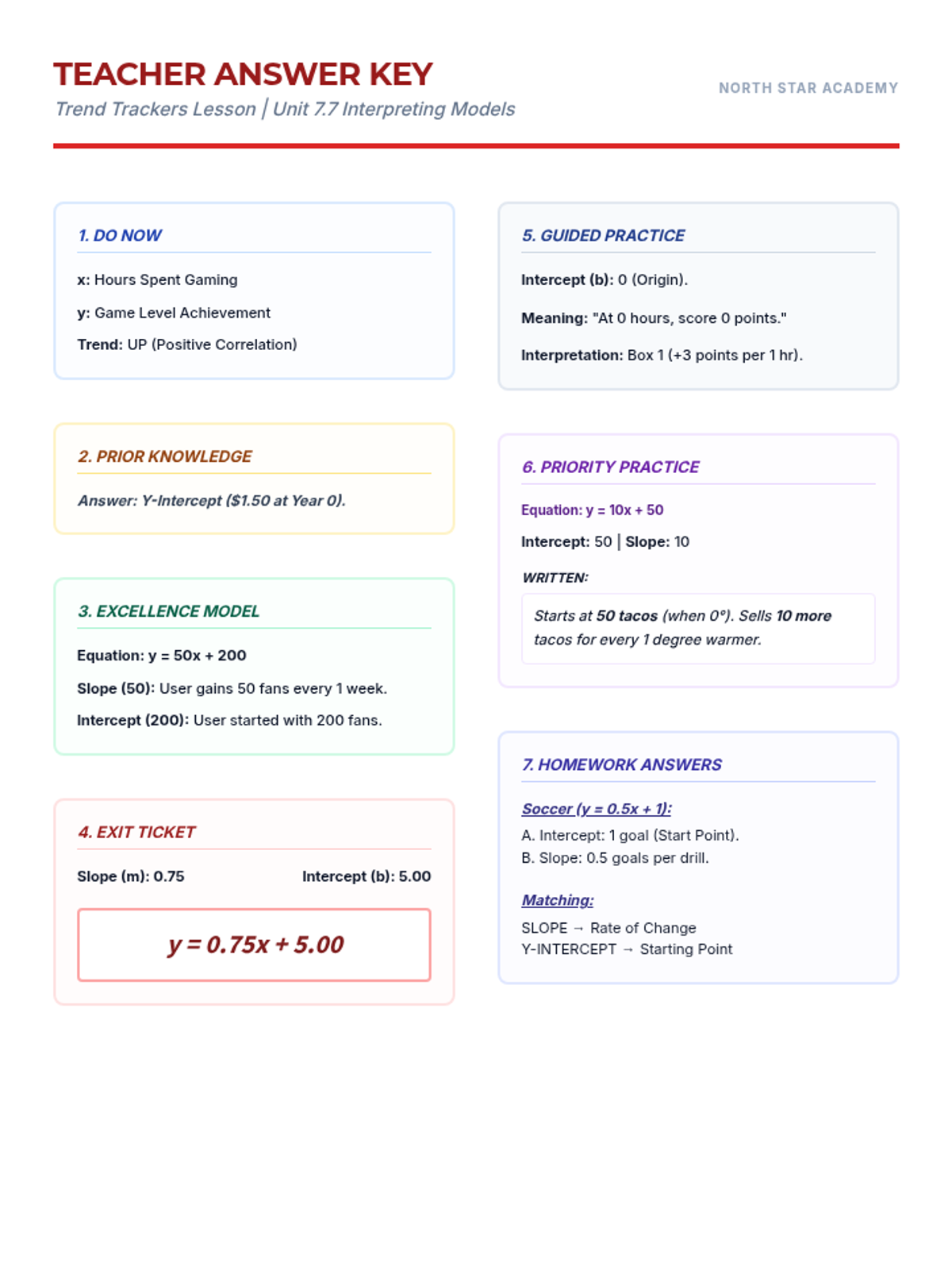
A concise answer key for the Trend Trackers student packet, providing clear solutions for all sections including Do Now, Prior Knowledge, Guided Practice, and Homework. Revised to improve layout and content completeness.
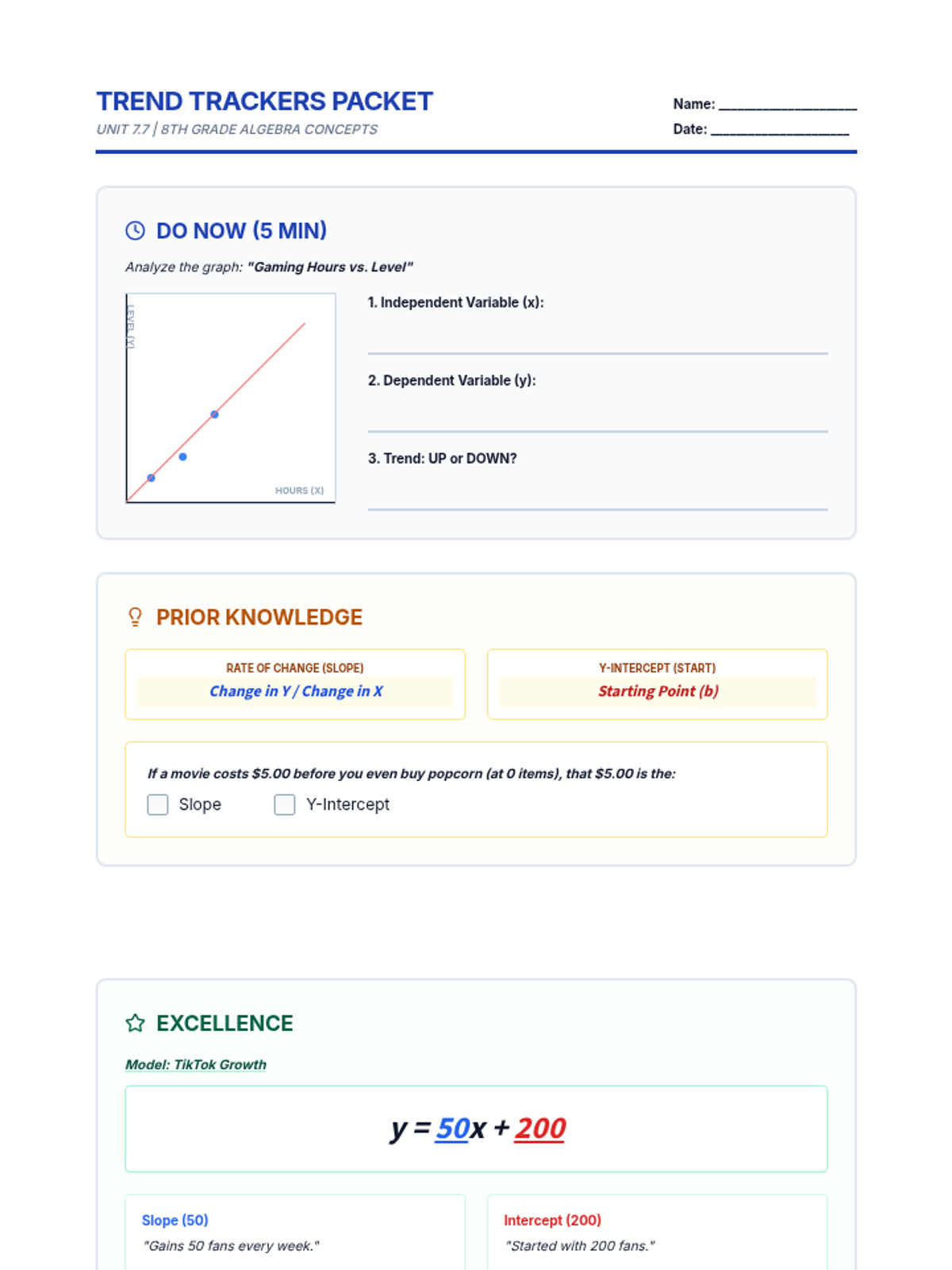
A condensed 4-page student packet including a Do Now, visual definitions, modeled examples, guided practice, independent practice, exit ticket, and homework, designed with high visual support and scaffolds for 8th grade SPED students. Revised to fix page break and formatting issues.
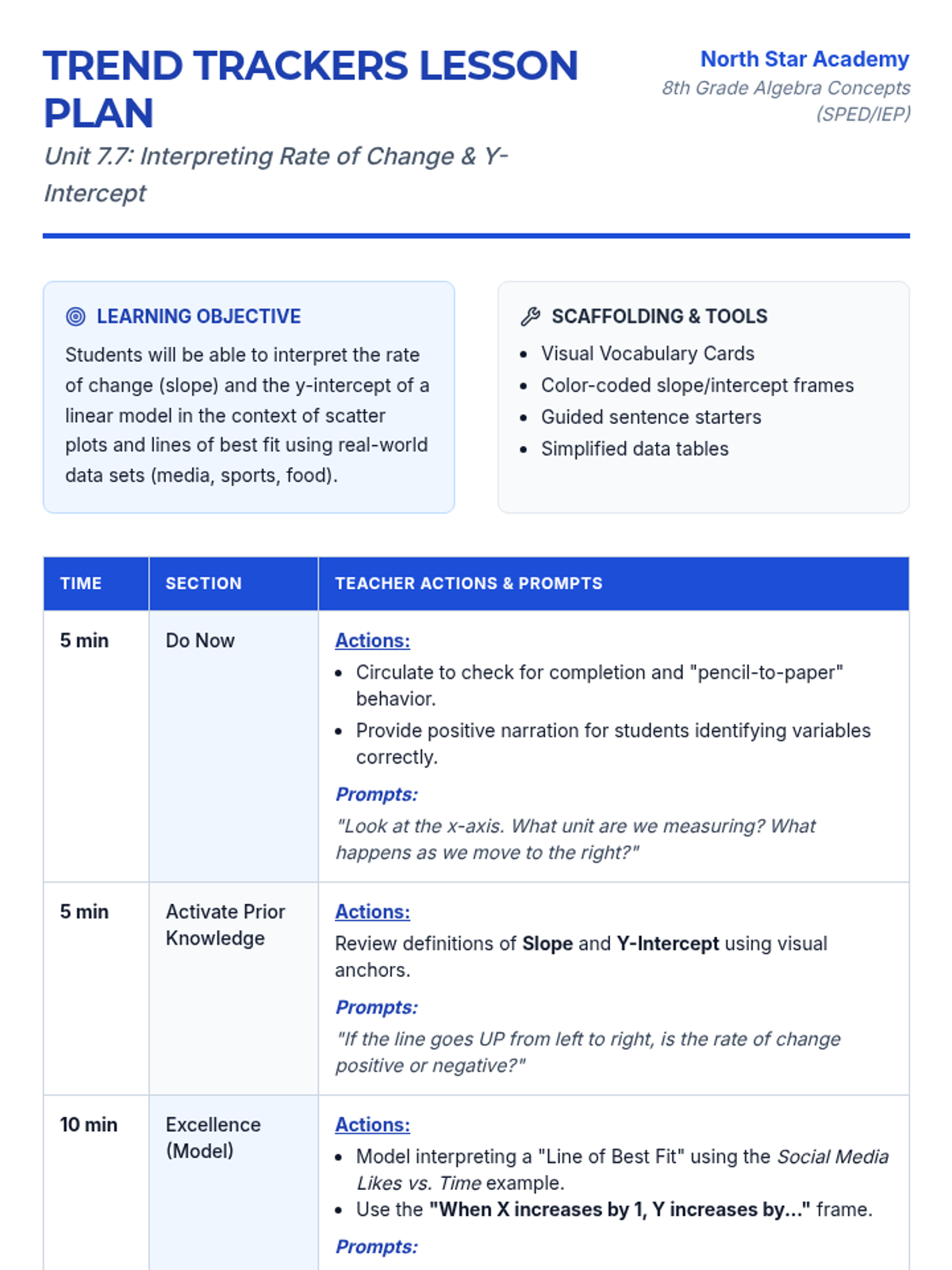
A comprehensive teacher's lesson plan for Unit 7.7, focusing on interpreting scatter plots and lines of best fit, with specific teacher prompts and actions for SPED students. Revised to fix page break issues.
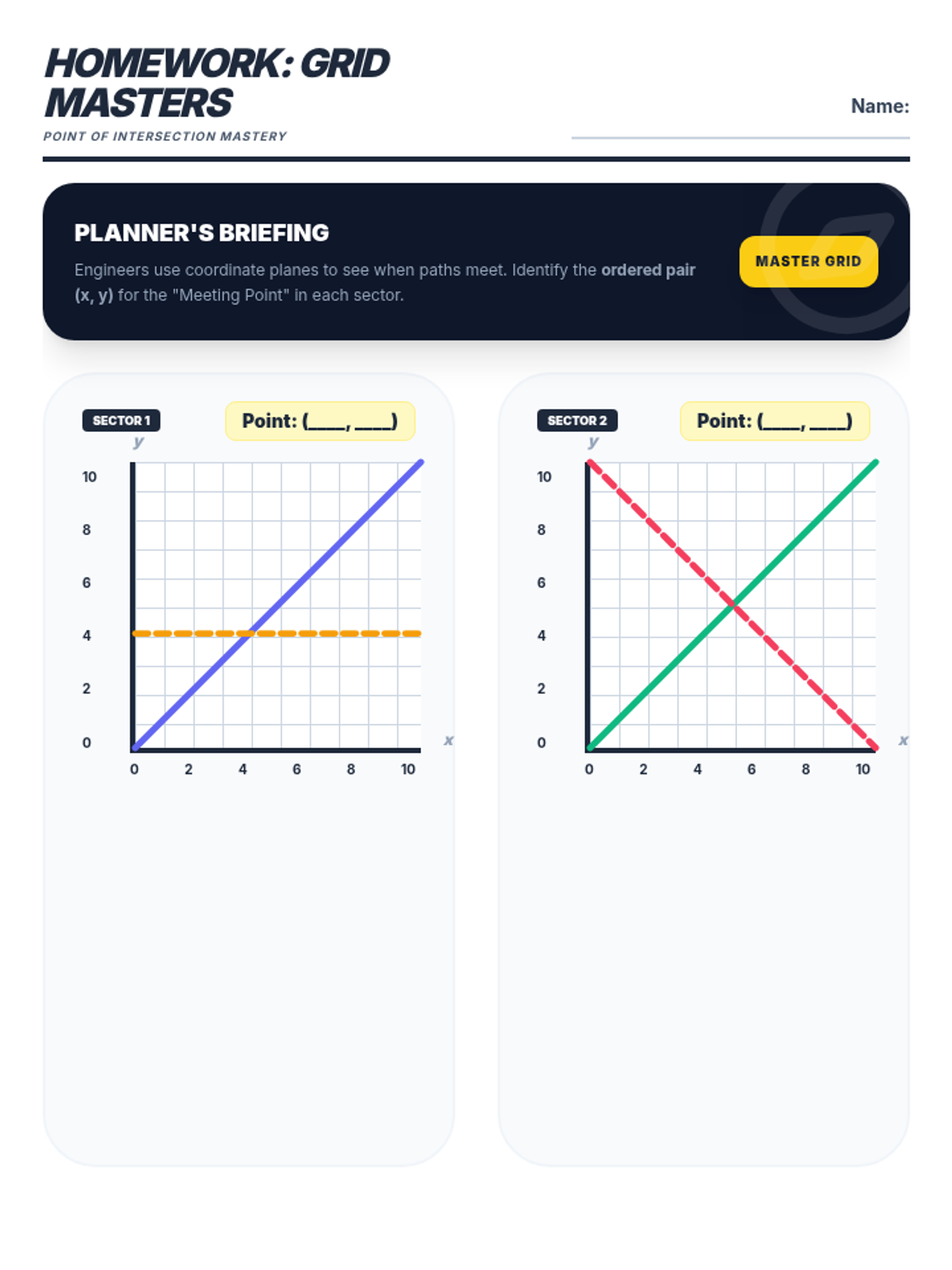
A comprehensive two-page homework assignment focused on identifying intersection points across four different sectors (graphs) and interpreting their real-world significance. Fixes page breaks, axis labels, and text wrapping. Balanced across two pages. No empty third page.
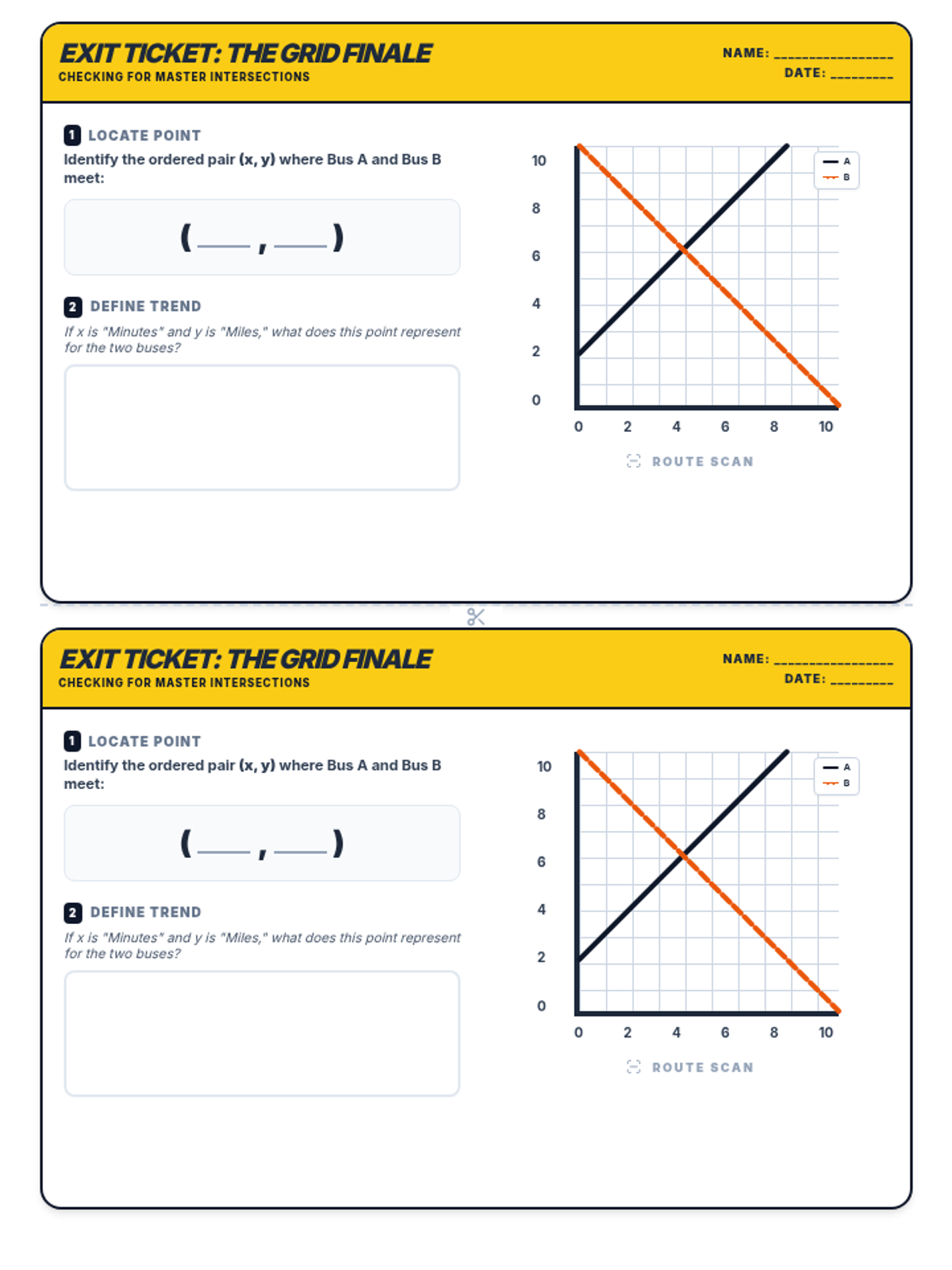
A grid-themed exit ticket with a large graph where students must identify a specific (x, y) intersection and interpret its meaning in a real-world context. This version is 2-up for printing and fixes alignment issues. Darkened lines for better contrast.
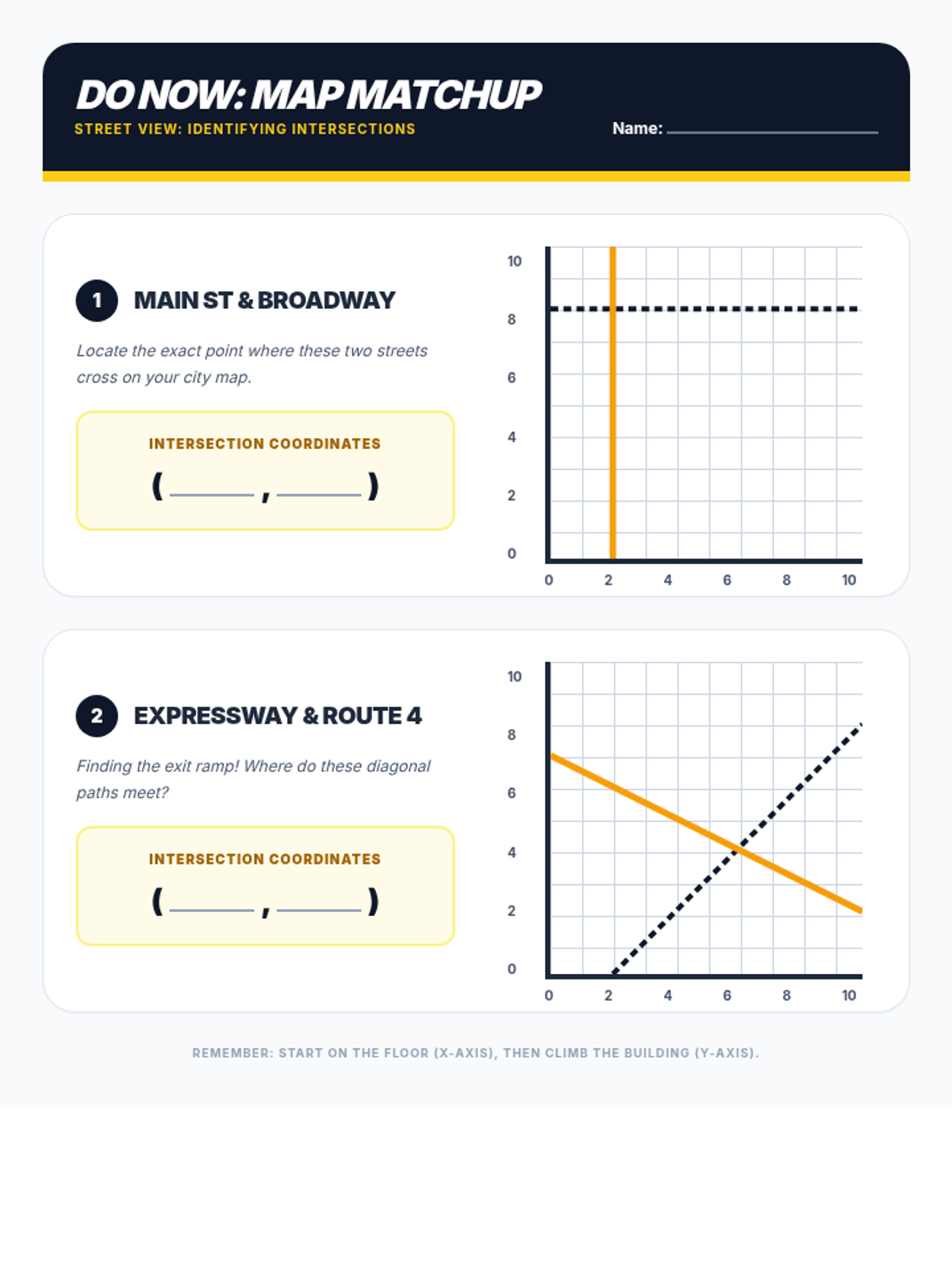
A map-themed Do Now warmup where students identify intersection coordinates for city streets on two different coordinate planes. This version fixes page breaks, SVG alignment, and contrast.
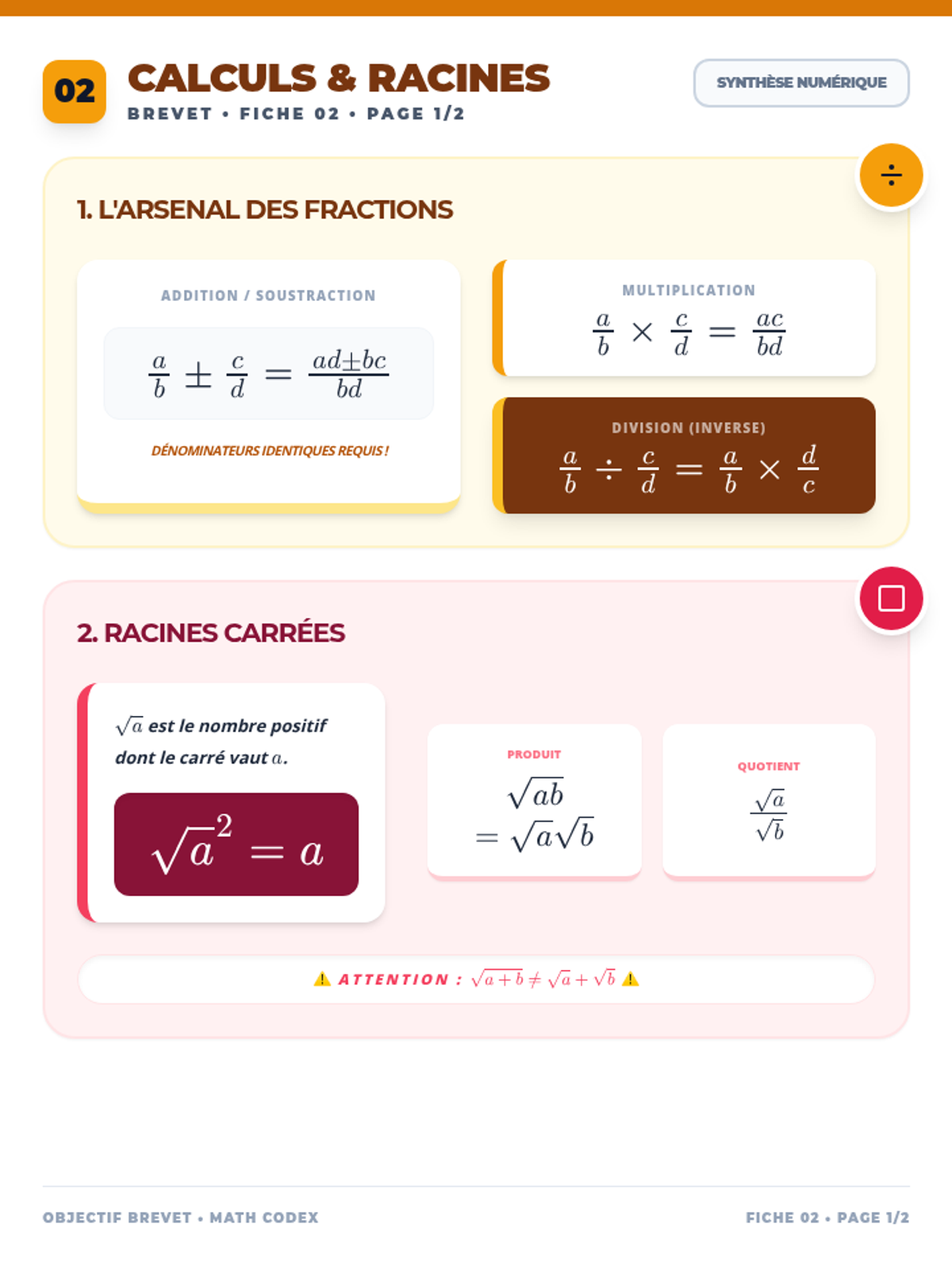
Une fiche de révision complète sur le calcul : fractions, puissances, notation scientifique et racines carrées. Regroupe les concepts des photos 1 et 4 avec une présentation aérée et détaillée sur 2 pages (cours). Synthèse pure. Correction des débordements de page.
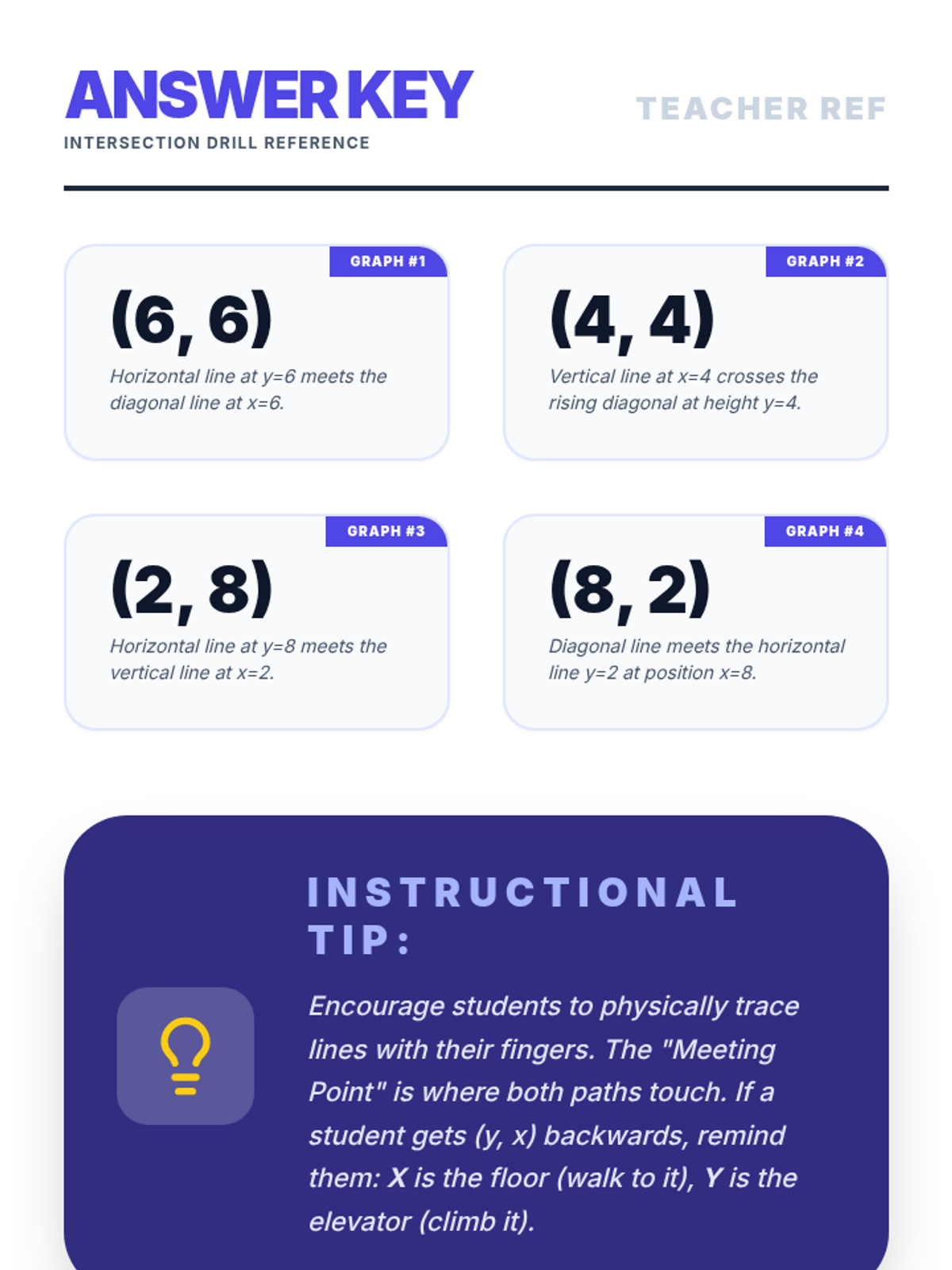
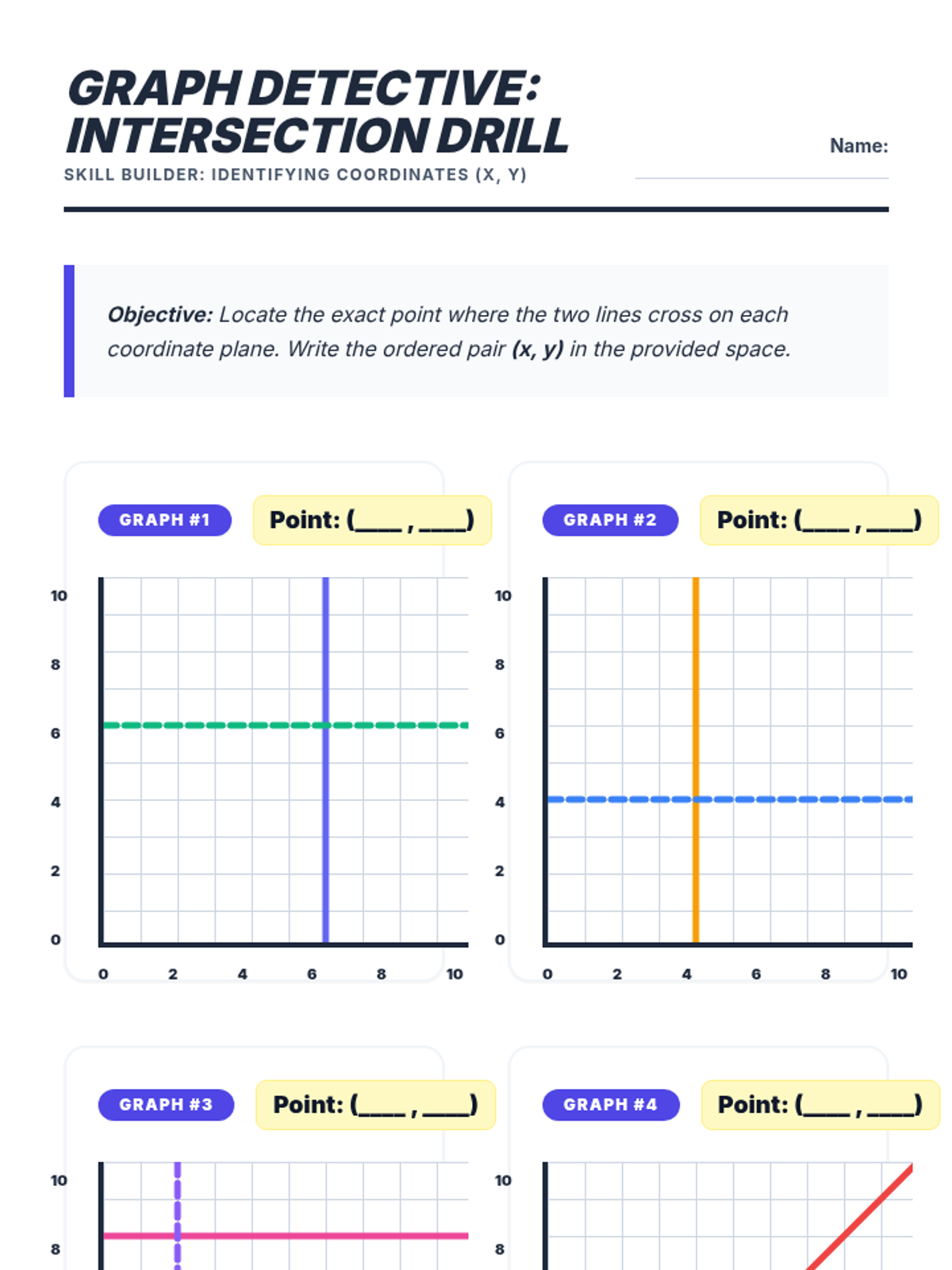
The answer key for the Intersection Drill worksheet, providing the correct (x, y) coordinates for all four practice problems. Fixed page breaks and updated icons.
A focused practice worksheet featuring four coordinate planes with intersecting lines. Students must practice the specific skill of identifying and writing the exact (x, y) coordinates for each point of intersection. Improved layout to avoid bisection and cleaned up Graph #1. Fixed label alignment and wrapping issues.
A visually engaging slide deck teaching students how to identify the point of intersection between two linear graphs, explaining both the mathematical procedure and the real-world contextual meaning (break-even, tie, or overtaking point). Fixed content overflow and label clipping.
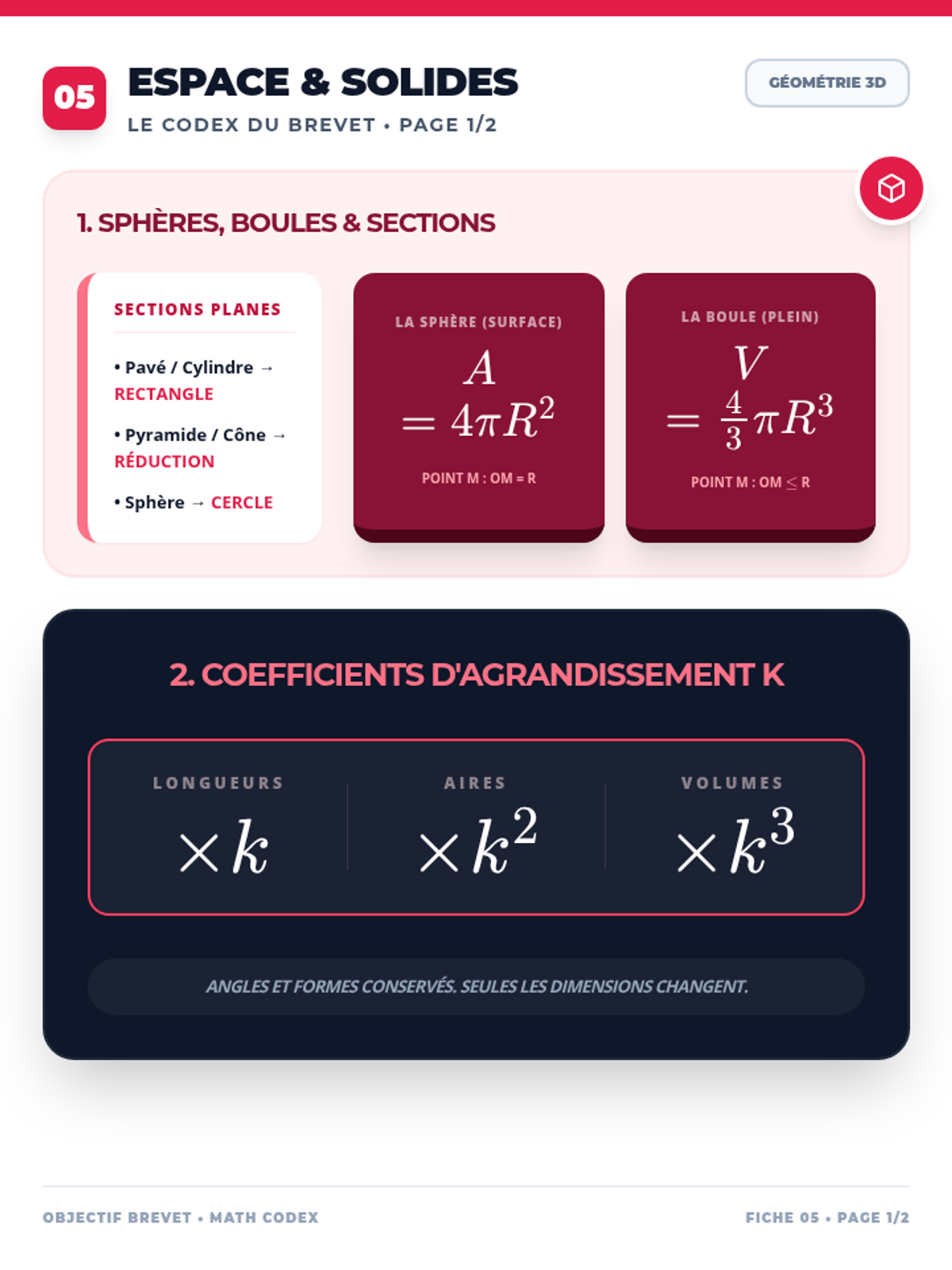
Une fiche de révision complète sur l'espace (solides, sphères, sections, agrandissements), les statistiques (n/N expliqués) et les probabilités. Regroupe les concepts des photos 6, 8, 10 et 11. Synthèse pure sans exercices sur 2 pages. Correction de la formule de la moyenne. Intègre la citation de Larson.
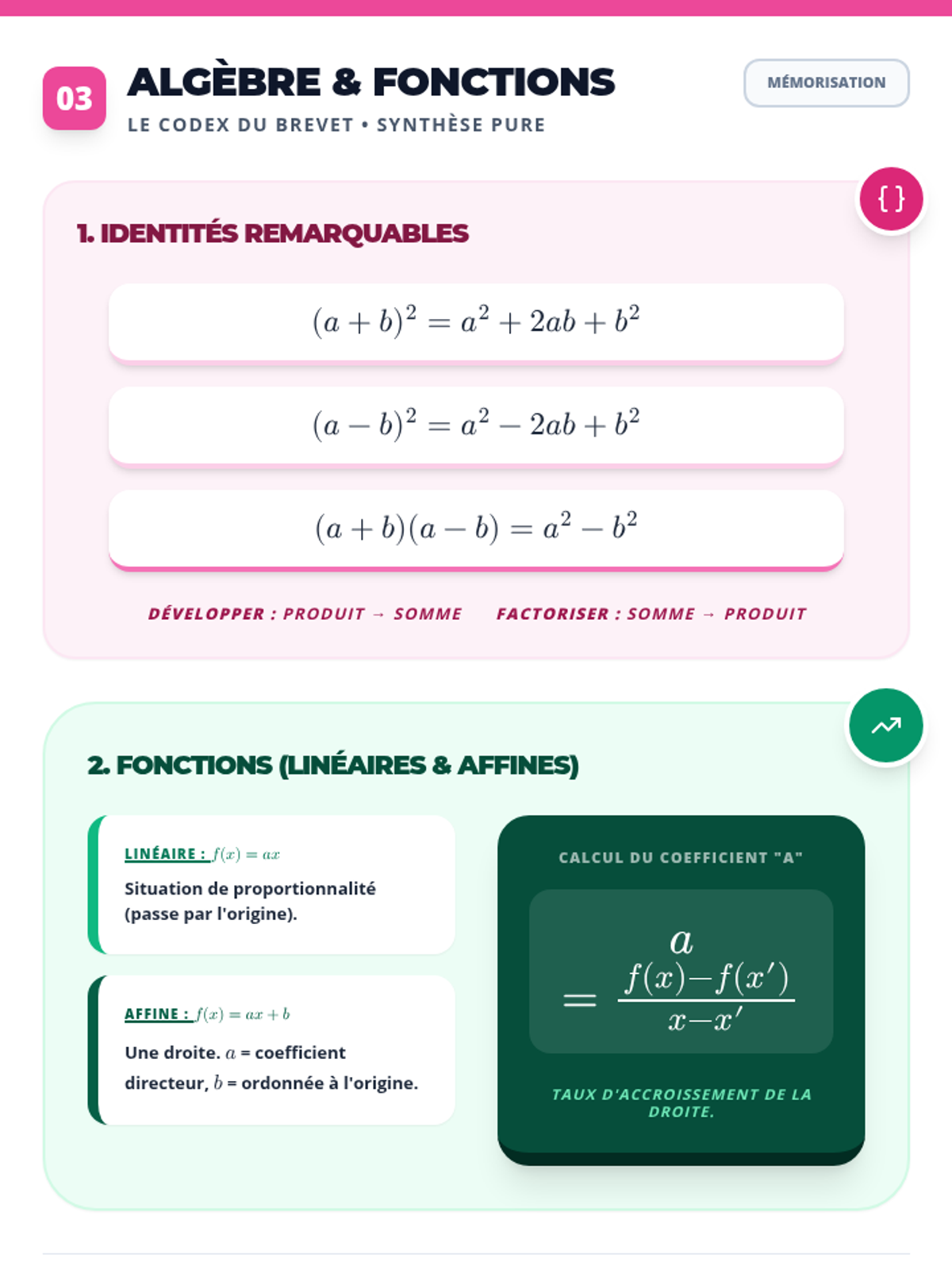
Une fiche de révision complète sur l'algèbre (identités, équations, systèmes) et les fonctions. Contient désormais une explication simplifiée des méthodes de substitution et de combinaison. Synthèse pure sans exercices sur 2 pages. Correction du débordement de page.
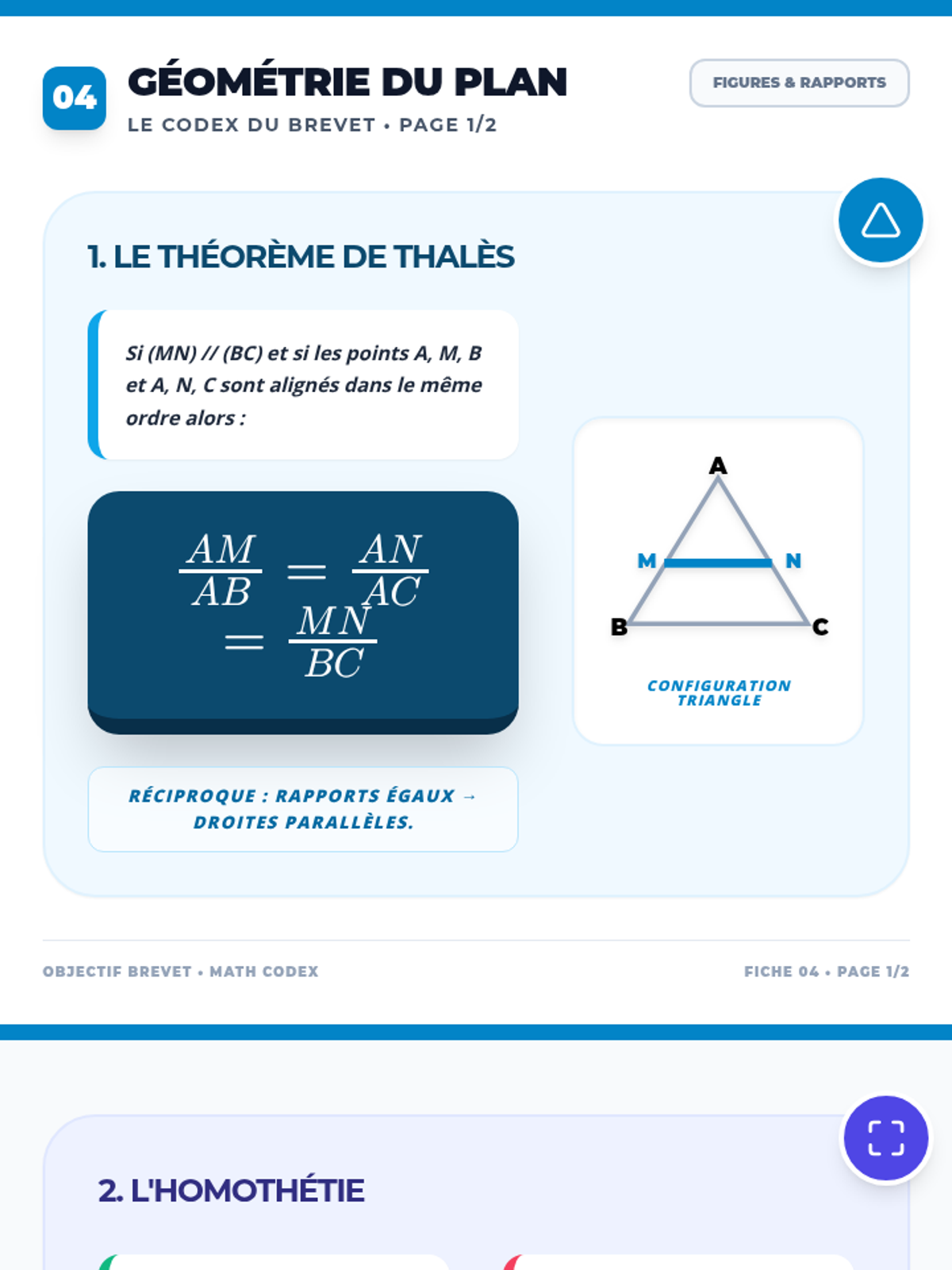
Une fiche de révision visuelle sur le théorème de Thalès, l'homothétie, les angles inscrits et les polygones réguliers pour les élèves de 3ème. Regroupe les concepts des photos 3, 5, 7 et 8. Synthèse pure sur 2 pages denses. Explique les lettres K, P, KL, KO, KS. Représentation du triangle avec les points B et C. Correction de la formule de l'homothétie et de la pagination.
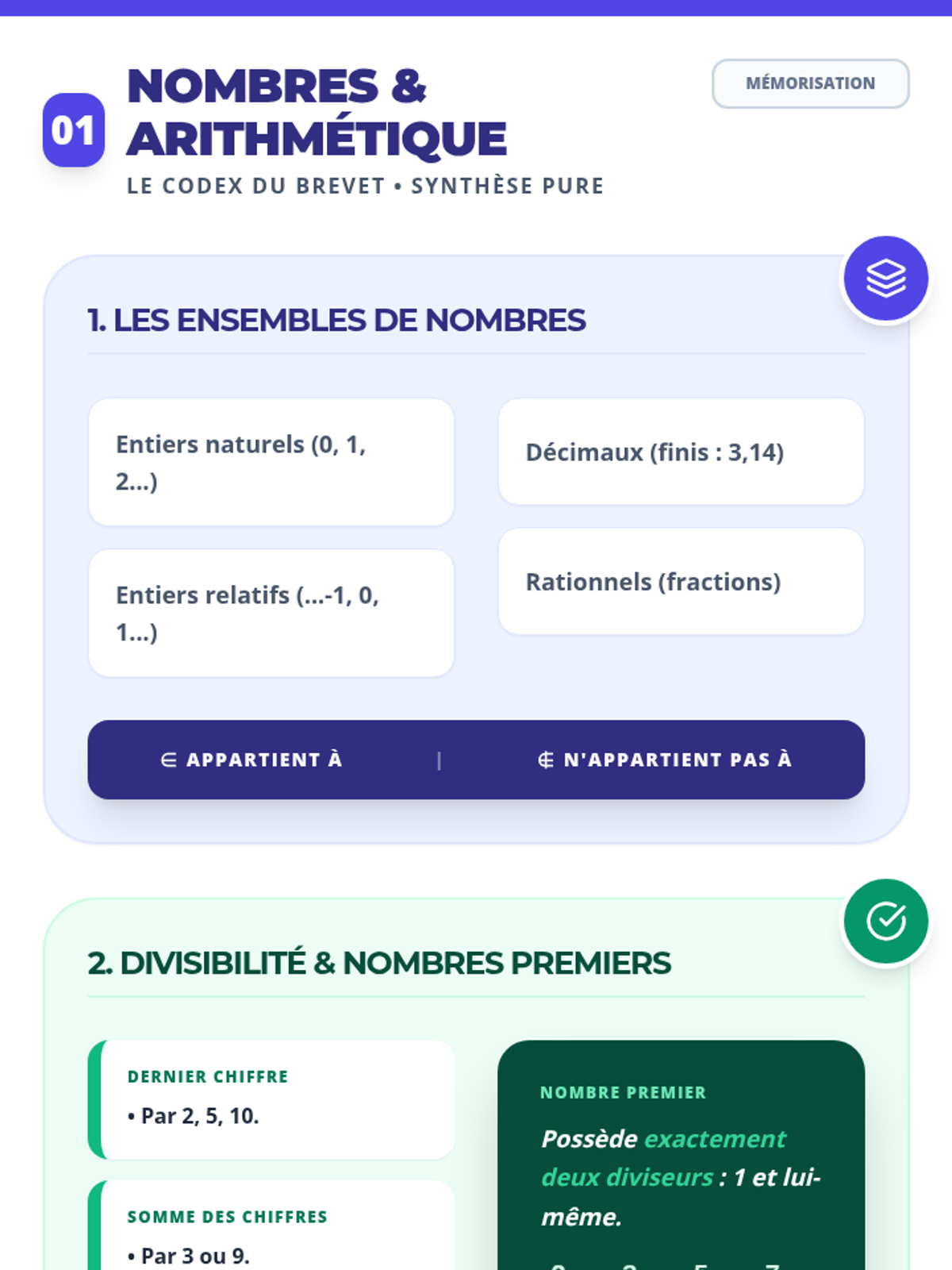
Fiche de révision 01 : Nombres et Arithmétique. Détaille l'algorithme d'Euclide et la méthode des différences pour le PGCD. Couvre les ensembles, la divisibilité et l'algorithmique. Synthèse pure. Correction des rendus de symboles et de la pagination.