A teacher's guide for the Pixel Pulse lesson, including instructional tips, pacing, discussion prompts, and differentiation strategies. Updated to include the trailer video and summary slide facilitation.
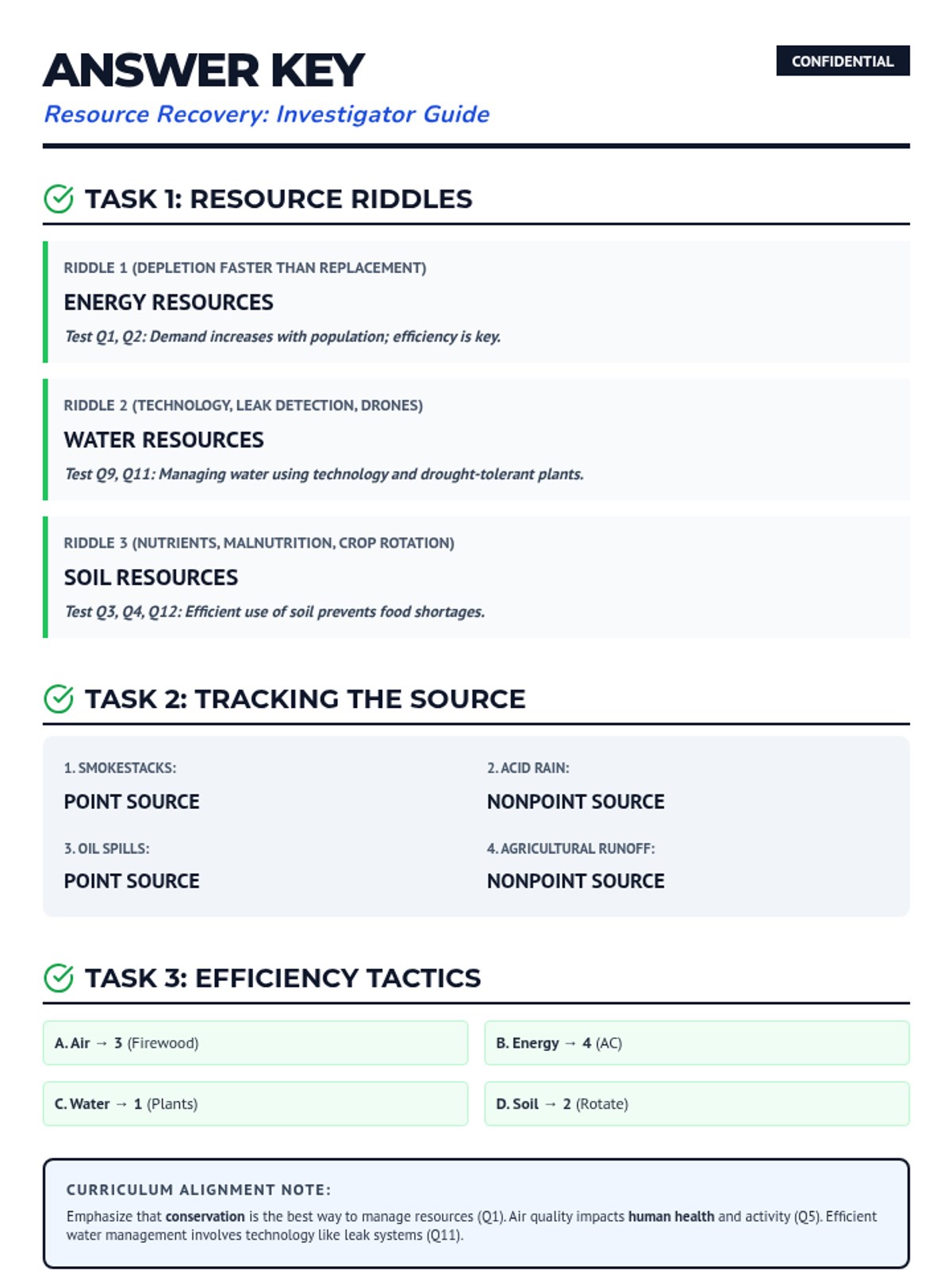
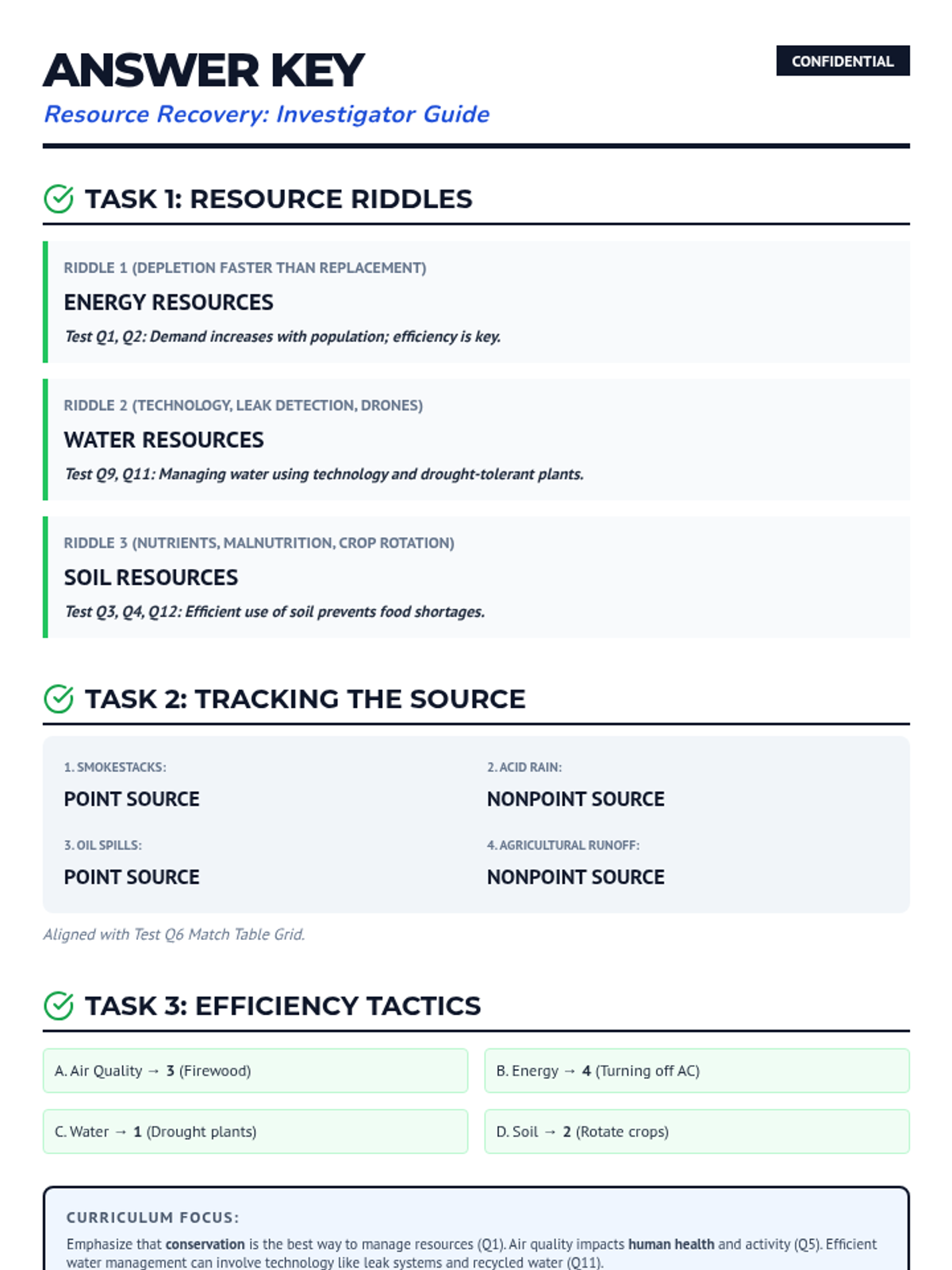
The answer key for the Resource Recovery Worksheet, providing correct resource identifications, pollution source types, and matched conservation strategies. Includes specific alignment notes to the curriculum test on Managing Earth's Resources. Revised for single-page layout.
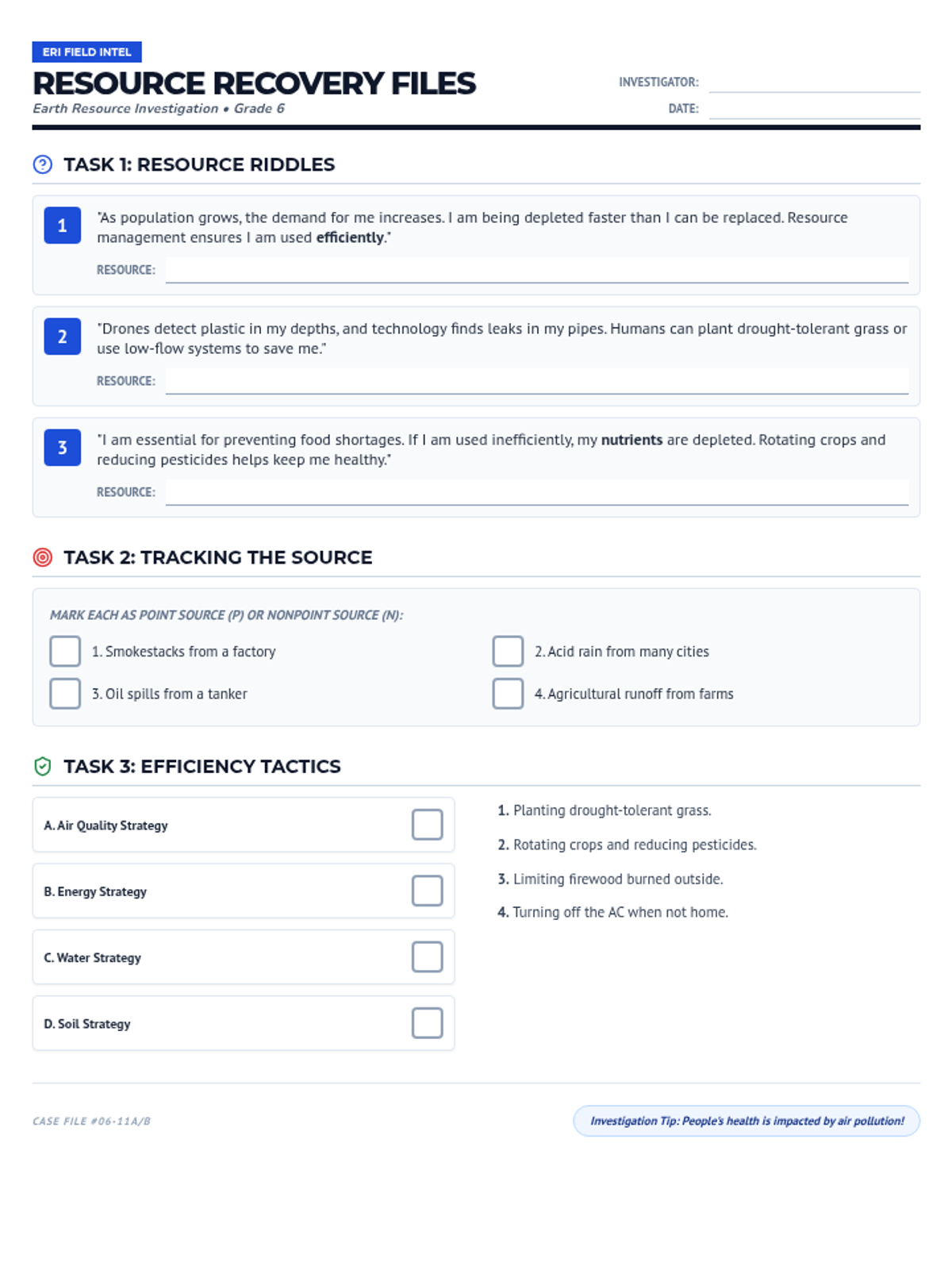
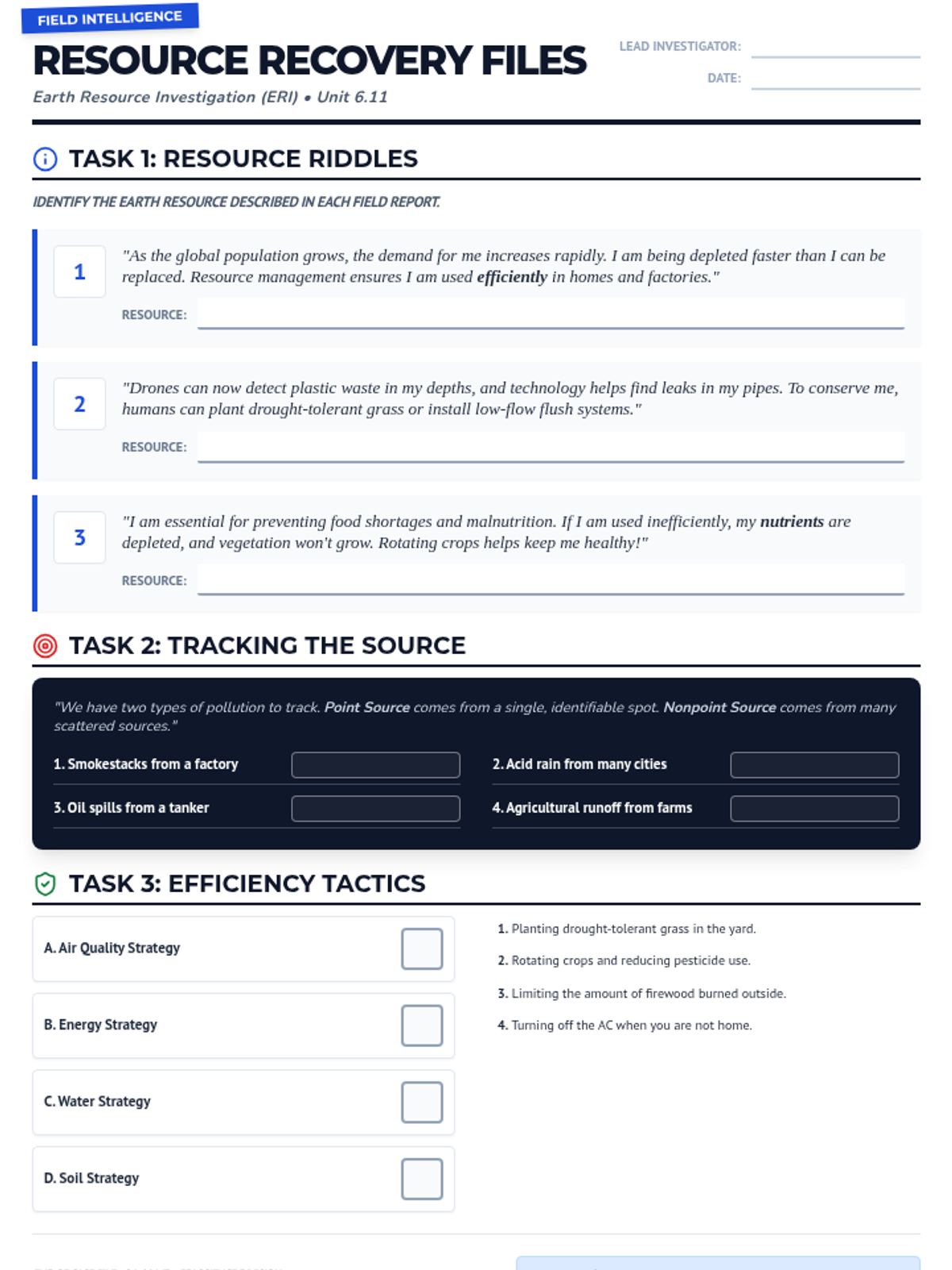
A detective-themed worksheet for 6th-grade students on Earth's resources. It covers energy, water, air, and soil management, point vs. nonpoint source pollution, and conservation strategies, mirroring the concepts and DOK levels found in the provided curriculum test. Revised for legibility and layout.
The answer key for the Resource Recovery Worksheet, providing correct resource identifications, pollution source types, and matched conservation strategies. Includes specific alignment notes to the curriculum test on Managing Earth's Resources.
A detective-themed worksheet for 6th-grade students on Earth's resources. It covers energy, water, air, and soil management, point vs. nonpoint source pollution, and conservation strategies, mirroring the concepts and DOK levels found in the provided curriculum test.
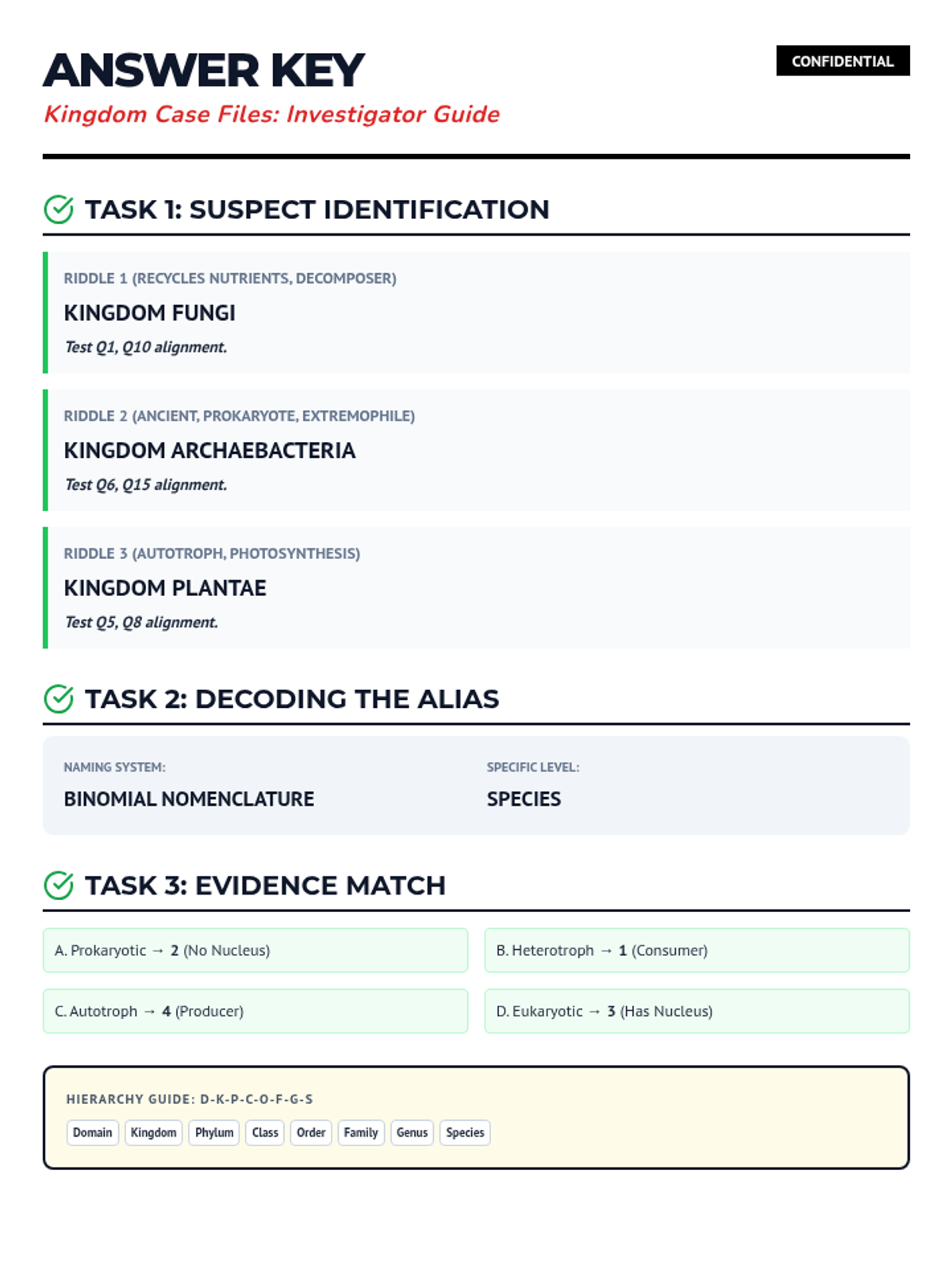
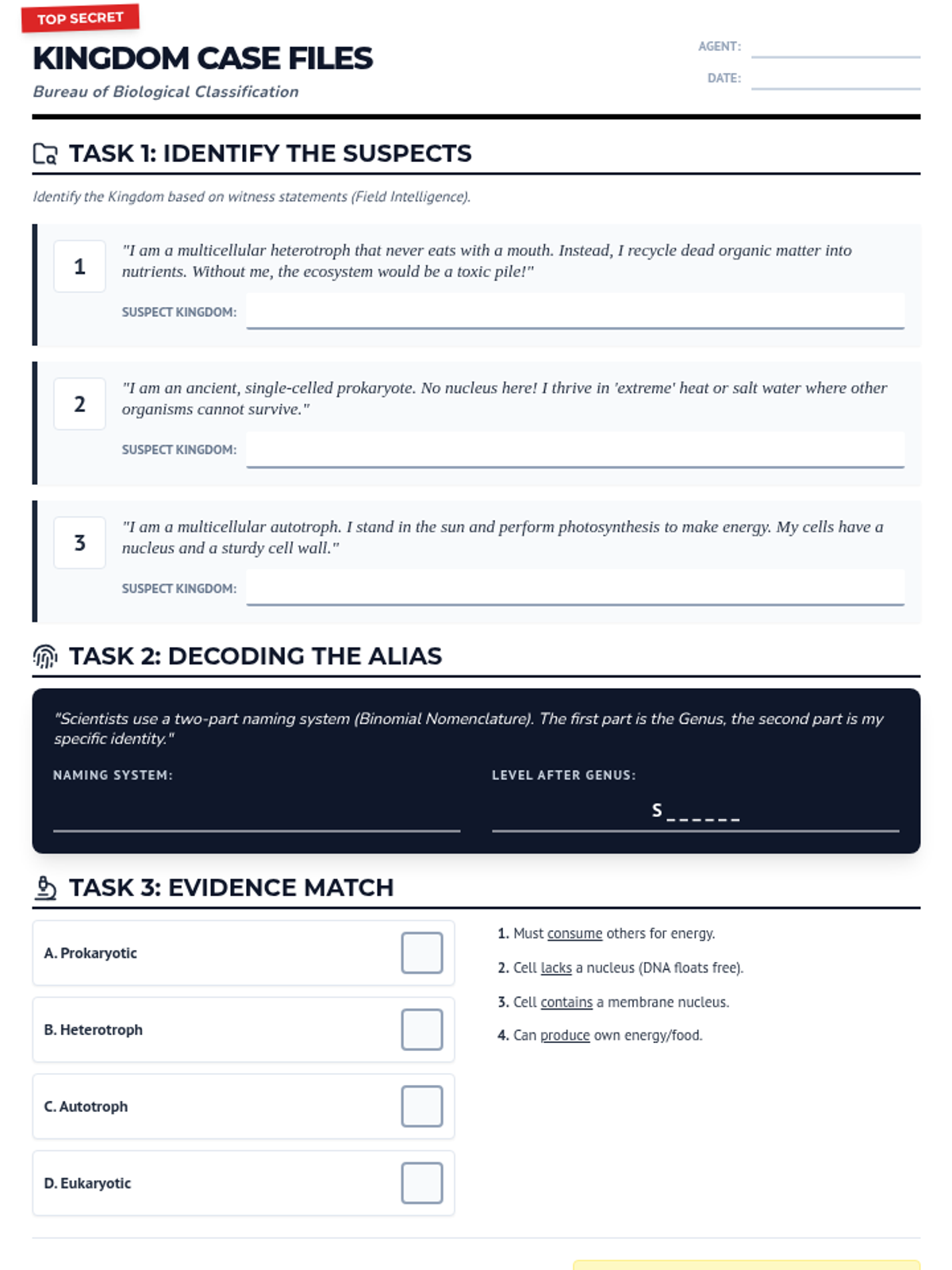
The answer key for the Kingdom Riddle Worksheet, providing correct kingdom identifications, the definition of binomial nomenclature, and the matching for cell characteristics. Revised for single-page layout with improved text contrast.
A detective-themed taxonomy riddle worksheet for 7th graders. Students identify kingdoms through witness statements, decode binomial nomenclature, and match cell characteristics to their biological definitions, all aligned with standard 7th-grade classification tests. Revised for single-page layout.
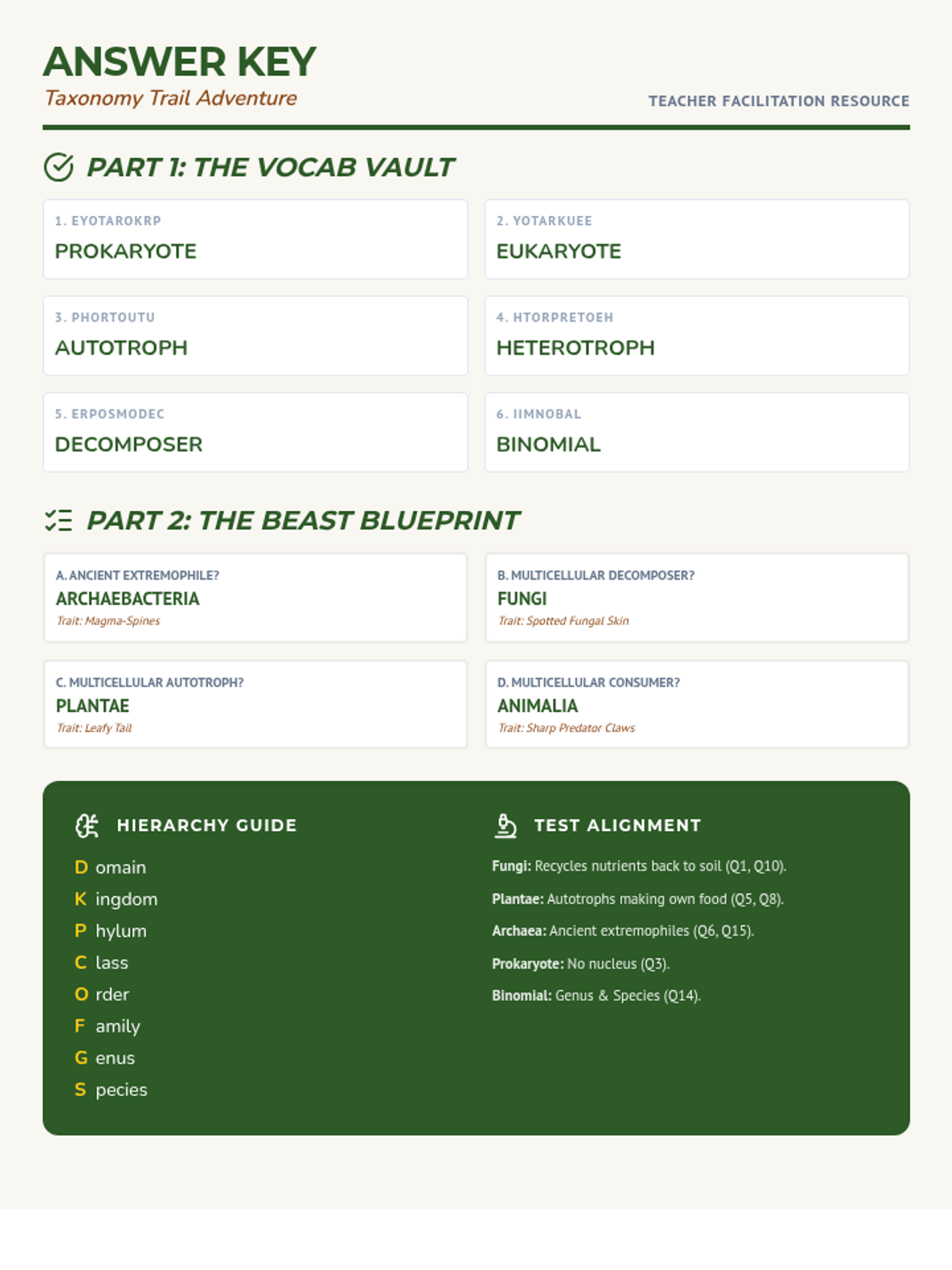
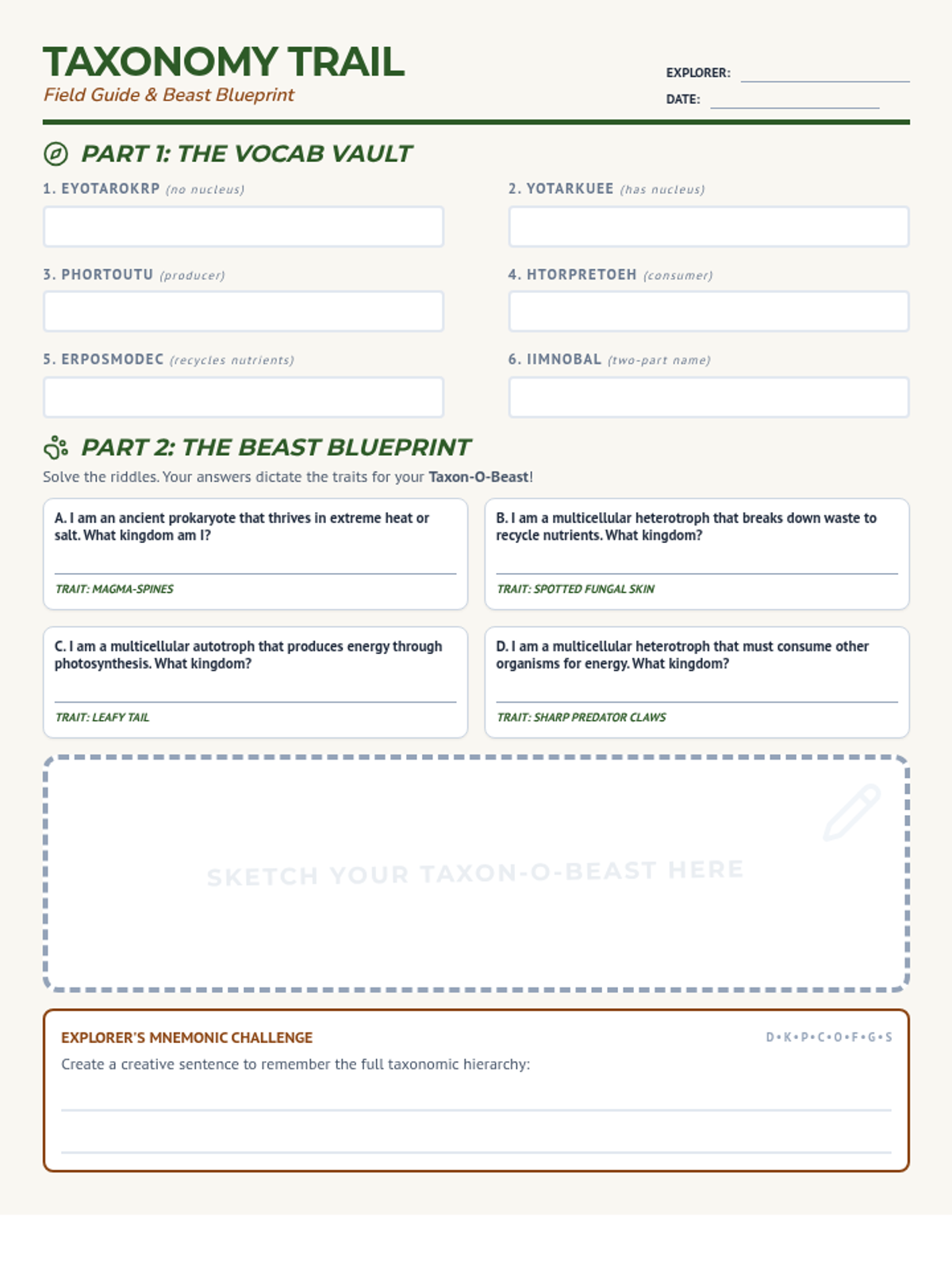
The answer key for the revised Taxonomy Trail Worksheet, aligned with the provided test content. It provides the correct unscrambles and kingdom answers, along with additional teaching notes based on specific test questions.
A creative taxonomy vocabulary worksheet for 7th graders featuring word scrambles and a 'Beast Blueprint' drawing activity aligned with the provided test content. Students solve riddles about Kingdoms (Archaebacteria, Fungi, Plantae, Animalia) to determine their creature's physical traits.
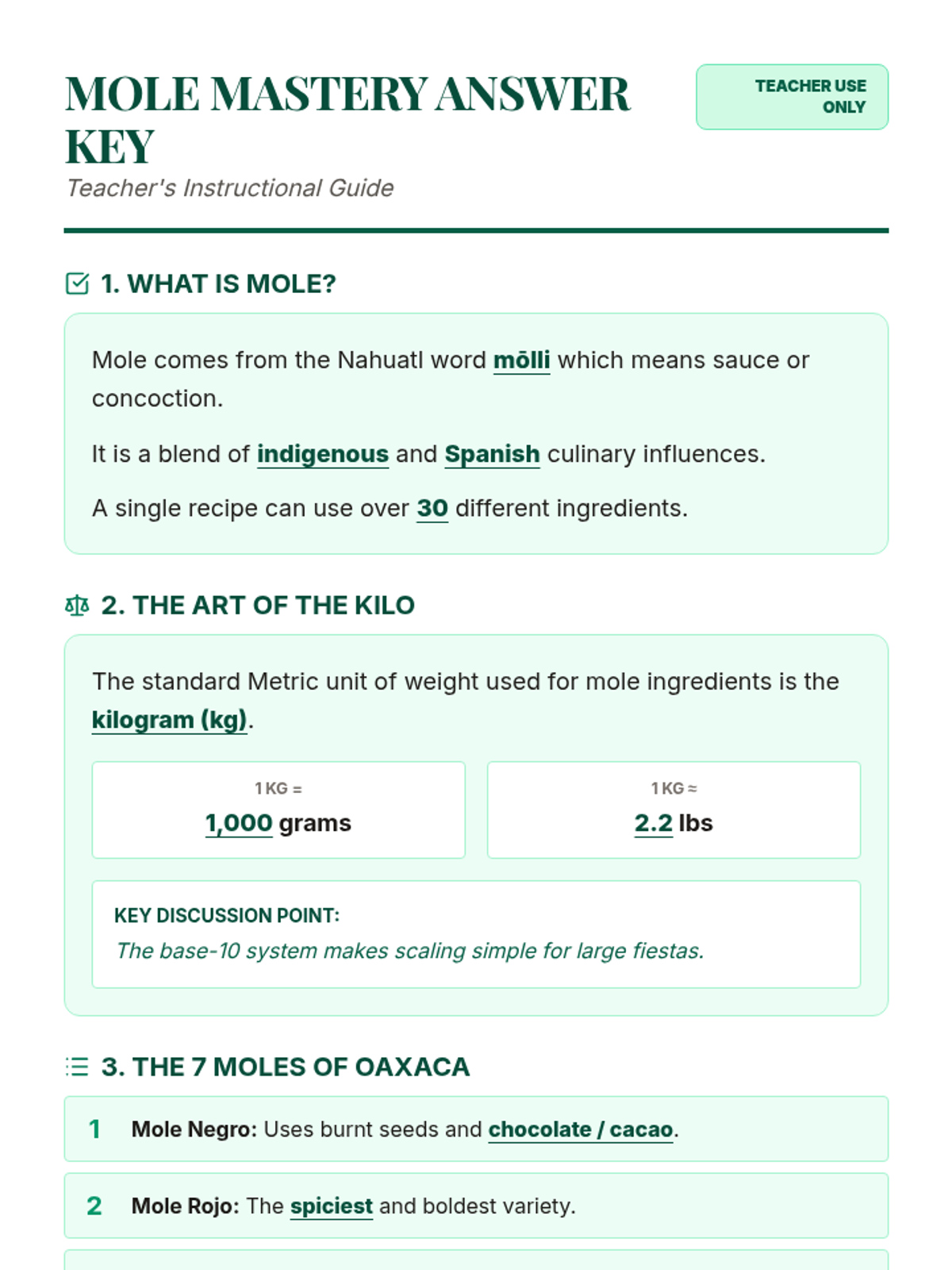
A comprehensive answer key for teachers to accompany the Mole Mastery guided notes handout.
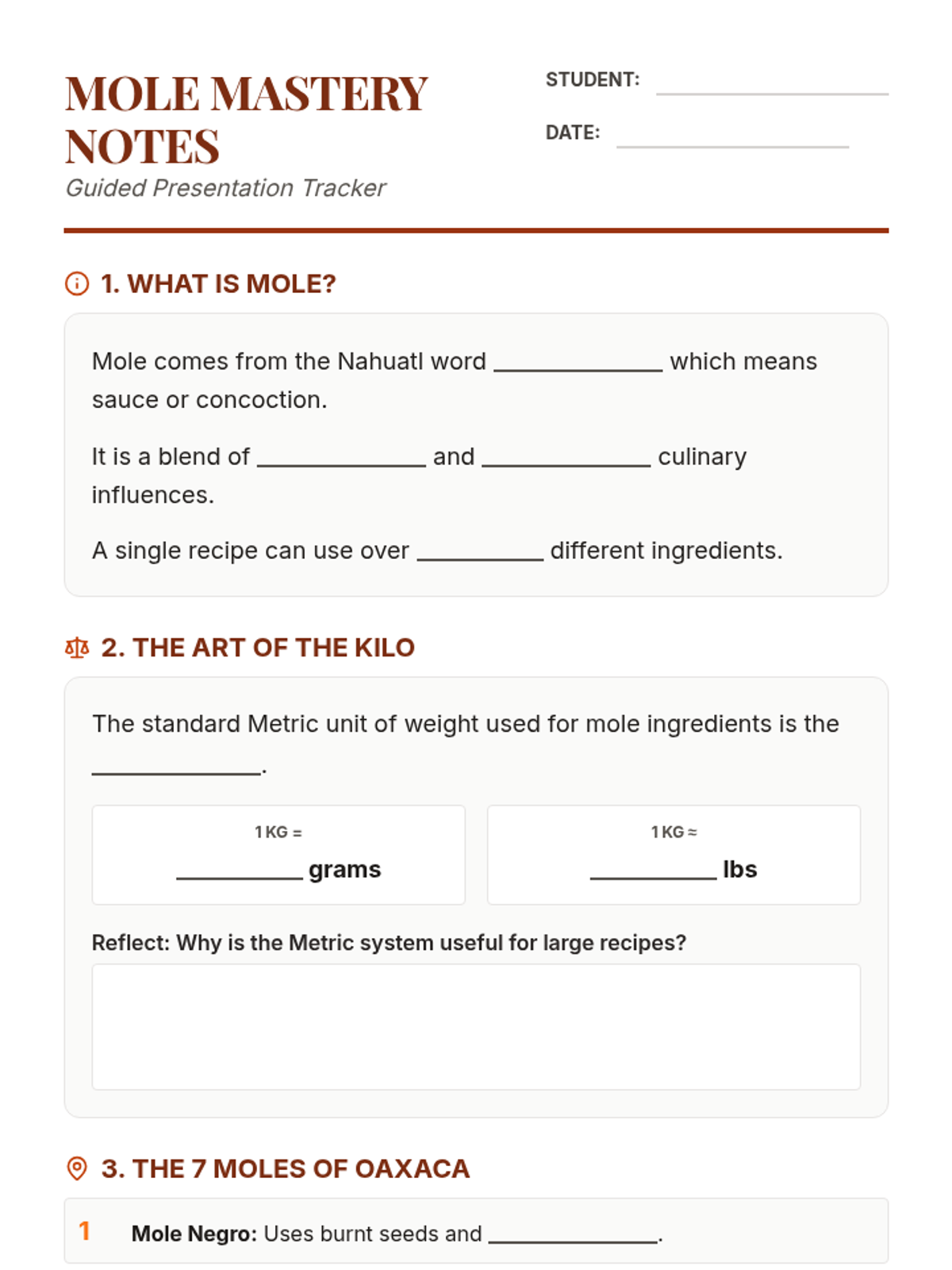
A set of guided notes designed for students to fill out during the Mole Mastery presentation, focusing on vocabulary, metric conversions, and regional varieties.
A revised 10-slide presentation exploring the cultural significance of kilograms in Mexican mole preparation, with updated labels and layouts for improved readability.
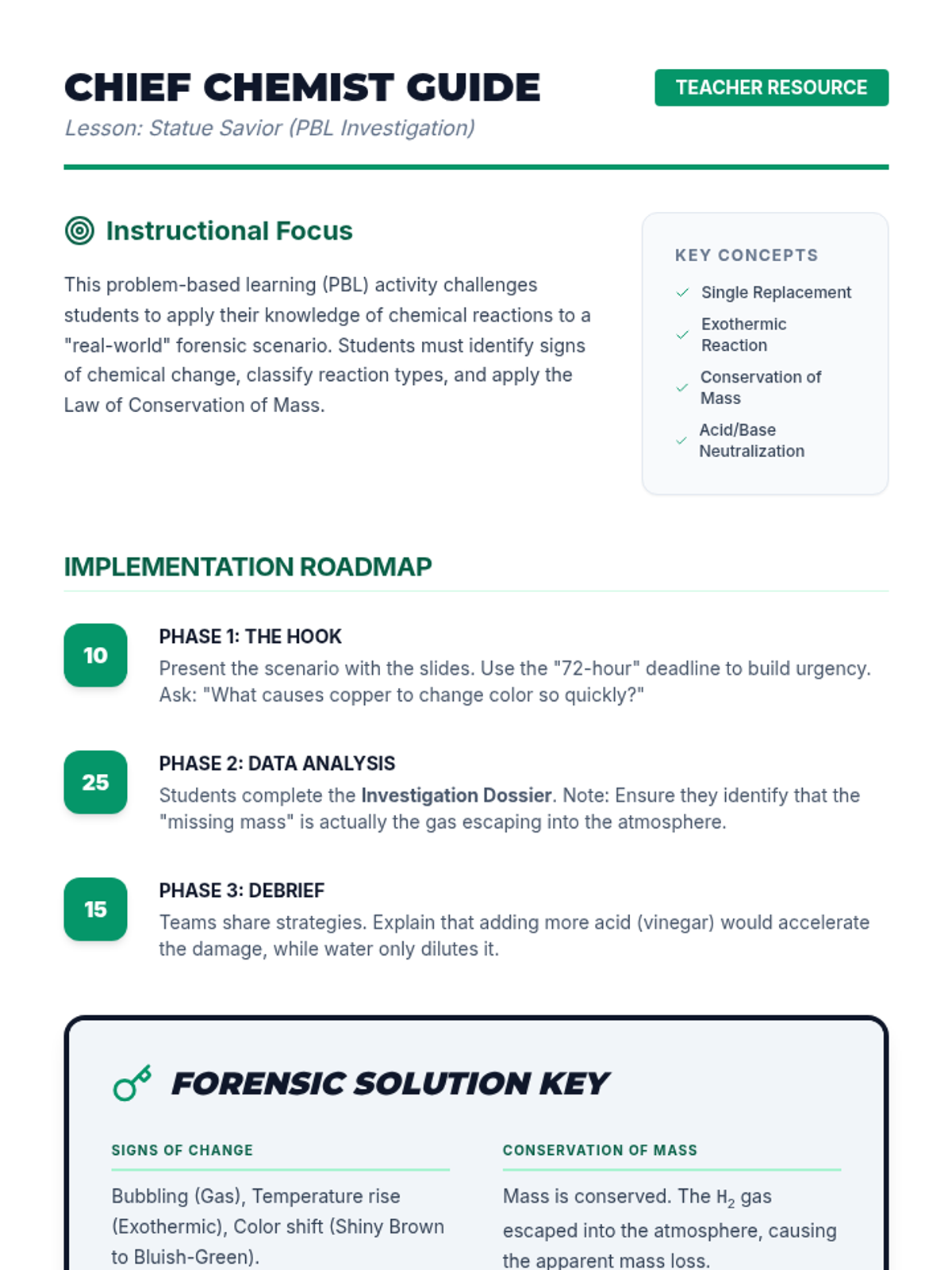
A teacher guide for the 'Statue Savior' PBL, including pacing, facilitation tips, a solution key for the student dossier, and deep-dive discussion prompts.
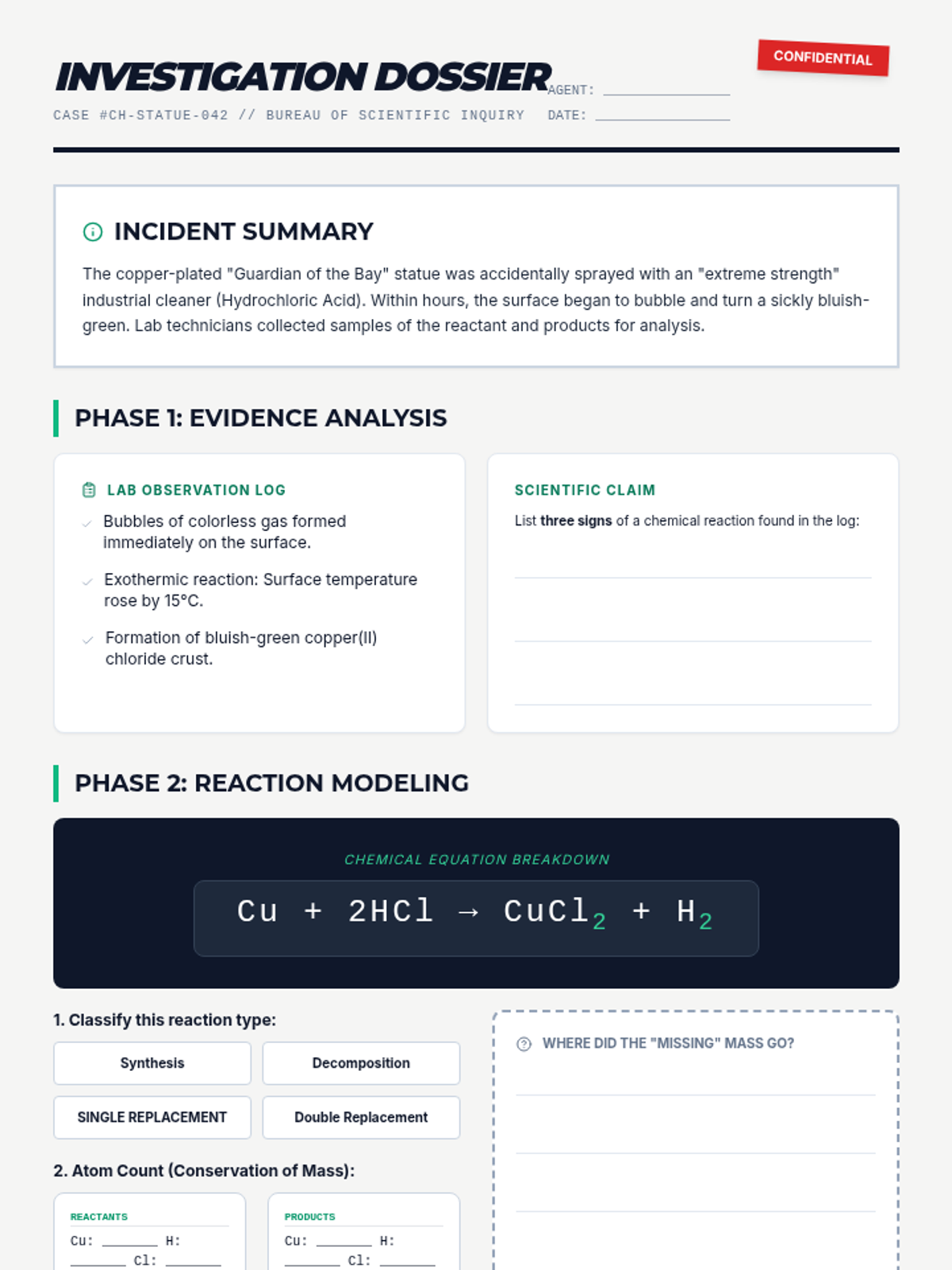
A student-facing dossier for the PBL investigation. It includes evidence analysis sections, chemical equation modeling, and a space for proposing a neutralization strategy to save the statue.
Introductory slide deck for the 'Statue Savior' PBL, setting the stage with a mystery scenario and reviewing key concepts like signs of chemical reactions and the law of conservation of mass.
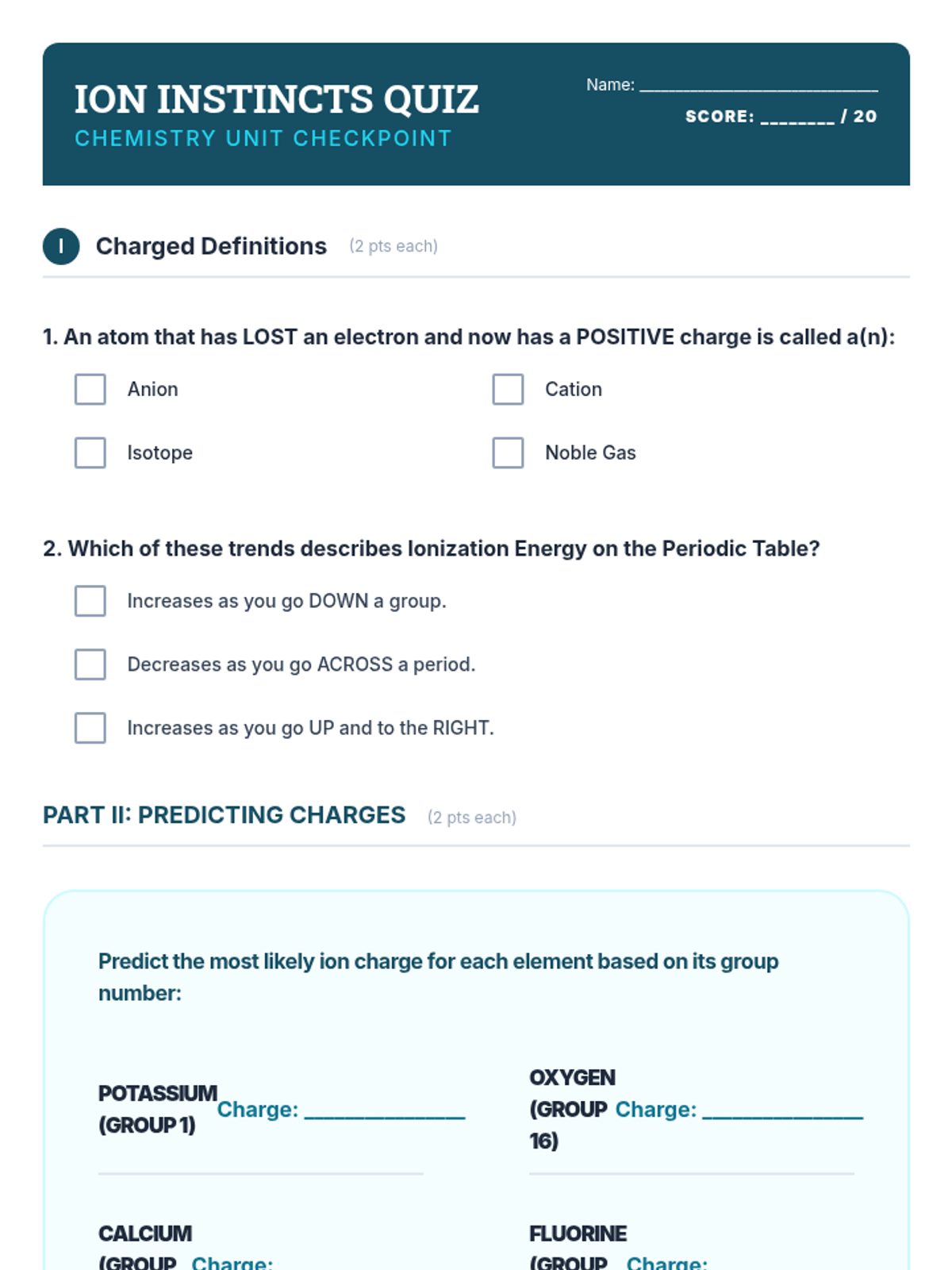
A modified assessment for the Charged Up unit, focusing on ion definitions, predicting charges using group numbers, and the reasoning behind the octet rule and ionization energy trends.
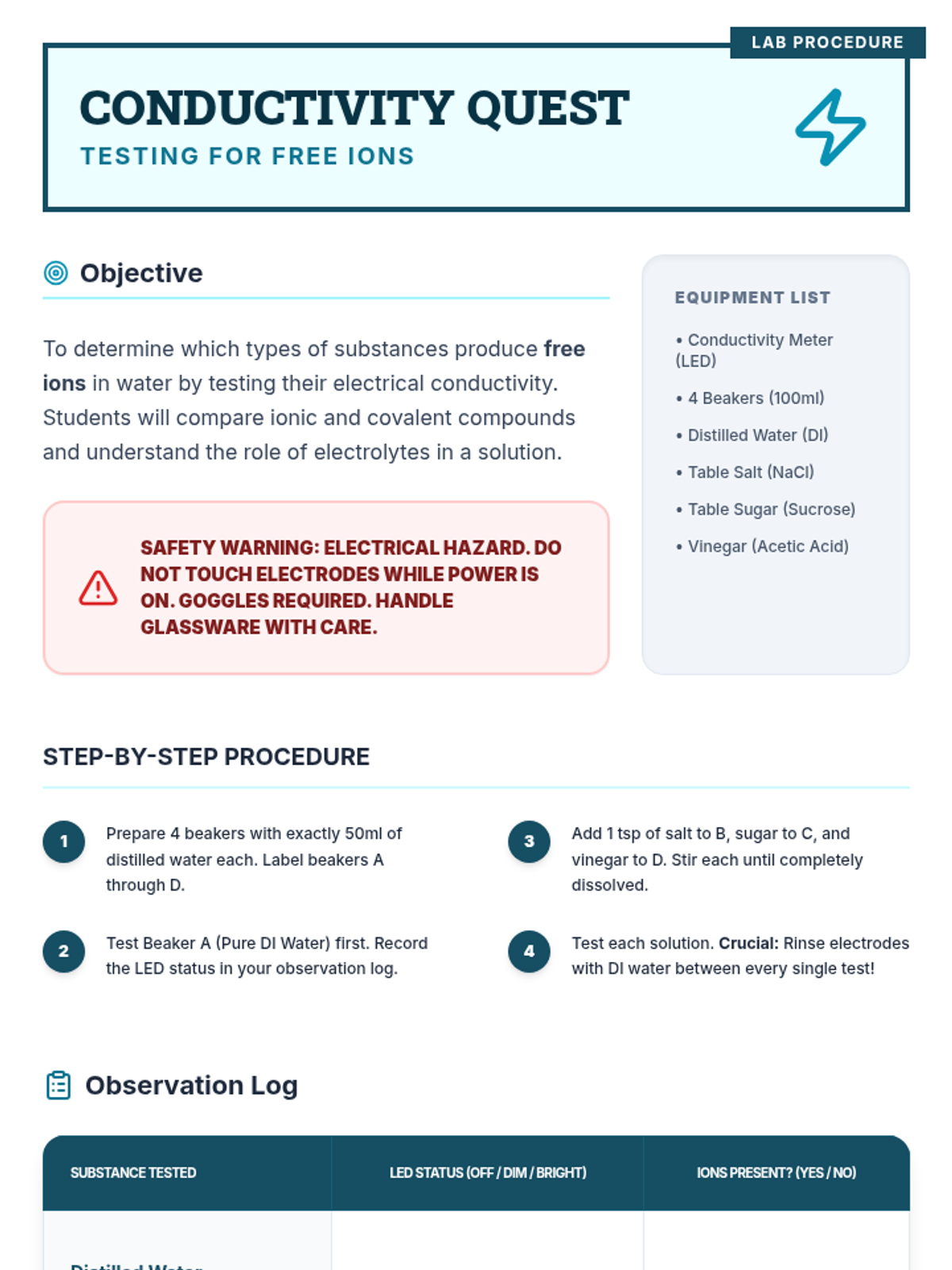
A hands-on laboratory procedure for testing the conductivity of various solutions to identify the presence of free ions. Includes detailed safety protocols and a grading rubric.
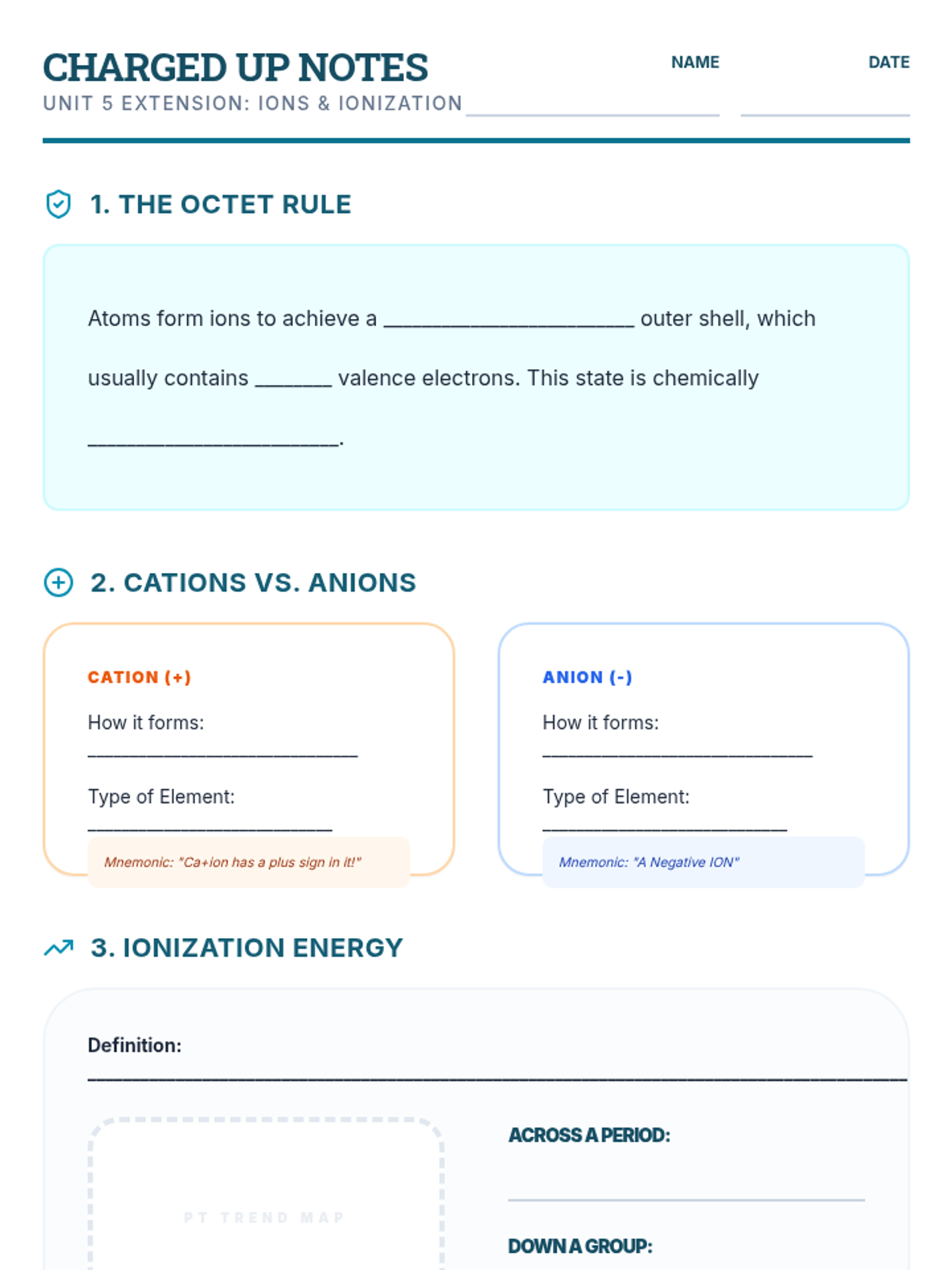
Guided notes for students to record definitions of octet rule, ion types, and ionization energy trends. Includes a structured practice table for predicting ion formation.
A professional slide presentation covering the octet rule, cation and anion formation, ionization energy trends, and charge prediction using group numbers.
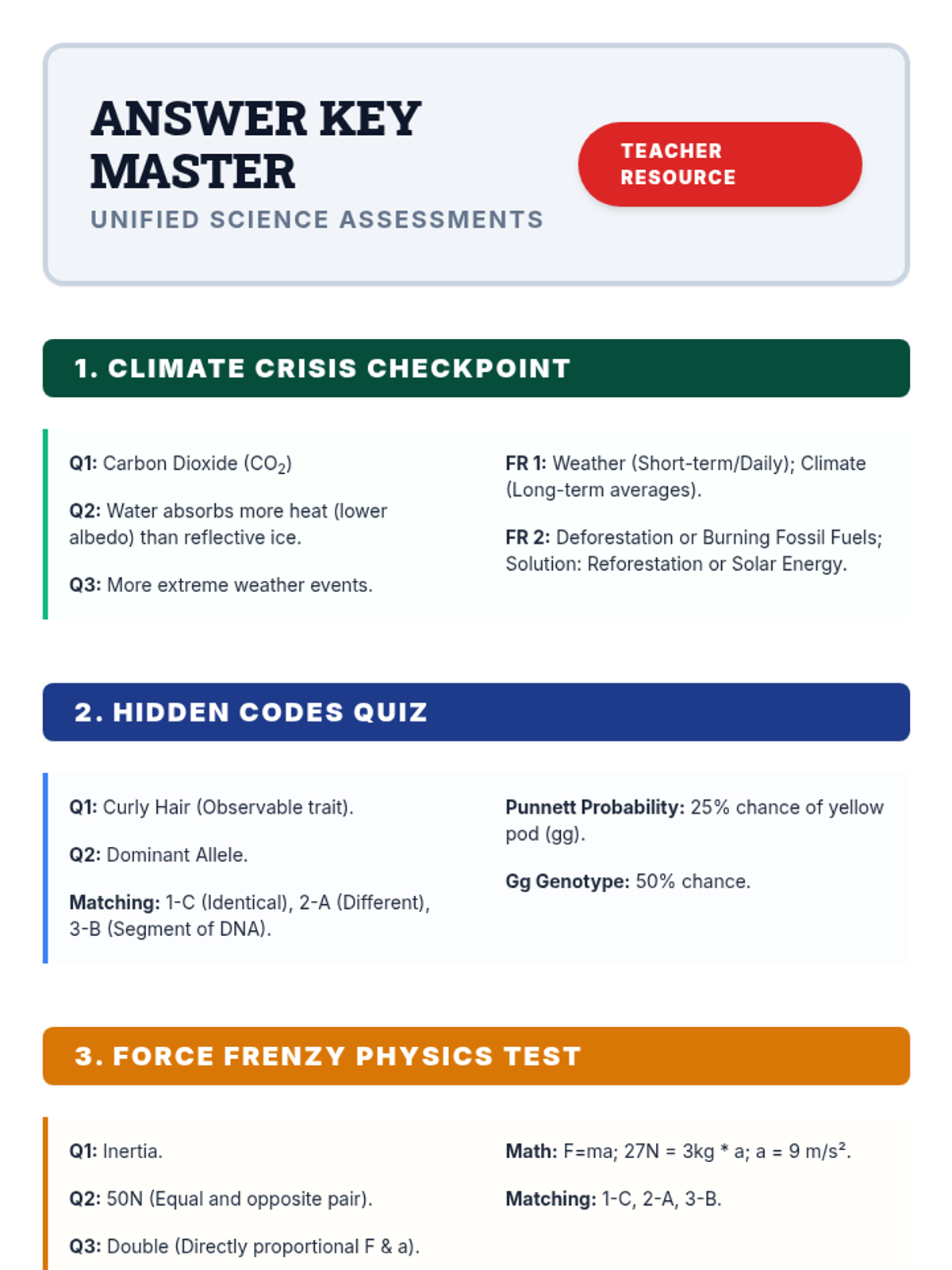
A comprehensive answer key covering all unit assessments. This consolidated teacher resource provides quick reference for multiple-choice, matching, and free-response questions across all six science units.
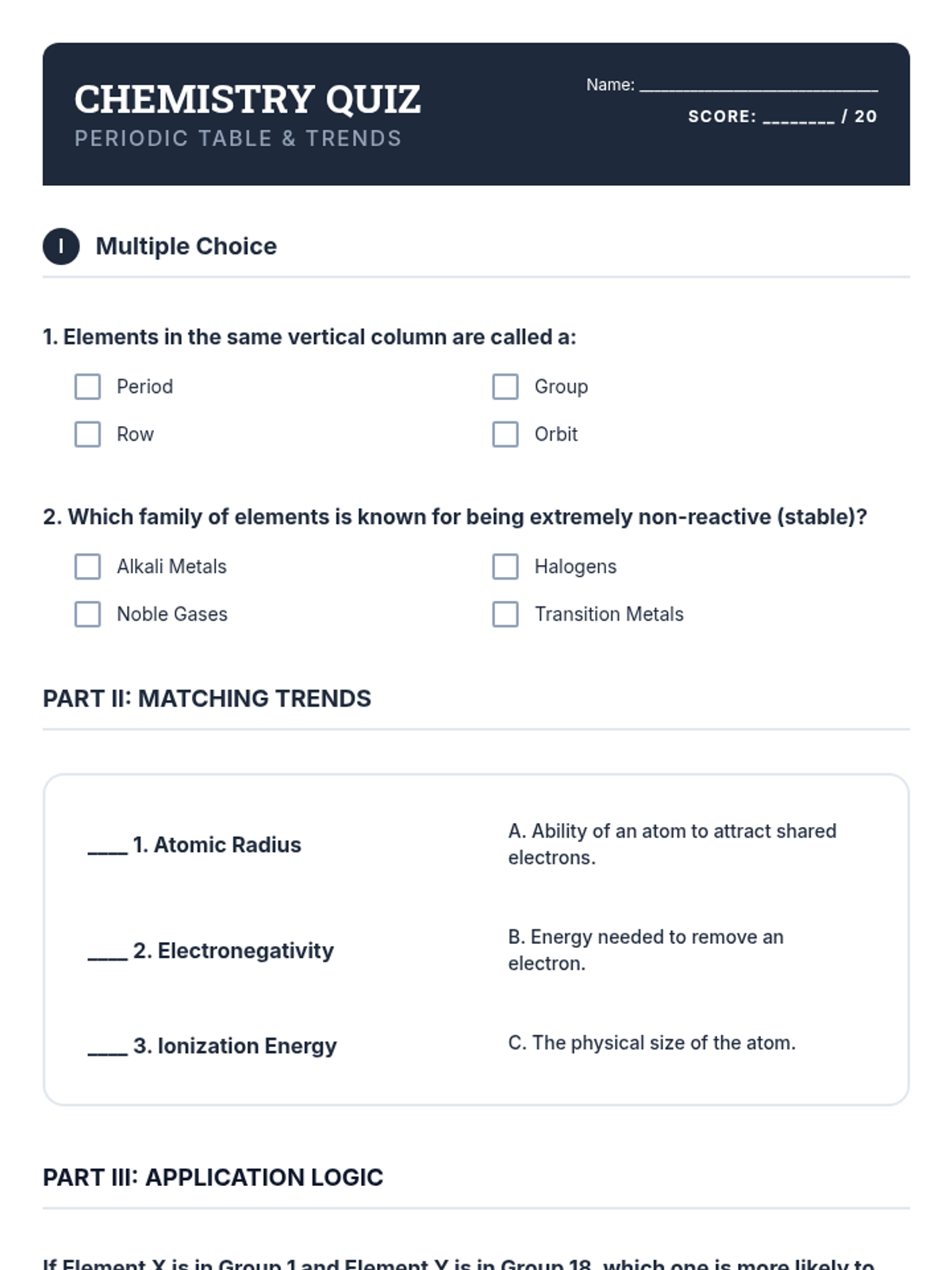
A modified assessment for the Element Empire unit. Focuses on core concepts of groups and periods, matching major periodic trends, and basic logical application of table organization.
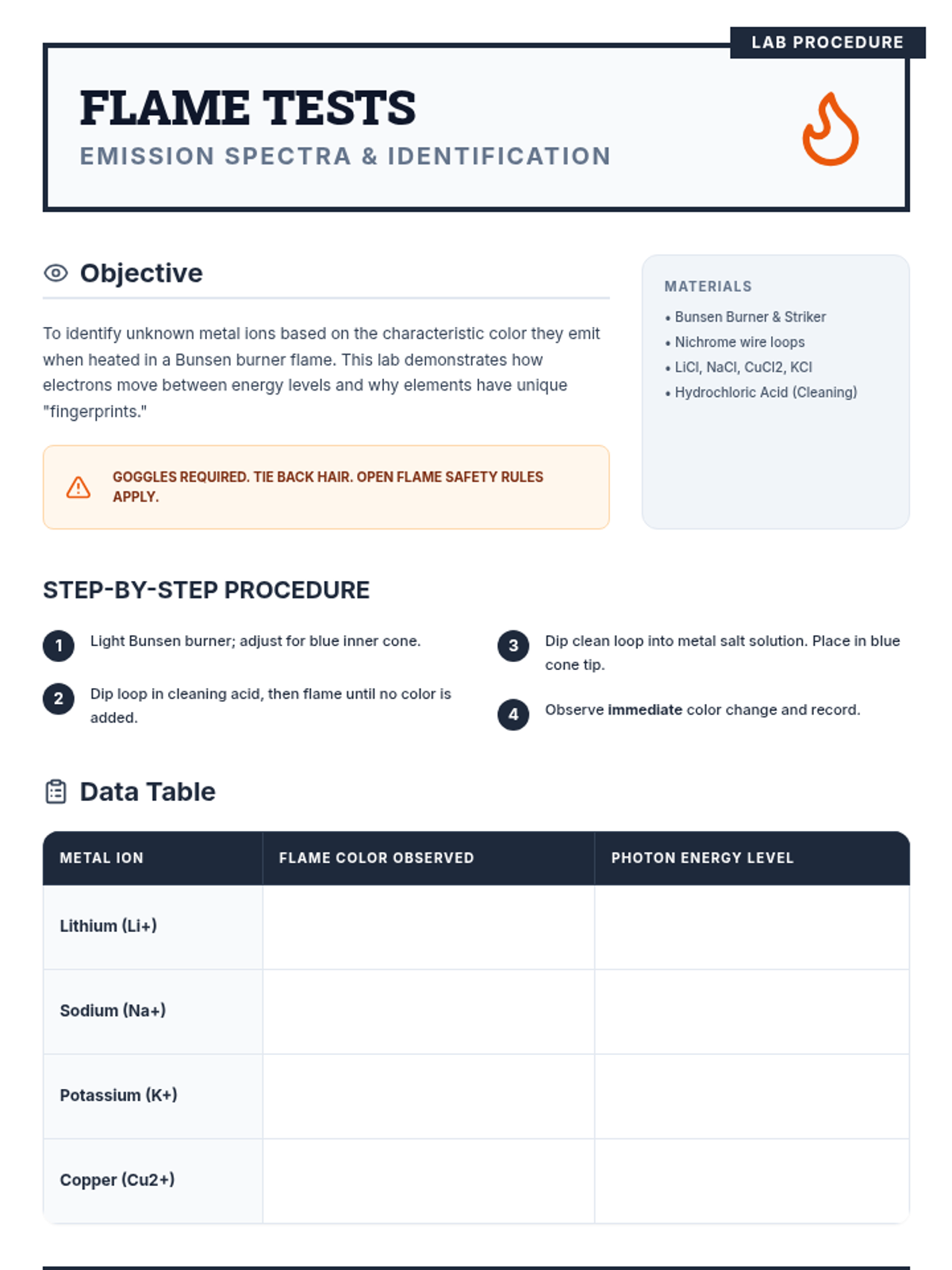
A chemistry lab procedure for identifying metal ions via flame tests. Includes safety protocols, step-by-step instructions for Bunsen burner use, an observation log, and a grading rubric.
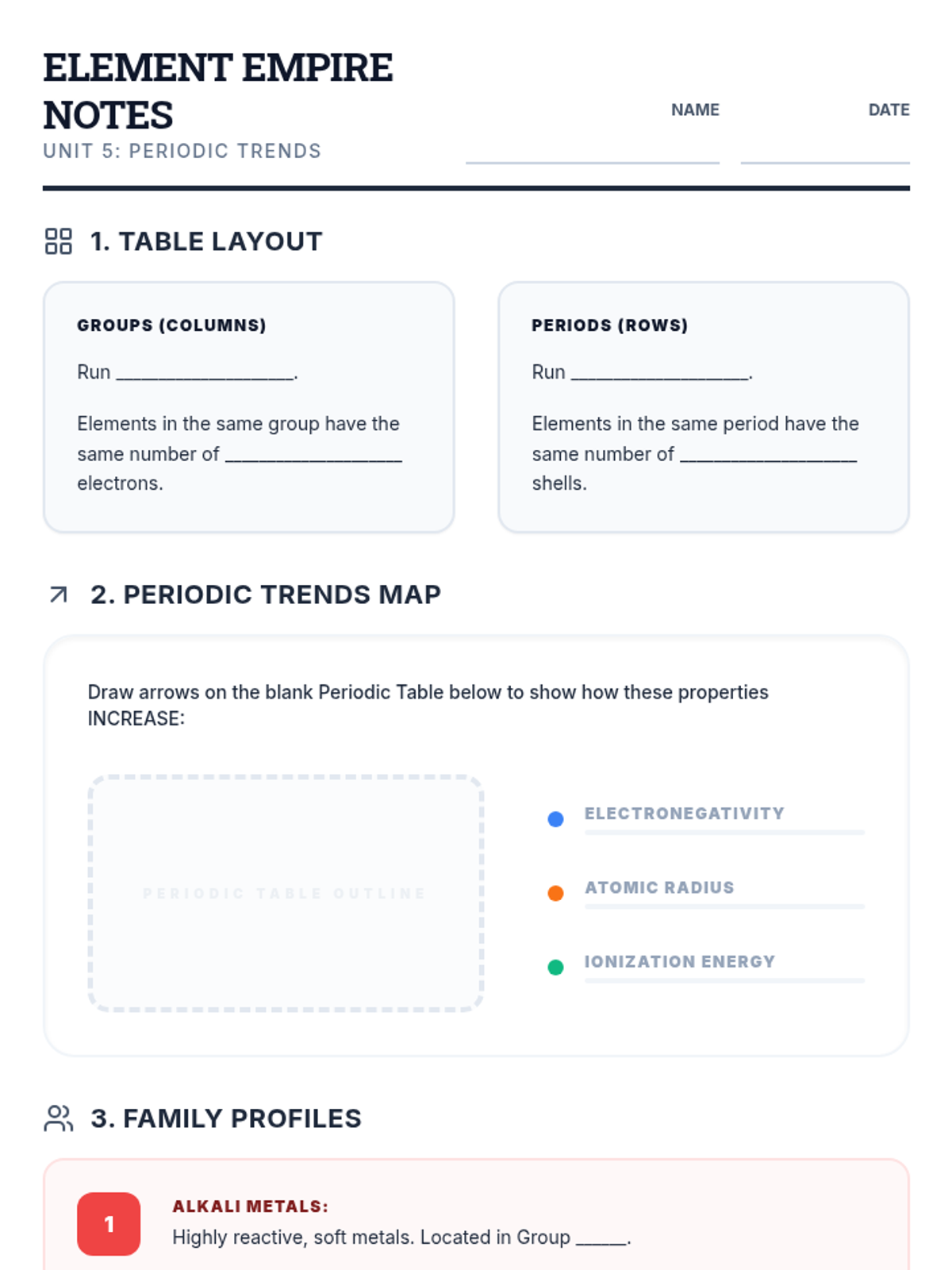
Guided notes for the Element Empire periodic table unit. Includes layout identification, trend visualization exercises, and family profile sections to help students organize chemical properties.
A professional slide deck on the periodic table, focusing on groups vs. periods, atomic structure details, and major periodic trends like atomic radius and electronegativity. Includes overviews of chemical families.
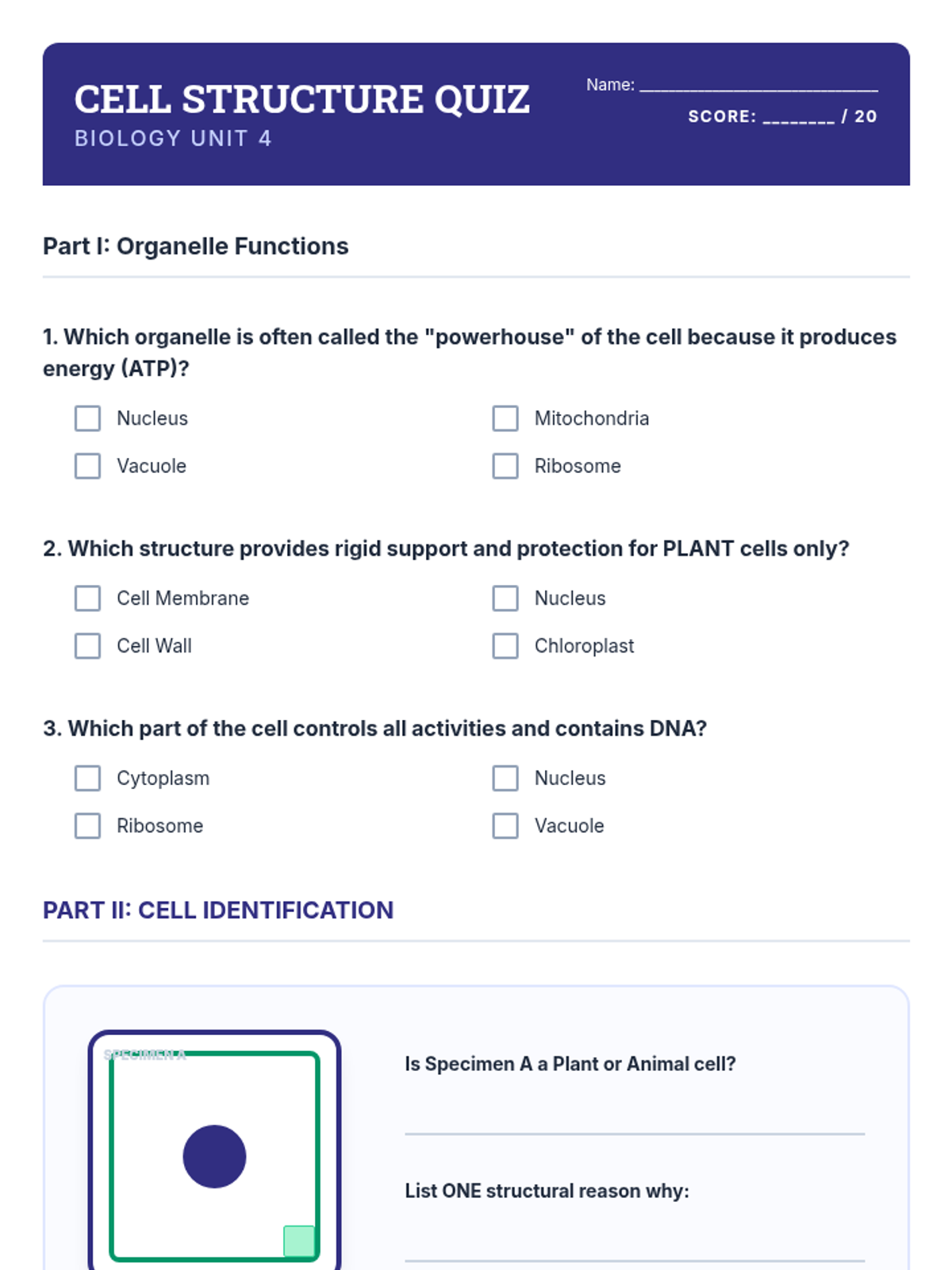
A modified assessment for the Tiny Factories cell biology unit. Features simplified multiple-choice questions, visual diagram identification, and matching exercises for core organelle functions.
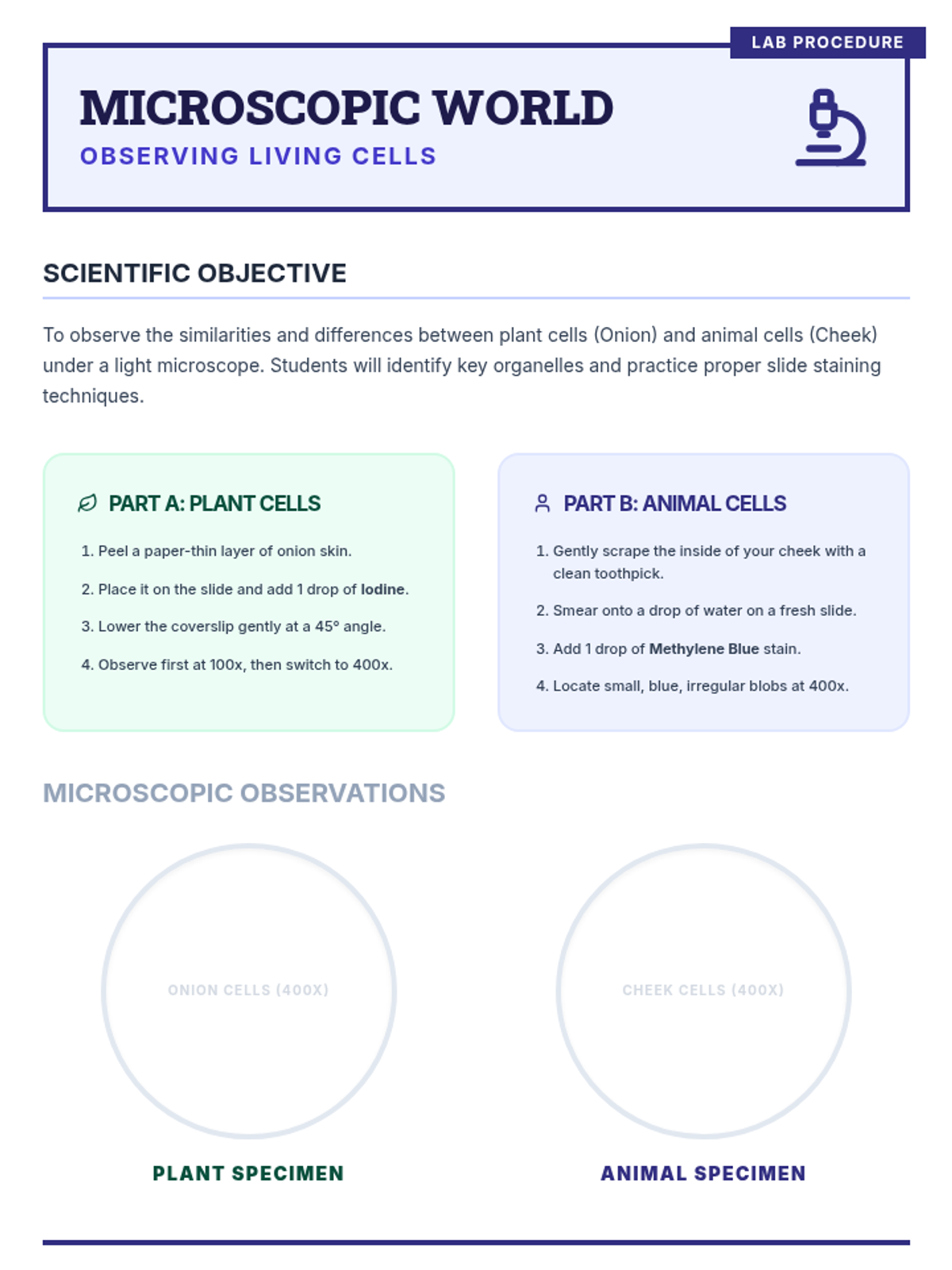
A laboratory procedure for observing plant and animal cells under a microscope. Includes detailed staining steps, dedicated observation sketch areas, and a structured grading rubric.
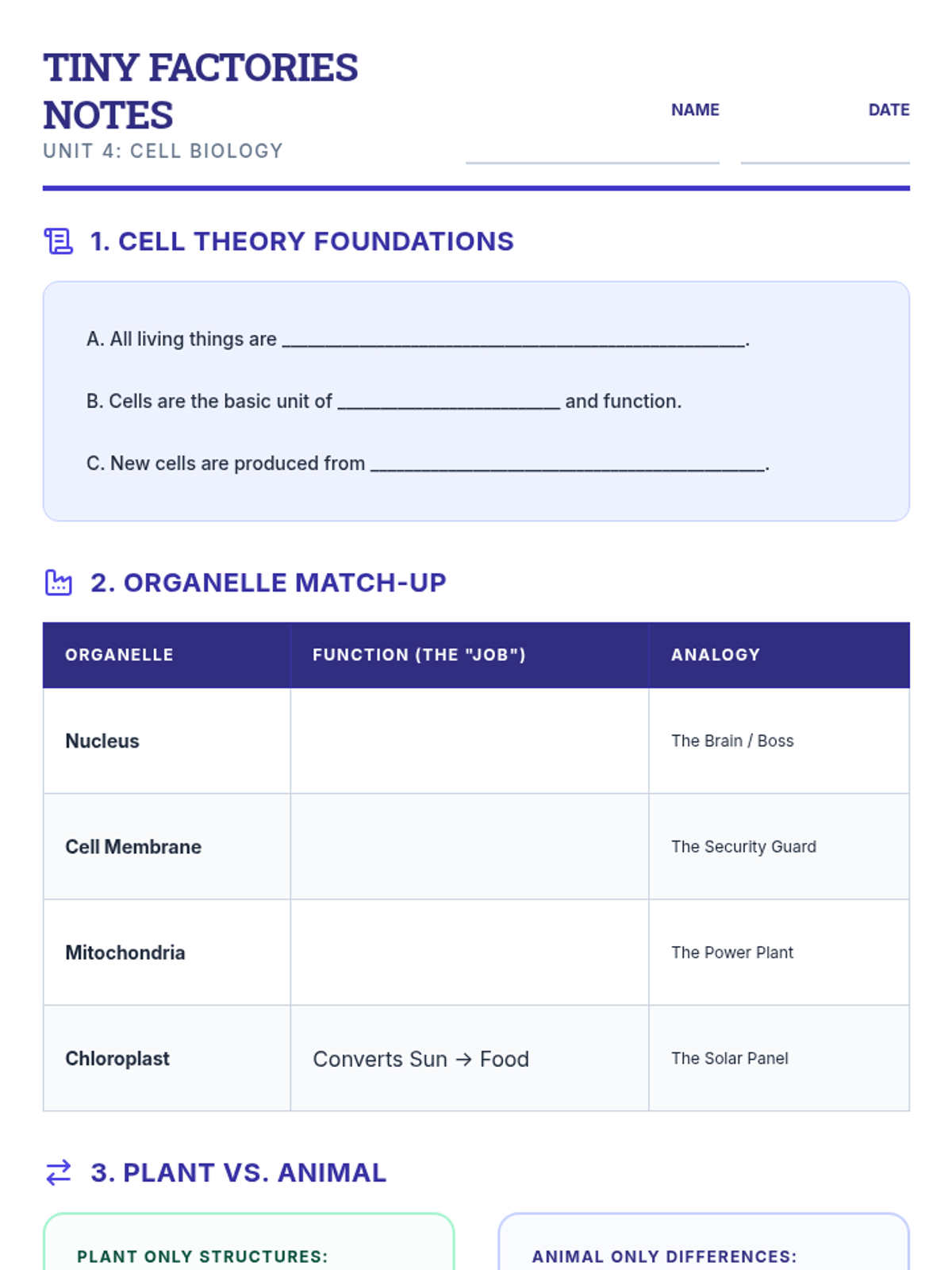
A comprehensive guided notes packet for the Tiny Factories lesson. Includes structured sections for cell theory, an organelle function and analogy table, and a comparison area for plant and animal cells.