A student-facing presentation template designed to guide researchers through their Physics Frontiers briefing while adhering to the strict 10-word slide limit. Features placeholders for vocabulary, mathematical models, and visual evidence.
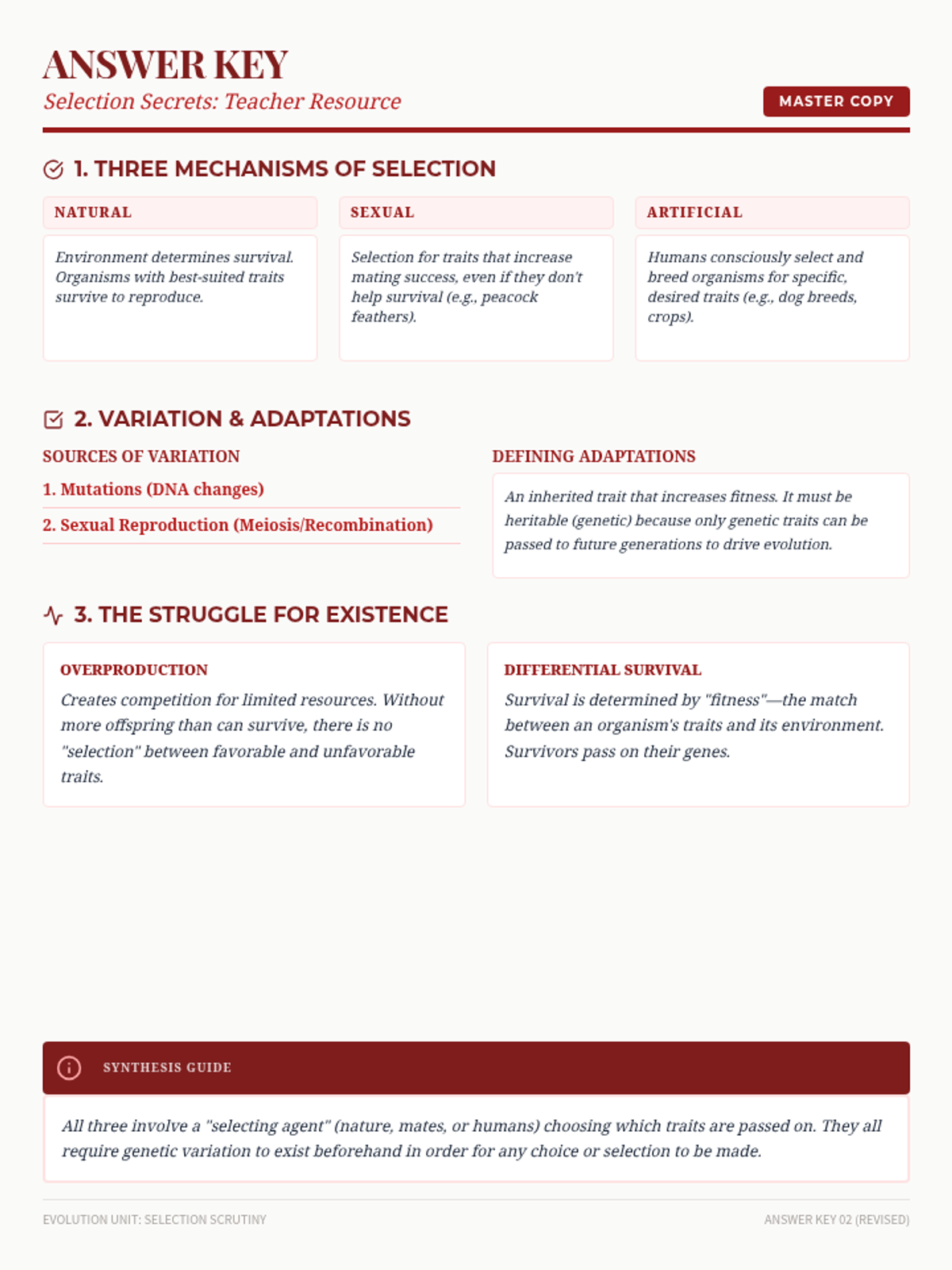
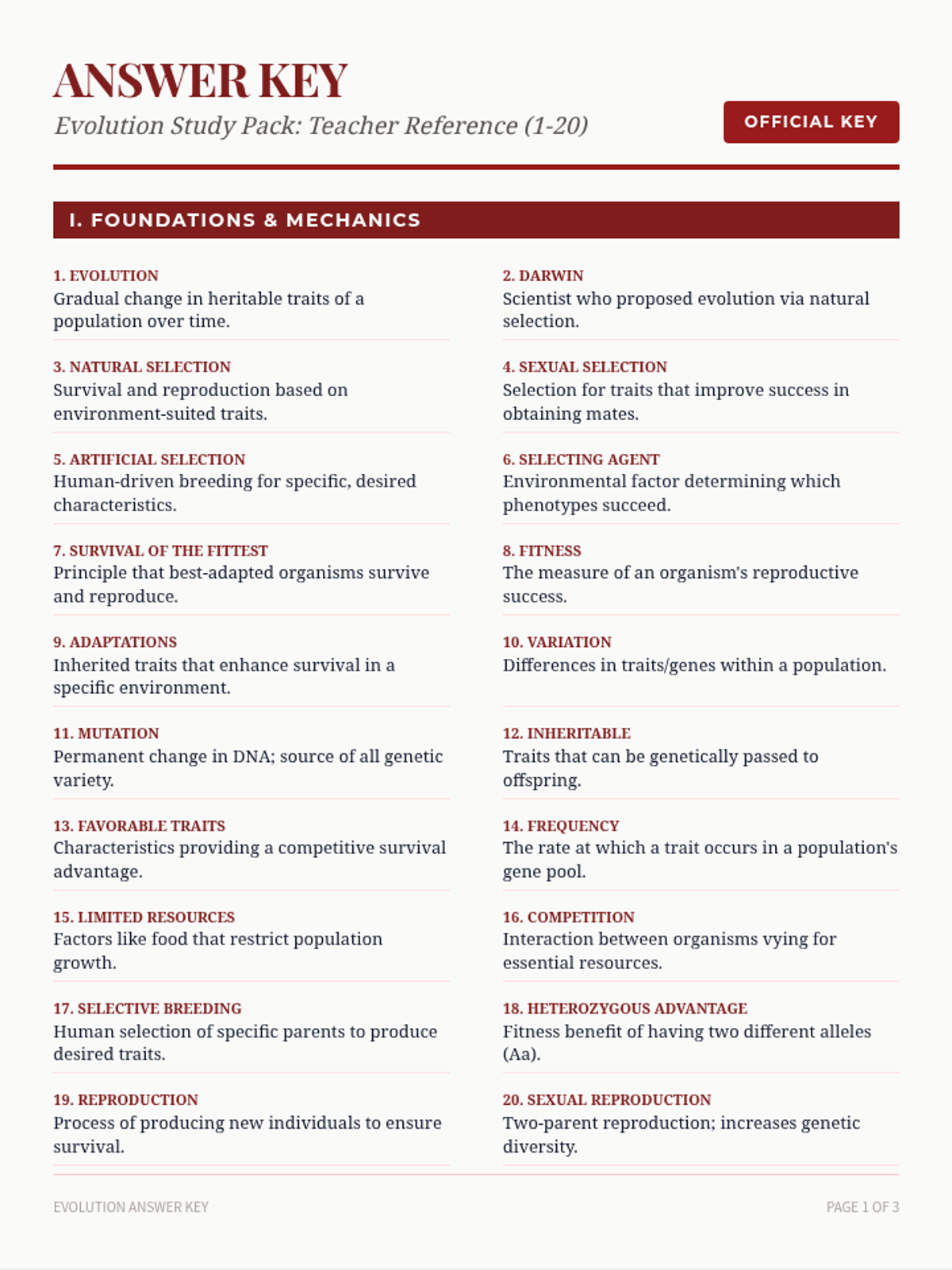
A revised answer key for the Selection Secrets Worksheet, providing explanations for natural, sexual, and artificial selection, as well as core evolutionary concepts.
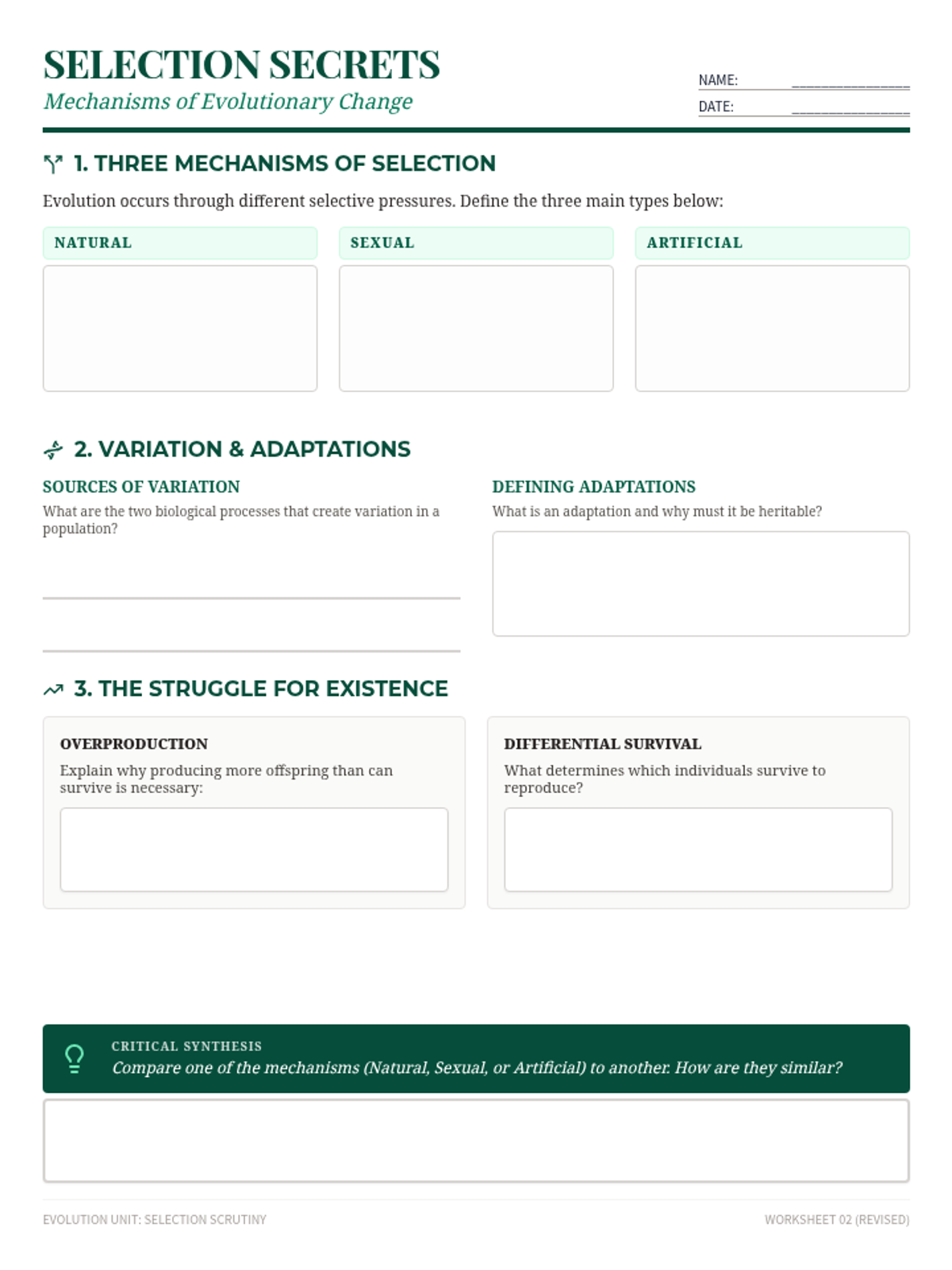
A revised worksheet exploring the mechanisms of evolution (natural, sexual, and artificial selection) alongside core concepts like variation, adaptations, and differential survival.
A three-page teacher answer key for the Evolution Study Pack, featuring all 40 terminology definitions and a sample visual concept map and reflection.
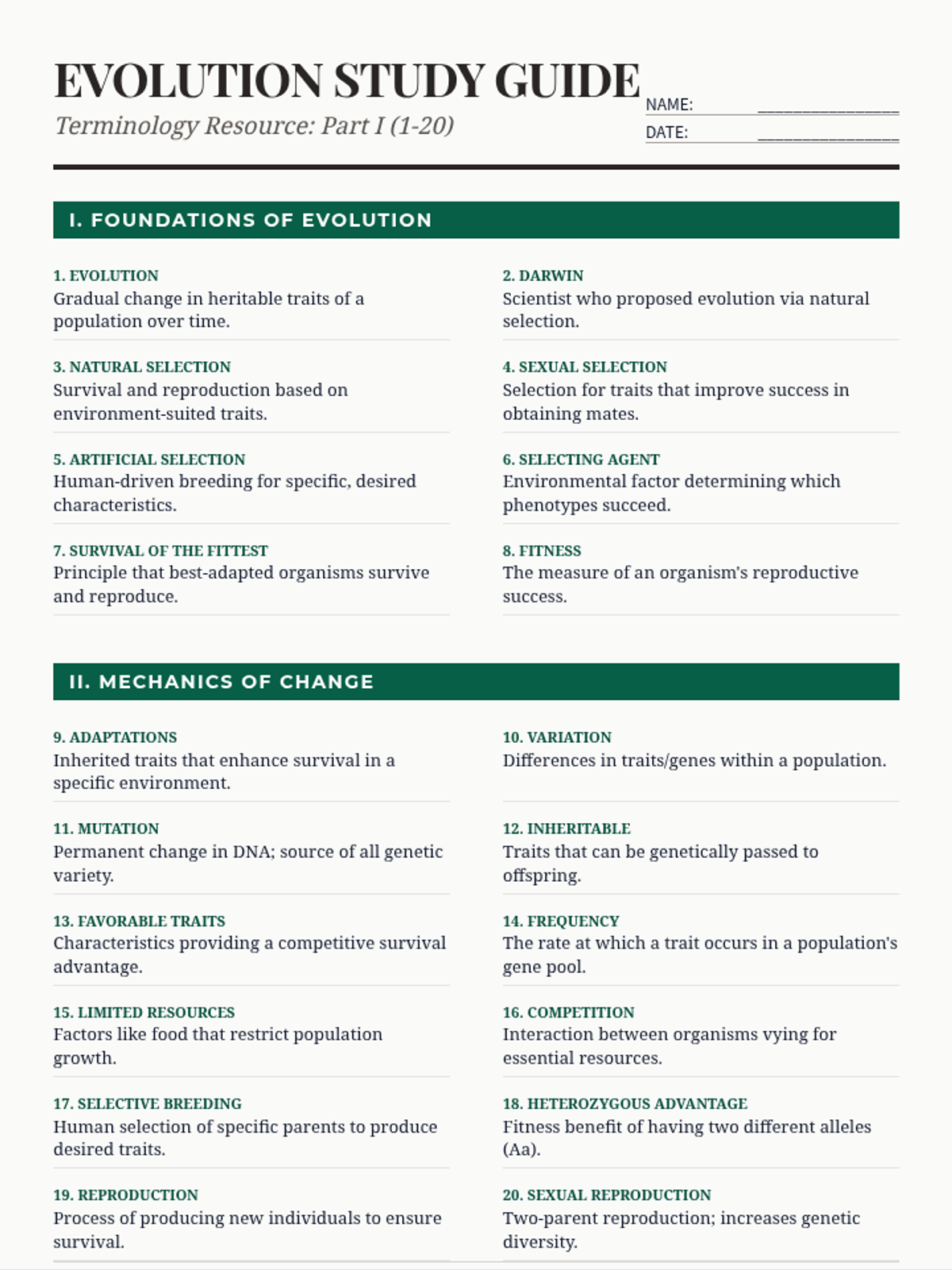
A comprehensive three-page study resource including definitions for 40 evolution-related terms and a visual concept map worksheet for student completion.
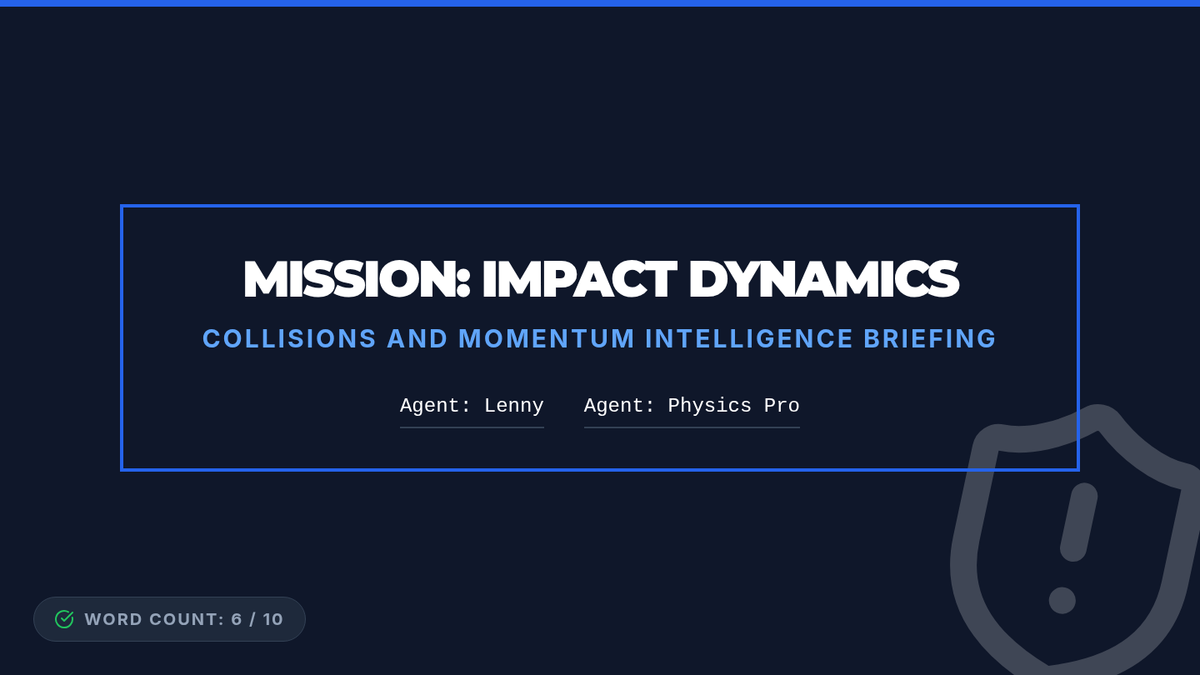
An example presentation on Collisions and Momentum, demonstrating the 10-word slide limit and required elements for the Physics Frontiers project. Includes high-impact visuals and mathematical modeling.
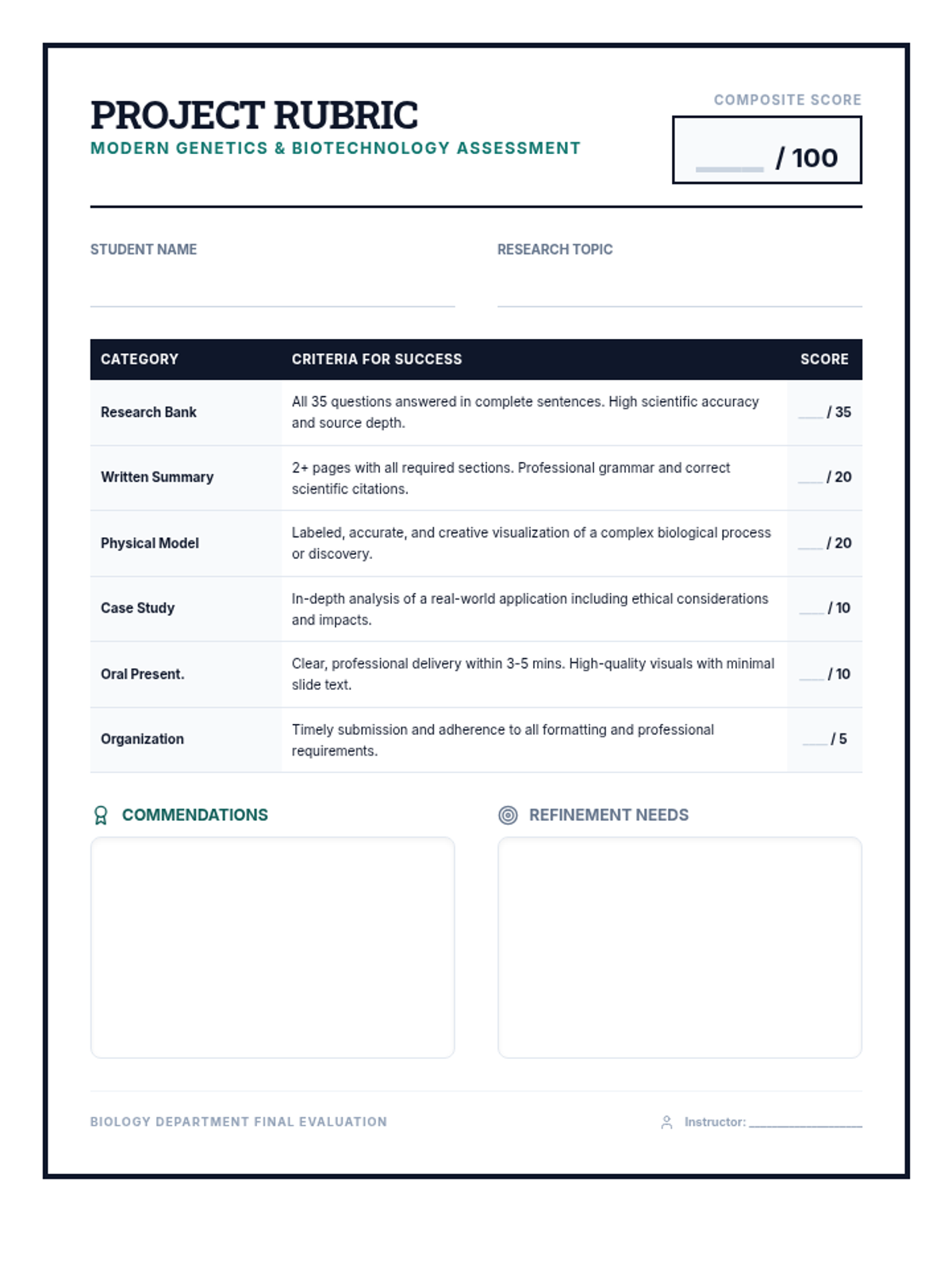
A comprehensive 100-point rubric and feedback sheet for teachers to evaluate the Modern Genetics research project. Breaks down scores for the research questions, summary, model, case study, and presentation with a polished horizontal points layout.
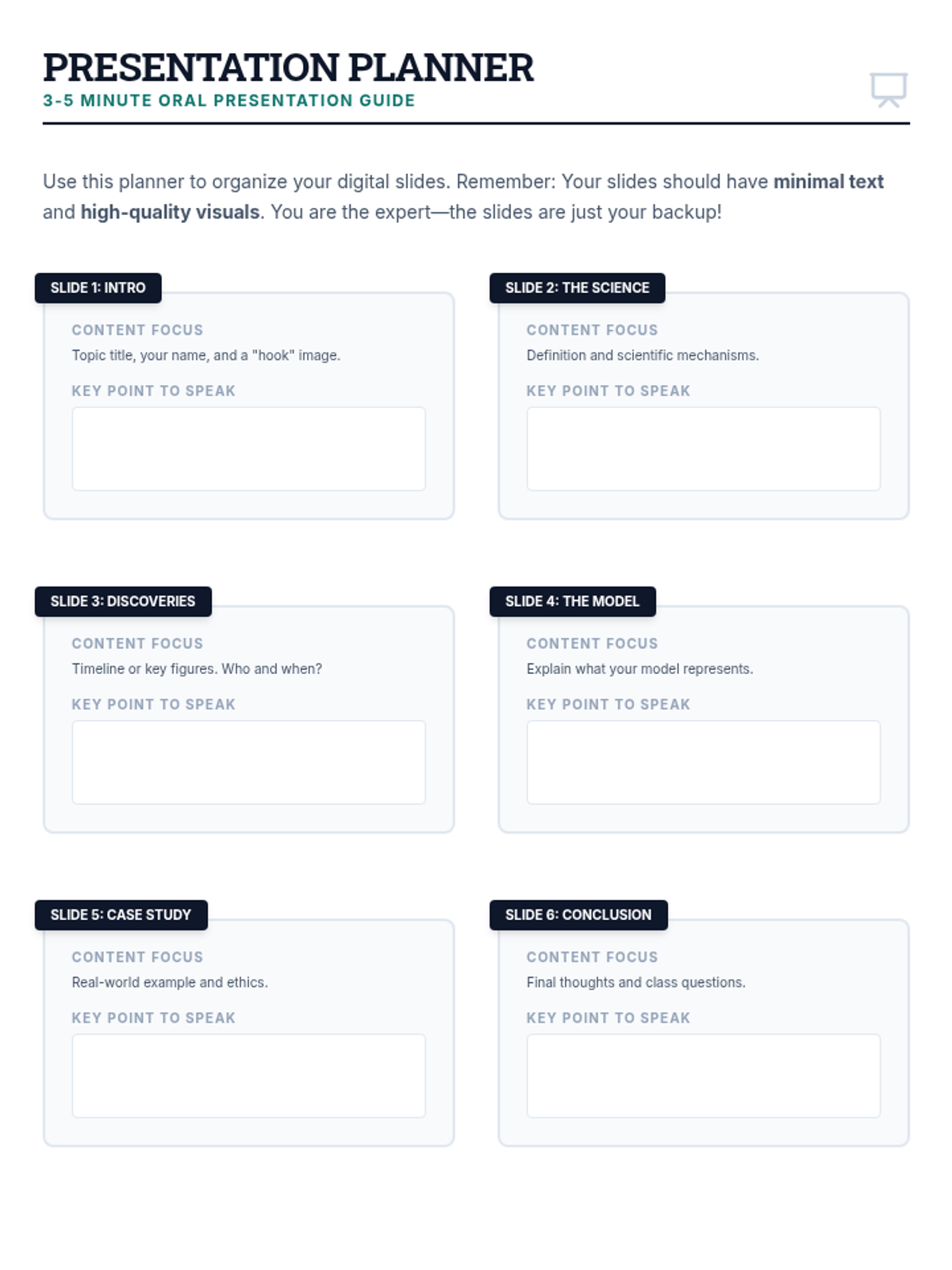
A dual-purpose material containing a slide-by-slide presentation planner with ample writing space for students, alongside a handout featuring best practices for visual design and public speaking.
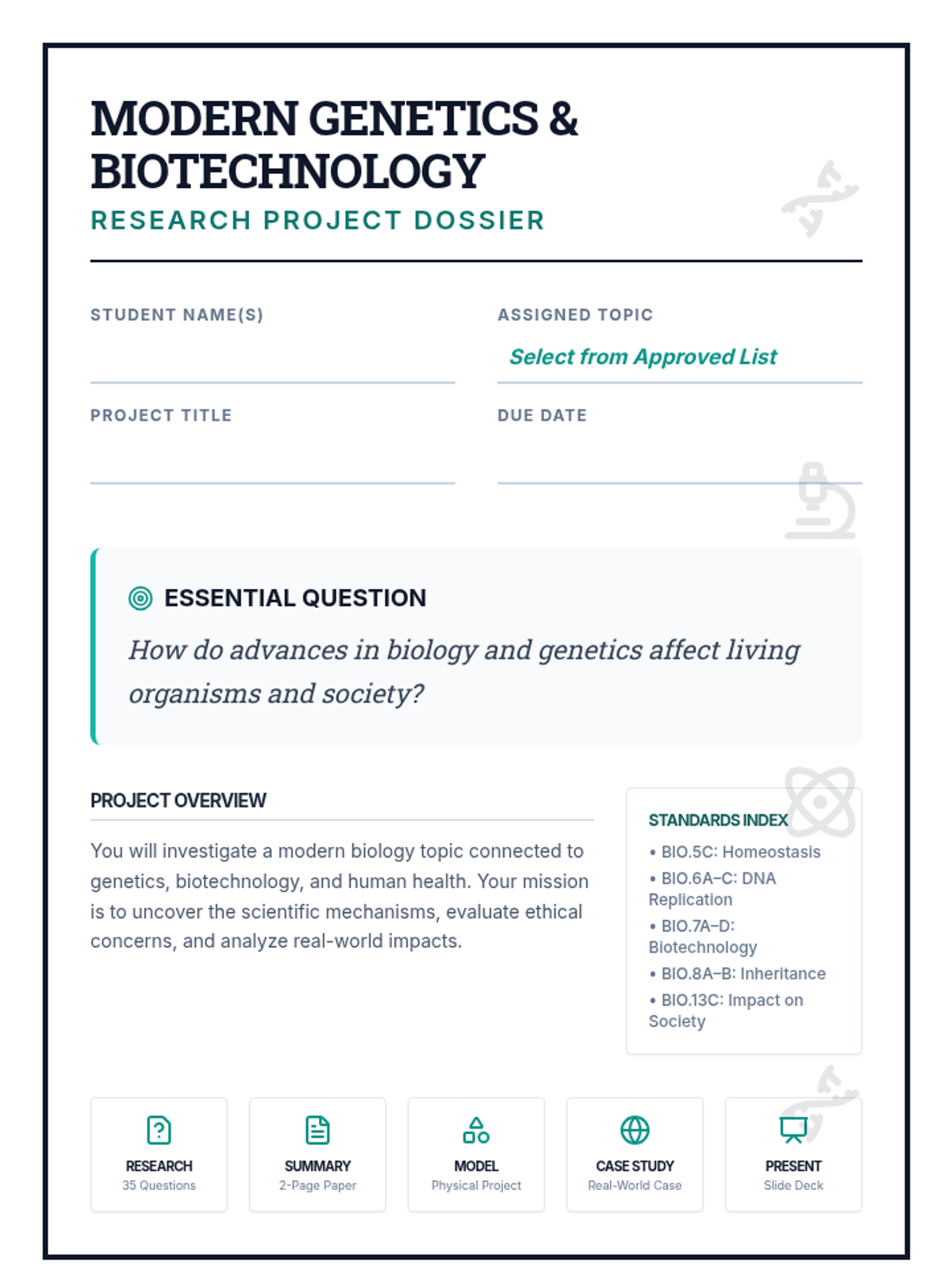
A comprehensive student project packet for the Modern Genetics & Biotechnology research assignment. Includes topic lists, a two-week timeline, 35 research questions with improved writing space, and detailed requirements for the summary, model, and case study.
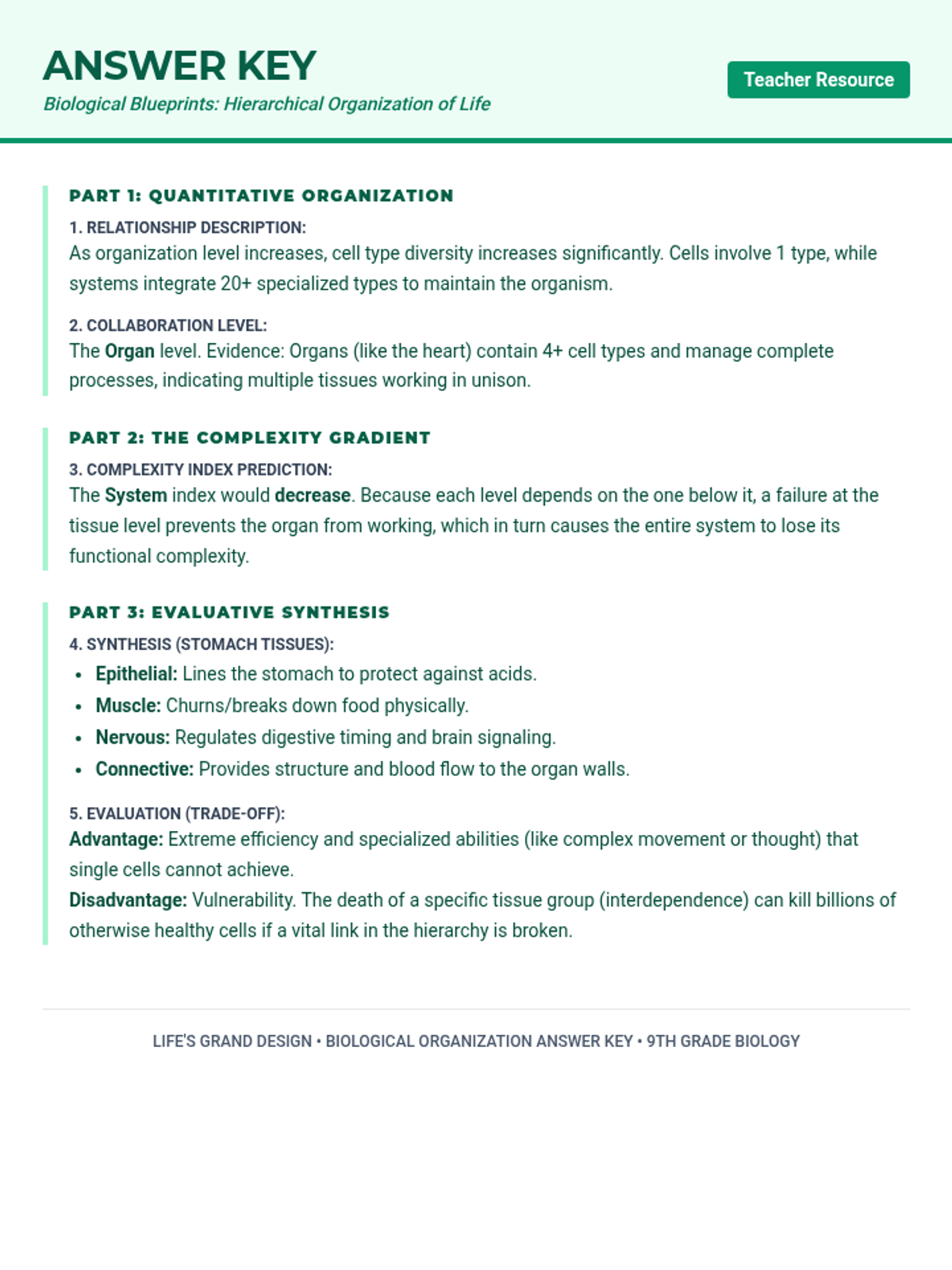
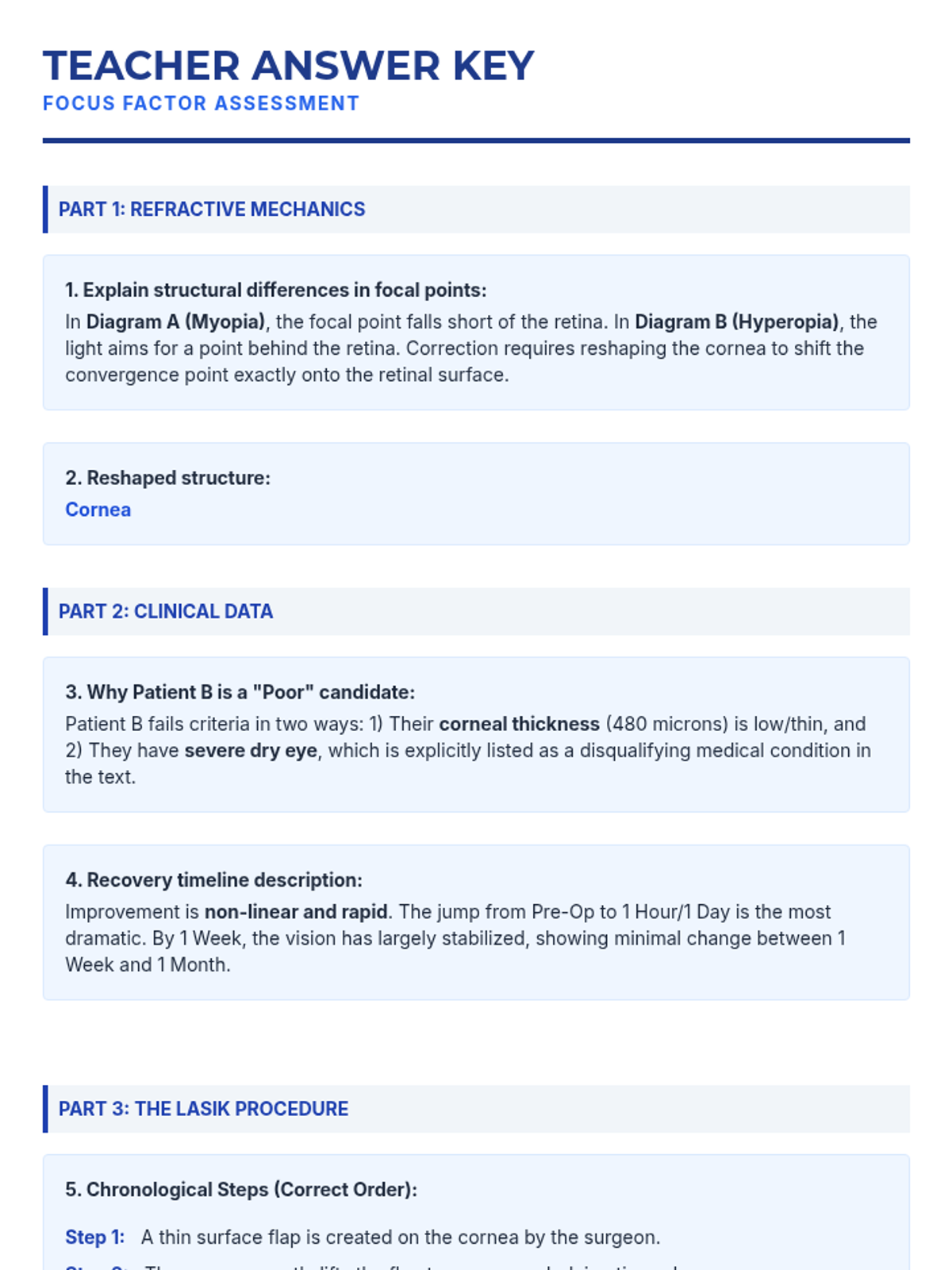
A teacher-facing answer key for the Biological Blueprints assessment, optimized into a high-contrast, single-page format.
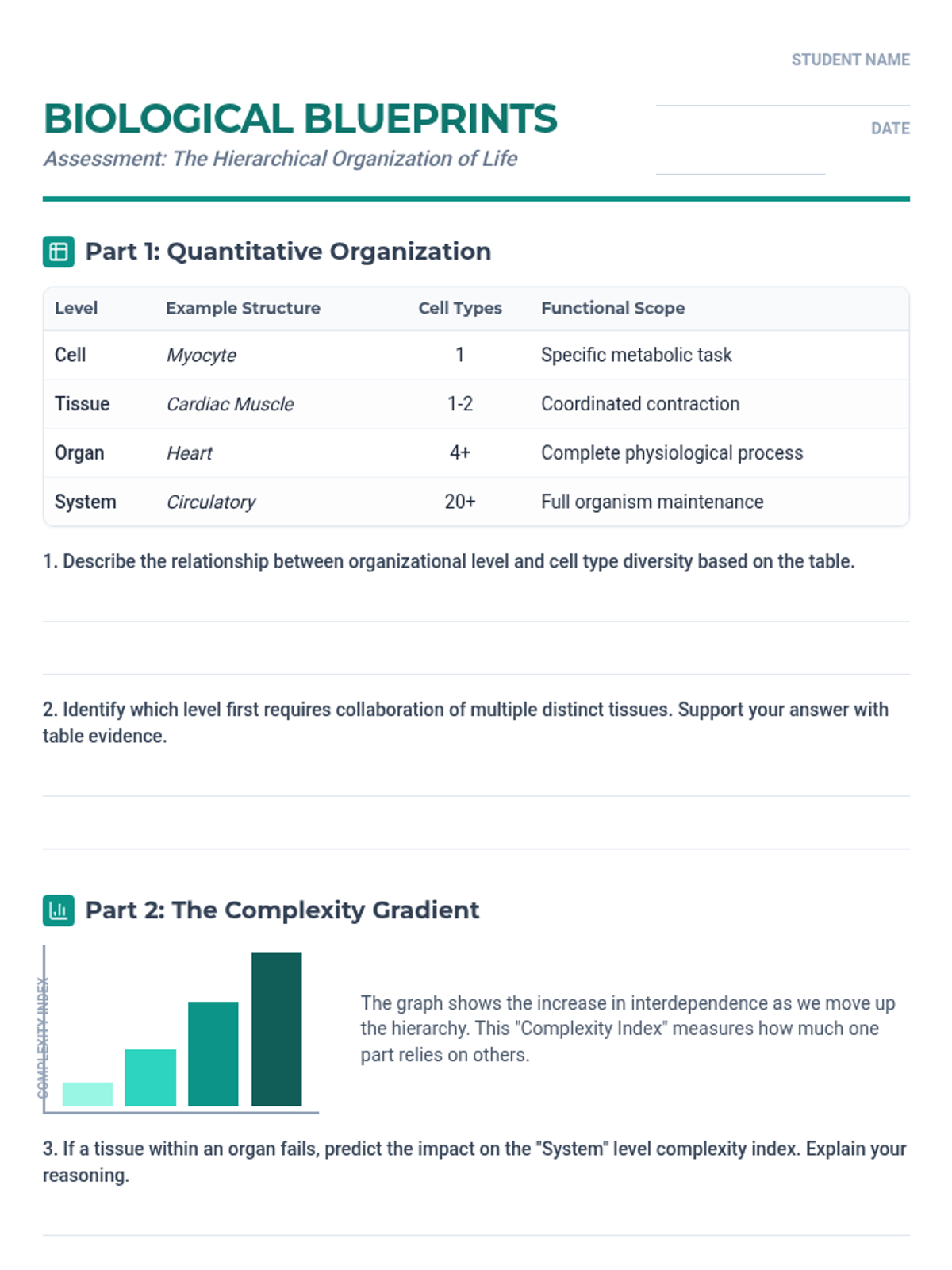
A 9th-grade biology assessment on life's hierarchical organization, featuring data tables, complexity graphs, and higher-order evaluation questions. Layout optimized for two pages.
A teacher-facing answer key and instructional guide for the LASIK assessment, including grading criteria and common student misconceptions.
A dynamic slide presentation for classroom instruction, covering the biological causes of blurry vision, the mechanical steps of LASIK, and clinical data on outcomes.
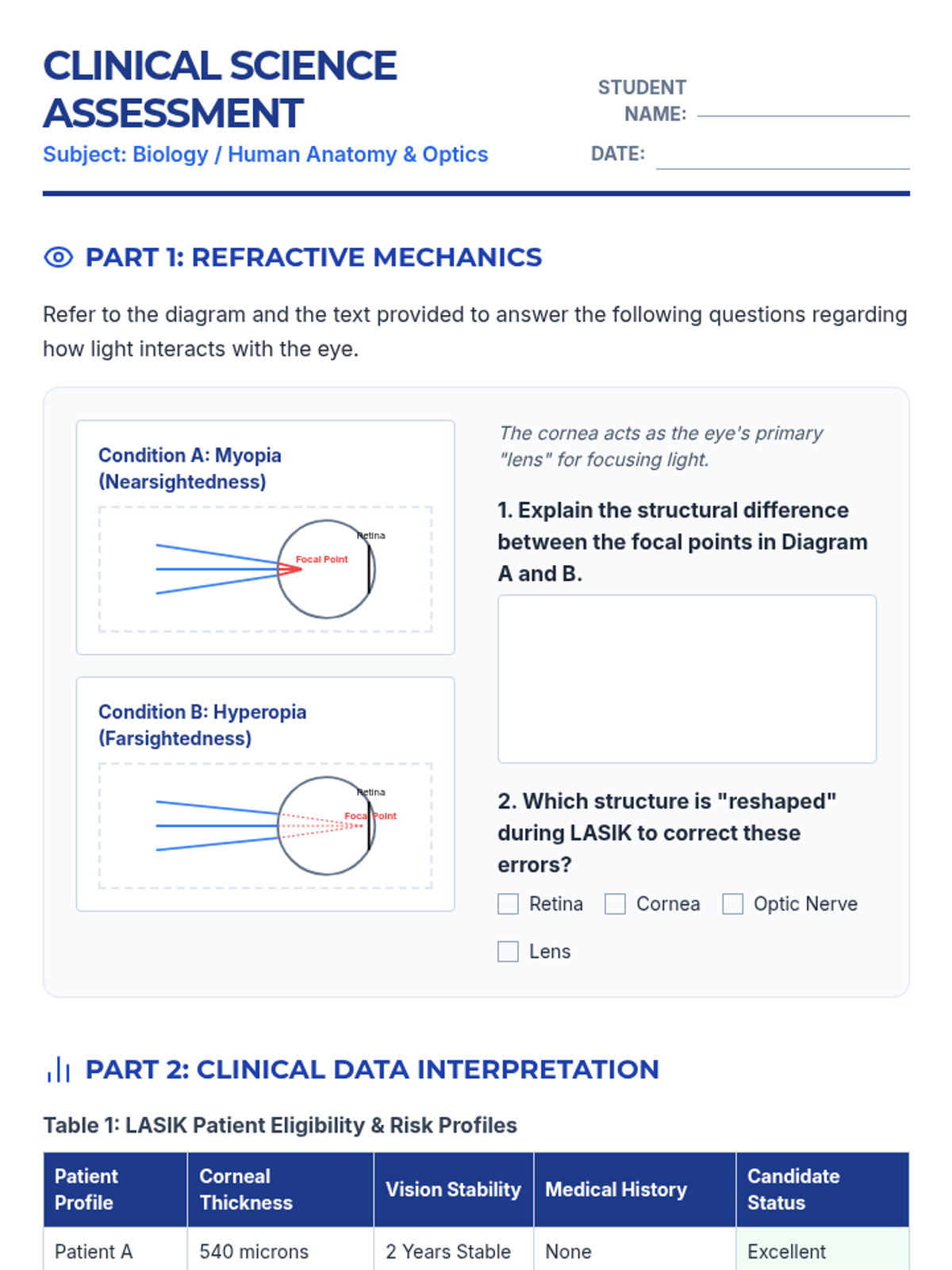
A data-driven assessment document for 9th-grade biology students, featuring refractive error diagrams, an eligibility table, and a recovery graph based on the LASIK procedure text.
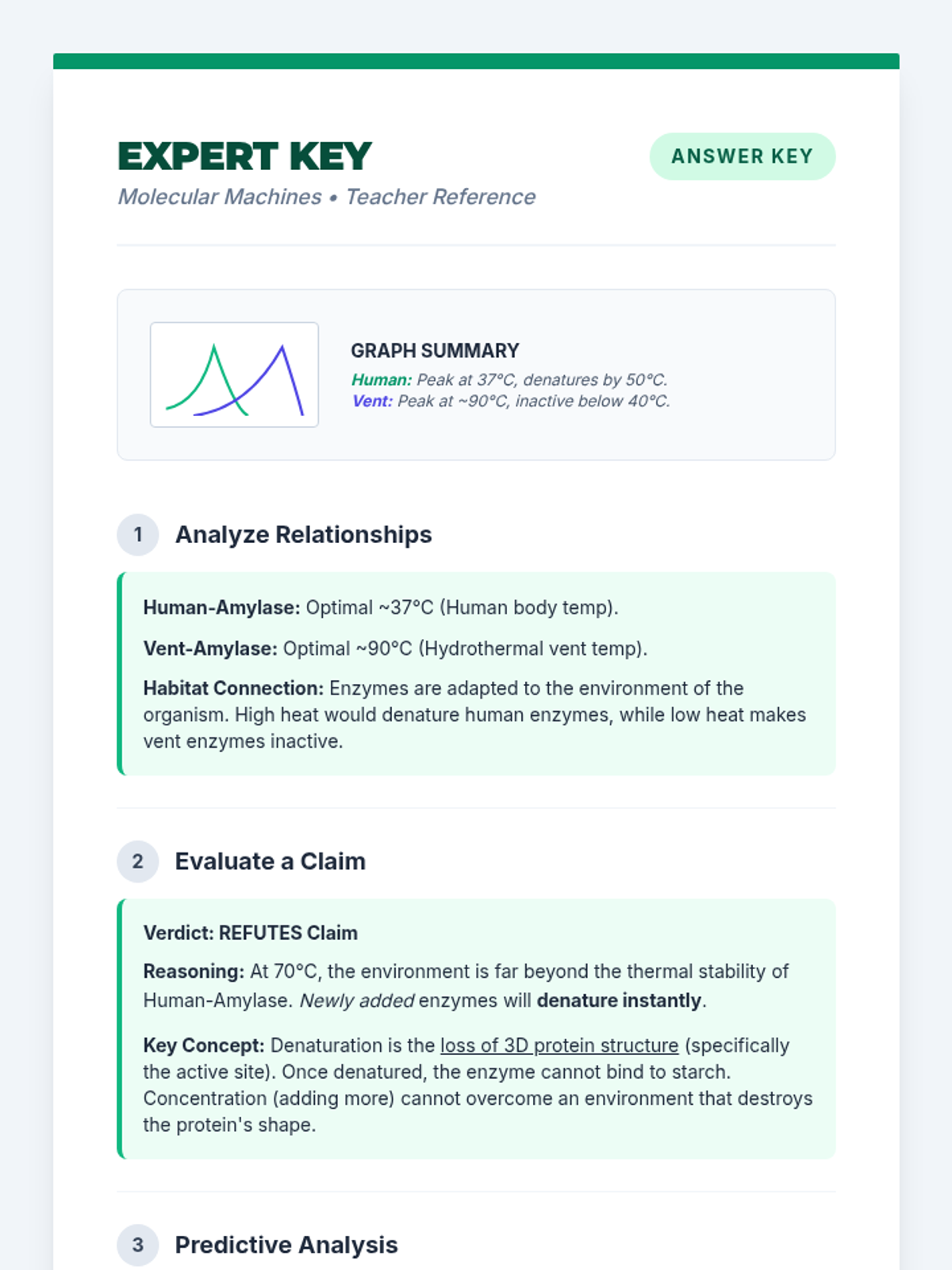
Comprehensive answer key for the Molecular Machines worksheet, providing teacher guidance on evaluating student responses, specifically focusing on data justification and biological reasoning.
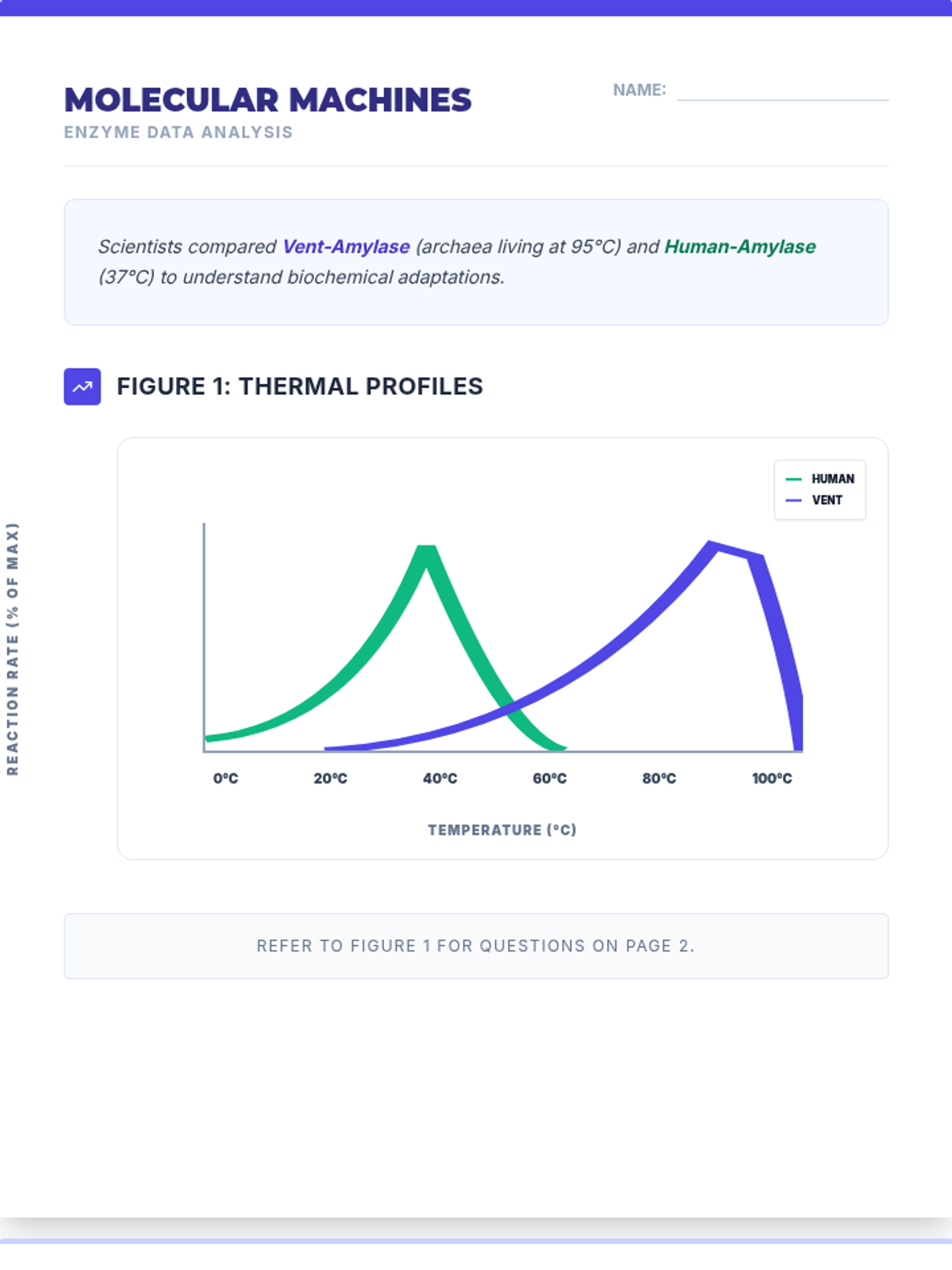
This worksheet features a scientific passage about deep-sea hydrothermal vent enzymes and a line graph comparing two different amylases. It includes high-level thinking questions that require students to evaluate claims and analyze relationships between data sets.
This slide deck introduces the core concepts of enzymes, their mechanisms, and the environmental factors that affect their function. It includes a final higher-level thinking "Data Detective Challenge" slide.
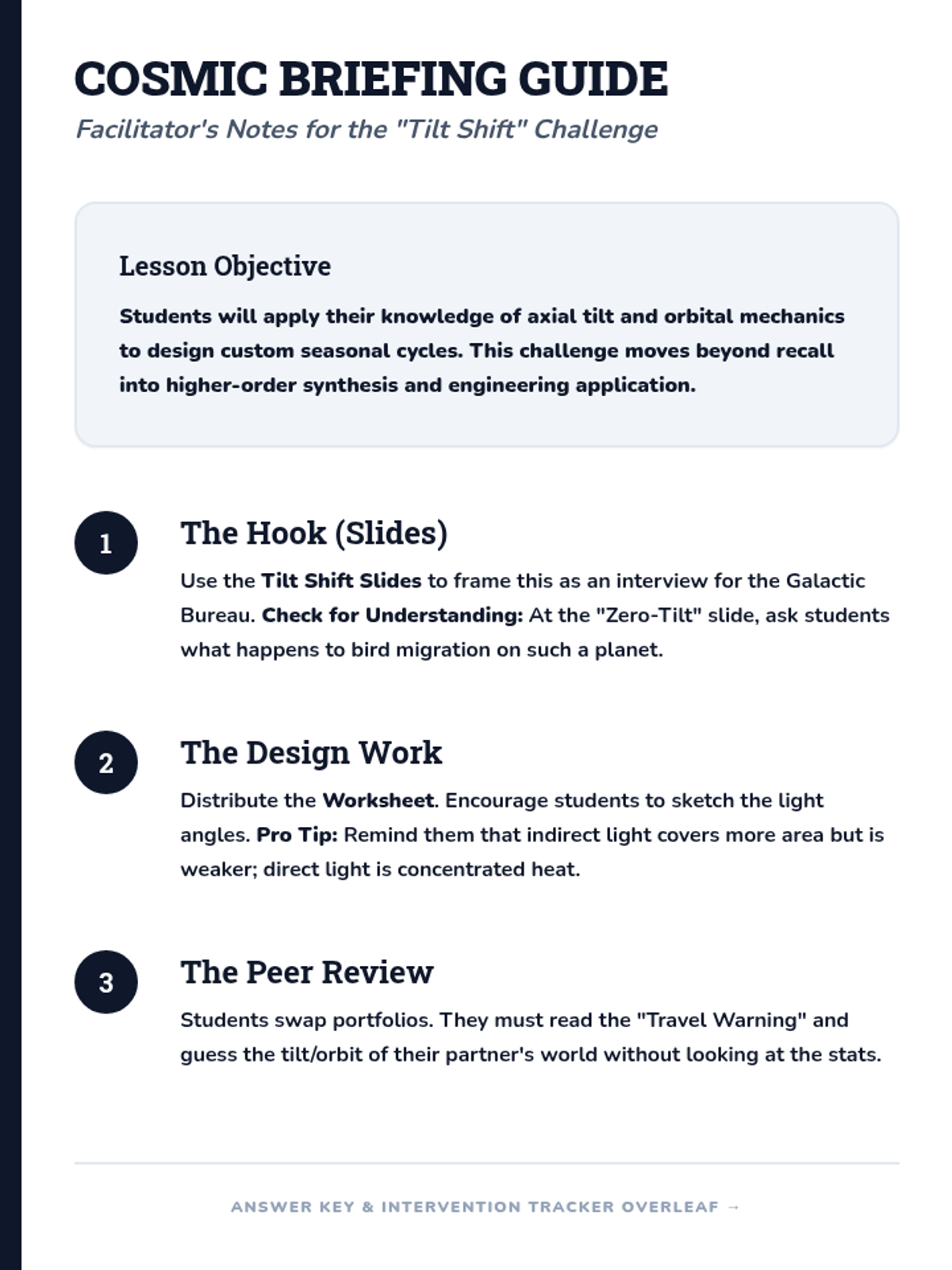
A comprehensive teacher guide providing instructional scripts, pacing advice, and an answer key for the 'Cosmic Consultant' simulation. It includes common misconceptions to address during the activity and extension ideas for peer review.
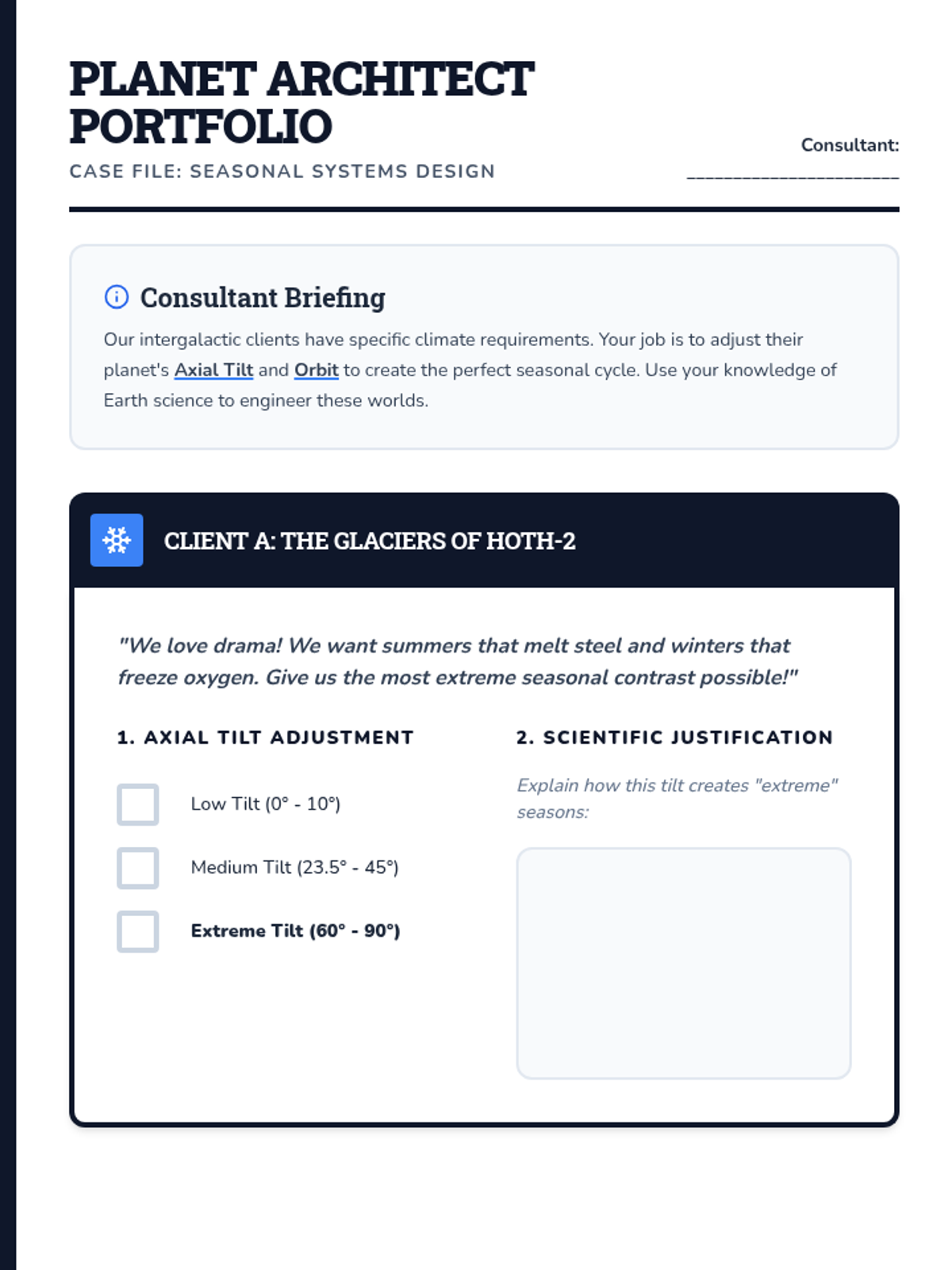
A creative, multi-page worksheet where students act as planetary architects. They must solve season-based design challenges for various 'clients' by applying their knowledge of axial tilt, orbital mechanics, and light intensity. Includes a custom planet design challenge at the end.
A high-energy, space-themed presentation that reframes the concept of seasons through a 'Cosmic Consultant' lens. It includes visual explanations of tilt, revolution, and solar intensity with creative 'what-if' scenarios to engage 6th-grade students.
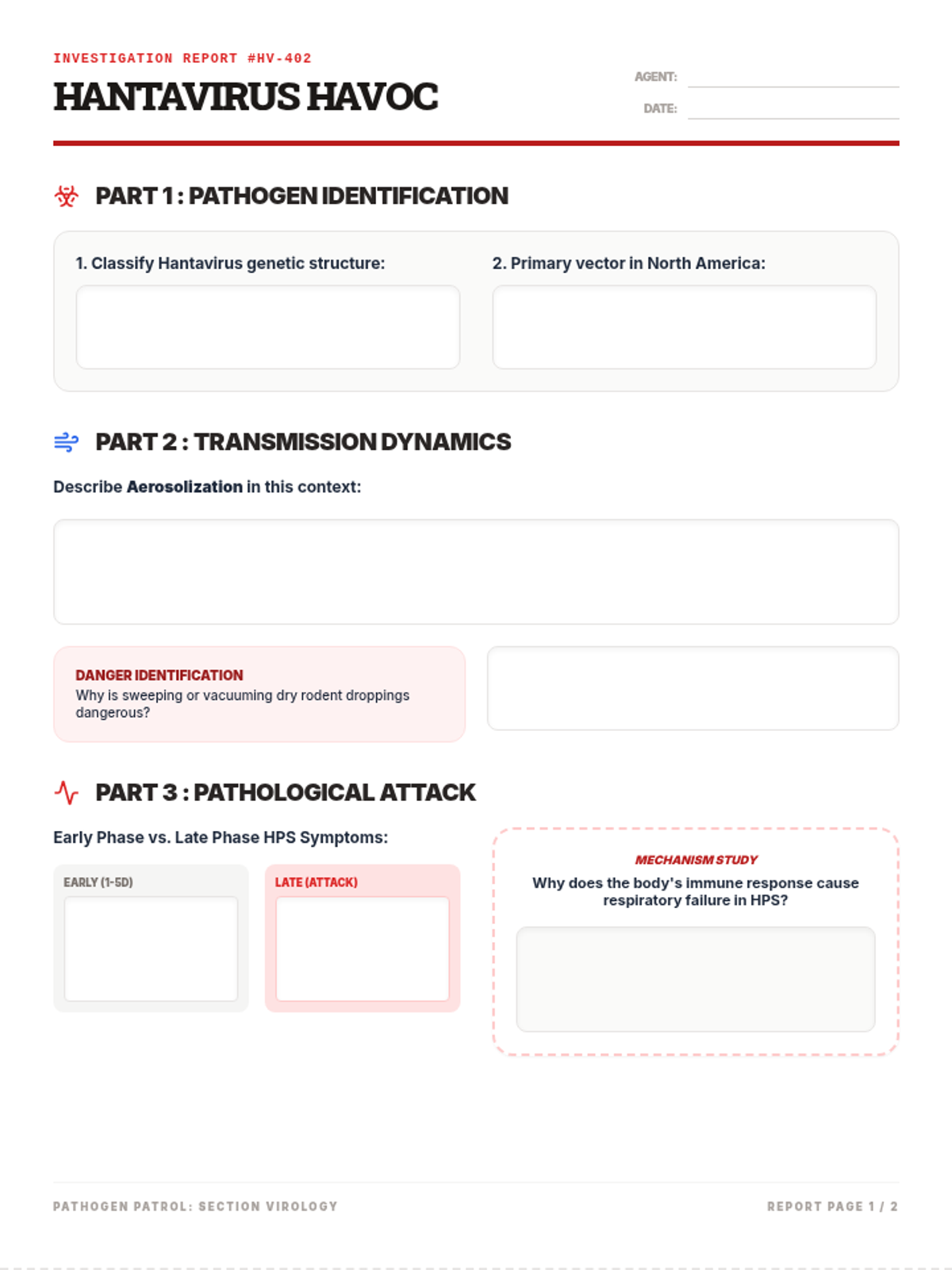
An investigation worksheet for high-school biology students to accompany the Hantavirus Havoc lesson, covering pathogen identification, aerosolization mechanics, HPS symptoms, and decontamination safety protocols. Revised for layout flow and handwriting legibility.
A 6-slide presentation for high school students on Hantavirus, covering pathogen classification, rodent vectors, aerosolized transmission, HPS symptoms, and safe cleaning protocols. Revised for layout consistency and readability.
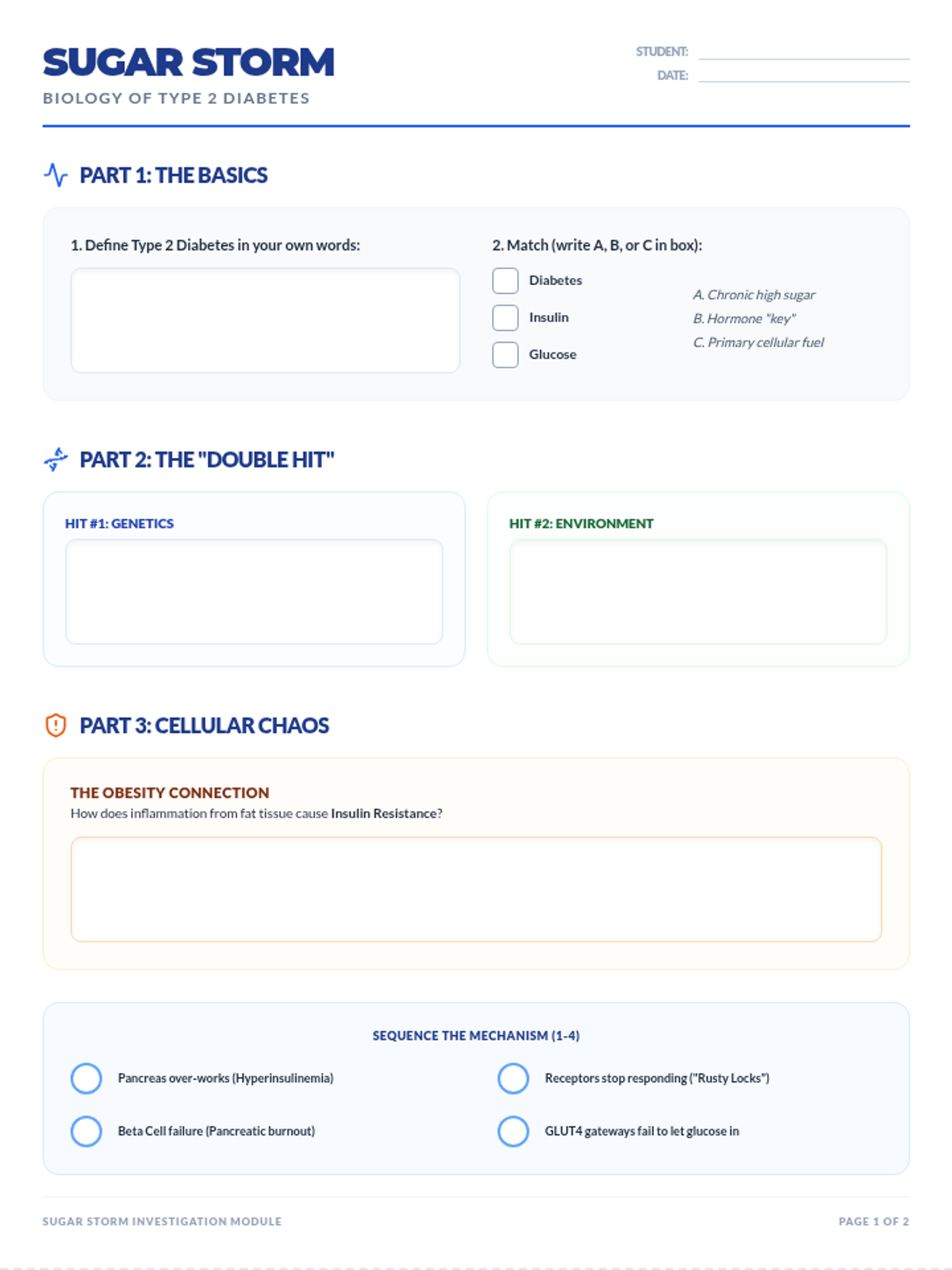
A revised 2-page student worksheet for 9th-grade biology, featuring improved layout consistency, separated matching questions, and aligned global data visualizations regarding obesity and diabetes.
A 15-slide presentation on Type 2 Diabetes for 9th grade students, expanded to include US epidemiology, a comparison with Japan's obesity rates, and the biological link between obesity and insulin resistance.
An 11-day series of class starters focused on forensic reasoning, case synthesis, and professional communication of findings.
A 10-day series of class starters covering biological evidence, blood patterns, DNA analysis, and ethics in genetics.