A comprehensive teacher guide providing instructional scripts, pacing advice, and an answer key for the 'Cosmic Consultant' simulation. It includes common misconceptions to address during the activity and extension ideas for peer review.
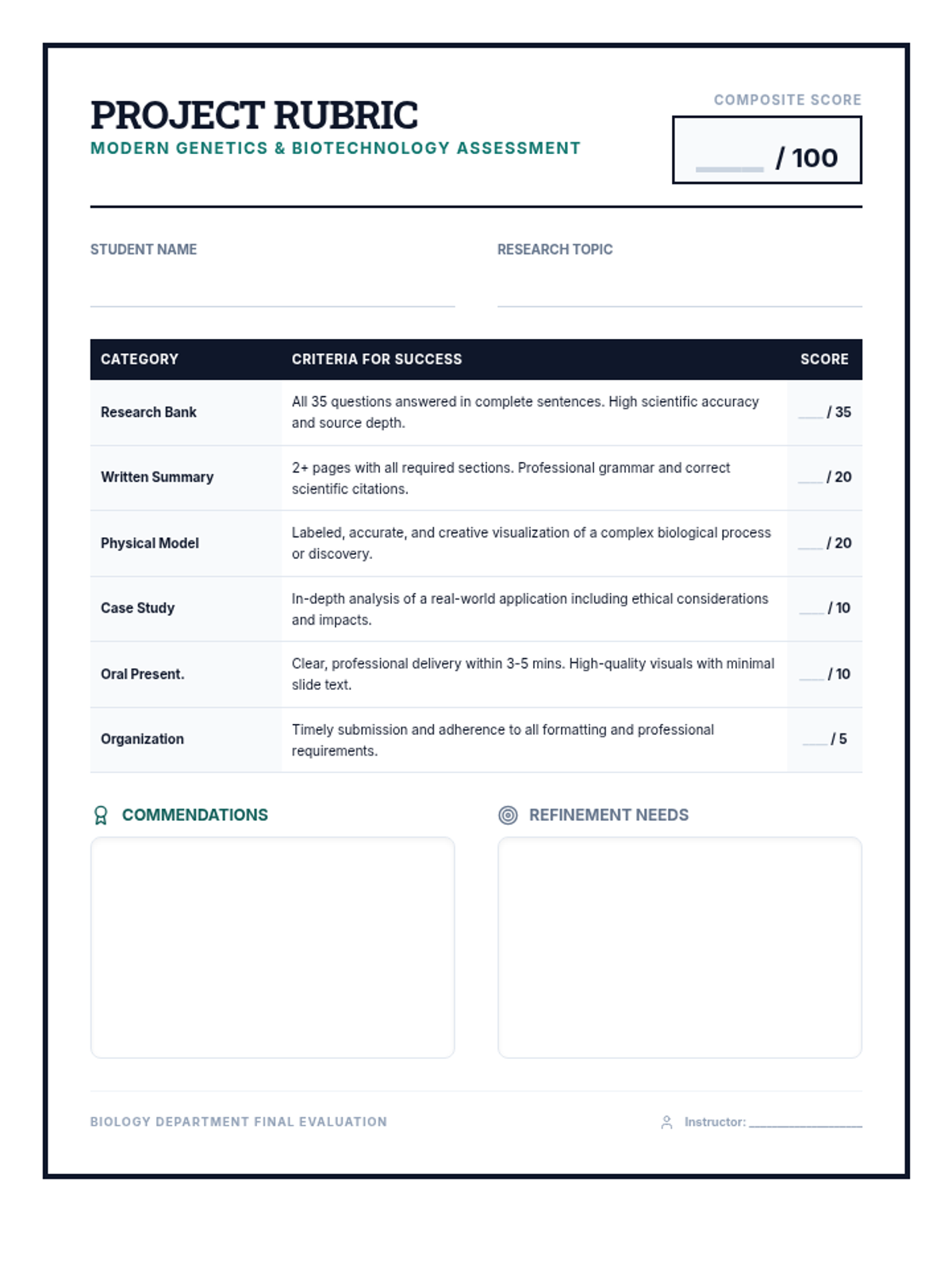
A comprehensive 100-point rubric and feedback sheet for teachers to evaluate the Modern Genetics research project. Breaks down scores for the research questions, summary, model, case study, and presentation with a polished horizontal points layout.
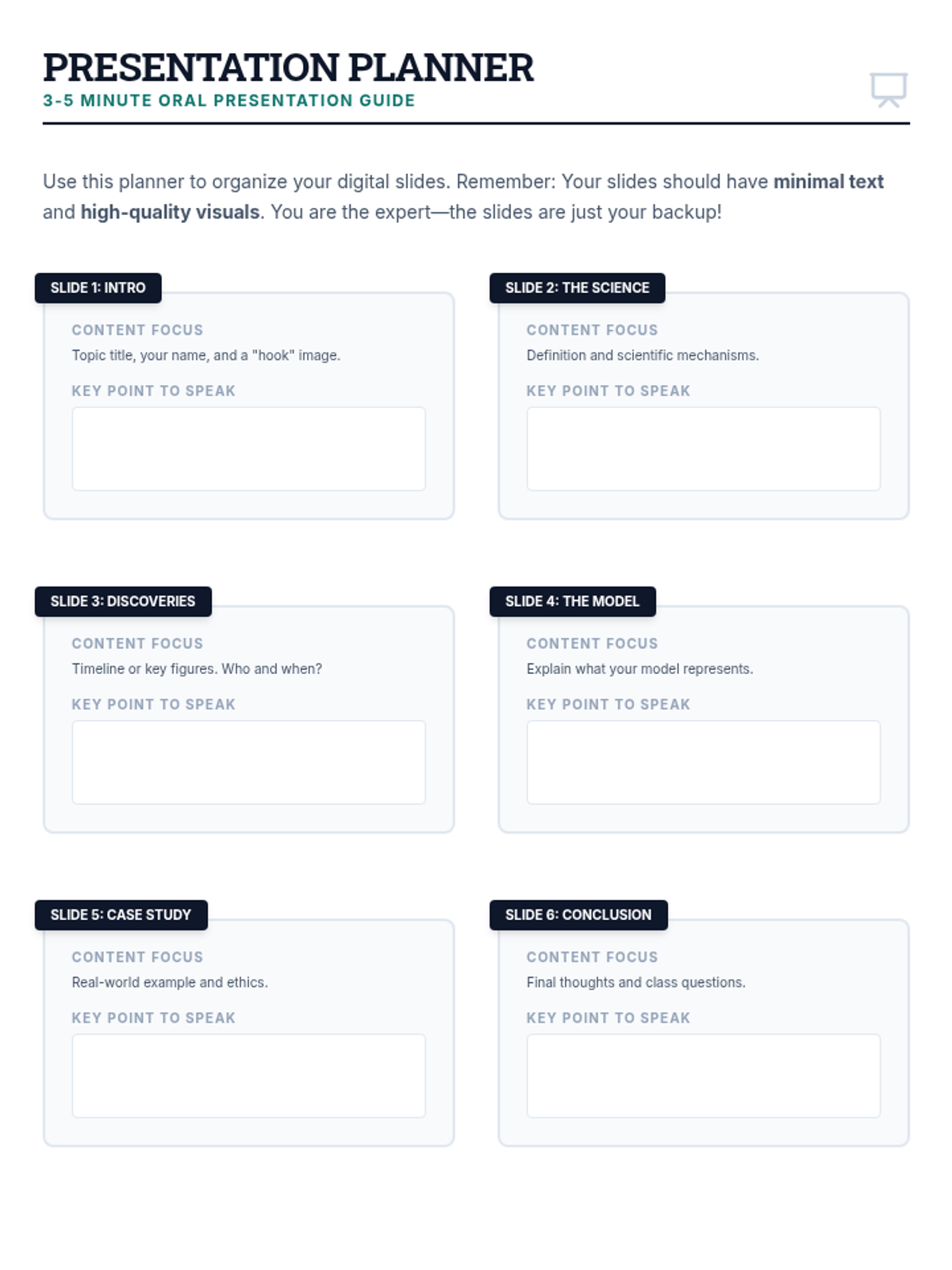
A dual-purpose material containing a slide-by-slide presentation planner with ample writing space for students, alongside a handout featuring best practices for visual design and public speaking.
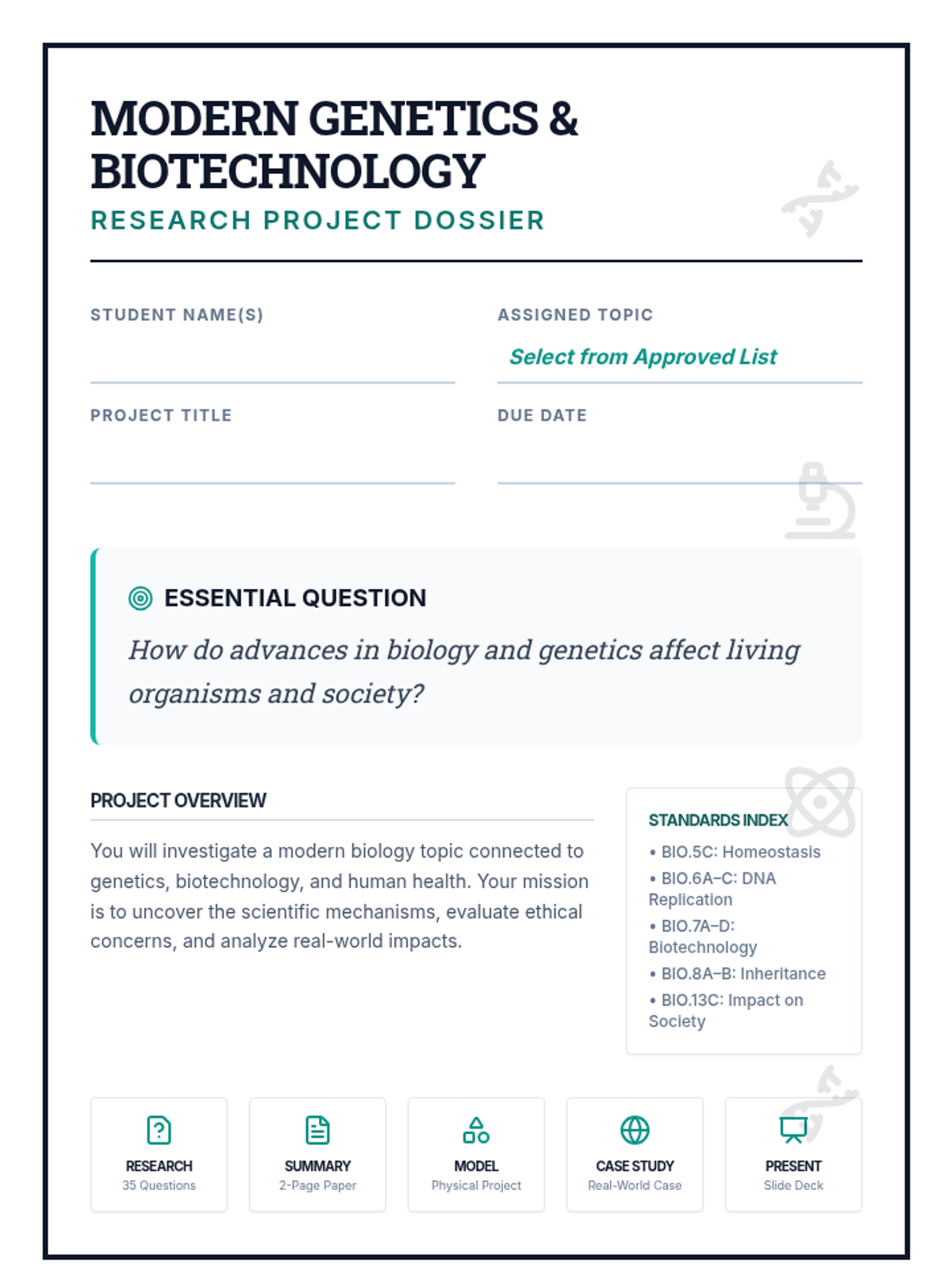
A comprehensive student project packet for the Modern Genetics & Biotechnology research assignment. Includes topic lists, a two-week timeline, 35 research questions with improved writing space, and detailed requirements for the summary, model, and case study.
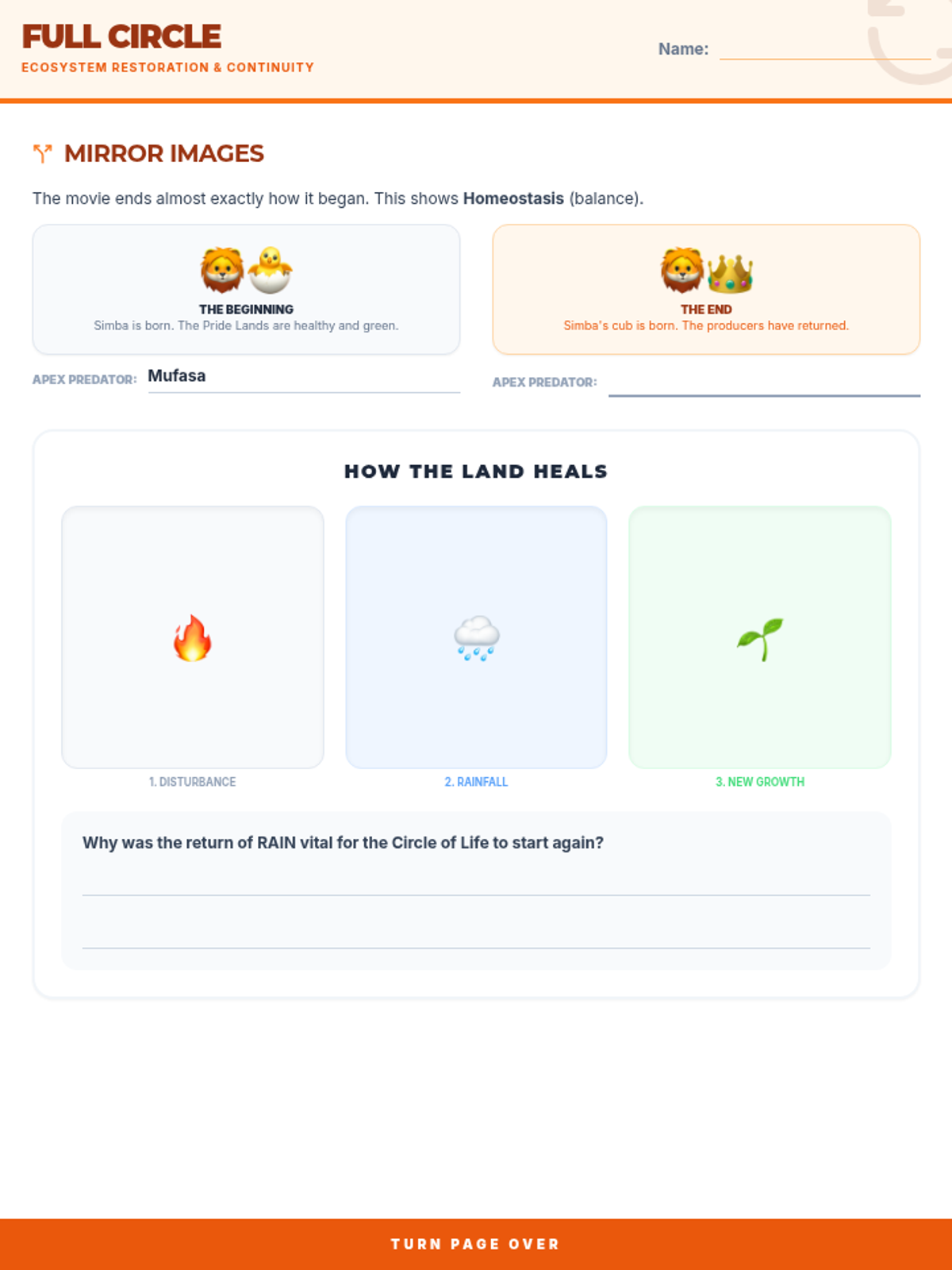
A worksheet focusing on the cyclical nature of 'The Lion King' and its scientific parallels in ecosystem restoration, resilience, and succession. Students analyze how the restoration of the apex predator role leads back to a balanced state.
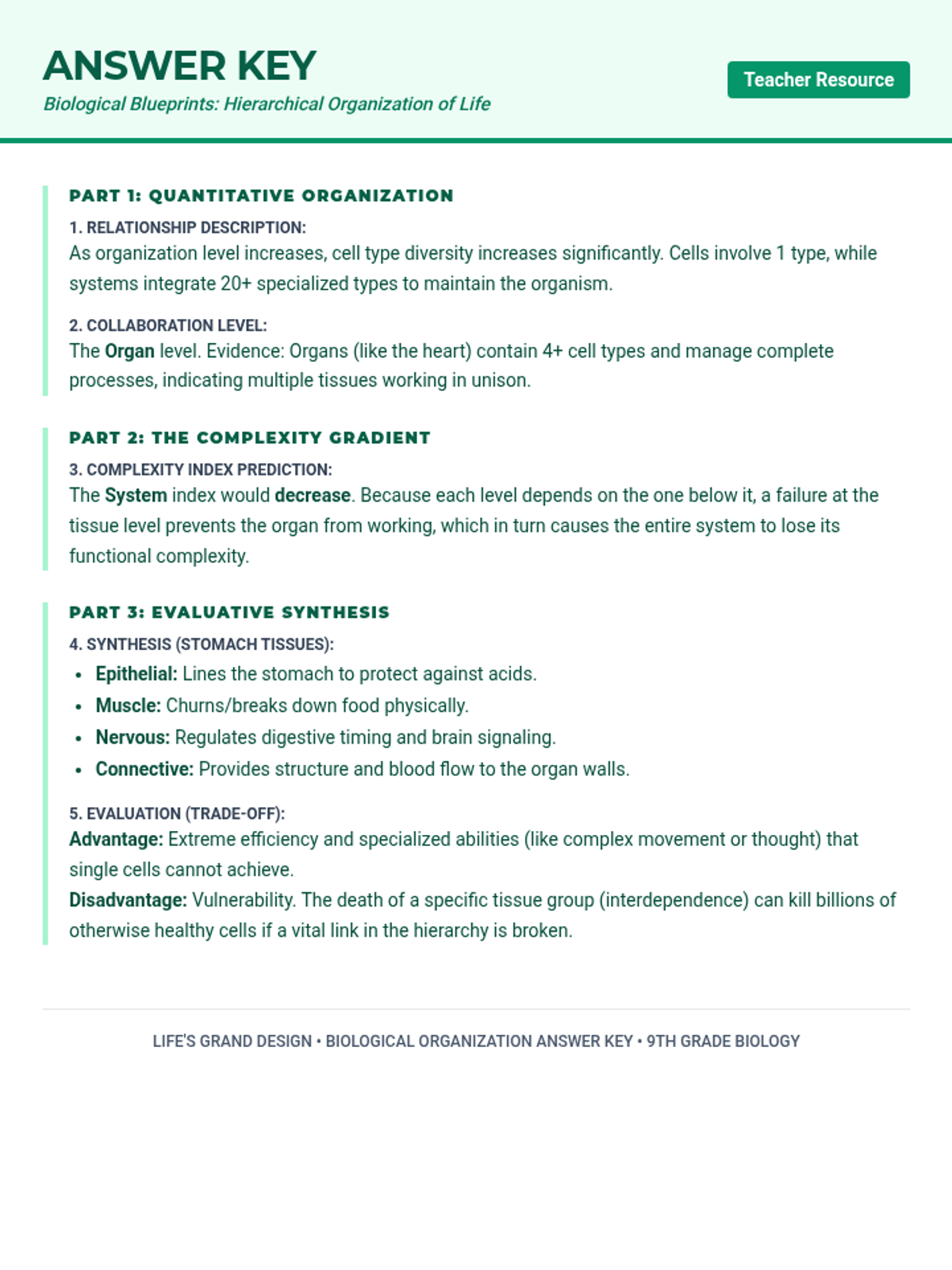
A teacher-facing answer key for the Biological Blueprints assessment, optimized into a high-contrast, single-page format.
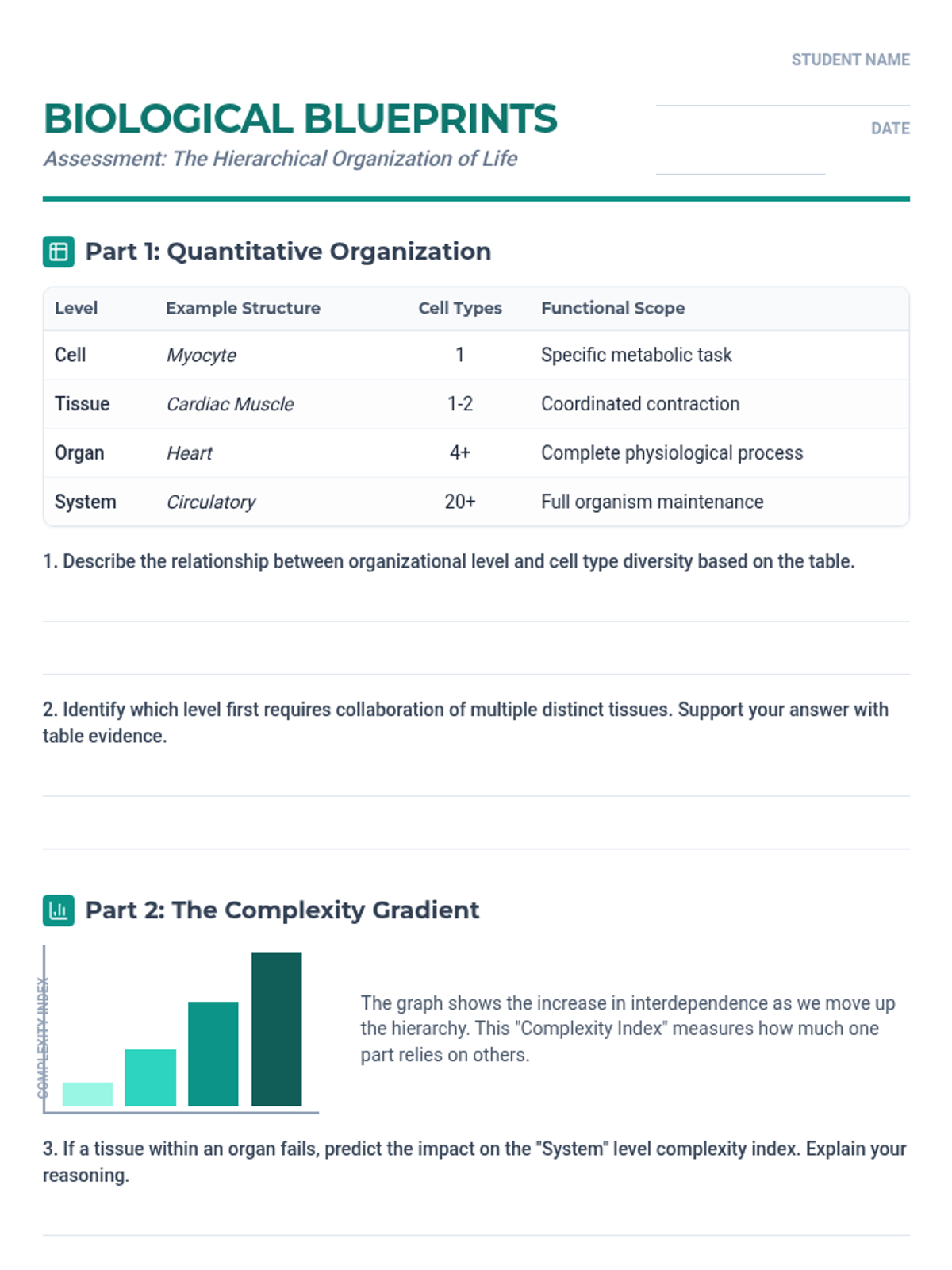
A 9th-grade biology assessment on life's hierarchical organization, featuring data tables, complexity graphs, and higher-order evaluation questions. Layout optimized for two pages.
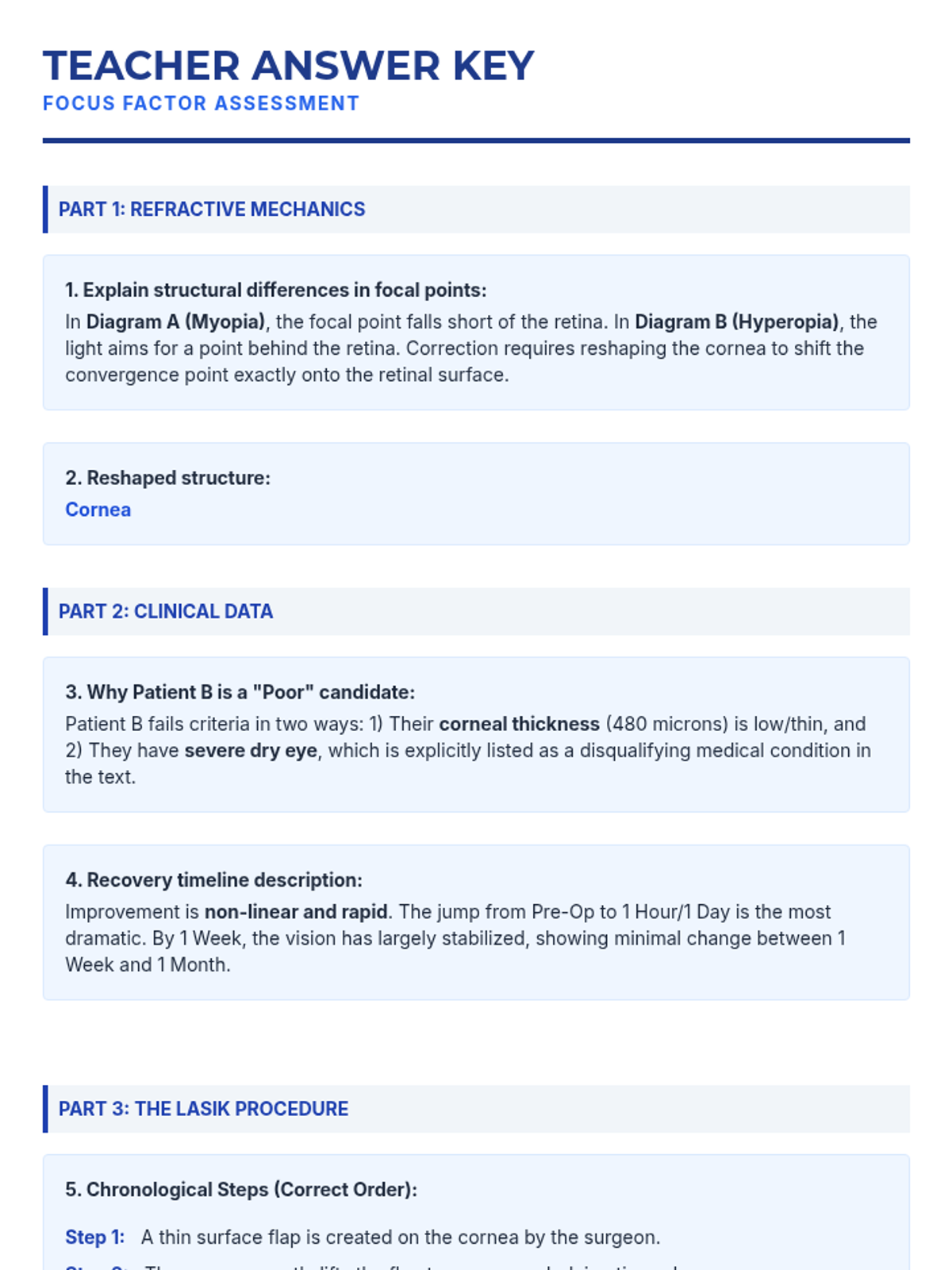
A teacher-facing answer key and instructional guide for the LASIK assessment, including grading criteria and common student misconceptions.
A dynamic slide presentation for classroom instruction, covering the biological causes of blurry vision, the mechanical steps of LASIK, and clinical data on outcomes.
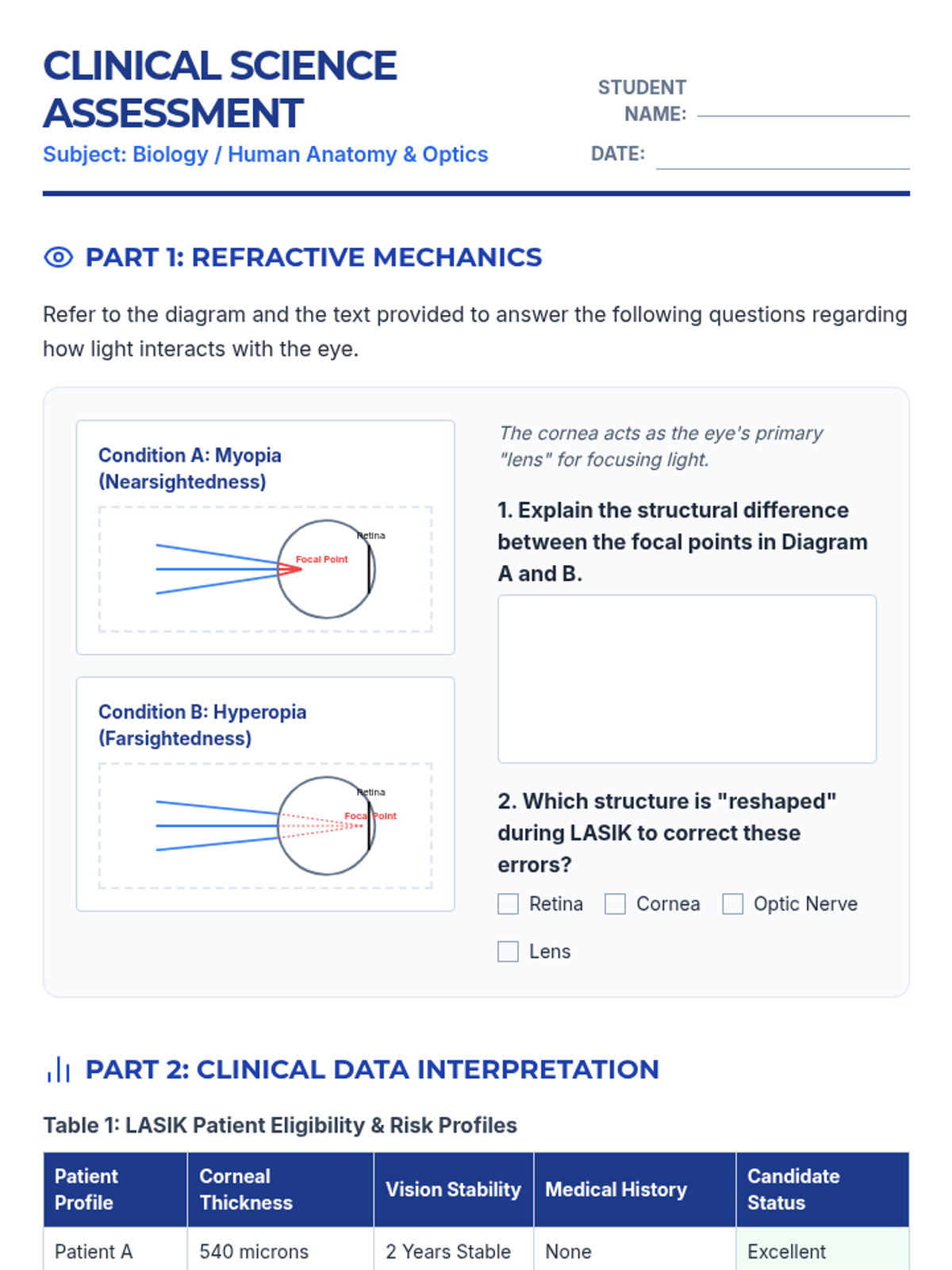
A data-driven assessment document for 9th-grade biology students, featuring refractive error diagrams, an eligibility table, and a recovery graph based on the LASIK procedure text.
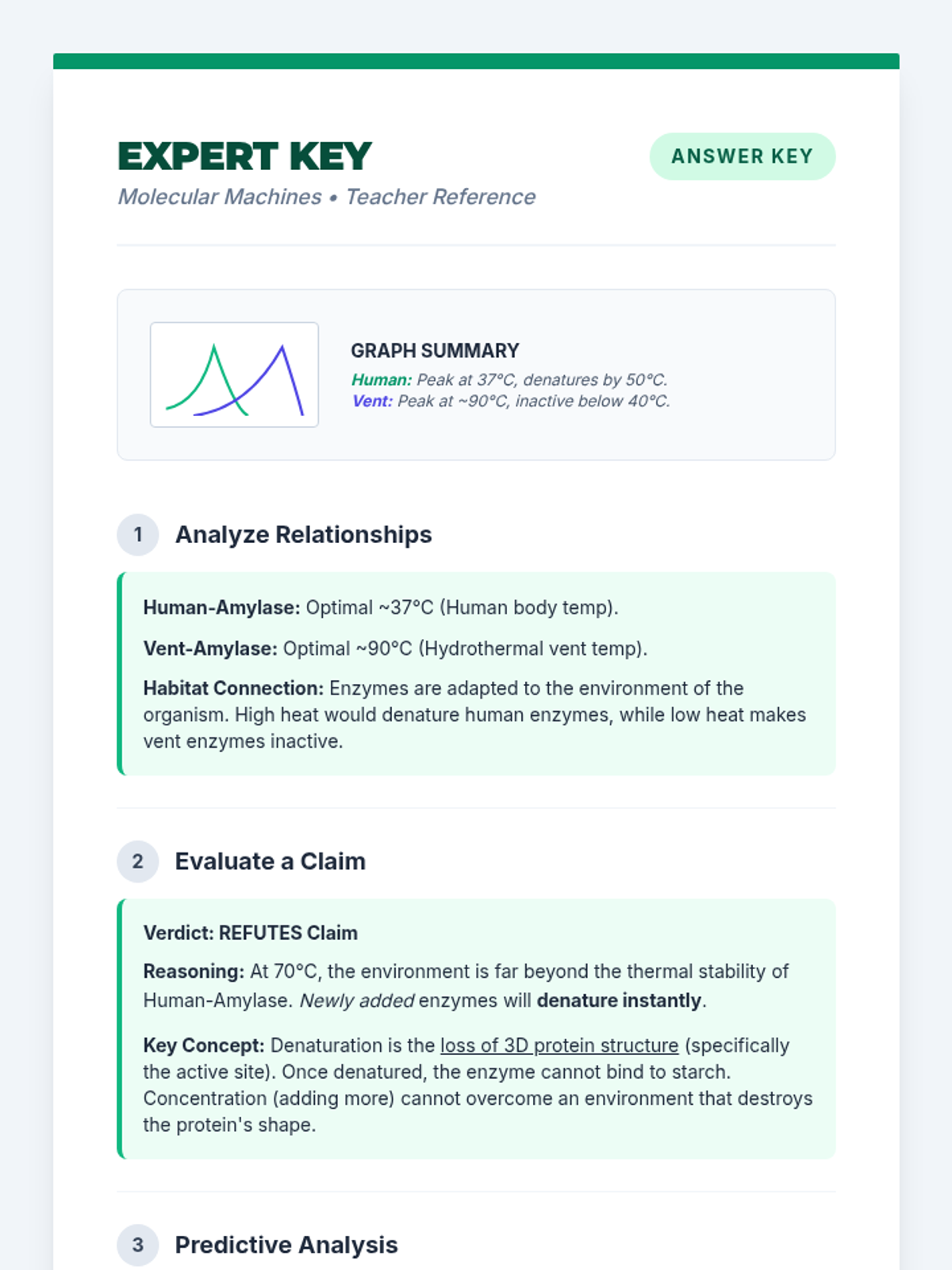
Comprehensive answer key for the Molecular Machines worksheet, providing teacher guidance on evaluating student responses, specifically focusing on data justification and biological reasoning.
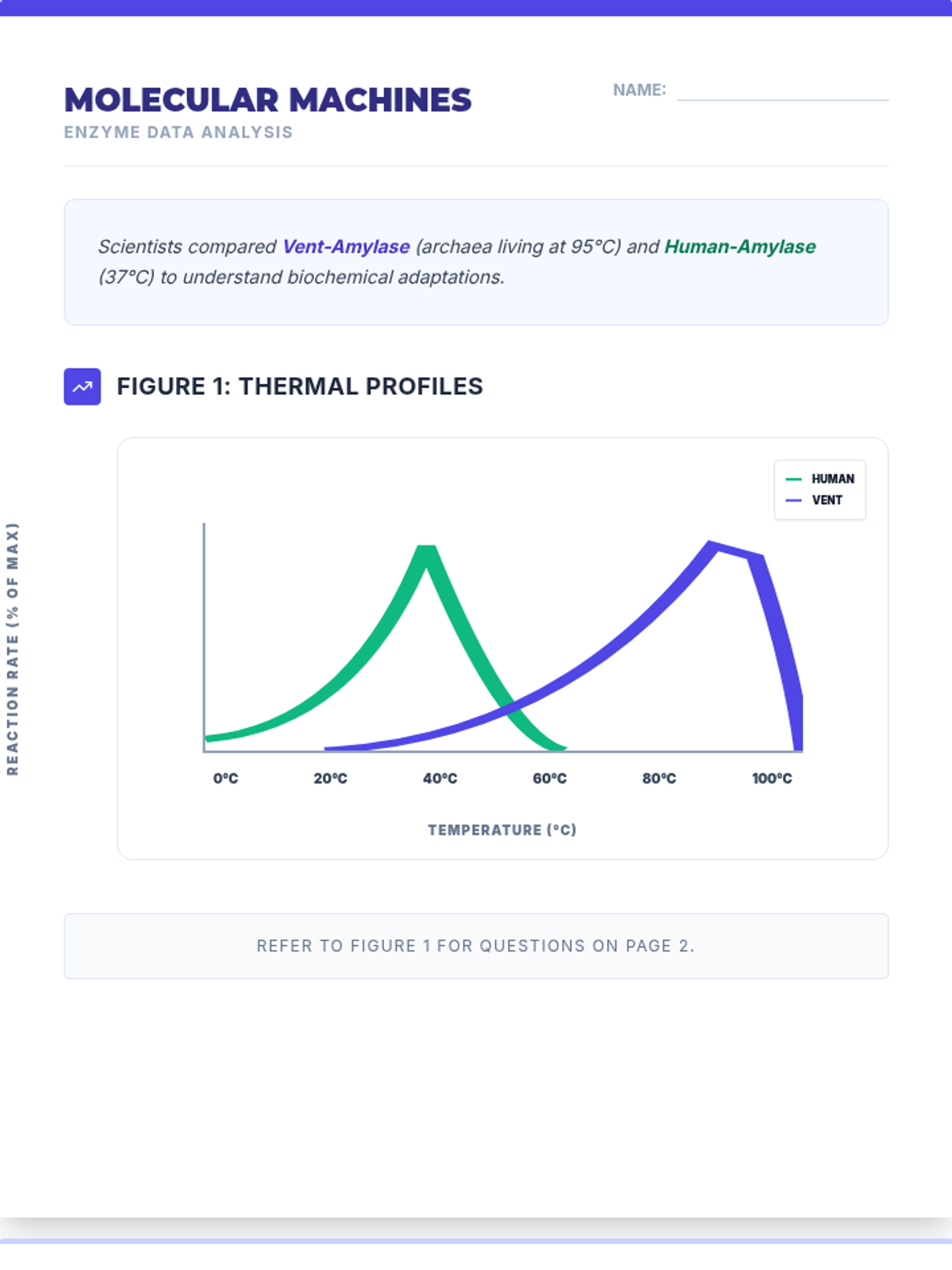
This worksheet features a scientific passage about deep-sea hydrothermal vent enzymes and a line graph comparing two different amylases. It includes high-level thinking questions that require students to evaluate claims and analyze relationships between data sets.
This slide deck introduces the core concepts of enzymes, their mechanisms, and the environmental factors that affect their function. It includes a final higher-level thinking "Data Detective Challenge" slide.
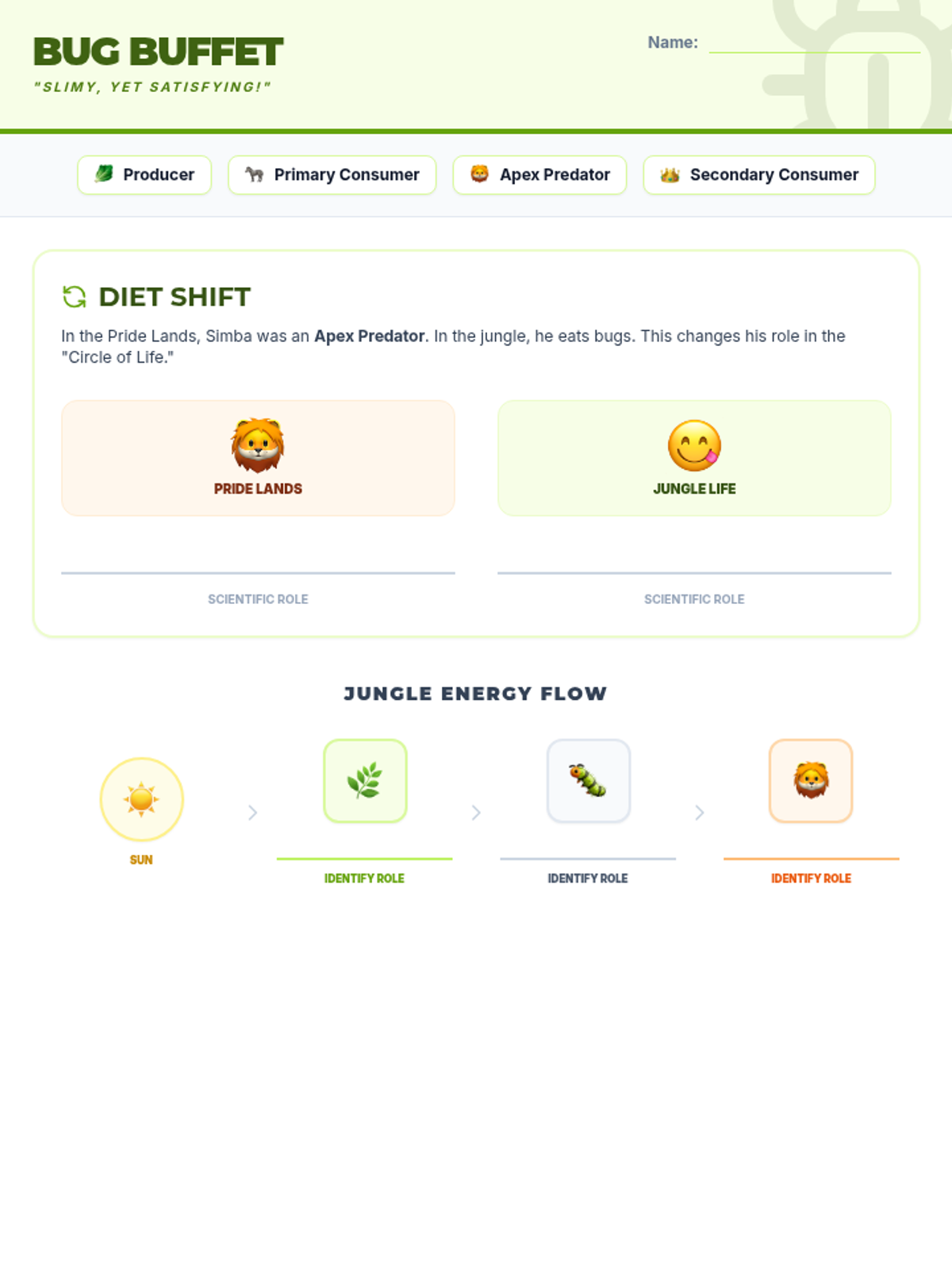
A fun worksheet exploring the ecology of Timon and Pumbaa's jungle home. Students identify bugs as energy sources, classify them as consumers or decomposers, and analyze Simba's dietary shift in the 'Hakuna Matata' lifestyle. Includes multiple-choice questions and reflection prompts.
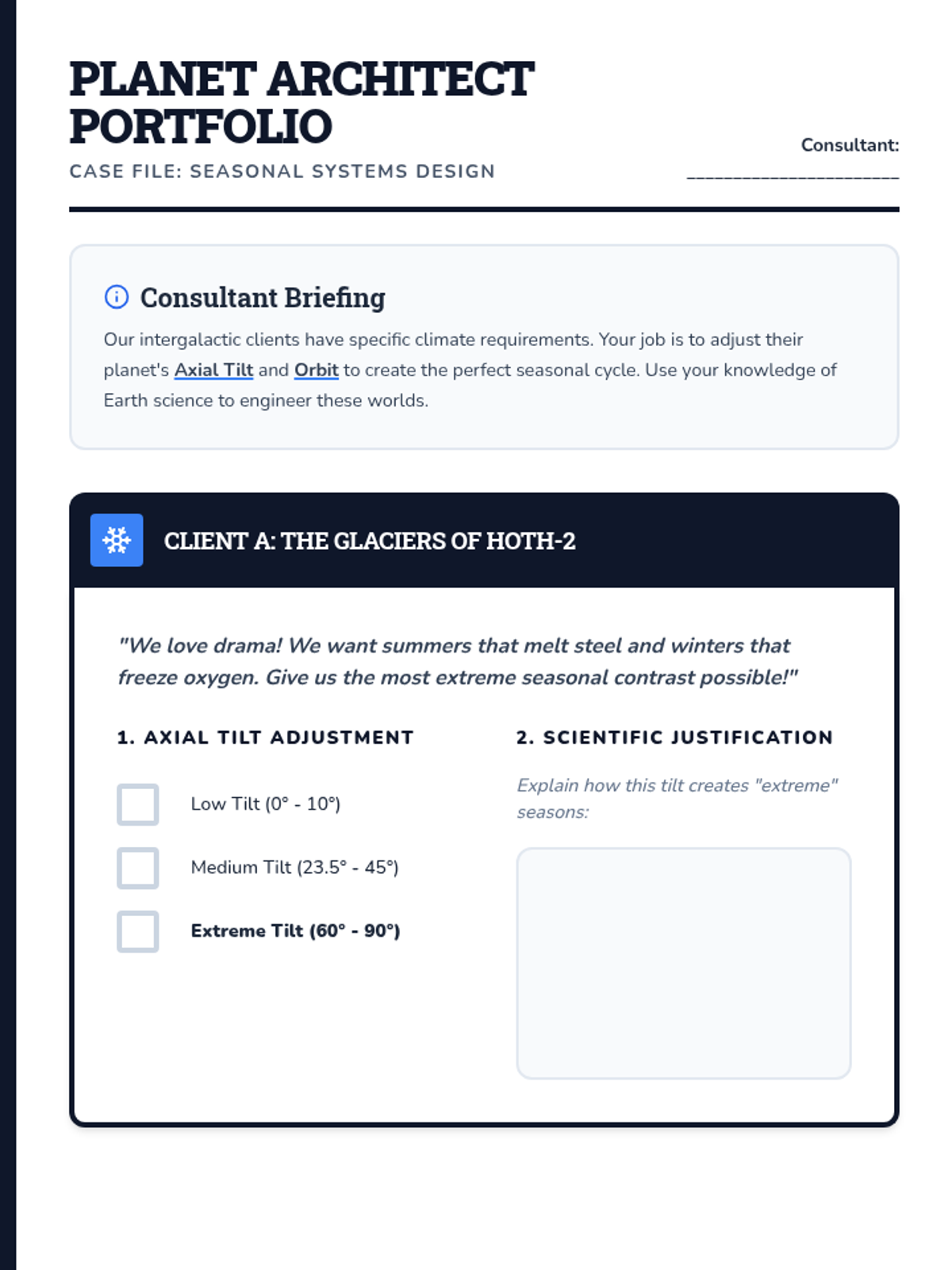
A creative, multi-page worksheet where students act as planetary architects. They must solve season-based design challenges for various 'clients' by applying their knowledge of axial tilt, orbital mechanics, and light intensity. Includes a custom planet design challenge at the end.
A high-energy, space-themed presentation that reframes the concept of seasons through a 'Cosmic Consultant' lens. It includes visual explanations of tilt, revolution, and solar intensity with creative 'what-if' scenarios to engage 6th-grade students.
A visual presentation for 6th grade students connecting music genres to computer science concepts like data attributes, classification algorithms, and machine learning. Final version with increased font sizes for accessibility.
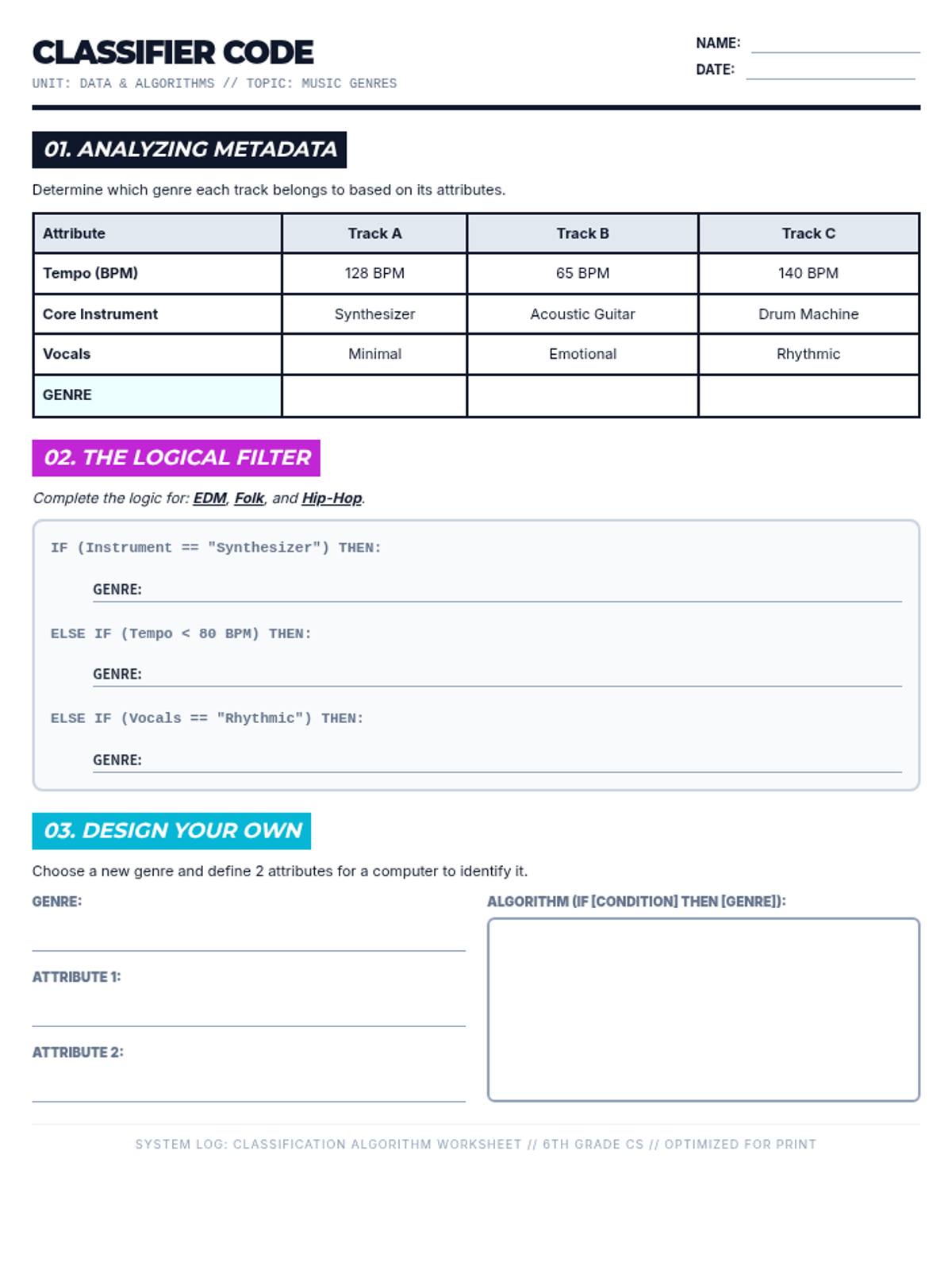
A revised single-page worksheet for 6th grade students to practice music genre classification with algorithmic logic. Fixes page breaks and optimizes work areas.
A comprehensive 15-slide presentation on photosynthesis for 7th-grade science, covering the chemical formula, energy flow, and chloroplast structure using a 'Botanical Blueprint' aesthetic.
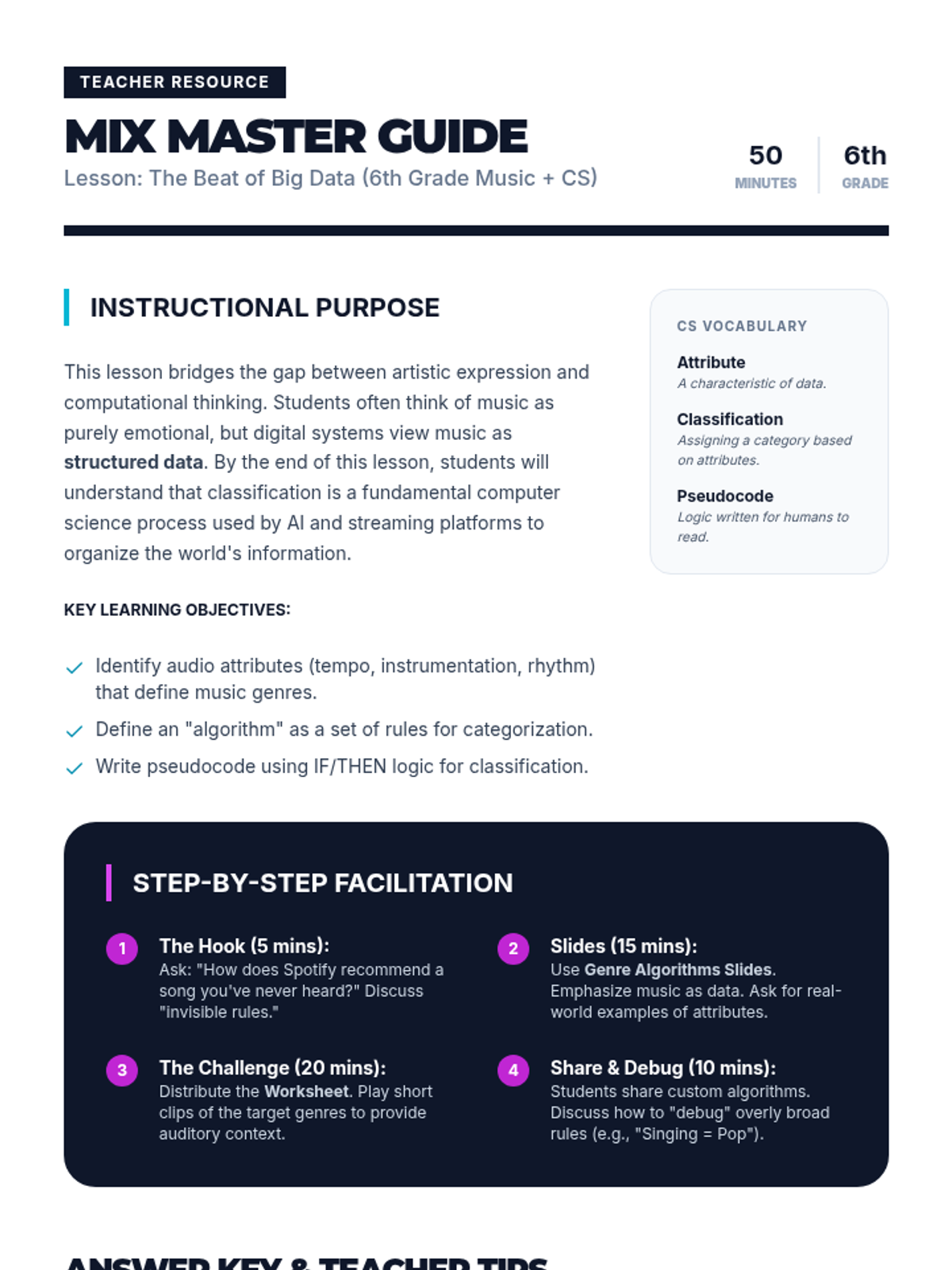
A comprehensive teacher's guide for facilitating the "Beat of Big Data" lesson, including learning objectives, pacing, and answer keys.
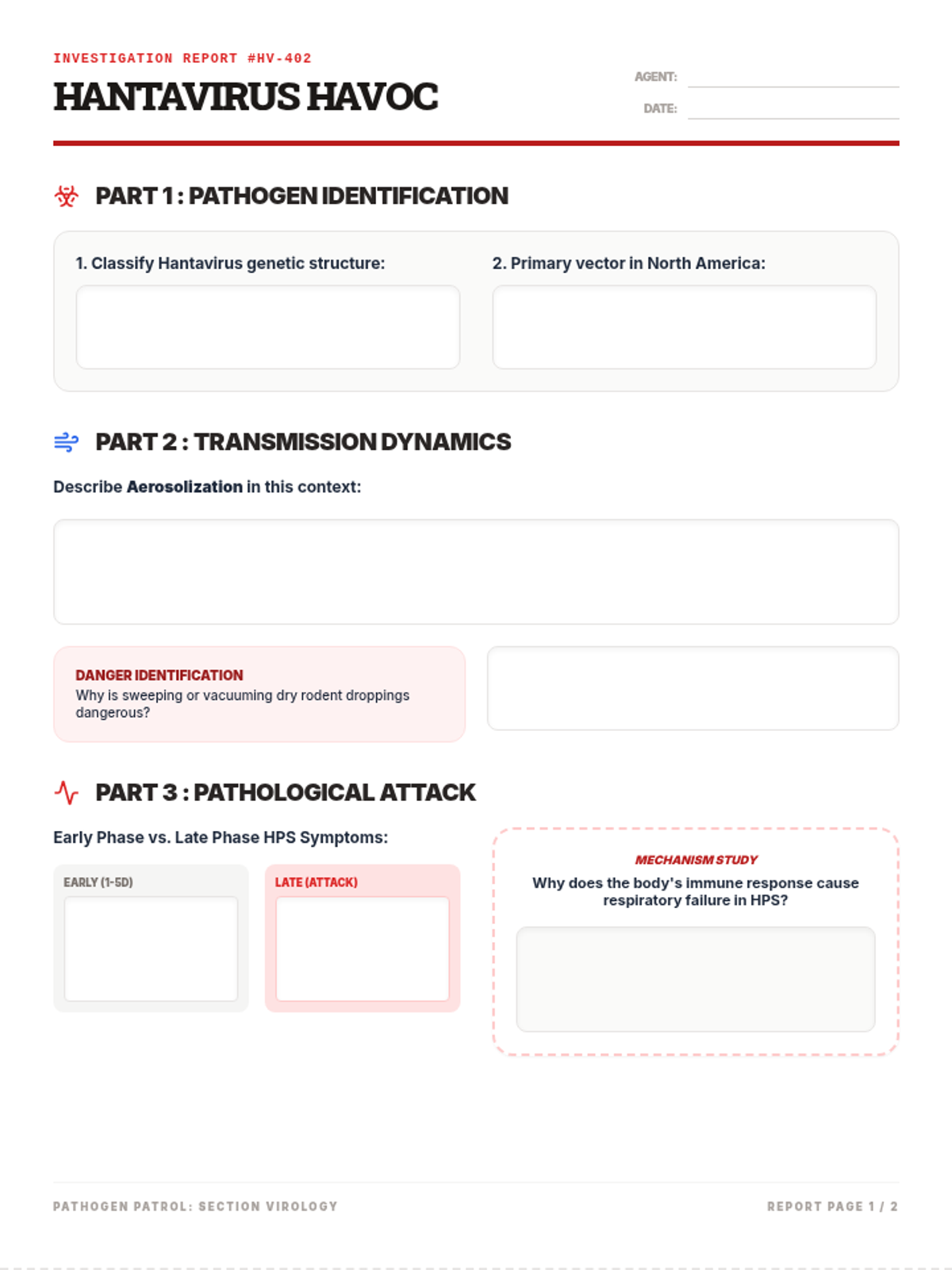
An investigation worksheet for high-school biology students to accompany the Hantavirus Havoc lesson, covering pathogen identification, aerosolization mechanics, HPS symptoms, and decontamination safety protocols. Revised for layout flow and handwriting legibility.
A 6-slide presentation for high school students on Hantavirus, covering pathogen classification, rodent vectors, aerosolized transmission, HPS symptoms, and safe cleaning protocols. Revised for layout consistency and readability.
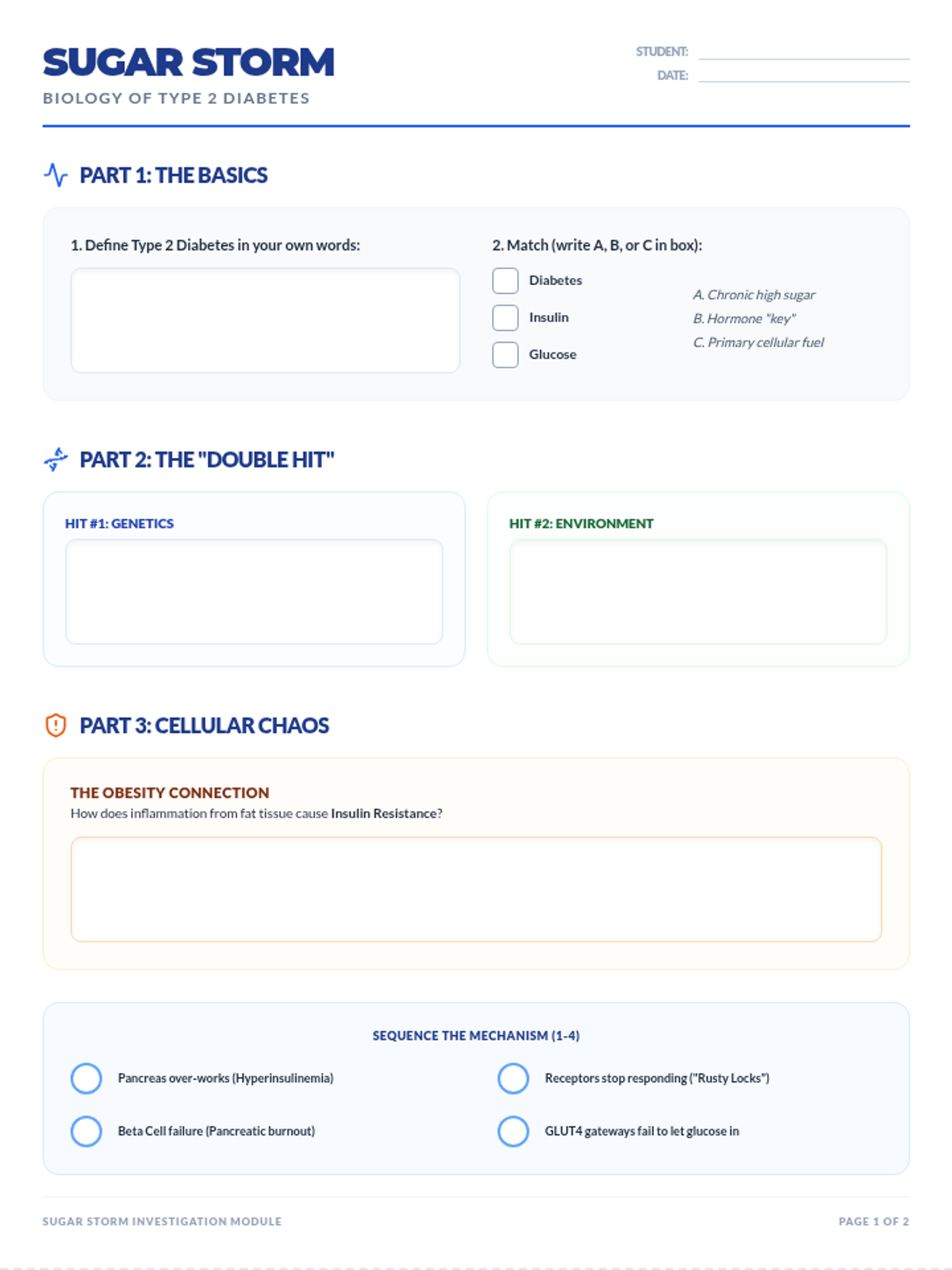
A revised 2-page student worksheet for 9th-grade biology, featuring improved layout consistency, separated matching questions, and aligned global data visualizations regarding obesity and diabetes.
A 15-slide presentation on Type 2 Diabetes for 9th grade students, expanded to include US epidemiology, a comparison with Japan's obesity rates, and the biological link between obesity and insulin resistance.
Daily Sound Sliders drills for Week 4, featuring 12 words per day focusing on Open Syllables and comprehensive Blend review. Full 5-day instructional set.
Daily Sound Sliders drills for Week 3, featuring 12 words per day focusing on Mixed Blends and Glued Sounds.
Daily Sound Sliders drills for Week 2, featuring 12 words per day focusing on S-Blends and Ending Blends. Full 5-day instructional set.
Daily Sound Sliders drills for Week 1, featuring 12 words per day focusing on L-Blends and R-Blends. Full 5-day instructional set.
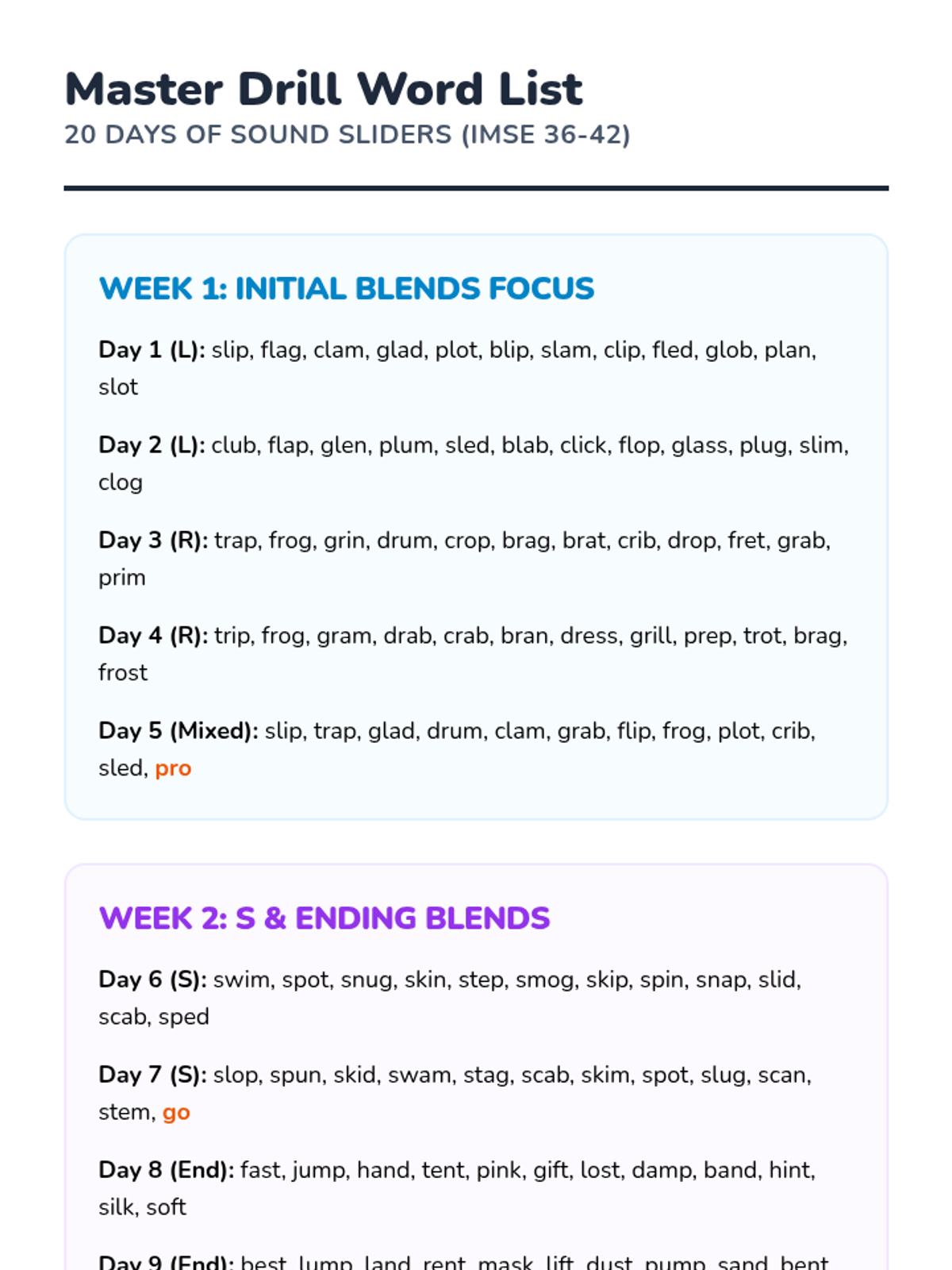
A master list of 240 words organized by day and week for the 20-day Sound Sliders drill program, including blends, glued sounds, and open syllables.
An 11-day series of class starters focused on forensic reasoning, case synthesis, and professional communication of findings.
A 10-day series of class starters covering biological evidence, blood patterns, DNA analysis, and ethics in genetics.
An 11-day slide deck of class starters for the Physical & Trace Evidence unit, focusing on fingerprints, soil, hair, fibers, and tool marks.
A collection of 10 daily class starters for the Foundations of Forensic Science unit, featuring a mix of trivia, discussion prompts, and observation challenges.
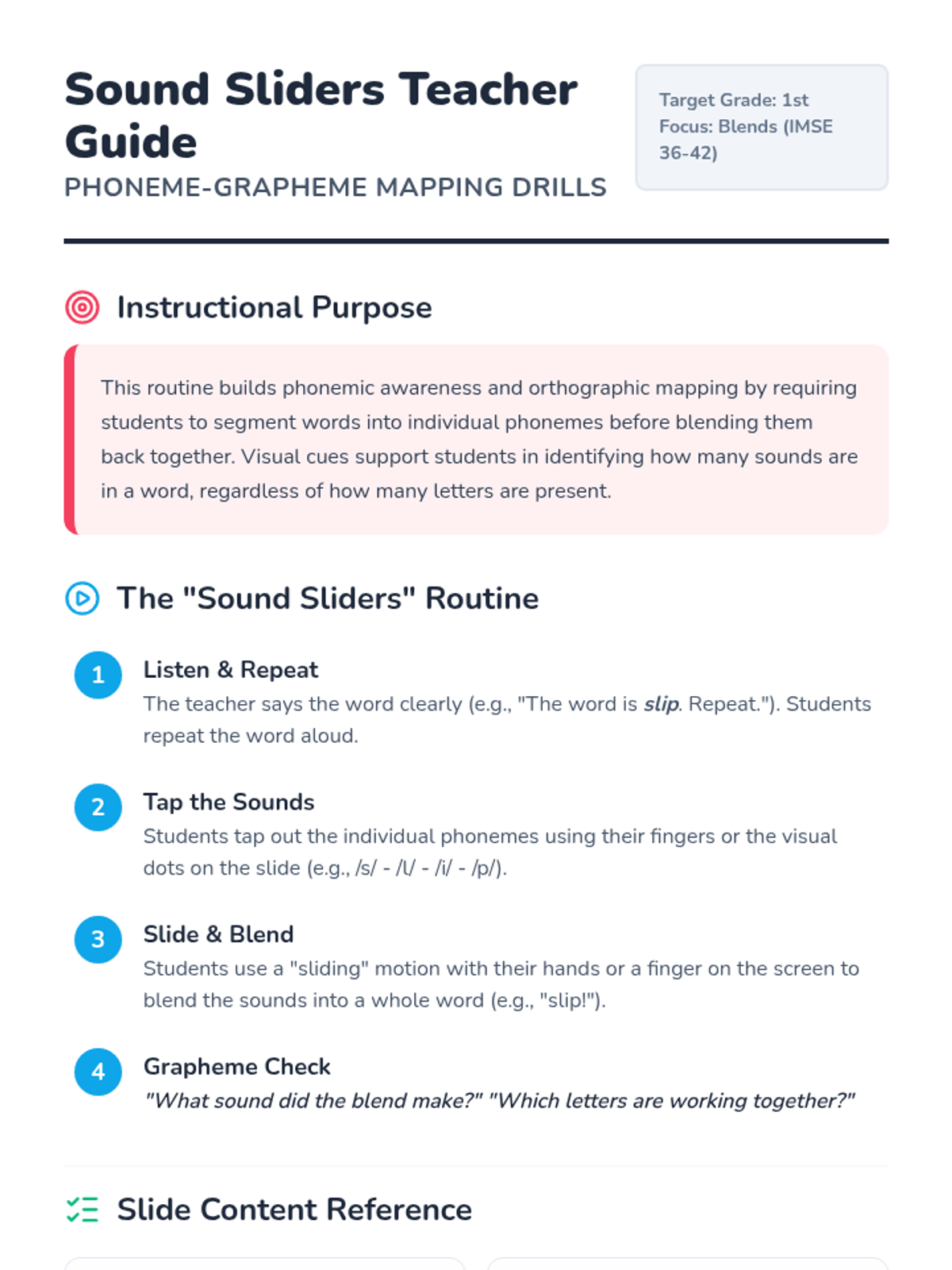
A detailed teacher guide explaining the Sound Sliders routine, including word lists and instructional strategies for teaching blends and open syllables.
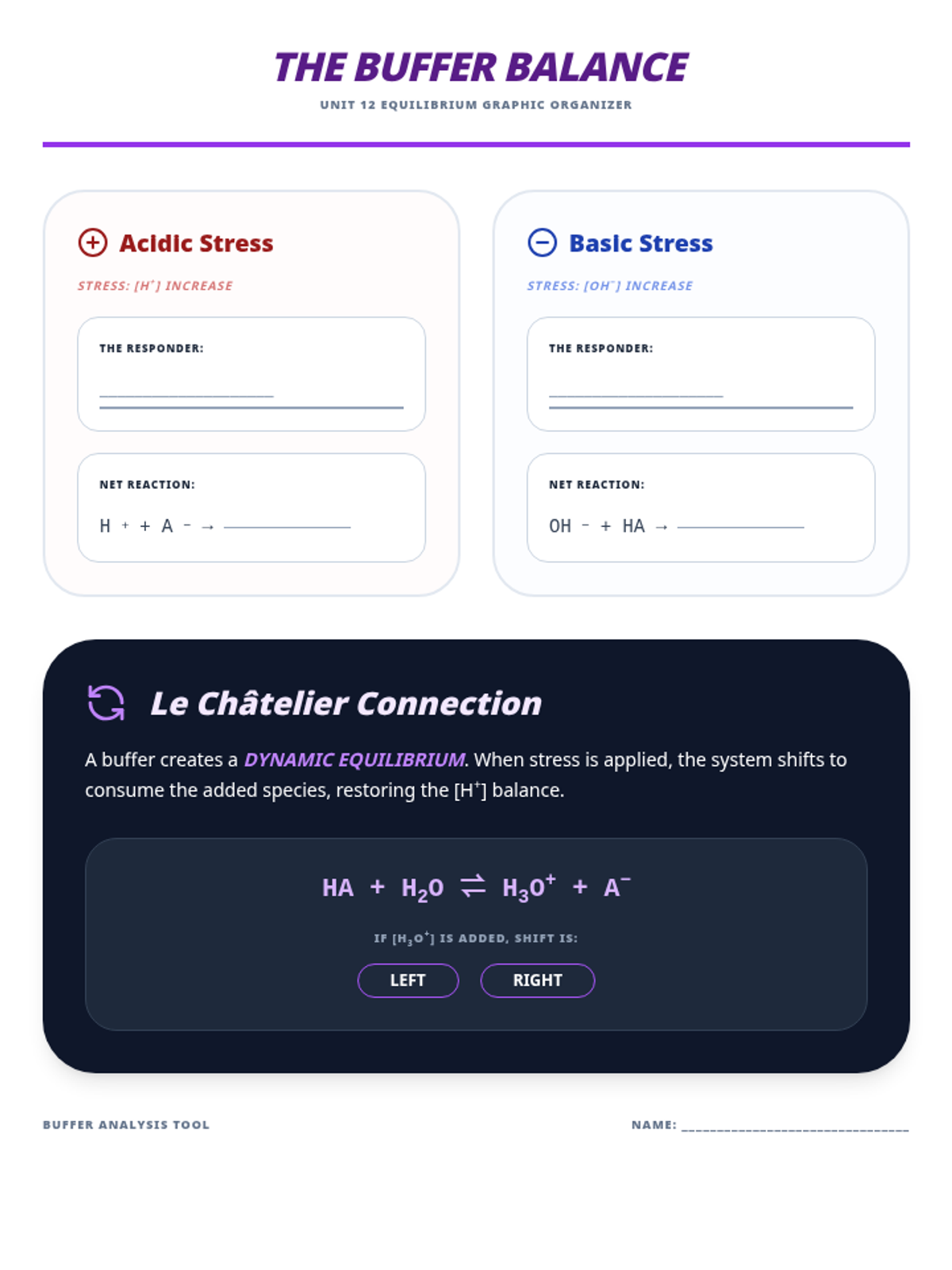
A visual graphic organizer designed as a manipulative for students to model how buffer systems respond to acidic or basic stress using equilibrium principles.
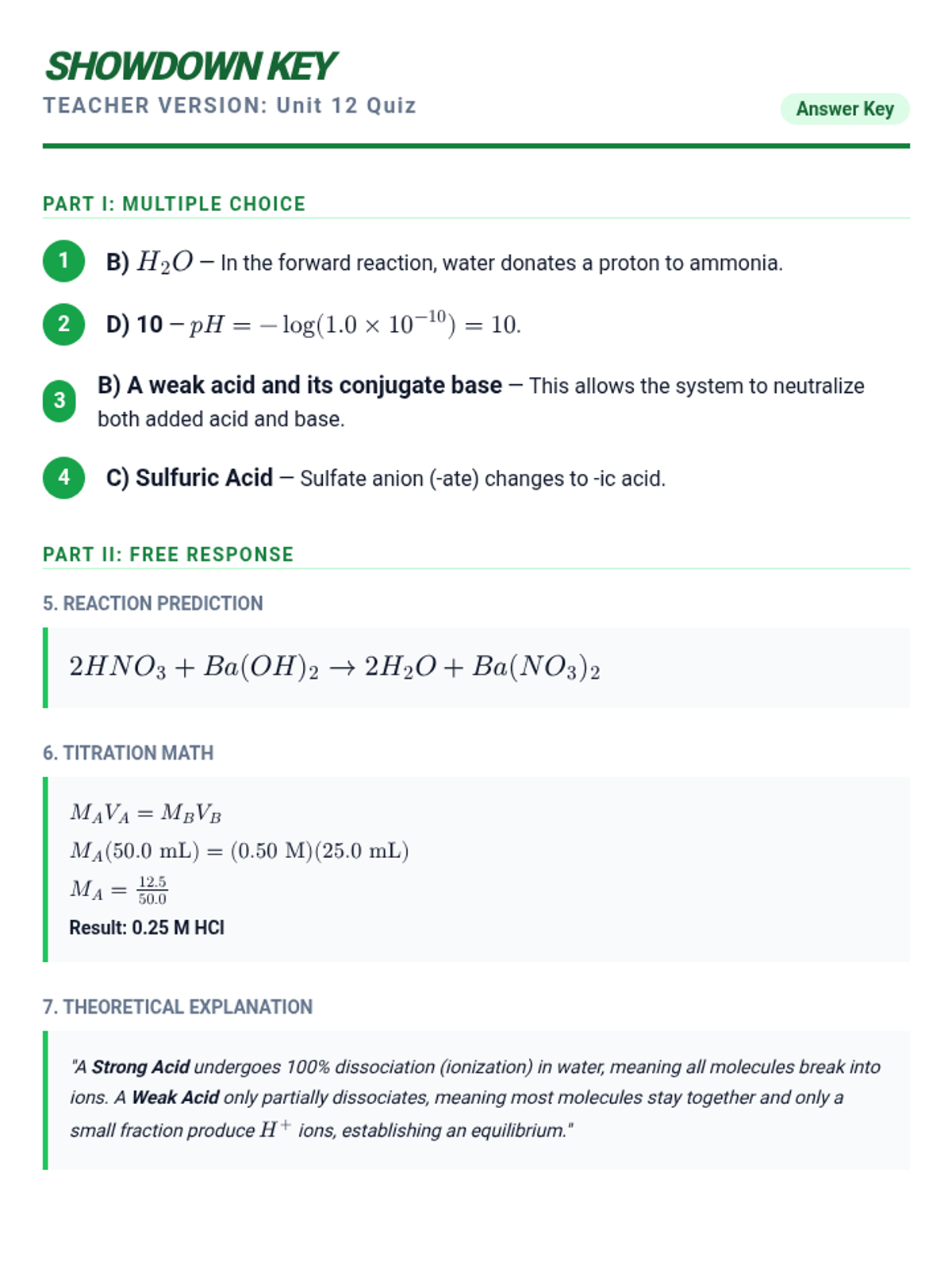
Answer key for the 'Acid Base Showdown' quiz, providing correct selections, worked mathematical solutions, and model theoretical explanations for grading.
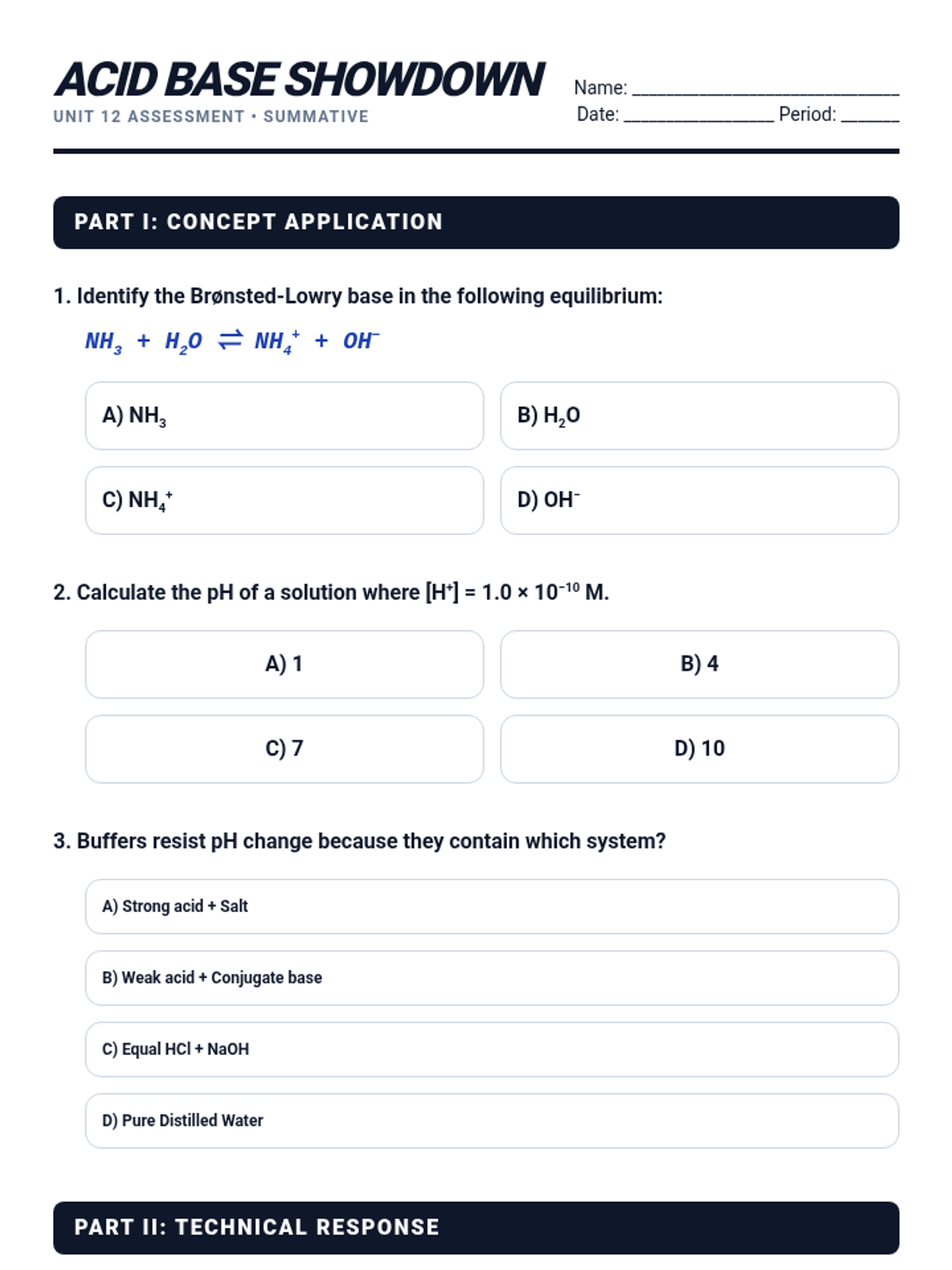
A comprehensive unit assessment featuring multiple choice questions on definitions and pH, and free-response questions on reaction prediction, titration math, and acid strength theory. Includes teacher answer key.
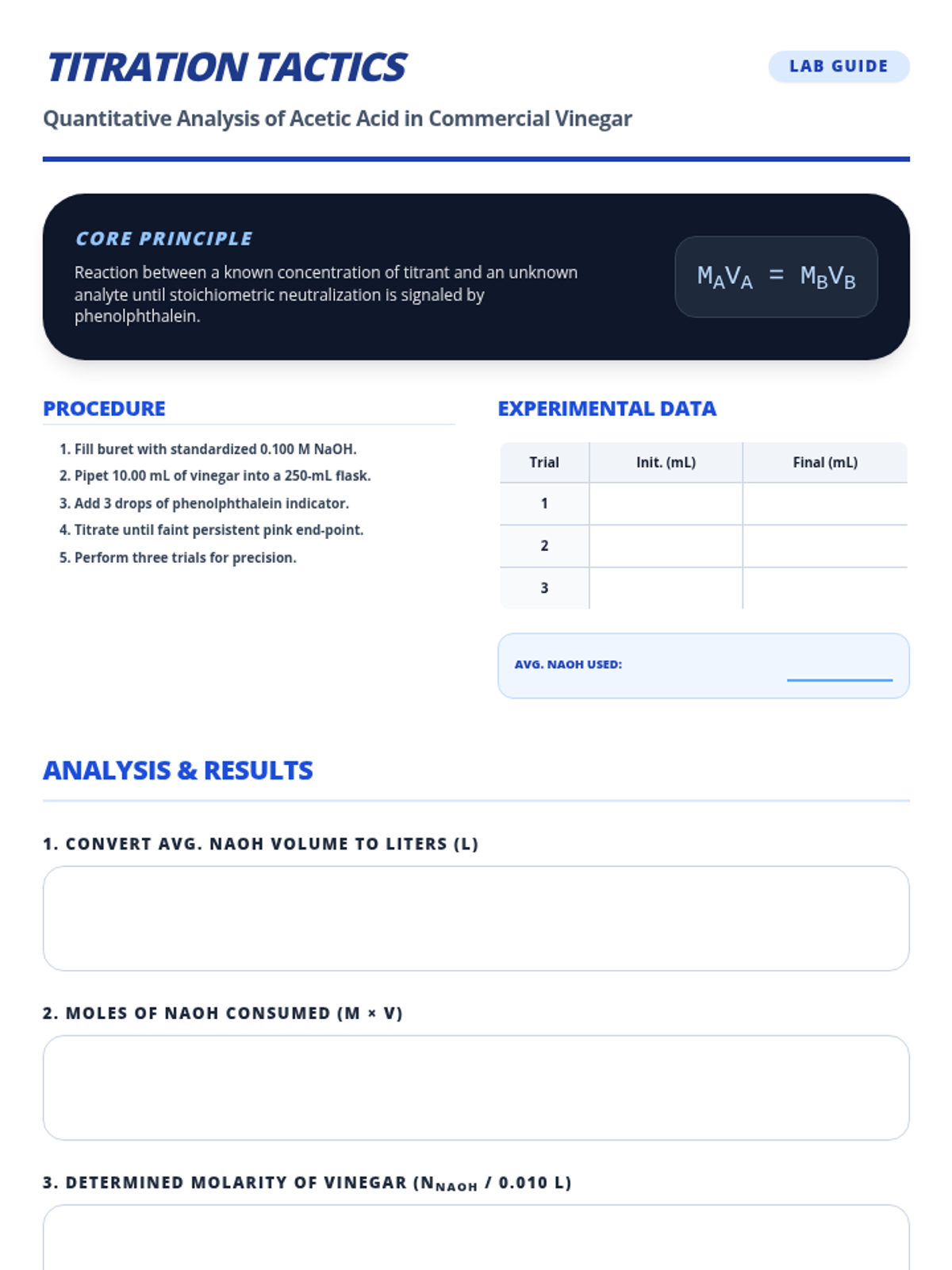
A student laboratory guide for performing a titration experiment to determine the acetic acid concentration in commercial vinegar, including data tables and post-lab calculation areas.
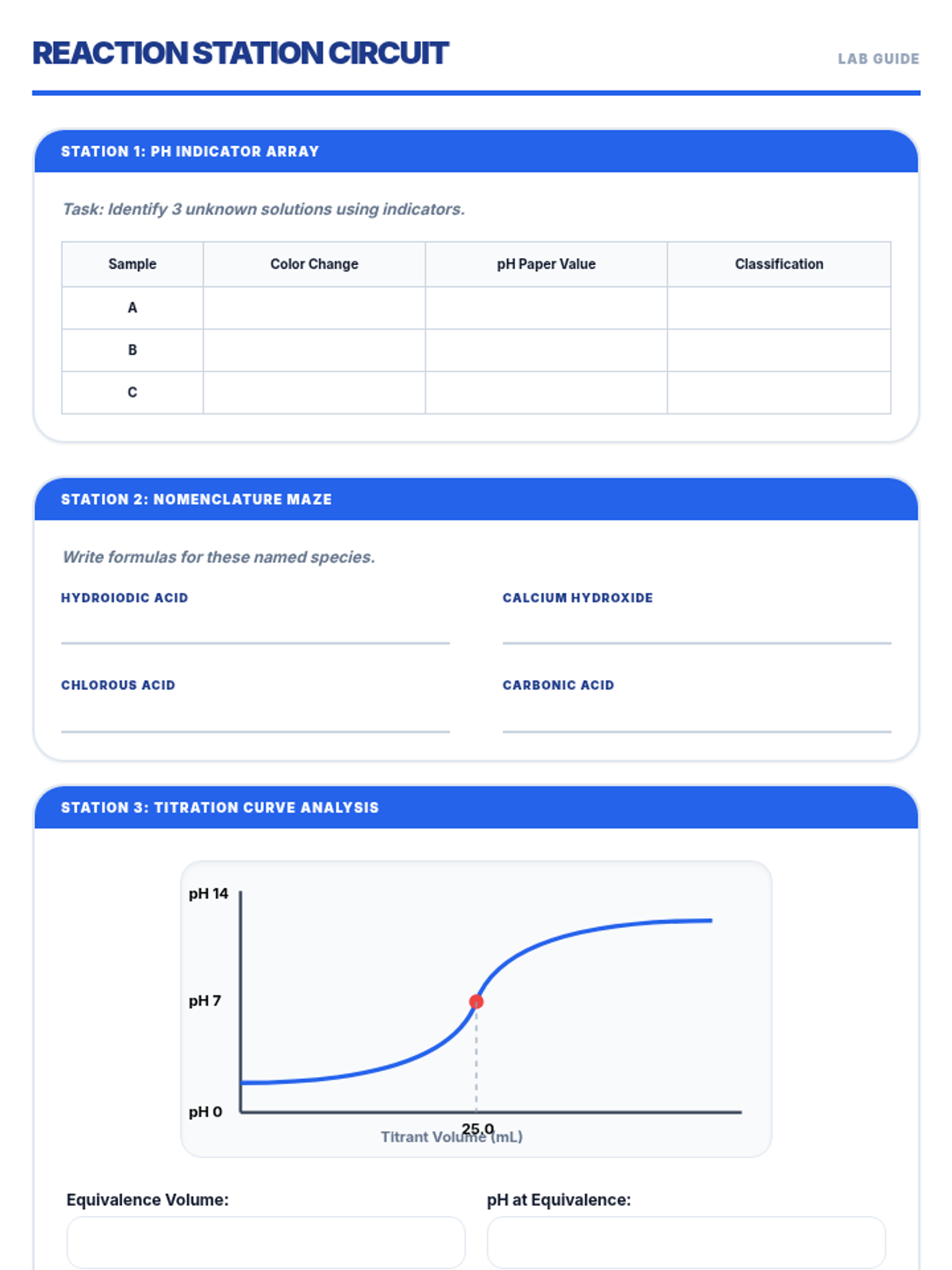
A station-based laboratory activity where students move through centers to test pH, practice nomenclature, analyze titration curves, and witness buffer stabilization.
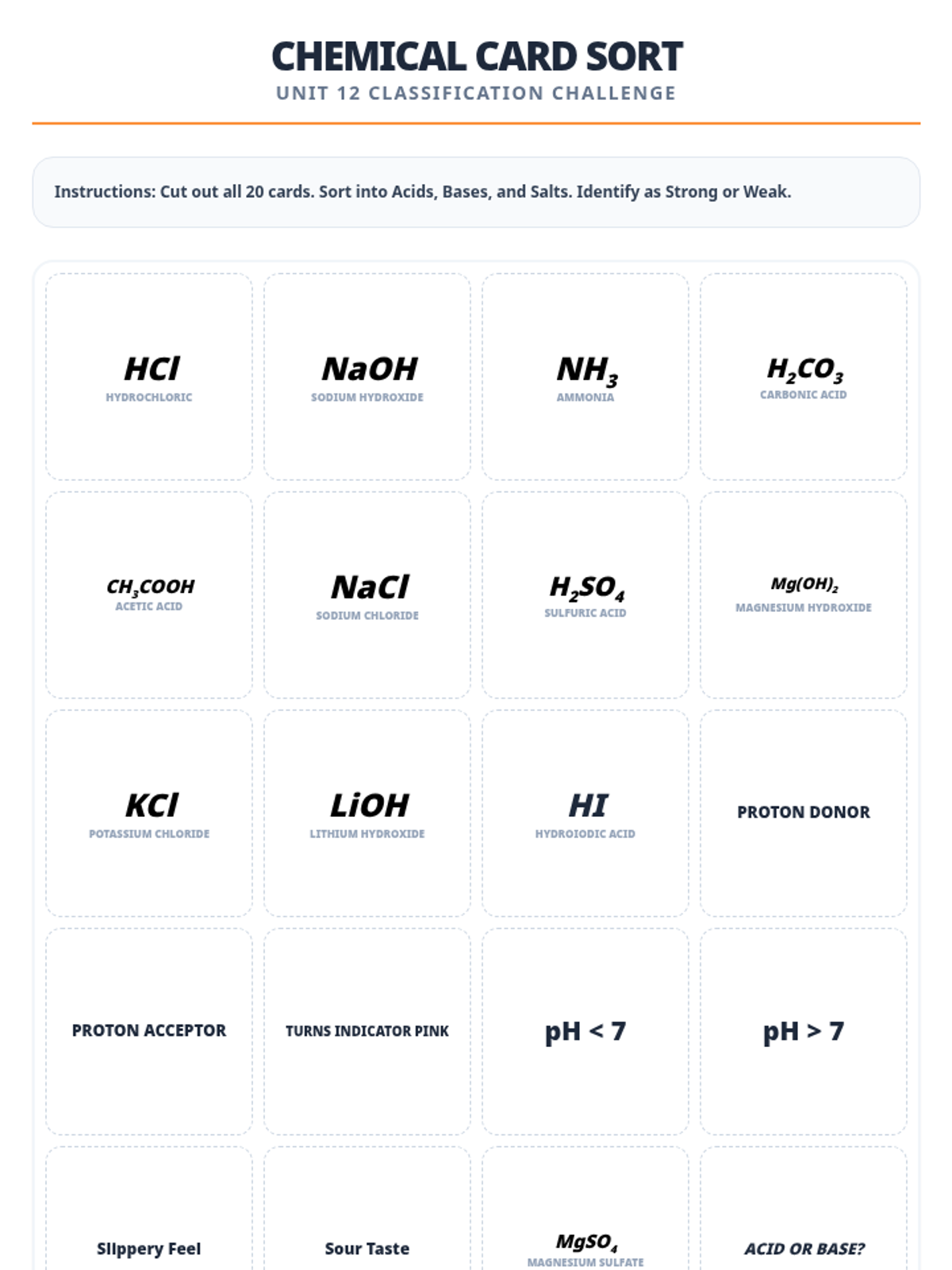
A manipulative card sort activity where students classify chemicals by name, formula, and physical/chemical properties as acids, bases, or salts.
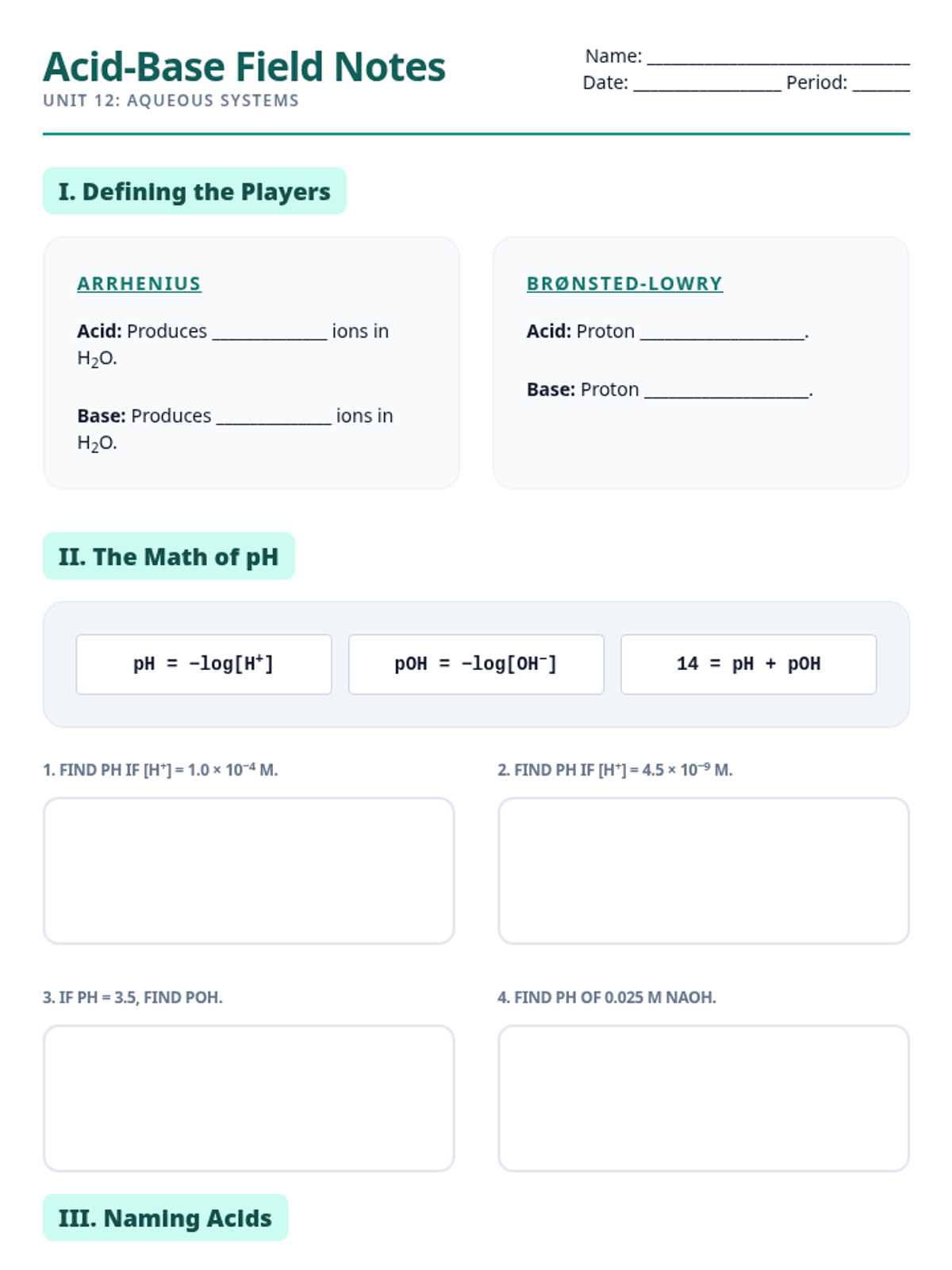
A double-sided student resource containing guided notes for instruction and practice problems for pH math, naming acids, and neutralization reactions.