Students take on the role of Cosmic Consultants to help alien clients design their perfect planetary seasons by manipulating axial tilt, orbital distance, and solar intensity.
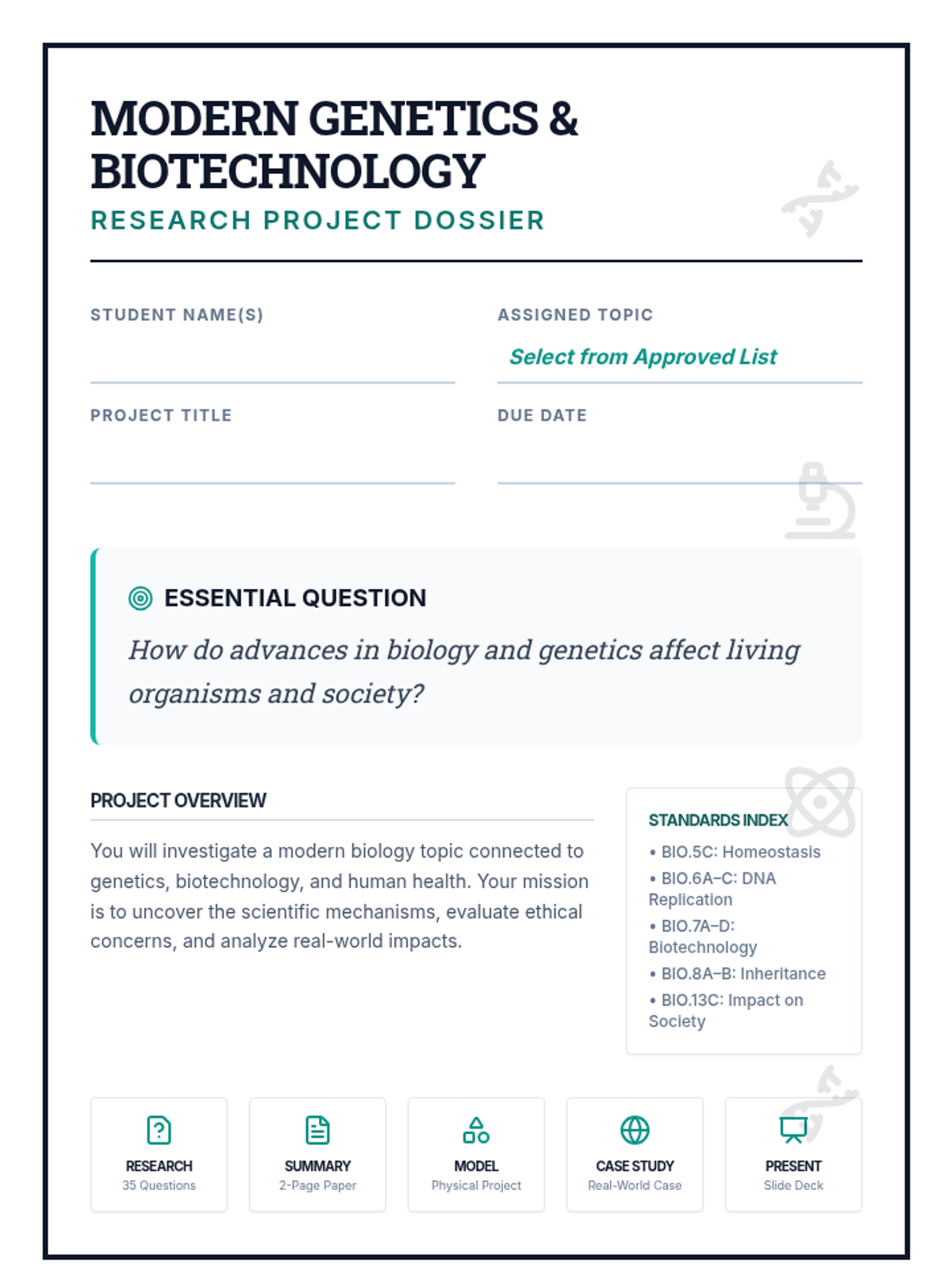
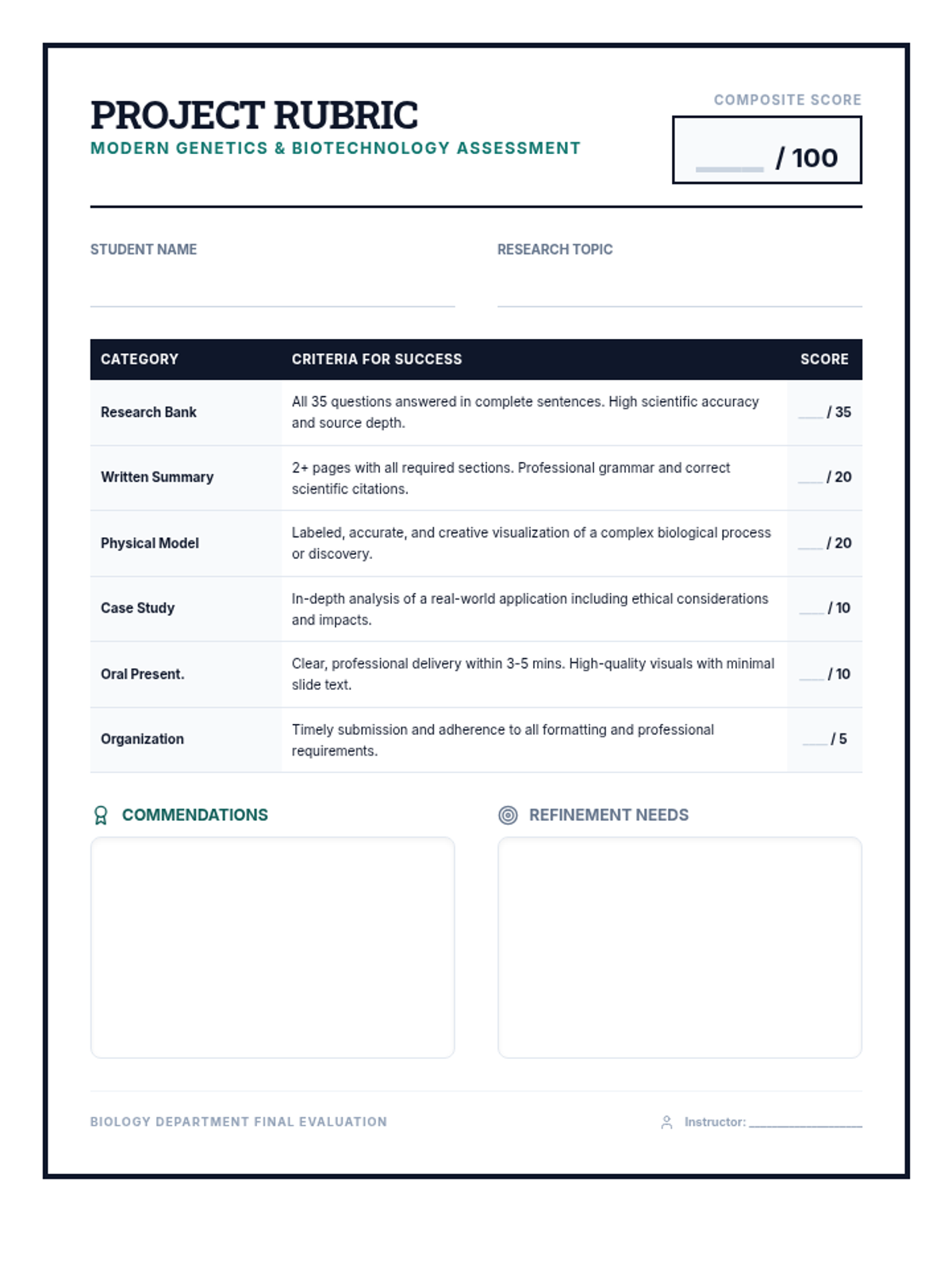
A comprehensive two-week research project exploring modern genetics, biotechnology, and ethical impacts on society. Students investigate topics like cloning, CRISPR, and the Human Genome Project through research, writing, and model-building.
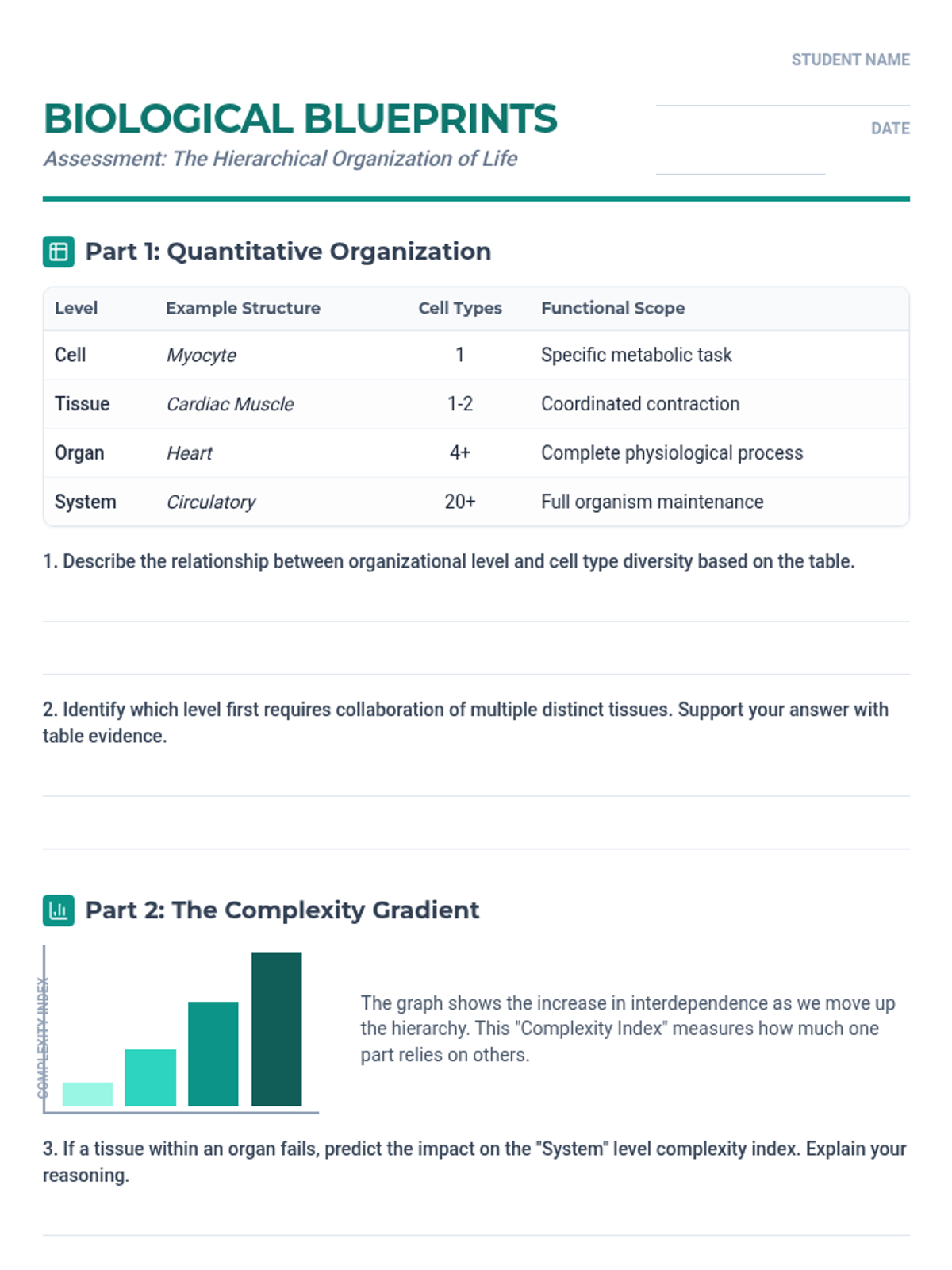
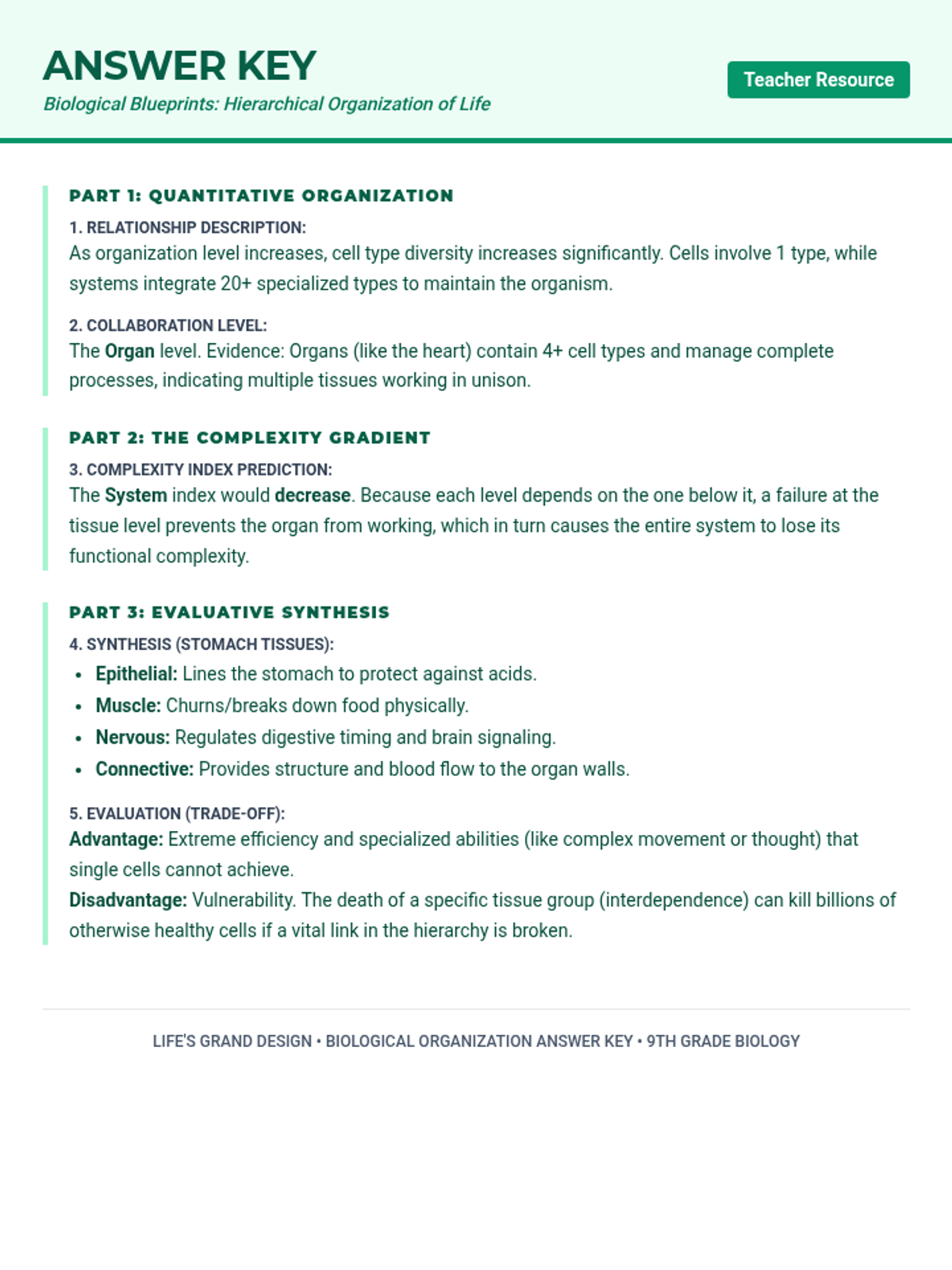
A comprehensive lesson exploring how life is organized from the cellular level up to complex organ systems, focusing on structure-function relationships.
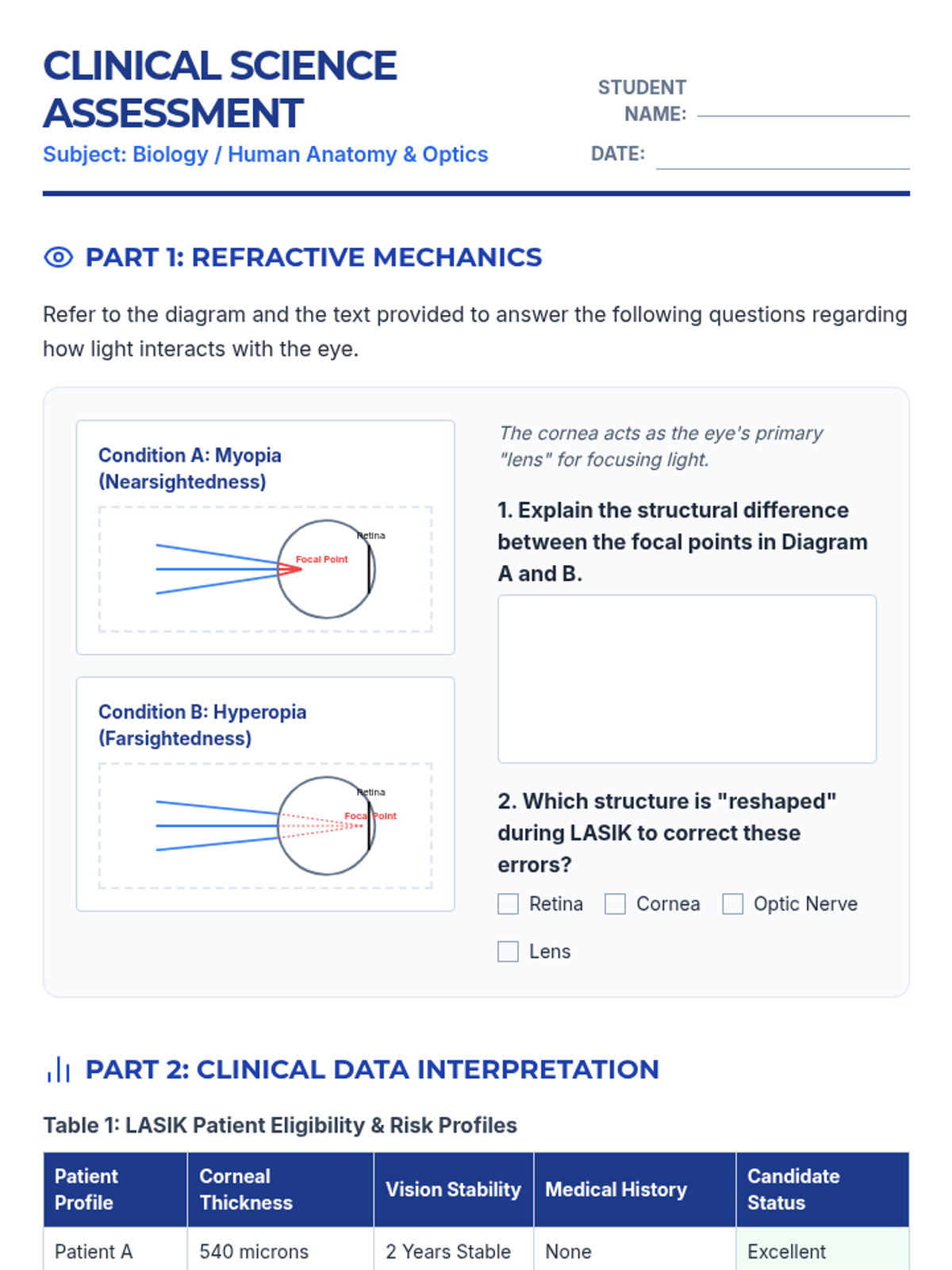
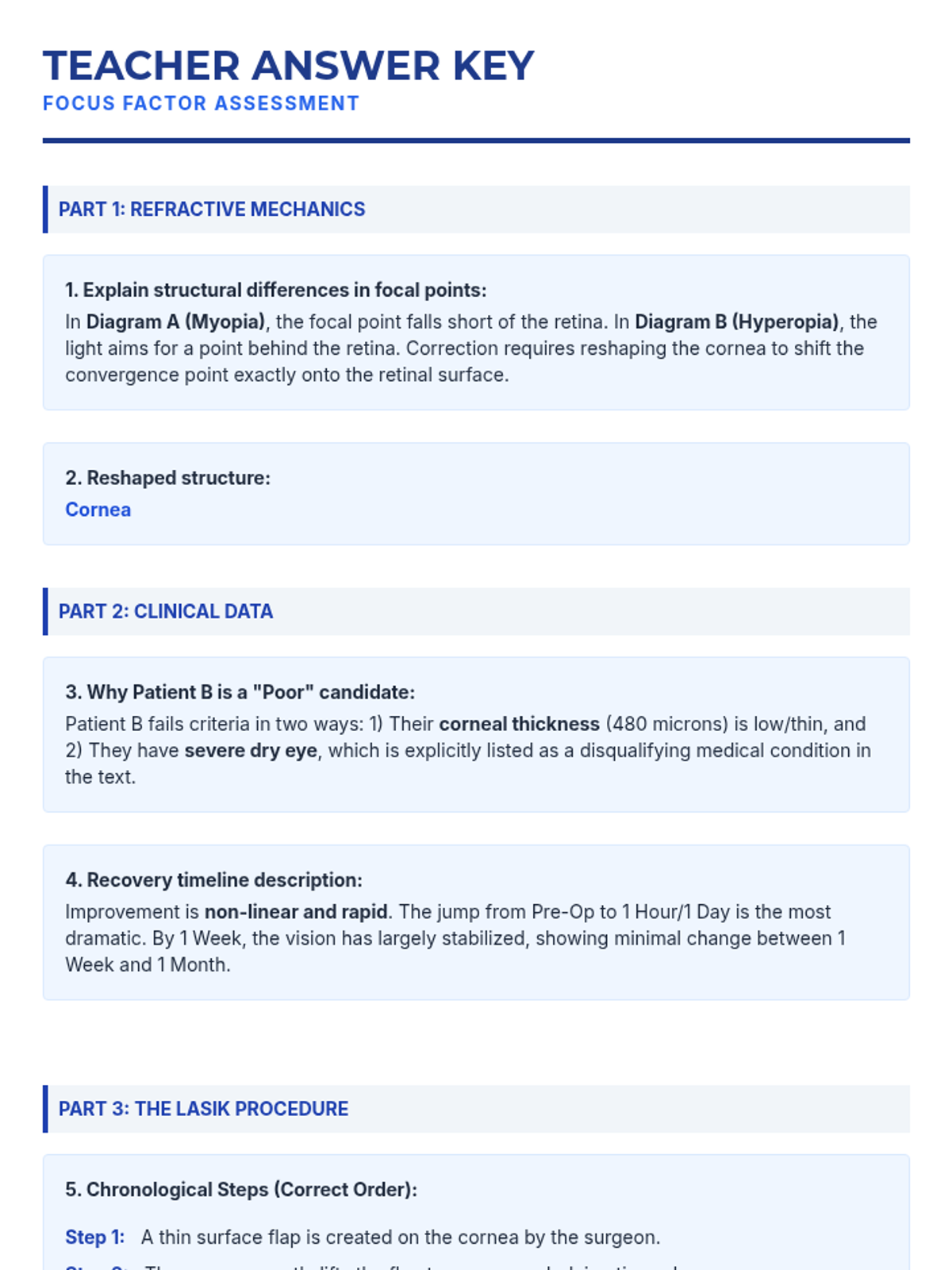
A comprehensive look at eye anatomy, refractive errors, and the medical technology used in LASIK surgery to reshape the cornea.
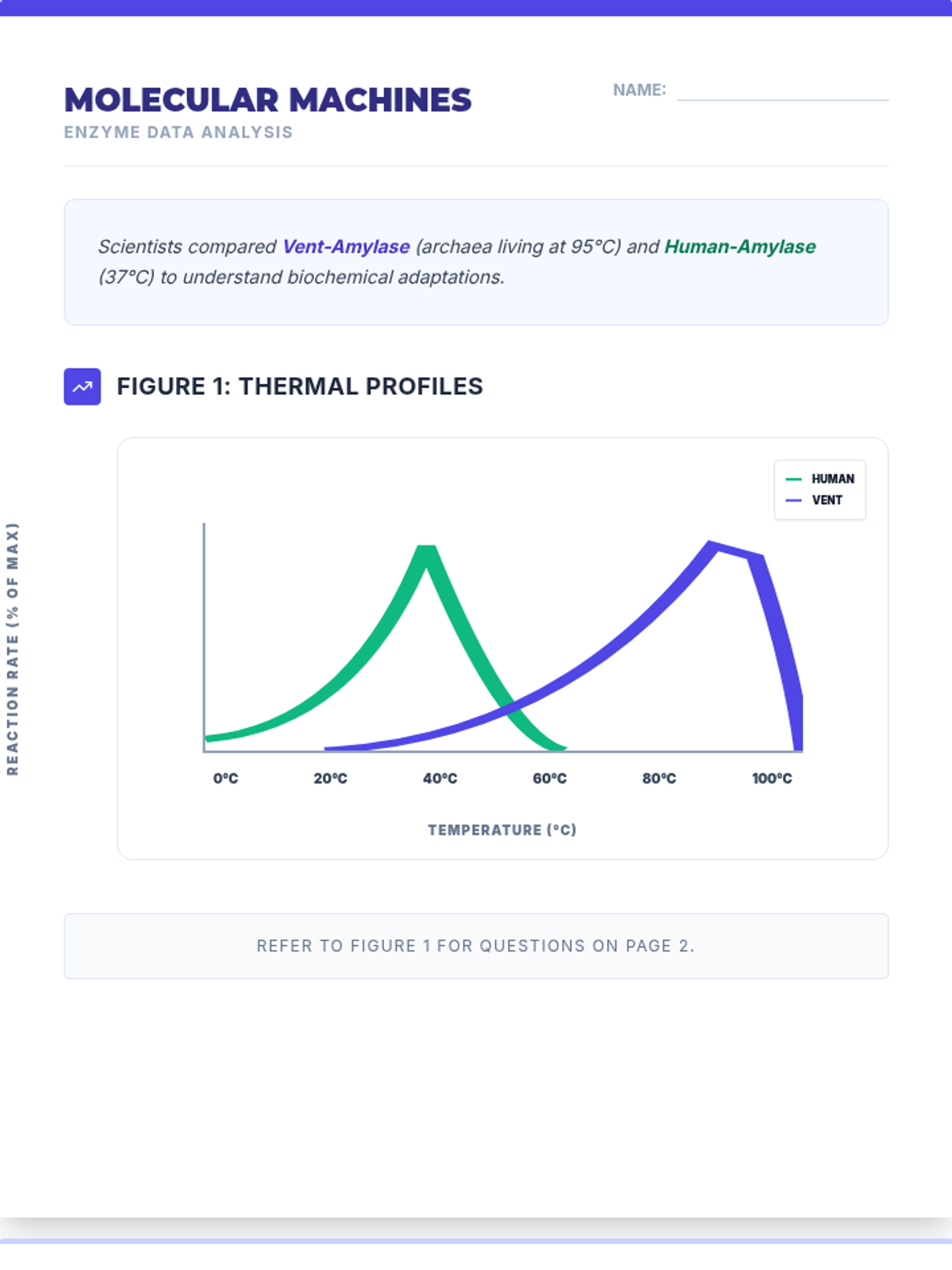
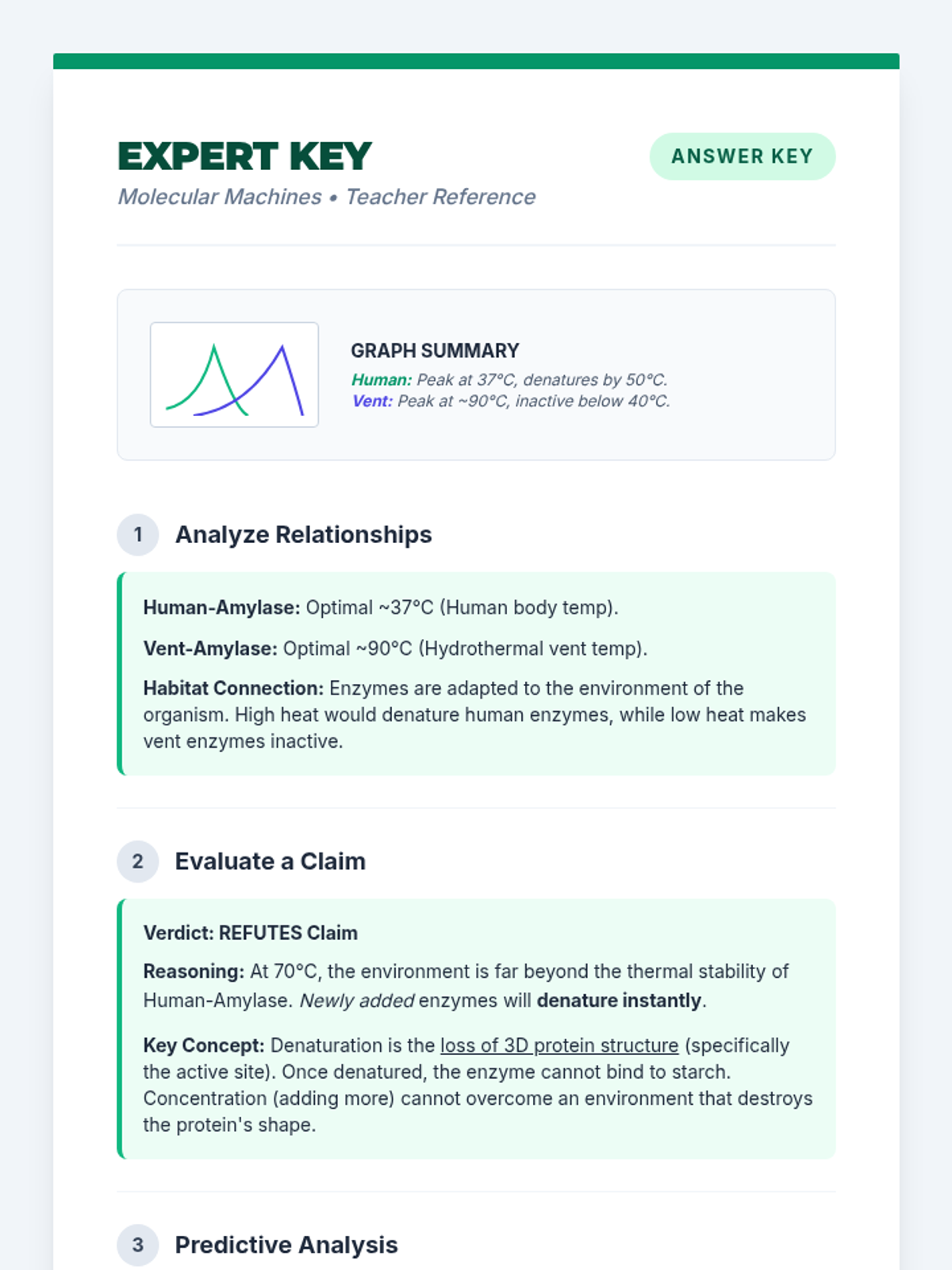
In this lesson, students analyze the relationship between environmental factors and enzyme activity. They will use real-world data and graphical representations to evaluate scientific claims and understand the concept of protein denaturation.
A deep dive into how plants convert light into life, covering the chemical formula, chloroplast anatomy, and the flow of energy.
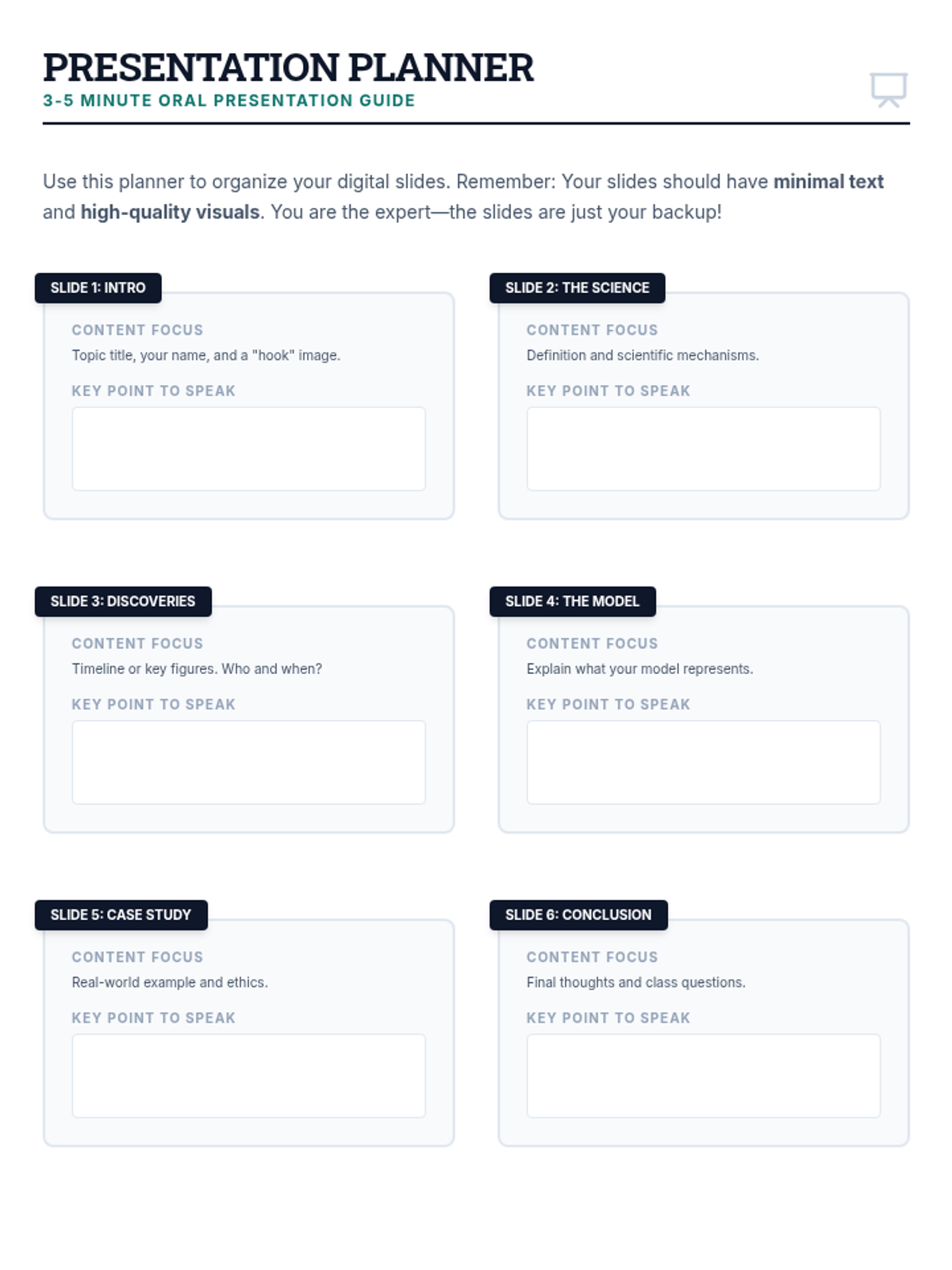
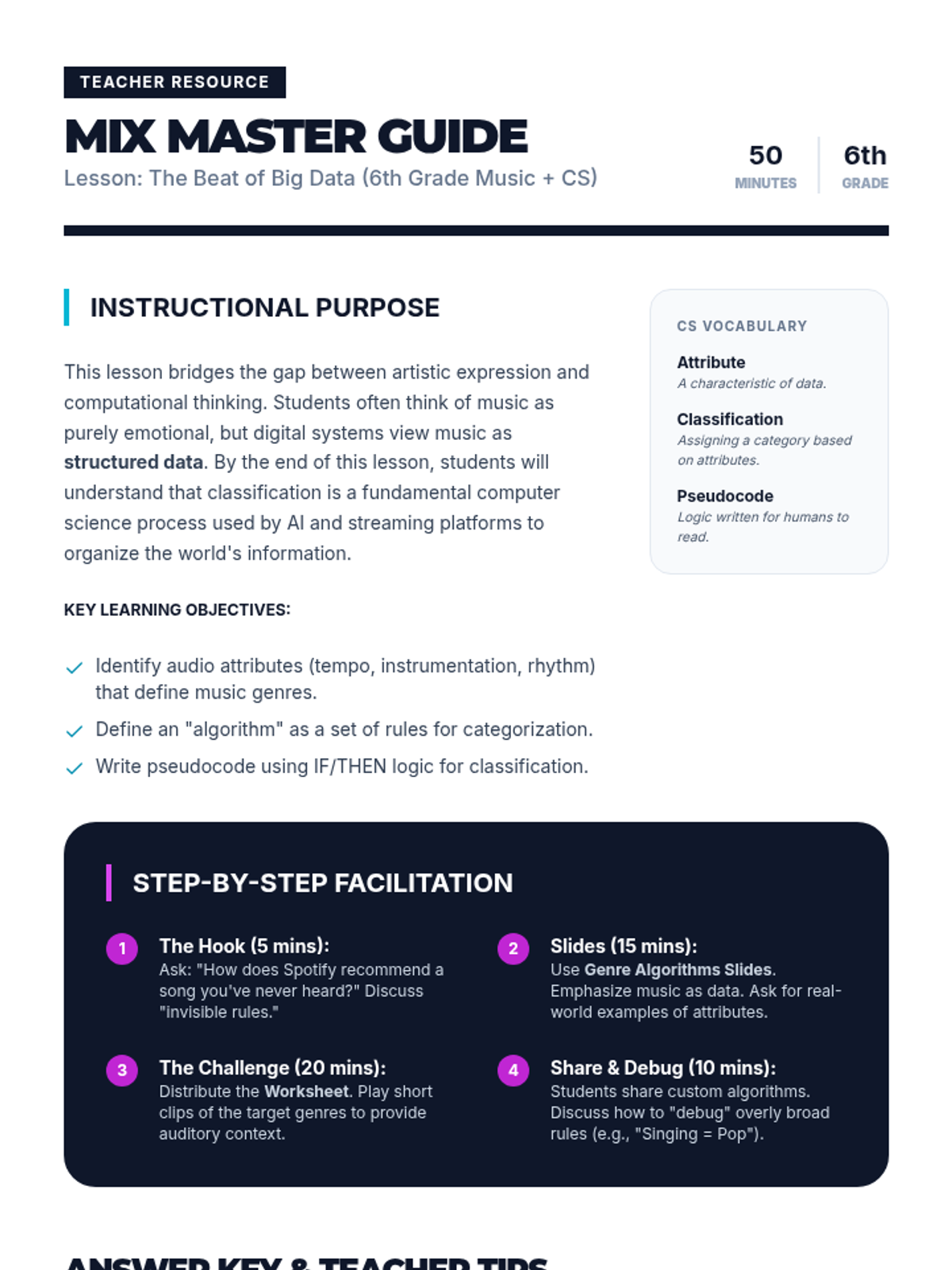
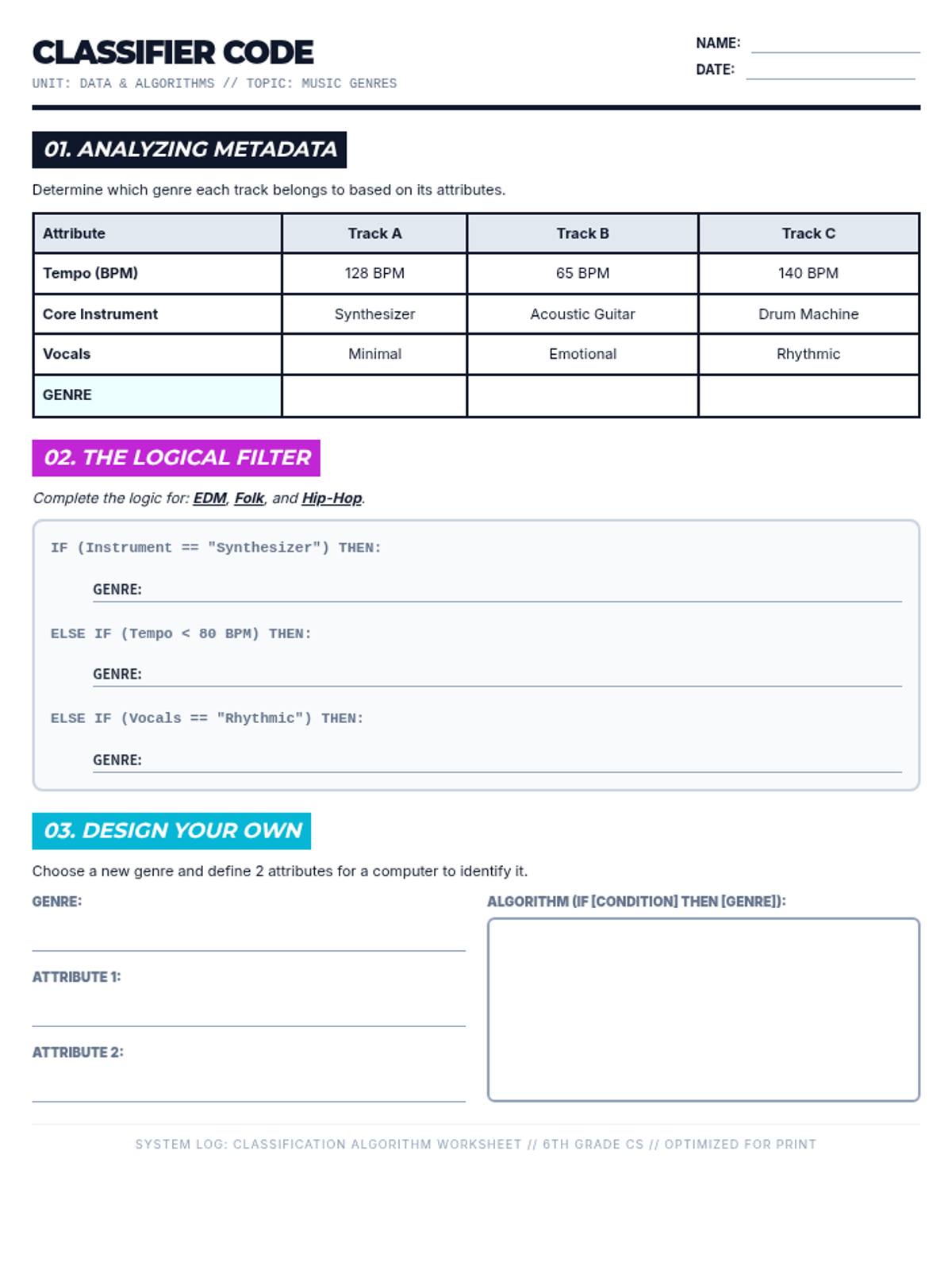
A cross-curricular lesson where 6th grade students explore music genres through the lens of classification algorithms and data attributes. Students will learn to identify genres based on specific criteria and design their own logic-based sorting systems.
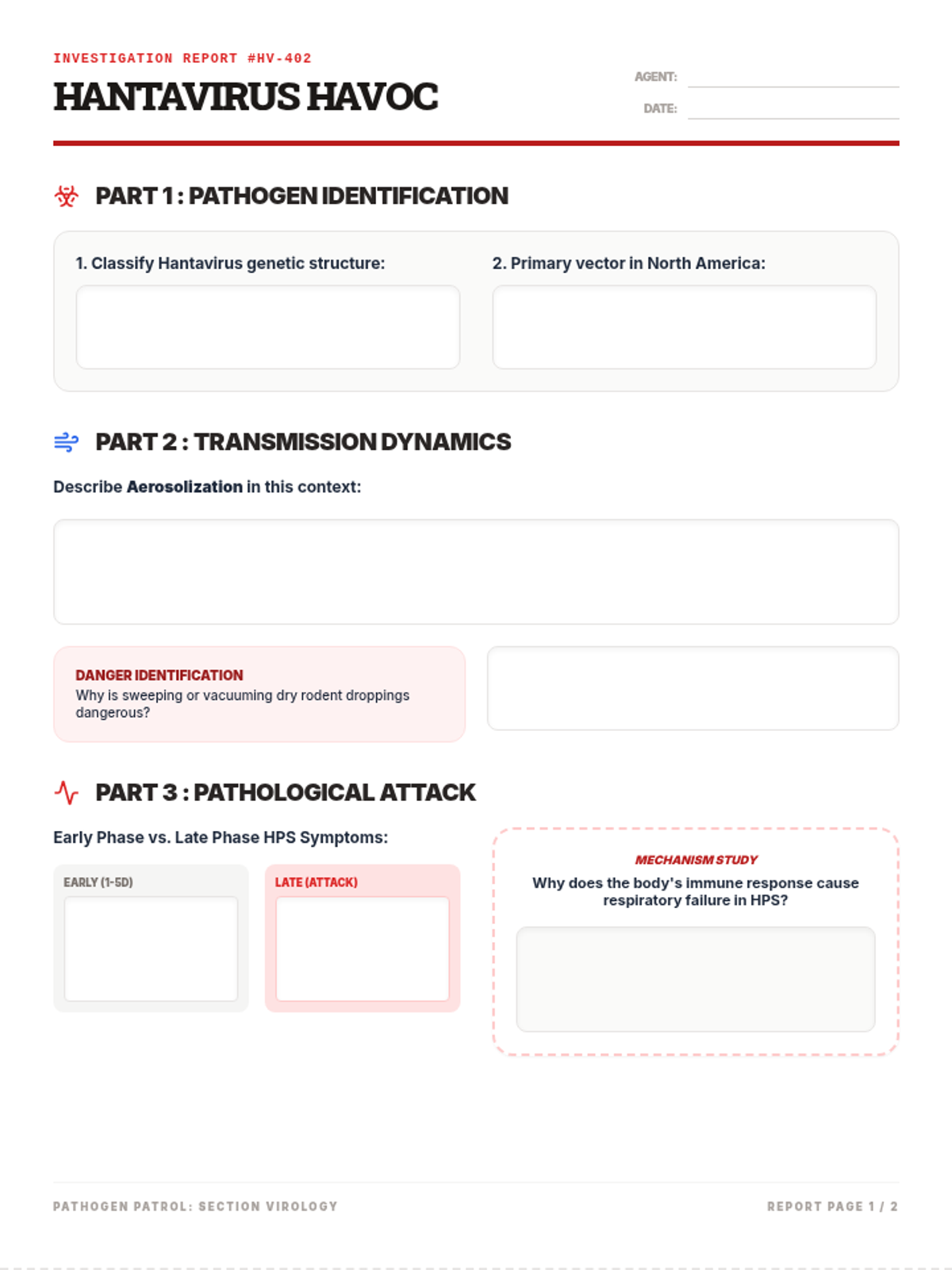
An investigation into the transmission, symptoms, and pathology of Hantavirus, emphasizing the role of rodent vectors and prevention strategies for high-school students.
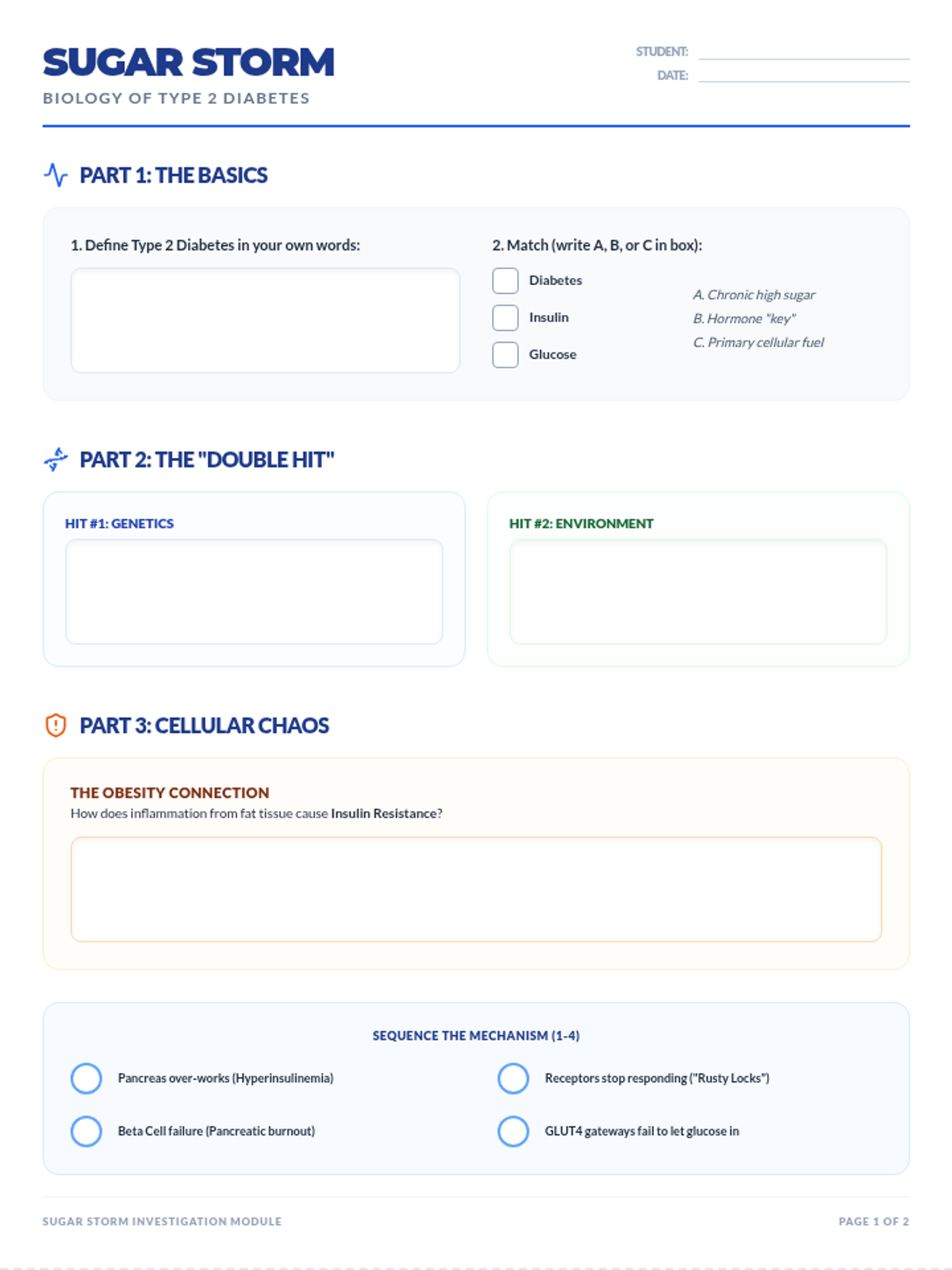
A deep dive into the biological mechanisms, pathology, and global socioeconomic impact of Type 2 Diabetes, specifically designed for 9th-grade biology students.
The final week of Sound Sliders drills focusing on Open Syllables and comprehensive Blend review.
The third week of Sound Sliders drills focusing on Mixed Blends and Glued Sounds (-ng, -nk) with daily 12-word practice sets.
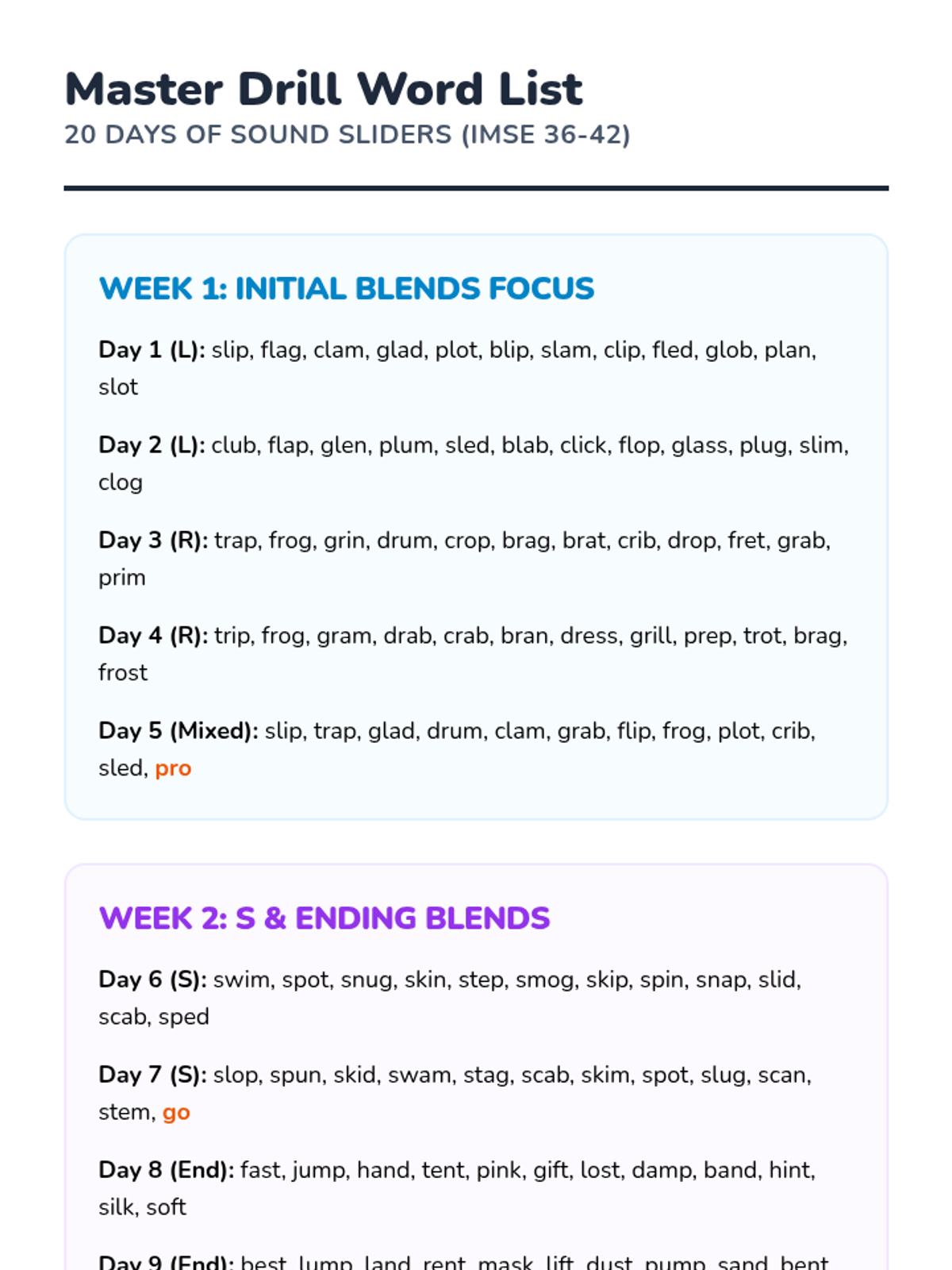
The second week of Sound Sliders drills focusing on S-Blends and Ending Blends with daily 12-word practice sets.
An 11-day series of class starters focused on forensic reasoning, case synthesis, and professional communication of findings.
A 10-day series of class starters covering biological evidence, blood patterns, DNA analysis, and ethics in genetics.
An 11-day series of class starters exploring physical and trace evidence, including fingerprints, hair, fibers, and soil.
A 10-day series of class starters focused on observation skills, documentation, ethics, and the history of forensic science.
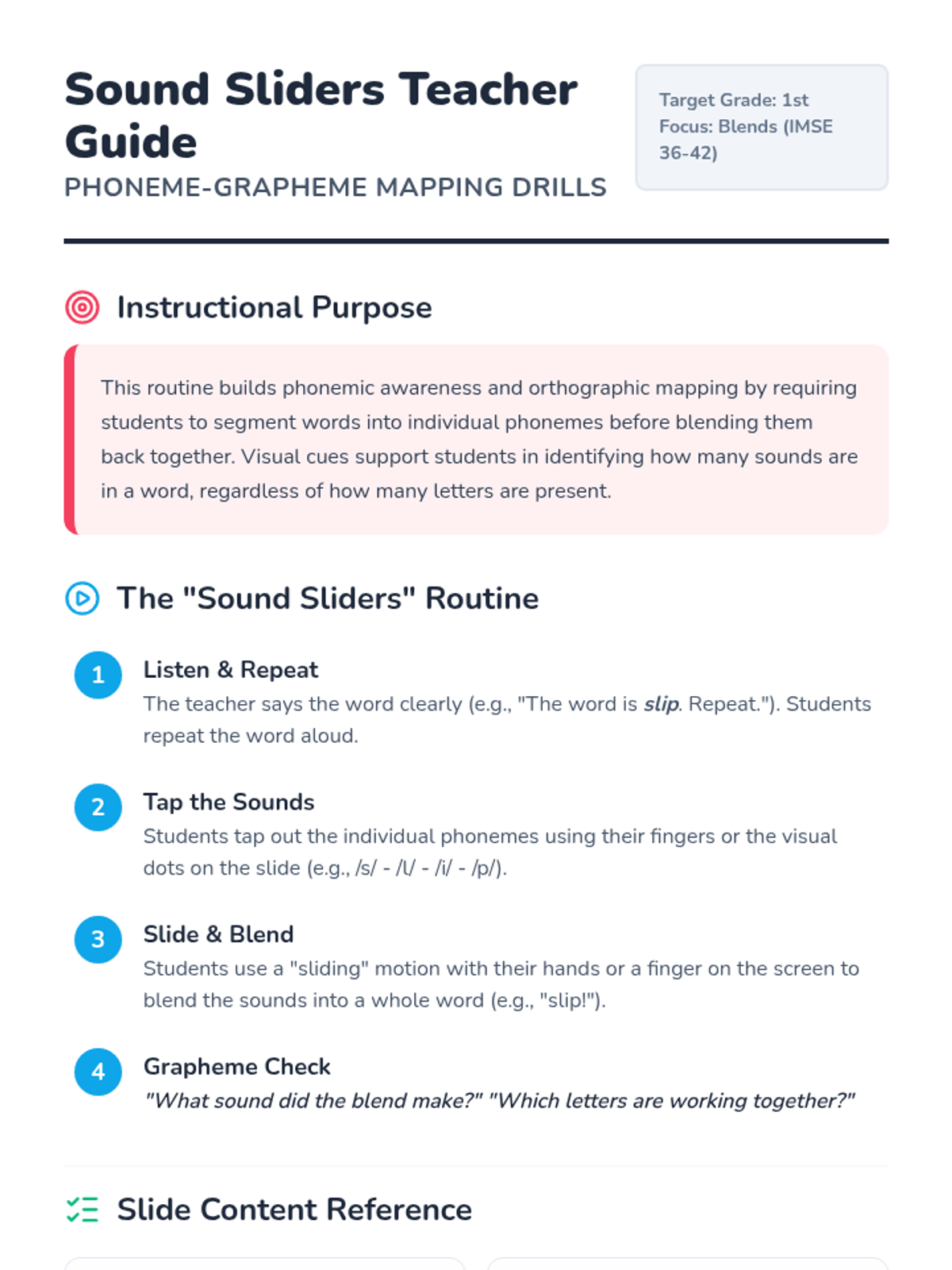
The first week of Sound Sliders drills focusing on initial L-Blends and R-Blends with daily 12-word practice sets.
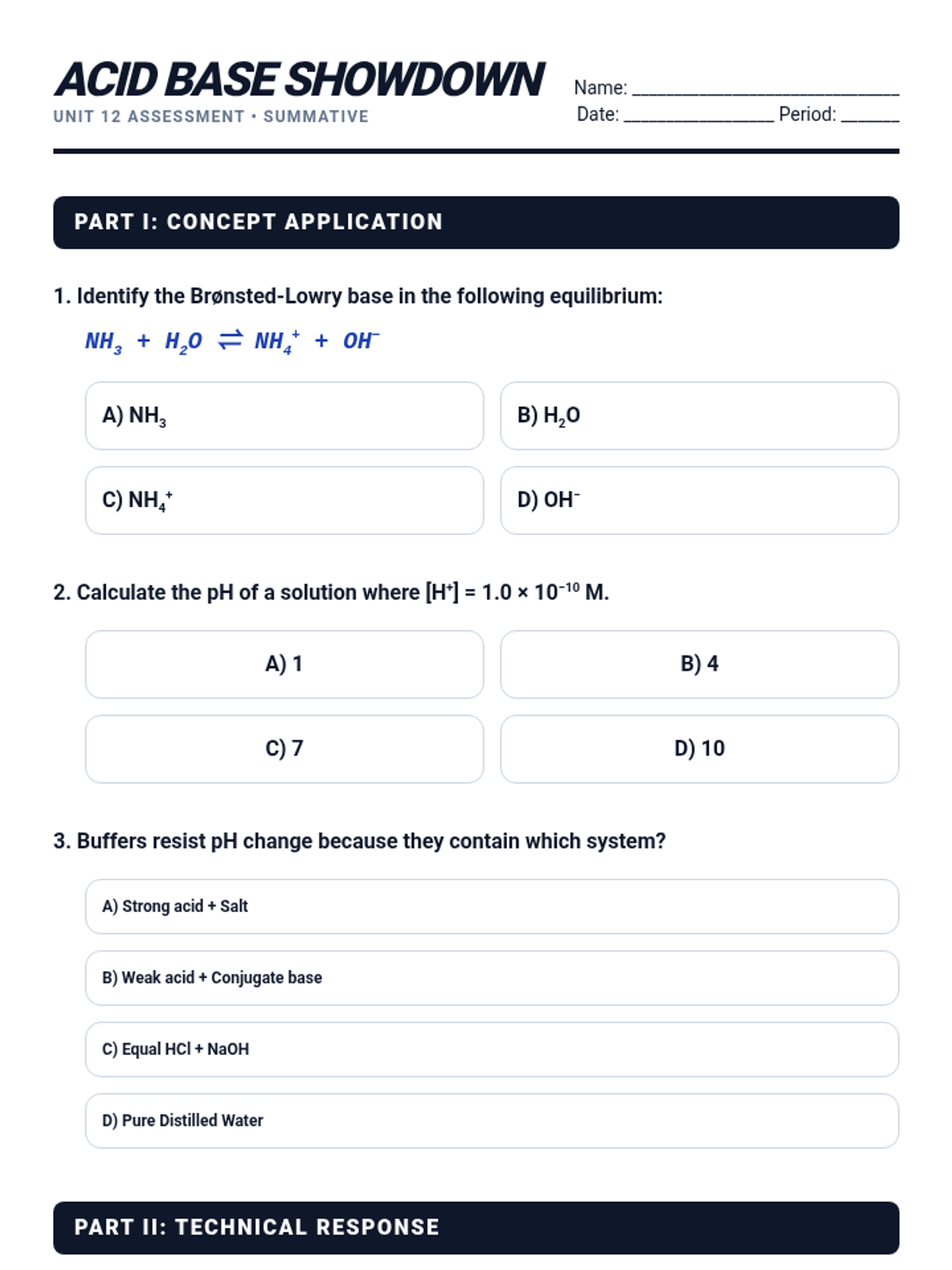
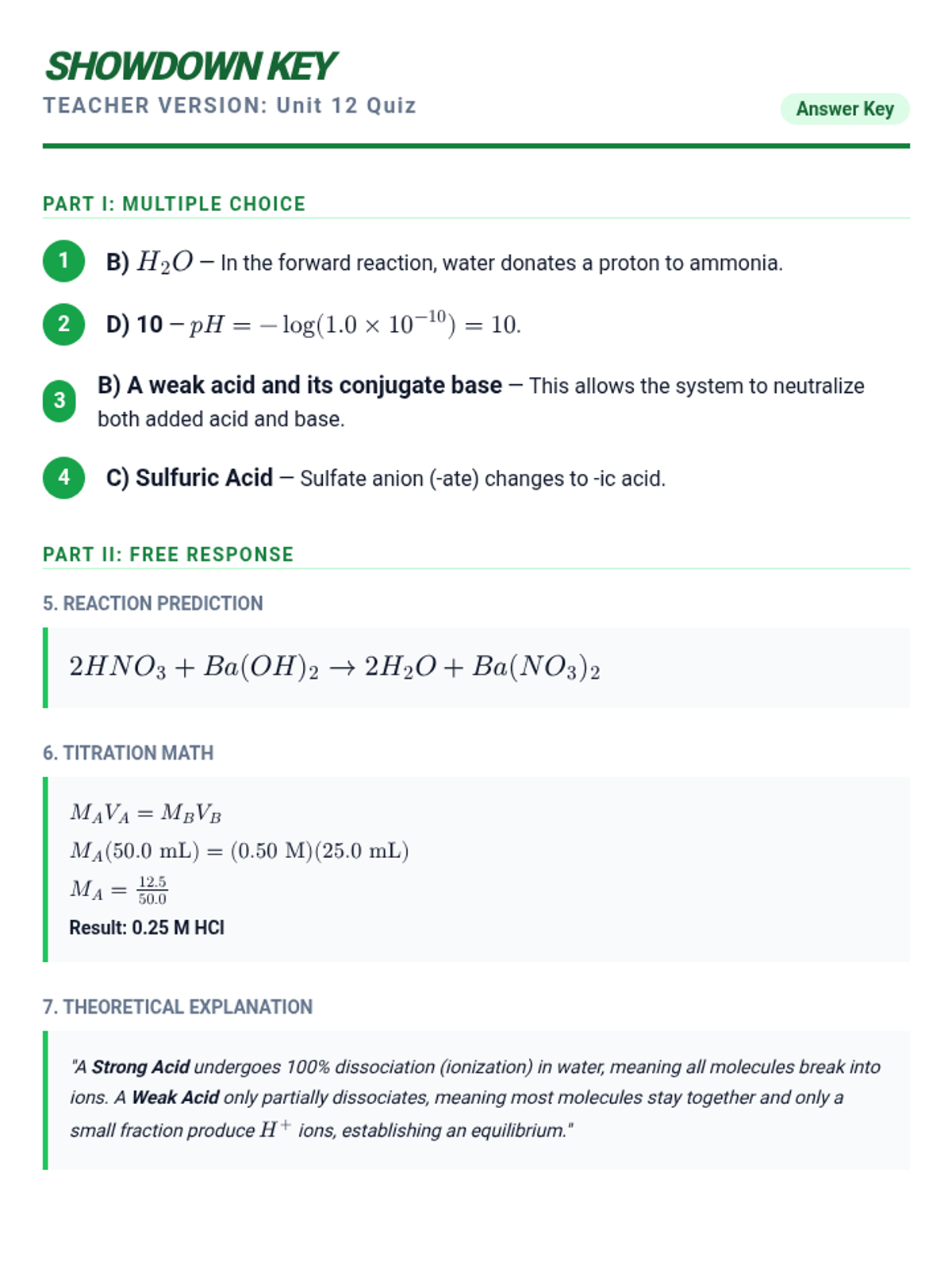
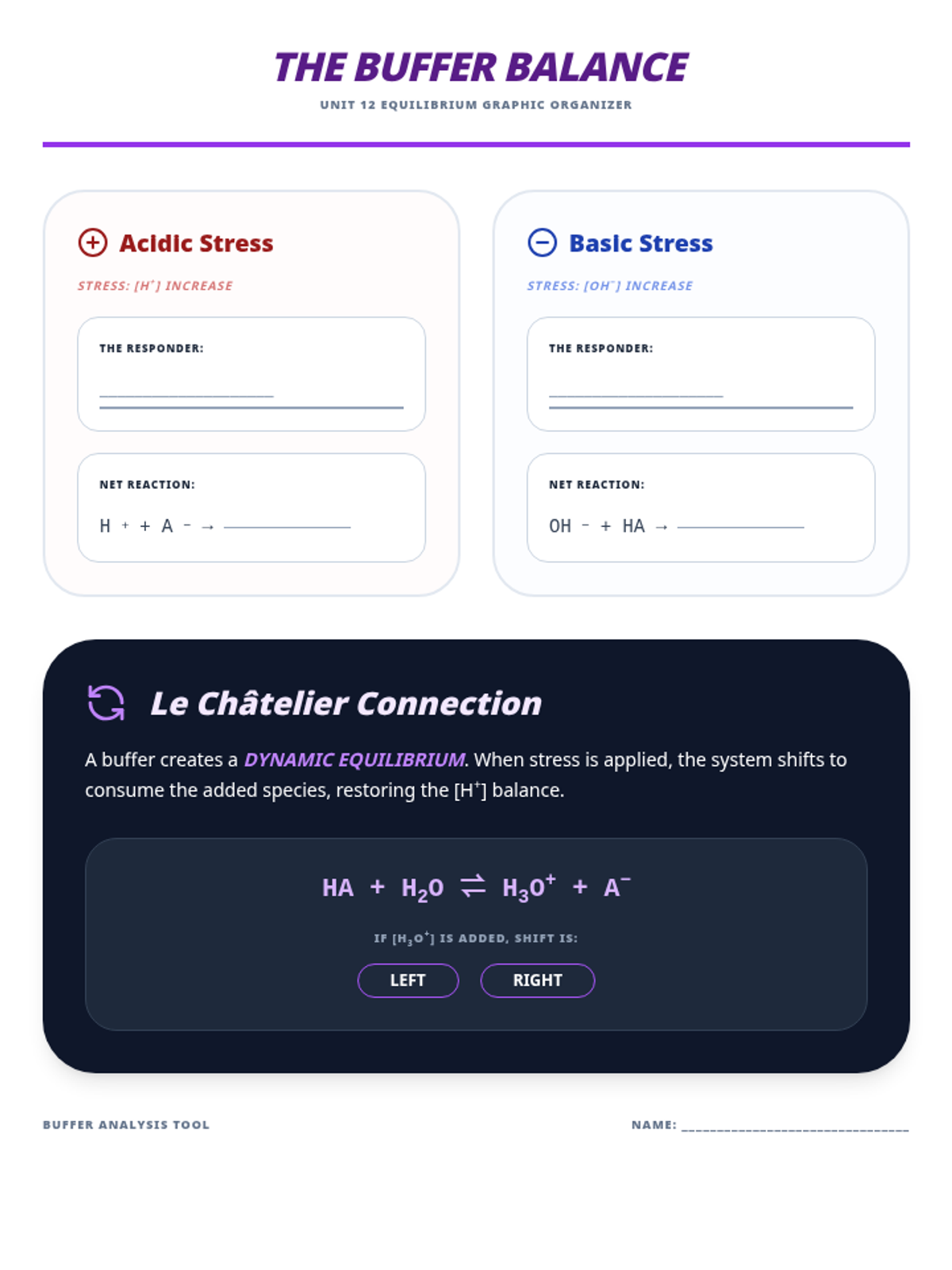
Explores the equilibrium of buffer solutions and concludes with a summative assessment of the unit.
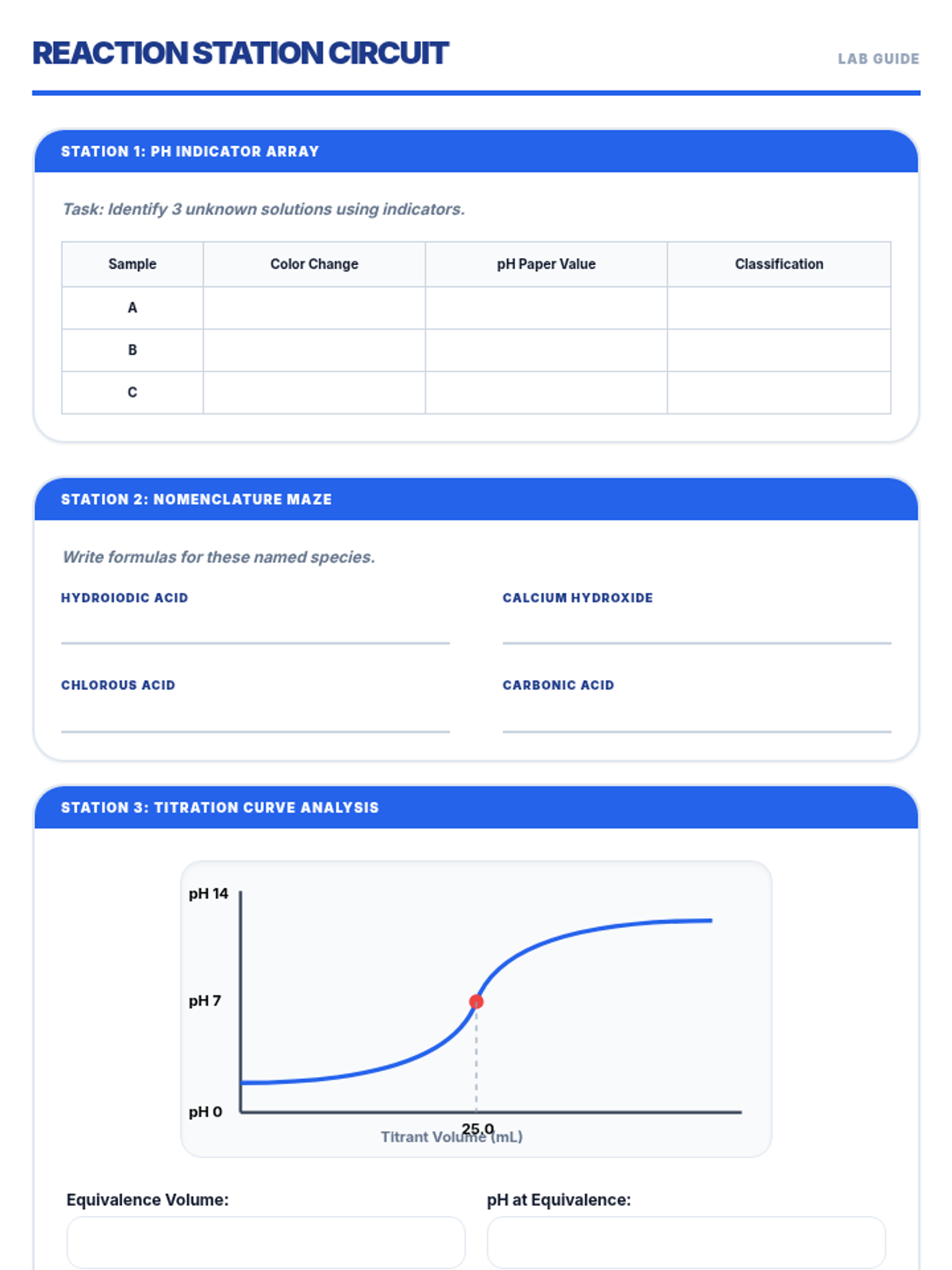
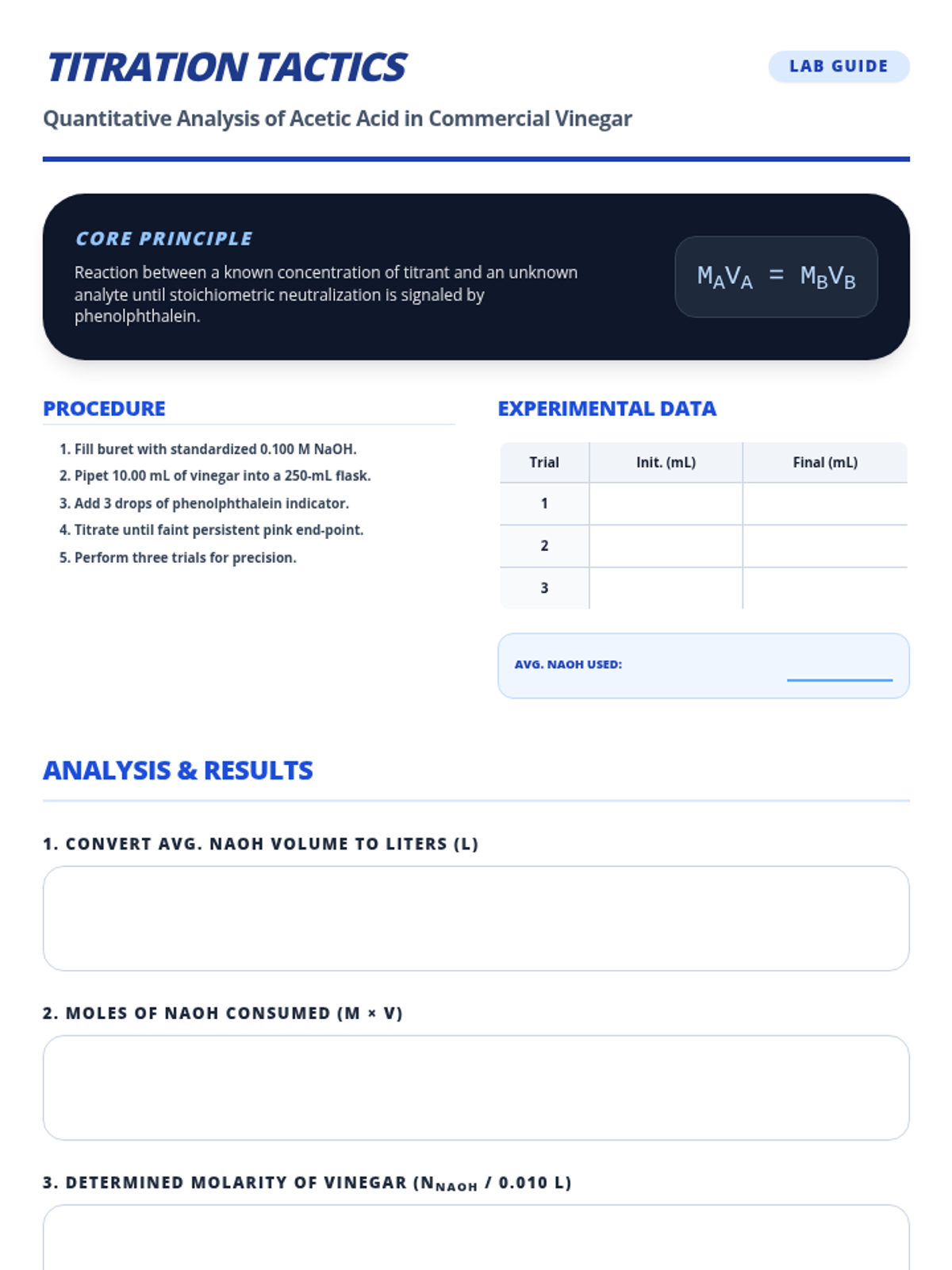
Focuses on neutralization reactions, predicting products, and performing titration experiments to determine unknown concentrations.
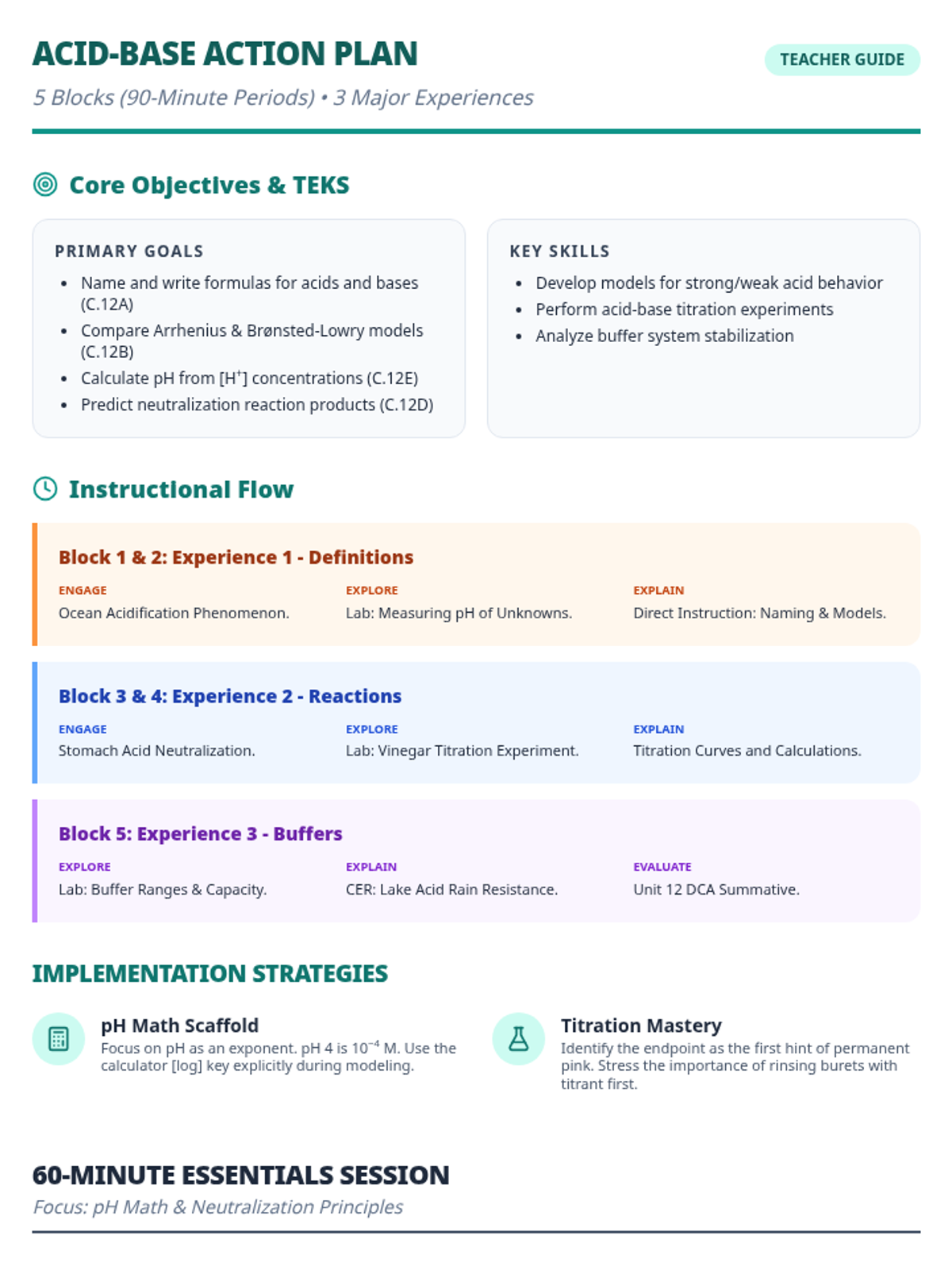
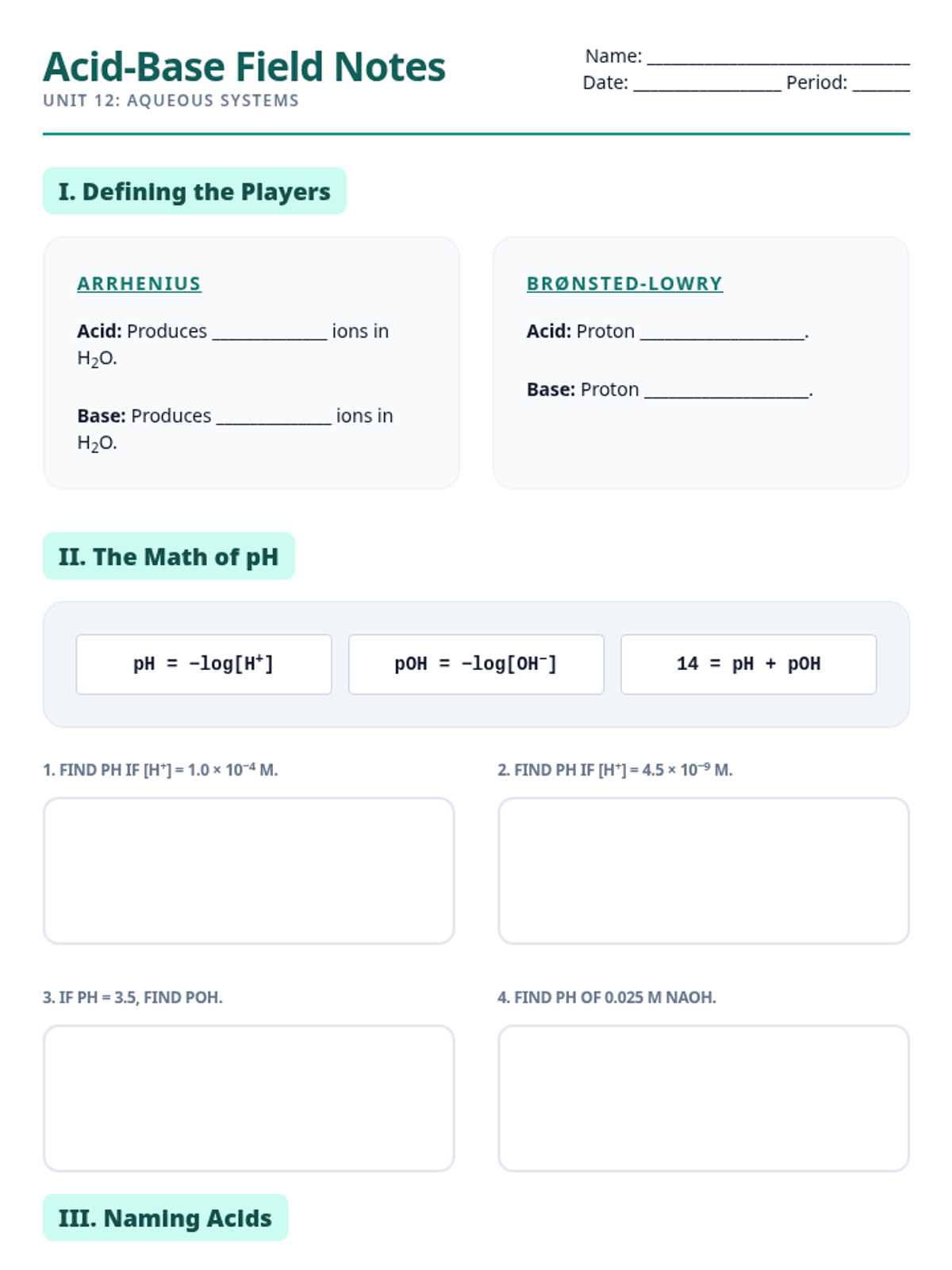
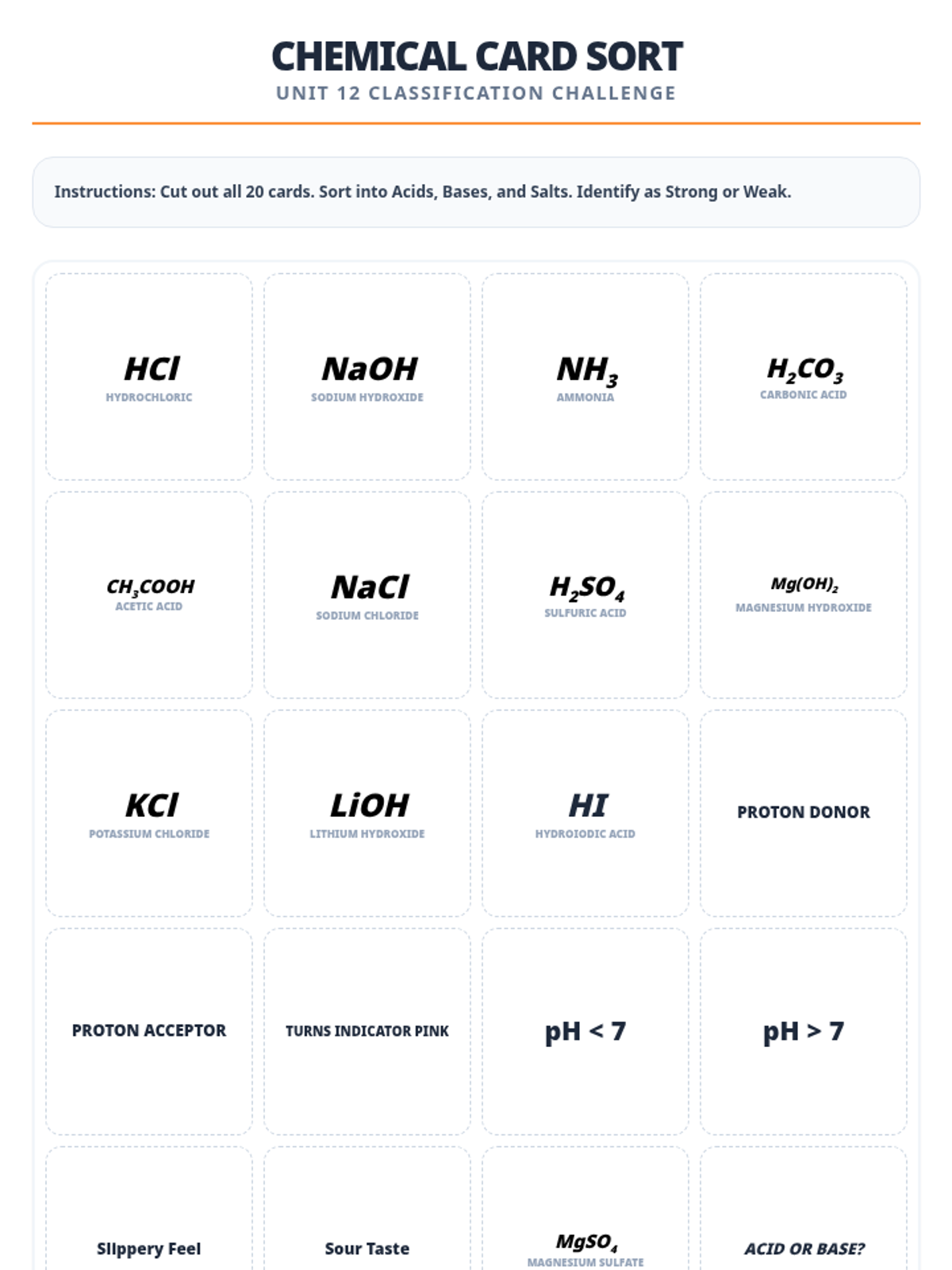
Students define acids and bases using Arrhenius and Brønsted-Lowry models, learn naming conventions, and master pH/pOH calculations.
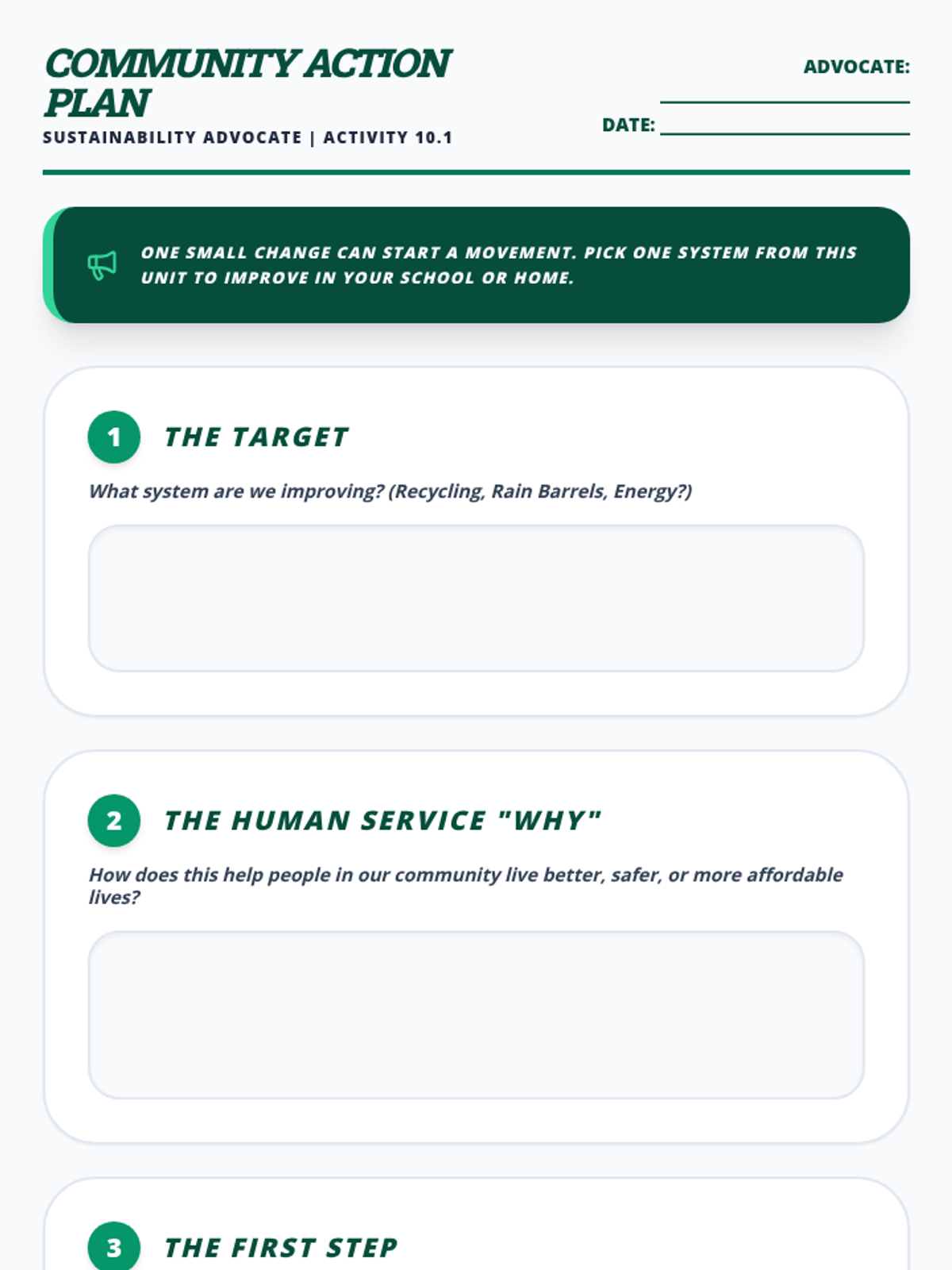
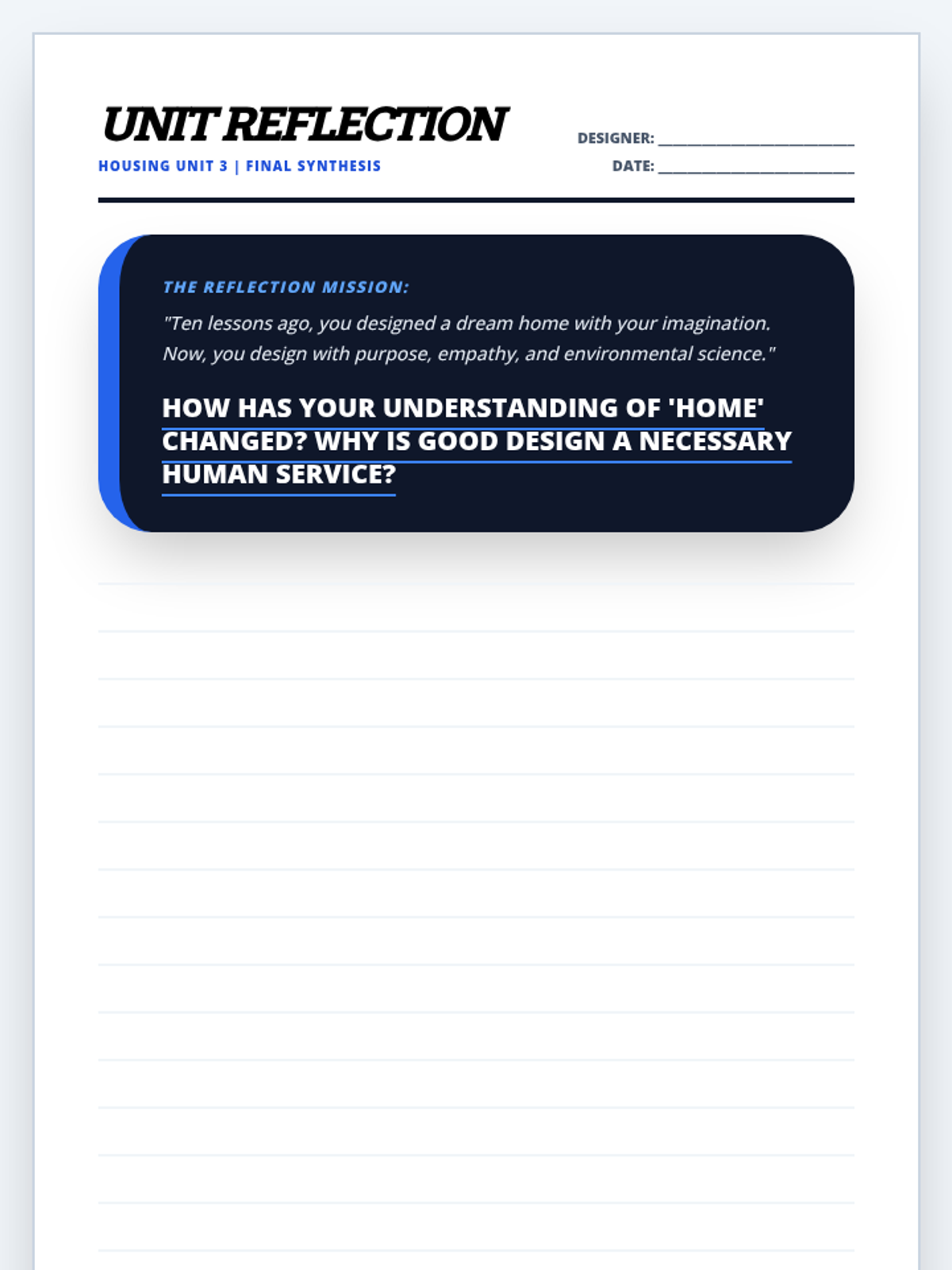
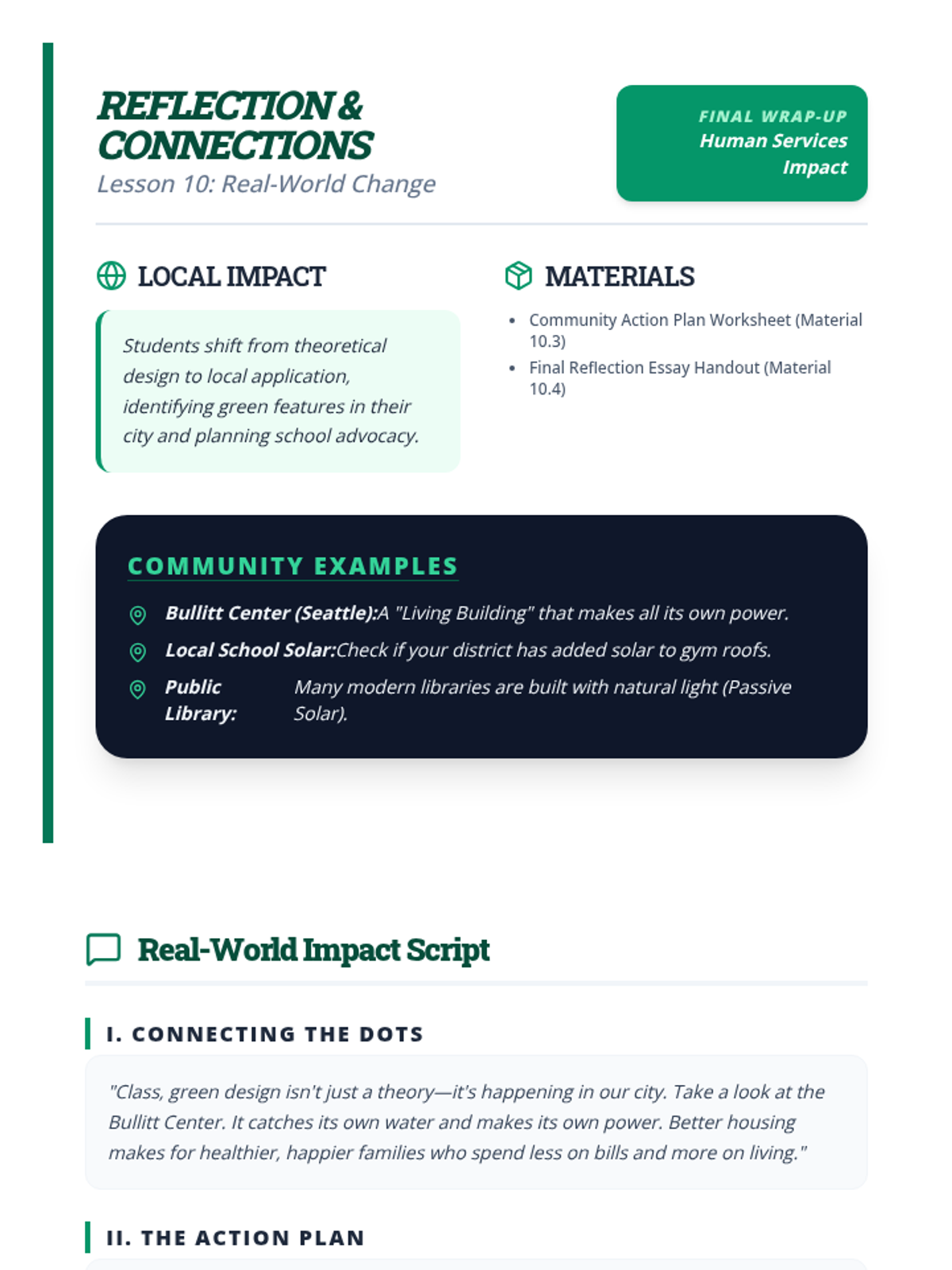
Final reflection on the unit. Students explore real-world green buildings in their community and create an action plan for one sustainable change.
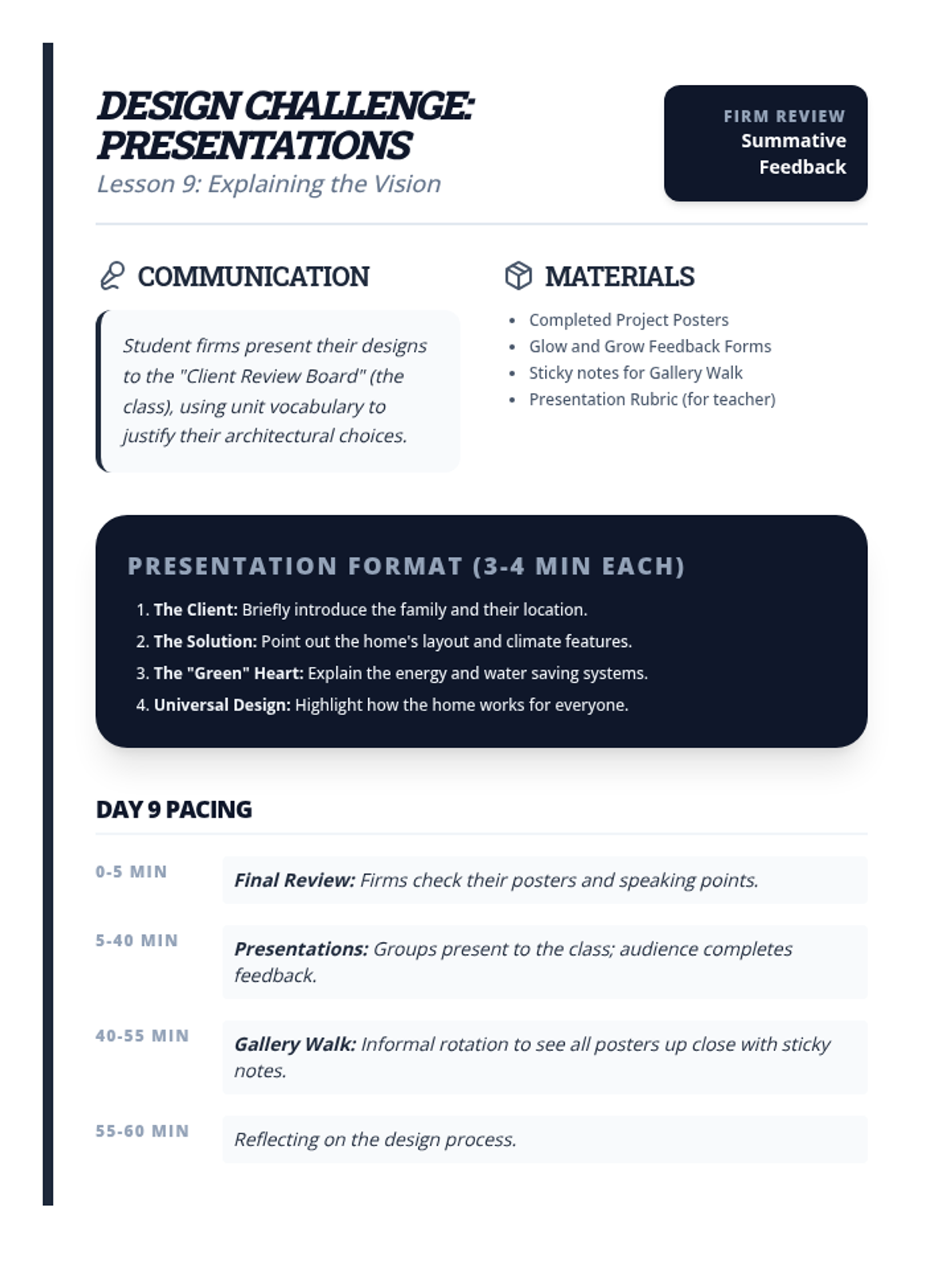
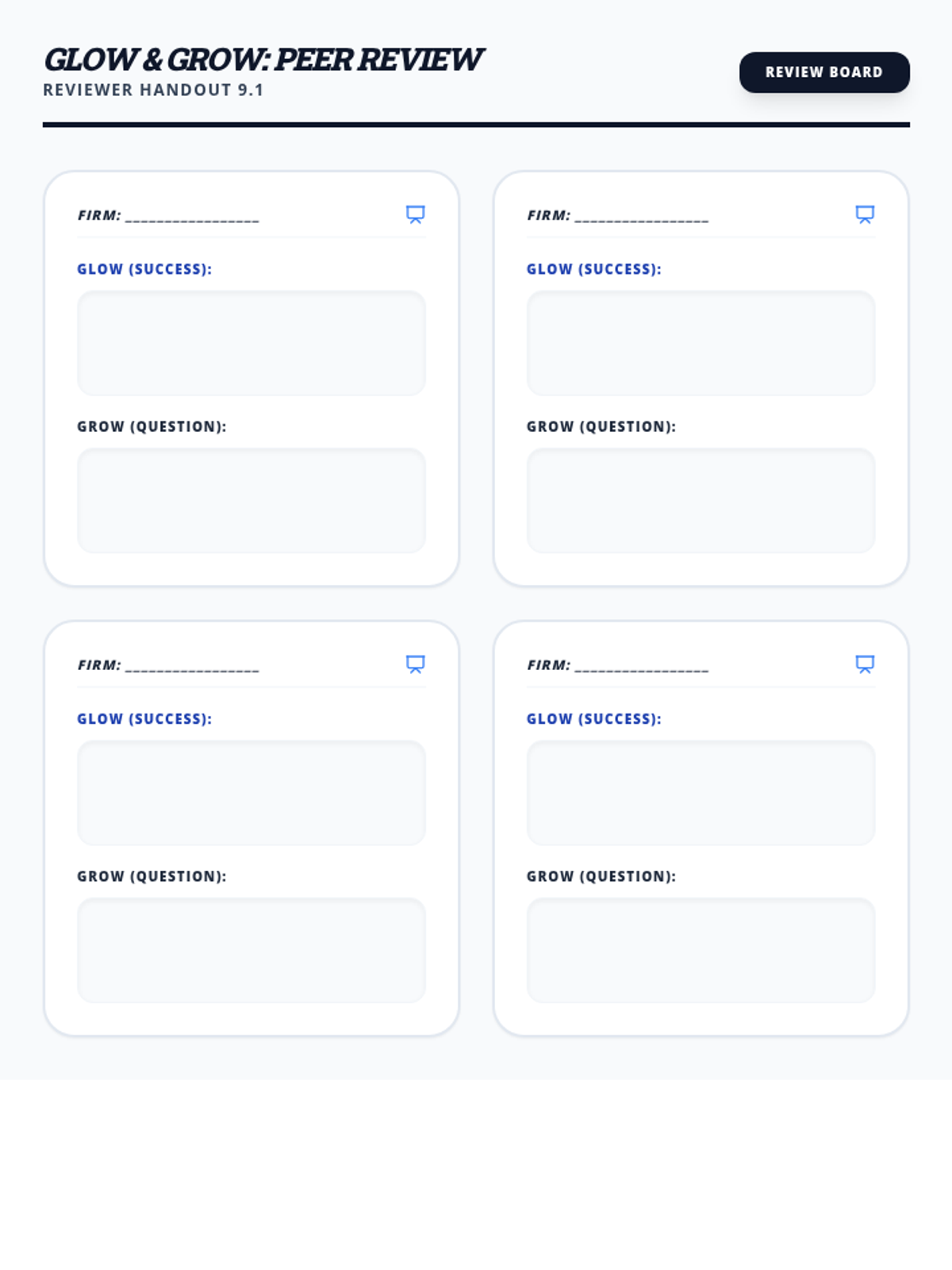
Teams present their final home designs to the class, providing constructive feedback using the 'Glow and Grow' format and participating in a gallery walk.
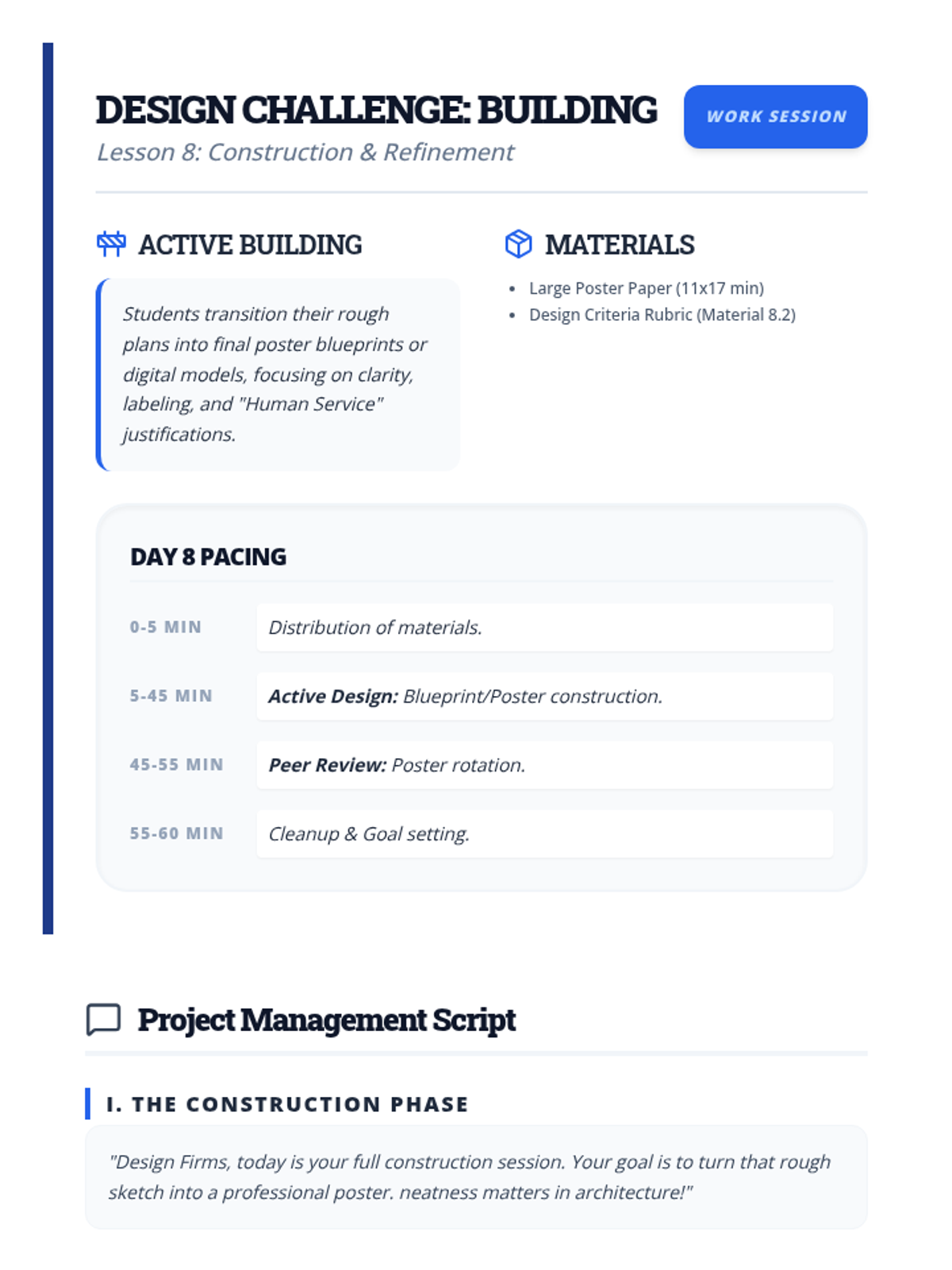
Students work in teams to create their home designs through posters or digital models, receiving teacher and peer feedback to refine their solutions.
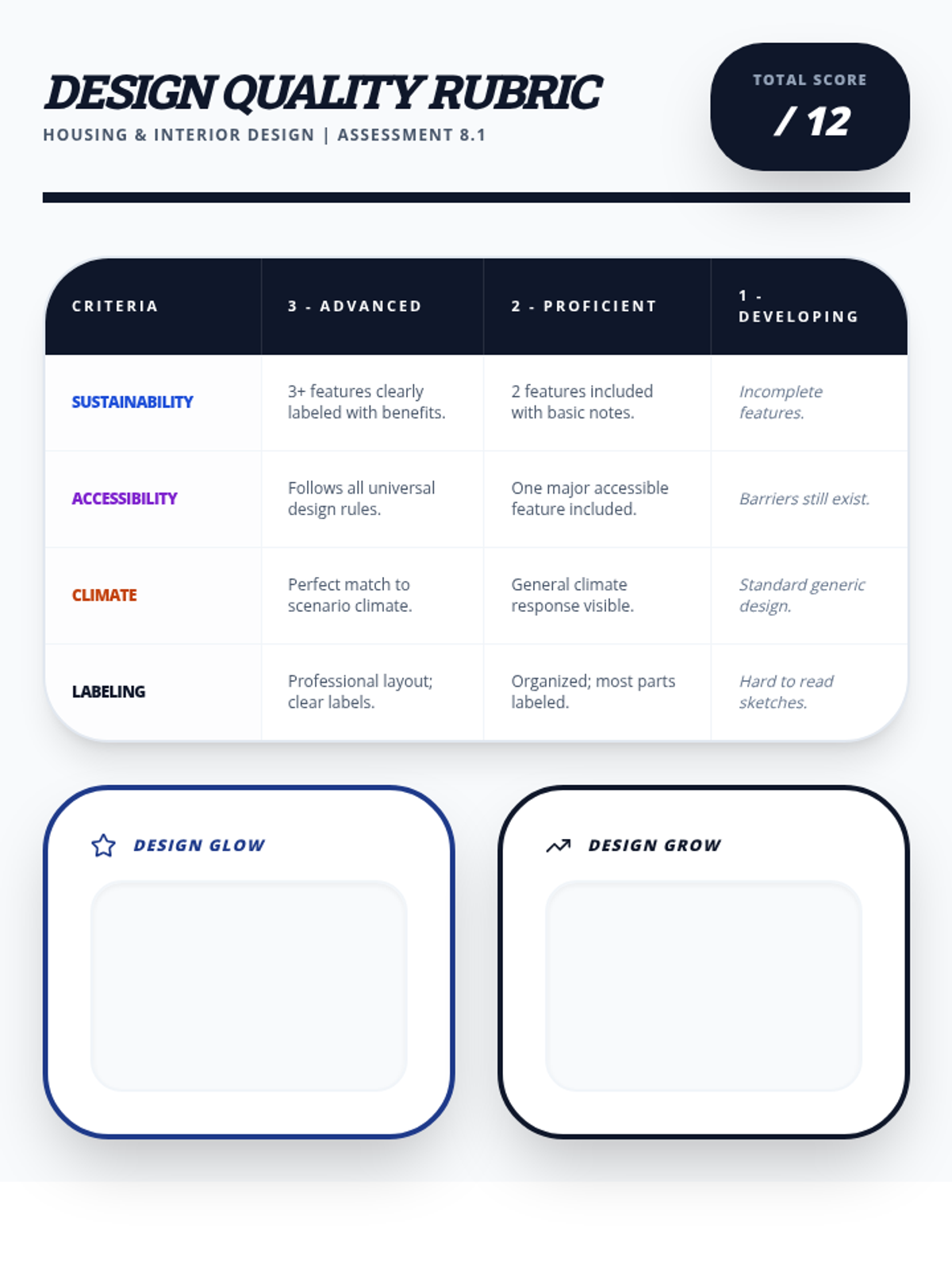
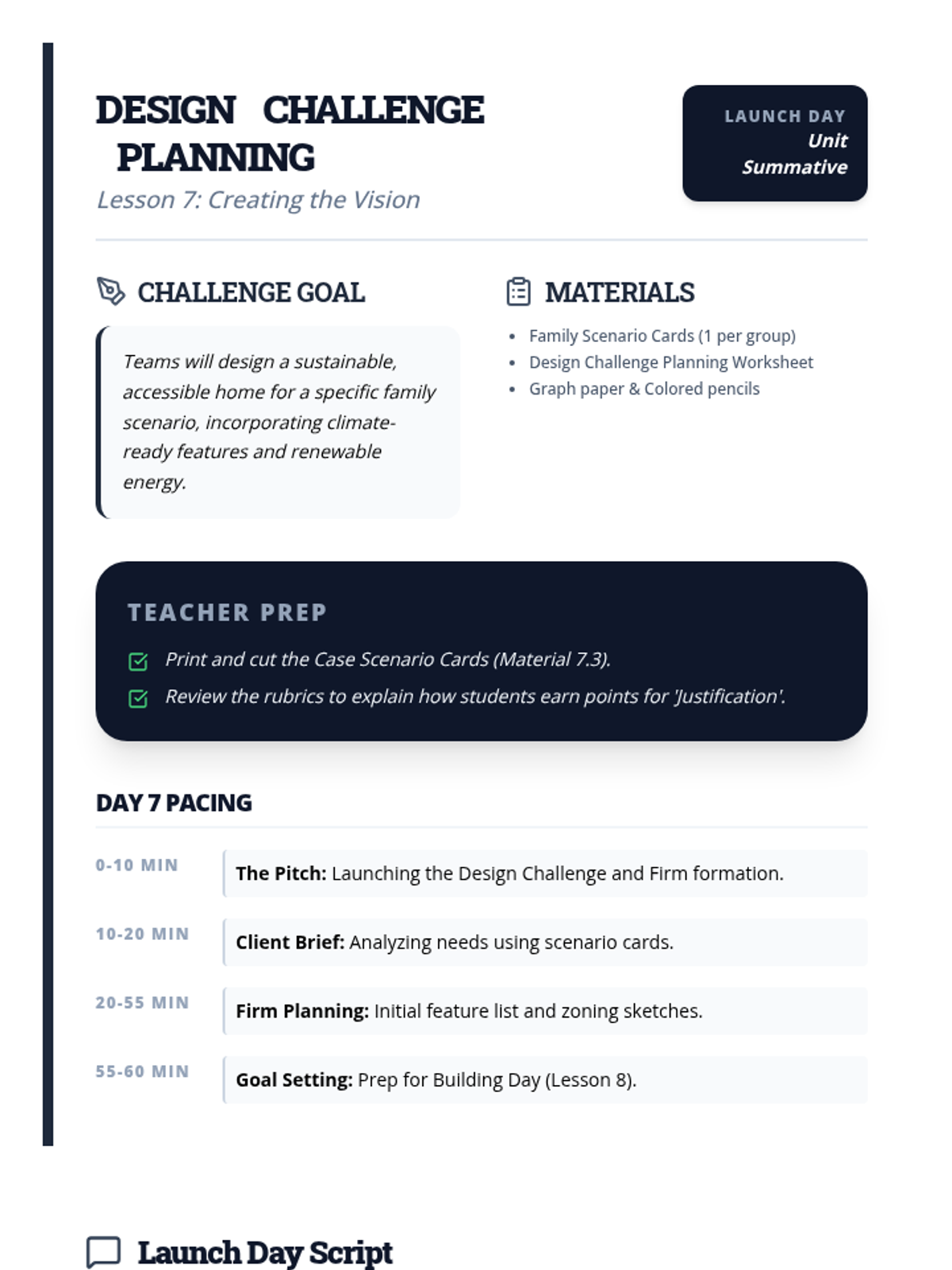
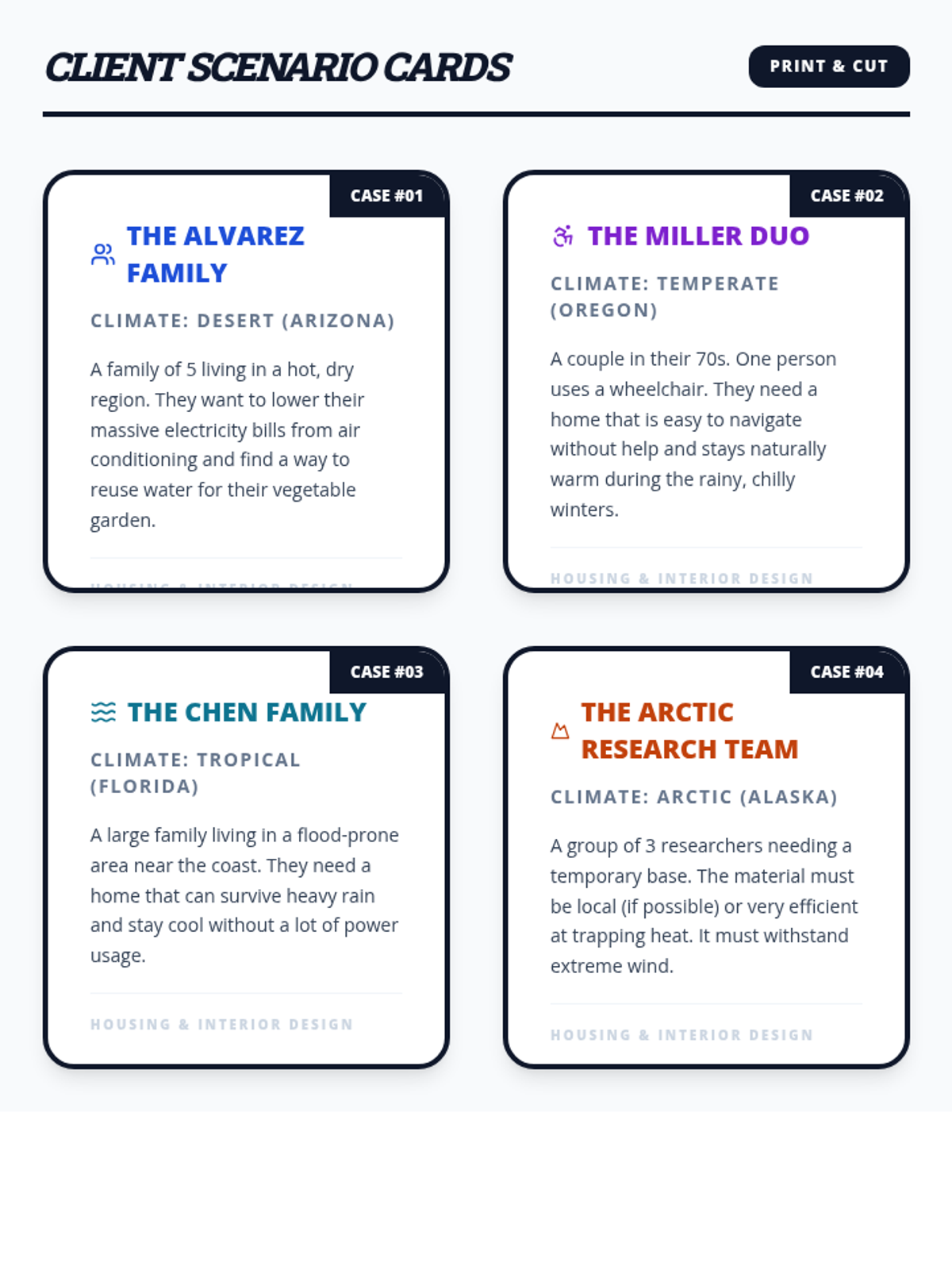
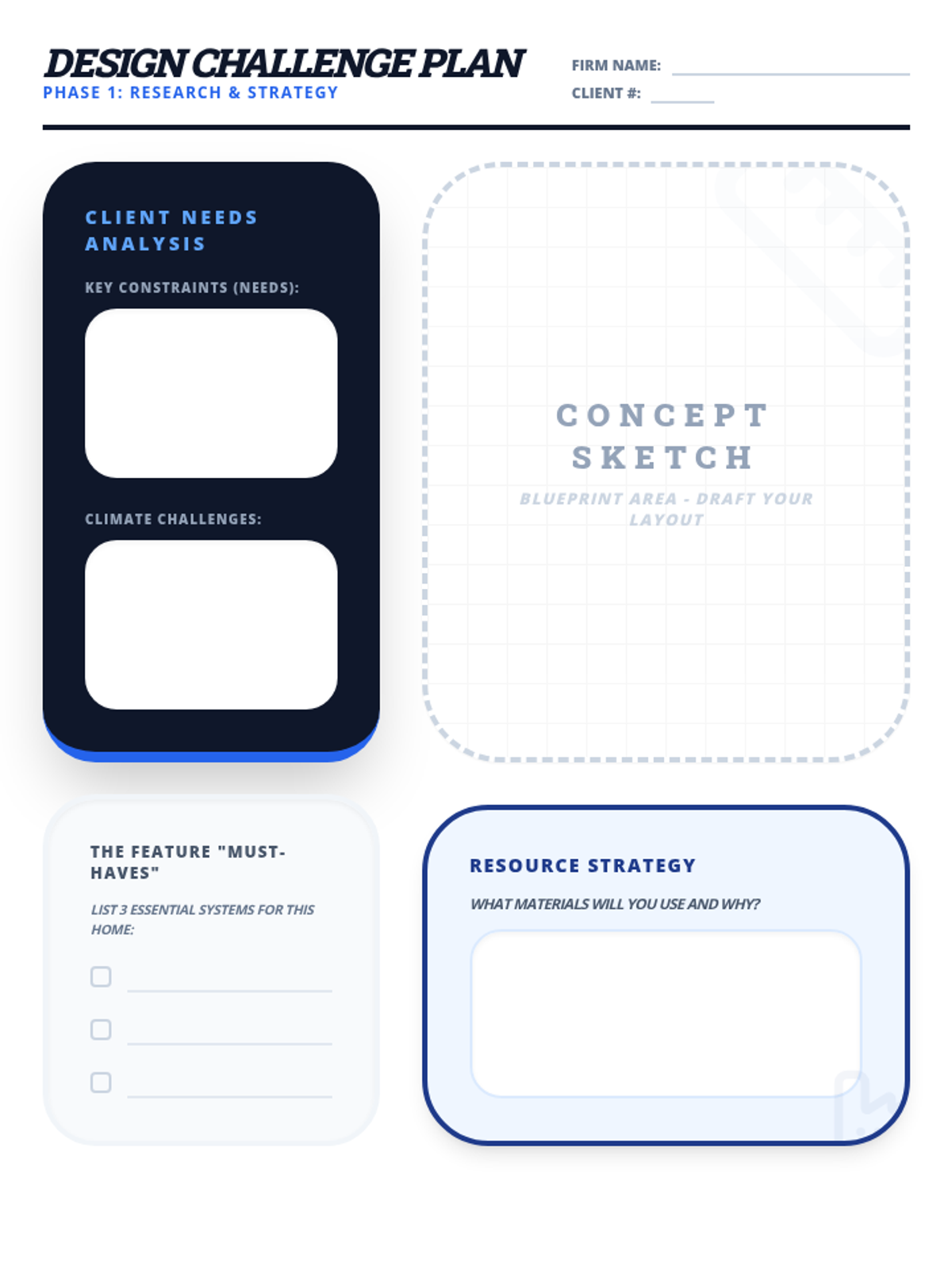
Introduce the final Design Challenge. Students receive family scenario cards and begin planning a home that incorporates sustainability, accessibility, and climate-specific features.
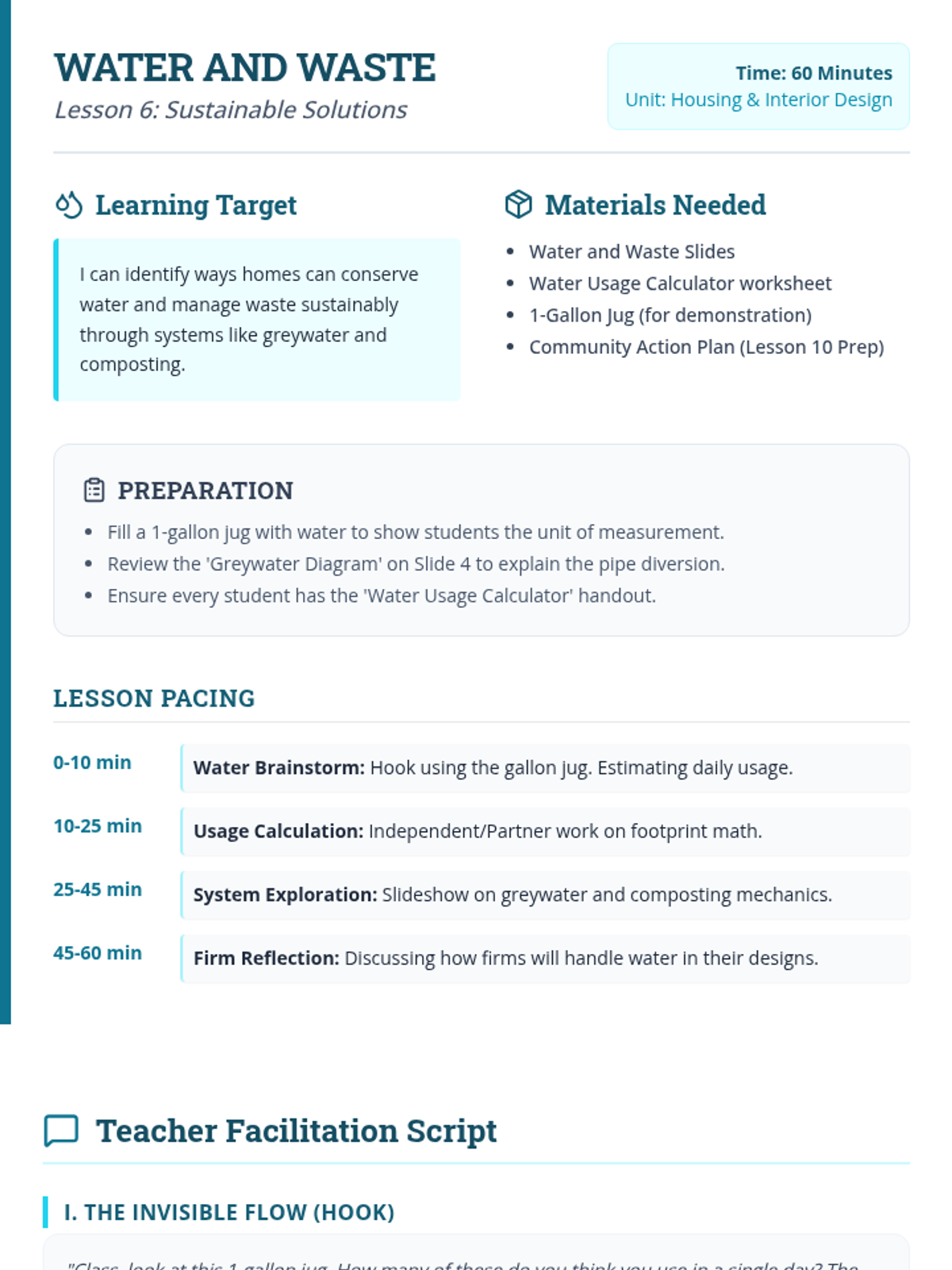
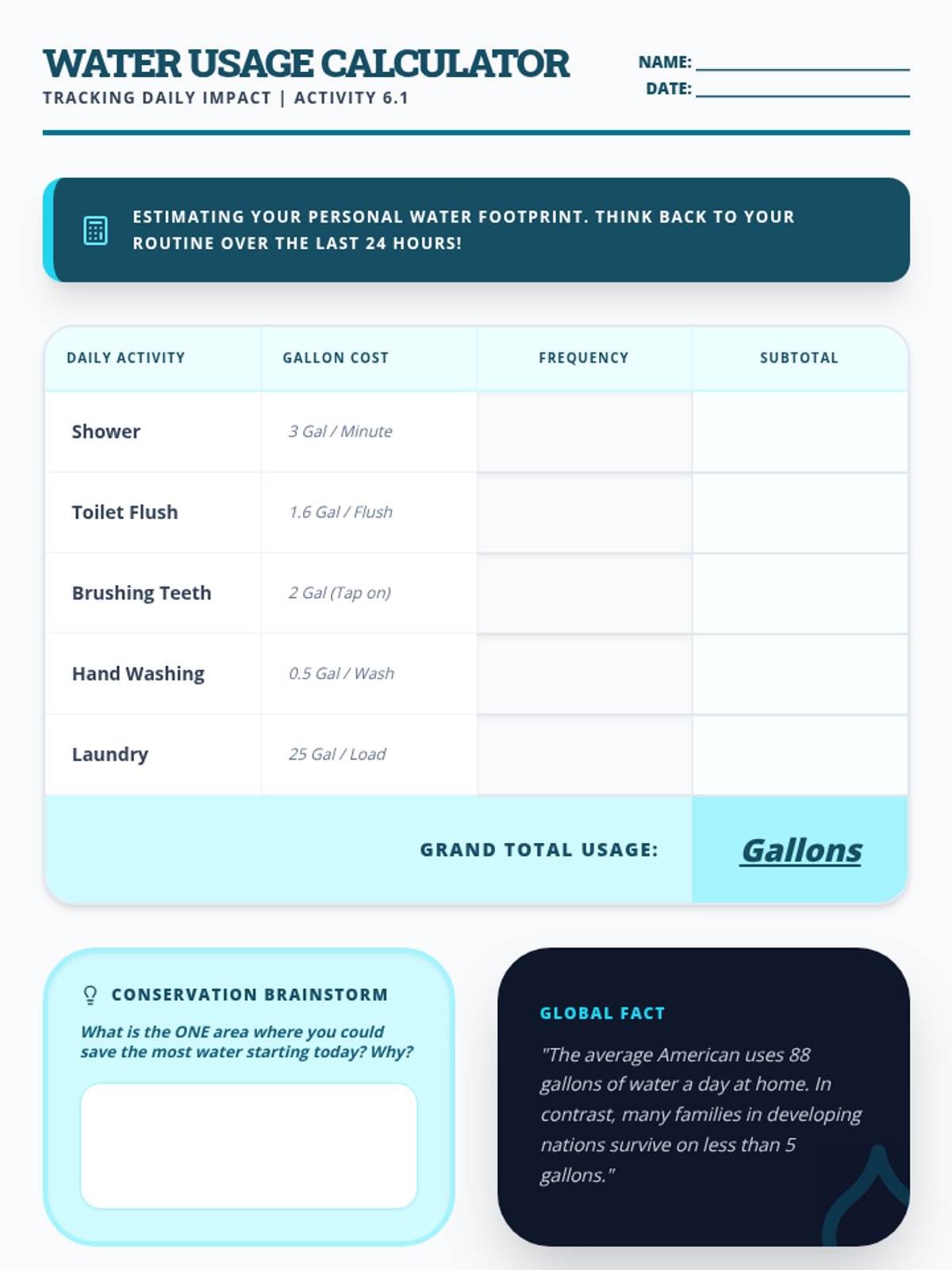
Identify ways homes can conserve water and manage waste sustainably. Students will explore greywater systems and calculate daily water usage for a typical family.
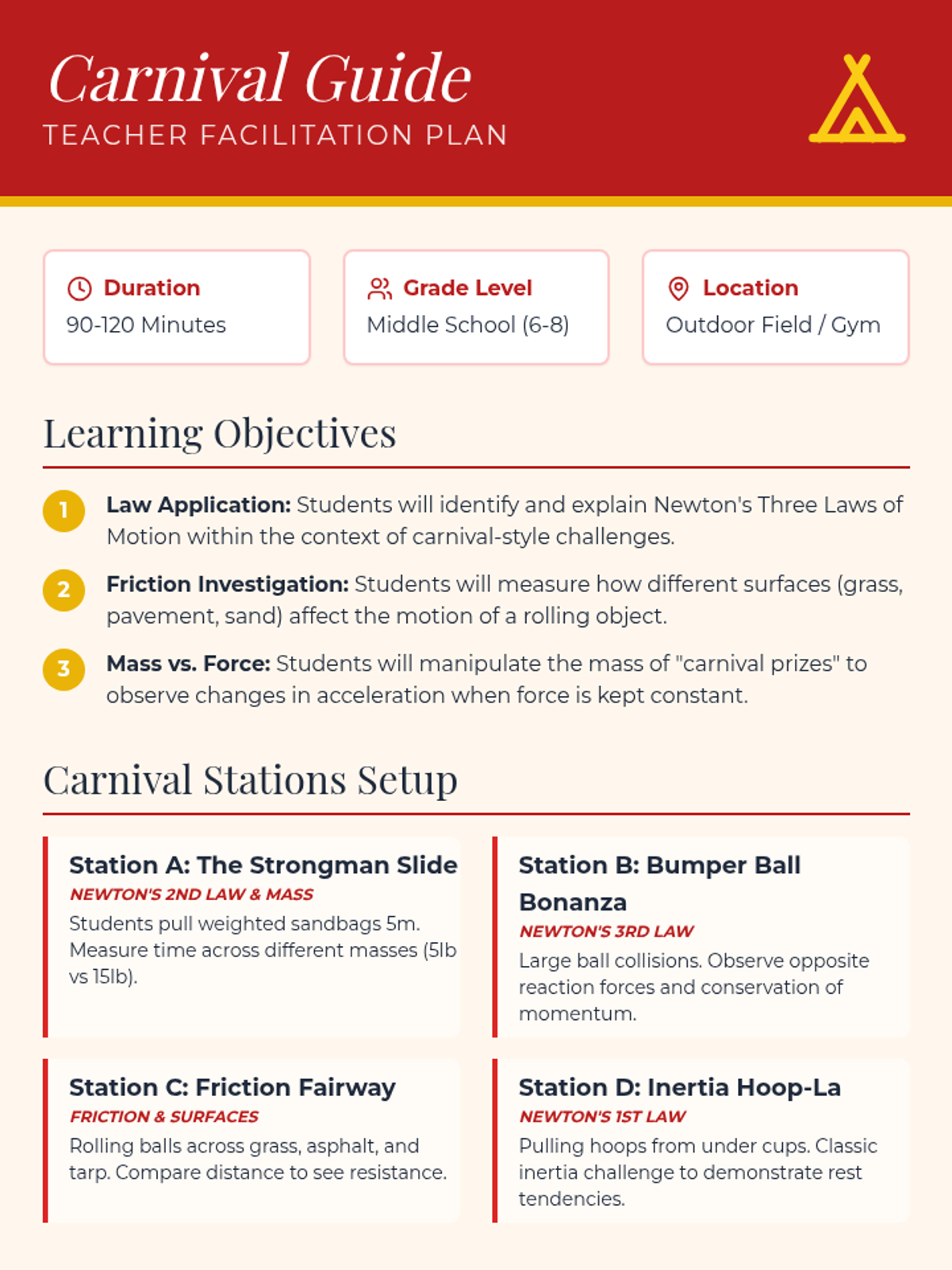
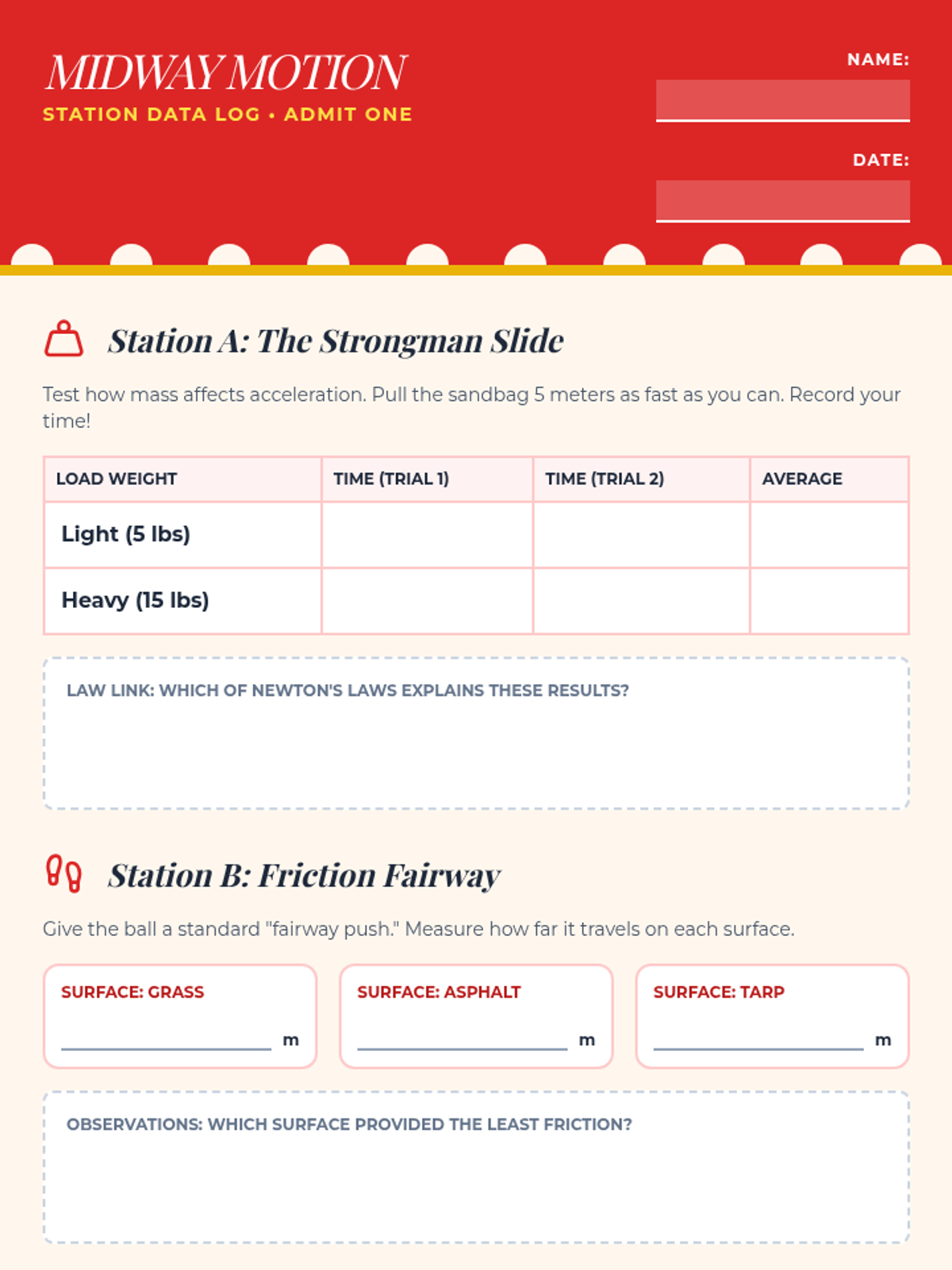
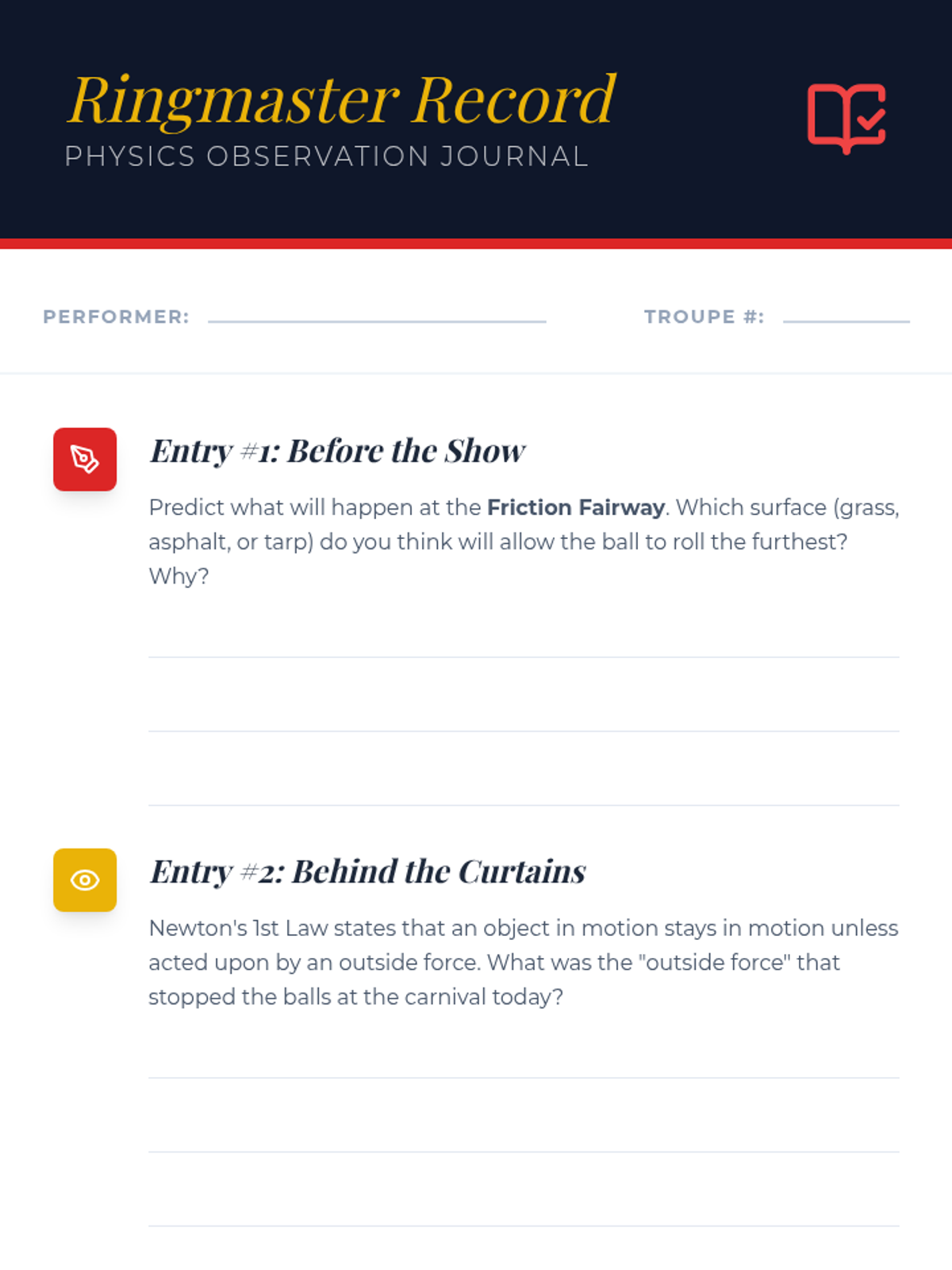
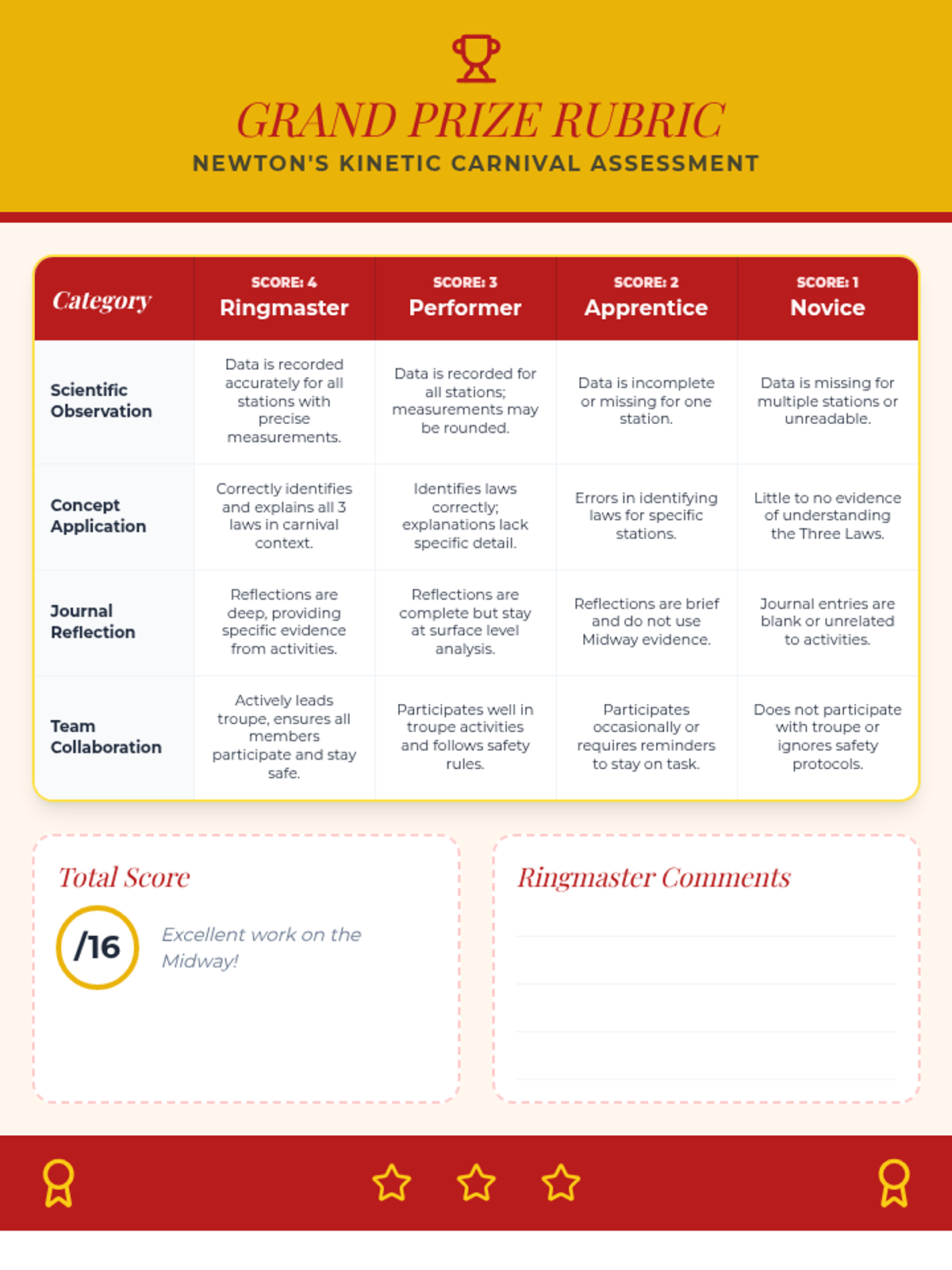
An outdoor physics experience where students investigate Newton's Laws of Motion, friction, and mass through carnival-themed physical activities and experiments.
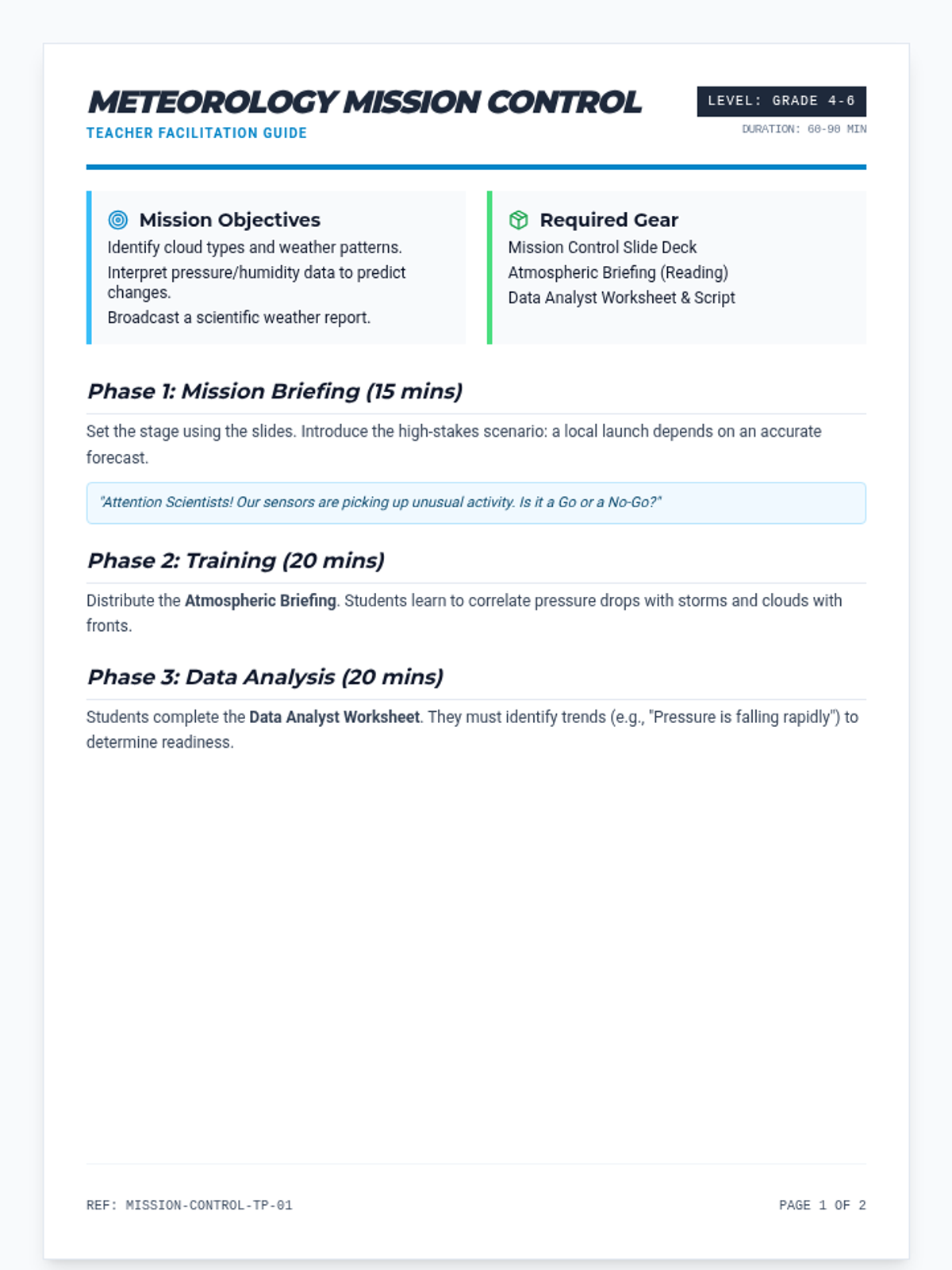
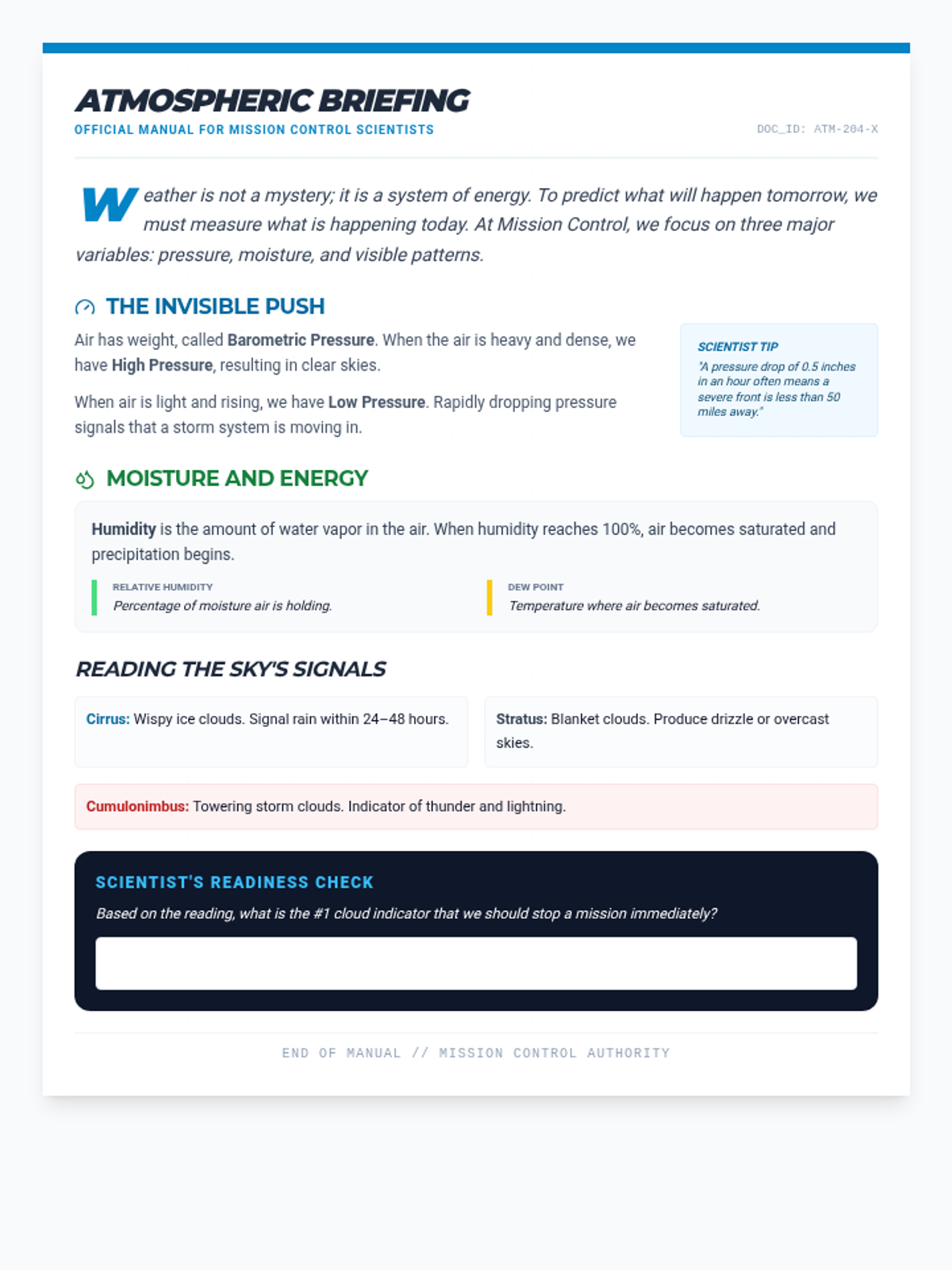
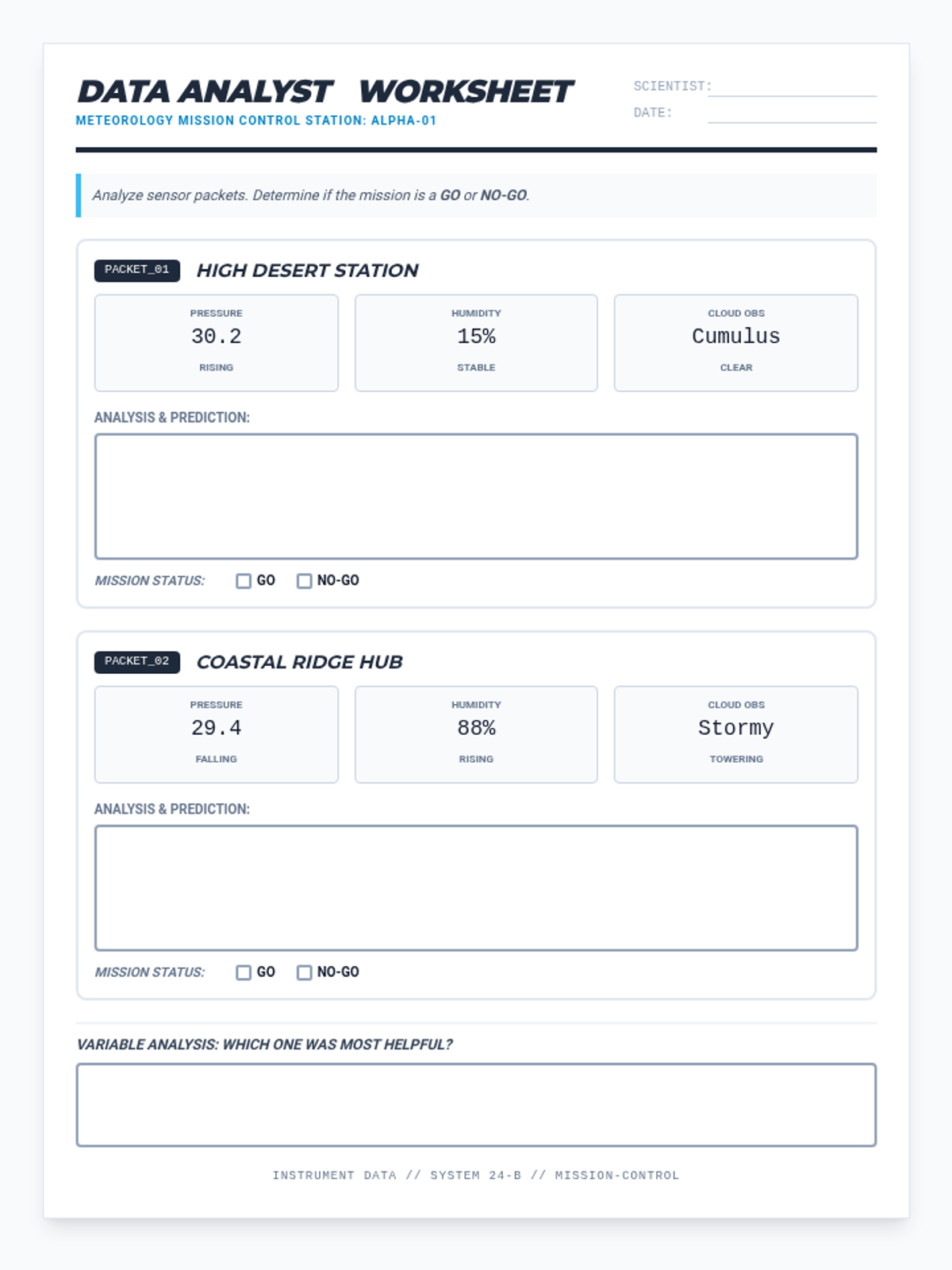
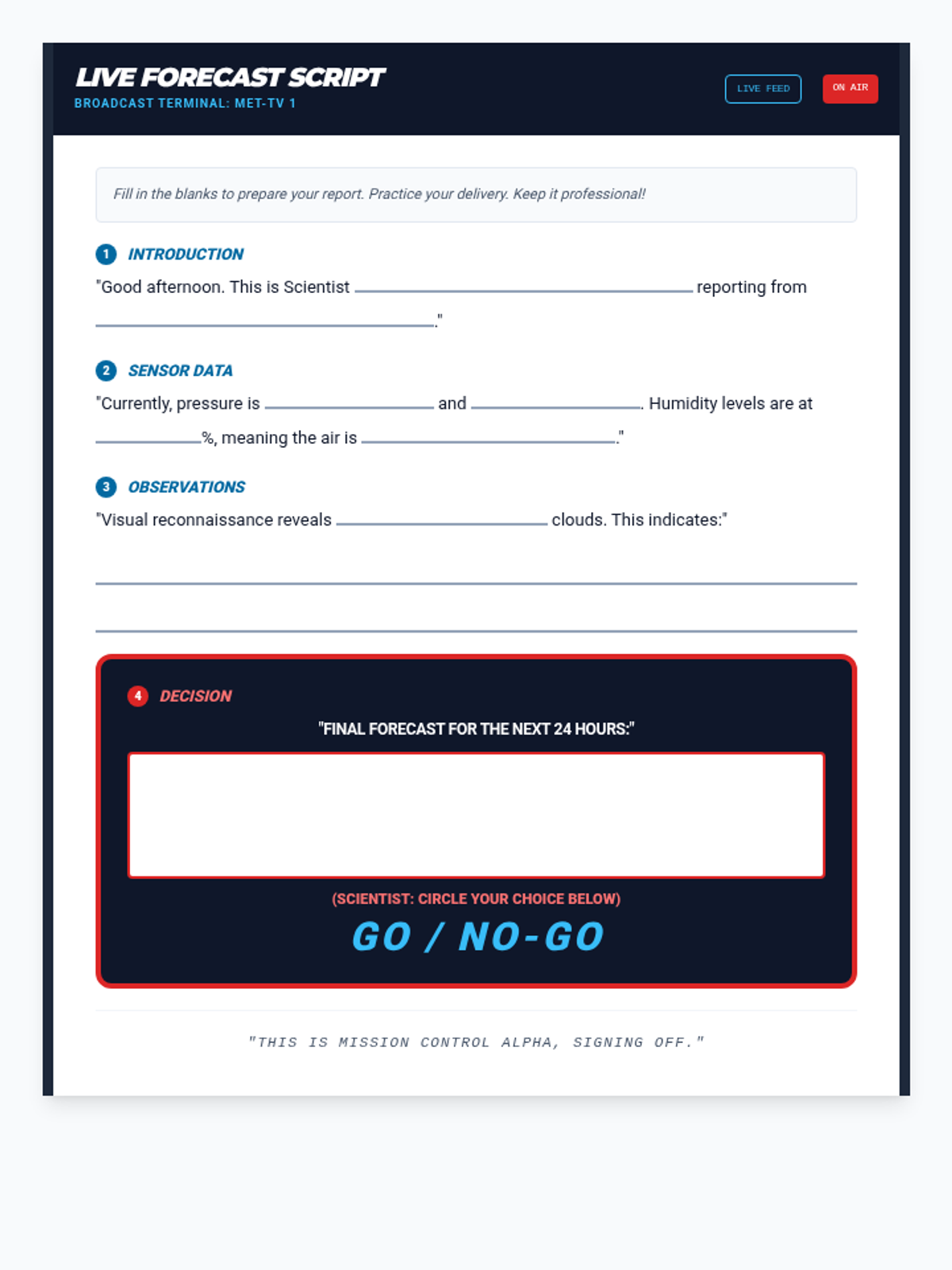
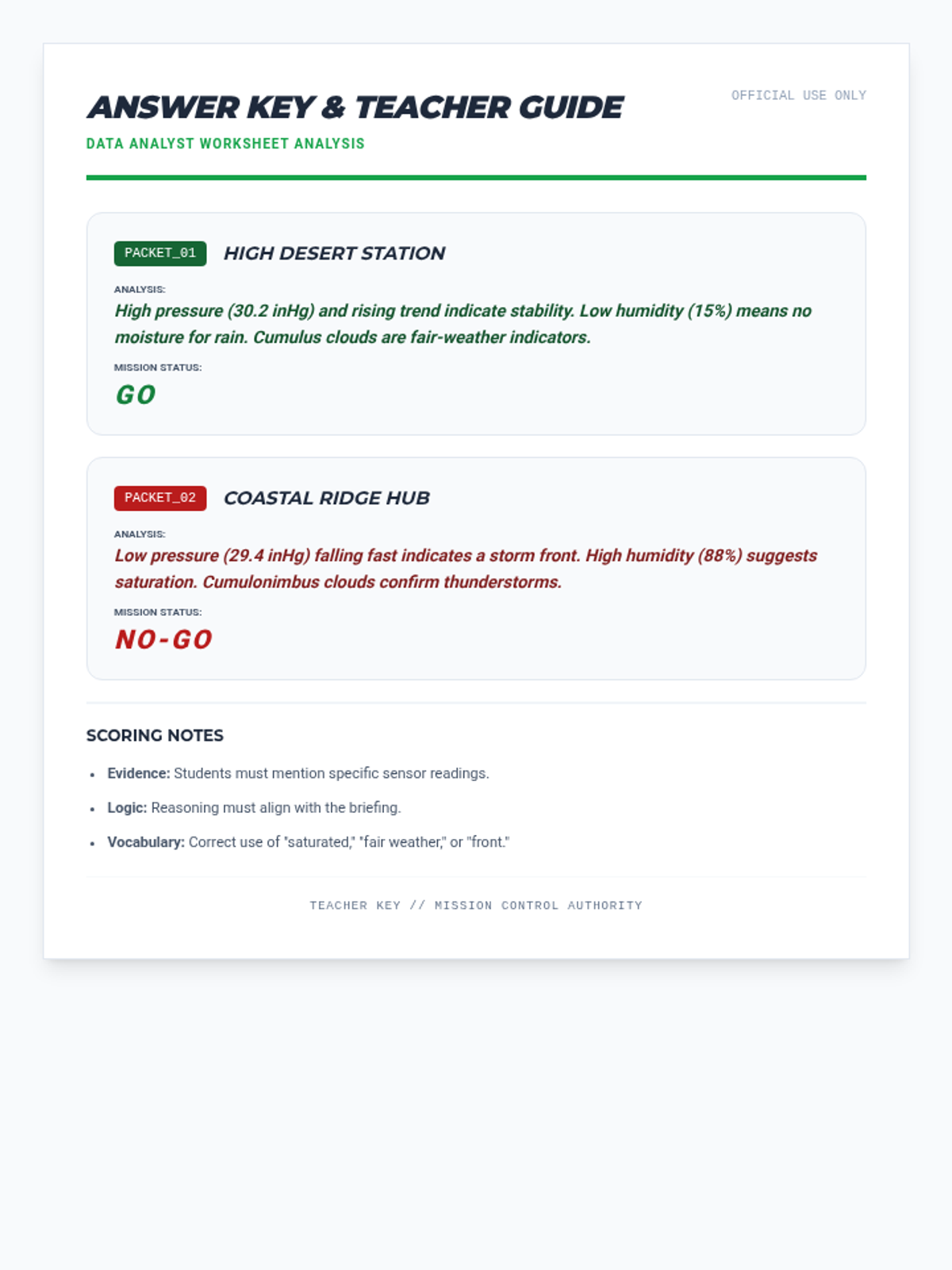
A high-energy meteorology lesson where students act as atmospheric scientists at a mission control center, analyzing real-world data and cloud patterns to broadcast a live weather forecast.
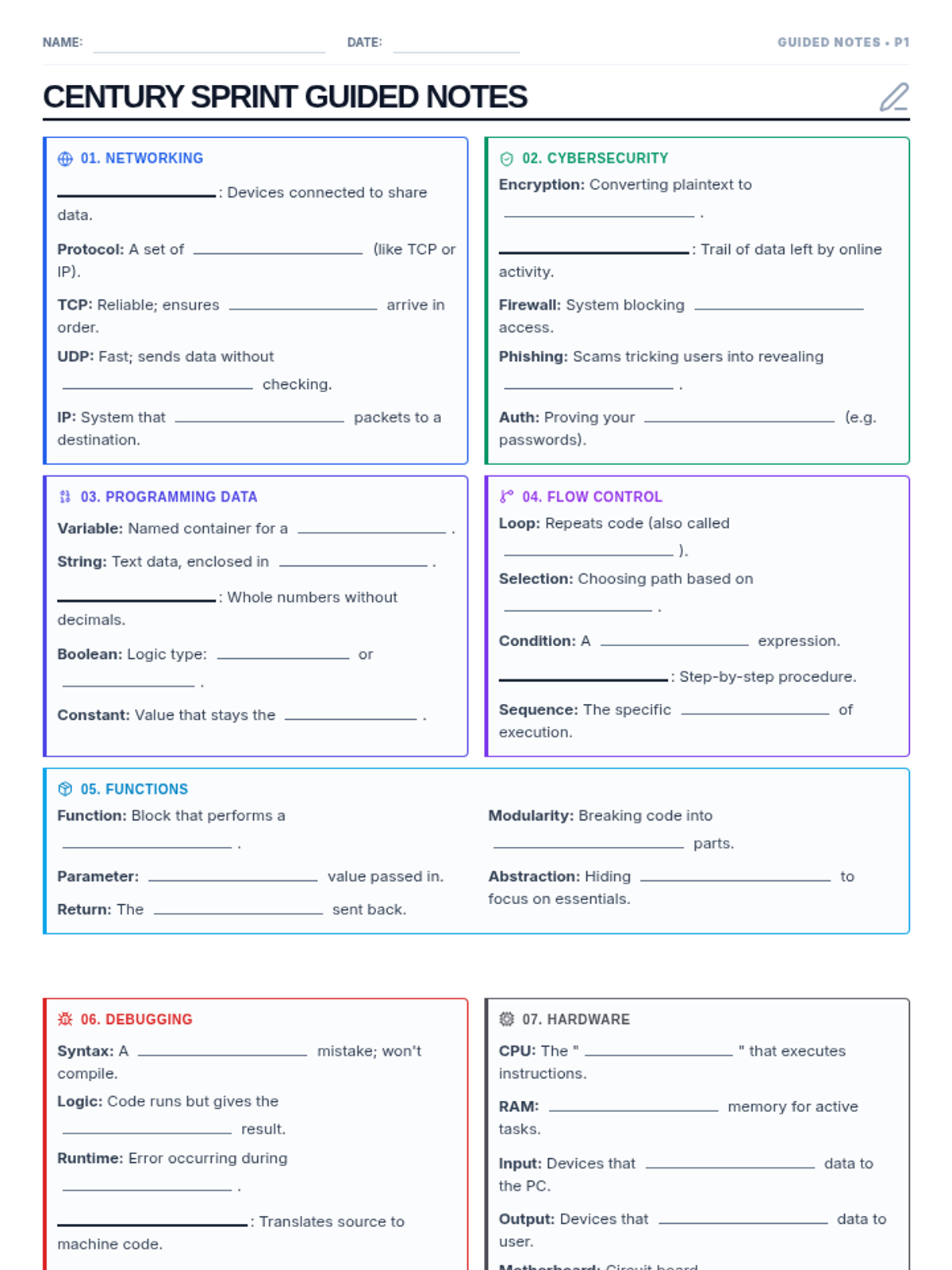
A comprehensive 100-question final review encompassing all domains of computer science covered in the sequence.
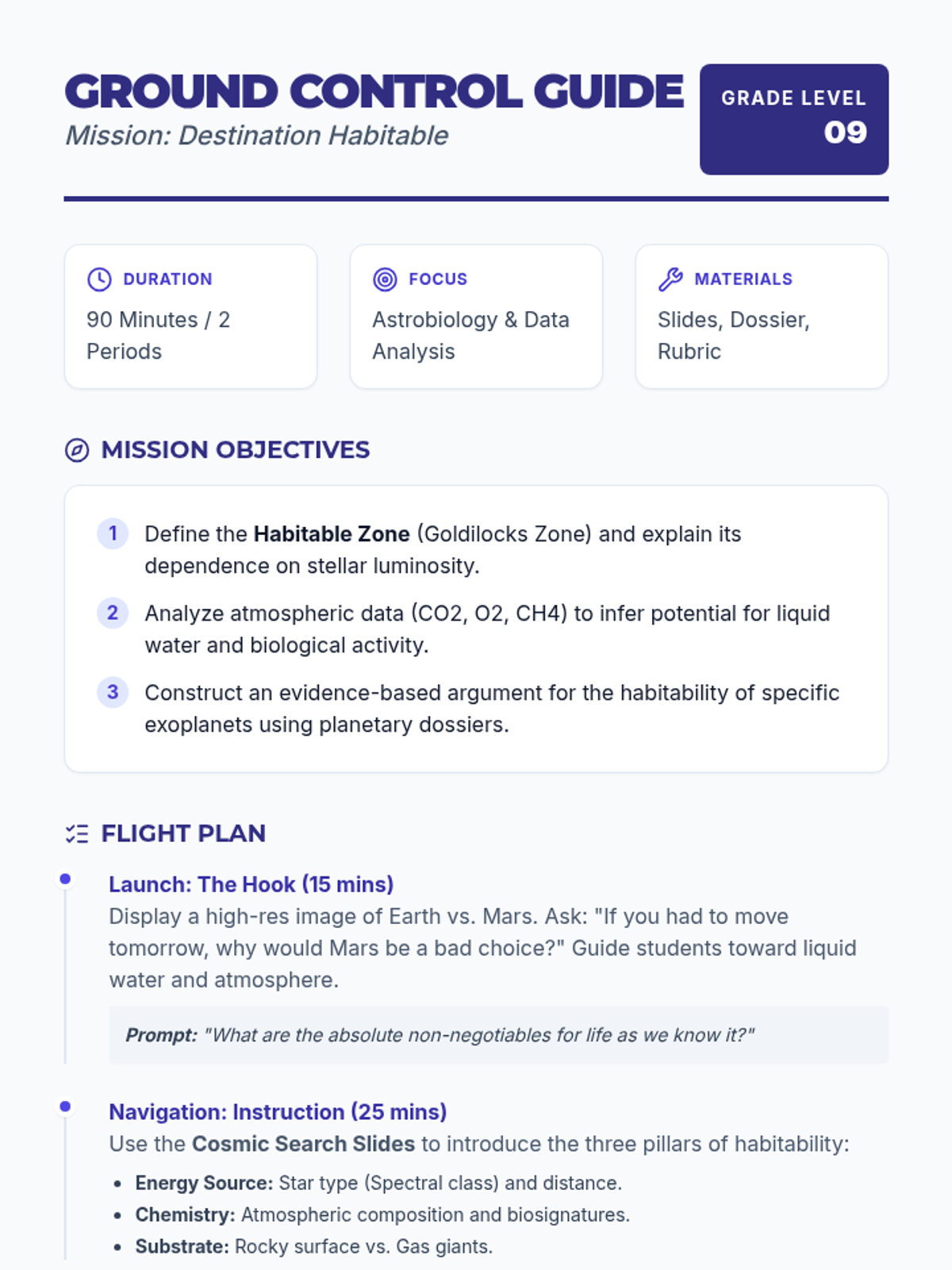
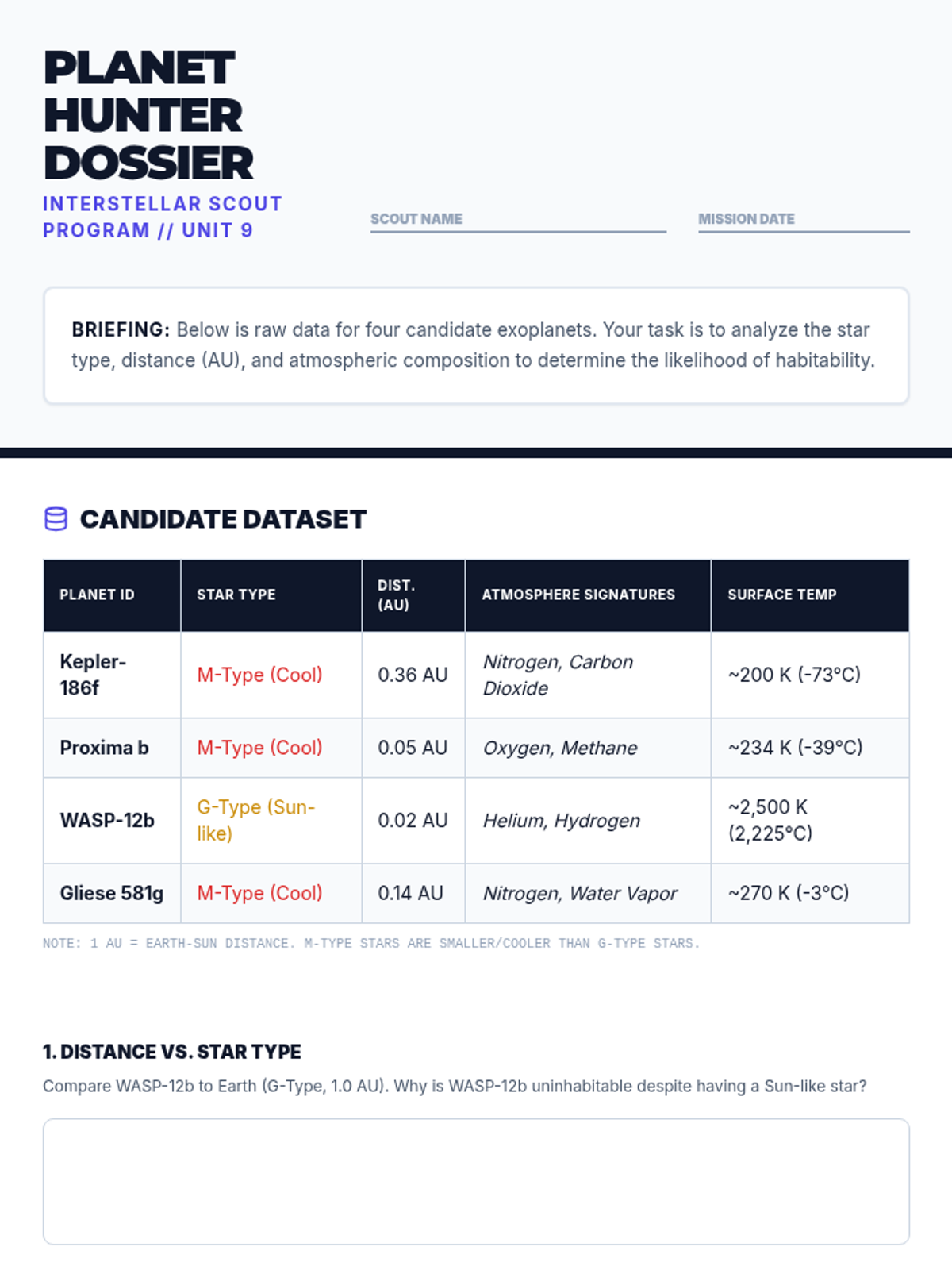
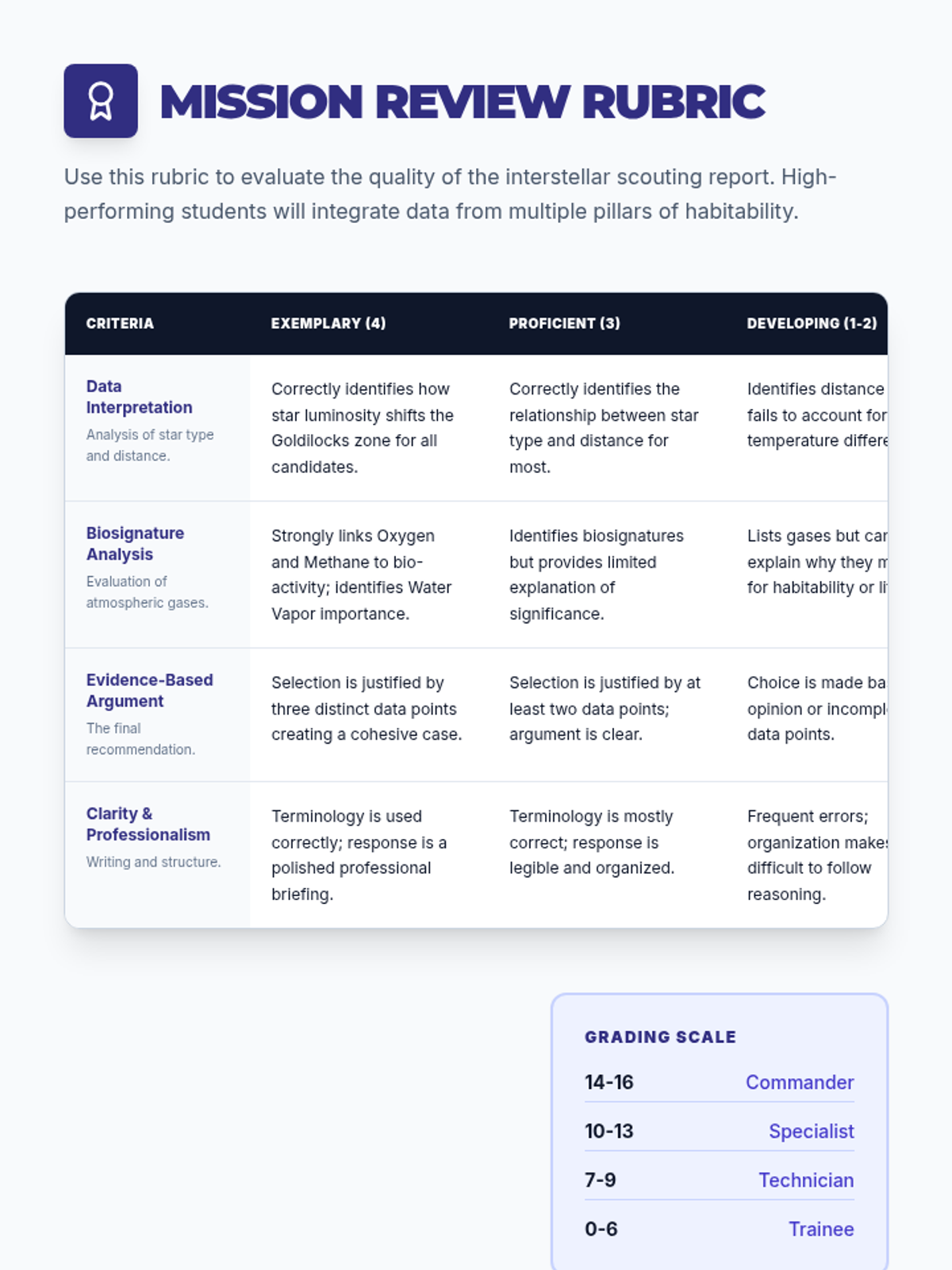
A high-school science lesson where students act as planetary scouts, analyzing exoplanet data to determine habitability and arguing for the best candidate for life beyond Earth.
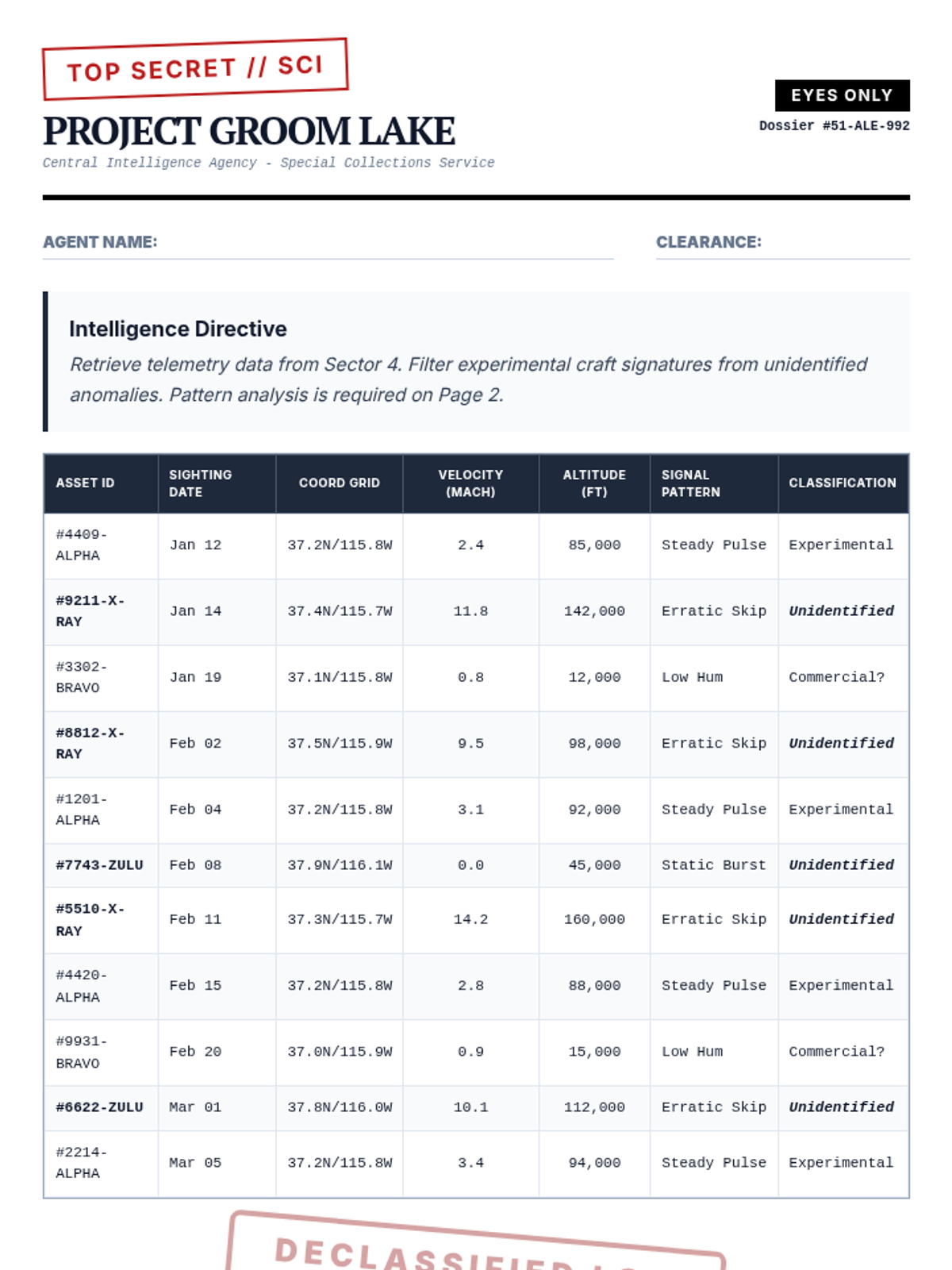
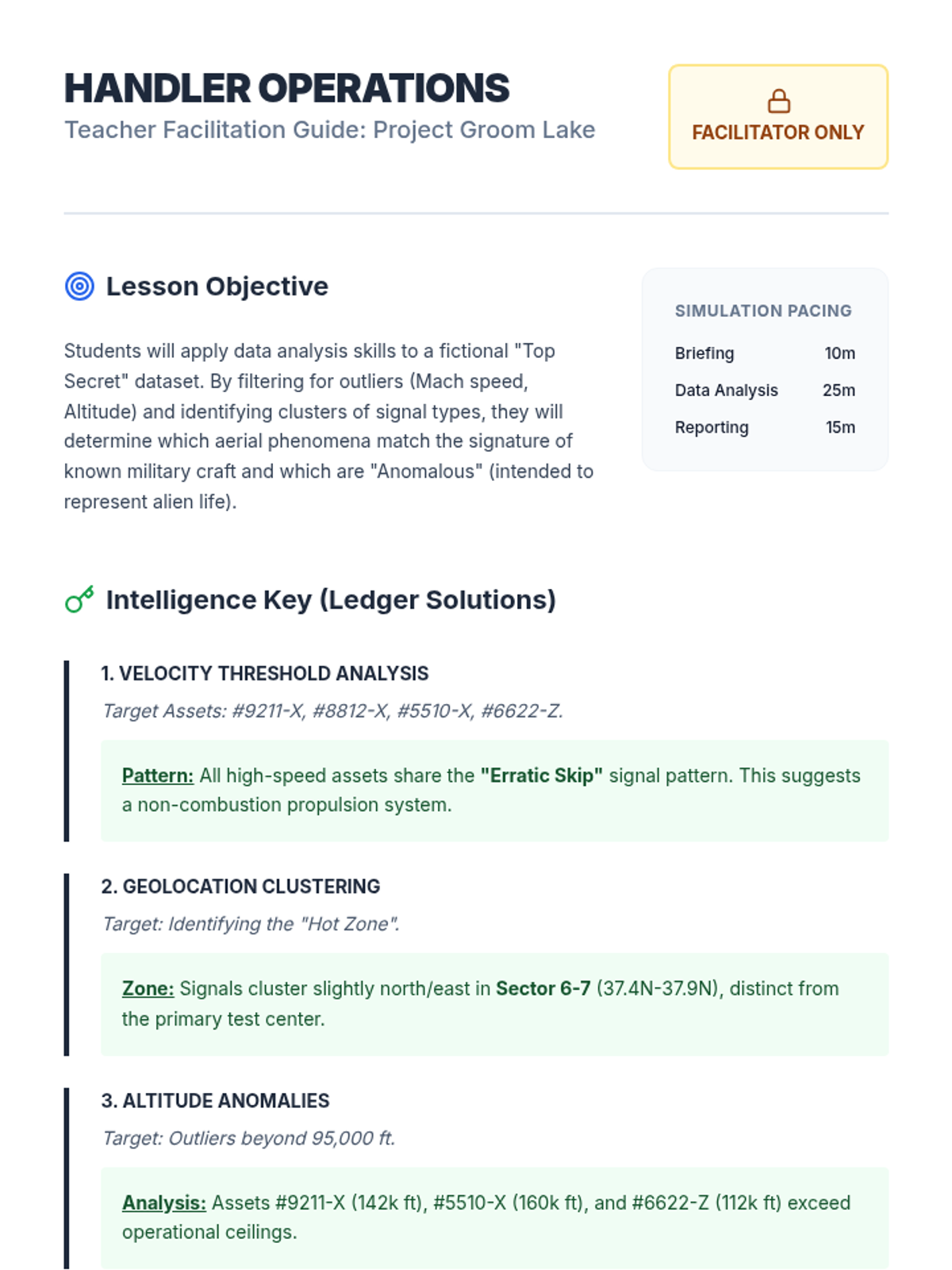
An immersive data analysis lesson where students step into the role of intelligence analysts to examine 'classified' flight data and sighting reports from Area 51. Students will practice data interpretation, pattern recognition, and evidence-based reasoning.