A visual presentation for 6th grade students connecting music genres to computer science concepts like data attributes, classification algorithms, and machine learning. Final version with increased font sizes for accessibility.
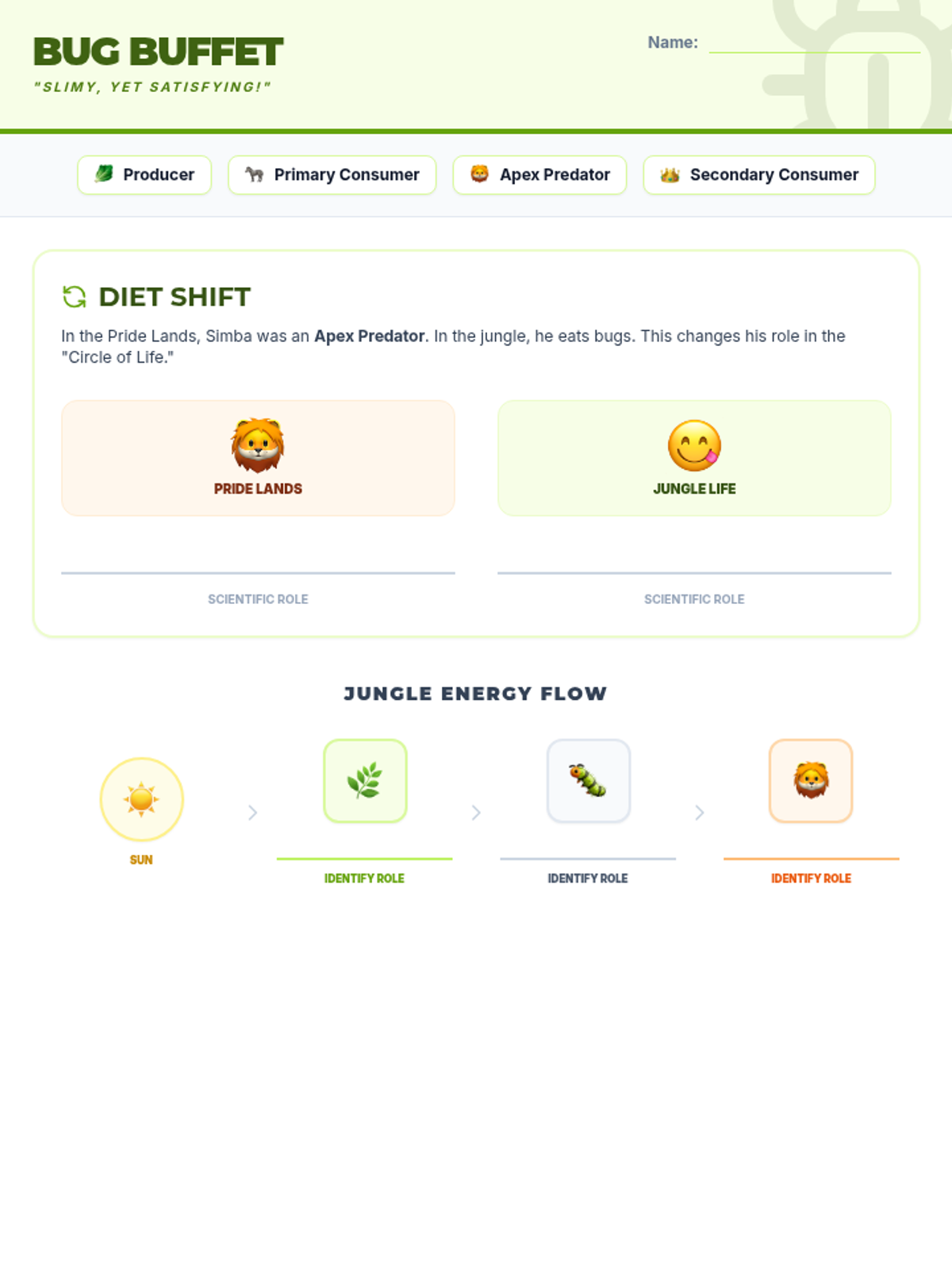
A fun worksheet exploring the ecology of Timon and Pumbaa's jungle home. Students identify bugs as energy sources, classify them as consumers or decomposers, and analyze Simba's dietary shift in the 'Hakuna Matata' lifestyle. Includes multiple-choice questions and reflection prompts.
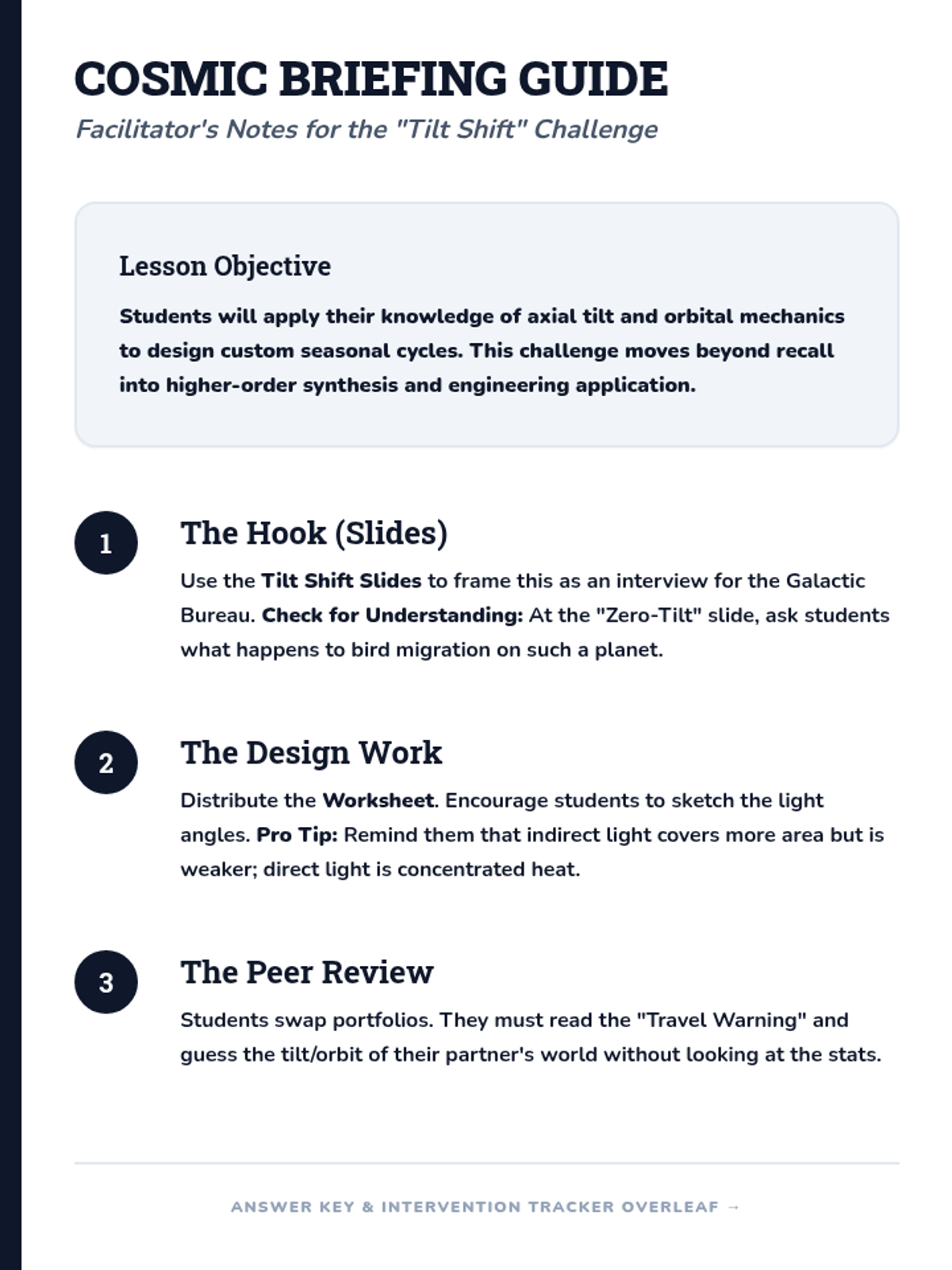
A comprehensive teacher guide providing instructional scripts, pacing advice, and an answer key for the 'Cosmic Consultant' simulation. It includes common misconceptions to address during the activity and extension ideas for peer review.
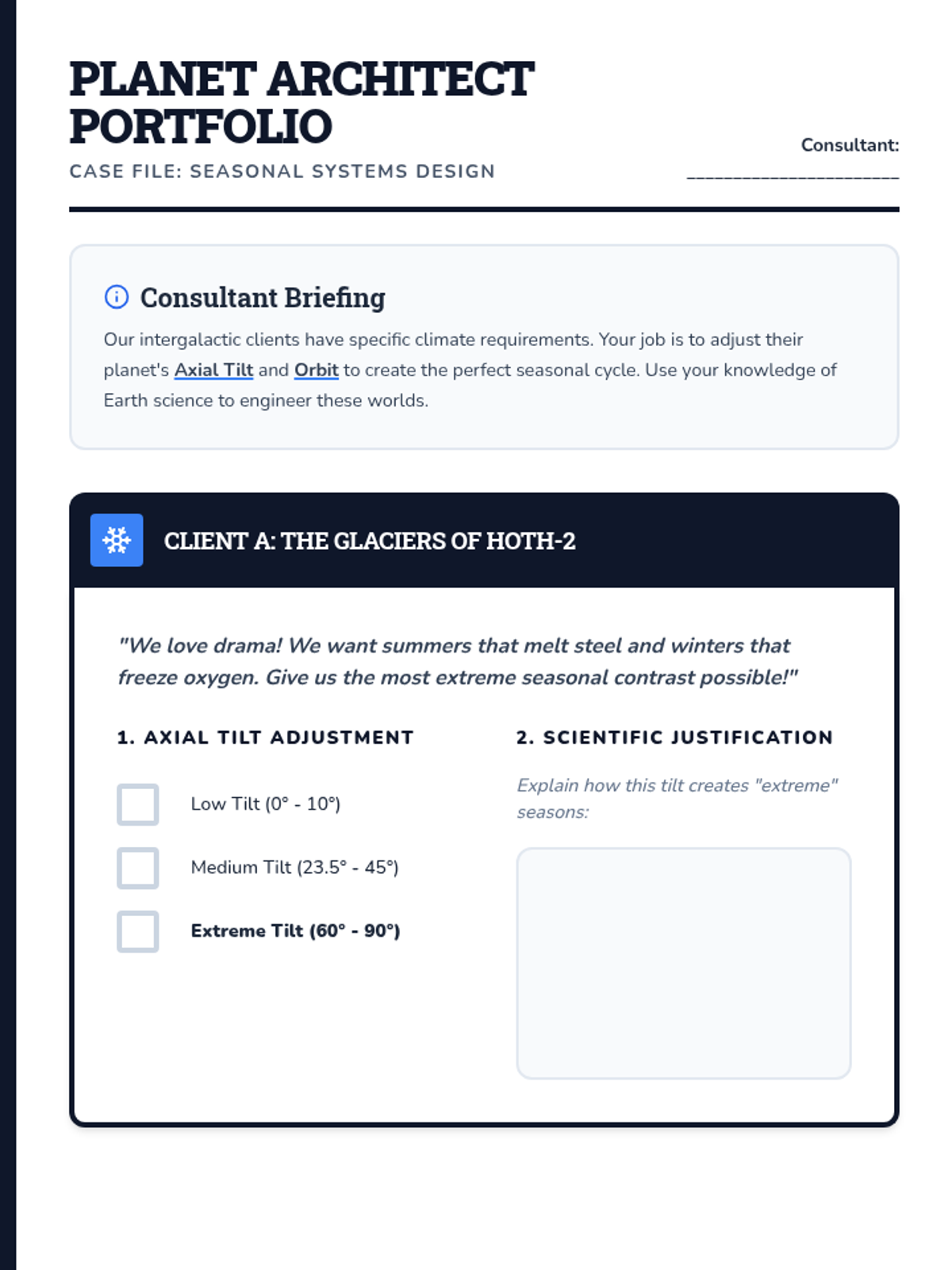
A creative, multi-page worksheet where students act as planetary architects. They must solve season-based design challenges for various 'clients' by applying their knowledge of axial tilt, orbital mechanics, and light intensity. Includes a custom planet design challenge at the end.
A high-energy, space-themed presentation that reframes the concept of seasons through a 'Cosmic Consultant' lens. It includes visual explanations of tilt, revolution, and solar intensity with creative 'what-if' scenarios to engage 6th-grade students.
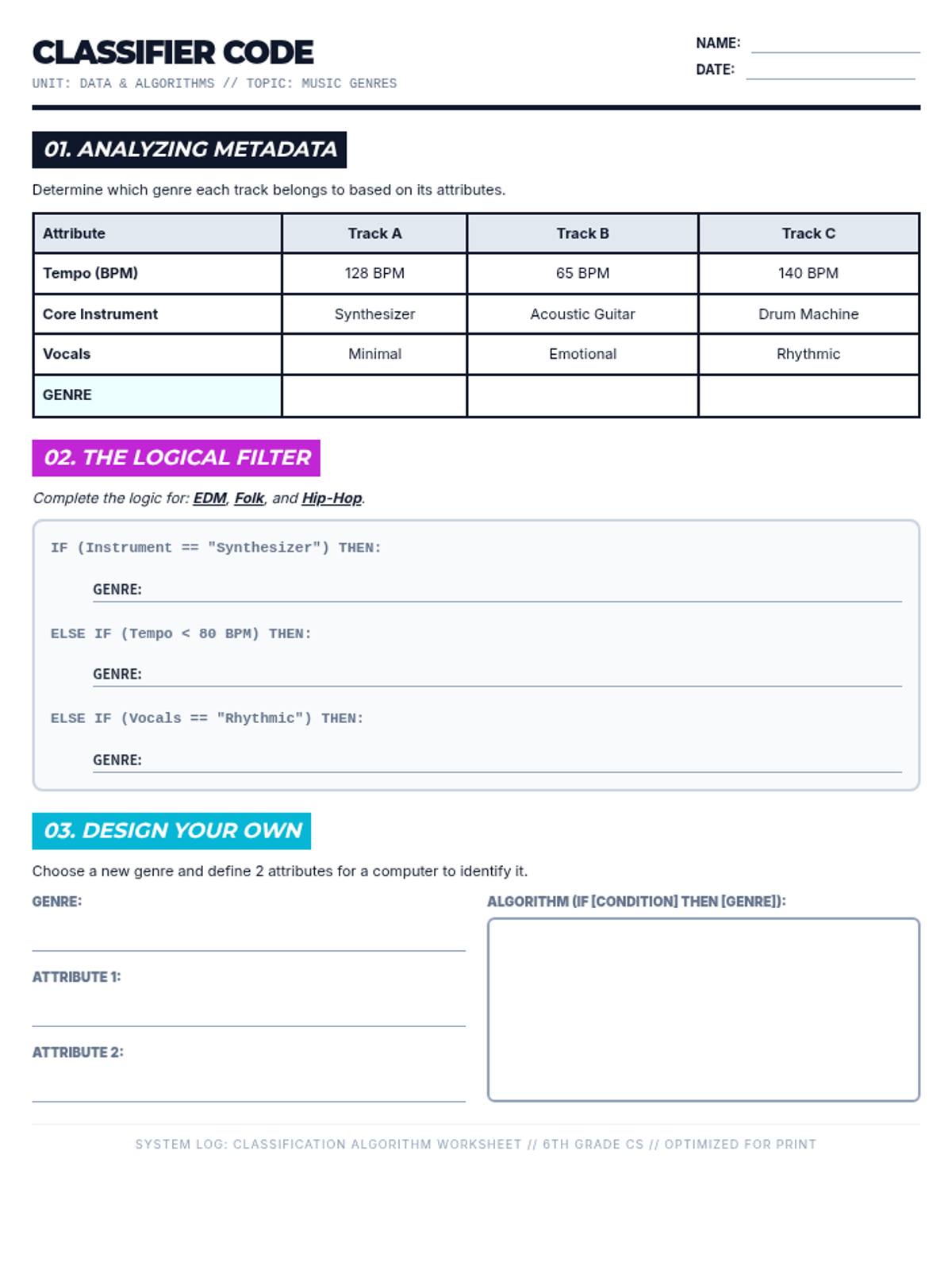
A revised single-page worksheet for 6th grade students to practice music genre classification with algorithmic logic. Fixes page breaks and optimizes work areas.
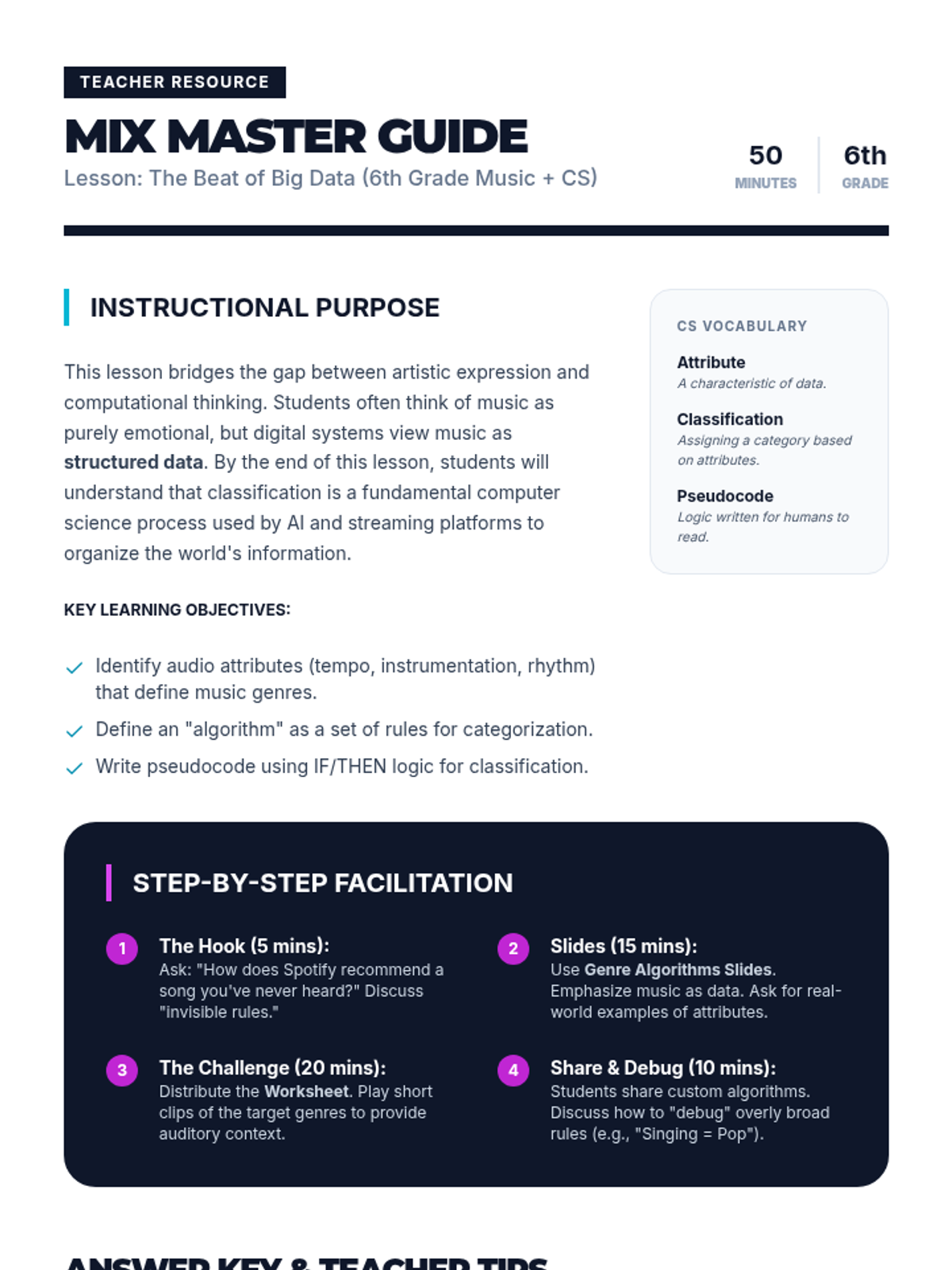
A comprehensive teacher's guide for facilitating the "Beat of Big Data" lesson, including learning objectives, pacing, and answer keys.
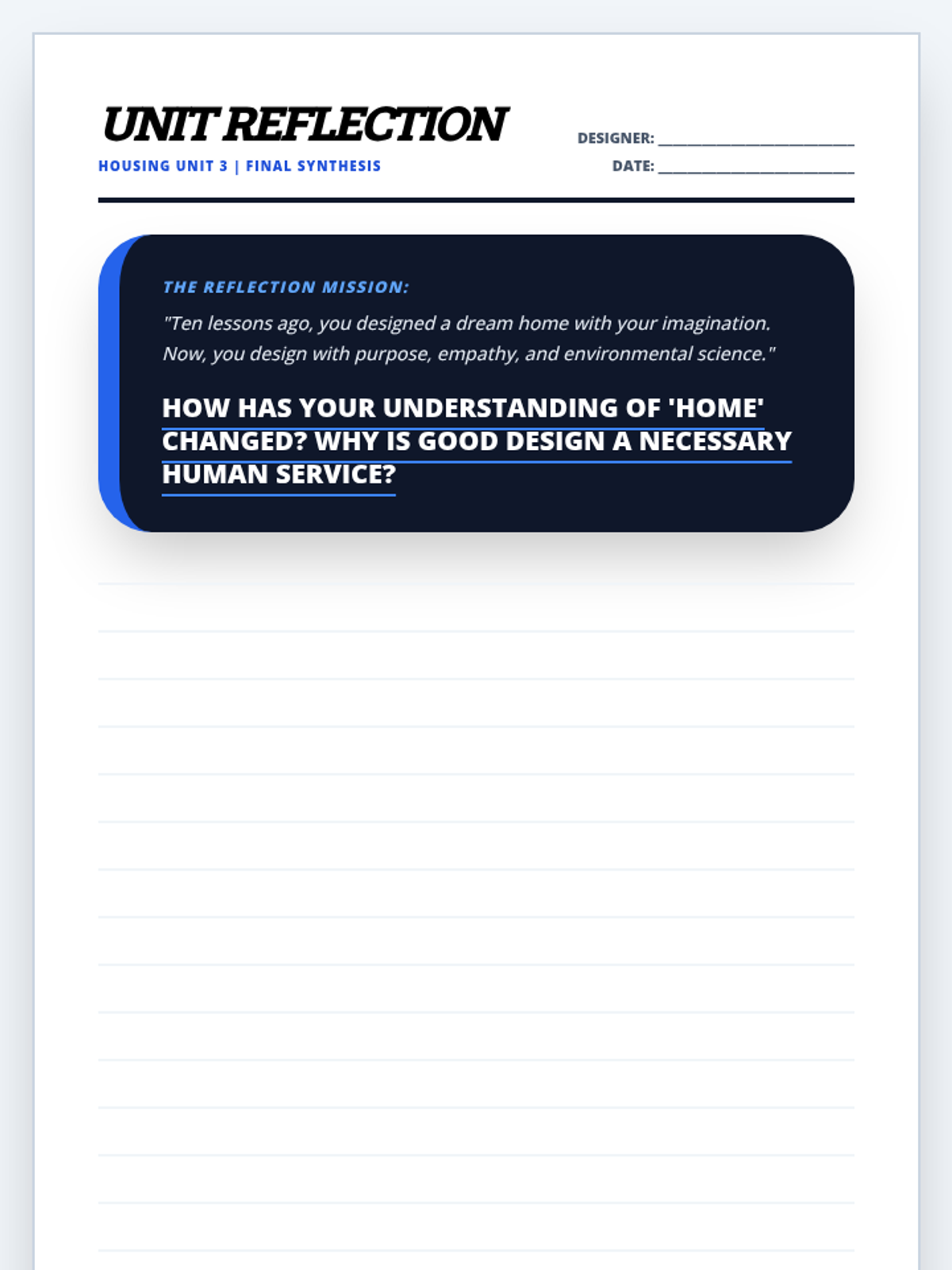
The final reflective essay prompt for the unit, asking students to synthesize their learning and explain the importance of intentional housing design in the human services field.
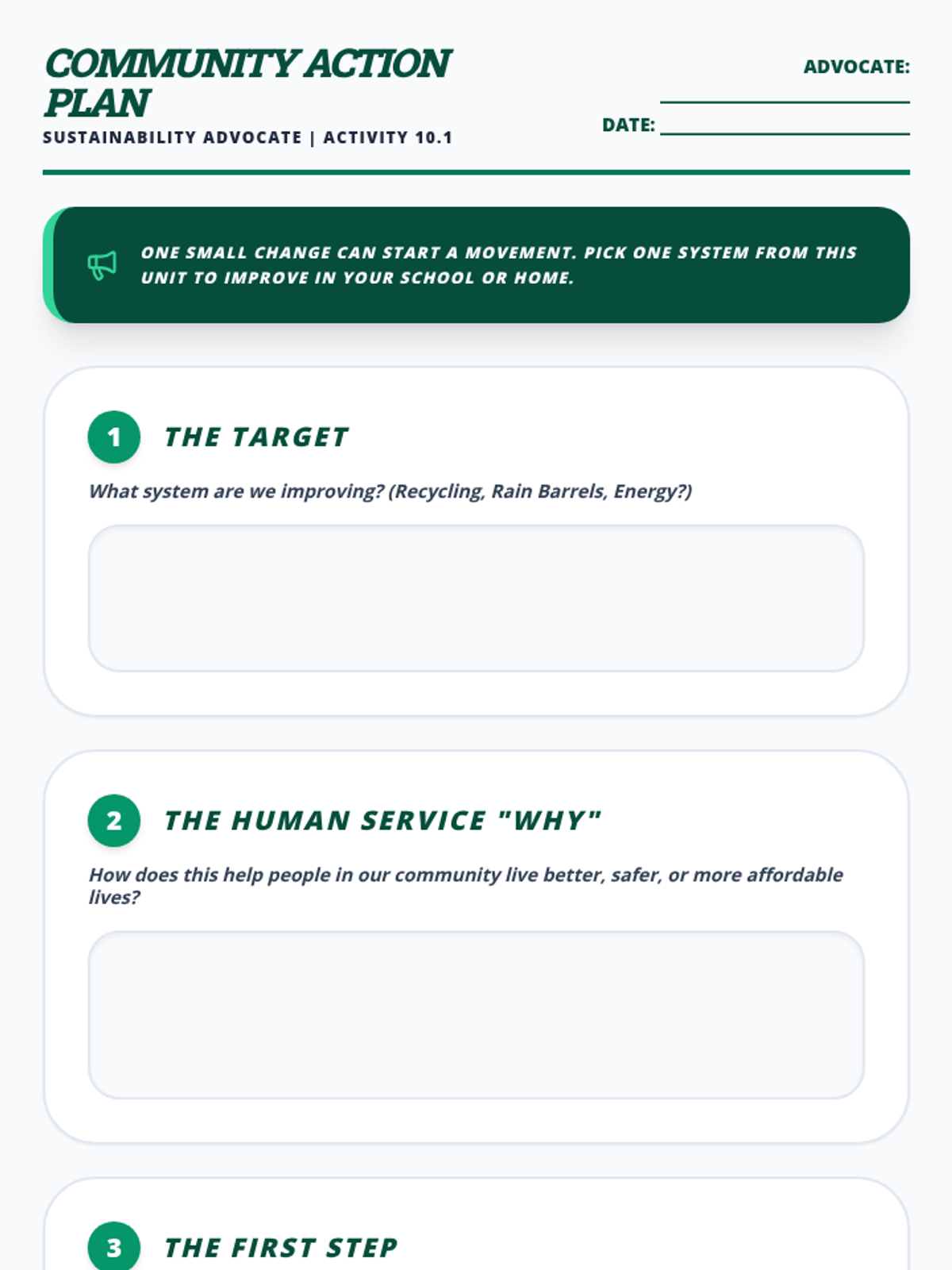
A student advocacy worksheet for creating a community action plan, encouraging students to apply their housing design knowledge to real-world school or home sustainability changes.
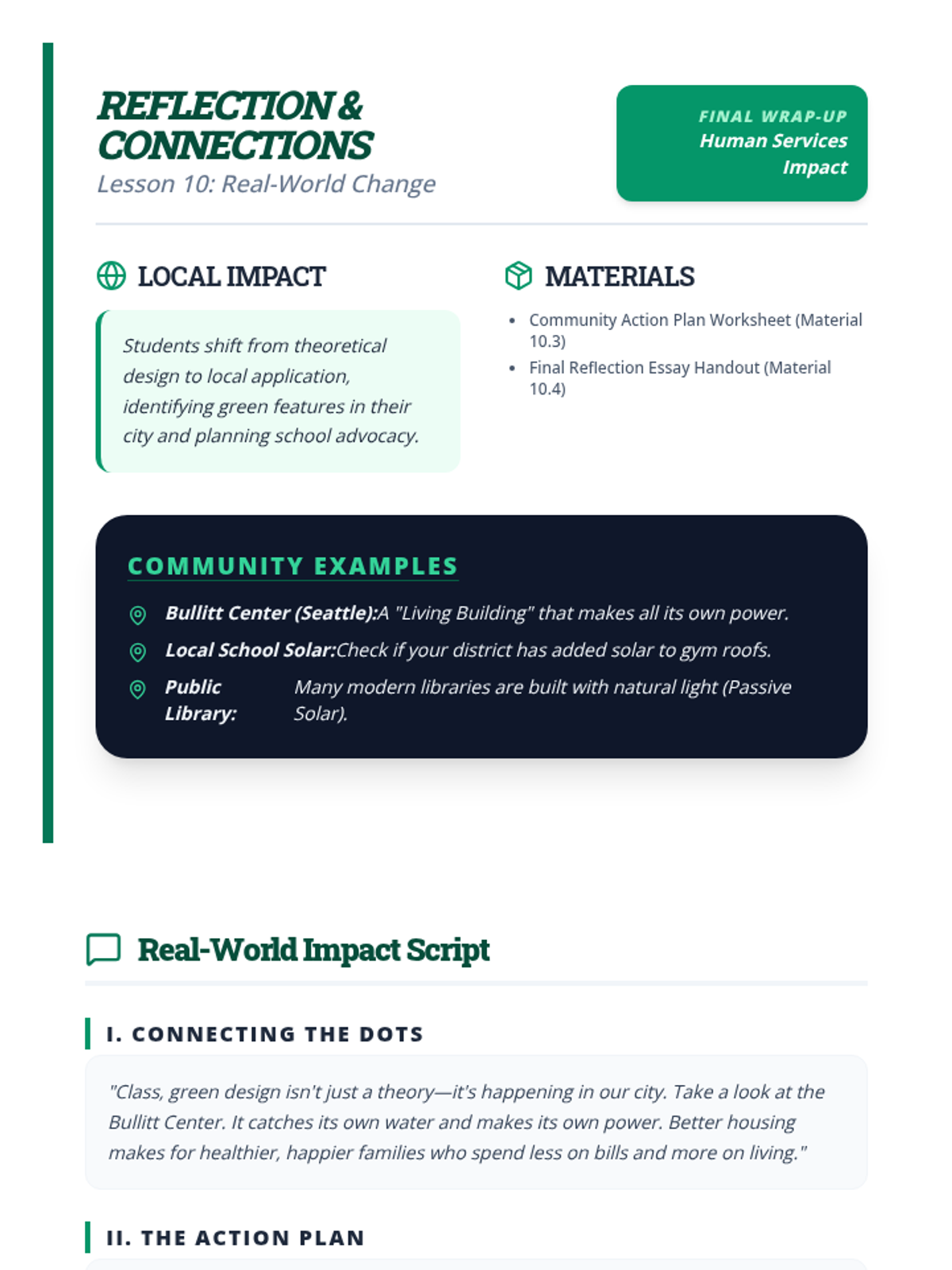
Slides for the Reflection and Connections lesson, focusing on local green building examples and guiding students toward community advocacy and final reflection.
A teacher guide for the final lesson of the Housing and Interior Design unit, focusing on real-world local applications, student advocacy, and final reflective synthesis.
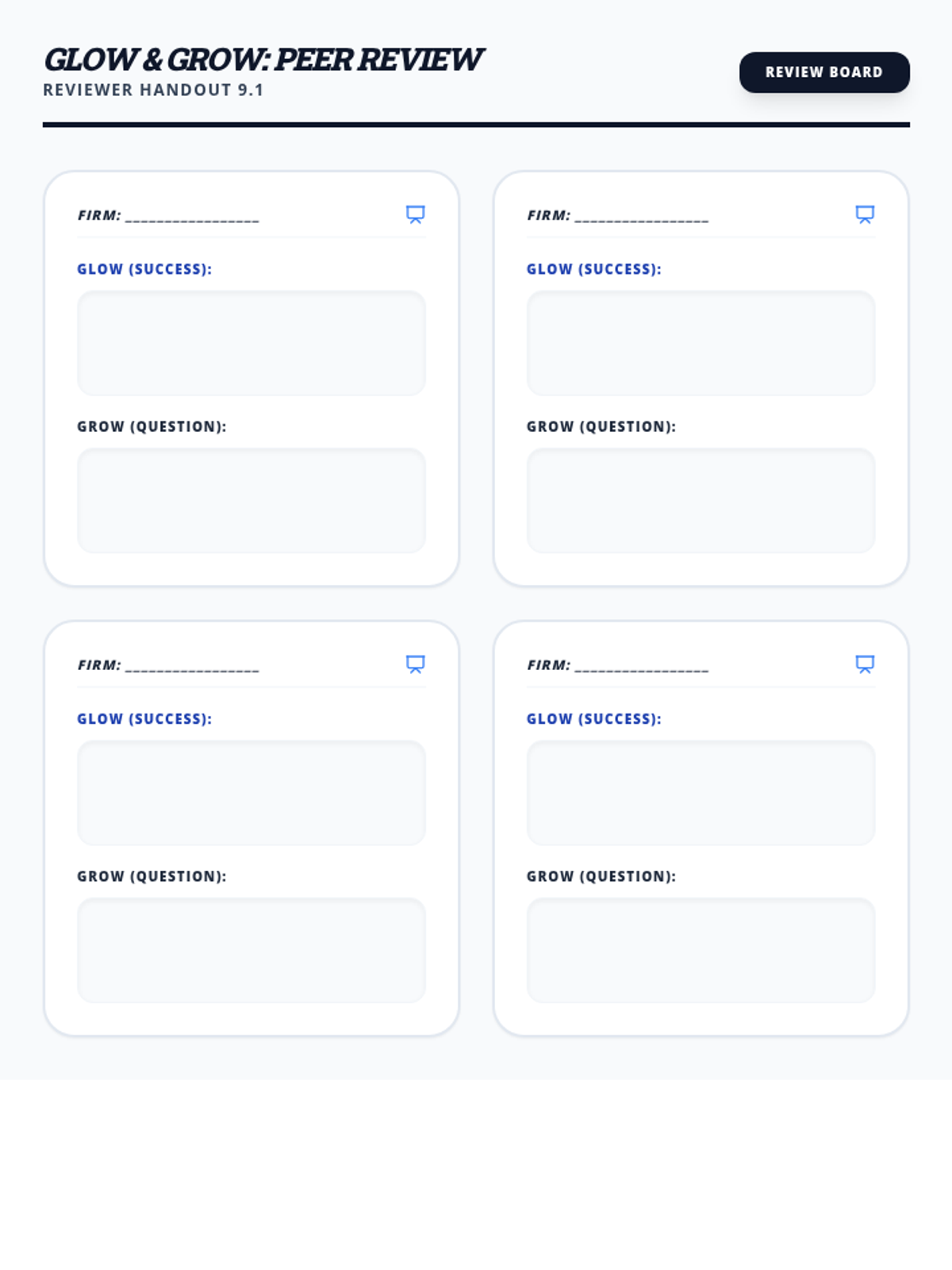
A peer feedback sheet for the Design Challenge presentations, using the 'Glow and Grow' format to encourage constructive evaluation among student firms.
Slides for the Design Challenge Presentations lesson, providing structure for student pitches, timing guidelines, and instructions for peer feedback.
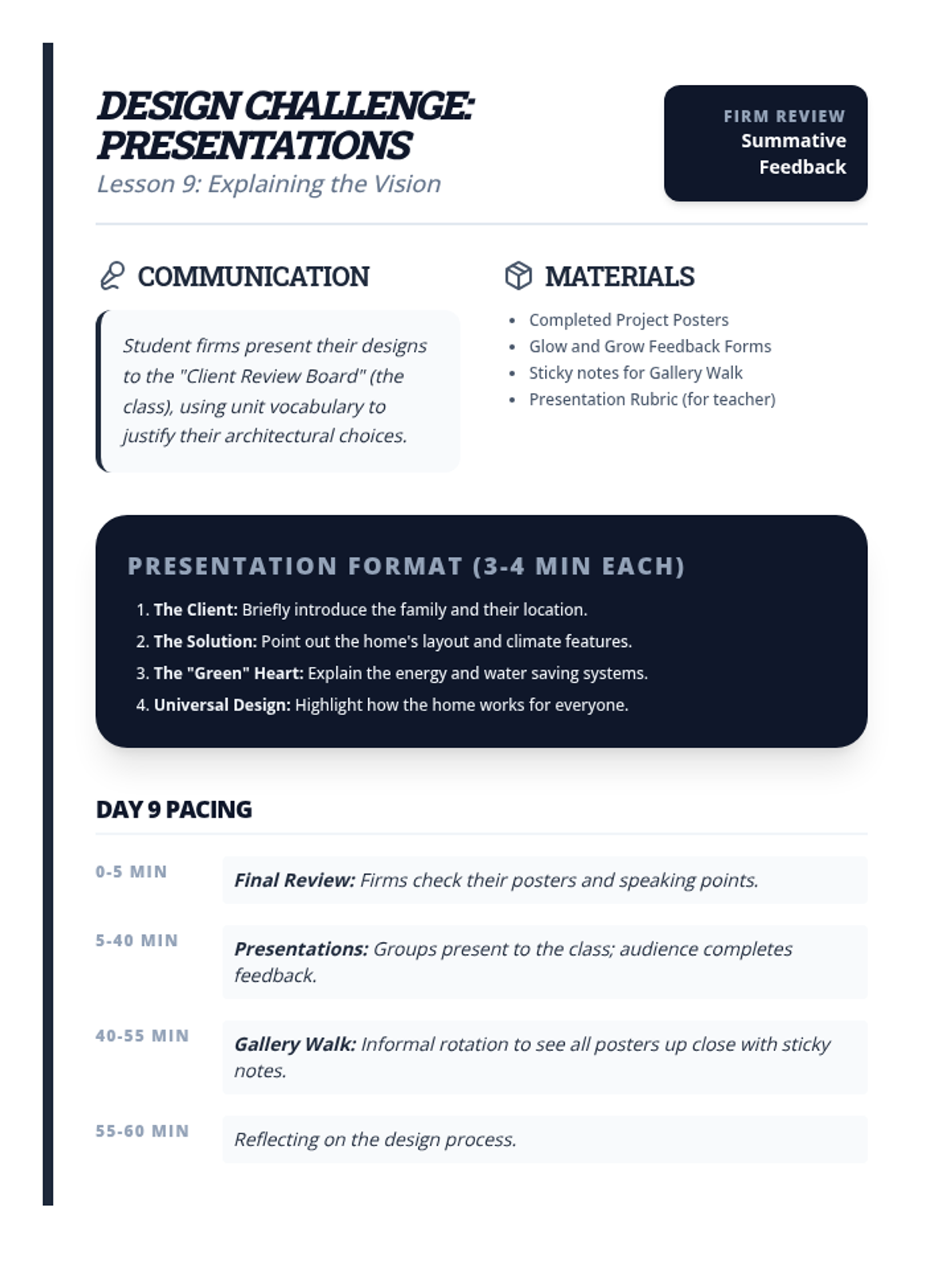
A teacher guide for the Design Challenge Presentations lesson, providing structure for student pitches, evaluation guidelines, and tips for facilitating constructive peer feedback.
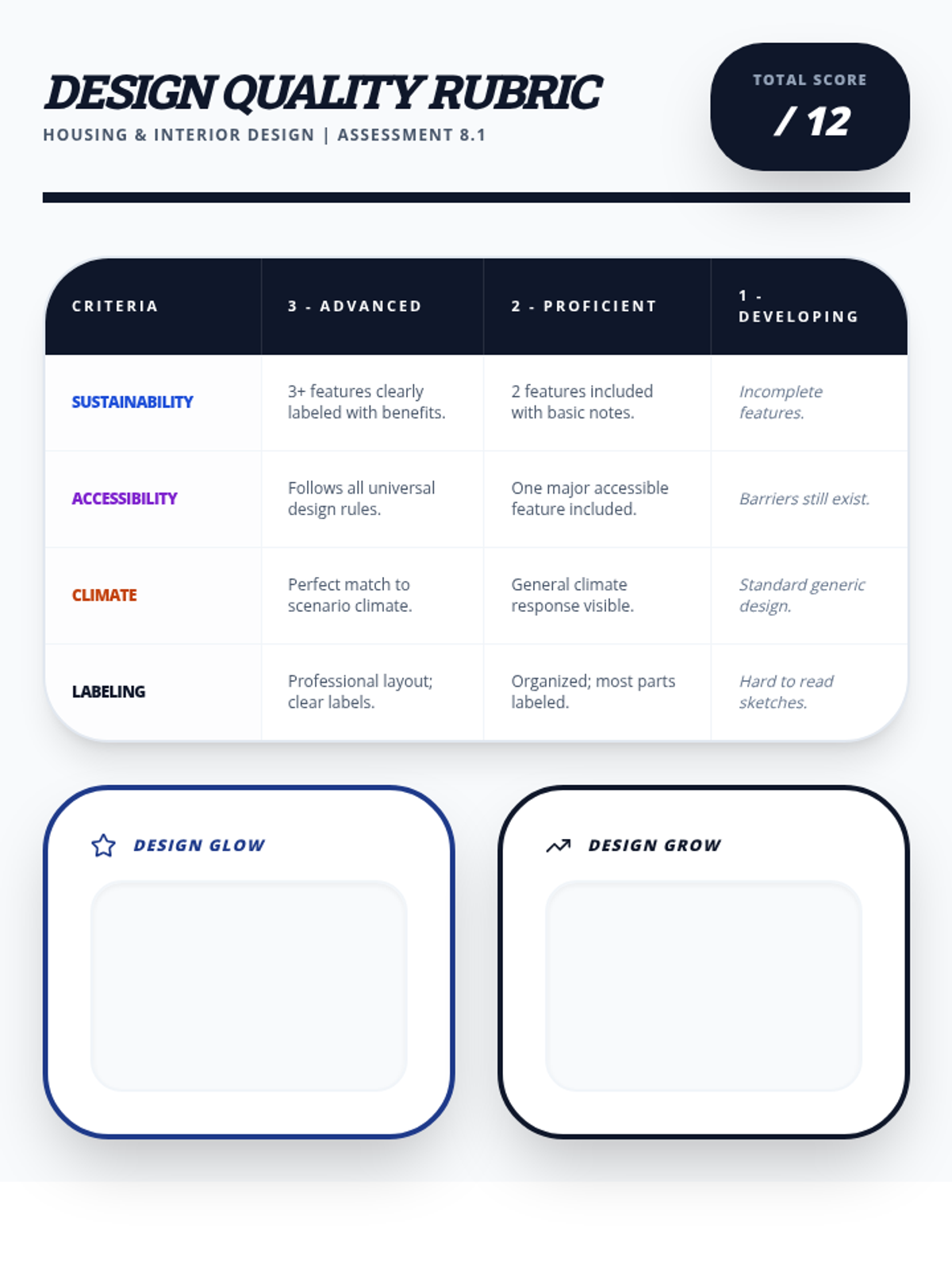
A professional rubric and feedback sheet for the Housing Design Challenge, evaluating student work on sustainability, accessibility, climate response, and technical drafting.
Slides for the Design Challenge Building lesson, outlining poster specifications and the essential criteria checklist for the final project.
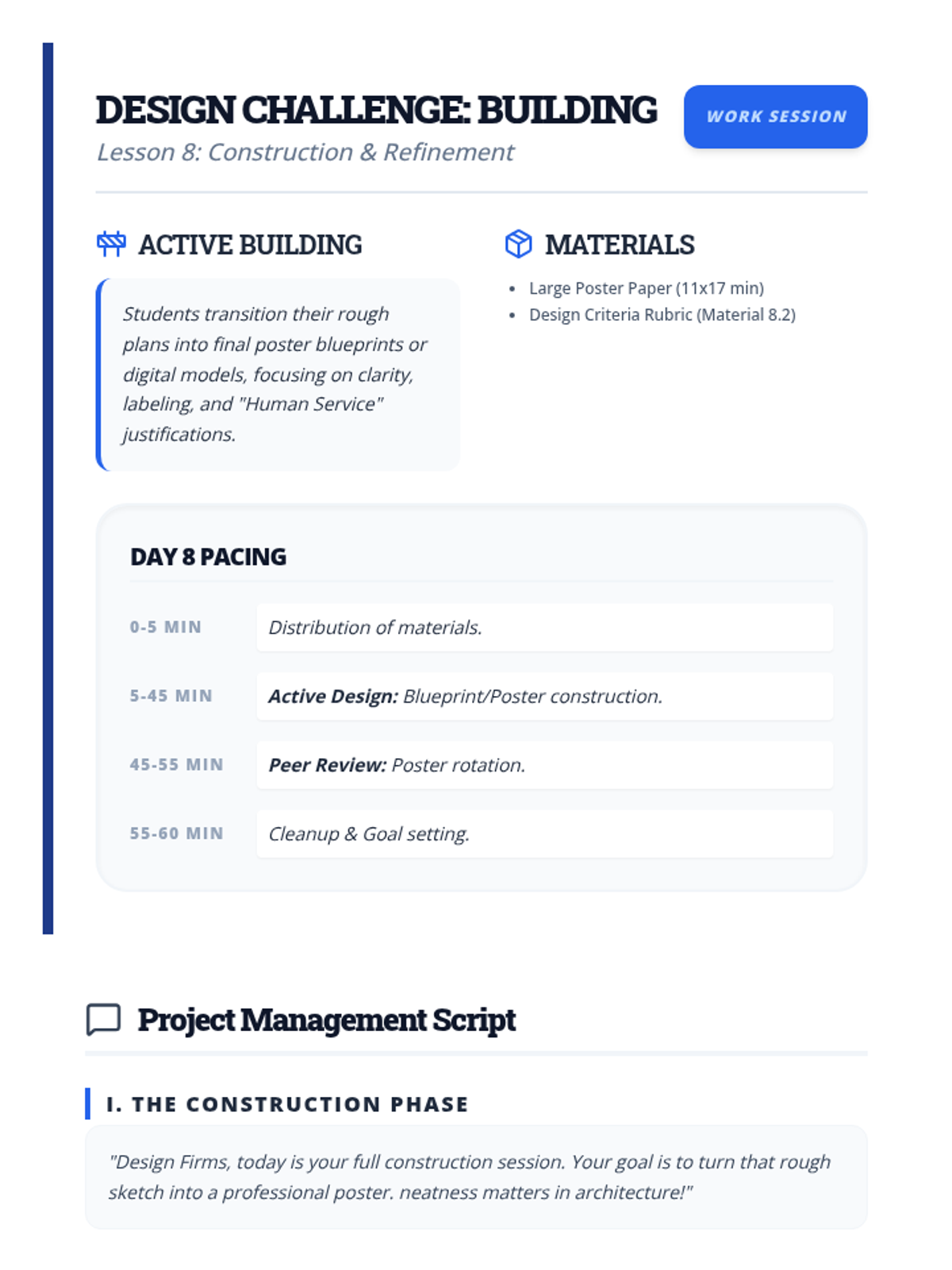
A teacher guide for the Design Challenge Building lesson, providing instructions for facilitating the hands-on creation phase and offering project management tips for educators.
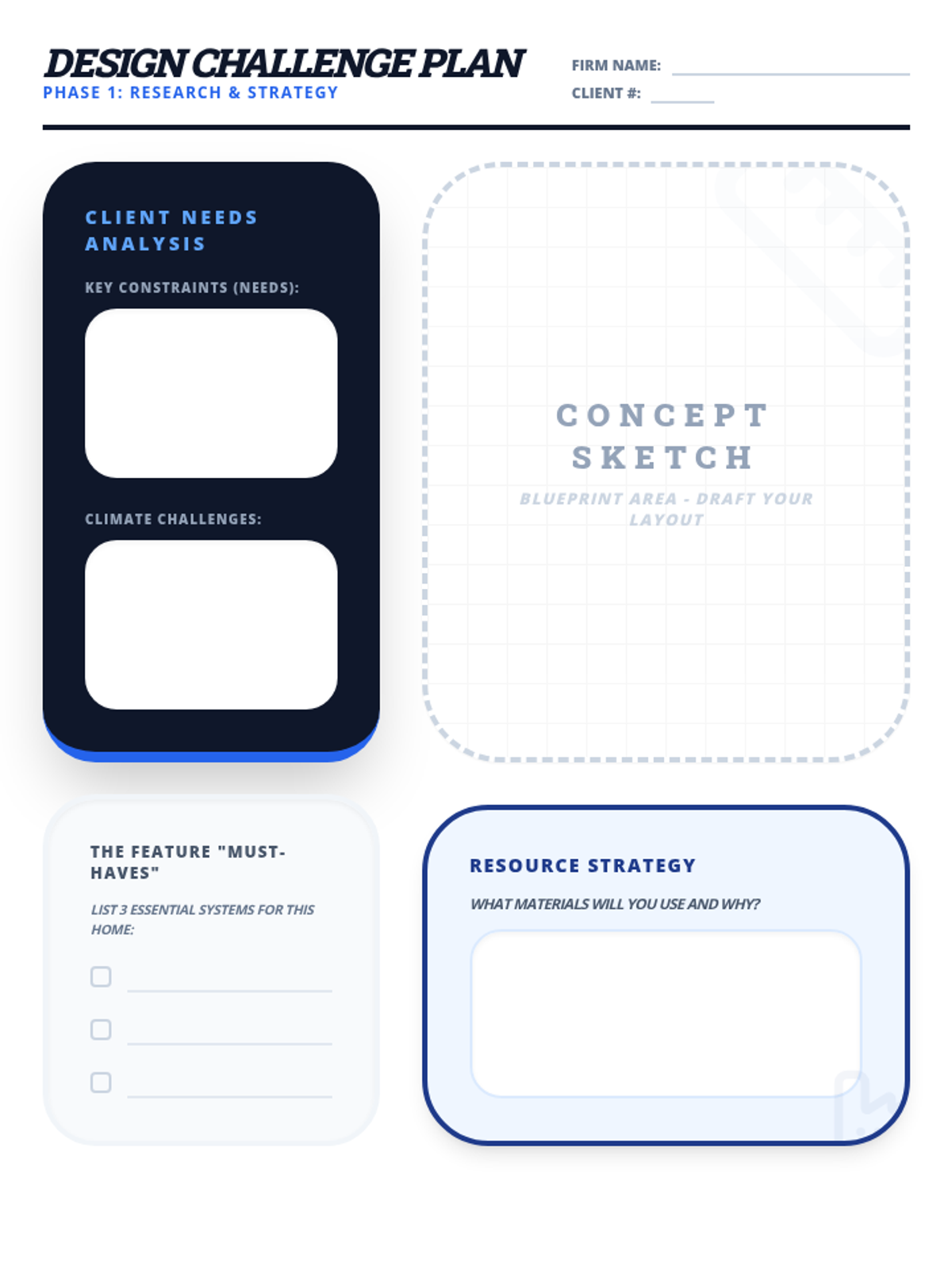
A structured planning worksheet for the Design Challenge, guiding student firms through client analysis, constraint mapping, and initial conceptual sketching.
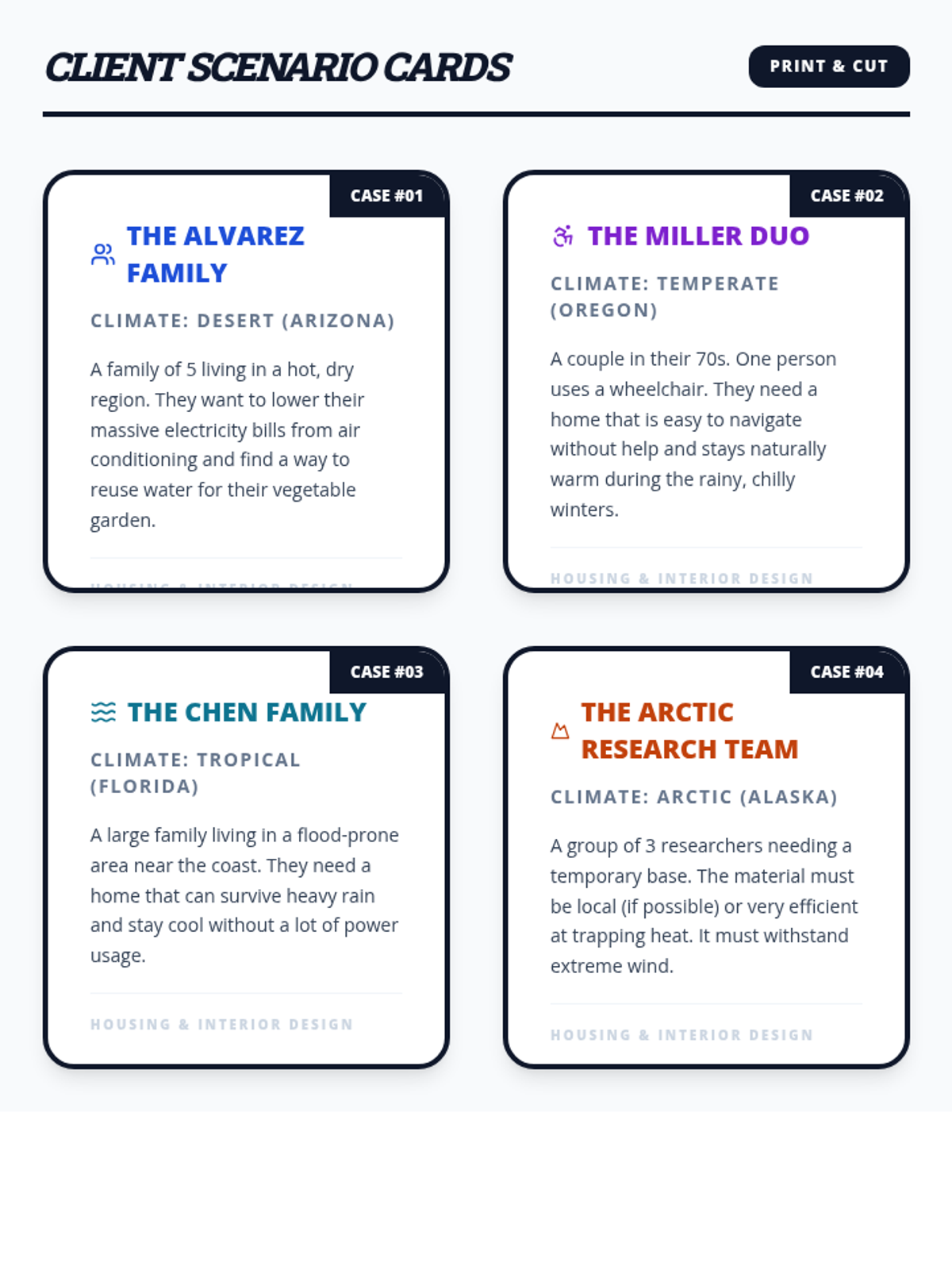
Family scenario cards for the final Design Challenge, providing specific client needs, climate constraints, and design priorities for student groups.
Presentation slides for the Design Challenge Planning lesson, introducing the mission, client analysis steps, and strategic feature selection.
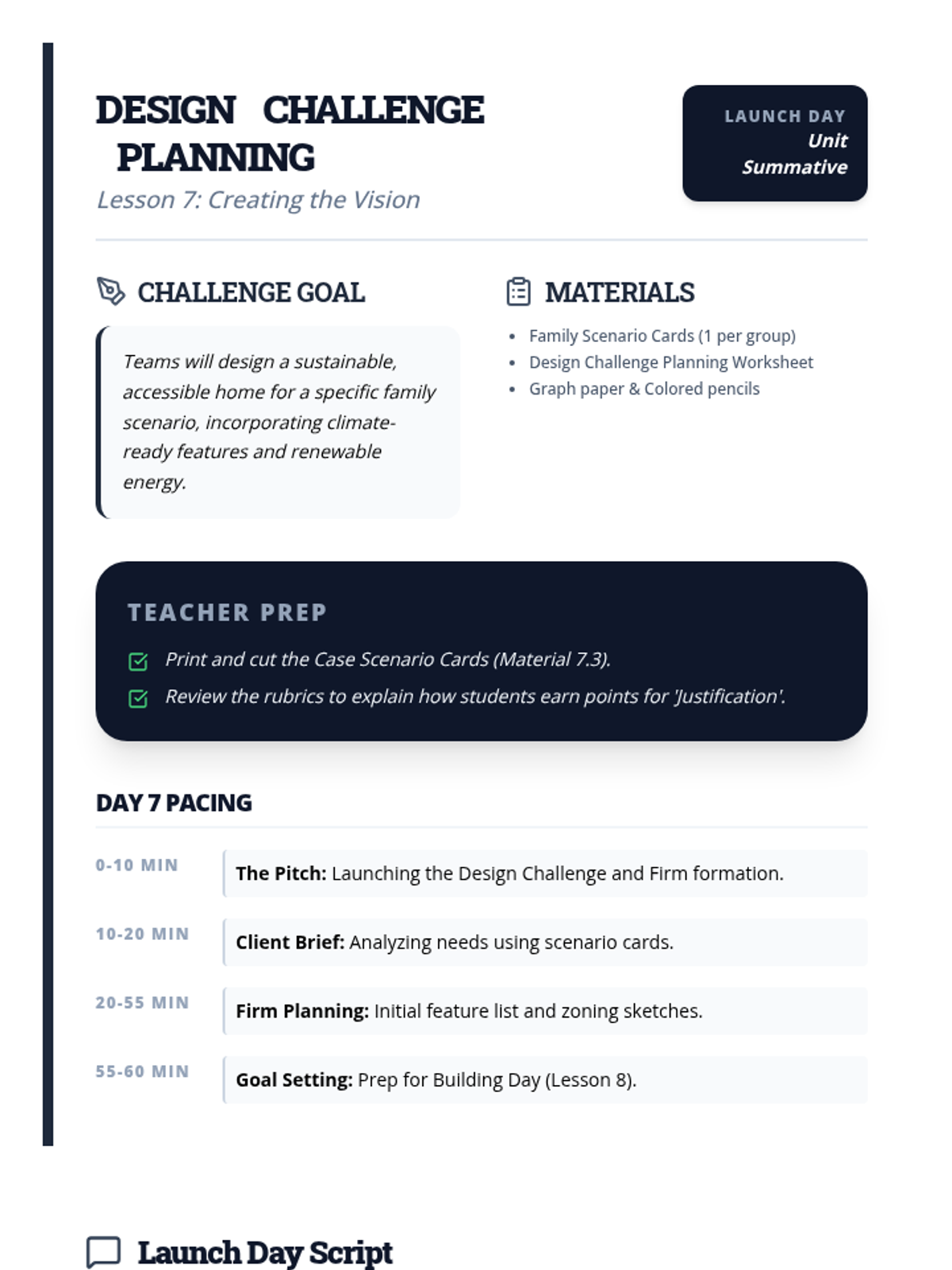
A teacher guide for the Design Challenge Planning lesson, focusing on launching the unit's final project and guiding students through client analysis and strategic design planning.
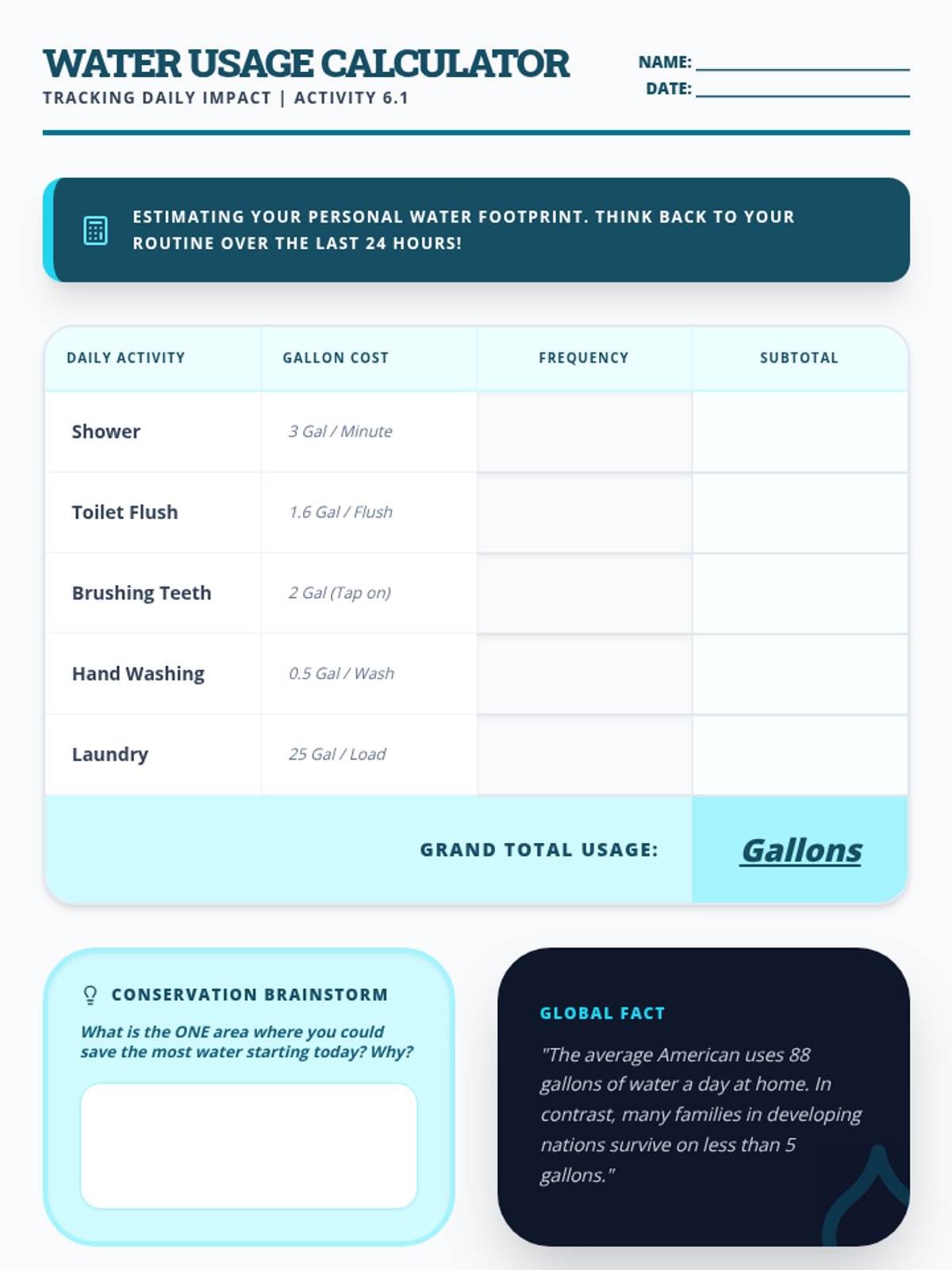
A student worksheet for calculating daily water usage and identifying potential areas for conservation in the home.