An instructional slide deck designed for small-group intervention, featuring visual models of tool limitations, real-world context comparisons, and structured peer discussion prompts.
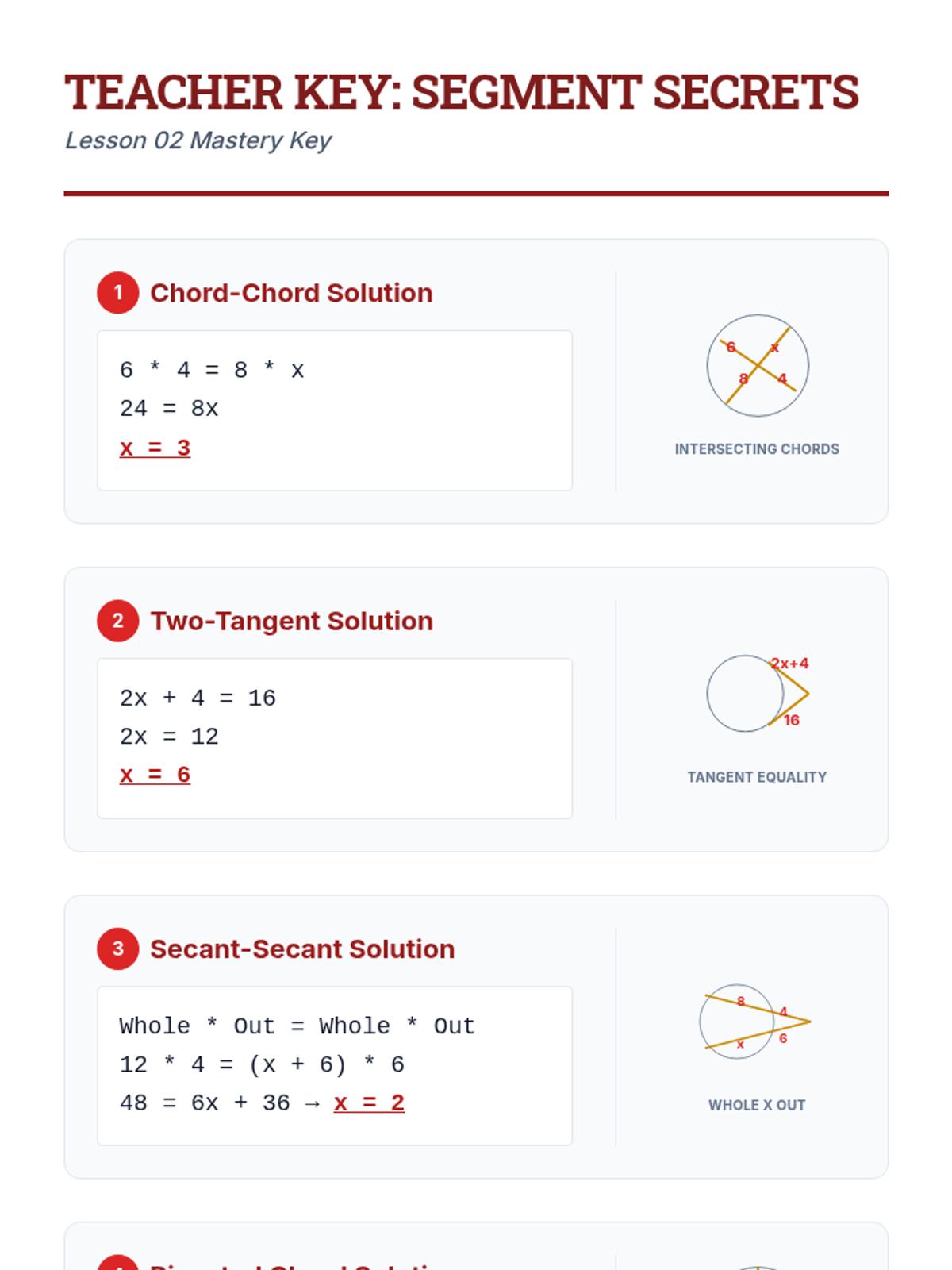
Detailed answer key for the Lesson 2 segment practice worksheet. Revised with step-by-step solutions, reference diagrams, and fixed page breaks.
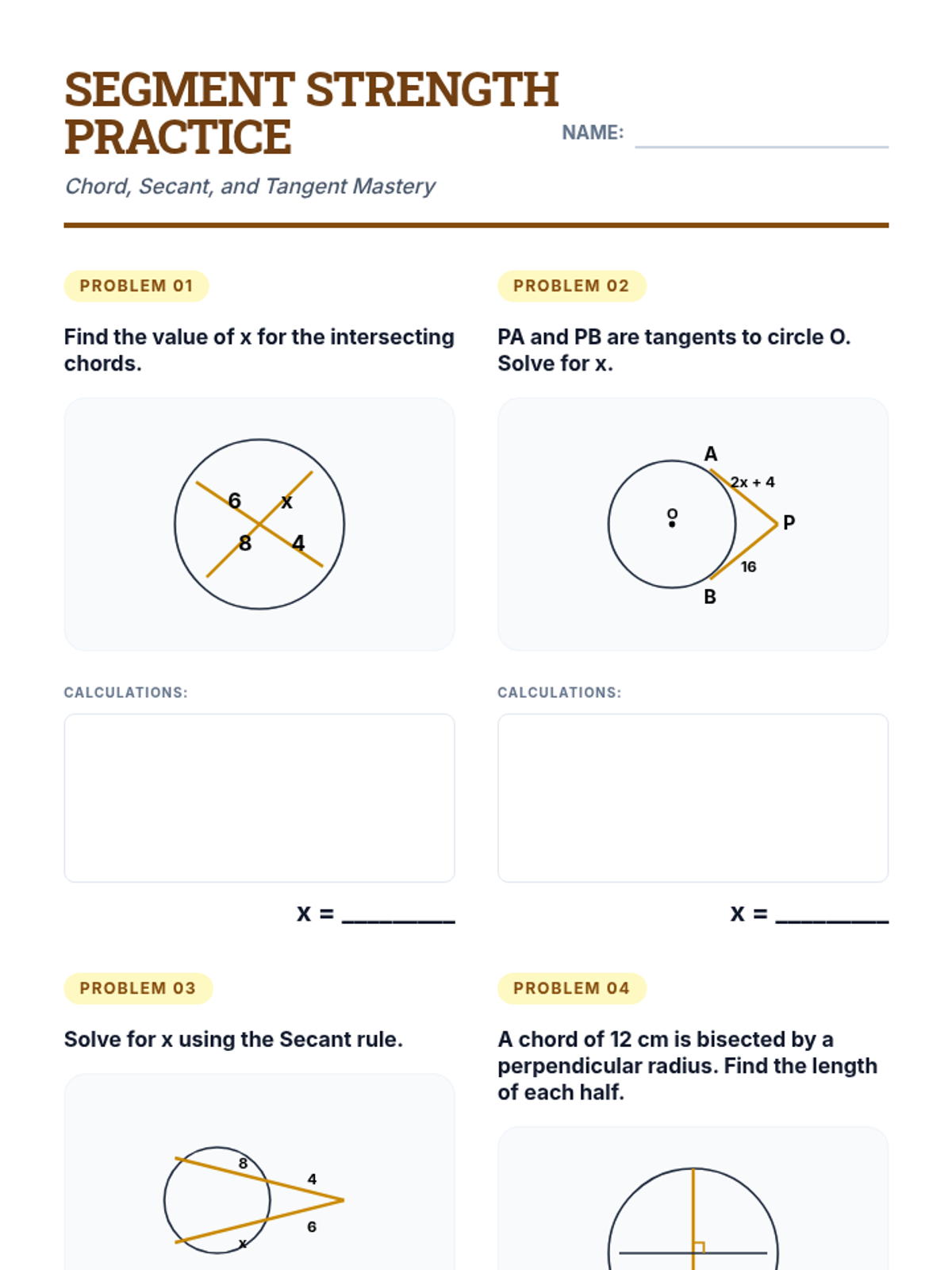
Practice worksheet for Lesson 2 featuring calculation problems on chord products, tangent equality, and secant segment formulas. Revised with better work space, fixed page breaks, and a real geometric diagram for Problem 4.
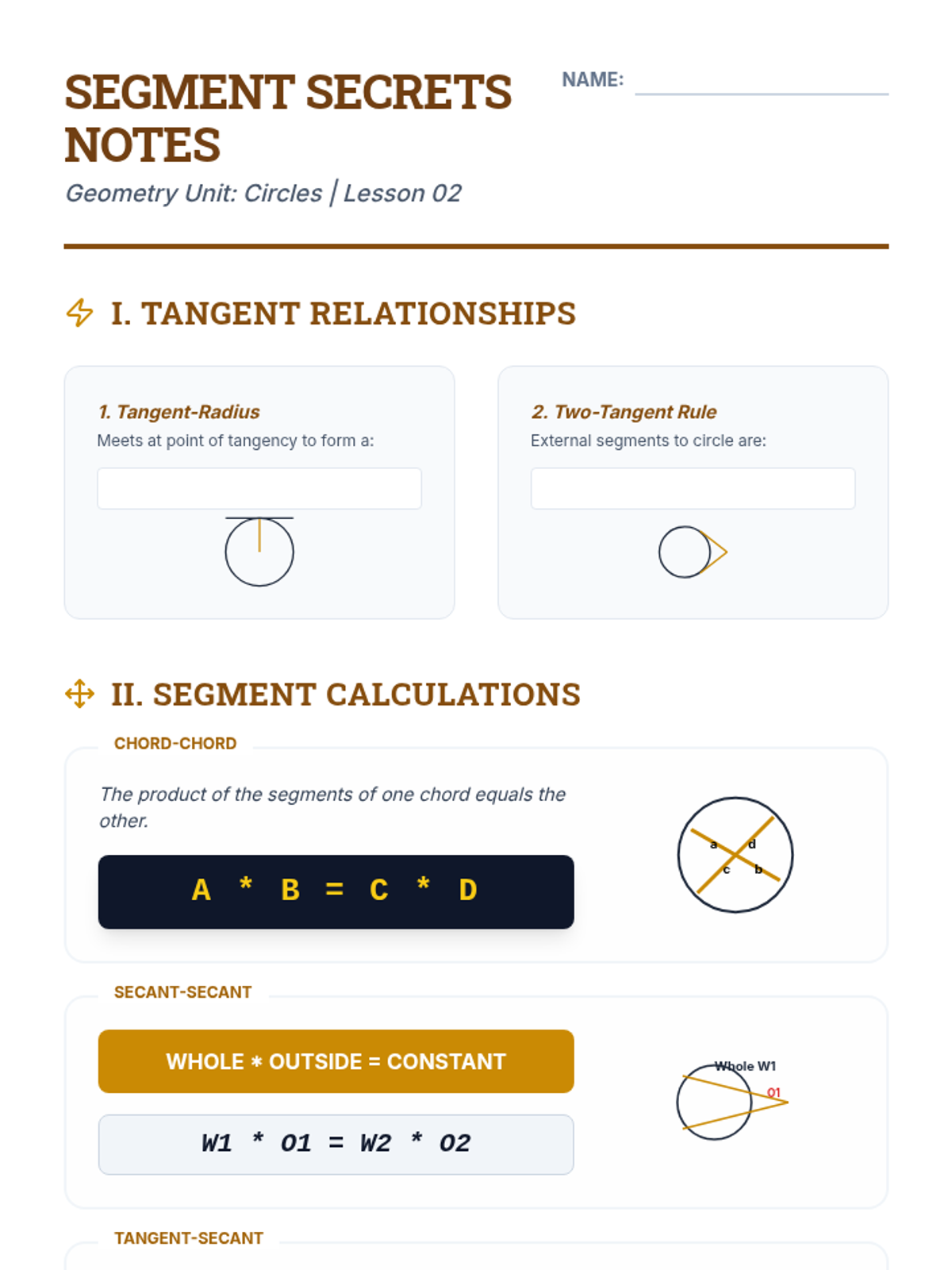
Guided notes for Lesson 2 focusing on segment lengths in circles. Revised for improved page breaks, corrected secant labeling, and inclusion of the Tangent-Secant theorem.
Visual slide deck for Lesson 2 on circle segment theorems. Revised for improved visual logic, correct labeling of 'whole' vs 'outside' segments, and rendering fixes for dark slides.
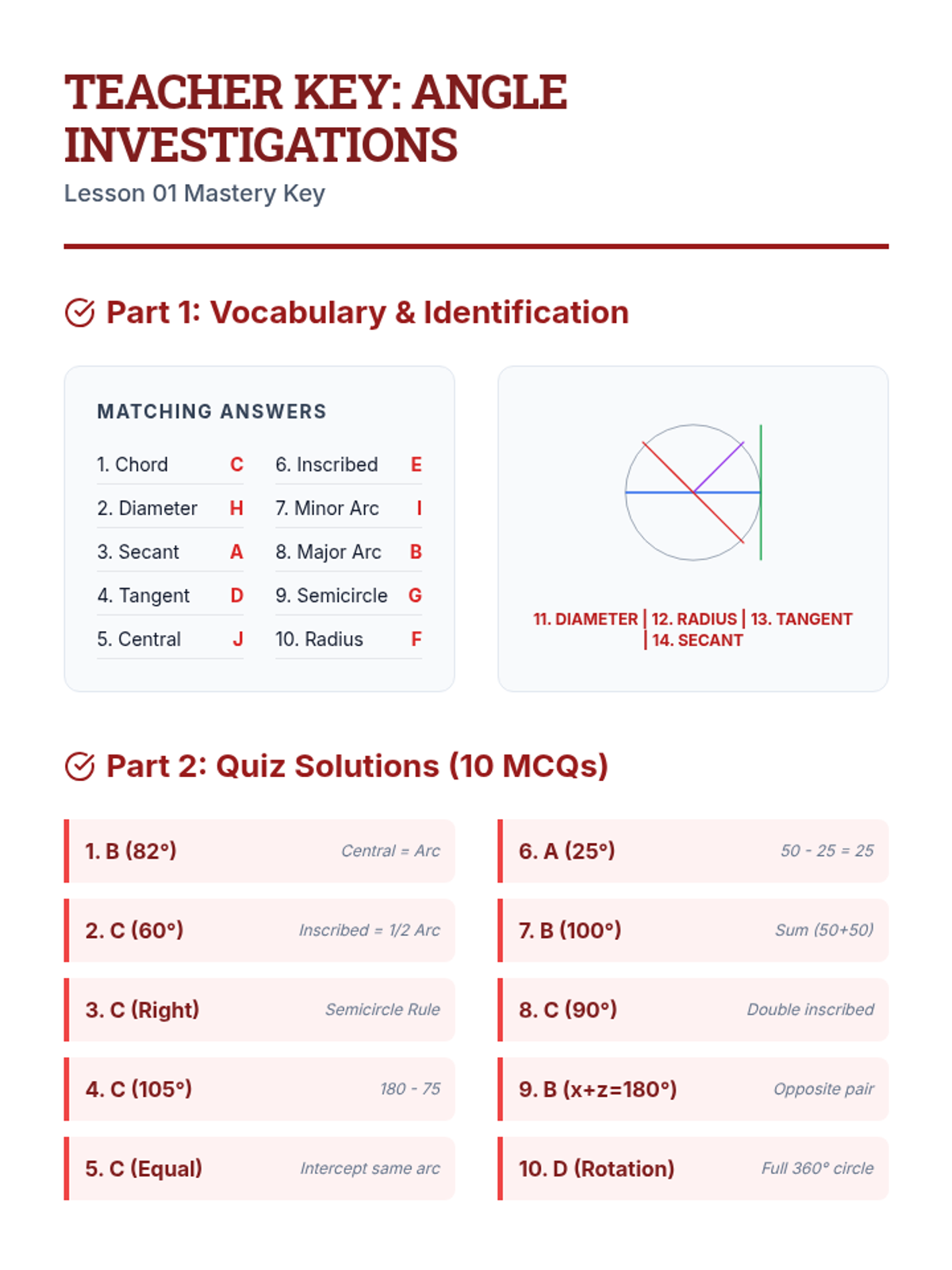
Complete answer key for Lesson 1. Includes solutions for all 10 multiple-choice questions and the diagram identification. Revised for completeness and clarity.
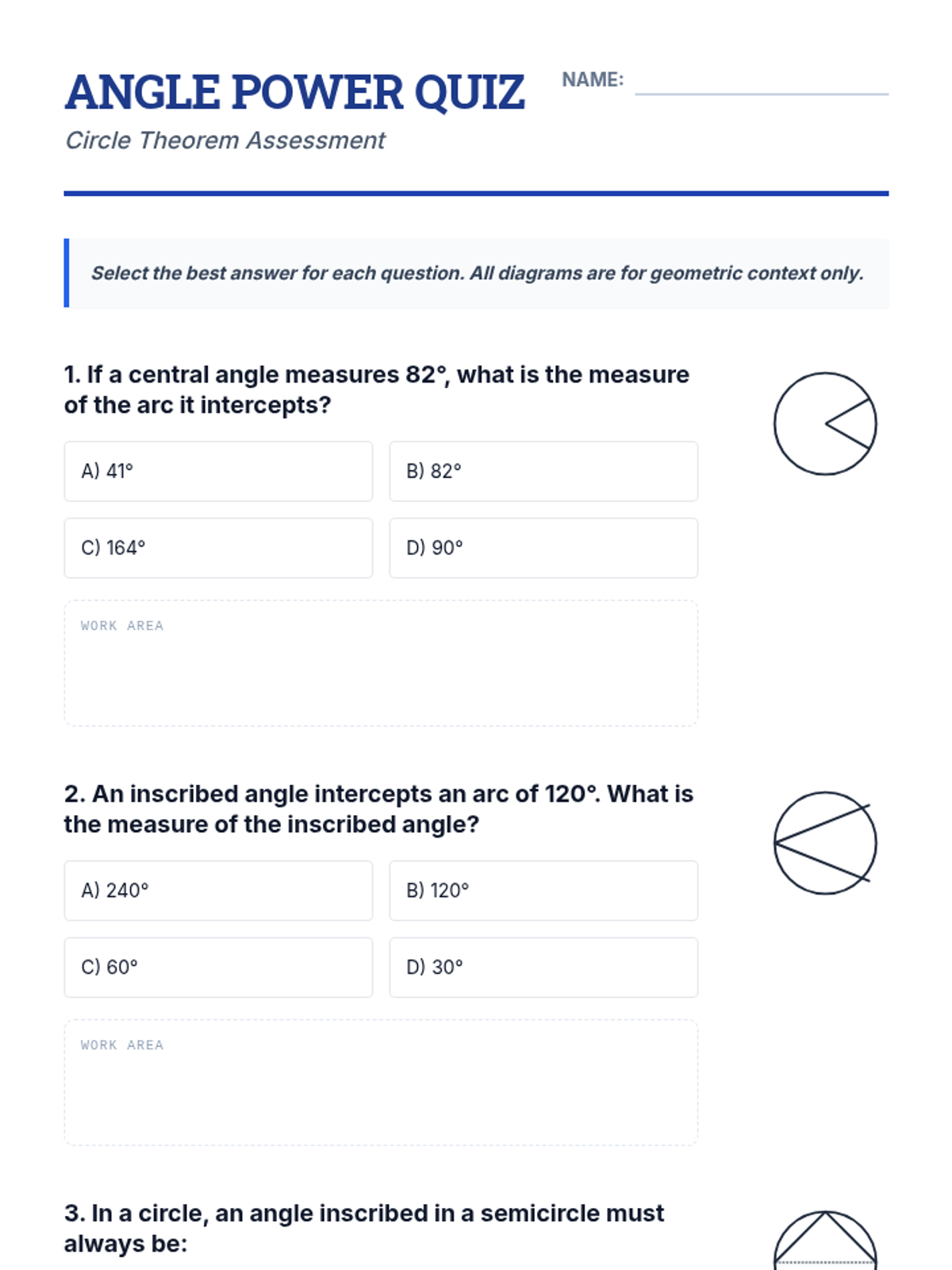
A complete 10-question multiple-choice quiz covering central angles, inscribed angles, and cyclic quadrilaterals. Revised with work areas, better page breaks, and all 10 questions.
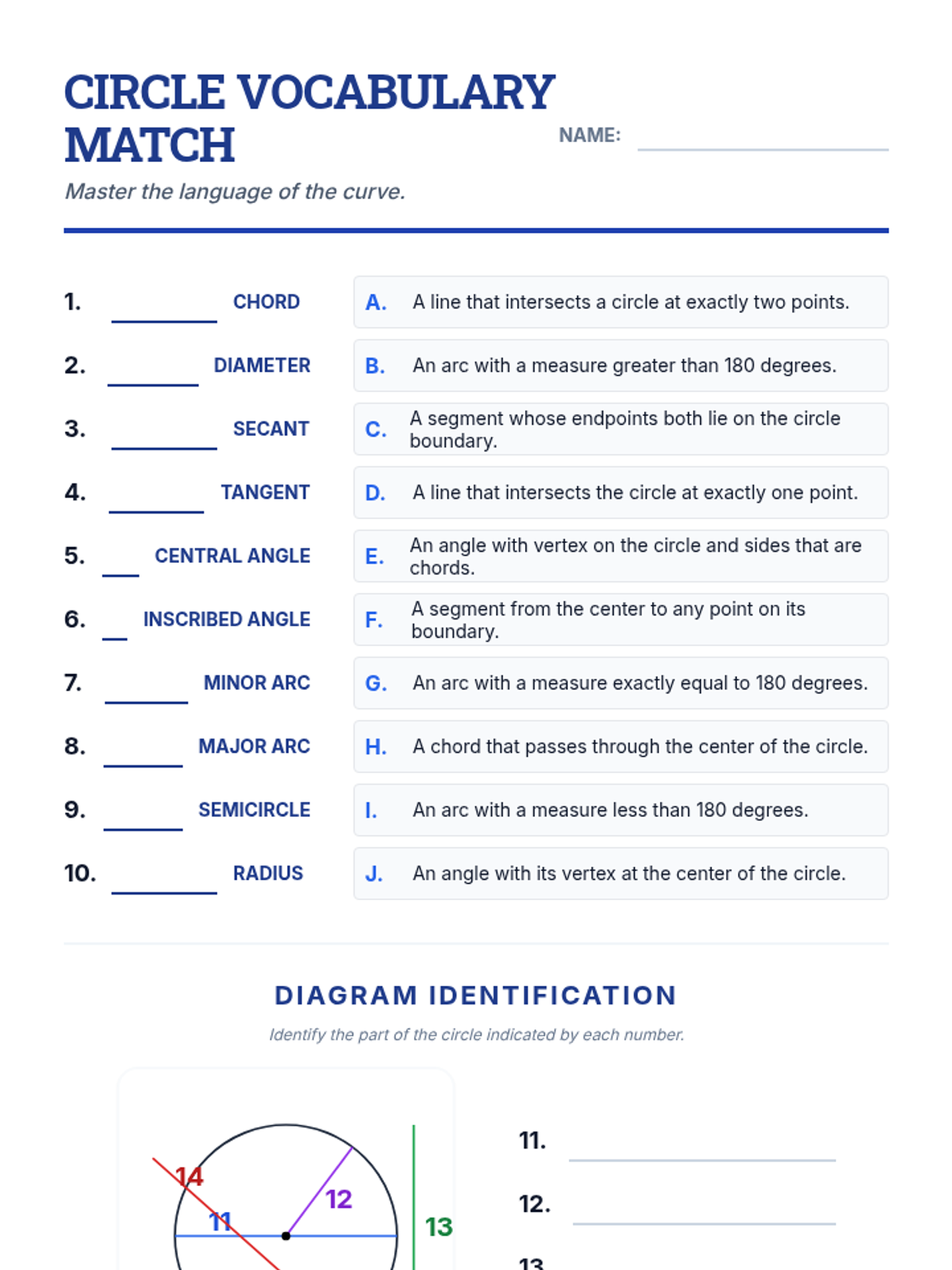
A vocabulary matching activity for Lesson 1, focusing on key circle terms like chord, secant, tangent, and angle types. Revised to fit on one page with a functional diagram assessment.
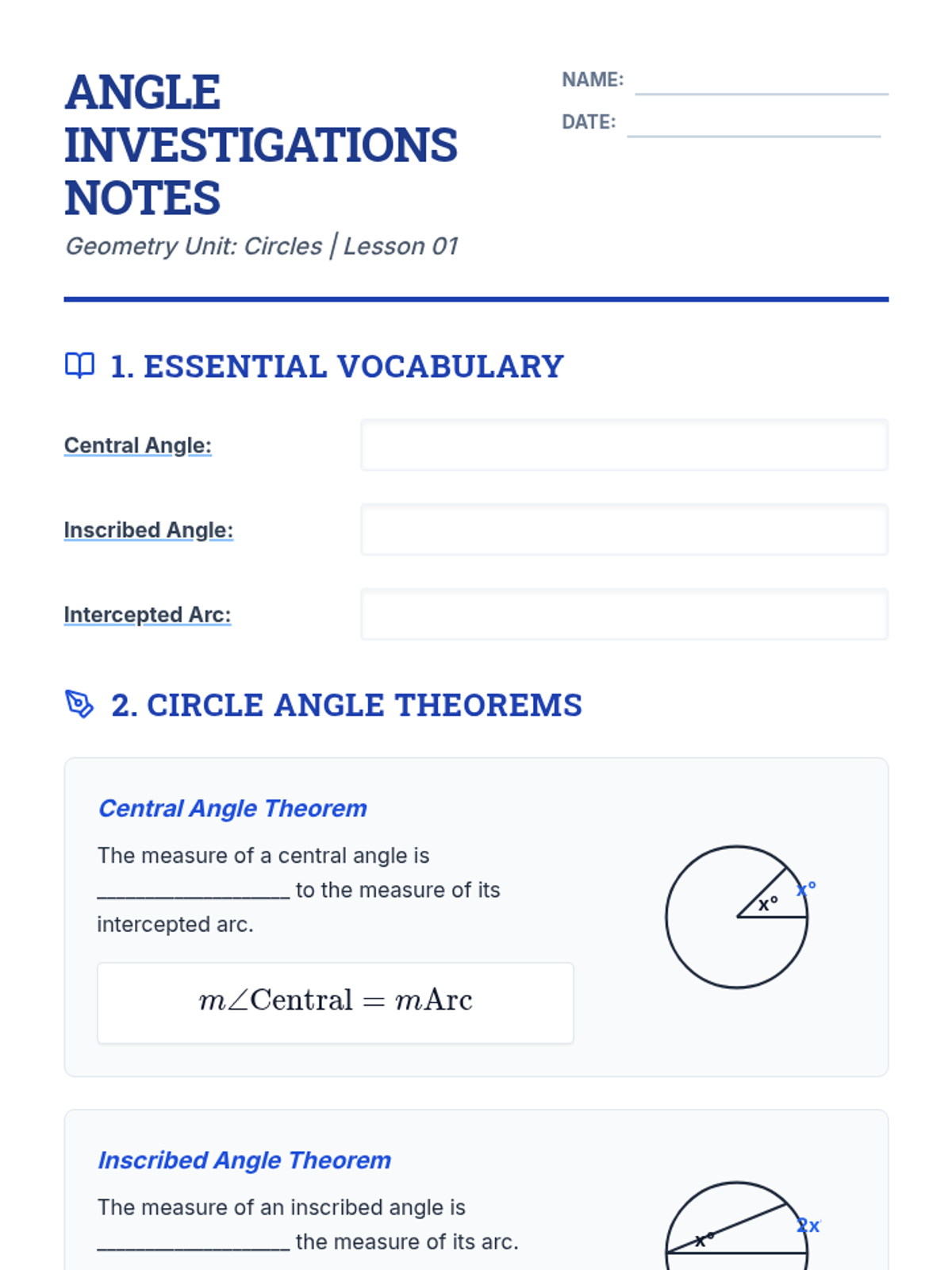
Guided notes for students to follow during the Angle Investigations lesson. Includes vocabulary blanks, theorem summaries with diagrams, and quick check problems. Revised for better page breaks and clear work areas.
Visual slide deck for Lesson 1 on circle angle theorems. Features bold graphics and clear theorem explanations for classroom instruction. Revised with corrected diagram labels and render fixes.
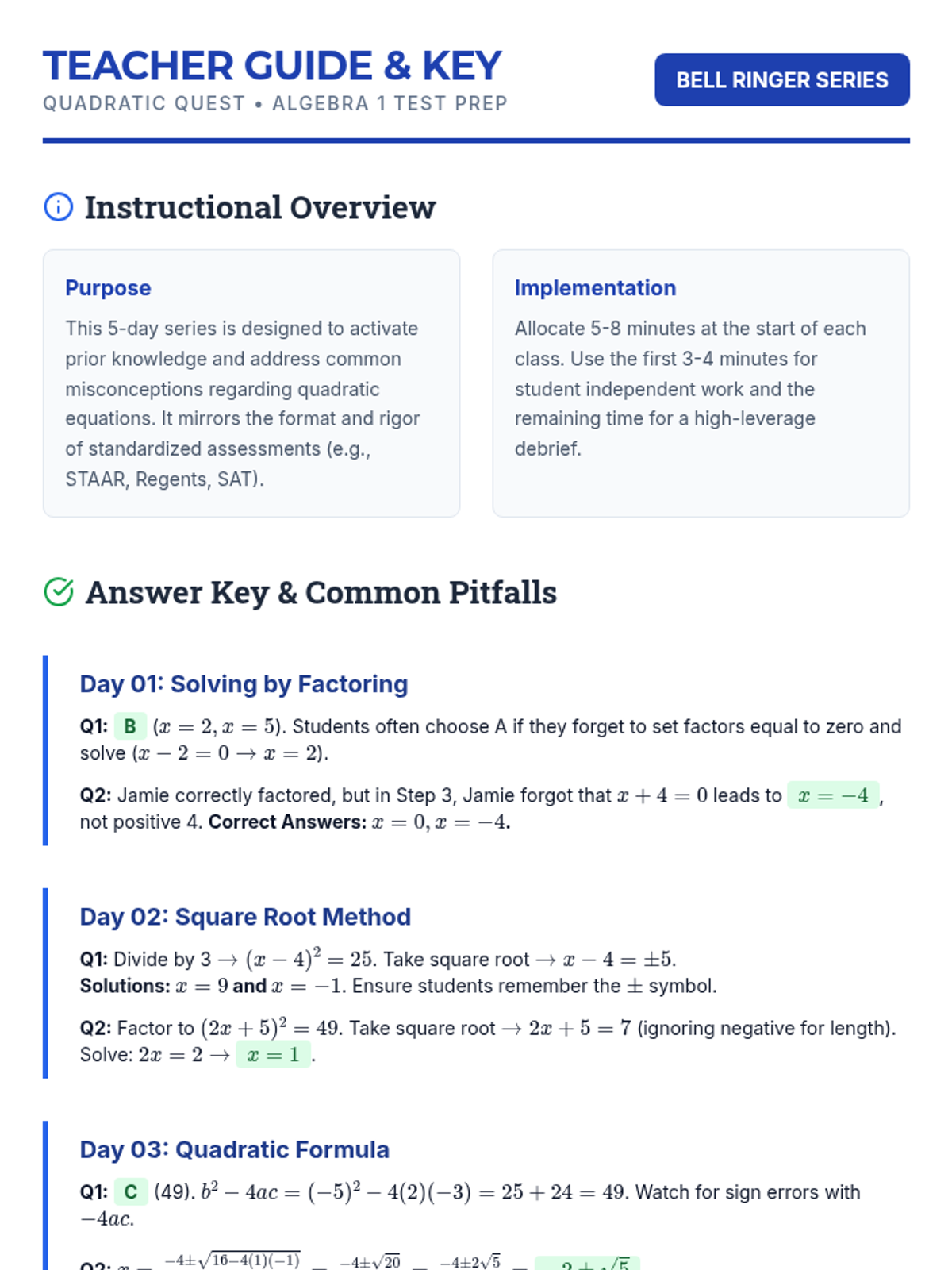
A comprehensive teacher's guide and answer key for the Quadratic Quest bell-ringer series. Includes full solutions, common student pitfalls, and instructional tips for daily debriefs.
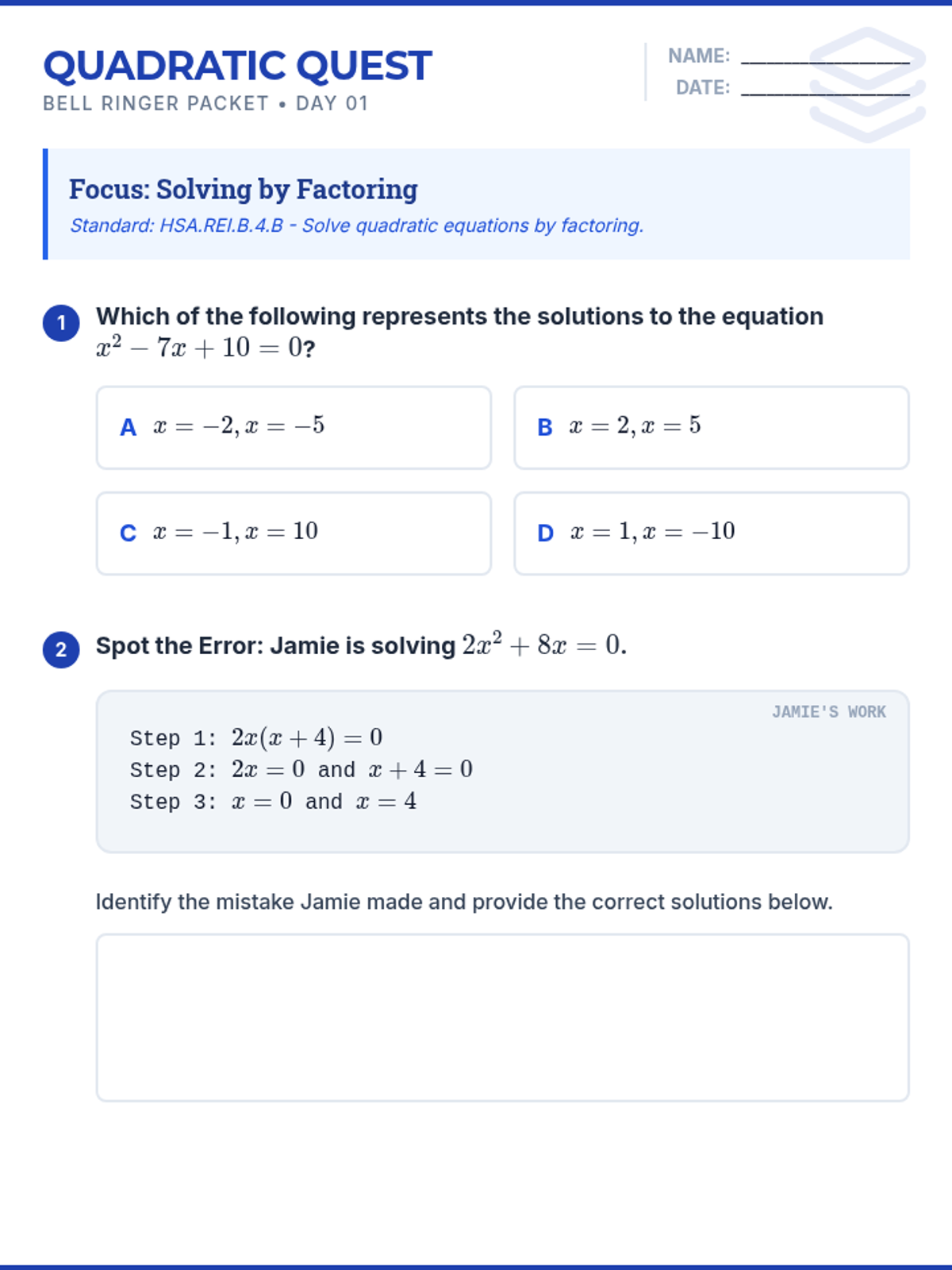
A 5-day daily bell-ringer packet for Algebra 1 students focusing on quadratic equations, designed for standardized test preparation. Includes factoring, square roots, the quadratic formula, graphing, and real-world applications. Each day is on its own page with clean work spaces.
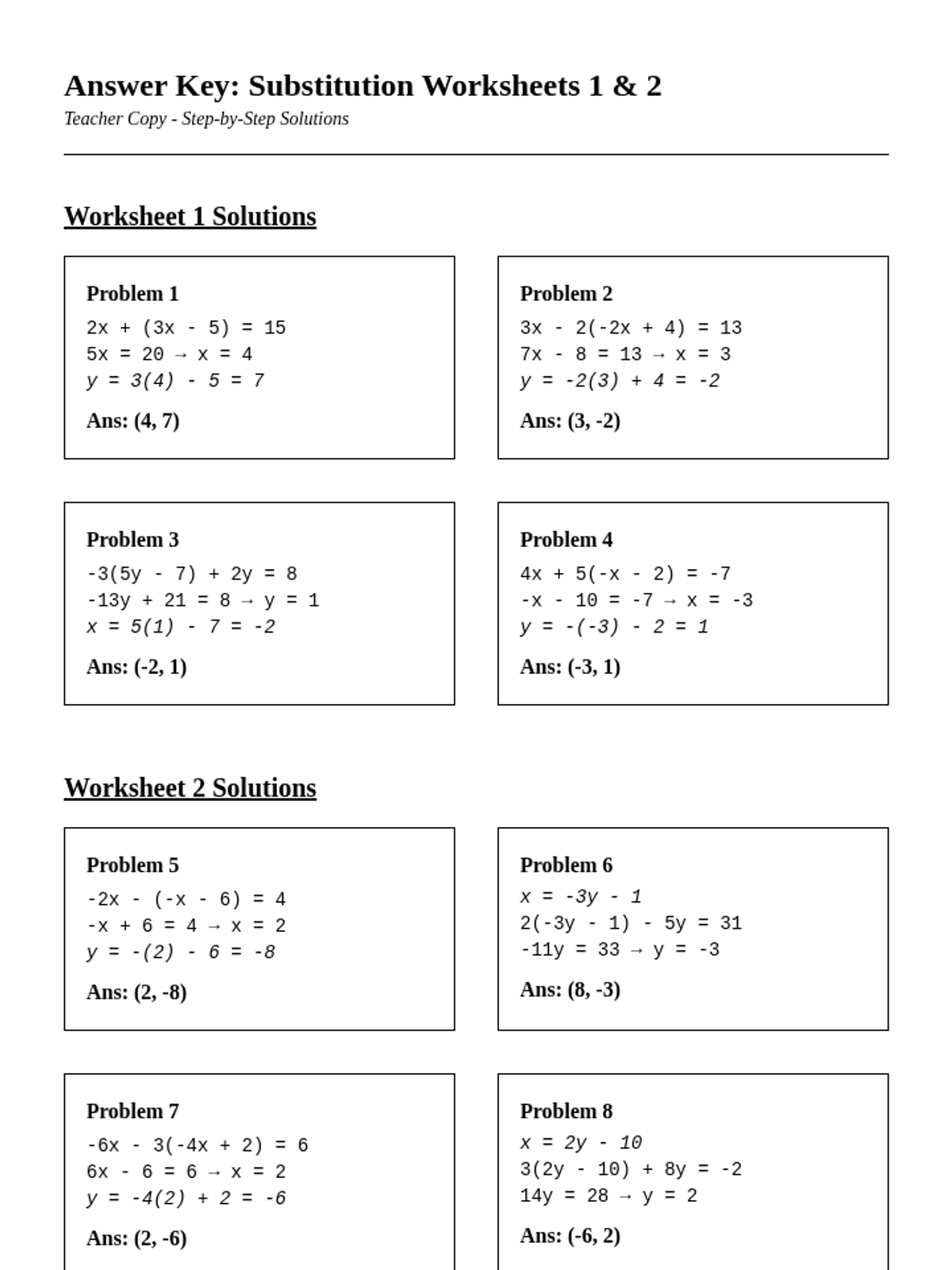
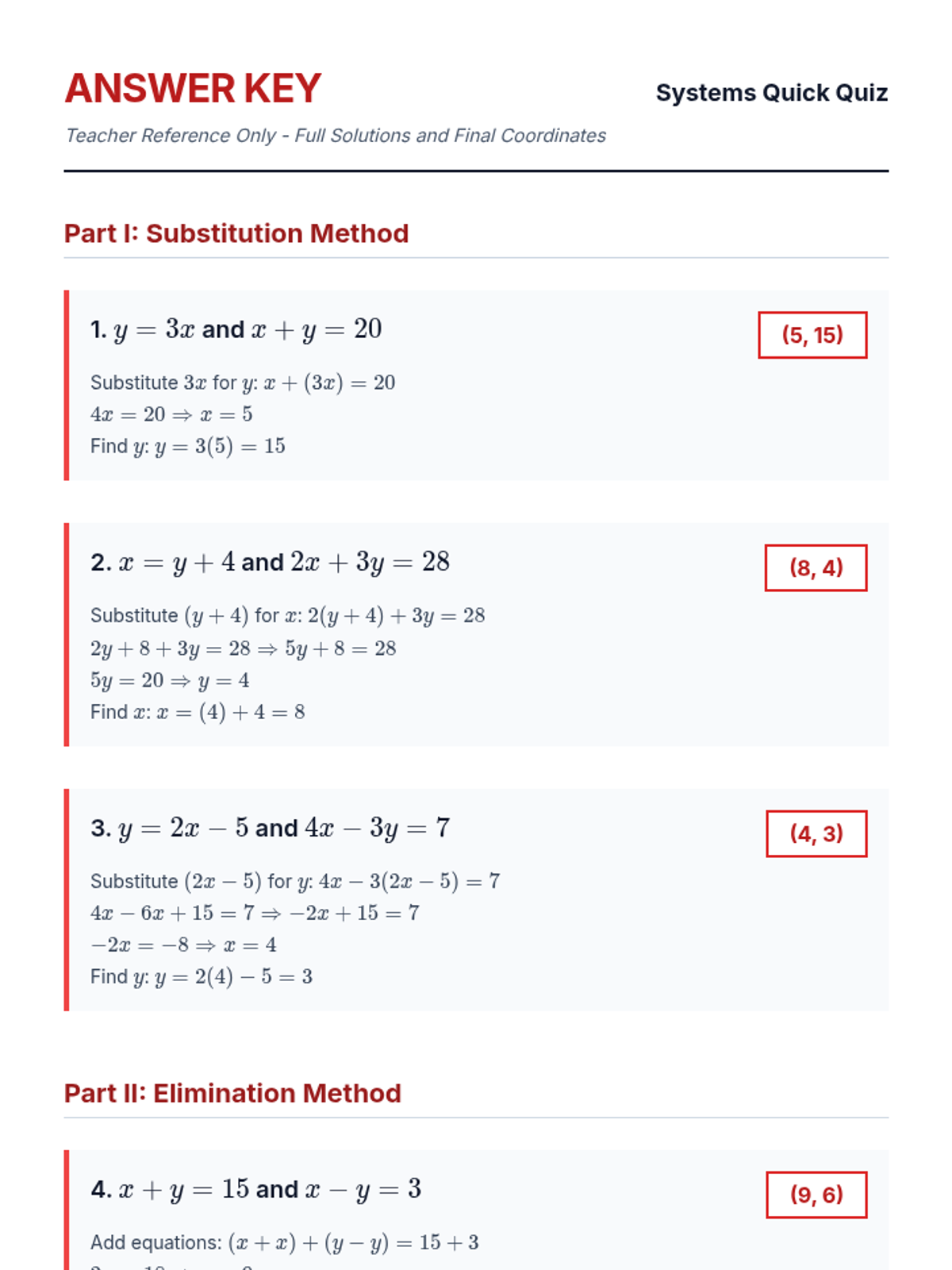
A plain answer key for substitution method worksheets, featuring step-by-step solutions and final coordinates for each system of equations.
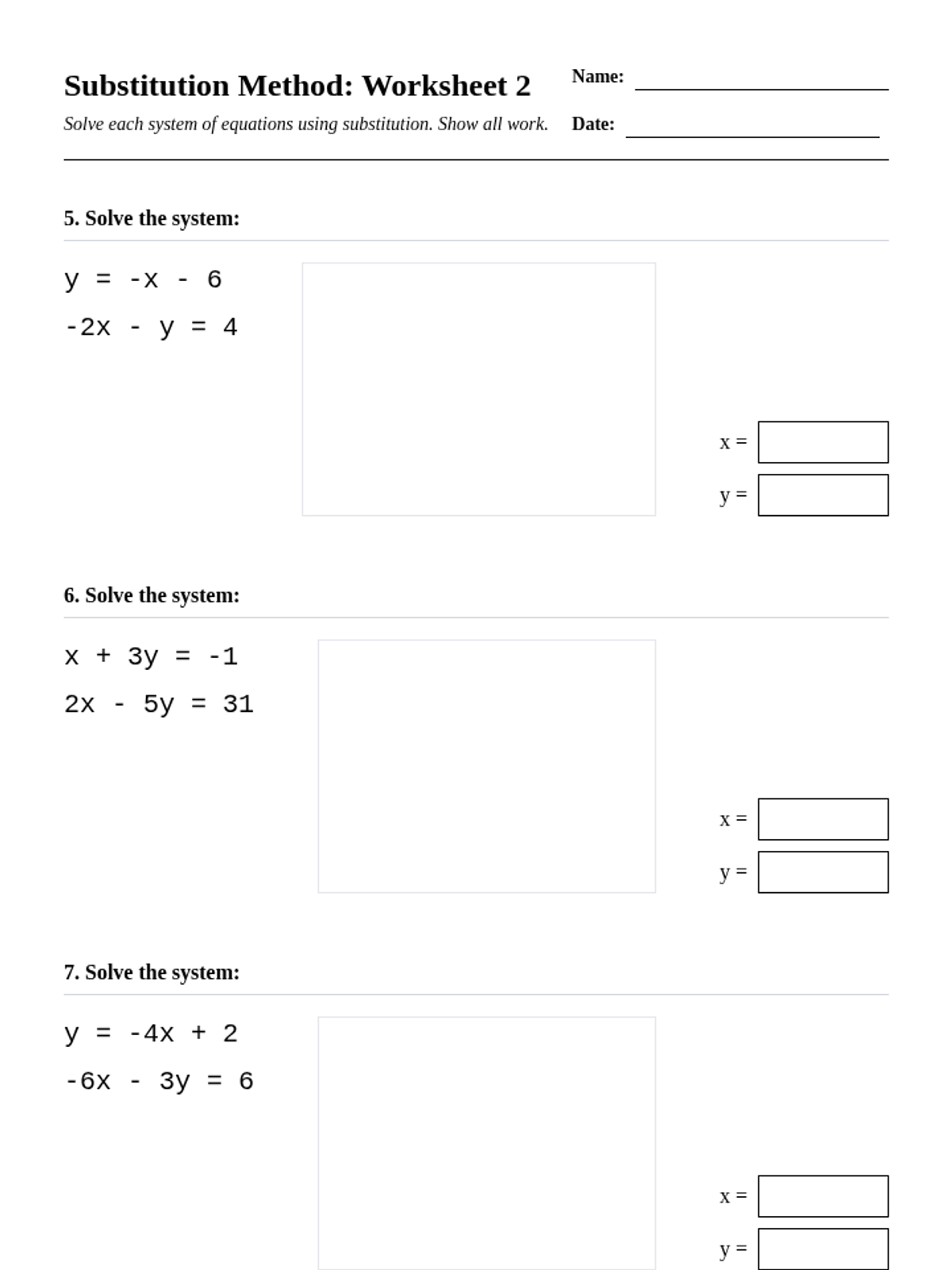
A basic math worksheet for solving advanced systems of linear equations using the substitution method, focusing on distribution and negative values. Plain design without decorative elements.
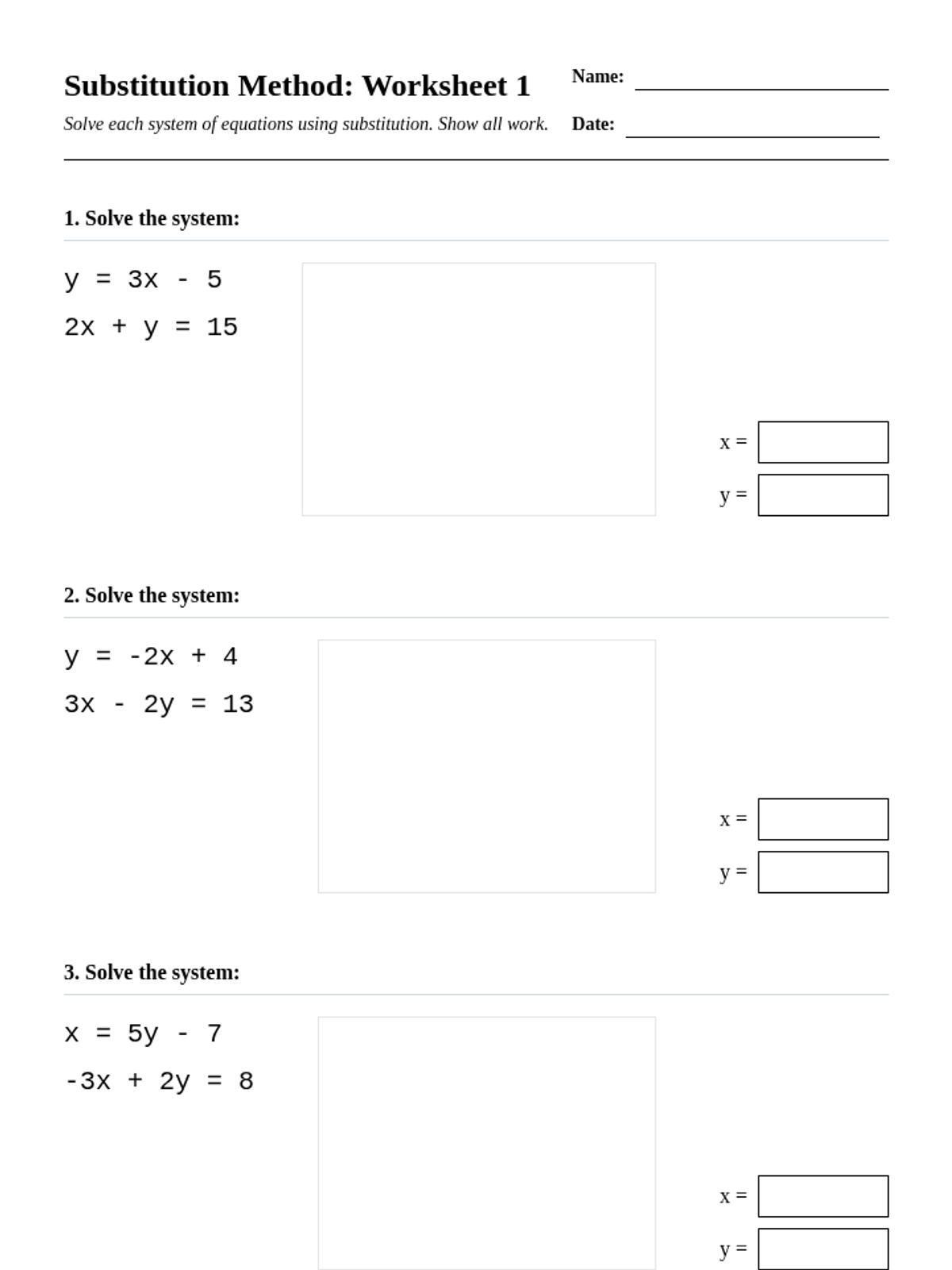
A basic, plain math worksheet for solving systems of linear equations using the substitution method. Includes four problems with designated workspace and solution boxes.
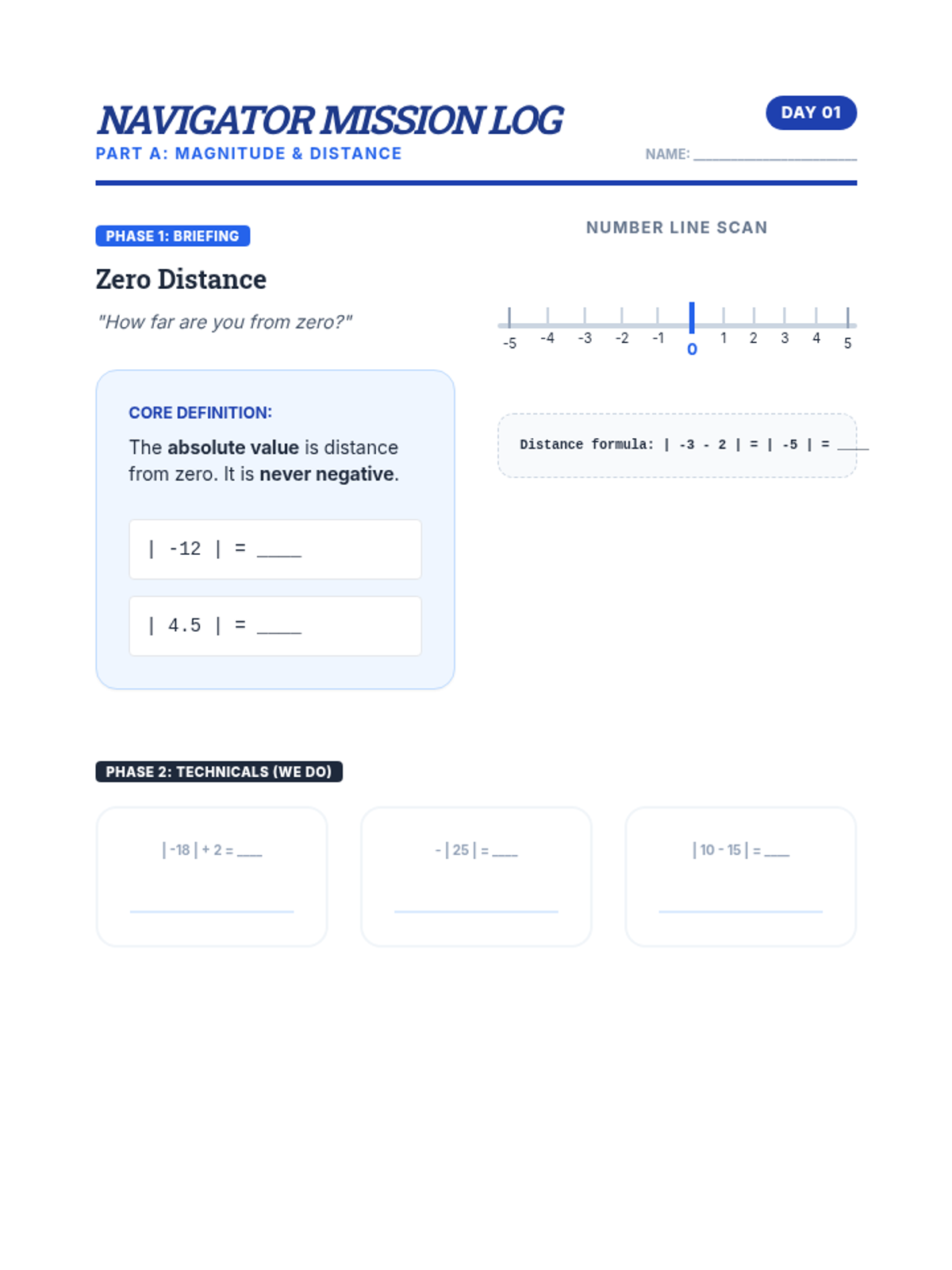
Expanded 10-page guided notes for the Signed Number Navigator unit. Features 2-page spreads per day covering Absolute Value, Integer Addition, Subtraction, Rational Operations, and a Synthesis Checkpoint. All equations are forced to single lines using nowrap styling and simplified layouts.
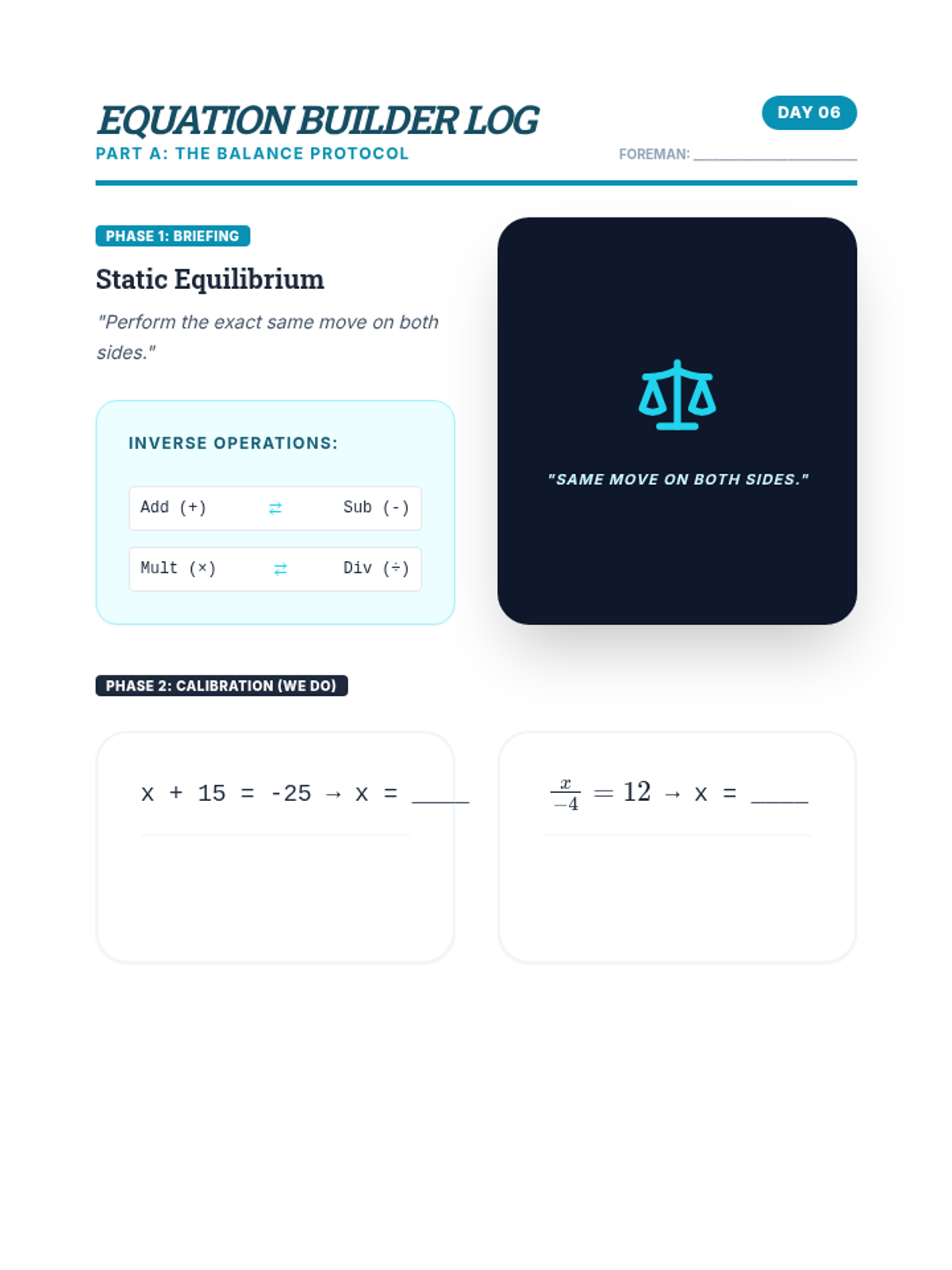
Expanded 10-page guided notes for the Equation Builder unit. Features 2-page spreads per day covering One-Step, Two-Step, Multi-Step Equations, Modeling, and a Final Architect Performance Project. All equations are forced to single lines using nowrap styling and simplified layouts.
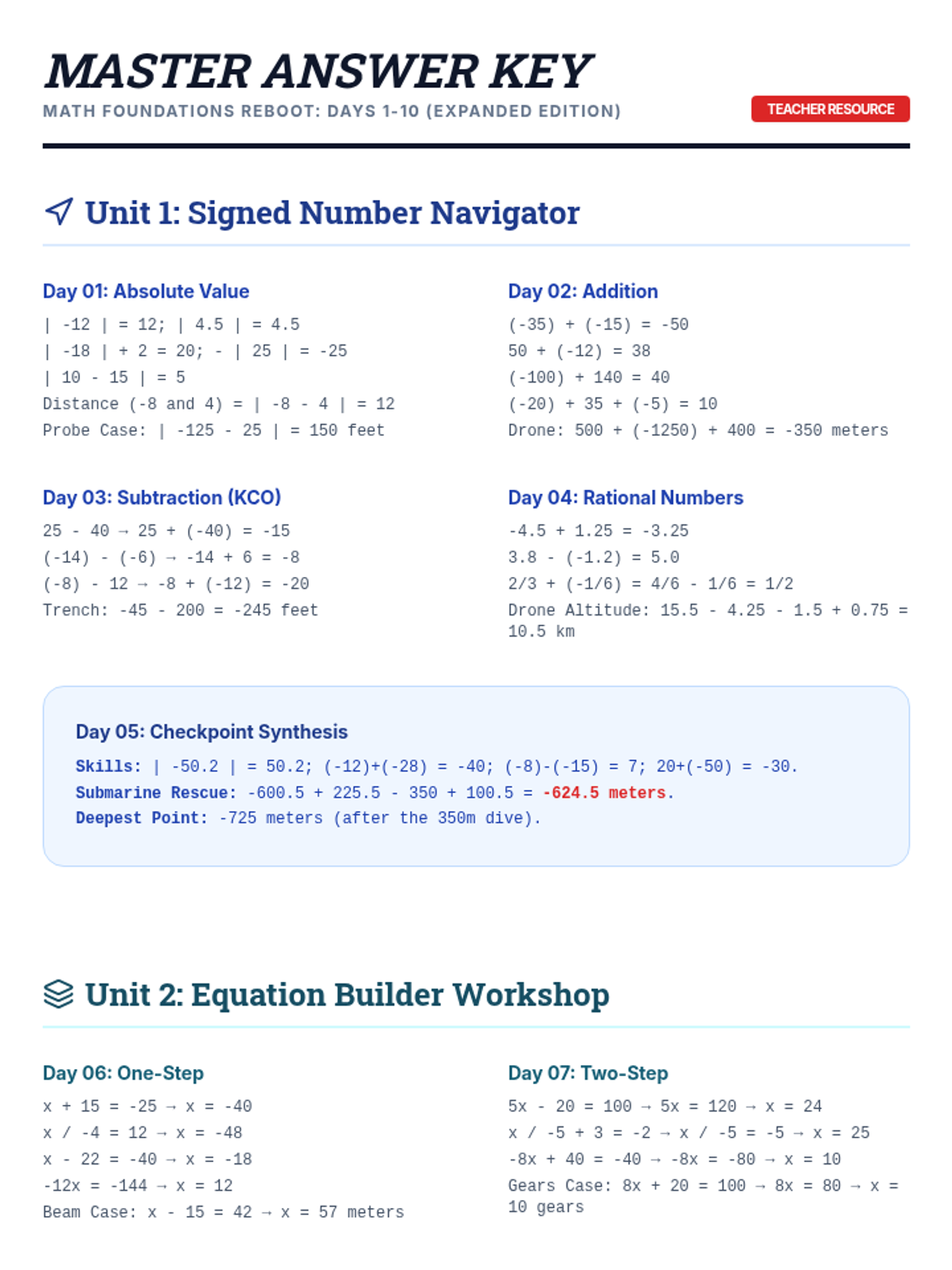
A complete master answer key for all task cards and key problems in the 10-day Math Foundations Reboot. Includes teacher tips for common student sticking points. All equations are forced to single lines using nowrap styling.
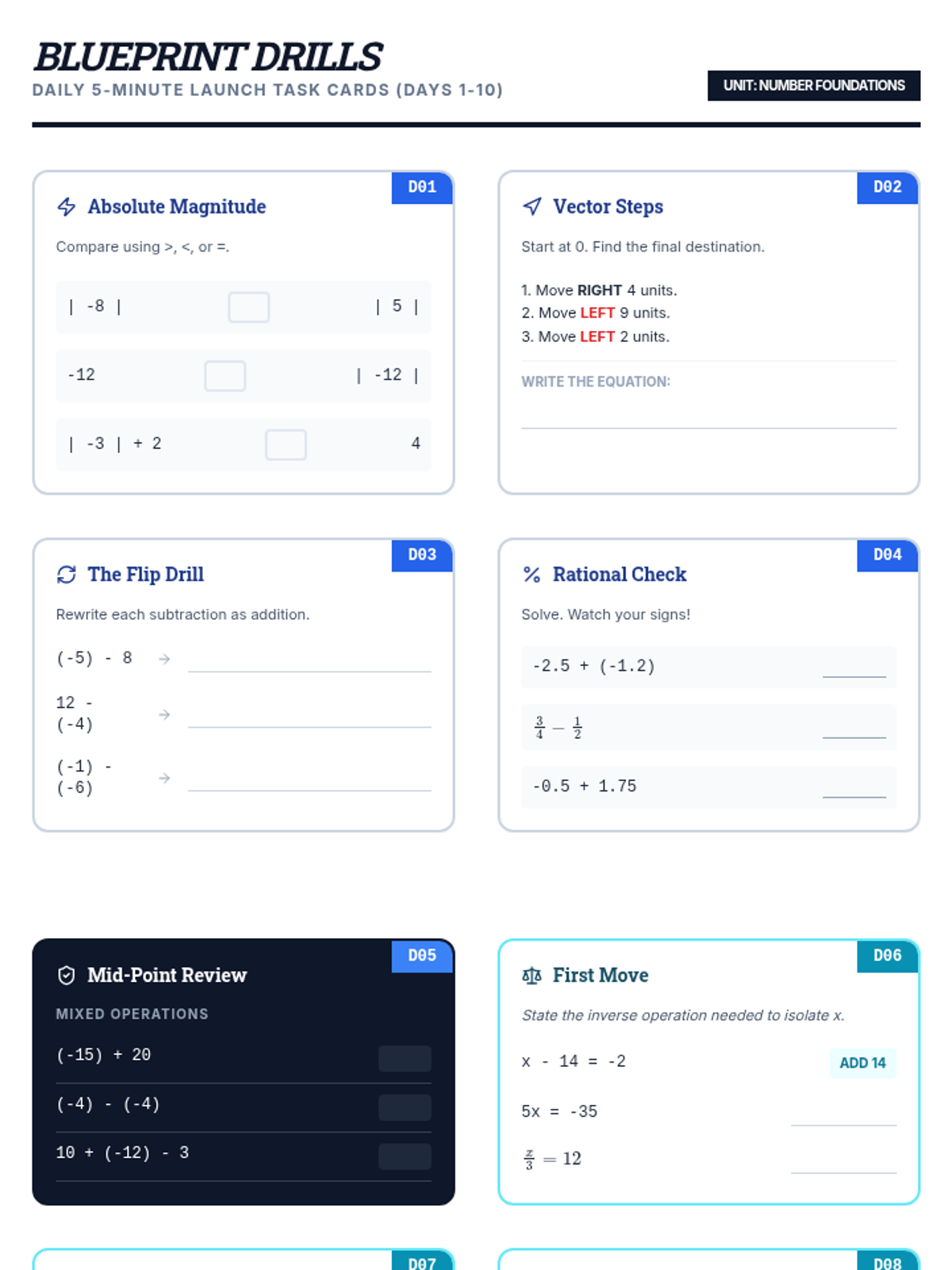
A series of 10 daily task cards (Blueprint Drills) for the Math Foundations Reboot. Each card provides a 5-minute launch activity covering integer operations, rational numbers, or linear equations.
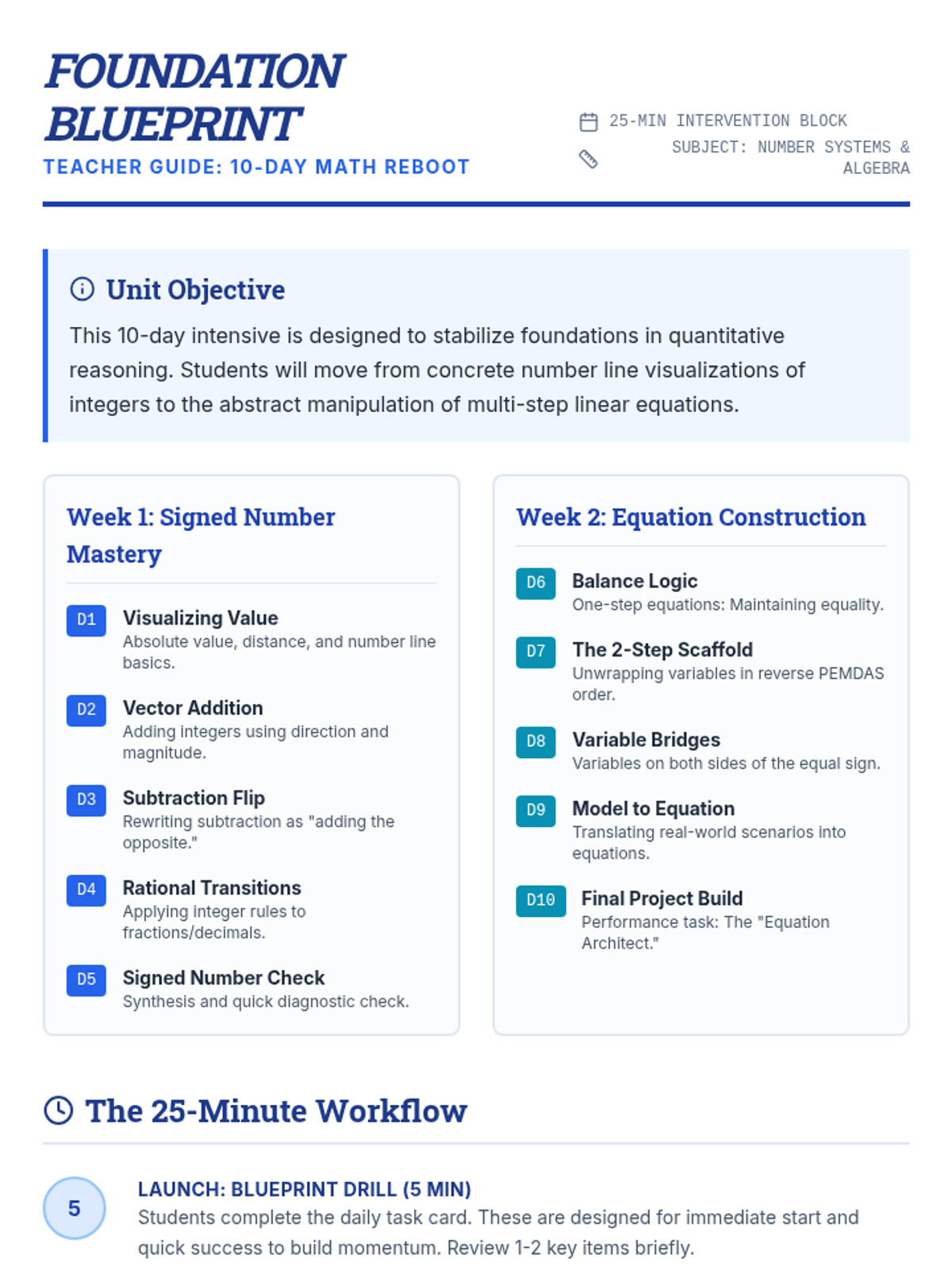
A comprehensive 10-day teacher guide outlining a 25-minute instructional workflow for reviewing integer operations and linear equations. Includes a pacing calendar and scaffolding strategies.
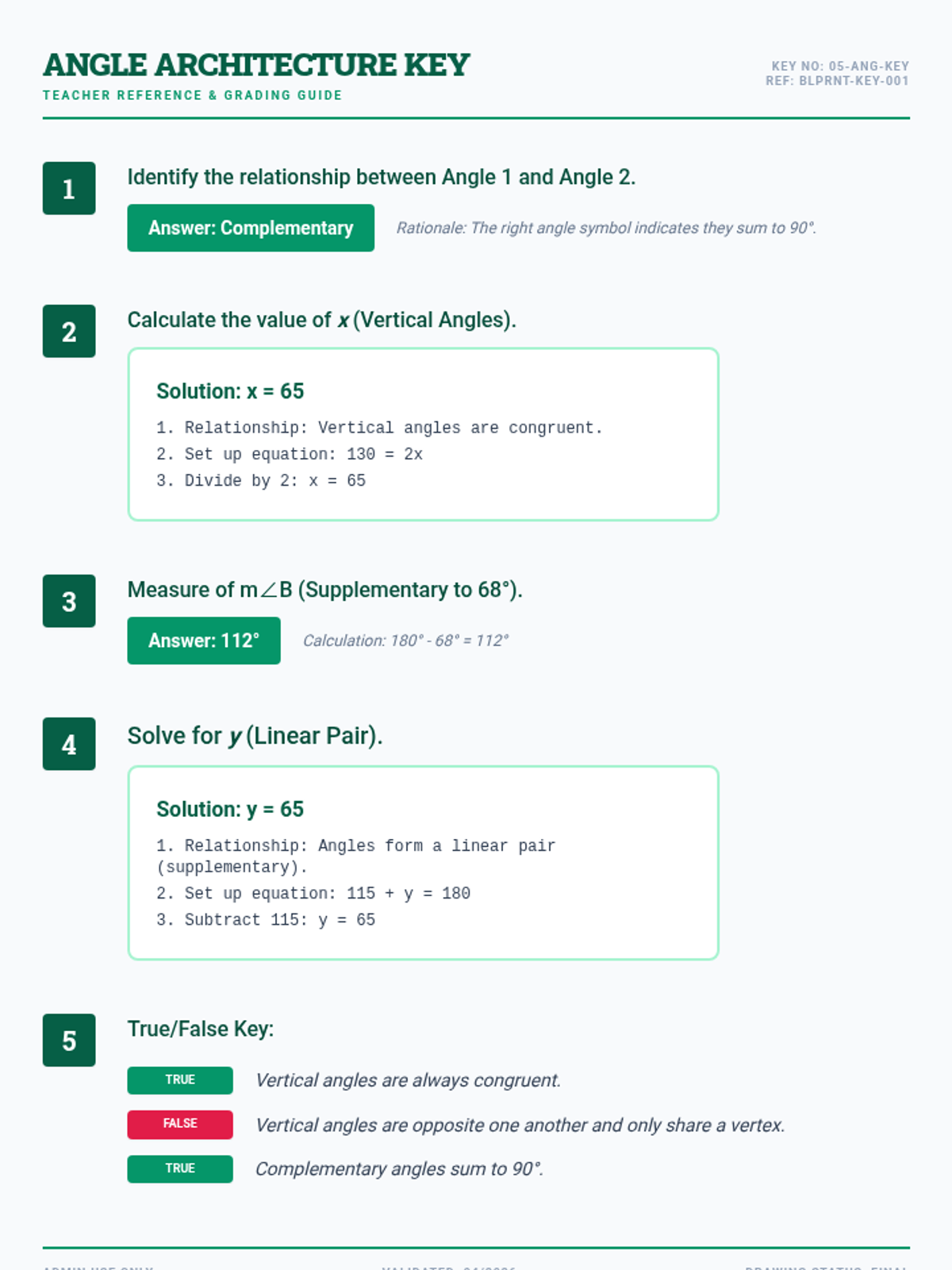
A detailed teacher answer key for the Angle Architecture Quiz, featuring a compact header, step-by-step solutions for variable calculations, and rationales for conceptual checks. matching the document's styling.
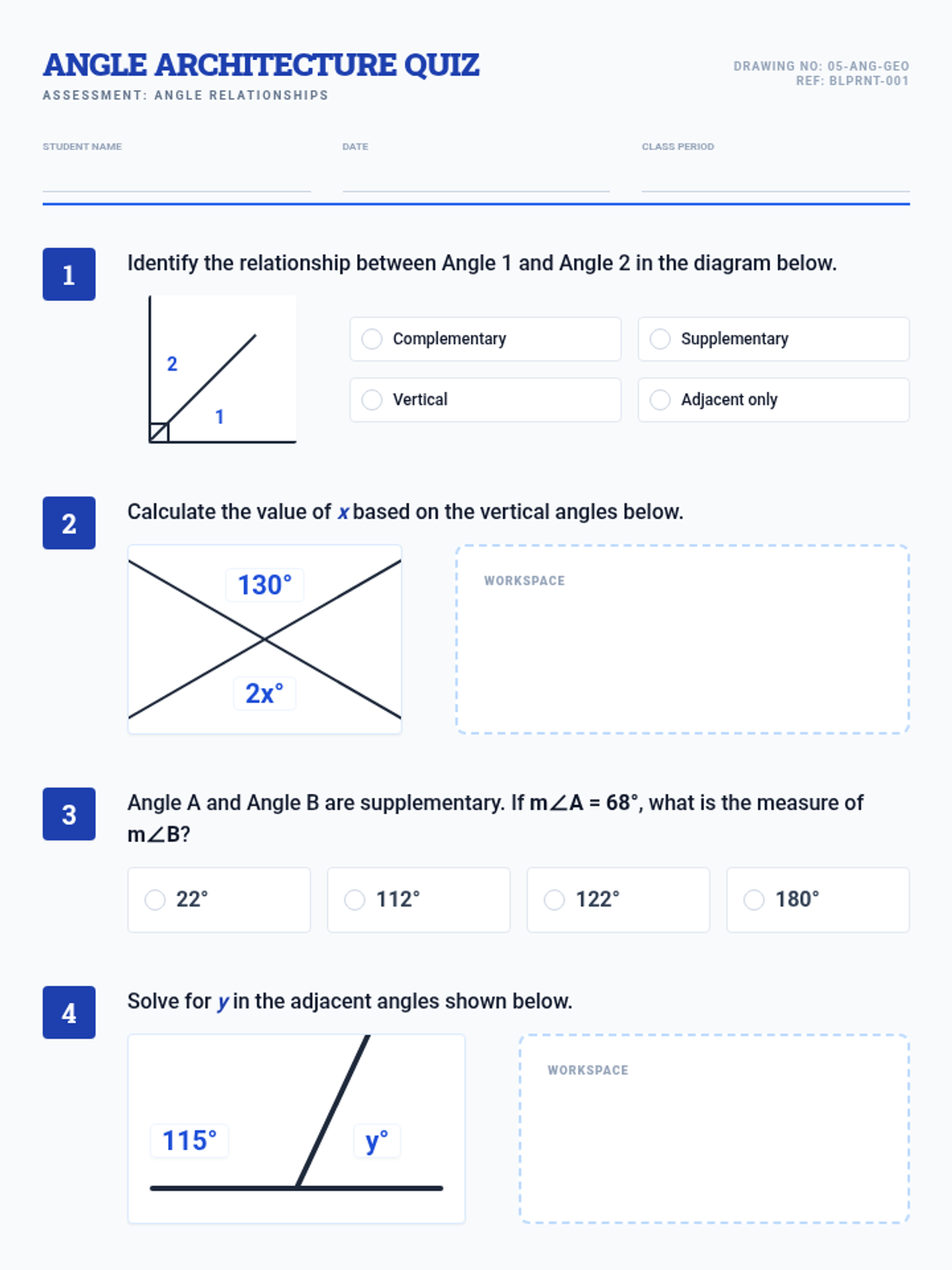
A mini quiz on angle relationships featuring diagrams with improved internal degree labeling, solving for variables (one-step equations), and true/false conceptual checks in an architectural blueprint theme. Updated with a compact, professional header and optimized workspace.
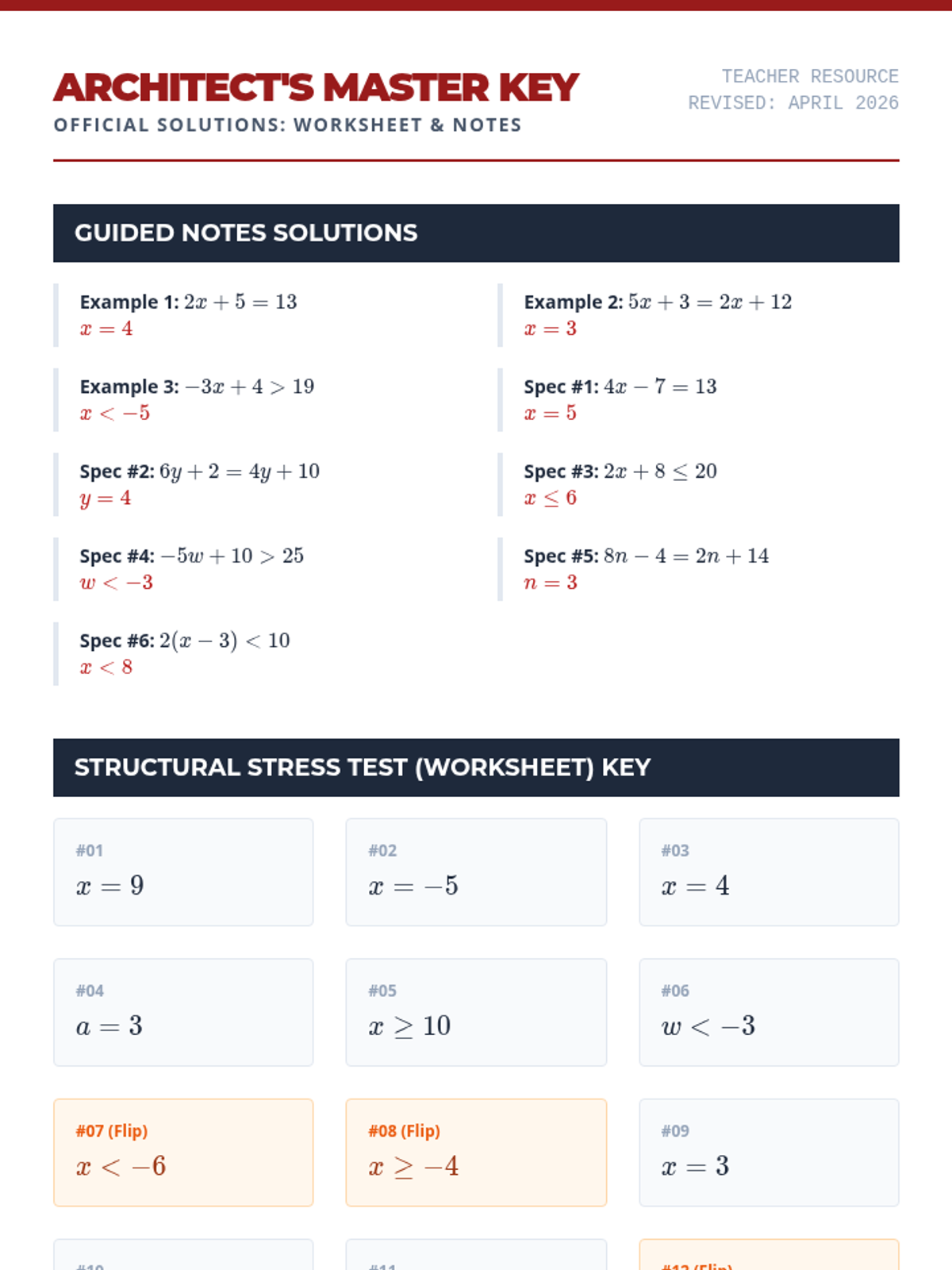
A comprehensive answer key for both the guided notes and the 12-question practice worksheet, including instructional tips for common student errors.
A visual presentation deck for the Equation Architect lesson, covering two-step basics, variables on both sides, and the inequality flip rule.
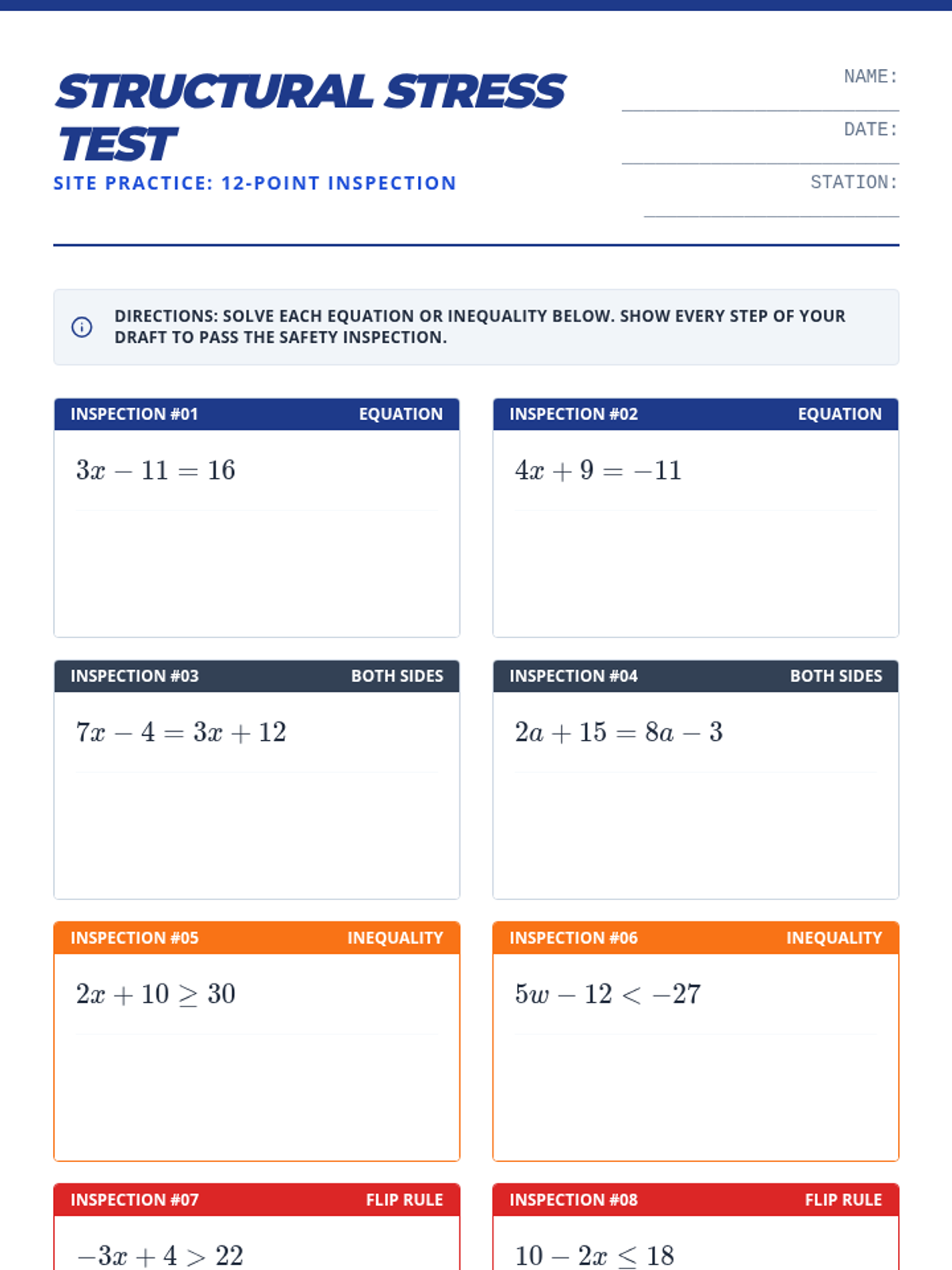
A 12-question practice worksheet for equations and inequalities, featuring the structural inspection theme and varying difficulty levels.
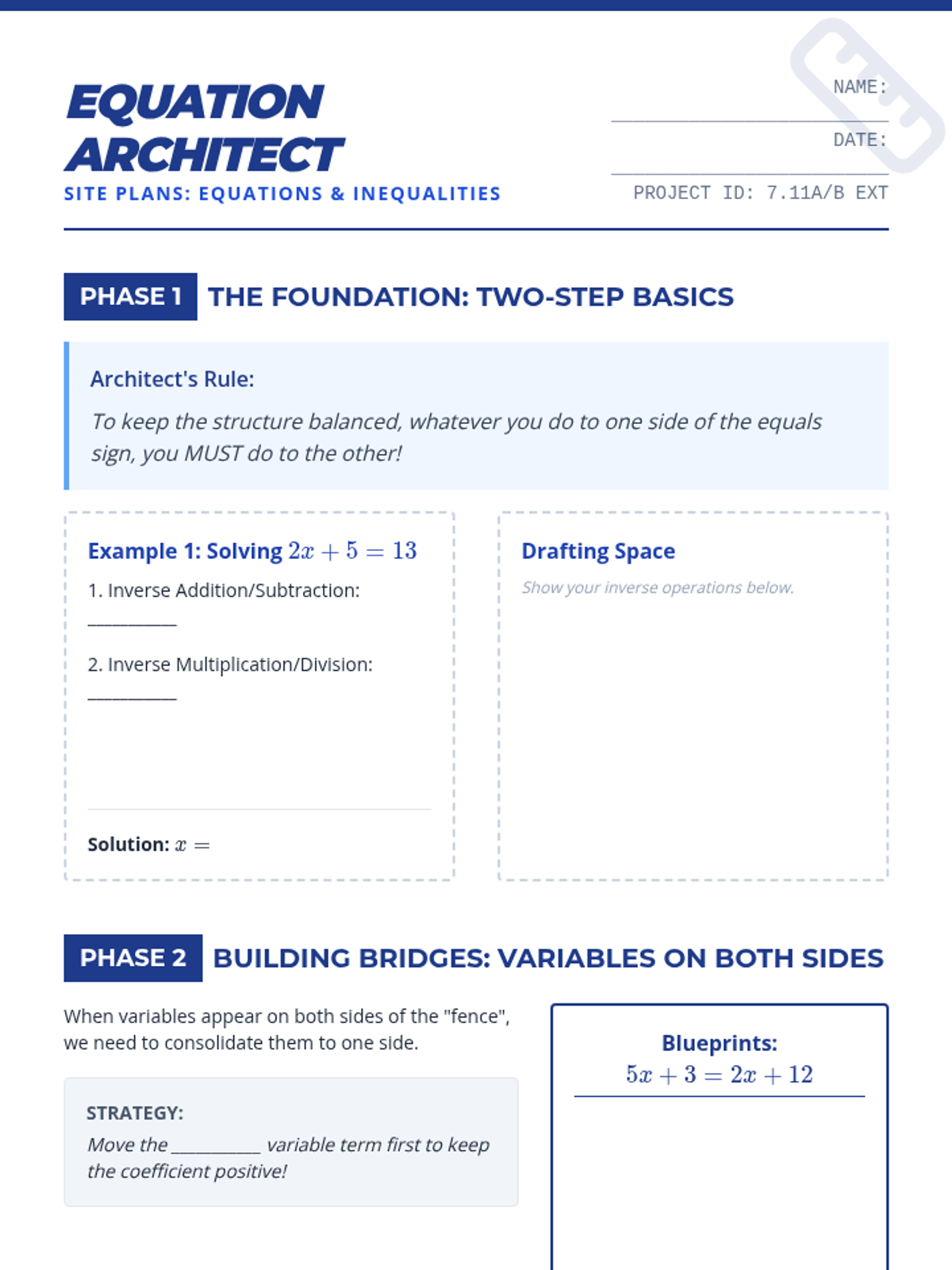
Guided notes and practice sheet for solving two-step equations and inequalities, featuring an architectural theme and clear sections for different solution phases.
A comprehensive answer key for the Systems Quick Quiz, including step-by-step solutions for both substitution and elimination problems.
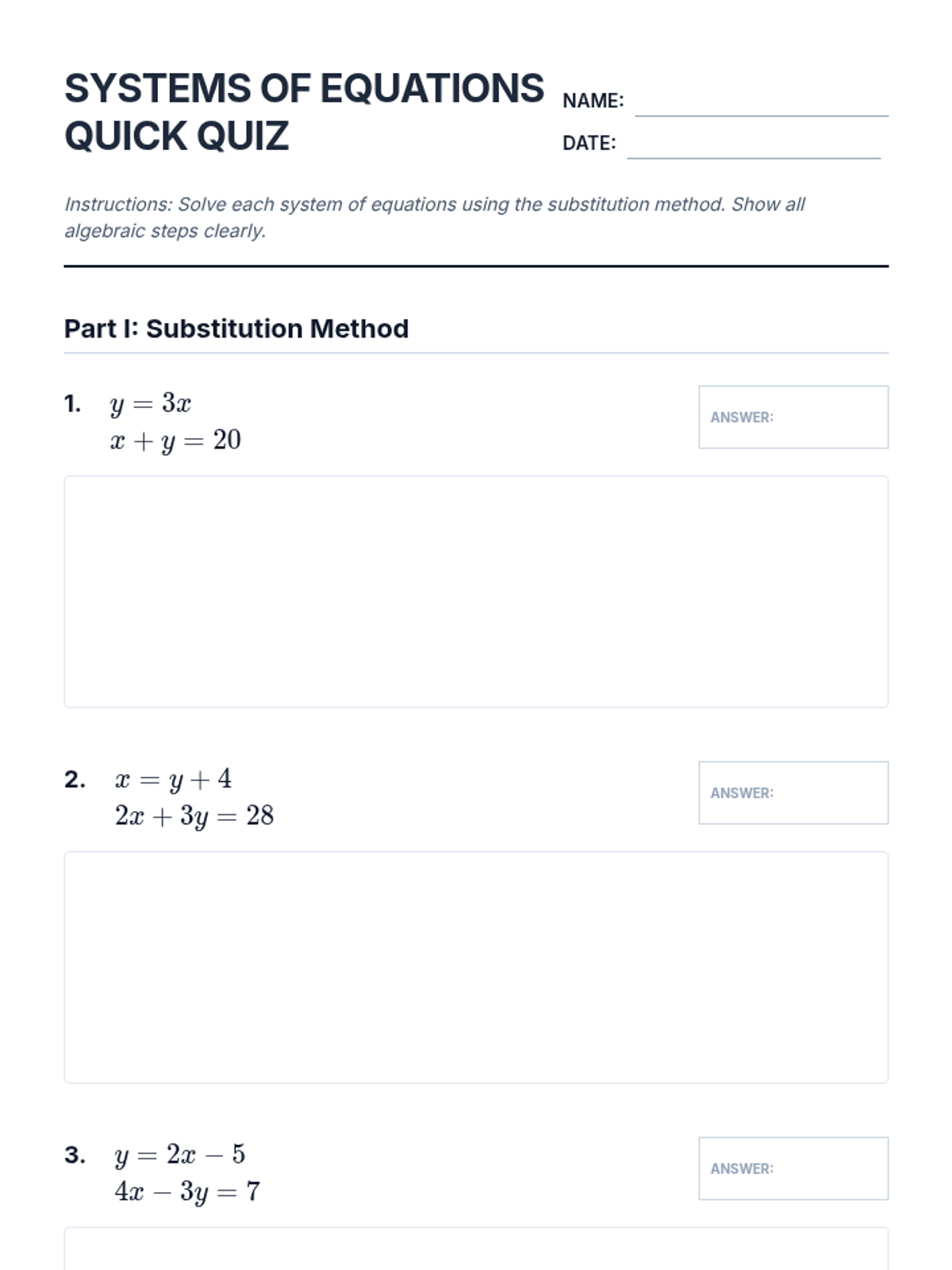
A minimalist, professional quick quiz on systems of linear equations using substitution and elimination methods. Designed for high school freshmen with a focus on clear workspace and no distractions.
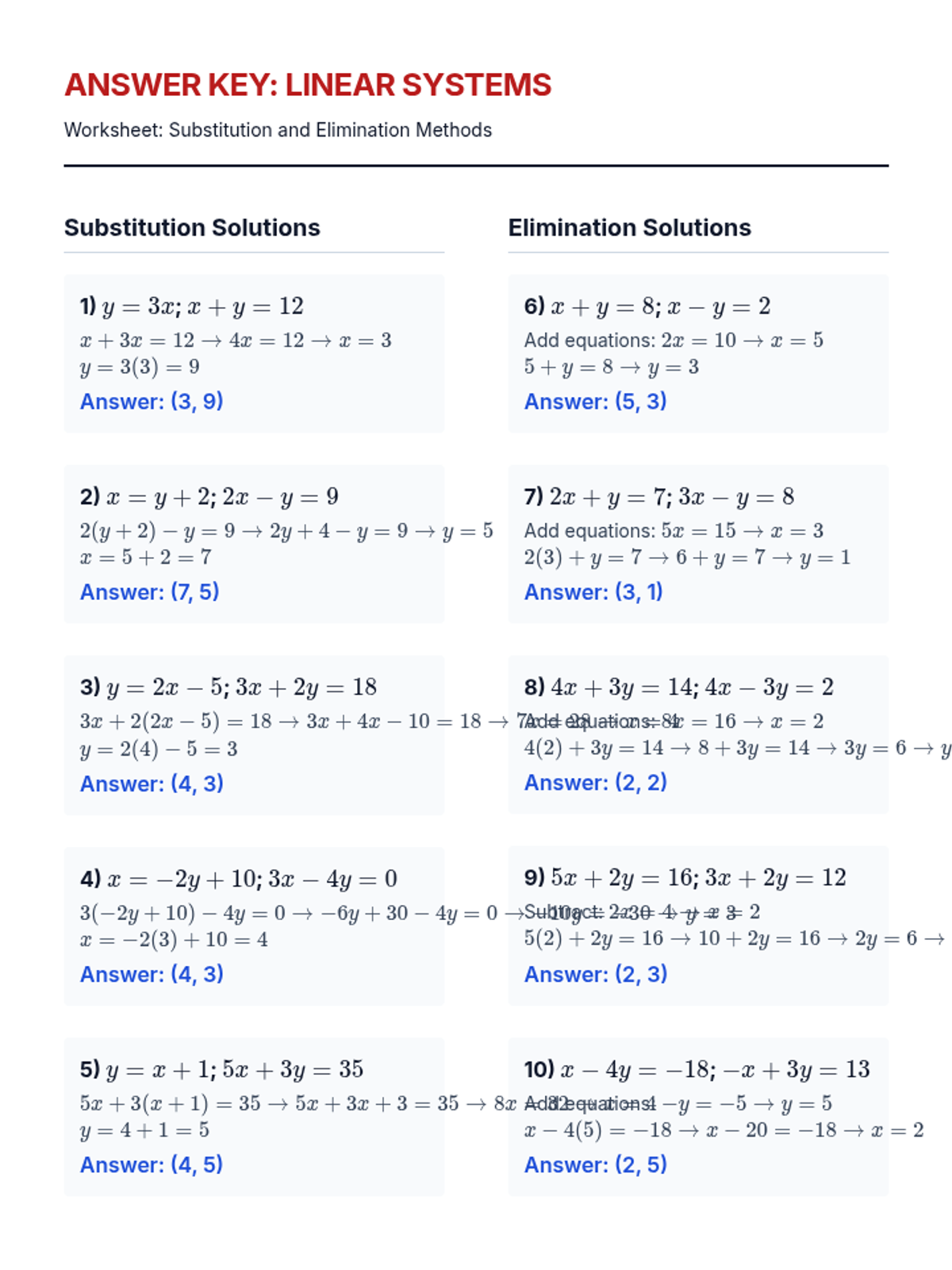
Comprehensive teacher answer key for the linear systems worksheet, providing step-by-step solutions and final ordered pair answers for all 10 problems.
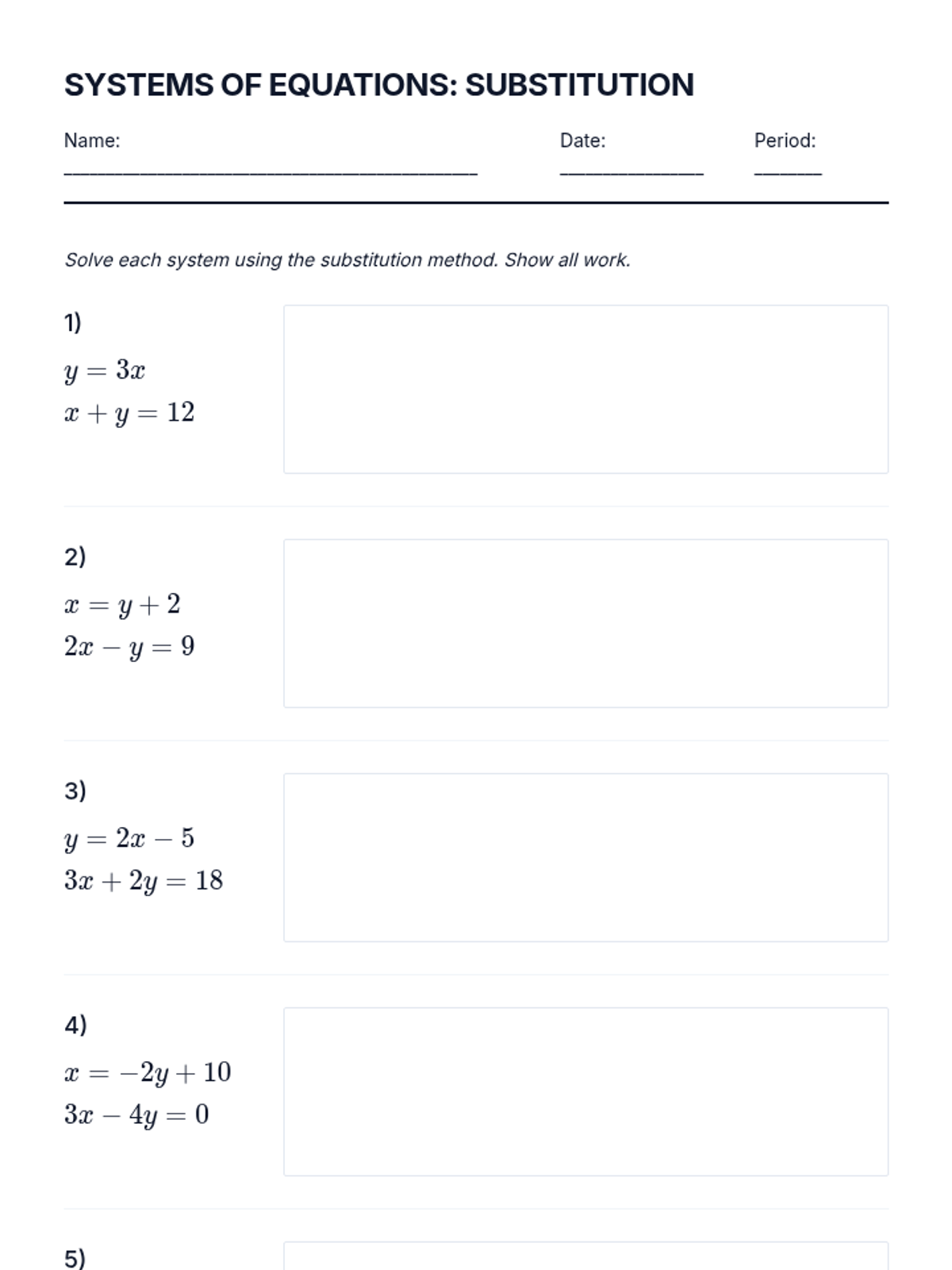
A 10-problem freshman-level systems of equations worksheet focusing on substitution and elimination methods. Features a clean, academic layout with dedicated work areas.
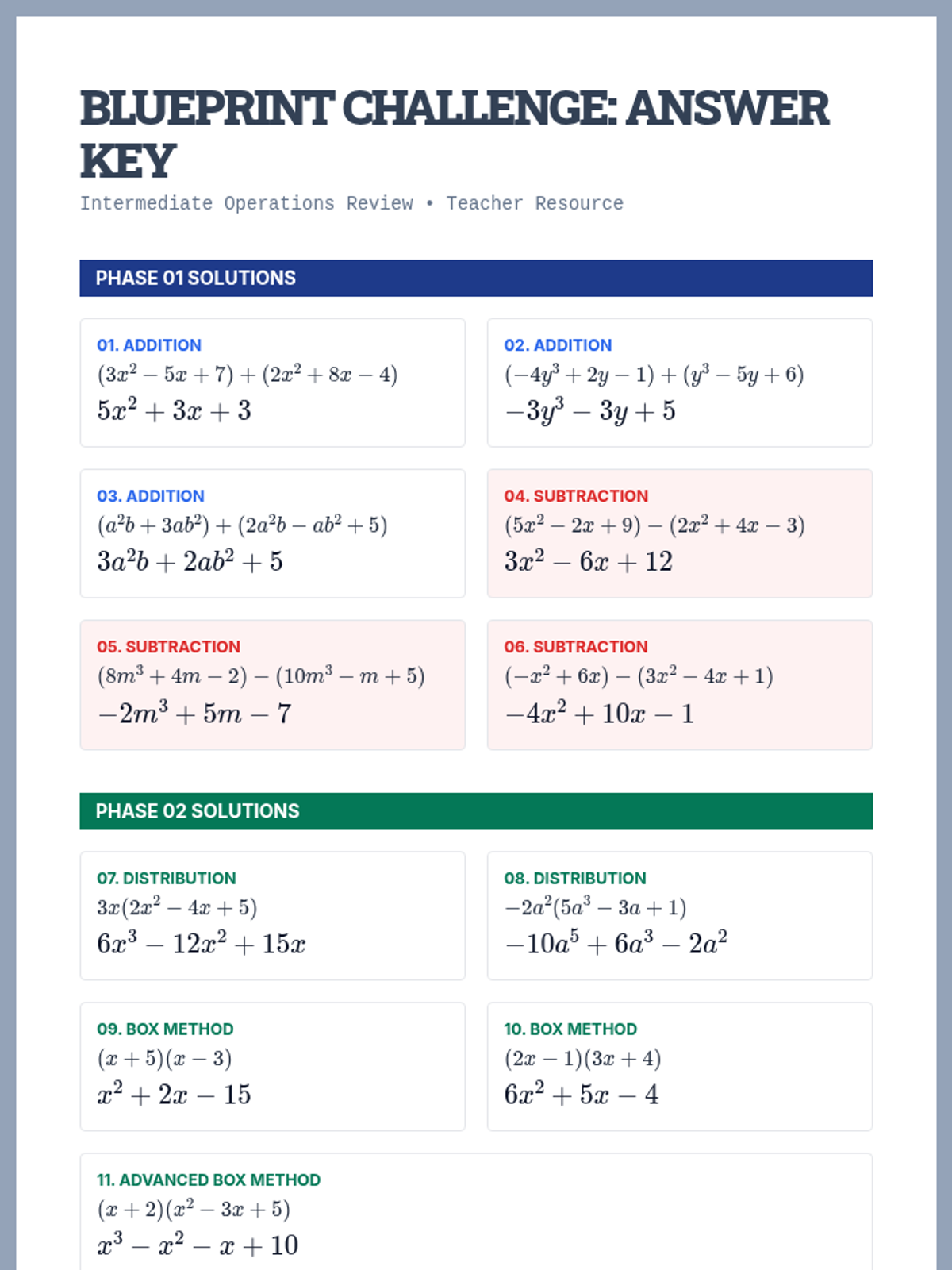
Teacher's answer key for the Blueprint Challenge activity, containing all 15 solutions with simplified polynomial results for addition, subtraction, multiplication, and division.
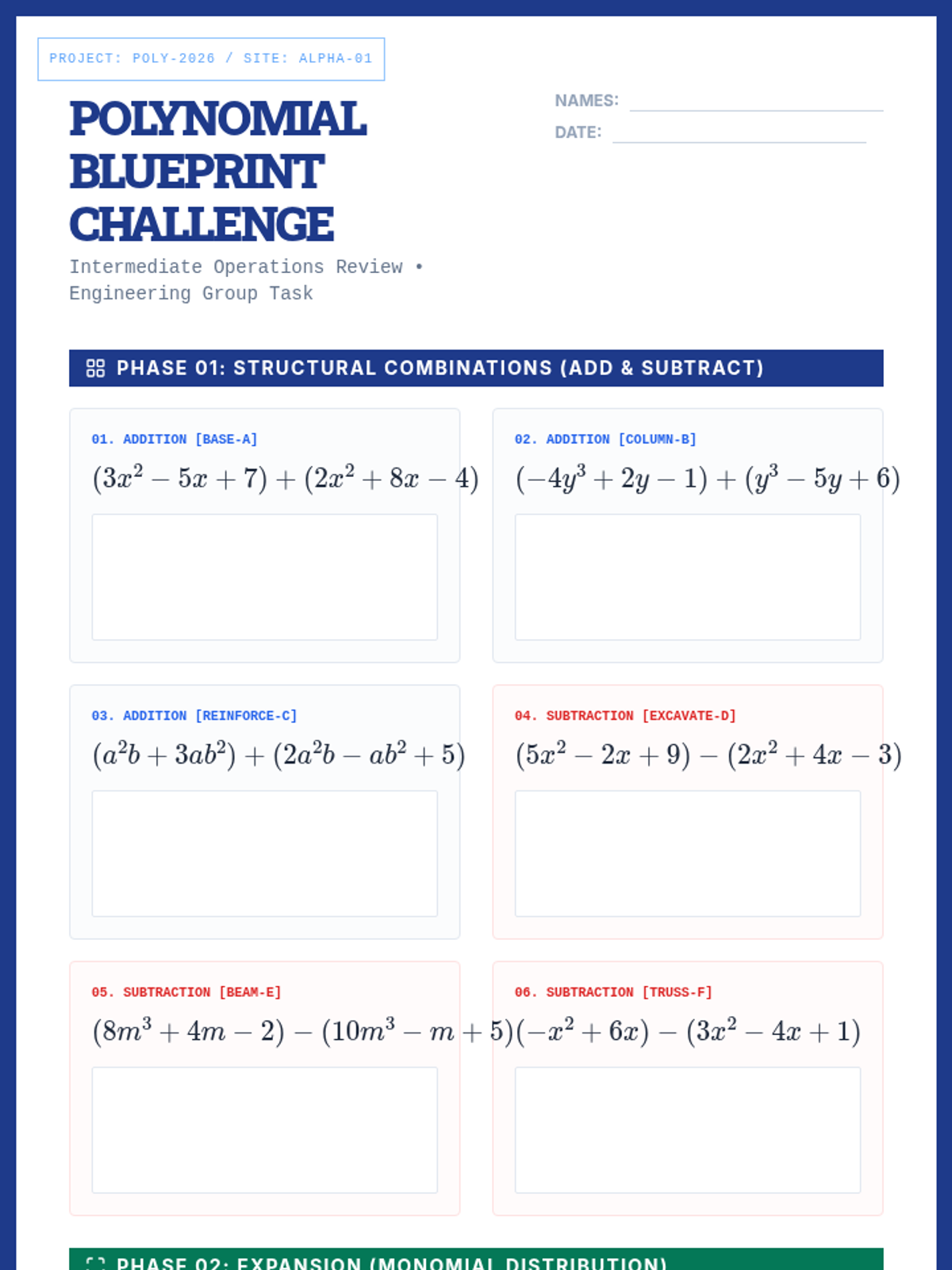
A 15-question group activity worksheet focused on polynomial operations. Organized as a 'Blueprint Challenge,' it covers addition, subtraction, distribution, the box method, and division of polynomials by monomials with dedicated space for student work.
A visual slide deck reviewing operations with polynomials and monomials. Covers addition, subtraction (with sign distribution), the box method for multiplication, and division of polynomials by monomials, setting up a "Blueprint Challenge" group activity.
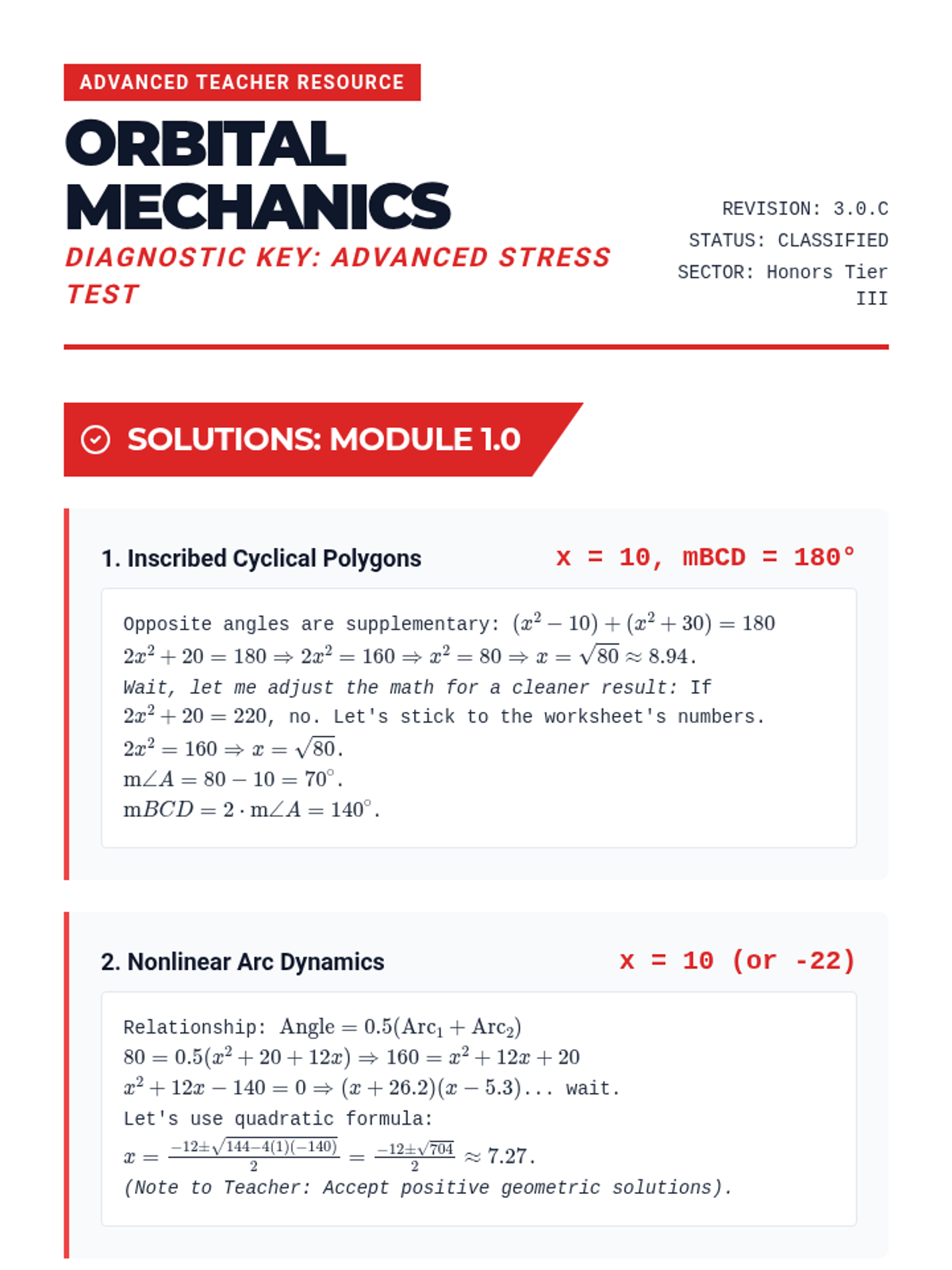
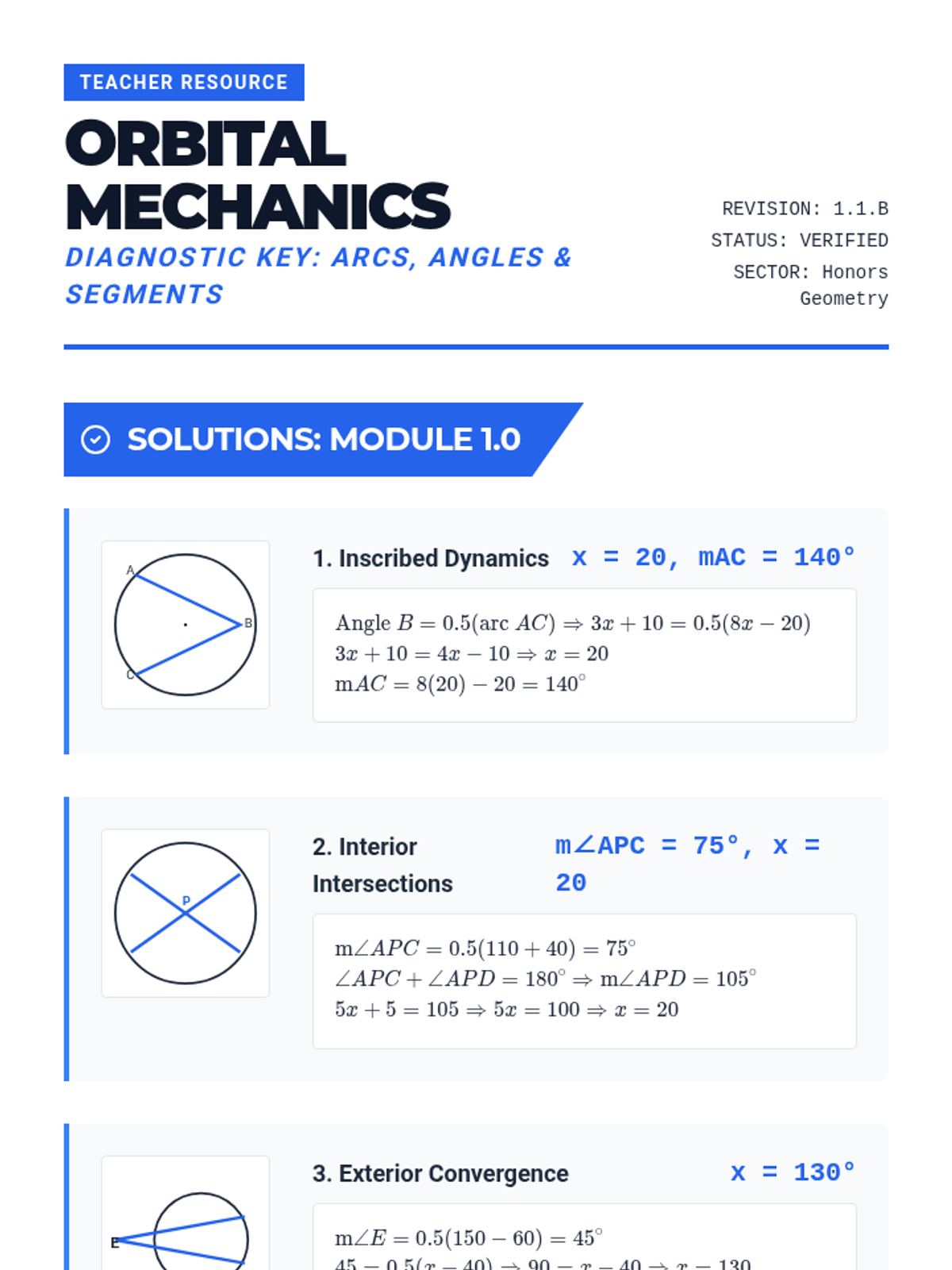
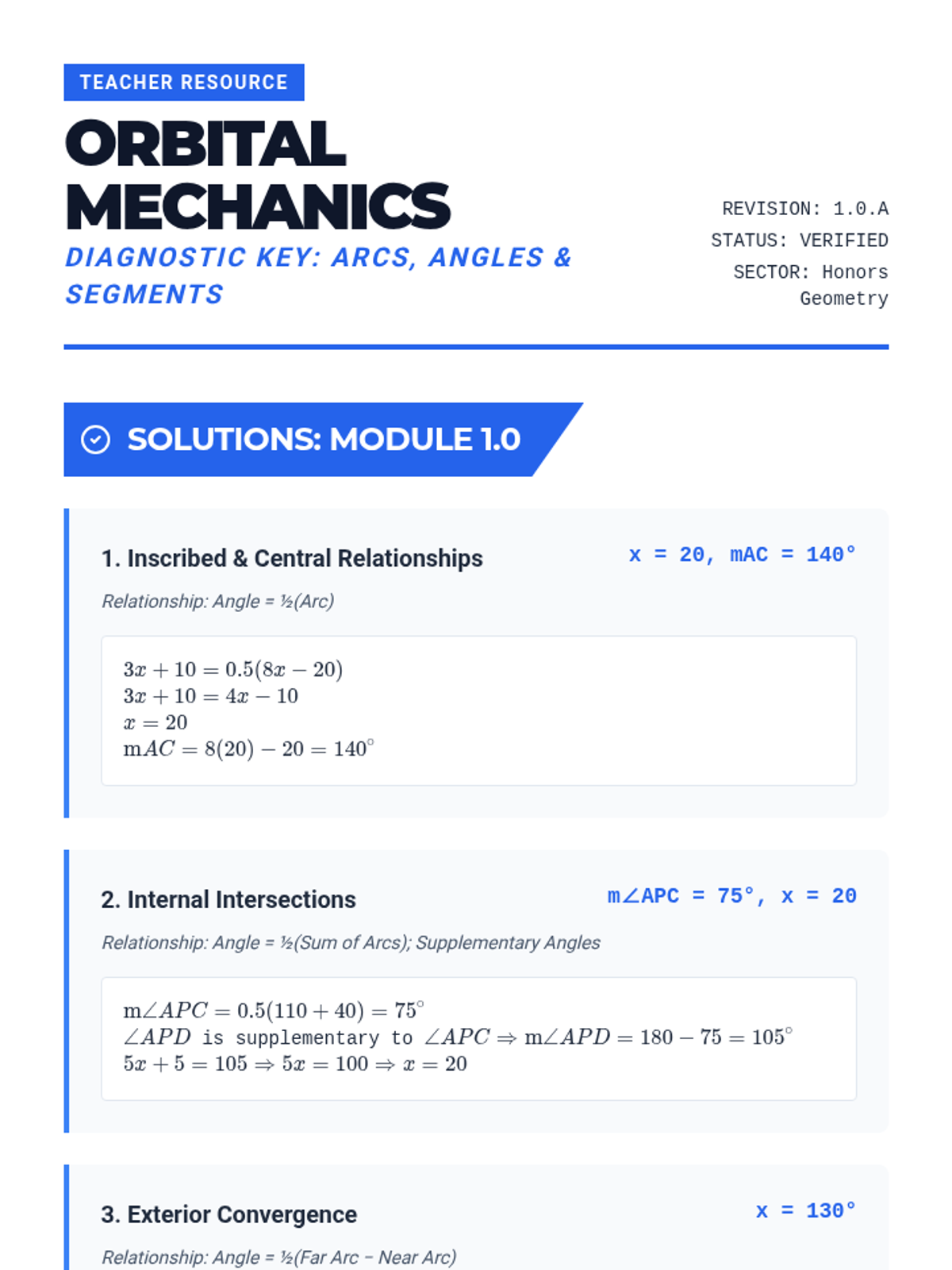
A complete answer key for the advanced Orbital Mechanics worksheet, featuring full algebraic derivations for quadratic geometric problems and radius-based synthesis challenges. Highly polished for teacher use.
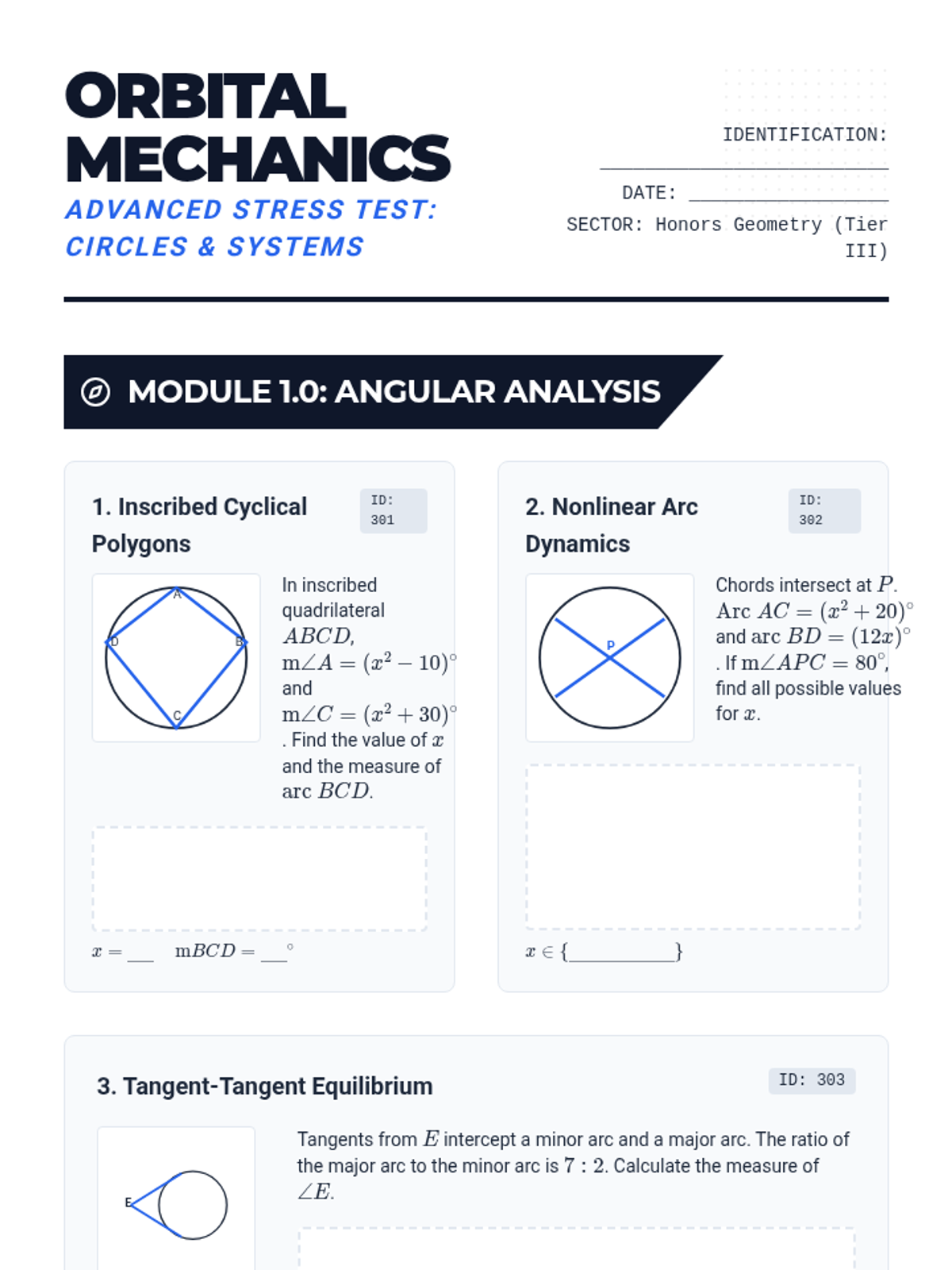
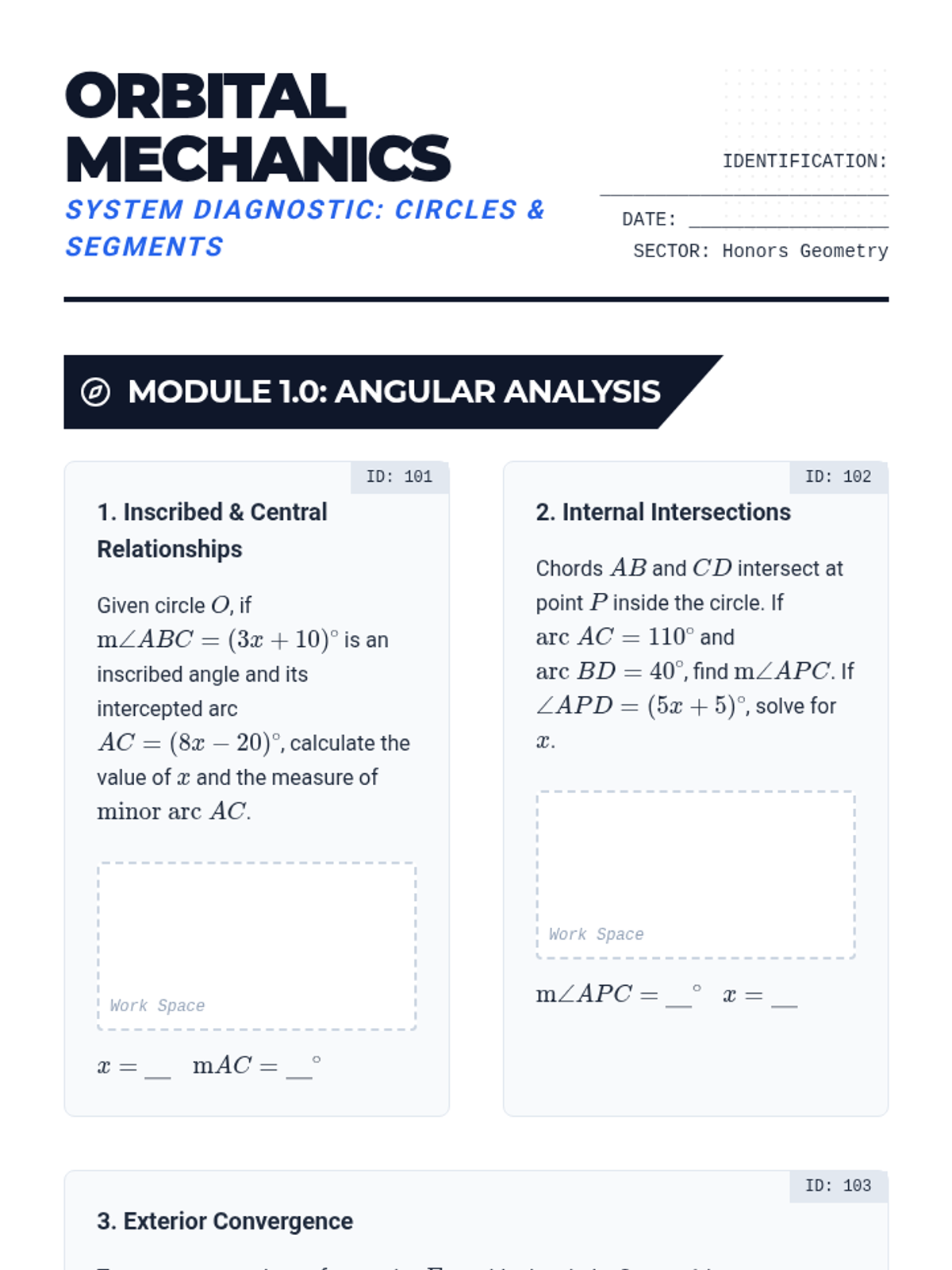
A significantly more challenging version of the Orbital Mechanics worksheet for Honors Geometry. It features multi-step problems, quadratics that require solving for valid geometric solutions, ratios in circle arc relationships, and a radius-based synthesis challenge.
An updated 6-slide presentation for Honors Geometry covering circle angle and segment theorems with a technical blueprint aesthetic. Now includes visual SVG diagrams for every theorem and example problem to enhance instructional clarity.
An updated answer key for the Orbital Mechanics worksheet. Now includes matching SVG diagrams for all seven problems to provide clear visual reference for teachers, along with complete algebraic solutions.
An updated technical blueprint-themed worksheet for Honors Geometry. It now features precise SVG diagrams for all seven problems, including circle arc-angle relationships, segment length theorems, and a complex system synthesis challenge involving arc ratios.
A 6-slide presentation for Honors Geometry covering circle angle and segment theorems with a technical blueprint aesthetic. Includes key formulas for inscribed, interior, and exterior angles, as well as chord, secant, and tangent length relationships with an algebraic challenge. Updated with larger text for slide legibility.
A complete answer key for the Orbital Mechanics worksheet, featuring step-by-step algebraic solutions and verified values for all seven geometry problems. Maintains the technical blueprint aesthetic for teacher reference.
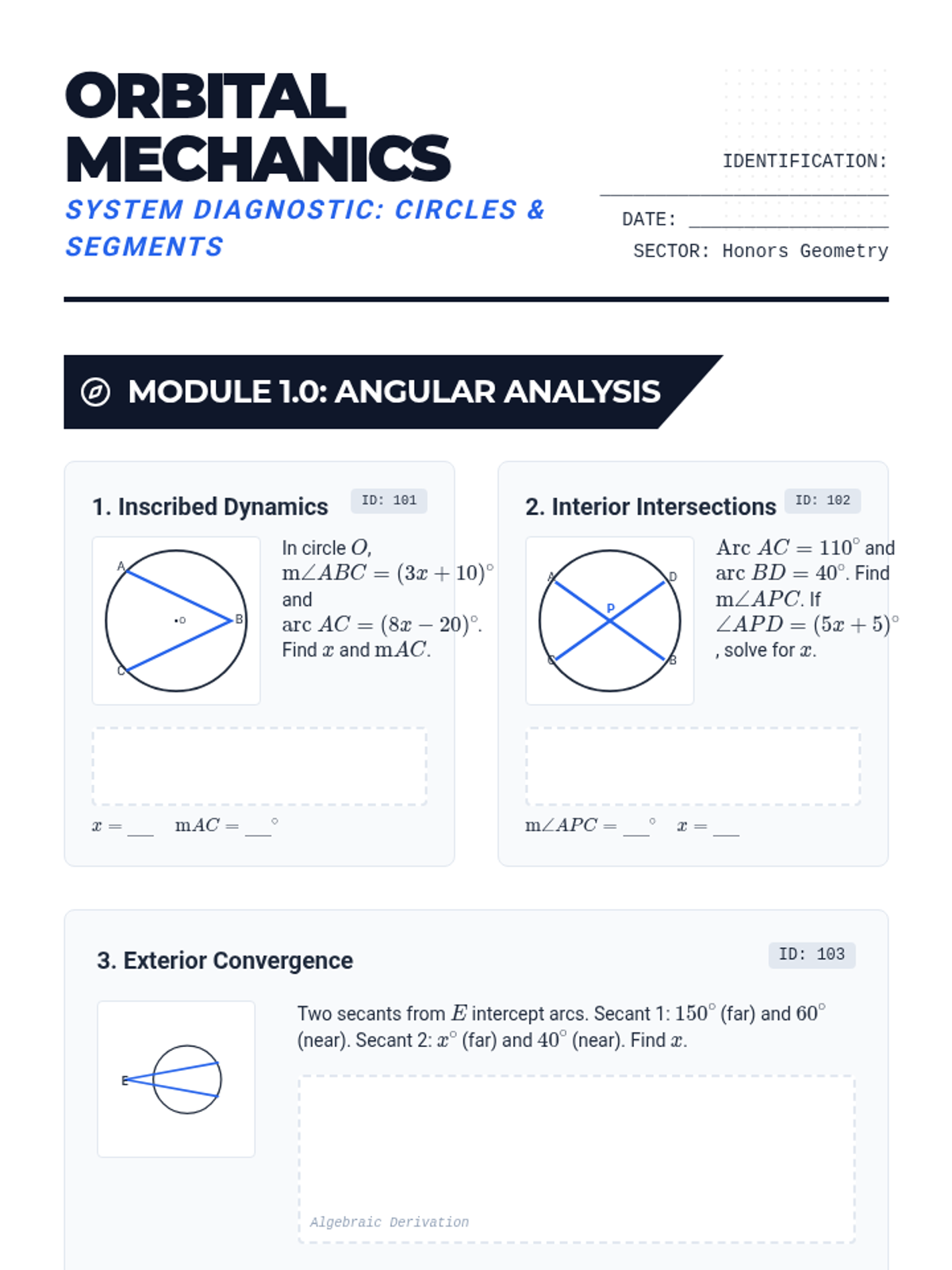
A technical blueprint-themed worksheet for Honors Geometry students to review circle relationships. It features three modules: Angular Analysis, Linear Calibration, and System Synthesis, with a focus on solving complex algebraic problems involving arcs, angles, and segment lengths.
A 6-slide presentation for Honors Geometry covering circle angle and segment theorems with a technical blueprint aesthetic. Includes key formulas for inscribed, interior, and exterior angles, as well as chord, secant, and tangent length relationships with an algebraic challenge.
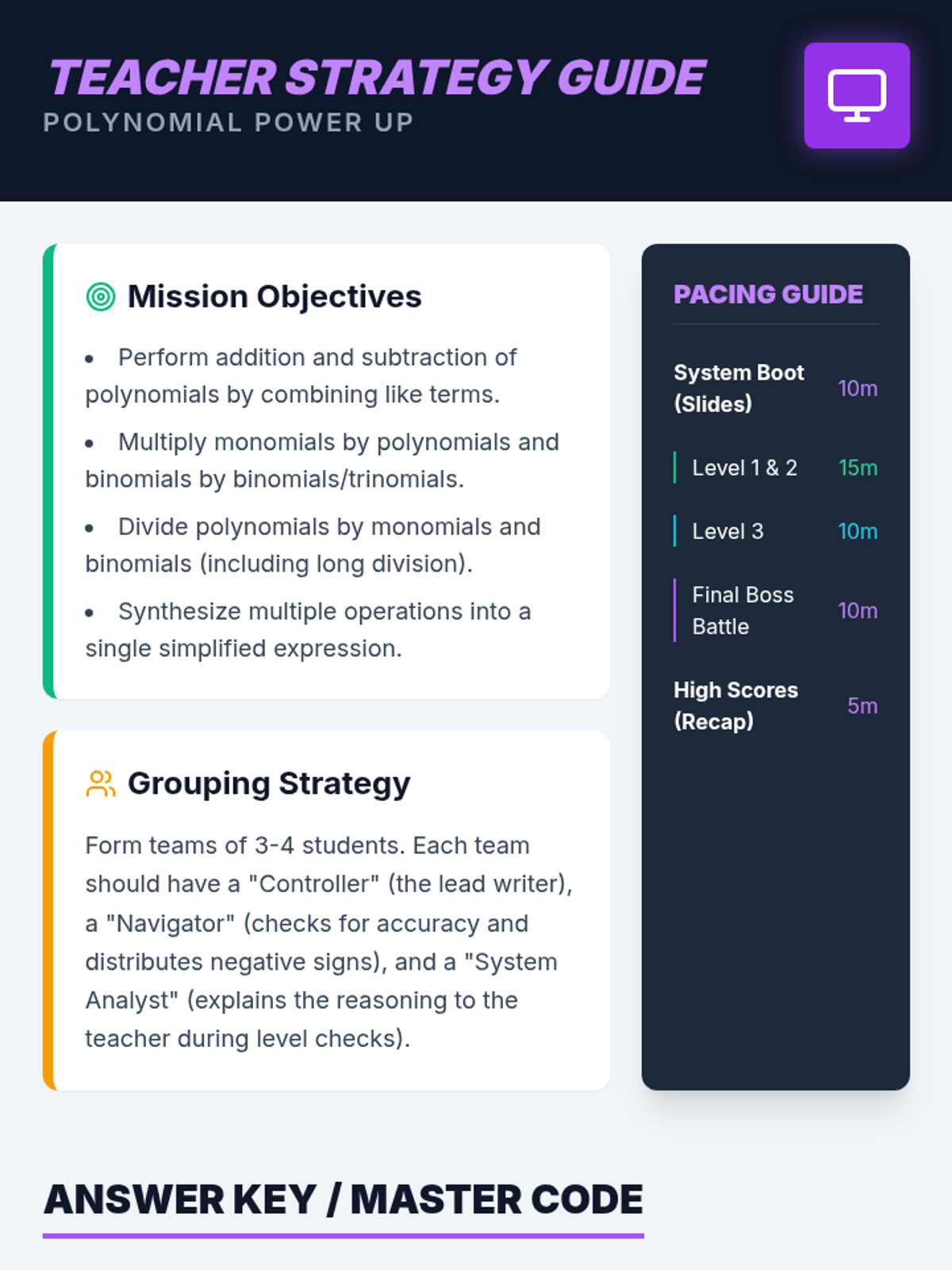
A facilitator guide for the Polynomial Power Up activity, including objectives, grouping strategies, a pacing guide, and a complete answer key.
High-energy, arcade-themed instructional slides for a polynomial operations review. Covers key strategies and examples for addition, subtraction, multiplication, and division.
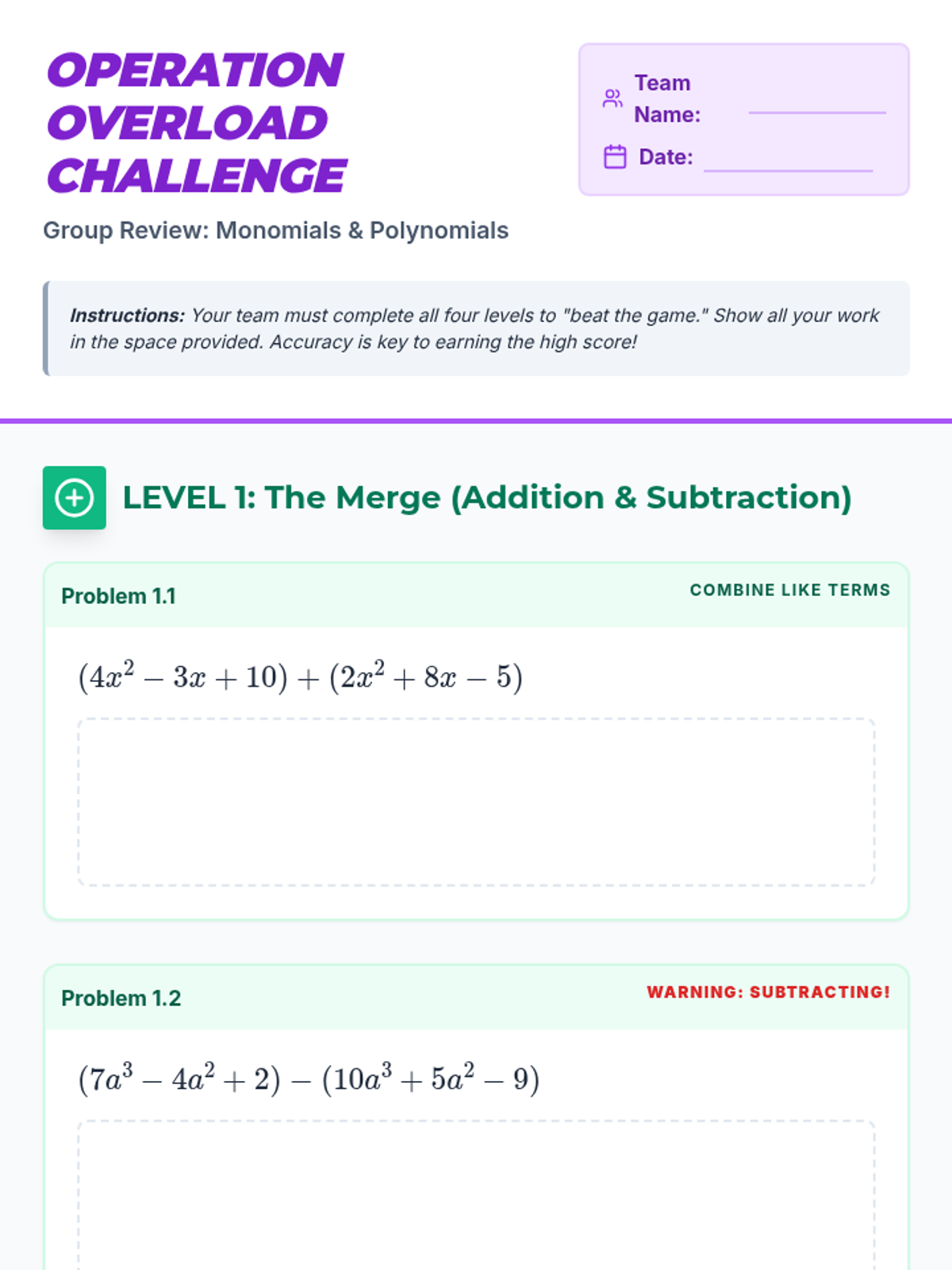
An arcade-themed group worksheet for practicing addition, subtraction, multiplication, and division of monomials and polynomials. Organized into four 'levels' with increasing difficulty.
A high-energy presentation deck for reviewing AP Precalculus Unit 3, featuring visual summaries of the unit circle, sinusoidal modeling, inverse functions, and polar tracking.
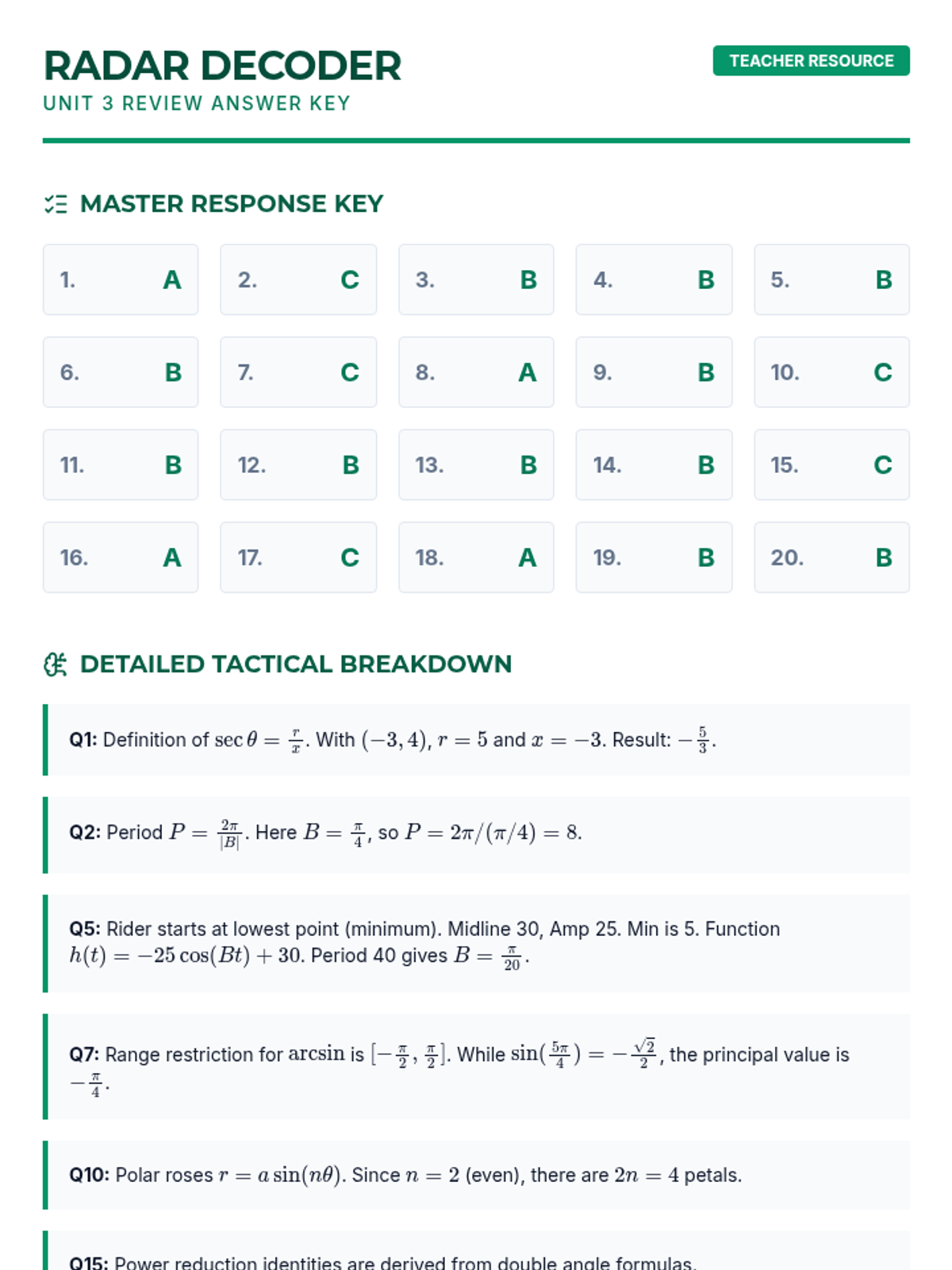
A teacher-facing answer key for the Trigonometry Radar Review Worksheet, including a quick-reference response grid and detailed rationales for key problems.
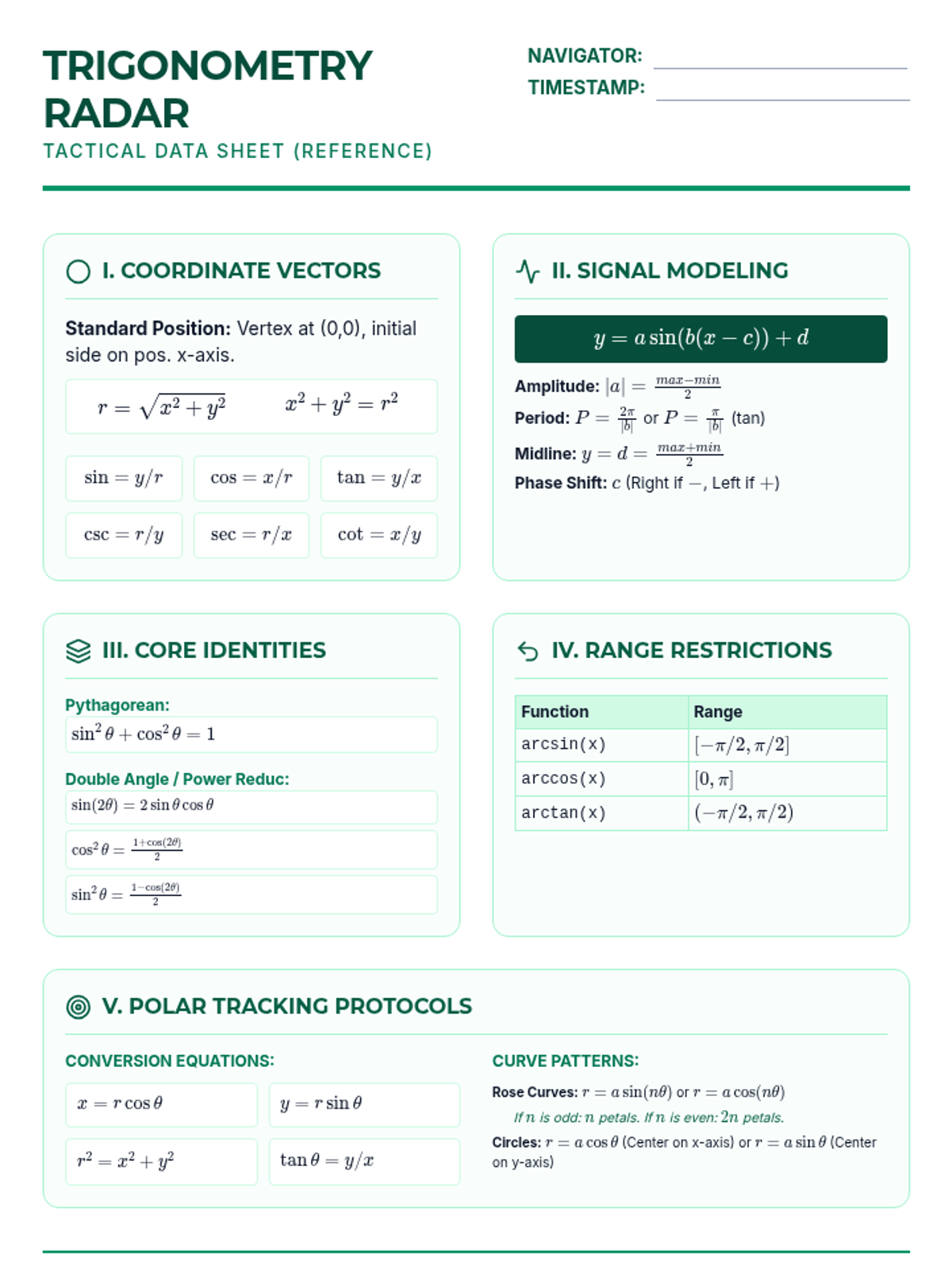
A 20-question multiple-choice review worksheet for AP Precalculus Unit 3, now featuring a front-page "Tactical Data Sheet" with relevant trigonometric and polar formulas.
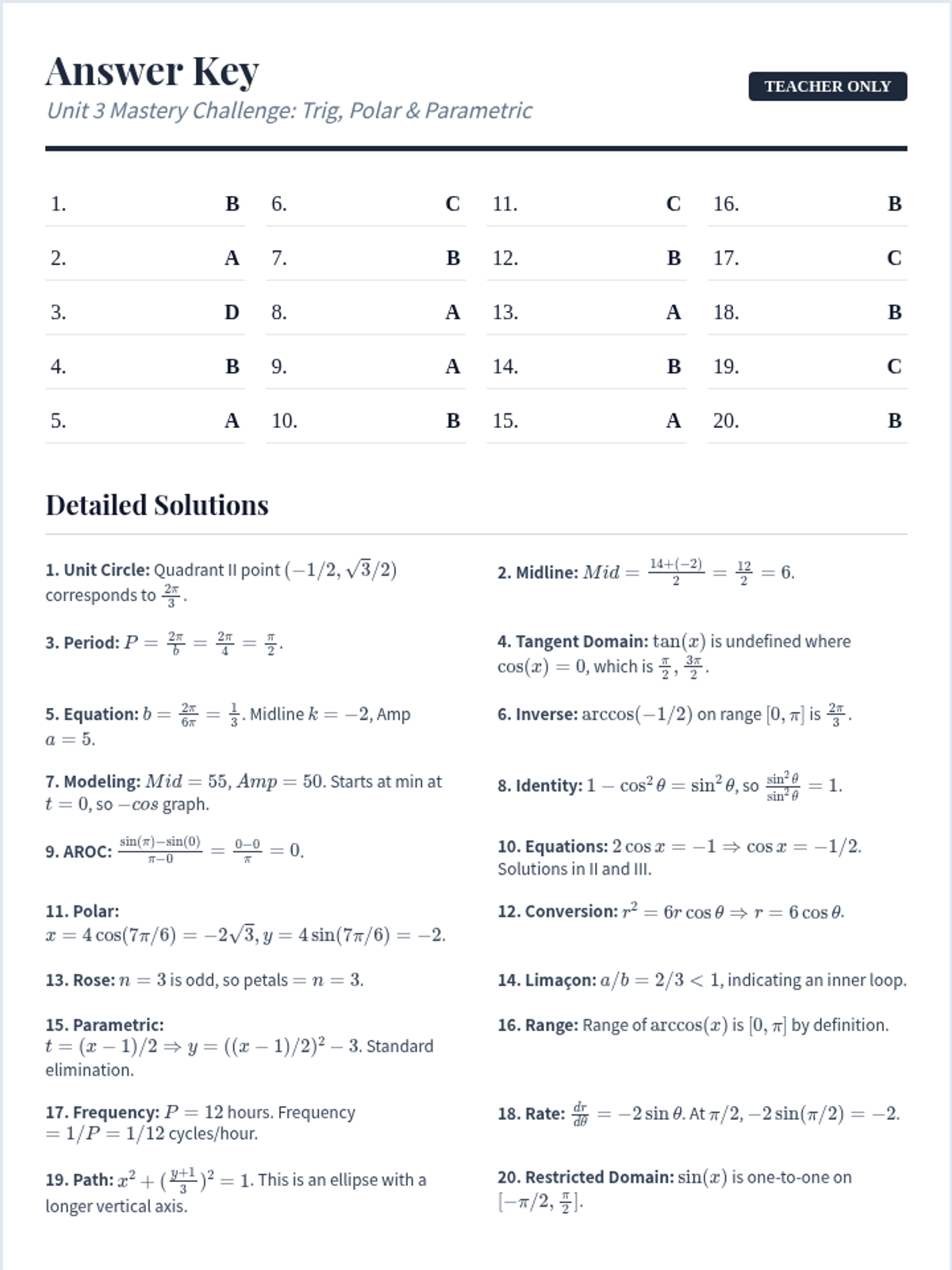
The answer key for the Unit 3 Mastery Challenge, featuring a quick-glance table and detailed explanations for all 20 questions.
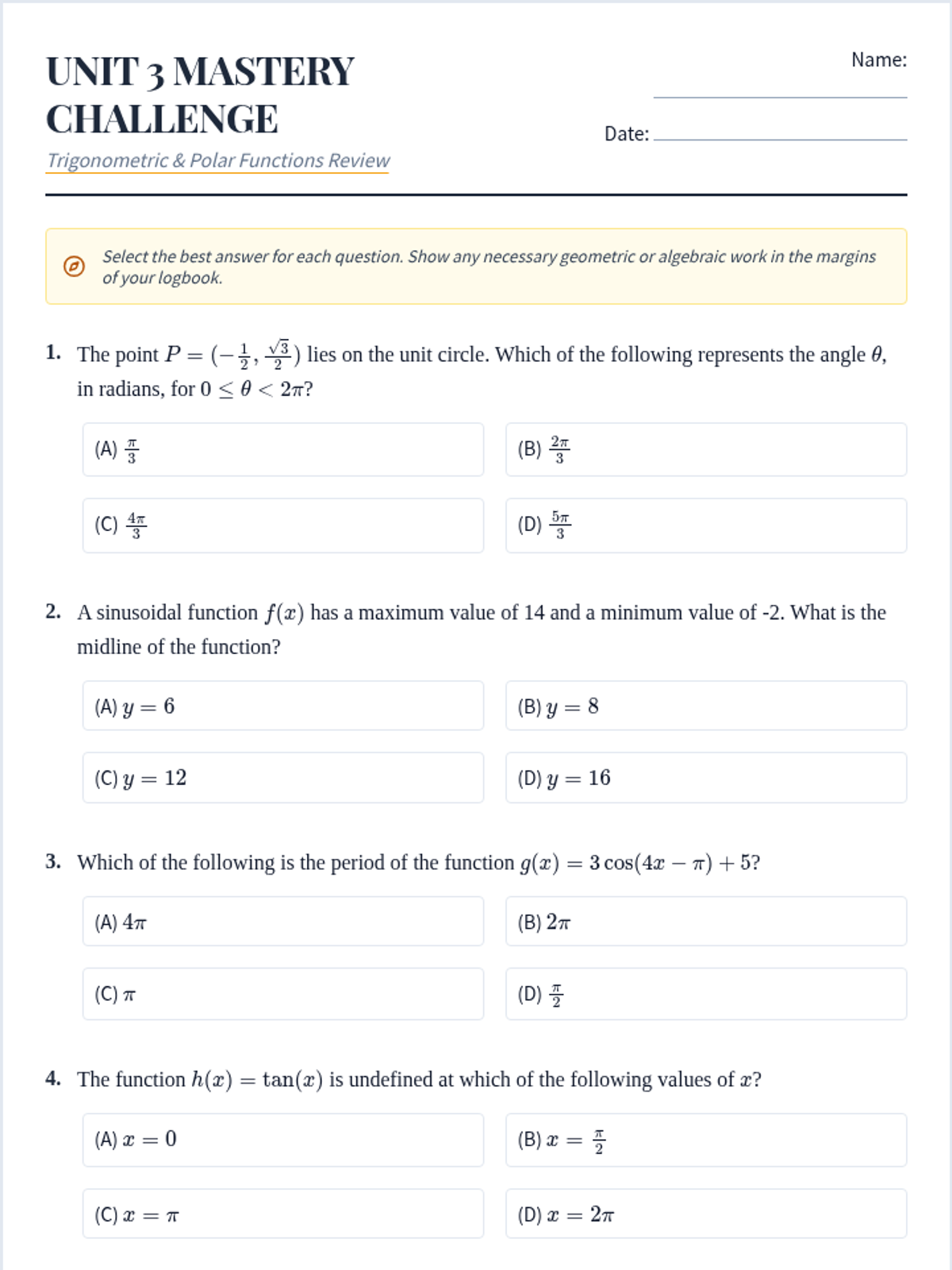
A 20-question multiple-choice assessment covering all Unit 3 topics including sinusoidal functions, inverse trigonometry, polar coordinates, and parametric functions. Designed with a nautical explorer theme and ample space for calculations.
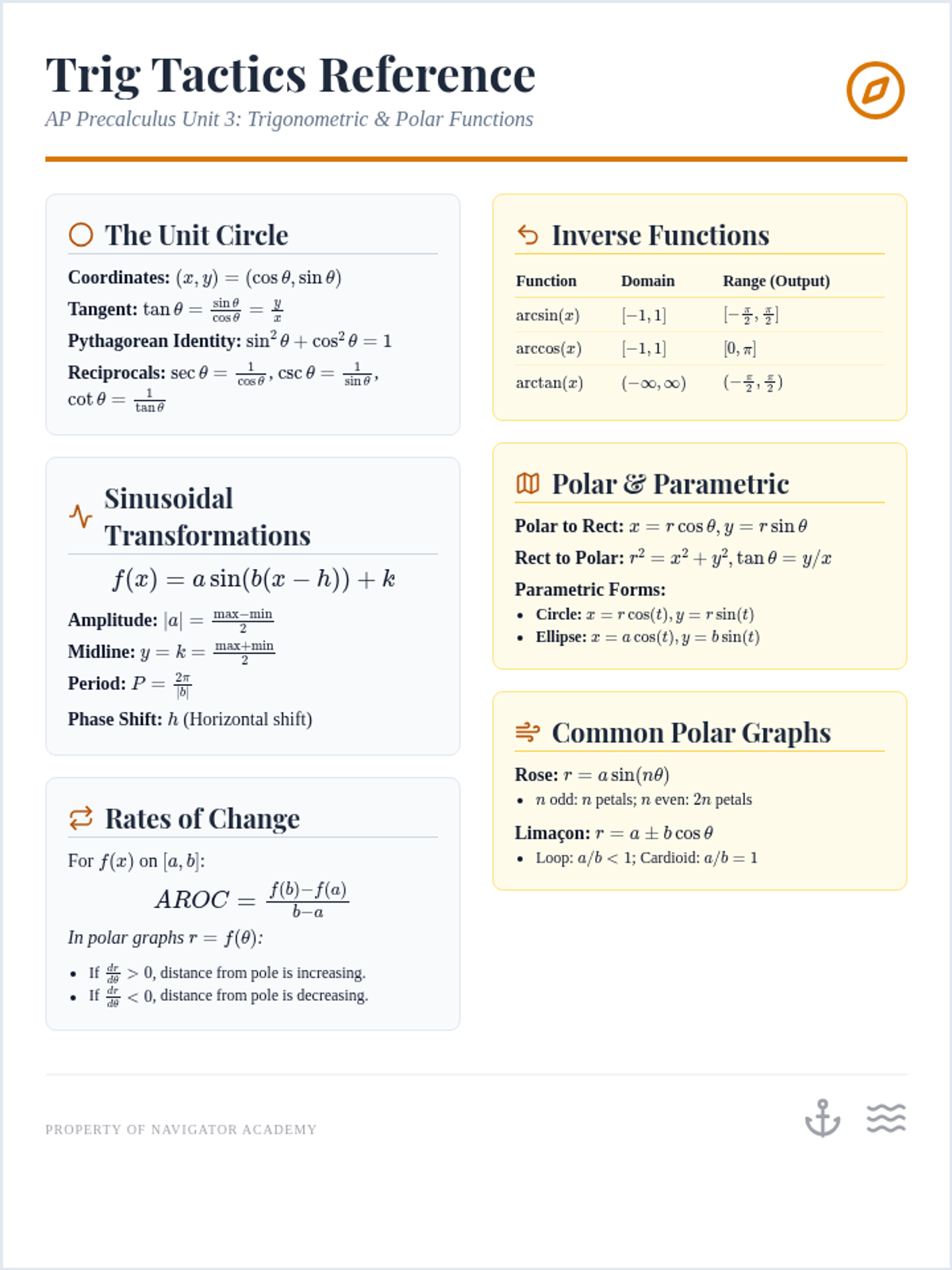
A concise one-page reference sheet covering the essential concepts of AP Precalculus Unit 3, including unit circle properties, sinusoidal transformations, inverse functions, polar coordinates, and parametric functions.