A comprehensive 2-page packet for 7th graders including a reading passage on the three pillars of power, a vocabulary glossary with example sentences, and critical thinking reflection questions.
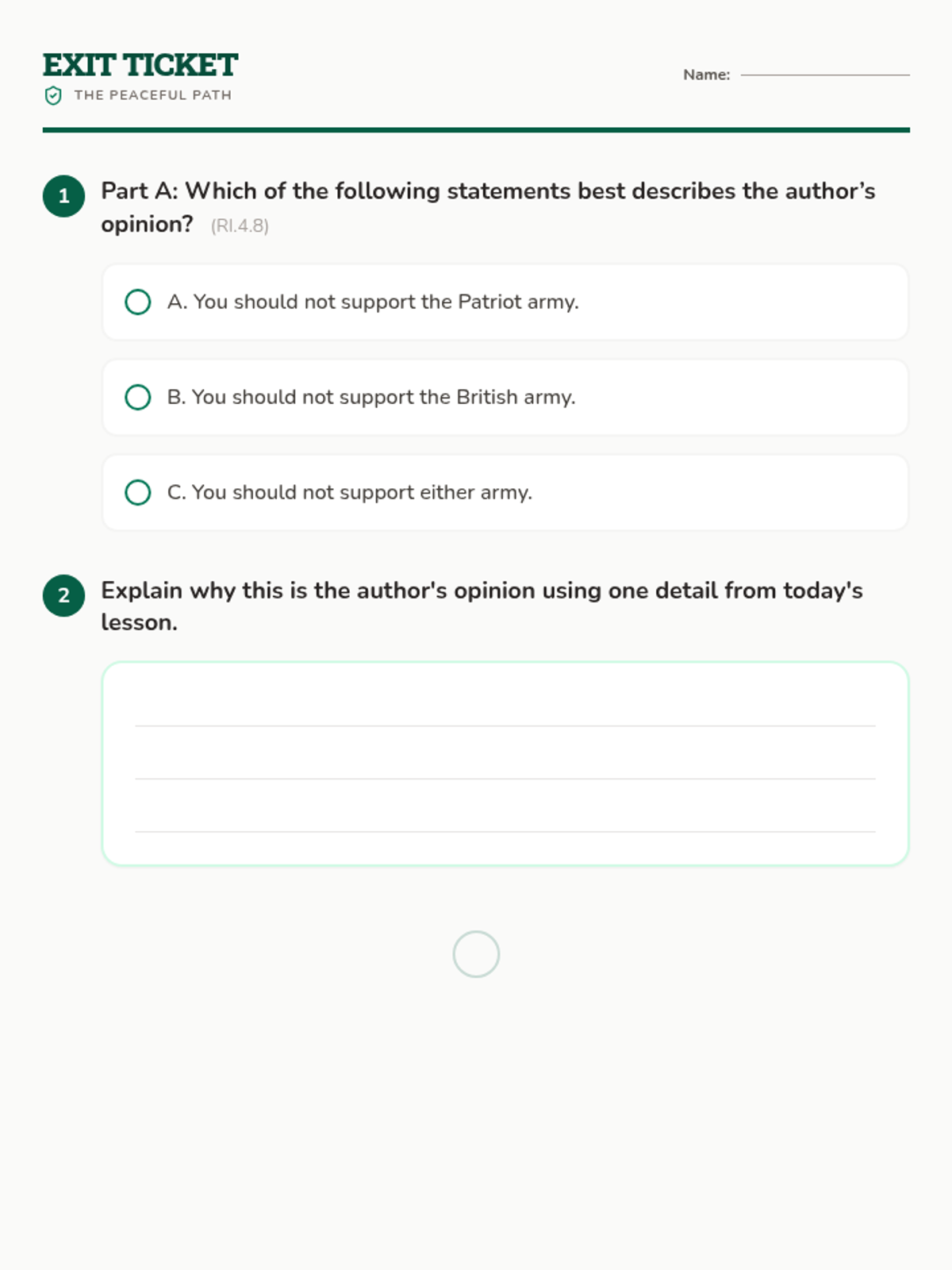
A concise exit ticket featuring the provided RI.4.8 opinion question and a short-response area for evidence-based justification.
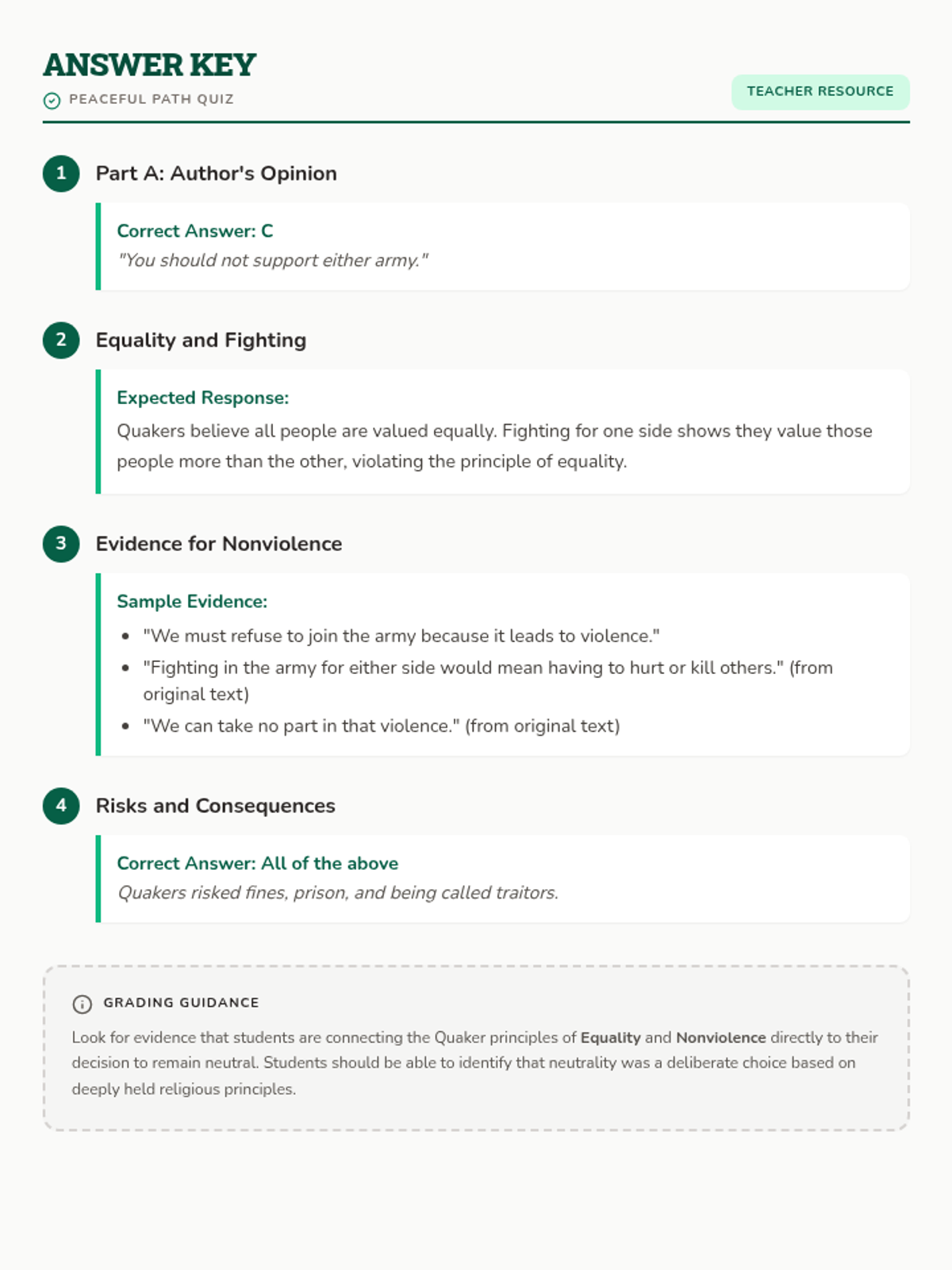
An answer key for the Peaceful Path Quiz, providing correct answers, sample evidence, and grading guidance for teachers. Corrected HTML tags and layout for single-page printing.
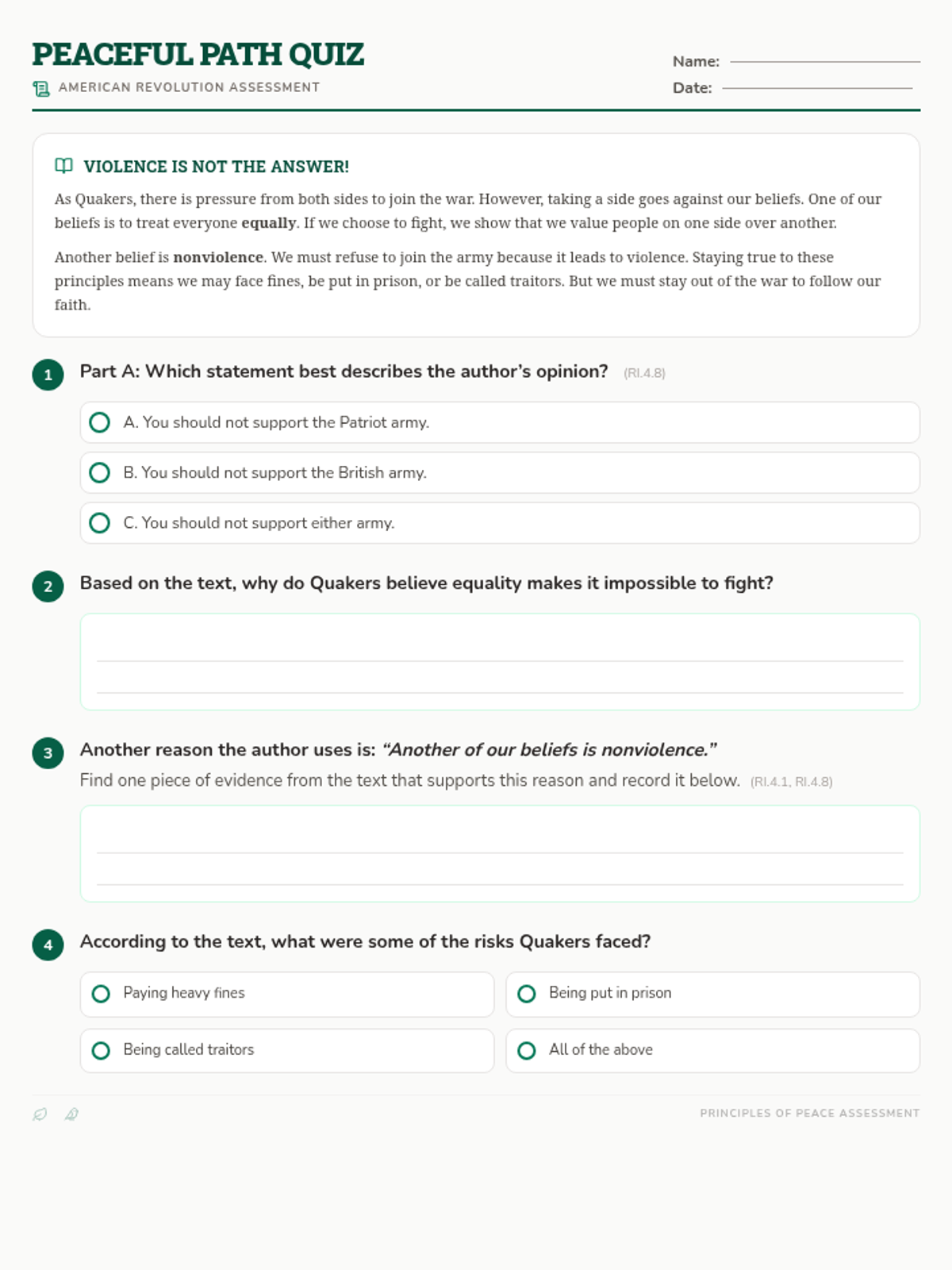
A student assessment featuring the provided RI.4.8 multiple-choice question, along with evidence-based reflection and reading comprehension questions. Includes a specific task on finding evidence for the principle of nonviolence.
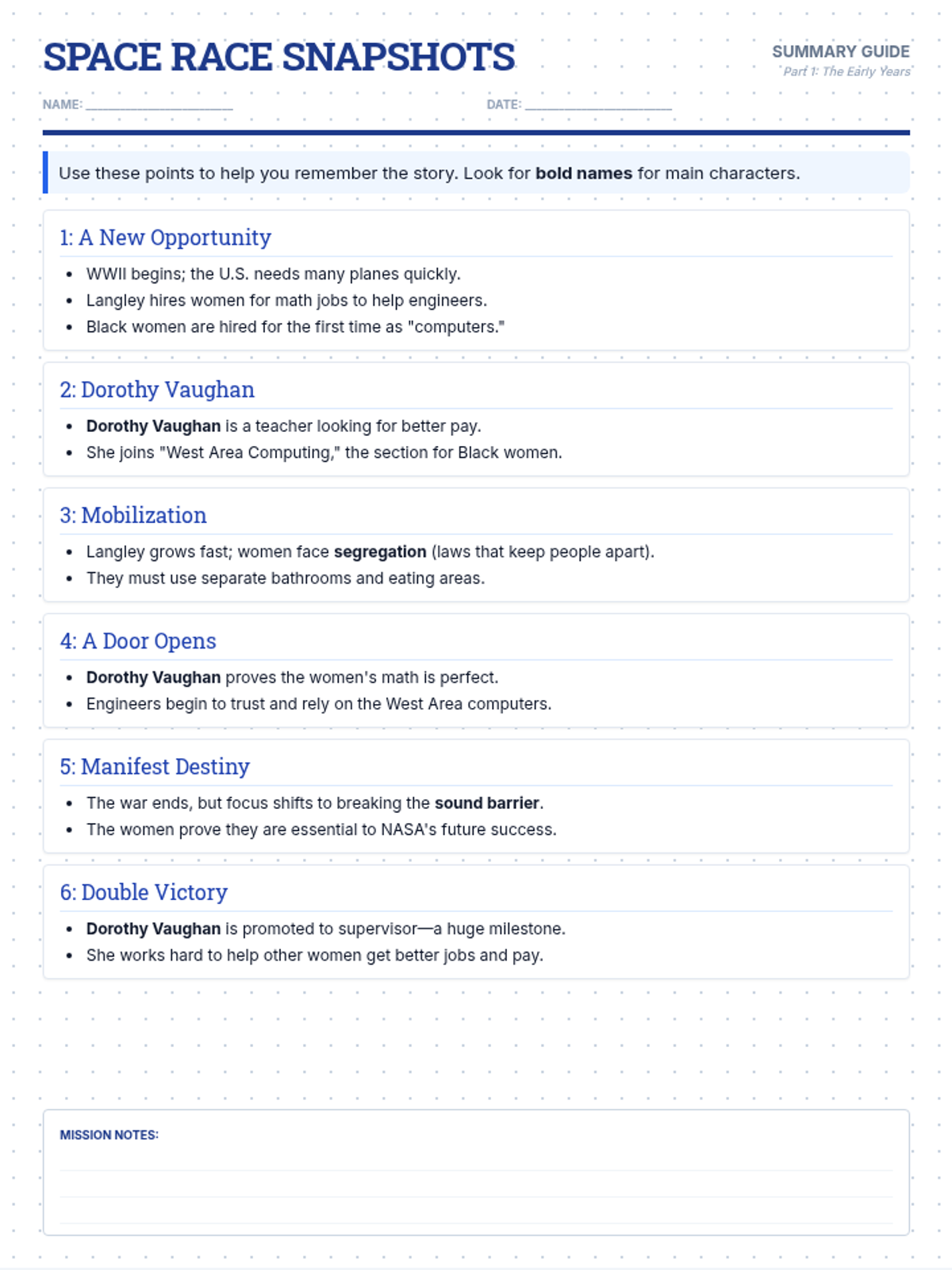
A four-page chapter-by-chapter summary guide for "Hidden Figures" (Young Readers Edition), designed specifically for struggling readers. It features bulleted main points, bolded character names, and a clean, high-contrast NASA-inspired layout to support comprehension and tracking of the narrative.
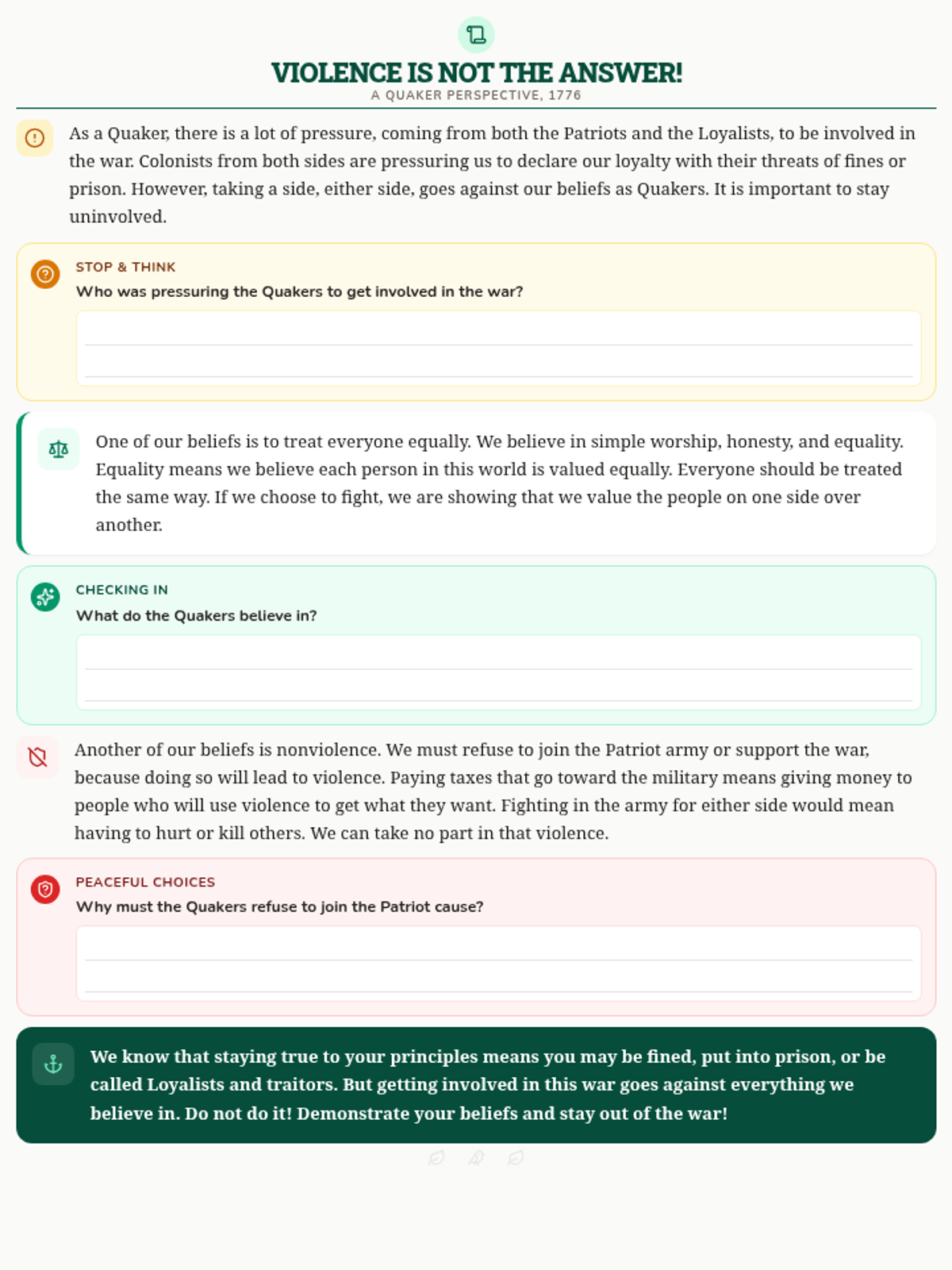
The primary reading passage explaining the Quaker perspective on neutrality and nonviolence, now including three embedded comprehension questions following each section with optimized single-page layout.
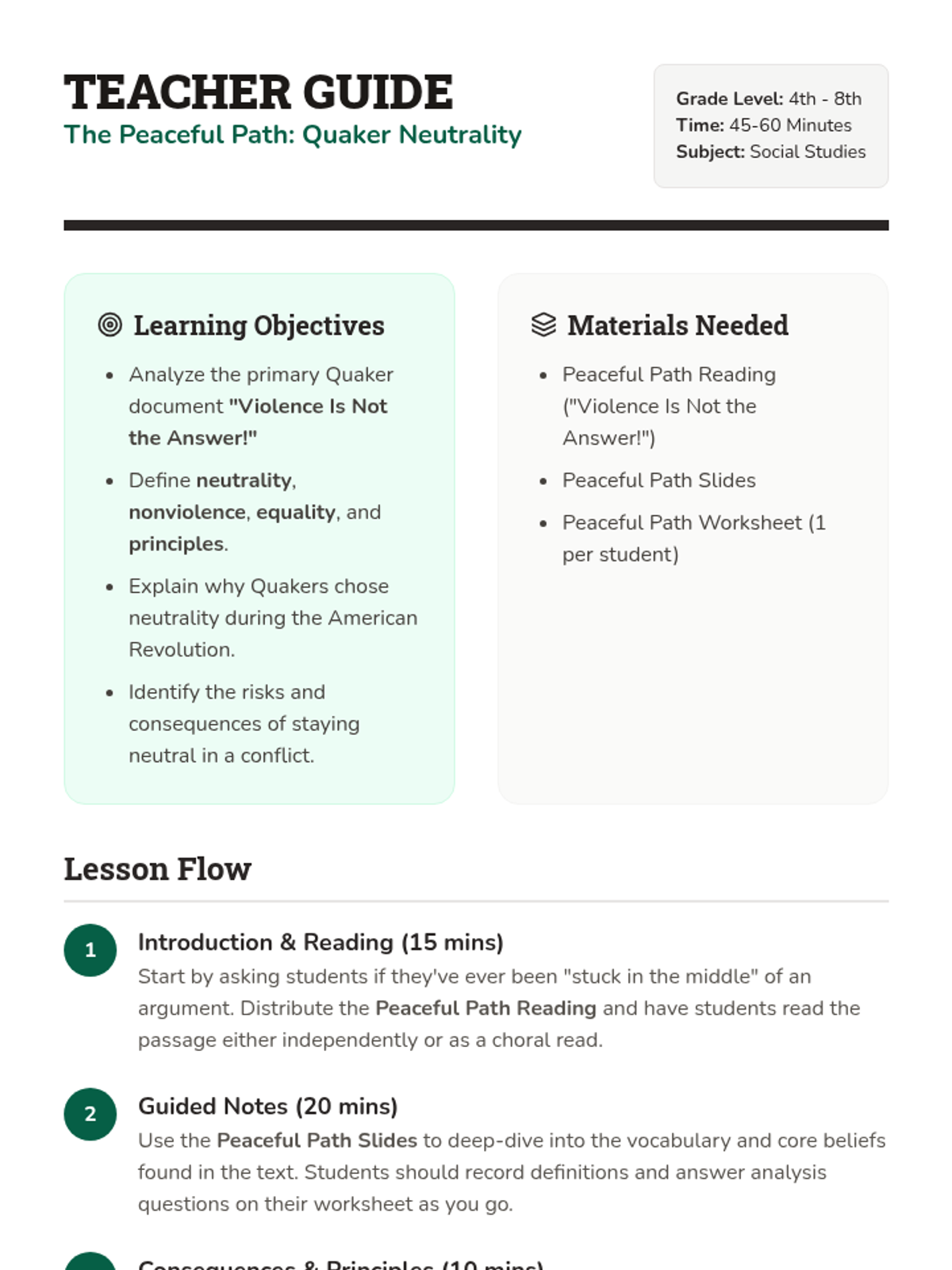
A teacher guide for the Peaceful Path lesson, providing instructional steps, discussion prompts, and differentiation strategies.
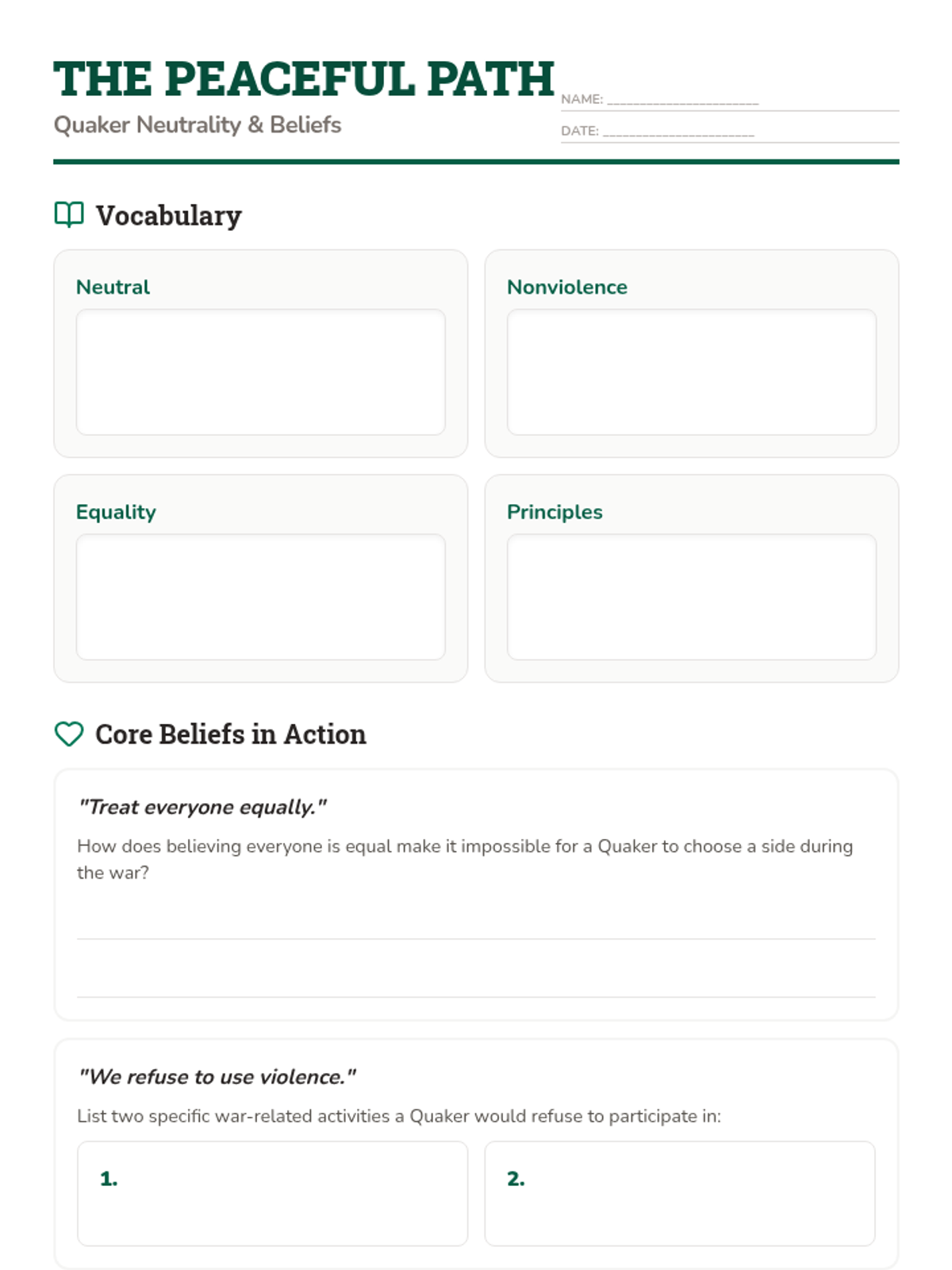
A note-taking worksheet to accompany the Peaceful Path slides, featuring vocabulary definitions and reflection questions.
A visual-heavy slide deck explaining Quaker neutrality during the American Revolution, featuring kid-friendly vocabulary definitions for Neutral, Equality, Nonviolence, and Principles, plus interactive discussion questions.
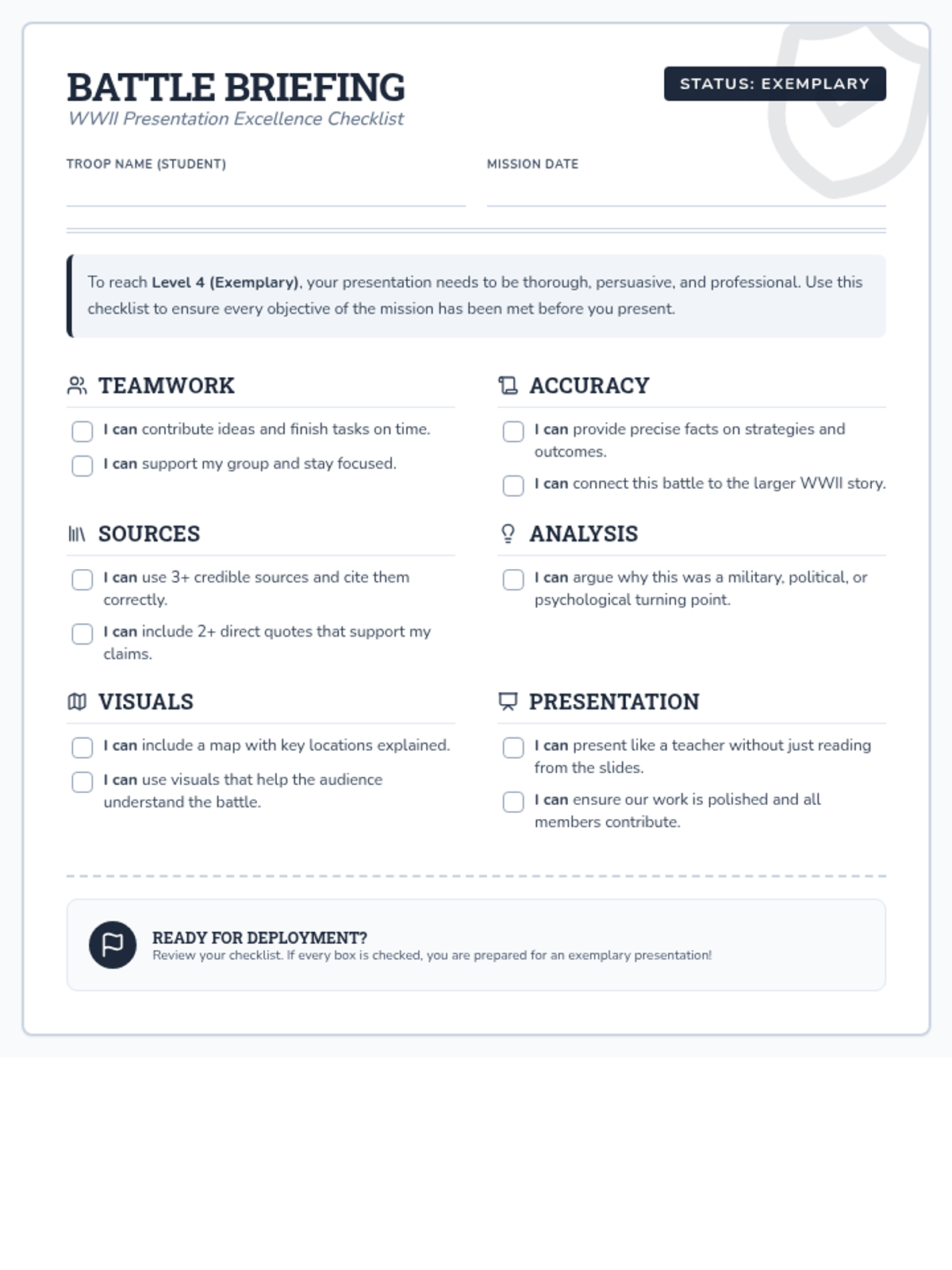
A student-friendly presentation checklist based on Level 4 criteria of a WWII Battles Project rubric, featuring 'I can' statements and visual icons. Revised to fit on a single page.
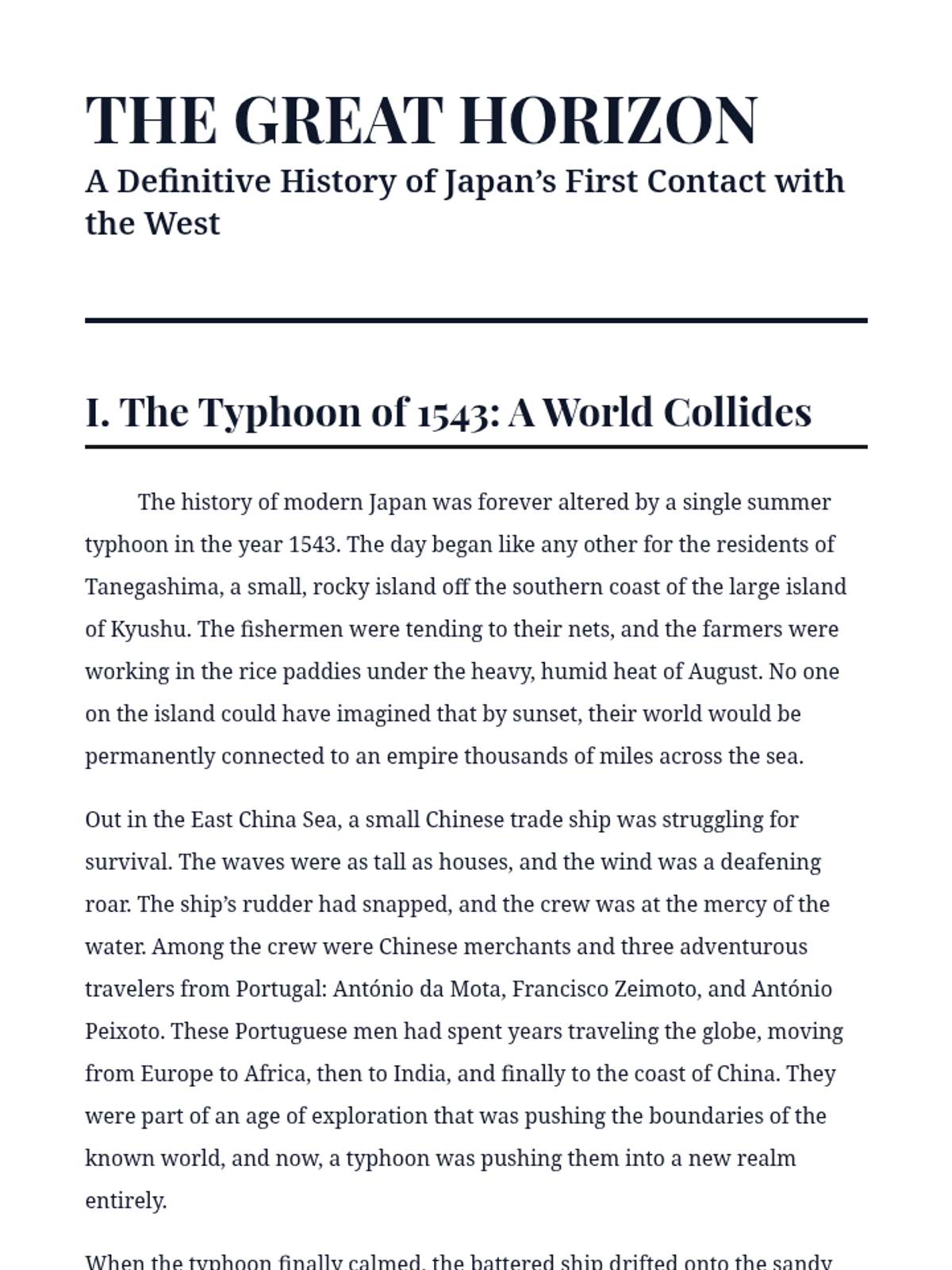
A comprehensive 3,000-word nonfiction background text on the Nanban trade era in 16th-century Japan. This simplified version removes all technical jargon and diagrams to focus on an accessible historical narrative for 8th-grade students, featuring the names of the Portuguese explorers and the island of Kyushu. Revised to remove all footers and metadata as requested.
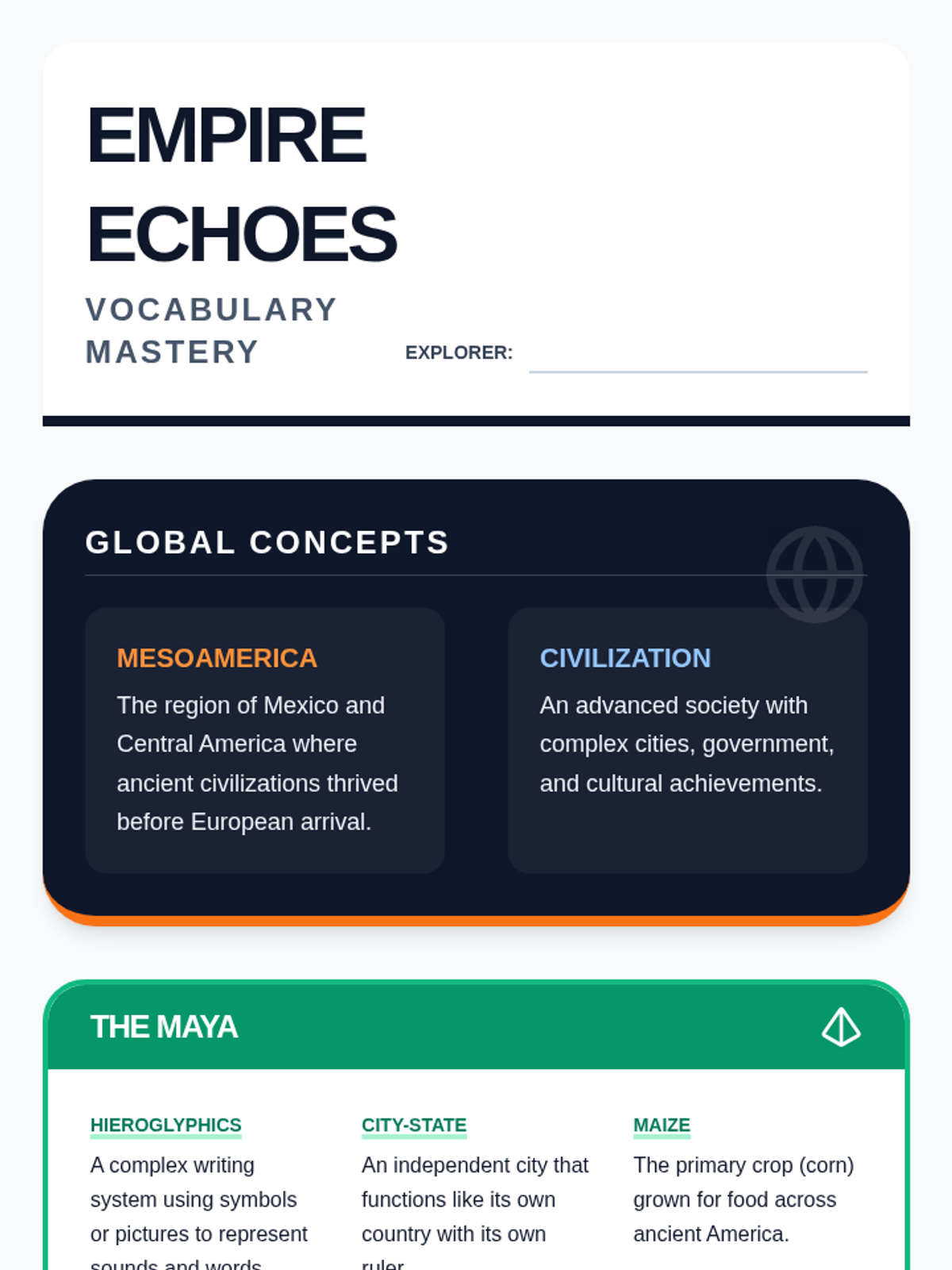
A key vocabulary reference sheet featuring essential terms for the Maya, Aztec, and Inca civilizations. Includes clear definitions and a 'Sketch Your Knowledge' section for student engagement. Revised for better page flow and layout.
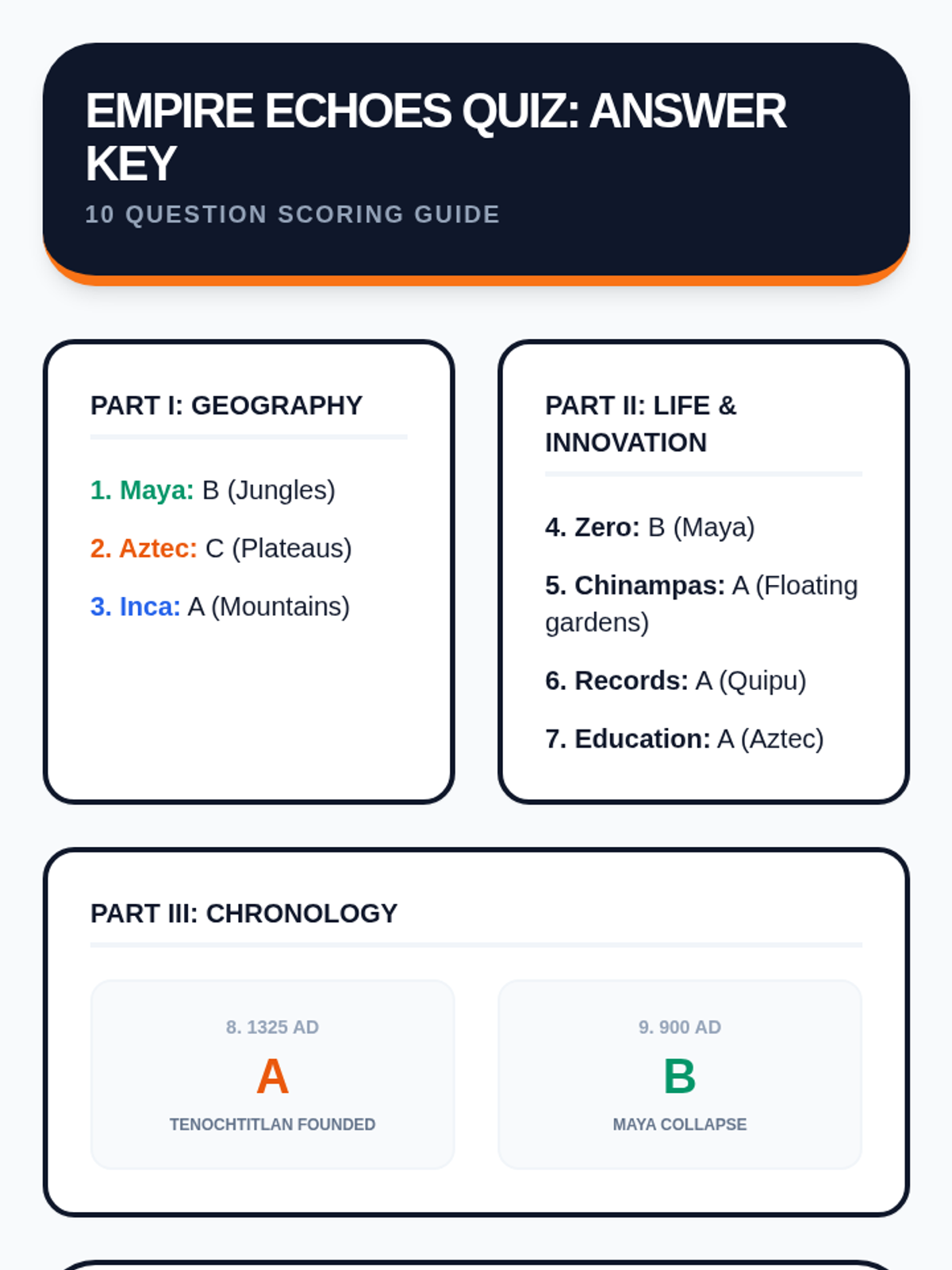
An answer key and scoring guide for the Empire Echoes Quiz. Includes correct matching letters, multiple-choice answers, and a rubric for the short-answer reflection question. Revised for better layout and match with updated quiz.
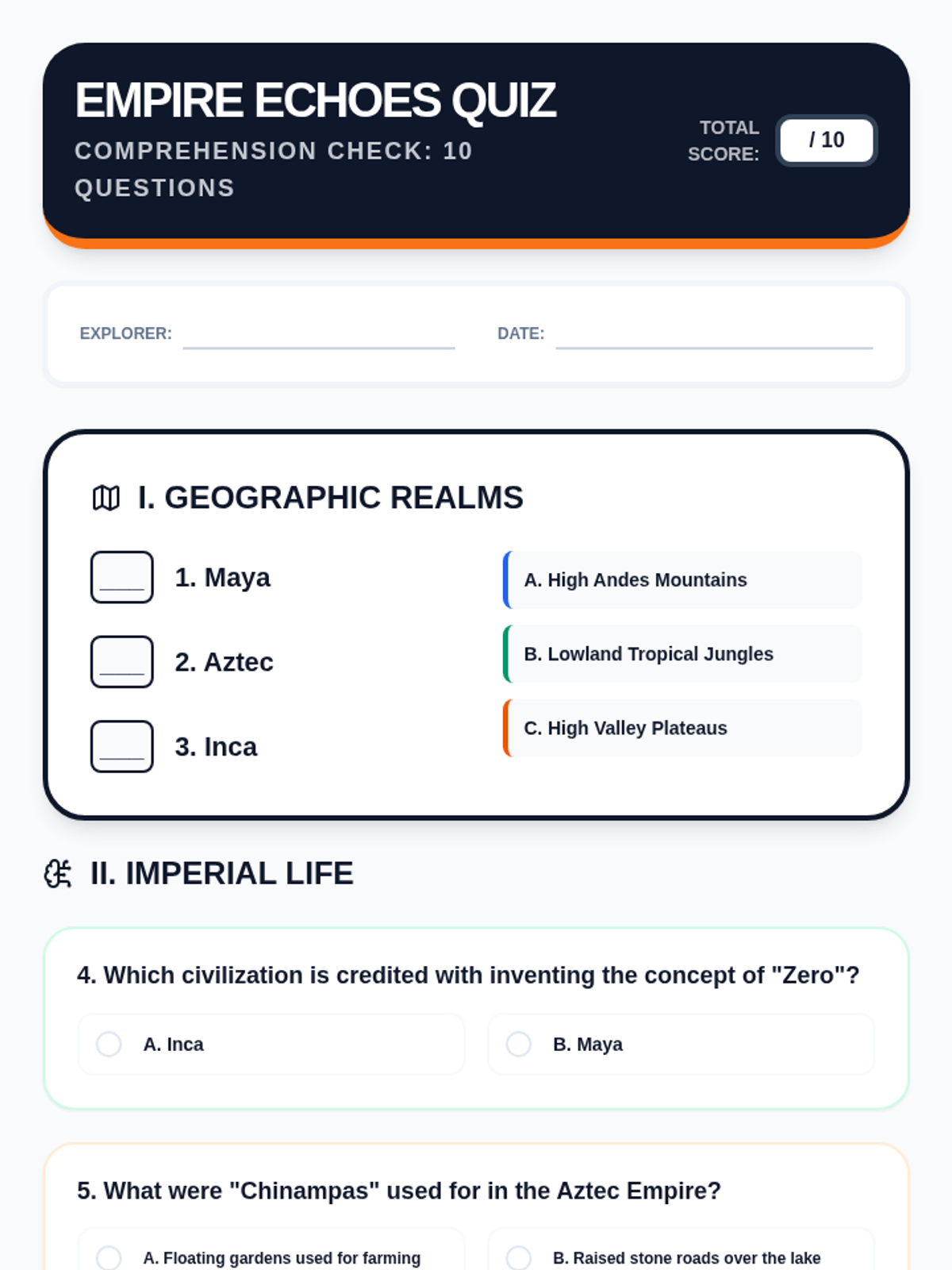
A 10-question comprehension quiz covering geography, innovations, social structures, and key timeline dates for the Maya, Aztec, and Inca empires. Includes matching, multiple-choice, and short-answer questions. Revised for exactly 10 items and condensed onto fewer pages.
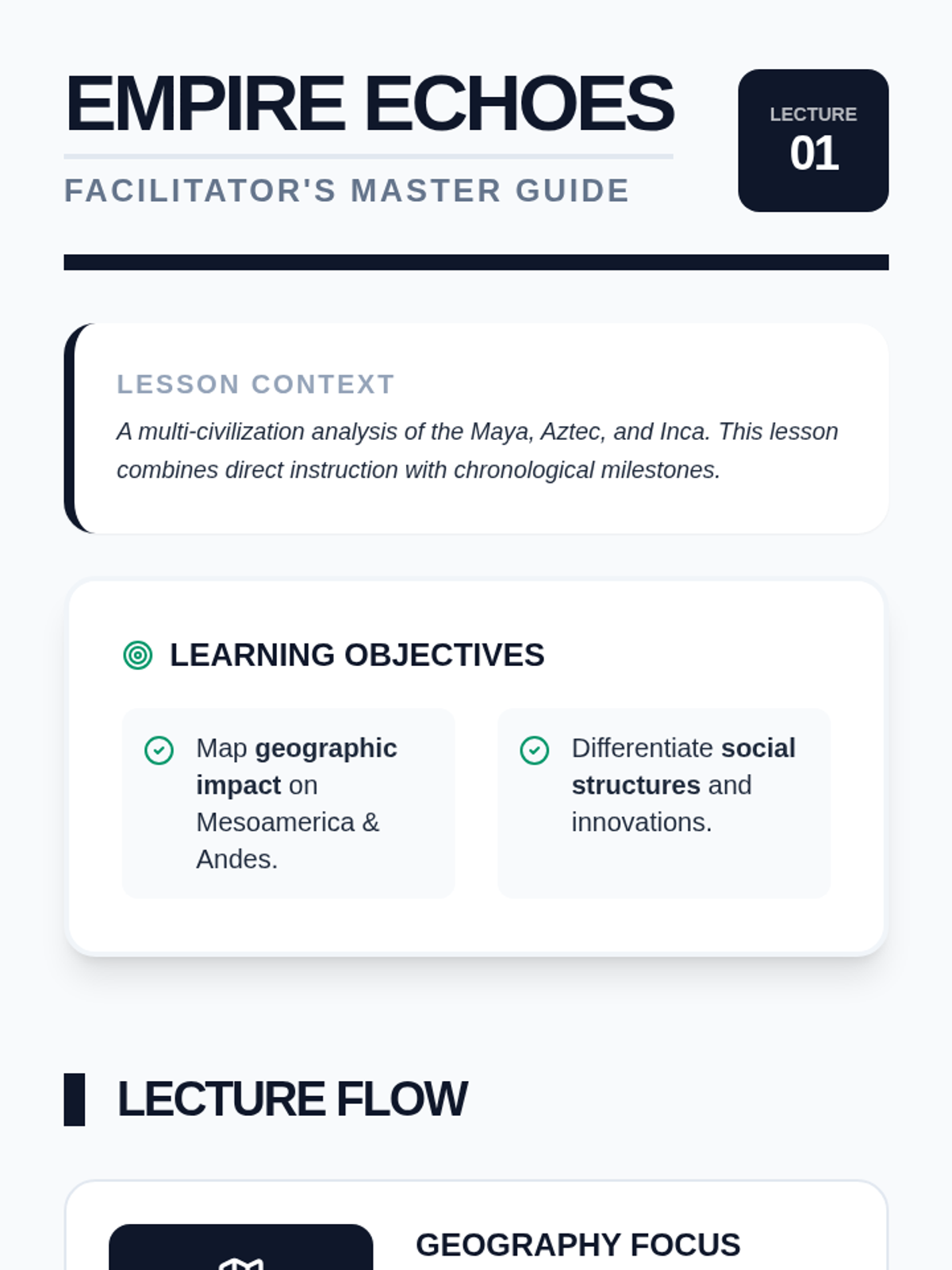
A comprehensive teacher's guide for facilitating the 'Empire Echoes' lesson. Revised with improved layout, page breaks, and complete slide-by-slide facilitation notes.
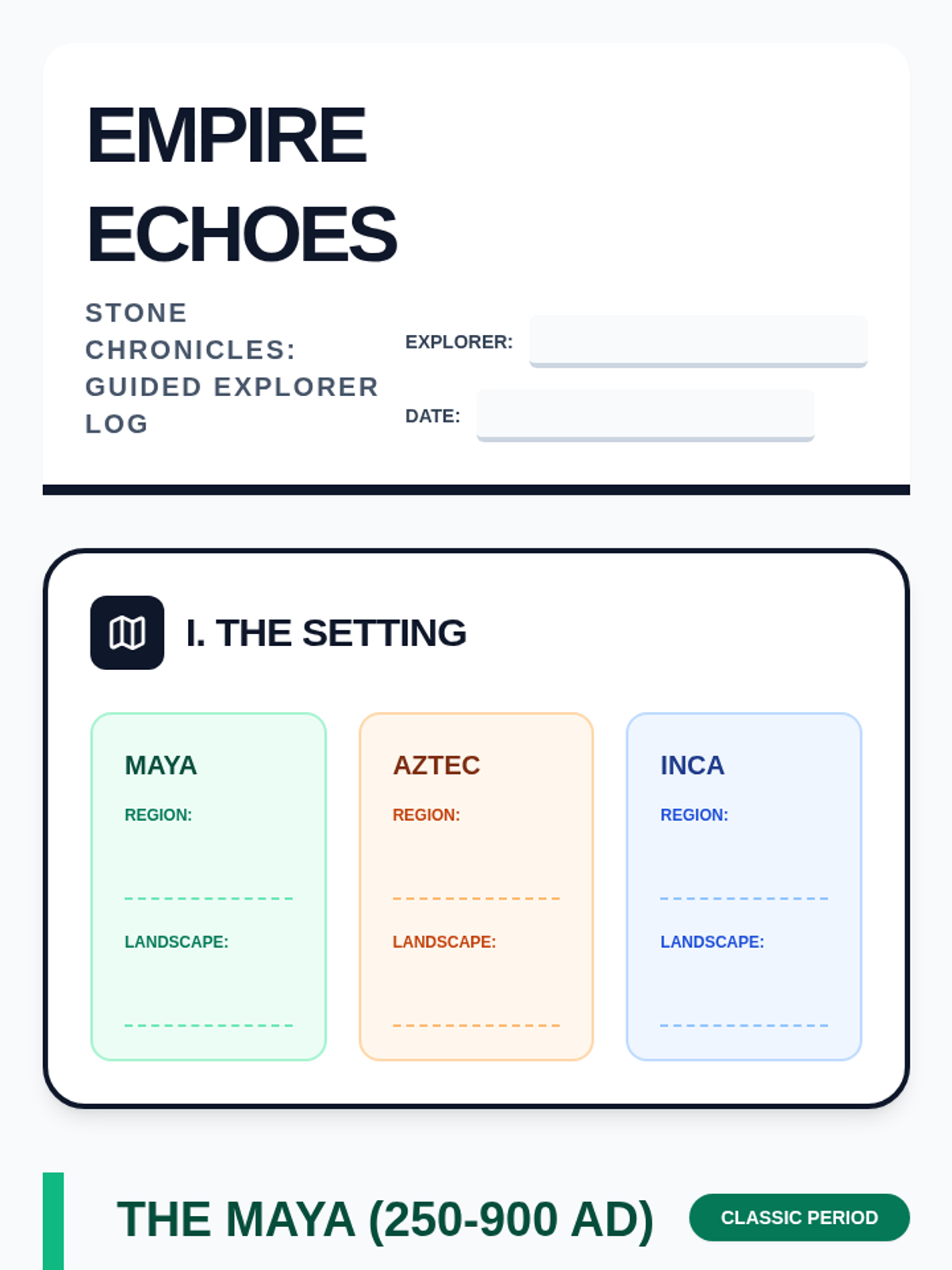
A guided notes worksheet for students to complete while watching the 'Empire Echoes' presentation. Features a vibrant, color-coded design with ample writing space, sectioned analysis for Maya, Aztec, and Inca, and a final summary table. Revised for better page flow and table fit.
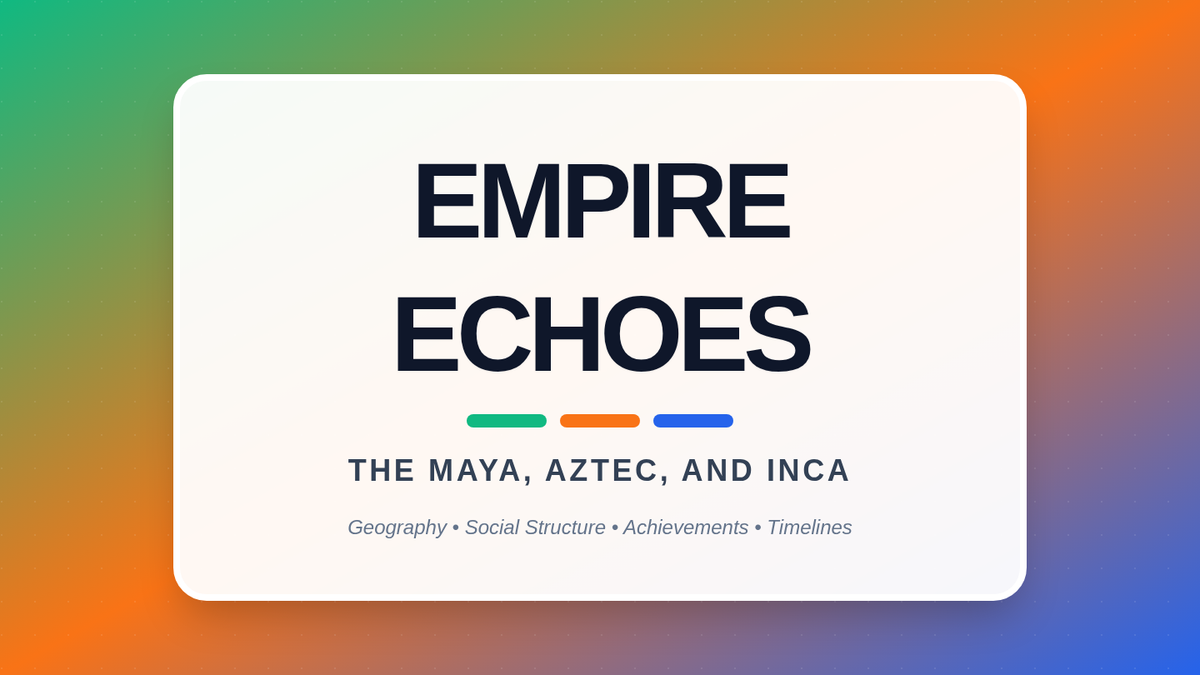
A high-impact, vibrant presentation themed 'Empire Echoes'. Revised for better layout consistency, improved contrast, fixed timeline alignment, and added comprehension check slides. Features saturated colors for the Maya, Aztec, and Inca.
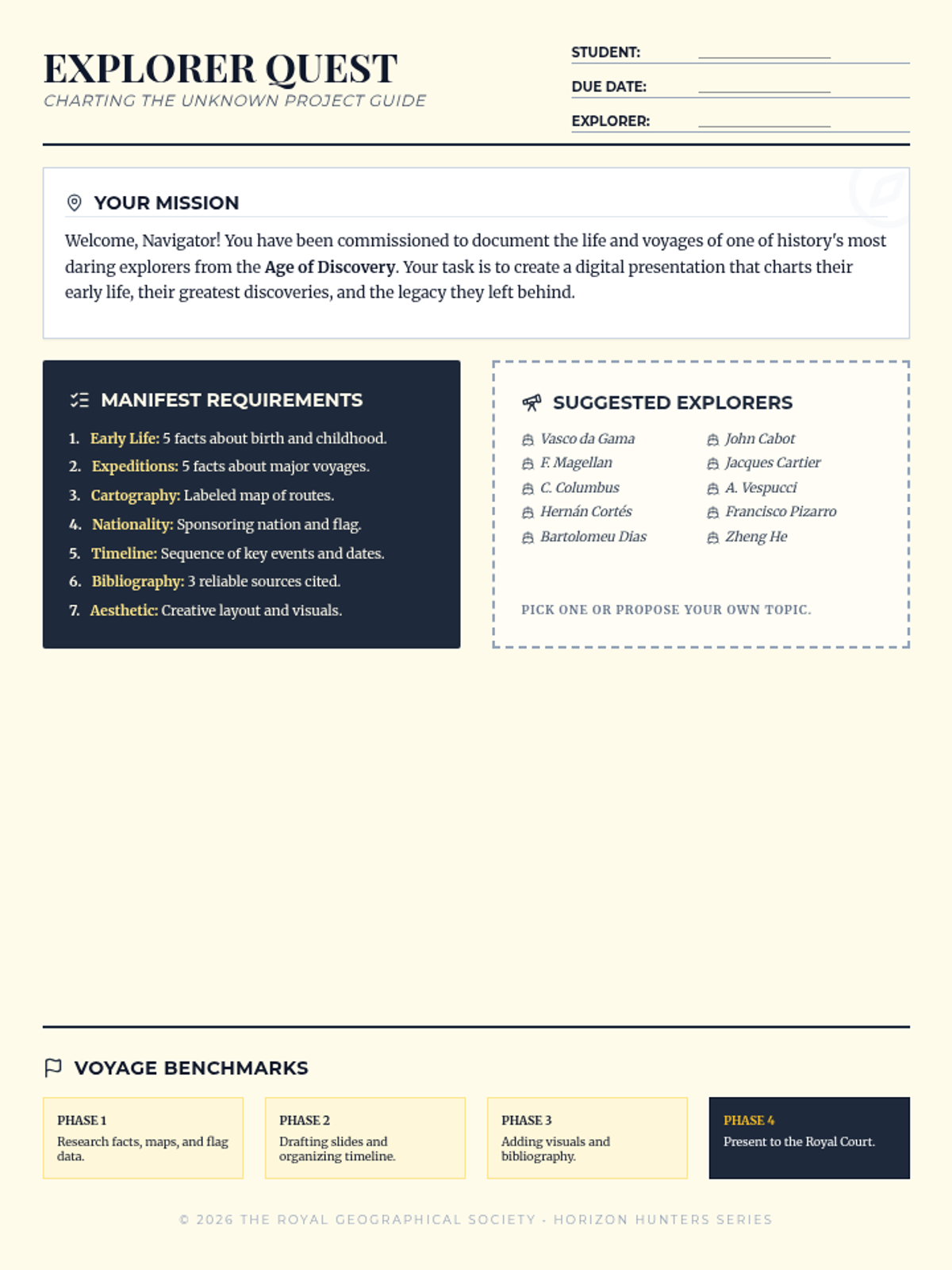
A student project guide for the 'Explorer Quest' presentation. It outlines project requirements including country affiliation, sponsoring flag, and a dedicated timeline, providing a list of suggested explorers and research benchmarks. Includes a 2nd page Navigator's Log for research planning.
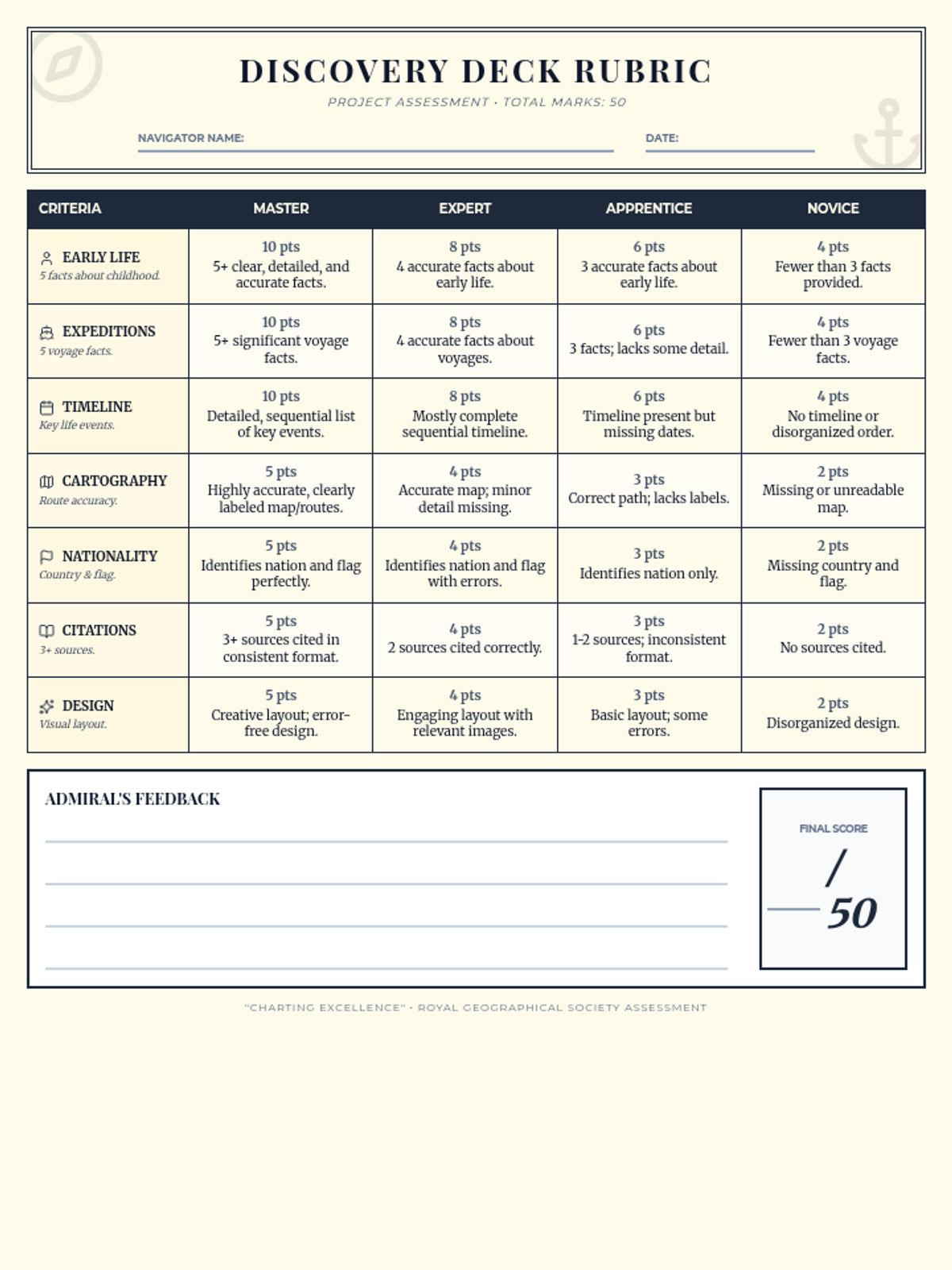
A comprehensive 50-point grading rubric for an early European explorer slide presentation. It features seven weighted categories: early life (10), expeditions (10), timeline (10), cartography (5), country/flag (5), citations (5), and images/design (5).
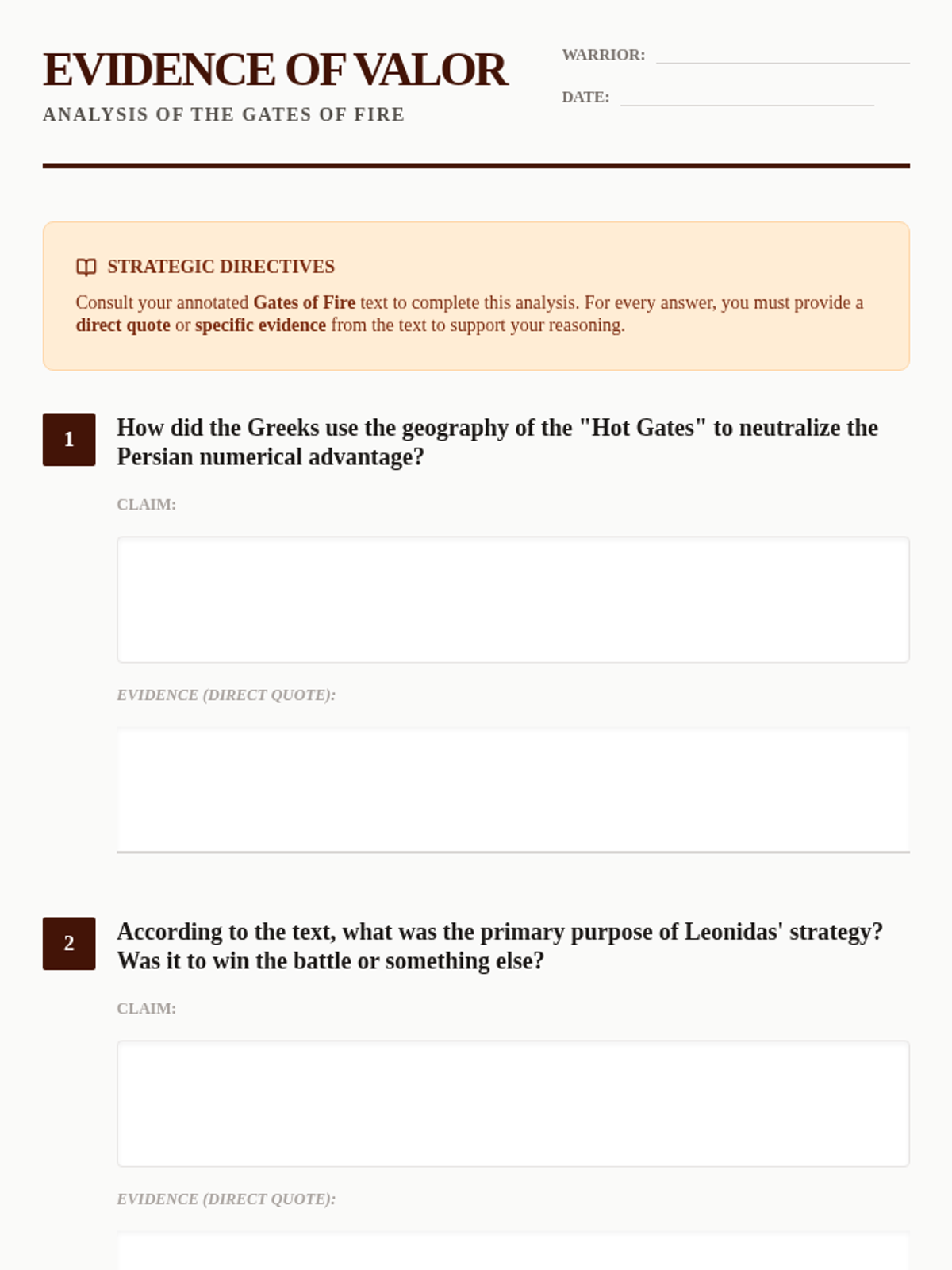
An evidence-based analysis worksheet for the Battle of Thermopylae, requiring students to cite textual evidence to support claims about strategy, betrayal, and valor.
Visual presentation for Day 2 of the Spartan Stand sequence, analyzing the betrayal, the final stand, and the legacy of the Battle of Thermopylae.
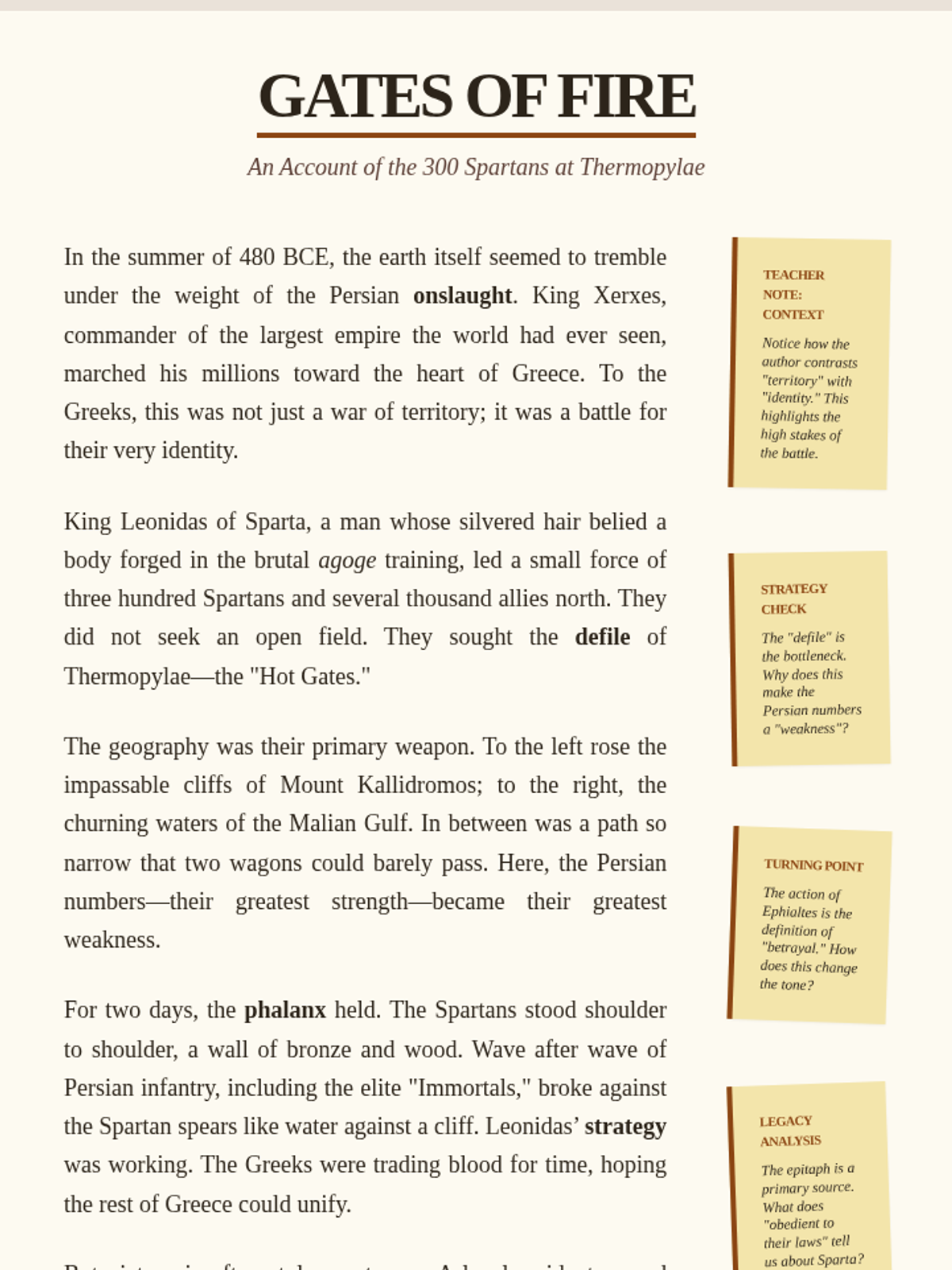
An annotated narrative account of the Battle of Thermopylae, designed for close reading and evidence-based analysis of Spartan strategy and valor.
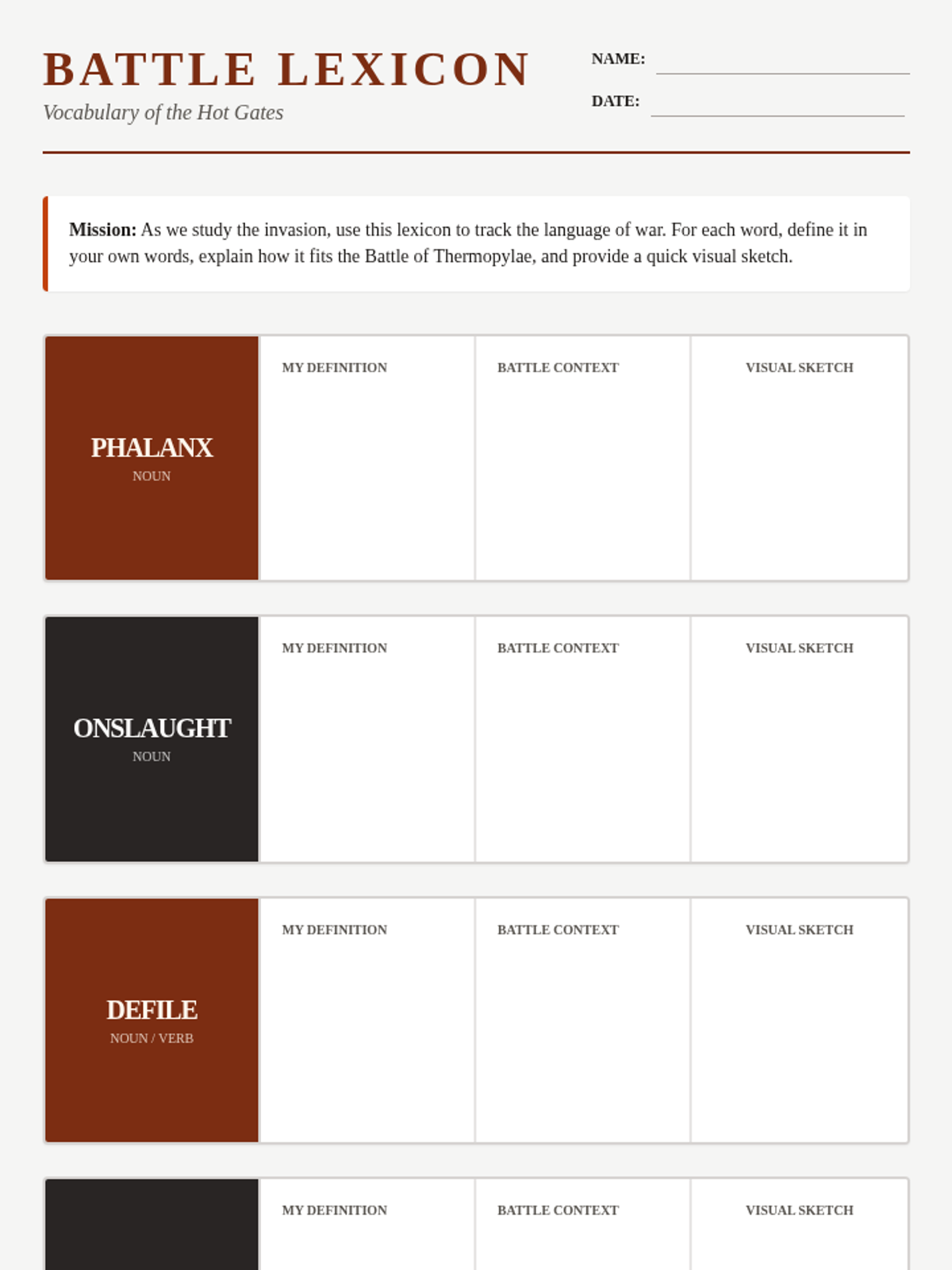
A vocabulary tracking chart for students to record definitions, historical context, and visual reminders for key terms related to the Battle of Thermopylae.
Visual presentation for Day 1 of the Spartan Stand sequence, introducing the historical context, key figures, and military strategy of the Battle of Thermopylae.
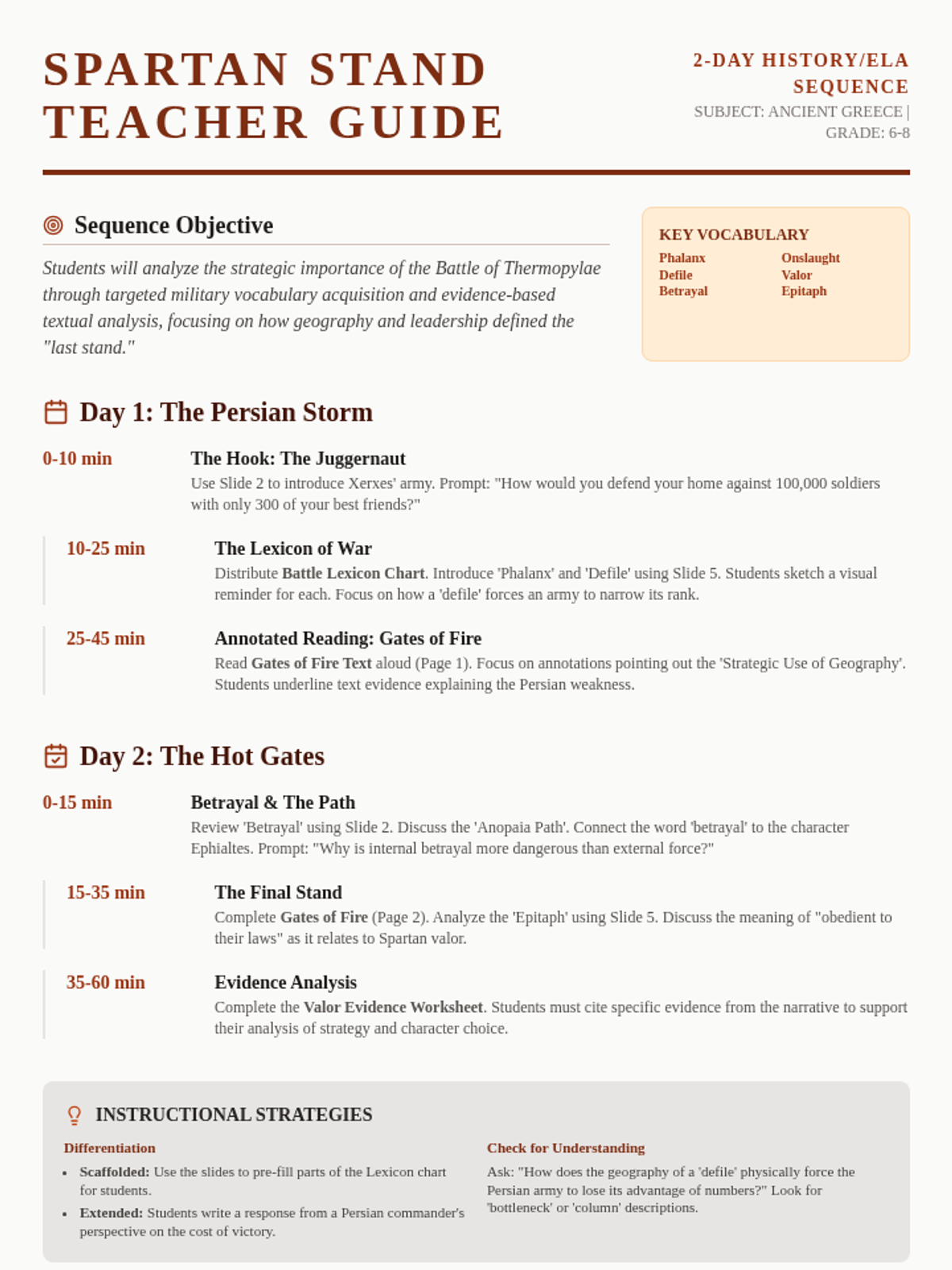
A comprehensive teacher guide for the two-day Spartan Stand sequence, including lesson pacing, instructional strategies, and vocabulary targets for the Battle of Thermopylae.
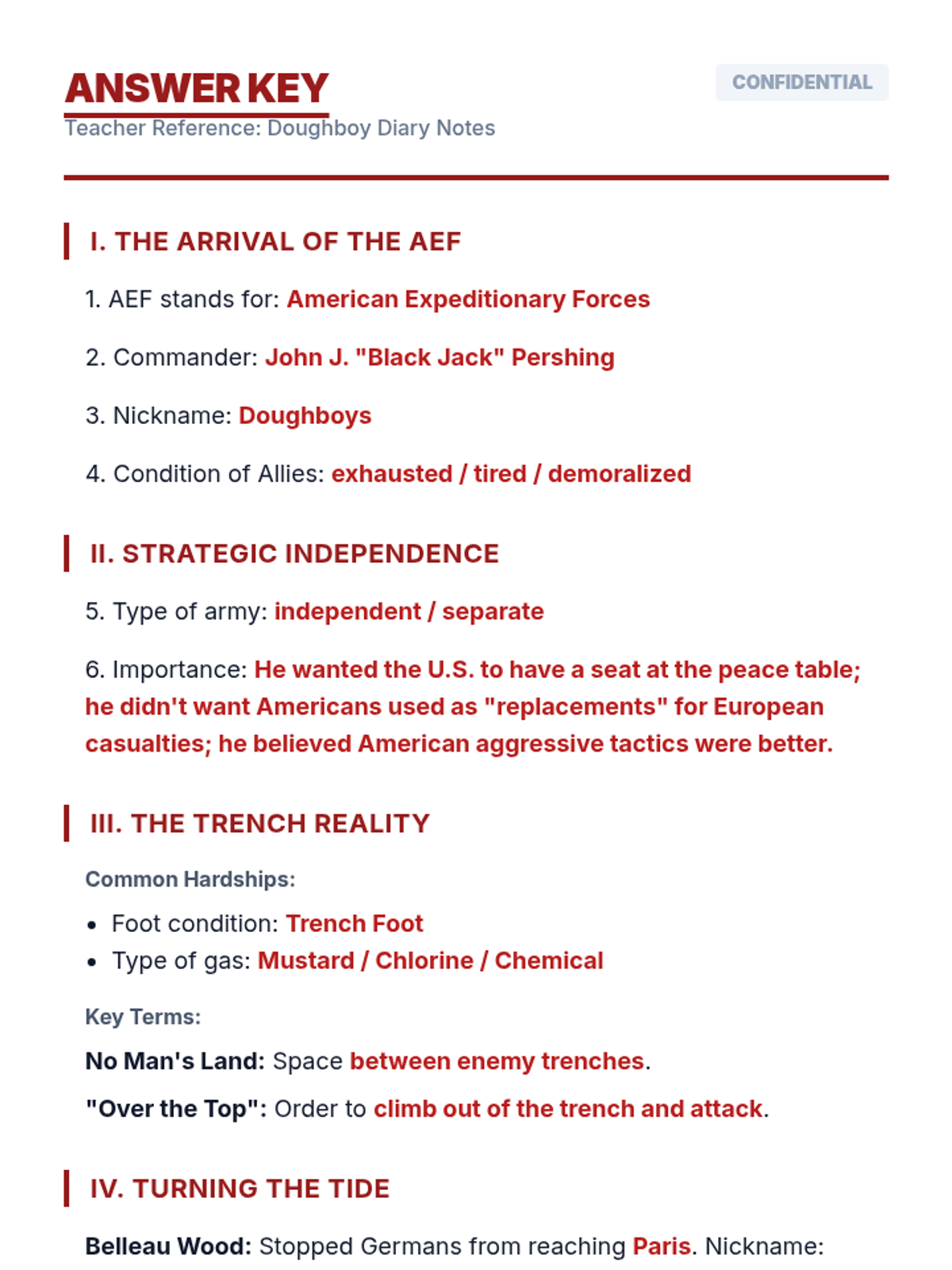
The teacher's answer key for the "Doughboy Diary Notes," providing correct responses and grading guidance.
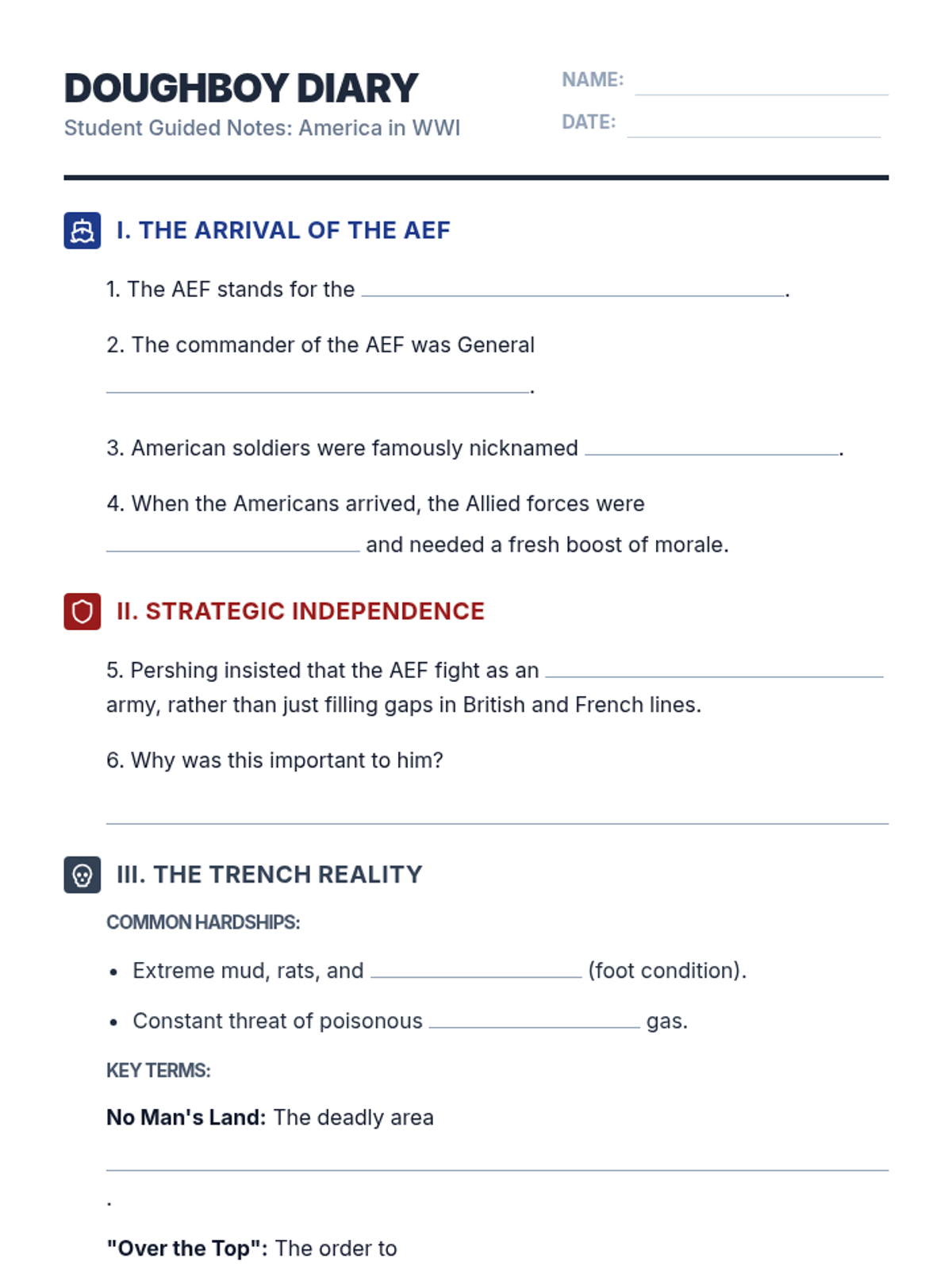
A fill-in-the-blank guided notes document designed for students to complete while viewing the "Over There" presentation.
A visually striking slide deck detailing the arrival and military impact of the American Expeditionary Forces in WWI Europe, with a vintage propaganda aesthetic.
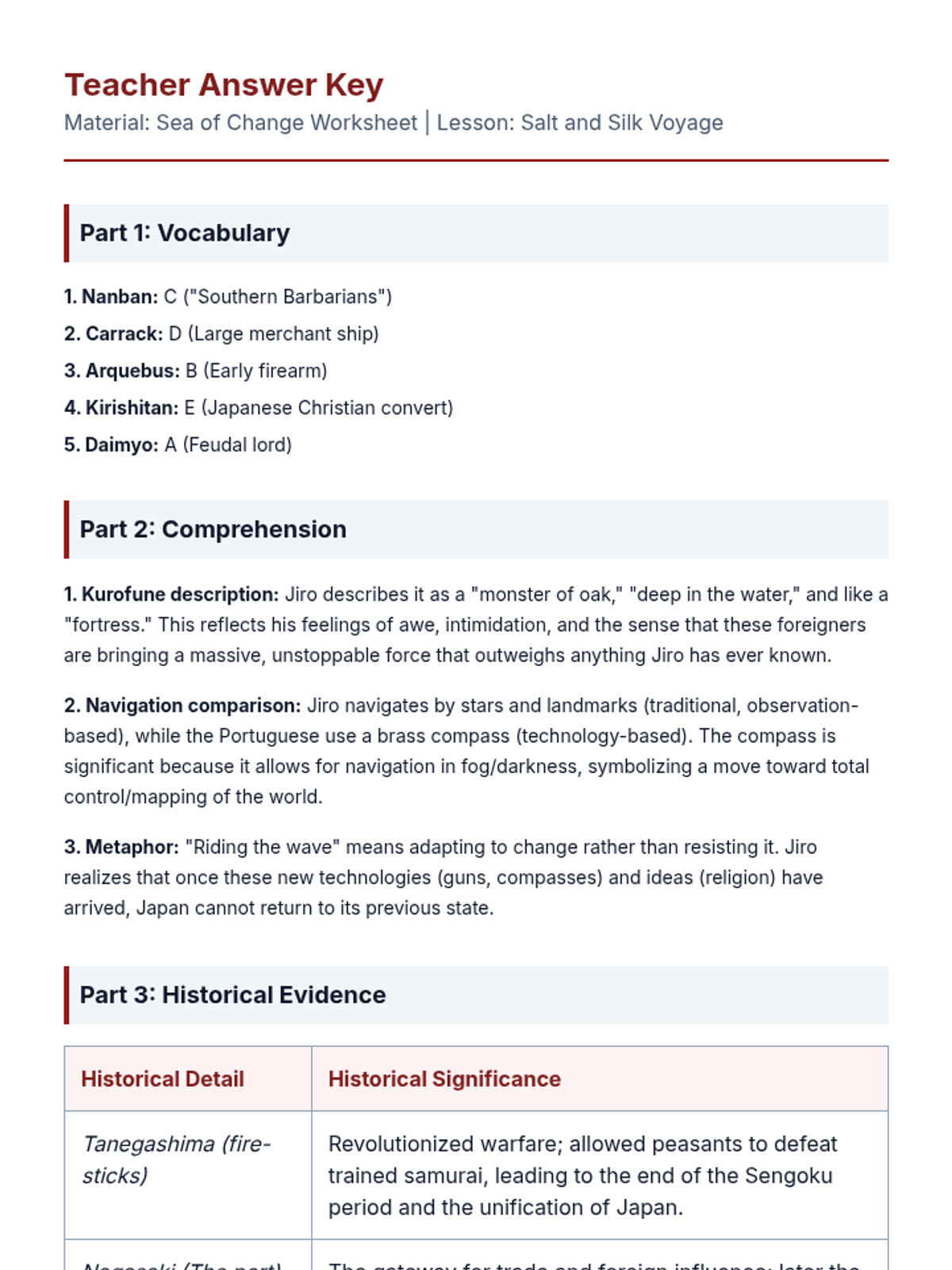
A revised teacher answer key for the 'Sea of Change' worksheet, featuring suggested responses for vocabulary, comprehension, and historical analysis. Updated for layout consistency.