A teacher's guide and answer key for the Postal Patterns sorting activity, including an imposter word challenge and instructional tips. Optimized layout with manual page breaks to ensure content stays together.
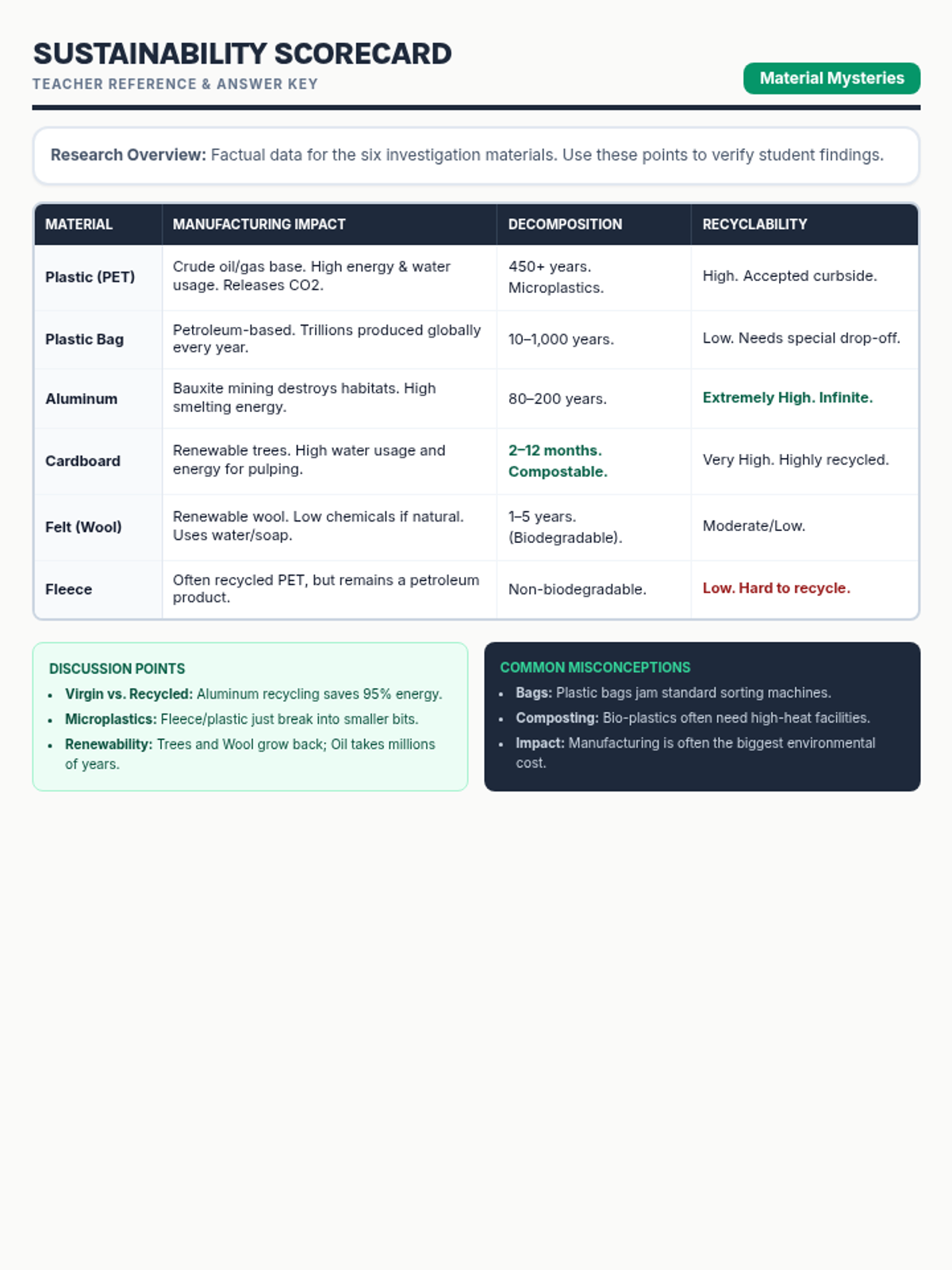
A comprehensive reference guide for teachers containing factual data on all six materials, including cardboard, to facilitate classroom discussion and provide an answer key for student research. Now with uniform objective styling and one-page layout.
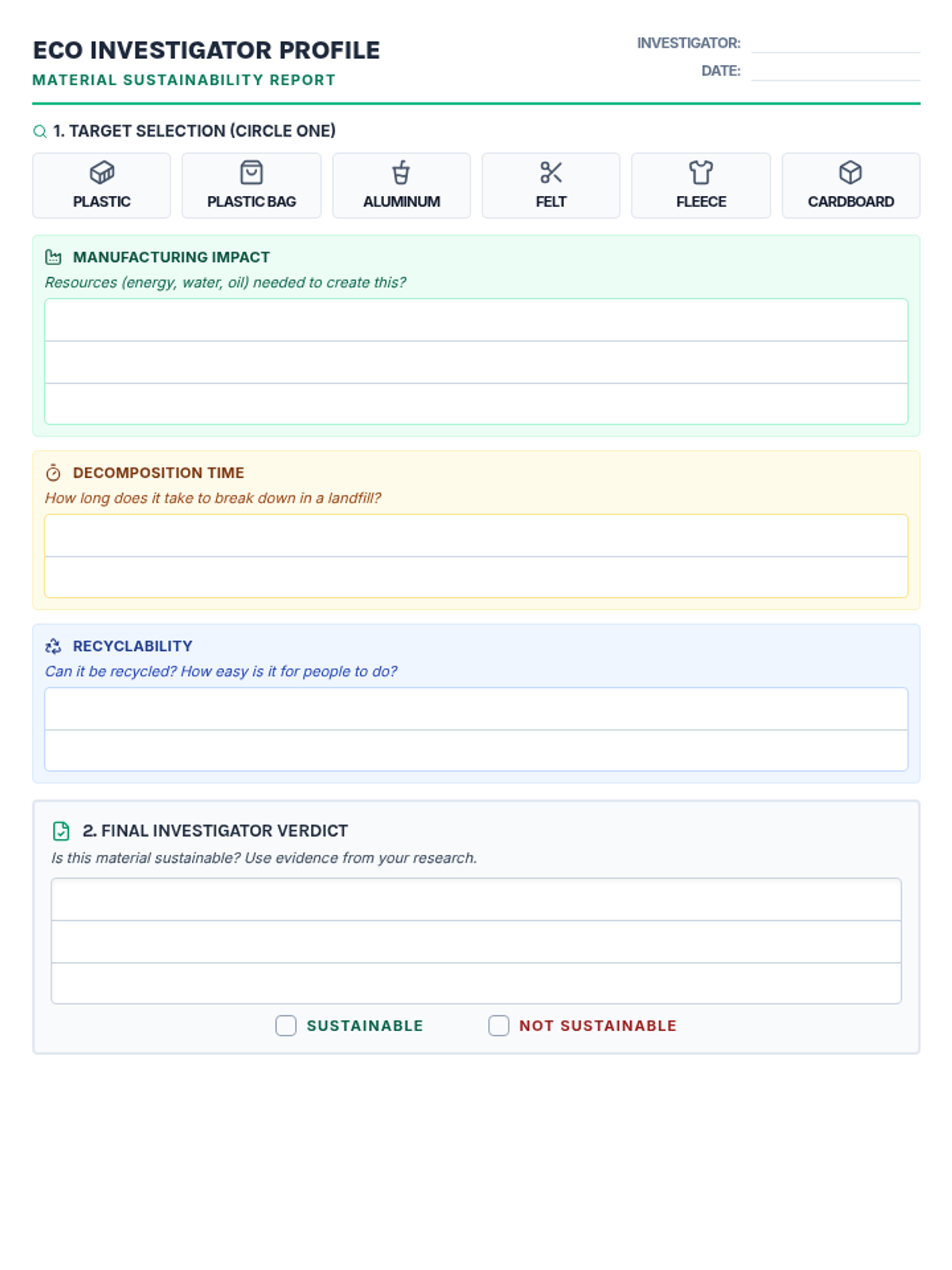
A research worksheet for students to investigate the sustainability of materials, now including cardboard. It features clear icons for selection, uniform research areas with ruled lines (32px), and a final verdict section designed for maximum handwriting legibility on a single page. Now with improved contrast and uniform styling.
A presentation introducing the concept of sustainability and the three key research factors: manufacturing impact, decomposition time, and recyclability. It outlines the six materials students can choose to investigate, including cardboard. Now with uniform visual styling.
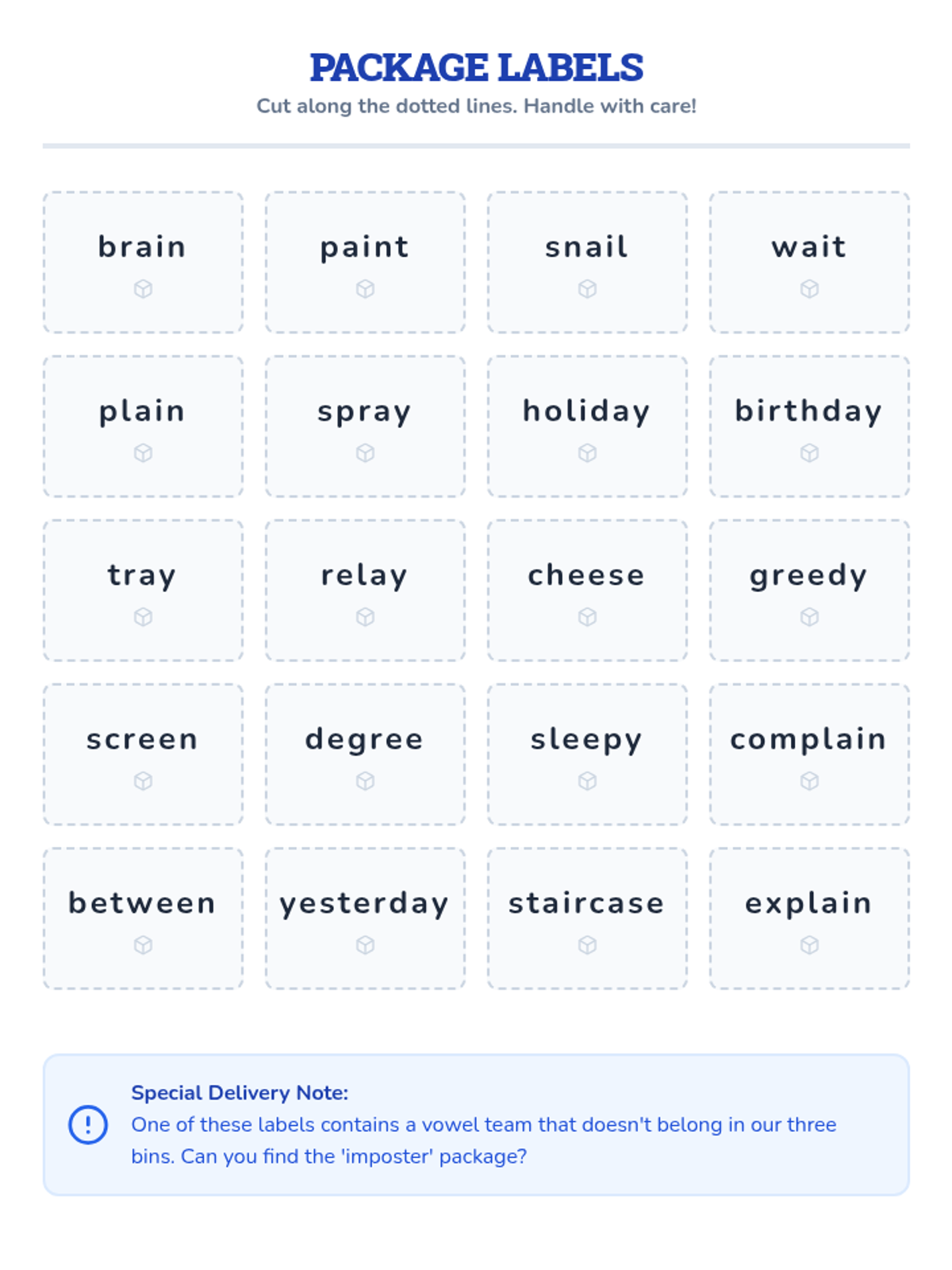
A sheet of word 'labels' for students to cut out, containing words with 'ai', 'ay', and 'ee' vowel teams, plus one challenge word.
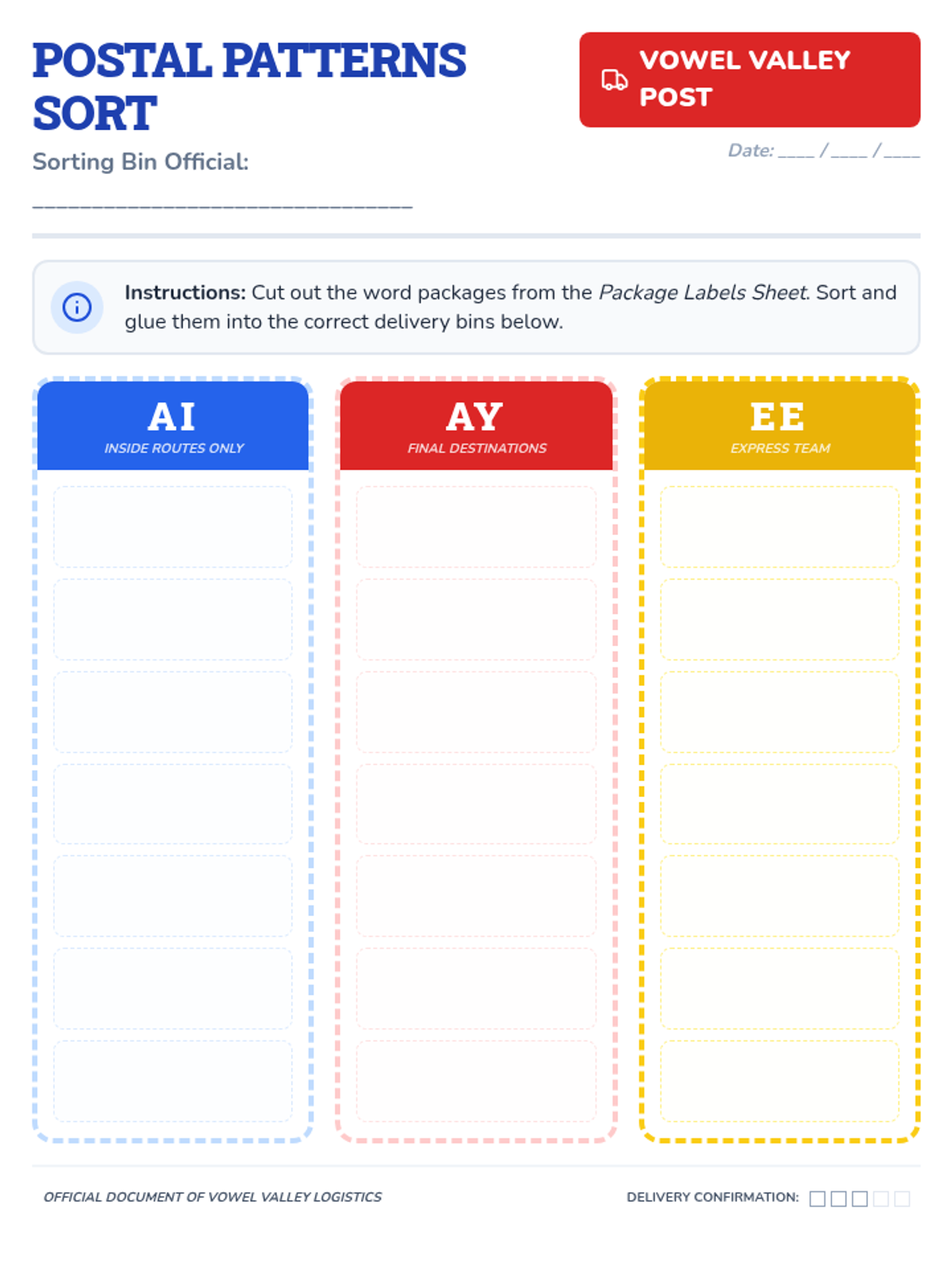
A student worksheet featuring three large postal-themed 'sorting bins' for 'ai', 'ay', and 'ee' words to be pasted into. Updated with guide lines for organized pasting and optimized layout to prevent page breaks.
An engaging slide presentation introducing the 'ai', 'ay', and 'ee' vowel teams through a postal-themed metaphor, including rules and examples for each pattern. Standardized layouts for consistency.
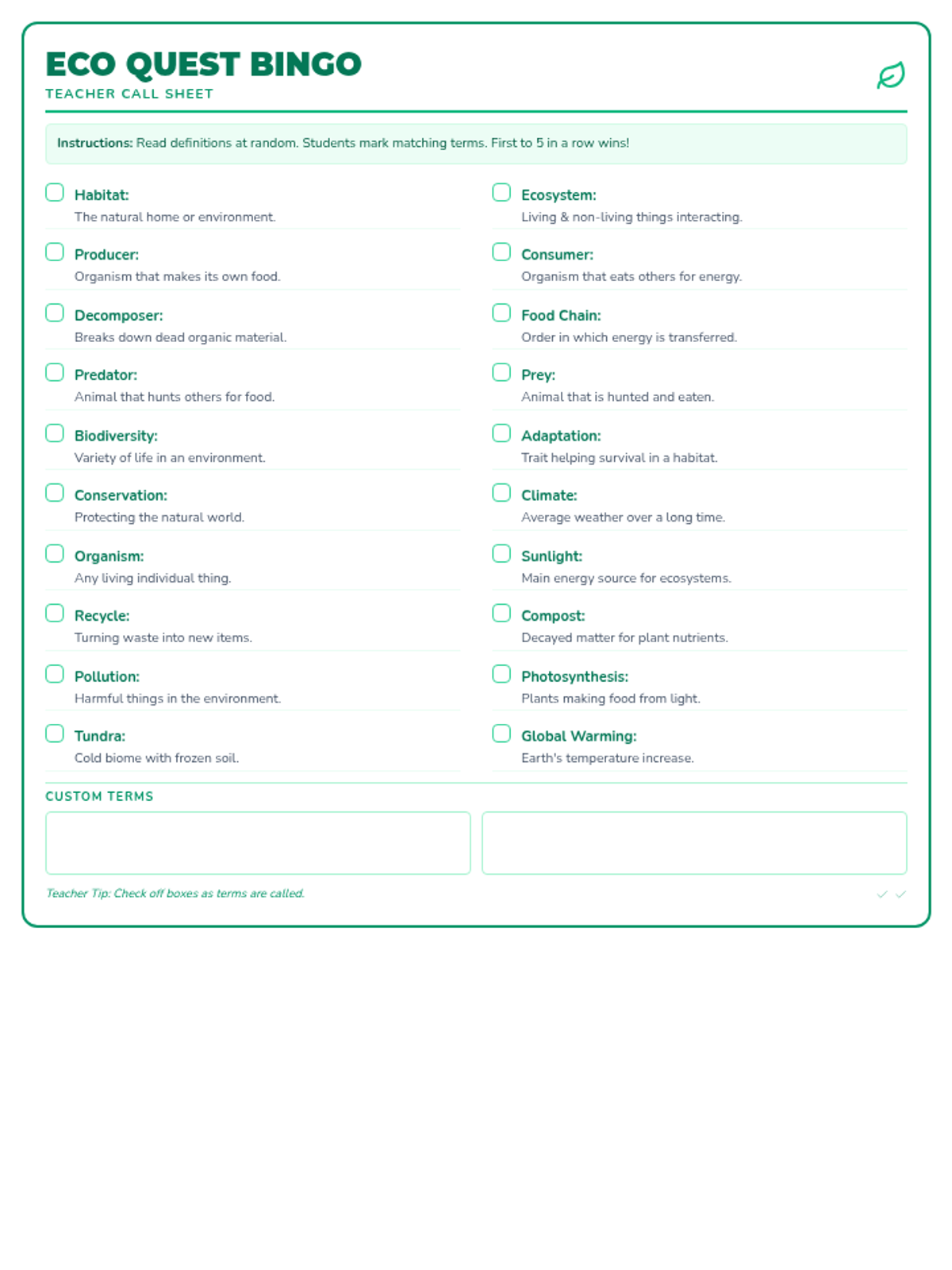
A final refined single-page teacher call sheet for Eco Quest Bingo. Optimized for print and clarity with all content comfortably fitting on one page.
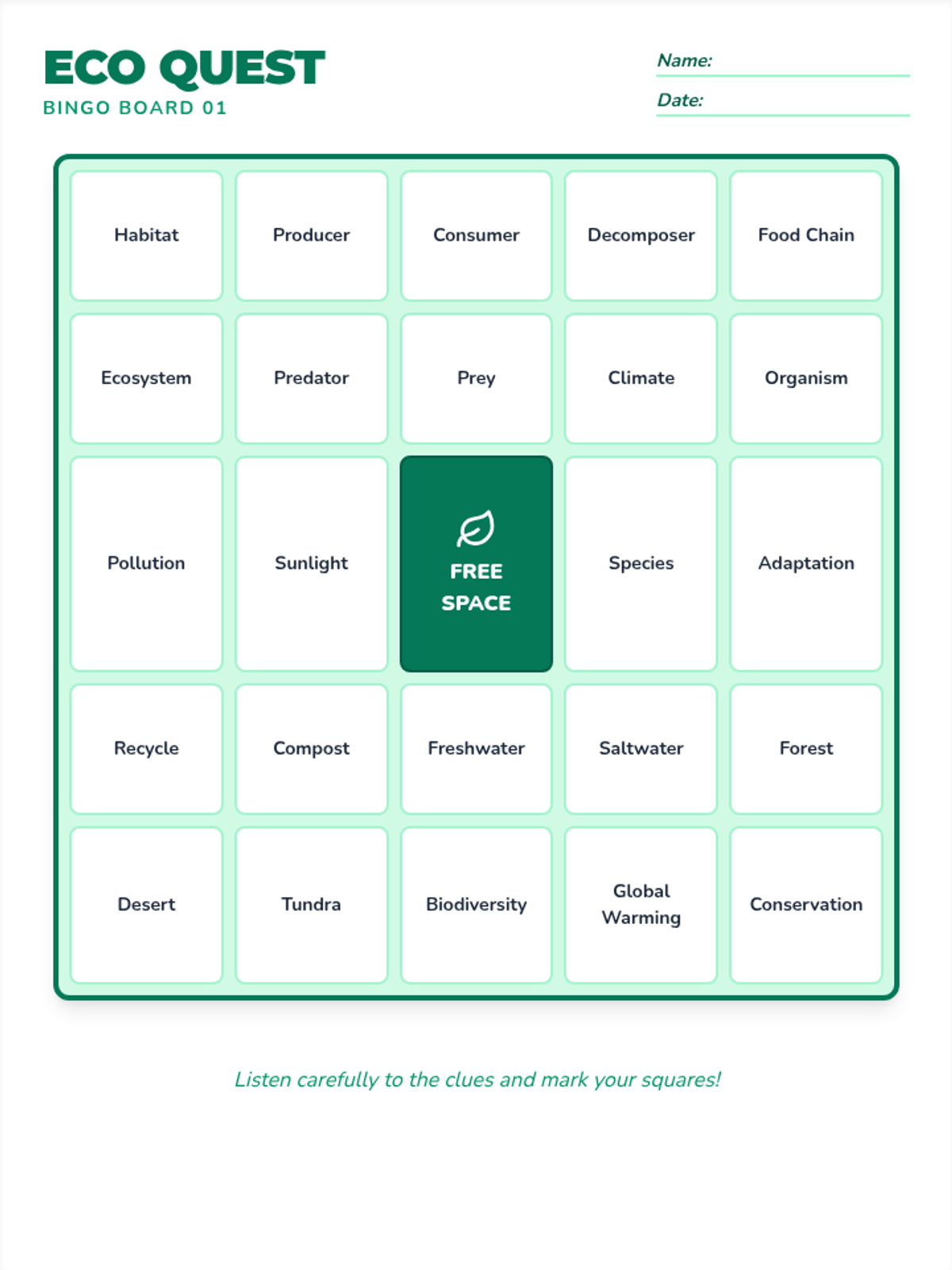
A set of two nature-themed bingo boards, each on its own page for clear printing. Designed with a 5x5 grid and a free space.
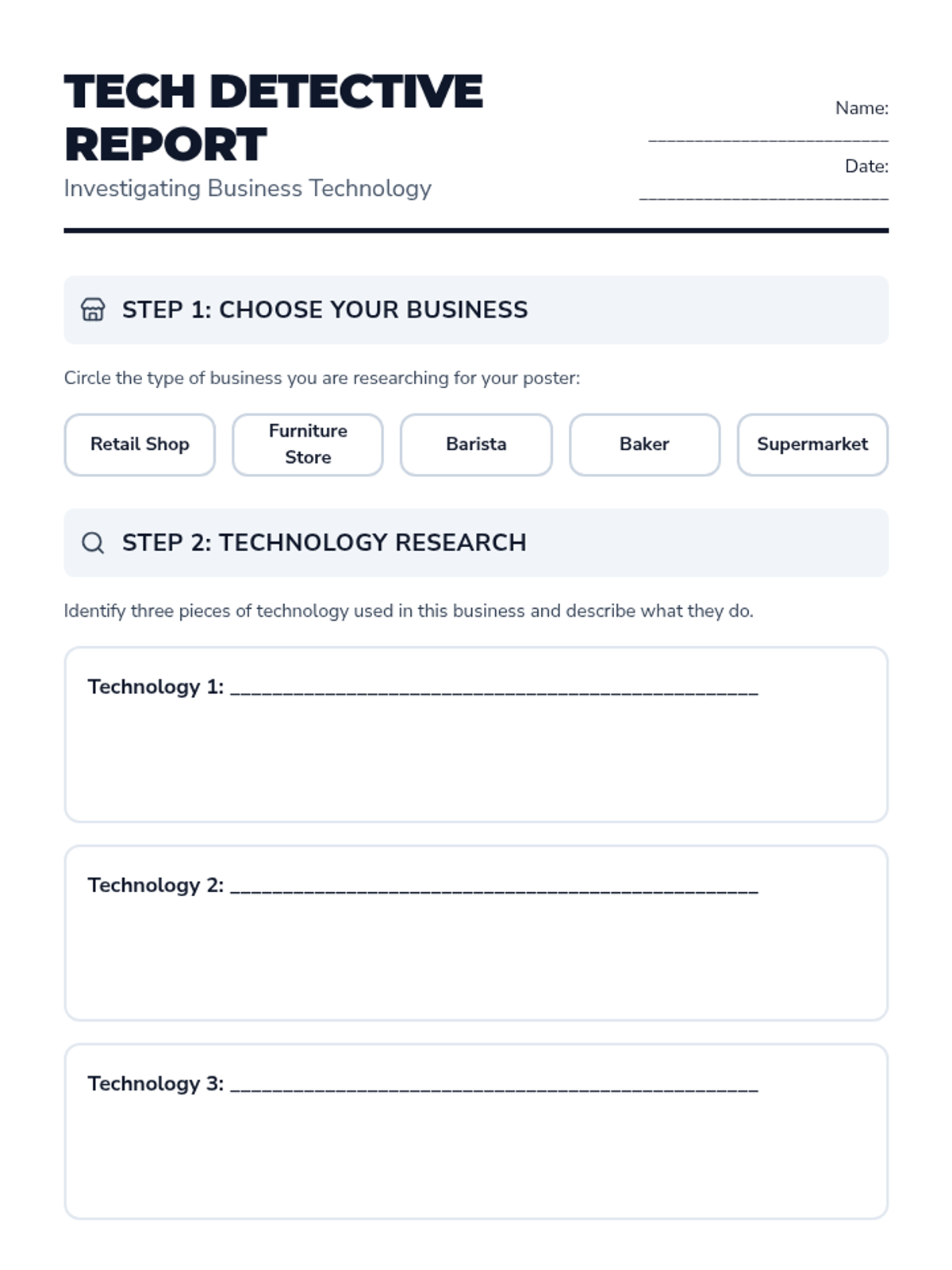
A structured research and planning sheet for students to investigate shop technology and plan their informative posters. Revised to fix page break issues and improve student work areas.
A 10-slide presentation exploring technology in businesses, featuring a detailed restaurant case study and instructions for a student research poster project. Revised for visual consistency and improved accessibility.
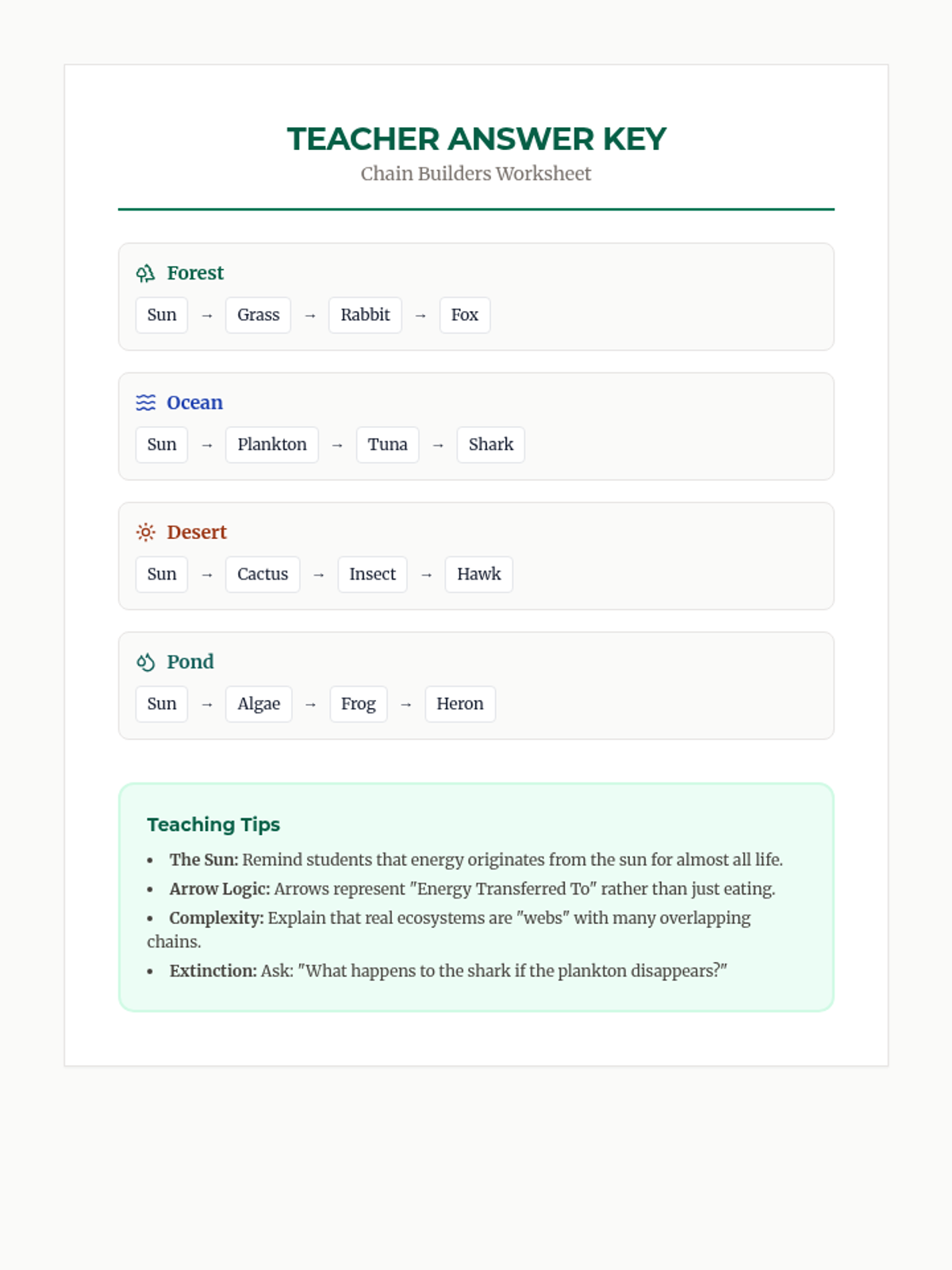
Answer key for the Chain Builders activity with teaching tips for instructors.
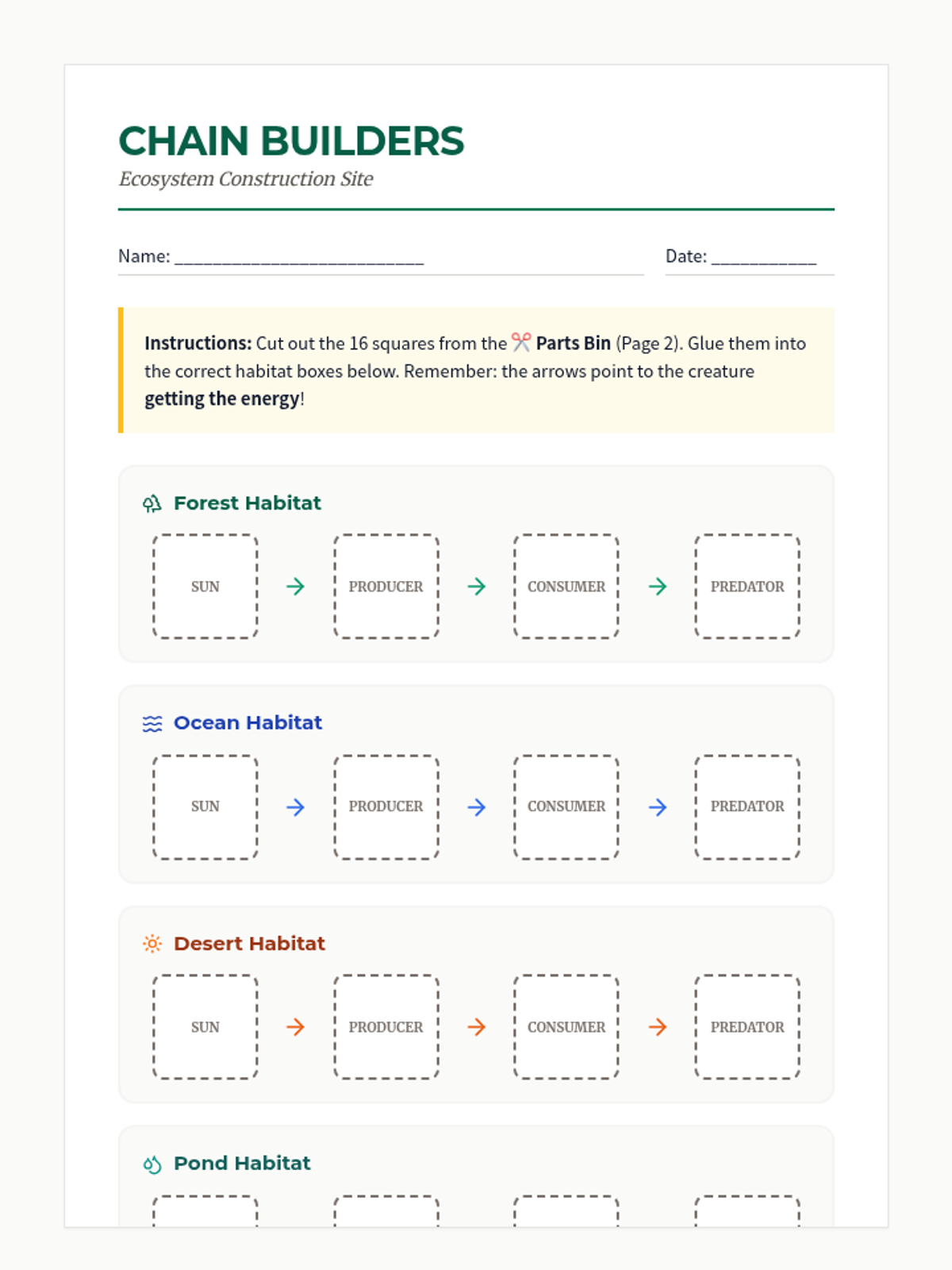
An interactive cut-and-paste activity where students build food chains for four different habitats: Forest, Ocean, Desert, and Pond.
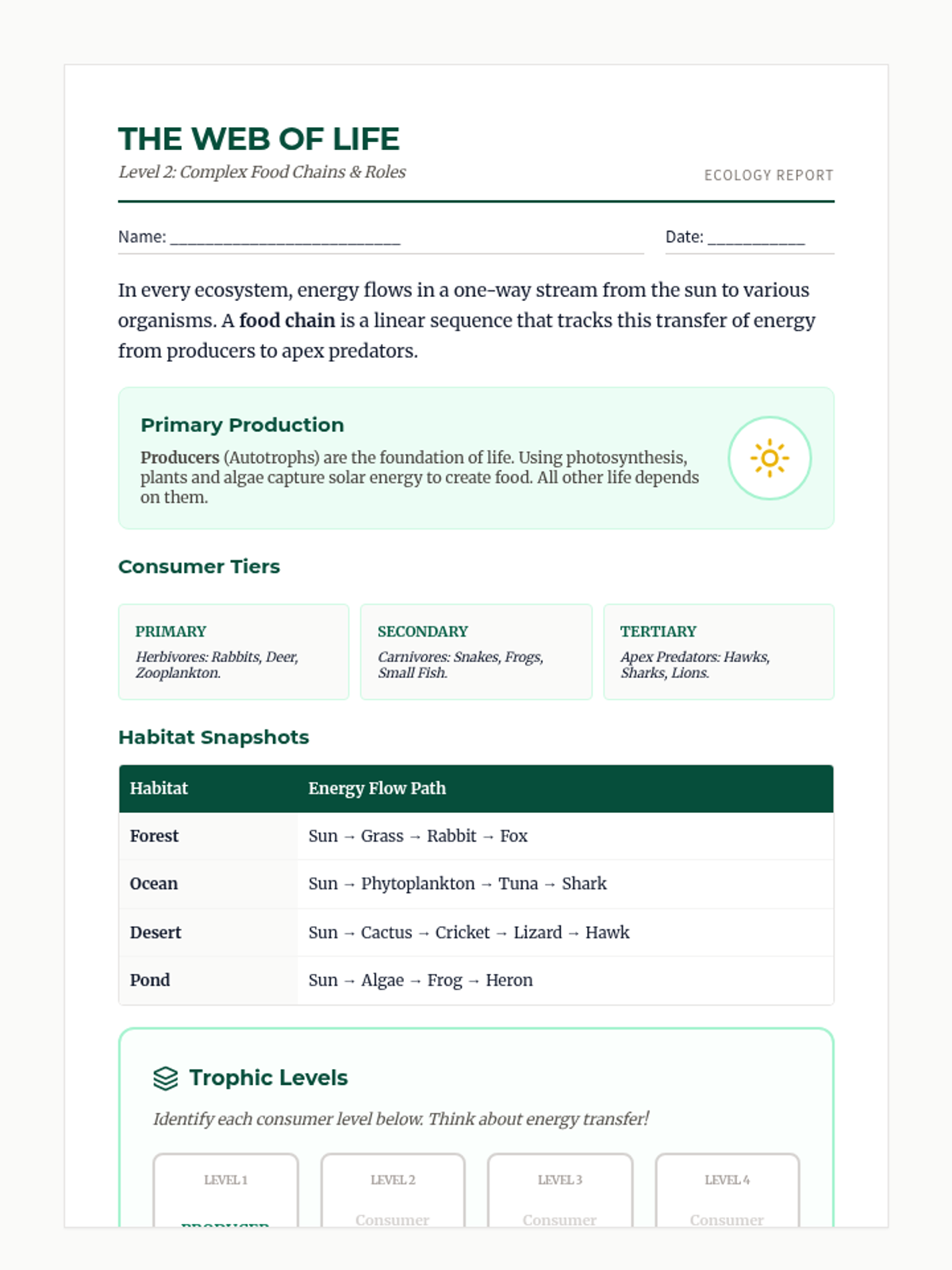
A more advanced reading passage for intermediate readers covering trophic levels, herbivores, carnivores, and the 10% energy rule.
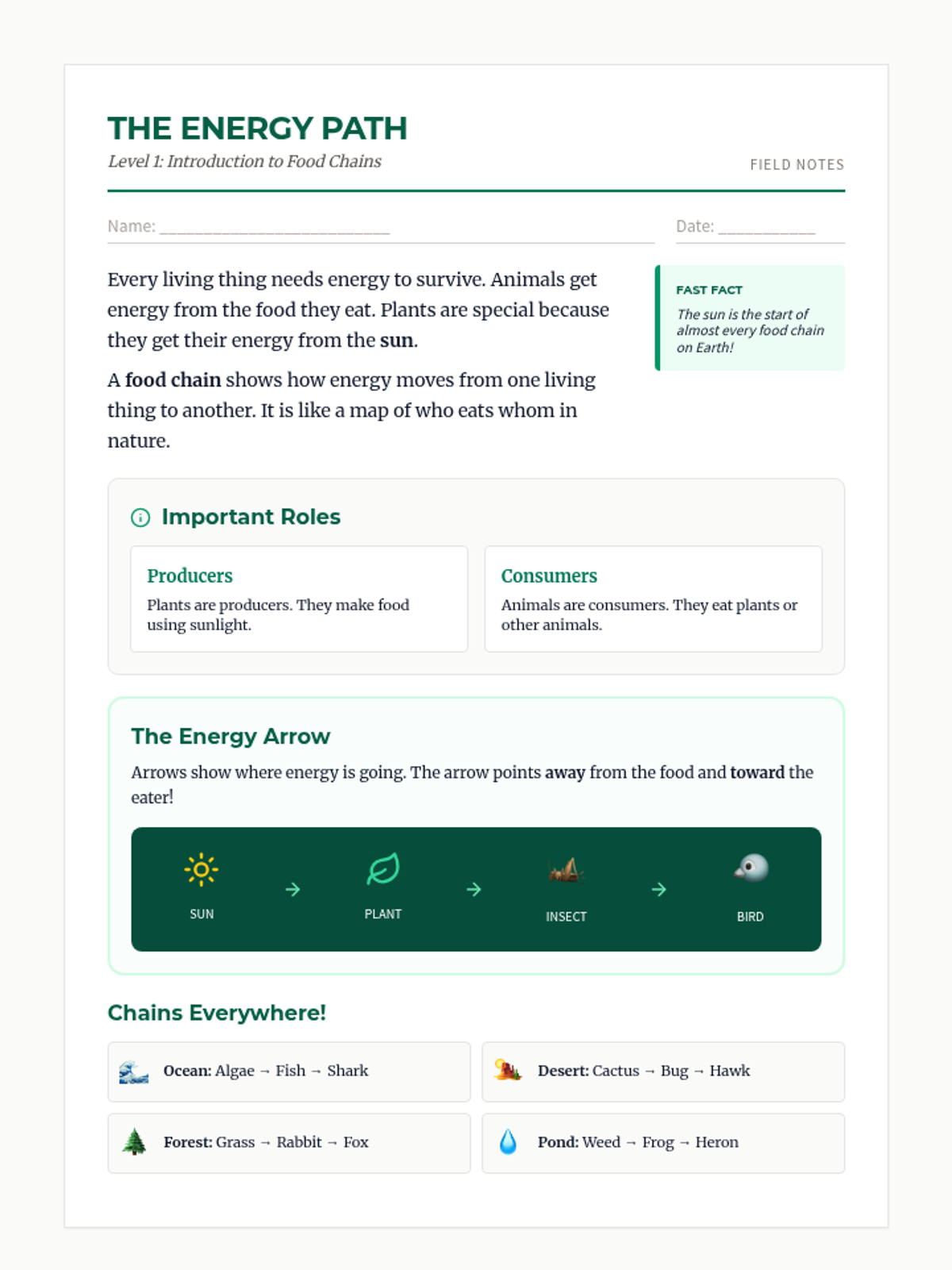
An introductory reading passage about food chains for beginner readers, explaining basic concepts like producers, consumers, and energy flow.
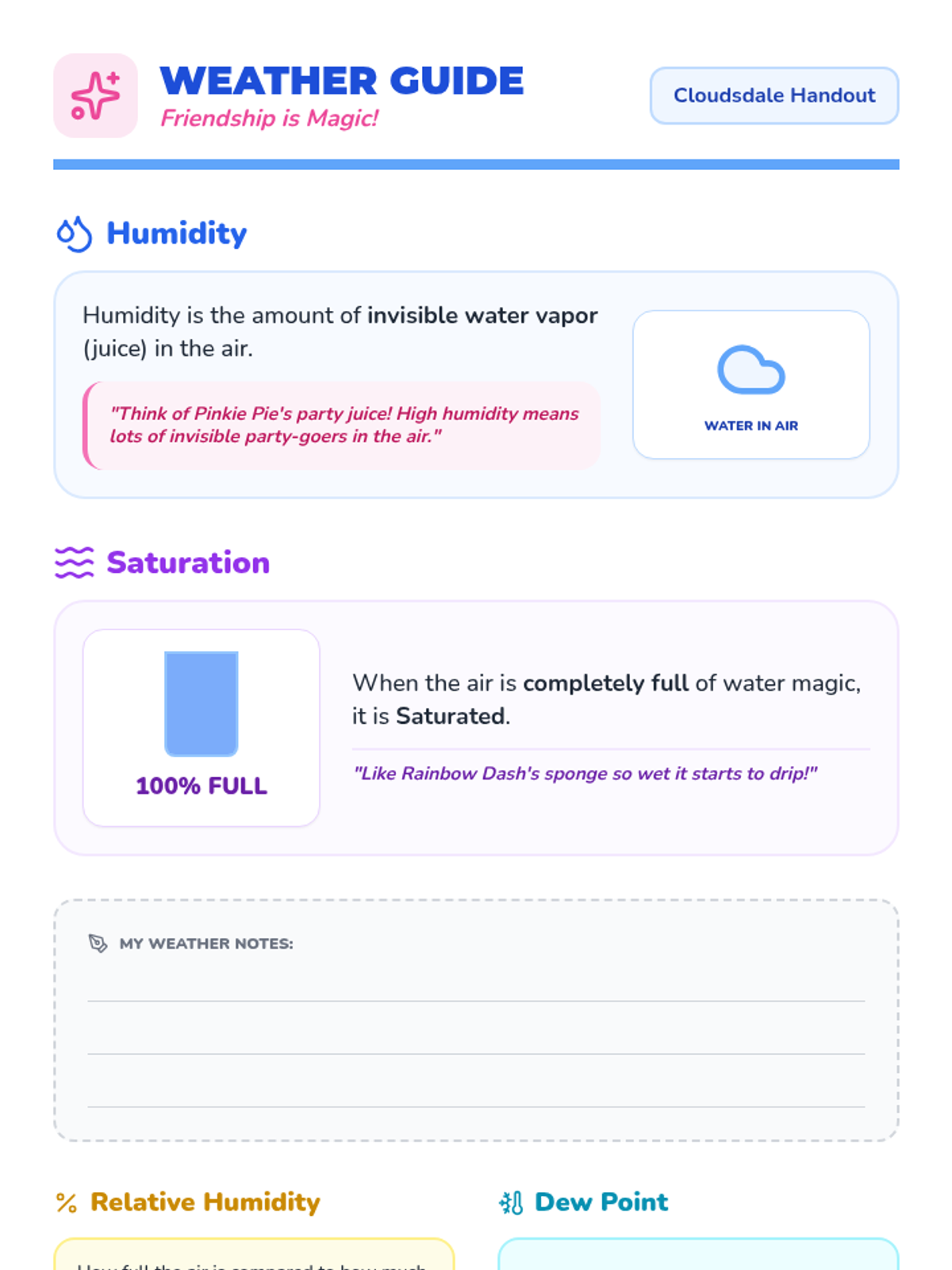
A printable study guide and handout version of the lesson slides, optimized for US Letter paper. Features clear visual metaphors, simplified definitions, and key concept summaries with My Little Pony thematic elements.
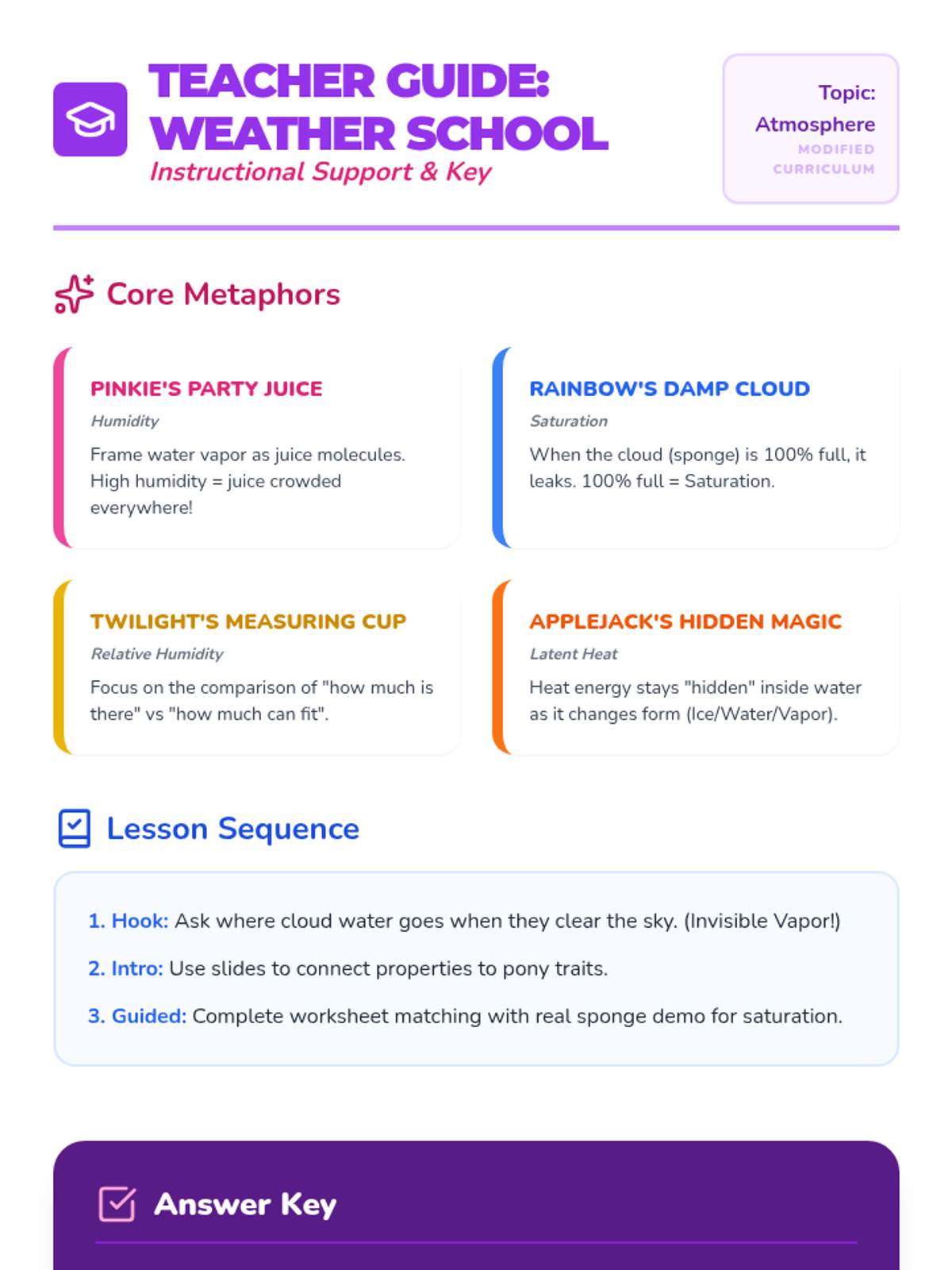
A teacher's guide and answer key for the Ponyville Weather School lesson, providing instructional metaphors, inclusion strategies, and clear answers. Optimized for printing on US Letter paper.
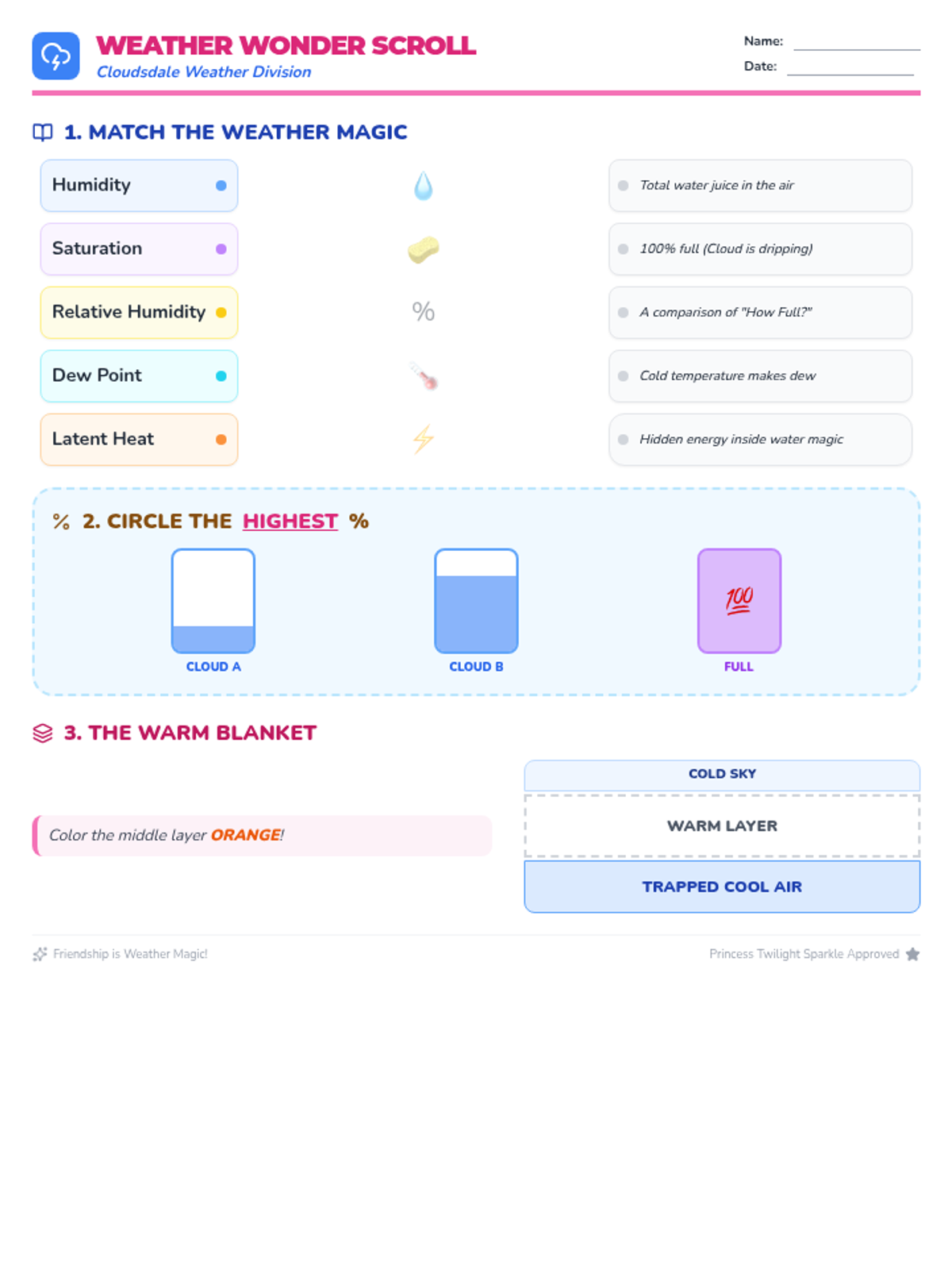
A student worksheet for atmosphere properties featuring symbol-supported matching, visual comparisons of humidity, and a creative task for temperature inversion. Optimized for printing on US Letter paper with improved contrast and layout.

A visually rich slide deck themed after My Little Pony: Friendship is Magic, explaining core atmospheric properties through clear metaphors and symbols for modified curriculum students.
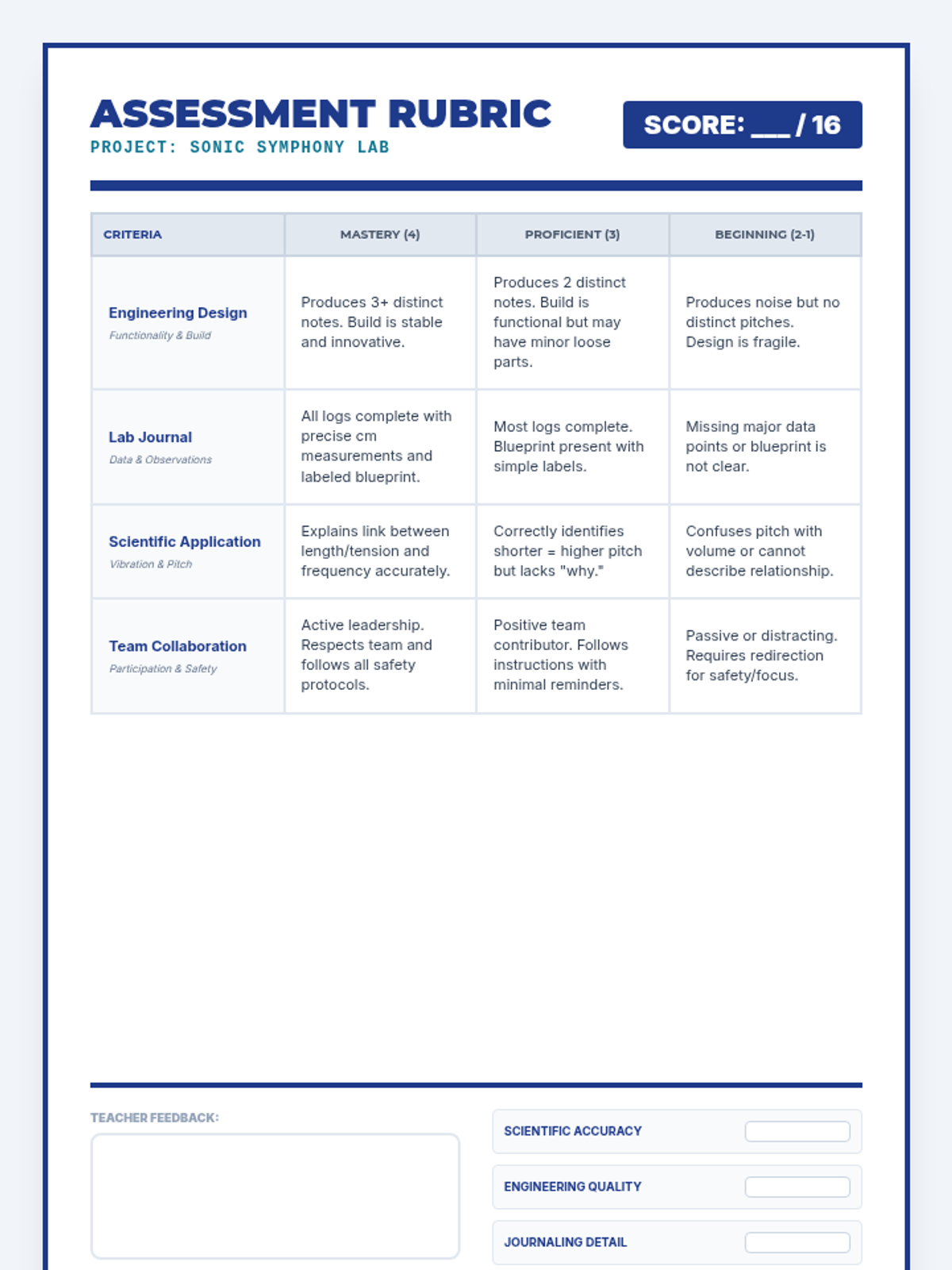
A comprehensive assessment rubric for the Sonic Symphony Lab. Revised to fit onto a single page with improved layout, professional feedback areas, and clear criteria for engineering and physics.
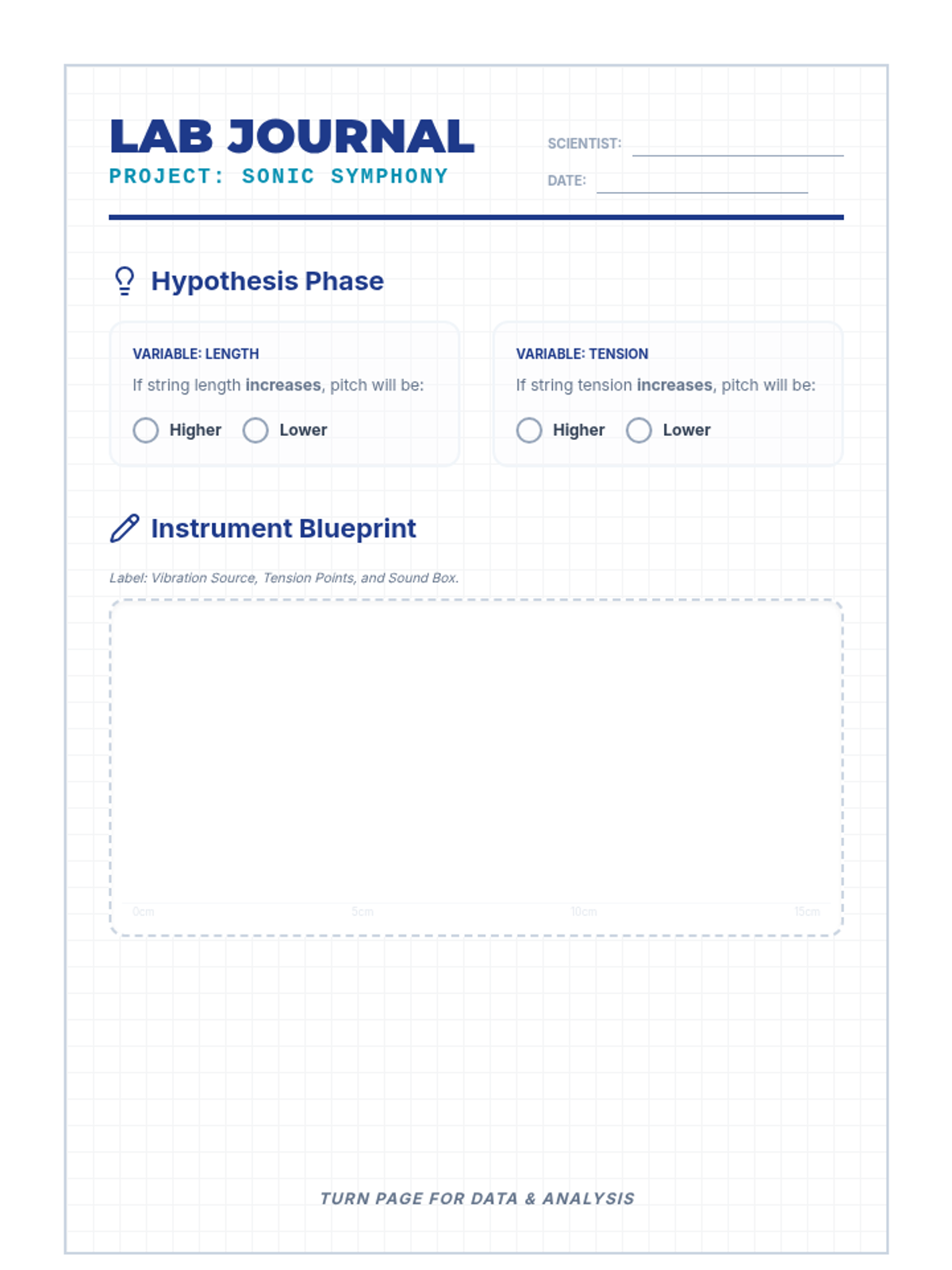
A student lab journal for the Sonic Symphony investigation. Revised with improved page breaks, white student work areas, and complete analysis sections to ensure a professional lab experience.
A visually engaging presentation for the Sonic Symphony Lab, introducing vibration, pitch, and engineering analysis. Revised to include a concrete wave visual and an advanced acoustic engineering slide for middle school students.
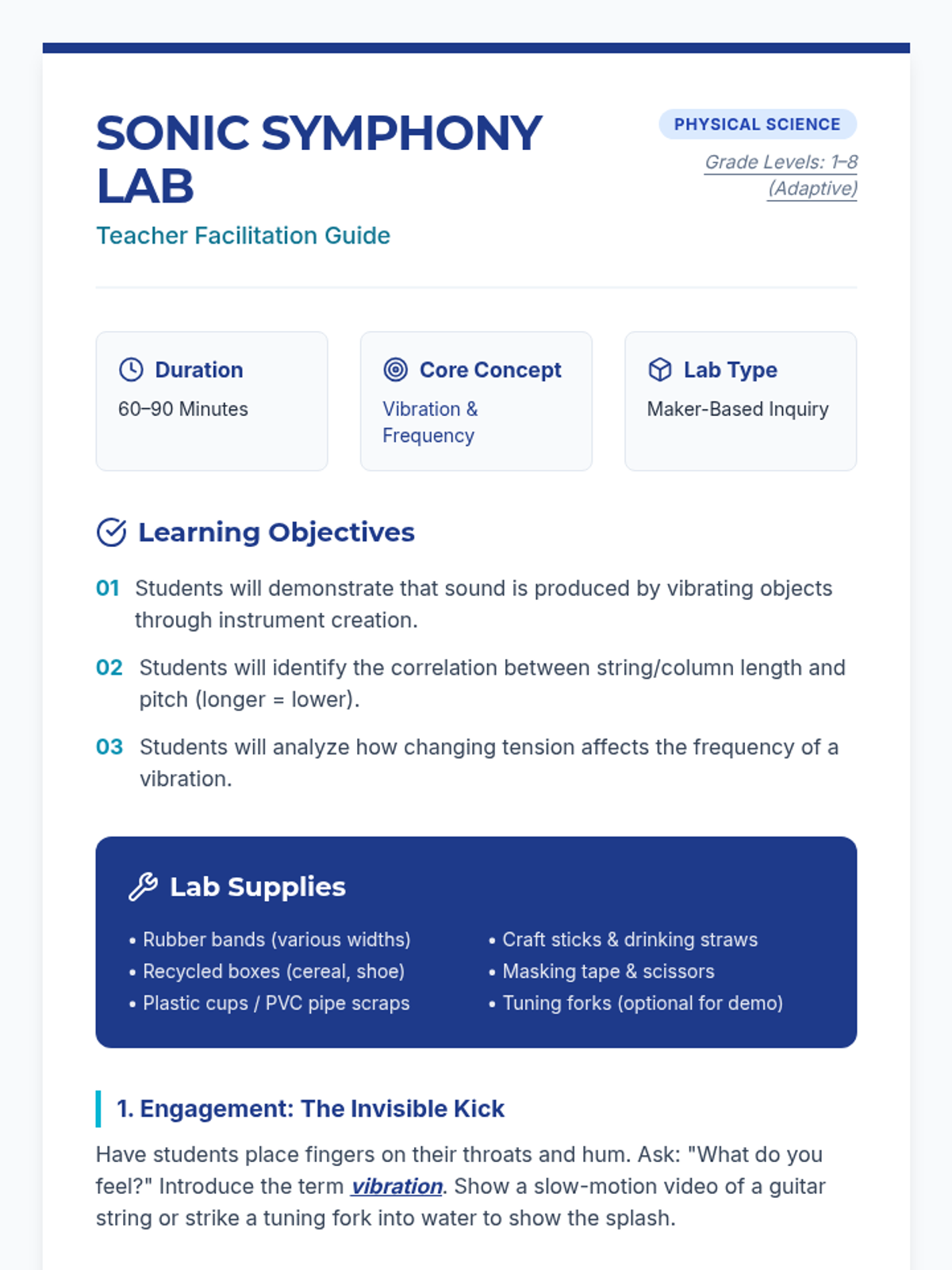
A comprehensive teacher facilitation guide for the Sonic Symphony Lab, featuring learning objectives, materials list, step-by-step procedures, and differentiation strategies for grades 1-8. Revised to include full grade-level scaling and professional formatting.
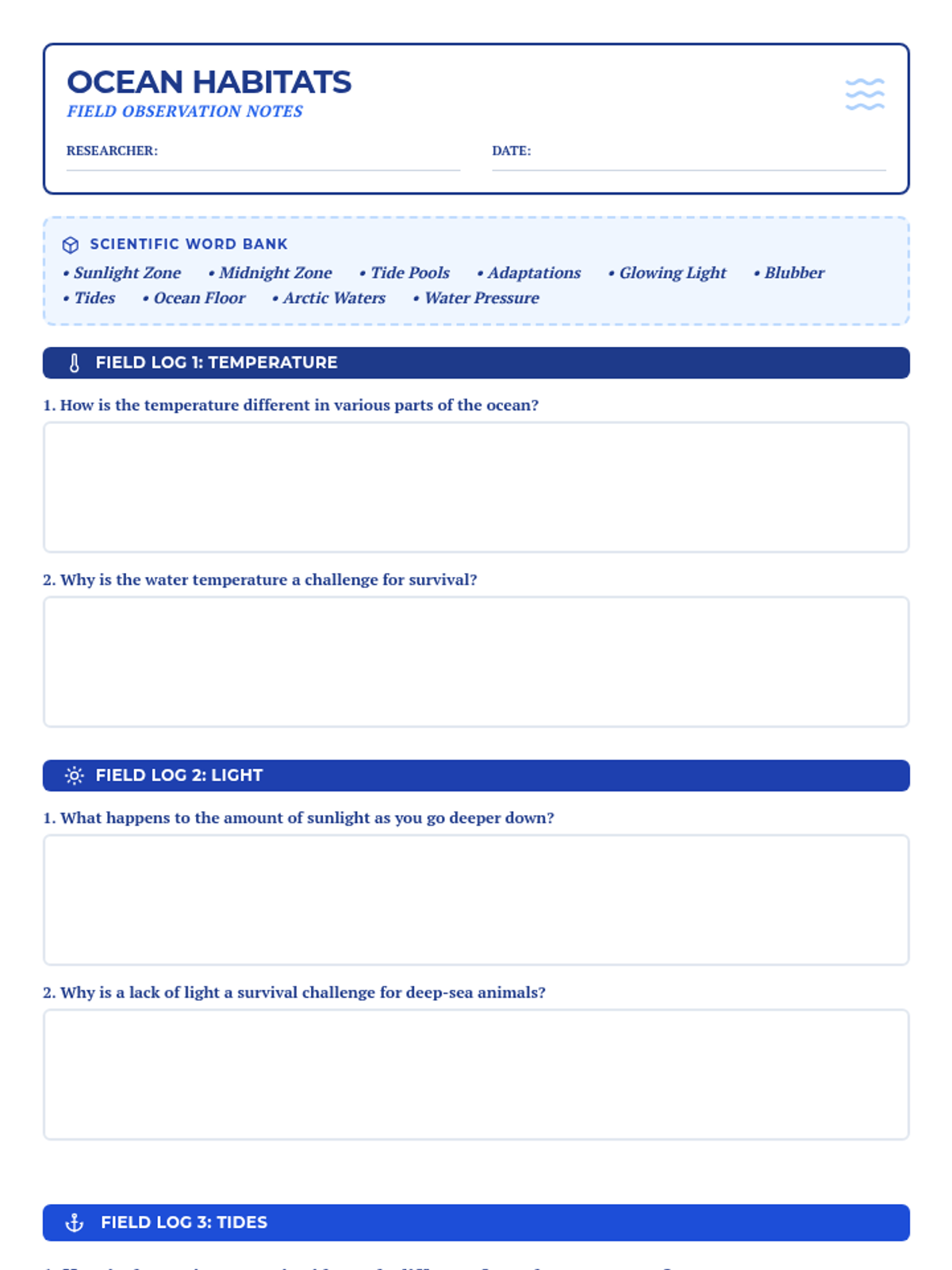
A 2-page age-appropriate guided note-taking document for studying ocean habitats. Features simplified vocabulary (Sunlight Zone, Tide Pools, etc.) and structured writing spaces for Temperature, Light, and Tides. Optimized to fit strictly on two pages.
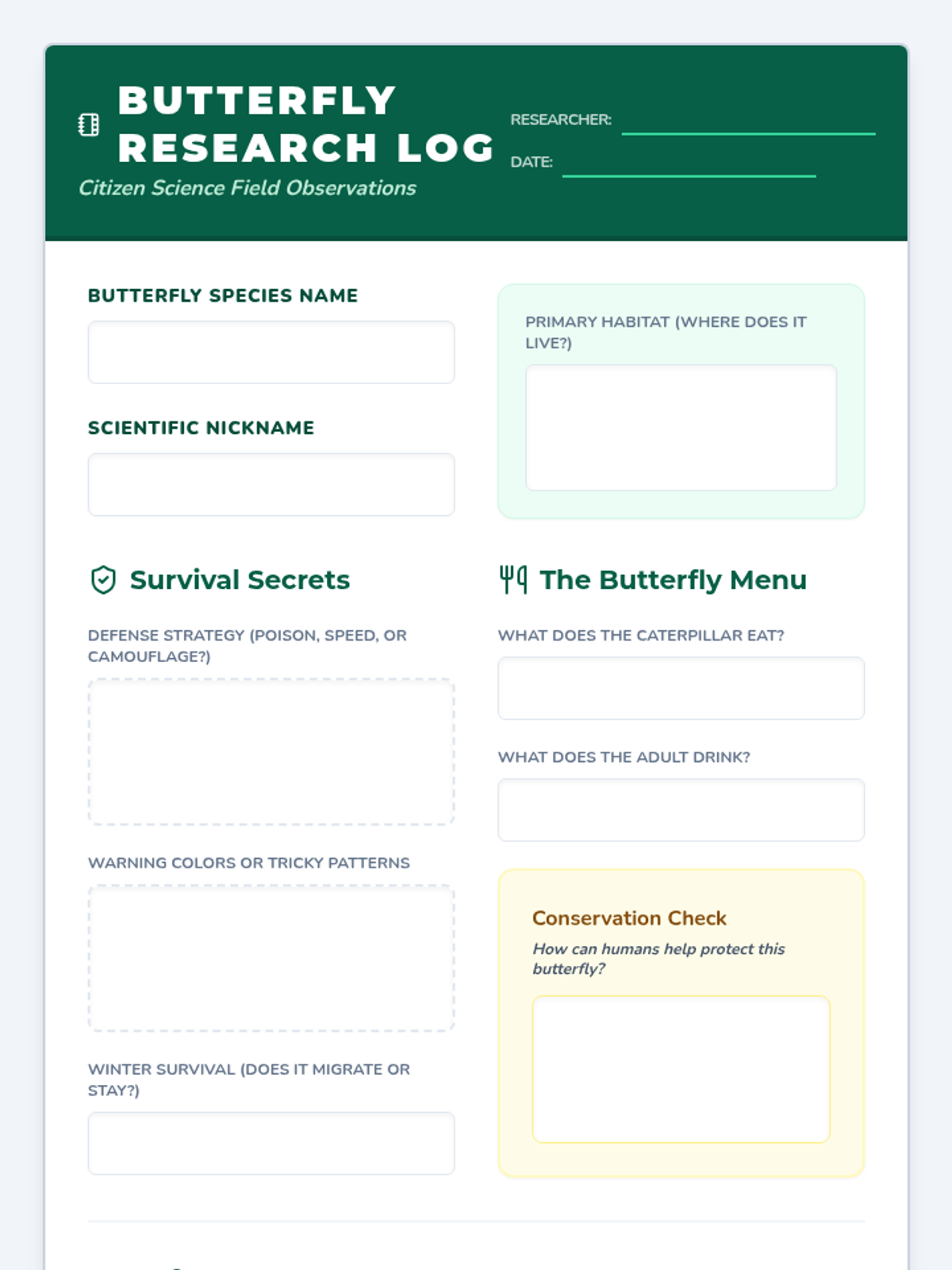
A structured research organizer for students to record findings from butterfly species articles, including habitat, survival strategies, life cycle details, and conservation facts.
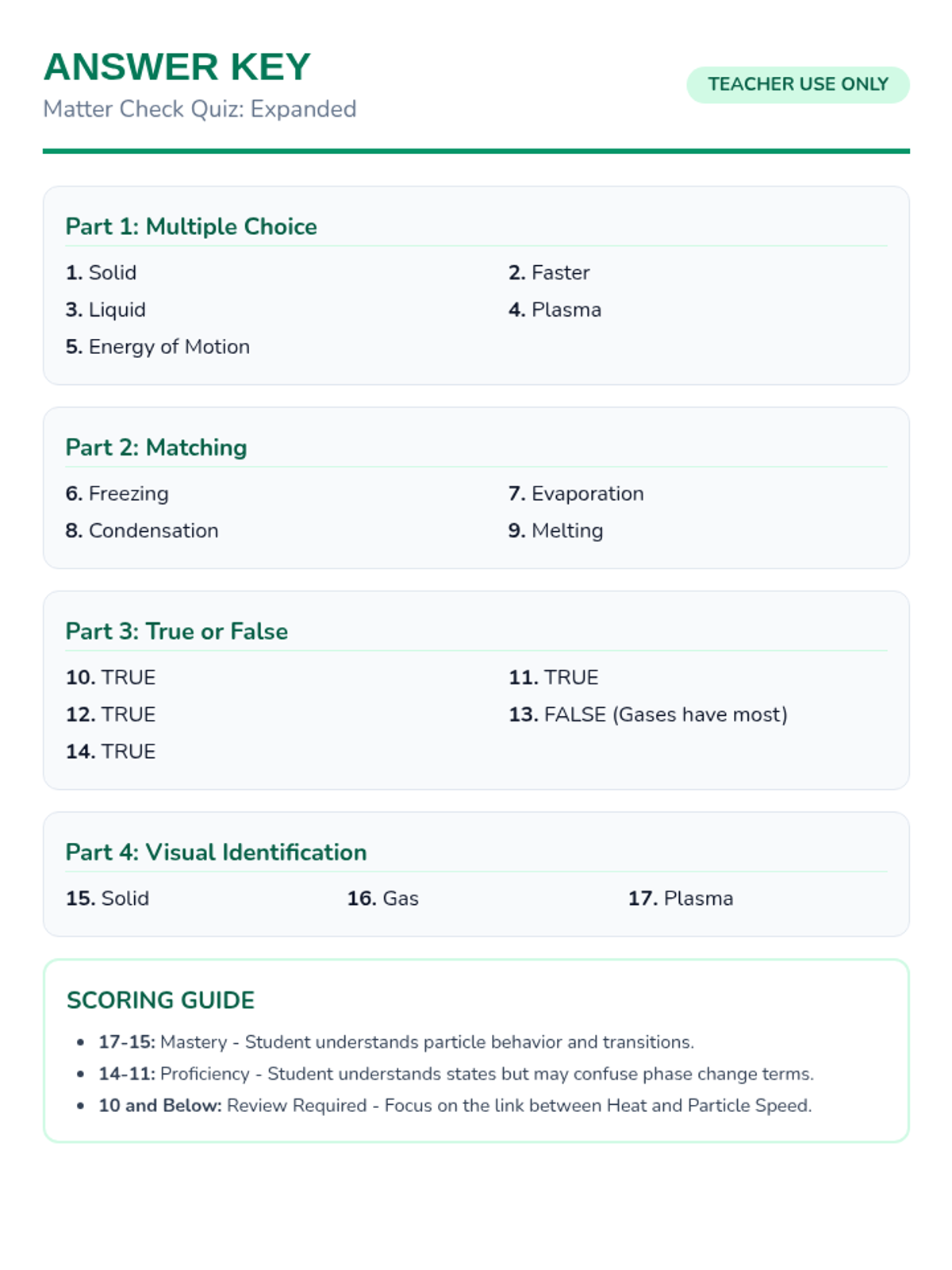
Teacher-facing answer key for the expanded Matter Check Quiz. Includes scoring guide and diagnostic tips for interpreting student results. Updated with corrected scoring logic.
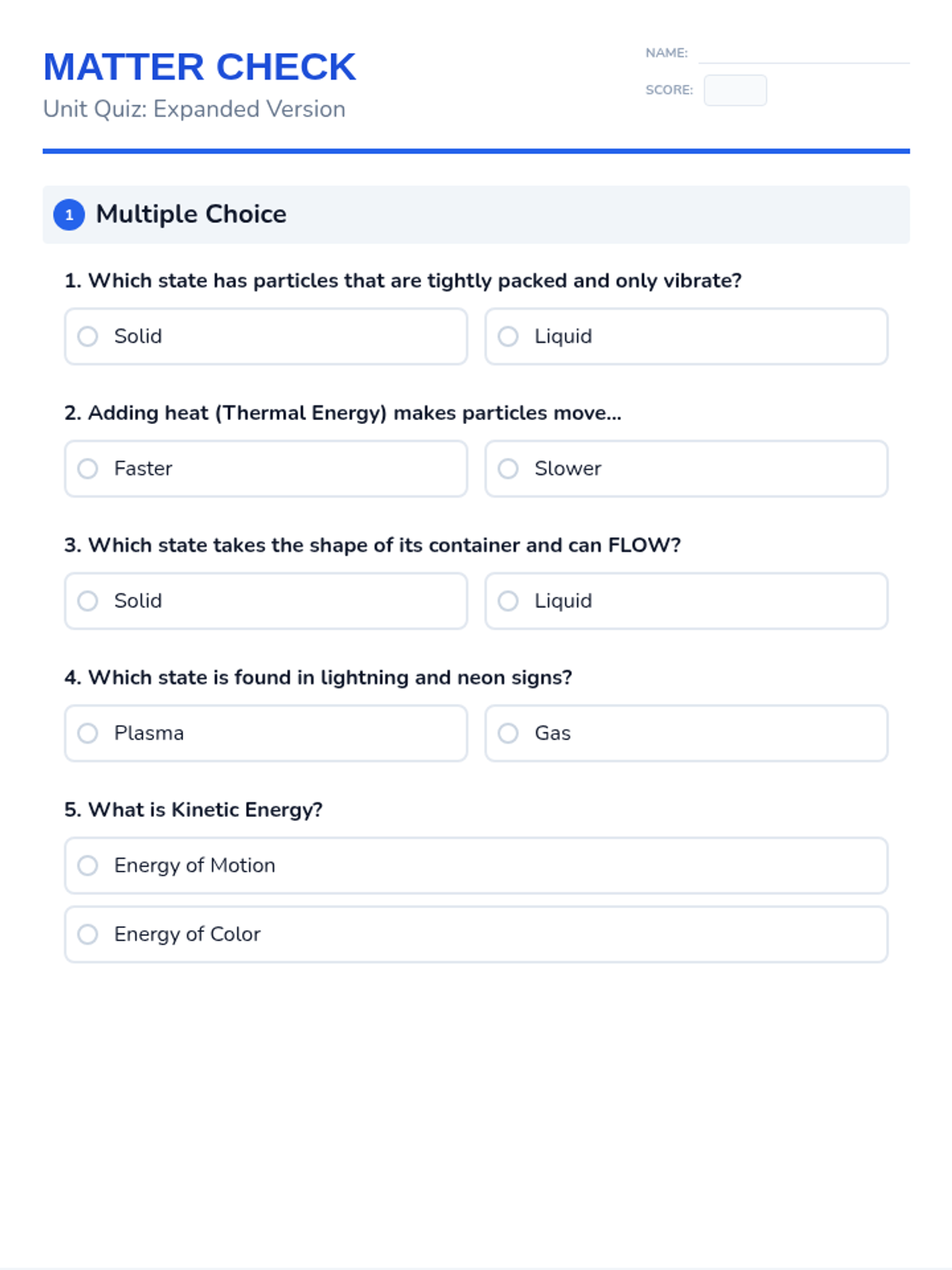
A 17-question expanded quiz covering states of matter, phase changes, and energy. Features Multiple Choice, Matching, True/False, and Visual Identification sections.
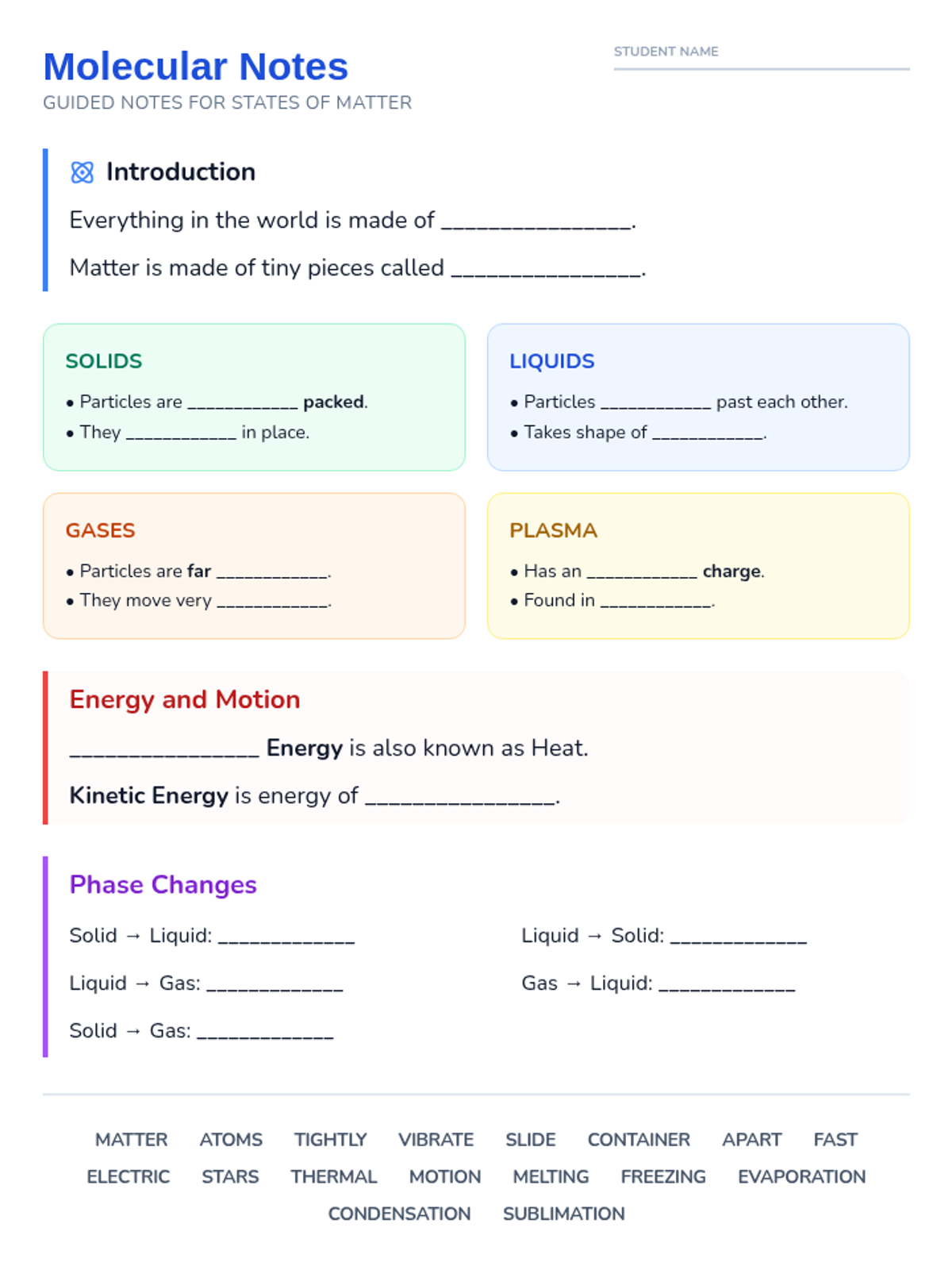
A guided notes handout designed to accompany the slides, revised with legible background for the Plasma section and an updated word bank.
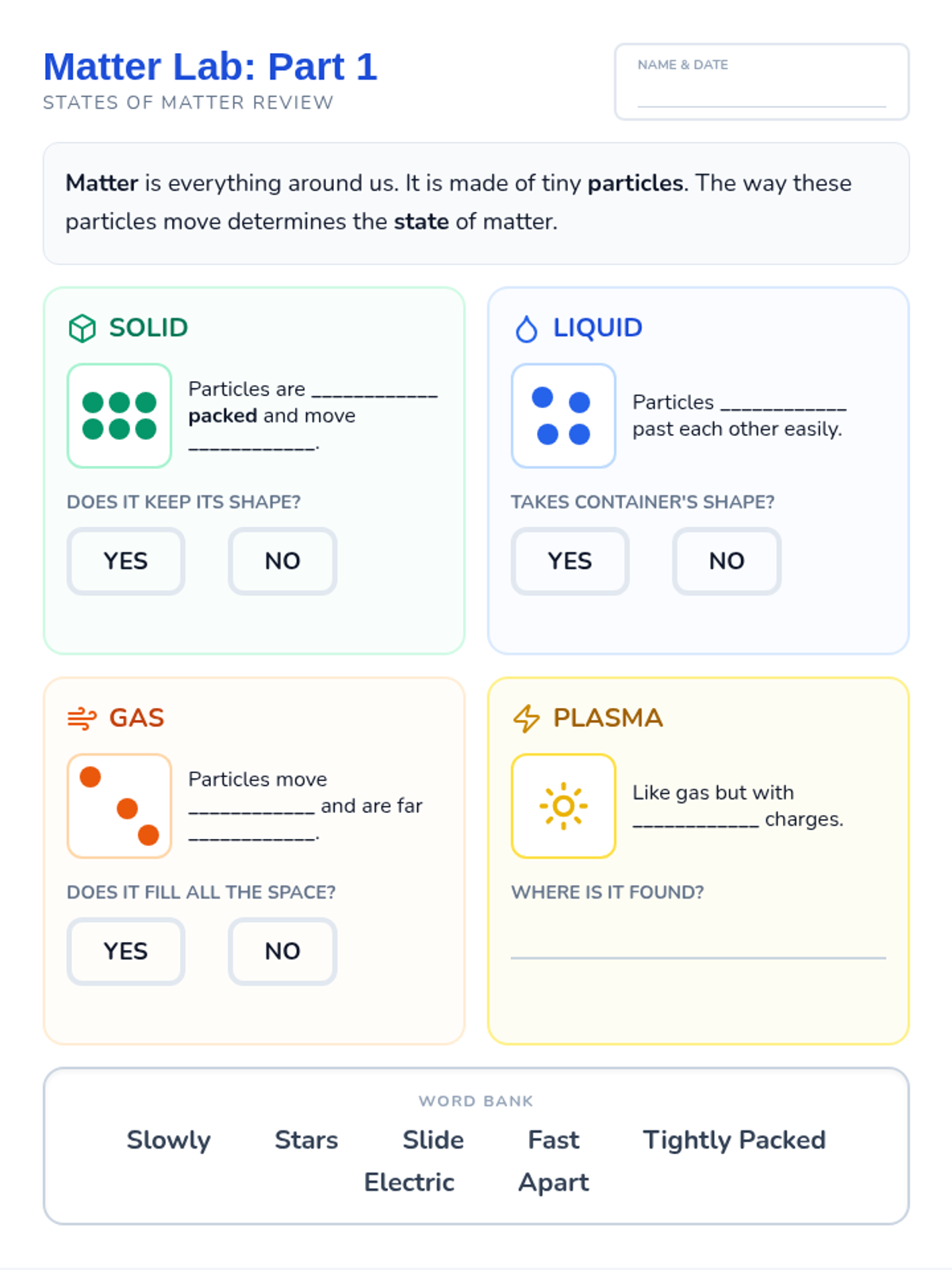
A 4-page comprehensive review packet featuring graphic organizers, visual matching, and simplified text for diverse learners. Revised for improved page flow and layout consistency.
A 10-slide presentation reviewing states of matter, phase changes, and energy principles with simplified text and high-contrast visuals.
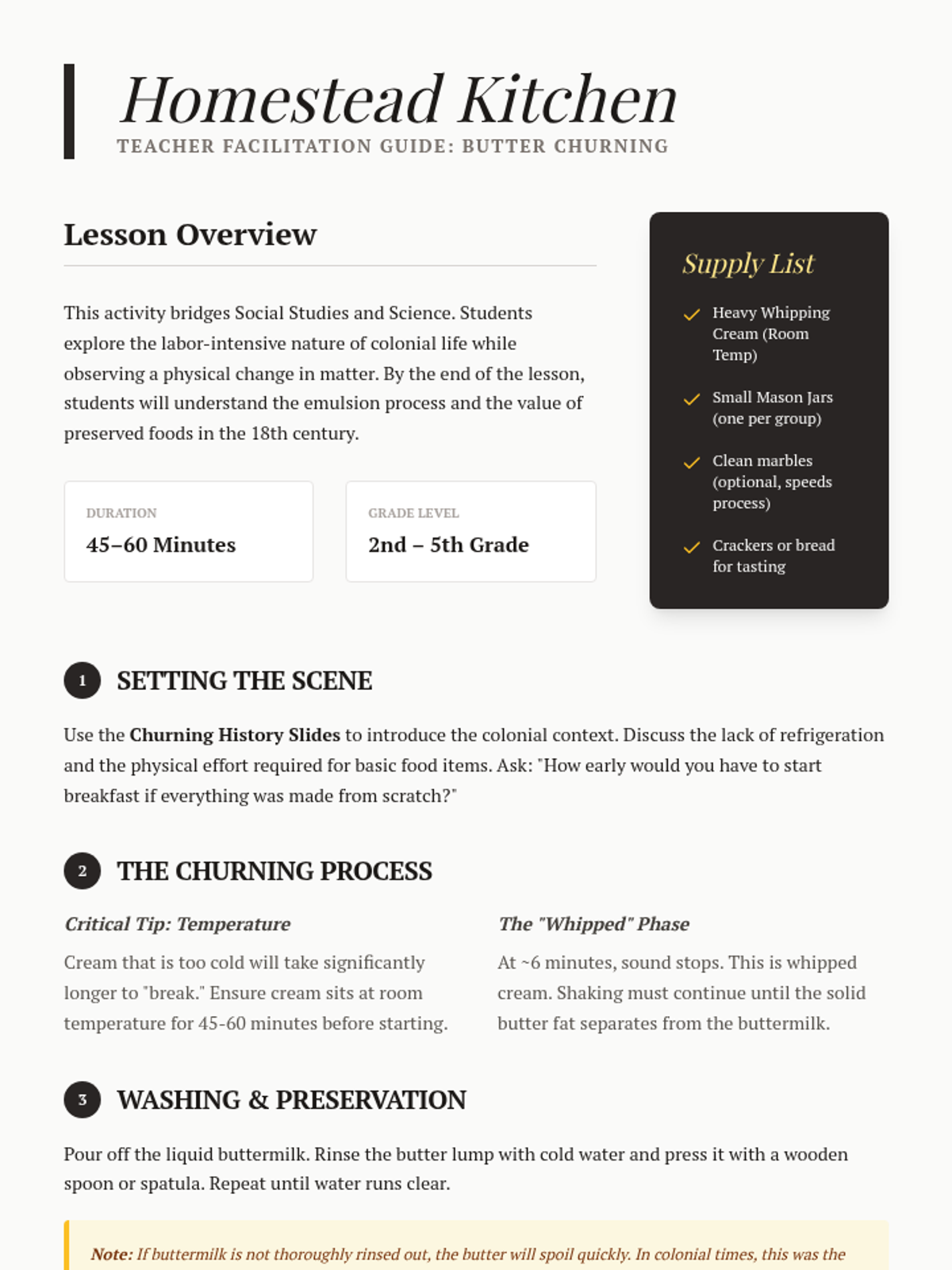
A comprehensive guide for teachers to facilitate the butter-churning activity. Includes supply lists, chemical reaction explanations, colonial discussion prompts, and troubleshooting tips for the classroom.
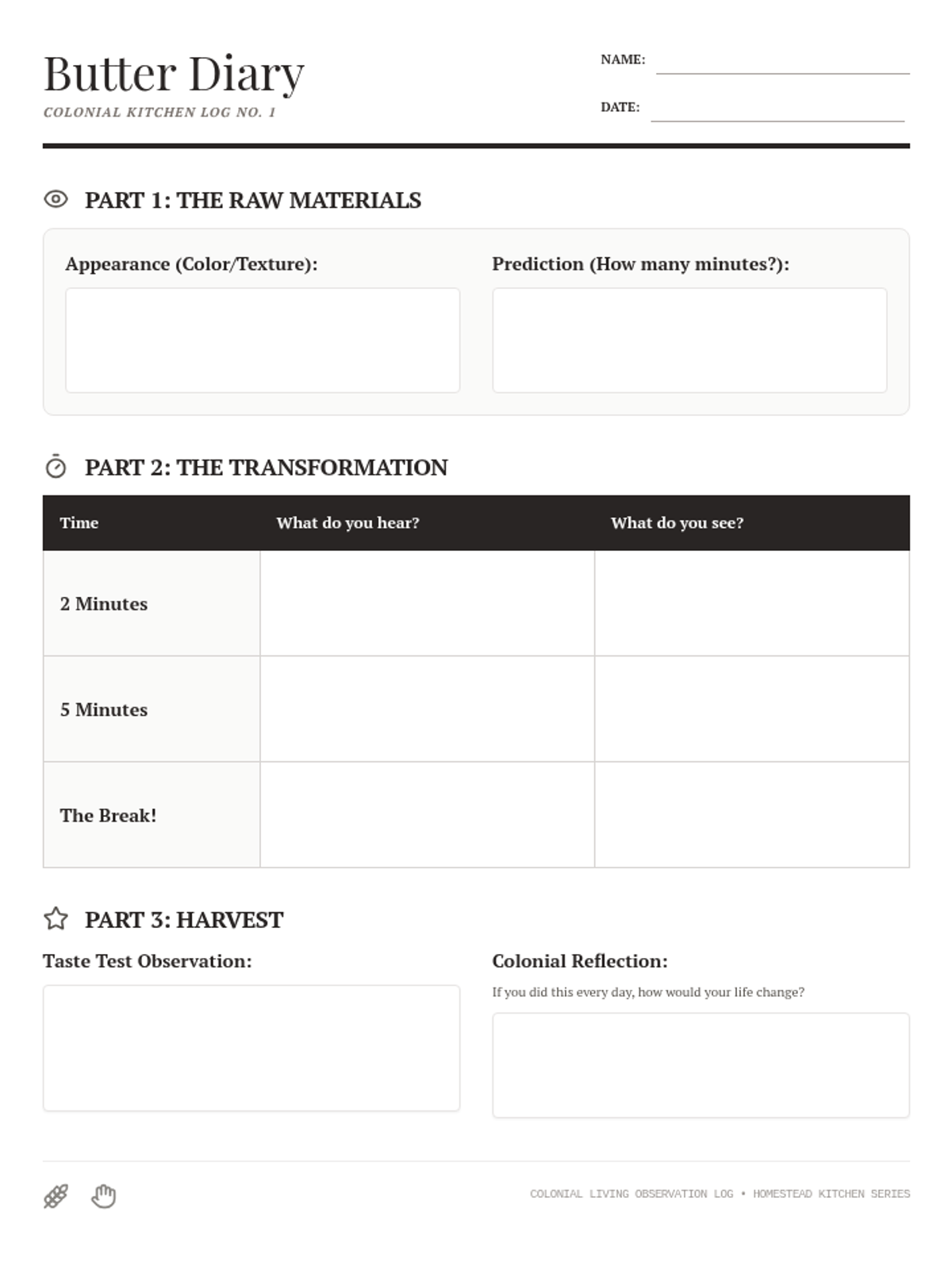
A science and history observation log for students to record the phase changes of cream into butter. It includes sections for initial predictions, a timed observation chart, and reflective questions on colonial life.
A visual step-by-step presentation for a classroom butter-making activity. It covers the history of colonial butter making, the science of emulsion and phase changes, and clear instructions for the mason jar method.
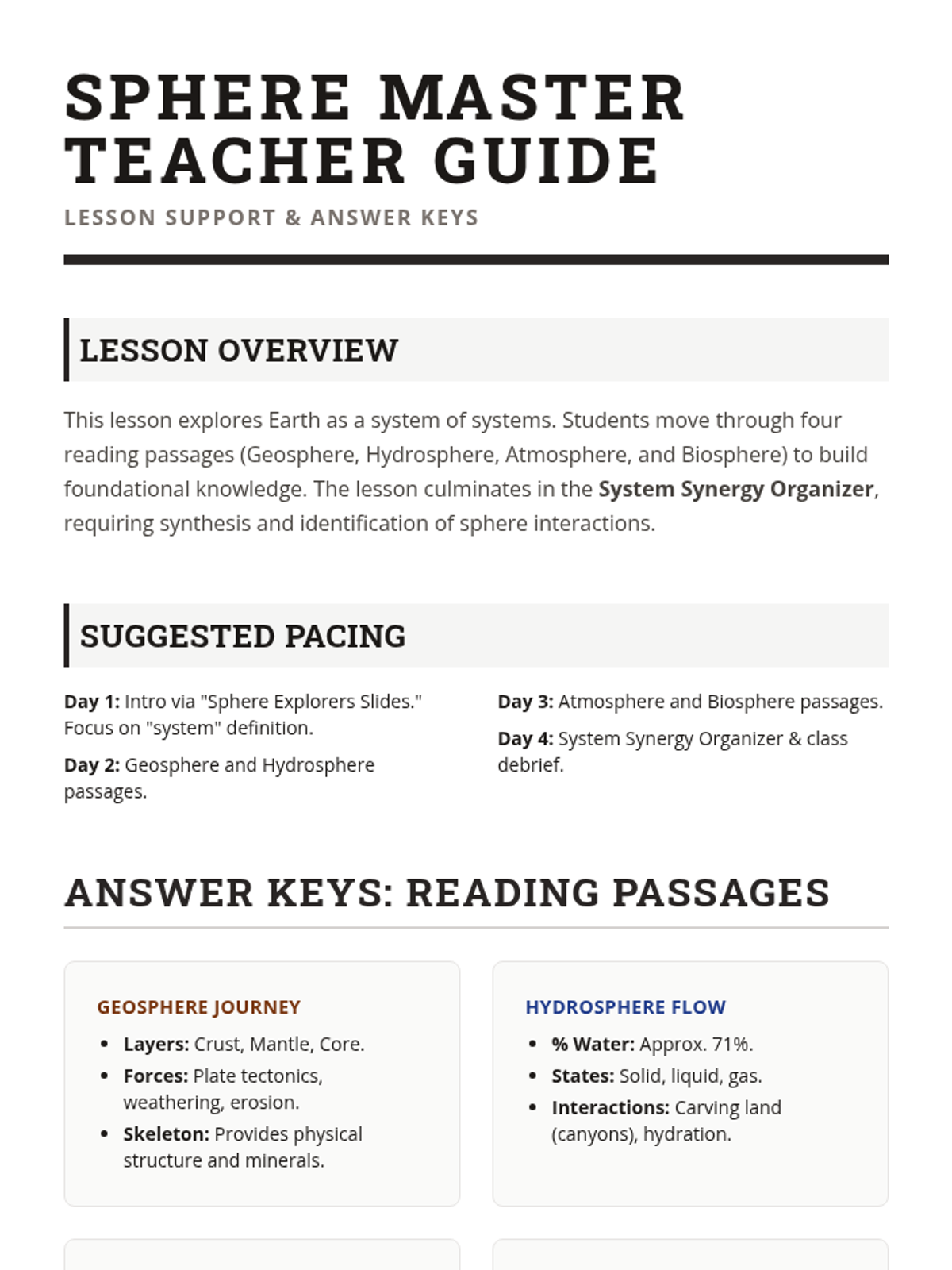
A comprehensive teacher's guide containing a lesson overview, pacing suggestions, answer keys for all reading passages, and discussion prompts. Layout improved for spacing and legibility.
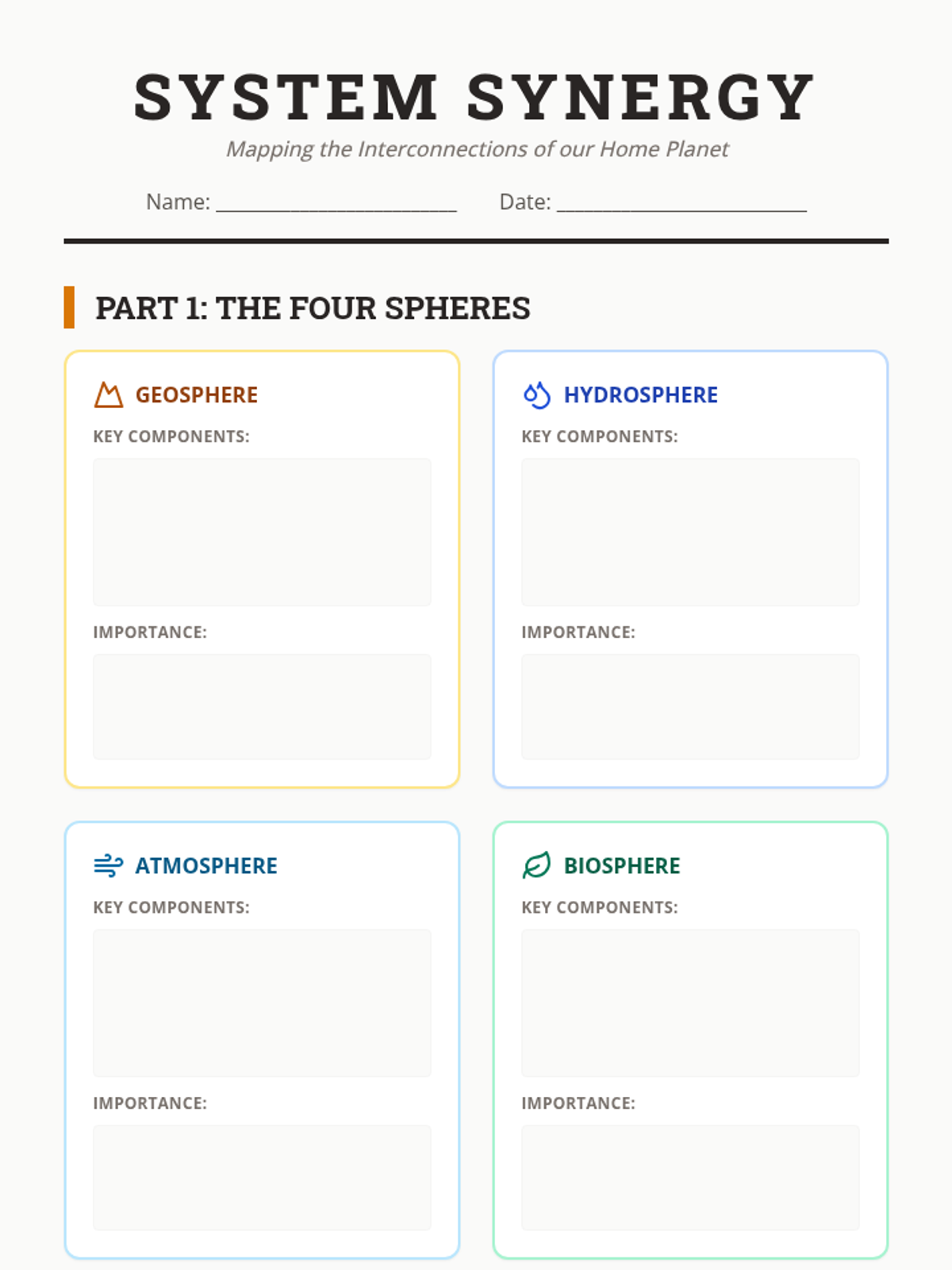
A synthesis worksheet where students summarize each Earth system and identify interactions between them using provided scenarios. Part 2 updated with tasks for identification. Layout improved for spacing and legibility.
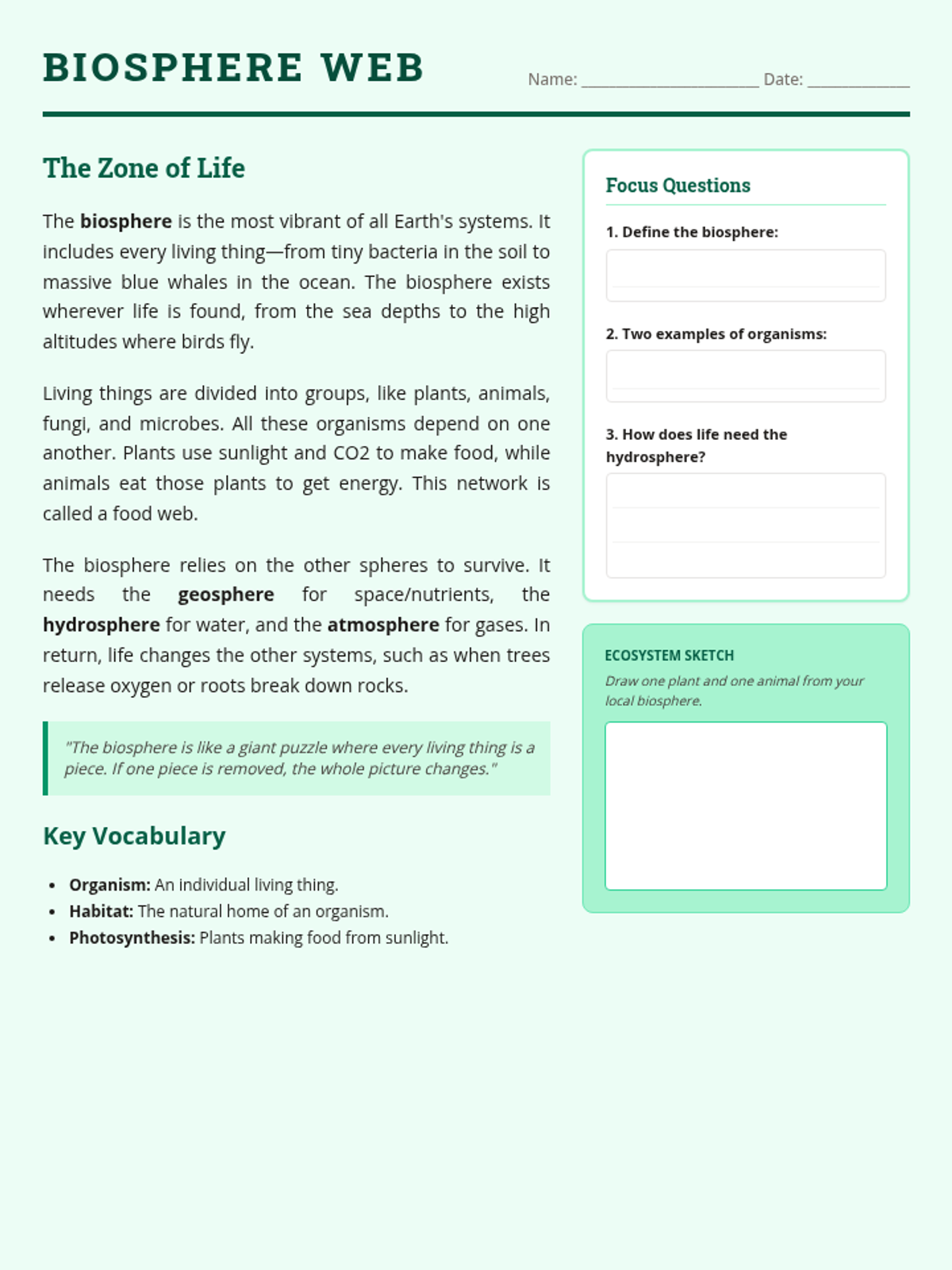
A guided reading passage about the Biosphere, highlighting the diversity of life and its dependence on other Earth systems. Layout optimized for 1-page printing with guided writing lines.
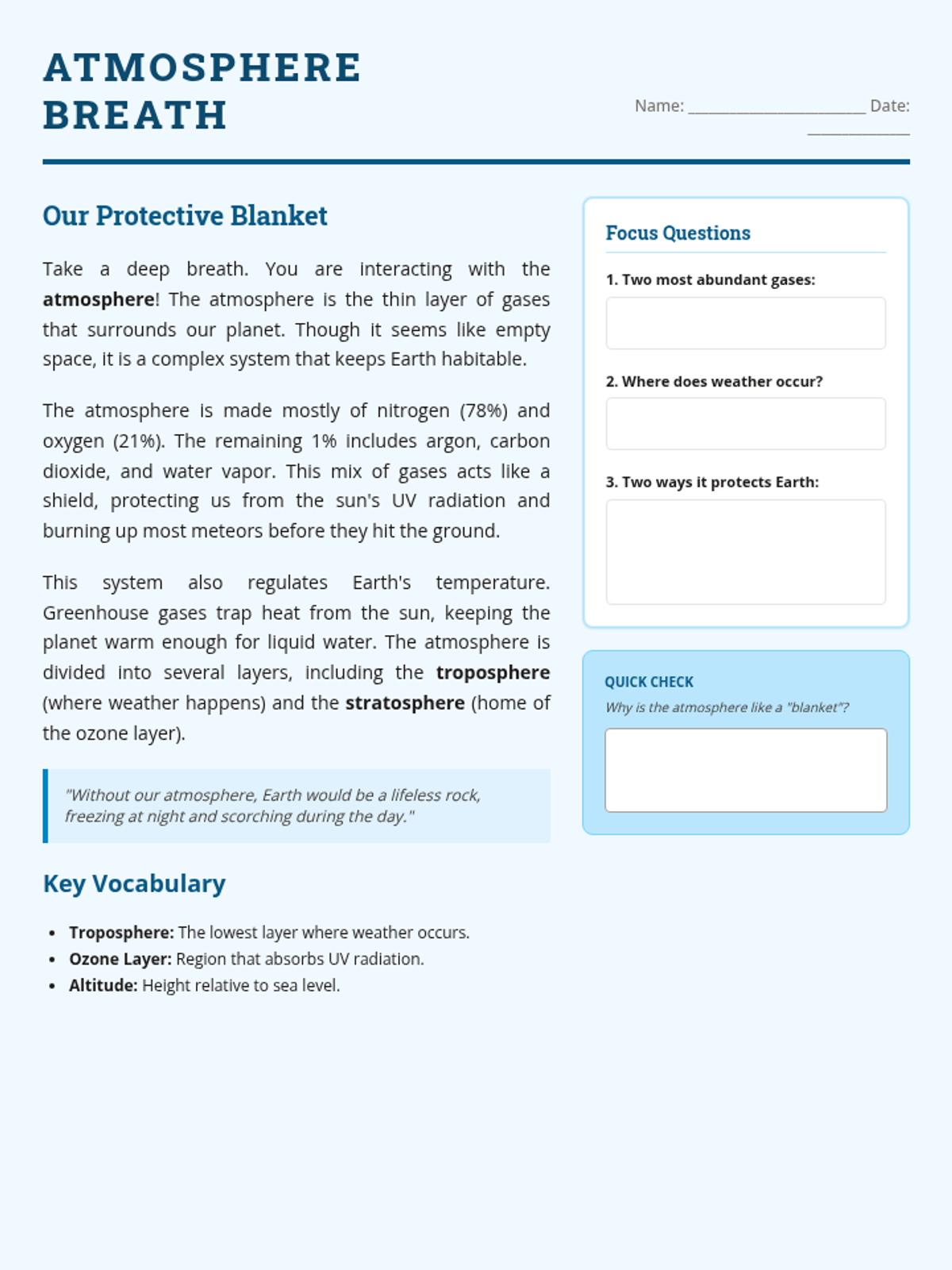
A guided reading passage about the Atmosphere, focusing on gas composition, layers, and the protective role it plays for life on Earth. Layout optimized for 1-page printing with clear spacing.
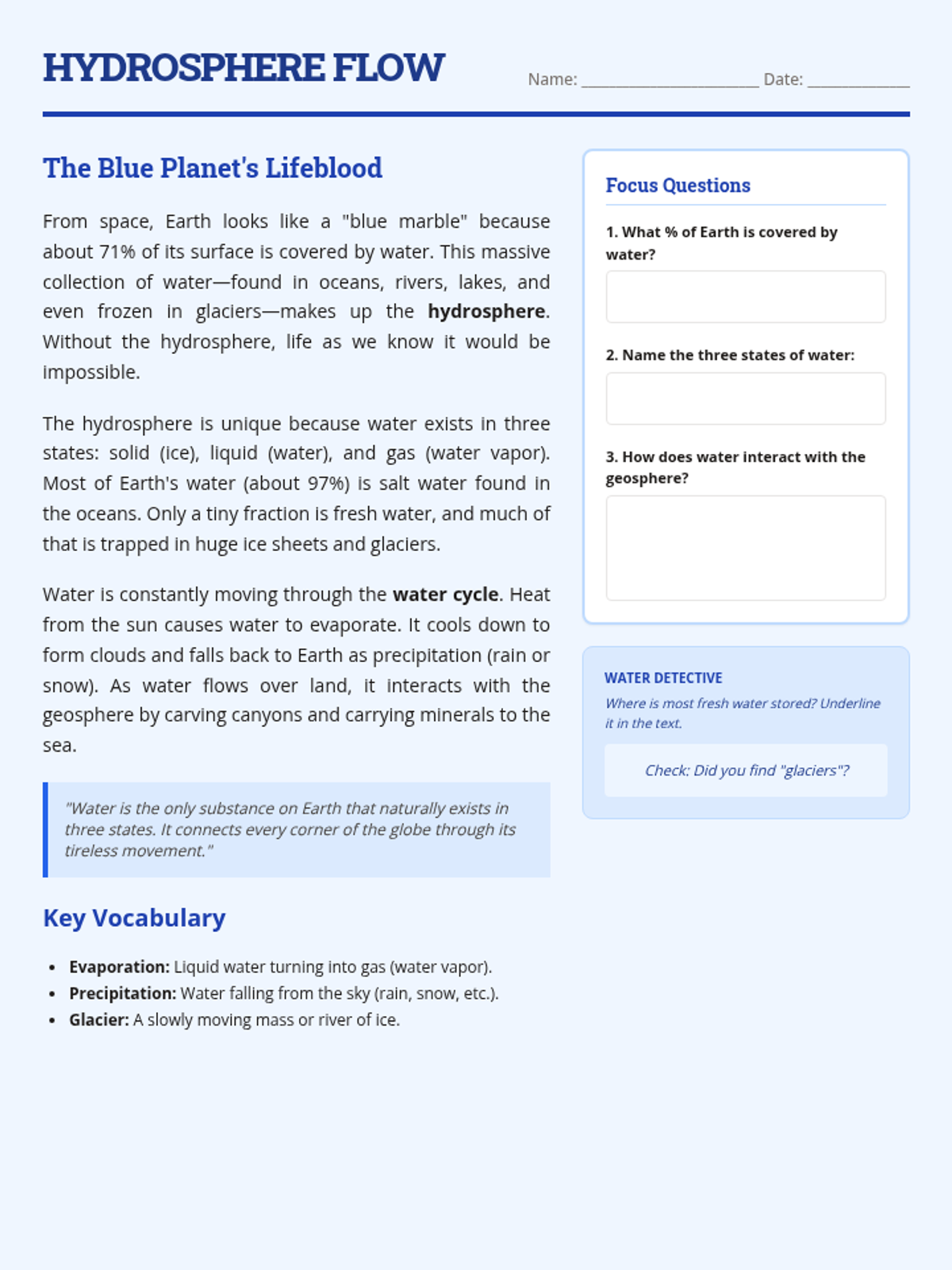
A guided reading passage exploring the Hydrosphere, the water cycle, and the different states of water on Earth. Layout optimized for 1-page printing.
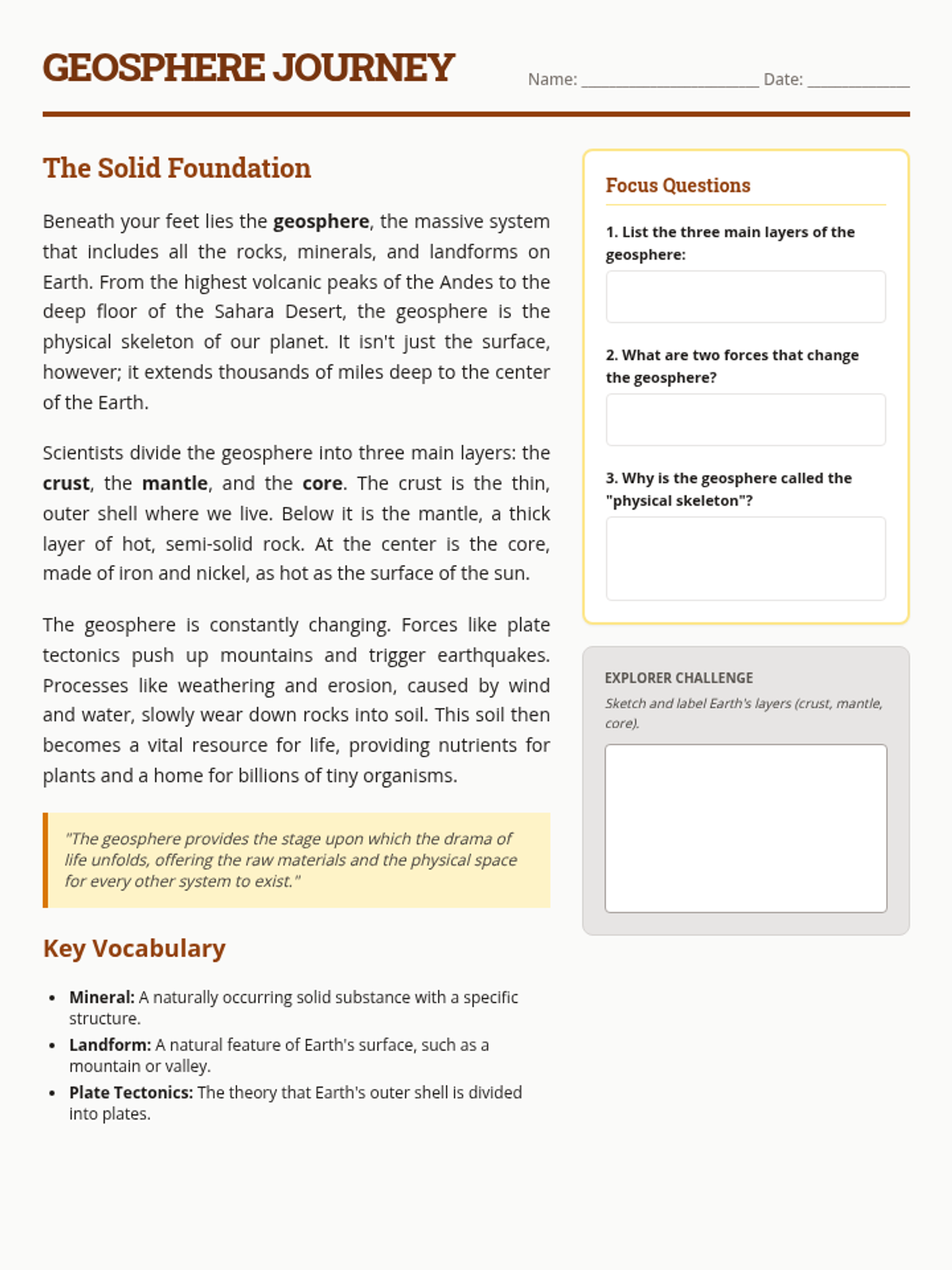
A guided reading passage about the Geosphere, covering Earth's layers, rock types, and landforms, with comprehension questions and a sketching activity. Layout optimized for 1-page printing.
An engaging slide presentation introducing the four major Earth systems (Geosphere, Hydrosphere, Atmosphere, and Biosphere) with visual definitions and interaction examples.
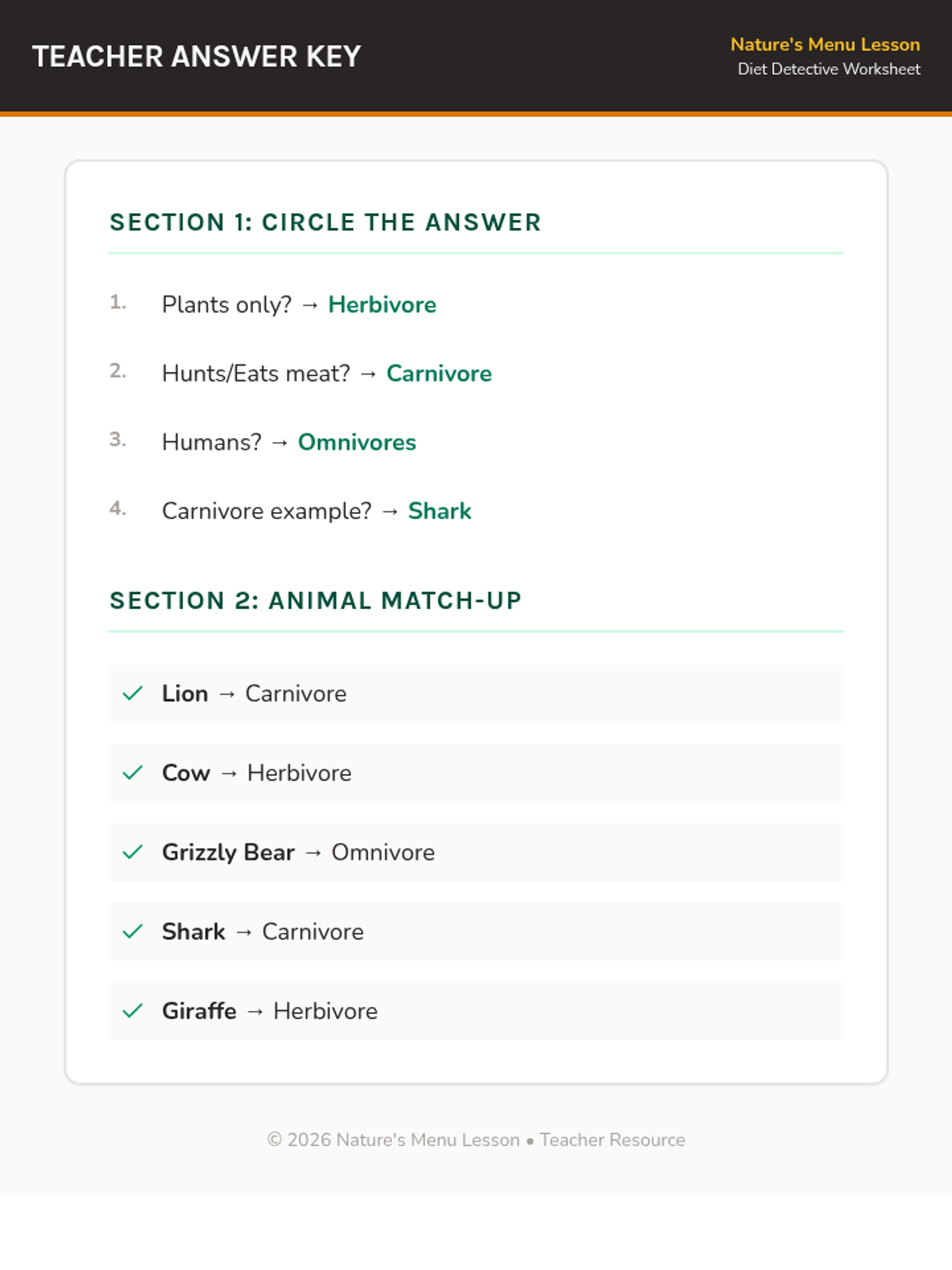
A teacher reference guide providing the correct answers for the Diet Detective Worksheet, including the multiple-choice section and animal matching activity.
A visual slide deck for classroom instruction, introducing herbivores, carnivores, and omnivores with clear definitions, examples, and a comparison of physical adaptations like teeth.
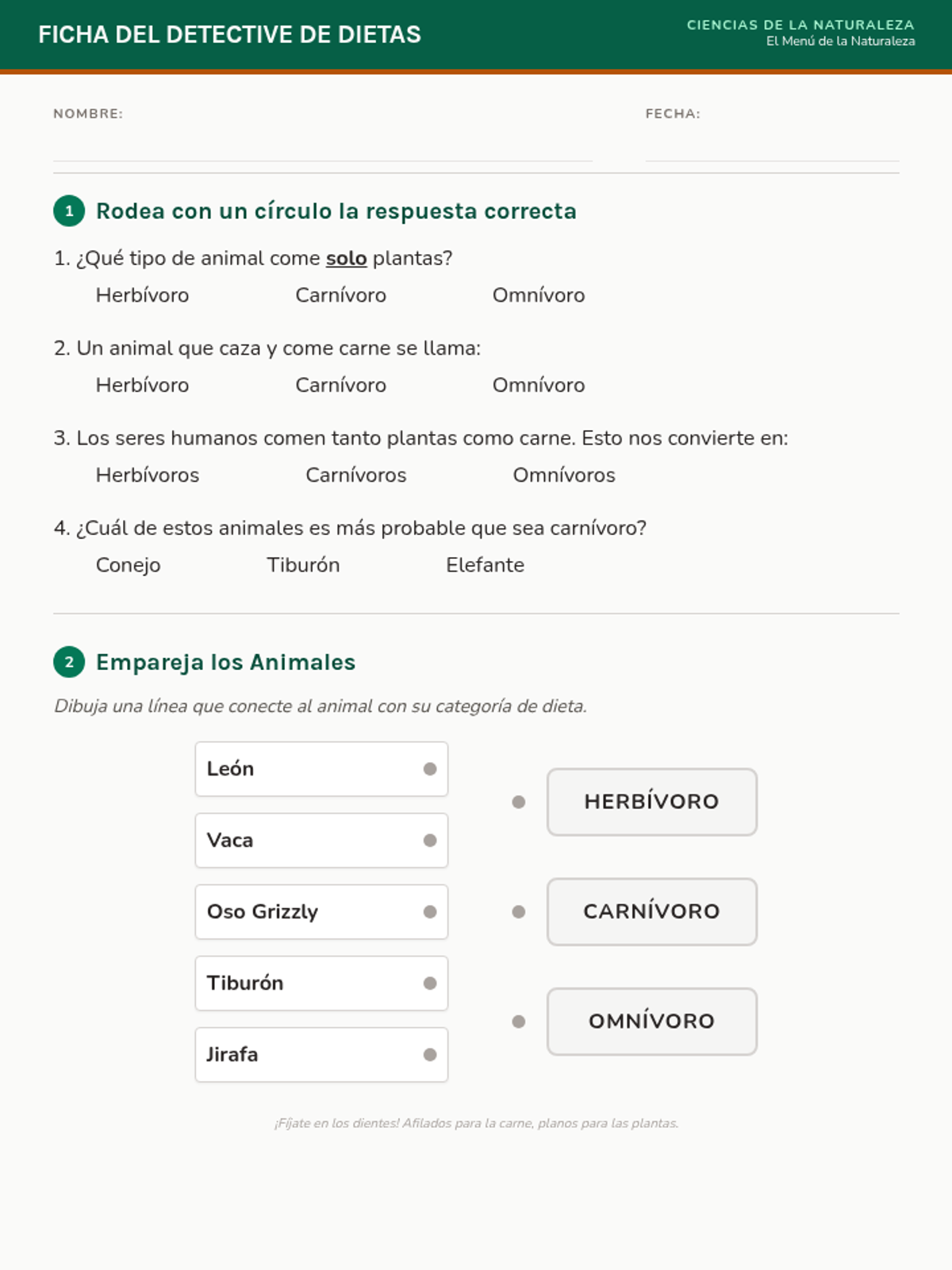
A student worksheet featuring multiple-choice questions to test basic definitions and a matching activity to categorize specific animals as herbivores, carnivores, or omnivores. fit to one page.
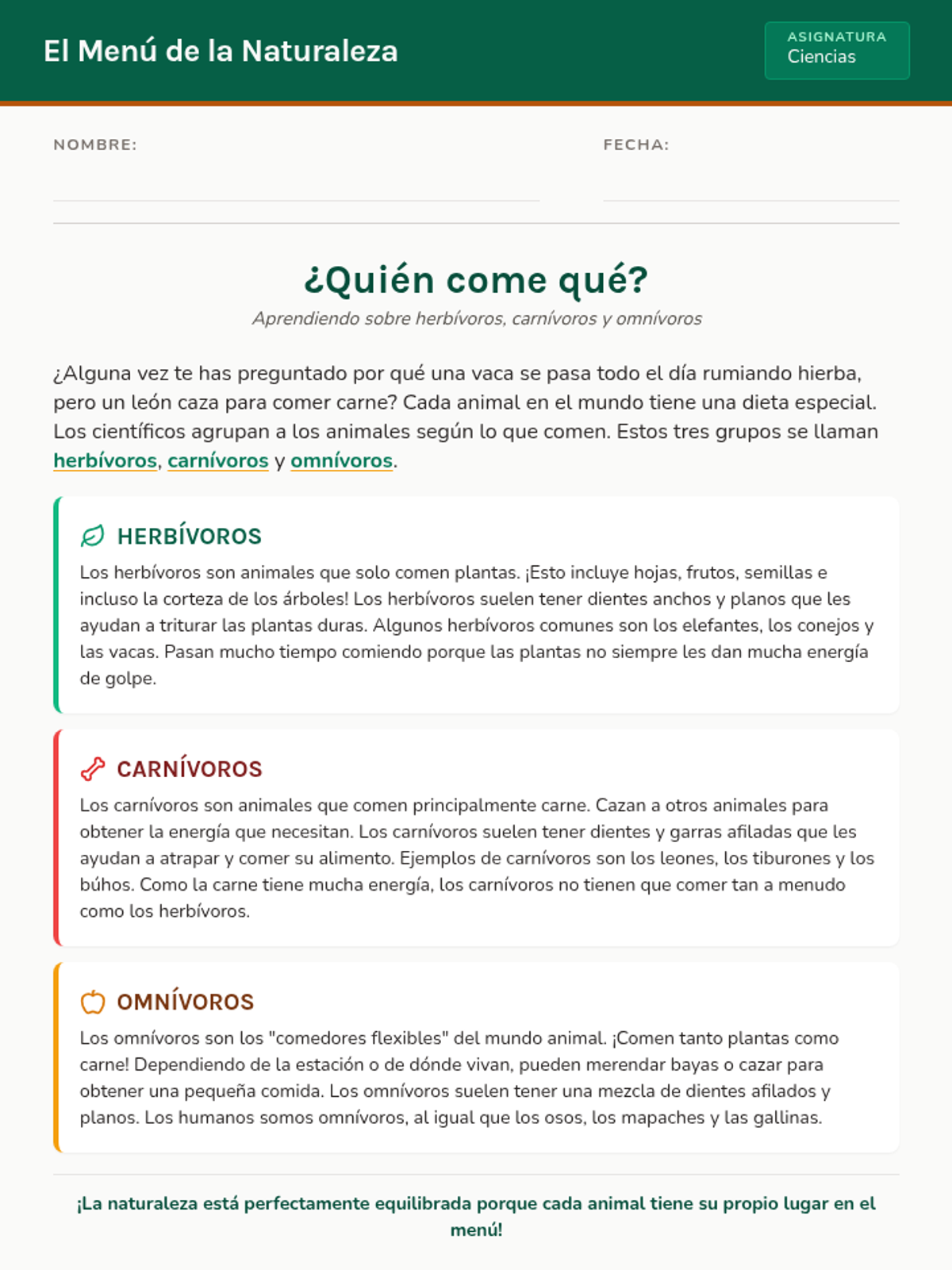
An introductory reading passage that defines and explains the differences between herbivores, carnivores, and omnivores with clear examples for each category. fit to one page.
A high-energy presentation introducing the five forms of energy: Heat, Electrical, Light, Sound, and Magnetic. Uses vibrant colors and clear definitions to prepare 3rd-grade students for the Energy Quest board game.
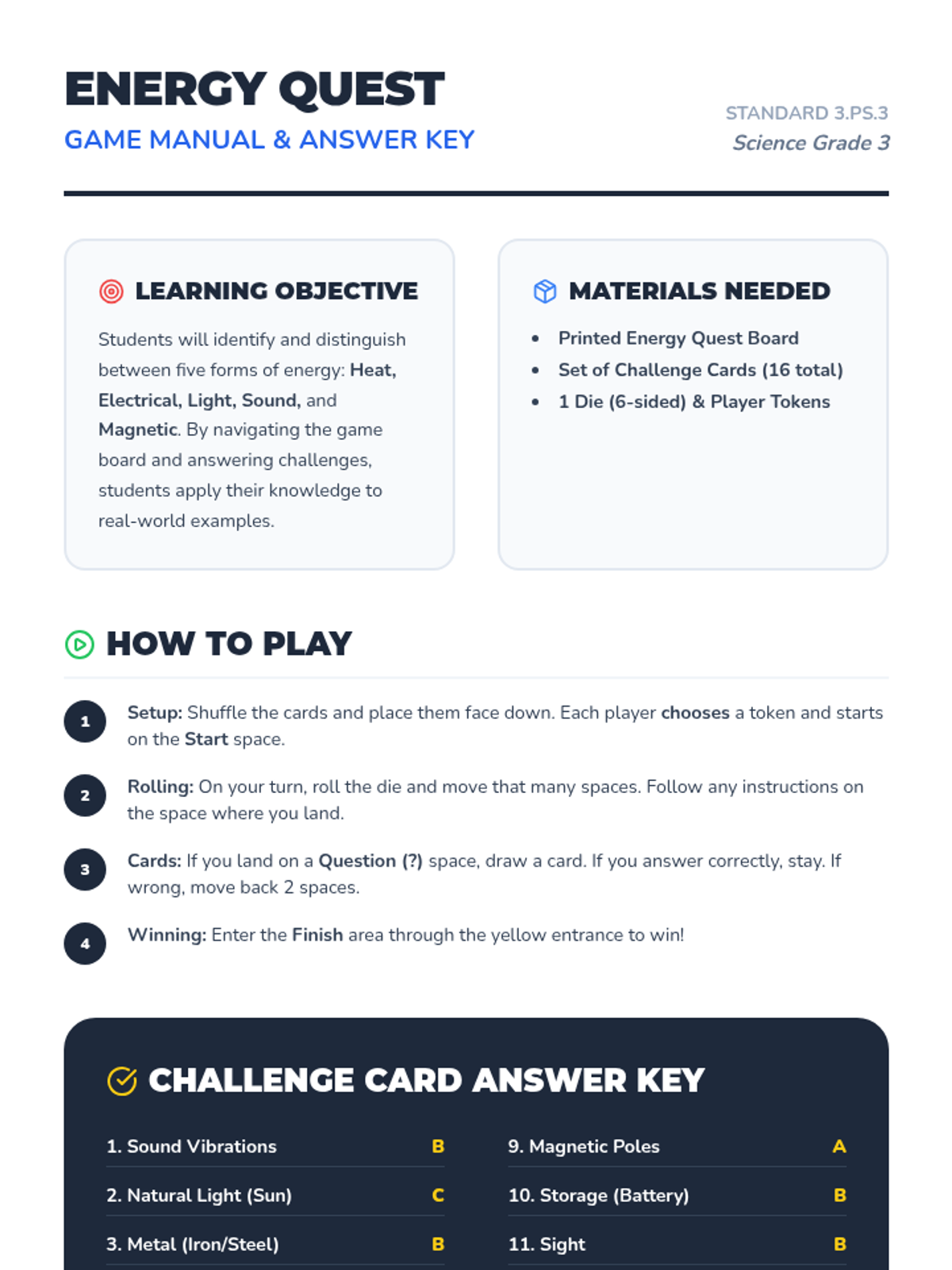
A teacher's resource providing game rules, setup instructions, and a full answer key for the Energy Quest challenge cards. Helps educators facilitate the game effectively.
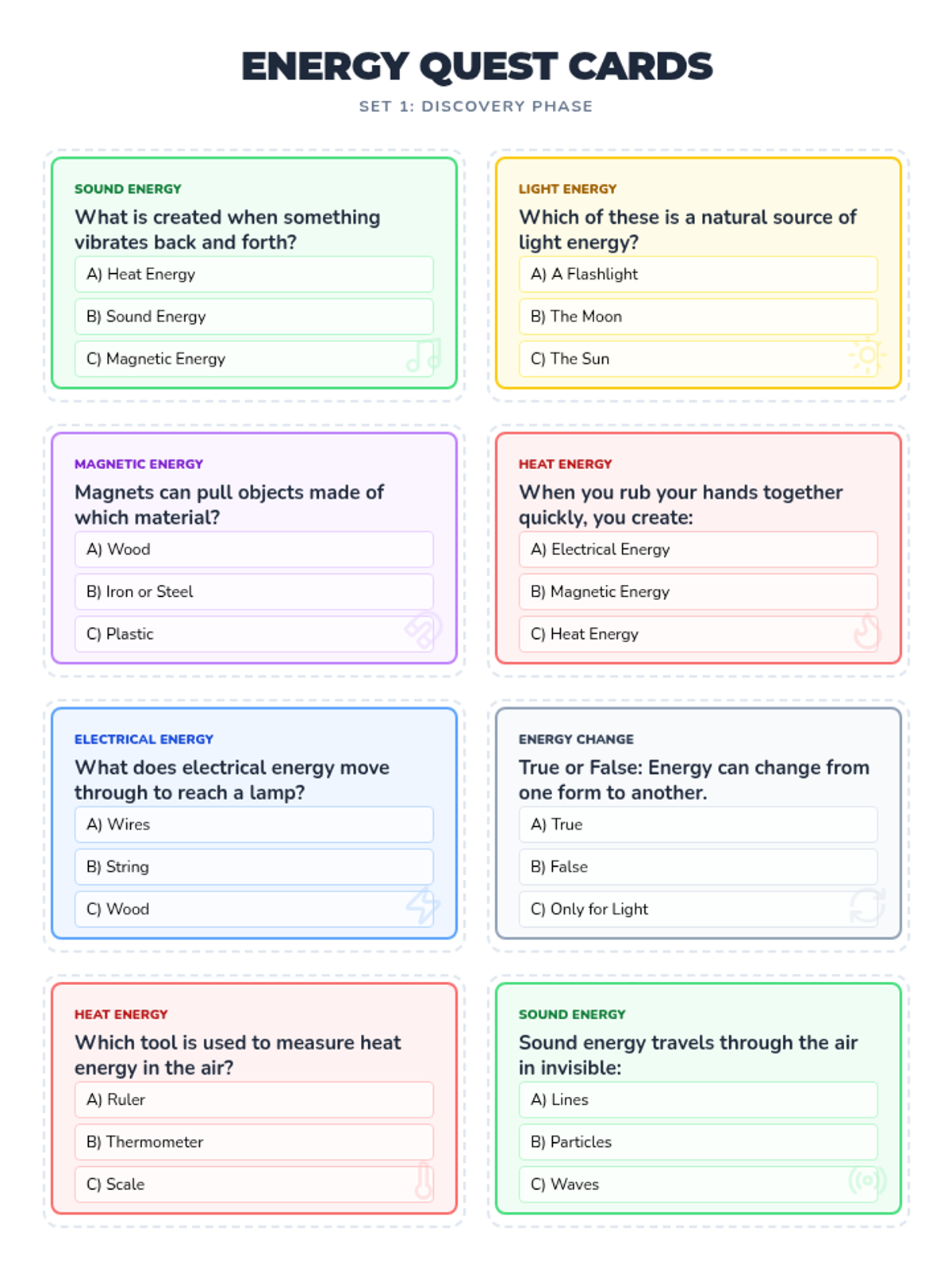
Two pages of printable challenge cards for the Energy Quest board game. Each card features a multiple-choice or true/false question categorized by the five forms of energy (Heat, Electrical, Light, Sound, Magnetic).
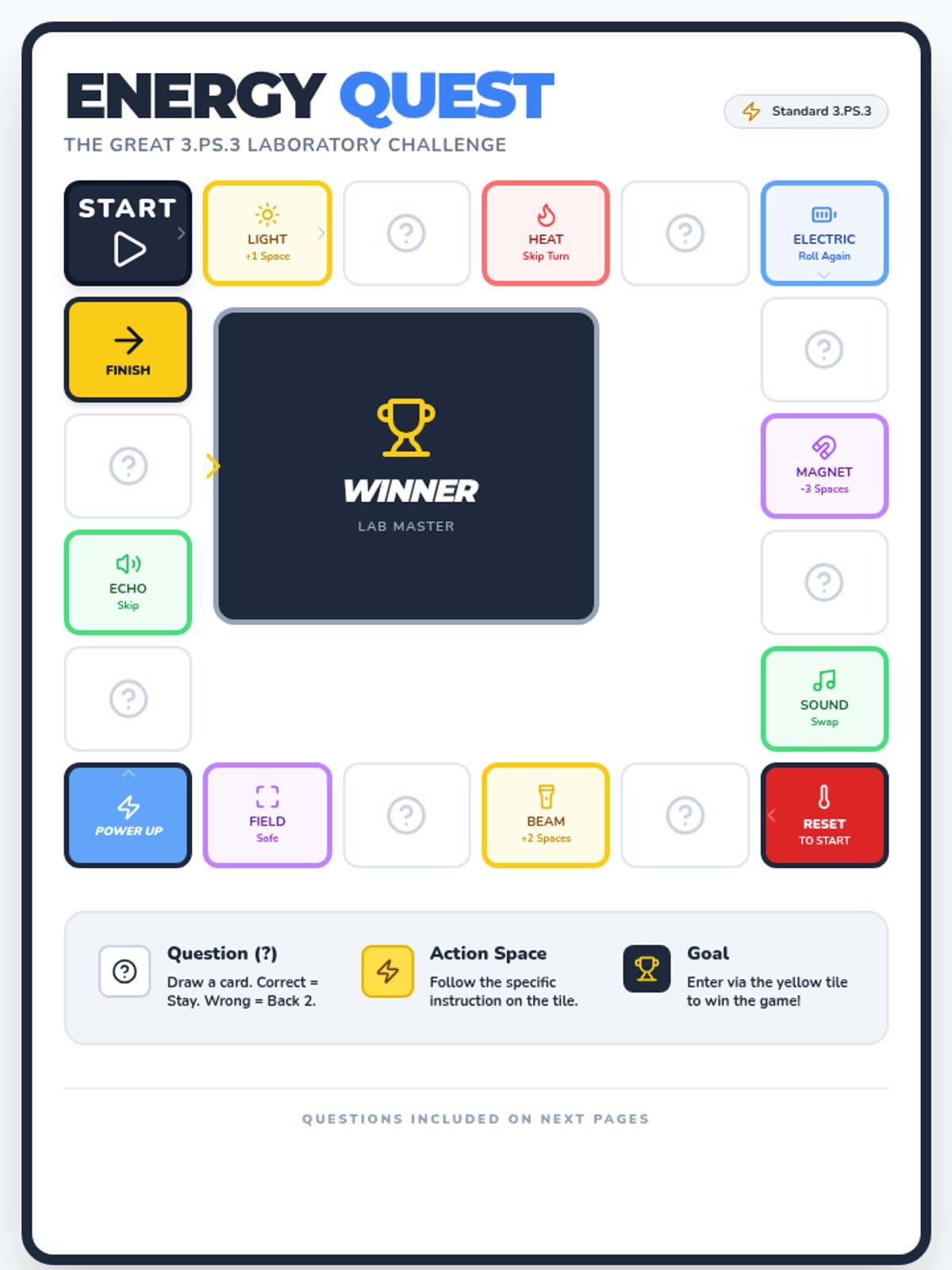
A complete printable board game package. Page 1 features the Energy Quest game board with clear path directions and action spaces. Pages 2 and 3 include 16 challenge cards covering the five forms of energy (Standard 3.PS.3).
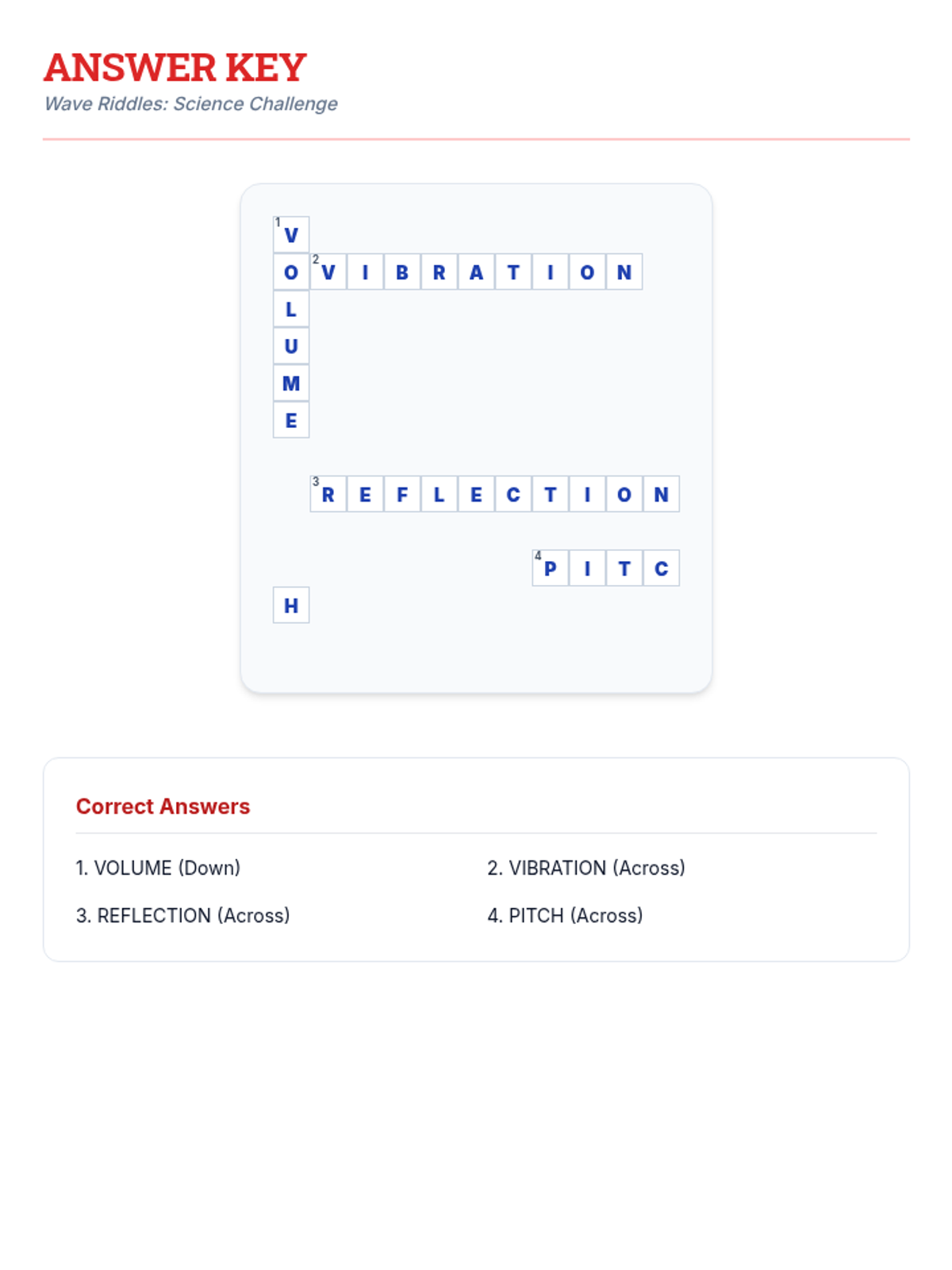
The corresponding answer key for the Wave Riddles crossword puzzle, providing teachers with the correct layout and terms.
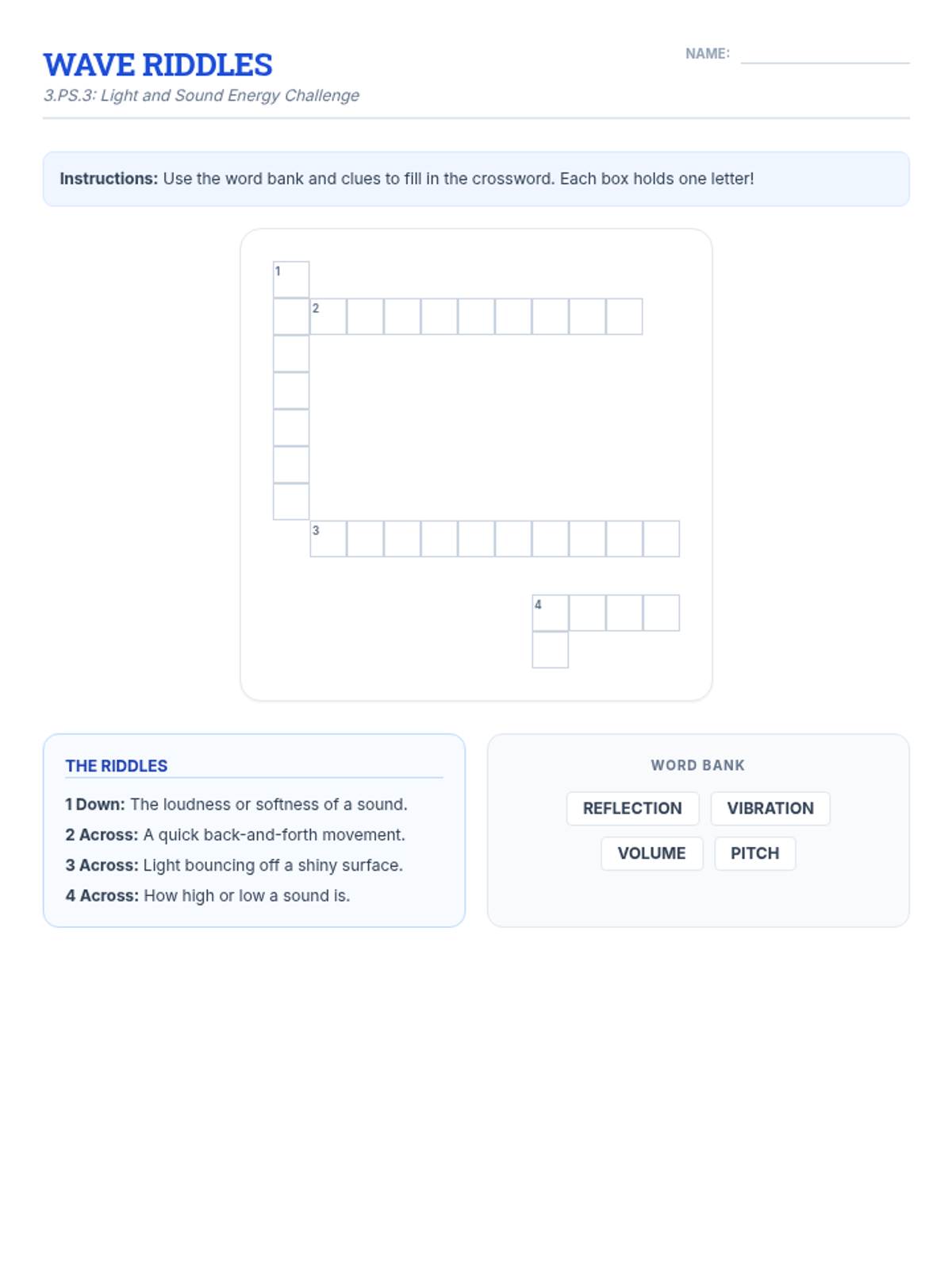
A crossword puzzle worksheet focused on light and sound vocabulary for 3rd grade science. Includes a word bank with terms like reflection, pitch, vibration, and volume to support student learning.
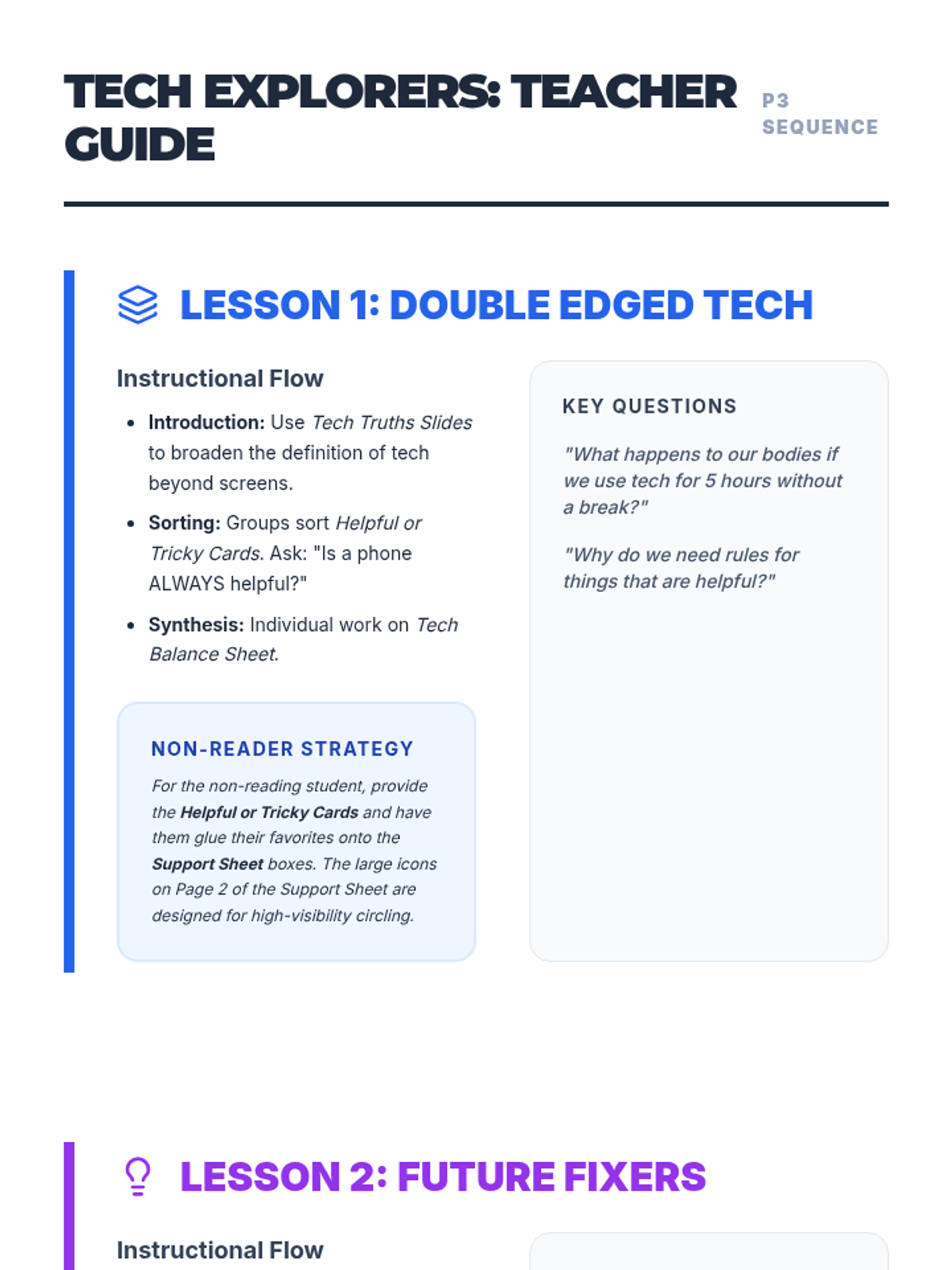
Comprehensive teacher guide for the Tech Explorers sequence. Revised with better page breaks, clearer instructional steps, and improved spacing for vocabulary.