A student worksheet featuring multiple-choice questions to test basic definitions and a matching activity to categorize specific animals as herbivores, carnivores, or omnivores. fit to one page.
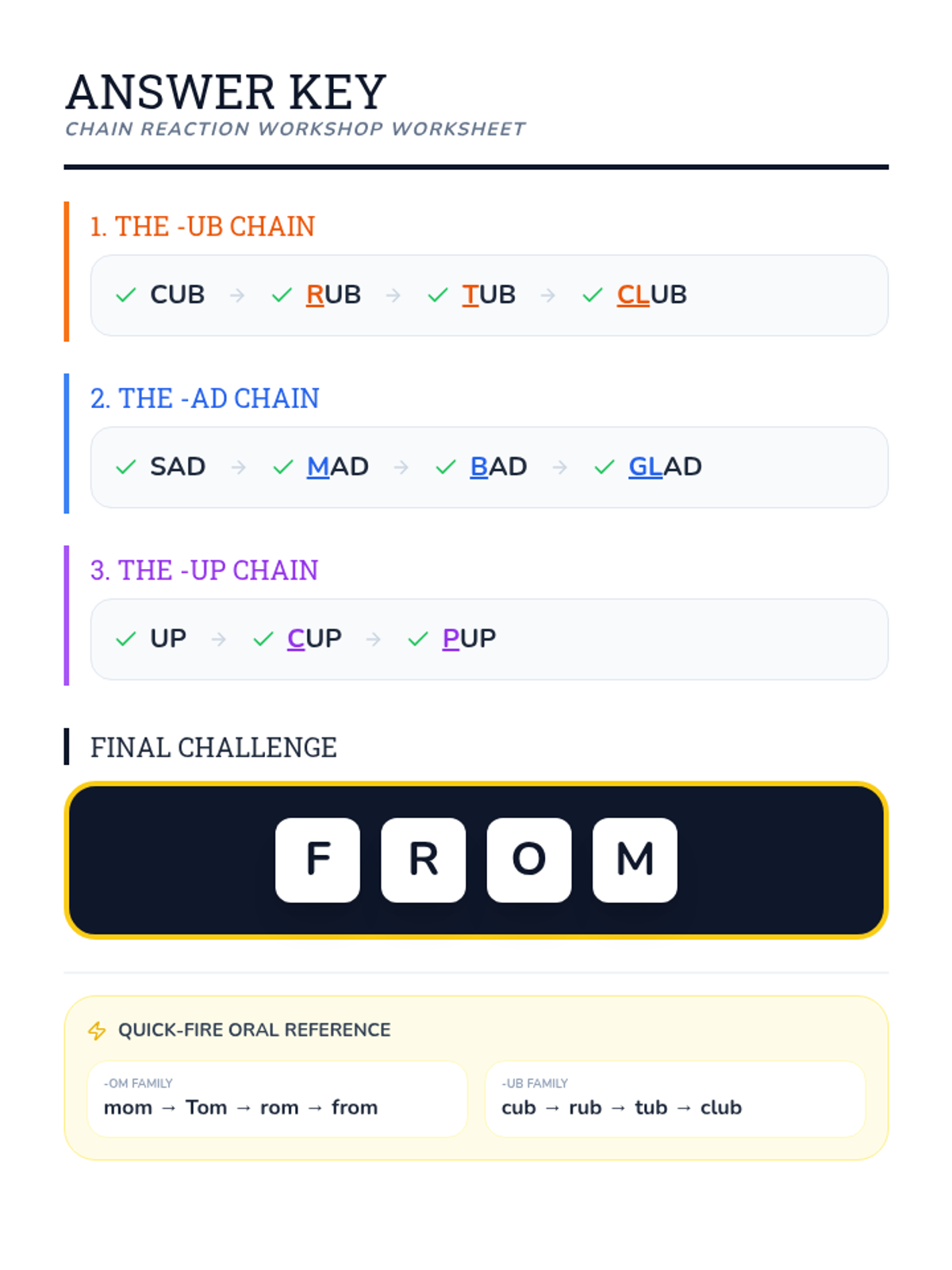
A concise answer key for the 'Chain Reaction Workshop' worksheet, featuring highlighted letter substitutions and clear visual layout for easy grading and teacher reference.
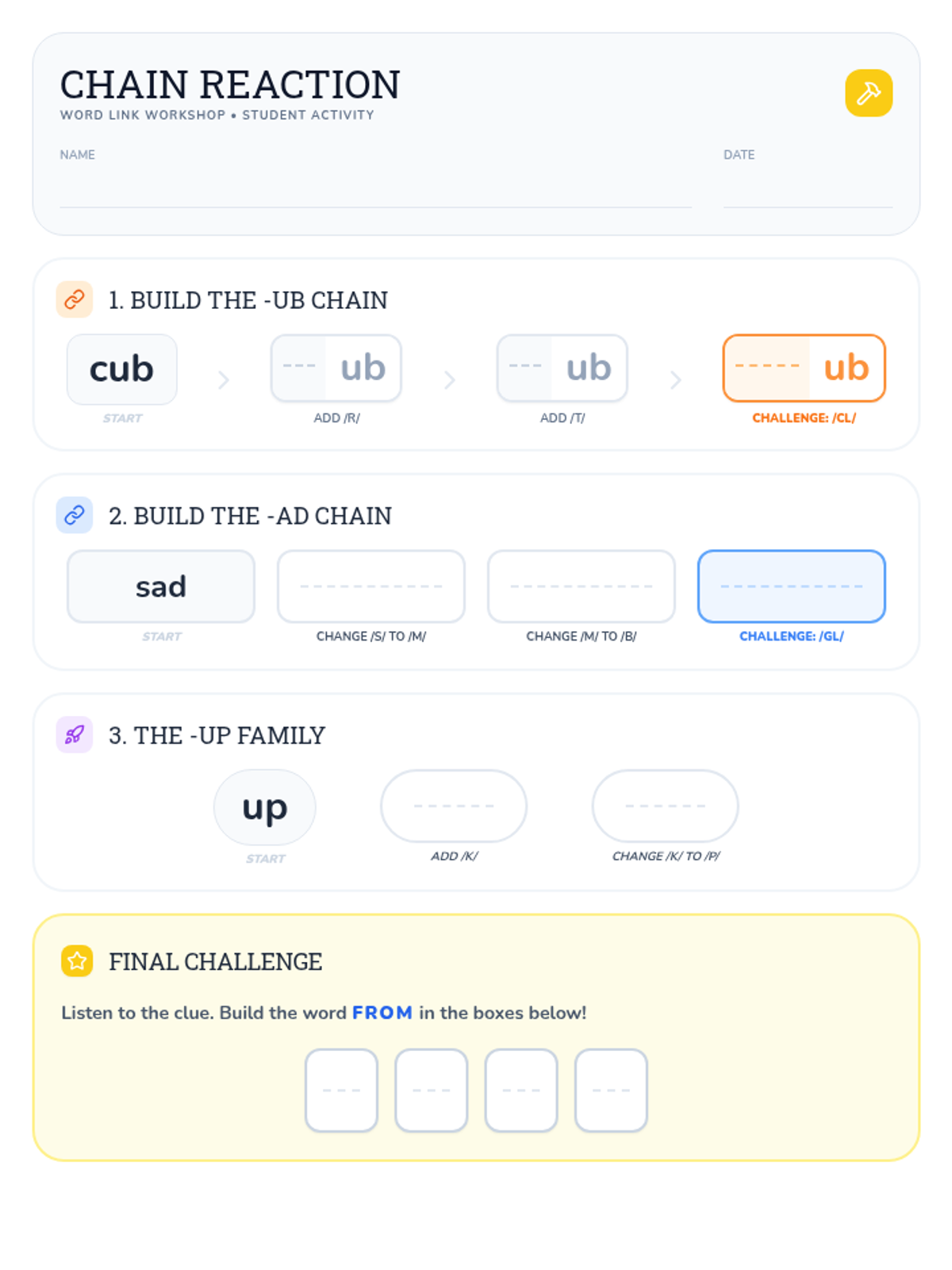
A student-facing worksheet for practicing word chains. Includes guided prompts for substituting sounds in CVC and CCVC words with -ub and -ad rimes, plus a challenge section for the word 'from'.
A dynamic presentation slide deck with high-contrast visuals designed to support a teacher-led word chain lesson. Includes visual sound boxes and highlighted onset/rime divisions for kindergarten students.
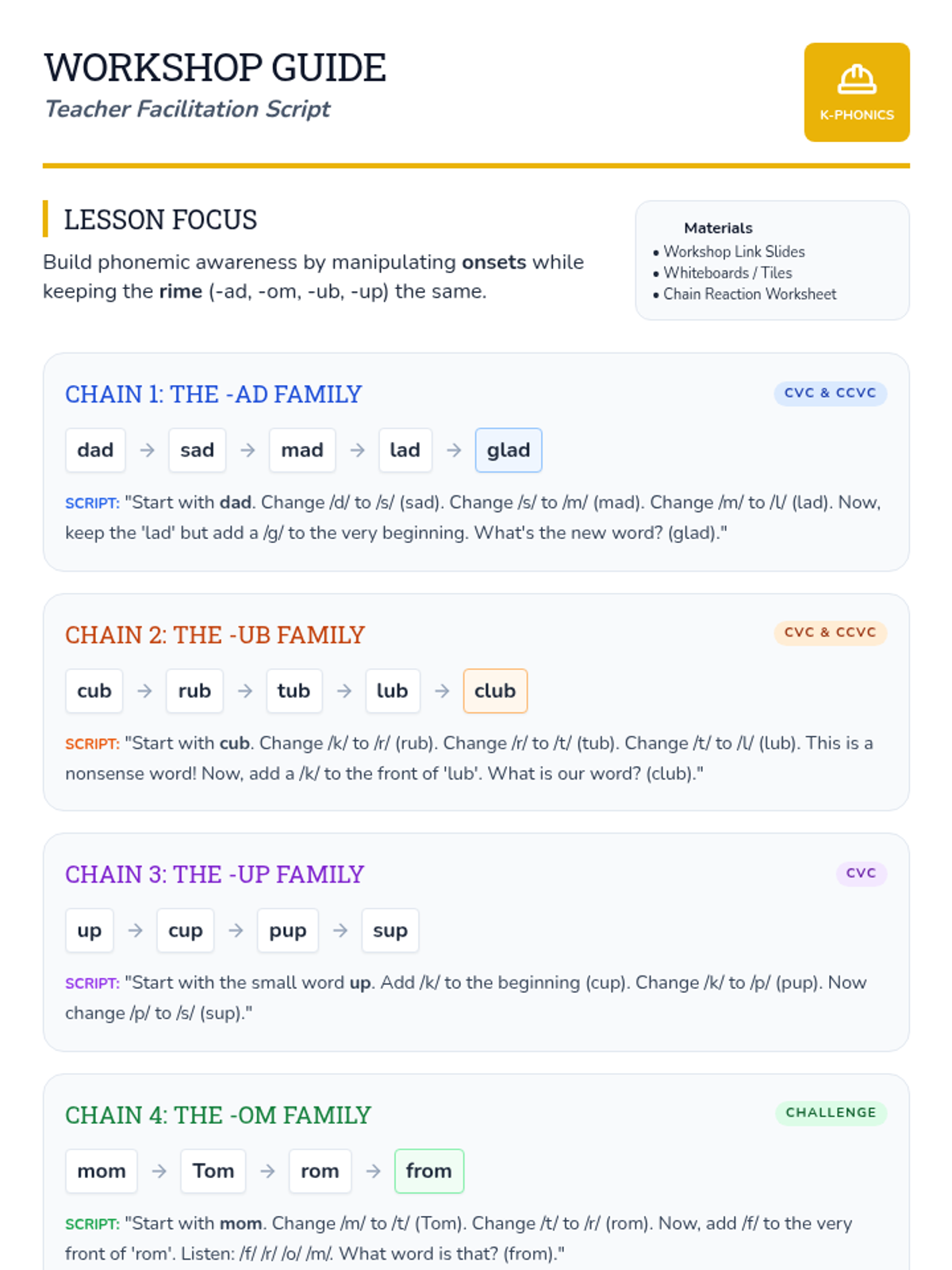
A detailed teacher guide for a Kindergarten word chain lesson, featuring specific scripts and word sequences for CVC and CCVC words using the -ad, -om, -ub, and -up rimes.
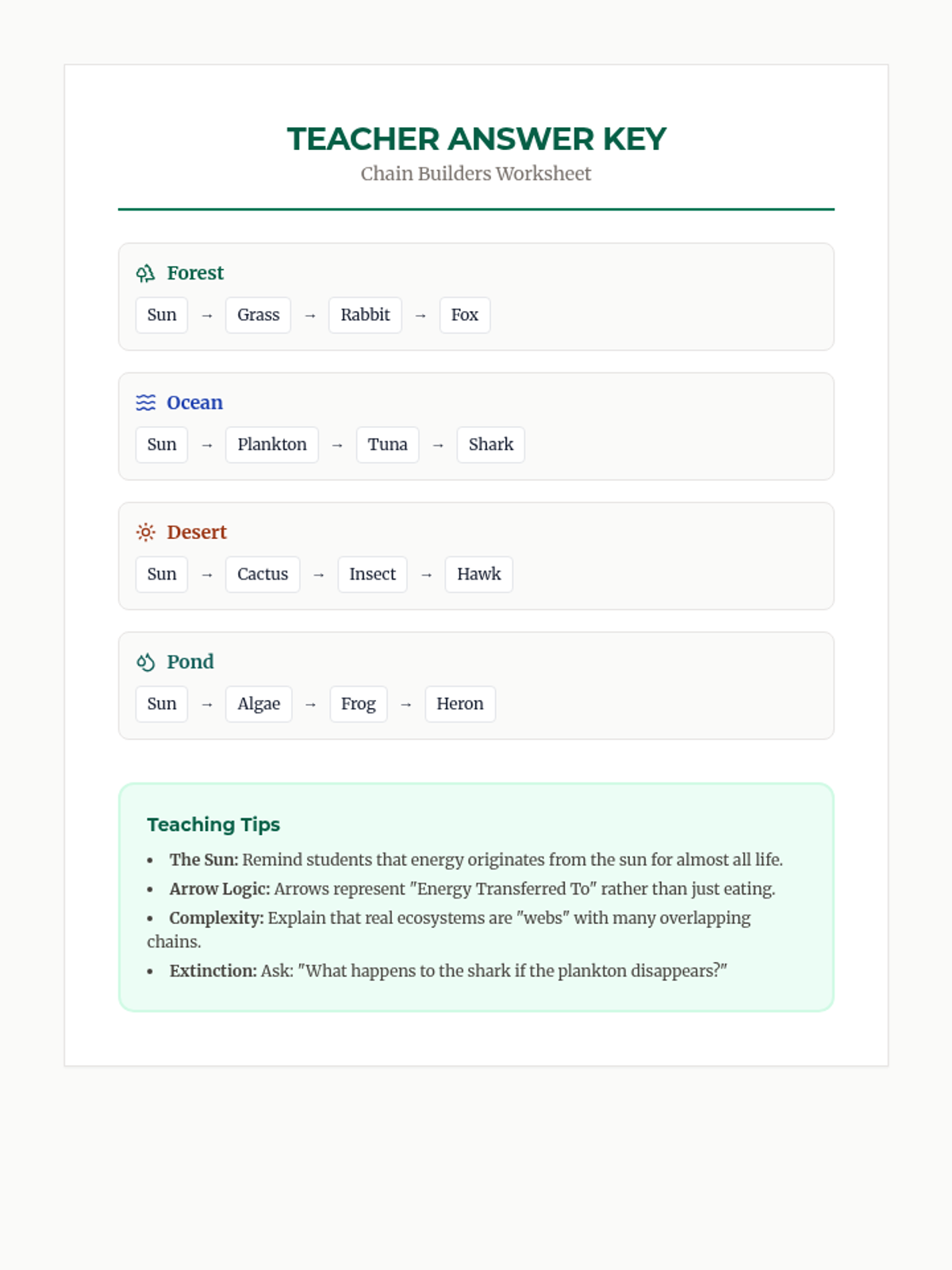
Answer key for the Chain Builders activity with teaching tips for instructors.
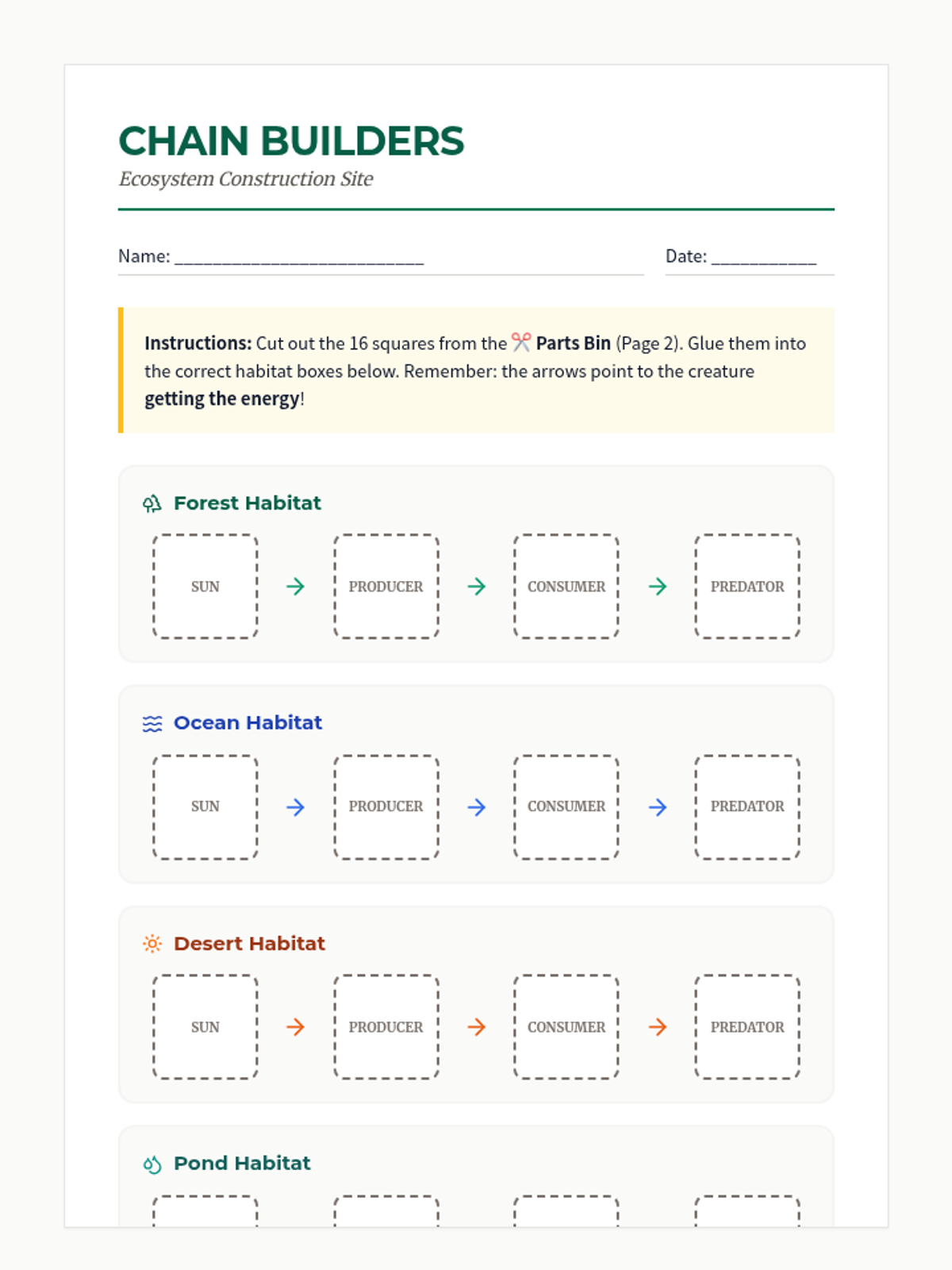
An interactive cut-and-paste activity where students build food chains for four different habitats: Forest, Ocean, Desert, and Pond.
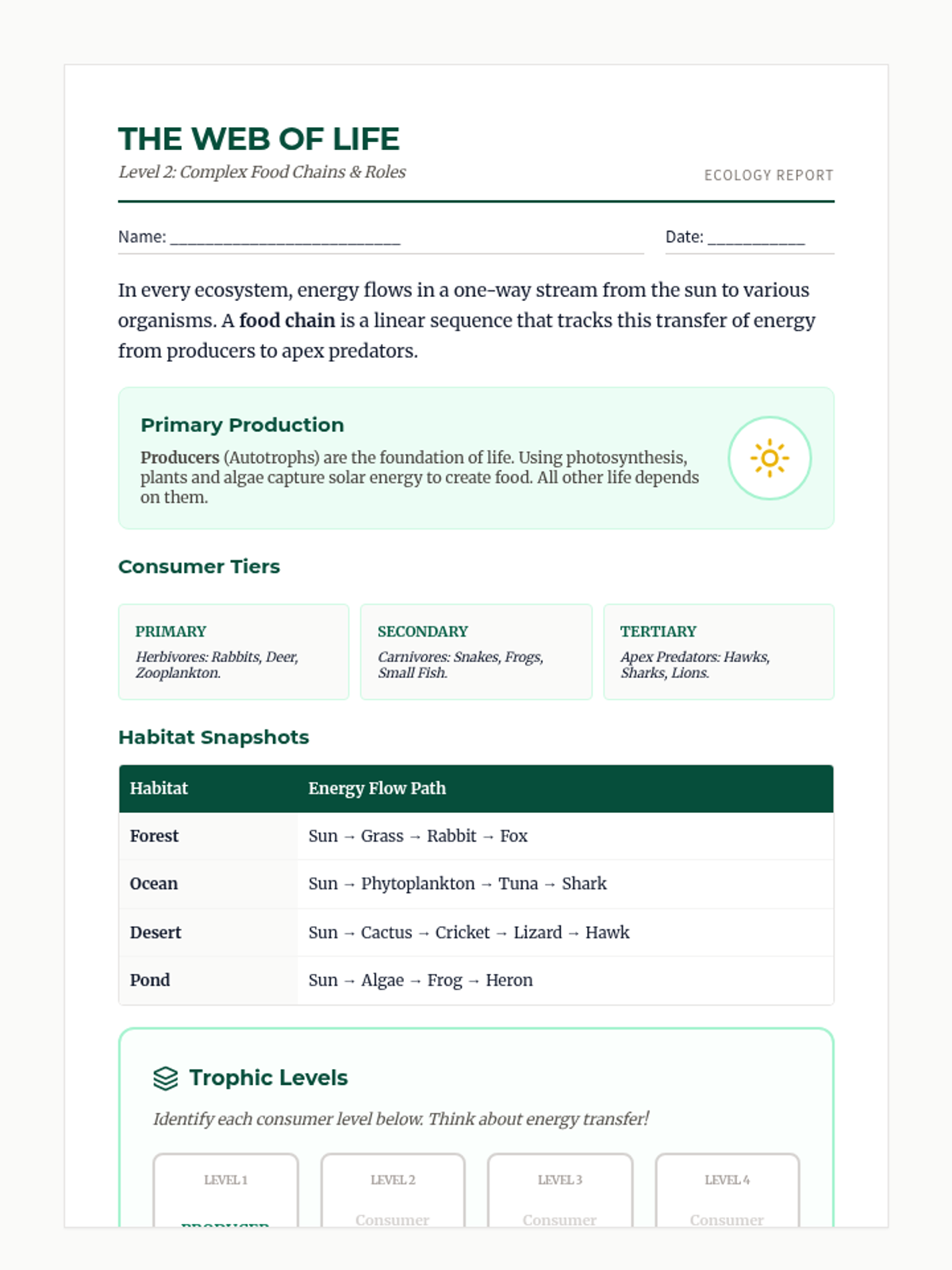
A more advanced reading passage for intermediate readers covering trophic levels, herbivores, carnivores, and the 10% energy rule.
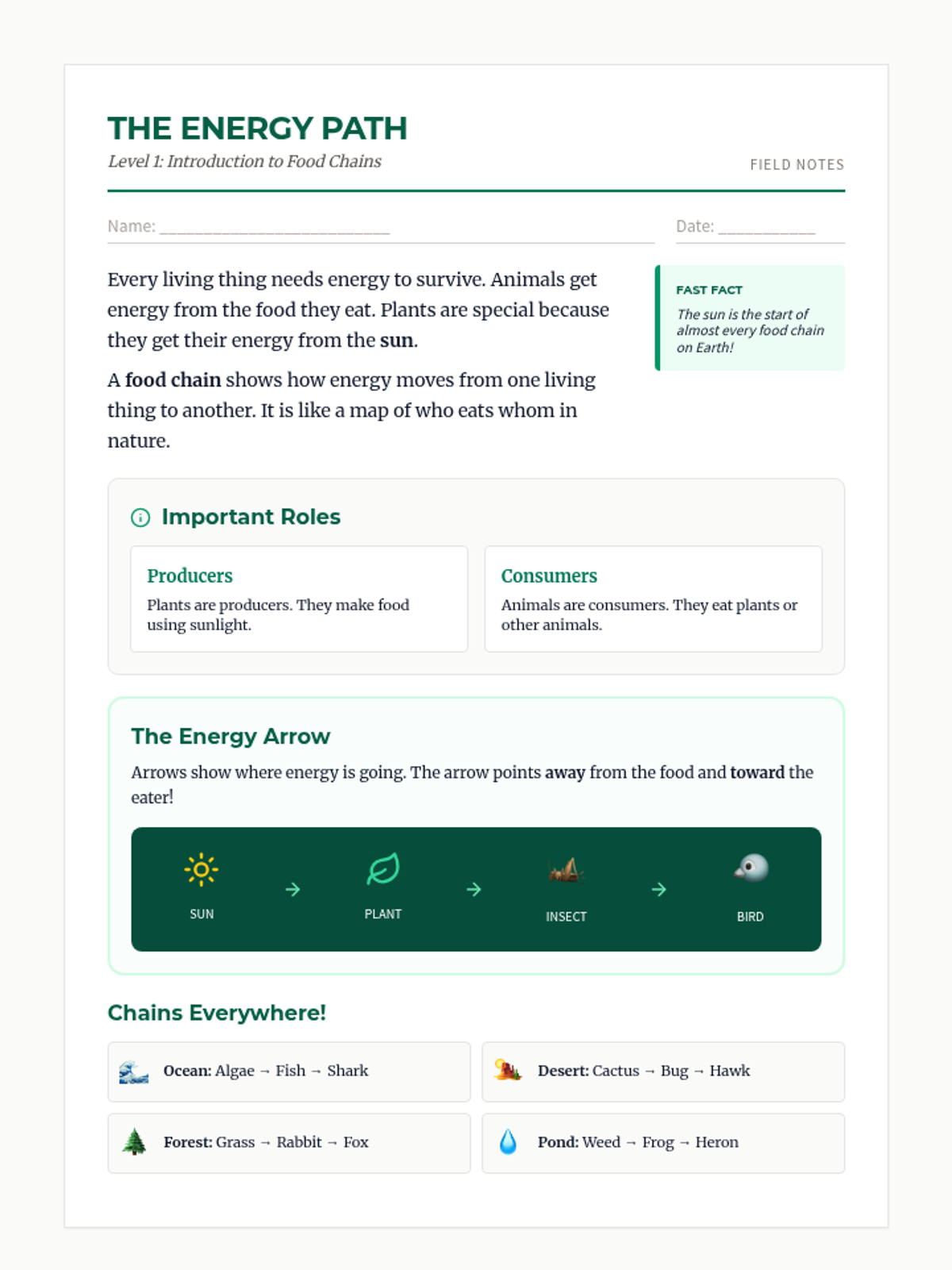
An introductory reading passage about food chains for beginner readers, explaining basic concepts like producers, consumers, and energy flow.
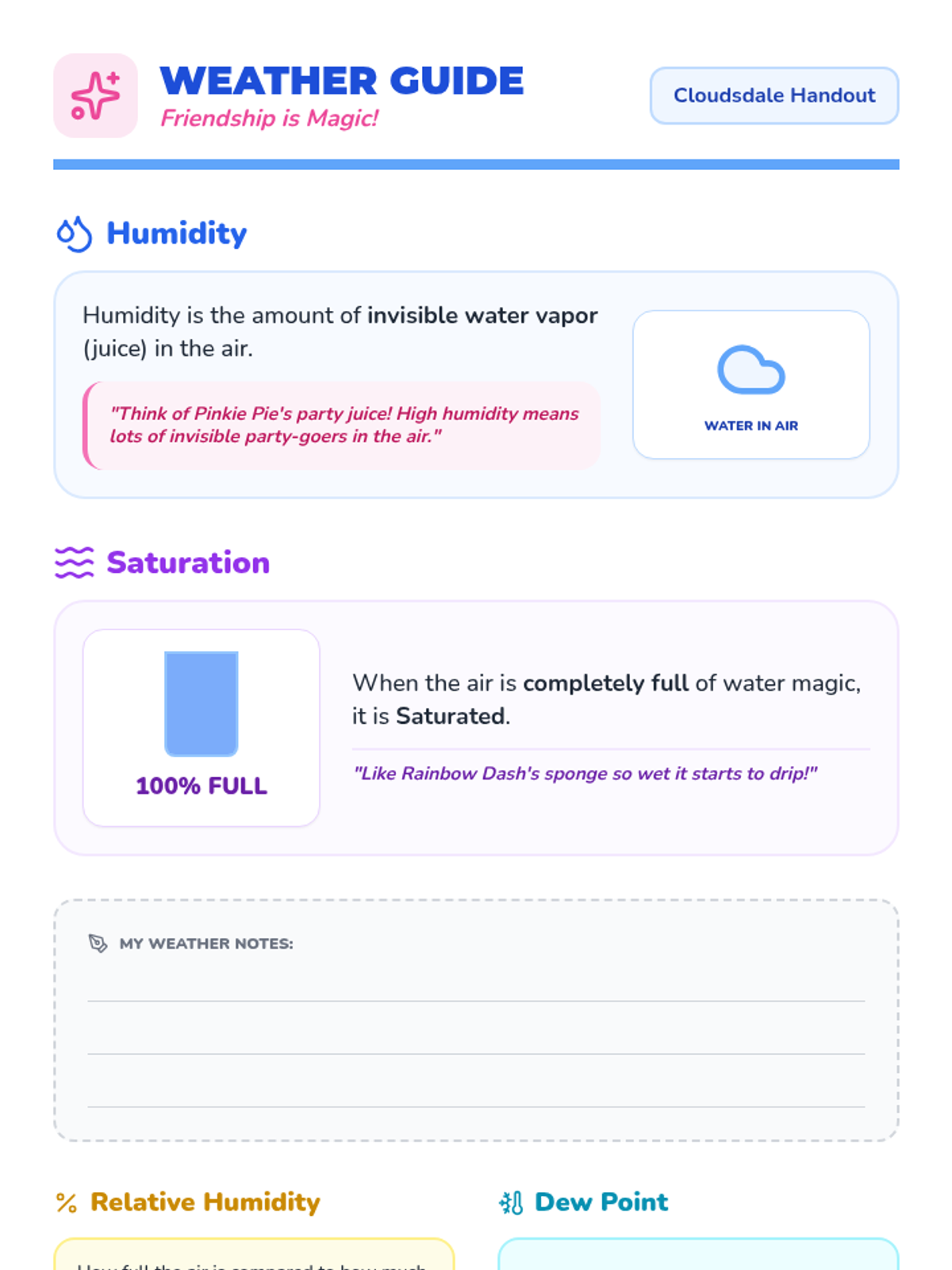
A printable study guide and handout version of the lesson slides, optimized for US Letter paper. Features clear visual metaphors, simplified definitions, and key concept summaries with My Little Pony thematic elements.
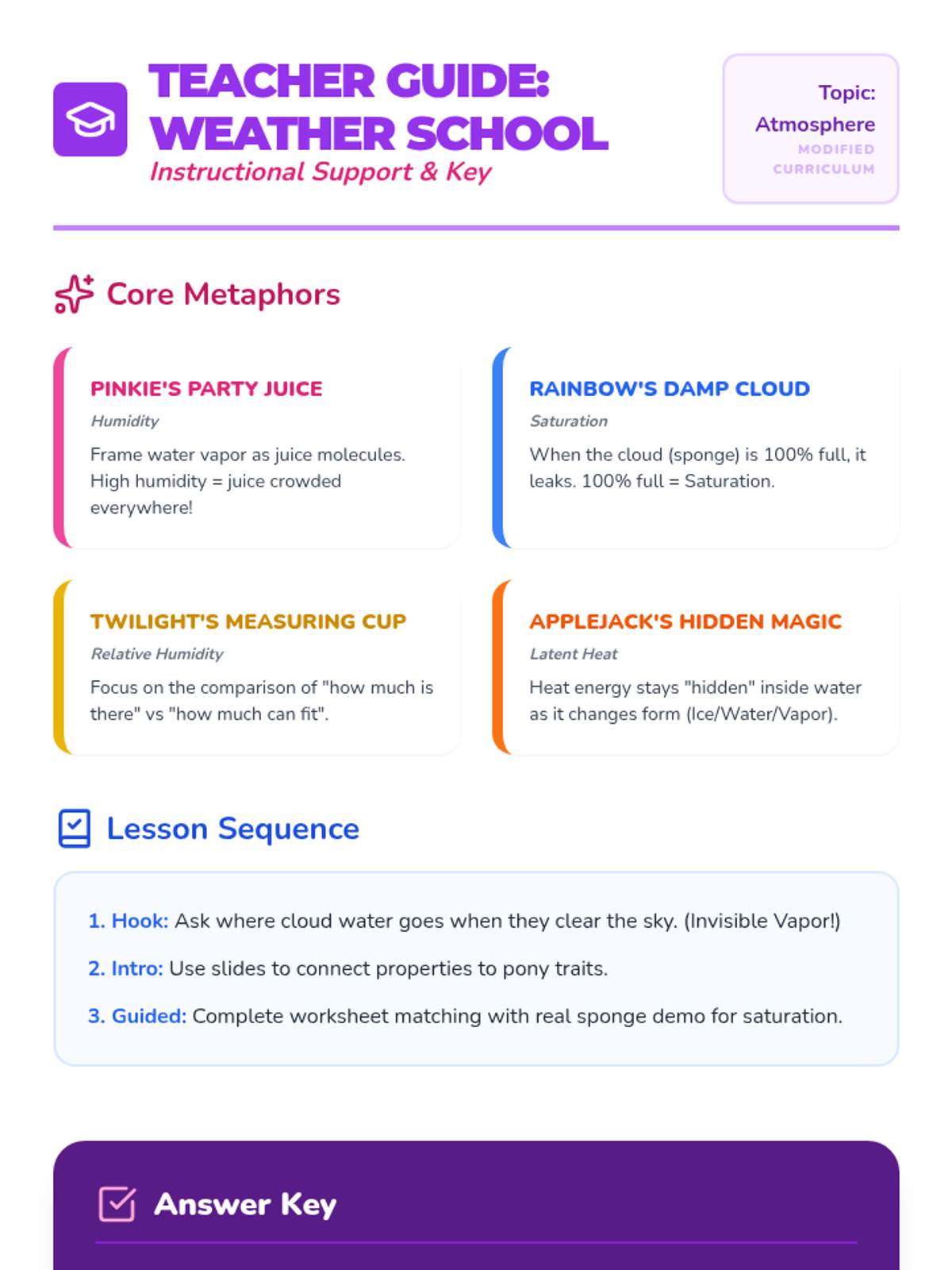
A teacher's guide and answer key for the Ponyville Weather School lesson, providing instructional metaphors, inclusion strategies, and clear answers. Optimized for printing on US Letter paper.
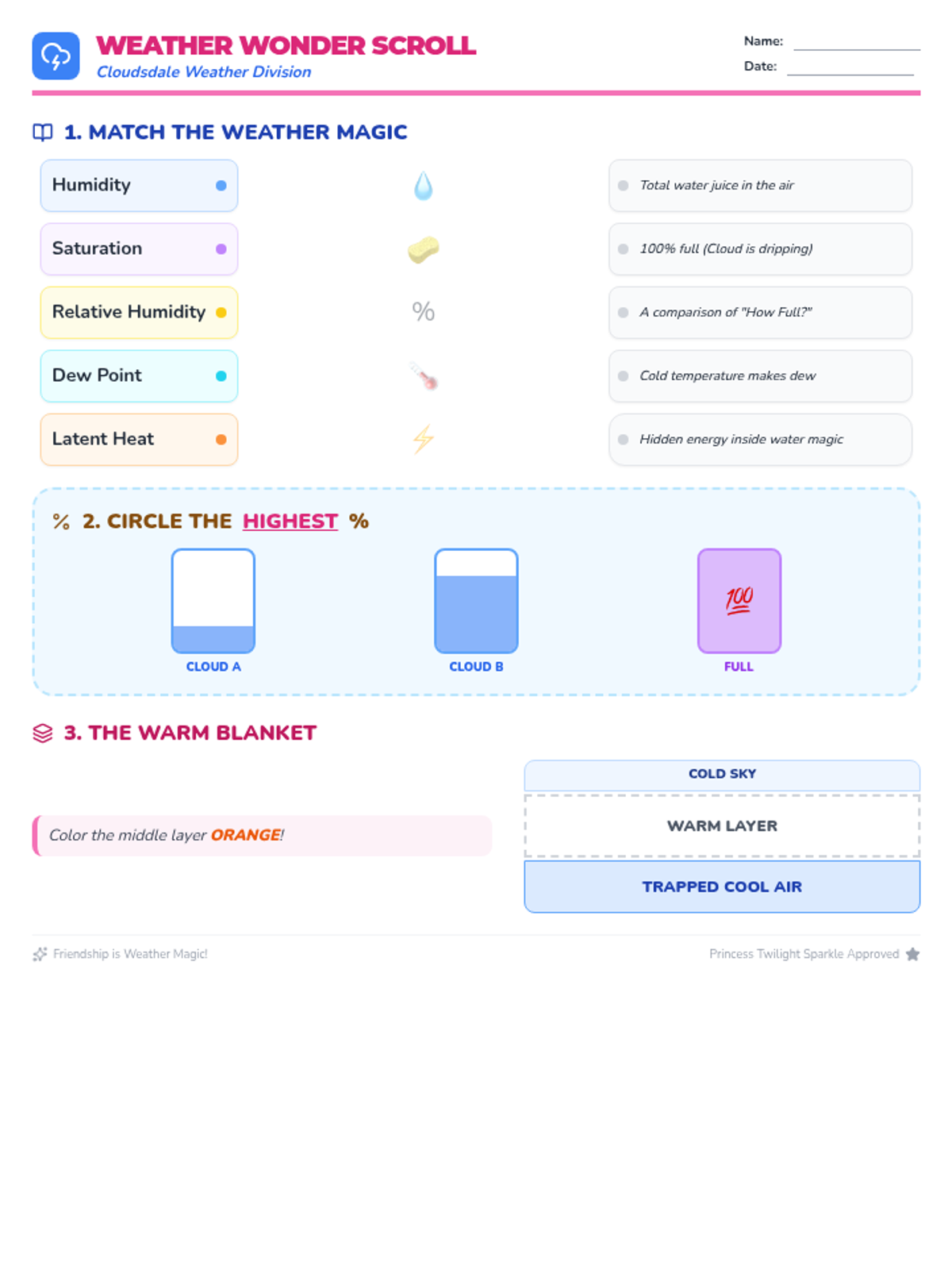
A student worksheet for atmosphere properties featuring symbol-supported matching, visual comparisons of humidity, and a creative task for temperature inversion. Optimized for printing on US Letter paper with improved contrast and layout.
A visually rich slide deck themed after My Little Pony: Friendship is Magic, explaining core atmospheric properties through clear metaphors and symbols for modified curriculum students.
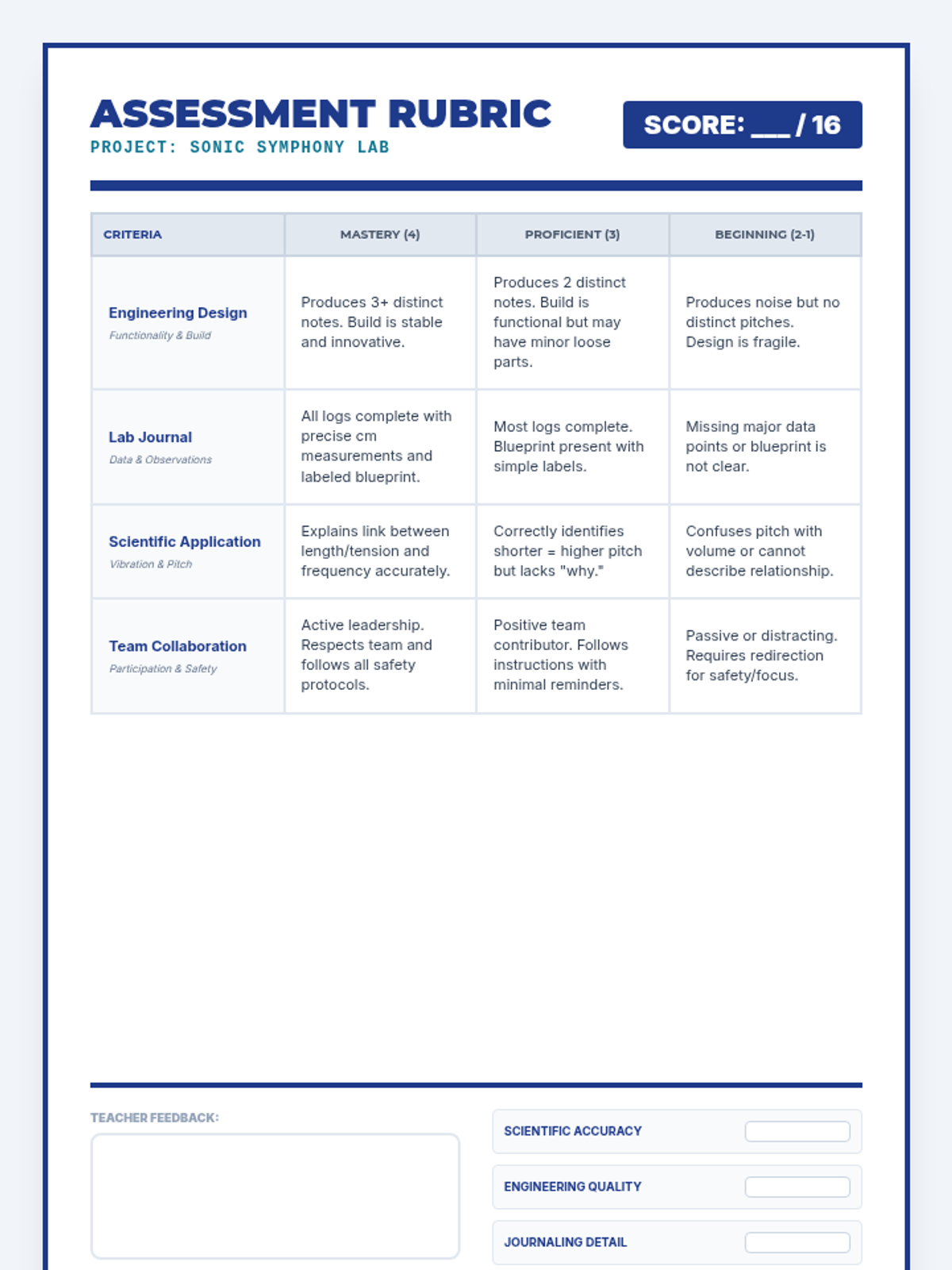
A comprehensive assessment rubric for the Sonic Symphony Lab. Revised to fit onto a single page with improved layout, professional feedback areas, and clear criteria for engineering and physics.
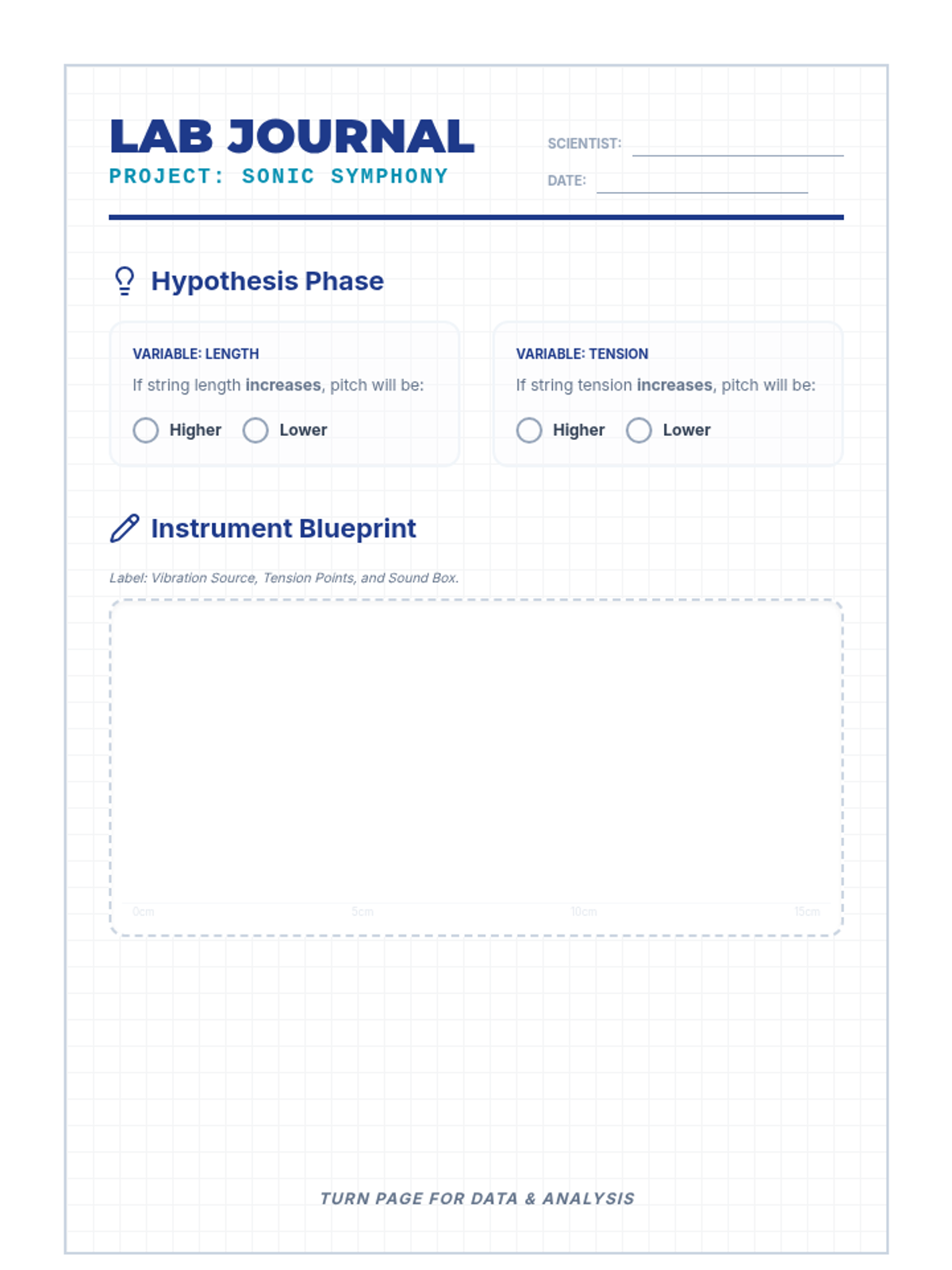
A student lab journal for the Sonic Symphony investigation. Revised with improved page breaks, white student work areas, and complete analysis sections to ensure a professional lab experience.
A visually engaging presentation for the Sonic Symphony Lab, introducing vibration, pitch, and engineering analysis. Revised to include a concrete wave visual and an advanced acoustic engineering slide for middle school students.
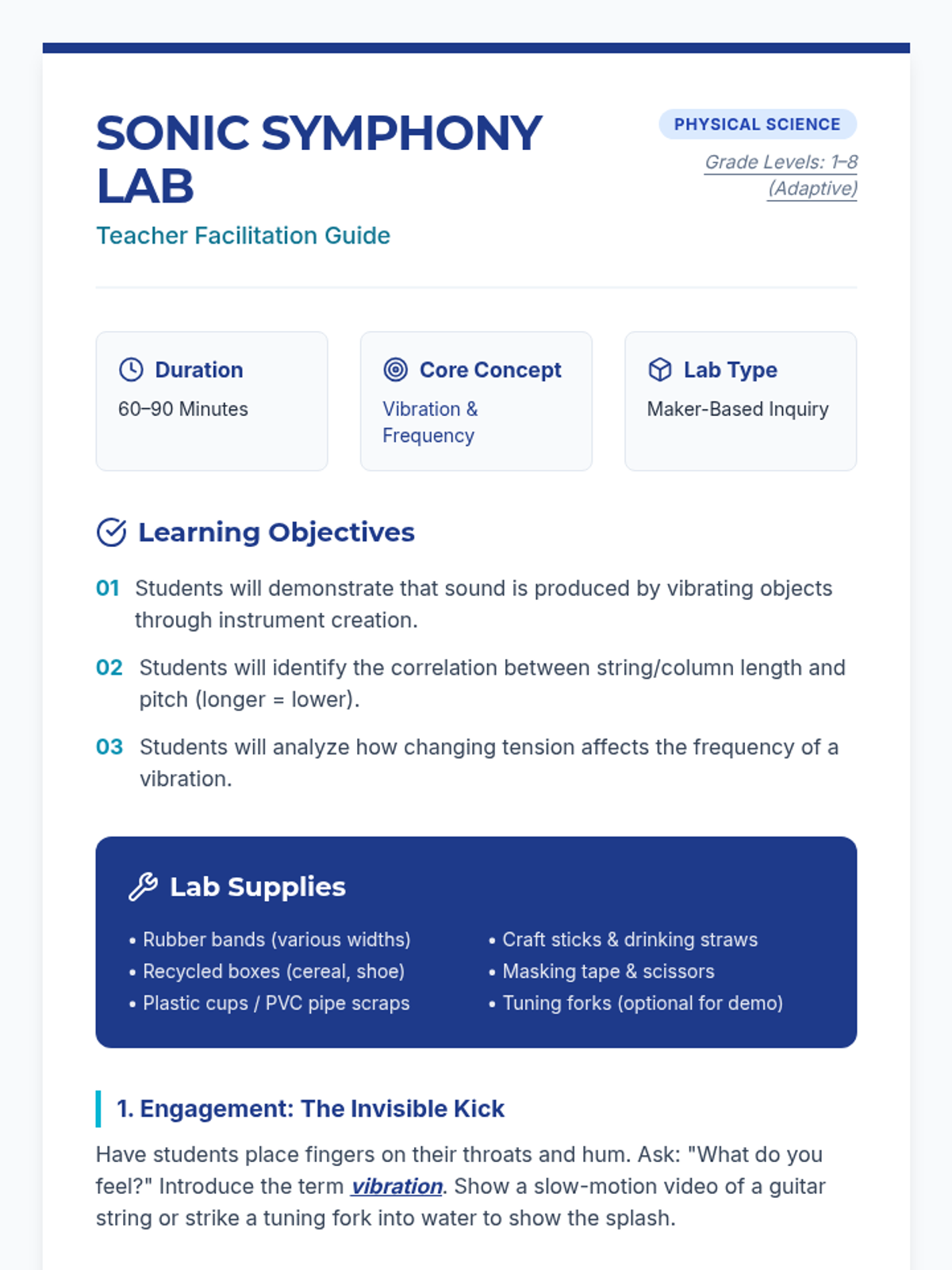
A comprehensive teacher facilitation guide for the Sonic Symphony Lab, featuring learning objectives, materials list, step-by-step procedures, and differentiation strategies for grades 1-8. Revised to include full grade-level scaling and professional formatting.
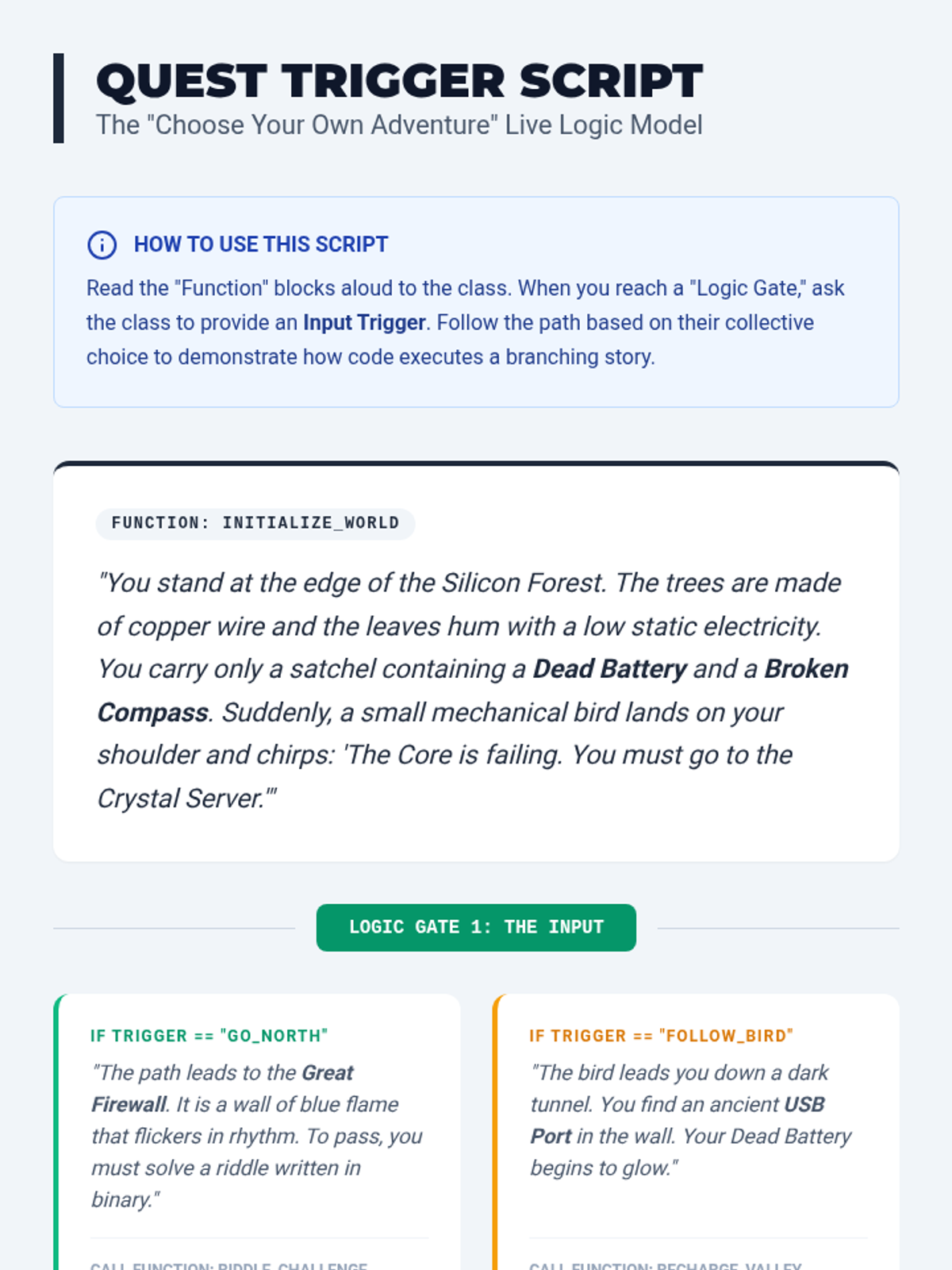
A teaching script that provides a narrative framework for a live classroom activity. It models how story functions and input triggers create a branching story, including a section on more complex "State Logic" using variables.
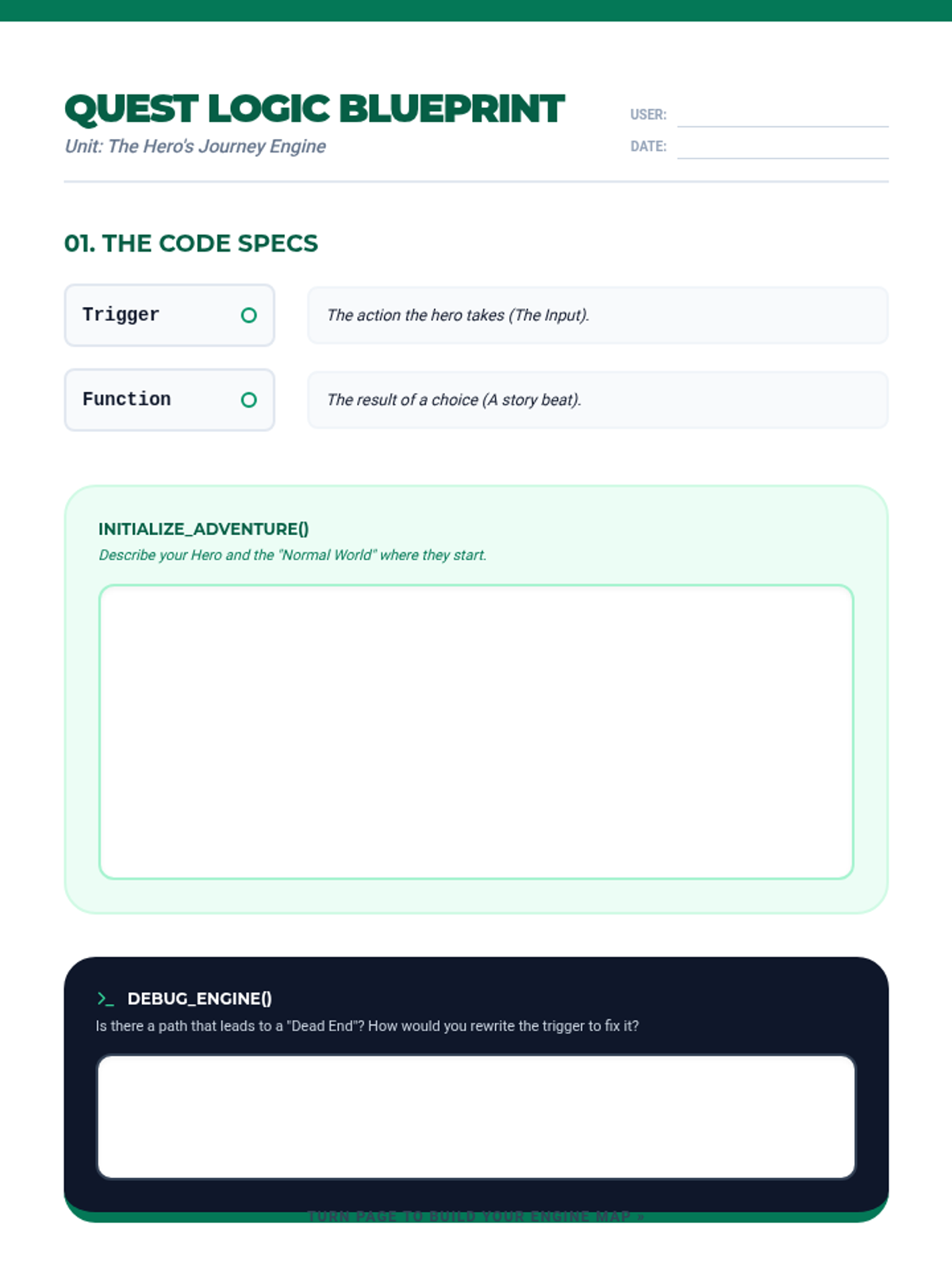
A structured student worksheet for designing a branching narrative logic map. It includes a coding vocabulary matching section, a visual flow-charting area for story triggers and functions, and a debugging reflection prompt.
An engaging slide presentation for 5th-6th graders that visualizes the connection between linear story structure and event-driven branching logic. Includes diagrams of triggers and functions within a Hero's Journey framework.
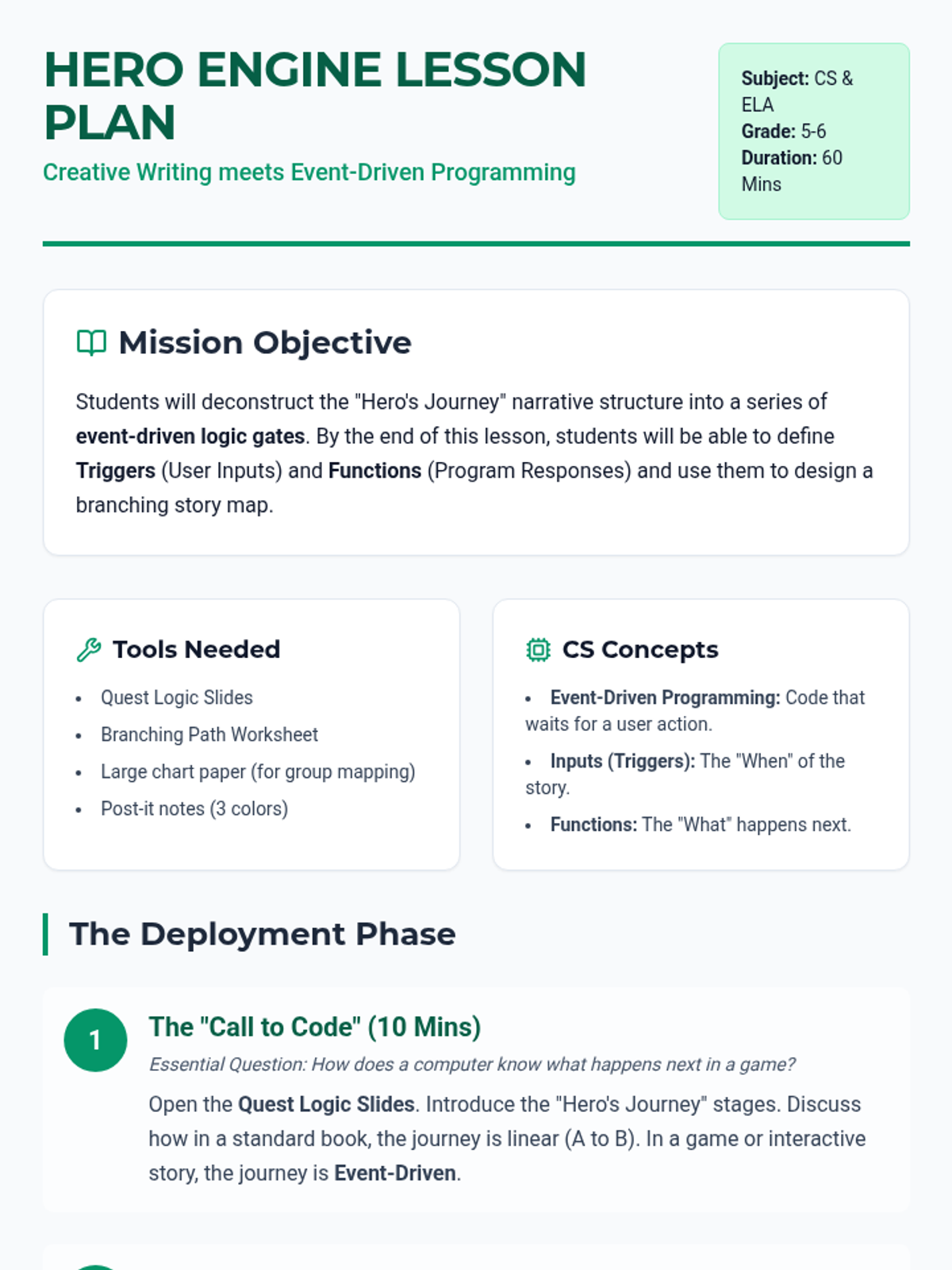
A comprehensive teacher guide for the Hero's Journey Engine lesson, detailing objectives, standard alignment, and a step-by-step instructional sequence for teaching event-driven programming through story mapping.
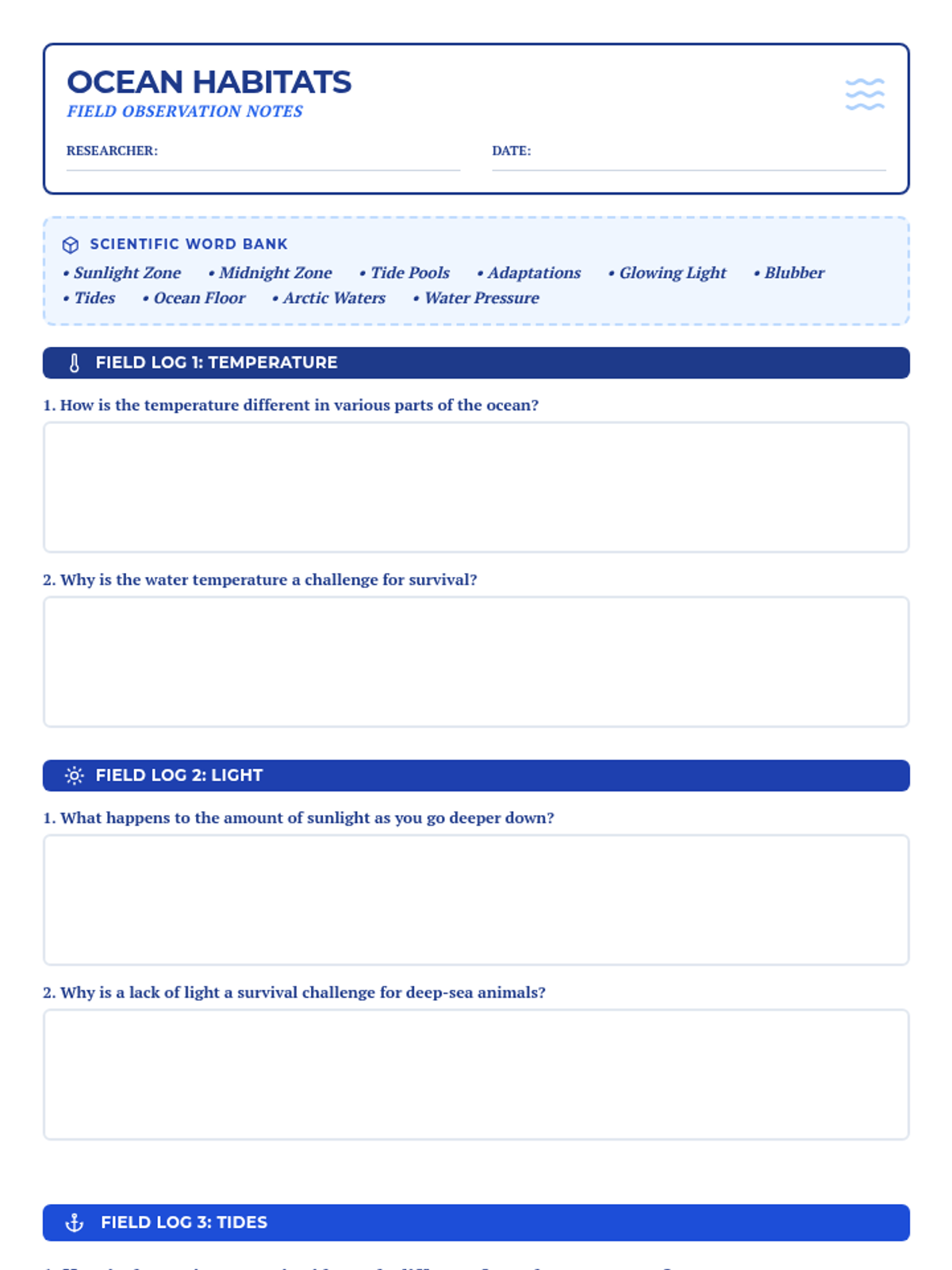
A 2-page age-appropriate guided note-taking document for studying ocean habitats. Features simplified vocabulary (Sunlight Zone, Tide Pools, etc.) and structured writing spaces for Temperature, Light, and Tides. Optimized to fit strictly on two pages.
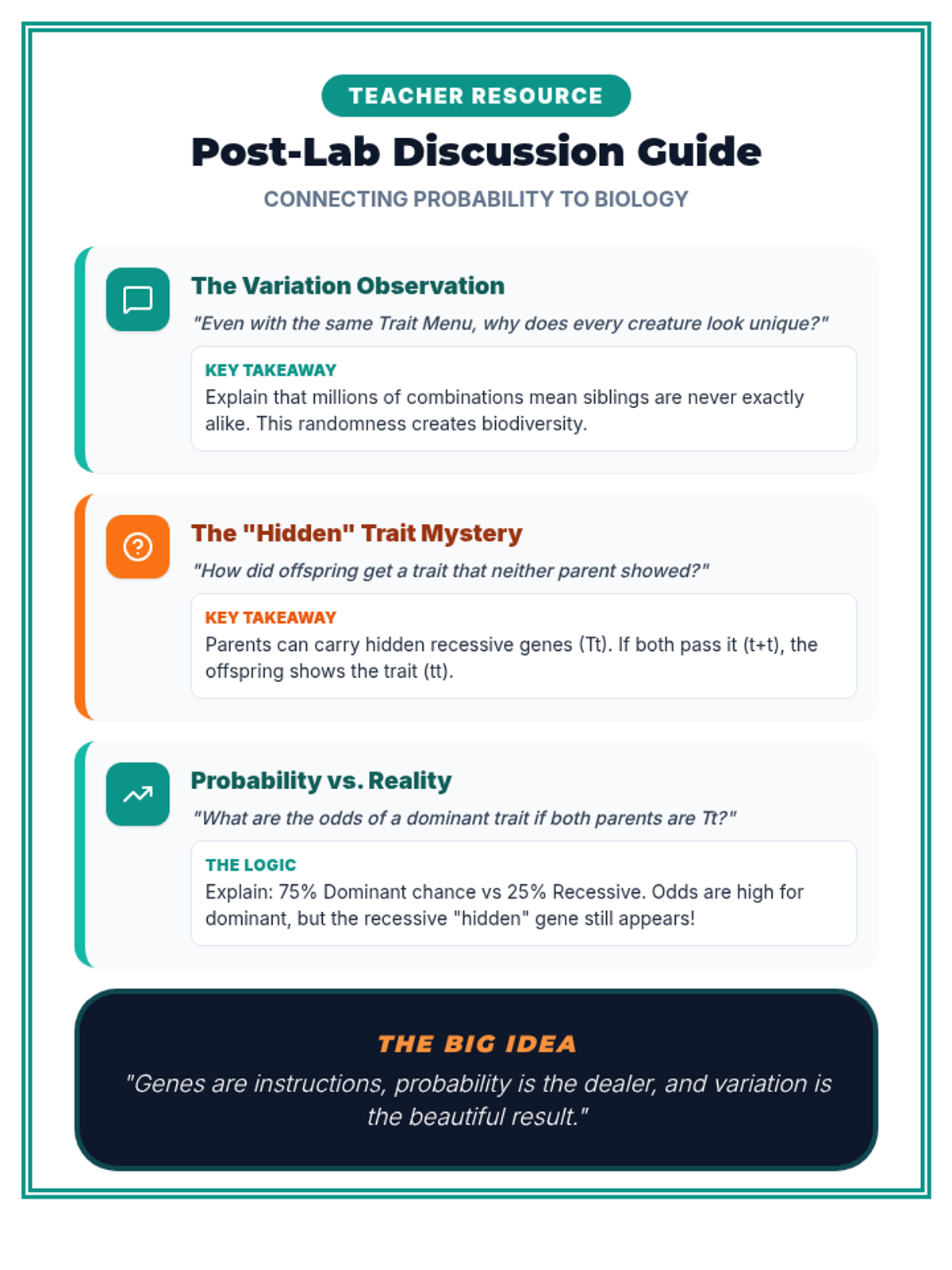
A teacher-facing discussion guide designed to facilitate a deep dive into the results of the Trait Traders activity. It provides structured prompts and key takeaways on topics like biological variation, recessive trait inheritance, and Punnett square probability.