A visually engaging anchor chart that defines possession, illustrates the 'Shrink Ray' process for nouns, and notes the pronoun exception.
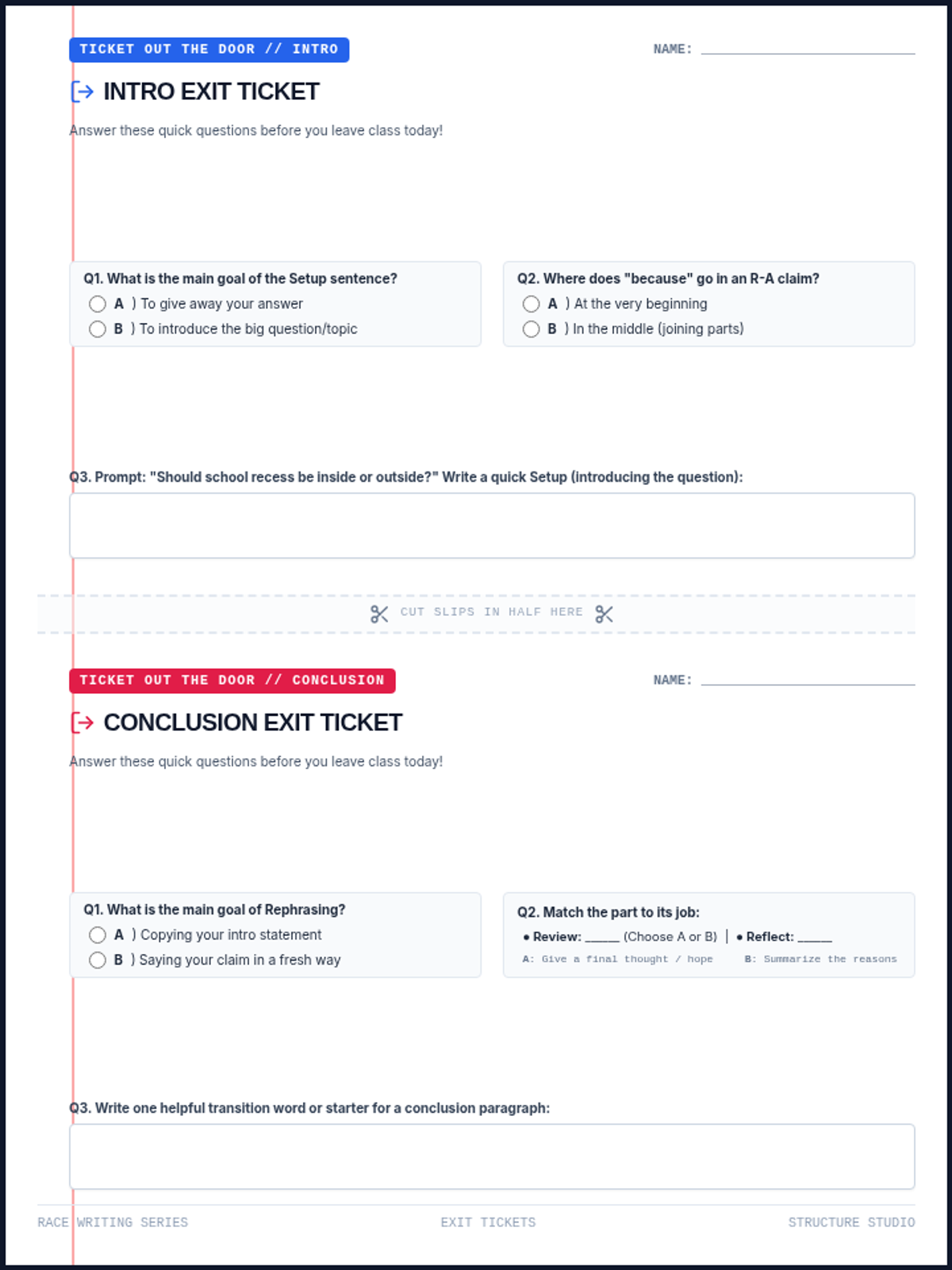
A single-page printable exit ticket resource containing two separate, perfectly symmetric and evenly spaced tickets (one for Introductions, one for Conclusions) divided by a dashed scissor cut-line. Questions follow the chronological writing steps, preceded by a quick 1-2-3 recap.
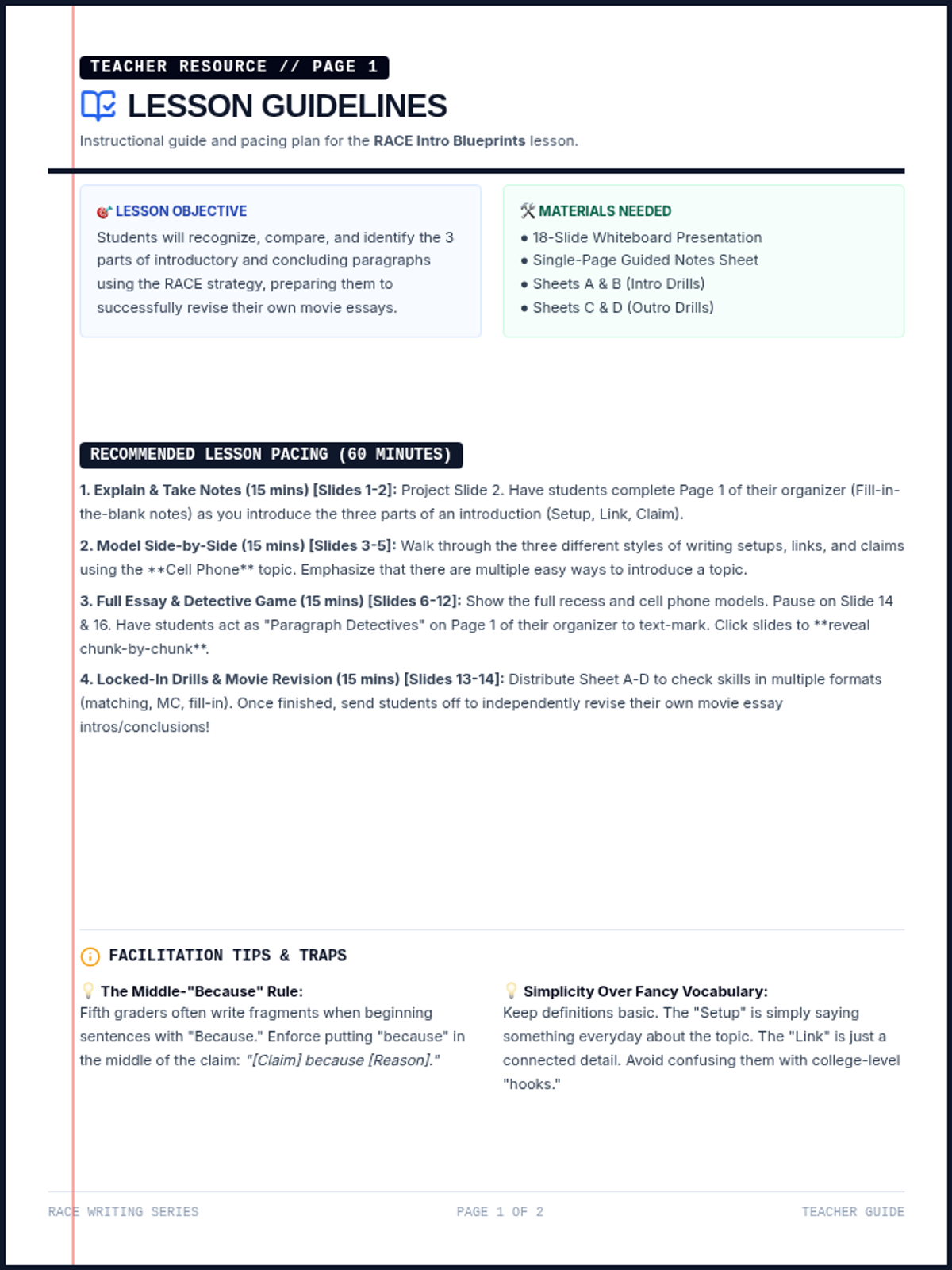
A comprehensive 2-page teacher resource. Page 1 provides a pacing guide, facilitation tips, and common misconceptions for the RACE Intro lesson. Page 2 provides the exact answer keys for the Guided Notes, all student worksheets, and the exit tickets.
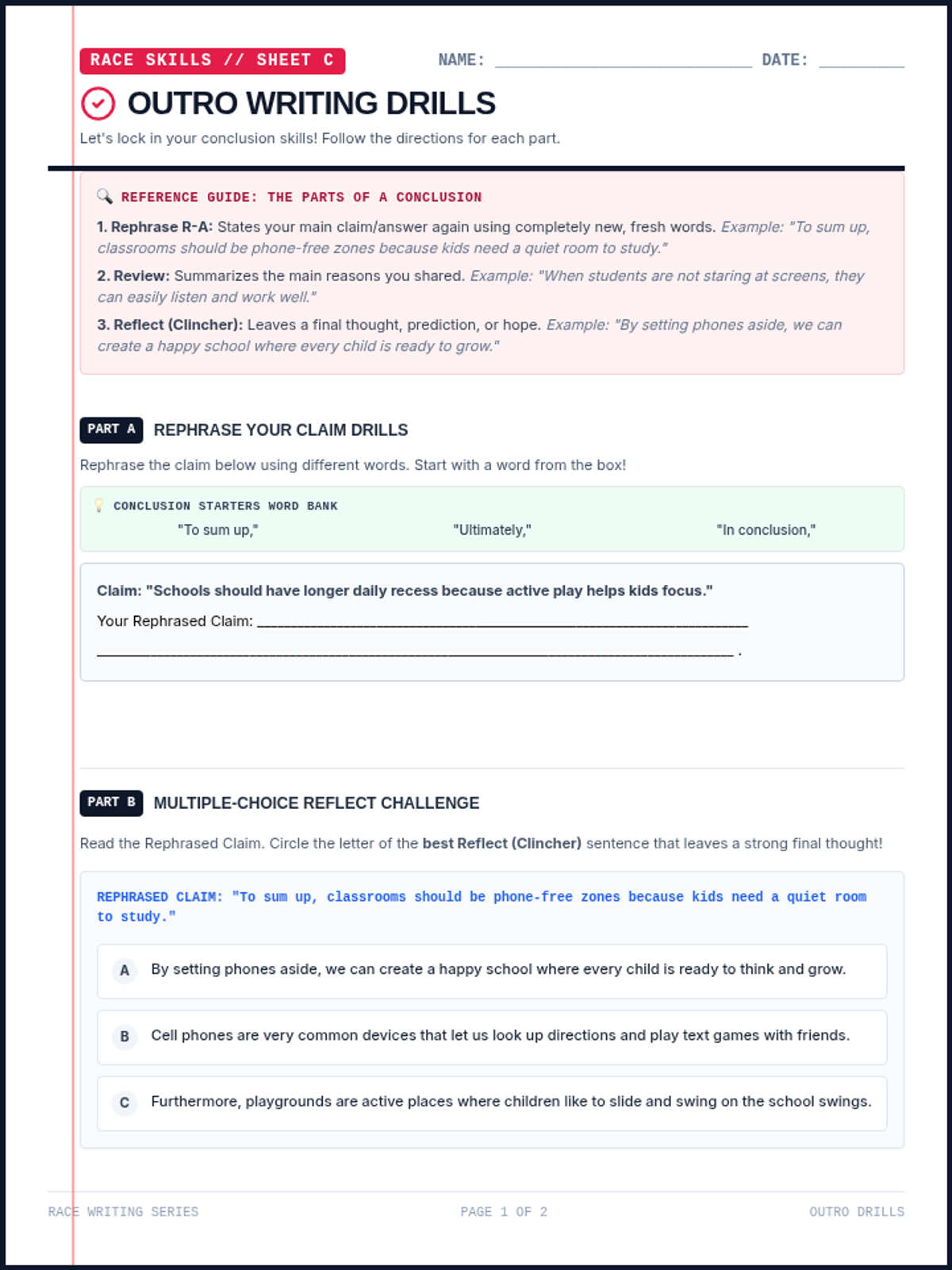
A 2-page repetition-based closing drill sheet designed for low-ink black and white printing. Page 1 defines the conclusion parts (Rephrase, Review, Reflect) with concrete miniature examples, alongside Rephrase drills and a multiple-choice Reflect challenge. Page 2 offers interactive Outro-matching and MC questions.
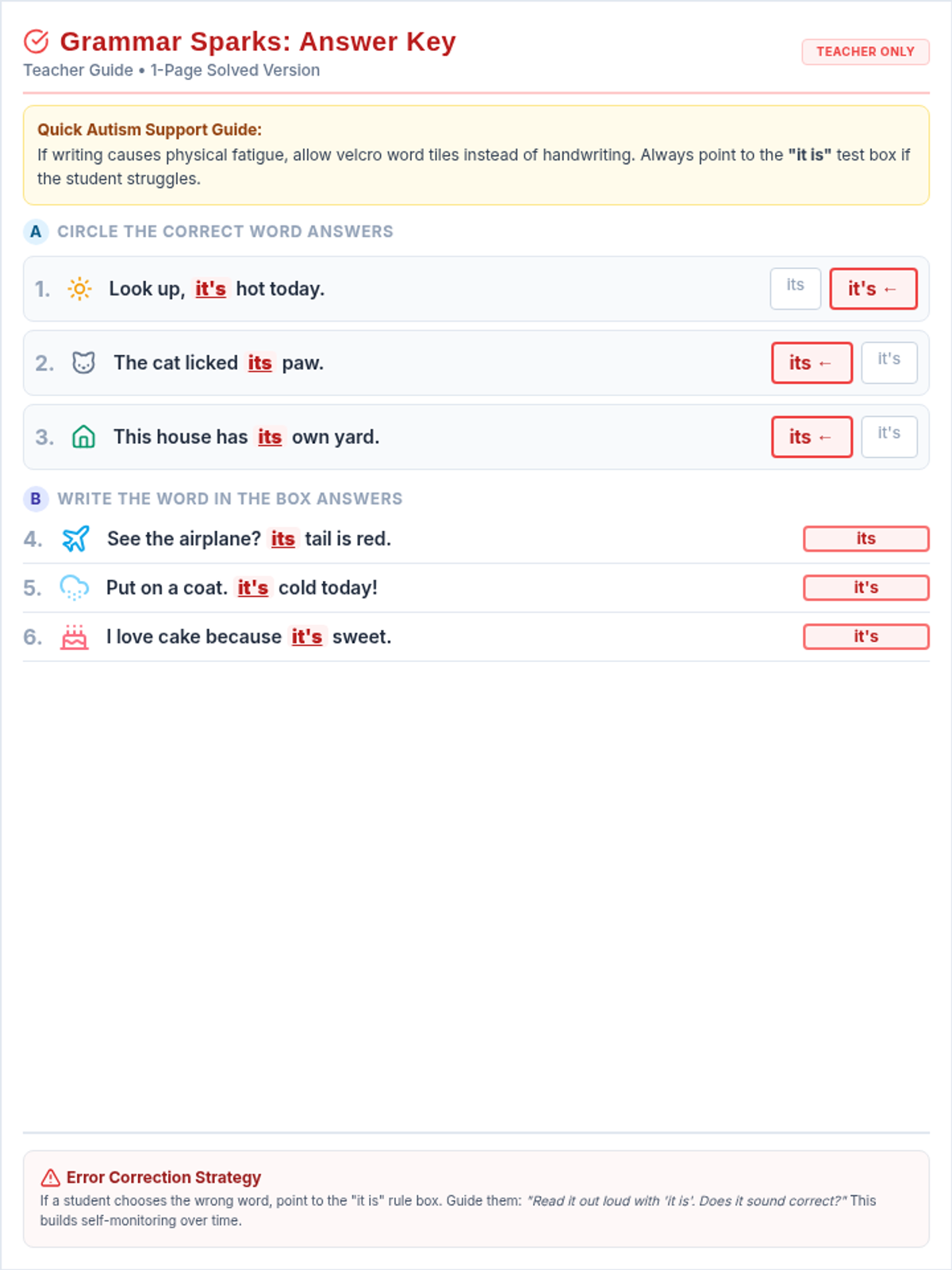
The teacher-facing Answer Key and intervention guide matching the 1-page Grammar Sparks Worksheet. It features the solved answers clearly highlighted, along with specific executive-functioning and error-correction tips for supporting autistic students.
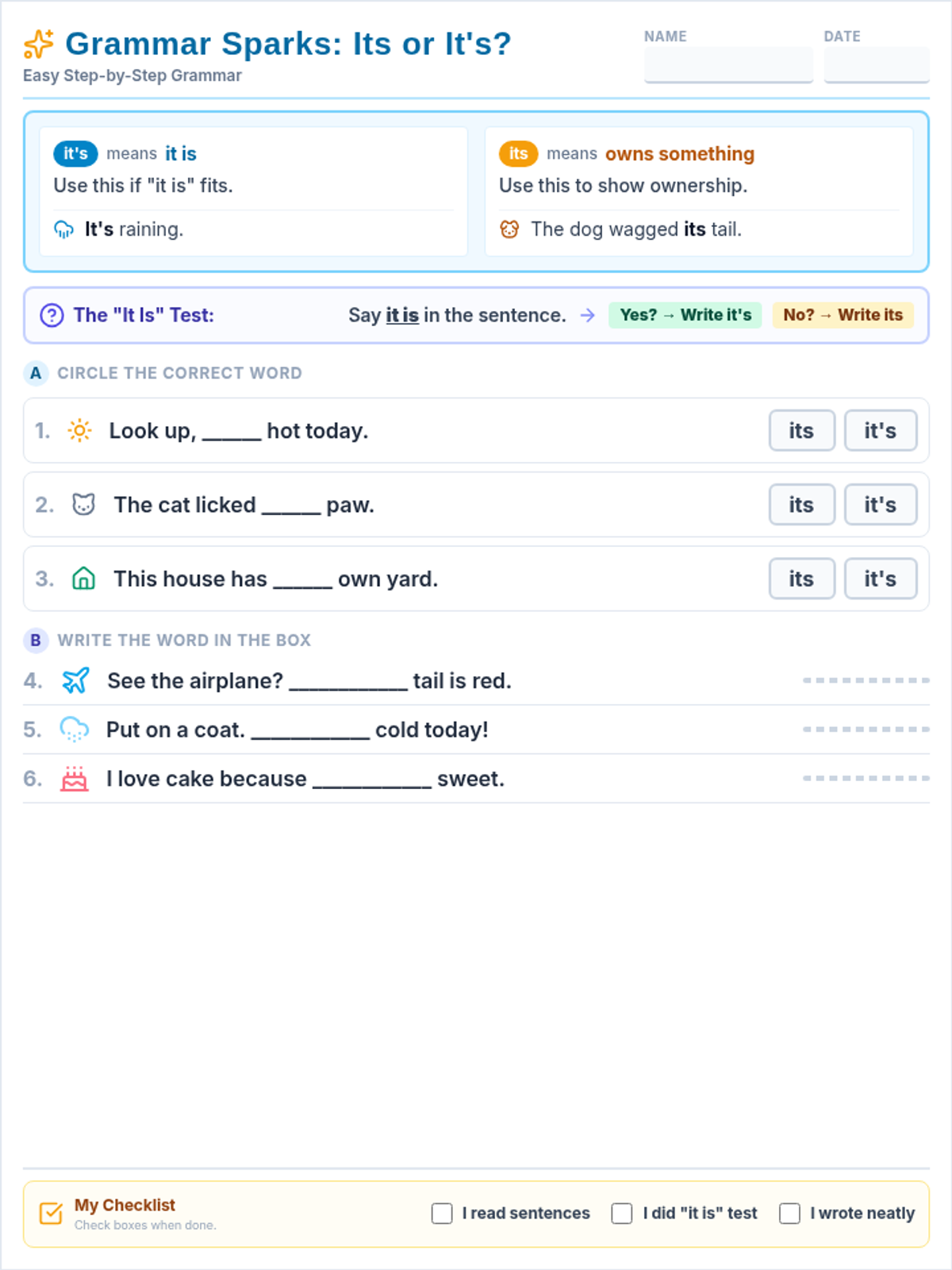
A simplified, highly structured 1-page print-ready student worksheet focusing on 'its' vs 'it's' with enlarged text for improved legibility. It features clear visual boundaries, simplified direct language, Lucide icon supports next to nouns for context, sentence frames, and a simplified self-monitoring checklist.
A simplified 2-page repetition-based drill sheet designed for low-ink black and white printing. Page 1 defines the intro parts (Setup, Link, R-A) with concrete miniature examples, alongside a 3-step Restate & Answer (R-A) drill. Page 2 offers Setup matching and MC questions.
A clean, high-contrast single-page graphic organizer designed specifically for low-ink black and white printing. Features fill-in-the-blank guided notes matching the presentation word-for-word, alongside a double-spaced 'Paragraph Detective' text-marking activity.
An interactive 2-page student map challenge where explorers decode idiom clues to navigate a pathway and retrieve the legendary Gold Anchor.
An 18-slide presentation designed as a clean whiteboard. Features detailed side-by-side comparative examples for all parts of introductions and conclusions, including a 4-slide interactive 'Paragraph Detective' text-marking challenge.
An engaging 5-slide presentation to introduce the concepts of literal and figurative language and kick off the Island Expedition.
A comprehensive 2-page print-ready lesson plan and facilitation guide for teachers leading the Idiom Island Expedition, including standards, pacing, and answers.
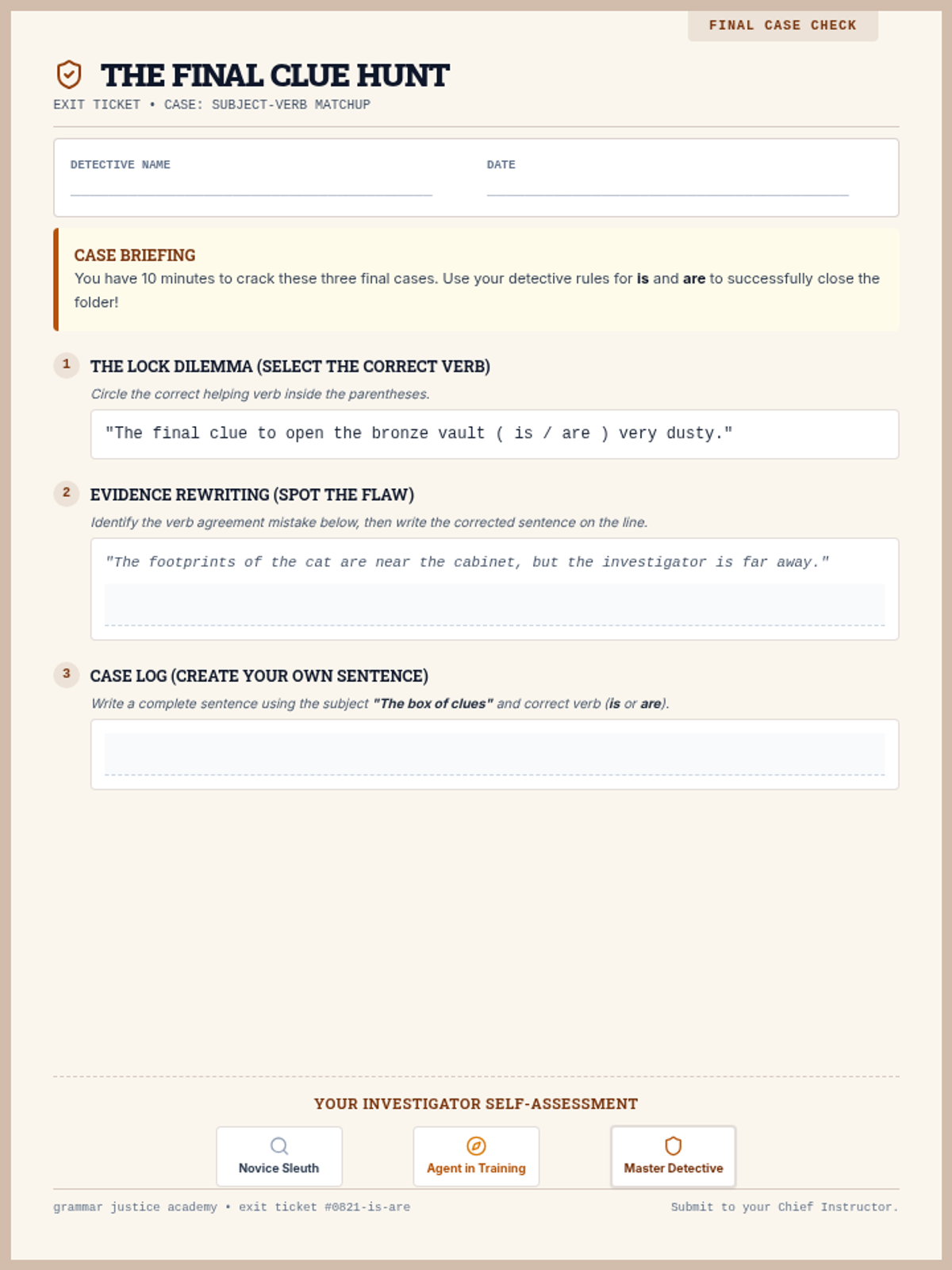
A quick 10-minute detective exit ticket designed to assess student mastery of subject-verb agreement under pressure, complete with a self-assessment 'Sleuth Meter'.
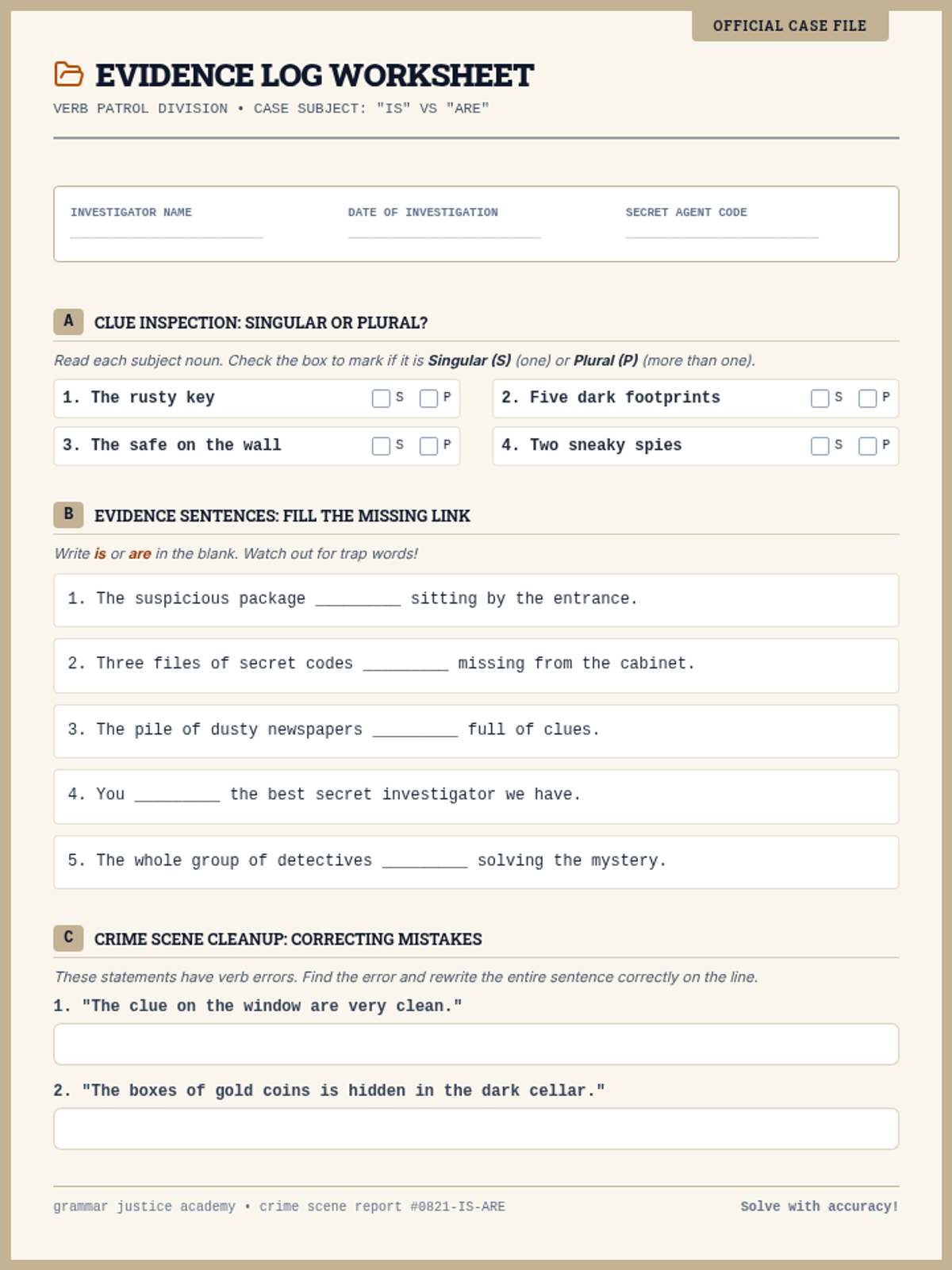
A detective-themed student practice worksheet containing noun sorting, fill-in-the-blank clue sentences, and proofreading corrections. Features a dedicated name/date field and ample handwriting spacing.
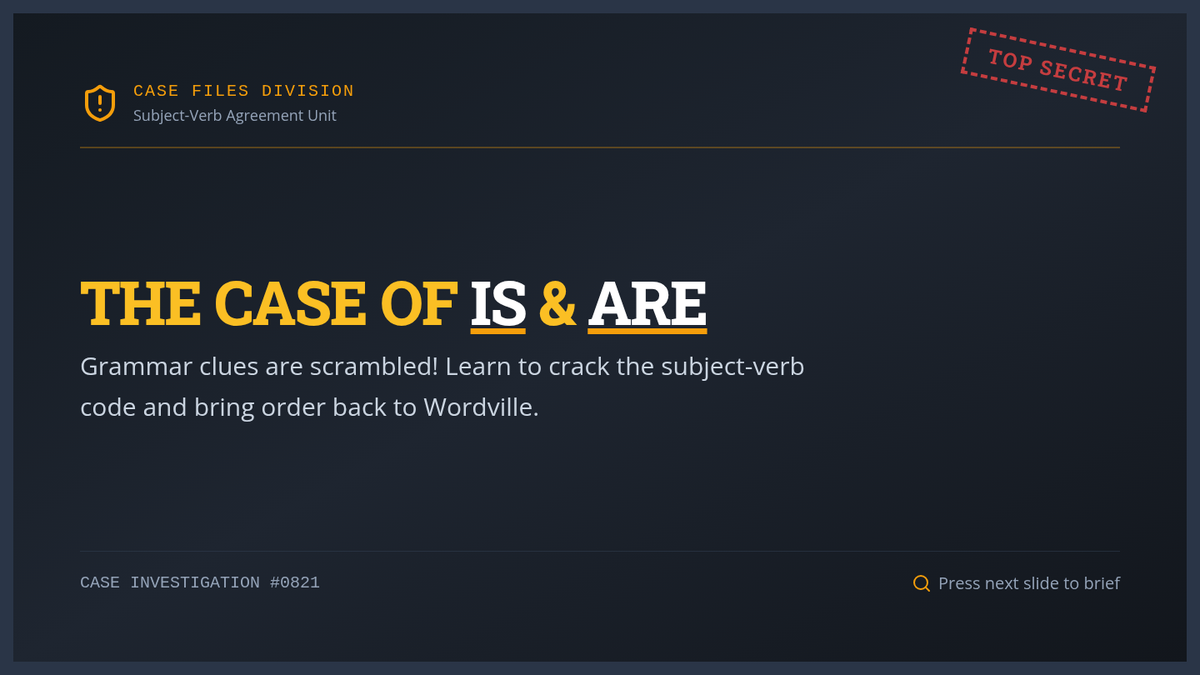
A visually compelling, dark-themed investigation board slide presentation that introduces the rules of 'is' vs 'are' and guides students through matching singular/plural nouns with their verb counterparts.
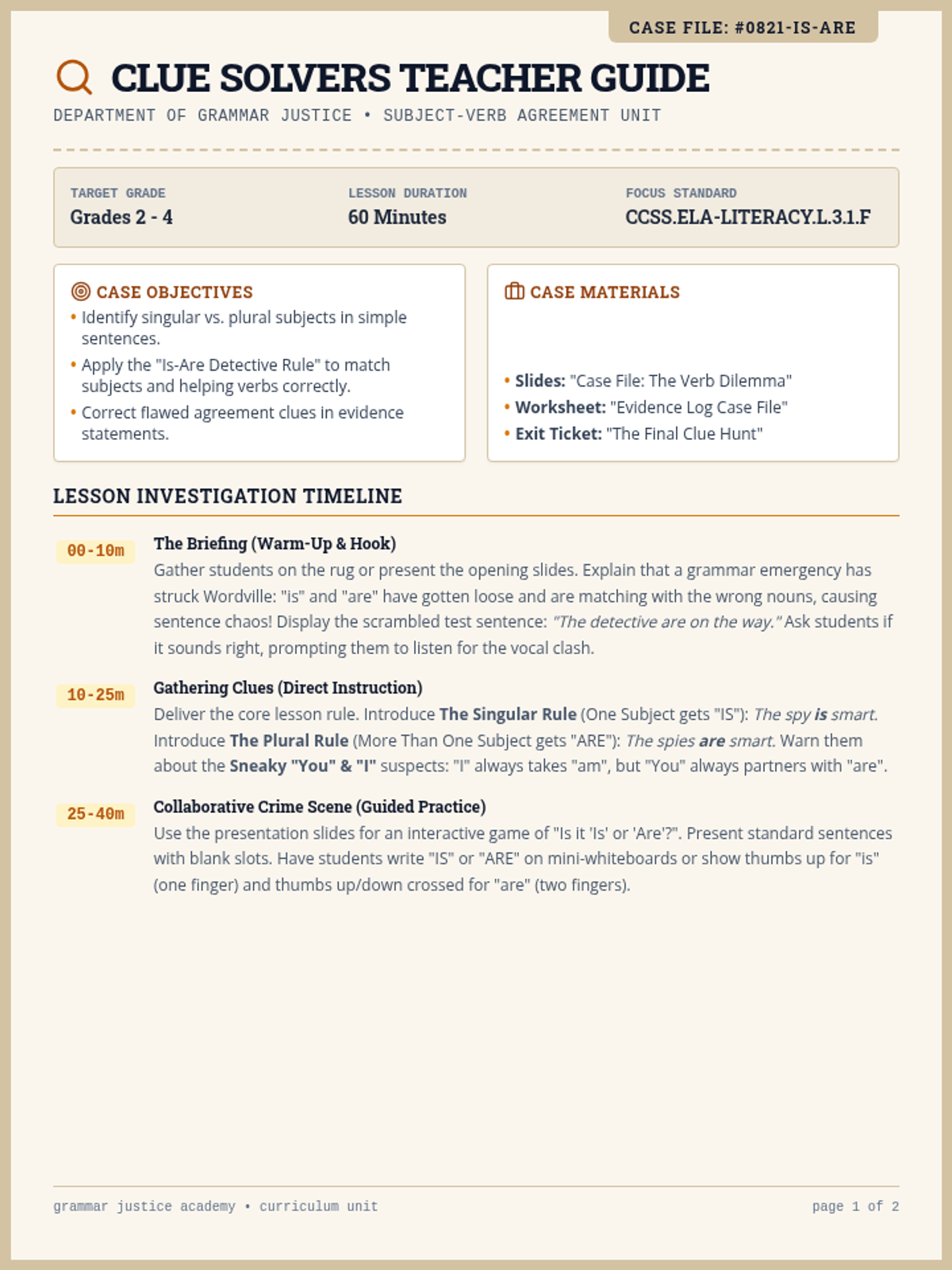
A comprehensive, typewriter-styled teacher guide that structures the 60-minute subject-verb agreement detective lesson, complete with learning objectives, guided prompts, common traps, and differentiation tips.
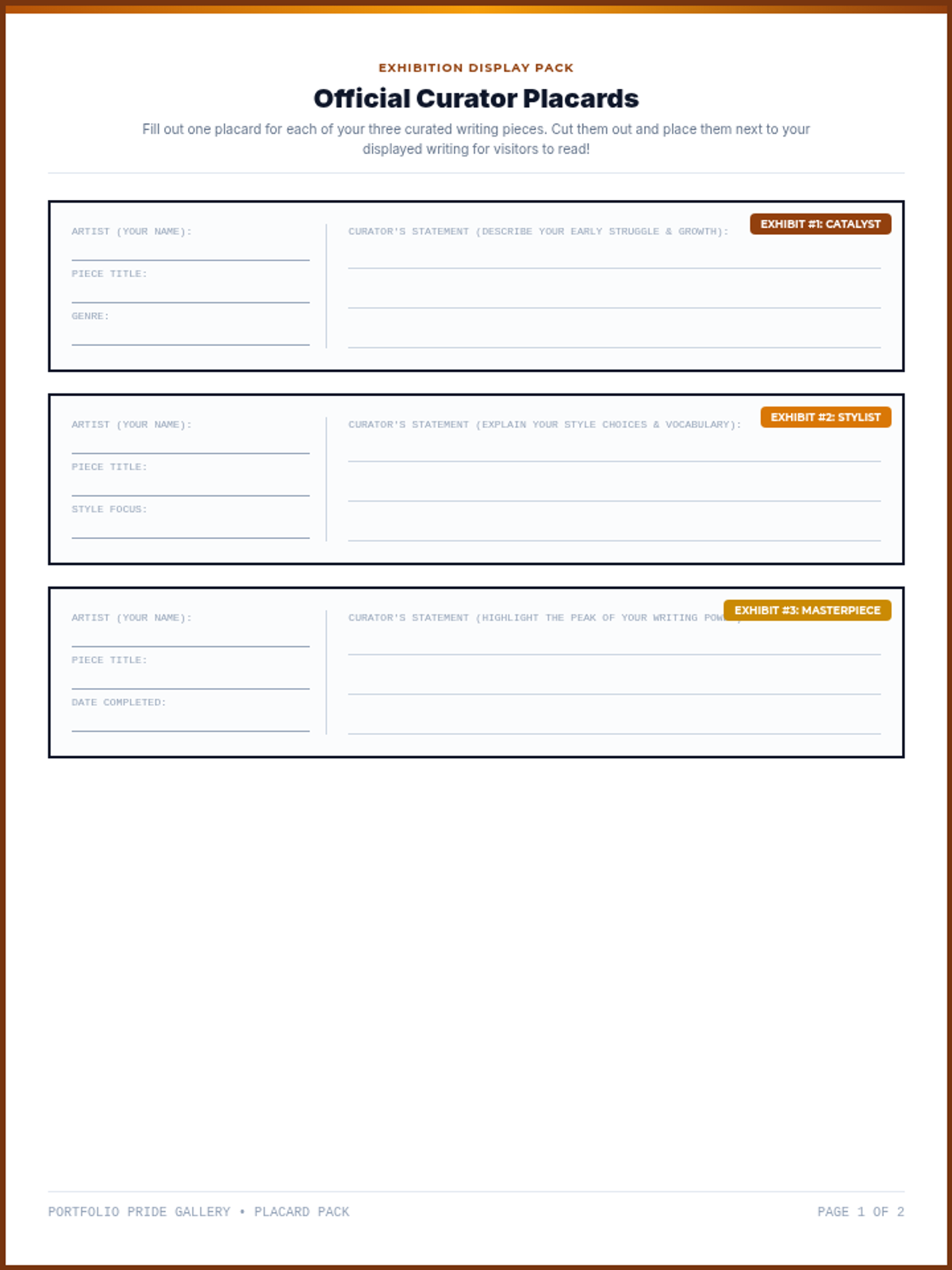
Printable museum placards/exhibit labels for students to write their curator statements, plus a customizable gallery invitation and curator rubric.
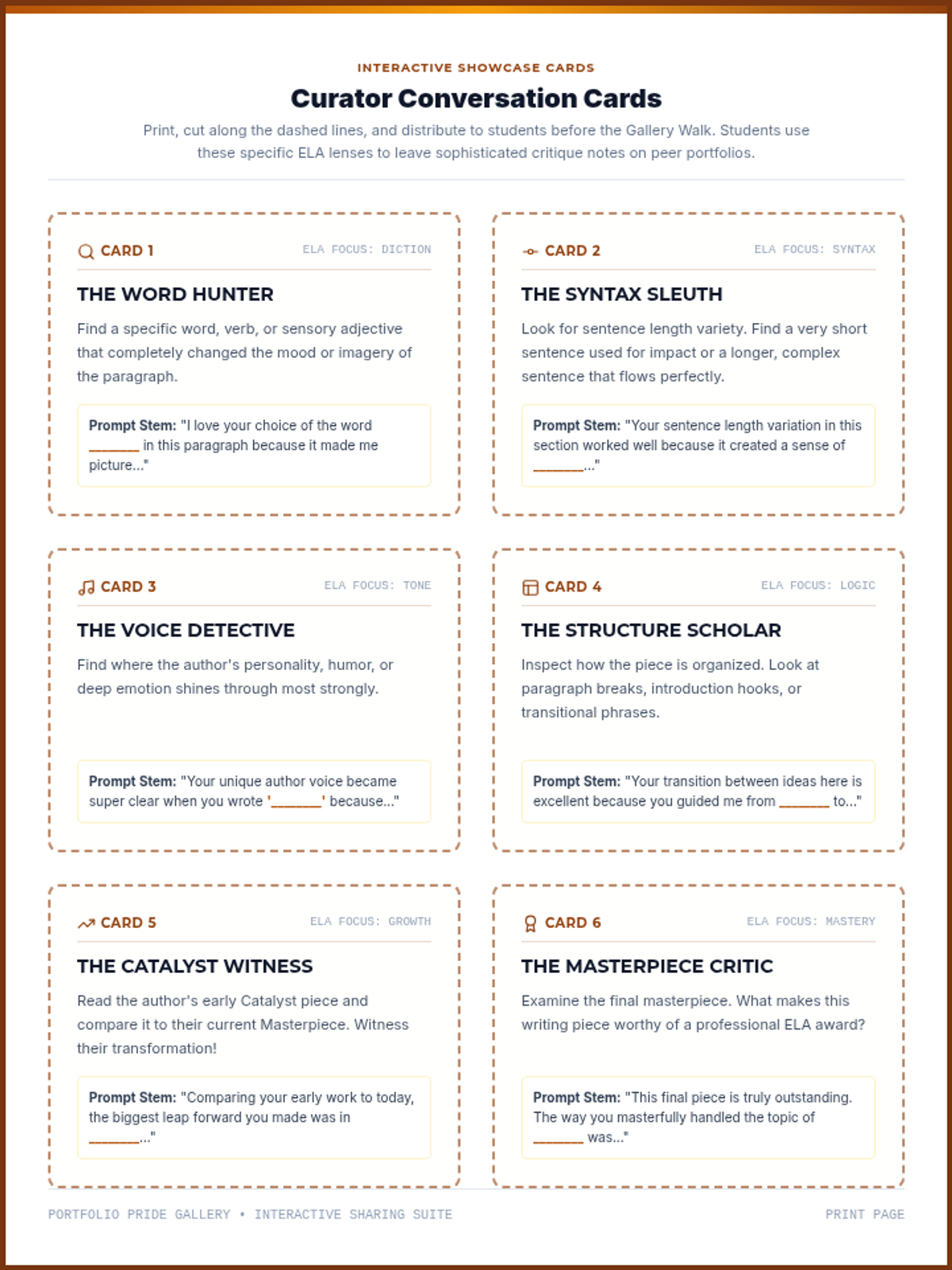
A printable set of discussion prompt cards for peer-to-peer critique and positive feedback during the showcase gallery walk.
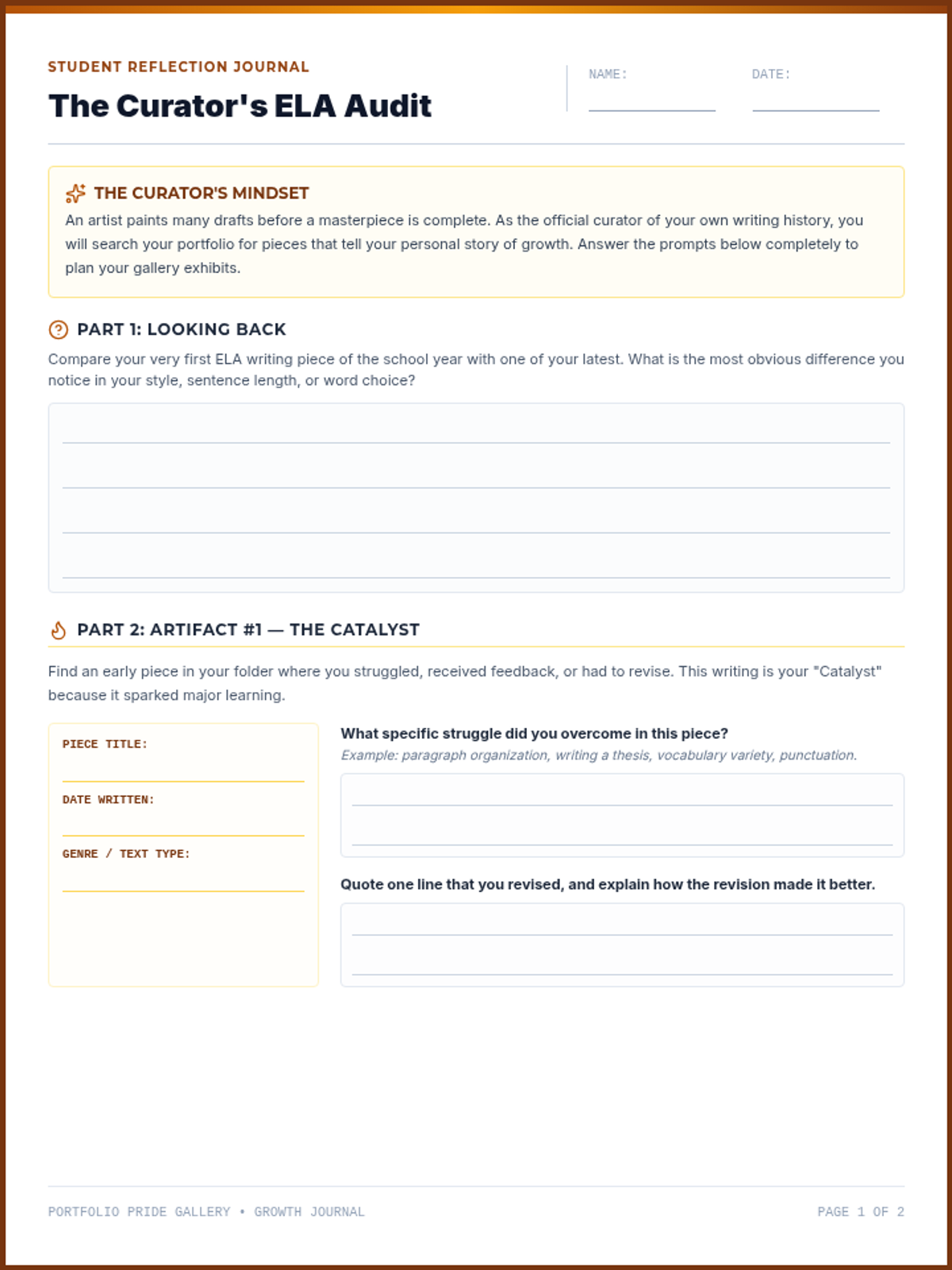
A structured student self-reflection journal with guided prompts to help students audit their ELA writing, identify milestones, and draft curator statements.
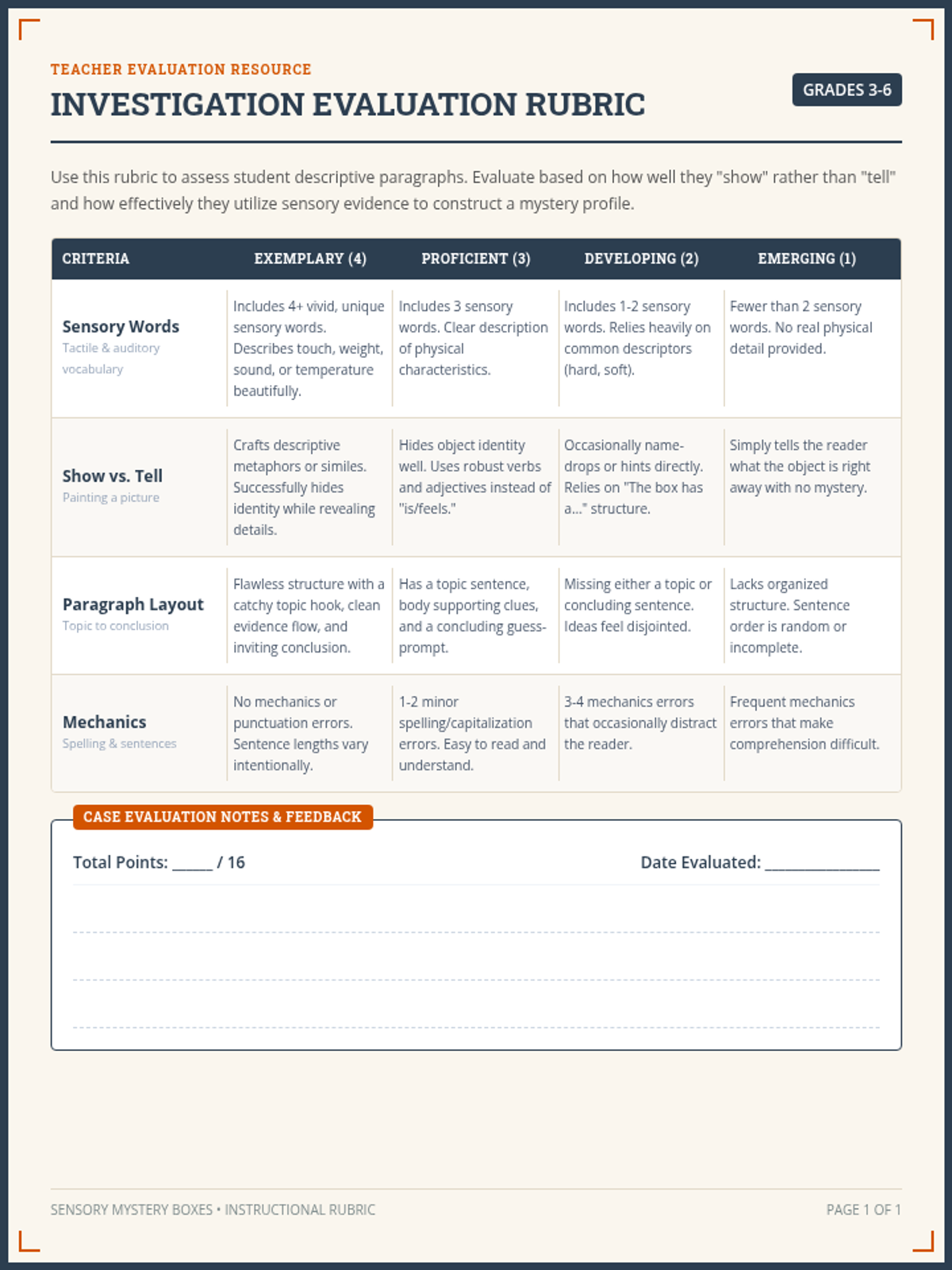
A standardized classroom grading rubric styled as an 'Investigation Evaluation Report', detailing assessment criteria for sensory vocabulary, writing structure, mechanics, and descriptive depth.
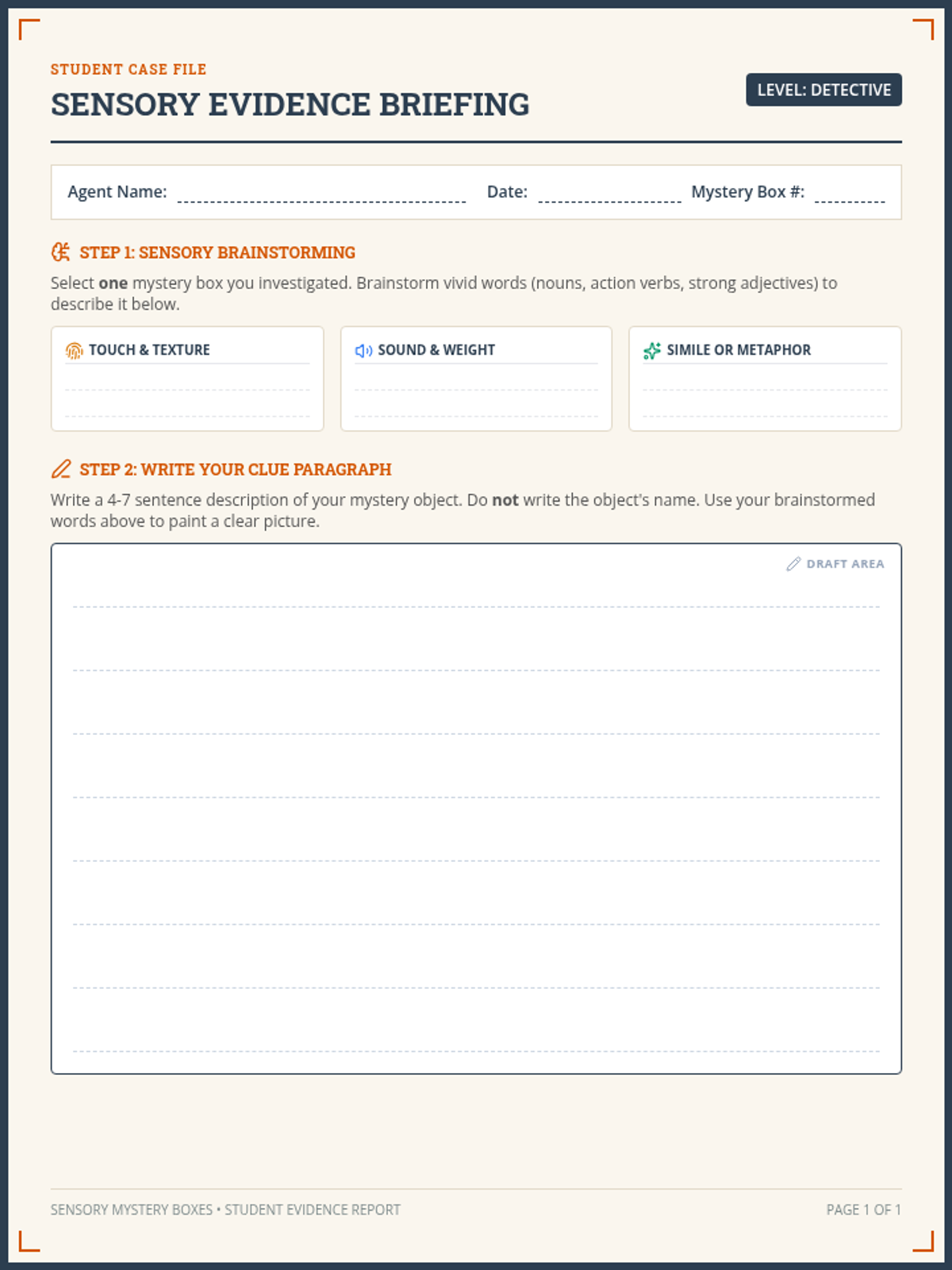
A structured student-facing worksheet for planning and writing their mystery box descriptive paragraph, featuring sensory brainstorming boxes, paragraph layout guidelines, and lined writing space.
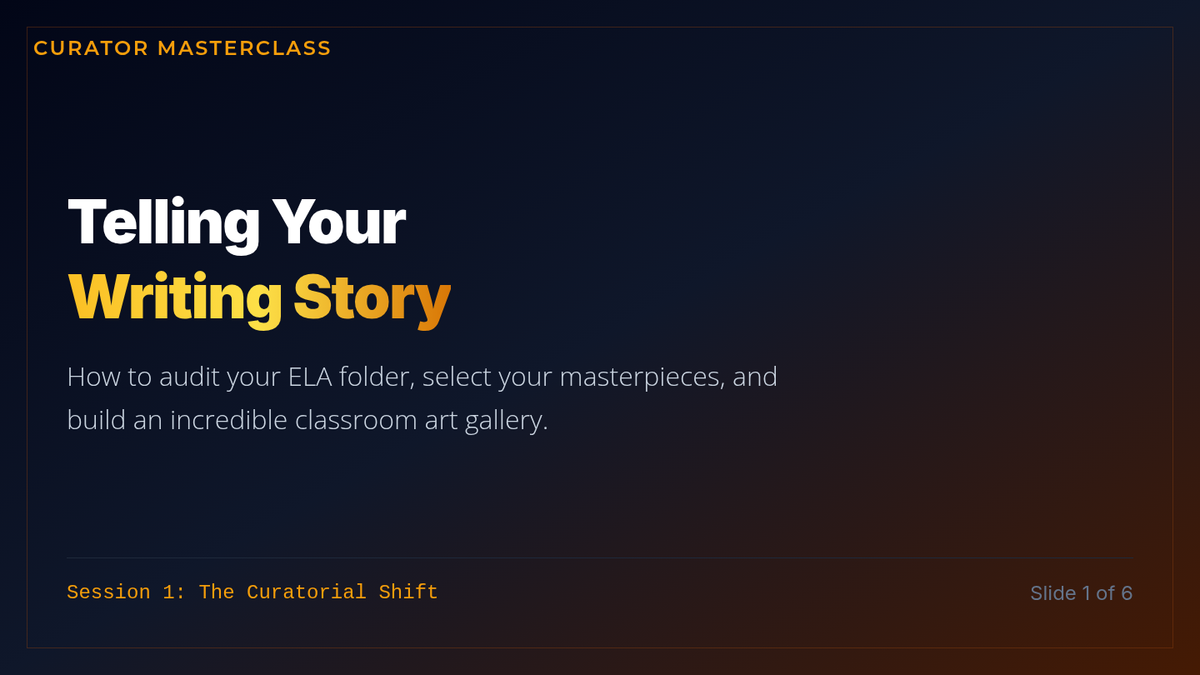
An interactive presentation for guiding students through the mindset of an art curator, modeling portfolio auditing, and setting gallery rules.
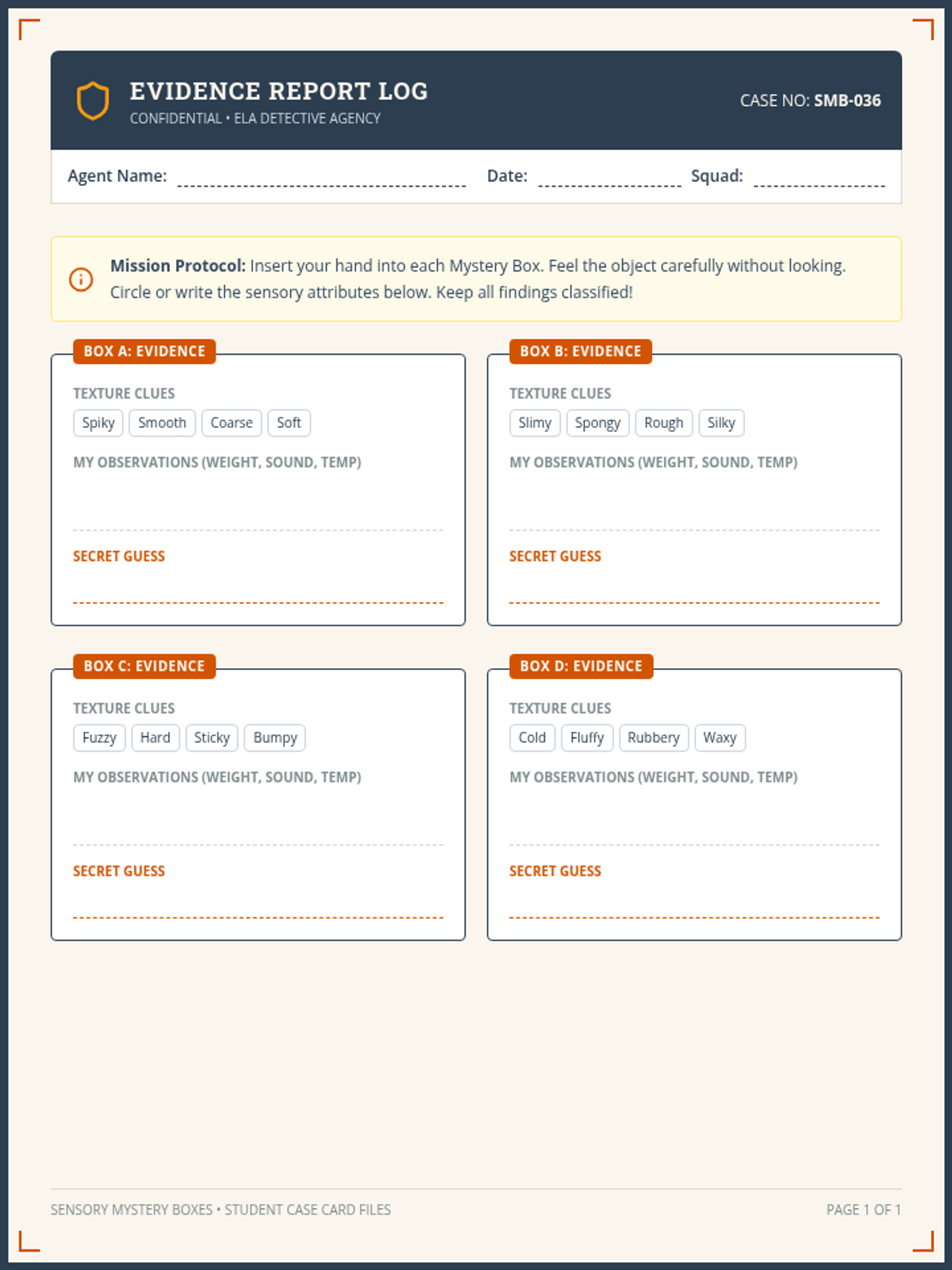
Hands-on evidence recording sheets and station signs designed for the physical mystery box investigation, providing clear spaces to record touch, sound, weight, temperature, and final guesses.
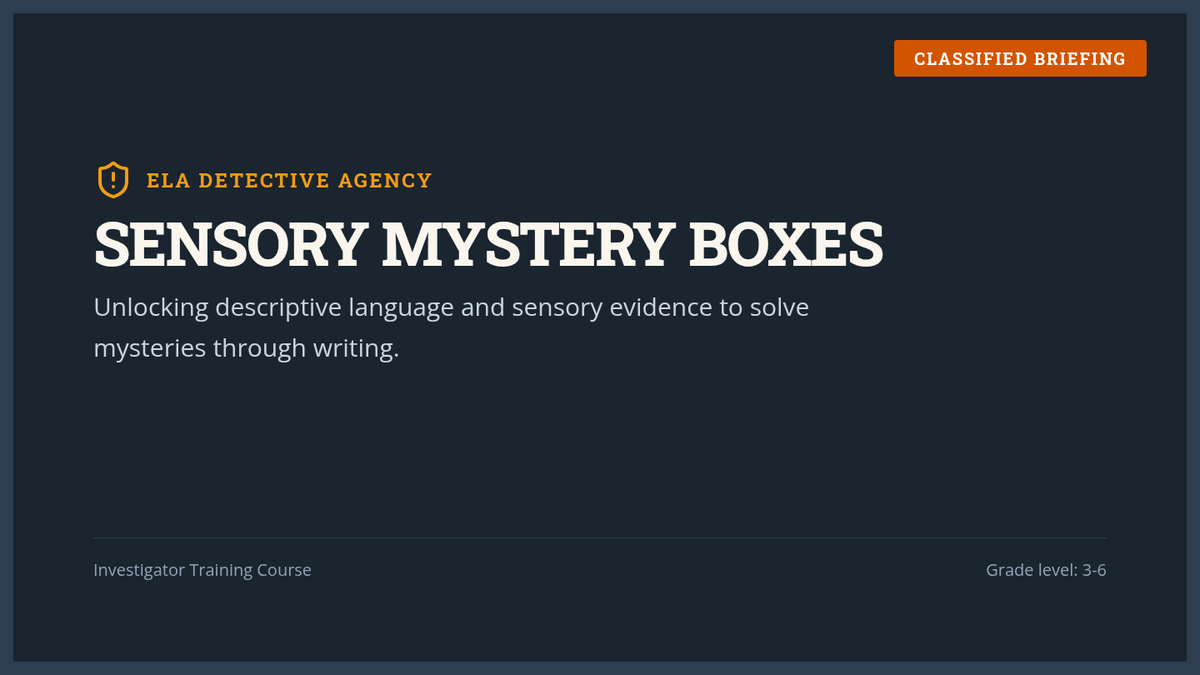
An interactive, visual slide presentation designed for teacher delivery, leading students through the rules of investigation, sensory adjective vocabulary, 'Show, Don't Tell' examples, and descriptive writing instructions.
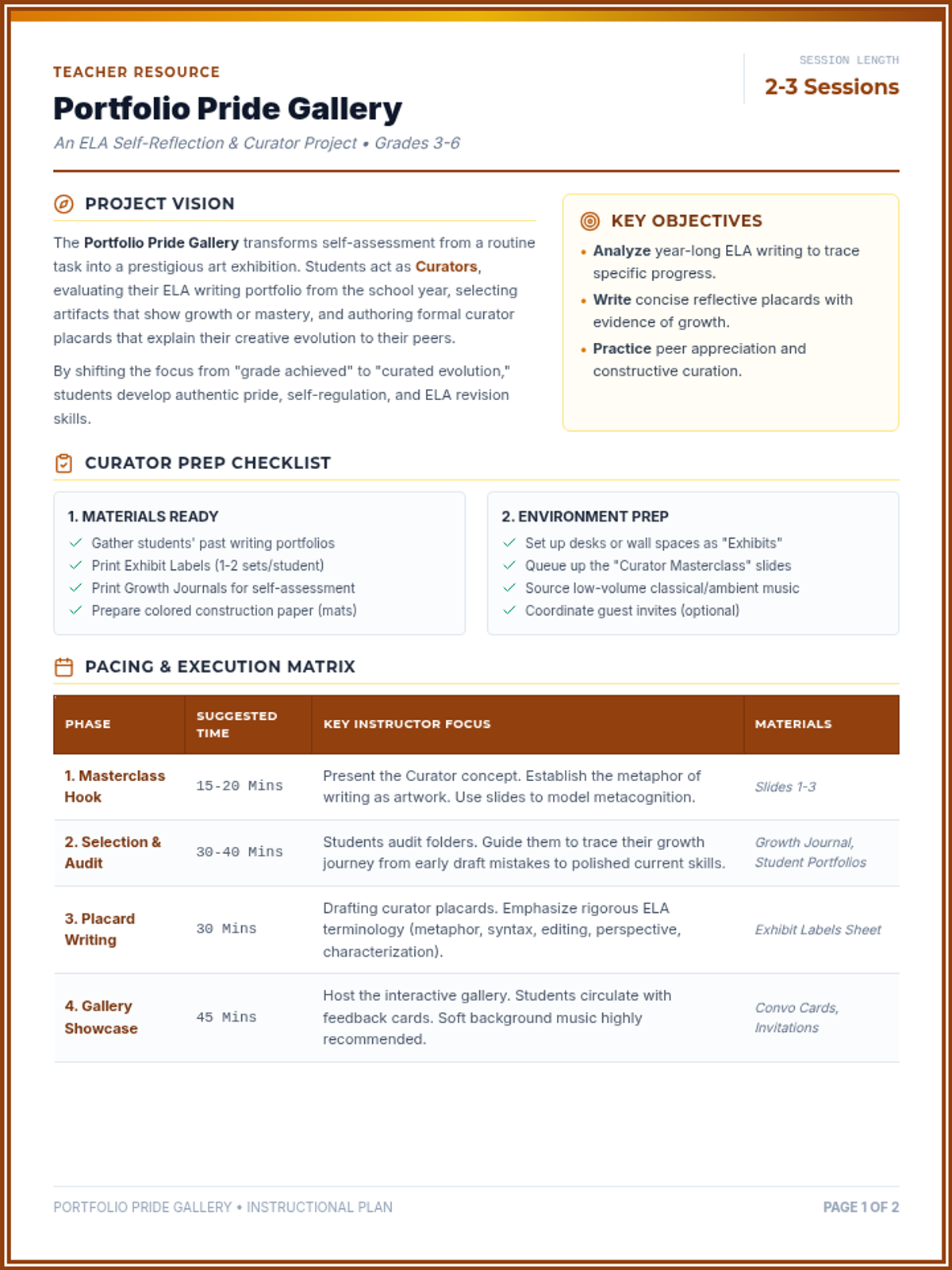
A comprehensive teacher facilitation guide containing detailed session pacing, discussion questions, preparation checklists, and differentiation strategies for the ELA gallery project.
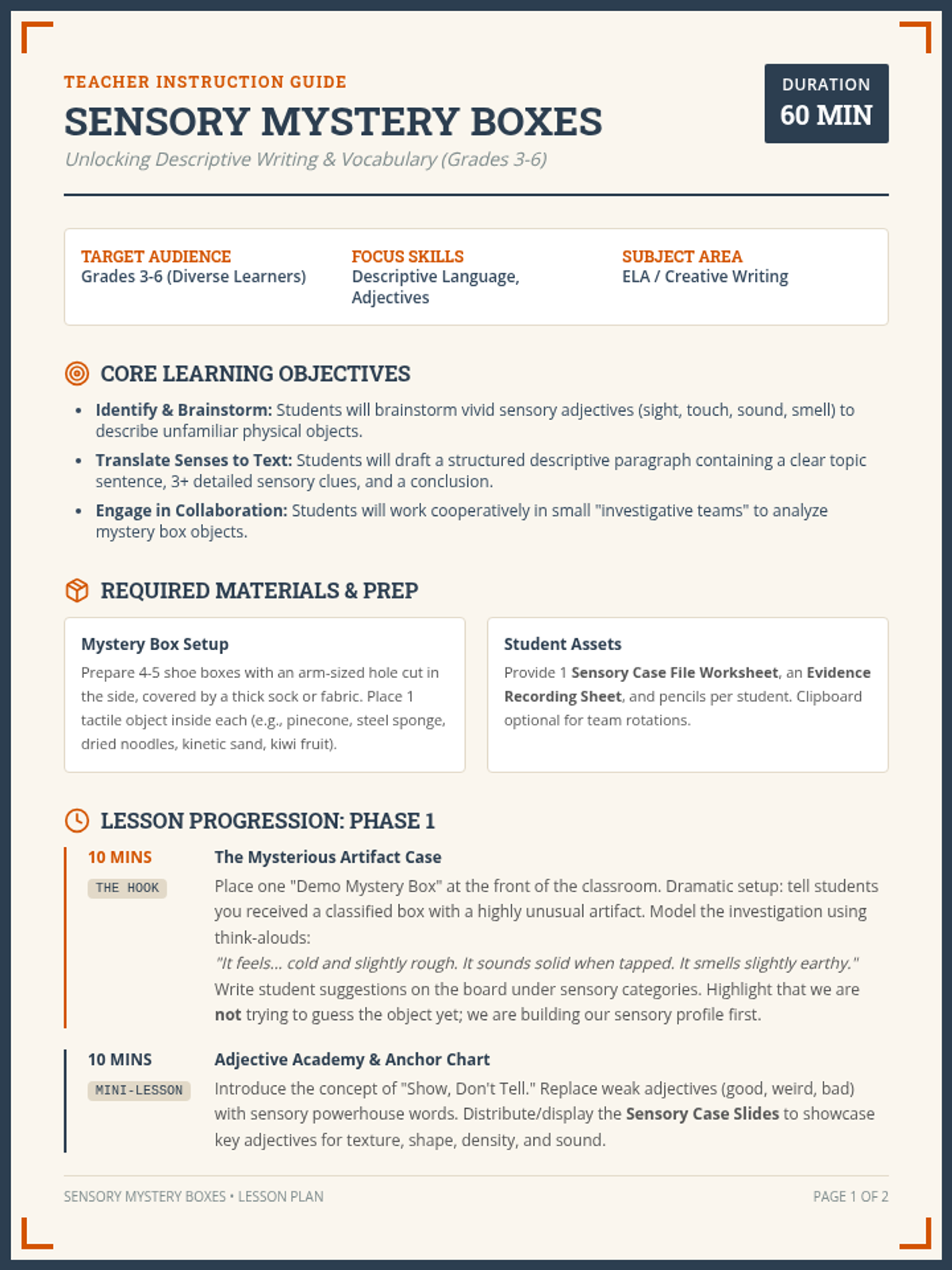
A comprehensive, step-by-step lesson plan styled as an 'Investigation Briefing' for teachers, detailing objectives, materials, setup, pacing, differentiation strategies, and group coordination.
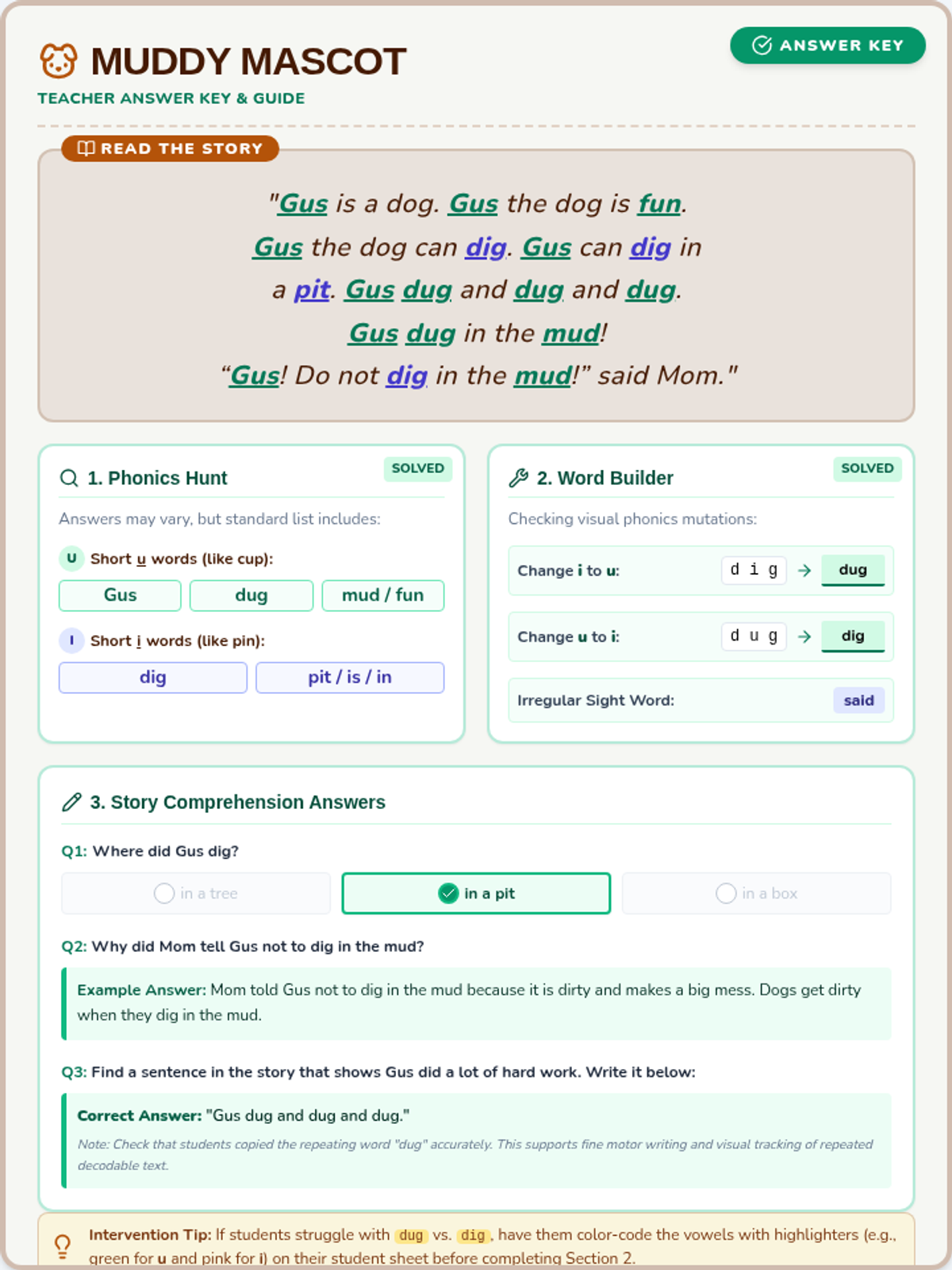
A comprehensive teacher answer key and phonics intervention guide. Includes completed fields for the Phonics Hunt, Word Builder, and comprehension questions, alongside teaching tips for decoding short 'u' sounds.
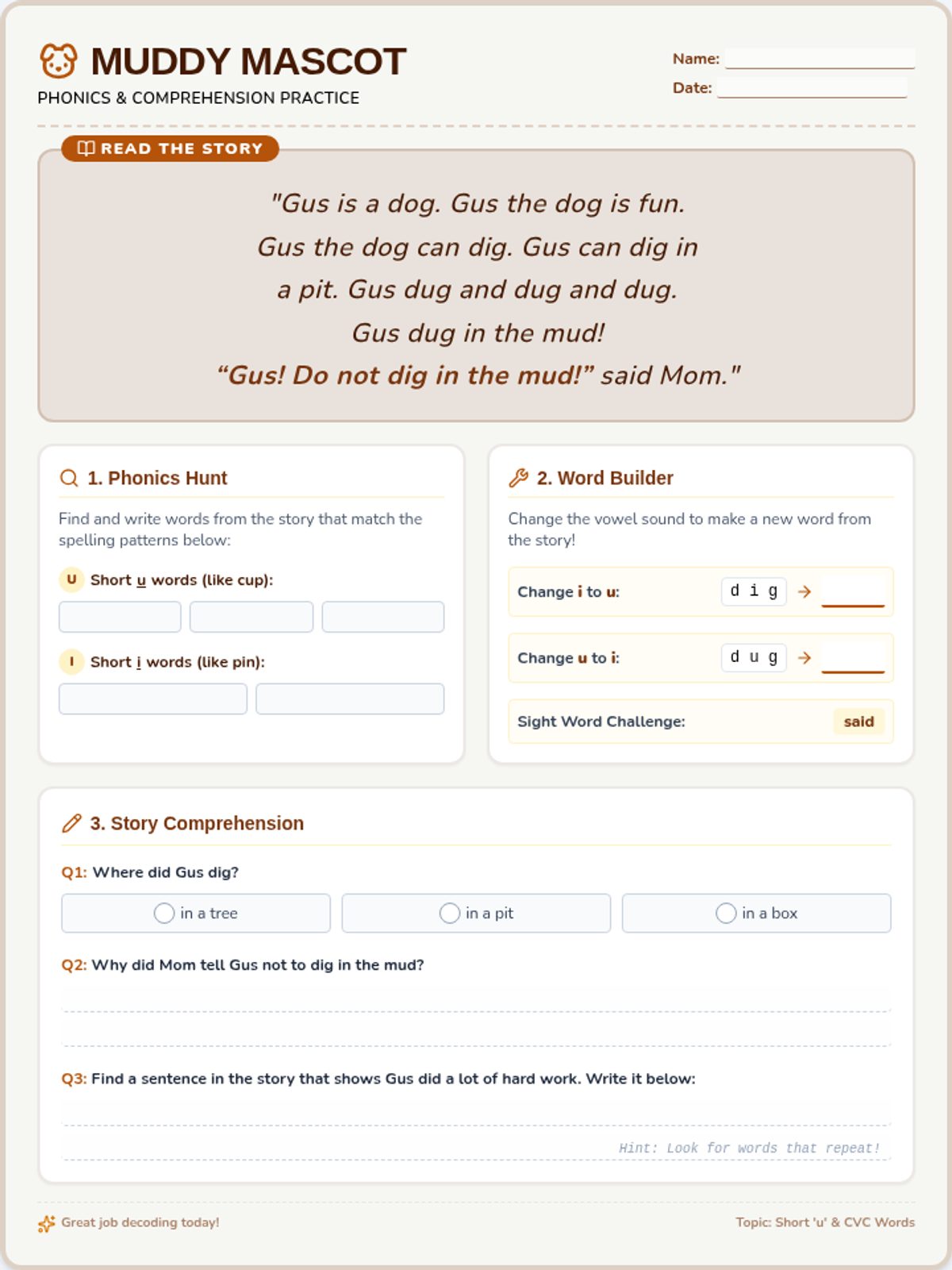
A student-facing phonics and reading comprehension worksheet featuring the story of Gus the Dog. Includes a decodable reading passage, a phonics search for short 'u' and CVC words, and text-dependent comprehension questions designed for Grade 3 reading intervention.
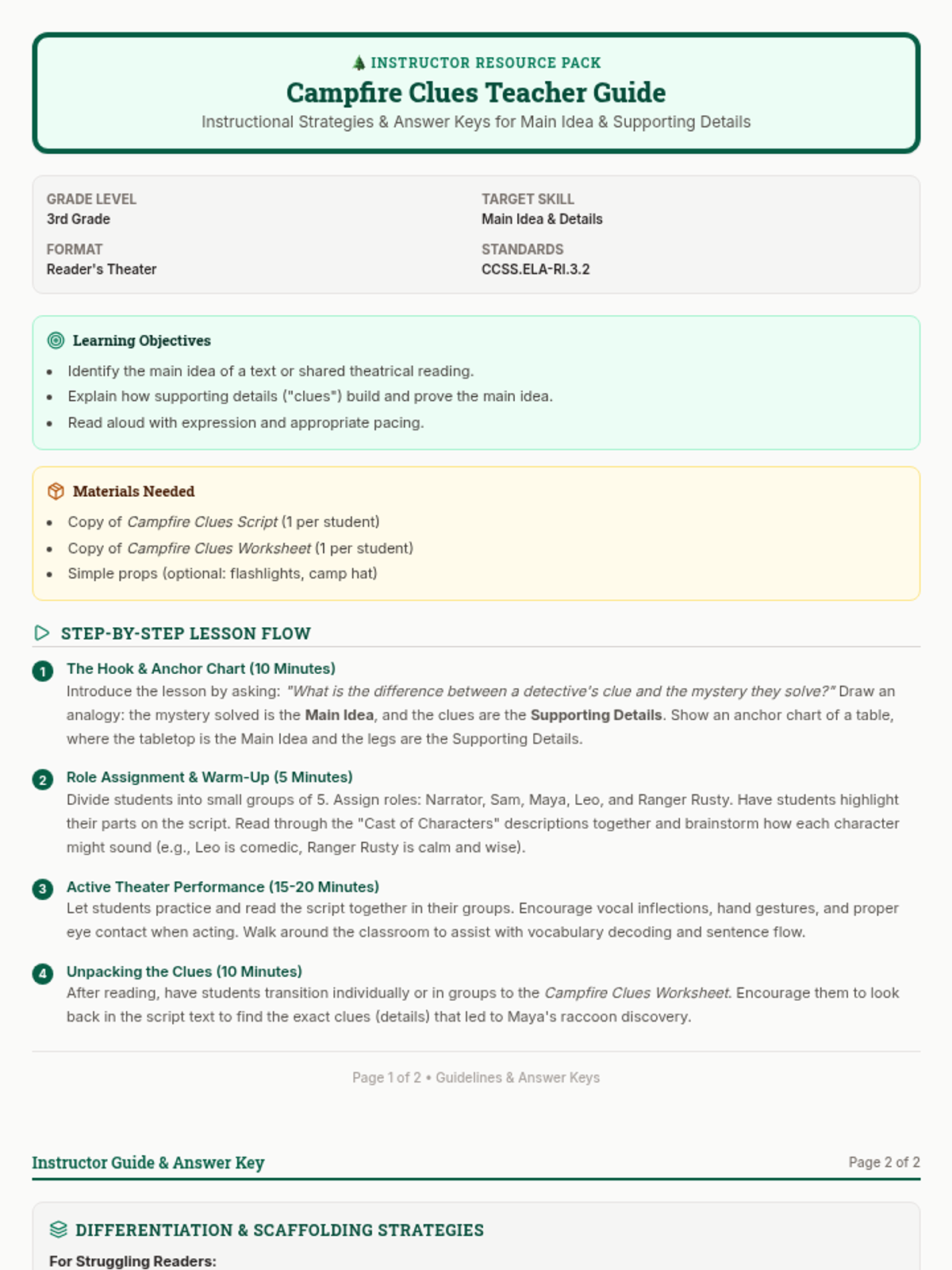
A comprehensive instructional resource for the teacher to deliver the lesson. Contains learning objectives, scaffolding ideas, standard alignment, a step-by-step facilitation script, and a complete answer key.
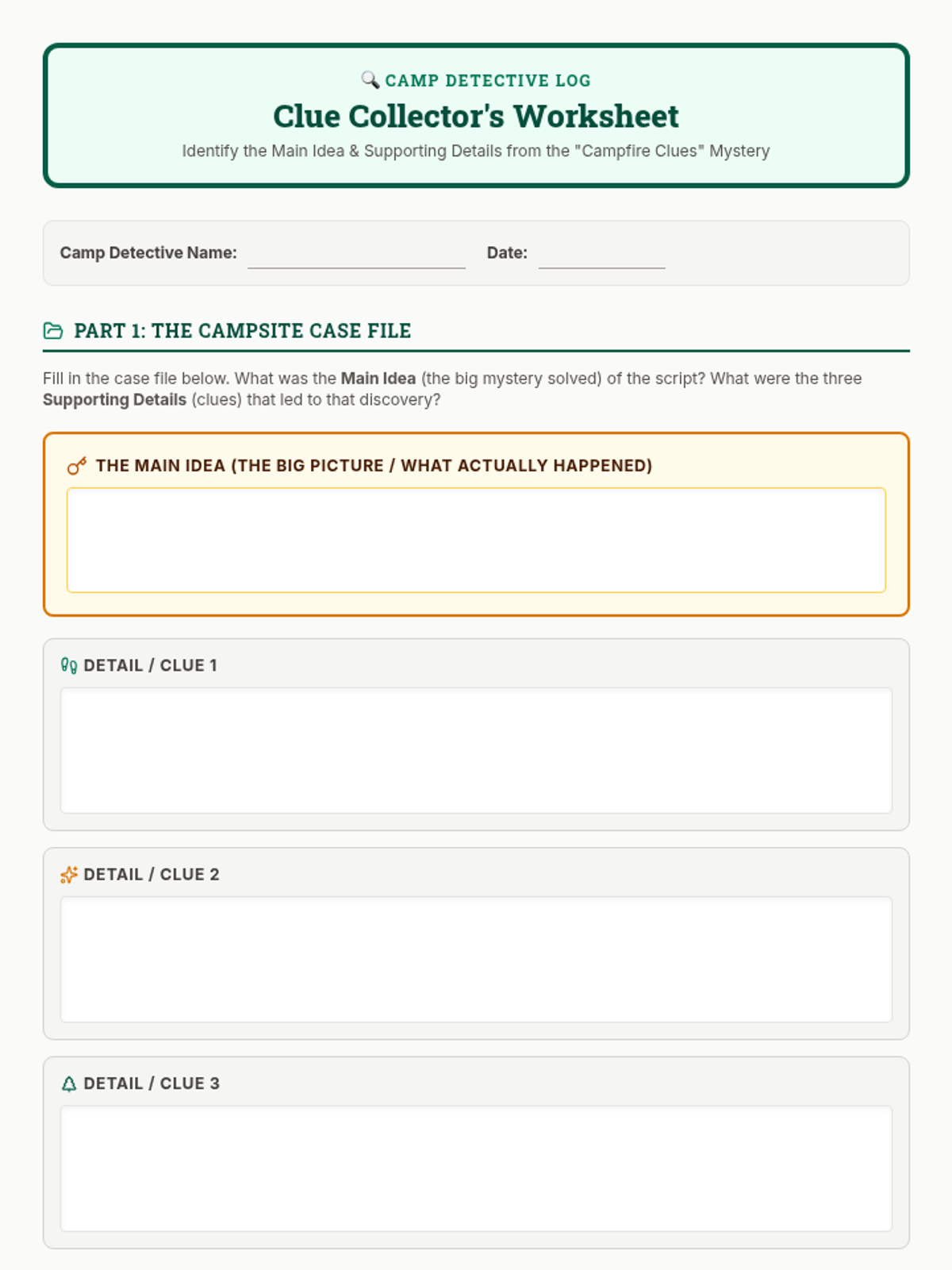
A student worksheet designed to reinforce the main idea and supporting details using the Campfire Clues script. Features an interactive graphic organizer styled as a detective notebook and a practice passage.
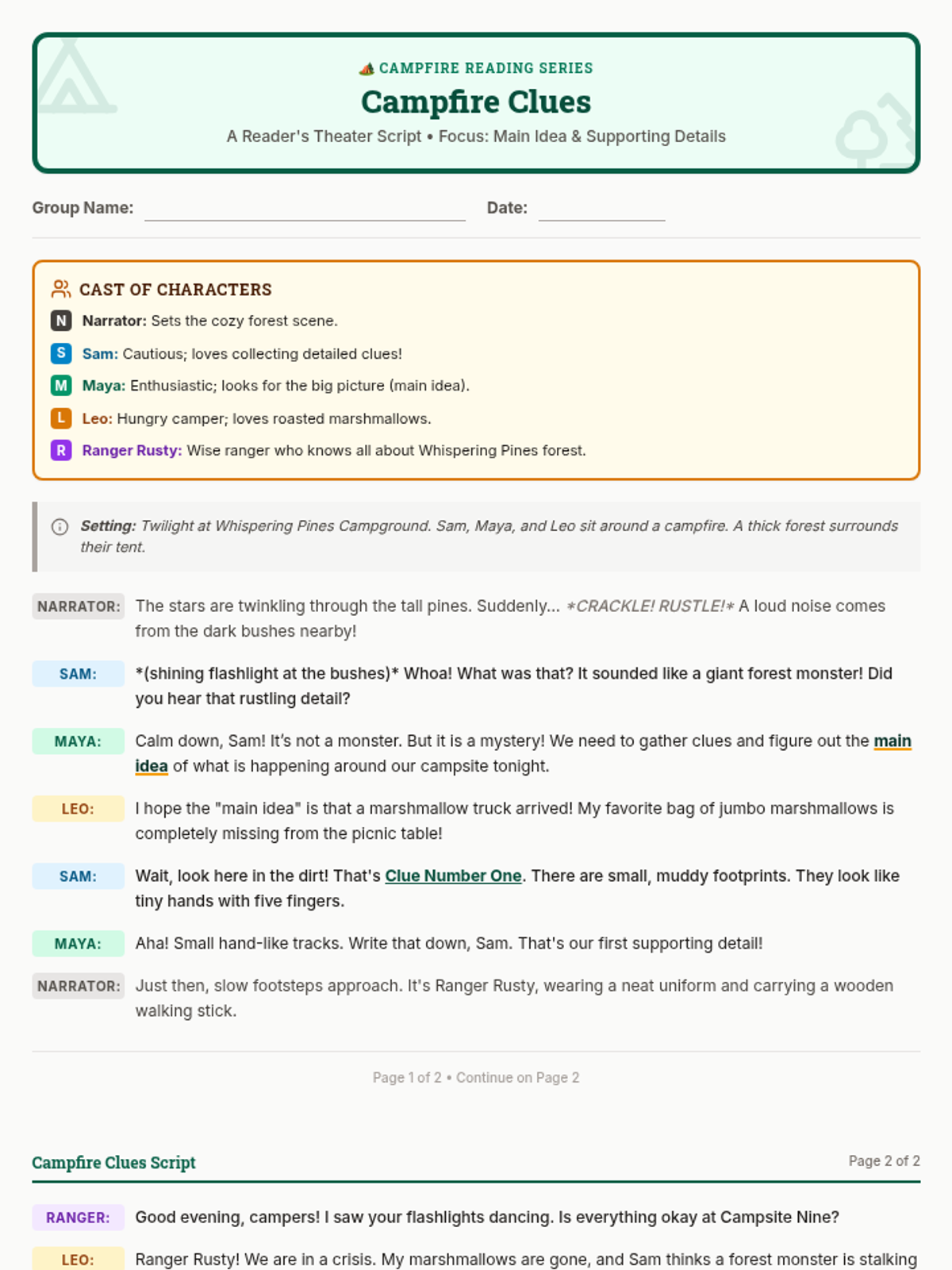
An interactive, camping-themed reader's theater script designed for 3rd-grade students. Through a fun forest mystery, characters learn to connect clues (details) to find the big picture (main idea).
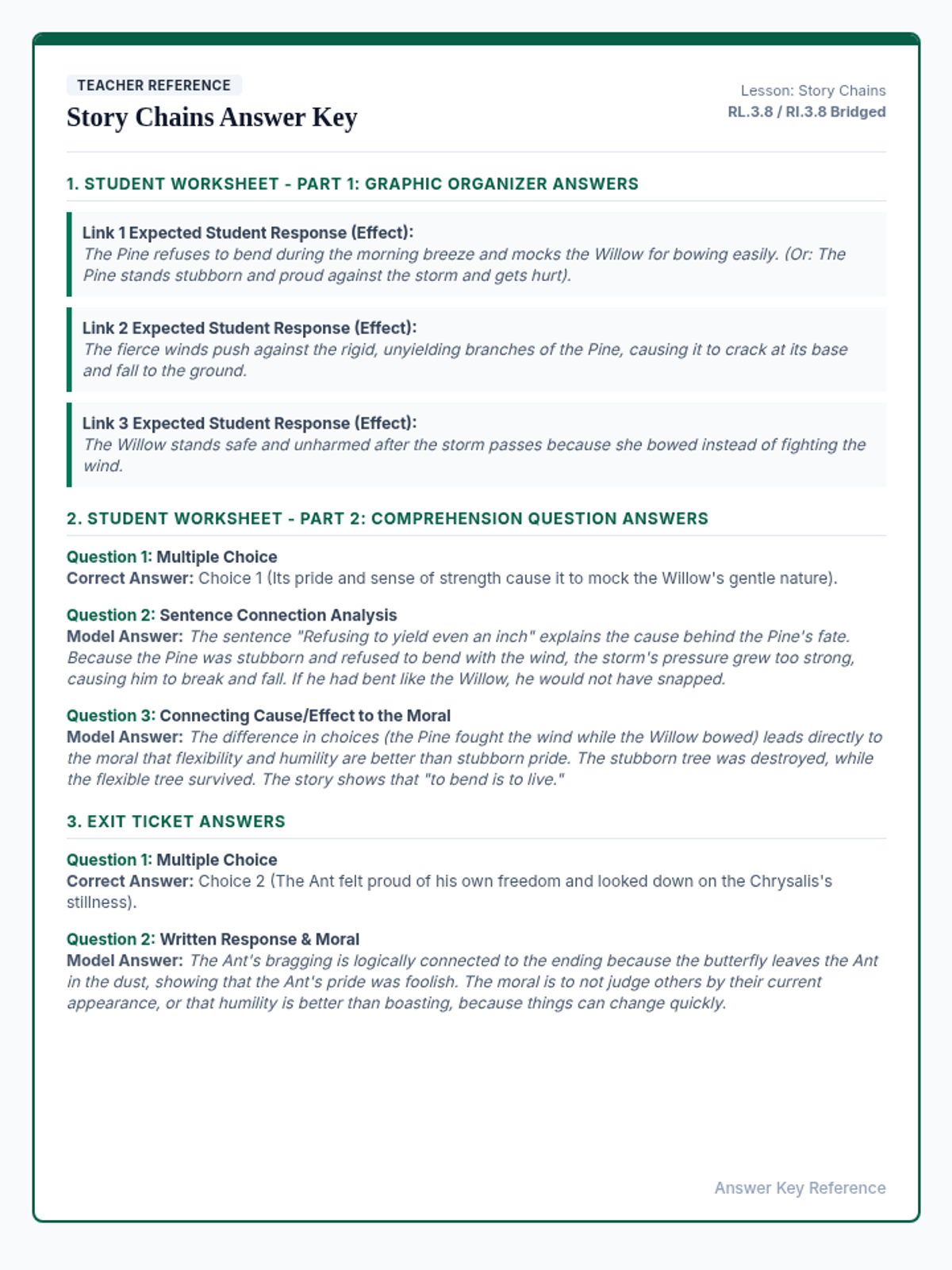
A single-page answer key containing expected student responses, model paragraphs, and correct multiple-choice responses for the Story Chains student worksheet and exit ticket.
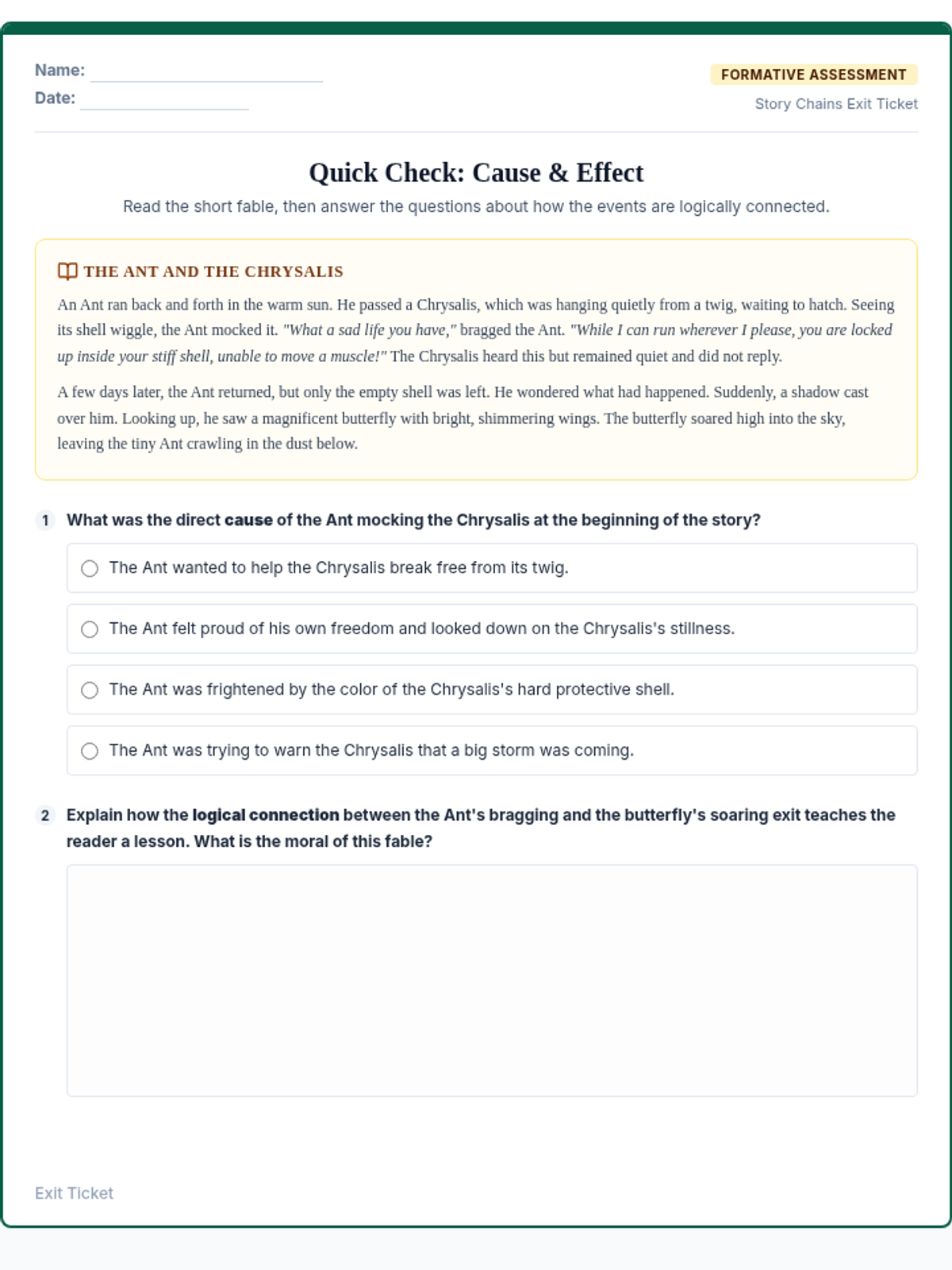
A single-page printable student exit ticket containing the mini-fable 'The Ant and the Chrysalis'. It features a multiple-choice question on causation and an open-ended response question requiring students to explain how character actions connect to the moral.
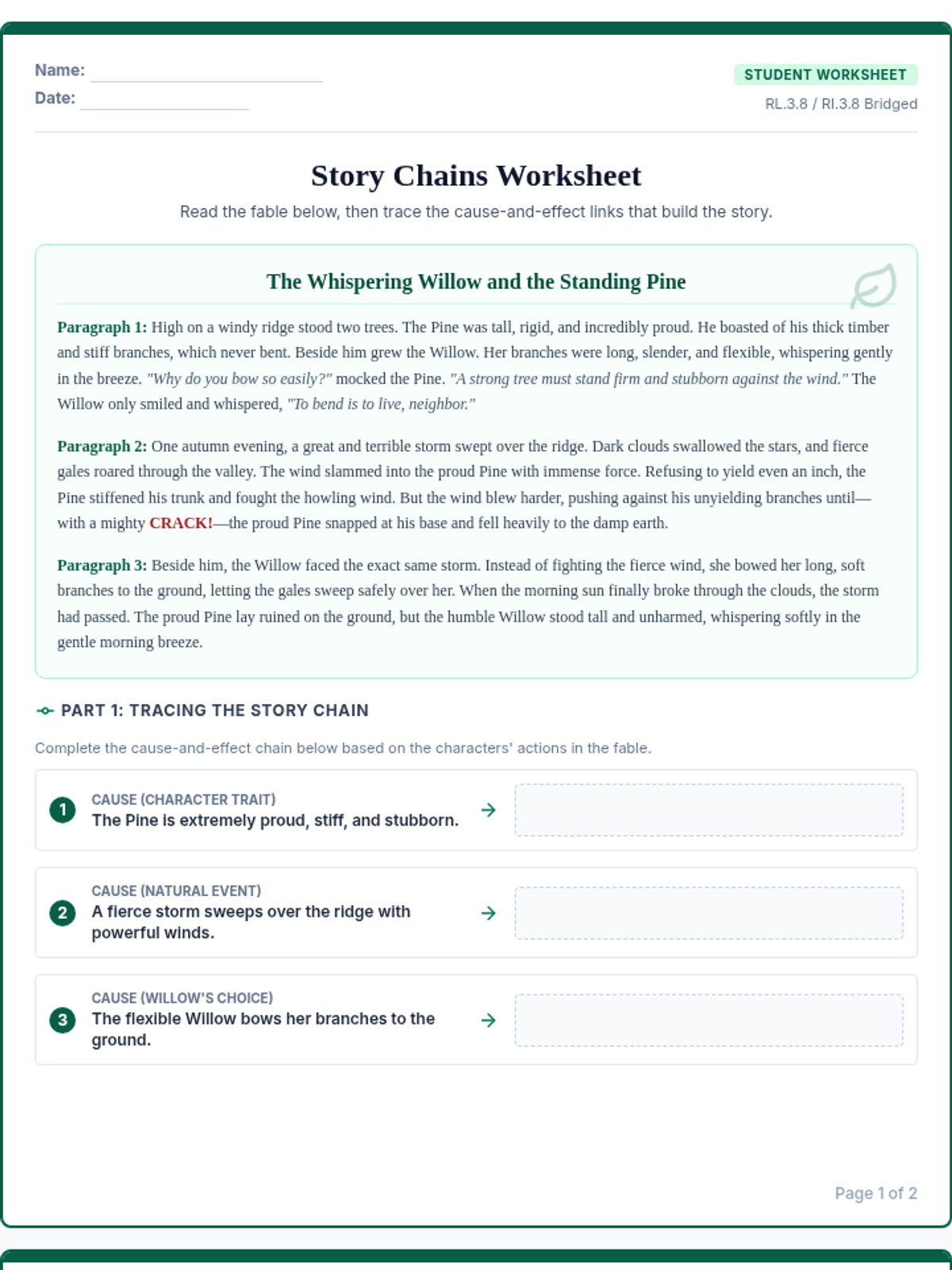
A 2-page printable student worksheet featuring the custom fable 'The Whispering Willow and the Standing Pine'. It includes a multi-step Cause-and-Effect Story Chain graphic organizer and targeted, text-dependent comprehension questions on logical connections.
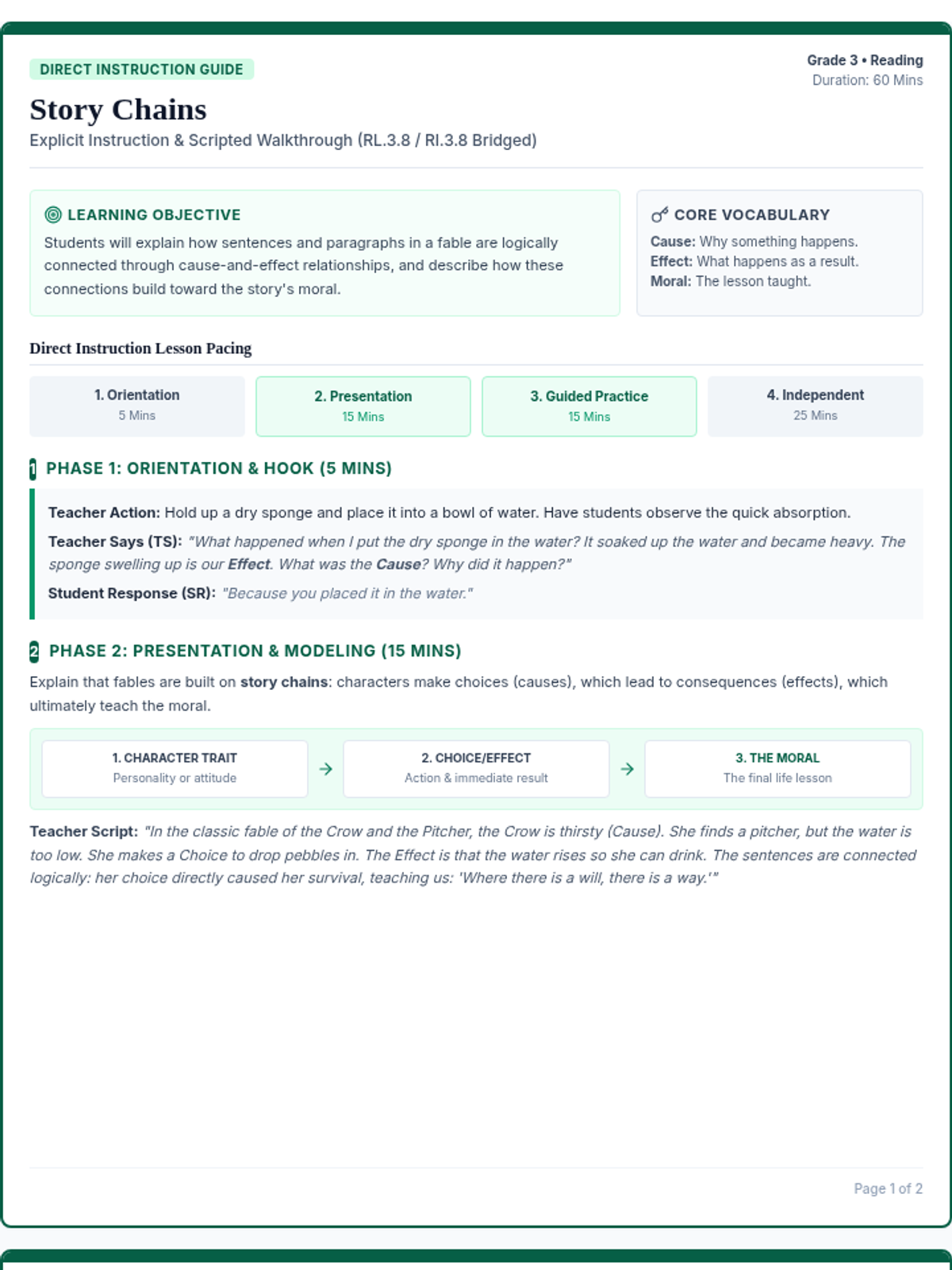
A highly scripted, step-by-step Direct Instruction Guide for teaching logical connections and cause-and-effect relationships in fables. Includes lesson pacing, explicit teacher scripts, student response prompts, anchor charts, and standard alignment strategies.
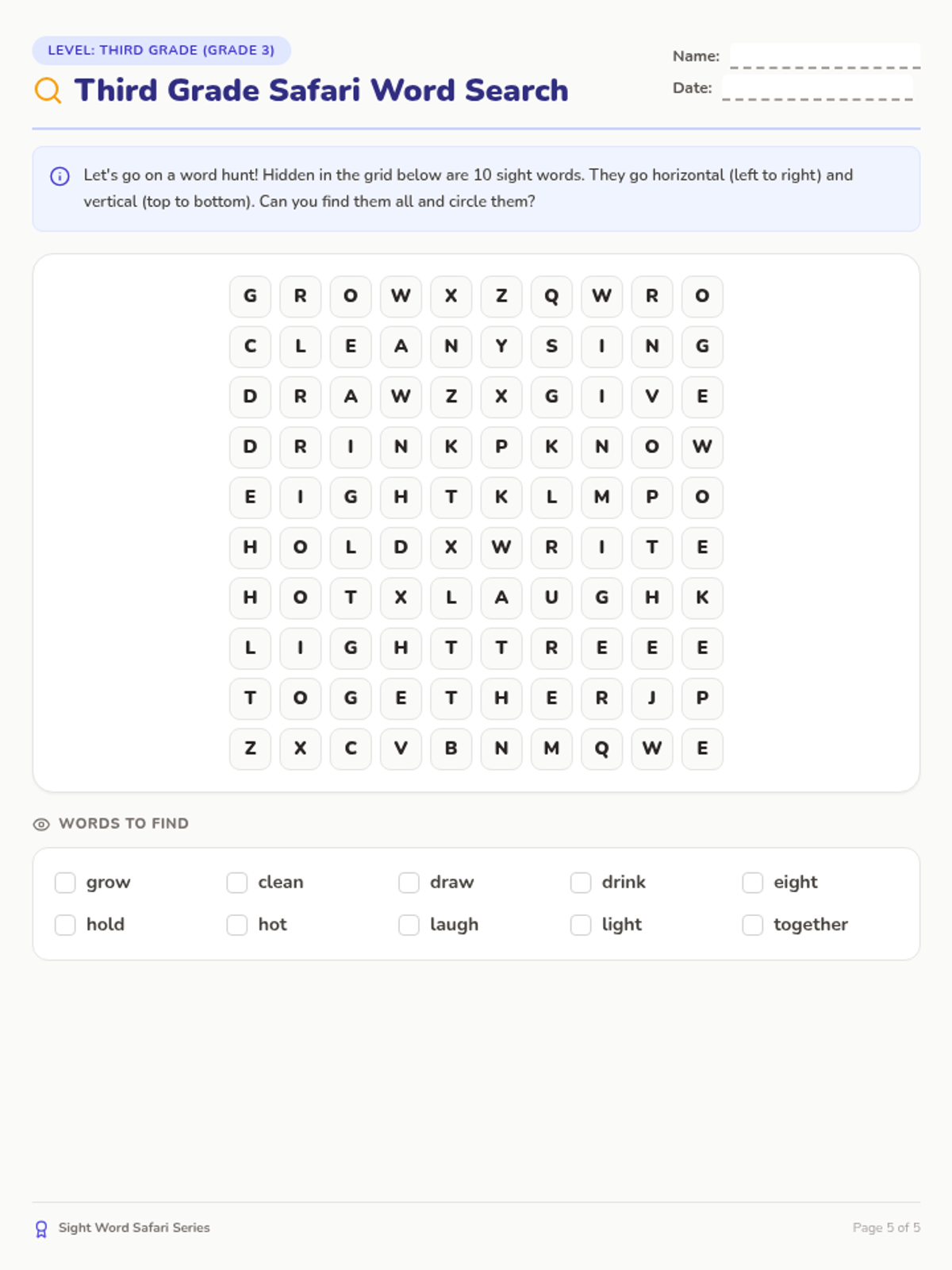
Third Grade level Sight Word Safari Word Search sheet featuring a 10x10 search grid and checkboxes for tracking found words. Custom styled with an indigo safari explorer theme.