Instructional slides for 'Possession Press', featuring a warm-up challenge, embedded Khan Academy video, grammar rule recap, and activity instructions.
A student recording sheet and practice blueprint where students can document answers to the 12 task cards. Designed with light, structured writing boxes and architectural grid lines to maintain the blueprint theme.
A set of 12 beautifully designed, blueprint-themed grammar task cards for classroom learning stations, SCOOT games, or cooperative learning. Includes card tasks for identifying relative adverbs, specifying anchoring nouns, and merging clauses.
Interactive teaching slides themed as an architectural blueprint, introducing where, when, and why relative adverbs and how they connect clauses. Features clean, high-contrast layouts, visual diagrams of referring nouns, and check-ins.
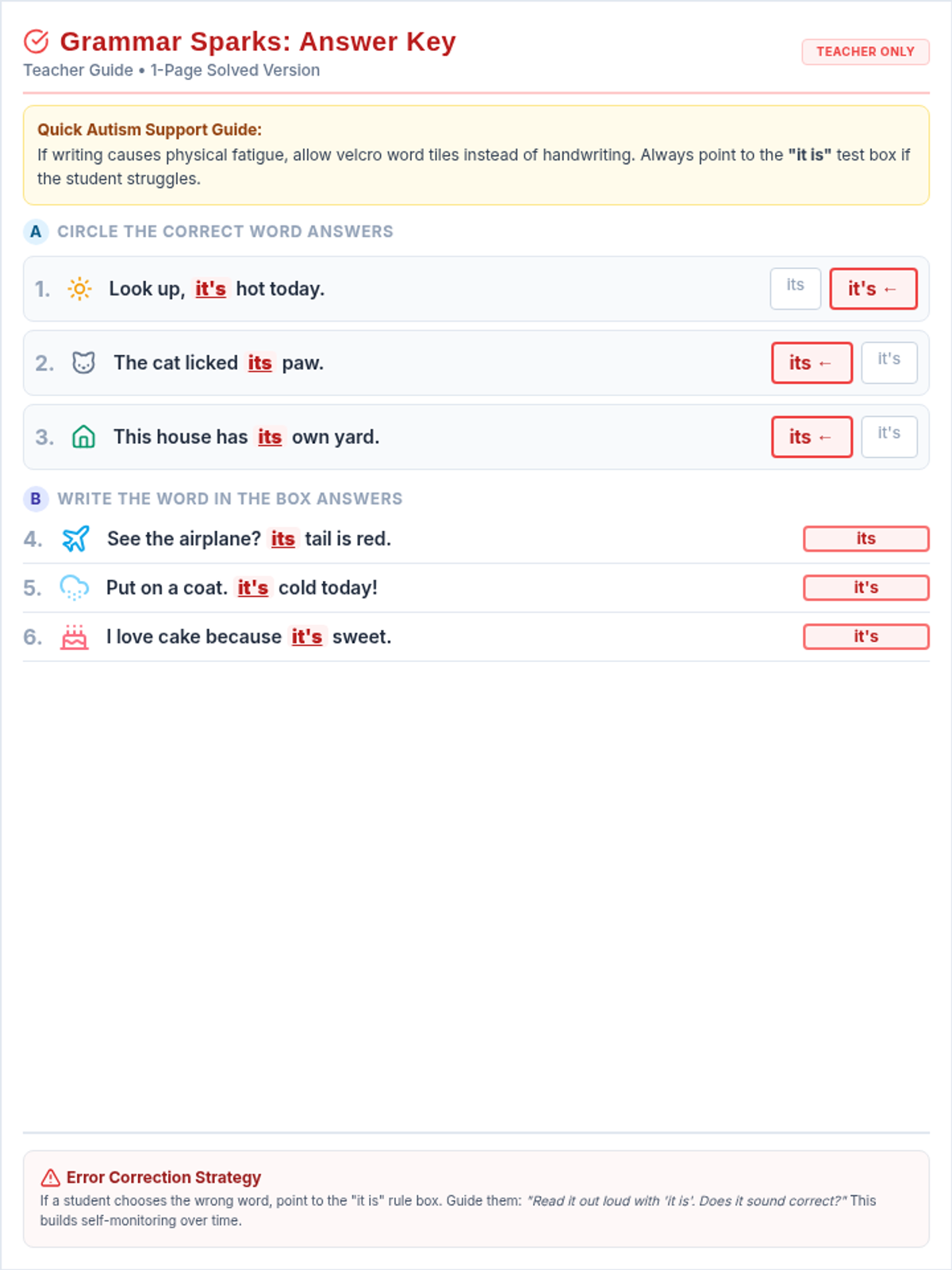
The teacher-facing Answer Key and intervention guide matching the 1-page Grammar Sparks Worksheet. It features the solved answers clearly highlighted, along with specific executive-functioning and error-correction tips for supporting autistic students.
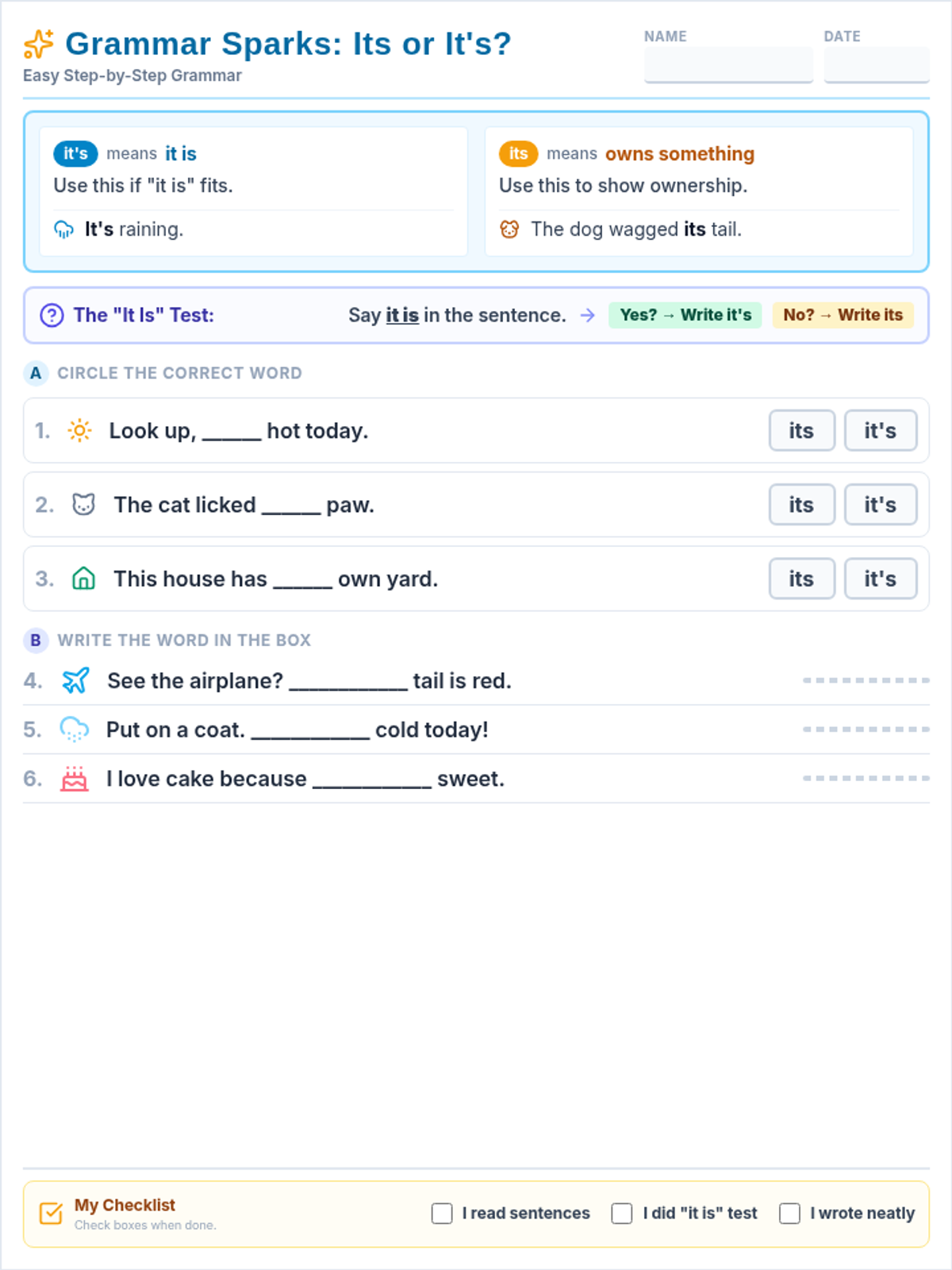
A simplified, highly structured 1-page print-ready student worksheet focusing on 'its' vs 'it's' with enlarged text for improved legibility. It features clear visual boundaries, simplified direct language, Lucide icon supports next to nouns for context, sentence frames, and a simplified self-monitoring checklist.
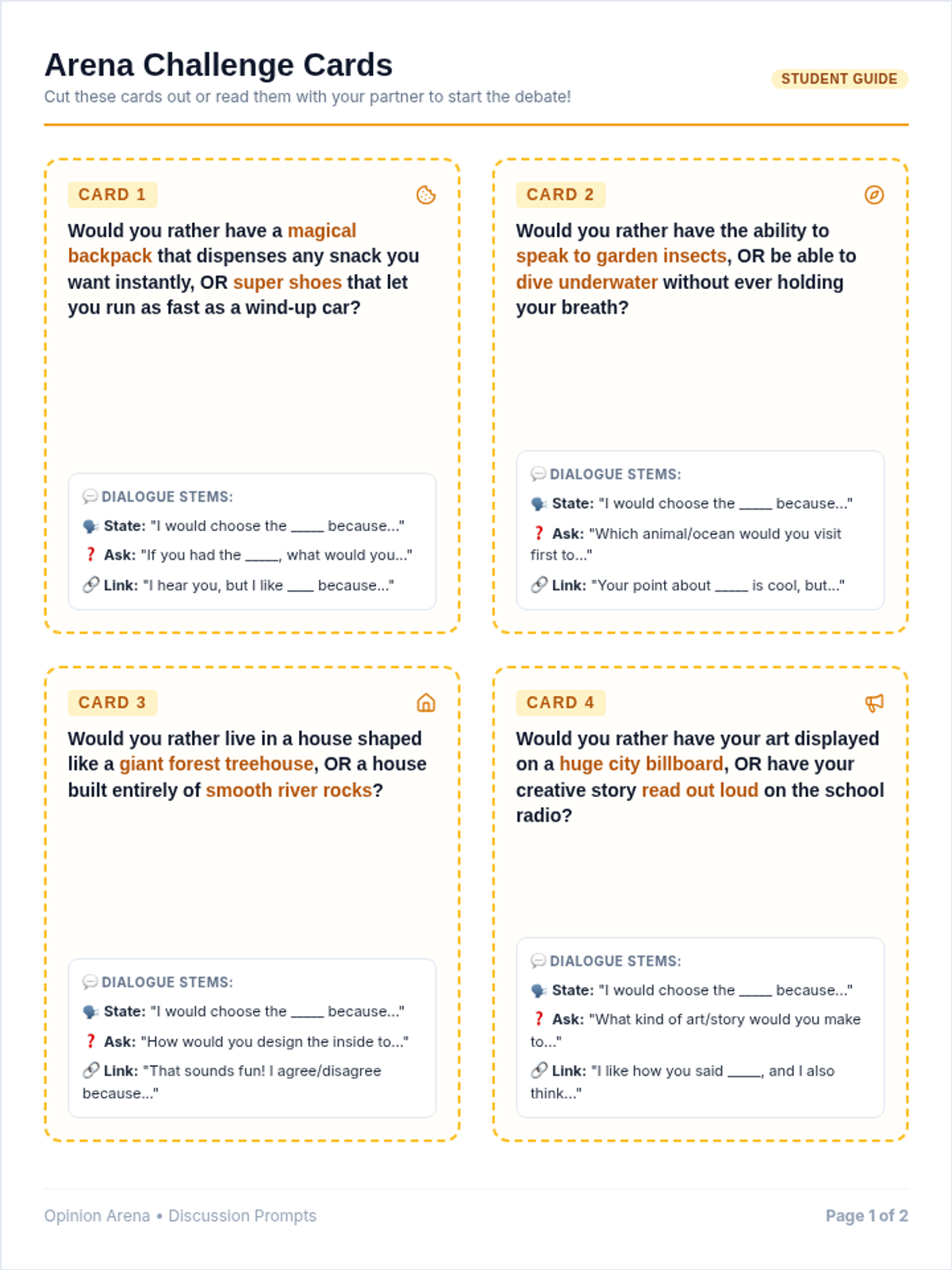
A 2-page student worksheet packet containing 4 creative 'Would You Rather' conversation cards with speech stems on Page 1, and a spacious active-listening peer response log on Page 2.
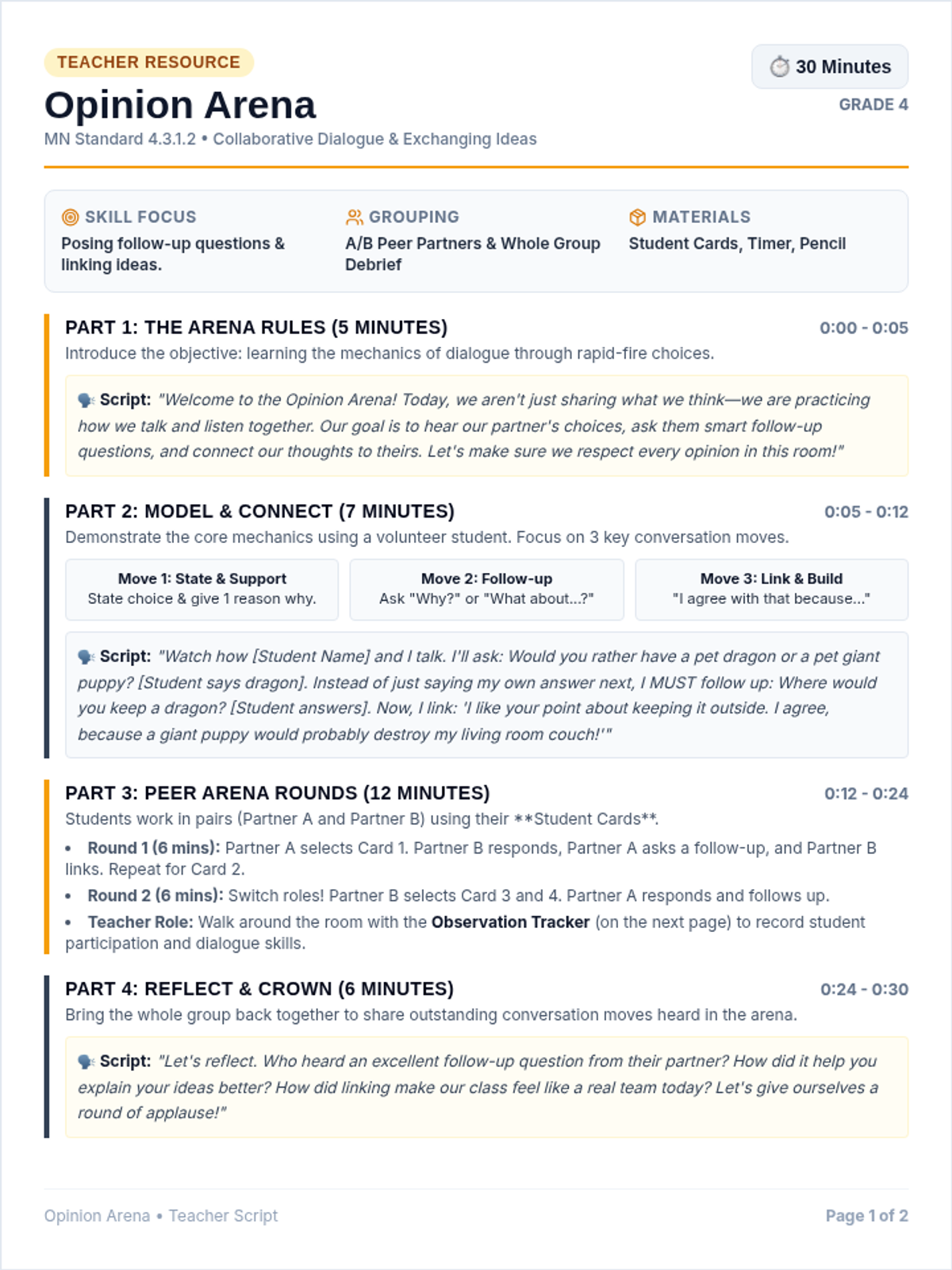
A comprehensive, 2-page teacher facilitation guide and rubric designed for the 30-minute Opinion Arena lesson. It contains step-by-step scripted prompts, timing guides, standard-aligned assessment rubrics, and a classroom observation tracker.
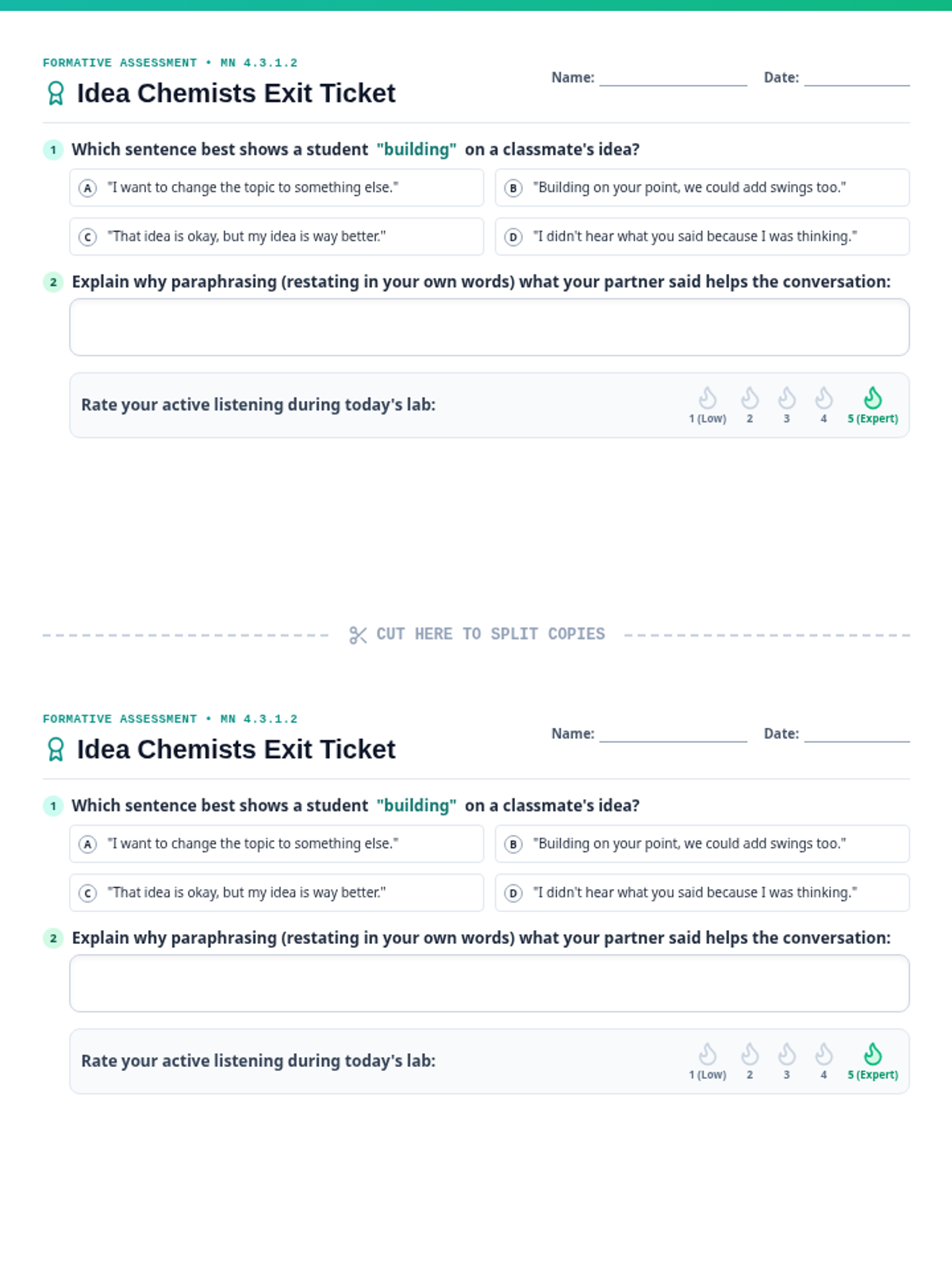
A printable double-sided or 2-up exit ticket to assess student comprehension of discussion techniques, active listening, and the mechanics of building on others' ideas.
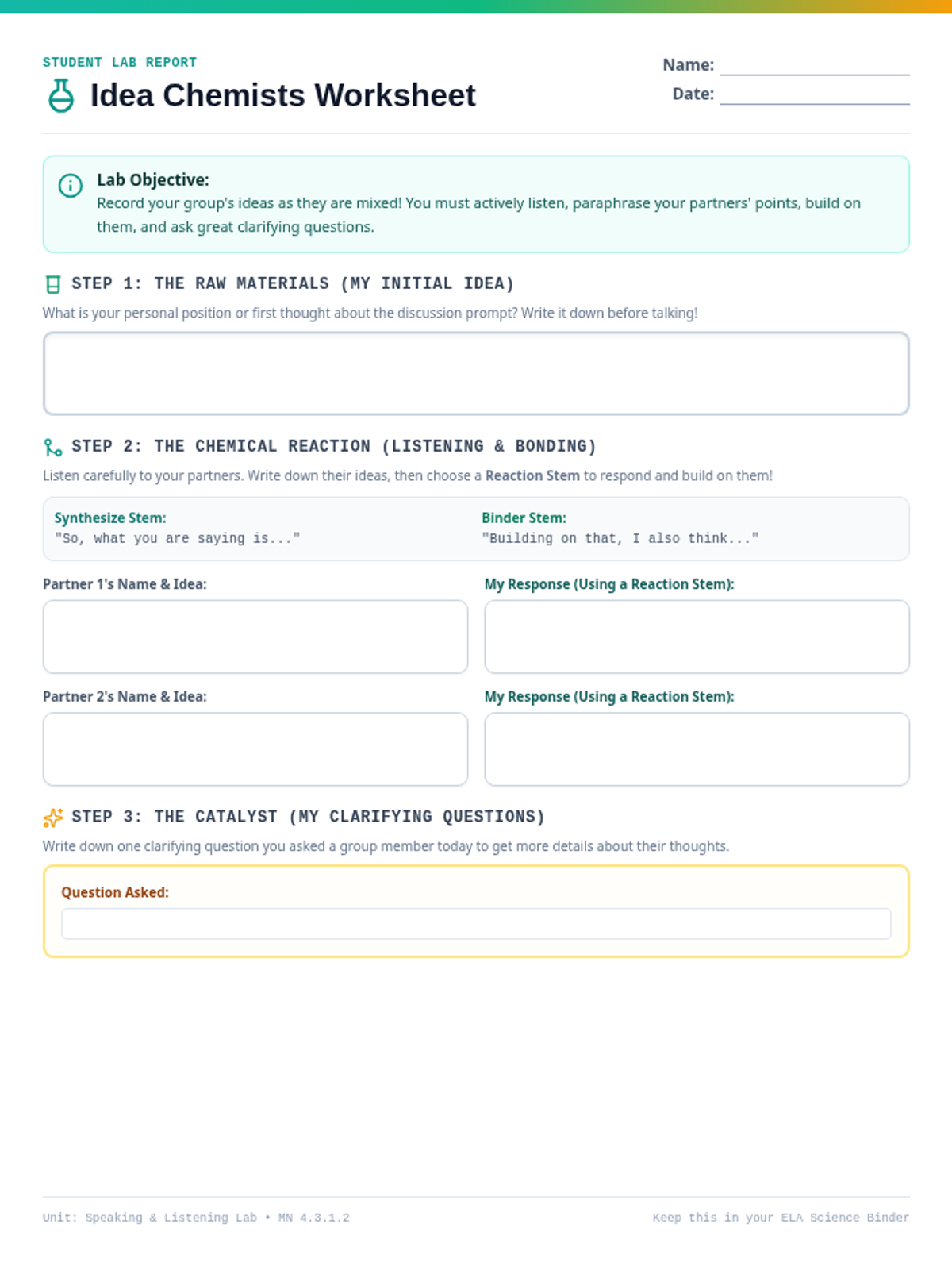
An interactive student lab worksheet designed as a discussion report to log partners' arguments, practice using reaction stems, and reflect on active listening during the collaboration.
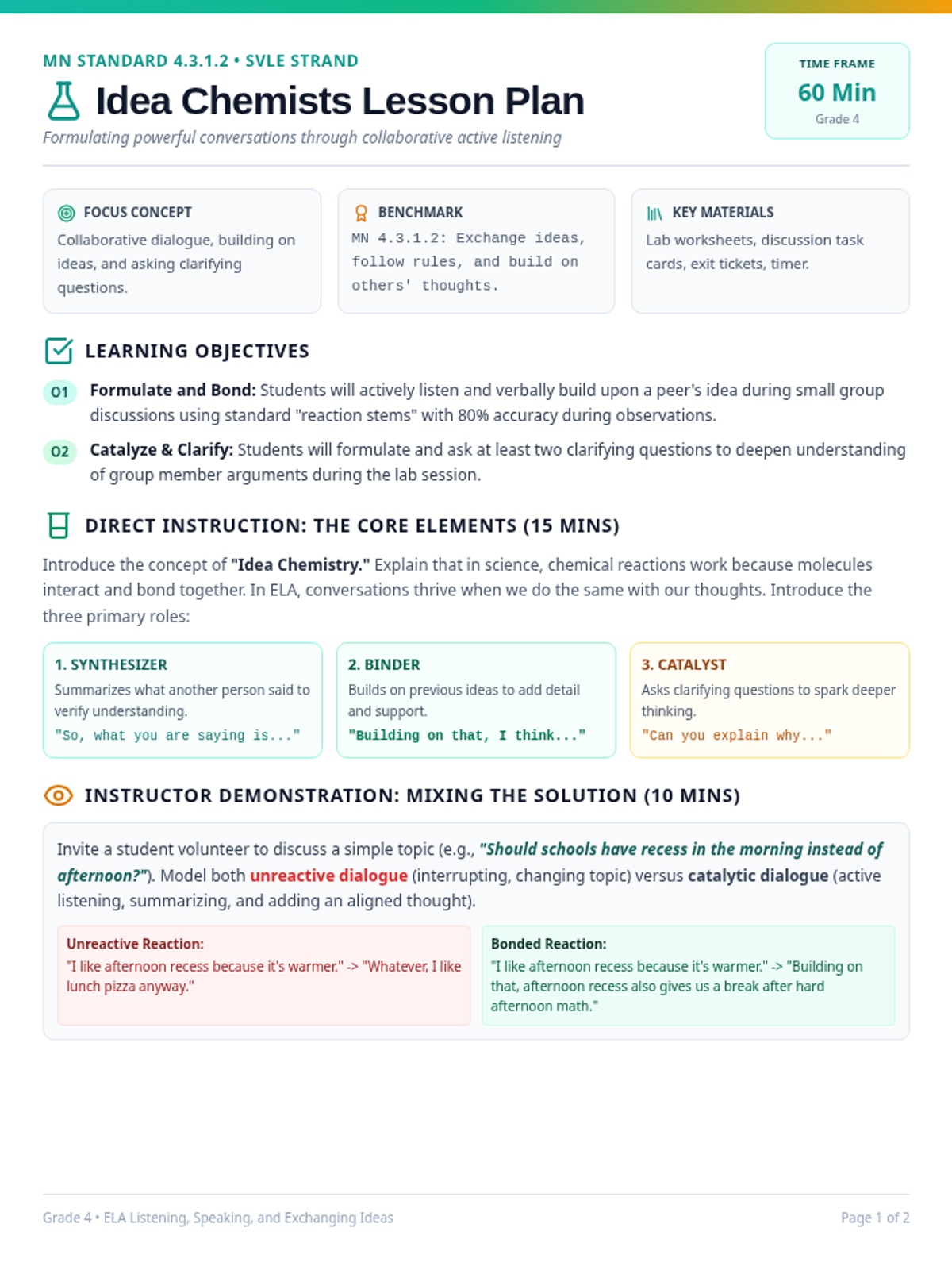
A comprehensive, highly detailed two-page lesson plan for teachers, detailing standard alignment, direct instruction, guided lab-themed discussions, and differentiation strategies.
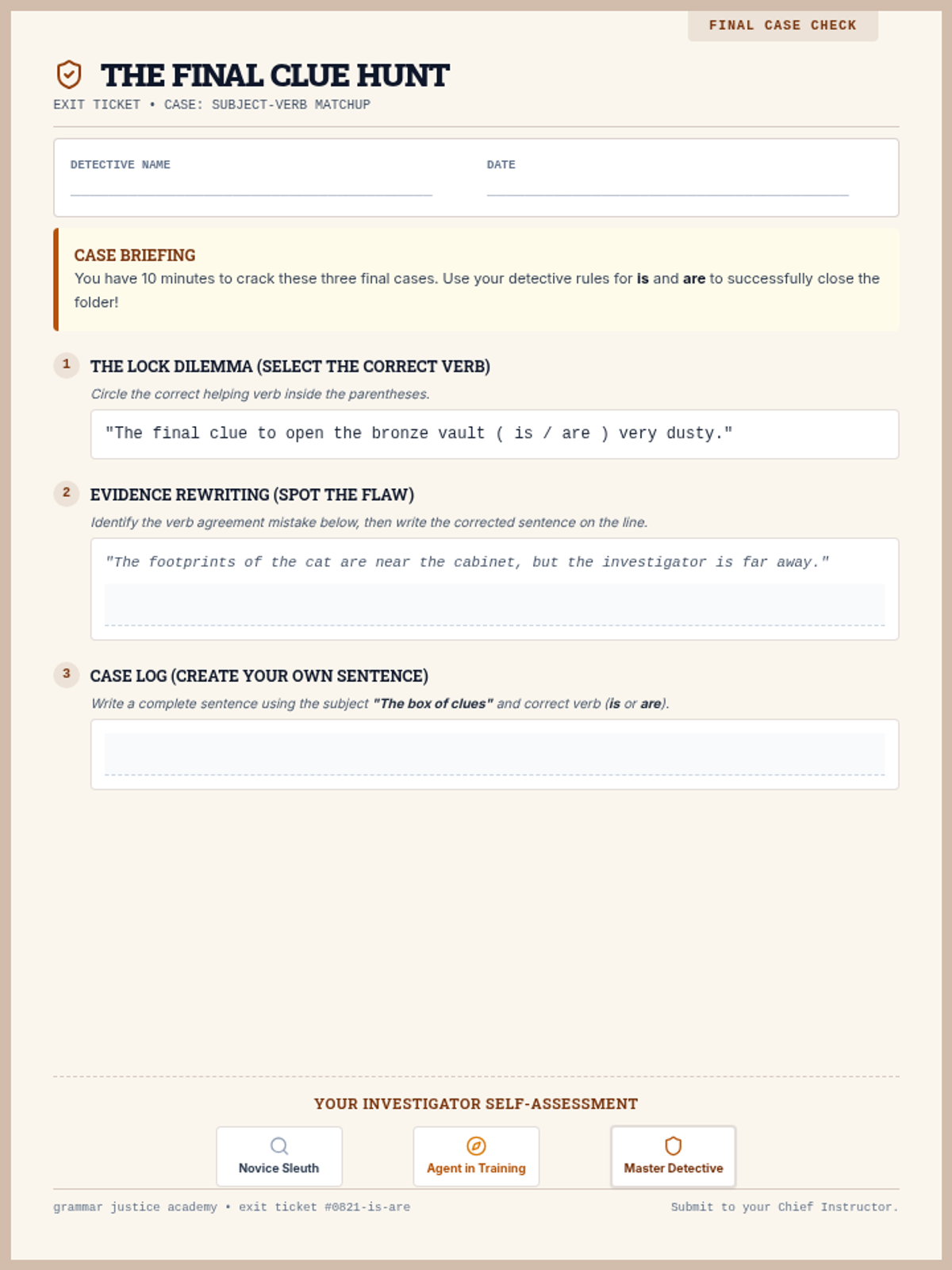
A quick 10-minute detective exit ticket designed to assess student mastery of subject-verb agreement under pressure, complete with a self-assessment 'Sleuth Meter'.
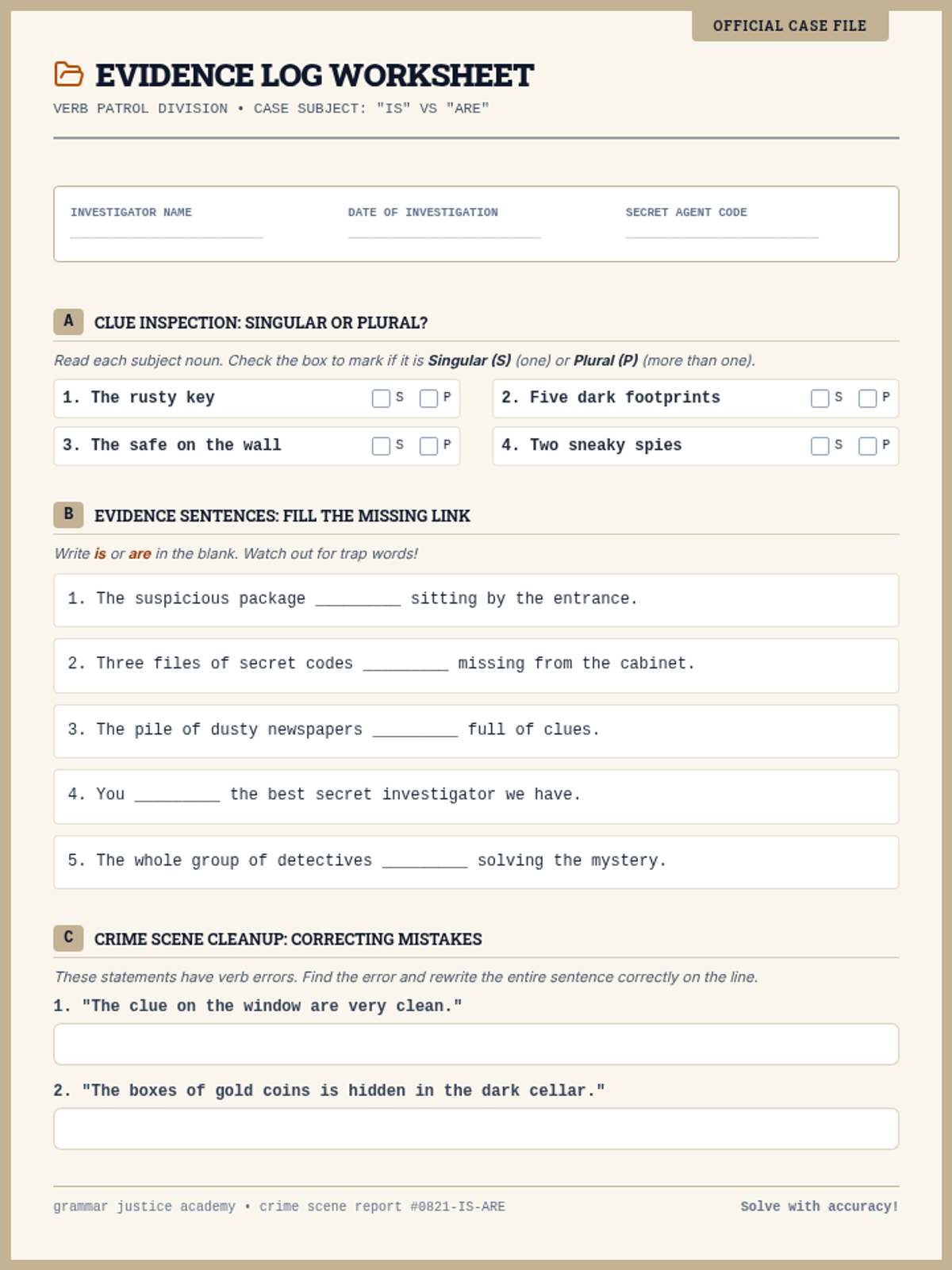
A detective-themed student practice worksheet containing noun sorting, fill-in-the-blank clue sentences, and proofreading corrections. Features a dedicated name/date field and ample handwriting spacing.
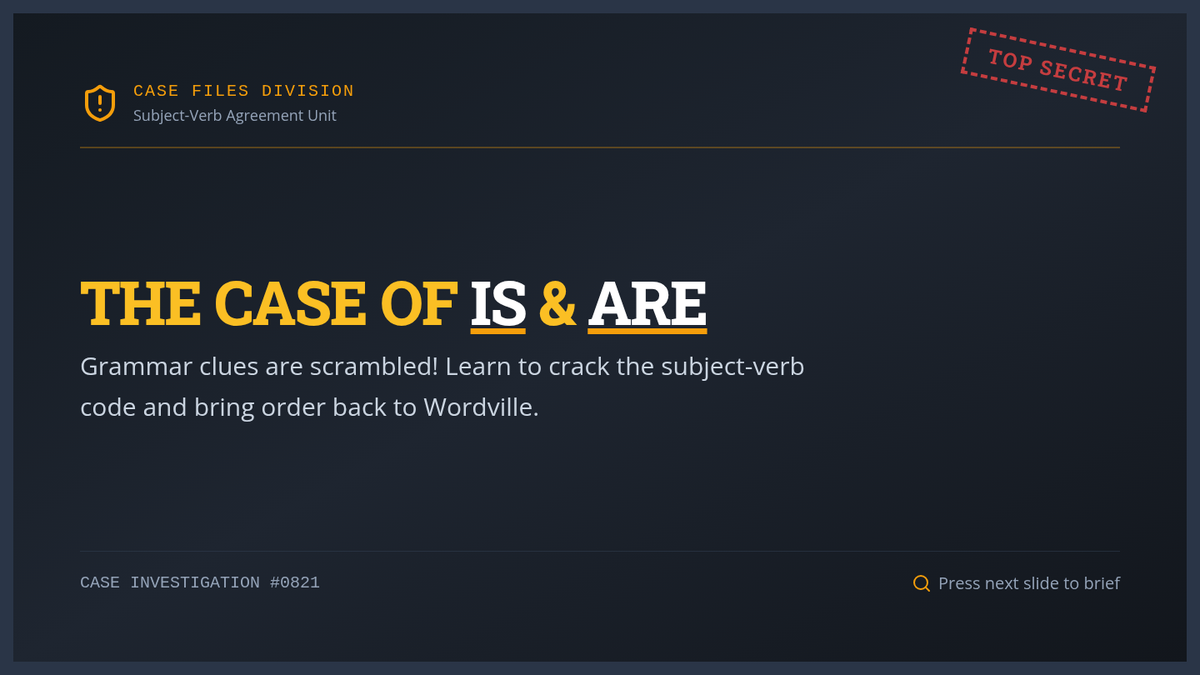
A visually compelling, dark-themed investigation board slide presentation that introduces the rules of 'is' vs 'are' and guides students through matching singular/plural nouns with their verb counterparts.
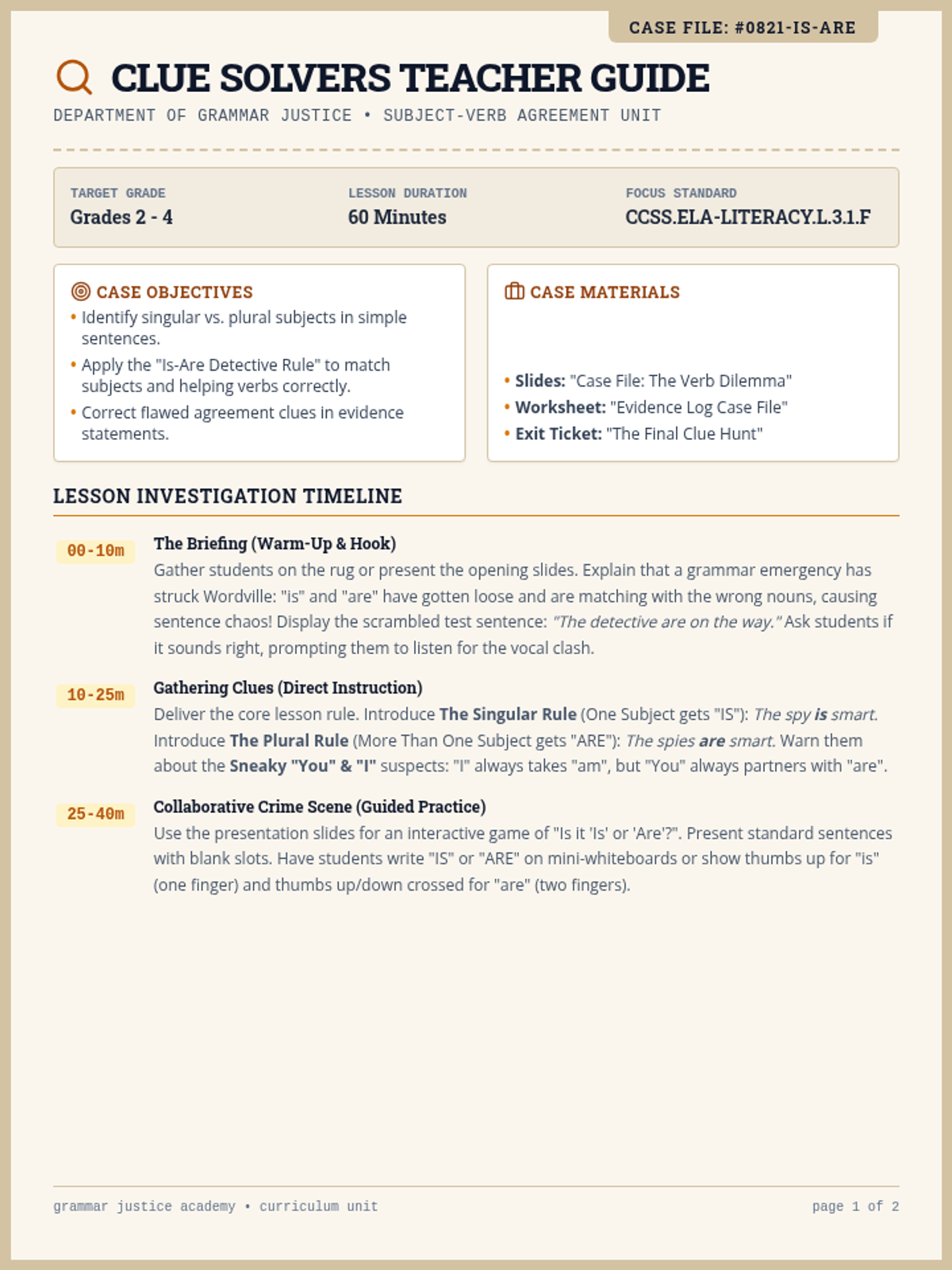
A comprehensive, typewriter-styled teacher guide that structures the 60-minute subject-verb agreement detective lesson, complete with learning objectives, guided prompts, common traps, and differentiation tips.
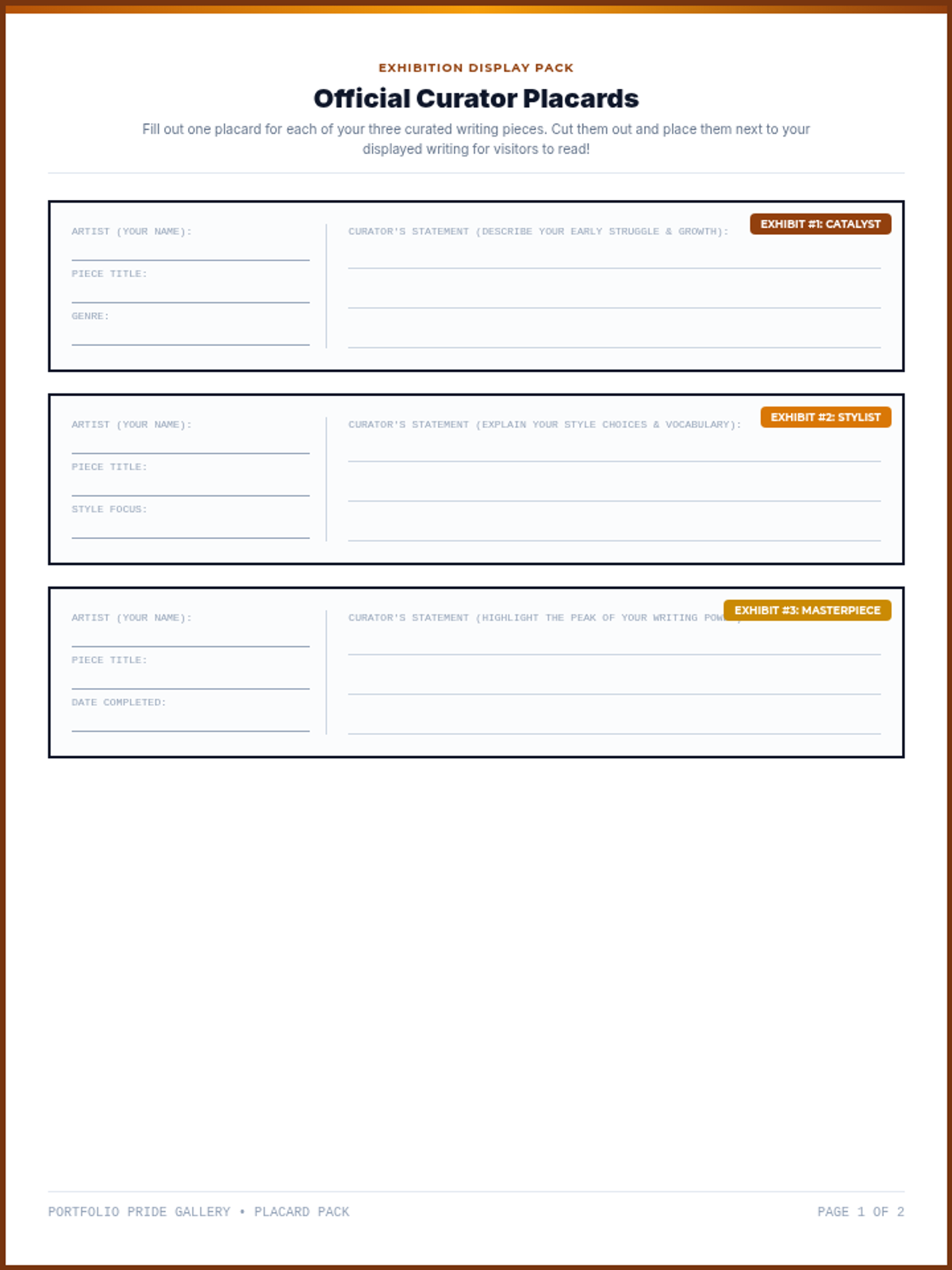
Printable museum placards/exhibit labels for students to write their curator statements, plus a customizable gallery invitation and curator rubric.
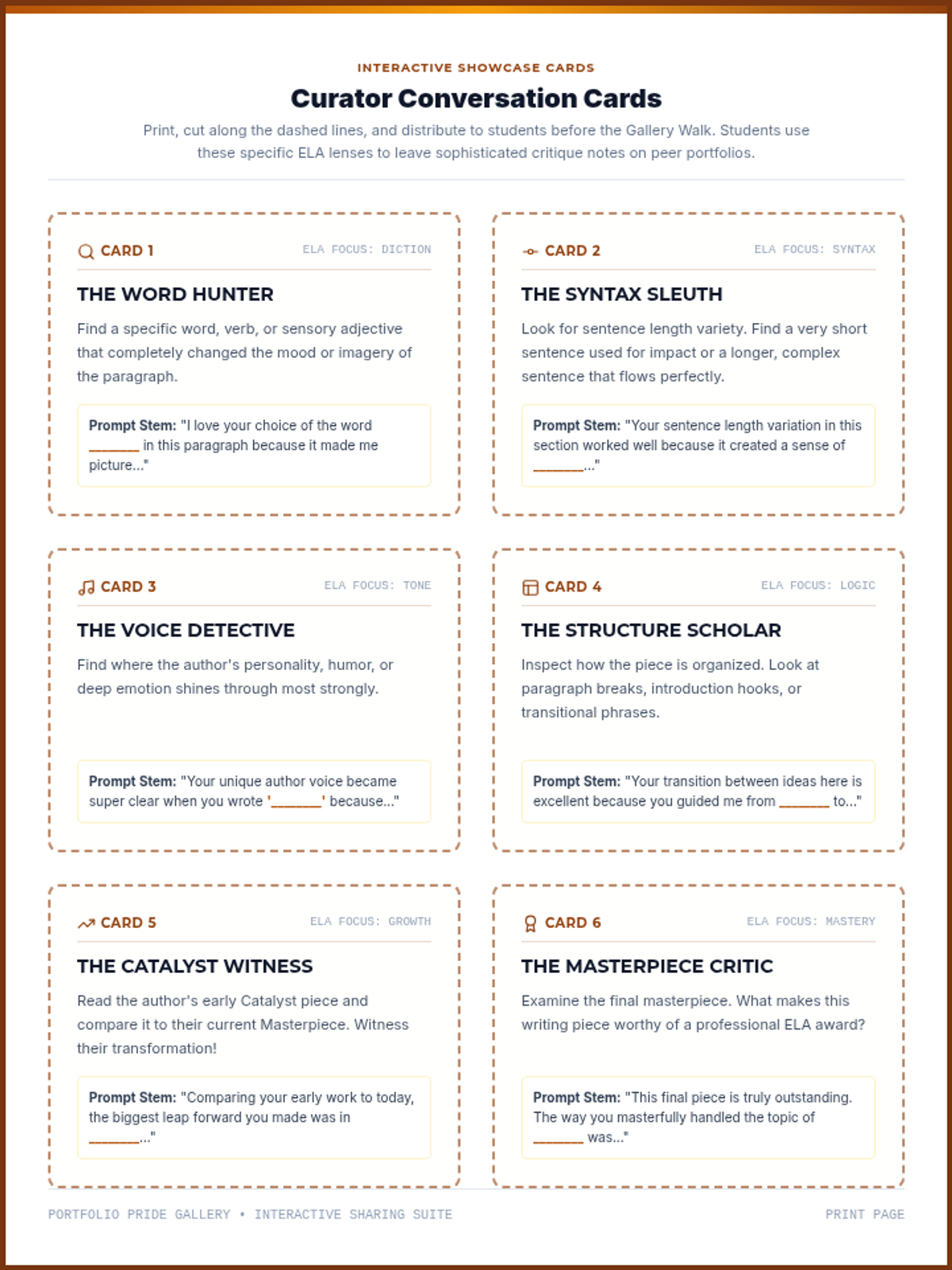
A printable set of discussion prompt cards for peer-to-peer critique and positive feedback during the showcase gallery walk.
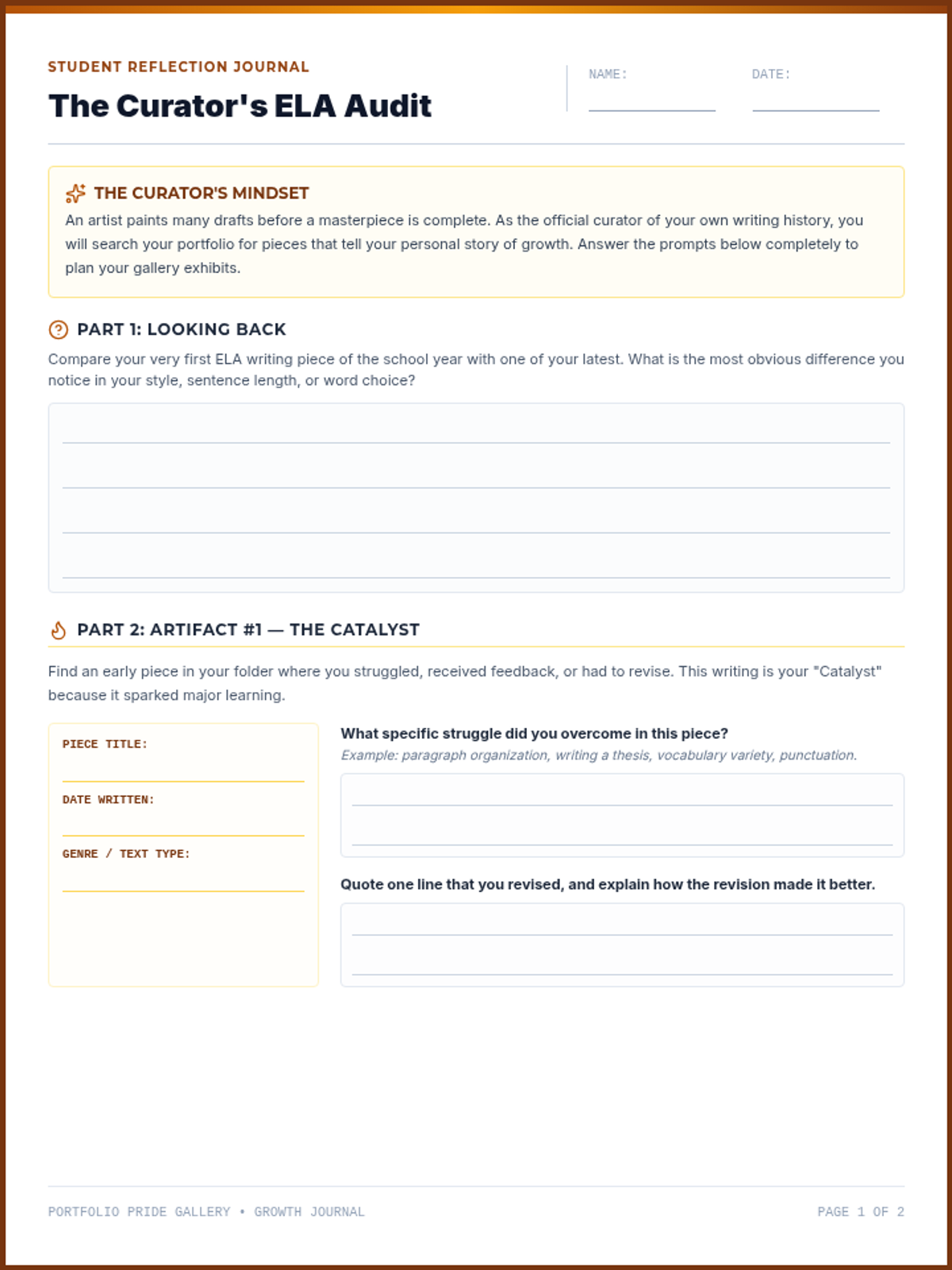
A structured student self-reflection journal with guided prompts to help students audit their ELA writing, identify milestones, and draft curator statements.
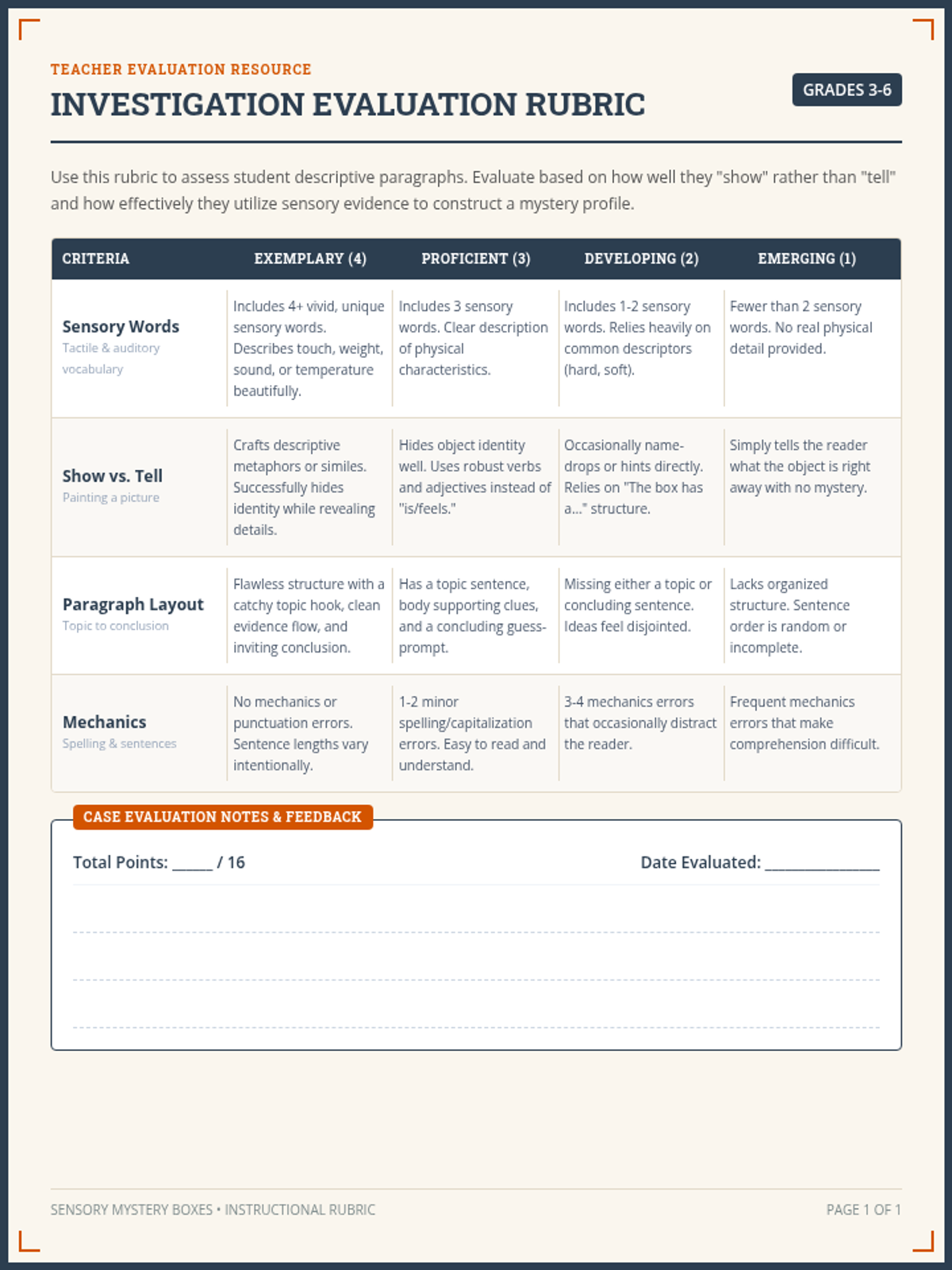
A standardized classroom grading rubric styled as an 'Investigation Evaluation Report', detailing assessment criteria for sensory vocabulary, writing structure, mechanics, and descriptive depth.
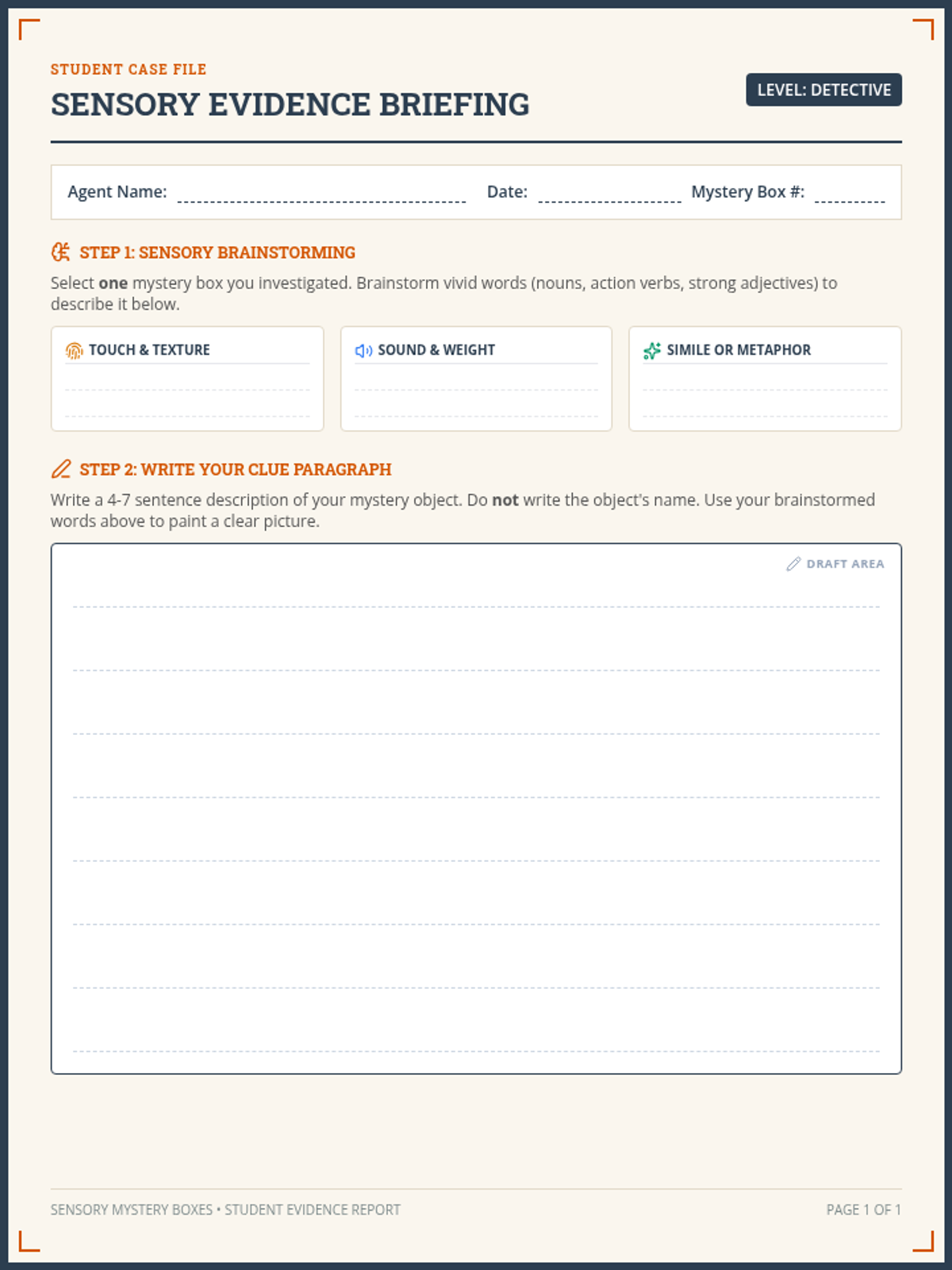
A structured student-facing worksheet for planning and writing their mystery box descriptive paragraph, featuring sensory brainstorming boxes, paragraph layout guidelines, and lined writing space.
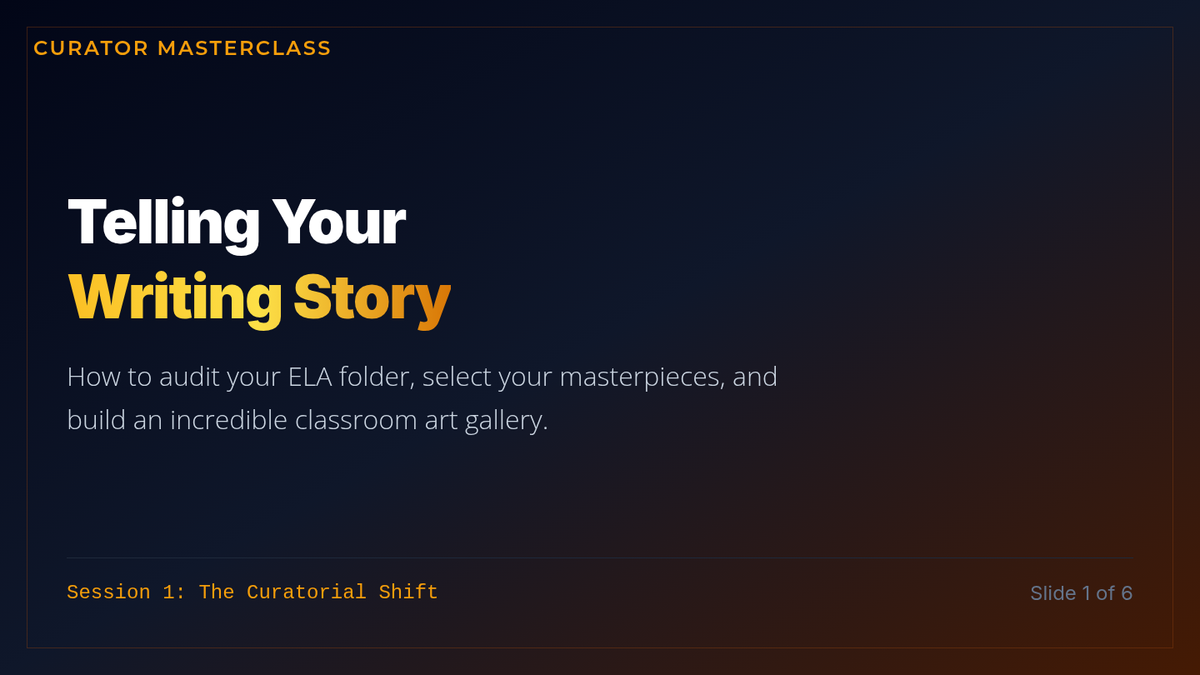
An interactive presentation for guiding students through the mindset of an art curator, modeling portfolio auditing, and setting gallery rules.
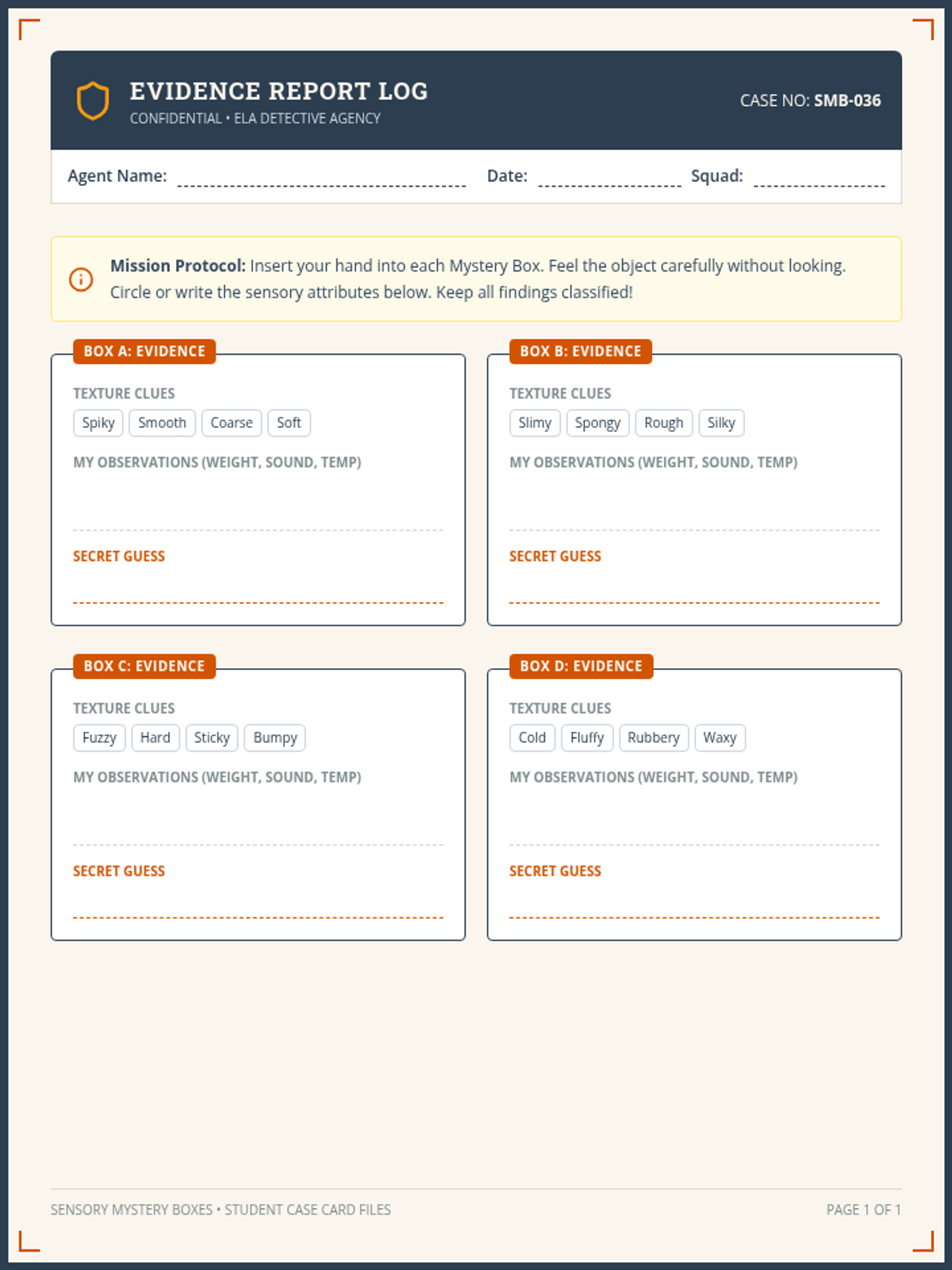
Hands-on evidence recording sheets and station signs designed for the physical mystery box investigation, providing clear spaces to record touch, sound, weight, temperature, and final guesses.
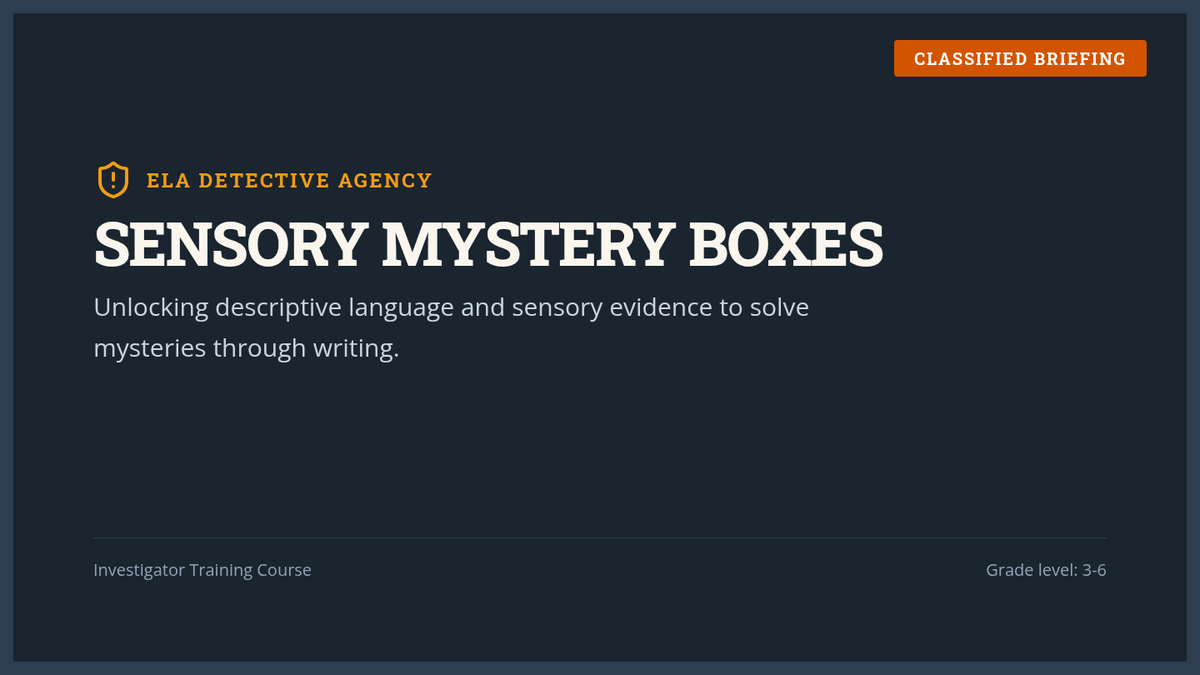
An interactive, visual slide presentation designed for teacher delivery, leading students through the rules of investigation, sensory adjective vocabulary, 'Show, Don't Tell' examples, and descriptive writing instructions.