A comprehensive teacher facilitation guide for the 'Point and Pivot' lesson. It includes a minute-by-minute pacing guide, troubleshooting tips for common compass errors, and classroom management strategies.
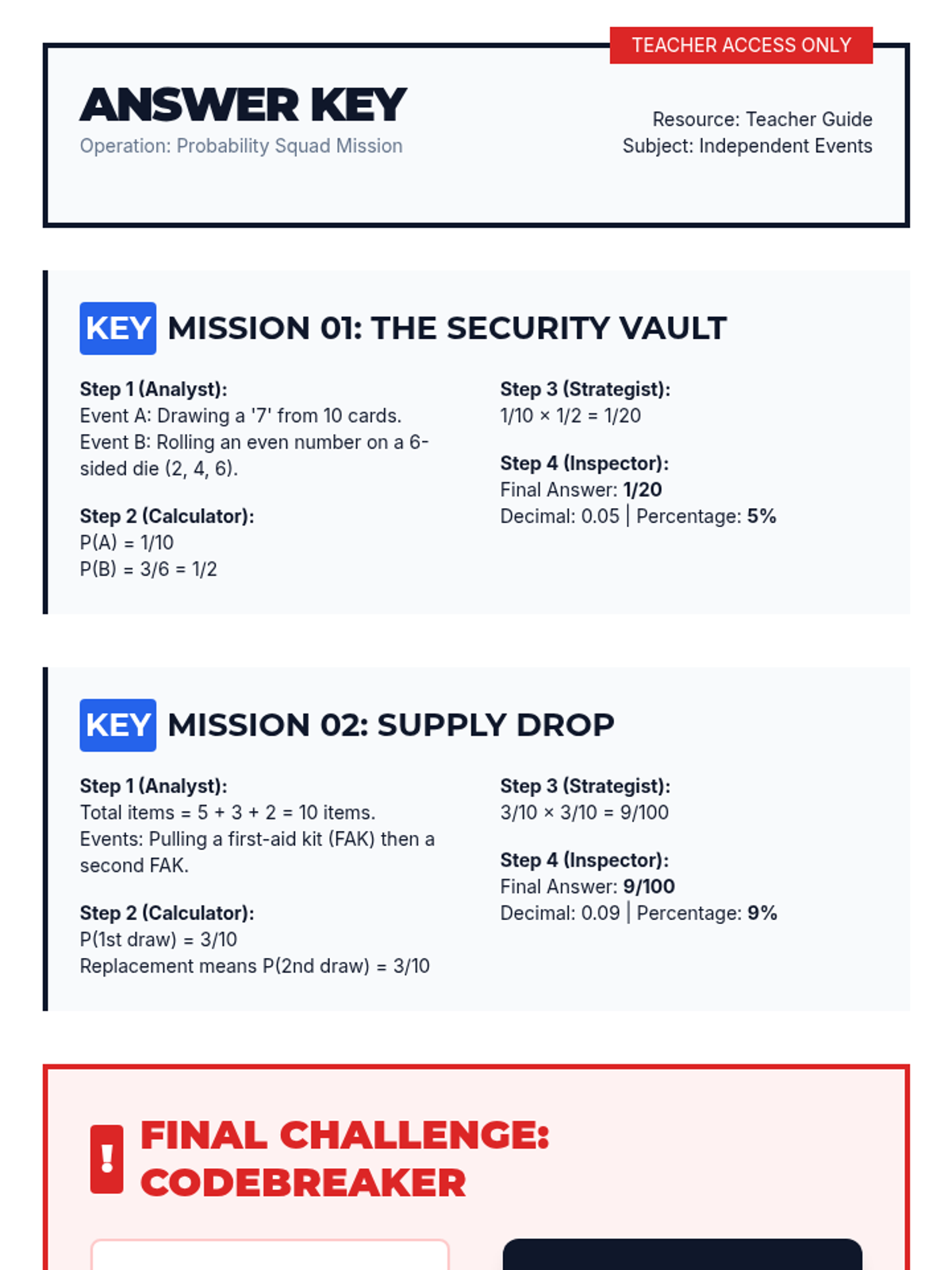
Comprehensive answer key for the Probability Squad Mission, providing step-by-step solutions for all worksheet scenarios.
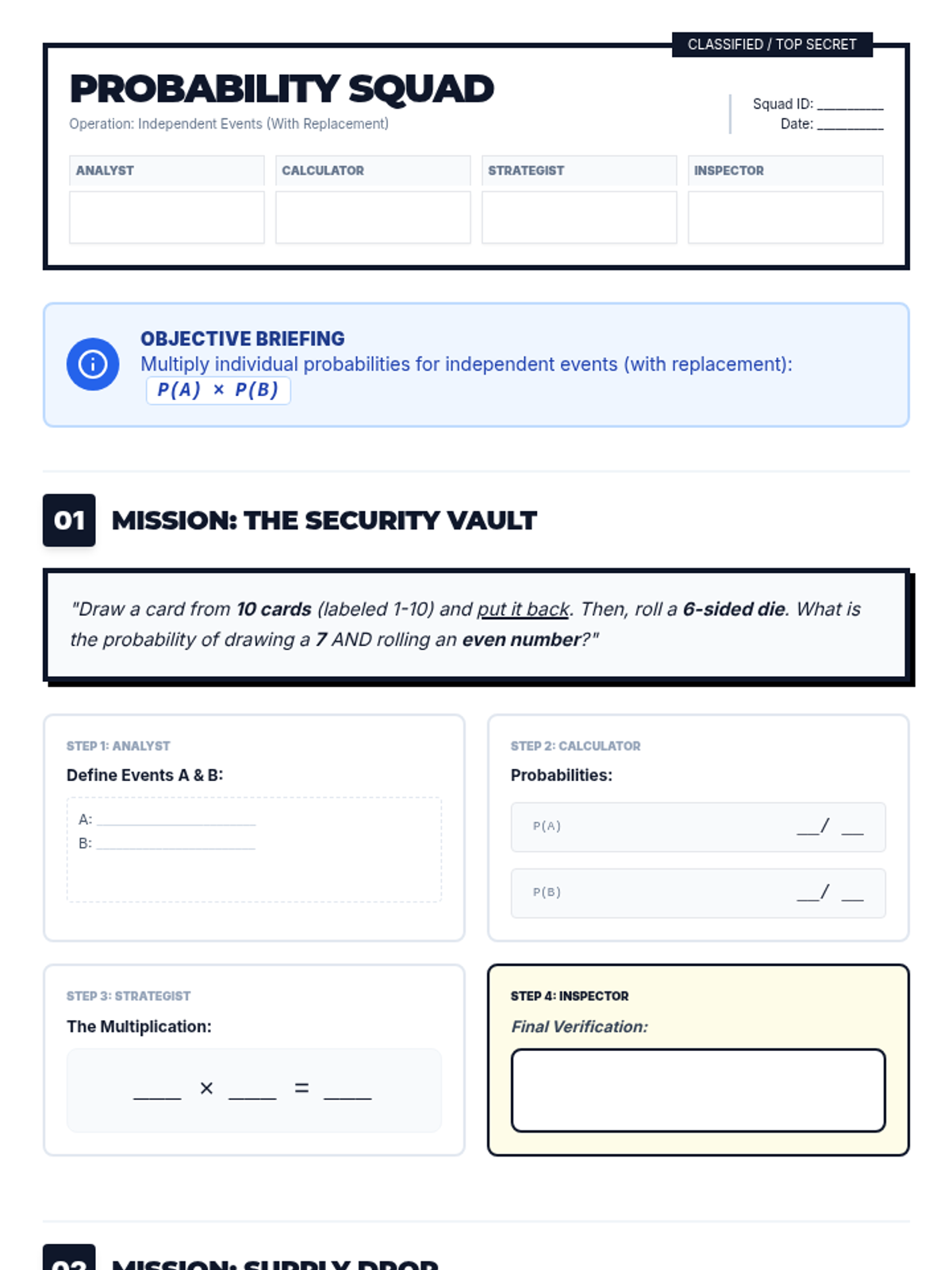
A structured group worksheet for compound probability, dividing work into 4 specialized roles (Analyst, Calculator, Strategist, Inspector) with a themed mission aesthetic.
A dynamic slide presentation introducing independent events and the multiplication rule with a mission-oriented theme for middle or high school math.
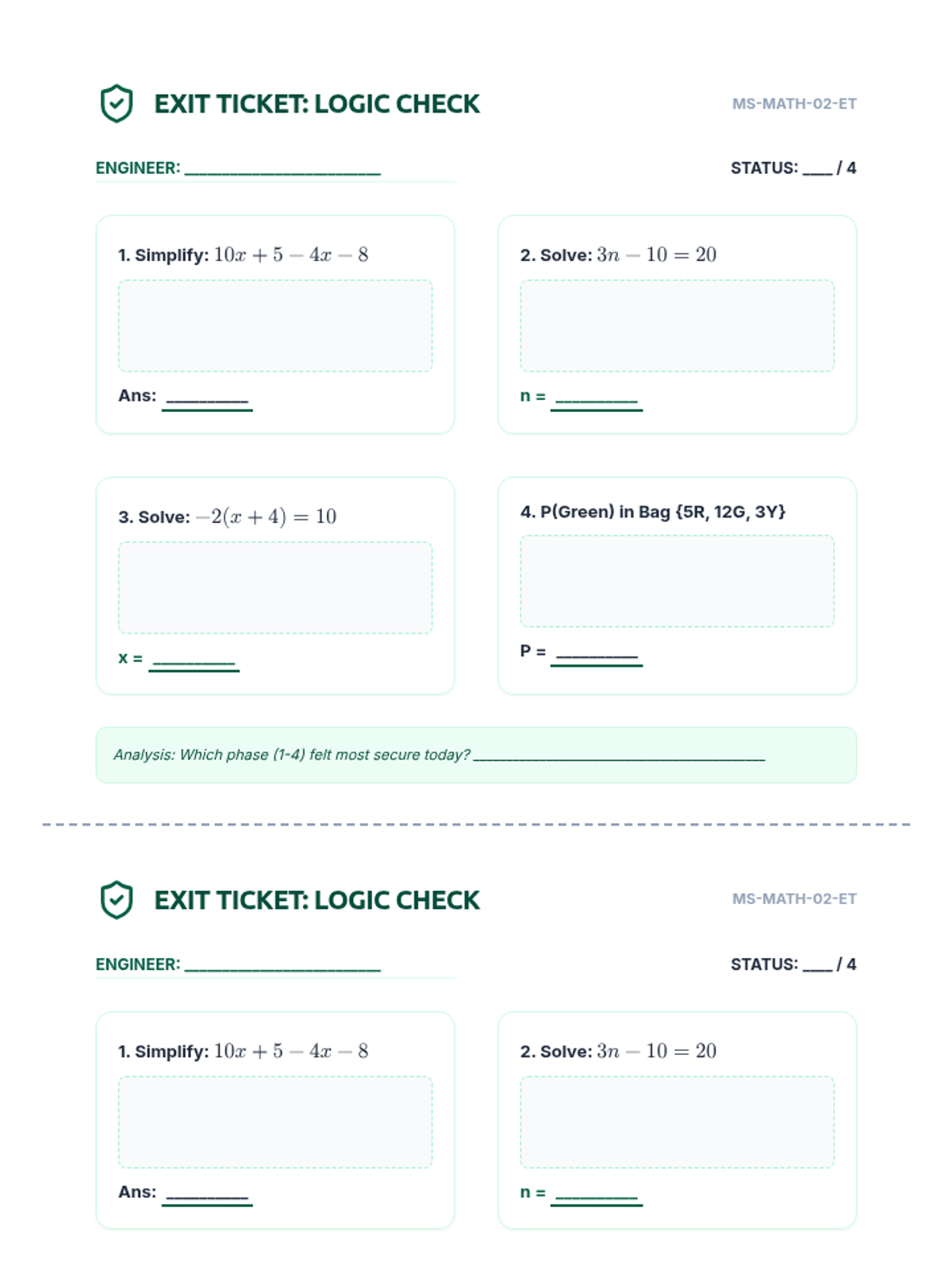
A double-up exit ticket (printable for two students per page) covering expression simplification and one-step equations from the Algebra Architects lesson. Reduced size to fit one page.
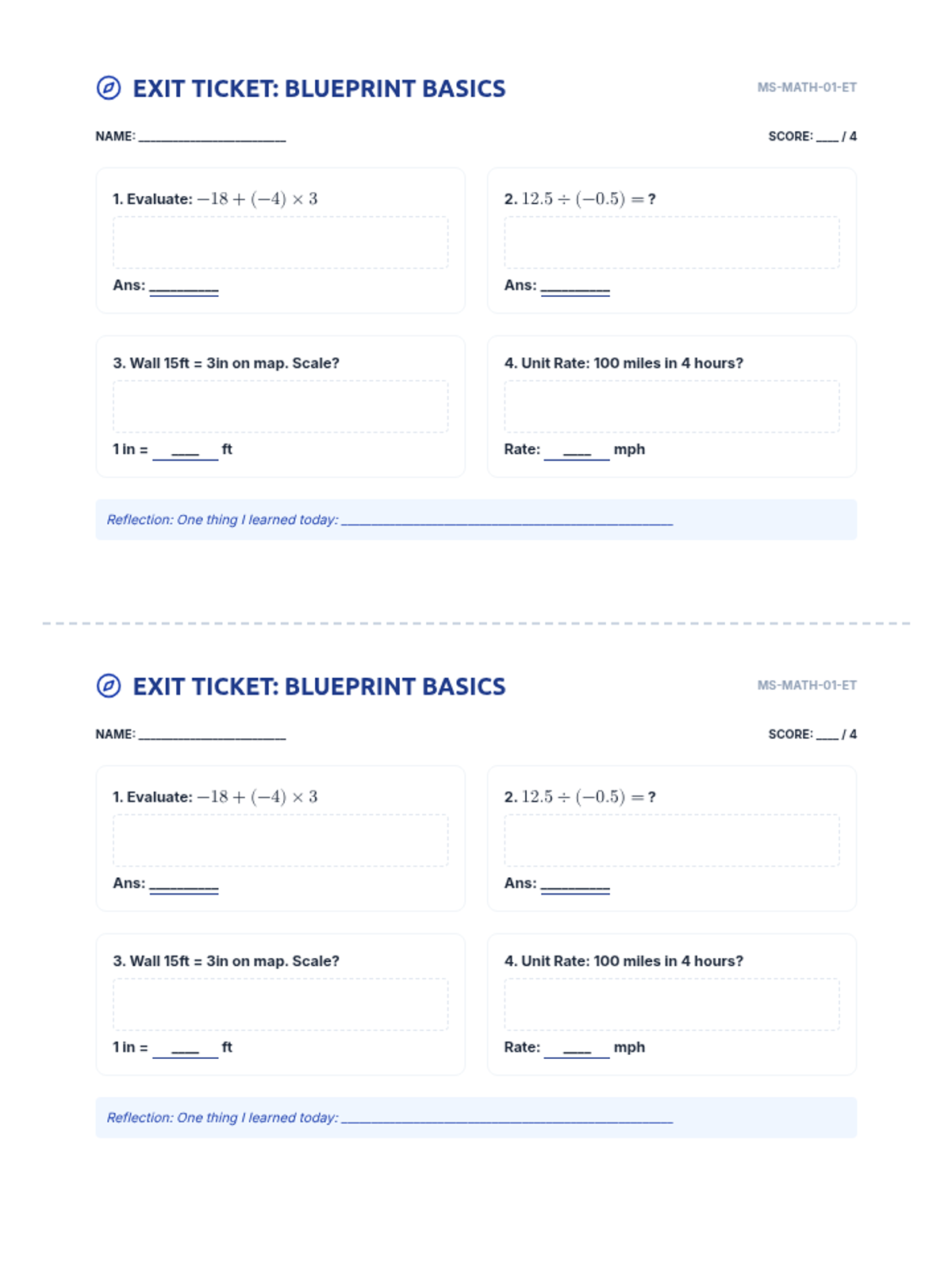
A double-up exit ticket (printable for two students per page) covering basic operations and scale factor from the Number Blueprints lesson. Reduced size to fit one page.
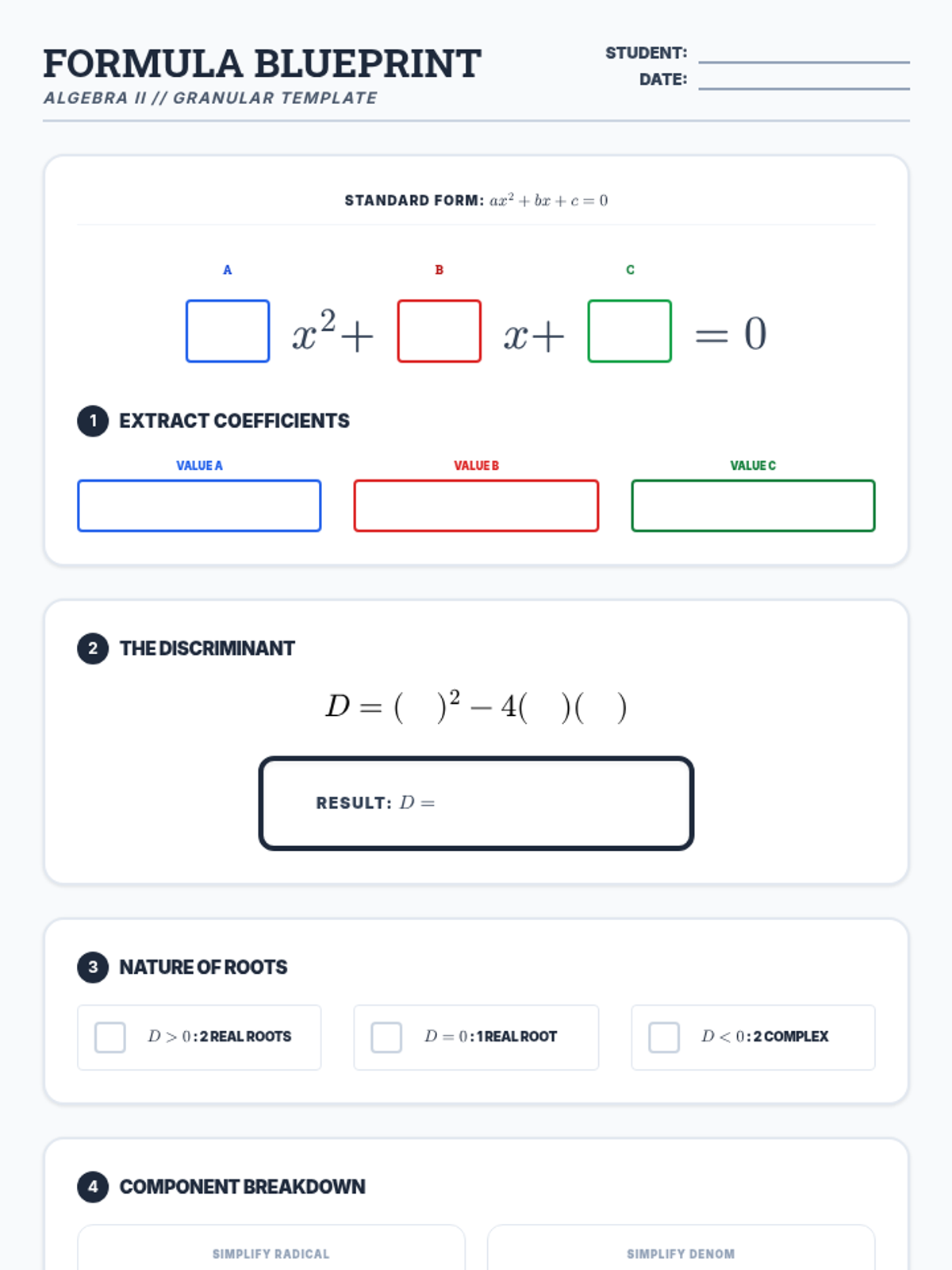
A comprehensive, 3-page granular template for the quadratic formula. This version features an expanded "Radical Processing" section (Step 4A) that breaks down complex checks, factoring for perfect squares, and root extraction. It remains color-coded and structured for Algebra 2 students.
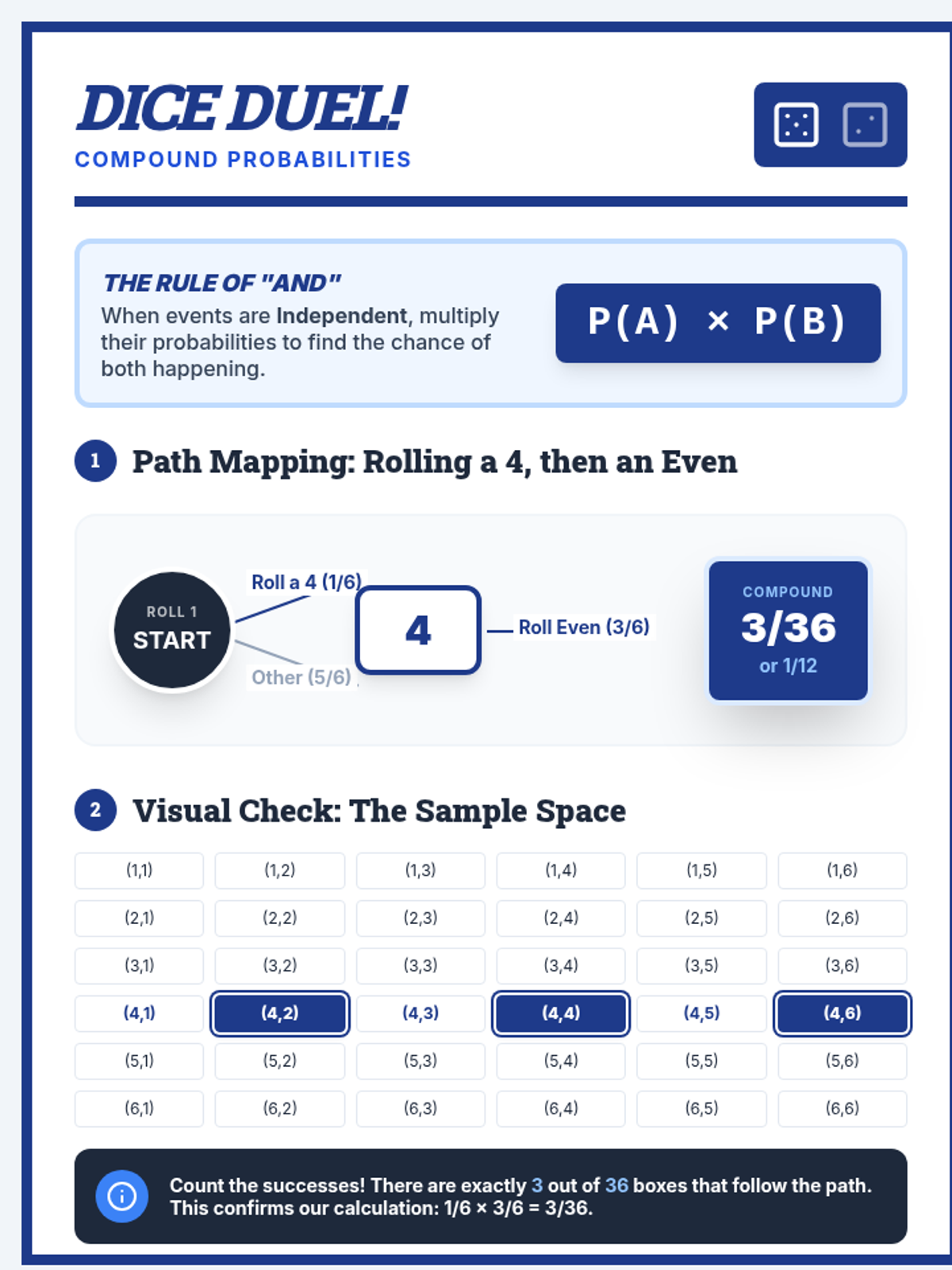
An anchor chart designed for classroom display that explains compound probability using two dice. It features a specific example with a tree diagram, a 6x6 sample space grid, and the clear mathematical formula for independent events.
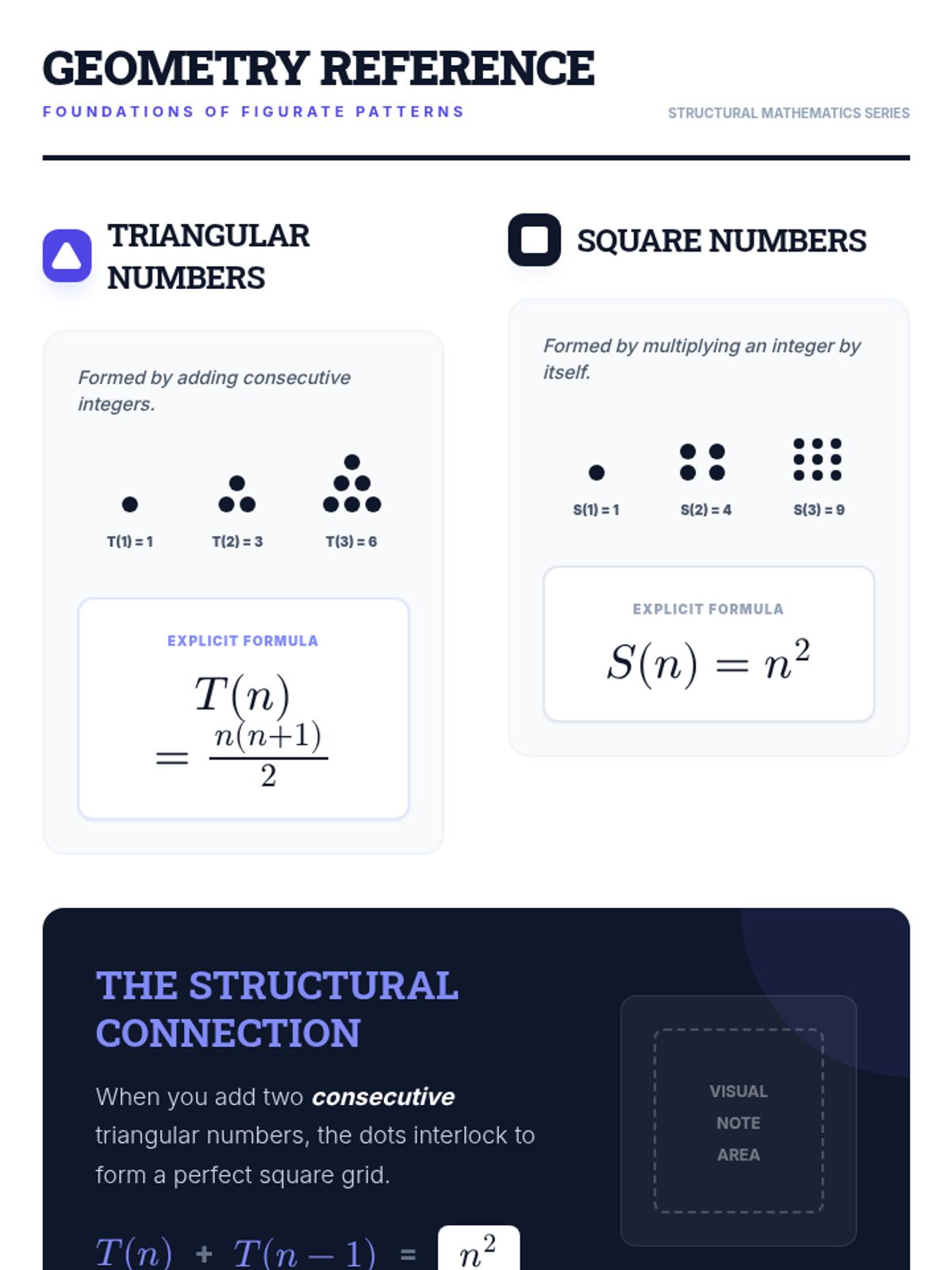
A clean and structured reference sheet for students that summarizes the formulas, visual models, and mathematical connections between triangular and square numbers.
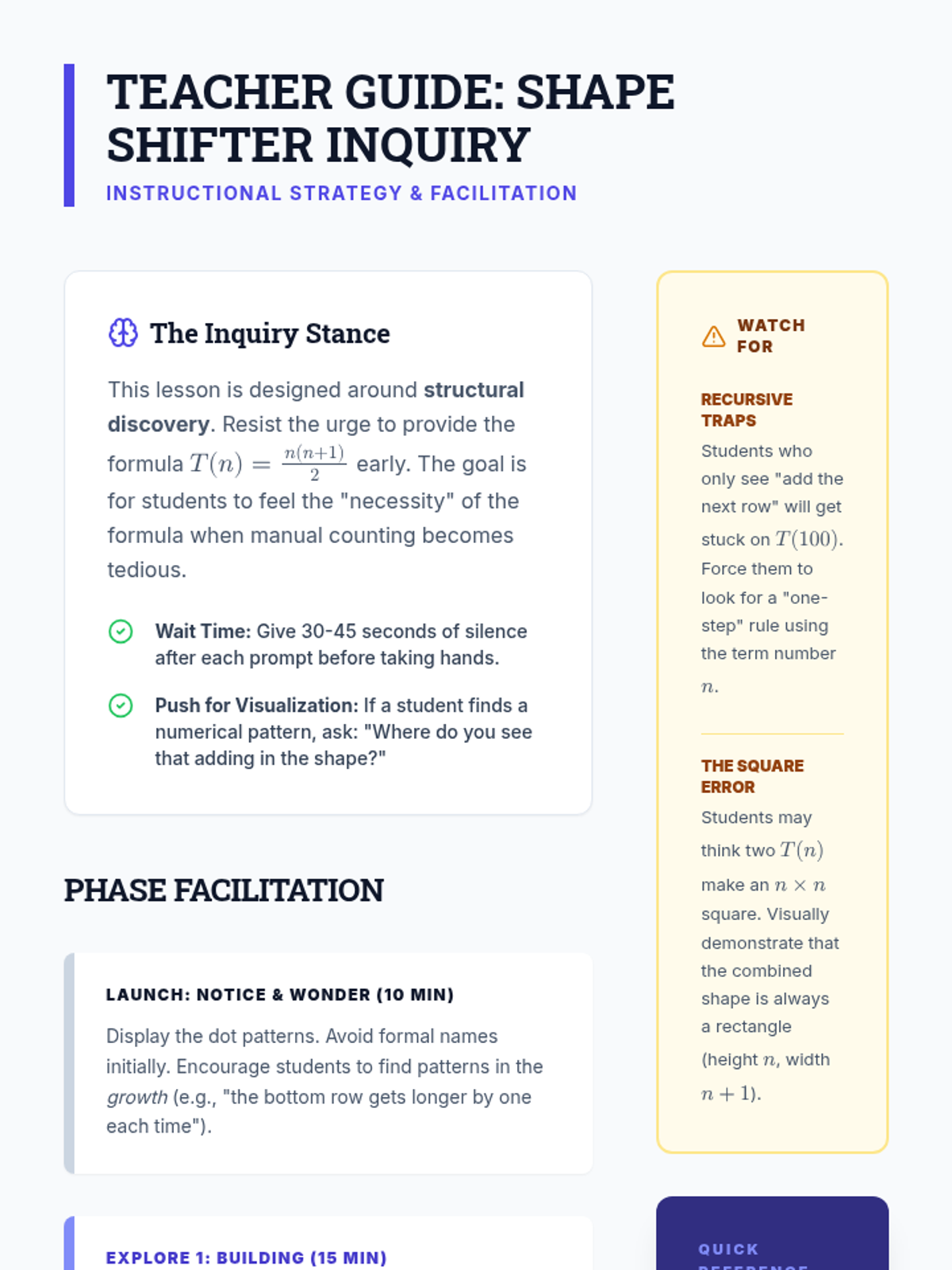
A comprehensive facilitation guide for teachers leading the Shape Shifter inquiry. Includes pacing, key questioning strategies, common misconception alerts, and a quick-reference answer key for triangular and square number patterns.
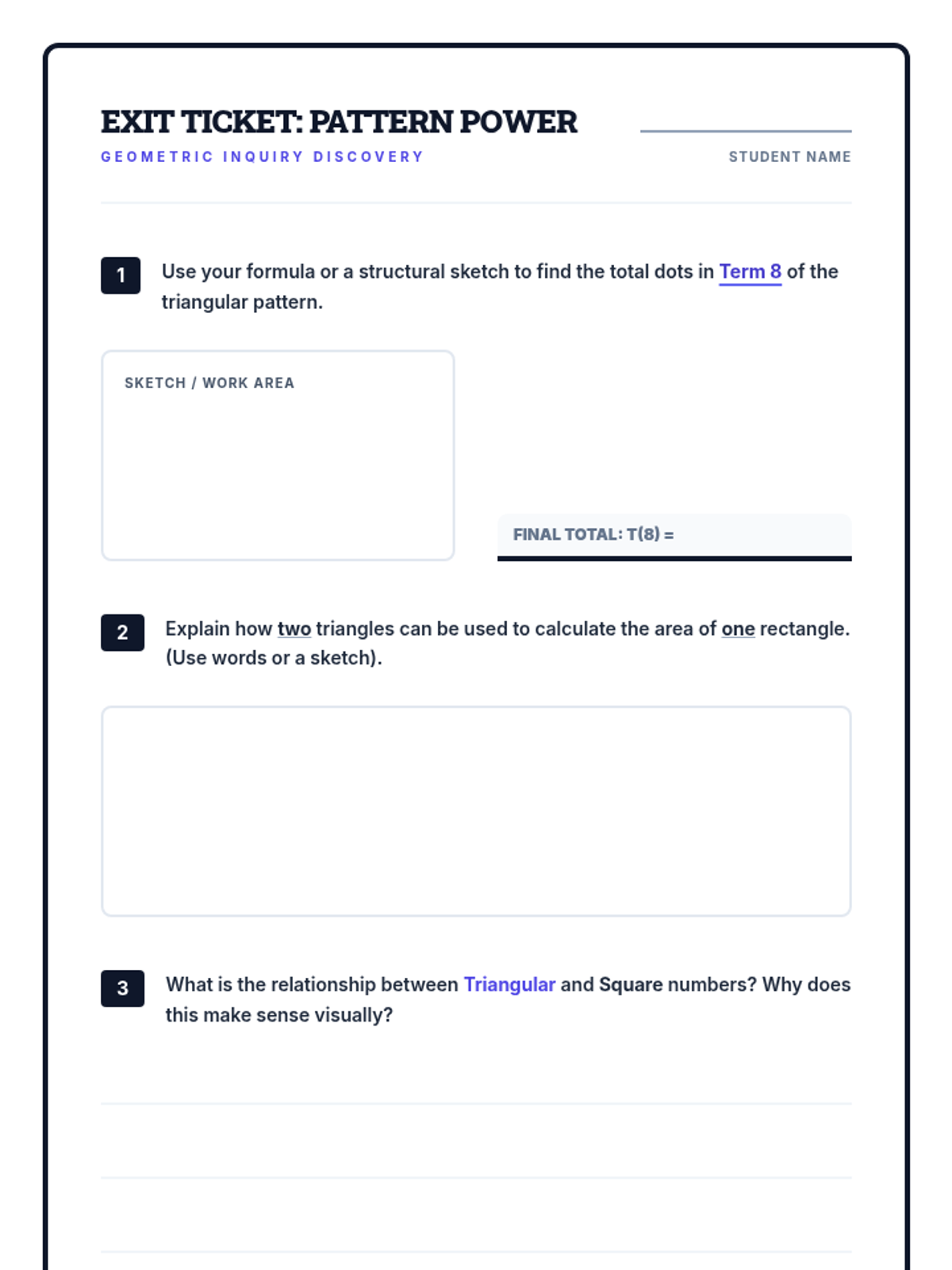
A compact exit ticket for assessing student understanding of triangular numbers, their geometric formulas, and their structural relationship to square numbers.
An instructional slide deck for the Shape Shifter inquiry lesson. It features minimalist visual proofs for triangular and square numbers, emphasizing student notice-and-wonder and the geometric derivation of algebraic formulas.
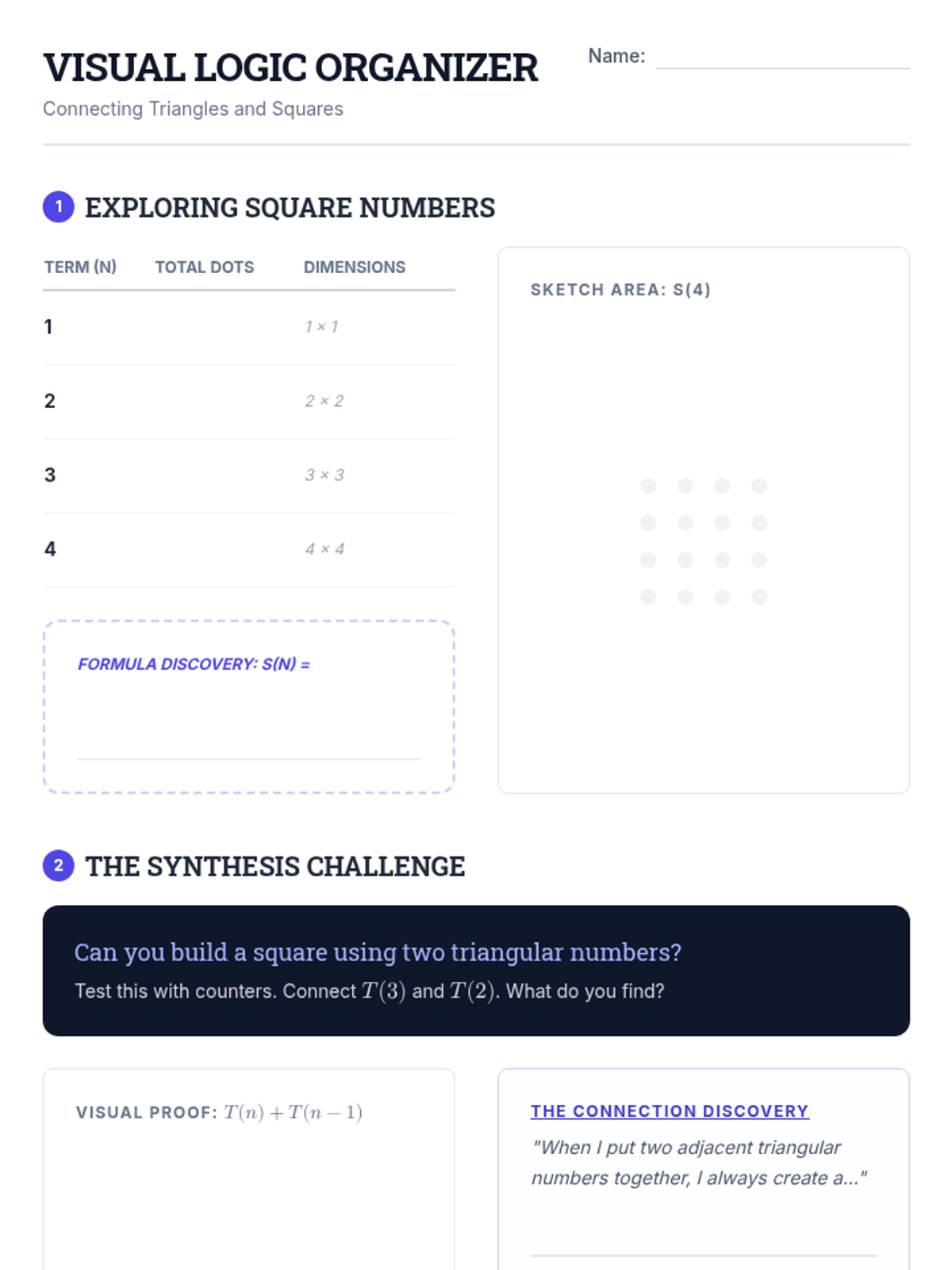
A visual logic organizer that guides students through the discovery of square numbers and their relationship to triangular numbers. It features sections for sketching visual proofs and formalizing mathematical connections.
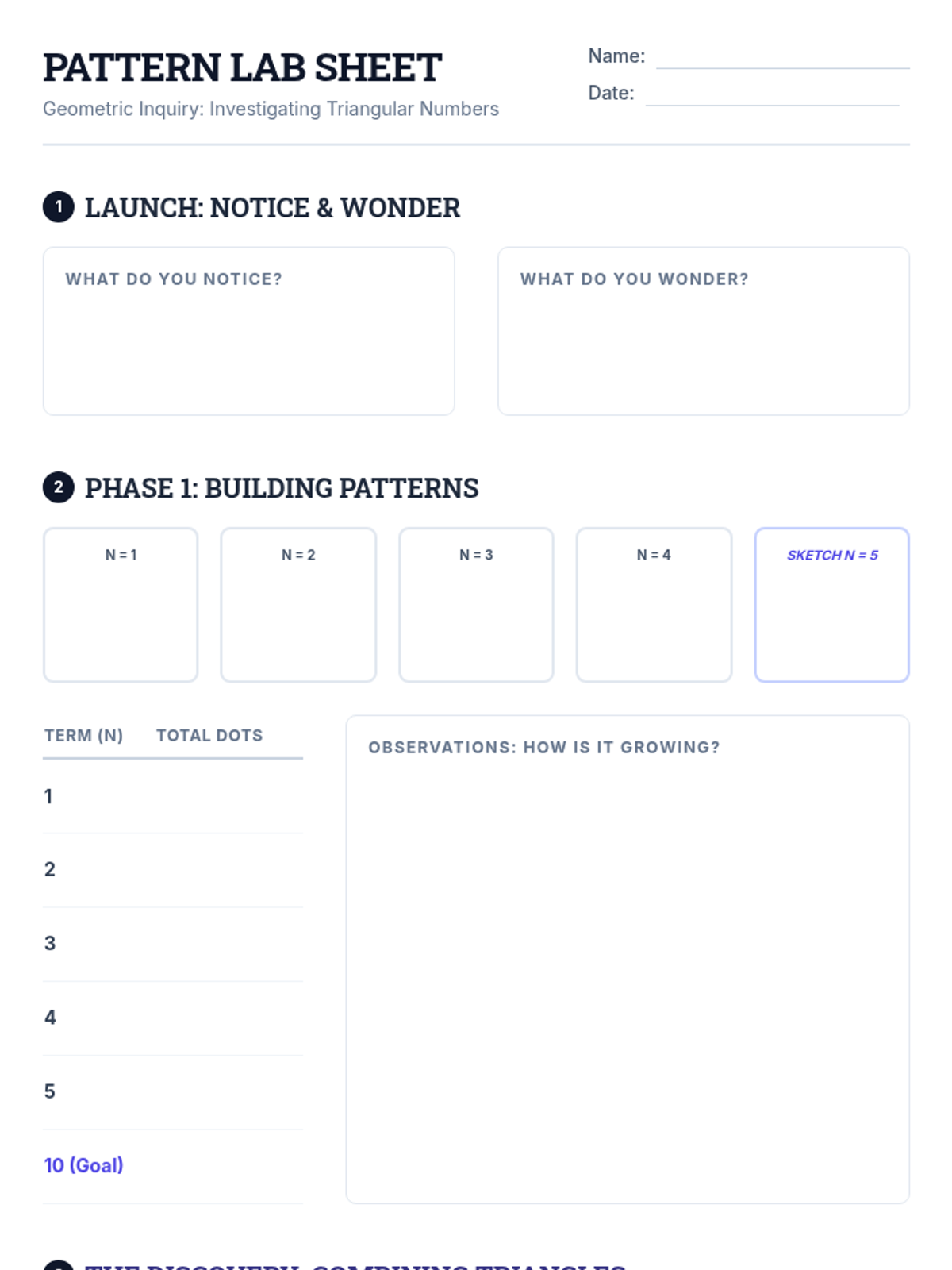
A minimalist pattern lab sheet designed for student inquiry into triangular numbers. It features open sketch areas for visual proofs, a data table for tracking patterns, and dedicated sections for identifying structural growth.
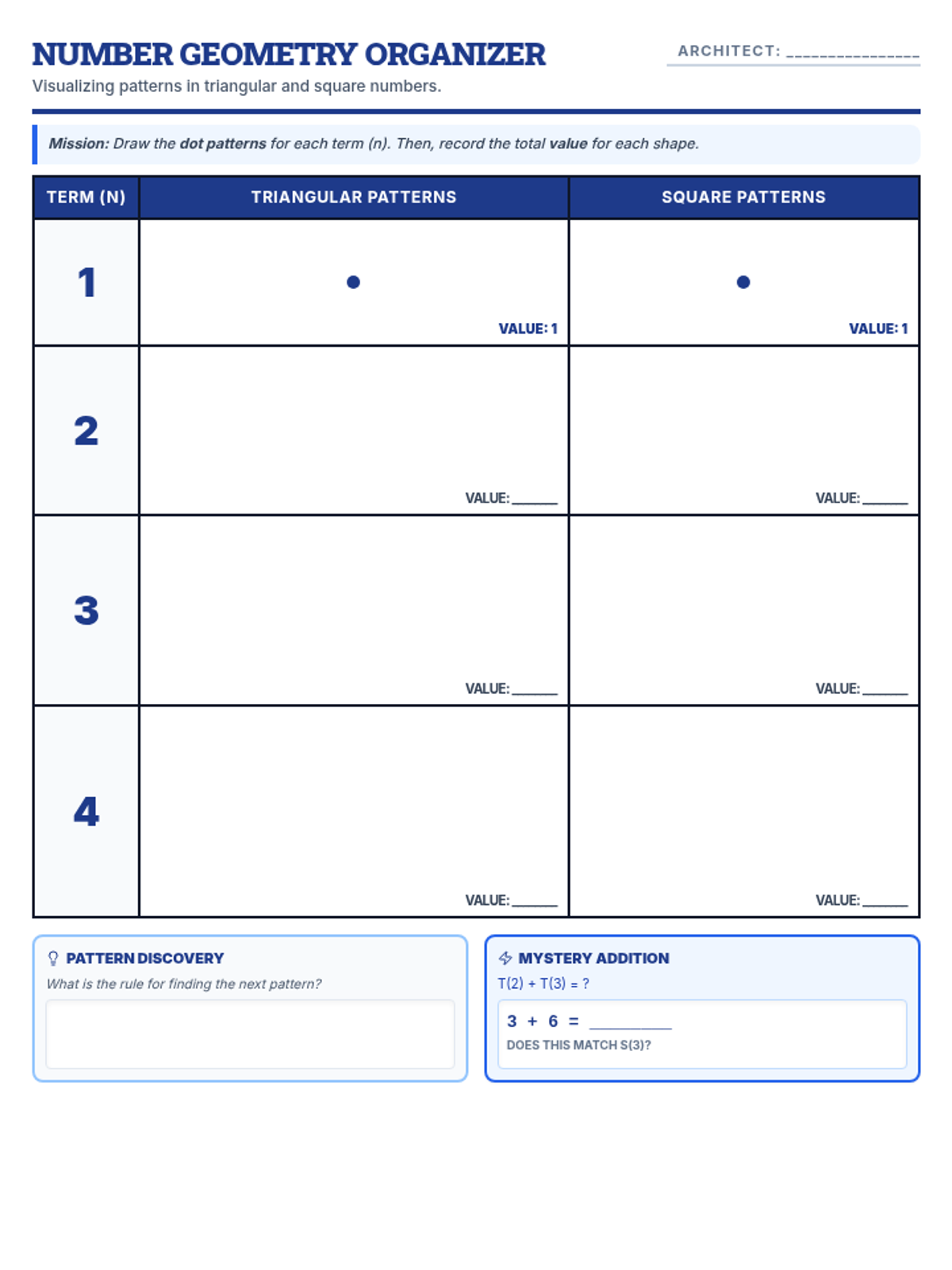
A highly legible, single-page graphic organizer for students to visualize and draw triangular and square number patterns. It includes clear instructions, optimized drawing areas, and a challenge section with improved accessibility and legibility.
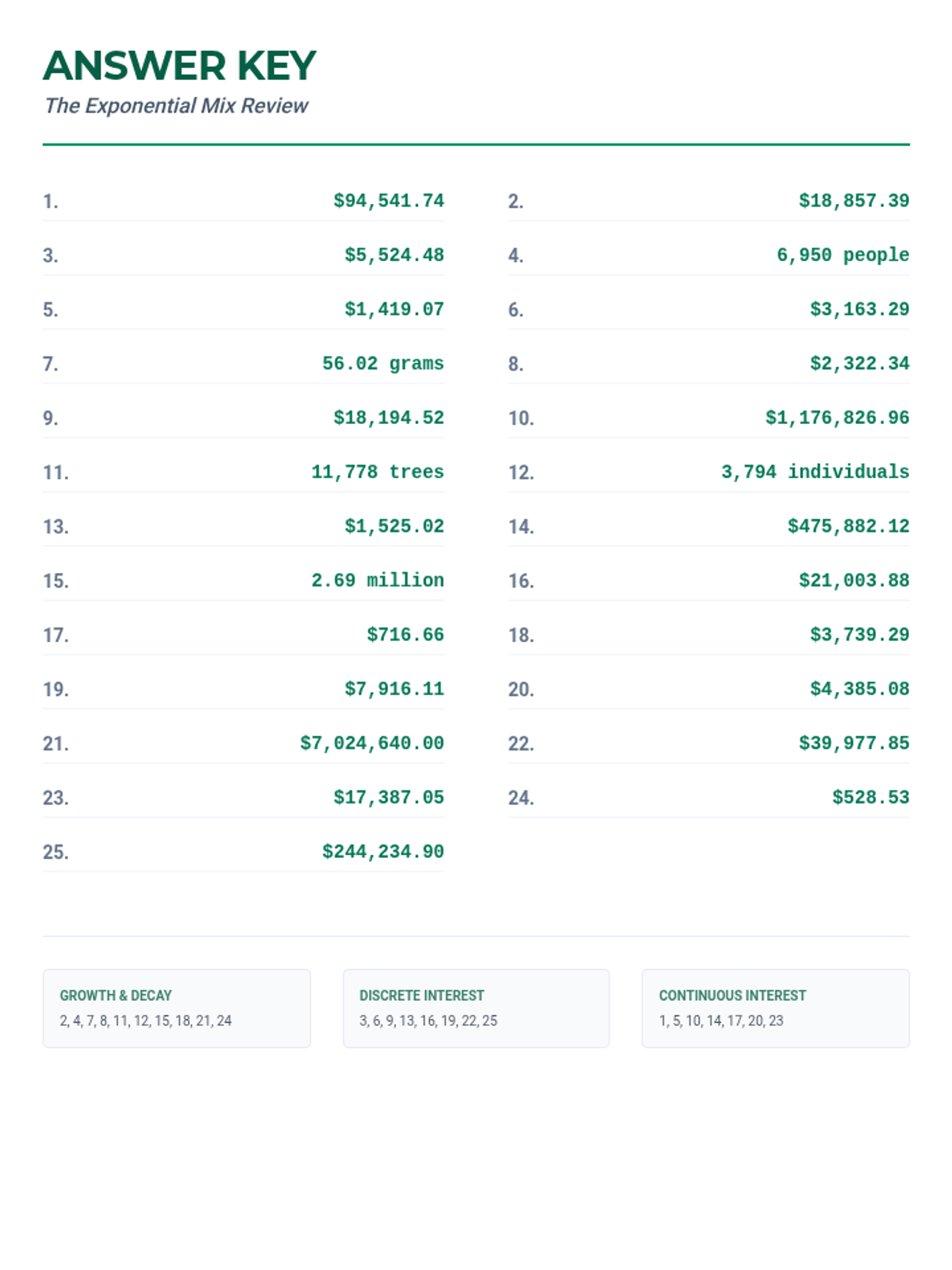
The shuffled answer key for the revised exponential assignment, providing final values for all 25 mixed problems including growth, decay, and interest models.
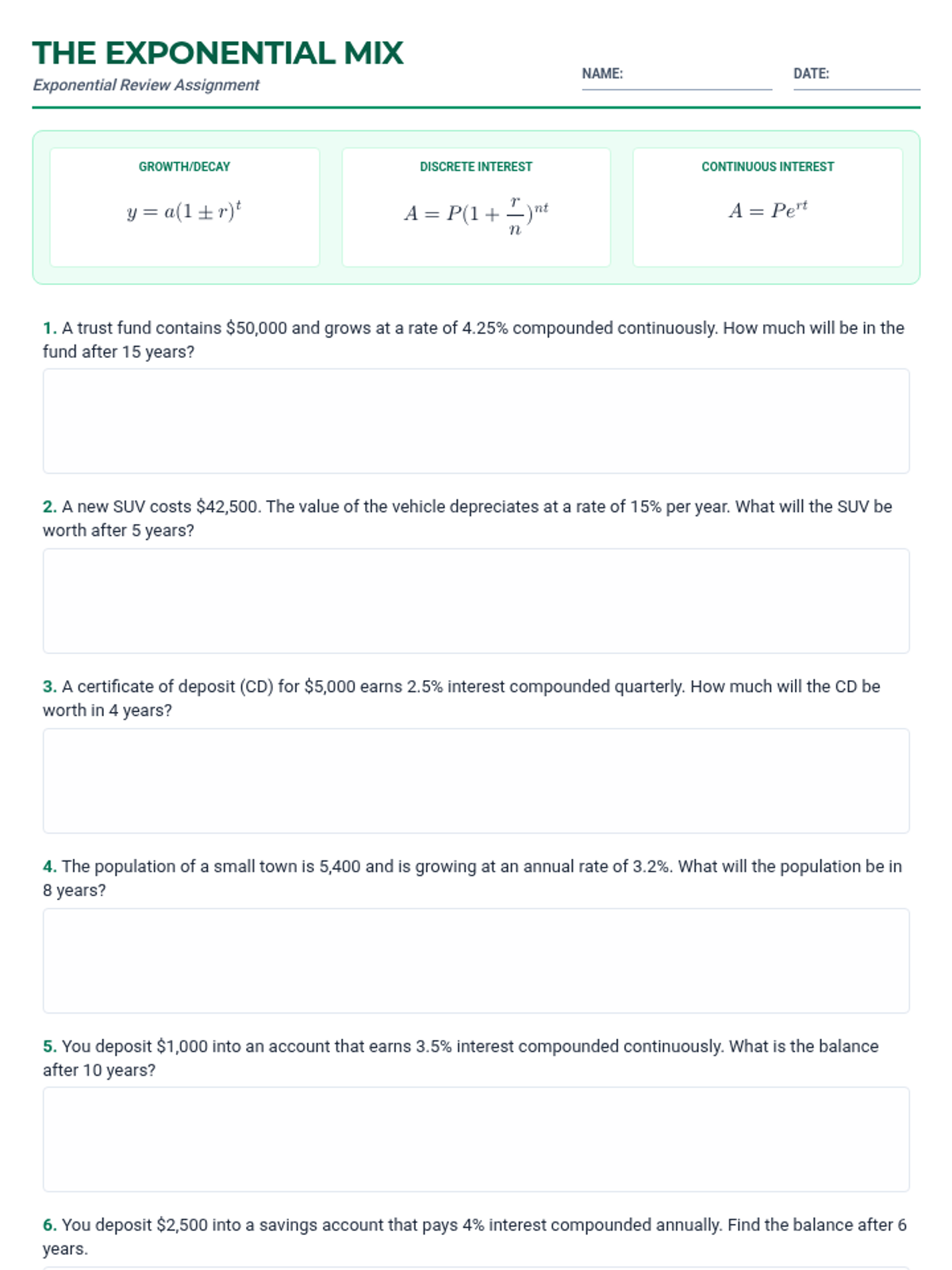
A shuffled 25-question practice worksheet featuring mixed exponential growth, decay, and interest problems, all set in annual timeframes. Formatted over 4 spacious pages with ample student work areas.
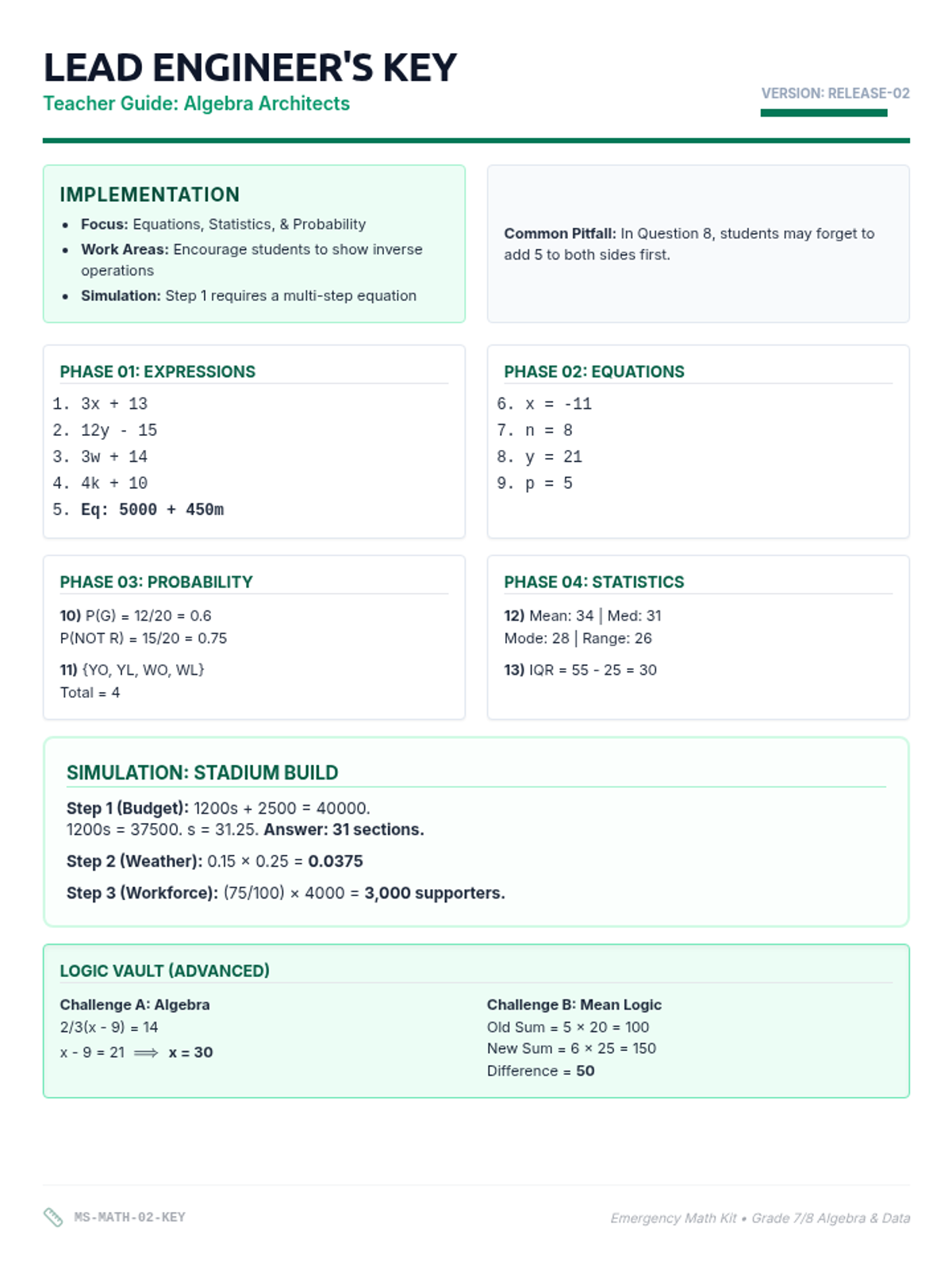
A detailed answer key and pedagogical guide for the Algebra Architects packet. Provides solutions for all phases, the simulation task, and the Logic Vault extensions.
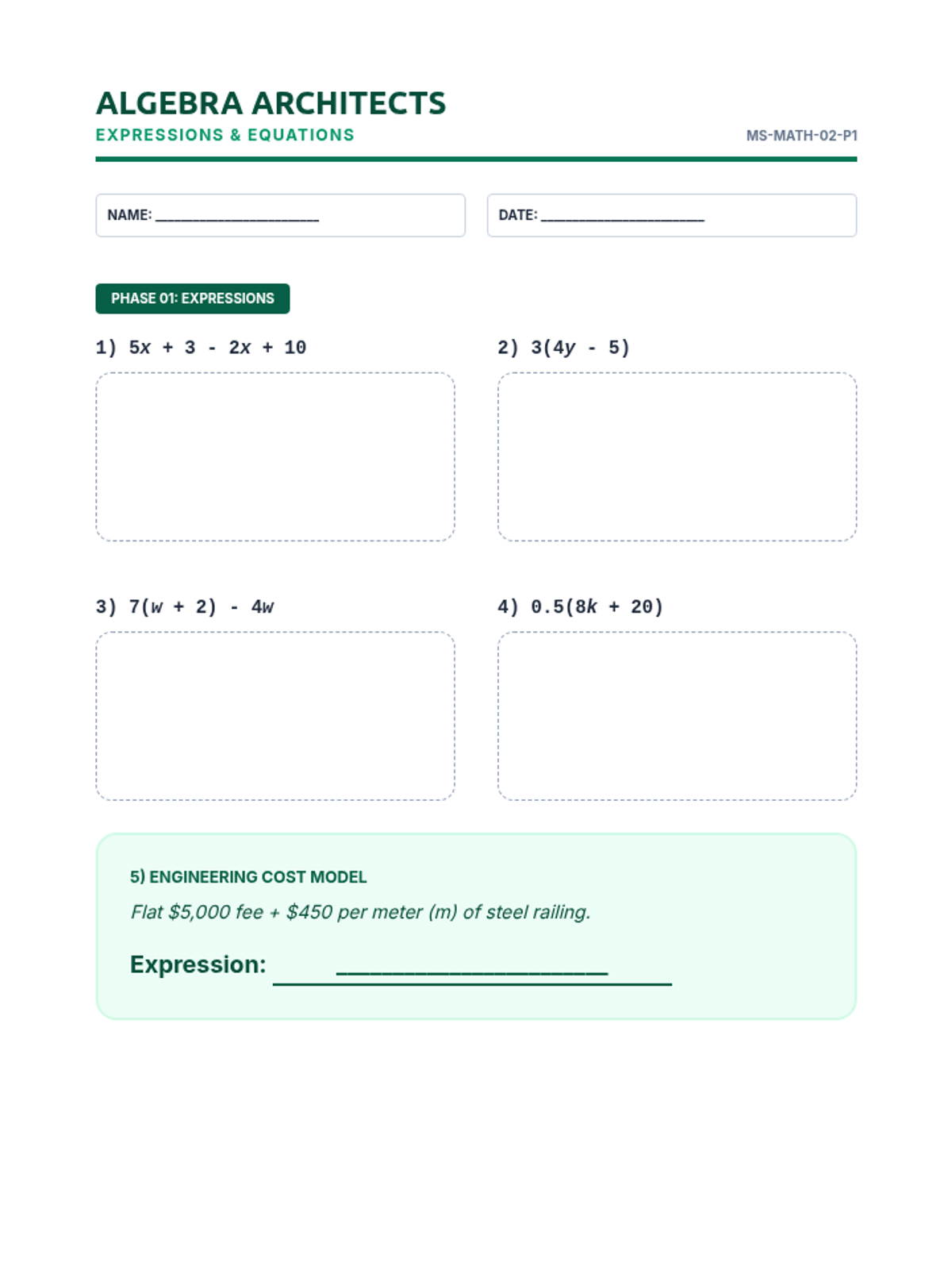
A 4-page student packet for a 90-minute substitute block covering linear expressions, equations, probability, and statistics. Includes application tasks and an "Engineering Vault" for fast finishers.
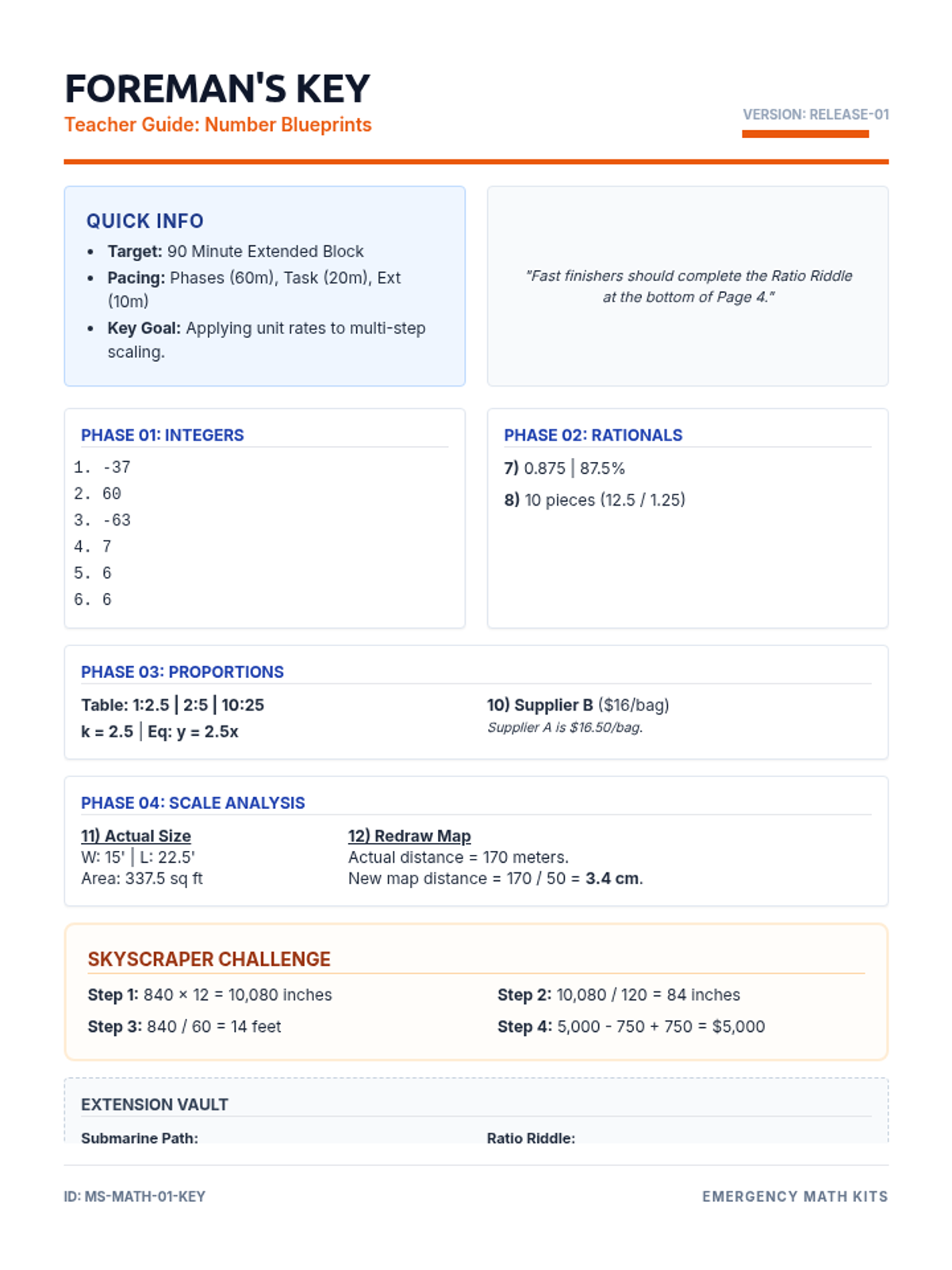
A concise answer key and instructional guide for the Number Blueprints packet. Includes step-by-step solutions and time management tips for the substitute teacher.
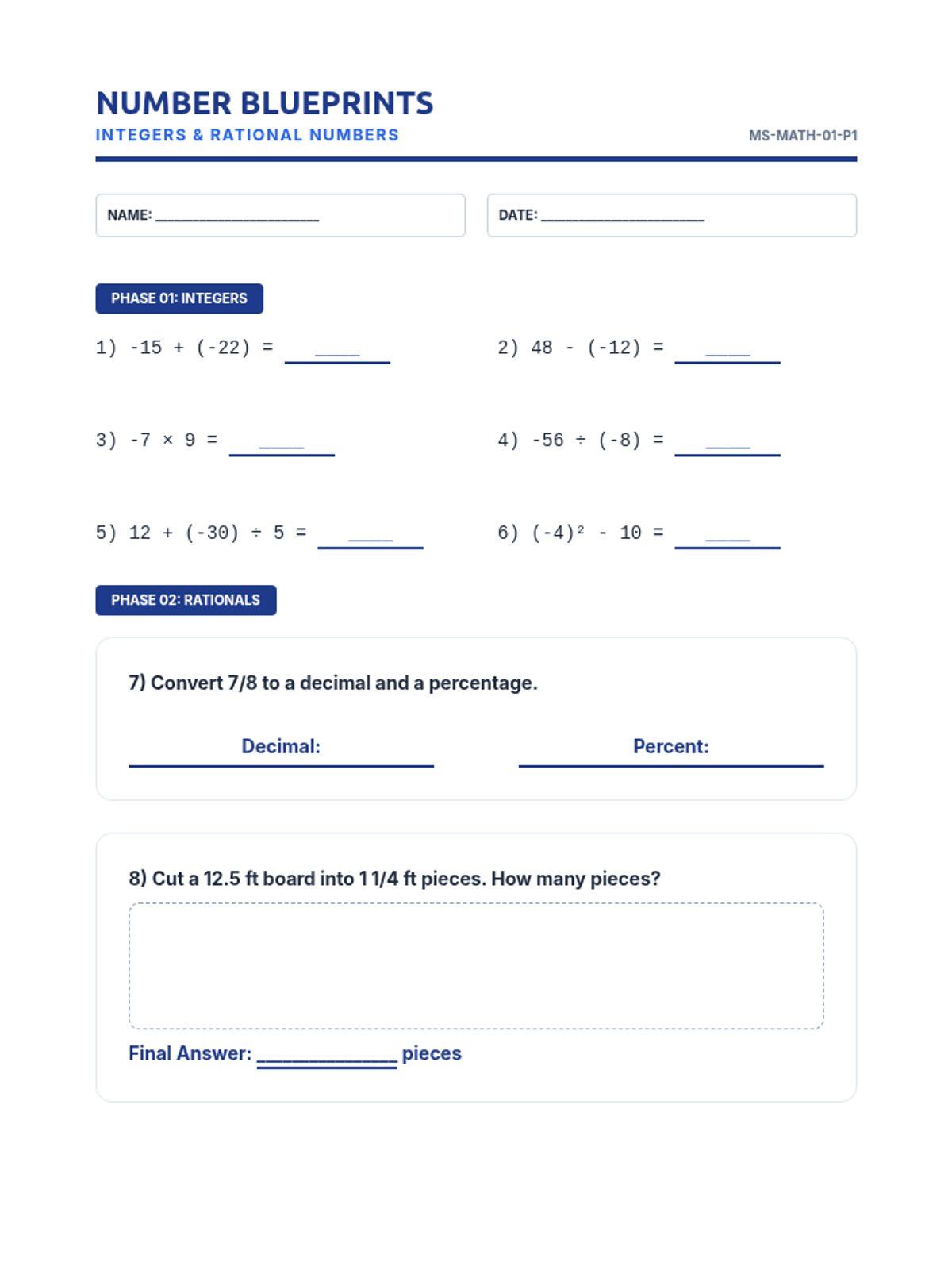
Expanded 4-page student packet for a 90-minute substitute block. Covers integers, rational operations, proportions, and scale factors with 20+ problems and an integrated performance task. Reduced side and padding to fix page breaks.
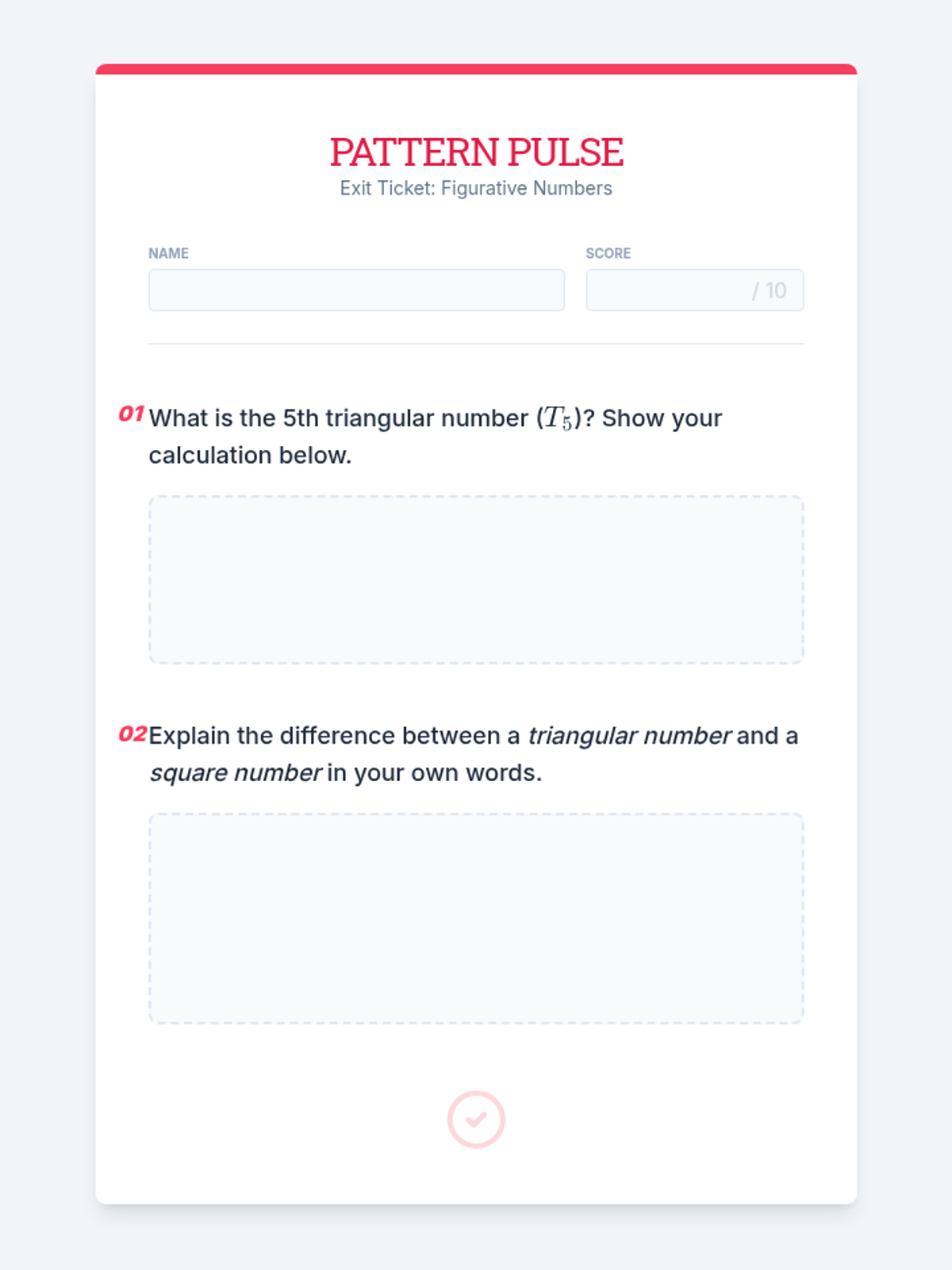
A concise exit ticket to assess student understanding of triangular numbers and their ability to differentiate between various figurative number types.
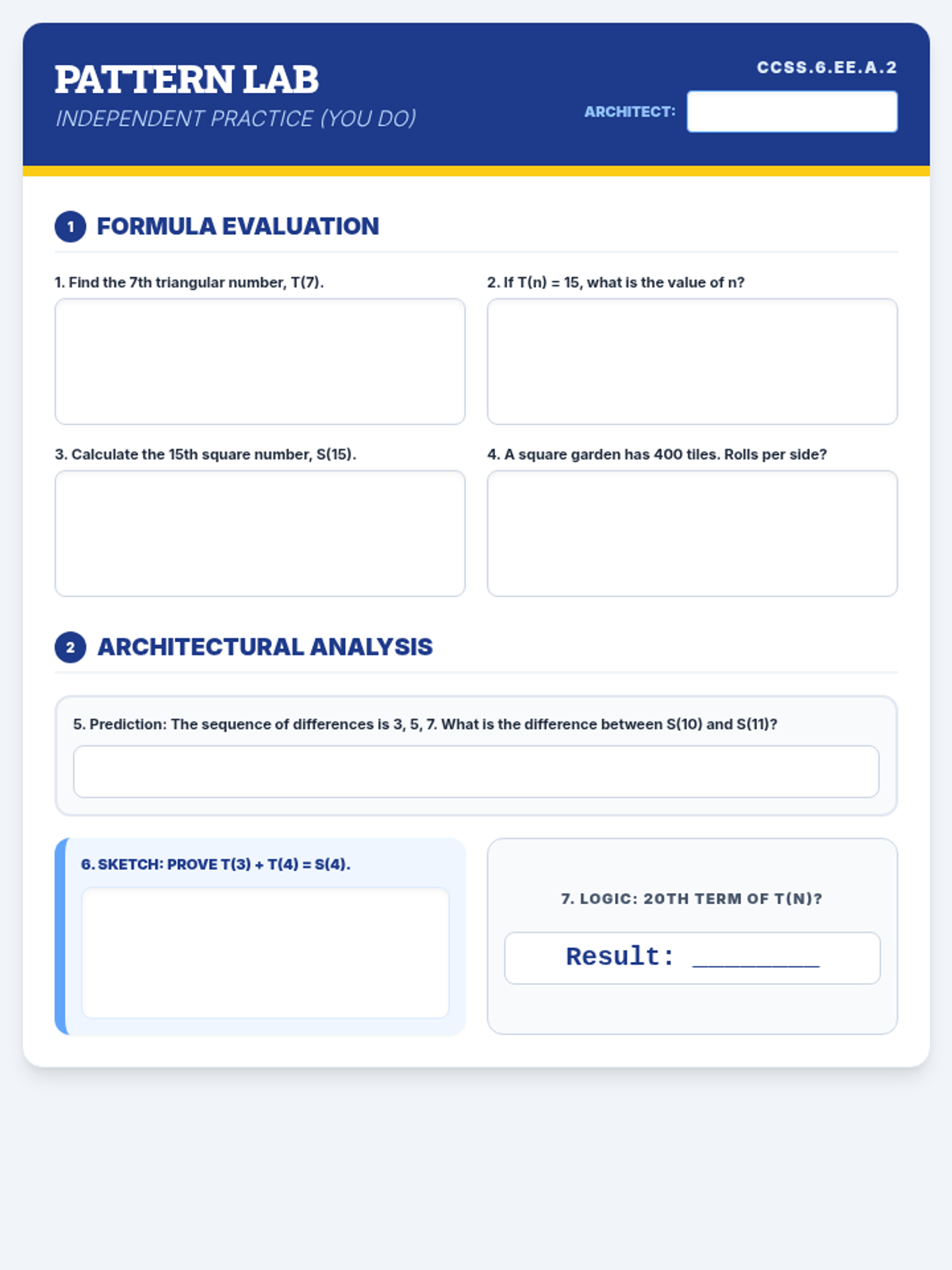
A single-page independent practice sheet with 7 problems covering triangular and square number calculations, following the "You Do" phase of explicit instruction. All math notation uses standard text for reliable rendering.
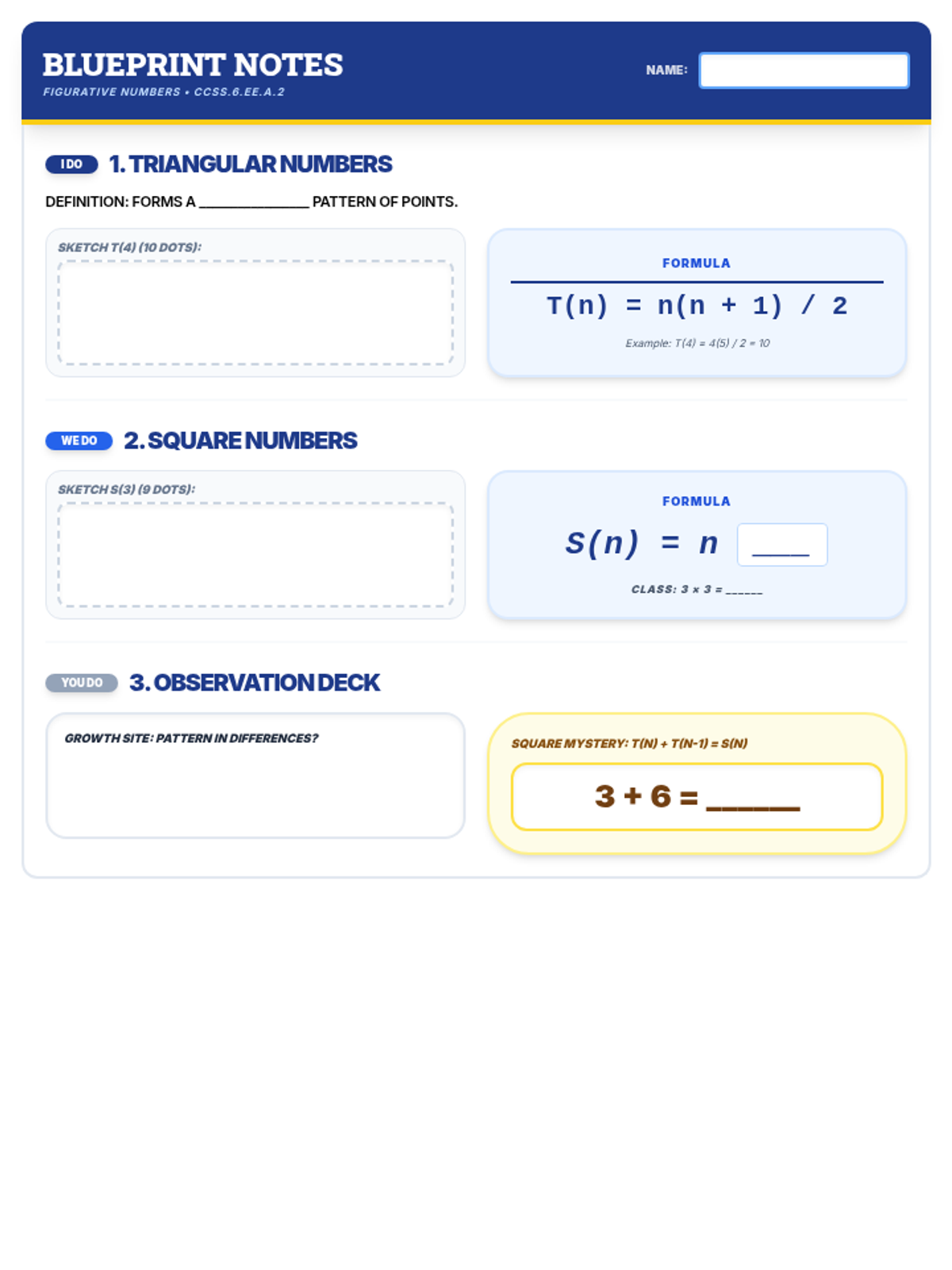
A single-page guided notes handout for students to capture definitions, dot patterns, and algebraic formulas for figurative numbers using an "I do, We do, You do" structure. All math notation uses standard text for reliability.
A slide deck for explicit instruction on figurative numbers, featuring "I Do, We Do, You Do" modeling, visual dot patterns, and clear formula derivations. Includes a standards slide and uses standard subscripts for PDF reliability.
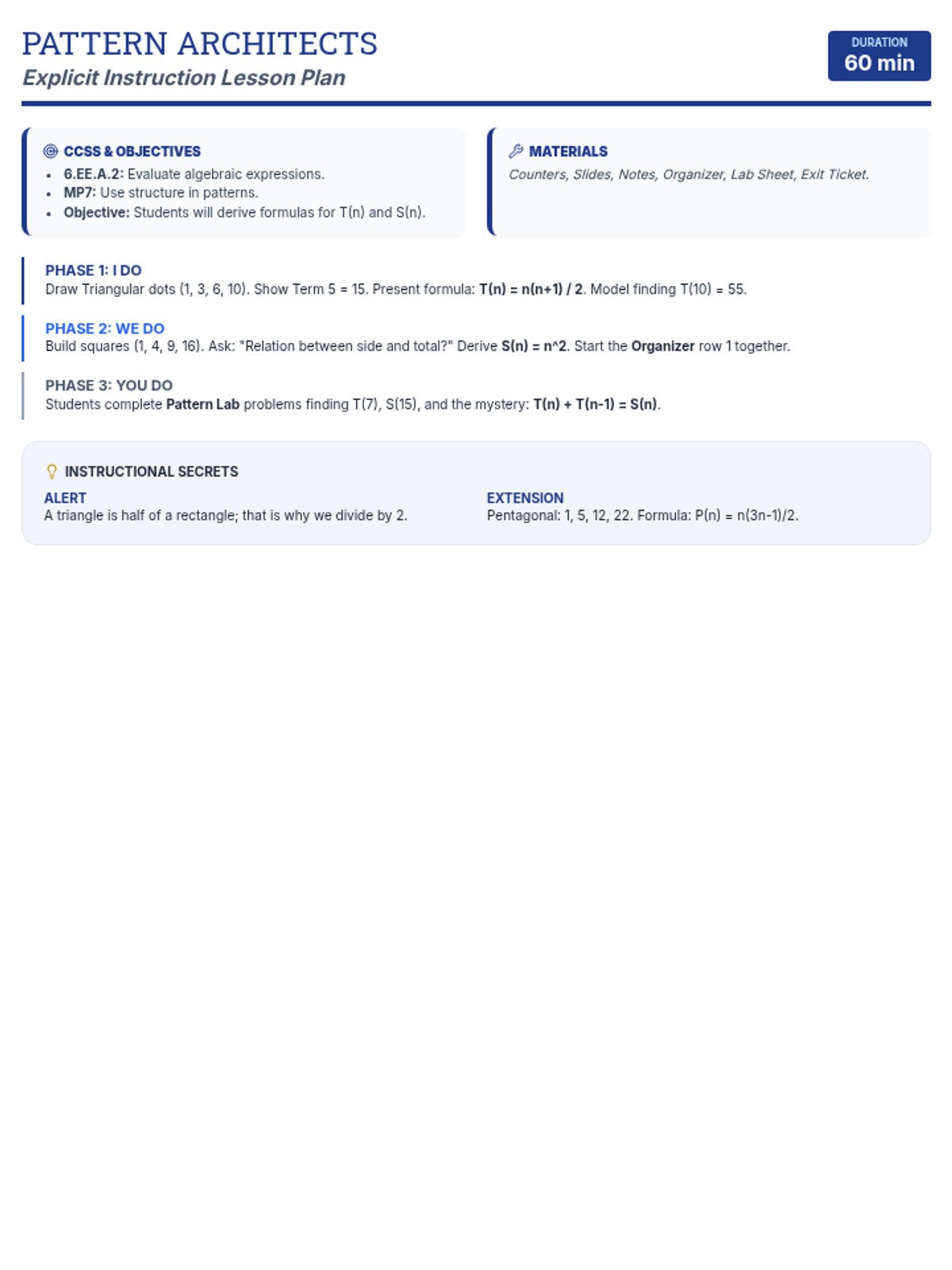
A condensed, single-page explicit instruction lesson plan for teachers, focusing on triangular and square numbers with an "I do, We do, You do" framework and CCSS alignment. Math notation uses standard text for reliable rendering.
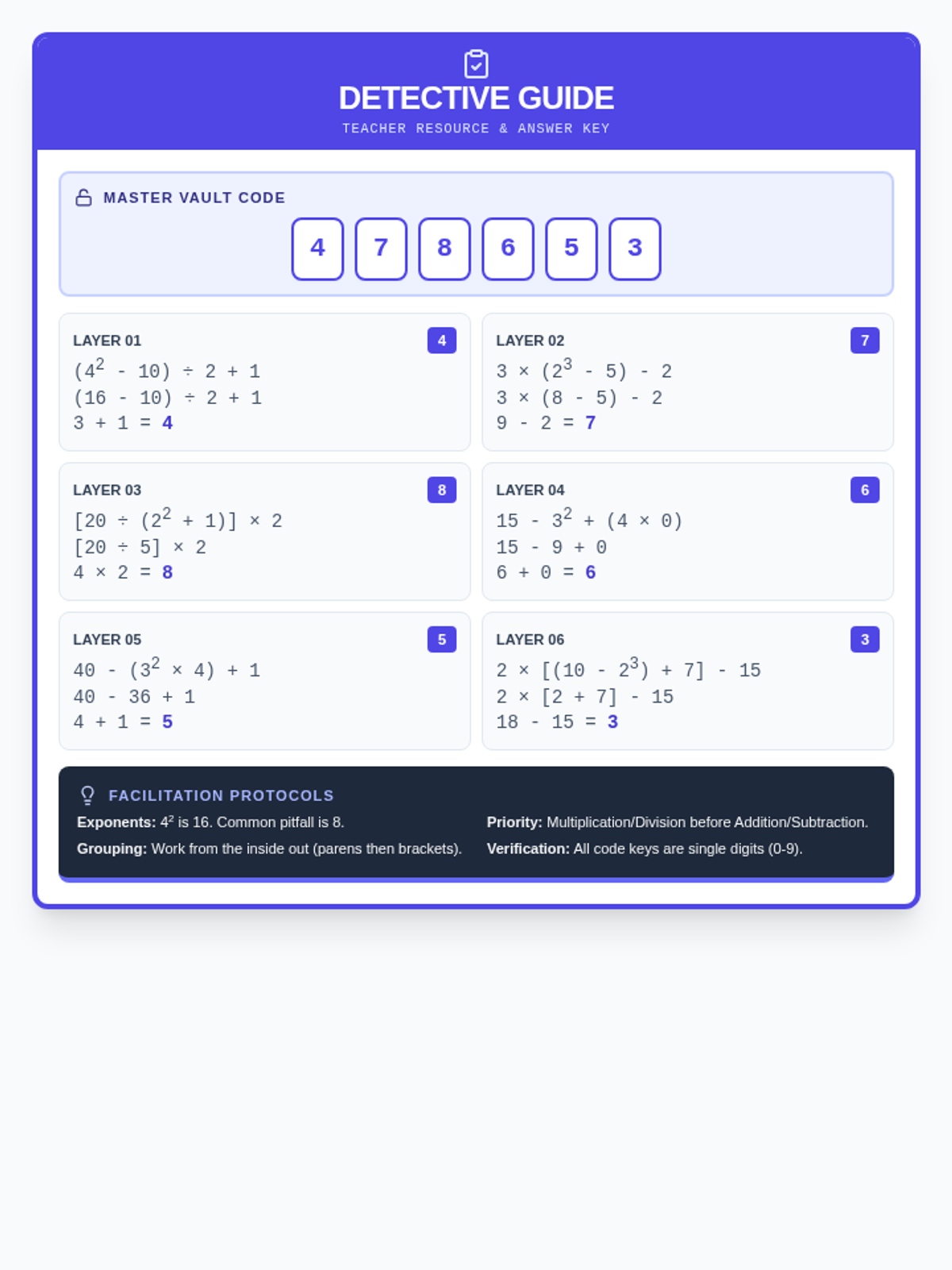
A complete teacher answer key and guide for "The Calculation Caper." This one-page reference provides the 6-digit master code (4-7-8-6-5-3), detailed step-by-step solutions for every layer, and key facilitation tips. HTML spans with custom positioning are used for reliable exponent rendering.
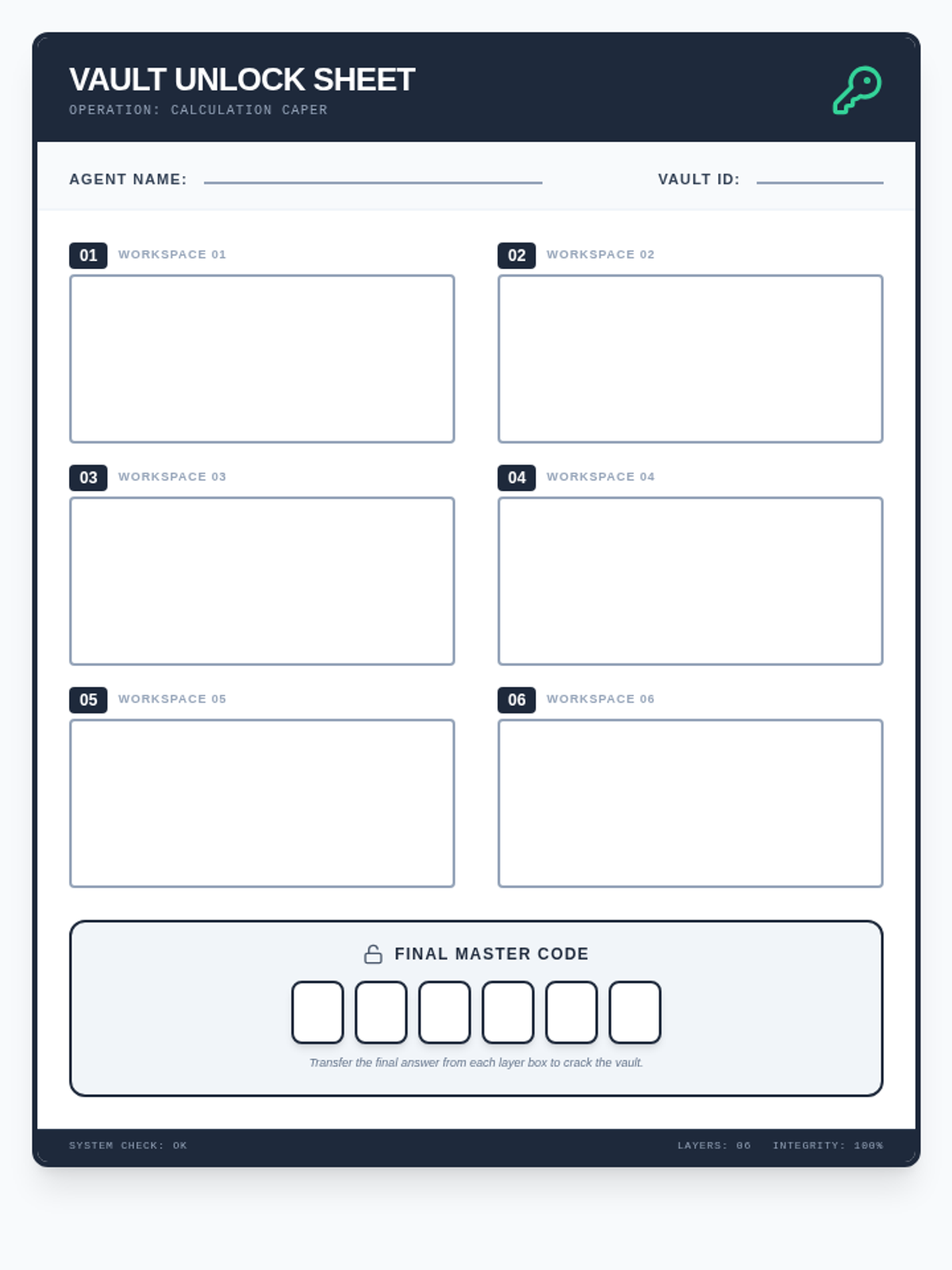
A refined vault unlock sheet featuring a 2-column workspace layout that provides ample room for step-by-step PEMDAS calculations for all 6 security layers. Workspace boxes use a clear white background.
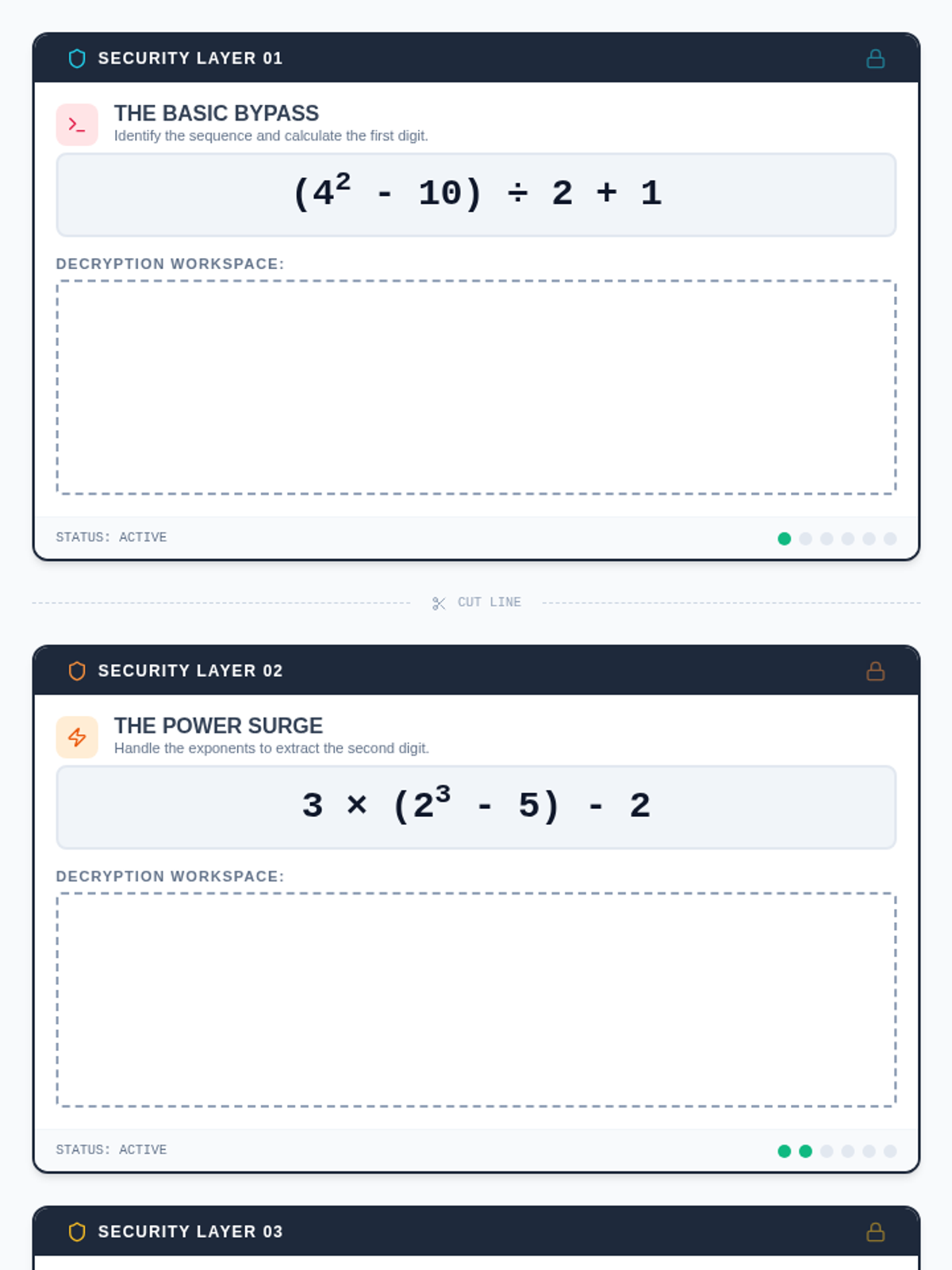
Six printable challenge cards for the escape room, each containing an Order of Operations problem with exponents that yields a single digit of the master vault code. Each card includes a dedicated workspace for student calculations. Standard HTML tags are used for exponent rendering. Card layout optimized for 2 per page with cut guides.
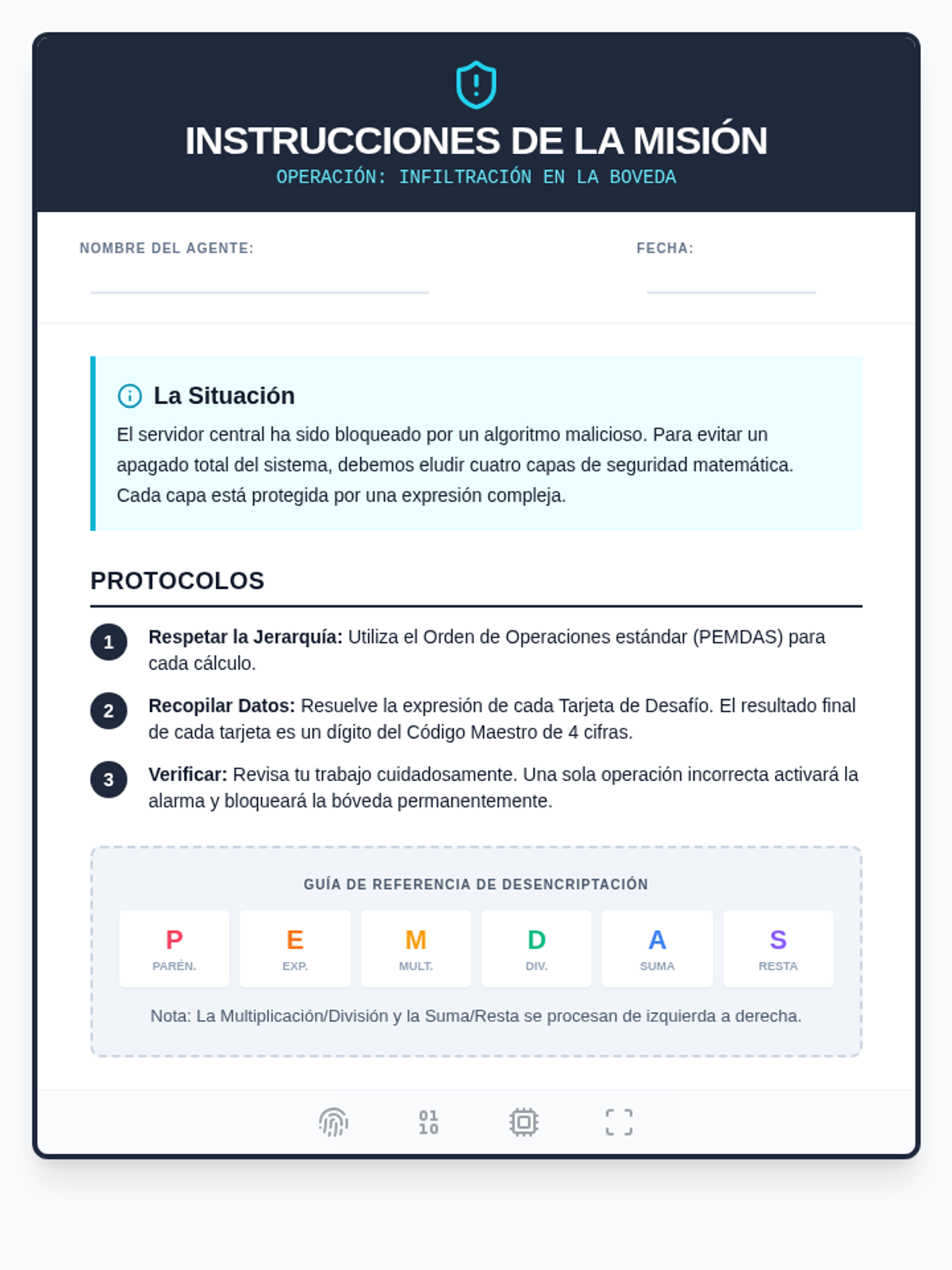
Introduction document for the escape room activity, setting the scene for "The Calculation Caper" and providing a PEMDAS reference guide for students.
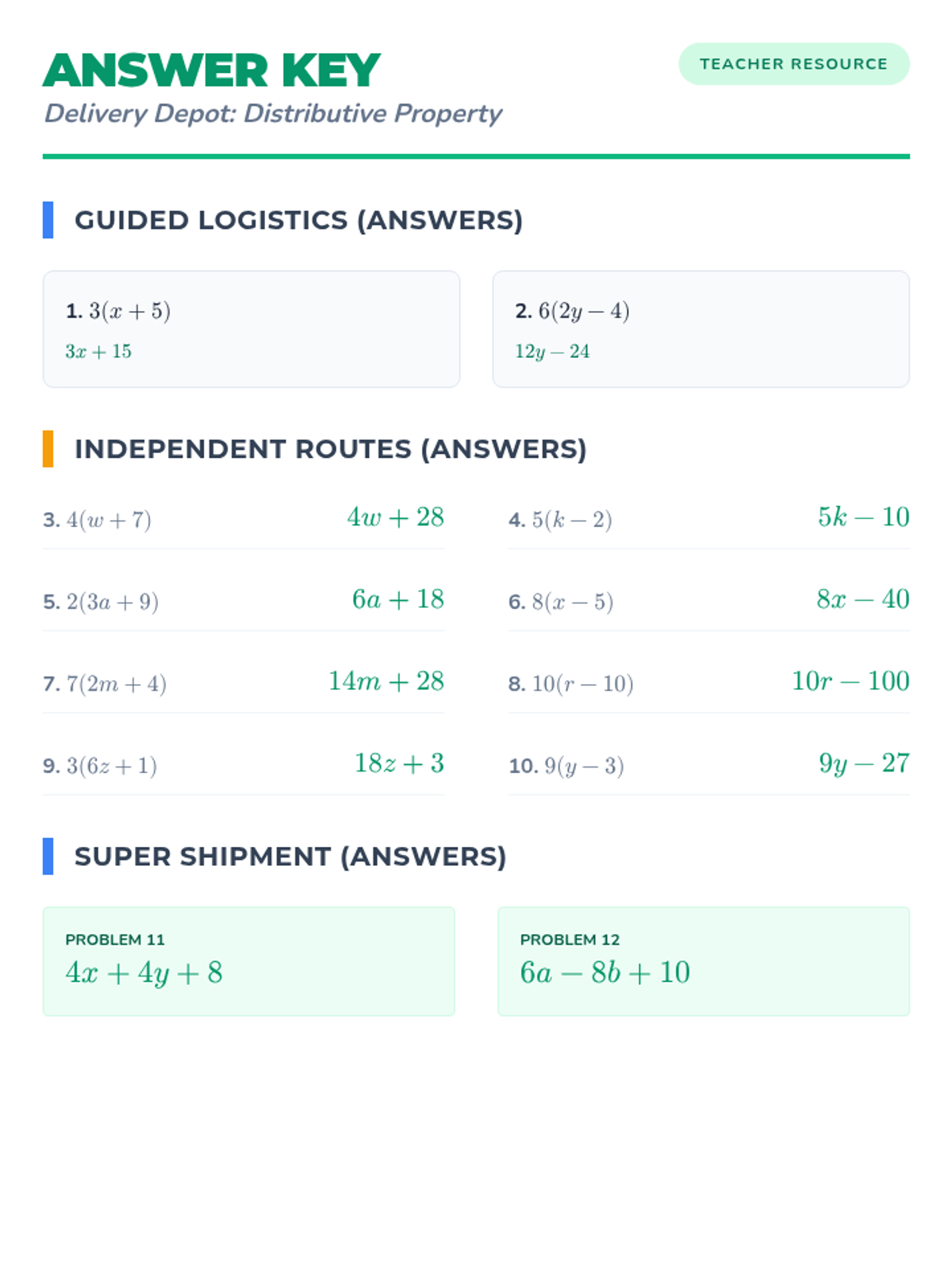
An answer key for the Delivery Depot Distributive Property worksheet, showing completed steps and final simplified expressions. Revised for better layout efficiency.
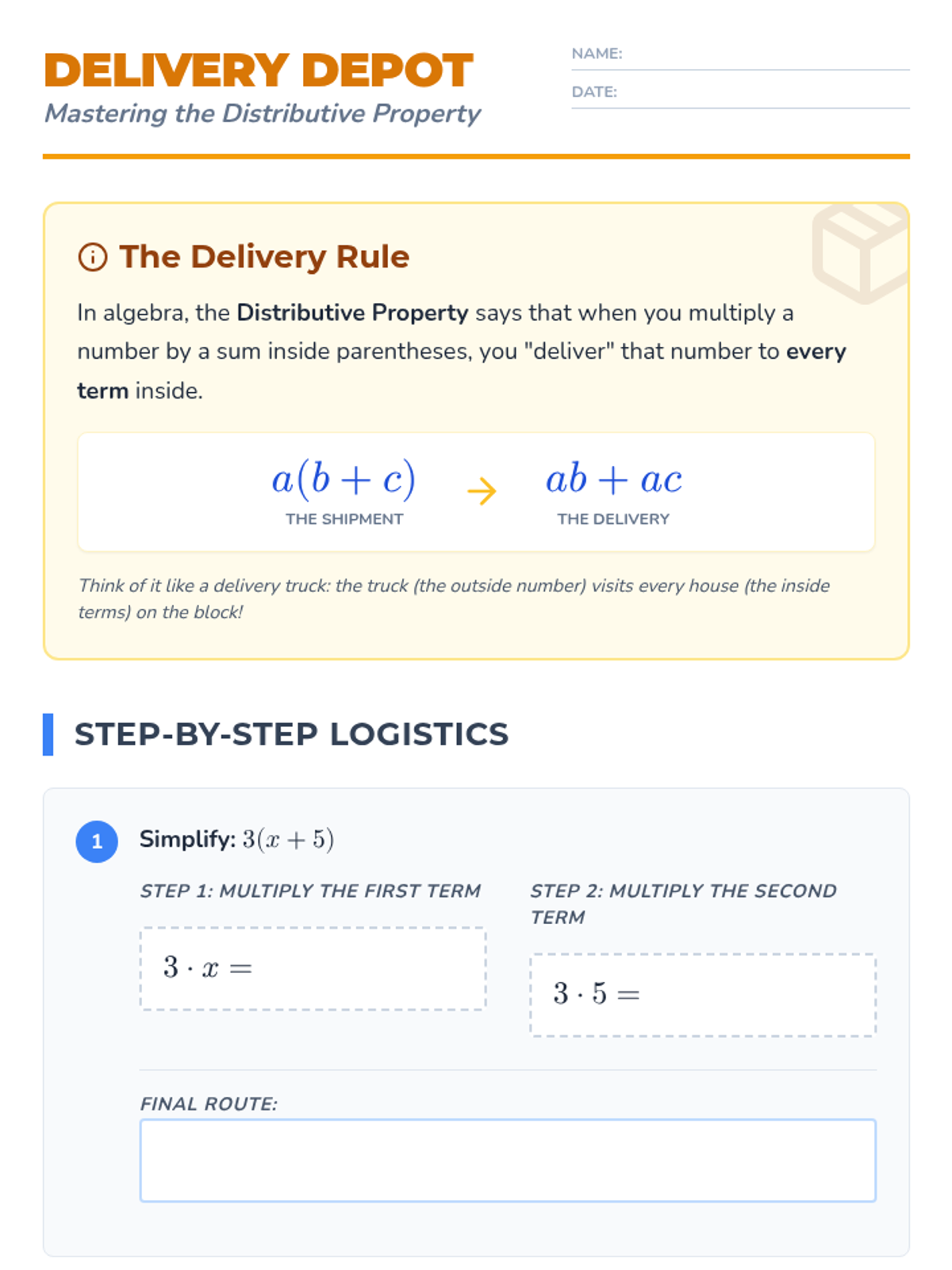
A themed distributive property worksheet with guided scaffolded steps followed by independent practice problems and a challenge section. Revised with improved spacing and contrast.
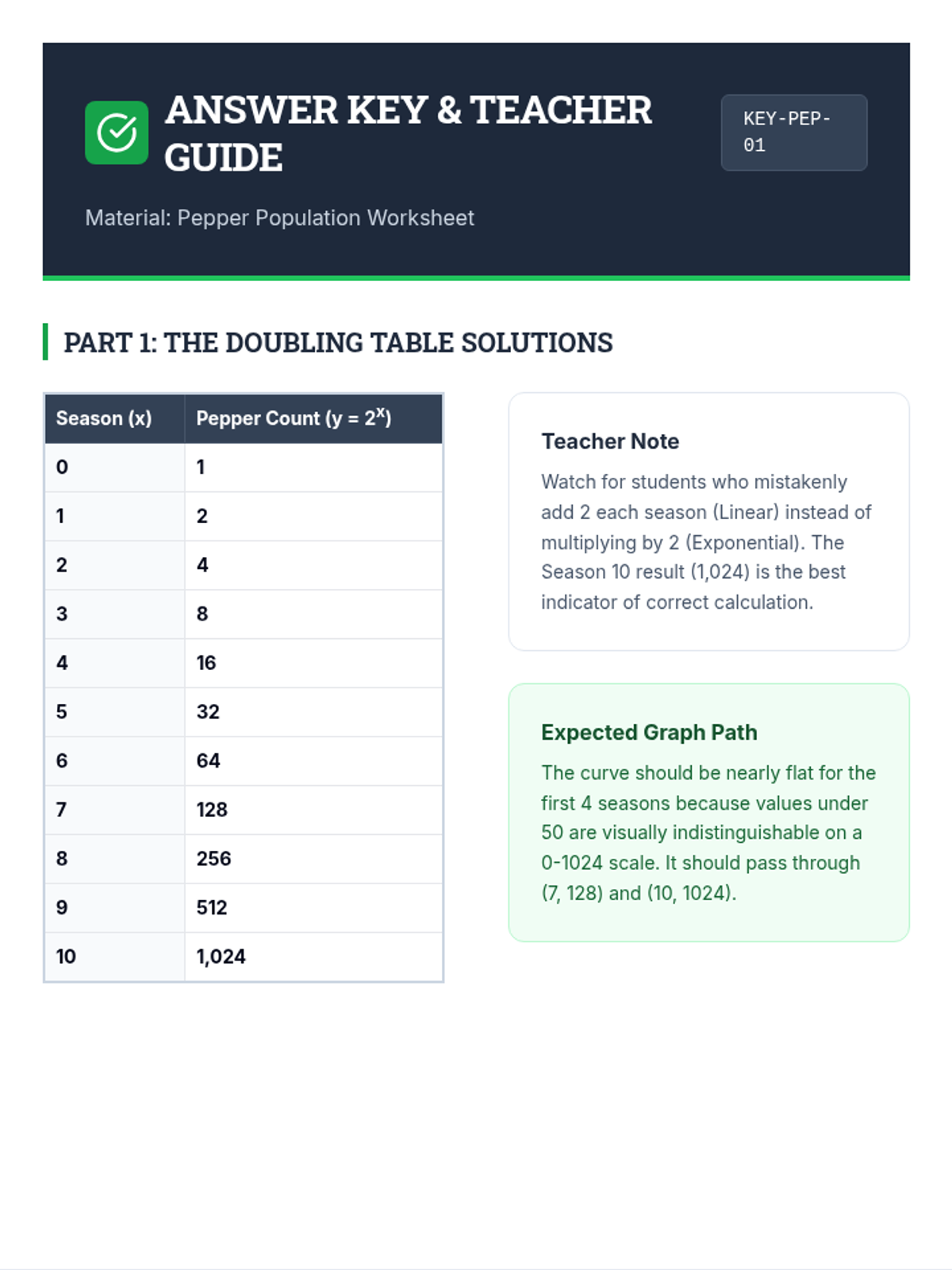
Teacher answer key and instructional guide for the Pepper Population Worksheet, including full data table solutions and analysis commentary.
A visually engaging slide deck explaining exponential growth using green peppers as a model, featuring clear diagrams of doubling and the resulting growth curve.
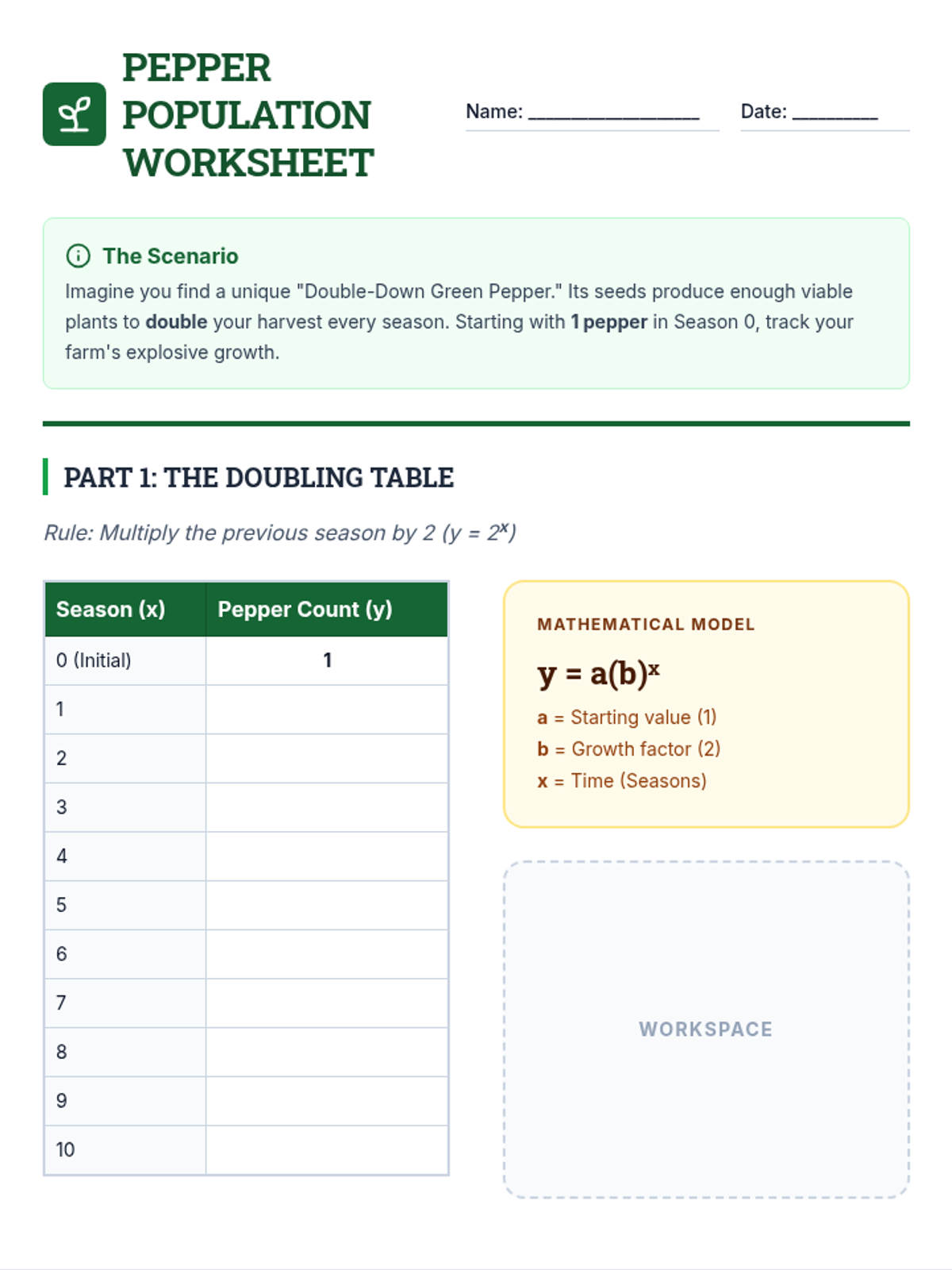
A comprehensive worksheet for students to calculate, graph, and analyze the exponential growth of a pepper population starting from a single fruit and doubling each season.
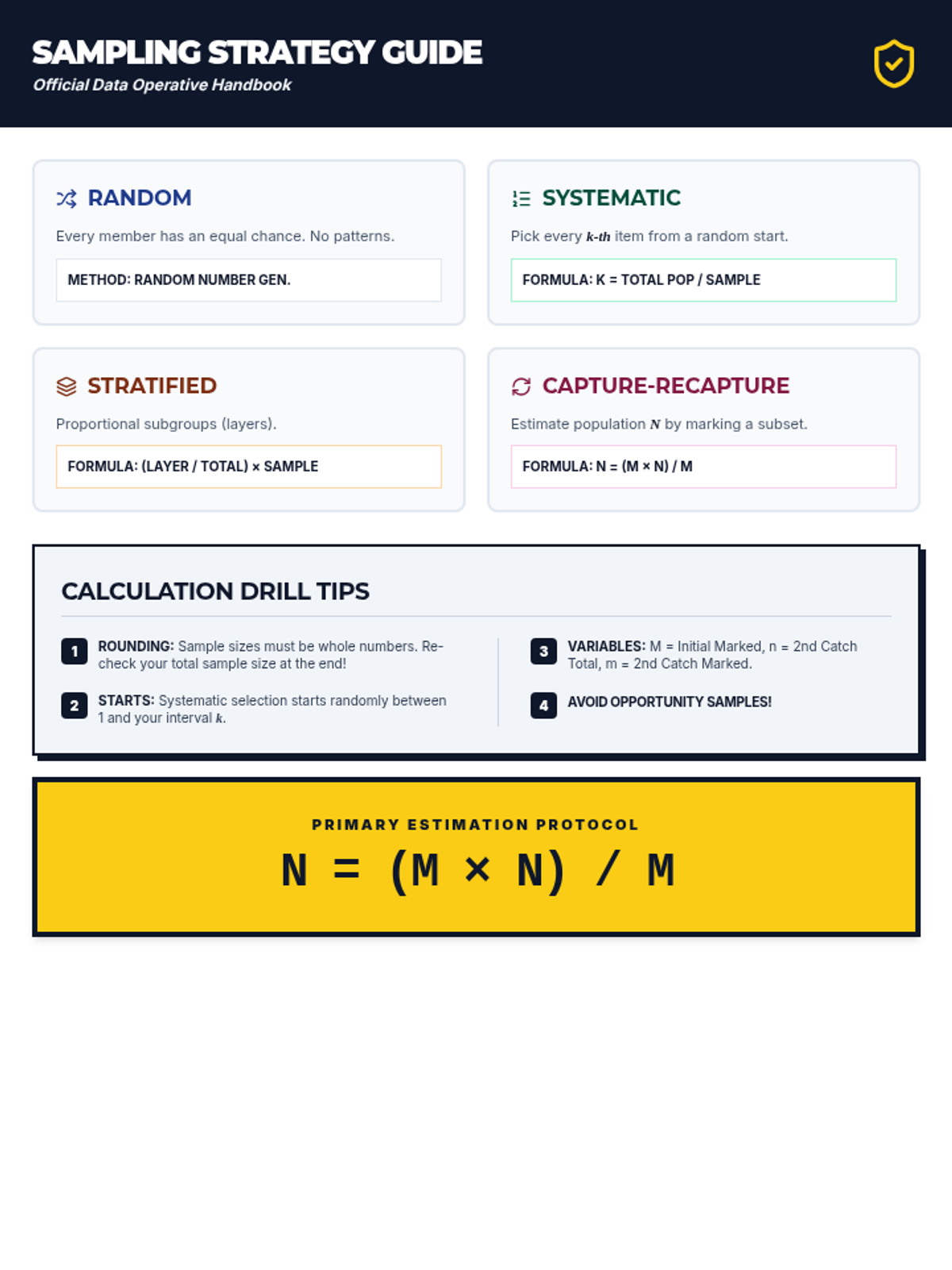
A quick-reference 'cheat sheet' for Year 8 students, summarizing the formulas and methods for random, systematic, stratified, and capture-recapture sampling.
A secret-agent themed slide deck for Year 8 students, explaining the theory and calculation methods for systematic, stratified, and capture-recapture sampling, featuring worked examples.
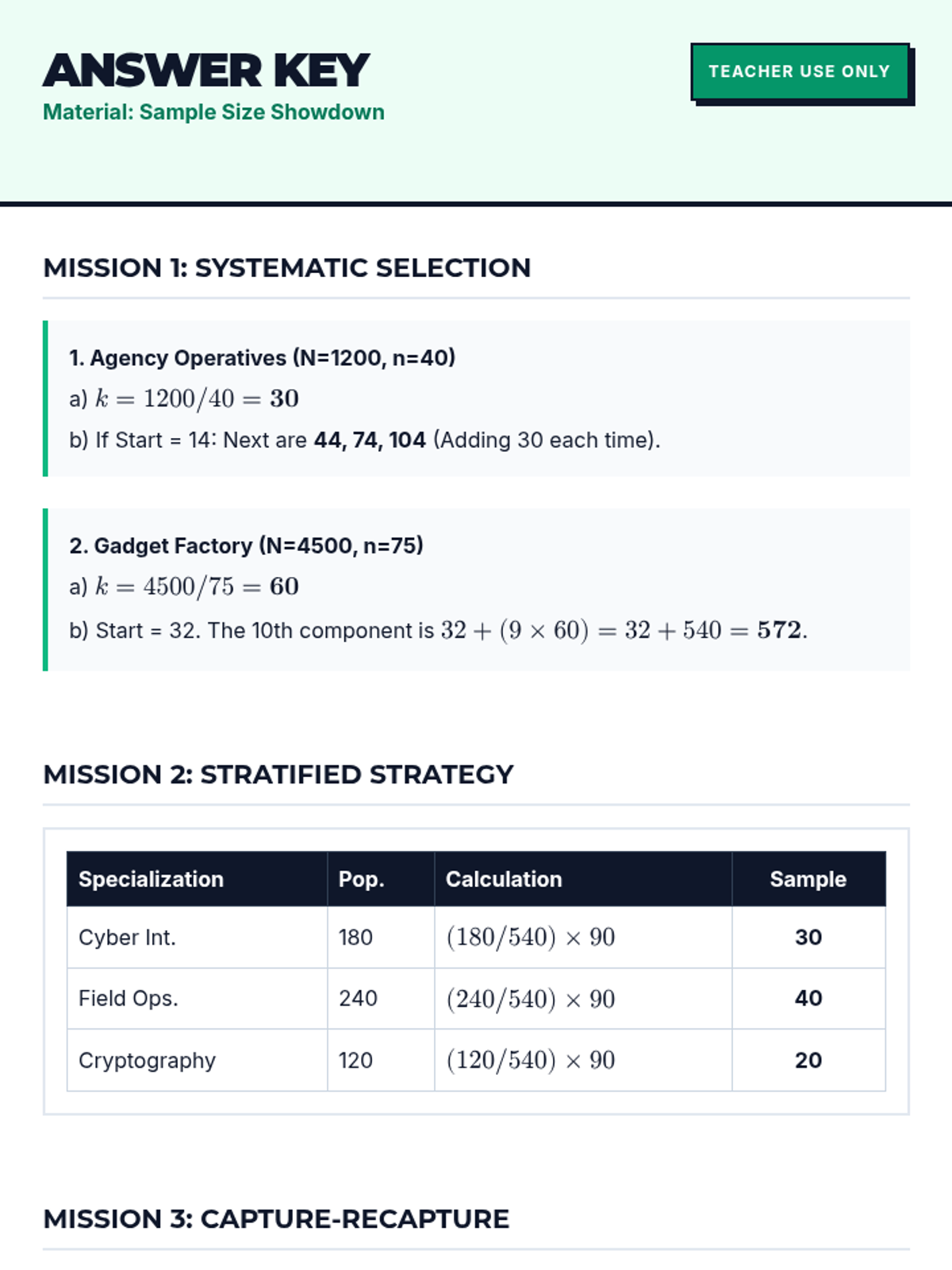
The answer key for the Sample Size Showdown worksheet, providing full solutions and calculations for all sampling problems.
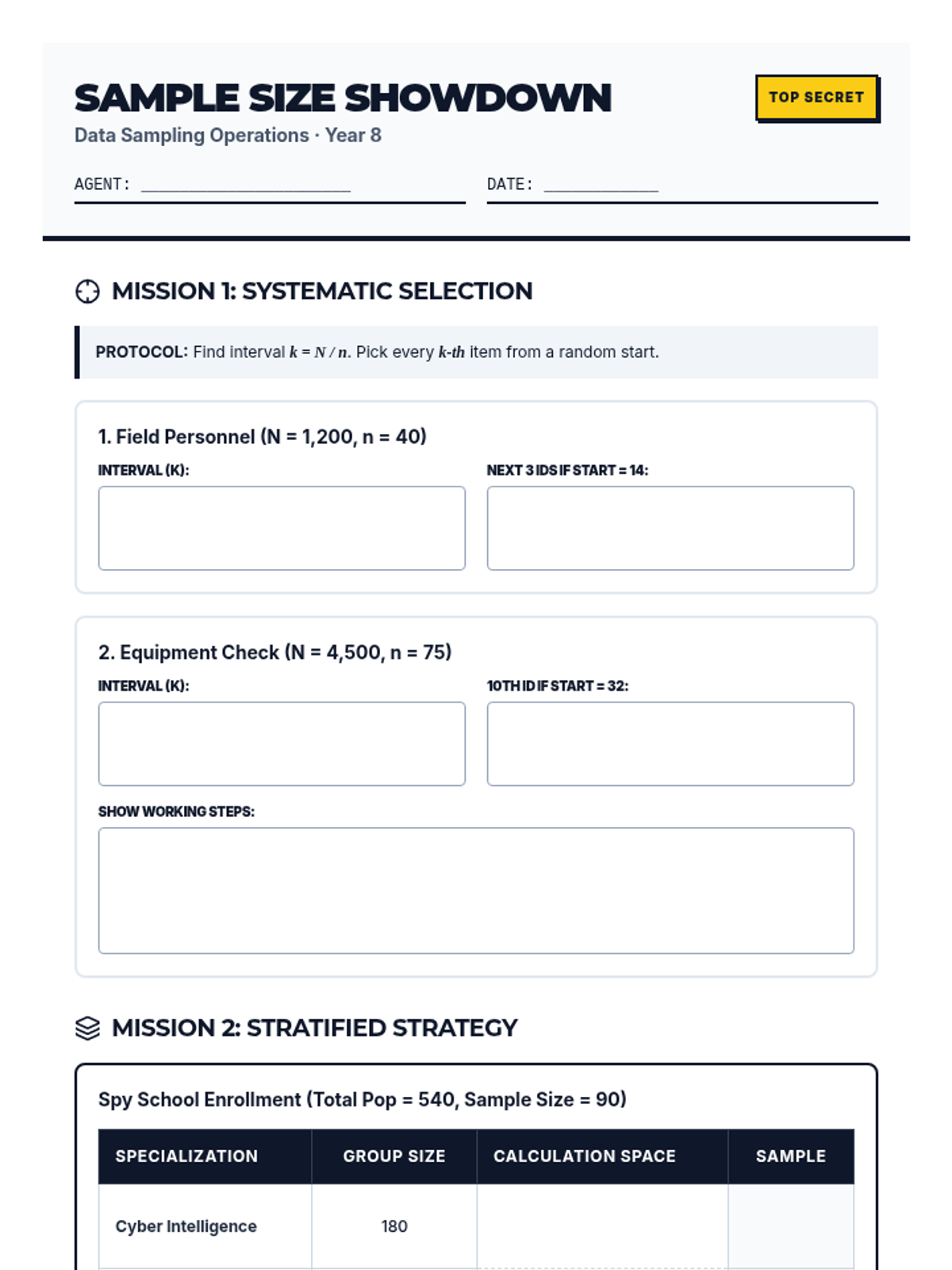
A Year 8 math worksheet titled 'Sample Size Showdown' focused on sampling calculations, including systematic, stratified, and capture-recapture methods, with a secret agent theme.