Teacher's answer key for the Pet Palace possessives worksheet. Updated with grammatical corrections, consistent capitalization, and improved text contrast. Optimized for single-page layout.
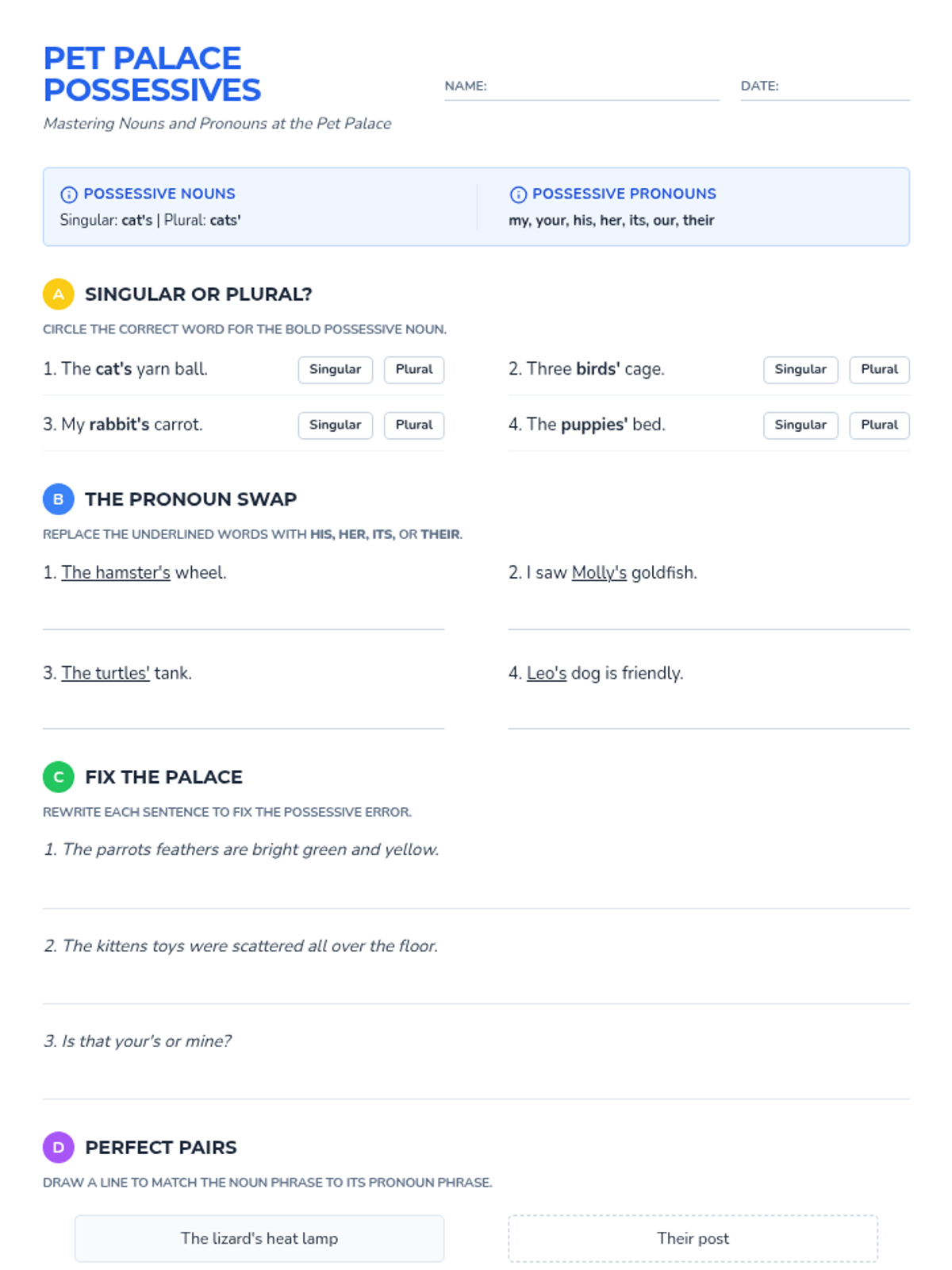
A pet-themed independent practice worksheet for third-grade students to practice singular and plural possessive nouns, possessive pronouns, sentence editing, and matching. Corrected grammar in matching section and optimized for single-page printing.
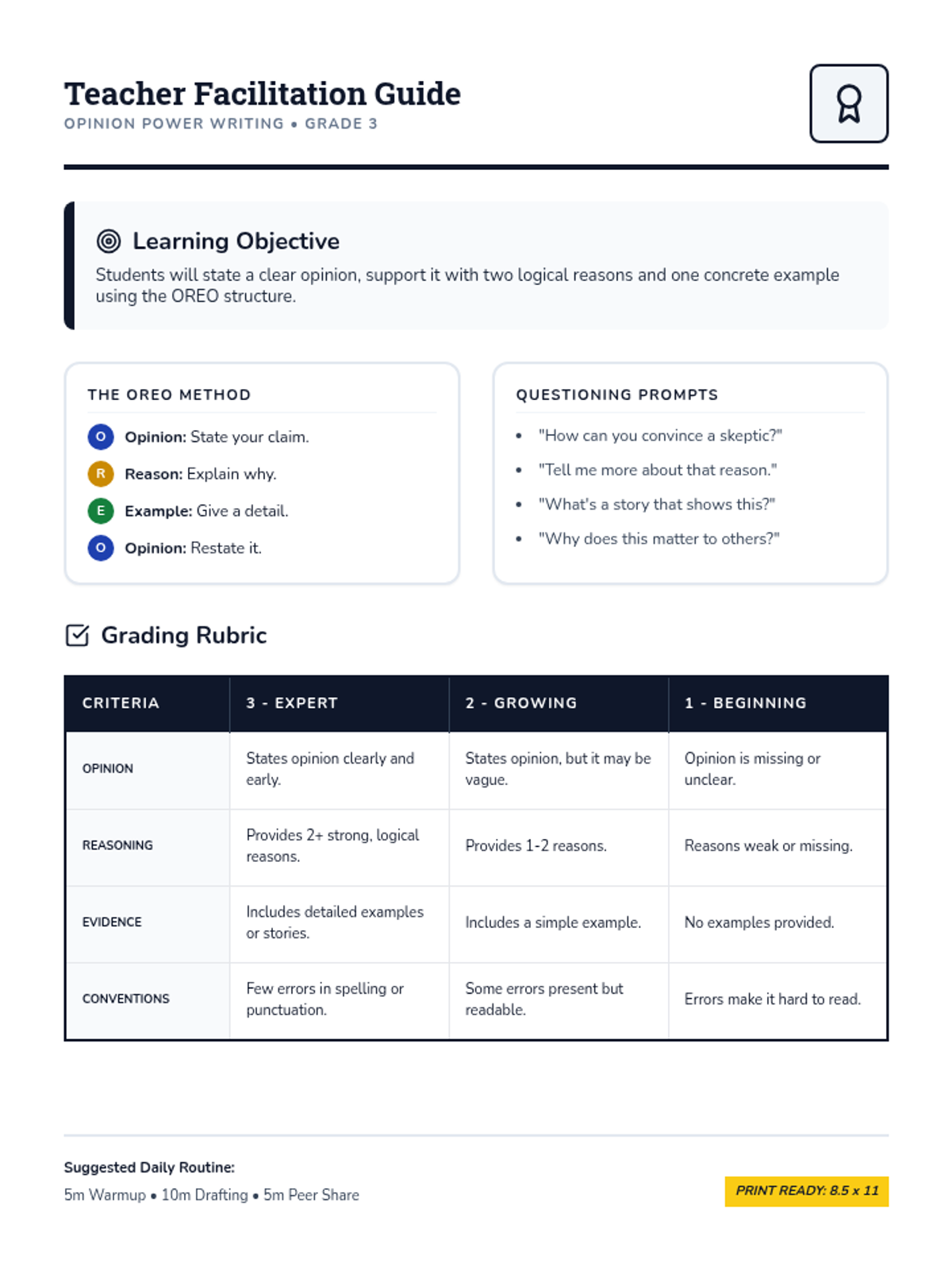
A teacher resource containing a grading rubric, learning objectives, and facilitation tips for the Opinion Power writing unit. Optimized for single-page 8.5x11 inch printing.
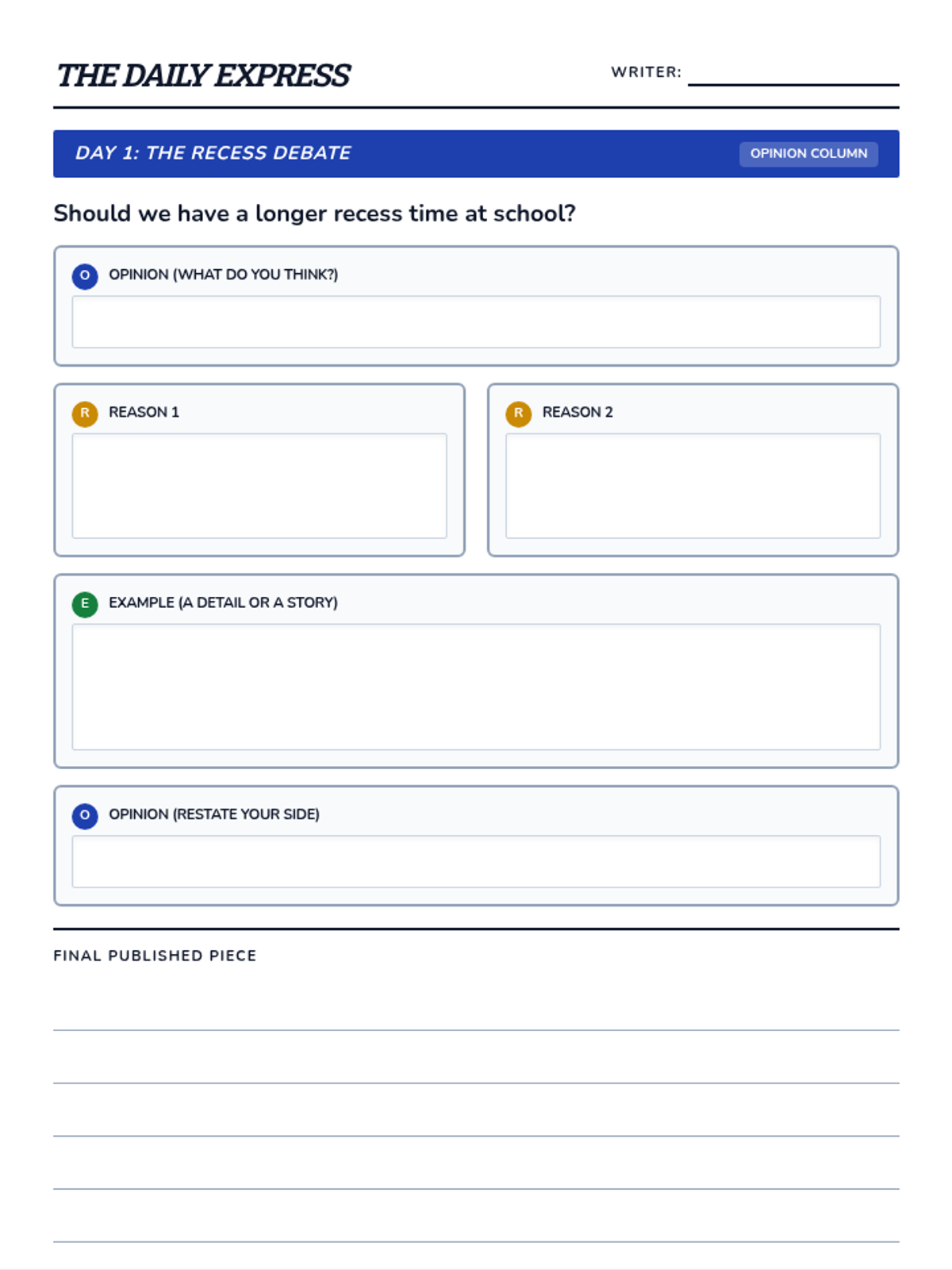
A 4-page student worksheet packet themed as a newspaper "Opinion Column". Each page contains a specific prompt (recess, season, pets, super power), an OREO graphic organizer, and wide-ruled space for a final draft. Layout optimized for 4 pages on 8.5x11 inch paper.
An engaging slide presentation for Grade 3 that introduces the OREO method of opinion writing and presents four daily writing prompts: longer recess, favorite season, best pet, and best super power.
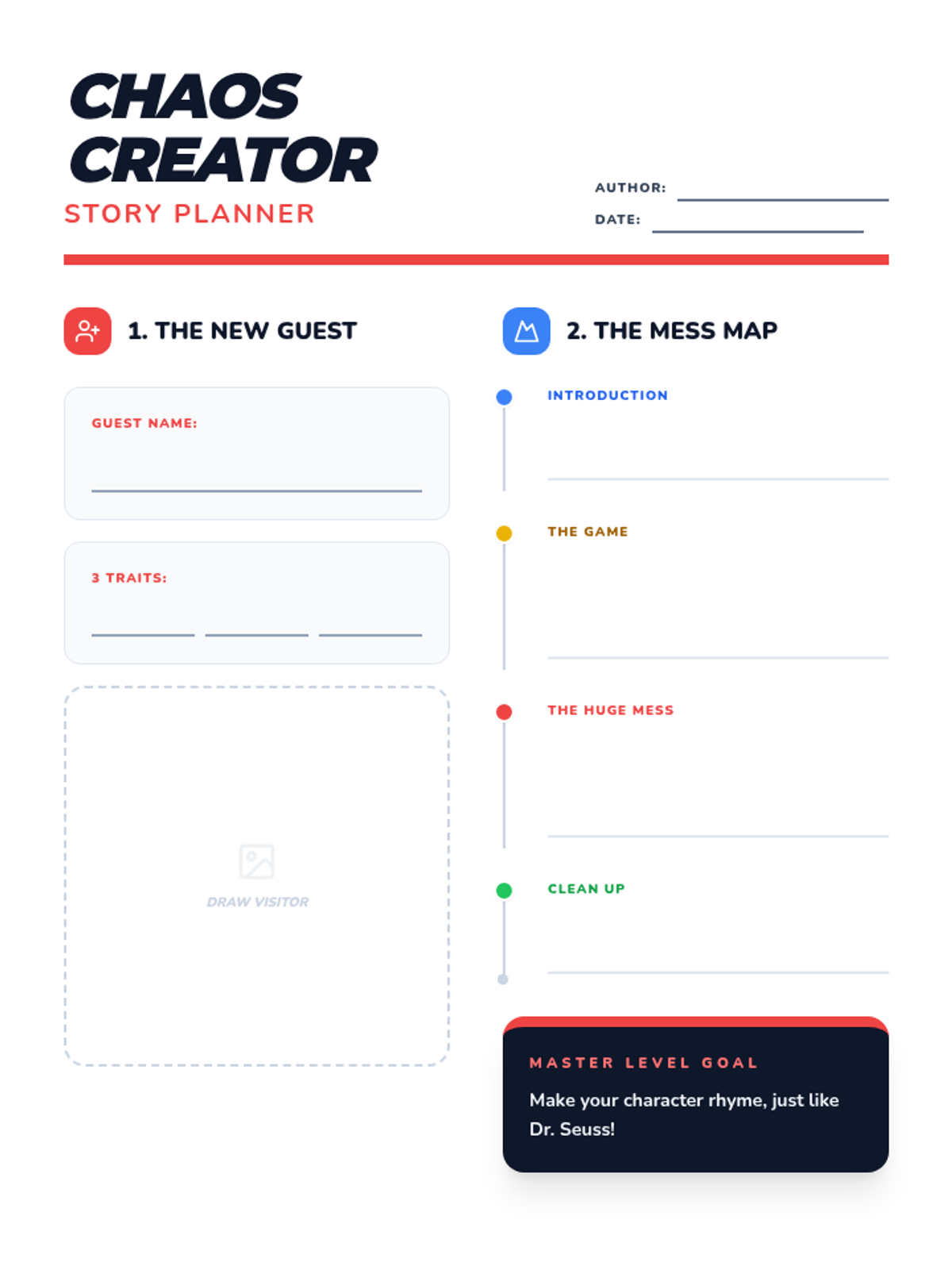
A high-contrast narrative planning document for students to design their own visitor and map out a Seussian story arc. Optimized for printable use with white backgrounds and generous writing space.
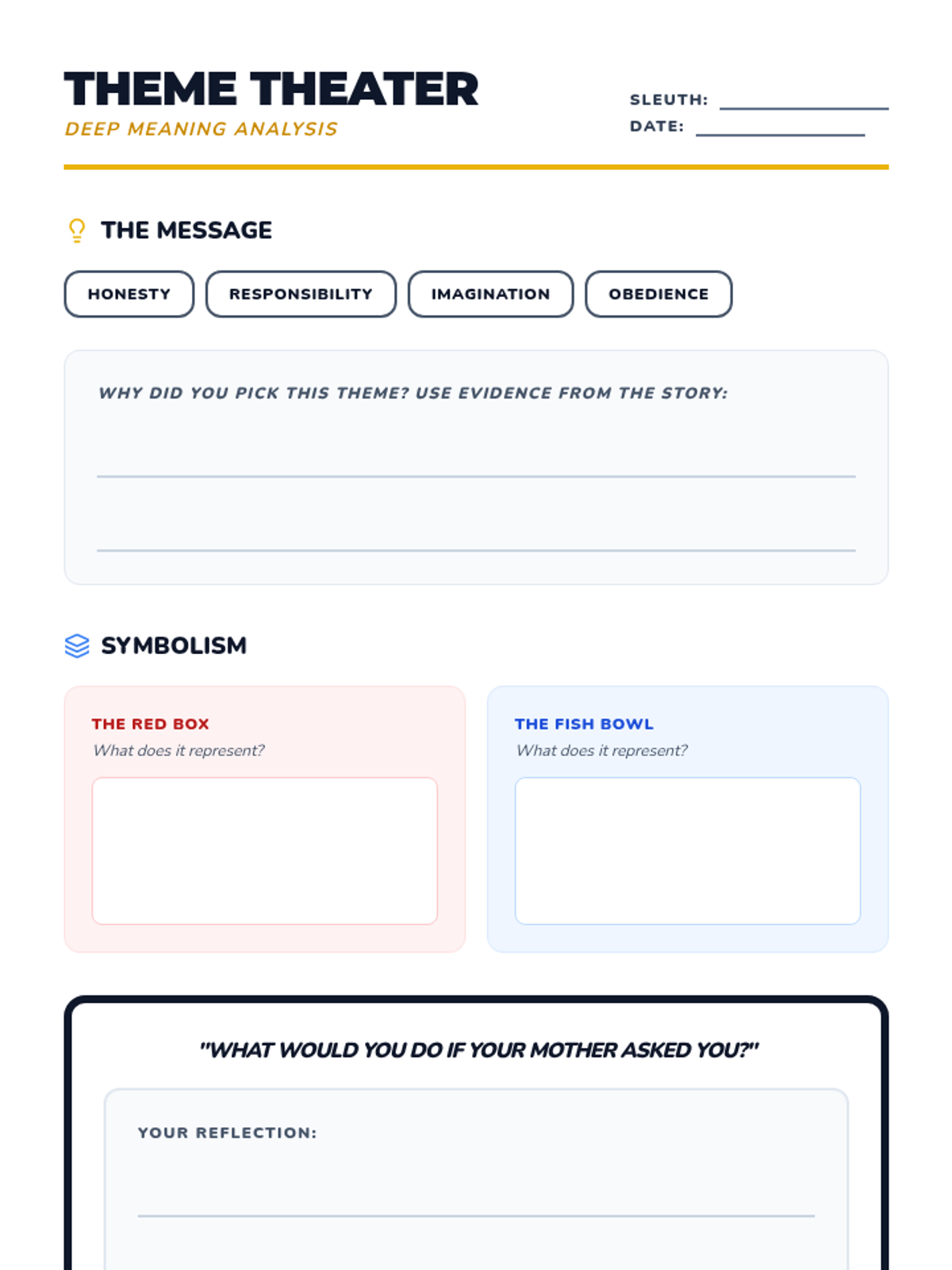
A deep-dive analysis worksheet focusing on theme selection, symbolism (the red box and fish bowl), and personal reflection on the story's concluding question. Optimized for one-page layout and legible work areas.
Instructional slides defining theme and exploring the symbolism of the "Mess" in 'The Cat in the Hat', concluding with a discussion on the final moral question. Visuals optimized for balance and readability.
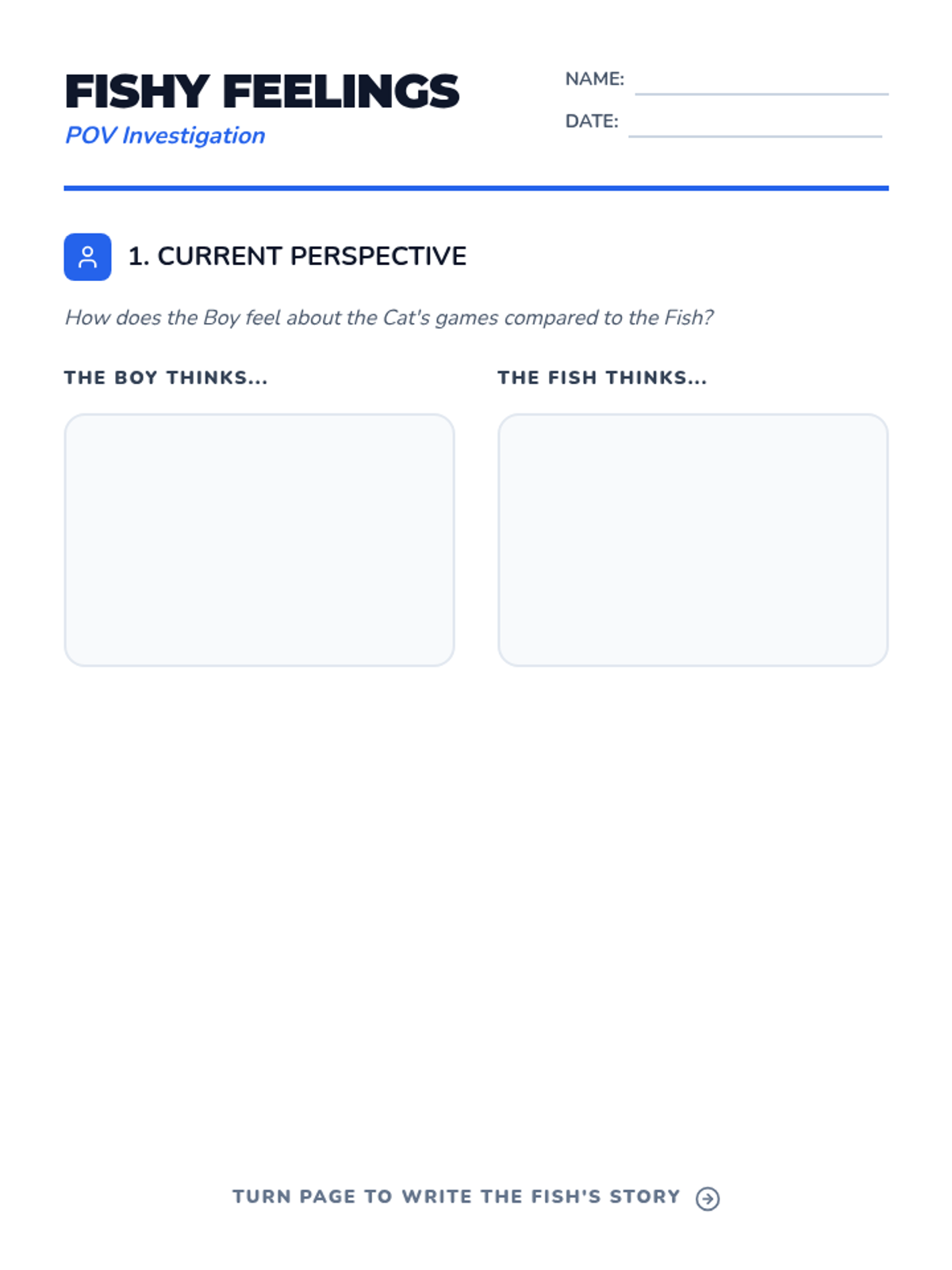
A creative writing and analysis worksheet where students compare character perspectives and rewrite a key scene from the Fish's first-person point of view. Optimized for proper page flow and student work space.
Instructional slides comparing first and third person point of view, specifically focusing on how the Fish and the Cat perceive the events of the story differently.
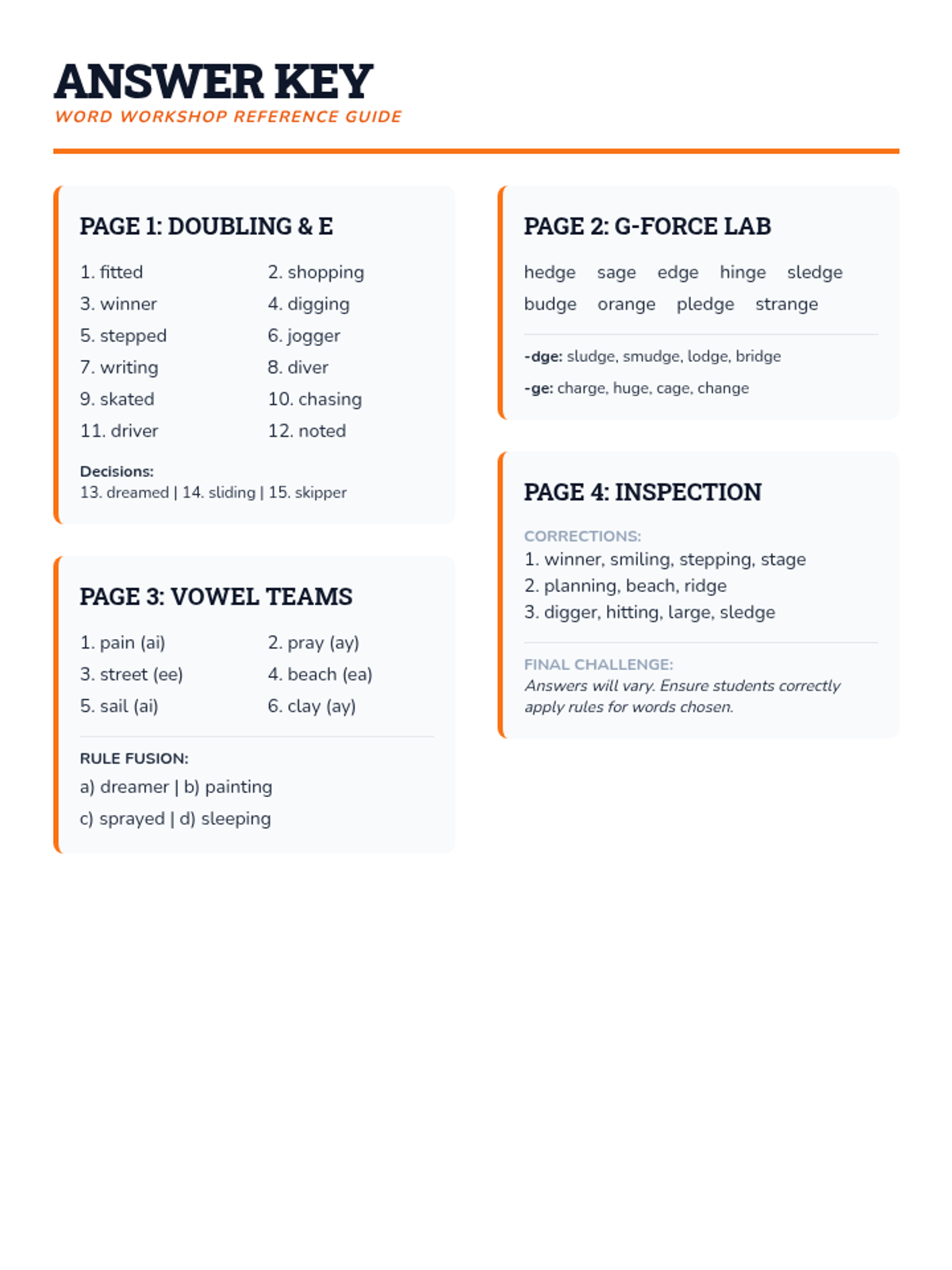
Complete single-page teacher answer key for the Word Workshop spelling rules packet, updated to match the new word set. Revised for efficient layout and clear organization.
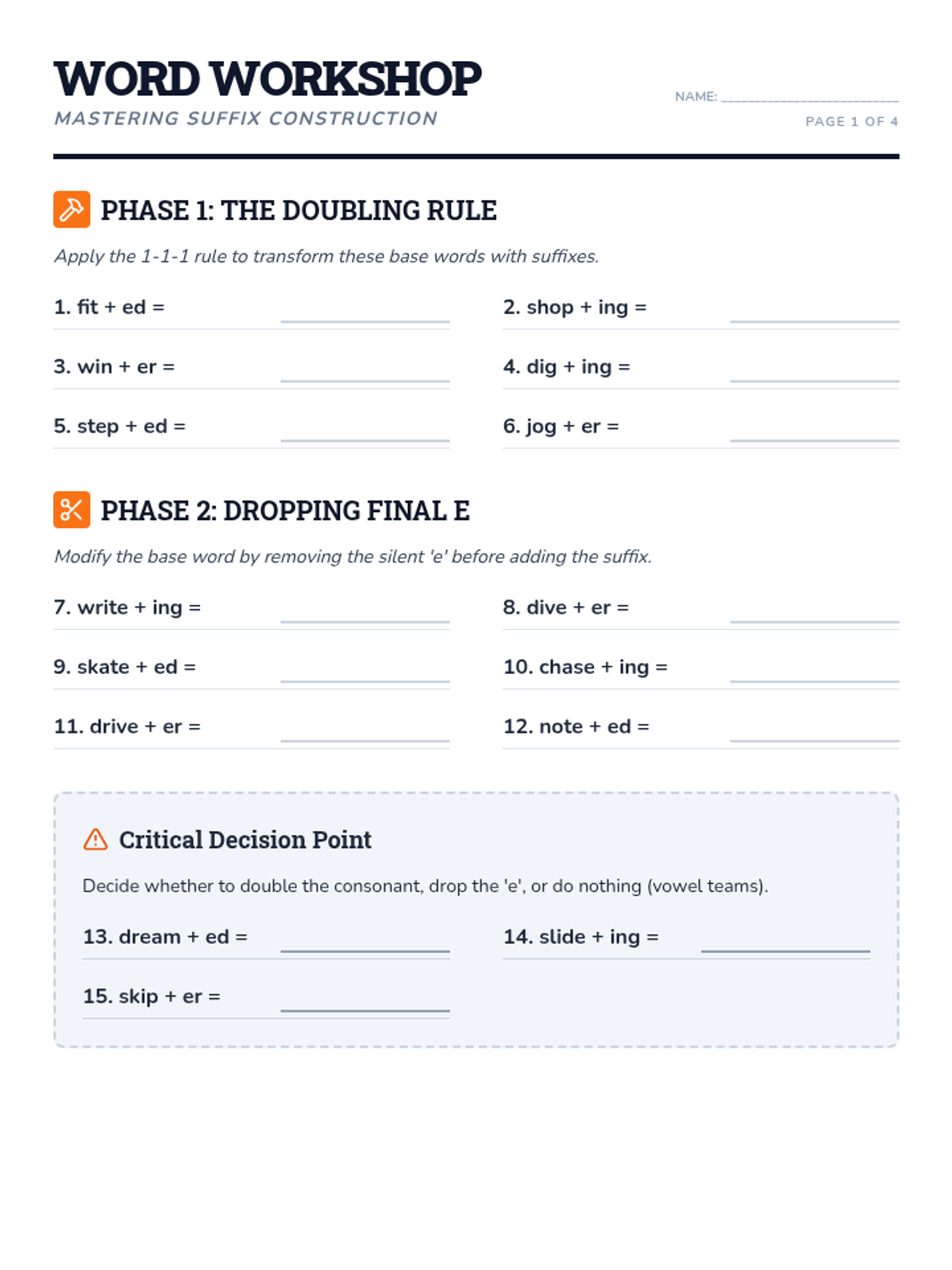
A 4-page practice packet for spelling rules including doubling, dropping final e, dge/ge distinction, and vowel teams. Updated with a fresh set of words for continued practice. Designed with a 'Word Workshop' theme for grade-appropriate engagement. Revised for better page breaks and layout consistency. Answer areas set to white for contrast. Added name lines to all pages for student accountability.
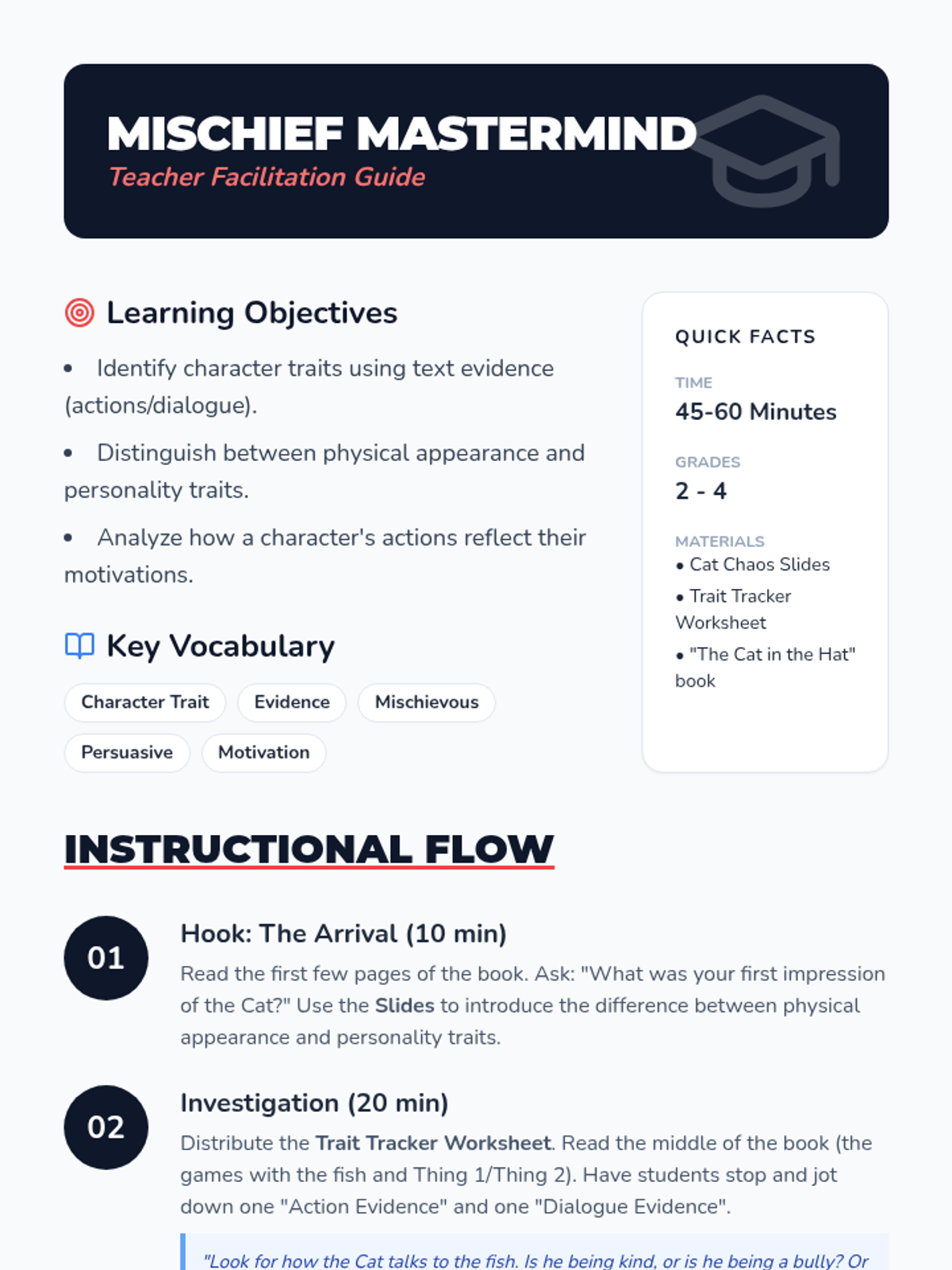
A comprehensive guide for teachers to lead the 'Cat Chaos' lesson, including learning objectives, a timed lesson flow, discussion prompts, and an answer key with trait examples.
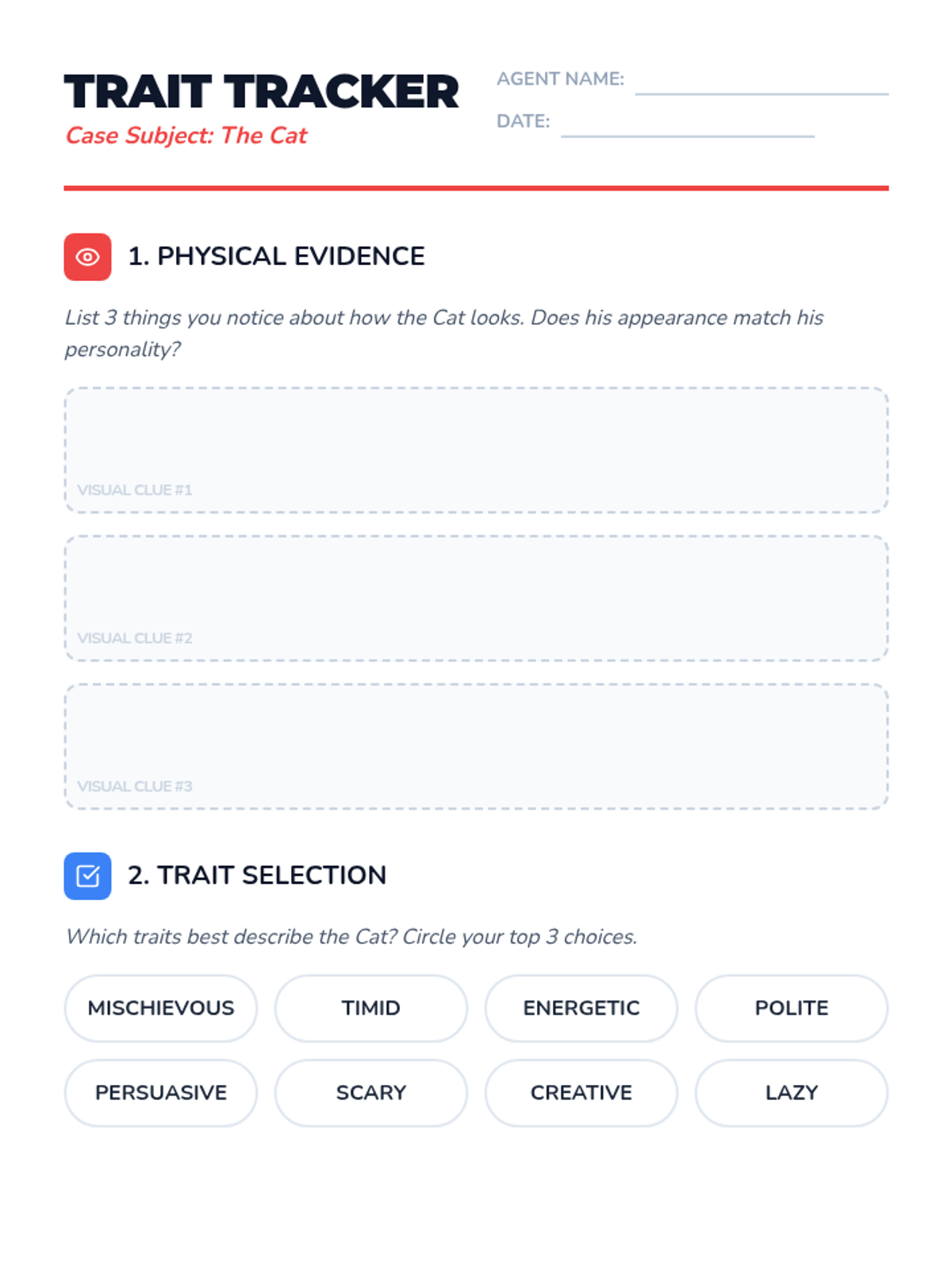
A structured investigation worksheet for students to track the Cat's physical attributes, select character traits, provide textual evidence, and reflect on his development. Optimized for handwriting space and proper page flow.
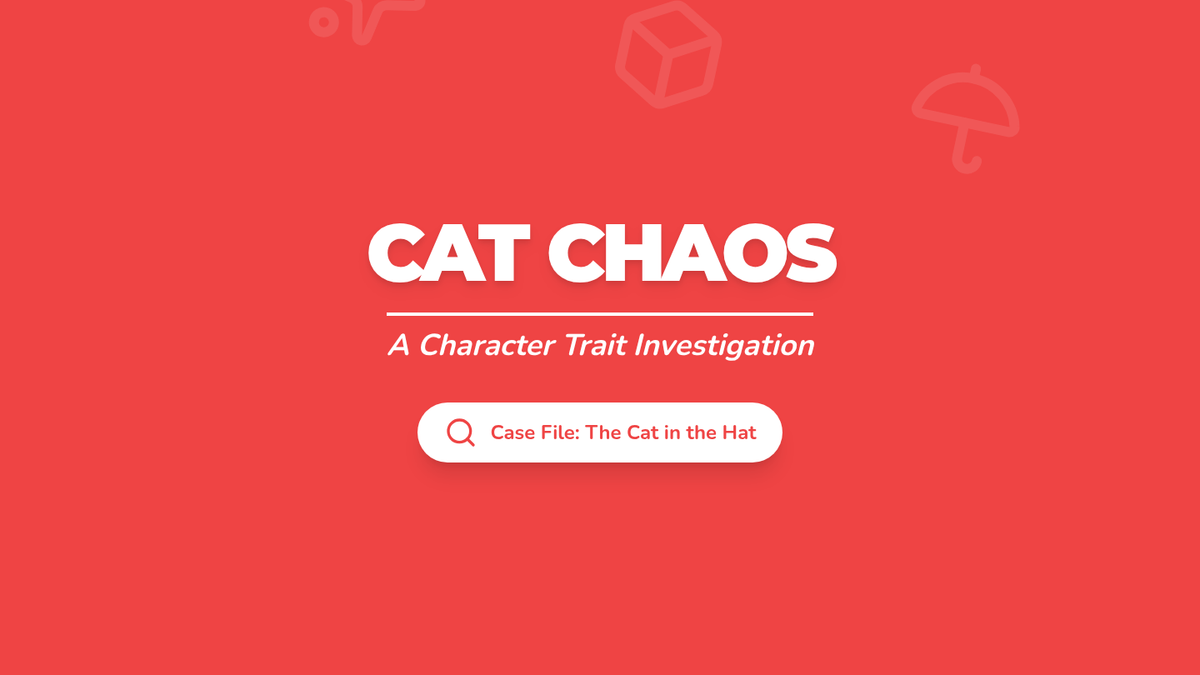
Vibrant, instructional slides that introduce character traits and evidence through the lens of 'The Cat in the Hat'. Includes definitions, evidence examples, and a classroom debate prompt.
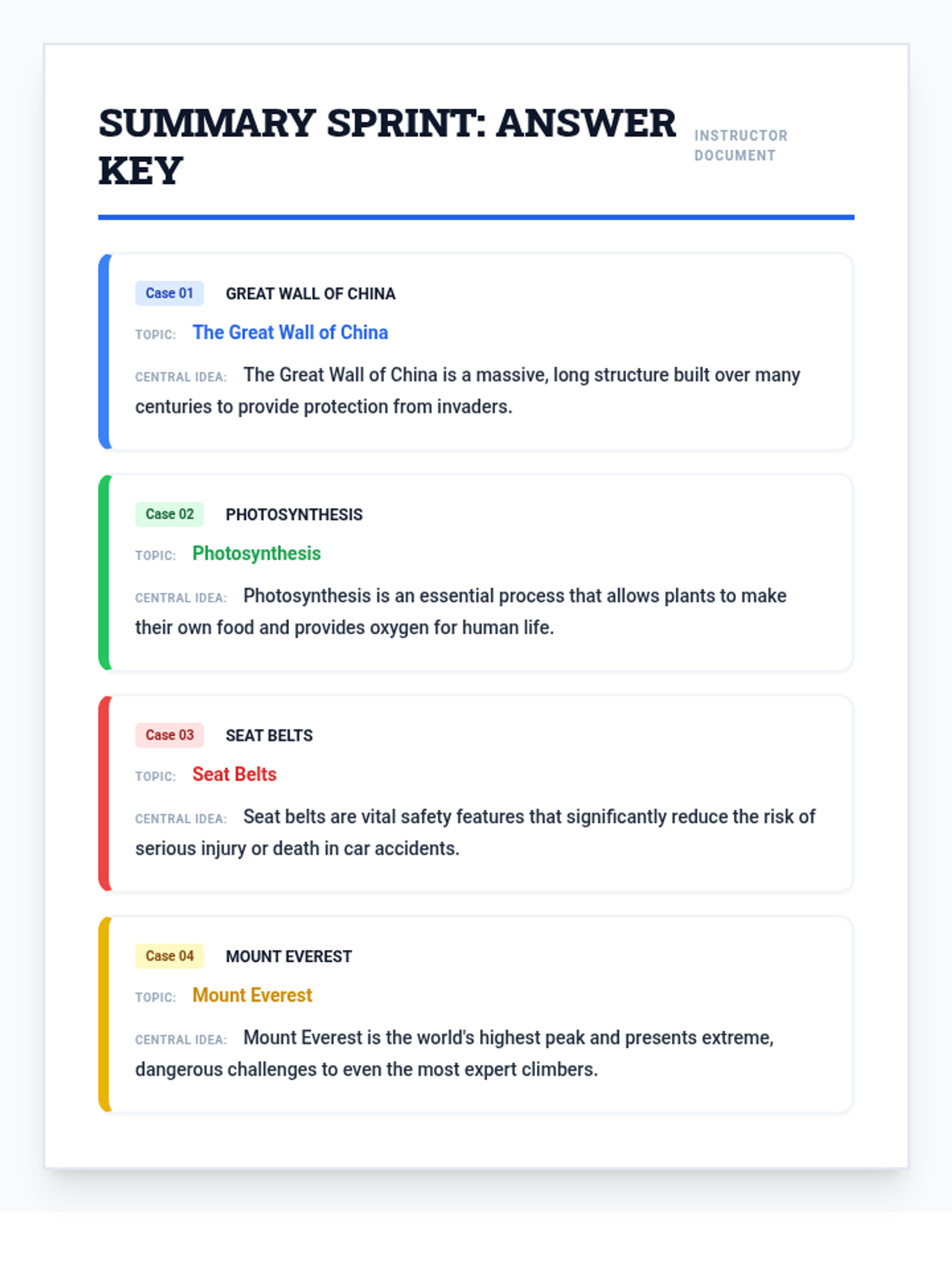
Answer key for the Summary Sprint Practice, providing model topics and central ideas for all four mini-cases. Revised for better legibility and printability.
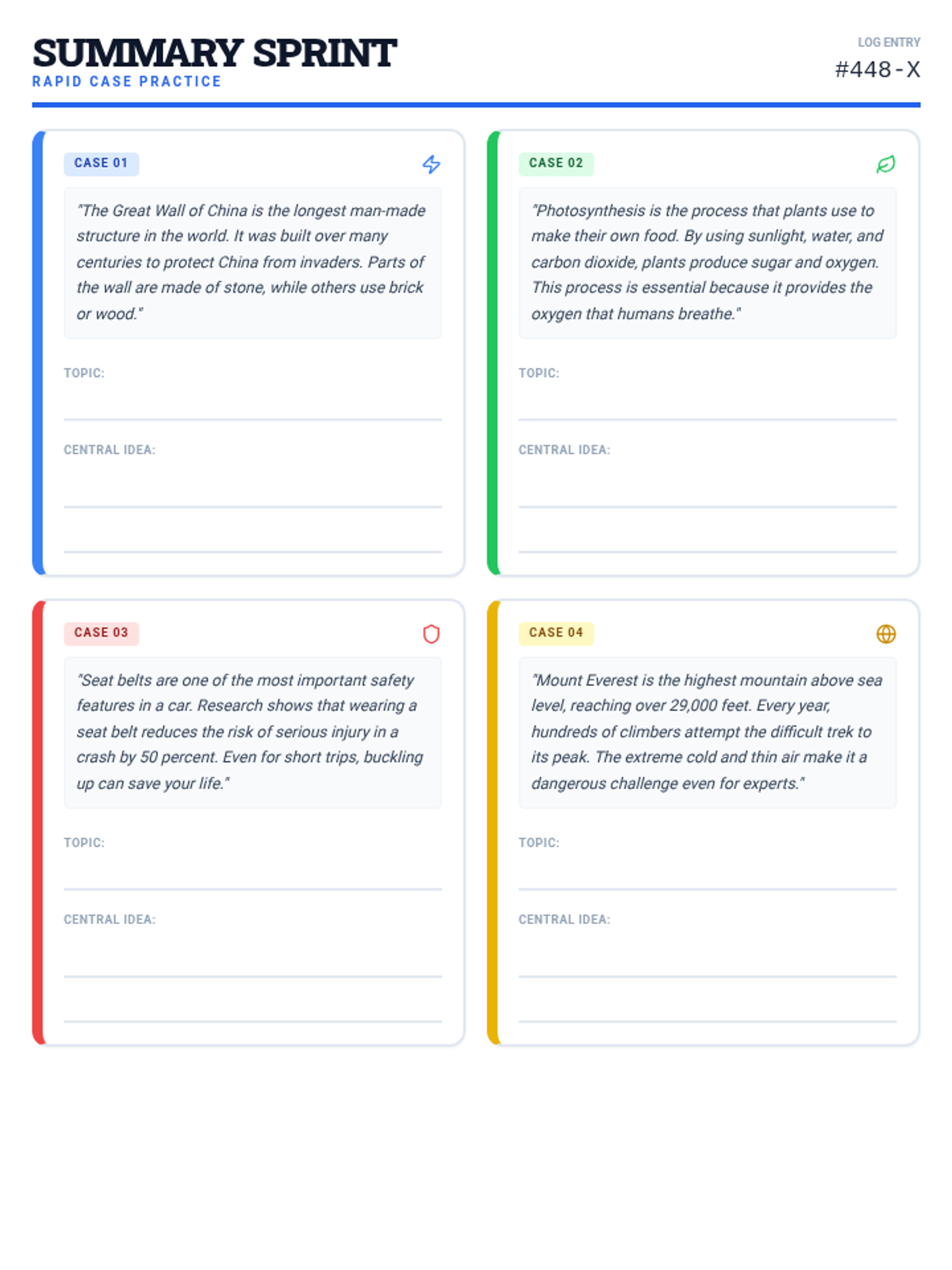
A rapid practice worksheet with four short 'mini cases' for students to identify topics and central ideas quickly, reinforcing the distinction between the two. Revised for better legibility and printability.
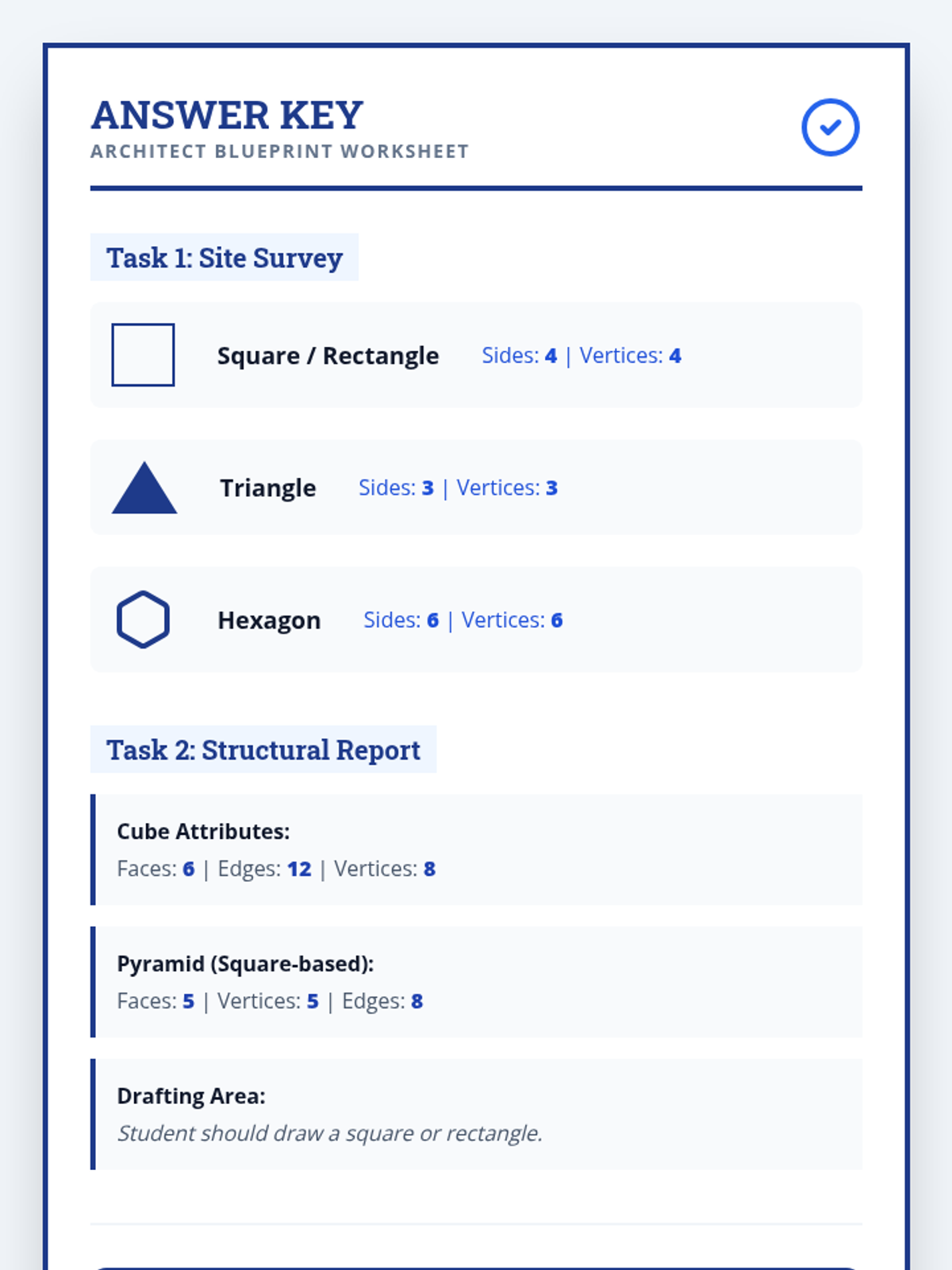
An answer key for the Architect Blueprint Worksheet, providing correct classification of polygons and 3-D solid attributes, along with grading notes for the creative design portion.
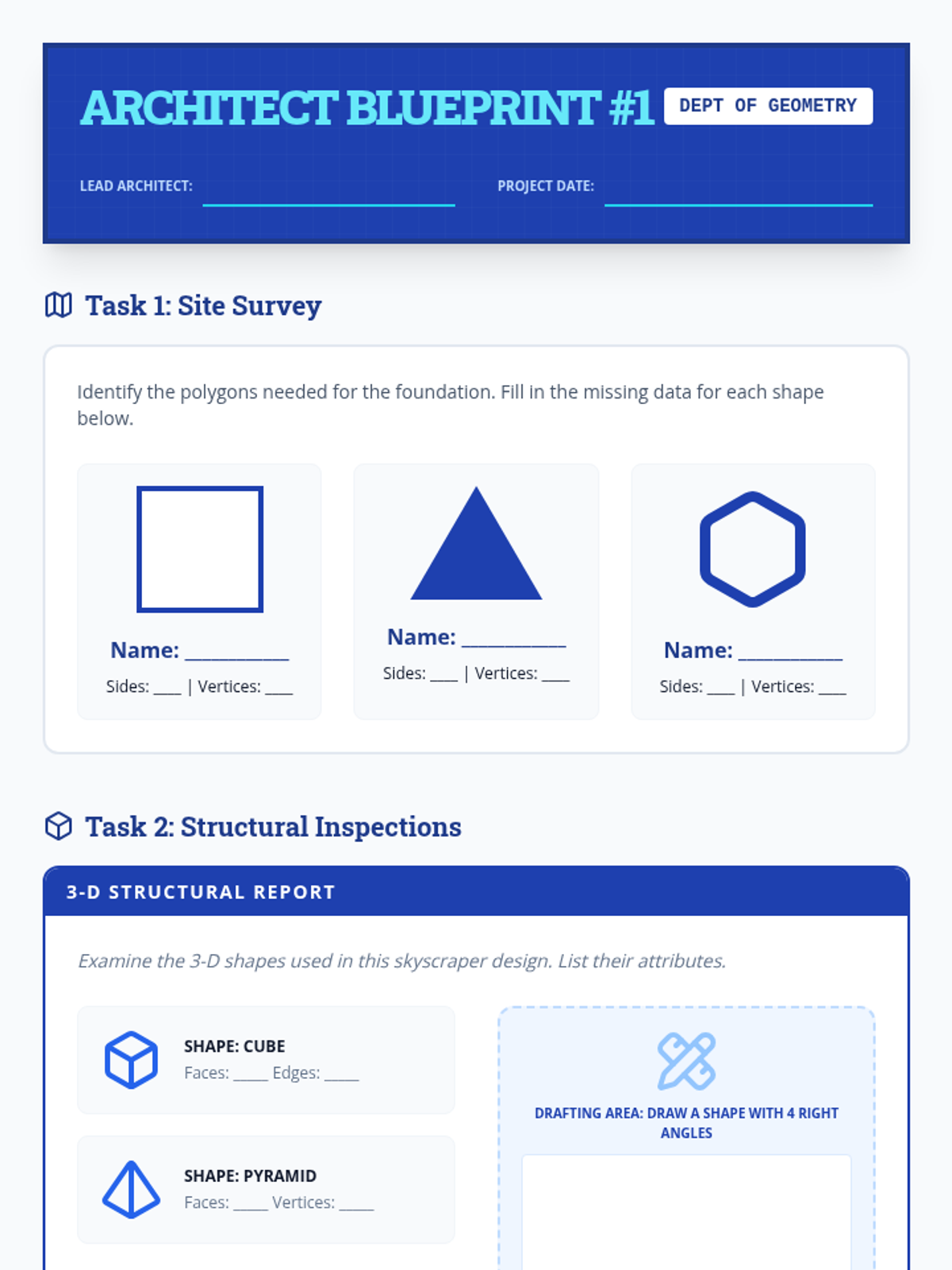
An architect-themed geometry worksheet where students identify 2-D polygons and their attributes, analyze 3-D solids, and design their own structure using geometric shapes.
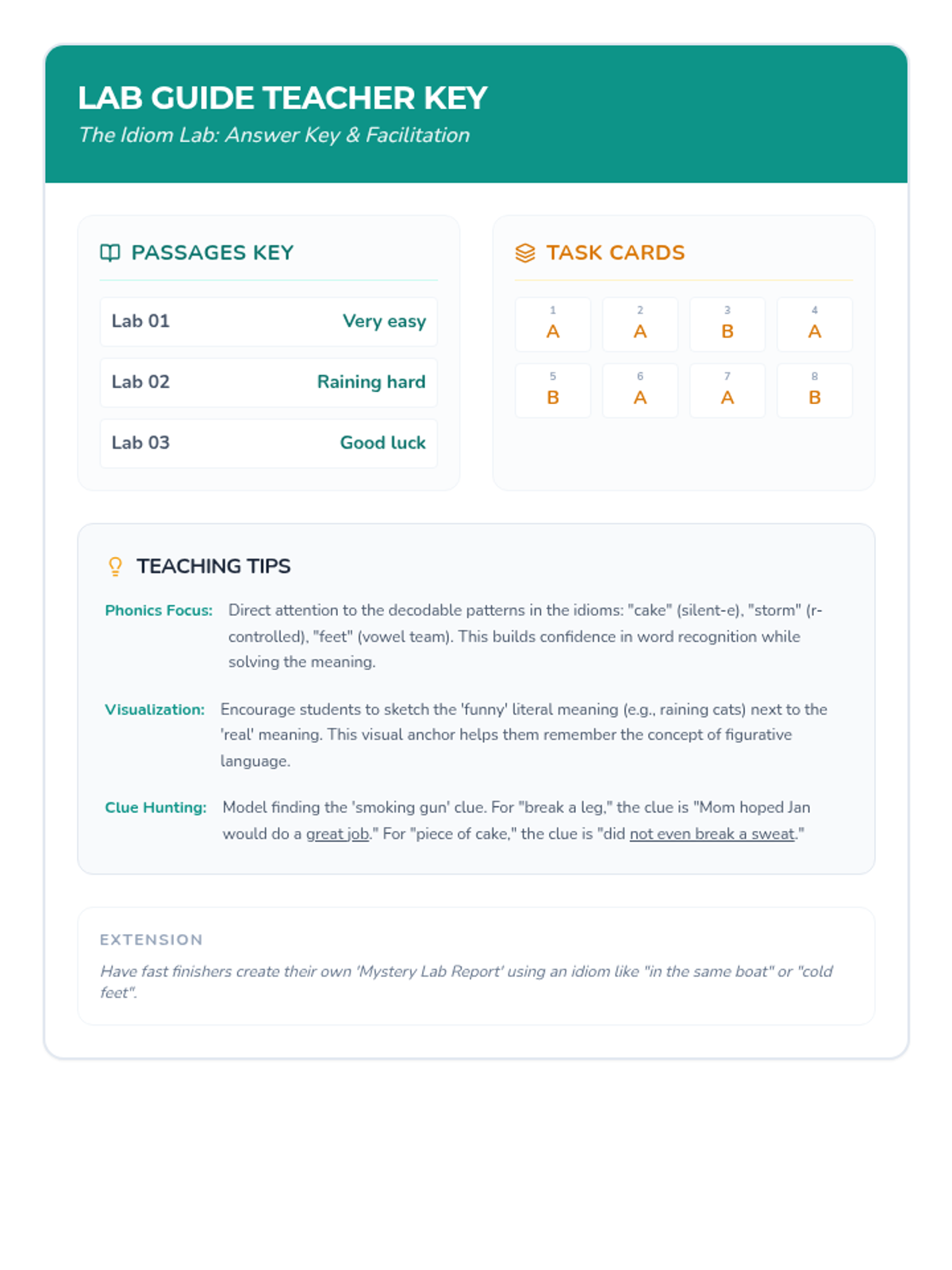
A comprehensive teacher resource containing the answer keys for the reading passages and task cards, along with instructional tips for supporting struggling readers.
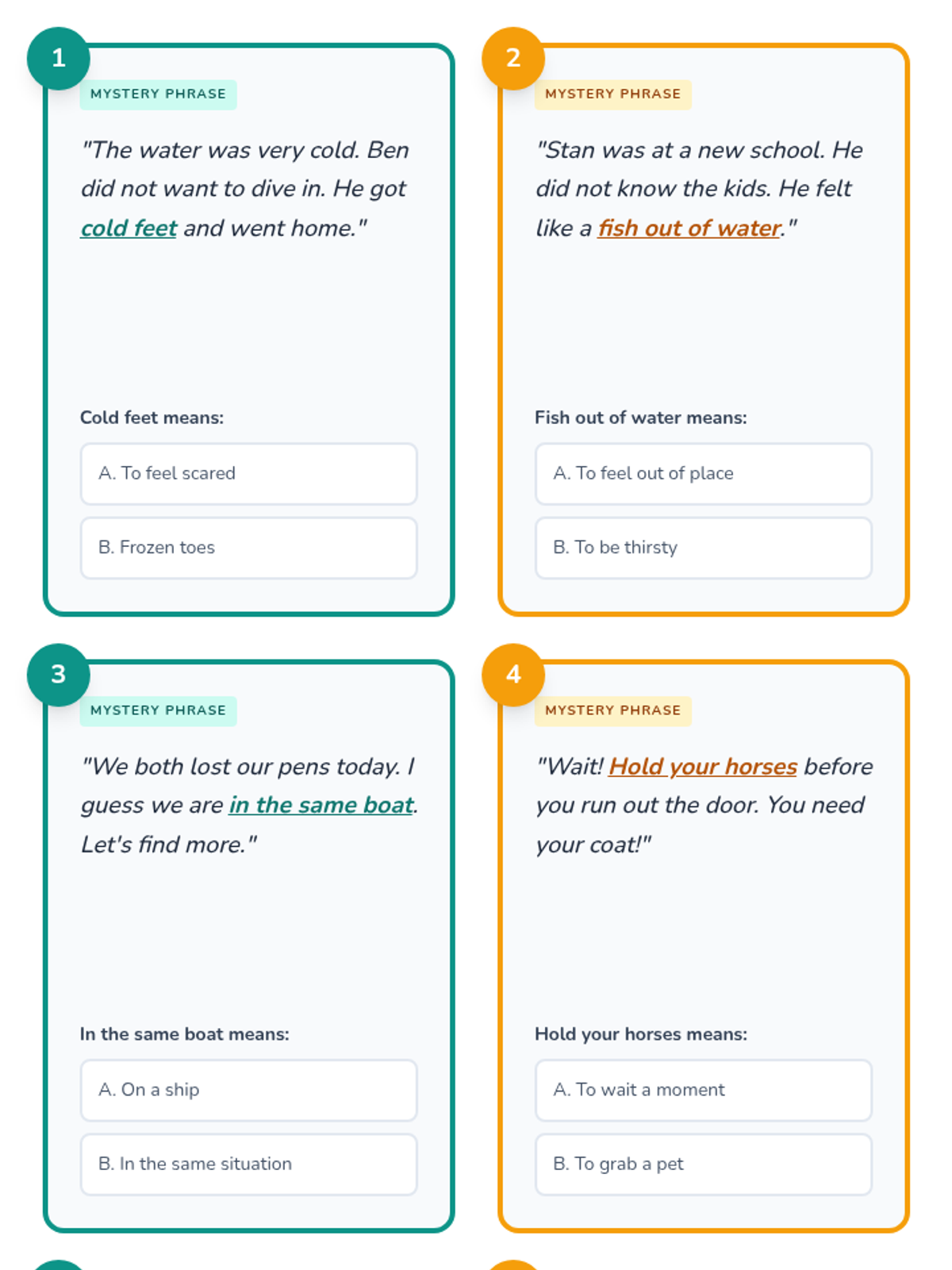
A set of eight decodable task cards designed for struggling readers to practice identifying the meaning of idioms using context clues. Each card features a short scenario and a two-choice multiple-choice question.
An architectural-themed slide deck for teaching geometry. Introduces polygons, vertices, edges, and 3-D solids with clear visual examples and a cohesive 'blueprint' aesthetic.
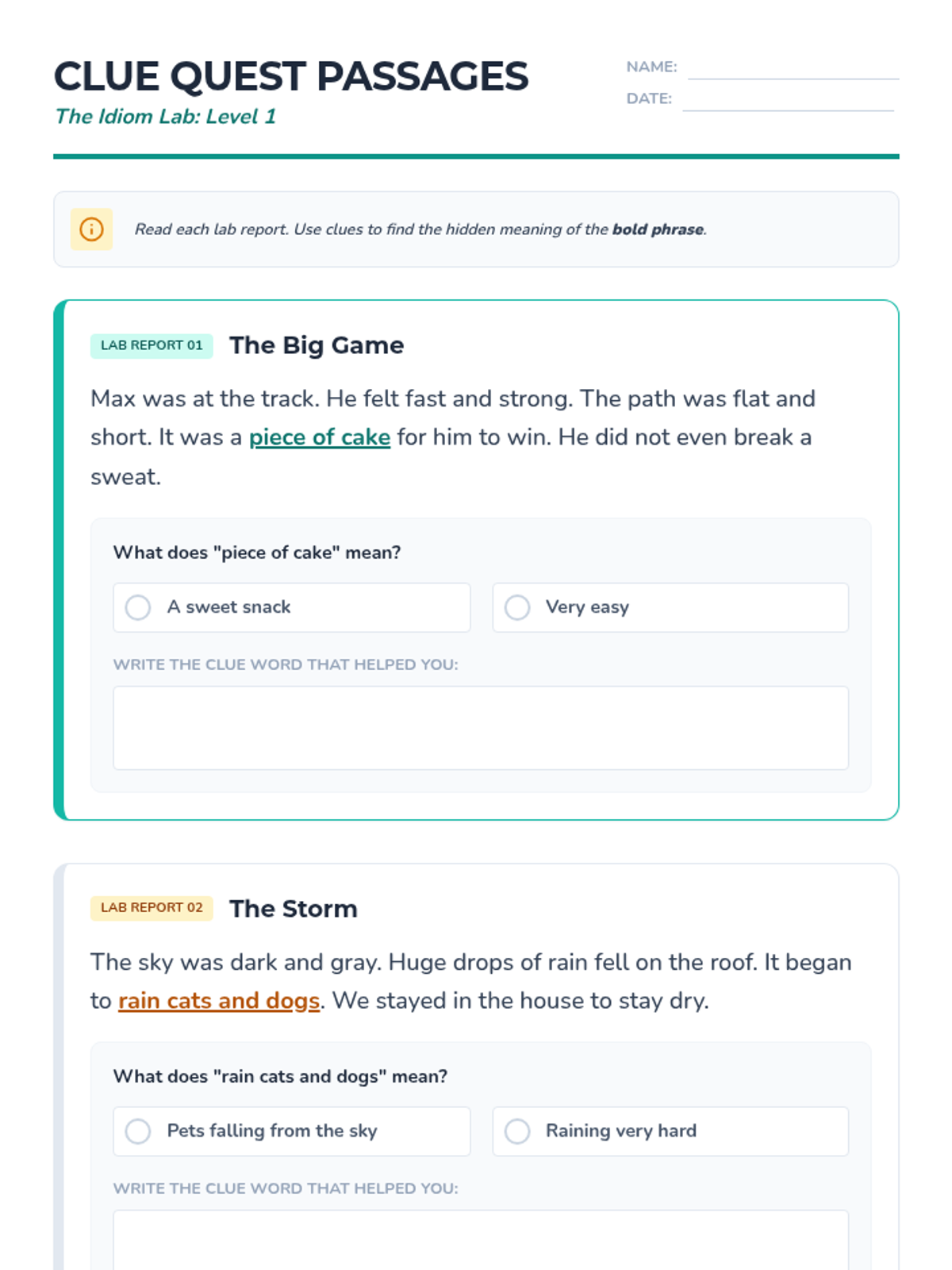
A set of three short reading passages with decodable text focused on idioms. Each passage includes a multiple-choice question and a space for students to cite evidence from the text.
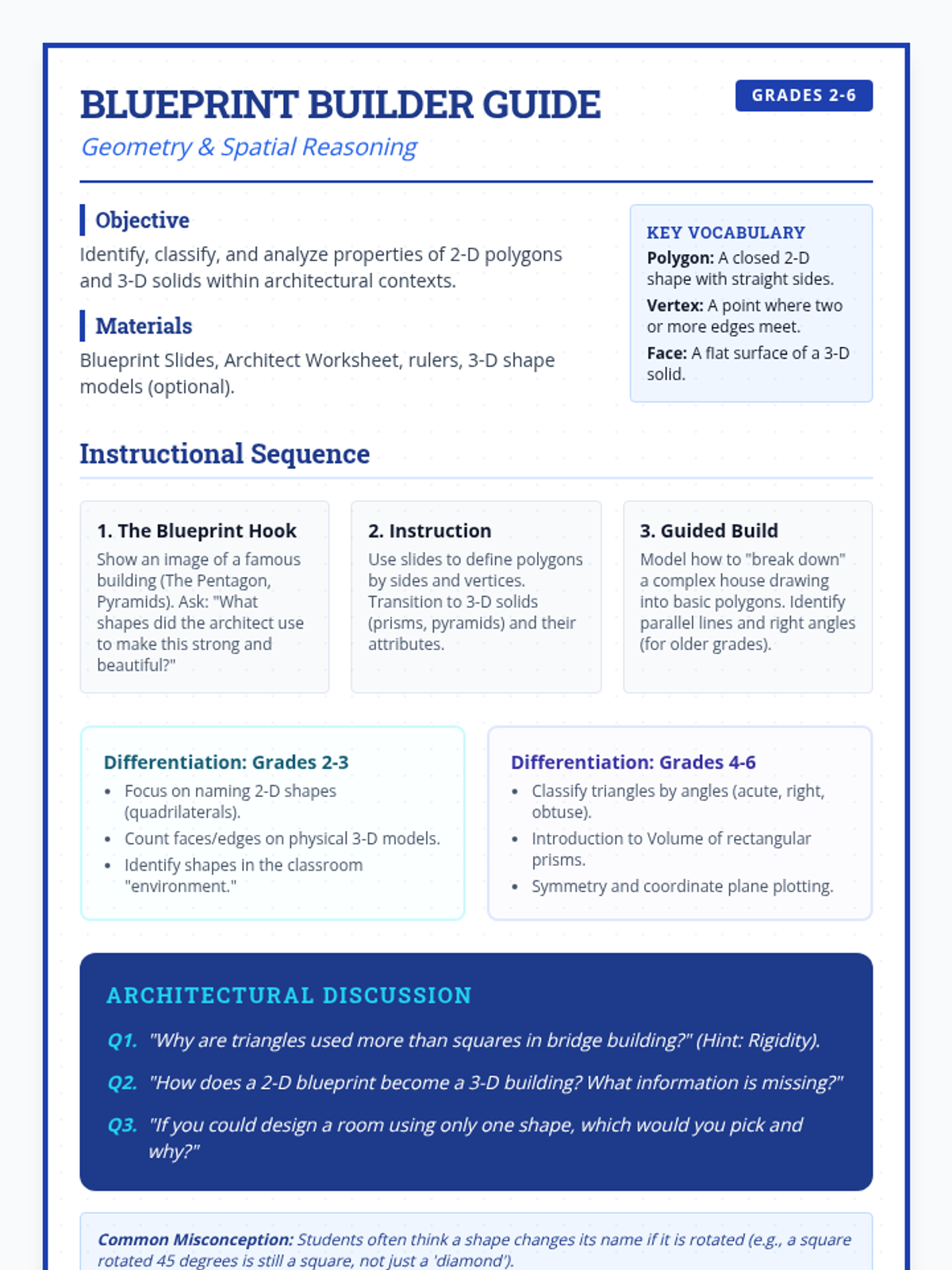
A comprehensive facilitation guide for a geometry lesson themed around architecture. Provides step-by-step instructions, grade-specific differentiation for grades 2-6, and key discussion prompts about 2-D and 3-D shapes.
An introductory slide deck for the 'Idiom Lab' lesson, featuring a consistent visual theme and clear instructional content on literal vs. figurative language for struggling readers.
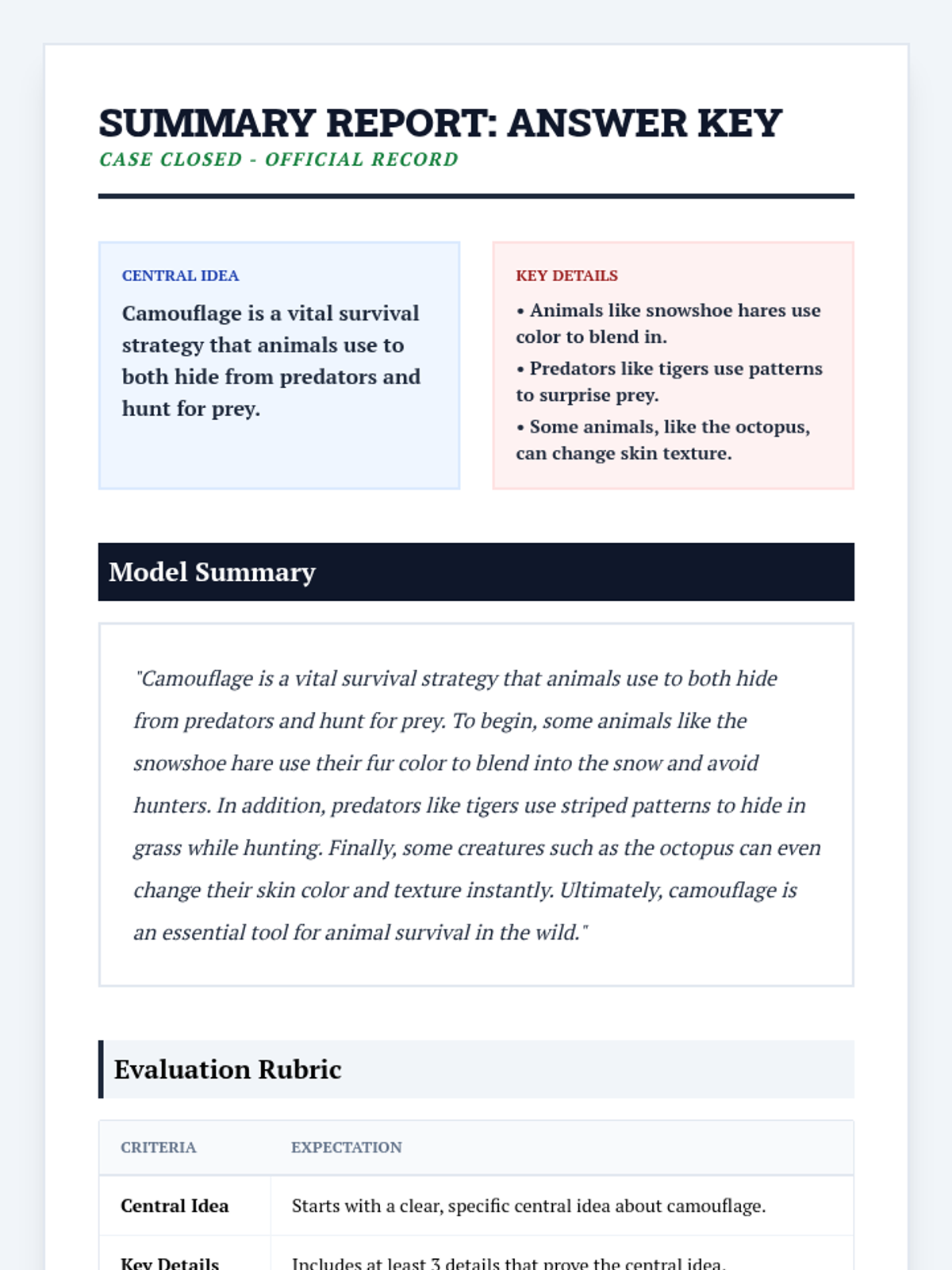
Answer key for the expanded Summary Report Worksheet, featuring model summaries and central ideas for both Animal Camouflage and The Importance of Sleep cases.
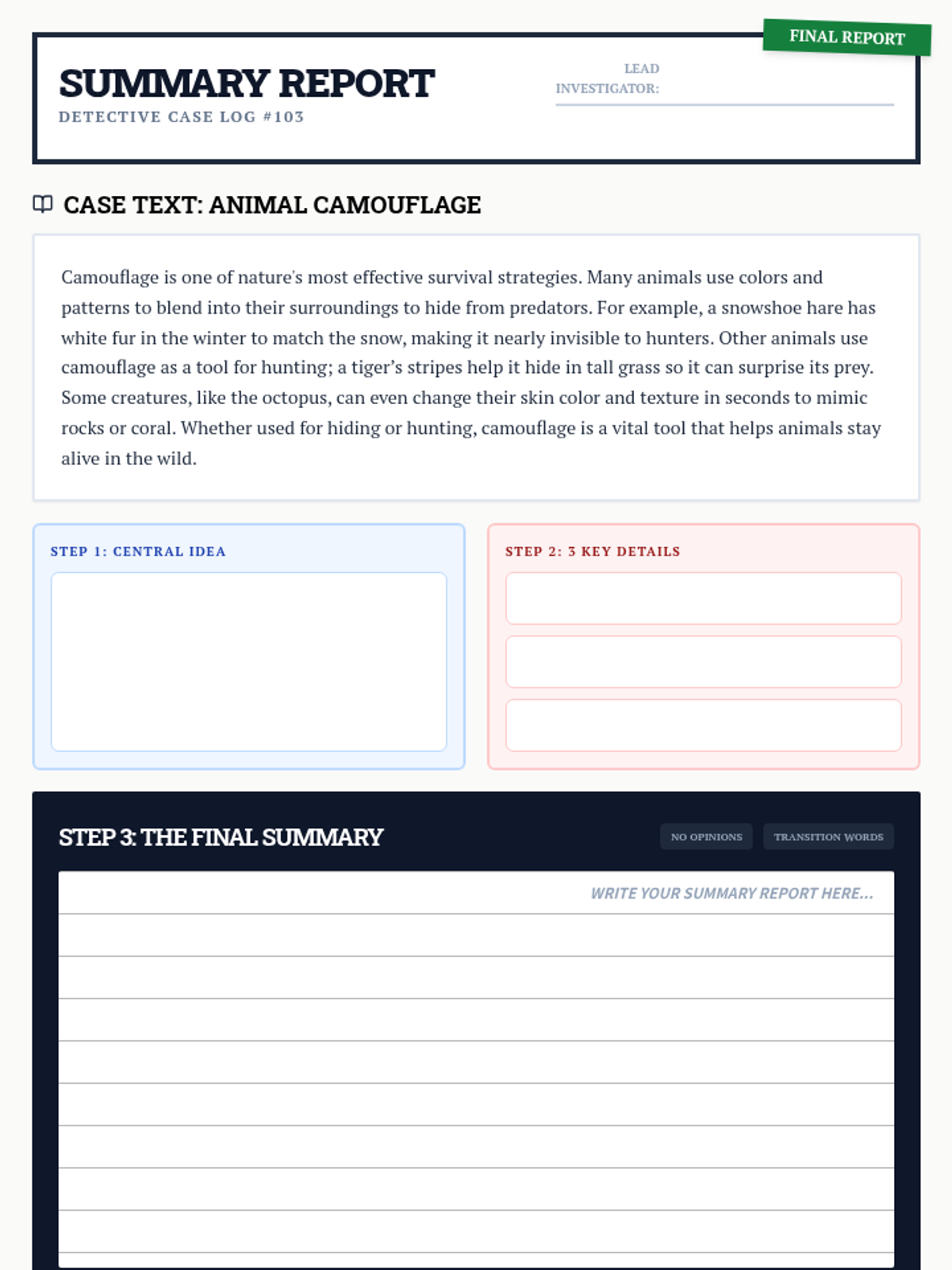
The final assessment worksheet for the summary sequence. Students gather the central idea and key details from two separate texts (Animal Camouflage and The Importance of Sleep) and combine them into formal summary reports. Revised for better flow.
A slide deck focused on the final step of the non-fiction summary process: synthesizing central ideas and key details into an objective summary.
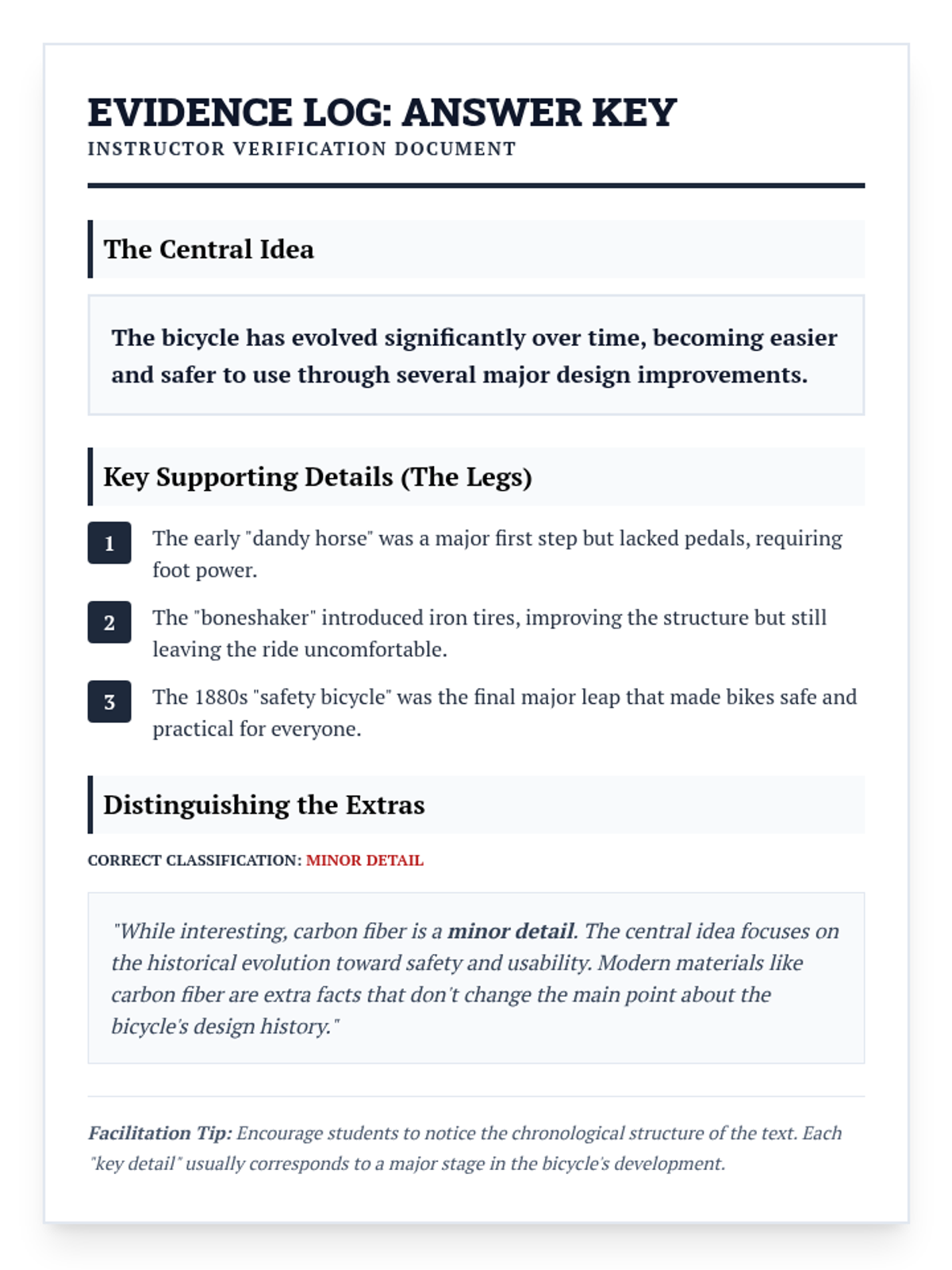
Answer key for the expanded Evidence Log Worksheet, providing model responses for the History of the Bicycle and Solar Energy passages. Revised for better layout and consistency.
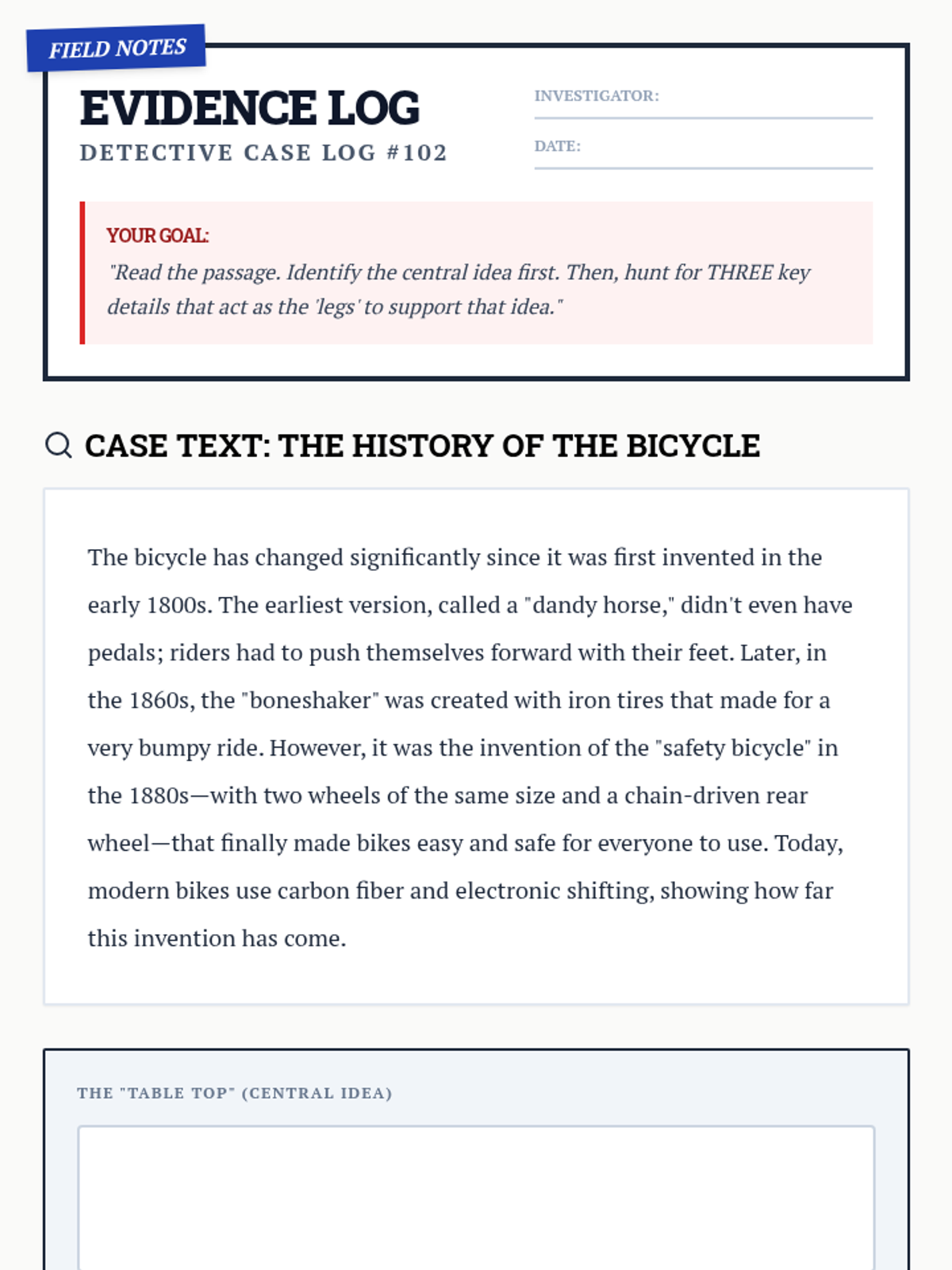
An 'Evidence Log' worksheet for finding supporting details. Students identify the central idea as the 'table top' and then find three 'legs' (key details) to support it. Now includes two separate case files for more practice. Revised for better page flow and legibility.
A slide deck that teaches students how to identify key supporting details in a non-fiction text using the 'table' analogy and the 'So What?' test.
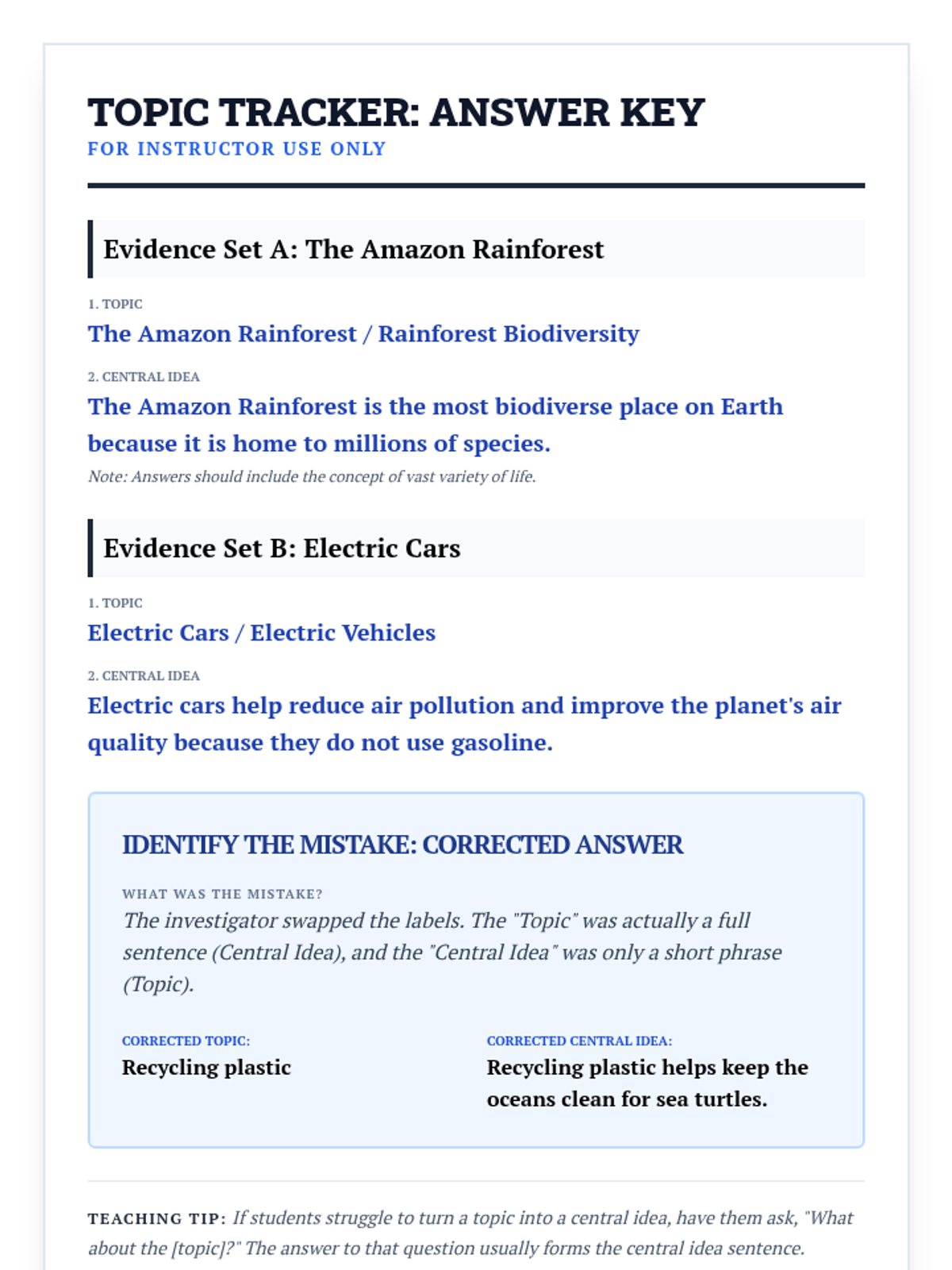
Answer key for the expanded Topic Tracker Worksheet, providing model responses for all three evidence sets and the correction activity.
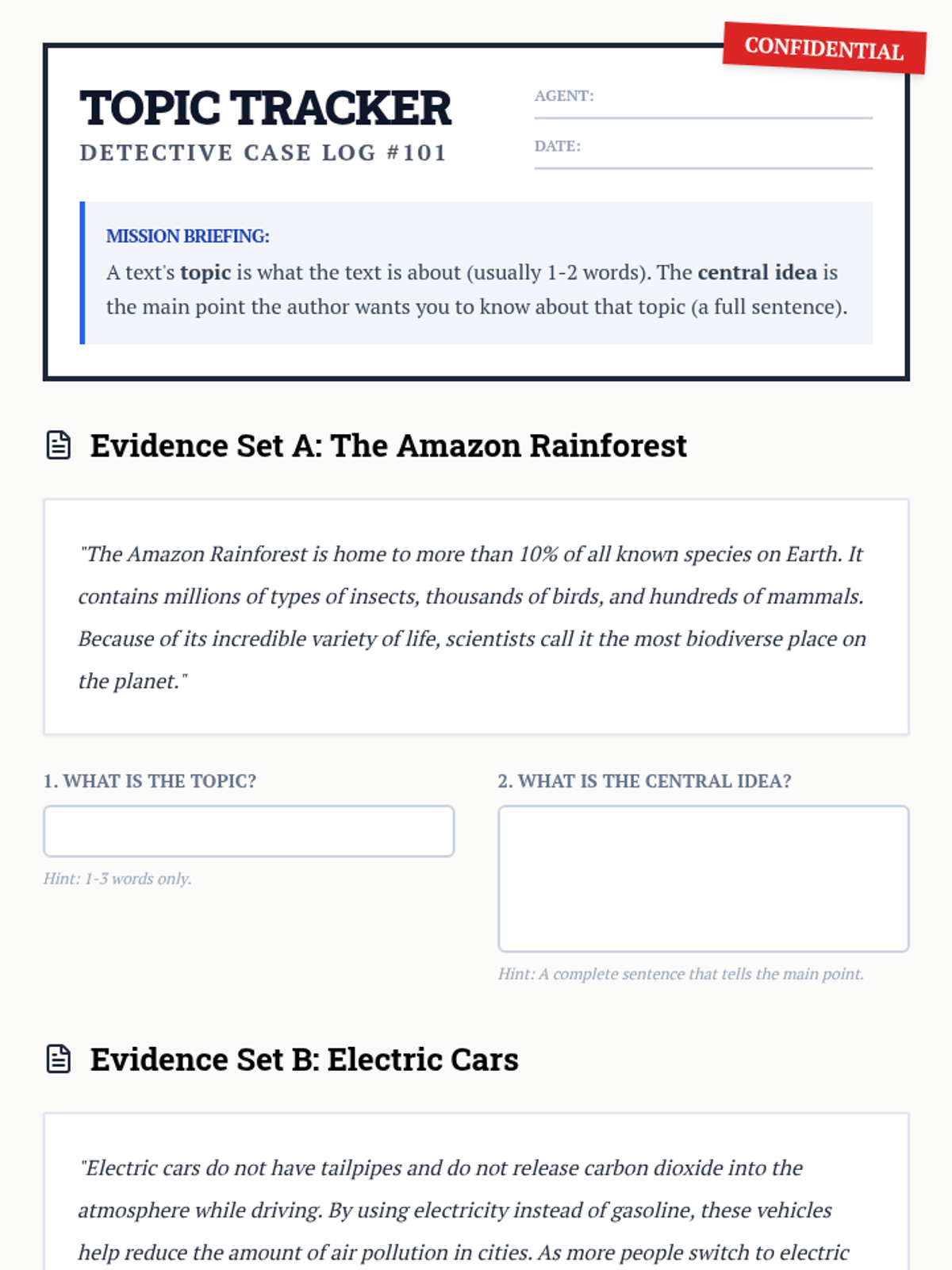
A detective-themed practice worksheet where students analyze non-fiction passages to identify the topic and central idea, including a corrective sorting activity. Expanded to include more evidence sets. Revised for better page flow and legibility.
An introductory presentation slide deck teaching students to differentiate between a non-fiction topic and its central idea using a detective theme.
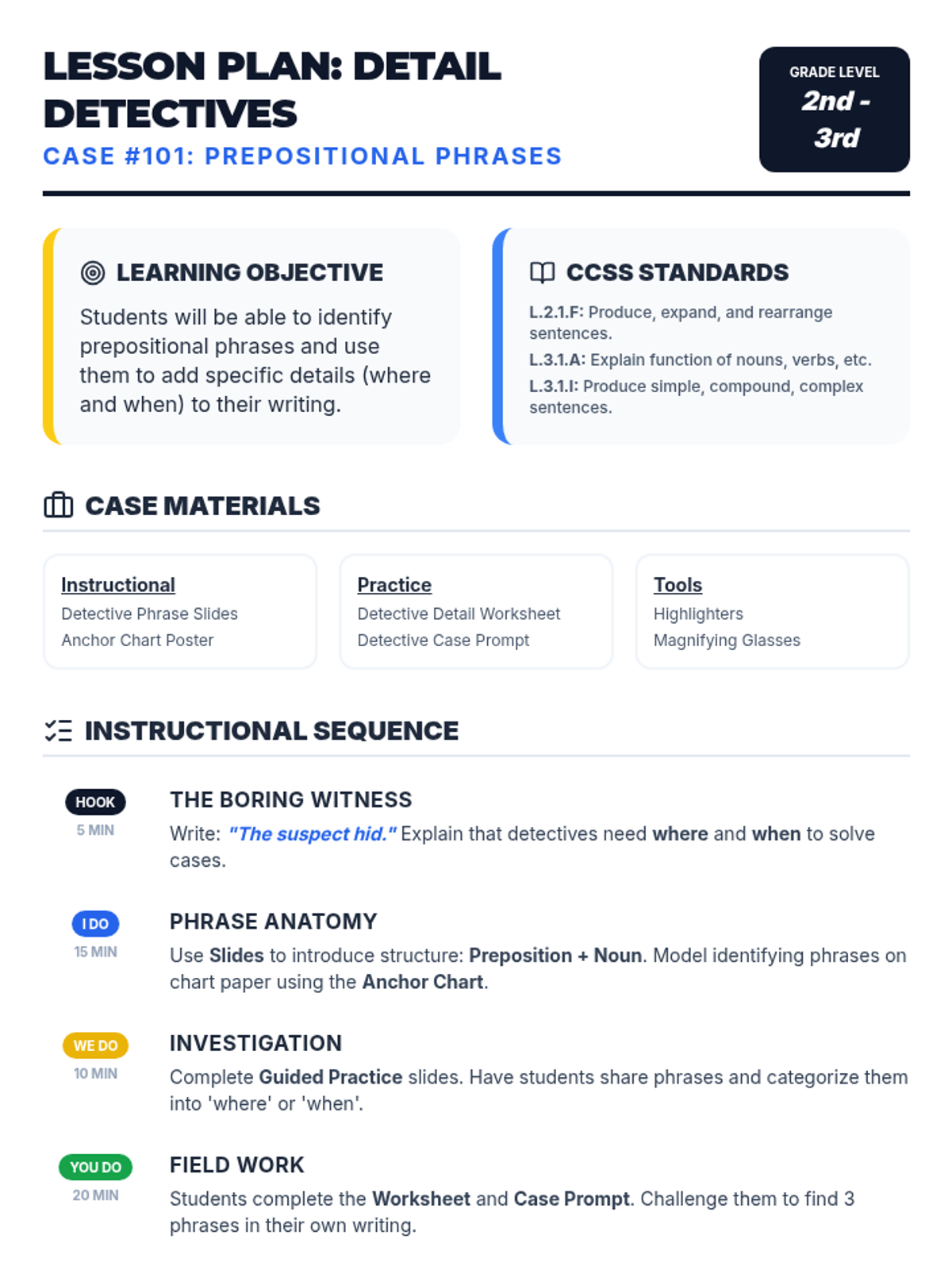
A comprehensive teacher lesson plan for the 'Detail Detectives' prepositional phrases lesson, including objectives, CCSS standards, pacing, and differentiation strategies. Revised for a single-page layout.
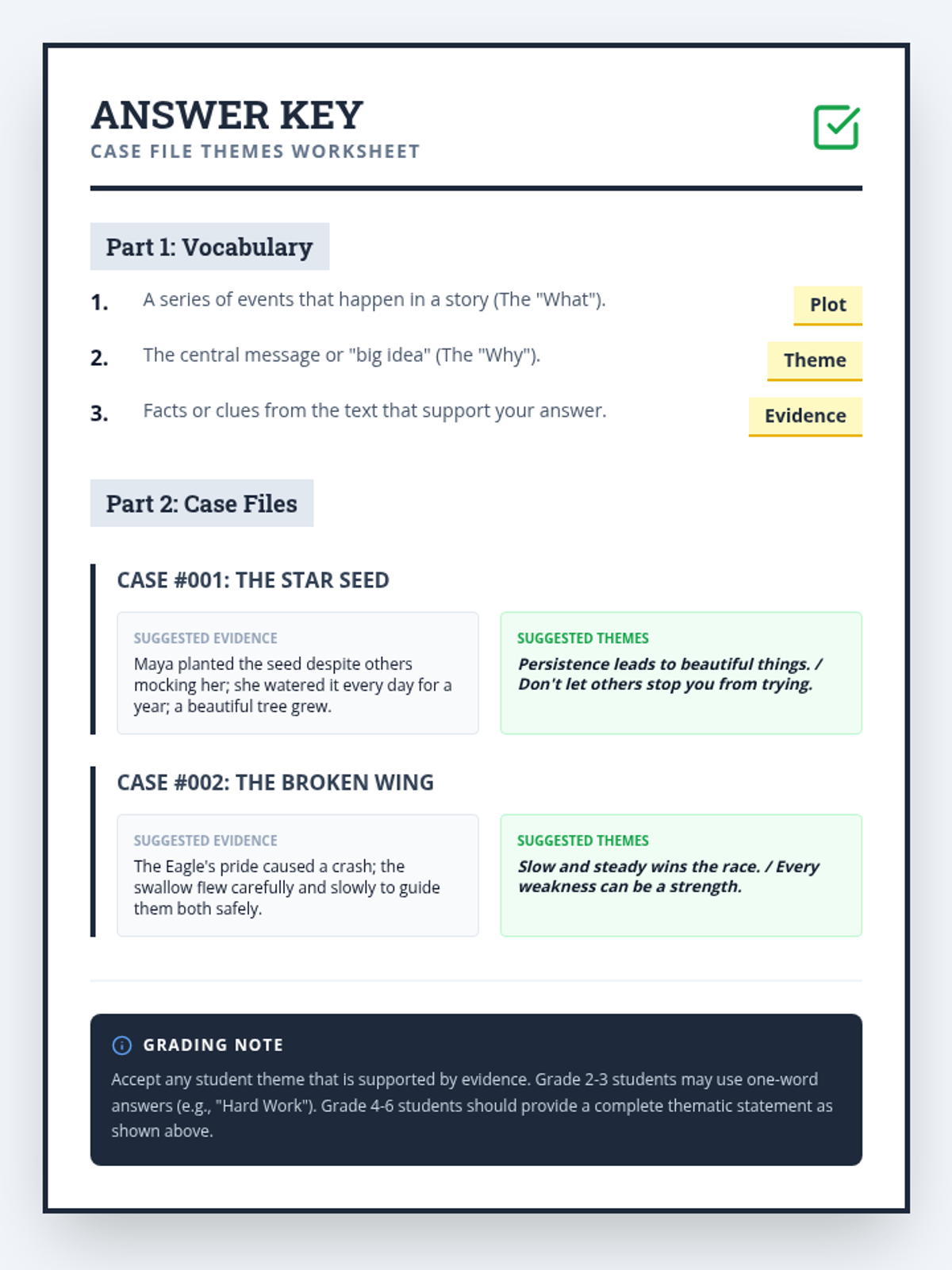
An answer key for the Case File Themes Worksheet, providing suggested answers for vocabulary definitions and multiple possible theme interpretations for each practice case. Includes teaching notes on evaluating student responses.