A hands-on lab activity where students simulate natural selection using light and dark 'moths' on different backgrounds. Includes hypothesis formation, data recording, graphing, and critical analysis questions.
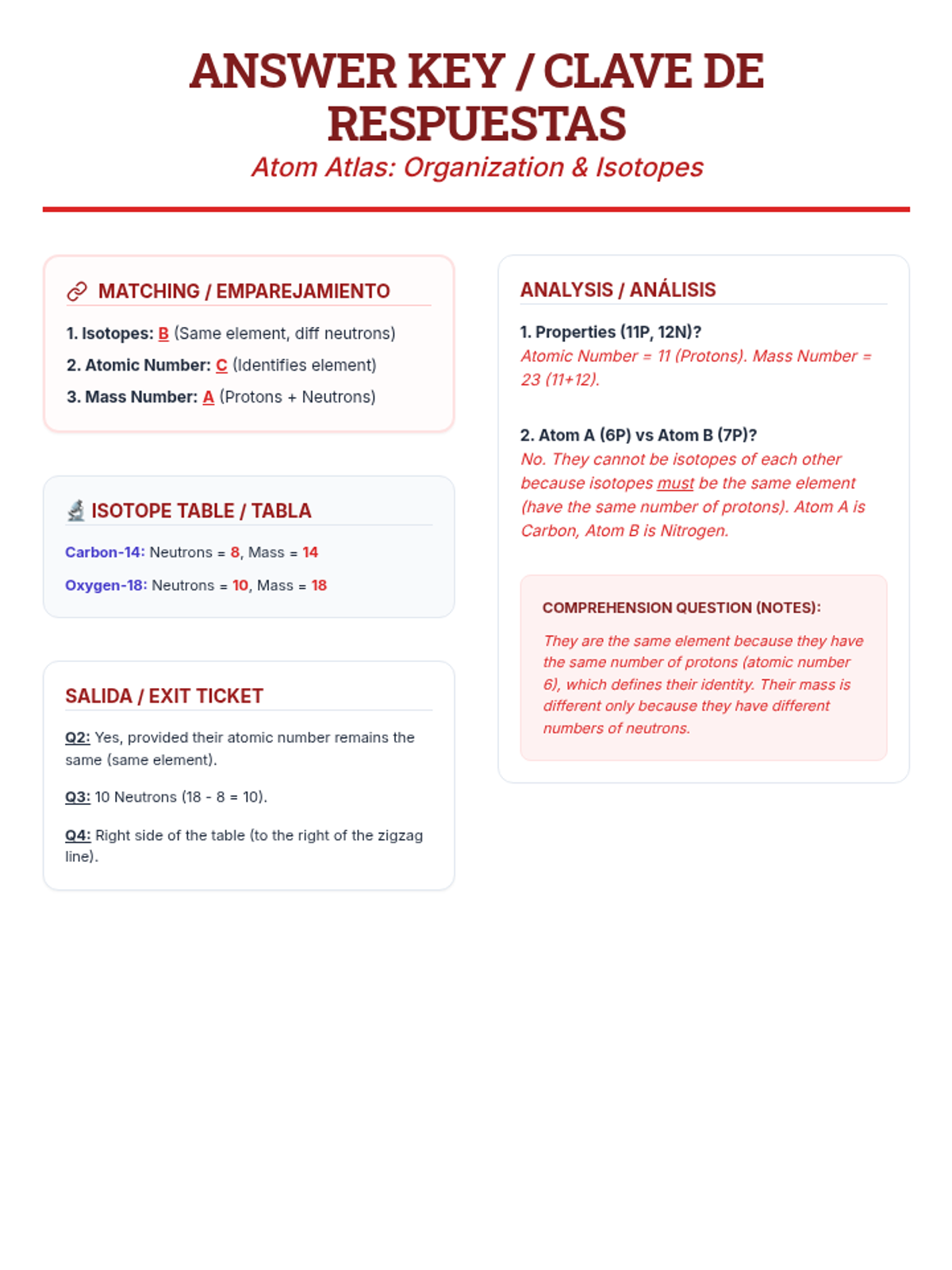
A comprehensive answer key covering the isotopes analysis, matching, and comprehension sections for the Atom Atlas lesson.
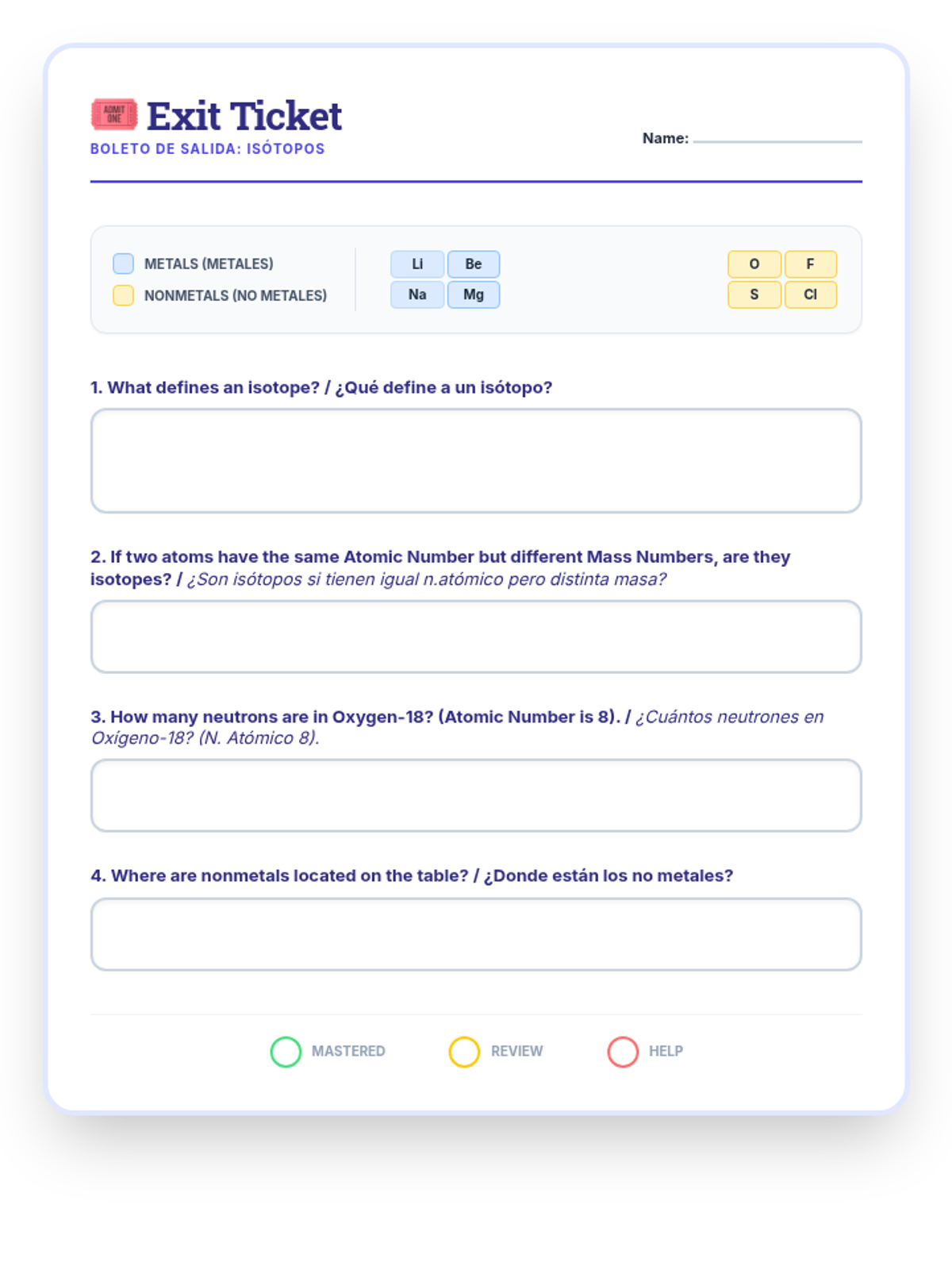
A concise exit ticket assessment focusing on isotope concepts and periodic table location, provided in both English and Spanish.
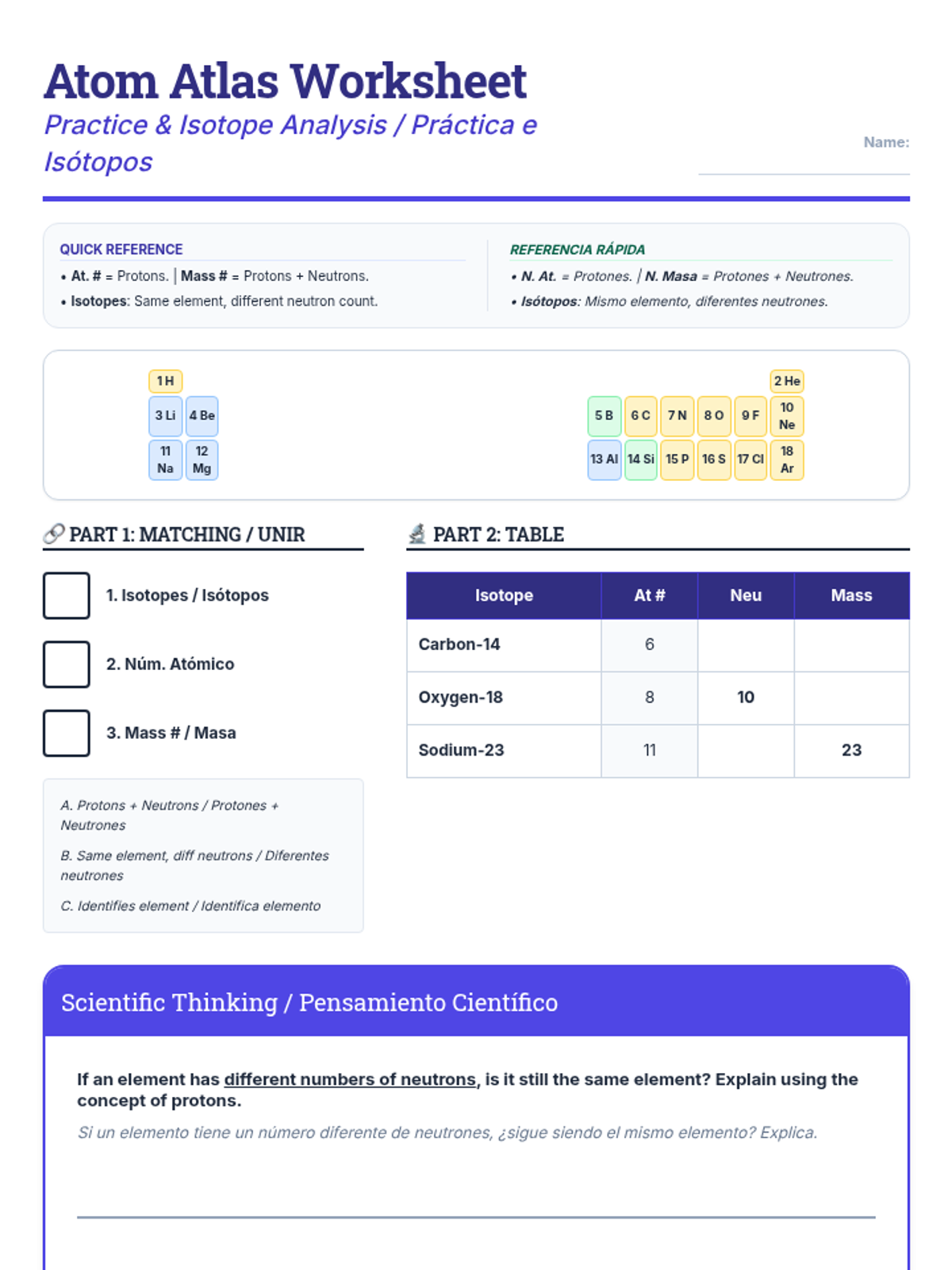
A practice worksheet featuring matching, an isotope analysis table, and comprehension questions focused on atomic structure and isotope variations.
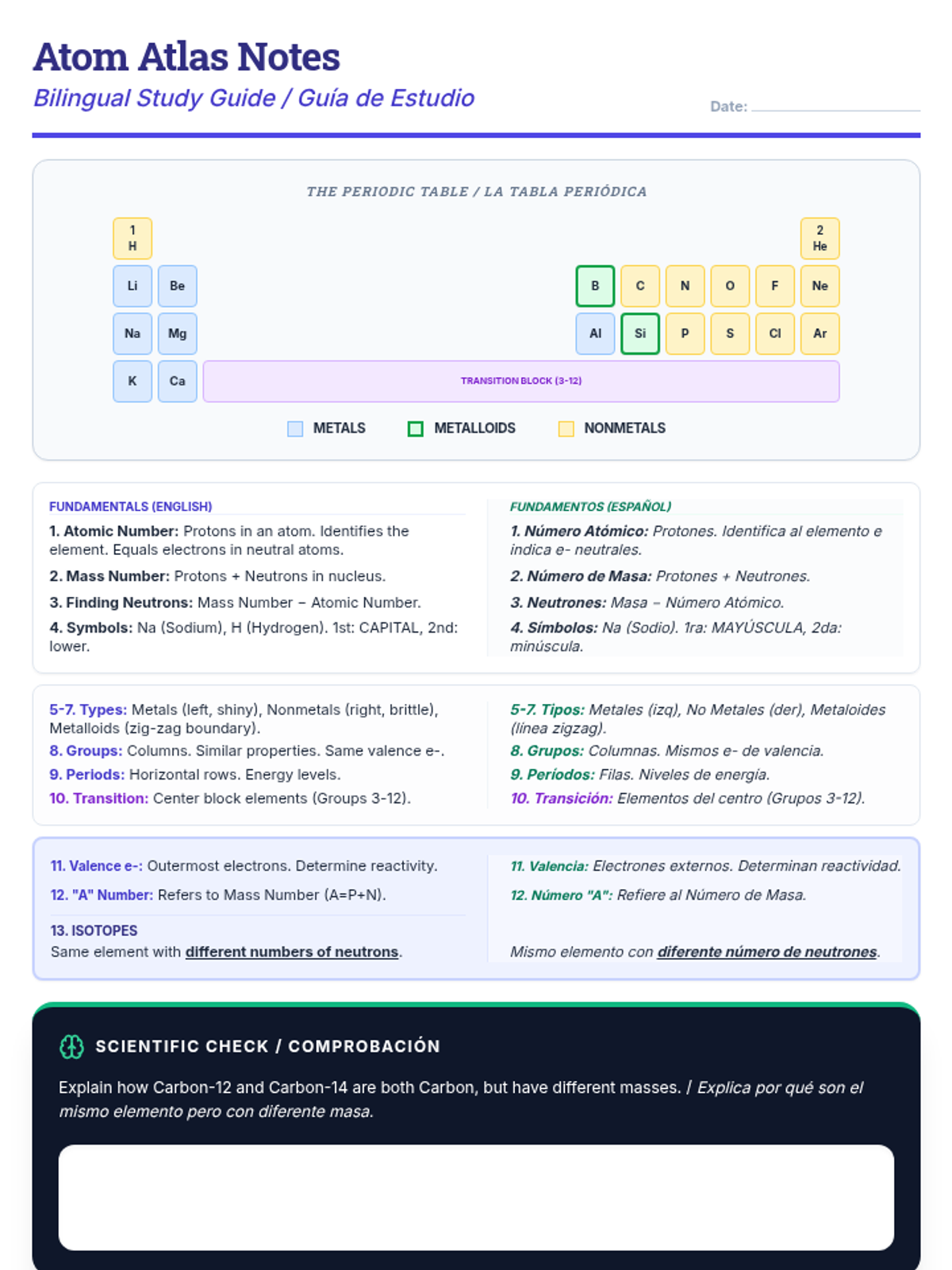
Bilingual notes document covering the organization of the periodic table, including a color-coded reference map, dual-language explanations of atomic properties, and a new section on isotopes.
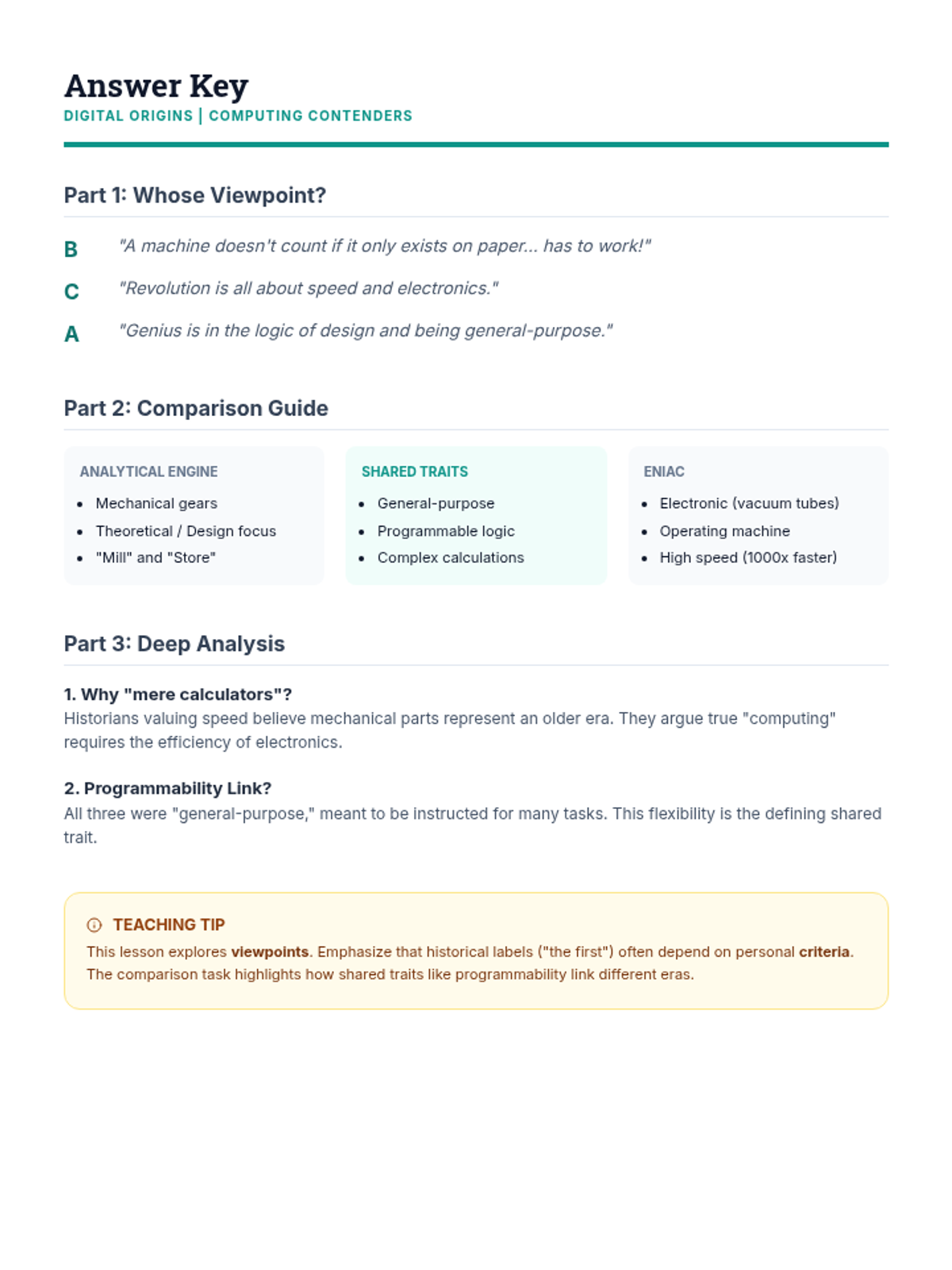
An answer key and teaching guide for the 'First Debate' worksheet, including sample answers for short-answer questions and instructional tips for classroom discussion.
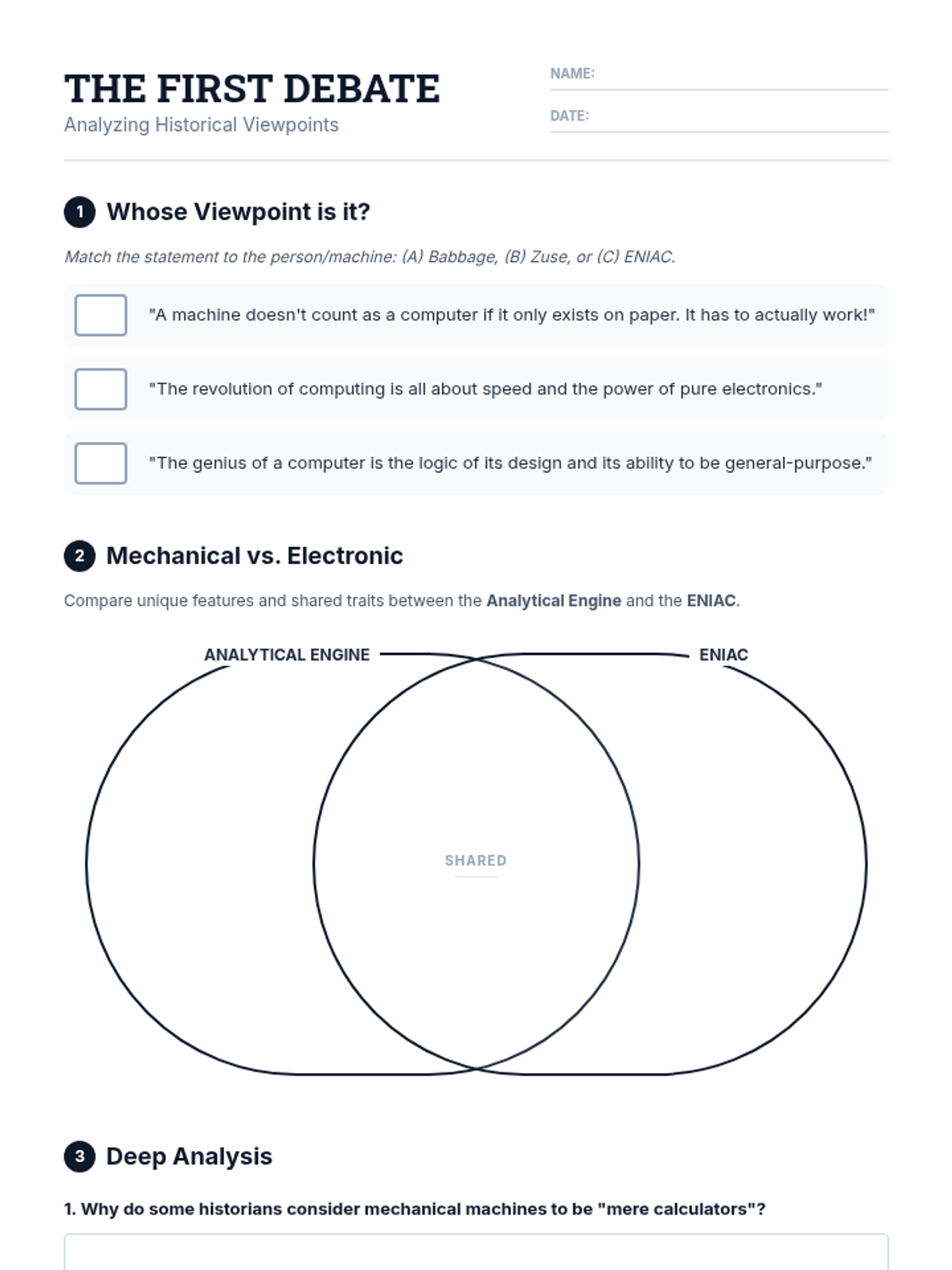
A worksheet designed to test students' ability to compare and contrast the different historical viewpoints presented in the reading passage. Includes matching, a Venn diagram task, and analytical short-answer questions.
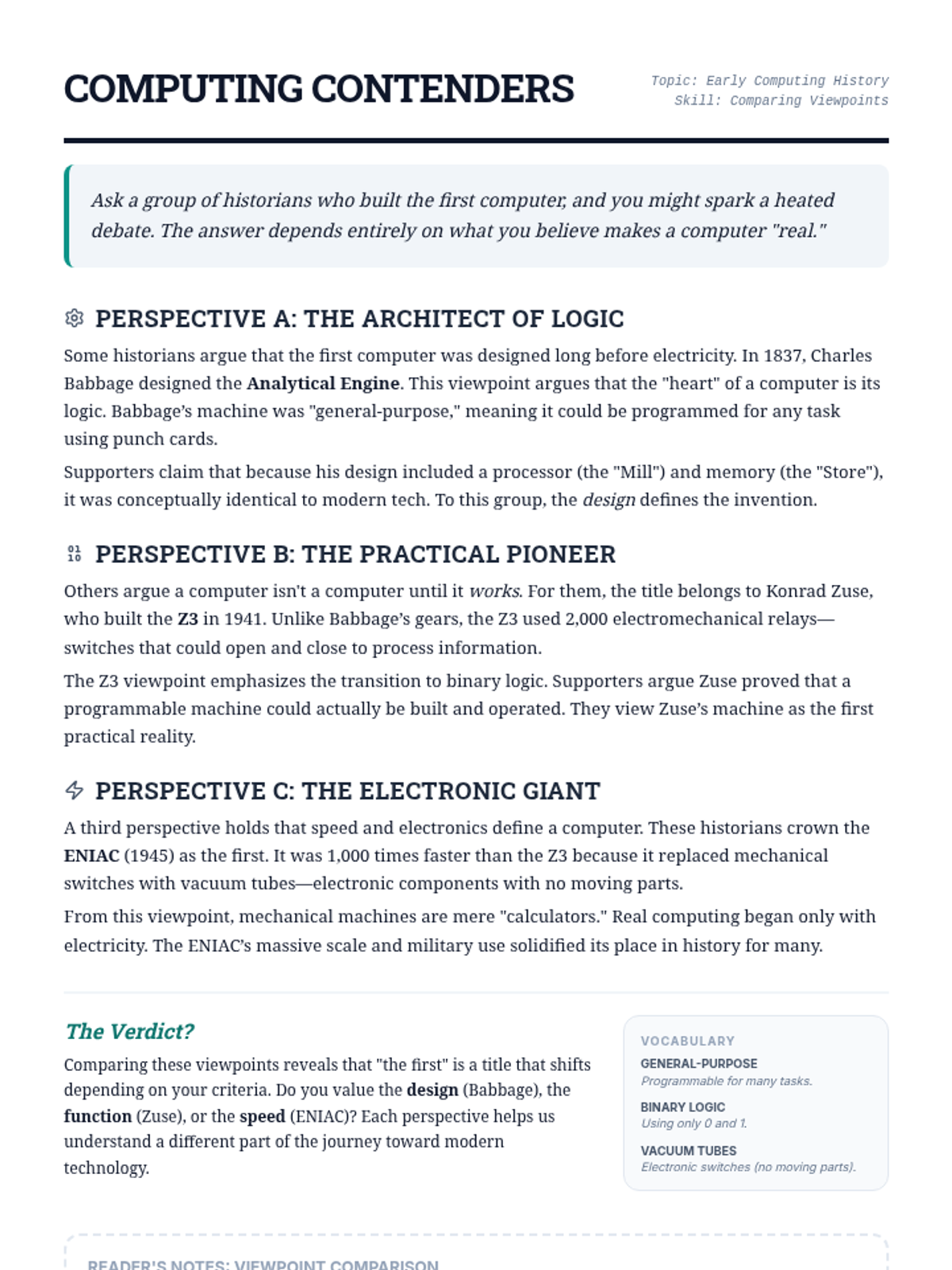
A detailed reading passage presenting three distinct historical viewpoints on the invention of the first computer, focusing on the Analytical Engine, the Z3, and the ENIAC. Includes a vocabulary reference and sets the stage for comparing and contrasting viewpoints.
A visual slide deck introducing three major contenders for the title of 'first computer' (Babbage's Analytical Engine, Zuse's Z3, and the ENIAC), highlighting the different technical criteria used to argue for each one.
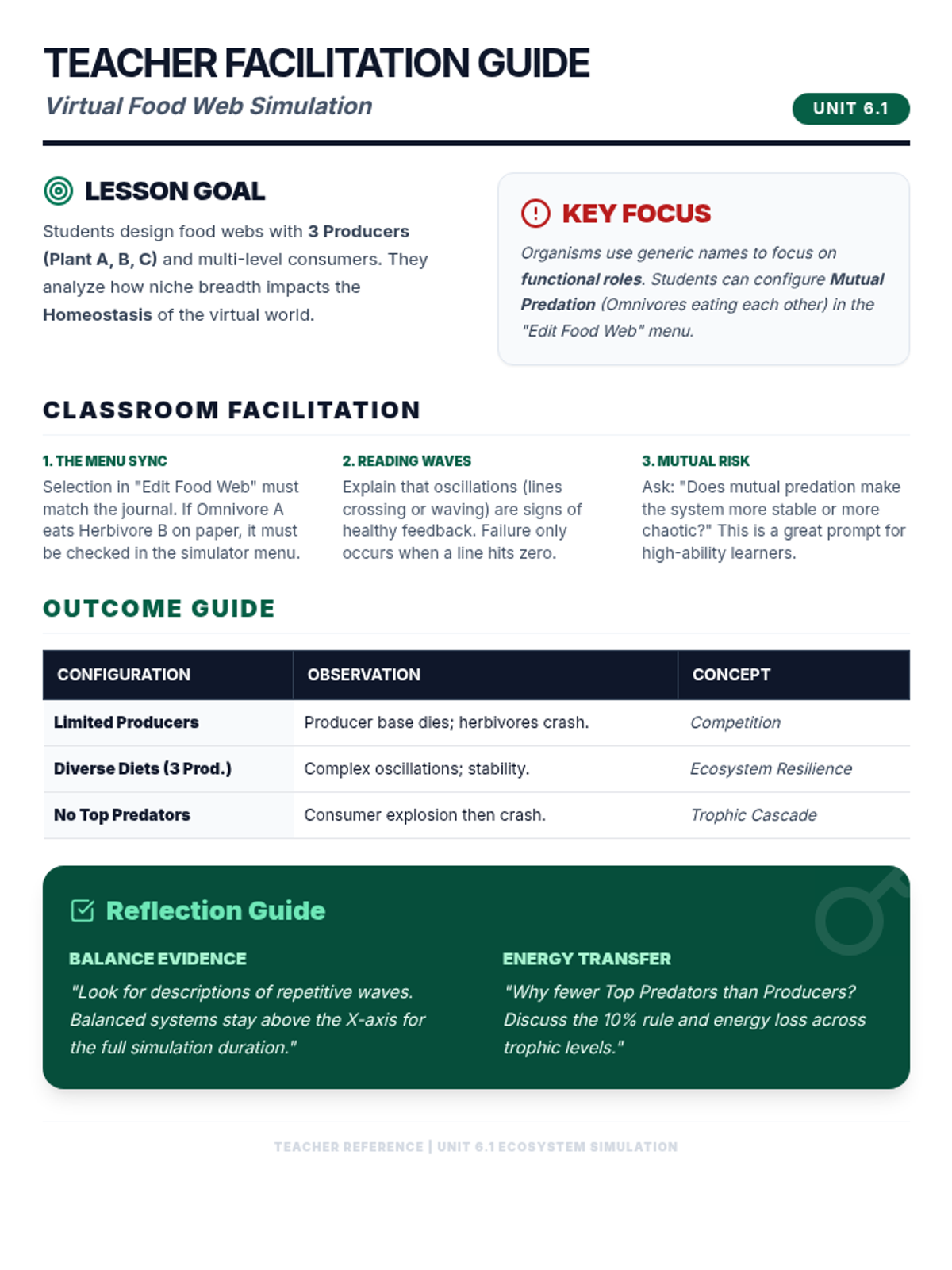
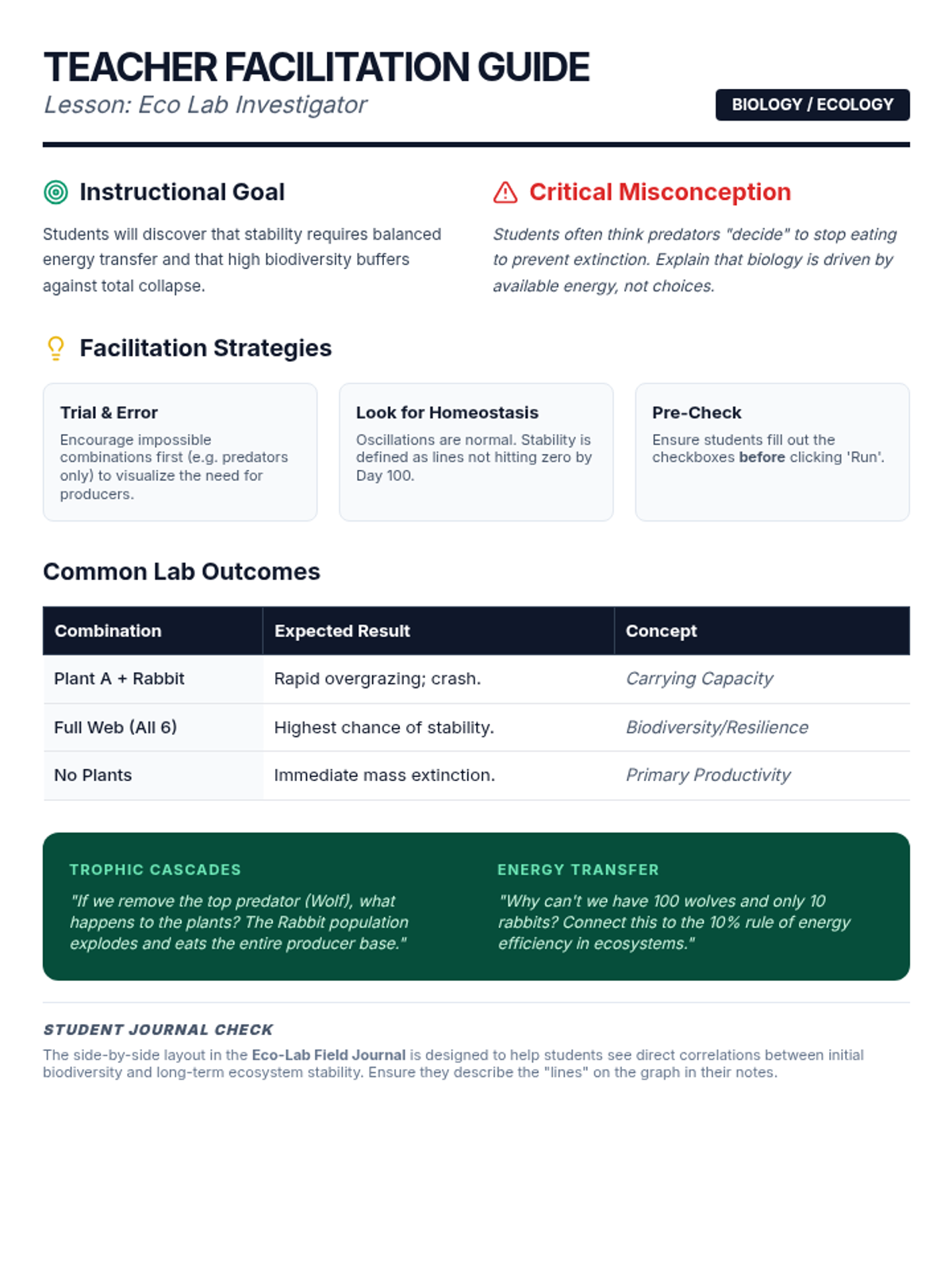
A comprehensive guide for teachers to facilitate the Virtual Food Web lab. Updated to remove scoring references and support the new Omnivore mutual predation options and 3-producer structure. Includes instructional goals and classroom facilitation tips. Simplified to fit a single page.
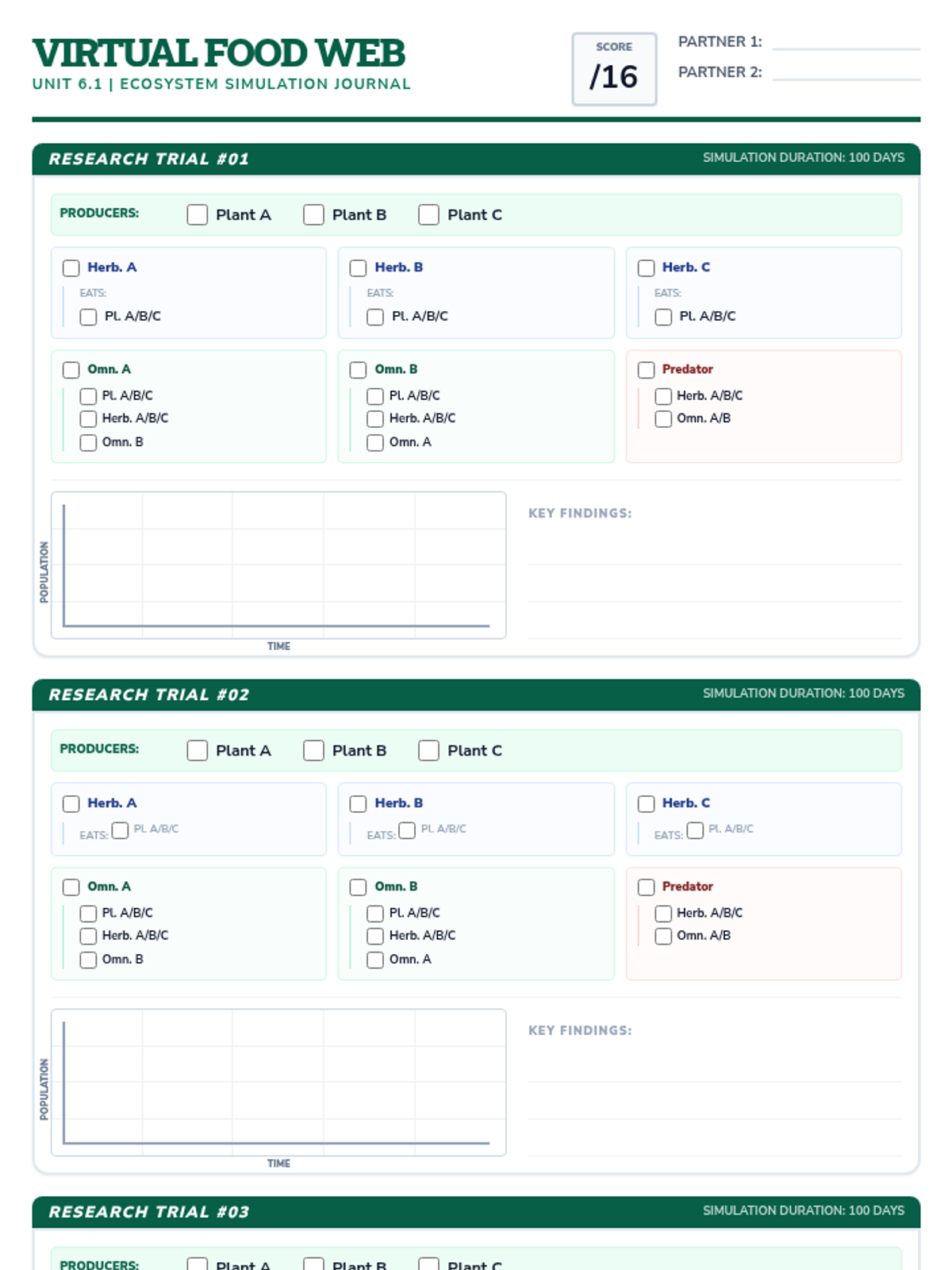
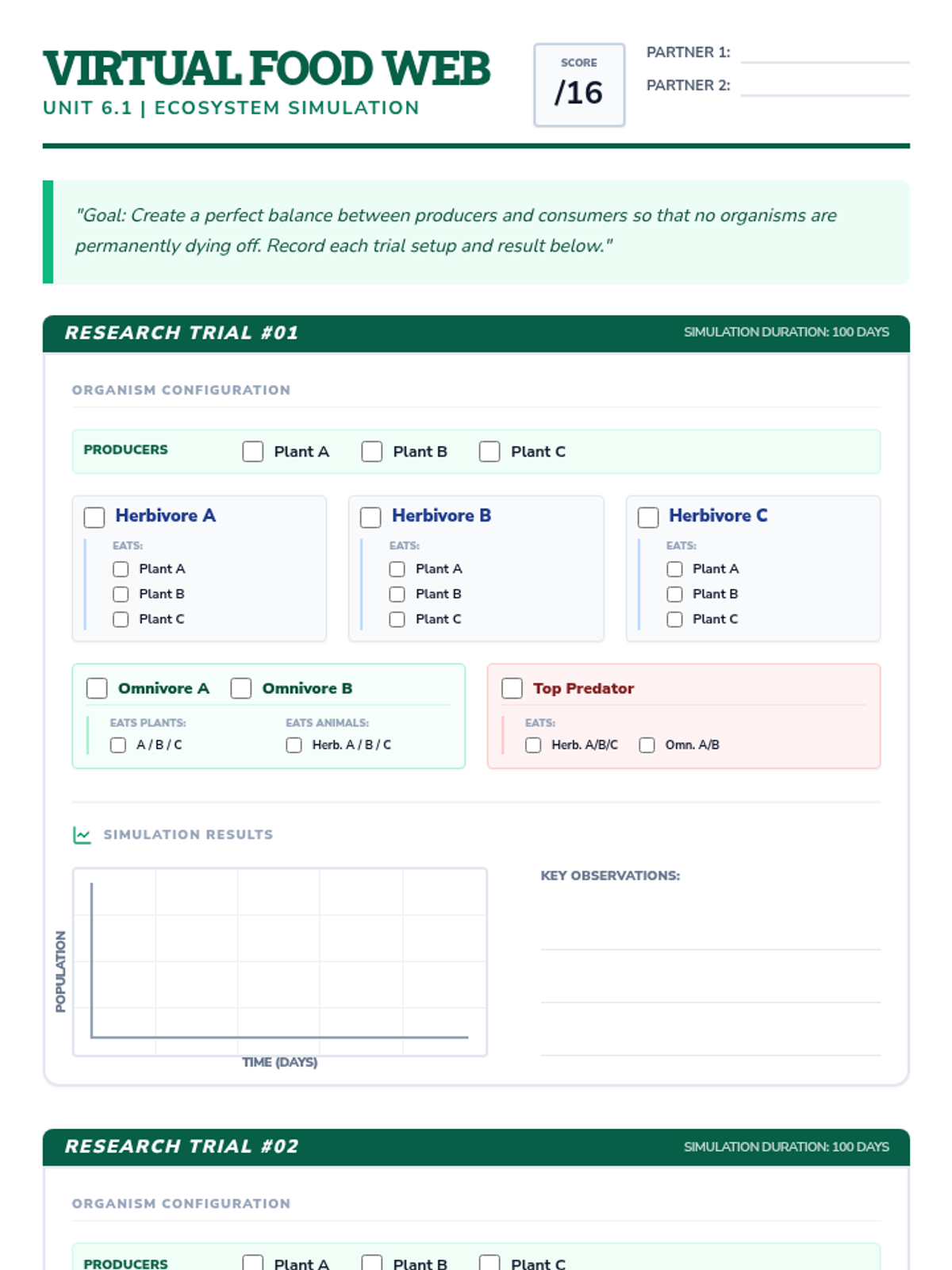
A two-page printable field journal for students to record multiple trials of the ecology simulator. Features selection checklists for 3 Producers, 3 Herbivores, 2 Omnivores, and a Top Predator with nested diet options including mutual predation. Grading elements have been removed for formative use. Updated for better legibility and student work areas.
A visual presentation introducing students to the Virtual Food Web lab. Updated to include information about 3-producer setups and advanced Omnivore mutual predation options. Includes a new slide previewing the journal's recording format.
A comprehensive guide for teachers to facilitate the Virtual Food Web lab. Updated to support the new Omnivore mutual predation options and 3-producer structure. Includes instructional goals and classroom facilitation tips. Simplified to fit a single page.
A two-page printable field journal for students to record multiple trials of the ecology simulator. Features selection checklists for 3 Producers, 3 Herbivores, 2 Omnivores, and a Top Predator with nested diet options. Updated to allow Omnivores to eat each other, matching the user's request for mutual predation. Trials and reflections condensed to fit two pages perfectly. Updated for better legibility and student work areas.
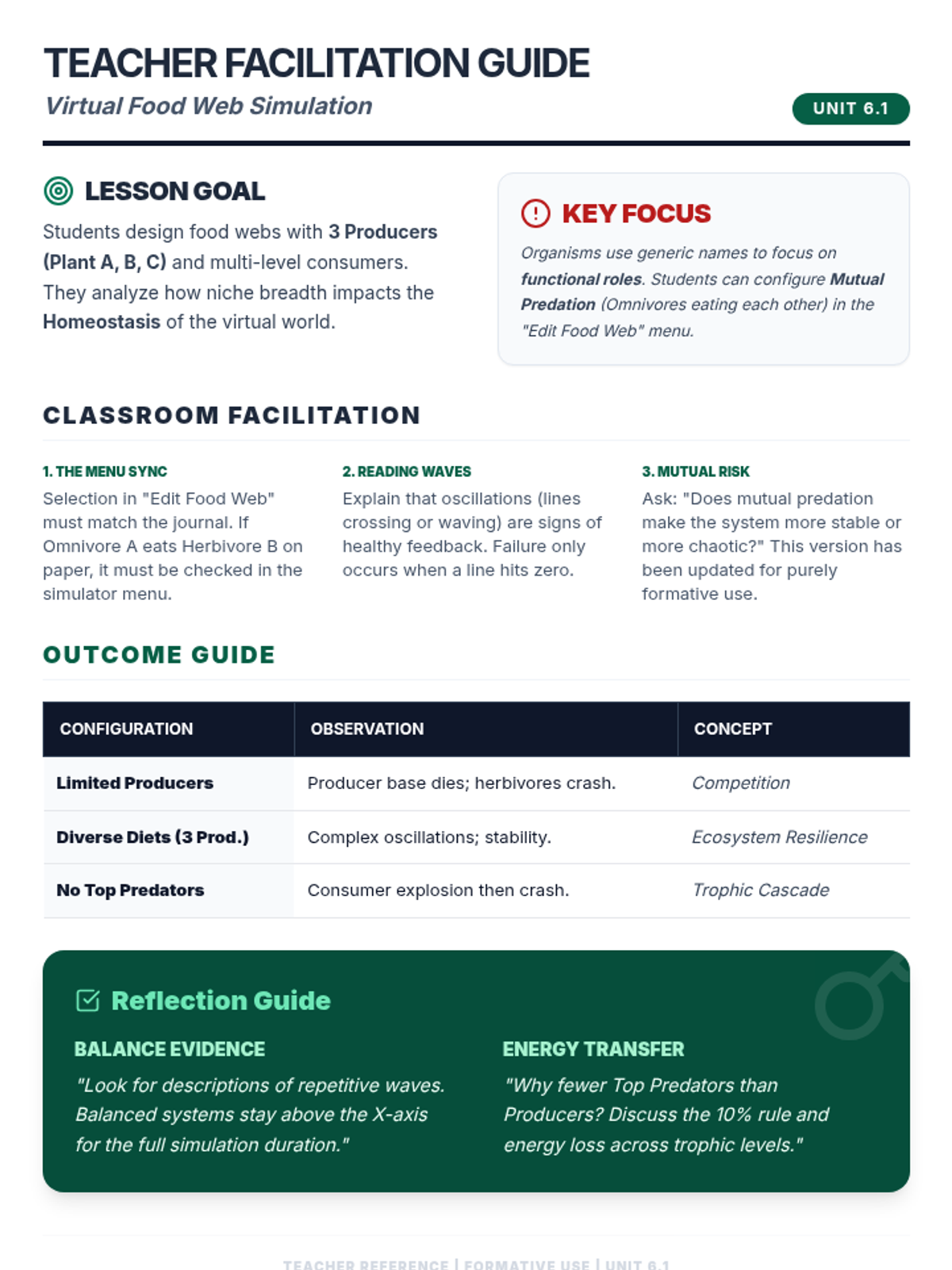
A comprehensive guide for teachers to facilitate the Virtual Food Web lab. Updated to match the naming conventions and structure of the updated field journal and slides. Includes instructional goals, classroom facilitation tips, and an outcome guide for simulation configurations. Simplified to a single-page reference.
A visual presentation introducing students to the Virtual Food Web lab, using updated terminology and organism counts (Plant A/B/C, Herbivore A/B/C) to match the provided worksheet document. Slides cover goals, roles, diet customization, and graphing.
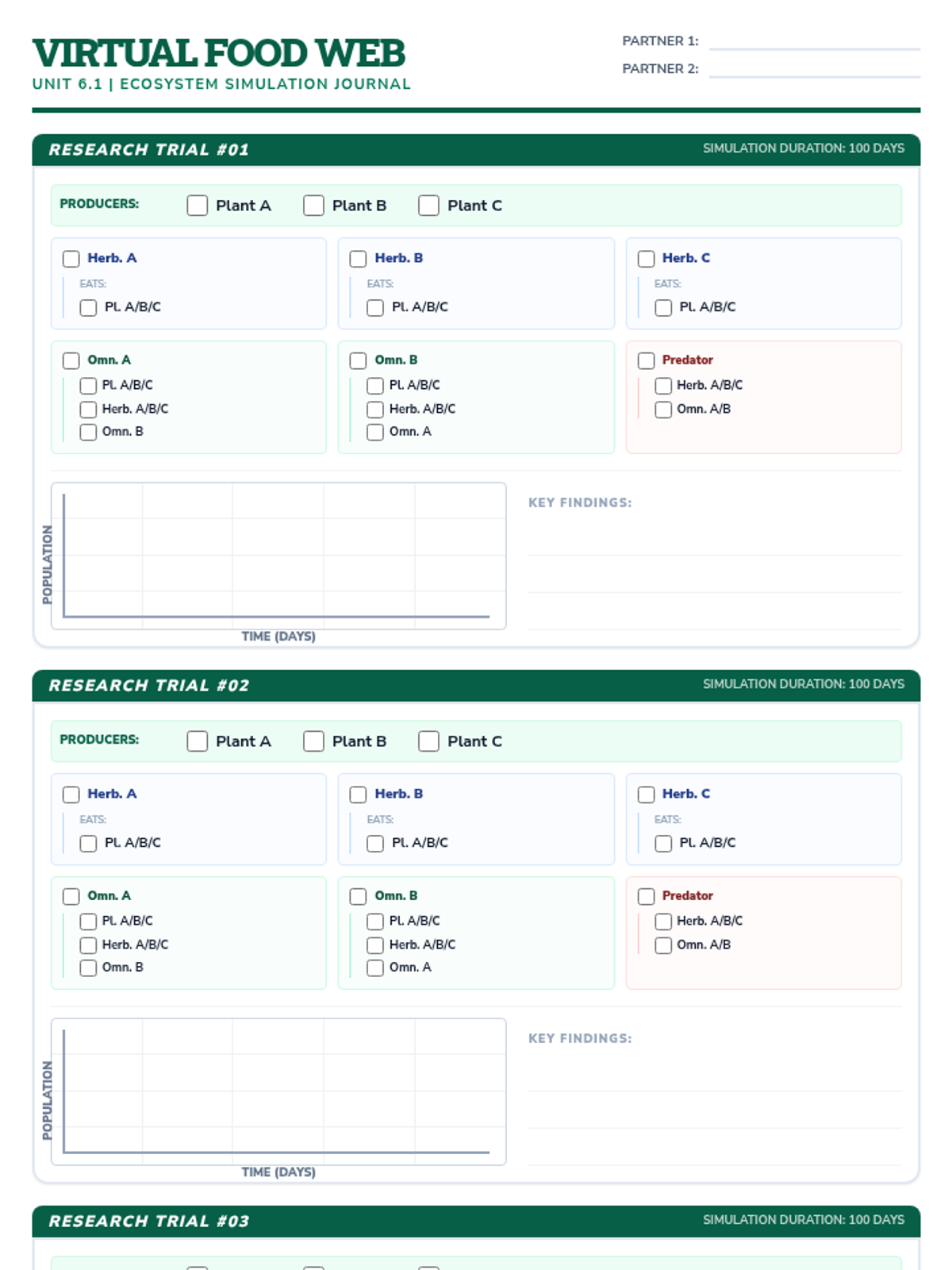
A two-page printable field journal for students to record multiple trials of the ecology simulator. Features selection checklists for 3 Producers, 3 Herbivores, 2 Omnivores, and a Top Predator with nested diet options, matching the provided PDF's structure and nomenclature. Results are positioned below the selection area for better spacing. Updated for better consistency across trials and improved axis legibility.
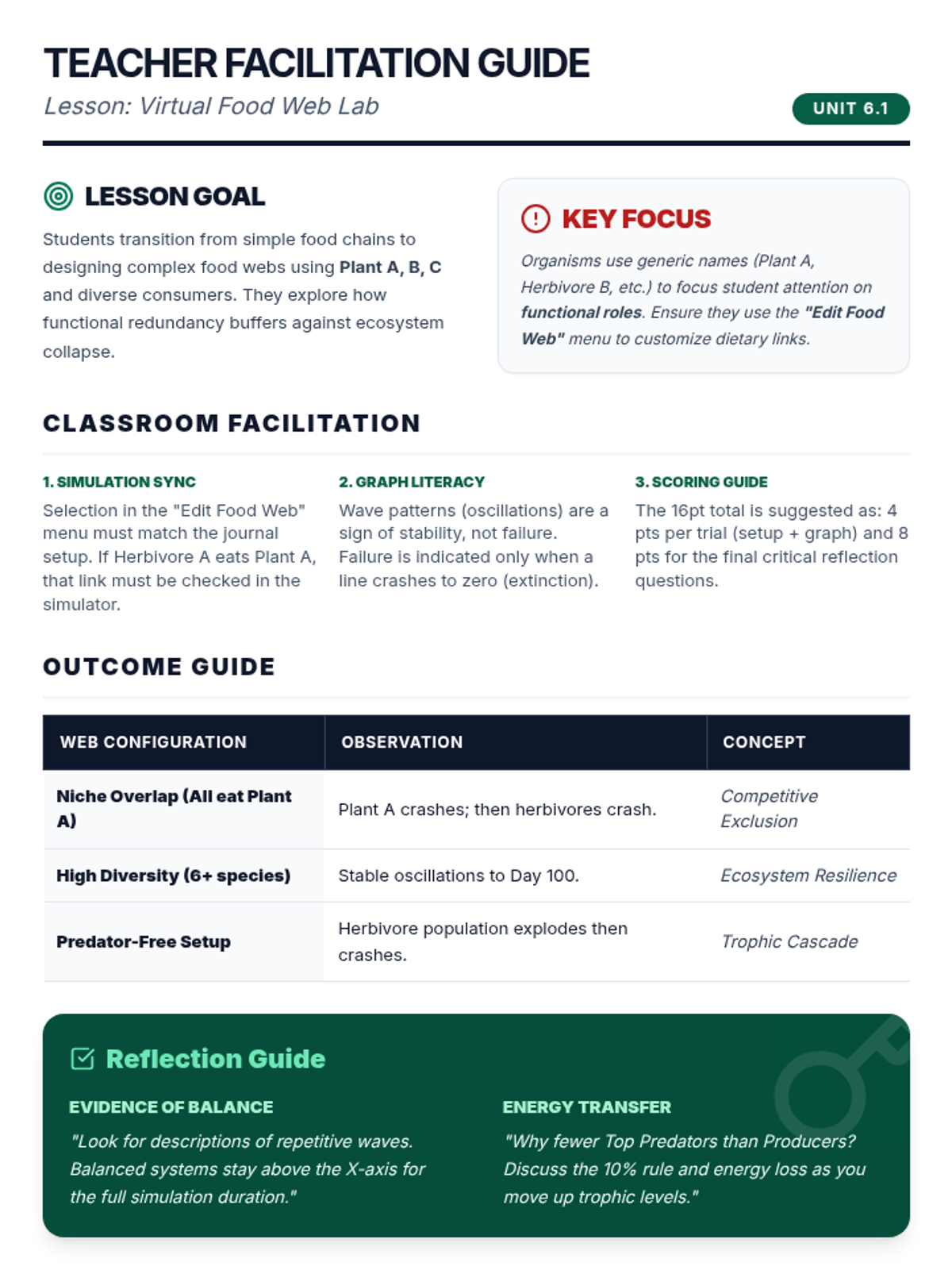
A comprehensive guide for teachers to facilitate the Eco Lab lesson, updated to support the revised food web design and scoring system inspired by the provided worksheet. Simplified to a single-page reference for better classroom usability.