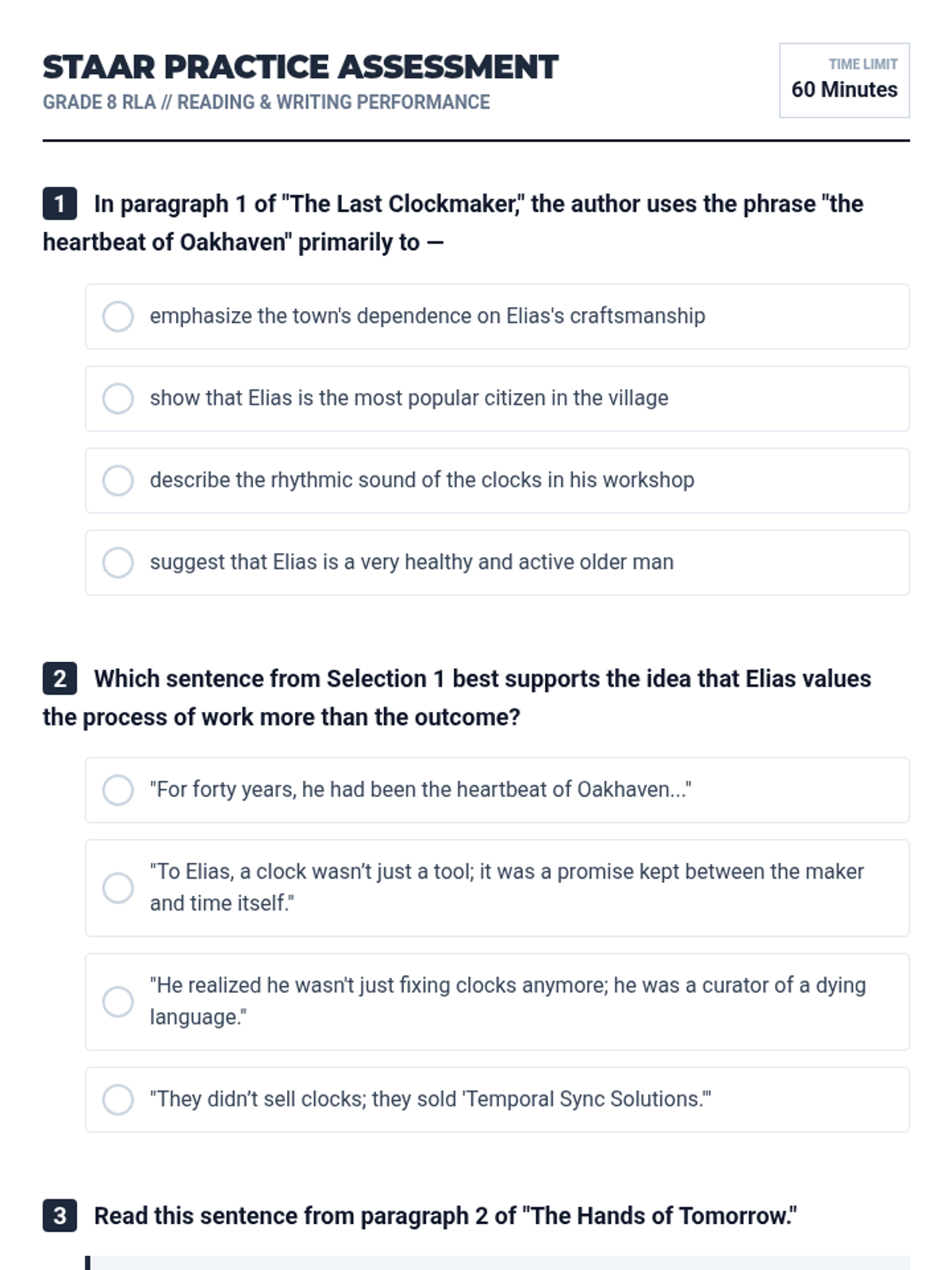
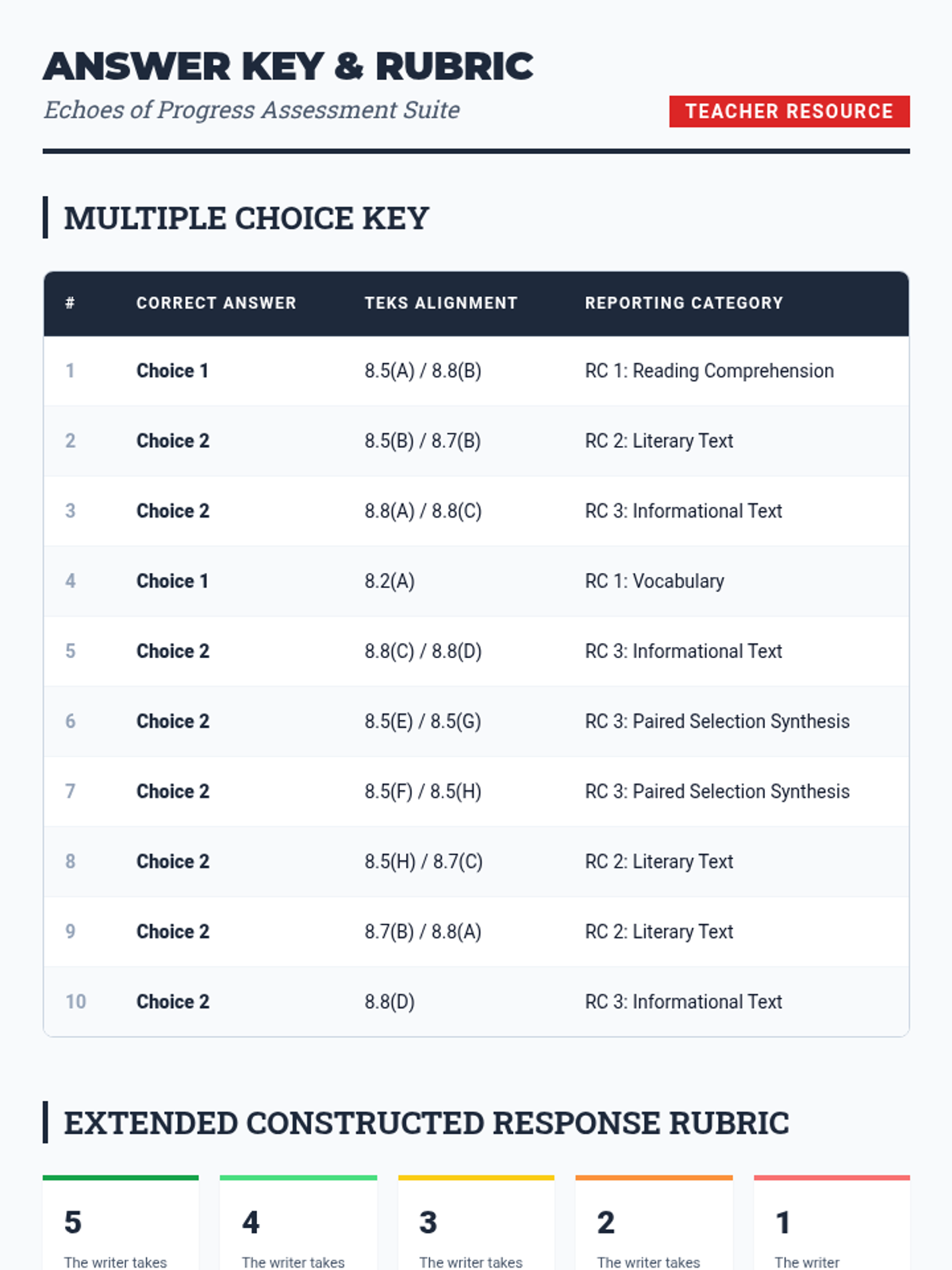
A pair of complex texts for 8th Grade RLA analysis: a literary story about a traditional clockmaker facing a digital world and an informational article about the rise of automation.
A differentiated, 2-page transition-drafting worksheet. Page 1 (Foundation Layer) scaffolds the connection between hooks and thesis statements with structured prompts, while Page 2 (Structural Master) challenges advanced writers to use nuanced bridge-building strategies like concession and scale shifts.
A structured, 2-page graphic organizer designed as an architectural blueprint. Helps students systematically draft magnetic hooks, bridges, thesis statements, and cohesive conclusions with high-contrast, clean writing zones.
A 6-slide visual presentation modeling essay introductions and conclusions using a blueprint structural metaphor. Features formulas for magnetic hooks, seamless bridge transitions, and memorable capstone conclusions.
A professional, highly legible grading rubric evaluating students across key persuasive elements including Thesis & Claim, Evidence, Counterargument Crusher, and overall Structure & Style.
A structured, 2-page print-ready planning graphic organizer for students to outline and organize their persuasive tech essay. Includes dedicated spaces for a hook, thesis statement, evidence gathering, and counterargument construction.
A modern, high-impact presentation slide deck introducing students to persuasive writing structures through real-world technology debates like social media limits and video game cognitive benefits.
A thematic, adventure-inspired vocabulary choice board and double-sided activity worksheet focusing on high-frequency academic vocabulary. Includes a clean layout, a clear word guide, and beautifully structured student response areas for reading, drawing, speaking, and writing.
A comprehensive teacher's lesson guide containing lesson plans, facilitation questions, scaffolding tips, and sample answers for the Snapshot Moments narrative worksheet.
An immersive and beautifully typeset slide deck to teach students how to zoom in on snapshot memories, draft realistic dialogue, and write reflective resolutions.
A student-facing self-assessment checklist and a detailed, four-category scoring rubric for evaluating student personal narrative essays and stories.