A student-facing reading fluency worksheet featuring a simplified contemporary news article about "micro-forests." Polysyllabic words have been replaced to improve reading rate for students at an 8th-grade level.
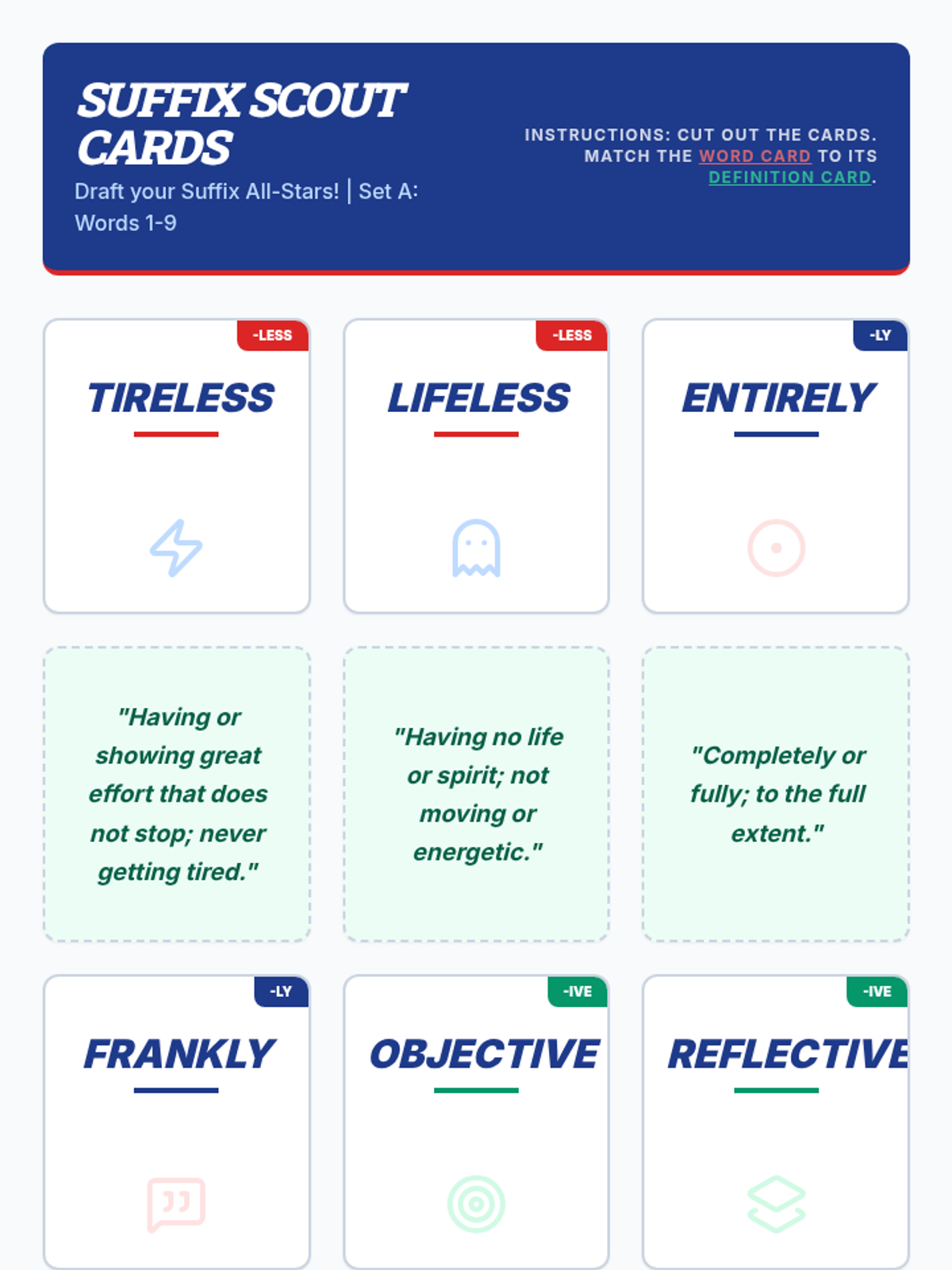
A printable card-matching game featuring 18 word cards and 18 definition cards. The cards are styled as vintage sports trading cards to tie into the baseball and lacrosse themes of the lesson.
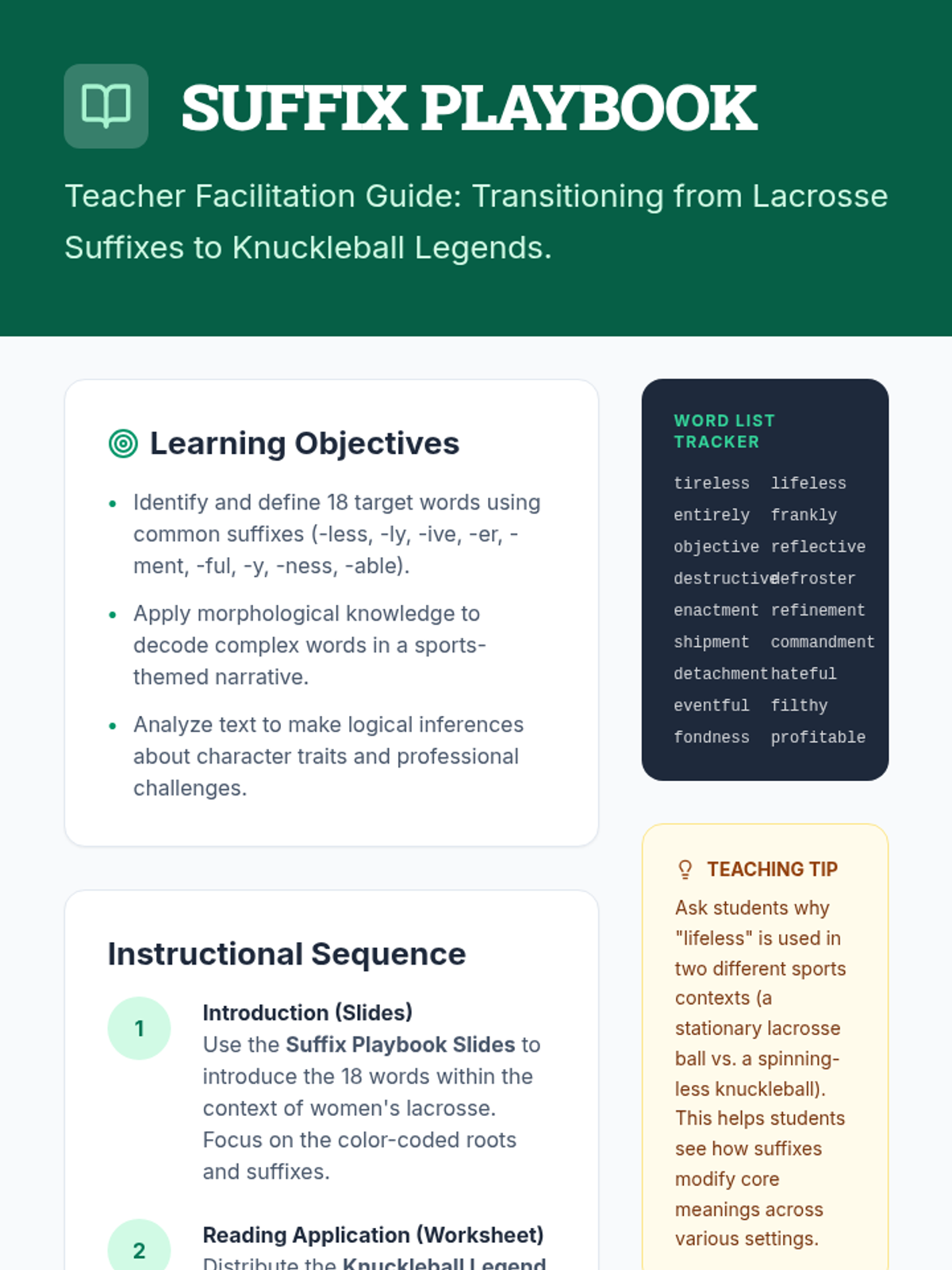
A teacher's guide for the Suffix Playbook lesson, providing instructional strategies for connecting the lacrosse-themed slides with the baseball-themed Tim Wakefield biography.
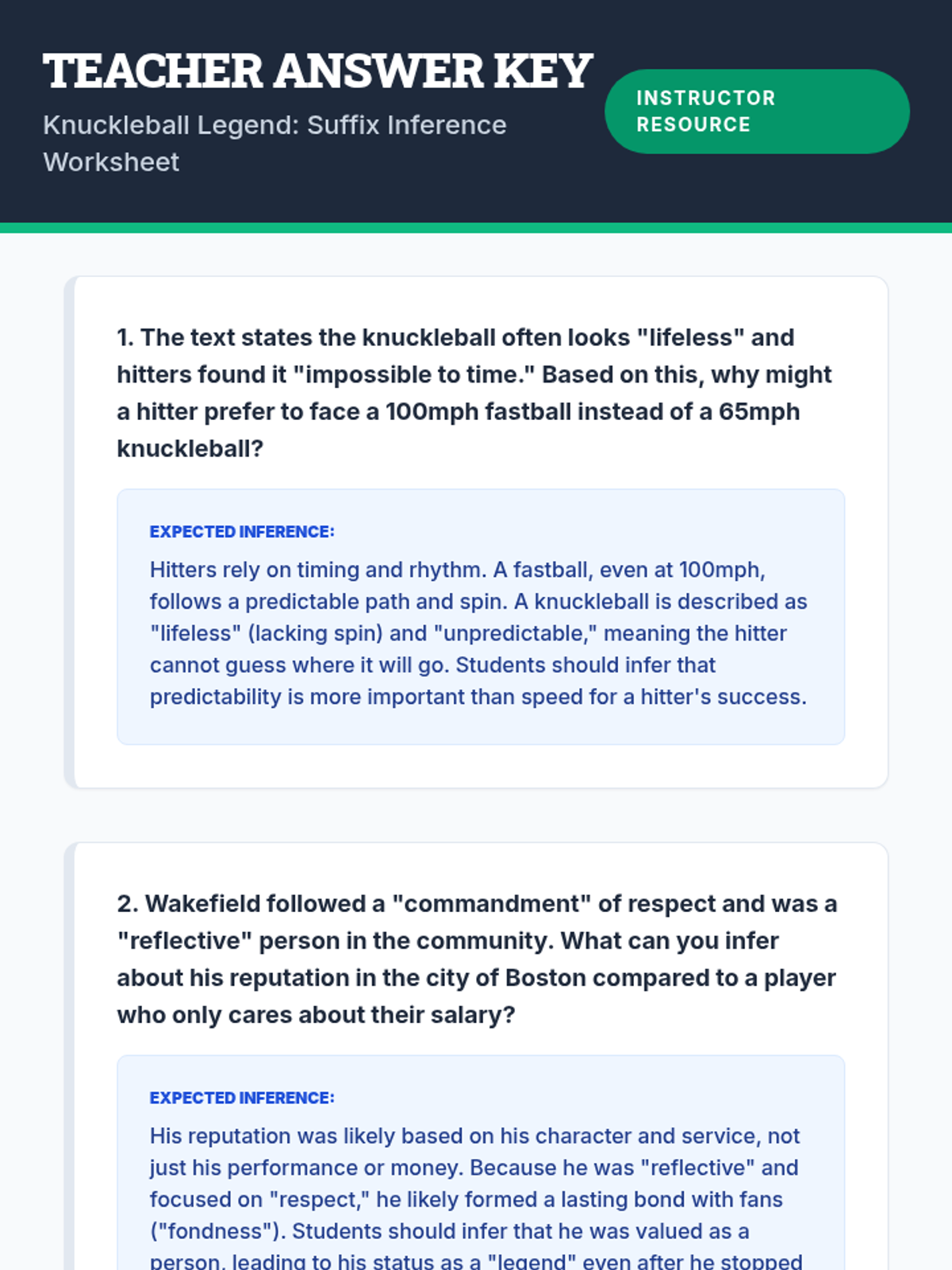
A teacher answer key for the Knuckleball Legend worksheet, providing expected inference responses and a guide to the 18 suffix-based words used in the text.
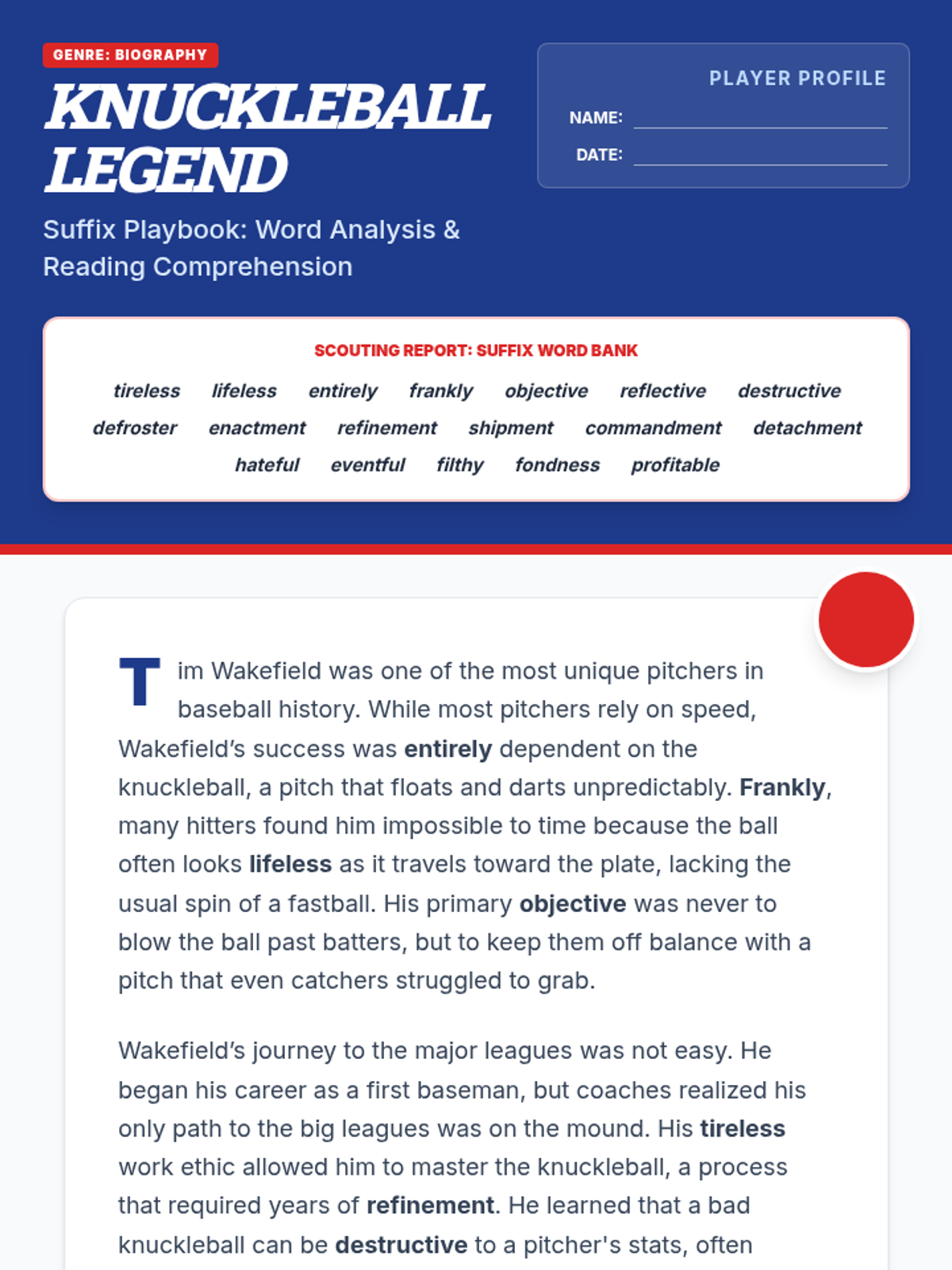
A 5-paragraph biography of MLB pitcher Tim Wakefield that incorporates 18 specific suffix-based words. It includes four inference-focused comprehension questions with dedicated student work areas.
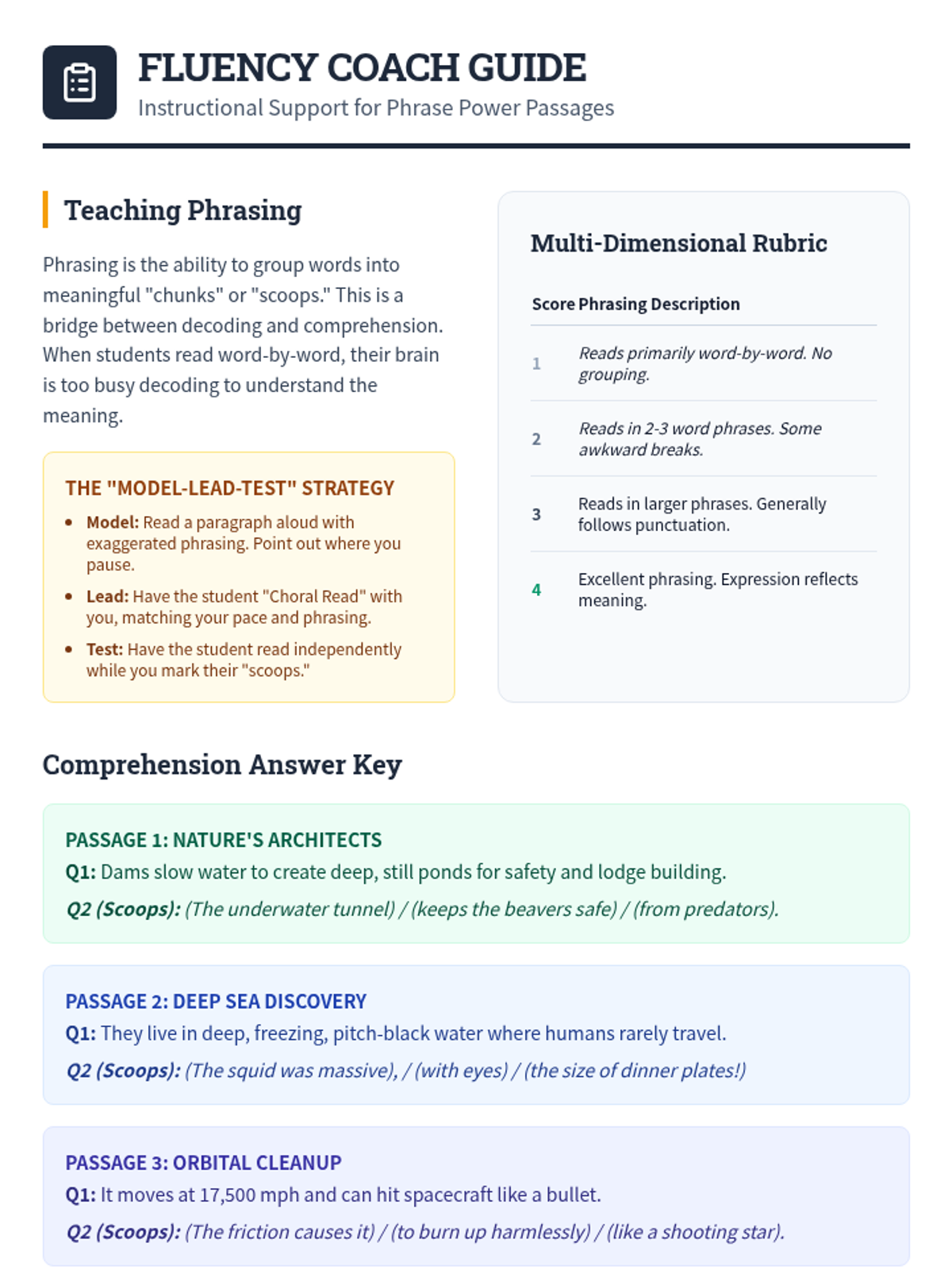
A teacher's resource containing instructional strategies for teaching phrasing, a fluency rubric, an answer key for all three passages, and a student progress tracking log.
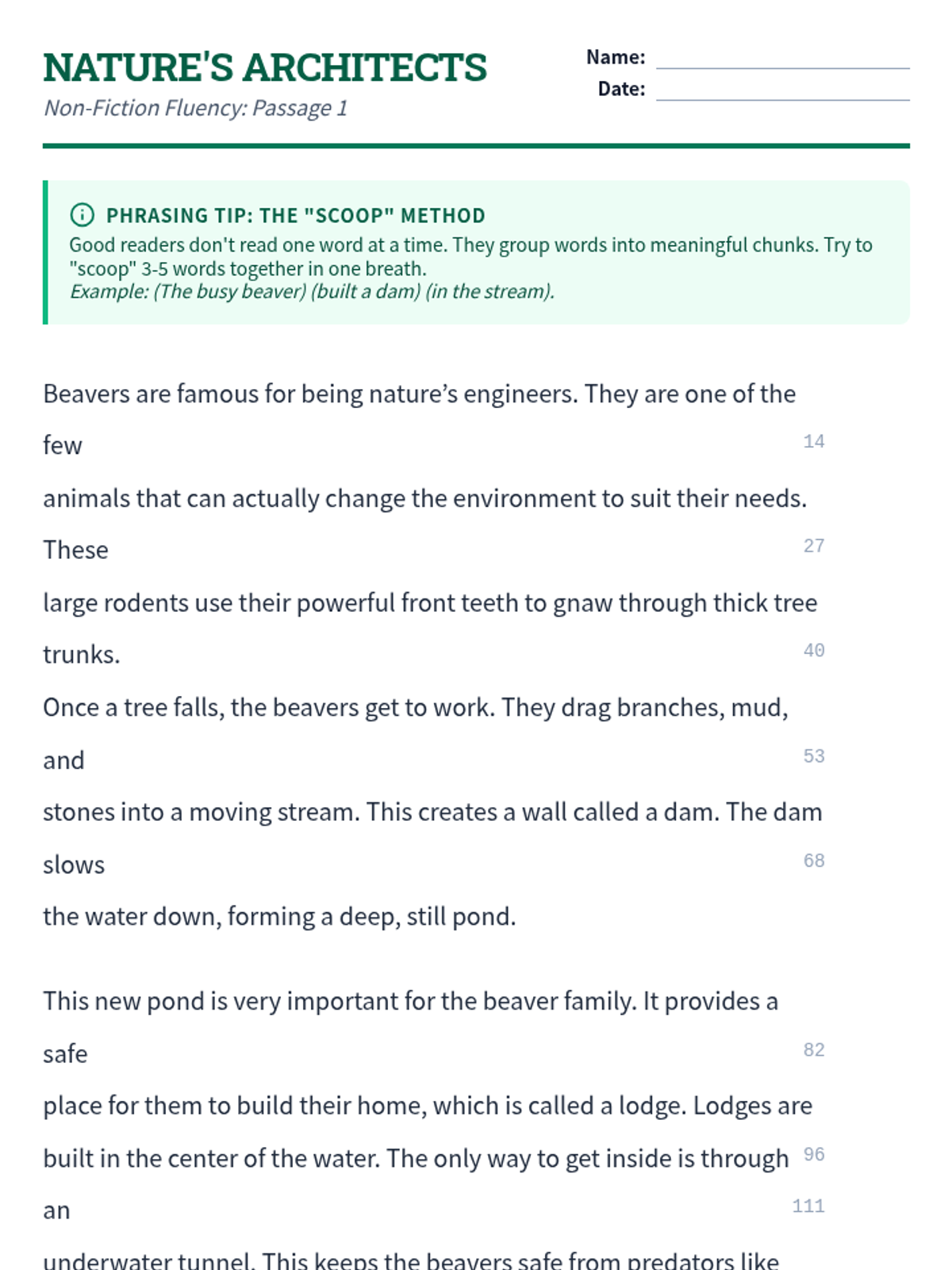
A set of three non-fiction reading fluency passages for 7th-grade students reading at a 5th-grade level. Each passage includes line-by-line word counts, fluency tracking boxes for three attempts, phrasing tips, and quick comprehension checks.
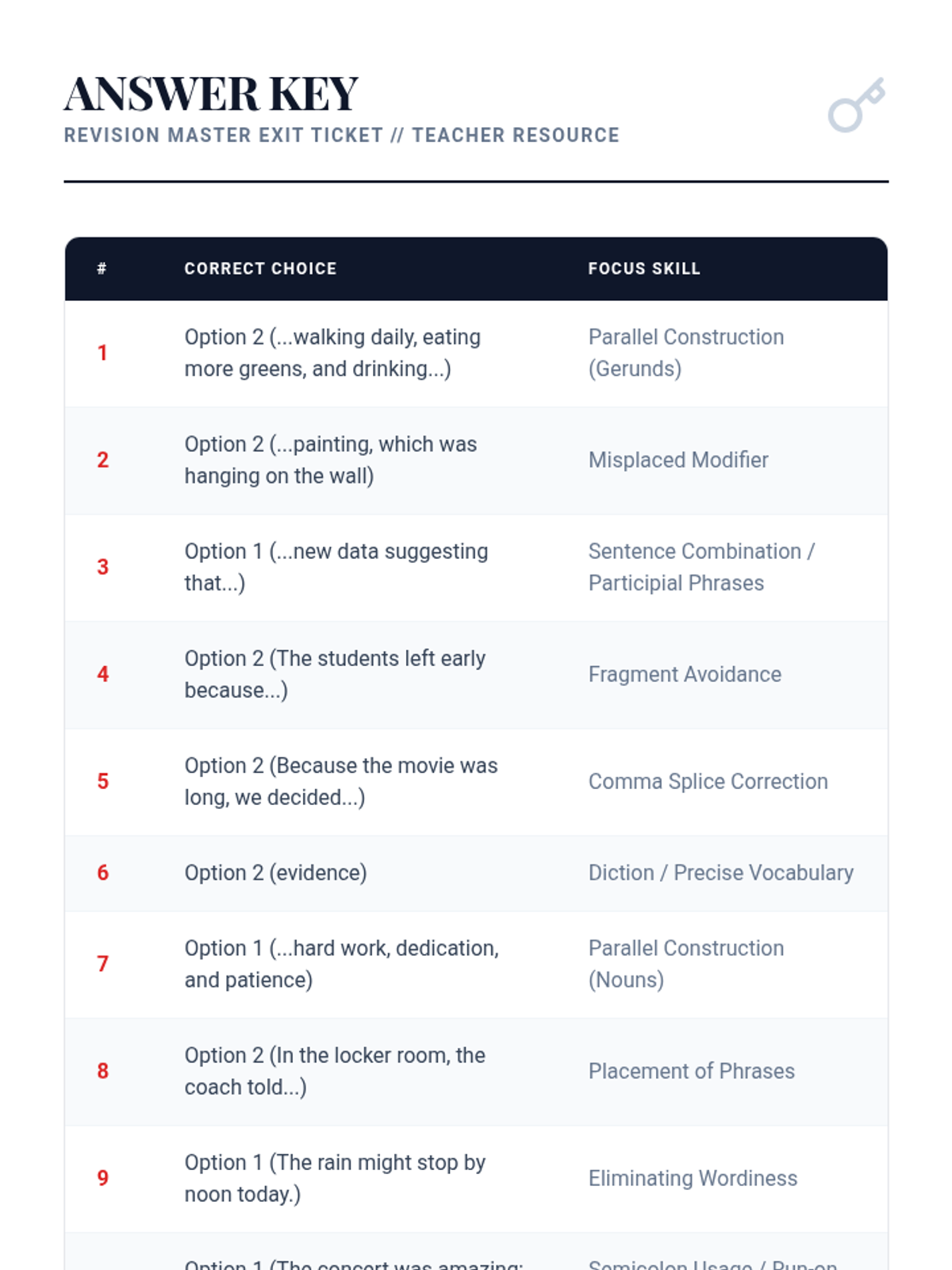
A teacher-facing answer key and grading guide for the Revision Master Exit Ticket. Includes focus skills for each question and common student misconceptions.
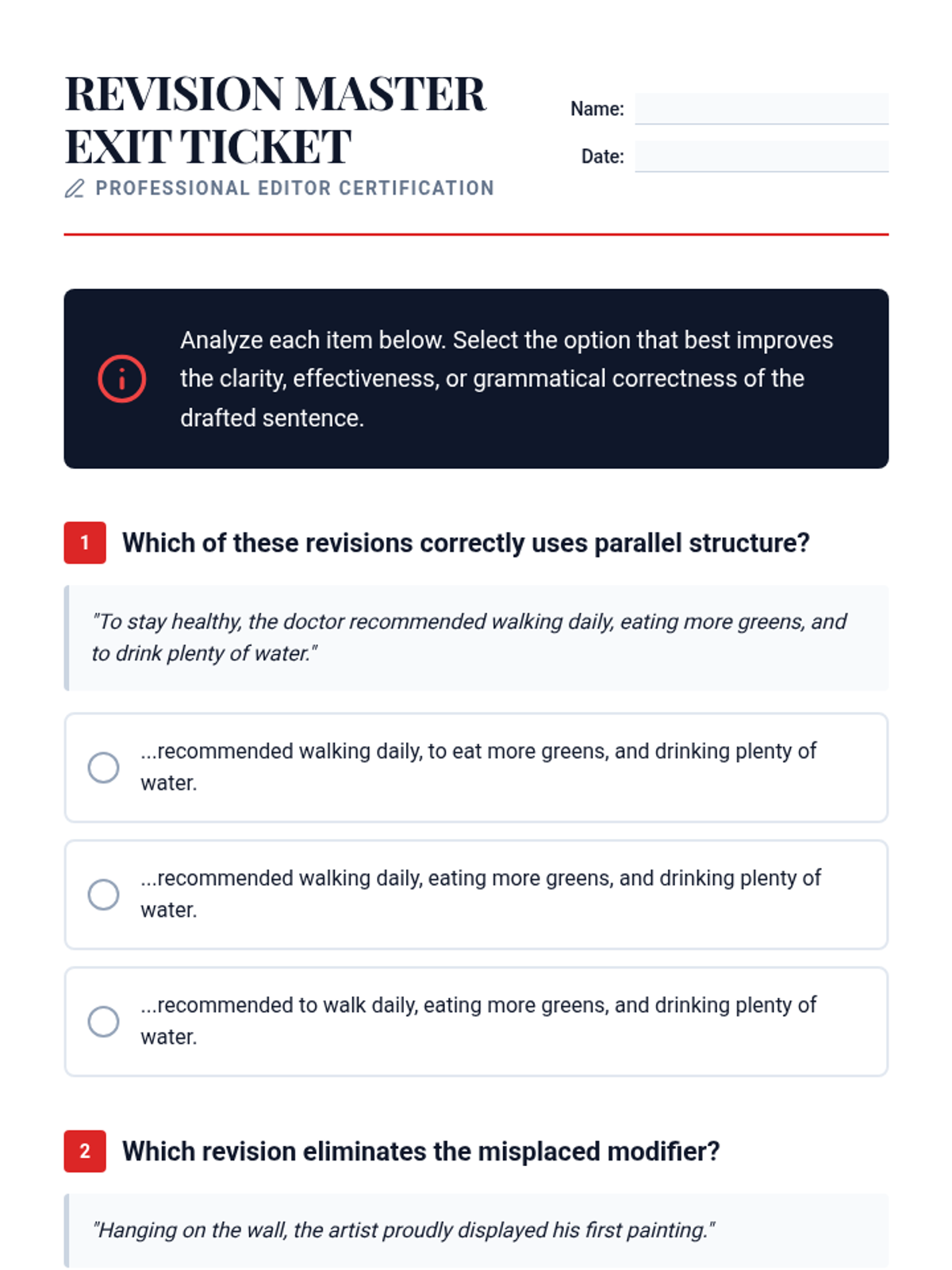
A 10-question multiple-choice exit ticket assessing student mastery of parallel structure, phrase placement, sentence effectiveness, and basic editing for fragments and run-ons. Includes break-inside-avoid to prevent question splitting.
A digital slide presentation guiding students through the revision process, focusing on parallel structure, phrase placement, and sentence effectiveness. Now updated with minimum 24px font size for all text elements.
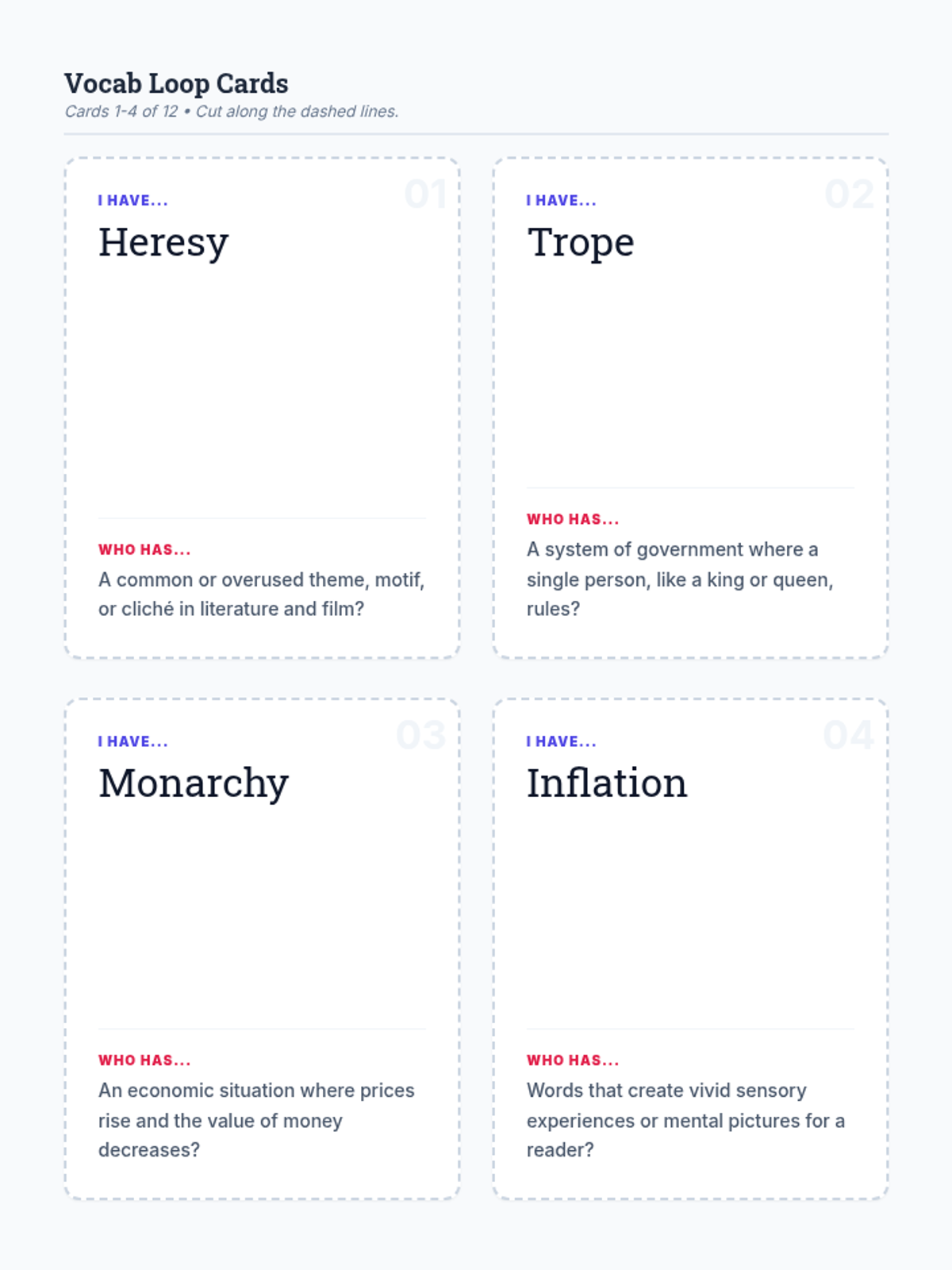
Print-ready vocabulary "I Have, Who Has" cards (4 per page) with generous safe-zone margins to ensure no content is cut off by printers. Includes dashed cutting guides and a teacher key.
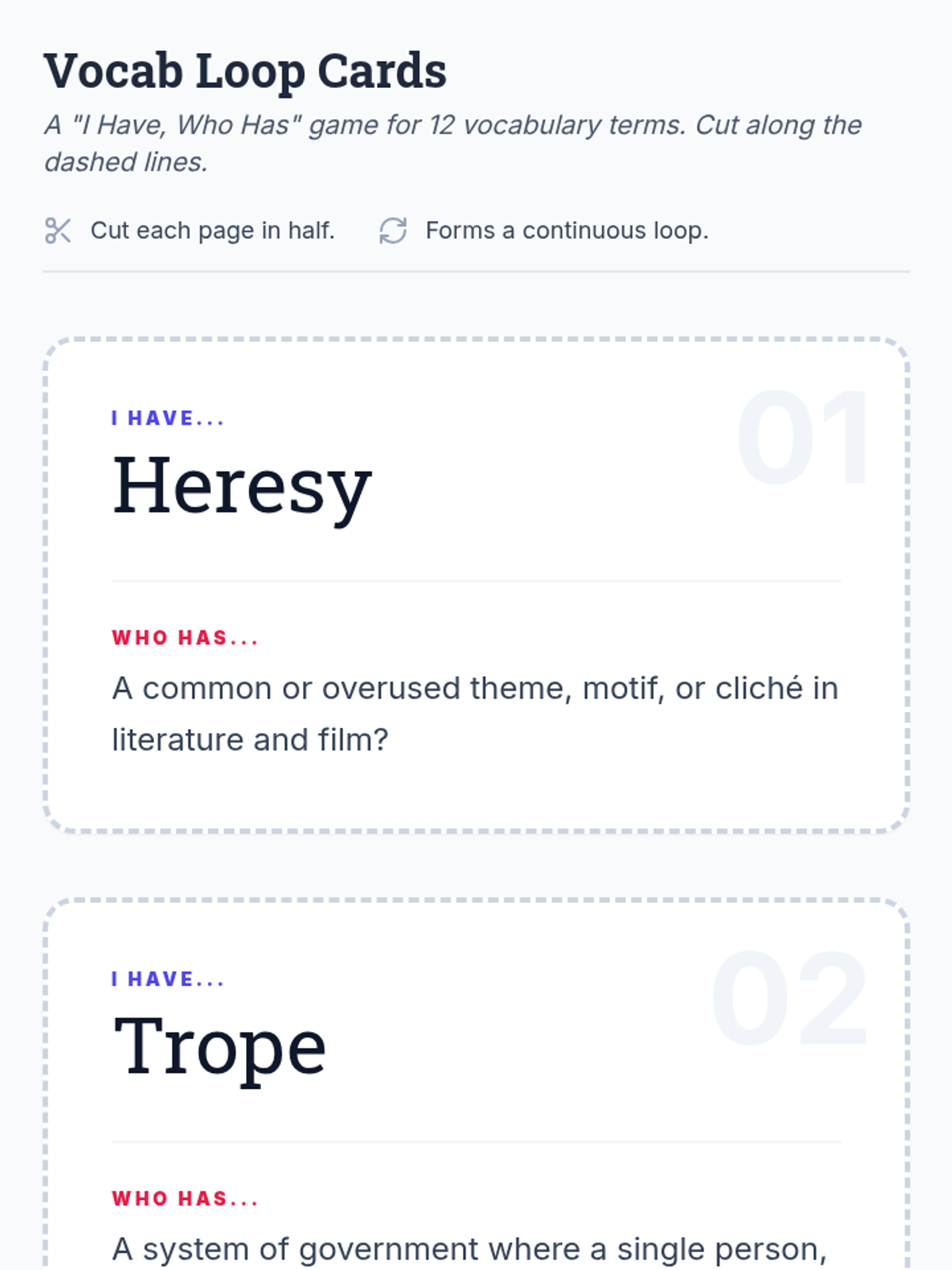
An updated version of the 12-card vocabulary game with larger cards (2 per page) for easier cutting and better visibility. Includes the same loop terms and a teacher reference key.
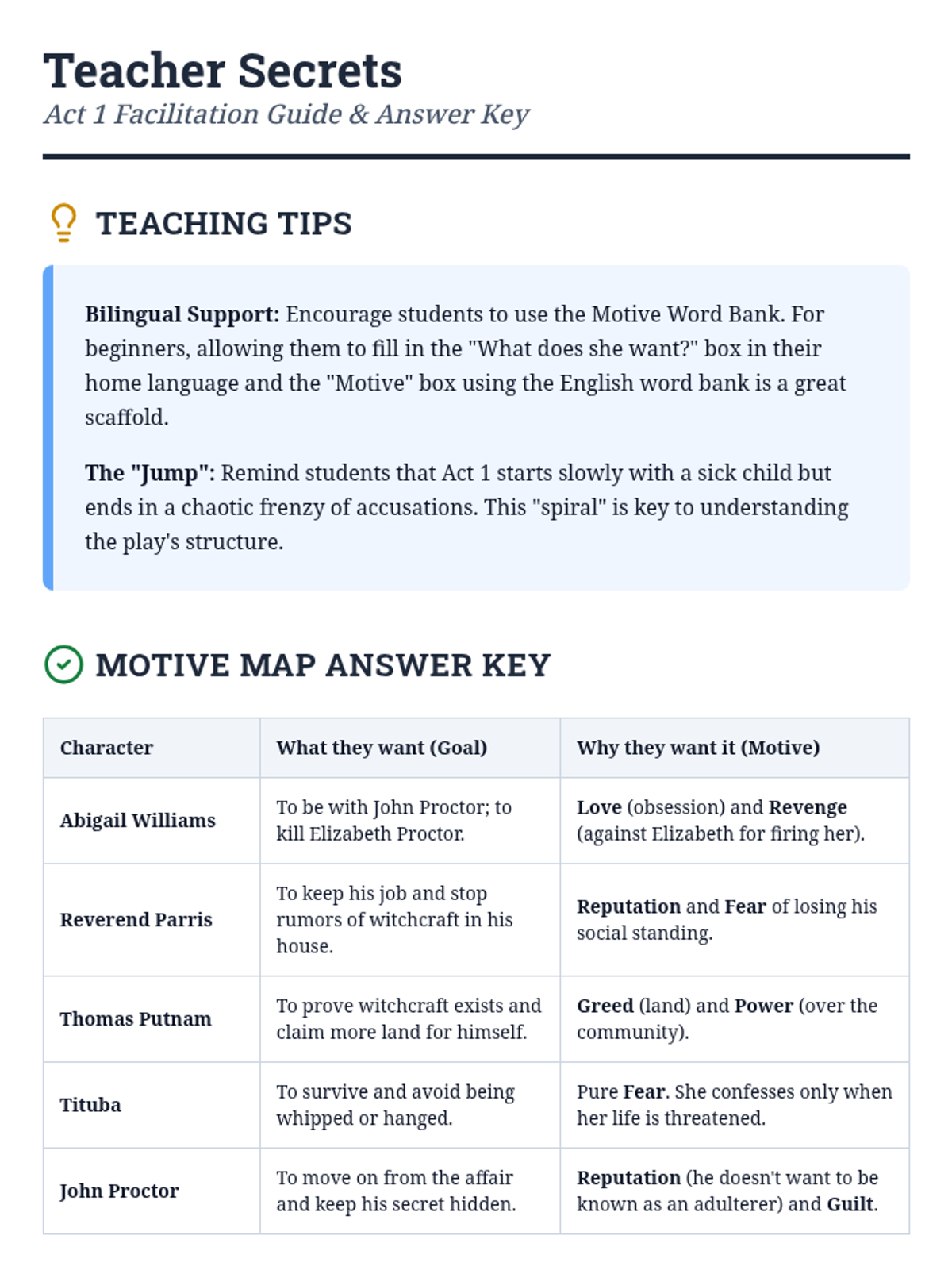
A teacher-facing facilitation guide and answer key for Act 1 of The Crucible, including character analysis keys, bilingual instructional strategies, and discussion prompts.
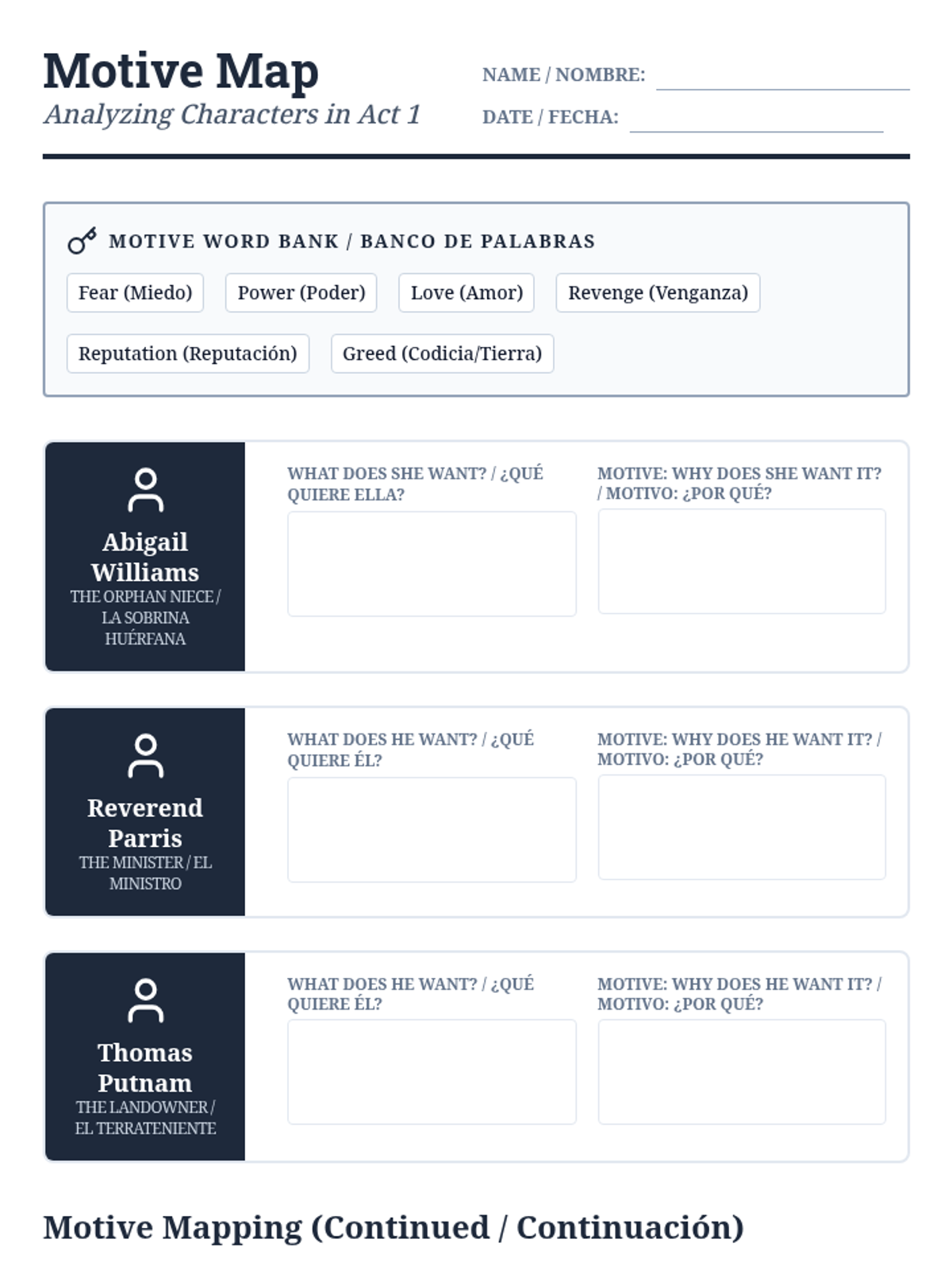
A 2-page bilingual character motive worksheet for Act 1 of The Crucible. It includes character roles and prompts in both English and Spanish to support language development and analysis.
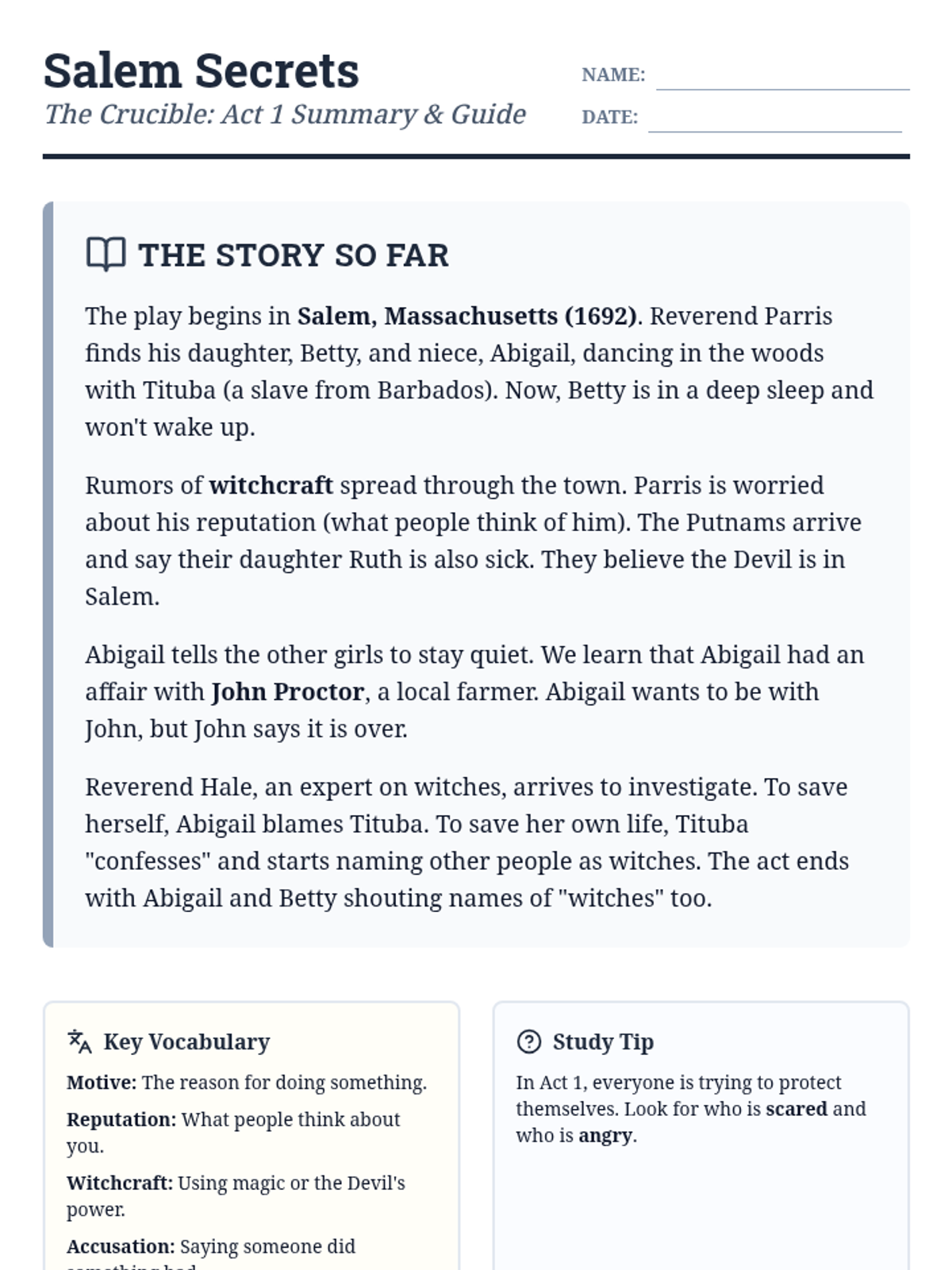
An accessible summary and guided reading document for Act 1 of The Crucible. It includes key vocabulary and scaffolded questions with sentence starters specifically for bilingual learners.
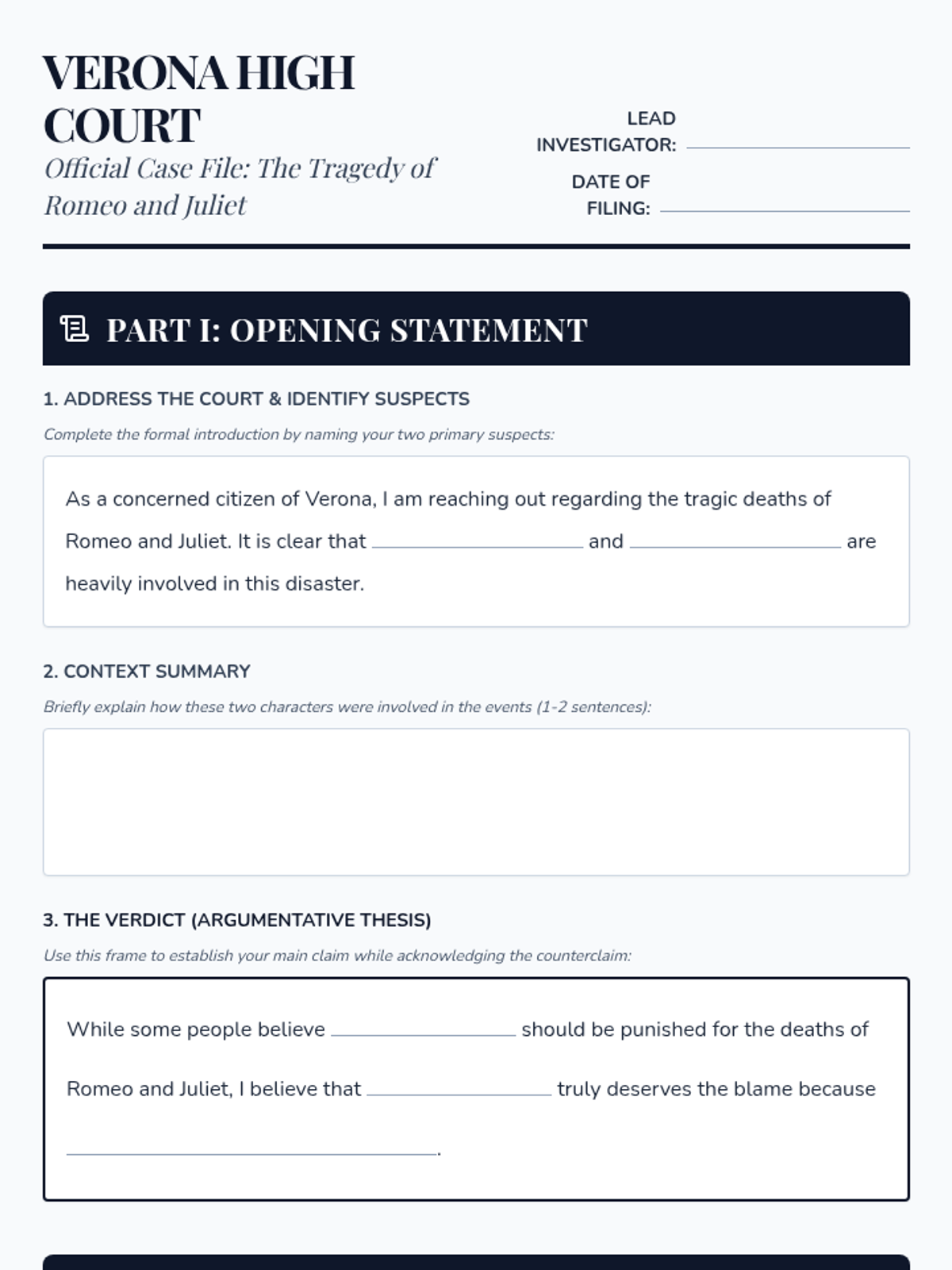
A visually pleasing, highly scaffolded argumentative writing graphic organizer for a 'Who's to Blame' Romeo and Juliet essay. It features specific boxes for every sentence, integrated sentence stems, and an 'Evidence Archive' containing secondary source quotes to help students build a robust argument including claims, evidence, and counterclaims.
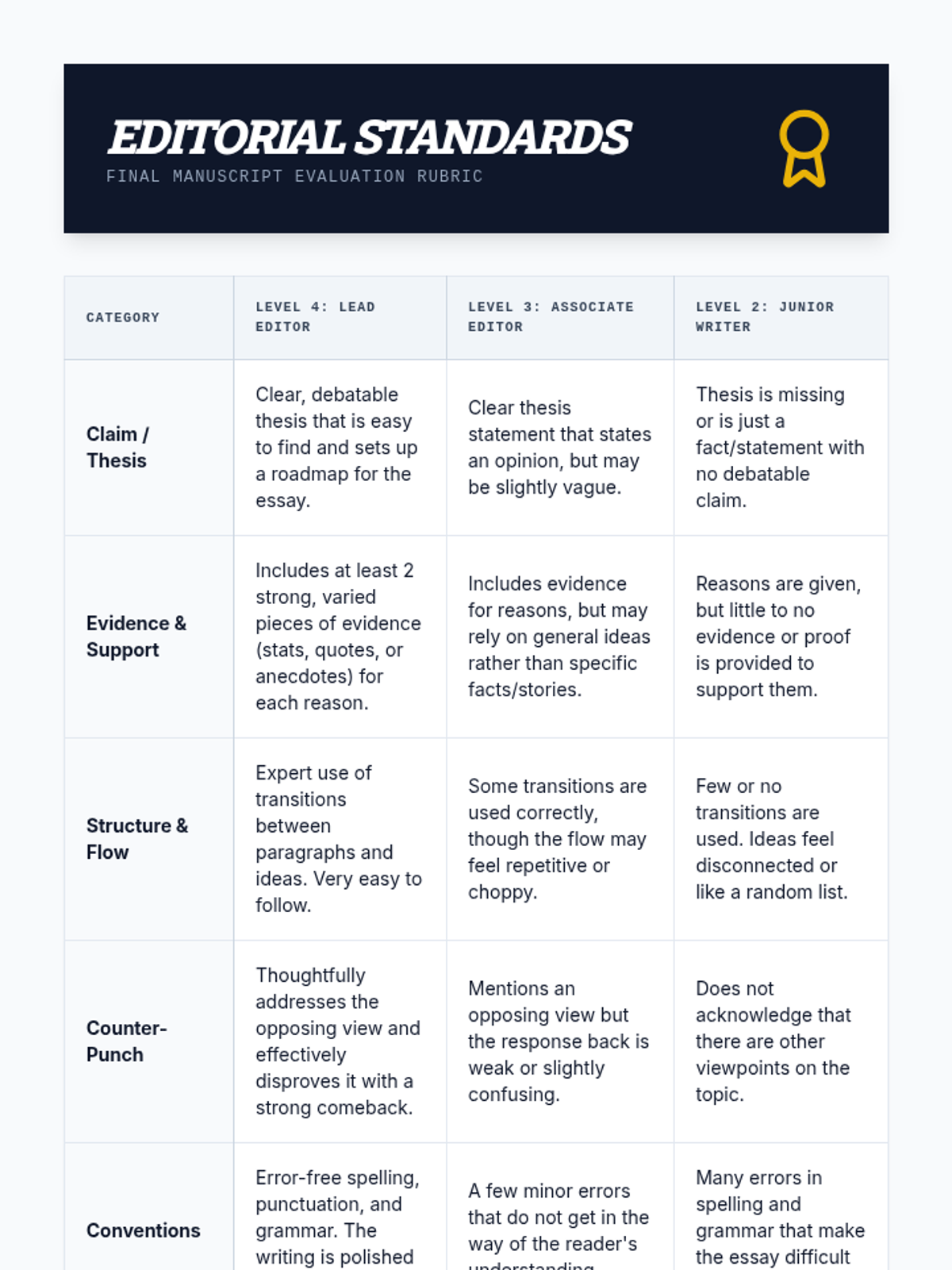
A professional persuasive writing rubric styled as 'Editorial Standards'. Evaluates thesis, evidence, structure, counterarguments, and conventions across three levels of mastery.
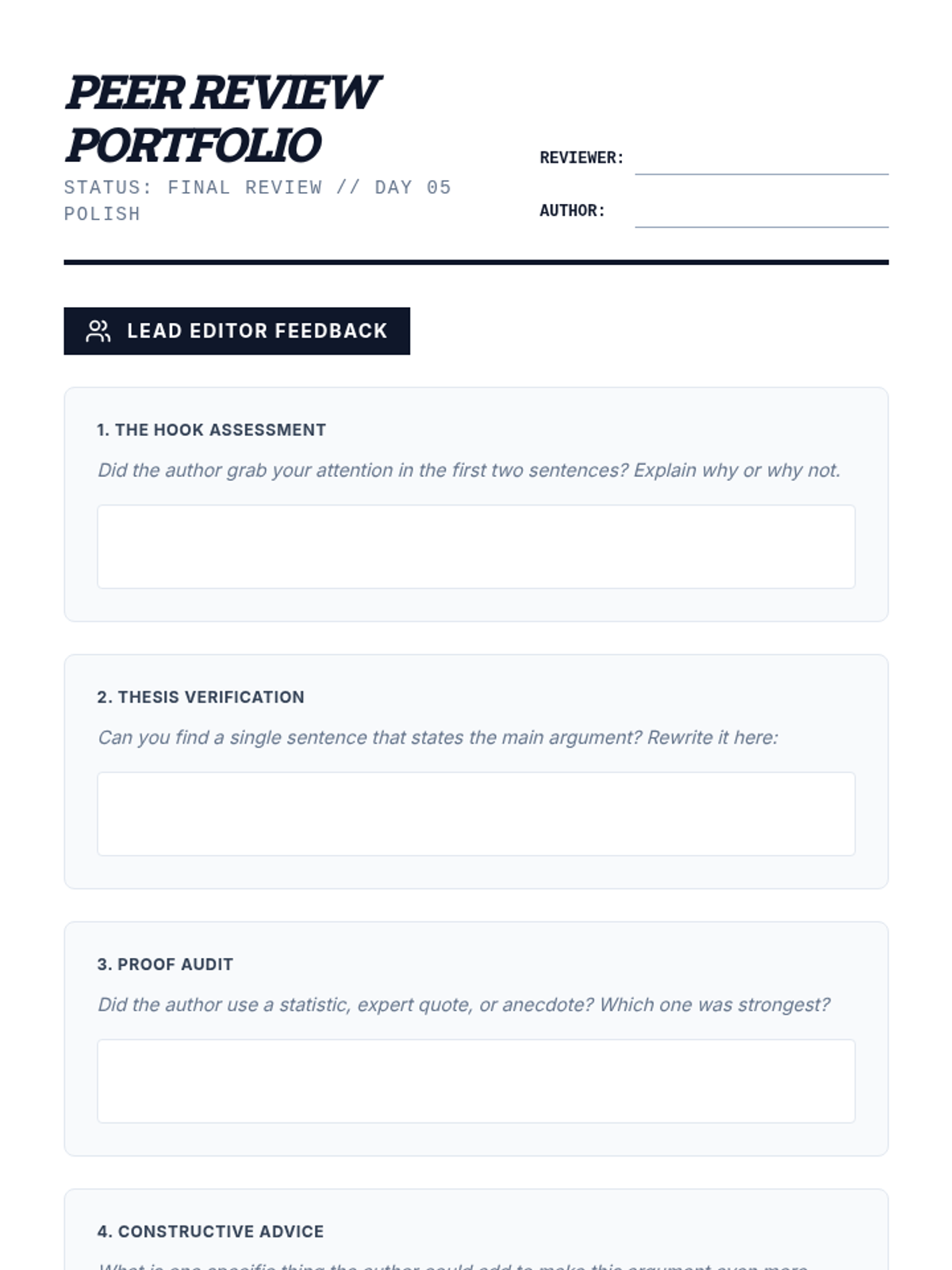
A comprehensive peer review and revision checklist designed with an editorial theme. Includes sections for specific peer feedback and a final 'Ready for Print' checklist for self-assessment.
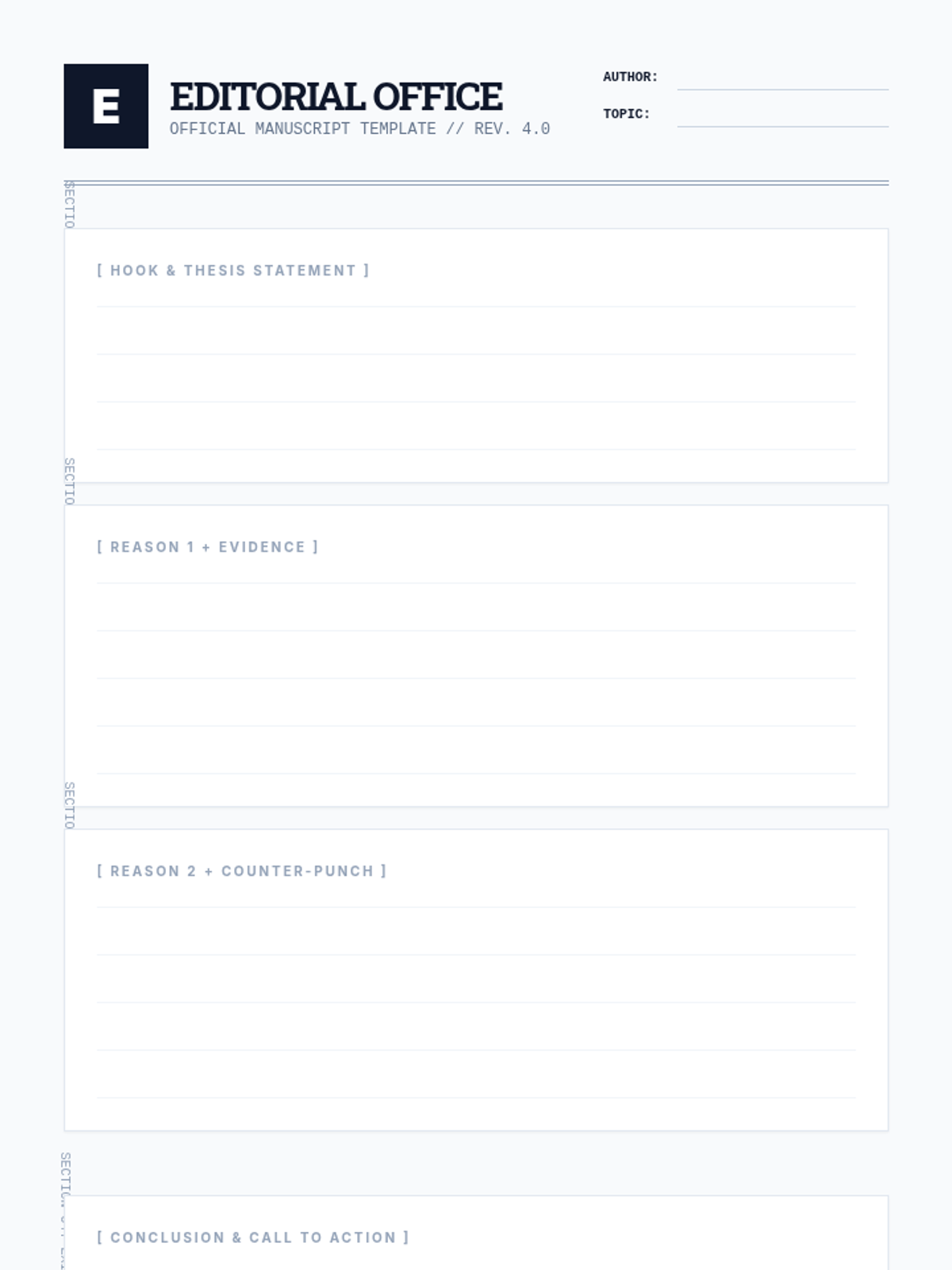
A themed drafting template with transition word bank, designed for students to write their persuasive essay manuscript. Includes sections for intro, proof, and conclusion with writing lines.
Slides for Lesson 4 focusing on transitions and logical flow as students move from planning to drafting their full persuasive essay.
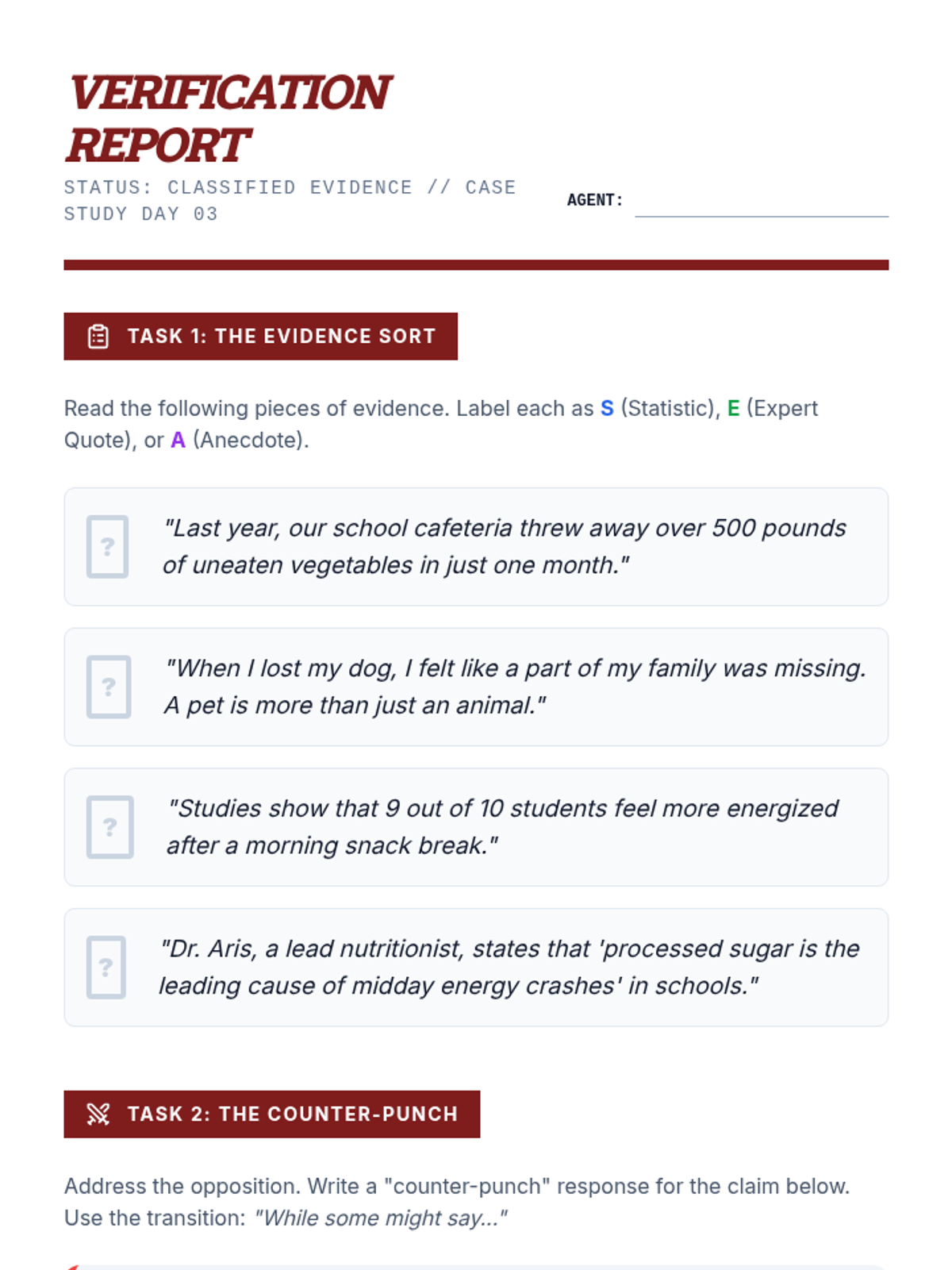
An evidence verification worksheet where students practice identifying types of evidence (stats, quotes, anecdotes) and drafting a counterargument response.
Slides for Lesson 3 focusing on types of evidence (stats, expert quotes, anecdotes) and how to address counterarguments. Features the 'Counter-Punch' strategy.
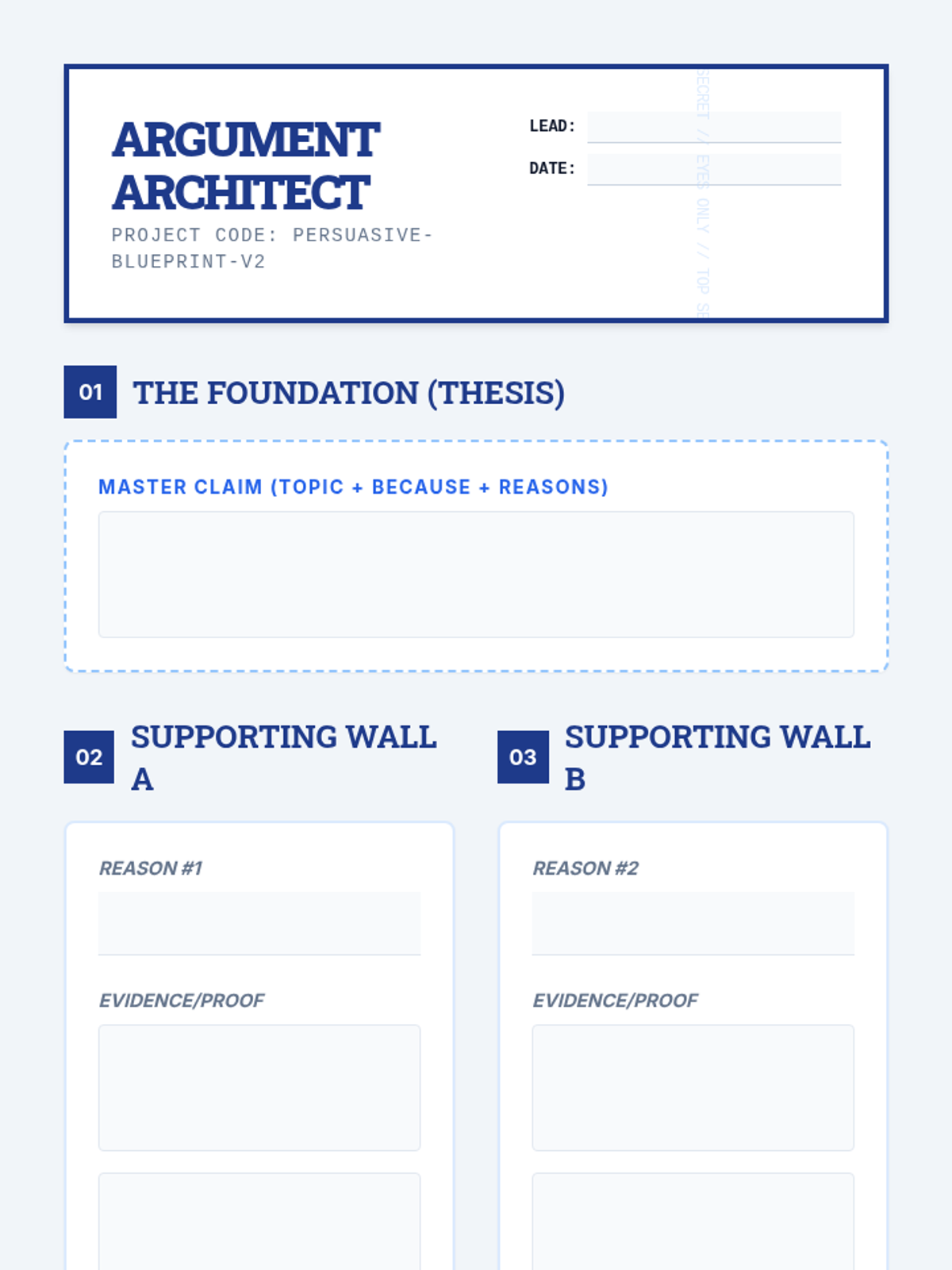
A graphic organizer for planning a persuasive essay. Designed with an 'Architectural Blueprint' theme, it helps students structure their thesis, supporting reasons, and call to action.
Slides for Lesson 2 focusing on thesis statement creation and essay organization. Includes a 'thesis formula' and examples of strong vs. weak claims.
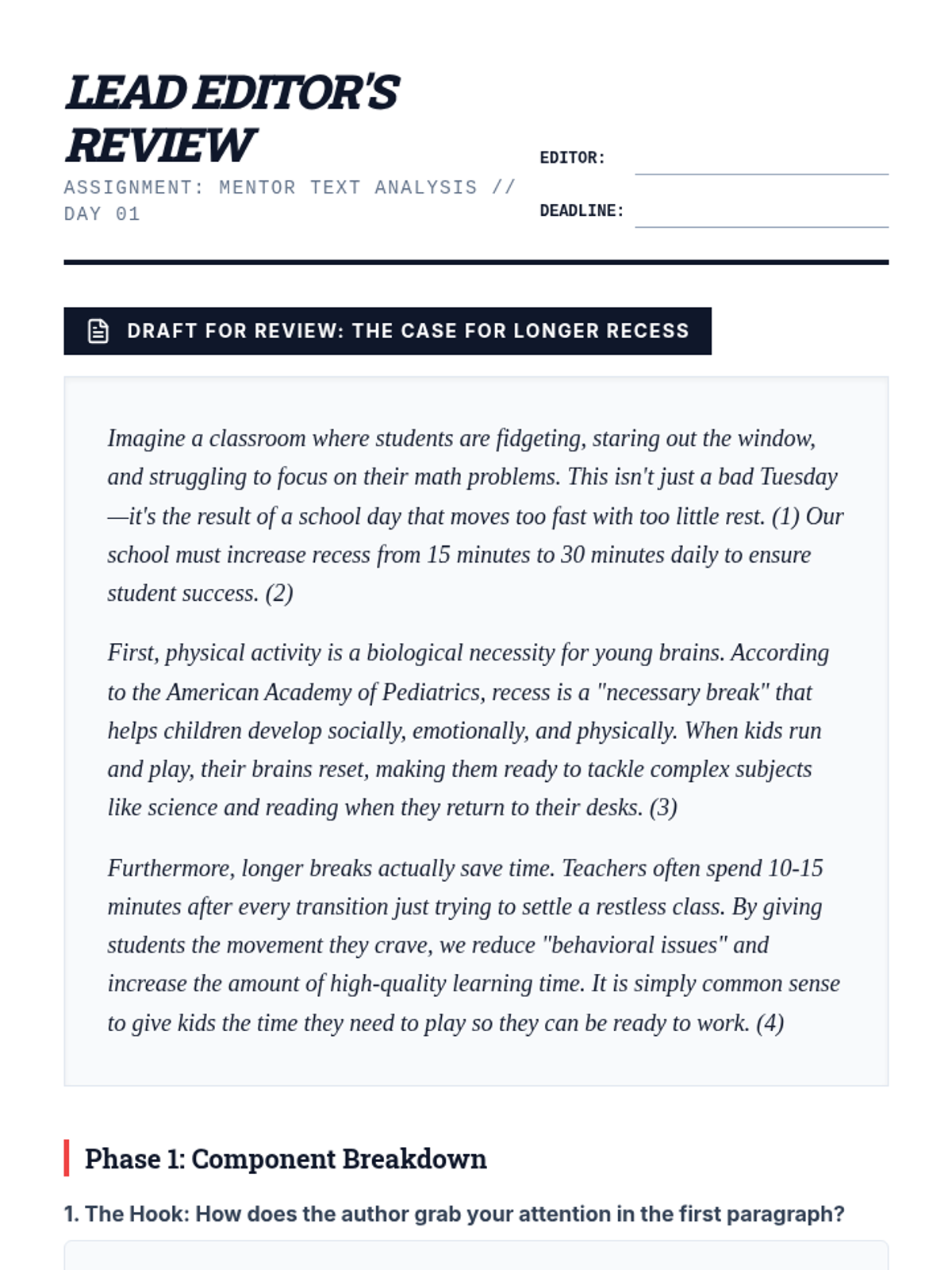
A mentor text analysis worksheet featuring a persuasive passage about recess. Students identify the hook, claim, and supporting reasons, and practice distinguishing between facts and opinions as part of their 'Lead Editor' training.
Introduction slides for the Convince Me unit, covering the definition of persuasion, the difference between fact and opinion, and the basic components of a persuasive argument. Includes visual prompts and clear definitions for classroom instruction.
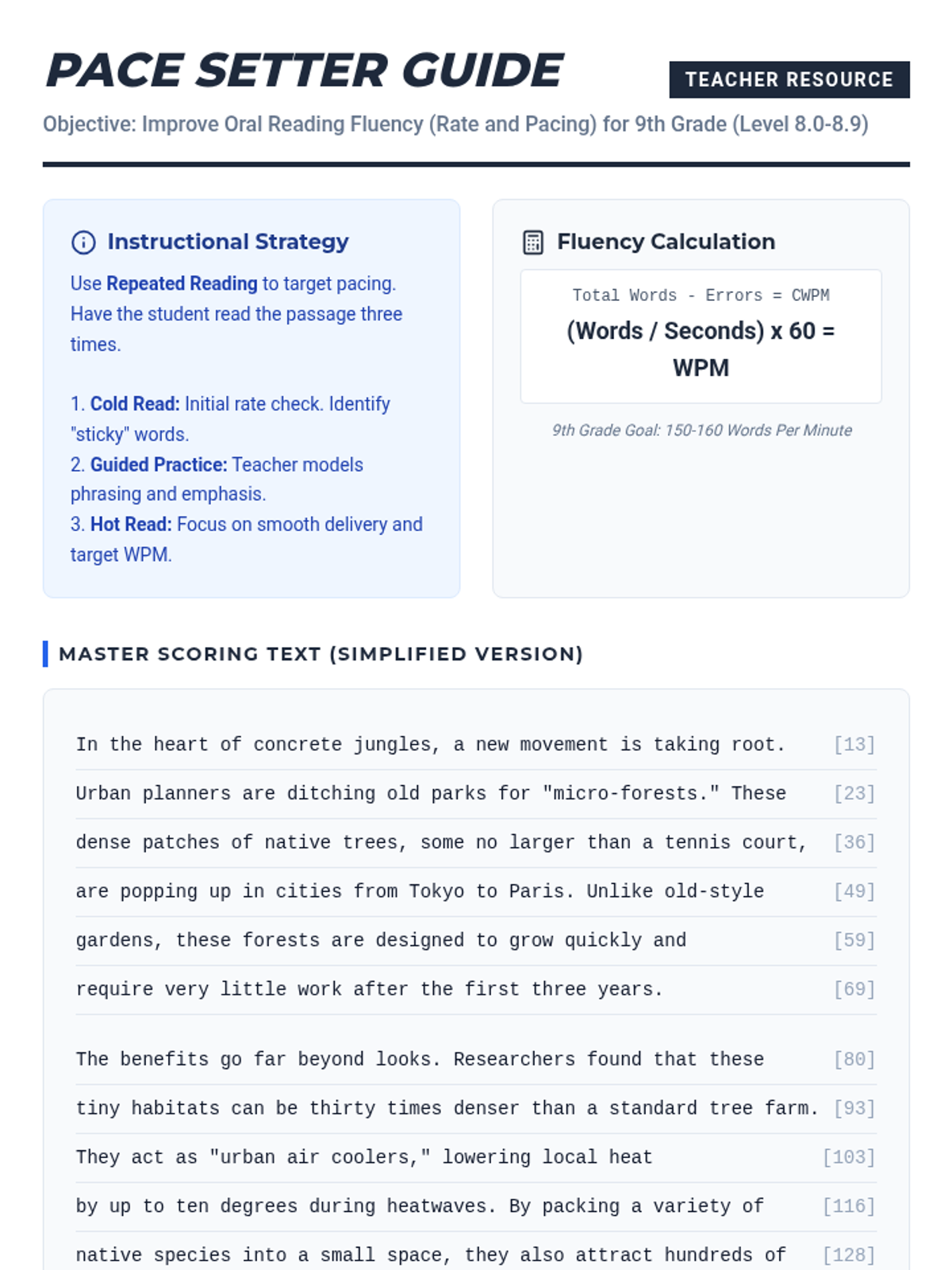
A teacher-facing guide for assessing oral reading fluency. Includes the simplified version of the text with updated word counts for easier scoring and tracking.
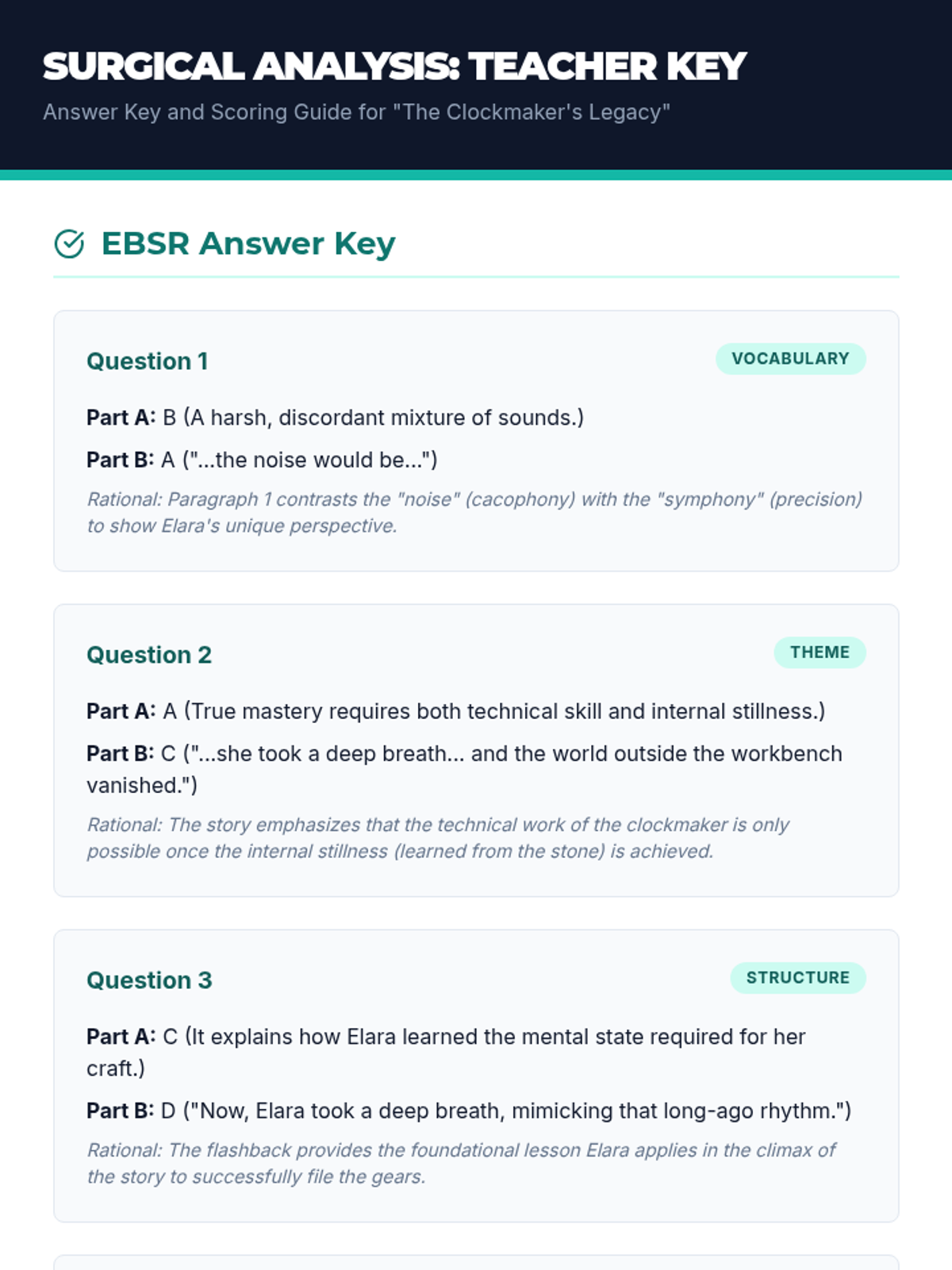
An answer key and scoring guide for the Surgical Analysis Worksheet, including rationales and a PCR rubric.
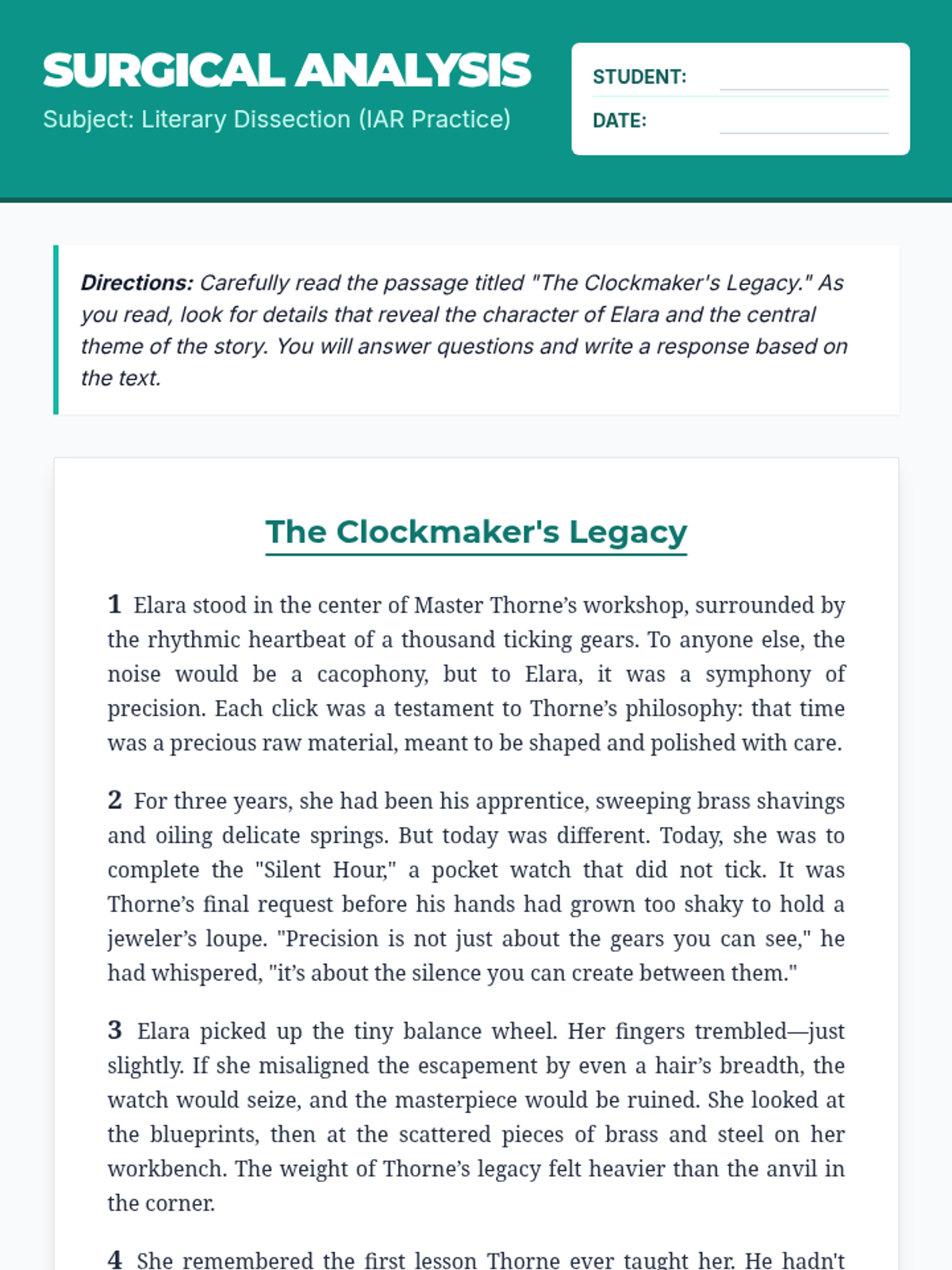
A revised comprehensive literary analysis practice worksheet featuring a high-quality passage and IAR-style questions (EBSR and PCR) with expanded writing space.
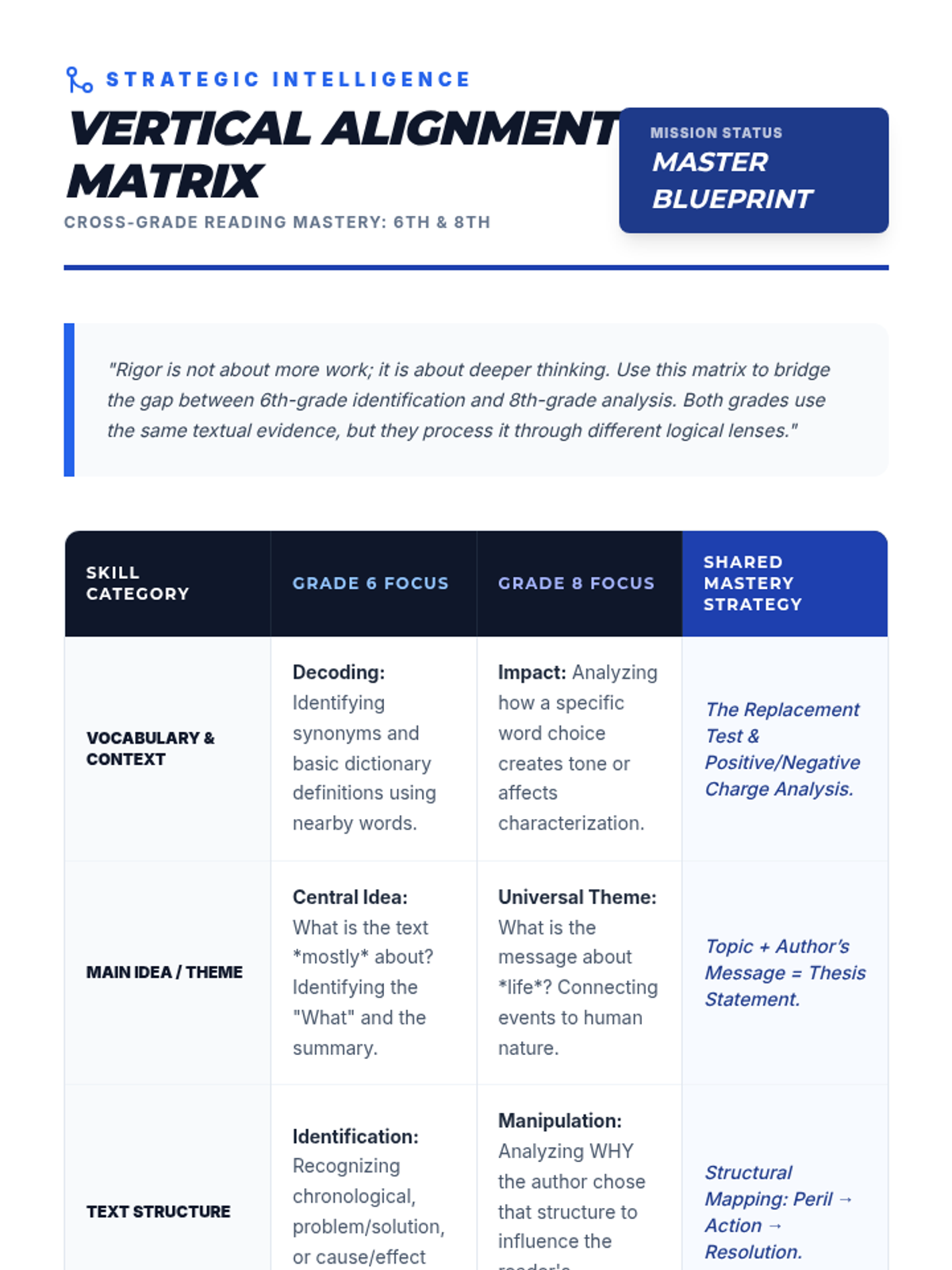
A high-rigor cross-reference matrix for teachers and students, outlining the complexity shift between Grade 6 and Grade 8 reading skills for vocabulary, theme, structure, and evidence analysis.
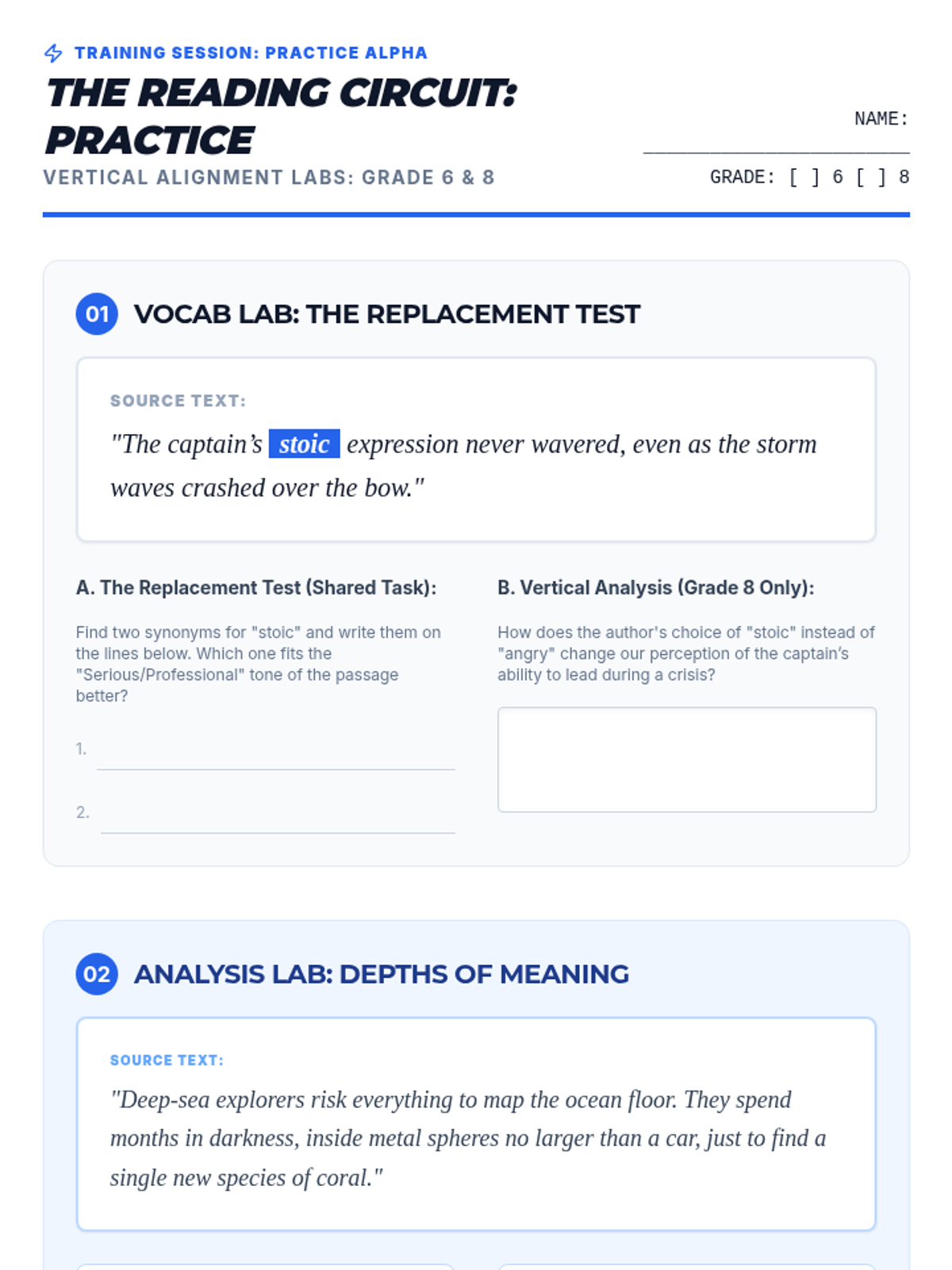
A practice handout containing the mini-passages and vocabulary examples from the Universal Reading Mastery slides, allowing students to practice vertical alignment skills before the main mission.
A high-rigor instructional slide deck for a combined middle school STAAR Blitz, focusing on vertical alignment, shared strategies, and tiered modeling for 6th and 8th-grade thinkers.
A high-rigor tactical slide deck for a middle school STAAR Blitz, featuring tiered strategies for 6th and 8th graders with higher-order thinking Check for Understanding (CFU) questions.
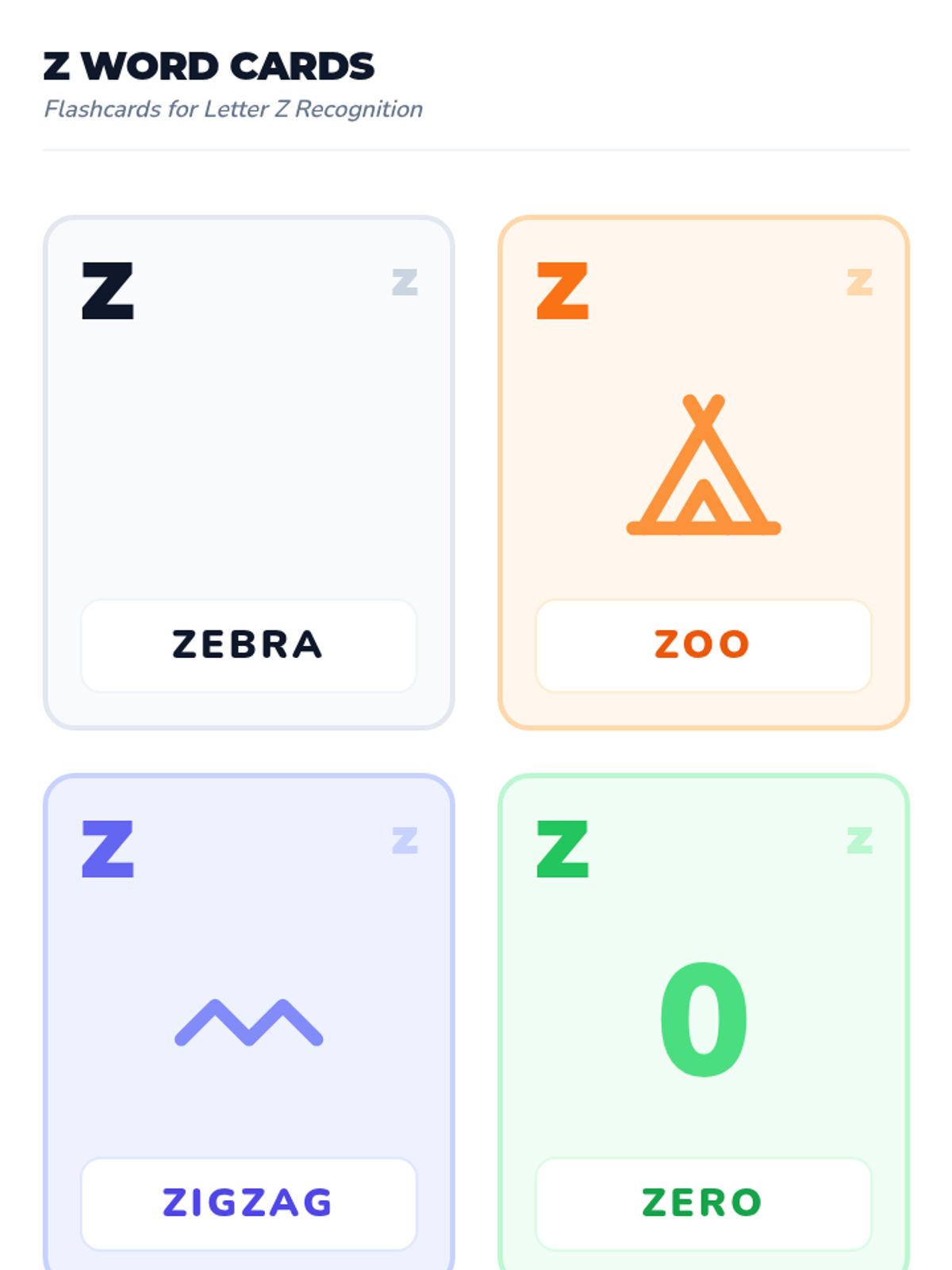
A set of four vibrant flashcards featuring the letter Z with words like Zebra, Zoo, Zigzag, and Zero for early literacy recognition.
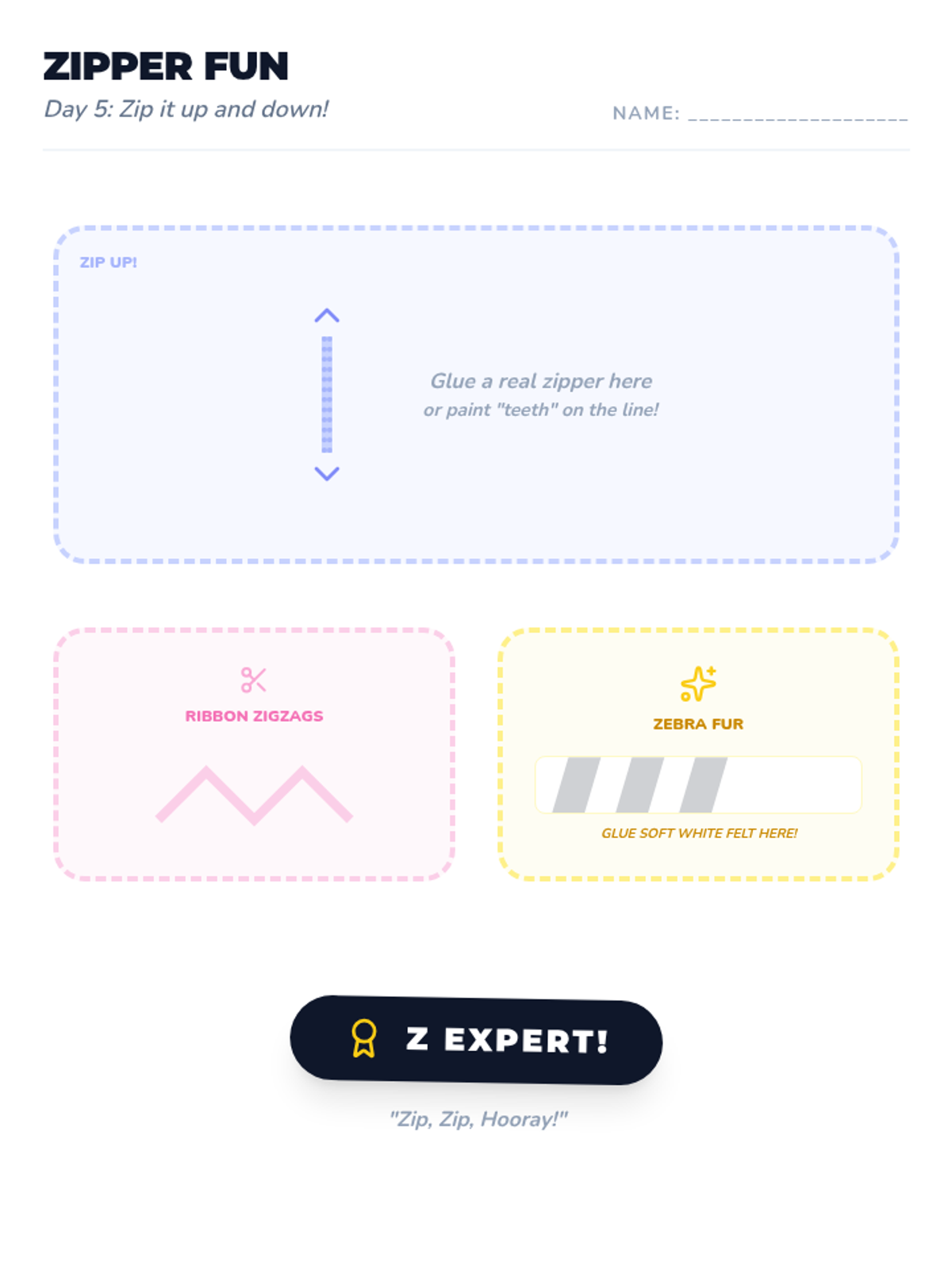
A sensory activity sheet for Day 5 focusing on zippers and textures, providing space for gluing real zippers or ribbons to reinforce the letter Z.
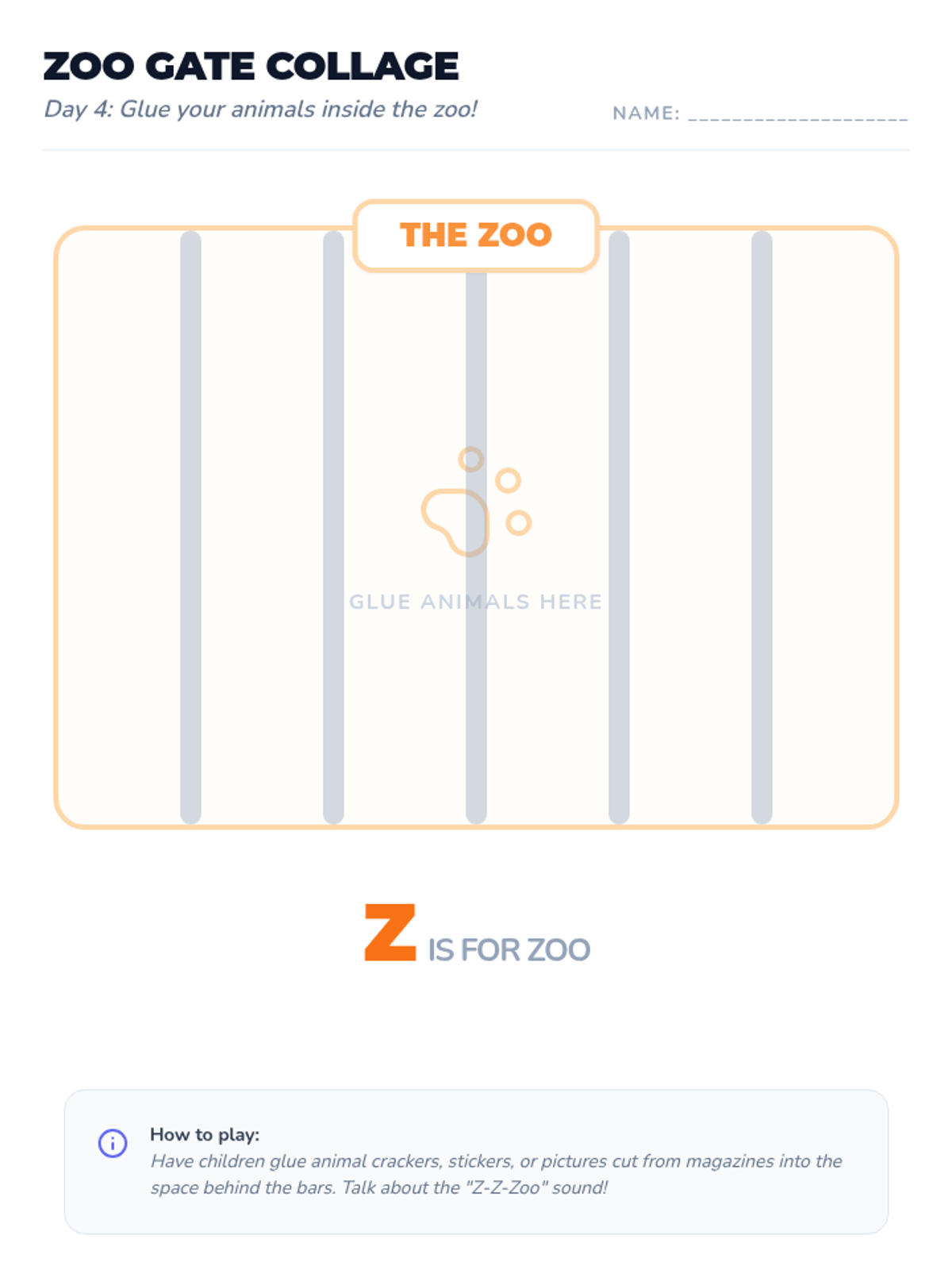
A zoo gate activity sheet for Day 4 where toddlers can glue animal crackers or clippings behind the bars of a zoo cage, reinforcing the Z sound.
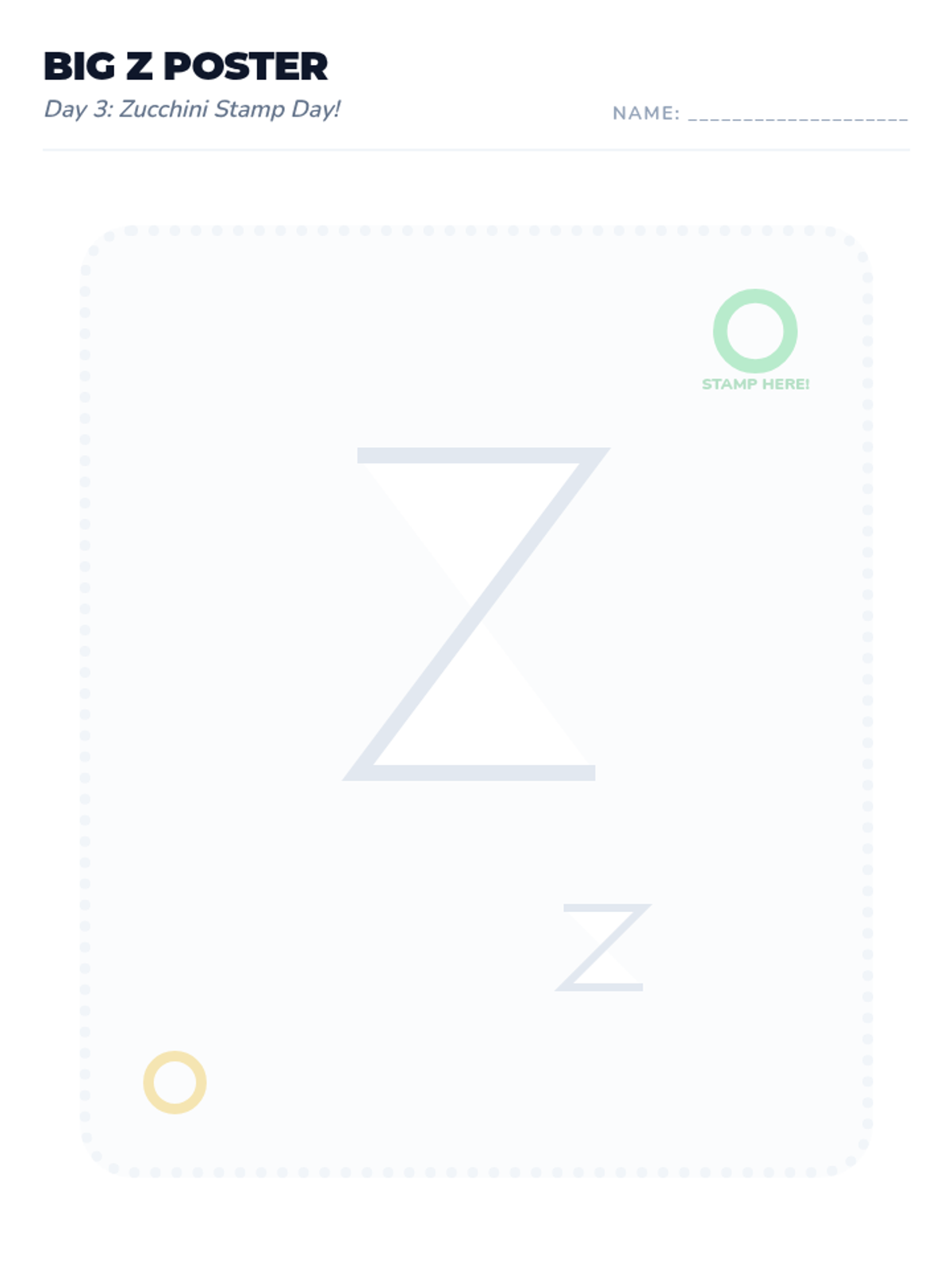
A large outline of uppercase and lowercase Z for sensory stamping activities using zucchini rounds or sponges.
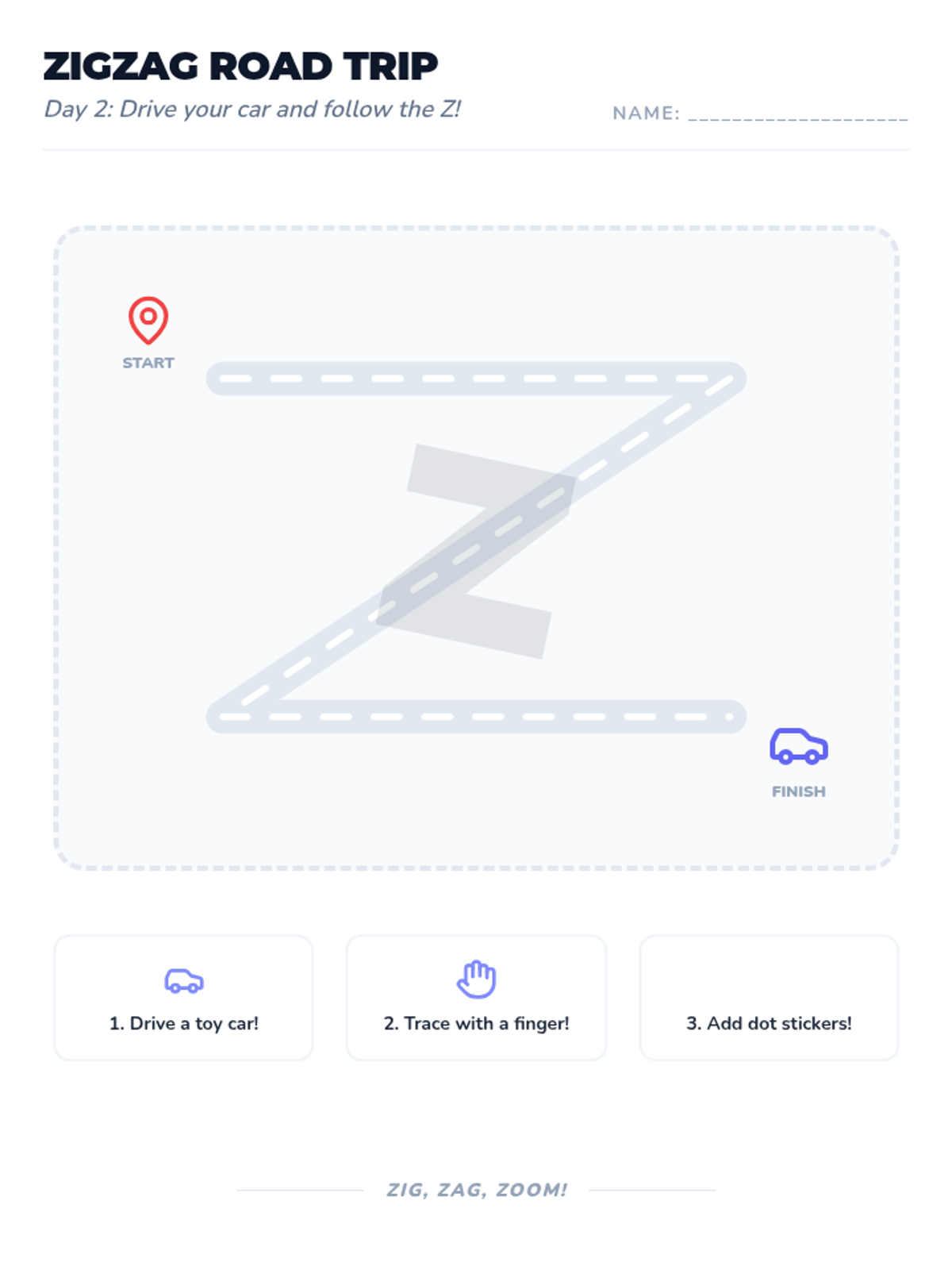
A zigzag road activity sheet for toddlers to practice the shape of the letter Z using toy cars, finger tracing, or stickers.