A 10-question character traits quiz for Peter Pan chapters 1-8. It features sentence starters for each question and generous tri-lined writing spaces for younger students. No word bank included.
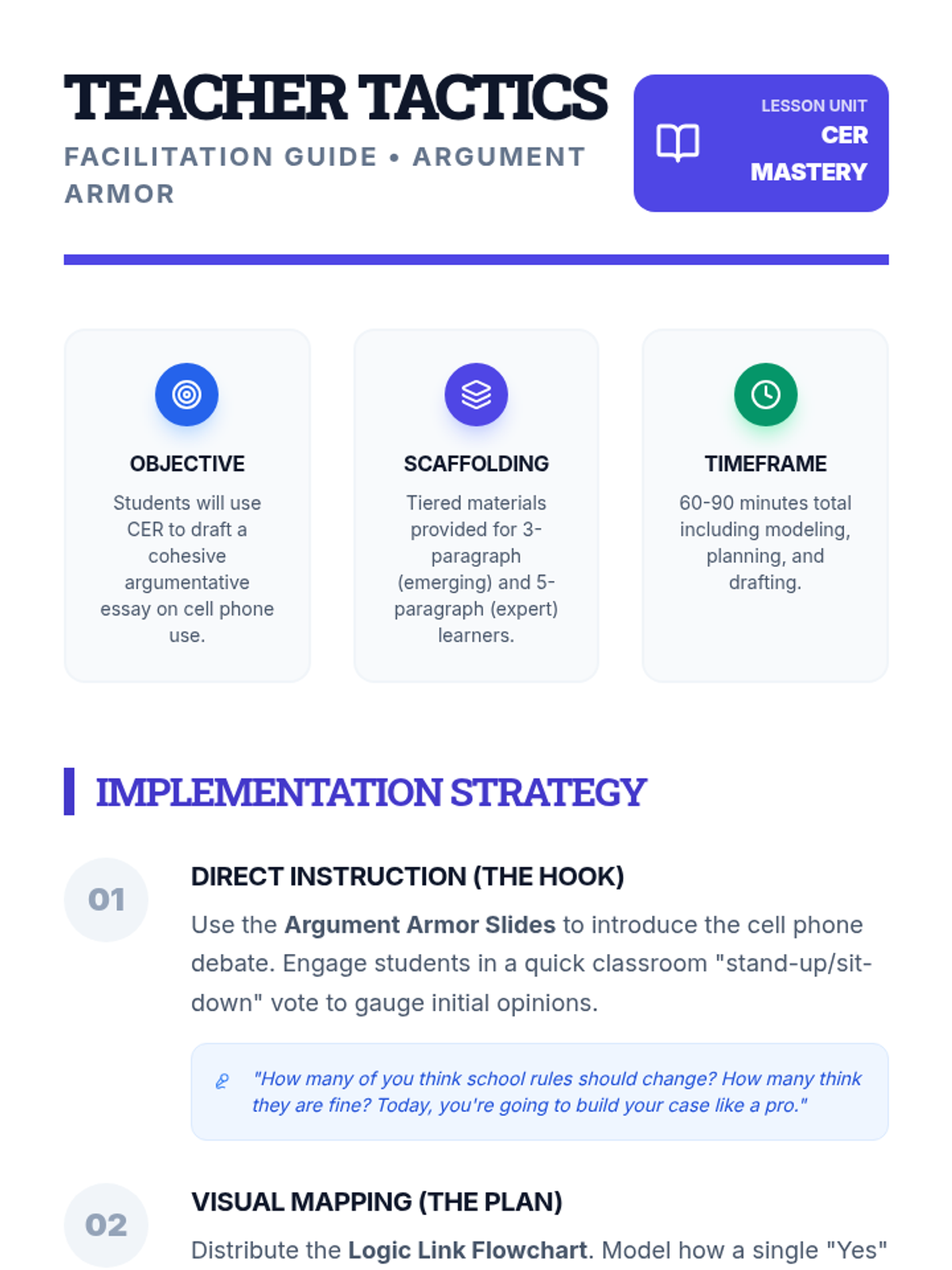
A teacher's guide for implementing scaffolded argumentative writing, featuring instructional strategies for using the CER framework and differentiated drafting tools.
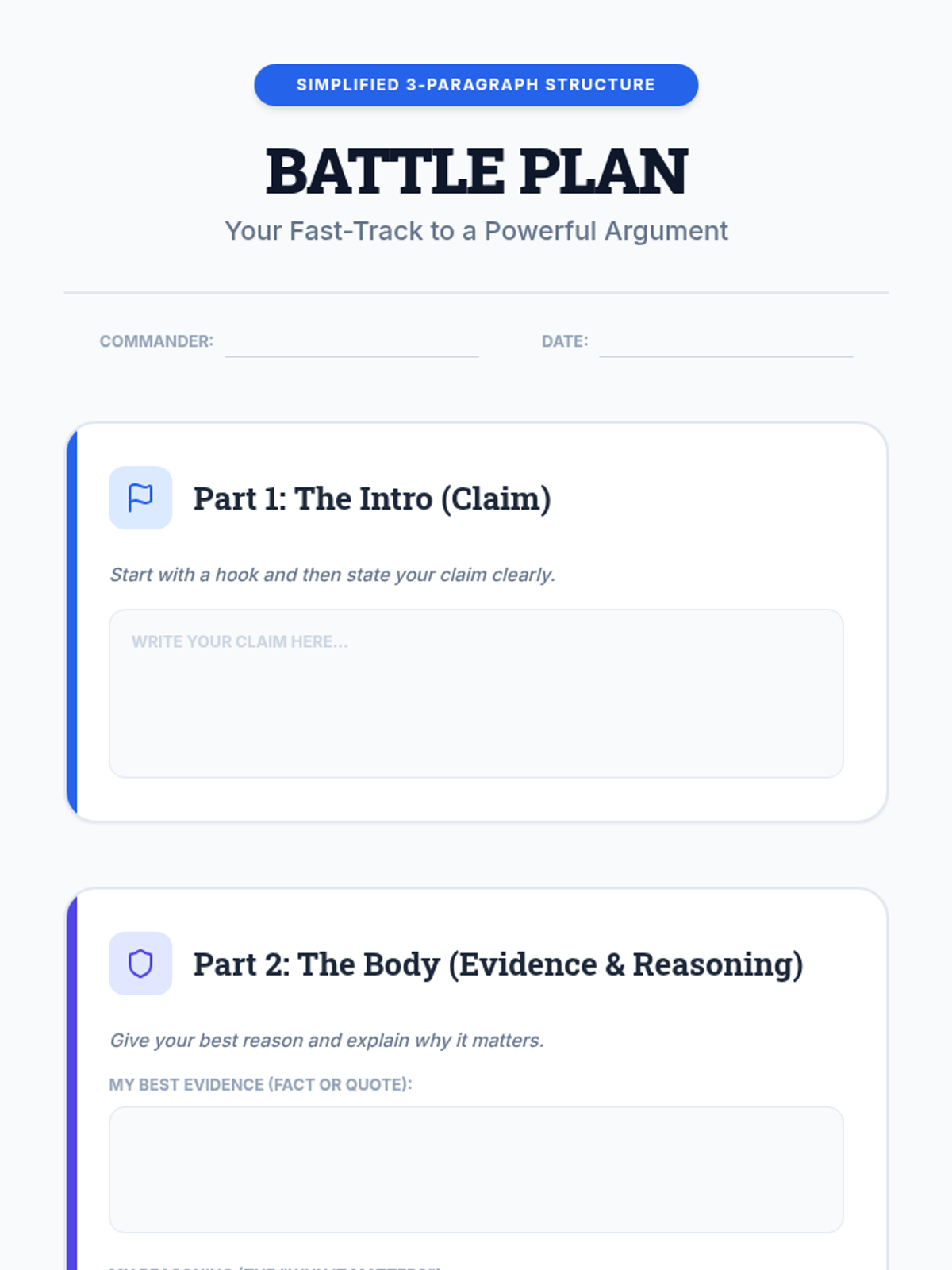
A simplified 3-paragraph drafting worksheet for argumentative writing, using the CER (Claim, Evidence, Reasoning) framework to scaffold the writing process.
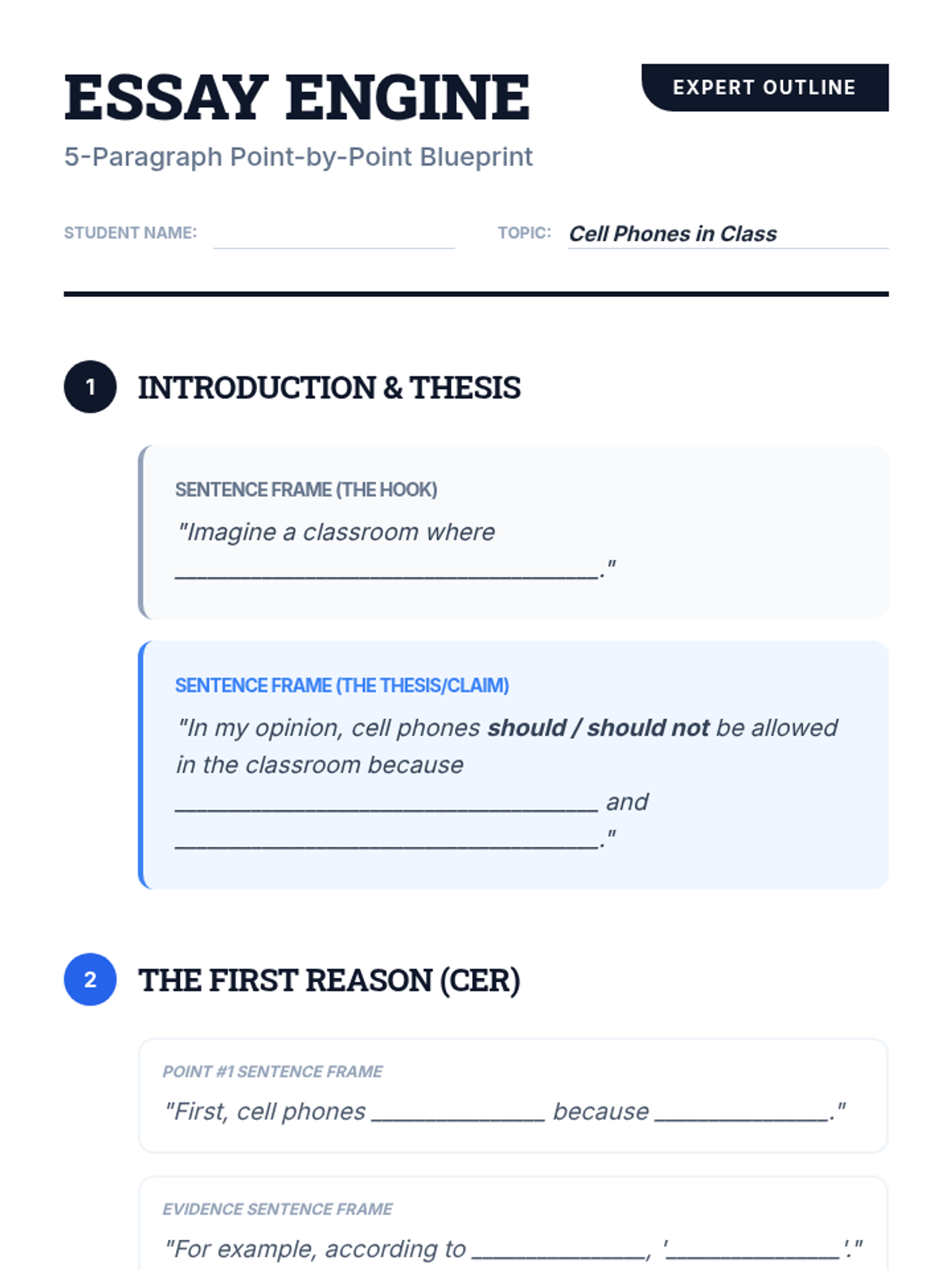
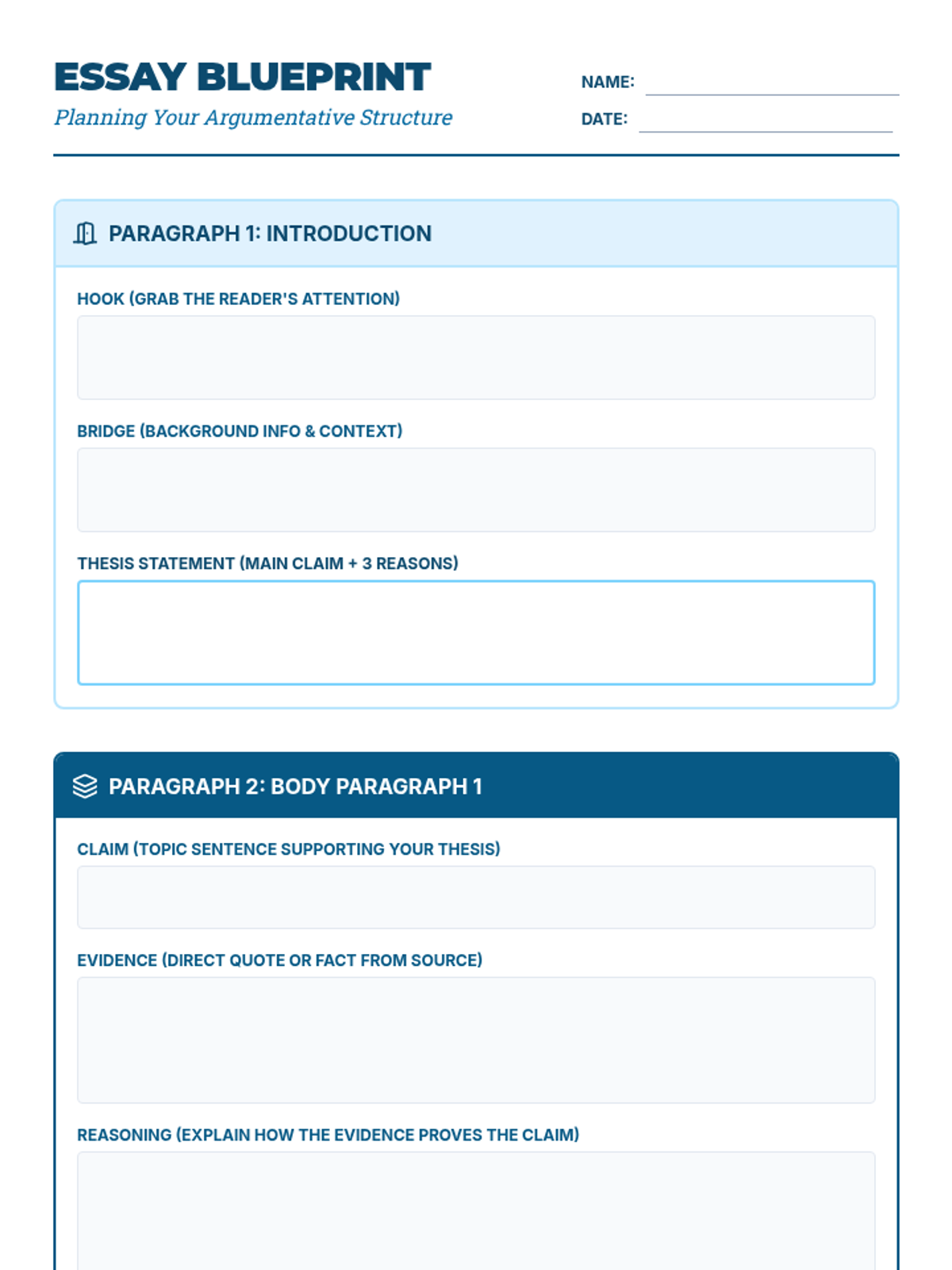
A detailed 5-paragraph argumentative essay outline for students, featuring sentence frames and clear structural guidance for a point-by-point defense of their claim.
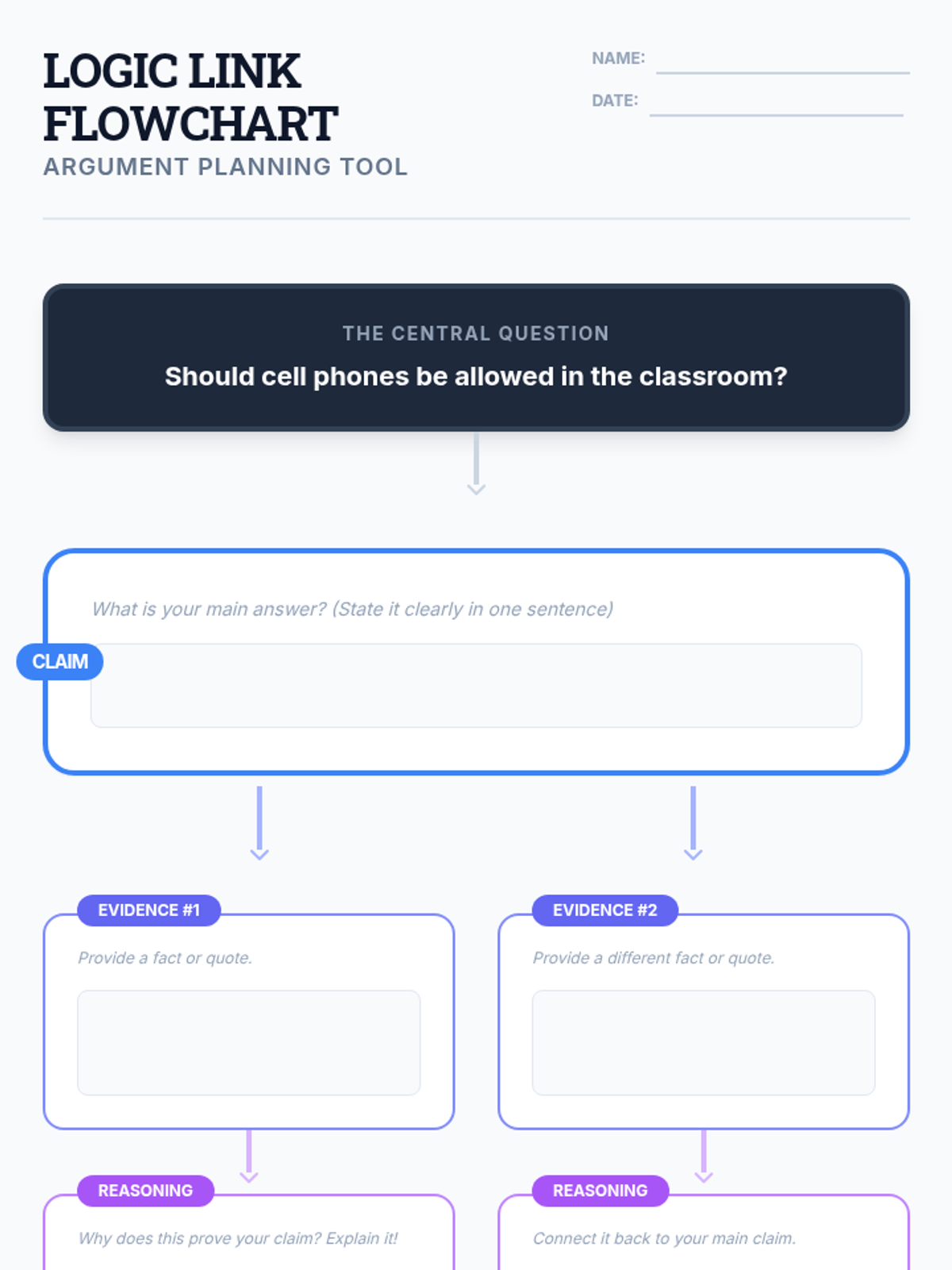
A visual flowchart for planning arguments, guiding students through the Claim, Evidence, and Reasoning (CER) process with structured work areas.
A slide deck introducing the CER (Claim, Evidence, Reasoning) framework and essay structures for argumentative writing, specifically focusing on the debate over cell phones in classrooms.
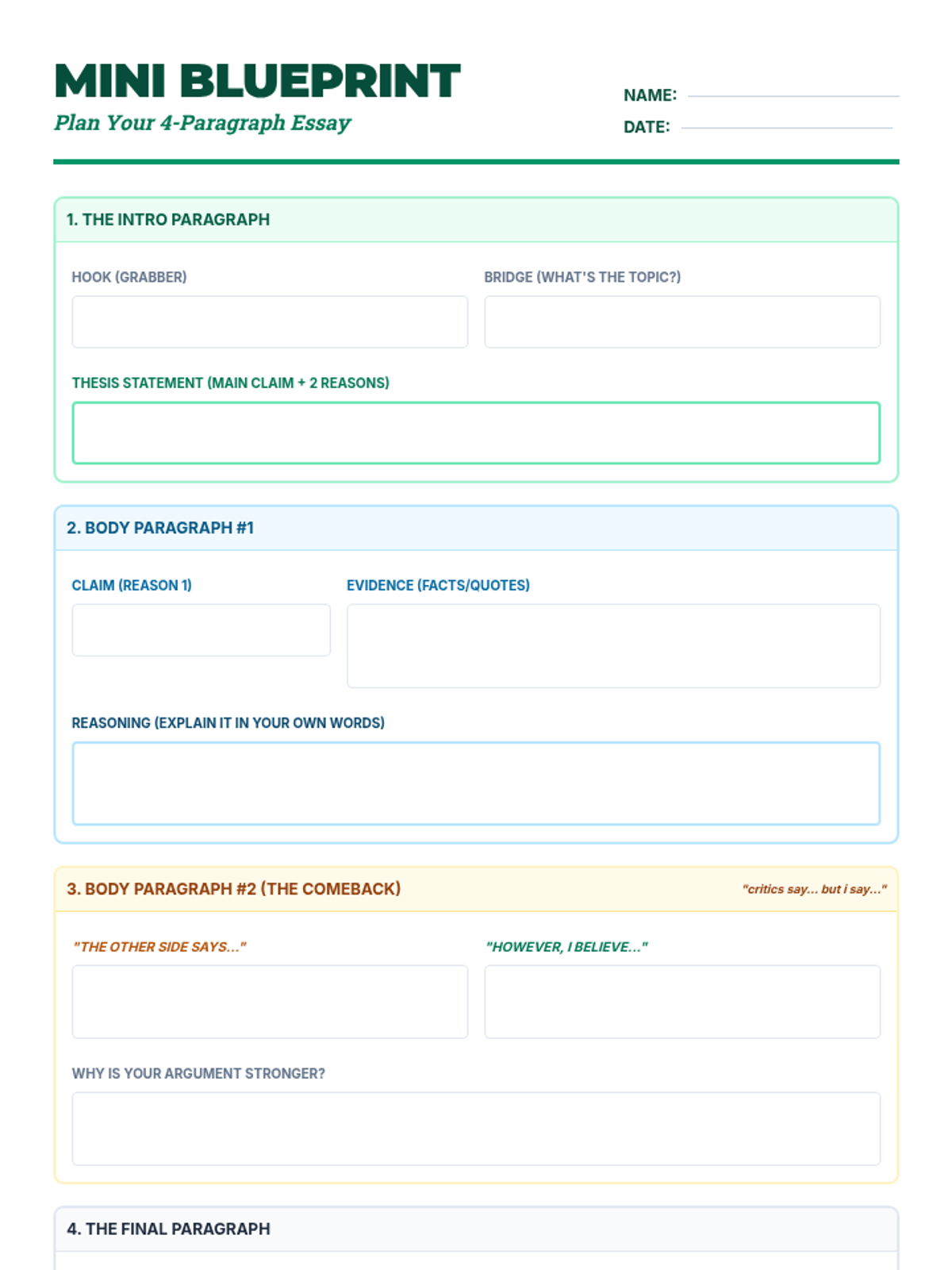
A simplified, single-page essay organizer for a 4-paragraph structure, including a word bank and clearer labels for beginners.
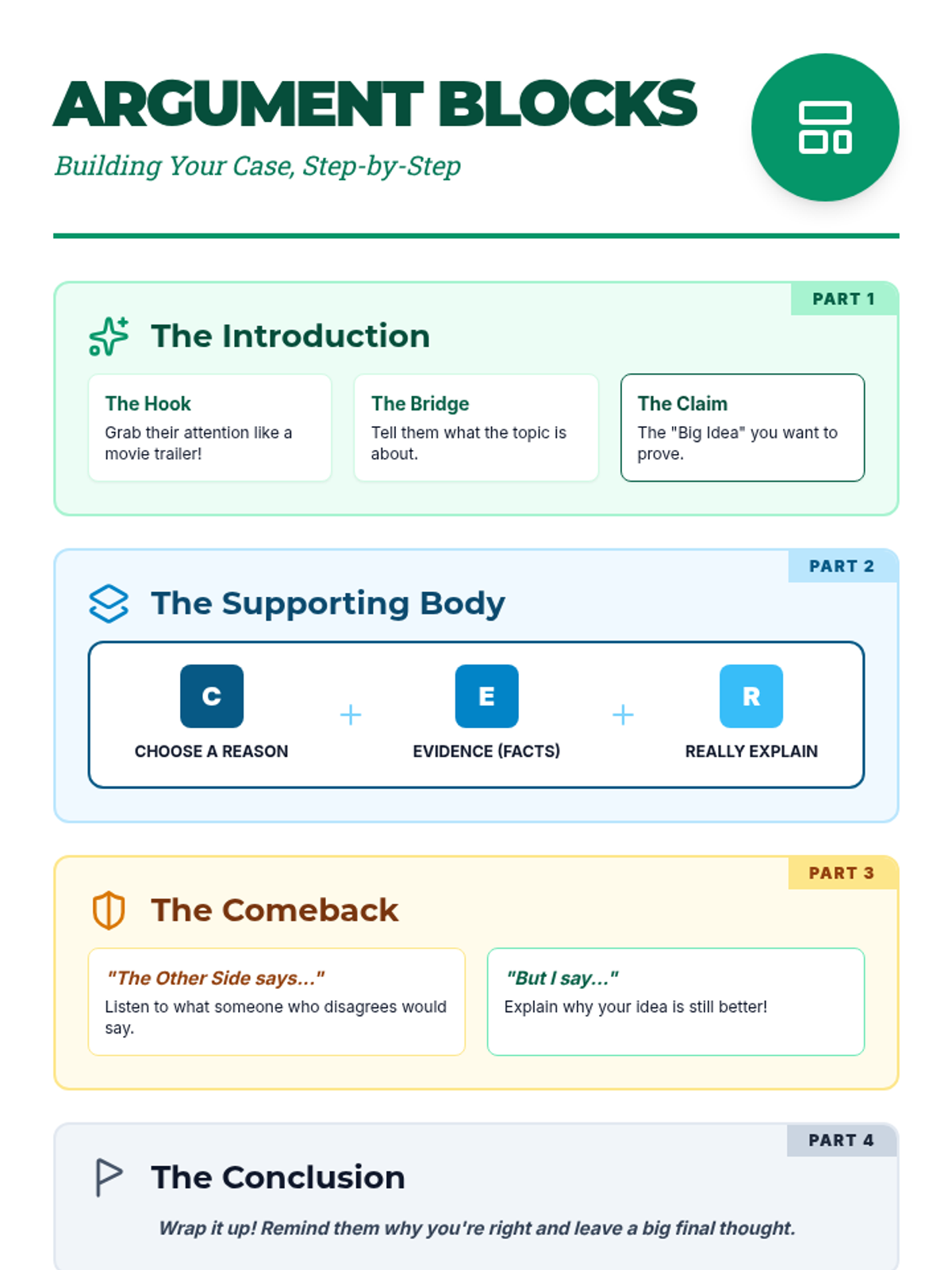
A simplified visual anchor chart using "Argument Blocks" to explain essay structure with less text and more visual metaphors, focusing on "The Comeback" and "CER" in an accessible way.
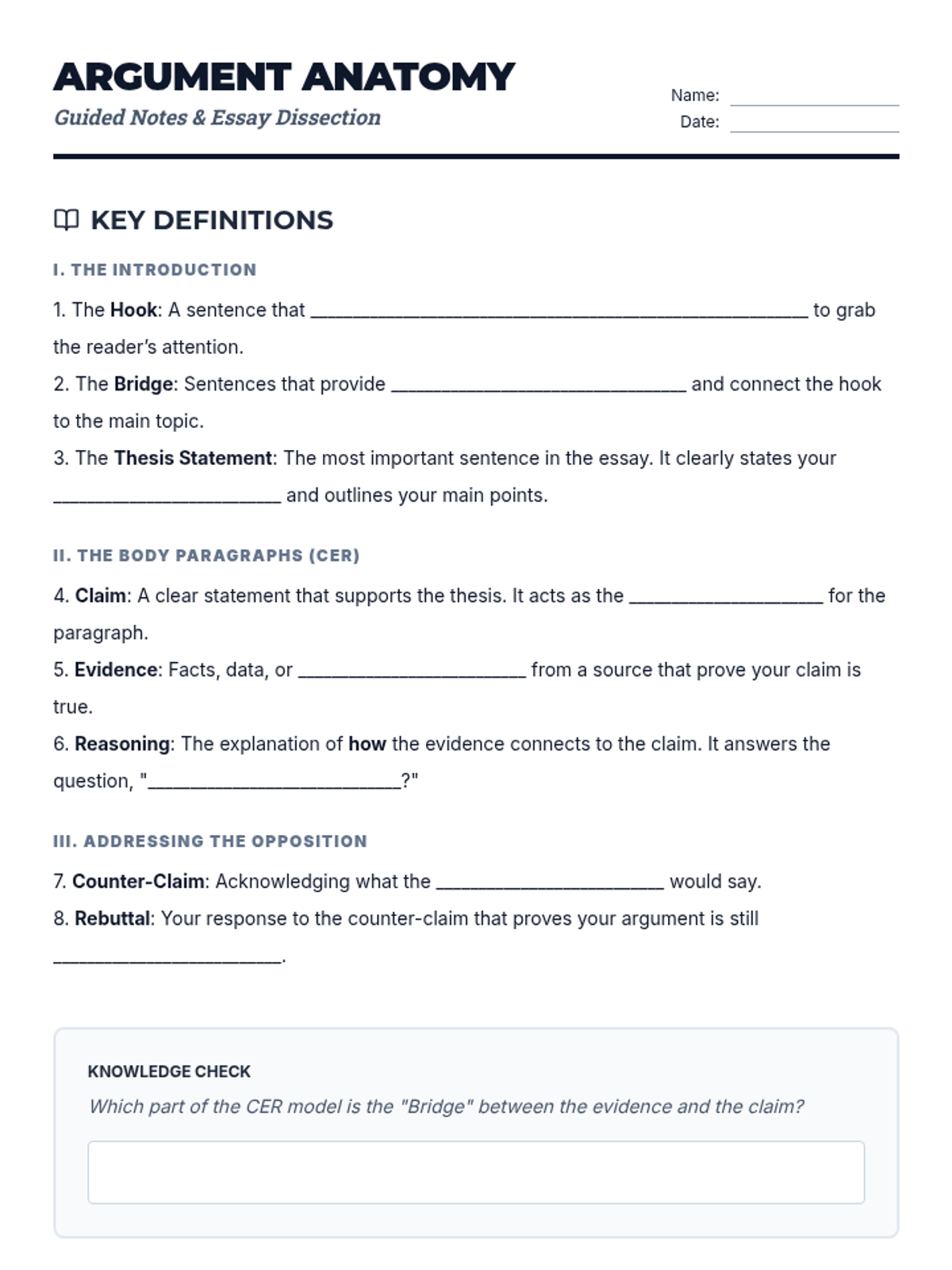
A two-page material containing guided notes for argument essay vocabulary and a sample essay analysis activity where students identify structural parts.
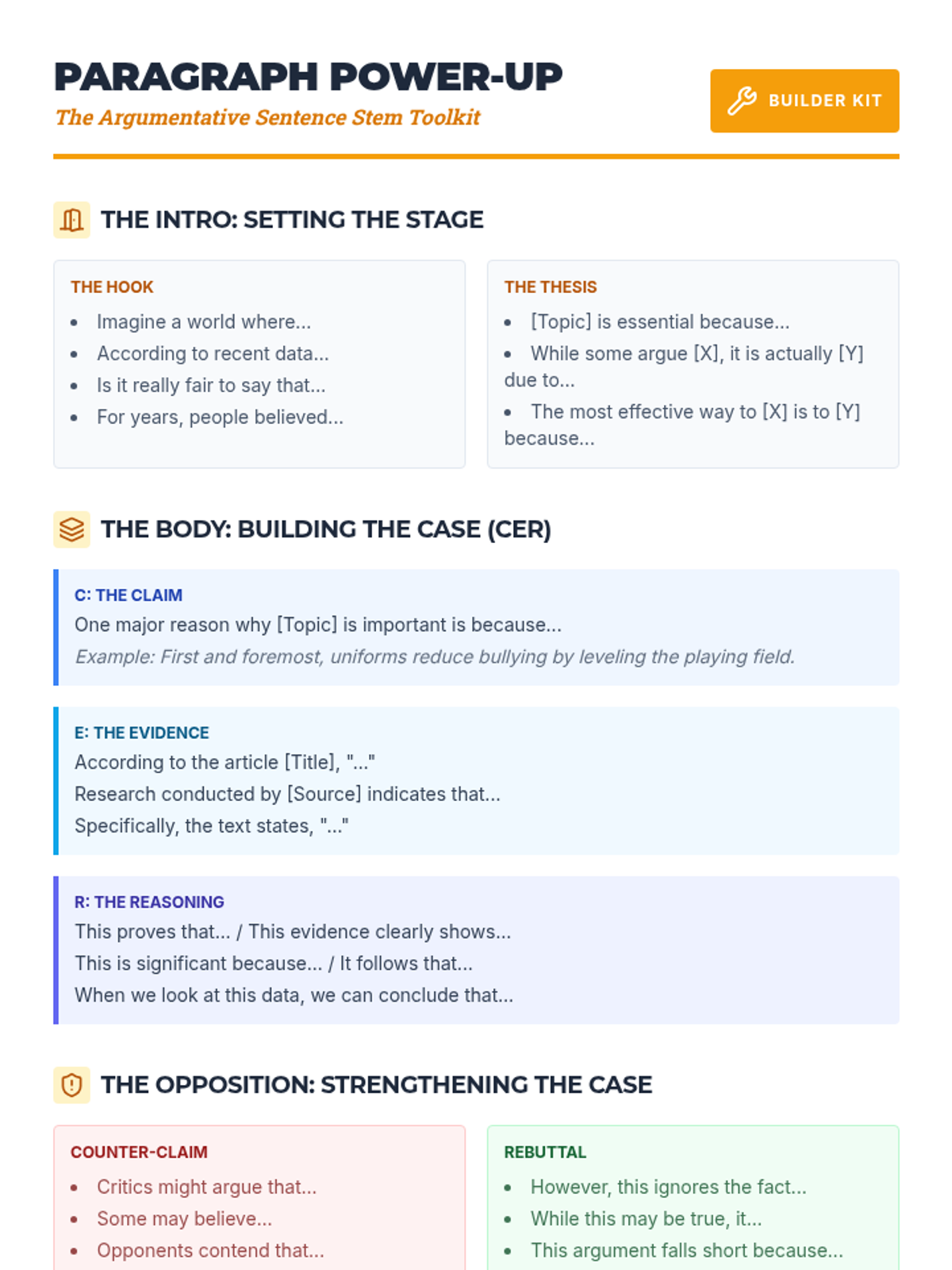
A scaffolded reference sheet providing specific sentence stems and starters for every component of an argumentative essay, designed to support students in drafting clear claims, evidence, and reasoning.
A comprehensive two-page graphic organizer for students to plan an argumentative essay, providing structured spaces for an introduction, two CER body paragraphs, a counter-claim/rebuttal section, and a conclusion.
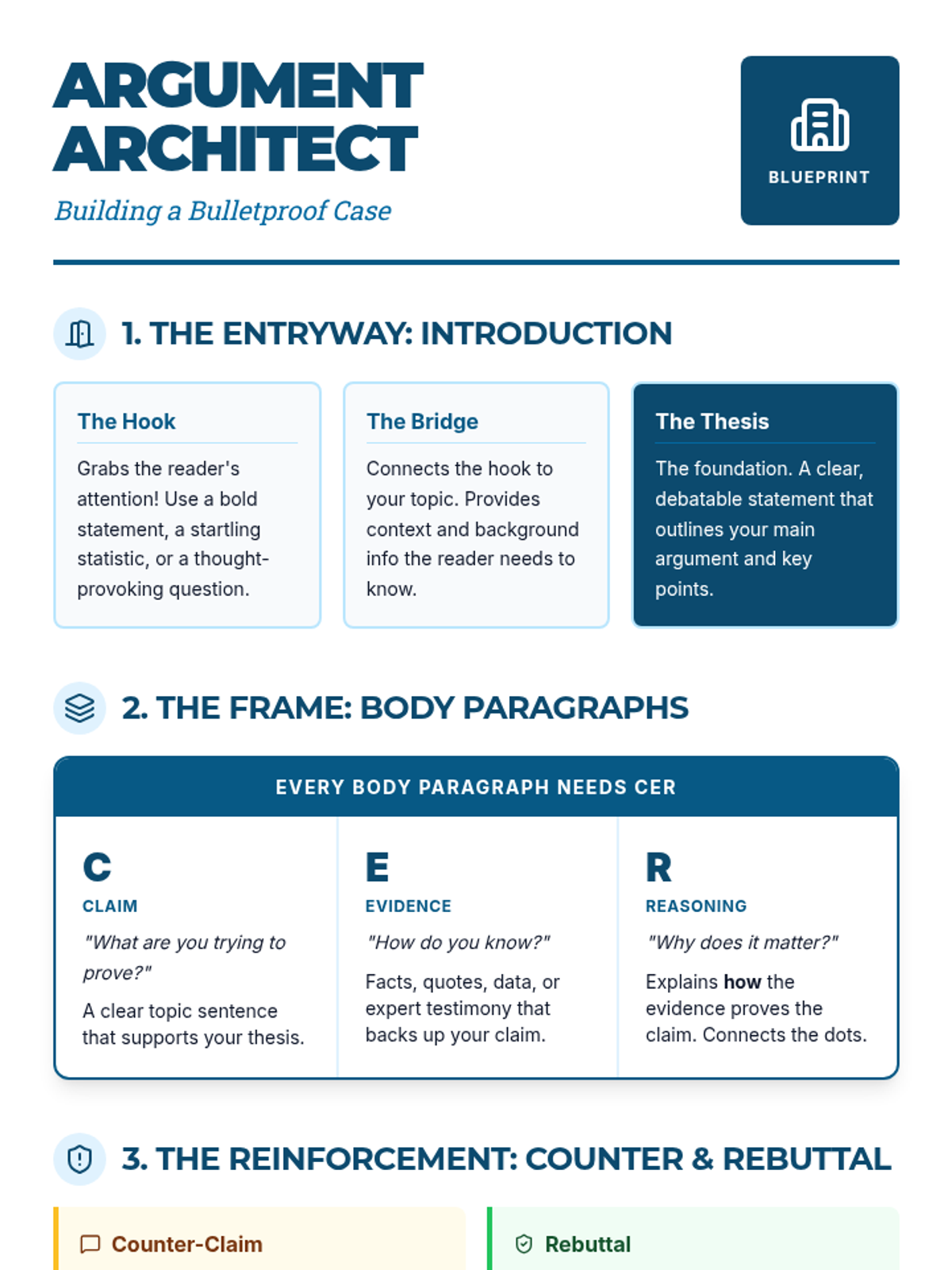
A visual anchor chart illustrating the components of an argumentative essay, featuring the 5-paragraph structure, CER model, and introduction/conclusion elements using an architectural 'blueprint' theme.
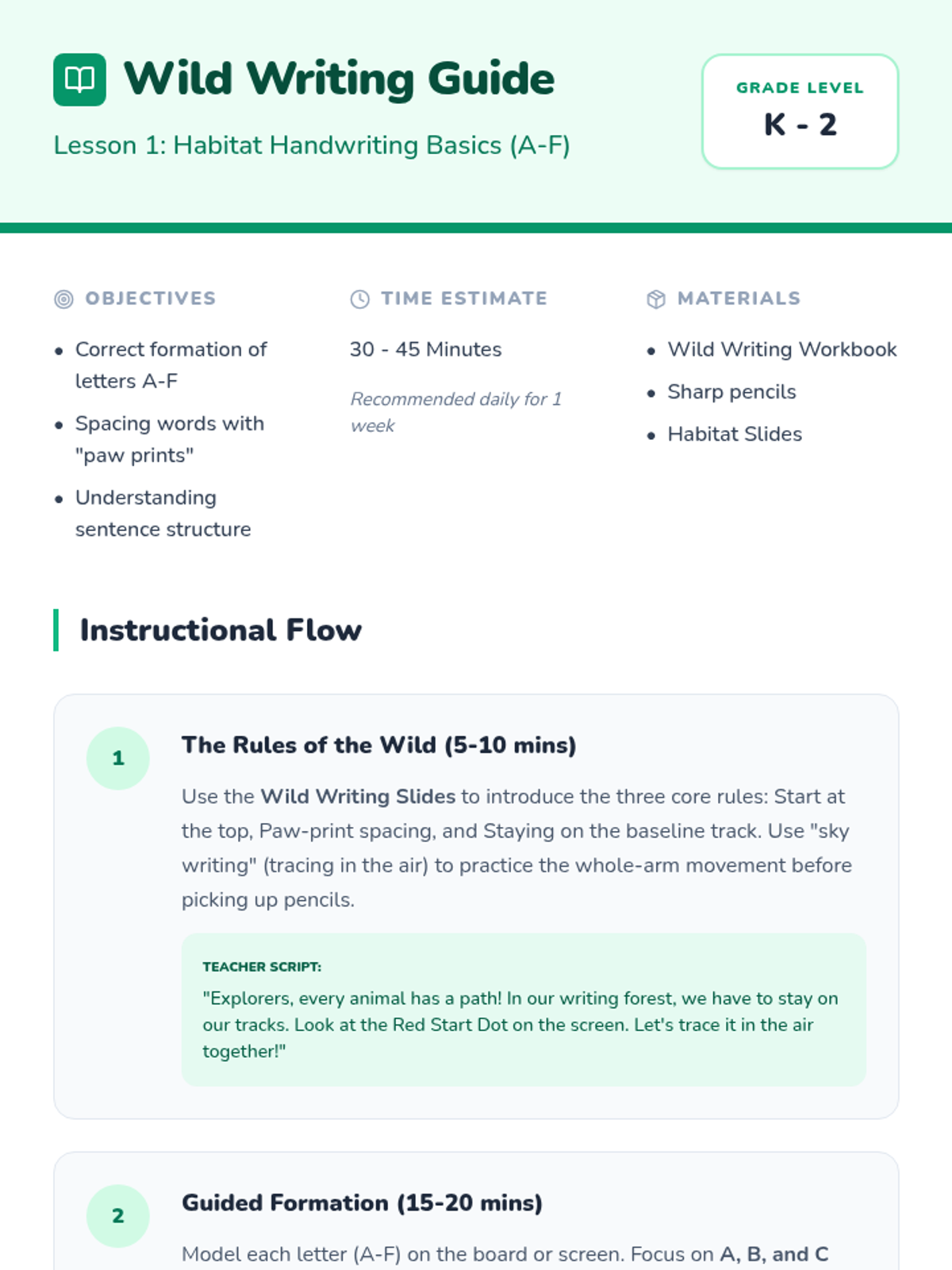
A detailed teacher's guide for Lesson 1 of 'Wild Writing', including instructional objectives, a timed lesson plan, differentiation strategies, and an observation checklist for monitoring student handwriting habits.
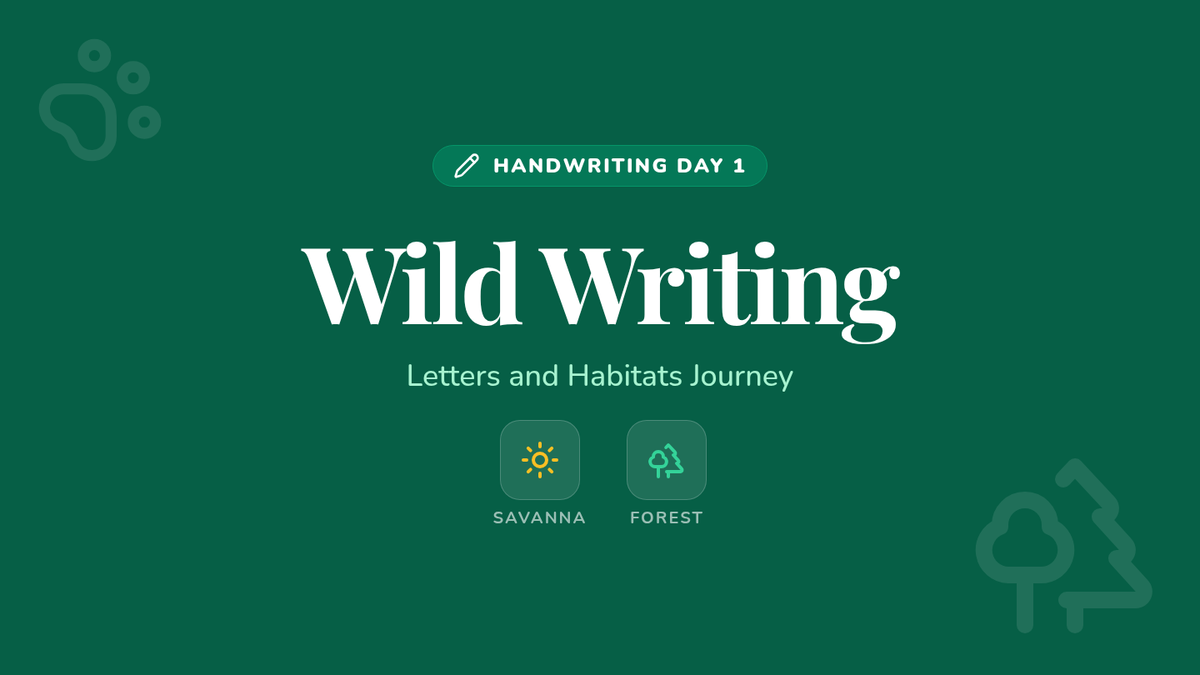
A vibrant instructional slide deck for the 'Wild Writing' lesson, featuring letter formation steps, handwriting rules, and animal-themed examples to guide students through Lesson 1.
A comprehensive 4-page student workbook featuring letter formation practice (A-F) with directional cues, animal-themed vocabulary, high-frequency word tracing, and progressive sentence building activities.
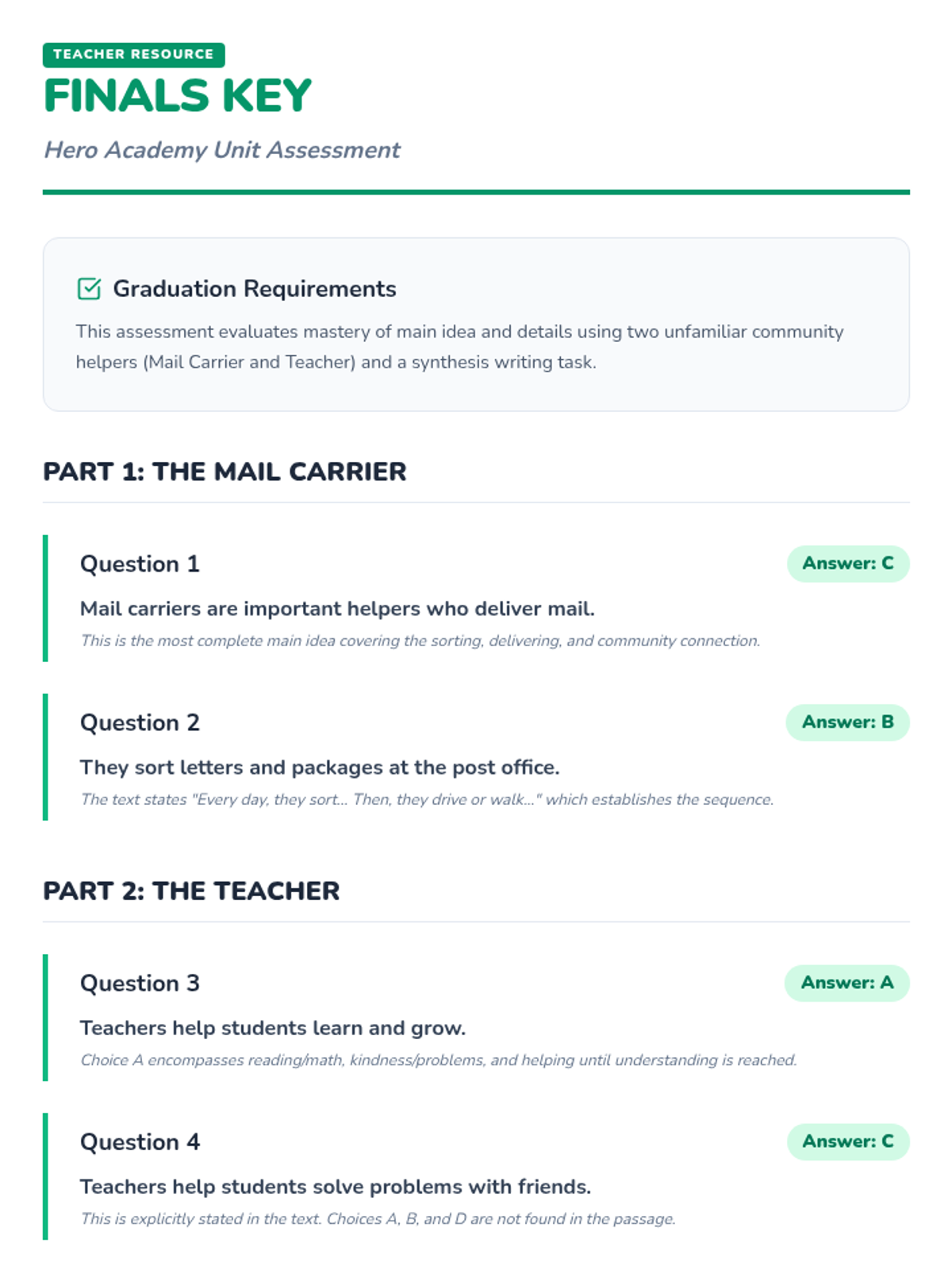
An educator's answer key and rubric for the Hero Academy Finals Assessment. It includes correct answers for all multiple-choice questions and a simple scoring guide for the creative writing task.
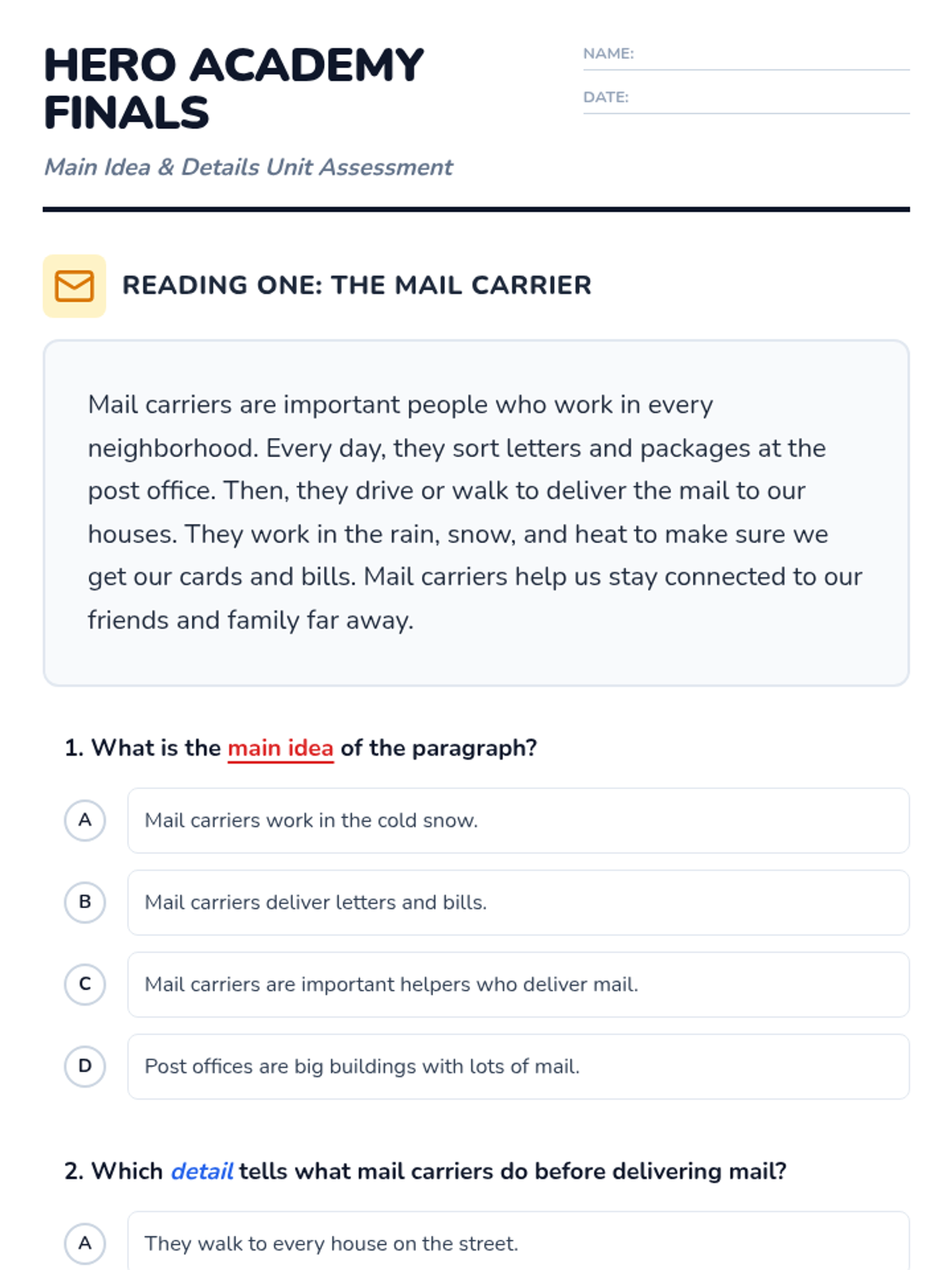
A final assessment for the Community Heroes unit. Includes two new reading passages (mail carrier and teacher) with multiple-choice questions for main idea and details, plus a creative writing task to synthesize unit learning. Updated with proper page breaks.
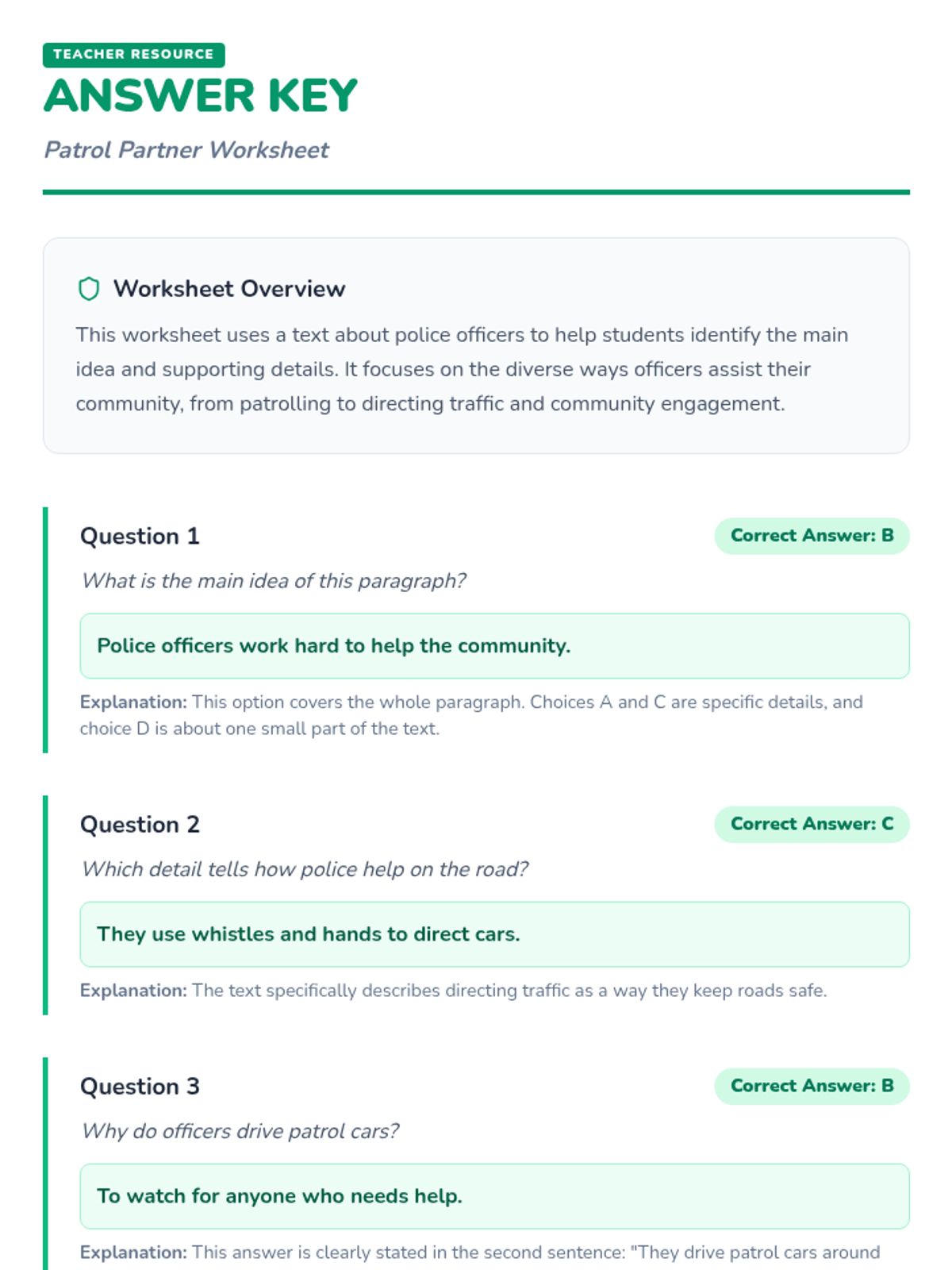
An educator's answer key for the Patrol Partner Worksheet, providing correct responses, explanations, and teaching tips.
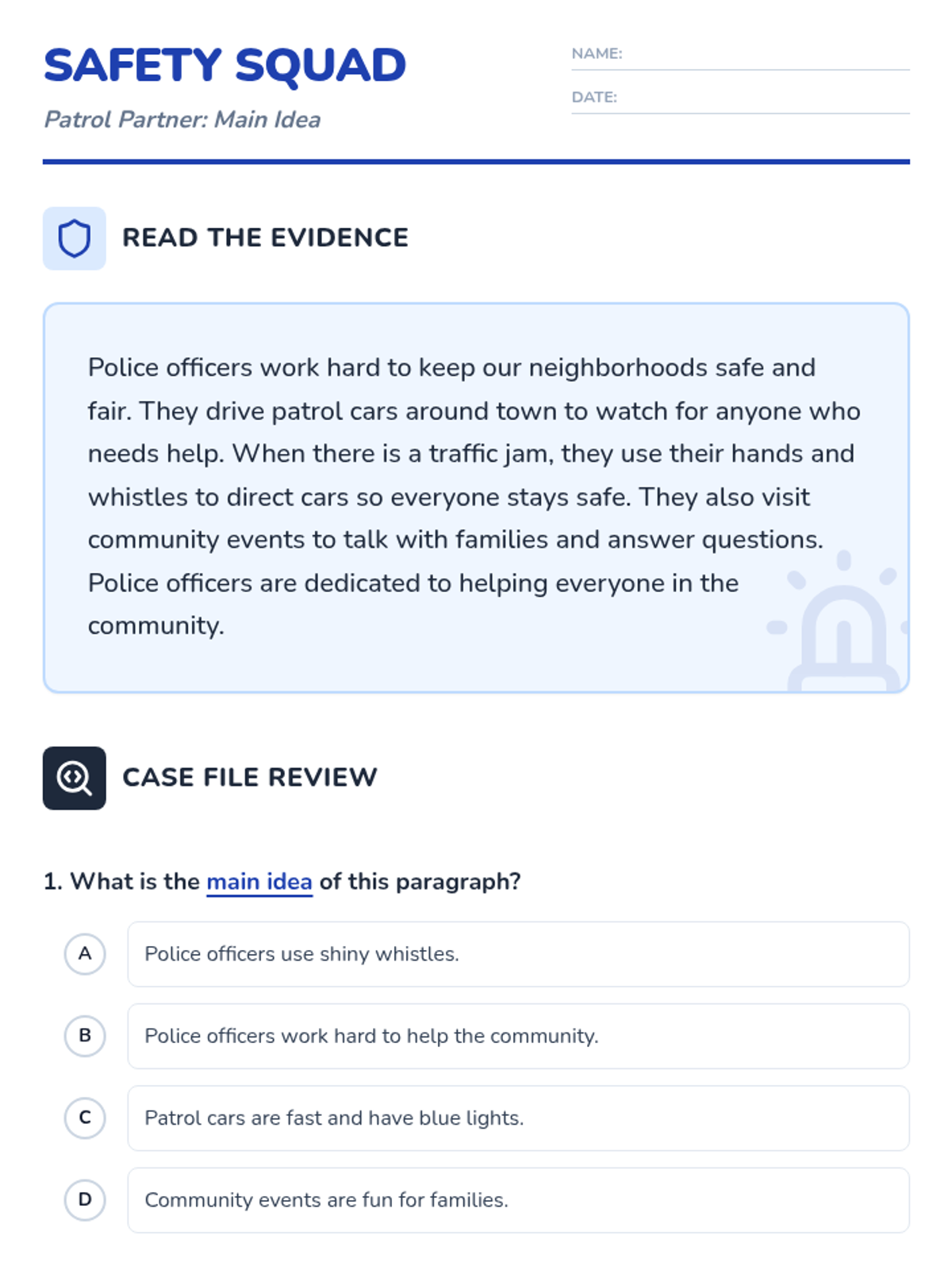
A 2nd-grade reading comprehension worksheet about police officers. Students read a short paragraph and identify the main idea and supporting details through three multiple-choice questions.
An instructional presentation for 2nd graders to explore the role of police officers as community heroes, focusing on identifying main ideas and supporting details.