A cut-and-paste sequencing activity for the Artemis II mission. Redesigned to fit on a single page with synced box dimensions (1/4 width) for both targets and cut-outs. Added buffer space for cutting.
A visual presentation summarizing the Artemis II mission article, designed for 8th graders reading at a 2nd-grade level. Features large text, high-contrast visuals, and simple language. Revised for better slide alignment and rendering stability.
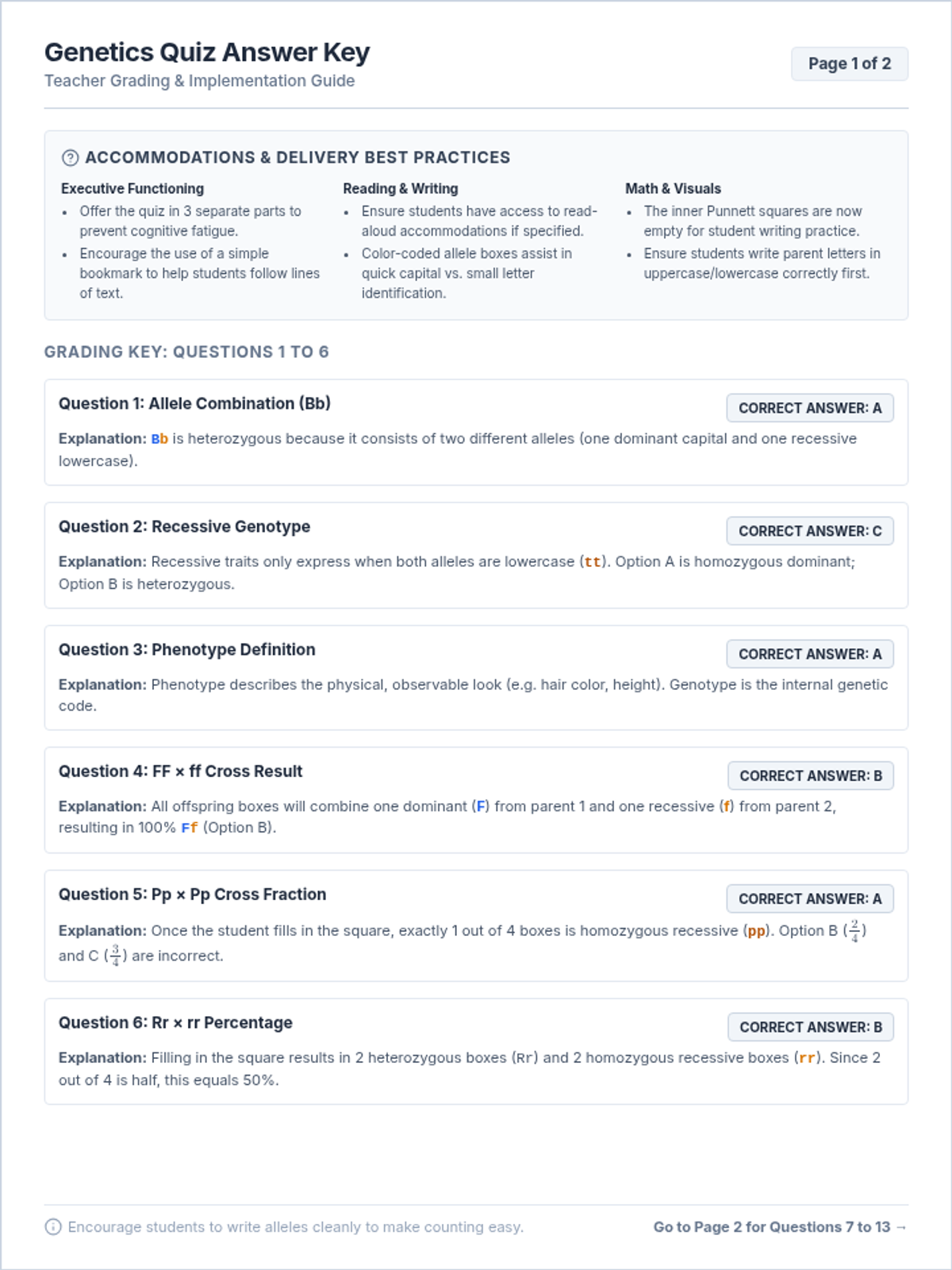
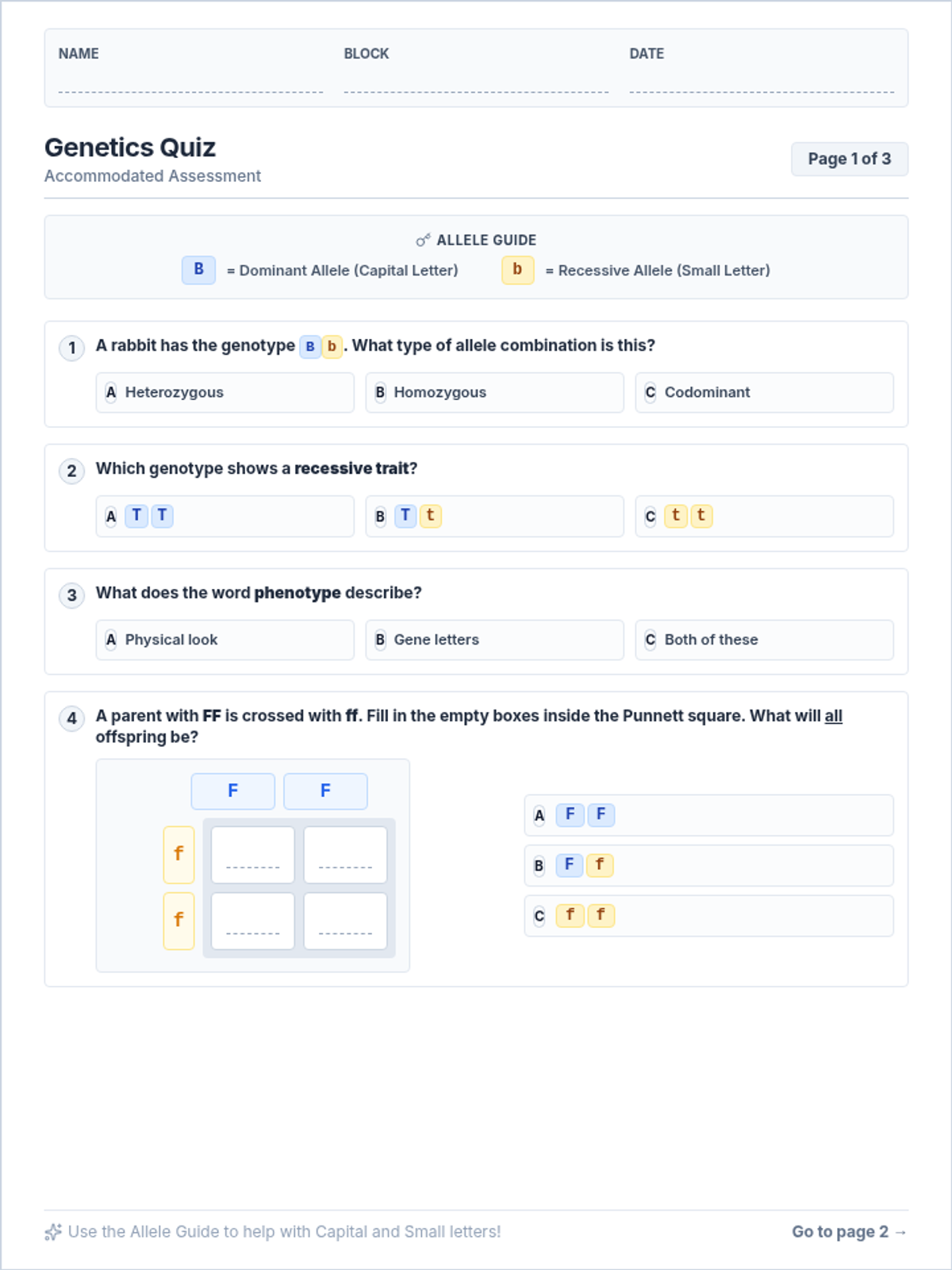
A concise teacher guide and answer key for the Artemis Moon Mission worksheets, optimized for single-page reference.
A comprehension worksheet with Wh-questions and visual supports. Features primary-style handwriting lines with a dotted midline and a condensed single-page layout with a quick-fact reference box. Space between words fixed. Fact box moved to top. Lines sized to 40px.
A visual vocabulary worksheet featuring key terms from the Artemis II mission article with simple definitions and icons. Optimized for single-page printing.
A reading passage explaining the static equilibrium of a submerged cube tethered to the bottom of a container, detailing the interaction between buoyant force, gravity, and tension. Now includes the requested worksheet problem and improved notation.
A comprehensive teacher resource containing instructional objectives, common student misconceptions, a timed lesson plan, demonstration ideas, and a full answer key for the updated student worksheet. Now with improved subscript rendering, page-break management, and demo materials list.
A practice worksheet featuring a mini-reading on tethered equilibrium, conceptual questions, algebraic word problems, and a true/false section. Now condensed to 2 pages with improved notation, consistent styling, and high-contrast labels.
A visually engaging slide deck covering the definition of buoyant force, Archimedes' Principle, the mathematical formula, and a clear distinction between the actual factors that affect buoyancy and common student misconceptions. Now includes the tethered cube equilibrium scenario and corrected notation.
A textbook-style reading passage explaining Archimedes' Principle, the mathematical formula for buoyant force, and a detailed breakdown of which physical factors influence buoyancy and which are common misconceptions. Now condensed to 1 page with improved variable notation.
An exemplar research paper for the Biome Builders project, focusing on the African Savanna. This model document demonstrates the required structure, scientific depth, and bibliography formatting expected of students. Optimized for 8.5x11 printing across 3 pages.
A comprehensive teacher answer key for the Sense Detectives anatomical series, including correct labels for the eye, ear, nose, and tongue worksheets along with instructional notes. Revised to ensure single-page layout.
A student worksheet for labeling and coloring the anatomical structures of the human tongue, including papillae, taste buds, and primary taste regions. Revised for anatomical shape and clarity.
A student worksheet for labeling and coloring the anatomical structures of the human nose, focusing on the olfactory bulb, nasal cavity, and epithelium. Revised for context and layout.
A student worksheet for labeling and coloring the anatomical structures of the human ear, including the pinna, auditory canal, eardrum, ossicles, and cochlea. Revised for anatomical accuracy and layout.
A student worksheet for labeling and coloring the anatomical structures of the human eye, including the cornea, iris, lens, retina, and optic nerve. Revised for layout and clarity.
Complete answer key for the Cycle Master Quiz, featuring answers for 35 multiple-choice and true/false questions. Structured in a clean, two-column layout for rapid grading.
A 35-question quiz consisting exclusively of multiple-choice and true/false questions covering water, carbon, nitrogen, and phosphorus cycles, along with food chains and webs. Designed for clear objective assessment.
A visually engaging Cornell Notes template specifically designed for 6th-grade science students, featuring an expanded body area for questions and notes with a dot-grid pattern, and the summary section at the very bottom.
A printable or digital template mimicking an Instagram profile and post layout where students can finalize their Bio-Gram project content.
A comprehensive rubric for teachers to grade the Bio-Gram project, evaluating scientific accuracy, narratives, vocabulary usage, and design quality.
A planning worksheet for students to draft their social media captions, hashtag ideas, and image concepts for the four biogeochemical cycles before creating their final project.
A project guide for students explaining the requirements of the Bio-Gram social media project, including visual content, captions, and hashtag requirements for the four biogeochemical cycles.
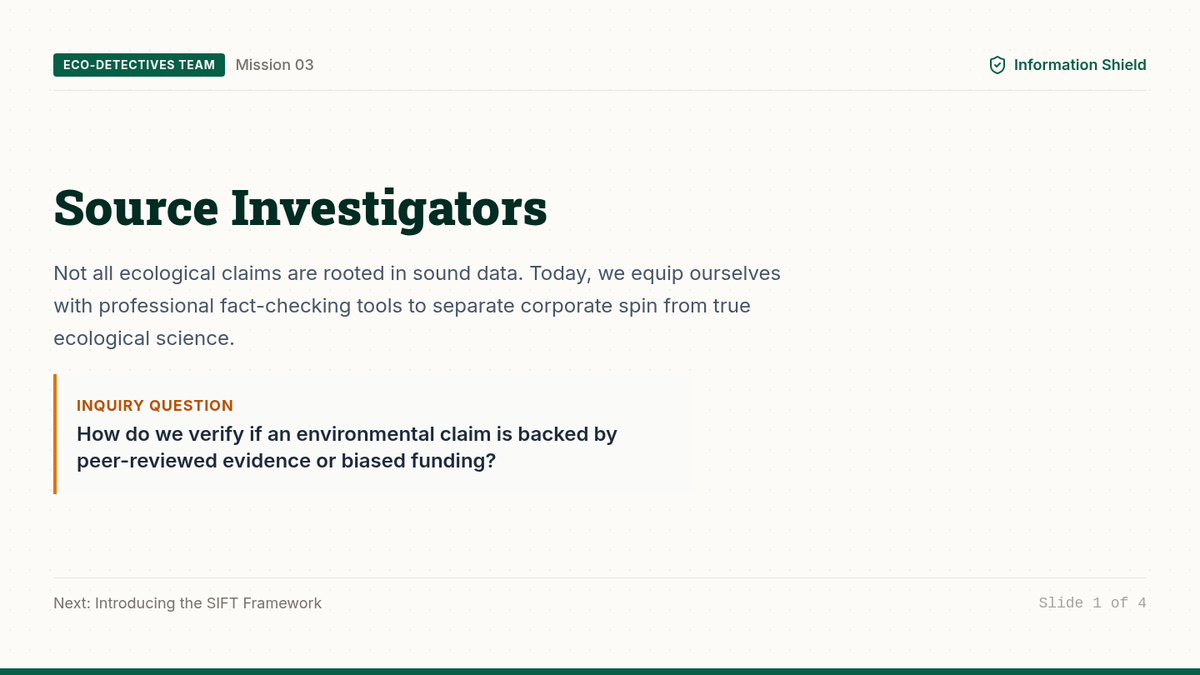
A presentation introducing the Bio-Gram project, detailing the requirements for the four biogeochemical cycles and the components of each social media style post.
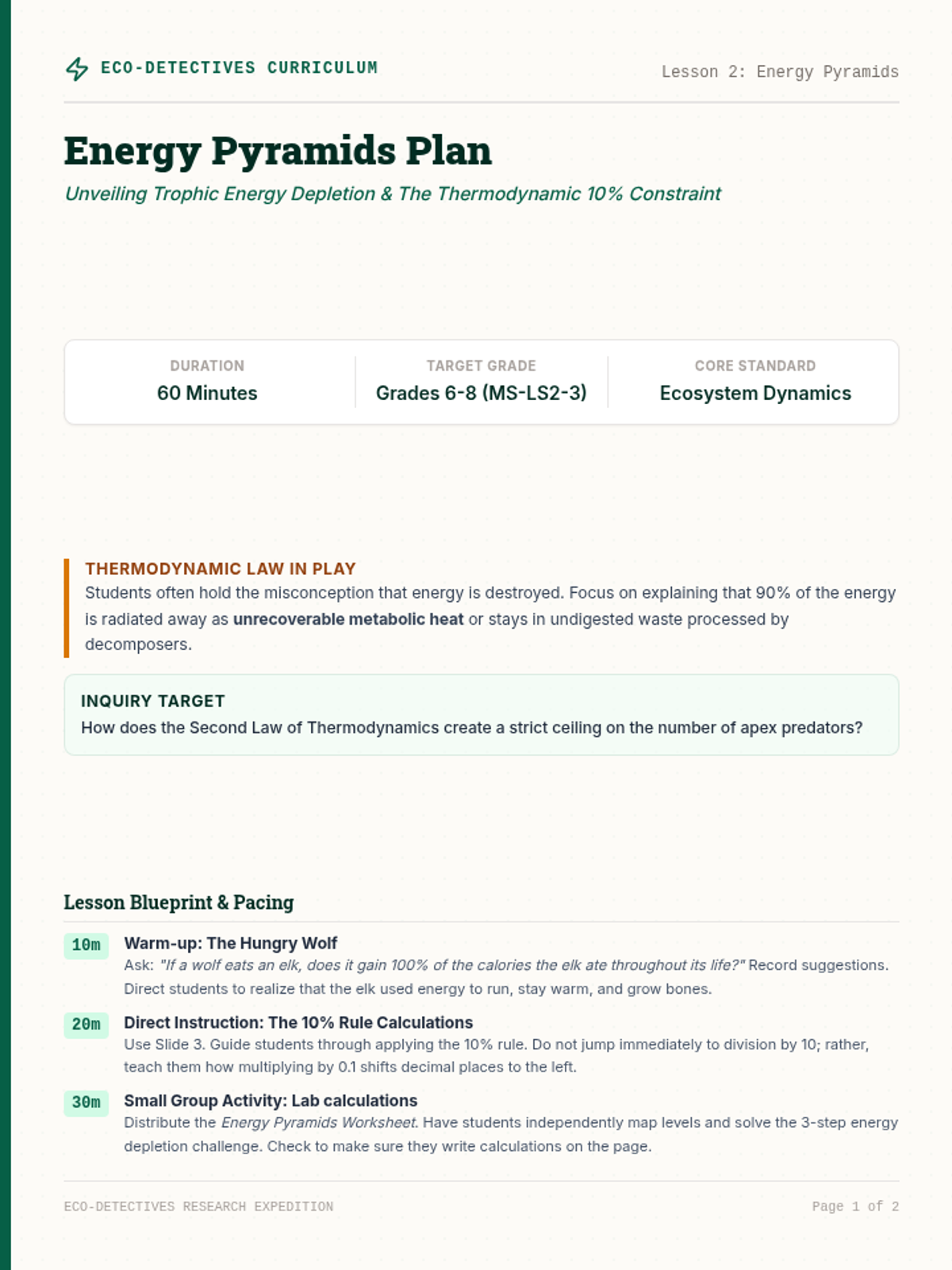
A comprehensive teacher's answer key for the 'Invader Dossier Handout' and 'Ecosystem Exit Ticket', including suggested responses for open-ended questions and teaching tips for facilitators.
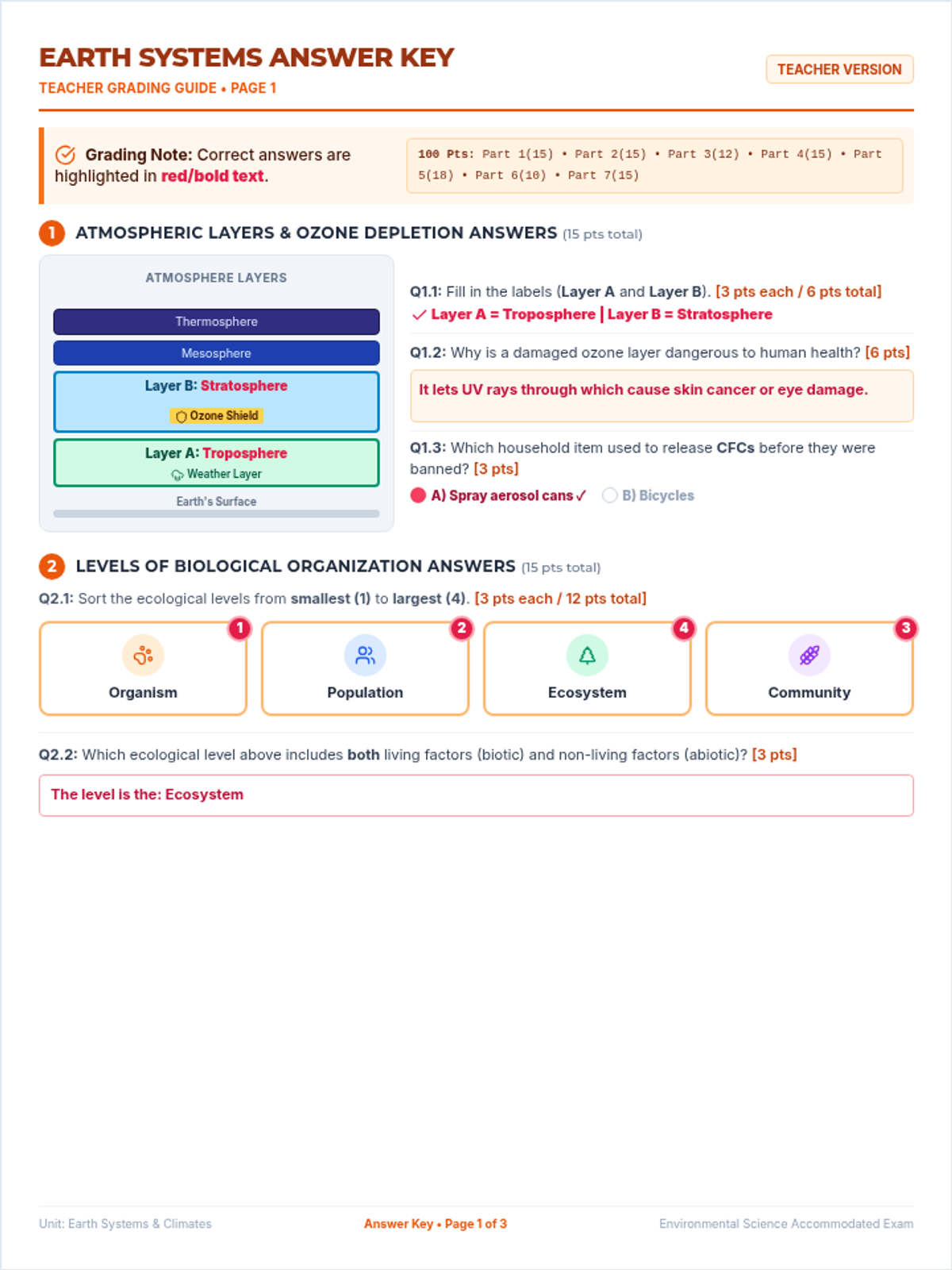
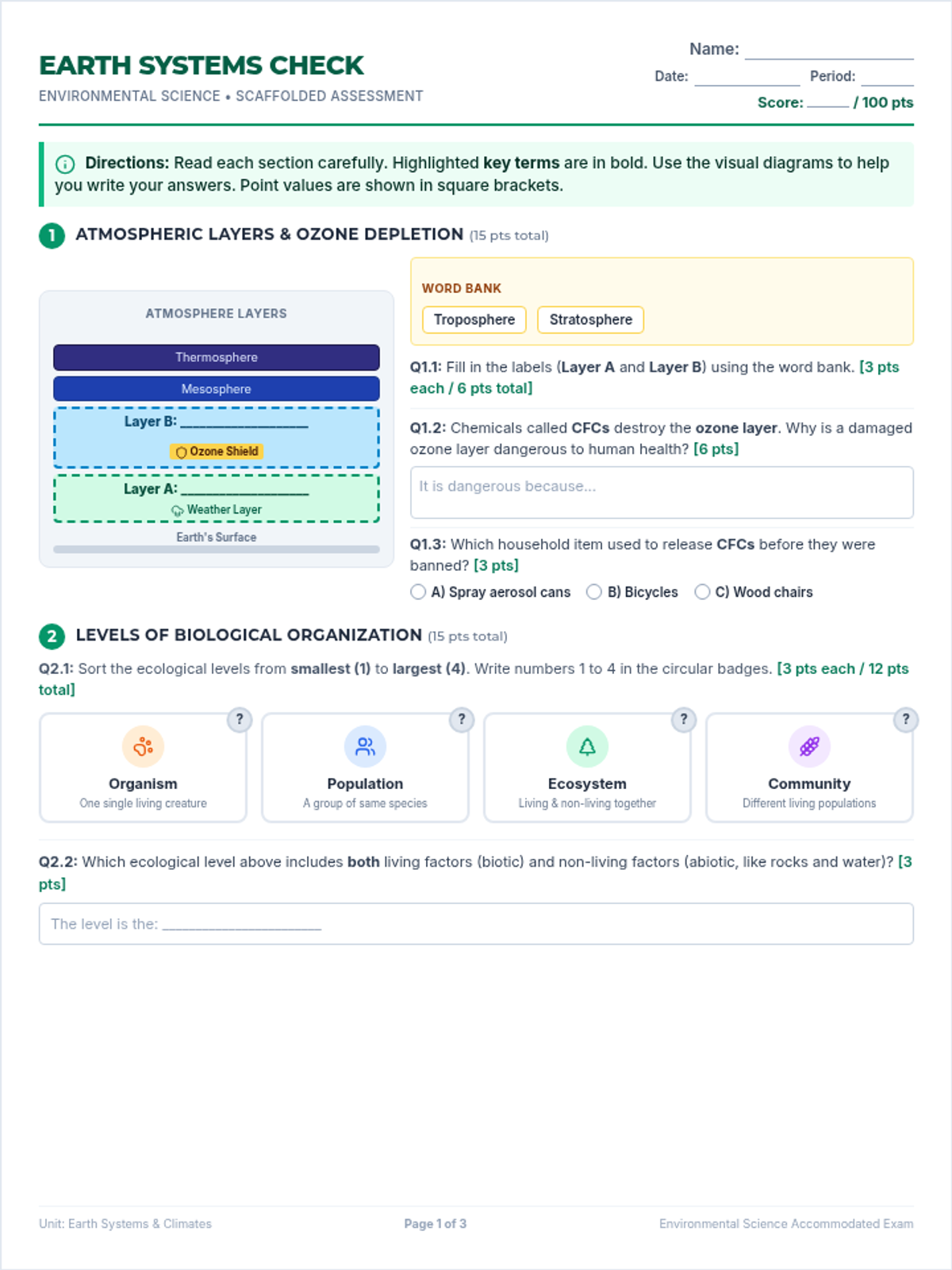
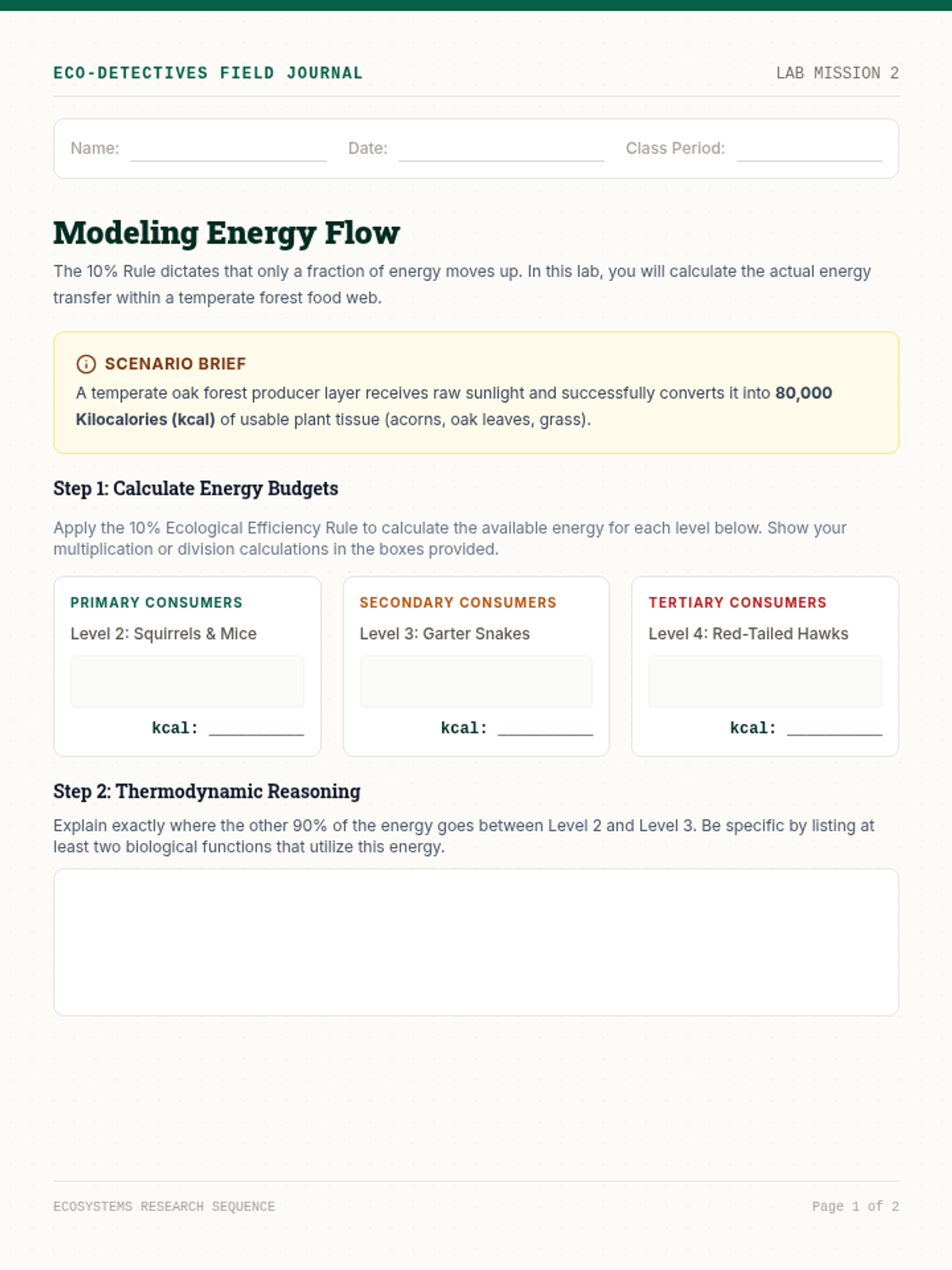
A differentiated one-page Phosphorus Cycle worksheet. Features a high-fidelity geologic scenery diagram, a reading snippet, a word bank, and guided identification steps to support student learning. High-contrast labels and corrected overlaps.