A 2-page teacher answer key companion for the scaffolded cell unit assessment, featuring highlighted correct diagrams, finished sentence frames, and student model short answers, now updated to a 50-point scale.
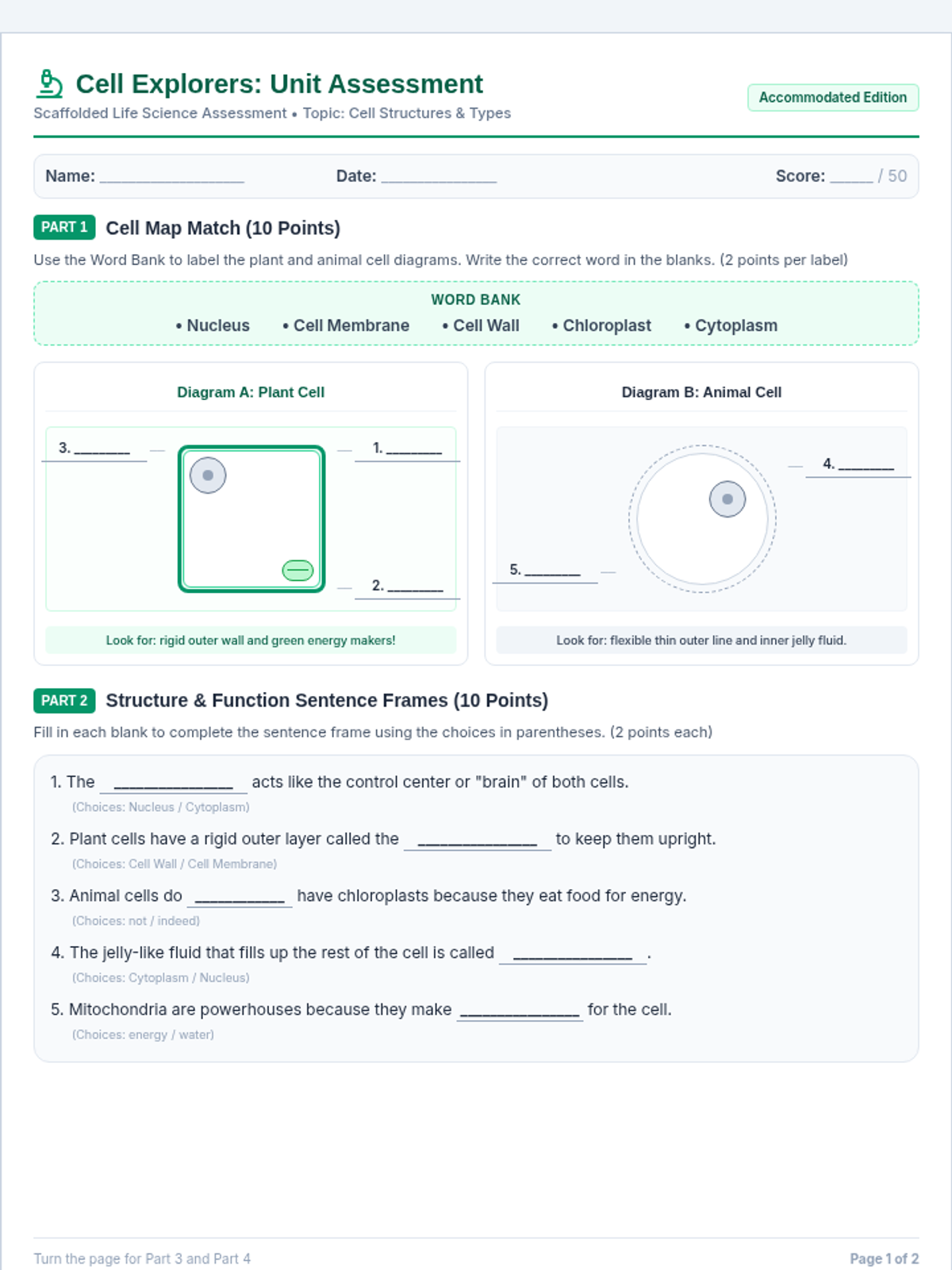
A 2-page scaffolded student cell assessment covering cell organelles, prokaryotic and eukaryotic structures, plant vs. animal cells, and bacterial anatomy. Features word banks, sentence frames, and guided sentence starters, now adjusted to a 50-point scale.
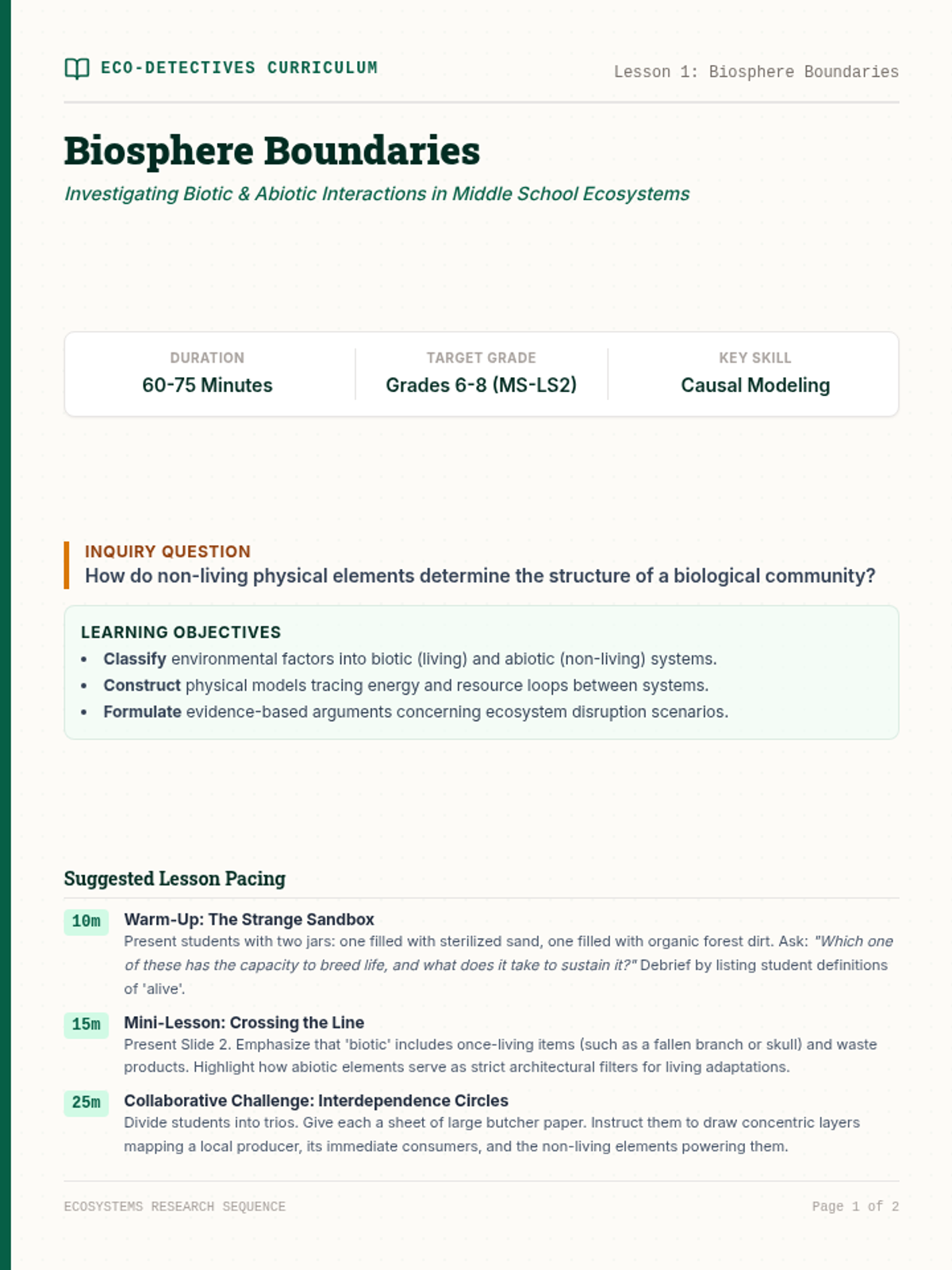
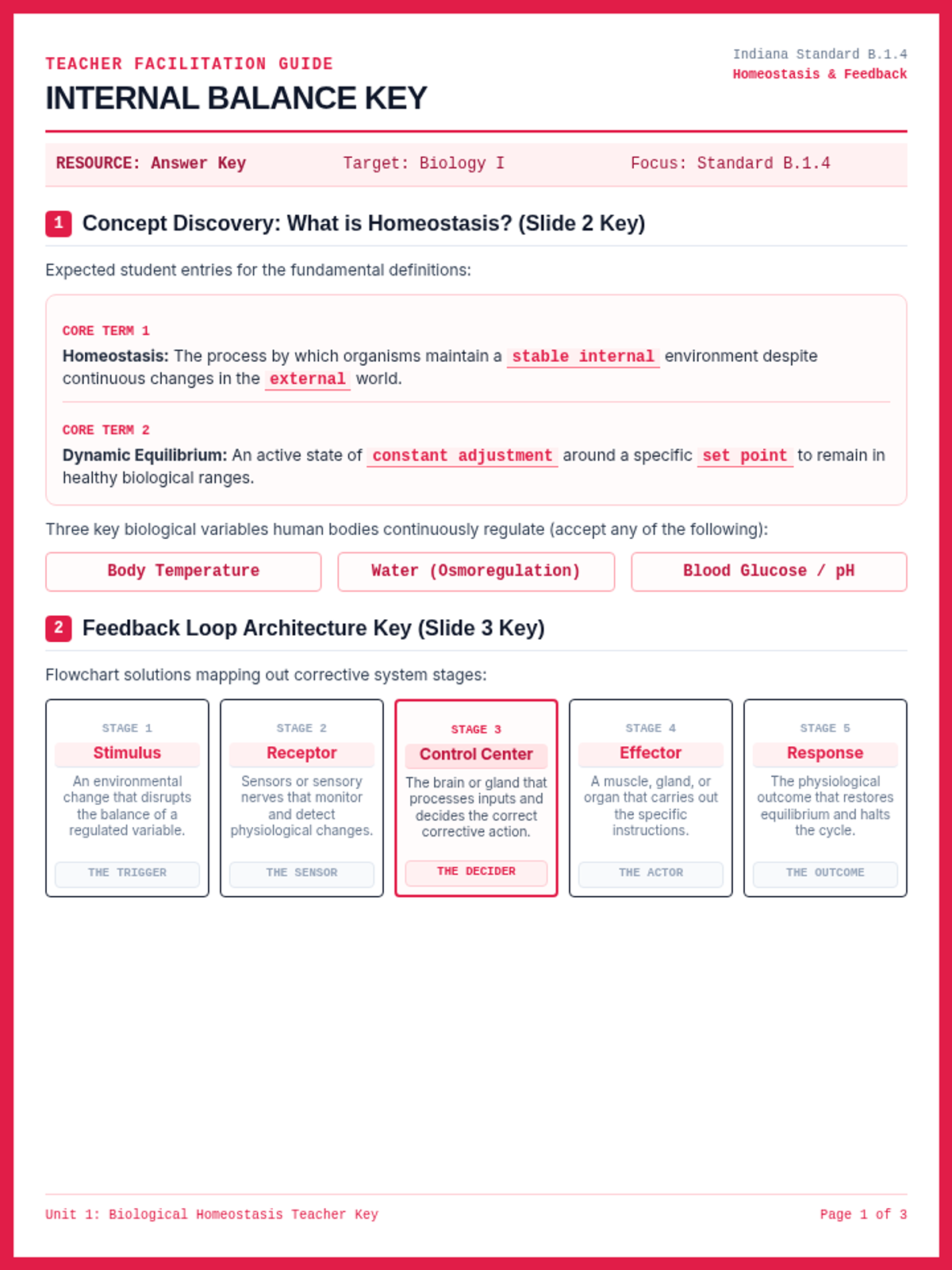
A 3-page teacher-facing answer key and instructional guide matching the student guided notesheet. Features highlighted solutions, explanatory tips, and model answers for short-answer synthesis prompts.
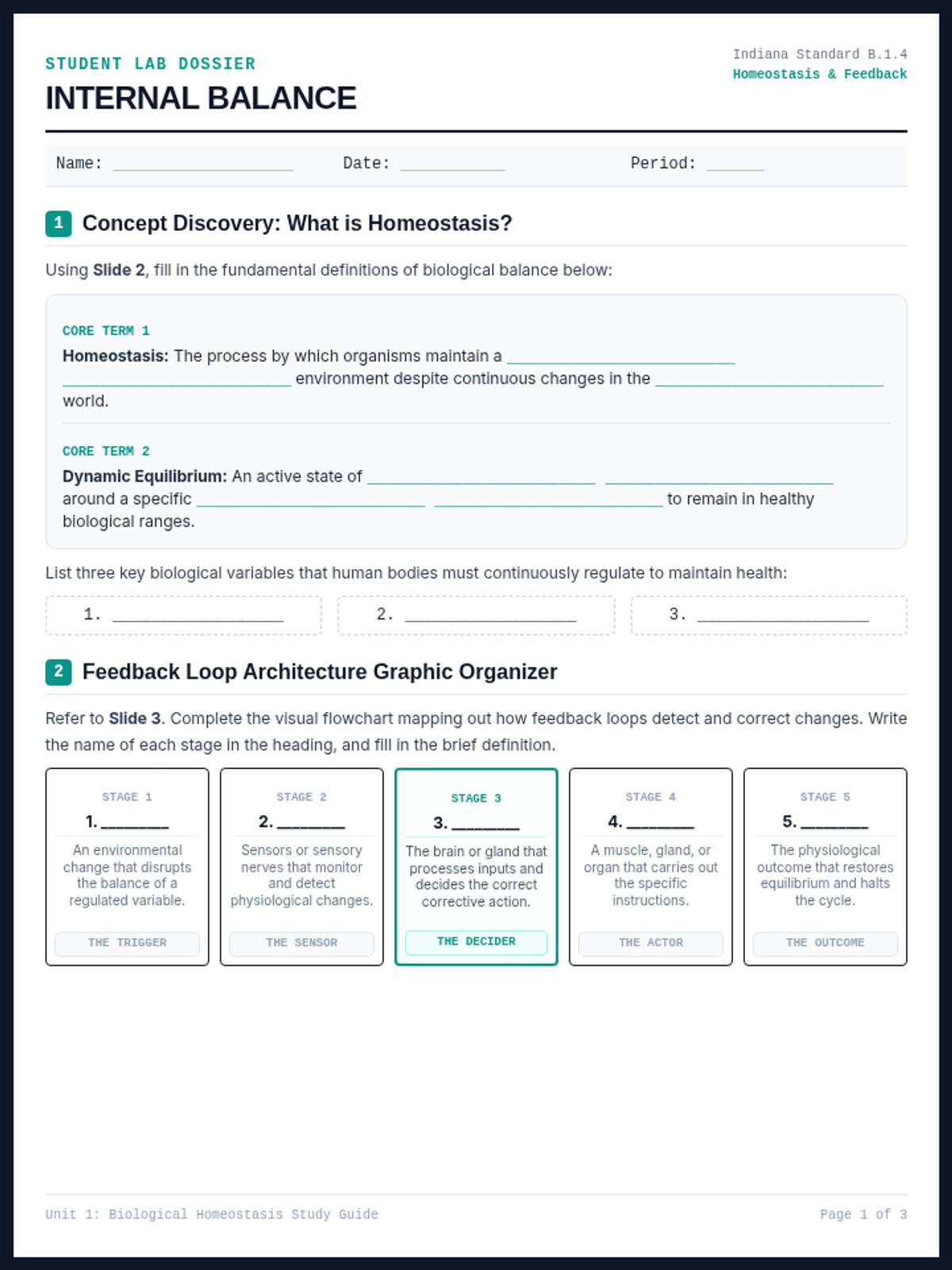
A 3-page student-facing guided outline notesheet matching the presentation slide-by-slide. Includes fill-in-the-blank conceptual outlines, a visual feedback-loop flow chart graphic organizer, case study notes, and synthesis short-answer sections.
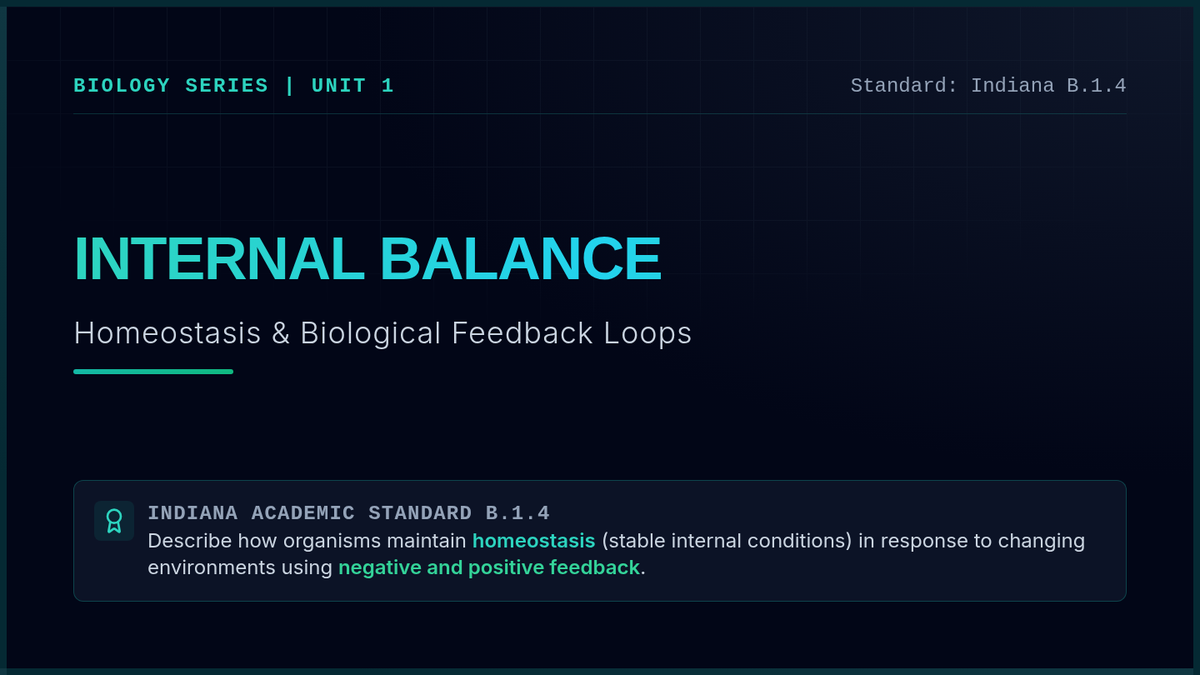
A 7-slide presentation covering homeostasis and positive/negative feedback mechanisms. Features a high-contrast clinical/scientific dark theme, bold 24px+ typography, clear diagrams, and Indiana Standard B.1.4 alignment.
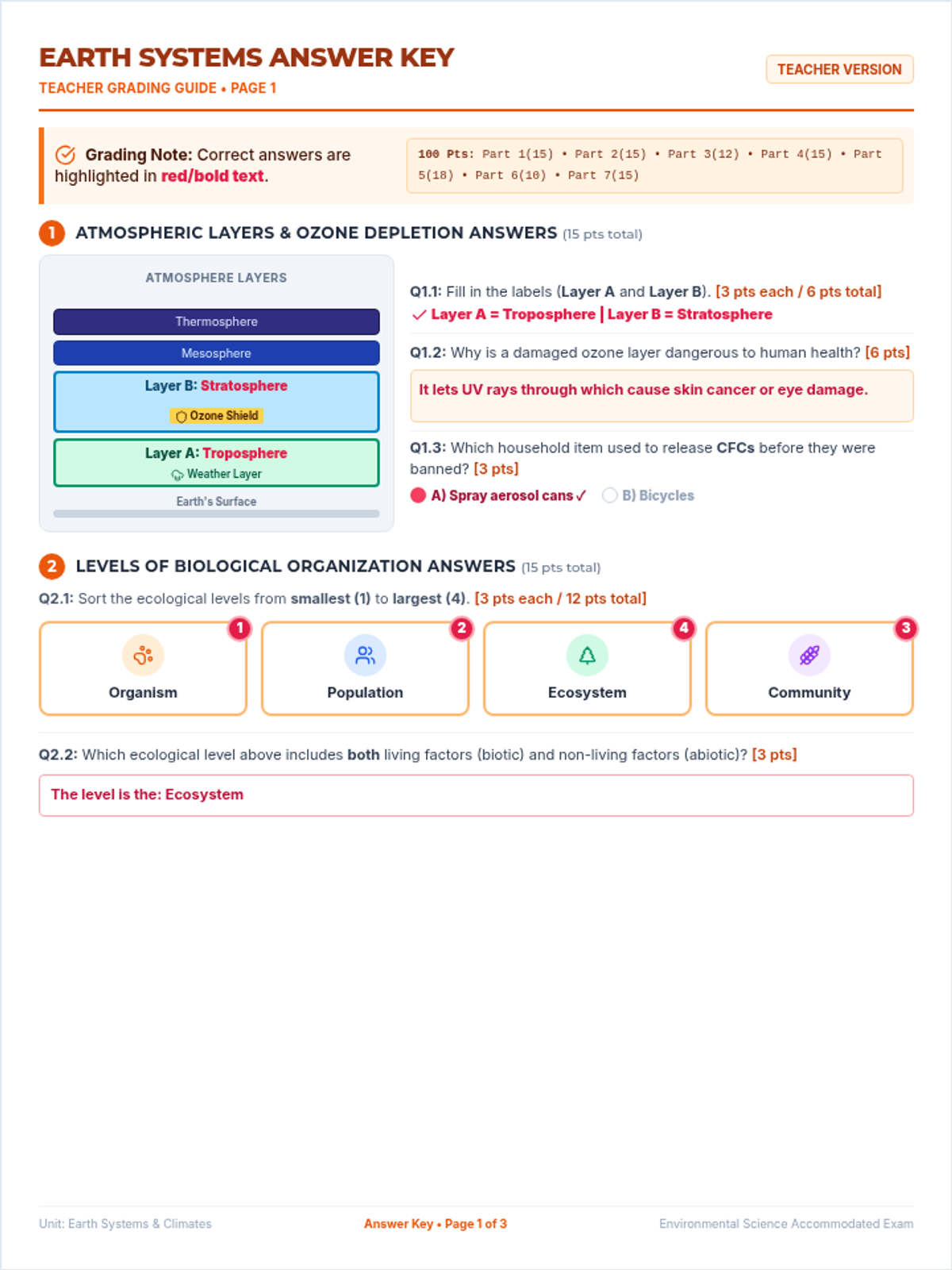
A complete teacher answer key and grading guide matching the 3-page student assessment, with all correct answers filled in in bold contrast.
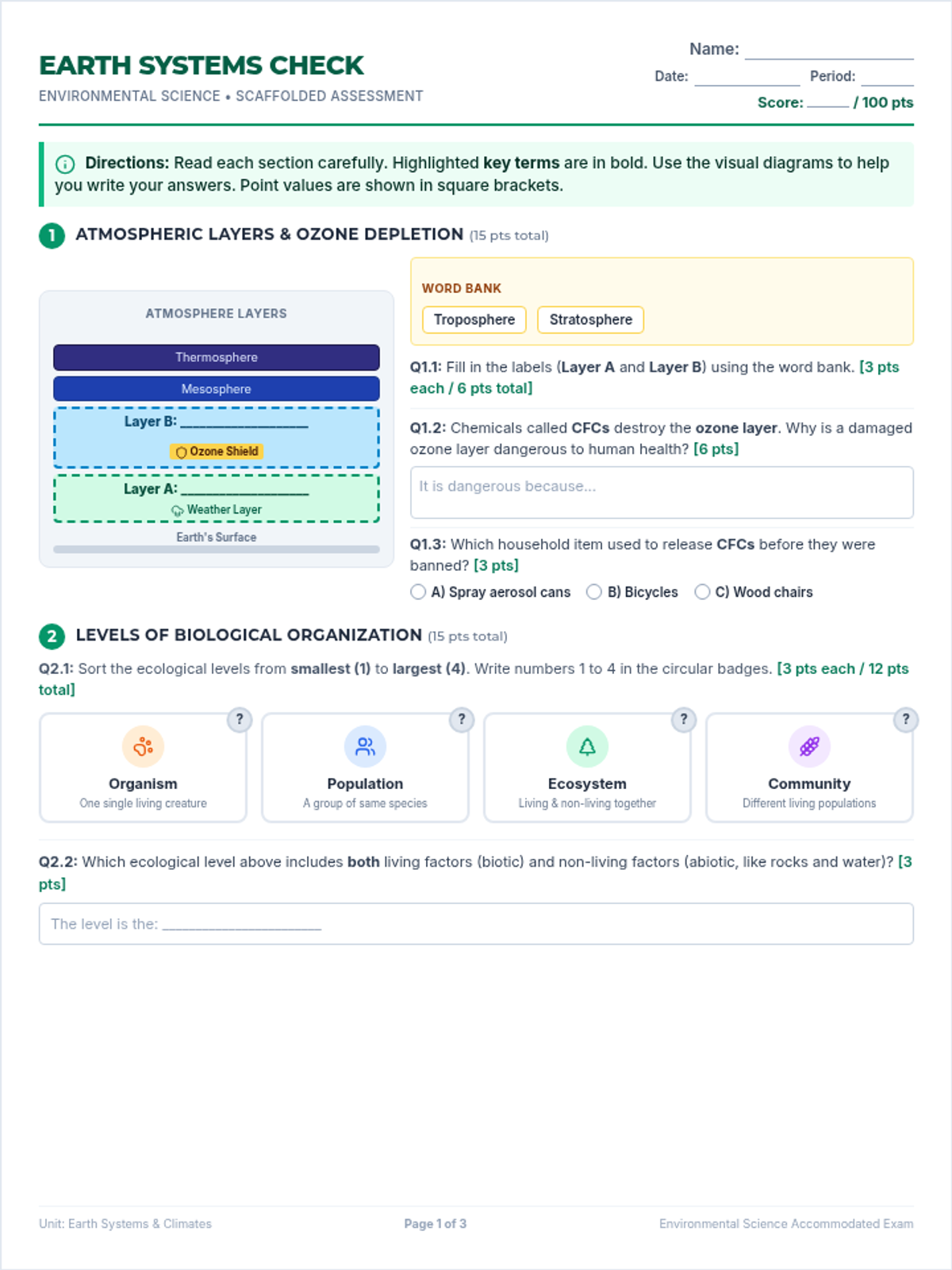
A 3-page scaffolded student assessment covering key Earth Systems topics, updated with point values for each question totaling 100 points for clear and objective grading.
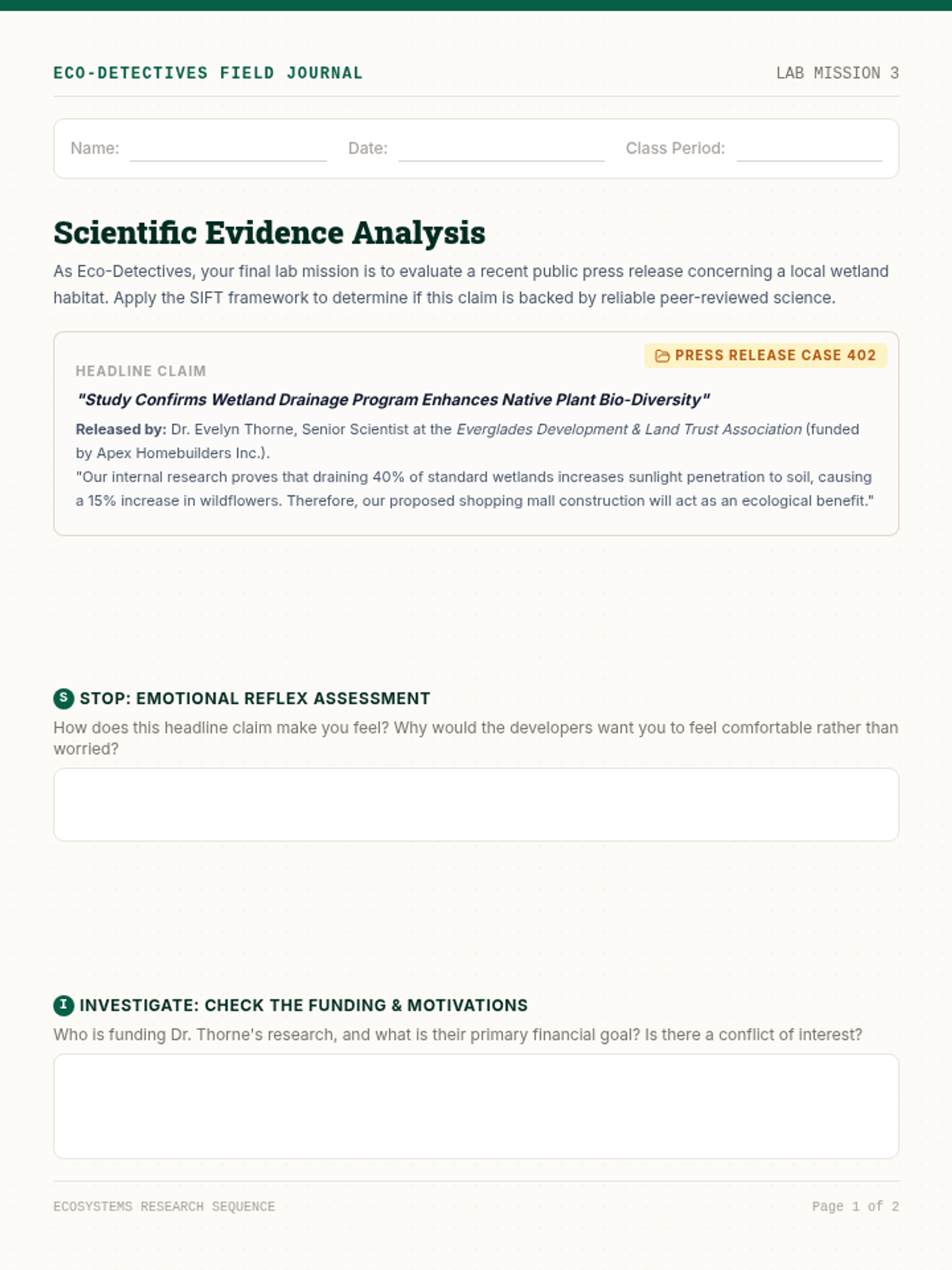
A student worksheet for the Source Investigators lesson, providing a simulated ecosystem research report for students to analyze and evaluate using the SIFT framework.
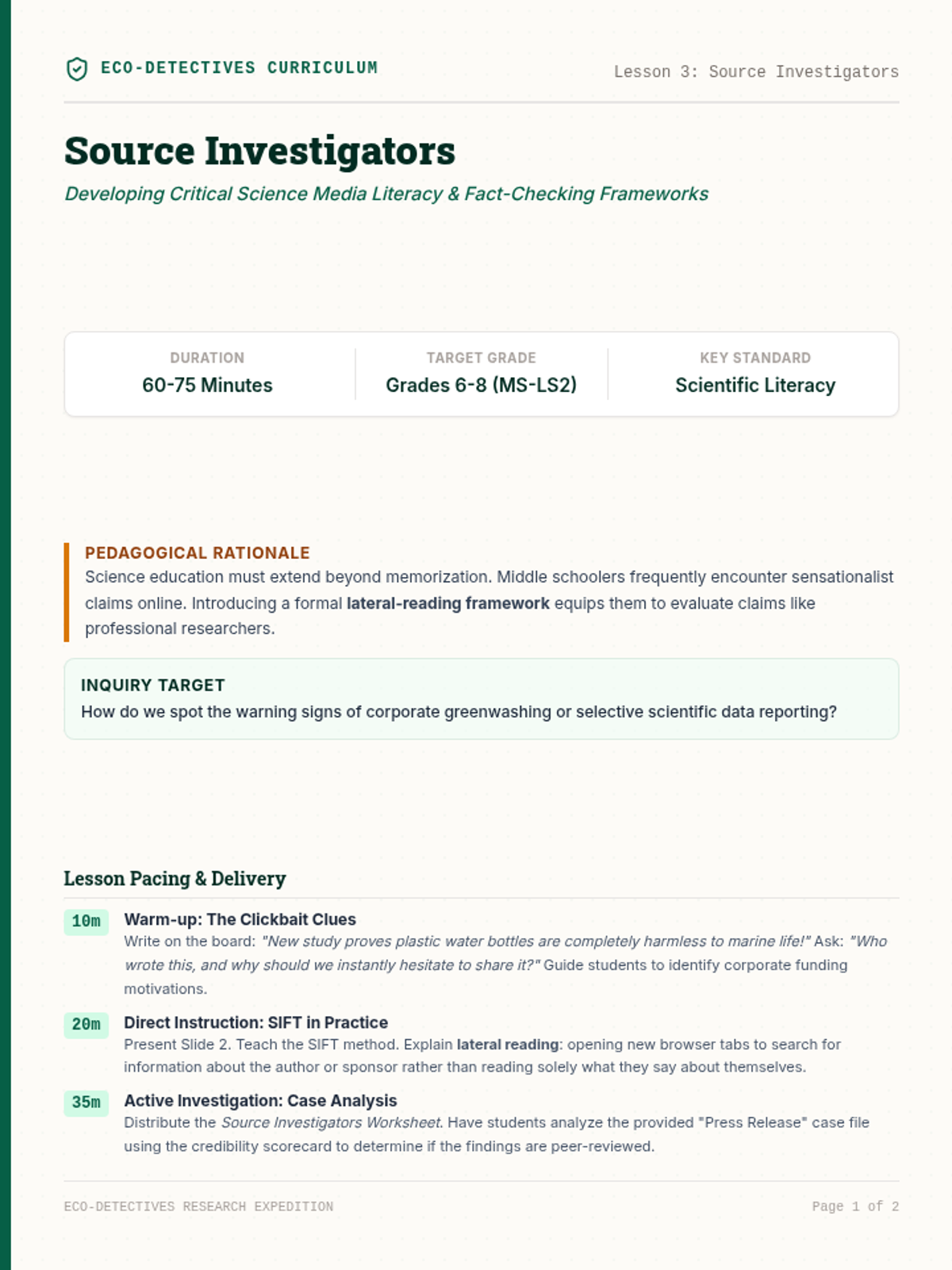
An instructional guide for Lesson 3, focusing on teaching the SIFT evaluation framework, facilitating debates on corporate bias in science, and scoring student analysis.
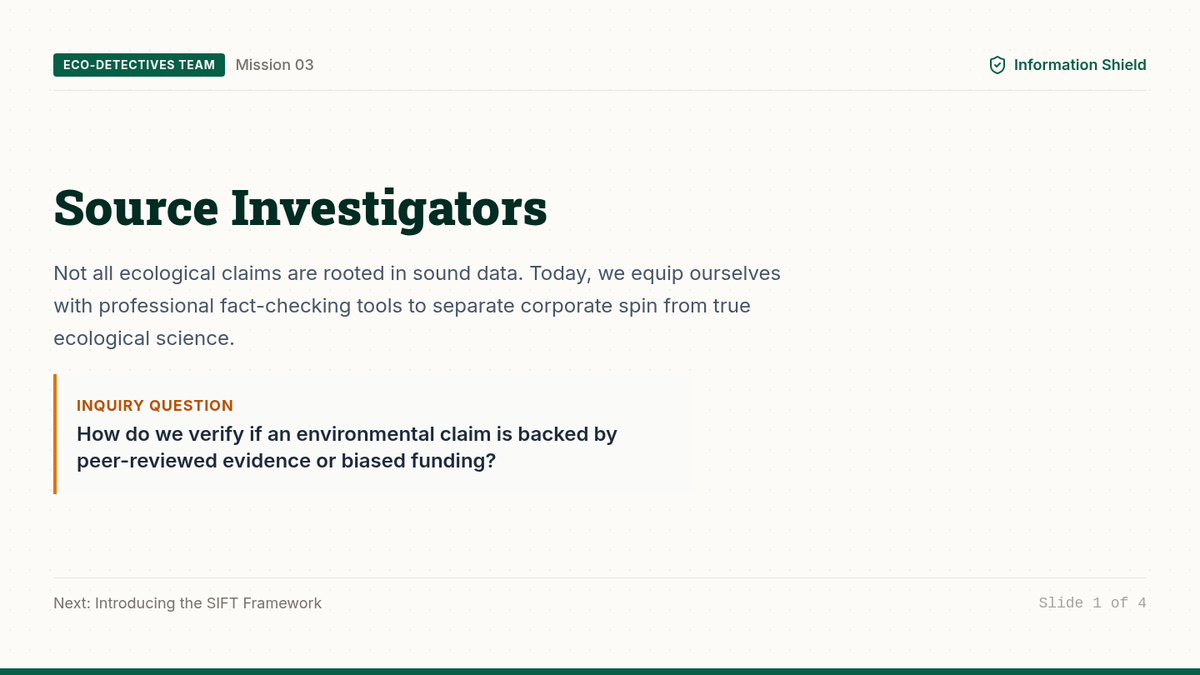
Visual presentation for the Source Investigators lesson, showing students how to critique claims, evaluate online media credibility, and identify scientific evidence bias.
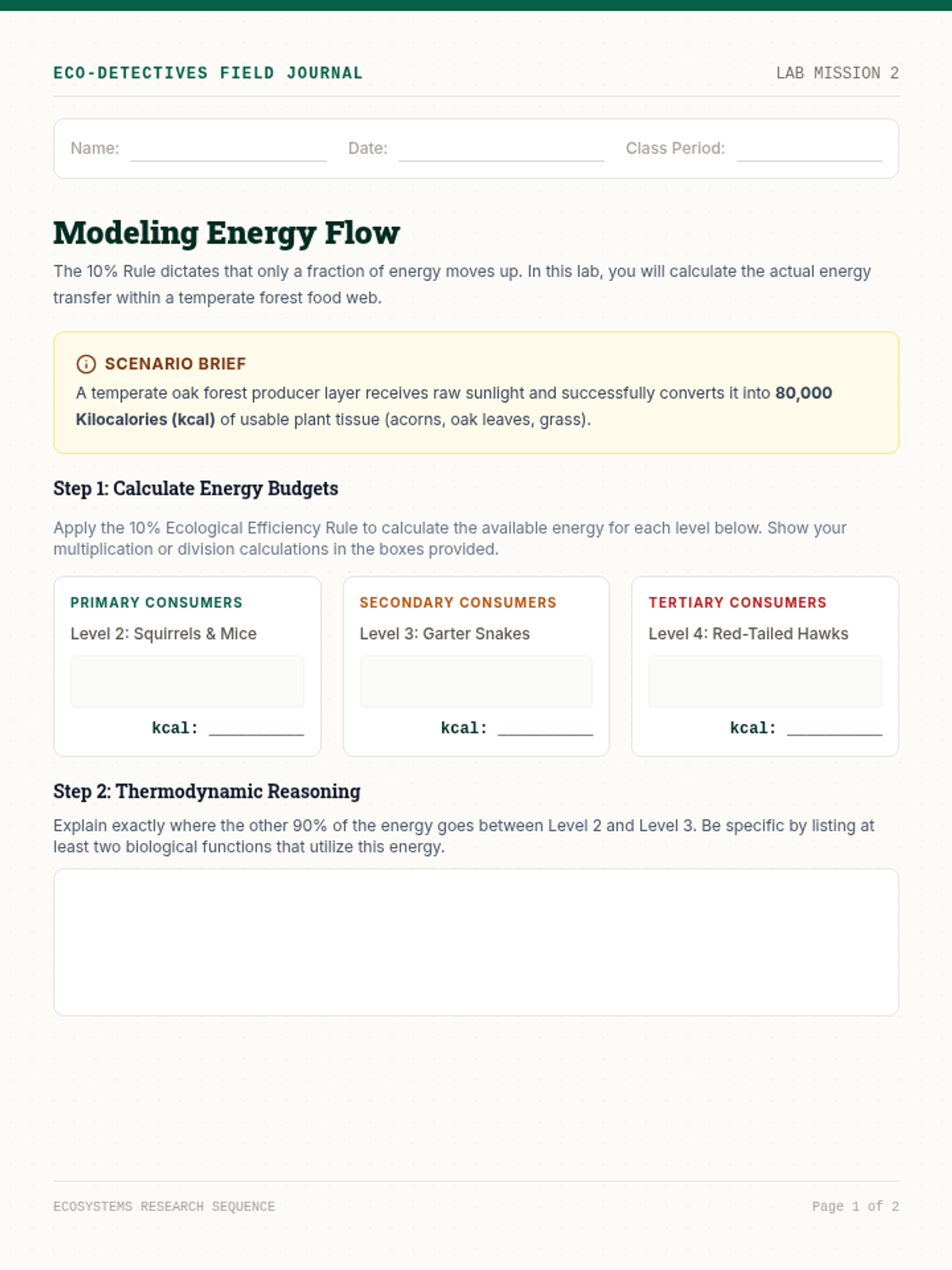
A student worksheet for the Energy Pyramids lesson, requiring students to calculate energy transfer using the 10% rule and evaluate a real-world trophic cascade.
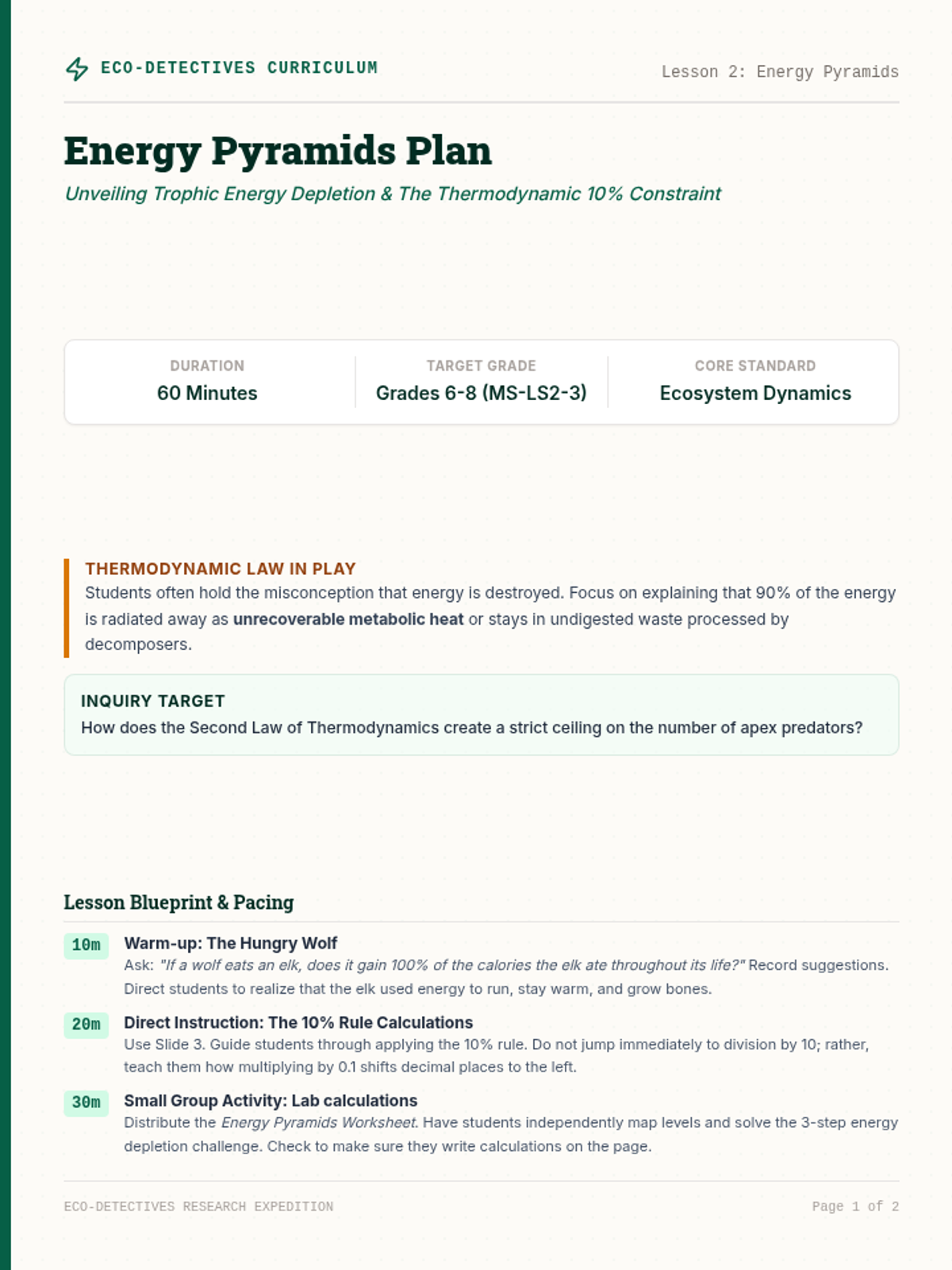
An instructional guide for Lesson 2, covering trophic energy transfer, direct instruction pacing for the 10% math rule, and discussion prompts for trophic cascades.
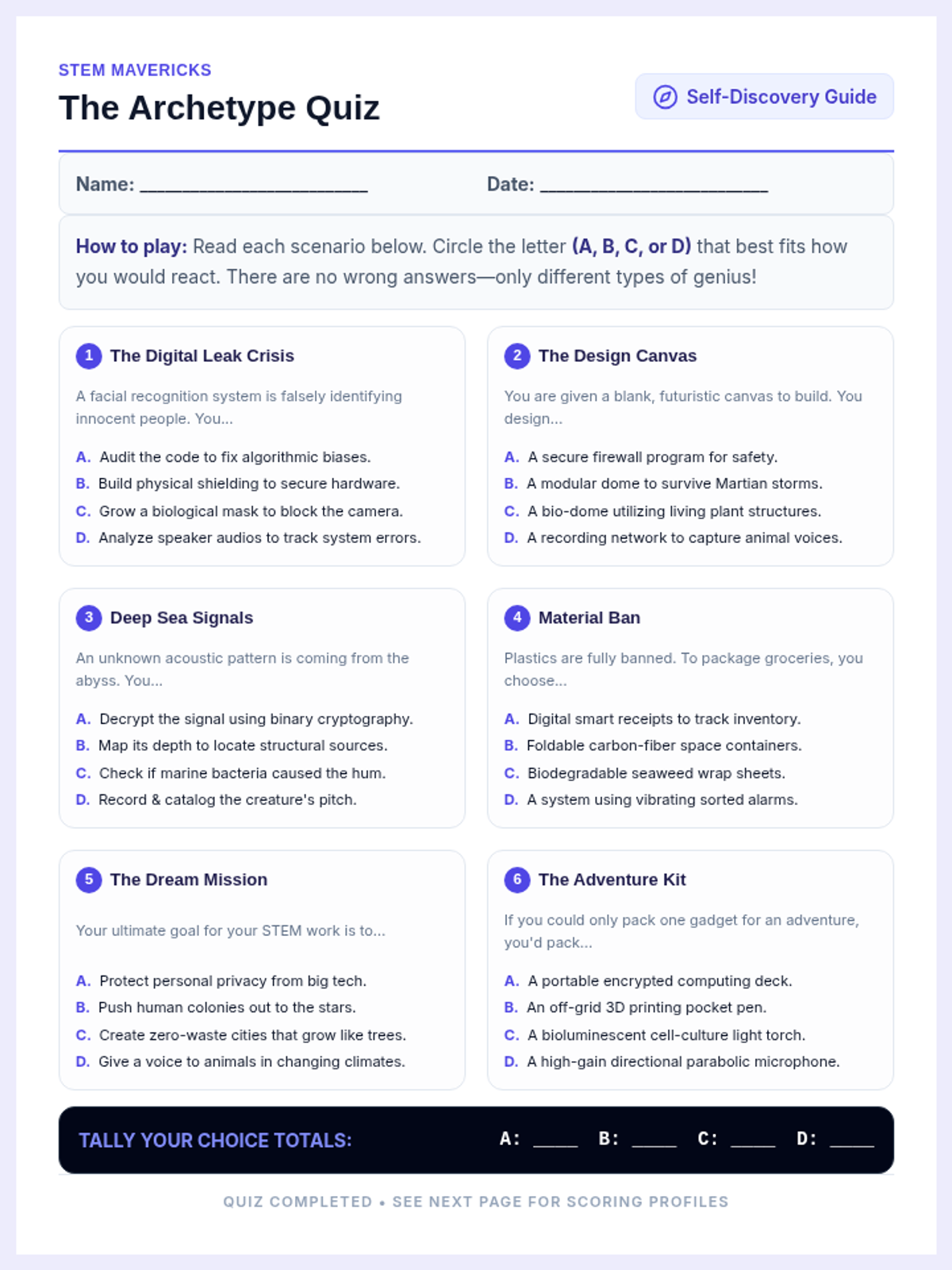
A self-discovery questionnaire and guidance packet featuring a 6-question situational quiz, archetype breakdown keys (Digital Guardian, Cosmic Pioneer, Biosphere Builder, Eco-Acoustician), and an actionable career reflection roadmap.
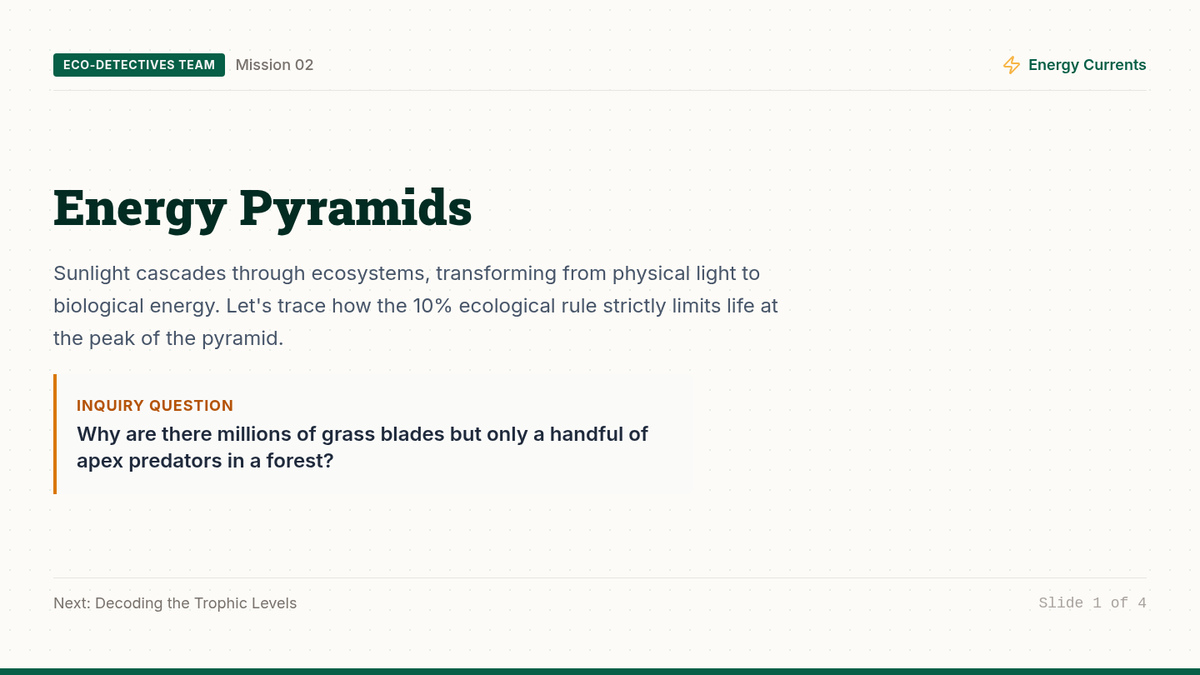
Visual presentation for the Energy Pyramids lesson, demonstrating trophic levels, producers vs consumers, and the 10% ecological efficiency math rule.
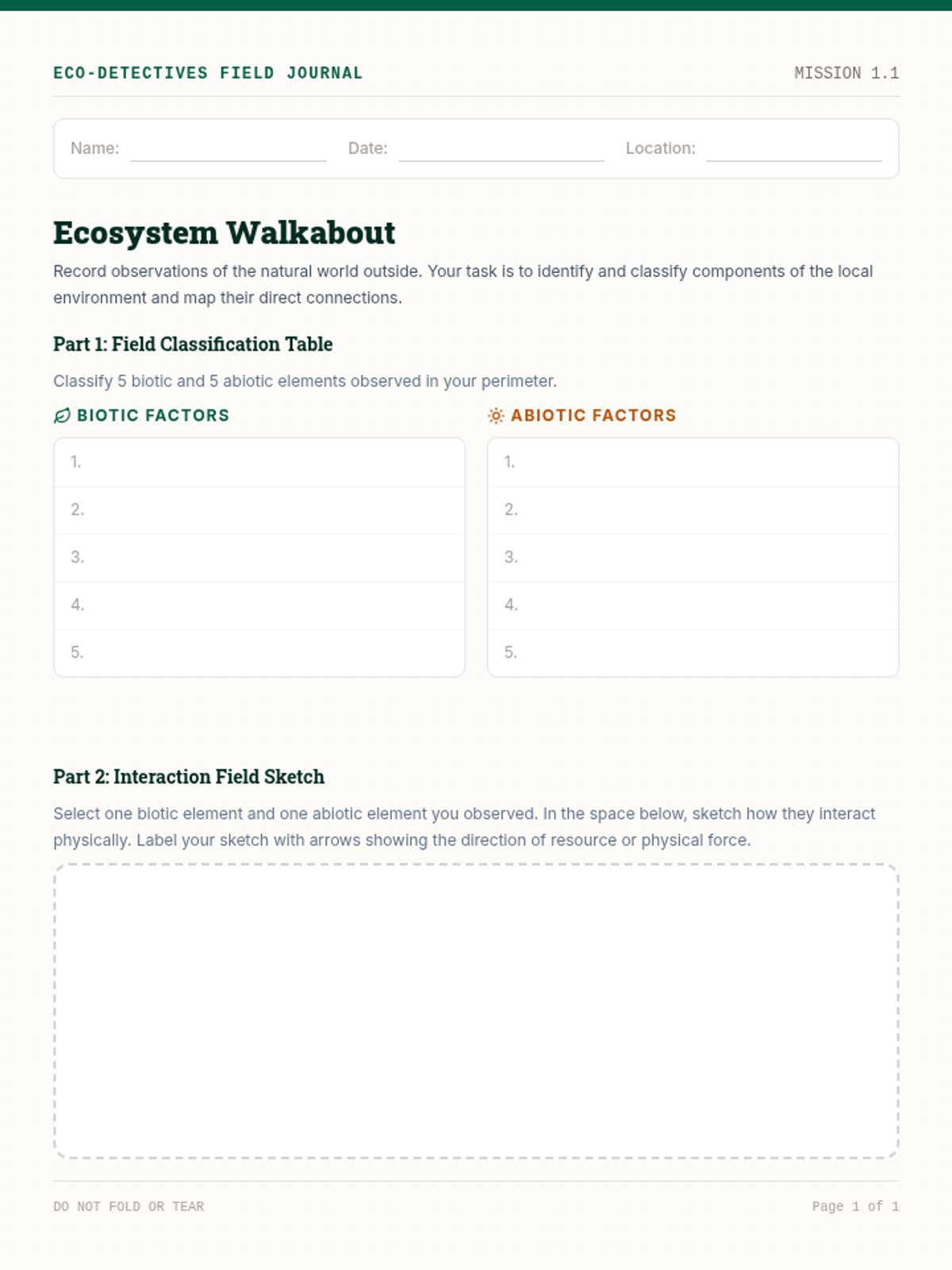
A student worksheet for the Biosphere Boundaries field mission, including blank fields for identifying biotic/abiotic factors and charting local ecological connections.
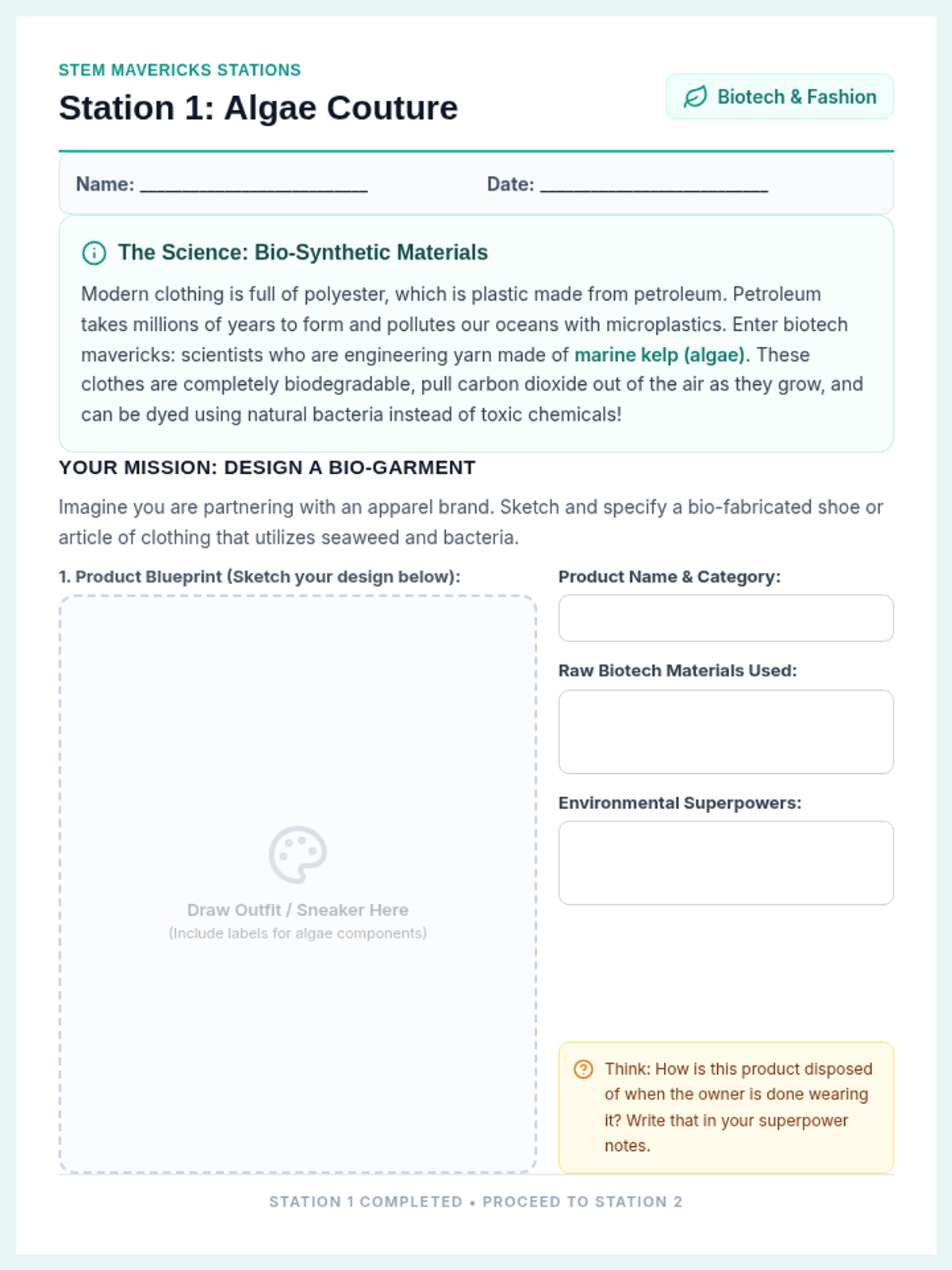
A print-ready, four-page workbook containing engaging hands-on challenges and beautifully formatted response zones for the Station Rotation activities. Features Algae Couture, Bias Busters, Ocean Soundscapes, and Mars Habitat design.
An instructional guide for Lesson 1, covering lesson planning, warm-up prompts, instructions for the 'Interdependence Circles' anchor chart, and differentiation tips.
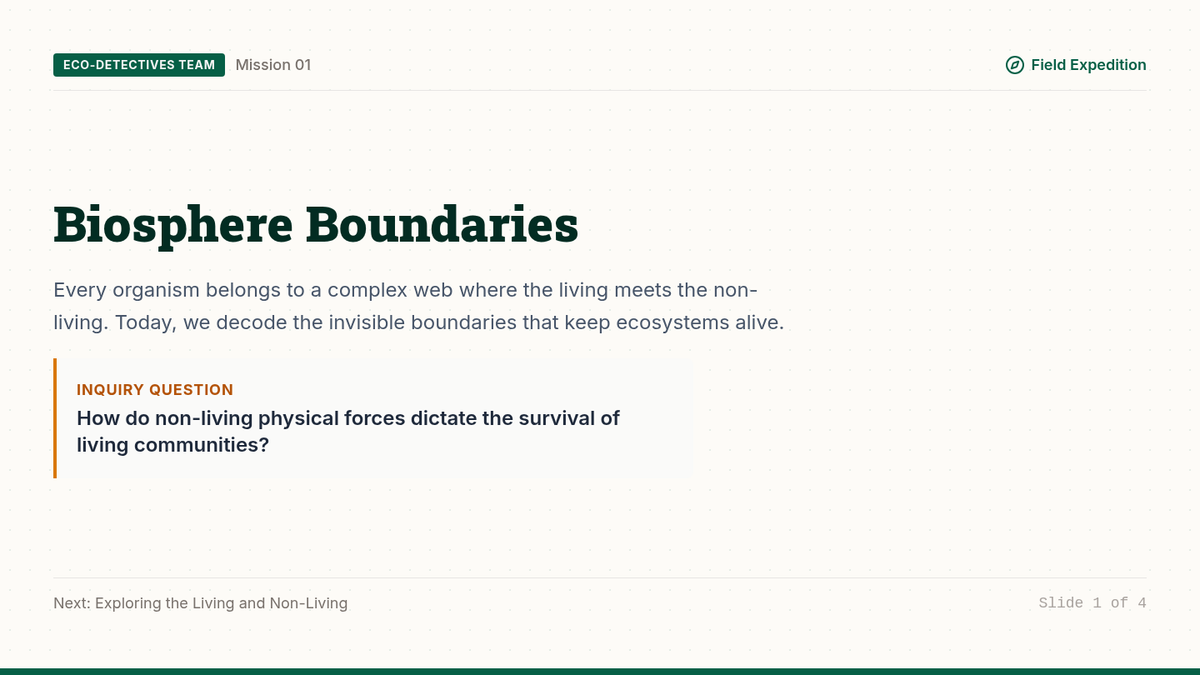
Visual presentation for the Biosphere Boundaries lesson, introducing biotic and abiotic factors, the interdependence circle anchor chart activity, and a field mission.
A high-energy, visually stunning slide presentation featuring interactive discussion prompts, diverse STEM career profiles, and an overview of the Station Rotation challenges. Designed to break stereotypes and broaden horizons.
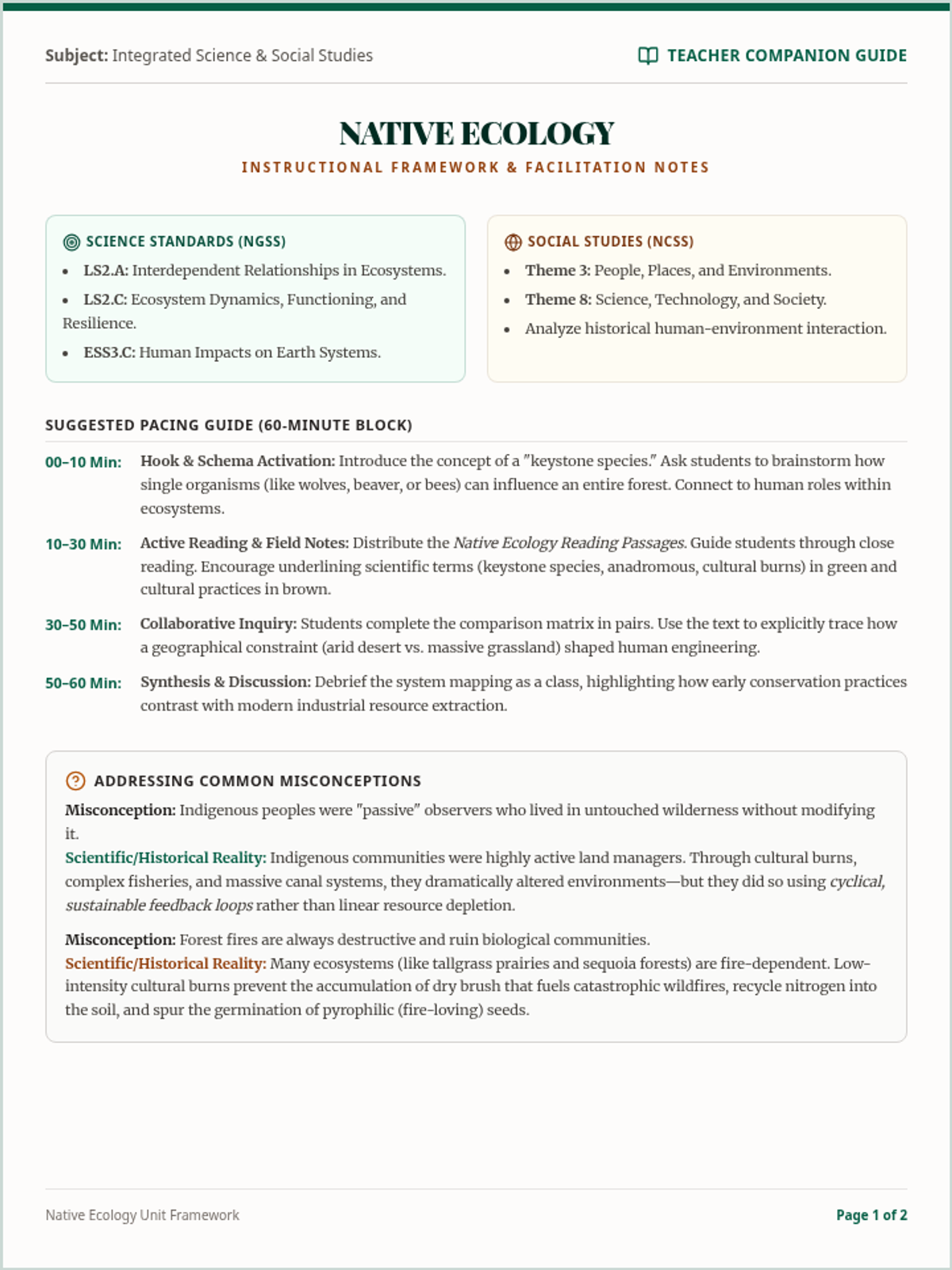
A premium, 2-page teacher companion and lesson guide for the Native Ecology material. Includes background knowledge notes, discussion prompts, student misconception guides, and a detailed answer key.