A comprehensive lesson plan for teachers detailing mission objectives, instructional sequences, curriculum standards, and differentiation strategies for the Mars colonization modeling challenge.
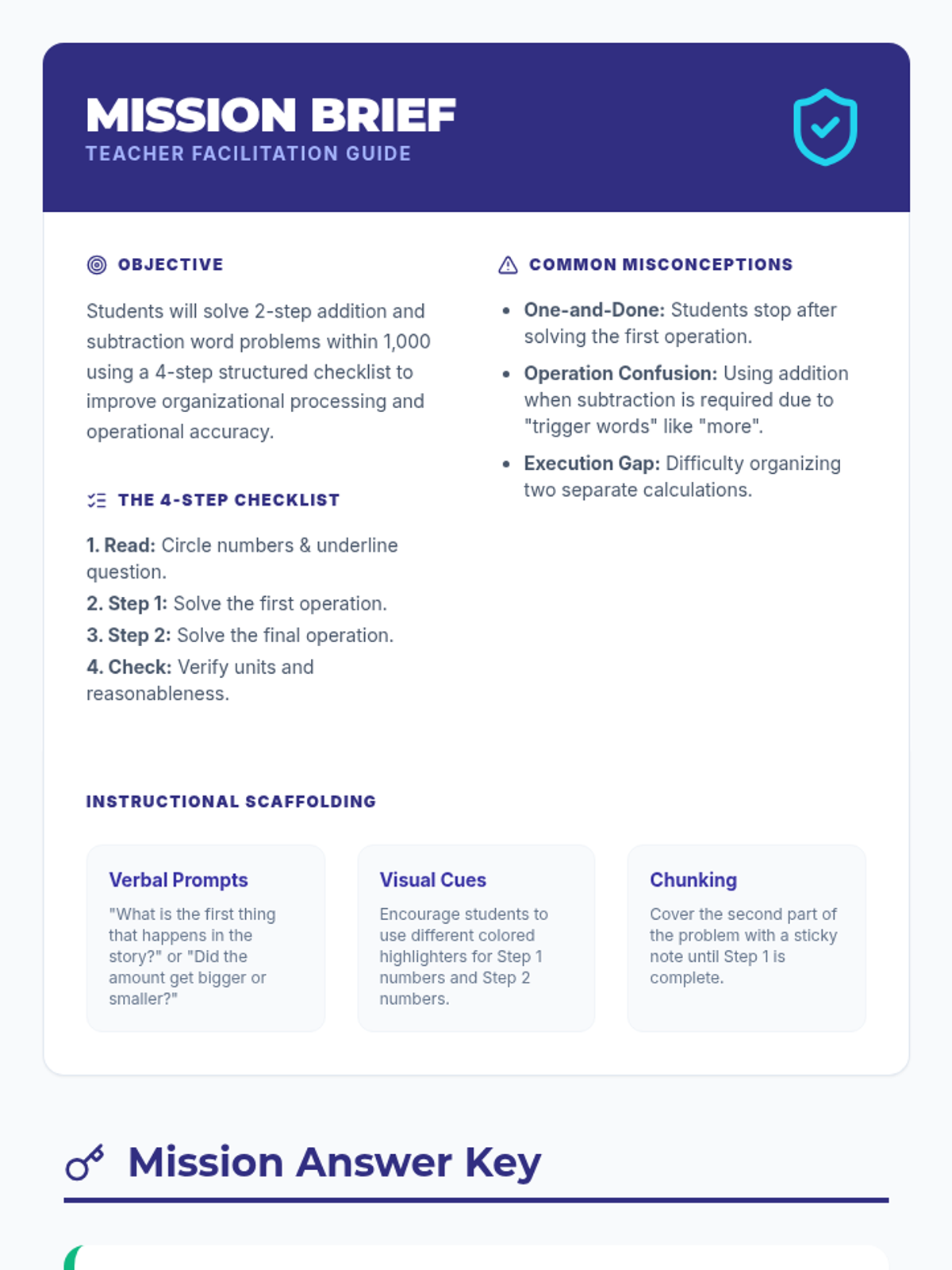
A teacher-facing facilitation guide and answer key for the Math Mission Rescue lesson. Includes instructional objectives, common misconceptions for IEP students, scaffolding strategies, and step-by-step solutions for all worksheet problems.
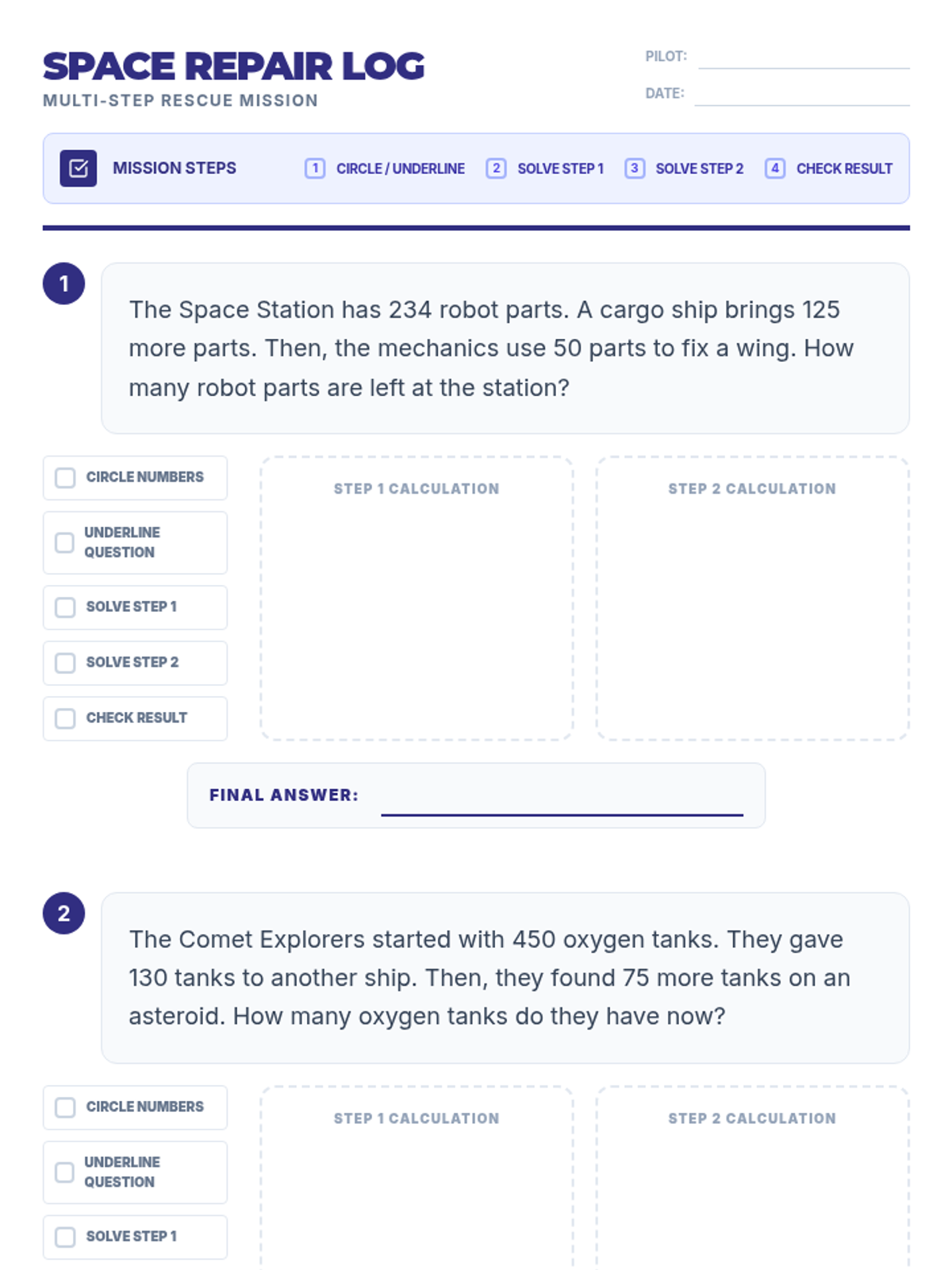
A scaffolded 3rd-grade math worksheet featuring 2-step addition and subtraction word problems with a 'Space Repair' theme. Includes a 4-step checklist for each problem and separate workspaces for each step to support students with IEPs.
A visual slide deck designed for 3rd-grade students with IEPs, introducing a structured 4-step checklist (Read, Plan, Solve, Check) for solving multi-step addition and subtraction word problems within a space-themed 'Mission Control' context.
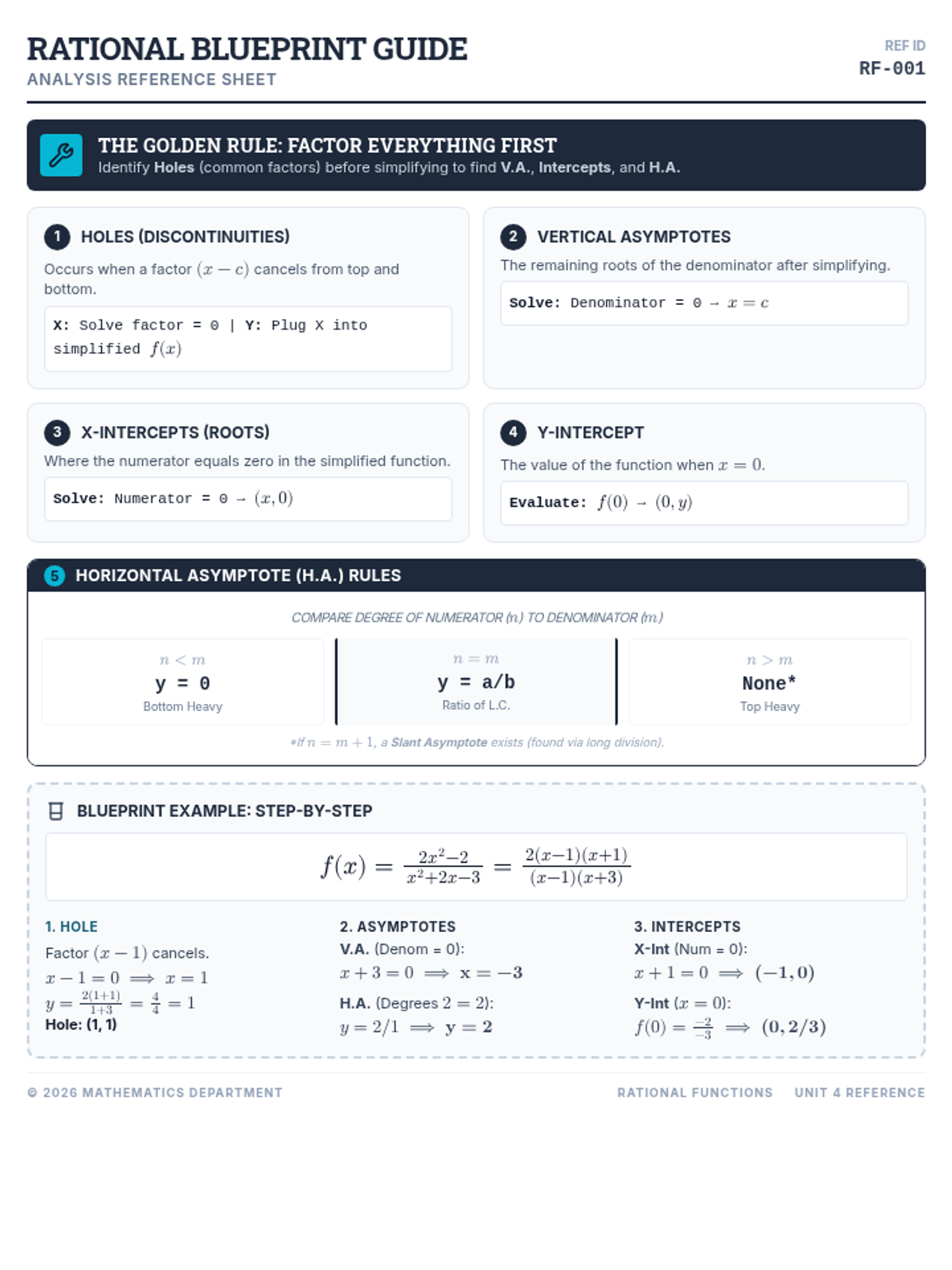
A high-density one-page reference sheet for rational functions. Includes essential steps for finding holes, asymptotes, and intercepts, plus a fully worked complex example.
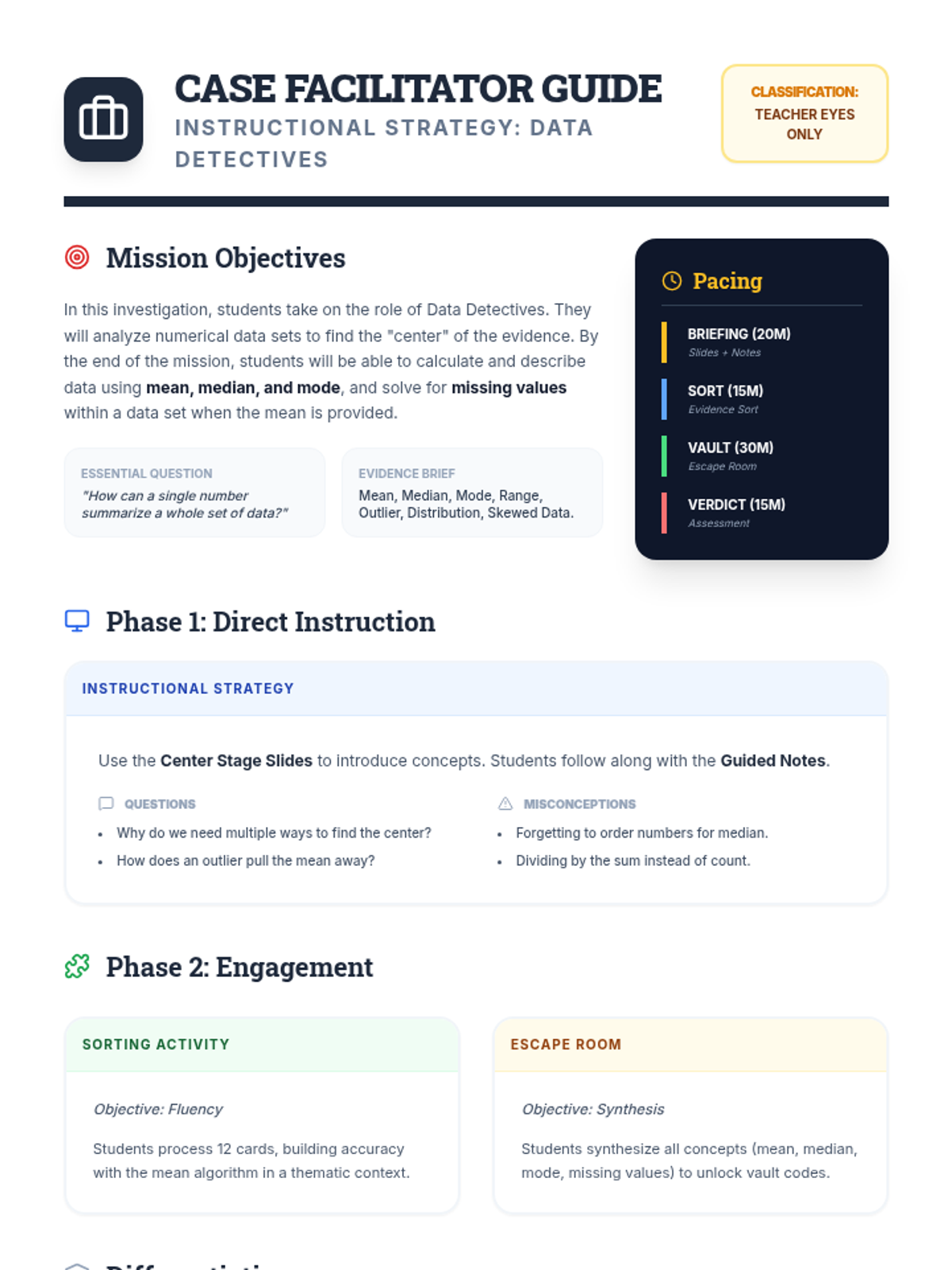
A comprehensive teacher guide for the "Data Detectives" lesson. Includes lesson objectives, a detailed pacing guide, instructional strategies for slides and activities, common misconceptions, and differentiation tips for supporting and challenging students. Revised to fix layout, spacing, and page break issues.
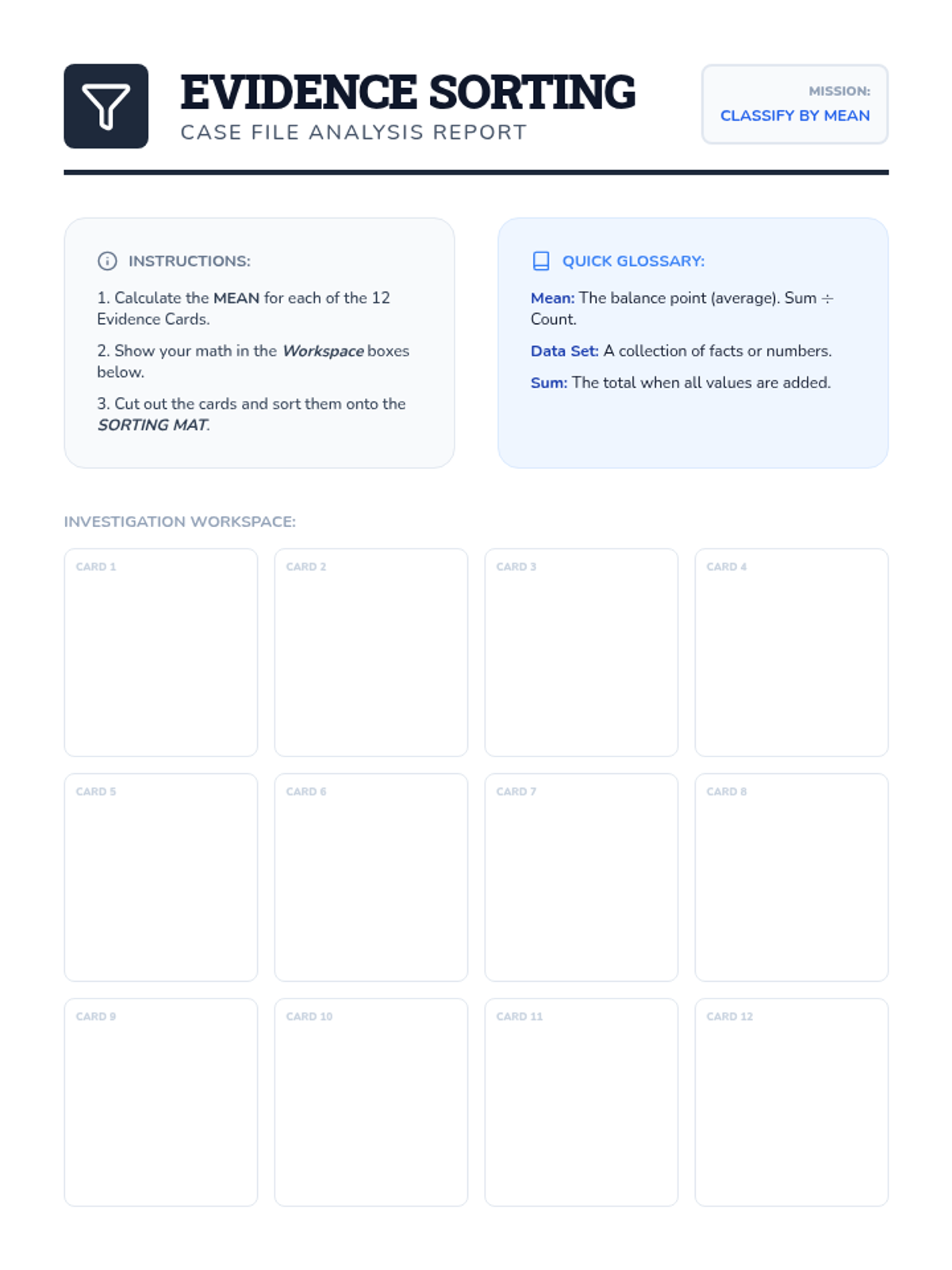
A hands-on sorting activity for measures of center. Students calculate the mean for 12 data cards (Case Files) and sort them into folders based on their values. Includes workspace for calculations and a thematic detective-inspired sorting mat. Revised to fix page breaks and student work area layout.
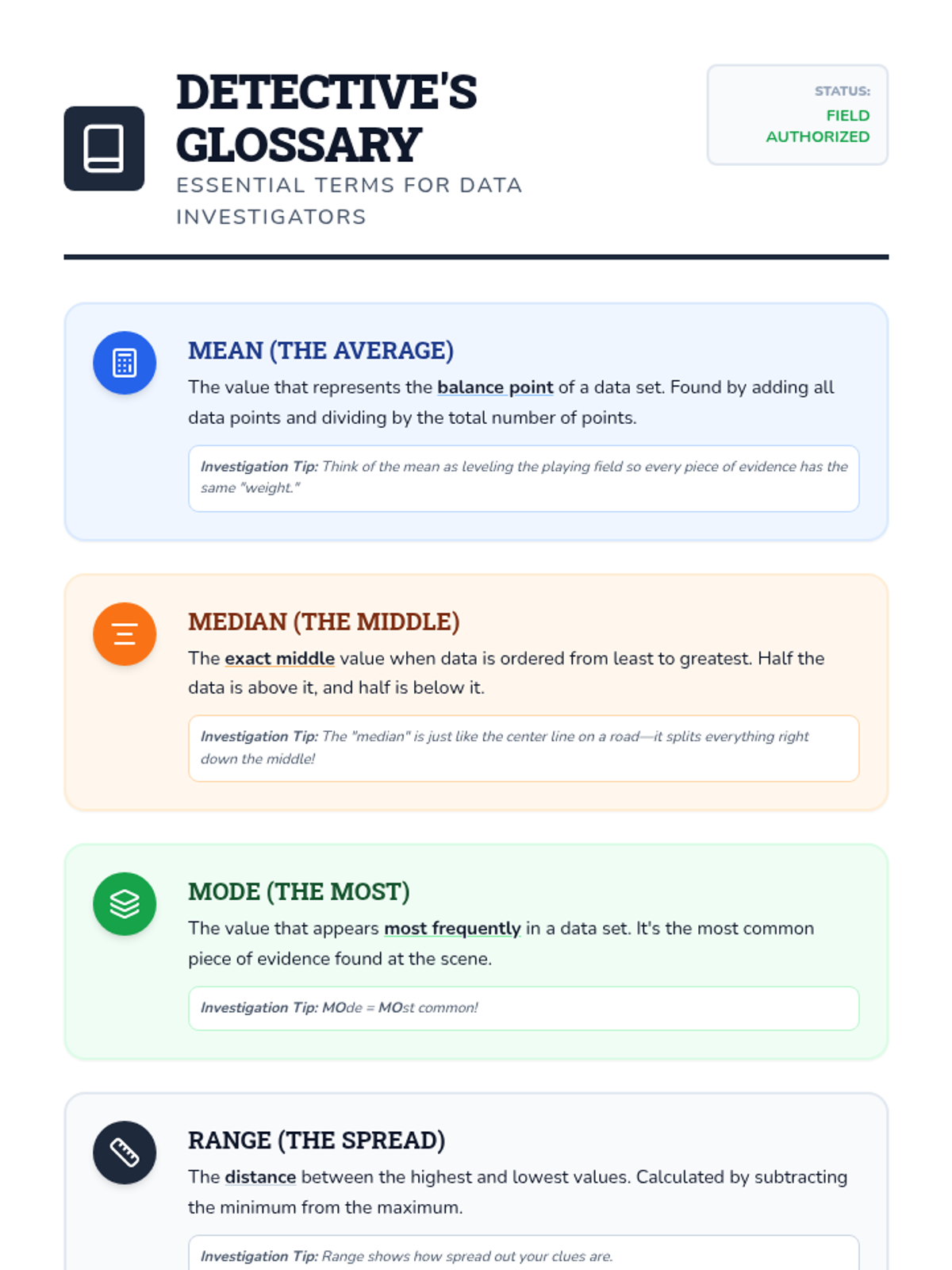
A thematic vocabulary reference sheet for measures of center. Includes clear definitions and "Investigation Tips" for mean, median, mode, and range, along with a dossier of supplementary statistical terms like outliers, distribution, and skewed data. Revised to fix page breaks and include more terms.
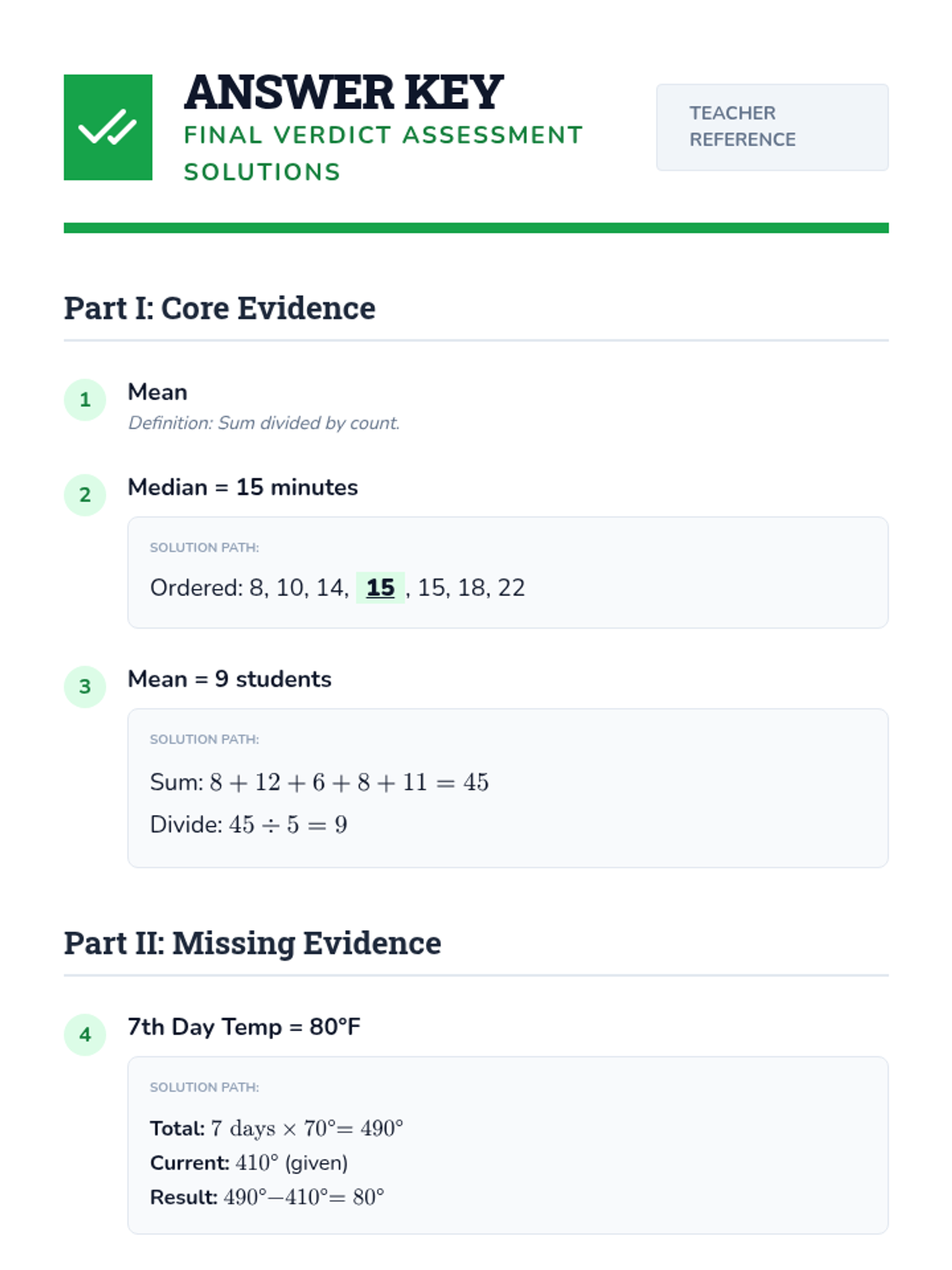
A detailed answer key for the "Final Verdict" assessment and "Case Closed" escape room. Provides step-by-step solution paths for mean, median, and missing value problems. Revised to fix page breaks, degree symbol rendering, and layout consistency.
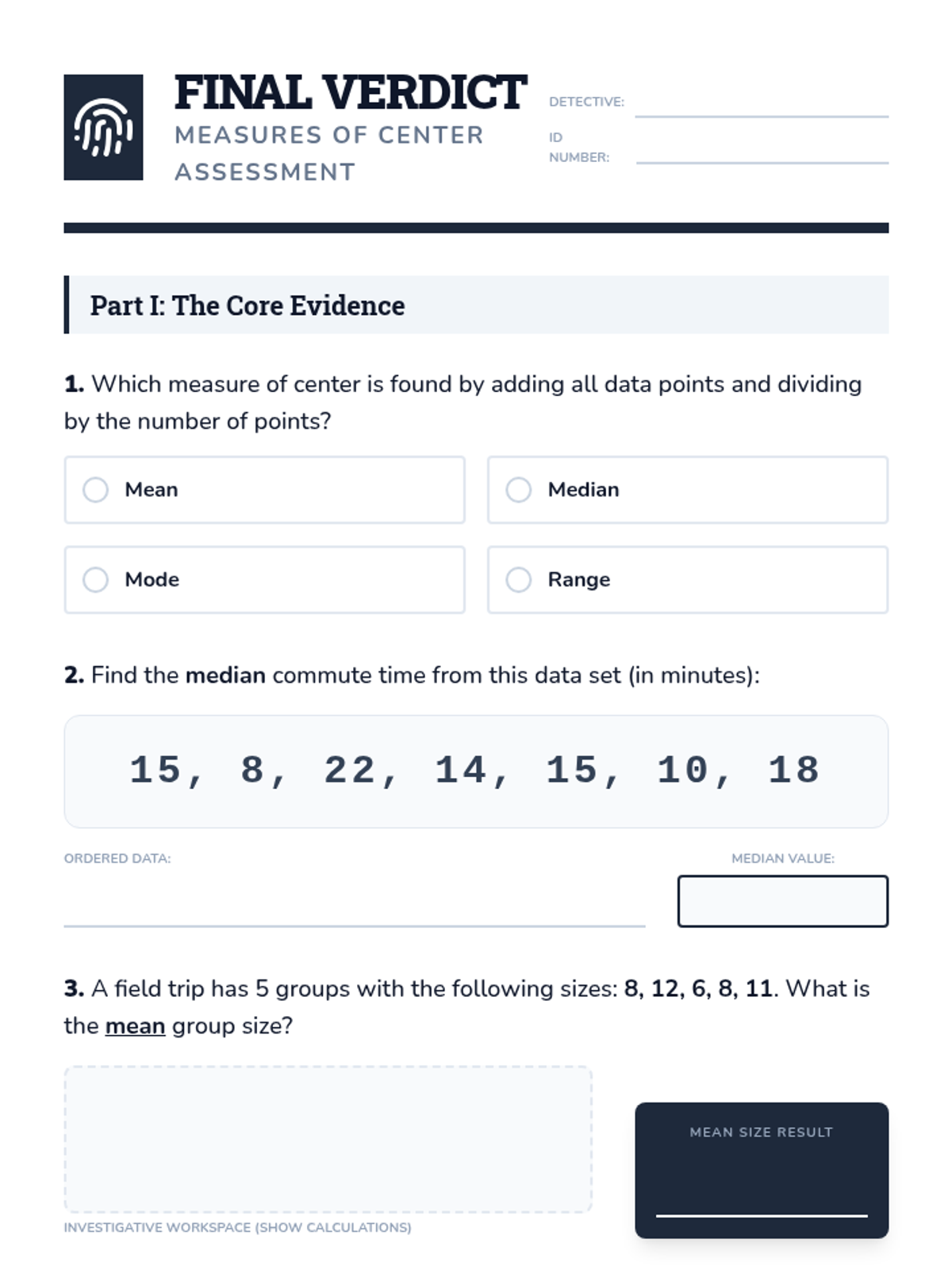
A two-part assessment on measures of center. Part I focuses on summarizing data using mean and median calculations with time and group size contexts. Part II challenges students to find missing data values given the mean. Revised to fix page breaks, footer placement, and work area sizing.
A four-station "Data Detective" escape room activity. Students solve puzzles involving mean (time data), median (negative temperature data), mode (group sizes), and a missing value challenge to unlock "vault codes." Includes workspace for calculations and distinct thematic sections for each puzzle. Revised to fix page breaks, contrast, and box sizing.
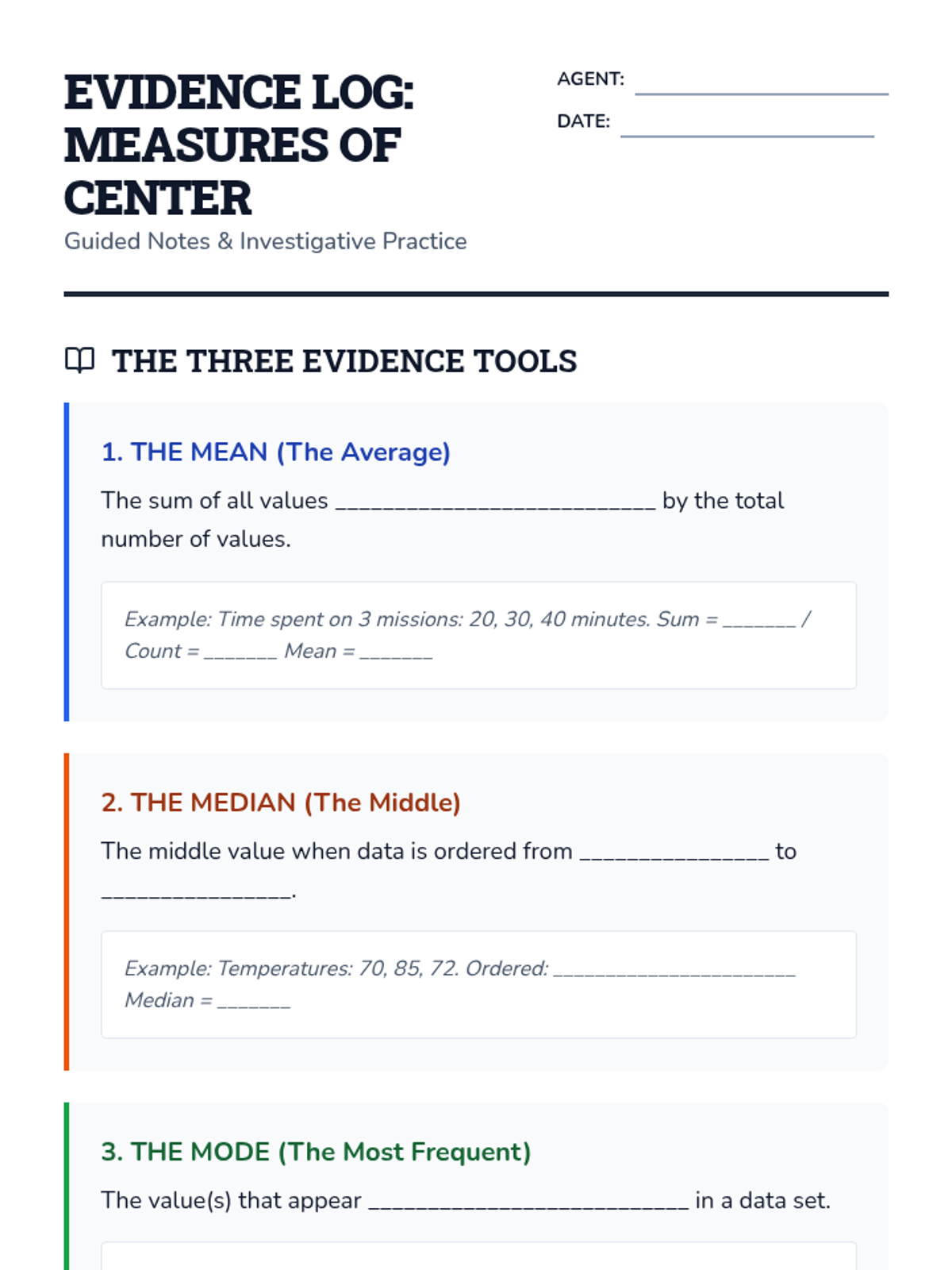
A guided notes document and practice worksheet for measures of center. Features fill-in-the-blank definitions for mean, median, and mode, a step-by-step strategy guide for finding missing data values, and three categorized "Case File" practice problems. Revised to fix page breaks and student work area alignment.
A slide deck introducing measures of center (mean, median, mode) using a detective theme. Includes definitions, step-by-step examples with time, temperature, and group size data, and interactive practice problems. Revised to fix slide overflow and rendering issues.
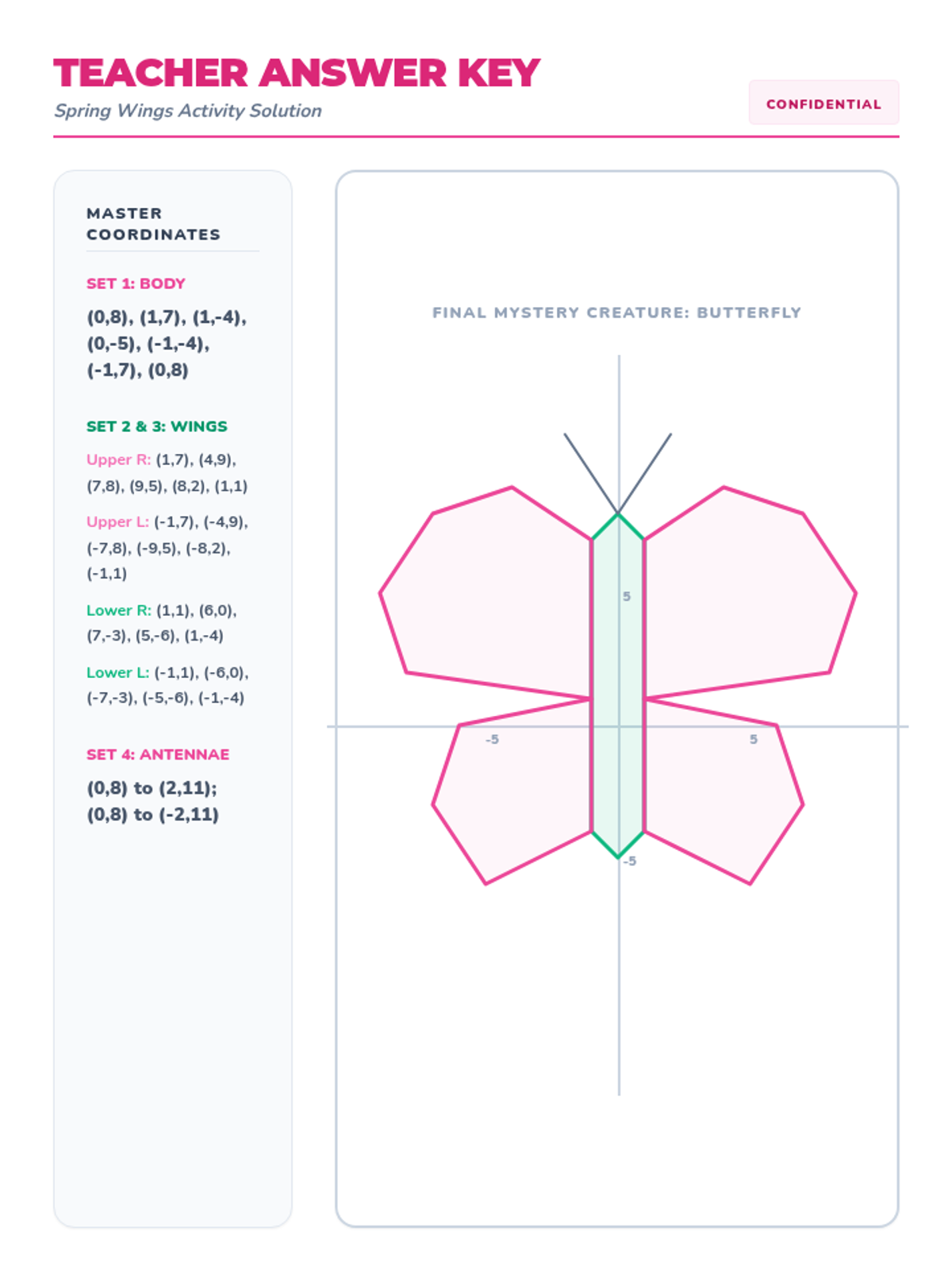
A teacher's answer key for the Butterfly Plot activity, showing the correctly plotted butterfly across four quadrants with a visual solution guide.
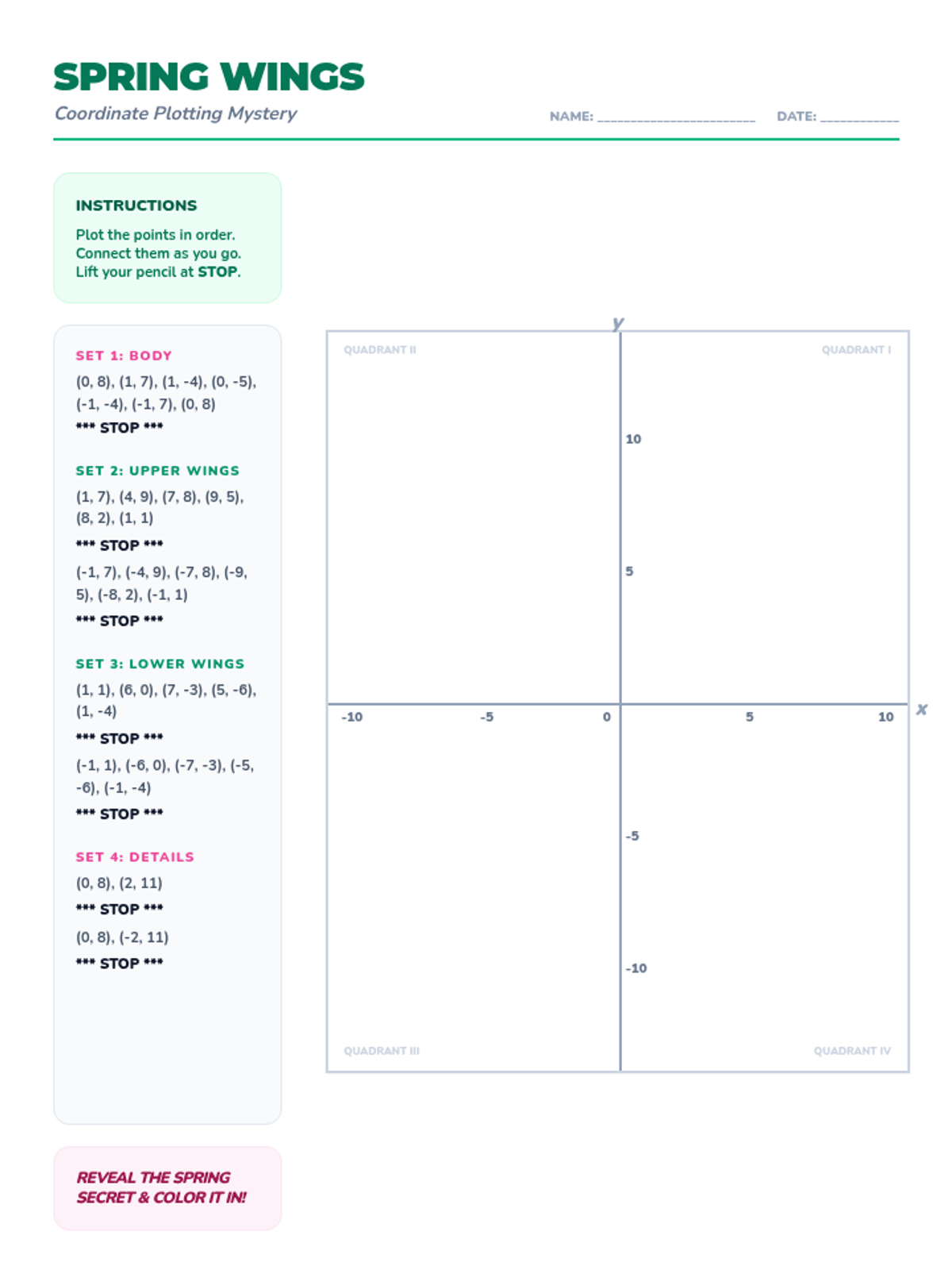
A student worksheet for a coordinate plane activity. Students plot a series of integer coordinates in four quadrants to reveal a butterfly image, which can then be colored.
A vibrant slide deck introducing 6th-grade students to the coordinate plane, covering the four quadrants, the origin, and tips for plotting points with zeros.
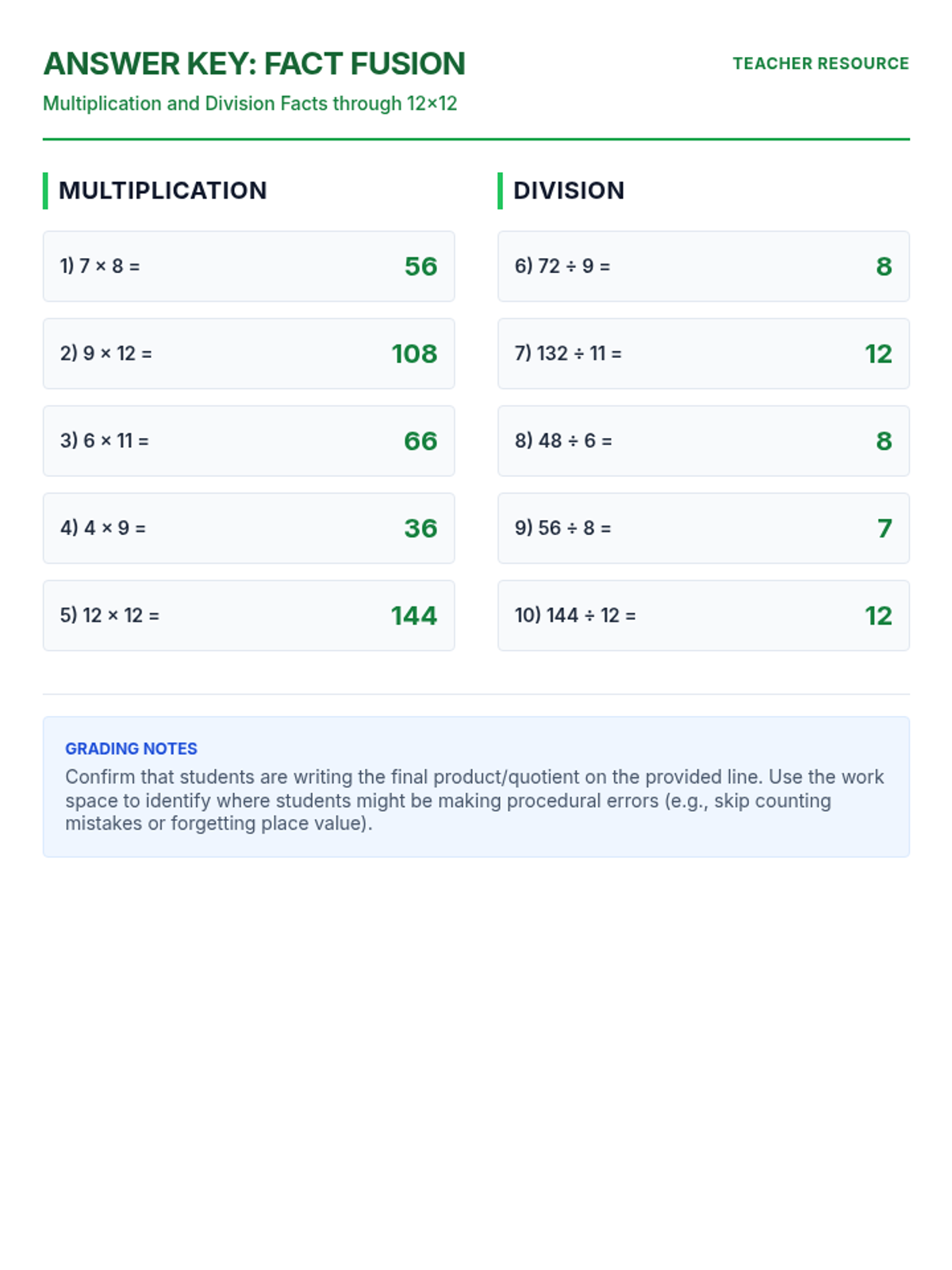
The answer key for the Fact Fusion Worksheet, providing correct solutions for all multiplication and division problems. Designed for quick teacher reference on a single page.
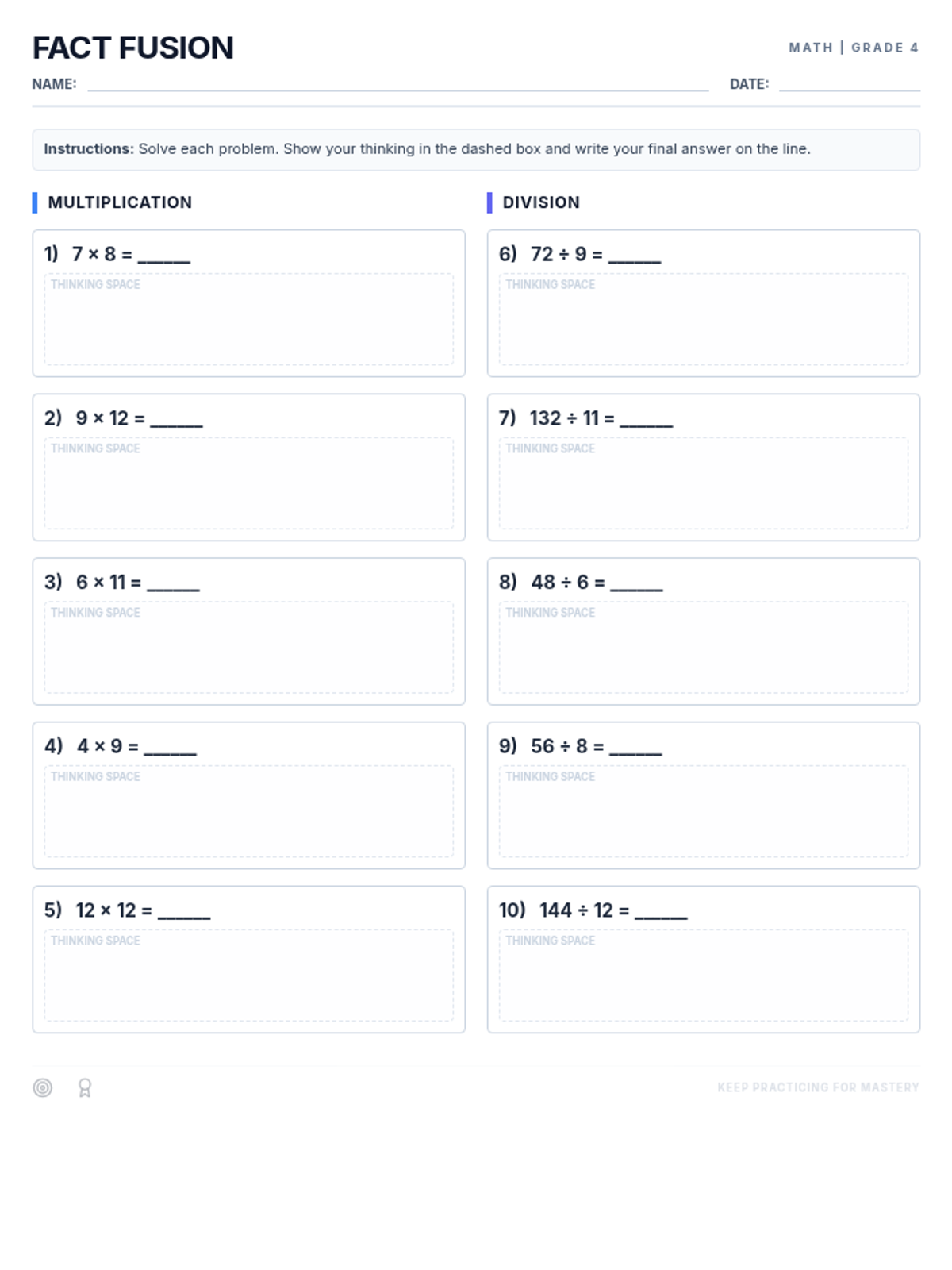
A 4th-grade math worksheet featuring 5 multiplication and 5 division problems up to 12x12. The layout is clean and professional with dedicated work space for each problem.
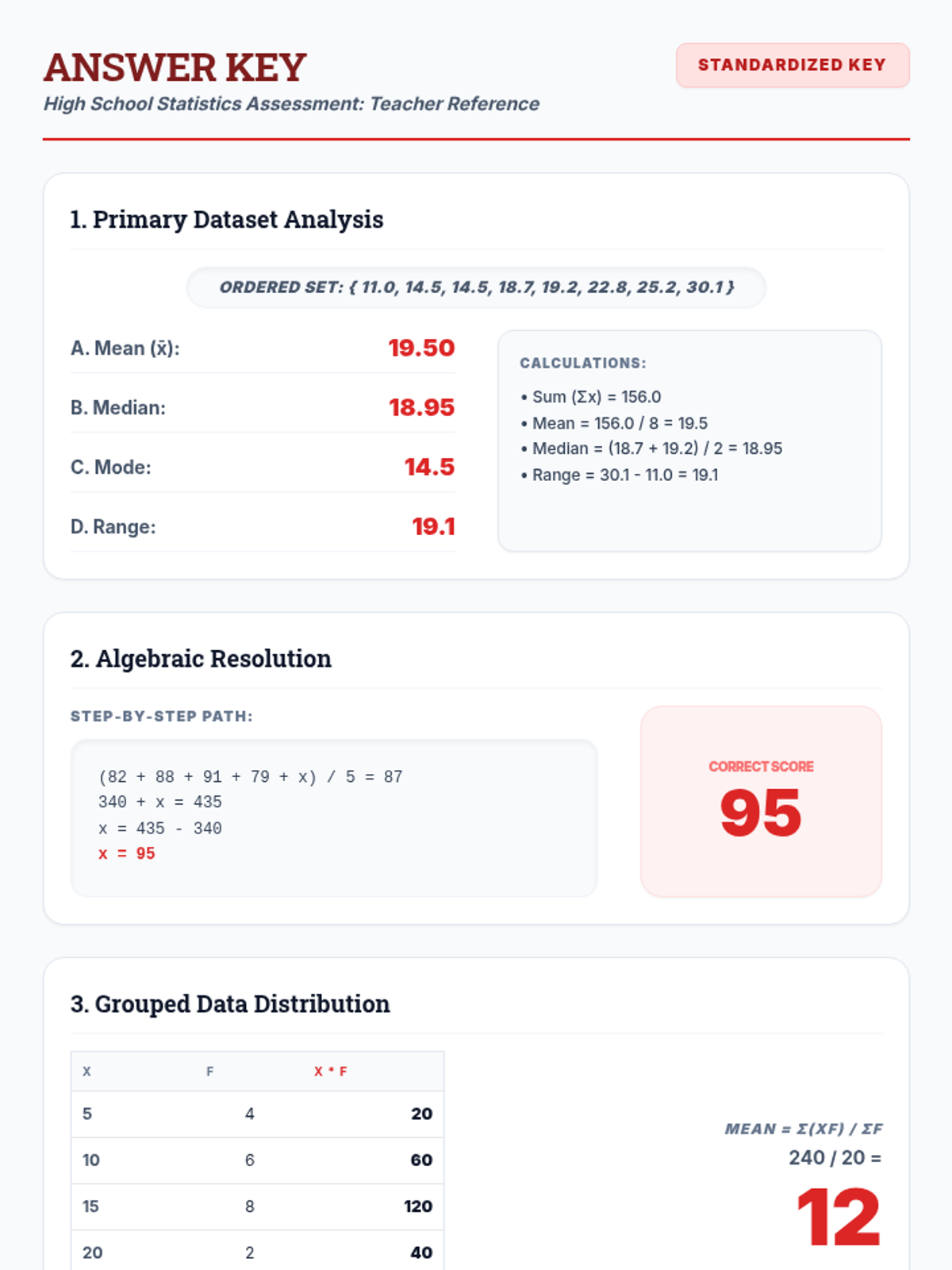
Answer key for the high-school statistics test, featuring detailed algebraic steps, frequency table summations, and conceptual justifications. Standardized layout for better teacher reference.
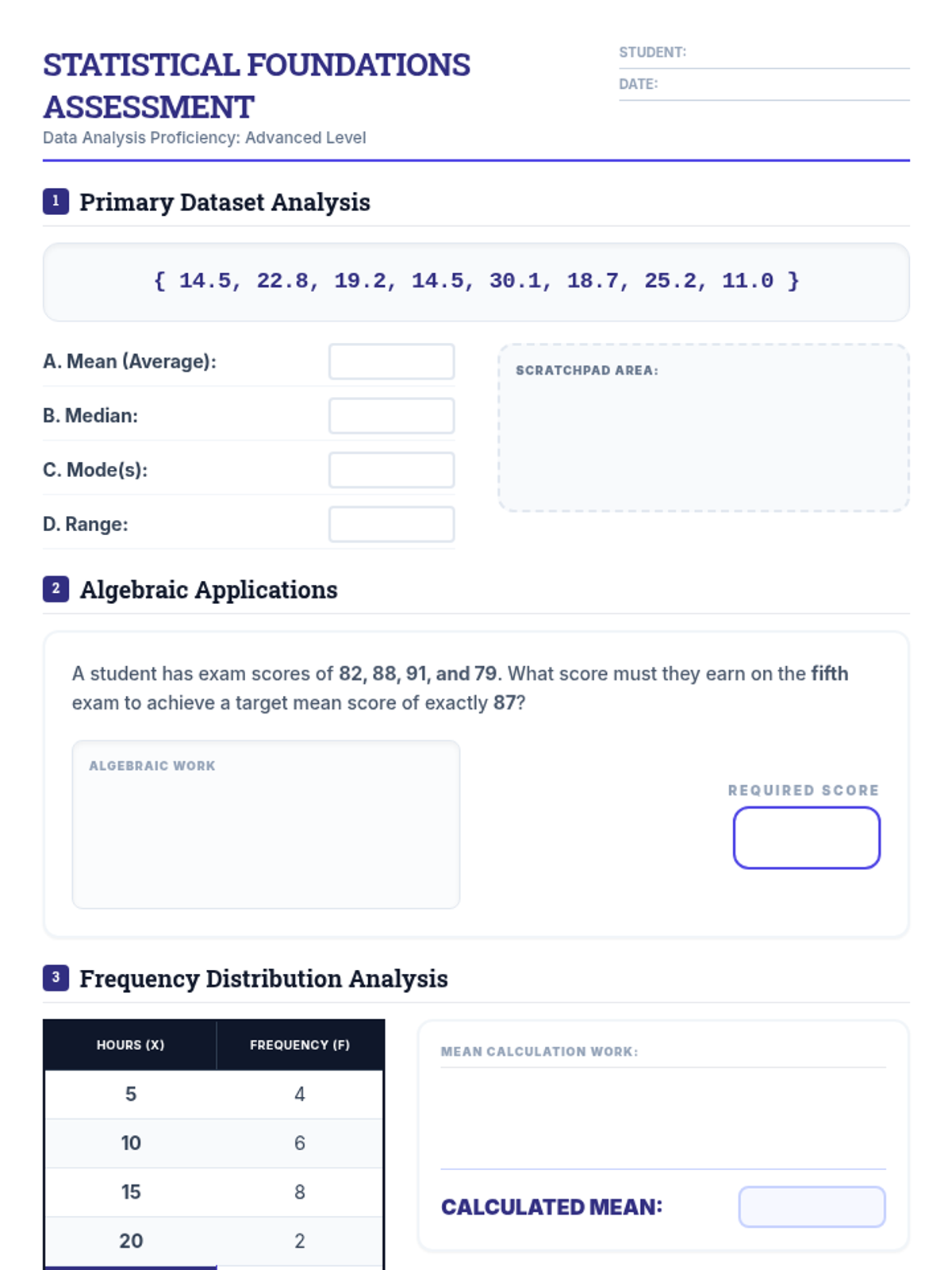
A comprehensive high-school level statistics assessment covering central tendency, algebraic solving, frequency tables, and outlier analysis with a professional academic aesthetic. Revised for improved layout and student writing space. Unicode mean symbol used for stability.
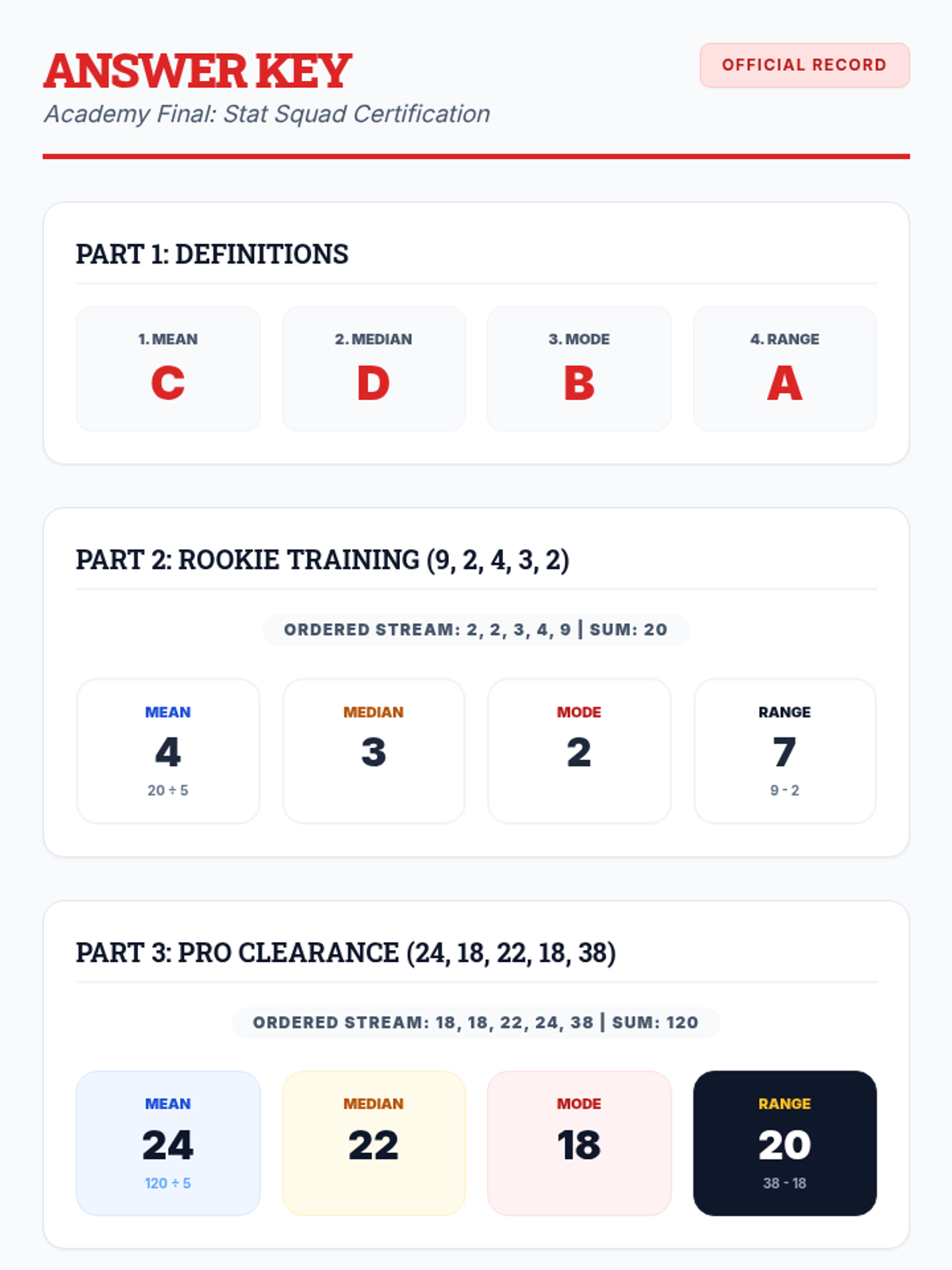
Answer key for the Academy Final Evaluation, featuring step-by-step solutions, correct extraction orders, and grading tips for the final assessment. Standardized layout for better teacher reference.
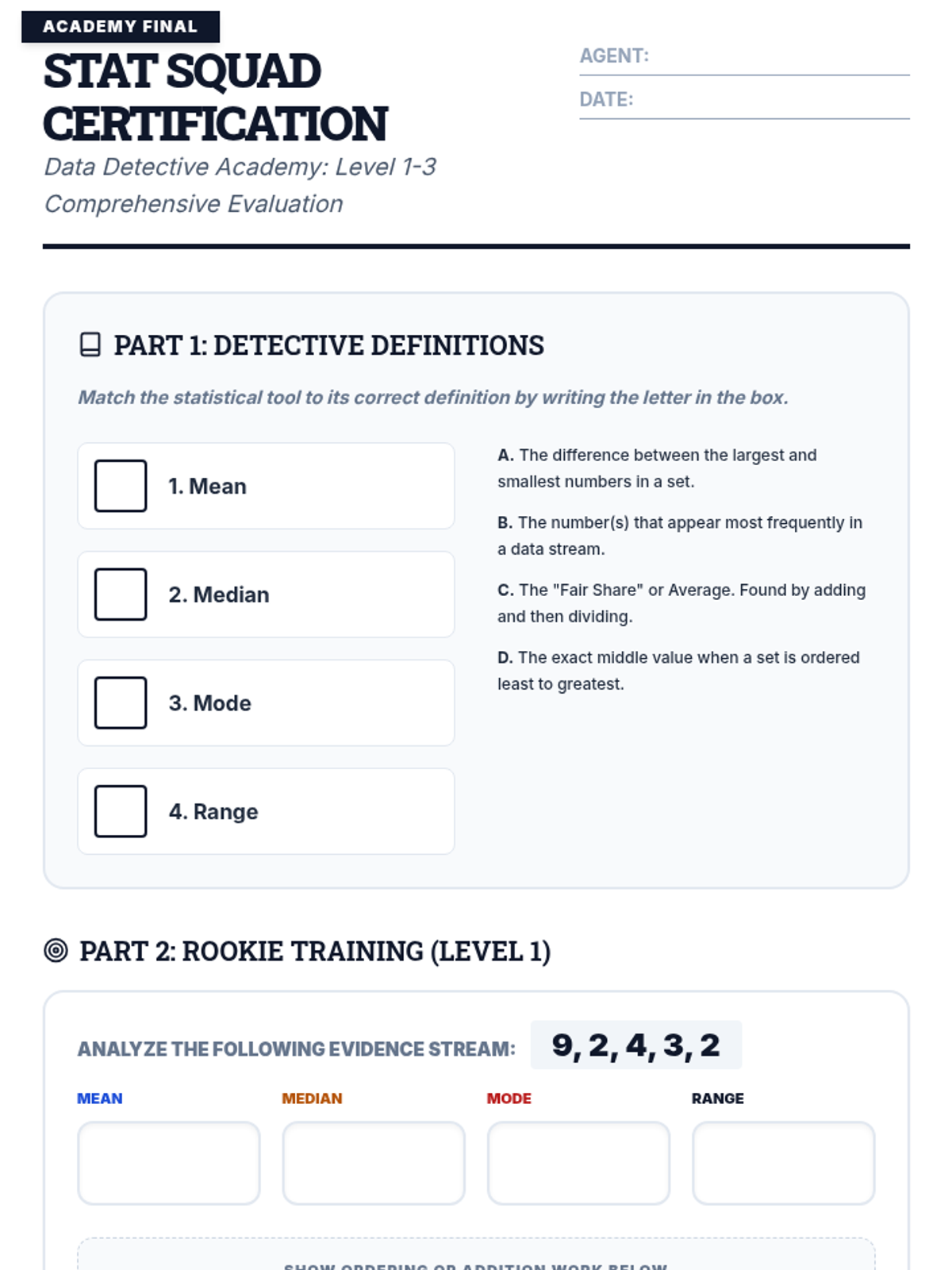
A comprehensive assessment covering Level 1, Level 2, and Level 3 data analysis, designed to evaluate mastery of mean, median, mode, and range in both numerical and narrative contexts. Improved layout for student handwriting.
Updated slide deck for SIFE students that moves beyond the 5/3 example to show halves (3/2), the concept of 'top = bottom' equaling one whole, and multiple number line examples. It maintains high-contrast visuals and minimal text.
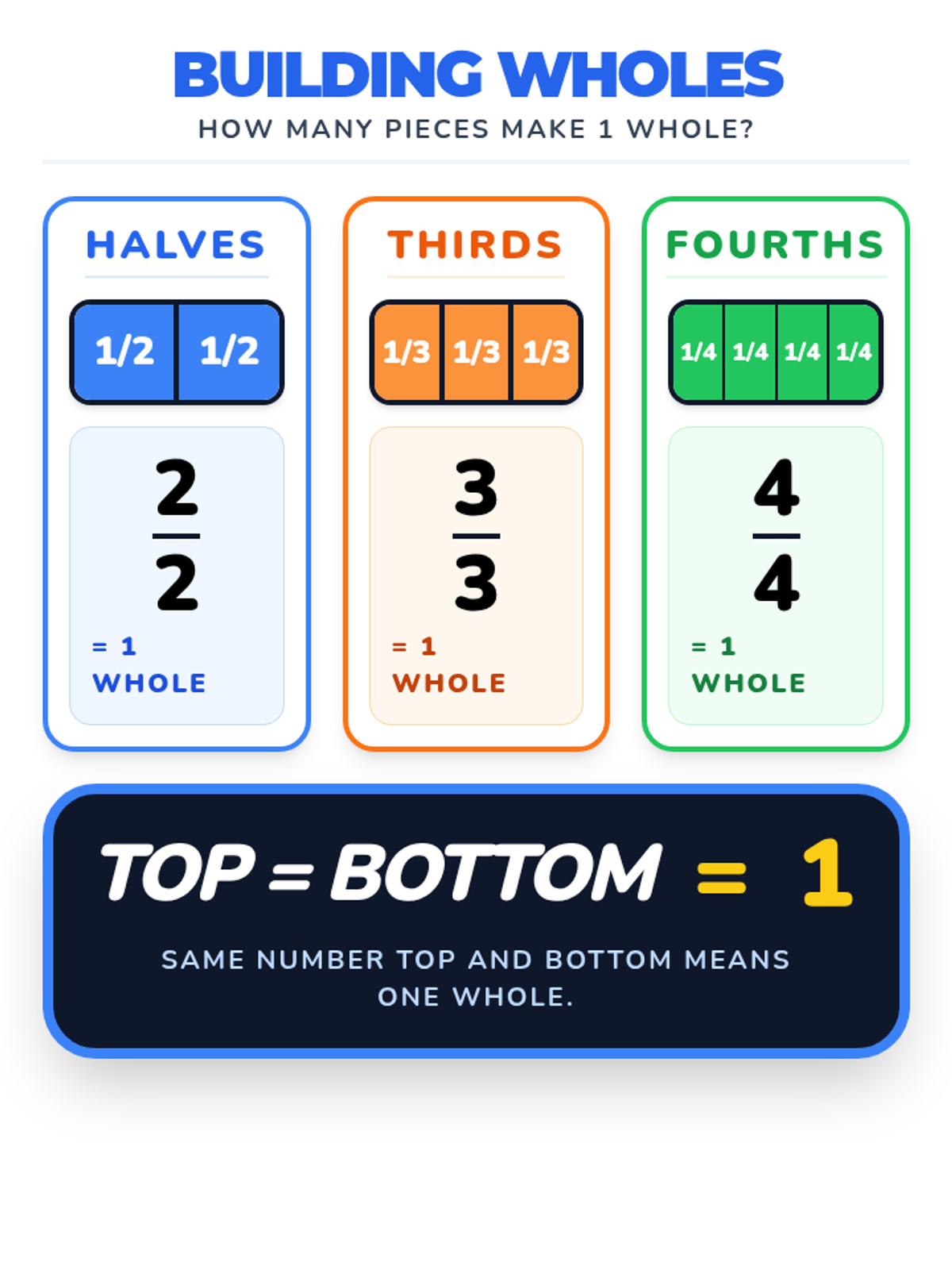
A visual anchor chart for SIFE students demonstrating that when the numerator and denominator are the same, the fraction equals one whole. It uses high-contrast models for halves, thirds, and fourths to show the pattern across different denominators.
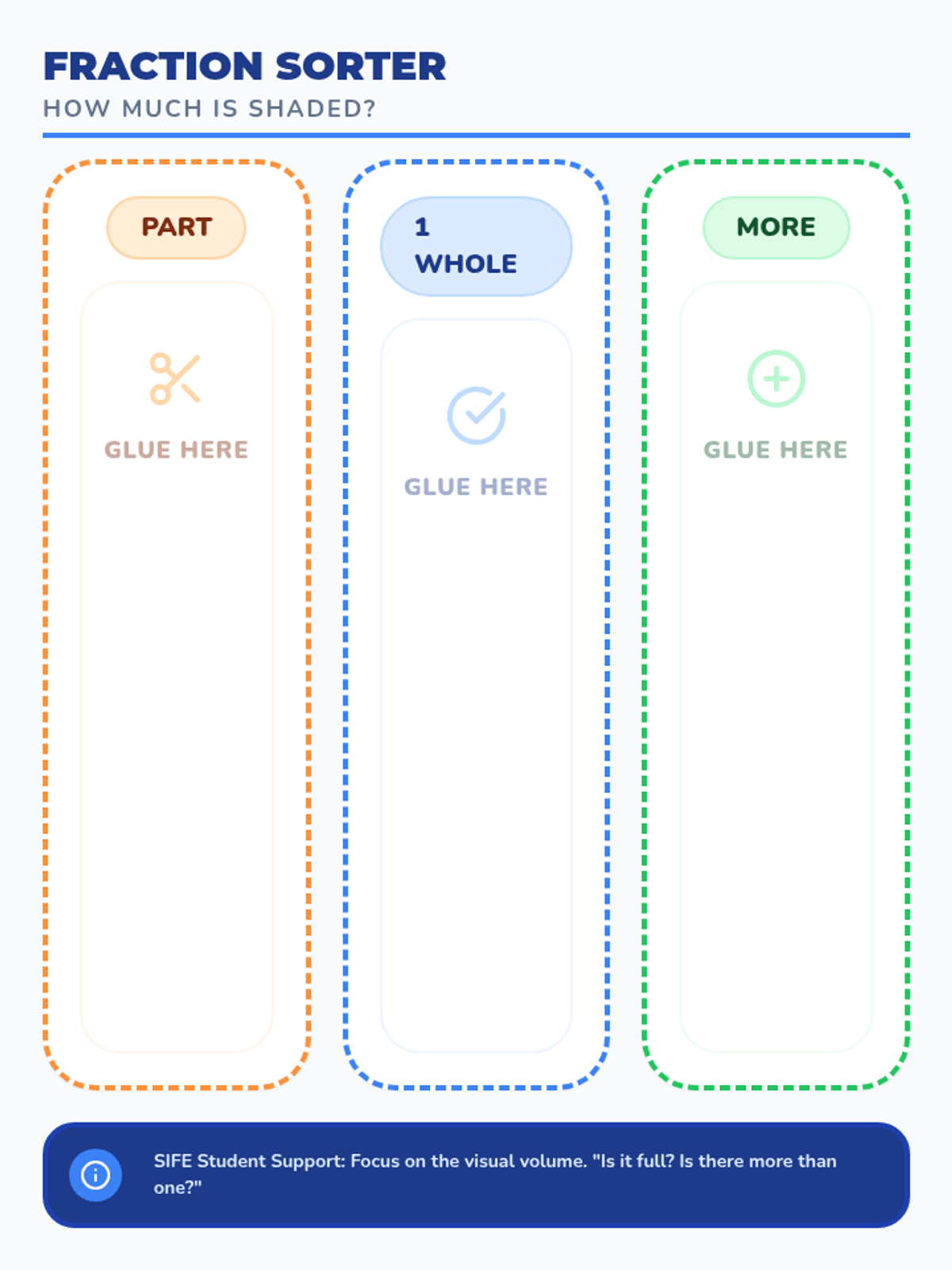
A visual sorting activity where SIFE students categorize visual fraction models into 'Part' (less than 1), '1 Whole' (exactly 1), and 'More' (greater than 1). The cards use variety in shapes (circles, strips, squares) and denominators (halves, thirds, fourths) to build conceptual understanding beyond a single example.
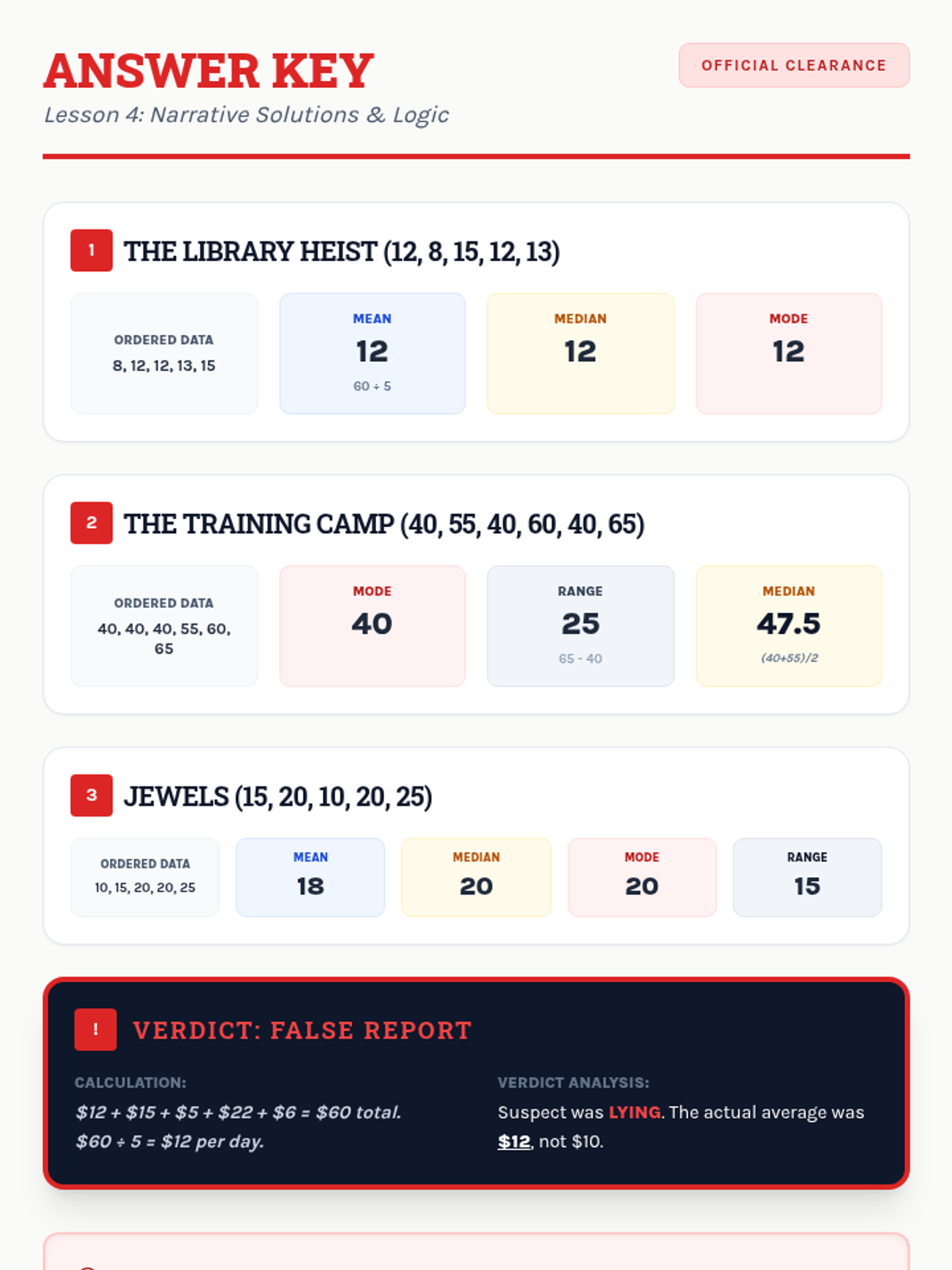
Answer key for the Mystery Logs worksheet, featuring step-by-step extraction logic, calculations, and analytical verdicts for the narrative problems. Standardized layout for better teacher reference.
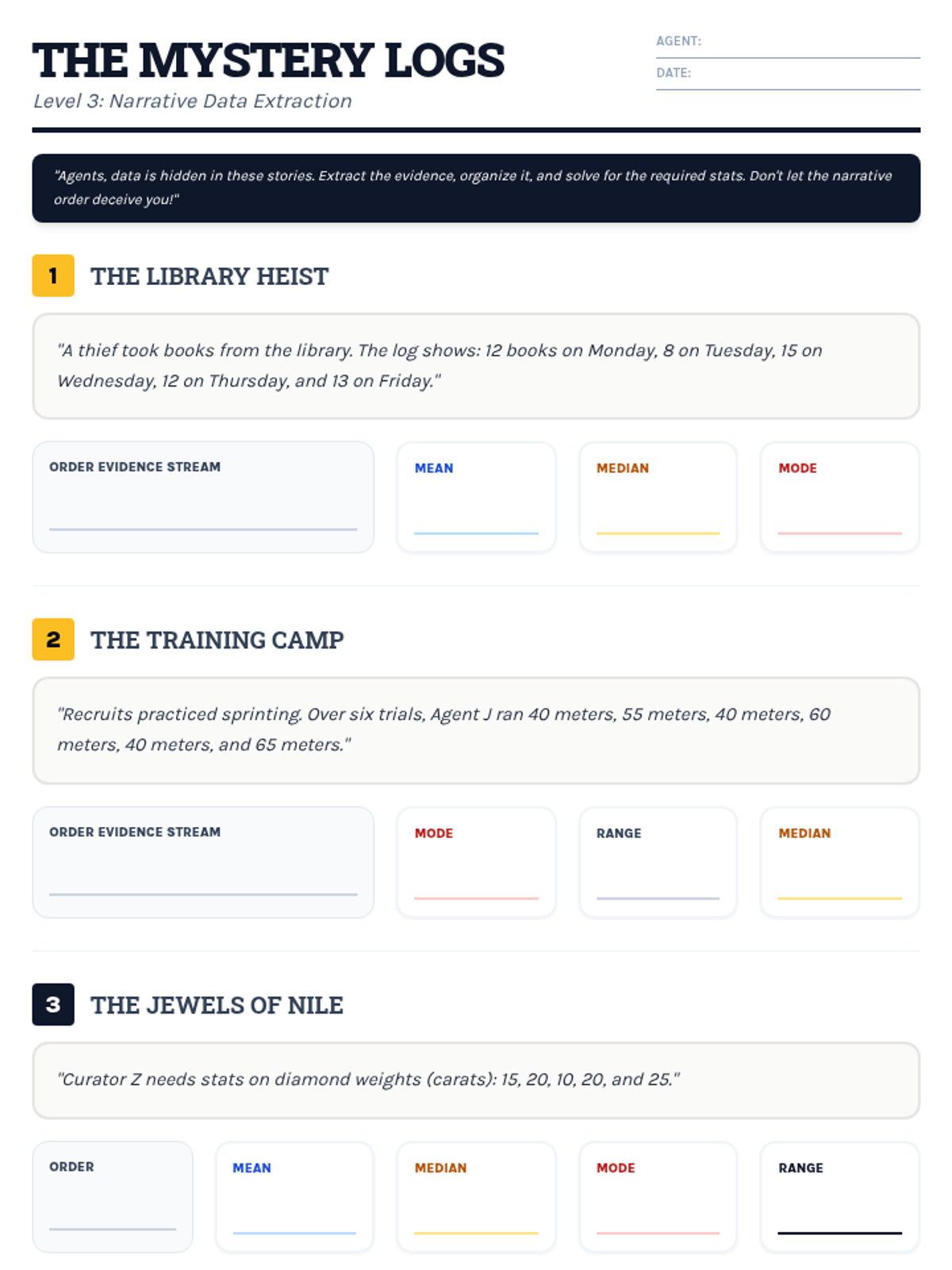
A series of narrative-based word problems themed as mystery investigations, requiring students to extract data sets from text and calculate central tendency and range. Standardized layout and improved work areas for better usability.