A detailed teacher guide for the "Micro-Builder" hands-on modeling activity. It provides a list of household supply suggestions, a step-by-step construction guide, and instructions for facilitating the gallery walk assessment phase.
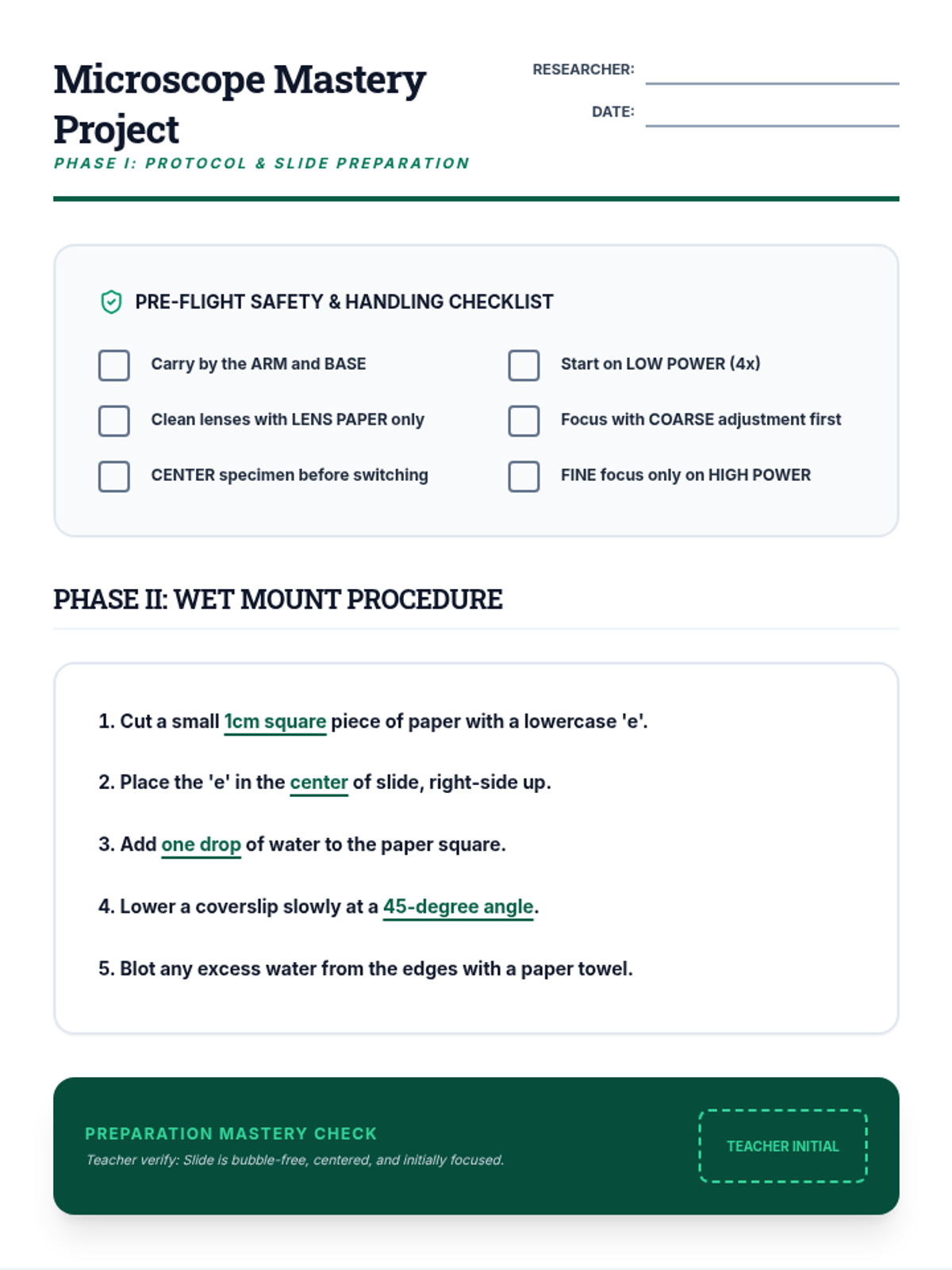
A comprehensive 4-page microscope lab investigation. Features large scientific drawing fields across multiple pages, expanded work areas for S.O.S. and M.O.D. calculations, and a detailed post-lab analysis. Optimized for high-detail printing and student handwriting. Procedure and safety protocols prioritized on Page 1. Horizontal labels for diagram removal implemented. Layout refined for vertical fit.
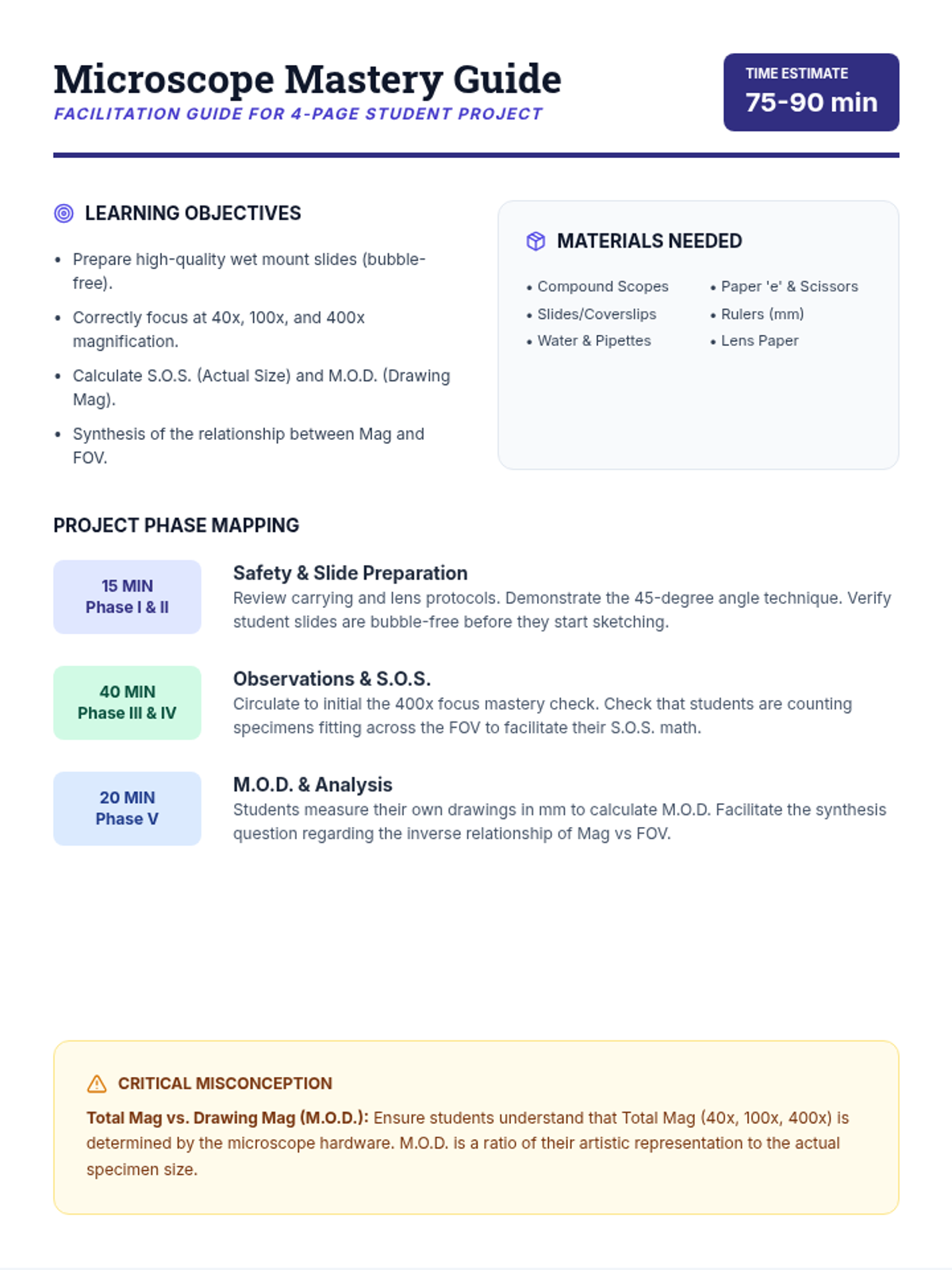
A teacher guide for the microscope investigation including learning objectives, materials list, pacing guide, common misconceptions, and a full answer key for the analysis questions. Updated with standard FOV reference values and S.O.S. and M.O.D. terminology. aligned with the 4-page student project format. Labeled reference diagram removed per user request for hardware ID removal.
A comprehensive slide deck for the microscope lab, including step-by-step instructions for preparing a wet mount slide, pro-tips for avoiding air bubbles, and focusing techniques. features a clean scientific field guide aesthetic.
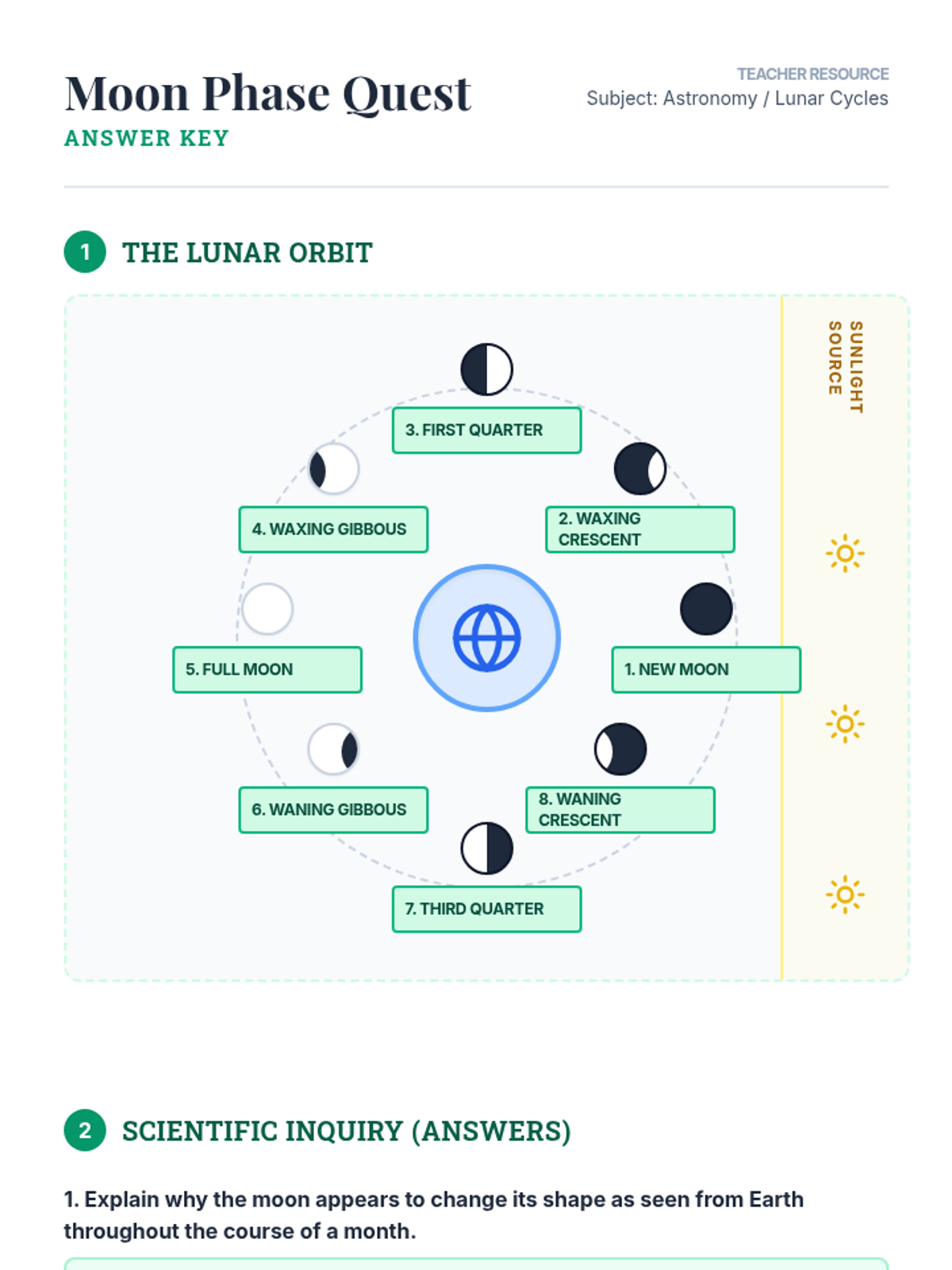
A comprehensive teacher's answer key with corrected orbital phase icons, exemplar short responses, and matched vocabulary definitions excluding orbital revolution.
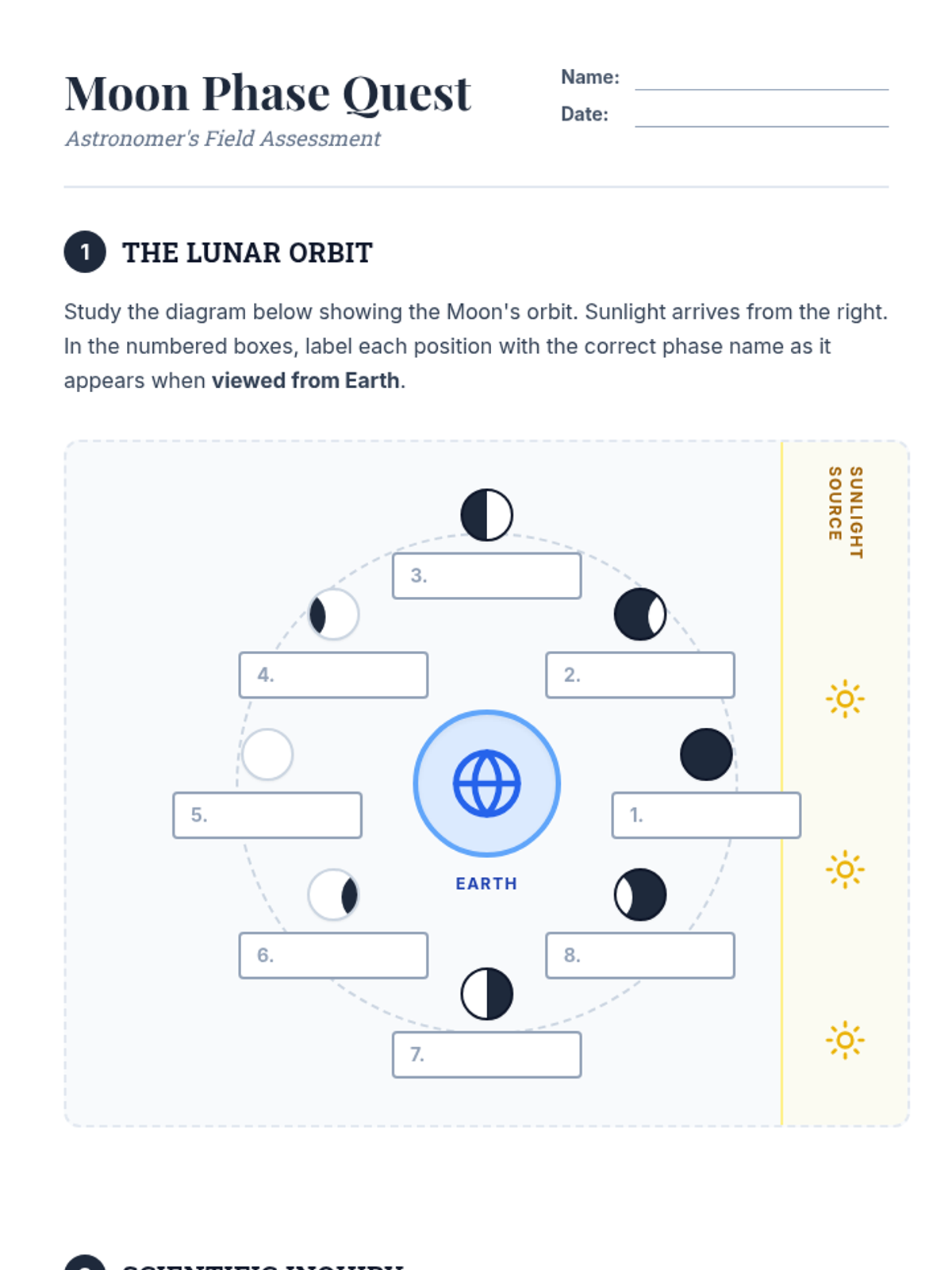
A polished lunar cycle assessment with high-contrast labeling boxes, accurate orbital phase icons, generous writing areas, and a vocabulary matching section excluding orbital revolution.
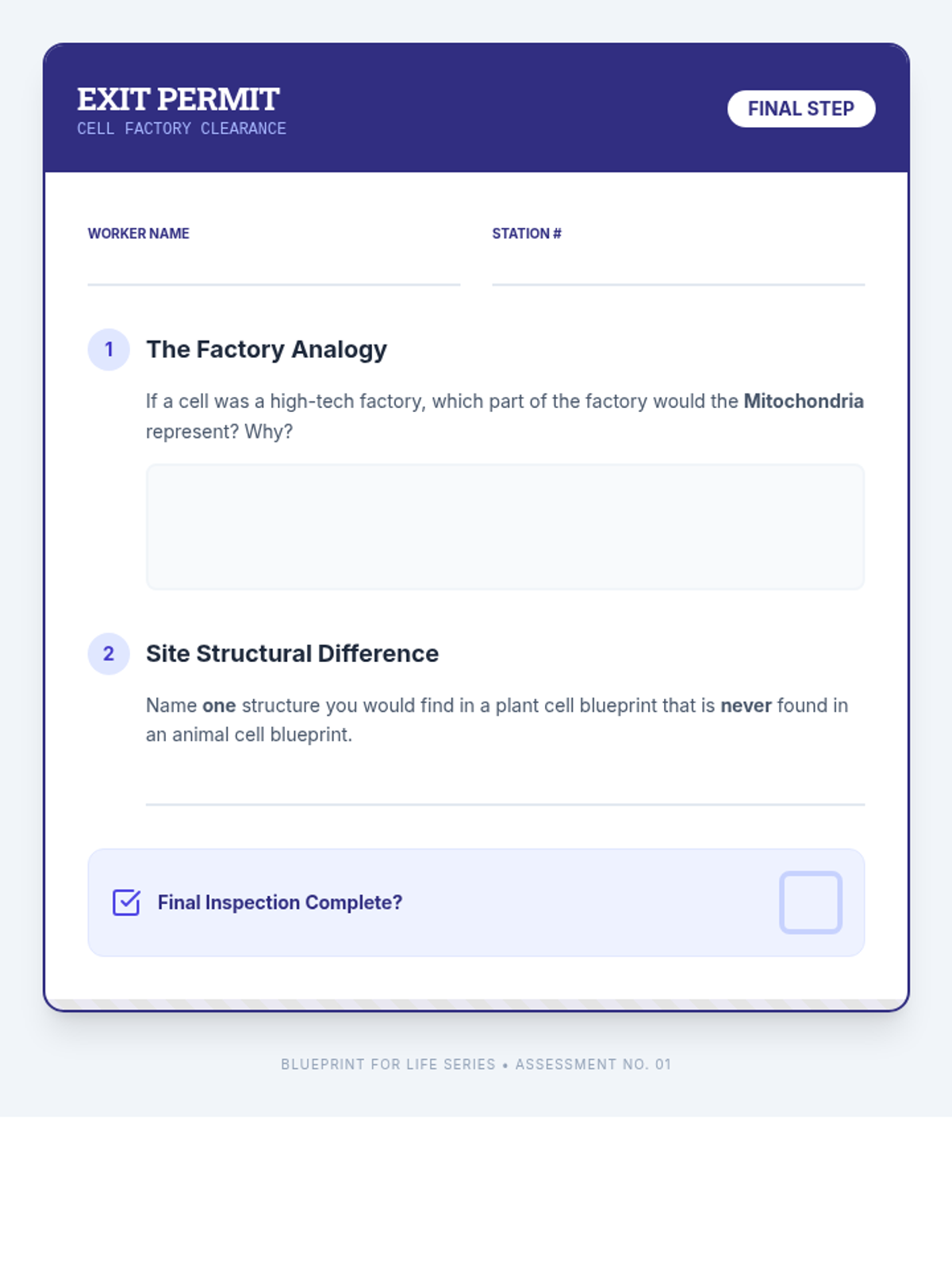
A concise exit ticket for students to complete at the end of the lesson. It uses a "Factory Floor" analogy to assess understanding of the mitochondria's function and asks students to identify a key difference between plant and animal cells.
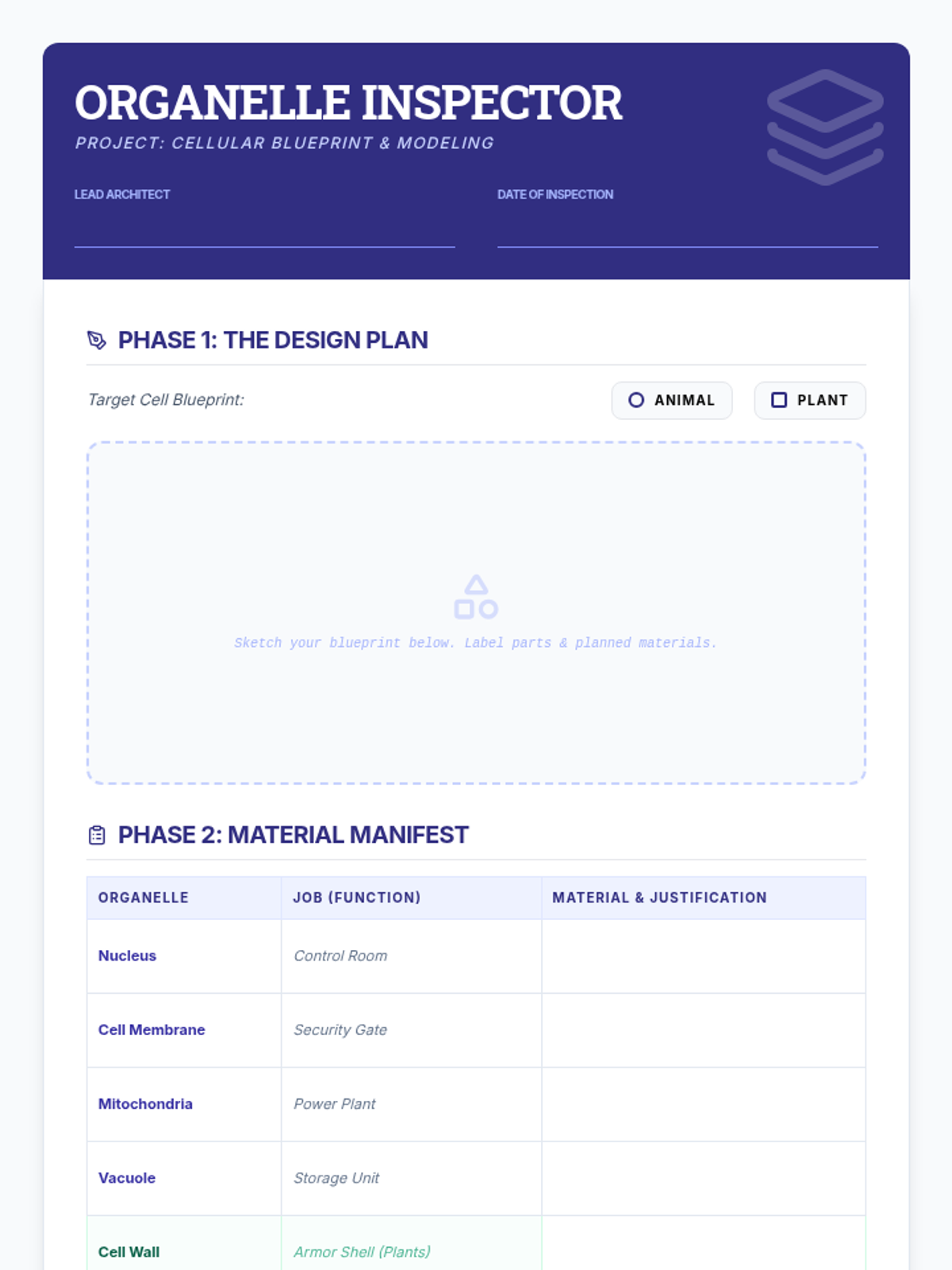
A student handout for the cell modeling activity. It includes space for a design sketch, a material manifest table to link organelles to their functions, and a field inspection section for the gallery walk phase.
A visually engaging slide deck titled "Blueprint for Life" that introduces the cell theory, identifies key organelles, and compares plant vs. animal cells. Uses a modern blueprint aesthetic to align with the lesson's central theme.
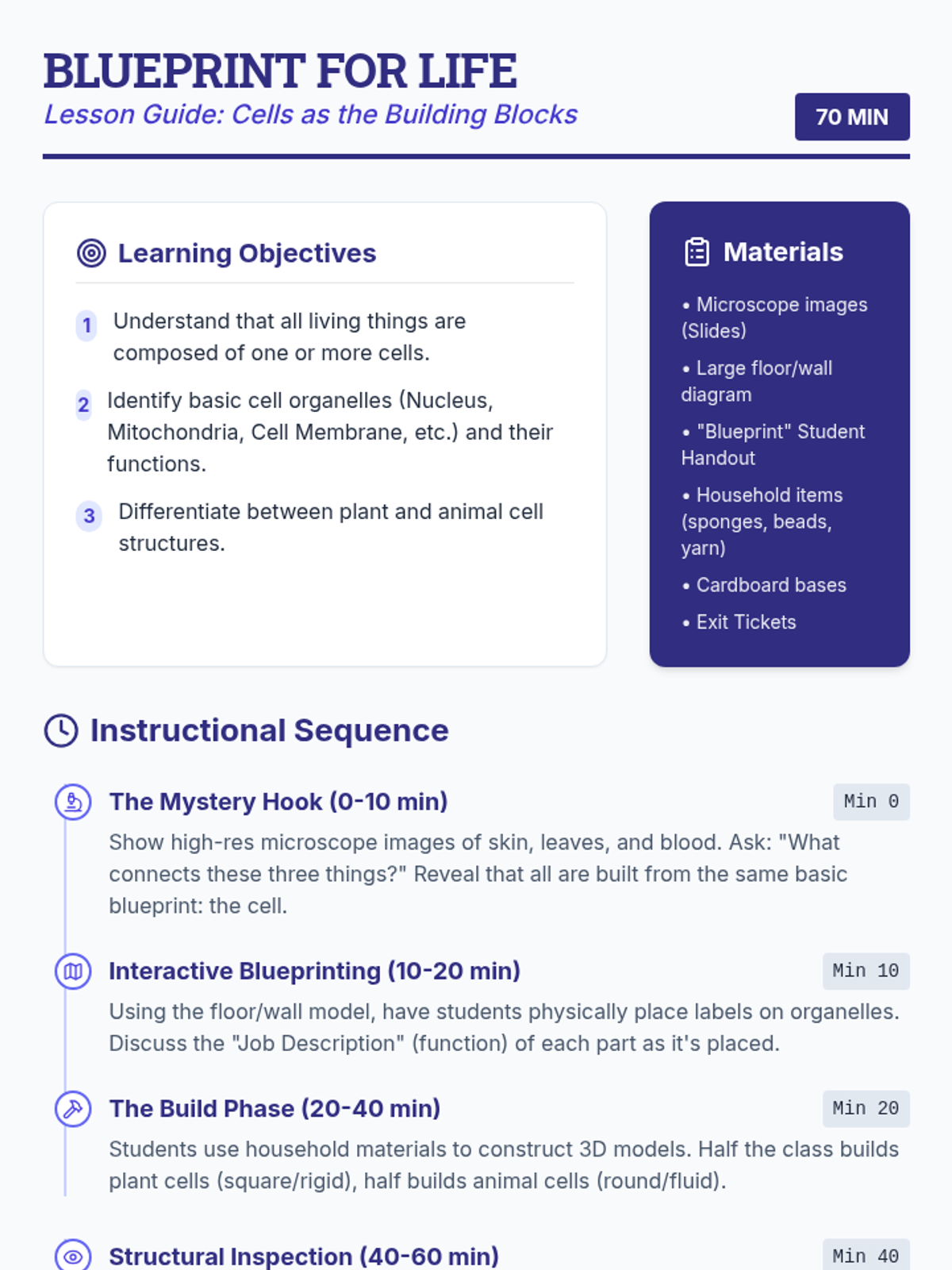
A comprehensive lesson guide for teachers, outlining the 70-minute "Blueprint for Life" lesson. Includes learning objectives, a detailed pacing timeline, and facilitation tips for exploring cell structure and function.
A visually engaging slide deck that reviews the core concepts of protein synthesis: the central dogma, transcription, translation, and how to interpret a codon chart. Great for pre-quiz review.