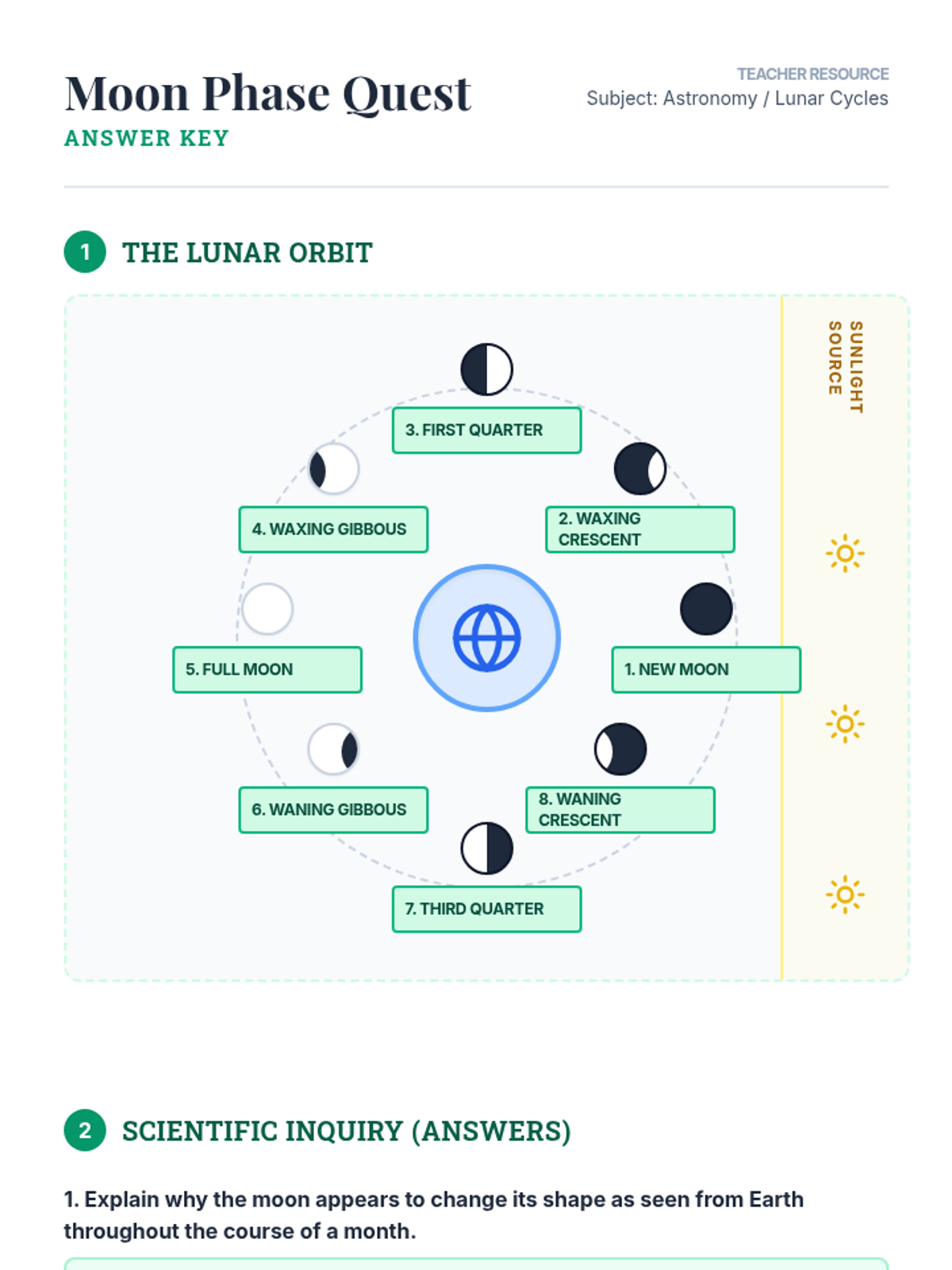
A polished lunar cycle assessment with high-contrast labeling boxes, accurate orbital phase icons, generous writing areas, and a vocabulary matching section excluding orbital revolution.
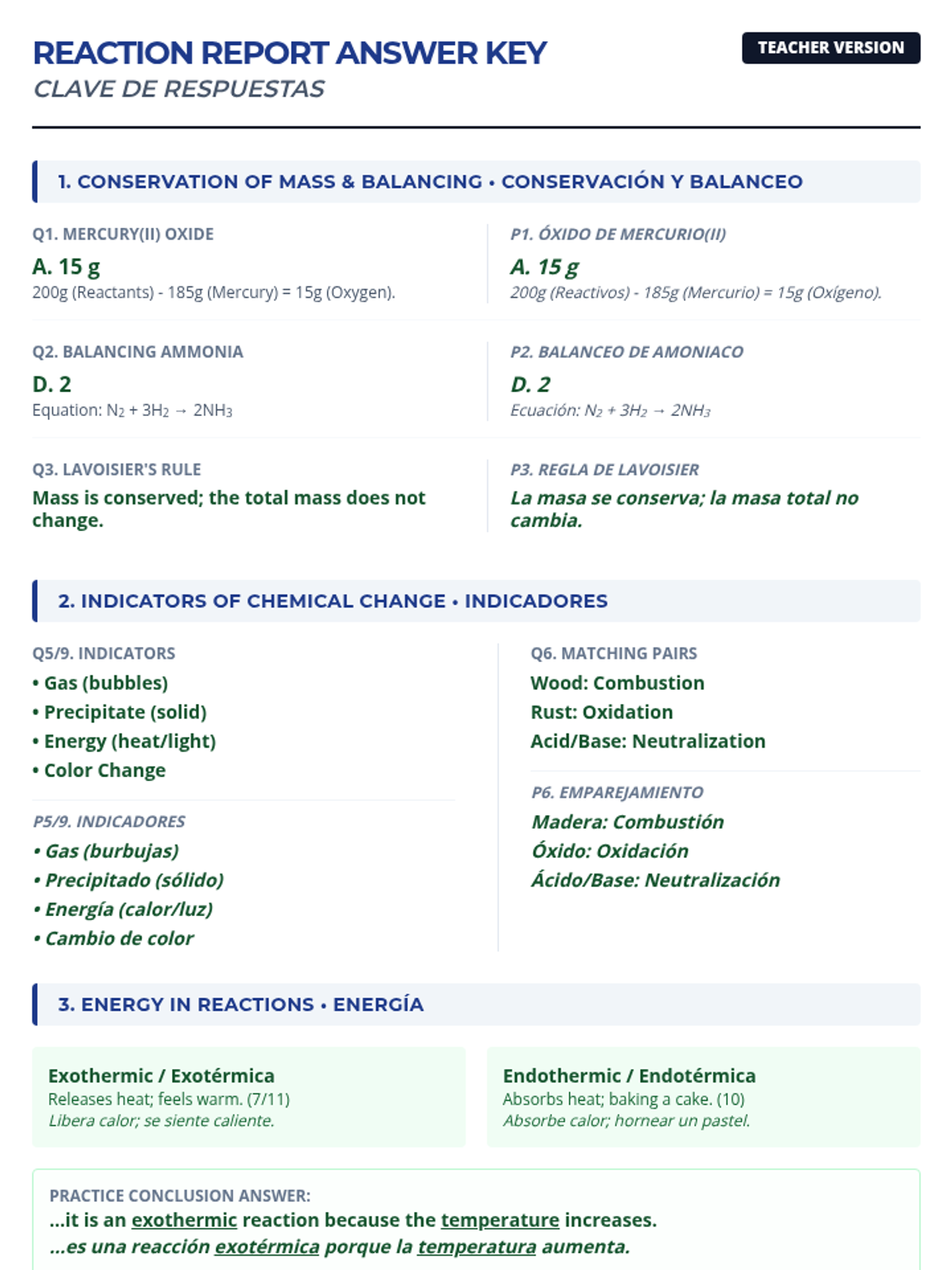
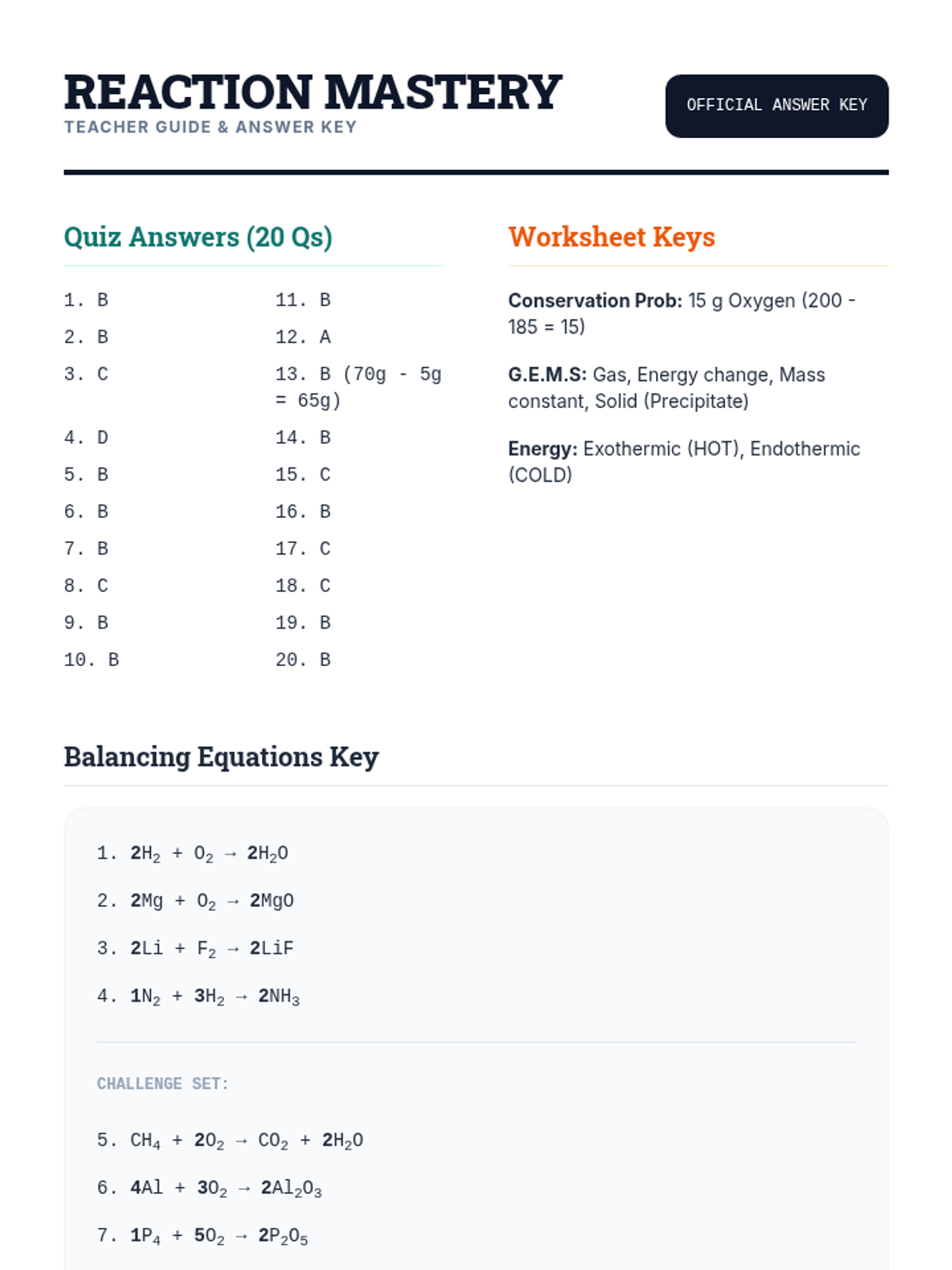
A teacher-facing answer key for the bilingual Chemical Reactions Study Guide. Includes CSS-enhanced <sub> tags for chemical formula rendering and high-contrast bilingual explanations for teacher reference.
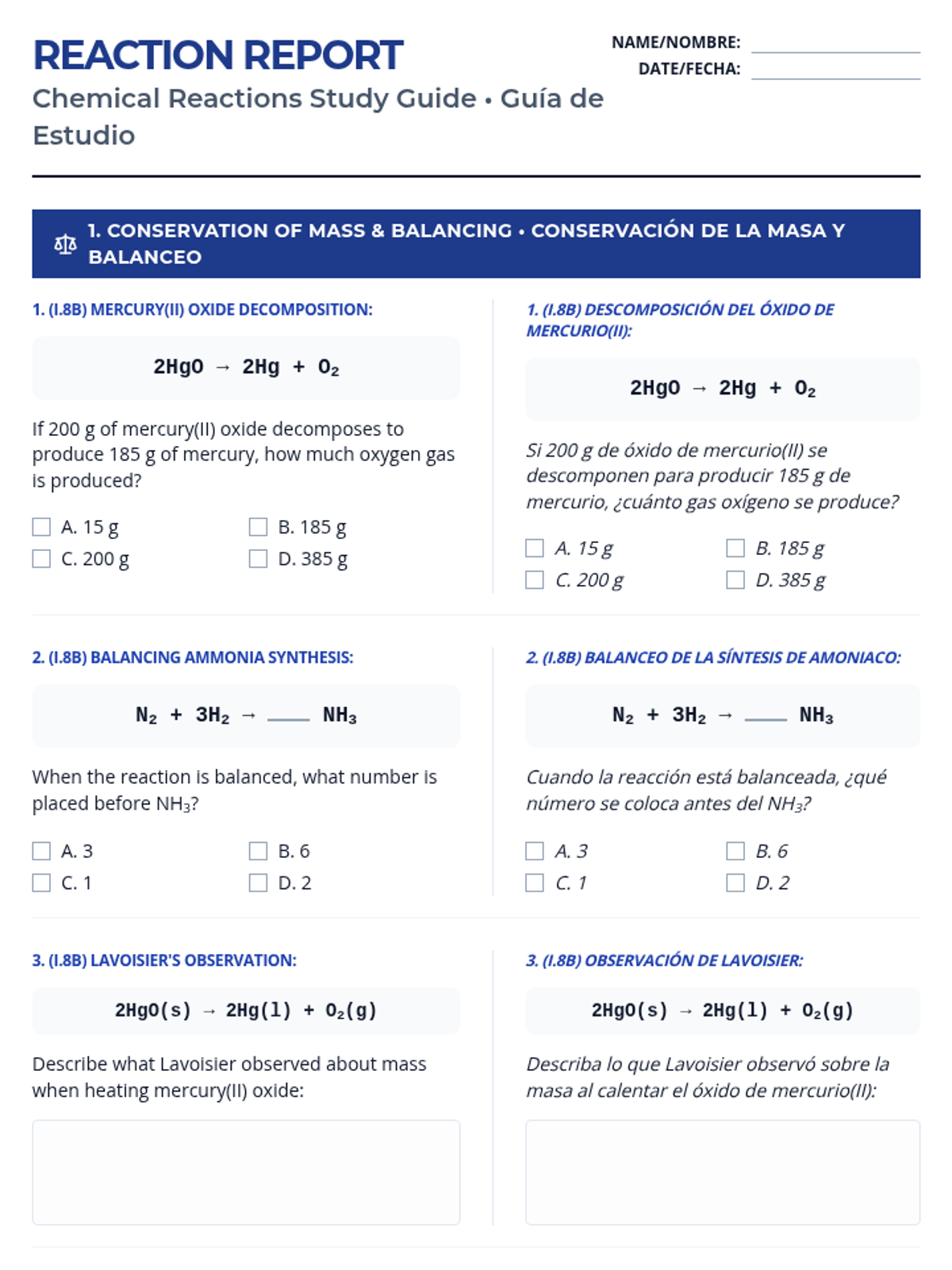
A bilingual (English/Spanish) study guide for chemical reactions, featuring conservation of mass calculations and energy changes. Includes CSS-enhanced <sub> tags for precise chemical formula rendering and improved layout to prevent orphaned headers and ensure adequate work space.
A comprehensive teacher resource including answer keys for the Reaction Knowledge Check, Balancing Practice, and Lab Notes worksheet, plus pacing suggestions.
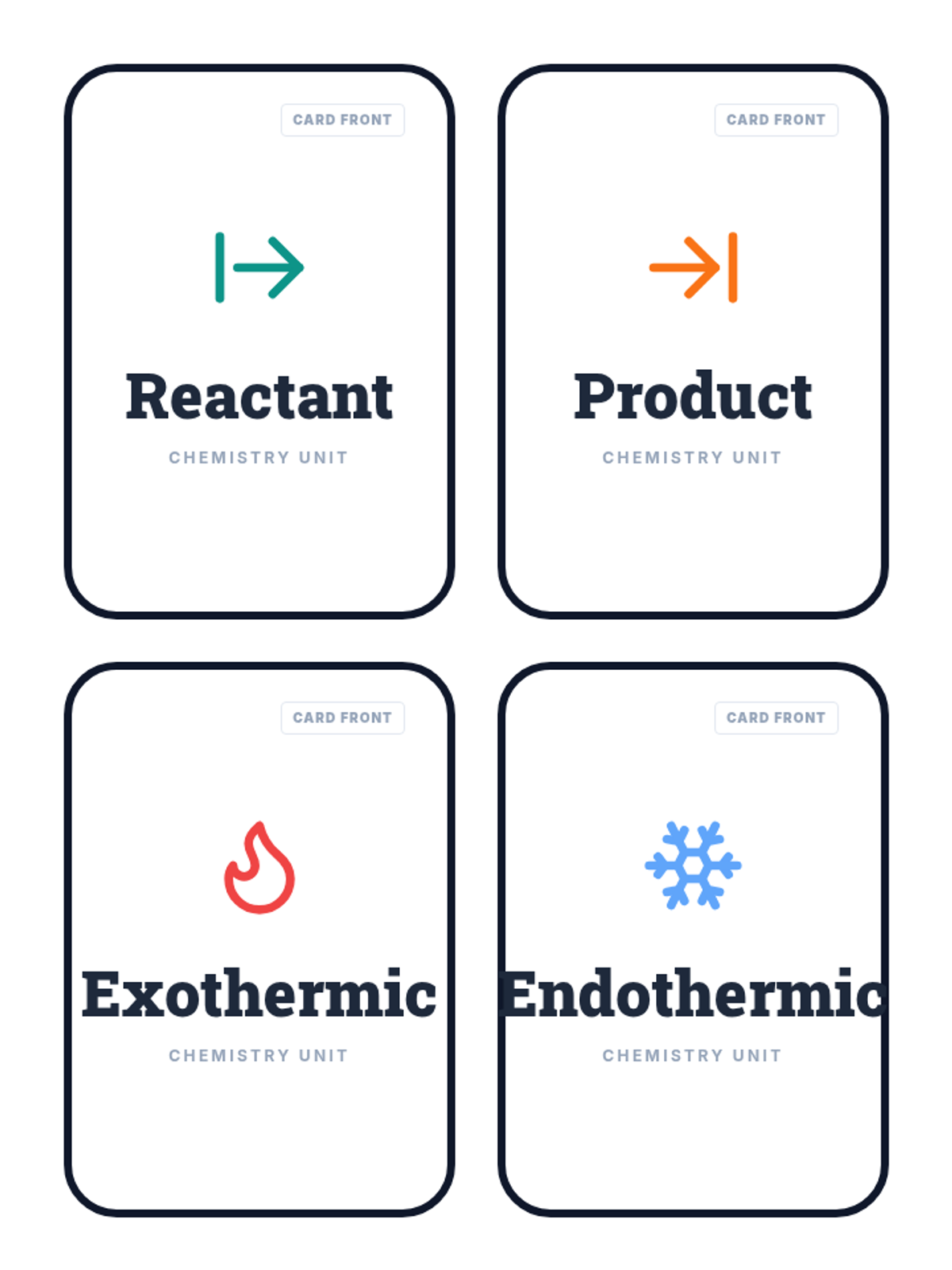
A set of printable chemistry vocabulary flashcards featuring key terms like Reactant, Product, Exothermic, Endothermic, and Precipitate with definitions and visual icons.
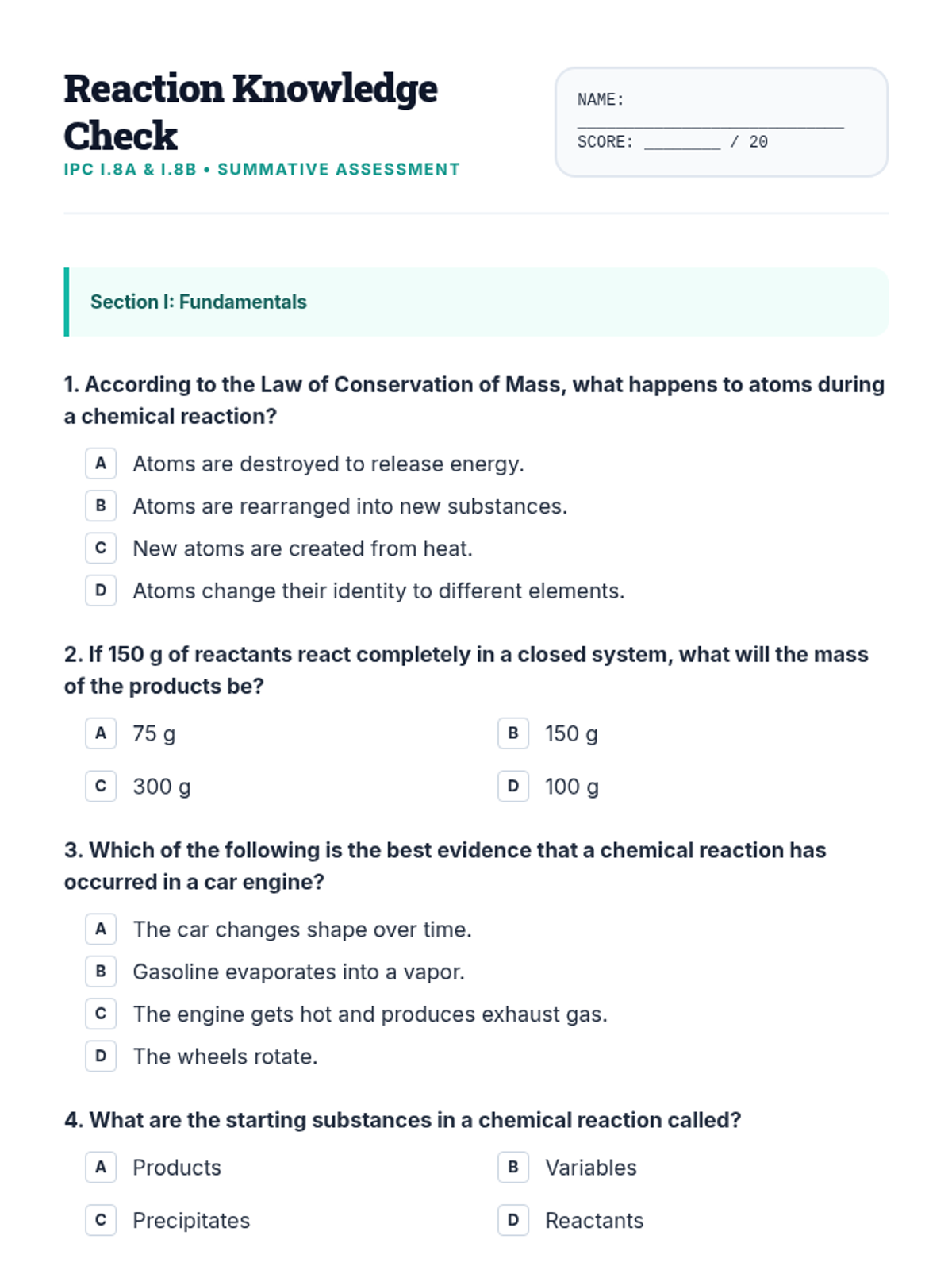
A comprehensive 20-question multiple-choice practice quiz covering conservation of mass, balancing equations, evidence of reactions, reaction types, and energy changes.
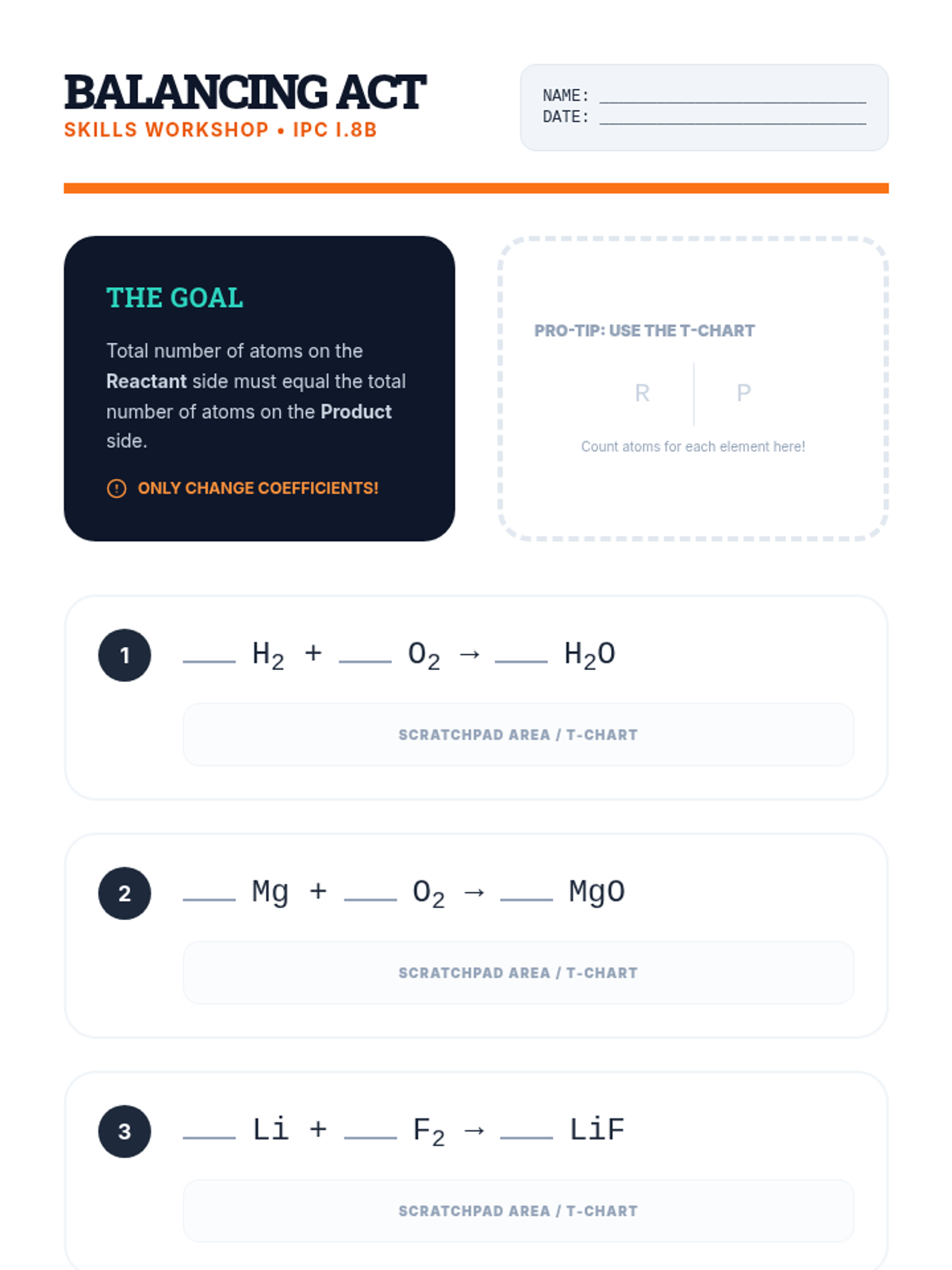
A two-page balancing equations practice worksheet with 10 problems ranging from basic to advanced challenge levels, including a "How-To" guide for students.
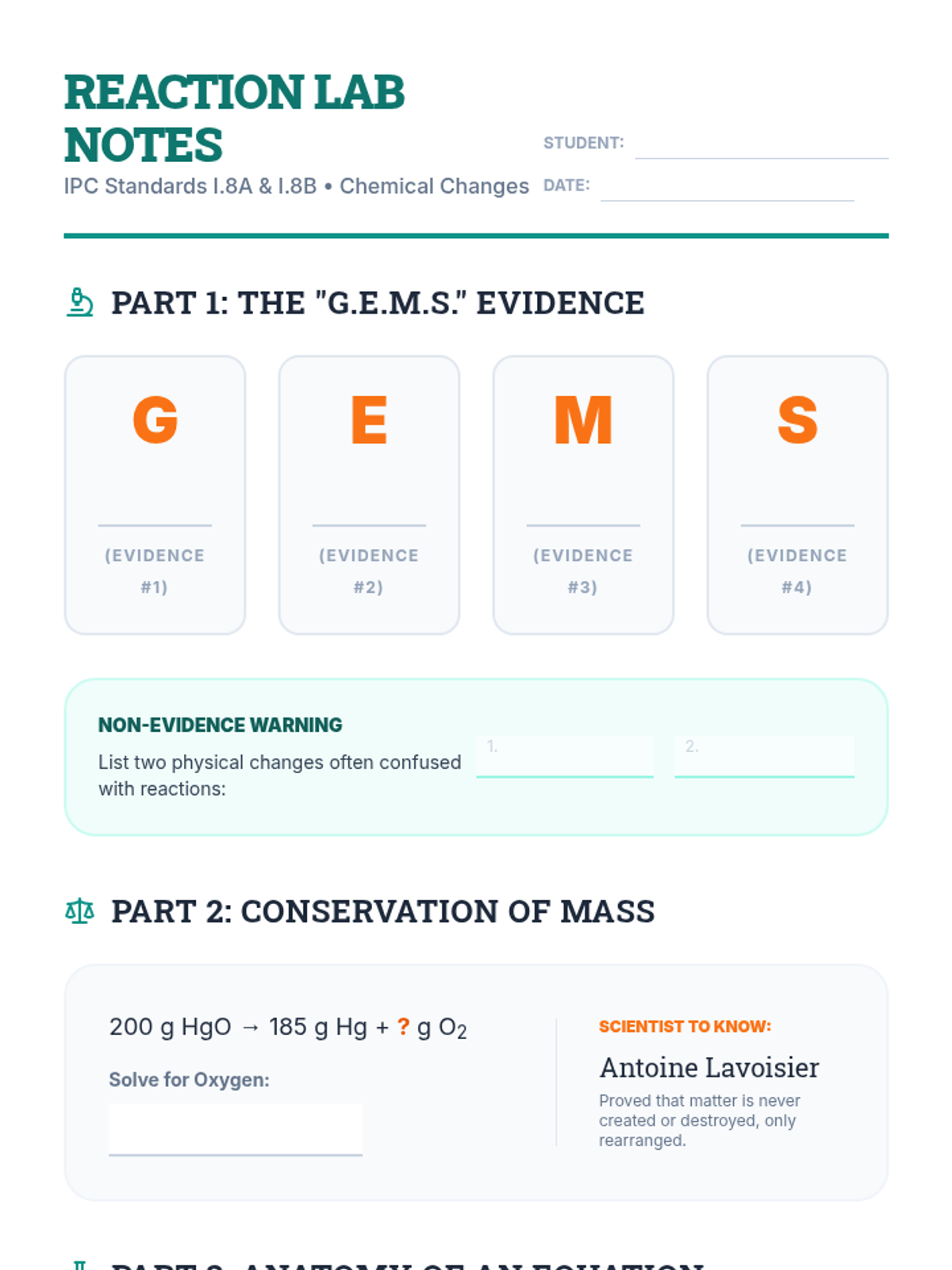
A two-page guided notes worksheet covering IPC standards I.8A and I.8B, including sections for GEMS evidence, conservation of mass calculations, and reaction energy.
Visual presentation for Chemical Reactions (IPC I.8A & I.8B). Covers GEMS evidence, conservation of mass, balancing basics, reaction types, and energy changes with high-contrast, accessible designs.
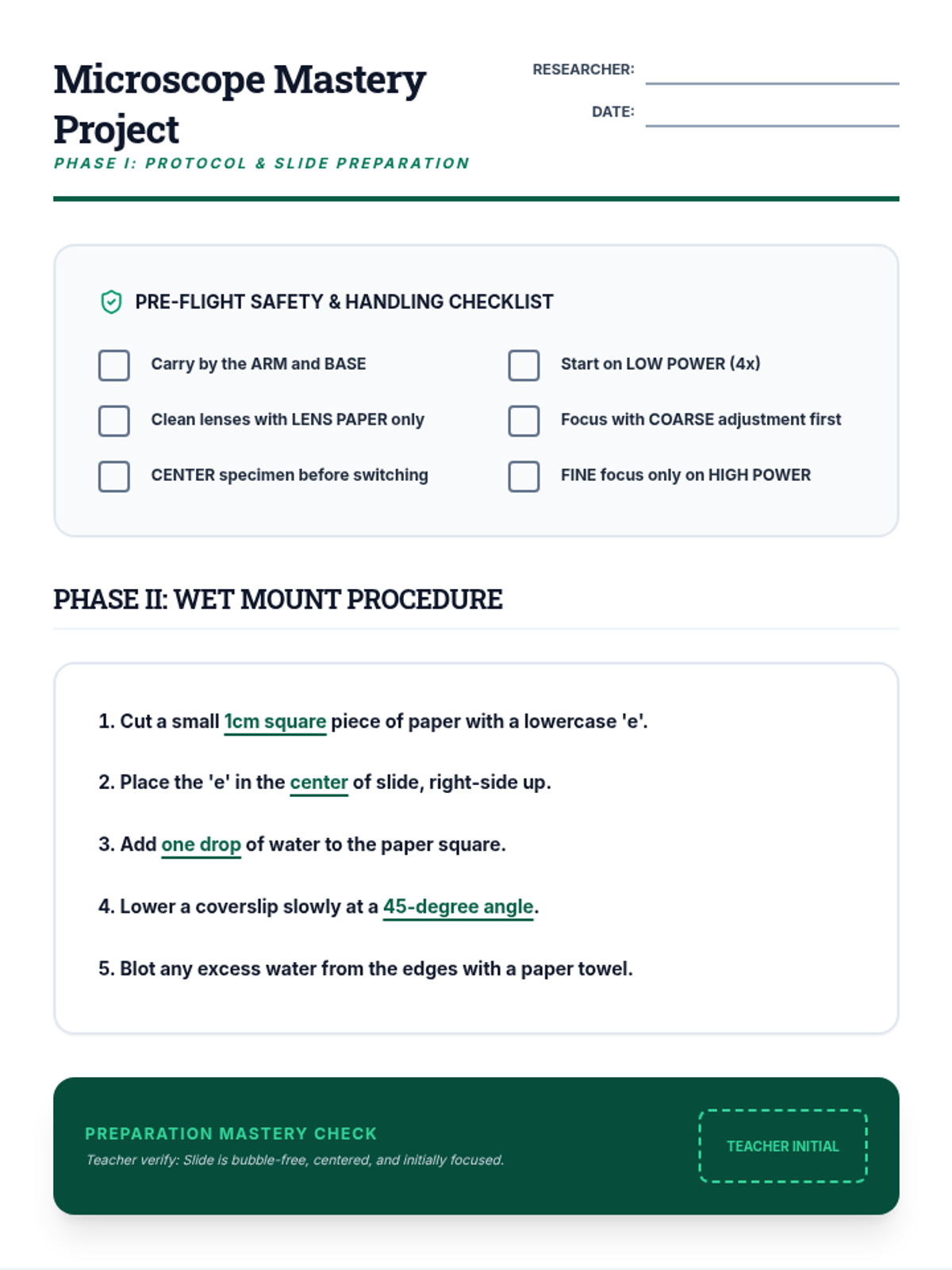
A comprehensive 4-page microscope lab investigation. Features large scientific drawing fields across multiple pages, expanded work areas for S.O.S. and M.O.D. calculations, and a detailed post-lab analysis. Optimized for high-detail printing and student handwriting. Procedure and safety protocols prioritized on Page 1. Horizontal labels for diagram removal implemented. Layout refined for vertical fit.
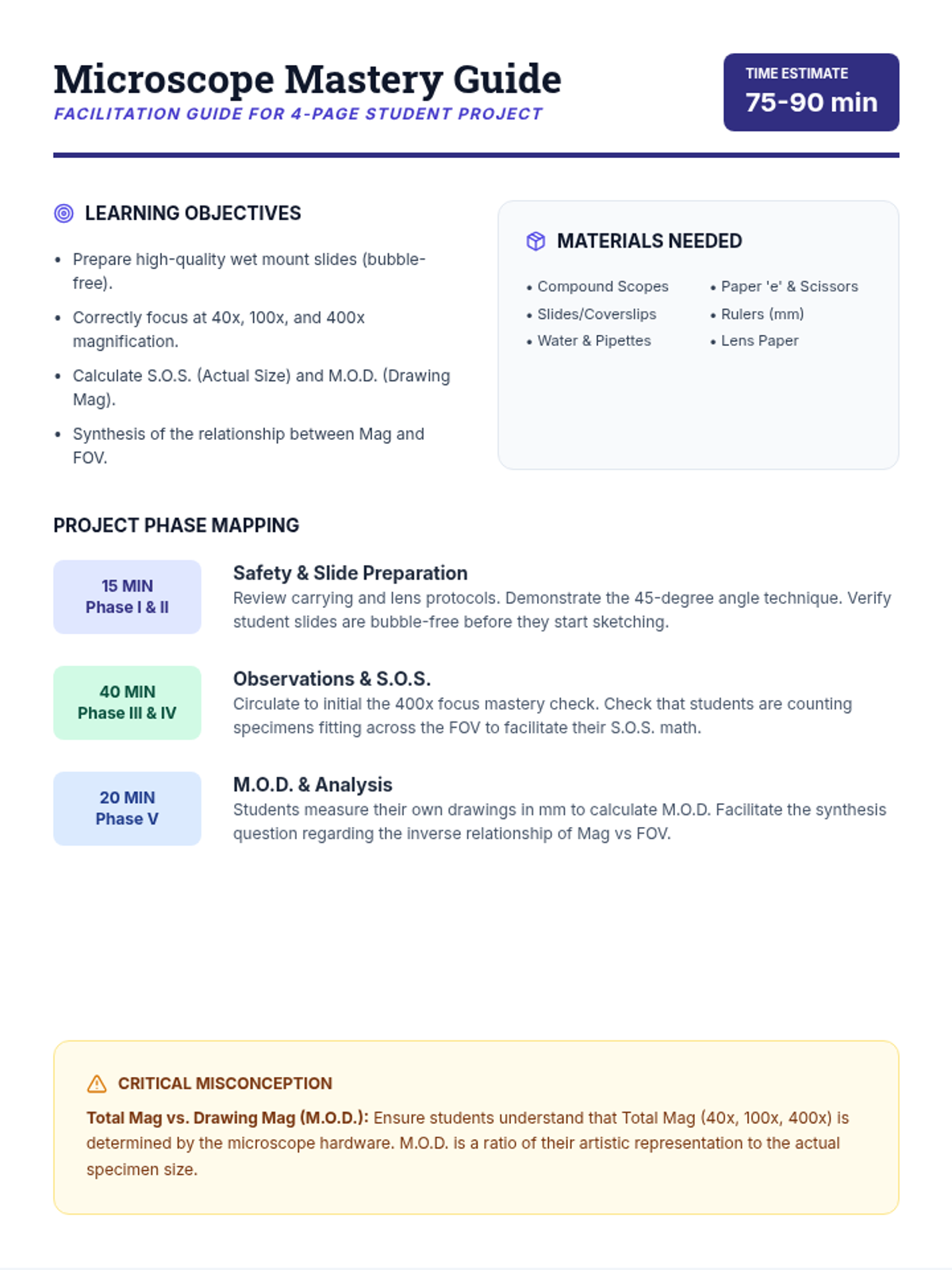
A teacher guide for the microscope investigation including learning objectives, materials list, pacing guide, common misconceptions, and a full answer key for the analysis questions. Updated with standard FOV reference values and S.O.S. and M.O.D. terminology. aligned with the 4-page student project format. Labeled reference diagram removed per user request for hardware ID removal.
A comprehensive slide deck for the microscope lab, including step-by-step instructions for preparing a wet mount slide, pro-tips for avoiding air bubbles, and focusing techniques. features a clean scientific field guide aesthetic.
A comprehensive teacher's answer key with corrected orbital phase icons, exemplar short responses, and matched vocabulary definitions excluding orbital revolution.
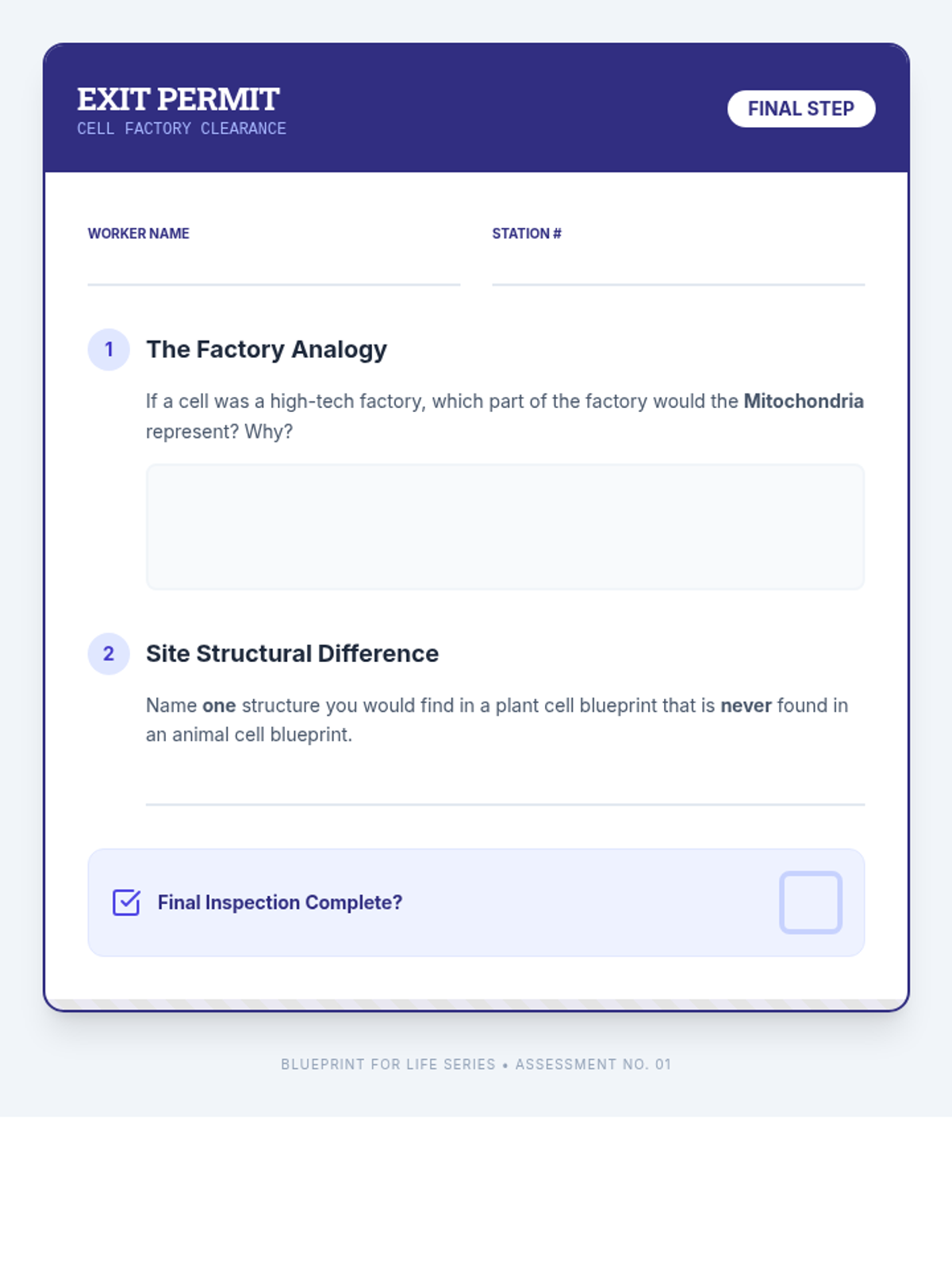
A concise exit ticket for students to complete at the end of the lesson. It uses a "Factory Floor" analogy to assess understanding of the mitochondria's function and asks students to identify a key difference between plant and animal cells.
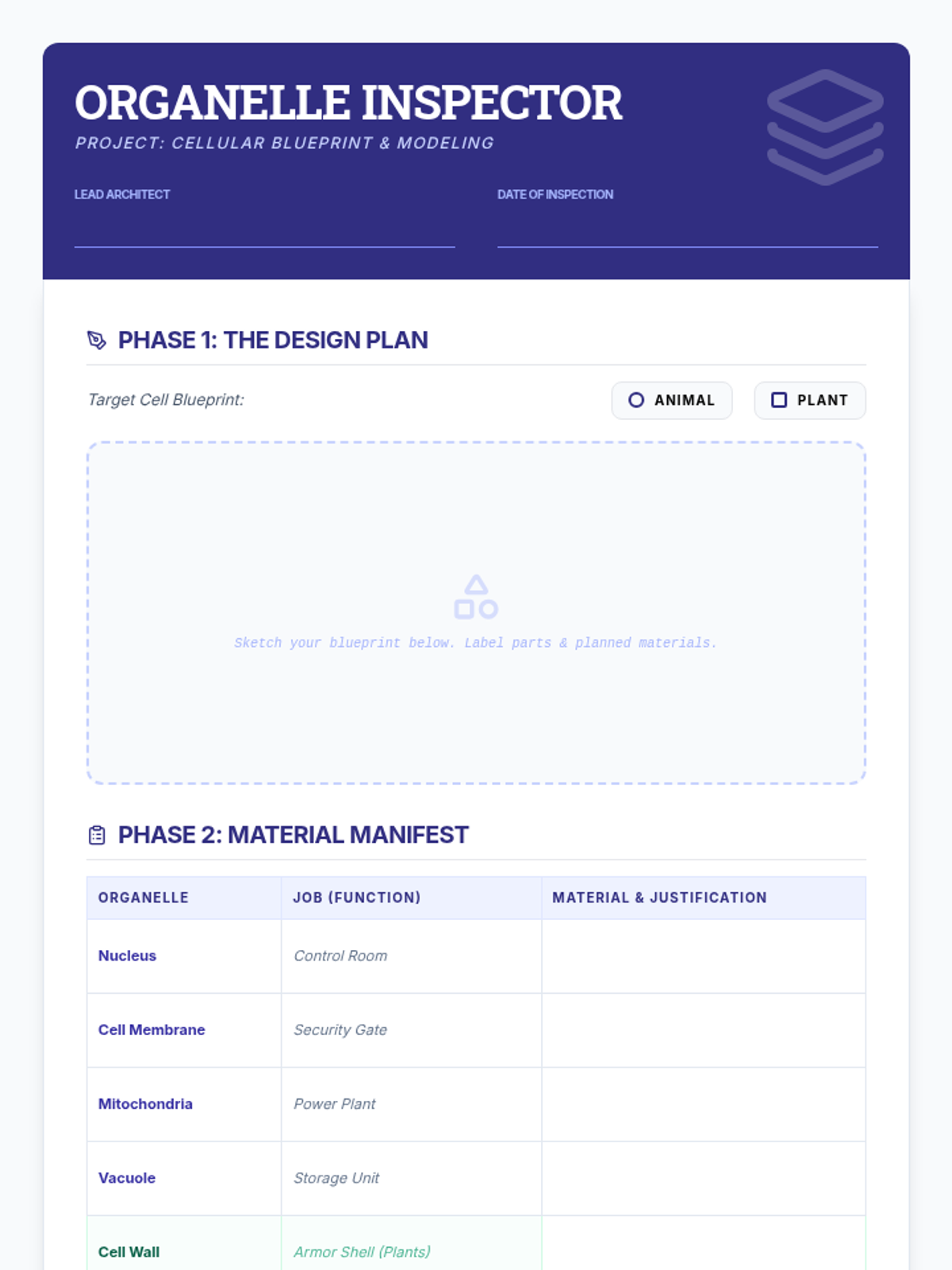
A student handout for the cell modeling activity. It includes space for a design sketch, a material manifest table to link organelles to their functions, and a field inspection section for the gallery walk phase.
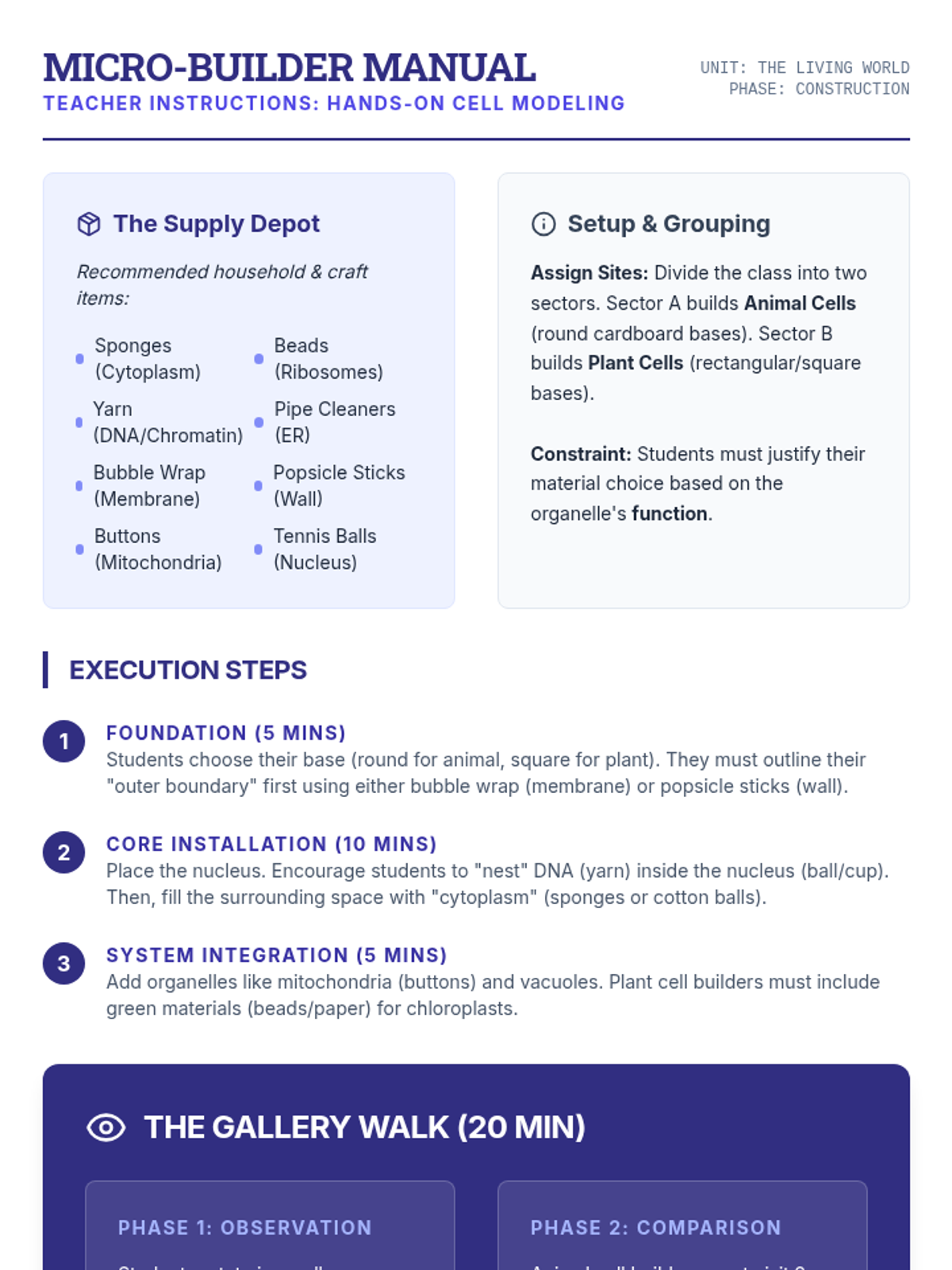
A detailed teacher guide for the "Micro-Builder" hands-on modeling activity. It provides a list of household supply suggestions, a step-by-step construction guide, and instructions for facilitating the gallery walk assessment phase.
A visually engaging slide deck titled "Blueprint for Life" that introduces the cell theory, identifies key organelles, and compares plant vs. animal cells. Uses a modern blueprint aesthetic to align with the lesson's central theme.
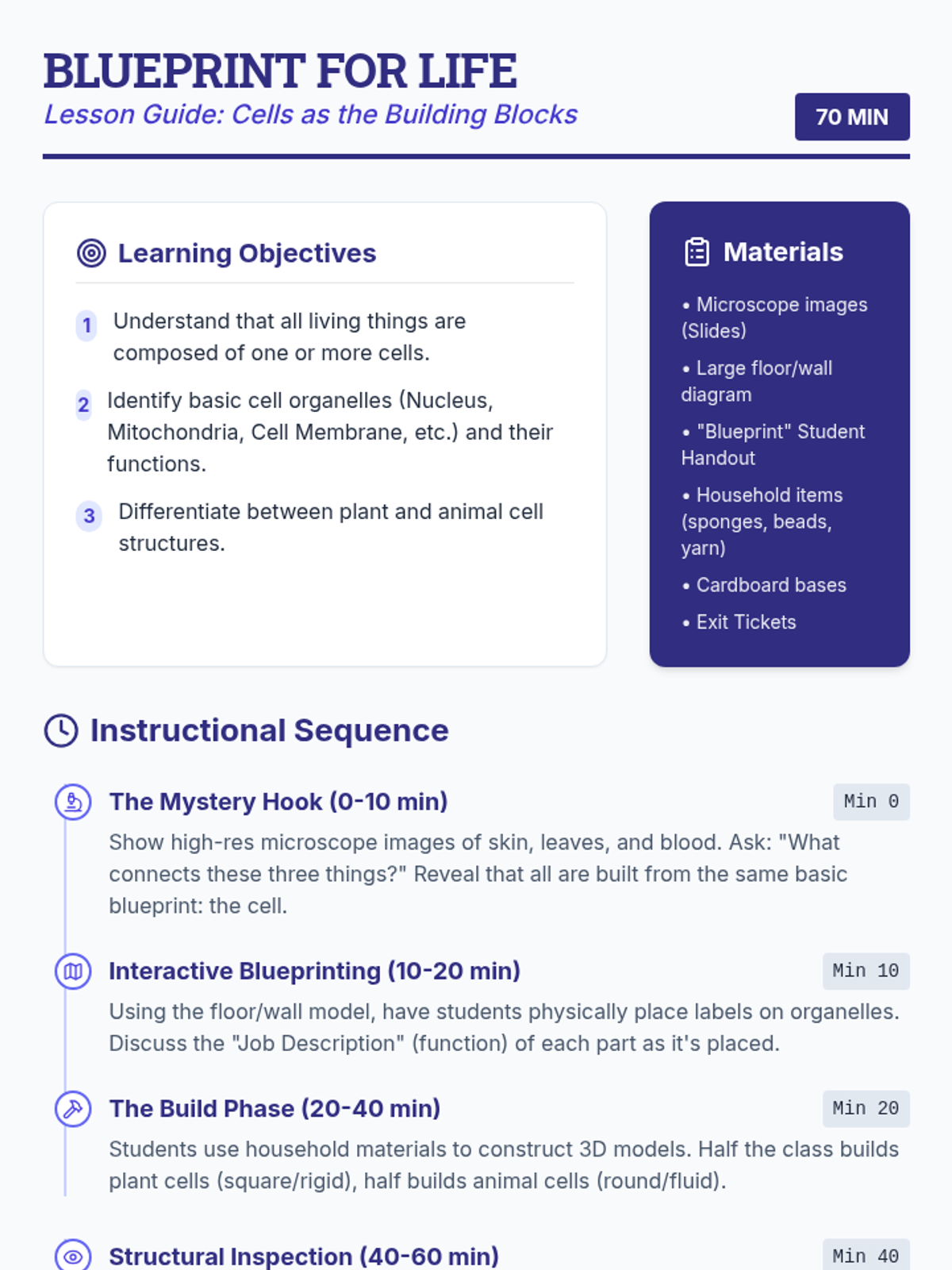
A comprehensive lesson guide for teachers, outlining the 70-minute "Blueprint for Life" lesson. Includes learning objectives, a detailed pacing timeline, and facilitation tips for exploring cell structure and function.
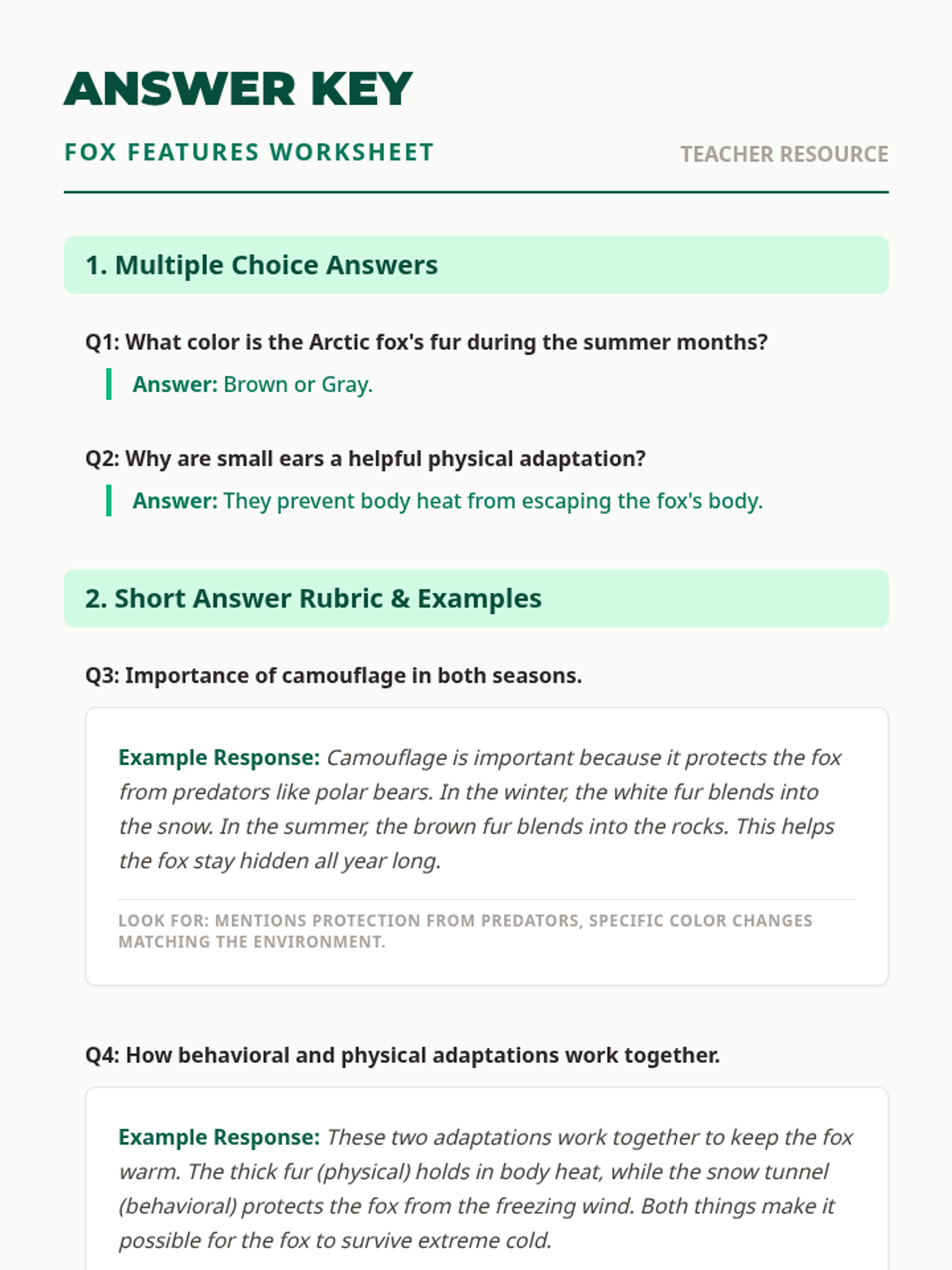
A comprehensive answer key and grading guide for the Fox Features Worksheet. Includes sample student responses and key concepts for teachers with improved layout and readability.
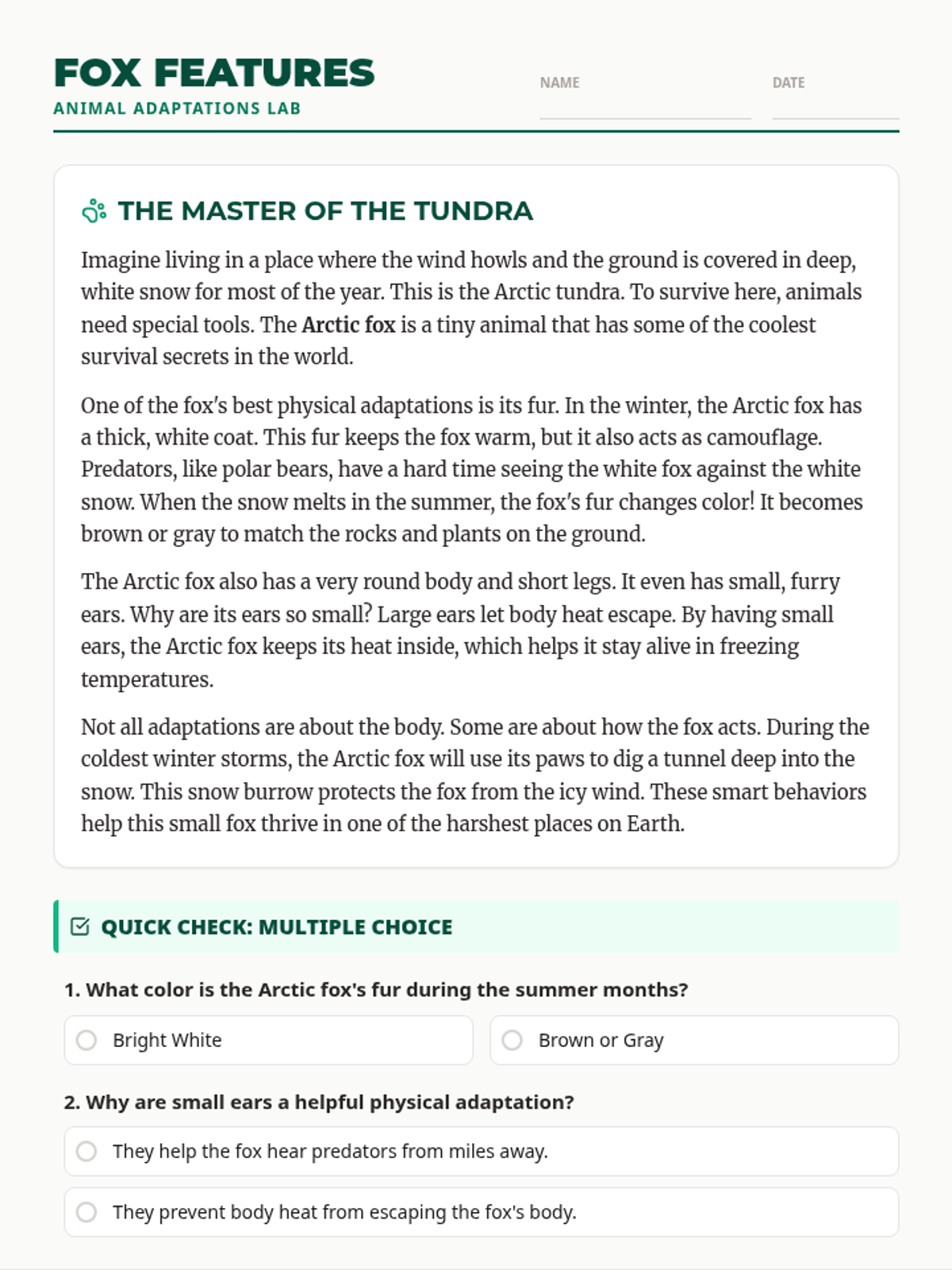
A reading comprehension worksheet featuring a passage about Arctic Fox adaptations. Includes literal and inferential multiple-choice questions along with deep-dive short answer responses. Optimized for a clean 2-page print layout with ruled writing lines.
An engaging slide deck introducing animal adaptations, defining physical and behavioral traits, and setting the stage for a reading comprehension activity about the Arctic Fox.
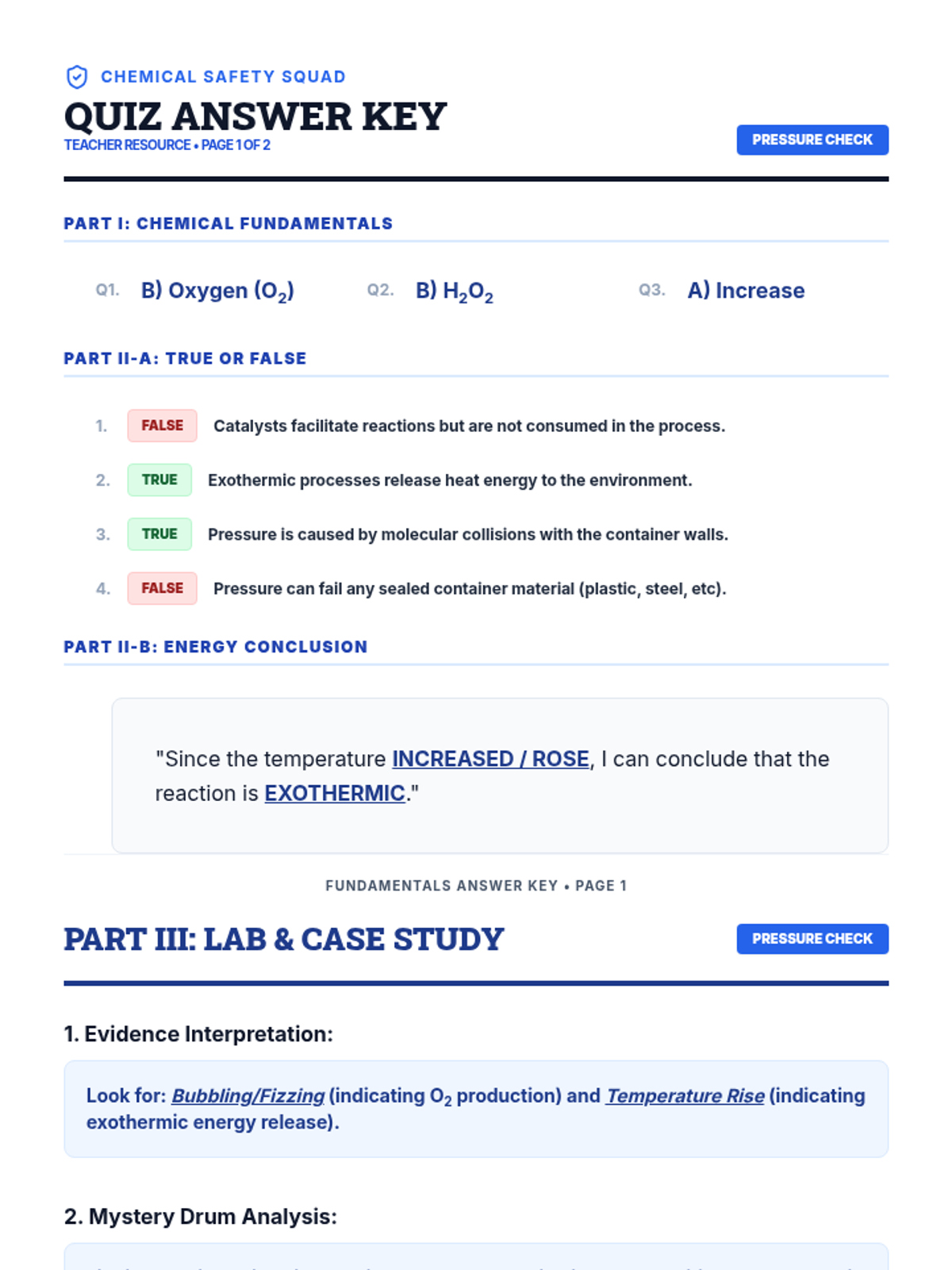
Teacher answer key for the Pressure Check Quiz, providing detailed responses and grading criteria for the visualization question. Improved formatting and page break prevention. Fixes subscript rendering and updates answers for new quiz content. Consolidated to 2 pages for efficiency.
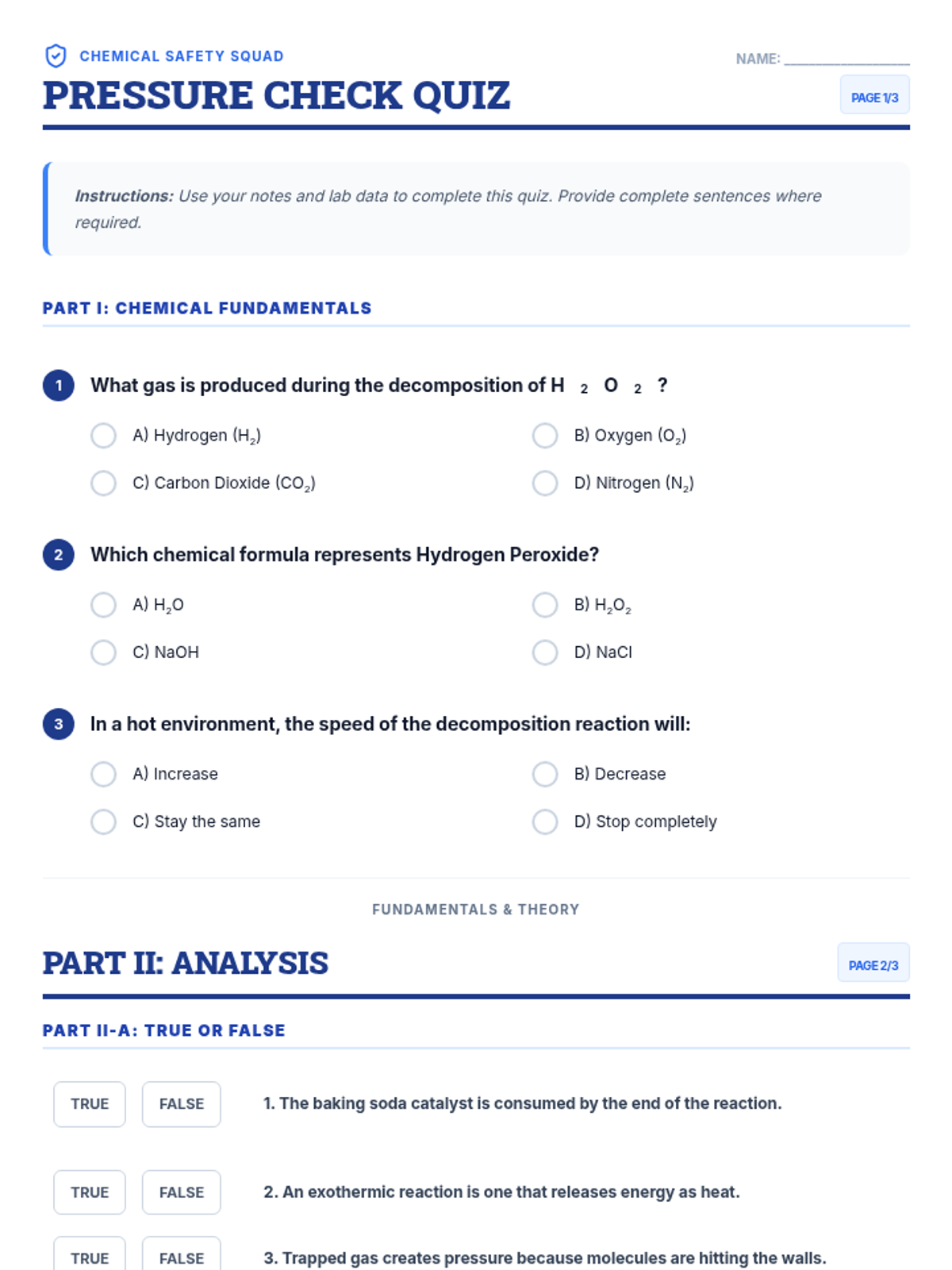
An updated 3-page open-note quiz now featuring Multiple Choice, True/False, Lab Data Analysis, and Industrial Case Study sections. Includes robust chemical notation and clear student work areas with guide lines. Fixes subscript rendering and formatting issues.
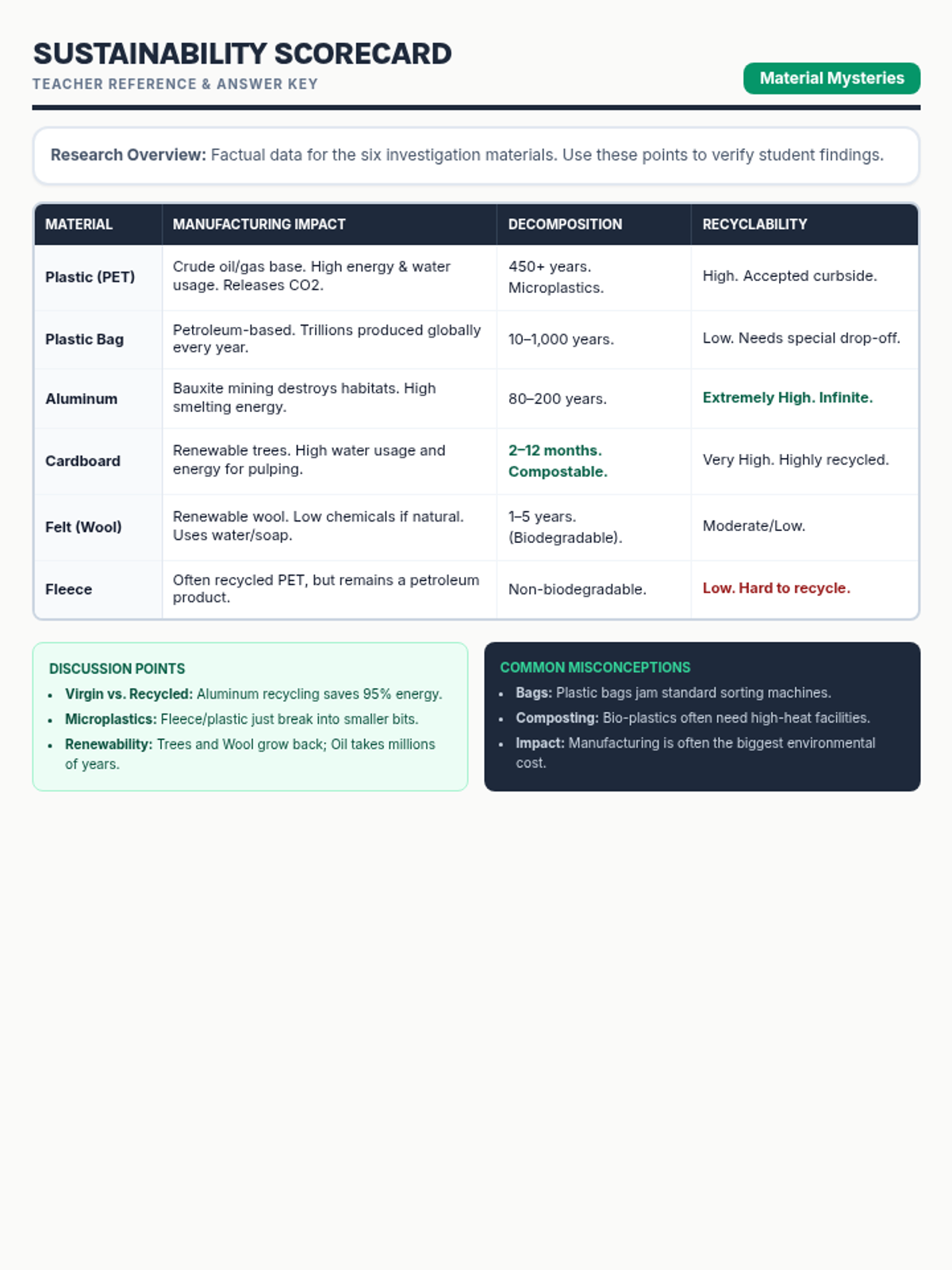
A comprehensive reference guide for teachers containing factual data on all six materials, including cardboard, to facilitate classroom discussion and provide an answer key for student research. Now with uniform objective styling and one-page layout.
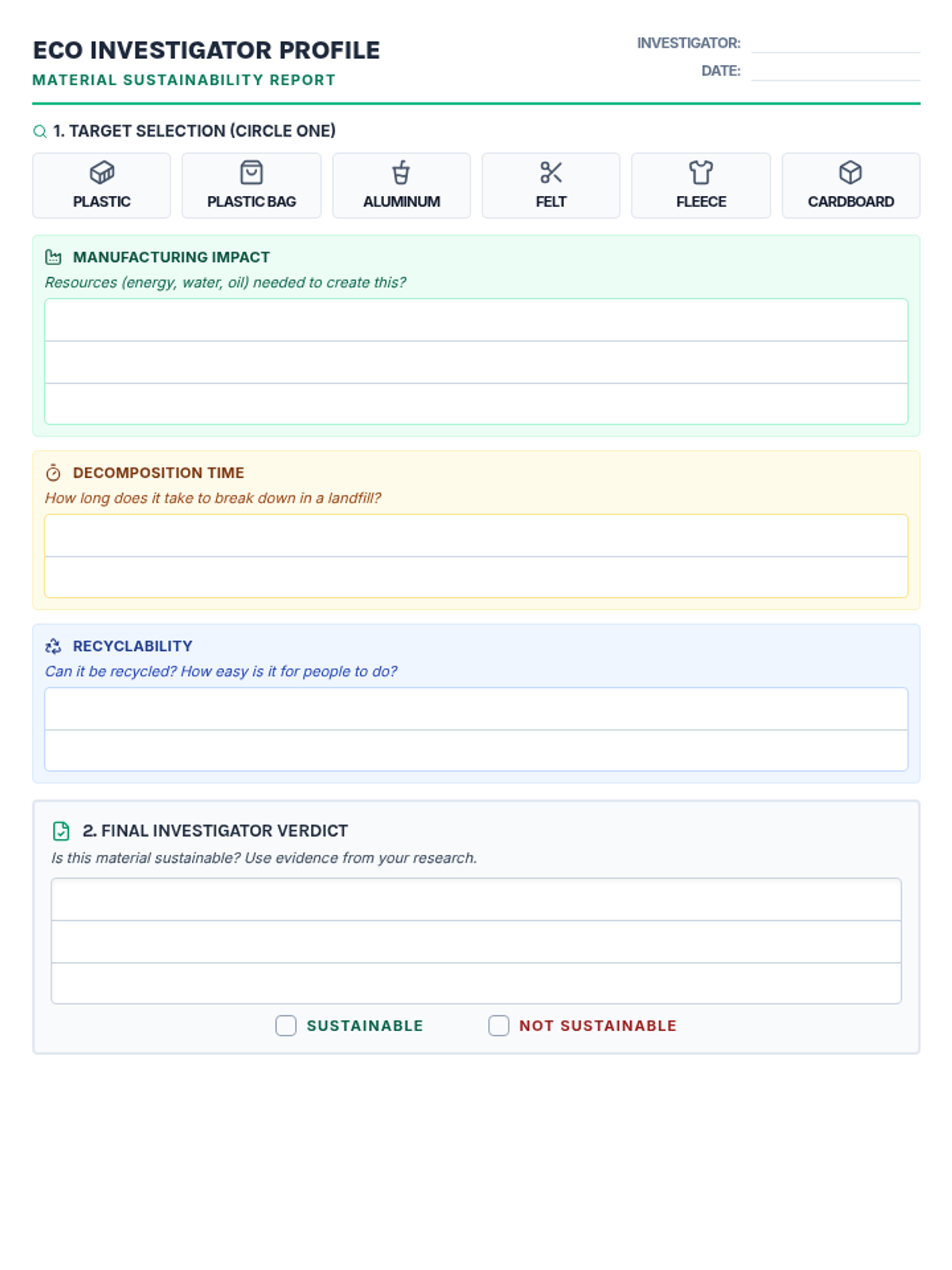
A research worksheet for students to investigate the sustainability of materials, now including cardboard. It features clear icons for selection, uniform research areas with ruled lines (32px), and a final verdict section designed for maximum handwriting legibility on a single page. Now with improved contrast and uniform styling.
A presentation introducing the concept of sustainability and the three key research factors: manufacturing impact, decomposition time, and recyclability. It outlines the six materials students can choose to investigate, including cardboard. Now with uniform visual styling.
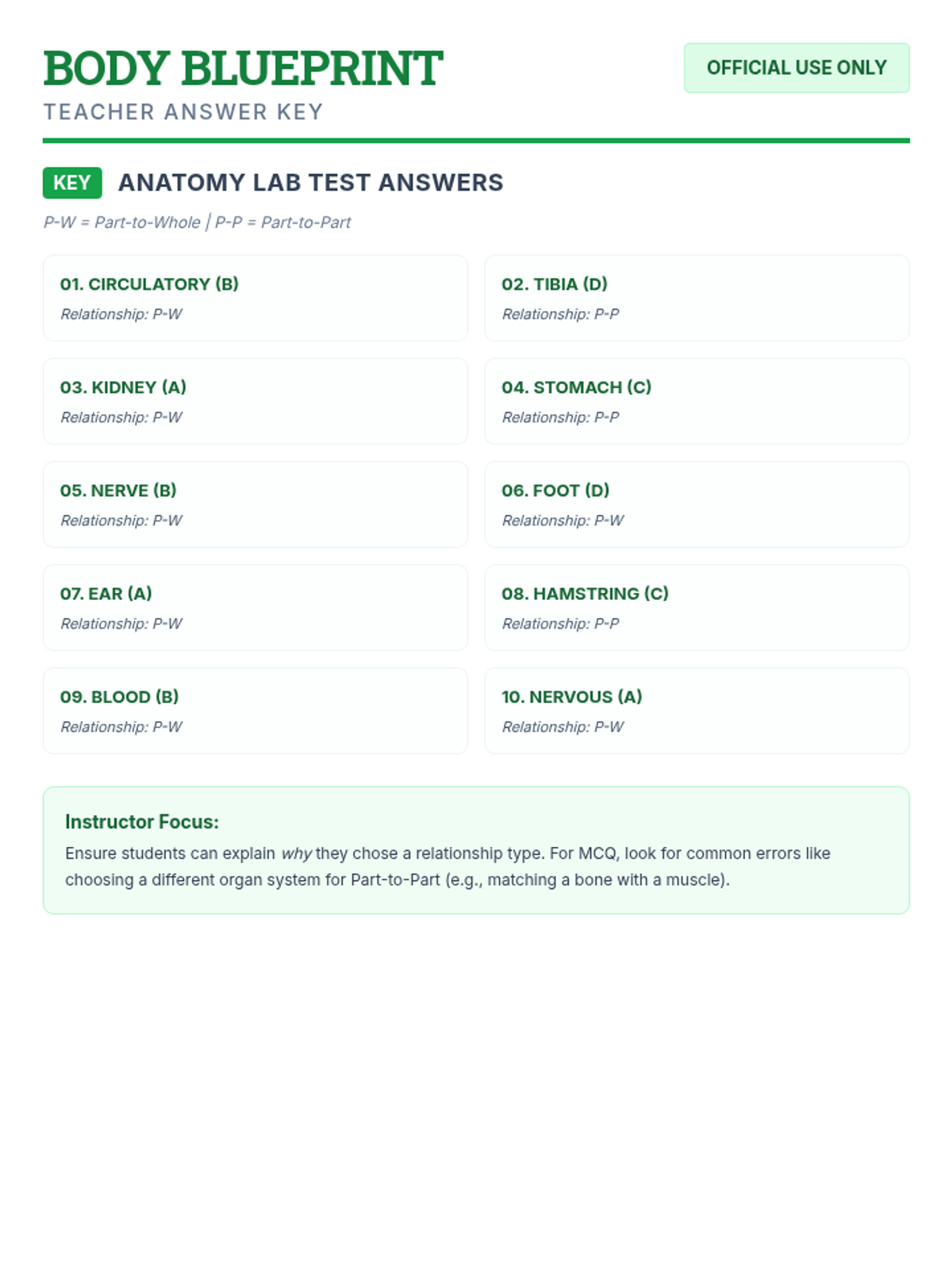
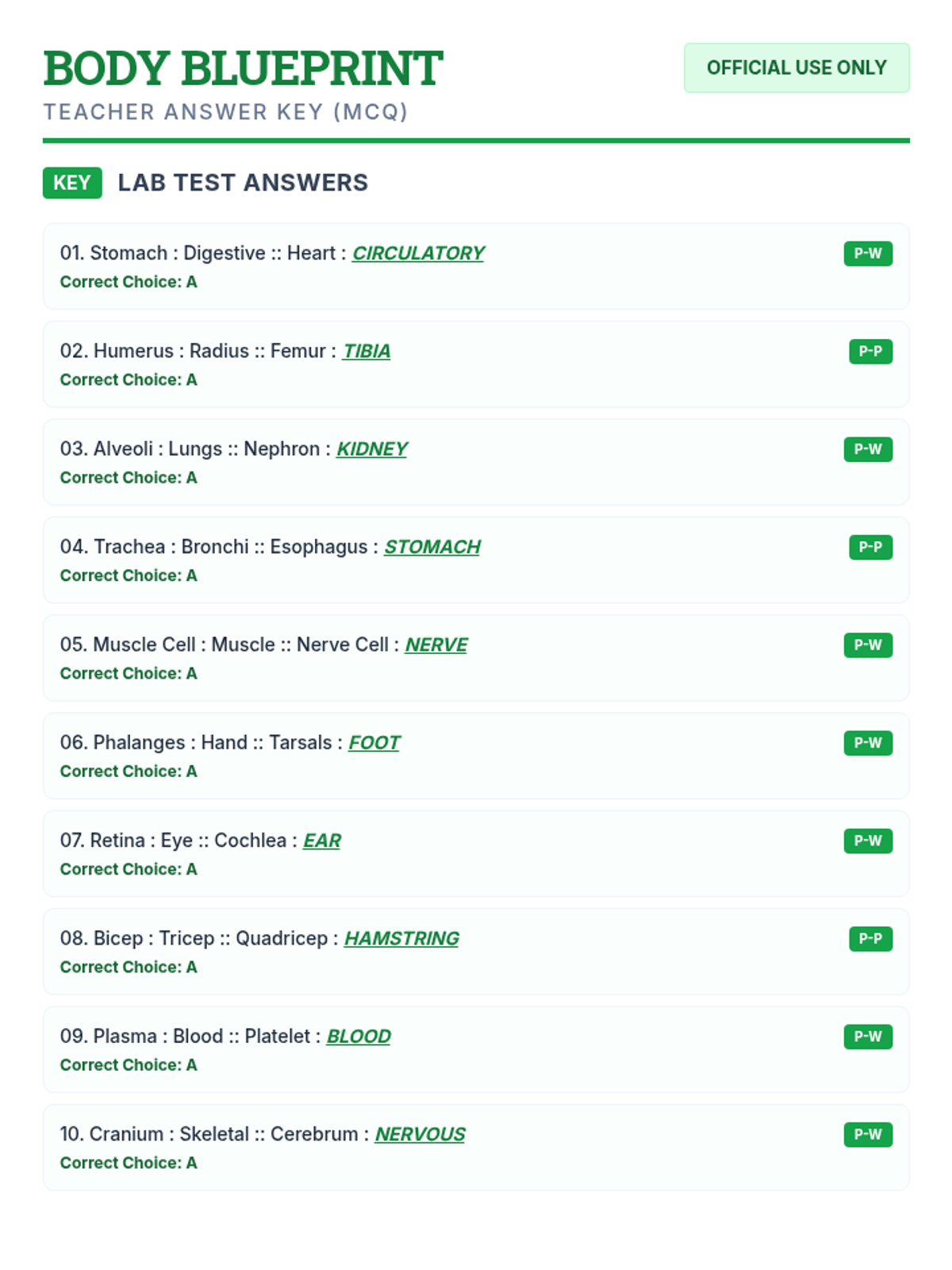
The updated teacher answer key for the randomized multiple-choice version of the Body Blueprint worksheet. Correct choice letters and relationship types are provided.
A polished slide deck for Anatomy Analogies with high-contrast text, uniform button styling for challenges, and progressively difficult examples.
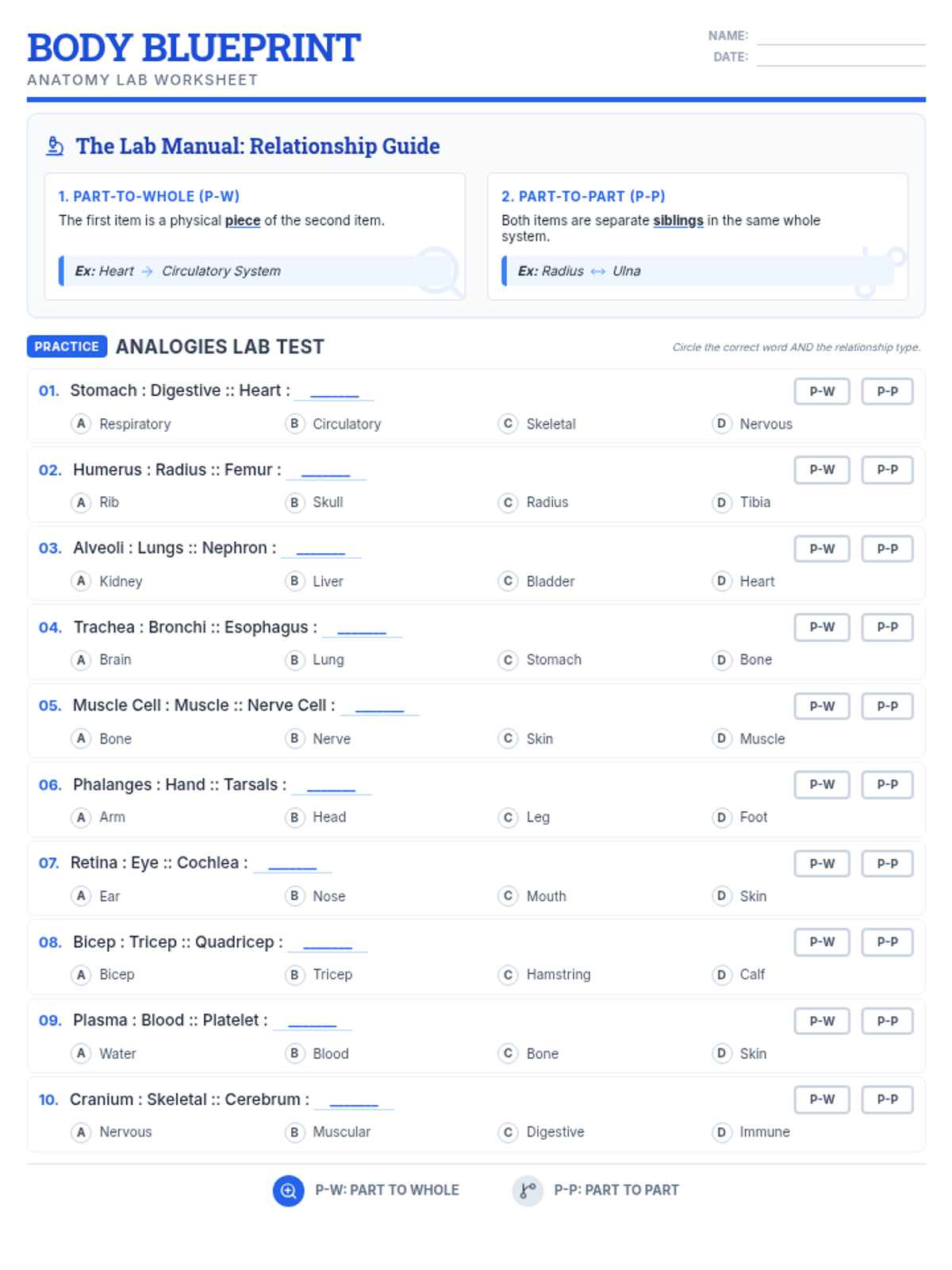
A multiple-choice version of the Body Blueprint worksheet, where students select the correct organ or system to complete the analogy and identify the relationship type. Correct answers are randomized and visual icons are included for instruction. All answer choices share uniform styling.
The updated teacher answer key for the multiple-choice version of the Body Blueprint worksheet.
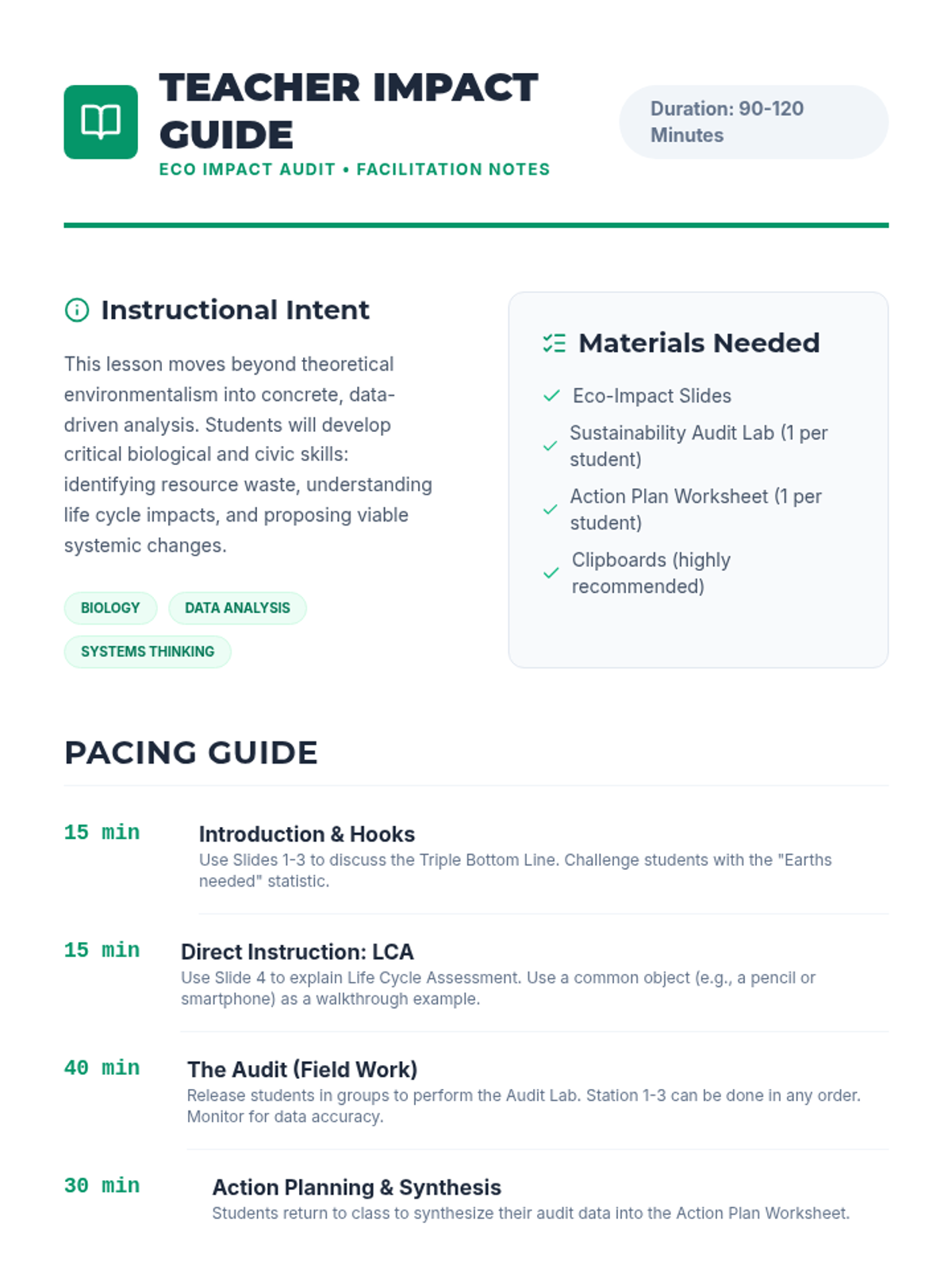
A teacher-facing instructional guide providing pacing, logistics, facilitation tips, and an assessment rubric for the Eco Impact Audit lesson.
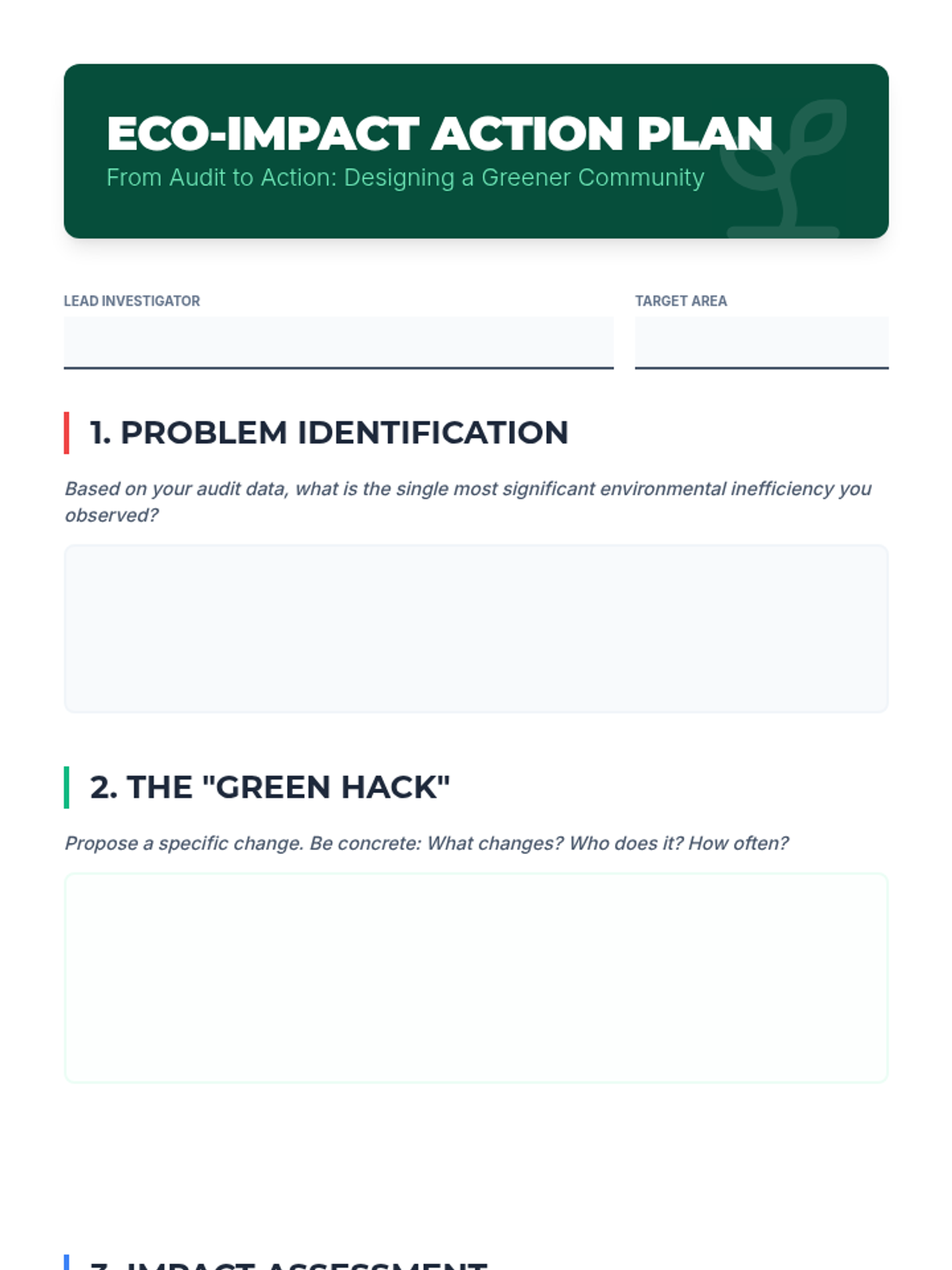
A student-facing worksheet for developing a sustainability proposal based on audit findings, featuring a triple bottom line analysis and an elevator pitch section.
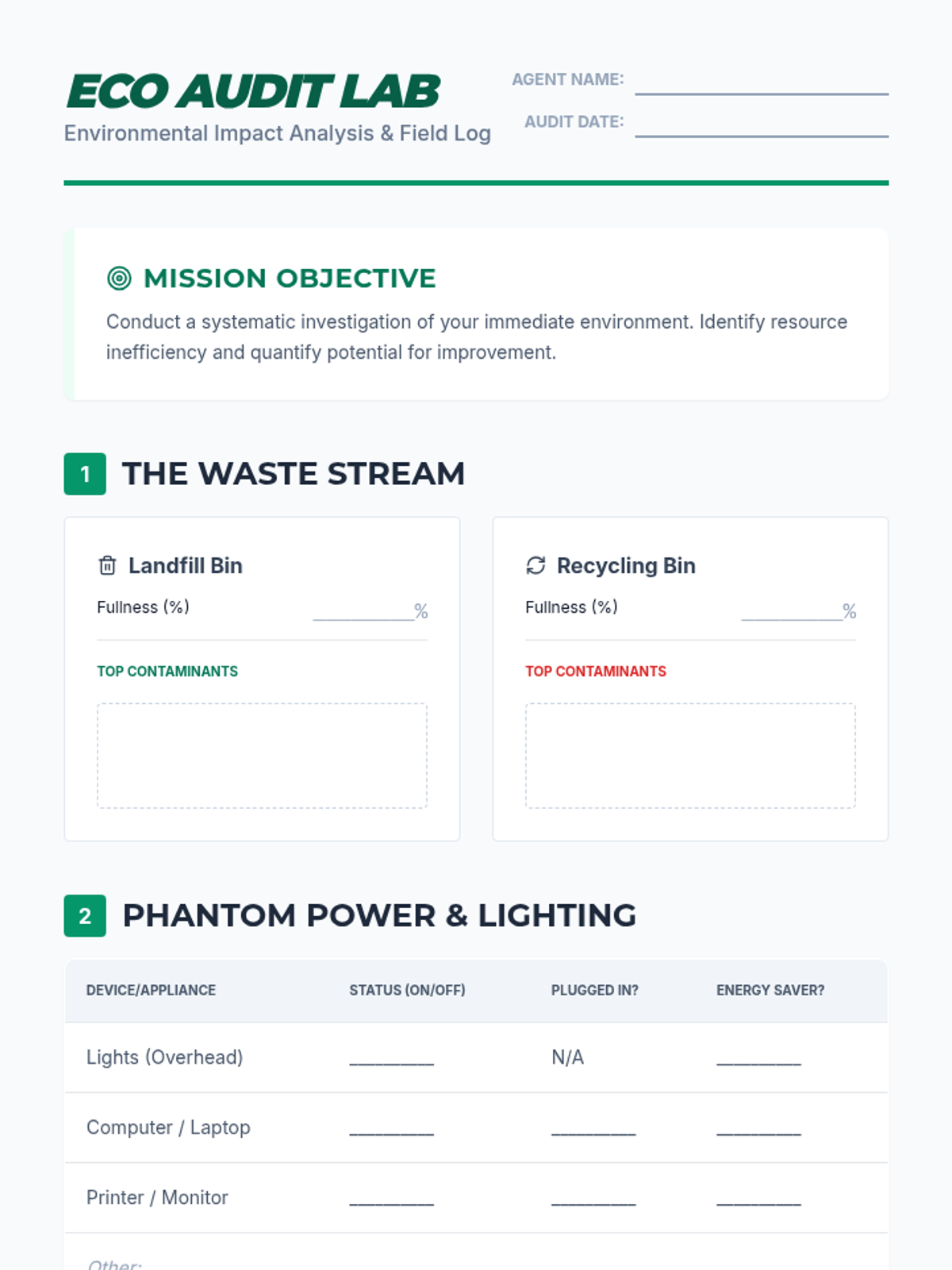
A hands-on environmental audit worksheet where students investigate waste, energy, and water usage in their local environment to identify inefficiencies.
A high-impact visual presentation introducing ecological footprints, the triple bottom line of sustainability, and the life cycle of products to prepare students for their environmental audit.
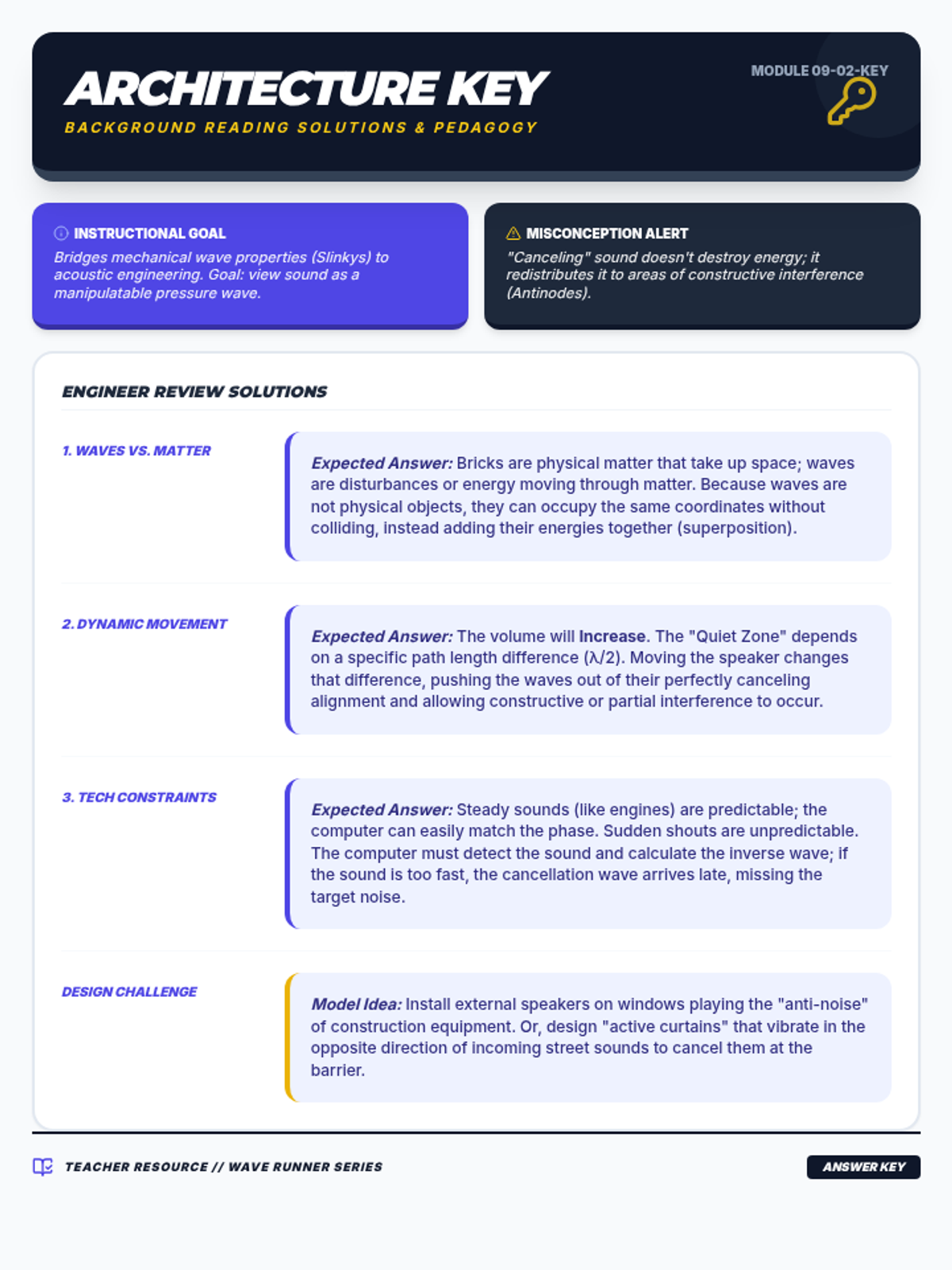
A comprehensive teacher answer key for the Acoustic Architecture background reading. Provides model answers for the conceptual questions on wave superposition and destructive interference, along with a creative model solution for the urban noise design challenge. Includes pedagogical tips and common misconception alerts. Revised for better page flow and contrast.
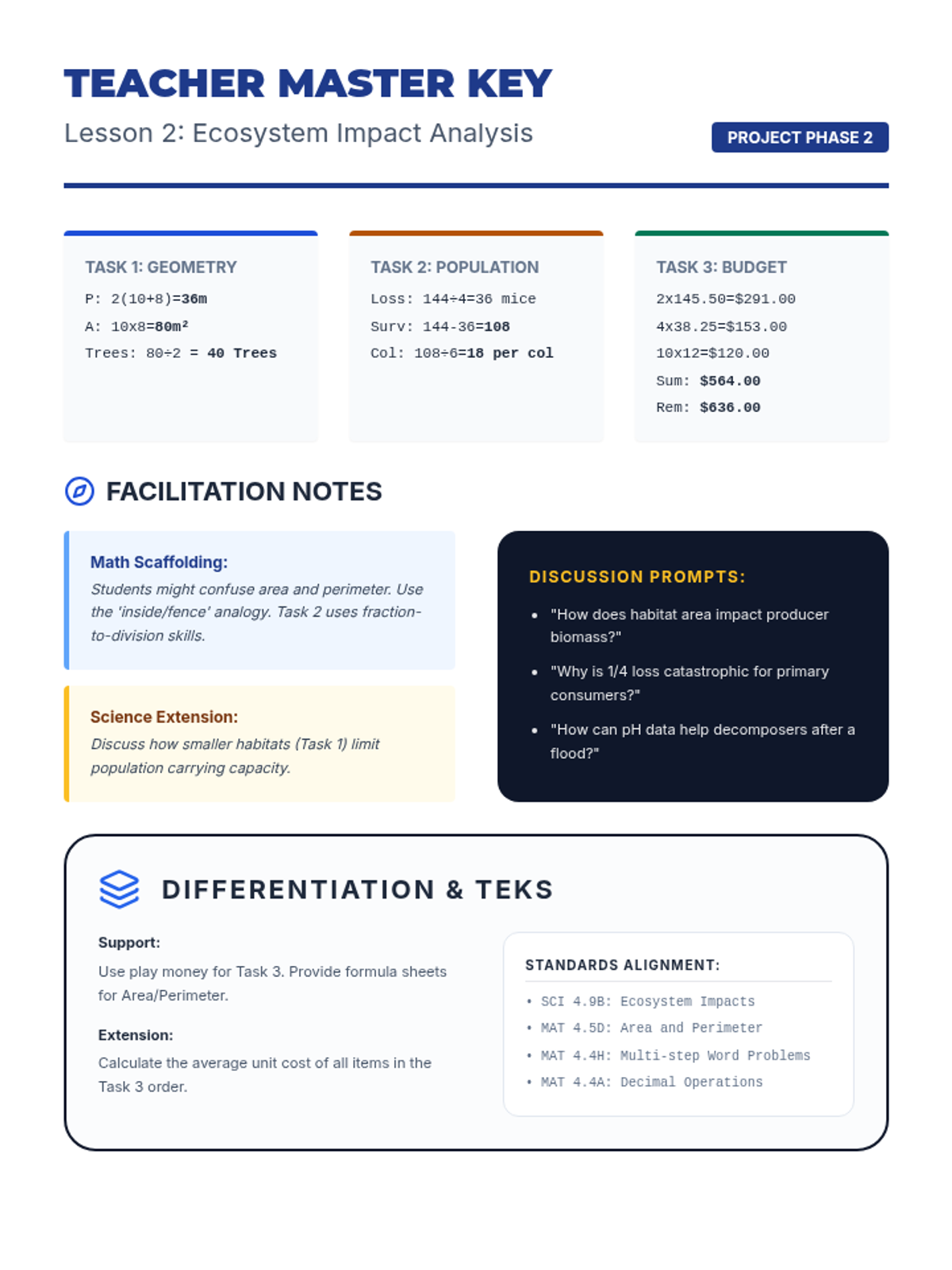
A teacher's answer key and instructional guide for Lesson 2, featuring step-by-step math solutions, science misconception notes, and differentiation strategies for varied learners. High-legibility design and printer-friendly layout.
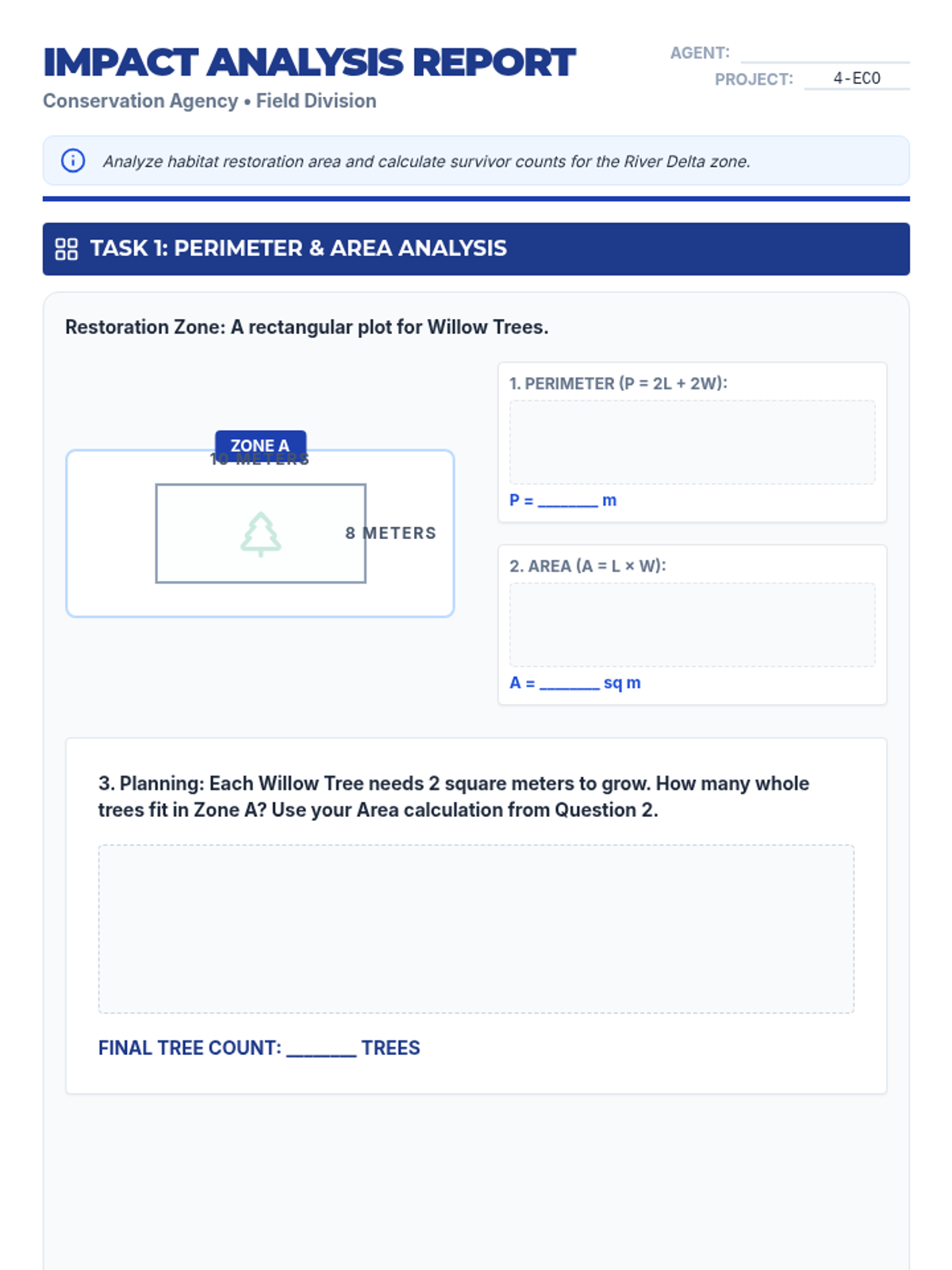
A multi-step impact analysis worksheet where students solve area/perimeter problems for habitat restoration, calculate population changes using division, and manage a conservation budget with decimals. High-legibility student work areas and printer-friendly design.
A slide presentation for Lesson 2 that introduces students to natural and human impacts on ecosystems, setting the stage for math-integrated restoration analysis.