The expanded answer key for the Memory Maze Worksheet, covering eight case studies with detailed psychological explanations for phenomena like tip-of-the-tongue and mood-congruent memory.
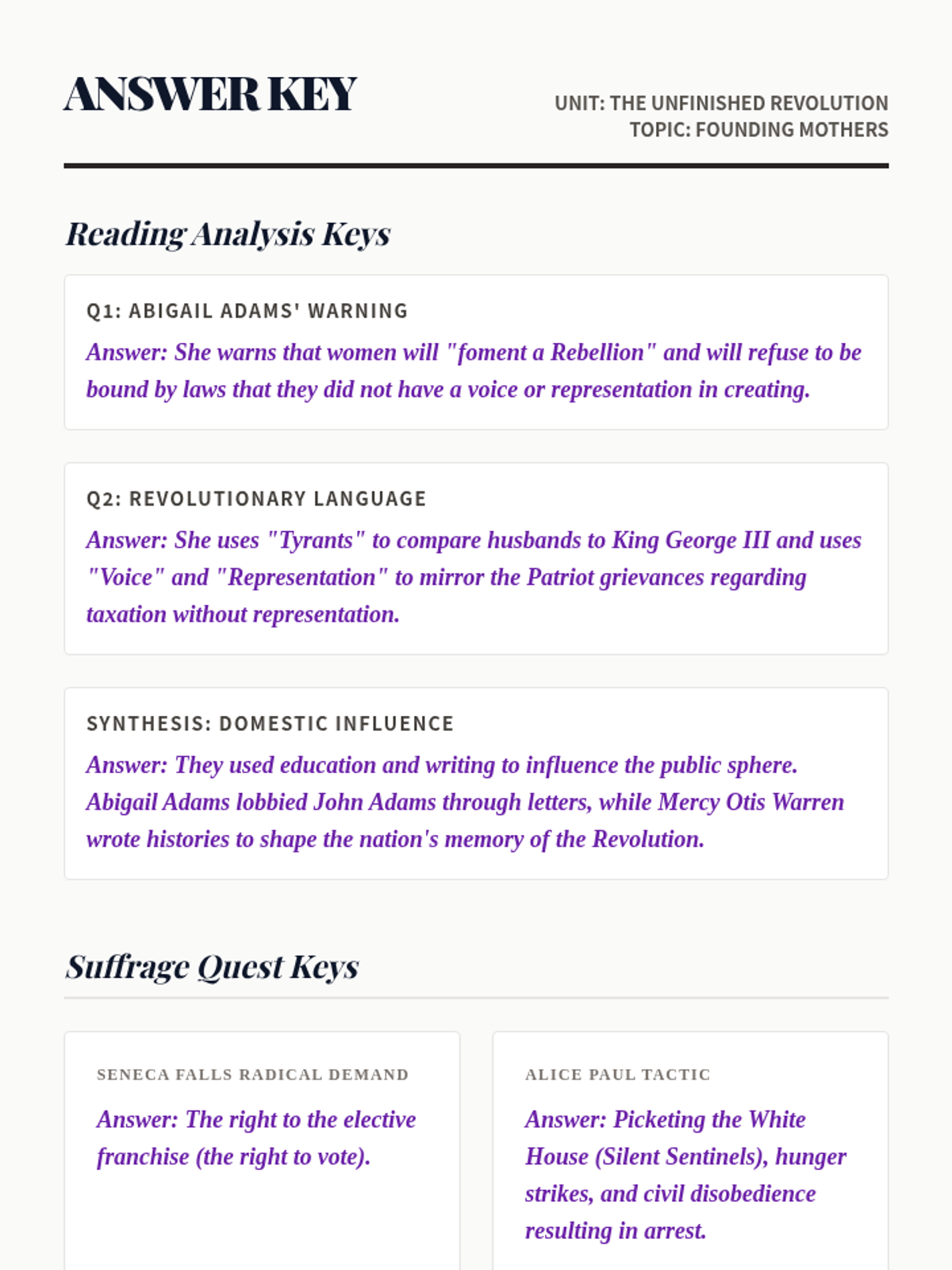
A comprehensive answer key for both the 'Founding Mothers' readings and the 'Suffrage Quest' worksheet. It provides sample responses for primary source analysis and factual answers for historical profiles and events.
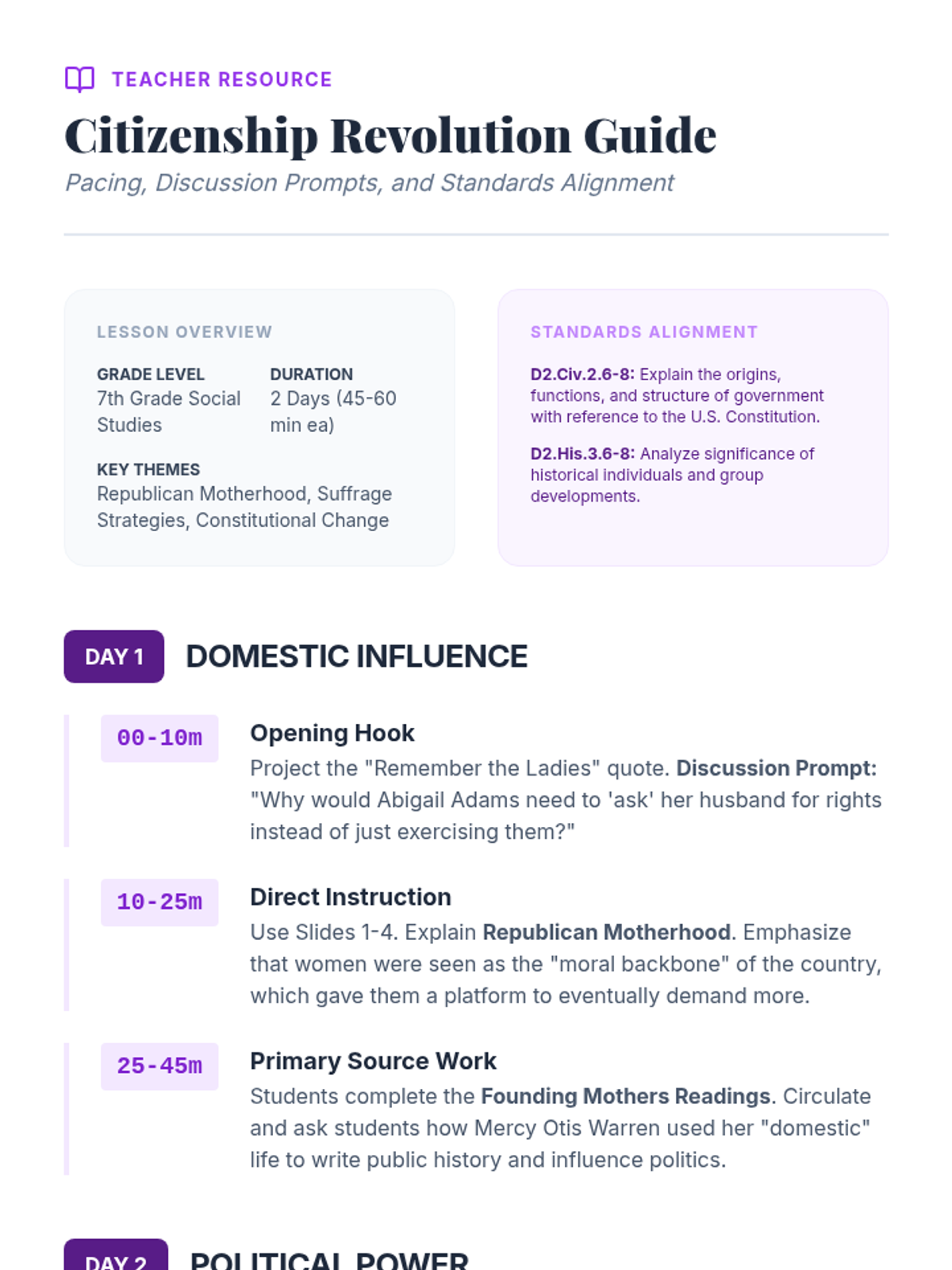
A detailed teacher's guide for the 'Citizenship Revolution' lesson. It provides a structured two-day lesson plan, pacing suggestions, discussion prompts, alignment with national social studies standards, and tips for addressing common student misconceptions about the Suffrage Movement.
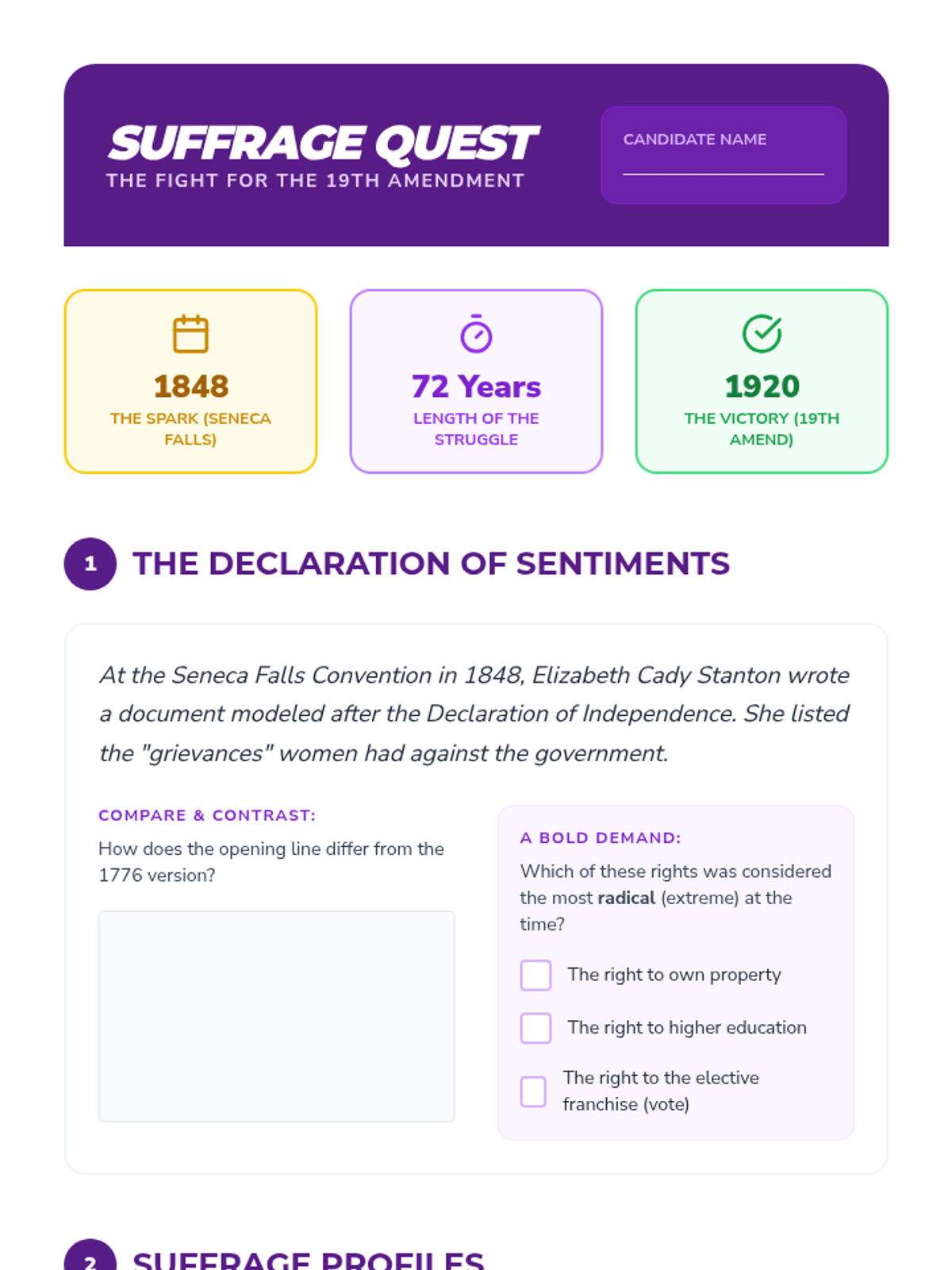
An interactive student activity sheet that guides learners through the key events and figures of the Suffrage Movement. It includes document analysis of the Declaration of Sentiments, leader profiles for figures like Alice Paul and Ida B. Wells, and a critical reflection on the limitations of the 19th Amendment.
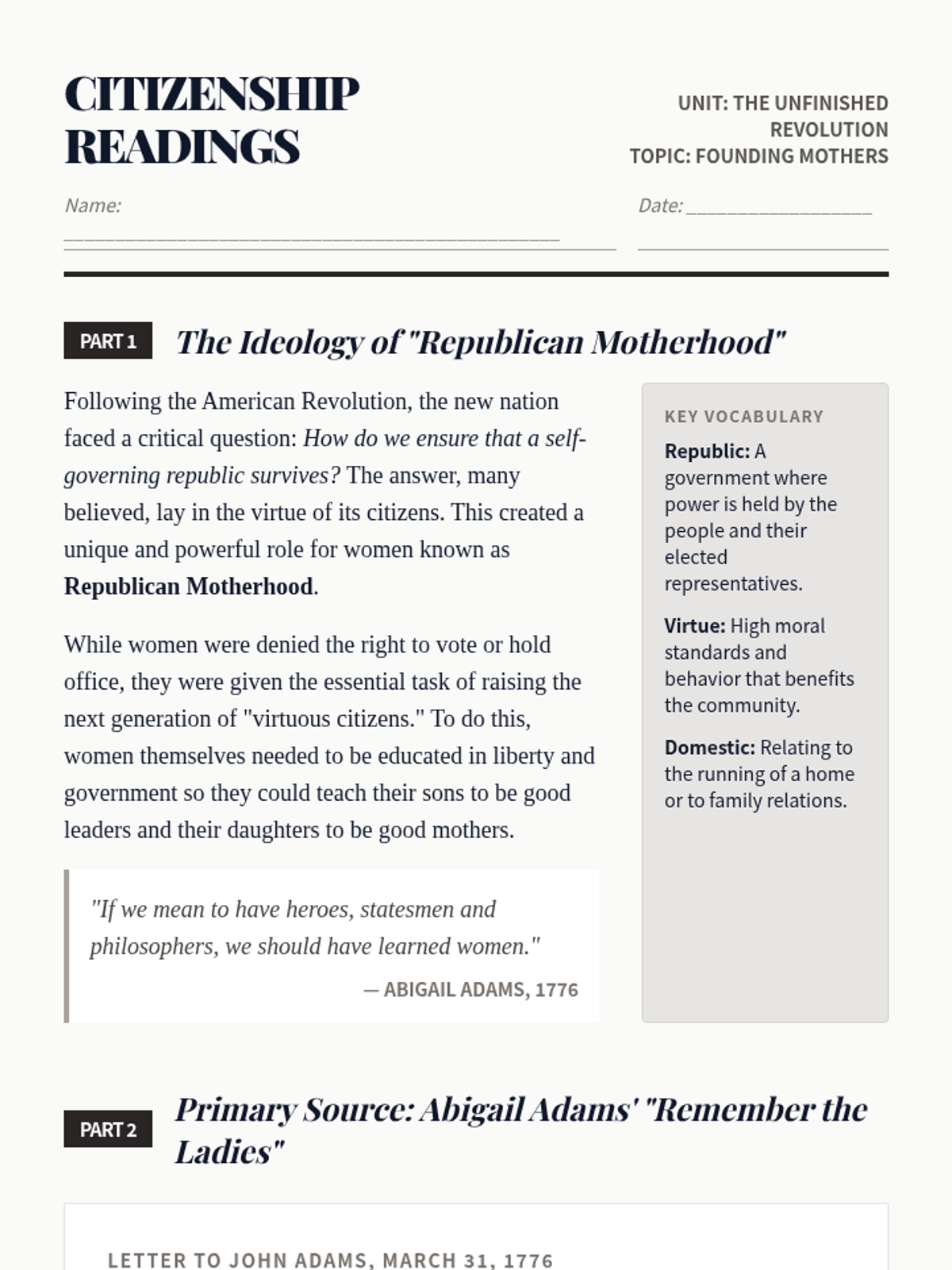
An engaging reading packet and primary source analysis focused on the roles of women in the Early Republic. It explores the concept of 'Republican Motherhood' and features the famous correspondence of Abigail Adams, providing students with critical thinking questions about domestic versus political influence.
A comprehensive visual presentation covering the evolution of women's citizenship from the Early Republic's 'Republican Motherhood' to the ratification of the 19th Amendment. Includes placeholders for key educational videos and discussion prompts for a two-day lesson.
A visual presentation deck covering the three stages of memory failure, proactive/retroactive interference, and effective memory-boosting strategies like chunking and mnemonics.
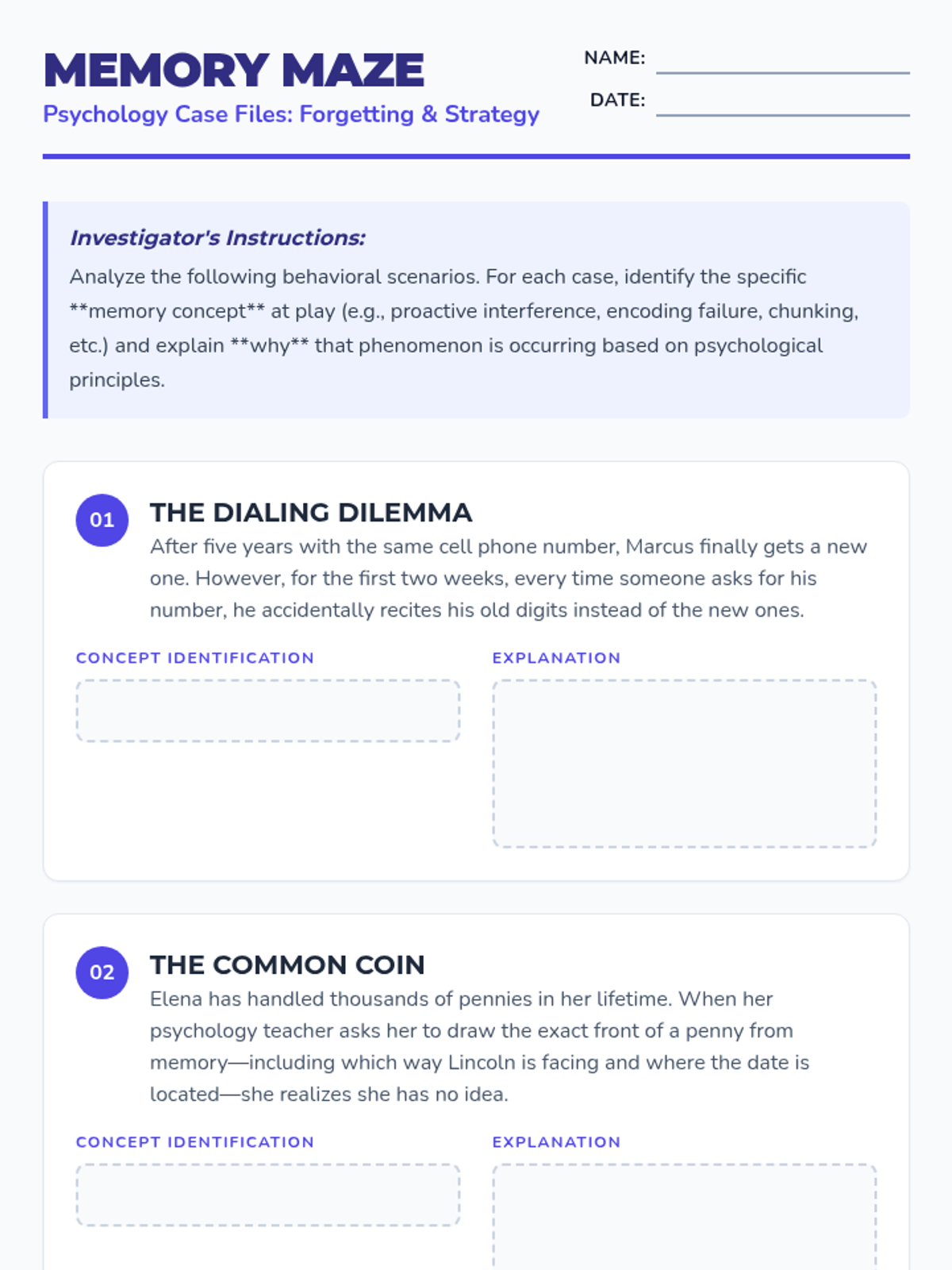
A condensed version of the Memory Maze worksheet, featuring eight behavioral scenarios on exactly two pages with optimized spacing for student responses and increased readability.
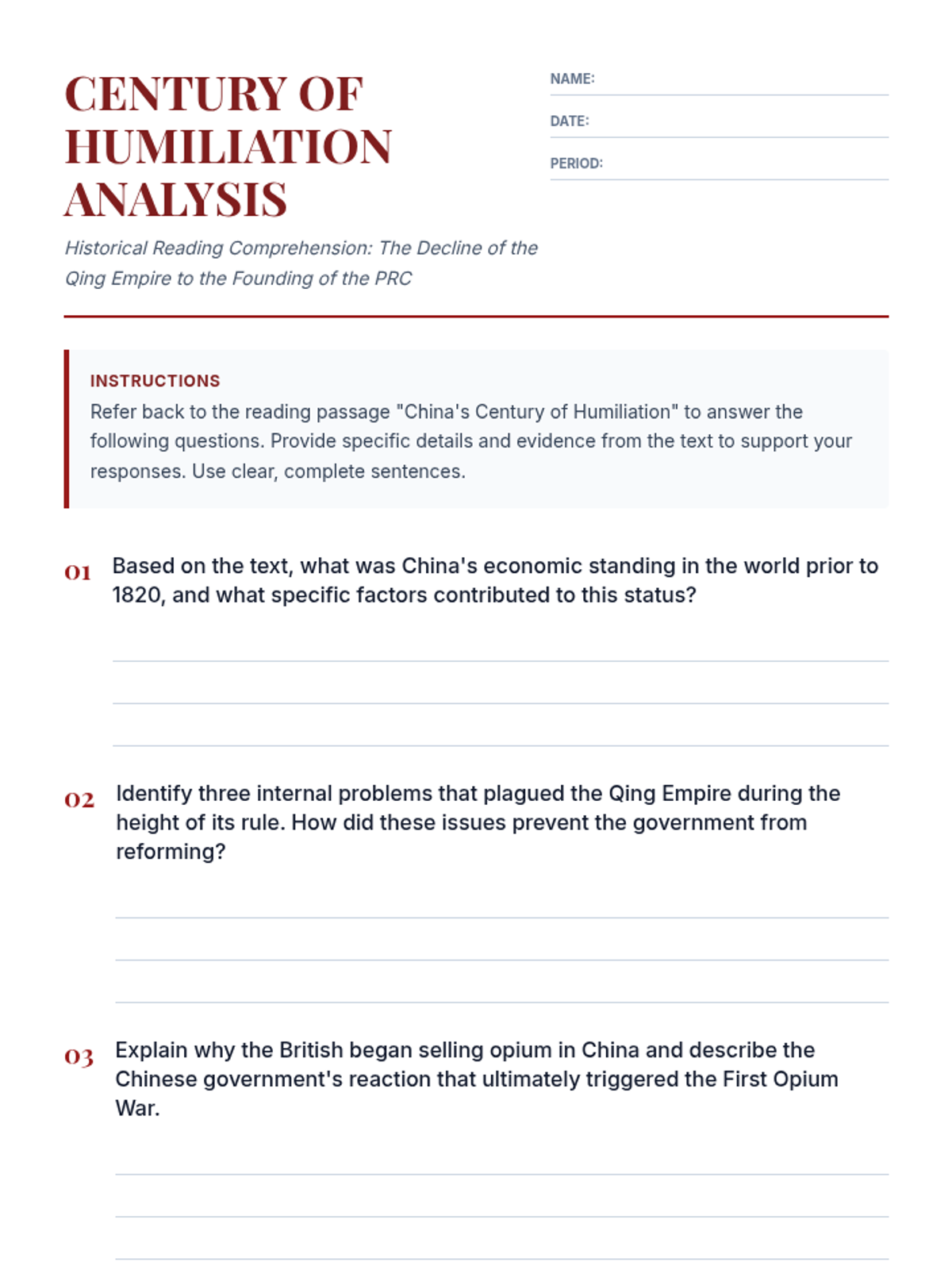
A set of ten short-answer comprehension questions for 9th-grade students based on the reading 'China’s Century of Humiliation.' The worksheet covers historical events from the Qing dynasty's peak to the 1949 founding of the People’s Republic of China.
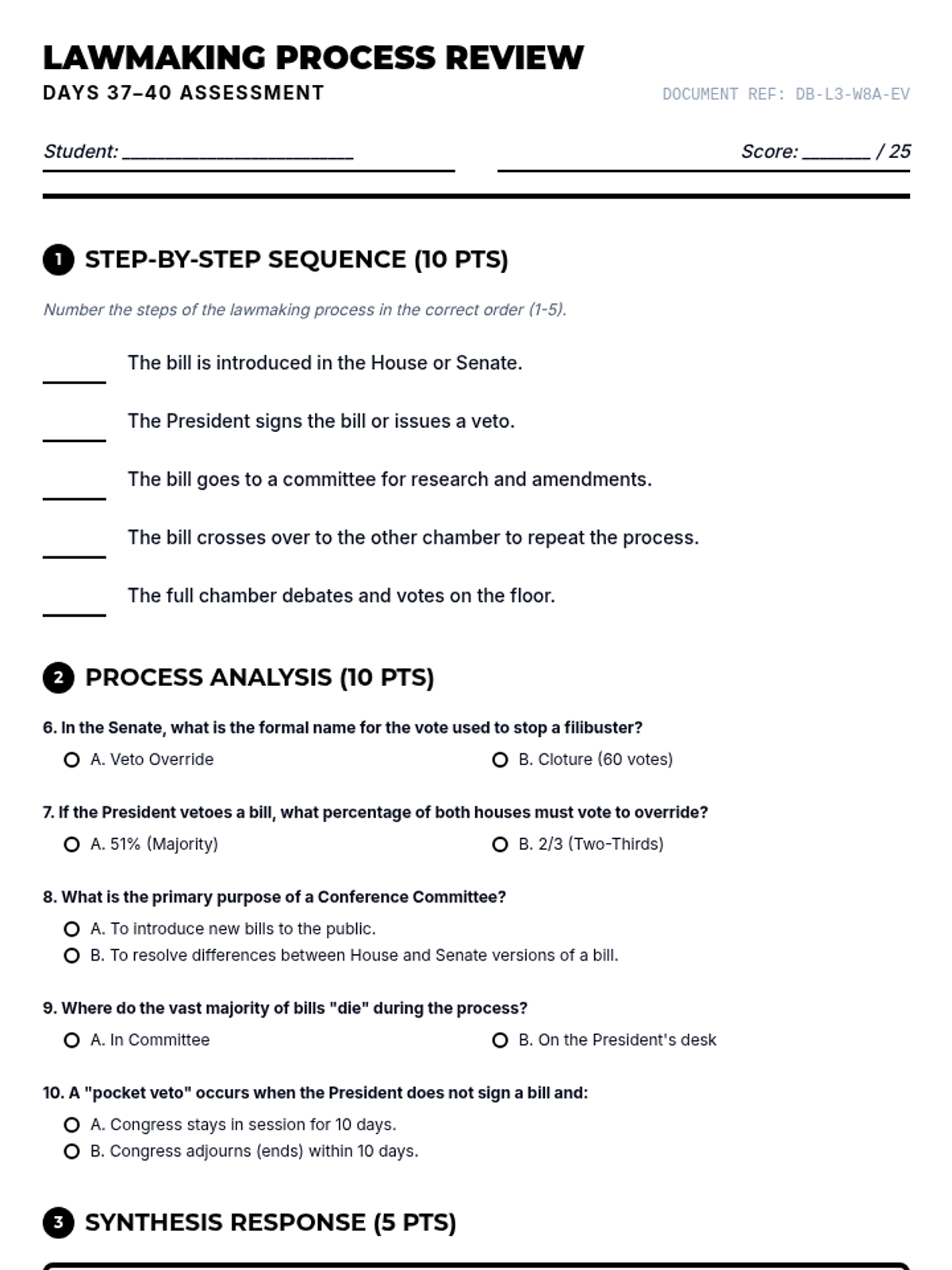
A section review assessment for the lawmaking process, covering the stages of a bill, filibuster, cloture, and veto override powers. Optimized for black and white printing. Revised for point allocation consistency and layout.
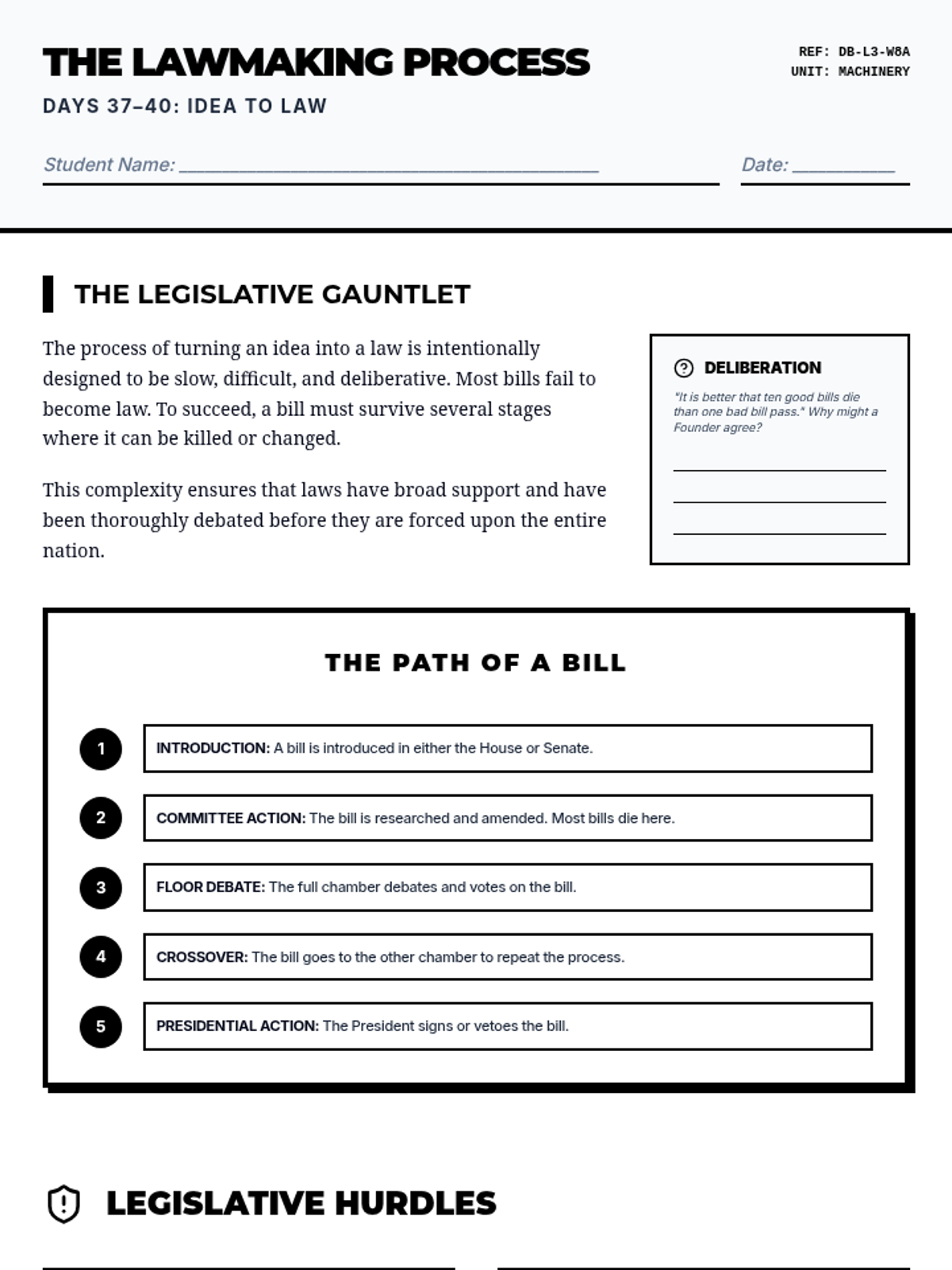
An instructional reader on the lawmaking process, covering the stages of a bill, the role of the filibuster, and presidential veto powers. Optimized for B&W printing.
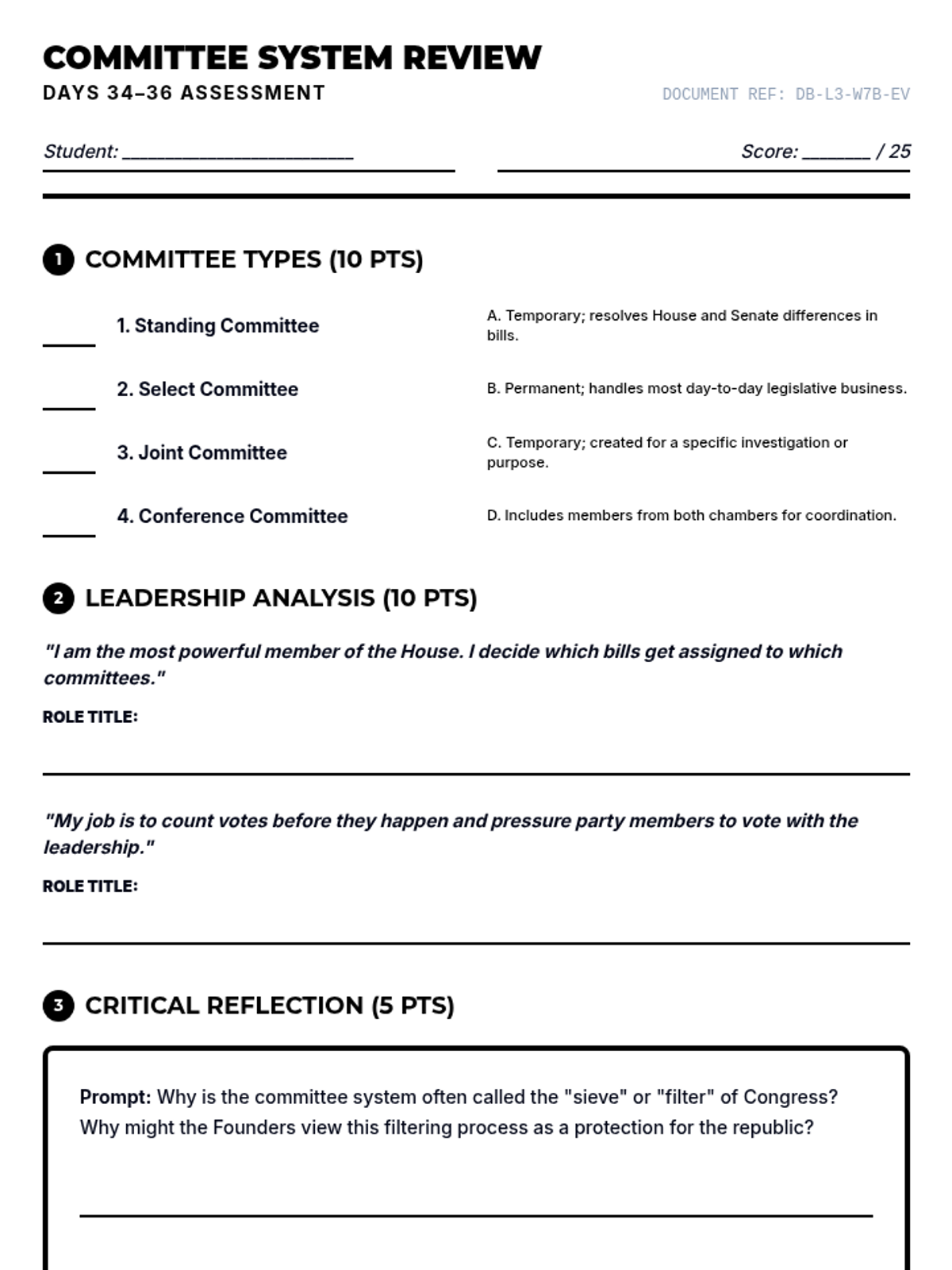
A section review assessment for the Congressional committee system, covering committee types, leadership roles, and the concept of legislative filtering. Optimized for black and white printing.
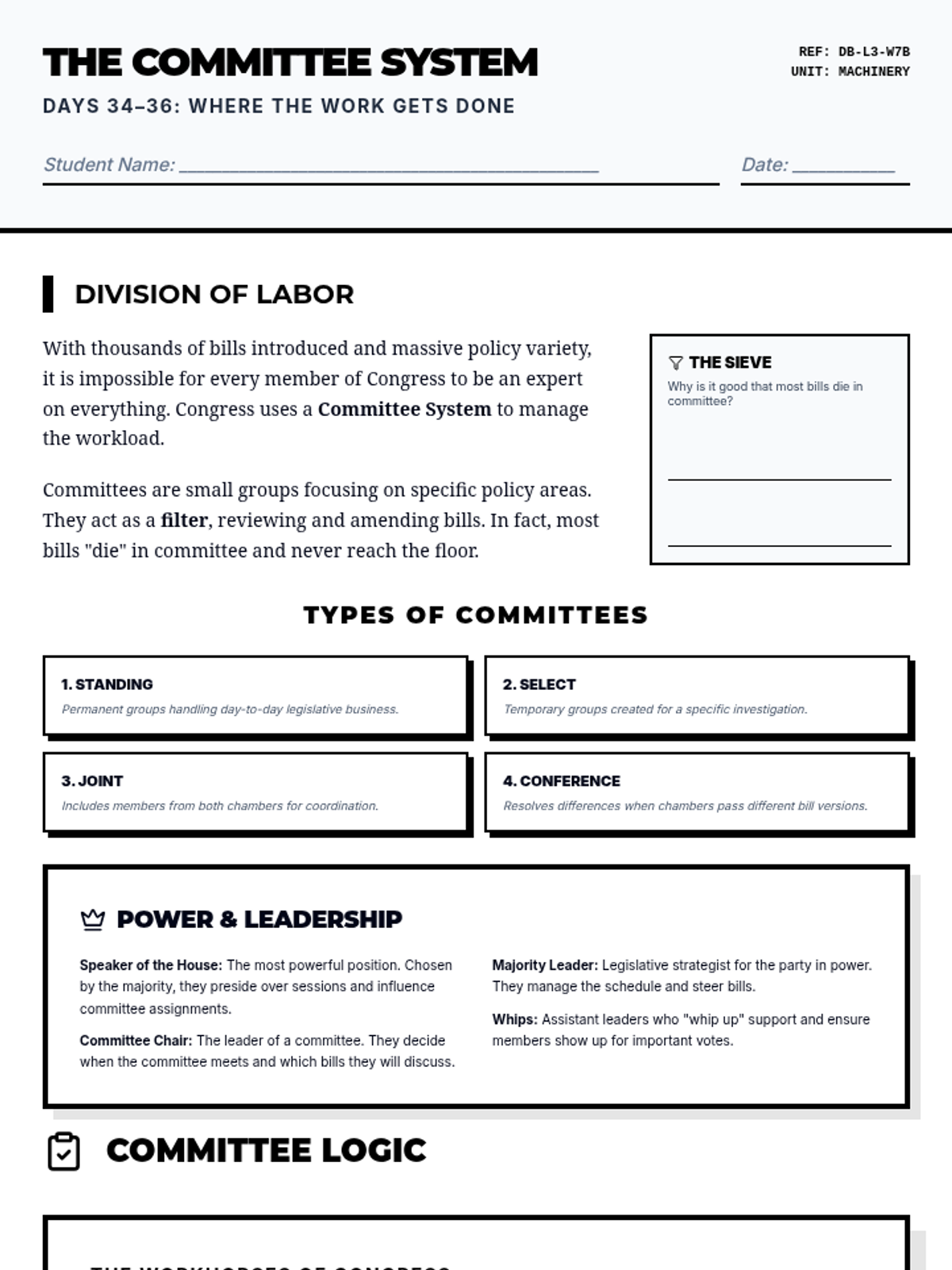
An instructional reader on the Congressional committee system, covering types of committees (standing, select, conference), leadership roles (Speaker, Chair, Whip), and the logic of legislative division of labor. Optimized for B&W printing. Revised for layout and toner efficiency.
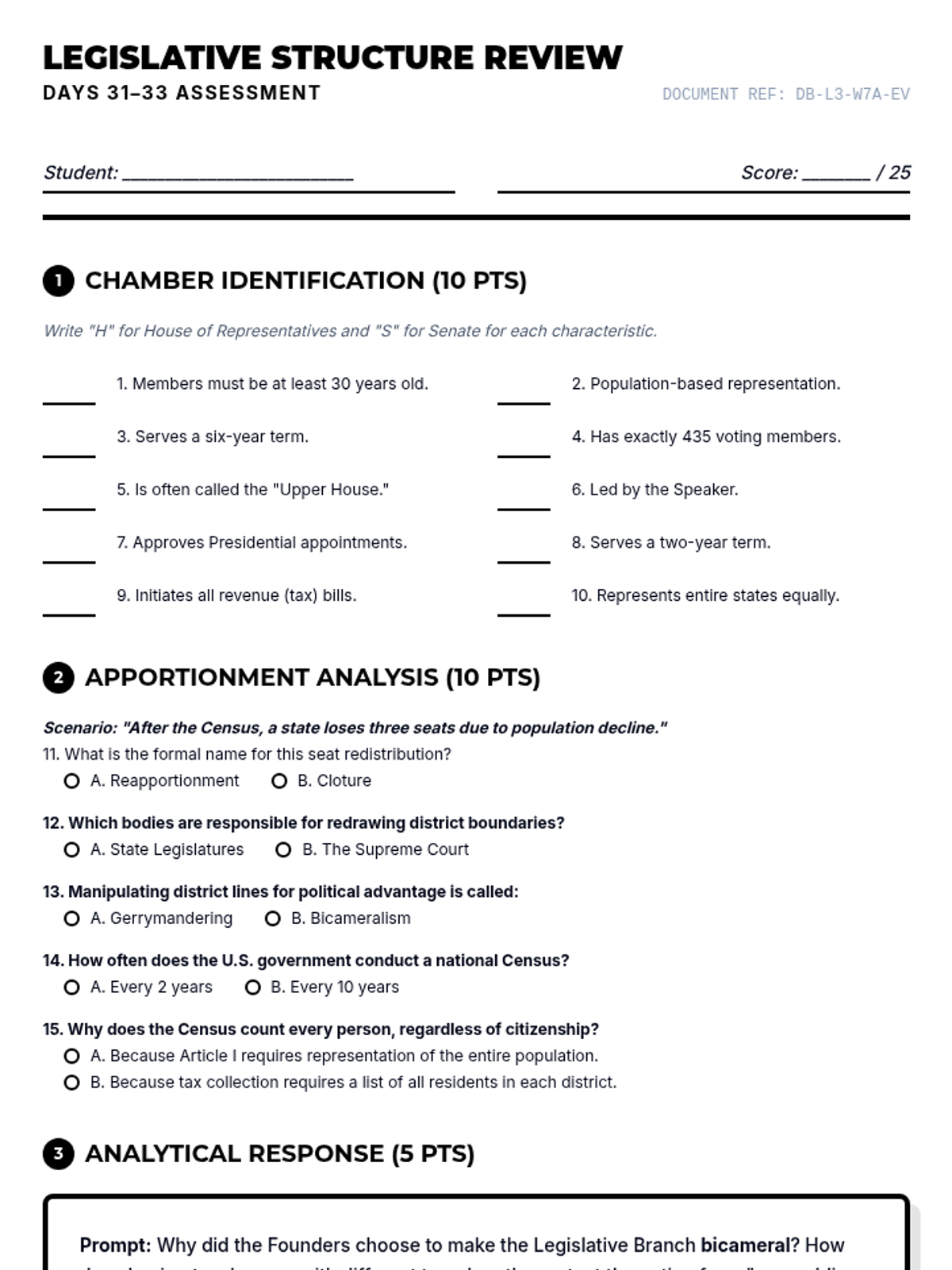
A section review assessment for the structure of Congress, covering House and Senate characteristics, reapportionment, and the logic of bicameralism. Optimized for black and white printing. Revised for point allocation consistency and layout.
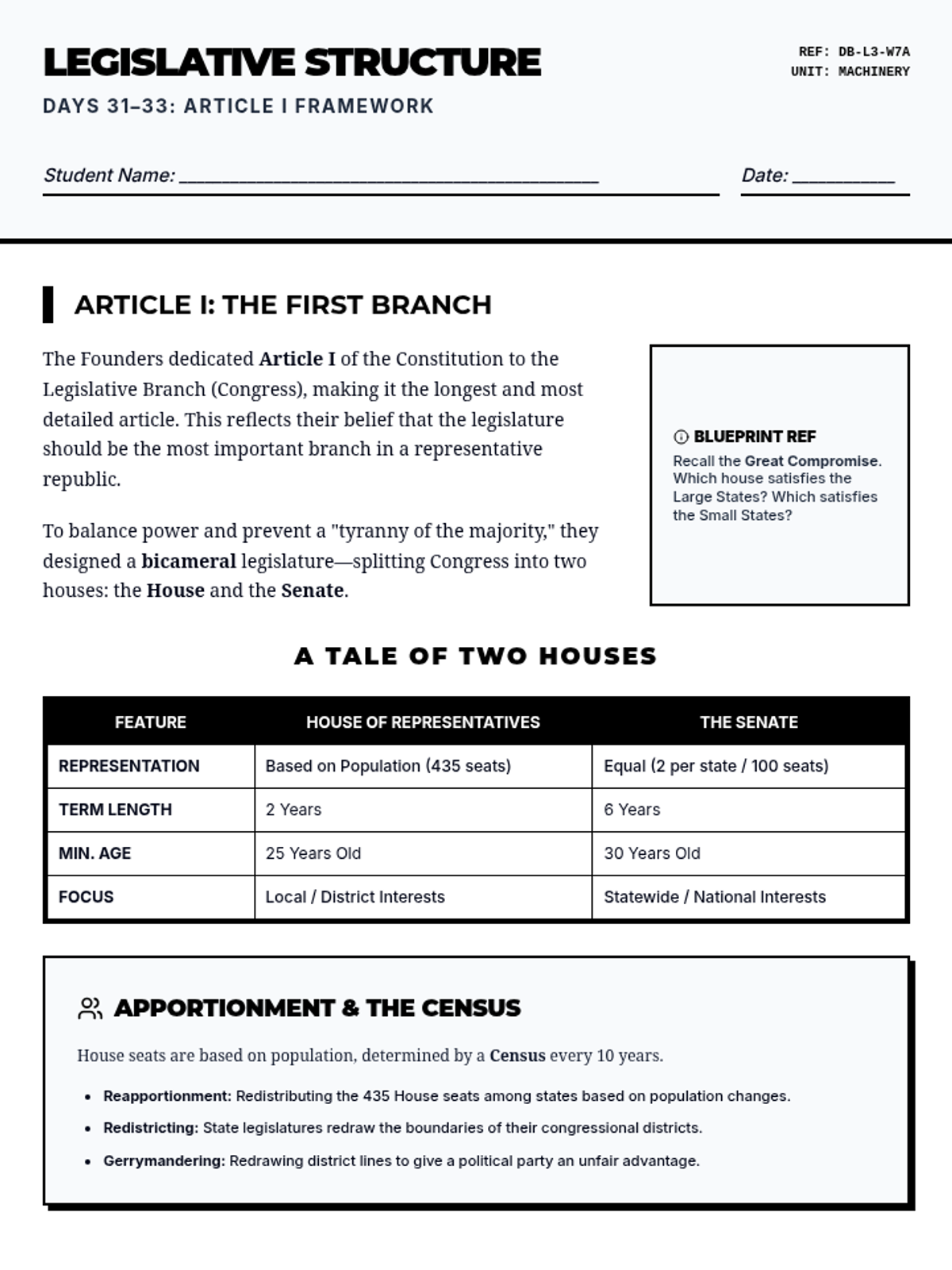
An instructional reader on the structure of the U.S. Congress, covering Article I, bicameralism, the differences between the House and Senate, and the process of apportionment and redistricting. Optimized for B&W printing. Revised for better page breaks and markup rendering.
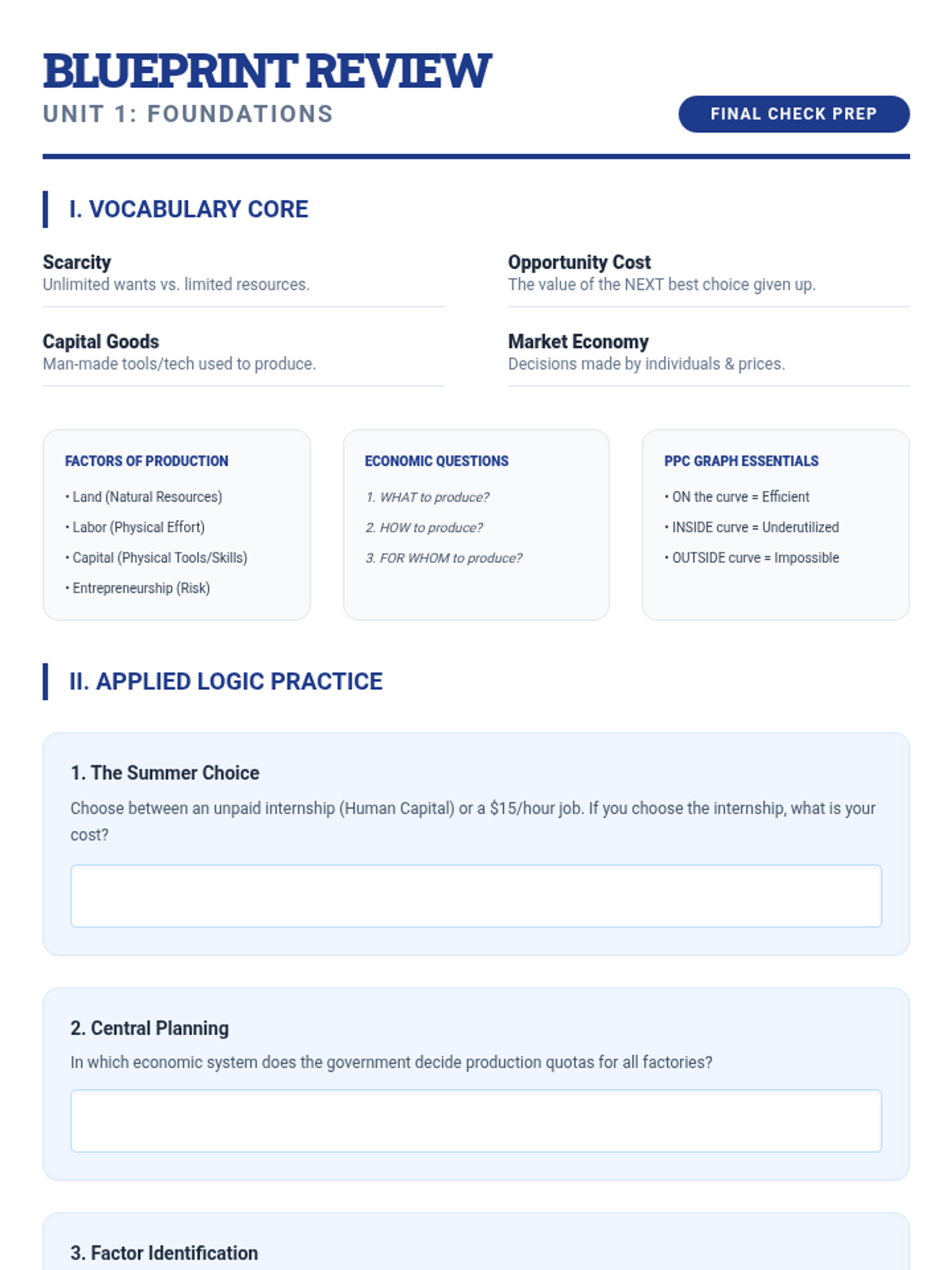
A comprehensive review guide for Unit 1. Revised for page breaks, work area sizing, and icon rendering reliability. Consolidated into two efficient pages.
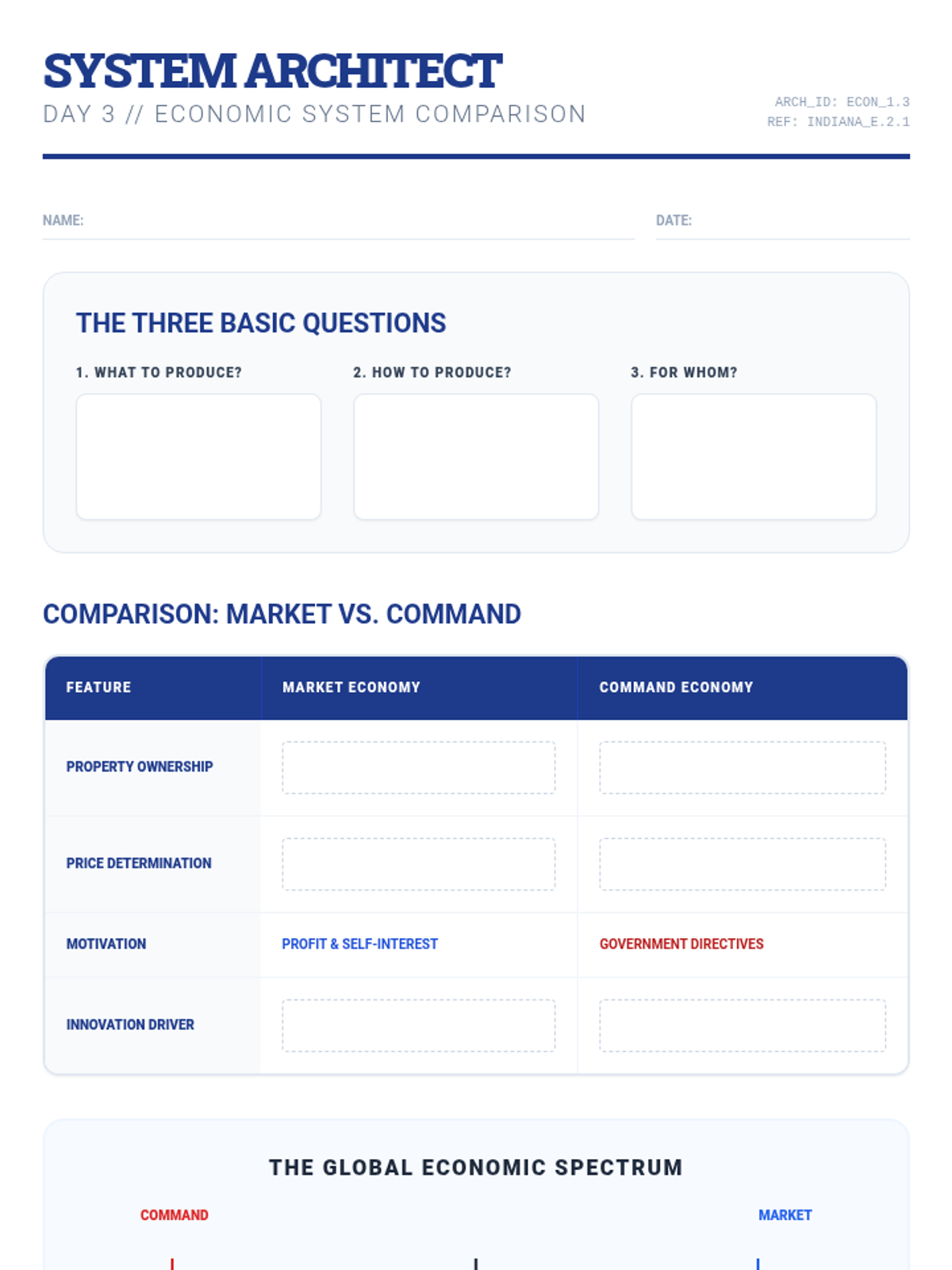
A Day 3 worksheet for comparing Market, Command, and Mixed economic systems. Revised to a light theme for printability, with fixed page breaks and larger work areas. Handout is now a single efficient page.
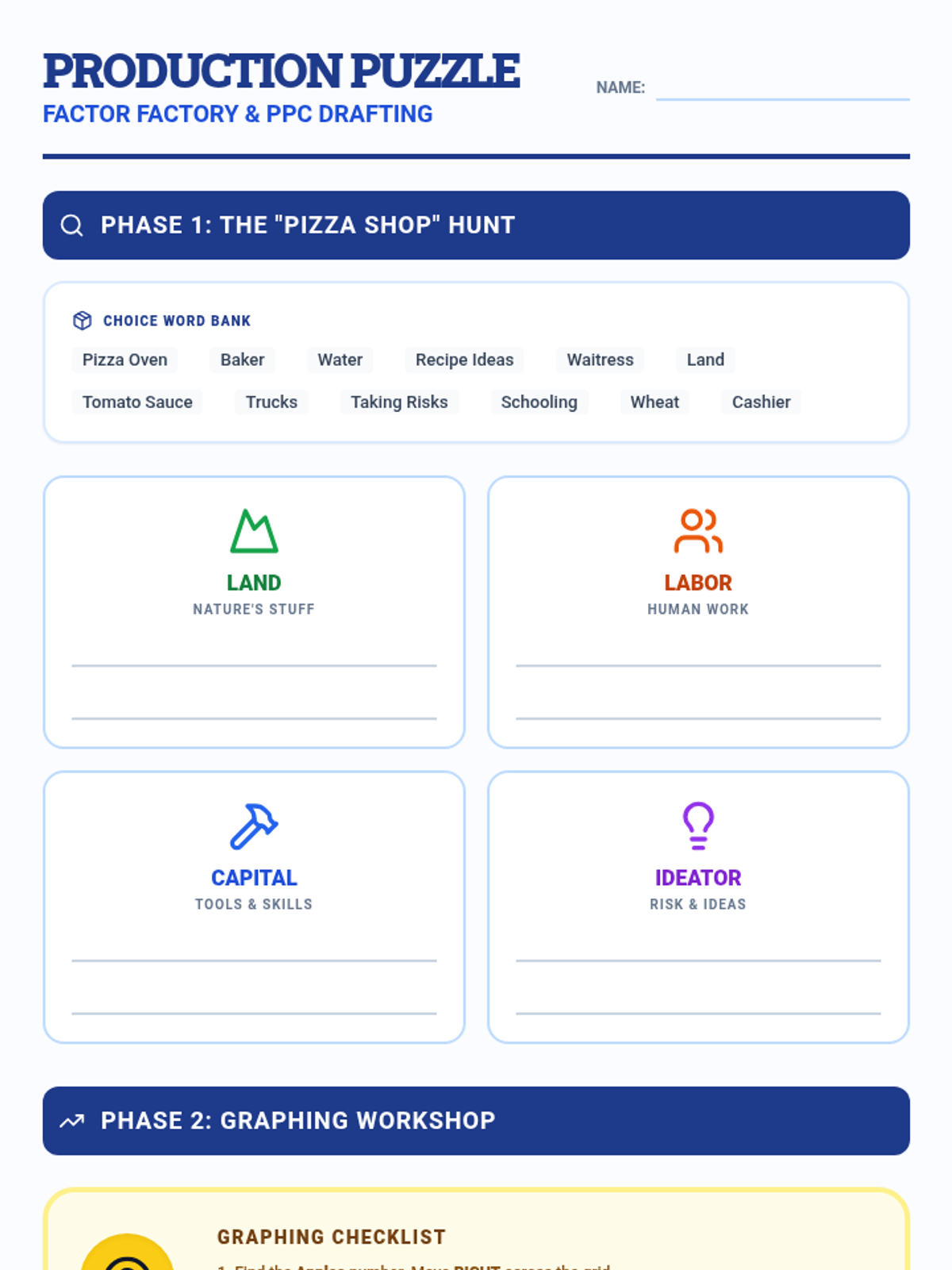
A hands-on activity sheet for Day 2 focused on identifying Factors of Production and plotting a Production Possibilities Curve (PPC). Updated with visual icons for readers, a "Graphing Reminder" scaffold for math support, and enhanced axis labels.
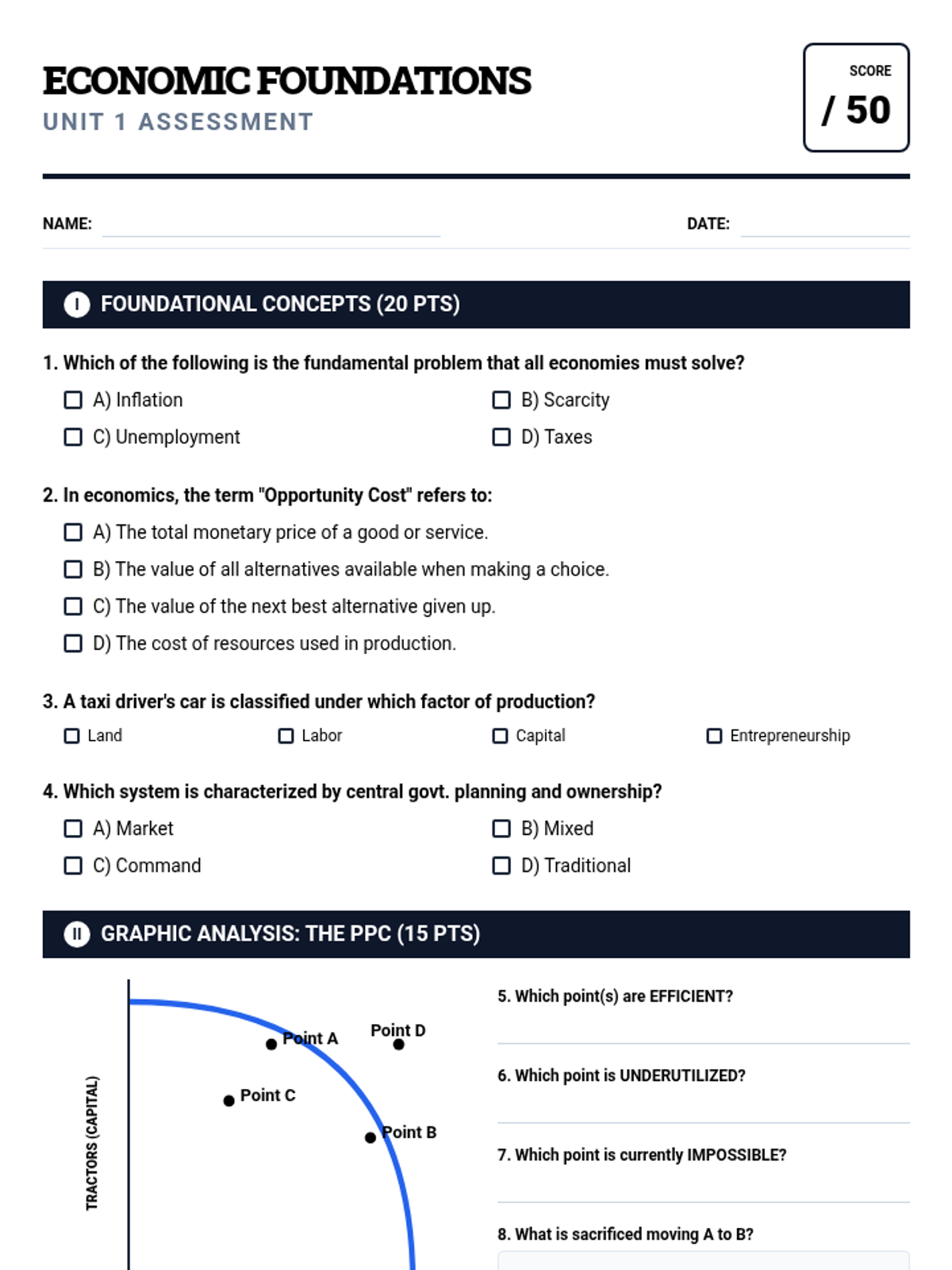
A summative Unit 1 assessment covering Scarcity, Factors of Production, PPC analysis, and Economic Systems. Revised for graph rendering, work area sizing, and label clarity. Compacted to fit on fewer pages.
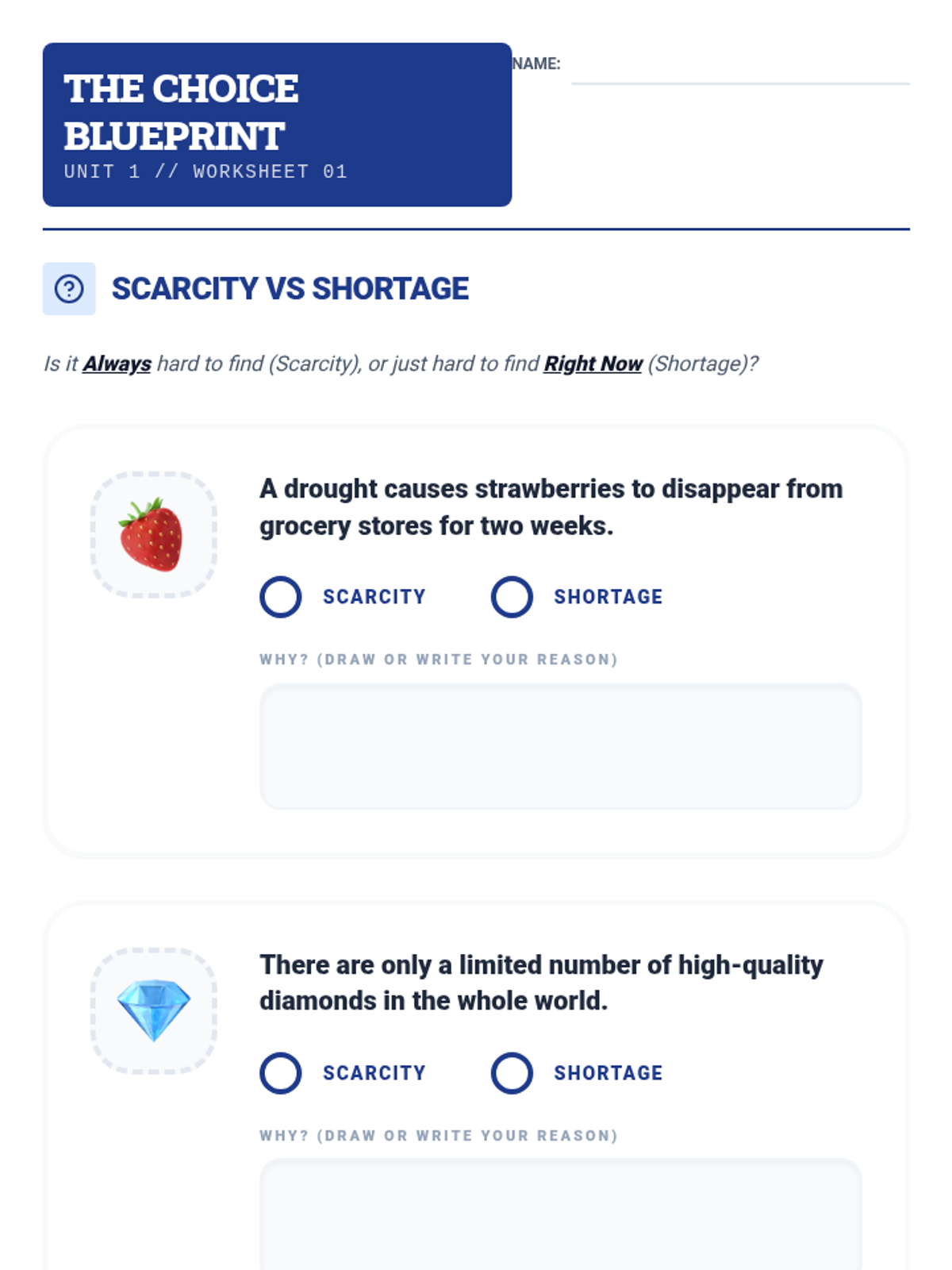
A student-facing worksheet for Day 1 covering Scarcity, Shortage, and Opportunity Cost. Updated with visual scenarios, simplified text for struggling readers, and "Draw or Write" response areas. Revised for symmetry in the T-account section and enhanced contrast for labels.
A comprehensive instructional slide deck covering Scarcity, Factors of Production, and Economic Systems. Updated with movement breaks, simplified text for readers, and a dedicated graphing boot camp section. Revised for contrast, accurate graphing visuals, and better layout utilization.
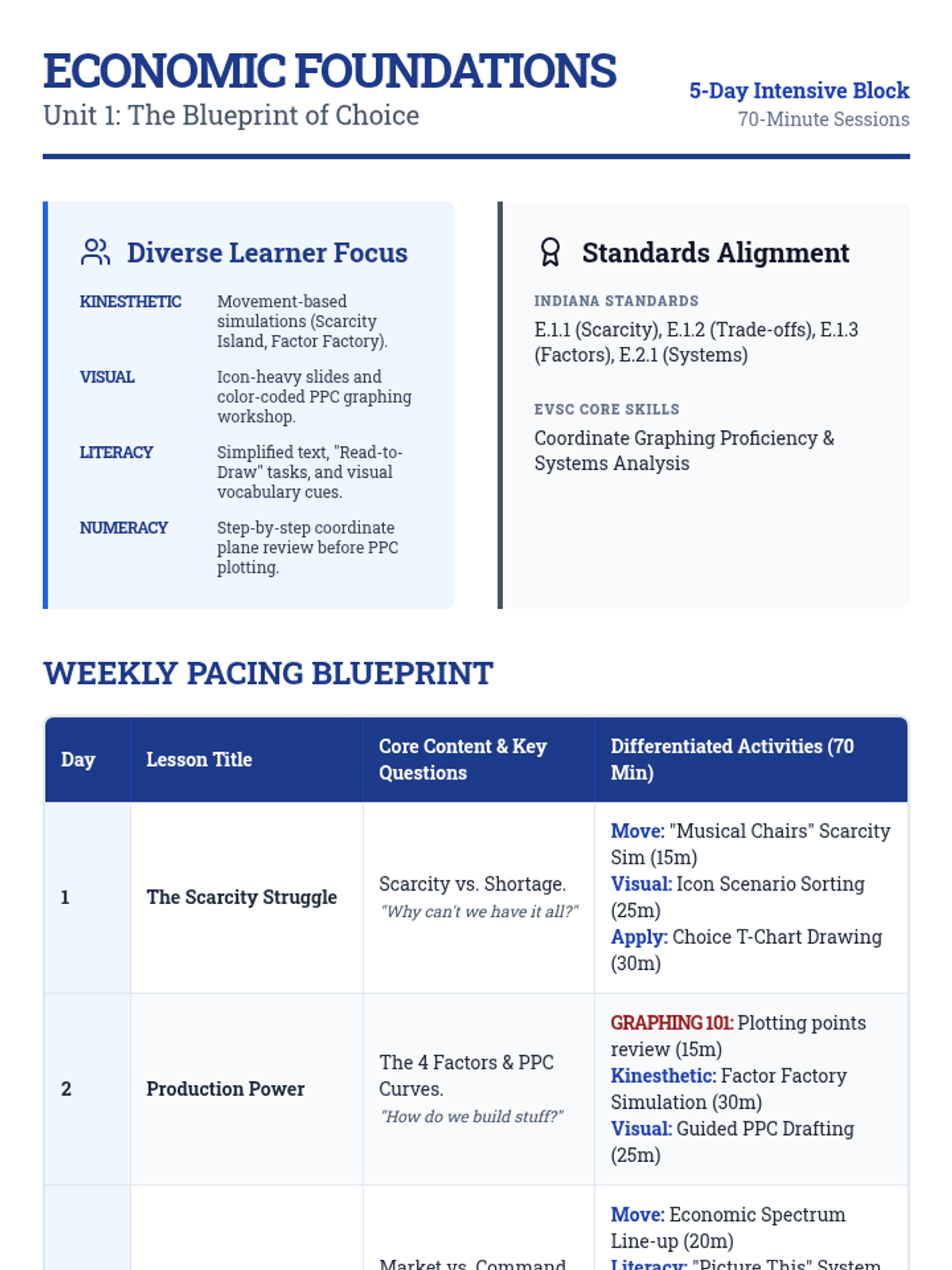
A comprehensive 5-day unit plan overview for Economics Unit 1, updated with specific activities for diverse learners and graphing support. Revised for improved visual rhythm and contrast.
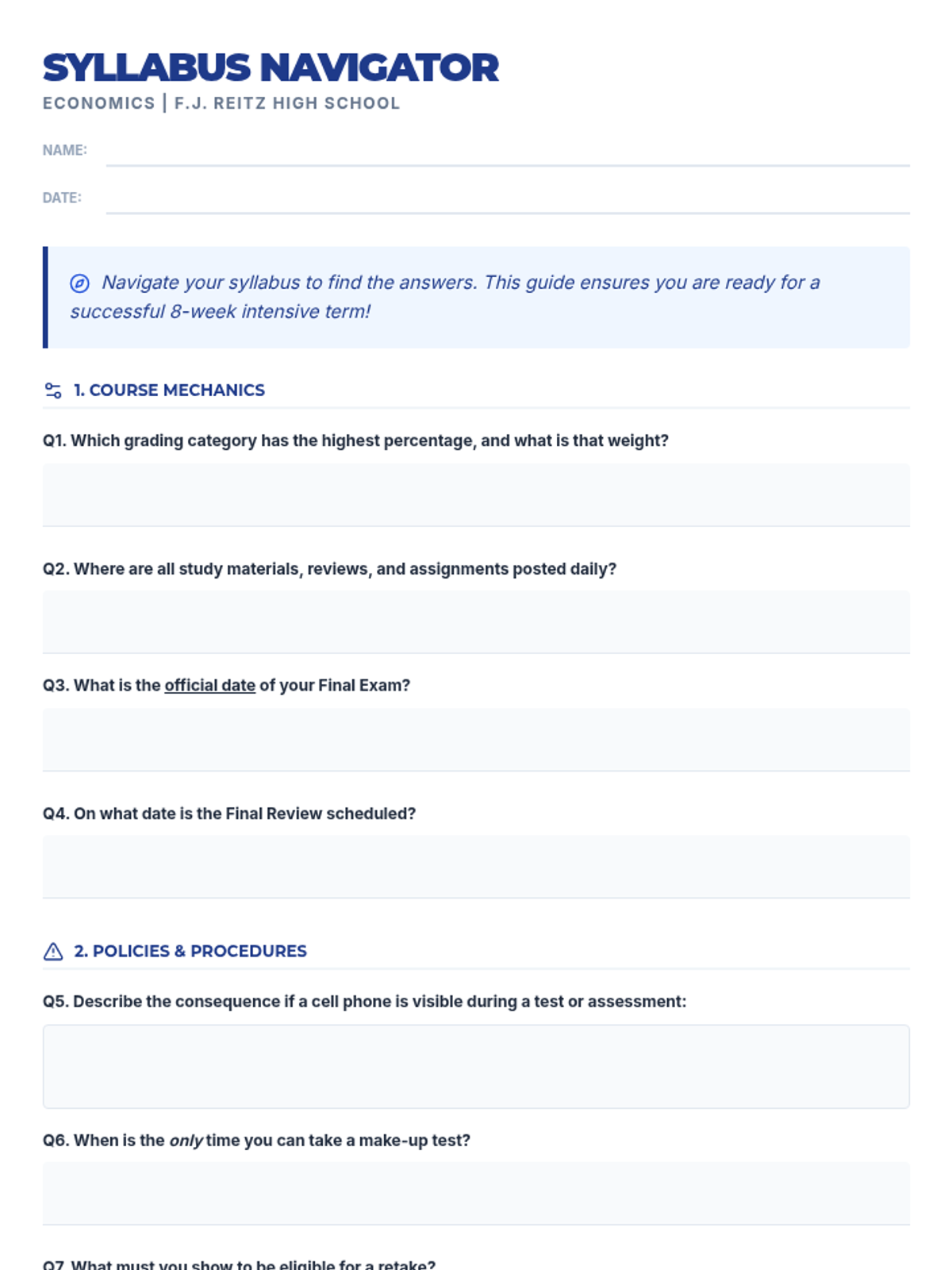
A student-facing scavenger hunt worksheet designed to ensure students thoroughly read and understand the Economics syllabus policies, grading, and schedule.
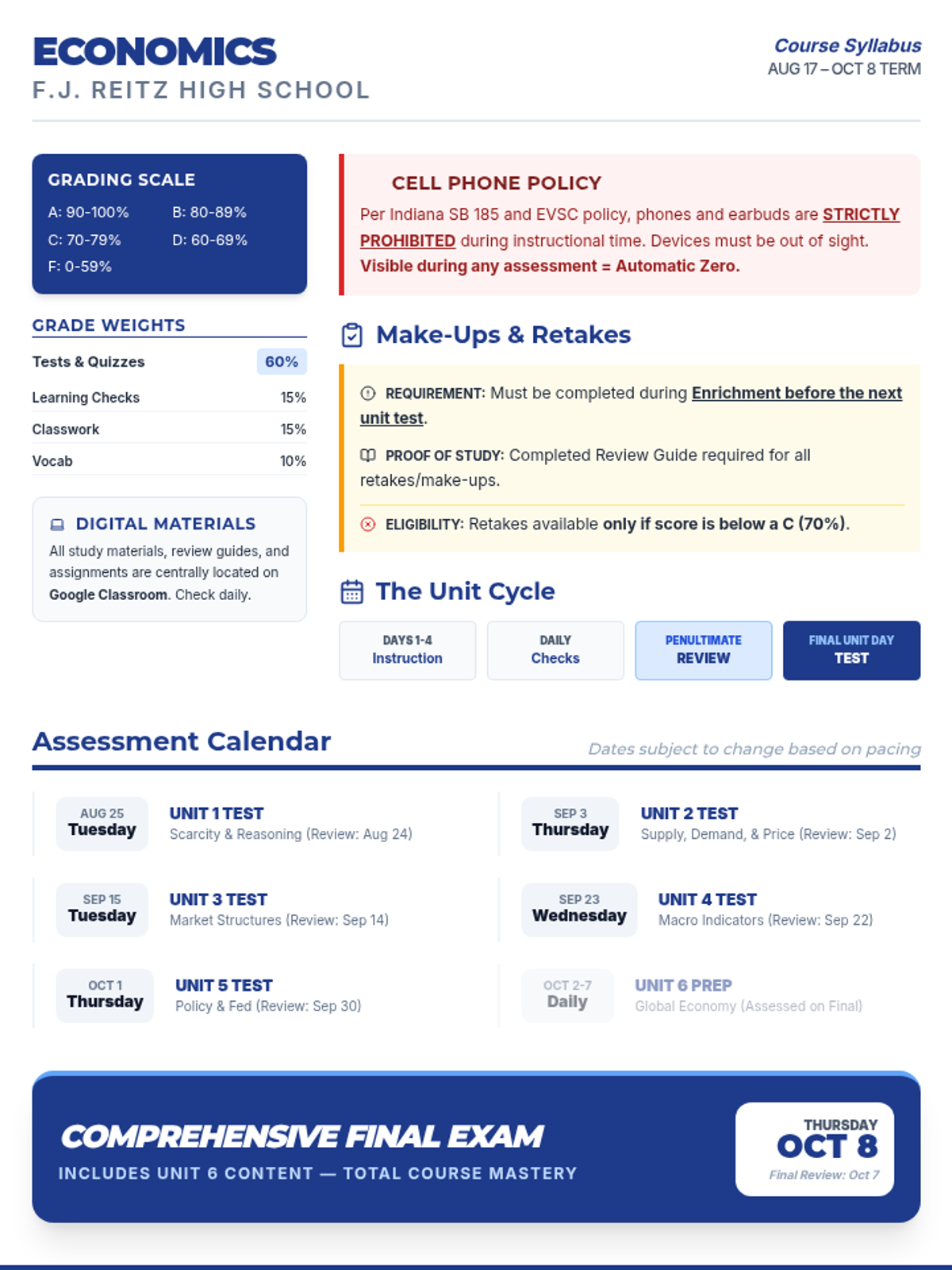
Updated Economics syllabus removing the Unit 6 test and incorporating it into the final exam on October 8th, with a comprehensive final review scheduled for October 7th.
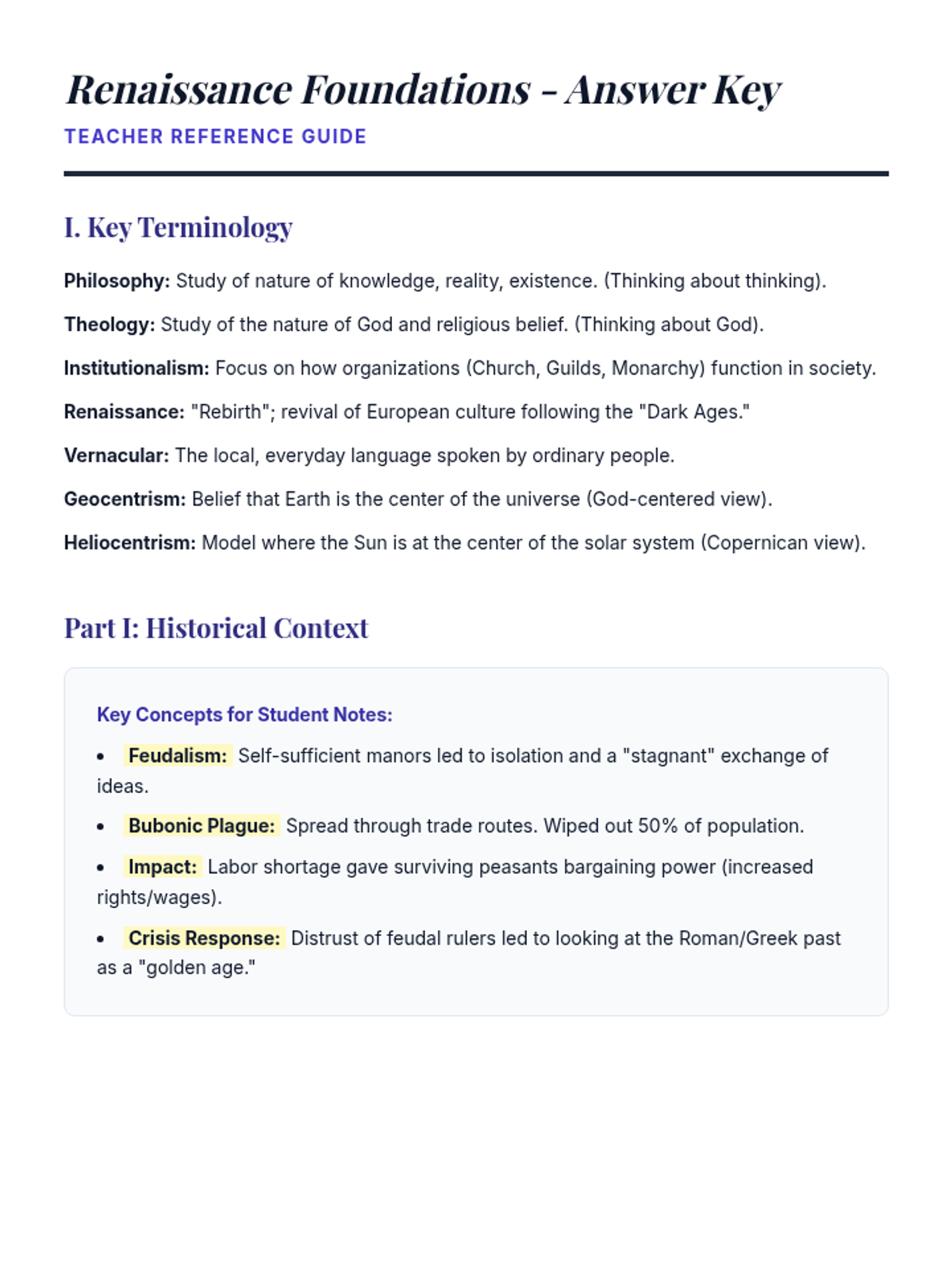
A teacher answer key for the expanded Renaissance comprehensive notes, providing specific CCOT analysis points and instructional guidance for the synthesis reflection.
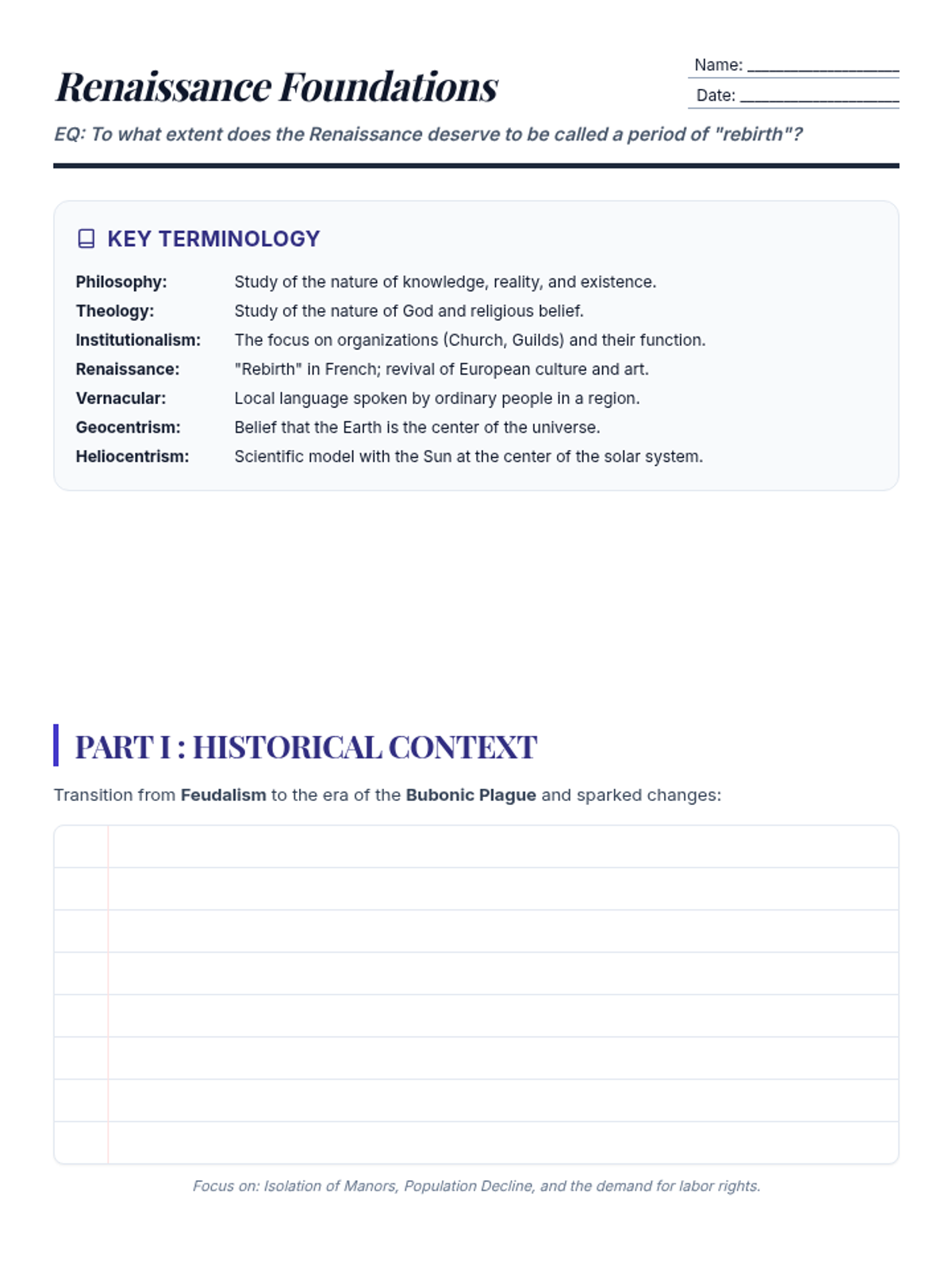
An expanded scaffolded notes document for the Renaissance unit, featuring a limited key terminology bank, college-lined note-taking spaces for historical context, and full-page case studies with dedicated CCOT analysis areas.
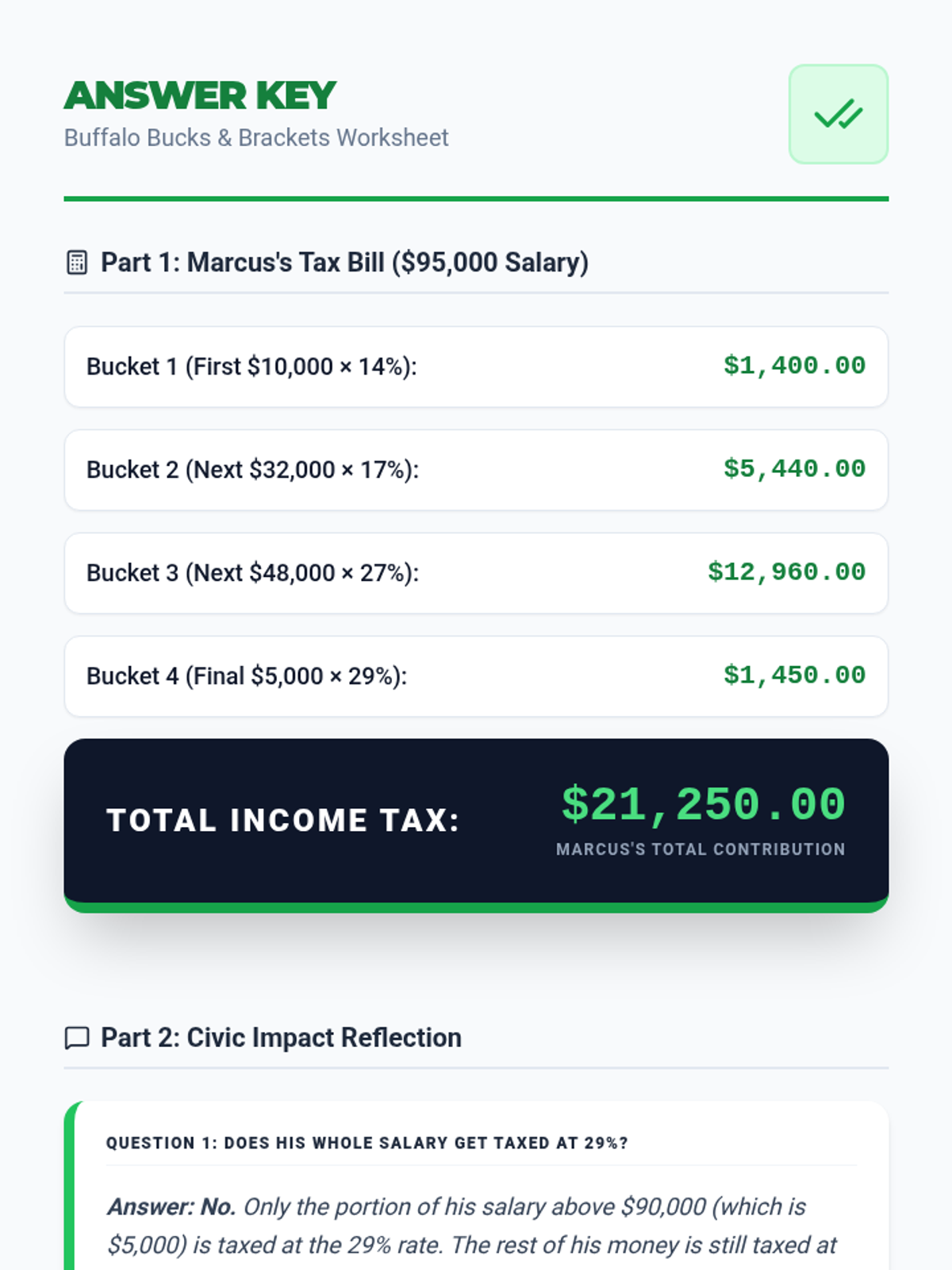
An updated answer key for the Buffalo Bucks worksheet, now including the Step 1 bucket division answers ($10k, $32k, $48k, $5k) alongside the full tax calculations.
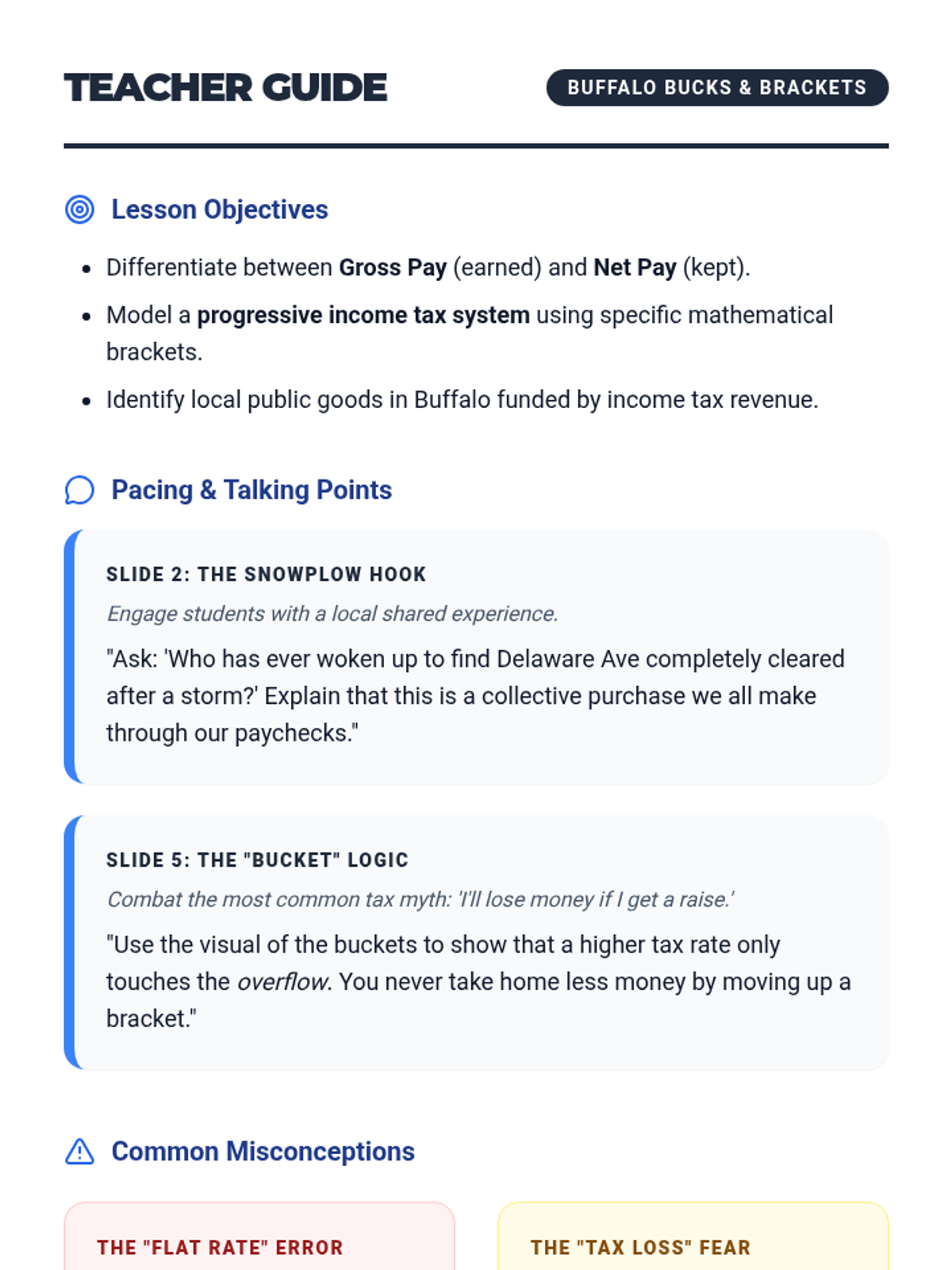
A teacher facilitation guide for the Buffalo Bucks lesson, with optimized page breaks and clear pedagogy for the tax bucket analogy.
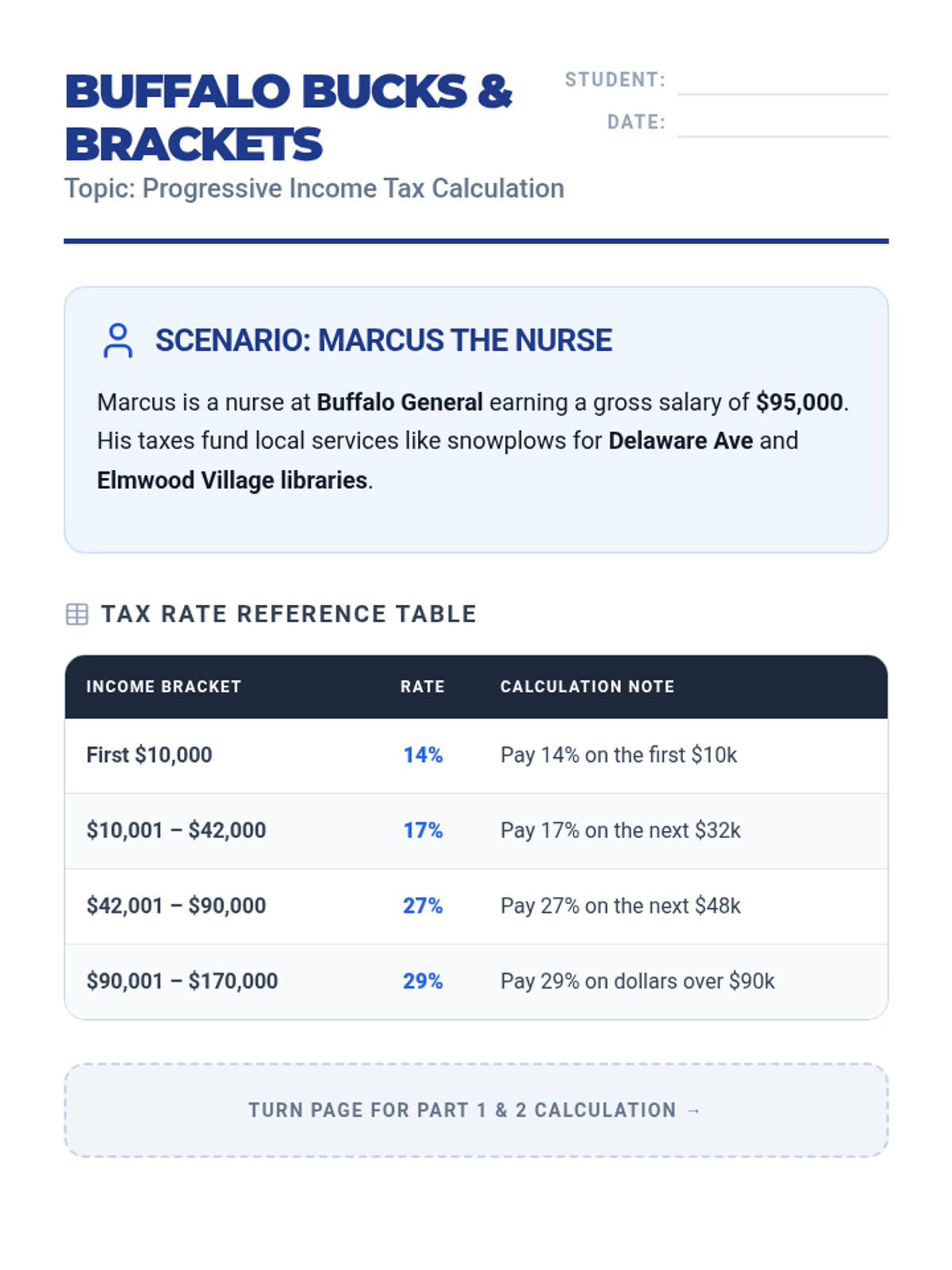
A student worksheet where they calculate the taxes for a Buffalo nurse earning $95,000 using the progressive tax system. Includes a new bucket division section on page 1 followed by multi-step calculations and reflection questions.
A visually engaging slide deck explaining the progressive tax system with a focus on Buffalo-specific examples like snowplows and libraries. Full brackets included.
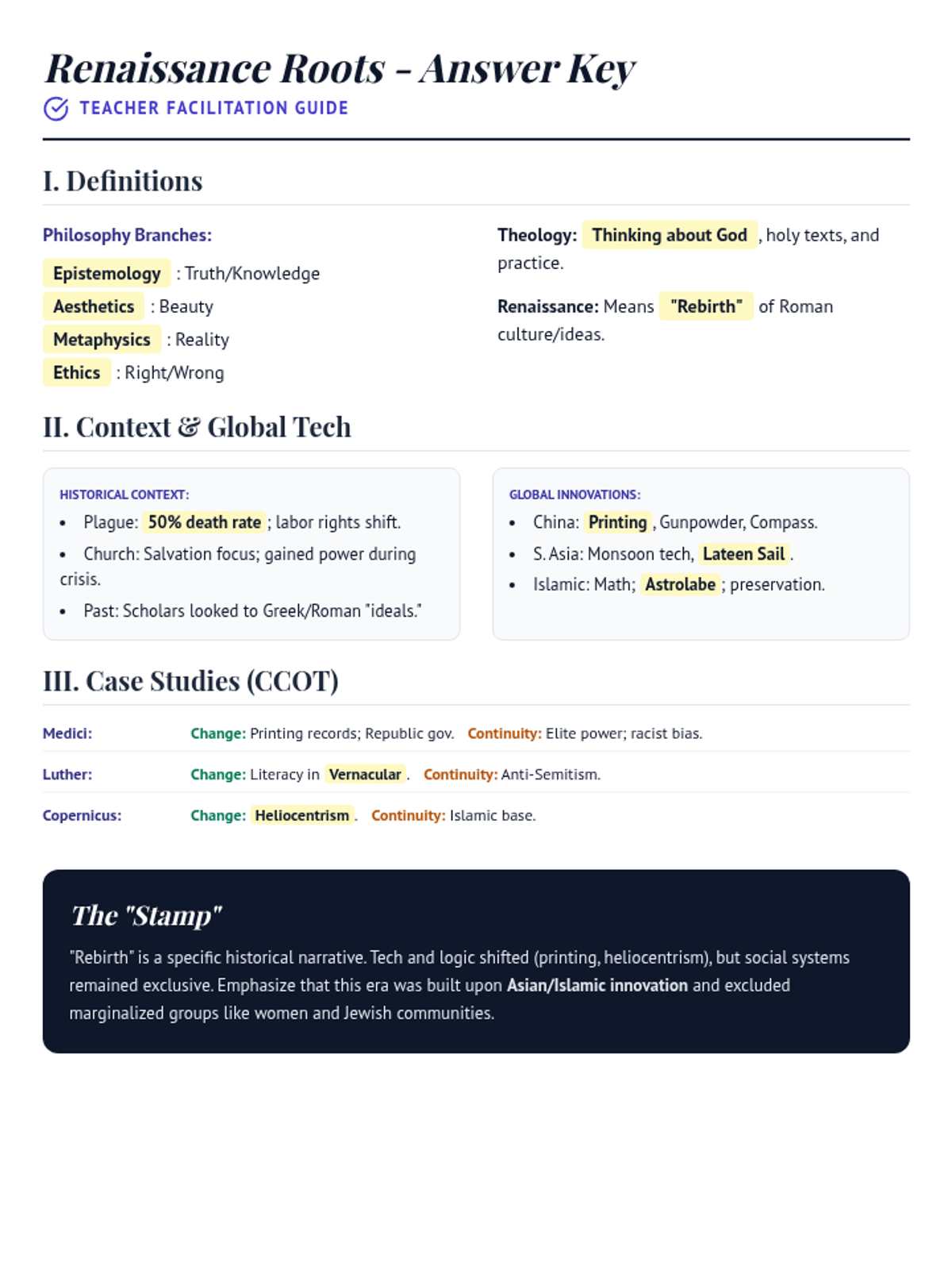
An answer key for the Renaissance Roots Notes, providing teacher references for vocabulary, historical context, and the CCOT analysis of key figures.
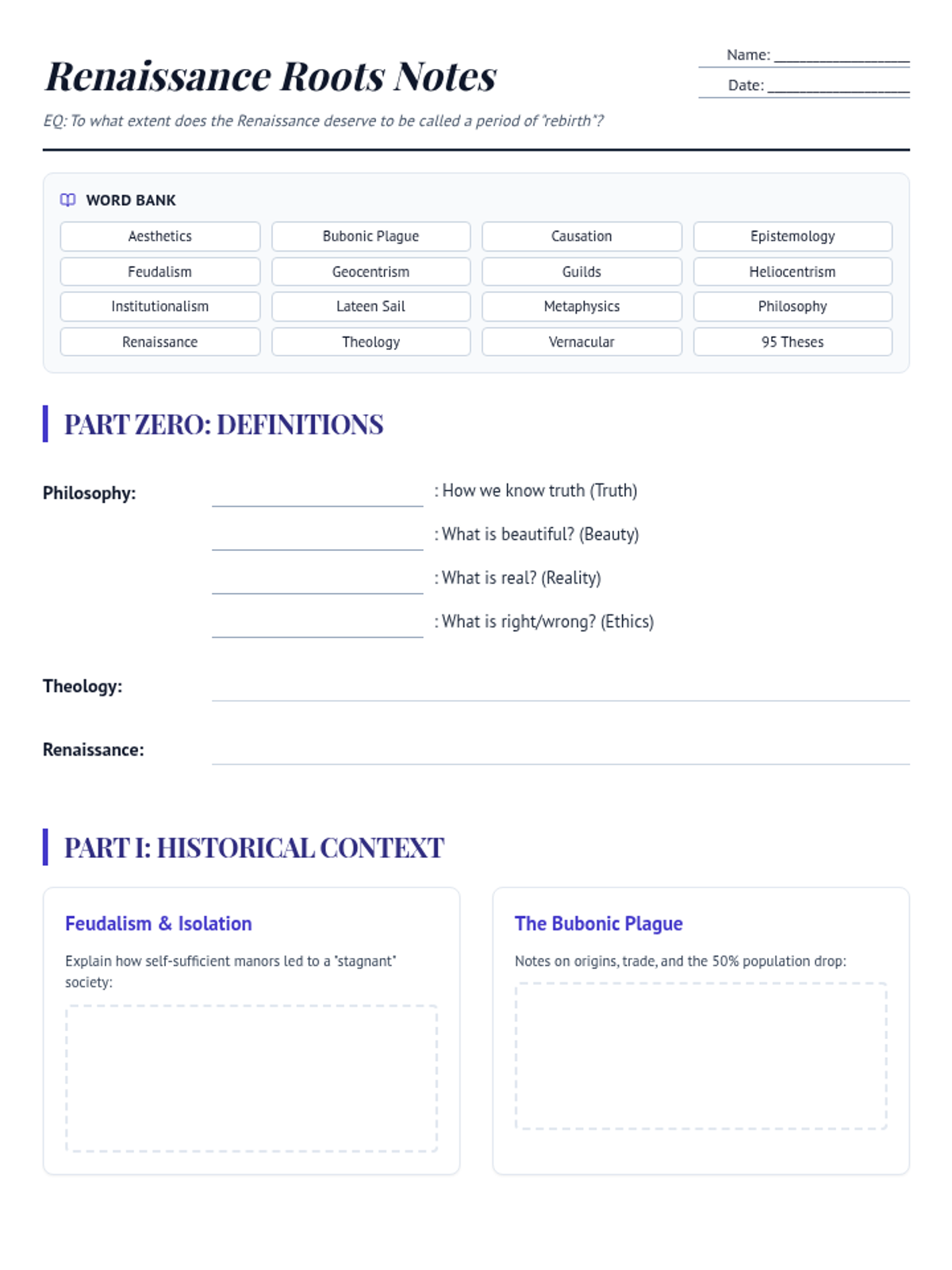
A scaffolded notes document for the Renaissance unit, featuring a vocabulary word bank, guided sections for definitions, historical context, and case studies of key figures like Medici, Luther, and Copernicus.
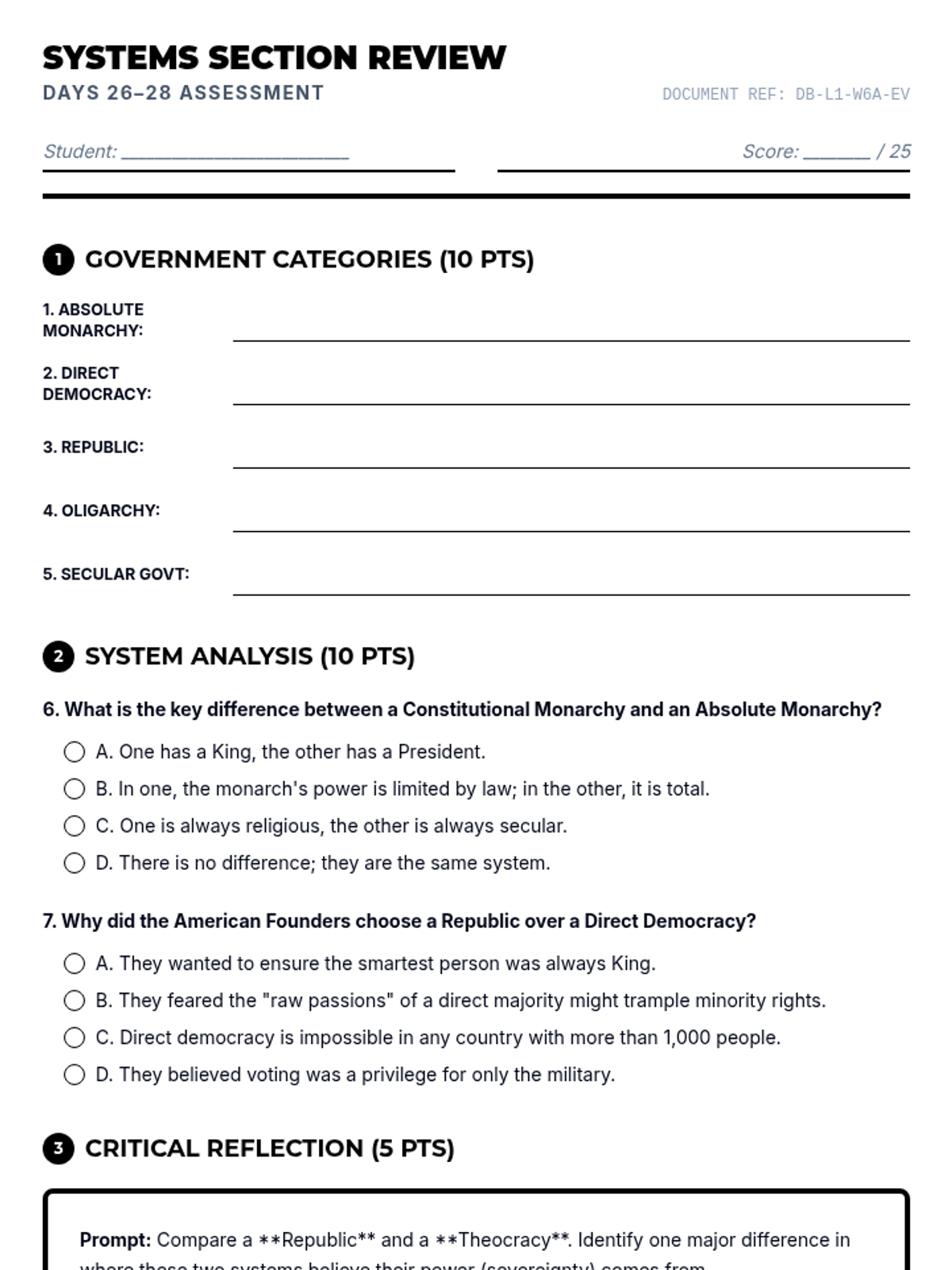
A section review assessment for different government systems, featuring matching, multiple choice, and a comparison constructed response. Optimized for black and white printing.
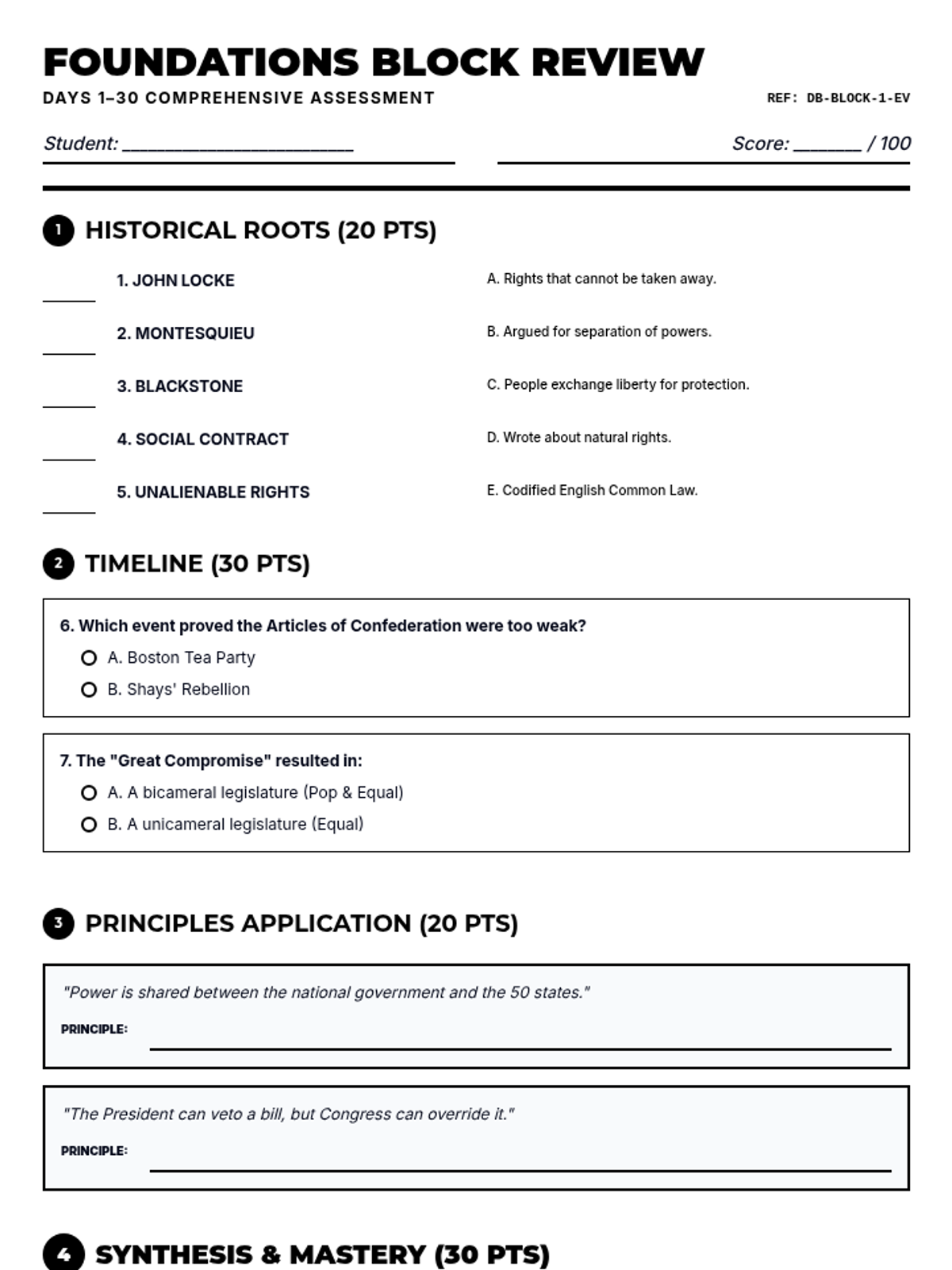
A comprehensive block review assessment for Lesson 1, covering the first 30 days of instruction. Includes matching, multiple choice, scenario application, and a synthesis essay prompt. Optimized for B&W printing. Revised for page breaks and response space.
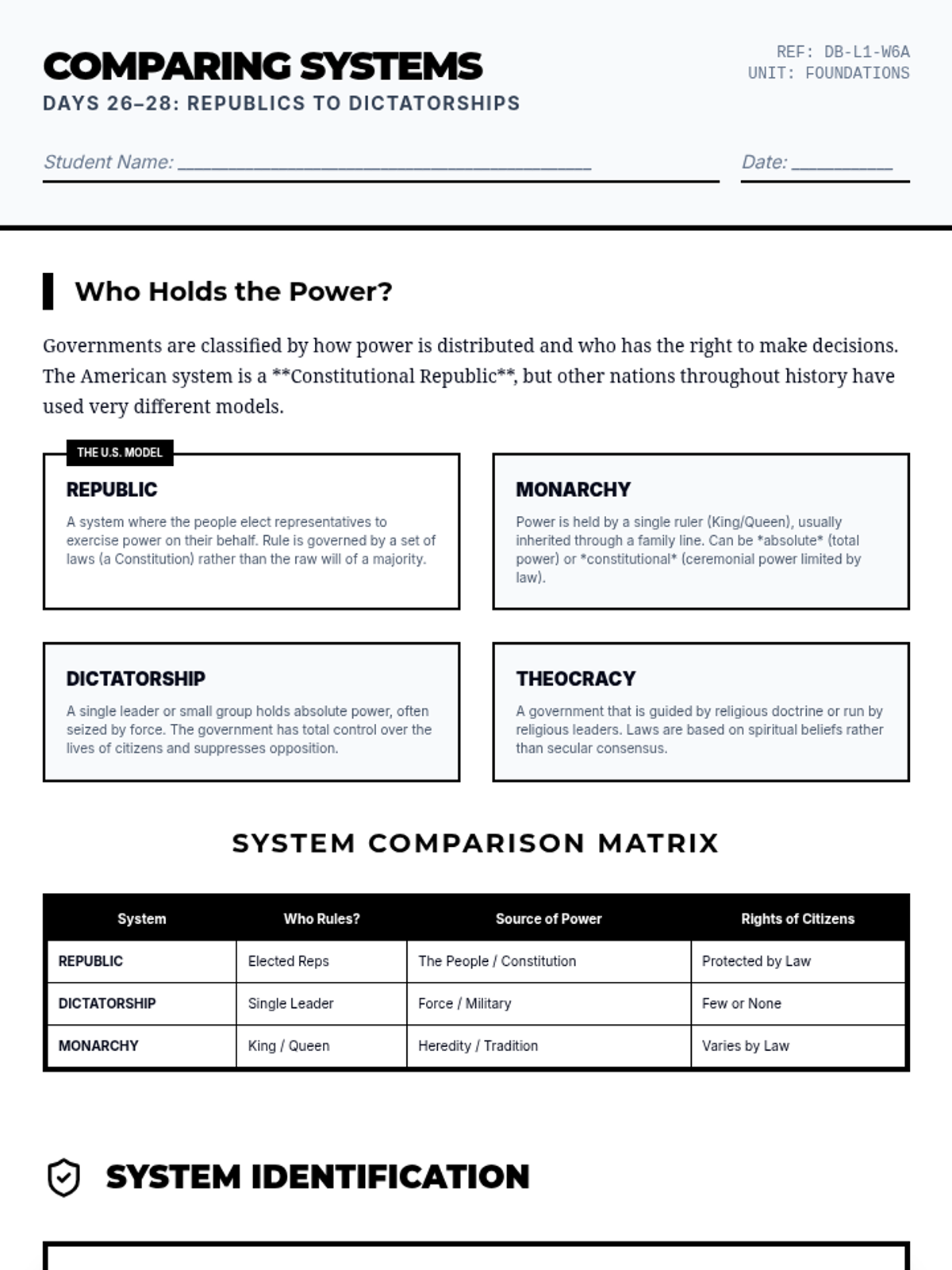
An instructional reader comparing different systems of government, including republics, monarchies, dictatorships, and theocracies. Designed for black and white printing. Revised for formatting, matrix completeness, and contrast.
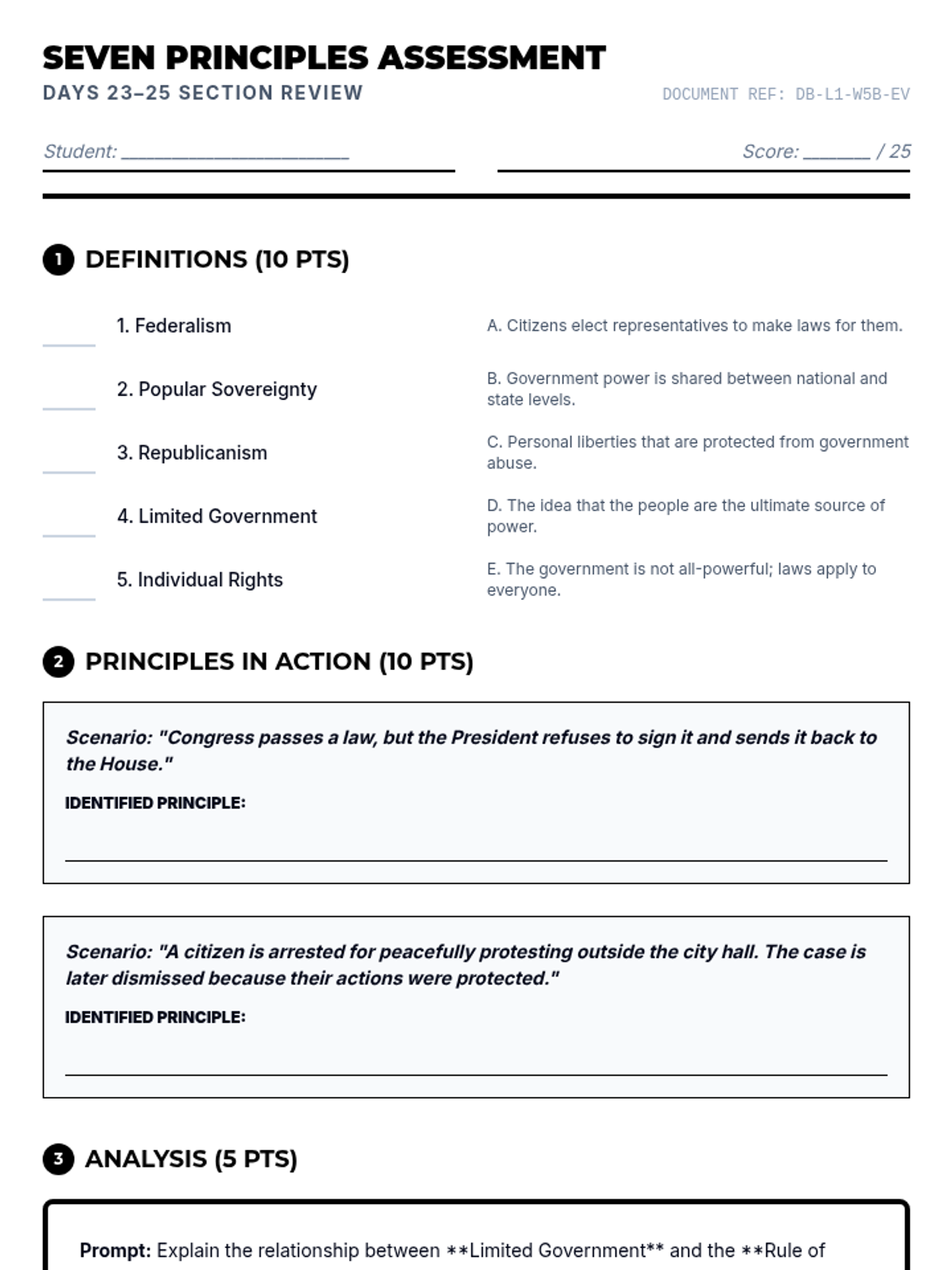
A section review assessment for the Seven Principles of the Constitution, featuring matching, scenario identification, and a short constructed response. Designed for black and white printing. Revised for point allocation consistency and layout.
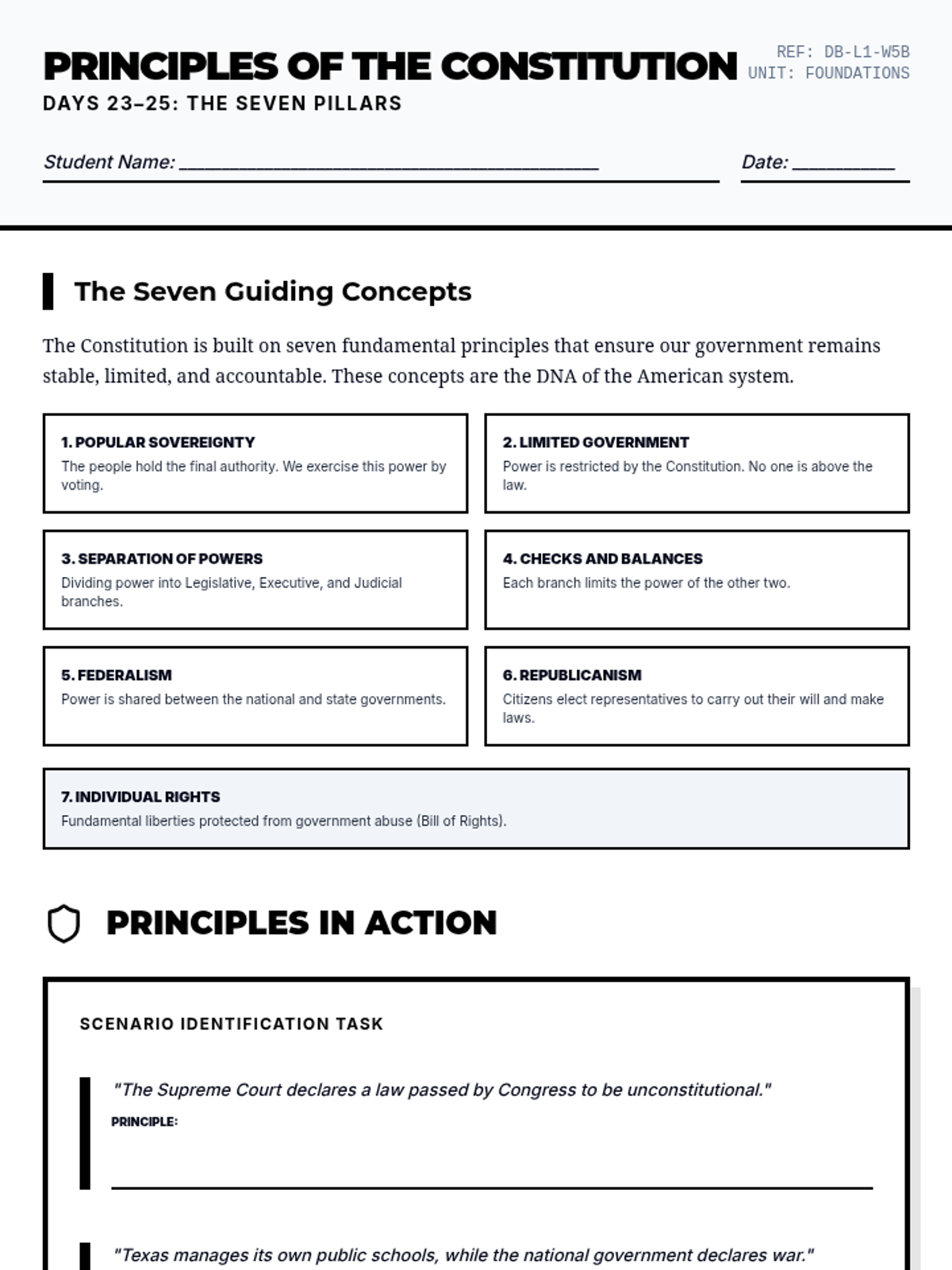
An instructional reader covering the Seven Principles of the Constitution, including definitions and application scenarios. Designed for black and white printing. Revised for text contrast and readability.
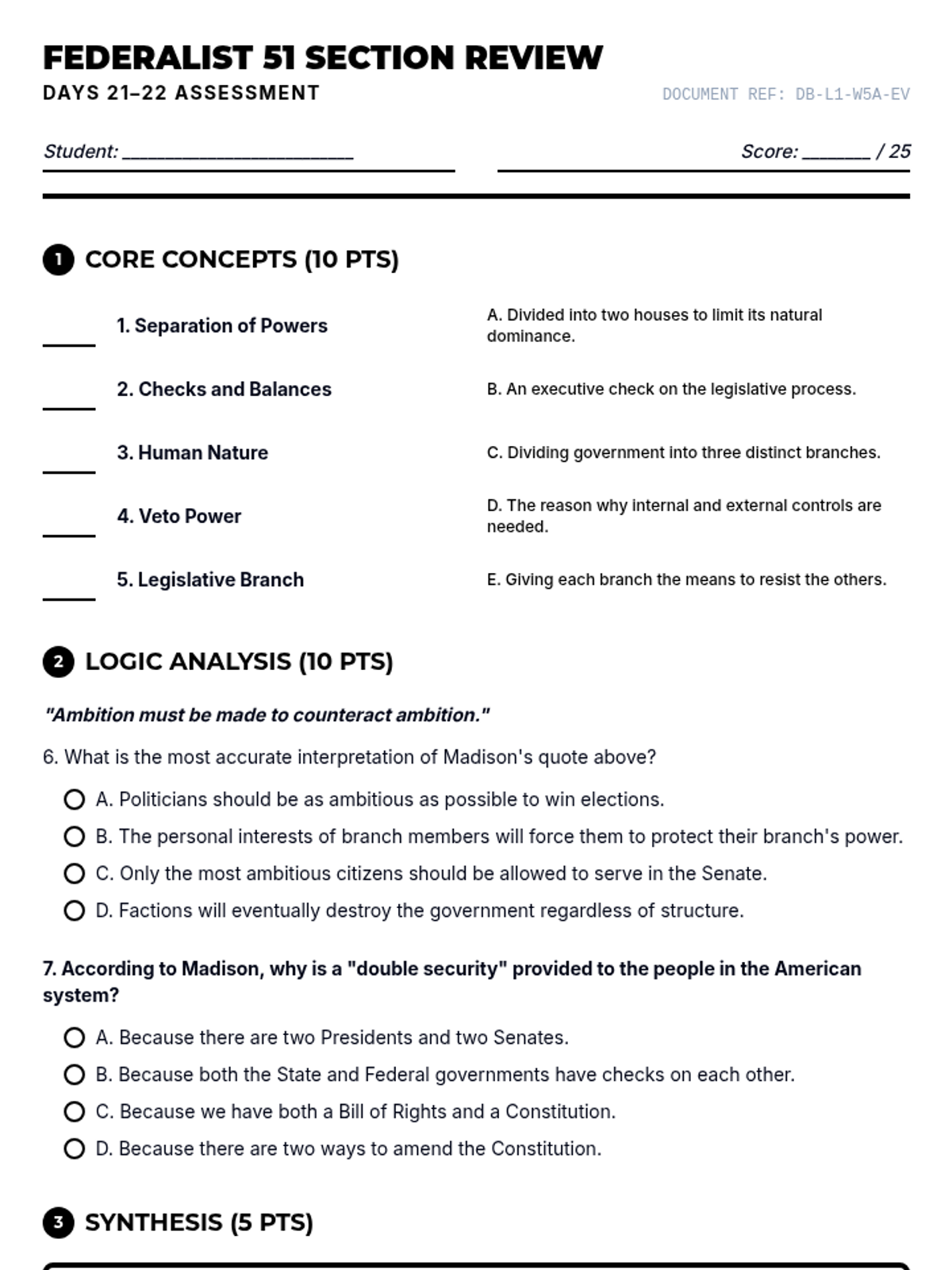
A section review assessment for Federalist No. 51, featuring matching, interpretation of key quotes, and a synthesis short constructed response. Designed for black and white printing. Revised for formatting and response space.
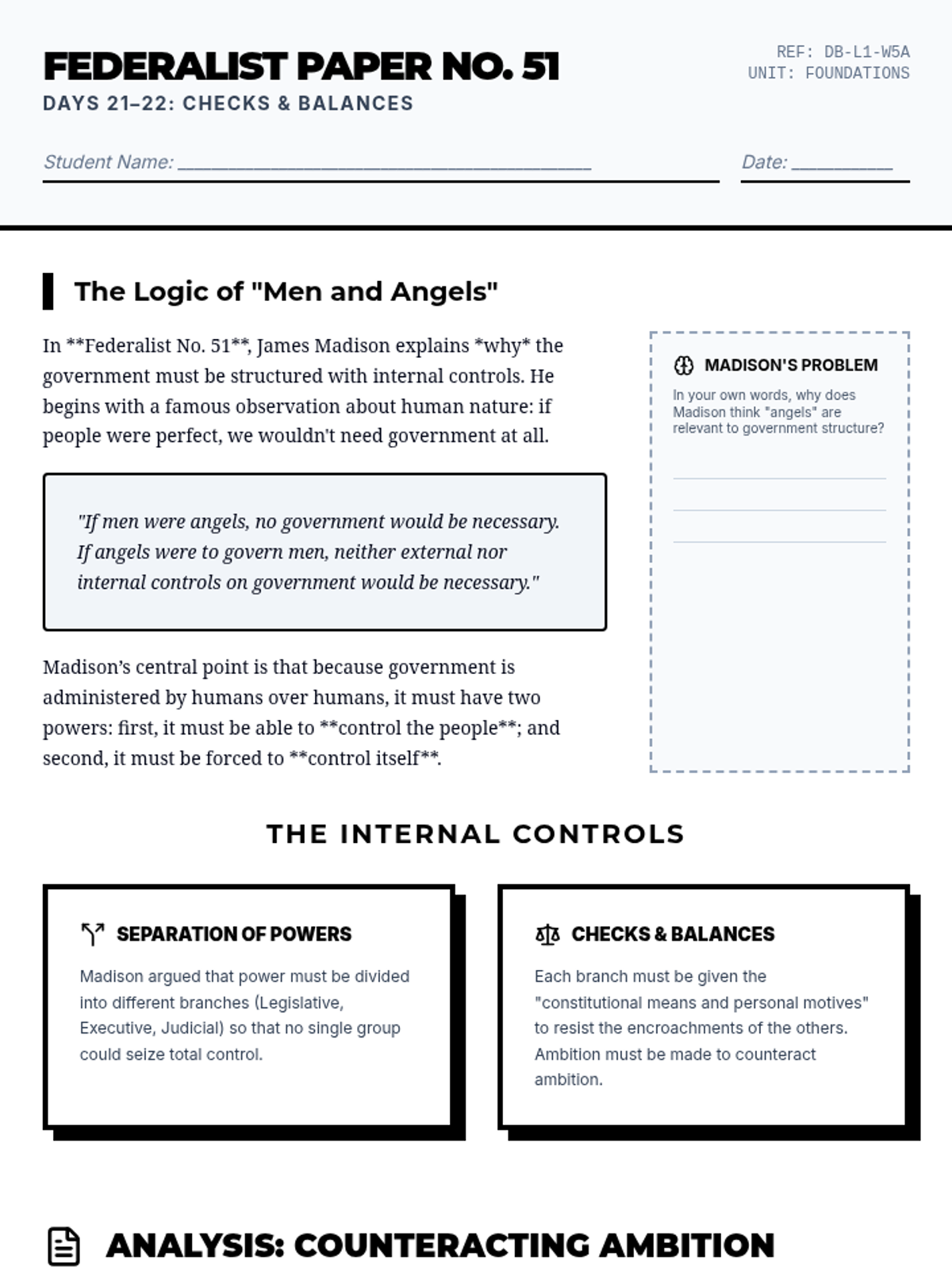
An instructional reader on Federalist No. 51, exploring checks and balances, separation of powers, and Madison's view on human nature. Designed for high-contrast black and white printing.
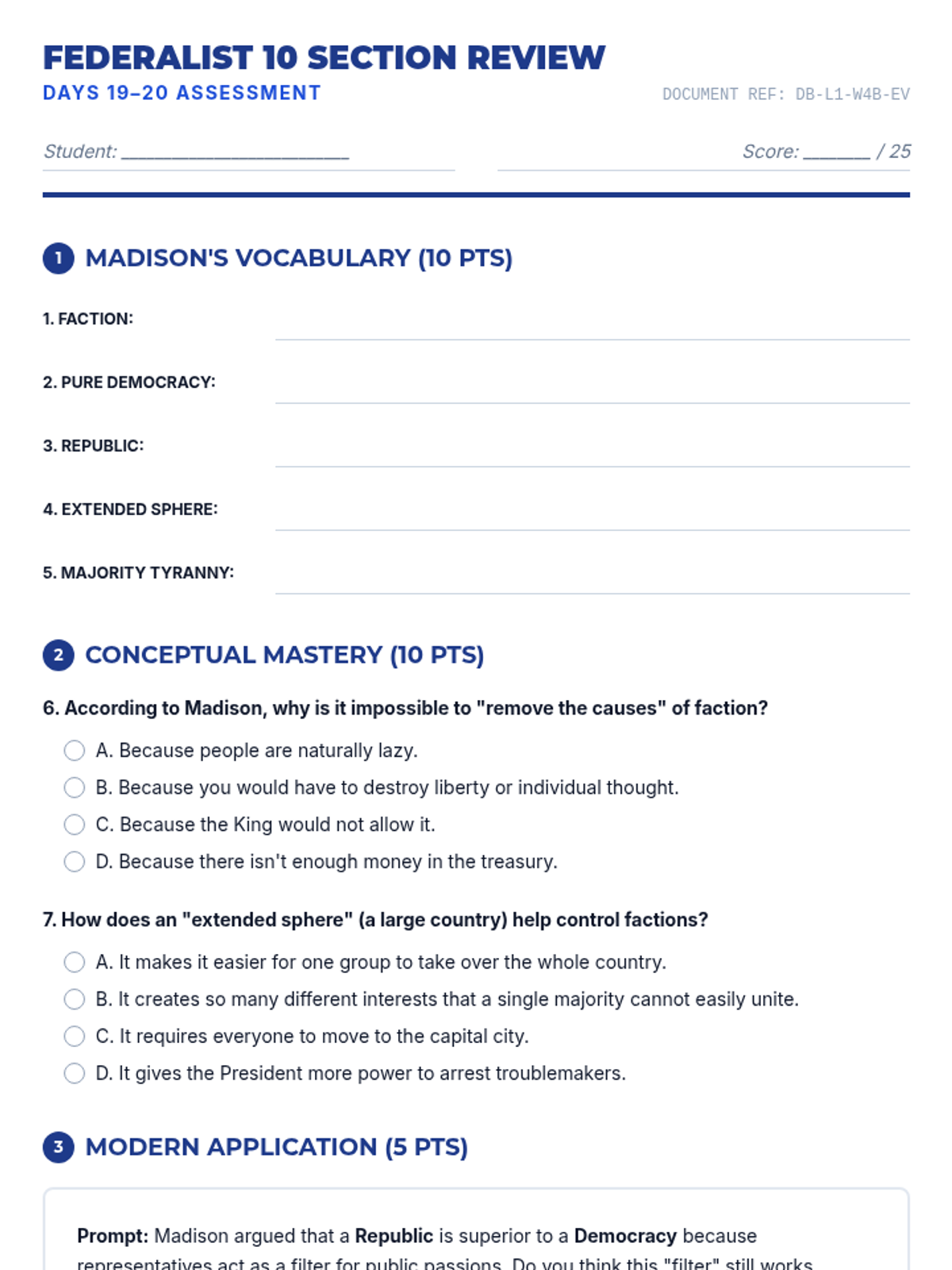
A section review assessment for Federalist No. 10, covering key vocabulary, conceptual mastery of factions, and a modern application constructed response. Revised for better page breaks, alignment, and point distribution.
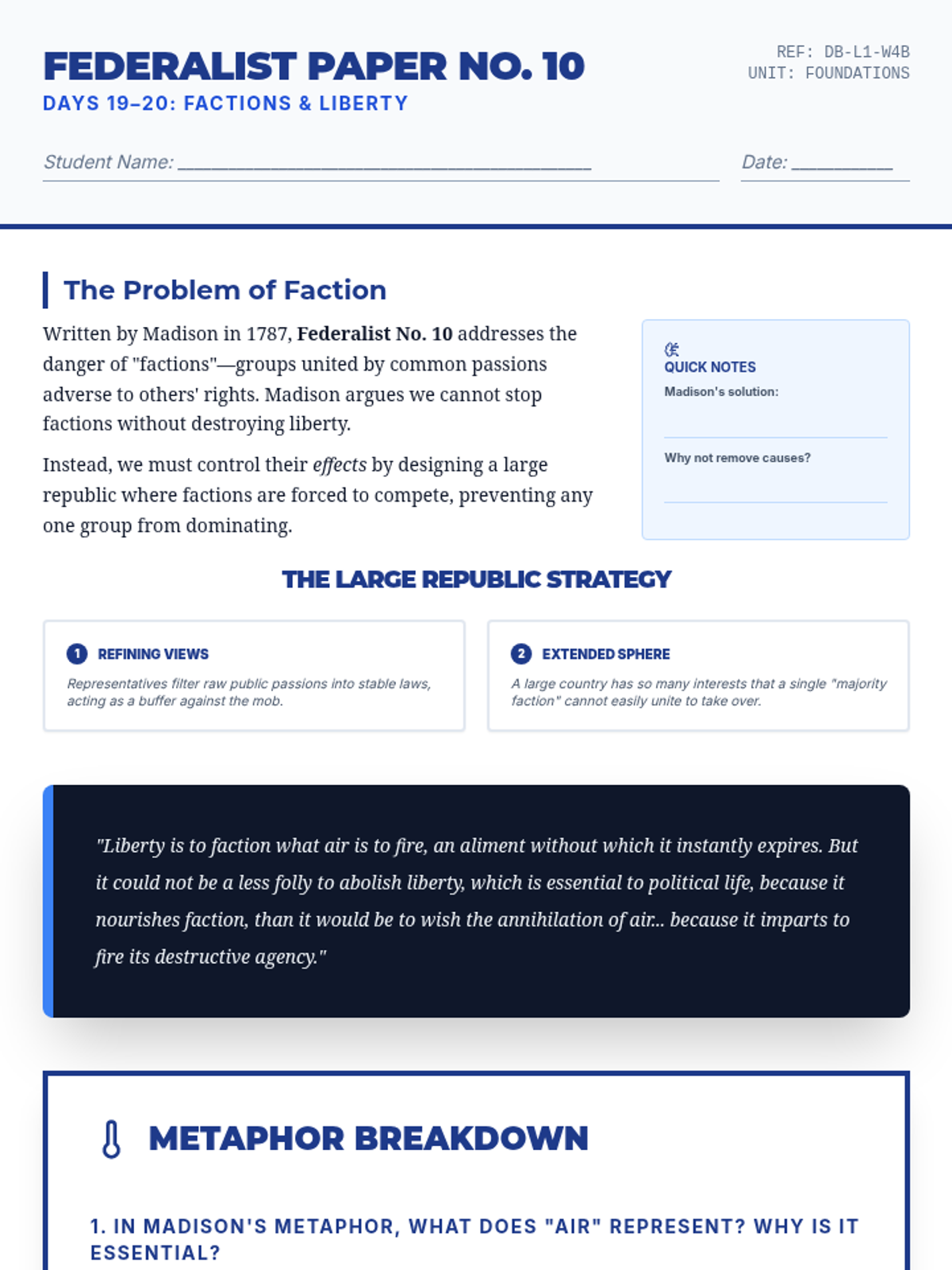
An instructional reader on Federalist No. 10, exploring James Madison's arguments on factions, liberty, and the benefits of a large republic. Revised for better page breaks, consolidated layout, and increased response space.
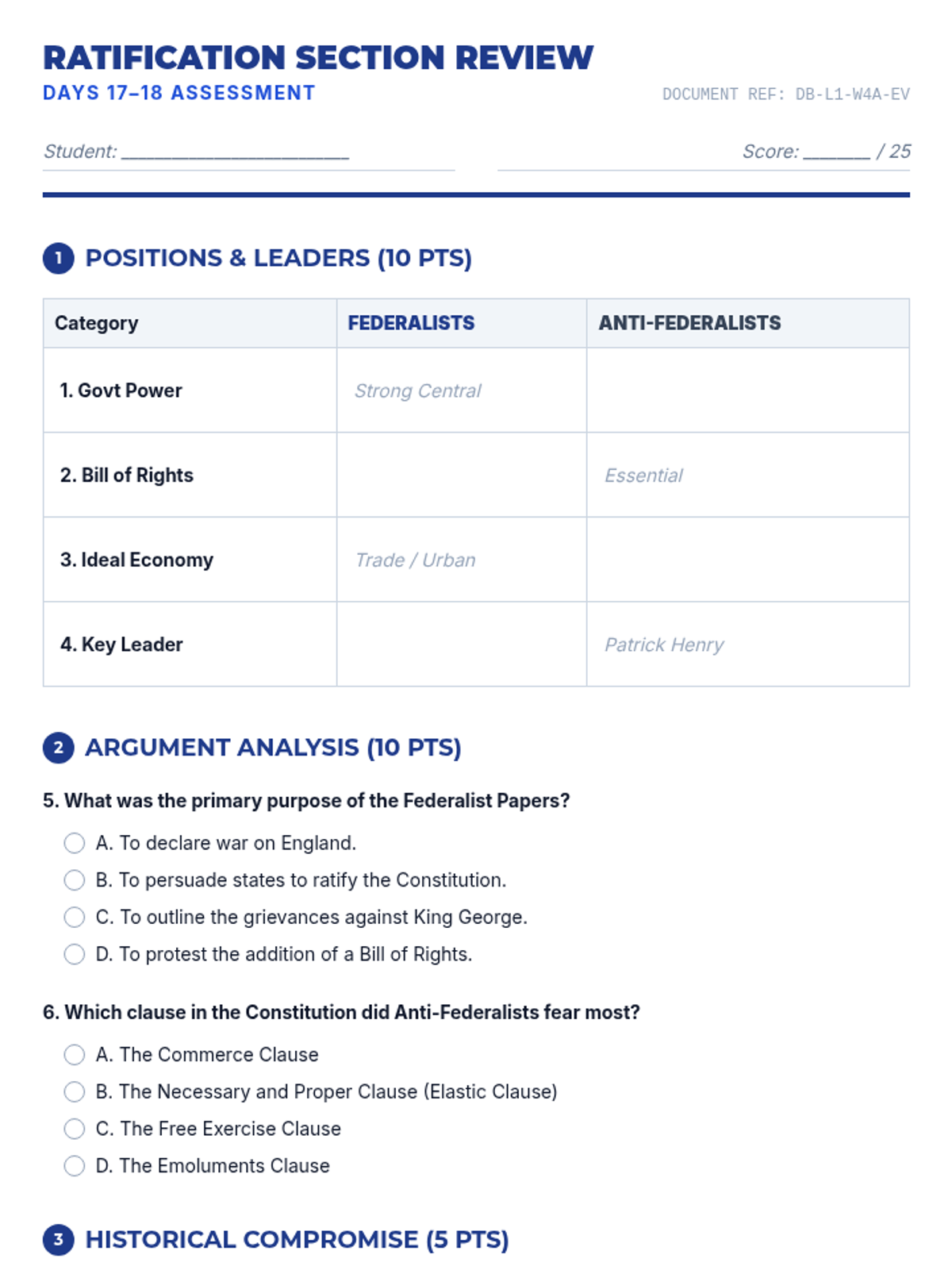
A section review assessment for the ratification debate, featuring a comparison table, multiple choice questions, and a short constructed response on the Bill of Rights. Revised for better numbering and spacing.
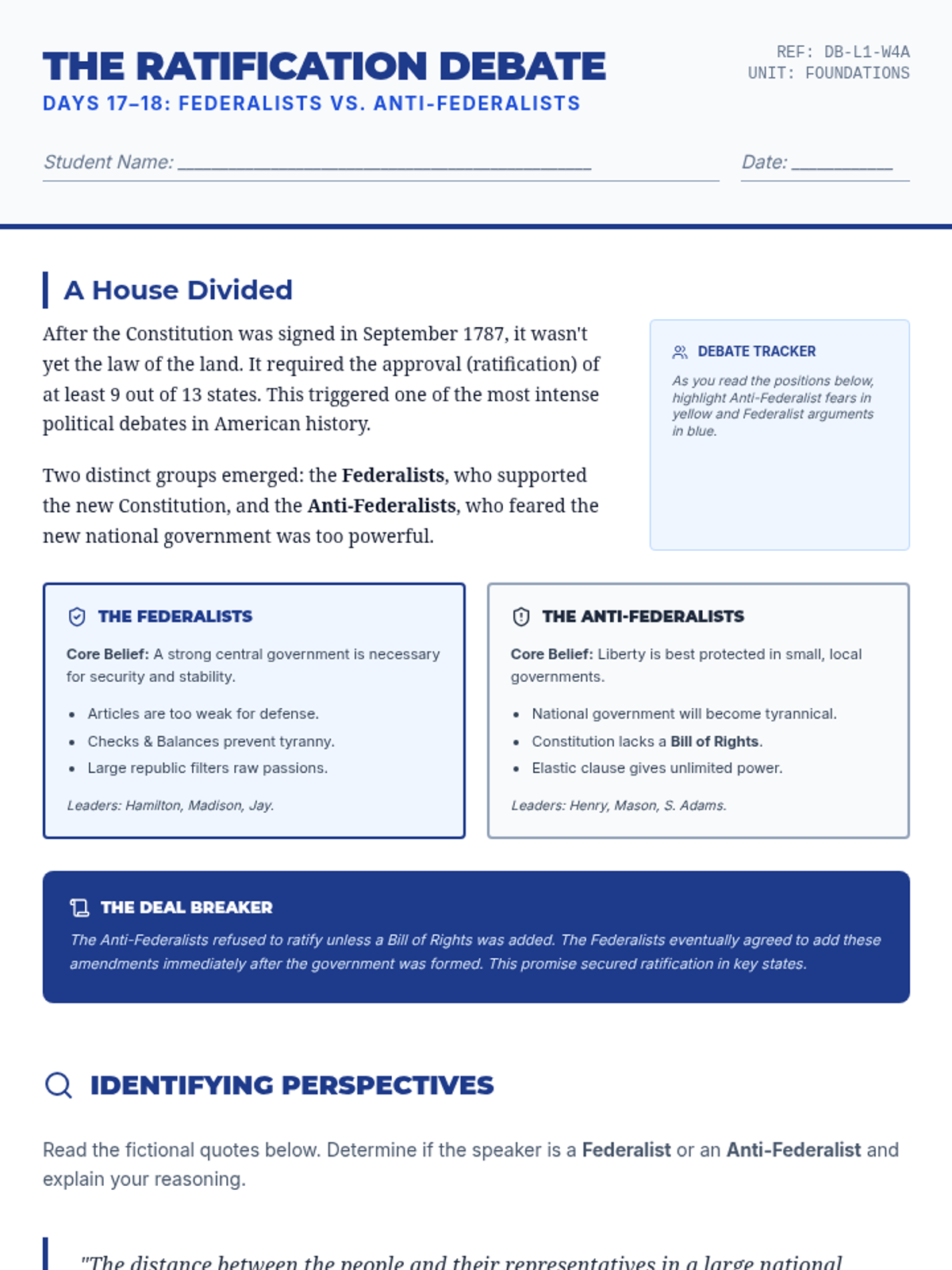
An instructional reader comparing the Federalist and Anti-Federalist positions during the ratification of the Constitution. Includes primary source perspective analysis and "Debate Tracker" activities. Revised for layout consistency and response space.
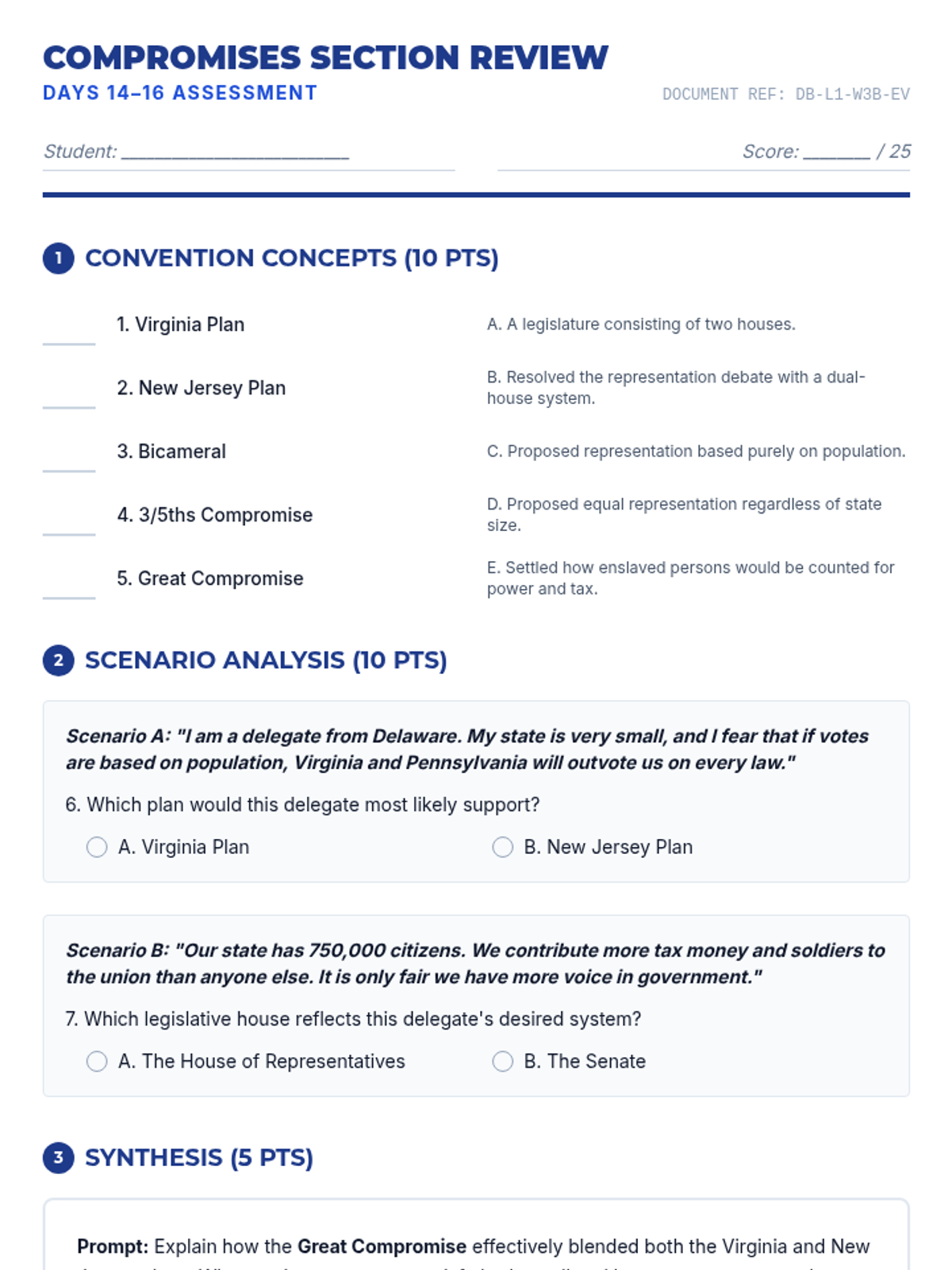
A section review assessment for the Constitutional Compromises, featuring matching, scenario analysis, and a short constructed response on the Great Compromise. Revised for better numbering and spacing.
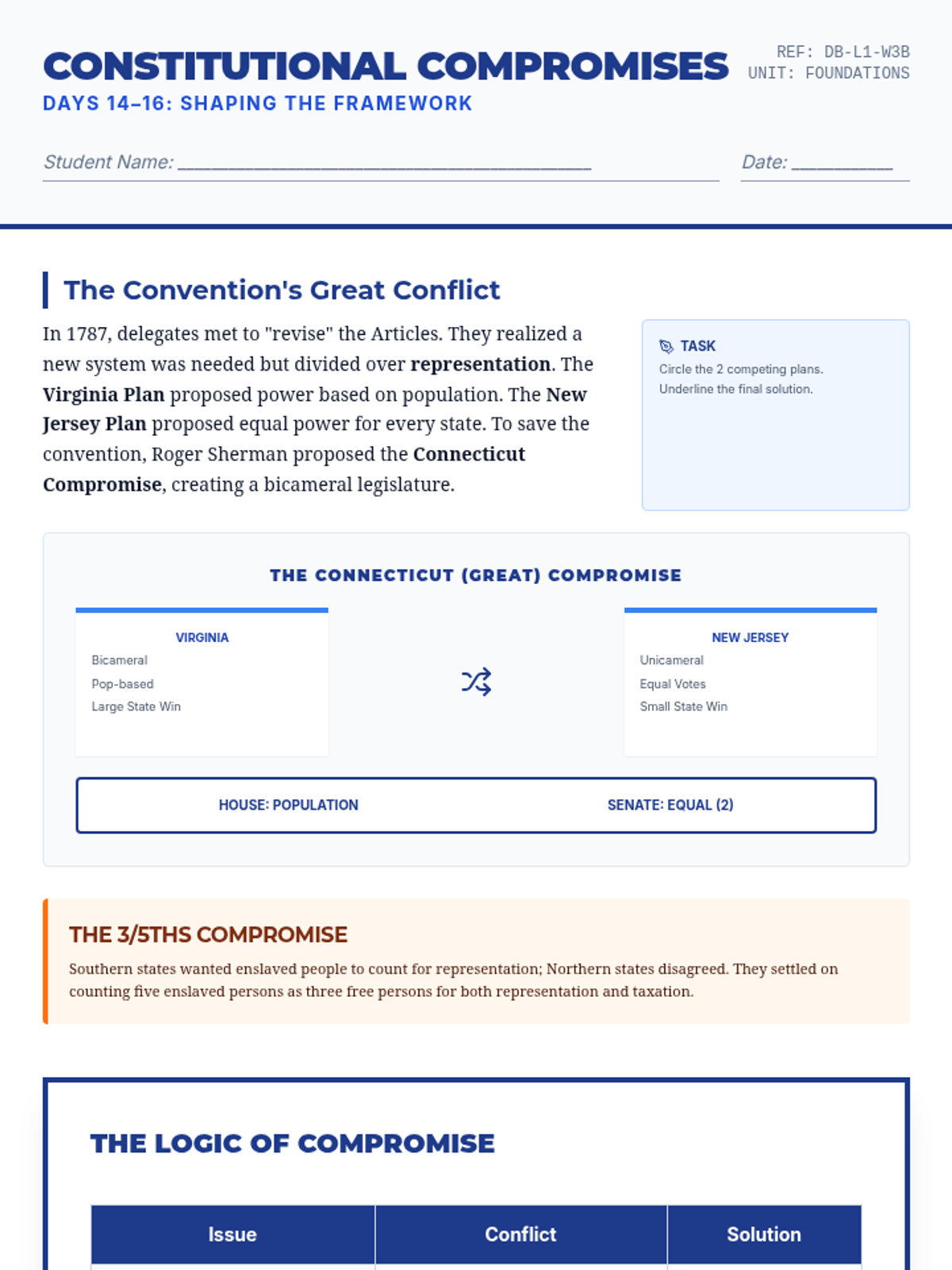
An instructional reader covering the Great Compromise and the 3/5ths Compromise during the Constitutional Convention. Includes comparative tables and reflection prompts. Revised for layout and content consistency.